Category: Business

  • As workplace surveillance grows, experts say it’s good to know the ways your employer is watching

    As workplace surveillance grows, experts say it’s good to know the ways your employer is watching

    NEW YORK — College administrators read an adjunct professor’s comments to students on personal essays. Managers told a pharmacist to spend less time with patients after tracking the number and length of her appointments. Scanners on a warehouse conveyor belt monitored the pace of workers to ensure they inspected hundreds of items per hour.

    Thousands of employers are keeping tabs on the whereabouts, productivity, and communications of workers with technology that was adopted widely during the coronavirus pandemic. A vast array of digital tools still are being used to track locations, collect data on task completion rates, and access work-issued smartphone and laptop cameras, raising concerns about how much privacy employees have relinquished, even in their own homes.

    Employers have always monitored workers, but recent advances in artificial intelligence and data science enable them to create extensive data sets or “dossiers” that can be used to punish workers or attempt to predict employee behavior, said Wilneida Negrón, director of research and policy at Coworker, a nonprofit that helps workers organize to improve working conditions.

    “Oftentimes, the workers with the least amount of power in the labor markets tend to be testing grounds for some of the more intrusive forms of data collection,” Negrón said.

    Some of the most common workplace monitoring programs have shared names, email addresses, and other personal worker data with hundreds of outside data brokers and technology companies without clearly disclosing the practice, according to an investigation by Vanderbilt University, Northeastern University, and the University of California at Berkeley.

    Data privacy experts and workers who say they’ve been closely monitored spoke with the Associated Press about what they see as the risks of employer surveillance and the steps employees can take to protect their personal information.

    Team up with like-minded colleagues to advocate for yourself

    Pharmacist Lannie Duong’s job at a medical clinic involved meeting with patients who had chronic conditions such as diabetes, hypertension, and heart disease. She reviewed their medical histories, blood work, and symptoms, and adjusted their medications. She frequently enlisted interpreters to help her communicate with patients who had limited English language skills.

    Duong said her employer tracked the length of her phone calls and appointments, and in performance evaluations questioned why she took so long with each patient.

    “Everything was counted. How many minutes you’re on the phone. The minutiae of it was ridiculous,” Duong said. “We’re just tasked to do what feels like the impossible.”

    Under what she described as unrelenting pressure, Duong felt “not trusted, not appreciated, almost completely hopeless. It was so depressing.” She eventually went on medical leave and began volunteering with other pharmacists to organize a union.

    “I spoke up, hoping others would voice their concerns as well, but that didn’t really pan out,” Duong said. She says her employment was terminated after the medical leave.

    Many of the employers using surveillance tools do so transparently and engage employee boards in reviewing how the tools are used, Negrón said. But there are also employers tracking, ranking, and scoring employees in ways that are not transparent to workers, she said.

    “Workers are going to have to come together because the forces of centralizing this kind of tracking and monitoring are moving too fast,” Negrón said.

    Find out what kind of data your employer is collecting about you

    As awareness about surveillance tools grows, some workers are pushing back on tools that track how long it takes to fulfill tasks, saying such monitoring contributes to injuries, and questioning what personal information is being collected and how it’s being used, said Hayley Tsukayama, director of state affairs at the Electronic Frontier Foundation, a nonprofit that focuses on digital privacy.

    “Unfortunately, if you are on a machine that’s been issued by your workplace, you should expect that there’s some type of monitoring,” Tsukayama said.

    Researching data collection and surveillance trends in your industry is a good idea, according to Negrón. Without that knowledge, workers may find themselves unprepared when confronted with information unearthed during surveillance.

    While teaching a college writing class, Arianna Anaya discovered that an administrator was reading the papers her students uploaded to the school’s learning management software and the comments Anaya made on the work. The students often wrote about intimate topics, including abuse, eating disorders, and family trauma.

    “The school essentially used the online learning system to allow administrators and staff to read student work that was often immensely private and personal, something we were specifically told students should not know about,” Anaya said.

    A colleague who printed out the comments criticized the casual tone Anaya used with students and accused her of not sticking to the course syllabus. A few months later, Anaya’s teaching contract wasn’t renewed, although she doesn’t know the exact reason.

    “It made me quite paranoid,” Anaya said. “It made me feel less safe in the world.”

    Check state laws to see what’s required of employers

    Some states, including Delaware, New York, Connecticut, and Maine, require employers to notify workers if they’re being monitored. Maine’s law goes further, prohibiting visual monitoring in employees’ homes or personal vehicles unless that kind of observation is required for the duties of the job, said Edward Halle, a privacy and AI compliance manager.

    “The question becomes, what does the law mean by ‘the duties of the job’?” Halle said. “A telehealth nurse needs a camera; the camera is the job. A productivity webcam bolted onto ordinary desk work almost certainly isn’t. Where that line falls is the first thing the Department of Labor will be asked to sort out.”

    If you work in a state without a notification requirement, it’s difficult to find out if an employer is using technology to monitor your performance.

    To raise the issue with managers, Tsukayama suggests coordinating with a union. If that’s not an option and you’re asking managers individually, approach the topic cautiously and take a curious tone, she advised. You could say you’ve noticed something on the computer and have questions, such as, “How is this information being used within the company? How might it get out of the company?” Tsukayama said.

    One place to start is asking what specific employee data your organization collects, said Aiha Nguyen, director of the Labor Futures Initiative at Data & Society, a nonprofit institute studying the impacts of technology. If your manager doesn’t know, the information technology department may have answers, since the people working there often are the ones turning on the features, Nguyen said.

    Some common software programs such as Microsoft Office and Zoom have tools that can be used for tracking worker productivity, but the tracking features aren’t always activated. Knowing whether those tracking features are turned on can be difficult, because they’re built into the programs, Nguyen said.

    “It’s automatic. It’s considered something that employers have been able to say, ‘This is necessary for work. You have to use these tools,’” she said.

    To help safeguard personal information, don’t use work devices to handle family matters or sensitive personal information such as medical conditions, experts advise.

    “I think most people know that,” Nguyen said. ”But it can become tedious to switch between phones, or people don’t really think it’s that harmful. … You don’t want to potentially put yourself at risk.”


  • Why more homeowners across the U.S. are turning to an insurance that offers less coverage

    Why more homeowners across the U.S. are turning to an insurance that offers less coverage

    A last-resort insurance policy with fewer homeowner protections and less government oversight is booming, a Washington Post analysis finds, as traditional insurers continue to back away from areas of the country most vulnerable to extreme weather.

    The policies are growing fastest in California, Florida, Texas, and South Carolina because increasingly intensifying weather and massive disasters are putting more insurers on the hook for substantial claim payouts. Last year in California, insurance companies paid out $23 billion in homeowners claims, according to industry data.

    The amount of premiums written under what is known as “surplus” or “excess” insurance lines has nearly tripled nationwide in the past five years, from about $1.5 billion in 2021 to $4.1 billion in 2025, according to data from the National Association of Insurance Commissioners (NAIC) — which insurers submit to the organization — and analyzed by the independent firm Weiss Ratings and provided to the Post. The Post reviewed the data and the Weiss analysis.

    While this represents only a small share of the total $187 billion in premiums written in the United States each year, according to the Weiss data, industry experts say they reflect a problem where Americans living in the most weather-exposed places are becoming harder to insure.

    In 2025, the Treasury Department’s Federal Insurance Office released a report showing how, due to climate-related events, millions of Americans were finding it harder to obtain insurance and had to pay more for it.

    And as more insurers pull back or limit coverage, more Americans have struggled to find it and have sought out surplus line plans. Independent brokers often steer homeowners to surplus policies when they cannot obtain a traditional plan, though carriers also advertise directly to consumers.

    These once-niche policies, which date to the late 1800s, historically covered commercial, high-risk, or unusual properties.

    They can sometimes be more expensive and often have more limitations and restrictive clauses, including arbitration clauses stating that homeowners cannot select their own contractors or price adjusters.

    Experts said they have fewer consumer protections, prompting some advocates and state regulators to warn that homeowners may get lower payouts in the event of a disaster.

    California’s surplus line industry is expanding more than almost any other state, according to the Post and Weiss analysis of NAIC data, which only includes insurers based in the U.S. Since 2021, the amount of surplus premiums written in California increased tenfold from $135 million to nearly $1.3 billion, now accounting for 7% of all homeowners premiums in the state compared with just 1% five years ago.

    California’s insurance crisis has been spreading beyond wildfire-prone regions, according to new Stanford University research, which found that the number of residents having to get coverage from the state’s backup insurance option, the Fair Plan, has tripled since 2020.

    A Post review of domestically based surplus line carriers across the U.S. found that 10 companies account for slightly more than half of all premiums, most of which are owned by major insurance companies.

    Major insurance providers, such as Lloyd’s of London and Berkshire Hathaway, dominate the industry, but smaller companies have also been proliferating.

    Some industry experts say these policies fill a void created by carriers pulling out or limiting coverage, and that without them, markets would be in greater distress. These companies are exempt from certain rules, allowing them to change what their plans cover and how much they charge faster than standard carriers.

    “The industry is built on two things: freedom of rate and form,” said Benjamin McKay, CEO of the Surplus Line Association of California, a nonprofit organization that advises the California Department of Insurance on law and policy. “You can charge what you want to charge and then have the contract say whatever it needs to say. You can exclude and include whatever.”

    The push-pull with surplus lines, McKay explained, is that while they are needed, they are a “reactive function of what’s happening in the admitted market.”

    McKay said the “proper role” for these less-conventional homeowners plans is “as a safety valve, not becoming the default option. Bottom line: We just need a healthy market.”

    State officials also have less insight into surplus carriers’ financial conditions, because they are not subject to the same financial requirements and tests that states such as California impose on admitted carriers.

    However, surplus lines still have to follow California laws, said Michael Soller, deputy commissioner of the California Department of Insurance’s communications and public relations branch.

    The Post recently found that some major surplus line companies such as AIG had been including separate “wildfire deductibles” in their policies, which Soller said violated state consumer codes and warranted a review.

    AIG — which has three subsidiaries offering surplus line policies to high-net-worth properties, all of which are operating in California — stopped offering its standard, regulated insurance for high-end properties in the state due to what the company said in a statement was “part of AIG’s multi-year transformation to streamline its portfolio.” In 2021, nearly 8,000 wildfires burned nearly 2.6 million acres of land across California.

    Over the years, according to California insurance officials, AIG asked for rate increases that were substantially lower than what their own data reflected was necessary for its exposure to risk. In 2020, after the state approved two subsequent raises, AIG asked to bump rates by nearly 42% before withdrawing that request.

    One of its subsidiaries, Lexington Insurance Co., is the seventh-largest surplus line carrier nationally, a Post review of data shows. AIG said its plans for “high-net-worth homeowners’ insurance” are primarily issued through that company.

    From 2020 to 2025, AIG’s standard homeowners business plummeted to zero in California, according to data obtained by Weiss Ratings and reviewed by the Post. Meanwhile, its surplus line business grew from $24 million to $119 million, data shows. The carrier announced in January 2022 that it was pulling back coverage but would still offer surplus line insurance to high-net-worth, specialty clients.

    “AIG has switched its entire California homeowners business to surplus line insurance,” said Martin Weiss, founder of Weiss Ratings.

    Over that six-year period, the insurance company’s surplus line premiums grew by 394% in California.

    “AIG has participated in California’s surplus lines market for more than 60 years, providing coverage for specialized risks that generally cannot be placed in the admitted market,” the company said. It added that while its surplus line business for high-net-worth homeowners has grown along with the rest of the market, “it represents less than one percent of total California homeowners insurance premiums.”

    Isaac Park, who runs the Los Angeles-based Excel Adjusters with his father, said he has seen an increased number of clients over the past decade shifting to the state-backed Fair Plan, who are then forced to get a second policy for risks such as water damage. Park added that he has also seen more surplus line firms operating in the state.

    “They have more limitations of coverage,” he said.

    Some consumer advocates worry that since surplus line carriers don’t participate in state guarantor funds, which help support policyholders if their insurer goes insolvent, people are at greater risk of bad-faith behavior or not getting paid out on their claims.

    Companies are paying out less to homeowners with surplus line policies compared with traditional ones, according to the NAIC data provided to the Post. In the past five years, surplus insurance lines paid out an average of 36 cents in claims for every dollar in premiums they collected, compared with 58 cents for admitted carriers. In 2024, carriers paid out 15 cents on each dollar of premiums they collected from surplus line policyholders.

    Payouts from surplus line insurers spiked in 2025 because of the L.A. fires, according to experts.

    “They are the perfect loophole for an insurer who wants to evade regulation,” said Amy Bach, executive director of United Policyholders.

    Bach described surplus lines’ ability to avoid regulation as a “powder keg” for the industry. But she added, “They are also doing a good thing by providing protection that other insurers are not willing to provide.”

    A new report from Climate Cabinet Education, a nonprofit advocacy group, charts how this explosive growth happened. Most states, for example, require insurance agents and brokers to demonstrate that they made a “diligent effort” to place policyholders within the admitted market. In California, three carriers have to deny a resident before they can seek out a surplus line plan. But last year, Florida — where surplus lines in the homeowners market grew 74% between 2020 and 2025 to $888 million, according to the NAIC data — became the fifth state to scrap that requirement.

    Jayson O’Neill, spokesperson for the insurance reform advocacy group Unlocking America’s Future, said that several consumer advocacy groups are working with lawmakers in Texas and North Carolina on stronger regulations that could include barring insurers from removing some protections from basic coverage.

    Park, the public adjuster who helps represent Californians in battles with their carriers over claims, said that even before last year’s fires in L.A., he was seeing “a lot of insurance companies dropping my clients after just one claim.” Now the landscape seems even more dire.

    Ben Taggart lives in Oakland Hills, Calif., near the site of a massive fire in 1991 and a community identified as a high-risk zone for wildfires. He found his current surplus line insurer two years ago, which aggregator sites identified as the only other option aside from the state-backed Fair Plan.

    Taggart said in an email that he wished he could get a policy through an insurer admitted into the California market, and that he is reluctant to file any claims given that his deductible is $10,000 and he worries the company would drop him if he made a claim.

    “The only people I know on our block who are still with admitted insurers are boomers who have been in their house a really long time,” he said. “Everyone who moved here recently is on surplus or Fair.”

  • How Icona Resorts founder Eustace Mita has changed the Shore with faith, hustle, and hundreds of millions of dollars

    How Icona Resorts founder Eustace Mita has changed the Shore with faith, hustle, and hundreds of millions of dollars

    Icona Resorts founder Eustace Mita says he didn’t set out to change the Jersey Shore.

    Sitting in a corner room at the Icona Avalon, the largest of Mita’s seven luxury hotels, the 72-year-old said it was the Shore, his lifelong “happy place,” that transformed him.

    As Mita looked out onto the dunes, he recalled his baptism at St. Paul Catholic Church in Stone Harbor and his summer job as a teenage busboy and server at the Princeton Bar & Grill in Avalon.

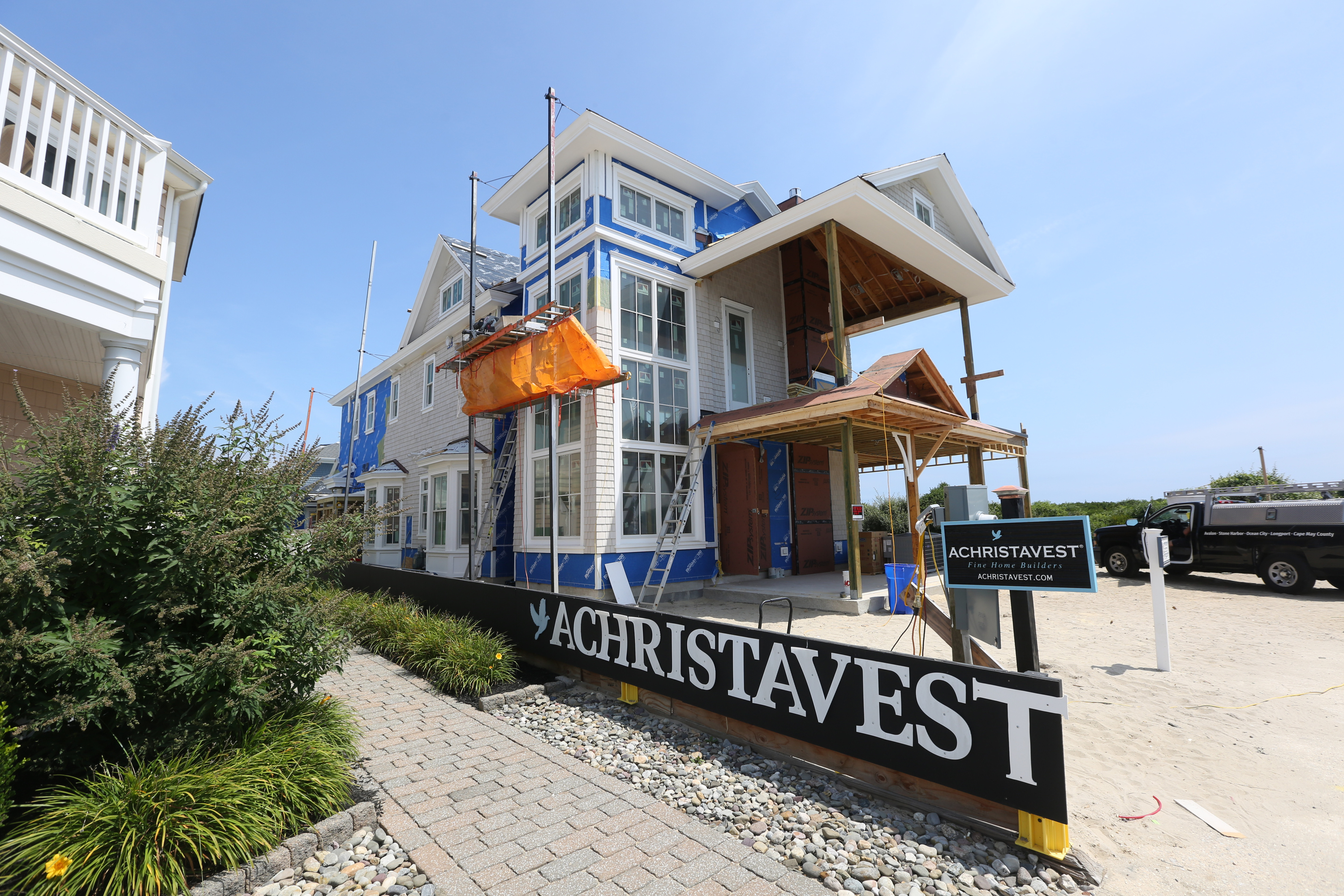
    Decades later, Mita leads both Icona Resorts and Achristavest homebuilders, which constructs multimillion-dollar waterfront homes — including a controversial 18,000-square-foot mansion that would be the largest in Avalon. Built on spec, it will likely sell for several tens of millions.

    His for-profit companies are all about luxury. At the same time, they are imbued with Mita’s faith: The names, Icona and Achristavest, were inspired by spiritual experiences and words, and he displays 18-inch statues of the Blessed Mother in the hotel lobbies.

    On a recent August day, he greeted employees by name and chatted with guests as he walked through Icona Avalon and neighboring Icona Windrift. Later, he visited under-construction homes, rattling off details about each project and staring in awe at the ocean views, as if seeing them for the first time.

    Eustace Mita takes in the view from an under-construction Achristavest home on 77th Street in Avalon.Vernon Ogrodnek / For The Inquirer

    “Do what you love and the money will come,” Mita said, referencing a lesson he learned from his grandfather, Eustace Wolfington, who owned Avalon’s first beachfront hotel, the Puritan, later renamed the Whitebrier. “That has been so true in my life.”

    Mita declined to share how much his companies, which are privately held, are worth, or how much he’s invested in the Shore, saying only that it’s “hundreds and hundreds of millions of dollars” — and counting.

    He’s ready to invest another $200 million in a seven-story resort on the Ocean City boardwalk, pending negotiations with city council.

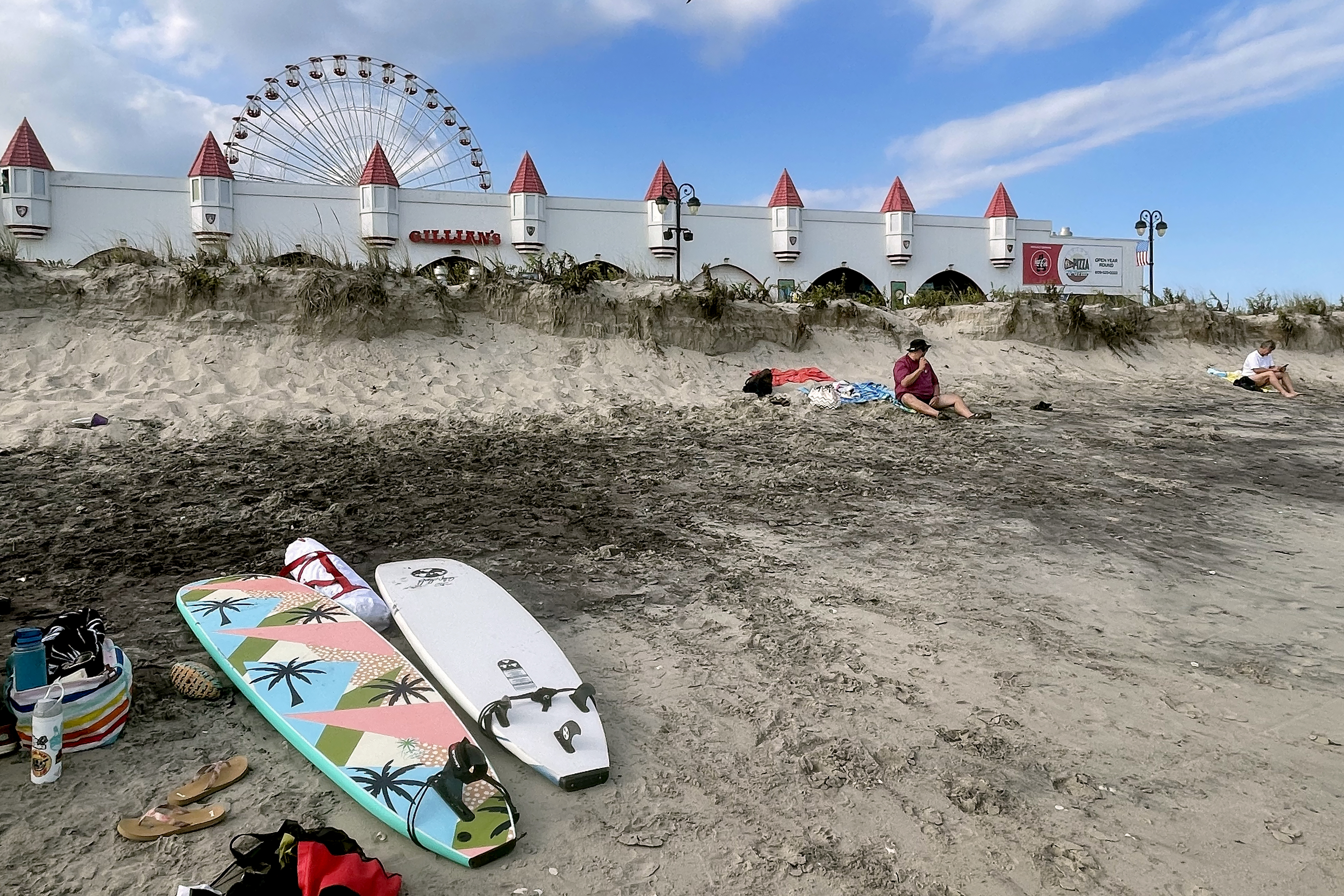
    The now-closed Gillian’s Wonderland Pier rose above the dunes at Sixth Street and the Boardwalk in Ocean City during its final weekend in September 2024.Tom Gralish / Staff Photographer

    For five years since he bought the now-shuttered Gillian’s Wonderland Pier, Mita says he has faced roadblocks and pushback, most recently from community groups who sued Ocean City and its council asking to void the site’s “in need of rehabilitation” designation. The designation allowed council to start talks with Mita about his plans to redevelop the former amusement park.

    In a statement announcing the lawsuit, Jack Gutenkunst of Plaza Place Civic Association, one of the neighborhood-group plaintiffs, called the designation “deeply flawed” and said it “seeks to improperly strip away important planning protections that residents have long relied upon.”

    Ocean City Council leaders, who were set to hold private negotiations this week about the redevelopment, did not return requests for comment.

    Some residents near the old Wonderland Pier have said they are worried about traffic and loss of sunlight, as well as losing the area’s small-town, family-friendly charm.

    “We have [millions] worth of real estate right here that would be degraded by this hotel, and our way of life would be degraded,” said Marie Crawford, who lives behind the pier.

    Mita said the project, which has been downsized from the original proposal, would be an asset to Ocean City. The town calls itself “America’s Greatest Family Resort,” he added, but has not opened a new hotel in more than 50 years. He noted that several business owners on the boardwalk and elsewhere have spoken in favor of the project.

    “We’re on the pathway now to being able to build Icona Ocean City, but we’ll see,” Mita said. “I don’t take anything for granted.”

    Guests eat lunch at Icona Avalon’s Beach Bar on a weekday in August.Vernon Ogrodnek / For The Inquirer

    He has his sights on two other potential hotel properties, one in Cape May County, though he wasn’t ready to share details.

    Despite many offers, Mita has no interest in selling Icona Resorts. He has told his five grown children that they could do so someday — as long as they don’t sell the prime beachfront real estate where his hotels sit.

    For now, his answer to the near-constant acquisition proposals is polite but firm: “Thank you, we’re not interested.”

    But, he added with a laugh, “we’ll sell you a house.”

    An Achristavest home is under construction on 116th Street in Stone Harbor.Vernon Ogrodnek / For The Inquirer

    Mixing faith and luxury down the Shore

    In a conference room off the Icona Avalon ballroom, dozens of hotel employees — many of them international workers on J-1 visas — sit facing a projection screen and white board where the company’s guiding principles are about to be reinforced.

    Wearing a black Icona polo, black pants, and an unwavering smile, Mita slips into the morning meeting with little fanfare.

    A manager kicks off a regular exercise: Stand, introduce yourself, and greet coworkers on either side of you by name. Seated in the back, Mita is among the last to participate, standing ramrod straight and speaking with a joyful lilt.

    Randel Davis, general manager of Icona Avalon, leads an employee meeting.Vernon Ogrodnek / For The Inquirer

    Whenever possible, managers remind the employees, they should call guests by their names, too.

    “The sweetest sound to a person’s ears is the sound of their own name,” Mita said, referencing How to Win Friends and Influence People by Dale Carnegie, one of many books that influenced Mita’s leadership style. The most instrumental, he said, was Greatest Salesman in the World by Christian writer Og Mandino.

    Mita also draws inspiration from Scripture and his involvement with the Camden Diocese and the Philadelphia Archdiocese. He founded an annual men’s spirituality conference, the nonprofit Man Up Philly. He has met Pope Leo twice and is building a nonprofit Catholic “soul-sanctuary” in Ireland, set to be finished in January.

    He has built an orphanage in Kenya and a food center in Ethiopia and raised millions for international aid as the first lay president of the Papal Foundation.

    Eustace Mita talks about his business and life philosophy in a guest room at Icona Avalon.Vernon Ogrodnek / For The Inquirer

    When Mita first placed Blessed Mother statues in his hotels, he said, some suggested it could be “a little too religious.” But he stood by it, saying the Blessed Mother is the matriarch of all people, not just Catholics.

    “If you don’t like Mom,” he said, “you don’t have to stay with us.”

    More often, Mita said guests compliment the statues. He sees some passersby bless themselves and say a silent prayer.

    “We don’t apologize for that,” he said of the iconography. “But we honor all faiths.”

    A statue of the Blessed Mother overlooks the pool at Icona Windrift.Vernon Ogrodnek / For The Inquirer

    How Icona Resorts were built

    In his pursuit of hotels, Mita was particularly motivated by scroll three of Mandino’s work: “I will persist until I succeed.”

    After graduating from Archbishop John Carroll High School in 1973 and studying for three years at Drexel University, Mita worked in the auto industry. In the 1980s, he founded Mita Leasing, then ran Half-a-Car, a lease-training company, with his uncle, Eustace Wolfington II.

    Mita said he “backed into” the hotel industry around the time of the 2008 financial crisis, during which he lost about three-quarters of his net worth.

    Back then, Mita’s Achristavest real estate company was knocking down small Shore hotels and building condo complexes, including the Grand at Diamond Beach, which sits between Wildwood Crest and Cape May.

    Achristavest acquired the Grand’s neighbor, the Pier 6600 hotel, for $12 million in 2006, Mita said. Then, “Armageddon hit” with the recession.

    Home construction at an Archistavest home in Stone Harbor in AugustVernon Ogrodnek / For The Inquirer

    “Our homebuilding business didn’t slow down; it literally stopped,” Mita said. When you’re building second homes, “everybody wants one, but they don’t need one.”

    While demand for Shore homes remained low, Mita said he found that families were flocking to the hotel for short beach vacations at lower prices. So he went all in on resorts.

    The Pier 6600 became Icona Diamond Beach in 2012. Mita has spent $30 million renovating it, he said, including the addition of a third-floor ballroom for its thriving wedding business.

    Eustace Mita bought Icona Avalon from the former owners of the Golden Inn in 2015. Vernon Ogrodnek / For The Inquirer

    Then, after 16 years of knocking on the door at the Golden Inn in Avalon, Mita acquired the iconic beachfront property for $25 million, which in 2015 was the largest hotel transaction in Cape May County history, he said.

    Mita renamed it Icona Avalon. He said he has spent $35 million to remodel it.

    A few years later, he purchased the Windrift hotel next door for more than $30 million and spent $27 million on renovations there, which include the new Avalon Prime steakhouse and a private third-floor “sky lounge.”

    The Icona Windrift in Avalon, which Eustace Mita has spent $27 million renovating since he purchased it five years agoVernon Ogrodnek / For The Inquirer

    Icona Yacht & Beach Club members, who pay a $7,000 initiation fee plus $5,000 a year, can access the sky lounge, the Icona yacht, private beach service, and shuttle service.

    They number about 25 now, Mita said, and he plans to cap membership at around 200 people.

    It’s a similar setup as the Union League. The historic club, headquartered on South Broad Street, recently bought Avalon’s iconic Whitebrier for $23 million and last summer made it members-only. The move sparked debate over whether the Shore town was becoming too exclusive for even its wealthy homeowners.

    The members-only Sky Bar at Icona Windrift in Avalon sits on the highest point on Seven Mile Beach, according to Eustace Mita.Vernon Ogrodnek / For The Inquirer

    The Jersey Shore experience, elevated

    While middle-class families have increasingly been priced out of the Shore, Mita said he doesn’t believe his hotels are contributing to the trend.

    “We don’t cater to the wealthy,” Mita said, adding that Icona has opened two “select-service” hotels — Mahalo Diamond Beach and Mahalo Cape May — which have fewer amenities and sometimes lower prices.

    Rooms there are about $200 a night on shoulder-season weekdays but can cost $500 to $700 on a summer weekend.

    At Icona’s full-service resorts in Avalon and Diamond Beach, and its boutique hotel in Cape May, rooms start around $700 a night on peak summer weekends.

    A corner guest room at the Icona Avalon.Vernon Ogrodnek / For The Inquirer

    Outside South Jersey, Icona’s Grand Victorian boutique hotel in Spring Lake, Monmouth County, has slightly lower rates.

    Icona is not the first brand to bring luxe hotel accommodations to Seven Mile Island, which contains Avalon and Stone Harbor.

    The Reeds at Shelter Haven, a year-round resort in downtown Stone Harbor, opened a couple years before Icona Avalon. Rooms there start around $600 a night on midsummer weekends.

    “It’s great to have healthy competition, right?” the Reeds’ general manager Carmen Russo said. “We always look at them and see what they’re doing, just as they look at us and see what we’re doing.”

    Eustace Mita rattles off details about the construction of this Achristavest home on 116th Street in Stone Harbor.Vernon Ogrodnek / For The Inquirer

    As for Mita’s home-building business, Achristavest builds on the beach and bay from Cape May to Longport, with properties starting at $5 million. By comparison, the median listing price for all homes — not only waterfront ones — in Stone Harbor is just under $4.7 million.

    Achristavest homes being built on spec in Avalon and Stone Harbor will likely sell for $15 million to $25 million.

    “I tell my children rent in Delaware County and buy in Cape May County,” said Mita, who grew up in Bala Cynwyd and now has homes in Malvern and Ocean City.

    What’s ahead for Icona and Achristavest

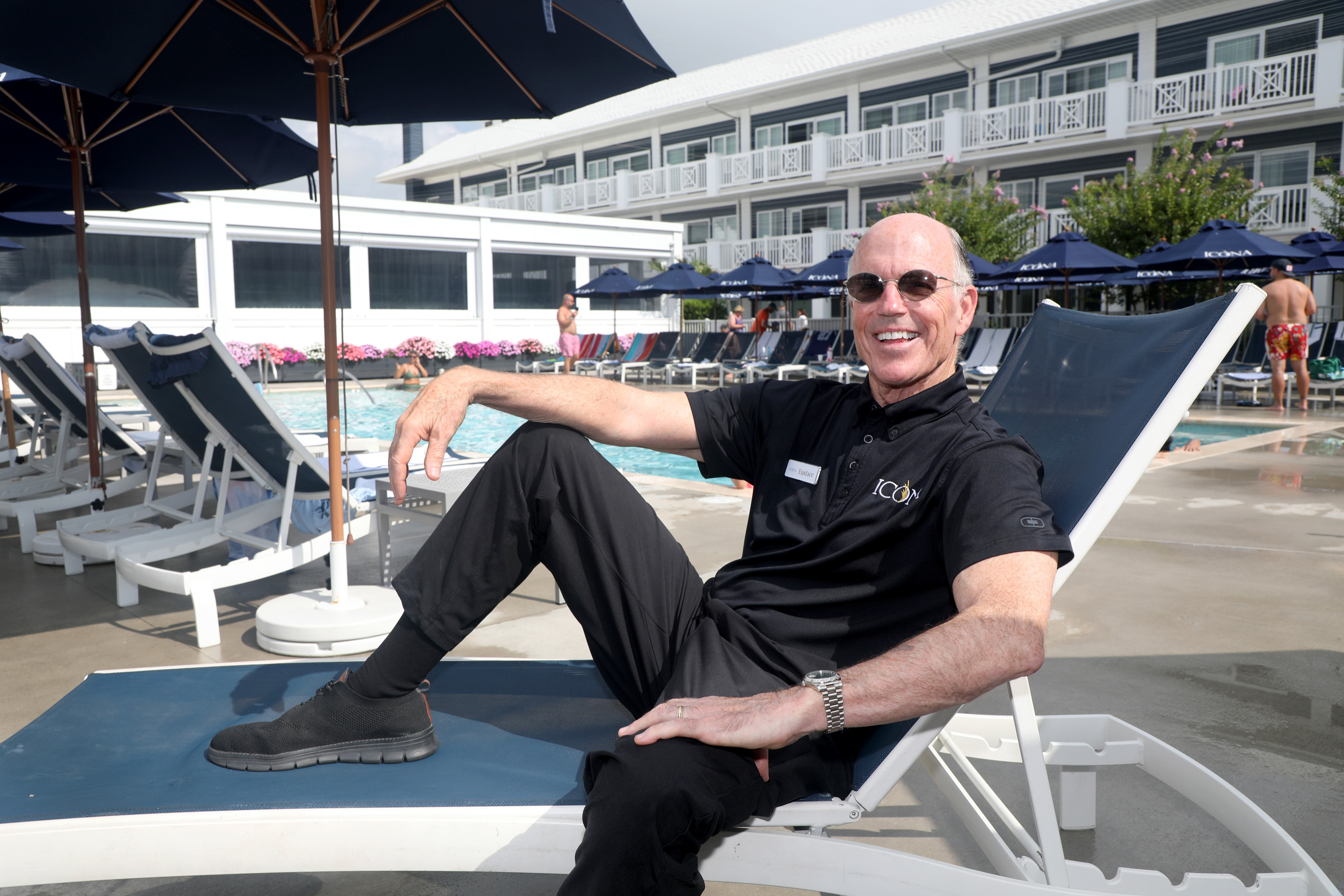
    Eustace Mita, Icona’s chairman, poses by the pool at Icona Avalon.Vernon Ogrodnek / For The Inquirer

    Mita speaks often of his legacy.

    “I’ll be dead and gone, but imagine the next generation and then the next generation,” Mita said. “Everything we’ve built is built to last.”

    And he said he hopes the lessons he instilled in employees are just as permanent.

    One employee, Rob LaScala, worked at Mita Leasing and then went on to found LaScala Restaurant Group, which has dozens of locations across the region. In just a couple years working together, LaScala said, Mita left a mark.

    At his Icona Avalon hotel, Eustace Mita points to a black-and-white photo of the Puritan, Avalon’s first beachfront hotel that was founded by his grandfather, Eustace Wolfington.Vernon Ogrodnek / For The Inquirer

    Mita is “just a make-you-feel-good type of person,” LaScala said. “I over the years have tried to emulate him” and create a company culture that transcends business.

    Mita refers to his 1,100 employees as family but said he works to prioritize time with his actual family. He spends summer weekends with his wife, Susie, and some combination of their five children and 18 grandchildren. His oldest son, Euse, was recently named Icona’s president and CEO.

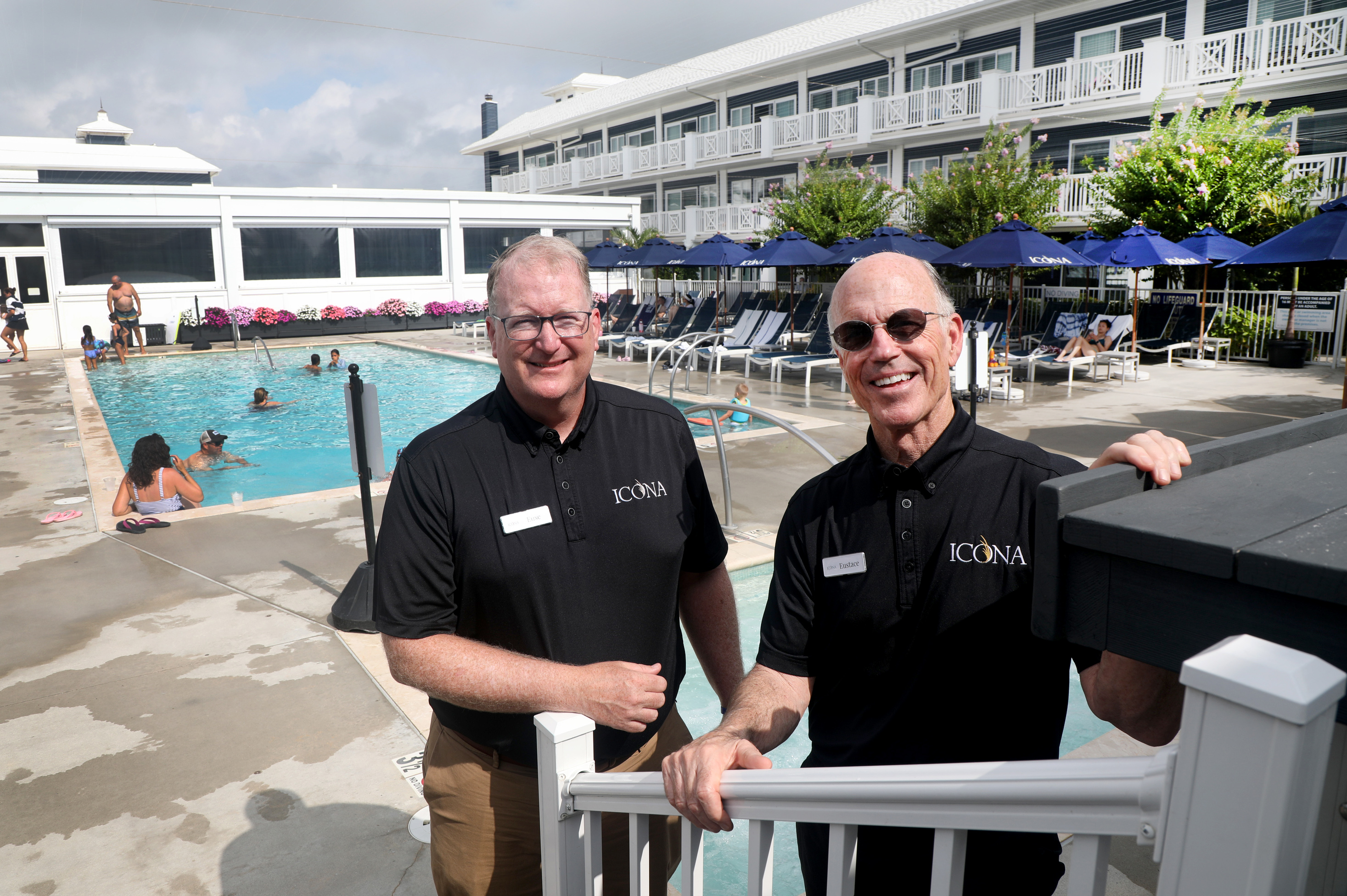
    Eustace Mita (right), founder and chairman of Icona, with his son Euse, who was recently named president and CEO.Vernon Ogrodnek / For The Inquirer

    But, of course, he said, work sometimes calls. On a recent weekend, with many summer staffers back at college, Mita helped clear tables at Icona Avalon while Euse was a fill-in valet.

    Said Mita: “There’s no reason just because I’m a leader that I can’t bus tables, that I can’t sweep floors.”

  • Companies can tell investors less under proposed SEC rules

    Companies can tell investors less under proposed SEC rules

    The Trump administration has aggressively expanded its push for financial deregulation, raising concerns that the changes could facilitate another Wall Street crisis, sooner or later.

    The Securities and Exchange Commission this summer proposed two big changes to how publicly traded companies report their finances. The first, and most eye-catching, one would let companies file earnings reports only twice a year instead of quarterly, slashing a rule that has existed for more than half a century.

    The second one, which has flown under the radar, would exempt most companies the SEC regulates from having to bring in outside auditors to verify a company’s internal books and processes for avoiding errors and fraud.

    The rollback would weaken regulations passed by Congress in 2002, after the collapse of Enron, an energy trading company, and the implosion of Arthur Andersen, its accounting firm, revealed how easily companies could hide financial problems, or cook their books, without independent oversight.

    Some money managers are asking whether either change would improve the investment environment. And public interest groups worry the changes could enable another costly scandal like Enron’s failure, or something worse.

    “If the quality of reporting information from the financial system deteriorates, then that absolutely leads to financial sector risks of the kind that have bitten us before, as in 2008 and other crises,” said Simon Johnson, a Nobel laureate economist and a co-chair of the Systemic Risk Council at the CFA Institute, which administers the industry’s chartered financial analyst credential.

    In the past three decades, the number of publicly traded companies active in the U.S. stock market has fallen by half. The number of initial public offerings has also greatly decreased in comparison with past business cycles.

    Trump administration officials say onerous regulations and audits for public companies have made going public less attractive and increased the allure of less regulated private markets. This, in turn, has resulted in fewer opportunities for smaller investors to participate in the growth of early-stage companies the way large private investors can.

    “Under my chairmanship, we’re out to change that,” Paul Atkins, the Trump-appointed chair of the SEC, said in a statement. “As part of my ‘make IPOs great again’ agenda, we’re advancing a modernized regulatory framework that will reduce friction and increase certainty for both issuers and investors and streamline the path for companies to go and remain public.”

    Smaller public companies are already given more breathing room by U.S. regulators, which are sensitive to overburdening them with compliance costs that bigger companies can more easily afford. Now, however, the SEC wants to make a categorical shift that would bump the share of companies operating under lighter rules to about 80% from 50%.

    The riskiest consequence, according to watchdogs like Americans for Financial Reform, would be to exempt those companies from more thorough independent audits to help ensure that the financial statements companies provide to investors and the SEC are accurate. That more stringent external vetting was a requirement Congress instituted under the Sarbanes-Oxley Act of 2002 to prevent accounting frauds such as those at Enron and WorldCom, which led to bankruptcies, mass layoffs, and billions of dollars lost by investors.

    The Business Roundtable, a lobbying group that represents some of America’s largest companies, has supported the SEC moves on auditing and quarterly reporting, echoing concerns about the costs of independent auditor reviews and extra legal counsel. But a broad range of former and current executives have criticized the SEC’s deregulatory proposals, which remain provisional until they are made final.

    The SEC received a lopsided response to the semiannual reporting proposal during its formal public comment period, which closed last month. Of the hundreds of thousands of comments submitted, more than 97% opposed the change.

    The Managed Funds Association, which represents hedge funds and private credit funds, has said less frequent reporting could increase market volatility and harm transparency, raising the risk of insider trading. Institutional asset managers at banks and pension funds also say they rely on standardized quarterly statements to accurately value assets.

    “What is the big problem that we need to solve?” said Rebecca Patterson, a former chief investment officer of Bridgewater, a hedge fund.

    “U.S. firms today are highly profitable overall, and they are still able to make longer-term strategic business decisions,” she added. “They are nicely walking and chewing gum at the same time.”

    With respect to the debate over financial audits, market analysts have questioned the SEC chair’s diagnosis that burdensome audit rules are to blame for the decline in IPOs or publicly traded stocks.

    Matt Kennedy, a senior IPO market strategist at Renaissance Capital, an investment adviser, said the enormous growth in fundraising options outside publicly traded stock markets had been the key force keeping more private companies private.

    Not too long ago, Kennedy explained, a company might have gone public after a “Series A, B, or C” round of funding. But in recent years, he joked, “we’re almost running out of the alphabet,” as venture capitalists, private equity, private credit, and angel investors have queued up for privately traded stakes in companies.

    “I don’t think it’s compliance costs keeping them from going public,” he said.

    Industry experts note that companies would still need audits of their financial statements. But 80% of publicly traded companies would no longer need auditors to separately attest and certify that a firm’s internal financial processes were aboveboard.

    Other rollbacks the SEC proposed this summer have raised some concerns, too, including a rule change that would make federal regulatory laws “preempt,” or overrule, state-level financial regulations; another that would do away with the need for companies to report their “climate risk”; and a proposal to cut a requirement for companies to report ratios about disparities in pay.

    The SEC is expected to finalize the proposed rule changes despite the opposition. Although the exact timeline remains unclear, agency leadership, including Atkins, has signaled reluctance to make concessions to critics in public remarks.

    “I really don’t get it,” said Ben Carlson, the director of institutional asset management at Ritholtz Wealth. “In a world where information is becoming more and more important, why would you want less of it?”

    This article originally appeared in the New York Times.

  • Silicon Valley’s big money is about to get a lot bigger

    Silicon Valley’s big money is about to get a lot bigger

    SAN FRANCISCO — As artificial intelligence companies Anthropic and OpenAI prepare to go public, the question around Silicon Valley is which investors will win big.

    The answer, it turns out, is just about everyone.

    At least 95 investors have put money into both Anthropic and OpenAI, according to a tally on PitchBook, which tracks private investment. Sequoia Capital, a marquee venture capital firm, invested in both start-ups. So did Founders Fund, Coatue Management, and Altimeter Capital Management.

    That’s highly unusual. In the past, venture capital firms that invest in young start-ups typically backed just one company in a fast-growing new technology category. Putting money into direct competitors was considered a conflict of interest.

    But the AI boom has changed nearly everything around Silicon Valley, and the way that investors nurture start-ups is no exception. Top firms on Sand Hill Road — the famous stretch in Menlo Park, Calif., that remains the nexus of venture capital firms — have shifted their norms and adapted their strategies so that they do not miss out on investing in the AI companies that could be the next $2 trillion winner.

    Few large investment funds want to say, “We missed both” OpenAI and Anthropic, said Karan Mehandru, an investor at Madrona Venture Group.

    Just how much of Silicon Valley is tied up in the success or failure of Anthropic and OpenAI is evident from the amount of money that the two privately held companies have accumulated.

    Anthropic has raised more than $130 billion from roughly 300 investors, according to PitchBook, including venture capital firms, hedge funds, Big Tech companies, and Middle Eastern sovereign wealth funds. OpenAI has raised more than $180 billion from roughly 230 investors, such as Big Tech companies and Joshua Kushner’s investment firm, Thrive Capital.

    In contrast, Facebook (before it became Meta) raised $2.4 billion before going public in 2012, and Uber raised roughly $20 billion before reaching the stock market in 2019.

    Not all of the investors named as Anthropic and OpenAI shareholders by PitchBook got their shares through traditional venture funding rounds; the list includes some who bought indirectly via private share sales on the “secondary market,” which is when investors obtain stock from existing shareholders like employees or early investors.

    SpaceX’s successful $1.7 trillion initial public offering in June has further fueled investor excitement for Anthropic and OpenAI. Anthropic is heading toward a public offering this year that could value it at $2 trillion and become the biggest listing ever. OpenAI may go public next year, and its offering is also expected to be enormous.

    For investors, that means “all the numbers are bigger, including the entry price and the exit price,” said Sohail Prasad, CEO of Destiny100, a firm that bought shares of OpenAI and Anthropic on the secondary market.

    Anthropic and OpenAI declined to comment. (The New York Times has sued OpenAI and Microsoft, claiming copyright infringement of news content related to AI systems. The two companies have denied those claims.)

    For years, venture capital investors followed similar rules. Their idea was to take a big stake in a young company and help it with advice. The investor would take a seat on the start-up’s board.

    When Facebook went public, venture firm Accel Partners owned 11.4% of the company’s stock. Jim Breyer, a partner at the firm, sat on Facebook’s board alongside Marc Andreessen and Peter Thiel, two other venture capital investors.

    And when Uber went public, venture firm Benchmark Capital Partners owned 11% of the company. One of Benchmark’s investors, Matt Cohler, sat on the board.

    But Anthropic, which was founded five years ago, looks very different. That’s partly because venture firms initially dismissed the company as a science project. More than 20 firms rejected the start-up’s pitch, Anjney Midha, an Anthropic investor, said on a recent podcast. Instead, people in effective altruism circles, the philanthropic movement that prioritizes data and analysis for social causes, first invested in Anthropic.

    Spark Capital, a Silicon Valley venture capital firm, eventually led a round of funding in Anthropic in 2023. Yasmin Razavi, a Spark Capital investor, joined Anthropic’s board.

    Around that time, Dario Amodei, Anthropic’s CEO, and Neerav Kingsland, an Anthropic executive, visited the home of Guy Oseary, a Hollywood talent manager who invests in tech through his firm, Sound Ventures. Oseary was impressed by Anthropic’s pitch, said a person familiar with the matter who, like others interviewed for this article, spoke on the condition of anonymity because the discussions were private. But Sound Ventures had already invested in OpenAI.

    So the firm got permission from Sam Altman, OpenAI’s CEO, and Amodei to invest in both companies, the person familiar with the matter said. That made Sound Ventures one of the first firms to put money into both competitors.

    Soon after, Oseary raised a new fund dedicated to AI. “We believed this would be the most important technology of our lifetime,” he said in a statement.

    As Anthropic and OpenAI grew, their need for capital outpaced backing from many venture firms, which were not set up to write checks that big. Menlo Ventures, a Silicon Valley firm known for backing Uber, engineered a workaround. To further invest in Anthropic, the firm in 2024 created a “special purpose vehicle,” a fund that rounded up many small investors into one $750 million entity controlled by Menlo.

    Thrive Capital created a similar vehicle to invest in OpenAI in 2024.

    Google, Amazon, Microsoft, and Nvidia also took stakes in both Anthropic and OpenAI and have signed large contracts to provide cloud computing services or chips to them. Some of these giants are now the biggest shareholders of the start-ups.

    This article originally appeared in the New York Times.

  • Landmark Ritz Five movie theater is open again

    Landmark Ritz Five movie theater is open again

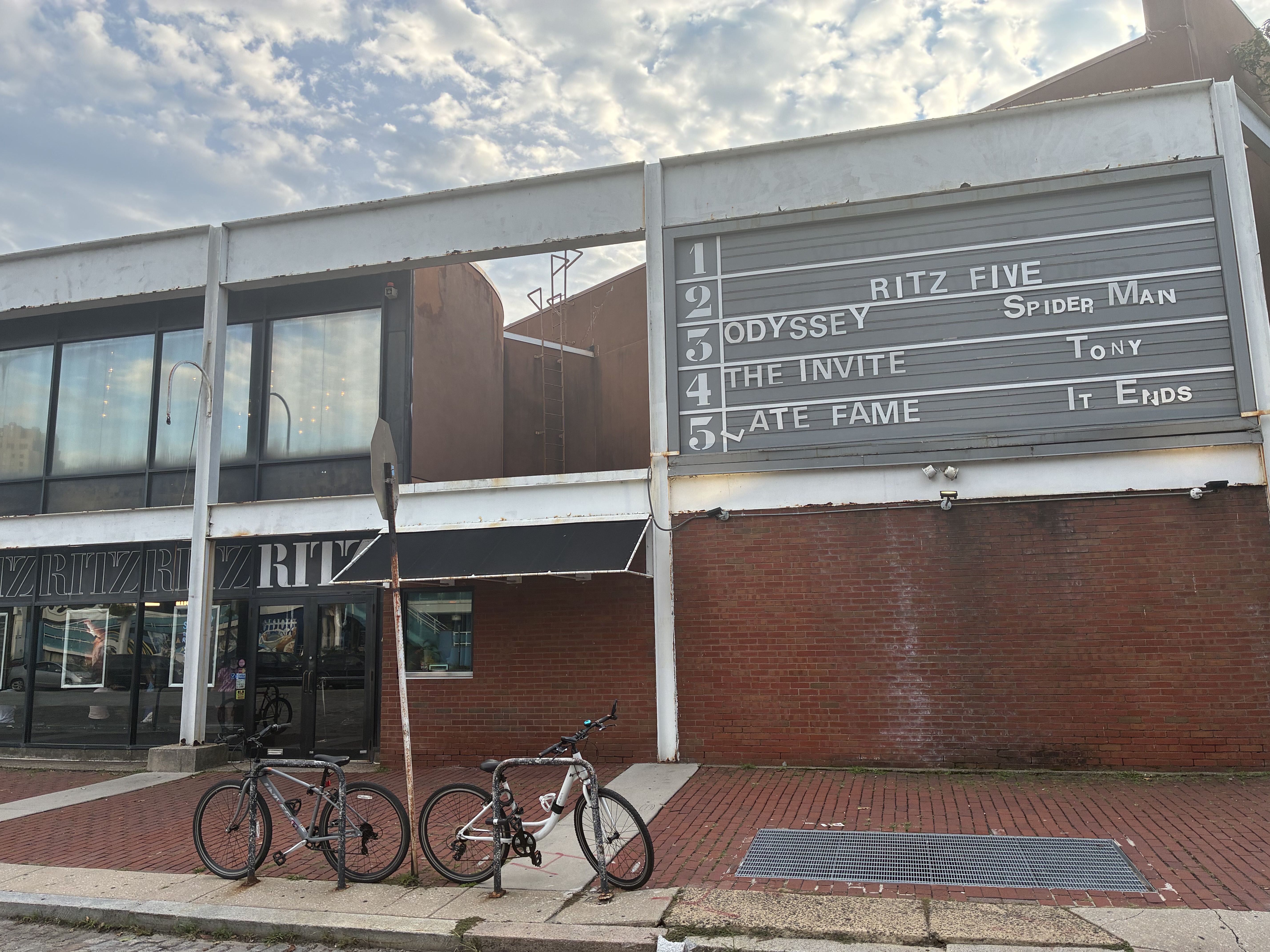
    The smell of buttered popcorn is wafting down Dock Street again, as the Landmark Ritz Five movie theater opened for business again Friday afternoon.

    Business was slow at, first, with just 14 customers entering between 5 and 6:30 p.m.

    That didn’t count concerned fans who stopped by to check in on the somewhat faded art house movie theater.

    “When I saw it closed, it was very upsetting,” said Megan Corry, an artist who grew up and lives in South Jersey, but has been coming to the Ritz Five since she was 17.

    The Philadelphia Department of Licenses and Inspections had ordered the theater to cease operations on Aug. 25 after it failed two city inspections.

    Landmark Theatres’ parent company, Cohen Media Group, said in a statement days later that they were working to get the theater open again, in the midst of the hottest summer for big-screen films since the COVID-19 pandemic.

    Corry has been monitoring the fate of one of her favorite theaters and stopped by Friday evening before her next engagement. She is cheered by the theater’s reopening and hoped to return soon for Willem Dafoe’s new movie Late Fame.

    “That’s why I was peeking [in the window], I was worried about what’s been happening,” said Corry, who last saw the indie horror megahit Obsession at the Ritz Five. “It’s one of the few places where you can see very amazing film. It’s a hub.”

    On Wednesday, the Cohen Media Group said that it “worked in partnership with the local fire department to address all concerns and ensure the theater is safe to reopen.”

    The theater must be under a fire watch to remain open, L&I spokesperson Kandyce Stukes said Wednesday. That involves continuously patrolling the building to look out for signs of fire.

    Property managers for the theater delivered an appeal to the Board of Safety and Fire Prevention, which is an advisory board to the city’s fire department. They were provided with a variance and can open the theater, Stukes said.

    An inspection in March found seven violations. Those included failure to obtain a permit to install a fire alarm system, share documentation that fabrics are flame retardant, ensure that exit doors fully “self-close and latch,” and certify emergency lighting. The theater was also found to be missing a valid food license.

    The theater again failed an inspection on Aug. 11. A cease operations notice on the doors of the theater in late August noted that it needed to obtain an electrical permit and install a fire-alarm system.

    A cease operations notice was posted to the theater doors in August, but has now been taken down after the owners successfully appealed. Ariana Perez-Castells

    The notice had been removed Friday, although staffers were still peeling the remnants off the front door. They said they were unable to comment, but noted that doors had opened at 2 p.m. and business was slow because many customers did not realize they had reopened.

    Tickets for Friday’s movies were available to purchase online, including a 9:45 p.m. viewing of The Odyssey and a 7:15 p.m. showing of indie chiller It Ends.

    Anne Harvey lives just down the block from the Ritz Five, and said she just noticed it had reopened and rushed to get tickets to the 6:30 showing of The Odyssey, Christopher Nolan’s retelling of Homer’s epic.

    “I had seen it was shutting down, and it was extremely dismaying,” said Harvey. “I hope it can maintain. I know it seems like a hard business these days, but it’s such a nice amenity for the neighborhood. If you like to walk to the movies in five minutes, like me, it’s a great deal.”

  • Tom Corcoran, retired president of the Delaware River Waterfront Corp., has died at 82

    Tom Corcoran, retired president of the Delaware River Waterfront Corp., has died at 82

    Tom Corcoran, 82, of Philadelphia, retired president of the Delaware River Waterfront Corp., founding president and former chief executive officer of the old Cooper’s Ferry Development Association in Camden, former business administrator for the city of Camden, onetime Peace Corps program director in West Africa, mentor, and poetry enthusiast, died Sunday, Aug. 30, of complications from dementia at his home in Center City.

    Born in Chicago and a graduate of Loyola University Chicago, Mr. Corcoran earned a master’s degree in public administration at the University of Pennsylvania’s Wharton School in 1975 and never strayed far from the Delaware River after that. He spent 25 years, from 1984 to 2009, as president and CEO of the Cooper’s Ferry Development Association on the Camden waterfront, and eight years, from 2009 to 2017, as president of the Delaware River Waterfront Corp. in Philadelphia.

    He championed what he called “the two cities, one waterfront strategy” and was especially adept, former colleagues said, at political maneuvering and marshaling funds and projects. Former colleagues on both sides of the Delaware called him “a tireless public servant,” “a visionary urban planner,” and an “economic development strategist with short-term practicality and long-term vision.”

    In Camden, Mr. Corcoran added more than $550 million of investments to the waterfront area and oversaw the development of what is now the Freedom Mortgage Pavilion, the Adventure Aquarium, Wiggins Waterfront Park, the Riverlink Ferry, several office buildings, and other projects. Another New Jersey developer called him a “cult figure” among state lawmakers.

    Mr. Corcoran talks at City Hall in 2011 about creating a string of parks along the Delaware River.Akira Suwa / Staff Photographer

    He said education as well as development was key to building a strong local economy and told The Inquirer in 2006: “Until Camden has a good-quality education system, we’re not going to be able to attract families with school-age children back to the city.”

    Dana L. Redd, former Camden mayor and current president and CEO of Camden Community Partnership, said on Facebook that Mr. Corcoran often slept on a cot in his Camden office and left daily handwritten messages that his project managers called “love notes.” Redd said: “He challenged a generation of urban leaders to think bigger, believe in Camden, and dream about what the city could become.”

    In Philadelphia, he initiated the Race Street and Washington Avenue pier parks, the Spruce Street Harbor Park, a miles-long bike and walking trail, and the I-95 overpass park to reconnect Center City with its waterfront. “The more we look at the concept of one waterfront, two states, the more opportunities we’re going to find,” he said when he left Camden for Philadelphia in 2009.

    When he retired in 2017, he said: “Instead of swinging for the fences, we decided we would hit singles and doubles and bunts and sacrifices, steal bases, and do whatever we could. Eventually, we thought, we’d always get back to the center.”

    Mr. Corcoran (left) shakes hands with then-Mayor Michael Nutter in 2009 after joining the Delaware River Waterfront Corp. Alejandro A. Alvarez / Staff Photographer

    Longtime colleague and friend Bill Hankowsky said: “It is truly unique that a single individual could have the vast impact across two facing waterfronts in the center of one of the country’s major urban metros.”

    Earlier, Mr. Corcoran served nine years, from 1975 to 1984, in Camden city government, rising from administrative aide to business administrator. In 2001, he earned a Good Neighbor Award from the Camden County chapter of the American Red Cross for his “integral role in the revitalization of the city.”

    In the 1960s, Mr. Corcoran joined the Peace Corps after college and spent seven years in Africa building dams and wells with local farmers. He spoke French and the local African language, and rose to program director.

    “What an exemplary life he led,” a former Peace Corps colleague said in a tribute, “without fanfare or drama and always with service to others.”

    Mr. Corcoran (right) led visitors on a tour of the Washington Avenue pier park in 2014.Viviana Pernot / Staff Photographer

    Off the waterfront, Mr. Corcoran was enthralled by poetry and his Irish heritage. He liked to recite lines from Ulysses and other poems, and sing songs from the old country.

    “He was a true Renaissance man who had a remarkable vision for communities and people,” a former colleague said. Former colleague John Grady said: ”Tom was a giant, unassuming, persistent force for the local community.”

    Thomas Patrick Corcoran was born May 13, 1944. He earned a bachelor’s degree in political science at Loyola in Chicago and rode camels to work in Africa during his time in the Peace Corps.

    He met Robin Lowey at a dinner society event, and they married in 2003, and lived in Camden and Philadelphia. They enjoyed traveling and dining together, and hashing over world affairs.

    Mr. Corcoran and his wife, Robin Lowey, married in 2003. Courtesy of friends

    In 2009, he said he often peered through a telescope at the Philadelphia waterfront from his home in Camden and wondered how he would develop Penn’s Landing. “He’s the one who brought together the business leaders and was able to steer through difficult political waters,” then-Camden County freeholder Jeffrey Nash said in 2009.

    His wife said: “He was a kind and generous gentleman. He was a good, nice person.”

    In addition to his wife, Mr. Corcoran is survived by three sisters, a brother, and other relatives.

    Services were held Thursday.

    Donations in his name may be made to the Caplan Caring Difference Fund at the Penn Memory Center, Office of the Treasurer, Box 71332, Philadelphia, Pa. 19176.

    Mr. Corcoran spent seven years in the Peace Corps after college. Courtesy of friends
  • What Burlington Stores’ HQ move to Philly means, by the numbers

    What Burlington Stores’ HQ move to Philly means, by the numbers

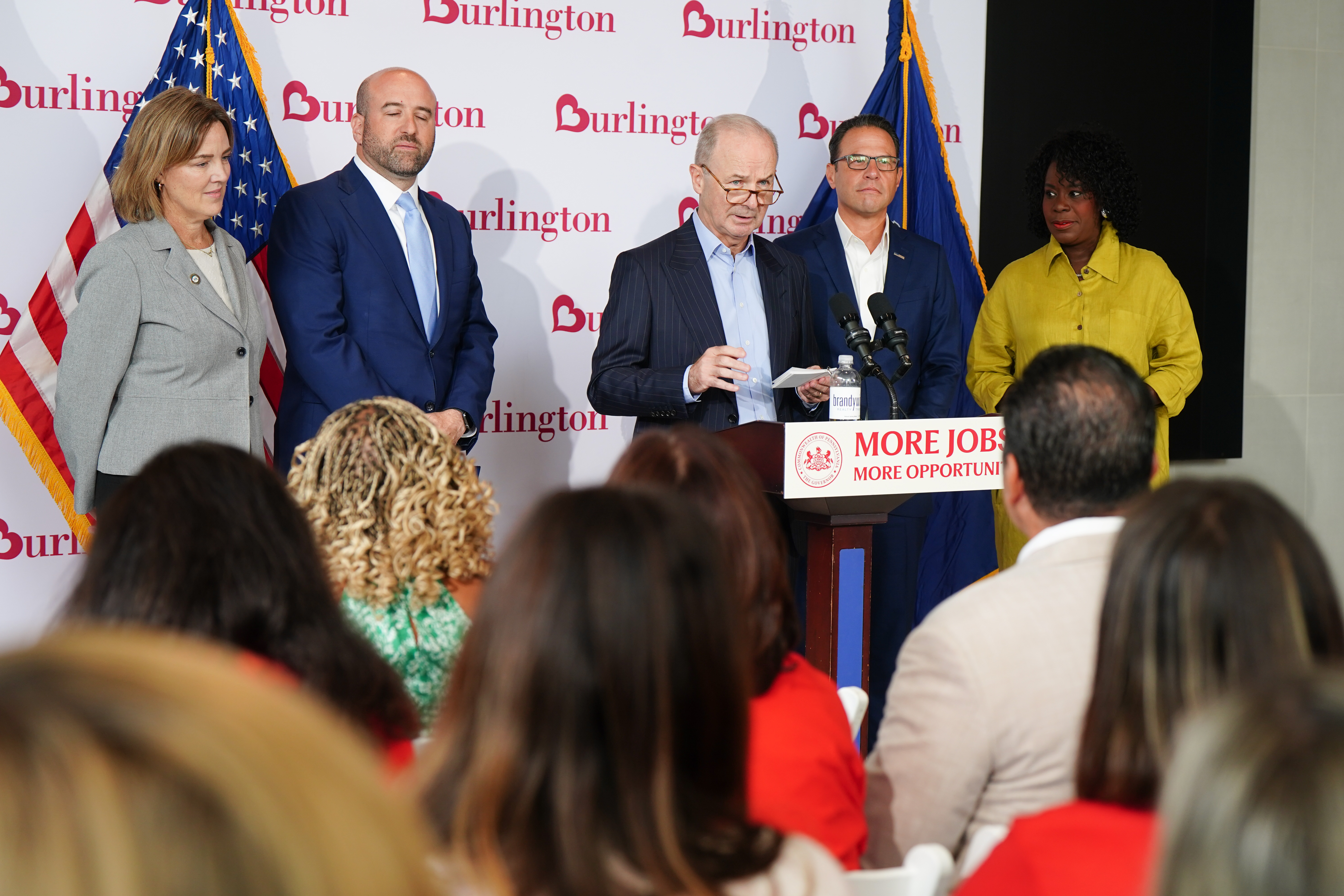
    Philadelphia officials are celebrating the news that Burlington Stores is moving its headquarters to University City’s Schuylkill Yards.

    With the relocation, set to start in two to three years, the discount retailer says it will invest a total of $370 million in the city. The company plans to keep warehouses in Burlington County, including on the site of its current headquarters, where it has been based for more than half a century.

    Here’s what else to know about the big numbers related to Burlington’s move to 3151 Market St.

    What does it cost to move to Schuylkill Yards?

    $370 million: What Burlington plans to spend on the move

    • $240 million: How much Burlington is paying for the 441,000-square-foot building, according to a Thursday SEC filing by Brandywine Realty Trust. That’s about $544 per square foot.
    • $130 million: How much Burlington plans to spend on “design and development of the space, creating an HQ built for collaboration and the modern needs of Burlington’s corporate workforce,” a spokesperson said.

    $223 million: What Brandywine had spent on 3151 Market, as of June 30, according to its latest earnings report.

    (function() { var l = function() { new pym.Parent( ‘burlington-move__graphic’, ‘https://media.inquirer.com/storage/inquirer/ai2html/burlington-move/index.html’); }; if(typeof(pym) === ‘undefined’) { var h = document.getElementsByTagName(‘head’)[0], s = document.createElement(‘script’); s.type = ‘text/javascript’; s.src = ‘https://pym.nprapps.org/pym.v1.min.js’; s.onload = l; h.appendChild(s); } else { l(); } })();

    $168 million: How much Brandywine estimates it will get from the sale. The company said in an SEC filing that it has a $57.3 million mortgage on the building that will be repaid at closing, which is set for later this month.

    96%: The vacancy rate at 3151 Market, which was completed in 2024.

    Burlington Stores’ future new home at 3151 Market St., in Philadelphia. Jessica Griffin / Staff Photographer

    What government incentives are going to Burlington?

    $30 million: How much Burlington is set to receive in grants from Pennsylvania.

    $8 million: What the City of Philadelphia plans to invest in Burlington’s move, including a $7 million forgivable loan and $1 million for a year of free SEPTA passes for employees.

    How much of Burlington’s workforce is coming to Philly?

    1,500: Number of Burlington employees the company plans to move from New Jersey to Philadelphia, starting in late 2028 or early 2029

    500: Number of hires Burlington plans at its new headquarters in the next five years

    0: Number of layoffs Burlington has planned as a result of the headquarters relocation

    Inquirer reporter Joseph N. DiStefano contributed to this article.

  • Trump threatens to halt some trade unless the Fed cuts rates

    Trump threatens to halt some trade unless the Fed cuts rates

    President Donald Trump threatened Friday to halt a broad swath of U.S. trade unless the Federal Reserve slashed interest rates, issuing a sweeping ultimatum that could prove costly to the economy if he were to carry it out.

    The Fed is a politically independent institution, and it has long kept rates steady as it tries to tame years of persistent inflation. Trump’s demand risked undermining that work, while choking off commerce in ways that could harm American families and businesses.

    The president delivered his threat on a day that began on a positive note for the White House. Hiring figures showed that employers added about 162,000 jobs in August, evincing a labor market that has weathered a range of shocks under Trump — from the global trade war he commenced last year to the war with Iran that has intensified recently.

    On social media, Trump heralded that development before seizing on it to issue his demands. He called on the Fed to reduce borrowing costs to “the LOWEST RATE of any country in the World.”

    The Fed has kept rates steady since December as it tries to discern whether recent economic turbulence represents a short-term problem or a longer-term driver of higher prices. In fact, policymakers have actually signaled that they are considering whether to raise rates as soon as this month, after failing for more than five years to bring inflation down to the central bank’s 2% target.

    But Trump insisted Friday that the U.S. economy was “STRONG” and, as a result, could afford to lower borrowing costs. Such a move could actually worsen inflation. But absent a cut, Trump signaled that he could interrupt global trade.

    “LOWER THE RATE OR I’LL STOP TRADING WITH COUNTRIES WITH WHICH WE HAVE A DEFICIT, which the U.S. Supreme Court, in its ridiculous and very costly Tariff decision, strongly acknowledged ‘the President’ has an absolute right to do,” Trump said.

    The list of countries with which the United States has a trade deficit is lengthy, including its neighbors, Canada and Mexico, nations in the European Union, and others including China, according to federal data. That represents a substantial amount of the goods bought and imported by American families and businesses.

    Globally, the U.S. trade deficit in goods and services rose to its biggest gap in 16 months in July, data released this week showed. Some economists see that activity as a sign of strength for the United States, one caused in part by surging domestic demand for the electronics that help to power artificial intelligence. But Trump disagrees and has sought to apply substantial tariffs globally in the hopes of driving down the imbalance.

    “The Fed Board, with its great new leader, must get smart — BE PATRIOTS for a change,” the president said. “High interest rates put the U.S.A. at a very unfair disadvantage, and I won’t allow that to happen!”

    Trump’s remarks were his latest attempt to pressure the Fed, even after securing the confirmation of his handpicked chair, Kevin Warsh. The president has made no secret about his views on monetary policy or the lengths he is willing to go to achieve them, even targeting — and trying to oust — Fed officials who do not share his stance.

    The Fed’s decision on interest rates later this month hinges in part on inflation data coming out next Friday. Investors started to ratchet up bets about a possible increase after Warsh signaled in a speech last week that he was open to the idea. He did not explicitly call for a rate increase.

    Other top policymakers this week conveyed different degrees of urgency around the need to raise rates.

    On Thursday, Christopher J. Waller, a governor, said that a “hot” report on inflation from the Bureau of Labor Statistics would compel him to support a rate increase. But if there was further evidence that inflation was not getting worse, he said he would be inclined to hold rates steady.

    “What’s the cost of waiting one meeting? Hiking 25 basis points one meeting right now is not going to bring the CPI down to 2%,” Waller said, referring to the bureau’s Consumer Price Index. “You want to take a chance to see if disinflation continues, but I’m not taking a big chance on it.”

    Michael S. Barr, a Fed governor, said Tuesday that if inflation data showed continued signs of progress, then the Fed could afford to take more time to assess if rate increases are needed.

    “However, if inflation appears not to be moderating sufficiently, then I think we should act decisively to raise rates,” Barr said.

    This article originally appeared in the New York Times.

  • U.S. diesel prices hit a record high, pushing up transportation costs for a long list of goods

    U.S. diesel prices hit a record high, pushing up transportation costs for a long list of goods

    CHICAGO — Diesel hit a record price in the U.S. on Friday, soaring to an average of $5.85 a gallon for the first time as the six-month war with Iran disrupts the world’s flow of fuel.

    Because diesel is used for many freight and delivery networks, higher diesel prices mean higher transportation costs for a long list of everyday goods.

    This could add to Republicans’ political challenges ahead of November’s midterm elections, with voters already sour on President Donald Trump’s management of the economy. AP-NORC polling this summer showed 2 out of 3 U.S. adults disapproved of how Trump is handling the economy.

    More expensive fuel is increasing bills for businesses across sectors — some of which have already passed on costs to consumers in the form of added fees on online orders and packages in the mail. And shoppers may see more and more sticker shock trickle down to store shelves.

    One of the most immediate strains is being felt in the grocery aisle, particularly with produce, meat, and other perishable foods that need to be hauled in and restocked frequently — or even harvested using diesel-powered farm equipment. It can take time for all of those costs to trickle down.

    Still, experts warn that price hikes could mount the longer diesel remains expensive. A range of other products are also transported by diesel trucks, trains, and boats, including clothing, cosmetics, furniture, and more.

    The price for regular gasoline has also been going up, although not as fast as the price of diesel. The average price was $4.15 a gallon, compared with $3.20 at this time last year, according to AAA, which says gas has never been above $4 a gallon on Labor Day.

    What’s driving the latest jump for diesel

    Before the U.S. and Israel launched their war against Iran in late February, the national average for a gallon of diesel was about $3.76 in the U.S., per AAA. Prices quickly climbed as the cost of crude oil — the main ingredient in diesel, as well as gasoline — soared amid supply chain disruptions and production cuts across the Middle East, notably with most tanker traffic bottlenecked in the key Strait of Hormuz.

    Despite prices cooling some during hopes for peace earlier in the summer, oil has now renewed its climb as fighting once more escalates between the U.S. and Iran. Brent crude, the international standard, rose to $96.28 a barrel Friday, up from roughly $70 before the war. Prices at the pump always follow closely behind.

    The last time U.S. businesses and drivers saw sky-high fuel prices was in June 2022, when diesel reached as high as nearly $5.82 a gallon on average, months after the Ukraine war began and world leaders imposed sanctions against Russia, a leading oil producer.

    When adjusted for inflation, however, prices have been higher in the past. Ahead of the 2008 financial crisis, for example, diesel peaked at about $4.74 a gallon — equivalent to $7.20 in 2026, according to the government’s latest data. And 2022’s record of nearly $5.82 would be about $6.56 this year when accounting for inflation.

    That doesn’t take the pain away from today’s steep prices, which are already bringing ripple effects for the economy and wider costs of living. Drivers are feeling the pain each time they fill up gasoline, too.

    The average $4.15 for a gallon of regular unleaded is up from $2.98 before the Iran war, although still well below the 2022 peak of nearly $5.02 a gallon nationwide.

    Diesel has been more expensive than gasoline for decades, and its price has risen at a faster pace during recent energy crises. Some reasons include tighter supply, less flexibility in demand, and diesel’s position in global commerce overall. Individual households may find ways to drive less when gas prices are high, for example, but there’s fewer immediate substitutes for networks that rely on diesel to help produce and haul goods worldwide.

    All eyes on food

    Diesel is integral to every part of the food supply chain. It powers farm equipment and fishing boats as well as the trains and trucks that get food to grocery stores.

    Fuel accounts for roughly 15% to 30% of the total cost of food, according to the Independent Grocers Alliance, a grouping of 7,500 global supermarkets. Because of this, higher diesel costs often result in more expensive food, although it can take a while for energy shocks to wind their way through the supply chain.

    Items that need to stay refrigerated while they’re transported are often the first to see prices rise, according to David Ortega, a professor of food economics and policy at Michigan State University. In July, for example, overall U.S. grocery prices were up 2.7% compared with last July, but seafood prices were up 7% and fresh fruit prices were up 4.9%.

    Ortega cautioned that there can be other factors at play when food prices go up or down. Lettuce also faced higher transportation costs in July, but a drop in demand due to the cyclospora outbreak caused prices to fall.

    Still, consumers could feel more of a squeeze the longer diesel prices remain high.

    “Early on, much of the cost increase gets absorbed along the supply chain through existing freight contracts and retailer margins,” Ortega said. “But as contracts reprice and fuel surcharges take hold, more of that cost makes its way to the grocery store.”

    More fuel shocks

    Back in April, e-commerce giant Amazon rolled out a temporary 3.5% fuel and logistics surcharge on some third-party sellers. And United Parcel Service, FedEx, and the United States Postal Service also moved to add fees on some of the packages they ship earlier in the war, citing rising operational costs for fuel overall.

    Ajesh Kapoor, CEO and founder of trucking technology company SemiCab, said trucking and transportation can adapt to rising diesel prices — but at some point there is a limit.

    “Diesel price has a very, very direct impact on everything that moves on pretty much any mode,” Kapoor said.

    The ramifications extend beyond the movement of consumer goods. Some public transit buses and trains also run on diesel — and diesel generators are often used for backup or emergency power, if not central electricity sources in some remote parts of the world.

    Experts warn that the consequences could continue to deepen — particularly in countries in Africa and Asia, which rely more heavily on imports from the Middle East and have already been hit the hardest by energy shocks over the course of the war.

    Neil Atkinson, energy analyst and senior fellow at the National Center for Energy Analytics, said refined oil products like diesel are becoming more expensive as supplies get stretched.

    “This is gradually becoming a major crisis because A) the prices themselves are very high — but the physical stocks of these products are dwindling,” he said in a weekly briefing with maritime data firm Lloyd’s List Intelligence, pointing to the strain on the global refining system. “This cannot go on forever.”