Category: Business

  • Trump widens trade war with Canada beyond tariffs. Here’s what to know.

    Trump widens trade war with Canada beyond tariffs. Here’s what to know.

    TORONTO — The United States sharply escalated its trade war with Canada on Tuesday, banning some Canadian dairy products and motorcycles as well as most alcoholic beverages after retaliatory Canadian tariffs took effect on about $20 billion in U.S. goods.

    U.S. President Donald Trump also moved to shut Canadian products out of large, long-term U.S. government contracts, broadening the confrontation beyond tariffs as relations between the longtime allies deteriorate further.

    The outcome could resonate far beyond Canada, showing other governments whether a smaller U.S. ally can withstand Trump’s economic pressure.

    Canadian Prime Minister Mark Carney says U.S. demands could hollow out key Canadian industries and limit the country’s independence, while Trump’s threats to Canadian sovereignty have rallied the public behind him.

    “Carney and Canada have become symbolic of resistance to him,” Canadian historian Robert Bothwell said. “And what he’ll want to do is make an example of Carney and Canada and theoretically terrify everybody else while in fact showing them that they need to remove themselves even further from the United States.”

    The latest U.S. bans take effect Sept. 29 and cover various Canadian wines and spirits, some motorcycles and mopeds, dairy products including whey, and some types of molasses.

    Here’s what to know.

    Canada retaliates with tariffs on hundreds of US products

    Canada says its tariffs match Washington’s dollar for dollar and rate for rate. They took effect at 12:01 a.m. Tuesday and cover about $20 billion in American goods, roughly 6% of the $333.6 billion the United States exported to Canada last year.

    The tariffs hit hundreds of American products, including steel, aluminum, cheese, appliances, clothing, cosmetics and farm equipment, at rates of 15%, 25% or 50%.

    Canada has already gone beyond tariffs in other ways. Eight of its 10 provinces continue to restrict or ban sales of U.S. alcohol. The Distilled Spirits Council says U.S. spirits exports to Canada fell more than 70% year over year after those restrictions took effect.

    Trump responds with import bans and government-contract restrictions

    The White House responded Tuesday by announcing outright bans on some Canadian products rather than simply imposing higher tariffs. The restrictions on Canadian alcohol, dairy products and motorcycles take effect Sept. 29.

    Some Canadian provinces’ restrictions on U.S. alcohol prompted the U.S. ban on various Canadian wines and spirits.

    Trump also directed the U.S. General Services Administration to declare Canadian products ineligible for large, long-term federal contracts until Canada allows what he called “full and fair reciprocity” for American products.

    Since Canada-U.S. trade talks collapsed Aug. 21, Trump and his administration have unleashed a barrage of tariffs, threats and personal attacks portraying Canada as weak and dependent.

    Trump previously warned that Canada’s economy could collapse if Carney continued treating him as “the enemy.”

    Trump even renamed Lake Ontario “Lake America,” a change ignored and ridiculed in Canada. Google and Apple bent to Trump’s pressure and changed their maps for U.S. users.

    “After renaming a gulf and a lake, maybe the next step for him is to rename a river?” said Daniel Béland, a political scientist at McGill University.

    Trump’s pressure is hardening resistance in Canada

    Trump’s trade war and repeated talk of making Canada the 51st state have fueled anger and rallied support for Carney. Canadians have sharply cut travel to the United States and boycotted U.S. goods.

    The current trade war began after Trump returned to office and imposed a series of tariffs on Canadian goods despite having negotiated and repeatedly praised the North American trade agreement during his first term. Many of those tariffs violate the pact.

    The rupture is especially striking because the countries have long shared one of the world’s closest relationships, with deeply integrated economies, close defense and security cooperation, vast cultural ties and, before relations deteriorated, about 400,000 people crossing the border each day.

    Carney said Tuesday that Canada’s response is increasingly about reducing its dependence on the United States rather than simply weathering the latest tariffs.

    “It’s about ensuring that no country can hold us hostage. And that we can live how we want to live,” he said.

    Carney has said talks can resume when the Americans “stop doing memes, stop throwing shade, stop trying to be tough” and become serious.

    So far, Trump’s pressure has backfired in Canada, strengthening support for Carney rather than forcing concessions.

    Carney is becoming a global voice for standing up to Trump

    At the World Economic Forum in Davos in January, Carney warned that great powers are using economic integration to coerce smaller countries. The speech helped establish him as the leading voice among countries looking for ways to resist Trump.

    Trump responded a day later by saying Canada “lives because of the United States” and warning: “Mark, remember that next time you make your statements.”

    Carney will address the European Parliament next week as Canada explores deeper ties with the European Union that could stop just short of membership.

    “The Canadian public is behind the Carney government and the world is watching what will happen next,” said Béland, the McGill political scientist. If Canada’s defiant approach succeeds, he said, it “could be used as a template” for resisting the Trump administration’s trade policies.

    The fight is also about whether Canada keeps its factories

    Trump has also threatened 50% tariffs on Canadian vehicles, auto parts and steel next year if Canada does not “fall in line,” a potentially devastating escalation for industries built around deeply integrated North American supply chains.

    A 50% auto tariff could hammer Canadian plants and raise vehicle prices across North America because parts and finished vehicles cross the border repeatedly during production.

    Carney says Washington’s terms could leave Canadian industries “gradually wound down in Canada and wiped out.”

    Could Canada actually win?

    Canada starts at a disadvantage: The U.S. economy is roughly 13 times larger, and Canada sends more than 70% of its exports south of the border.

    But Béland said this is not a normal trade fight. He pointed to Trump’s domestic unpopularity, the approaching midterms and court challenges that could undo more U.S. tariffs.

    “Under normal conditions, this would be a very long shot for Canada,” he said.

    But Washington has vulnerabilities too. U.S. refineries rely on 4 million barrels of oil a day from Canada, and American farmers depend heavily on Canadian potash fertilizer. So far, however, Canadian leaders have ruled out using some of that leverage by taxing or restricting critical exports.

    Canada entered this round with some economic momentum. Its economy grew at a 3.2% annualized rate in the second quarter, more than twice the 1.5% pace in the United States.

    Industry Minister Mélanie Joly put the government’s ambition plainly:

    “I’m convinced that we will be able to show the world that Canada will win this trade war.”

  • Oil surges above $100 a barrel as U.S. and Iran launch new attacks, while gasoline prices also jump

    Oil surges above $100 a barrel as U.S. and Iran launch new attacks, while gasoline prices also jump

    NEW YORK — Oil prices shot past $100 a barrel Wednesday as fighting between the U.S. and Iran escalated, threatening to increase costs for consumers and businesses worldwide.

    Brent crude, the international standard, climbed into triple digits after attacks on oil facilities and ships in the Middle East that could further debilitate an already weakened supply chain. It rose 3.4% to settle at $101.21 a barrel Wednesday. That last time prices were that high was in July.

    The latest developments in the war, both prospects of peace and renewed hostilities, have caused market whiplash before. Oil returning to the $100 mark raises concern because experts have warned that a prolonged period of steep prices would worsen the now over six-month-long conflict’s economic fallout. Crude is the main ingredient for everyday fuel like gasoline and diesel — which are also seeing a renewed spike in prices — and higher energy costs overall trickle down to just about every part of the supply chain, from groceries to clothing, cosmetics, and more.

    “Brent breaking above $100 is a major psychological milestone for markets, but the bigger concern is what this means for inflation,” Lukman Otunuga, market research head at global broker FXTM, said in Wednesday comments.

    Here’s what we know.

    What’s driving the latest surge in oil prices

    Crude oil prices shot up shortly after Israel and the U.S. launched their war with Iran in late February. Much of that is because the fighting halted most shipping through the Strait of Hormuz, a narrow waterway where roughly a fifth of the world’s oil supply passed before the conflict.

    Prices have fluctuated considerably over the last six months. Brent surged in the early days of the war — and at one point briefly reached nearly $120 a barrel. Volatility at times resulted in stark day-by-day price swings, but the benchmark settled above the $100 mark for a full month between late April and early May.

    Oil costs cooled in the early summer, plunging closer to prewar levels (roughly $70 a barrel) during hopes for peace and a plan to move oil safely out of the Persian Gulf. But new attacks soon piled up and talks crumbled, leading oil to renew its climb, albeit still with some volatility. The last time Brent settled above $100 was for a single day in late July. Prices have stayed above $90 since the end of August.

    This week’s jump follows the latest escalation: The U.S. military reported striking five Iranian tankers on Tuesday, in response to attempted missile attacks on a Navy warship and after attacks by an Iranian-backed Houthi rebel group ignited fires at oil facilities in Saudi Arabia.

    Recent stepped-up attacks by Yemen’s Houthis could constrain global oil supplies even more because they targeted an alternative shipping route that Saudi Arabia has relied on to transport oil during the war.

    Renewed pain at the pump and other costs for consumers

    Higher energy costs have already weighed on consumers, businesses, and national economies this year.

    Among some of the most immediate consequences of steeper oil prices is more expensive trips to the pump. Drivers are feeling the pain each time they fill up their tanks with gasoline. And rising diesel prices hike transportation costs for everyday goods hauled on trucks, trains, and boats.

    Countries in Asia and Africa — which rely more heavily on imports from the Middle East — have seen some of the starkest shocks over the course of the war.

    In Nigeria, diesel prices are up more than 90% and gasoline prices have jumped nearly 58% since late February, according to the latest data from energy tracker Global Petrol Prices. Countries including Indonesia (diesel up 87% and gas up 38%) and Lebanon (diesel up 80% and gas up 46%) have also seen steep spikes.

    In the U.S., the average price for a gallon of regular gasoline jumped to $4.22 Wednesday— up nearly 42% from the $2.98 seen before the war began, according to motor club AAA. Meanwhile, the price tag on American diesel keeps climbing to new records, setting yet another all-time high (without accounting for inflation) of $5.94 on average Wednesday per AAA, up nearly 58% from the start of the war.

    More expensive diesel can have an outsized impact on consumers because it is used in shipping and production. Some businesses have already passed on costs to consumers in the form of added fees on online orders and packages in the mail. And shoppers may see more and more sticker shock trickle down to store shelves — particularly for perishable groceries and produce, which need to be restocked frequently, or even harvested using diesel-powered farm equipment.

    Oil shocks don’t stop there. Jet fuel has become so expensive that many airlines have cut flights while raising fares and fees. And more expensive oil could drive up costs for a long list of petroleum-derived products, from clothes to crayons — as well as natural gas needed for making chemical fertilizer, which is facing an additional supply squeeze from the war.

    What $100 a barrel could mean for the road ahead

    It can take time for all energy shocks to trickle through the supply chain — meaning that squeezes even from earlier in the war could carry impacts that still haven’t been fully realized yet. And the return of $100 Brent may only add to those costs.

    Otunuga, of FXTM, noted Wednesday that a big question boils down to how long the spike lasts — pointing to July’s single day for Brent above the $100 mark, for example.

    “This time feels different,” Otunuga wrote, pointing to rising tensions. He added that a solid close above $100 “confirms this isn’t just a headline spike” and potentially opens the door toward $110 — although there’s still the possibility for momentum to fade.

    Analysts at Bank of America also said this week that additional refinery outages in Russia, reduced refining activity elsewhere, and sharply declining inventories have pushed diesel and gasoline prices sharply higher globally.

    They increased their oil price forecast for the second half of the year to $83 a barrel “in light of more persistent disruptions to Hormuz,” but said they still expected shipping through the strait to gradually pick up. If attacks keep a chokehold on traffic, prices could reach $95 to $120 a barrel, while damage to major energy infrastructure could produce spikes of up to $150 a barrel, the analysts wrote.

    The prospect of reaching a durable deal before the U.S. midterms looks “increasingly unlikely” and “could remain elusive even beyond that,” the analysts added. The upcoming elections are now just eight weeks away.

    Steep energy costs heading into November could prove particularly challenging for Trump’s Republican party, with many voters already sour on his management of the economy. Trump himself said Wednesday that he didn’t think oil prices would cool before the midterms — but would come down “right after.”

    Rio Yamat contributed to this article from Las Vegas. Grantham-Philips reported from Philadelphia.

  • Why don’t construction and factory workers want to build ships?

    Why don’t construction and factory workers want to build ships?

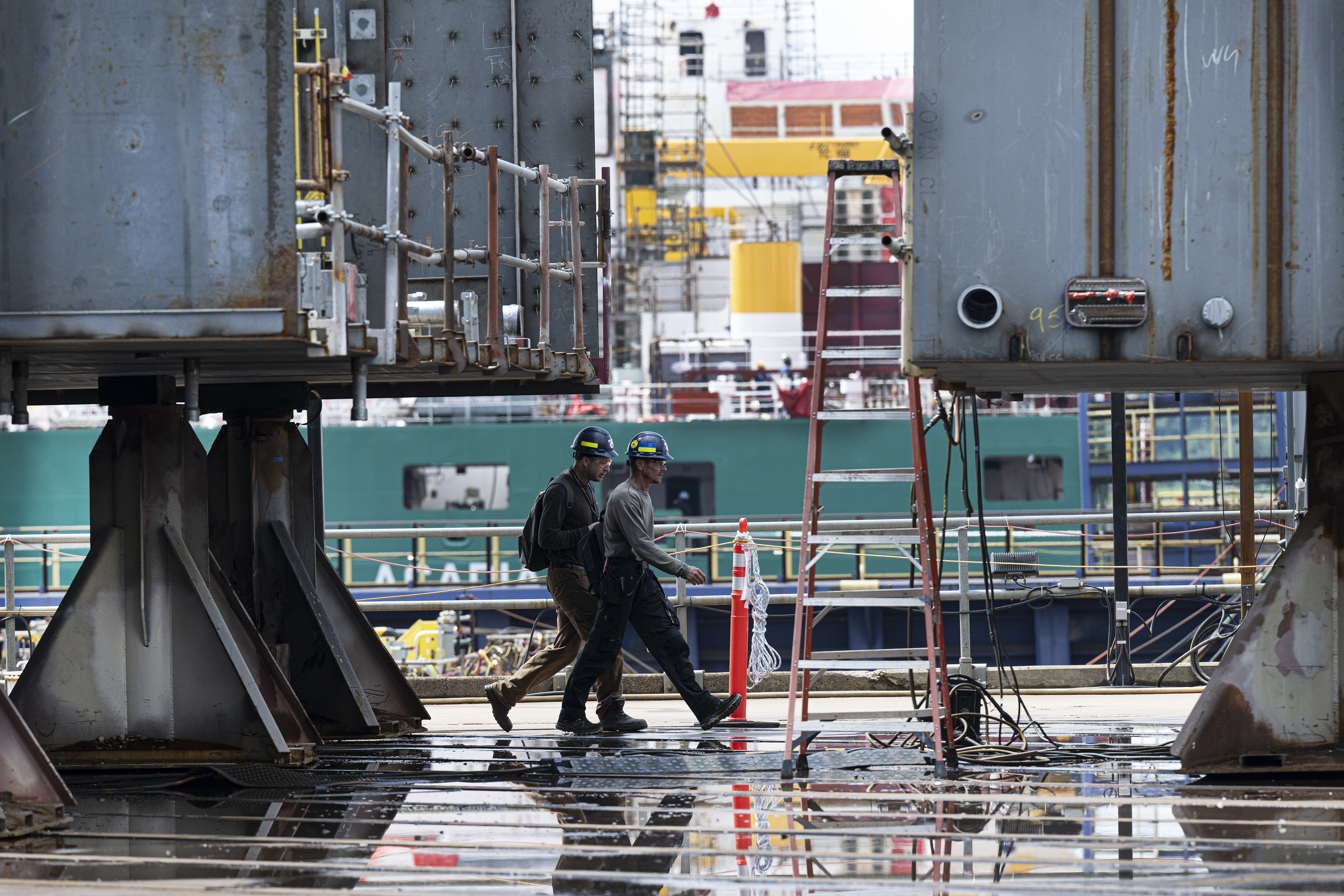
    The U.S. government is spending over a billion dollars to recruit hundreds of thousands of workers it estimates will be needed in Philadelphia and other shipbuilding centers to expand the Navy and compete with lower-cost Chinese yards, as President Donald Trump proposes. The campaign includes “Build Submarines” ads on social media and SEPTA bus shelters and grants to training programs.

    “You have to work the parents,” Michael Cadenazzi, assistant secretary of war for industrial base policy, told contractors assembled by Trump and U.S. Sen. Dave McCormick (R., Pa.) at the U.S. Army War College in Carlisle in July. “Mom and Dad need to understand their kid is succeeding,” even if they skip college for “AI-proof jobs” as “the wizards behind the warriors — shipfitters, welders, pipe fitters.”

    BuildSubmarines.com, a U.S. government-funded marketing effort, is trying to recruit workers for shipyards through public-transit and social-media ads. It also sponsors a Nascar team.U.S. Navy

    If would-be college students prove a tough sell, there’s an even larger population of American workers who have what it takes to build ships but don’t want to, said Gary Kim, a Wharton School graduate student who has studied U.S., Chinese, Japanese, and Korean shipyards.

    In essays for the U.S. Naval Institute and a series of papers titled The Brutal Realities of Building Ships, Kim, formerly a junior officer with U.S. Navy construction units in Asia and a Detroit manufacturing manager, has detailed rough conditions and skilled-labor shortages and suggested what shipyards have to do to realistically fill those jobs.

    Kim is a scheduled speaker at the Philadelphia Navy Yard Symposium on Sept. 26. He agreed to an interview with The Inquirer on a recent visit to Philadelphia. Questions and answers have been edited for clarity and brevity.

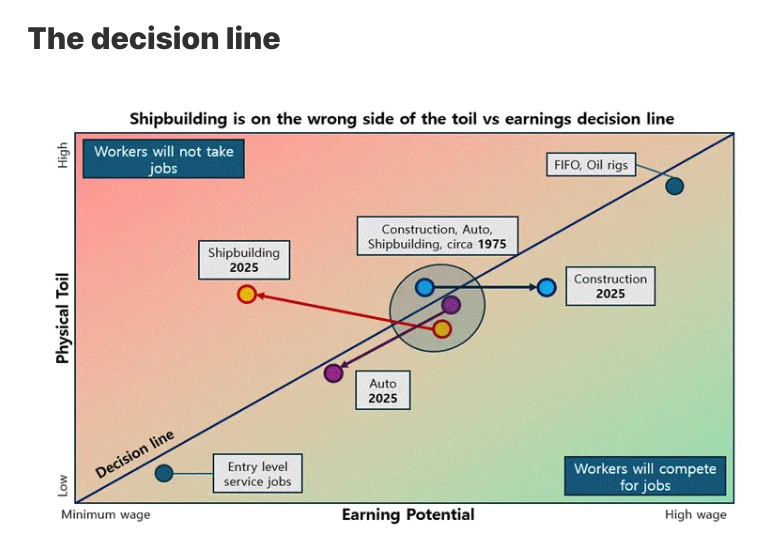
    You’ve written that shipbuilding is heavy construction work — more dangerous than putting up buildings, less comfortable than modern factories, but not better paid.

    Shipyards are great for everyone except the people who work there. The economic boom is paid for in blood.

    The question we should be answering isn’t ‘Why can’t we convince 150,000 more kids to build ships?’ but ‘Why are the 30 million Americans already in the industrial workforce — construction, manufacturing, transportation — refusing shipyard jobs?’

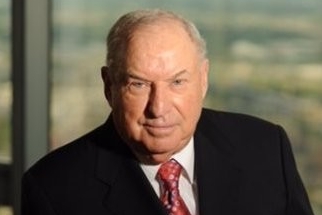
    Gary Kim in Philadelphia in August 2026. Kim is a Wharton School graduate student and naval reserve officer who has studied U.S., Chinese, Japanese, and Korean shipyards.Joseph N. DiStefano

    Shipyard work is an agglomeration of tasks done in the wider industrial economy: welding, plumbing, truck driving. Why does most of that workforce turn away from building ships? Because it’s dark work in dangerous corners. And it doesn’t pay much.

    Companies have invested a lot in improving factory conditions over the past 30 years. Manufacturing became gentler on your body.

    But it’s also less unionized than before. In the new factories, adjusting for inflation, the pay is less. Factory workers and warehouse workers accept repetitive labor in air-conditioned facilities, in exchange for lower pay.

    Construction is a rough trade, but it pays better. The economic rewards have increased. Not only there’s better pay, but it’s a way men and women can become entrepreneurial. Some become contractors. It’s just as hard as shipbuilding, but the payoff is better.

    In shipbuilding, the pay in real terms has declined, but the workplace is only transforming recently with advanced robotics. Sometimes shipyard apprenticeship programs that teach industrial skills see [their graduates] leave for other industrial jobs.

    Comparison of construction, shipbuilding, factory, energy, and entry-level service jobs, pay vs. relative danger, 1975-2025, from data compiled by Gary Kim and posted in his series “The Brutal Realities of Shipbuilding.”Gary Kim
    Could Philadelphia double the ship workforces, as Hanwha Philly Shipyard and Rhoads Industries say they hope to do in the next few years?

    Philly is going to struggle to recruit an industrial workforce. There is a rhyme and rhythm to an industrial city.

    You have industrial accidents. You have elevated rates of chronic conditions years afterward.

    Look at the reactions to the Canada wildfires. Detroit had the worst air quality in the world for a day, but nothing shut down. Everyone from the UAW director to the people in the city government knows the four or five closest auto plants each generate tens of millions of dollars in economic activity daily. Even if city health officials say it’s too much risk, nobody needs to be told what you are taking out of the city if you close.

    Industrial work brings prosperity and less economic inequalities, with [personal and environmental] costs. Manufacturing requires higher risk and having your citizens accept that risk. You have that in the Gulf [home to the U.S. oil industry] and in the Mississippi Valley [where the U.S. steel industry has moved], and in Michigan [auto plants].

    The economy here has been running on services and logistics for so long that I don’t think Philadelphia any longer has that intestinal fortitude to accept what shipyards really are.

    Do U.S. shippers really want more U.S. commercial ships at U.S. prices?

    If the Jones Act [requiring U.S. ships for cargoes between U.S. ports, suspended by Trump] is waived indefinitely, companies are not going to need more ships built here.

    And you need more orders. If a shipyard does not lay out several a ships a year, you can’t develop a career. You start laying a keel; you need a lot of welders. Then cutters. Then plumbers. Then there’s a surge of need for electricians. You can’t sustain that workforce unless you can stage crews across different jobs in the time it takes to build a ship.

    Rhoads in Philadelphia fabricates nuclear-submarine modules for General Dynamics. Can this region eventually build subs?

    Nuclear reactors, spaceships, and American submarines are the most stringent things to build in the world. If Philadelphia wants a more meaningful part of the submarine value chain, we need to build with spaceshiplike tolerances.

    The Navy is putting out the correct messaging that the industrial base needs a diversity of jobs. An amazingly large part of the maritime industrial base doesn’t come from port cities but from inland operations. The most critical part of submarines is the gearboxes, built in California.

    The government has ordered two missile and satellite tracking ships from Hanwha Philly Shipyard. Will Philadelphia-area defense contractors likely do the electronics?

    [The Lockheed Martin-run Navy electronics facility in Moorestown] is the technology center of that industry. But I think the biggest reason Philadelphia landed the tracking ships here was that the yard needed a win. And backlogs in other shipyards are now 10 years and more.

    Hanwha wants to buy Austal’s Alabama shipyards and submarine module works and its California ship repair facility. What does that leave for Philly Shipyard?

    Hanwha wants to be a globally competitive defense prime contractor. Buying Austal would make Hanwha a solid #3 shipyard operator in the U.S., plus their megayard in Korea.

    I expect the Austal yard would focus on smaller warships. Philly would focus on surface auxiliary vessels.

    Most yards lose more money the more ships they build. Hanwha thinks they can do better, and I seriously hope they are right.

    Editor’s note: This article wrongly identified the role of Philadelphia Gear in Navy ship construction. It has been updated.

  • Sea rise prompts Stone Harbor’s Wetlands Institute to move temporarily with plans for a new building

    Sea rise prompts Stone Harbor’s Wetlands Institute to move temporarily with plans for a new building

    The Wetlands Institute in Stone Harbor, N.J., has been a research and education stalwart for decades, instructing thousands of visitors annually on the importance of salt marshes and the marine world.

    Starting this week, though, the nonprofit’s staff will pack up and move to a temporary headquarters, so its main trail can be raised to stave off sea-level rise.

    The existing headquarters will ultimately be razed, with a new, elevated building rising in its place. The current wooden headquarters was built in 1972 and was originally intended for short-term seasonal use.

    Sea level “is rising fast enough that it’s outpacing the ability of the marshes to keep up,” said Lenore Tedesco, executive director of the Wetlands Institute. “They’re starting to drown.”

    “You can see that even right at the institute, where there are more open-water pockets and mud flats, instead of the grasses,” she added.

    Much of the institute’s 34-acre campus sits on low marsh and has become increasingly at risk due to flooding.

    In 2000, the Salt Marsh Trail flooded twice a year. Now, it is flooding up to 70 times a year, Tedesco said.

    For now, staff will move from the Stone Harbor Boulevard location to the New Jersey Coastal Conservation Center on North Delsea Drive in Cape May Court House.

    All programs have been paused as of Tuesday, but the Wetlands Institute will reopen Nov. 7 at the temporary location.

    The Wetlands Institute in Stone Harbor plans to raze its existing building and replace it with a larger, more resilient, expansive structure big enough to house growing levels of research, conservation, and education. This is a rendering of the back of the structure.The Wetlands Institute

    Salt Marsh Trail

    Most of the 31,000 annual visitors to the Wetlands Institute walk the quarter-mile Salt Marsh Trail looking at the bountiful birds and wildlife.

    About half of it and the surrounding ecosystem will be considered unstable low marsh by 2030 if nothing is done. The surrounding marsh sits at about two feet of elevation, while the Salt Marsh Trail, built on an old 1950s road, ranges from three to four feet.

    Tedesco said dredge material from Avalon will be spread on the trail to raise it and surrounding land to create a new high marsh. It will have more vegetation to help buttress the area from storm-driven waves and provide habitat for diamondback terrapins and at-risk coastal birds.

    Tedesco expects trail work to start in October. It will be paid for through a $3 million grant from New Jersey’s Regional Greenhouse Gas Initiative Natural Climate Solutions program.

    The work will not affect the existing elevated metal boardwalk, which will remain as is.

    The institute undertook a similar project last year with state and federal officials to save the adjacent Scotch Bonnet Island, which was drowning.

    About five acres of Scotch Bonnet Island was raised with dredge material to keep it above rising seas.

    The island is situated in Scotch Bonnet Channel, a waterway that cuts through the bay to connect the barrier island to the mainland. The channel has widened by 70 feet since 1970.

    Scientists say sea-level rise in New Jersey is running at twice the global average. They estimate the sea could rise 2 to 5 feet along the coast by 2100.

    New Jersey has 200,000 acres of tidal wetlands, valuable habitat used by shore birds and other wildlife. The Wetlands Institute abuts those tidal wetlands.

    Tedesco said the lessons learned on Scotch Bonnet Island are being used to reimagine the institute’s campus.

    Construction on the Salt Marsh Trail is expected to continue through spring before sensitive wildlife returns.

    File: A snowy egret flies over the salt marsh at the Wetlands Institute in Stone Harbor where dredged material was used to raise the height of the marsh at Scotch Bonnet Island.Monica Herndon / Staff Photographer

    A new building

    Tedesco said architects and engineers are working with the institute’s board of trustees on a proposed new building.

    Those plans call for both the building and grounds to be elevated, while maintaining the “coastal character” of the current institute.

    She said federal, state, and local permits are needed given the sensitive area.

    The Wetlands Institute is getting construction bids for the new building but does not have a final estimated cost or timeline. Tedesco said the institute is still raising money.

    The new headquarters would be built using sustainable methods, such as mass timber construction that uses engineered wood panels, columns, or beams.

    The facility would have more indoor and outdoor classroom space for educational programs, a new lecture hall, modern labs with twice the space, outdoor decks, an aquarium enlarged by 50%, and new exhibits.

    Tedesco said the institute worked with experts to explore keeping the existing building, which was designed by Malcolm Wells, a mid-20th-century designer famed for his “gentle architecture.”

    The structure was used as a biological research station by Lehigh University from 1972 to 1986. It has been expanded multiple times over decades.

    Tedesco said it became clear that it is not feasible to continue using the building because it is so outdated and cannot be raised. She said the institute has expanded into “world-class” research and the facilities are at capacity.

    “We’re in a 55-year-old wooden building in the marsh that was built to residential standards for seasonal use,” Tedesco said. “But you have to give kudos to the building. Nobody expected that a wooden building in a marsh in 1972 would still be functional today.”

  • LeBron James is partnering with Polymarket. The prediction markets can raise ethical concerns.

    LeBron James is partnering with Polymarket. The prediction markets can raise ethical concerns.

    Where LeBron James would choose to play the final years of his storied career was a fixture on prediction markets this summer. Now, James could benefit from the boom of those platforms.

    On Saturday, James shared a short video on social media announcing a partnership with the prediction platform Polymarket. The Sixer then posted a longer commercial-ready version of the video Tuesday, in which James visits Polymarket’s fictional headquarters and its “sports” floor.

    In his tour around the office, Eli Manning, Derek Jeter, Spike Lee, Sue Bird, Emily Ratajkowski, John Leguizamo, and other athletes and celebrities make cameos promoting the platform ahead of football season.

    It is unclear what the nature of James’ partnership with Polymarket is, or if the partnership extends beyond this commercial. Polymarket did not respond to questions about James’ partnership.

    James’ partnership raises ethical questions about whether an active athlete should be promoting and benefiting from gambling platforms, and particularly prediction markets, where inside information and influence could sway bets or determine their outcomes.

    Polymarket and other prediction markets typically have rules prohibiting insider trading and are regulated by the Commodity Futures Trading Commission. The NBA has no policy against its athletes partnering with prediction markets, and is likely to join other leagues by announcing its own official prediction market partnerships before the start of the forthcoming season, as reported by Front Office Sports.

    Prediction markets vs. traditional gambling

    Polymarket and other prediction markets argue they are distinct from traditional sports gambling platforms because there is no “house” that sets odds and stands opposite gamblers. Instead, bets are agreements between individuals and the market sets the odds. But in practice, prediction markets function similarly to sportsbooks, with even more opportunities to wager money.

    Prediction markets offer opportunities that go beyond traditional bets on wins and stats, like which teams won’t win the Super Bowl, which team a free agent player might sign with, or whether a quarterback will average a certain number of fantasy football points over the season. The bets are phrased as binary, yes-or-no outcomes.

    Prediction market offerings extend beyond sports, bringing even more ethical questions — at any moment someone can bet on whether a public figure will say a particular word during a speech, when traffic in the Strait of Hormuz will return to normal levels, or the number of confirmed measles cases in the United States in 2026. Last month, several Democratic senators wrote a letter to the Commodity Futures Trading Commission demanding it stop allowing bets on California wildfires.

    “Prediction markets have been enabled to expand rapidly, increasingly inviting speculation on war, political violence, disasters, and public emergencies that raise ethical and public policy concerns. These markets risk creating perverse incentives, undermining public trust and commodifying human suffering,” they wrote.

    A Kalshi advertisement at a bus stop in Washington, D.C. Daniel Heuer

    A U.S. Special Forces soldier was arrested in April after authorities said he made more than $400,000 using insider information to place Polymarket bets on the military’s raid capturing Venezuela’s president, Nicolás Maduro.

    Athletes are typically prohibited from placing traditional bets on their own leagues, but the rules on prediction markets are less defined. A few months ago, the NBA, MLB, and their players unions sent a letter to the Commodity Futures Trading Commission asking it to bar athletes and league employees from betting on the NBA and MLB in prediction markets.

    The gray areas of legality and ethics around sports gambling are how Phillies All-Star Bryce Harper became the center of controversy this summer, after The Inquirer reported that Harper had sent a personalized video on behalf of the sports betting platform FanDuel to a man who had become addicted to gambling.

    Harper later said he did not have a partnership with FanDuel, and was not aware what the video was being used for or that it was going to someone with a gambling addiction.

    More partnerships on the way?

    Despite the ethical issues, partnerships between athletes and prediction markets appear to be growing. James seems to be the only active athlete partnered with Polymarket, but other major athletes — including soccer star Lionel Messi — have deals with a competitor, Kalshi, or have invested in the platform.

    Elsewhere in the NBA, Giannis Antetokounmpo announced he had become a Kalshi shareholder in February, just after the NBA trade deadline, when Antetokounmpo had been the subject of numerous trade rumors attracting bets on prediction platforms. On deadline day, Antetokounmpo tweeted a clip from The Wolf of Wall Street to happily announce he was not leaving the Milwaukee Bucks, but over the summer, he successfully pushed for a trade to the Miami Heat.

    Bettors on Kalshi reportedly traded more than $23 million over Antetokounmpo’s future during the deadline betting window.

    “One of the things in terms of the ethical issues [of the partnership] is the timing,” Melinda Roth, a professor of business, finance, and sports law at Washington and Lee University, told Fortune magazine of Antetokounmpo’s investment. “The timing really puts a spotlight on how prediction markets work, who is allowed to buy contracts, and who has inside information.”

    Los Angeles Lakers’ LeBron James, left, shares a laugh with Philadelphia 76ers’ Tyrese Maxey, right, during an NBA basketball game, Sunday, Dec. 7, 2025, in Philadelphia.Chris Szagola / AP

    Yet the future of prediction markets is somewhat unclear. They have the backing of President Donald Trump’s administration. Meanwhile, some states are attempting to wrest regulatory control back from the federal government, and the issue may soon come before the U.S. Supreme Court.

    But the direct ties between prediction markets with athletes are not necessarily inevitable — the NFL and PGA Tour prohibit their players from partnering with prediction markets.

    Only a few years ago, James took a much different stance on sports gambling, saying the practice was taking the integrity out of sports.

    “It’s weird that some of our regular fans that love the game kind of only care about a parlay now. … It’s kind of taken some of the integrity out of the game because people are kind of really only caring about the betting,” he told the Los Angeles Times in 2023.

    A year later, James signed an endorsement deal with the sports betting platform DraftKings, promoting wagers during football season in a series of commercials alongside Kevin Hart.

  • Local fence brand is shutting Northeast Philly factory 9 years after being acquired by a larger company

    Local fence brand is shutting Northeast Philly factory 9 years after being acquired by a larger company

    Faced with a huge rent increase, Northeast Philadelphia aluminum fence maker Jerith Manufacturing is closing its factory by next spring.

    Continuing to operate out of the 14400 McNulty Rd. facility would be “economically impractical” in light of the rising cost of rent, general manager K. Robert Lomber said in a layoff notice filed with the Pennsylvania Department of Labor and Industry.

    Rent on the 445,000-square-foot facility is expected to nearly triple starting May 1, Lomber said.

    In the layoff notice, Lomber said Jerith is “going out of business as a separate operating entity.” But the president of Jerith’s parent company, Ameristar Perimeter Security, said last month that Jerith would be adopting a new operating model “to better serve customers and support the long-term success of the Jerith brand.”

    The closure of the Philadelphia site affects 61 workers, 24 of whom will be offered new positions at a New Jersey facility owned by Jerith’s parent company, according to the notice. Layoffs will occur in phases beginning Nov. 15.

    Thirty-eight of Jerith’s 61 Philly workers are represented by Teamsters Local 830.

    Jerith spends about $4.4 million on employee payroll annually, and Philadelphia is expected to miss out on $140,000 annual tax revenue when it is closed, the layoff notice indicates.

    Going forward, some of the manufacturing, assembly, and transportation work Jerith has been doing in Philadelphia will be carried out by Ameristar, which also makes fences, gates, and other barriers, in New Jersey and Tulsa.

    Jerith, which dates back to 1961, uses U.S. aluminum in its products — one of the materials currently caught in the tariff dispute between the United States and Canada, under the Trump administration.

    Jerith was acquired in 2017 by Assa Abloy, which has 64,000 employees in over 70 countries and over 250 brands, including manufacturers of locks and doors, such as Ameristar Perimeter Security.

  • Stanley M. Schwarz, community-minded trial lawyer and former assistant district attorney, has died at 95

    Stanley M. Schwarz, community-minded trial lawyer and former assistant district attorney, has died at 95

    Stanley M. Schwarz, 95, of Philadelphia, community-minded trial lawyer and founder of what is now the Schwarz & Schwarz law firm, former Philadelphia assistant district attorney, Army veteran, mentor, and golfer, died Friday, July 17, of heart failure at his home in Society Hill.

    Public-spirited throughout his life and adept at litigation regarding workplace accidents, medical negligence, reckless driving, careless manufacturers, and other personal injury issues, Mr. Schwarz founded what is now Schwarz & Schwarz PC in 1967. He represented all kinds of clients in all kinds of cases and appeared before the Pennsylvania Supreme, Superior, and Commonwealth Courts more than 20 times.

    He was featured in the Daily News in 1968 when, at no charge to his client, he won $150 from the city for a Philadelphia hairdresser whose car was mistakenly towed. “I was disturbed by her experience” with city officials, he told the Daily News.

    “To many,” his family said in a tribute, “he was more than an attorney. He was a source of guidance and hope.”

    Mr. Schwarz doted on his children.Courtesy of the family

    Mr. Schwarz lived for decades in Society Hill Towers at Second and Locust Streets near the Delaware River and represented its owners association in 1997 as it contested high-rise development along the nearby waterfront. “They’re trying to take away this little Garden of Eden,” he told the Daily News.

    He joined the district attorney’s office in 1960, worked as an assistant district attorney in the major trials unit, and handled hundreds of cases involving murder, assault, robbery, burglary, arson, and other crimes. In one notable case in 1966, he noticed that the photo of a man in the Daily News looked like the at-large suspect in a recent robbery. Detectives tracked the man down and made an arrest.

    He also served as a temporary judge and arbitrator for local, state, and federal courts. He belonged to several legal associations, won awards for his legal and community service, and was an honorary member of the Knights of Columbus.

    He joined the Army after high school, rose to first lieutenant, and served as an intelligence cryptographer during the Korean War. He was admitted to the Temple University School of Law after just a year in college, became editor-in-chief of its law review, and graduated in 1958.

    Mr. Schwarz and his wife, Kathy, married in 1991.Courtesy of the family

    He served two years as a law clerk in the Philadelphia Court of Common Pleas and then as assistant to three district attorneys over six years. “He mentored generations of young lawyers and quietly helped countless people through difficult times,” his family said.

    Born in Philadelphia during the Great Depression, Mr. Schwarz and his family moved often when he was a boy. He lived in New York when he was young and worked part-time as a stock boy and janitor when he was 10 to help pay the bills.

    He attended two dozen schools before moving to Philadelphia in middle school and graduated from Germantown High School in 1948. His family praised “the work ethic and compassion that guided him throughout his life.”

    They said: “Stan’s life was shaped by perseverance, resilience, and a deep commitment to helping others.”

    Mr. Schwarz graduated from Germantown High School in 1948.Courtesy of the family

    Stanley Morris Schwarz was born Jan. 22, 1931. He worked as a mail clerk and accountant after high school and joined the Army when he was 20.

    He married Lee Rosen in 1955, and they had a son, Daniel, and a daughter, Stacy. After a divorce, he married Kathy Campbell in 1991, and they danced and traveled the world together for years. He was especially good at the jitterbug.

    Mr. Schwarz played golf and socialized for more than 50 years at the Bensalem Township Country Club. He was a longtime member of the Society Hill Club. He took his family to boat shows and on memorable vacations to Ocean City, Puerto Rico, the Pocono Mountains, Disney World, and elsewhere.

    He self-published a breezy memoir called The Roller Coaster Life of Flappy in 2022 when he was 91, and said: “As a father, it gave me the greatest pleasure in playing with the kids, whether in our backyard, in the community pool, or in the nearby parks.”

    Mr. Schwarz enjoyed time with his family.Courtesy of the family

    Mr. Schwarz was fun and funny, his daughter said. He taught himself to play piano and saxophone, and they performed duets.

    He was an engaging storyteller. He made personal scrapbooks for his children. Friends called him “amazing” and “incredible” on Instagram.

    His family said: “He made people feel valued and left them better than he found them.” His daughter said: “He was down to earth and playful. He was great with kids. He loved everybody’s children, and the children loved him.”

    In addition to his wife and children, Mr. Schwarz is survived by four grandchildren, a sister, and other relatives. A sister and a brother died earlier.

    Services were held earlier.

    Donations in his name may be made to Congregation Beth El, 8000 Main St., Voorhees, N.J. 08043.

    Mr. Schwarz was close with his daughter, Stacy, above, and his son, Daniel, below. Courtesy of the family
  • Trump threatens to ban Bombardier jet sales as Canada’s tariffs take effect

    Trump threatens to ban Bombardier jet sales as Canada’s tariffs take effect

    President Donald Trump threatened to ban the sale of Canadian Bombardier jets unless they are built in the United States, as Canadian retaliatory tariffs on U.S. goods came into effect amid an escalating trade war between the countries.

    “NO MORE SELLING BOMBARDIER IN THE UNITED STATES!” Trump said in a Truth Social post Monday that also urged people to “BUY AMERICAN.”

    It was not immediately clear how Trump would restrict the sale of the jets. The White House did not immediately respond to an overnight request for comment.

    The president’s comments mark the latest escalation in the ongoing tit-for-tat trade feud between the U.S. and Canada. Just after midnight on Tuesday, Canada’s countertariffs of up to 50 percent on $20 billion worth of U.S. imports came into effect. The levies apply to a vast range of products, including steel and aluminum, dairy, appliances, agricultural equipment, plastics and electronics.

    The move came in response to the U.S. imposing 50 percent tariffs on about $20 billion in Canadian goods last month. After trade talks between the two sides faltered, Prime Minister Mark Carney vowed that Canada would retaliate “dollar for dollar.”

    In his Monday post, Trump said that if Bombardier wanted access to the U.S. market, “they must build here, and stop treating America like a ‘piggybank.’”

    In a statement that did not directly address Trump’s comments, Bombardier said it had sites in nine U.S. states and Washington D.C., and noted that it manufactured its wings in its Texas facility, and flight-control components in California.

    It added it worked with about 2,800 American companies across 47 states and that it “values its great partnership with American companies and its U.S. employees.”

    The Quebec-based firm has previously said it employs more than 3,000 people in the U.S.

    Quebec Premier Christine Fréchette said she had contacted Bombardier’s chief executive to offer “our full support.”

    “Quebec will not allow anyone to dictate where our companies must produce in order to access a market. We will defend our companies, our workers, and our expertise with resolve,” she said in a post on X.

    U.S.-Canada relations have deteriorated drastically during Trump’s second term. In addition to the trade war, Trump has threatened to make Canada the 51st state and signed an executive order renaming Lake Ontario as Lake America.

  • Trump shuns EVs and wind power, but he’s pouring billions into batteries

    Trump shuns EVs and wind power, but he’s pouring billions into batteries

    WASHINGTON — President Donald Trump has been scornful of electric cars for years. But his administration is now pouring billions of dollars into the battery technology that powers them.

    Large lithium-ion batteries have become one of the rare energy technologies that both parties in Washington strongly support — though for very different reasons.

    The Biden administration saw batteries as a green energy tool crucial for addressing global warming and sought to encourage manufacturing them, for use in electric vehicles and to backstop wind and solar power on electric grids. The Trump administration has rolled back efforts to expand clean energy, but officials have nonetheless come to see batteries as essential for many of Trump’s priorities, including powering data centers for artificial intelligence and manufacturing drones for the military.

    The Trump administration has been particularly alarmed by China’s dominance of global supply chains for lithium-ion batteries, and in recent months has made a major push to bolster domestic production of many battery components and associated critical minerals.

    “There has been a growing appreciation for just how important batteries are for so many things,” said Tom Moerenhout, who leads the critical minerals initiative at Columbia University’s Center on Global Energy Policy. “It’s not just EVs, it’s automation, robotics, data centers, drones for defense. And there’s a real move to making sure China doesn’t have a choke point here.”

    In August, the Energy Department awarded $500 million to seven companies that make battery components or process critical minerals like cobalt in the United States. Also last month, the Pentagon announced a $1.4 billion loan to an advanced battery start-up building a factory in Washington state. Federal agencies are funding various domestic efforts to produce graphite and lithium, two raw materials for batteries.

    “For too long, America has depended on foreign actors for critical materials essential to modern life that underpin our economy, energy security, and national security,” Energy Secretary Chris Wright said in announcing the battery awards.

    Still, loosening China’s grip on the global battery industry could be difficult without boosting the domestic market for electric cars, which are by far the largest source of demand for lithium-ion batteries, experts said. Last year, Republicans in Congress repealed a $7,500 tax credit for consumers to buy electric cars with U.S.-made components, which provided a significant incentive for domestic battery manufacturing.

    “If you really want to onshore supply chains, you need electric vehicles, it’s as simple as that,” said Moerenhout. “The defense sector alone is just too small to underwrite a full supply chain for batteries.”

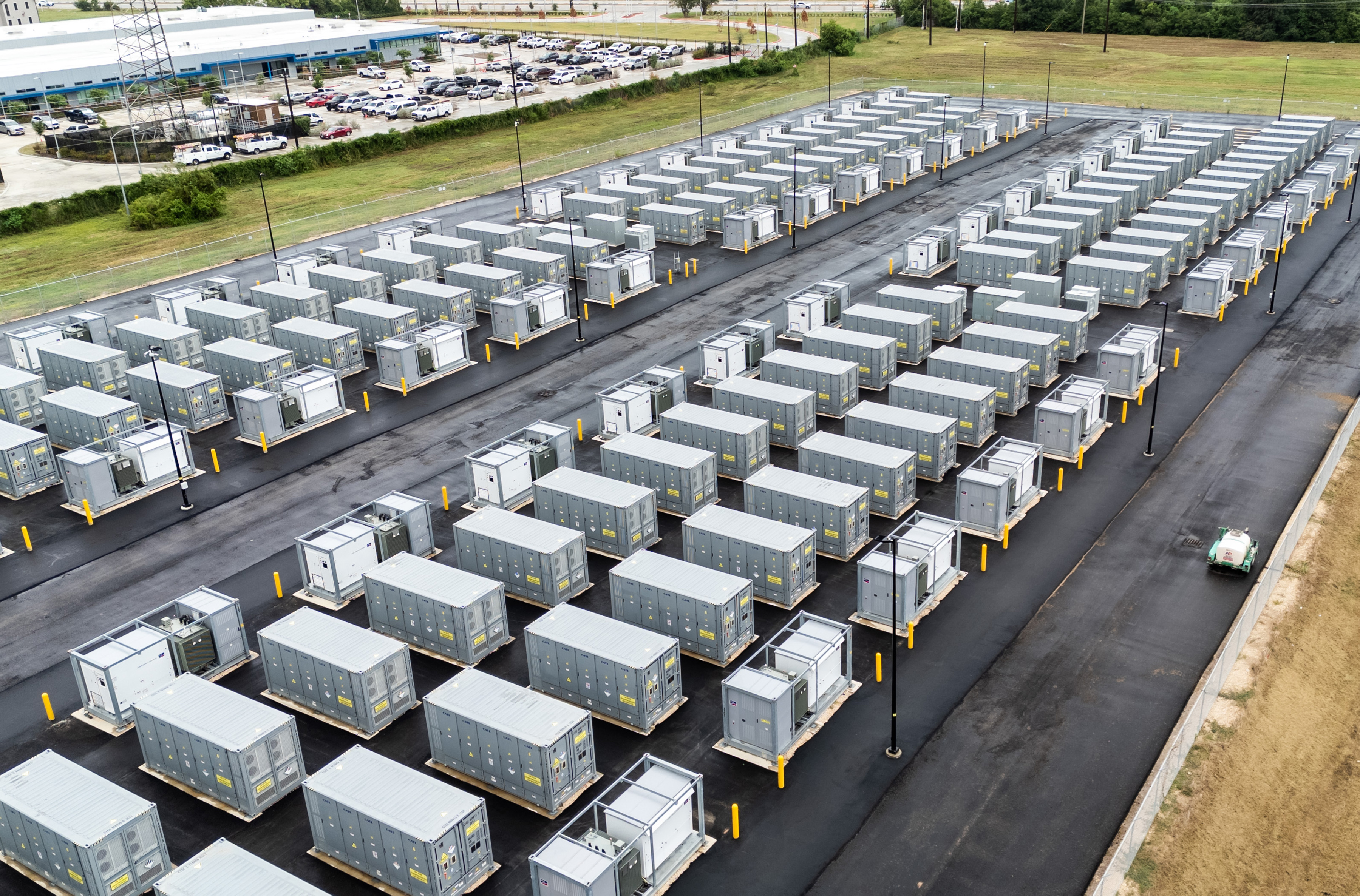
    For years, the Chinese government has made a concerted effort to lead the world in electric vehicles and heavily subsidize its battery industry. The country now sells roughly as many EVs each year as the rest of the world combined, and it has become the preeminent producer of lithium iron phosphate batteries, or LFP, which have become widespread in electric vehicles and stationary storage. The country also dominates the refining of raw materials like lithium and graphite and the production of key components like cathodes and anodes.

    Many officials in Washington have been eager to reduce dependence on China for national security reasons. The U.S. military uses batteries in lasers, hand-held radios, night vision goggles, satellites, and drones, and Chinese components are still needed to make many of these items. AI data centers are increasingly using lithium-ion batteries for backup power.

    China recognizes the leverage it has. Last fall, amid a period of trade tensions, the country threatened to limit exports of a range of battery materials, including graphite, which businesses said would have devastated the nascent U.S. battery industry.

    When Trump returned to office, his administration initially froze billions of dollars in Biden-era grants for battery manufacturing, grouping batteries in with electric vehicles, solar farms, wind turbines, and other clean energy technologies that officials wanted to downplay.

    But that stance quickly shifted.

    While the administration has throttled funding for other clean-energy technologies, the Energy Department has allowed many Biden-era grants for battery makers to proceed. The government has also invested in firms that develop battery components or critical minerals, including Eos, a next-generation battery company.

    The Trump administration has also been more active than the Biden administration in encouraging U.S. mining, and the government has begun taking direct financial stakes in mining companies. That has prompted pushback from Democrats in Congress, who have called for investigations into some mining deals and raised questions about conflicts of interest.

    Last month, Trump held an event at the White House with mining executives and announced more than $2 billion in funding to help revitalize the domestic mining industry, including for battery materials.

    That included a $1.4 billion loan from the Pentagon’s Office of Strategic Capital to Sila Nanotechnologies, a company that has developed a type of lithium-ion battery that uses silicon materials instead of Chinese graphite.

    The company has spent nearly 15 years developing its technology, and its factory in Moses Lake, Washington, can now make enough material for tens of thousands of batteries each year. But that’s still only enough to supply less than 0.1% of the global market, and Sila is hoping to expand production drastically while competing against ferocious Chinese competition.

    “It takes an immense amount of time and effort to expand and do this right,” said Gene Berdichevsky, CEO of Sila. “And for investors to bet on that, they need confidence that we have the right policies to support this kind of industry and not just let it go offshore.”

    This article originally appeared in the New York Times.

    Gene Berdichevsky, the chief executive of Sila Nanotechnologies, at the company’s facility in Moses Lake, Wash., Nov. 3. 2025. Sila Nanotechnologies received a conditional $1.4 billion loan commitment from the Trump administration.GRANT HINDSLEY
  • The wrong people are paying off their mortgages

    The wrong people are paying off their mortgages

    Almost 1 in every 4 homeowners is paying off their mortgage at a rate faster than they’re required to — but the people who would benefit the most from this strategy are the ones least likely doing it.

    The surprising new data comes from the major lender Rocket Mortgage, which analyzed early payments on nearly 3 million of its loans in all 50 states over the past five years.

    The company found that people with the ultralow mortgage rates that were offered in 2020 and 2021 are actually much more likely than those with today’s high interest rates to pay off their loans faster than required, a counterintuitive finding that runs against financial advice.

    The average extra contribution is equivalent to one additional full monthly mortgage payment per year, Rocket said. On a 30-year loan, that rate of excess repayment could mean shortening the loan by more than five years.

    The way a mortgage works is that each monthly payment is a mix of a repayment of some of the loan itself (the principal) and an interest payment. When borrowers make additional payments, those voluntary contributions go entirely toward paying down the principal, not interest. That ultimately reduces the total amount of interest that the borrower will ever have to pay, since the borrower stops accumulating interest on the portion of the principal that’s been repaid. Prepaying doesn’t just mean paying faster, but actually paying less. It can reduce total interest by tens of thousands of dollars.

    But the calculation isn’t as simple as thinking that paying more interest is worse. Borrowers who decide to pay extra have to think about how they could have used that money instead.

    Interest rates today are much higher than five years ago — not just for home loans, but for bank accounts and investments, too. A person who could hope for a 5% return on money they invest in the stock market, but chooses to put that money toward paying off their 3% mortgage instead, is losing out on 2% of the value.

    Indeed, a low mortgage rate is one of the most valuable ways you could free up your money to make better investments. “Financially speaking, if I have a 2.5% mortgage, I would rather pay them as slowly and as long as I can,” said financial planner Christopher Price.

    That’s not what Rocket Mortgage’s data shows people have actually been doing. Instead, the company found that more than 1 in 4 people who took out mortgages in 2020, when rates were very low, have consistently been making extra payments almost the entire life of their loans, as have nearly as many who started mortgages in 2021. For those who started their mortgages more recently, and thus have interest rates about twice as high, the excess repayment rates are lower, about 1 in 5 borrowers making extra payments.

    Price offered several reasons people might make this financial mistake. Some simply believe that debt is bad; many people in particular have the idea that they should hold no debts when they retire. Even a low-rate mortgage, which Price would consider a good debt to hold, spooks them. “I have this kind of conversation all the time,” he said. “The answer is: Don’t do it, if you have a 2.5% interest rate.”

    Other borrowers, he said, don’t have the financial savvy to know how to invest their money. “Those people say: Hey, I don’t know what to do with this money. I’ve been getting raises. Where do I put it?” Instead of opening investment accounts, they pay more toward their mortgages.

    Washington Post financial columnist Michelle Singletary disagrees, though she knows hers is a controversial position.

    Singletary received outraged emails from readers when she disclosed that she had paid off her 2.75% mortgage eight years early. She argued that she preferred the increased monthly cash flow without any mortgage payment, and that she was guaranteed to save money on mortgage interest she’ll never pay, compared with an unknown return in the stock market. She also simply preferred the feeling of owning the house free and clear: “I hate debt.”

    The higher rate of extra payments in the Rocket Mortgage data among those with low interest rates doesn’t mean people with higher interest rates don’t want to pay off their loans faster, too. But people who bought homes recently simply have much larger monthly mortgage payments than those who bought five years ago. Not only is their interest rate twice as high, but home values skyrocketed in that same time period. Most of them simply don’t have the extra money to put any more toward their mortgages, even to get out of a bad rate faster.