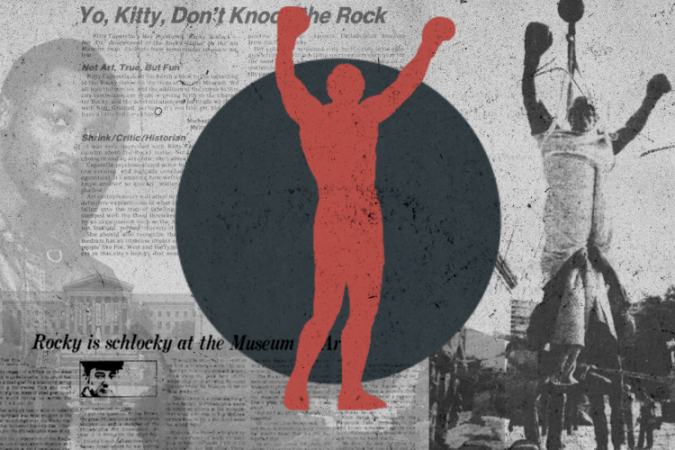
Controversy has long dogged Philly’s Rocky statues — controversy that on the surface is about what the statues represent and where they belong, but is really about class, commercialism, and community. But now, argues columnist Mike Sielski, the Rocky Exhibit at the Philadelphia Art Museum is a sign that the city has finally fully embraced the statue’s popular power and meaning. The big question is: Do you agree?
Author: Mike Sielski
-
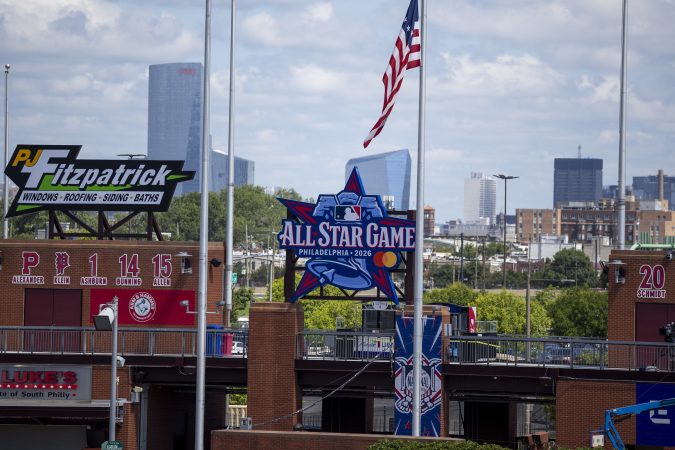
Will it really be an All-Star Game at Citizens Bank Park if the best of the best aren’t there?
The best player in Major League Baseball — a player who can make a claim to being the greatest baseball player ever — will not play in Tuesday night’s All-Star Game at Citizens Bank Park. The best player on the most popular team in Major League Baseball — a player who hit at least 53 home runs in three of the previous four seasons and is among the most recognizable figures in the sport — will not play either. And the best pitcher for the franchise that is hosting the game — a pitcher who can make a claim to being the best starter in the majors for the last several years — wasn’t initially selected to be an All-Star, then was, then rejected the invitation.
If the stars everyone wants to see don’t play, does the All-Star Game still make a sound? It was a question worth contemplating Monday. It wasn’t the only one. The players who will make up the American and National League rosters Tuesday night plopped down on chairs along Ashburn Alley for the game’s media availability, and the juice wasn’t quite what it might have been.
There were a couple of famous names, such as Bryce Harper and Mike Trout. There were emerging stars, such as the Washington Nationals’ James Wood and the Chicago Cubs’ Pete Crow-Armstrong. There were the grateful first-timers, such as the Phillies’ Jesús Luzardo and the Detroit Tigers’ Kevin McGonigle (a proud Monsignor Bonner and Archbishop Prendergast alum). But because of some adverse circumstances, the showcase will be without three of the game’s greatest showmen.
The Dodgers’ Shohei Ohtani has irritation in his left knee. The Yankees’ Aaron Judge has a stress fracture in his right rib. The Phillies’ Zack Wheeler has a bruise to his ego.
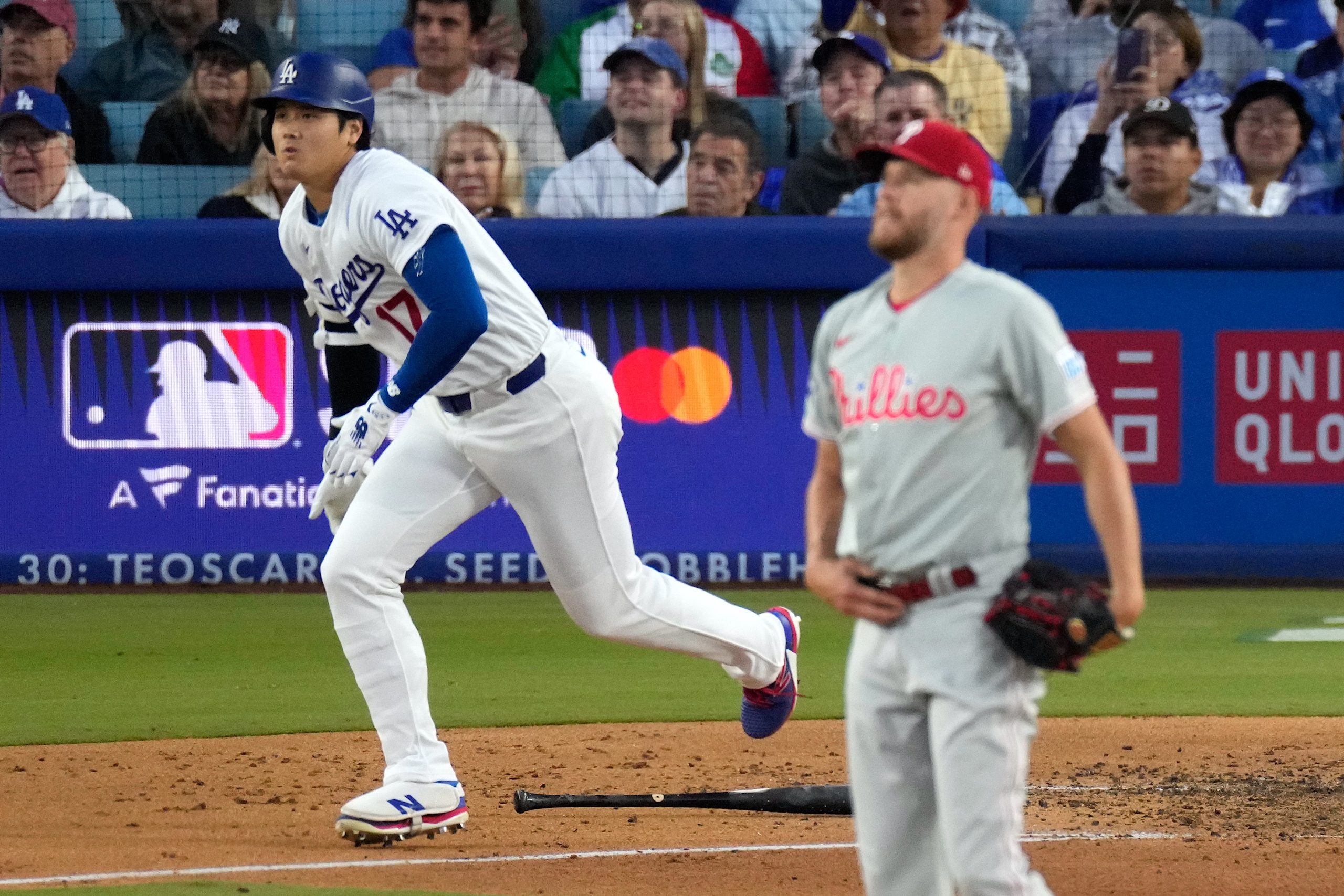
Shohei Ohtani (left) will sit it out Tuesday night along with Zack Wheeler.Mark J. Terrill They were missed Monday and will be missed Tuesday, though their conspicuous absences weren’t all their fault. As the Dodgers’ best hitter and one of their best pitchers, Ohtani already bears some heavy obligations; he can be forgiven for declining to play hurt through even an inning Tuesday. And Judge hasn’t appeared in a game for the Yankees since May 31.
Wheeler is a different story, though, and his situation did raise the issue of the All-Star Game’s purpose. Is it a showcase for the game’s most popular and accomplished players, a chance for fans to see those stars all together at once? Is it a reward for those players whose performances in the season’s first half were particularly excellent? If so, does the game really need its longtime quota system of having every team represented?
Wheeler’s snub touched on all those topics. It had become a cause célèbre around here, of course, and he was so miffed that on Friday, when Major League Baseball offered him a spot on the NL team, he said no, telling reporters, “They disrespected me, so I’m not going to participate in it.” His nose-thumbing at MLB has garnered him a lot of atta-boys from Phillies fans and media members. Still, it would be easier to be sympathetic to Wheeler if he hadn’t been selected to the All-Star Team in 2024 and 2025 and declined each year not just to pitch but to show up to the game.
In fairness to Wheeler, he was suffering from some back tightness in 2024 and had pitched on the Sunday before the 2025 game. But in fairness to the people who make such decisions, how many times does a player have to turn down participating in the All-Star festivities before they catch the hint that he’d rather spend the break down the shore?
Maybe the honor of playing in the All-Star Game doesn’t matter as much to Wheeler as the honor of saying he’s an All-Star does, especially once it comes time for the National Baseball Hall of Fame’s voters to consider his credentials and case for induction.
But then, Wheeler’s attitude toward the game is nothing new among major leaguers, despite the common assertion (and reality) that baseball’s All-Star Game carries more meaning than the NBA All-Star Game or the Pro Bowl. If it does, it’s not by much.
“I never felt like there was that much at stake,” said Phillies manager Don Mattingly, a six-time American League All-Star selection during his 14-year career with the Yankees. “I felt like it was an exhibition, really. There was so much stuff around it, all the stuff you have to do. At game time, guys want to play, but you’re not as invested as you are in a pennant race, going down to the last week of the season. It doesn’t feel like that.”
So instead of Wheeler, the National League’s pitching staff will have the San Diego Padres’ Adrian Morejon, a 27-year-old middle reliever with a 3.42 earned-run average this season. And because the rotation schedules of Jacob Misiorowski, Paul Skenes, and Max Meyer — three of the National League’s top starters — made them unavailable to pitch Tuesday night, Luzardo was among some late additions to the roster.
“There’s two sides,” said Luzardo, who is 8-4 with a 3.51 ERA and 136 strikeouts in 110⅓ innings this season. “The child in me sees it as all the best stars in baseball getting together and playing a game. That was me growing up watching the All-Star Game. Now, being a player, it’s a reward for the success you’ve had. Obviously, there’s a lot of motivation to go out and perform every time out. You’re going to get the best out of everyone at these games.”
The question isn’t whether the fans will see these players give their best. The question is whether the players they’ll see are really the best — and how many of the best of the best really want to be there at all.
-

Without Leo Carlsson, the Flyers’ hunt for their pot of gold just got harder and longer
Think of the Flyers as an explorer who landed on a deserted island. On this island, deep within miles of thick jungle, is treasure. The explorer knows the treasure is there somewhere, and he aims to find it.
Leo Carlsson would have been a new machete: sharp, strong, capable of cutting through all those vines and branches and trunks to make the Flyers’ journey to those riches easier and faster. Now, the explorer won’t have that tool. Now that the Anaheim Ducks have matched the five-year, $90-million offer sheet that Carlsson signed with the Flyers last week, the Flyers won’t have the steel blade that Carlsson represented as a 6-foot-3, 21-year-old, clear-cut first-line center just entering his prime.
So where does that leave them? It means that their trek to that treasure, to their first Stanley Cup since 1974-75, will likely be slower and less certain. They may get to it eventually, but it’s going to take more time and be more costly.
Had the Ducks declined to match the Flyers’ audacious offer — and make no mistake, this gambit by Danny Brière was bold and creative, as close to a Now youse can’t leave move as an NHL general manager can make — Anaheim would have received four first-round picks from the Flyers. That price would have been steep. But the Flyers would have added Carlsson, who averaged nearly a point a game last season, is an excellent player now, and has shown every sign that he will get even better.
They need a No. 1 center, not merely for the talent and scoring touch such a player would provide, but also so they can slot their other centers — Trevor Zegras, Christian Dvorak, and Sean Couturier — more appropriately. With Carlsson (or any center of similar caliber, for that matter), Zegras would have become the second-line guy. Dvorak would have become a terrific third-line guy. And Couturier would have remained in the role he played so well in last season’s playoffs, as an outstanding fourth-line checker, faceoff-taker, and leader.
What’s more, the Flyers have a roster and a farm system with plenty of promising young players, and if this move had come to fruition, they wouldn’t have had to sacrifice any of them to fill one of their biggest holes. That’s perhaps the most disappointing aspect of this result for them: That luxury of gaining an emerging superstar without having to give up valuable players and/or prospects already within the organization likely is no longer available to them.
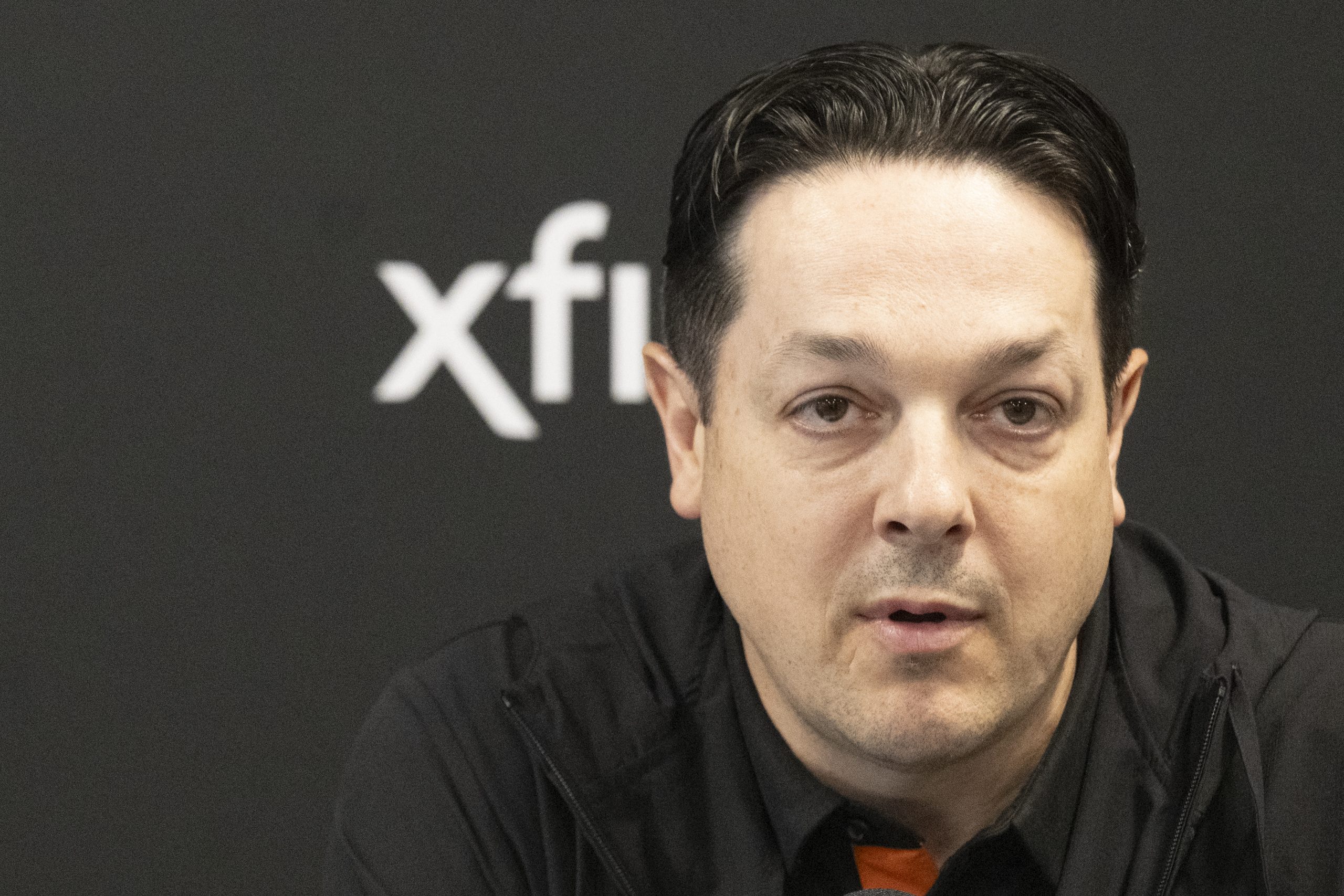
With the Carlsson episode behind him, Flyers general manager Danny Brière must be practical about the team’s range of needs. Jose F. Moreno / Staff Photographer They’re interested in the Detroit Red Wings’ Dylan Larkin, for instance; though Larkin is 7½ years older than Carlsson, he still would fit the Flyers like a well-tailored suit. But assuming Larkin, who has a full no-movement clause, is even willing to join the Flyers, the trade package necessary to acquire him would probably have to include a player or two on their current roster. Would Larkin be worth the departure of, say, Owen Tippett and/or Denver Barkey?
Just because Brière made such a huge play for Carlsson doesn’t mean he has to answer that question, immediately or ever. The smartest thing he and the Flyers’ leadership team have done in the three years since he took over as GM has been to give themselves flexibility in improving the team. They didn’t have to shock the NHL by presenting that offer sheet to Carlsson — a proposal for a contract that has now made him the league’s highest-paid player. But they did. After years of running in place, after qualifying for the postseason for the first time since 2020, they declared that they were ready to spend again, but they made that declaration on their terms.
They have several choices for how they can proceed. They need not just a No. 1 center, but a top-pair defenseman, or at least one capable of quarterbacking a power play. They can act quickly to acquire one or both of those players, to find short-term and/or long-term answers to those lingering questions, or they can wait.
Remember: Even if they had won their duel with the Ducks for Carlsson, the Flyers wouldn’t have been considered a true contender this season for the Stanley Cup. Porter Martone, Matvei Michkov, Tyson Foerster, Jamie Drysdale, Alex Bump, Zegras: All of them have growth and development ahead of them. Yes, the Flyers’ hunt will take longer now that Leo Carlsson, that oh-so useful tool, will remain on the West Coast, but they can still find that chest of gold. They just have to take care not to get lost along the way.
-
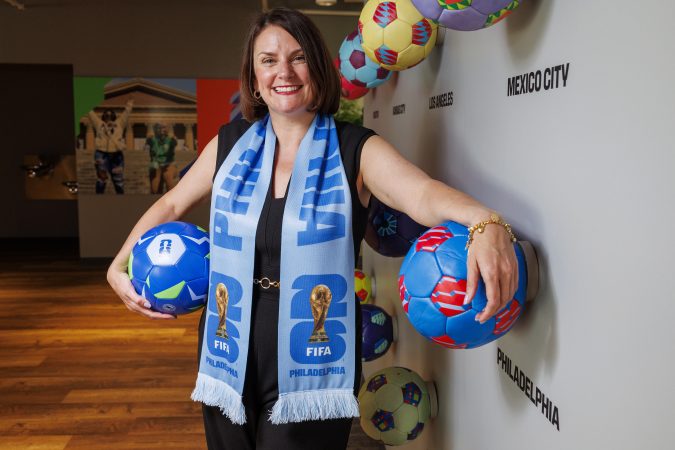
Meg Kane was the perfect face of Philly’s World Cup campaign. Her family, and its tragedy, shaped her message.
One person after another shuffled toward her from the funeral line snaking down the center aisle, through the vestibule of St. Anthony of Padua Catholic Church, out to Forest Avenue in Ambler, and I wondered as I approached her how long Meg Kane could keep this up. The sad, grateful smile. The long, tight hugs. The posture she maintained, straight as a soldier, when the shock and grief simmering within her should have sent her to her knees.
It was Friday, April 12, 2024. Eight days had passed since the house fire that killed her parents — the kind of unbelievable tragedy that interrupts a local newscast, helicopters hovering over the smoldering ruins. Unbelievable, too, because it had happened to Meg. Over the quarter-century that we have been close, she has risen through the public relations industry to a place of power and influence within Philadelphia without compromising the qualities that made her, above all else, a decent human being. It always seemed that her intelligence and drive, her character and achievements, melded to form a shield that would protect her from catastrophe. Something like this doesn’t happen to someone like Meg, I thought that day, as if such a thought were anything other than a mind trick, a weak attempt to reconcile how and why my friend’s mother and father were dead.
The line stretched to more than 200 people, perhaps more than 300. No one standing in it should have been surprised at its length. Meg had relationships and connections throughout the Delaware Valley, of course, but more than that, she and her family had embodied the blending of some beautiful and long-conflicted aspects of Philadelphia’s history and culture. They had learned to live with and revel in the tensions inherent in certain traditions here. Their roots were that deep. Their hearts were that open. Hers most of all.
That background is one reason Meg has been the ideal face of the campaign to bring the World Cup to Philadelphia and promote it once it was here, to play up and celebrate the happy marriage of soccer and the city. It also is the reason that — through every match, every publicity event, every meeting, every long and restless night before and during this tournament, all while the eyes of the globe had been on Philadelphia — she has been holding all that pride in the same palm as so much pain.

Meg Kane looks at a photo of her mother among old family photos in her Philadelphia apartment in May. The photos were recovered from the scene of an April 2024 house fire in Ambler that killed both of her parents.Elizabeth Robertson / Staff Photographer Everything essential in life
There she is again. Another quickie interview on Fox29. Another guest spot on a PHLY Sports panel. Another four paragraphs of insightful quotes to us at The Inquirer. Another Amtrak ride up to New York or 14-hour flight to Doha, Qatar, to see what she could learn, then another debrief with her colleagues at Philadelphia Soccer 2026. Here’s what they did. Here’s why it did or didn’t work. Here’s what we can and should do.
Nothing new for Meg Kane. Nothing out of the ordinary. Revitalizing Tastykake’s brand and business when its headquarters relocated from Hunting Park to the Navy Yard … making ready the way for Pope Francis’ visit to town in 2015 … counseling the Philadelphia Orchestra and the archdiocese … all this at the tenderest of ages, all this before she turned 45 in January.
“When the odds are against us,” said her friend Christopher Pinto, the development lead of the Philly Pops, “this city calls Meg Kane to make the impossible possible.”
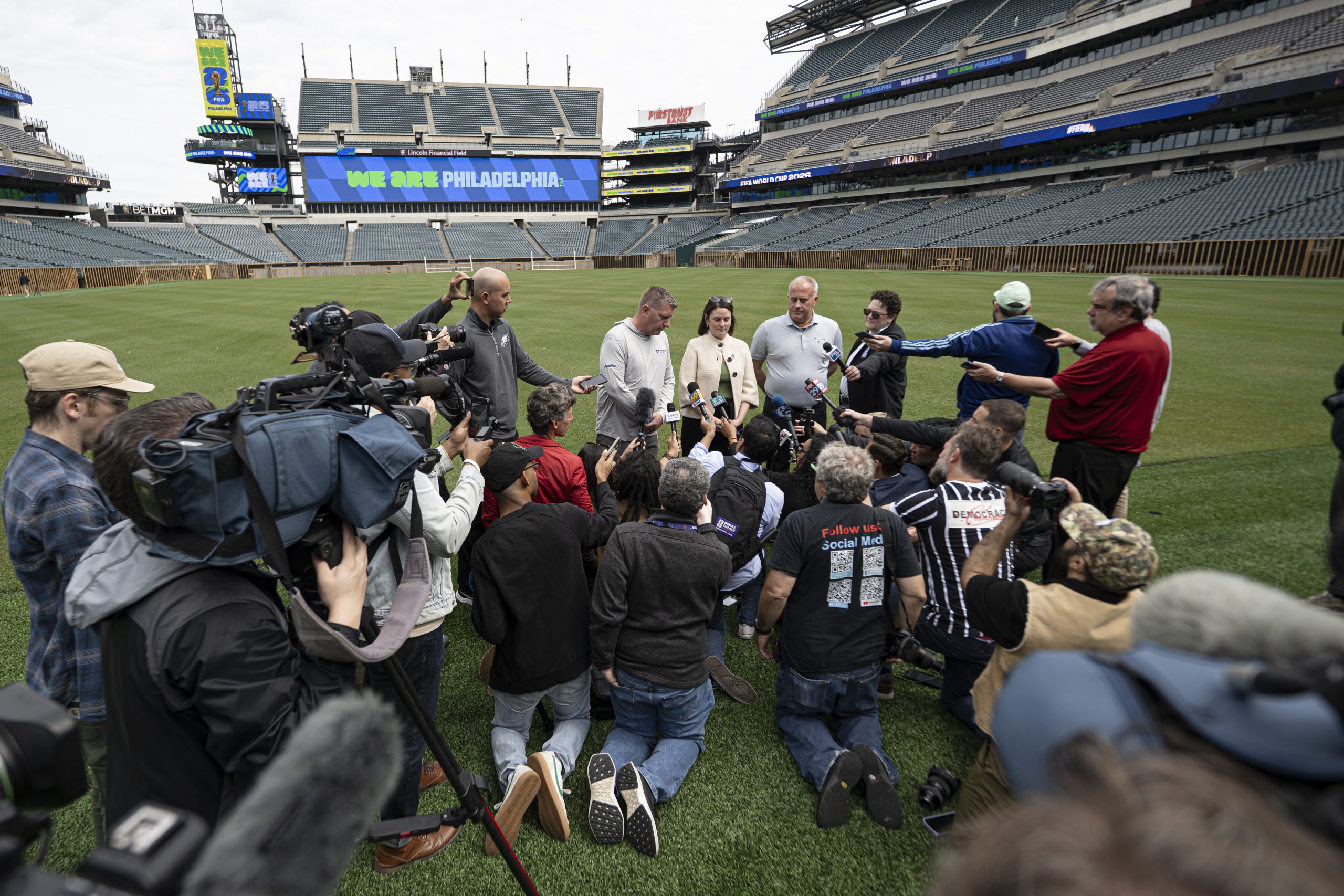
Meg Kane (center) speaks at a press conference about preparations for the FIFA World Cup in May at Lincoln Financial Field.Jose F. Moreno / Staff Photographer Who was better to evangelize about Philadelphia, to make the case that it was an ideal location for the biggest event in the world’s most popular sport? Who else had the requisite combination of local expertise and enthusiasm to share the multitudes that the city contained? Meg’s mother, Debbie, and biological father, Richard, had divorced not long after Meg was born. Debbie then married Steve Wood in September 1983 — a Little Flower alumna and a North Catholic graduate reconnecting 15 years after they’d met as teenagers on the Wildwood boardwalk.
Meg wasn’t yet 3 when Steve became her stepfather, but the word was appropriate only in its most literal sense. He was Dad, too, and she was his daughter, full stop, and everything that was essential in his life became essential in hers …
… and everything included their early-afternoon car trips together starting when Meg was 7, when Steve would pick her up after another half-day at St. Martin of Tours School and drive down I-95 to 13th and Walnut, to the bar that Steve and his brother, Bill, had opened in 1980, to Woody’s — to the best-known gay social establishment that Philadelphia has ever known. While Steve balanced the books, Meg — still in her Catholic school uniform, her plaid skirt and saddle shoes — sat at the bar, the daytime bartenders fixing her fresh cherry Cokes, making them the right way, muddling the fruit and filling her glass with fountain soda, the little girl chatting up the customers and playing Ms. Pac-Man on the arcade machine upstairs and remaining mostly oblivious, never thinking anything there was strange or sinful, her parents never suggesting anything was.

As a child, Meg Kane’s afternoons sometimes included stops at her dad and uncle’s bar, Woody’s.Elizabeth Robertson / Staff Photographer The cognitive dissonance might have caused constant friction in one family or torn another apart. It didn’t exist within Meg’s. Steve had one rule about the visits that Meg, her younger sister, Liz, and their younger brother, Stephen, made to Woody’s: If you see someone there you know, keep it to yourself. “It was important we never outed anybody,” Meg said. “At that time, there were people for whom Woody’s was an oasis, an escape, the one place they could be themselves.”
The bartenders there picked up extra work at Liz’s and Stephen’s christening parties. Bill’s partner, Lee Mallon, showed up to the family’s annual Christmas party dressed as Santa. Debbie, who became a principal at Norwood-Fontbonne Academy in Chestnut Hill after years of teaching in the archdiocese, loved to tell the story about the earnest couple who made an appointment to tell her something troubling … except the delicate topic had nothing to do with the couple’s children. The husband had been downtown, and he and his wife had been praying about whether to share what he saw with Debbie, and, well … Your husband walked into Woody’s. And Debbie let out a belly laugh. Oh, I know … By the way, have you forgotten what my last name is?
At the height of the AIDS crisis in the 1980s and ’90s, Steve and Bill kept employees on the payroll even though they couldn’t work anymore, held celebration-of-life luncheons at the bar, and covered the cost of memorial services and burials when no one else would. Those trips to hospitals and funeral parlors were rarely, if ever, spoken of within the Wood family. Steve’s mother had died when he was 4 and his father when he was 13. His siblings had raised him, and he considered business associates to be friends and friends to be family, and maybe a young woman who later would be charged with uniting a diverse but territorial city behind a common mission had to grow up immersed in such acceptance, such label-free loyalty.
There was Meg, riding with Steve every morning during her high school years from their new home in the Montgomery County suburbs to Academy of Notre Dame in Villanova — a school with a great speech-debate program for a teenager who knew she’d end up talking for a living — the two of them listening to WIP throughout those 45-minute commutes. “It’s how I learned to be a sports fan,” she said. “My passion was cultivated because of our relationship.” There was Liz, going her own way at Mount St. Joseph Academy. There was Stephen, heading off to St. Joseph’s Prep. But it wasn’t until Meg’s freshman year at La Salle, when a male student she didn’t know knocked on the door of her dorm room to thank her — Your family owns Woody’s, right? I don’t know what I would have done without it — that she perceived her family as resting at the center of every Venn diagram of Philadelphia, sharing something in common with every group and subgroup.
I met her during the first semester of her junior year at La Salle, when she took a journalism class I was teaching in the fall of 2001. It is an intimidating thing to be a 26-year-old adjunct professor, to have taught for just two years, and to suspect immediately that one of your students is smarter and wiser and more sophisticated than you are. Ten days into the term, on Tuesday, Sept. 11, she proved she was.
Class began at 9 a.m. I tried to get 20 minutes worth of lecture time in as black smoke billowed from the World Trade Center towers and my students, a few of whom hailed from New York and North Jersey, chewed their fingernails and fidgeted in their chairs. Finally, Meg shot me a look that said, I know you mean well, but … please, we gotta get out of here. When the class reconvened later that week, I asked for the students’ forgiveness for my stupid officiousness, for my failure to read the classroom, and we spent the rest of the period discussing and venting about the terrorist attacks and their aftermath. In September 2011, Meg sent me a letter — not an email, not a direct message, a letter, on paper, more permanent — recalling that week. You did what a teacher is supposed to do, she wrote. You earned our trust, and you never lost it. It remains a treasured gift, that letter and its contents, that benefit of the doubt, that measure of grace that I hadn’t earned and didn’t deserve.
By then, Steve and Bill had sold Woody’s and opened another bar, Knock, and Meg had lifted off and would continue climbing in her career: from La Salle — she was her class’s commencement speaker — to graduate school at Maryland; from earning a master’s degree to planning and publicizing some of the city’s biggest events; from getting a text message in November 2019 from Angela Val, who was the CEO of the city’s convention and visitors bureau at the time, to meeting her that night at the Ritz Carlton. We need you, Val told her. We’re going to bid on the World Cup.
It was the project of a lifetime. It gave her the runway and credibility to open her own PR firm, Signature 57, in 2021. It put her front and center as the captain of the city’s World Cup cheerleading squad — “the Pied Piper of Philly soccer,” someone called her. And she still could be the daughter and sister and friend she’d always been, ready at a moment’s notice to give whatever had to be given. Drive five hours one way to attend the funeral of a colleague’s parent? It’s a day. What’s a day? Get off a plane after a week of work in Ireland and head straight to a chamber of commerce dinner that night? Work an 80-to-100-hour week? Of course. How else would she be there for her family if she didn’t excel in her professional life, if she didn’t squeeze her responsibilities and extra efforts into the smallest possible windows of time?
Yes, she thought it, too: Something like this doesn’t happen to someone like me. But things did happen. Debbie retired and, without her work in education, struggled in the void, losing weight, chain-smoking so much that her favorite blanket became pocked with holes where fallen ashes — and even the still-lit tip of one of her Merit Menthols, as she was dozing off — had burned through the wool. Stephen moved back in with his parents after finishing at Penn State and stayed with them for nine years, teaching English at Norwood, helping Steve care for Debbie. Liz and her husband, Michael McCabe, both faculty members at La Salle College High School, lost a baby daughter, Eleanor, and one night, Steve sat with Meg at his dining room table, a Phillies game on TV in the background. He had grown up without a mother and father. He had watched dear friends waste away to a deadly virus. Yes, these things and more did happen, but “my dad,” Meg said, “had an incredibly positive view of the world,” and at the table, he described to her how he had tried to comfort Liz.
Don’t despair, he said. Don’t despair. It’s the only way to keep going.
The horror of a ticking clock
On Thursday, April 4, 2024. Meg was in a room at the Fairmont in Washington, D.C., already awake for close to two hours, writing and rewriting speeches and teleprompter scripts for the Horatio Alger Association Awards, a three-day event for the philanthropic juggernaut that had become a signature project for Signature 57: a CEO’s retirement, the introduction of 12 new members, two major dinners, an undertaking so massive that Meg and four coworkers bunkered for a week in the hotel to complete it.
Still in her pajamas, she was trudging to the bathroom to wash her face when her phone buzzed and lit up pink, the color that meant Liz was calling. She assumed something was wrong with Francis, Liz and Mike’s 4-month-old son.
Meg looked at her phone. It was 6:42 a.m.
Liz?
Meg, she shrieked, I’m watching the house burn down!
What?
I’m watching the news. I’m holding the baby, feeding the baby, and the house is on fire!
Meg told Liz to call the police. She put her phone down and walked to the bathroom, violently shaking, and did not wash her face. She called her boyfriend, Keith Audit, and told him, I need you to find out if my parents’ house in on fire, and Liz called back and said that the police had told her that someone would be in touch and she had tried calling Steve’s phone but it had gone right to voicemail and Liz kept saying, It’s definitely the house, and I don’t know what to do, and then Meg said out loud an irrational thing: We have to call Norwood. Stephen’s a teacher. Stephen’s not going to make it to school. Someone has to let Norwood know to get a sub. And Meg hung up with Liz and called Shannon Craige, Norwood’s curriculum director, who told her the students were on spring break and Norwood was closed.
Meg looked at her phone. It was 6:53 a.m.
She called Stephanie Bambach, the vice president of Signature 57, who was in a room above her. When she arrived at Meg’s room, Bambach was surprised that Meg’s demeanor was as measured as it was. She was not surprised that Meg’s voice was trembling.
I have to finish writing the remarks for Saturday night, Meg said. I’m only halfway done. I can’t leave.
It doesn’t matter, Meg.
Meg reopened her laptop and emailed every document and every draft of every unfinished document to Bambach. She grabbed a black striped sweater and a pair of black leggings, went into the bathroom, and got dressed.
“I remember looking at myself in the mirror,” she said later, “and saying, ‘You will never wear these clothes again.’”
Bambach arranged for a car service to pick up Meg at the hotel and drive her back to Philadelphia. The two of them rode an elevator down to the lobby. Meg held her room key. She tried to hand it to Bambach.
In case, Meg said, someone needs to use my room.
Bambach didn’t take the key. Keep it. Good thoughts. It’s going to be OK. You might come back.
I’m not coming back, Meg said. It’s not going to be OK.
In the back seat of a black sedan, Meg’s phone rang again.
I’m at the house, Liz said. I just spoke with a detective. Mommy and Daddy didn’t make it.
Meg took a deep breath. Where. Is. Stephen?
He’s OK, Liz said. He got out.
Meg looked at her phone. It was 7:43 a.m.
The black sedan pulled up to her apartment. Keith was waiting for her. She threw her bags in his car, and they drove to Temple University Hospital’s burn unit. Stephen was there, in a bed in a room in the back, his face and body covered in soot. That acrid, sickening odor. Physically, somehow, he was fine.
“We were the luckiest people on that floor,” Meg said later. “He was going to get out of that bed and go home. That day couldn’t have been worse, but my God, it could have been.”
She looked at her phone. It wasn’t yet 11 a.m.
Miles away
Two months. That’s how long she stepped away. From the World Cup campaign. From Signature 57. From everything except what was gone and what remained.
The fire’s official cause was undetermined. Its damage was incalculable. Steve and Debbie had no wills. Their birth certificates and Social Security cards were gone. Meg had to pick up the mail and pay the mortgage and pay other bills and access both their personal bank account and the finances for Knock and show up for every meeting with every lawyer and builder and contractor, everything moving incredibly fast and in slow motion at the same time, so many dear memories now coldly cataloged on an Excel spreadsheet.
She did not talk about the fire at all in public and only rarely in private. Her last name was not Wood; few strangers, if any, knew her connection to the tragedy. The relative anonymity was meager relief from the pressure she piled on herself. Who else could handle the fallout? Who else could inch everyone a little closer to normal again? It had to be her.
She didn’t have a newborn to raise, like Liz and Mike did. She hadn’t awakened in the dead of night to dodge flames and hold her breath to keep smoke from seeping into her lungs, like Stephen had. Hell, her poor brother couldn’t even cradle his baby nephew two months after their parents’ deaths: A potent combination — a crackle of July 4 fireworks and a quick post-traumatic contemplation of the fragility of human life — compelled him to hand Francis off to someone, anyone, before something terrible happened again. Nothing she was dealing with came close. Hell, she had been 150 miles away when the house went up. She hadn’t even been there.
Her friends worried that she was pushing herself to the brink of a breakdown and beyond. “She’s really not someone who leans on people,” Bambach said. “I wish she had leaned on us more in the aftermath. So much of her identity is who she is as a leader of Signature, of Philly Soccer, and accepting help from people was a position she was really uncomfortable with. As her friend, I had moments when I wished she would just ask for help.”
Two months. She couldn’t bring herself to take more time away from work. She ping-ponged between her guilt over what she had to do for her family and her guilt over her desire to return to her career. “I really struggled with that,” she said. “Everyone is replaceable at work. If I’m not there, does it run better without me? Are people doing better? Philadelphia World Cup 2026 — is it running better and smoother? Are they finding this to be easier without me? I thought about that even with Signature 57. I’m the founder and CEO, and I still grapple with that. You can go to dark places.”

Meg Kane was out of town the night a house fire killed her parents.Elizabeth Robertson / Staff Photographer The things that remain
On the kitchen table of her Fairmount apartment, Meg Kane reached into a box to handle the delicate pieces of her parents’ past and her present. Three pages from a memoir by talk-show host Mika Brzezinski, their edges singed black, survived the fire; Meg found them when she first returned to the house’s site. A couple of old family photo albums, the pictures mounted under sticky plastic, the books stashed in a sealed Tupperware container, seem untouched, save for their smoky smell. “It’s really hard to …” she said. “It takes you back there.” So does a black magnetic card that she lifted out of the box. The key to her room at the Fairmont. She kept it.
There’s a vision she can’t shake: Steve waking Stephen up, making sure he got out of the house, then remaining at Debbie’s side, knowing he could not leave her, his children knowing he never would. He had to be so scared in those final moments. He had to be so brave.
“At the end, there’s just grief,” Meg said. “I’m not sure I’ve dealt with the grief. I don’t know I’ve felt it all the way. I don’t know that I’ve allowed it to be something I fully felt.”
So she stores it away, lets it out only during the brief and rare breaks in her schedule, when the events and interviews have paused and some stillness and quiet return to her life. In May, Stephen proposed to his girlfriend, and at the engagement party, Meg pulled him aside for a conversation. It lasted 15 minutes. “It was the talk that everybody was avoiding all night,” he said, a talk about how much he had grown over the last few years, “the kind of talk you would want from your mom or dad.”
It was the happiest moment in a spring and summer that have had many happy ones. She partied on Lemon Hill in Fairmount Park and marched with several hundred Croatian soccer fans from Center City to Old City and rode a subway train quaking from the chants and songs of Brazil’s futbol fanatics, and she saw Philadelphia reveal itself as a world-class sports showcase. They are just Band-Aids, to be sure, covering the paper cuts of knowing that her parents never got to meet their son’s fiancée or hear their grandson speak his first word. But for those of us fortunate enough to call her a friend, they are the answer to the question we were asking as we stood in that church two years ago. How would she get through each day? How would she keep this up?
She did it by holding on to something a father told his daughters. She did it in the only way any of us can. She remembered that she has loved and is loved, and she did not despair.
-
The USMNT lived down to Donald Trump’s expectations: They played like the losers he thought they were
If you didn’t believe it before, you need to understand it now: Donald Trump never should have picked up that phone, never should have put in that call to one of his toadies, FIFA president Gianni Infantino, and never should have tried to exert his icky influence in a sport rife with corruption.
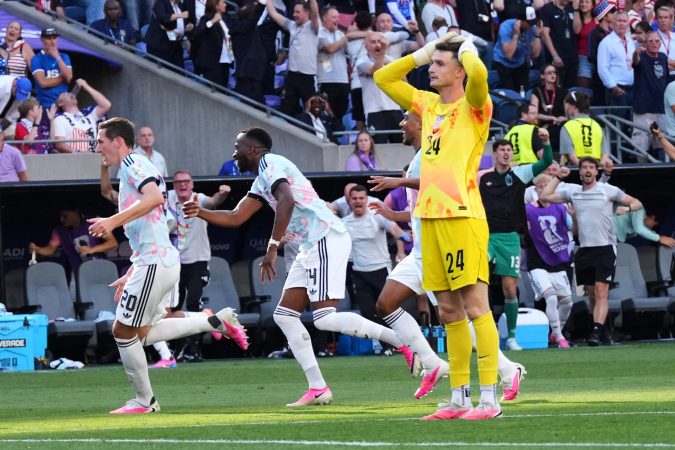
The 4-1 loss by the U.S. men’s national team to Belgium on Monday night at Lumen Field in Seattle was a fitting result. It was an embarrassing end to the World Cup for the home country. It was cosmic payback for a club that hoped to benefit from a president who wanted to strongarm Team USA into the quarterfinals and found out that sports can resist even an autocrat’s attempts to stack the deck.
Sometimes, once you show you’re willing to wallow in the mud, you can never wash the stain away. The justifications for the Trump administration’s overtures to FIFA to wipe out the one-game suspension for Folarin Balogun — and for FIFA’s acquiescence — were oh-so easy and obvious: This is FIFA.
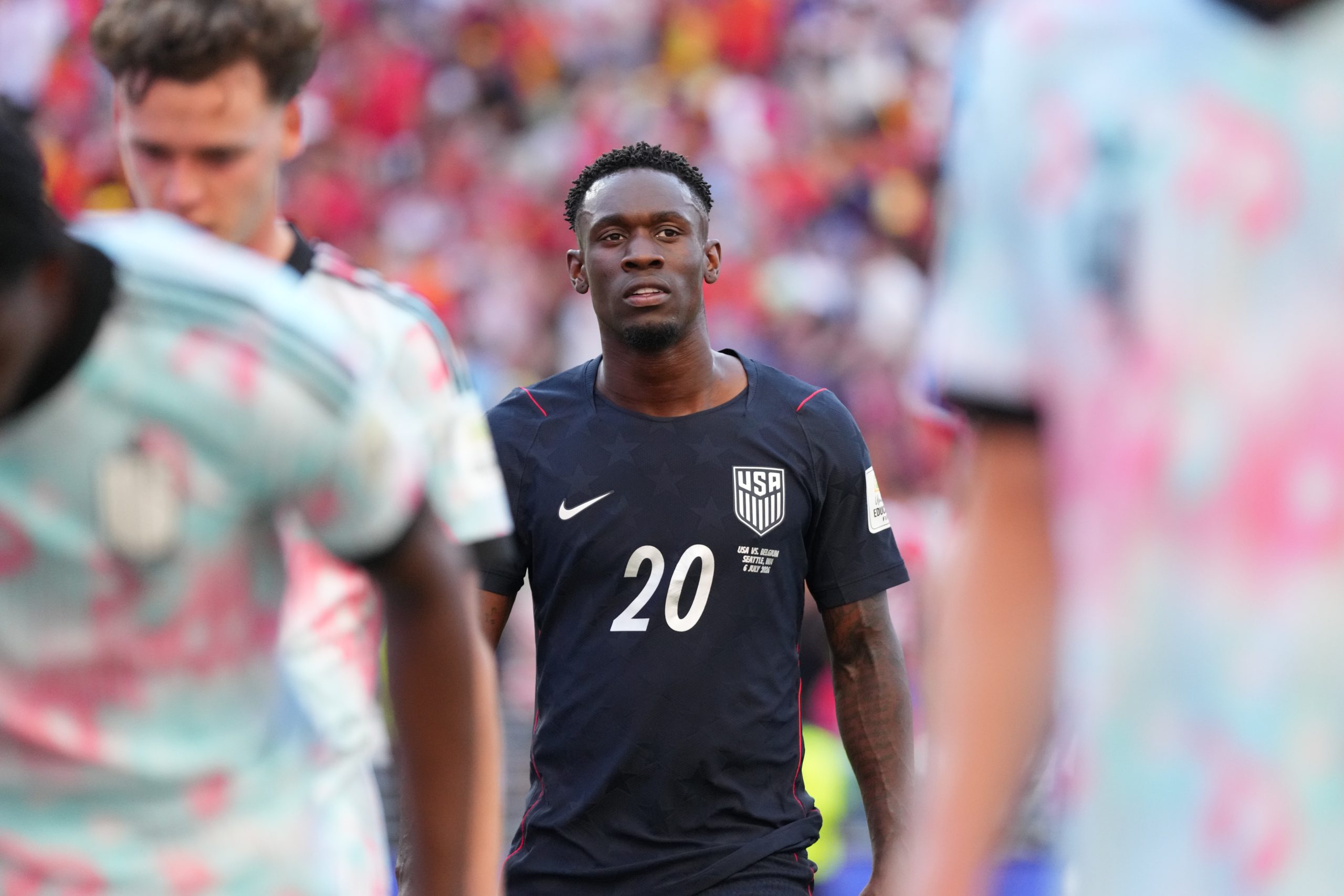
U.S. forward Folarin Balogun (20) was the center of attention against Belgium in the World Cup’s round of 16 on Monday.Ted S. Warren This is an organization with a history of scandal and corruption so long and detailed that Robert Caro could only begin to chronicle it. This kind of back-scratching and deal-making is nothing new at soccer’s highest level. This is how things work, and everyone knows it and holds their nose against the stench, and all the complaints from Belgium and the other countries left in the World Cup were nothing but rank hypocrisy.
If another national team were in the same situation that the USMNT found itself after Balogun was hit with that questionable (at best) red card last Wednesday against Bosnia and Herzegovina, its president or prime minister would have done the same thing Trump did, right? Any means necessary in an every-country-for-itself system, right?
Wrong. The corrective to dishonor and dishonesty isn’t to do more dishonorable things. Yet that was the remedy that Trump sought and put Team USA in the position of accepting. No, Balogun never deserved a red card and the subsequent suspension. Yes, it was a terrible call. But terrible calls happen at all levels of sports, because sports — at least until the gamblers and robots take them over completely — are officiated and overseen by human beings, and errors and mistakes are part of the game.
Stuff happens, and you deal with it as best as you can, and no one gets a do-over days later just because Donald Trump says so. His actions wouldn’t have been appropriate in youth soccer — imagine a parent of a punished player pressuring a league’s commissioner to lift a suspension and the commissioner giving in — let alone in the biggest sporting event on the globe.
What’s more, Trump and those who supported or tolerated his interference in The Balogun Affair apparently never stopped to consider that he might be damaging his own national team’s chances. In that 2-0 victory over Bosnia, Balogun’s teammates not only survived the final 26-plus minutes of the match without him but also scored shorthanded to extend their lead.
They had become underdogs. They had acquired the momentum that comes with being a team that had to fight adversity and had given a strong indication that it could overcome it.
But once FIFA reversed its decision, that entire narrative — that sense that the USMNT might use Balogun’s suspension as inspiration and triumph in the face of an unjust call — disappeared. Now, the USMNT wasn’t the tough, resilient bunch that could withstand the absence of its best player. Now it was so out of its depth without Balogun that it needed the shady political boss to cut a deal in the smoke-filled room to bail it out.
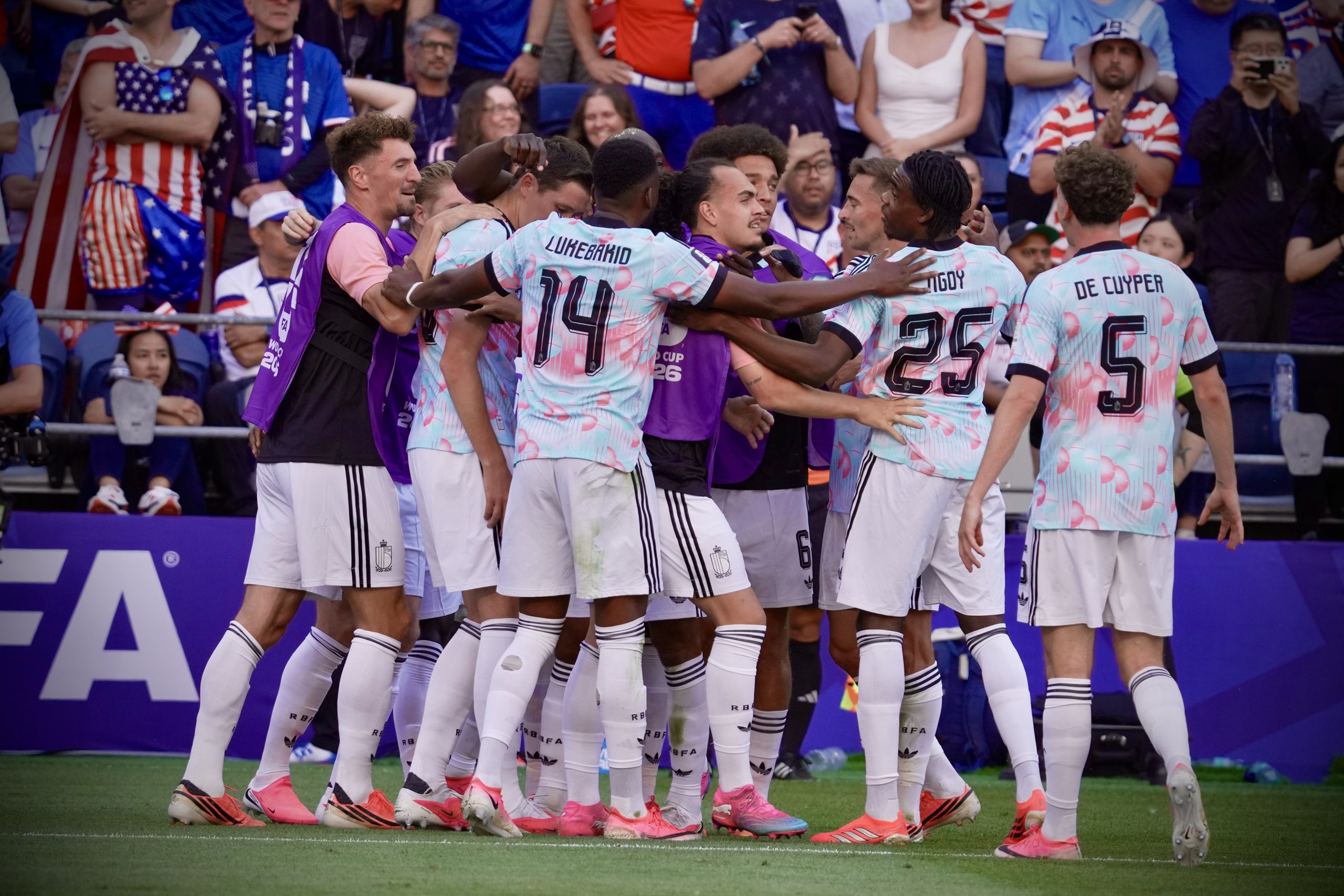
Belgium players react after their team scored one of four goals against the United States in Monday’s round-of-16 World Cup match. RUTH FREMSON Well, the Americans fit that pathetic profile Monday night. They allowed Belgium to take an early lead, then gave up the winning goal just 61 seconds after Malik Tillman tied the game at 1, then conspired to commit a crushing gaffe when goalkeeper Matt Freese played the ball outside the box, burped it up, and watched Hans Vanaken roll a shot past him for a two-goal Belgium edge.
They were outplayed, outmatched, and outclassed, their performance all the more humiliating for the strings that their president had pulled for them, for the message that he had sent about their chances.
Donald Trump told the world that these athletes needed a man willing to act like a mob boss to make things easier for them, that the USMNT wasn’t strong enough to take home victory on its own and without his help. It turned out he was right. He treated them like losers, and on Monday night, they met his expectations.
What an un-American way to bow out.
-
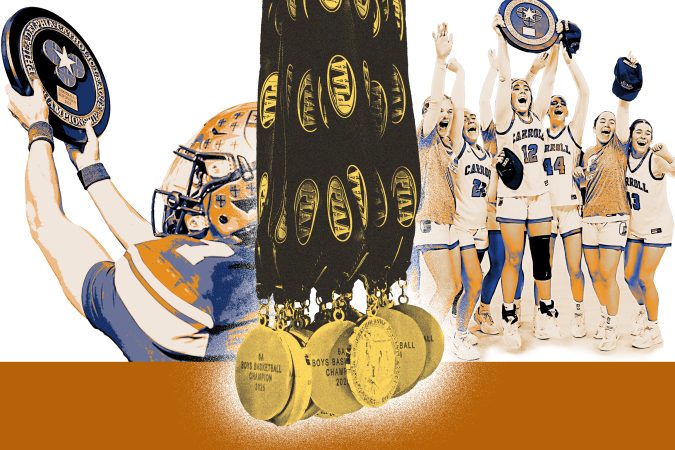
The divide between Pa.’s public and private high school sports
First in an occasional series
Philadelphia Catholic League basketball was a fixture for Kevin Grugan — a mild obsession, even — throughout his childhood. Growing up in Rhawnhurst, he had deep and natural ties to Father Judge’s program in particular. His uncle, Ron Zawacki, was an assistant under legendary head coach Bill Fox, and Grugan competed in Judge’s summer basketball camps, went to the Crusaders’ games on Friday nights and Sunday afternoons in the winter, and graduated from the school in 1996.
“I would watch the games,” he said, “and be enthralled.”
His fascination had faded by 2007, when Lower Merion High School’s administration hired him to teach math and assist Gregg Downer, the school’s longtime boys’ basketball coach. The subsequent years have not reignited his nostalgia for the old days of Northeast Philly hoops. In fact, in his role as a coach at a suburban public school, Grugan has come to resent what he perceives as an uneven playing field throughout Pennsylvania sports. Parochial, private, and charter schools, after all, don’t have borders; they can draw their students, and their student-athletes, from anywhere. Public schools can’t.
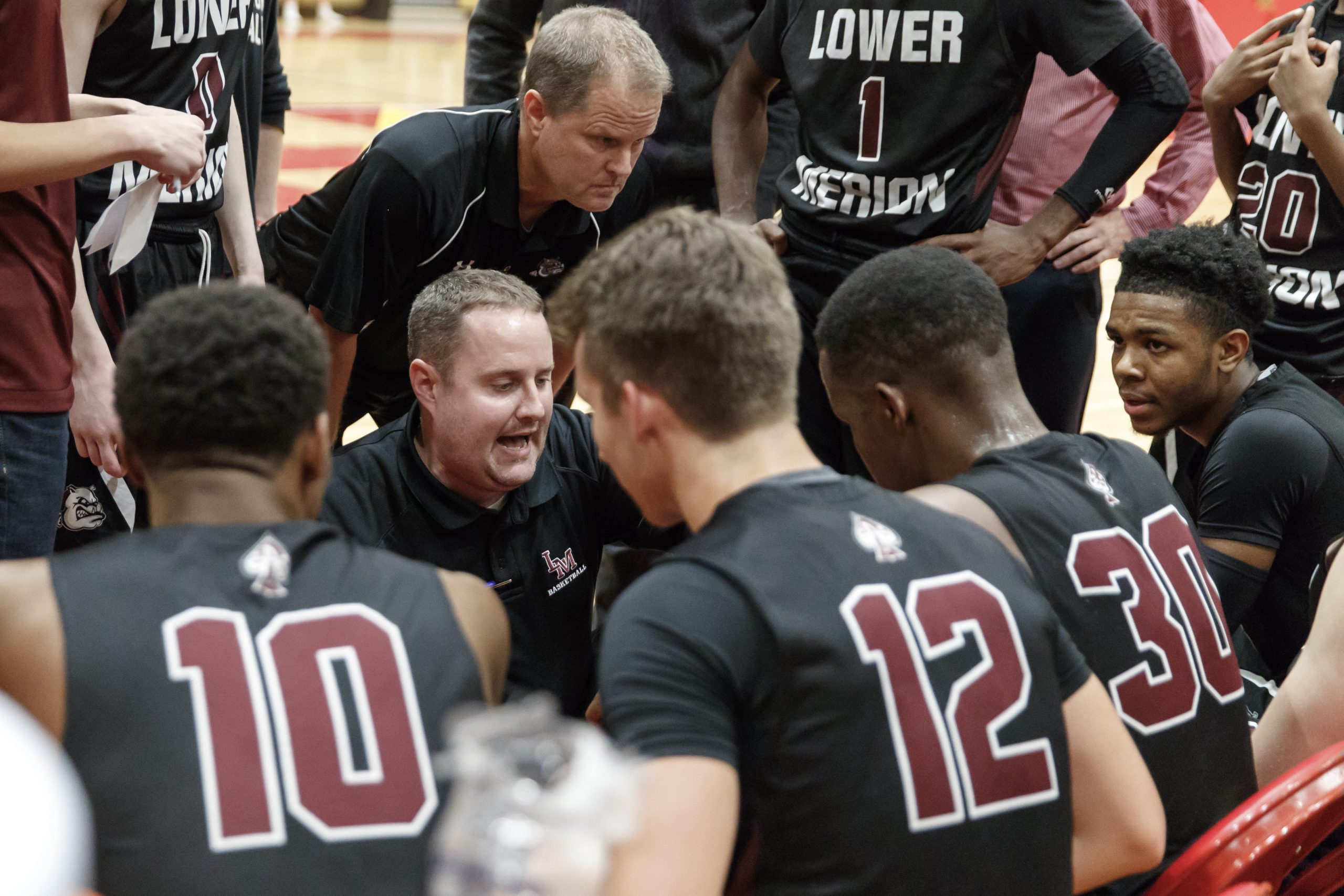
Kevin Grugan is a longtime boys’ basketball assistant at Lower Merion.Courtesy of Kevin Grugan 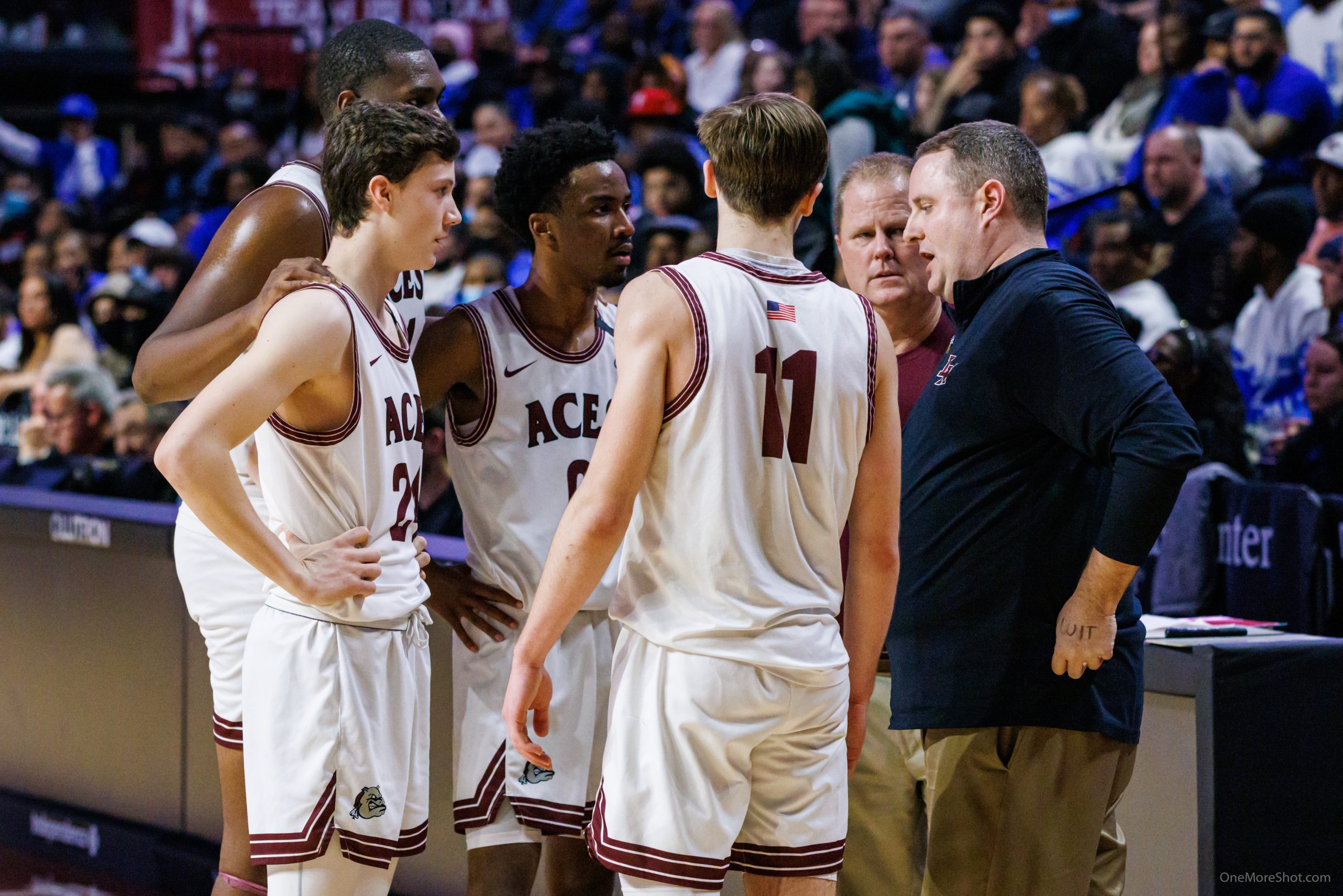
He believes competing against private schools has presented an uneven playing field throughout Pennsylvania sports: “High school athletics is about building a team, building a culture.”Courtesy of Kevin Grugan “High school athletics is about building a team, building a culture,” Grugan said recently. “You’re devising competition. You’re learning from that competition. You’re trying to improve on the next game. But you go into those events, and suddenly standing across from you are multiple if not five Division I athletes. You can’t watch enough film to find that very secret flaw that nobody else has found.”
Grugan’s complaints have become common among Pennsylvania’s public school coaches, administrators, parents, and players since the Catholic League and Public League moved under the jurisdictional umbrella of the PIAA in the fall of 2008. And that fierce debate about fairness could soon be cast in stark relief.
In April, the Pennsylvania State House of Representatives passed, by a 178-23 vote, House Bill No. 41, which would allow the PIAA to “establish separate playoffs and championships for athletics for boundary schools and non-boundary schools.” The Pennsylvania Senate can vote on the bill at any time but has not yet. A spokesperson for Gov. Josh Shapiro said that “the Shapiro administration is monitoring the bill as it moves through the legislative process” but did not have a position on it.
Shapiro and his aides might be the only people connected to Pennsylvania’s high school sports who don’t have a position on the bill or the public-private divide.
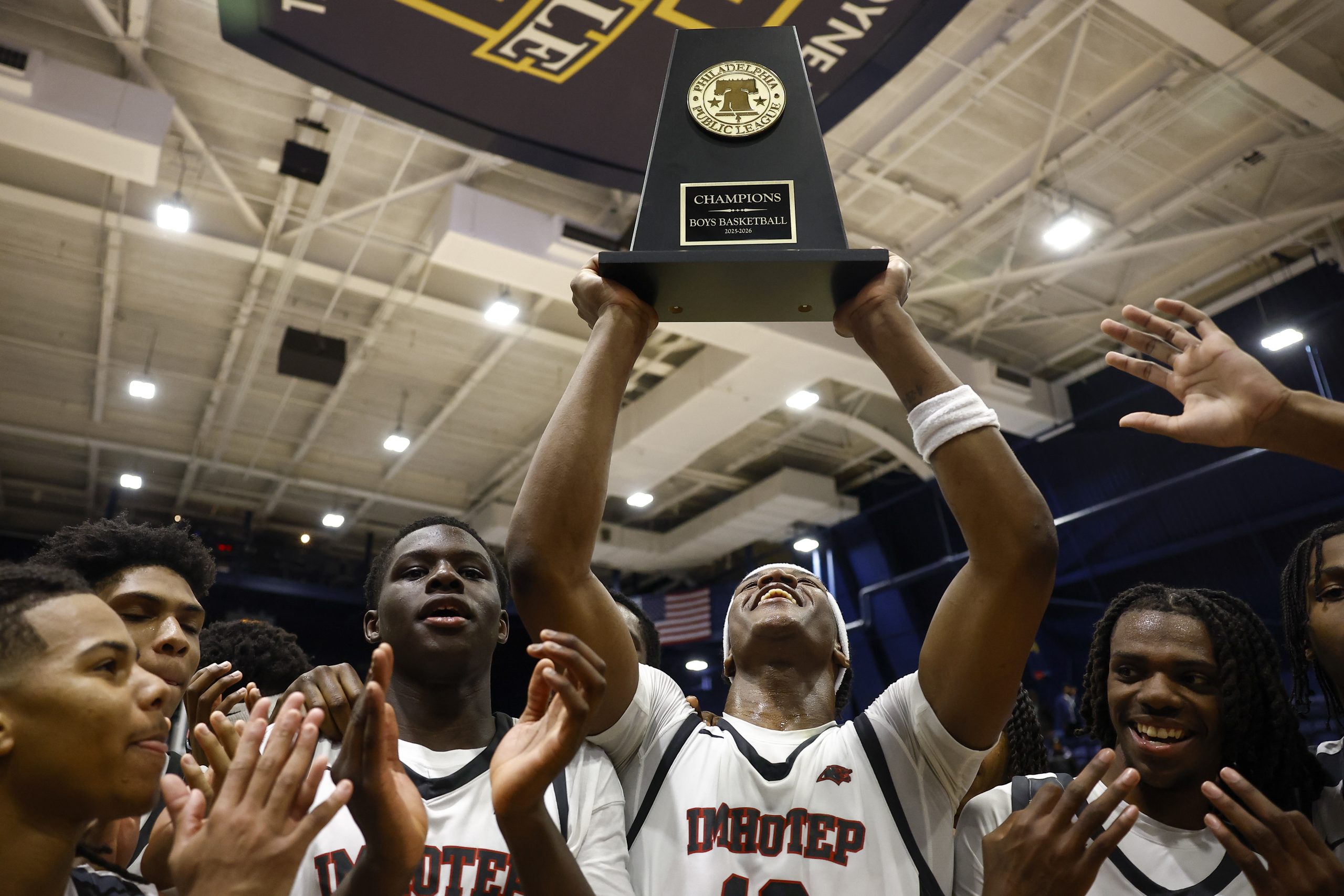
Imhotep Charter has won six consecutive Public League boys’ basketball titles. Monica Herndon / Staff Photographer It’s difficult to find a state issue that provokes such strong viewpoints and often-strident opinions. And this issue has plenty of big-picture and hyper-local tentacles, including the professionalization and commodification of high school sports, the question of athletics’ appropriate purpose and role in secondary education, and accusations that some non-boundary schools violate PIAA bylaws by recruiting student-athletes for the sole purpose of having them play sports.
“All we’re trying to do is say that part of high school sports is teaching kids how to play a fair game,” Rep. Scott Conklin (D), who introduced House Bill No. 41 and represents the 77th district, in State College, said in a phone interview. “It’s something they can use for the rest of their lives. We don’t want to teach them that there are two sets of rules: one set for a boundary school, one for a non-boundary school.”
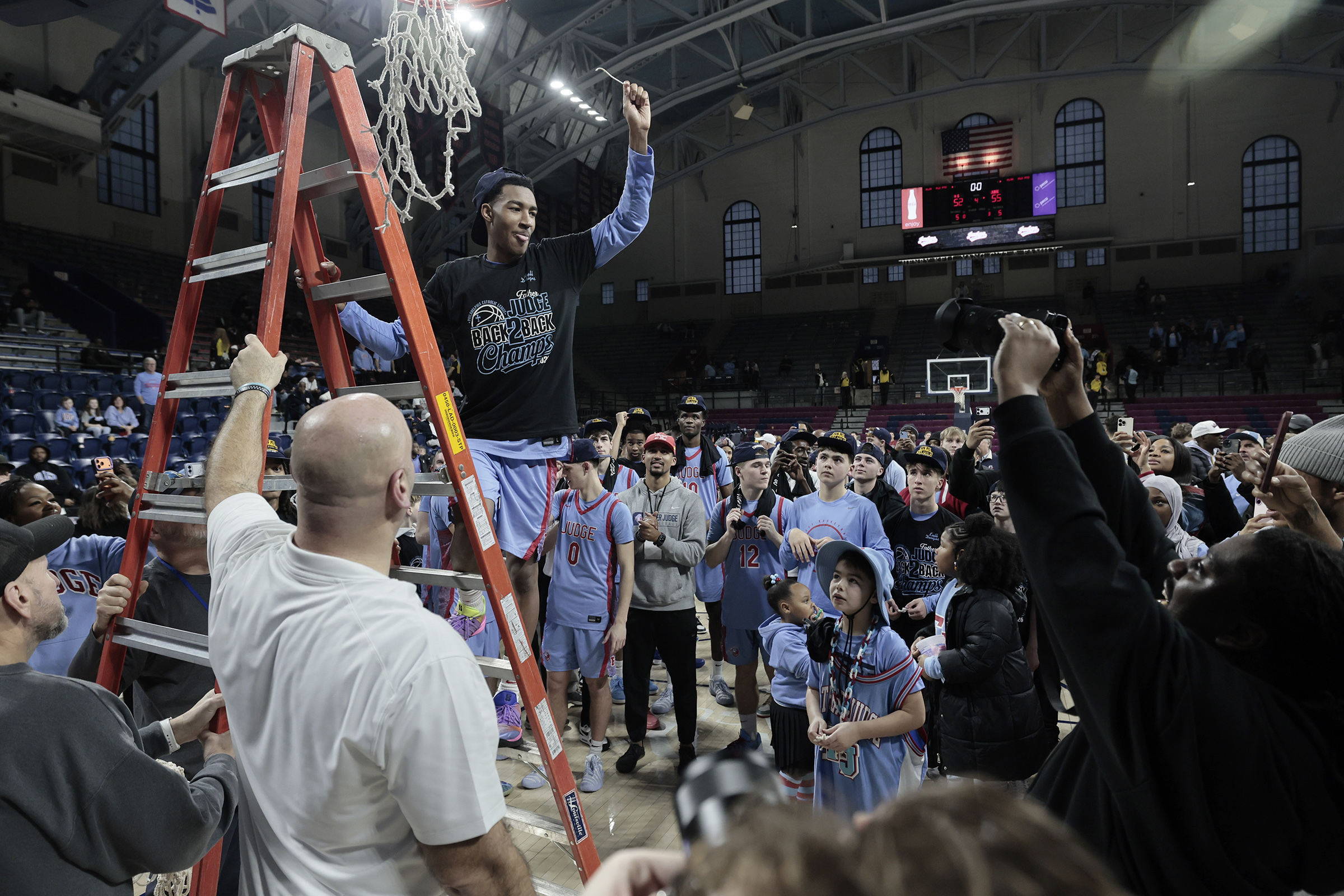
The traditional city and neighborhood rivalries within the Catholic League mean more to some coaches, players, and fans than the district and state tournaments do. Elizabeth Robertson / Staff Photographer Conklin cited player safety, particularly within football, as a primary reason for House Bill No. 41, arguing that non-public schools can attract more athletes — and more athletes who are bigger, stronger, and faster — than their public opponents can.
“The boundary school may have 18 really good players; they play offense and defense,” he said. “By the second quarter, those kids are tired, and that’s when children get hurt: when they’re gassed.”
He did not provide any statistical evidence to support this claim, and in a Dec. 3, 2024, memo he circulated to state House members to introduce the bill, he made it clear another factor was just as important, if not more so.
“When it comes to competition in team sports, especially football and basketball,” Conklin wrote, “the private, charter, and parochial schools have been dominant in state playoffs in recent years.”
Among the highest-profile sports, that dominance hasn’t been quite as severe as Conklin suggested. Consider these results since the beginning of the fall 2008 sports season:
- Boundary schools have won 54 of the 92 football state championships.
- Non-boundary schools have won 63 of the 86 boys’ basketball state championships, including 16 of the last 18.
- Non-boundary schools have won 49 of the 86 girls’ basketball state championships.
(function(){function e(){window.addEventListener(`message`,function(e){if(e.data[`datawrapper-height`]!==void 0){var t=document.querySelectorAll(`iframe`);for(var n in e.data[`datawrapper-height`])for(var r=0,i;i=t[r];r++)if(i.contentWindow===e.source){var a=e.data[`datawrapper-height`][n]+`px`;i.style.height=a}}})}e()})();
In an attempt to achieve and maintain competitive balance, the PIAA does use a formula, based on non-boundary schools’ success and the number of transfer students they accept, that can allow teams to move up in enrollment classification. Still, St. Joseph’s Prep, with an all-male enrollment of roughly 900 and without a football stadium on its North Philadelphia campus, has won seven PIAA Class 6A championships in the last 10 years while competing alongside the state’s biggest public schools, including North Penn, which has more than 3,000 students. What’s more, a recent donation of $74 million from Prep alumnus and billionaire entrepreneur Nick Howley is likely to help the Hawks separate themselves further from the 6A field.
“They’re just two different structures,” Prep president John Marinacci said. “All our student-athletes, whether it be football or anything else, come from the same geographic locations that our whole student body comes from. I know there are allegations out there that we have students from all over America. You know where the Prep is. It’s 15 minutes from Jersey. Do we have kids who play football who come from Jersey? We do. We also have a lot of kids who play other sports or don’t play sports who come from Jersey. The geographic reach of the school is what it is. We’re a regional school.”
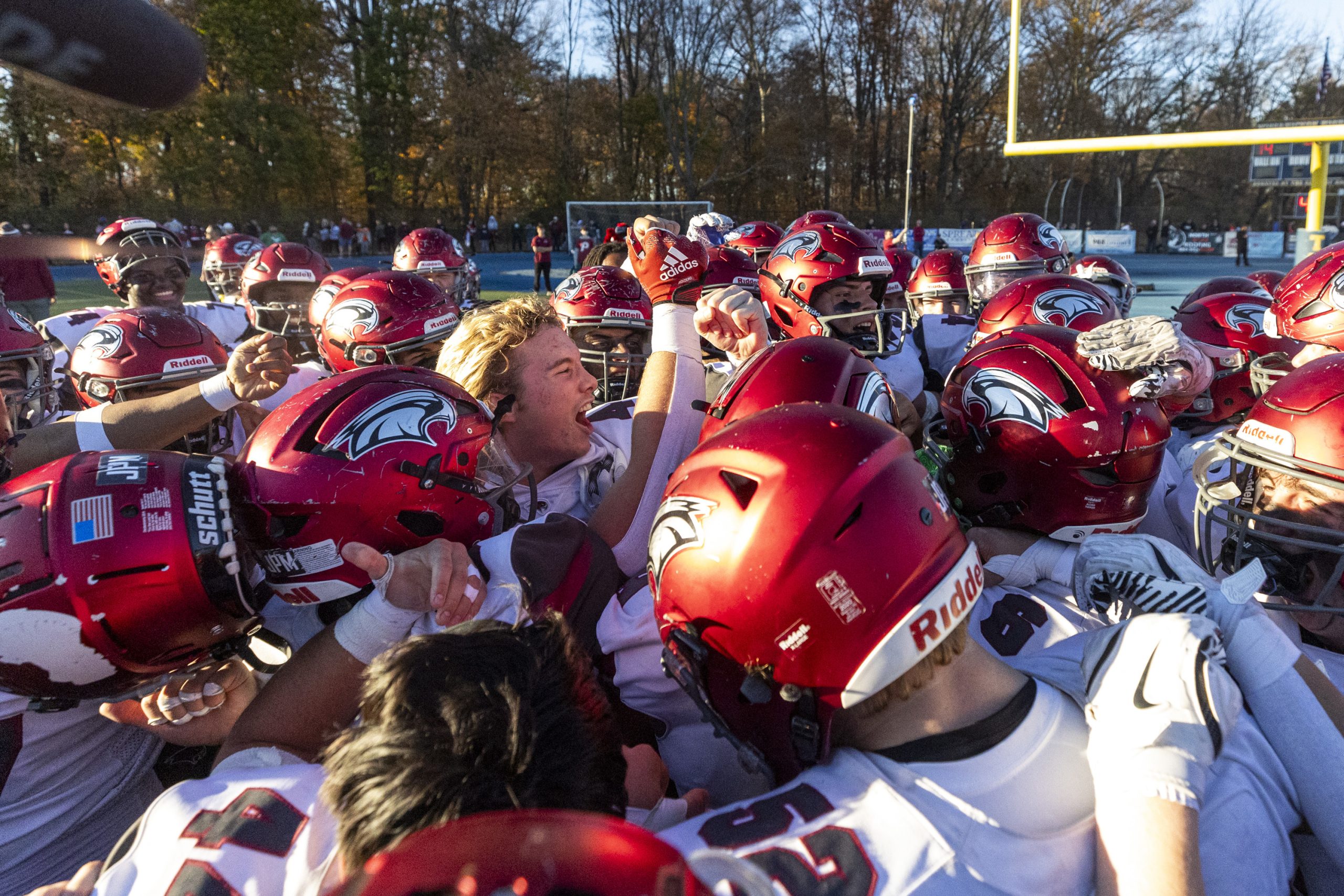
St. Joe’s Prep has won seven PIAA Class 6A football championships in the last 10 years.Tyger Williams / Staff Photographer ‘We’re coming’
Intrastate athletic competition among different types of Pennsylvania high schools is nothing new. In 1972, the state legislature amended the Public School Code to allow non-public schools to participate in postseason and championship events with public schools, and some private and parochial institutions have been members of PIAA leagues and conferences for years. When eight Delaware Valley schools came together to found the Pioneer Athletic Conference in 1985, for example, two of them were Lansdale Catholic and St. Pius X, and the members of the all-girls Catholic Academies League have long competed against suburban Philadelphia public schools within PIAA District One.
The issue took on increased salience both in the region and throughout Pennsylvania, though, when the Catholic and Public Leagues entered the PIAA 18 years ago. At the time, association members who might have raised questions about competitive fairness were cautioned against making any such case, according to a source who was directly involved in negotiating and implementing the expansion. If they did, the legislature would take steps to strip the PIAA of much of its power, oversight, and relevance.
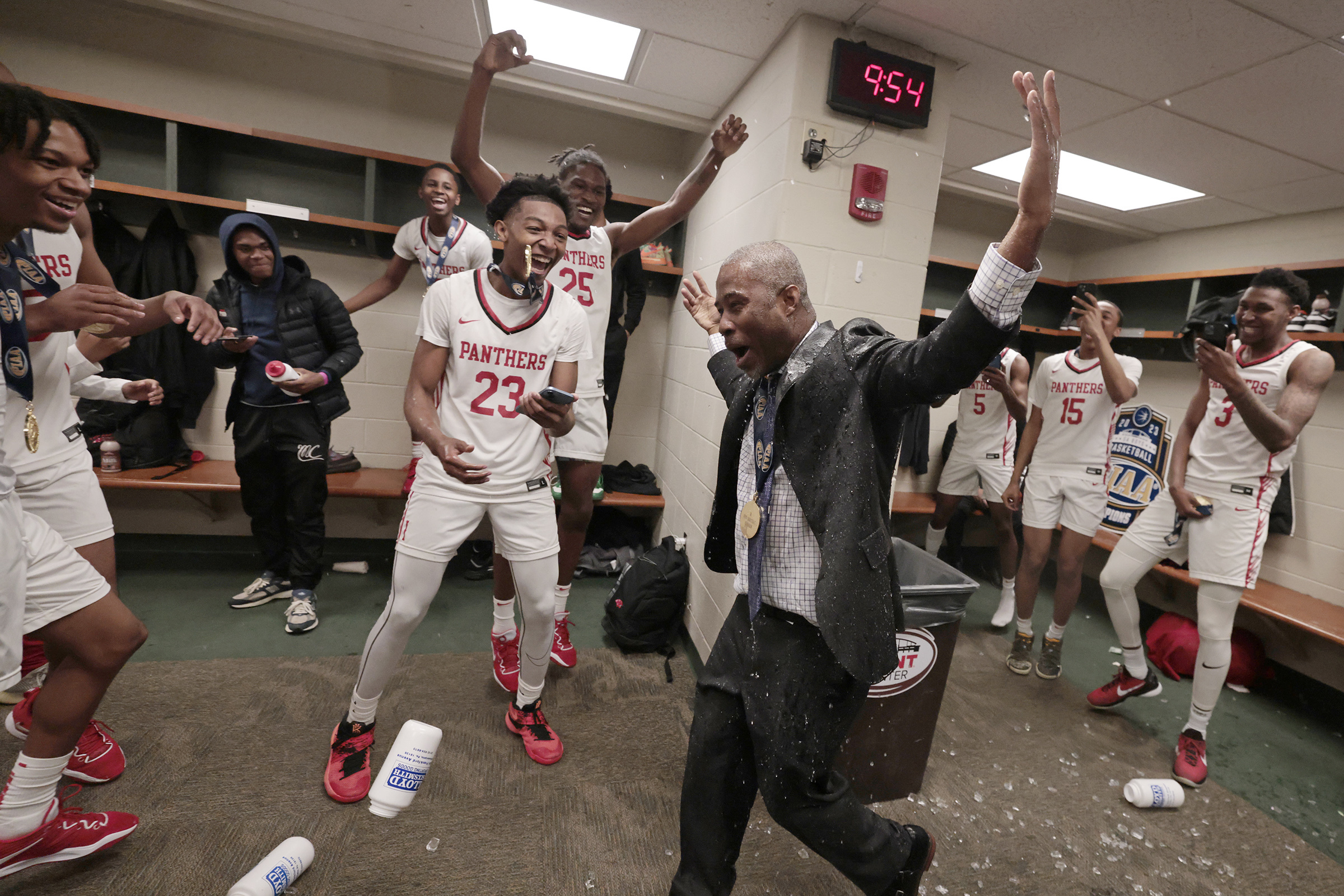
The Public League has 73 member schools. But nearly half of them — 34 — are charters, including football and boys’ basketball powerhouse Imhotep.Elizabeth Robertson / Staff Photographer “Almost every legislator’s child went to a non-public school,” the source said, “and everybody wants to have that state-championship medal. … They said, ‘Don’t try us, ’cause we’re coming.’”
So the Catholic and Public Leagues formed District 12, and the inclusion of the Public League counterbalanced the injection of private-school strength into the association only so much. The Public League today has 73 member schools. But nearly half of them — 34 — are charters, among them football and boys’ basketball powerhouse Imhotep, and the School District of Philadelphia’s open-enrollment policy can allow exceptional athletes to attend just about any high school and compete for any coaches or programs they want.
For the two leagues, the ostensible reasoning that justified joining the PIAA still stands up. It would lead to more fulfilling experiences for student-athletes: better (or at least more diverse) competition, travel outside the limits of the city and the suburbs that ring it, perhaps more exposure to and interaction with recruiters — and, of course, the opportunity to call themselves state champions.
(function(){function e(){window.addEventListener(`message`,function(e){if(e.data[`datawrapper-height`]!==void 0){var t=document.querySelectorAll(`iframe`);for(var n in e.data[`datawrapper-height`])for(var r=0,i;i=t[r];r++)if(i.contentWindow===e.source){var a=e.data[`datawrapper-height`][n]+`px`;i.style.height=a}}})}e()})();
“I’d go to college and hear somebody say, ‘We beat Neshaminy in a state championship game,’” said Father Judge basketball coach Chris Roantree, who won a Catholic League boys’ championship as a player with the Crusaders in 1997 before guiding them to back-to-back PCL titles and a PIAA Class 6A championship over the last two years. “I’d be like, ‘We played Neshaminy and beat them by 50. Are you really a state champion?’
“Here’s the thing: Philly is Philly. So if you want all the Philly kids to go to public schools, they’re still going to dominate. There’s so much talent in Philadelphia that it doesn’t matter where it goes. That’s a disadvantage for us. There are six, seven, eight, 10 good teams in the Catholic League. If they’re in the playoffs, they’re going to make some noise in the states. There’s a lot of good players spread out. I laugh at it sometimes, but we can only control what we can control.”
The Catholic and Public Leagues, loaded with student-athletes who have chosen to attend and play for their respective schools, have another advantage over the publics: They are in alignment with the generational shifts and trends throughout youth sports, as young athletes and their parents crave more freedom and place greater importance on AAU, club, and travel teams.
“We need to be looking at increasing the opportunities for kids,” District One chairman Mike Barber said. “If not, they’re going to find other places to play.”
It’s difficult to deny that, in this modern landscape, the PIAA benefits from the presence of private, parochial, and charter schools, that these programs infuse the association’s competition with more talent and prestige.
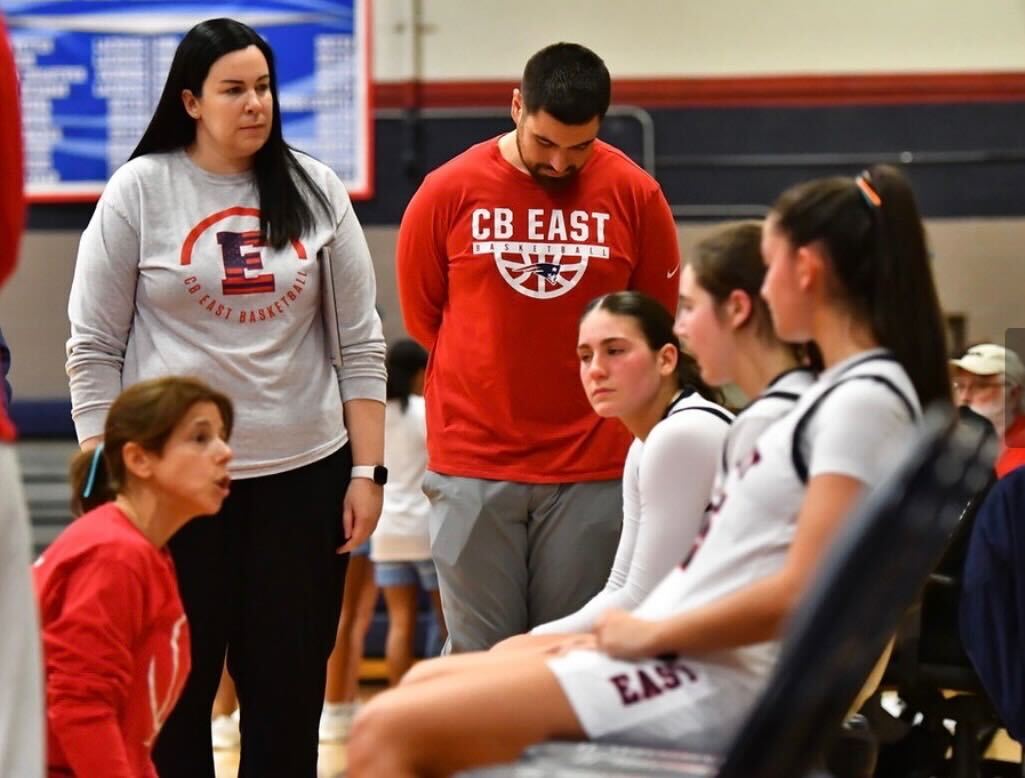
Liz Potash is the Central Bucks East girls’ basketball coach.Courtesy of Diane Barry 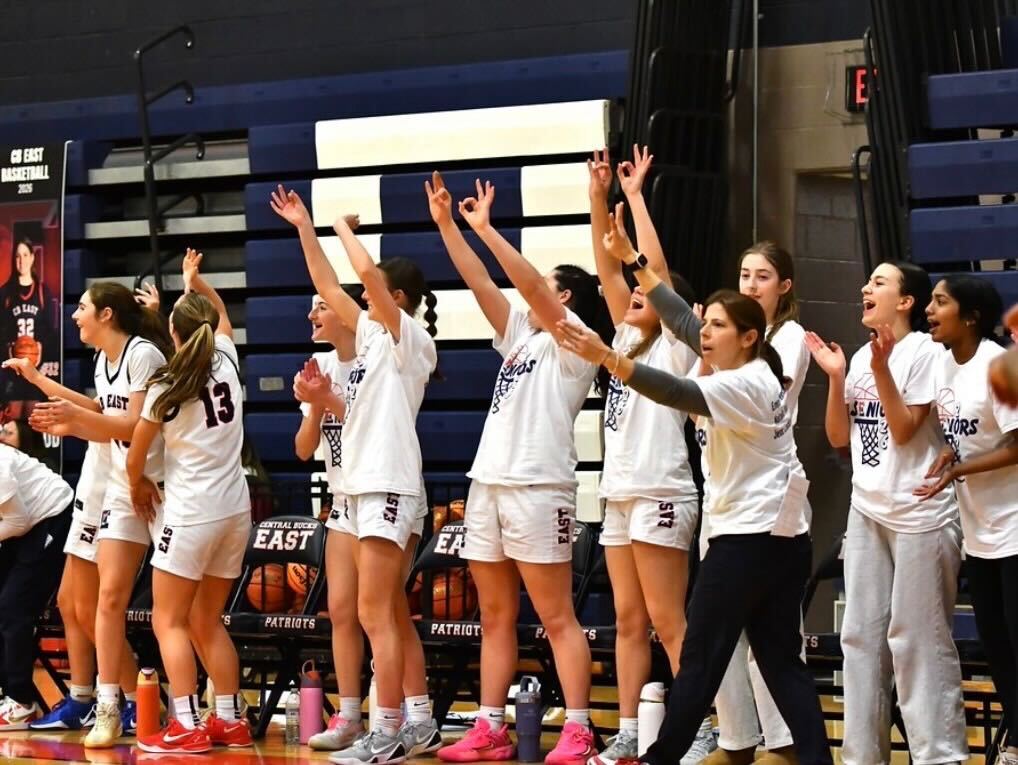
She says “when I have to compete for the same championship [as a private school], there’s a disparity there, and I think obviously everyone is aware of that.”Courtesy of Diane Barry “What they do is unbelievable,” former Central Bucks East girls’ basketball coach Liz Potash said. “We played Archbishop Carroll in our Christmas tournament, and you watch that scout film, and you’re like, ‘Oh, my gosh! This is unbelievable.’ I have all the respect in the world for those programs. Where it gets me is in the postseason, when I have to compete for the same championship. Then it’s just not a level playing field. … I’ll play them in-season. I have no issue with that. But when I have to compete for the same championship, there’s a disparity there, and I think obviously everyone is aware of that.”
The reality that non-boundary schools can and do pull students from New Jersey, Delaware, and the suburbs that feed District One’s public schools has stoked plenty of us-vs.-them tension. Potash herself admitted to rooting for Perkiomen Valley during its run to the 2025 Class 6A girls’ hoops championship, and when CB East beat Germantown Academy — a private, non-PIAA program — last season, one of Potash’s fellow public school coaches called to tell her, Man, there’s nothing I like to see more than when one of us knocks off a team like that.
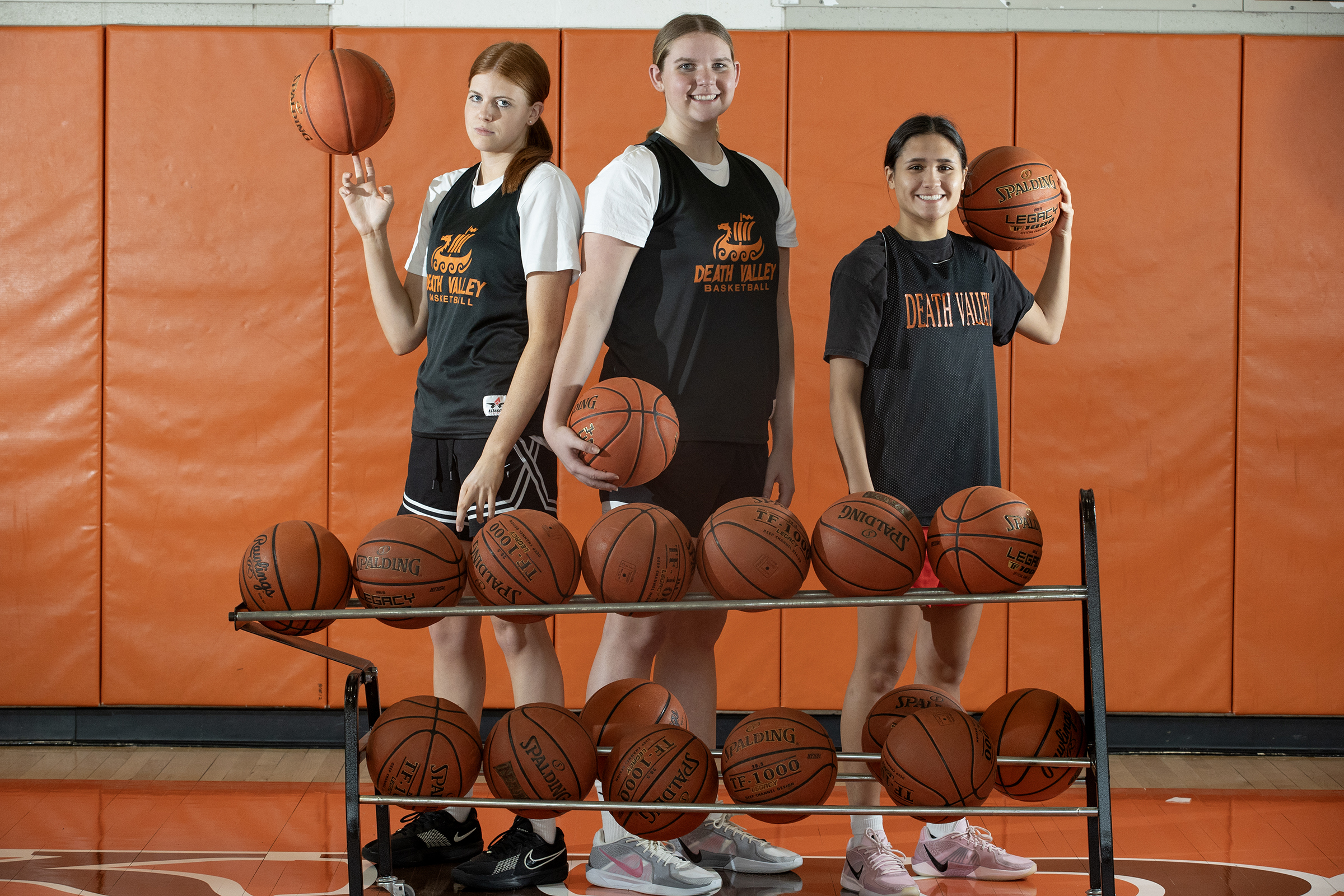
In 2025, Grace Galbavy, Quinn Boettinger, and Bella Bacani led Perkiomen Valley girls’ basketball to its first state title. The Vikings beat Archbishop Carroll to get there.Charles Fox / Staff Photographer “District One and District 12 hate each other,” one area athletic director said, though Starr Davenport, the Philadelphia School District’s director of finance for athletics, tried to soften that assertion by drawing on a familiar rivalry as an analogy.
“You can compare it to almost Dallas vs. the Eagles,” she said. “We don’t really hate them. It’s a healthy, quasi-toxic athletic approach to, ‘We’re better than District One.’ It’s the proximity. It’s the ongoing battles that are close. It gets to the point where it’s one vs. the other, but I think there’s harmony and respect across both districts.”
The irony — and, for many public school coaches, the frustration — is that the traditional city and neighborhood rivalries within the Catholic and Public Leagues mean more to some coaches, players, and fans than the district and state tournaments do. The rollicking sellout crowds filling the Palestra every year for the PCL boys’ basketball semifinals and the boys’ and girls’ championship games have been just the most obvious example.
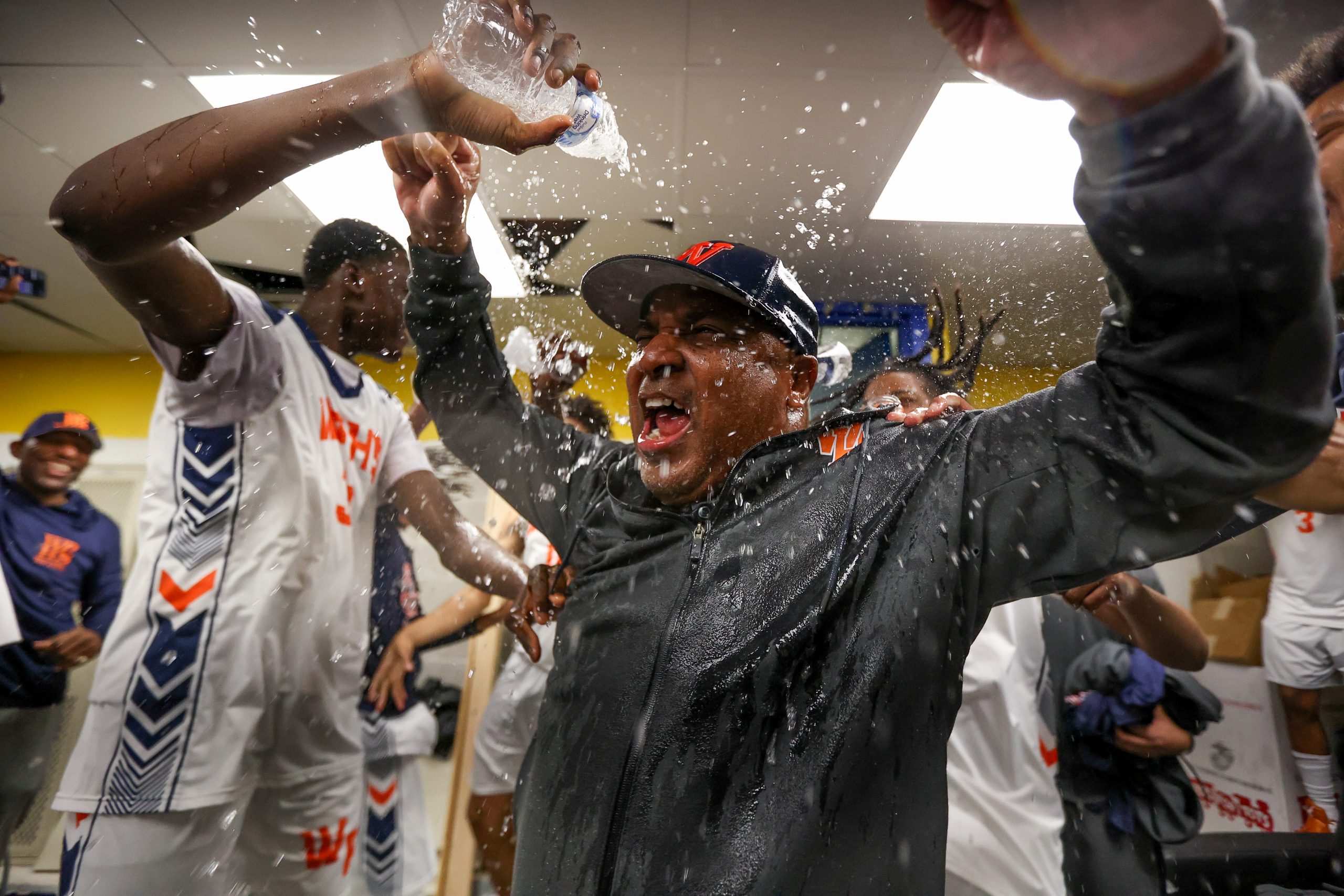
West Philadelphia coach Adrian Burke values the history of the Public League, and winning the title carries more weight compared to other championships.Isaiah Vazquez / For The Inquirer “We want to win the Pub,” West Philly High boys’ basketball coach Adrian Burke said in February, before his team lost to Imhotep in this year’s Public League championship game. “It’s legendary. You’re talking about some of the greatest basketball players ever. You’re talking about Wilt Chamberlain, Gene Banks. I could [go] on and on and on. When you think about the Public League, you think about all those guys who paved the way for us to play.
“We don’t care too much about districts. States is good. But we want to win the Pub.”
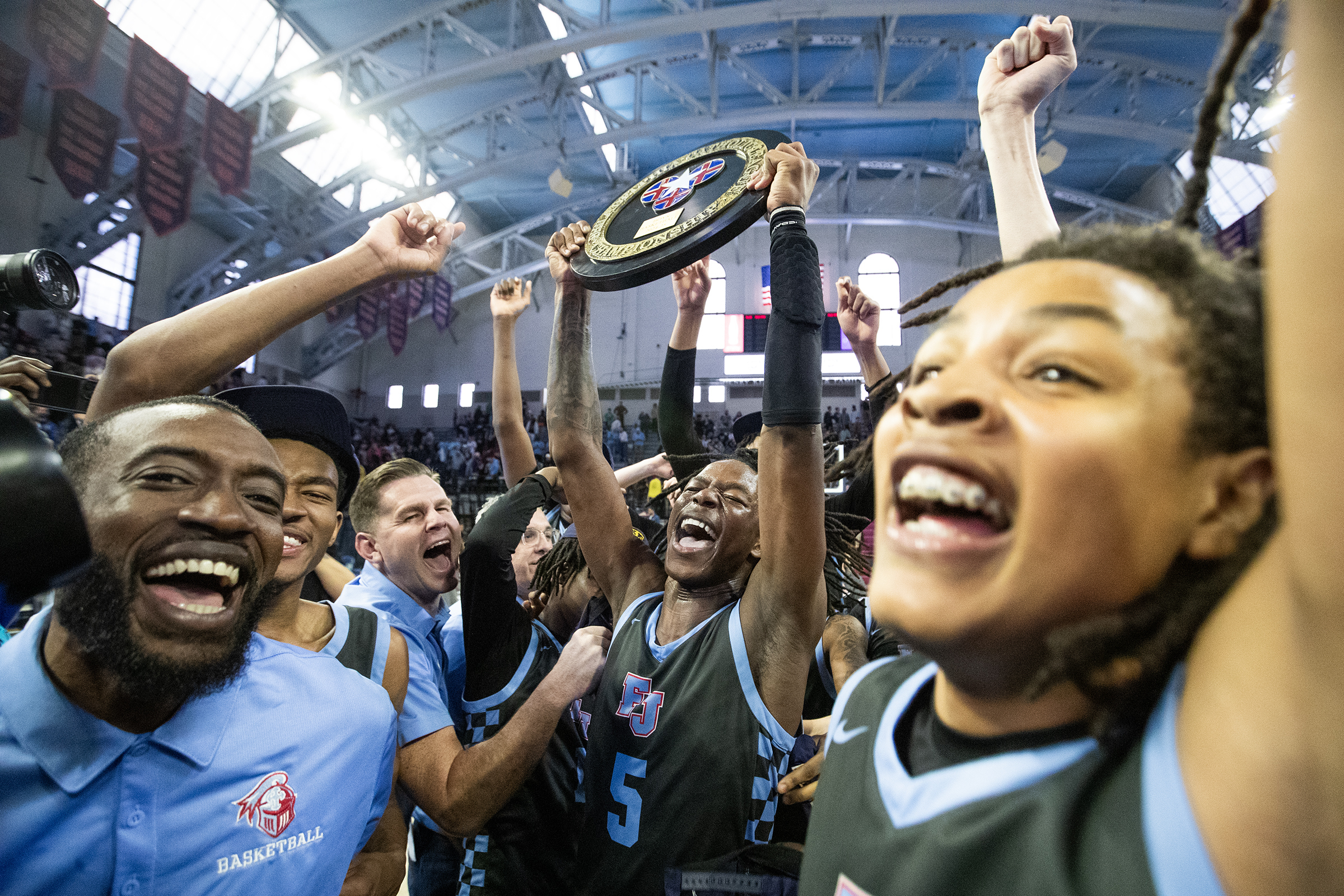
Father Judge won back-to-back PCL boys’ basketball titles and a PIAA Class 6A championship over the last two years.Charles Fox / Staff Photographer A solution?
Splitting the PIAA playoffs into boundary and non-boundary brackets would not be unprecedented, but it would be unusual. New Jersey is one of four states that allows public and private schools to compete during regular seasons but keeps them separate for postseasons, according to a survey conducted earlier this year by the USA Today Network. Another four states, including Maryland, don’t permit boundary and non-boundary schools to play against each other.
Grugan wouldn’t mind such a measure, wouldn’t mind seeing House Bill No. 41 signed into law and put into effect. Lower Merion won its last state title in 2013, and in 2019 and every year from 2021 through 2025, it lost in the state playoffs to either Roman Catholic or Archbishop Wood. The question that he, Rep. Conklin, and everyone involved or interested in Pennsylvania high school sports has to ask and answer is this: Is it better to have lost to these non-boundary teams or never to have played them at all?
“We keep making these decisions based on the idea that all high school athletes are performing at this high Division I level,” Grugan said, “and my thing is, most of the high school athletes you’re coaching are going to have a high school basketball experience and that’s it. And by the way, that’s a great thing. That is going to teach them so many lessons, and they’ll be able to thrive in other situations in their lives with amazing memories. We still celebrate big games by getting pizza. That’s as good a moment as anything we’re going to produce on the court.”
Staff news developer Chris A. Williams contributed to this article.
-
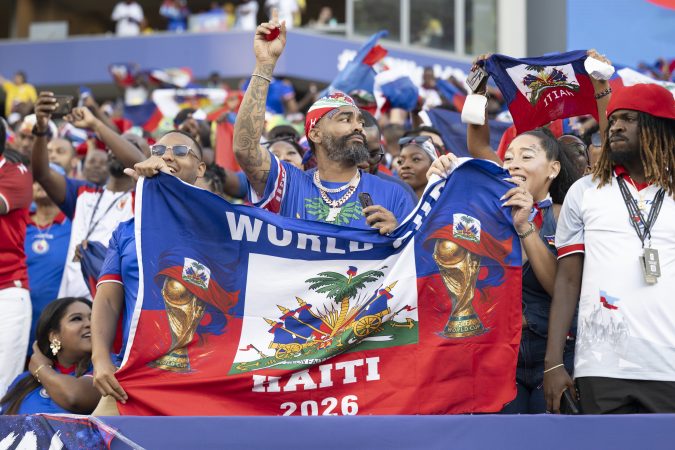
For Haiti, a lopsided World Cup loss to Brazil didn’t matter much. Just being here meant everything.
Luc Cherisson did not have to come as far and live as long and hard as so many who have been waiting to watch Haiti in the World Cup again. But he had his own way to make. The general manager of a rental-car business in Atlanta, an immigrant who left his homeland for America when he was just 20, Cherisson is 36 now, with a friendly face and an amiable disposition that suggest he is always happy to assist his customers with their SUV reservations. He flew into Philadelphia International Airport on Friday morning for his home country’s World Cup match against Brazil, and he would fly back to Atlanta on Saturday morning, a little hungover if a slight miracle materialized at Lincoln Financial Field.
“Even if we lose, it’s still a win for me,” he said a few hours before the match, as he lingered in a parking lot outside Xfinity Mobile Arena. “And if Haiti wins, it will be a party all night.”
There was no miracle. There was only an easy 3-0 victory for Brazil, though Cherisson and the thousands of Haitian natives and fans who attended the match may yet have caroused deep into the Philadelphia night, just for the sake of their home country’s presence here. This is Haiti’s first appearance in the World Cup since its only other one, in 1974. For Cherisson and those like him, for a nation long riven with poverty and corruption and violence, where roving gangs control the capital city of Port-au-Prince and practically govern the country, there is honor and glory merely in earning the right to be here.
“It’s amazing,” Cherisson said. “It’s the biggest sporting event in the world. Just being part of the World Cup is fantastic.”
It might sound silly and Pollyannish to regard just competing at the highest level and grandest stage of the world’s most popular sport as worthy of such pride. How much of FIFA’s multibillion-dollar budget goes toward orange slices and participation trophies? But one has to have just an inkling of the hold that soccer has in Haitian society to appreciate why Cherisson would pay a small fortune to travel to Boston to see Haiti’s 1-0 loss to Scotland last Saturday, to make that 24-hour trip into town for Friday night’s game, and to secure tickets for Haiti’s match against Morocco in Atlanta next Wednesday. Why no one at the Linc much cares that Haiti has now been outscored 18-2 in the five World Cup matches in its history. Why this all matters so much.
The author Madison Smartt Bell, for instance, who in 2014 completed a trilogy of rich and gorgeously written historical novels about Toussaint Louverture and the Haitian Revolution, still owns a patch of land in the northern part of the country, not far from the forests where the revolution was conceived in 1791. One day, Bell saw several children scurrying around on rough, spiny ground, playing soccer not with a ball or even an empty can of condensed milk, but with a rock.
On his next visit to Haiti, he brought them a regulation soccer ball. The children were ecstatic, but after 10 minutes, they paused their game for a moment. Something sharp had punctured and deflated the ball. So they went back to kicking and passing and shooting the stone.
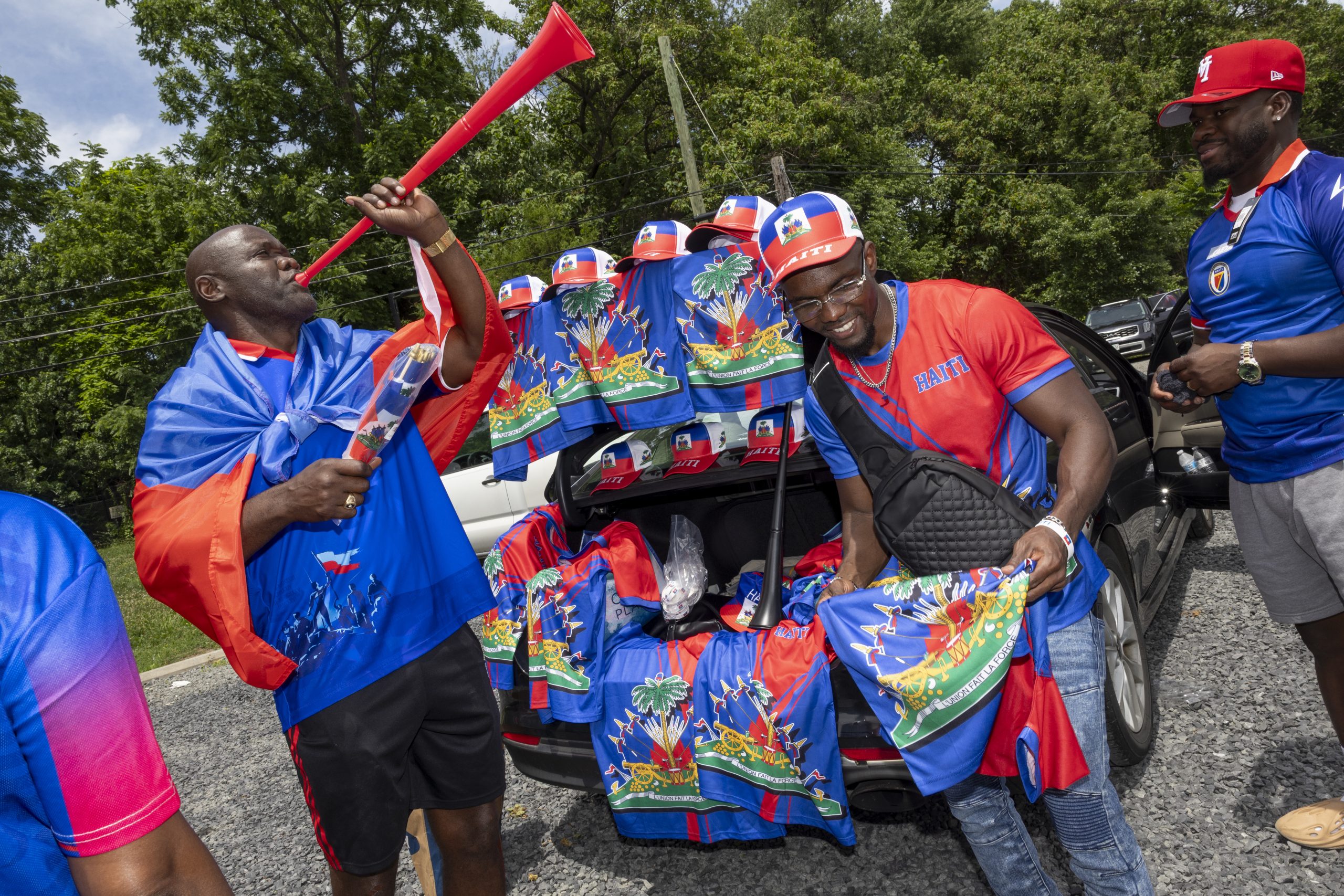
A Haiti soccer fan blows a plastic horn outside of the Discovery Center in Philadelphia earlier on Friday.Aidan T. Gallo / Staff Photographer “I think that gives you some idea,” Bell said in an email, “of the importance of soccer in Haitian culture.”
If that doesn’t, this might: Before Haiti’s first match in the ‘74 World Cup, against Italy, “extraordinary legends spread all throughout the country,” said Terry Rey, a Temple University professor of Latin American studies who has written extensively about Haiti and even lived there for six years in the 1990s. Customarily, because their national team had not qualified for the World Cup yet, Haitians divided their loyalties when the event commenced every four years. The poor rooted for Brazil, the elites for Argentina.
But now Haiti, at last, was part of the spectacle. So peasants somehow found the funds to buy transistor radios and batteries so they could listen to the match. People painted and decorated tap taps, the vans and pickup trucks that are used as taxis in the country, with renditions of the team’s players. And when Haitian star Emmanuel Sanon scored the game’s first goal, “people will tell you there wasn’t a place in the entire nation where you didn’t hear someone screaming,” Rey said. Italy won the match, 3-1.
Are these unfavorable final scores irrelevant to the Haitian people? No. It’s just that the sport itself carries so much meaning there, offers so cleansing a respite from all that ails the country. The 1994 World Cup began in July with Haiti trapped amid a period of tumult and persecution, its people under the thumb of a junta regime run by Raoul Cédras, the former head of Haiti’s military, who had taken power in a coup three years earlier. From January to June that year, there was no electricity available anywhere. Then, just in time for the World Cup, the lights went on. There was electricity, and there was cable TV. Cédras had bought the rights to broadcast the tournament, and the opportunity to watch it would quell any widespread desire for a revolt against the regime.
“Haitians love soccer,” Rey said. “It’s just powerful.”
They loved it Friday night, despite the lopsided outcome, despite another loss for a nation waiting for a win that would mean everything. Late into the match, late into the night, having traveled so far and still waiting so long, they were chanting and singing in the parking lots and stomping their feet in the stands and standing to cheer, happy to have reason to be proud. Funny. In a city where there is a long and treasured tradition of telling outsiders and interlopers to go kick rocks, this celebration was still joyous enough.
-
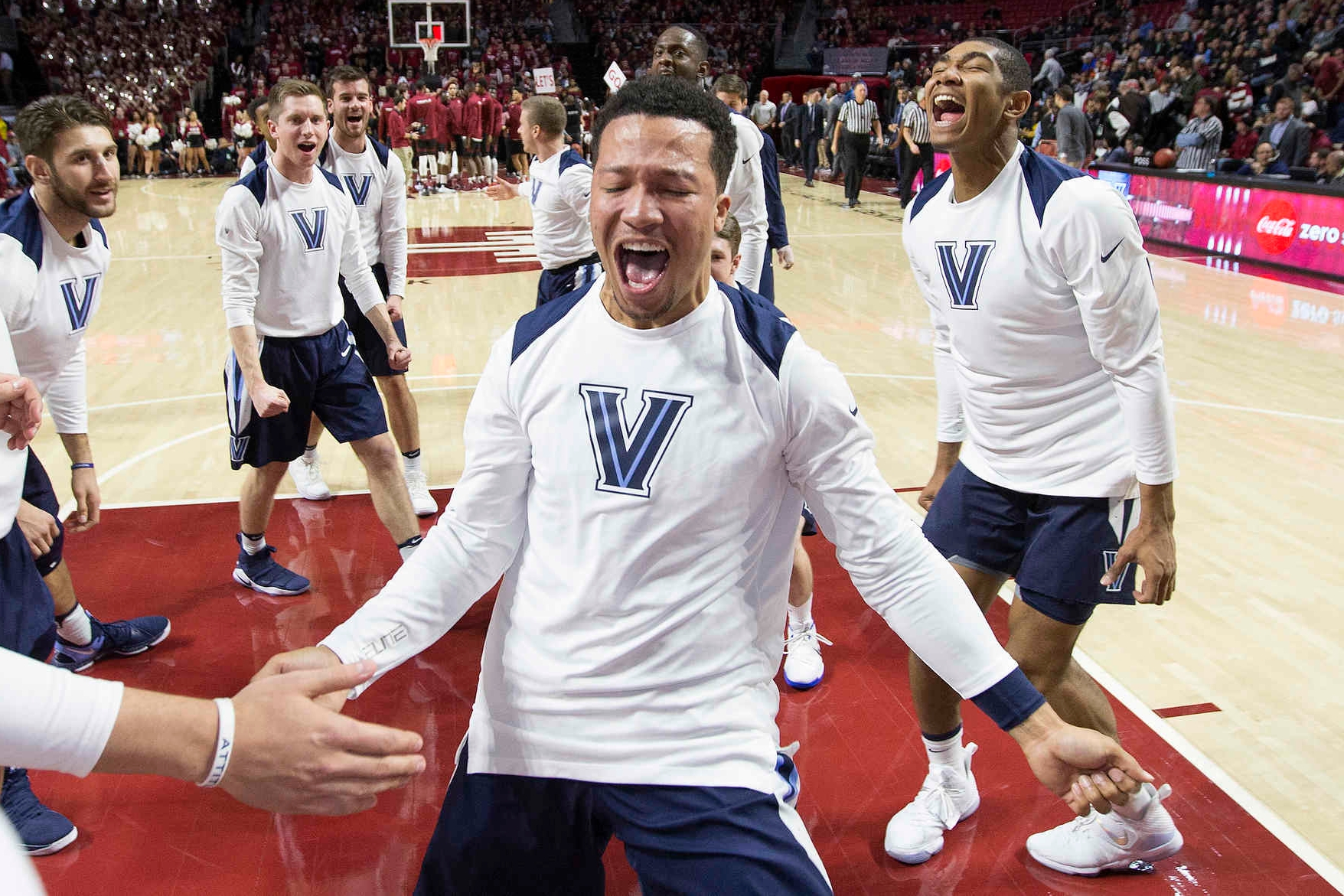
You can trace Jalen Brunson’s greatness and the Knicks’ NBA title right to Villanova
In a Rock Hill, S.C., restaurant last Wednesday night, during a recruiting road trip to the Nike 100 Camp, Ashley Howard locked his eyes on a television above the bar, enthralled by the most dramatic comeback in NBA Finals history, his mind recalling a more modest rally from nine years earlier.
Jalen Brunson, Josh Hart, Mikal Bridges, and the New York Knicks kept chopping into that 29-point San Antonio Spurs lead. Madison Square Garden kept getting louder. And as Game 4 slowly shifted from a series-tying rout to the surest sign that three former Villanova stars would soon bring about the end of a 53-year championship drought, Howard remembered a college basketball game from January 2017, from the season between ’Nova’s ‘16 and ‘18 national championships.
An assistant under Jay Wright then, an assistant under Kevin Willard now, Howard reminisced with the friend sitting next to him — former Villanova head coach Kyle Neptune, now an assistant with the Charlotte Hornets — about a 61-59 Wildcats victory over Virginia. Villanova had trailed that day by 12 points with less than 10 minutes to go, an imposing deficit given how Tony Bennett’s Cavaliers teams could slow a game to a crawl. But Hart and Brunson had pulled ‘Nova back from the brink, and Donte DiVincenzo had tipped in an off-target Hart layup at the buzzer, and Howard saw the residue of that win in OG Anunoby’s soaring-eagle tip-in and the Knicks’ 107-106 stunner in Game 4. In Brunson’s 45-point masterpiece Saturday night in the clinching Game 5. In the title run of a team that was smarter, tougher, and tighter than every other in the NBA playoffs.
“After winning the first national championship, every game these guys played together in ‘17 was the biggest game for whoever they played,” Howard said in a phone interview. “They have everything to lose, and their opponent doesn’t. There’s a different type of mental toughness and mental fortitude you have to have to not only play under that pressure but answer the call in those moments.
“Now they’re all back together, and it’s almost like déjà vu where that Villanova connection is back. The other pieces are different. The coaches are different. But when you look at that Knicks team, you say, ‘Yo, those dudes are playing Villanova basketball.’ It’s really all about how they play hard. They compete for the entire game. They never, never quit. They play unselfishly, and you can tell that they love each other. That just makes my chest stick out as wide as all outside.”
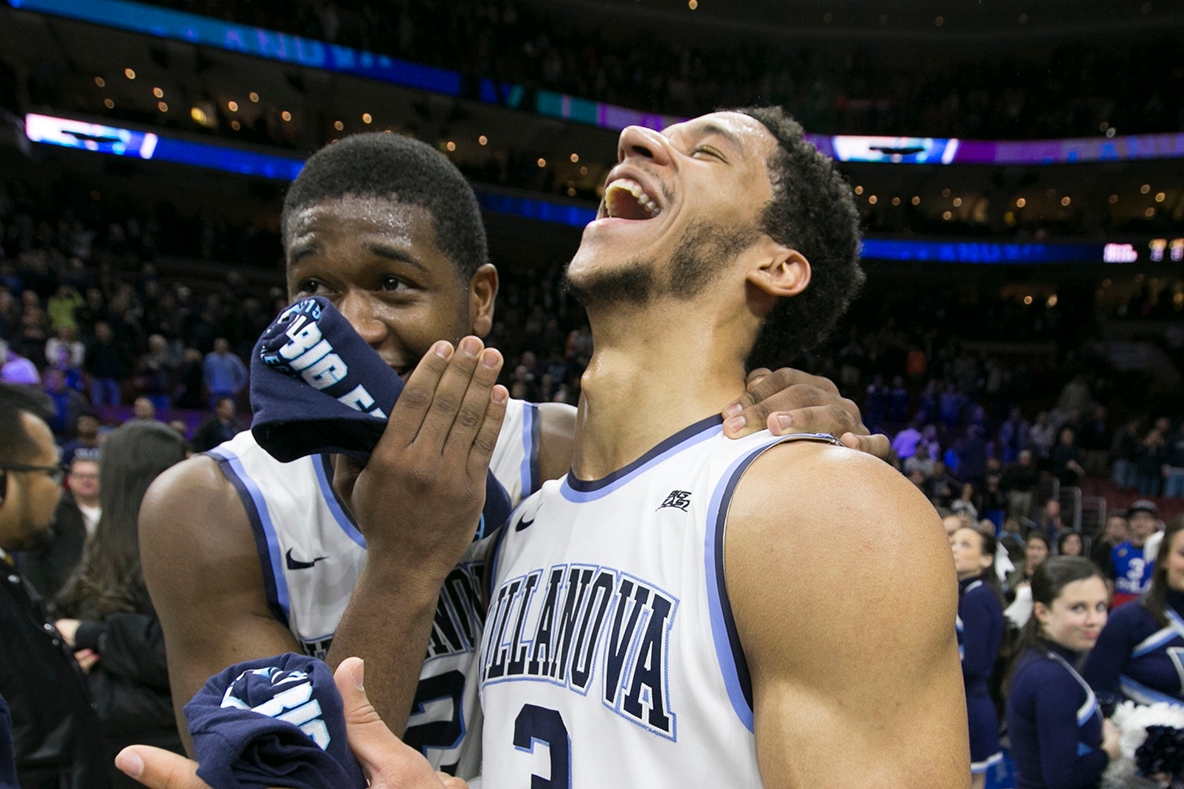
Josh Hart (right) won the 2016 national title with the Wildcats.Charles Fox / Staff Photographer Howard was at the nexus of the origin of the ‘Nova Knicks, and the irony of his role in that story is that he, with such deep Philadelphia hoops roots, had left town when he made his first connections with Brunson, Hart, and Bridges. A standout guard at Monsignor Bonner and Drexel, he was climbing the college coaching ladder — first four years at La Salle, then four back at Drexel — when in 2013 he accepted the chance to assist Chris Mack at Xavier. It was a more highly regarded mid-major, a better shot to jump to a bigger program, and in that one year he spent in Cincinnati, Howard recruited that trio before reuniting with them again at Villanova.
In Hart, Howard saw a relentless and tenacious guard who pulled down as many as 25 rebounds in games at Sidwell Friends in Washington and for his AAU club, Team Takeover. He also met a low-maintenance kid who, when Howard coaxed him to Xavier for an on-campus, didn’t need a fancy dinner at an exclusive restaurant. No, when Howard offered to buy him lunch, Hart instead was desperate for a sack of double-cheese sliders from White Castle. “Shows what a freak of nature he is,” Howard said.
Bridges’ and Brunson’s recruitments were more personal for Howard, starting at Xavier and continuing after he joined Wright’s staff at ’Nova. Howard was friendly with Bridges’ cousin Bernard Tyler, who forwarded him a video of the kid’s highlights from Great Valley High School and Team Final, one clip after another of Bridges cutting to the basket and creating shots within Great Valley’s motion offense, with an enticing text: This is the next one. Make sure you get this dude. And Howard could only chuckle when Mack called him one day after attending a high school holiday tournament in Chicago and asked him, Hey, Ash, do you know Rick Brunson? His kid is really good.
“Reached out to Rick,” Howard said. “We caught up, and I jumped on Jalen from that point on.”
There’s a chicken-or-egg aspect to the greatness that Wright’s program achieved during that stretch in the mid-2010s and to the qualities that Brunson, Bridges, and Hart developed there and still carry with them. Would these players, because of their inherent strengths, have thrived in other programs? Or did they need to learn under Wright and his staff and his culture? A dash of both, of course, and the conditions and choices that led to their flourishing at Villanova — and to those two national championships — aren’t likely to be duplicated in college basketball’s current era of status seeking and coin chasing.
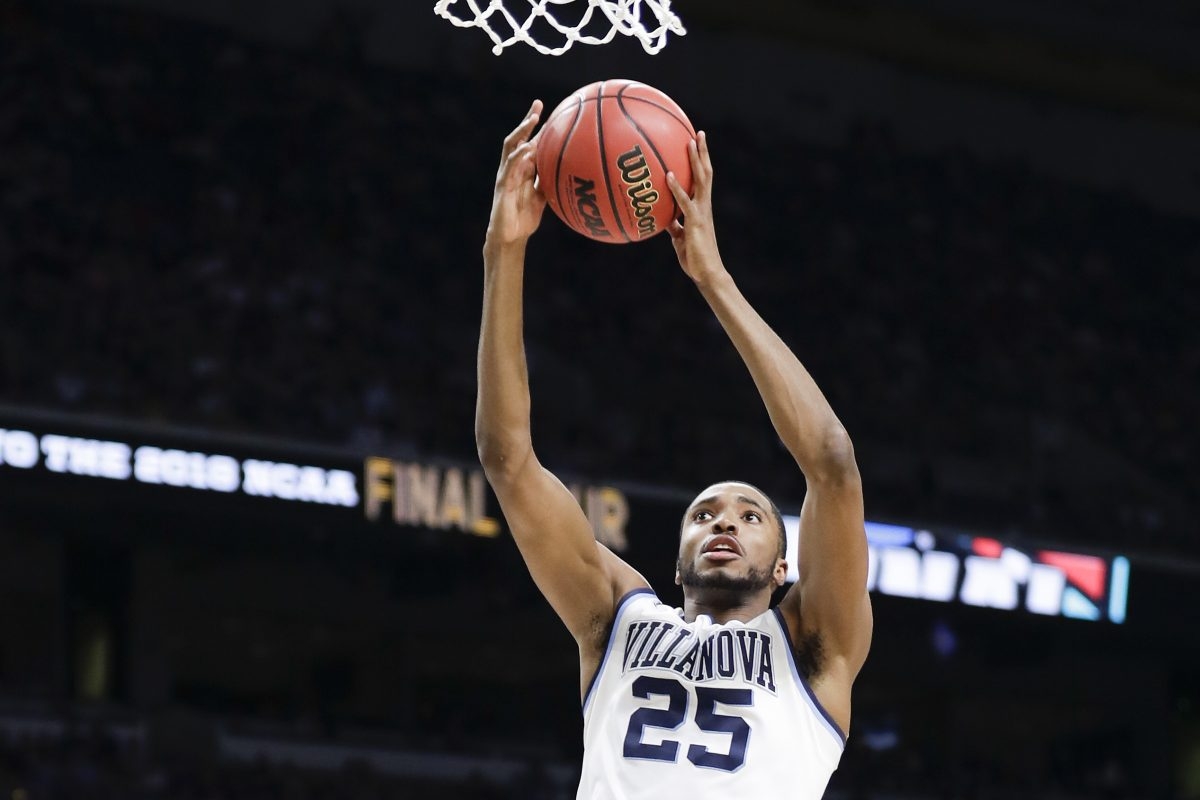
Mikal Bridges was on both the 2016 and 2018 Villanova championship teams.Yong Kim / Staff Photographer Bridges went to Wright and Howard and suggested that he redshirt as a freshman, that he sit out an entire season for the sake of his growth as a player and person. Hart started just three games over his freshman and sophomore seasons, could have transferred out of frustration and a search for more playing time, and didn’t. Brunson as a freshman took a secondary role alongside Ryan Arcidiacono, then ran the Wildcats’ show for two years before entering the NBA draft. Good luck being so patient in developing players and building a program now.
“It was a period of time where you could build off your failure and mistakes and learn from them collectively,” Howard said. “You could develop young people over a course of time and nurture and appreciate the process. … All these guys in their own way trusted us and allowed us to push them to limits. Parts of their experience at Villanova, man, it was tough, but they allowed us to make them uncomfortable.”
It was the perfect preparation for these playoffs, for these NBA Finals, for a remarkable run capped when Brunson took control of Game 5, when the sub-6-foot guard with the impeccable footwork, with the endless array of head fakes and midrange shots, with the glorious old man’s game was once again the coolest customer on the court.
“You could see the Spurs getting tight,” Howard said, “and you could see Jalen saying, ‘Yo, get me the ball. I’m gonna make these plays.’ Me being around J, it’s like, ‘Here he comes. It’s on.’ When the stakes get high, that dude is coming.”
It had been 53 years, long enough for any franchise and its fans to wait for that kind of ride, and all it took was something Ashley Howard and everyone at Villanova had seen a million times before. All it took was Jalen Brunson, Josh Hart, and Mikal Bridges doing what they’ve always done.
-
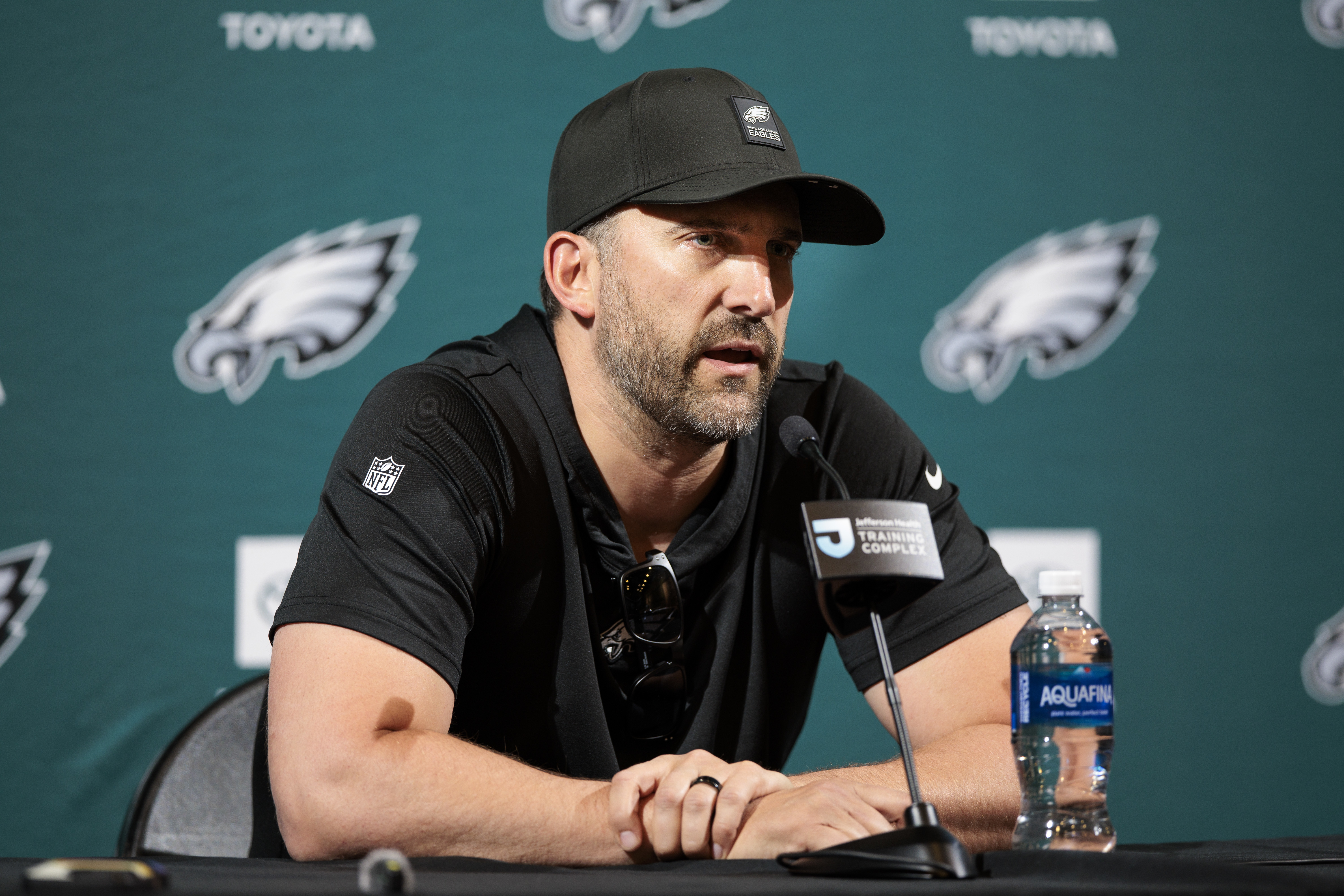
The Eagles have to get more daring on offense this season. Nick Sirianni has to let them.
OK, here’s a hypothetical scenario.
It’s Week 5 of the Eagles’ season. They’re 2-2, but their record is not the concerning thing, not really. They have lost their most recent game, at home to the Los Angeles Rams, but that loss, in and of itself, is not the concerning thing, not really. The Rams are favored to represent the NFC in the Super Bowl, after all, and any team would struggle to hold Myles Garrett at bay, and the Eagles could not.
No, here’s what’s concerning: Jalen Hurts is doing the one thing that he generally does not do. He’s turning the ball over. He’s throwing interceptions, and it’s clear that those interceptions are born of his acclimation to the Eagles’ new offensive system under their new offensive coordinator, Sean Mannion. The Eagles would be at least 3-1, perhaps 4-0, if not for Hurts tossing the ball to their opponents too many times.
So … what does Nick Sirianni do in this scenario?
The question cuts to the core not only of the Eagles’ fortunes this season but their long-term future. And Hurts’ future. And Sirianni’s. Spend just a few minutes watching one of the Eagles’ recent minicamp workouts or listening to Hurts and Lane Johnson speak about Mannion’s offense, and you understand how big a change this will be and how committed the Eagles are to making it. Hurts will be under center more. The offensive line’s blocking techniques and schemes will be different. Oh, and A.J. Brown isn’t here anymore.
Put simply, this transition may take some time, and it may be rough at the start. If it is, it promises to force Sirianni to choose between riding out Hurts’ rite of passage in Mannion’s system and falling back on one of his primary coaching principles: Above all else, protect the football.
“As long as I’m the head coach here, we’re going to be very diligent about winning that turnover battle and winning the explosive-play battle,” Sirianni said Wednesday. “I know it’s like, ‘OK, that sounds simple,’ but there’s an art to it because you’ve got to be able to create explosives in different ways and sometimes that puts the ball at risk. But at the end of the day, that ball is still the most important thing.
“We’ll know how to create explosives in that time, but taking care of the ball is the most important thing, and we talk about this all the time: Can we come out of a game with every drive ending in a kick? Whether that’s an extra point, hopefully, whether that’s a field goal, or whether that’s a punt.”
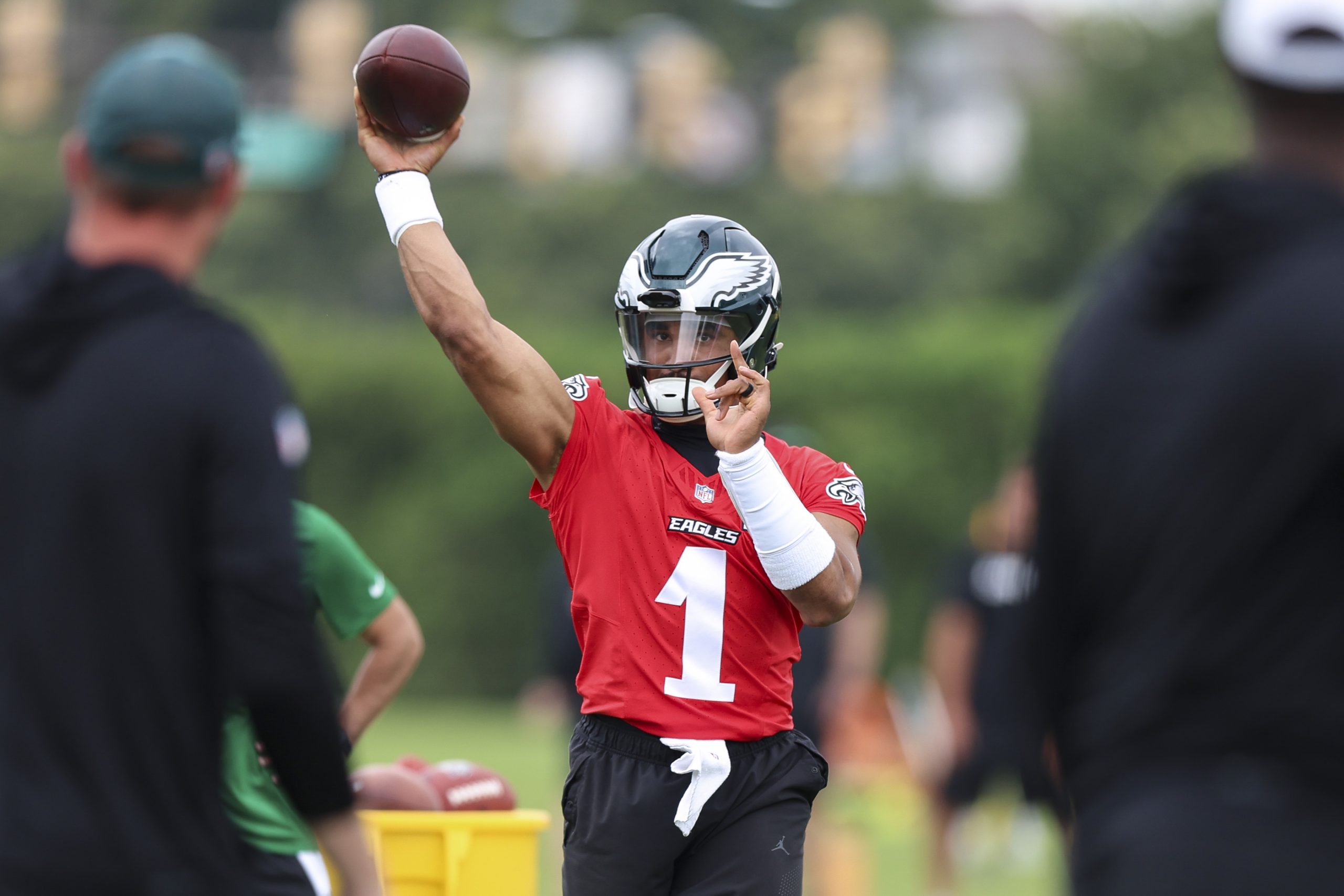
Will Jalen Hurts be given the bandwidth to struggle in his early moments within the Sean Mannion offense?Monica Herndon / Staff Photographer A quick review of the last two seasons provides plenty of evidence that Sirianni is pastor of The Church of Do No Harm. In 2024, Hurts threw the ball at least 30 times in each of the Eagles’ first four games and was intercepted four times as the Eagles went 2-2. Over the remaining 13 regular-season games, he surpassed 30 pass attempts in a game once, and he threw just one interception, and the Eagles rode Saquon Barkley, their O-line, and their defense to a Super Bowl victory.
In 2025, Hurts’ most daring passing performance — and, in Sirianni’s eyes, his most destructive — came in Week 14 against the Los Angeles Chargers. Hurts made some dazzling downfield throws that night … and tossed four picks, including one in overtime that ended the Eagles’ hopes of winning. His subsequent four games were a case study in cautiousness. He attempted just 15 passes in a rout of the (awful) Las Vegas Raiders. He had 185 passing yards on 30 attempts against the Washington Commanders, then threw for a piddling 110 yards (in freezing and windy weather, granted) against the Buffalo Bills, then managed just 168 yards on 35 attempts in that maddening wild-card loss to the San Francisco 49ers.
The Eagles wouldn’t have hired Mannion if they believed such an approach were sustainable. The combined greatness of Barkley and their offensive line was responsible for the offense’s quick-strike and big-play capabilities in 2024, and it had the added bonus of cutting down the occasions when Hurts or anyone else had to put possession of the football at risk. But those circumstances and conditions were ideal and difficult, if not impossible, to replicate, and the Eagles couldn’t and didn’t in 2025.
Now they have Mannion, who is regarded as a sharp, up-and-coming mind in the NFL. And they have Hurts, who for the sake of his own improvement and his team’s fate has to master a system unlike any he has played in before. And they have Sirianni, whose instinct has been to minimize any possibility of a big mistake. Something might have to give, and the season just might come down to the head coach and his ability to resolve a fundamental conflict within himself.
-
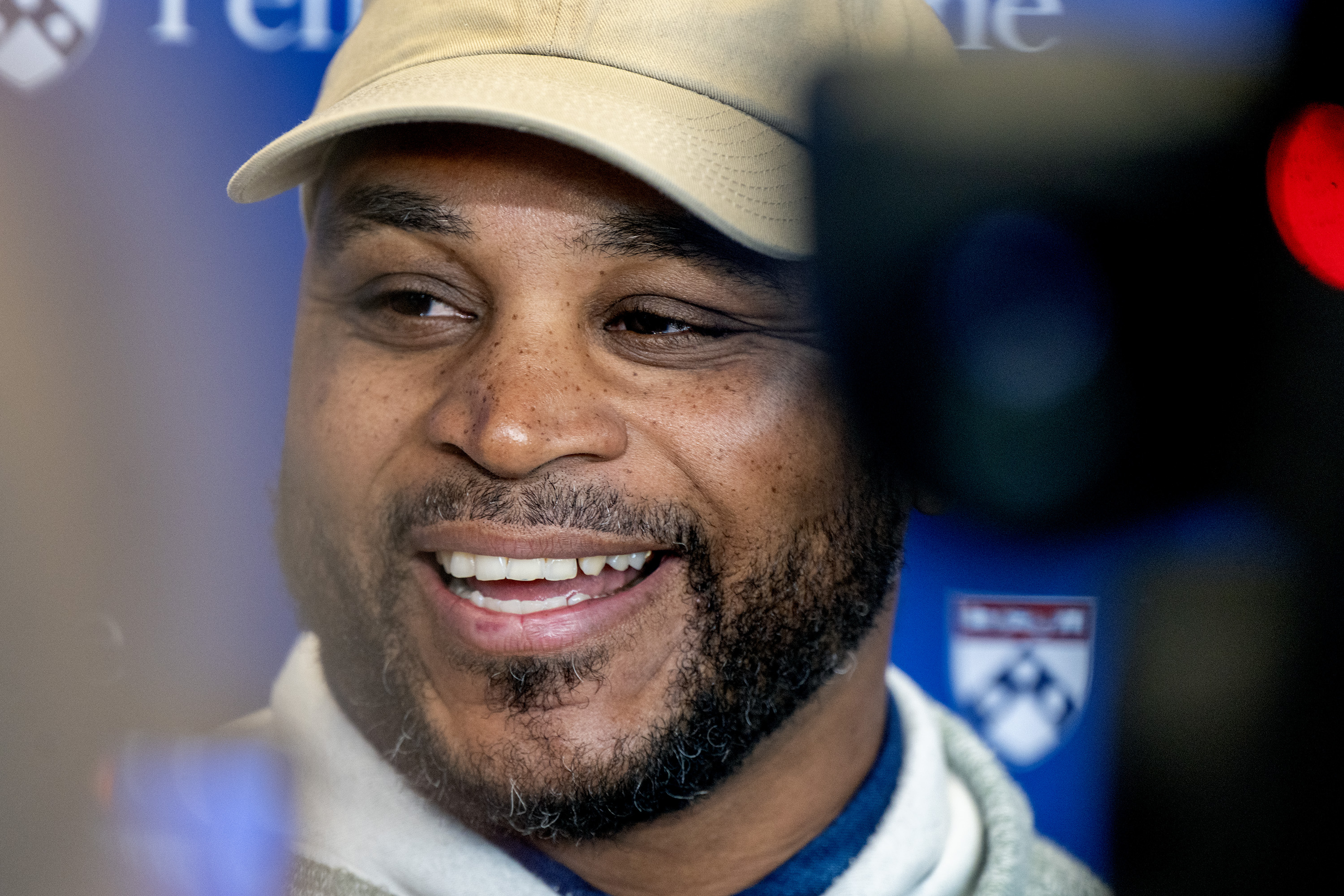
The Sixers need to reconnect with the region. Jameer Nelson is their best hope.
Jameer Nelson took care to draw a distinction that was important to him and should be important to the franchise that has promoted him.
“Growing up in this area — everybody keeps saying Philly — I’m a Chester native,” he said Monday. “Philly adopted me.”
There’s a difference between the two, as anyone who has lived and followed basketball in the Philadelphia area long enough can tell you. Chester is a small, forever struggling city with its own glorious hoops history, with a high school program that has won eight PIAA boys basketball championships, with its own heroes and legends, the 76ers’ executive vice president of basketball operations among them.
When Nelson mentioned his favorite players as a kid, he name-dropped Charles Barkley and Allen Iverson. Any Chester aficionado would have chided him for leaving John Linehan and Zain Shaw off his list, and he laughed in acknowledgment of the omission.
That contrast might not seem to mean much. But it said everything about Nelson’s potential value to the Sixers, to his ability to provide at least some of the institutional memory and understanding of the market that the organization has lacked for so long. “No one more capable,” Phil Martelli, Nelson’s coach at St. Joseph’s, said in a text message Monday.
He knows Philadelphia and Chester and knows they aren’t quite the same. He knows what it was like here in 2001, when Iverson led the Sixers to the NBA Finals, and he knows what it was like in early 2004, when Nelson himself led the Hawks in that magical unbeaten regular season and that run to the Elite Eight.
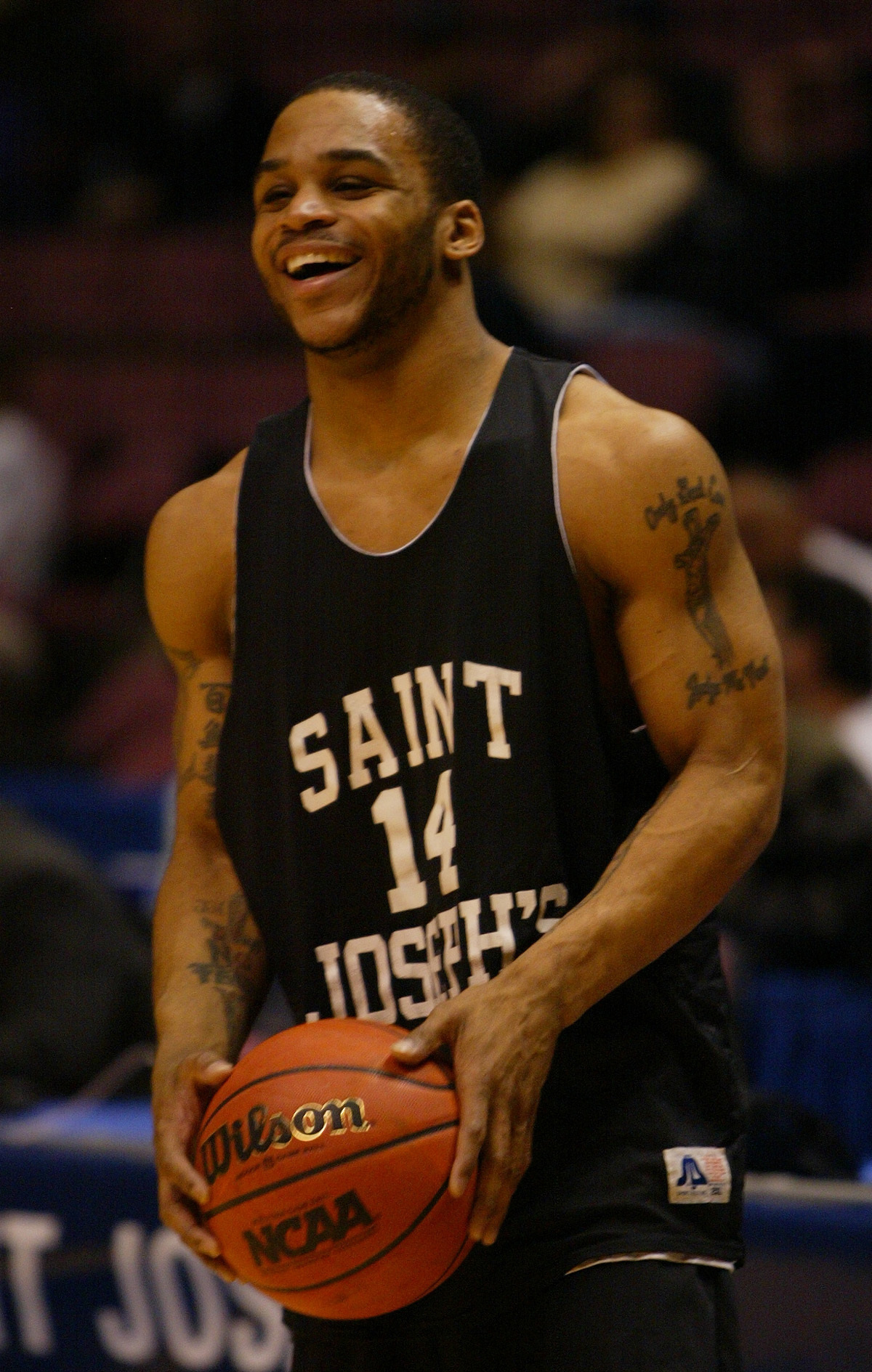
Jameer Nelson Sr. was a 2,000-point scorer for St. Josephs. He ignited the Hawks to the NCAA Tournament Elite Eight in 2004.George Reynolds / Staff Photographer He knows what will play here and what won’t, who can play here and who can’t.
“Understanding the landscape and understanding what this team means to the city, I can bring that,” said Nelson, who had a 14-year playing career in the NBA. “I can help everybody in the building understand that because I understand it. Growing up, I was one of the people who are doing what people are doing now.”
Too few people among the Sixers’ previous power players have had that background, and no member of the current leadership has it. Harris Blitzer Sports & Entertainment president Bob Myers lives in California. Mike Gansey, the Sixers’ new president of basketball operations, reminded people at the team’s headquarters in Camden that he “just got here” after growing up in the Cleveland area and working for the Cavaliers for 15 years. And managing partner Josh Harris splits his time between Miami and his $28 million mansion in the Georgetown section of Washington, parachuting into town for home games and the latest hiring/firing news conference.
Nelson still is third in the pecking order at best within the Sixers’ basketball hierarchy, behind Myers and Gansey. But at least his new title might afford him a louder, stronger voice when it comes time to draft, sign, or trade for players the Sixers hope to have here for a while. Myers said aloud Monday what anyone who has followed this team already knew to be true: “We’ve got to find an identity. We just don’t have one.” That assertion goes beyond the Sixers’ style of play.
It gets to the character and attitude of the players, the coaches, everyone in the organization. It gets to the Sixers’ giving themselves a better chance of making better decisions. For every time they’ve recognized that Tyrese Maxey or VJ Edgecombe had the mental and emotional makeup to cut it here, they’ve failed to see that Ben Simmons and Markelle Fultz didn’t, that James Harden and Paul George and mercenaries like them, stars who require a softer setting, were unlikely to thrive or to be embraced.
“Anytime you can put somebody in a leadership role who understands and embraces it and is reared here, it’s an advantage,” Myers said. “I don’t know to say it was a negative last year or in years past, but I do think most people would agree this is a uniquely spirited community, and having someone who knows that and grows up and feels that — and the responsibility that comes with it — I love that Jameer is in the place he’s in.”
The Sixers under Harris need Nelson’s instincts and experience and all the additional help they can get in that regard. A longtime NBA executive noted recently that in professional sports, you often can trace a franchise’s excellence or stability to the geographical proximity and familiarity of its owner. Does the person in charge live where the team is based? Did they grow up there? Do they truly understand the city and its fan base?
Spurs managing partner Peter Holt has deep familial ties to San Antonio. The Heat’s Micky Arison has lived most of his life in Miami. Joe Lacob was a Warriors season ticket-holder for nearly 10 years before he bought the team in 2010. Jeffrey Lurie relocated from Boston and took the time to learn what Philadelphia was all about. Ed Snider and John Middleton were already here to know.
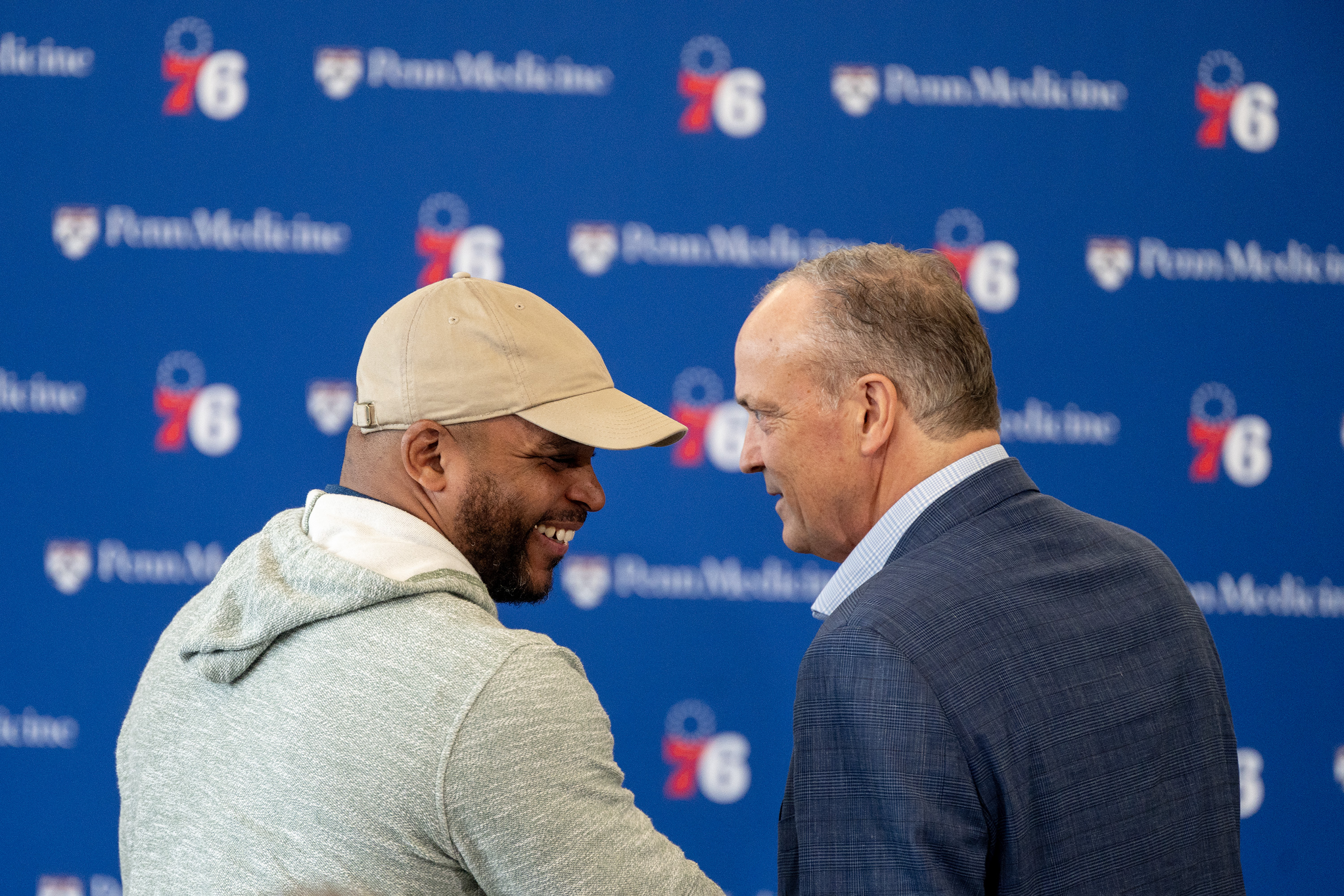
New Sixers executive vice president of basketball operations Jameer Nelson (left) talks with Harris Blitzer Sports & Entertainment CEO Tad Brown (right) after Mike Gansey’s introduction press conference on Monday.Tom Gralish / Staff Photographer James Dolan is a surveillance-happy nepo-Boomer who, after a quarter-century of mismanaging the Knicks, finally stumbled into ecstasy thanks to Leon Rose, William “Worldwide Wes” Wesley, and Jalen Brunson. But Dolan’s also a native Long Islander who felt the heat in New York — the city where rebuilding isn’t allowed — every time one of his cockamamie attempts to quick-fix his franchise went awry.
The NBA thinks it solved its tanking problem. But some La Salle researchers might have a better fix.Too often since Harris took control of them in 2011, the Sixers have acted as if they’re content to be interesting, to settle for the sugar rush of another roster shake-up and a sold-out arena instead of putting in the demanding, patient work that leads to genuine and lasting success. “You can’t buy championships,” said Myers, who won four of them as the Warriors’ general manager. “You have to go through it to get them.”
Whether it’s the pain of Sam Hinkie’s Process or the cost of exceeding the league’s luxury-tax threshold, Harris’ Sixers have shown a reluctance to make such sacrifices, and their status in the city and their performance come the second round of each year’s playoffs have sunk because of it. If nothing else, in Jameer Nelson, out of Chester and adopted by Philadelphia, they have someone who can remind them that the hard way is what this region prizes and rewards, the only way that works.