Author: Mike Sielski

  • The Jalen Hurts hate online is dumb, ‘Field of Dreams’ is overrated, and other thoughts

    The Jalen Hurts hate online is dumb, ‘Field of Dreams’ is overrated, and other thoughts

    First and final thoughts …

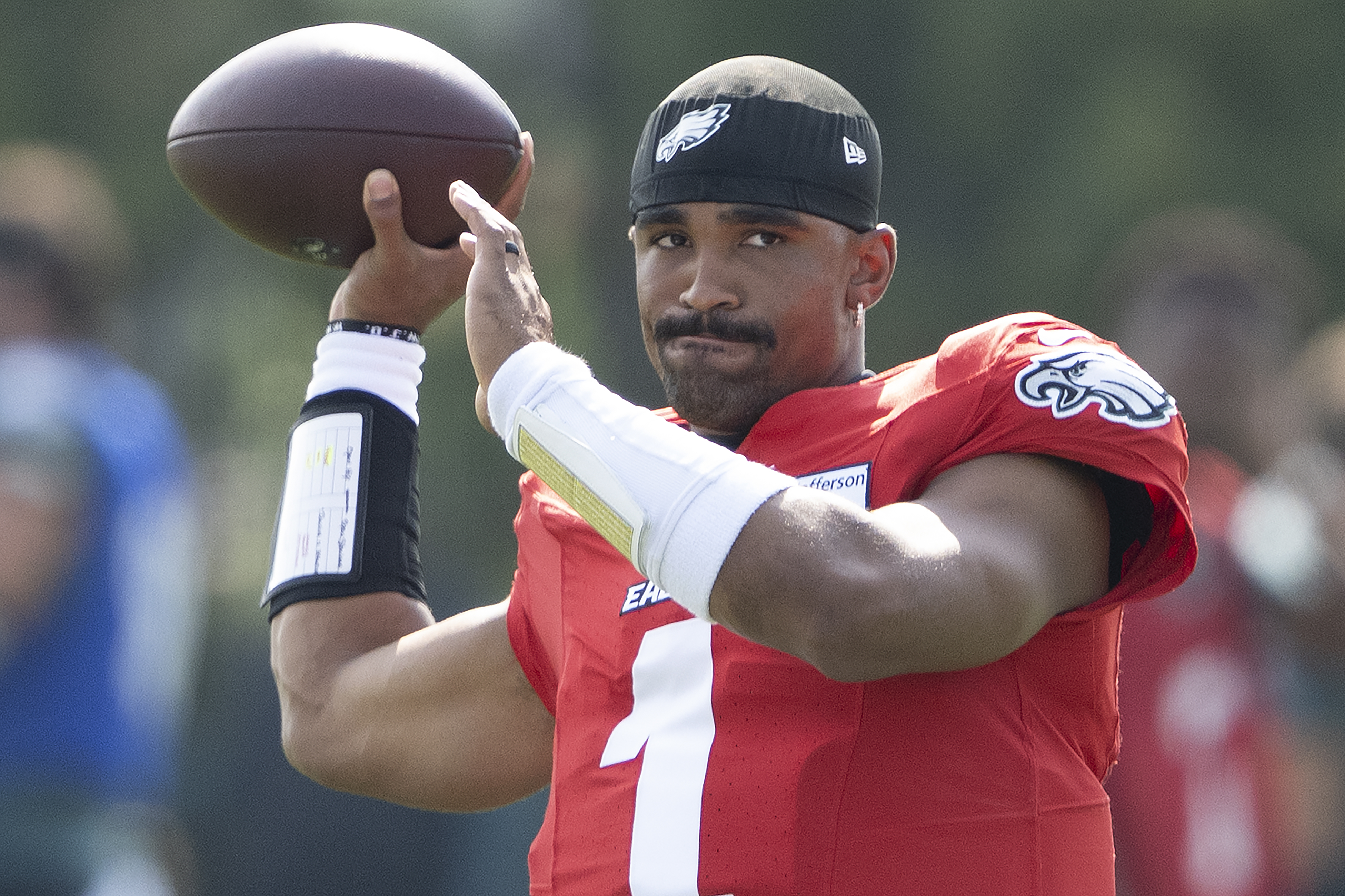
    As of 2:15 p.m. Friday, a post from the Eagles’ official Twitter/X account showing a slow-motion replay of Quinyon Mitchell intercepting a Jalen Hurts pass during practice Wednesday had accumulated nearly 17 million views on the site. There are no typographical errors in that sentence. An interception at practice garnered 17 million views without Christopher Nolan or Abraham Zapruder having filmed the sequence.

    X users reposted the clip more than 3,000 times. Many of them included comments suggesting, or saying outright, that the interception was indicative of the quality of Hurts’ play or that the Eagles were disloyal or disrespectful to Hurts for posting the clip at all.

    Former Eagles linebacker Emmanuel Acho, now a professional podcaster and poo-stirrer, wrote that “given my experience with the lengths people go to protect Jalen, somebody getting cussed out for sure and then may get fired.” ESPN’s Mike Golic Jr. quipped: “guys, people can see this.” Ben DiNucci, whose NFL career comprised three games with the Cowboys in 2020, wrote: “Why would they post this lol These social teams have a direct impact on what fans think / believe / see.”

    A lot can be said about these people and those who responded similarly to the interception post. None of what can be said is kind. DiNucci at least tiptoed toward a reasonable and accurate point: That many fans, especially those so hungry for information and insights about their favorite teams that they spend hours scrolling through social media in the middle of the day, would blow such a play out of proportion. That’s fine. They’re fans. No one should expect them to be measured and reasonable.

    But if you’re going to hold yourself up as an expert and try to earn a living from that purported expertise — and that’s what these media members and influencers and former players are doing — then you ought to have enough knowledge and integrity to treat an interception in practice with the gravity it deserves. Which is to say, next to none. If training camp mattered that much, Paul Turner would be closing in on his 11th consecutive season with at least 1,500 receiving yards, and Sam Bradford would have been a Super Bowl MVP before Hurts or Nick Foles.

    Hurts has his strengths as a quarterback, and he has his shortcomings, and, yes, this will be an interesting and important season that could chart the course of his future with the Eagles. But no matter how sensitive Hurts and his camp might be, he has handled situations that were far more pressure-packed than a post intended to praise one of his teammates. And the notion that throwing a pick during training camp should serve as any kind of referendum on any NFL starting quarterback is so stupid that it could gain traction only on X.

    It was practice, people. Cue the Allen Iverson rant, and go freak out over another not-so-big deal.

    Leave Santa alone, Roger

    So the NFL has scheduled one game on the night before Thanksgiving, three on Thanksgiving itself, one on Black Friday, one on Christmas Eve (between the Eagles and Texans at 8:15 p.m.), and three on Christmas. Meanwhile, the NBA has nine games on Thanksgiving Eve, 11 on Black Friday, and five on Christmas.

    Sorry, count me out, or as out as I can be as someone who covers the Eagles and 76ers. These leagues are attempting to capitalize on the captive audience they believe they’ll have on these holidays, but having those days and the traditions within them consumed by a bunch of games is crass and greedy. The only benefit to this overstuffed sports schedule is that it might keep family members and friends from arguing about politics over the apps and turkey.

    Quick hitters

    For the Sixers’ sake, it’s good to see so many LeBron James murals popping up around the city. They should serve as a nice counterbalance to the one at 30th St. and Eighth Avenue, around the corner from Madison Square Garden, that depicts Mitchell Robinson — a key member of the New York Knicks’ 2025-26 championship team — dunking over Joel Embiid. …

    Based on their offensive output in their 7-1 win over the Twins on Thursday night in Iowa, the Phillies should play all their remaining home games this season at Shady Brook Farm. …

    Oh, and for the record, Field of Dreams is among the most overrated sports movies ever. Joe Jackson hit left-handed, not right-handed as the film depicts him. Kevin Costner’s Ray Kinsella was an unsympathetic jerk to his father. And James Earl Jones’s “People will come, Ray” speech is overwrought. Costner’s “Dad, wanna have a catch?” scene is touching, but it does a lot of heavy lifting in making the film watchable. Give me The Natural, Eight Men Out, and Bull Durham every time.

  • The hazing at Cheltenham follows a pattern seen at other schools. The district missed its chance to stop it.

    The hazing at Cheltenham follows a pattern seen at other schools. The district missed its chance to stop it.

    The connection was obvious for anyone who cared to see it.

    One parent after another stepped to a lectern at a Cheltenham school board meeting Tuesday night, each of them bemoaning the district’s handling of either the recent hazing scandal within the high school’s football program or a string of student-on-student assaults at Cheltenham Elementary. The alleged hazing led to criminal charges against four coaches and six players and was brutal: teammates holding down a 15-year-old sophomore so they could step on him with football spikes and poke at his buttocks with a broomstick. The alleged assaults at the elementary school, involving children in kindergarten and second grade, involved conduct and comments that were sexual in nature.

    Leah Mulhearn, the board’s president, announced that the district would review its safety policies and that “football will not return until we address this,” only to duck behind the protective shield of the passive voice — “Mistakes were made” — when it came time to assign responsibility for the dual disasters. The anger among the meeting’s attendees was palpable and universal, and it was justified. These are not two crises on distinct, parallel tracks. They are linked, and there is no separating them.

    It was impossible, after listening to some of those parents describe the abuse accusations at Cheltenham Elementary, not to think, What kind of school leaders ignore these incidents? The kind likely to ignore a parent who reports a violent attack in the football locker room. The Cheltenham school district has a culture problem, and that problem isn’t new. Does that assertion seem outlandish? It isn’t. In youth and high school athletics, certain patterns, even the worst kind, tend to repeat and perpetuate themselves.

    “It seems some sort of disconnect,” the author Hank Nuwer, who for decades has been tracking hazing-related incidents and deaths, once told me. “You have to look at it from the outsider position and the insider position. The outsider sees it as sadistic. The people on the inside have the disconnect, particularly if they’ve gone through it themselves. ‘This needs to be done because it has been done to me. So we’re doing it to someone else.’”

    Go to 2002, to Central Catholic High School in Pittsburgh, where two football players were charged with sexual assault after allegedly holding down a 15-year-old teammate and slapping him in the face with their genitals.

    Go to West Chester’s Arrowhead Day Camp in 1966. The Roman Catholic High School football team was there for training camp. In a hazing prank, three players carried sophomore Lamonte Jenkins to a swimming pool sometime after the pool’s 8:30 p.m. closure, threw him in, then scurried back to their bunks. Jenkins drowned.

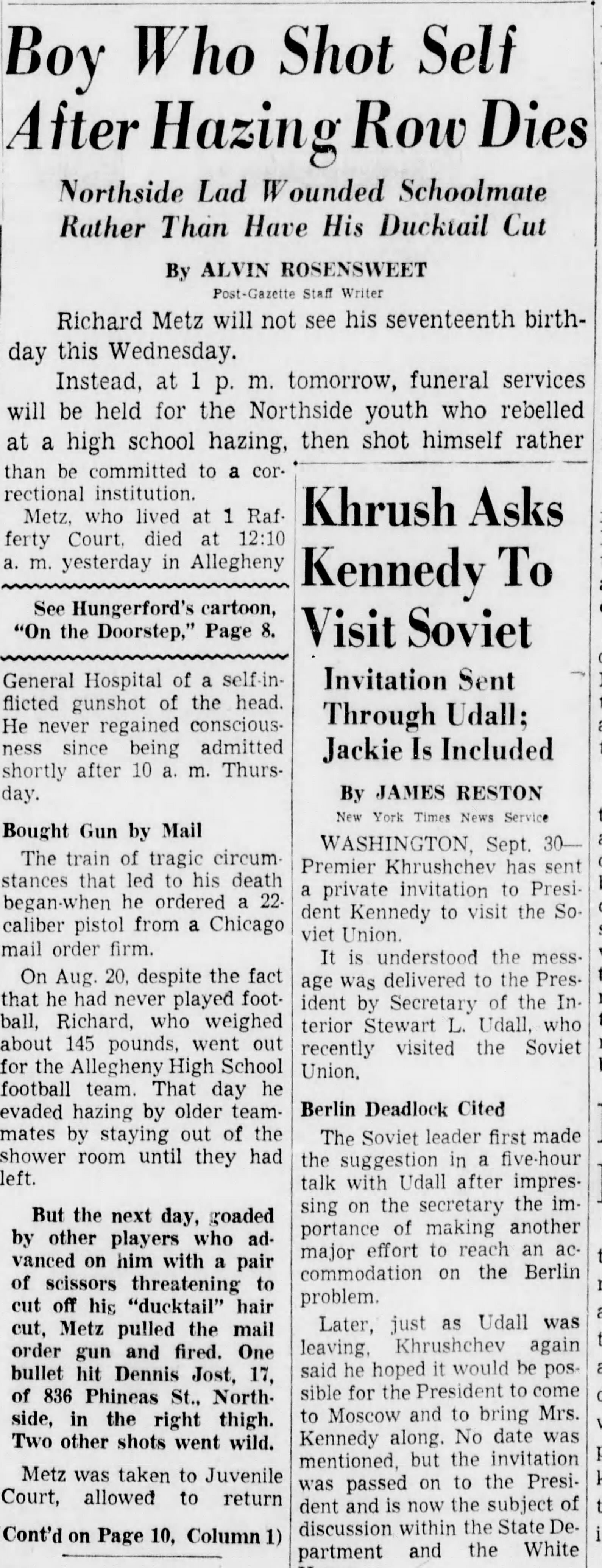
    Go back to Pittsburgh, in 1962, when Richard Metz, 16, tried out for the Allegheny High School football team and, after the first day of practice, stayed out of the locker room showers to avoid being hazed. The next day, when two players wielded a pair of scissors and threatened to cut his hair, Metz pulled out a .22-caliber pistol that he had ordered in the mail and fired three shots at the players, hitting one of them in the right thigh. Six weeks later, Metz shot himself.

    In 1962, Richard Metz shot a gun at two football players who attempted to haze him at Allegheny High School.Newspapers.com

    A “psychiatrist’s report showed that Richard had an inability to meet a crisis,” the Pittsburgh Post-Gazette’s Alvin Rosensweet wrote on Oct. 1, 1962, the day after Metz’s death. “He felt he was only defending himself when his teammates goaded him into shooting.”

    A young, troubled man who brings a gun to school … and turns it on other students … then dies by suicide. It doesn’t sound like something from the distant past. It sounds like the sort of atrocity too common in our time.

    Yes, these episodes are anecdotal. They’re also predictable without proper oversight from the adults who are supposed to be in charge, without awareness and understanding of the conditions that can create them. One would think the omnipresence of smartphones and social media and the possibility that such abhorrent acts would be captured on camera and blasted out to the world would serve as deterrents to hazing. They don’t, and the additional, necessary guardrails didn’t exist at Cheltenham and don’t in too many other locker rooms. Incidents like these seem rare, but there’s no telling how often they actually occur.

    “How likely,” Nuwer said, “are students to report this?”

    They’re not likely at all. The victims are often too humiliated to reveal the abuse, and you can be sure that the perpetrators won’t be quick to confess. Somehow those lasting lessons weren’t delivered to enough Cheltenham football coaches and players, and based on the abuse parents described Tuesday night, those responsible for the district’s youngest students need to learn them, too.

    There will be a review of the district from an outside attorney, and the high school football season has already been canceled, just as last season’s was. These are half-measures, and too late at that. Curtailing such cruelty comes down to stopping it before it starts, to cultivating an environment where everyone understands that there will be consequences for those who don’t meet the baseline for basic human decency.

    It takes elected leaders who actually lead. It takes educators and administrators who wield wisdom and compassion and discipline in the proper proportions. It takes parents and students with the willingness to speak up, and it takes parents who have the strength, the humility, and the self-awareness to recognize that their children might be causing the chaos — and who take the steps to stop it. It takes a lot of elements that right now seem in short supply in the Cheltenham school district.

    This column has been updated to reflect the outcome of one accusation of hazing.

  • Expect LeBron James and Jaylen Brown to be the calm to the storm that often can be the Sixers

    Expect LeBron James and Jaylen Brown to be the calm to the storm that often can be the Sixers

    Nobody throws a premature party like the 76ers. From the 2012 blowout to welcome Andrew Bynum to a 2016 rally at the Art Museum after going 10-72 and getting the No. 1 pick in the NBA Draft — a pick that turned out to be Ben Simmons — to the parade of big-name free agents and trade pieces who have come and gone since, this franchise has forever reveled in the shock and awe of a stunning acquisition.

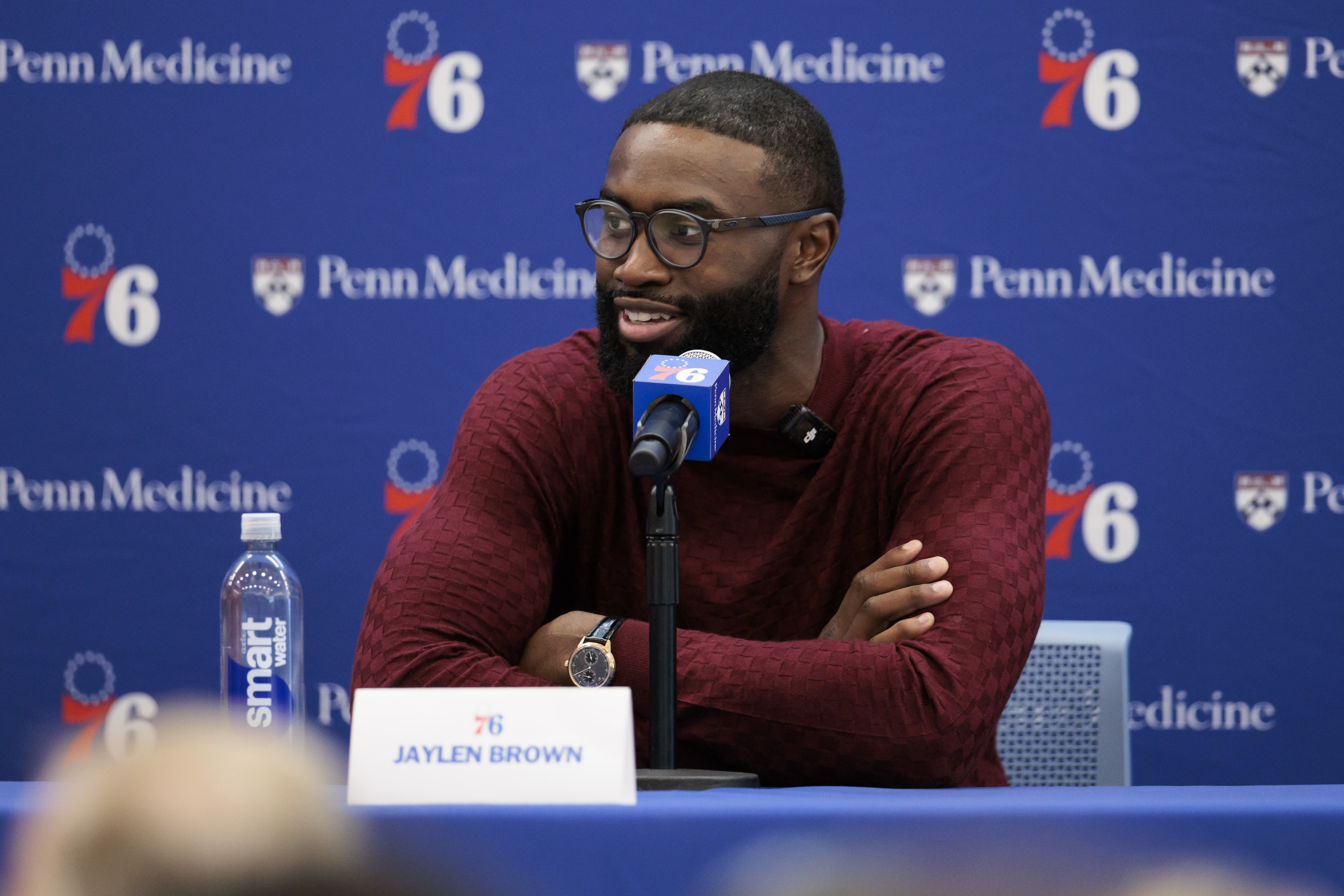
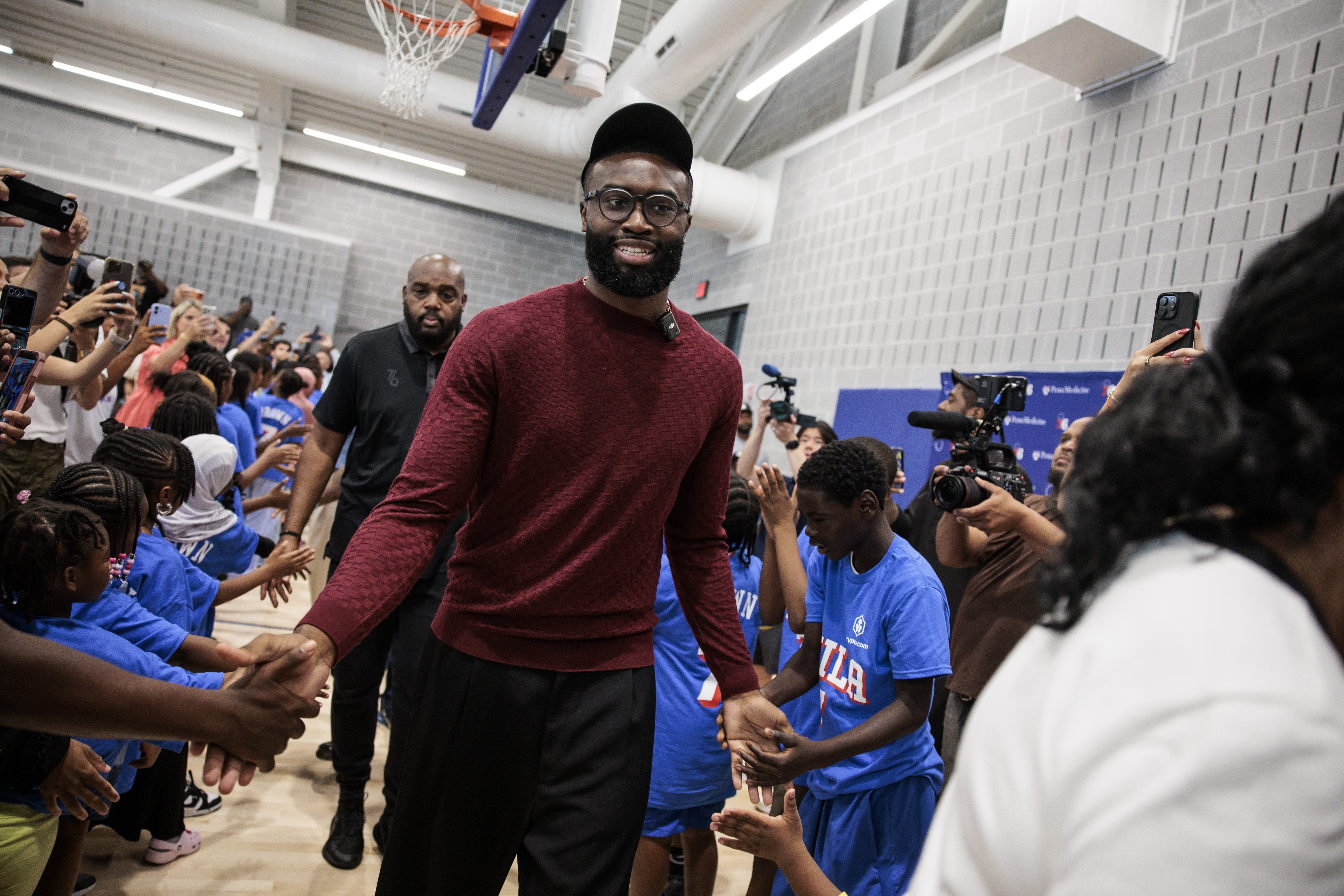
    Its introduction of Jaylen Brown on Thursday — at a recreation center in Southwest Philadelphia, per Brown’s request — featured cheerleaders, neighborhood children, dozens of boosters, members of the organization, and music with a dance-party feel.

    The affair had the Sixers’ customary pomp. Maybe this time, the circumstances are different. There’s actually reason to think they might be.

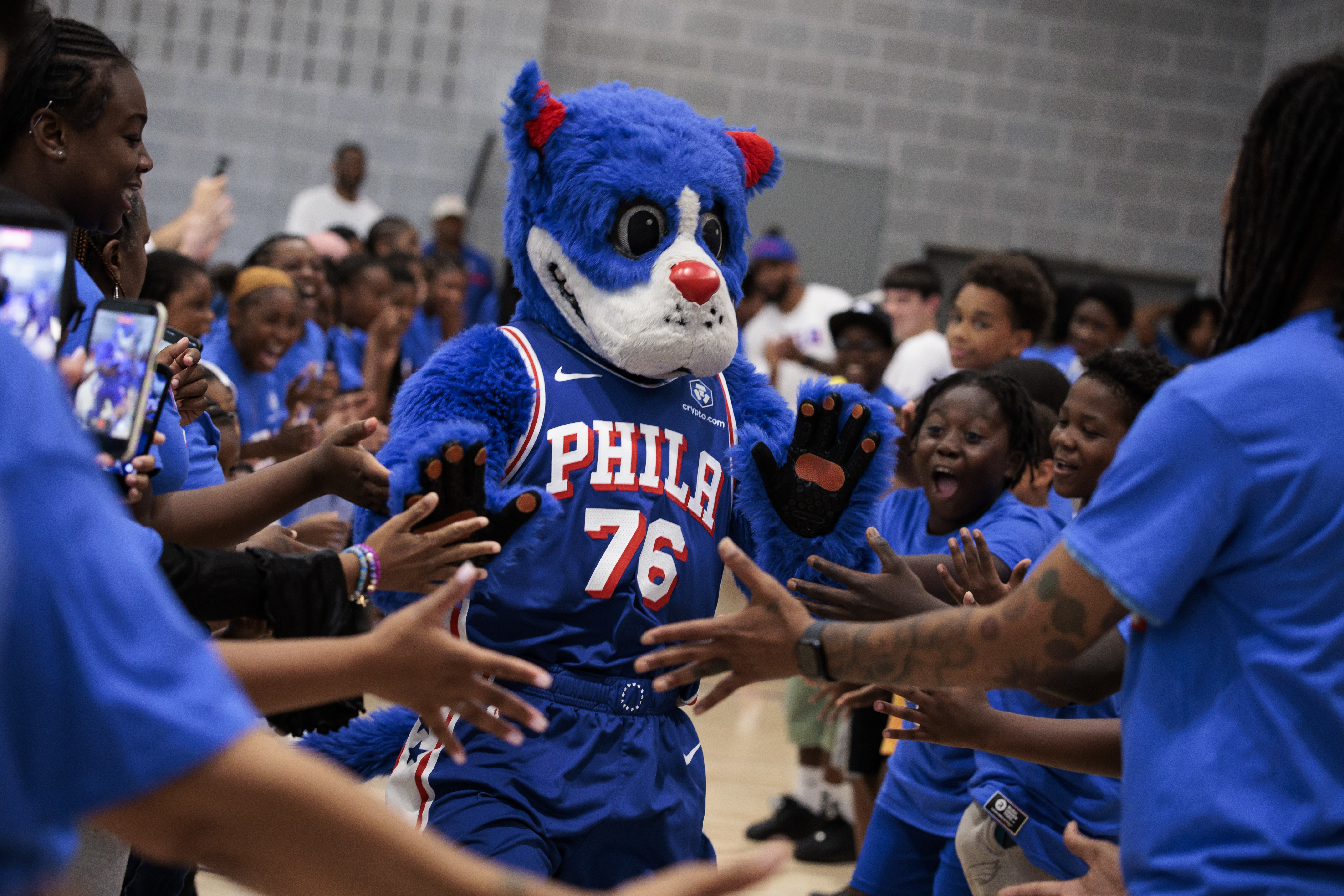
    The Sixers pulled out all the stops, including their mascot, Franklin, for the introductory press conference of Jaylen Brown on Thursday. Monica Herndon / Staff Photographer

    The trade for Brown and LeBron James’s decision to sign here give the Sixers more than just two outstanding players — one still in his prime, one still capable of being great, even at age 41. They now have two players who have shown they can handle, and even thrive amid, the highest of expectations and the heaviest of pressure. The most promising Sixers teams of the last 10 years tended to shrivel up in those situations. The 2019 team had a two-games-to-one lead on the Toronto Raptors, with Game 4 at home … and lost the game and, eventually, the series.

    The 2021 club also was up, 2-1, this time against an inferior team in the Atlanta Hawks, this time squandering an 18-point lead in Game 4 and a 26-point lead in Game 5 and losing Game 7 … at home. The 2023 club was up, 3-2, on Brown’s Boston Celtics and … well … you remember.

    Have Brown and James been in similar scenarios? Have they had opportunities to close out playoff series and failed? Of course. They also have five championships and 12 Finals appearances between them, and they’ve met the measure of those moments, too, more often than anyone else on the Sixers’ roster.

    A bonus of LeBron James joining the Sixers roster is the level of reserve both he and Jaylen Brown bring when it comes to aspirations of an NBA title.Mark J. Terrill

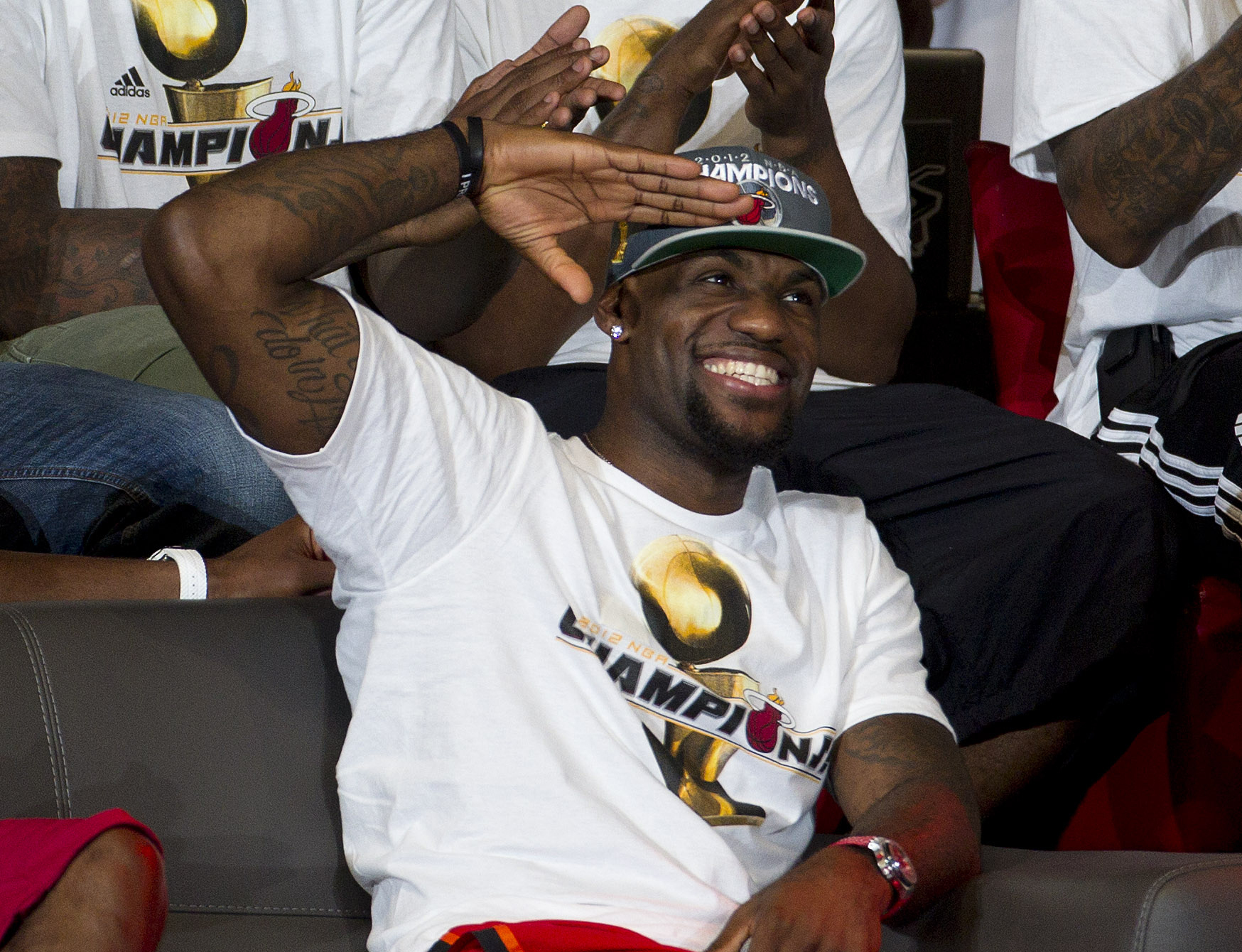
    Few players in NBA history had as much on the line as James did in the 2012 Eastern Conference finals, when his Miami Heat — one season after losing in the 2011 Finals to the Dallas Mavericks, James still without a championship ring at the time — were down, 3-2, to the Celtics and facing a Game 6 in Boston.

    He delivered perhaps the best performance of his career that night: 45 points, 15 rebounds, and five assists in a 98-79 Heat victory, then another 31 points and 12 boards in Miami’s Game 7 win.

    A comparable comeback against the San Antonio Spurs in the 2013 Finals, the Cavaliers’ charge back to beat the Golden State Warriors in 2016. These transcendent performances have to remain in James’ past and would be too much to ask of him now, but they at least dispel any ridiculous notions that any important game would be too much for him, even at his advanced age.

    LeBron James performance in 2012 and 2013 with the Miami Heat proves that, mentally, he can guide a young, talented Sixers team to handle the big moments.J Pat Carter

    He’ll be calm. He’ll be cool. It doesn’t mean the Sixers are assured of winning such games, only that no one is likely to see the same sad scenes that played out here with Simmons and James Harden. No one is likely to see a Sixers star choke.

    “James doesn’t need to work himself into a frenzy, into an angry, unnatural lather,” Adrian Wojnarowski, who covered that Heat-Celtics series for Yahoo! Sports, wrote after Game 6.

    “He’s too good, and his talent will carry him if he comes to these pressure games with something far more lasting, with far more staying power than responding to the hellacious firestorm that surrounds his successes and failures.

    “His personality is different than a Kobe Bryant, a Michael Jordan, and allowing for that has been a wise plan of action. There was a rage within James for this Game 6, a resolve, but it was contained within the context of the surgical way in which he took apart the Celtics.”

    As for Brown, he’s spent a decade in a market as demanding as Philadelphia’s. He was the NBA Finals MVP in 2024. He has played 142 postseason games in his career and has won 58% of them. His playoff statistics are comparable to, if not better than, his regular-season stats.

    New Sixers forward Jaylen Brown arrives for his introductory press conference at the Francis Myers Recreation Center on Thursday.Monica Herndon / Staff Photographer

    “At this point in my career, how I would handle pressure would probably look different,” Brown said. “At this point now, I would probably ignore a lot of it or let it just be water under the bridge. …

    “I played in Boston for the last 10 years. The pressure is high there. It’s Titletown. They expect to win every single year, and they’re always looking for someone to blame. Some of those years, it was me, so I’ve been through that. All I come with is my work ethic, my mentality, my impact on winning. That’s just my approach. Nothing else matters — just, how do we win games?”

    It’s why he and James are here. It’s the only thing anyone cares about anymore with this team. Too many premature celebrations in the past. So much cynicism for so many years. It’s long past time for the Sixers to prove to everyone that they’re made of stronger stuff.

  • The Cheltenham High hazing incident is another failure of adult leadership. When does this stop?

    The Cheltenham High hazing incident is another failure of adult leadership. When does this stop?

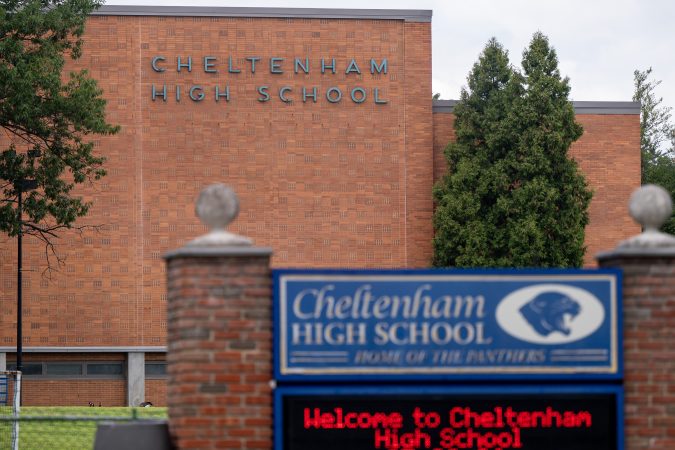
    The questions that cut to the heart of the horrible hazing incidents within Cheltenham High School’s football program are the same questions that everyone always asks in these situations: Where were the adults? Who allowed this behavior to happen? How did the chop-busting and rites of passage that have long been intrinsic to sports escalate to the point that four coaches, including former head coach Terence Tolbert, and six players have been indicted for two alleged assaults that took place in the team’s locker room?

    Even a glance at the details is enough to turn your stomach. Players — as many as 19 of them — allegedly held down a 15-year-old sophomore member of the team, stepped on his chest and groin with their cleats-clad feet, and tried to poke a broomstick into his butt. The coaches traded inculpating texts about it, according to Montgomery County District Attorney Kevin Steele. The Cheltenham School District canceled the football team’s season last year and again this year. Parents, many of whom reportedly had warned the district against hiring Tolbert in the first place, are angry. And everyone, inside the program and out, is left wondering how in the hell we got here.

    A less egregious incident, in the Central Bucks High School West football program in 2014, is instructive here. In that situation, a preseason initiation ritual progressed each year from giving players haircuts — sometimes in the shape of male or female genitalia — to licking mayonnaise off teammates’ nipples and groins to simulating sex with a stuffed toy pig to playing “Slap/Lick/Fondle,” a game that ended with underclassmen touching other players’ private parts.

    The Central Bucks School District canceled West’s football season and removed its head coach, but what matters most is that the district acted before the hazing reached the same severity as what allegedly happened at Cheltenham. You’d think such an episode would have been a warning siren for coaches and athletic administrators throughout the region. But after a while, the siren goes silent or the people who need to hear it most go deaf, and vigilance wanes, and the pattern repeats itself.

    Something to lose

    It is easy and of course correct to lament that youth and high school sports too often have taken on an outsized and inappropriate importance for too many coaches and parents and athletes. But one of sports’ greatest benefits to young people is that it gives them a stake in something bigger than themselves, a stake in something that matters to them, and they learn to develop and modify actions and habits to preserve sports’ place in their lives.

    Amid the C.B. West hazing story, for instance, Phil DiGiacomo, who was a star running back on two of the school’s state-championship teams in the late 1990s, told me that, when he played, the Bucks’ success served as an effective deterrent against bad behavior. Yes, Mike Pettine, the program’s legendary head coach, and his staff ruled with a measure of iron-fist discipline that likely wouldn’t fly today, and even those old-school coaching techniques and West’s on-field dominance didn’t prevent every instance of player misconduct. Still, DiGiacomo said, the athletes themselves knew that, just by suiting up for West, they were continuing a special tradition, and they stood to lose a chance to call themselves champions if they did something stupid or malicious. So most of them didn’t.

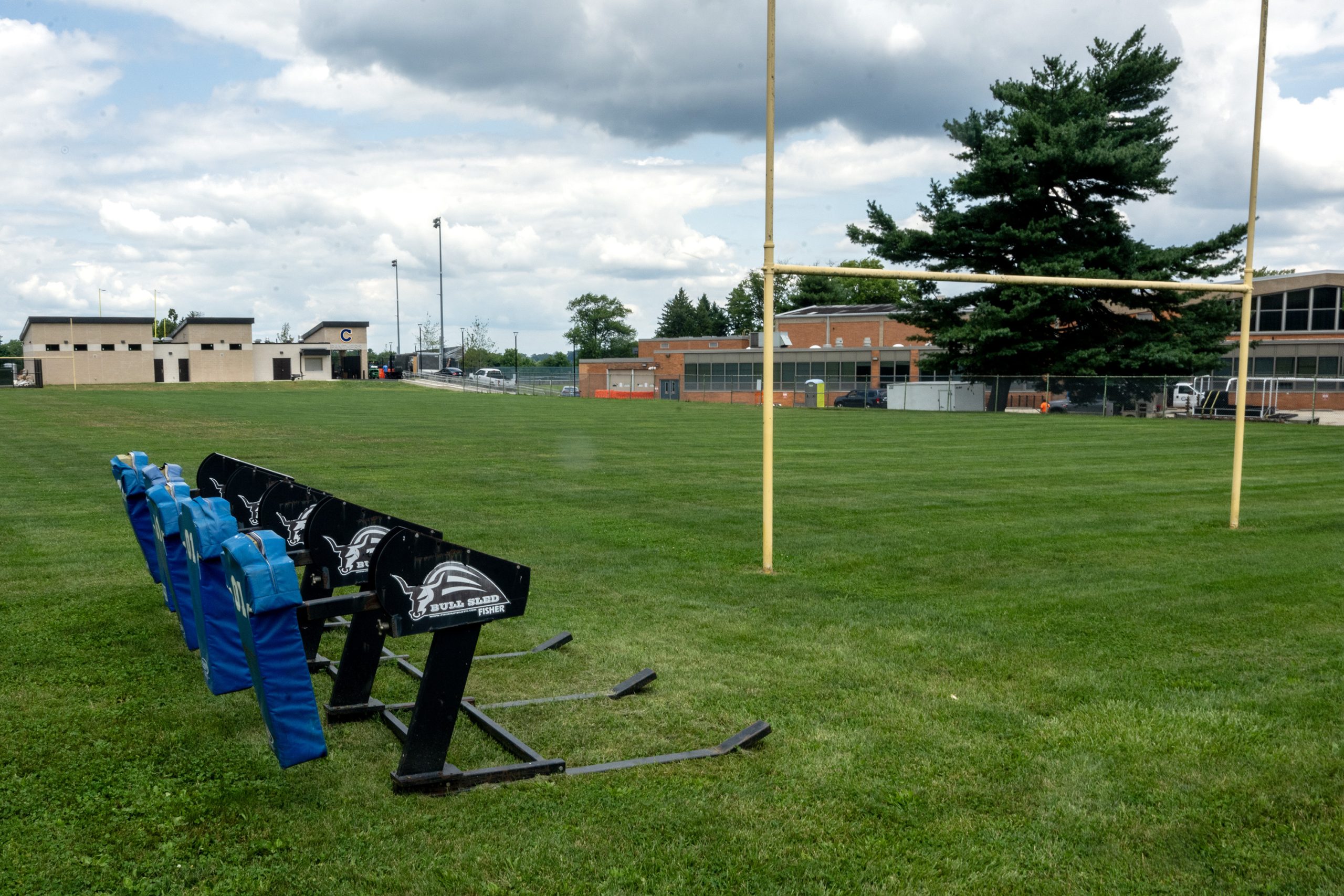
    Cheltenham’s practice field photographed on July 29. The program hasn’t had a winning season since 2022.Tom Gralish / Staff Photographer

    “When we were there, there was no hazing,” DiGiacomo said. “It’s kind of funny because if anyone ever got picked on, it got straightened out by an older guy real quick, mostly because we feared Pettine — that, and we were too damn tired to do anything else.”

    A high school team doesn’t have to win 59 straight games and three consecutive state titles, as those West teams did, to be a point of pride for its players. It just has to provide them a rewarding experience, and they — and their coaches — have to feel that they have something to lose if it doesn’t. That element appears to have been missing entirely from the Cheltenham football program in recent years. In fact, it seems not to have been even a consideration for the school’s administration.

    In his previous stint as a head coach, for Abington in 2023, Tolbert had won just one game. The school district decided not to renew him as coach, and sources have told The Inquirer that Tolbert’s toleration of a toxic atmosphere within and around the Abington program, including bullying by players and the use of slurs by coaches, were the driving forces behind his departure.

    Cheltenham’s leadership either was unaware of these red flags or was willing to look past them, and for what? The program hasn’t had a winning season since 2022, but come on. Was Tolbert thought to be such a great coach that only he could restore the program to respectability? What qualities did he have that the people who hired him considered so essential? It’s obvious now that he and his assistants weren’t capable of doing the one thing any adult working in a school should put first: Keeping students safe.

    The courage to take the right steps

    The most infuriating aspect of stories such as this is the excuse that coaches can’t be held responsible for all their players’ mistakes. That’s true as far as it goes, but there are steps coaches can take to establish the right kind of culture, to model good behavior, to let the athletes in their care know what will be tolerated and what won’t.

    One longtime area football coach told me Wednesday morning that he was fortunate to have two assistant coaches who were special-education teachers, who spent a lot of time around kids who had been the objects of ridicule. These coaches brought students from the school’s autism-support classes to be managers and statisticians and scorekeepers, and they let everyone know: These kids are part of this program. These kids are accepted members of this team. Treat them with respect.

    Those are the kinds of gestures that seem small but can make a major difference, that mitigate the risks that coaches have accepted for decades. Coaching high school sports is a damn hard job, and it’s difficult because, at its best, it requires a measure of moral courage: To say no, to explain why, to stand by that decision. In this Cheltenham ugliness, we see once again what happens when that strength is lacking. The necessary guardrails fall away, if they were ever installed at all, and only after the damage comes to light does it become clear that a school and its students have been saddled with coaches and educators who aren’t willing to do the right thing or, worse, don’t even know what the right thing is.

  • LeBron James-Michael Jordan comps can get tiresome. But here’s one that should matter to the Sixers.

    LeBron James-Michael Jordan comps can get tiresome. But here’s one that should matter to the Sixers.

    There is no perfect historical analogy for what LeBron James is attempting with the 76ers or for what the Sixers are attempting with him. He will turn 42 in late December. He has appeared in more NBA games than anyone. He will soon begin his 24th season in the league without a pause — no temporary retirements, no full seasons missed because of injury. And he has joined a team that has not won a championship since 1983, was already capable of competing for one next season, and because of his arrival will be expected to win one.

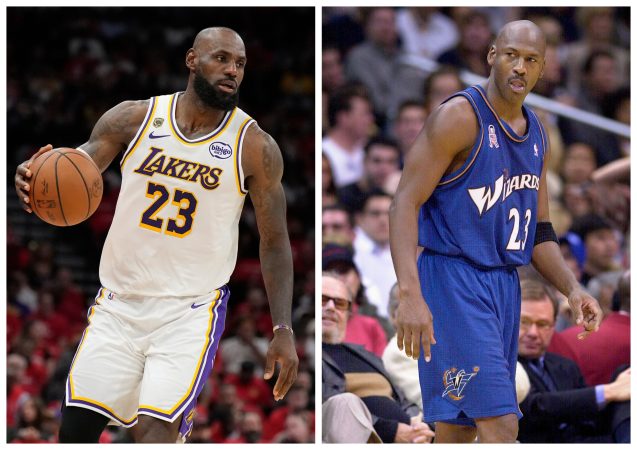
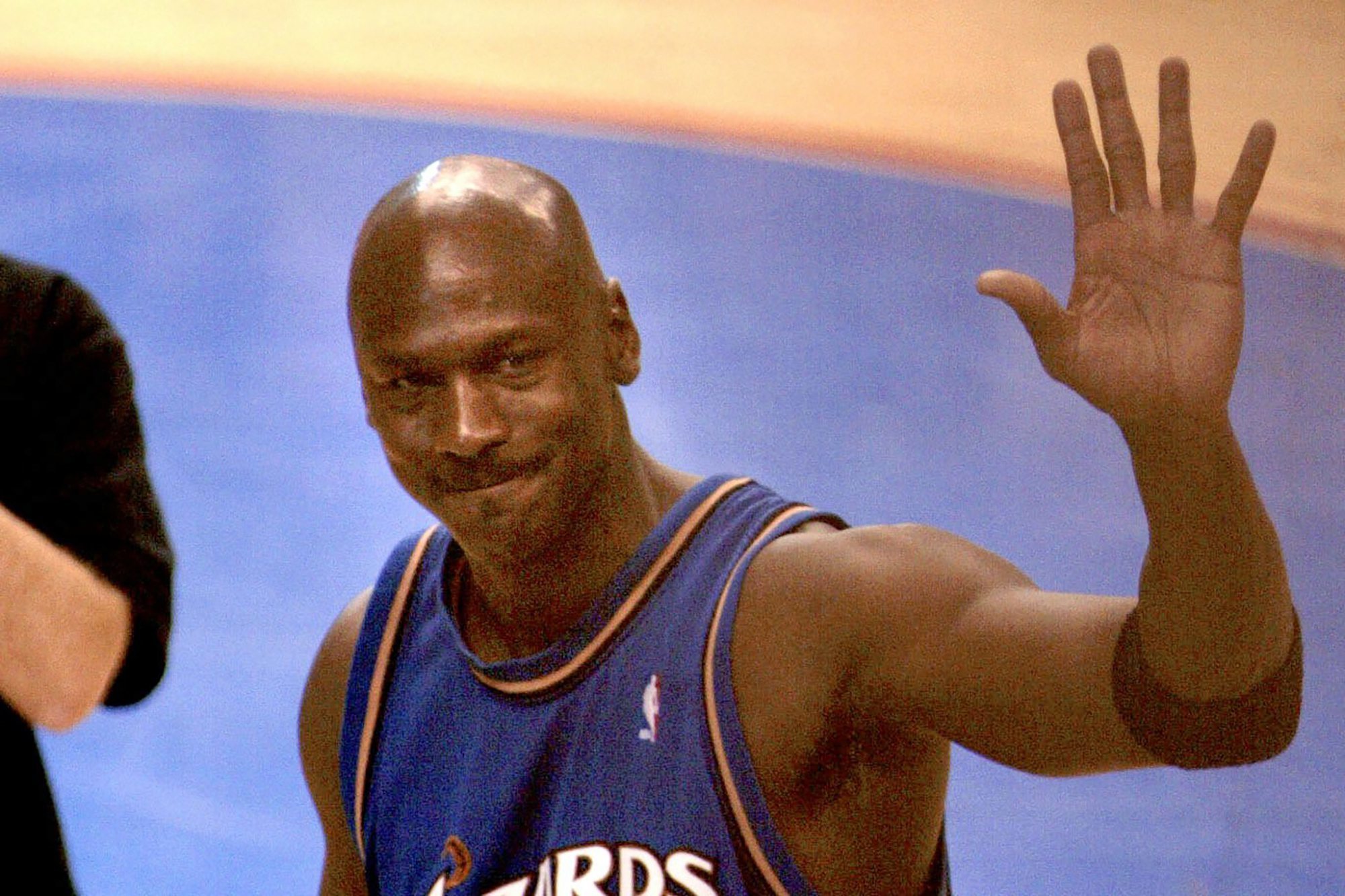
    The figure to whom James is most often compared, of course, is Michael Jordan: for records and achievements accumulated, for championships won, for the aesthetics of their styles of play. Now they have another point of relative similarity. Jordan was 38 when he ended his second break from the game and played two seasons with the Washington Wizards. If the collective stakes of his return weren’t nearly so high as James’ decision to sign with the Sixers — the 2001-03 Wizards went 74-90, missed the playoffs both years, and even with an in-his-prime Jordan wouldn’t have had a prayer of winning a title — Jordan still provided a useful precedent for how the daily drama of James’ time with the Sixers might unfold.

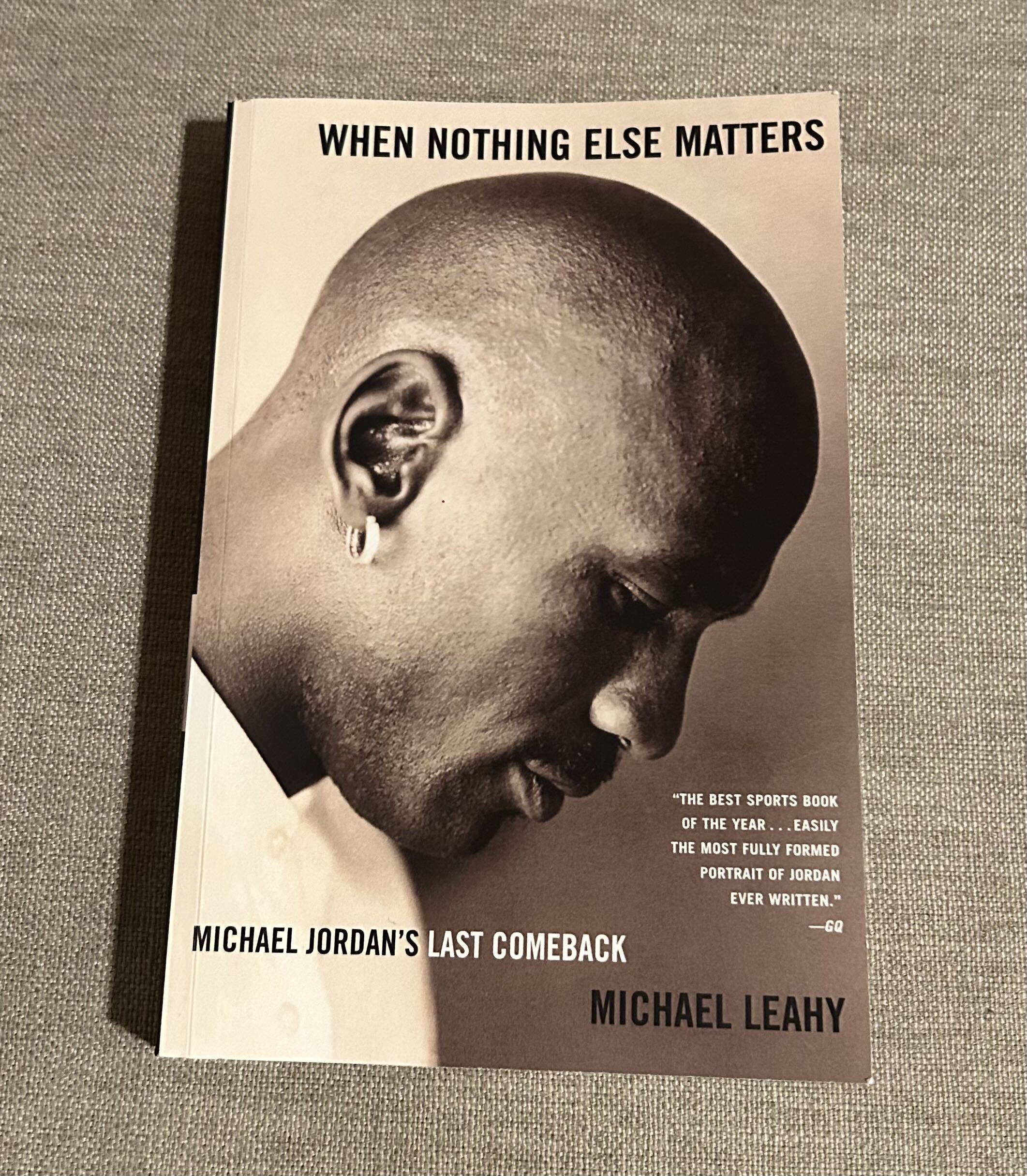
    The details of that story were preserved in a book, When Nothing Else Matters: Michael Jordan’s Last Comeback by Michael Leahy, that is as good as anything ever written about any topic related to basketball. Leahy was a staff writer for the Washington Post at the time he immersed himself in Jordan’s world, but he was not a sportswriter; he had nothing to lose, no sources to burn or fans to alienate, by documenting Jordan’s tenure in Washington with remarkable depth and unsparing honesty.

    Michael Leahy’s 2004 book “When Nothing Else Matters: Michael Jordan’s Last Comeback” which chronicled Jordan’s return to the NBA with the Wizards in 2001.Mike Sielski

    Published in 2004, When Nothing Else Matters has been memory-holed for more than two decades. It didn’t refresh and amplify the mythology around Jordan in the way The Jordan Rules or The Last Dance did, so it doesn’t resonate in the public consciousness much anymore. But it does serve as a cautionary tale about the nature of superstardom — the kind that only the chosen few, Jordan and James among them, enjoy — and its lessons apply just as well to the Sixers and Philadelphia as they did to the Wizards and Washington. Here are five important ones:

    Lesson 1: The Wizards’ leadership kowtowed to Jordan. The Sixers’ leadership can acquiesce to James only so much.

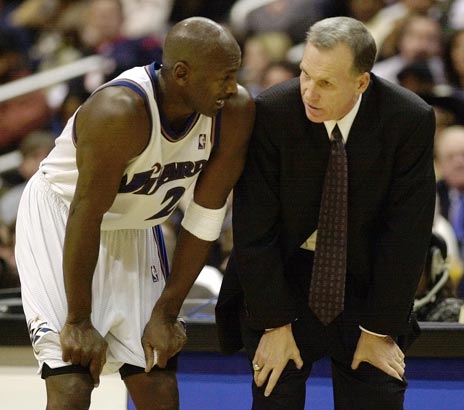
    One of the recurring themes of When Nothing Else Matters is the control Jordan exerted over the Wizards’ entire organization, starting with his friend and handpicked head coach, Doug Collins.

    “Whenever an issue critical to the team’s well-being arose,” Leahy wrote, “Jordan bent Collins to his will — whether it was over Jordan’s playing time, or who among his teammates deserved to start or not start, or what kind of offense or defense to deploy. Collins’s lack of power illustrated the dangers in allowing any team’s Zeus to rule over a coach and franchise.”

    Michael Jordan (left) picked Doug Collins (right), his former coach with the Bulls, to be his coach in Washington.

    Bob Myers has gravitas and four championship rings from his years with the Golden State Warriors. Mike Gansey has a good relationship with James from their time together with the Cleveland Cavaliers. Nick Nurse won a championship in 2019 with the Toronto Raptors — and with a superstar, Kawhi Leonard, who can be a challenge to manage. They have to assert and maintain their authority, or at least some semblance of it, in the face of James’s esteem and power. James won’t necessarily be as controlling and demanding as Jordan, but he can be controlling and demanding enough. He’s accustomed to getting his way all the time, and it would be a lot to expect him to be just along for the ride now.

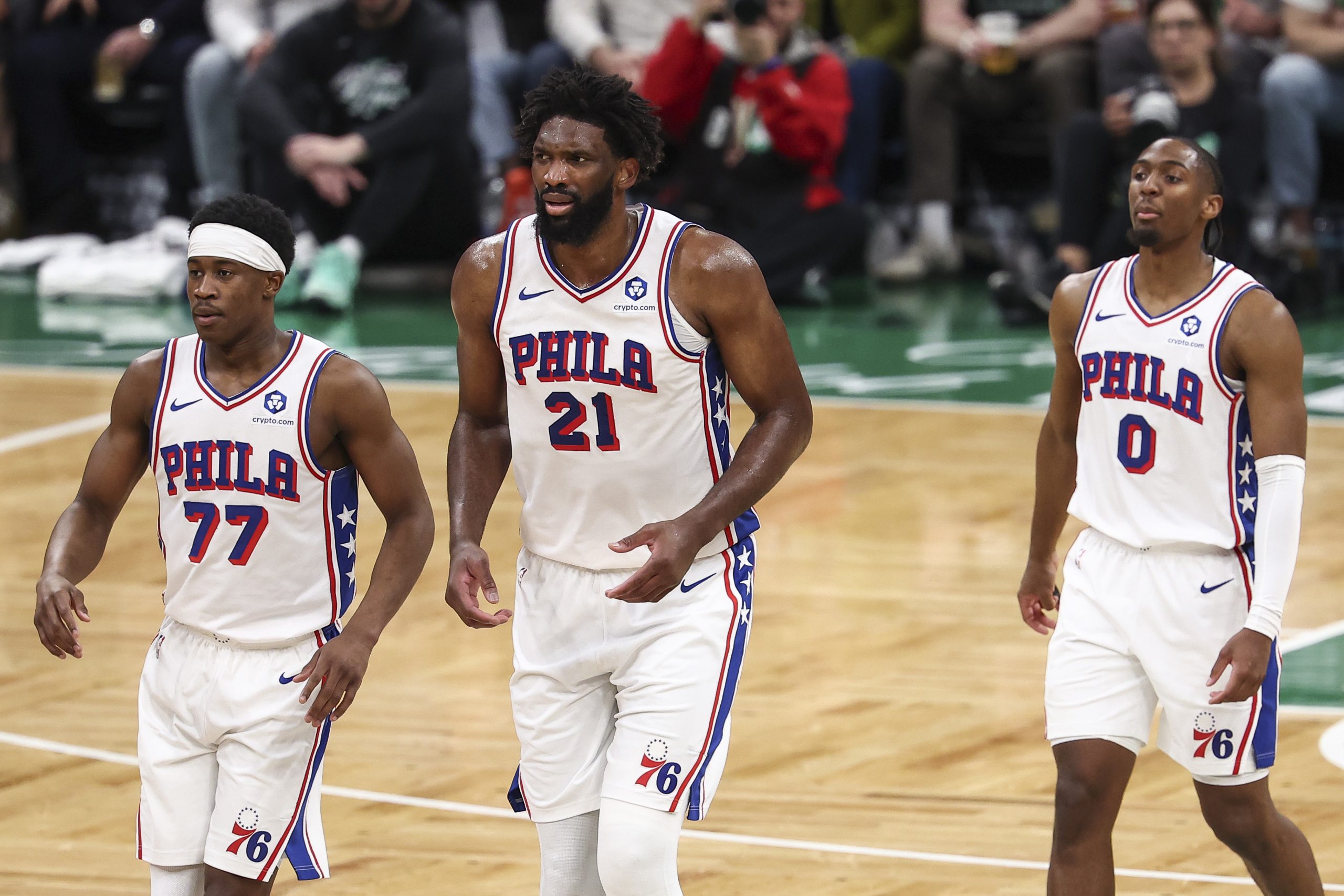
    Among LeBron James’ challenges: Meshing with the Sixers’ existing star players, Vj Edgecombe (left), Joel Embiid (center), and Tyrese Maxey (right).Monica Herndon / Staff Photographer

    Lesson 2: Expect tension among the players, especially the best ones.

    Jordan’s verbal abuse of rookie Kwame Brown, including calling him a “f—g flaming f—t” during practice, was among the salacious revelations in Leahy’s book. But Jordan’s relationship with Coatesville native Richard “Rip” Hamilton throughout the 2001-02 season is the more relevant one for the 2026-27 Sixers. “There was a lingering tension” between Jordan and Hamilton all season, according to Leahy, in part because Hamilton, in his third season and just emerging as one of the league’s better perimeter scorers, believed it was time for him to assert himself as the team’s centerpiece and that Jordan was holding him back.

    Just because Jordan and Hamilton clashed doesn’t mean James, Joel Embiid, Jaylen Brown, Tyrese Maxey, and VJ Edgecombe won’t get along. But the Sixers have to prepare for the possibility, even the likelihood, that this team won’t be a smooth-running, ego-free machine. Brown is 29, was the MVP of the 2024 NBA Finals, and — despite the debate around whether he is an analytically efficient player — is regarded as a star. Embiid is a former league MVP. Maxey is approaching his peak years, as is Edgecombe. And James, like Jordan, hasn’t deferred often to anyone in his career.

    Lesson 3: Time will take its toll on an older player, even one as great as Jordan or James.

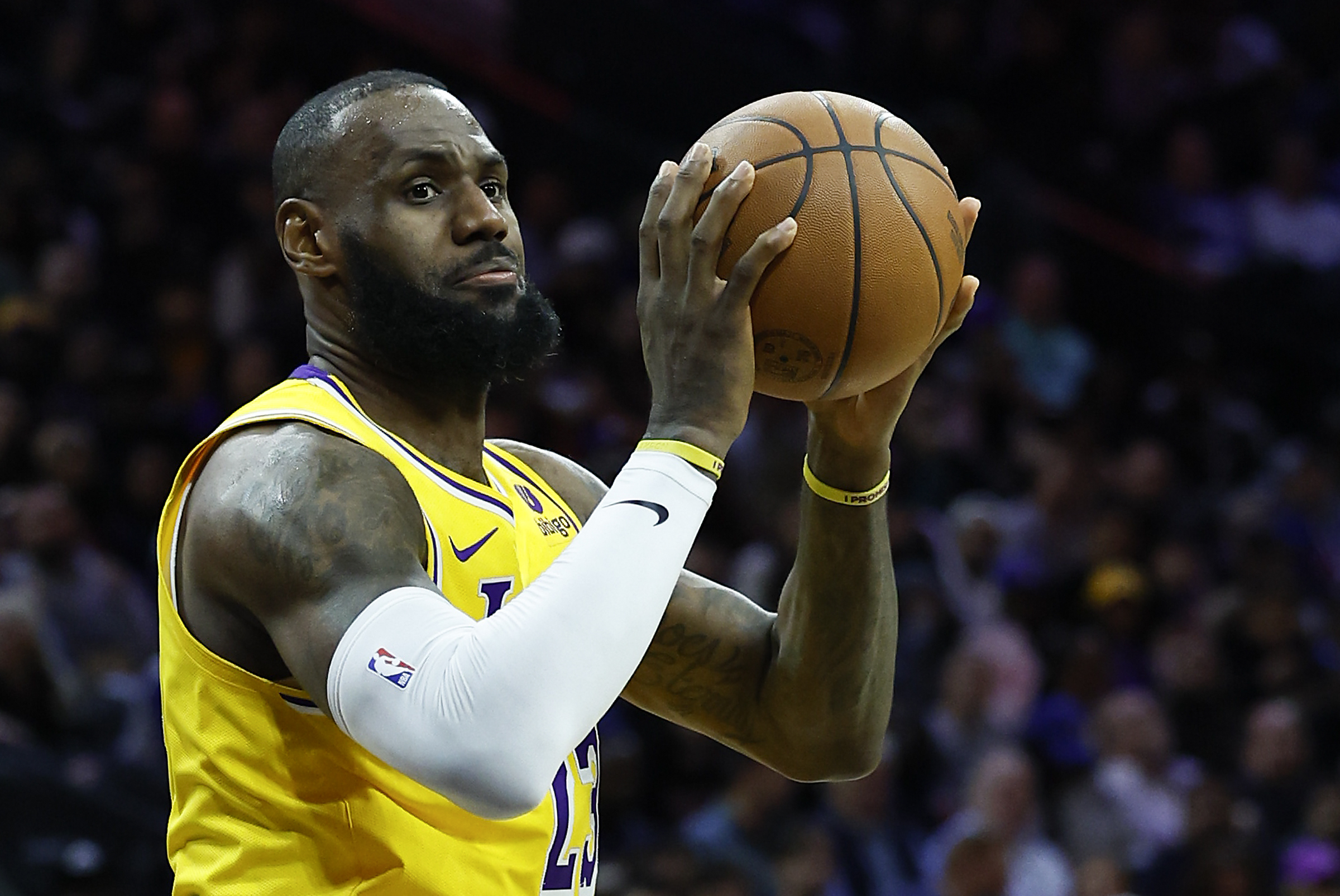
    Jordan, remarkably, played all 82 games in his final NBA season, but he struggled with tendinitis throughout 2001-02, missing 22 games. James hasn’t appeared in more than 71 games in any of his last eight seasons; in five of those seasons, he played 60 games or fewer. Never forget: Father Time is Rocky Marciano.

    LeBron James, who will be 42 in December, hasn’t appeared in more than 71 games in any of his last eight seasons.Yong Kim / Staff Photographer

    Lesson 4: The honeymoon will end, and victories had better follow.

    Jordan’s two years in Washington are not remembered as a great and glorious portion of his career, for the simple reason that the Wizards still stunk with him. The Sixers aren’t likely to fall on their faces with James. But the pressure on them will be immense, and patience with a losing streak or a stretch of subpar play will be thin, if any patience exists at all.

    “Sports fans can be a cruel, monomaniacal breed,” Leahy wrote. “Only games and standings matter to the most rabid, which, depending upon how you want to look at it, evinces either an endearing, childlike intensity or a severe case of arrested development.”

    Michael Jordan averaged 21.2 points on .431 shooting in his two seasons with the Wizards. Their record? 74-90.
    MILES KENNEDY / AP

    Lesson 5: There was more to Jordan’s comeback — and more to James’ joining the Sixers — than winning.

    “The truth was this: A sporting god enjoys supreme power only as long as he plays, earns and fills seats,” Leahy wrote. “The moment he ceases to be a team’s principal revenue stream is the moment his dominion ends.”

    James said that he considered retiring, that he changed his mind because he still wants “to work … to grind … to compete,” that his desire to win another championship was the reason he came here. Here’s a safe bet: It wasn’t the only one. He will fill more seats in Philadelphia than he might have anywhere else, and you’re naive to think that intoxicating sensation wasn’t on his mind when he made this decision. LeBron James is as much a sporting god as Michael Jordan was, and to be treated as such is the most powerful drug on earth. He doesn’t want to exit the stage as anything less.

  • We are not part of Jalen Carter’s family, we shouldn’t care where LeBron lives, and other thoughts …

    We are not part of Jalen Carter’s family, we shouldn’t care where LeBron lives, and other thoughts …

    First and final thoughts …

    Jalen Carter said something very sweet and very incorrect during a news conference Wednesday. In answering questions about his new contract extension with the Eagles — an extension that reportedly guarantees him $106 million — Carter paused while answering a question and mentioned all the people to whom he was grateful.

    “Wanna slow it down,” he said. “First, I want to say I’m thankful to God for putting me on this earth. Thankful for the coaches, the players, Mr. Lurie.”

    Then he nodded toward the media members gathered in front of him.

    “Thankful for you guys, too,” he said. “You guys put out some good information, some good facts about me, stuff like that. We’re all one family.”

    No, we’re not.

    Now, some of the people in the media tent at that time definitely were. Members of Carter’s actual family were on hand, as were several Eagles staff members and his friend and teammate Jordan Davis. And some other people there either don’t mind thinking of themselves as members of the Eagles’ family or have bosses who would like them to be thought of that way.

    But a fair number of us weren’t there to congratulate Carter for his newly attained wealth or share in the optimism that he will fulfill his potential and become a Hall of Fame-caliber defensive tackle. We were there to listen to what he said, to listen to what Howie Roseman and Nick Sirianni and Carter’s teammates said, to listen to other people in and around the Eagles’ organization said about the signing, and to explain what happened and what it might all mean. We might even point out that Carter has made some pretty big mistakes in his life and football career, and those mistakes raise the possibility that he won’t live up to such a lucrative contract, and he and the Eagles ought to be held to account for such decisions and mistakes.

    We were there to tell people what’s really happening or what we really think. We’re not going to sit on information or a story because it might embarrass or anger a coach or player or make things more difficult for the franchise. We were there to report, not to support. There’s a difference, and when you note that difference nowadays, you risk coming off like a scold, a jerk, an egomaniac, or all of those things at once. You face the inevitable barrage of complaints from those who want to be told only what they want to hear; who presume that you root for the athletes and teams that you cover and, when they find out that you don’t, insist that you should; and who can’t comprehend how someone could report or write something in good faith that was critical of those hometown heroes. Which is OK. That complaining, even the nastiest of it, comes with the job, and you have to be able to take it.

    Put simply, we’re there to be as fair and accurate and honest as we can be, but we’re not part of the team. We’re not part of the family. We’re not supposed to be.

    Quick hitters

    Wilt Chamberlain lived in Manhattan while he played for the Philadelphia Warriors. JJ Redick lived in Brooklyn while he played for the 76ers. If you are genuinely dismayed that LeBron James might not live in Philadelphia or any of its surrounding towns and suburbs during his (brief) career with the Sixers, please get in your car, drive it north on I-95, and, for perhaps the first time in your life, continue past the Street Road exit. There’s a whole world up there. …

    Kudos to Tom McCarthy: Phillies TV play-by-play man, former radio voice of the St. Joseph’s Hawks, all-around gem of a human being. During Tuesday’s Phillies-Marlins telecast on NBC Sports Philadelphia, he delivered a brief and beautiful eulogy for Chris DiJulia, the son of longtime St. Joe’s athletic director Don DiJulia and as familiar a presence as anyone connected to the school’s athletic program. Chris, who had cerebral palsy, died Monday night. Tom even mentioned the moving tribute that former Inquirer staffer Mike Jensen wrote to Chris on Mike’s Facebook page. …

    Jeez, that whole Flyers-are-having-the-most-interesting-offseason-of-any-Philly-team thing sure fizzled out fast. …

    Probable NBA schedule on Christmas. You know, to maximize viewership:

    • Noon: Celtics at Sixers
    • 3 p.m.: Cavaliers at Sixers
    • 8 p.m.: Sixers at Knicks
  • Jalen Carter got his money. The Eagles have to hope he has grown up enough to earn it.

    Jalen Carter got his money. The Eagles have to hope he has grown up enough to earn it.

    Jalen Carter plodded off the dais late Wednesday morning with a look of relief on his face, as if he were a student who feared public speaking and had just delivered an oral presentation for class. The Eagles’ first practice of training camp, at the Jefferson Health Training Complex, had ended minutes before. It was humid, and Carter wiped his brow with a towel. To his left were Dom DiSandro, who is the Eagles’ chief security officer, and Toni Brown, who is Carter’s mother. Dom and mom. Maybe the two most important people in making sure that the Eagles get their money’s worth from Carter, who is, for the moment, the highest-paid defensive tackle in the National Football League.

    “I messed up a little bit,” Carter said to Brown and DiSandro, “but it was good.”

    The Eagles had announced Tuesday that they and Carter had agreed to a four-year contract extension that reportedly guaranteed him $106 million and could pay him as much as $160 million. When a modern professional sports franchise holds a press conference, it does so not just to acknowledge the news that has already broken. The point and purpose of the event, from the franchise’s perspective, are to send subtle signals about what the angle on the news is supposed to be.

    So there was Brown near the dais. And there was tackle Jordan Davis, Carter’s teammate at the University of Georgia and with the Eagles, hanging near the back of the media tent, ecstatic for his friend. And coach Nick Sirianni and vice president Howie Roseman had been there hours earlier, making no mention of the risk the Eagles had taken on with this commitment to Carter.

    And there is risk here — plenty of it. Carter is just 25, and he has been a great player at times for the Eagles. He was the primary reason they beat the Los Angeles Rams in the 2024-25 NFC divisional round, and he has the power, strength, and raw talent to be the league’s best defensive tackle if he can stay healthy and keep his head on straight. But from the road-racing accident in January 2023 that led to two people’s deaths and caused him to drop far enough for the Eagles to trade in that year’s draft, to the decline in his play in the second half of his rookie season, to his dumb decision to spit in Dak Prescott’s face in last season’s opening game, to the two shoulder procedures that cost him a month of time, Carter has given the Eagles ample cause to cross their fingers here and hope.

    Roseman likes to consummate such deals — extending the contracts of players whom the Eagles want to retain for years — as early in an offseason as possible. Carter’s, though, took much longer, and the reasons go beyond the ones Roseman cited Wednesday, the suggestion that he and Drew Rosenhaus, Carter’s agent, were simply waiting for the market to settle.

    At just 25, Jalen Carter has the power, strength, and raw talent to be the league’s best defensive tackle if he can stay healthy.Monica Herndon / Staff Photographer

    “We felt like [defensive tackle] was one of the strengths of our team,” Roseman said. “We want that to be one of the strengths of our team going forward. The defensive tackle position in the league, in college football — it’s a deficient position. It’s hard to find guys like that. So we feel like it was a priority.”

    Understand: That’s why Carter got this extension, and that’s why the Eagles didn’t have much of a choice in giving it to him. He’s that talented, that vital to Vic Fangio’s defense. “The attention he draws is incredible,” linebacker Zack Baun said. “You’ve got to have four hands on him,” meaning the opposing offensive line has to double-team Carter at all times, opening up possibilities for his teammates to make plays. There’s no replacing a player like Carter, and if he commits another awful mistake off the field, if he does something dirty on the field and the NFL doesn’t go easy on him again — as it did last season after the Prescott incident — he will cost the Eagles dearly. As Roseman and more than one player said Wednesday, the Eagles don’t pay you for what you’ve done. They pay you for what you’re going to do.

    To his credit, Carter said all the right things Wednesday, even pausing, after taking two questions, to thank the Eagles and chairman Jeffrey Lurie and even the media members in attendance. Any teacher or professor would have passed him on his assignment.

    “When you get picked in the first round, a top-10 pick, you get a little bit of decent money,” he said. “That didn’t change me. I still came here. I had a goal. I let the team know and the fans know that the goal was to get a championship. It happened, but it’s a new contract, and it’s time to get more championships for the city of Philly.

    “My goal wasn’t to come out and ‘Let me be the highest-paid defensive tackle.’ My goal was to build team chemistry and win a championship. I think that all falls in line with getting to where I’m at now.”

    The proof was never going to present itself Wednesday. The easy part is over for Jalen Carter. He got his extension, and now he has to earn it. Now he has to keep every day clean. “I don’t think money is ever going to change me,” he said. It was an assertion that could cut either way, for good or bad, and it’s on him, his support system, and the Eagles themselves to make sure they don’t regret that he said it.

  • LeBron James believed he could win with Joel Embiid. The 2024 Olympics can show the Sixers how.

    LeBron James believed he could win with Joel Embiid. The 2024 Olympics can show the Sixers how.

    On a practice court in Paris early in the 2024 Summer Olympics, during the event that was supposedly a testament to his selfishness and opportunism, Joel Embiid glanced around the gym at the stars who soon enough would meet their expectations of gold-medal glory. There was Steph Curry. There was Kevin Durant. There was You Know Who.

    There was LeBron James.

    “This is a great setting for me because I’m playing with a lot of great players,” Embiid said then. “It’s all about finding ways to win. Whatever I can add to make sure we win, that’s all there is.”

    Two years later, with James’ decision last week to become Embiid’s teammate again, Embiid’s up-and-down experience during those Games should take on a new perspective and value. If the sacrifice of Embiid’s playing in those Olympics, dragging his body up and down the court for five games in that tournament, was a lost Sixers season in 2024-25, maybe the real upshot is that the entire experience and Team USA’s victory paved the way for James to stun everyone and sign with the 76ers.

    Only Embiid and James know how many text messages it took, how much pleading Embiid had to do to persuade James that Philadelphia was the place for him, that Embiid was healthy enough and committed enough for the two of them to win a title here. Whatever words and memes passed between them this offseason, they were enough that a source with knowledge of their interaction said that Embiid played “a significant role” in coaxing James to choose the Sixers.

    He wasn’t the only one. Bob Myers brought the necessary cachet and credibility, and Mike Gansey’s relationship with James from their time together in Cleveland helped, and Tyrese Maxey’s talent and connection to James through Klutch Sports mattered. Still, this was mostly a peer-led push from Embiid and Maxey to get James to see the possibilities here.

    Most importantly for the Sixers and the player who has been their centerpiece for the last 12 years, Embiid already had to have established a baseline of confidence with James for LeBron to take this leap.

    They’ve been in the NBA together since 2014, but when Embiid finally settled on playing for Team USA in ‘24 — after shopping his skills to France and Cameroon — his relationship with James could have fallen apart. And from an outsider’s view, it had the potential to crumble. It was a chore just to watch Embiid lumber around the floor, his left knee leaving his whole body wobbly and unstable, the sweat flooding his face.

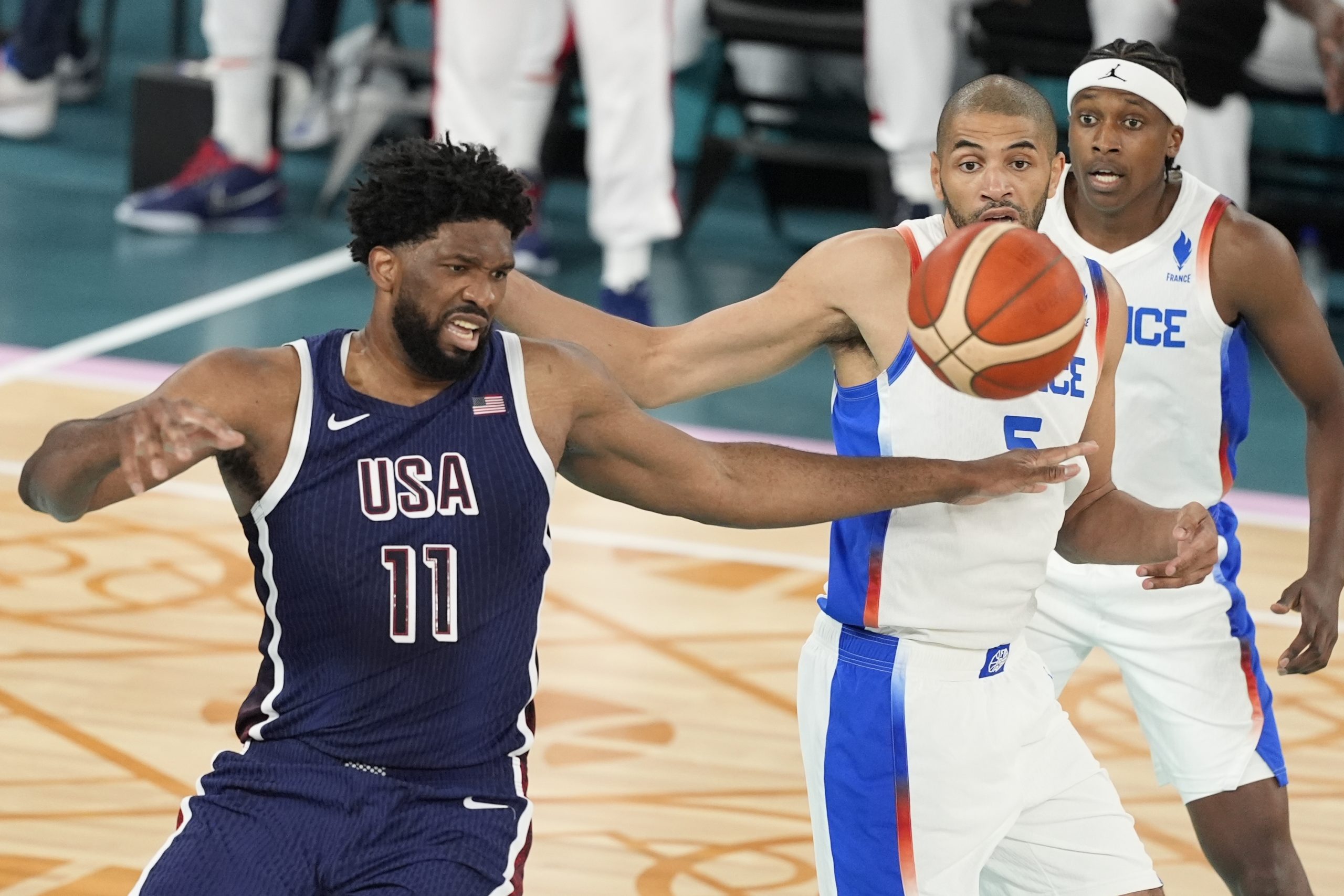
    Joel Embiid (11) was not physically at his best in the 2024 Paris games but his efforts were a step towards a future alliance with LeBron James. Michael Conroy

    The complaints that Embiid had put his own aims and goals — “It feels good to be part of winning something as a team,” he said after Team USA’s victory over France in the gold-medal game — above the good of the Sixers were to be expected around here. They also ignored the priority that Embiid’s Team USA teammates, James among them, placed on competing on that stage, for the right to call themselves the best in the world. In that context, there was an understanding that it took a lot for Embiid just to be out there playing, and there was an appreciation that, without him and his 19 points and second-half dominance of Nikola Jokić in the semifinals against Serbia, the U.S. wouldn’t have won gold at all.

    No, Embiid wasn’t the overall force that James or Curry or Durant was in Paris, but he apparently didn’t do anything to dissuade James from thinking that he could win with him. Now Embiid gets another shot to witness what James does each day to prepare, how much that preparation matters to him, and how he can model the habits and behavior on which James has built his remarkable 24-year pro career.

    “Even though I see a broken-down Joel — in the fourth quarter, if ever the verb ‘trudge’ would fit anybody, Joel just trudges up the court — even given all of that, I would say it is absolutely true it’s good to [be] around these guys who have won something — just getting a different kind of culture,” former Sports Illustrated staff writer Jack McCallum, the author of Dream Team, the definitive work on the 1992 U.S. Olympic men’s basketball team, said in a 2024 interview.

    “What those guys got from the other guys. I was sort of astonished to hear that. … ‘Oh, I really found out how Karl Malone worked out. Oh, I really found out about Larry Bird’s shooting drills. Oh, I watched [Michael] Jordan and [Scottie] Pippen play defense, and I took that back to my team.’ As much as [the Sixers] are probably going, ‘No,’ I would say play, because I think there’s a real positive aspect that he can get out of that.”

    The time to show what he learned is now. At 32, without having appeared in more than 39 games in any regular season since 2022-23, Embiid can’t be counted on and shouldn’t expect to be the primary focus of the offense every single time he’s in the lineup. The best-case scenario for the Sixers, of course, is that he won’t have to be — not every night, not even most nights. Among James, Brown, Maxey, VJ Edgecombe, and an improved bench, they have plenty of firepower even if Embiid isn’t their alpha and omega. “You’re used to being the guy,” he said in Paris. “Now you’ve got to be with these guys.” What they’ll likely need is what he gave Team USA against Serbia. What they’ll need is Embiid to pick his spots, to win them particular games against particular opponents. He’ll still be vital, but he might end up bearing a lesser burden, and the team might be better for it.

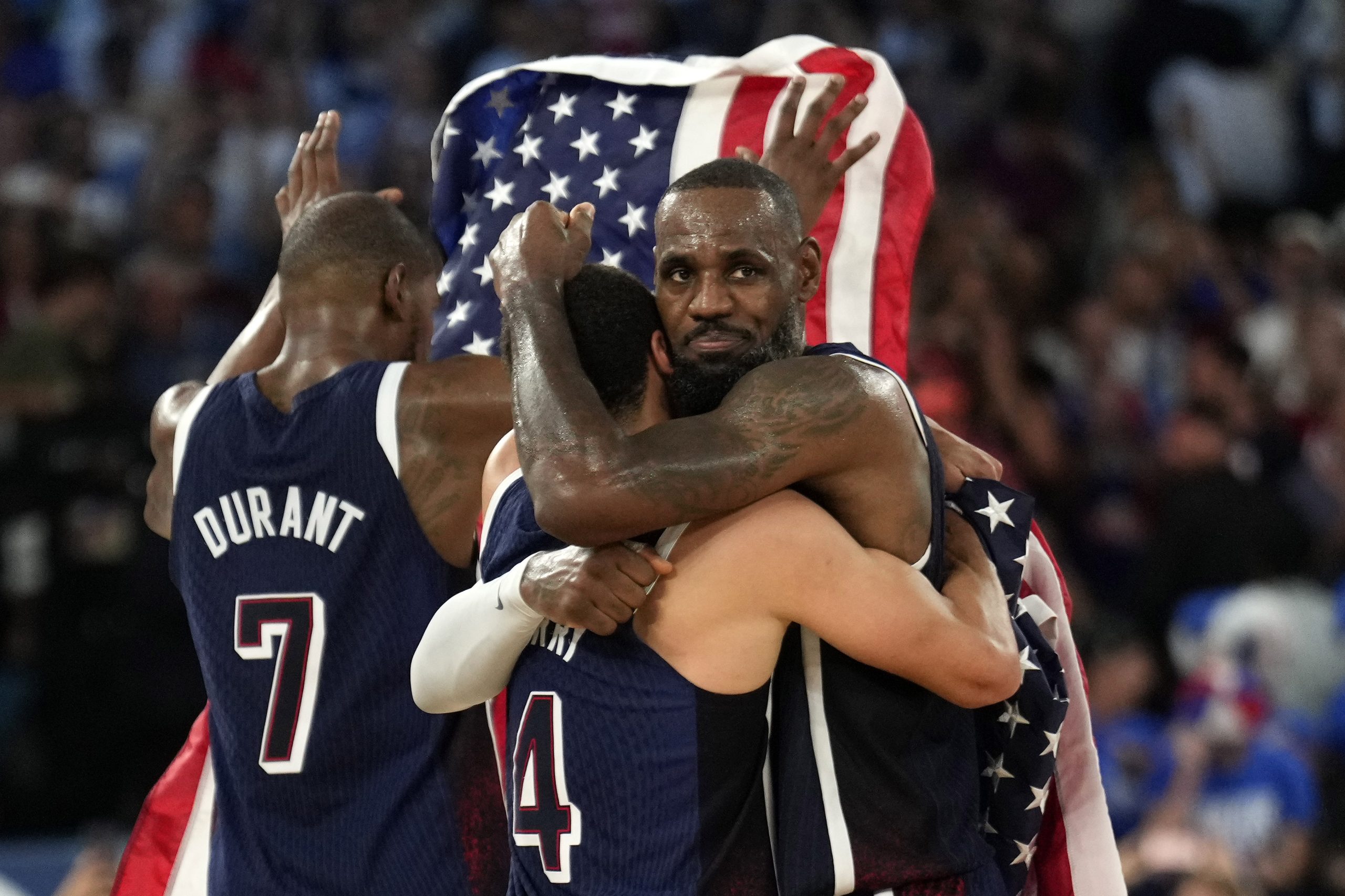
    Team USA’s superstars won a gold medal together, and their work habits rubbed off on one another. Mark J. Terrill

    “There’s a certain amount of relief that comes with not having to bear the full responsibility of the franchise,” Steve Kerr, who was Team USA’s head coach in Paris, said at the time. “These guys get to lean on each other. Every game is different. They get to throw all the other nonsense out the window because none of it matters. The only thing that matters is winning the gold medal.”

    The same standard applies here and now for James and Embiid, for the Sixers, for a city waiting 43 years and counting for its latest NBA championship. Joel Embiid’s performance in those Olympics was mostly a hard watch and a distant memory until these last few days. But come next spring, if there’s a celebration here unlike any since 1983, the windfall will have been worth the stiff investment.