Author: Brooke Schultz

  • Westtown may ax its historical commission over a dispute to preserve Crebilly Farm’s 19th-century inn

    Westtown may ax its historical commission over a dispute to preserve Crebilly Farm’s 19th-century inn

    A schism between Westtown Township’s elected officials and its historical commission reached a boiling point this week, with the municipality’s supervisors planning to remove the commission over what several members say is a disagreement regarding a historic building that residents have fought for years to preserve.

    An email sent to each of the six volunteer commission members Monday alerted them that Westtown’s three supervisors planned to take a vote at their meeting next week to remove them.

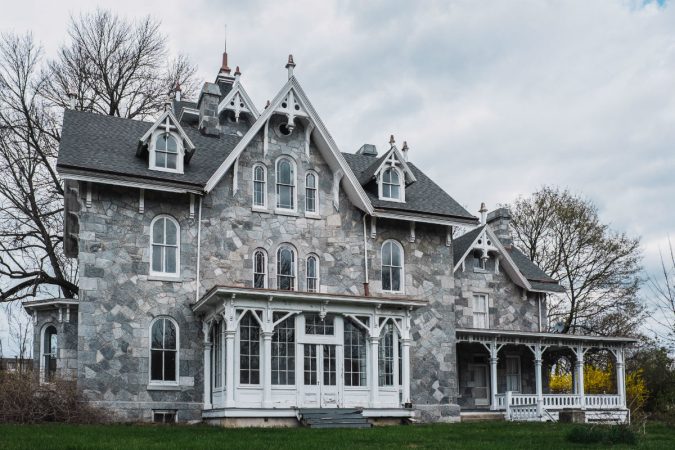
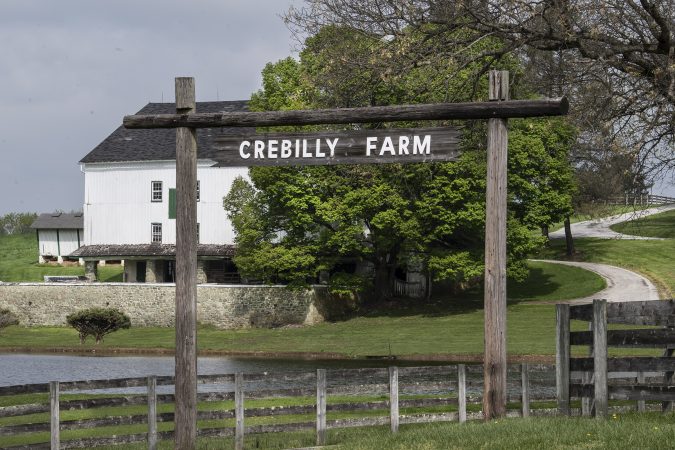
    At the center of the conflict is the historic Darlington Inn, a 19th-century building that sits on a two-acre parcel at the corner of State Routes 202 and 926. The inn was acquired in 2024 as part of a larger battle, led by the community, to preserve the 206-acre Crebilly Farm and fend off plans for residential redevelopment of the land.

    But the township has regarded the inn, which is along the farm tract, as a temporary purchase that it would eventually auction or sell off to recoup the $200,000 in taxpayer funds used to buy it. That has put the officials at odds with its own historical commission, whose members have adamantly fought to preserve the inn.

    “It’s really disheartening,” said Pamela Boulos, who has served on the commission for roughly a decade. “It’s really disheartening to know that this is the level that they’re willing to go to.”

    In an email, shared with The Inquirer, that included the subject line “Courtesy notice,” Township Manager Mila Carter said she was providing “advance notice, as a courtesy,” that the board’s agenda for Monday’s meeting “will include an item regarding your appointment to the Historical Commission.”

    “The Board will be considering a motion to remove your appointment from the Commission,” she wrote. “No action has been taken at this time, and the matter will be discussed and considered during the public meeting.”

    She also notified members that the commission’s planned Tuesday meeting had been canceled.

    Members said they were told separately they could reapply.

    The township did not immediately respond to a message seeking comment.

    The board’s decision comes as tensions have been increasing between the commission and the elected officials. Commission members say the relationship has grown more hostile recently, particularly as it pertains to the Darlington Inn.

    Last week, supervisors voted to rezone the property to commercial use, rather than agricultural or residential. The change would allow for “future adaptive reuse” of the inn, board members said previously. They said in April that the inn is currently not at “its highest and best use” by sitting vacant.

    Commission members felt that the community had largely believed that the inn was to be preserved alongside Crebilly Farm when the township purchased it in 2024. When it became clear the intention was to offload the inn as a separate parcel, the commission began to raise awareness among residents about the possible loss of the building. Members said they wanted to see if there was appetite from private donors to purchase and maintain the property.

    And the community, which has been willing to enter the fray to preserve the tract, started showing up to meetings.

    “My belief is that some of the supervisors felt that this was untenable, this was an annoyance, this was interfering with what they wanted to accomplish,” said Stephen Wahrhaftig, who has been on the commission for four years. “A few of the people on the commission were viewed as the troublemakers, and to get rid of only one or two people probably would have been bad optics … so the easy thing to do, as other townships have done, is just dissolve the whole thing, just get rid of it.”

    At its July 6 meeting, Patrick McDonough, chair of the historical commission, asked the township to consider easements on the land, to preserve the facade of the structure. The commission wanted to guard against “Wawa popping up there, or CVS,” he said separately.

    The board of supervisors declined to put any restrictions on the property. Jodi Nawrocki, chair of the board, said at the meeting nothing precluded the township from adding such easements in the future.

    “I think the way to use the building to the best use is through changing the zoning,” she told McDonough.

    McDonough said he felt that, in the process of the commission arguing its point, the board “thought that we were overstepping our bounds as a historic commission.”

    “My own township is willing to just auction this building off with no protection, no easements, and allow it to basically fall into the hands of what everybody else wants to do with it,” McDonough said. “I never thought that my own township would be the one I’d be fighting against the hardest.”

    The commission, formed in 2013, was created to help develop community appreciation of the township’s history and to preserve that history. The commission has created Westtown Day, an annual community day; has published a history book about the township; and hosts a litany of lectures. The volunteer-run body is appointed by the supervisors for three-year terms, and serves as an advisory committee to the board.

    “You would think, being a municipality in one of the oldest counties in America, that historic preservation, especially here in our year of America 250 … would be top of mind and not something swept aside,” Wahrhaftig said. “But I guess right now that’s not the case.”

    This suburban content is produced with support from the Leslie Miller and Richard Worley Foundation and The Lenfest Institute for Journalism. Editorial content is created independently of the project donors. Gifts to support The Inquirer’s high-impact journalism can be made at inquirer.com/donate. A list of Lenfest Institute donors can be found at lenfestinstitute.org/supporters.

  • Chester County has radically reduced chronic homelessness. This Coatesville resident, and her family, have been on the front lines for decades.

    Chester County has radically reduced chronic homelessness. This Coatesville resident, and her family, have been on the front lines for decades.

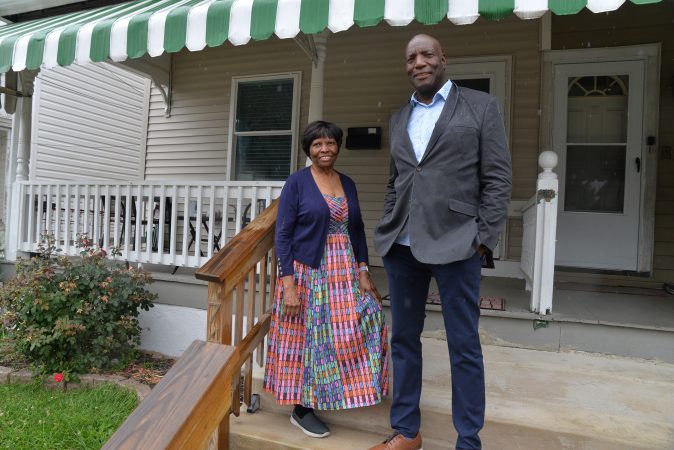
    Minnie McNeil and her family still think about a challenge issued by her pastor more than 40 years ago: What could their city benefit from, and how could they address it?

    The answer then, and now, was homelessness.

    In the decades since, McNeil, 85, and three generations of her family have devotedly worked to support unhoused men in Coatesville. Their work, alongside countywide cross-sector collaboration, culminated in Chester County in June announcing it had reached “functional zero” for chronic homelessness.

    Though it’s a milestone for the county, it doesn’t mean their work has stopped. They’ve evolved.

    Using federal grant dollars, the W.C. Atkinson Memorial Community Service Center, founded by McNeil and her late husband more than 30 years ago, recently acquired its eighth transitional home in Coatesville, which it will remodel to offer affordable and supportive housing to shelter residents. And the shelter plans to expand its scope — helping catch young adults aging out of foster care before they become unhoused, a story they’ve heard over decades of helping thousands of men.

    And separately, Minnie’s son Andrew McNeil, 58, and grandson, Derrick McNeil, 27, have begun an effort to remodel homes in the city, selling them below market to help revitalize Coatesville and support first-time home buyers at a time when housing prices in the county are soaring.

    “The dollars of the ’70s and ’80s, the jobs that were available, [and] the housing stock available during that time is not, in our view, as easily accessible, and so the needs, in our view, are greater as a result,” McNeil said.

    Minnie McNeil and the McNeil family have helped the homeless in Coatesville since the early 1980s.Bob Williams / For The Inquirer

    It started with the shelter

    In Minnie’s estimate, the need for support services still exists. The county in June announced it had reached “functional zero” for chronic homelessness, meaning that long-lasting or recurring homelessness had been reduced to “a rare, manageable level,” the county said in a news release last month.

    It was an example of cross-sector collaboration, officials said.

    Minnie and her late husband, Andrew McNeil Sr., have been a part of that diverse ecosystem since they founded and opened the W.C. Atkinson Memorial Community Service Center at the former Atkinson hospital in 1992. It has always been intrinsically linked to their eldest son, Andrew; it opened on his birthday that year — Jan. 7.

    There are few people willing to do what McNeil and her family have done, and fewer who do it so exceptionally, County Commissioner Chairman Josh Maxwell said. He has watched her shelter take on just about every possible man — those whom others would have turned away, he said.

    Maxwell knows her magnetism personally: On the biggest day of his political career, his election as chairman, McNeil asked him to stop by a house they were renovating to help. Maxwell was in the attic alongside contractors, ripping out insulation and tearing down walls.

    “I don’t think anyone else can do what she does,” he said. “I think those people wouldn’t be helped. I think we’d have dozens, if not hundreds, of more homeless people in the county if she wasn’t the one taking them in.”

    For Minnie, her children were a guiding light: Could they sleep here? Eat the food? It has kept humanity at the heart, she said.

    “Housing is not just a roof over your head, but we’d like to create homes where people live healthy and happy and their very best lives, they reach their full potential,” she said. “A place that, yes, has some outside influence and support, but builds within that home a nucleus where [there’s] love and compassion.”

    Michael Weber, 55, called the McNeils a “blessing.” He came to the Atkinson after living in a hotel room, unable to find permanent housing. He happily took up odd jobs at the shelter to support it. He thinks that’s why the McNeils asked if he would want to move into one of the support housing sites, where he could pay below-market rent.

    “I didn’t even know it could be this good,” he said.

    Andrew and his two brothers were helping hands as children, working shifts at the shelter overnight and preparing meals. Though he never anticipated he’d return to it, Andrew began to learn the ropes from his father when he came back to the county after 12 years in Maryland. (“I never saw that coming,” his mother noted.)

    Minnie McNeil and her son Andrew McNeil walk down East Chestnut Street in Coatesville.Bob Williams / For The Inquirer

    And those lessons didn’t stop at the shelter doors. Derrick, his son, has volunteered at the shelter and found it inspiring. Then Derrick caught the real estate bug, something Andrew knew plenty about.

    Their shared interest is a new chapter that felt like an extension of what Atkinson had been doing, Andrew said.

    “When they move out of the shelter, into the housing, what happens is they have a sense of pride because we’re not putting them into just anything,” he said. “I think that that matters [for] what we’re doing for families as well what we’re also doing with the men.”

    He had watched men move from the shelter into the supportive housing, and saw the sense of pride at the homes they were living in. They wanted to bring that feeling more broadly.

    Affordability in Chester County

    Andrew and Derrick purchased their first project house together in May 2025 for $190,000 as Chester County has seen a diminishing housing stock and rising costs. The county saw some of the highest population growth in Pennsylvania between 2020 and 2024, but the housing market wasn’t keeping pace. Fewer single-family detached homes were built in 2024 than in the last several years, according to the county’s planning commission, and fewer new units were being constructed this decade compared with last.

    In 2024, the median sales price hit $525,000 — the highest in the county’s history. That year, only 331 homes sold for under $250,000, a decrease of 5.9% from 462 units in 2023.

    In Coatesville, like the Atkinson shelter had done with seven transitional houses, Andrew and Derrick took their first project house down to the studs. For 10 months, they remodeled it to a high standard, Andrew said. It went from a three-bedroom, one-bath to a four-bedroom, three-full-bath home. The house sold to a family about a year after they first purchased it, for $290,000 — under an appraiser’s valuation of $330,000, Andrew said.

    “It was a nice experience, just knowing that the end goal was to provide housing and provide opportunities for someone that was maybe purchasing their first property, just trying to provide the best product and the best opportunity for someone at a pretty decent price for what they’re getting,” Derrick said.

    Andrew McNeil and his mom, Minnie McNeil, in the kitchen area of the house they rehabilitated on Merchant Street in Coatesville. Bob Williams / For The Inquirer

    That care and thoroughness was a lesson both Andrew and Derrick learned from Andrew Sr., as the shelter had taken homes with “no lipstick” and modernized them.

    “One of my father’s sayings was always ‘We get brick and mortar money once,’ so we have to put the quality into the house, because it’s up to us to maintain it after that,” Andrew said. “So we don’t cut any corners when it comes to rehabbing these houses, and so my son and I adopt that same principle when we remodel houses for the community.”

    After the success of their inaugural endeavor, Derrick said they’re looking toward future opportunities like this one, or other options — like lease-to-purchase.

    When Andrew reflects on the legacy of the shelter — opened in a historic property that was owned by Whittier C. Atkinson, the first Black physician to open a practice in Coatesville — he thinks of them continuing Atkinson’s holistic approach to medicine in the 1920s, how he would take gifts from the garden as payment for his work. It’s that essence they’re trying to continue, he said.

    “I’m still taking lessons from my parents,” he said. “It’s always mission first; I observed that at a young age, and their mission, we’re continuing that … by trying to stay ahead of the curve. What’s the latest need in our community, and how can we address it in our focus?”

    This suburban content is produced with support from the Leslie Miller and Richard Worley Foundation and The Lenfest Institute for Journalism. Editorial content is created independently of the project donors. Gifts to support The Inquirer’s high-impact journalism can be made at inquirer.com/donate. A list of Lenfest Institute donors can be found at lenfestinstitute.org/supporters.

  • ‘He always smiled’: Family remembers loved one who died in Fourth of July storms at Marsh Creek State Park in Chester County

    ‘He always smiled’: Family remembers loved one who died in Fourth of July storms at Marsh Creek State Park in Chester County

    When Paul O’Connor thinks of his son, Sean O’Connor, he remembers a cafeteria bill.

    Sean was in first or second grade, and Paul was perplexed. He had given Sean lunch money all week He wondered: Where was the money going, and how was it possible they owed the cafeteria money?

    There was a fundraiser bucket, raising money for victims of a natural disaster, Sean told him. He had been diligently contributing donations.

    “I’m like, I can’t deal with this kid — he’s helping,” Paul recalled. “He was the one that was like that. He always smiled; he loved everybody.”

    Sean’s love of people, and his bright smile are how family members are remembering him in the days since his passing. Sean, 29, died at Marsh Creek State Park on the Fourth of July when powerful storms passed through the area.

    Heavy rain, strong winds, and lightning blanketed the region during the holiday. Shortly after 8 p.m., Lionville Fire Company was dispatched to the park for a water rescue. Honey Brook Fire Company units quickly responded to a call for additional resources, according to a news release. First responders were on the water for about three hours, concluding the operation after midnight, the company said.

    The Chester County coroner announced O’Connor’s death on Wednesday. Authorities would not confirm if anyone had been rescued.

    Sean O’Connor had a lifelong love of baseball and softball that started when he was a kid, playing alongside his dad. The two continued to play in a league as adults.Photo courtesy of Paul O'Connor

    For hours on Saturday, his wife, Lucy Troutman, 29, waited for updates. Sean had told her his plans to go paddleboarding, for the first time, with a friend and coworker, and she’d seen his photos on social media throughout the day. She returned home from watching fireworks later that night, receiving a call around 10:30 p.m. that he was missing. Troutman was in shock, hoping it was a terrible prank, or a dream. It wasn’t until the early morning hours of July 5 that she learned her husband had died.

    “It was heartbreaking. I didn’t want to believe it was real. I just didn’t know how to react. I didn’t have words. I still don’t have words for what happened,” she said.

    A lover of softball and baseball, a good listener, and someone always ready to make you laugh, Sean was “the sweetest man you could ever meet,” Troutman said.

    As a kid, he would join his father at his adult league softball practices. There’s a picture of Paul and Sean, heads ducked as they’re walking, both carrying their equipment bags — Paul with his gear, Sean with his Wiffle ball and bat. Sean earned the nickname “Daddy Clone” among the league, Paul said.

    Sean, bottom left, with his family.Photo courtesy of Paul O'Connor

    He was always close with his sister, Danielle. If something happened to one, the other would be there to help out, Paul said.

    Sean played baseball through high school, and Troutman became a frequent attendee at his games, even though the two went to rival high schools. The two met, thanks to her crush on one of his friends. The friend set them up, and “the rest is history,” she said. She was drawn to his kindness and, of course, that smile.

    “Whenever you saw his smile, you knew you were in for a good time, and especially if everybody was joking and laughing and having a good time,” she said. “You were in for it with him.”

    Sean went on to attend Penn State Abington and Troutman to yet another rival school, Temple University. She would take the bus to catch his games. Over more than a decade together, Troutman watched his love of playing ball develop, and as he decided what he wanted to do with his career, ultimately landing on something that embraced his love of people. He became a counselor, helping people navigate drug and alcohol addiction.

    As an adult, Paul and Sean were close as ever, too. Every time Sean left work, he called his father to chat. The two continued playing softball together in Softball America, a group that has rallied around the family during the tragedy.

    Lucy Troutman and Sean O’Connor. The two met in high school. They were married in 2022.Photo courtesy of Lucy Troutman

    In the days after Sean’s passing, the organization has helped raise more than $14,000 toward Sean’s funeral expenses. They have also sought to honor Sean’s memory in other ways. Shortly after his death, Sean was due to play in a tournament with his team. The league encouraged Paul to attend. He didn’t know if he was up for it, but he arrived when the final two games were being played to find the tournament was dedicated to Sean.

    “The players often described him as the purest soul around,” Paul said. “He never, never had a negative word. He’d always trying to cheer people, no matter what was going on. If he’s getting smoked in the game, like 25-6 or something, he’d still make jokes and have people laughing if they’re down about something.”

    That’s how Troutman remembers him, too. And it’s how she wants everyone else to recall him when they think of him.

    “He was always willing to go out of his way to help people,” she said. “He never had a bad thing to say about anybody. He always tried to be positive and upbeat, and he always tried to make things fun, even if they weren’t.”

    This suburban content is produced with support from the Leslie Miller and Richard Worley Foundation and The Lenfest Institute for Journalism. Editorial content is created independently of the project donors. Gifts to support The Inquirer’s high-impact journalism can be made at inquirer.com/donate. A list of Lenfest Institute donors can be found at lenfestinstitute.org/supporters.

  • ‘A substantial change’: Residents upset after developers of controversial Chesco data center project seek another alteration

    ‘A substantial change’: Residents upset after developers of controversial Chesco data center project seek another alteration

    The developer of a 1.5 million-square-foot data center project proposed for an East Whiteland Superfund site has again returned to the township requesting changes to the plan — even as they’ve already started preparing for construction.

    The newest request may look somewhat familiar: Developers Green Fig LLC and Sentinel Data Centers had gone through a monthslong process earlier this year, presenting an amended project to municipal leaders and residents, at first growing — and then offering to shrink — the overall footprint of the site. They argued that the plans first approved in 2024 were less desirable and less efficient, and that the updated plans would allay concerns about environmental impact. They scrapped those ambitions in May, and reverted back to the older concept.

    But on Wednesday, the developers asked for a “field change,” requesting permission to put into place some of the changes that would have been included in those amended plans.

    The changes — which include the ambitions they’ve had since January — would remove the cooling towers, eliminate water cooling for the computer equipment, and install air-chilled units on the building’s roofs. These changes are permitted under the Land Development Agreement, Township Manager Steve Brown told the community at the meeting. But they require the board’s approval.

    The request drew ire from community members who have for months been opposed to the project, fearing the data center’s impact on health and the environment. They’ve also raised concerns that it will rest atop the former Foote Mineral Co., a contaminated industrial site that landed on the federal list of hazardous places.

    The query to the board of supervisors also comes as the developers agreed last week to temporarily halt work on the site that moves the soil while the township reviews soil and human safety plans.

    The board voted, 2-1, to table approval of the proposed changes; chairman Scott Lambert and supervisor Clinton Smith said there were still too many questions. Supervisor Peter Fixler cast the dissenting vote.

    “What’s been presented to us this week, as I said before, I think is a gift. … What’s in front of me now is a data center that’s a third the size of their original proposal,” Fixler said ahead of the vote. “It would, I feel, be environmentally irresponsible to not approve this plan. I know that doesn’t sound popular.”

    The developer said the reason for the change is water conservation, Brown said. The approved plan would use more than 3 million gallons of water a day, vs. the proposed plan, which would use air chillers.

    Separately, the developer proposed slashing the size of the buildings, down from a sprawling 1.5 million square feet total build-out — with two data center buildings roughly 772,000 square feet each — down to a total of 536,000 square feet. It would strike a basement in the current plans, and also reduce the height of the building. These changes don’t necessitate board approval, Brown said.

    In an email Thursday, Lou Colagreco, the attorney representing the developers, said they would respond to any of the board’s questions “that may still be outstanding.”

    “At the end of the day, this is a simple question: Will we use a cooling system that consumes millions of gallons of water a day, as approved, or not?” he said. “We believe this is a very easy decision. We are at a moment in the job where we have no choice but to move forward with whatever path provides us certainty of execution. If the Board wants us to build with evaporative water cooling, we will continue to do so.”

    As he discussed his decision, board chairman Lambert told residents that “we could get a call tomorrow from the developer, and he may say, ‘That 536,000 square foot offer we put out there to make it smaller, it’s gone.’”

    Residents weren’t cowed by that. When the developer first proposed shrinking the data center to address concerns, some said it wasn’t “an act of good will.”

    On Wednesday, the community called for the rejection of the plans, saying that it was too big a transformation to be considered a field change.

    “This isn’t moving a pipe from five feet away to have some mud moved on top of it. This is a half-a-million-square-foot change,” resident Tony Gianino said. “This is crazy. This is a completely new project. I’ve been saying this since the beginning. This is a substantial change. If not this, then what counts as substantial?”

    Jeff Katz, another resident, said that the plans looked like those initially presented to the township in the spring, which were ultimately withdrawn.

    “Bringing substantially the same changes back tonight … looks like an attempt to get through the back door of what could not be brought through the front,” he said.

    This suburban content is produced with support from the Leslie Miller and Richard Worley Foundation and The Lenfest Institute for Journalism. Editorial content is created independently of the project donors. Gifts to support The Inquirer’s high-impact journalism can be made at inquirer.com/donate. A list of Lenfest Institute donors can be found at lenfestinstitute.org/supporters.
  • Phoenixville’s Bluebird Distilling combines alcohol and artisanal dough making in new $2.2M expansion

    Phoenixville’s Bluebird Distilling combines alcohol and artisanal dough making in new $2.2M expansion

    When Jared Adkins gets interested in something, he goes all in. That’s how he ended up learning about distilling, opening Bluebird Distilling in Phoenixville roughly a decade ago. Then, he became infatuated with pizza dough.

    It’s led to an expansion of the business: Bluebird Distilling & Dough House, which will open its doors officially on Tuesday.

    The $2.2 million renovation adds a whole new component to the cocktail bar, which will now offer a “neo-Neapolitan” — a modern, Americanized take on the classic — pizzeria and restaurant. Changes also have expanded the bar itself, added to the dining room, and enhanced the retail and bottle shop.

    Adding food was something Adkins, Bluebird’s owner and master distiller, didn’t initially anticipate when they opened the distillery in 2015. But in 2022, he started to get the itch. He considered a full-scale restaurant, and began the early planning for one. But then there was just something about pizza dough that caught his attention.

    He signed himself up for pizza school, and spent three days in Washington, D.C., learning from chefs about the art of pizza making.

    “There was like a light bulb that went off,” he said. “We’re already doing so much fermenting that just seemed the natural next step to get into dough making.”

    Bluebird Distilling founder and master distiller Jared Adkins. The expansion has been a year in the making, a longer consideration for Adkins.Photos courtesy of Ed Newton

    As he threw himself into dough-making a few years ago, he connected with pizzaiolo Gregorio Fierro to learn the basics. That helped get his vision off the ground, as he began designing what the kitchen would look like.

    Devon Migeot is joining as executive chef to bring the menu to fruition every night. Migeot spent roughly a decade working as sous chef at Philadelphia’s Zahav and Laser Wolf, plus Tresini in Ambler, and as chef du cuisine at Rosalie in Wayne.

    Together, they’ll offer pizza made with 100% Petra stone-ground Italian flour, milled from 100% Italian wheat, with no preservatives or additives. The business will have house-baked breads, plus shareable small plates. Offerings will include ricotta gnudi with sweet corn, brown butter, and scallions; meatballs with beef, pork, gravy, and Parmesan; beets and burrata; chicory salad; a snacking plate of meats and cheeses; and more.

    The decision to expand into food comes at a particularly salient time, Adkins said. The industry as a whole has been seeing a decrease in people drinking.

    “It’s kind of perfect timing that it’s going to fill a niche where maybe people aren’t coming in solely just for drinks anymore as much, but now [we’re] giving another artisan aspect of having pizza, or something that we’re really putting a lot of time in, to craft the best,” he said.

    A look at the expanded cocktail bar, part of the distillery’s larger renovation.Photos courtesy of Ed Newton

    The distillery will still, of course, honor its roots with its spirits and cocktails. It’ll feature old favorites, such as Bluebird (a vodka, blueberry, lime, and mint mix) and the Phoenixville Old Fashioned.

    But new additions will join too. Customers can try the Huntsman, which will feature French cigar bourbon, morel-infused vermouth, tobacco bitters, and stave smoke; or the Rum Ham, a pancetta fat-washed Bluebird dark rum along with burnt pineapple syrup, and tiki bitters; or Off the Vine, a “garden-inspired” martini composed of Juniperus Gin, basil, lemon, agave nectar, Aleppo pepper, and “clarified” tomato.

    The renovation also came with some aesthetic changes. In 2015, they led with a steampunk vibe, Adkins said. They refreshed the interior, using a Japanese-style charred wood that resembles the inside of a barrel.

    A transformed Bluebird Distilling will open July 7 after a $2.2 million renovation has expanded founder Jared Adkins’ vision. The space adds a new neo-Neapolitan pizzeria and restaurant, plus a reimagined cocktail bar, dining room, and retail and bottle shop.Photos courtesy of Ed Newton

    The outside patio is now enclosed, featuring a “huge” rectangular bar, which can seat up to 30 people. Adkins described the bar area as light and airy, where it feels communal and social. It feels more “upper casual” than “too-serious speakeasy.” Surrounded by windows, it feels like you’re sitting on the street, in the middle of the action, he said.

    When customers are ready for dinner, they can head back to the lounge, which curates a masculine, Western style.

    And the kitchen, where customers get to enjoy watching the whole process unfold, embraces that steampunk essence with barrels hanging from the ceiling.

    “I feel like as you walk through the area, you’re getting two or three different experiences all at once,” he said.

    The bar was open through renovations, but operating with 50% of the facility for the last seven or so months, and maintaining about 80% of their normal crowds. It took some ingenuity, he said.

    As they look at the new chapter, it feels like starting all over again, he said.

    “I think it fills a gap on one side for us there, of now we have something else that we can present to our customers for an overall experience,” he said. “That’s what we’re going for the most. We’re giving our cocktail experience, our spirits experience, and now a dough side of it.”

    This suburban content is produced with support from the Leslie Miller and Richard Worley Foundation and The Lenfest Institute for Journalism. Editorial content is created independently of the project donors. Gifts to support The Inquirer’s high-impact journalism can be made at inquirer.com/donate. A list of Lenfest Institute donors can be found at lenfestinstitute.org/supporters.

  • East Whiteland directs data center developer to stop work on Superfund site

    East Whiteland directs data center developer to stop work on Superfund site

    The developer of a sprawling proposed data center on an East Whiteland Superfund site must temporarily halt any work that disturbs the soil as the municipality reviews plans, the township said Thursday.

    “Any work involving earth disturbance of any kind must cease,” the township said.

    The stoppage was requested “until greater clarity is provided with respect to the ongoing review” of the soil and health and safety plans by the township and U.S. Environmental Protection Agency.

    The EPA said in a statement that it had nothing to do with the work stoppage.

    Permits needed for the development such as fencing, construction trailers, and signage are still valid.

    Township residents have raised concerns that the planned 1.5-million-square foot data center will be built on top of the Cyprus Foote Mineral Co., which was contaminated by chemicals such as lithium, arsenic, and hexavalent chromium.

    The developers, Green Fig LLC and Sentinel Data Centers, have said the site has been cleaned.

    A representative for the developers said they agreed to the stoppage “so that [the township] had a few more days to satisfy its questions.”

    Site work had been underway since early June, after the developers saw success in court when a judge dismissed residents’ challenges to the project.

    Residents told The Inquirer they saw dust plumes rising from the site last month. It resurfaced concerns about what contamination may still exist on the land that previously housed the 79-acre Foote Mineral, which was added to the Superfund list in 1992.

    Contamination likely started as soon as 1941 when the company began crushing ores and minerals. Lithium metal, lithium chemicals, and inorganic fluxes were part of the process.

    Cleanup so far has included capping contaminated quarries, stabilizing waste areas, and maintaining a long-term monitoring program for an evolving groundwater plume. Pollutants included lithium, boron, and low-level radiation.

    The work stoppage is another wrinkle in the ongoing saga of the project, which first secured approvals in 2018 and 2024. The project has seen staunch opposition from residents since it resurfaced last year with amended plans.

    This story has been updated to clarify that the EPA had no role in the decision to order a work stoppage.

    This suburban content is produced with support from the Leslie Miller and Richard Worley Foundation and The Lenfest Institute for Journalism. Editorial content is created independently of the project donors. Gifts to support The Inquirer’s high-impact journalism can be made at inquirer.com/donate. A list of Lenfest Institute donors can be found at lenfestinstitute.org/supporters.

  • Historic St. Peter’s Village is going up for auction. It prompts the question: Will it be preserved, or developed?

    Historic St. Peter’s Village is going up for auction. It prompts the question: Will it be preserved, or developed?

    Roughly 83 acres of the historic St. Peter’s Village in Chester County will go up for auction this fall to the highest bidder, opening up potential for massive development of the land. And it already has seen thousands of interested parties.

    The auction, scheduled for Sept. 30 at The Desmond Malvern, will put on offer the entirety of the Warwick Township village, in what auction and preservationist experts call an “unusual” type of sale.

    On the table: 121 homes, which consist of 33 single-family homes, 33 twins, 34 townhomes, and 21 two-acre home sites; a wastewater treatment plant that serves the existing buildings; and 13 historic and commercial village buildings — including The Inn at St. Peter’s — which total about 43,500 square feet.

    The new owner could also clinch iron ore deposits on site, “adding a rare investment dimension,” the auction website notes.

    The 83-acre St. Peter’s Village — a historic destination in Chester County — will be sold at an absolute public auction to the highest bidder in September. The Inn and various shops on the main drag. Wednesday, July 1, 2026Steven M. Falk / For The Inquirer

    The property is being sold as one unit. The buyer will have to improve the existing wastewater treatment plant for a full build out. The land is zoned for residential and neighborhood business uses.

    It is definitely an “unusual property” and the auction is unusually large as well, said Doug Clemens, chief executive officer of the Traiman Real Estate Auction Company, which is overseeing the sale. Clemens said the property is owned by one entity. The Piazza family, which runs the Piazza Management Co. and owns multiple Main Line car dealerships, is listed on associated parcels. A spokesperson declined to comment.

    “We’ve sold properties that were thousands of acres, but they weren’t builder properties, so this is a large property for a builder,” Clemens said.

    Its good reputation, long history, and the sheer size of the parcel are why Clemens suspects they’ve seen remarkably high interest. The auctioneers put out a news release about the upcoming sale last week. They’ve received 14,000 responses since, he said.

    St. Peter’s Village sprung up because of its nearby natural assets: the French Creek, timber, good soil – and resources like iron ore, copper and black granite.Steven M. Falk / For The Inquirer

    Bidders must register at the auction with $150,000 guaranteed funds, but the bids will start wherever they’re comfortable.

    “At the conclusion, we’ll know what the bidders were willing to pay for it,” Clemens said.

    Following the curves of the French Creek, the village was established in the 1880s during the Gilded Age — a point in history where America was going through “growing pains” of both capital and labor, as well as whether it would be an “industrialized or agrarian nation,” said Jared Frederick, a history professor at Penn State Altoona.

    Like many a small village or hamlet in Pennsylvania, St. Peter’s sprung up because of its nearby natural assets: the French Creek, timber, good soil – and resources like iron ore, copper and black granite.

    Its economy flourished, thanks to those natural resources, which it transported to Philadelphia. It’s a “fascinating little enclave that demonstrates how some places were caught in the middle” of semi-ruralness and proximity to the big city, Frederick said.

    Alongside that growing economic engine was also leisure, though. St. Peter’s Village became a recreational getaway due to its beautiful, scenic vista — something considered a “majestic retreat for commoners,” Frederick said. And while Chester County places high value on its green spaces now, it was even more essential for people living in urban areas to have access to such places in the 1880s through the 1900s, Frederick said.

    St. Peter’s Village is on the National Register of Historic Places, but that may not safeguard it from development after it is auctioned off. Steven M. Falk / For The Inquirer

    Its sale has prompted concern about what it could become, with the auction site touting it as “suitable for major builders, venture capitalists, historic preservationists, and entrepreneurs.”

    Places like this are increasingly rare, Frederick said. And while the village is on the National Register of Historic Places, that doesn’t necessarily safeguard it, Frederick said. There’s a “fairly lengthy list” of places that have earned such recognition, but been bulldozed or neglected.

    And while development and other attractions could help revive the village by drawing in tourism, he believes it’s a careful balancing act.

    “Something that I always impart to my students in the classroom when we talk about the power and the need to preserve historical places, is that regret only goes one way,” he said. “When a place is gone, it’s gone forever, and that is something that very much needs to be kept in mind when pondering the fate of places like this.”

    This suburban content is produced with support from the Leslie Miller and Richard Worley Foundation and The Lenfest Institute for Journalism. Editorial content is created independently of the project donors. Gifts to support The Inquirer’s high-impact journalism can be made at inquirer.com/donate. A list of Lenfest Institute donors can be found at lenfestinstitute.org/supporters.

  • A Chester County lake is planned for draining as a dam is decommissioned. Residents are worried about what it’ll become.

    A Chester County lake is planned for draining as a dam is decommissioned. Residents are worried about what it’ll become.

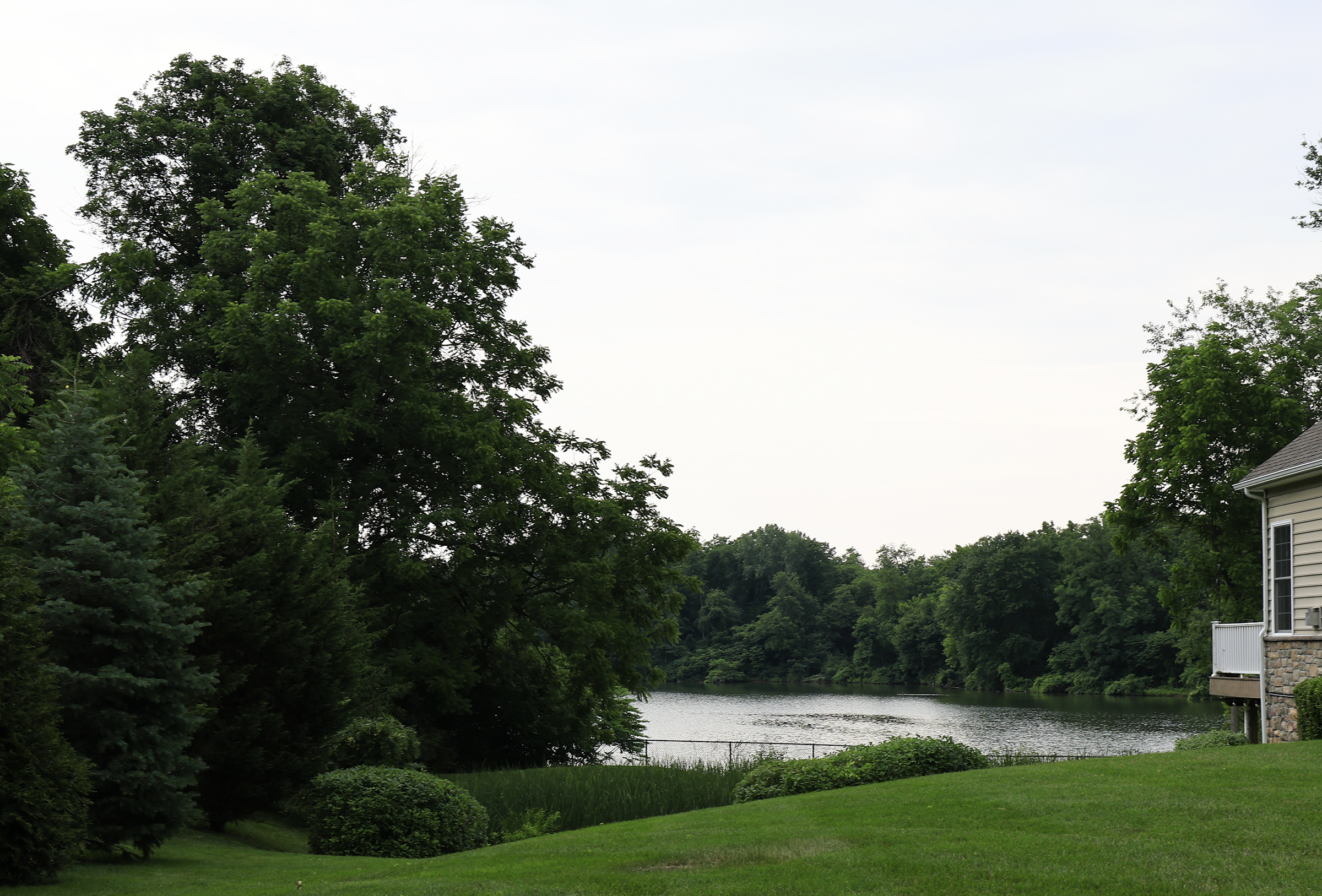
    Dorothy Verdon had a history of moving around every few years. But when she found her lakefront — or, technically, lake-back — home in the Arbours of West Goshen in Chester County 12 years ago, she just really liked it.

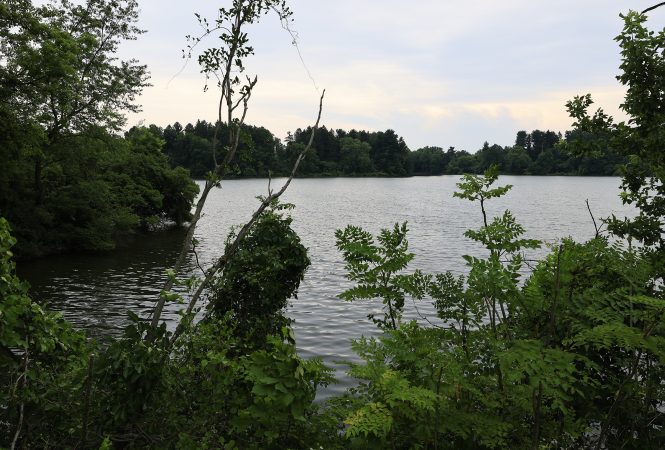
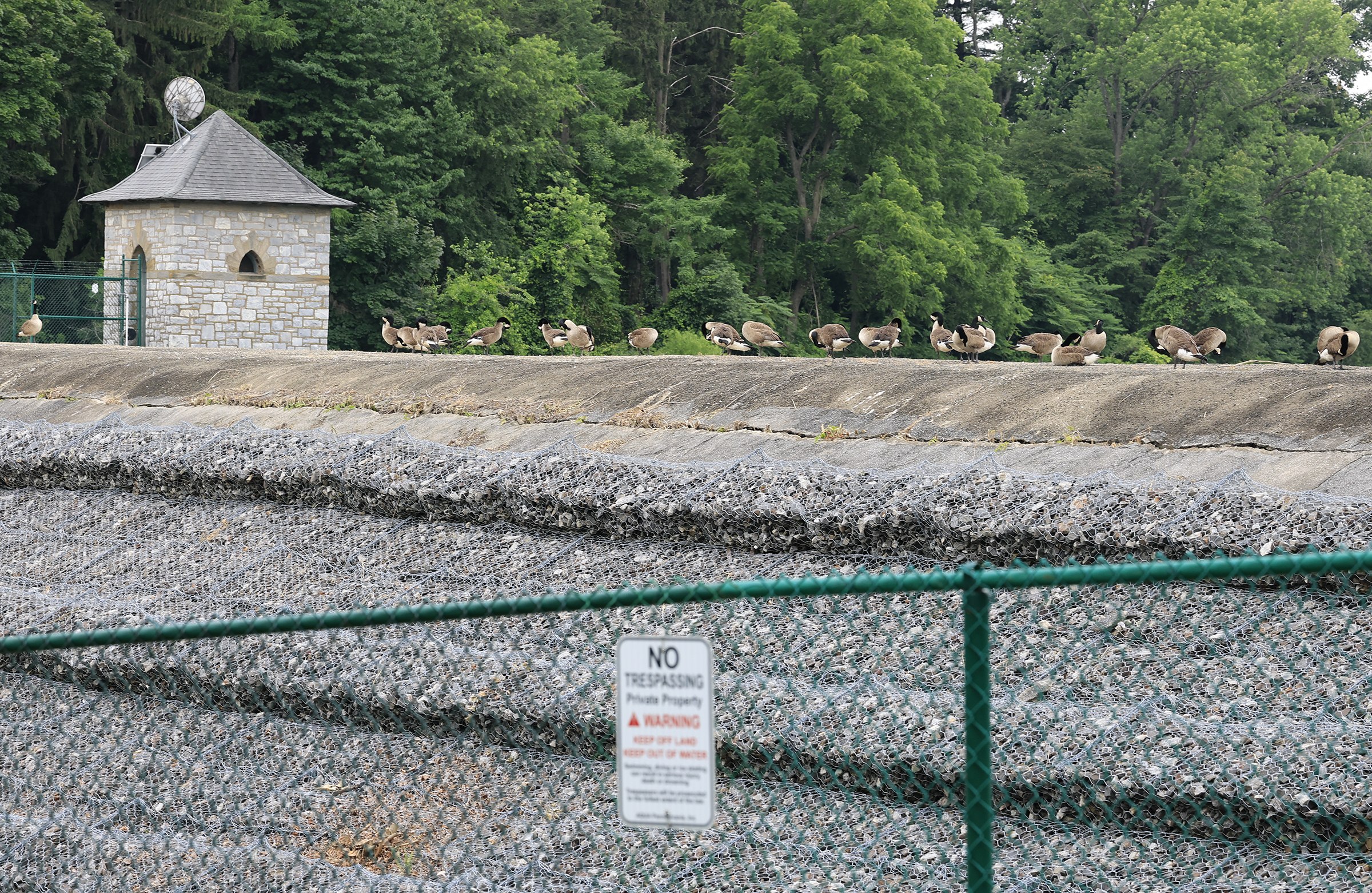
    Her loudest neighbors are the geese, who live at the banks of Fernhill Lake, a 64-acre impoundment formed from Aqua’s Township Line Dam. But under a plan from the public water company to partially decommission the dam and draw down the reservoir, returning the natural flow of Chester Creek, Verdon and her neighbors’ backyards would be subject to great ecological change in the coming years.

    It’s a change environmentalists generally support, as dams greatly affect the ecosystem around them: increasing water temperature, generating algae growth, and fragmenting habitats. But residents, some of whom paid up to $20,000 for their lake-facing yards, worry what their backyards, and the developed habitat, could become.

    “My immediate concern, and that of several residents and the township, is what’s going to happen to the ecosystem, because it is a water-based ecosystem,” Verdon said. “There’s that. It’s really financial. And it’s aesthetic. What are we going to have behind us as the lake gets drained?”

    A view of Fernhill Lake from the Arbours at West Goshen in West Goshen, Pa., on Monday, June 22, 2026.Yong Kim / Staff Photographer

    The planned decommissioning

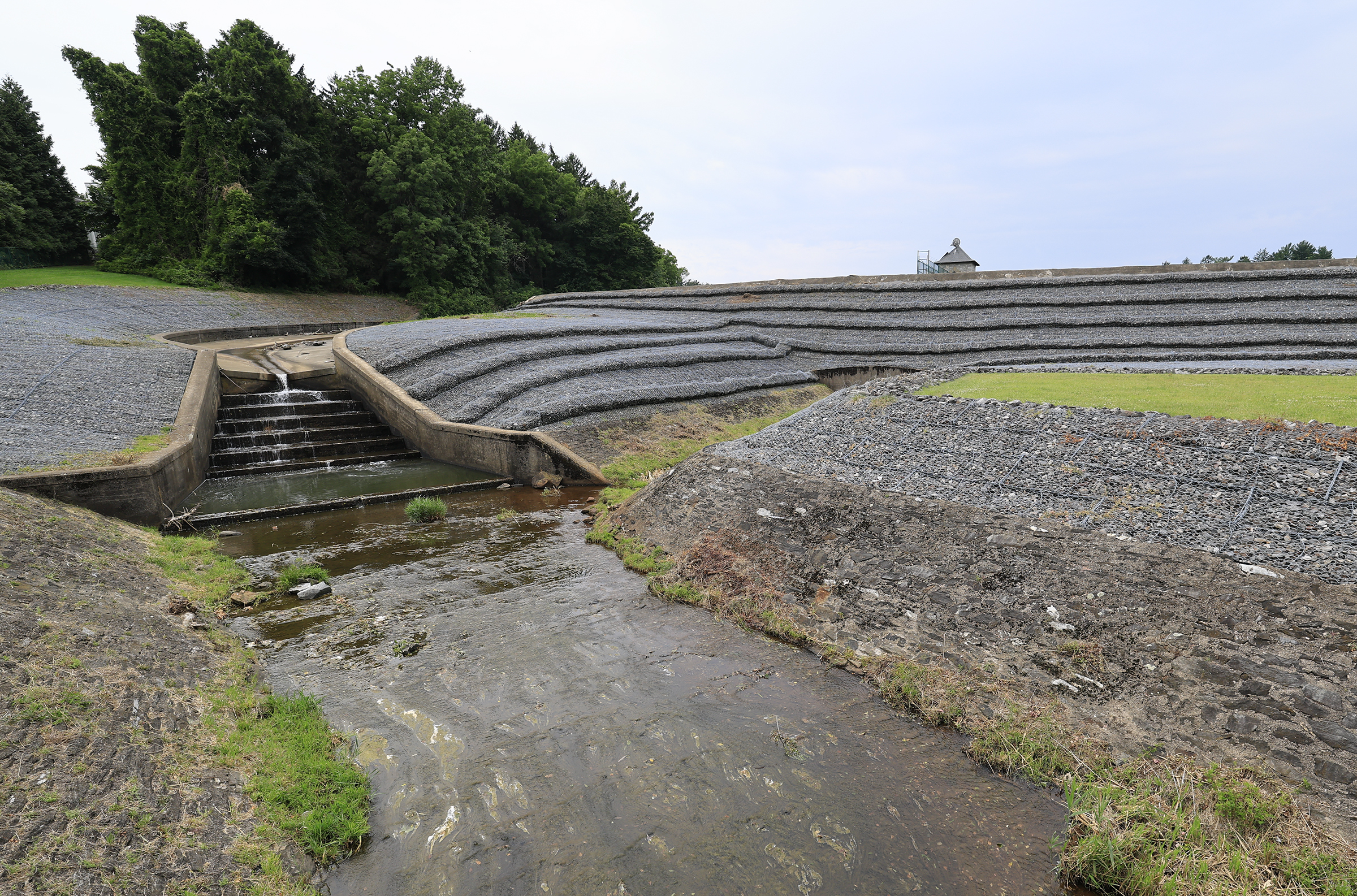
    Built in 1935, Township Line Dam once supplied drinking water for surrounding customers. But, as with a number of dams before it, that has not been the case for decades. Aqua acquired the dam in 1998 and does not use it for daily operations.

    Township Line requires “extensive investment” to satisfy requirements from the Pennsylvania Department of Environmental Protection, which outweighs the benefits of a dam that no longer serves its purpose, Michael Fili, the company’s vice president of planning, design, and construction, wrote in a letter to the township’s board of supervisors in May.

    Under its plan, the company will begin drawing down the water in the reservoir by eight to 10 feet, leaving the water at that reduced level until it begins construction for partial dam removal in early 2028 through 2029, Fili wrote. At that time, the entire lake would be drained. (The company originally planned to begin the process in July, but pushed the timeline back to fall following concerns from residents.)

    A view of the Township Line Dam along Airport Road in West Goshen, Pa., on Monday, June 22, 2026. Yong Kim / Staff Photographer

    Following decommissioning, Aqua proposed transferring ownership of the 114 acres to West Goshen Township, making the municipality “stewards of the land” that could “utilize the land for the benefit of its residents,” Fili wrote.

    “We understand the reservoir and surrounding area is enjoyed by the community, and we do not take this action lightly,” Fili wrote.

    The announcement drew concerns during a May board meeting from residents, who questioned why it had to be drawn down so quickly, and worried about what would become of the land — fearing further development, or lack of adequate care to keep it from becoming an eyesore. Some wondered if there might be a path to maintaining the lake.

    “With all due respect to my fellow supervisors’ opinion, I don’t think we have an option here,” said Shaun Walsh, chairman of the township’s board. “If you keep it as a dam, you need to spend millions of dollars to fix it.”

    Walsh said the township would keep it as an open space, possibly turning it into a mixture of wetlands, meadow, woodlands with walking trails — an “ultimately real beautiful amenity for people in the area to use,” he said.

    “I think there are so many advantages in it becoming a publicly owned asset, given that the township is so built out,” he added. “I personally believe in 10 years’ time we should have an attractive amenity there for the community.”

    (“When we’re all dead,” someone in the meeting responded.)

    West Chester appears to have a right of first refusal to purchase the property at low cost, based on old agreements, officials for the borough said. West Goshen Township Manager Chris Bashore said that town was waiting to see what West Chester decides.

    In a message, Aqua said it is communicating with both municipalities and “no determination has yet been made as to whether the 114 acres of property will be conveyed and to whom.”

    Birds rest on the Township Line Dam along Airport Road in West Goshen, Pa., on Monday, June 22, 2026. Yong Kim / Staff Photographer

    Dams and wildlife

    Residents also worry about what will become of the waterfowl, turtles, fish, and a bald eagle who have begun to call it home over nearly a century.

    Largely, environmental activists believe that “the positives of dam removal outweigh any kind of negatives” said Faith Zerbe, advocacy and science community action coordinator with the Delaware Riverkeeper Network, which has sought the decommissioning of multiple dams over the last two decades.

    The Chester Creek, a tributary of the Delaware River, is steeped with “impairments” — situations when a waterway does not meet environmental or regulatory quality — along much of its length. Removing the dam would help chip away at some of those larger issues.

    “Removing a dam, allowing the natural stream to find its pattern over time as that dam removal takes place, and then restoring the stream banks with natural native indigenous species is kind of a critical piece to getting ecology back to the river,” she said.

    Aqua said it is coordinating with the Pennsylvania Fish and Boat Commission and Department of Conservation and Natural Resources, and the federal Fish and Wildlife Services, as it prepares for its drawdown.

    It is essential for the dam decommissioning to be done right, environmentalists said. But when done “thoughtfully and with the proper permissions, dam removal can have remarkable benefits for local ecosystems, allowing these areas to return to their original landscape,” said Carly Lare, executive director of Chester Ridley Crum Watersheds Association.

    Her organization has been communicating with Aqua to better understand the project’s goals and timelines, she said.

    “Since colonization of the area, this landscape has greatly changed, which in turn alters which native species can survive throughout our region,” Lare said. “When habitats are fragmented, our creeks experience diminished migration of native fish populations, which in turn influences the health and diversity of other native organisms, ranging from freshwater mussels to river otters.”

    This suburban content is produced with support from the Leslie Miller and Richard Worley Foundation and The Lenfest Institute for Journalism. Editorial content is created independently of the project donors. Gifts to support The Inquirer’s high-impact journalism can be made at inquirer.com/donate. A list of Lenfest Institute donors can be found at lenfestinstitute.org/supporters.

  • Gov. Shapiro welcomes 63 new U.S. citizens from 17 countries in Chesco alongside a George Washington reenactor and bald eagle

    Gov. Shapiro welcomes 63 new U.S. citizens from 17 countries in Chesco alongside a George Washington reenactor and bald eagle

    It’s been a long time coming, Matthew Mckena reflected. There were hiccups in the process. But by midday Friday, he was officially a U.S. citizen, in time for the country’s 250th birthday, and welcomed by Gov. Josh Shapiro, a George Washington reenactor, and even a bald eagle.

    “It just became a battle of perseverance, but also we’ve come so far,” he said. “The hope in itself is also in the waiting, and so it’s now coming in full circle. It’s just unbelievable of having waited for so long for something, and then finally having it.”

    Mckena, 21, was one of 63 people from 17 counties to take their oaths as new citizens in Valley Forge on Friday. For many of them, who ranged in ages 18 to 87, the day was a culmination of years of effort and lives they’d built in the country.

    Mckena’s siblings were born in the United States, before his family moved back to Kenya, where he was born. When he was in high school, his family returned to the U.S. He’s now a college student pursuing a degree in mechanical engineering.

    “[There are] so many opportunities that have been afforded with this move to be at a place where it’s so easy to access education infrastructure,” he said.

    New citizen Helene Hartmann Dirani with her 3-year-old daughter Victoria are greeted by Gov. Josh Shapiro as he welcomes 63 new citizens from 17 countries at the historic Founding Forward in Phoenixville. Steven M. Falk / For The Inquirer

    Helene Hartmann Dirani, 42, has called a few nations home: Originally from Kazakhstan, she moved to Germany at 13 years old, and then studied in Austria. She later met her now-husband in the United States. After years of long-distance dating, they settled down, and she moved to the country 13 years ago. Three children later, the ceremony felt like a special moment for Hartmann Dirani.

    “Being with my husband and my children, and settling down is really what makes it so special,” she said.

    The naturalization ceremony was held one week before America’s Semiquincentennial in historic Valley Forge. Chester County Court of Common Pleas President Judge Ann Marie Wheatcraft called the new citizens’ attention to that legacy.

    “Valley Forge reminds us that citizenship is not simply inherited, it is claimed often at a great cost, and many of the many of us take that for granted. You understand better than most,” she said. “You chose America. You worked hard for this. … Bear with us your gifts, your culture, and all that makes you unique.”

    Rohan Bakshi talks about becoming a new citizen before Gov. Josh Shapiro welcomed 63 new citizens from 17 countries at the historic Founding Forward in Phoenixville on Friday, June 26, 2026.Steven M. Falk / For The Inquirer

    America has always been “a land of dreams” for Rohan Bakshi, 45. He came to the country from India in 2012, and has felt a part of the country. He built a life, family, and career here. After so many years, this was a “dream come true,” he said.

    “This is the best country to live in,” said Bakshi, whose wife will be sitting in his seat soon, as she pursues her own citizenship. “I’ve seen other countries as well. It’s a privilege to be an American citizen.”

    Lina Zhang, 41, felt emotional as she waited to take her oath. Roughly 14 years ago, she moved from China to the United States. In the beginning, her English “sucked,” she said. But she learned fast: attending GED classes, using her translator app to translate English to Chinese, and then translating back to English, so she could take her exams.

    Her hard work earned her some of the highest marks her teacher had seen in years, she said. She went on to college, majoring in accounting and minoring in finance, landing a job with a public accounting firm.

    Surrounded by her family Friday, she was glad to be sitting at the ceremony.

    “I’m proud of myself,” she said.

    New citizen Lina Zhang poses with George and Martha Washington reenactors Randall Spackman and Karyrn Saece before taking the oath of citizenship with 63 new citizens from 17 countries at the historic Founding Forward in Phoenixville. Steven M. Falk / For The Inquirer

    Speaking to the new citizens, Gov. Josh Shapiro recognized the work each person had put in to reach this moment. But, he warned: “As new Americans, your work is just beginning.”

    Recalling Ben Franklin’s famous quote, “A Republic, if you can keep it,” Shapiro told them those words — “if you can keep it” — was their charge.

    “Each successive generation of Americans have continued that work, caring for their neighbors, standing up for freedoms that our founding fathers fought for, taking an oath of citizenship, working in the halls of Congress, the halls of our state capitol, the halls of our county — that work now falls to each of you to be engaged American citizens,” he said.

    New citizens got to visit with Noah the bald eagle from the Elmwood Park Zoo after some 63 new citizens from 17 countries took the oath of citizenship at the historic Founding Forward in Phoenixville. Steven M. Falk / For The Inquirer

    After the ceremony, Mckena said, from his experience, a lot of people discount the value of American citizenship.

    “There really is a high cost that a lot of people pay, and there really is a huge disparity in what democracy offers and what the rest of the world offers, and so really it’s a special opportunity,” he said. “People who already had it [should] really treasure and understand it. And for those who don’t, seek after it.”

    This suburban content is produced with support from the Leslie Miller and Richard Worley Foundation and The Lenfest Institute for Journalism. Editorial content is created independently of the project donors. Gifts to support The Inquirer’s high-impact journalism can be made at inquirer.com/donate. A list of Lenfest Institute donors can be found at lenfestinstitute.org/supporters.

  • ‘Continuing that legacy’: Caterer John Serock purchases historic Loch Aerie Mansion wedding venue in Malvern for $4M

    ‘Continuing that legacy’: Caterer John Serock purchases historic Loch Aerie Mansion wedding venue in Malvern for $4M

    John Serock closed on the historic wedding venue Loch Aerie Mansion on a Tuesday. The first wedding was that Saturday.

    It was a natural transition for Serock, whose catering company has exclusively worked with the venue since its former owners, Steven and Dana Poirier, purchased the Malvern mansion in 2016 with the intention of giving the property a new life. Serock had come in early in the process, working with the Poiriers as they restored the historic estate and turned it into its latest iteration: a wedding venue.

    But Serock had first laid eyes on the property, which is more than a century old, in 2006. He had a storefront up the street and, one day, with the leaves off the trees, the mansion just appeared before him. He thought it would make a “cool” wedding venue.

    Now, 20 years after that first sighting, the mansion has become Serock’s first venue of the sort.

    “I was starting to get the itch to maybe look into my own venue, and then COVID hit, and I swore I said it’ll be a long time before I ever sign another piece of paper,” he said. “Then as the few years went on, and we started talking with Loch Aerie, I went back and forth … did we need this next step? But when I really broke it down, this is something I felt I needed.”

    Serock closed in mid-May, purchasing the property for $3 million and the business for $1 million. His company took over the existing book of business, honoring all future weddings. It is working on filling up the rest of the calendar, aiming for not a single Saturday off, he said.

    Under the new ownership, Serock plans few cosmetic changes — except making more photo-worthy backdrops — but will focus on operational tweaks and increasing business from corporate and nonprofit clients midweek.

    The venue is rolling out “Nonprofit Thursdays,“ offering “severely discounted” rates for nonprofits to throw fundraisers during the week.

    To appeal more to business leaders, it is looking into putting a central sound system, so clients do not have to bring in a separate company.

    More generally, Serock is looking to add a liquor license — Loch Aerie is currently BYOB — with the goal of making things as “easy and turnkey as possible” for clients, he said.

    For weddings, which make up 95% of Loch Aerie’s business, the venue lowered its offseason pricing immediately, Serock said. Saturdays in the offseason will run $7,000, compared with about $10,000 during the peak in May, June, September, and October. Fridays and Sundays go from $4,500 in the offseason to $8,000 and $7,000, respectively.

    The four-story stone mansion has a newly constructed 5,000-square-foot ballroom addition that accommodates around 200 guests. The venue features billiards and dining rooms, a parlor, an entry hall and dramatic stairway, suites to get ready, and outdoor spaces.

    Serock sees this as a first of several venues to come, hoping to build a portfolio out of multiple properties. He is not in a rush, he said, and Loch Aerie has served as a learning experience.

    “You couldn’t ask for a better opportunity, because really, like I said, nothing changed,” he said. “It’s an easier transition, because I already understood ‘where’s the circuit breaker,’ or ’how’s this work’ … so that’s a good first step. And even since then, I learned a lot.”

    Built in 1865, the estate had sat vacant for roughly 12 years. It went to auction in 2016, purchased for $700,000 by a businessman who looked to restore the home and build a hotel next door. But when the deal fell through, according to VISTA.Today, the Poiriers — who had been outbid earlier — came out triumphant.

    In the years before that, it served as a home or a business space for those “whose occupancies were short lived and rather destructive,” according to the website.

    Since first seeing the property in 2006, Serock has heard dozens of stories about it — almost folkloric in its history between historic design and a biker gang — and how it has served as a reference point, a piece of Chester County legacy.

    “For me, we’re building these new memories with our couples and families, but I think it’s really important that we’ve been able to also save and maintain this property, especially in the age where everybody wants to just knock down and have the brand, the shiny new toy, and whether it’s a house or car,” Serock said. “I think it’s really cool that we’ve had this opportunity to save this house. The Poiriers saved it, but we’re continuing that legacy.”

    This suburban content is produced with support from the Leslie Miller and Richard Worley Foundation and The Lenfest Institute for Journalism. Editorial content is created independently of the project donors. Gifts to support The Inquirer’s high-impact journalism can be made at inquirer.com/donate. A list of Lenfest Institute donors can be found at lenfestinstitute.org/supporters.