Author: Brooke Schultz

  • These nonprofits called the shuttered Exton mall home. Now, some are struggling to relocate.

    These nonprofits called the shuttered Exton mall home. Now, some are struggling to relocate.

    Cristina Hartley watched her teenage son go from refusing to say more than two lines on stage to taking on the lead role in two performances, thanks to the confidence he built through theater production nonprofit Arts and Athletics Club.

    Now, Hartley, who serves on the organization’s board, is worried about what the future holds for the all-ages theater group. The nonprofit, formally founded in 2019 after starting as a high school senior project, was based for roughly four years in the Exton Square Mall, and lost its space when the mall closed its doors in June. The group has struggled to find a new home and will be forced to take a hiatus until a new location is secured.

    “The arts are always the first program to be cut out of schools, and there’s always a lack of budget to have that in schools or to expand these programs in schools, and we want everybody to have access to anything art-related, whether that’s drawing or trying to sing or trying to perform,” said Hartley, who has been involved with the nonprofit for six years.

    “We know that there’s a space out there. There’s a landlord out there willing to work with a small nonprofit. We just haven’t found it yet,” she said.
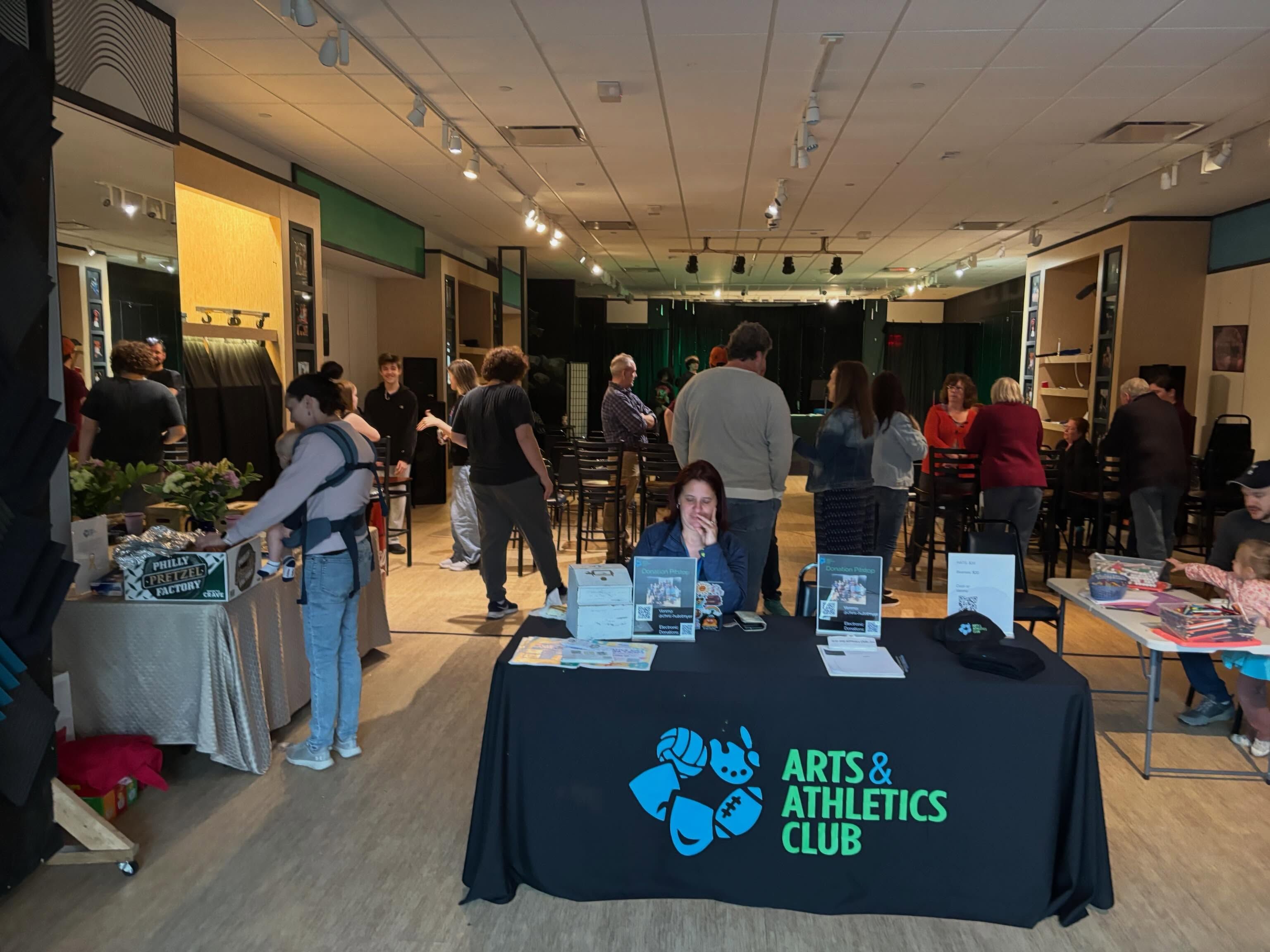
    The Arts and Athletics Club’s interior at the Exton mall. Finding a space for it to hold its productions and activities has been a challenge, leaders say.Photo courtesy of Arts and Athletics Club

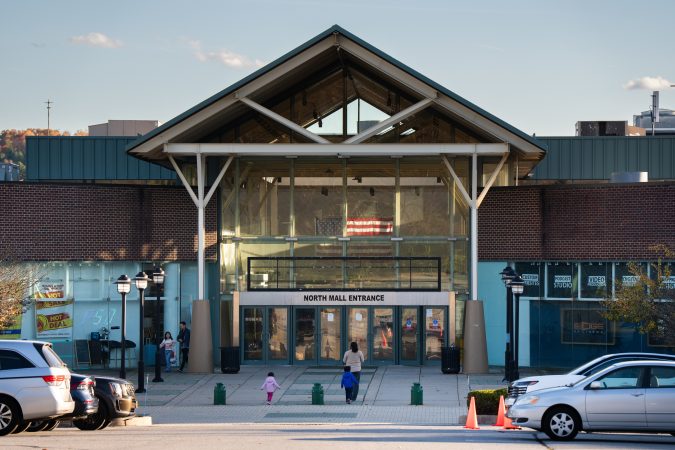
    The roughly 1 million-square-foot Exton Square Mall closed June 30 amid a legal dispute between the property’s owners and local officials over plans for redevelopment. That squabble is still in court.

    For years, the mall declined from traditional retail, with only a handful of stores left when it shuttered after five decades. It was Chester County’s only enclosed mall.

    But even as the mall’s staples dwindled, other organizations — nonprofits, a robotics club, a fencing center, and more — occupied the space, drawing what business leaders said was significant foot traffic.

    In June, those still left at the mall received notice that they would have to be out by the end of the month. For nonprofits like the Arts and Athletics Club without robust budgets to quickly relocate, the abrupt end put them in a bind.

    The Arts and Athletics Club was in the midst of two productions when its leaders learned they would have to vacate, said Chris Hutelmyer, executive director. They took June to move their things out, depositing belongings in people’s garages, and started the real estate hunt in July.

    The two performances, Oh Happy Day and Twisted Tales, went on, albeit under changed circumstances, with one held in a park. After holding a summer bash Saturday, the organization will be on hiatus until it finds a space, Hutelmyer said.

    The mall had been perfect for the group. An old Aéropostale served as its mini black box theater for four years. The former clothing store had no windows, which worked well for staging 10 productions each year, and it was accessible with ample parking. There were bathrooms, dressing rooms, and storage space. And it was a central location for its all-ages community, accessible from Malvern to Downingtown to Coatesville.
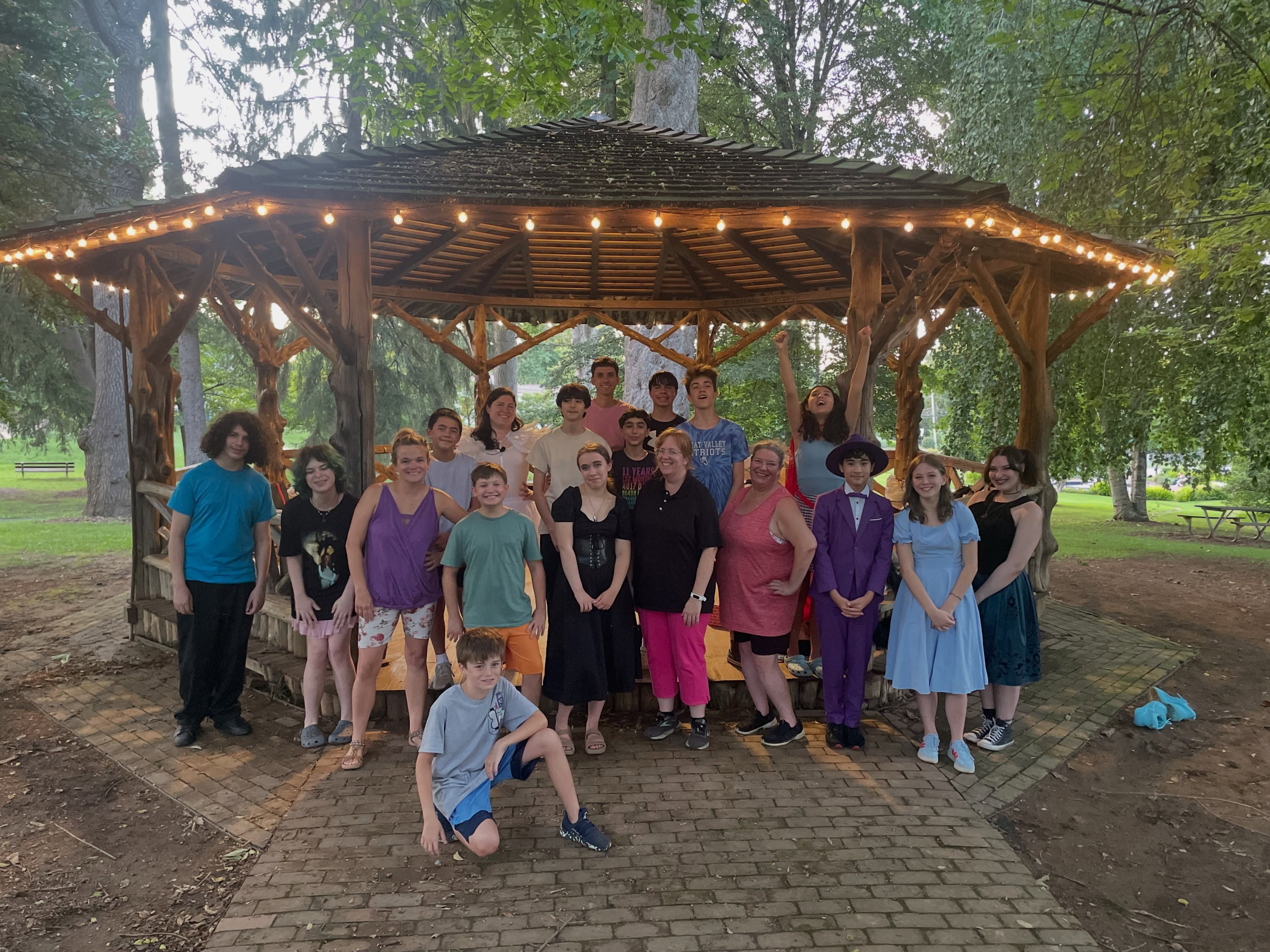
    The cast of “Twisted Tales” poses for a photo. Arts and Athletics Club, primarily a theater production nonprofit, has struggled to find a new facility since the Exton mall’s closure in June. Its last production was held in a park, and it hasn’t been able to run a show since.Photo courtesy of Arts and Athletics Club

    Trying to find a comparable space for the Arts and Athletics Club within East and West Whiteland Townships has proved difficult. But its leaders said they want to stay in the area, continuing to provide programming for participants from ages 7 to 70. The mall was the organization’s first permanent location, after performing in parks, libraries, and other community spaces.

    The theater group, which offers its programming for free or little cost, has a limited budget for renting or altering a space to fit its needs. Another challenge has been finding an available location that is the right size: about 1,800 to 3,000 square feet of open space.

    Group leaders have looked at retail locations, warehouses, and churches, and investigated partnering with community centers.

    “We’ve been striking out pretty much everywhere that we’ve been looking,” Hutelmyer said. “It’s just been hard to find a direct match for what we need.”

    It was a similar scramble for the Wardrobe, a nonprofit thrift store that accepts and sells secondhand clothing and also provides free clothes to those in need, after having to abruptly move out of the Exton mall.

    Racing to find a new space to avoid laying off any employees, executive director Sherri Cole enlisted a real estate agent, she said, but struggled to find something affordable that also hit the right marks.

    “Everything had to go out of the mall; it’s not like we could be like, ‘OK, we’ll go dark and we’ll move things when we find a new location,’” Cole said.
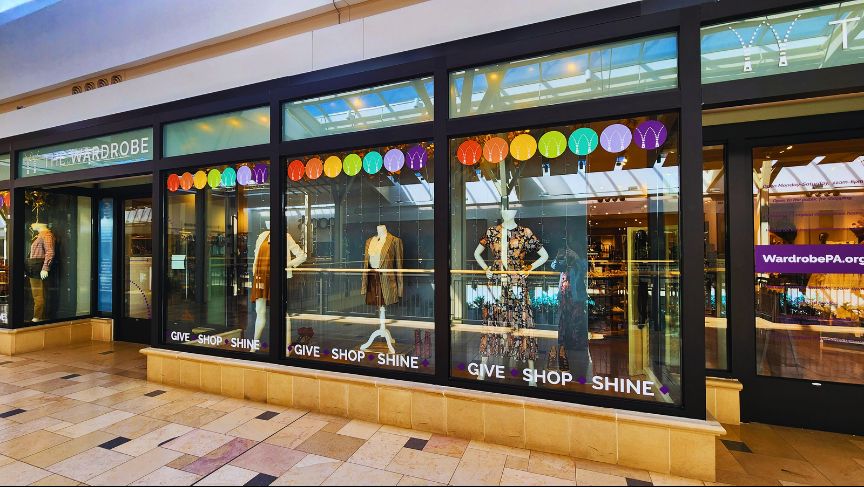
    The old exterior of the Wardrobe, a clothing store that accepts donations and gives clothes to those in need for free, in Exton mall. The business will open its new location in Malvern in the fall.Photo Courtesy of The Wardrobe

    By early July, the Wardrobe secured a pop-up location in the Plymouth Meeting Mall.

    And this month, the nonprofit found a new, permanent home in the Lincoln Court Shopping Center in Malvern, about a 10-minute drive from the old Exton location. Cole anticipates the store will open by October.

    The interior of The Wardrobe’s former Exton mall location. The nonprofit, which has called the mall home for the last few years, struggled to find a new location in Chester County after the mall shuttered in June.Photo Courtesy of The Wardrobe

    Still, for both the Wardrobe and the Arts and Activities Club, it was hard to lose the Exton mall.

    Out of the Wardrobe’s five locations in the Philadelphia region, the Exton mall location was its second-largest site for foot traffic and retail sales last year, Cole said.

    It proved that people would still show up to a “dead” or “dying” mall if there was something they needed, Cole said. And it was meeting a need.

    “There need to be spaces in the suburbs where everyone feels welcome, and often, the class divide in the suburbs is really stark,” she said. “It’s great that we’re able to find something that is still within the Exton, Malvern neighborhood where we can be providing these services, because even within the suburbs, poverty is really often overlooked.”

    For Hutelmyer, still searching for somewhere for the Arts and Athletics Club to land, it was sad to see a community space like the mall go.

    Housing a constellation of community organizations, the mall “wasn’t what people really expected it to be,” Hutelmyer said.

    “But as it transformed into the community space, at least while we were there, it was still serving a lot of good, and I think that not being there is a big loss for the community,” he said.

    This suburban content is produced with support from the Leslie Miller and Richard Worley Foundation and The Lenfest Institute for Journalism. Editorial content is created independently of the project donors. Gifts to support The Inquirer’s high-impact journalism can be made at inquirer.com/donate. A list of Lenfest Institute donors can be found at lenfestinstitute.org/supporters.
  • Oxford may soon disband its police department. The community is worried about losing its homegrown force.

    Oxford may soon disband its police department. The community is worried about losing its homegrown force.

    Oxford officials are inching closer to disbanding the borough’s century-old police department and joining a regional law enforcement agency, as increasing costs of maintaining the local force have outpaced revenue. But the plan has prompted worries from some residents.

    The seven-member borough council will review final agreements to join the Southern Chester County Regional Police Department at its Aug. 17 meeting, where officials are poised to cast their final vote to move ahead with regionalization.

    First responders represent some of the most expensive parts of a municipality’s budget, between salaries, health insurance, and pensions, as well as facilities and equipment costs. Oxford will join a smattering of other area municipalities that have moved to regionalization as a way to save money.

    But the prospect has sparked concerns in the community of roughly 5,800 people. Some fear that dissolving the borough’s department will increase emergency response times and potentially leave the municipality unprotected. And they worry about losing the officers who have grown up alongside them and understand their community. Some residents have called on the township to try to save the department by cutting costs in other ways.

    “These are people that literally would pull my kid over, give him a ticket, and ask how his dad is when he had cancer,” Oxford resident MaryAnn Riess said. “This is personal. This is a small town. These guys, all 11 of them, mean something to us. We buy them coffee. We buy them doughnuts. They are part of our extended family. This matters to us, and how they’re being treated matters to us.”

    Mayor Phil Harris does not disagree. But he says it is becoming impossible to maintain the department at its current level — let alone increase salaries or staffing.

    “We all want the same thing. I want our officers in a different uniform in our town doing the same job, with more equipment and more access to the tools they need to continue to perform at a very high level,” he said. “That’s the goal.”

    Years of deliberation

    When Oxford’s council casts its vote later this month, it will be after more than three years of studies and evaluations, the township said.

    In 2023, leadership found its police department — which consists of a police chief, 10 full-time officers, and several part-time officers — was the borough’s largest operating expense. It accounts for about half of the borough’s expenditures, with more than $2 million budgeted in 2026 for police.

    Meanwhile, the borough’s revenues were not keeping pace. Officials began exploring how they could sustainably provide public safety services long-term.

    Original fiscal forecasts were quite “bearish,” Harris said. But even when the borough performed better than earlier projections, the writing was still on the wall, he said.

    Its higher revenue was in part thanks to an influx of new homes with higher-than-expected earned income tax. But the largest indicator of why revenue rose was a 21% tax increase during the same period.

    “We’re seeing the operational and the structural imbalances continue within the police department,” he said. “We’re struggling on the operational side to be able to maintain what we currently have.”

    A July analysis from Keystone Municipal Solutions found that though Oxford’s financial status had improved, it levied the second-highest millage rate in the county, increasing by 21% since 2023, compared with the average of 12% across the county. Additional raises were seen as “counterproductive to the growth necessary for long-term fiscal stability.”

    The analysis evaluated five possible service alternatives: keeping the borough’s department, restructuring the existing department, reducing staffing and supplementing coverage with Pennsylvania State Police, relying entirely on the state police, and merging with the Southern Chester County Regional Department.

    At its July 29 meeting, the borough council voted 6-1 to authorize the council president, borough manager, mayor, and solicitor to negotiate with the regional department. They will present those agreements to the full council in August.

    If the council votes in the affirmative, the borough will join New Garden, West Grove, and Avondale in the regional department. Formed in 2017, the department employs 21 full-time officers.

    It is projected the regional department would add 12 more officers with the inclusion of Oxford. Oxford would receive 24-7 police services, with at least two officers on patrol at all times, like the current structure.

    Harris said the goal is for every officer who wants to go to the regional department to do so. But there are protections and a path for those who do not.

    Oxford is a ways further west from its partners; the borough is up to 16 miles away from them.

    To keep response times low, the borough would have a substation — though likely not in Oxford’s existing police building — with cars in the borough. Officers would start and end the clock within Oxford’s boundaries, so there would be no shift-change gaps. They hope to retain the administrative assistant and have a lieutenant stationed on duty at the substation, Monday to Friday.

    Officers would get new uniforms, the cars would be relabeled, and Oxford’s assets would become part of the regional department’s assets.

    According to the report, after an increase in costs associated with up-front transition costs in 2027, annual savings would range from $300,000 to $320,000 “before declining slightly toward the end of the projection period.” The report estimates cumulative savings through the projection period at approximately $1.4 million.

    “What you get by regionalizing is the economy of scale,” Harris said. “You get stability across those lines, and it’s predictability — and you can spread things out, and you can plan.”

    More regionalization

    The Southern Chester County Regional Department is part of a broader swell across the state of municipalities utilizing regionalized services to slash expenses, said John Brenner, executive director of the Pennsylvania Municipal League.

    You would be “hard pressed” to find a community that spends less than 50% of its budget on public safety, he said. And those costs continue to rise.

    “That puts pressure on local officials again to say, ‘OK, what is more efficient here? Is there a better way to do this?’ And I think a number of local officials throughout the state have said, ‘You know what? Regionalization might make a lot of sense,’” he said.

    It is not a perfect solution: Across the state, municipalities have joined and then withdrawn from regional services due to increasing costs under the agreement, according to the analysis by Keystone. Similarly, Kennett Square pulled out of the regional fire and emergency services commission that it had helped start after costs soared too high. It rejoined the commission earlier this year, having not found a cheaper alternative.

    In Chester County, some municipalities contract out with their neighbors’ forces. Oxford tried to embrace such a model, but its closest neighbors have relied entirely on the Pennsylvania State Police for public safety, at zero cost. Contracting Oxford’s force was an expense those communities could not take on.

    Across Chester County, more than 20 municipalities rely on the state police for full coverage. Around a dozen others use partial coverage.

    But that was not a direction Oxford wanted to go. While the state police do a “great job,” they are “not a community-based police department,” Harris said.

    “We were desirous of having a community-based police department that operates in a different model, that knows the neighbors, that knows the streets, that goes out to the festivals, that shakes the hands and goes to the schools and the nonprofits,” he said. “We felt like the [regional department] brings that model and it maintains that standard.”

    Residents are concerned

    Danny Graham grew up running around town with the men who would go on to become police officers in Oxford. There is a distinct “hometown” feeling to the force, he said. It feels like the officers know what to do, how to calm people down. And they respond almost immediately, he said, recalling an incident outside his home when they were there within 2.5 minutes.

    Oxford police responded to 4,406 calls for service in 2023, according to the most recent data in the Keystone report. A majority were for property and house checks, followed by traffic stops, medical emergencies, and more.

    Serious crime — such as larceny or violent crime — was “not prevalent,” according to the report.

    But residents worry about what regionalization will do to that community culture and speed of response.

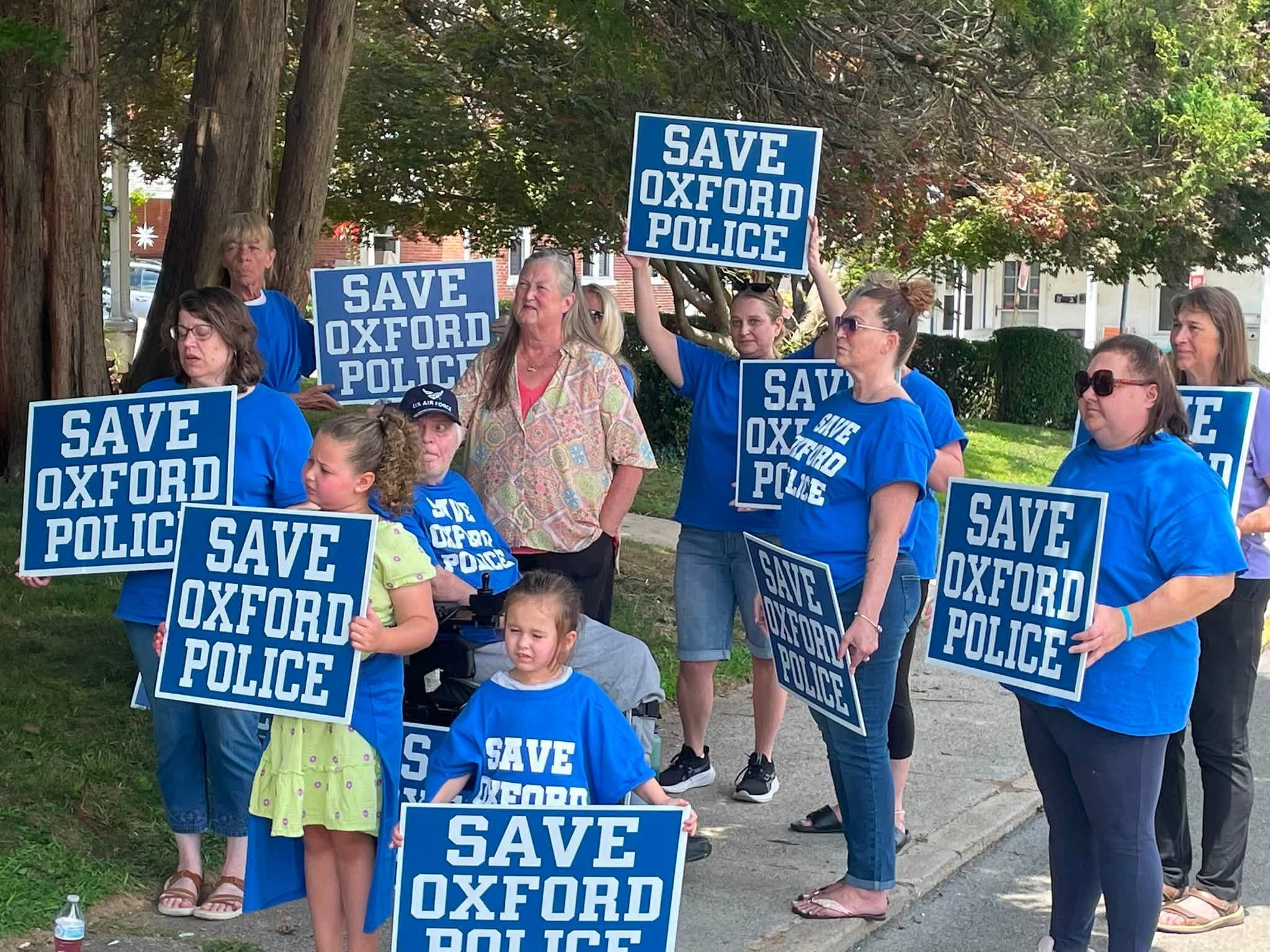
    In response, Graham created Save Oxford Police, a Facebook group that amassed nearly 1,000 members in recent weeks. A Change.org petition calling for saving the department has accrued hundreds of signatures.

    He said he did not understand how the borough could have enough cash flow for other expenses, but would not invest in the department.

    “Something stinks in Oxford, and we’re trying to find that smell,” he said.

    He hopes that, if enough people come to the Aug. 17 meeting, they can shut the regionalization effort down by postponing the vote, with the hope something could come up in the interim to save the department.

    But, if not that, “it’s no longer Save Oxford Police. It’s Save Oxford Police Officers, because now that means more than the department itself,” he said.

    Riess, who believes the Oxford police force is a greater extended family for the borough, said that sitting out on the patio at a restaurant recently, her group watched an officer test each business door, making sure they were locked.

    “Do you really think that’s going to happen [with regional]?” she said.

    “I’ve never seen regional do that, but I haven’t seen any officers really do that. Except Oxford,” Graham said.

    This suburban content is produced with support from the Leslie Miller and Richard Worley Foundation and The Lenfest Institute for Journalism. Editorial content is created independently of the project donors. Gifts to support The Inquirer’s high-impact journalism can be made at inquirer.com/donate. A list of Lenfest Institute donors can be found at lenfestinstitute.org/supporters.
  • A bridge replacement’s new repair timeline prompts concerns over increased traffic in Downingtown and other delays

    A bridge replacement’s new repair timeline prompts concerns over increased traffic in Downingtown and other delays

    A bridge replacement near Downingtown will stretch into next year, prompting a call to Gov. Josh Shapiro’s administration about the extended closure’s impact on traffic flow through the borough and the sequencing of other projects — including another bridge replacement.

    Replacing the nearly 60-year-old, three-span bridge that carries Boot Road over Amtrak in East Caln Township will now wrap up in early 2027, rather than in fall 2026 as initially projected.

    The elongated timeline is, in part, thanks to a change in the foundation design. After the original bridge was demolished, the Pennsylvania Department of Transportation found a different type of rock from what was anticipated, which required a new design, said Helen Reinbrecht, community relations coordinator for the department.

    The department expedited a redesign, which was completed in June. Construction is anticipated to be a bit slow into early August, as PennDot awaits proprietary materials, Reinbrecht said.

    In Downingtown, the delay will have ripple effects — prompting Mayor Erica Deuso to call on state leadership to approach this project with the “same urgency, accountability, and focus here” as when Gov. Josh Shapiro’s office quickly reopened I-95 in Northeast Philadelphia after a tanker crashed and a section of the bridge collapsed in 2023, and with the early completion of another bridge in Pittsburgh in July.

    Deuso said in a news release Tuesday that the public was prepared for a one-year closure of the Boot Road bridge, but that the extended timeline is “a serious failure with real consequences for everyone forced through Downingtown each day.”

    “Our roads, intersections, emergency routes, business district, and residents are paying the price,” she said.

    She requested a review of whether additional crews, work shifts, equipment, and engineering support could make up for the lost time, and asked for help addressing traffic signal adjustments, detour enforcement, pavement and bridge condition monitoring, emergency-response planning, “and assistance with extraordinary local public safety and infrastructure costs.”

    Following Deuso’s letter, PennDot press secretary Alexis Campbell said that the department “understands how vital the Boot Road Bridge is to the community and is expeditiously working to reopen the bridge as soon as possible.”

    “The Department expedited the new design of the bridge and is working with the contractor to accelerate construction by adding additional crews and working through the winter so long as the weather permits,” she said.

    The delayed bridge replacement has trickled down into the sequencing of other Downingtown projects, including the rehabilitation of the borough’s Lancaster Avenue bridge, which crosses the east branch of Brandywine Creek, due to its poor condition.

    That will not get underway until the detours from Boot Road and another effort — relocating the Downingtown train station half a mile to the east, where the Keystone Corridor crosses U.S. Route 322 — are completed, borough officials said. Deuso was concerned the Boot Road delays would also hamper the train station relocation.

    The Boot Road bridge replacement is a $13.3 million project that replaces the 193-foot three-span bridge with a 105-foot single-span structure. It carried roughly 12,000 vehicles a day before its closure, officials said.

    The full closure of the road, between Quarry Road and Southwind Lane, began in late September 2025. Motorists are being detoured to U.S. Route 322, Business U.S. Route 30, and Quarry Road. That is expected to continue until the work is fully completed next spring.

    The bridge was structurally deficient, Reinbrecht said.

    “I know it can be frustrating and time-consuming to have to use the detours. But this really will be safer and more efficient when the construction is completed,” she said.

    This suburban content is produced with support from the Leslie Miller and Richard Worley Foundation and The Lenfest Institute for Journalism. Editorial content is created independently of the project donors. Gifts to support The Inquirer’s high-impact journalism can be made at inquirer.com/donate. A list of Lenfest Institute donors can be found at lenfestinstitute.org/supporters.
  • A vinyl and cocktail spot is coming to Kennett Square and Fishtown, bringing perhaps the neighborhood’s smallest bar

    A vinyl and cocktail spot is coming to Kennett Square and Fishtown, bringing perhaps the neighborhood’s smallest bar

    A new vinyl listening room and bar concept is coming to Kennett Square and Fishtown this fall, seeking to help people connect in person around music and over cocktails.

    Top Dog Cocktails, a ready-to-drink 12.5% ABV cocktail brand with a distillery based in Kennett Square, will open its first two brick-and-mortar locations in the coming months, embracing the Japanese jazz kissa model — a music cafe or bar that’s focused on listening to vinyl records.

    “It’s all to drive this analog feel in a digital world,” said founder Ken Smukler, a longtime political strategist who dipped his toe into the alcohol space roughly a decade ago. “It’s all about the community, listening and respecting music, and enjoying the cocktails at the same time.”

    Philly has had a history with listening rooms, with a flurry of openings starting in 2022 that then fell into a downtrend in more recent years. But the concept may now be making a comeback.

    With his distillery location in Kennett Square already tied to music, and a teeny space in Fishtown in a former ATM calling for some creative reimagining, Smukler saw opportunity.

    The locations will look a little different from each other, but the heart of both will be similar. There will be a small retail component, a bar that will double as recipe development for the brand, and, of course, an expansive catalog of music on rotation.

    Top Dog Cocktails is “designed for a more sophisticated consumer” who “recognizes what a craft cocktail is in a can,” he said.

    That vibe applies to these locations; Smukler envisions their demographic as cocktail appreciators, who want to unplug from their phones or TVs.

    “This is a quieter, safer, more sophisticated space to consume alcohol and listen to really good music,” he said.

    Smukler, a former political operative for then-U.S. Rep. Bob Brady, was first drawn to ready-to-drink cocktails in 2015, and began raising capital to launch his own brand. That early effort dissolved in 2019, when he went to federal prison for campaign finance law infractions.

    But while in prison during the COVID-19 pandemic, quarantined without much to do other than chat, he learned his cellmate’s brother worked in the alcohol industry. On his way out of prison, Smukler called his friends and family — and his former cellmate’s brother.

    “There’s literally a straight line from there into launching Top Dog,” he said.

    He reconstituted the investor group, and the brand launched in 2022. They’ve sold nearly 1.5 million cans, Smukler said, with distribution in Pennsylvania, New Jersey, and Florida.

    Options include a few variations of the margarita, an espresso martini, a vodka and grapefruit Greyhound, and a whiskey lemonade.

    The brand’s distillery operation is in Kennett Square, near Kennett Flash, a live entertainment venue. He first picked the spot, at 110 E. State St., because he felt there could be “synergy” between Top Dog’s tasting room and live music. The roughly 750-square-foot space will be the bigger of the two listening rooms.

    Smukler plans to work with the Kennett Flash in a joint venture; the nonprofit will be able to use the venue as a green room for performers, a space for music classes, or however they see fit. They’ll also get a cut from the retail sales.

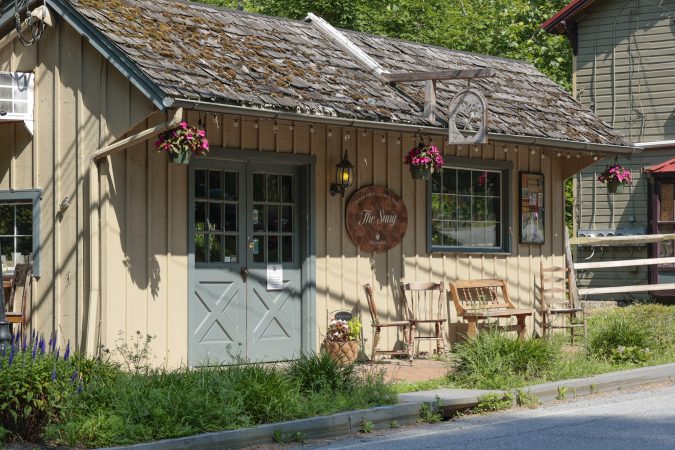
    He’s looking to do something similar with the Fishtown location, but is still seeking a partner, he said. The location, at 2012 Frankford Ave., may be the smallest bar in Fishtown, at 350 square feet. It’ll have a 15-seat bar, a two-turntable DJ station, and a retail component.

    Fishtown feels like “ground zero” for the demographic they’re trying to reach, Smukler said. As for Kennett Square, he just happens to love it.

    “I just think it’s a gem, and I think if we can do something with the Kennett Flash … and for the community, that’ll pay back in spades for us,” he said.

    They’ll be able to test new drinks through the outposts, Smukler said. They’ve never had a gin or a rum product, for instance, and this will give them a chance for some R&D.

    As for music, they’ve amassed more than 500 albums ready to spin. Smukler’s creative director is planning themed nights to let them shine. Though the Japanese kissa model is usually jazz-forward, there will be a cross section of what gets played, he said.

    Moving the business into physical locations has been a creative challenge, but an exciting one, he added.

    “If you ask me, what is the most fun part of my job? It’s not trying to figure out how to sell more cases in Florida. I guarantee you, it is designing a kissa concept in Fishtown or working with a nonprofit in Kennett,” he said. “That’s the fun part.”

    This suburban content is produced with support from the Leslie Miller and Richard Worley Foundation and The Lenfest Institute for Journalism. Editorial content is created independently of the project donors. Gifts to support The Inquirer’s high-impact journalism can be made at inquirer.com/donate. A list of Lenfest Institute donors can be found at lenfestinstitute.org/supporters.

  • What happens when a village goes up for sale? St. Peter’s is ripe for more housing, but poses challenges.

    What happens when a village goes up for sale? St. Peter’s is ripe for more housing, but poses challenges.

    Doug Reeser first came to St. Peter’s Village as a youngster, running along the rocks at French Creek, like so many locals and tourists still do. As an adult, the charm of the quirky little village drew him and his partners to open a branch of their cidery business there three years ago.

    He’s one of many wondering what could change when the village goes up for auction in September, with more than a hundred home lots and a smattering of businesses available to the highest bidder.

    “There’s lots of positive energy around what’s happening, so I think generally everybody would love to be able to see that continue,” said Reeser, owner of Excursion Ciders at the Snug. “I know personally we’d love to stay there. We anticipate some changes with new ownership. We hope that we can absorb them, but obviously, it’s not unlimited change that we can handle.”

    The auction, scheduled for Sept. 30 at 2 p.m. at the Desmond Hotel Malvern, will put up for sale roughly 83 acres of the historic 19th-century village that sprung up in the Gilded Age, thanks to its rich mineral resources and its proximity to the creek. It became a recreational destination, one that people are still drawn to because of its scenic location. Visitors are able to take a dip, hike the nearby trails, and enjoy the artsy downtown.

    Nestled in Warwick Township — which has a population of roughly 2,600, according to newly released estimates from the U.S. Census Bureau — the small village could see a bump in residences, if initial development visions are seen through. The land, zoned for residential and neighborhood business, offers 121 subdivided home lots for development. A commercial core — which boasts dining and retail — is composed of both privately owned businesses and leased storefronts that will be picked up by the new owner. Thirteen commercial buildings, totaling about 43,500 square feet, are included in the auction, according to the site.

    The auction site teases mixed-land use development potential “suitable for major builders, venture capitalists, historic preservationists, and entrepreneurs.” The auctioneer, Douglas Clemens, said previously they had seen thousands of messages of interest — but who ultimately purchases the property remains to be seen.

    And concepts of high- and low-density housing from the previous owner — the Piazza family, which runs the Piazza Management Co. and owns multiple Main Line car dealerships, is listed on associated parcels — haven’t exactly come to fruition, and the site could be a challenge for new owners given its rural location.

    Reeser is among the renters who would love to see current businesses stay, and some rehabilitation of the historic buildings that have suffered some neglect in recent years, he said. He doesn’t think anyone would be opposed to more foot traffic in town, but too much could tip the scales.

    “There is this rural charm there, and that is part of what the village has built its reputation on over the years,” he said. “So, if development could be done with an eye towards preservation and minimal impact, I think that would be great.”

    The 83-acre St. Peter’s Village — a historic destination in Chester County will be sold at an absolute public auction to the highest bidder in September. Steven M. Falk / For The Inquirer

    What could residential development look like?

    The property offers an opportunity for someone to develop housing to the north and east on the available land, said Matt Edmond, executive director of the Chester County Planning Commission.

    Land development plans available through the auction site previously have laid a densely populated housing development near the commercial core on roughly 36 acres. Generally, that’s a good thing, Edmond said.

    “Our villages are kind of like small towns, and when they have a walkable commercial core, you want more dense housing in and around there to support those businesses to increase foot traffic,” he said of Chester County.

    An aerial view of one proposed development — which the current owner envisioned as a densely populated townhouse, twin, and single-family neighborhood — shows several completed homes.

    Eight buildings are unfinished, Clemens said. One finished building is occupied, and the lease would move over to the new owner.

    Farther back, on roughly 45 acres, a sketch plan posted on the auction site offers larger lots for lower-density housing. A unpaved road was established ahead of building.

    In the county’s comprehensive plan, there are areas called “rural centers,” built around larger villages, Edmond said. There are similarities among those places: a commercial corridor on a main road, with streets fanning out for walkable neighborhoods. St. Peter’s could become a rural center, if the previous vision was fulfilled. The growth would be somewhat akin to Marshallton or Unionville, other Chester County villages that people enjoy visiting.

    St. Peter’s scenic, rural location offers a bit of a unique problem. Though the village isn’t far from Elverson or Pottstown, it’s still a bit out of the way. Reeser, the business owner, has found the village to be seasonal, with business bolstered by an occasional social media post. In the winter, the cidery, open on Saturdays and Sundays, is frequented by locals.

    The 83-acre Saint Peter’s Village, a historic destination in Chester County, will be sold at an absolute public auction to the highest bidder in September.Steven M. Falk / For The Inquirer

    “The whole village, by and large, is somewhat off the beaten path. It’s not really near a highway. It’s certainly not near transit. There isn’t a whole lot around it,” Edmond said. “That’s probably one reason why the current owners couldn’t quite make it work, because the market just wasn’t quite there yet to do that sort of thing in that sort of place.”

    But just because the village has had challenges with finding footing for residential development, that doesn’t mean it’s ripe for other types of development — such as a data center, other industrial sites, or even a major shopping center.

    The village is listed on the National Register of Historic Places, which doesn’t necessarily safeguard it from demolition. But it provides some protections, particularly if government funds are being used.

    Plus, its current zoning would have to be changed, and the infrastructure and conservation easements don’t “lend itself towards intense development,” Edmond added.

    “I think a lot of people are worried about that because they do see other parts of the county developing more intensely,” he said. “Every community is different, and Warwick Township is still very rural, and so it wouldn’t be surprising if a new owner tried to develop consistent with the character and the nature of Warwick, and certainly Warwick leaders would be looking for that type of development within their boundaries as well.”

    The 83-acre St. Peter’s Village, July 2026. Steven M. Falk / For The Inquirer

    Rich in natural resources

    The auction site notes the property’s “valuable subterranean mineral rights, including documented iron ore deposits, adding a rare investment dimension.” Those materials once bolstered the village’s economy, transporting its iron to Philadelphia. But it also became a place of leisure: a getaway for city workers, a majestic retreat to a scenic place.

    The village is surrounded by outdoor recreation, with state game lands adjacent to the property. French & Pickering Creeks Conservation Trust holds easements on a portion of the land. The easements are perpetual, and must be honored.

    Karl Russek, conservation director at French & Pickering Creeks Conservation Trust, anticipates the organization will be in conversation with the prospective bidders, working closely with future owners “to help them understand those limitations, and [we] are open to seeing what they have to offer and how the conservation value of the property might be improved.”

    But “much remains to be seen” for what could come to the land, he said.

    “St. Peter’s Village, and the area around it, is a very special place and has been a very special place for generations of families in this area. I took my kids down there when they were little. My peers remember spending time there when they were younger,” Russek said. “It’s a community hub in many ways, and so obviously many folks in the area are very invested in what ultimately happens, as are we as an organization.”

    Reeser hopes to see a purchaser who understands all of what makes it beloved — its natural beauty, its historic buildings, and its unique setting.

    “Change is inevitable, most likely, in this situation,” he said. “But if we could keep sort of what’s made it special alive, I think that would be great.”

    This suburban content is produced with support from the Leslie Miller and Richard Worley Foundation and The Lenfest Institute for Journalism. Editorial content is created independently of the project donors. Gifts to support The Inquirer’s high-impact journalism can be made at inquirer.com/donate. A list of Lenfest Institute donors can be found at lenfestinstitute.org/supporters.

  • Costs for a Tredyffrin park have ballooned to $1.7M, angering residents. Officials say it’s an investment.

    Costs for a Tredyffrin park have ballooned to $1.7M, angering residents. Officials say it’s an investment.

    Elected officials in Tredyffrin Township are moving ahead on turning an eyesore property into a park featuring tennis and pickleball, fulfilling a campaign promise of the chairperson’s. But some residents are worried the costs have soared too high.

    What started as a project this year rehabbing the dilapidated Chase Road Park for roughly $725,000 in its first year, with more funding to come in later years, instead grew to $1.7 million this fiscal year. All said and done, it is likely to exceed $2 million, officials have said.

    The jump in cost came with sticker shock for some residents, who have worried the township is sinking too much money into the park, and is doing so without sufficient public involvement.

    “In my opinion, they should go back to the drawing board, because this whole thing is a way greater cost and scope than had ever been contemplated,” said Mike Heaberg, a resident who previously served as a board member.

    Township officials argue it’s an investment for community amenities that flush reserves can cover.

    “[The] $1.7 million to get a full five-acre park with all the courts and bathrooms and a big barn, … it’s not a bad deal if you think objectively about what we’re doing there,” said board chairperson David Miller.

    The land

    Located in Chesterbrook, Chase Road Park had a former life as a private swim club, with tennis courts and a popular parking lot basketball hoop that drew a crowd after hours. Almost a decade ago, its owner sold the park to a developer, who wanted to reimagine the five-acre parcel into housing. That wasn’t a popular plan, however, and the township rejected the request to change the zoning.

    For years, the property languished, deteriorating with time. In 2025, the board bought the land for $625,000 through eminent domain.

    Miller said the community was “overwhelmingly supportive” of the decision; he recalls meetings about the prospect being standing room only, with a majority in favor of the board’s decision.

    The township’s eminent domain is still in the courts, where it could play out for years. The final price tag could be higher than that initial down payment, depending on a judge’s ruling.

    The plan

    Early into acquiring the property, the township discussed turning it into a long-requested racquet sports center, for which it was already outfitted. The park’s future surfaced at a series of Parks and Recreation board meetings in 2025 and 2026, and some tweaks were made along the way.

    Under the current project plan, the park will offer four tennis courts, six pickleball courts, a bathroom building, and a storage barn. There will be a pavilion and a grassy area for community use.

    Further down the line — and currently tabled while the board mulls it over — will be a basketball court, most likely a half court. The board is also considering adding a path and bridge to connect this park with nearby Wilson Park. Those would come with additional costs.

    Construction site at Chase Road Park in Tredyffrin Township. The park has been sitting vacant and deteriorating for roughly a decade in Chesterbrook, Pa., on Friday, July 31, 2026.Tyger Williams / Staff Photographer

    The cost

    Budget-watching residents say they first saw upgrades to the park show up as a line item of around $400,000 for 2026, with further spending to come in subsequent years for an initial $1.3 million total estimate. But by the final round of the 2026 budget, that line item had increased to $725,000, with more spending to come.

    Township staff found that it was more cost effective to do a bulk of the work in one year, Miller said, so they decided to speed up the process, hence that initial jump.

    Then, at their May meeting, the board added a late agenda item to green light spending about $1.7 million to fix up the park — including the courts, fencing, the parking lot, constructing the barn and restroom facilities, a pavilion, and other “miscellaneous” work.

    In total, the township estimates it will spend at least $2.3 million on the park, including the initial $625,000 to take it by eminent domain, and the upgrades.

    That increase boiled down to a variety of reasons, Miller said. The condition of the courts was “not what we expected,” and they needed to be completely redone. The township decided to install a better fence, with sound-dampening material to snuff out the bouncing of pickleballs, which needed to be installed deeper into the ground than the previous posts. The bathroom building was “vandalized pretty heavily,” so they decided to knock it down and start over. Plus, “prices are higher” for materials like asphalt, he said.

    “There’s a bunch of things like that that get it to creep,” he said.

    Miller said the park will be paid for out of the regular operating budget; whatever doesn’t come out of normal tax revenue will come out of the general fund, which sits at about $18 million, he said.

    The concerns

    Heaberg, the former supervisor, told the board his “jaw was hanging open” when saw them approve the budget change for more than $1.7 million with no discussion.

    “It blows my mind, really,” he said.

    Speaking to the board in July, resident Carol Clarke didn’t “know how you can, in a meeting, go past the budget by more than a million dollars.”

    “I think you owe it to the taxpayers to acknowledge what you’re doing, and maybe the taxpayers might have said, ‘Whoa, is this an appropriate use of our funds? Could we be doing something else?’” she told them. “I support the park, but maybe it would have been an idea of, ‘Well, let’s get the funding in place, etc., and then we can add on to the park.’ … There’s good things that are being done, but is that a wise use of our funds?”

    Plus, the township’s use of the COSTARS, a program that allows local governments to purchase supplies and services through state-managed contracts, seemed problematic to resident Ray Clarke, who argued the project should have been competitively bid, citing the township’s charter.

    “All projects must be competitively bid, with exception of a few things into which this does not fall,” he told the board, noting that “all the sudden” a list was given by the same contractor who worked on nearby Wilson Farm Park, which was renovated in 2025 and 2026.

    “Which may well be the lowest cost — who knows, we have no idea,” he said.

    Miller disputed that reading, saying the township was within its rights to use the COSTARS program rather than request bids.

    The pushback from residents has led to some charged moments in recent months.

    Board member Carlotta Johnston-Pugh said she understood “the public is having a hissy fit because they don’t feel like they were involved. I understand that.”

    “Because yes, if a million dollars or a $1.2 or $2 million is coming out of a general fund or a piggy bank, yes, everybody in this township should have a say in it. What do you want us to do? Do you want us to stop the project completely, go back to the drawing board?” she said. “… I’m getting a headache. I’m actually getting a headache.”

    The park on Chase Road in Tredyffrin Township will offer tennis and pickleball courts, plus a bathroom building, pavilion and grassy recreation space. Construction is underway in Chesterbrook, Pa., on Friday, July 31, 2026.Tyger Williams / Staff Photographer

    The flip side

    The project isn’t without its supporters, however, arguing the board had been clear about the timeline and the scope.

    “We went through 10 years of a derelict property in our neighborhood and we are grateful” the work isn’t being phased in, like previous plans discussed, said Joanna Fisher, of the Chesterbrook Civic Association.

    Tim Connor, who lives near the park, said the alternative was dozens of townhouses, which would have been a negative for the community.

    “Yes, it’s an investment right now, but long-term, those 50 townhouses would have had so many kids in the schools. It was a long-term loser. I think [this is a] better alternative,” he said.

    And for Miller, the park has been a personal goal: He campaigned on it. The township is working with Miller, separately, for naming rights of the park which he’d purchase for $625,000 — the initial cost to purchase the land. (It would not be named for Miller himself, he said.)

    Miller abstained from an initial vote in June OK’ing the township to draw up an agreement with the solicitor for naming rights. Miller said if someone else wanted to donate, he’d drop his bid, but he had the “capacity and willingness, and it’s important to me.”

    “When I ran this time, I said I was going to get this park built. I got over 8,000 votes,” he said later. “It seemed like something I should do since I told people I’d get it done.”

    This suburban content is produced with support from the Leslie Miller and Richard Worley Foundation and The Lenfest Institute for Journalism. Editorial content is created independently of the project donors. Gifts to support The Inquirer’s high-impact journalism can be made at inquirer.com/donate. A list of Lenfest Institute donors can be found at lenfestinstitute.org/supporters.

  • East Whiteland officials allow work to resume on data center planned for Superfund site

    East Whiteland officials allow work to resume on data center planned for Superfund site

    Work has resumed on a 1.5 million-square-foot data center in East Whiteland after developers were told to stop early construction this month while the township reviewed its soil and health safety plans.

    Township officials issued a permit that includes “many conditions related to soil monitoring and reporting, dust control, and protection of the remedy for the Superfund site,” they said in a statement Wednesday.

    Development began again on Wednesday, said Lou Colagreco, an attorney representing the developers, Green Fig LLC and Sentinel Data Centers.

    Earlier this month, township officials told the developer to stop work “until greater clarity is provided with respect to the ongoing review” of the soil and health and safety plans. The stoppage came amid increased scrutiny from residents, who have fears about the impact of the data center being built upon the former Cyprus Foote Mineral Co., which contaminated the land with chemicals such as lithium, arsenic, and hexavalent chromium.

    On Wednesday, the township said in a statement posted online that it had issued a permit regarding erosion and sedimentation control.

    “The Township and its inspectors will also be maintaining a regular presence at the site to oversee implementation of the permit conditions,” the township’s statement said.

    The permit allows for “earth-moving activities.” The developers will still need to secure construction permits for things like pouring concrete for footings, or foundations. But they can move dirt and dig via these permits, East Whiteland Township Manager Steve Brown said.

    But there’s still an open question of the scope of the project. After months of seeking to change the proposal earlier this year — an effort that sparked renewed and resounding community opposition — the developers had said they would move ahead with previously approved plans which would be composed of two buildings roughly 772,000 square feet each and use 3 million gallons of water daily to cool it.

    The developers came back before the township this month, intending to change the design again, saying the revised proposal would use less water. It could also possibly scale down the overall footprint of the data center, from 1.5 million square feet to a total of 536,000 square feet.

    The township’s three elected officials ultimately tabled the matter at their July 8 meeting, saying they needed more information. The board’s next scheduled meeting is Aug. 19.

    “The only issue before the Supervisors is whether the data center will use air chilled coolers to conserve water or whether water chilled units will be utilized,” Colagreco said in an email. “In either event, Sentinel is proceeding with development.”

    This suburban content is produced with support from the Leslie Miller and Richard Worley Foundation and The Lenfest Institute for Journalism. Editorial content is created independently of the project donors. Gifts to support The Inquirer’s high-impact journalism can be made at inquirer.com/donate. A list of Lenfest Institute donors can be found at lenfestinstitute.org/supporters.
  • Westtown removes its entire historical commission after clashes over preservation: ‘The cleanest way to deal with a lingering problem’

    Westtown removes its entire historical commission after clashes over preservation: ‘The cleanest way to deal with a lingering problem’

    Westtown Township’s board of supervisors voted to remove all six members of its historical commission Monday, rejecting depictions that its decision was tied to the fate of the historic Darlington Inn, saying instead that there was a “long history of problems” working with the commission’s members.

    The formal unanimous vote came after all of the commission’s members received an email last week notifying them of their pending removal. Members maintained it was due to a clash with the township’s elected officials over the future of the Darlington Inn, a 19th-century property that sits near the preserved Crebilly Farm.

    The three-member board dismissed that assertion, saying the decision was “unrelated to the Darlington Inn or any position taken by the commission members concerning the future of that property.”

    “The board periodically reviews appointments to its advisory boards and commissions and has the authority to appoint and remove members as it determines appropriate,” Jodi Nawrocki, the board chair, said in a statement to a packed audience ahead of the vote.

    Nawrocki said that the historical commission would not be dissolved; the supervisors planned to “review the commission’s responsibility” and “determine whether any updates or revisions are appropriate.” After that review, the board will accept letters of interest to serve on the commission, including from former members.

    Nawrocki later told attendees that the wholesale dismissal was “something that’s been on our minds.”

    “There has been a long history of problems between the board of supervisors and the historical commission, going back a couple years,” said supervisor Tom Foster.

    The commission’s removal was “the cleanest way to deal with a lingering problem,” he said.

    The volunteer-run body is appointed by the supervisors for three-year terms and serves as an advisory committee to the board.

    Commission members said previously that they believed that relations between themselves and the board had grown more contentious, particularly around the Darlington Inn. The property, which was purchased separately with $200,000 in taxpayer funds, was acquired by the township when it bought and preserved Crebilly Farm in 2024.

    It had to be purchased separately in order to preserve the building. The supervisors have previously discussed rezoning it to commercial use so they could resell it and recoup the money spent, rather than allowing the building to sit vacant and require more maintenance and funding.

    The commission sought to raise awareness of its potential sale, and has wanted to preserve the property, members said previously.

    Christine Gunsaullus, who joined the commission just more than a year ago, said she still felt “utterly surprised” at the board’s decision.

    “We don’t know what the challenges are. I can’t help but to think that the root cause ties back to the inn,” she said in a phone call Tuesday, adding that there were other challenges, like passing an ordinance that would have helped protect historical buildings, but ultimately would not stop buildings from being changed or demolished.

    “We recognize some old buildings aren’t worth saving, and we recognize that it costs a lot of money to maintain history and maintain these old buildings. We don’t want to stop new construction; we just want to preserve what we can when it makes sense,” she said. “That’s our standpoint. But I didn’t feel like there was any discussion, no back-and-forth, ever, with the board in reconciling issues like this.”

    Monday’s meeting drew roughly an hour of public comment on the topic, with residents and historians decrying the board’s decision. Speakers chafed at the board’s suggestion that it would remove the commission over difficulties working together.

    “Your actions … are causing a threat to every historic commission in Chester County,” said Mark Evans, vice president of Chester County Historic Preservation Network. “If you proceed with this, it’s unprecedented and, at the minimum, extraordinarily rare.”

    Evans added: “Flexing power is not a strength.”

    “You’re right,” Nawrocki said. “I’m a yoga instructor, and for all the people I teach, this is the year of power. And we are talking about using our power for good. … The historical commission has not been working well with us, as the board of supervisors.”

    State Rep. Craig Williams, a Republican who represents portions of the county, including Westtown, said he “couldn’t imagine” reports about the removal of the commission were true, and came to hear the board’s reasoning himself. He said he was “a little astonished” that there had been none, “except for it’s just hard to get along with people.”

    “I don’t know what’s actually going on behind the scenes with respect to your historical commission, but I do think you owe us an explanation. All of us,” he said.

    The meeting grew charged at moments, with interruptions. People booed when the supervisors took their vote.

    “[The members of the historical commission] have done some amazing work. There is also a challenge in dealing with them, and it is wrong to presume that it’s the board’s inability to get along with them,” said former supervisor Carol de Wolf, saying she respected the board for remaining quiet on specifics. “I am really sorry that good members are part of this.”

    But many were worried about transparency moving forward.

    Resident Megan Bruns said she found the board‘s “not working well” and “cleanest way” reasoning problematic.

    “These phrases signal to myself and probably other residents that the board is seeking compliancy, which makes us question the intentions of the board,” she said. “If this decision is truly about improving the commission, we need evidence. If not, many in this community will understandably question whether independent voices are simply being replaced with more agreeable ones.”

    This suburban content is produced with support from the Leslie Miller and Richard Worley Foundation and The Lenfest Institute for Journalism. Editorial content is created independently of the project donors. Gifts to support The Inquirer’s high-impact journalism can be made at inquirer.com/donate. A list of Lenfest Institute donors can be found at lenfestinstitute.org/supporters.
  • A Chester County judge has reversed a township’s denial of luxury homes on hundreds of acres of Rock Hill Farm

    A Chester County judge has reversed a township’s denial of luxury homes on hundreds of acres of Rock Hill Farm

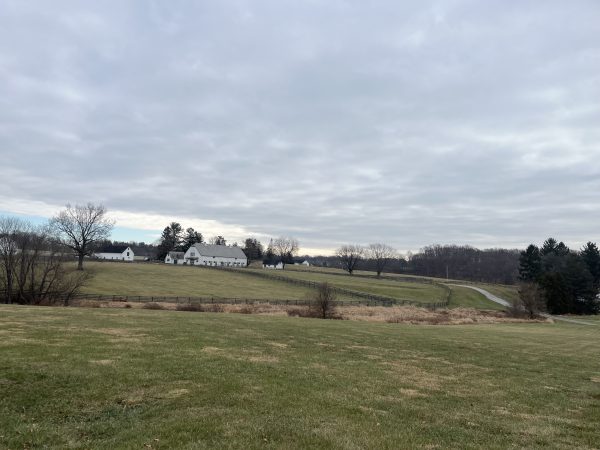
    A township’s decision to deny the development of luxury homes on the rolling 246-acre Rock Hill Farm was reversed by a Chester County judge last week, which could pave the way for construction of more than a dozen houses.

    In his order on July 15, Court of Common Pleas Judge Anthony Verwey ruled that Willistown Township’s board of supervisors had erred by denying in 2024 developer Rock Hill Farm Acquisition LLC’s preliminary plan, due to the “clear and unambiguous language of the zoning ordinance.”

    Willistown’s elected supervisors plan to explore an appeal, the township said in a statement Monday.

    But until then, the developer has the green light to submit final plans.

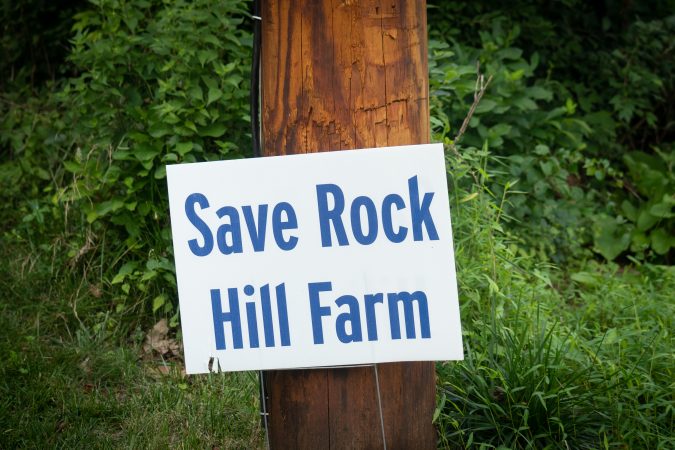
    Willistown and nearby residents, who came together to form the campaign “Save Rock Hill Farm,“ had hoped that the property could remain as open meadows, woods, and waterways and eventually become publicly accessible open space. It’s something a number of communities have championed in Chester County — and have won, in a number of cases — seeking to preserve open space and fend off dense development.

    But developer J. Brian O’Neill, who purchased the property for $25.4 million several years ago, has sought to build up to 22 luxury homes there.

    In their appeal challenging the supervisors’ vote, the developer argued that the township had “erred and abused its discretion by denying its application” because it did not meet the township’s requirements for an open space conservation (OSC) district overlay, which requires that, in areas zoned for residential use, a portion of the tract is held as common open space, according to the Chester County planning commission.

    But the proposed development was located in the township’s rural district, according to the opinion.

    The township had countered that the overlay was applicable to the rural district because it is also a residential district.

    Verwey ultimately agreed with the developer’s argument, finding that “residential district is not a designated zoning within the township.”

    “Taking an appeal would just compound the damages that they’ve cost the owner of the property by insisting on applying the OSC district to lands in the RU district,” said Marc Kaplin, an attorney for the developer, when reached for comment Monday.

    Verwey wrote in his opinion that the zoning ordinance makes the open space conservation overlay “applicable to a zoning district that does not exist, does not appear on the Map, and it was an error” for the township to deny the application for failure to comply with the overlay’s requirements.

    Residents behind the Save Rock Hill Farm campaign sounded the alarm Monday after the township’s statement came out, rallying the Facebook page’s more than 770 followers to “reach out to our supervisors and ask them to FILE AN APPEAL!”

    In a statement late Monday, the group said it remained “steadfast in our commitment to pursuing every available opportunity to preserve open space and protect Rock Hill Farm, an invaluable community resource and home to the pristine headwaters of Crum Creek.”

    “We are deeply grateful for the continued support and engagement of our community throughout this process,” the statement continued. “We also thank Willistown Township for exploring all available legal options, including an appeal, in support of these important preservation efforts.”

    This suburban content is produced with support from the Leslie Miller and Richard Worley Foundation and The Lenfest Institute for Journalism. Editorial content is created independently of the project donors. Gifts to support The Inquirer’s high-impact journalism can be made at inquirer.com/donate. A list of Lenfest Institute donors can be found at lenfestinstitute.org/supporters.
  • Real estate ‘pit bull’ Marc Kaplin says Exton Square Mall pushback is an ‘anomaly’

    Real estate ‘pit bull’ Marc Kaplin says Exton Square Mall pushback is an ‘anomaly’

    Marc Kaplin takes “pit bull” as a compliment when it’s used to describe him. The longtime real estate lawyer who has championed property rights for developers in the region takes it to mean “aggressive, prepared, knowledgeable.”

    He’s using that tenacity right now in court, battling over whether his client’s plan to redevelop the recently shuttered Exton Square Mall into a mixed-use town center can go forward despite the town supervisors’ denial.

    For decades, Kaplin, 82, has been behind dozens of regional development projects, with clientele spanning the Delaware Valley, into the Lehigh Valley, the Poconos, Delaware, and New Jersey.

    Kaplin’s interest in real estate law kicked into high gear when his family moved to Blue Bell in 1978, near Wings Airways. It was still “a prairie” with little development, he recalls. The airway owners wanted to expand the runway, challenging the township’s ordinance. He was hired by a group of neighbors to oppose it.

    Marc Kaplin, a real estate powerhouse, talked to The Inquirer about the Exton mall redevelopment project and more.Courtesy of Marc Kaplin

    That led to his role as township solicitor for Whitpain Township in Montgomery County in the early 1980s. Eventually, he moved into development: First working for his landlord, Bud Hansen of Hansen Properties, which became one of the biggest developers in Montgomery and Chester Counties.

    When Toll Brothers started, Kaplin was there. He’s represented the home construction company for more than 40 years. Other clients, like retail developers Wolfson Group, have also spent decades alongside Kaplin.

    With the closure of the Exton mall, and his client’s proposed redevelopment plan still in the courts, Kaplin spoke with The Inquirer about the downfall of the indoor mall, the challenges of building more affordable housing, and the rise in AI data center development.

    This conversation has been edited for clarity and brevity.

    You’ve worked in the city and the suburbs. Where is it easier to get projects done?

    They’re both extremely difficult and getting more and more difficult for different reasons.

    Philadelphia, if you don’t have a by-right project, you’ve got to go to the neighborhoods, the RCOs [registered community organizations]. You got to spend a lot of time, and it’s more political and satisfying people, than it is complying with every small [thing].

    Not only do you have to make sure that all the I’s are dotted and T’s are crossed in the suburbs, you got to know what to look for.

    There’s often community pushback in development projects. What are you hearing now when communities oppose a project?

    Just seems like everybody is against almost everything for a variety of reasons. Everybody complains about traffic. That’s the biggest thing. It’s ‘We’re here, we live here, we don’t need any more stores. We don’t need any more of this or that.’ But a lot of times you get a mixed bag.

    Now the Exton mall, we got very good reception to the Exton mall. It’s only a small group of people who are against the redevelopment of the Exton mall.

    Does the pushback to Exton Square Mall feel representative of larger trends in the region?

    It’s an anomaly for a project like that. When you look at the malls that are in really bad shape, townships are reaching out and want them redeveloped. Montgomery Mall. Plymouth Meeting Mall. Some over in New Jersey. I’m working on the Berkshire Mall up in the Reading/Wyomissing area, and we’re getting tremendous cooperation.

    These malls are 1,500-pound gorillas. They killed tax base, millions and millions of dollars that were coming in before. … I can’t give you a logical reason why two supervisors in West Whiteland are putting up this fight. I’m waiting for a judge to make a decision.

    We’re pretty optimistic that we’ll be able to go ahead, but it ain’t over until it’s over.

    You’ve been quoted as saying ‘indoor malls don’t work,’ but we are seeing some success in King of Prussia and Cherry Hill. What do you think sets them apart from places like Exton mall?

    They are the super regional malls, and they do work, and Simon controls many, many of them. They work, but the Plymouth Meeting Mall doesn’t work, the Exton mall doesn’t work, the Willow Grove mall doesn’t work, and many, many more.

    There’s a whole long history of why that’s so. There were, in the ’60s and ’70s, department stores we no longer have: Wanamakers, Strawbridge’s, Snellenburg’s, and on and on. … And then you had J.C. Penney and Sears, and it was much easier way back then to get three large anchors. Then the Kmarts came along, and the Walmarts, the big boxes that didn’t have all of the infrastructure. The common operating expenses are much less, because you have all interior halls — heating, air-conditioning, and all that.

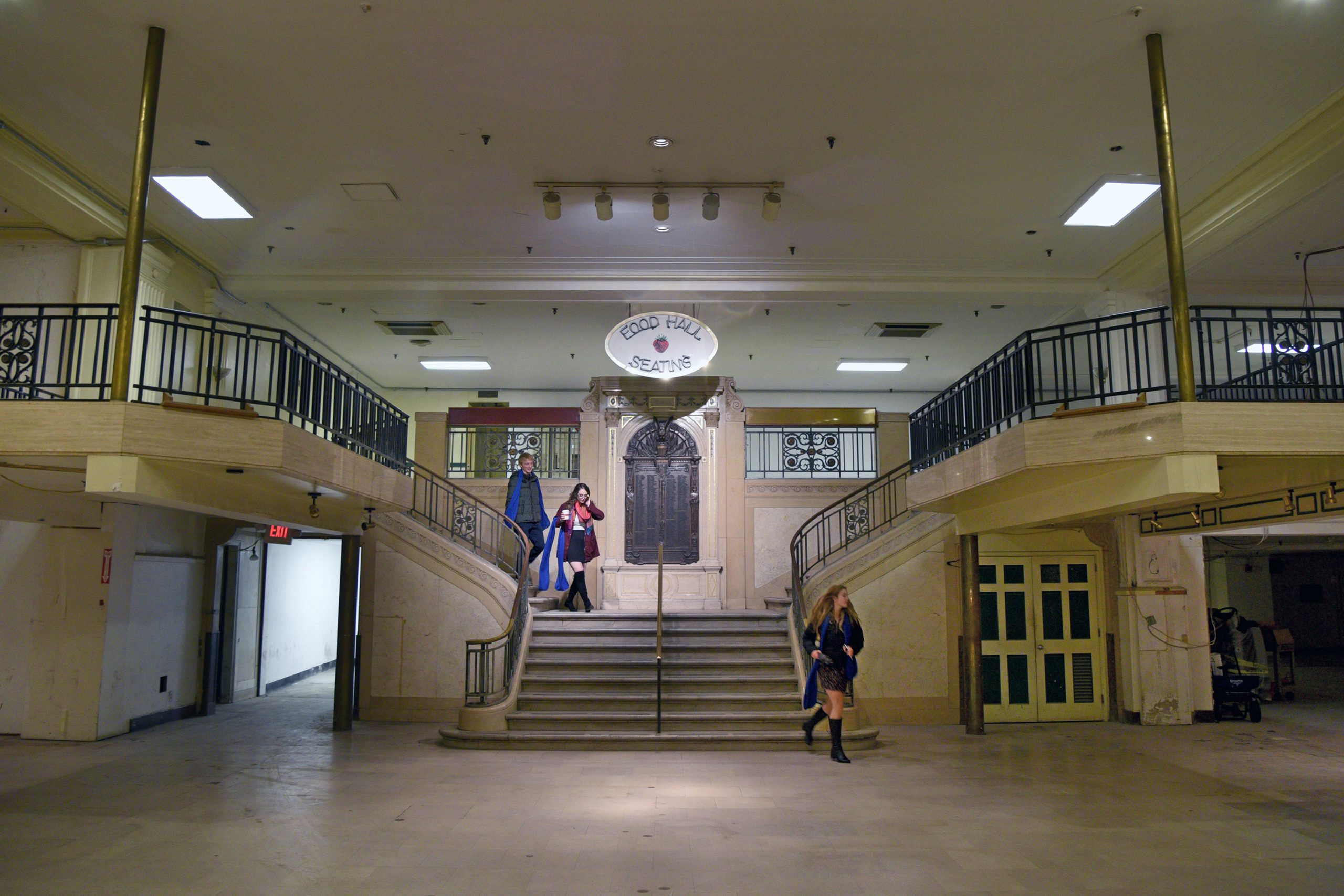
    Members of the Strawbridge family explore the old Food Hall on the first floor of the former Strawbridge & Clothier department store site on the north side of the 800 block of Market Street Dec. 17, 2019.Tom Gralish / Staff Photographer
    Why do you think Main Street at Exton, a mixed-use shopping center that opened in the 2000s, has been such a success?

    Because it’s run by the best operator around. That’s my client, Steve Wolfson. It’s had a[n] … anchor for now over 20 years.

    In Exton, there was about a 10-year period when there were two supervisors who were against everything. So you didn’t see a great deal more development, but the Main Street at Exton used the new urbanist approach 22, 23 years ago and made huge improvements to the roads. There are great roads there, and it was right in the path of development.

    Are there any cases or projects that have shaped Chester County as we know it today?

    Exton has always been called the crossroads of Chester County. You’ve also got the Hankin Group that has done all the development in Chester County. … You had very big companies come in — Vanguard — and you had good school systems and relatively decent roads. I think it’s just the continued outward development from Philadelphia.

    Many suburbs are facing affordable housing crises. How do you predict municipalities will overcome NIMBYism when it comes to those projects?

    It’s a very, very, very difficult problem. There are very few places in the entire country where it’s been solved. New Jersey has the most extensive program in the country to cause the development of affordable housing … that’s really the Mount Laurel doctrine, and where the townships are required not only to make affordable housing available, but also to make it happen.

    The market cannot create affordable housing without governmental help. Just can’t be done. It’s not enough land. Regulations are enormous, expensive.

    It’s a societal problem that can’t be solved just by municipalities and homebuilders and homebuyers.

    Do you think all of the proposed data centers will actually get built?

    I’m involved in a couple of data centers. … At first the communities were dead set against more warehouses, particularly up in the Lehigh Valley, and then when this particular community heard ‘data center,’ they were ecstatic — for a whole variety reasons: very little traffic, very few people in schools, high-paying jobs, and now there’s this national swell attacking data centers.

    The data centers we’re seeing now, in one fashion or another, are creating their own energy. So my own particular opinion is that it’s just blown up, overblown, over-exaggerated, and we’re going to need all this computing power as we move into the next technology age.