Author: Brooke Schultz

  • These three Chester County voters have cast ballots in 50 consecutive November elections

    These three Chester County voters have cast ballots in 50 consecutive November elections

    Fifty November general elections have passed “in the blink of an eye,” said Rita Lese as she was inducted into the state’s Voter Hall of Fame on Friday.

    Lese has a long tradition of going to the polls, which started when she was a little girl, walking there with her parents. It felt like the “greatest thing” to go behind the curtain of the booth. That history continued as an adult, with her two daughters in tow on Election Day. Living in the same house for the last 50 years, just down the road from their polling place, she’d walk to cast her ballot in rain and sun.

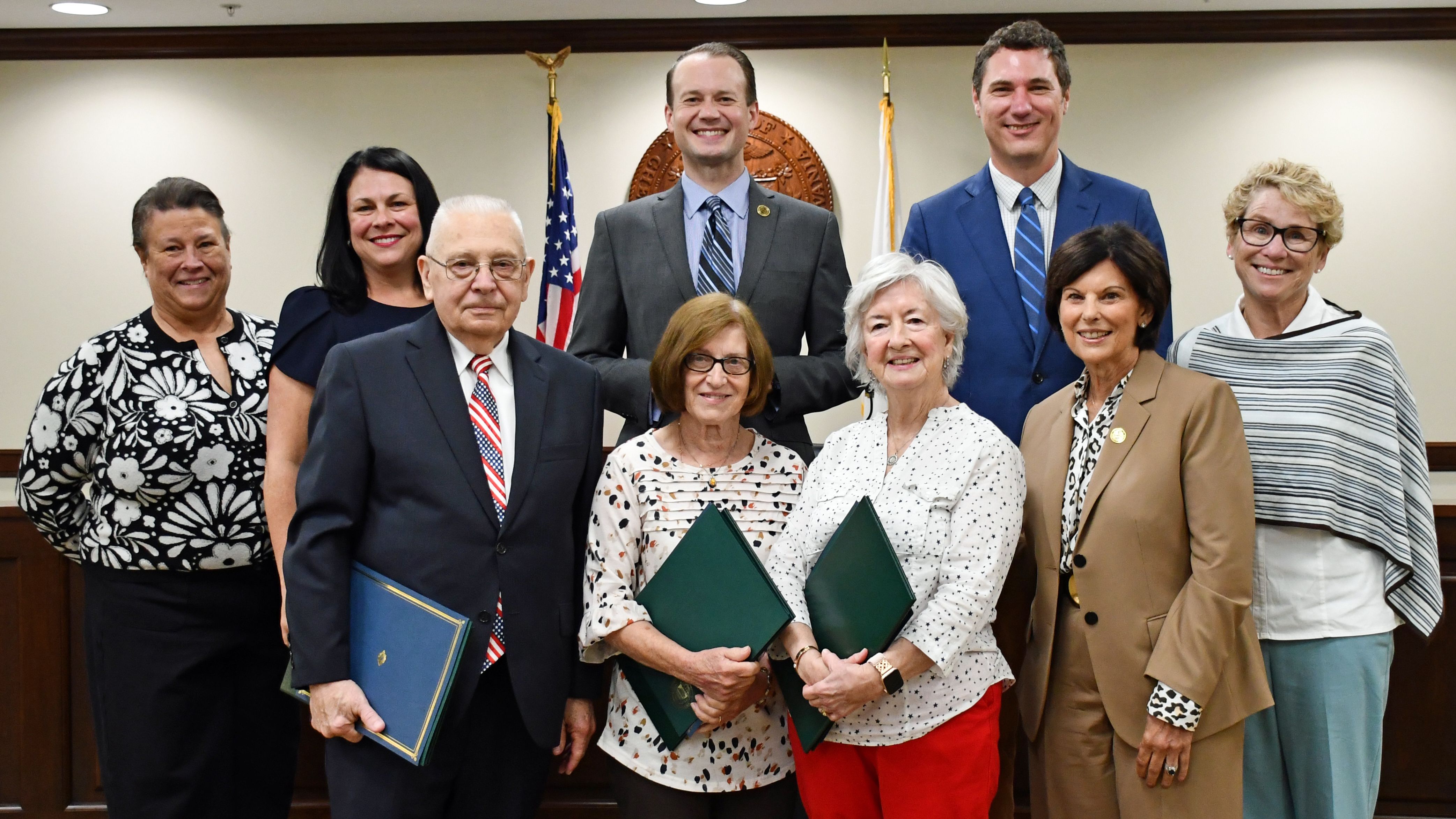
    Lese, 77, was one of three Chester County residents — including her husband, Michael Lese, and Patricia Conroy — to be recognized for voting in 50 consecutive November elections during Chester County’s Board of Elections meeting Friday.

    Established in 1986, the Voter Hall of Fame was formed to encourage Pennsylvania residents to cast their ballots. In the four decades since, more than 25,000 voters statewide have been inducted. Voters are recognized in each of the counties; Friday’s celebration increases Chester County’s contribution to that tally to 118, officials said.

    “So there’s no excuse for the rest of us, is what you’re saying?” Josh Maxwell, the chairman of the county’s board of elections, asked Rita Lese.

    It appears no.

    It was a “a huge commitment and a tremendous accomplishment,” said Stephanie Reid, executive deputy secretary for the Pennsylvania Department of State.

    “There had to have been some Election Days when they were ill, or they were busy with pressing work, or commitments with their children, the weather was bad, any other challenge that comes up every day in our lives that would have made going to cast their ballot inconvenient,” she said during the ceremony Friday. “Yet they persevered.”

    But when Rita Lese thinks about what the suffragettes went through to secure some women’s right to vote in 1920, she can’t imagine not showing up to the polls each year; she thinks about it every year she does. Michael Lese, 78, who describes himself as an avid reader of history, said he feels similarly.

    “When I read all of those sacrifices that people made so that we have the right to vote, it just instilled in me the importance of what this means,” he said.

    The Leses’ civic engagement hasn’t stopped at casting their ballots, either. Rita always wanted to work the polls, but her career as a nurse made that pretty much impossible. In retirement, she thought maybe she’d have the opportunity. But Michael beat her to it: A longtime construction executive, he has spent essentially a second career at the polls. For 25 years, he has served as a clerk, a machine inspector and, for the last three, a judge of elections. He’s brought Rita in as an emergency poll worker when he’s low on poll workers.

    It’s never been just about the issues for the Leses, but just the importance of showing up.

    “It’s what you do,” Michael said in an interview.

    “It’s what you do,” Rita echoed. “It’s a circle on the calendar, and that’s the day you vote.”

    After half a century of voting, there are a few elections that stick out. The elections of presidents Jimmy Carter in 1976 and Barack Obama in 2008 felt particularly remarkable, they said. They’ve seen the evolution in voting: “from write-ins, to the styluses, to the little circles and different machines.”

    With a rise in mail ballots, the crowds haven’t been the same, they said. But as their daughters are avid voters by mail ballots, they hope that participation hasn’t declined either. (In 2024, 77% of Pennsylvania’s eligible voters cast a ballot in the November election, in numbers that have dipped and grown in the last 36 years, according to state data. That year saw some of the highest participation since 1988.)

    The Leses joked they’d hopefully go for another 25 years of consecutive elections.

    Meanwhile, inductee Patricia Conroy, 79, came to her own civic participation a little differently. Her father, a longtime mail carrier who raised her and her four siblings basically on his own, “cared a whole lot about voting,” she said.

    One Election Day, she remembers him coming home, remarking that someone told him they wouldn’t be voting: “Just imagine if everybody felt that way,” she recalls him saying.

    That stayed with her.

    “And so, I’ve been voting, all the time,” she said.

    Elections have become a significant part of her family’s life. Two of her siblings ran for local office, and her sister is also being inducted to the Voter Hall of Fame in Philadelphia, she said.

    A retired real estate agent, Conroy worked as a judge of elections, a Democratic committeeperson, and on campaigns. She also brought her sons with her to the polls. Both her and her husband — who met on the aptly patriotic Fourth of July as teenagers in 1966 — have early November birthdays. She remembers apologizing to him for missing his birthday in 1992 to celebrate President Bill Clinton’s win. (“I told him: You understand, we’re partying,” she said.)

    There are other memorable elections: Gov. Josh Shapiro’s election was a highlight, she said. And some others are notable for not going her way, she said.

    “Let’s just say we had a lot of laughs and a lot of tears on various election nights,” she said.

    U.S. Rep. Chrissy Houlahan, a Democrat who represents Chester County, called the three “exemplars of what model citizens should be.”

    “Elections and candidates have clearly changed over those 50 years,” she said. “Our country has changed, but throughout it, you have made your voice heard.”

    For those keen to start their long, storied voting history, voter registration closes Oct. 19.

    This suburban content is produced with support from the Leslie Miller and Richard Worley Foundation and The Lenfest Institute for Journalism. Editorial content is created independently of the project donors. Gifts to support The Inquirer’s high-impact journalism can be made at inquirer.com/donate. A list of Lenfest Institute donors can be found at lenfestinstitute.org/supporters.
  • The auction for St. Peter’s Village was postponed as a full house waited to see the new owners

    The auction for St. Peter’s Village was postponed as a full house waited to see the new owners

    The auction for Chester County’s historic St. Peter’s Village — which put on offer roughly 80 acres, more than a hundred home sites, and the handful of businesses contained within the boundaries — ended before it began Wednesday.

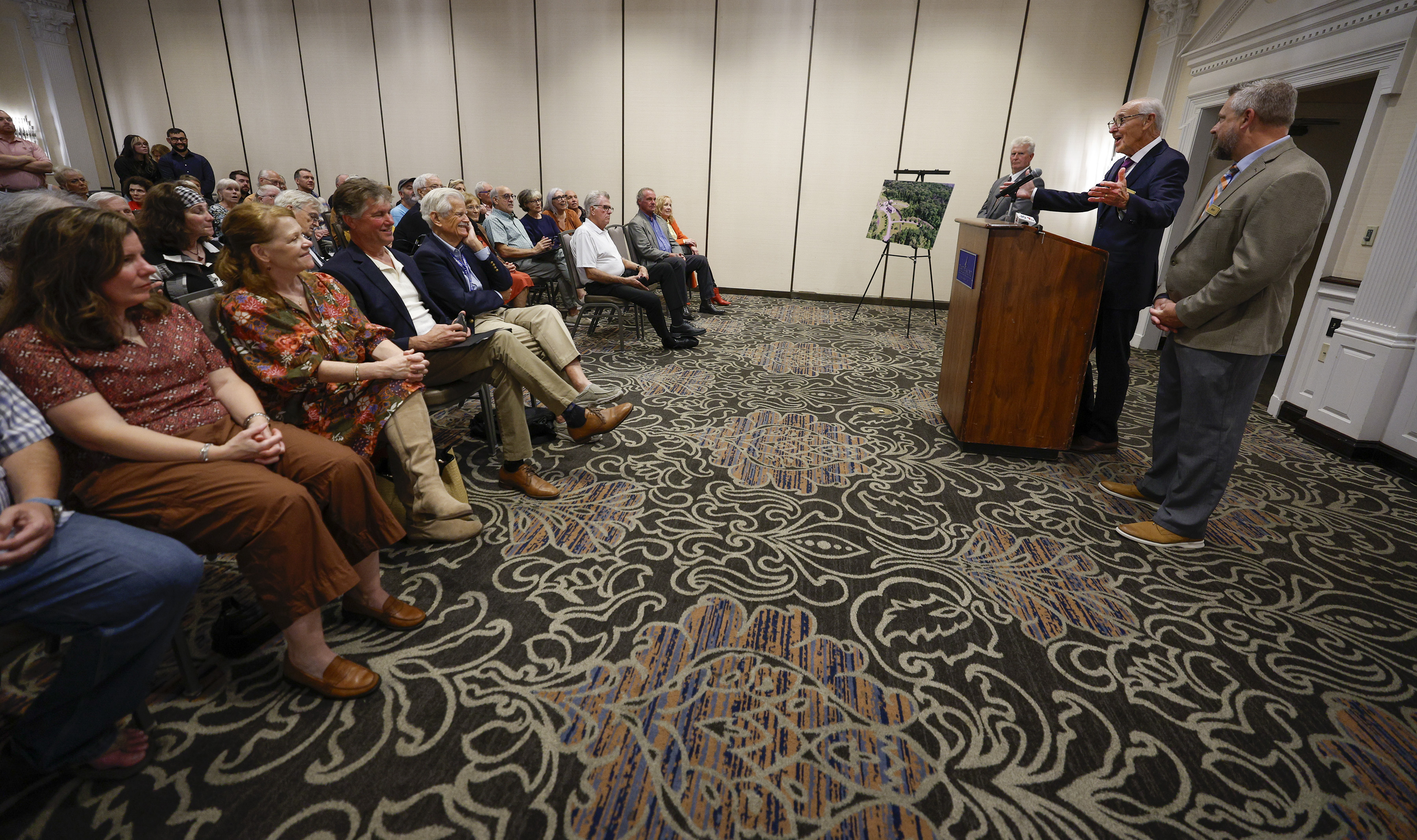
    Speaking to a full house containing a large number of residents and business owners, auctioneer Doug Clemens informed attendees that it had been postponed — an announcement he acknowledged “could make you happy, maybe will make you sad.”

    No date was immediately set.

    A spokesperson for Piazza Management said on Friday, days after the auction, that “the auction was postponed due to technical electronic on line [sic] bidding issues and on site phone communication complications.”

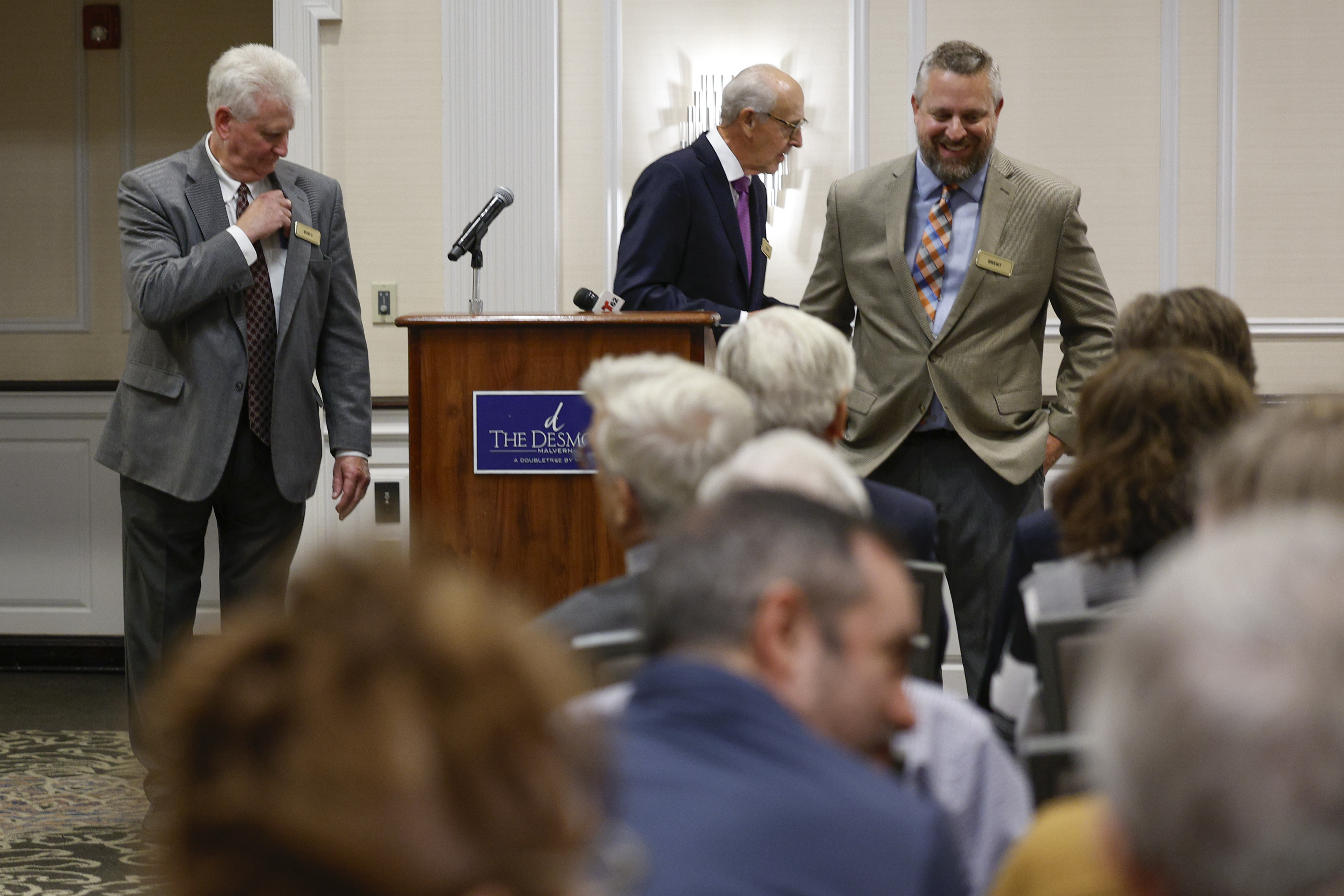
    Auctioneer Doug Clemens, center, walked off after announcing that there would be no auction on Wednesday of St. Peter’s Village. The auction was held off-site at the Desmond Hotel Malvern only to find out at the last second, the auction was canceled.Steven M. Falk / For The Inquirer

    It was not immediately clear how many people had shown up to bid on the property. Those interested in bidding on the land were told to bring, by a bank cashier’s check, $150,000.

    The sale of 80 acres, give or take, of a beloved village piqued sizable interest when the auction was announced over the summer. But it also prompted concerns from those in and out of the village, who worried if the new owners would retain what makes it so special.

    Clemens said previously that the auctioneers received thousands of inquiries, including from people who lived in the village, curious about what would become of it.

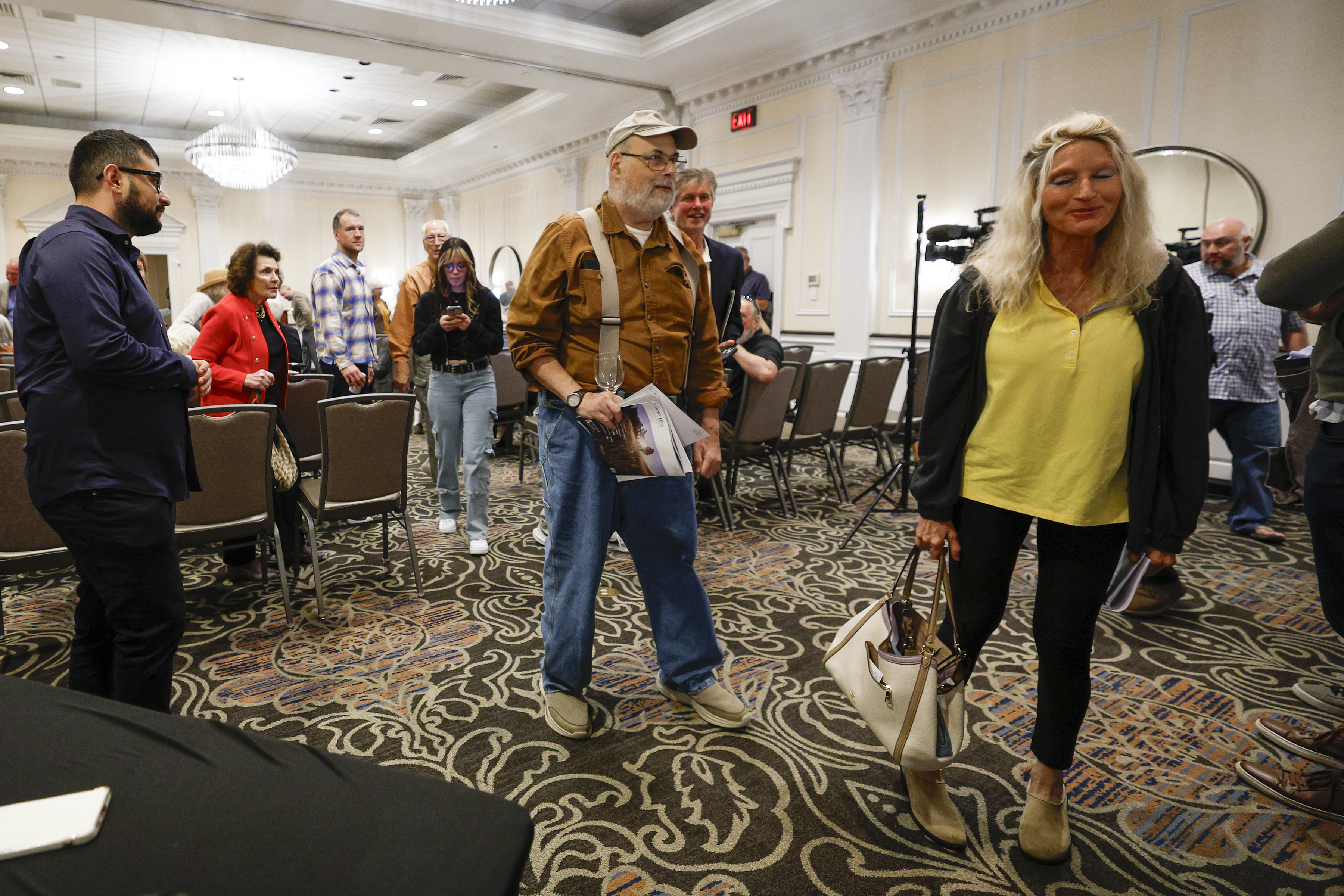
    The public auction, held in Malvern, drew spectators and was a crowd of familiar faces for residents and business owners in the village. As they left the meeting room, they speculated over possible deals that could have arisen.

    St. Peter’s Village, which grew around the French Creek and flourished in the Gilded Age due to its natural resources, became a place of recreation and leisure in the 1880s. Since then, it has continued to draw tourists to its quaint shops, rocky shores, and hiking trails. The village is nestled in Warwick Township, which has a population of roughly 2,600.

    People walk out after the auction of St. Peter’s Village was canceled. The auction was held off-site at the Desmond Hotel Malvern only to find out at the last second, that auction was canceled.Steven M. Falk / For The Inquirer

    The owners had planned two neighborhoods, totaling about 121 home sites, with a mix of densely populated housing and larger single-family homes. With the economic downturn in the early 2000s, that vision never fully materialized; several homes are unfinished. To see it through, a new buyer would have to improve the wastewater treatment plant included in the purchase.

    Tom Tulley, a resident since 2009 who lives adjacent to the proposed development, has concerns about building out the land to the envisioned extent.

    He has known development was inevitable, but if “they put another 150 homes with however many toilets and bathtubs and washing machines, I’m just concerned that the aquifer might not be able to support it,” he said.

    Longtime business owners Christopher and Ashley Dilworth, who own Fox & Frog Apothecary, were excited that the Piazzas were set to turn it over so someone else could take the mantle and continue revitalizing the village. Christopher Dilworth acknowledged there “will be opinions on which way would be better, which way would be worse.”

    But, Ashley Dilworth said, “I think all of the people in the village and everyone that came out would just be excited for anyone who had a big enough vision to move it to the next level.”

    St. Peter’s Village was to be sold off to the highest bidder. The auction was held off-site at the Desmond Hotel Malvern only to find out at the last second, the auction was canceled,, September 30, 2026Steven M. Falk / For The Inquirer

    It has had, over the last several years, a new life breathed into it, she said. With the help of social media, people from across the region — from New York to Delaware — have been discovering the town, which boasts everything from antique stores to modern jewelry to an antique arcade.

    “People are staying in this little one-block town for a whole day,” Christopher Dilworth said. “There’s that much to do there and experience.”

    Peter Melle and his wife, Melanie, who owned the bakery in town for about 15 years, were hoping to see someone pick up the project where it was left off.

    “Everybody’s curious,” he said. “I think it’s a great project. … I think it’ll be a phenomenal location to build. But it’s about the money.”

    Megan Reese, who lives in Malvern, has gone to St. Peter’s for a long time. She wanted to see someone purchase it who would take care of it and also “honor all the fun that’s occurring.”

    “A lot of people love St. Peter’s, and it’s iconic. It’s been around for a very long time,” she said. “I really want it to be a heart project for somebody.”

    This story has been updated to include a statement regarding the reason for the auction’s postponement.

    This suburban content is produced with support from the Leslie Miller and Richard Worley Foundation and The Lenfest Institute for Journalism. Editorial content is created independently of the project donors. Gifts to support The Inquirer’s high-impact journalism can be made at inquirer.com/donate. A list of Lenfest Institute donors can be found at lenfestinstitute.org/supporters.
  • A Chesco man was detained by ICE a week after his wedding celebration. He was unexpectedly just released.

    A Chesco man was detained by ICE a week after his wedding celebration. He was unexpectedly just released.

    When Nelson Contreras-Gelves arrived at an immigration appointment in June, he worriedly “already saw myself being back in Venezuela.”

    The threat of deportation had loomed ever since he arrived in the United States in March 2022, surrendering at the border and requesting asylum. It hung over conversations he and Ariel Whaley had about marriage. It dictated when they held their wedding reception.

    And just a week after the Chester County newlyweds celebrated their marriage, Contreras-Gelves, 35, walked into an immigration appointment in Philadelphia. An hour later, he called to tell his wife he had been arrested and detained by ICE.

    That is, until Sept. 10, when he was abruptly released after months at Moshannon Valley Processing Center, the giant ICE detention center in Philipsburg, Clearfield County.

    Contreras-Gelves and Whaley say he has no criminal record.

    “Those first couple of days, we just kept on looking at each other, like, ‘Wow, I cannot believe that you are here,’ because it was so out of the world,” said Whaley, 27, during a recent interview in Kennett Square’s Cypress Beach Park, where the pair had volunteered planting trees and rehabbing the park together. Contreras-Gelves does not speak English; Whaley translated his comments during the conversation.

    Contreras-Gelves is one of an increasing number of immigrants taken into custody as they pursue asylum, a long-established legal process that can grant permission to live in the United States to people who could be harmed at home.

    It comes as President Donald Trump takes an aggressive approach on immigration, departing from prior administrations that largely allowed asylum seekers with no criminal record to remain free while they pursued their claims. But in recent months, applicants have been detained across the United States, including Pennsylvania and New Jersey.

    Contreras-Gelves and Whaley are now starting a new chapter — not life as it was before. They don’t know precisely why Immigration and Customs Enforcement granted Contreras-Gelves’ release after a string of denials. And he is under more surveillance than before his detention. He was fitted with an ankle monitor; is limited to traveling only within Pennsylvania, New Jersey, and Delaware; and has frequent in-person check-ins in King of Prussia.

    “There’s still uncertainty, but at the very least, we can go through it together, and not have the same sense of immediacy that we have to make some sort of decision,” Whaley said.

    Nelson Contreras-Gelves talks about his proposal to Ariel Whaley at Cypress Beach Park on Sept. 21 in Kennett Square. Contreras-Gelves was released from ICE detention earlier this month.Monica Herndon / Staff Photographer

    ‘If she enters my heart, she won’t leave’

    When it came to Whaley, Contreras-Gelves was nervous to make the first move.

    The two met in 2023 at Mighty Writers, a nonprofit educational program for children that also offers food and other resources for underserved families in the Philadelphia region.

    Whaley, a Downingtown native, was working at the Spanish-language preschool; Contreras-Gelves started as a volunteer in the food pantry, working his overnight shift at a mushroom farm and then arriving just a few hours later at the nonprofit.

    They spent a lot of time together there. Whaley remembers sorting donations together, sifting through an array of lotions and shampoo. He sniffed each one.

    Something about it struck her: “I just saw a curiosity and a wonder for the little things that I don’t normally see in a lot of people,” she said. “It made me fall in love very quickly.”

    He was likewise smitten. He told a coworker “that muchacha is so pretty.”

    “If she enters my heart, she won’t leave,” he recalled saying.

    As their relationship got more serious and they both considered marriage, they had to discuss it “kind of like in a business way,” Whaley recalls.

    They hesitated for a bit. But ultimately, they bought their rings, and despite his nerves about the pressures of an American proposal, he asked Whaley to marry him in February 2025 at the park where they had their first date.

    After a ceremony in May, Whaley wanted to celebrate their love. They picked the date for their June 2026 reception because it was “literally the last weekend” before Contreras-Gelves could possibly be detained, Whaley said. Whaley’s panic attacks about it got worse, a sharp come-down from the pure happiness she had felt at their reception.

    Though this appointment was routine, and he had been to immigration check-ins previously, they saw what was unfolding around them. They knew the government was increasingly taking people into custody when they appeared. Something similar had happened to Contreras-Gelves’ friend.

    Nelson Contreras-Gelves speaks with a reporter at Cypress Beach Park on Sept. 21 in Kennett Square.Monica Herndon / Staff Photographer

    ‘Keep the faith’

    When the appointment came, what typically was a 15-minute process — fingerprints, a photo — took two hours. Immigration officials asked Contreras-Gelves to report back a few days later with another form of ID from Venezuela.

    Friends and family told Contreras-Gelves not to go back. But he knew it would be worse if he didn’t.

    One week after their party, Contreras-Gelves stopped Whaley 50 feet from the door to the immigration office, told her he would go in alone, and kissed her goodbye.

    He didn’t come back out.

    It was a scramble for Whaley, who mobilized to contact lawyers with the Defender Association’s immigration unit. She struggled to figure out how to see him while he was held at the Federal Detention Center in Philadelphia for roughly three weeks, before he was transferred to the 1,880-bed Moshannon center.

    For months, his detention consumed Whaley’s life. She was constantly on alert, answering calls from the lawyers and waiting to hear from Contreras-Gelves, unsure if the next time he would tell her he was being deported.

    But a community sprung up around them. Whaley helped other detainees contact their loved ones, and helped families navigate adding money to their accounts. She connected others with Contreras-Gelves’ attorneys, and visited another man at Moshannon whom Contreras-Gelves had been detained alongside in Philadelphia, helping him communicate with his wife in Mexico.

    A GoFundMe page, set up by loved ones, raised nearly $40,000 to support Whaley and Contreras-Gelves as they fought for his release. They launched a letter-writing campaign, sending postcards to elected officials.

    Over the months in detainment, Contreras-Gelves faced repeated denials to be released on bond. The conditions of Moshannon were “horrible,” he said. He recalls scalding shower water that burned; a mysterious and unsettling number of bugs; and poor food quality. Medical assistance was often just a pill. He shared his commissary purchases with other detainees who did not have the same access.

    A spokesperson for ICE did not respond to a request seeking comment about the conditions at Moshannon or the reason for Contreras-Gelves’ release.

    He began to get weary. He thought about signing a voluntary departure form and returning to Venezuela. Whaley, at first, agreed, not wanting him to remain locked up when he could be free — and they could be united — somewhere else. But she pressed him to wait.

    “Everybody in our community that already knew us played such a large role in helping us keep the faith, and then all of the people that we’ve met and we’ve been able to help or have helped us have done the same thing,” Whaley said.

    And then on the morning of Sept. 10, as Whaley was heading into work as a graduate assistant at West Chester University, she got a phone call. Contreras-Gelves was talking so fast, it took her a minute to understand: He was being released.

    She hesitated to tell anyone. It didn’t feel real. But after she talked with an ICE agent to coordinate picking him up, she started calling people.

    “I still was like, I’m not going to believe it until he comes out the gate,” she said. “And then he did.”

    Ariel Whaley and Nelson Contreras-Gelves walk through Cypress Beach Park.Monica Herndon / Staff Photographer

    ‘Incredibly lucky’

    When people ask them what comes next, they say there is still a lot of uncertainty. They don’t feel like they are returning to the lives they had before.

    There’s a lot of ambiguity around the relations between his home country and the United States, and what it could mean for his status. But he will have a new court date, some time in the future.

    They hope the momentum they built around Contreras-Gelves’ detention can be directed to others who are still at Moshannon, Whaley said. They continue to help others detained there when they can.

    After Contreras-Gelves’ release, they drove a woman and her children to Moshannon to visit her husband, from whom she had been separated for more than a year without the means to visit.

    “We were so incredibly lucky. There’s so many people who don’t even get the opportunity to fight as hard as we have, and so we are just so grateful to have the support from everybody,” she said. “We both feel a responsibility to help others who are still going through it.”

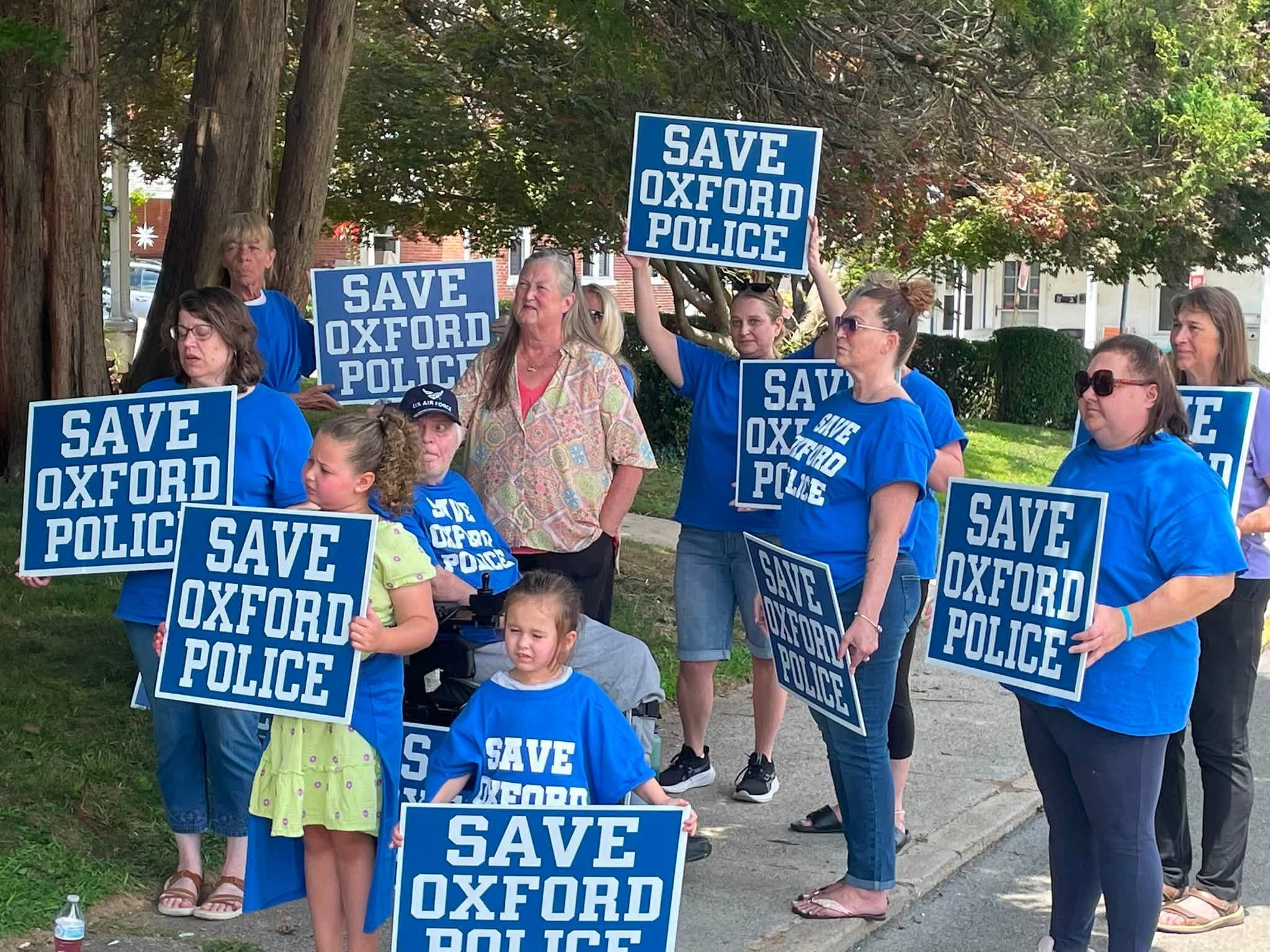
  • Oxford police officers, uncertain of their futures, resign as borough plans to close department and join regional force

    Oxford police officers, uncertain of their futures, resign as borough plans to close department and join regional force

    Three officers will resign from the Oxford Police Department ahead of the borough joining a regional department, with many officers saying the path to employment has felt uncertain and not guaranteed.

    The resignations — which the borough council approved Monday — come after Oxford’s officials approved, in a 5-2 split, to close the doors of their police department, citing ballooning expenses that outpaced the municipality’s revenue.

    Under the vote, the borough will become part of the Southern Chester County Regional Police Department, which serves New Garden, West Grove, and Avondale, on Jan. 1, 2027.

    To accommodate the growing geography, the regional department has pledged to hire 12 additional officers, with Oxford officials saying previously that their goal was for every officer to move over to the new force, if they wanted to. Oxford currently employs 11 full-time officers, including the chief, and several part-time officers.

    Applications for the regional department were sent out to Oxford officers earlier this month, with a deadline to submit by Friday. The applications were also posted publicly.

    But officers said that the road hasn’t been easy or transparent. In a meeting with The Inquirer at their station, the officers said that while it has been publicly stated that they are essentially guaranteed a job at the regional department, everything they have seen is “an opportunity to apply for a job.” Most officers spoke on the condition of anonymity out of fear of retaliation.

    Officers who are leaving said the uncertainty and the borough’s decision to close their department ultimately led them to seek new employment.

    Mayor Philip Harris said the borough was in active contract negotiations and declined to comment broadly on the situation.

    For the officers resigning, he acknowledged the community may “consider that to be in discord with the merger/joinder.” He argued that it “highlights and amplifies what we’ve been saying all along.”

    “It’s an incredibly difficult thing to recruit and retain officers,” he said. “They were recruited by other departments. They were offered better deals. That highlights some of the problems that brought us to this forefront.”

    Officers who have not resigned have begun meeting with the regional department leadership, they said. But with the clock ticking and no formal contract in front of them, the officers are worried about what employment could look like after Jan. 1.

    They are not sure what jobs they will get. With a cumulative experience of more than 280 years, they each have more than one year of service and have acquired rankings from corporal to sergeant. Those positions do not exist at Southern Regional, they say, making it unclear if they will lose rank in the transition.

    Because they have not seen a contract, they don’t know whether they should take a severance package. There are differences in pensions between the two departments that officers think will complicate the transition, too.

    “We have three that have secured jobs at other surrounding departments, and I haven’t seen one damn contract from Southern Regional,” one officer said. “What is my position going over there? How much am I making? What time am I carrying with me? My sick time, my vacation time, my seniority?”

    A yearslong process

    The move to regionalization has, essentially, been three years in the making, with borough officials long saying the police force costs more than it can afford. The borough has had several financial studies done in recent years examining the viability of the police department, and considering alternatives.

    Under the agreement with Southern Chester County Regional, Oxford borough would have two officers on patrol 24-7, like the current structure. Their shifts would begin and end at a local substation, ensuring no gap in coverage, as Oxford is roughly 16 miles away from the other municipalities under the regional department’s coverage. The 12 additional officers, hired as part of this expansion, would join a force of 21 full-time officers.

    There has been a growing trend of municipalities moving toward regionalization for high-price items in their annual budgets, like police, fire, and EMS. Public safety is at least 50% of the pie in most communities, experts have said.

    Regionalization, however, has not been perfect. Across the state, municipalities have joined and then withdrawn from regional services due to increasing costs under the agreement, according to a Keystone Municipal Solutions analysis, which studied police structuring in Oxford.

    Oxford officers said that there had been talks to merge with Southern Chester County Regional several years ago, but those discussions seemingly fell apart. Instead, officers recall, the department tried to make itself a possible regional hub — a force that could serve the municipalities that neighbor Oxford and currently use free coverage from the Pennsylvania State Police. Those talks also struggled to catch on.

    Officers still heard rumblings about joining the Southern Chester County Regional, but formally found out about the renewed effort when the Oxford Police Association received a letter from the borough council saying the start of union contract negotiations would be put on hold as the council explored a merger.

    Meanwhile, officers said, they are frustrated that the borough has not sought to slash costs in other areas, or will not wait for eligible members of the force to retire, where the pendulum on costs could swing back.

    “They have a champagne police department on a beer budget,” an officer said.

    Paul Frie, one of the officers who has accepted a position elsewhere, said that the borough’s decision to close its department caused him to look for other employment.

    “I can’t trust them to have my back,” he said. “I couldn’t work for them when they so haphazardly threw my job to someone else, because it’s not a guarantee.”

    Another officer, who has also resigned, said the uncertainty — and not knowing whether regionalization would stick — ultimately made the decision for him. It was hard: The officer grew up knowing many on the Oxford force, and said it was always a dream to work for the department.

    “I’m glad I got to fill it, partially,” said the officer, who spoke on the condition of anonymity. “It definitely sucks knowing this place isn’t going to be around.”

    This suburban content is produced with support from the Leslie Miller and Richard Worley Foundation and The Lenfest Institute for Journalism. Editorial content is created independently of the project donors. Gifts to support The Inquirer’s high-impact journalism can be made at inquirer.com/donate. A list of Lenfest Institute donors can be found at lenfestinstitute.org/supporters.

  • East Whiteland officials approve a lengthy data center ordinance, after residents decried the one being built there

    East Whiteland officials approve a lengthy data center ordinance, after residents decried the one being built there

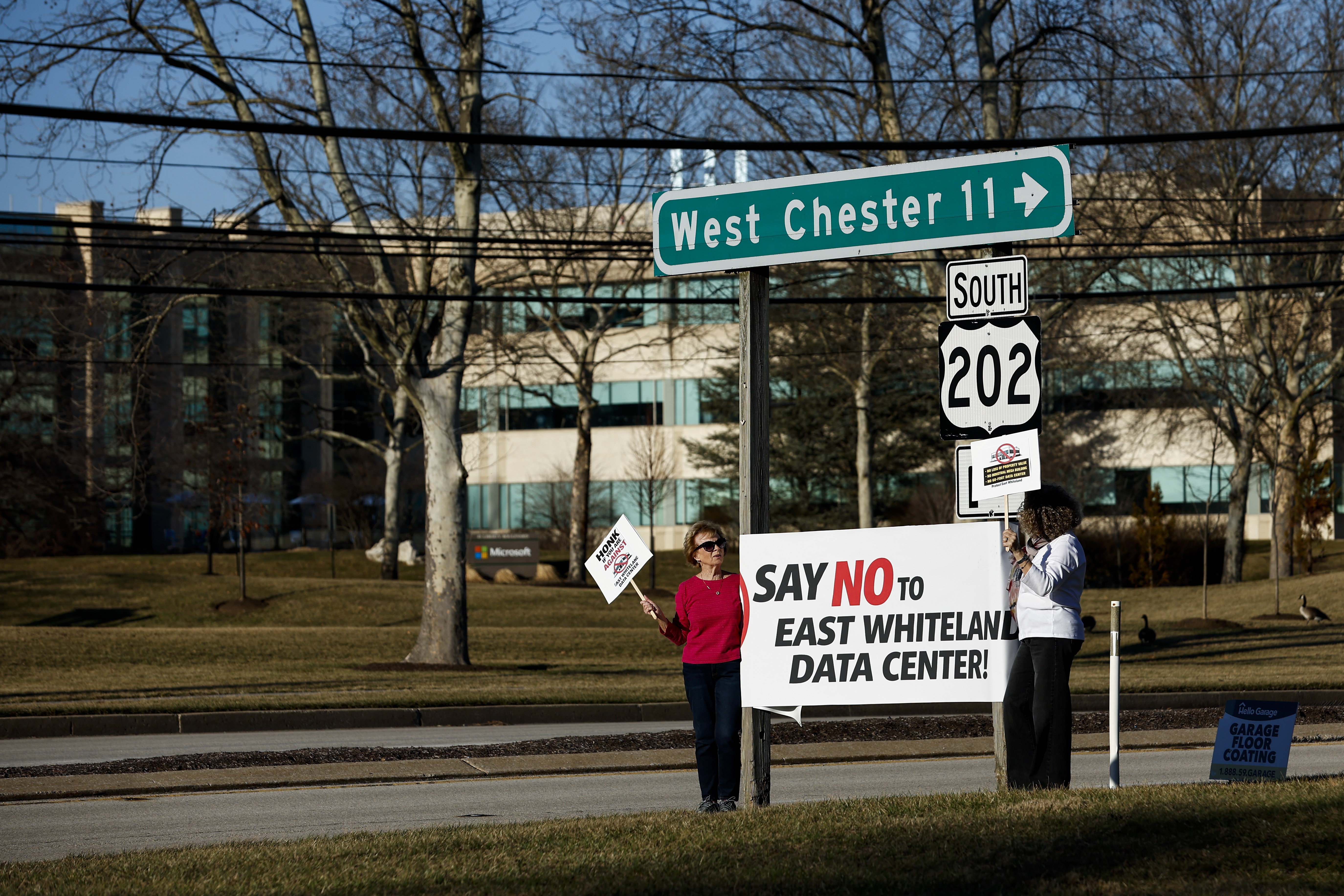
    As East Whiteland grapples with the community’s resounding pushback to a planned 1.5 million-square-foot data center being built, its elected officials have approved an ordinance that would set greater restrictions for any similar proposals in the future.

    The board voted unanimously Thursday to approve the 32-page ordinance, after members had put a data center moratorium in place for months while they re-examined the zoning ordinance that allowed the supersized project to come into the municipality.

    The ordinance doesn’t affect the project, which is slowly taking shape at the former 79-acre Cyprus Foote Mineral Co. property. But the data center’s existence, which has faced staunch community opposition, is certainly what launched the new ordinance, penned in a collaboration between township staff, consultants, and community members.

    “I think this sends the right message,” said resident Tony Gianino, who served on the committee to draft the ordinance. “I know it’s been a little contentious over the last eight or nine months, and I think that we’re not looking at this as a negative, but as a positive, and as a foothold moving forward.”

    East Whiteland is among a number of municipalities in Chester County and the region that have been hurriedly drafting ordinances as more data center projects arrive at their doorsteps. Public backlash against the projects has been loud as data centers, which handle the cloud-storage and computing needs of the companies behind increasingly sophisticated artificial intelligence tools, have come to their communities. Gov. Josh Shapiro, who once sought to make it easier for the projects to call Pennsylvania home, has even evolved his stance.

    In East Whiteland, the ordinance will establish limitations on how close a data center can be to homes, schools, daycares, parks, or churches. It addresses noise, water usage, cooling systems, power supply, and more.

    It’s not a slam dunk, several said Thursday; some speakers were already suggesting amendments. State Sen. Katie Muth, who represents the area and is a frequent flier at data center meetings, suggested changes on portions of the ordinance, quipping, “I would love to have a township to refer to that has a really great ordinance. If you make those changes, you will be that township.”

    Scott Lambert, the board’s chairman, acknowledged it was a living document.

    “Whatever goes on the books tonight, it’s not permanent. It can be amended going forward,” he said. “We’re not locked into this particular ordinance and the specifics at this point in time.”

    Still, there was applause when the officials voted to approve the measure.

    But the effects of data centers don’t stop at the municipal line. East Whiteland residents have been watching nearby Charlestown, which updated its zoning to allow for data centers to be built on the East Whiteland border.

    “I do hope other communities look at this and end up utilizing it, especially Charlestown,” Lambert said. “I hope they do take a look at what we have and implement, to protect both communities.”

    This suburban content is produced with support from the Leslie Miller and Richard Worley Foundation and The Lenfest Institute for Journalism. Editorial content is created independently of the project donors. Gifts to support The Inquirer’s high-impact journalism can be made at inquirer.com/donate. A list of Lenfest Institute donors can be found at lenfestinstitute.org/supporters.
  • Raucous student housing has plagued a Chesco neighborhood. A new measure will hold landlords responsible.

    Raucous student housing has plagued a Chesco neighborhood. A new measure will hold landlords responsible.

    A new ordinance seeks to give Tredyffrin officials more power to address unruly student tenants, after quality-of-life issues have plagued a Chester County neighborhood for years.

    In a unanimous vote Monday, the municipality’s seven elected officials voted to approve a new ordinance regarding student housing that changes the enforcement mechanism, allowing them to go after the landlords who rent to students — rather than the students themselves.

    “I hope this makes a difference, and I hope that we can hold the landlords or the companies, whoever own the property, responsible for this,” said board member Carlotta Johnston-Pugh.

    The updated ordinance comes as neighbors — young families, lifelong residents, and aging seniors — on Mount Pleasant Avenue have struggled for years to live alongside a rotating cohort of Villanova University students.

    Residents have said previously that they have walked out in the morning to find vomit on their cars, beer cans strewn across the streets and yards, and students passed out on the porch. They’ve been kept up by loud parties, rideshare cars speeding down the street, or a lost drunk student trying to kick in the door.

    With Villanova’s new 112-acre Cabrini campus off Upper Gulph Road, putting it now within walking distance to the houses and the parties, residents worry that the problems could intensify.

    At least seven houses are rented to students, several along Mount Pleasant, and a few on nearby Henry Avenue, township officials said previously. Another house where students live isn’t zoned properly, which the township has been trying to address, officials said previously.

    Board member Hans van Mol said it bothered him, when he first joined the board less than a year ago, that the Mount Pleasant community felt that the township wasn’t responding to their concerns.

    “Our ordinance wasn’t suited to keep up with the issues that were going on that needed to be remedied,” he said. “I’m very glad that we finally got to this point here, if not even just for the potential that the township can actually promote a safer, stronger community, but that people can actually feel we’re working on it.”

    Tredyffrin first adopted a student housing ordinance more than a decade ago in response to concerns. The measure limited household occupancy to three students and prohibited the houses from being too close together, though the properties along Mount Pleasant were grandfathered in. But its power was somewhat limited.

    The new ordinance — a much more robust measure — notes that the owner of the student house will be “directly responsible” for the behavior of student tenants and their guests. It gives the township the ability to inspect the home, if there are suspicions that there are more than three students living in the house. It allows the township to direct the landlord to evict students if three violations occur within the same year. Landlords can be fined up to $1,000 for violations of the ordinance.

    Residents should keep calling the police when issues arise, “so that they can properly document it to be used against the landlord enforcement of this ordinance,” said board vice chair Sharon Humble.

    For some of the residents, it was a promising effort.

    “Yes, I have been one of those that have come and … voiced my concern about what has been going on,” said Mount Pleasant resident Shawn Jackson. “I read through the ordinance, and it’s very comprehensive, and I’m very happy about that.”

    Kevin Stroman, a longtime resident of the neighborhood who now runs a mentoring program at the historic Carr School/Mount Pleasant Chapel across the street from one of the student houses, has long tried to offset negative relationships with the students and the residents.

    “I think the climate in Mount Pleasant is so bad right now because of certain students getting out of control,” he said. “I like the idea [of the ordinance] because no doubt the owners have to have something that will make them look at who they rent to.”

    Others wished it went further. G. Hayward Simpson, a Mount Pleasant resident who lives in the Montgomery County portion, said that the students “have no need, want, will to be part of any community.” He wanted to see student housing entirely excluded from the neighborhood.

    “I’m not saying this with any kind of malice, or I don’t want these kids to have a good time. I just don’t want them to live on the block. I want to see single families,” he said.

    Jeff Hilliard, a landlord with a student rental on Mount Pleasant, said he “lay[s] down the law” with his tenants.

    When he first purchased the house for rentals, Hilliard said he gave his number to the neighbors so they could call him if they ever had a problem with the students. They’ve never contacted him, he said, but he knows the police have been called and “literally driven away because there was no issue whatsoever.”

    “So unfortunately, I think it’s just a couple bad tenants and a couple bad landlords that are causing this for these nice people of Mount Pleasant,” he said.

    This suburban content is produced with support from the Leslie Miller and Richard Worley Foundation and The Lenfest Institute for Journalism. Editorial content is created independently of the project donors. Gifts to support The Inquirer’s high-impact journalism can be made at inquirer.com/donate. A list of Lenfest Institute donors can be found at lenfestinstitute.org/supporters.

  • Phoenixville will turn into ‘Gilmore Girls’ town Stars Hollow for one weekend

    Phoenixville will turn into ‘Gilmore Girls’ town Stars Hollow for one weekend

    As Kenzie Hamblin watched Gilmore Girls unfold in the fictional town of Stars Hollow, she looked around Phoenixville and thought, “I literally live in this town.”

    And now, that’ll be actually true — at least for a weekend.

    On Friday, Sept. 25 through Sunday, Sept. 27, a smattering of Phoenixville shops will transform into staples from the show in an event that Hamblin and business partner Mallory McDaniel organized.

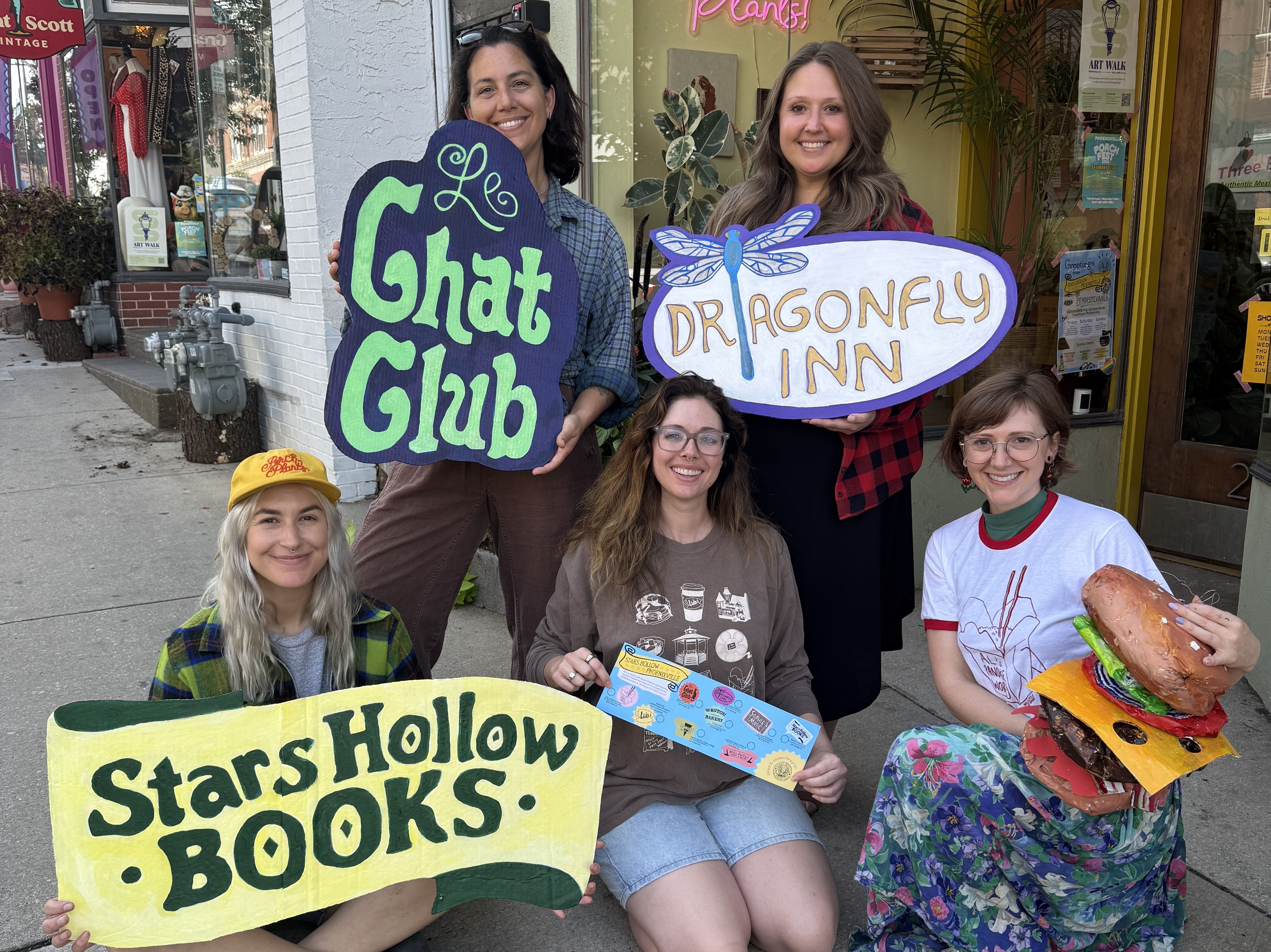
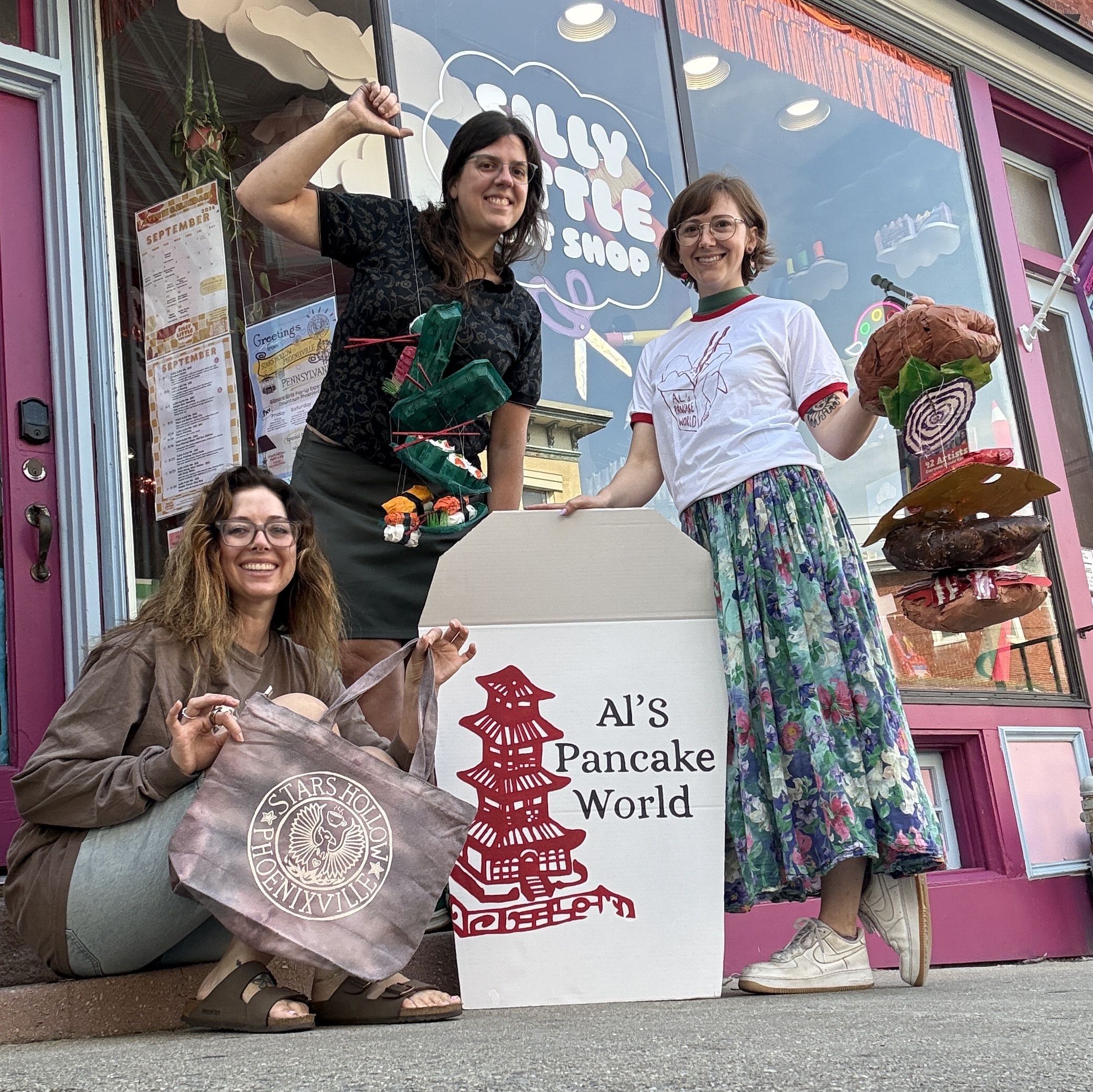
    All across downtown, existing shops will dress up as Stars Hollow storefronts, from Le Chat Club, to Doose’s Market, to the Dragonfly Inn, and, of course, Luke’s Diner. Hamblin’s shop, Silly Little Art Shop at 28 S. Main St., will become Al’s Pancake World, serving up piping hot art kits and more.

    Visitors can expect themed events, redecorated interiors and window designs, specialized merchandise, a map to collect stamps from participating shops for a prize, and maybe a handful of grumpy Lukes serving them coffee.

    The plan was sparked about a year ago, when Hamblin saw another similar pop-up in a nearby town. It was fun, she recalled, but she knew Phoenixville could do better. The borough has the bones to do so: There’s an “amazing creative, collaborative energy” among the small business owners, and a genuine investment from the community they serve, she said.

    “We have all this magic that exists in Phoenixville,” Hamblin, 35, said. “I want people to experience that, but then also get to have that fun of experiencing the magic of Stars Hollow — as much as any place can create that.”

    For the uninitiated, you may ask: What is it about Stars Hollow, the whimsical, quirky New England small town in which Gilmore Girls is set?

    The show, a quick-witted, comedy-drama that follows the lives of a mother and daughter, ran for seven seasons in the early 2000s and has amassed devoted fans since. Among those fans, the town has become a desirable, beloved place. It has it all: It’s close-knit, supportive, and yes — walkable. It taps into something people just seem to crave: connectedness and community, Hamblin said.

    “People live in suburban wastelands, where you live in a house, and you don’t really know any of your neighbors, and you don’t have a downtown; you have a shopping mall,” she said. “And I think people want to live somewhere like Stars Hollow, where it’s very community-oriented.”

    Kenzie Hamblin, left, and Mallory McDaniel, right, will transform their storefront, Silly Little Art Shop, into Al’s Pancake World later this month. Artist Emily White, middle, has designed a “Gilmore Girls” collection.Photo courtesy of Kenzie Hamblin

    And you may ask, what is it about Phoenixville?

    “I lived here before it was cool to be from Phoenixville,” said Julie Miller, whose pottery shop at 24 S. Main St. will become the Dragonfly Inn. “There’s such a strong community in the downtown, and a want for the downtown to survive, and a want for it to be this special, quaint little slice of heaven that it has become. I think that really equates with Stars Hollow.”

    And the response to the town coming to life has been pretty resounding. Hamblin organized a small group of businesses to participate in this year’s event, with the goal of drawing a couple hundred people downtown. When she posted the initial social media flier, though, it got more traction than she could have predicted — more than 100,000 views and 5,000 shares in the first 24 hours.

    Within the community, other businesses wanted to participate. And beyond the community, new customers have dropped by, scoping her shop out ahead of the event later this month, she said. (@starshollow.pa on Instagram is giving updates to the weekend’s offerings.)

    The business owners aren’t entirely sure what the magnitude of the turnout could be, but they’re excited.

    Miller, 36, said the enthusiastic response has been “amazing, and also a little terrifying in the best way.”

    She’s creating a line of dragonfly teacups and teaspoon rests. Themed pieces from other local artists will also be on offer in her shop. And to tap into the coziness of the inn, complimentary tea and cookies will welcome visitors.

    “It’s just really exciting for the potential,” Miller said. “Hopefully that just means that this is going to continue and be like another amazing thing that happens in Phoenixville that we get to do once a year.”

    Studio 323, at 323 Bridge St., will become Weston’s Bakery, offering fall-themed baked goods from a local microbakery on Saturday (“Who doesn’t love baked goods on a homemade plate?” owner Abby Wheeler, 31, noted), alongside other local artisans’ creations through the weekend.

    “As a creative space, a themed assignment to transform our space is what we live for,” Wheeler said.

    Though Jason Hafer, 48, isn’t overly familiar with the show himself, his staff is enthusiastically helping transform Reads and Company into Stars Hollow Books. There will be a Gilmore Girls-themed book display up front, and the staff plans to be decked out accordingly in plaid.

    Though a town might be content with its slate of other annual events, “we have like this great young business … and they’re bringing like their creativity and their passion to the town, which is I think what makes things so great,” Hafer said.

    And over at Al’s Pancake World, Hamblin and McDaniel, 34, will be dressed as waitresses, serving up art kits in takeout containers, alongside a collection of other merchandise they’ve made.

    “I deeply, deeply want our town to stay quirky and fun and strange and weird,” Hamblin said. “The only way for [small businesses] to stay and to grow and to be successful is if we can get people to come to town to ultimately enjoy themselves and spend money and enjoy Phoenixville for what it is and fall in love with it. If there’s any way I can be a part of that, to build success for our town in any small way, then that’s what I want to do.”

    This suburban content is produced with support from the Leslie Miller and Richard Worley Foundation and The Lenfest Institute for Journalism. Editorial content is created independently of the project donors. Gifts to support The Inquirer’s high-impact journalism can be made at inquirer.com/donate. A list of Lenfest Institute donors can be found at lenfestinstitute.org/supporters.

  • ‘The deal is off’ to limit development of Rock Hill Farm, attorney threatens, as officials seek more certainty in preserving land

    ‘The deal is off’ to limit development of Rock Hill Farm, attorney threatens, as officials seek more certainty in preserving land

    The “deal is off,” an attorney for a developer told Willistown elected officials Monday, as the board hesitated to accept a settlement that would preserve a great portion of Rock Hill Farm but still allow for housing to be built.

    The township’s three elected officials voted unanimously to table their decision, saying there was a lack of assurances in the settlement that guaranteed it would limit the amount of development and preserve a majority of the 222 acres of rolling hills, meadowlands, and woodlands at the historic farm.

    The board’s decision to hold off on agreeing to the settlement, which would conclude years of litigation over a proposal to build luxury homes on land that residents have advocated to keep as open space, drew opposition from Edmund Campbell, the attorney representing Rock Hill Farm LLC and developer Brian J. O’Neill, who purchased the land in 2021.

    “This settlement agreement has been negotiated for almost over a year,” he told the board Monday. “At the last minute, we were asked for additional concessions; we immediately replied … with a letter addressing those concessions and accepting changes that [the township’s solicitor] proposed. My client needs to make sure that the township understands that the deal is off if the settlement agreement is not approved tonight.”

    “I think we understand, and I can’t speak for my fellow supervisors, but I don’t have anywhere near enough information to make a decision,” board chairperson Molly Perrin responded.

    Campbell did not immediately respond to a message on whether the settlement had been withdrawn.

    The officials’ concern is whether the proposed settlement, which the township presented to the public last month, would bind certain mortgage holders to its terms.

    “Without some degree of surety there, we don’t feel that we can move forward,” said board member Bill Shoemaker. “We understand that, from the perspective of the applicant, this essentially, if they take it that way and choose not to continue, will void the agreements. So we’re back to square one.”

    A Chester County judge in July sided with the developer, overturning the township’s September 2024 denial of plans to build more than a dozen homes on the property. The township promptly appealed the ruling.

    Under the proposed settlement, the developer would radically scale down the plan that was before the court, preserving roughly 166 acres of the larger tract, or 75% of the land, under a conservation easement. The land would be subdivided into 18 lots, down from roughly 24, with all but one lot proposed for residential development. The one non-residential lot would be conserved as open space. The lots vary from about four acres to up to 26 acres.

    Separately, the developer has offered Willistown Conservation Trust the exclusive option to buy an adjacent 24-acre property, also purchased by the developer, if the settlement agreement is approved by the township and court. The township would plan to buy it from the trust using designated open space funds, and preserve the property as open land. The board voted to approve the purchase in February, officials said, though that is in jeopardy as part of the settlement.

    A number of residents who spoke last month responded positively to the proposal, but others were apprehensive.

    The community had rallied together to form a group, Save Rock Hill Farm, in an effort to stave off development of the land.

    “We appreciate the Supervisors’ efforts to address these issues carefully,” the group posted on Facebook after the meeting. “The Supervisors have heard the community’s substantial opposition and concerns about what could be lost if the proposal moves forward as presented.”

    But as the board prepared to take a vote, there was still uncertainty.

    Max O’Keefe, the solicitor for the township, said he and the counsel for Rock Hill Farm LLC discussed additional language, which was sent to the board of supervisors late Monday.

    “I certainly don’t anticipate that the board had any real meaningful opportunity to review or digest those proposed changes,” he said.

    The board concurred.

    “I never want to be the one who’s going to rush into a decision, especially a decision that’s so much value and importance to this community,” board member Matt McCarry said.

    This suburban content is produced with support from the Leslie Miller and Richard Worley Foundation and The Lenfest Institute for Journalism. Editorial content is created independently of the project donors. Gifts to support The Inquirer’s high-impact journalism can be made at inquirer.com/donate. A list of Lenfest Institute donors can be found at lenfestinstitute.org/supporters.
  • Seeking: A barn? Chester County’s only roller derby league is hitting obstacles while looking for a new space

    Seeking: A barn? Chester County’s only roller derby league is hitting obstacles while looking for a new space

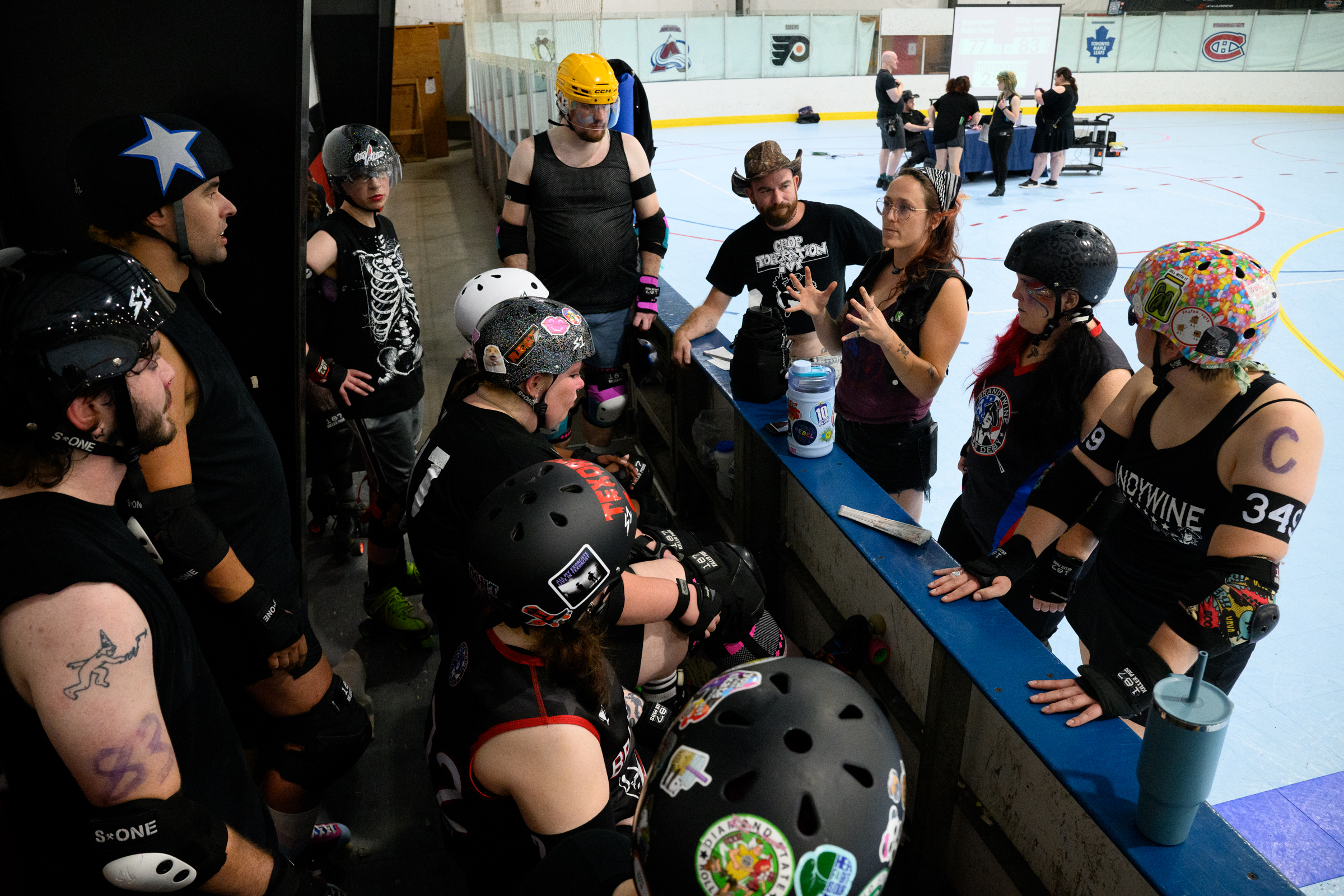
    After graduating nursing school and navigating the loss of her mother, Corinne Kucewicz was looking for something positive to focus her energy on. That’s when she found Brandywine Roller Derby, Chester County’s only league.

    Now the league’s president, overseeing roughly 26 members, Kucewicz, 28, worries about Brandywine’s future as they struggle to find a permanent and affordable home in Chester County to practice, hold games, and fundraisers. Without any roller rinks in the county, they’ve ended up at their current space at a school facility in Exton. It offers enough room for their track, but with a slippery — and sometimes muddy — floor that can make skating conditions iffy, the location is starting to hurt retention.

    “It worries me if we don’t find another space that our league is going to go kaput,” said Kucewicz, who goes by Maria Von Scrapp on the track. “That would obviously be worst-case scenario, but unfortunately, as one of the leaders of the league, that’s something I have to worry about.”

    Corinne “Maria Von Scrapp” Kucewicz, captain of Brandywine Roller Derby, sits for a portrait at the 422 Sportsplex in Pottstown on Saturday, Aug. 22, 2026.Kriston Jae Bethel / For the Inquirer

    Roller skating has seen its peaks and valleys. There was a boom as far back as the 1880s. More recently it’s been a fixture of school trips or birthday parties. Roller derby, which started in 1935, has a long history itself, transforming from a race, to a full-contact sport, to a scripted professional-wrestling-esque performance.

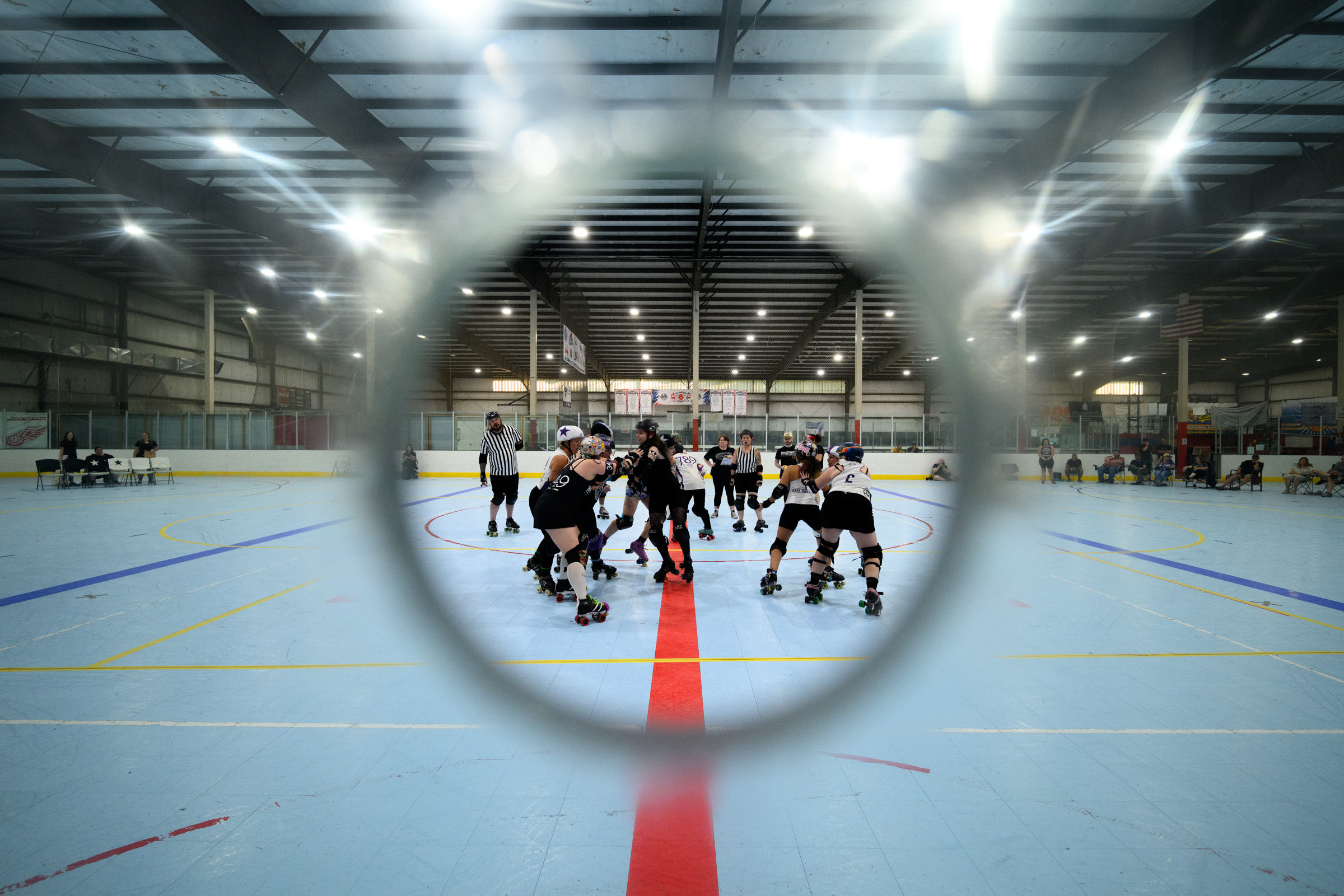
    Today’s roller derby — a DIY, gender-expansive, and LGBTQ+-friendly sport — cropped up in the early 2000s. Gone are many of the banked tracks, the raised, curved oval that was synonymous with derby of the ’70s and ’80s. Many leagues rent spaces and play on “flat tracks,” which is exactly how it sounds.

    COVID-19 offered a bit of a paradox for roller skating and derby. The pandemic led to the closing of rinks across the country, as many large venues struggled with shutdowns. It simultaneously put roller derby leagues on pause, with skaters unable to hold practices or bouts (i.e. games), eating into funds they had raised through selling tickets and skaters’ dues. Some leagues collapsed.

    Members of the Brandywine Roller Derby warm up on the track before a bout against the Dirty Jersey Roller Derby Violet Uprising at the 422 Sportsplex in Pottstown. Kriston Jae Bethel / For the Inquirer

    At the same time, roller skating spiked, with merchandisers struggling to keep up with demand as people increasingly took up the hobby.

    As pandemic restrictions eased, and roller derby leagues were able to practice again, they saw a depleted returning membership but heightened interest in the niche sport.

    Kucewicz was among them. She showed up with a cohort of other interested skaters to a 2024 recruiting event. The team took her in despite having no past skating experience, and taught her how to skate, how to fall safely, how to hit, and how to take a hit.

    “It was an amazing mix of friendly people and people that I saw myself being friends with,” Kucewicz said. “That was something that I definitely needed at the time, and is still important.”

    Before the pandemic, Brandywine had a large league that was doing well, Kucewicz said. When they were able to start skating again after, they were down to six returning skaters but also had a crowd of interested newbies.

    Rachael “The Texorcist” Gable laughs alongside teammates. Kriston Jae Bethel / For the Inquirer

    Finding a space has proven to be difficult. When the league was founded in 2010 by a group of skaters, they met at the Caln Roller Rink in Downingtown. But a changing of the rink’s ownership ultimately closed the rink.

    The league ended up at Collegium Charter School in Exton two years ago, practicing in an outdoor-indoor, climate-controlled space. The floor is, essentially, plastic tiles on top of dirt. When it rains, mud seeps through.

    The floor itself is uneven: On one side of their track, it goes uphill; the other, downhill. Aside from scrimmaging, derby is a lot of learning and drilling fundamentals, focusing on agility and footwork. A slippery, uneven floor makes that difficult.

    “Members have left and gone to other leagues because they’re afraid, because our floor is so slippery, that they’re going to injure themselves. Or they just want a higher level of derby that we can’t really provide at this moment because our floor is not that great,” Kucewicz said.

    Brandywine Roller Derby and Dirty Jersey Roller Derby Violet Uprising compete during a bout at the 422 Sportsplex in Pottstown. Kriston Jae Bethel / For the Inquirer

    As they prepare for a new class of recruits — they’re holding a new skater program Sept. 20 — they want to find something more suitable.

    In their hunt, they’ve been priced out of anywhere that can be an option for them, said Christi Tuminelli, a league skater who has been overseeing the search for a new space. Most warehouse spaces are going for $12 to $24 per square foot. Their budget is closer to $2 per square foot. They’ve reached out to more than 30 properties. Most have gone quiet.

    Others don’t work, either because the property doesn’t fit the size of the track they need, or the owner isn’t interested in sports. They also have had to contend with worries about damaging the floor, which they say is a nonissue.

    The league is open-minded about its future home; Tuminelli was contacting farms about their barns. They need an open space, with minimal columns in the way. The track spans 108 by 75 feet, which is roughly 8,100 square feet. They want to stay in Chester County, with the hope of getting more involved with the community when they have a stable location. Ideally, they’ll be able to host the public for games or fundraising events. Right now, the team hosts its bouts in Pottstown, in Montgomery County. They’re breaking even between renting the space and raising funds from ticket sales, they said.

    “Right now we’re at an impasse because we need the space to generate the income, but we can’t afford the space without new people,” Tuminelli said. “We are a working nonprofit that can pay sustainable rent. We just can’t compete with the market rates in Chester County.”

    While derby is a sport, it’s also a community.

    Najah “Chaotic Condor” Coon from Brandywine Roller Derby sits on the bench during a recent bout. Kriston Jae Bethel / For the Inquirer

    Tuminelli — or Mother Mayhem, on the track — went to her first bout wracked with nerves but walked away feeling excited and empowered. Tuminelli, 42, was never a “sports girlie” growing up, she said. But if she had known what they offered, maybe she would have joined earlier.

    With other teams an hour or so away from the suburbs, it’s an important to have the outlet within their own community, Tuminelli said.

    “When I moved here from New York, I didn’t know anybody. And having a kid that was young and being in a new space, it’s scary as a new mom,” she said. “I wanted something for me, and this was great. Derby just allows you to do things. It raises your confidence.”

    This suburban content is produced with support from the Leslie Miller and Richard Worley Foundation and The Lenfest Institute for Journalism. Editorial content is created independently of the project donors. Gifts to support The Inquirer’s high-impact journalism can be made at inquirer.com/donate. A list of Lenfest Institute donors can be found at lenfestinstitute.org/supporters.
  • The new head of Chesco’s economic engine knows that open-space preservation is part of the county’s ‘culture’

    The new head of Chesco’s economic engine knows that open-space preservation is part of the county’s ‘culture’

    When he started as an intern 27 years ago, Mike Grigalonis never expected to become CEO at the Chester County Economic Development Council. But now he’s taken the top job, leading an organization that propels business growth in the county.

    Since then, he’s seen the council grow from a six-person operation to one that boasts more than 40 employees, with teams dedicated to building out the workforce, supporting agriculture, and directing hundreds of millions of dollars to projects in the county. Grigalonis succeeds his longtime boss, Gary Smith, who stepped down July 1.

    As the council has grown, so too has Chester County, which remains the richest of Pennsylvania’s 67 counties.

    “I’m excited and grateful and humbled for this opportunity,” said Grigalonis, 53, who lives in Upper Uwchlan Township. “I don’t take it for granted, and I’m really excited about what’s to come.”

    The Inquirer talked with Grigalonis about the current economic landscape of the county.

    This conversation has been edited for clarity and brevity.

    What’s changed most since you started in 1998?

    In some ways there has been a lot of change, but in some ways there haven’t. I think about open space preservation, for example. … I think what this county, over generations of leaders, has done an amazing job of is balancing, making sure that we continue to have that open space, which is a big part of our culture, a big part of I think what makes us attractive and successful, but still having development and job creation and innovation and all those things happening at the same time.

    How do you balance preserving the culture of Chester County while fulfilling the council’s mission?

    Very carefully. … I always start by saying up front that I totally support open space preservation. I completely acknowledge the value that it’s brought to the county.

    Do I feel that sometimes we sometimes lean maybe a little too heavily with the open space? Maybe. The planning commission does what they call a non-residential construction report. They look at institutional, they look at industrial, and they look at commercial. And in 2025, which is the most recent data, that was down pretty dramatically, the lowest it’s been in like 10 or 11 years. Is that a trend? Is it an aberration? It’s too early to tell.

    And why is that? There’s lots of reasons — construction costs are high, borrowing rates are high. There are tariffs that maybe were at play. There’s lots of reasons, but do people sometimes shy away from doing projects in Chester County? I don’t know that.

    I want to make sure that we strike the balance again.

    What do you see as the future for farming in Chester County?

    I think the future remains bright. I think we, as an organization, are highly committed to supporting ag[riculture]. … It’s a really strong ag team that’s grown over the last couple years. We have something called AgConnect, which is an awesome partnership with the county, and I’m seeing a lot of a lot more awareness and visibility.

    We’ll see how that, longer term, translates to some of the economic metrics, but I think that awareness, engagement, visibility with the ag community is stronger because of the efforts of AgConnect and others.

    What do you see as the future of suburban office development in the county?

    I don’t know the answer. I wish I did. What I do see is obviously everybody’s aware of it. Developers are thinking smart about it. … Obviously, King of Prussia has the main street, adjacent to the mall. … In Philadelphia, this is a huge thing where they’re converting office buildings to residential. There hasn’t been a ton of that out here, but there’s been a few of those that have happened. … You’re probably going to see some more destination mixed-use creative amenities, maybe some conversion to residential, and then a refresh of office space.

    What’s the future of Coatesville?

    I think, obviously, there’s been some starts and stops, and there’s been some successes and some things that haven’t worked. But I think there’s some great people in that community. There’s a lot of people that are dedicated to making sure that redevelopment happens there. I think there are signs. The train station obviously has made tremendous progress. There’s a new energy around The Flats. There’s some things that are going to happen on Lancaster Ave[nue] that are on the verge. Ash Park was just completed, so there’s a lot of things happening there. I just don’t want it to be forgotten.

    We’re seeing some proposed redevelopment of Superfund or brownfield sites. Do you see this as a viable way of reusing this land?

    We’ve always been super supportive of that. … I think that will absolutely continue, and it should always be a top priority, because that enables us to strike that balance to take already developed sites and buildings and kind of repurpose them. That should be a huge part of our strategy moving forward.

    Do you think the proposed data centers will actually be built here?

    There are concerns that need to be addressed. I do think that data centers aren’t all evil. I think there are some positives that can come out of it. There’s construction jobs and there’s tax ratables. … We’ve always competed as a county, as a region, really as a nation, on innovation. So I think data centers, we’re going to have to figure out: How do we construct them the right way? It should not be the Wild West. It needs to be very thoughtful and very careful.

    What’s the future of QVC and its campus in West Chester?

    QVC is an incredible success story. So, no matter what happens, we’ll always be super proud and grateful that QVC was born in Chester County. … I don’t know how to forecast the future [as the company emerges from bankruptcy]. … We certainly want to be supportive. We certainly hope they succeed.