Author: Brooke Schultz

  • A Chesco play area memorializes a child who died at 7 days old. His father is fighting plans to move it.

    A Chesco play area memorializes a child who died at 7 days old. His father is fighting plans to move it.

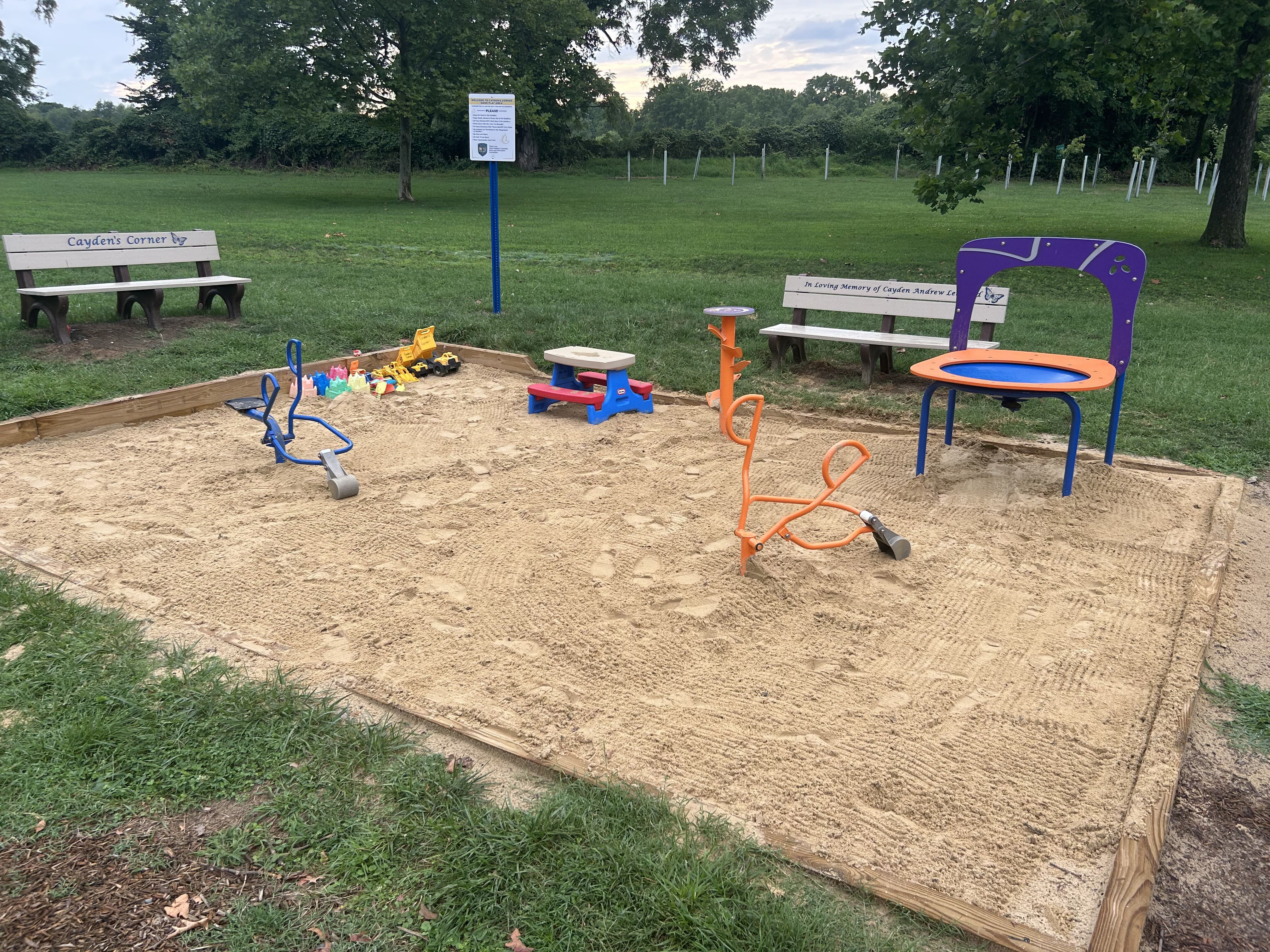
    When Ryan Leithead’s son Cayden died at just 7 days old in 2022, he channeled his grief into making something. Alongside West Pikeland Township officials, Leithead worked for weeks, mostly in freezing rain, to build what became Cayden’s Corner, a sandpit play area at Pine Creek Park’s playground.

    A dedication sign, with a photo of Cayden’s little hand encircled by his parents’, notes that the hope is “that this sandbox sheds some light on his memory and brings joy to many children for years to come.”

    It offered a glimmer of light amid a tragic, unexpected loss. Leithead’s oldest son, 6, and daughter, 2, play there often. “It’s kind of like they’re playing with their brother because they’re there,” he said.

    But now, just a few years later, Leithead, 37, worries the memorial will be swept up in proposed playground renovations, which are the subject of several grants and public fundraising efforts to update the decades-old equipment and make the site more accessible. Final plans haven’t been released yet, but officials say it could involve relocating the sandpit and replacing the memorial.

    For Leithead, it feels like losing Cayden again.

    “It was built by those who loved Cayden. It kind of goes into that term of ‘grief in action,’” he said. “I spent the first year after he died kind of focusing on this — right, wrong, or indifferent, that’s how I grieved. So it’s a memorial built by his father.”

    The elected board of supervisors will vote on the proposal and plans “when they are available,” said Joan Blatcher, township manager. Completion of the full renovation is anticipated for mid-2027, she said.

    “The intention behind Cayden’s Corner was to provide a memorial for Cayden Leithead. If the sandpit is relocated, it will continue to be called Cayden’s Corner,” she wrote in an email. “The benches and a dedication explaining the reason for the name have always been part of the plan for the new playground.”
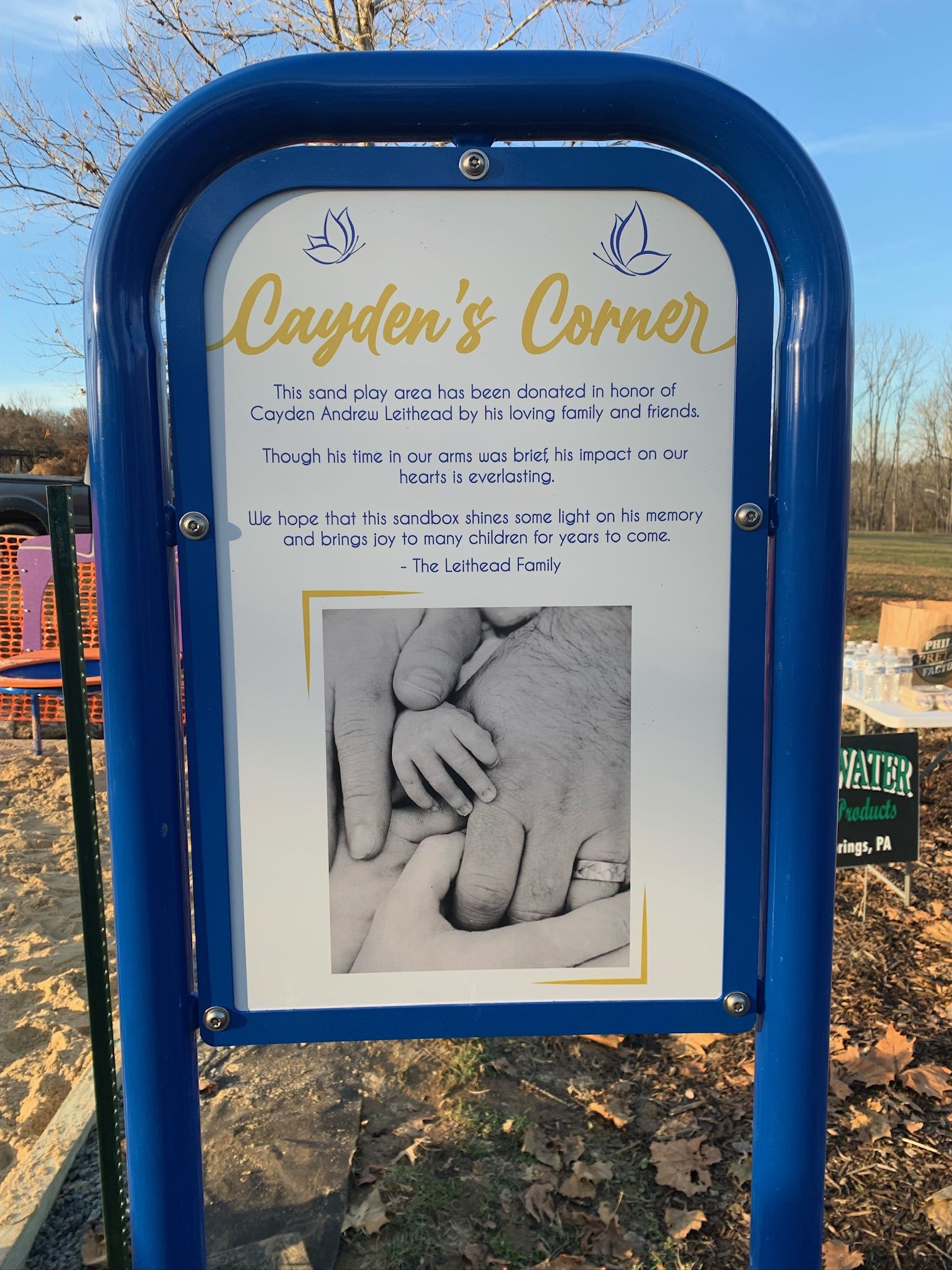
    After his son Cayden died at just seven days old in 2022, Ryan Leithead worked with West Pikeland Township to build a sandpit in honor of Cayden’s memory. Under proposed renovations of the playground, officials are considering relocating the sandpit and removing the existing dedication sign.Photo courtesy of Ryan Leithead

    Leithead isn’t against renovating the playground. When he helped bring the sandbox to life, seeing the whole playground renovated was something he hoped for. His work with the project is also how Leithead became involved with the township’s parks and recreation committee. But he struggles with the idea of relocating or altering the memorial they built in the early days of that grief.

    “The analogy my wife used was: Say you have a wedding ring that was a family heirloom for generations, and you lost it, and your husband turns around and says, ‘Well, I’ll just buy a new one, it’ll be bigger and better,’” he said. “It’s not the same, right? You lose the meaning behind that heirloom.”

    At a meeting on Aug. 17, vice chair of the supervisors Noreen Vigilante said that the sandpit was within the “fall zone” of the swing set, according to a recording shared with The Inquirer. A preliminary design, which the township hasn’t released, would relocate the sandbox and make it bigger. A recording of the public meeting is not available online.

    She also mentioned removing the existing sign dedicating the corner, saying that the playground designers felt it was “depressing.” Signage would still be there, later saying they could “negotiate” the sign, but not the sandpit’s placement.

    In an email, Vigilante said that in early meetings “it was requested that the playground not be moved.” Leaving the sandpit where it is “severely limits the opportunities for a safe and accessible design.”

    The sign, she said, is a “trigger for others who have also lost children or have family members who have lost children.”

    “The sign is so large and centrally located that it cannot be avoided if it makes one uncomfortable. An alternative is to have a smaller sign with the same text by the tot lot/sand play area of the playground so that those who may also be grieving do not have to look at the sign when they are attempting to enjoy a playground with other children,” she wrote. “A playground should provide the opportunity for adult-child enjoyment.”

    During the meeting last week, officials said they hadn’t heard of any complaints about the sign when the Leitheads asked. Separately, Leithead said the purpose of the sign was “to honor Cayden’s life and to show how a community came together to support a grieving family.”

    Other supervisors disagreed with the playground designers’ assessment.

    “I don’t care what the playground people think,” supervisor Harold Hallman III said at the meeting. “It’s a park of West Pikeland playground. It’s a part of West Pikeland. It should stay there.”

    An early supporter of the memorial plaque and sandpit, Vigilante wrote in an email that she continues “to support the sandpit and a memorial plaque in the playground.”

    “However, I feel very strongly that in my role as a township supervisor, I have an obligation to represent all of the residents/children of the township and that all children of all abilities should have safe access to a playground,” she added in an email.

    A Facebook page, Preserve Cayden’s Corner, has collected just shy of 100 members, asking fellow residents to push back on the proposed relocation.

    The board will meet next on Tuesday, Sept. 8.

    Blatcher, the township manager, said that officials have “had multiple conversations with the family” and said it will share the plans with the family when they’re available. Leithead said he hadn’t heard about the possible relocation officially from the township; he approached them at August’s meeting after hearing about the possibility through someone else.

    Blatcher wrote that Vigilante championed the proposed renovation, helping secure a second grant for $230,000 and has been “instrumental” in raising more than $65,000 in private donations to cover what the grants don’t.

    “The updating of the playground is for the benefit of all West Pikeland Township’s residents and will make the playground ADA accessible and allow more children to access the full play area, including the sandpit,” she said.

    Leithead said he just wants the ability to weigh in on the design, saying it wouldn’t be hard to modify the existing sandpit to be ADA accessible, or to relocate the swing set to keep the sandbox out of the fall area.

    “We would have never built this three years ago if they said there is even a 1% chance that, ‘Oh, when we redo the playground, we’re going to have to move it,’” he said.

    This suburban content is produced with support from the Leslie Miller and Richard Worley Foundation and The Lenfest Institute for Journalism. Editorial content is created independently of the project donors. Gifts to support The Inquirer’s high-impact journalism can be made at inquirer.com/donate. A list of Lenfest Institute donors can be found at lenfestinstitute.org/supporters.

  • The controversial East Whiteland data center project has been issued its second stop-work order

    The controversial East Whiteland data center project has been issued its second stop-work order

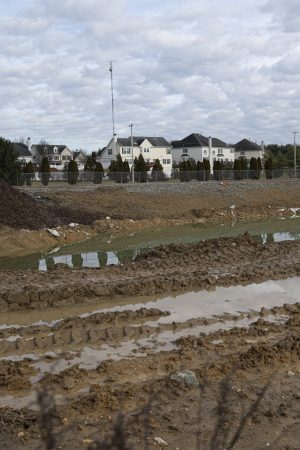
    The developers of a controversial 1.5 million-square-foot data center have again been ordered by East Whiteland Township officials to stop work, this time over a lack of “clear documentation” showing the project will have sufficient water to operate the facility.

    The stop work order, issued Wednesday, tells the developers to “immediately cease work” on preliminary construction, such as concrete pads, footings, and a control house that has been partially completed.

    It is the second time in recent months that the township has told the developers to halt work at the Foote Mineral Co. Superfund site. In July, township officials had directed the developers to stop any work that moved earth while the township sought “greater clarity” on the soil and health and safety plans. The order came amid concerns from residents that the Superfund site had not been sufficiently remediated. Work resumed by the end of the month.

    Under the latest stoppage order, work at the proposed data center site will not restart until developers Green Fig LLC and Sentinel Data Centers provide the township with confirmation from Aqua, the water utility company, that “sufficient water is available and committed to this project and the Developer’s commitment to move forward with ensuring sufficient water is brought to site.”

    A representative for the developers did not immediately respond to a request seeking comment on whether they have the documentation needed.

    Earlier this month, through a Right-to-Know request, residents surfaced a 2024 letter from Aqua telling the developers: “Unfortunately, Aqua does not have the capacity to meet the peak demand … as requested.” The letter recommends the developers “evaluate the construction of a storage tank on your site to provide peak flow requirements if needed.”

    <iframe src="https://drive.google.com/file/d/1-8epaPC67vXIsipqNq9PTNMSWTu8OKME/preview" width="640" height="480"></iframe>

    The letter arose at an Aug. 19 board of supervisors meeting, with community members pressing the township to stop construction and revoke permits.

    The developers have tried, through several avenues, to alter the final design of the project that was originally approved in 2024 by moving away from using millions of gallons of water a day to cool the data center and instead installing air chillers.

    An attempt to update the plan earlier this year drew staunch opposition from residents, who turned up to protest the project, in one case shutting down the meeting. The developers tried to appease the community with an offer to downsize the project, but abandoned the updated proposal, saying they would instead build the 2024 approved plan after the township did not act fast enough.

    They returned to the township in July, however, again seeking to alter how the building is cooled, emphasizing that it would save water.

    Along with the proposed changes, the developers again offered to radically downsize the footprint of the complex, from 1.5 million square feet with two data center buildings roughly 772,000 square feet each to a total of 536,000 square feet. That offer came in response to a request made by a township official the day prior to the public meeting, according to emails obtained by The Inquirer.

    The township’s three elected officials tabled making a decision then and still have not voted on the proposed changes. They next meet on Sept. 9.

    Meanwhile, in an Aug. 3 email obtained by The Inquirer, a representative for the developers recanted the offer to resize the data center, telling the township that due to the “delay occasioned” by the tabling, “the Applicant is no longer able to facilitate further modifications … regarding building size.”

    This suburban content is produced with support from the Leslie Miller and Richard Worley Foundation and The Lenfest Institute for Journalism. Editorial content is created independently of the project donors. Gifts to support The Inquirer’s high-impact journalism can be made at inquirer.com/donate. A list of Lenfest Institute donors can be found at lenfestinstitute.org/supporters.

  • The grand opening of this West Chester bookstore went exceptionally well. The owners had to close early after they almost sold out.

    The grand opening of this West Chester bookstore went exceptionally well. The owners had to close early after they almost sold out.

    Jessie Hilker and her father, Jeffrey, knew they had built some buzz and intrigue ahead of opening their West Chester fantasy bookshop, Leaves & Lore, this past weekend.

    But nothing could have prepared them for the hours-long line that wrapped around the building and left their shelves “pretty much barren.”

    “We’re a little, like, what just happened,” Jessie Hilker, 29, said.

    Leaves & Lore officially opened its doors Saturday at 118 N. High St., and the response was immense and instantaneous. The bookshop, which is themed around fantasy novels, had a line for six hours. It sold 600 orders on the first day. Jeffrey Hilker, 64, estimates about 1,500 people walked through.

    “I’m a pretty optimistic person, and I thought we would do well,” he said. “I just didn’t think it would be like this.”

    Though spotlighting fantasy and “romantasy,” the bookshop also sells genres like romance, dark romance, mystery/thriller, horror, and fiction, plus books for kids and teens.

    It also carries “bookish merch” like apparel, bookmarks, themed candles, stickers, and more. Customers can purchase a “book bouquet” — a book swaddled with flowers — or book the space for events (think birthdays or girls’ nights) and photography sessions (like engagement shots or bridal portraits).

    A sweet treat or freshly brewed coffee and tea are also on offer.

    By Saturday night, the shelves were nearly empty, Jessie Hilker said. On Sunday, she and her father had planned to open during normal hours, from 10 to 4 p.m., but had to close early because they had run so low on stock.

    “It’s definitely a passion project,” Jessie Hilker said. “I wanted to open a bookstore because I enjoy reading. So to see so many other people enjoy it, as much as I do, makes it very special.”

    Jessie Hilker is a lifelong reader. If she was punished for something as a child, she would get her books taken away, she said. Her dad had a hard time giving her enough books to read. During college, she fell out of the habit for a bit, but the fantasy genre sparked the love within her again.

    Leaves & Lore opened at 118 N. High St. in West Chester with enthusiastic success on Aug. 22. Lines wrapped around the building for hours.Photo courtesy of Robin Dayley

    She is not alone. “Romantasy,” a blend of romance and fantasy, has buoyed the publishing industry in recent years, selling millions of copies and generating hundreds of millions of dollars. You’ll see those novels, like A Court of Thorns and Roses or Fourth Wing and plenty more, on Leaves & Lore’s shelves. Traditional fantasy, alongside romance and dark romance, has also seen staggering success.

    Propelled in part by social media, like TikTok’s “BookTok” community, independent bookstores are also seeing a boost from the books’ popularity. Across the region, themed bookshops have done well; Philadelphia’s Cupid’s Bookshop, which is entirely dedicated to the romance genre, drew in hundreds when it opened last year.

    Fantasy is not exactly Jeffrey Hilker’s genre, but he and his daughter always wanted to open a business together. When it became clear that business would be a bookstore, he was down to see her vision through. They went to Europe, traveling across Scotland and the U.K. to peruse bookshops that they wanted to emulate.

    For about two years, they kept an eye on available spaces in West Chester. They knew that was where they wanted to be since they both live in the borough, and it felt like the right spot for such a shop.

    Leaves & Lore is fantasy-focused, and offers bookish apparel and merch, along with “book bouquets” and freshly brewed coffee.Photo courtesy of Robin Dayley

    Jessie Hilker wanted Leaves & Lore to feel like stepping inside a fantasy novel, with the space “Renaissance-inspired, very medieval.” She pictured bookcases that stretch floor to ceiling and a moving ladder; her father was “just trying to make it happen,” he said.

    They built up a following on social media. A peephole let passersby take a peek as the Hilkers brought Jessie’s vision to life, creating some in-person interest, they said.

    Still, their opening was unbelievable, Jessie Hilker said.

    But they plan to keep the momentum going. They have events scheduled for some forthcoming book releases in the fall, and an interest to partner with local authors on signings.

    Jessie Hilker said she was “ordering like crazy” to replenish the store’s stock, though there was enough supply left to fill the shelves to reopen Tuesday.

    “I wanted to just be a place where people feel like they can come and just escape for a little bit. Whether they come to study, whether they come to pick up a book … whether that’s picking up just their coffee for the day, I hope it’s just a place that many people feel like they are accepted and welcomed,” she said.

    This suburban content is produced with support from the Leslie Miller and Richard Worley Foundation and The Lenfest Institute for Journalism. Editorial content is created independently of the project donors. Gifts to support The Inquirer’s high-impact journalism can be made at inquirer.com/donate. A list of Lenfest Institute donors can be found at lenfestinstitute.org/supporters.

  • A settlement could preserve more of Chester County’s sprawling Rock Hill Farm — but still allow for development

    A settlement could preserve more of Chester County’s sprawling Rock Hill Farm — but still allow for development

    A proposed settlement with the developer who is seeking to turn the rolling, open Rock Hill Farm into housing could significantly preserve more of the land than initially planned, if township officials decide to accept it.

    During a public meeting Thursday, Willistown Township officials laid out for residents a potential settlement between the township and Rock Hill Farm Acquisition LLC, the developer who purchased the sprawling 222-acre parcel, and an adjacent 24-acre property, in 2021. Supervisors did not vote on the plans Thursday night; a vote will be held at a future, undetermined meeting.

    A Chester County judge last month sided with the developer, overturning the township’s September 2024 denial of plans to build more than a dozen homes on the property. The township appealed the ruling earlier this month.

    But under a proposed settlement, the developer would radically scale down the plan that was before the court, preserving roughly 166 acres of the larger tract, or 75% of the land, under a conservation easement. The land would be subdivided into 18 lots, down from roughly 24, with all but one lot proposed for residential development. The one non-residential lot would be conserved as open space. The lots vary from about four acres to up to 26 acres.

    “This is a good ‘best-case scenario’ for us,” said Molly Perrin, chairperson of Willistown’s board of supervisors. “It could get a lot worse than this. Ongoing litigation would almost ensure that.”

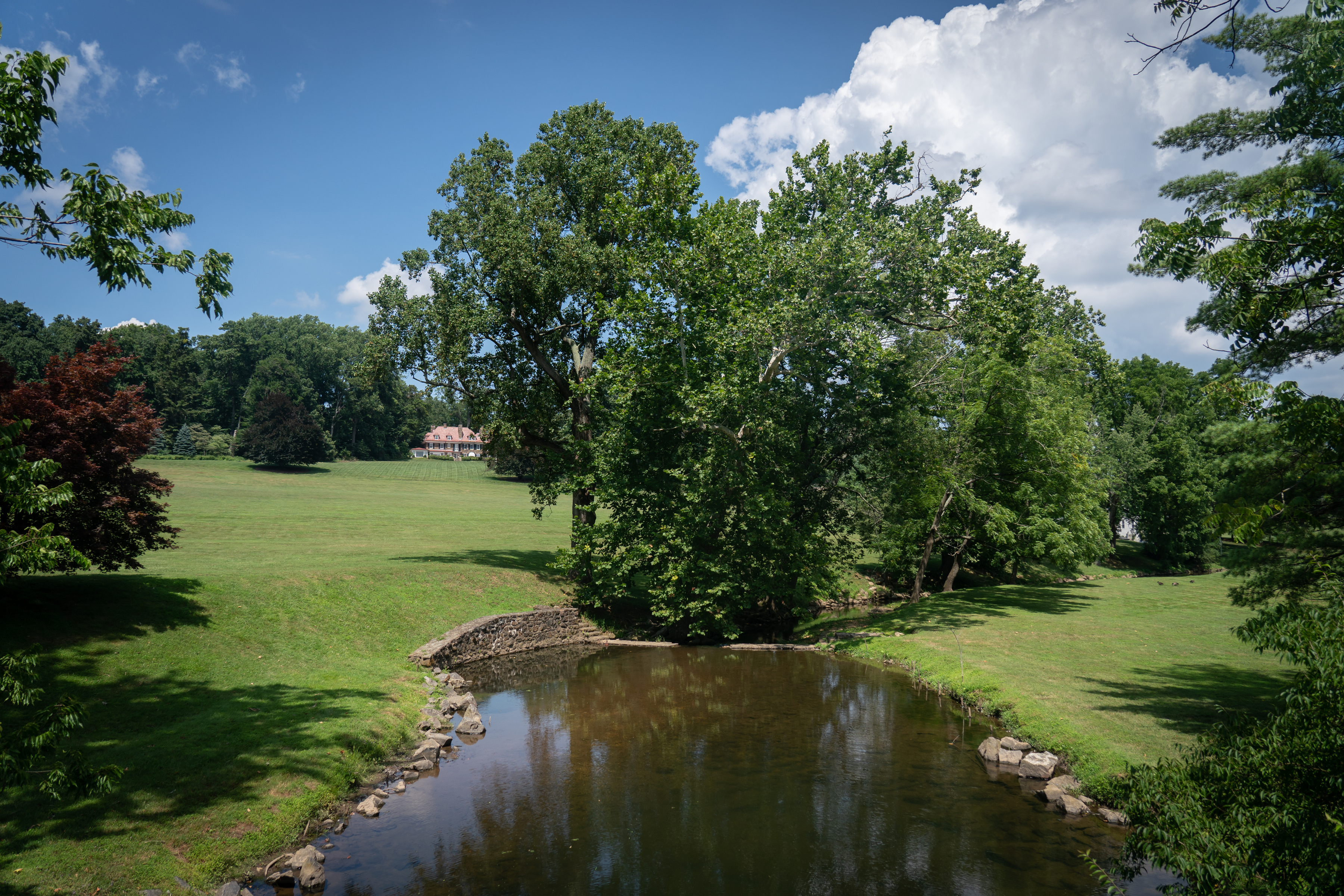
    A view of part of Rock Hill Farm, in Paoli, Tuesday, August 2, 2022. JESSICA GRIFFIN / Staff Photographer

    A conservation easement for the preserved land would be held by the Willistown Conservation Trust. The trust would maintain the protected woodland as private property, not public land.

    Separately, the developer has offered Willistown Conservation Trust the exclusive option to buy the adjacent 24-acre property, if the settlement agreement is approved by the township and court. The township would plan to buy it from the trust using designated open space funds, and preserve the property as open land. The board voted to approve the purchase in February, officials said.

    “We understand there are members of the community who feel very strongly that the entirety of the 222-acre parcel should be coJ. Brian O’Neillmpletely conserved with no future development,” Perrin said. “Municipalities cannot simply ban a property from being developed. It would be nice if we could, except that when that’s turned against us, we would all hate it.”

    The property, purchased by developer for $25.4 million, boasts rolling hills, meadows, woodlands and historically significant properties across its hundreds of acres.

    For years, it had been owned by a conservation-minded local family. When it sold to O’Neill, who originally planned to build up to 24 residential lots on the grounds with only roughly 52 acres of land preserved, it sparked a community battle.

    Rock Hill Farm in August 2022. JESSICA GRIFFIN / Staff Photographer

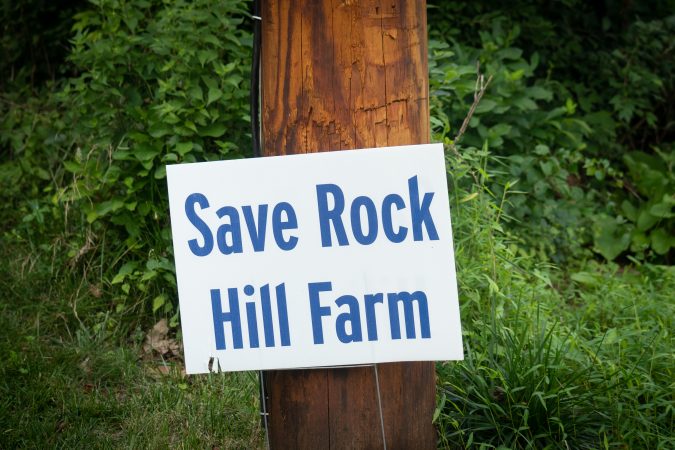
    Community members launched a “Save Rock Hill Farm” campaign in an effort to fend off the development, as other Chester County municipalities have successfully done when homebuilders have come knocking.

    At Thursday’s meeting, residents were relatively open to the proposed settlement.

    David Rawson, who lives in the township, thought it was a “far better plan than I thought anybody would be able to negotiate.”

    It’s the “best deal you’re going to get short of continuing to fight,” resident Joe Heenan told the board.

    “I’m not opposed to the fight,” he said, “but I think it’d be nice to have odds in the favor.”

    Others hoped more could still be done.

    Invoking President Franklin D. Roosevelt, Les Haggett, a leader of Save Rock Hill, noted, “Sometimes fear is the only thing we have to fear.”

    “I don’t think it’s the right time to settle,” he said. “My thought is, don’t be afraid. Don’t settle.”

    Supervisor Bill Shoemaker said the township was working to achieve the best possible plan. Though they feel their appeal is “based on good and solid reasons,” they thought that of their initial filing, too, he said.

    “The court is always a bit of a gamble,” he said. “So we have to consider very, very carefully what the best possible plan would be.”

    This suburban content is produced with support from the Leslie Miller and Richard Worley Foundation and The Lenfest Institute for Journalism. Editorial content is created independently of the project donors. Gifts to support The Inquirer’s high-impact journalism can be made at inquirer.com/donate. A list of Lenfest Institute donors can be found at lenfestinstitute.org/supporters.
  • West Chester limits where smoke shops can go, after seeing pushback when one opened in a neighborhood

    West Chester limits where smoke shops can go, after seeing pushback when one opened in a neighborhood

    West Chester will limit where future smoke and vape shops can open within the borough, after an innocuous corner store grandfathered into a residential neighborhood became a glowing, neon vape shop and brought pushback.

    Council voted unanimously Wednesday to amend its zoning ordinance to allow smoke and vape shops by conditional use only in the town center and commercial services district. The goal is to considerably limit where the shops can appear, after a resident came to council with concerns about the sale of a small corner store to a new owner who put in a vape shop. Its bright lights flooded the resident’s home, and it was right by school bus stops.

    The ordinance also defines smoke and tobacco shops as a retail store that primarily sells tobacco, CBD, THC, kratom, and vaping products. If at least 20% of the store’s display area is dedicated to the sale of smoking products, it’s considered a smoke shop.

    The measure also outlined parameters including limits on how close the shops can be to one another and requiring them to be more than 500 feet away from schools, public recreation facilities, day cares, school bus stops, libraries, and religious institutions. The shops can’t be permitted on a lot or within a building that is also residential. The shops can’t sell food.

    It also places restrictions on age, prohibiting those under the age of 18 from entering the shop without a parent or guardian, and requiring the business to verify ages. Anyone under 18 cannot be employed to work within the store.

    “It helps us kind of separate incompatible uses, preserve the quality of life, health, safety, and welfare of our residents, particularly the vulnerable populations,” said council member Lisa Kearns. “It also helps us make certain our business district remains diverse, and vape shops don’t take over our commercial areas or neighborhoods.”

    West Chester’s town center has at least five smoke and vape shops and the updated zoning won’t affect any of the existing businesses. Instead, the ordinance will keep others from coming into the roughly handful of other retail locations that are in residential areas, officials said.

    “We in the borough are not trying to stifle business as much as we’re trying to create a balance so that families and residents can have the quality of life that they’re looking for,” said Nicole Scimone, council president.

    A suggestion from the borough’s planning commission to carve cigar shops out as a separate entity was ultimately not included, as the amendment would require months before it came back to council for approval. At Wednesday’s meeting, Kearns urged the borough to adopt the amendment because she would “hate to see another vape shop open up where we don’t want it to be between now and then.”

    Meanwhile, an ordinance seeking to regulate the sale of kratom — an herbal substance that can have effects similar to opioids and stimulants, according to the National Institutes of Health — was sent back to committee for further refinement. Kratom often appears in vape and smoke shops.

    The ordinance would have prohibited the sale and public use of kratom and 7-OH, the synthetic of kratom, in the borough. It wouldn’t have prohibited the use or possession.

    Supporters of the “leaf” version of the substance — which often appears as a supplement or a tea — opposed West Chester’s proposed ordinance and pressed council to tweak the language.

    Some council members felt they were overstepping in passing a measure.

    “I think this is a big lane violation, quite frankly. We are not the FDA,” said council member Brian Travis. “I asked point blank the chief of police if this even was on the radar. It’s not. Nothing’s come up. It’s not a problem right now locally, but we’re making it a problem.”

    Council member Bernie Flynn said that, after talking with two soon-to-be West Chester University students, neither had heard of it. It made him wonder how popular it really was.

    “I don’t think we should be in the business of telling adults what they can or cannot do,” he said.

    Several bills in the state legislature have been introduced regarding the sale and use of kratom. In July, the U.S. Drug Enforcement Administration announced it planned to temporarily place the chemical found in the synthetic kratom, 7-OH, in Schedule I of the Controlled Substances Act, alongside drugs like heroin and LSD. That won’t apply to the plant itself.

    This suburban content is produced with support from the Leslie Miller and Richard Worley Foundation and The Lenfest Institute for Journalism. Editorial content is created independently of the project donors. Gifts to support The Inquirer’s high-impact journalism can be made at inquirer.com/donate. A list of Lenfest Institute donors can be found at lenfestinstitute.org/supporters.

  • Voters in a Chesco township will be asked whether to expand their board in November amid data center backlash 

    Voters in a Chesco township will be asked whether to expand their board in November amid data center backlash 

    East Whiteland voters will decide this November whether they should add more elected officials to represent them, after residents’ staunch opposition to a controversial 1.5 million square-foot data center project propelled them to petition for a larger board of supervisors.

    In a quick but forceful flurry, residents collected at least 500 signatures to get a question on the Nov. 3 general election ballot asking voters if they want two more elected officials. If the ballot issue is approved, it would bring the number from three to five members on the board of supervisors.

    The impetus for the question was the township’s handling of a proposed data center project, expected to be constructed at the former 79-acre Cyprus Foote Mineral Co. property, a Superfund site on the line between East and West Whiteland Townships.

    The project loomed large as township resident Jessica Larkin collected signatures for the referendum. She had to be “careful to clarify” that the question was not just on the data center, she said.

    “It’s connected, though, because this board and the overall township management is all connected to how these projects get pushed through and approved, and I think that the conversations, while it did start with the data center, did kind of just bring us to general approach in the future of the township,” she said.

    Board members are elected at-large and serve six year terms. They appoint township staff and members of the boards and commissions within the township, plus hear conditional use applications, levy taxes, and more.

    In a letter to fellow residents, Larkin wrote that “a township the size of East Whiteland would benefit from having five supervisors.”

    “A larger board has the potential to provide a broader range of perspectives, more balanced representation, and additional voices to help guide decisions affecting our growing community,” the letter continued.

    The township and supervisors board chairman did not immediately respond to a request for comment on the ballot question and its impetus.

    The data center project, which secured early approvals from township leadership in 2018 and 2024, stoked renewed ire from residents when its developers, Green Fig LLC and Sentinel Data Centers, requested to expand the project earlier this year. (The proposal has ultimately changed shape several times.)

    The community turned out in large numbers to oppose the data center’s expansion — and mere existence. They made lawn signs and posters, spoke for hours during public comment, protested outside meetings, and showed up in such large numbers that they even shut meetings down. Alongside other residents opposing projects in their communities, they traveled to Harrisburg to call on Gov. Josh Shapiro and lawmakers to institute a moratorium on data center construction.

    Earlier this week, amid increasing opposition among Pennsylvanians to the projects, Shapiro signed a sweeping executive order that requires local approval for projects to receive state permits, which could block many developments from moving forward.

    Larkin, 44, a resident of the township for more than a decade, lives about a mile away from the site of the planned data center. She started attending meetings on the proposal, she said, and it was “just eye-opening to see how the process worked, and to learn how these projects get approved.”

    “Ultimately, after attending several meetings and watching residents passionately oppose the project, it felt like we could use a little bit more representation,” she said.

    Along with a team of other residents, Larkin, in less than two weeks, collected enough signatures to meet the county’s early August deadline to put the referendum on the ballot.

    For local elected officials, data center projects have proved to be thorny. They hesitate to vote the projects down immediately. In the absence of state leadership earlier this year, a smattering of municipalities have, in recent months, charged township staff to pen ordinances to get ahead of any proposed projects so they have some level of control over where they go.

    In East Whiteland, construction of the data center remains fraught, with concerns of construction unfolding on a contaminated parcel prompting a temporary work stoppage and a pending request to make changes to the plans.

    Even if it has grown beyond just the data center, Larkin hopes residents see the need for more elected officials.

    “There’s close to 15,000 residents, and there’s so many talented people that spoke up at these meetings,” Larkin said. “And I just would love to see more representation and more involvement at this level and with this consideration in terms of developing our township.”

    This suburban content is produced with support from the Leslie Miller and Richard Worley Foundation and The Lenfest Institute for Journalism. Editorial content is created independently of the project donors. Gifts to support The Inquirer’s high-impact journalism can be made at inquirer.com/donate. A list of Lenfest Institute donors can be found at lenfestinstitute.org/supporters.
  • Westtown Township fired its entire historical commission. All six members just started their own society.

    Westtown Township fired its entire historical commission. All six members just started their own society.

    Members who were fired from Westtown Township’s historical commission after disagreements with local officials over the future of a historic inn have launched an independent historical society with a mission to protect buildings and history in the area.

    The six former members of the township commission now constitute the board of the Westtown-Brandywine Historical Society, which they started within weeks of the Chester County township’s three elected supervisors’ July vote to remove all members from the commission.

    “Although it’s very disappointing to see the township operate the way that they did, it was perhaps an opportunity for us to build something even better,” said Stephen Wahrhaftig, one of the society’s founders.

    Wahrhaftig, who served on the township’s commission for four years, had been involved with other historical organizations. One, which was privately run, seemed to operate more efficiently and effectively without political oversight, he said.

    Within the new society’s first two meetings, the group had already sketched out a long list of potential events and activities, Wahrhaftig said.

    “I was crushed when we were all dismissed, sad and angry. But within two weeks, we all came back together and said, ‘OK, let’s try something new and different,’” said Christine Gunsaullus, who served on the township’s historical commission for more than a year. “I feel like we’ve continued without missing a beat.”

    The newly formed society has already teed up four events in the coming months. They plan to host a hike and historical tour of Crebilly Preserve, the 204-acre preserved open space in Westtown that was purchased by the township in 2024 to fend off residential development. Also in the works is a historical book club. In October, the society will have a table at Westtown Day — an event the commission helped found — and will give historical tours of Oakbourne Mansion and Park, where festivities are held, and have activities for children.

    And they’ll host a presentation about the Darlington Inn, the 19th century property on the Crebilly tract that the township also purchased when it sought to preserve the farm. At that talk, they’ll show “what a gem we have and why it’s important to save,” Gunsaullus said.

    That stance is the very thing that the commission members believe led to their dismissal.

    The township’s officials have said that it wasn’t the conflict over the inn that led to the members’ removal from the commission, which sits on a two-acre parcel at the corner of State Routes 202 and 926. But the dismissal came as the commission had been advocating for the township to preserve the inn, while officials have sought to offload it.

    The inn was acquired in 2024 as part of a larger battle to preserve Crebilly. It was purchased with taxpayer money separately, and the township plans to sell it off to recoup the funds it used to buy it, and to prevent ongoing maintenance costs of the property.

    The members of the now-fired historical commission had argued that the inn was worth preserving, and asked officials to include a facade easement to protect the property from being demolished for commercial construction. The supervisors declined to do so at the time, but nothing precludes them from adding it in the future.

    The historical commission was composed of volunteers, appointed by the board of supervisors, and acted as an advisory body, with no governing power. The supervisors said in July they would be reexamining the goals of the commission, and invited the fired members to reapply once that process was complete.

    Even with the abrupt parting, the new society doesn’t foresee any tension blossoming between their new organization and the township they once served. They received the OK to represent the new group at the annual Westtown Day, which they think “bodes well” for working together. The township did not immediately respond to a request for comment on the group.

    The society will offer free membership to those who want to join, and the intent broadly is to do what they accomplished with the township “but do even more and do it better and do it faster,” Gunsaullus said. That includes a newsletter, lectures, and historical tours. They’ll also be able to look broaden the scope beyond Westtown and welcome members from outside the municipality.

    Without being under the restraints of the township government, they envision they’ll be able to offer more and varied events. But like the commission, the group is made up of volunteers with the leadership composed of working architects, engineers, an author, and people with marketing expertise. Only one member is retired, making the society a labor of love, Gunsaullus said.

    “We’re very pumped up about what we’re able to accomplish now,” Wahrhaftig said.

    And they’ve seen an outpouring of support, they said.

    “The response we’ve gotten from the community, from other historical societies and commissions — everyone is supporting us, wants to know how they can help, wants to provide venues for us to continue giving talks,” Gunsaullus said. “We’re very grateful for the support we’re getting from other historical geeks in the area.”

    There are no plans to make the society a nonprofit at the moment, they said, but they aren’t sure what the future holds. They’re operating with no funding (but that’s not exactly unfamiliar; their finances were already “hilariously abysmal” under the township, Wahrhaftig noted), and may consider donations.

    But aside from money, “It takes time, passion, and creativity, and we’ve got plenty of that,” Gunsaullus said.

    This suburban content is produced with support from the Leslie Miller and Richard Worley Foundation and The Lenfest Institute for Journalism. Editorial content is created independently of the project donors. Gifts to support The Inquirer’s high-impact journalism can be made at inquirer.com/donate. A list of Lenfest Institute donors can be found at lenfestinstitute.org/supporters.
  • Kennett Square is capping Airbnbs and other short-term rentals to address housing availability

    Kennett Square is capping Airbnbs and other short-term rentals to address housing availability

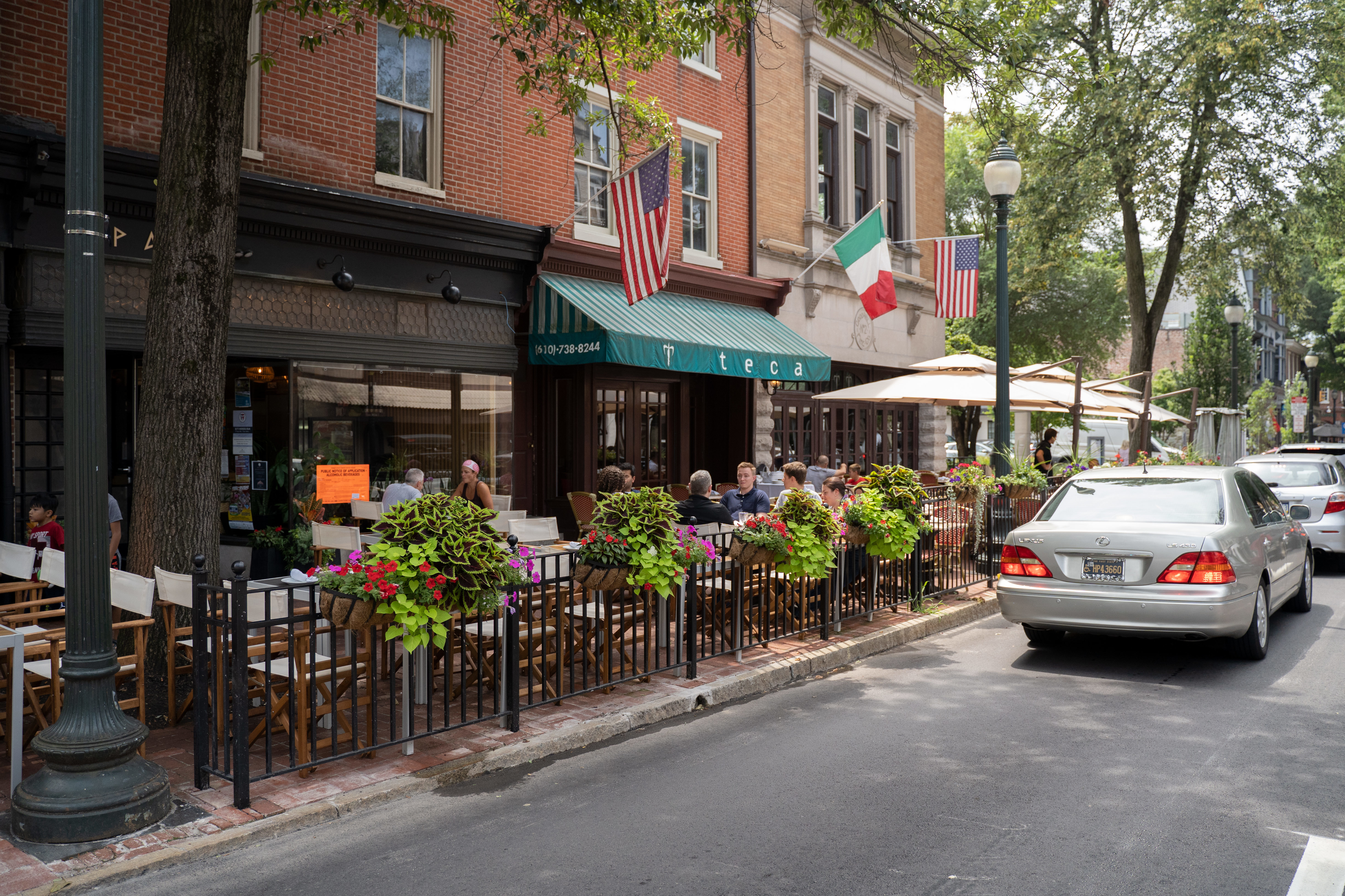
    In an effort to “drastically” cut down on short-term rentals like Airbnbs, Kennett Square council passed an ordinance Monday capping the number of active units and restricting where they’re able to pop up.

    Council voted unanimously to update its ordinance, allowing for a maximum of 20 short-term rentals, and prohibiting single-family homes from turning into short-term rentals as their primary use.

    The decision comes after the borough has seen soaring population growth in recent years — an increase of 16% since 2020 — but as housing has become increasingly limited.

    Residents had decried several homes getting snapped up, only to be turned into full-time short-term rentals. The borough’s planning commission took up the issue again this year, after a first foray in 2025 didn’t go far enough, officials said previously.

    Under the new short-term rental ordinance, the existing units — roughly 22 — will be grandfathered in. But if people sell, move, or don’t maintain rental registration, that status is gone. Future rentals will only be allowed in accessory units — like garages, or guest houses — and the number of available units won’t be able to exceed 20. The property must be owner-occupied during the rental period. Pre-existing short-term rentals will lose their grandfathering status if they don’t maintain rental registration.

    “The net effect of this is to actually drastically reduce the potential number of short-term rentals,” council president Bob Norris said. “But it actually reduces the possibility and the probability of having more and more, especially in single-family homes, which we heard loud and clear was a major issue.”

    In Chester County, which saw some of the highest population growth in Pennsylvania between 2020 and 2024, the demand for housing is outpacing supply. Fewer single-family detached homes were built in 2024 than in the last several years, according to the county’s planning commission, and fewer new units were being constructed this decade compared with last.

    Meanwhile, cost is going up. In 2024, the median sales price hit $525,000 — the highest in the county’s history. That year, 331 homes sold for under $250,000, a decrease from 462 units in 2023, according to the commission. In 2025, 315 homes were sold in that range, making up just 5.3% of all sales.

    Kennett Square officials have viewed cutting down on the short-term rentals as one way to address housing availability.

    Kennett Square isn’t the only one to grapple with balancing meeting the needs of tourism with the desires of residents. West Chester similarly capped its short-term rentals at 20, and contained them to its town center. It sent cease-and-desist letters to those that weren’t in that radius, officials said previously. But in Phoenixville, short-term rentals have been meeting a need not otherwise addressed by the borough’s singular boutique hotel.

    This suburban content is produced with support from the Leslie Miller and Richard Worley Foundation and The Lenfest Institute for Journalism. Editorial content is created independently of the project donors. Gifts to support The Inquirer’s high-impact journalism can be made at inquirer.com/donate. A list of Lenfest Institute donors can be found at lenfestinstitute.org/supporters.
  • A Chester County borough will join a regional police force, dismantling its own over budgetary concerns

    A Chester County borough will join a regional police force, dismantling its own over budgetary concerns

    Oxford’s century-old police department will be disbanded, with the borough joining several other municipalities under the service of a regional law enforcement agency next year, the borough council decided during a meeting that grew contentious Monday.

    The council voted 5-2 to join the Southern Chester County Regional Police Department and Commission and approved a memorandum of understanding for the services, effective Jan. 1.

    The borough has struggled for years to keep its police force from cutting too deeply into the municipality’s budget. Though Oxford’s financial health has been stronger in recent years than had been forecast, maintaining the department without increasing taxes was becoming untenable, officials said previously.

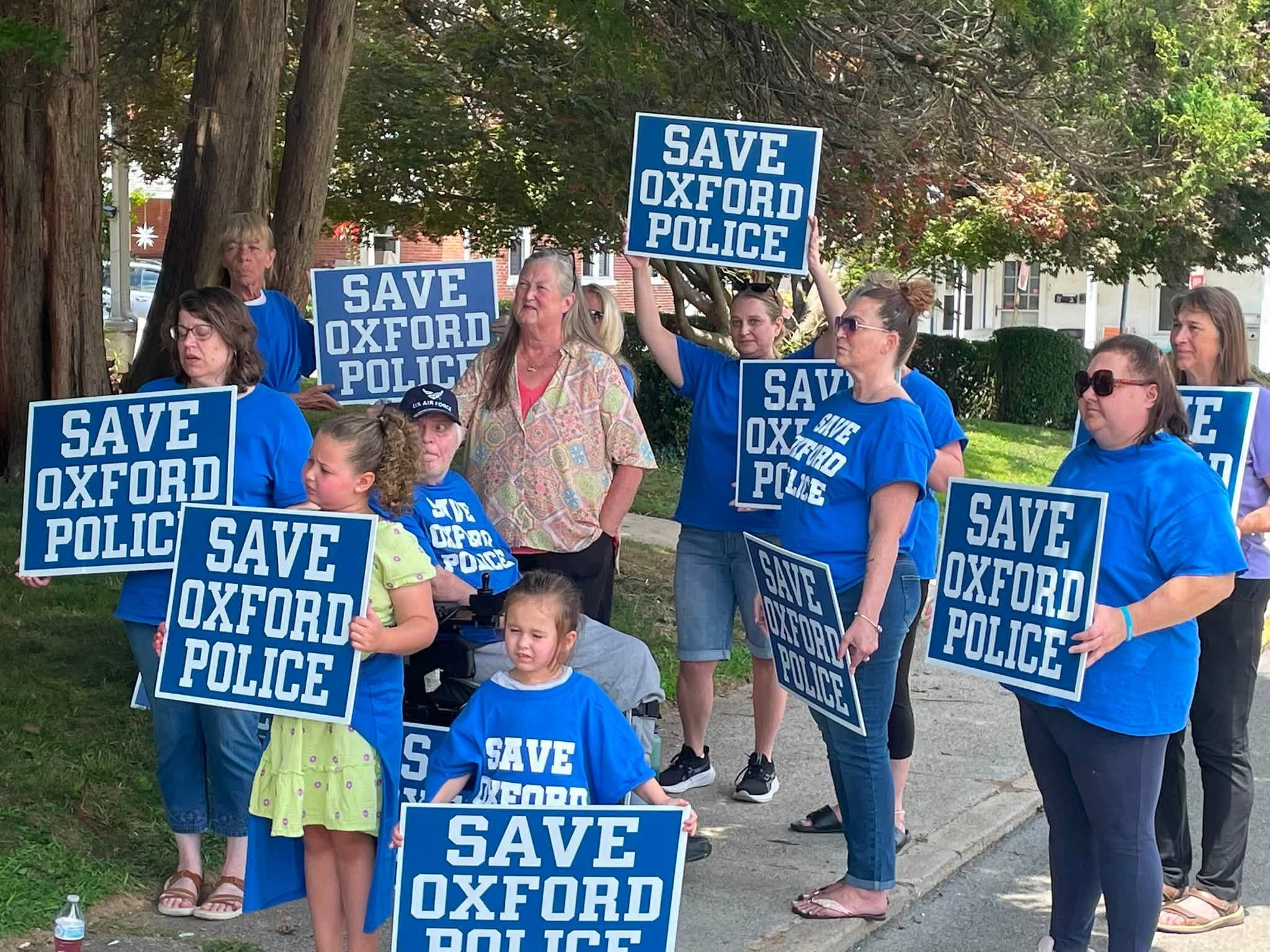
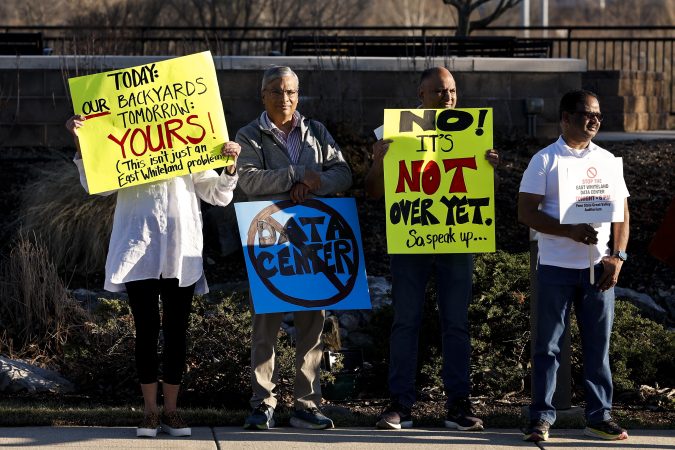
    But the choice to cut the department has stoked fears from residents, who have designed T-shirts and lawn signs, held protests, started petitions and social media pages, and turned up at meetings to oppose the effort.

    On Monday, residents called on the council to retain the department or delay the vote. The meeting grew contentious. As people shouted from the audience, the council requested that disrupters be escorted out several times through the 1½-hour meeting. As council members weighed their vote, attendees shouted for them to “resign now.”

    With the vote, Oxford will now join nearby municipalities New Garden, West Grove, and Avondale for service through the regional department.

    The regional department, formed in 2017, employs 21 full-time officers, who patrol and investigate, in addition to providing services like traffic safety, public outreach, and evidence management. The borough will have a seat at the table in the governance of the department.

    The memorandum stipulates that the department will add 12 new officers to serve Oxford, with a substation where officers will begin and end their shifts, according to borough officials. Two officers will be on patrol 24-7, as they currently are. Borough leaders hope to see the entirety of their 11-officer force accept positions in the regional department.

    Still, residents have worried over the loss of their homegrown force, with concerns about sluggish response times or increased crime due to the regionalization.

    Oxford police responded to about 4,400 calls for service, mostly for property and house checks, in 2023, according to the most recent data in a July analysis from Keystone Municipal Solutions.

    “What I pray to God does not happen is that I have to get a call because we didn’t have a local police department to protect our residents,” said resident Henry “Ted” Ruffenach, a funeral director. “I don’t want to get that call. If it does happen, this will be on every one of your resumes.”

    Bob McCarron, president of the Chester County Fraternal Order of Police, urged the council to consider whether giving up local control was worth regionalization.

    “It truly is a decision that, once you make it, you won’t be able to come back from,” he said.

    An attempt to table the decision — raised by council member Amanda Birdwell, who argued she had not talked to enough residents about their stance on regionalization — did not receive enough votes. She ultimately voted against regionalization, joined by council member Raul Juarez-Lara.

    “Even though people are being disrespectful and rude, we were still elected to represent them, and I feel like another reason I asked to table is because while I know we all want this to be over with, we can’t make a decision because we’re mad that people aren’t being nice to us,” she said. “That’s irresponsible.”

    But others felt it was the only sustainable way forward.

    “I truly believe that the only way to maintain policing in the Borough of Oxford … going forward, for my children, is regional,” council member Michael Brandt said. “We will not have a police force in less than several years at the rate things are going. I’m sorry none of you can listen to us and understand that.”

    The borough will hold a town hall with the regional department’s police chief, Joe Greenwalt, on Thursday.

    This suburban content is produced with support from the Leslie Miller and Richard Worley Foundation and The Lenfest Institute for Journalism. Editorial content is created independently of the project donors. Gifts to support The Inquirer’s high-impact journalism can be made at inquirer.com/donate. A list of Lenfest Institute donors can be found at lenfestinstitute.org/supporters.
  • The plan to turn a contaminated industrial site in Kennett Square into housing takes another step forward despite residents’ pushback

    The plan to turn a contaminated industrial site in Kennett Square into housing takes another step forward despite residents’ pushback

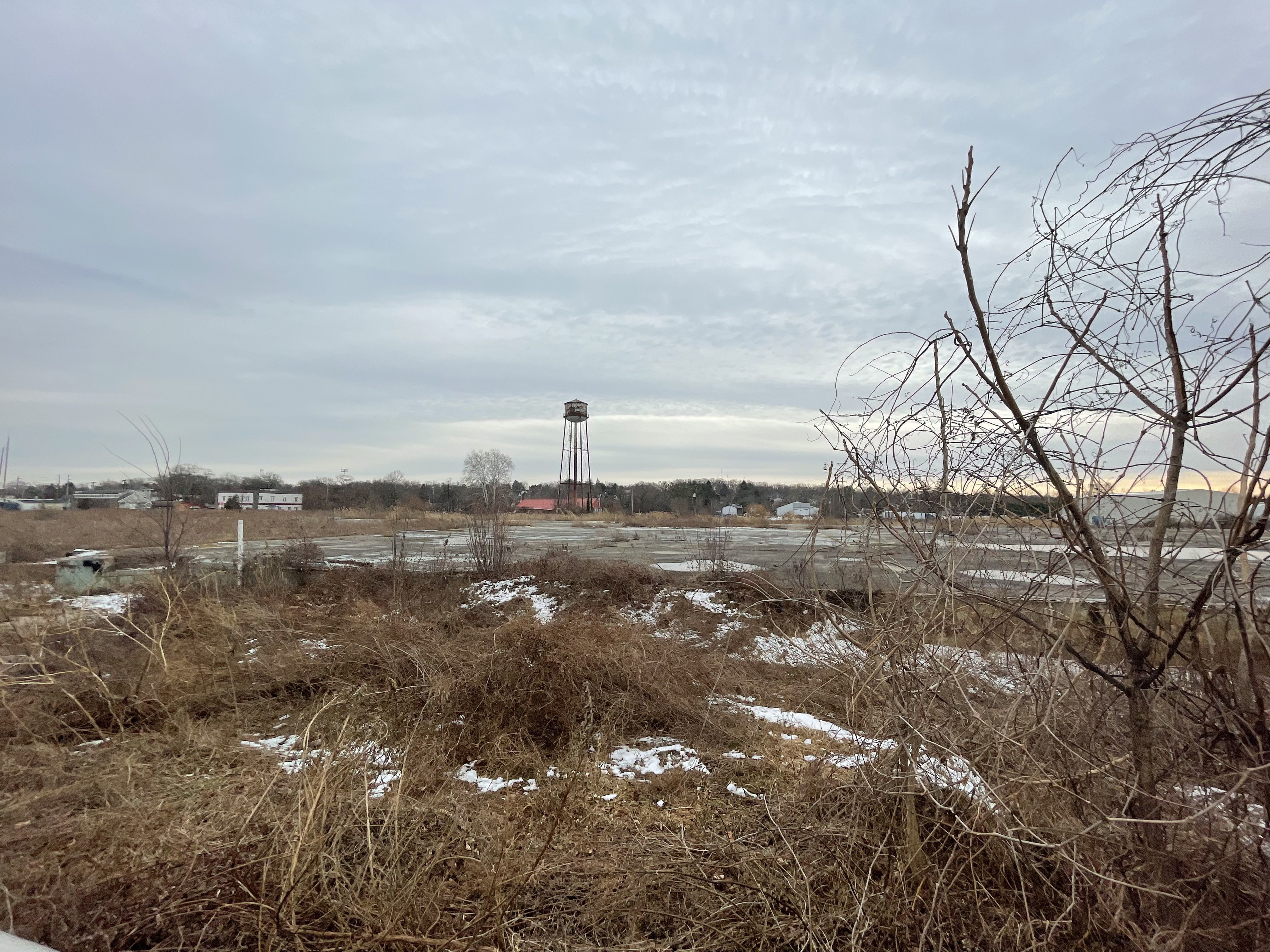
    Ambitions to turn a former industrial site in Kennett Square into a residential development inched closer to reality Monday — but residents still have concerns about the land’s safety after decades of contamination.

    Council voted 5-2 to advertise a change that would allow for housing and business development at the former National Vulcanized Fiber site, a long-vacant 22-acre industrial plant that ultimately contaminated the land with polychlorinated biphenyls (PCBs).

    Initial attempts to allow for redevelopment of the site stalled earlier this year, when a vote to advertise the amendment failed to garner enough support due to a vacancy and an absence on the council.

    But a revised ordinance received enough positive votes this week to be posted publicly ahead of a hearing on changing the zoning. It is an early step to possibly develop one of the last untouched pieces of Kennett Square into a mix of townhomes, apartments, and single-family attached dwellings. Under the ordinance, 15% of the units must qualify as affordable housing — with compliance restrictions, financial guarantees, and penalties if the developer does not comply — coming at a time when growth has soared in the borough but housing has become harder to come by.

    That vision, however, has been staunchly opposed by some residents, who argue that the site is unsafe for housing and have raised concerns repeatedly about contamination cleanup and whether construction could harm the health of the surrounding neighborhoods. Federal and state agencies still need to OK the cleanup before construction could begin.

    “It’s pretty clear repeatedly that the community … doesn’t want this big development to come in there,” resident Holly Peters said. “I guess what I don’t understand, and I would like an answer to, is why this continues to move forward. Like, what is the urgency to push this ordinance through? I mean, why don’t we just wait?”

    How did we get here?

    The site has been the subject of ongoing cleanup for roughly 40 years. NVF folded in 2007, and the property was acquired by developer Rockhopper LLC two years later, with the ambitions of turning it into housing. Officials have said that there had not been a great deal of other interest in redevelopment.

    In April, the borough planning commission had recommended an ordinance amendment that would have allowed for a mixture of affordable and market-rate residential development on the site. The ordinance set parameters around multifamily use, density standards, and affordable housing stock.

    In recent months, NVF has once more become a topic at council meetings, with the planning commission seeking guidance on how to move forward after the stalled recommendation.

    A straw poll in June showed that a majority of the board — which consists mostly of new members — favored redevelopment of the site as residential or mixed commercial use.

    In July, council members asked the planning commission to consider adding mixed-use development in the amended ordinance, which would allow retail, restaurants without drive-throughs, business offices, medical clinics, day spas and salons, and personal services.

    That got a tepid reception from Austin Coleman, a representative from the developer, in July, who told the council “we do feel strongly that it’s a residential site, and it’s a great opportunity to provide affordable housing, as well as attainable housing.”

    Ultimately, the planning commission included the commercial element in the revised ordinance. Allowing for such development does not mandate that it happen, however.

    Borough officials have seen this as an opportunity to add affordable housing stock for residents, in an increasingly expensive county and municipality. Kennett Square has seen an explosion of growth recently, with its population rising 16% in the last five years. But with it has come a squeeze, as people are getting increasingly priced out of what limited housing is available.

    What comes next?

    These are still early days. The borough will now advertise adding housing and business use alongside the industrial designation. It will then go to county leadership; after that review, it returns to the council for a public hearing. If the proposed ordinance is later approved, with the additional uses for the site, it would eventually open the door for the developer to submit an application to redevelop the parcel into housing. The process could take 18 to 36 months, officials have said.

    But before the developer could think of breaking ground, the cleanup efforts on the site must pass muster from the U.S. Environmental Protection Agency and the Pennsylvania Department of Environmental Protection.

    For decades, the site has undergone remediation and cleanup efforts, overseen by the EPA. The agency is currently accepting public comments until Aug. 28 on its intention to approve a final cleanup application for the site.

    Residents have long held concerns that the land is unsuitable for housing, and have worried that the cleanup has not gone far enough.

    “I think you’re signing a death certificate for people. Unless you get the EPA to come in and strongly suggest that the property’s OK to build on, nothing should be touched,” resident Mark Thompson said.

    Council member Michael Bertrando, who has said he would like to keep the site industrial, cast one of the dissenting votes, alongside council member Juan Tafolla.

    “Not one resident who got up at that microphone has said that they are for this project,” Bertrando said. “I mean, yes, this is an advertisement, but why are we doing this before we have any proof that the site is cleaned, it’s remediated, and the EPA hasn’t given us their report yet?”

    But for other council members, allowing for development of the long-languishing site would ensure it was actually cleaned up.

    “I’m not looking to build something that’s going to create more problems or have issues or people getting sick,” council member Amy Reigel said. “I do want that property to be developed because it’s dirty. Like if we don’t clean it up, if we don’t keep moving forward, it’s going to stay there because we don’t own the property.”

    This suburban content is produced with support from the Leslie Miller and Richard Worley Foundation and The Lenfest Institute for Journalism. Editorial content is created independently of the project donors. Gifts to support The Inquirer’s high-impact journalism can be made at inquirer.com/donate. A list of Lenfest Institute donors can be found at lenfestinstitute.org/supporters.