Taco Heart, South Philly’s hub for Texas-style breakfast tacos, is set to open in the Ardmore Farmers Market in October, bringing its fresh flour tortillas and Tex-Mex fare to the Main Line.
Nano Wheedan, Taco Heart’s owner, said coming to Ardmore “seemed like the perfect next step for us” as the restaurant navigates its first expansion beyond South Philadelphia.
Taco Heart’s menu is anchored by the tastes and textures familiar to anyone who’s stepped into a Texas-style taco restaurant before: egg, cheese, avocado, jalapeño, queso, refried beans, pico de gallo, steak, brisket. In addition to tacos, customers can order bowls served with house-made chips, quesadillas, sides of queso, desserts, and beverages, such as cucumber limeade and cold-pressed juice.
Wheedan and his wife, Carinne, a Texas native, relocated to Philly during the pandemic. It was during the height of lockdowns that Wheedan set up a stand outside of his South Philly home, hawking breakfast tacos to neighbors. The ad hoc taco project later got the name Nano’s Tortillas, and Wheedan found a spot in the Bok Building, where he could cook and serve pickup orders. During this time, Wheedan also became an investor and business manager at Korshak’s namesake bagel joint, Korshak Bagels. (Korshak is now working on building Korshak Picnic Provisions, a corner shop built around hot dogs and house-made sourdough biscuits.)
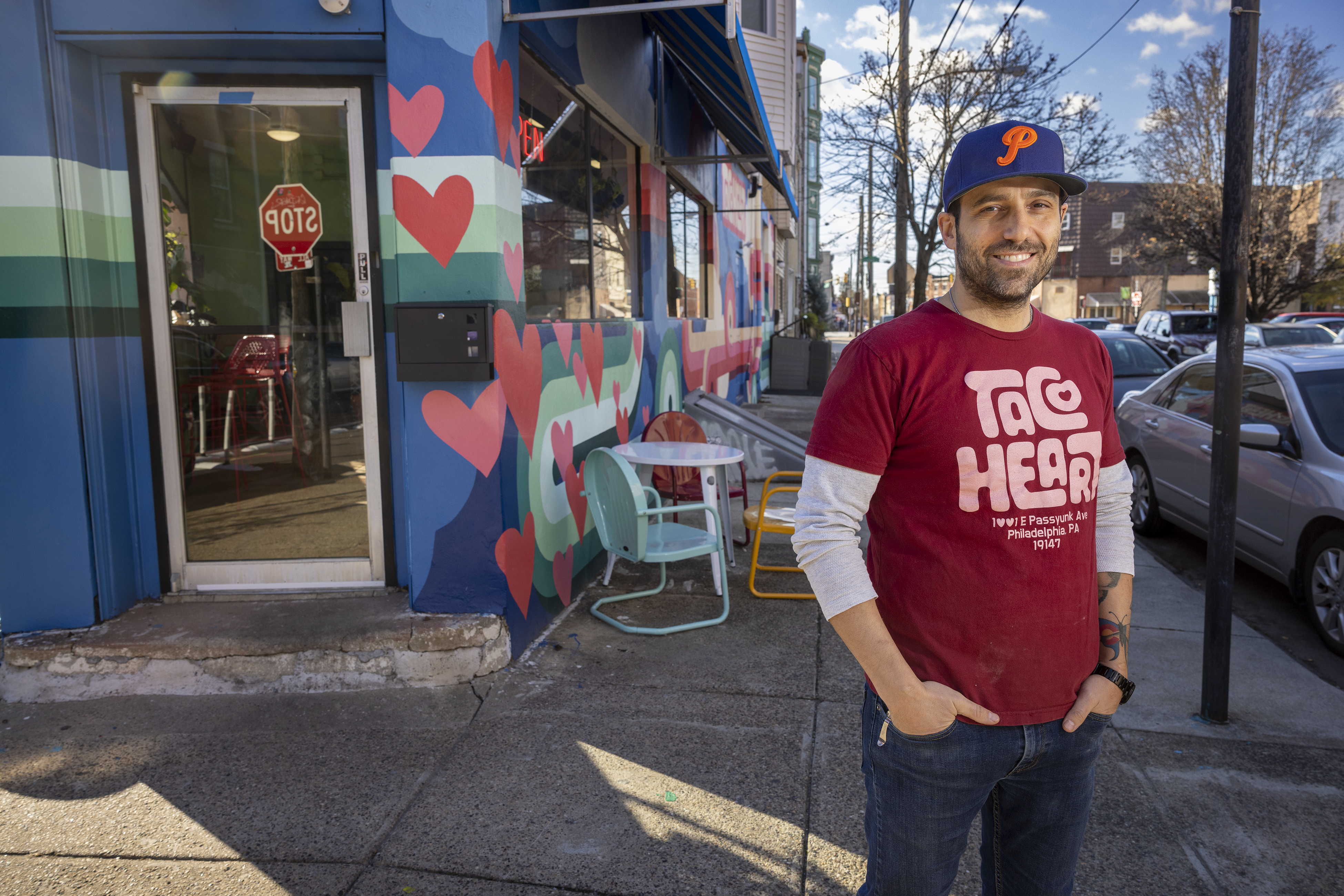
In 2022, Taco Heart opened its doors in a polychromatic corner building on Seventh Street and Passyunk Avenue.
Nano Wheedan, owner/chef Taco Heart, in 2022. Alejandro A. Alvarez / Staff Photographer
For Wheedan, introducing Philadelphians to the Texas-style breakfast taco has been a tall task, but he’s been heartened by the reception, both from Philly locals and transplants from the Lone Star State, or “Tex-pats,” as he calls them.
“There’s so many people with a connection to this food who have been missing it, and I am so grateful and moved when Texans tell me that they’ve finally found a piece of home at Taco Heart,” he said.
It was in the last year that Wheedan felt Taco Heart finally “had its feet under itself,” and he began to think about what it would mean if he “took advantage of economies of scale” and opened a second location, using Taco Heart’s South Philly flagship as a prep kitchen at night. He was looking into opening his next location in the River Wards when the Ardmore Farmers Market approached him. The market offered a fully-functional kitchen setup, a solid base of foot traffic, and exciting culinary neighbors. He signed on.
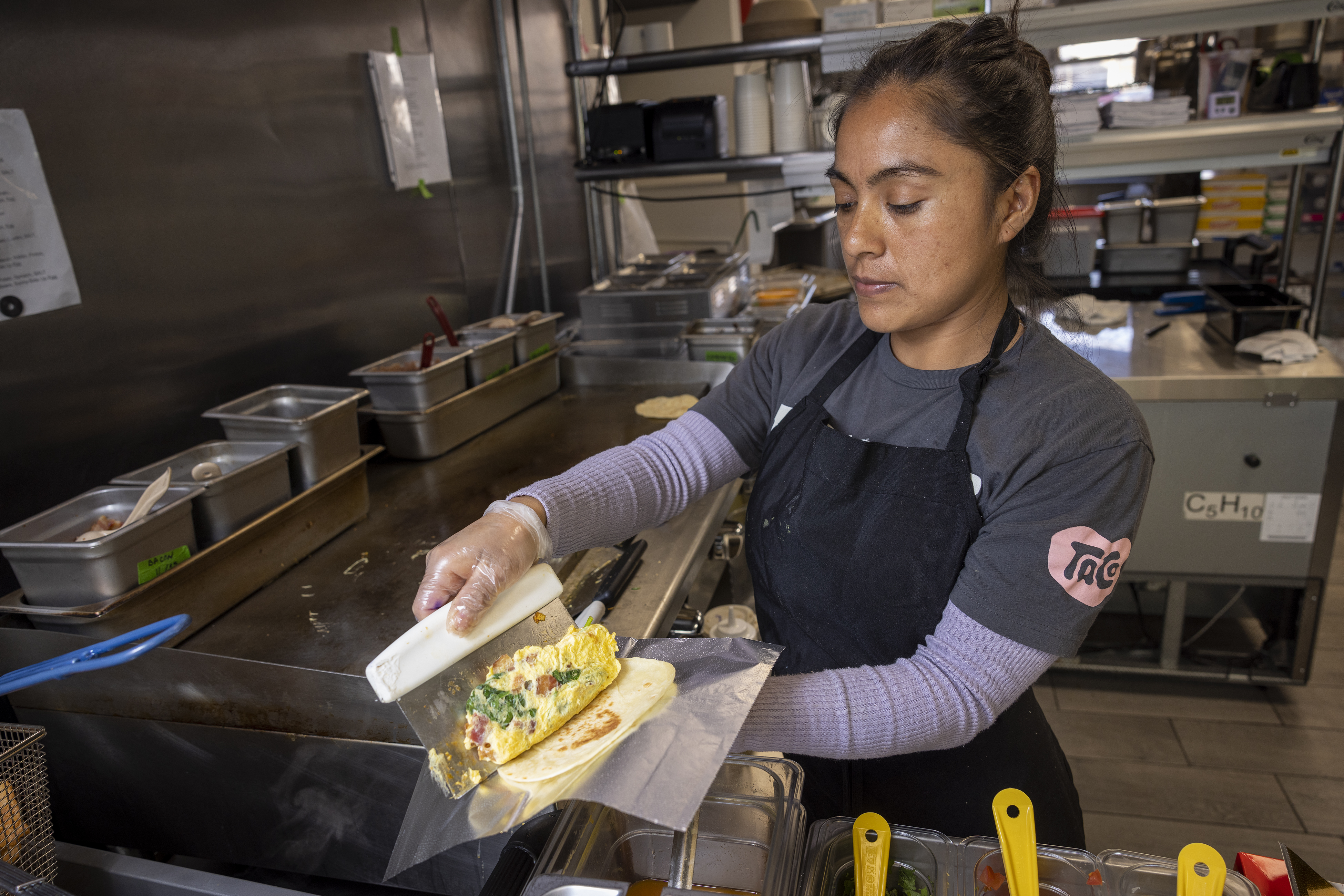
Taco Heart’s Morning Bowl. Alejandro A. Alvarez / Staff Photographer
Large swaths of the market, located at Suburban Square, were left vacant earlier this year after Di Bruno Brothers shuttered multiple locations, including its outpost in Ardmore.
Wheedan is planning to serve most of the same items in Ardmore as he does in South Philly. While some items like salsas, quesos, and refried beans may be prepared in South Philly and transported to Ardmore, Taco Heart’s signature flour tortillas will still be made fresh.
Wheedan also hopes the expansion will allow Taco Heart to move into the world of catering: In Austin, getting breakfast tacos for the office is the equivalent of the East Coast bagel breakfast, he says.
Taco Heart is set to open Oct. 5 at the Ardmore Farmers Market (120 Coulter Ave.).
This suburban content is produced with support from the Leslie Miller and Richard Worley Foundation and The Lenfest Institute for Journalism. Editorial content is created independently of the project donors. Gifts to support The Inquirer’s high-impact journalism can be made at inquirer.com/donate. A list of Lenfest Institute donors can be found at lenfestinstitute.org/supporters.
Armed with signs that read “Just say no!” and buttons etched with “Save our community,” Middletown Township residents on Tuesday pushed back fiercely against a proposal to build a new school on open land behind Penncrest High School as negotiations between the Rose Tree Media School District and the township drag on into the fall.
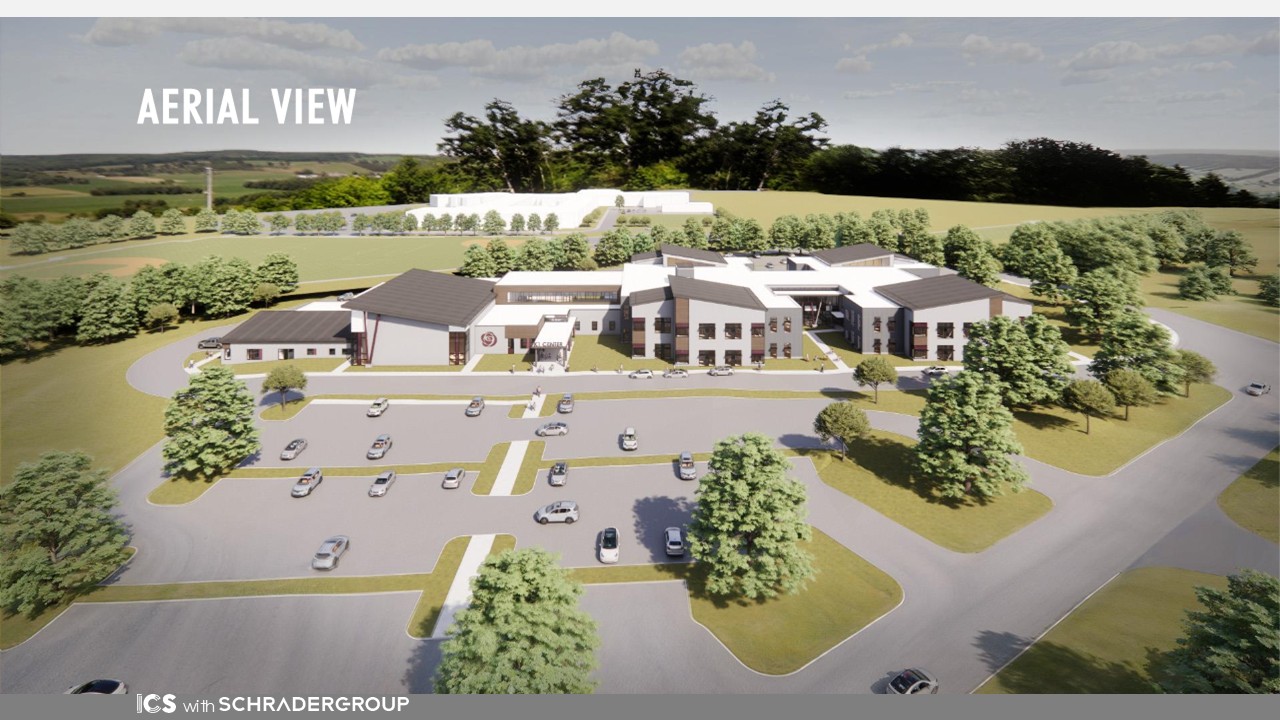
The Rose Tree Media School District, which serves families in Media borough and Edgmont, Middletown, and Upper Providence Townships, is proposing a new school for kindergarten and first grade students on an empty lot behind Penncrest High School. The district says the school will relieve overcrowding and allow Rose Tree Media to finally offer full-day kindergarten, bringing it up to par with neighboring schools.
Yet the proposal has not been welcomed by many neighbors in Middletown, who during nearly two hours of public comment on Tuesday raised concerns that the school would create dangerous driving conditions on key roadways, increase traffic, and burden taxpayers.
During the meeting, representatives from the school district presented traffic impact data to theplanning commission, an advisory board that will issue a recommendation to Middletown’s seven-membercouncil on whether the township should approve the project. The planning commission voted to postpone a recommendation voteuntil a later date, when the school district will be expected to provide more detailed traffic data.
The estimated cost for the school building is around $84 million, with an additional estimated $7.5 million for a proposed athletics addition. The realignment of Rose Tree Road will cost around $3.7 million, but is likely to be funded in part by grants.
The meeting was the latest development in a protracted process for the Rose Tree Media School District, which has been attempting, unsuccessfully, to build a new school for six years.
School officials say the district is overcrowded and unprepared for a wave of young students coming in the next decade.
The school district’s enrollment has risen steadily in the last 10 years, from 3,779 students in the 2015-16 school year to 4,319 in the 2025-26 year. Enrollment is expected to peak in 2032-33 with nearly 4,600 students. Student population growth has forced the district to adopt space-saving measures, including installing multiple modular classrooms.
!function(){“use strict”;window.addEventListener(“message”,function(a){if(void 0!==a.data[“datawrapper-height”]){var e=document.querySelectorAll(“iframe”);for(var t in a.data[“datawrapper-height”])for(var r,i=0;r=e[i];i++)if(r.contentWindow===a.source){var d=a.data[“datawrapper-height”][t]+”px”;r.style.height=d}}})}();
The new school would also allow the district to provide full-day kindergarten, officials say, as Rose Tree Media is one of the few remaining school districts in the region that only offers a half-day option.
During brief remarks at the beginning of the meeting, Rose Tree Media’s superintendent Joe Meloche said, “I think we all want the same thing ultimately, which is a plan that is safe, practical, and thatworks well for everyone.”
Yet dozens of Middletown residents, many of whom live in close proximity to the proposed school site, said they felt the project was misguided, poorly planned, and would add hazards to already congested roadways. Some recounted watching dangerous car accidents on the streets abutting the site. Others charged the district with failing to account for how many cars would be clogging roads during peak pickup and drop off times. Many said they disagreed with the concept of a K-1 center as a whole and asked the planning commission to require the district to come up with a different option.
“The site is too small, and student capacity is too great,” said resident Peter Wolf, who called the proposal “an oversized industrial project.”
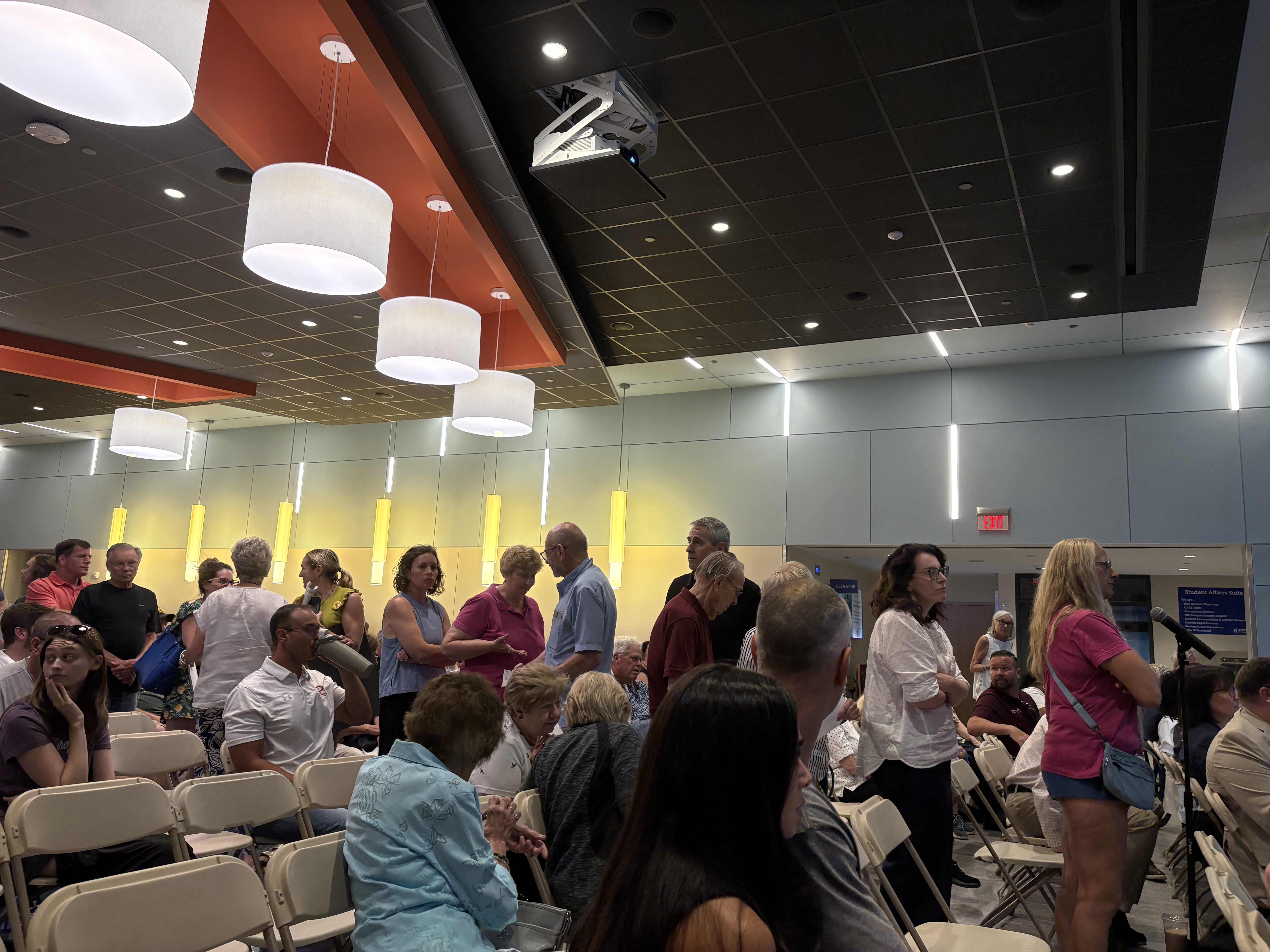
Residents of Middletown Township line up to make public comment at an Aug. 11 meeting of the township’s planning commission. Dozens of residents spoke in opposition to a new K-1 school proposed by the Rose Tree Media School District.Denali Sagner
Resident Sally Turek said she agrees that the district needs full-day kindergarten, but that “there are definitely other, better options than this.”
“This is like planning for Disney World. We can’t afford Disney World. We don’t need Disney World,” Turek said. “This is not the right time to do this, nor the right place.”
A small contingent of parents spoke in favor of the proposal, describing the crowd as a vocal minority and saying that the residents who needed the school most, namely parents and their young children, were the very people who were unable to attend the evening meeting.
“The kids are here. They need a place to go, and this notion that we can move the fifth grade to the middle school does not solve the problem,” said Ron Peterson, parent of an elementary school student.
“Is this an ideal spot? Perhaps not,” Peterson said. “But there aren’t better spots available.”
The proposal in Middletown Township is Rose Tree Media’s second attempt to find a home for a new school. The school district proposed putting a new elementary school in Edgmont Township in 2023, a planthat was voted down by the township’s board of supervisors, who cited traffic and location concerns.
The planning commission will reconsider the proposal in September or October and has asked the school district to provide more detailed traffic data.
This suburban content is produced with support from the Leslie Miller and Richard Worley Foundation and The Lenfest Institute for Journalism. Editorial content is created independently of the project donors. Gifts to support The Inquirer’s high-impact journalism can be made at inquirer.com/donate. A list of Lenfest Institute donors can be found at lenfestinstitute.org/supporters.
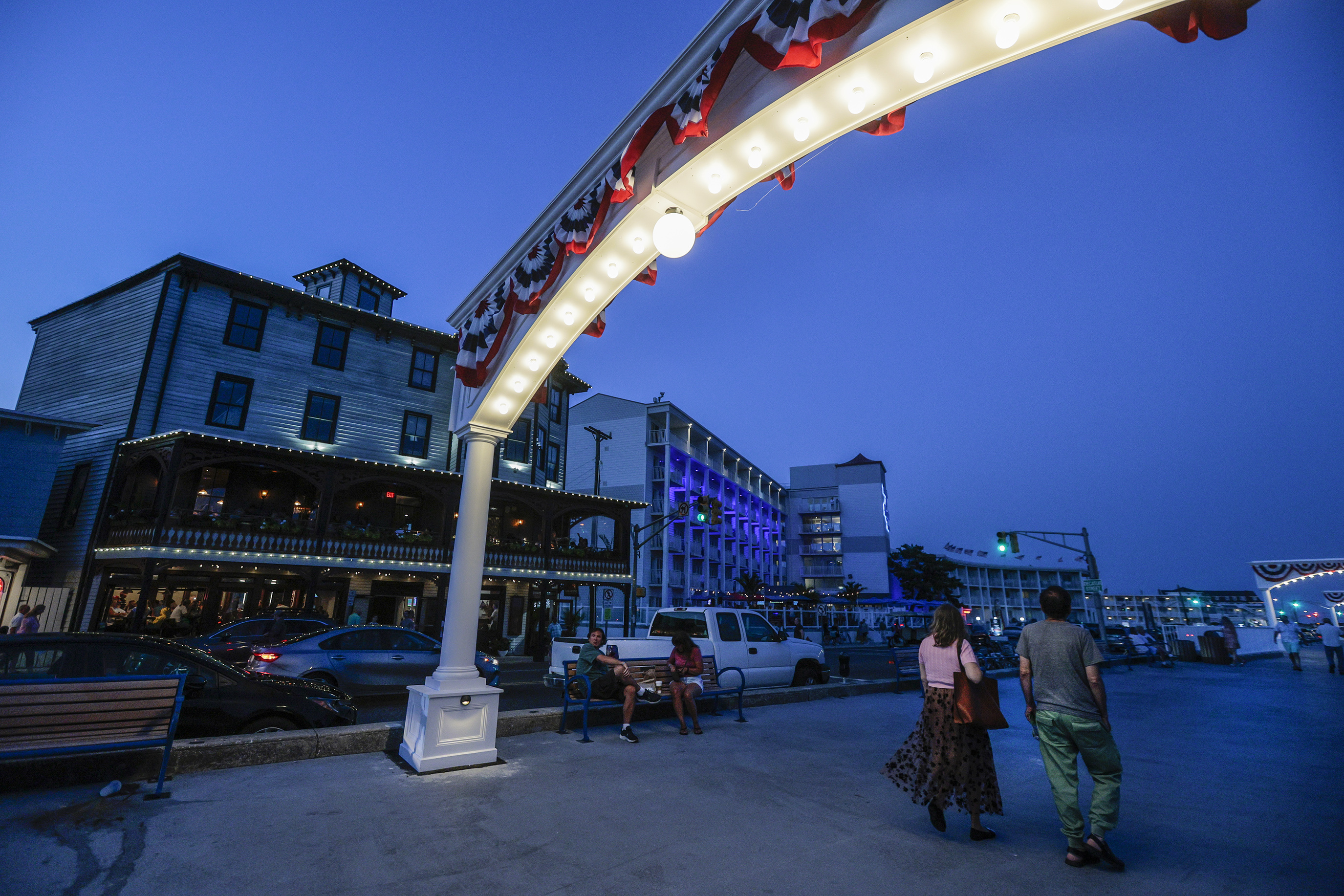
Minors are no longer allowed on Cape May’s beaches after 8 p.m. or in other public areas after 10:30 p.m. under a new curfew passed by the Jersey Shore city.
The Cape May City Council on Thursday adopted stricter curfew measures for people under 18 after the city’s police department reported an influx of “disruptive, dangerous, and unlawful” behavior from large groups of minors, according to the city ordinance.
The ordinance went into effect Thursday.
“We have a very tranquil, peaceful community here. We are not against juveniles. We are not saying we don’t want them here. While they’re here, we just want them to be responsible,” Cape May Police Chief Dekon Fashaw said at the meeting.
“Respectfully, we do not want to be their babysitters,” Fashaw said.
Minors will be barred from the city’s beaches, boardwalk, promenade, and other public areas at the set times unless they are accompanied by a parent or guardian, working, or commuting to or from work.
The city also banned backpacks and other large bags on the promenade, beaches, and boardwalk and in other public areas from 8 p.m. to 6 a.m. with some exceptions, including medical devices.
Cape May expedited the vote under a state provision that allows local governments to adopt emergency ordinances quickly when they are considered necessary for preserving the public order.
“It’s come to the attention of city administration and the council that the police department really needs these tools now, not in September, not in October,” Christopher Gillin-Schwartz, the city’s solicitor, said.
Fashaw said his department has responded to minors drinking and fighting in public places.
Curfews in other Shore towns have pushed minors down to Cape May, he said, where they were previously allowed to be out until midnight.
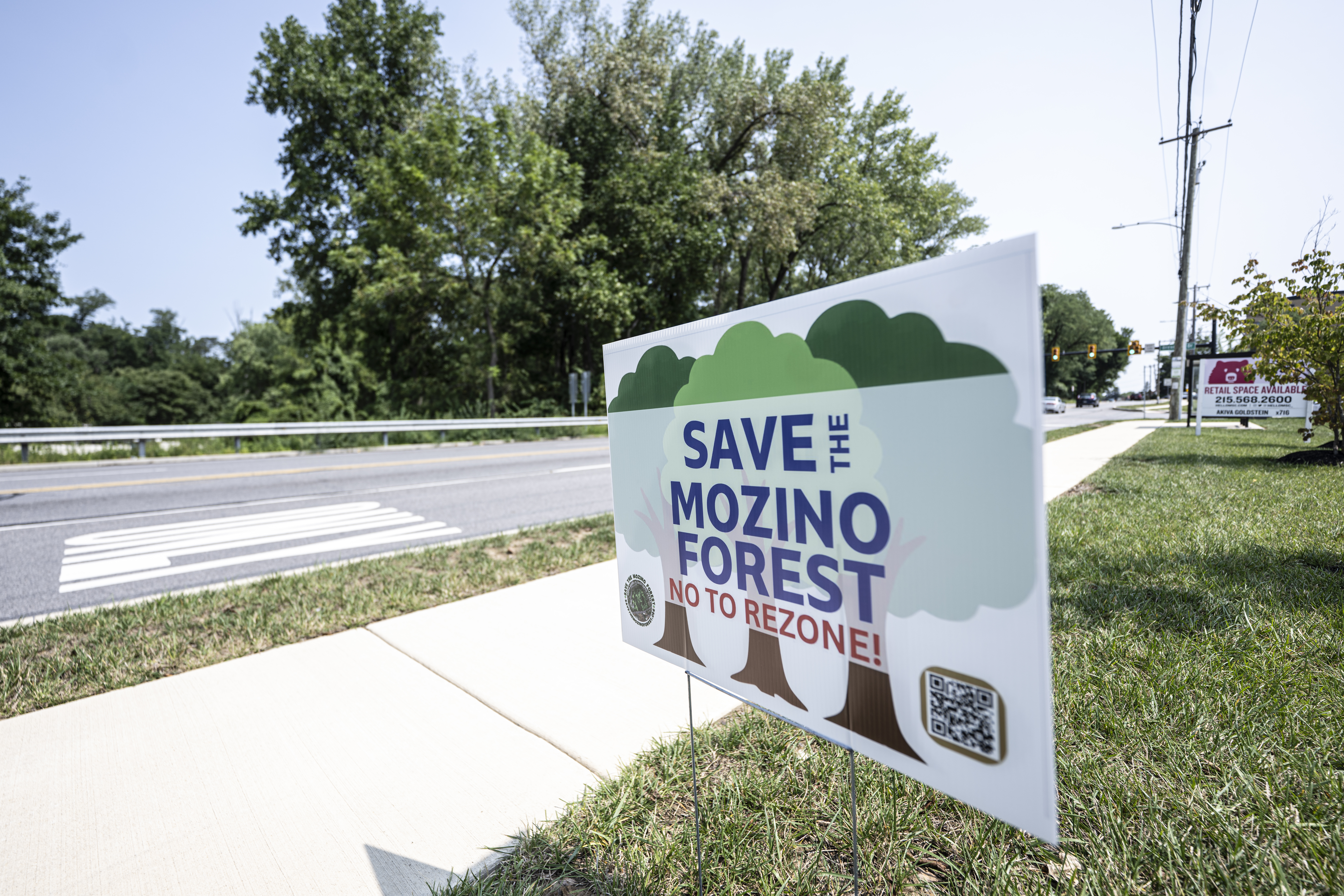
Upper Darby will consider buying a 15-acre forested property at the heart of a conservation fight after dozens of residents packed a public meeting and demanded the township look into purchasing options before rezoning the parcel for mixed-use development.
The Upper Darby Township Council on Wednesday considered moving forward an ordinance to create a mixed-use zoning district on a tract of land between State and Township Line Roads. The tract, known by residents as the Mozino Forest, contains unmaintained forest. Though the land is private property — owned by Peter Mozino and under contract to be sold to the Rockwell Development Group — residents have long utilized it as a place to walk, hike, and commune with nature.
Rockwell Development Group has proposed developing the property with a blend of single-family homes, townhouses, apartments, and ground-floor commercial spaces, as well as dedicated community and recreation spots and pedestrian walkways.
Rita LaRue, Upper Darby’s director of community and economic development, said Rockwell originally came to the township with a plan to build 56 single-family homes on the site, a proposal that would be allowed under the site’s existing zoning and would not require special zoning approvals. The township then asked Rockwell to consider an alternative, higher-density plan that would combine diverse housing types, retail, and community amenities, LaRue said. Over several months, Rockwell worked with the township’s solicitor, engineer, and planning staff to bring the mixed-use zoning ordinance.
Upper Darby officials have said putting a denser, mixed-use development on the tract, rather than the 56 single-family homes, would help fulfill core township goals by bringing in more tax revenue and adding diverse housing options.
“We are very committed to having a mixed-use space that is not simply, you know, brick and mortar. We want it to be a place that adds to community life for everybody in Upper Darby,” LaRue said.
At the meeting, Rockwell president Greg Lingo touted his Upper Darby bona fides, telling the crowd he was not the ill-intentioned, outside developer he had been portrayed as. The developer said he graduated from Upper Darby High School, is a taxpayer in the township, and has invested significantly in the Drexel Hill neighborhood over the years.
Lingo said that while he understands residents’ concerns about preserving green space, the land is private property and could be developed into a residential neighborhood regardless of whether the zoning amendment is passed.
“This isn’t necessarily a decision between open space and a future mixed-use development,” Lingo said. “This property is not open space. I’m pleased to hear that people have just been using it as open space over the years. It’s private property. It’s property that’s been neglected for as long as I can remember.”
Lingo said he would be willing to sell the property if the township wanted to purchase it, but added that as a taxpayer, he does not “think that that’s a great use.” Lingo approximated the cost of the land at $8 million.
There were 15 proposals to purchase the property, none of which involved maintaining it as open, green space, planning commission member Debbie Nifong said at a June 8 meeting.
The planning commission voted 3-2 to recommend approval of the zoning changein June.
At the Wednesday night council meeting, residents packed the council chambers, donning green shirts and spilling out into the hallway in protest of the proposed zoning change. They described tranquil walks through the Mozino Forest and warned of environmental consequences if the land were to be developed.
“I believe that having some open space, it’s future gold in terms of urban planning,” said Dolores Lombardi, a resident and former chair of the township’s shade tree commission. “Many cities are preserving open space, and creating more. An overdeveloped heat zone is not an attractive place to live in.”
“The whole forest is a natural sponge for our area. There will be severe downstream flooding,” said resident Gail Grant, who warned of increased stormwater runoff should the green parcel be paved.
Residents questioned why the forested tract should be developed when the township has numerous vacant storefronts and existing corridors in need of redevelopment.
Members of the township’s environmental advisory committee urged the council to strike down or table the zoning ordinance and said that, if given more time, they could put together a proposal for the township to purchase the land with supporting funds from local conservancies or state or federal bodies.
They cited the $13 million purchase of the Oakwell estate in Villanova by the conservation nonprofit Natural Lands and the Wyncote Foundation. The lush estate was once slated to become athletic fields for the Lower Merion School District but was sold to the nonprofits after significant community pushback.
The council voted unanimously to table the ordinance, citing a need for more information from both Lingo and the environmental advocates.
“I know the administration wants to look into seeing what sources we have available to see if we can come to some type of agreement,” council member Kyle McIntyre said.
McIntyre said he did not want to “get everyone’s hopes up” and described “two trains running parallel to each other.” While the township will “do everything in our power to possibly strike a deal” to buy the land, McIntyre said, he expressed a desire to work with Lingo to “make sure that what we’re building for this community actually does benefit it” if a sale does not happen.
“We did learn a lot of things tonight, and I’m eager to have those conversations with the township and see where we fit in and what we can do, so that we can make a decision that’s good for everybody,” Upper Darby Mayor Ed Brown said.
This suburban content is produced with support from the Leslie Miller and Richard Worley Foundation and The Lenfest Institute for Journalism. Editorial content is created independently of the project donors. Gifts to support The Inquirer’s high-impact journalism can be made at inquirer.com/donate. A list of Lenfest Institute donors can be found at lenfestinstitute.org/supporters.
Tori Bauver was sitting at home on July 11 when the sky outside of the Wyndon Apartments in Wynnewood began to darken. Bauver watched the clouds roll in, then the rain come, blowing “literally sideways” outside her window. She remembers leaning in to see the darkening landscape and noticing that rain had begun to penetrate her windows. Then the “outside went stark white” and water started pooling on her windowsills.
“I was like, ‘Oh, my God. This is gonna flood. This apartment’s gonna flood,’” she said.
The light fixture above Bauver’s bed filled with water, then poured over the edges. The ceilings began to leak, then one by one, they collapsed. The building’s roof ripped off, and Bauver had a clear, and unsettling, view of the sky from her living room.
Bauver, now a resident of West Chester, where she and her partner moved after breaking the lease on her Wynnewood apartment, had been living in the Wyndon Apartments for two years when the July microburst storm tore through Lower Merion, destroying her home and more than $5,000 of her and her partner’s belongings. She was one of dozens of suburbanresidents who emerged from the storm with damaged property and a devastated home.
As the Philadelphia region sees hotter and more humid summers, flash flooding, extreme precipitation, and life-threateningstorms have become a more common feature of daily life.Weather eventsmarked by downed trees, dangerous flash floods, waterlogged roadways, and eroded bridges are, more and more,forcing suburban residents and cash-strapped local governments to pour millions into repair and resilience projects, all while large swathsof the region’s infrastructure are built to withstand weather patterns of a bygone era, one in which storms like July’s microbursthappened once in a decade, rather than multiple times a summer.
As the region’s weather patterns intensify, officials and climate experts say the municipal mosaic of Philadelphia’s suburbs faces unique challenges when it comes to planning for a future marked by climate change.
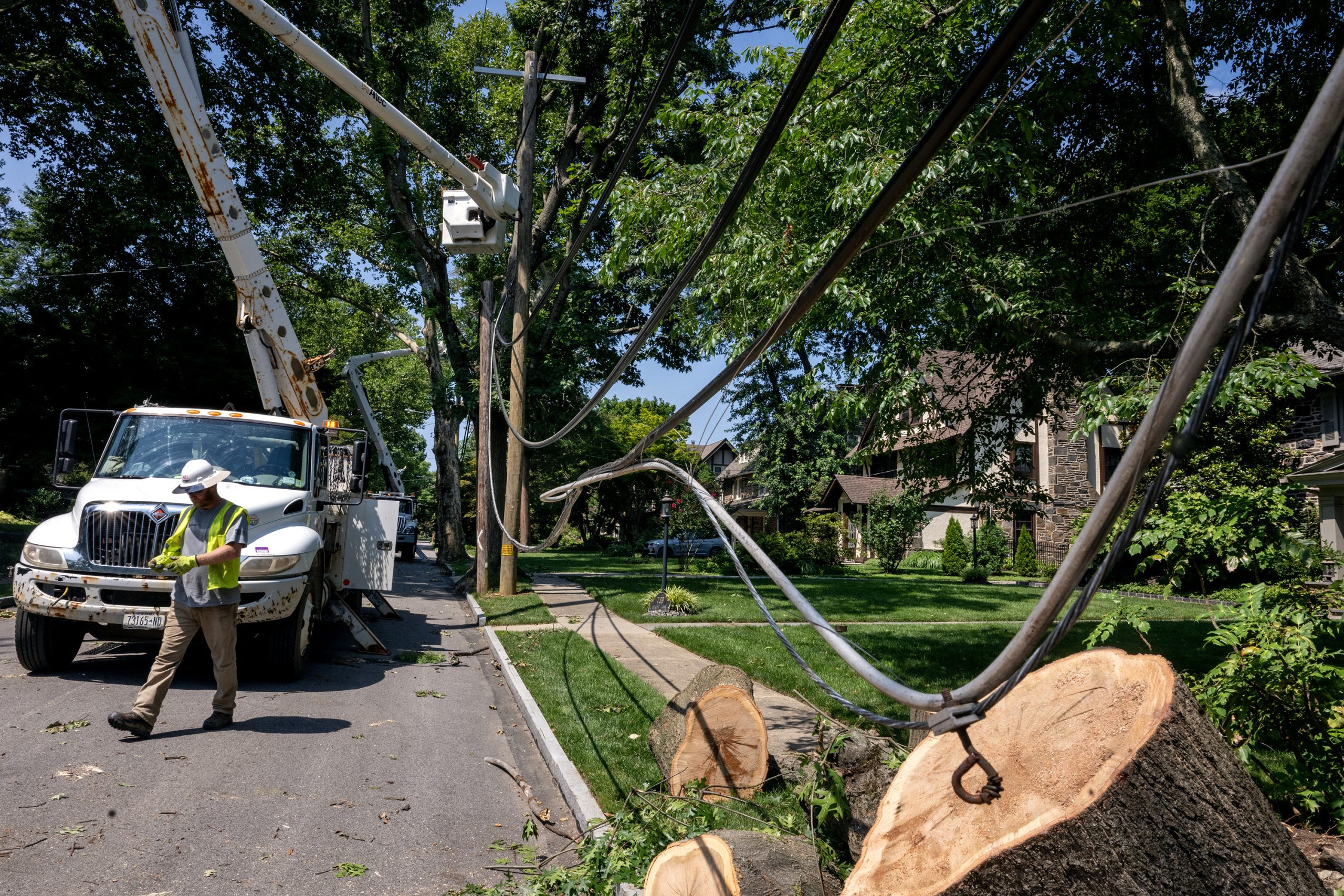
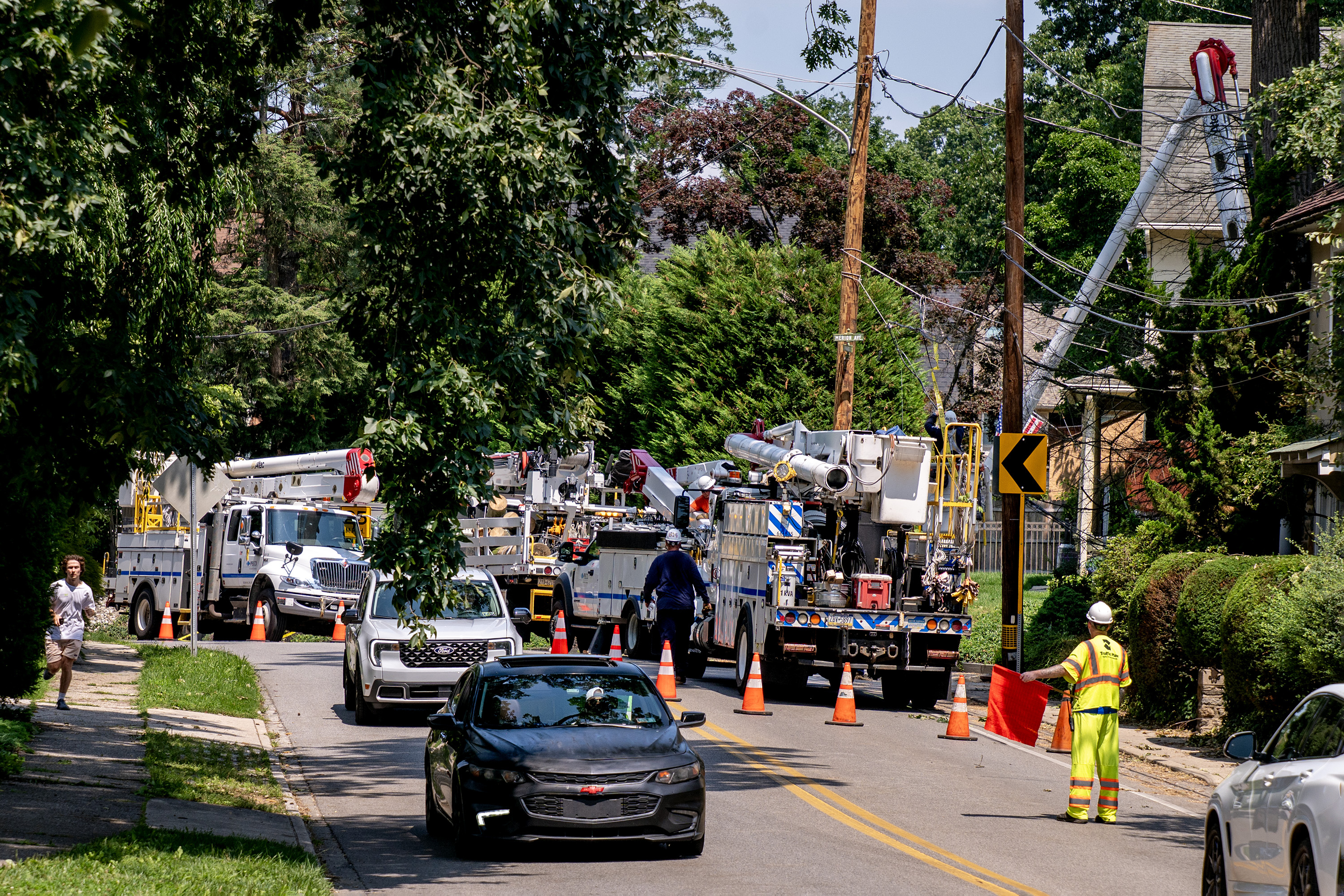
Utility workers restore power in Merion Station on July 13 after a microburst storm ripped through parts of Philadelphia and Montgomery County.Tom Gralish / Staff Photographer
The Philadelphia region’s changing weather
The average July temperature in Philadelphia has risen 4.4 degrees since 1940. In the 1900s, Philadelphia averaged four days per year with temperatures above 95 degrees, according to a 2024 EPA report. This summer, Philly has seen six days with high temperatures above 95 degrees, according to the National Weather Service. By the end of the 21st century, that number could climb to more than 50 days per year.
Hotter weather means more precipitation, and more frequent and intense rain events. For every 1.8 degrees the air temperature increases, the amount of water the atmosphere can hold increases by 7%.
“The infrastructure we have now is not always built to a standard to accommodate the extreme weather we’re seeing now,” said Chris Linn, manager of the Office of Resilience and Environment at the Delaware Valley Regional Planning Commission.
AsRay Courtney, a Lower Merion commissioner and chair of the township’s sustainability committee, said, “We get a 100-year storm every year.”
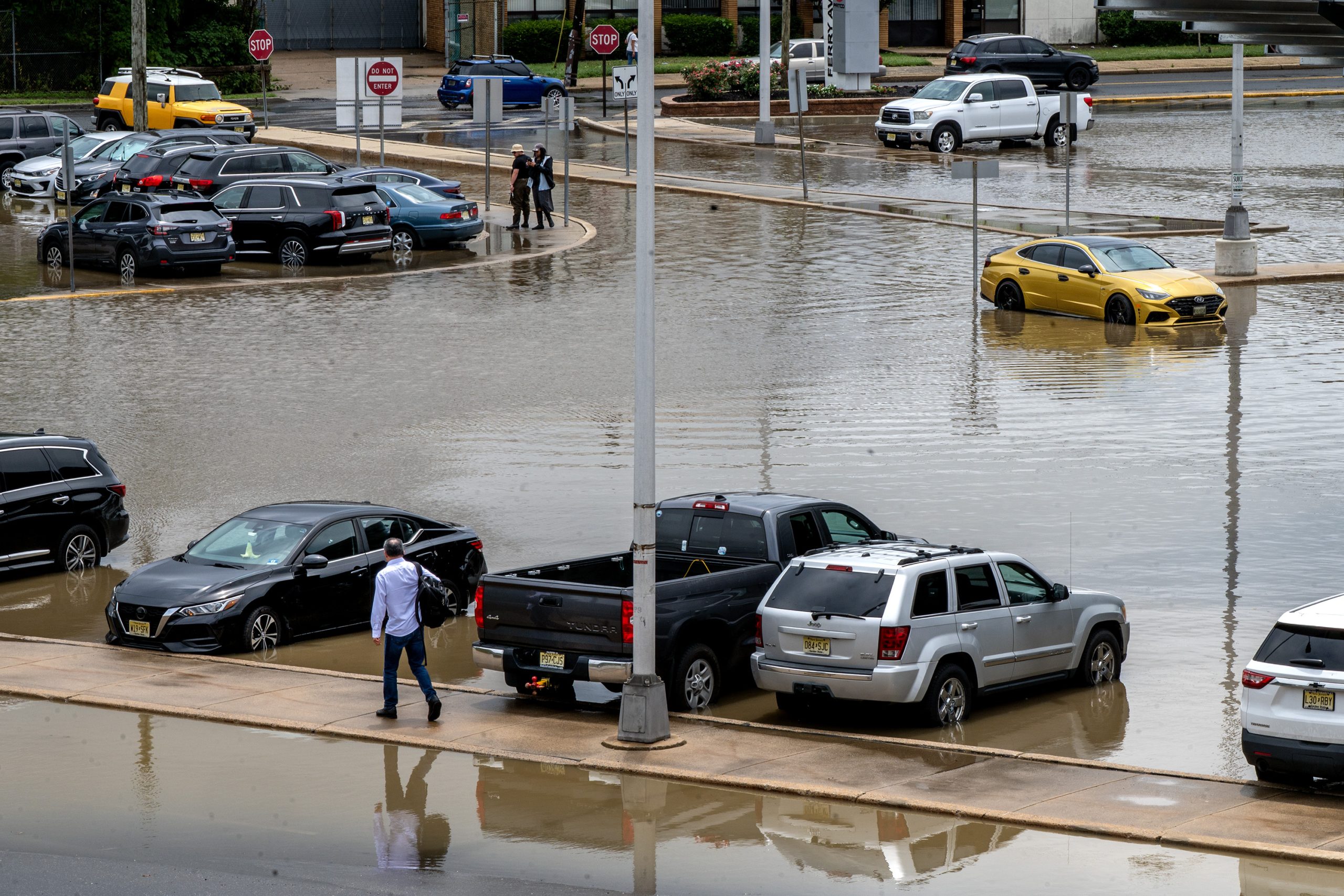
Cars in a flooded parking lot at the Ferry Avenue PATCO station in Camden on July 6. Philadelphia and its suburbs have been hit with numerous flash floods this summer, as an increasingly hot and humid atmosphere gives way to more extreme weather.Tom Gralish / Staff Photographer
Flooding as ‘the biggest and most common hazard’
The impacts of intense storms are multitudinous and cascading, and the topography of Philadelphia’s suburbs can make it particularly difficult to find effectivesolutions.
Linn said flooding is “the biggest and most common hazard that communities face,” and it presents the most “consistent and pervasive” issues for municipal leaders.
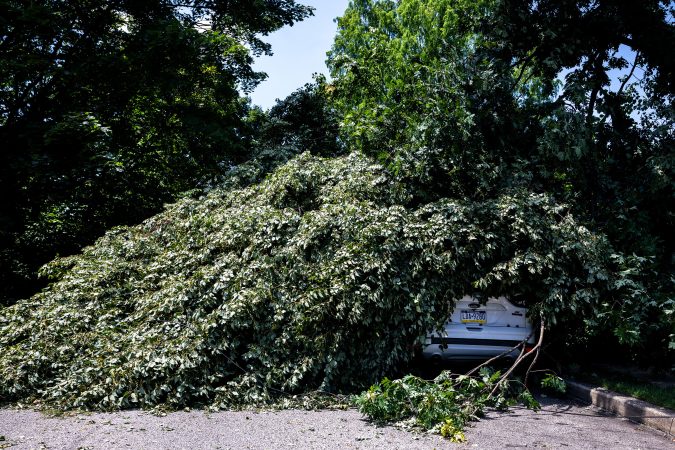
Intense precipitation and flash floods, which have been a constant this summer, can disrupt transit, turn roads into rivers, and endanger residents’ lives. High winds and saturated soil frequently bring down trees, damaging homes and cars and knocking out overhead power lines. Disruptions to power can be particularly dangerous when residents are left without fans or air-conditioning during hot summers.
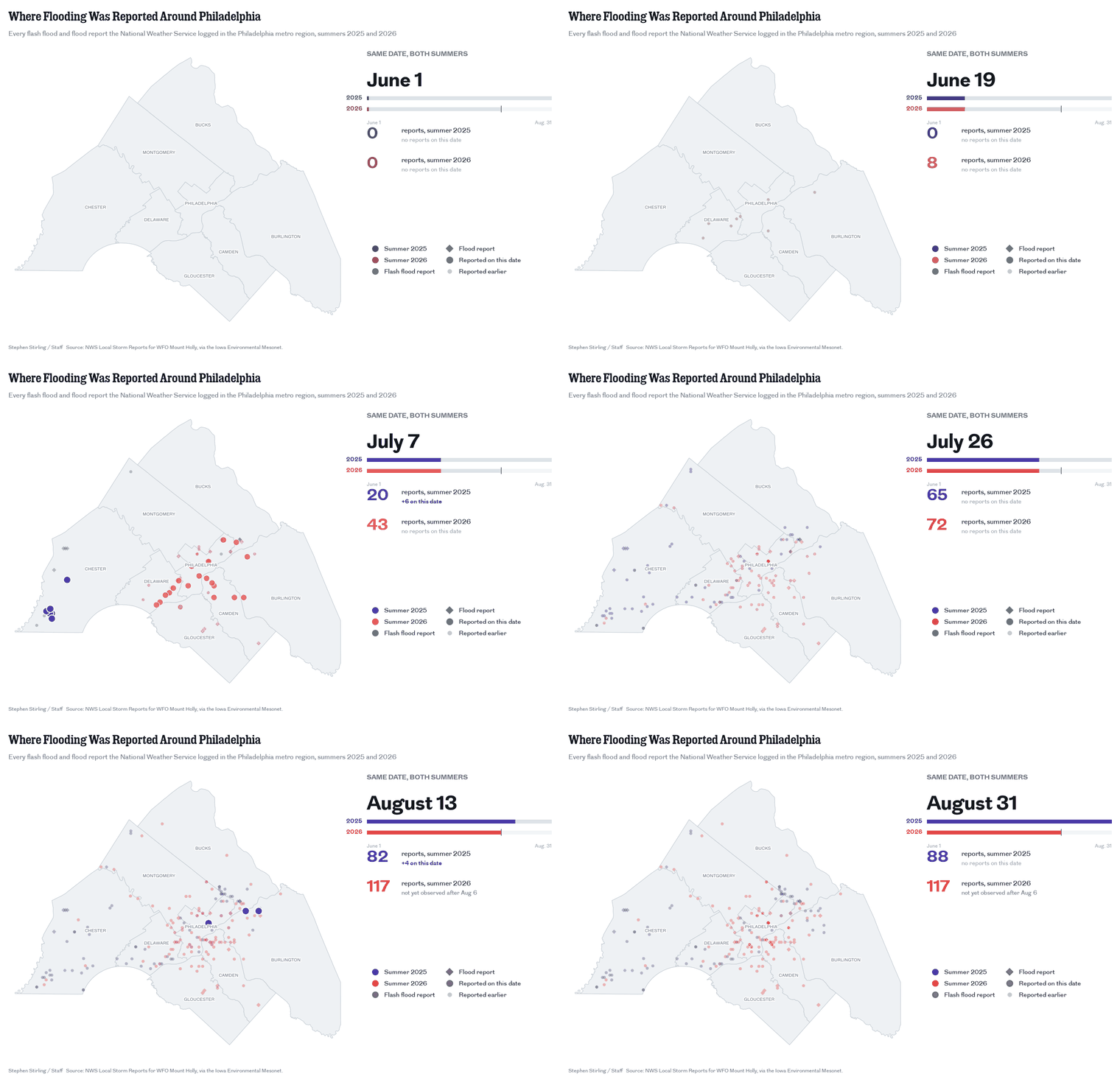
Flooding has been reported more than 200 times in the Philadelphia region over the last two summers.Stephen Stirling
“I see roads flooding consistently, trees coming down, power going out, and then our local government spending resources every time one of these storms happens. It’s overtime costs and tree costs, and then also all the private citizens having to spend costs cleaning up trees and other debris,” Courtney said.
“These unlikely, freak events are really the ones that break us,” said Matthijs Bouw, architect and professor at the University of Pennsylvania’s Stuart Weitzman School of Design.
A key tool for managing extreme weatheris stormwater systems, or the collection of drains, basins, ditches, and pipes that collect rainwater and snowmelt and move it from developed areas into local waterways. Stormwater systems are critical in moving water off impervious, or impenetrable, surfaces, like the parking lots, paved roads, and shopping centers often found in the suburbs.
The more developed a suburb is, the more runoff a storm will produce, increasing flooding risks, said Franco Montalto, professor of civil, architectural, and environmental engineering at Drexel University.
Yet many municipalities are contending with aging stormwater systems that require costly repairs. Lower Merion’s 2018 Comprehensive Stormwater Management Plan listed aging pipes, undersized infrastructure, operational costs, and increasing flooding as challenges for the township. Many of Philadelphia’s suburban communities are composed of buildings that predate a 1978 state law requiring counties and local governments to plan with stormwater management in mind.
Some communities are more vulnerable to climate impacts than others, with density, land cover, wealth, and the state of repair of existing infrastructure as factors. A 2021 climate change vulnerability analysis by Montgomery County found denser, water-proximate communities like Norristown and Pottstown to have some of the highest risk of increased stresses due to climate change. Greener, more rural parts of the county like New Hanover and Marlborough Townships presented lower risks.
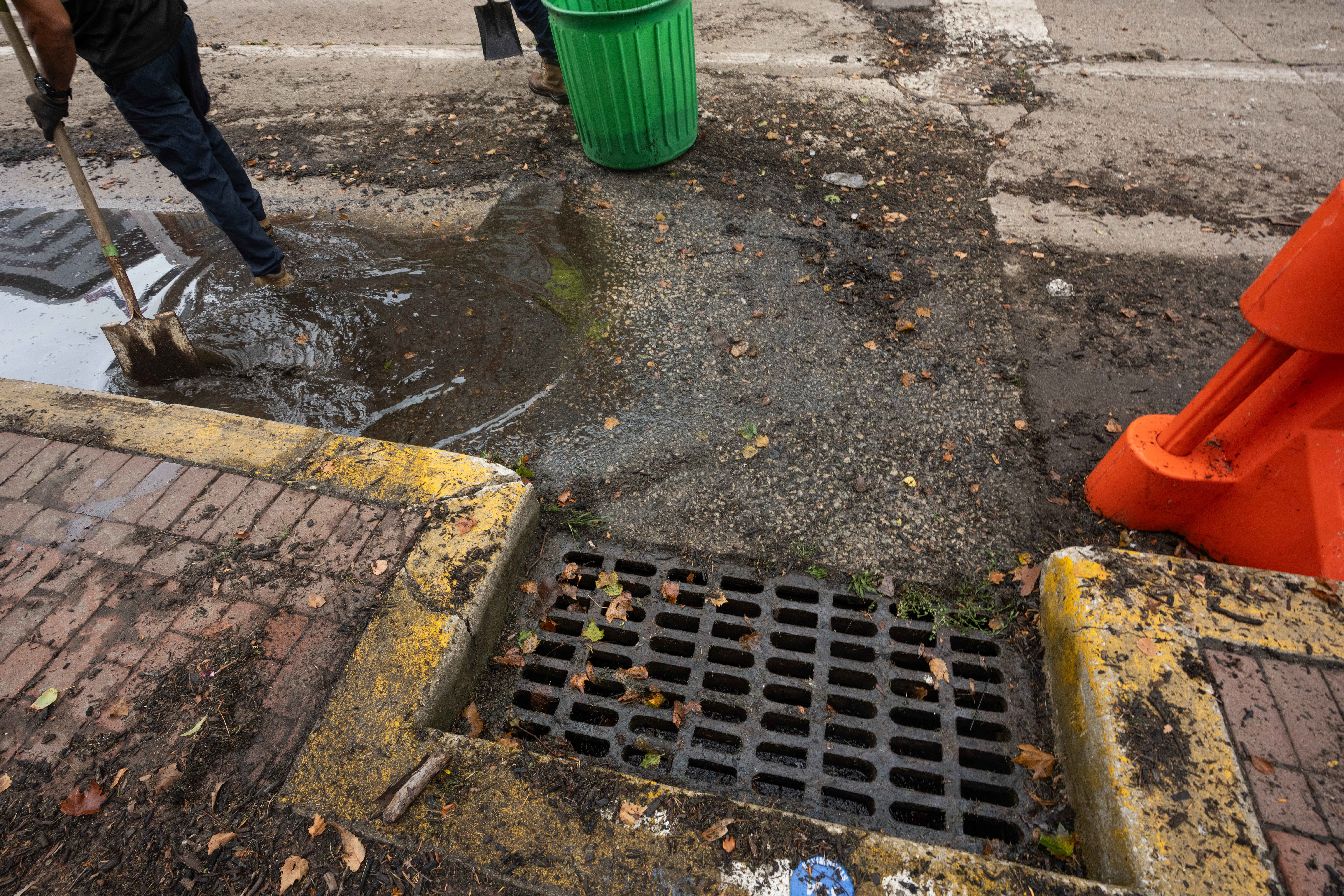
The aftermath and clean up of flooding in Camden on July 6. Stormwater systems are a critical tool for local governments to manage flooding. Jessica Griffin / Staff Photographer
How can communities mitigate impacts?
Experts described a range of interventions for managing climate impacts, from constructing rain gardens to rewriting zoning ordinances.
Maintaining a healthy tree canopy and building rain gardens can help rainwater permeate into the ground. Larger infrastructure efforts like stream restoration projects and floodplain maintenance can help stabilize the built environment.
However, Linn said, these interventions “don’t necessarily address more severe or catastrophic flooding in terms of mitigating those impacts.”
Long-term climate resilience, experts said, relies on making land-use and zoning decisions that preserve floodplains and natural drainage patterns and ensure stormwater systems can manage our new, rainy reality.
Montalto is interested communities that have become “safe to flood,” or that have created parks, parking lots, road medians, and other open spaces that trap water during floods, then properly drain it, keeping it away from buildings and roads. A basketball court built below a park, for example, can fill with water during a storm and slowly drain, mitigating runoff (one was recently installed in New York City). Copenhagen’s Cloudburst Management Plan, adopted in 2012 after a major storm, is a blueprint of sorts in Montalto’s mind.
However, bringing “safe to flood” infrastructure to Philly’s suburbs may be a far-out goal.
In the vast suburbs, the collection of boroughs, townships, and county lines makes unified action difficult, and forces officials to think along municipal, not watershed, lines. On the Main Line alone, rainfall and snowmelt drain into a collection of dozens of creeks and streams that do not start or stop where a municipal boundary is drawn, making it difficult to take coordinated and effective action when it comes to flood mitigation along certain waterways.
Finding the funding to repair and replace stormwater infrastructure, too, can be taxing, as local governments stare down costly projects, even with the availability of state and federal grants.Political will factors in, with municipalities differing in their desire and ability to use taxpayer dollars to tackle climate issues.
Philly’s suburbs, like the city, are also often old, dense, and built out, making it hard to retrofit them to be more climate-sensitive.
“So many of our communities are built out and have been built out for a long time, so the vulnerabilities and the challenges are built in to the community,” Linn said.
Utility workers restore power along Wynnewood Avenue in Merion Station on July 13.Tom Gralish / Staff Photographer
Solving ‘complex issues’ in Montgomery County
Despite the challenges, progress is being made, said Montgomery County Commissioner Jamila Winder.
Montgomery County in 2025 led a flood mitigation planning study for the 362-square-mile Perkiomen Creek Watershed, which stretches across Montgomery, Bucks, Berks, and Lehigh Counties. The study identified flood-prone areas, evaluated mitigation tactics, and worked to build a framework for long-term resilience. The county is currently in the process of carrying out a floodplain restoration project along the Wissahickon Creek in Whitemarsh Township. Both projects came to fruition after Hurricane Ida tore through the region, bringing record floods and killing multiple people.
The county has repaired 30 structurally deficient bridges since 2017 and has repaved dozens of miles of road. County workers also removed 200 dangerous trees earlier this year, resulting in a significant drop in emergency phone calls about tree damage, Winder said.
Lower Merion in 2021 hired its first full-time sustainability manager and in 2023 completed its first sustainability plan. Radnor Township has adopted a comprehensive climate plan, and Haverford Township has set out to achieve 100% zero-carbon renewable power by 2035.
The Pennsylvania Department of Environmental Protection in January announced more than $17 million in funding for environmental projects across the state, including stream restoration and stormwater management.
Winder said, “We’re seeing that when we work across federal, state, county, and local leadership, that we can come together to solve some of these complex issues.”
This suburban content is produced with support from the Leslie Miller and Richard Worley Foundation and The Lenfest Institute for Journalism. Editorial content is created independently of the project donors. Gifts to support The Inquirer’s high-impact journalism can be made at inquirer.com/donate. A list of Lenfest Institute donors can be found at lenfestinstitute.org/supporters.
A Gladwyne-based senior services organization is planning to build an independent living community on an estate in Radnor Township, a move the group says is necessary as demand for senior living services rises in the region.
Waverly Senior Services presented an early proposal to Radnor Township’s planning commission on Aug. 3 for a large senior living facility at 452 S. Roberts Rd., a historic estate owned by the Haverford School.
The proposal includes 208 multifamily housing units across 15 buildings, 16 twin homes, and a handful of administrative buildings, including a maintenance building and a welcome house.
Waverly Senior Services, a nonprofit organization, is in the process of purchasing the 43-acre property, which the Haverford School acquired in 2022.
Waverly operates Waverly Heights, a life care residence in Gladwyne, as well as in-home healthcare and personalized care management services.
Tom Garvin, Waverly’s president and CEO, told the Radnor planning commission that the organization is seeing “unprecedented demand” for life care facilities as baby boomers age and their housing and care needs change.
“There’s a woeful lack of senior housing across the country to serve that sort of bubble that’s coming in the population,” Garvin said.
The number of U.S. residents 65 and older grew nearly five times faster than the total population between 1920 and 2020, according to the U.S. Census Bureau.
More than 560,000 senior housing units will be needed to meet the demand for older adult housing, according to market research firm NIC MAP. Under current development rates, only 191,000 will be built.
Waverly currently serves around 365 residents, the vast majority of whom are local, Garvin said.
The Radnor site would primarily be home to independent living, with some additional care for residents who need it as they age in place. It will not be a skilled nursing facility.
Waverly representatives said that they are early in theprocess — they will still need to finalize the land sale and secure township approval — and that it could be three to five years before shovels hit the ground. However, Garvin said, the organization felt it had to jump on the opportunity in a region where it is difficult to find open space to develop.
“This opportunity for a piece of property that’s 43 acres, zoned institutional, in our primary market area is one we just couldn’t pass up,” he said.
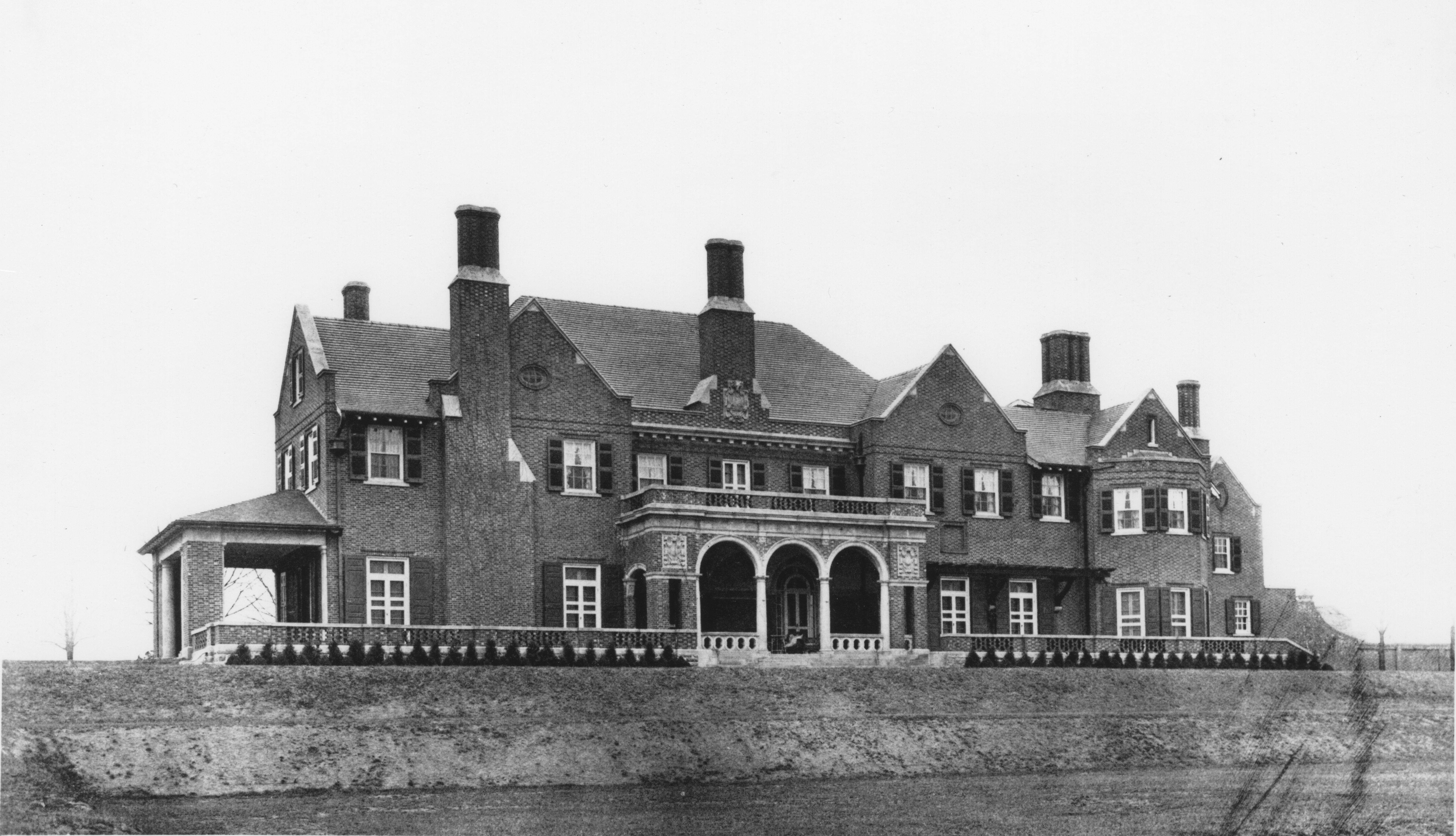
The property is home to the Glencoe estate, built in 1907 for Thomas McKean Jr., and purchased by Samuel Robinson, founder of Acme Markets, in 1925, according to the Radnor Historical Society. In 1960, Robinson left the estate to Presbyterian Children’s Village, an orphanage run by a local Presbyterian group. The orphanage transitioned over time to become a residential treatment program for children with emotional and behavioral challenges, and in 2019 became Gemma Services after a merger with Silver Springs-Martin Luther School. Gemma Services is building a new campus in Plymouth Meeting.
The Haverford School purchased the property in 2022from Gemma Services for $19.88 million and said at the time that it did not have a specific plan for the site.
Waverly’s early proposal involved retaining the historic mansion and knocking down its dormitory buildings, which are in “poor shape,” said Marc Heil, Waverly’s vice president of campus development.
Heil said any new construction would “have that Main Line flair to it” and would not be “commercial looking.”
Planning commission members expressed an openness to having the site developed, but raised concerns about the early plans.
Commission member Stephen Varenhorst called the plan “chaotic” and “random” and encouraged the organization to reconsider its approach. Lane Vines, the commission’s chair, said he hoped more of the historic property could be retained.
Residents expressed concern about increased traffic in the quiet neighborhood, stormwater management, and a potential increase in ambulance traffic, especially if an EMS station is placed on the site, a possibility.
Waverly officials said they will submit plans to the planning commission, which will issue a recommendation to the Radnor Township commissioners, who will ultimatelyvote on whether to approve the project. Representatives from Waverly said the organization may also seek additional zoning reliefif they pursue renovations outside of the property’s institutional zoning classification, which would require a separate approval process through the zoning hearing board.
This suburban content is produced with support from the Leslie Miller and Richard Worley Foundation and The Lenfest Institute for Journalism. Editorial content is created independently of the project donors. Gifts to support The Inquirer’s high-impact journalism can be made at inquirer.com/donate. A list of Lenfest Institute donors can be found at lenfestinstitute.org/supporters.
Located at 22 W. Lancaster Ave. in the former Kung Fu Tea storefront, Half A While is a tea and dessert shop specializing in high-quality cold-brewed teas and pastries and cakes with Asian influences.
Husband and wife owners Leo Wei and Haley He acquired the storefront from Kung Fu Tea after years of dreaming about opening their own business.
At Half A While, the duo is serving a range of treats, including handmade crepe and tiramisu cakes; cold-brewed leaf teas; and buns filled with taro, minced pork, and sausage. Half A While’s teas come in flavors from passion fruit to brown sugar, and can include manyof the boba accoutrements customers at Kung Fu Tea came to love.
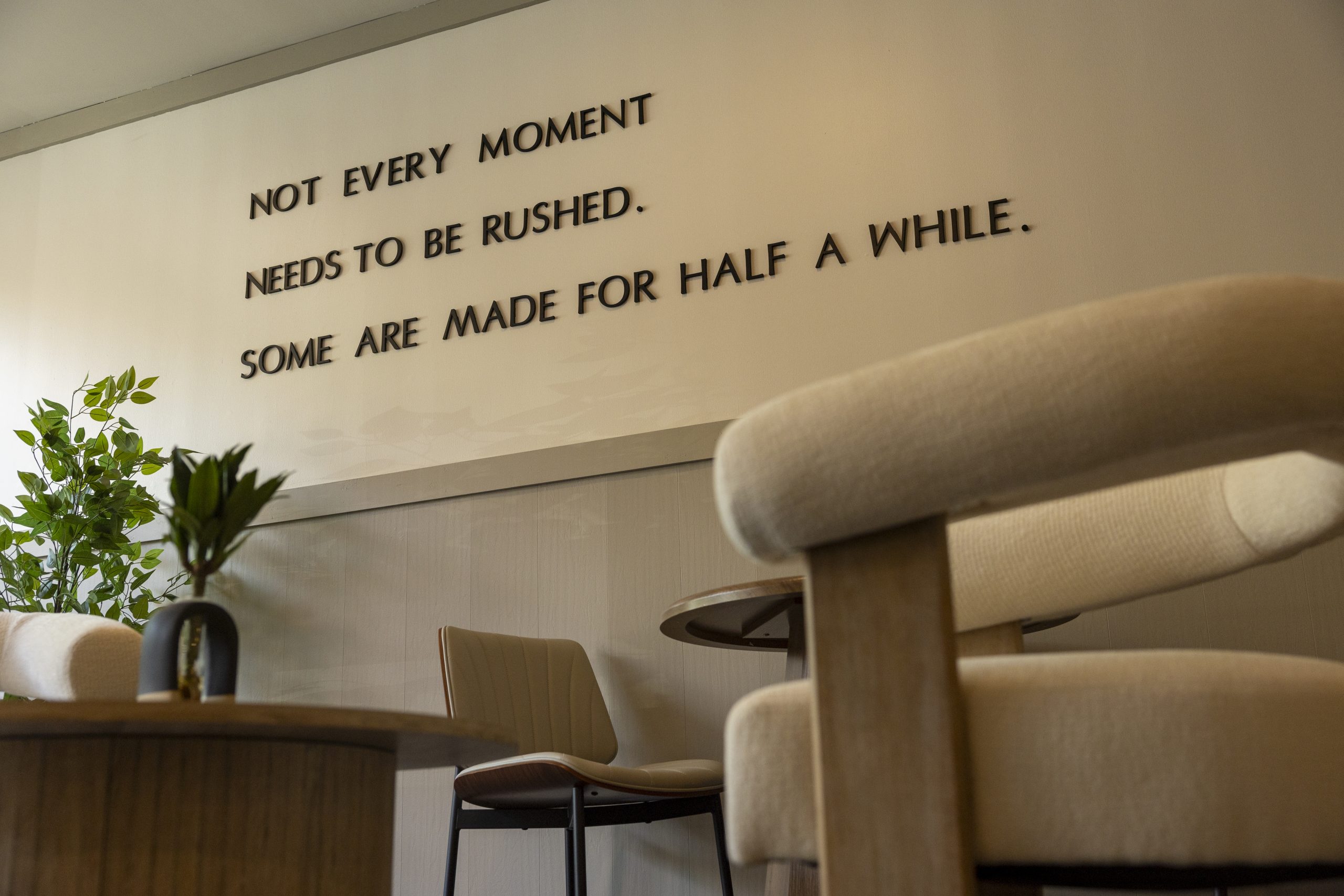
Half A While tea shop in Ardmore. The lettering on the wall is 3-D printed by store owner Leo Wei.Aidan T. Gallo / Staff Photographer
The name Half A While is a mashup of two core tenants of the café.
“Half” symbolizes Wei and He’s goal to use around half the amount of sugar traditionally found in items like bubble tea and crepe cake.
“That is our intention, to be more healthy,” Wei said.
“While” signifies their desire for patrons to feel comfortable in the shop and stay a while, lounging on the sofa or posting up at one of the tables. It’s a “really cozy place,” Wei said.
Half A While will be in its “soft opening” phase through the end of August or the beginning of September, as Wei and He pin down inventory needs, train staff, and get their online apparatus up and running. The store is currently open from 10 a.m. to 8 p.m., Tuesdays through Sundays.
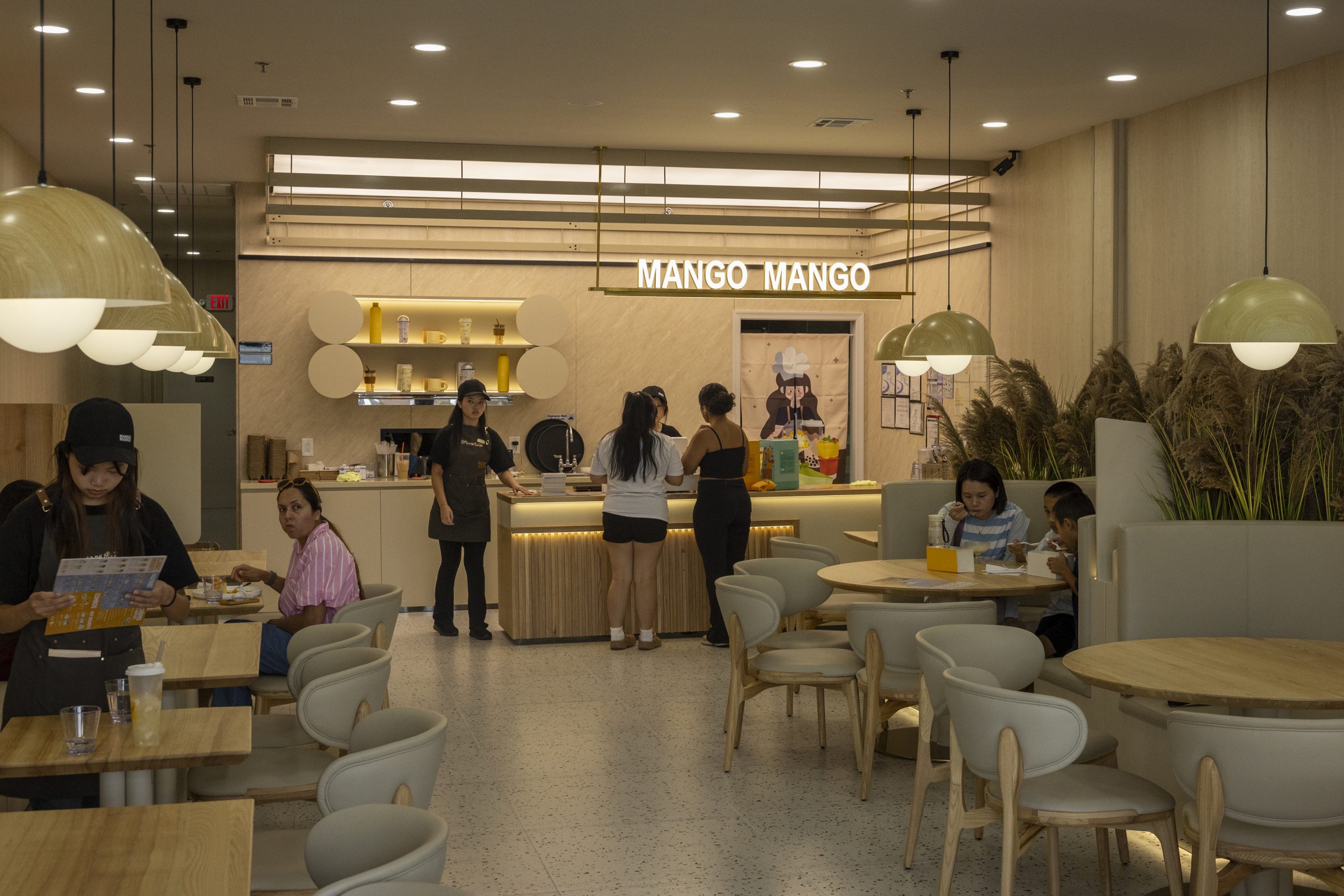
The mango mille crepe cake slice, strawberry mango juice sago and lychee jelly with mango ice cream, and the mango coconut sticky rice ice cream at Mango Mango Dessert in Ardmore.Aidan T. Gallo / Staff Photographer
Around the corner, Mango Mango has moved into 38 Greenfield Ave., the former home of electronic store World Wide Stereo.
Mango Mango is a growing chain of Asian-inspired dessert restaurants, where the sweet, sticky stone fruit is the menu’s “muse.”
The first Mango Mango opened in New York City’s Chinatown in 2013, and the dessert chain has since opened more than three dozen franchises across the U.S., from Hawaii to New Jersey. Ardmore is Mango Mango’s sixth Philly-area location after Chinatown, University City, Oxford Circle, Berwyn, and Cherry Hill.
Mango Mango Dessert in Ardmore.Aidan T. Gallo / Staff Photographer
Mango Mango’s menu is extensive, ranging from pillowy crepe cakes to ice cream sundaes and fruit teas. Naturally, the café’s desserts and teas lean heavily on mango — one can order a mango smoothie, mango crepe cake, layered mango snowcloud with fresh mango chunks and popping bubbles, and hot mango green tea — though other flavors are available, too.
Mango Mango’s Ardmore outpost held its grand opening on July 31. The café is open from noon to 10 p.m. seven days a week, and the shop will be running deals and promotions through its first four weeks of service.
The two dessert cafés join an expanding list of new businesses in Ardmore, both in the Main Line community’s downtown corridor and in Suburban Square, the popular Kimco Realty-owned outdoor shopping center.
This suburban content is produced with support from the Leslie Miller and Richard Worley Foundation and The Lenfest Institute for Journalism. Editorial content is created independently of the project donors. Gifts to support The Inquirer’s high-impact journalism can be made at inquirer.com/donate. A list of Lenfest Institute donors can be found at lenfestinstitute.org/supporters.
A Haverford Township art gallery reopened Thursday after the FBI searched the business onWednesday.
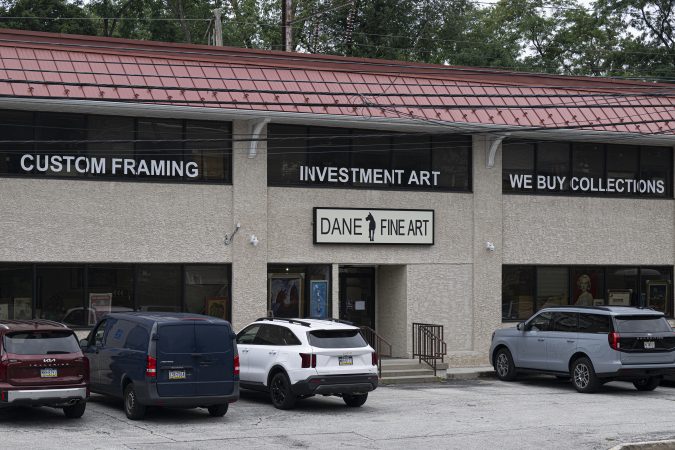
The FBI conducted “court-authorized law enforcement activity” on Wednesday morning at Dane Fine Art, a gallery at 2320 Haverford Rd., Sofia Kettler, a spokesperson for the FBI’s Philadelphia field office, confirmed Thursday.
Dane Fine Art is a “premier dealer of limited edition and unique works of art” that buys, sells, and auctions prints and original works from artists like Andy Warhol, Jean-Michel Basquiat, and Keith Haring, according to its website.
According to reports from Philadelphia Magazine, Dane Fine Art’s windows and doors were covered with brown paper on Wednesday morning as FBI agents entered and exited the building and handled art. Two agents said they were executing a search warrant, the magazine reported.
Kettler declined to share details about the operation.
Dane Fine Art was open for business on Thursday morning, and there were no visible signs that federal law enforcement had been there a day earlier. A gallery employee said the FBI left around 7 p.m. on Wednesday and had not returned. Another employee said that the gallery was represented by lawyers and that they had “no comment.” Both employees declined to identify themselves, with the second employee explaining they were not authorized to speak about the matter.
Dane Fine Art owns more than 95% of the pieces it sells or auctions, which differentiates it from many galleries that act as an intermediary between collectors and buyers,according to its website. The business has been open for more than 45 years, its website says.
The business is registered to a residential address associated with Nathan “Nicky” Isen, a prominent Philadelphia art dealer who pleaded guilty to money laundering in 2015.
The website of Isen’sgallery, I. Brewster & Co., now redirects users to Dane Fine Art.
A message left for a phone number affiliated with Isen was not immediately returned.
Staff writer Chris Palmer contributed to this article.
This suburban content is produced with support from the Leslie Miller and Richard Worley Foundation and The Lenfest Institute for Journalism. Editorial content is created independently of the project donors. Gifts to support The Inquirer’s high-impact journalism can be made at inquirer.com/donate. A list of Lenfest Institute donors can be found at lenfestinstitute.org/supporters.
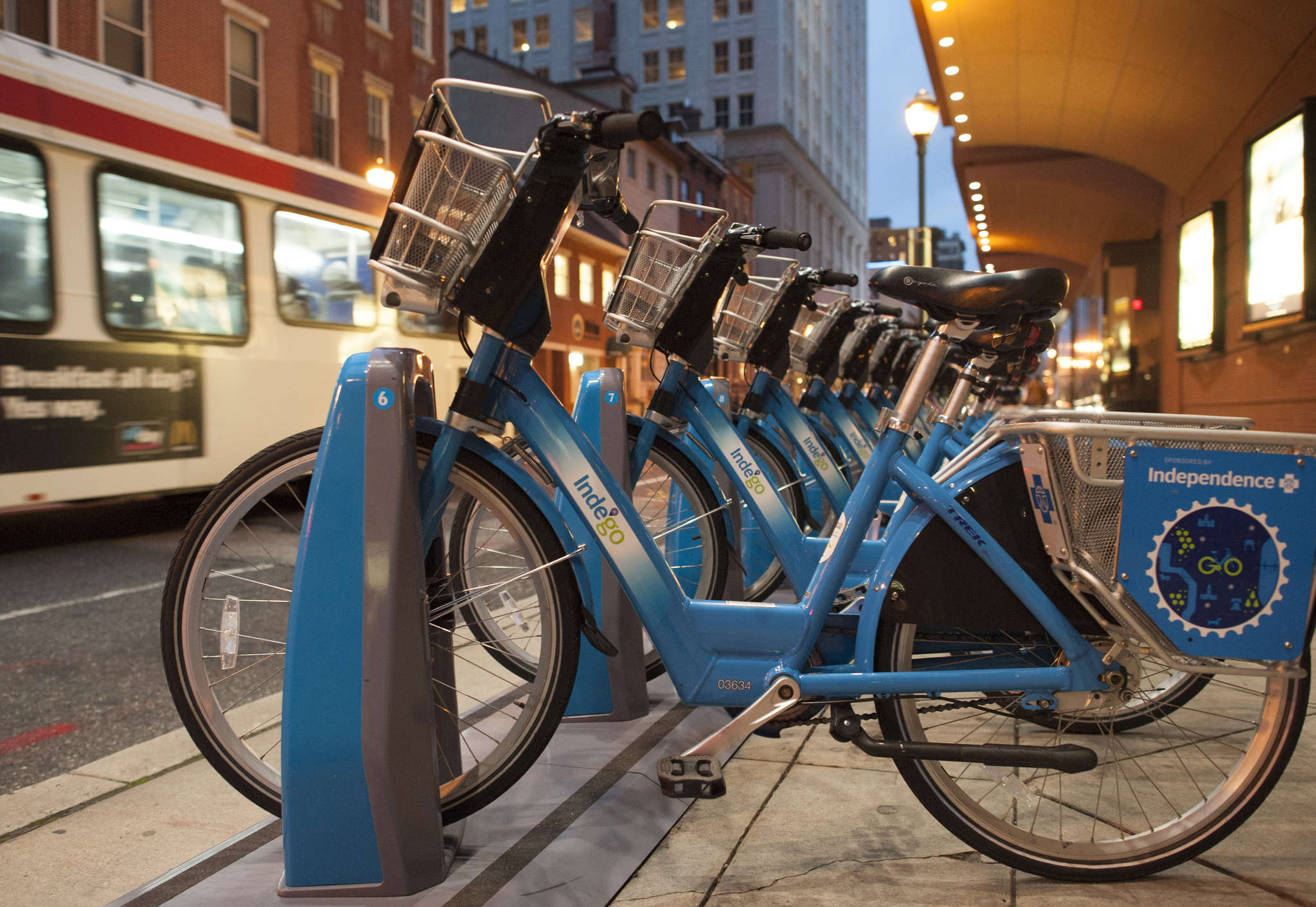
Indego, Philly’s bike share system, may be expanding to the suburbs for the first time.
Lower Merion Township commissioners are set to consider an agreement on Wednesday that would bring the Indego program into Bala Cynwyd, adding three docks and around two dozen e-bikes to a growing corridor in the suburban community.
Under the proposed agreement, bike share docks would be placed at Pencoyd Landing, One Bala Plaza, and One Belmont Avenue. The three sites would house a total of 45 docking points and 22 e-bikes. The agreement between Lower Merion and Indego would last for three years after the effective start date, which would be determined upon the contract’s approval.
Indego launched in 2015 in Philadelphia and has since expanded to include over 250 docks and 2,000 bikes in the city, according to the bike share program. Indego is owned by the City of Philadelphia, operated by Revolution BTS (previously Bicycle Transit Systems), and sponsored by Independence Blue Cross.
The proposed Bala Cynwyd expansion would connect suburbanites to Philadelphia’s extensive Indego network and would make Lower Merion the first municipality outside the city lines to have Indego bikes.
If approved, the township would pay $150,000 up front, all of which would be reimbursed by Montgomery County through its Montco 2040 grant program. Montco 2040 is the county’s comprehensive plan, which outlines land use and growth goals for the county’s 62 municipalities, including “improved bikeability of roads and bicycle facilities.” The county has doled out 173 grants totaling more than $22 million thus far for implementation of the goals outlined in the plan.
Indego, Philadelphia’s bike share program, may be expanding to Lower Merion, marking the program’s first foray into the Philly suburbs.TRACIE VAN AUKEN / For The Inquirer
Efforts to bring Indego to Lower Merion have been in the works for years. Lower Merion received a grant from Montgomery County to expand the bike share program in 2023, and has since received two extensions to carry out the grant after delays caused by “changing market conditions,” according to a staff report.
The proposed bike share expansion is the latest development in an ongoing effort to transform City Avenue from a collection of office parks to a vibrant, mixed-used hub with easy walking, biking, and transit access. Hundreds of new apartments have gone up on City Avenue in recent years, as well as new retail spaces, and more are on the horizon.
The bicycle docks at One Bala Plaza and One Belmont Avenue were included as conditions of approval for the new developments on those sites. The property owners of all three sites will pay $12,000 annually to cover ongoing maintenance costs and will provide the electricity for the stations, if the expansion is approved.
In Montgomery County, Lower Merion is not the only municipality working to expand its bicycle network. Abington Township in 2023 received a Montco 2040 grant to install 6.68 miles of bike infrastructure, including signage and road markings. In 2024, Whitpain Township received a grant from the county to install bicycle repair kits and racks in township parks, and in 2025, Hatfield Borough and Hatfield Township were awarded a grant to install bike racks, repair kits, wayfinding signage, and pavement marking for bike routes.
This suburban content is produced with support from the Leslie Miller and Richard Worley Foundation and The Lenfest Institute for Journalism. Editorial content is created independently of the project donors. Gifts to support The Inquirer’s high-impact journalism can be made at inquirer.com/donate. A list of Lenfest Institute donors can be found at lenfestinstitute.org/supporters.
A wood placard mounted behind the register at Sherman Brothers Shoes in Center City is inscribed withthe following message: “The BITTERNESS of Poor Quality Remains Long After the Sweetness of Low Price is FORGOTTEN.”
The saying is commonly attributed to Benjamin Franklin, making it a fitting aphorism for a shoe store that has served Philadelphia’s men for 73 years, outfitting them with pristine suede loafers and stitched leather boots, ranging in hues from auburn and chestnut to sienna and camel.
After seven decades in Center City, Sherman Brothers is moving from 1520 Sansom St. to the Main Line this summer. The men’s footwear retailer will take over 42 Greenfield Ave. in Ardmore, formerly home to consignment store Clothes Mentor, and will aim to open by Labor Day. The move will reestablish Sherman Brothers in the Philly suburbs, where it once had multiple storefronts, and will mark a new chapter for the storied family business.
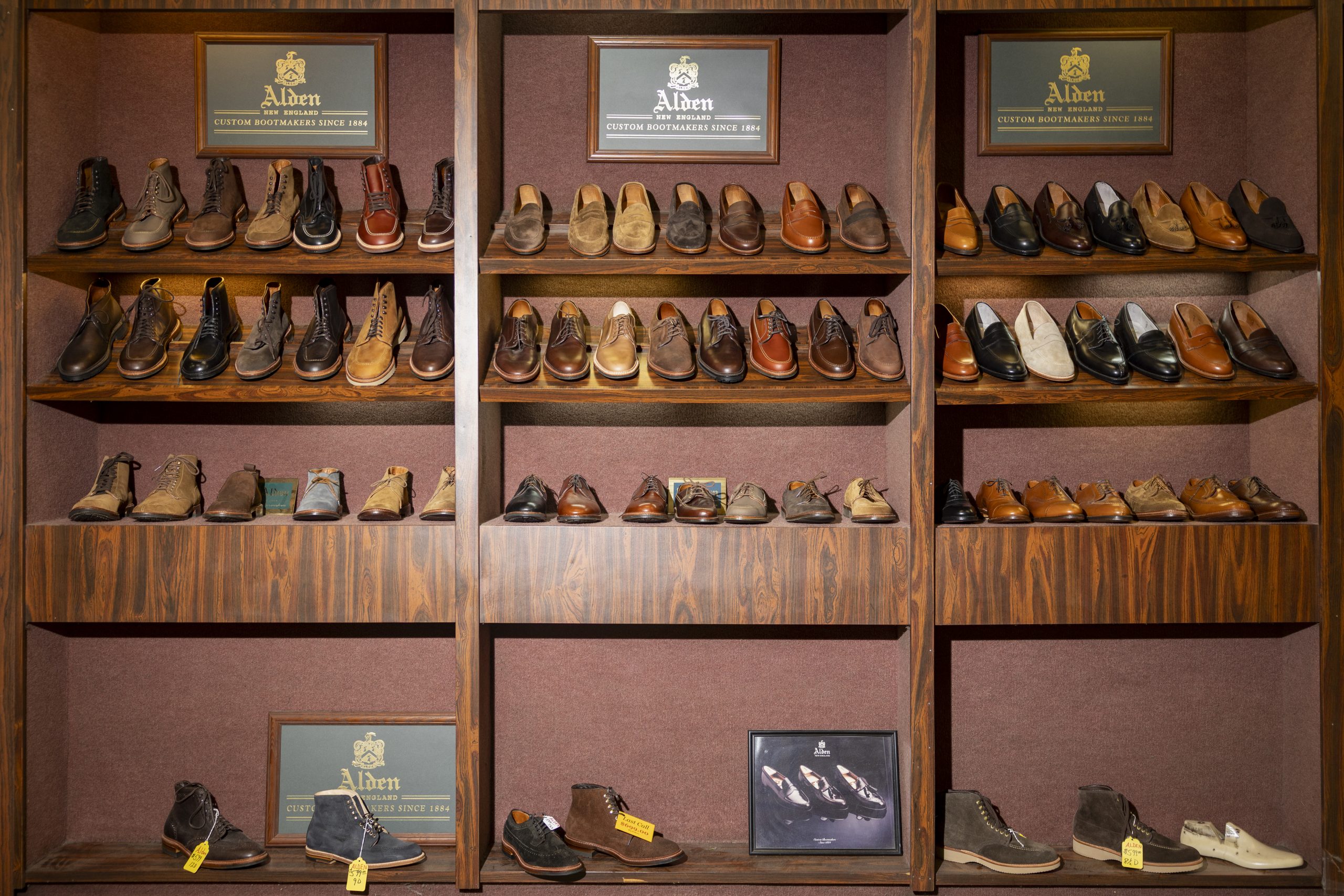
Alden boots and loafers line the walls of Sherman Brothers in Center City.Aidan T. Gallo / Staff Photographer
Sherman Brothers was founded in 1953 by brothers Herbert and Edwin Sherman. The two purchased a small shoe store on Mole Street in Center City from their Uncle Lou, using a $5,000 loan from their father. Herbert and Edwin would take long road trips up to New England to visit shoe factories, stocking up with closeout and clearance shoes from brands like E.T. Wright, Bates, and Alden. Because they were buying clearance shoes, they often returned to Philadelphia with extra small and large sizes, making Sherman Brothers a favorite store for men with hard-to-fit feet.
In 1967, the brothers moved to the Sansom Street location. By then, the store had become a destination for mayors and council members, athletes and entertainers, turning to standing room only during its busiest hours. At one point, Sherman Brothers had three suburban outposts in addition to the Sansom Street store, all of which eventually closed. Now, the shoe store does more than half of its business online, shipping to buyers everywhere from Mississippi to Nebraska.
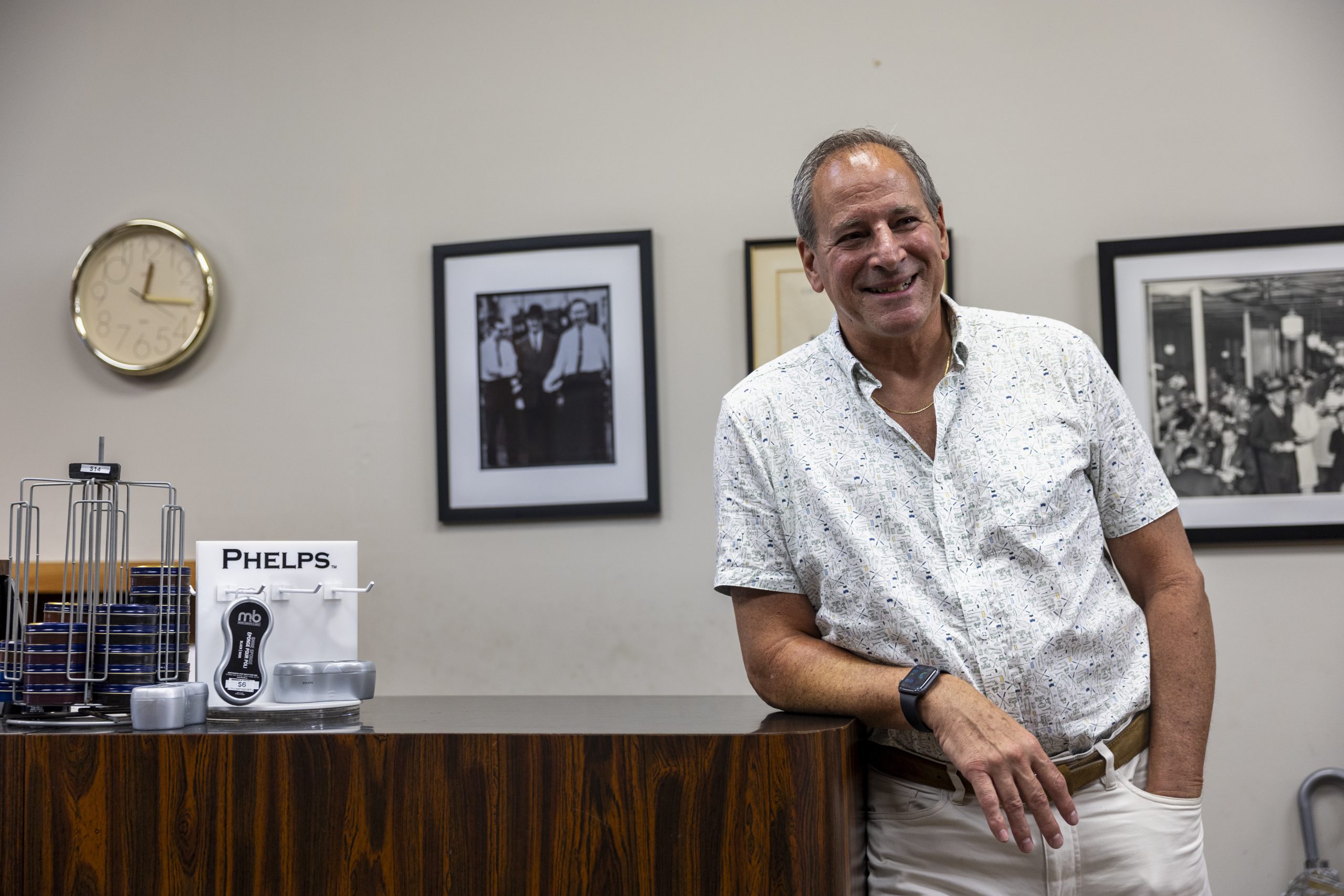
Ken Sherman, 66, Herbert’s son, has “been doing this all my life.”
Ken, along with his cousin Jeffrey, make up the second generation of Sherman Brothers ownership. Ken worked in the shoe store in high school, then after class as a student at Temple University. He’s always loved key components of the business: schmoozing with customers, visiting factories, learning the art of bending leather into footwear. He says he can size up a person’s foot just by looking at a picture.
“This business is a passion of mine,” Ken said, sitting in the store on a Tuesday morning.
As he moved through the store, Ken helped a patron pick out a pair of wedding shoes and pointed out a favorite shoe brand of Gov. Josh Shapiro, who’s known for pairing suits with upscale sneakers.
“I love the customers,” he said. “I love what we do. I love just engaging in conversation.”
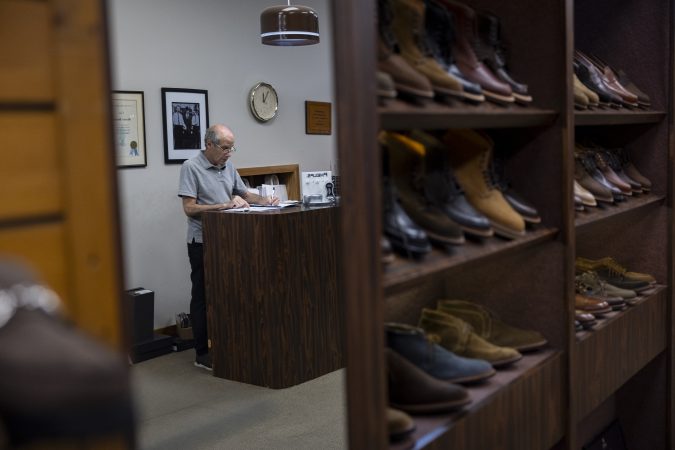
Ken Sherman stands at the register of Sherman Brothers. Ken marks the second generation of ownership for the family business. Aidan T. Gallo / Staff Photographer
The reasons for moving Sherman Brothers to Ardmore are manifold, said Ken.
The block of Sansom Street where the store is located has become a restaurant hub — Sherman Brothers is flanked by 1518 Bar & Grill, Mission Taqueria, Oscar’s Tavern, and Bagels & Co., among other bars and eateries. The shoe store is one of the last retailers on the block. For years, Ken said, stakeholders made offers to bring something new into the Sherman Brothers space. Ultimately, a restaurant made an offer that the Shermans decided to take (the Shermans own the buildings at 1518 and 1520 Sansom Street and lease space to multiple tenants). Ken declined to share any details about the new restaurant, which will be called Silver Shaker.
Another reason to leave Center City: Parking. For years, Sherman Brothers employees and patrons have complained of parking tickets and thehigh prices oflots. The Ardmore store will have ample free parking.
Ken said he’ll miss the city — the Sansom Street storefront holds memories of celebrity patrons, family milestones, and now-funny mishaps. He hopes his Philadelphia customers will make the trek out to Ardmore to visit with him. But he’s ready to bring Sherman Brothers back to the Main Line.
“We’re still Sherman Brothers. Our legacy is what it is, and I’m proud of that, proud of what we’ve done for the city,” Ken said.
“We’re gonna do exactly what we do, just in a different location.”
This suburban content is produced with support from the Leslie Miller and Richard Worley Foundation and The Lenfest Institute for Journalism. Editorial content is created independently of the project donors. Gifts to support The Inquirer’s high-impact journalism can be made at inquirer.com/donate. A list of Lenfest Institute donors can be found at lenfestinstitute.org/supporters.