Author: Denali Sagner

  • Upper Darby is considering a proposal to restrict cooperation with federal immigration agents

    Upper Darby is considering a proposal to restrict cooperation with federal immigration agents

    Upper Darby is set to consider a sweeping ordinance that would restrict if and how federal immigration agencies can operate in the township.

    The ordinance, which will be introduced Wednesday with a public hearing scheduled for Sept. 16, would ban local police from assisting with federal immigration enforcement activities, prohibit immigration agents from using township property as staging areas for raids, and void agreements with neighboring municipalities that partner with U.S. Immigration and Customs Enforcement, among other provisions.

    Kyle McIntyre, a Democratic council member spearheading the bill, said in a statement he hopes the ordinance will become a “legally workable municipal framework” that other communities can adopt.

    President Donald Trump’s second administration has brought a surge of ICE arrests to the Philadelphia region, stoking anxiety in Upper Darby, a diverse township whose slogan is “the world in one place” and where nearly a quarter of the population is foreign-born, according to estimates from the U.S. Census Bureau. In January, Parady La, 46-year-old Cambodian immigrant and Upper Darby resident, died in ICE custody while receiving treatment for severe drug withdrawal.

    In February, Upper Darby High School students walked out in protest of ICE, and Upper Darby passed a resolution affirming that the township would not enter into an agreement with the agency through the 287(g) program, which deputizes local police officers to carry out immigration enforcement.

    ICE told Upper Darby in February it would no longer communicate with township police when carrying out immigration enforcement, an edict the agency eventually reversed the following month.
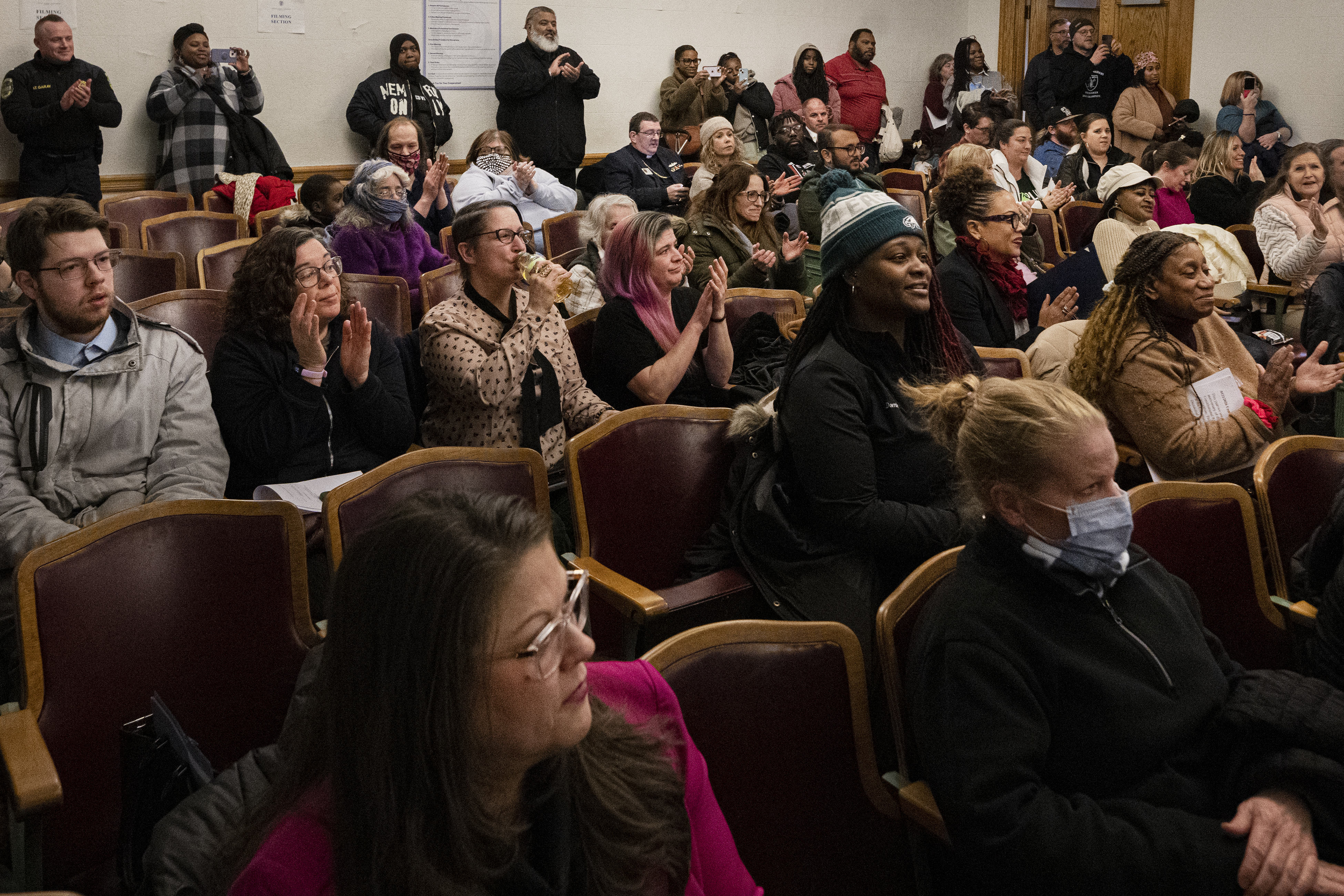
    Upper Darby residents gather at a township council meeting on Jan. 21. The legislative body is set to consider an ordinance that would restrict if and how federal immigration officials could operate within the township. Jose F. Moreno / Staff Photographer

    Under the proposed ordinance, no township resources, including funding, facilities, or databases, could be used to assist with federal immigration enforcement actions. Township officials could not provide information to federal agencies for the purpose of immigration enforcement, including housing records, employment details, or custody statuses. Township personnel could not assist with immigration enforcement operations, and Upper Darby could not record or maintain data about residents’ immigration status unless required to by state or federal law. Immigration enforcement agencies would also be barred from using township property as staging locations for immigration raids.

    The ordinance carves out exceptions, including cases when federal agents possess a judicial warrant or when there is a legitimate criminal law enforcement matter that requires cooperation.

    A judicial warrant is a warrant signed by a judge that allows law enforcement officers to make an arrest, search, or seizure. An administrative warrant signed by an ICE agent can only be executed in a public place and does not authorize officials to enter private property to make arrests.

    Upper Darby’s proposal would also ban township police officers from wearing masks and would require that they clearly identify themselves with nameplates and badges. Township police would be exempt from the mask and identification rules in specific cases, including operations where there would be risk of chemical agents or hazardous environmental conditions.

    Township police would be barred from stopping, questioning, detaining, or transferring individuals solely based on immigration status, civil detainers, or administrative warrants.

    The ordinance also formalizes the February resolution barring Upper Darby from entering into a partnership with ICE through the 287(g) program, and declares that any municipality who cooperates with ICE through 287(g) will be considered “incompatible” with Upper Darby, and any agreements with those municipalities will be void.

    In the Philadelphia suburbs, only the Lansdowne Borough Constable’s Office in Delaware County and the Pennsylvania State Constable Office Honey Brook Precinct 1 in Chester County participate in 287(g) agreements with ICE.

    Upper Darby’s ordinance also “formally requests” that federal agents clearly identify themselves by name, badge number, and agency, and refrain from using masks while carrying out law enforcement operations.

    The Upper Darby ordinance has many parallels to an aggressive seven-bill package passed by Philadelphia’s City Council in April, which prohibits federal immigration agents from using city property as staging or processing areas, bans data sharing between the city and ICE, and bars Philadelphia police from concealing their identities.

    A Philadelphia bill that banned law enforcement agents from obscuring their identities with masks, also passed in April, was struck down by a federal judge in July. The order from U.S. District Judge Chad F. Kenney argued that the Constitution’s Supremacy Clause prevents municipal governments like Philadelphia from dictating requirements for federal agencies.

    This suburban content is produced with support from the Leslie Miller and Richard Worley Foundation and The Lenfest Institute for Journalism. Editorial content is created independently of the project donors. Gifts to support The Inquirer’s high-impact journalism can be made at inquirer.com/donate. A list of Lenfest Institute donors can be found at lenfestinstitute.org/supporters.


  • Delaware County is about to get another tool to help manage intense flooding

    Delaware County is about to get another tool to help manage intense flooding

    A new tool may help Delco officials better understand flooding in the county.

    Delaware County recently acquired 70 AWARE flood gauges, which officials say will help track data, improve response to flooding events, and allow the county to better plan for the future as extreme weather events challenge the region’s aging infrastructure.

    Here’s a rundown of what flood gauges do and how they’ll fit into stormwater management in Delco.

    What are flood gauges?

    Flood gauges are tools placed in and around bodies of water that measure water levels — think giant measuring sticks.

    Delaware County’s flood gauges will be placed throughout the county and report data to a public access portal in real time, allowing municipalities and residents to track water levels online.

    Why is the county installing flood gauges?

    Flood risk is growing in Delaware County, Gina Burritt, the county’s planning director, said, as the region’s infrastructure contends with increasingly frequent and intense precipitation events.

    The county is seeing flooding in areas where it used to be rare, Burritt said, and water-proximate areas are becoming more vulnerable to serious storm damage. Flooding is of particular concern in Delco, where much of the land is low-lying and close to the Delaware River and its tributaries.

    “We always kind of say that we’re downstream of everywhere,” Burritt said. “All of the watersheds, they flow to the Delaware River, so we’re at the very bottom of that watershed.”

    Gauges will help the county understand where flood risk is the most acute, said Burritt, informing decision-making for county planners and emergency responders.

    The flood gauges may also eventually provide early warning detection, though Burritt noted that this capability is still being developed.

    Philadelphia installed a similar flood monitoring system earlier this year, with flood sensors and cameras put in nine locations, including Cobbs Creek, Darby Creek, and the Manayunk Canal. Residents can see flood monitoring data on a live portal.

    The creek at Rolling Green Park in Springfield. Delaware County is planning to install 70 flood gauges to measure levels in and around waterways. Tyger Williams / Staff Photographer

    Where will the gauges be installed?

    In drafting its Act 167 plan, a state-mandated stormwater management blueprint, the county and consultant Jacobs Engineering have identified 87 potential flood gauge locations.

    The first batch of flood gauges will be installed on county-owned sites like bridges and parks. Once the initial round of gauges are placed, Burritt said her department hopes to work with other landowners, like the state, PennDot, and local municipalities, to place gauges in other key sites.

    Potential locations outlined in the draft plan include Smedley Park, Catania County Park along Little Crum Creek, Sun Village Park, Clayton County Park, and numerous county-owned bridges, according to the county’s draft Act 167 plan.

    Officials have identified 230 “flood problem areas” across the county, 130 of which fall under the “high priority” category. Some of the highest priority flood risk areas in Delaware County include the intersection of 69th Street and Marshall Road in Upper Darby, Brookhaven Memorial Park, and the section of Baltimore Pike that crosses Brandywine Creek at the border of Chester County. The highest priority areas were identified by the frequency and severity of flooding that occurs there, as well as impacts to emergency services, roads, and structures.

    Delco’s Act 167 plan is in preliminary drafting stages, according to the county, and will be further refined, including with feedback from municipalities and the Commonwealth’s Department of Environmental Protection.

    How much did this cost?

    The 70 flood gauges were acquired with a $107,845 Community Development Block Grant from the U.S. Department of Housing and Urban Development and another $224,274 in Pennsylvania Local Share Account grants.

    Installation of the first batch of gauges will cost $95,000, an expenditure coming out of the county’s capital budget. Burritt said the county is in the request for proposal process and does not yet know exactly how many gauges will be installed in the first round.

    This suburban content is produced with support from the Leslie Miller and Richard Worley Foundation and The Lenfest Institute for Journalism. Editorial content is created independently of the project donors. Gifts to support The Inquirer’s high-impact journalism can be made at inquirer.com/donate. A list of Lenfest Institute donors can be found at lenfestinstitute.org/supporters.

  • Harriton High School’s varsity football season is suspended amid concerns over player safety, ‘sustainability’

    Harriton High School’s varsity football season is suspended amid concerns over player safety, ‘sustainability’

    Harriton High School’s varsity football season has been suspended due to low participation, concerns over player safety, and questions about “the sustainability of maintaining a competitive program,” according to a letter sent to families on Monday.

    “We recognize that this is disappointing news for our student-athletes, families, coaches, and the entire football community. We understand the time, effort, commitment, and excitement that goes into preparing for a football season, and we do not make this decision lightly,” the letter, signed by principal Stu Warshawer and athletic director Shawn Albert, read.

    The suspension comes at the heels of a monthslong push by parents and players to merge Lower Merion and Harriton’s football programs due to dwindling rosters and growing safety concerns.

    The Lower Merion school board in May approved the formation of a cooperative between Lower Merion and Harriton’s football programs for the upcoming school year, however the cooperative is awaiting approval from the Pennsylvania Interscholastic Athletic Association (PIAA). Under PIAA rules, schools can merge athletic teams under specific conditions, including low participation numbers or “lack of success” in a sport.

    Michael Barber, chairman of PIAA District 1, which serves Bucks, Montgomery, Chester, and Delaware Counties, did not immediately respond to questions about the status of the proposed cooperative.

    School officials said in the letter that the cooperative has been requested through the PIAA and that exploring the merger “may help create the participation numbers and competitive structure necessary to build a safer and more sustainable football program for our students.”

    While Harriton’s varsity season will be suspended, the district is actively exploring maintaining a junior varsity season, according to the letter.

    The letter to families noted that “this decision is not a decision to end football in our district.”

    “The district remains committed to providing opportunities for football in the future and to identifying a sustainable path forward for our student-athletes and programs,” it stated.

    Harriton’s football team played its first regular season game on Aug. 28, losing to Pottstown 53-0. Harriton was scheduled to play Radnor, its first conference game of the season, on Sept. 3.

    This suburban content is produced with support from the Leslie Miller and Richard Worley Foundation and The Lenfest Institute for Journalism. Editorial content is created independently of the project donors. Gifts to support The Inquirer’s high-impact journalism can be made at inquirer.com/donate. A list of Lenfest Institute donors can be found at lenfestinstitute.org/supporters.
  • Upper Darby may dole out ‘quick tickets’ for overgrown grass, improper trash disposal, and other property violations

    Upper Darby may dole out ‘quick tickets’ for overgrown grass, improper trash disposal, and other property violations

    Upper Darby may soon hand out tickets for more than a dozen property maintenance and “quality of life violations,” including improper waste disposal, overgrown grass, and illegal dumpster placement.

    Upper Darby’s council earlier this month advanced an ordinance that would allow the township’s licenses and inspections department to dole out “quick tickets” for 17 property-related violations. Tickets would range from $50 to $100 and would, according to officials, allow the township to enforce property-related infractions without engaging in a drawn-out compliance process each time.

    “This is something that we really need. Our inspectors really need it,” Amrinder Singh, Upper Darby’s director of licenses and inspections, said at an Aug. 19 meeting.

    Singh said the program would give inspectors “another practical tool to address routine violations more quickly and encourage prompt, corrective action” with the ultimate goal of “trying to change human behavior.”

    Council voted to advertise an ordinance establishing the property maintenance quick ticket program and is set to vote on the ordinance on Sept. 2.

    Upper Darby currently addresses property issues through a violation and compliance process, which Singh said can be lengthy and delay corrective action. Under the existing system, code enforcement officers conduct an inspection, either proactively or following complaints. If a violation is detected, the property owner receives written notice describing the infraction and required action with a deadline. After the compliance period, the property is reinspected, and, if the issue isn’t corrected, enforcement actions can be taken, including fines, citations, and criminal proceedings before a district judge.

    Ultimately, Singh said, many property owners just ignore the citations.

    The proposed program would send tickets straight to property owners after violations are documented, bypassing the existing, and sometimes protracted, process. Money collected through tickets would go into Upper Darby’s general fund. Property owners will be able to appeal tickets to the township, Singh said. The township’s existing violation process would still exist, Singh said, and would work in tandem with the quick tickets.

    Norristown and Reading have implemented similar programs.

    The township selected the 17 specific violations because they contribute to unsafe conditions, neighborhood blight, pests, and pedestrian obstructions, Singh said.

    Upper Darby’s licenses and inspection department has received over 7,000 complaints this year, according to Singh, with around 40% being for grass and trash violations.

    At recent council meetings, residents have complained of rat infestations and improper trash storage in their neighborhoods.

    If passed by council, the quick ticket program ordinance would go into effect immediately, but fees and penalties wouldn’t be collected until Jan. 1. Singh said the four-month wind-up would allow the department to train inspectors, establish payment procedures, and engage in education and outreach with residents.

    Council members at the Aug. 19 meeting seemed poised to approve the program. Council member Myron McNeely said it is “way overdue.”

    Here’s a full list of the violations proposed for enforcement under the quick ticket program:

    • Accumulation of rubbish, garbage, or debris
    • Improper dumping or disposal of waste
    • Failure to clean up animal waste
    • Improper storage of trash containers or recyclables
    • High weeds or overgrown grass
    • Overgrowth obstructing sidewalks or public rights of way
    • Outside placement of indoor furniture or appliances
    • Exterior accumulation of construction debris or materials
    • Improper storage of hazardous materials
    • Illegal placement or storage of dumpsters without authorization
    • Unregistered, uninspected, unsafe, immobilized, or inoperative motor vehicles
    • Unsafe or noncompliant swimming pools
    • Snow and ice removal violations
    • Graffiti defacement
    • Failure to obtain required permits
    • Failure to post required permit placards
    • Failure to secure vacant unoccupied structures

    This suburban content is produced with support from the Leslie Miller and Richard Worley Foundation and The Lenfest Institute for Journalism. Editorial content is created independently of the project donors. Gifts to support The Inquirer’s high-impact journalism can be made at inquirer.com/donate. A list of Lenfest Institute donors can be found at lenfestinstitute.org/supporters.
  • Lower Merion’s technology policy is an unconstitutional ‘digital free-for-all,’ parents say in lawsuit

    Lower Merion’s technology policy is an unconstitutional ‘digital free-for-all,’ parents say in lawsuit

    The Lower Merion School District violated the constitutional right of parents to choose what content their children are exposed to online by requiring students to use internet-connected computers without safeguards or controls, seven families with school-aged children say in a federal lawsuit.

    The Lower Merion school board in June repealed a technology policy that allowed parents to opt their children out of using district-issued laptops and iPads. In August, the board adopted a new technology policy that doesn’t have an opt-out option, despite continued outcry from parents.

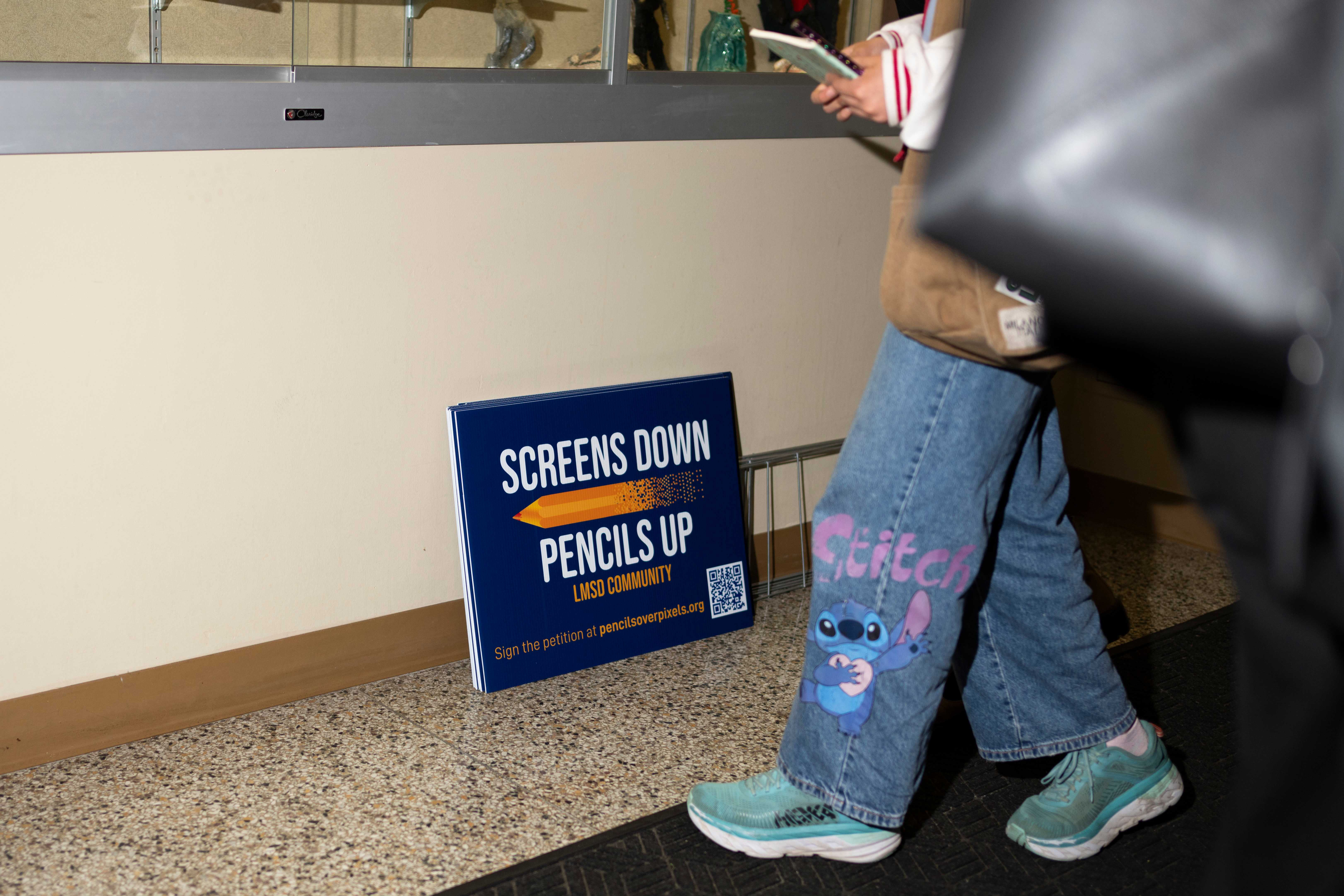
    The parents, who are part of a grassroots group called “Pencils over Pixels” that objected to the policy change, say in the suit that their children “encounter pornography, violent images, and violent or disturbing video games through their school devices.”

    In addition to the exposure to inappropriate materials, the suit says that by having AI chatbots readily available, the district’s policy can “impede learning” and “encourage cheating.”

    While three of the seven families behind the lawsuit have children enrolled in Lower Merion School District schools, three have withdrawn their children from the district because of the policy. Another considered enrolling their children in Lower Merion schools, but decided not to because of the device-use requirement.

    The families are being represented by the EdTech Law Center and Anapol Weiss, a Philadelphia-based law firm involved in multiple lawsuits against social media companies.

    Lower Merion is aware of the lawsuit, district spokesperson Amy Buckman said in a statement.

    “The District denies the allegations and will respond further through the judicial process,” Buckman said.

    The lawsuit says “the environment in many classrooms in the District has become like a casino. Students sometimes sit and repeatedly hit keys or the spacebar while playing repetitive online games, creating a classroom environment that is loud, chaotic, and overstimulating.”

    The heated public process that resulted in the repeal of the policy was a facade, the suit says, accusing the board of making its decision behind closed doors months before the summer. According to the complaint, Lower Merion superintendent Frank Ranelli “instructed” principals to refuse to accommodate technology opt-outs despite the “plain language” of the now-repealed policy before its repeal.

    The fight over technology in Lower Merion has boiled over in recent months, as parents in favor of opting their children out of technology have found themselves increasingly at odds with the school board. Two parents were banned from school board meetings for “disruptive” behavior during meetings on the technology policy, a move legal experts said may infringe on the parents’ constitutional rights.

    Andrew Liddell, attorney with the EdTech Law Center, said in an interview that plaintiffs “allege profound violations of parents’ rights and disruptions of family life caused by the district’s policies.”

    “Here we have a school board, or at least seven members of the school board and a superintendent, who are determined to press forward with this policy that really does harm kids,” Liddell said.

    Under the policy, kindergarten, first, and second graders will no longer receive personal iPads and laptops, and in-class technology time for the youngest grades will be limited to “specific educational purposes.” Third and fourth graders will have “teacher-directed” access to devices within the classroom. Fifth and sixth graders will be issued individual devices, which will stay in the classroom unless parents want their kids to bring them home.

    Seventh and eighth grade students will be permitted to take their devices to and from school but will not be penalized for not doing computer-based homework. By high school, students will be assigned individual devices to carry with them throughout the day and take home.

    The complaint accuses the seven school board members who voted to repeal the opt-out policy of acting in “contravention of their proper role as public educators and leaders of the District” and “thwarting” the ability of parents to protect their children. It asks a federal judge to issue an injunction that preserves the old policy by accommodating parents who wish to decline or limit their child’s use of internet-connected devices.

    “A parent’s right to make decisions regarding their children’s care includes the right to make decisions to safeguard their health, safety, and privacy,” the lawsuit says.

    The lawsuit was filed as social media and technology companies are facing a reckoning over the impacts their products have on the well-being of children and youth. Meta, the parent company of Facebook and Instagram, agreed this week to pay states up to $17.1 billion as part of a settlement over claims its platforms harmed kids. Pennsylvania is expected to receive more than $500 million from the payout.

    Earlier this month, Montgomery County sued Meta, ByteDance, Snap, and Google on behalf of the county’s 148 schools and more than 180,000 minor students, accusing the tech giants of negligence and creating a public nuisance.

    This suburban content is produced with support from the Leslie Miller and Richard Worley Foundation and The Lenfest Institute for Journalism. Editorial content is created independently of the project donors. Gifts to support The Inquirer’s high-impact journalism can be made at inquirer.com/donate. A list of Lenfest Institute donors can be found at lenfestinstitute.org/supporters.
  • Lower Merion school board member charged with stealing over $50,000 from employer has resigned from the board

    Lower Merion school board member charged with stealing over $50,000 from employer has resigned from the board

    A Lower Merion school board member accused of embezzling more than $50,000 from her employer has resigned from the school board.

    Jennifer Rivera, who has served on the school board for eight months, tendered her resignation from the board effective Tuesday, Amy Buckman, spokesperson for the Lower Merion School District, confirmed in an email Wednesday.

    The board will vote on accepting the resignation at a special meeting Sept. 14.

    Rivera could not immediately be reached for comment.

    Rivera has been charged with theft, receiving stolen property, and related crimes in relation to funds she is accused of stealing from SMB Team, a Bala Cynwyd-based marketing agency that works with law firms.

    An affidavit of probable cause for Rivera’s arrest said she used more than $25,000 in company funds to pay for airline travel and family vacations. Rivera also allegedly used SMB funds to pay a coworker to film a friend’s son’s bar mitzvah. Rivera used the company credit card to fly the same coworker and his wife to another employee’s wedding, where he was hired to be a photographer, according to the affidavit.

    She was released on $25,000 unsecured bail and is scheduled to appear before a district judge for a preliminary hearing on Sept. 2.

    Rivera was elected to the Lower Merion Board of School Directors in November on a Democratic slate. She was the highest vote-getter of the eight candidates who ran for a spot on the board last fall.

    Rivera also sits on the board of directors of the Montgomery County Intermediate Unit, a Norristown-based educational service agency that supports local schools. Margaret Wright, Montgomery County Intermediate Unit board president, did not immediately respond to questions about whether Rivera was still serving on the board; however, Rivera’s name and photo were pulled from the intermediate unit’s website after a reporter’s inquiry.

    In an announcement Thursday, the Lower Merion School District encouraged “qualified candidates with a strong commitment to public education” to apply for the vacancy.

    Candidates must be 18 years or older, residents of Lower Merion or Narberth, and have lived in the school district for at least a year. They cannot be an employee of the district. Those interested in serving on the board are asked to submit application materials by Sept. 9. The school board will invite “highly qualified candidates” to participate in public interviews during a special meeting on Sept. 22.

    The selected board member will serve until Dec. 5, 2027. The remaining years of the term will be filled by the winning candidate of the November 2027 municipal election.

    This story has been updated with additional information on the process for filling a school board vacancy.

    This suburban content is produced with support from the Leslie Miller and Richard Worley Foundation and The Lenfest Institute for Journalism. Editorial content is created independently of the project donors. Gifts to support The Inquirer’s high-impact journalism can be made at inquirer.com/donate. A list of Lenfest Institute donors can be found at lenfestinstitute.org/supporters.

  • That ‘curious’ lane switch in the middle of the Manayunk Bridge? Planners say it’s on purpose.

    That ‘curious’ lane switch in the middle of the Manayunk Bridge? Planners say it’s on purpose.

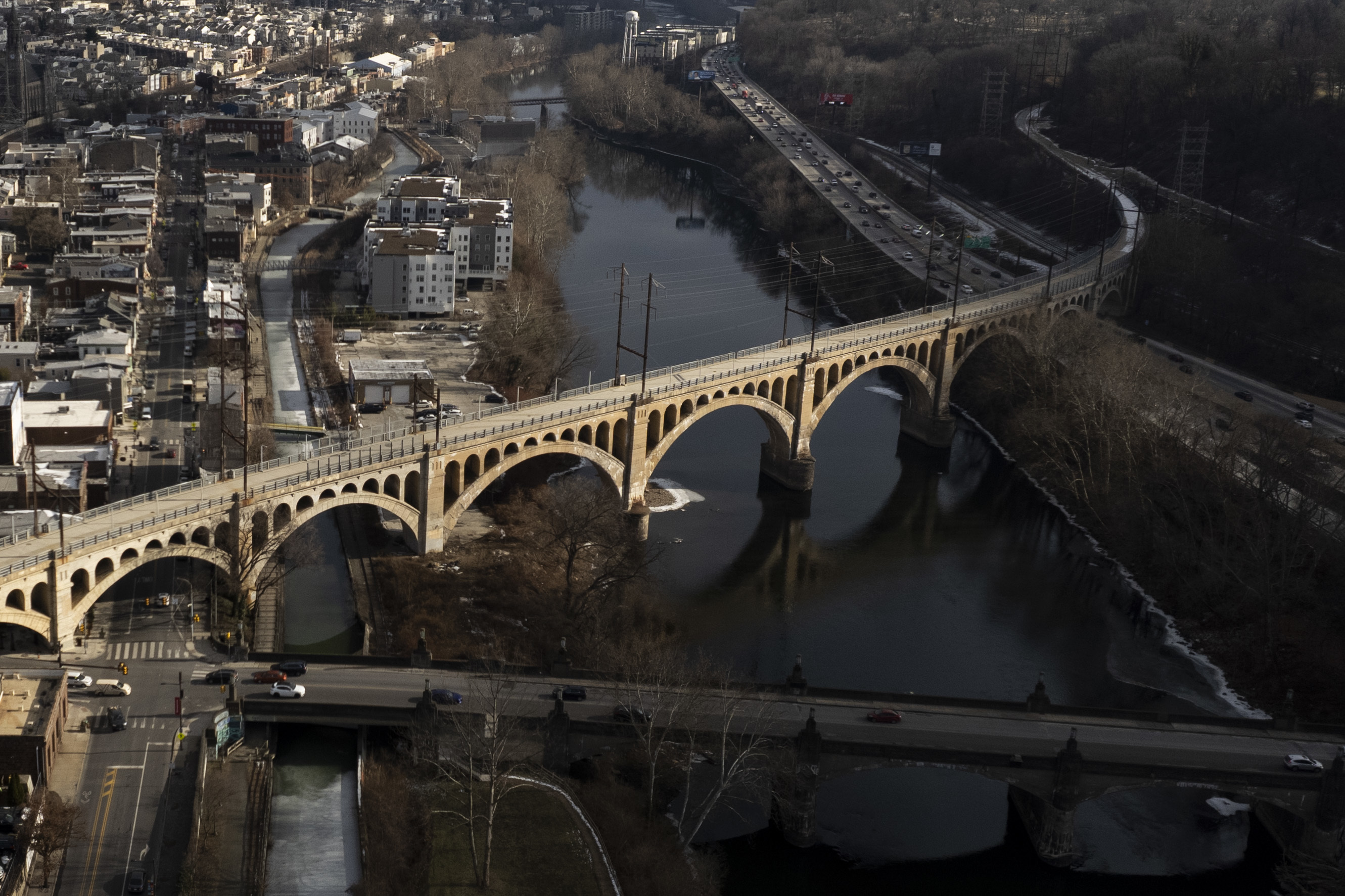
    Towering 80 feet above the Schuylkill and shaped by its colossal concrete arches, the Manayunk Bridge is a key connector in the region’s trail system and a link between Philadelphia and its suburban neighbor, Lower Merion Township.

    While the trail is beloved by city dwellers and suburbanites alike, a mid-trail traffic pattern switch for bikers and pedestrians has confused some users and prompted one reader to write in, asking The Inquirer to investigate. According to city and township officials, the traffic flow switch-up midway across the bridge is no accident.

    The Manayunk Bridge connects Manayunk to Bala Cynwyd. Monica Herndon / Staff Photographer

    The Manayunk Bridge connects the 80-plus mile Schuylkill River Trail with the Cynwyd Heritage Trail, a 2-mile multiuse path that runs along an unused segment of SEPTA tracks in Lower Merion. Much of the trail was once SEPTA’s Ivy Ridge line, which connected Philadelphia with Manayunk via Bala Cynwyd, but was truncated in the 1980s due to poor track conditions. The trail’s completion in 2011, and extension in recent years, has marked a major transformation for the previously underutilized corridor of Bala Cynwyd.

    Penn Valley resident J.J. Cutuli enjoys running and biking with his kids on the Cynwyd Trail.

    “We really love the pedestrian bridge. We really love the trail,” Cutuli said.

    But halfway across the Manayunk Bridge, “there’s this curious little thing that happens,” Cutuli said. The trail’s traffic pattern switches. The bicyclist side becomes the pedestrian side, and vice versa.

    “I’m kind of a rule-follower. One of my kids is a rule-follower, and he asked me that question. He was like, ‘What side should I be on? Should I be on this side? Should I be on that side? What are the rules of the road?’” Cutuli said.

    Unable to summon an answer himself, Cutuli wrote into Curious Lower Merion, The Inquirer’s forum for answering questions about the Lower Merion community.

    » ASK US: Have something you’re wondering about in Lower Merion? Submit your Curious Lower Merion question here.

    Chris Leswing, Lower Merion’s director of building and planning, said the traffic pattern switch was a deliberate choice to slow bikers traversing the downward slope from Lower Merion to Manayunk.

    It’s “easy to speed through areas where people may linger and watch the river” and the “idea was that bikers would need to be aware of the pavement markings to check their speeds,” Leswing said in an email.

    The city concurred.

    The switching of the bike and pedestrian zones was designed to slow bikes down and allow users to “experience both sides of the bridge and the amazing views,” Ra’Chelle Rogers, spokesperson for Philadelphia’s parks and recreation department, said in an email.

    The traffic pattern switch was in response to “what was heard from the public and stakeholders,” according to Rogers.

    Are trail users following the rules? Not completely.

    On one Reddit post, cyclists said the traffic pattern change and accompanying signage “makes zero sense” and “could not be more Looney Toons.” Most cyclists and pedestrians just stay to the right, commenters said.

    This suburban content is produced with support from the Leslie Miller and Richard Worley Foundation and The Lenfest Institute for Journalism. Editorial content is created independently of the project donors. Gifts to support The Inquirer’s high-impact journalism can be made at inquirer.com/donate. A list of Lenfest Institute donors can be found at lenfestinstitute.org/supporters.
  • Lower Merion has issued more than 600 violations from red-light cameras since mid-July

    Lower Merion has issued more than 600 violations from red-light cameras since mid-July

    Lower Merion’s automated red-light cameras have captured hundreds of violations since they went into effect last month.

    As of Monday, red-light cameras installed at the intersection of Lancaster Avenue and Remington Road had led to 663 citations, according to Andy Block, Lower Merion’s superintendent of police.

    The cameras went live on May 13, kicking off a 60-day warning period before the police department began issuing tickets on July 13.

    Lower Merion’s cameras capture photos and videos of drivers apparently running red lights. Video and photo evidence is sent to the police department, which reviews each case and determines whether to send a citation to the vehicle’s owner. Red-light violations come with a $100 fine and can be contested at an in-person municipal hearing.

    The intersection of Lancaster Avenue and Remington Road was chosen as the first site for the automated red-light enforcement cameras, and officials have said they hope to expand the program to other high-traffic intersections. Other locations being considered for red-light cameras include the intersections of Montgomery Avenue and Airdale Road and of Lancaster Avenue and Haverford Station Road.

    The township has estimated that if cameras are placed at all three high-traffic intersections, around $24 million in annual revenue could be captured initially, with revenue dropping to around $8 million annually as compliance improves.

    The township, however, will not collect revenue from the automated red-light tickets. Collected funds will cover administrative costs, with the rest going to a state fund that supports transportation enhancement projects across Pennsylvania. Municipalities that participate in the automated red-light enforcement program receive priority status when applying for transportation grants from the state.

    The township has stated that the program is, first and foremost, about traffic safety. Residents have long complained of dangerous conditions for drivers and pedestrians traversing the township’s roads. Nearly 3,800 vehicle crashes were reported in Lower Merion between 2019 and 2023.

    Block said in an email that traffic enforcement is a priority for the police department and that using the automated cameras “provides additional safety for our motorists traveling in the township.”

    Under the township’s ordinance, the cameras must be used strictly for red-light violations, not general surveillance. Photo and video evidence taken by red-light cameras must be destroyed within 30 days of a violation being settled and cannot be released under Right to Know requests.

    This suburban content is produced with support from the Leslie Miller and Richard Worley Foundation and The Lenfest Institute for Journalism. Editorial content is created independently of the project donors. Gifts to support The Inquirer’s high-impact journalism can be made at inquirer.com/donate. A list of Lenfest Institute donors can be found at lenfestinstitute.org/supporters.
  • This incoming Swarthmore first-year is biking from Colorado to Delco for his first day of school

    This incoming Swarthmore first-year is biking from Colorado to Delco for his first day of school

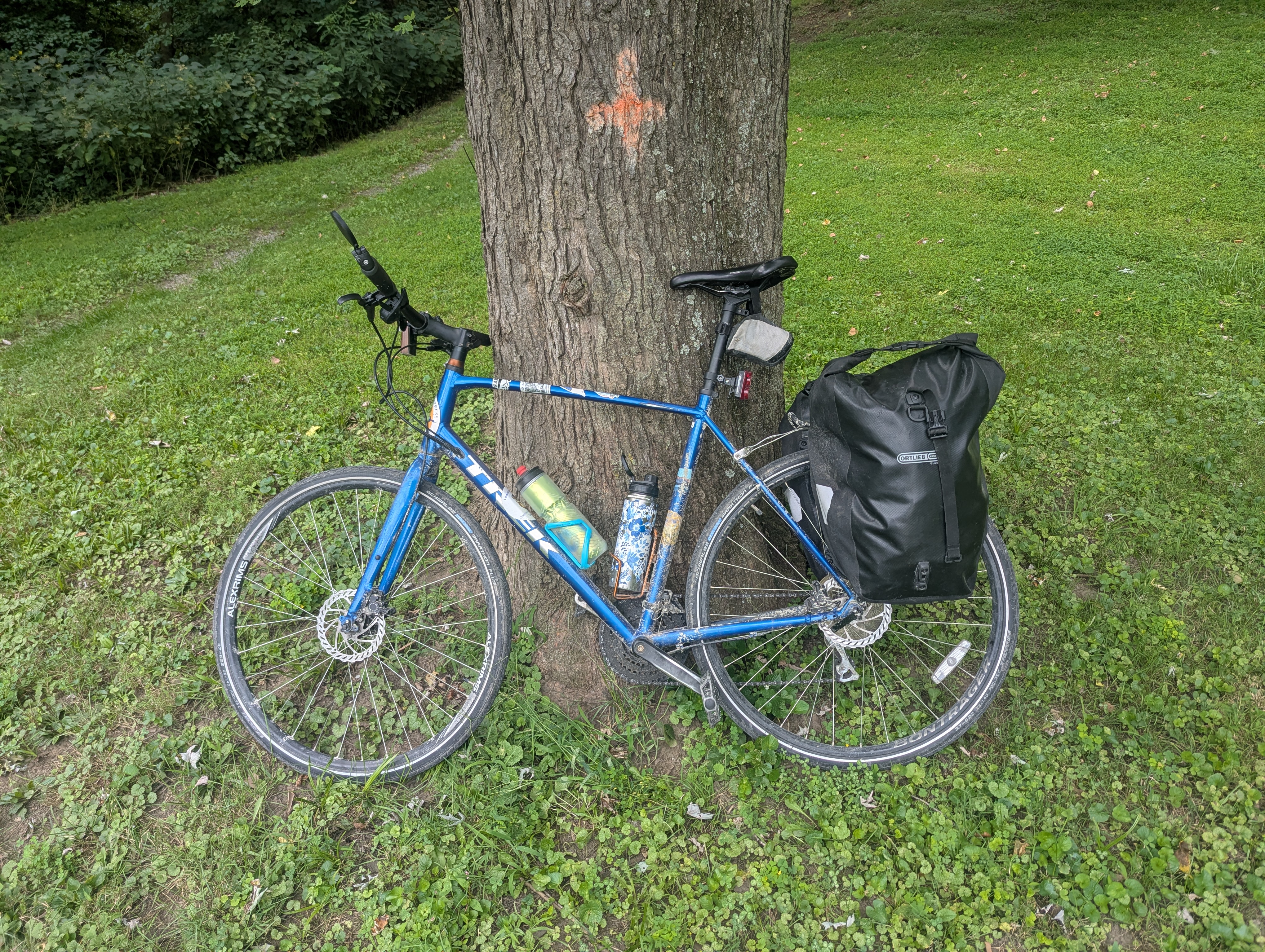
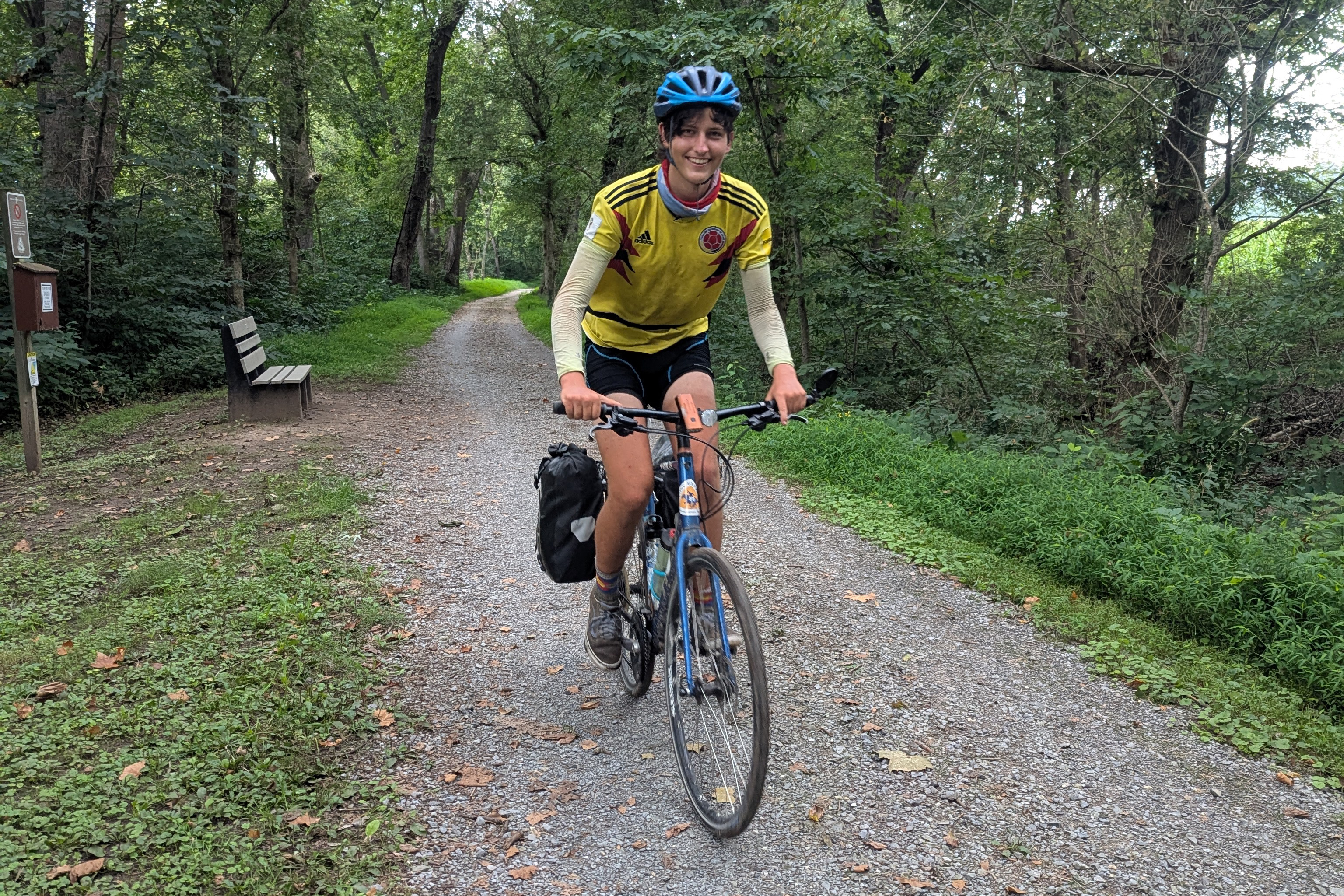
    Finn Fremstad has spent the last month biking past rolling hills and endless cornfields, through state capitols and sleepy Main Streets, and in heat waves and torrential storms. Fremstad isn’t competing in an ultra-cycling competition or checking off a 50-state bucket list — he’s commuting to school.

    Fremstad, 18, is an incoming first-year at Swarthmore College. Since July 23, he’s been on the road, biking from his hometown of Fort Collins, Colo., to Swarthmore College to start his first year.

    “To me, it just seems like kind of the perfect way to experience this country,” he said, calling in from Pennsylvania’s Franklin County on day 29 of his anticipated 31-day journey.

    Incoming Swarthmore freshman Finn Fremstad is biking to school from his hometown of Fort Collins, Colo.Courtesy of Finn Fremstad

    Why is Fremstad biking the roughly 2,000 miles it takes to get from northern Colorado to Delco, rather than, say, fly?

    Fremstad grew up cycling around Fort Collins, taking his bike into town and riding it to school. He had his sights set on a big trip this summer, and when a few other possibilities fell through, he decided to plan a solo cycling journey. It’s by far the longest bike trip he’s ever taken.

    He left home on July 23, armed with a playlist his parents made him and a healthy dose of pre-college excitement. As July turned to August, Fremstad passed from Nebraska into Missouri, Indiana into Ohio, and, finally, Pennsylvania. He strolled through state capitols and stopped into local museums. Sometimes he rode in silence, but most days he listened to podcasts or music (the soundtrack to the Broadway musical “Hadestown” has been a stalwart). He called his parents nightly.

    What has stood out about his travels?

    “A lot of corn and soybeans. I mean, just remarkable,” Fremstad said.

    Finn Fremstad is commuting from Colorado to Swarthmore College via bike.Courtesy of Finn Fremstad

    Each night, Fremstad rode into the nearest town and knocked on strangers’ doors asking if he could camp in their backyards. Most said yes, and some sent him on his way with food or some extra cash for his journey.

    “All of the greatest things about this trip have been how I’ve been able to interact with people,” Fremstad said.

    The trip, he said, has allowed him to “discover places and people in a much more intimate way than I would have been able to otherwise.”

    Weather has been the hardest part of the trek. He passed through Nebraska during a record heat wave and Indiana and Ohio amid torrential rain.

    Fremstad is set to hit Philly this weekend, where his mom will meet him with a checked bag (he will need a bit more than what he’s carrying on his back for college).

    Of Swarthmore, where he’ll be studying math, Fremstad said, “I’m just really excited to finally get there.”

    This suburban content is produced with support from the Leslie Miller and Richard Worley Foundation and The Lenfest Institute for Journalism. Editorial content is created independently of the project donors. Gifts to support The Inquirer’s high-impact journalism can be made at inquirer.com/donate. A list of Lenfest Institute donors can be found at lenfestinstitute.org/supporters.
  • An old veterinarian’s office may become Radnor’s new district court

    An old veterinarian’s office may become Radnor’s new district court

    A shuttered veterinarian’s office in Wayne may become the new site of a local courthouse.

    Radnor Township has set its sights on purchasing 405 W. Wayne Ave., the former home of St. George Hunt Memorial Veterinary Hospital, for $1.45 million and converting the building into its magisterial district court.

    The building would be owned by the township and leased back to Delaware County, which pays for and operates the county’s 30 district courts. District courts are the first level in Pennsylvania’s state court system and typically handle traffic cases, minor criminal cases, and civil cases involving amounts up to $12,000.

    Radnor’s district court cases were previously split between Marple and Newtown Townships, meaning Radnor residents looking to challenge a speeding ticket or sue a faulty contractor would have to do their legal business in another town. Three years ago, a realignment of the court once again gave Radnor its own court, but a struggle to find a home has forced Radnor’s court proceedings to take place in Newtown Square.

    Radnor’s district judge is Sloan Walker.

    Officials said bringing Radnor’s district court home would make hearings more convenient for residents and law enforcement officers, would save the police department on gas and overtime expenditures, and would, the next time court realignment occurs, send a message to the state that Radnor should retain its own court.

    “Eventually there’s going to be pressure, some other district is going to want a judge, and when the Supreme Court looks at Radnor and we haven’t had a magistrate in Radnor for 15 years, they’re going to say, ‘Well, they don’t really want one,’” Township Commissioner Jack Larkin told attendees at a July meeting, warning of the consequences of continuing to hold Radnor’s legal proceedings in Newtown Square.

    Why is Radnor’s district court judge still sitting in Newtown Square? The cash-strapped county has been unable to afford the high cost of renting a space in Radnor, Larkin said.

    Officials said they looked far and wide for commercial space in the township that would fit the court’s needs. Though “there are other places that are probably better locations” in the township, Larkin said, the Wayne Avenue site is already zoned for commercial use, has ample parking, is within the county’s price range, and is, most importantly, available.

    Under the proposal, officials say, the county would pay the township back for the cost of purchasing the building and retrofitting it as a courthouse over the course of 10 years.

    Township Commissioner Moira Mulroney said Radnor has “exhausted every option” during its three-year search.

    At a meeting this week, residents pleaded with the commissioners to find another location for the court, citing concerns over traffic, parking, and the safety of having court proceedings happening in a neighborhood full of children.

    “Respectfully, this is a square peg going in a round hole,” resident Jason Bologna said. “This is a court that is being put into a residential neighborhood, and that is not appropriate for our neighborhood.”

    Diane Edbril, another resident, said the commissioners’ proposal is “an idiotic solution” and “ridiculous.”

    “I am absolutely terrified by the idea of shackles and handcuffs in my backyard. I don’t think that that should be in anybody’s backyard,” resident Marciana Bradley said.

    Larkin told residents that it is “incredibly early in the process” and that there will be a “lot of opportunities for feedback.”

    In order to move the court into the old vet building, the township board of commissioners would need to approve and finalize the sale, and the county would need to agree to a lease price.

    Radnor Township is planning to hold a public meeting in September, where residents will be able to ask questions and learn more about the district court.

    This suburban content is produced with support from the Leslie Miller and Richard Worley Foundation and The Lenfest Institute for Journalism. Editorial content is created independently of the project donors. Gifts to support The Inquirer’s high-impact journalism can be made at inquirer.com/donate. A list of Lenfest Institute donors can be found at lenfestinstitute.org/supporters.