Author: Denali Sagner

  • A 15-acre site in Upper Darby could become a public forest — if organizers can raise $8 million to buy it

    A 15-acre site in Upper Darby could become a public forest — if organizers can raise $8 million to buy it

    Fifteen acres of undeveloped land in Upper Darby Township face an uncertain fate as environmental groups rush to secure funding to purchase and protect the site.

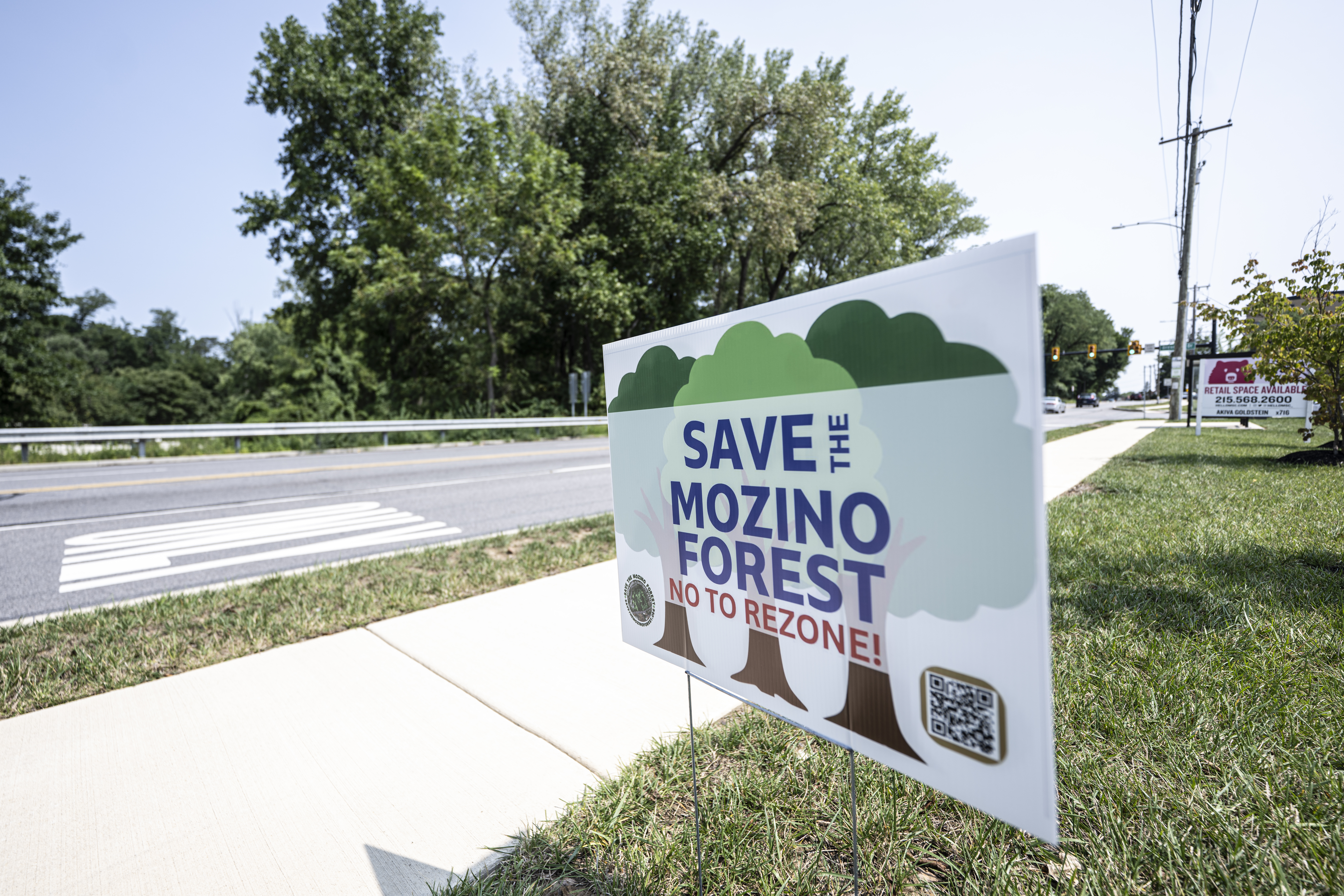
    Upper Darby residents and environmentalists are working to pull together $8 million to secure the purchase of the Mozino Tract, a parcel of land in Drexel Hill that, until recently, was slated to become a mixed-use housing and retail development.

    Upper Darby’s council in August voted to table a proposal to rezone the land, currently zoned for residential use, to allow for a blend of single-family homes, townhouses, apartments, commercial spaces, and community gathering spots. Township staff at the meeting said they worked with the developer to create the mixed-use zoning proposal, a plan they said would help meet core township goals of increasing tax revenue and adding diverse housing options far more than an initial proposal to put 56 single-family homes on the site.

    Now, developer Greg Lingo of Rockwell Development Group says he has abandoned the plans to build the mixed-use development and is giving organizers a chance to purchase the land for open space preservation.

    If they can’t pull the money together, Lingo will go back to his original plan to put 56 single-family homes on the Mozino Tract, a proposal that is already permitted under the current zoning and won’t require special approvals.

    As the high price tag looms, organizers say they’re confident they can find the money to keep the Mozino Tract wild.

    What is the Mozino Tract?

    The Mozino Tract is a 15-acre wooded parcel located between State and Township Line Roads in Drexel Hill. The land is currently owned by the Peter S. and Catherine G. Mozino Deed of Trust and is under contract to be sold to Lingo’s Rockwell Drexel LLC.

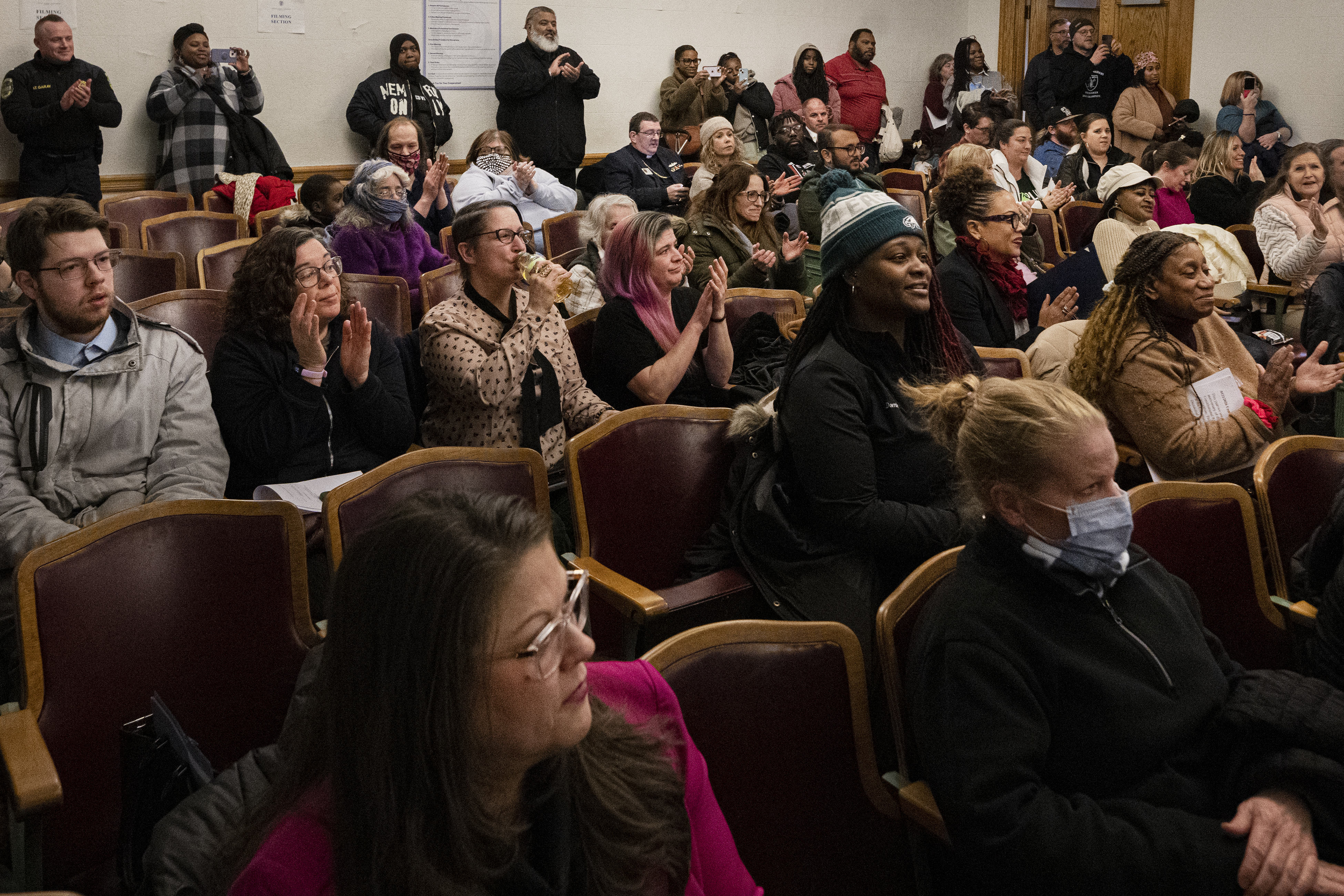
    At an August meeting, Upper Darby residents packed the council chambers, urging the township to reject the plan for a mixed-use development and asking council to purchase the land to preserve it as open space. Many described spending time in the wooded area that, while not officially a public park, has been a place to commune with nature.

    Amid pushback from residents, Lingo at the meeting said he would be willing to sell the property to the township, despite thinking that it would not be “a great use,” and approximated the cost of the sale at $8 million. Council unanimously tabled the zoning ordinance and voiced an openness to purchasing the property if funds could be raised.

    The property’s assessed value is $446,920, according to Delaware County property records.

    Lingo in an email on Sept. 15 wrote that it was immediately clear when he first met with neighbors that “they did not want any development” of the Mozino Tract, so he thought it best to work with the township on the mixed-use plan to “maximize open space, introduce different housing types across different price points, improve pedestrian mobility, maximize taxable income to the township and to dedicate a public park.”

    Lingo’s email affirmed his commitment to Upper Darby, where he grew up, and said it was his “fault for assuming that I knew what was best” in proposing the mixed-use project.

    If the environmental groups can’t find the funding to purchase the property, Lingo plans to enter into an agreement with a public or national homebuilder to build the 56 single-family homes.

    Rockwell Development Group is “communicating regularly” with the environmental groups, Lingo wrote.

    Organizers ‘have all confidence’ in raising funds

    Bonnie Hallam, an organizer spearheading the effort to preserve the Mozino Tract, said local environmentalists “have all confidence” that they will be able to raise the $8 million.

    “We really believe that this is going to be conserved, and we want the township to get on board with that,” Hallam said.

    Hallam said she and other organizers submitted their first grant application on Sept. 25 to the Open Space Institute and have been in conversation with local and national funding groups, including the William Penn Foundation and the Pennsylvania Department of Conservation and Natural Resources. The group is going to start a community fundraising effort through the Foundation for Delaware County, she said.

    The environmental leaders are also hoping to secure money through an open space referendum on the ballot in Delco this November. If the referendum is approved by voters, the county could spend $120 million financing land conservation projects, including “protecting natural areas from development.”

    “We’re really going to work hard to secure that because we feel that the county is very much interested in this piece of property as well,” Hallam said.

    Delaware County “has not had any conversations with Mr. Lingo regarding the purchase of the tract,” according to county spokesperson George Basile.

    Hallam hopes Upper Darby Township will agree to be the title holder for the land, an agreement they have not made yet.

    Upper Darby Township is “exploring its options right now” and “hoping for a resolution soon” regarding the Mozino Tract, public information officer Rob Ellis said in an email.

    For Hallam and her co-organizers, preserving the open space — its wildlife, tall trees, and bubbling creek — is priceless. The Save The Mozino Forest group is organizing a rally on Saturday at Collenbrook Church.

    “We have a really unique piece of property here that’s doing hard-working environmental services for the township,” Hallam said.

    This suburban content is produced with support from the Leslie Miller and Richard Worley Foundation and The Lenfest Institute for Journalism. Editorial content is created independently of the project donors. Gifts to support The Inquirer’s high-impact journalism can be made at inquirer.com/donate. A list of Lenfest Institute donors can be found at lenfestinstitute.org/supporters.
  • Alumni, students call on Haverford College to protect speech, academic freedom following antisemitism legal settlement

    Alumni, students call on Haverford College to protect speech, academic freedom following antisemitism legal settlement

    A group of alumni and students called on Haverford College to “preserve the rights to free speech and academic freedom” after the college settled a lawsuit alleging it allowed antisemitic speech on campus and failed to support Jewish students amid a rising tide of anti-Israel rhetoric.

    In an open letter, nearly 340 alumni and students of Haverford, Swarthmore, and Bryn Mawr Colleges voiced opposition to the settlement, writing it would ”abrogate the rights of all Haverford community members to academic freedom, free speech, and the thoughtful exchange of ideas.”

    Concerned Jewish Faculty and Staff, a Massachusetts-based membership organization of Jewish university employees, published the Sept. 14 letter, which states that its signatories “affirm the necessity of combating antisemitism and all other forms of prejudice” while being “particularly mindful of the safety and rights of Palestinian students.” The letter references an act of violence against a Palestinian student in 2023. Kinnan Abdalhamid, a West Bank-born Haverford College student, was shot in Vermont that year.

    The letter comes as the Trump administration has threatened sanctions and launched investigations into antisemitism on college campuses in the wake of the Israel-Hamas war and ensuing campus protests, actions that some advocacy groups say have suppressed pro-Palestinian speech on campus.

    Haverford was sued in 2024 by a group of Jewish students, faculty, parents, and alumni represented by the Deborah Project, a pro-Israel legal group based in Merion Station that has filed suits against a number of schools and universities since the start of the war in 2023.

    The lawsuit, filed in U.S. District Court for the Eastern District of Pennsylvania, said Haverford students faced discrimination for supporting Israel, including not being allowed to speak during campus-wide gatherings and being disrupted by bullhorns and cowbells during a meeting about antisemitism.

    Ally Landau, a plaintiff and a student at the time of the lawsuit, alleged she was pressured to cancel an event promoting antisemitism awareness as it would prove “too antagonistic to the pro-Palestinian students on campus.”

    After the lawsuit was initially dismissed by a federal judge, the students filed an updated complaint, and the college settled with the Deborah Project in August. Under the settlement terms, Haverford College president Wendy Raymond released a public letter affirming the college’s support of Jewish, Israeli, and Zionist students. The college confirmed that campus events hosted by Jewish or Israeli students would receive the same security as other campus programs and agreed to form an antisemitism committee and require annual antisemitism awareness training for students, faculty, and staff.

    The alumni and students who signed the Sept. 14 letter say the settlement designates supporters of one particular political belief, Zionism, as a protected class, a move they describe as stifling legitimate political debate and misrepresenting the beliefs of many Jewish people. The group wrote that the settlement follows a larger trend “in which organizations like the Deborah Project, together with politically-motivated operatives in the Trump administration, have weaponized accusations of antisemitism in order to silence criticism of Israel on campus.”

    Lori Lowenthal Marcus, the Deborah Project’s legal director, said in an email that accusing the organization of weaponizing antisemitism “evokes the rank racism of the pre-Civil Rights era when racists demanded the law not be used to shield Black Americans from harassment and other harms.”

    The student and alumni group has no legal standing to make demands regarding the settlement, Lowenthal Marcus wrote. She added that they “could be subject to legal action if they insist on continuing on their path of tortious interference.”

    “Thank them for supplying their names and affiliations, so we know how to reach them,” Lowenthal Marcus wrote.

    Dominic Mercier, a spokesperson for Haverford College, wrote in an email that the college understands “that the settlement has evoked strong feelings from many community members, both positive and negative,” and that it is unable to share the settlement in its entirety.

    The settlement did not change the college’s civil rights policy, nor did it change its official list of protected classes, which does not list Zionism, according to Mercier’s email. Community members are not prohibited from criticizing Israel or Zionist beliefs, but the college “prohibits conduct that crosses the line from protected speech into discrimination or harassment on the basis of a protected class,” Mercier wrote.

    Academic freedom and freedom of expression “remain central to our shared experience and community expectations, and are not in tension with our continued commitment to be a campus free from acts of harassment and discrimination against any community members,” Mercier wrote.

    Raymond, in her August letter, wrote that all students, including those who support Zionism, are “welcome and enjoy equal access to the College and all of its educational programs and activities” and that acts of discrimination against Jewish, Israeli, and Zionist students “violate College policy and are antithetical to Haverford’s mission, values, and standards.”

    The alumni and student letter called on Haverford to declare that the college’s nondiscrimination and anti-harassment policies extend to Palestinian students. It also included demands that the college include material related to Islamophobia and anti-Palestinian racism in its annual Title VI training and ensure that antisemitism training does not “equate Jewishness with support for Israel, nor erase the existence of Palestinians.”

    The letter also asked Haverford to affirm that members of a newly established antisemitism committee would not include individuals unaffiliated with the college.

    The committee, whose members were announced the same day the letter was published, includes two Haverford professors; a member of the college’s board of managers; a student; the college’s director of interfaith life and practice; the director of the Rohr Center for Jewish Life; and a Haverford alumnus.

    It will also include two members not directly affiliated with Haverford: Michael Balaban, president and CEO of the Jewish Federation of Greater Philadelphia, and Jeremy Winaker, a rabbi and the executive director of the Greater Philly Hillel Network, which serves Haverford’s Jewish Student Union.

    Clarification: This story has been updated to clarify that Haverford College and The Deborah Project settled an updated complaint after an initial complaint was dismissed.
  • Radnor officials say price and location constraints have left few options for relocating local magisterial court

    Radnor officials say price and location constraints have left few options for relocating local magisterial court

    After abandoning a proposal to turn a shuttered veterinarian’s office into a magisterial district court, Radnor officials said Tuesday no other sites are currently on the table as they attempt to relocate the courthouse within the township’s bounds.

    Radnor commissioners in July advanced a proposal to purchase the former office at 405 W. Wayne Ave. and convert the building into a local courthouse.

    Radnor’s magisterial district court — which typically handles preliminary criminal hearings, traffic and local ordinance violations, and small civil suits — has been located in Newtown Square for three years as Radnor has been unable to find a home for it in the township.

    At a series of public meetings in recent weeks, residents pushed back against the West Wayne Avenue proposal, raising concerns that the courthouse would bring traffic and parking issues to the area and put individuals accused of crimes in proximity to the children who live and play in the neighborhood.

    The township dropped the plan to purchase the veterinarian’s office earlier this month, citing resident concerns and a “thorough review of the site and vital feedback.”

    With that site off the table, Commissioner Jack Larkin told residents during a Tuesday information session that the township is continuing to look, but has found no other suitable options for a local courthouse, leaving questions regarding whether the court will be able to find a home in Radnor at all.

    Locating a new space for the court has been made difficult by a series of parameters from Delaware County and the Administrative Office of Pennsylvania Courts, Larkin said, including ADA accessibility, size, and parking. Delaware County, which is responsible for footing the bill for the building, has told Radnor it can pay between $20 and $30 per square foot for the space, a rate that is hard to come by in the township, Larkin said.

    On top of the guidelines from the state and county, Larkin said, residents have made clear they do not want a court near a residential neighborhood, a needle that is difficult to thread in Radnor, he said, where many commercial districts abut residential areas.

    At Tuesday’s meeting, a group of around 20 residents rebuked commissioners for what they described as poor planning and a lack of communication around the West Wayne Avenue acquisition proposal. Some said a lack of social media and email notification about the process made community members feel the commissioners were “sneaky.” One attendee said the court relocation effort is a “pet project” that residents have not asked for. Others rejected Larkin’s justification for why the court needs to move into Radnor at all.

    Larkin, an attorney, has argued repeatedly that it is important for Radnor residents to elect their own local judge rather than be split between other districts, and that bringing the courthouse home will signal to Pennsylvania that Radnor cares about retaining its own judge come the state’s decennial court district realignment process.

    “I just generally think that it’s good to have your judge in the community that he’s judging. That’s the way the system is supposed to work. The [magisterial district judge] is supposed to be in the magisterial district where he lives, where he works,” Larkin said.

    Until three years ago, Radnor’s district court cases were split between Marple and Newtown Townships.

    In response to questions about whether Radnor’s district courthouse being located outside the township’s bounds would affect the judicial realignment process, Stacey Witalec, director of communications for the Pennsylvania Judicial System, said “there are several courts within Delaware County which are co-located” and pointed to the court reestablishment procedures outlined in Pennsylvania statute.

    This suburban content is produced with support from the Leslie Miller and Richard Worley Foundation and The Lenfest Institute for Journalism. Editorial content is created independently of the project donors. Gifts to support The Inquirer’s high-impact journalism can be made at inquirer.com/donate. A list of Lenfest Institute donors can be found at lenfestinstitute.org/supporters.

  • Lower Merion’s gas-powered leaf blower ban has led to 437 complaints and put ‘tremendous stress’ on staff, officials say

    Lower Merion’s gas-powered leaf blower ban has led to 437 complaints and put ‘tremendous stress’ on staff, officials say

    A gas-powered leaf blower ban in Lower Merion has put “tremendous stress” on township staff, as hundreds of complaints have piled up since its implementation this summer, officials said at a Sept. 9 meeting.

    Officials from Lower Merion’s department of building and planning told commissioners at a recent budget meeting that enforcement of the ban has strained resources as staff are pulled away from other work to address a growing collection of complaints. The department is asking to promote one part-time staff member to full-time and hire a seasonal code compliance officer to meet the increased demand.

    “There’s a significant amount of administrative time required to enforce the ordinance, and it’s just beyond our existing capabilities to do this,” Chris Leswing, Lower Merion’s director of building and planning, told commissioners.

    Leswing said investigating potential violations has pushed back other projects, requiring the department to pay increased overtime so staff can address their day-to-day responsibilities.

    Lower Merion received 437 complaints of leaf blower violations and issued 49 fines from June 1 to Sept. 9, according to Ernest Pendleton, assistant director of building and planning.

    In that same time frame, the department received 80 reports of all other standard property maintenance violations, including trash, debris, noise, lighting, high weeds, and grass issues.

    The proposed upgrade of the administrative clerk to full-time next year would add $48,000 to next year’s budget, and hiring a seasonal code compliance officer for 22 weeks of the year would add $35,000.

    Lower Merion commissioners passed the ban on gas-powered leaf blowers last fall, a move proponents said would help safeguard the environment and protect residents against harmful air and noise pollution.

    The ordinance phased out gas-powered leaf blowers on a seasonal basis, starting with a ban from June 1 to Oct. 1 this year, with an eventual all-out ban beginning in 2029.

    Enforcement is complaint-based. Residents are encouraged to report violations via Lower Merion’s LM Report-It app, email, or phone. Violators first receive a warning, then a $100 fine for a first offense, $250 for a second offense, and $600 for a third or subsequent offense.

    Enforcing the leaf blower ban presents a specific set of issues for staff, Pendleton said. Only around one-third of leaf blower complaints include enough evidence to be verified, meaning for the majority of infractions, a township staff member must conduct an independent investigation before deciding whether to fine a property owner. Investigations often include reviewing photos and videos and driving to the site of the violation. Complaints are doubly difficult to investigate as the department’s inspectors are often “scheduled out,” meaning no one is available to look into tips as they are being called in, according to Pendleton.

    “We don’t have any inspector sitting inside our building to run out to a site,” Pendleton said.

    Commissioners at the meeting said residents have reported feeling uncomfortable with the complaint-based system.

    “They’re feeling as though they’re being asked to report on one another in the absence of another type of system,” said Commissioner Chris McGuire, who said she is getting reports that “neighbors are quibbling because one has reported the other.”

    Pendleton said hiring a seasonal code compliance officer would help alleviate the fact that “neighbors aren’t liking to have to tell on neighbors,” though he noted that all of Lower Merion’s standard property maintenance complaints, with the exception of building codes, come in through resident reporting.

    “We don’t send anyone out to look for problems,” Pendleton said.

    Both commissioners and staff said they expect leaf blower complaints to drop in the coming years as residents and landscapers continue to transition to electric equipment. Pendleton said adding a seasonal officer would allow the township to have flexibility to shed the position should complaints drop off.

    Some commissioners seemed poised to fulfill the building and planning department’s staffing requests, but no formal votes were taken at the meeting.

    This suburban content is produced with support from the Leslie Miller and Richard Worley Foundation and The Lenfest Institute for Journalism. Editorial content is created independently of the project donors. Gifts to support The Inquirer’s high-impact journalism can be made at inquirer.com/donate. A list of Lenfest Institute donors can be found at lenfestinstitute.org/supporters.

  • Curbside compost is trending in the Philly suburbs. In Delco, many residents’ scraps are ending up at Linvilla.

    Curbside compost is trending in the Philly suburbs. In Delco, many residents’ scraps are ending up at Linvilla.

    Fifteen years ago, Chris Pieretti was just trying to get people to come around on compost.

    Now, the Upper Darby resident and compost aficionado spends his days traversing the region in his truck, collecting a potpourri of food scraps in green buckets, and turning eggshells, banana peels, and coffee grounds into a nutrient-rich, soil-like product.

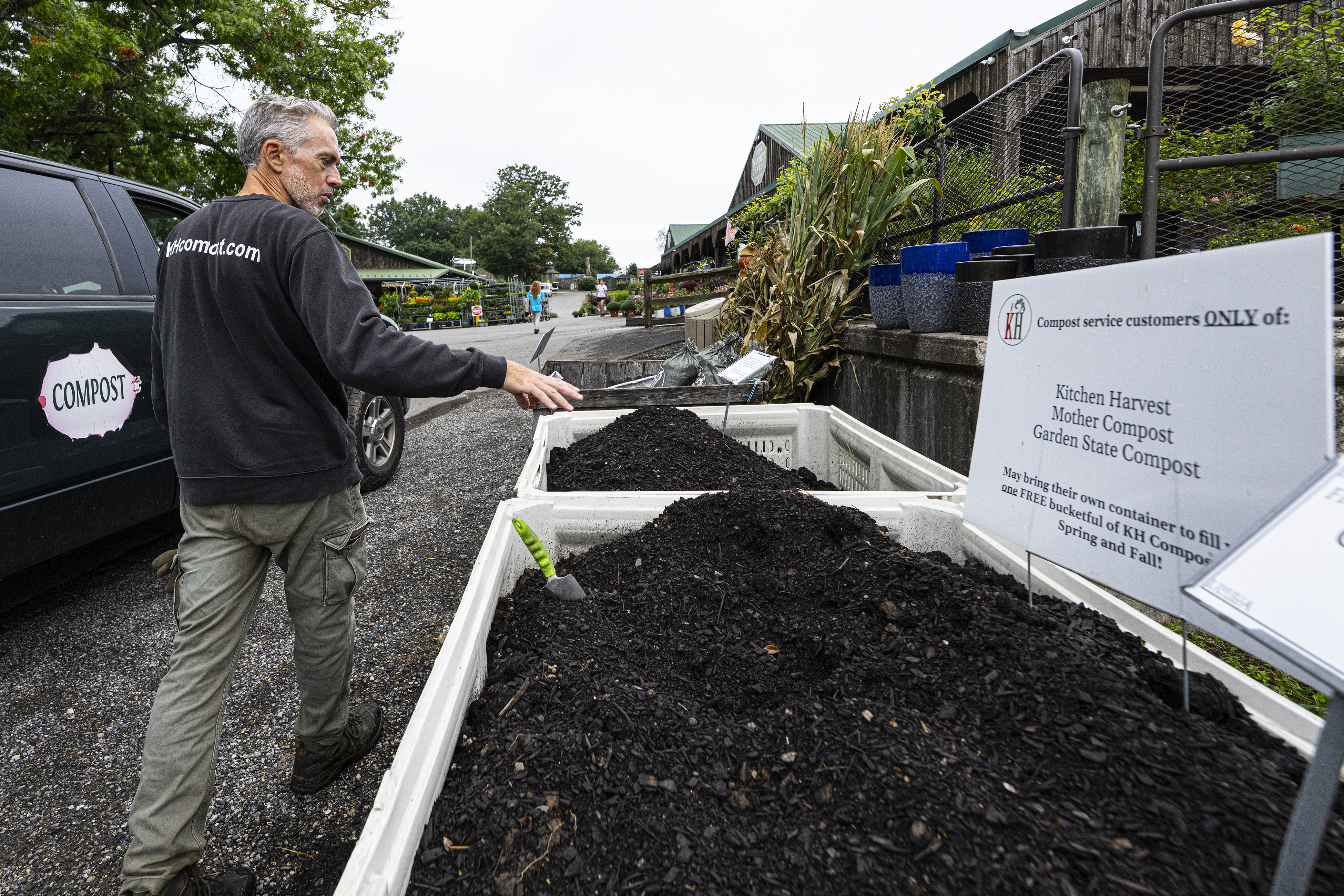
    Pieretti is behind Kitchen Harvest, which collects compostable materials and processes them on a five-acre site at Linvilla Orchards in Delaware County. Kitchen Harvest is, in Pieretti’s words, part of “a better, more sustainable future of a full-circle food system.”

    It is part of a growing network of providers and composters across the Philadelphia region who are working to reduce waste and improve food system circularity, where scraps of food once grown in the Earth can return to it, fertilizing soil for new crops.

    With Haverford Township debuting its municipal compost program this summer, joining Media and Swarthmore, among other municipalities, compost purveyors say the practice is breaking out of its crunchy origins and becoming a key part of the region’s waste management strategy.

    Chris Pieretti holds a compost bag at Kitchen Harvest in Delaware County. Pieretti is working with local homes and municipalities to compost food scraps and yard waste. Jose F. Moreno / Staff Photographer

    What is composting?

    Composting is the process of recycling organic materials like food scraps and yard waste, breaking them down into a brown, soil-like material called compost, and using that material in farms and gardens to enrich other plants and crops.

    The composting process happens on micro and macro scales — in small home gardens and at multi-acre sites like Kitchen Harvest’s.

    Compost advocates tout both its environmental and agricultural benefits. In the U.S., food is the single most common material sent to landfills, where it is responsible for 58% of methane emissions, a powerful greenhouse gas, according to the Environmental Protection Agency. Adding compost to soil increases its nutrient content, conserves water by helping retain moisture, and reduces reliance on chemical fertilizers, the EPA says.

    “Food is only wasted when we throw it in the trash. It’s our choice to dispose of it in that method, but we don’t have to,” said Gwenn Nolan, founder of Mother Compost, a company that collects compost material throughout the Philly suburbs and brings it to the Kitchen Harvest site at Linvilla.

    Going from ‘crunchy’ to ‘waste management strategy’

    Many compost enthusiasts have a similar story: What started as a backyard experiment grew, through trial and error, into a way of life and, for some, a career.

    Nolan, of Mother Compost, got her start asking 10 friends on the Main Line to try composting so she could test demand for a compost collection service. She bought a small truck, picking up the bins of food scraps early in the morning before heading to her job in financial services. After the pandemic, residential demand ballooned, and Nolan made Mother Compost her full-time job. Now, the company serves around 1,500 homes; schools including Bryn Mawr College and Villanova University; culinary institutions including Reading Terminal Market; and corporate offices.

    Nolan collects compost in her truck and carts it out to Pieretti, whom she calls “the master mixologist,” for processing.

    “It’s really exciting to see the commercial side and the institutional side coming online as well,” Nolan said. “It’s becoming more a piece of the waste management strategy than just this kind of crunchy, environmental practice that I think people thought about it before.”

    Kate Jacoby, who runs Center City vegan restaurant Vedge with her husband, Rich Landau, is one of Nolan’s loyal customers. Jacoby began composting in her small Philadelphia backyard during the pandemic, expanding her home compost operation when the couple moved to Chester County in 2021 and, eventually, bringing composting to the Vedge kitchen.

    “I get such a satisfaction knowing that it’s going to go into the soil and it’s not going to sit in a landfill,” Jacoby said.

    Foods scraps like banana peels, onion skins, and lemons are turned into compost. JESSICA GRIFFIN / Staff Photographer

    An expanding suburban compost network

    As compost accessibility grows, so, too, does the number of municipal governments offering compost services to residents.

    Media became the first municipality to sign on with Kitchen Harvest in 2021, embracing a borough-wide compost program with a catchy “Gotta Getta Bucket” promotional video.

    “The community at-large really supported the idea, and the participation was really high,” Pieretti said of Media.

    Many suburban programs have followed in the footsteps of Bennett Compost, which has been serving the city of Philadelphia since 2009.

    Lower Merion in 2025 debuted both a community drop-off and a curbside pickup pilot program through Mother Compost and Bennett Compost. Swarthmore Borough launched a curbside compost program through EZComposting in January.

    When Haverford Township launched its Kitchen Harvest partnership this summer, Pieretti felt like he had “won the compost championship.”

    In July, Haverford Township collected 162 tons of organic material, an increase of 111 tons from last July, according to township manager Dave Burman, who called the program “pretty successful.” The township also collected 141 fewer tons of trash this July than the year prior.

    Haverford Township’s program is optional, with no additional cost or registration process for residents.

    “We’ve tried to make it as easy as we could for people to participate, and so far, so good,” Burman said.

    Buckets of finished compost at the Kitchen Harvest site at Linvilla Orchards. Jose F. Moreno / Staff Photographer

    At its best, proponents say, compost creates a circular system. Much of Kitchen Harvest’s compost product is used by Linvilla Orchards to feed the crops, and composters can buy back bags of the finished product at a discounted rate.

    Sarah Linvill, team member at Linvilla, said the farm is grateful to work with Kitchen Harvest and to “be hosts for that kind of work.”

    Composting services are “just invaluable to the community,” Linvill said.

    Nolan called Linvilla “a tremendous resource for the region” when it comes to compost.

    Composters like Jacoby, of Vedge, say they now cannot imagine a world where they simply toss an apple core into the trash.

    “If you really, really dig down and want to get kind of philosophical about it,” Jacoby said, “when your soil is healthy and it’s full of nutrients, you’re going to have better-tasting food for yourself to consume.”

    This suburban content is produced with support from the Leslie Miller and Richard Worley Foundation and The Lenfest Institute for Journalism. Editorial content is created independently of the project donors. Gifts to support The Inquirer’s high-impact journalism can be made at inquirer.com/donate. A list of Lenfest Institute donors can be found at lenfestinstitute.org/supporters.

  • Upper Darby passed an ordinance aiming to limit cooperation and data sharing with ICE

    Upper Darby passed an ordinance aiming to limit cooperation and data sharing with ICE

    Upper Darby passed an ordinance on Wednesday aiming to restrict the township’s cooperation with federal immigration agents.

    Township council unanimously approved legislation banning local police from assisting ICE and other federal agencies with immigration enforcement activities. The legislation bars federal agents from using township property to stage immigration raids, prohibits township staff from providing resident information to federal agents for civil immigration enforcement, and bans township personnel from recording or maintaining data about residents’ immigration statuses, unless it is required by law.

    It also prohibits township police officers from wearing masks or obscuring their identities in most cases and “formally requests” that federal agents clearly identify themselves and do not wear masks.

    The ordinance includes exemptions, including cases in which immigration agents possess a judicial warrant or there is a criminal law enforcement matter requiring Upper Darby officials’ cooperation.

    The legislation codified many of the tenets of a resolution passed by Upper Darby’s council in February. It largely mirrors a sweeping legislative package passed by Philadelphia City Council earlier this year.

    At the more than three-hour meeting on Wednesday, residents decried the actions of federal immigration agents and President Donald Trump and described a rich patchwork of races, religions, and backgrounds that defines Upper Darby, where nearly a quarter of the population is foreign-born.

    Some described immigrant neighbors currently living in fear, unable to answer the door or go to religious services due to the anxiety of potentially being apprehended by ICE. Many said they moved to Upper Darby specifically for its diversity.

    “Our history reminds us that legality and morality are not the same thing. Upper Darby Township cannot determine federal immigration policy, but it can determine how our own lawful authority and resources are used,” said State Rep. Heather Boyd, who spoke during public comment and represents parts of Upper Darby in the Pennsylvania House.

    A smaller contingent of residents, however, pushed back against the proposal, warning that the ordinance makes few tangible changes to the police department’s policies while potentially putting a target on Upper Darby’s back for the federal government to strip away funding.

    When asked if he believes the legislation is in the best interest of the police department, police superintendent Timothy Bernhardt said the ordinance “isn’t going to change what the Upper Darby Police Department does.”

    The department has never been an immigration enforcement body, worn masks, worked with ICE under a 287(g) agreement, or stopped individuals simply to ask about their immigration status, Bernhardt said.

    “I have no objection to it. It’s not going to change what we do every day, day in and day out,” the police superintendent added.

    Township council members described the ordinance as a set of responsible guardrails for local officials in a municipality defined by its immigrant population.

    “It’s an issue of establishing trust and making sure that people know that in Upper Darby, if you need help, you can call because this community serves you,” said council member Kyle McIntyre, who helped to draft the legislation.

    “We will follow the law, but we will do everything in our power to protect our community and keep everyone safe,” Mayor Ed Brown said.

    This suburban content is produced with support from the Leslie Miller and Richard Worley Foundation and The Lenfest Institute for Journalism. Editorial content is created independently of the project donors. Gifts to support The Inquirer’s high-impact journalism can be made at inquirer.com/donate. A list of Lenfest Institute donors can be found at lenfestinstitute.org/supporters.

  • Jeneral Store is set to bring fresh flowers, curated goods, and craft activities to downtown Narberth

    Jeneral Store is set to bring fresh flowers, curated goods, and craft activities to downtown Narberth

    Jen Kurland wants to bring people together.

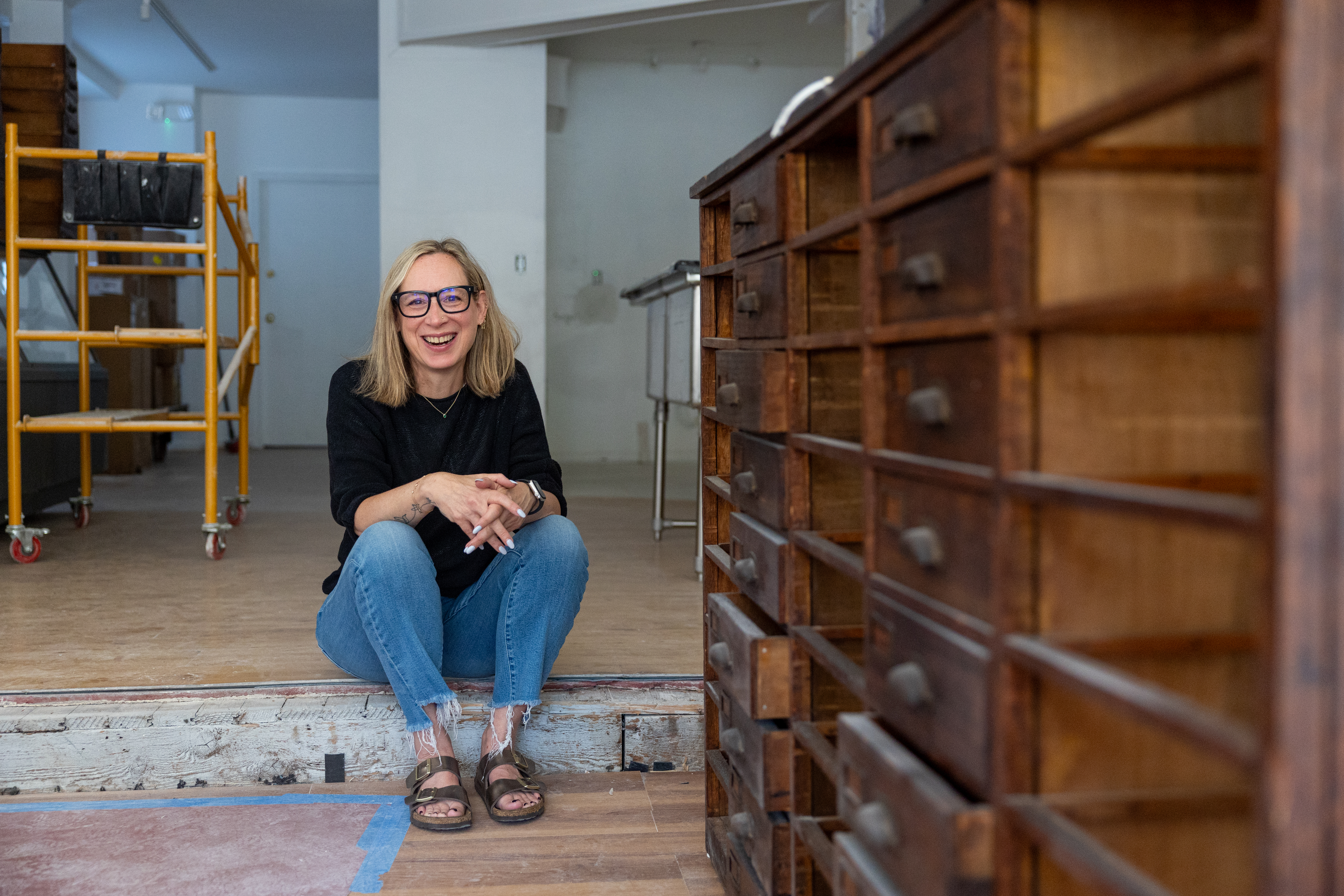
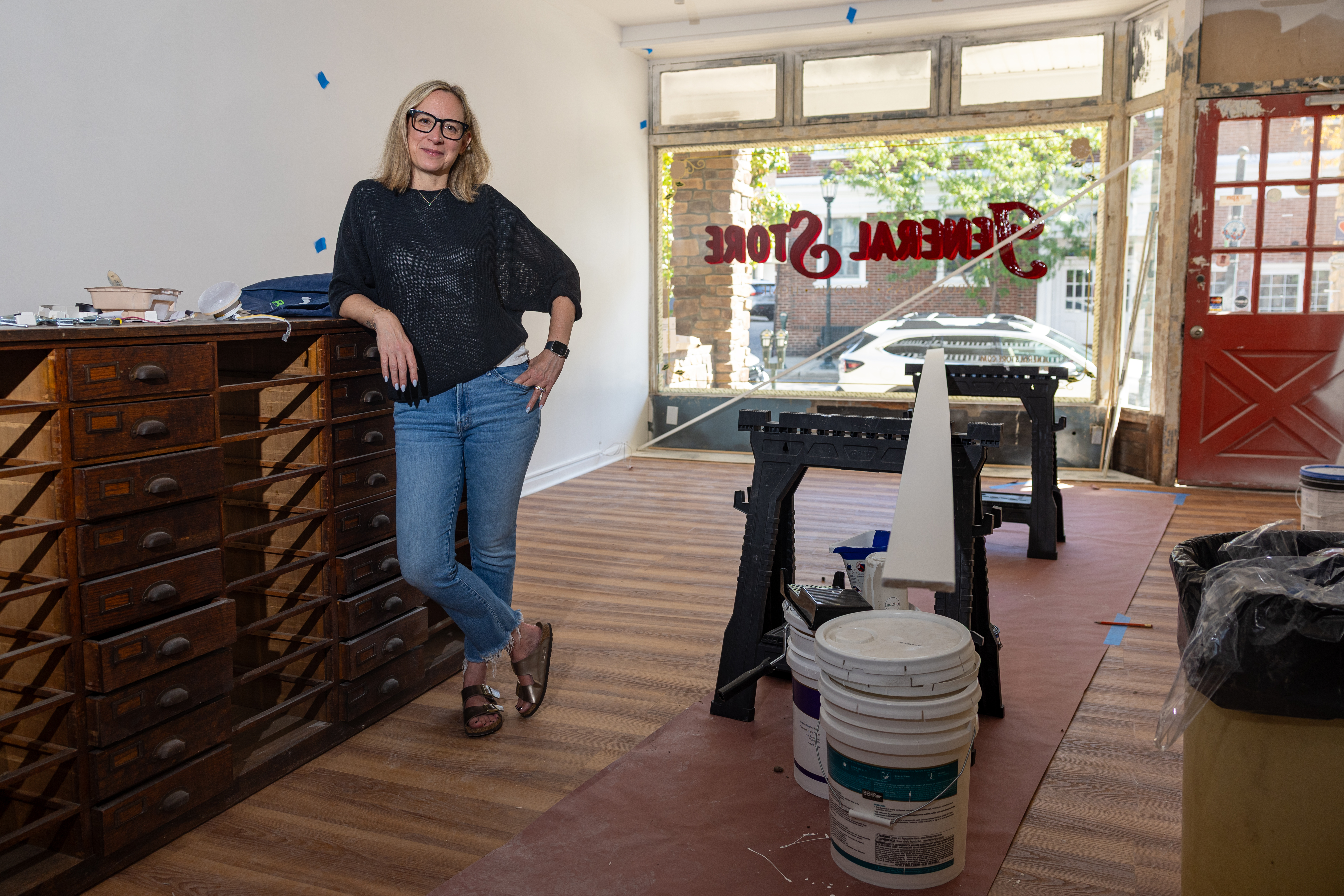
    Standing among paint cans and plywood at 102 Forrest Ave., the Narberth storefront soon to become a bespoke retail and gathering space, Kurland laid out her vision for a hub grounded in crafts, community, and whimsy.

    “People want a place to hang out,” said Kurland, a Narberth resident and former corporate events leader. “They want just a different energy and something to do.”

    Kurland, 52, is preparing to open Jeneral Store, a shop modeled after an old-style general store that will stock fresh flowers, art supplies, curated home goods, and penny candy. Jeneral Store will also be a space for people to craft, commune, and in Kurland’s words, “hang out.” The shop, set to open in October, is moving into the former home of Danny’s Guitar Shop, an independent guitar store and lesson center that closed in May after 17 years.

    Jeneral Store will have a craft counter modeled like a deli counter, where shoppers will be able to order craft supplies à la carte, and will stock what Kurland calls “everyday special” goods, including curated vintage and new household items and pick-your-own flower bouquets in upcycled vases.

    “It’s a little bit of everything,” Kurland said.

    All net proceeds will be donated to organizations that support LGBTQ+ individuals, according to Kurland, who said it’s important for her to help make everyone feel “safe and welcome and thriving.” Kurland has been meeting with organizations but has not yet finalized a list of groups Jeneral Store will be donating to, she said.

    Jen Kurland is set to open Jeneral Store next month. Aidan T. Gallo / Staff Photographer

    Kurland grew up in Havertown (coincidentally a half block from the childhood home of Dan Gold of Danny’s Guitar Shop). After graduating from the University of Delaware, she moved to New York City, where she spent the next 30 years building a career in events and brand strategy. In the summer of 2024, she and her family moved “home” to the Philadelphia area, landing in Narberth last summer.

    With the move to the Main Line, Kurland took a step back from her corporate career and found quickly that she was seeking a creative outlet and a way to give back. When Gold announced he was closing up shop, Kurland saw an opening.

    While launching Jeneral Store is a novel venture, Kurland said three decades in the world of events and marketing has prepared her to introduce a new community space to town. In addition to the retail component of Jeneral Store, Kurland hopes to host craft nights, workshops, and other events, depending on what the community has an appetite for. She said she recognizes the growing desire for “third spaces” — places where people can gather and commune, outside of work or the home.

    “My core of what I’ve always done is bringing people together,” she said.

    This suburban content is produced with support from the Leslie Miller and Richard Worley Foundation and The Lenfest Institute for Journalism. Editorial content is created independently of the project donors. Gifts to support The Inquirer’s high-impact journalism can be made at inquirer.com/donate. A list of Lenfest Institute donors can be found at lenfestinstitute.org/supporters.
  • What do Haverford Township residents want out of their local economy? A new survey says multi-vendor markets and walkability.

    What do Haverford Township residents want out of their local economy? A new survey says multi-vendor markets and walkability.

    Lorianne Moore always wanted to run her own business.

    Two years ago, after decades in the corporate world, Moore began to think about opening a storefront in her home community of Havertown. She and her husband, Joe Singer, kicked around the idea of a coffee shop or gift store, something people were really “looking for,” Singer said.

    When Moore brought her small-business dreams to Jeanne Angell, executive director of Discover Haverford, Haverford Township’s economic development organization, Angell said she knew exactly what Havertown needed.

    Consumer data collected by Discover Haverford at the time had found that residents’ number one desire for the community was a local bookstore.

    Moore, a “voracious reader,” figured her “love of reading and her passion for that would align awesomely with what the town was looking for,” Singer said. Moore Books opened in September 2024 and has since become a hub for readers, writers, and shoppers in one of Havertown’s core commercial neighborhoods.

    “I don’t know if we would have landed on bookstore without Discover Haverford, but once [Moore] started talking with them, it just made sense,” said Singer, who’s now the bookstore’s manager and events coordinator.

    The data that guided the opening of Moore Books was part of Discover Haverford’s biannual consumer surveys, which poll residents on the state of the local economy and help provide a framework for recruiting businesses to town, a partnership Angell said is exemplified in Moore Books’ story. Understanding what consumers want, Angell said, gives proprietors important information as they consider opening a brick-and-mortar business, a venture that can be economically risky, especially for small-business owners.

    Discover Haverford’s newest survey, published in July, has given officials a fresh round of data regarding consumers’ vision for the community’s future. So what do Haverford Township residents want most? Recent data points toward a desire for family-friendly businesses, communal spaces, and a revitalized streetscape.

    What do Haverford residents want?

    Discover Haverford conducted its biannual consumer survey in July, gathering data from 601 respondents about what types of businesses they’d like to see and how they feel Haverford Township’s commercial experience can be improved.

    When it came to grocery and retail options, nearly 60% of respondents expressed a desire for a multi-vendor marketplace, and nearly 80% said they’d like to see an indoor farmers market.

    On restaurants, 71% were interested in a bakery, 67% in a family restaurant, 63% in a Greek restaurant, and 57% in a BYOB restaurant.

    When it comes to non-retail businesses, respondents also showed an interest in movie theaters, concert venues, and day spas.

    (function(){function e(){window.addEventListener(`message`,function(e){if(e.data[`datawrapper-height`]!==void 0){var t=document.querySelectorAll(`iframe`);for(var n in e.data[`datawrapper-height`])for(var r=0,i;i=t[r];r++)if(i.contentWindow===e.source){var a=e.data[`datawrapper-height`][n]+`px`;i.style.height=a}}})}e()})();

    Angell said she’s long heard residents ask for a multi-vendor market, a desire that falls in line with the growing appetite for “third spaces,” or communal places to socialize that aren’t work or home.

    “I think people do need that, a place to feel that community,” Angell said.

    She noted, however, that a multi-vendor market is “a very difficult thing to recruit for,” requiring a large space and considerable funding. A local movie theater is another feat Angell said is difficult to pull off due to space constraints.

    (function(){function e(){window.addEventListener(`message`,function(e){if(e.data[`datawrapper-height`]!==void 0){var t=document.querySelectorAll(`iframe`);for(var n in e.data[`datawrapper-height`])for(var r=0,i;i=t[r];r++)if(i.contentWindow===e.source){var a=e.data[`datawrapper-height`][n]+`px`;i.style.height=a}}})}e()})();

    How else should Haverford Township create a more vibrant business community?

    Numerous respondents raised concerns over traffic safety. Some said the township needs more walkable town centers, safe bike lanes, and pedestrian crossings.

    Some said parking inconveniences and costs deter them from shopping in Haverford Township, while others said older storefront facades need to be revitalized to beautify the township’s commercial strips.

    The full Community Survey Report, designed to help guide future business decisions, can be read here.

    This suburban content is produced with support from the Leslie Miller and Richard Worley Foundation and The Lenfest Institute for Journalism. Editorial content is created independently of the project donors. Gifts to support The Inquirer’s high-impact journalism can be made at inquirer.com/donate. A list of Lenfest Institute donors can be found at lenfestinstitute.org/supporters.
    Clarification: The story has been updated to clarify the survey’s location.
  • Lower Merion police request funds for a ‘first responder’ drone as anxieties about surveillance spike nationwide

    Lower Merion police request funds for a ‘first responder’ drone as anxieties about surveillance spike nationwide

    Lower Merion’s police department has requested funds for a program that would automatically dispatch a drone to the scene of certain 911 calls.

    Andy Block, Lower Merion’s police superintendent, pitched commissioners on Axon’s Drone as First Responder program during a Wednesday budget workshop, describing the technology as a “force multiplier” for the police department that could provide officers with information before they arrive at a crime scene. The department requested $375,000 for a five-year investment in one drone.

    The proposal was met with skepticism from commissioners, many of whom expressed hesitancy about approving funding for the program without strict policies on the books, warning of “mission creep” and privacy violations as anxiety about surveillance technology balloons nationwide.

    What is the Drone as First Responder program?

    Under the program, a drone would be stationed at a dock in Lower Merion and would be automatically launched when 911 dispatchers receive reports of certain incidents, which are classified by codes. Specific codes would release the drone to the site of an incident, a process that would typically happen within 30 seconds of the call coming in, Block said. Once the drone launches, one remote operator, a police officer, would watch the live video feed and evaluate if and where resources should be sent.

    The automated drones differ from Lower Merion’s five existing drones, which require manual setup and launch by an officer once a dispatch is ordered, adding minutes of lag time, Block told commissioners at the budget workshop.

    First responder drones could help officials get ahead on burglaries, missing persons incidents, fires, and area searches, and could evaluate if police are needed at a scene without taking the time and resources to dispatch officers to every call, the police superintendent said.

    Axon, the drone manufacturer, currently provides Lower Merion’s records management system, body cameras, tasers, and in-car cameras. The township moved over to Axon’s systems in January 2025.

    Lower Merion’s police superintendent has said Axon’s automated drones would improve office response time. Alejandro A. Alvarez / Staff Photographer

    Block described recent incidences where first responder drones could have helped police officers respond more quickly and effectively, including a 2024 Meredith Road home invasion and a recent road rage incident on the Blue Route, which led to a suspect chase in Lower Merion.

    He touted the versatility of the drones, floating their potential use for other purposes, including traffic and code enforcement. The Montgomery County District Attorney’s office confirmed that Lower Merion is legally allowed to use drones for traffic enforcement.

    Bensalem launched a “drone as first responder” program earlier this year, which Block described as a model for Lower Merion, calling Bensalem’s program “very impressive.”

    Concerns over privacy

    The Drone as First Responder program was pioneered by the Chula Vista, Calif., police department, which in 2018 became the first municipal police department in the country to deploy the technology. Between 2018 and 2024, the department’s first responder drones made more than 20,000 flights.

    Since then, the technology has grown in popularity among police departments across the country, with municipalities from Washington to Kentucky signing on. A police department in Missouri said its Drone as First Responder program helped with 12 felony arrests in two months this summer.

    Police in Chula Vista have said the technology improved their response times and helped officers deescalate dangerous situations. Yet an investigation by WIRED found that the drones surveilled poorer residents far more frequently than wealthier residents, and were often dispatched for minor issues like vandalism and loud music, in addition to more serious incidents. All the while, residents who regularly encountered the drones reported “feeling constantly watched.” The Chula Vista Police Department has said its drones do not conduct random surveillance or search for suspicious activity.

    Lower Merion commissioners on Wednesday shared apprehension about the implications for residents’ privacy should automated drones begin traversing the township’s airspace.

    No official vote on the funding was taken at the budget workshop. Commissioners said they would need to see clearer policy guidelines before moving the drone into the budget.

    “Surveillance and privacy is a really big issue right now,” commissioner Maggie Harper Epstein said, adding that the program “would be a tough thing to communicate to the residents of the township.”

    Todd Sinai, the board’s president, warned that “there is a difference” between a police officer piloting a drone toward the site of a potential crime and a drone launching automatically “because someone just called something in, and it flies over the township to get to the site, recording along the way.”

    Many criticized the request to approve funding before putting policy guidelines on the books.

    “Until we see what that policy is, I would be very uncomfortable giving support to this,” commissioner Daniel Bernheim said.

    Block clarified that Lower Merion already has a drone policy in place but would need to update its code to specifically include the automated drones.

    A ‘no-brainer’ for law enforcement

    Not everyone shared concerns.

    Commissioner Charles Gregory called the drone program a “no-brainer” and said that the minutes saved with the automated devices could be the difference between life and death in extreme situations.

    Commissioner Louis Rossman said the program “is a great idea” and “just seems like the future.”

    Rossman referenced a series of residential burglaries in the township, saying the drone program may have been able to assist with apprehending offenders who have “eluded” law enforcement.

    This suburban content is produced with support from the Leslie Miller and Richard Worley Foundation and The Lenfest Institute for Journalism. Editorial content is created independently of the project donors. Gifts to support The Inquirer’s high-impact journalism can be made at inquirer.com/donate. A list of Lenfest Institute donors can be found at lenfestinstitute.org/supporters.
  • Radnor drops plans to turn an old veterinary hospital into a local district court

    Radnor drops plans to turn an old veterinary hospital into a local district court

    Radnor Township has abandoned plans to purchase a shuttered veterinarian’s office and convert it into a local courthouse following pushback from neighbors.

    The township has canceled plans to acquire 405 W. Wayne Ave., the former home of St. George Hunt Memorial Veterinary Hospital, following a “thorough review of the site and vital feedback” from residents regarding infrastructure, traffic, financial issues, and “neighborhood compatibility,” according to a statement released Thursday.

    Radnor’s board of commissioners “remains committed to fiscal responsibility and to ensuring that civic developments properly align with the character and practical needs of our residential communities,” the statement read.

    The township had set out to purchase the Wayne building and convert it into Radnor’s magisterial district court, which, due to a struggle to find a local home, has been located in Newtown Square for the last three years. Officials said the township would purchase the building for $1.45 million and convert it into a courthouse, then lease it back to Delaware County, which would pay Radnor back over the course of 10 years. Bringing the district court back to Radnor would cut down on travel time and costs for residents and law enforcement officers, township officials said.

    Magisterial district courts typically handle minor criminal cases, landlord-tenant disputes, traffic cases, and civil cases involving amounts up to $12,000.

    Commissioners at a July meeting said that the township had looked extensively for a commercial space to house the district court and that the Wayne location presented the most realistic option. The former veterinary hospital was selected for its parking availability, commercial zoning, and price.

    The proposal faced considerable pushback from residents, who said a courthouse would be a poor fit for the largely residential neighborhood. Many warned of traffic concerns, a lack of parking, and the safety of holding court proceedings in an area with children and families. Some called the plan “ridiculous” and “not appropriate.”

    While the former veterinarian’s office is no longer on the table, “the fundamental need to find a suitable home for our local court remains,” the township’s statement read.

    The commissioners plan to host a public information session to provide information about the magisterial district court, the court’s day-to-day operations, and the reasoning for bringing the court back into the township’s bounds. No date or time has been set for the meeting.

    This suburban content is produced with support from the Leslie Miller and Richard Worley Foundation and The Lenfest Institute for Journalism. Editorial content is created independently of the project donors. Gifts to support The Inquirer’s high-impact journalism can be made at inquirer.com/donate. A list of Lenfest Institute donors can be found at lenfestinstitute.org/supporters.