Author: Denali Sagner

  • In Narberth, a zoning fight raises questions over whether a small borough can help solve the housing crisis

    In Narberth, a zoning fight raises questions over whether a small borough can help solve the housing crisis

    Brenna Carswell has lived on the same street in Narberth for a decade.

    Carswell moved to Narberth, a small Montgomery County borough encircled by Lower Merion, in 2011 from Upper Darby with her younger daughter after a divorce. She knew early on that her daughter would need more support than the Upper Darby schools could provide, so she scraped together the cash for a rental in the Lower Merion School District.

    “It’s been a great place for my girls to grow up,” Carswell said of her Main Line community. “It’s given them a town that I didn’t have.”

    After four years and three rentals, Carswell, 44, a small-business owner, bought a home in the borough. In early 2020, she sold her house with the intention of buying another place in Narberth, but the pandemic hit and Carswell was furloughed. She ended up in a rental across the street, where she still lives. By the time Carswell was ready to buy again, houses around her had exploded in price.

    She and her family have outgrown their space, but in the current market, “there’s literally nowhere to go.”

    Narberth’s borough council last August directed its planning commission to study how it could use zoning to increase affordable housing and support the local economy. Officials say living in the borough has become increasingly expensive, as experiences like Carswell’s become more and more common.

    In February, the commission came back with a handful of recommendations in two zoning districts: the higher-density residential area that surrounds the Haverford Avenue downtown, and the commercial mixed-use corridor along Montgomery Avenue.

    Recommendations included allowing apartments, cottages, and rowhouses by-right, in the ring around the downtown core, and permitting extra floors for apartment buildings that include affordable units in both zoning districts. The commission suggested reducing minimum parking requirements, allowing ground-floor apartments on Montgomery Avenue, and letting developers build off-site parking lots for apartment complexes.

    Adam Krom, the planning commission’s chair, has said the changes would “provide flexibility” and incentivize developers to build both market-rate and affordable housing units in areas where similar developments already exist.

    But what began as a municipal land-use discussion has morphed into a monthslong debate in the borough over what, if anything, Narberth should do to fight America’s housing crisis. Proponents say changes would bring in much-needed tax revenue, create foot traffic for downtown businesses, and help preserve socioeconomic diversity. Others, however, feel that a small contingent on the borough council has charged ahead with proposals to increase density while ignoring growing concerns over traffic, neighborhood character, and the reality of supporting transit-oriented development with a transit system marred by uncertainty.
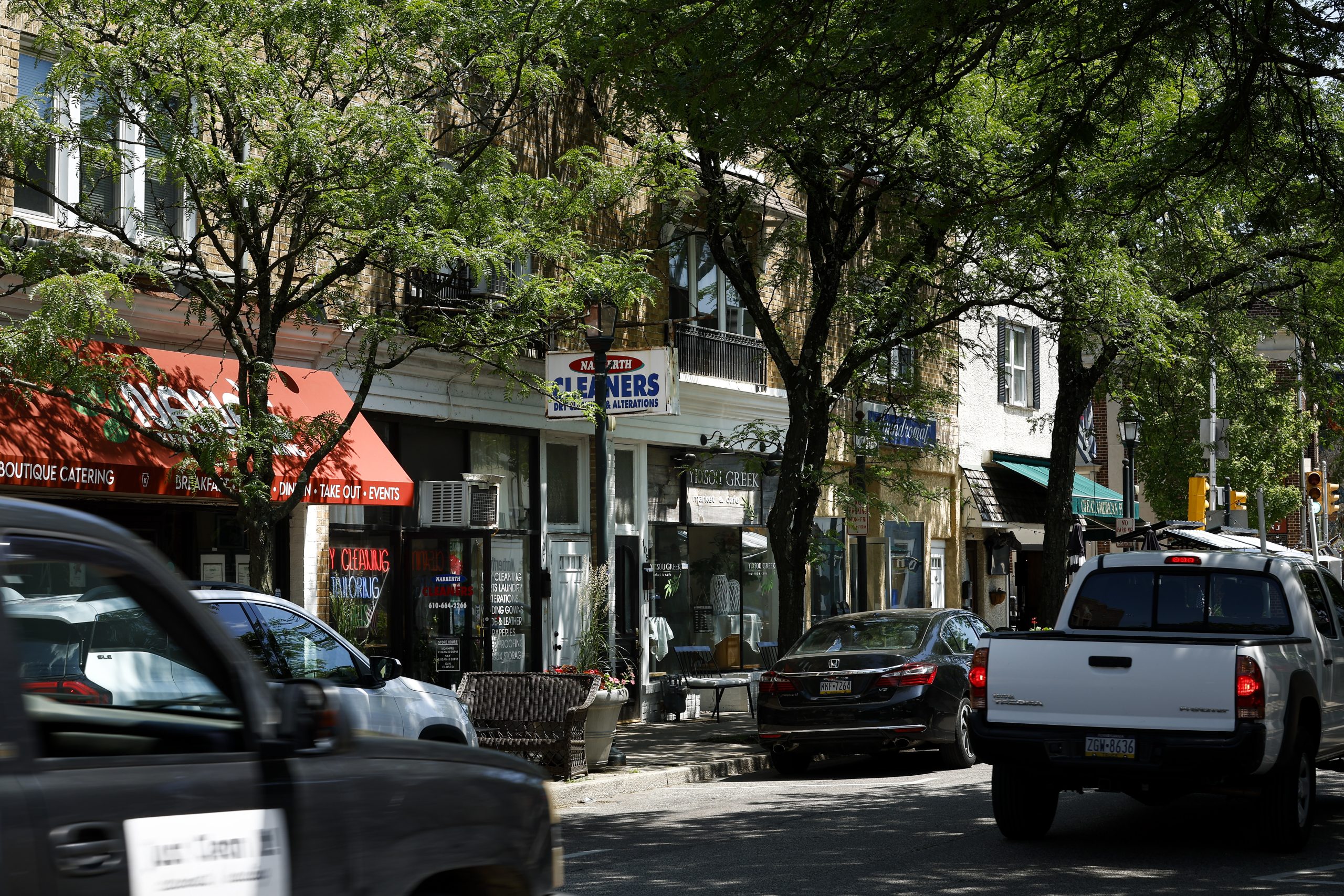
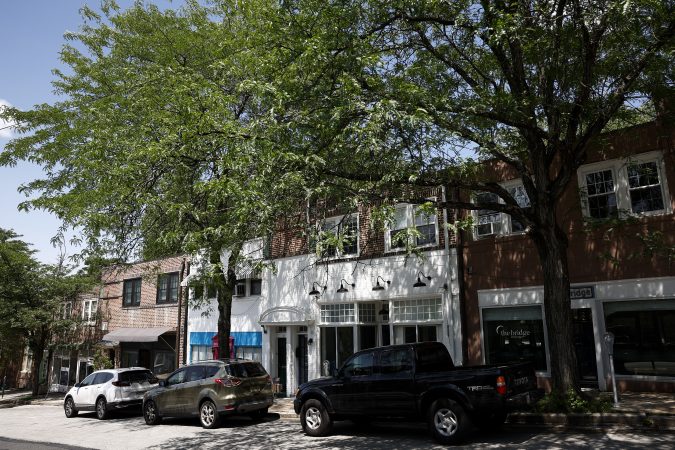
    Shops line North Narberth Avenue.Monica Herndon / Staff Photographer

    Rising costs, shrinking options

    In Narberth, and across the Philadelphia suburbs, the cost of housing is outpacing the ability of large segments of the population to afford it, said Scott France, executive director of the Montgomery County Planning Commission, which consults the borough on land-use issues.

    Narberth had the highest median housing sales price of any municipality in Montgomery County in 2024, at $751,000, a 70% increase from 2014.

    The average rent for a one-bedroom apartment in Narberth is $2,050 per month, according to Zillow rental data. As housing prices have risen, incomes have stayed largely stagnant. In 2024, 46% of renters and 19% of homeowners in Montgomery County were spending more than 30% of their income on housing, according to a Housing Blueprint recently published by the county.

    In Montgomery County, boroughs like Narberth were often the first point of entry for people looking to settle in the suburbs, France said, given their more urban-suburban feel and smaller lot sizes.

    Yet the factors that once made places like Narberth starter-home magnets have now made them increasingly inaccessible. As millennials have sought out premiums like walkability and transit access, the cost of both renting and homeownership in places like Narberth, Conshohocken, and Ambler has risen, France said.

    Montgomery County’s and Narberth’s housing woes are part of a well-documented housing shortage that has swept the United States, as a widening gulf between supply and demand has put homeownership further out of reach for many, especially for younger people.

    Some communities facing housing shortages have loosened zoning restrictions in order to court developers who are willing to build housing and, in certain cases, set aside affordable units in exchange for height and other bonuses. On the Main Line, luxury apartments have cropped up in large numbers, especially in areas where officials have used zoning to increase density.

    Fred Bush, president of Narberth’s borough council, said the county’s Housing Blueprint crystallizes why Narberth needs to ease its zoning regulations and incentivize development.

    “It’s very difficult for people who come in here — who are renting or who are looking to move in, young families — to find a place to stay,” Bush said.
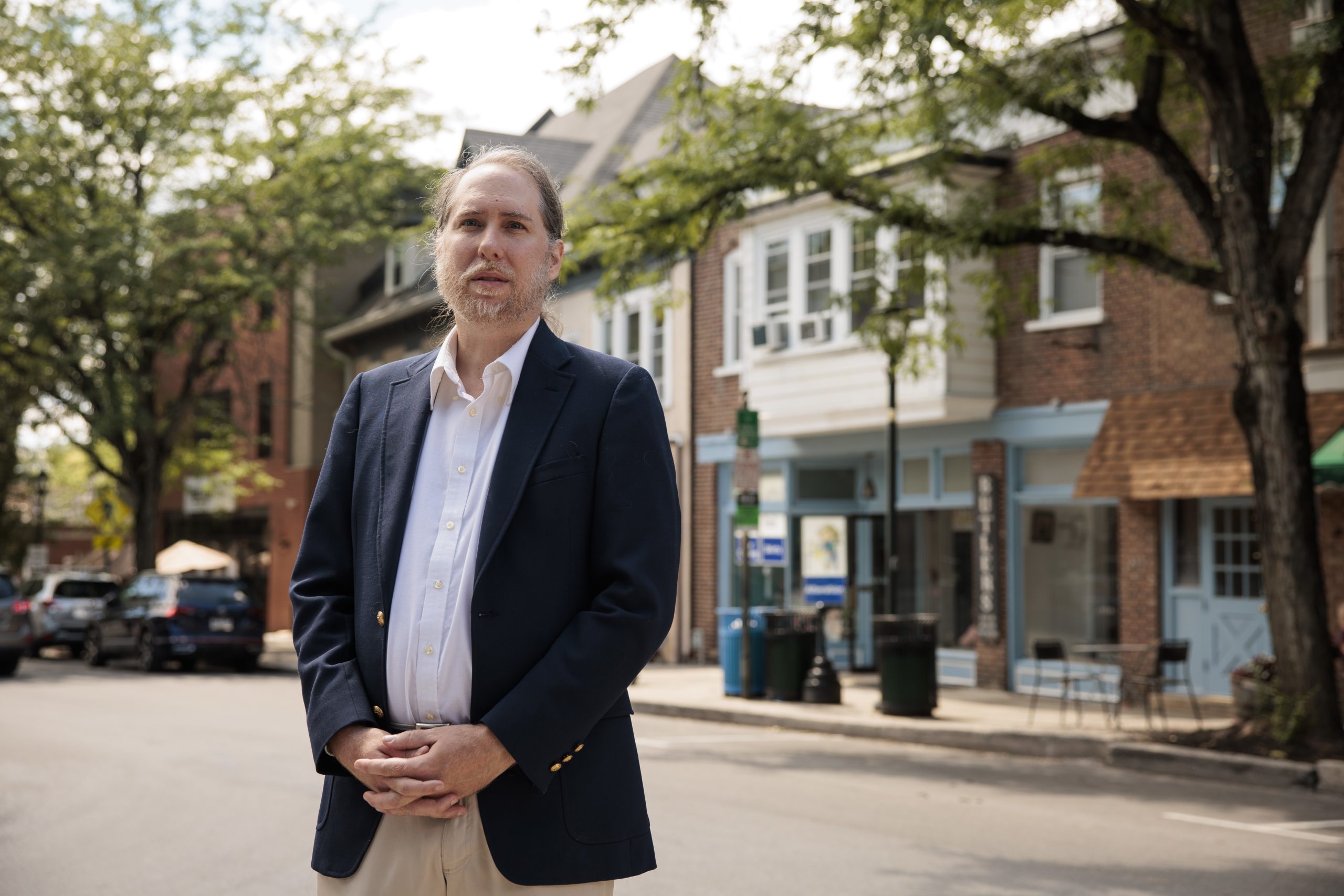
    Narberth Borough Council President Fred Bush. Bush is part of a contingent of borough council members who see zoning changes as a key to increasing the availability of affordable housing in the borough.
    Monica Herndon / Staff Photographer

    ‘Is that what’s best for this area?’

    Narberth residents like Margot and Jason Deitz describe the push to rezone as confusing and misguided. The couple, both 40, have lived together in Narberth since 2020. Their house is near the Montgomery Avenue corridor, where changes are being considered.

    The Deitzes are among a large contingent who feel the proposals would complicate an already hairy parking situation, allow for buildings outside of Narberth’s quaint character, and tip the balance of the borough in favor of renter-occupied units. They feel the borough is putting the cart before the horse, trying to address national problems rather than the sidewalk repairs and parking shortages on their front steps.

    For Margot Deitz, the idea of building fewer parking spaces and asking residents to rely on SEPTA, a sometimes unreliable transit system, was confounding. Her questions to the borough council about parking went unanswered, she said. Both Margot and Jason Deitz wondered how, in a town with shuttered storefronts and parking problems, building new apartments became the council’s priority.

    Homeowner Michelle Karten, 52, went to a public meeting to ask questions about the proposals but felt the changes were a “foregone conclusion.”

    Karten said she hopes the borough can find a more “holistic” approach, rather than just allowing for the proliferation of luxury apartments. She believes the borough has already made a number of concessions to developers and does not need to offer density bonuses to get affordable housing.

    “Do we really need to go up that extra level? Is that what’s best for this area? And what other solutions could there be?” Karten said.

    Matt Patrick, 37, a homeowner in the borough since 2018, is “not against affordable units” but thinks the council is using the affordability crisis to push through incongruous density in spite of resident opposition.

    “It seems like more of a developer bonus than something aimed at conquering affordability,” Patrick said.

    Narberth’s SEPTA train station on the Paoli/Thorndale Line.Monica Herndon / Staff Photographer

    Luxury apartments’ “two truths problem”

    For others, the debates over parking requirements and maximum heights are a distraction from a looming reality: The national housing crisis has hit Narberth, and prices will only continue to rise without new inventory.

    Blessing Osazuwa, 28, thinks the changes are a “great idea.” Osazuwa grew up in Lower Merion and moved to Narberth three years ago. Her roommate’s family owns the house they live in, giving her a break on the rent that allows her to afford Narberth.

    “I love Narberth,” Osazuwa said. “I would love to stay, but there’s no way that I’ll be able to afford that on my own, and it’s a shame, because I feel like I contribute to the community.”

    Numerous residents said the conversation around zoning in Narberth has devolved into misconceptions and ad hominem attacks hurled from all sides, across public meeting forums and Facebook groups.

    Carswell said there is a misconception that Narberth and surrounding communities already have plenty of affordable apartments.

    Little exists in Carswell’s price range in or around Narberth. She has chased multiple “ghost” listings, reaching out to property managers only to find out listed units are occupied. She wants to stay in Narberth to provide consistency for her kids. When she explains her reality, she said, she is often told to just move somewhere else.

    Osazuwa said the refrain that those who cannot afford Narberth should simply move ignores a souring economic reality.

    “I tend to encounter that ‘pulling yourself up from the bootstraps’ mentality without regard to the times that we’re living in, without regard to inflation, without regard to the fact that jobs don’t pay as much,” she said.

    Advocates acknowledge that future development will likely rely on luxury rentals, many of which have popped up in neighboring communities like Ardmore and Bala Cynwyd and would be unaffordable to all but a wealthy set of renters. They believe, however, that any new housing units can help moderate the market, and even a few affordable units attached to the developments could provide housing for lower-income residents.

    “I agree that struggling families are not going to be moving into luxury apartments, but it just puts an overall downward pressure on rental prices for the rest of the market,” Bush said.

    Vincent Reina, a University of Pennsylvania professor and founder of the Housing Initiative at Penn, said there is “a two truths problem” when it comes to luxury apartments. High-end buildings do not fill the need for affordable housing. But, without new construction, existing prices can be pushed up even further as demand continues to outpace supply.

    “What you aren’t going to see is the natural market production of [low-cost] units because the price is too high,” he said. Without government incentives for affordable units, “the numbers just don’t pencil out.”
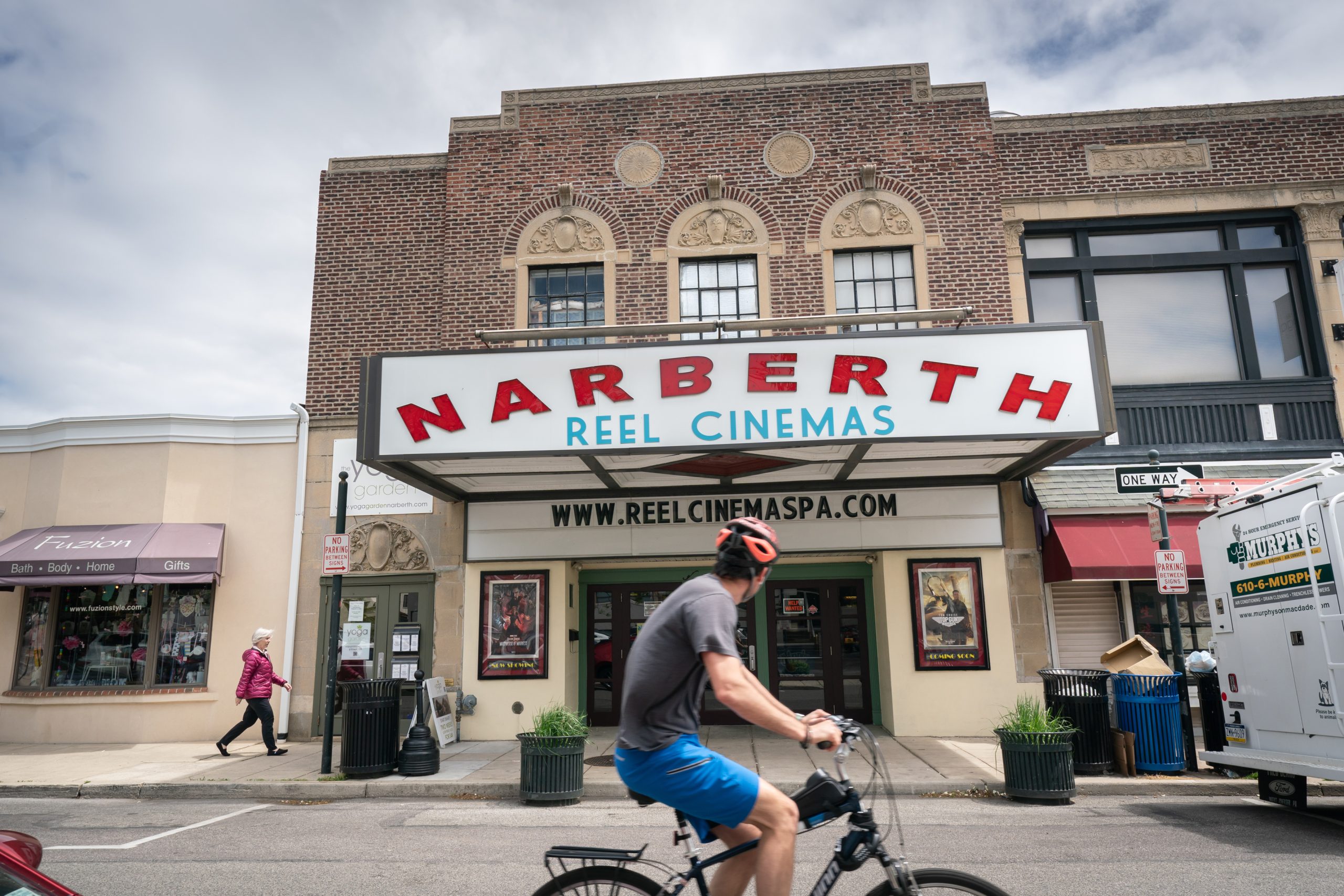
    Narberth Reel Cinemas. The borough is considering zoning changes that would increase density around its downtown core. JESSICA GRIFFIN / Staff Photographer

    Balancing ‘what should be complementary interests’

    The borough council has drafted comments to send back to the planning commission for consideration. The draft splits the difference on some issues, dropping the parking reduction and some height bonuses, but keeping other changes. It could be months before any changes are actually adopted.

    Council member Mike Salmanson said Narberth is trying to balance “complementary interests” in keeping the borough’s character while ensuring fiscal stability. Salmanson said the borough has maxed out how much it can charge in earned income tax. Because Pennsylvania does not require regular property reassessments, it is difficult for municipalities to collect the revenue they need without just raising tax rates.

    “Increased housing creates a broader tax base,” Salmanson said. “I see the advantages of that.”

    But he also called zoning changes that cater to current market conditions, and not the long-term success of the borough, “short-sighted.”

    Council member Cyndi Rickards believes the council has yet to meaningfully engage with incentivizing housing options beyond luxury apartments, such as reasonably priced ownership opportunities that would allow residents to build equity.

    “I really struggle to understand how those of us who own homes …
[see] luxury apartments as a tool for justice,” Rickards said.

    Carswell said she understands the concerns about zoning changes and was once opposed herself.

    “There is a deep fear, that I understand, that the good old days are slipping away,” Carswell said. “The good old days are gone. … The changes that happened to our economy on a national scale absolutely impacted Narberth.”

    This suburban content is produced with support from the Leslie Miller and Richard Worley Foundation and The Lenfest Institute for Journalism. Editorial content is created independently of the project donors. Gifts to support The Inquirer’s high-impact journalism can be made at inquirer.com/donate. A list of Lenfest Institute donors can be found at lenfestinstitute.org/supporters.
  • Developers of a Yass-backed Gladwyne development present a pared-back plan after hearing from residents

    Developers of a Yass-backed Gladwyne development present a pared-back plan after hearing from residents

    The team behind a major redevelopment of the heart of Gladwyne presented a pared-back plan to residents last week after considering extensive public feedback.

    Design firm Haldon House and local billionaires Jeff and Janine Yass earlier this year unveiled plans to reinvigorate Gladwyne with new buildings, renovated historic structures, public green space, and updated commercial options that would breathe new life into the Main Line community’s quaint downtown.

    The project has sparked buzz in the community, with some Gladwyne residents eager for their neighborhood to get a facelift, and others skeptical of the development’s impact on traffic, parking, and Gladwyne’s character.

    Five months after unveiling the project, Haldon House owners Andre Golsorkhi and Autumn Oser brought an updated approach to Gladwyne residents at a meeting of the Gladwyne Civic Association on May 18. The new proposal features fewer buildings, more open green space, and more subdued aesthetics than the original scheme.

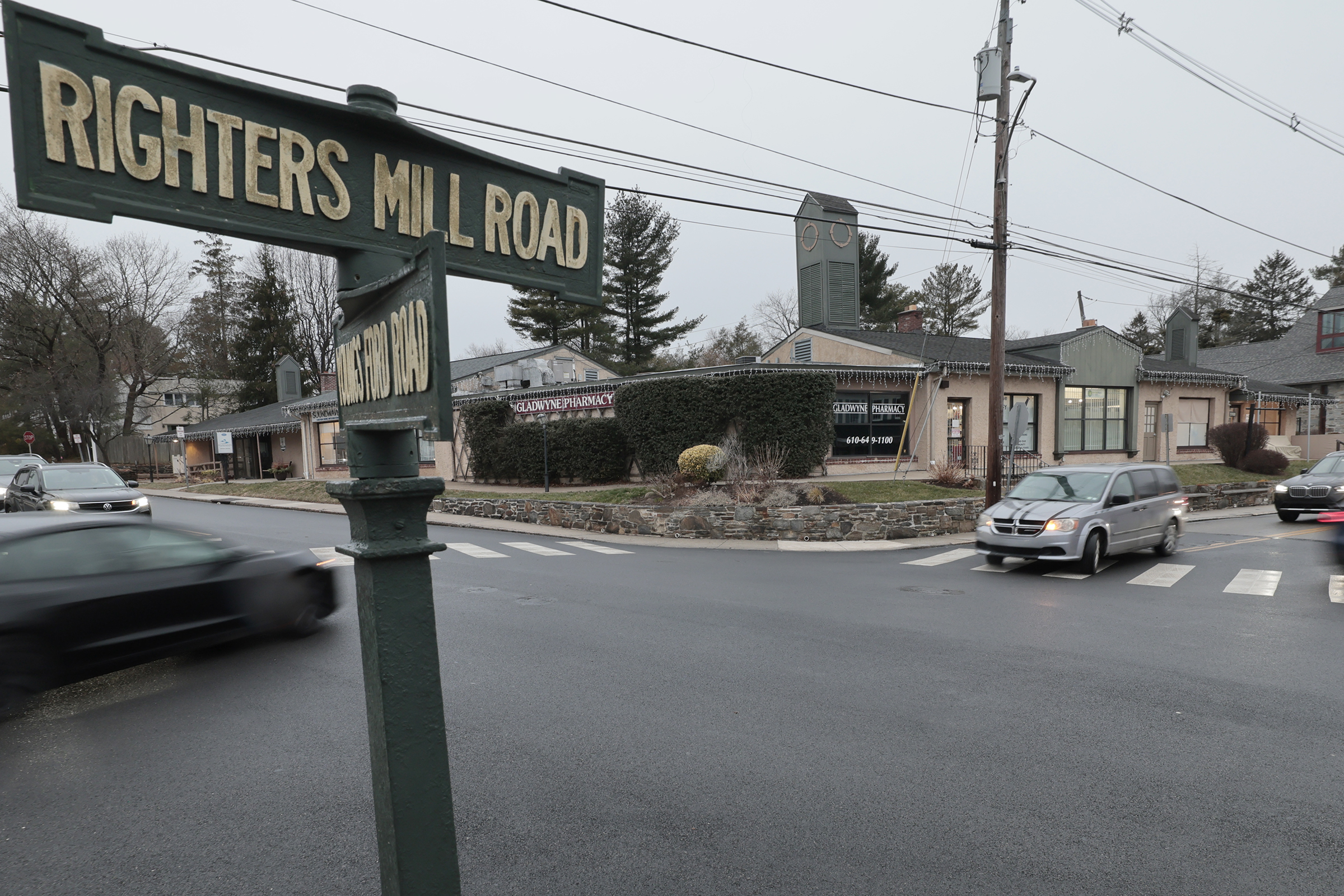
    The Village Shoppes, including the Gladwyne Pharmacy, at the intersection of Youngs Ford and Righters Mill Roads in Gladwyne. Under the proposal, the Shoppes would be razed and replaced with an updated, barn-style building.Elizabeth Robertson / Staff Photographer

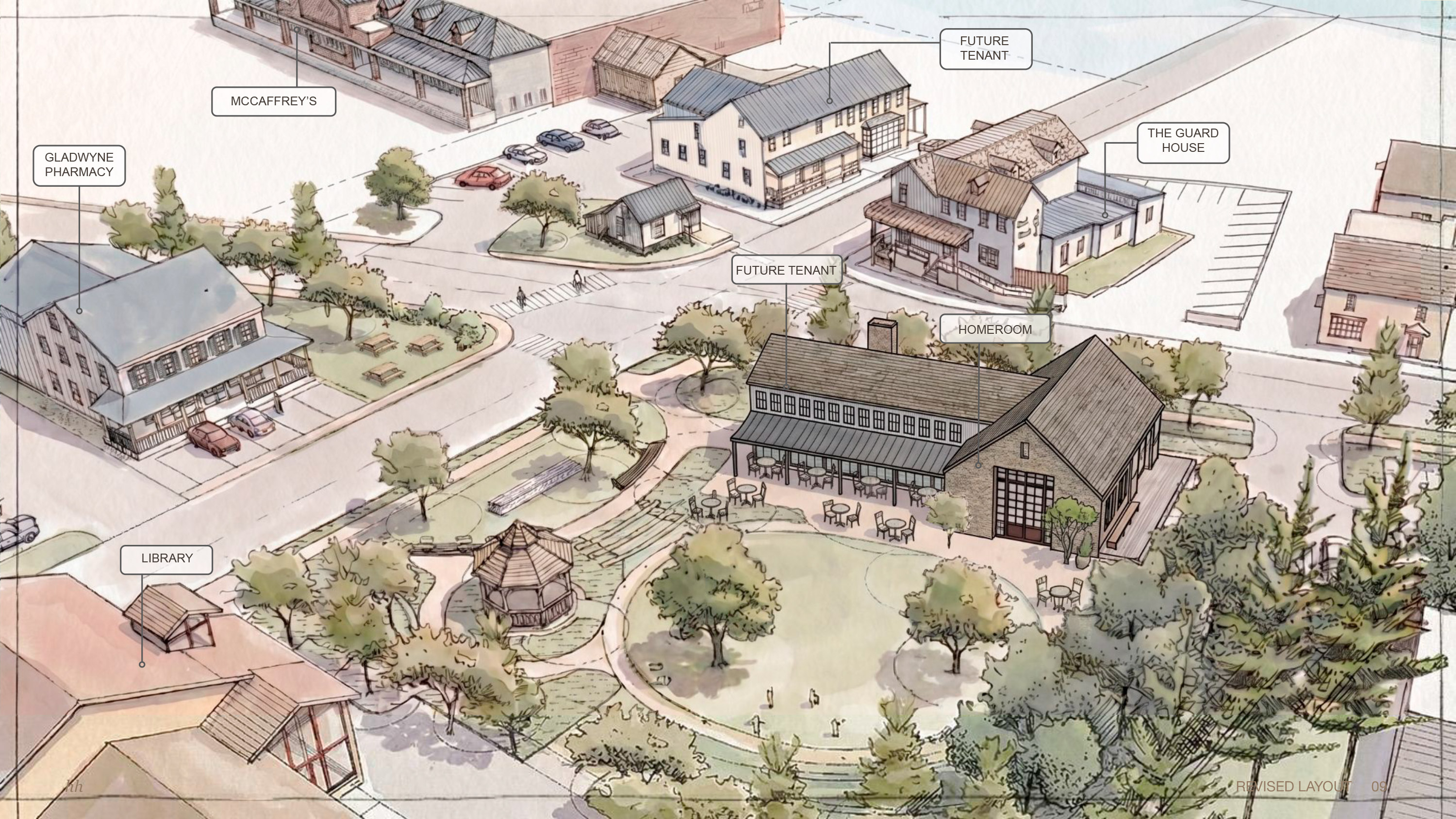
    Haldon House’s revised plans for Gladwyne center on five main renovations: moving and expanding the Gladwyne Pharmacy into the former Gladwyne Market building; bringing a restaurant into the former OMG Hair Salon building; constructing a new barn-style building for an expansion of local cafe Homeroom; building a public green space between Homeroom and the library; and razing a residential property on Youngs Ford Road to create a parking lot.

    The reconfigured plan has not officially been submitted to Lower Merion Township for approval. Greg Prichard, historic preservation planner for Lower Merion, said the township is expecting the Gladwyne project to involve meetings of multiple review boards with the board of commissioners’ approval as the final green light.

    Haldon House has not disclosed a cost for the project, but Golsorkhi has said that the developers “have a very good understanding of the scope and scale of the investment required” and are “fully committed to what is needed to see this through.” The developers have spent over $15 million acquiring the properties.

    Golsorkhi and Oser said survey responses, public comment, and informal feedback from the Lower Merion Historical Architectural Review Board (HARB) gathered over the last few months helped shape the amended plan, one that leans into Gladwyne’s existing businesses and keeps a “quirkiness” cherished by residents.

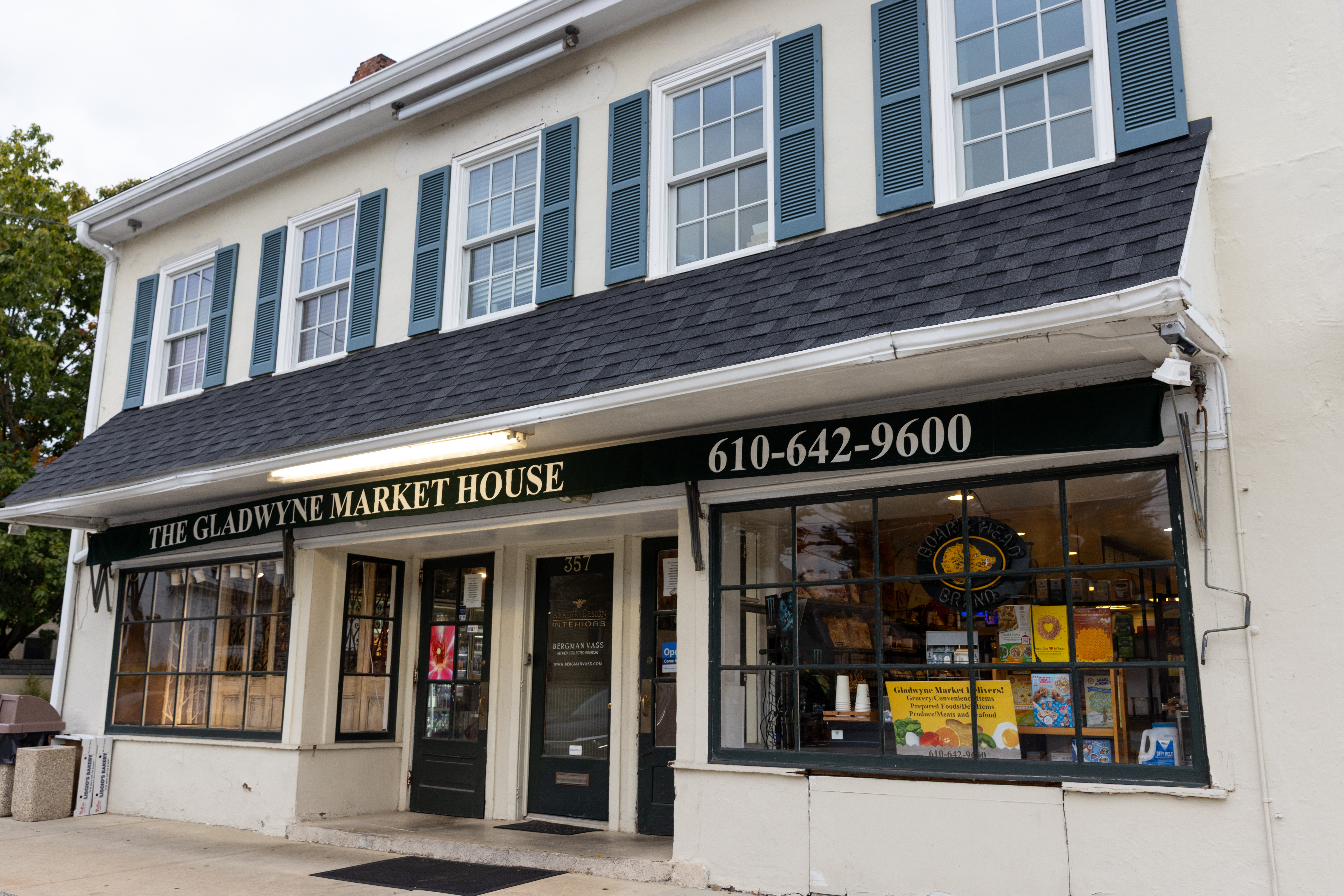
    Under the proposal, the Gladwyne Pharmacy would be moved into the former site of Gladwyne Market at 357 Righters Mill Rd. Gladwyne Market shuttered last fall after the building was purchased for $5 million.

    Oser said Haldon House wants to “celebrate the pharmacy” by expanding its inventory and designing a space that is “charming and nostalgic” with a wraparound porch and outdoor seating.

    The former Gladwyne Market, which shuttered last fall after developers purchased its building. The Gladwyne Pharmacy is set to move into the space under plans proposed by Haldon House.Jasmine Goldband / Staff

    Across the street, 358 Righters Mill Rd., the current home of the pharmacy and Homeroom, a local cafe, would be torn down and replaced with a new building. The building would house an expanded site for Homeroom and an upstairs office tenant (the upstairs would potentially be used as a conference space for Haldon House, the developers said at a HARB meeting, or as a flexible event space for community vendors). Homeroom would likely expand its menu, extending its hours into the early evening and growing its bakery apparatus.

    The building would combine stone facades with wood paneling and floor-to-ceiling windows, a design the developers say is “rooted in Main Line tradition” yet “contemporary.”

    Oser said Haldon House took to heart feedback that the first iteration of 358 Righters Mill Rd. was too polished for Gladwyne.

    “There was the specific request, like, ‘Please keep the quirk.’ Gladwyne is quirky, and it’s eclectic, and we like that,” she said at the civic association meeting. “… That was awesome feedback, and it was a really good point.”

    Haldon House originally intended to bring a slate of new businesses to the village, but Oser and Golsorkhi realized they could fulfill the community’s needs by expanding the offerings at its existing businesses, rather than bringing in more retail tenants.

    The intersection of Youngs Ford and Righters Mill Roads in Gladwyne.Elizabeth Robertson / Staff Photographer

    358 Righters Mill Rd. would abut a community green space outfitted with a gazebo, native plants, and an amphitheater. The developers hope to use the green space as a hub for outdoor education, library events, and yoga classes, among other activities.

    The developers said they would establish a fund that draws on revenue from the properties to pay for park upkeep. Golsorkhi at a township meeting said that the tenants themselves would not be responsible for the park’s maintenance.

    The developers plan to bring a restaurant to 351 Righters Mill Rd., the former location of OMG Hair Salon. Currently, the only full-service restaurant in Gladwyne’s commercial core is the Union League’s members-only Guard House, which has been closed to the public for dining for nearly a decade.

    Oser outlined a vision for a “watering hole” that honors Gladwyne with historic photos and a “timeless” interior.

    The developers want a dining option that “only exists in Gladwyne” and do not plan to recruit a restaurant from Philadelphia, Oser said.

    A residential property at 946 Youngs Ford Rd. would be razed and turned into a parking lot. A retaining wall and tree barrier would be erected around the lot as a buffer for neighboring residents (one single-family home and a townhouse development border the proposed parking lot). The developers would need to secure a zoning change from the township to convert the property into parking.

    The proposal has brought tepid optimism — and a handful of concerns — to the small community.

    Some have praised the redevelopment, describing it as a much-needed facelift for a corridor with few amenities and deteriorating buildings. Others have warned of increased traffic and parking issues in an intersection that already deals with congestion.

    At Monday’s meeting, residents who border the proposed parking lot criticized what they described as a lack of communication from the developers and warned that the lot would disrupt the neighbors who surround it.

    “I think you’ve come a long way. This thing is going in the right direction,” Ed Lewis, a resident of a neighboring property, said during a recent HARB meeting.

    But Lewis warned, “You have to have the basics solved at the beginning: traffic, pedestrian access, and the green, existing trees and reinforced with new vegetation.”

    This suburban content is produced with support from the Leslie Miller and Richard Worley Foundation and The Lenfest Institute for Journalism. Editorial content is created independently of the project donors. Gifts to support The Inquirer’s high-impact journalism can be made at inquirer.com/donate. A list of Lenfest Institute donors can be found at lenfestinstitute.org/supporters.
  • Delco-based medical logistics company American Expediting is closing and laying off 86 workers

    Delco-based medical logistics company American Expediting is closing and laying off 86 workers

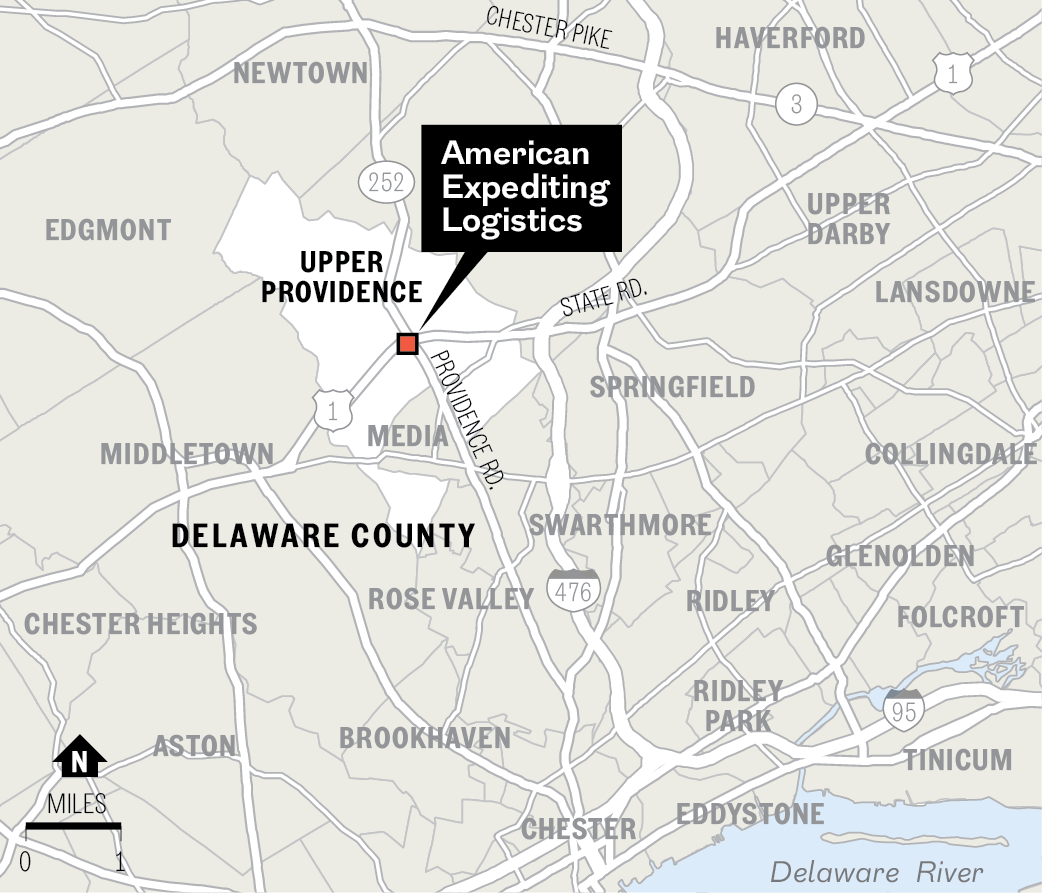
    An Upper Providence-based medical logistics company that arranged transport for specialized items including organs, blood, and drugs ceased operations last week, eliminating dozens of jobs in Delaware County.

    American Expediting Logistics is permanently closing its facility at 1400 N. Providence Rd., north of Media. It is also laying off all employees, including 86 who work in or report to its Media location, according to a layoff notice filed last week to the Pennsylvania Department of Labor and Industry, as is required by the federal WARN Act. The company expects all layoffs to occur between June 4 and June 30. All employees were notified of the layoff on June 3.

    American Expediting was founded in 1983 by Wharton graduate Victor Finnegan as a one-man courier operation, growing to more than 300 employees across over 40 locations.

    American Expediting partnered with independent contract drivers, many of whom carried specialized certifications to transport medical and life science materials, including pharmaceuticals, animals, and organ, blood, and tissue shipments. The company also provided air services, distribution and warehousing, facilities and fleet management, and logistics services.

    American Expediting was purchased by private equity firm AEA Investors in 2019.

    Under the WARN Act, companies are required to give 60 days’ notice before closing or laying off staff. Companies can, however, sidestep the 60-day notification requirement in specific cases, including unforeseeable business circumstances, a caveat cited by American Expediting.

    The company has been “operating in a challenging environment” with “reduced healthcare spending and ongoing pressures across the transportation sector,” Katie Petrie, American Expediting’s vice president of human resources, wrote in the notice to the state.

    The company in recent months attempted unsuccessfully to secure funding from an outside investor or lender. American Expediting believed there was a “realistic opportunity” to secure financing and that providing WARN notices while it was seeking funding would have hurt the effort to secure financing, according to the WARN notice.

    Representatives from American Expediting did not respond to a phone and email message left on Wednesday.

    A notice on American Expediting’s website says the company will complete shipments in its possession as of June 3 and will no longer accept new shipments. Customers were expected to transfer shipments to a different logistics provider, and warehouse customers were asked to contact American Expediting and arrange to pick up inventory immediately, according to the company’s website.

    “Our thoughts are with the employees, drivers, agents, customers, and partners who have been part of this company and this community. For many, this announcement brings uncertainty, disappointment, and difficult conversations about what comes next,” a post from American Expediting on LinkedIn read.

    This suburban content is produced with support from the Leslie Miller and Richard Worley Foundation and The Lenfest Institute for Journalism. Editorial content is created independently of the project donors. Gifts to support The Inquirer’s high-impact journalism can be made at inquirer.com/donate. A list of Lenfest Institute donors can be found at lenfestinstitute.org/supporters.
  • Past Present Future, beloved Main Line gift and craft store, is closing its doors

    Past Present Future, beloved Main Line gift and craft store, is closing its doors

    The interior of Past Present Future, downtown Ardmore’s beloved gift and craft store, is unmistakable. Each wall is adorned with art and collectors’ items, from hand-beaded necklaces to fruit-shaped bowls and ceramic tropical fish. Cases of jewelry sit under hanging lanterns and mobiles, and trinket boxes share shelves with colorful purses and glass figurines.

    Past Present Future, located at 15 Lancaster Ave., is the 50-year work of owner Sherry Tillman, who first opened the store in Center City in 1976 as a young graduate of the Philadelphia College of Art, before moving to Ardmore in the mid-1990s. Tillman calls the shop “part gift store, part mini-museum,” and prides herself on grouping items, from lamps to clocks to mirrors, in “ways that maximize their funky diversity.”

    Now, five decades, four storefronts, and thousands of customers later, Past Present Future is officially closing, marking the end of a chapter that Tillman says has been defined by eclectic art, changing times, and deep community ties. While Tillman is “gutted” to close up shop, in her words: “It’s time.”

    Sherry Tillman, owner of Past Present Future, chats with Ellen Balze, of West Philadelphia, a regular for many years, during Tillman’s party for friends and long-time customers in Ardmore, Pa., on Friday, June 5, 2026.Tyger Williams / Staff Photographer

    Tillman first opened Past Present Future as a toy store on the corner of 13th and Pine Streets in Center City, next to a friend’s science-fiction bookstore. The Philadelphia Daily News in 1979 called Tillman’s store “one of the wonders of the city,” a “throwback to the age of handcrafted wooden playthings, one-of-a-kind soft toys and sculptures, old-fashioned balance toys and Rube Goldberg-ish do-nothing machines.” Tillman, then a 20-something artist, took orders from customers and handcrafted toys from her workshop.

    After three years, Tillman left the Gayborhood and moved to 17th and Locust Streets, where the scope of Past Present Future began to shift, bringing in more crafts and jewelry. Four years later, Tillman moved to 18th Street between Market and Chestnut Streets. She had 2½ floors of a four-story building and, according to a 1990 Inquirer story, stocked “zingy jewelry, kaleidoscopes, cards, clocks, handmade ceramic diners that light up” and had a “top-floor gallery devoted to fun-and-funky craft items for adults.”

    By the mid-1990s, much of Tillman’s customer base had moved out to the suburbs, and the confounding pressures of crime, high taxes, and a lack of parking, plus raising her own growing family in Ardmore, spurred her to pack up her Center City store and move to the Main Line. She opened on Lancaster Avenue in 1996.

    “The fact that my business could be where my home is was so important to me,” Tillman said, reflecting on her move to Ardmore. “To be embraced and connected to this community is also important to me.”

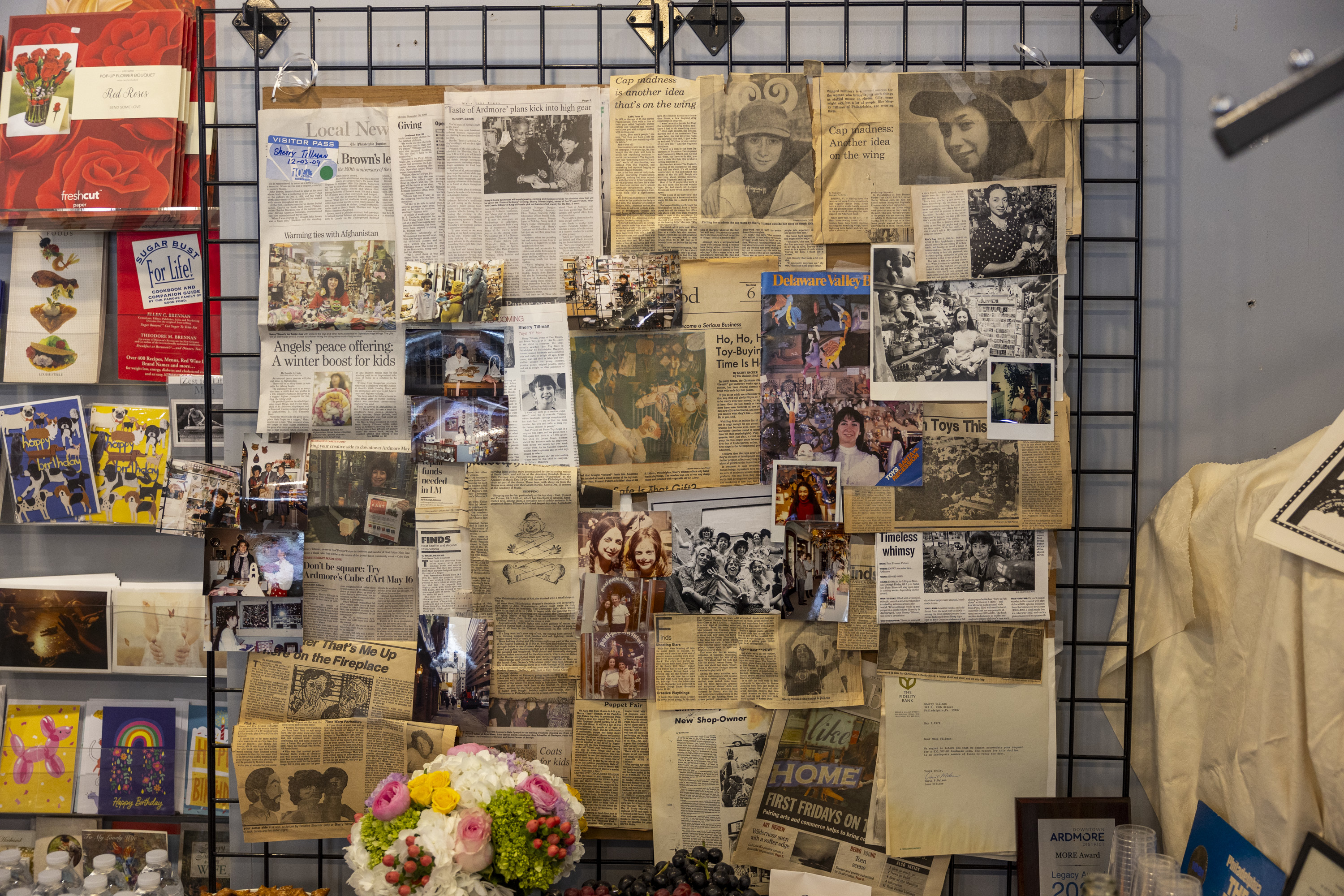
    Sherry Tillman, owner of Past Present Future, made a board of all her articles and photos of her for her small party for friends and regular customers in Ardmore, Pa., on Friday, June 5, 2026.Tyger Williams / Staff Photographer

    Tillman’s store quickly became a magnet for artsy types, window shoppers, gift givers, touring musicians, and spiritually minded Main Line residents.

    “It’s incredible,” she said. “People come in and we talk, other people come in and they join the conversation. It’s a place where people just feel so comfortable.”

    Lorig Buckley, otherwise known as Mystic Lor at Mystic of the Main Line, said she thinks of Past Present Future as “a staple” in Ardmore.

    When people strolled into Past Present Future looking for a palm reading, Tillman would send them down the block to Mystic of the Main Line. When clients of Buckley’s needed to shop for a gift, she’d pass them along to Past Present Future.

    “My heart sank when I saw that she was closing, because it really brought a different spirit to the area,” Buckley said.

    Shannon Gallagher, a business coach who lives in Ardmore, always bought her clients gifts from Tillman’s shop, from crystals to wooden boxes with tarot cards. When she first moved to Ardmore four years ago, Tillman gave her the lowdown on all of the locals’ favorite spots.

    “She just made it feel so comfortable for us,” Gallagher said.

    Sherry Tillman, featured in the Philadelphia Daily News in 1982, holding a teddy bear at Past Present Future, back when it was located at 243 S. 17th St. in Center City. Tillman has operated the toy and art store for 50 years, first in Philadelphia and, for the last three decades, in Ardmore.Sam Psoras / Staff Photographer

    In addition to running Past Present Future, Tillman organized First Friday Main Line, a monthly arts crawl that brought music and art to the streets of Ardmore. Alongside Broomall surgeon Lt. Col. Kenneth Marx, Tillman helped create Operation Angel Wings, a donation drive that sent clothes and toys to children in Afghanistan. Most recently, she spearheaded a contest to paint a mural on the side of her storefront. The first of five winning murals will be up by July 1.

    Tillman said Ardmore has “blossomed a lot” in the years since she moved to town. Street art, interesting shops, and live music sprawl across downtown, from the newly painted Schauffele Plaza to Ardmore Music Hall (many of the traveling performers stop into Past Present Future before their shows, Tillman said).

    “There’s expressions of art around us,” Tillman said.

    Tillman doesn’t have an exact closing date yet. Past Present Future has marked down its merchandise by 20%, and Tillman said she’ll be open until there’s nothing left (“hopefully”). Tillman plans to sell the 15 Lancaster Ave. building, which she has owned for years.

    “It’s really hard,” she said, “when you think that your entire life has been this one thing, to say goodbye.”

    This suburban content is produced with support from the Leslie Miller and Richard Worley Foundation and The Lenfest Institute for Journalism. Editorial content is created independently of the project donors. Gifts to support The Inquirer’s high-impact journalism can be made at inquirer.com/donate. A list of Lenfest Institute donors can be found at lenfestinstitute.org/supporters.
  • Delco’s new emergency services director is focused on ‘sustainability’ after Crozer-Chester Medical Center’s closure

    Delco’s new emergency services director is focused on ‘sustainability’ after Crozer-Chester Medical Center’s closure

    Delaware County’s new emergency services director wants to build something sustainable.

    Gary Vinnacombe is a Delco native who has spent the last two decades overseeing EMS teams across Delaware and Chester Counties. Last month, he took the helm of Delaware County’s emergency services department, a homecoming of sorts for the longtime first responder, who got his start at Haverford’s Manoa Fire Company.

    Vinnacombe, 43, replaces interim director Ed Beebe, who oversaw Delaware County’s emergency services for 18 months after former director Timothy Boyce was charged with indecent assault, among other offenses, related to his alleged groping of a female coworker.

    Vinnacombe is taking over Delco’s emergency services apparatus at a pivotal time. The county is continuing to navigate the fallout from Crozer-Chester Medical Center’s closure, and some of its municipalities are considering emergency service mergers and cooperative authorities to fill gaps in service. Now, Vinnacombe says he’s eager to work with emergency responders across the county to build a lasting system that can serve Delco’s residents.

    A 911 dispatcher working at the Delaware County Emergency Services Center on Jan. 5, 2022. Delco native Gary Vinnacombe recently stepped up to lead the department. Thomas Hengge / Staff Photographer

    Vinnacombe grew up in Delaware County and is a 2001 graduate of Haverford High School. He holds an associate’s degree in nursing science from Delaware County Community College, a bachelor’s degree in emergency and disaster management from American Military University, and a master’s of public administration from Anna Maria College.

    Vinnacombe has worn many hats over his two-plus decades in emergency management. He joined the Manoa Fire Company as a teenager, where he rose up to become the company’s EMS captain. He spent over a decade as the deputy chief of EMS at Darby’s Mercy Fitzgerald Hospital and is a longtime adjunct faculty member at Delaware County Community College, where he teaches EMT classes, municipal police academy emergency responder training, and CPR. Most recently, Vinnacombe spent 14 years with the West Grove Fire Company in Chester County, where he was assistant chief and oversaw day-to-day operations and employee recruitment and retention. He currently lives in Chester County.

    Vinnacombe said the Crozer fallout is an “ongoing evaluation” for his department. He’s optimistic about ChristianaCare’s soon-to-open Aston and Springfield micro hospitals (the Aston facility is set to open this summer, and the Springfield facility next summer). The region’s existing hospitals have “done a fantastic job of absorbing that volume,” Vinnacombe said, and local municipalities have made a strong effort in “coming together to ensure that service continues to get delivered.”

    As the county rebuilds its emergency services, Vinnacombe said, sustainability is top of mind.

    “We can build all these great things all day long,” he said. “If we don’t have a plan or a mechanism to sustain them, it doesn’t matter what we build.”

    When asked about the push by Media, Nether Providence, Upper Providence, Rose Valley, Rutledge, and Swarthmore to create a regional EMS authority to provide advanced life-support care through an annual fee structure, Vinnacombe said he thinks “the concept of regionalization is the key to sustainability.”

    However, he added, it’s important to take a close look at the funding mechanisms for different regional service models, as “every one of them has pros and cons.”

    “I would certainly say, obviously anything that we can do to help people collaborate, or bring the right people to the table, we certainly want to,” he said.

    The emergency services director also steps into his role weeks after Delaware County unveiled a $36 million overhaul to its emergency telecommunications system, curbing years of false alarms and poor connection over its 911 radio waves.

    The difference is night and day for Vinnacombe’s first responders, he said. Now, police, fire, and EMS officials can get real-time notes from 911 calls, fortifying them with a detailed report before they even get on the scene.

    “The residents of Delaware County are in such a better space because of it,” Vinnacombe said.

    Vinnacombe’s department is preparing for a busy summer. The PGA Tour Championship, FIFA World Cup, MLB All-Star Game, and Semiquincentennial are all descending on the Philly area in the coming months, and Delaware County officials are expecting a wave of tourists — and with them, an increased need for emergency responders.

    Delco’s emergency services department is planning to support the upcoming PGA Tour at Aronimink Golf Club in Newtown Square with extra first responders, and Vinnacombe’s team has been busy filling requests for backup from municipalities.

    As he settles in, Vinnacombe is confident that Delco is “only going up.”

    “The services are only going to get better. Technology’s only going to continue to evolve,” he said. “The investments that the county has made into technology and public safety have improved the services that get delivered.”

    This suburban content is produced with support from the Leslie Miller and Richard Worley Foundation and The Lenfest Institute for Journalism. Editorial content is created independently of the project donors. Gifts to support The Inquirer’s high-impact journalism can be made at inquirer.com/donate. A list of Lenfest Institute donors can be found at lenfestinstitute.org/supporters.