Author: Jess Rohan

  • Abingtonians can now request anti-speeding devices on certain streets. Will yours be one of them?

    Abingtonians can now request anti-speeding devices on certain streets. Will yours be one of them?

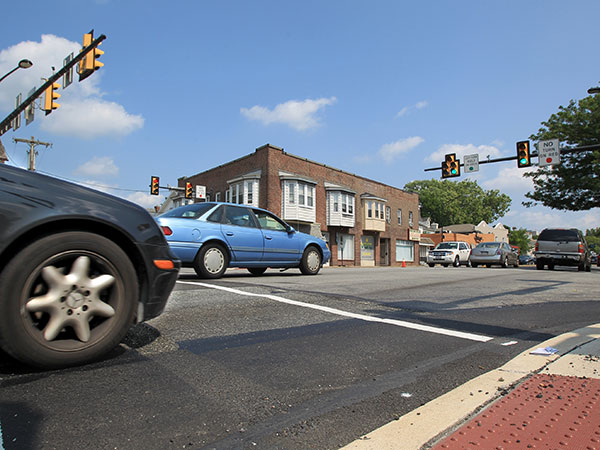
    Neck-downs, chicanes, bulb-outs: They sound like threats from a 1930s mobster, but all three are traffic-slowing techniques that could soon arrive on your Abington street.

    The township will now allow residents to request traffic-calming measures under a new policy approved last week that requires traffic studies and majority approval from nearby property owners.

    The new petition policy adds to over a decade of efforts to curb speeding in Abington, which was the first town outside of Philadelphia to begin installing red-light cameras in 2014. Abington police have said they saw a resurgence in violations after the department limited in-person traffic stops during the pandemic.

    Which streets can get traffic calmers?

    To qualify for a traffic-calmer application, a street has to average between 500 and 6,000 vehicles per day on three weekdays in a row and cannot be a major artery or an emergency route. Private roads and alleys aren’t eligible, either, and the road has to be at least 500 feet long.

    There are other criteria too, depending on why the traffic-calming tool is needed.

    If the issue is speeding, only roads where three-day traffic studies show that over 15% of drivers are going more than 10 miles above the speed limit will qualify.

    If cut-through traffic on a sleepy street is the problem, the traffic volume has to exceed the expected level under a formula the township uses, either as a daily average or at its peak.

    Who decides which roads get bumps?

    There are two ways a road can be evaluated for traffic calmers under Abington’s new policy: a property owner’s petition, or the township manager’s request.

    If the manager requests it and a traffic study shows the road meets the criteria, property owners “directly adjacent” to the proposed traffic calmers will get at least 30 days’ notice of the proposal, the traffic data for that road will be posted on the township website, and there will be a two-week public comment period on the plan.

    If a property owner submits their road, the police will do a traffic study and ensure it meets the criteria, and then get approval from the township manager to proceed with a petition for approval from local residents. The property owner who filed the request has to get signatures from 60% of the directly affected home and business owners supporting the measure within 90 days.

    If approved, the property owner would then pass around a second petition to get 60% to 70% approval from a larger group of affected residents for the specific traffic-calming device and its planned location within 90 days.

    Ticketable speeding not as common as some Abingtonians think, traffic studies show

    The traffic study alone may stop many proposals in their tracks, based on similar studies the township already does when residents complain about speeding.

    Most studies on the township’s website from 2025 and 2026, spurred by complaints, found very few enforceable speeding infractions.

    For example, an October 2025 study at the 500 block of Montgomery Avenue where the speed limit is 25 mph found zero enforceable speeding violations. The average driver was going 18 mph, with 85% going 21 mph or slower.

    Many of the dismissed complaints were for roads posted at 25 mph, where going just 9 mph over is 136% of the speed limit.

    But some complaints do reflect frequent, enforceable speeding violations: An August 2025 study of the 300 block of Shelmire Street next to Lawnview Cemetery found an average speed of 31 mph in the 25 mph zone, and about 10% of passing vehicles met the criteria for enforcement. The police department planned to add speed enforcement on that block, according to the report.

    “Most of our residential streets tend to have 25 mph speed limits,” said Sgt. Michael Coughlin, the traffic safety officer who introduced the new policy at last week’s commissioners’ meeting. “In our experience, people tend to be a little more concerned about speeds where they live, which helps explain some of the complaints.”

    What traffic devices could Abington add?

    The traffic-calming measures mentioned in the policy include speed humps, roundabouts, road narrowing (called neck-outs), bulb-outs (extended curbs), and chicanes, which create artificial curves in the road with deflectors.

    A chicane, or artificial curve, at Charlotte Motor Speedway in Concord, N.C., in 2018. AP

    But there are downsides to some devices, township officials have noted at public meetings: Residents might win speed humps on their street, only to realize they now hear the sound of tires thunking over bumps thousands of times per day.

    This suburban content is produced with support from the Leslie Miller and Richard Worley Foundation and The Lenfest Institute for Journalism. Editorial content is created independently of the project donors. Gifts to support The Inquirer’s high-impact journalism can be made at inquirer.com/donate. A list of Lenfest Institute donors can be found at lenfestinstitute.org/supporters.

  • Meet Jenkintown’s new superintendent, whose background ranges from Sixers reporter to Russian translator

    Meet Jenkintown’s new superintendent, whose background ranges from Sixers reporter to Russian translator

    After the sudden departure of Jenkintown’s longtime superintendent in April, the school district’s new CEO started work this month, and she already has plans.

    “I’m really excited once the year starts to really dive in and go into classrooms,” Brea D’Angelo said last week, “and get the narrative out to the community of the incredible things that are happening. … I’m really looking forward to being the communicator of those types of things.”

    D’Angelo used to be a professional communicator: She went to Rider University for TV and radio and then took a reporting job covering the Sixers at WBCB radio in Levittown.

    “I had the opportunity to go into the locker room and interview players,” D’Angelo said. “What I started realizing was that I wasn’t making a difference.”

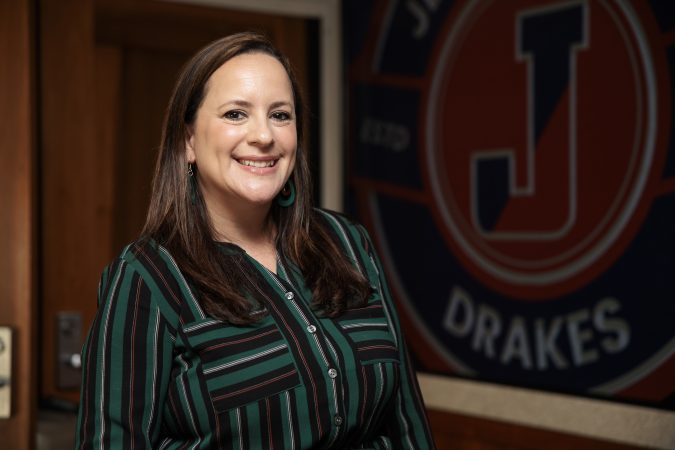
    New superintendent Brea D’Angelo poses for a portrait at Jenkintown High School on Wednesday, July 22, 2026, in Jenkintown. D’Angelo comes to the Jenkintown School District from the Hatboro-Horsham School District.Monica Herndon / Staff Photographer

    From Sixers to secondary education

    She switched from communications to education, starting as a special education assistant in the Lower Moreland Township School District and spending seven years as a secondary school teacher there before working her way up as an administrator in the Hatboro-Horsham School District, where she spent more than 12 years and still lives with her husband and teenage daughter.

    D’Angelo chose to teach English — a subject she came to love as a reluctant reader who learned the joy of books from a teacher when she was about 15.

    “[She] really took an interest and was like, ‘You just haven’t found the right thing to read yet,’” D’Angelo said, and helped her find early favorites, such as Of Mice and Men. “You want teachers to be that for someone.”

    Her plans as superintendent include a return to publishing, of sorts.

    “I’m going to do a newsletter that comes out monthly, from me,” D’Angelo said. “I just want our story to get out there and to show what an incredible place we really are.”

    Jenkintown finds comms pro to replace superintendent

    Jenkintown’s last superintendent, Jill Takacs, had announced her retirement for Aug. 31 this year before leaving early, in April, for an administrator job in New Jersey.

    Takacs’ departure came after an email from a retiring principal leaked to the public last fall that outlined concerns with Takacs’ management style, including a ”lack of transparency,” outgoing Jenkintown Elementary principal Christopher Jahnke wrote. Takacs was on leave shortly afterward.

    But some locals said they had already had concerns about Takacs’ communication with parents in Montgomery County’s smallest school district — particularly amid the universally quick-shifting plans and procedures of the COVID-19 era.

    Jenkintown’s school board appears to have taken that note, highlighting D’Angelo’s narrative chops as a reason for hiring her.

    “The board decided to hire Dr. D’Angelo due to her combination of leadership, team building, and communication skills,” board president Carolyn Riley said. “She struck the right balance between expertise and a ‘friendly but firm’ quality.”

    Riley also highlighted the new superintendent’s experience with special education and facilities management — critical for the steward of Jenkintown’s 103-year-old high school building.

    But the district’s new chief storyteller also knows what communication barriers feel like: D’Angelo grew up hearing both English and Russian, but had to pick up much more Russian as a child to interact with her Ukrainian grandmother.

    Those skills came in handy when Ukrainian refugees arrived in Hatboro-Horsham, and D’Angelo was enlisted to help families get settled.

    “I fell into it because I was pretty much the only Russian speaker on the staff,” D’Angelo said. ”I can’t even imagine fleeing my home, going to a place not speaking the language. … That was really something that I pride myself in, being able to connect with these families and support them.”

    Public relations is often a struggle for public schools, which must balance legally required disclosure with legally required secrecy, especially for personal details about individual students and staff — details like the circumstances surrounding Takacs’ departure.

    D’Angelo, who earned her Ph.D. from Gwynedd Mercy University, hopes that being fully transparent from the beginning with information she is allowed to share will help residents trust her on topics she cannot say much about.

    “I’m OK with being vulnerable in certain situations,” D’Angelo said. “When you build that strength with community members, with staff, with families — there’s a bit more understanding when I go silent on certain things, knowing it’s not because I don’t want to say it; it’s because I can’t.”

    Perhaps sports will be one of those topics: A diehard Philadelphia football and basketball fan (“I bleed green for the Eagles,” she said), D’Angelo already attended a Color Day this year, but she refuses to say which team is better.

    “I will be rooting for Blue and Red all the time, or I’ll be purple,” the new superintendent said. “Yeah, it’s gonna be one of those.”

    This suburban content is produced with support from the Leslie Miller and Richard Worley Foundation and The Lenfest Institute for Journalism. Editorial content is created independently of the project donors. Gifts to support The Inquirer’s high-impact journalism can be made at inquirer.com/donate. A list of Lenfest Institute donors can be found at lenfestinstitute.org/supporters.
  • Cheltenham to pull millions from Citizens Bank over immigrant detention facilities

    Cheltenham to pull millions from Citizens Bank over immigrant detention facilities

    Cheltenham Township is closing its two remaining Citizens Bank accounts over the bank’s financing of companies that run detention facilities, despite the bank’s announcement it would no longer lend to those companies.

    Cheltenham officials said they are working to move around $9 million in two bank accounts from Citizens Bank into Santander Bank after months of lobbying by local residents concerned about Citizens’ financing of private prison companies that operate detention centers, including CoreCivic and GEO Group Inc. GEO Group runs Moshannon Valley Detention Center near State College, Pa., and Delaney Hall in New Jersey.

    Cheltenham’s Citizens divestment still pending

    The township’s tax collector, Melvin Pitts, said he is also closing his office’s four Citizens accounts, but that process will take longer because of the nature of the accounts, which include real estate and income tax money. The total the tax collector holds at Citizens was not immediately available, but May bank statements showed around $3 million between three of the four accounts.

    Cheltenham’s commissioners said at a recent finance meeting that they had hoped to have the township’s two remaining Citizens accounts closed already but hit some administrative hurdles. Cheltenham was also waiting to receive pending state money in one of the accounts before closing it, township spokesperson Lauren Walter said.

    Cheltenham’s primary accounts were already at Santander, she said.

    Pitts and Matthew Areman, president of the township’s board of commissioners, both confirmed that resident lobbying against the detention facilities motivated the switch.

    “The Cheltenham Township Board of Commissioners has committed to divest all Township accounts from Citizens Bank,” Areman wrote in a statement.

    “While the Board remains committed to protecting taxpayer resources and maintaining sound fiscal stewardship, we also believe that where we choose to do business is an expression of our community’s values.”

    Divestment campaign began with dog walkers

    Much of the divestment push came from a community group formed after the 2024 presidential election, said Pam Albright, a member of East Cheltenham CARES.

    Neighbors started chatting while out walking their dogs, Albright said, and EC CARES grew from there.

    With a sizable immigrant community — about 14% of the township is foreign-born, according to U.S. Census Bureau figures — immigration enforcement was among their top concerns.

    After advocacy from EC CARES and other local groups such as Cheltenham Immigration Response, the town adopted a policy last October to affirm that local police would not ask about immigration status or take on federal policing roles when not legally required.

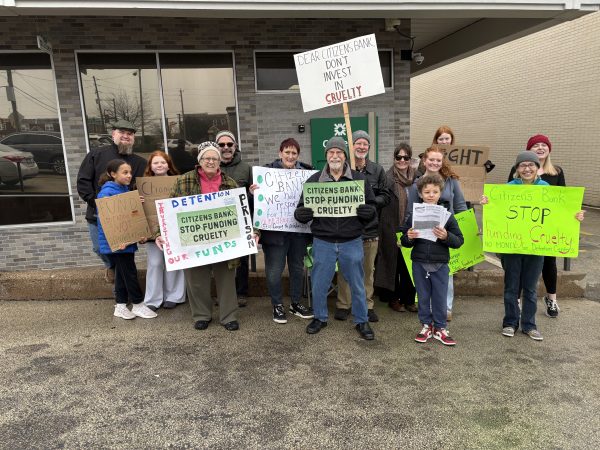
    EC CARES joined Indivisible Jenkintown in protesting monthly outside their local Citizens Bank, volunteers said, and began asking Cheltenham about closing its accounts after seeing other towns take action.

    Everyone played a different role, organizers said: Some talked to township officials, while others pulled research and records or handed out flyers at protests.

    “I like rabble-rousing,” said Susan Shachter of EC CARES. “I like making signs, I like screaming and talking to people.”

    Private prisons have long been a target for organizers over poor conditions and concerns over private companies’ involvement in government-mandated detention. Eight major U.S. banks agreed to stop funding private prison operators back in 2019 under activist pressure.

    But GEO Group and other companies have come under particular scrutiny in recent years for holding immigrants in concentration facilities amid alleged due process violations, detaining young children for months, and reportedly depriving detainees of food, water, sleep, and medical care. Most detainees have no criminal conviction, according to analyses by think tanks, research nonprofits, and news outlets.

    “If we think corporate America is doing what’s ethical in terms of people being detained, we’re joking ourselves,” said KayLee Taylor, another member of EC CARES.

    Some Cheltenham officials were hesitant to push back against federal action, Albright said, but they came around.

    “It is a little scary for them to, as they said, stick their necks out, or have a target on their back,” she said.

    But once commissioners passed the town’s immigration enforcement policy, it got the ball rolling, Taylor said: “Our commissioners have more guts than any others in the county because we were the first ones to put in writing our policy.”

    Albright also got the impression from a commissioner that Santander was fiscally better for the township, she said.

    Walter, the township spokesperson, said Cheltenham likely moved its main account to Santander for better rates a few years ago, but due to township staff turnover she could not confirm details with the officials who were involved at the time.

    Citizens says it stopped lending to GEO, but organizers want more

    Last week, Citizens announced it had stopped lending to private prison companies like CoreCivic and GEO Group now that the federal government has begun buying up facilities and the corporations need less capital than before.

    Walter said Wednesday that she had made commissioners aware of Citizens’ announcement late last week and that the officials did not indicate it had changed their plans. Walter was not sure if Pitts had changed his plans for the tax office accounts or not. Pitts could not be reached for comment on the issue.

    The bank’s announcement also criticized activists for failing to appreciate Citizens’ “virtues,” including the volunteer work its employees do.

    But organizers pointed out that lending is not the only business a bank can do with detention facility providers, and renewed a call for Citizens to end all banking relationships with private prison companies.

    “We want them to completely pull out,” Taylor said. “What you’re doing is wrong.”

    This suburban content is produced with support from the Leslie Miller and Richard Worley Foundation and The Lenfest Institute for Journalism. Editorial content is created independently of the project donors. Gifts to support The Inquirer’s high-impact journalism can be made at inquirer.com/donate. A list of Lenfest Institute donors can be found at lenfestinstitute.org/supporters.

  • Ramah Day Camp, a Jewish summer program in Cheltenham, is closing due to low enrollment after 30 years

    Ramah Day Camp, a Jewish summer program in Cheltenham, is closing due to low enrollment after 30 years

    Ramah Day Camp in Cheltenham will close its doors after this summer, leaders announced in June.

    After 30 years, this will be the Jewish day camp’s last season due to low enrollment and a financial deficit, Ramah officials said.

    There are 164 campers this summer — about half the 2014 enrollment.

    “We don’t have the money to run it, and people aren’t sending their kids,” said Debbie Albert, former president of the nonprofit Camp Ramah in the Poconos, which runs the Cheltenham program.

    In Cheltenham, kids from pre-K into high school dance, swim, practice Hebrew, learn about their faith, and connect with recently returned IDF soldiers for up to six weeks.

    “It’s really heartbreaking,” said Sara Ravitch, a longtime staffer whose 4-year-old son attended the camp for the first time this year. “It’s a place where you can feel proud to be Jewish.”

    Although Cheltenham is closing, the Ramah network has expanded elsewhere in recent years, adding Boston and Los Angeles day camps in 2023 and 2024. The closure will not affect the Poconos overnight camp, according to a June email addressed to the Ramah community announcing the Cheltenham closing.

    Ramah has competed with a number of secular day camps in the Montgomery County area. While Ramah campers take a three-minute bus ride to a nearby pool, other day camps like Sesame/Rockwood in Blue Bell have five pools on site.

    And some local Jewish youth programs are thriving, but the day camp is also located in an older community: Montco’s Jewish population grew slightly from 2009 to 2019, according to U.S. Census data in a report for the Jewish Federation of Greater Philadelphia, but more than a third in southeastern Montco were 65 or older, and just 11% were under 18.

    Ramah’s leaders have tried for years to sustain the Cheltenham program, Albert said. While the overnight camp is “thriving,” the day camp has been losing money for over a decade.

    “We cried over the data,” Albert said. “This is killing all of us.”

    Then there are the facilities: Ramah rents space at the Perelman Jewish Day School, owned by the Jewish Federation of Greater Philadelphia, Albert said, and Ramah officials believe their landlords may want to sell that property. (“There is no property currently for sale on the campus, and the closure of Ramah Day Camp is unrelated to any federation property transaction,“ a federation spokesperson said.)

    Ramah was never able to afford its own day camp site, which would cost “millions and millions of dollars,” Albert said.

    Ramah has been central to some Pennsylvania communities for decades, even earning a shout-out on the Jenkintown-set sitcom The Goldbergs.

    “As a Jewish community of Greater Philadelphia, it is a huge loss,” said Rachel Bloom, a former camper and staffer.

    Bloom attended Ramah Day Camp’s first summer back in 1996. She returned on staff in 2005 and met her husband, then a 25-year-old sports director in a navy blue Hillel shirt with cutoff sleeves.

    “Most of our bridal party were camp people,” Bloom said, and their wedding was filled with Jewish traditions: pre-ceremony tisch and badeken, and an impromptu sermon at the rehearsal dinner.

    Without Ramah, “I don’t think I would’ve had all of these things at my wedding,” Bloom said. “Going to a Jewish camp is like an extra special gift that is very hard to explain.”

    Though officials have long fretted over the camp’s future — the nonprofit did a multiyear review with a group of staff, parents, and board members, CEO Miryam Seid said — some staff and alumni felt blindsided by the news.

    “It feels a little bit — I don’t know if it’s a betrayal, but they weren’t so transparent with how many struggles they were facing,” Ravitch said.

    Bloom said she sometimes attends Shabbat at the camp, and she never noticed their shrinking numbers.

    “There’s always been spirit, no matter what,” Bloom said. “The spirit fills the space.”

    This suburban content is produced with support from the Leslie Miller and Richard Worley Foundation and The Lenfest Institute for Journalism. Editorial content is created independently of the project donors. Gifts to support The Inquirer’s high-impact journalism can be made at inquirer.com/donate. A list of Lenfest Institute donors can be found at lenfestinstitute.org/supporters.
  • Fox Chase Farm volunteers disband after more than 30 years following conflict with Philly school district

    Fox Chase Farm volunteers disband after more than 30 years following conflict with Philly school district

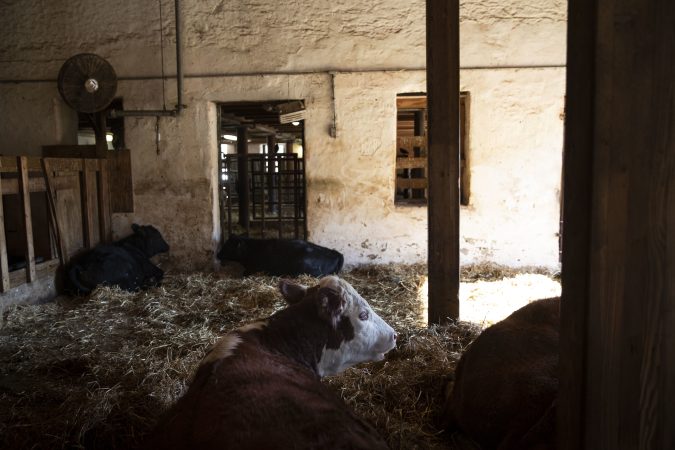
    A volunteer group at Fox Chase Farm has dissolved after more than 30 years. The group says dwindling volunteers plus new fees and restrictions from the Philadelphia School District made their work at the city-owned farm too difficult to continue.

    “We finally folded,” said Karen Eble, former president of the group, Friends of Fox Chase Farm. “The farm is administered by the Philadelphia School District and they were, I guess, not very open to us being there.”

    Friends of Fox Chase Farm formed in 1990 to support the 112-acre property that straddles Philadelphia and Abington Township and is owned by the city.

    At its peak, the group drew over 400 local families, who grew thousands of pounds of produce for food banks annually and functioned as a parent-teacher association of sorts for a 4-H program, which some members’ children participated in. The group bought equipment, lent the program money, and attended farm shows with the kids.

    The Fox Chase 4-H allowed more than a dozen youth, including many who live in Philly, to raise animals on the city farm — rare for a program that typically attracts kids whose families own agricultural land.

    “We’d compete with the kids that grew up on farms,” said Jim Kates, a longtime leader of Friends of Fox Chase Farm.

    The farm’s 4-H was suspended in 2022 after the school district began charging fees for services it used to provide the program for free, such as housing the animals.

    4-H had long covered food and veterinary care for the animals and split feeding duties with the resident farmer, members said, but the school district used to board the animals for free.

    “It would’ve cost us $15,000 to have these kids keep their animals there,” Kates said.

    The district said at the time that the 4-H was not complying with new policies and procedures.

    “Fox Chase Farm is an educational facility operated by the School District of Philadelphia and is not in the business of boarding privately owned animals,” a spokesperson said this week.

    Officials did not directly respond to the volunteers’ assertion that they were made unwelcome by the school district, but the spokesperson said this week the farm saw 10,000 “community visitors” in the last year.

    The district spokesperson said there is an active 4-H program on the farm but did not immediately respond to questions about how much access the participants have to the livestock.

    The volunteers also held two fundraisers per year that raised thousands of dollars for the farm, group members said.

    The Philadelphia School District rents the farm for $1 from the city. The district is currently renegotiating that 30-year lease, said Mandy Fellouzis, who runs the district’s programs there.

    In recent years, the Friends group shrank as volunteers aged and the school district placed new restrictions on their activities, members said. By this past March, there were only a handful of active members, Kates said, and they decided to fold.

    One of the issues the school district raised about the group’s events, Kates said, was liability: A volunteer group at Pennypack Park disbanded in 2020 after being named in lawsuits that some considered frivolous.

    “We still had an insurance policy,” Kates said, but with the group dwindling anyway, “we decided it wasn’t worth it.”

    This suburban content is produced with support from the Leslie Miller and Richard Worley Foundation and The Lenfest Institute for Journalism. Editorial content is created independently of the project donors. Gifts to support The Inquirer’s high-impact journalism can be made at inquirer.com/donate. A list of Lenfest Institute donors can be found at lenfestinstitute.org/supporters.
  • Abington is paying the feds to ‘harass’ geese with lasers, pyrotechnics, and boats

    Abington is paying the feds to ‘harass’ geese with lasers, pyrotechnics, and boats

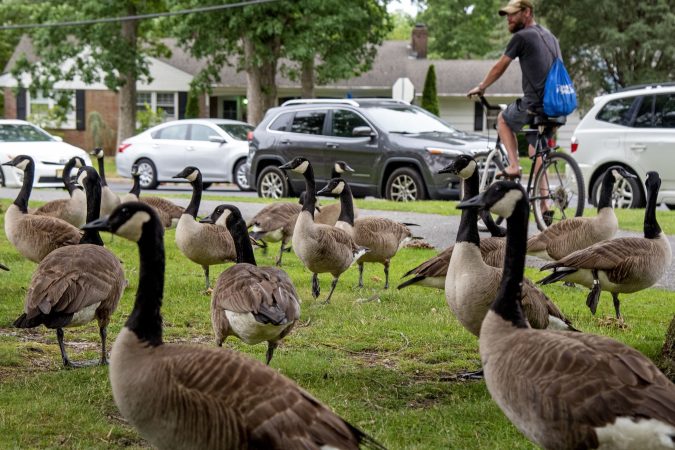
    Like many American suburbs, Abington accidentally spent centuries building a goose paradise. Now, the feds will help the township evict the waterfowl from their ideal habitat.

    Abington Township approved a contract with the U.S. Department of Agriculture on July 9 for Canada goose abatement in Alverthorpe Park, where airborne birds are attacking people driving golf carts, digging into sand traps, and dropping slippery, bacteria-laden feces onto walking paths and around the playground, township staff said.

    Goose droppings may also be affecting water quality at the park and interfering with fishing, according to the contract.

    Each goose can deposit up to a pound of feces per day, a USDA spokesperson said.

    “It’s a mess,” said Abington’s assistant parks director, Patricia Platt.

    USDA to harass Abington geese 35 times, may kill some to be used as food

    Between this month and June 2027, USDA personnel will conduct “waterfowl harassment” at the park, according to the contract, with “visual deterrents, use of lasers, and remote controlled boats, pyrotechnics, etc.”

    The service will cost about $15,000 for the yearlong contract.

    “Approximately 35 visits of harassment will be conducted throughout the spring and fall seasons,” the contract reads.

    The pyrotechnics mentioned in the contract are typically propane-powered noisemakers to scare the birds, a USDA spokesperson said.

    “It’s not like fireworks,” spokesperson Tanya Espinosa added.

    Lasers can mean green light beams trained on the ground to deter the birds.

    USDA workers start with less intensive goose-scaring methods and then escalate as needed, township and USDA staff said.

    The feds will also throw away goose eggs and, if the geese start molting, euthanize up to 150 birds for people to eat.

    Abington officials have considered other goose abatement tactics in the past. In 2023, the township’s shade tree commission asked whether a planned development across from Alverthorpe could include more shrubs and trees to reduce the goose habitat, but the engineering consultants said the community was adamant about an expansive grass lawn. The town’s 2023 parks plan suggests that closing some of the town’s outdoor ice rinks, which are wet lawns when not frozen, could help reduce goose habitat. The township parks director, Jessica Tholey, did not return calls and emails.

    Canada goose damage has been a problem across Pennsylvania for at least three decades. In 2010, USDA Wildlife Services received more than 400 “technical assistance requests” for goose damage in the state.

    Falls Township in Bucks County began reducing its resident goose population at a public park in 2015, according to its parks director. Falls spends about $17,000 annually for a private company to chase the geese with border collies.

    Honkers plentiful nationwide, Pa. says

    Goose populations have exploded across the United States in recent decades, rebounding from a dangerous low in the early 1900s when open hunting threatened migratory populations, according to the Pennsylvania Game Commission.

    “There probably are more honkers on the continent today than when the Pilgrims landed,” state officials write.

    Canada geese still migrate through the Philadelphia region — a group dubbed the Atlantic population.

    But many local geese are part of a nonmigratory population that is relatively new.

    Pennsylvania had no year-round populations until 1936, when the state game commission released 30 Canada geese with amputated wing joints at a reservoir near Lake Erie.

    The state added to the reservoir population in the 1950s, and by the 1970s, Southeastern Pennsylvania landowners were complaining about geese, according to a 2011 report from a group of government officials and wildlife biologists.

    Nuisance geese settled in Abington over 40 years ago

    The geese, which prefer open fields with short vegetation near water, thrived on the lawns, golf courses, and fake lakes of the Philadelphia suburbs.

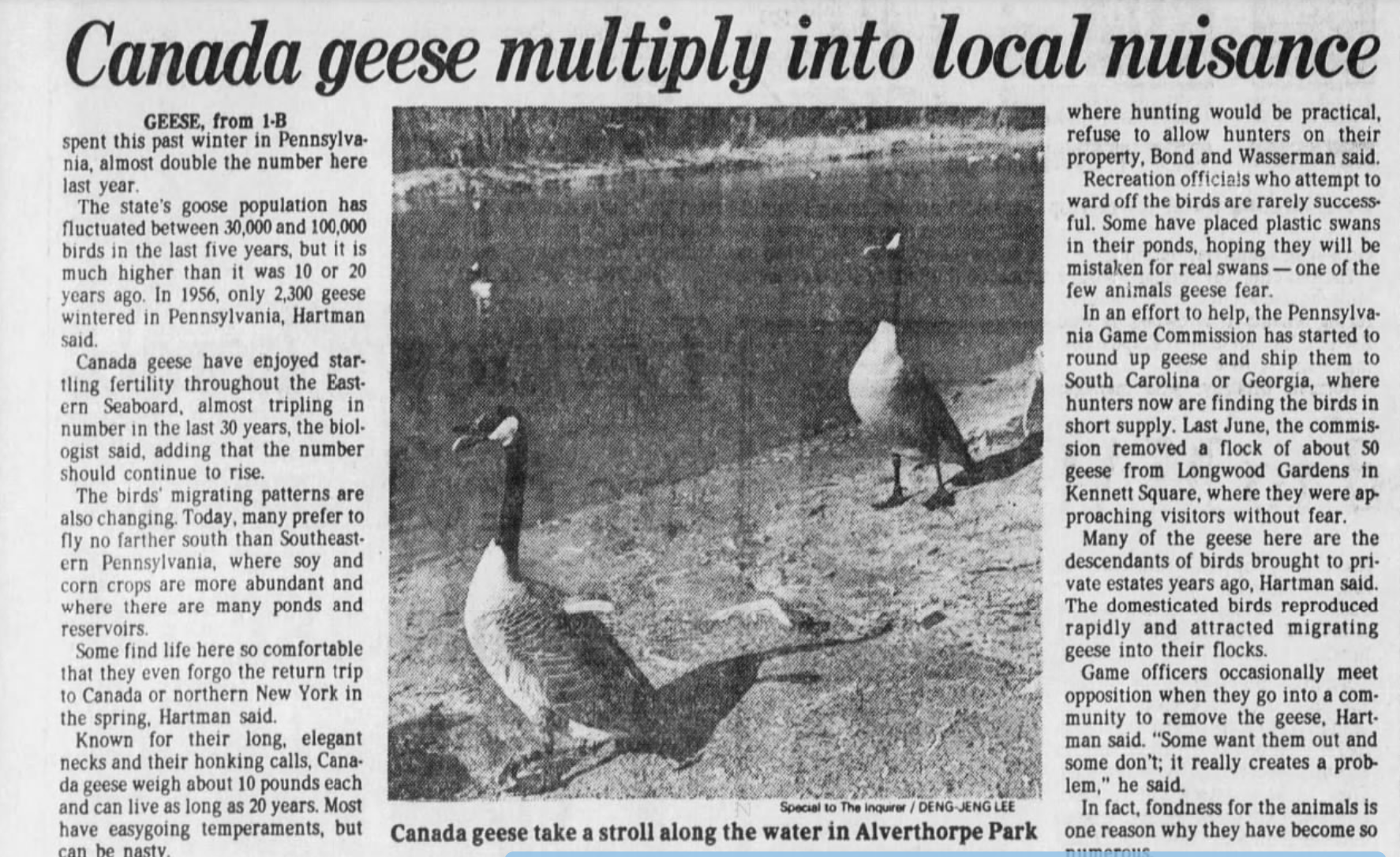
    By the 1980s, the geese had reached Alverthorpe Park, where Abington officials considered balloons and plastic swans to deter them.

    A Philadelphia Inquirer article from April 1984 by Laura Quinn details the nuisance goose population in Alverthorpe Park.Deng-Jeng Lee

    But with tens of thousands of them already settled in the Delaware Valley, The Inquirer reported in 1984, the game commission officer for eastern Montgomery County, William Wasserman, was not optimistic: ”What we’ve got right now with Canada geese is probably going to remain the same to the year 2000 and beyond.”

    This suburban content is produced with support from the Leslie Miller and Richard Worley Foundation and The Lenfest Institute for Journalism. Editorial content is created independently of the project donors. Gifts to support The Inquirer’s high-impact journalism can be made at inquirer.com/donate. A list of Lenfest Institute donors can be found at lenfestinstitute.org/supporters.
  • See inside a $1.2M house for sale in Abington thought to have ties to a famous shoe heir

    See inside a $1.2M house for sale in Abington thought to have ties to a famous shoe heir

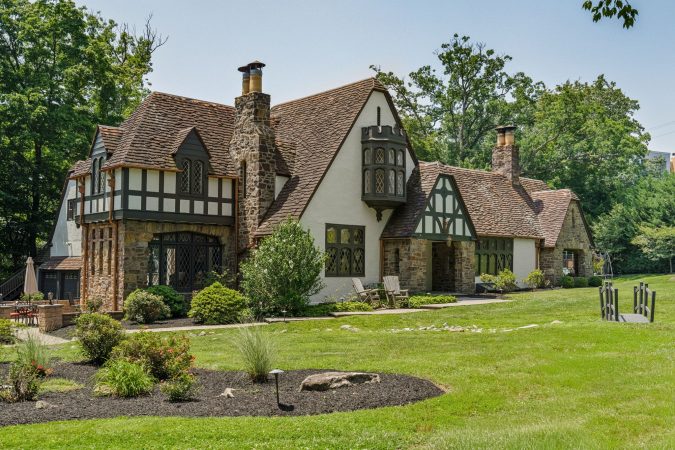
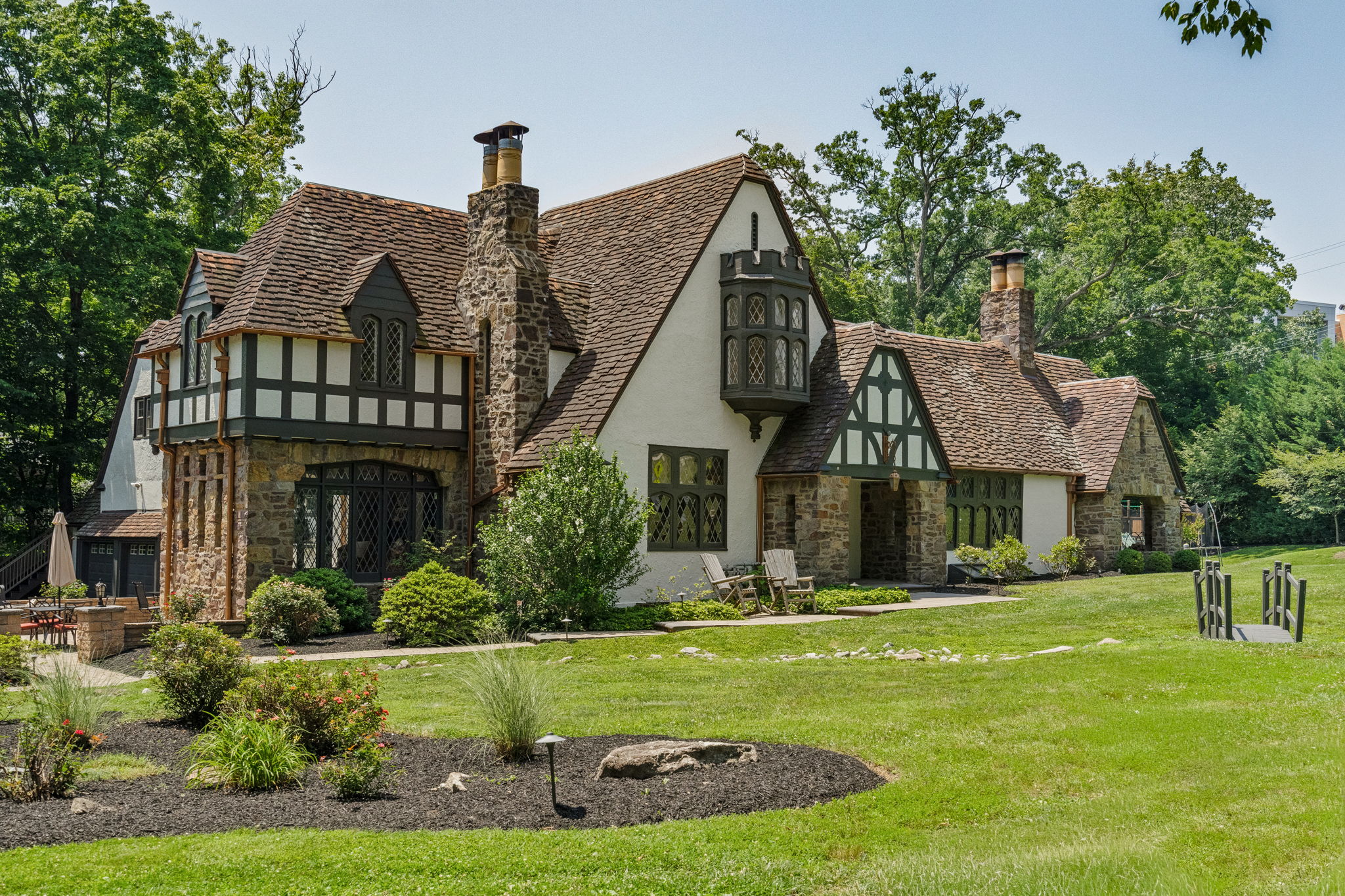
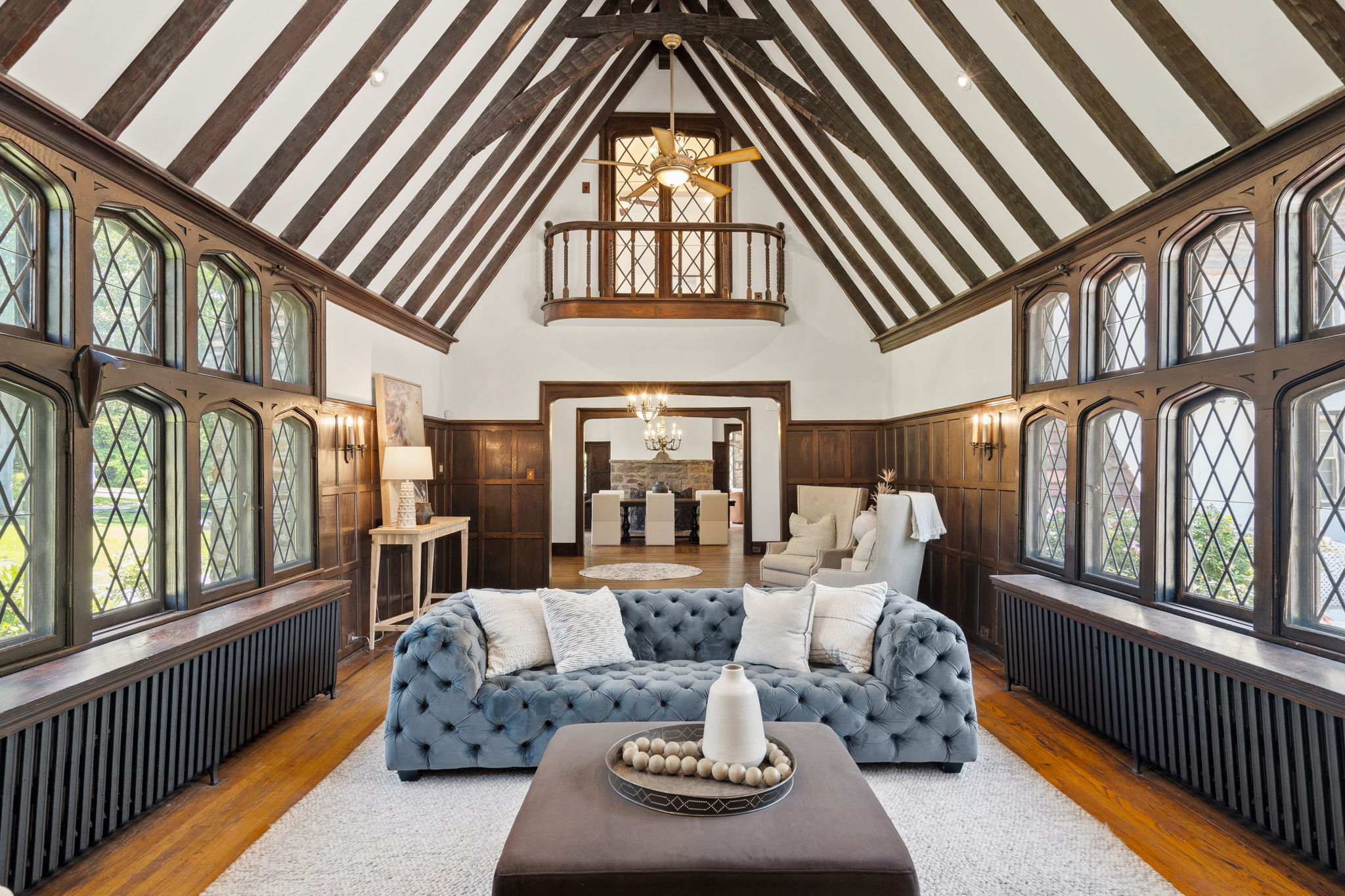
    There’s a 1920s house for sale in Abington whose previous residents may have included a shoe heir.

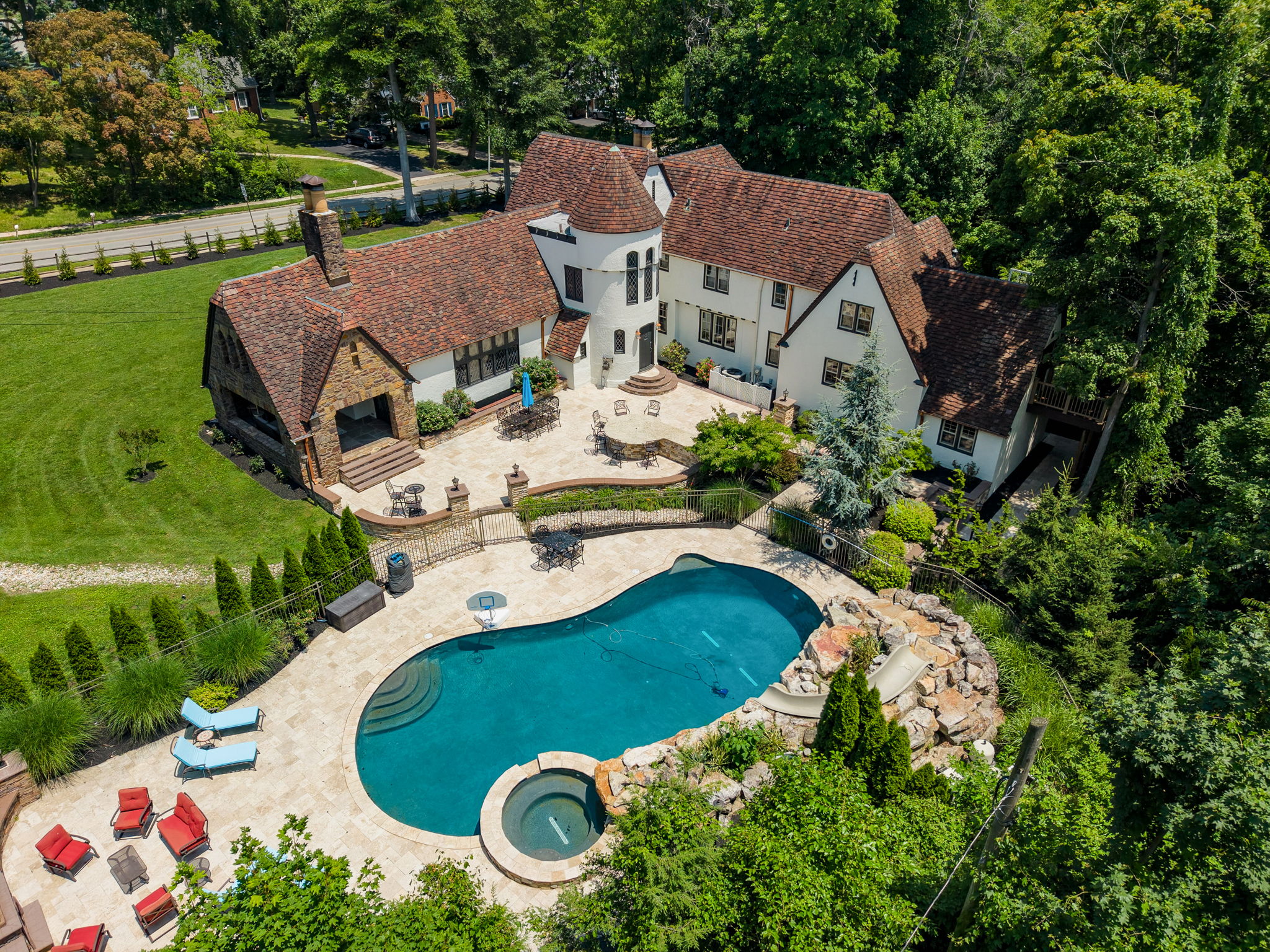
    The 4,328-square-foot-home has five bedrooms, three full bathrooms and two half bathrooms on just under an acre across from Abington Senior High School. One of the bedrooms sits separately above the three-car garage as a suite with a half-bath and a kitchenette. The asking price is $1.2 million.

    The Canterbury Road house sits beside a wooded area owned by a property management company, according to county records, which describe the house as a Tudor.

    But the house also has Norman Revival features, said Brian Whetstone, a historian at the University of Pennsylvania, including a rounded tower and stucco elevations: “This building is certainly taking a grab bag of references from Tudor and Norman influences in the final product.”

    A 1920s Tudor home is for sale on Canterbury Road across from Abington Senior High School.Donkin Media Group

    The two-story house is nicknamed “Tall Trees” for the woodsy feel it used to have, but anyone who’s ever paid an arborist can rest easy — the current owners have removed many of the trees.

    An added bonus is how much sunlight now enters the house, said Tim Owen of Compass Real Estate.

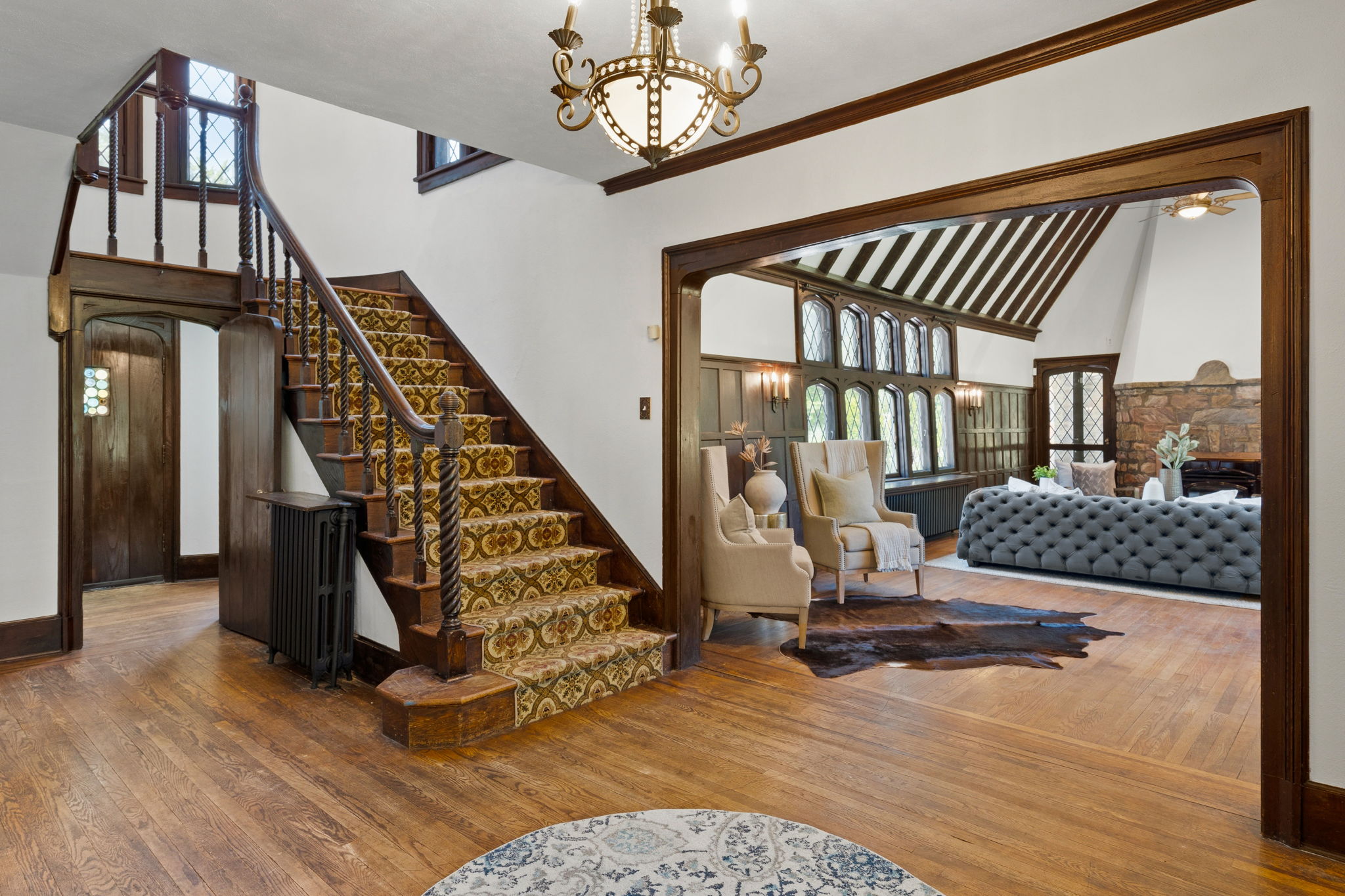
    The main floor of the 1920s Tudor for sale in Abington Township.Donkin Media Group

    “Often with Tudors, the houses feel really dark with the wood and all,” Owen said, but several potential buyers have mentioned how bright it feels inside, even on a gloomy day.

    The home is filled with original amenities, including wood-burning stone fireplaces, hardwood floors, carved woodwork, and sconces that may date back to the late 1920s. The house was built by Tudor-loving real estate mogul Wayne Herkness.

    An interior view of a 1920s Tudor for sale in Abington.Donkin Media Group

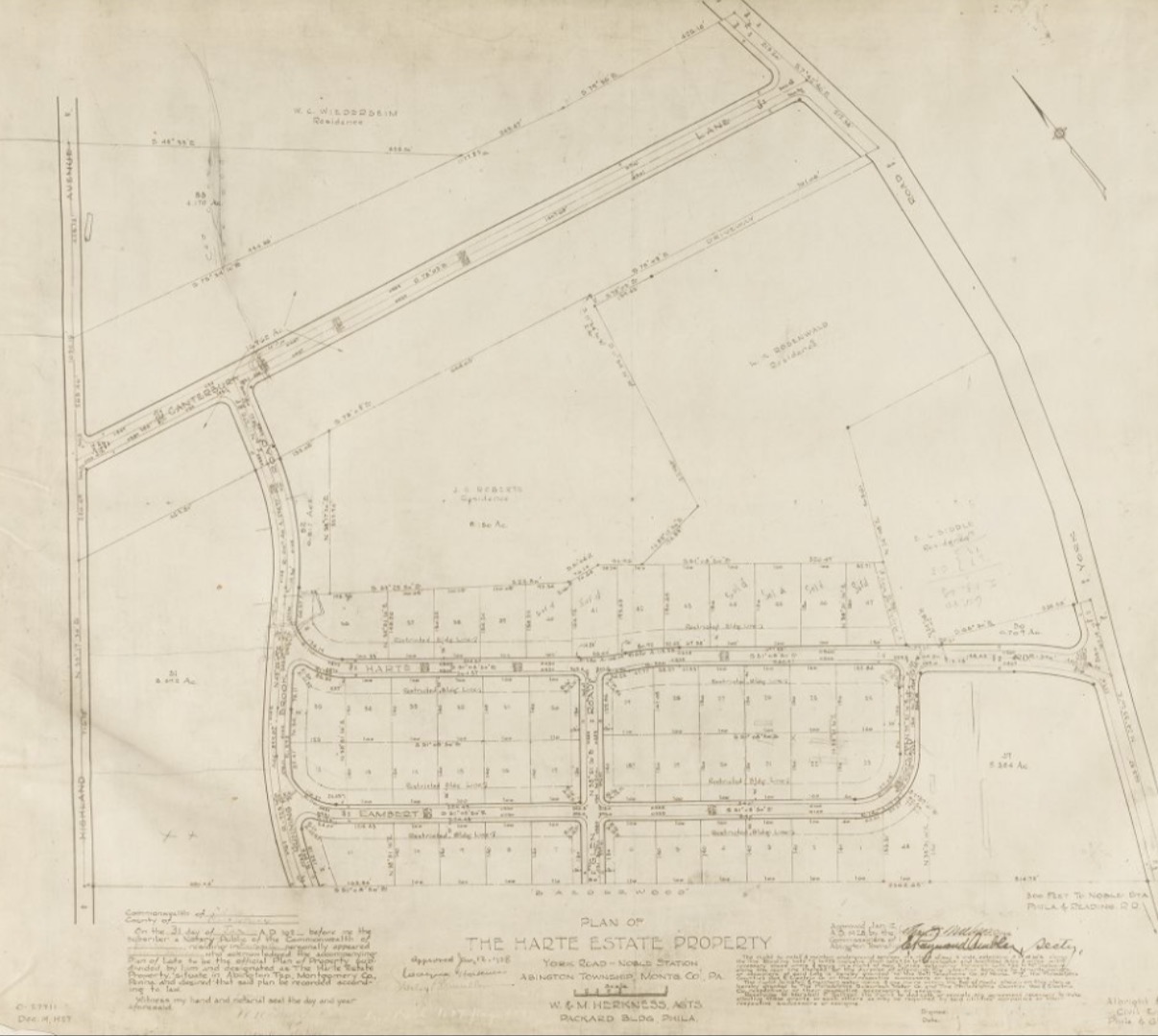
    Herkness “studied a great deal from books about English architecture,” reads the description of survey plans held in the Penn State University Libraries collection. “He developed the houses in his favorite styles, English Tudor and stone colonial, with grand center halls and on large lots.”

    A 1920s real estate survey by Albright & Mebus for the former Harte property in Abington includes Canterbury Road, where a Tudor home is on the market.W&M Herkness

    The current owners have restored original features and made several updates, Owen said, adding high-velocity central air-conditioning and a heated, in-ground, saltwater pool, replacing the windows, and re-staining the wood moldings.

    “They’ve definitely been very busy in the 13 years they’ve been there,” Owen said. “It truly is a move-in ready home.”

    The current owners of the Tudor home for sale on Canterbury Road in Abington added an in-ground, saltwater pool to the property.Donkin Media Group

    The previous owners who sold the house in 2013 passed on a framed print from the early days of Laird & Schober Shoes, a Philadelphia company that rose to international prominence in the early 20th century, Owen said.

    The company won an award from the Franklin Institute in 1900 for shoe manufacturing, and collaborated with famed Italian designer Elsa Schiaparelli.

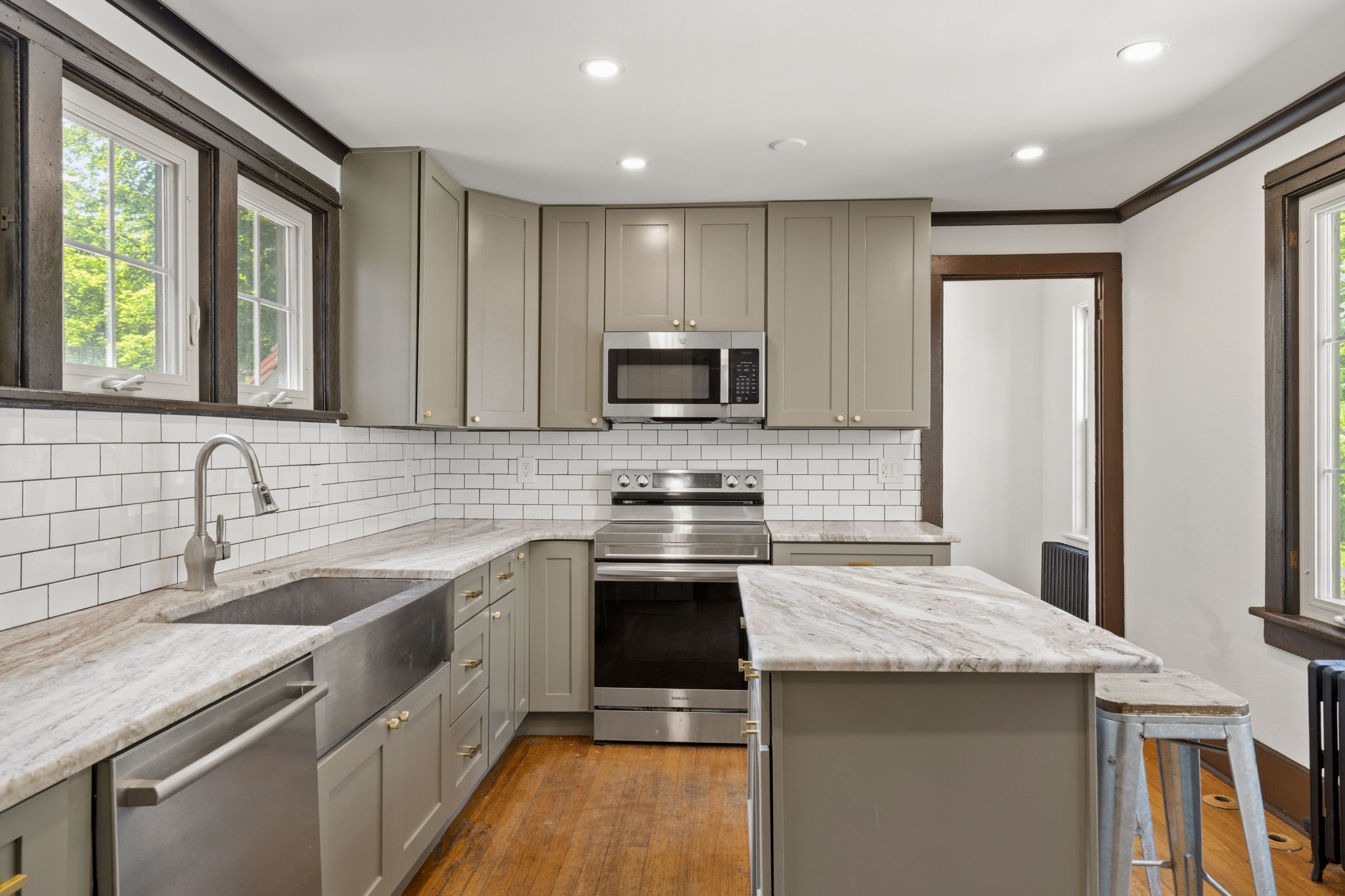
    The kitchen of the home for sale on Canterbury Road in Abington.Donkin Media Group

    The print may be a nod to one of the home’s first owners, George S. Laird. The name matches the son of the shoe company’s founder who also worked for the family business, according to a 1920 passport application.

    “It’s a cool house and has a cool story as well,” Owen said.

    This suburban content is produced with support from the Leslie Miller and Richard Worley Foundation and The Lenfest Institute for Journalism. Editorial content is created independently of the project donors. Gifts to support The Inquirer’s high-impact journalism can be made at inquirer.com/donate. A list of Lenfest Institute donors can be found at lenfestinstitute.org/supporters.
  • Who’s rebuilding Jenkintown’s only playground? Maybe you are.

    Who’s rebuilding Jenkintown’s only playground? Maybe you are.

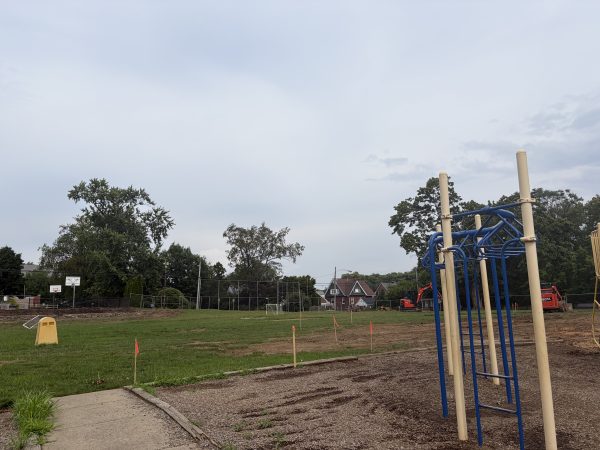
    Jenkintown residents are building a playground this month.

    Or at least, part of a playground.

    “They’re not professional contractors,” said Darrell Campana of Eustace Engineering, which is handling land work, like regrading and water drainage. The playground company Kompan is installing the play equipment.

    But local volunteers do plan to construct parts of the replacement for Jenkintown’s only playground on the last weekend in July after Eustace demolished the beloved Jenkintown Castle there in April.

    The finished playground, dubbed Legacy Park, will include slides, swings, a toddler section, and an imaginative play area with a stage donated by Jenkintown Music Theatre, said Kelly Hudson, who spearheaded the roughly $1.3 million project as a volunteer on the newly formed playground board.

    Residents have led planning and fundraising for the project as Jenkintown tries to balance its proud DIY ethos with the present-day constraints of construction, insurance, and liability.

    Beloved Jenkintown Castle demolished

    Playground renovation plans began after a 2024 inspection revealed several parts of the play area, which is next to Jenkintown Elementary, were unsafe.

    The castle play area was built in 2002 and lovingly maintained by residents — which may be why the structure, expected to last about 12 years, lasted more than two decades said Nina Russakoff, a Jenkintown school board member who’s helping to coordinate the new project.

    In a 2024 update on the damaged castle ahead of the renovation, school officials had to remind residents to stop fixing it themselves: “We know your intentions are good, but we need to … [follow] the recommendations of the engineer.”

    Residents held a farewell picnic and fundraiser at the castle in March before it was destroyed.

    The school’s nonprofit arm, the Jenkintown Education Foundation, and other community groups have raised about $1.5 million for the project known as Legacy Park, Hudson said. If the playground doesn’t go over budget, the remaining funds will be used to make further improvements to the park.

    There are many older, community-built parks like Jenkintown’s in the Philadelphia area, said Scott Lean of Kompan, the company providing the play equipment, but that model has become less viable in recent years.

    “The liability standpoint from doing a community build just seems a little risky in this day and age,” he said.

    Residents help rebuild Jenkintown playground

    Residents can still shape the playground’s future, though.

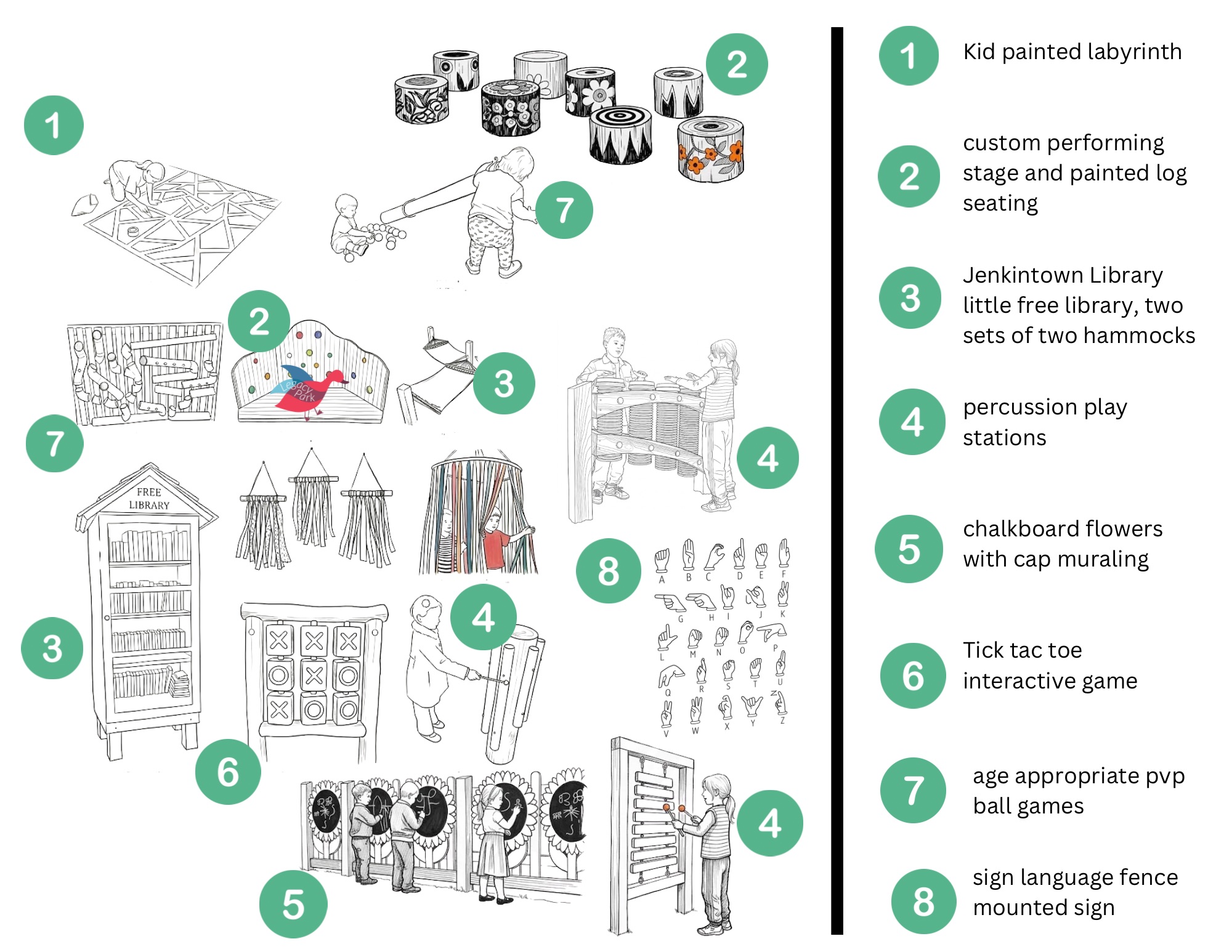
    Project leaders are recruiting volunteers for the community build weekend from July 30 to Aug. 2. The residents will be supervised by experienced crew leaders, with a meal and free childcare for people who volunteer a shift.

    Residents will be working on drumming stations, a sign language fence, and log seating carved from trees felled on the school grounds.

    An illustration of the DIY projects that Jenkintown residents will work on during the volunteer weekend planned this month for the town’s new parkLegacy Park Community Board

    In the meantime, land work will continue this month, although several retaining walls are already in place, Campana said.

    Volunteers may be playing a smaller role in playground construction this time around, but it was local residents who fundraised most of the park’s budget.

    Large donations came from fastener factory SPS Technologies and other local businesses, a state grant, and several families, with more than 1,600 individual donations.

    What will Jenkintown’s new playground look like?

    Volunteers also led the design of the new playground with guidance from students, teachers, and parents.

    The layout will be different from the old playground: All play areas will be visible to teachers calling children back from recess, Hudson said, and the equipment will be situated so that kids can play without distracting students inside during school hours.

    “Most screaming will move to the new location,” Russakoff said.

    Residents wanted to ensure the new play equipment is both accessible and durable, Hudson said: “Everything the kids touch in Jenkintown is 10 times over because it’s the only playground. It gets used heavily.”

    Slides, swings, mountaineering ropes, and a toddler area are set to be finished around the start of school, Lean said. The theater area will open later this fall.

    Legacy Park will be open to the public outside school hours, and the toddler area will stay open during school when students aren’t at recess.

    Jenkintown School District “has an outsized impact on the community around it,” the borough’s state representative, Napoleon Nelson, said in a statement on the project. “Its grounds are open to all, Jenkintown residents and non-residents alike.”

    Hudson said Jenkintonians want the playground “to be a community project that benefits the most people.”

    “We’re very prideful about our small little town.”

    This suburban content is produced with support from the Leslie Miller and Richard Worley Foundation and The Lenfest Institute for Journalism. Editorial content is created independently of the project donors. Gifts to support The Inquirer’s high-impact journalism can be made at inquirer.com/donate. A list of Lenfest Institute donors can be found at lenfestinstitute.org/supporters.
  • Abington looks to ban e-bikes at parks and trails, citing safety concerns

    Abington looks to ban e-bikes at parks and trails, citing safety concerns

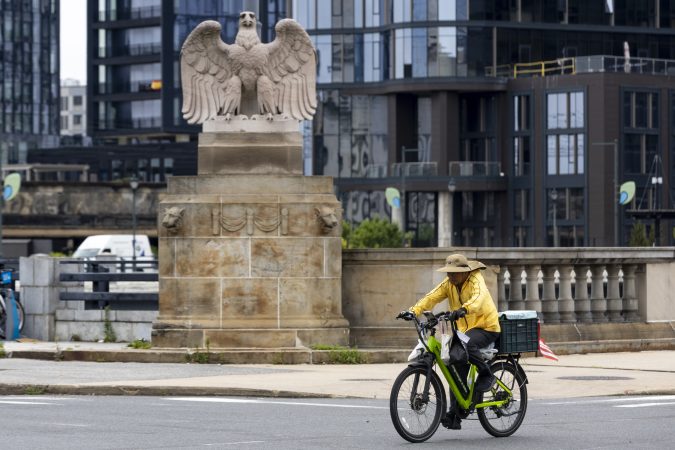
    Abington moved toward banning e-bikes and e-scooters at public parks and trails during Thursday’s commissioners meeting.

    A majority of Abington’s 15-member commissioner board voted to advance a proposed ban on electric vehicles from Abington park systems because of safety and disruption concerns, according to a summary of the proposal.

    The ban would not apply to electrified vehicles designed for people with disabilities, and would not cover county-owned sites such as Lorimer Park.

    The rise in popularity of small electric vehicles has led to crashes and fatalities across the region. Earlier this week, two people in Pottstown were sent to the hospital after an apparent collision between an e-bike and an e-scooter.

    But some Abington commissioners voted against the motion after local cyclists raised concern that the ban would be too broad.

    Many local cyclists want a narrower ban that still allows slower, lighter e-bikes, said Ross Abel of Bike Montgomery County.

    Pedal-assisted bikes help seniors and parents with young children reach parks, Abel said. A full ban “would really prevent them from getting out in nature on their bikes.”

    The Bicycle Coalition of Greater Philadelphia has argued that the slower e-bikes have been wrongly lumped together with powerful e-moto bikes that look similar but can cause more damage.

    Last year, a cyclist on Schuylkill River Trail near Norristown was hit by an unregistered electric motorcycle, leaving him with a partially dissected artery in his neck.

    State law differentiates e-bikes from vehicles that require a license, like motorcycles. But unlike many e-bike manufacturers, Pennsylvania does not distinguish different e-bikes by power and top speed. And in practice, distinctions can be murky.

    Police responding to the Norristown collision appeared to view the faster vehicle as an e-bike, referring to the e-moto rider as “the other cyclist.”

    That trouble telling the bikes apart is exactly why some argue a narrower ban would be impractical for township staff to enforce, Abington commissioner John Spiegelman said.

    Though Abington’s commissioners have 60 days to finalize the ban once it’s advertised, some are already considering revisions.

    “I’ve been trying to think of some kind of workable compromise that accommodates all parties’ concerns,” Spiegelman said, “while ultimately protecting the folks in our parks and on our trails, including young kids, from injury.”

    This suburban content is produced with support from the Leslie Miller and Richard Worley Foundation and The Lenfest Institute for Journalism. Editorial content is created independently of the project donors. Gifts to support The Inquirer’s high-impact journalism can be made at inquirer.com/donate. A list of Lenfest Institute donors can be found at lenfestinstitute.org/supporters.
  • SEPTA cuts 3 Glenside Regional Rail trains along with other schedule changes

    SEPTA cuts 3 Glenside Regional Rail trains along with other schedule changes

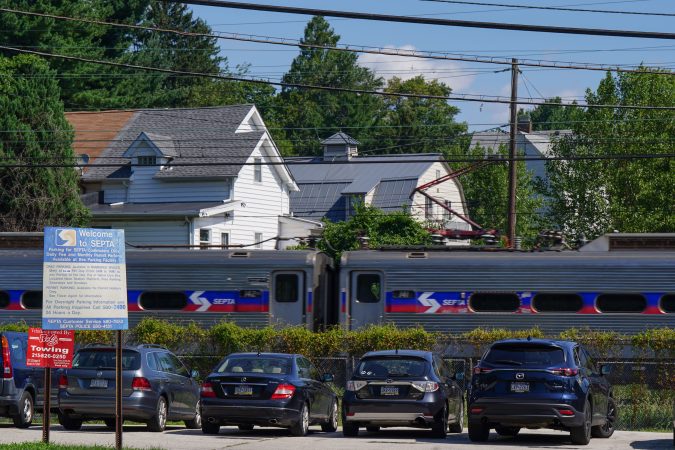
    SEPTA is trading Glenside Regional Rail riders three daytime trains for new off-peak options, more train cars, and new schedules aimed at reducing congestion between Glenside and Wayne Junction.

    The Warminster Line, which runs through southeastern Montgomery County, is the only Regional Rail line losing multiple trains under systemwide changes that began on July 5 to make trains more consistent and prevent delays.

    The new schedule cuts two weekday trains that left Glenside at 8:40 a.m. and 2:47 p.m. for Center City, and one weekday train that left Suburban Station at 4:53 p.m. toward Warminster.

    The morning train cut leaves a 27-minute gap in service to Center City from Glenside, while the afternoon cuts each add five minutes or less to the wait for the next train.

    SEPTA also added a train to the Warminster Line that leaves Suburban Station at 11:35 p.m. on weekdays, and a train on the West Trenton Line that leaves Suburban Station at 5:28 a.m.

    The late-night train will serve airport workers, and the dawn departure is convenient for people who commute into the suburbs, SEPTA spokesperson Kelly Greene said.

    The changes SEPTA made across the commuter rail system this week are aimed at improving consistency and reliability, the agency said.

    “As SEPTA continues to increase the number of train cars available for service, trains will be longer and provide more space for riders,” officials wrote in a statement.

    Between Wayne Junction and Glenside, SEPTA said, it hopes the new schedule will help “prevent trains from bunching together, which can cause delays.”

    The 8:40 a.m. train from Glenside was cut to reduce congestion, Greene said, and had the lowest ridership of the trains running around that time.

    Other changes affecting the Abington area include new departure times for some trains on the Lansdale/Doylestown, Warminster, and West Trenton Lines.

    SEPTA put out a full list last month of what is changing on each line, along with updated train schedules.

    This suburban content is produced with support from the Leslie Miller and Richard Worley Foundation and The Lenfest Institute for Journalism. Editorial content is created independently of the project donors. Gifts to support The Inquirer’s high-impact journalism can be made at inquirer.com/donate. A list of Lenfest Institute donors can be found at lenfestinstitute.org/supporters.