Author: Ariana Perez-Castells

  • Hundreds of Philly buildings rely on Vicinity’s steam plants. Their workers want better pay and safer facilities.

    Hundreds of Philly buildings rely on Vicinity’s steam plants. Their workers want better pay and safer facilities.

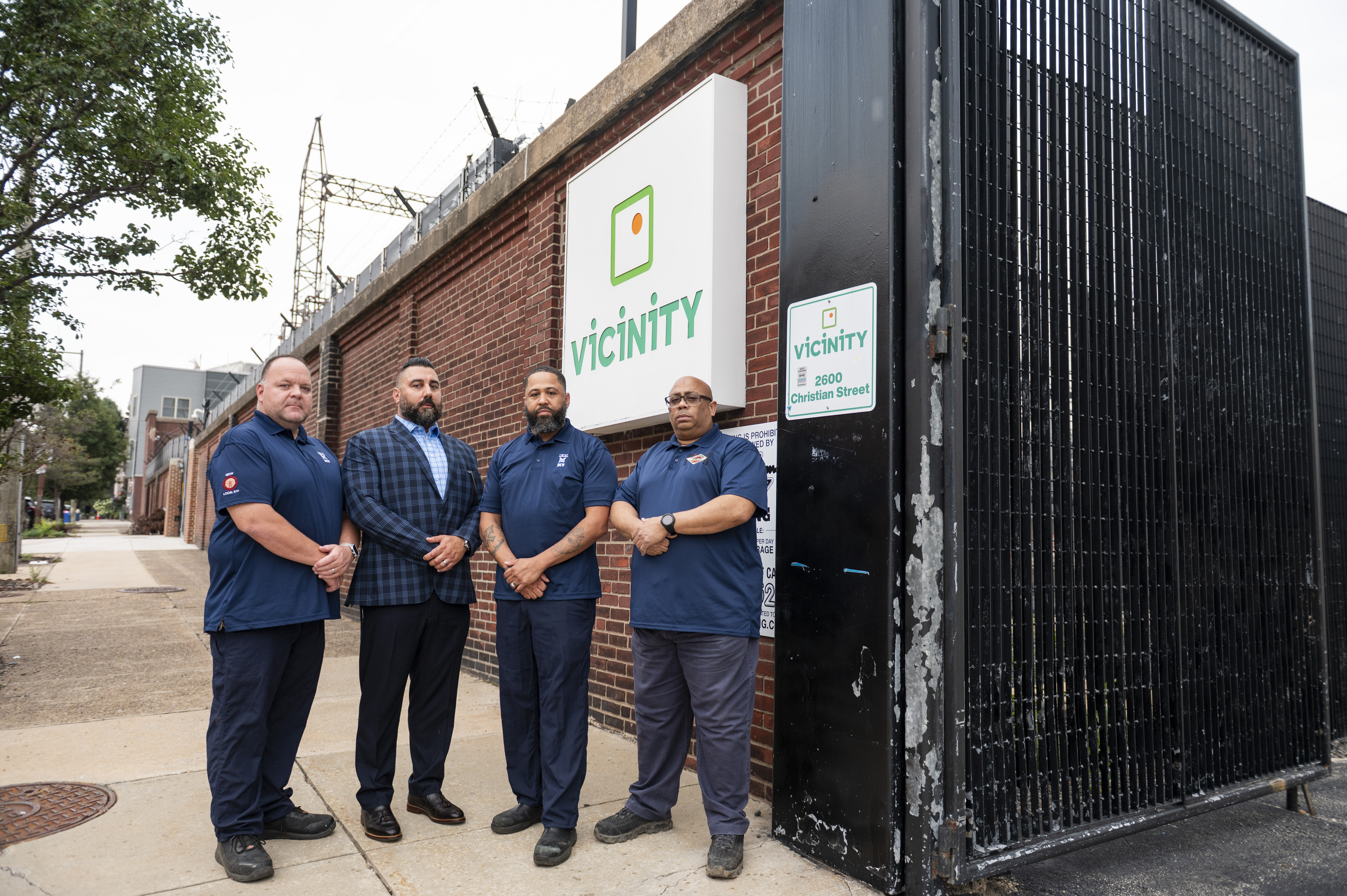
    Thomas White is a control room operator at a Philadelphia plant working with chillers and steam boilers to provide heat and air-conditioning for Jefferson Health and Thomas Jefferson University. When he started his job some 18 years ago, he and many of his coworkers had served in the U.S. Navy.

    That shared experience was an advantage, he says, because they all came with the same training. The Navy used steam-driven ships.

    “You just had to learn where things were because you already knew what they did, you knew how to do it, spoke the language,” he said.

    White and his colleagues work around-the-clock shifts for Vicinity Energy, operating a system that generates steam and electricity to provide customers with heat, air-conditioning, and chilled water. In Philadelphia, Vicinity serves hundreds of buildings, including Two Liberty Place, Thomas Jefferson University Hospital, and the Philadelphia Museum of Art, as well as the University of Pennsylvania, which buys over half the steam Vicinity sells in Philadelphia.

    Since he’s been on the job, White says the Navy-veteran hiring pool has shrunk, as the Navy moved away from steam and toward diesel and gas turbines. Now hires come from refineries shutting down or trash plants, and they need training.

    “There’s just a few of us older guys that are left over to try to pass this institutional knowledge down,” said White, who is a member of IBEW Local 614, along with 56 other Philadelphia employees of Vicinity. They do this training on their own time, White said, so they don’t get paid for it.

    Their union is negotiating a new contract and could go on strike if they can’t reach a deal. They want raises, better short-term disability pay, a safer workplace, and compensation for the time they spend training new hires. Their current agreement expired in March.

    “Vicinity Energy is committed to bargaining in good faith and believe those discussions belong at the bargaining table, not in the media,” a spokesperson for the company said in a statement. “Throughout this process, the safety of our employees, customers, and the communities we serve remains our top priority, and we remain committed to safe, reliable operations.”

    The steam plant workers voted to authorize a strike on Saturday if their union calls for it, with 77% participating in the vote, and 97% voting yes.

    If they do walk off the job, they’d be closely following in the footsteps of IBEW Local 614’s Peco employees, who recently went on strike before reaching a contract deal last month. A strike authorization vote doesn’t guarantee a strike will happen but can be used as leverage in bargaining.

    The union has alleged that a Vicinity supervisor threatened to “discharge” workers who strike, according to an unfair labor practice charge filed with the National Labor Relations Board earlier this month. Vicinity did not comment on the charge.

    The union is still bargaining in good faith, president Larry Anastasi said.

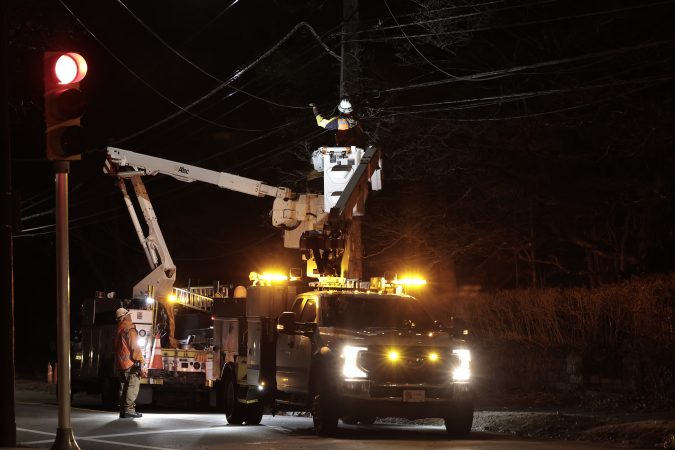
    Steam plants require human operators, so a strike could be very disruptive for steam-powered buildings across the city. Given that, Anastasi said, it’s important “that we do everything in our power” to keep a strike from happening.
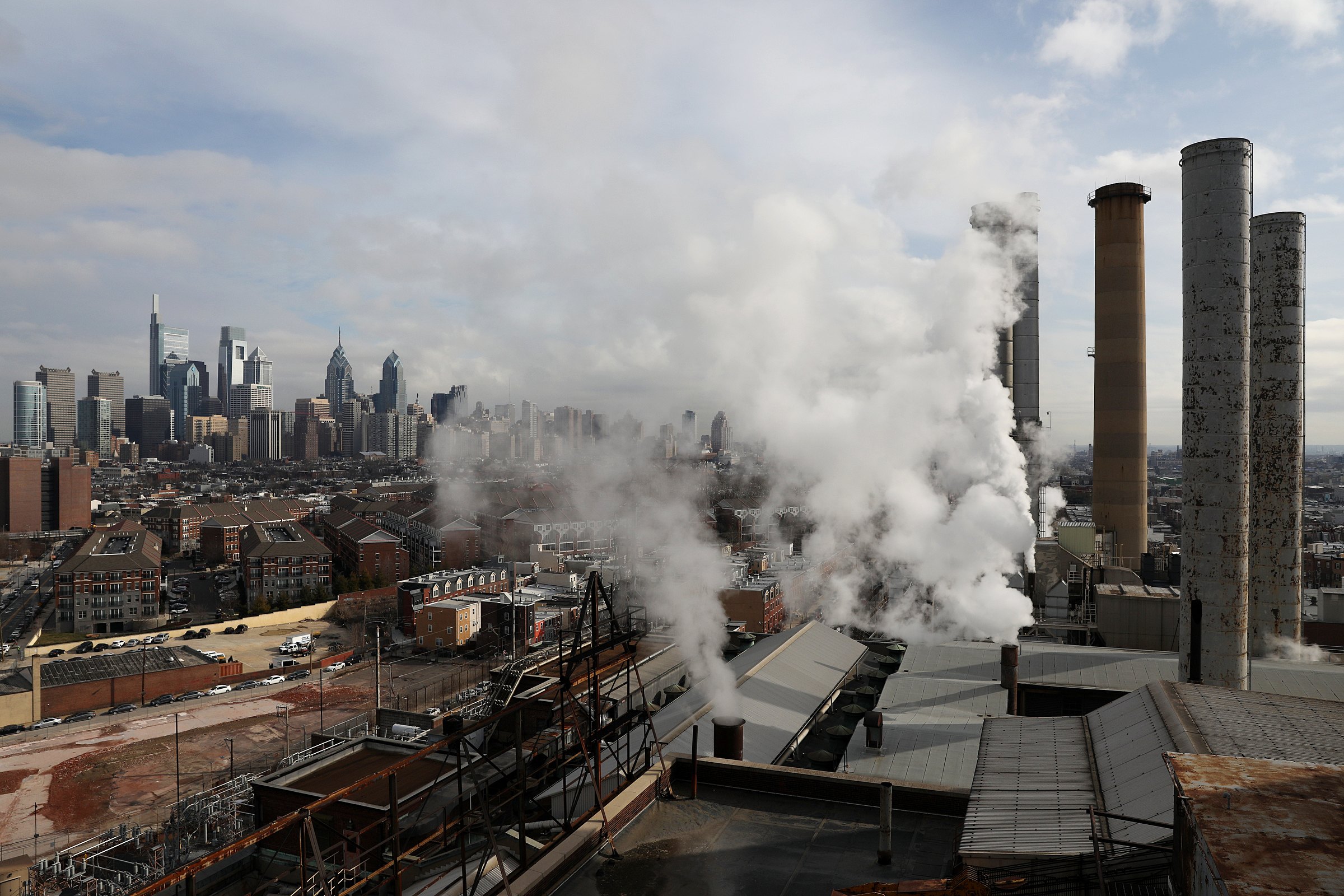
    The Vicinity Energy cogeneration plant is pictured in Philadelphia’s Grays Ferry section in 2020. The plant, originally opened by Philadelphia Electric, produces electricity and steam for heating Center City buildings.Tim Tai / Staff Photographer

    An old system changing hands

    Philadelphia’s steam system was originally built by Peco at the start of the 20th century.

    “Because it’s so old, I think people forgot its value,” Anastasi said.

    Veolia Energy bought the system in 2007. Vicinity’s parent company, private-equity firm Antin Infrastructure Partners, bought it from Veolia in 2019 as part of a larger deal valued at $1.25 billion. At the time, the company committed to $50 million in capital spending over five years in Philadelphia.
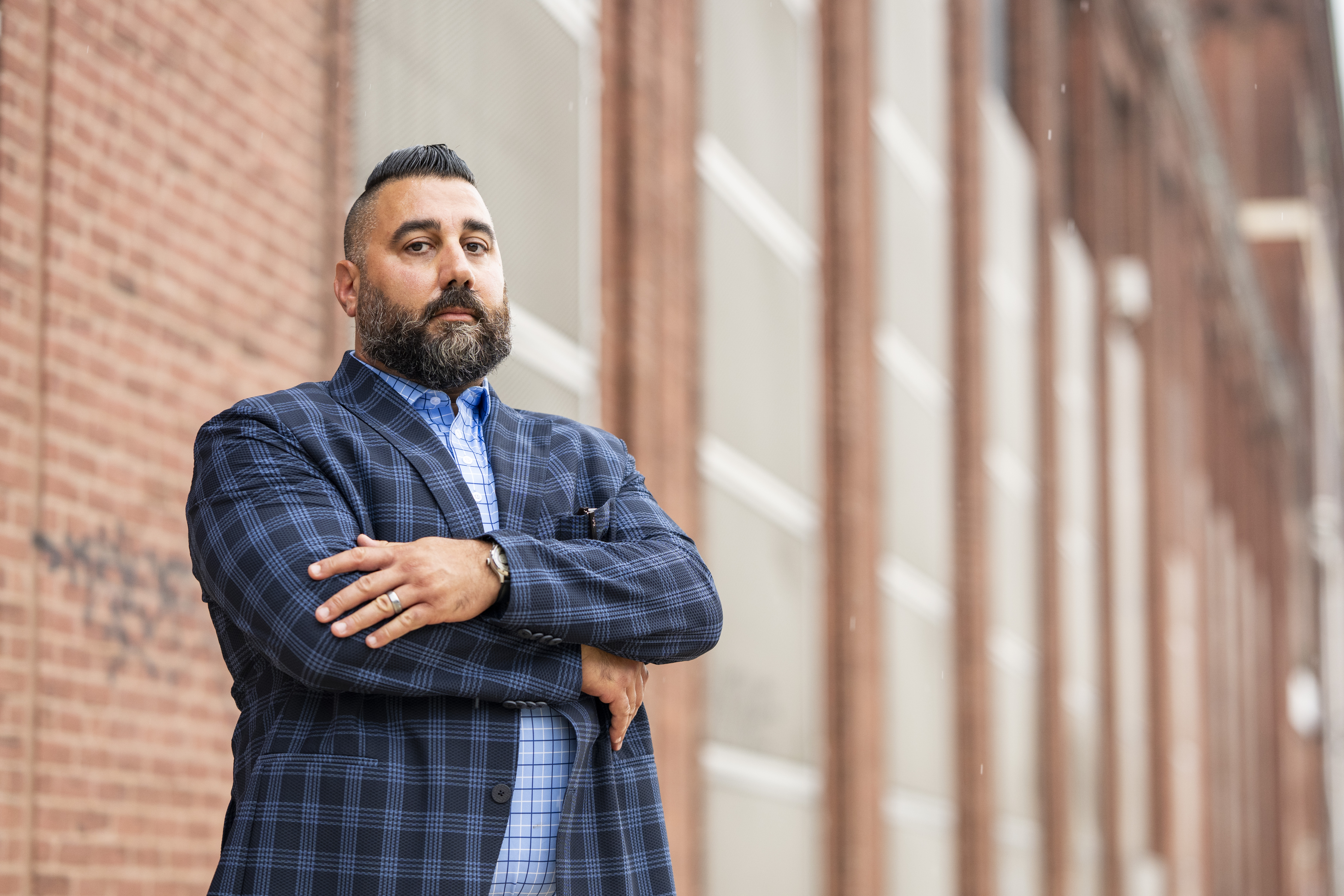
    Larry Anastasi, president of IBEW Local 614. The union leader also represents Peco employees who reached a new contract with the company in July. Allie Ippolito / For The Inquirer

    Boston-based Vicinity manages some 41 miles of underground pipe infrastructure in Philadelphia, according to the company’s website. The business services 400 buildings in Philadelphia, and its main plant is in Grays Ferry, at 2600 Christian St.

    Vicinity’s Philadelphia business brought in over $99 million in revenue last year but reported a net loss of $11 million in 2025 after paying for fuel, operating expenses, and other costs.
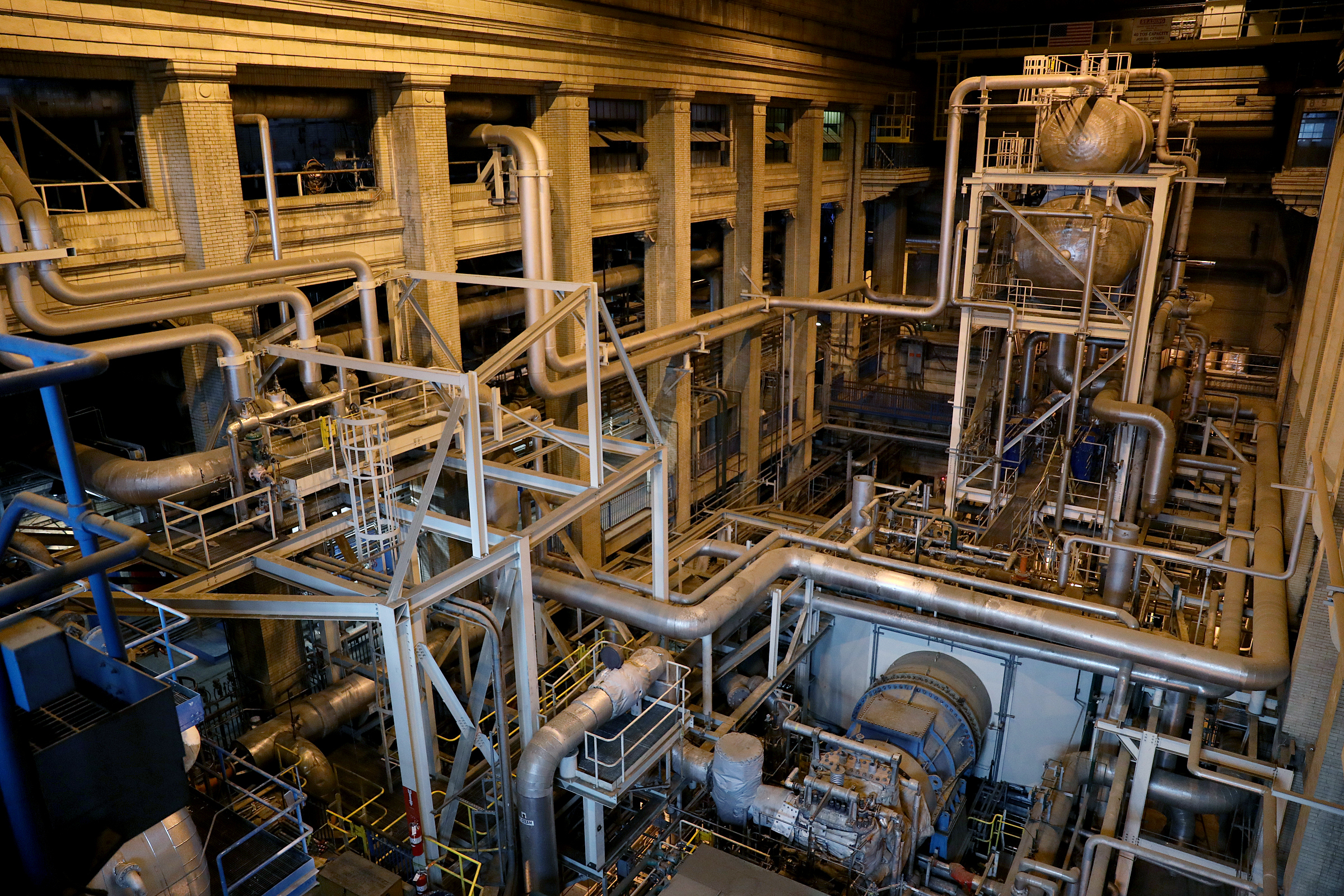
    The turbine hall is pictured inside the Vicinity Energy plant in Philadelphia’s Grays Ferry section in 2020. Tim Tai / Staff Photographer

    What do workers want?

    After months of negotiations, it’s hard to keep morale up among workers, said Kenneth Gordy, a union shop steward and control room operator. Gordy said he feels workers are underpaid for the highly skilled and dangerous work they do.

    Operators typically clock in for 12-hour shifts beginning at 6 a.m. or 6 p.m. They get two weekends off per month.

    Operators earn roughly around $50 an hour, said Anastasi. He said “substandard” wages and benefits have led to turnover.

    “We want our wages to reflect the knowledge, the level, the skills, the things that we do. We’re not asking for extraordinary things,” White said.

    Union members also want fully funded short-term disability. They used to be able to get 100% pay during short-term disability years ago, but they now get around 60% during such leave, Anastasi said.

    “Guys are using their bodies in this plant. We’re beating ourselves up,” said Sean Finnegan, an auxiliary operator who maintains equipment.

    The workers also want their employer to make repairs to the plants where they work, citing unsafe conditions such as asbestos, as well as standing water in work areas, Anastasi said. Part of the ceiling was falling down in one area recently, White recalled.

    “A new private equity firm takes over, and none of the repairs get made,” Anastasi said.

    Control room operators work at the Vicinity Energy cogeneration plant in Philadelphia’s Grays Ferry section in 2020. Tim Tai / Staff Photographer

    Anastasi also wants to improve retirement benefits for the Vicinity workers. He wants their employer to contribute to the union’s annuity program, so workers can get monthly payments upon retirement.

    Anastasi is coming off a retirement win for his union’s Peco members, who clawed back pensions in their recent contract with the energy company. The union heralded the deal as a “historic contract victory.”

    The steam plant workers’ most recent bargaining session was Aug. 3. The next session has yet to be scheduled, the union said Thursday.

  • Gen Zers like what Philly has to offer, but they want better pay and more work opportunities, survey says

    Gen Zers like what Philly has to offer, but they want better pay and more work opportunities, survey says

    Gen Z has established a foothold in the workplace, and as these workers become a bigger part of Philadelphia’s workforce, they’re increasingly shaping the economy.

    So what do Philadelphia’s Gen Zers think is a good job?

    The perhaps unsurprising answer: one that allows advancement opportunities, high pay, and employer-funded healthcare benefits, as well as work-life balance and boundaries. That’s the finding of a new report from the Pew Charitable Trusts.

    And for some Gen Zers Pew heard from, pursuing a job in their field means looking beyond Philadelphia. Outside of healthcare, and some opportunities in law and engineering, they say, other desirable industries don’t seem to be hiring much here.

    “Understanding their attitudes, their perspectives about work, about what a workplace should be, what their feelings are about work-life balance” is important, said Thomas Ginsberg, author of the report on Gen Z workplace attitudes.

    Released Wednesday, the report is based on focus group discussions that took place last year with 54 Philadelphians aged 18 to 29.

    They’re skeptical about what’s learned in college and want to build up more hard skills. And they see work as a key to living well, not as the reason to live.

    “They’re not at all reticent about working hard,” Ginsberg said. “What they’re doing is questioning what’s the ultimate goal of ‘work hard.’ It’s to have an affordable personal life, in their view.”

    But participants in the survey expressed that “jobs today often don’t deliver that,” he said.

    “You work hard and you still can’t buy a house,” Ginsberg said. “Those two things are coming together pretty starkly for this group.”

    Gen Zers looking outside Philly for good, flexible jobs

    Gen Z Philadelphians want flexible work hours and perhaps the freedom to go to the dentist without requesting time off from work.

    They want boundaries when they’re off the clock, so they can maintain hobbies and relationships. But they also want some in-office time to learn from colleagues.

    “I don’t live to work. I work to live. So there needs to be that distinction between the two,” one participant said.

    Much of Philadelphia’s Gen Z population works in healthcare, social assistance, and education services, reflecting the city’s eds and meds focused economy.

    Survey participants interested in healthcare jobs said there were plenty to go around. Others looking outside that field said there aren’t enough good job opportunities.

    In particular, they said, jobs in tech, finance, and the arts seem more scarce. They said New York and Washington, D.C., seem to have more opportunities in those fields.

    And while cost of living and housing seems lower in Philadelphia than in other East Coast cities, jobs here generally pay less, they say.

    Still, they like much of what the city offers for nonwork hours, from the social life to the sports, arts, and transportation. SEPTA, PATCO, and NJ Transit attracted some Gen Zers to the area in the first place, the report said.

    College builds contacts, not skills, Gen Z says

    A little over half of Philadelphia residents between the ages of 25 and 29 had a bachelor’s degree between 2020 and 2024 — a higher share than residents older than them. But Pew found this age group has reservations about whether college provides what they need for career advancement.

    “This age group is the highest-educated age group that we can measure … and even so, they’re only marginally positive about the value of college education,” Ginsberg said.

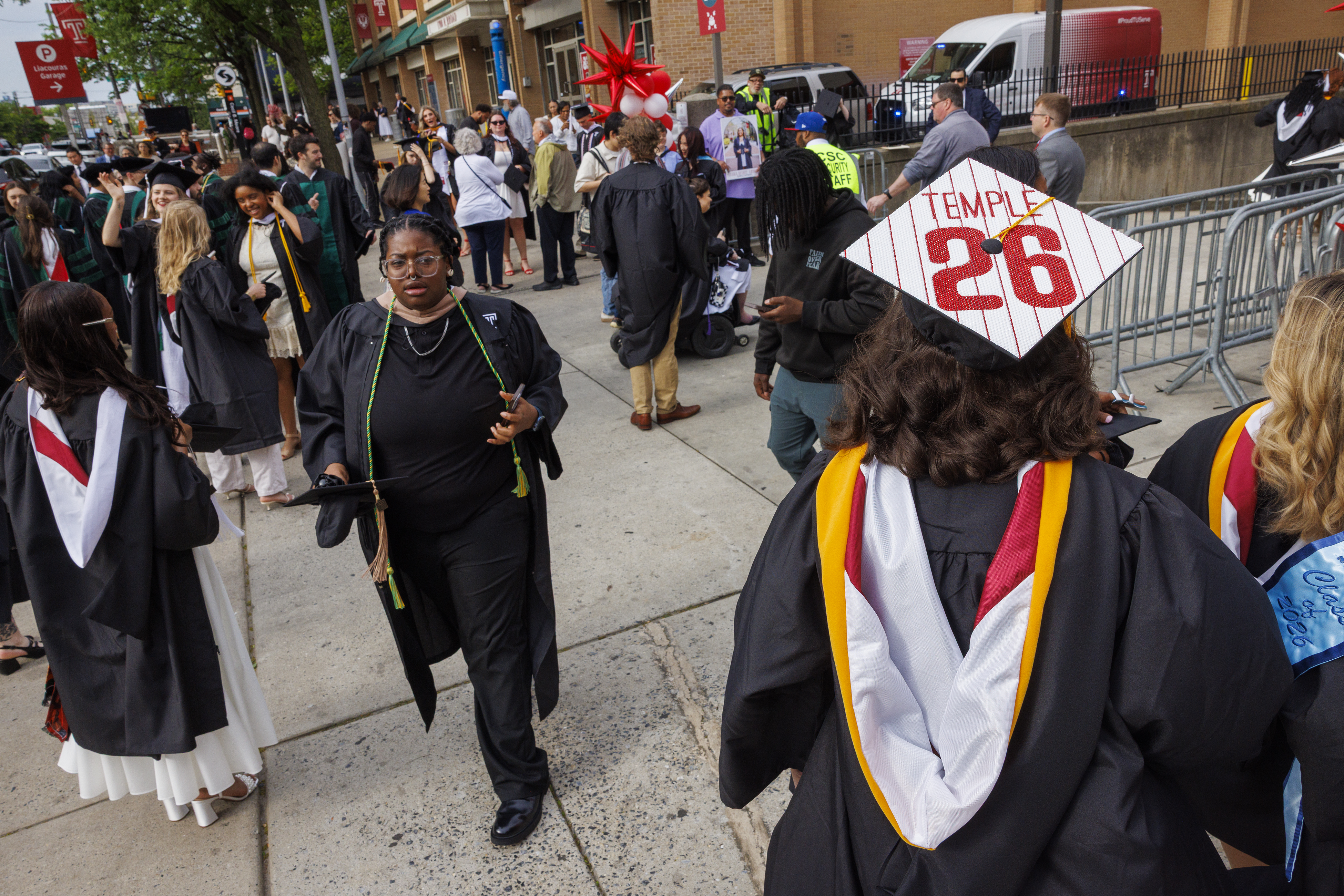
    Temple University students on graduation day on May 6.Alejandro A. Alvarez / Staff Photographer

    College-educated Philadelphians surveyed said their higher education was valuable for building a professional network, Ginsberg said, but not as much for hard skills. They said they want more training in skills like coding, data analytics, AI, and industry-specific software. Some said they know they will need a graduate degree to advance.

    Those without a degree felt they could get those hard skills without college, said Ginsberg, pointing to the availability of specialized programs and microcredentials.

    Still, those without an undergraduate degree said that they felt like employers favored potential hires who had gone to college and that they could have benefited from learning soft skills such as public speaking, networking, and interviewing in a college setting.

    Gen Z doubts the value of retirement benefits

    Ginsberg noted that the Gen Z respondents expressed skepticism about financial institutions and retirement, which he wasn’t expecting. Some said they had purposely forgone their employer’s 401(k) plan or couldn’t afford to set money aside to retire. Some said they felt more confident investing money on their own.

    “Gen Z has lived through two economic shocks in this country,” Ginsberg said. They’re also facing record levels of college debt, and high inflation.

    “They’re translating that, to some degree, into questioning whether the institutions of our economy actually are doing right by them.”

  • Montco meat processing plant, slated for closure, will stay open with fewer workers

    Montco meat processing plant, slated for closure, will stay open with fewer workers

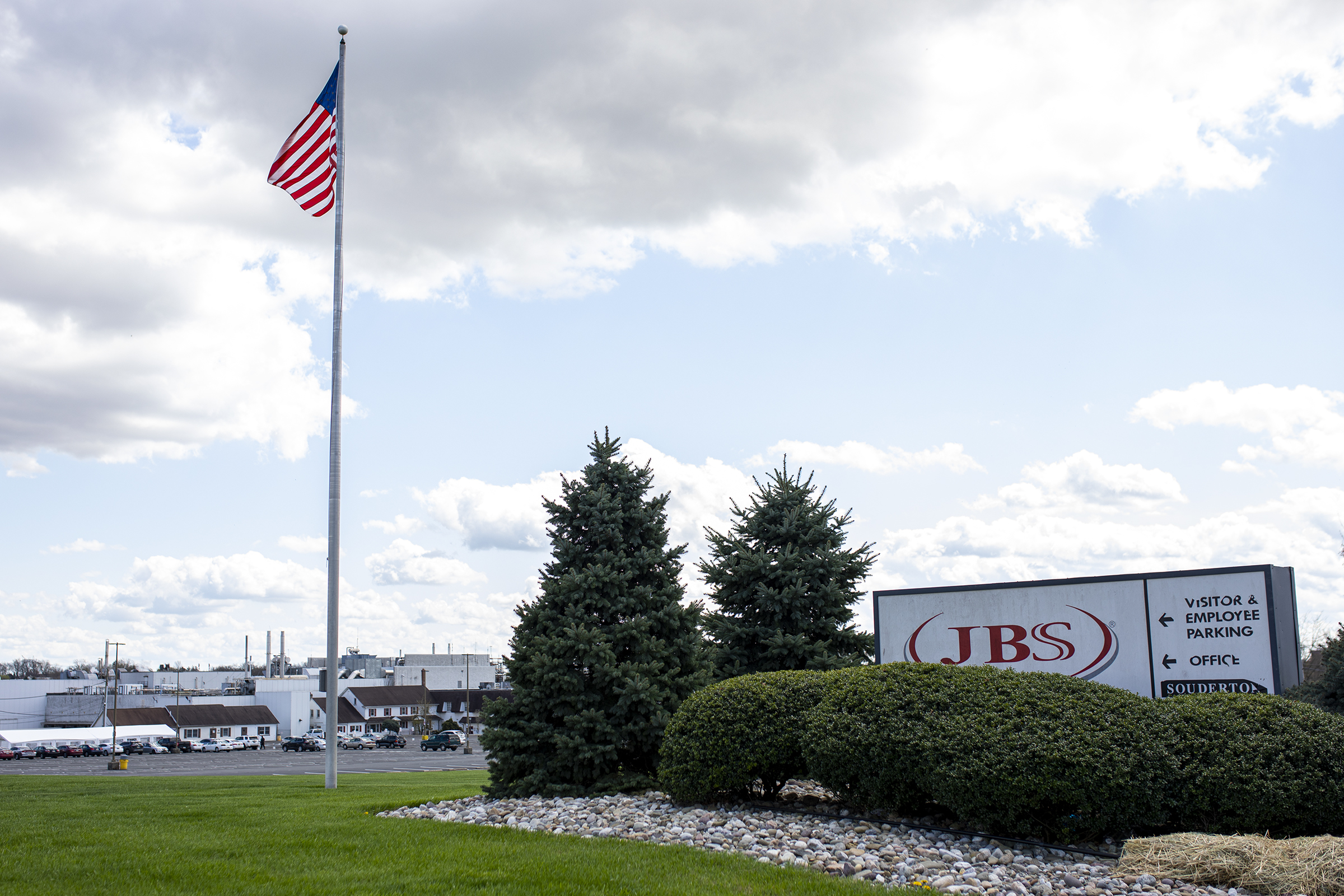
    A meat processing facility in Souderton that was slated for closure this week will remain open, downsizing its staff from about 1,700 to 400.

    Global meat producer JBS announced in June that it would shut down the facility as part of a larger strategy focused on “growth, modernization, and long-term competitiveness in the United States.” This week, the company said it changed plans and will keep the plant open, transitioning the site to a new use.

    “This outcome allows us to preserve 400 good-paying jobs, strengthen our case-ready business, and continue serving customers in a key consumer market,” said Wesley Batista Filho, CEO of JBS USA.

    The plant has been one of Montgomery County’s top 25 employers, recently employing roughly 1,700 people. The majority of them are represented by the United Food and Commercial Workers International Union (UFCW) Local 1776.

    JBS plans to keep roughly 400 workers at the facility as it moves away from beef processing to become part of the business’ “value-added operation” arm. According to the company website, that side of the business is dedicated to “further-processed beef and pork products, and retail packaged meats.”

    The plan includes investing over $30 million over the next 10 years to “modernize and enhance” the Souderton facility, the company said.

    “This announcement provides stability for hundreds of workers and their families while creating a path for long-term success at the Souderton facility,” said Wendell Young IV, president of UFCW Local 1776.

    JBS is the company behind food brands such as Pilgrim’s, and Just Bare. Most recently, the majority of the Souderton plant employees were in the fabrication department, which processes animal parts that move along a conveyor belt, according to the union.

    The change in plans comes after discussions between the union, JBS, county officials, and Gov. Josh Shapiro, among other stakeholders.

    “Pennsylvania’s agriculture and manufacturing industries have powered our economy for generations, and we’re making sure they continue to drive our future,” Shapiro said in a statement. “This facility will remain an important economic driver for Montgomery County.”

    JBS has operated the Souderton facility since 2008, and had planned to distribute the work being done there among its other facilities.

    Workers at the Souderton facility are among some 26,000 JBS employees who secured a new union contract last year with better wages and benefits including a more inclusive bereavement leave policy and the ability to accrue sick days.

    The contract also established a pension plan for workers. That’s a rarity in the industry in recent decades, according to the union, which called the agreement “a new standard” in the meatpacking industry.

    State Sen. Maria Collett, who represents Franconia Township, said in a social media post that the change in plans for the plant “came from the real collaboration of Governor Shapiro and his administration, the state Department of Agriculture, UFCW Local 1776, and countless Montgomery County officials.”

    “No amount of job loss is something to celebrate, and harvesting operations at the plant will still wind down this week,” said Collett. “Some of our neighbors are facing a hard road.”

  • 150 employees expected to lose jobs as company closes Oaks distribution center

    150 employees expected to lose jobs as company closes Oaks distribution center

    Wholesale supply distributor Essendant plans to lay off 150 workers in the Phoenixville area and close its location there, as it looks for a way to avoid liquidating the whole company.

    The distribution center at 125 Green Tree Rd. in Upper Providence Township, which the company referred to as the Oaks facility, is expected to shutter around Oct. 3, said Marcela Sztainberg, who leads human resources at Essendant.

    The Illinois-based company has been operating out of the 558,704-square-foot Phoenixville facility for roughly 20 years, said Sztainberg. Its current lease expires in 2031.

    Essendant several years ago merged with private-equity owned Staples. The deal was announced in 2018 as an acquisition by Staples, and the Federal Trade Commission scrutinized the combination over concerns that the deal would harm competition in the office supply industry. The companies ultimately agreed to limit Staples’ access to Essendant’s customer information.

    Workers at the Phoenixville site earn $46,718 annually on average, Sztainberg said. The company does not plan to offer them positions at other company locations.

    Sztainberg did not provide a reason for the closure. But the company has been going through several changes recently.

    Industry reports note that Essendant has been shifting away from office supplies to focus the business on other products, including janitorial items and technology. Late last year the company also announced a partnership with transportation and logistics management company Hub Group, as part of its new delivery model.

    Late last year, the company issued layoff notices for facilities in Florida, Texas, North Carolina, and Ohio, the Houston Business Journal reported.

    In a layoff notice filed this week with the Pennsylvania Department of Labor and Industry, Sztainberg wrote that Essendant was looking to sell off some of its assets.

    “The company has been exploring various strategic alternatives, including potential sale transactions involving certain of the company’s assets and operations, and securing additional capital to avoid liquidation of the company,” the notice reads. “At this time, the company does not know if these efforts will succeed.”

    Essendant’s website indicates that it carries brands such as Clorox, Rubbermaid, and Colgate-Palmolive. It distributes items including batteries, calculators, printing supplies, hand sanitizer, soap, and trash bags.

    Originally called Utility Supply Co., the company was incorporated in 1922. It opened its first retail store in 1937 and by 1978 functioned as a wholesale supplier of office products, according to the business’ website. It was renamed Essendant in 2015.

    The company went public in 1981 and in 2017 reported $5 billion in net sales. It became a private company following the Staples merger.

  • Fabric Workshop and Museum employees are the latest museum workers to get a union contract

    Fabric Workshop and Museum employees are the latest museum workers to get a union contract

    Employees of the Fabric Workshop and Museum in Philadelphia adopted their first union contract this month, joining a wave of museum worker organizing in recent years.

    The 22 workers covered by the new contract are represented by the AFSCME District Council 47, Local 397, and work in visitor services, education, marketing, and communications roles, among other jobs.

    “The Fabric Workshop and Museum’s commitment to creating a space of artistic experimentation is propelled by its staff, who bring a unique sense of creativity and care to their work,” Local 397 president Halcyone Schiller said. “Our collective bargaining agreement ensures that on-the-job protections and pay structures will enable staff to continue to do this exciting work for years to come.”

    The museum voluntarily recognized the union in May 2025, and bargaining started in October. The workers ratified the new contract on July 23, a spokesperson for the Fabric Workshop and Museum confirmed.

    Local 397 was established in 2020, with employees of the Philadelphia Museum of Art who voted to unionize that year. The following year, workers at the Penn Museum joined their ranks, and then employees of the Please Touch Museum voted to unionize with the local in 2023.

    Aeniah Godwin (center) and Saoni Lorenzo (right) participate in a sewing workshop at the Fabric Workshop and Museum in Philadelphia as part of a 2023 internship through the Greater Philadelphia Cultural Alliance.Carlos Avendaño, courtesy of The Fabric Workshop and Museum

    The three-year contract went into effect Aug. 1 and includes raises, as well as a guarantee that internal candidates get preference during hiring for union jobs.

    Under the new union contract, the minimum annual salary increased to $45,000 from $40,000, and the minimum hourly wage is increasing to $17 from $16.

    Over the course of the contract, salaried employees will see an 11% pay increase as well, according to a spokesperson for the Fabric Workshop and Museum. The starting hourly wage will increase to $18.04 over the course of the three-year contract, the spokesperson said.

    Workers are also guaranteed “at least one dedicated, annual professional development opportunity focused on core museum or studio skills,” the spokesperson said, as part of the new agreement.

    “The negotiation process called on us to work together with kindness and respect to achieve the best outcome for our staff and the institution we all care for deeply,” said Kelly Shindler, executive and artistic director of the Fabric Workshop and Museum. “This contract proudly affirms our commitment to artists — first and foremost those on our staff — and to fostering a vibrant and accountable organization.”

  • A sports complex in King of Prussia? Here’s why Upper Merion says it makes sense

    A sports complex in King of Prussia? Here’s why Upper Merion says it makes sense

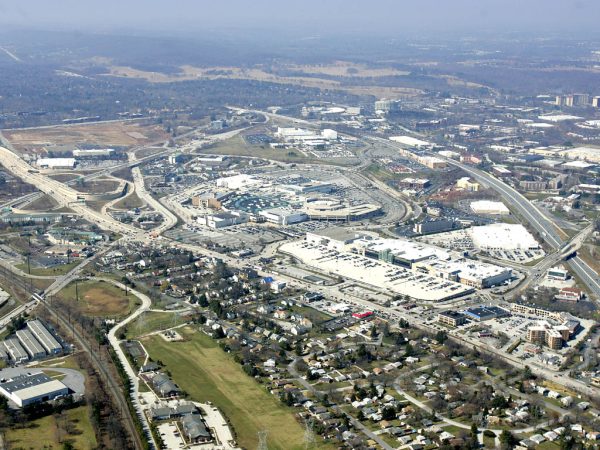
    Upper Merion Township wants to build a sports and entertainment venue in King of Prussia, and has been looking to get state funding for the project.

    The facility, which as proposed could host over 7,500 people, could be used by professional soccer and baseball teams as well as for concerts, festivals, graduations, and other community gatherings, according to a grant application seeking funding from the state.

    “There is still extensive preliminary work that needs to be discussed and developed,” Tina Garzillo, chair of the township’s board of supervisors, said via email on Monday, noting that “there is nothing definitive,” at this time about the project.

    The venue has been envisioned for Moore Park area, near hotels, housing, the Valley Forge Casino Resort, and a Topgolf. The proposed address on a state grant application is 650 Park Ave., but Garzillo said that is only “only one of several identified possible sites.”

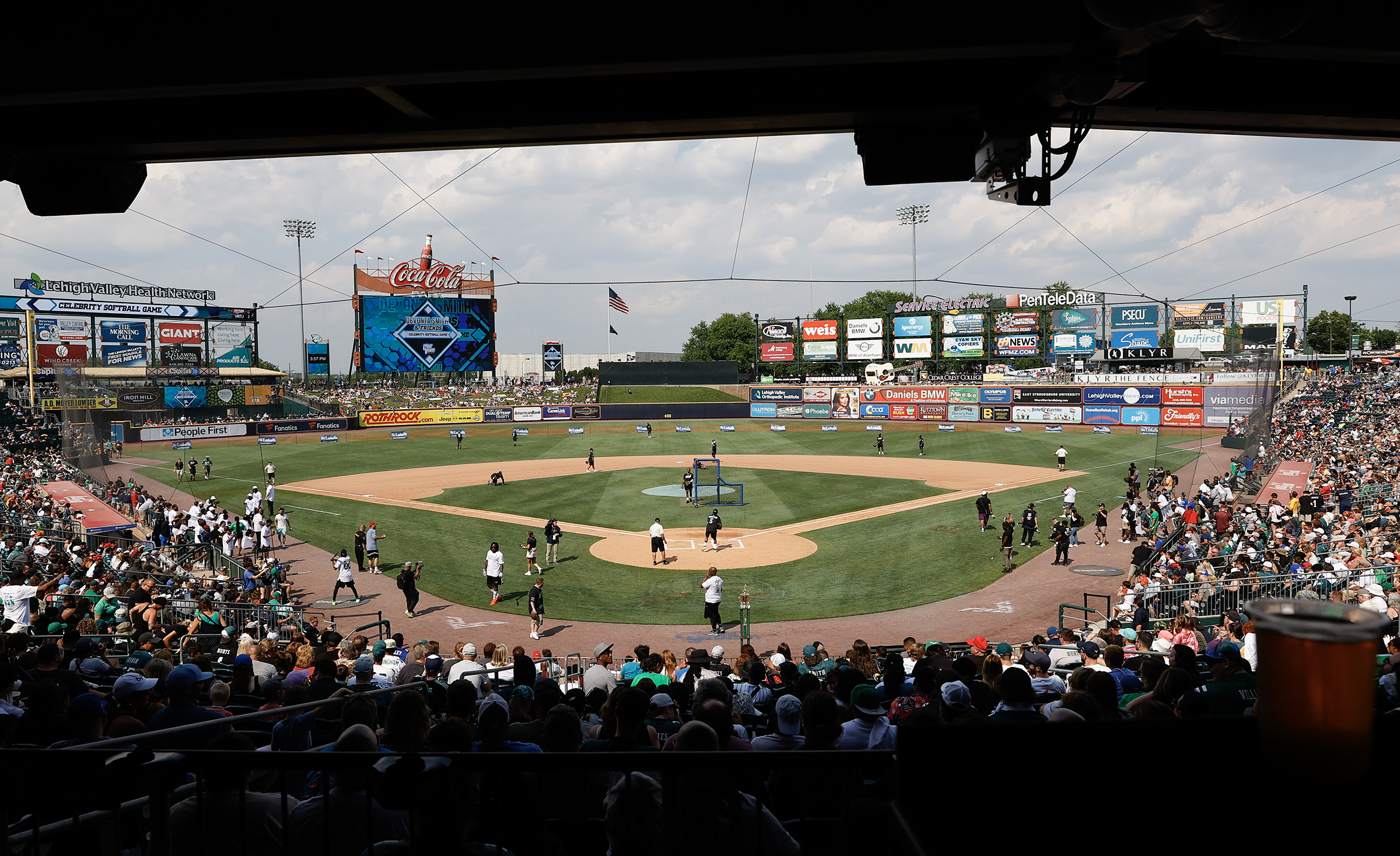
    Garzillo did not say what teams could be expected to lease out the stadium, but the venue’s capacity is in the ballpark of other minor league baseball venues. The Lehigh Valley IronPigs play at Coca-Cola Park, which can host roughly 8,000 seated spectators, and the Brooklyn Cyclones play at Maimonides Park, which can seat roughly 7,000, with additional standing room.

    “The facility will serve as a catalyst for converting a traditional office park into a vibrant mixed-use district,” the grant application notes. “This transformation is especially important in a post-COVID world, as communities adapt to new work patterns and the decline of single-use office environments.”

    The DeVonta Smith & Friends celebrity softball game at Coca-Cola Park in Allentown on June 10, 2023.Yong Kim / Staff Photographer

    What would it cost?

    The proposed project would cost an estimated $197 million, which the township wants to fund through state, township, and county dollars as well as private contributions.

    The township applied for a $20 million grant through Pennsylvania’s Redevelopment Assistance Capital Program, but the project was not selected in the latest round of funding.

    The township is currently evaluating other funding options, Garzillo said, and does not currently have a new application in the works for the Redevelopment Assistance Capital Program.

    The program receives hundreds of applications in each funding cycle, and the majority do not get awarded, said Rosie Lapowsky, a spokesperson for Gov. Josh Shapiro’s office. Not receiving funding “is not a commentary on their value as projects or any potential future engagement from the state,” Lapowsky added.

    The funding application to the state program noted that the project includes “walkable connections, shared parking, and high visibility along major regional highways, positioning it as an anchor for ongoing redevelopment of the area into a dynamic ‘live, work, play,’ destination.”

    The development of the venue would create 3,196 jobs, according to the application. It does not specify what positions would be needed, and if some of those jobs would be temporary, for the construction of the site.

    The venue is also expected to create revenue through taxes, naming rights, corporate sponsorships, and other branding deals, the application notes.

    Those leading the project say they have been in touch with county and state elected officials as well as members of Gov. Josh Shapiro’s administration, noting that “these discussions highlighted the project’s alignment with state priorities and its anticipated benefits to the Commonwealth, including economic growth and community impact.”

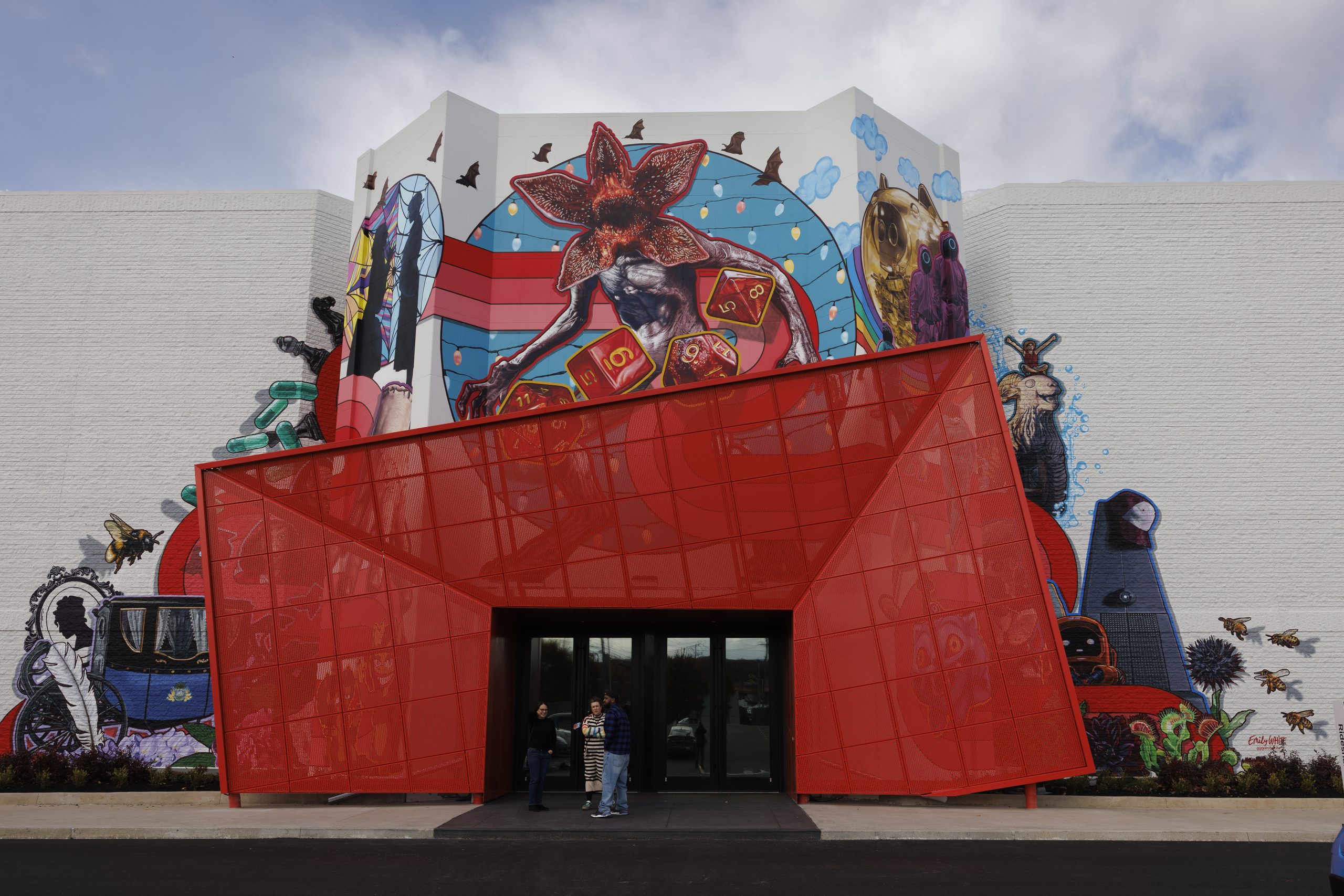
    Upper Merion Township is interested in adding entertainment options to the area, said Garzillo, citing the success of nearby attractions such as Topgolf; the casino; Netflix House, which opened in November at King of Prussia Mall; and Dave & Buster’s.

    Exterior entrance to Netflix House at the King of Prussia Mall.Alejandro A. Alvarez / Staff Photographer

    As part of its effort to bring more entertainment options to the area, the township has changed the zoning language for the King of Prussia Mall to allow entertainment venues to occupy retail spaces, Garzillo noted.

    The King of Prussia District, a nonprofit focused on economic development in the area, declined to comment on the project.

  • How LeBron James could impact Philadelphia’s economy, according to local experts

    How LeBron James could impact Philadelphia’s economy, according to local experts

    LeBron James is set to make $8 million over two years with his move to the Philadelphia 76ers. But how much money will the city’s economy get out of the deal?

    “It’s hard to precisely quantify, sitting here today, what that exact number is going to be,” said Ethan Conner-Ross of Econsult Solutions Inc., a Philadelphia-based economics policy consulting firm.

    Of course there’s James’ own money as a high-earning professional coming into the region — including any local taxes he’d pay, and the money he would spend to rent or buy a place in the Philly region, though rumors suggest he might commute from New York.

    The greater economic impact depends on how many consumer dollars come into the city that wouldn’t have without James joining the Sixers.

    “The level of interest in the team, and then ultimately the success of the team, could definitely play out in more economic activity in a few different ways,” including short- and long-term outcomes, Conner-Ross said.

    History provides some idea of how this athlete could financially benefit the city.

    A 2017 Harvard study found that James’ presence in Cleveland and Miami was tied to an increase in the number of food and beverage businesses within a mile of the arenas in those cities and a boost in employment at those establishments.

    Moody’s Analytics economist Matt Colyar says James’ presence won’t increase housing prices in the area or lower the unemployment rate, but if the team performs well and ends up playing more playoff games, that could fill up restaurants, bars, and hotels with Sixers fans on additional days.

    “All that is serious dollars,” Colyar said, “but not the kind of thing that makes us revisit our forecast for Philadelphia’s long-term trajectory.”

    Where will money be spent?

    In the short-term, James’ move could mean more ticket sales and jerseys bought, Conner-Ross said. It likely means more media and more fans coming to town for games.

    Early signs suggest this is already happening. Fanatics, the sports apparel company, sold out of some LeBron James Sixers jerseys within hours of the announcement Friday that he would join the team. Preseason ticket prices have risen as well, 6abc Action News reported.

    How much money stays in Philadelphia will be a “tourism story,” Conner-Ross said. Hotels, restaurants, and bars near the arena or downtown could benefit.

    Some of the money spent by locals on James-related experiences and merch may have been spent locally anyway, Conner-Ross said. That could still be positive for the city, he said.

    A billboard welcome sign for new Sixers LeBron James along Packer Avenue in South Philadelphia on July 24.Yong Kim / Staff Photographer

    “Philadelphia entertainment activities are not the only things competing for those dollars,” he said. “These folks have the ability to spend their entertainment dollars at the Shore or going to New York, or what have you.”

    If “they’re excited about the Sixers and spend more in town, it’s probably a net positive,” Conner-Ross said.

    Boosting Philly’s reputation

    Some of the James effect — like more media exposure and nationally televised games for the Sixers — will make money for non-Philly beneficiaries.

    “Those aren’t dollars that are going to support public parks in Philadelphia,” Colyar said.

    But there could be a reputational gain, Conner-Ross said. Hosting the World Cup, the All-Star Game, and other events have helped Philadelphia be seen in a positive light, he noted, and James could similarly contribute to the city’s image.

    “Philadelphia is … competing with other East Coast cities, other places in the country, in the world for residents, for visitors, for businesses, and that reputation really does matter,” Conner-Ross said.

    That kind of influence can have financial consequences, even if it’s hard to measure in exact dollars.

    International soccer star Lionel Messi, for example, helped raise Miami’s profile in the soccer world as well as attract tourism, and the Wall Street Journal says some have estimated that his presence on Inter Miami has generated billions of dollars for the city.

    To be sure, Messi’s and James’ situations are like apples and oranges — or soccer balls and basketballs — in part because they’re playing out in different cities.

    In any case, the influence of a star like James could have a trickle-down effect.

    People aren’t “going to necessarily point to LeBron James and say, ‘Now I have to live there,’” Conner-Ross said. But “it affects their perception of Philadelphia as a place that people choose.”

  • Peco’s new contract gives all workers pensions — but not the kind you might think 

    Peco’s new contract gives all workers pensions — but not the kind you might think 

    When IBEW Local 614 and Peco started negotiating a new contract earlier this year for call center employees, linemen, and other field workers, one thing was clear to local union president Larry Anastasi: He needed to get pensions back for all of his members.

    Roughly 600 of his 1,500 members, hired since 2021, weren’t offered a pension. The rest had differing plans.

    Clawing back pensions for the whole union wouldn’t just be a reversal of Peco’s trajectory. It would buck a cross-industry trend.

    “The trend my entire career, which is now more than 40 years in this business, has been employers want to get away from defined benefit plans, and unions want to maintain them and get them in more places,” said Wendell Young IV, president of United Food and Commercial Workers Local 1776, which represents workers in Pennsylvania and neighboring states.

    In early July, after a three-day strike, Peco and its worker union reached a deal that includes a pension plan for all workers. But it’s not your grandparent’s pension.

    The traditional defined-benefit retirement plan peaked in popularity in the 1970s, when up to 62% of private-sector workers relied on a pension as their sole retirement plan, according to the New York Times. That number shrank to 1% of private-sector workers in 2022.

    Employers in the gas and electric utility industry started moving away from traditional pensions in the 1990s, according to William Dwyer, a professor at the Rutgers University School of Management and Labor Relations, who once worked at PSE&G in New Jersey.

    Under the new Peco union contract, workers will get a cash-balance plan — where employees are promised a specific amount of money in retirement without having to contribute to it themselves. The benefit accrues throughout a worker’s career, unlike the old-school pension that is typically based on total years of employment and how much a worker is earning in the final few years of their career.

    It’s an increasingly popular compromise, said professor Olivia Mitchell of the Wharton School. With workers living and working longer than they used to, traditional pensions become unpredictably costly for employers. The cash-balance option is a chance for both company and worker to better see the future.

    “They accumulate benefits more evenly over a worker’s career,” she said, “making them easier to understand and often less costly and less risky for employers.”

    By getting a pension of any sort, said Young, of UFCW, Peco’s unionized workers “rode against the current” and “achieved a really amazing benefit.”

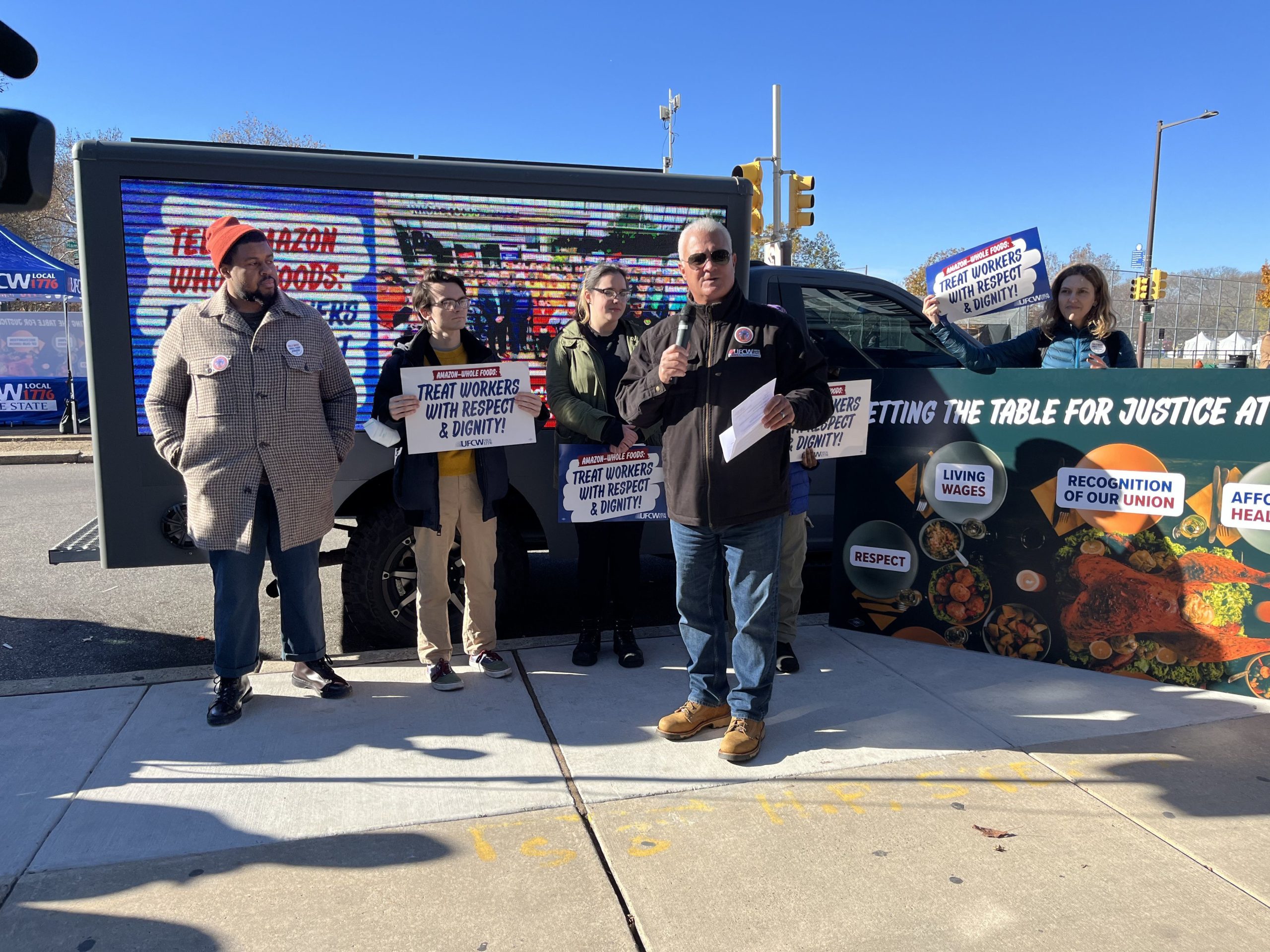
    Wendell Young, president of UFCW Local 1776, gathers with supermarket workers outside the Whole Foods at 2101 Pennsylvania Ave on Nov. 24.Ariana Perez-Castells / Staff

    What is a cash-balance pension plan?

    Cash-balance plans are often seen as a hybrid of the traditional pension and the “defined-contribution” plan, such as a 401(k).

    Like a traditional pension, they are employer-funded and typically don’t require the employee to make their own contributions. But like a 401(k), the amount available to the employee upon retirement is based on a stated account balance rather than expressed as a promised monthly payment for life.

    These plans debuted in the 1980s and gained popularity in recent decades. Some 23,000 employers offered them in 2020, up from 1,477 in 2001, the Wall Street Journal reported.

    Traditional pensions “typically have benefit formulas that rise sharply late in a career, making them expensive for employers with long-tenured workforces and less valuable for employees who change jobs before retiring,” said Mitchell of Wharton.

    Bank of America was the first large company to introduce one, in the 1980s. It offered young employees some flexibility to take their cash balance plan elsewhere if they switched jobs.

    By 1996, some 200 “large companies” had cash balance plans, the New York Times reported. The Campbell’s Co., the food giant based in Camden, was one of them. Some companies faced backlash.

    Despite adoption at several well-known companies, cash-balance plans still aren’t the norm in the private sector. A recent study by the International Foundation of Employee Benefit Plans found that 21% of corporations surveyed had a defined benefit plan, with 5% being the hybrid kind.

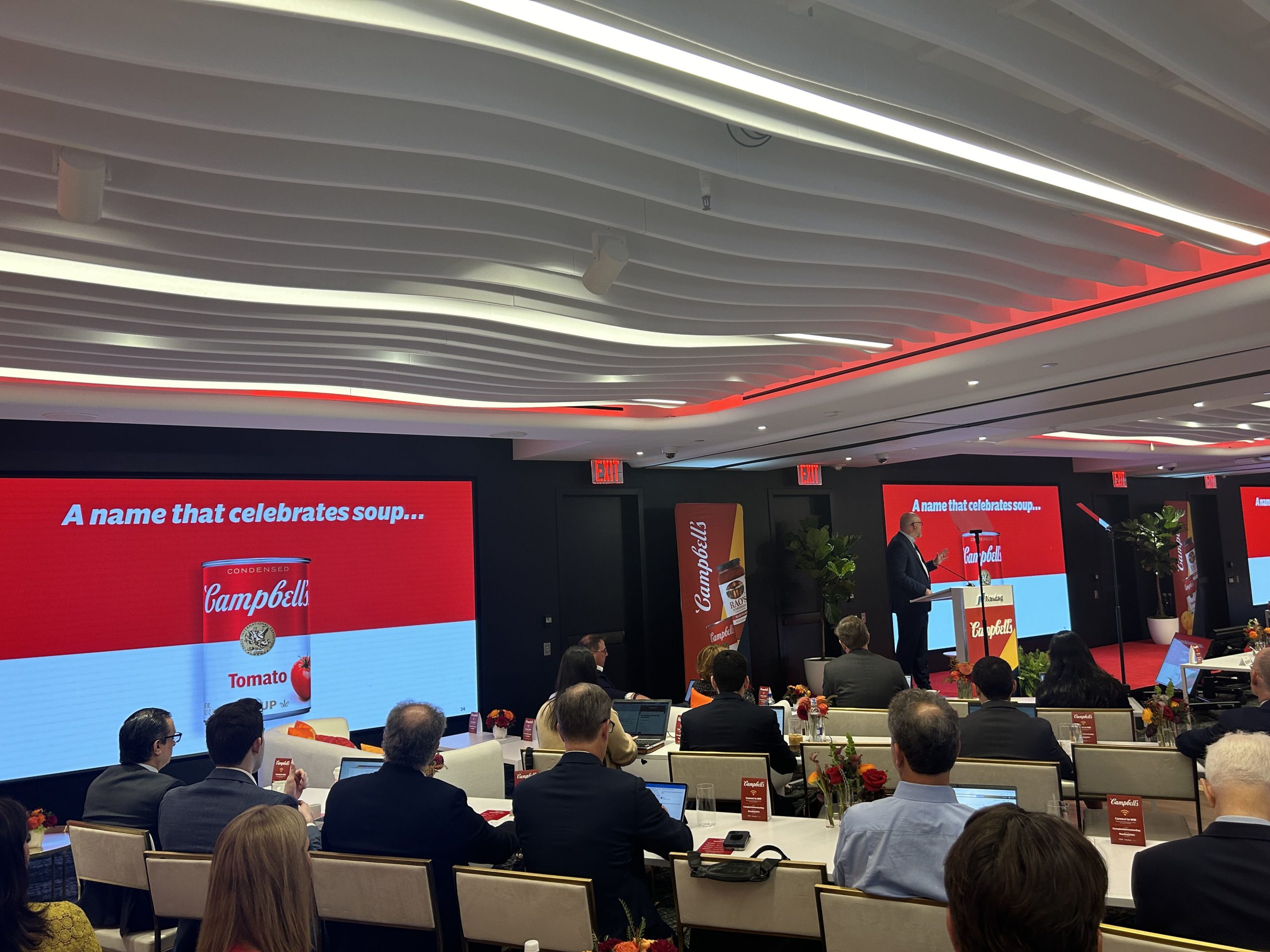
    Then CEO of Campbell’s, Mark Clouse, at the company’s investor day on Sept. 10, 2024, in New York City.Ariana Perez-Castells

    How Peco retirement evolved

    Peco employees were given the option to transition to a cash-balance plan in 2001, and roughly 80% of them did so, the union has said, while others kept their traditional pension. This was before Peco workers unionized with IBEW. The company has also offered 401(k)-based retirement programs.

    Peco’s retirement options “have evolved over time in a manner consistent with broader employer and utility industry practices,” the company said in a statement earlier this month.

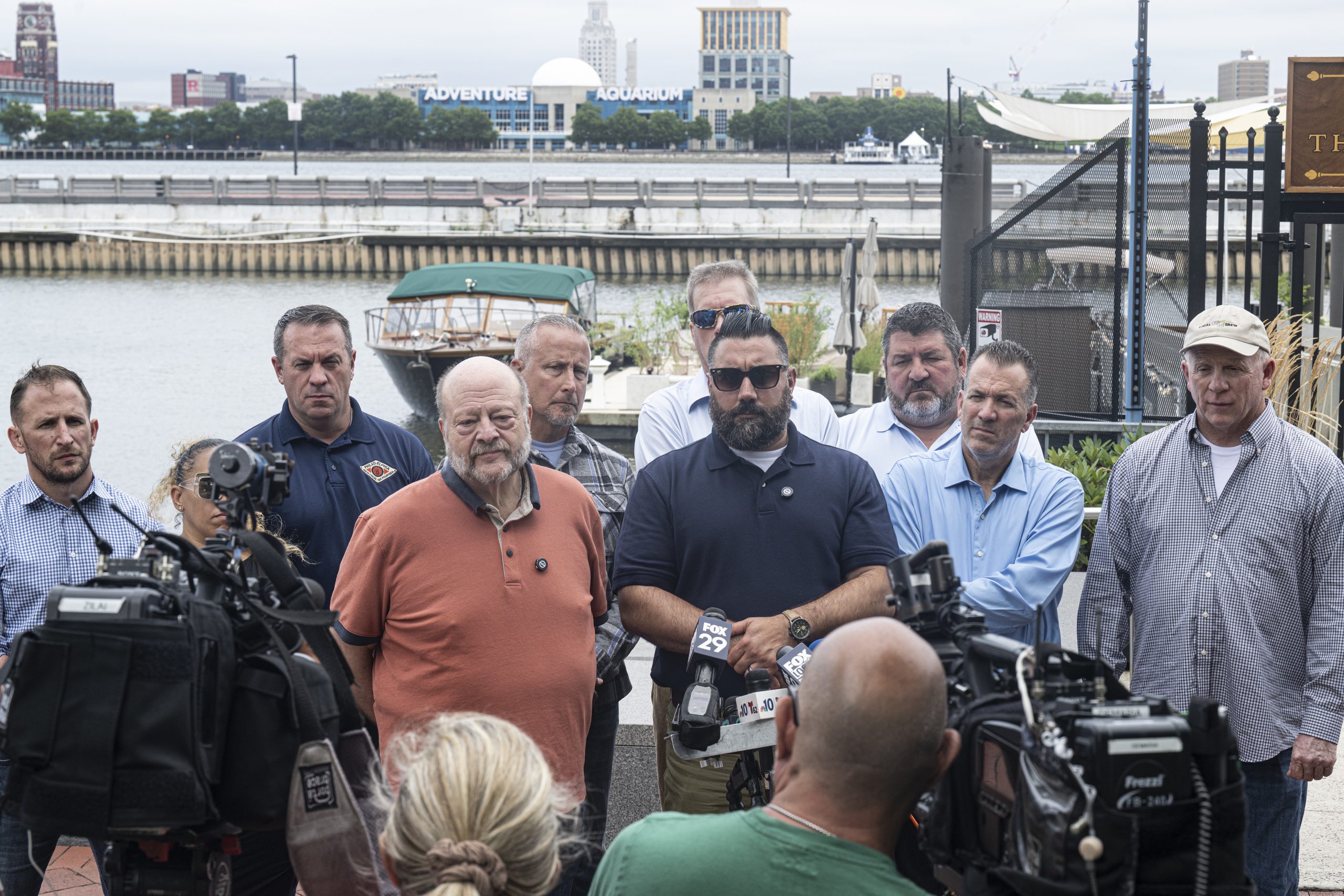
    Larry Anastasi, president and business manager of IBEW Local 614, joined other Local 614 bargaining committee members as they speak to the media about contract negotiations with Peco outside the Hilton Penn’s Landing Hotel on July 6. Jose F. Moreno / Staff Photographer

    As IBEW laid out its goals for the new contract, including pensions for all, Peco laid out its own position. The company said it wanted a contract that maintained affordable service for customers.

    Unlike other private sector businesses that can raise prices at their sole discretion to cover labor costs, Peco leaders must get approval from the state’s regulating entity, the Pennsylvania Public Utility Commission (PUC) for rate hikes, which is a lengthy process.

    Peco did raise rates in 2025 and tried to do so again this year. While the company’s 2025 profits were up 48% from the previous year, leaders said the business still needed to increase rates to meet customer demand for energy.

    At Peco, “90% of what we receive [from ratepayers] goes right back into our infrastructure, and that includes paying for the wages and benefits for employees so they can go out and restore power and improve our grid,” Peco’s chief operating officer, Nicole LeVine, said earlier this year during bargaining.

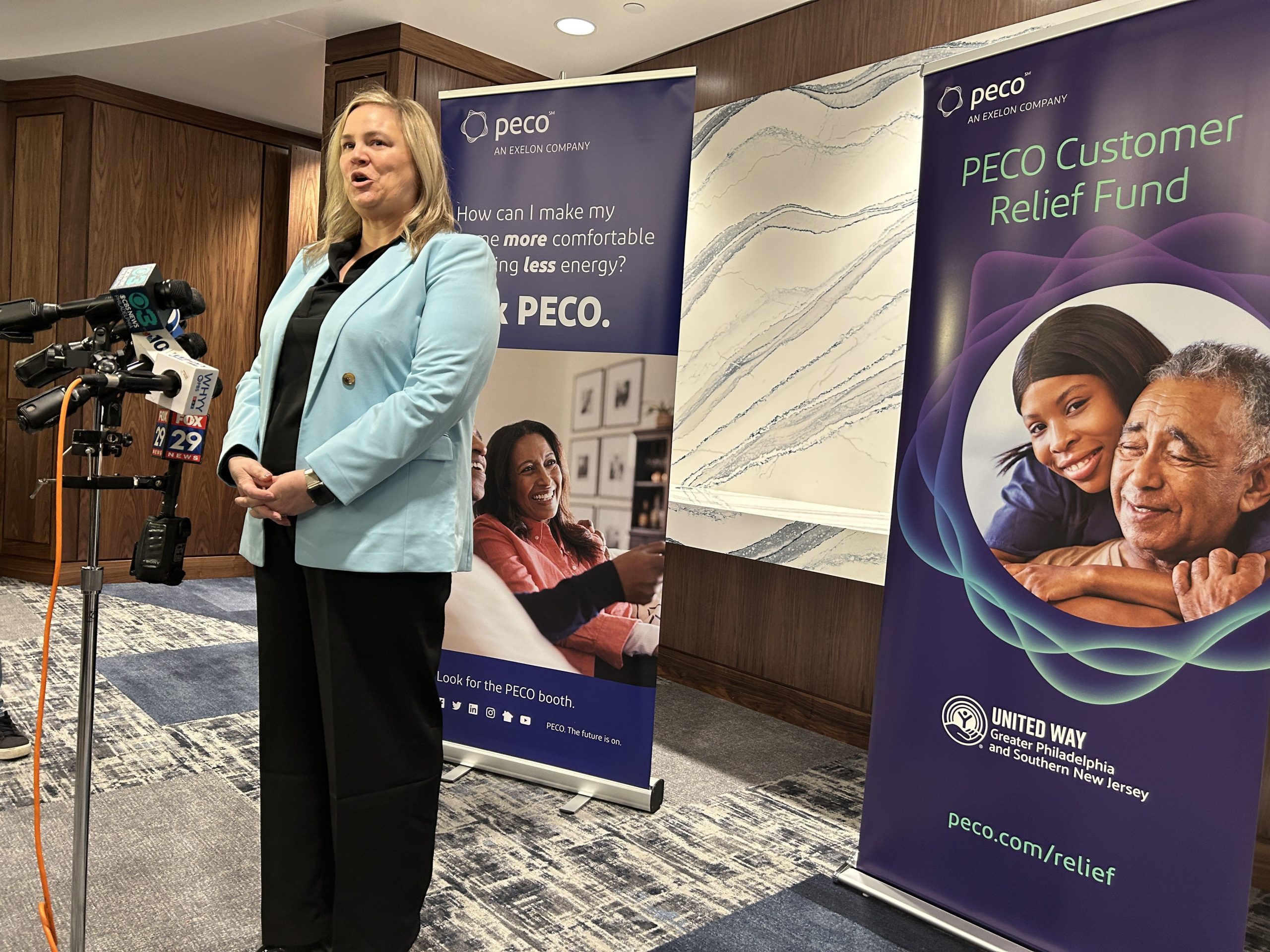
    Nicole LeVine, Peco’s chief operating officer, took questions from reporters on March 31 about the contract negotiations and a proposed rate hike.Ariana Perez-Castells

    After backlash, the utility company rescinded its rake hike request.

    When pensions came up at the bargaining table this year, the cash-balance option prevailed.

    The plan’s similarities with a defined contribution plan, such as a 401(k), make it easier for employees to understand, said Joseph Hicks, consultant and co-owner of Keystone 74 Benefits and Administration, which worked with IBEW local 614 during the recent bargaining process. If employers are spending money on a benefit, they want their workers to be able to understand and appreciate that benefit, Hicks said.

    Peco, upon reaching the tentative agreement July 6, said the deal “recognizes the contributions of our employees while supporting our responsibility to deliver reliable, affordable service across Southeastern Pennsylvania.”

  • Meet the Philly tech founder who was a monk, worked for Meta, and is building tech for local government

    Meet the Philly tech founder who was a monk, worked for Meta, and is building tech for local government

    Lilly Chen, 30, wants people to stop thinking local government software “sucks.”

    The cofounder and CEO of Philadelphia-based FSH Technologies once worked at Facebook writing software that trains AI models, lived in a monastery as a teen, and is now on a mission to make local government technology more efficient.

    In the last two years, her company has raised $5.5 million from venture capital, and secured a contract with the city’s Department of Commerce.

    “We’re so gung ho about local government, which is like a weird thing to say, but it’s true,” said Chen.

    The business just moved into a new office at 2400 Market St., where Aramark is headquartered, and opened a smaller outpost in New York City this month. Chen hopes to hire 40 workers by early 2027, adding to the current 12-person staff, to work on contracts the company has already secured. She’s looking for software engineers and client strategists — positions that can come with a starting salary of $150,000 at FSH Technologies, as well as a signing bonus and equity, she said.

    The company is “winning government contracts at a clip,” said Chen, who was born in New Jersey and went to college in Colorado. She was working in San Francisco when the pandemic started, and decided to move closer to her parents in Media.

    She declined to share how much the company brought in last year in revenue but says “it’s in the millions.”

    The Inquirer interviewed Chen on a hot July day over the phone while she enjoyed an ice cream from 1-900-ICE-CREAM. The following conversation has been edited for clarity and brevity.

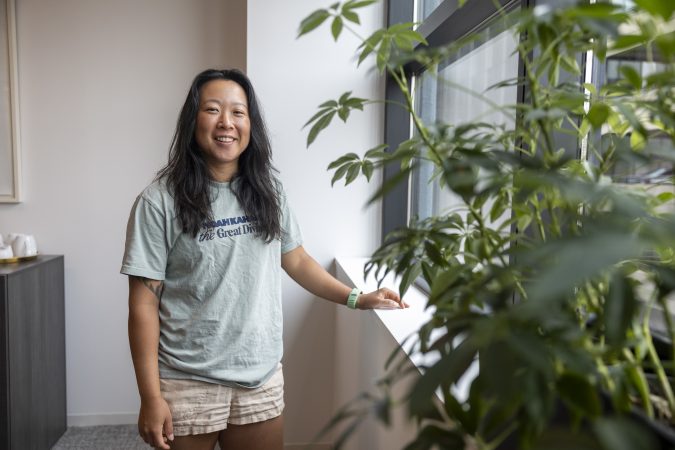
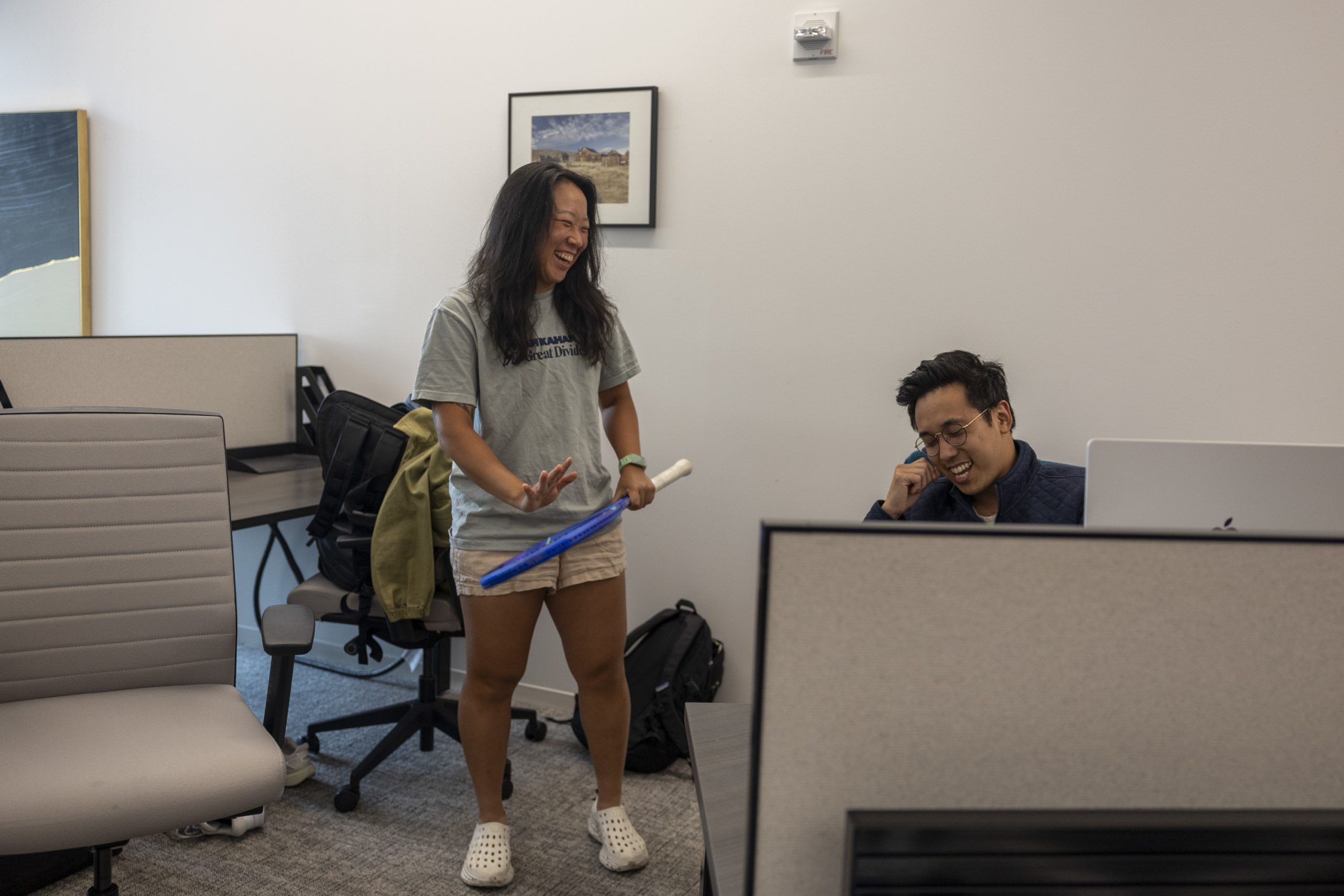
    FSH Technologies cofounder Lilly Chen chats with COO Jason Chen in their Philadelphia office.Tyger Williams / Staff Photographer
    Why did you start this company, FSH Technologies?

    I used to work at Meta … when I worked there it was called Facebook. I was just very disenchanted with the apathetic nature of tech bros and the real-world impact that technology has on regular people.

    FSH technologies is focused on creating software for local government. Why this niche?

    I was [thinking about] what is a net positive on society that I can feel very good about, that I think technology is a good solution for. I landed on local government because it’s the one thing that universally everybody in America has to interface with, and the technology is so outdated. If you’ve tried to pay a parking ticket, get a permit, just try to navigate your local municipality, it’s so hard, it’s so complicated. Usually the software doesn’t even exist. It could be a manual paper thing.

    In the last year there was a lot of talk in the Donald Trump administration of making the federal government more efficient. You’re talking about efficiency at the local government level. Did any of that narrative impact you?

    There was actually no technology involved in the DOGE effort. When you drive real efficiency in government, it’s not rip and burn things. It’s actually getting into the weeds to understand the current process, who’s doing it, how they’re doing it, why they’re doing it, and then iteratively improving and wherever possible digitizing the relative components of that.

    It’s not at all just being like, “Let’s just fire these people and see what happens.”

    What about the name FSH Technologies? Where does that come from?

    I used to be a Buddhist monk. I dropped out of high school when I was 16, and I moved to China and I lived in a monastery….We had a pond where we kept fish, and [my sensei] … would describe to me: “You are the pond, not the fish.”

    If you can kind of separate yourself from the immediate feelings and see things as a bigger picture, as a system, you actually have a much more cohesive understanding and view of the problem.

    You were a monk?

    I was a real troublemaker in high school. I actually ended up getting very sick — I had an autoimmune disease … I was missing a lot of class, I was kind of misbehaving. My mom at one point threw her hands up in the air and was like, “We’re now Buddhists, we are moving to China, we’re going to live in a monastery, we’re shaving our heads.”

    Can you tell me more about your work for the Philadelphia Department of Commerce?

    We build software for the entire Department of Commerce, actually.

    We standardized and unified all their forms into one platform, and then we created business profiles so that businesses would have to input, for example, their EIN number…once, and it’s there. If you put in your revenue, it will show you what you qualify for.

    Prior, if you think about a Google form and you fill it out, you don’t actually know if you qualify, because anybody can open the form, anybody can submit it. It creates a lot of bureaucracy on both ends. You, as the business, don’t know if it was worth your time to fill it out, so you just fill it out – or you don’t fill it out. You, as the city, don’t know if this business is eligible, so you just spend time reviewing stuff for people who don’t qualify. Everything becomes slower and like sludge because the interface is really bad for actually streamlining the process.

    The city spends so much less time reviewing applications now because they only get access to the ones that are actually qualified.

    How are you managing the company’s work with your current staff of 12?

    We have actually won a ton of contracts that are coming down the pipeline, but we haven’t started them yet. We have time to staff up, which is what we’re trying to do. If I can hire 50 people, I would.

    Why can’t you?

    What we do requires two things. One, is a deep passion and empathy for communities, civil servants, public good. You really need to care about the details because if you don’t care about them, you’re going to let people fall through the cracks.

    That’s actually kind of hard to find because … people hear government software and they think it’s boring. They don’t necessarily realize how much impact you can have if you care deeply about this boring thing.

    The second thing is software skill — the craft of building software that just works is hard.

    The Venn diagram of skill and care is hard because a lot of people who are highly, highly skilled in technology end up at these AI frontier labs, which are paying a million dollars in salary.

    What do you want the company to look like in five years? What’s the goal?

    The goal is being able to have people no longer think local government software sucks.

  • Philadelphia’s airport is bringing back a flight to Baltimore

    Philadelphia’s airport is bringing back a flight to Baltimore

    Philly travelers will soon be able to take a one-hour flight to the Baltimore area.

    Southwest Airlines’ new route between Philadelphia International Airport (PHL) and the Baltimore/Washington International Thurgood Marshall Airport (BWI) is part of the airline’s recent service expansion, which will also add a flight between Philadelphia and Las Vegas. Both new offerings begin March 11 next year.

    The new flight to BWI will allow Philadelphians to unlock “most of the Southwest network with one-stop service,” said airline spokesperson, Chris Perry, via email, who added that Southwest flights are operated on Boeing 737 aircrafts. Southwest operates more than 70% of flights out of the Baltimore-area airport, which makes it the airport’s top airline by market share. At PHL, it is fourth.

    American Airlines and Frontier Airlines already have scheduled flights to Harry Reid International Airport in Las Vegas out of PHL, but no airline currently flies between PHL and BWI, airport spokesperson Heather Redfern said via email on Tuesday.

    “PHL is thrilled to be part of Southwest’s latest route network expansion,” said Redfern.

    The flight to BWI will be offered twice daily, while the route to Las Vegas will operate on Sunday, Monday, Thursday, and Friday.

    A United Airlines plane arrives at a gate while a Southwest airplane takes off in the background at Philadelphia International Airpot on Saturday, March 22, 2025.Elizabeth Robertson / Staff Photographer

    The route between PHL and Baltimore was previously served by American / U.S. Airways throughout the 2000s and 2010s, but was discontinued in July 2020, said Redfern.

    A roundtrip direct flight between BWI and Philadelphia will cost travelers roughly $343, including taxes and fees, for a basic ticket departing Friday, March 12 and returning Sunday, March 14.

    A roundtrip flight on those same days between Philadelphia and Las Vegas will cost a traveler roughly $578 for a basic ticket, including taxes and fees.

    Southwest carried over 1.3 million passengers through Philadelphia’s airport in 2025. The largest airline operating out of PHL, American Airlines, transported over 20 million passengers through the airport that year.