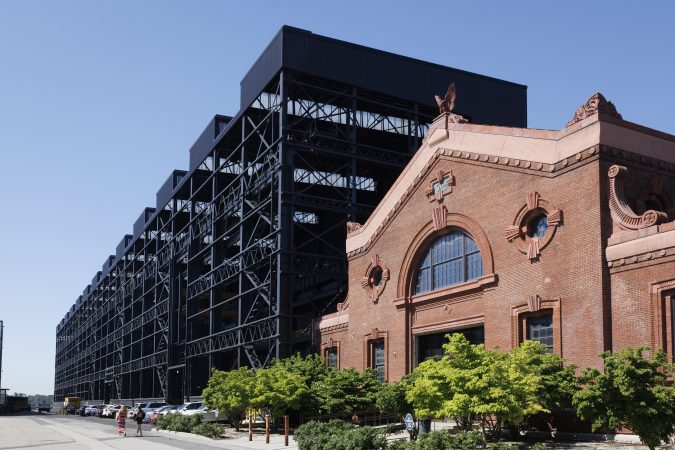
Author: Ariana Perez-Castells

  • Urban Outfitters’ Navy Yard headquarters is growing as the company adds employees

    Urban Outfitters’ Navy Yard headquarters is growing as the company adds employees

    The Navy Yard got a new boat this month. It isn’t a military ship and won’t be setting sail.

    The decommissioned 1977 tugboat, now painted in Urban’s signature yellow and marked by its logo, is now permanently stationed outside the company’s headquarters — as a sort of mascot, to company cofounder and CEO Dick Hayne.

    The tugboat’s arrival coincides with a momentous anniversary for Urban: the company’s 20th year at the Navy Yard. Urban staff started relocating 500 employees there in 2004, and the headquarters was fully operational by 2006. Now it has 15 buildings and just over 2,500 employees.

    And the company is continuing to grow.
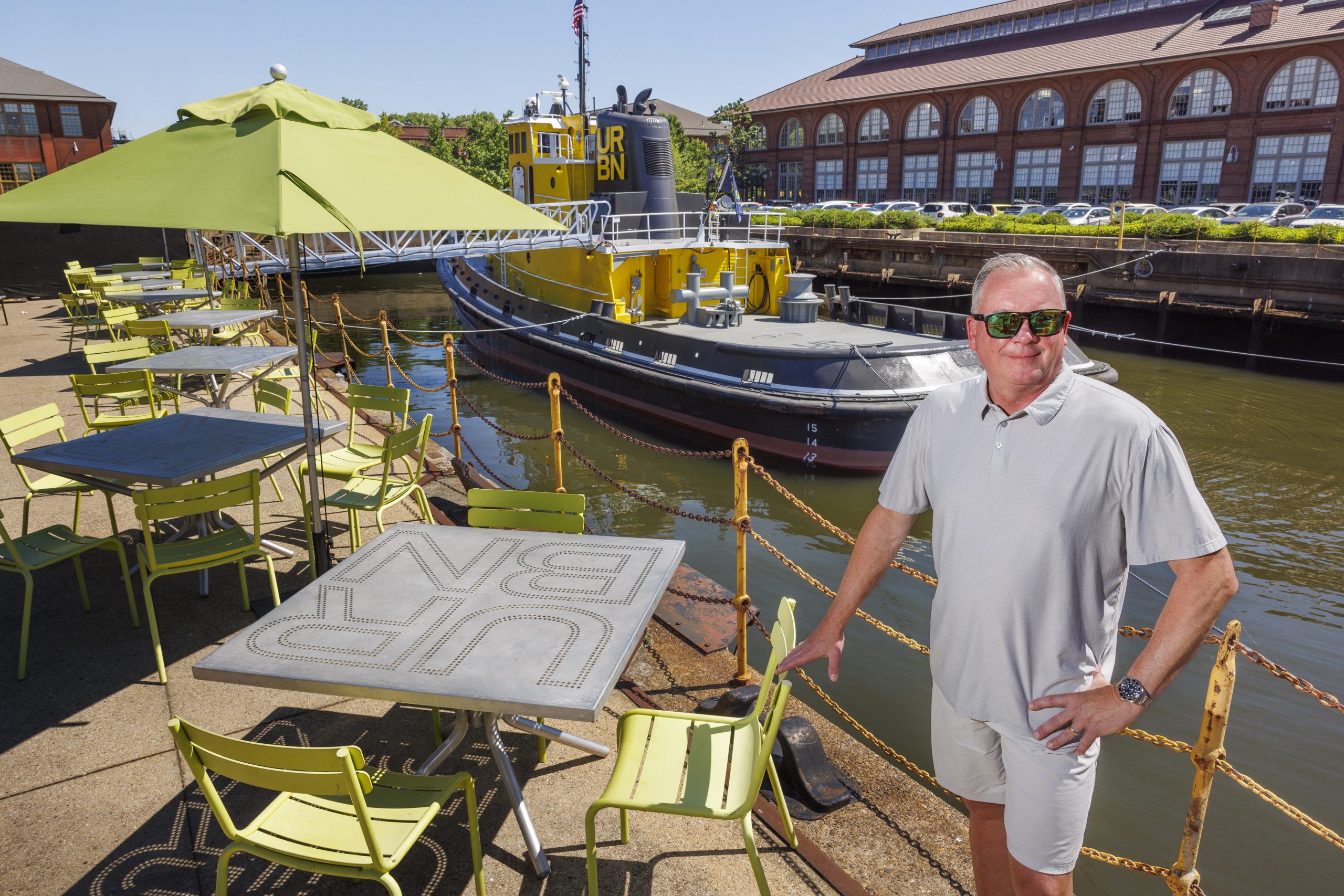
    Urban Outfitters chief development officer Dave Ziel stands with a retired tugboat the company acquired for display at its Navy Yard headquarters.Alejandro A. Alvarez / Staff Photographer

    Urban’s newest addition at the Navy Yard is a 117,000-square-foot photo studio building, which opened in April.

    Urban announced earlier this month that it plans to hire at least 450 workers at the Navy Yard and at least 600 at a new Bucks County facility, which is set to open by 2028. Gov. Josh Shapiro joined Hayne for the news conference, and lauded the business as a home-grown global company bringing jobs to Pennsylvania.

    “We intend to stay here,” said CEO Hayne. “We have no thought of leaving.”

    How Urban grew from Philly roots to global retailer

    Urban was founded in 1970. The company’s roots are in West Philadelphia, where it opened its first store, a Free People. It now has almost 800 stores across the globe under the brand names Urban Outfitters, Free People, FP Movement, and Anthropologie.

    Walking into an Urban store doesn’t feel like stepping into a Macy’s where there are racks of clothes and bright fluorescent lighting, said senior analyst Gerard Machado at RetailStat.

    “It’s not like you’re running an errand to get something,” said Machado. “You might want to spend a little time looking at things. That’s a unique feature of Urban Outfitters.”

    Similarly, customers who wander into Anthropologie find artfully arranged dinner plates and glassware amid scented candles — not just items stacked in rows on shelves.

    Analysts say Urban is one of the more successful names in retail today, with strong sales numbers, loyal customers, and the ability to market to different audiences with its multiple brands. The company competes with the likes of J.Crew, Abercrombie & Fitch, Uniqlo, Ralph Lauren, Zara, and H&M.

    The company grew profits by more than 15% in its most recent fiscal year, with nearly $465 million in net income in the year ending Jan. 31.
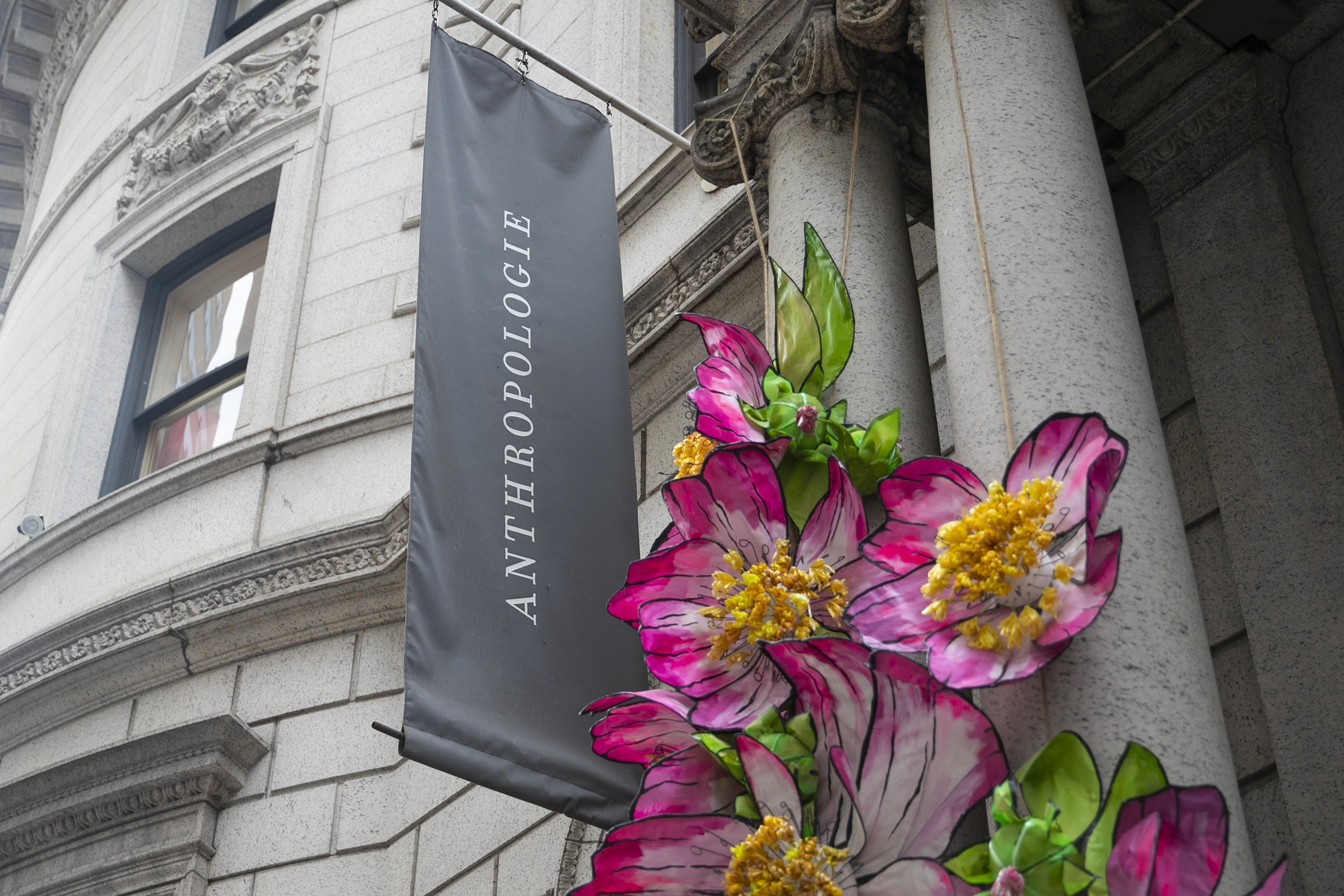
    The Anthropologie store at 18th and Walnut Streets in Center City is shown in this 2020 file photo. Heather Khalifa / Staff Photographer
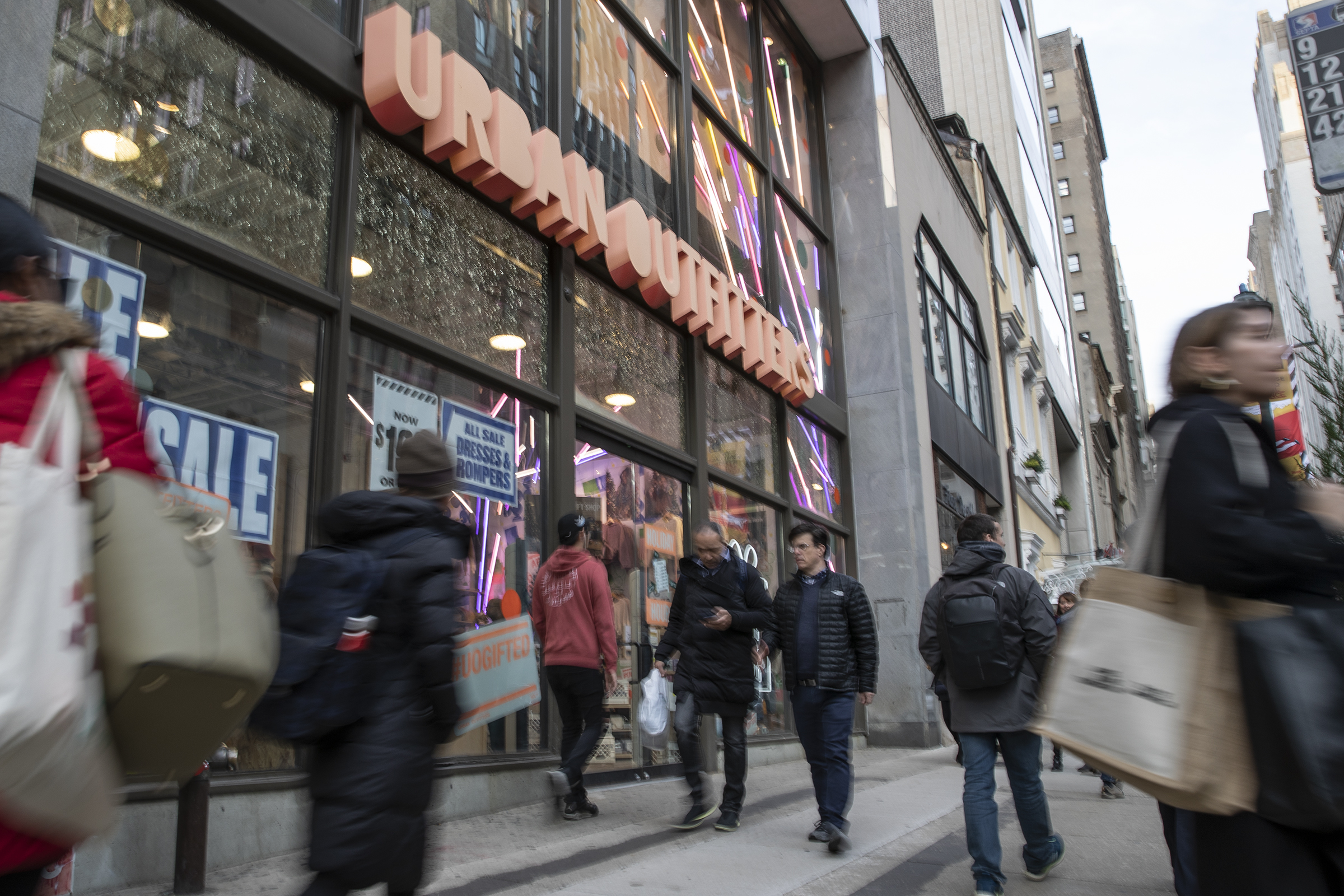
    People walk outside the Urban Outfitters store near 16th and Walnut Streets in Center City in November 2019.Heather Khalifa / Staff Photographer

    One key feature of Urban is that it’s experimental and innovative, said Neil Saunders, a retail analyst and managing director at GlobalData. Nuuly, the company’s clothing rental platform, which launched in 2019, is one of the “very few players that’s really successful” in that industry, he said. For $98 a month, subscribers get six fashionable items delivered to their door, which they can wear for a month and then ship back.

    But there have been financial hurdles, too.

    The Urban Outfitters brand struggled with declining sales in recent years. Gen Z consumers migrated “heavily into ultra fast fashion,” said Machado, and the brand didn’t adapt quickly enough. As merchandise piled up in inventory, Urban cut prices, which consumers grew to expect.

    To turn the brand around, the company set out to rebuild relationships with customers, bring on more items attractive to Gen Z, and engage with customers on platforms they were already on, like TikTok and YouTube, The Inquirer reported in 2023. The company hired a new president to helm the brand in 2024, and it returned to profitability last year.

    (function(){function e(){window.addEventListener(`message`,function(e){if(e.data[`datawrapper-height`]!==void 0){var t=document.querySelectorAll(`iframe`);for(var n in e.data[`datawrapper-height`])for(var r=0,i;i=t[r];r++)if(i.contentWindow===e.source){var a=e.data[`datawrapper-height`][n]+`px`;i.style.height=a}}})}e()})();

    Tariffs have also pushed the company to adapt in part by negotiating better terms with vendors, shipping items by sea instead of air, and slightly adjusting pricing.

    There have been workforce challenges too. In 2020, when a racial reckoning erupted in the country and seeped into corporate offices following the killing of George Floyd, Urban saw criticism from within its own workplace. Reports emerged of employees allegedly racially profiling customers as potential shoplifters, and some employees said people of color faced challenges to advancing their careers at the company, or reporting discrimination.

    “Since 2020, we have prioritized creating a culture of inclusion and belonging at our home office, in our stores, and at our facilities,” said Meaghan Condon, Urban’s director of communications and impact, in an emailed statement this month. She said that includes training for new hires and managers focused on inclusivity.

    Another key ingredient in the company’s culture: the Hayne family.
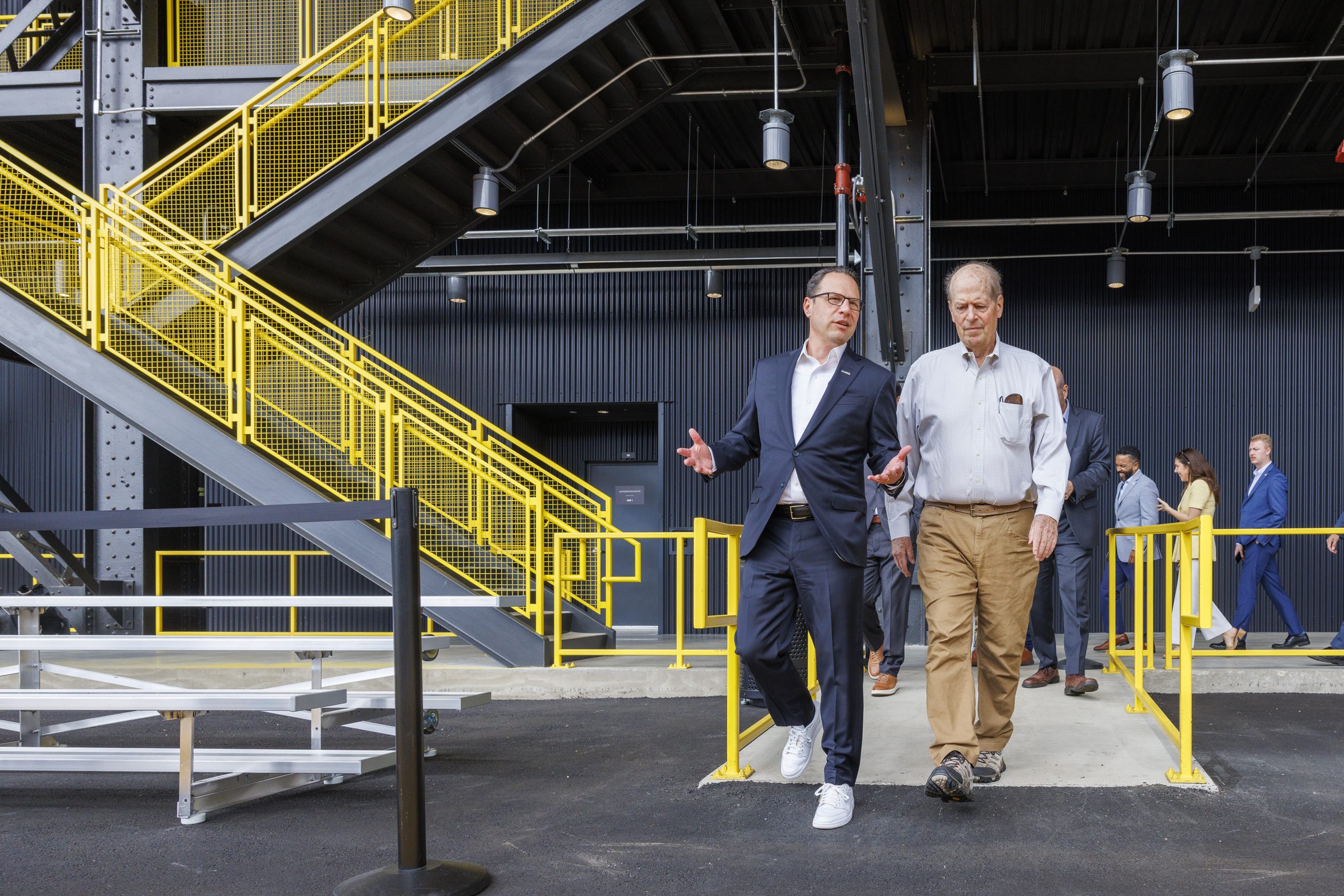
    Pennsylvania Gov. Josh Shapiro (left) with Urban Outfitters CEO Dick Hayne at the company’s newest building, which houses photo studios. They held a press conference in June to announce Urban Outfitters’ plans to hire over 1,000 new employees.Alejandro A. Alvarez / Staff Photographer

    Cofounder and CEO Dick Hayne’s son, Dave, is chief technology officer and president of Nuuly, and his nephew, Azeez Hayne, is chief administrative officer. His wife, Meg, is Urban’s co-president and chief creative officer.

    Together, Meg and Dick Hayne own roughly a quarter of the company shares, according to recent company filings.

    Frank Conforti, chief operating officer and co-president at Urban, said the family ties are an asset and part of the culture.

    Having a cofounder still at the helm has allowed Urban to focus on long-term strategy and take calculated risks, said Conforti, such as launching Nuuly. Investors weren’t all in on the idea to begin with.

    Now Nuuly has over 450,000 active subscribers — more than doubling that number since 2023.

    “We sort of don’t rest on what we did yesterday,” said Conforti. “It’s not about yesterday’s bestsellers.”
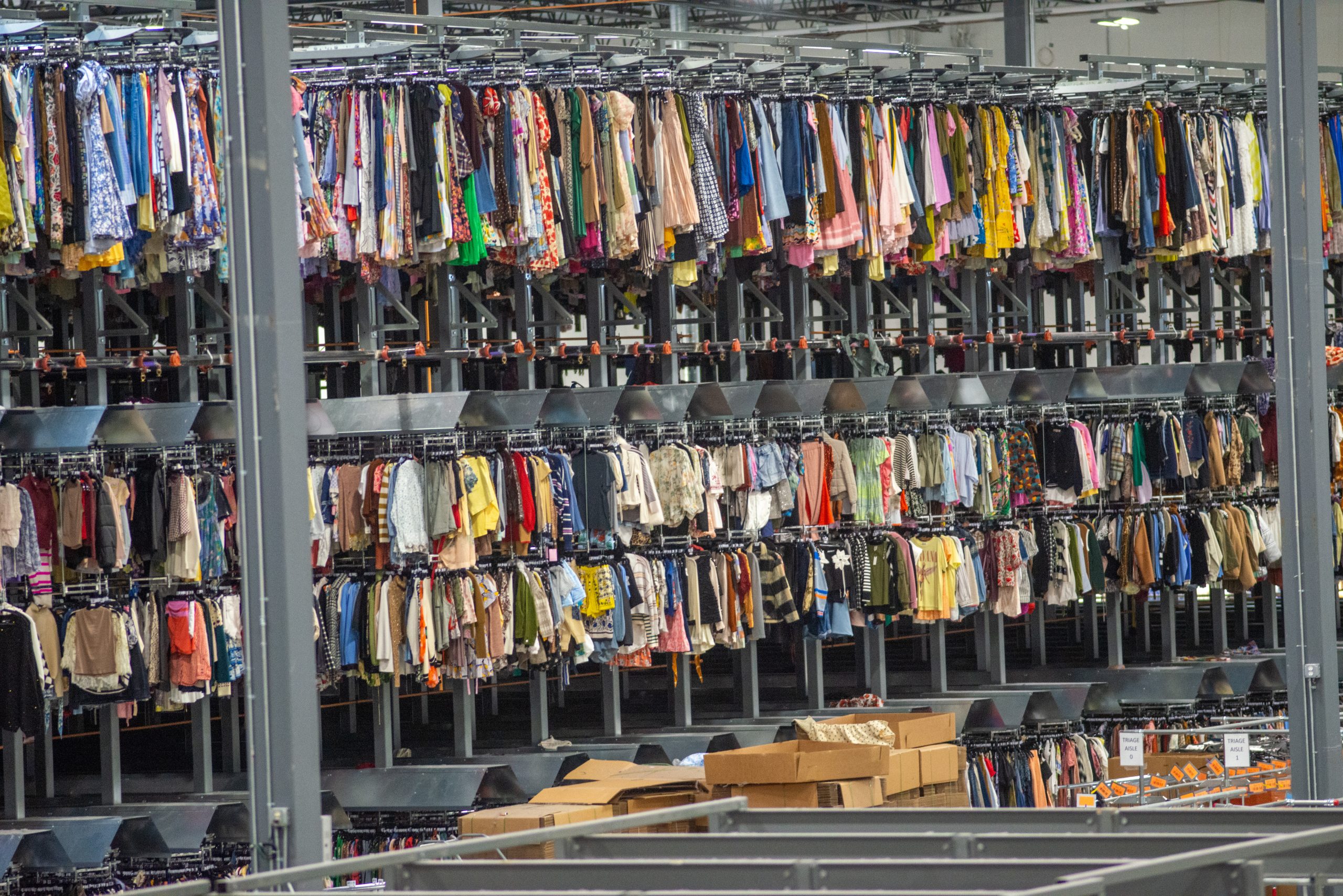
    Racks of clothing inside the Nuuly warehouse in Levittown, Pa., last year. Nuuly is a clothing rental subscription service that offers a variety of styles, sizes, and brands.William Thomas Cain / For The Inquirer

    A more efficient process

    In Urban’s newest building at the Navy Yard, rows and rows of wheeled clothing racks are spread across several rooms. Industrial metal shelves are filled with sneakers, sandals, and handbags. Lamps and armchairs wait to be photographed for e-commerce.

    The space was once used for building and housing ship components, noted Jennifer Calliagas, Urban’s North America director of planning, who led the new building’s development. Urban bought it from Rhoads Industries in 2016 for an undisclosed sum.

    Urban spent about $40 million to fit the space for its needs, which included stripping the building down to its structure, said chief development officer Dave Ziel. Construction started last year, and Urban employees began working in the space by mid-April.

    Inside the new building are adjoining rooms to seamlessly carry out the photography process: Clothing, shoes, and accessories are received in one room, then moved into the next room to be styled, and finally to the studio where they’re photographed. Staging areas are set up to portray bedrooms and bathrooms, functioning kitchens were built for cooking food to show in photos, and plants are on hand to finish off the staged living spaces.

    The Inquirer was not permitted to photograph the studios because the merchandise had not yet been released publicly.

    Not long ago, the company’s photo work was done in rented studios in New York City, Calliagas said, or scattered across the company headquarters.
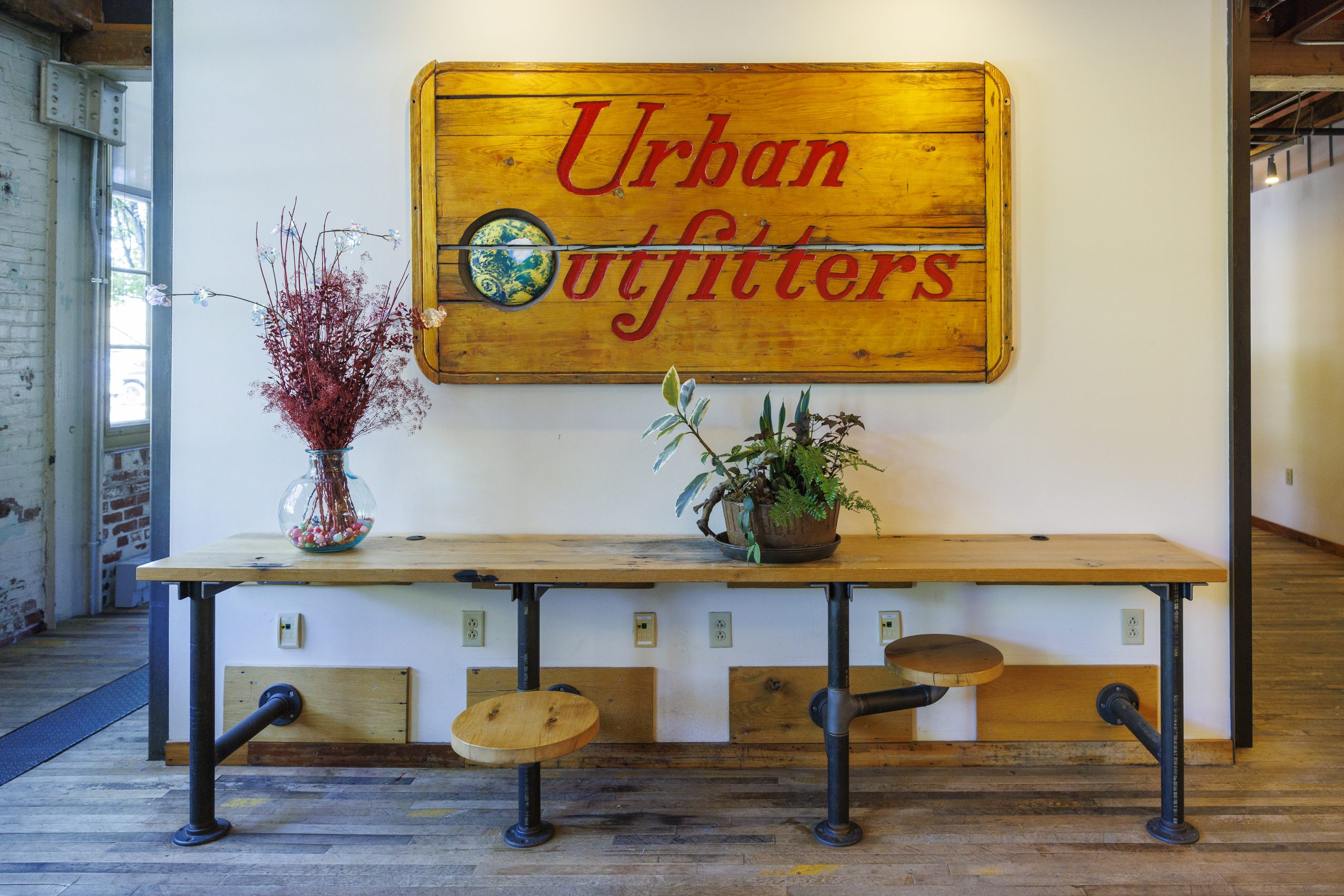
    Vintage signage from the early days of Urban Outfitters, now displayed in the company’s Navy Yard headquarters.Alejandro A. Alvarez / Staff Photographer
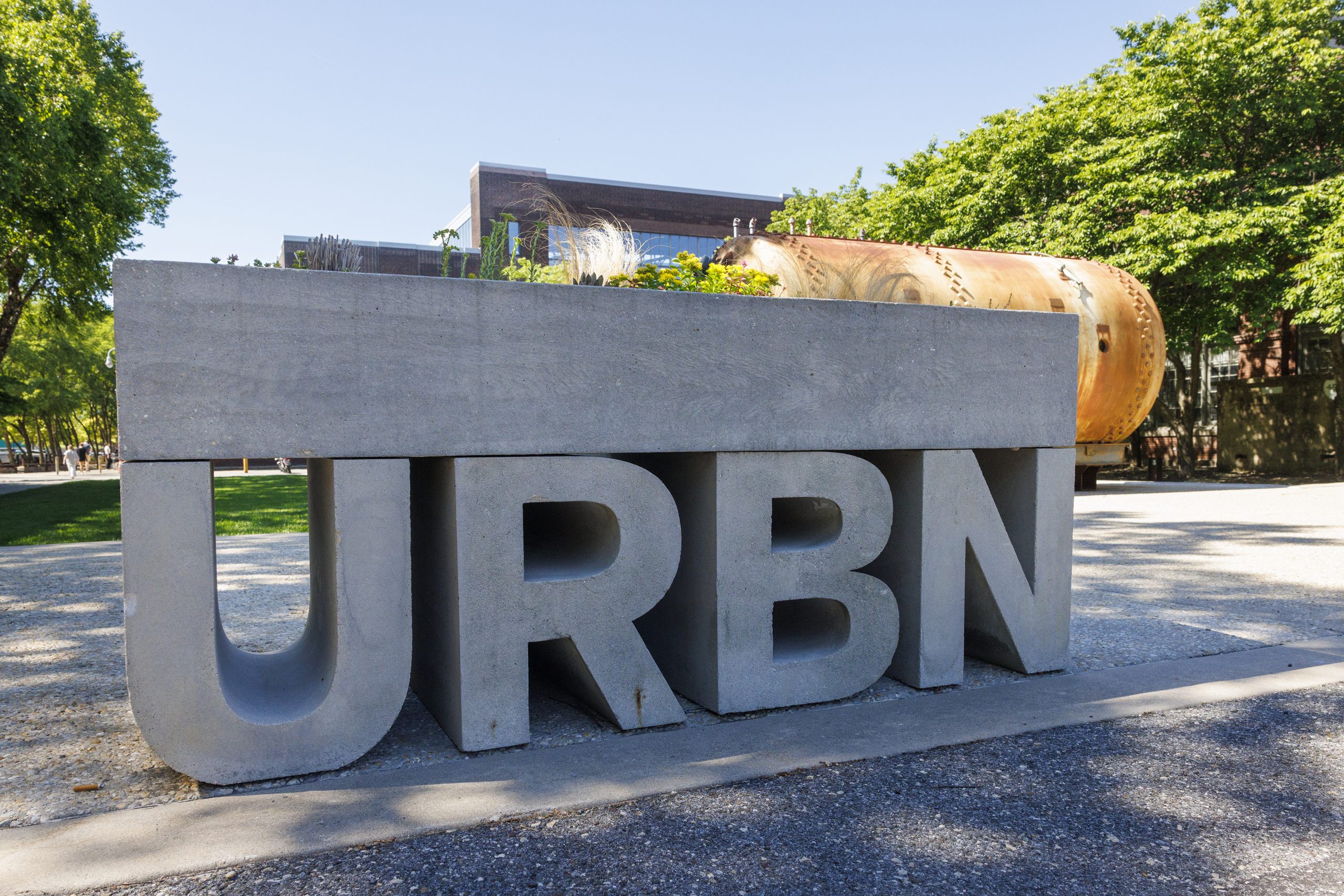
    Massive outdoor signage marks Urban Outfitters’ presence at the Navy Yard.Alejandro A. Alvarez / Staff Photographer

    “Anthropologie, for instance … would be receiving in one area and then going to another building for style-outs, and then sometimes going back into another building for shooting,” Calliagas said. “It was a really inefficient process.”

    At the Navy Yard, the company’s brands are housed in separate buildings, in part because they each “speak to their customer” in a different way, said Oona McCullough, executive director of investor relations. She called this kind of separation “states’ rights.”

    Consolidating the photo work under one roof has freed up space in other buildings, said Ziel, which is helpful for the continued growth of brands.

    “The brands are still growing pretty aggressively,” said Calliagas.
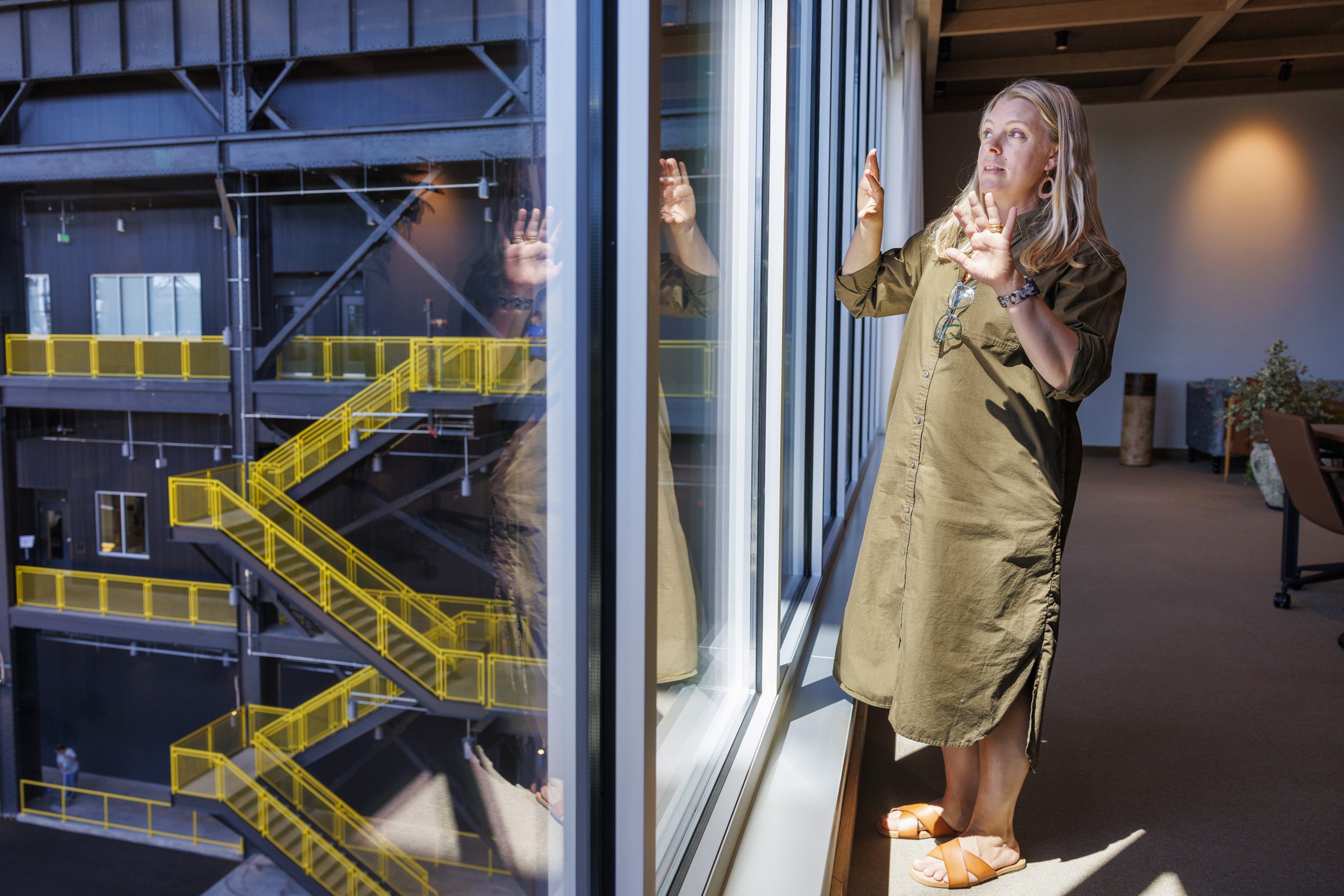
    Jennifer Calliagas, director of planning for North America, discusses how the company will use its photo studios at its newest building in the Navy Yard.Alejandro A. Alvarez / Staff Photographer

    A campus with more possibilities

    Conforti refers to the headquarters as a “campus,” with a “youthful” and “very collegiate” atmosphere. When bankers or investors visit the headquarters, “we tell them to dress down casual,” he said. “They drop their tie.”

    In keeping with standards set long ago by Google and other Silicon Valley tech companies, the campus is full of amenities. The newer ones include pickleball courts, a basketball court, and a walking track. And there’s plenty of green space for employees to walk their dogs, which are welcome in the workplace.

    Most people work in the office at least three days a week, said Conforti.

    “We’re not the most red-tape, bureaucratic company,” he said. “There’s just nothing like being here on campus getting things done. There’s an efficiency to it — and there’s a community.”
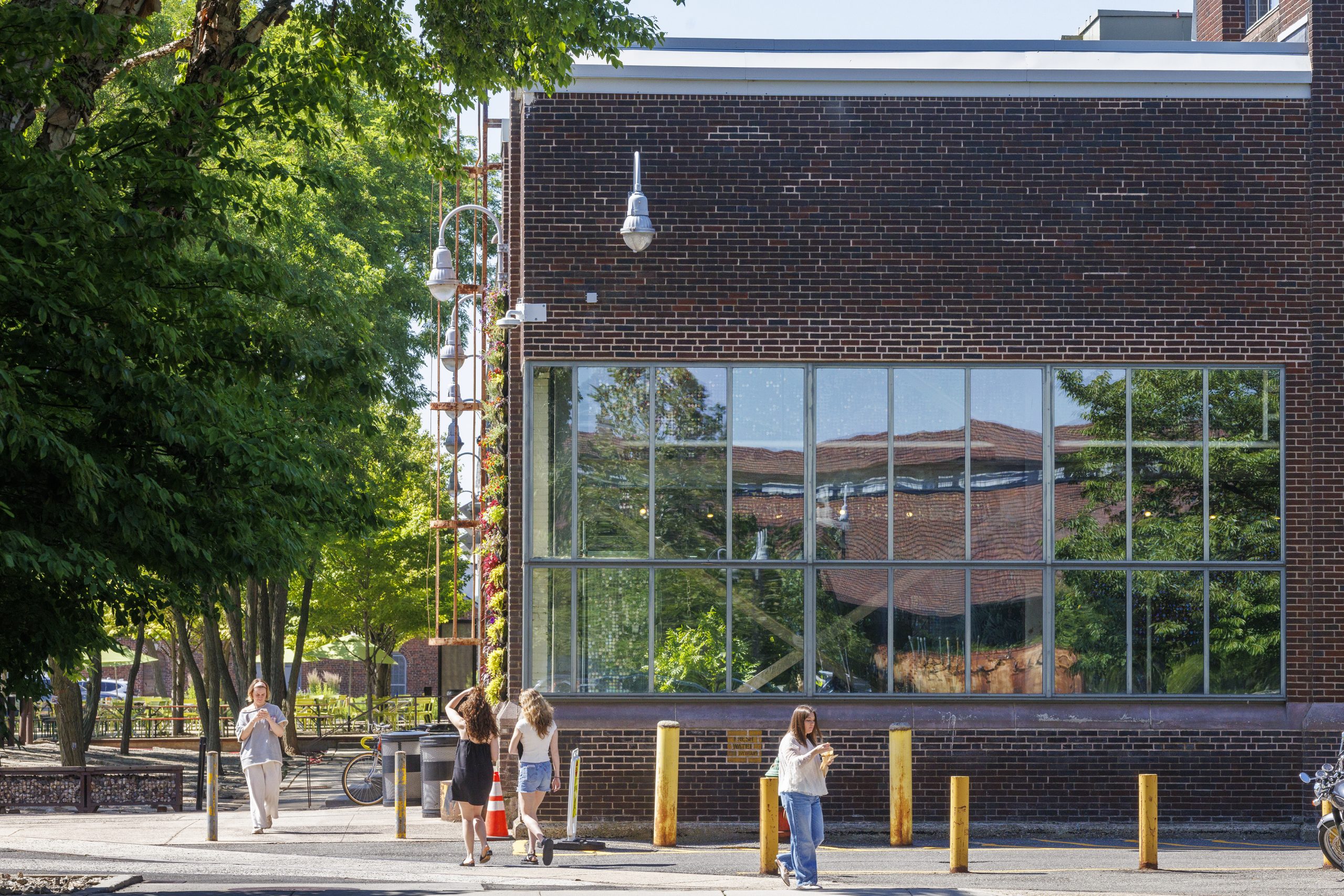
    People walk to and from the building that houses Urban Outfitters’ cafeteria, which is open to employees and the public.Alejandro A. Alvarez / Staff Photographer

    On a recent Monday, Urban’s cafeteria was just about to start serving warm lunches, and a few dozen people waited in line, while others roamed the large building with its decorative pools. Some wore U.S. Navy uniforms — the cafeteria is open to the public. Options included pizza, Teriyaki beef rice bowls, and grab-and-go items like ice cream bars and boxed sushi.

    CEO Hayne stopped in for a bag of chips and a wrap, seemingly unnoticed.

    At the June news conference, he recalled his first impression of the Navy Yard over 20 years ago: “I drove down Broad Street, came in Kitty Hawk [Avenue], looked at all these beautiful old brick buildings from the turn of the 20th century, and I said ‘sold!’”

    When Ziel, Urban’s chief development officer, first came to the Navy Yard with Hayne, he said, “there was nobody here.”

    “There was a raccoon — that was who I saw when we looked at the first buildings,” said Ziel, who has led the company’s real estate development.

    Decades later, Ziel still sees more opportunities for growth. “I have a couple excess buildings up my sleeve.”
  • Here’s everything to know about the Peco worker strike

    Here’s everything to know about the Peco worker strike

    This article was originally published May 29, and has been updated with recent information about bargaining and IBEW Local 614’s strike plans. This is a developing story, and it will continue to be updated.

    Peco workers plan to strike on the Fourth of July, after three months of working under an expired contract.

    Union members include employees who help restore electric service during outages, such as those sometimes caused by intense summer storms.

    The company and the union have been bargaining since January, and they have reached some agreements, but wages and benefits have become sticking points.

    Bargaining turned ugly in April, as both sides filed unfair labor practice charges with the National Labor Relations Board. Peco has suggested using a federal mediator.

    The most recent bargaining session was on June 19. Peco and Local 614 plan to bargain next on July 1.

    When could Peco workers go on strike?

    Workers plan to walk off the job at 12:01 a.m. on the Fourth of July if they have not reached a deal by then.

    They voted at the end of May to authorize a strike if their union called for it, with over 1,000 participating in the vote.

    Have Peco workers gone on strike in the past?

    No. This would be the first work stoppage in the company’s history. Since unionizing, this group has never before seen their contract expire without a new one in place.

    Peco workers voted to join the union in 2004 and ratified their first contract in 2007.

    Who are the union members and what do they do?

    IBEW Local 614 represents roughly 1,500 Peco employees, including call center employees and field workers who maintain electric and gas infrastructure.

    Some members work long hours during outages to help restore electricity to customers. Linemen, who repair and maintain power lines, are some of the union’s highest paid workers, and made on average over $243,500 last year in wages, including overtime.

    What does each side want?

    Workers want higher wages and a uniform retirement plan for all members. Some 600 workers who were hired in recent years don’t have a pension, while other groups have pension plans with varying terms.

    Peco has offered a 20% wage increase over five years, as well as “enhanced retirement and medical benefits,” according to company officials, who said their proposals “support our employees while maintaining affordability for customers.”

    What does a Peco strike mean for my electricity? What if there’s an outage?

    Peco has a strike contingency plan in place, chief operating officer Nicole LeVine has said. Customers shouldn’t expect delays or interruptions in service, she said.

    “If there’s severe weather, we’ll be able to restore any service issues,” LeVine has said.

    The company would call in substitutes for the striking workers, LeVine said this week, some of whom are “familiar with our specific system,” while others “are coming in from outside of the region.” She declined to say how many workers are part of the contingency plan.

    “We’re an emergency response company,” LeVine said. “We’ve been working on contingency planning in the event of a strike, and we were well prepared to execute our plan if needed.”

    How many customers does Peco service?

    In Southeastern Pennsylvania, Peco provides electricity to 1.7 million customers and natural gas to 553,000.

  • Peco workers plan strike for July 4th

    Peco workers plan strike for July 4th

    Peco workers plan to walk off the job on the Fourth of July if they don’t have a contract by then, their union announced Thursday.

    IBEW Local 614, which represents roughly 1,500 Peco employees including gas and electric field workers and call center staff, has been negotiating for a new contract for months. They include employees who work to restore electricity during power outages.

    The workers voted at the end of May to authorize a strike if their union called for it, with over 1,000 participating in the vote. It would be the first worker strike in the company’s history.

    “We’ve exhausted every avenue to reach a deal,” IBEW Local 614 president Larry Anastasi said in a statement Tuesday. “If Peco won’t invest in the workers who keep the lights on, we’ve got no choice but to stand together and demand the respect we’ve earned.”

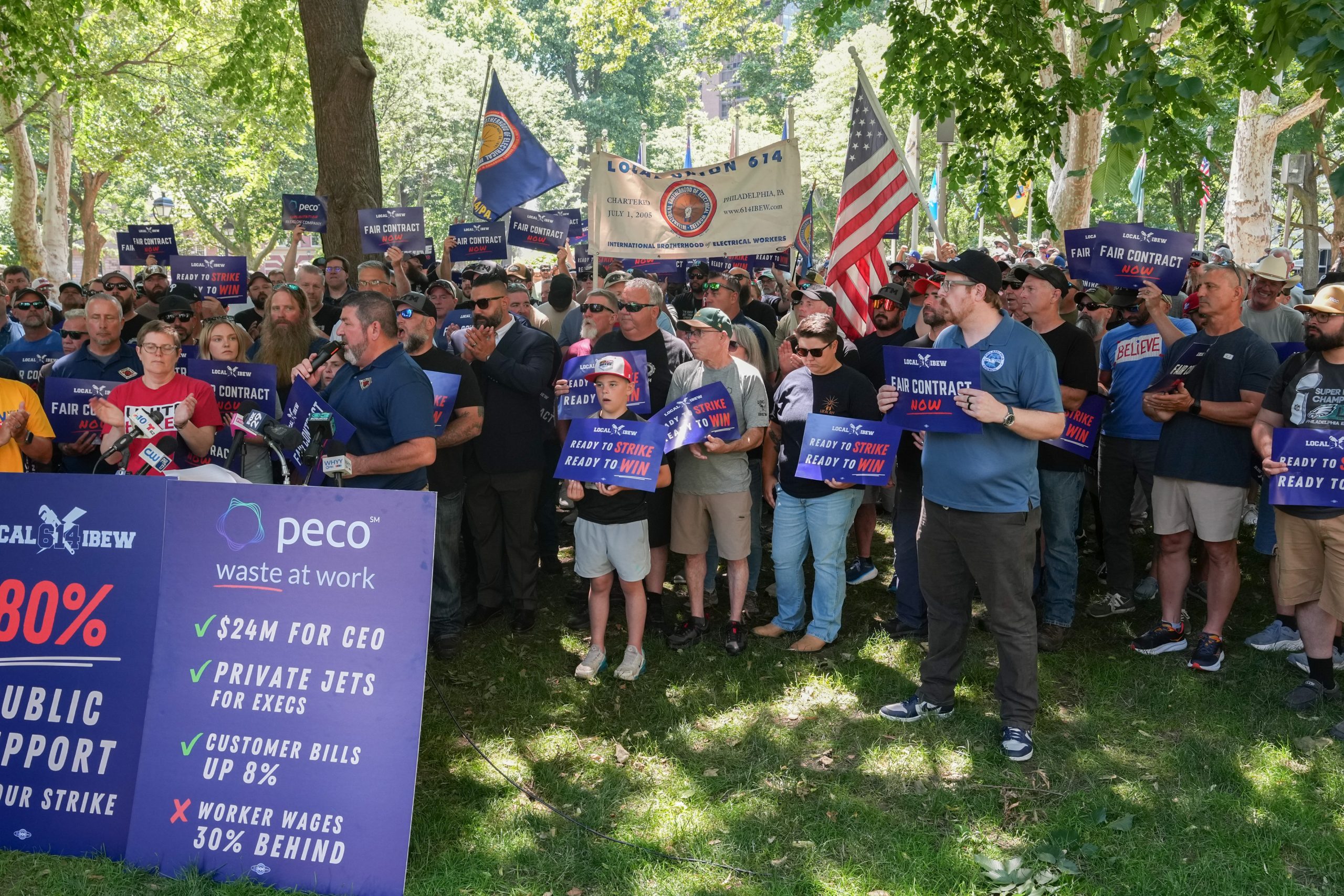
    Under its most recent contract, the union is required to provide Peco with at least seven days’ notice before going out on strike. A large crowd, including leaders of other area unions, gathered at Washington Square Park on Thursday morning for the union’s strike date announcement.

    Peco spokesperson Candice Womer said in a statement Thursday morning ahead of the strike date announcement that the company is committed to negotiating in good faith for an agreement that “is fair to our employees, while supporting the long-term needs of our customers and the communities we serve.”

    “We have presented a strong, market-competitive compensation and benefits package,” Womer said.

    Customers should not expect delays or interruptions in service, said Nicole LeVine, Peco’s chief operating officer.

    “We’re an emergency response company,” LeVine said. “We’ve been working on contingency planning in the event of a strike, and we were well prepared to execute our plan if needed.”

    LeVine said some workers who would be called on during a strike are “familiar with our specific system,” and others “are coming in from outside of the region.” She declined to say how many workers are part of the contingency plan.

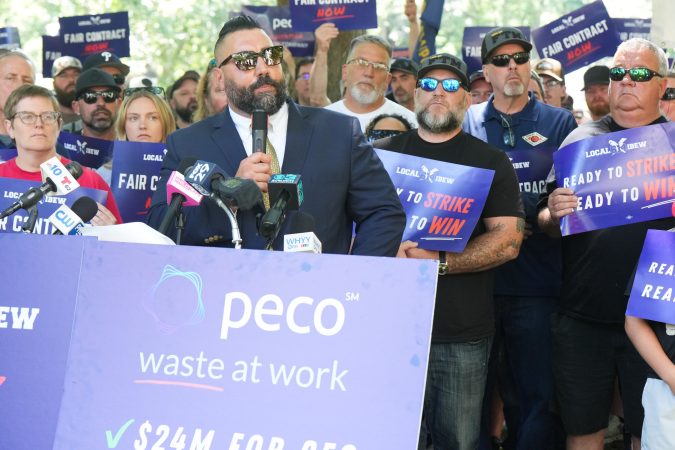
    Jim McGill, a union representative with local 614 (holding microphone), speaks to workers and union representatives who gathered in Washington Square Park on Thursday.Jessica Griffin / Staff Photographer

    The union workers’ most recent five-year contract expired March 31, and negotiations, which started in January, have led to some tentative agreements, Peco has said. But sticking points have emerged around wages and benefits, the union says.

    The most recent bargaining session was June 19, and the next one is scheduled for July 2, LeVine said. She noted that the company would like to conduct that session sooner.

    Peco has suggested using a federal mediator to reach an agreement, LeVine said. “If we get a mediator in here, he can help making sure both parties are participating in negotiations, and we can reach a good deal,” she said.

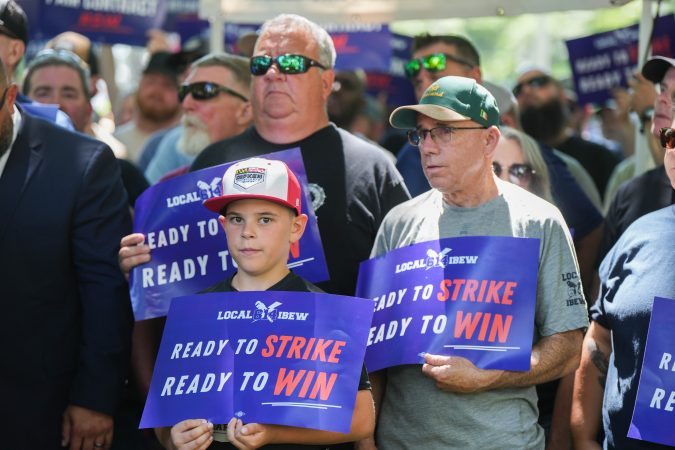
    Hundreds of Peco workers and supporters met in Washington Square Park on Thursday, a little after 11 a.m., some holding signs that read “Ready to strike. Ready to win.”

    When Anastasi, the local president, announced that workers would go out on strike at 12:01 a.m. on the Fourth of July, the crowd behind him erupted in cheers. Anastasi said the union had not made the decision lightly.

    “We didn’t want to do this,” Stephen Giorgio, a Peco employee for nearly three years, said after the news conference. But, he added, the union has been negotiating for months, and “enough’s enough.”

    Giorgio, who works in the western suburbs, is part of a Peco team that gets called upon when a customer’s power is out.

    “We’re out there day and night, weekends, holidays,” he said. “My wife forgets what I look like sometimes.”

    His line of work is dangerous, he says, and can include climbing a 60-foot pole in the rain — but he wouldn’t trade it for another job.

    “I love this job,” Giorgio said. “I can never see myself doing anything else. Took me 10 years to get here, and now I’m here, and I don’t ever plan on looking back.”

  • World Cup fans are spending money in Philly. How much will actually stay in the city?

    World Cup fans are spending money in Philly. How much will actually stay in the city?

    The World Cup has arrived in Philadelphia and out of town visitors are flocking to the games, and learning about Rocky’s curse.

    But how much of the money they’re spending will actually stay in Philadelphia?

    The World Cup games were originally expected to generate a $770 million economic impact in the Philadelphia region, Axios reported in 2024. But just $30 million to $90 million is likely to stay in the region and benefit the local economy, according to estimates in a new report by the Economy League of Greater Philadelphia.

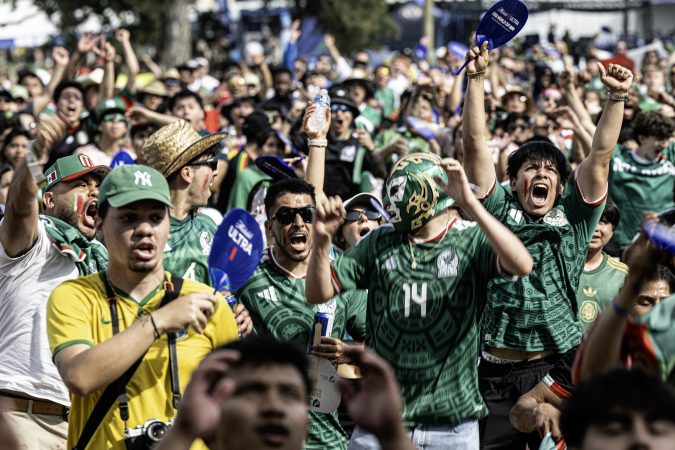
    Thousands have visited the Lemon Hill FIFA Fan Festival since it kicked off on June 11, and used SEPTA after the first Philly-hosted match earlier this month. Philadelphia International Airport also estimated a bump in travel through the airport around the June 19 game between Brazil and Haiti.

    But not all spending is equal.

    U.S. cities are spending hundreds of millions of dollars to host World Cup matches, but are limited in how much revenue they can amass from the events, according to a ProPublica analysis of host city contracts, including Philadelphia’s.

    Some of the money coming into the city during the World Cup would have been spent in Philadelphia anyway, but perhaps differently, the Economy League report indicates.

    While the city is gaining World Cup visitors, it may be losing out on regular business travelers and others that would have come to Philadelphia if not for the World Cup, the report said. Meanwhile, some who are spending money to enjoy the tournament in Philadelphia are residents, who would be spending money in the city anyway. And some fan spending is flowing directly to FIFA and other platforms, rather than to the city’s economy.

    The report highlights three areas seeing most of that spending: The stadium district, Center City hotels and restaurants, and the Fan Festival at Lemon Hill.

    “The commercial corridors beyond this core, which make up most of the city, are unlikely to see much benefit without deliberate effort, because visitor spending follows the path of least friction — toward where people sleep, arrive, or already intend to go,” the report says.

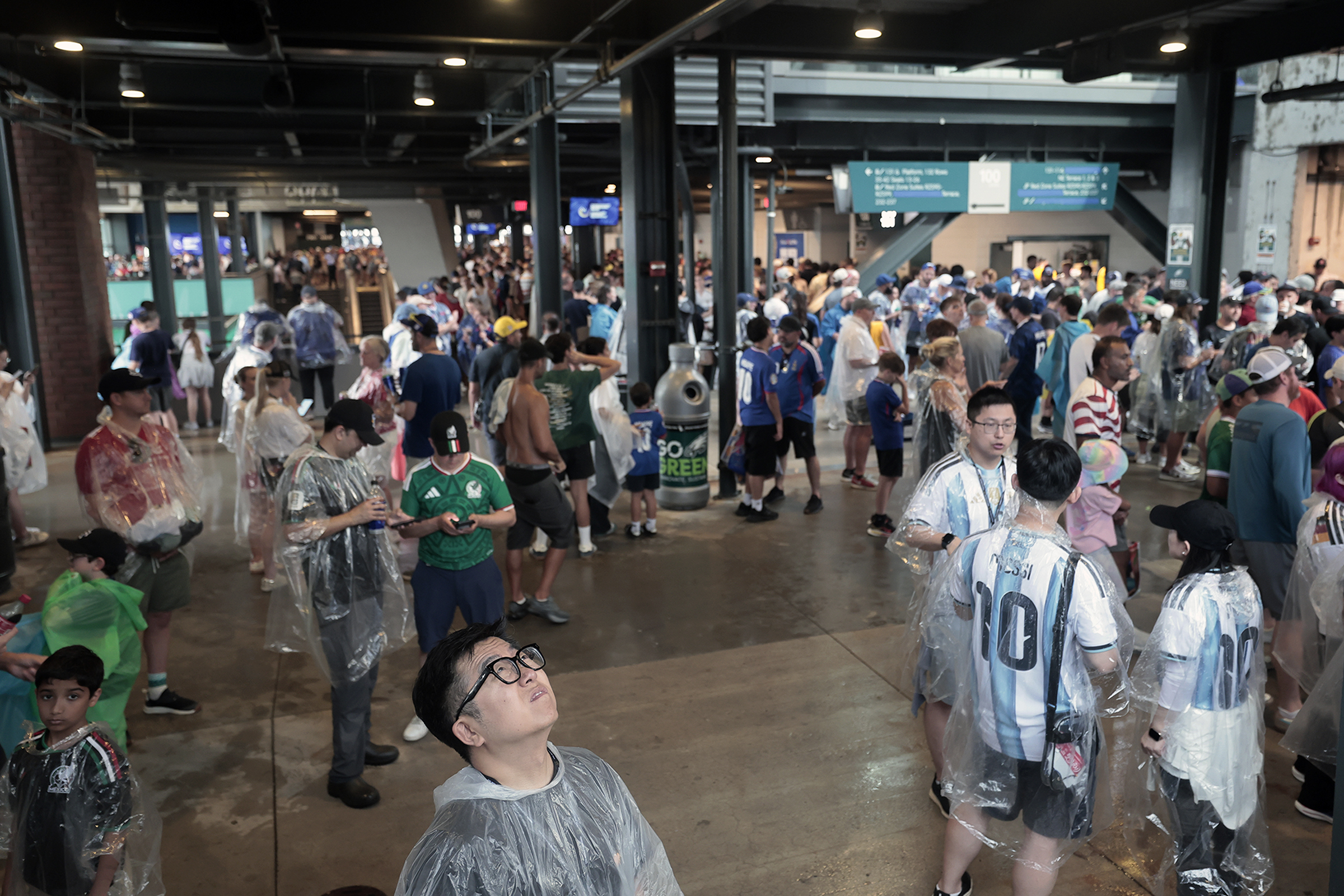
    A man looks to the skies during the rain delay of the France vs. Iraq 2026 FIFA World Cup Group 1 soccer match at Philadelphia Stadium on Monday.Elizabeth Robertson / Staff Photographer

    In the stadium district, where customers have bought tickets to attend games, they’re spending on merchandise and concessions — but few of those dollars trickle down to local independent businesses.

    In Center City, hotels and restaurants are benefiting most, but it’s not as though they wouldn’t be getting business without the games, the report notes.

    Some local food trucks and independent vendors can make money at the FIFA Fan Festival at Lemon Hill. But because the venue is gated, surrounding businesses only profit if visitors leave the festival site.

    And locals are paying the price of hosting the World Cup in other ways.

    Residents who live around the Fan Festival at Lemon Hill are unable to catch a Lyft or Uber from home because of festival restrictions, and parking in the area requires applying for a special permit. The Philadelphia Parking Authority dolled out thousands of tickets in the first few days of the festival.

    Still, the report outlines, much can be gained locally through the World Cup. Lemon Hill is set to receive $4 million in improvements, and some other benefits are harder to quantify.

    “Philadelphia has shown it can move large crowds and stage a global event capably, and the reputational and civic returns, while hard to value, are real,” the report outlines.

  • Amazon agrees to pay $3 million in Pennsylvania class-action settlement over unpaid wages

    Amazon agrees to pay $3 million in Pennsylvania class-action settlement over unpaid wages

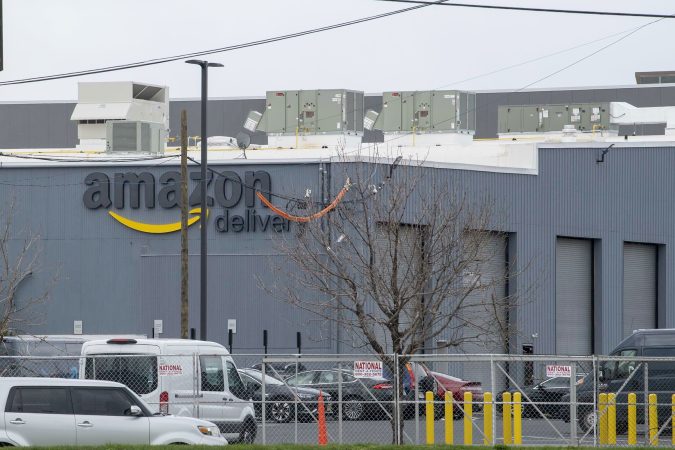
    Amazon has reached a $3 million class-action settlement in Pennsylvania over allegedly unpaid wages during the pandemic.

    Employees had said they spent time off the clock before their shifts in COVID-19 screenings and were not paid for that time as state law requires, according to court documents.

    Amazon’s legal team has said that “time spent off the clock was minimal,” especially once company sites adopted temperature screenings via thermal cameras.

    A representative for Amazon did not immediately respond to a request for comment Monday.

    The class action lawsuit was originally filed in 2023 in the U.S. District Court for the Eastern District of Pennsylvania by Bobby Muniz, an Amazon employee at the company’s Easton fulfillment center.

    Muniz argued that the required health screening typically took 10 to 15 minutes before each shift, including the wait in line.

    “Both sides vigorously dispute the amount of time workers spent off the clock as a result of the COVID-19 screenings,” a recent court document indicates.

    The case went to mediation in October, and a proposed settlement was granted preliminary court approval earlier this month. A final approval hearing is set for November.

    Amazon employees who worked for the company in Pennsylvania before July 19, 2023, and underwent COVID-19 screening are eligible to be part of the class settlement.

    Eligible workers don’t need to take any further steps. Those who want to opt out must do so by Oct. 15.

  • Whole Foods workers in Philadelphia voted to join a union in 2025. They just cleared their latest hurdle.

    Whole Foods workers in Philadelphia voted to join a union in 2025. They just cleared their latest hurdle.

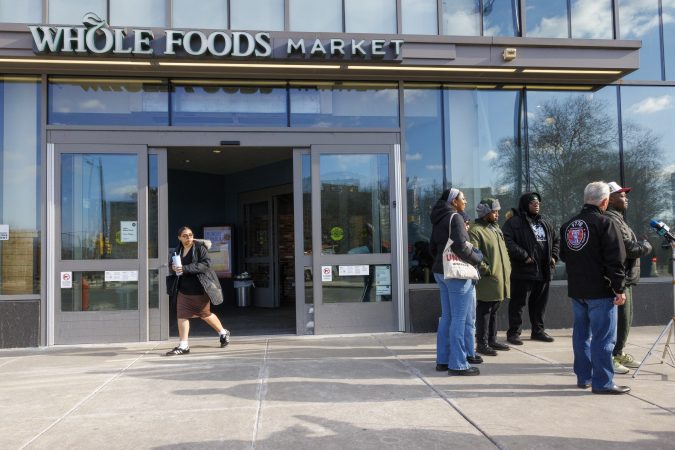
    Philadelphia Whole Foods workers cleared a major hurdle in their unionizing efforts this week, paving the way to negotiating their first union contract.

    Workers at the 2101 Pennsylvania Ave. store voted last year to join UFCW local 1776, becoming the first group within the Amazon-owned Whole Foods chain to unionize. But they have been caught in a procedural standstill for months.

    Whole Foods challenged the union election, citing multiple objections, including allegations that the union promised employees would get a raise if they voted for a union.

    A few months after the election, a regional director at the National Labor Relations Board dismissed Whole Food’s challenge — but the company pushed back, asking for a review by the national board. That brought the case to a standstill because the NLRB was without a quorum after President Donald Trump fired a board member.

    The board has since gained two new members, including one with ties to the Philadelphia area, Scott A. Mayer, a Villanova University graduate who has worked for locally headquartered concessions company Aramark and area law firms.

    This month, the board stood by the regional director’s conclusion upholding the union election, saying Whole Foods’ latest challenge “raises no substantial issues warranting review.”

    Wendell Young IV, president of UFCW local 1776, said Tuesday that the union had been expecting this outcome.

    The NLRB decision “completely vindicates the union and these workers, and there’s no reason at this point Whole Foods/Amazon shouldn’t sit down and begin bargaining right away, although I suspect they won’t,” Young said.

    A Whole Foods Market spokesperson said in an emailed statement that the company strongly disagrees with the board’s decision.

    During a hearing on the issue last year, the spokesperson said, Whole Foods argued that “restrictions on free speech and the union’s illegal conduct interfered with our team members’ right to a fair vote at our Philly Center City Store.”

  • A Souderton beef processing plant, one of Montco’s biggest employers, is closing

    A Souderton beef processing plant, one of Montco’s biggest employers, is closing

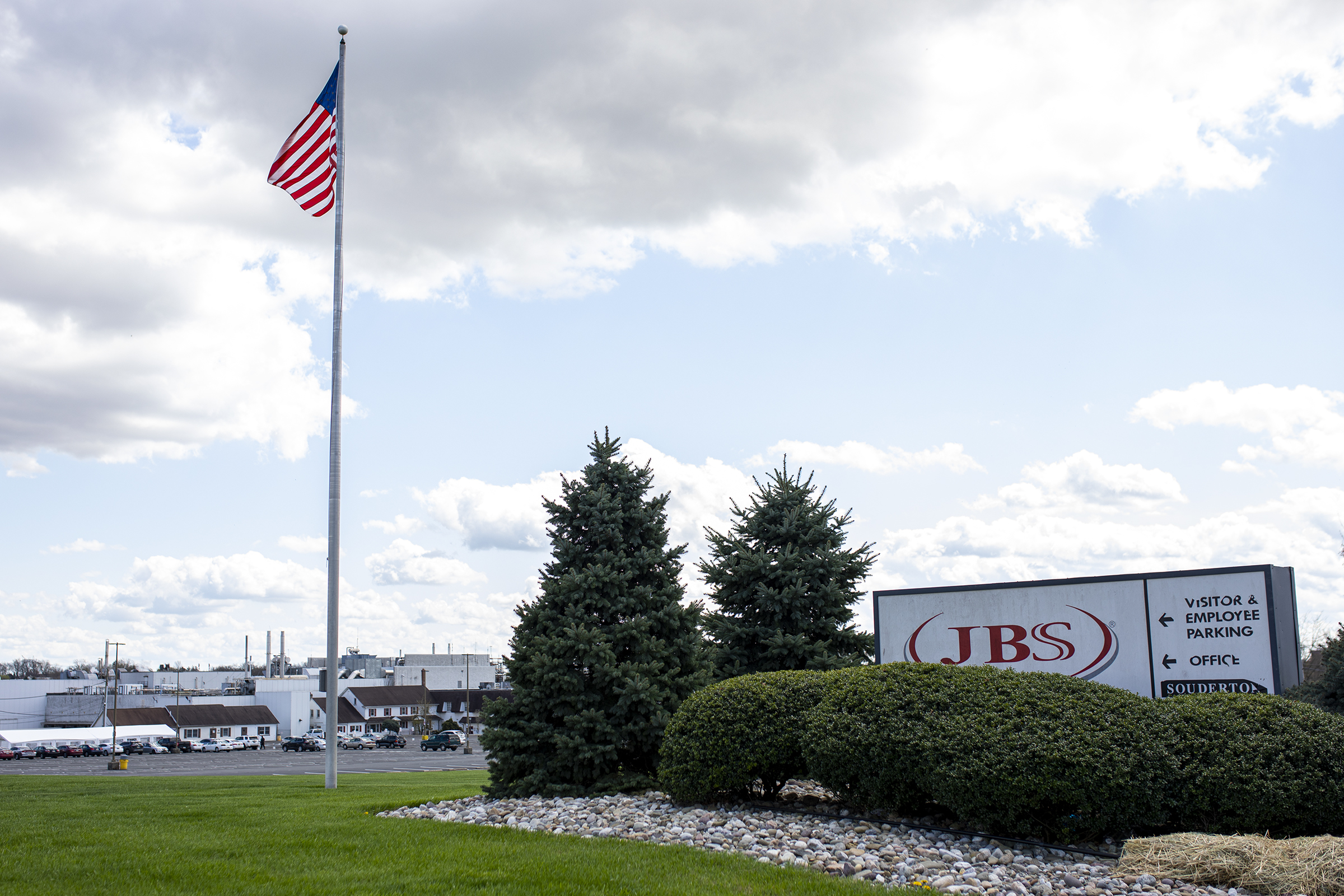
    A global meat producer and one of Montgomery County’s top employers is closing a beef processing facility in Souderton that employs about 1,700.

    JBS said Friday that the plant will close by Aug. 14, citing the company’s larger strategy for “growth, modernization, and long-term competitiveness in the United States.” It also plans to close a site in Memphis.

    The planned closure impacts some 1,500 union workers who are represented by the United Food and Commercial Workers International Union (UFCW) Local 1776.

    “These decisions are never easy because they directly affect our team members and the communities where we operate,” Wesley Batista Filho, CEO of JBS USA, said in a statement Friday. “Our focus right now is on supporting them with transparency, respect, and access to new opportunities wherever possible.”

    Workers at the Souderton facility were among some 26,000 JBS employees who secured a new union contract last year with better wages and benefits including a more inclusive bereavement leave policy and the ability to accrue sick days.

    The contract also established a pension plan for workers. That’s a rarity in the industry in recent decades, according to the union, which called the agreement “a new standard” in the meatpacking industry.

    That contract is set to expire in August, when the company plans to close the facility, according to the union.

    The work being carried out at the Souderton site, which JBS has operated since 2008, will be distributed among the business’ other facilities, according to a company news release. In the past year, JBS has been expanding its operations in Texas, Georgia, and Iowa as it focuses on growing its prepared foods business.

    “JBS USA is investing heavily in the United States and in the future of food production,” Batista Filho said in a statement. “At the same time, we must ensure our operations are efficient, modern, and positioned to compete. By investing where we are growing and making difficult adjustments where needed, we are building a stronger and more resilient company.”

    The union is working to try to keep the Souderton site open.

    “We are not giving up on this plant, and we are not giving up on these workers,” Wendell Young IV, president of UFCW Local 1776, said in a statement Friday. “Our union will be working around the clock engaging with every elected official and government agency we can to explore all options to keep this facility open and these workers employed.”

  • Philly hotel workers push back potential strike as FIFA World Cup is set to begin

    Philly hotel workers push back potential strike as FIFA World Cup is set to begin

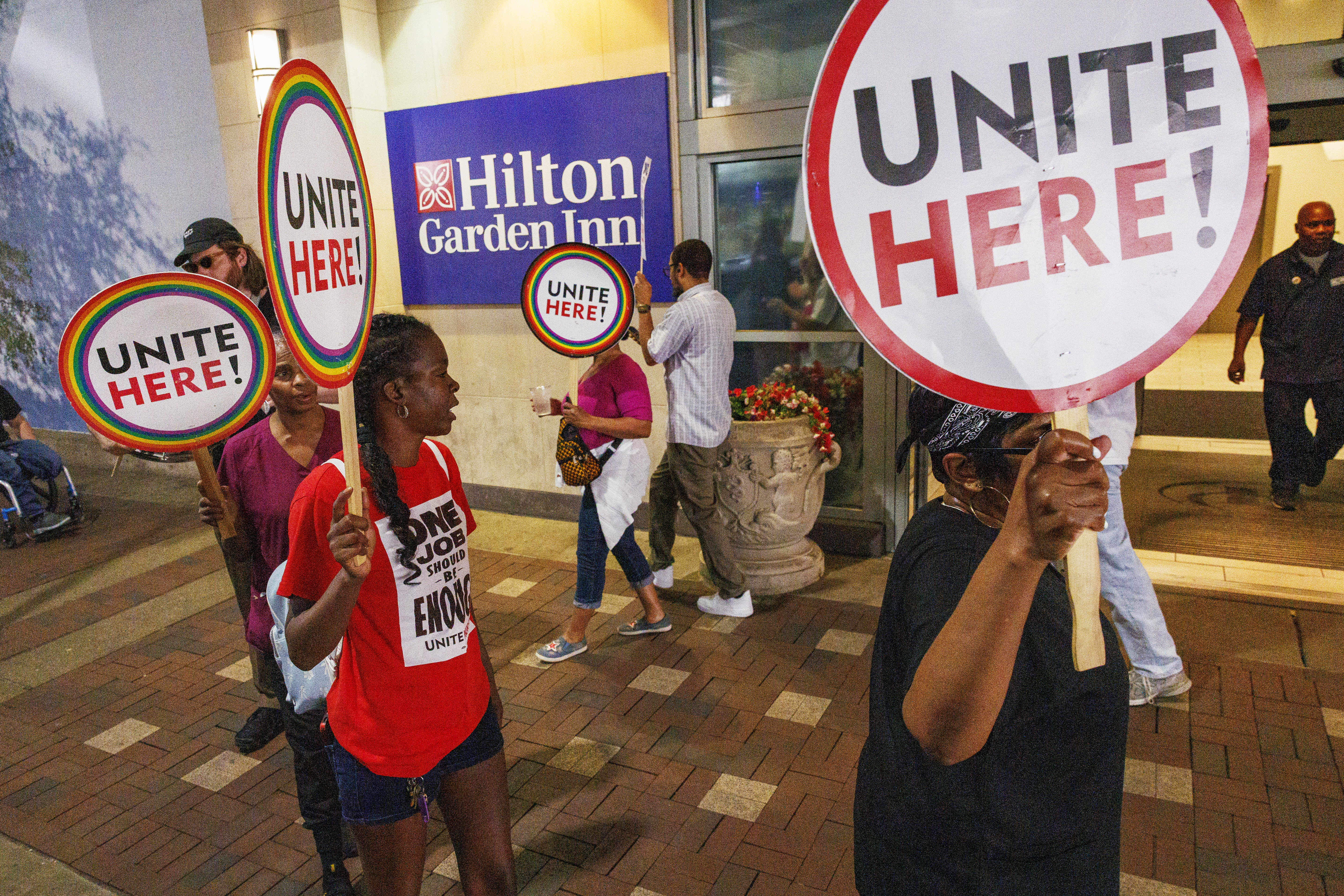
    Unionized hotel workers in Philadelphia had planned to strike if they hadn’t agreed on a new contract by Friday, but they’ve decided to continue working for now, citing progress made in negotiations.

    Their union, Unite Here Local 274 had announced a strike deadline of June 12 last month. Hours away from the deadline on Thursday evening, the union announced in a statement that the deadline had been extended but did not provide a new date. The statement noted, “a strike may now be called at any time.”

    “Substantial progress is being made in some hotels,” union president Rosslyn Wuchinich said in a statement Thursday. “We have set a citywide standard, and we expect our hotel employers to meet it or face disruption during the World Cup.”

    The union said last month that some 600 workers across five hotels where contracts had still not been reached could walk off the job.

    They are: Sheraton Philadelphia Downtown, Wyndham Philadelphia Historic District, Hilton Philadelphia at Penn’s Landing, the Warwick Hotel Rittenhouse Square Philadelphia, and Hilton Garden Inn Philadelphia Center City.

    Workers at two of the five hotels had voted to authorize a strike, Wuchinich said in May. Strike authorization votes still have not been held at all five hotels, union spokesperson Dermot Delude-Dix confirmed Thursday.

    The union last spring began negotiating new contracts at several Philadelphia hotels.

    New contracts have since been adopted at: Hampton Inn Philadelphia Center City — Convention Center, Sonesta Philadelphia Rittenhouse Square, and the Sheraton Philadelphia University City Hotel.

    At these hotels, contracts include raises to $30 an hour by 2028 for non-tipped employees, and an increase in employers’ contributions to their pensions. The contract also includes a provision capping the number of rooms a worker can be tasked with cleaning at 15 per day, down from 16 previously.

  • Urban Outfitters plans to hire 1,000 at Navy Yard and new Bucks County facility

    Urban Outfitters plans to hire 1,000 at Navy Yard and new Bucks County facility

    Urban Outfitters Inc., the Philly-founded fashion company, is adding employees and business facilities in the region as it continues to grow.

    The parent company of Urban Outfitters, Anthropologie, Free People, and Nuuly plans to hire more than 1,000 employees in the Philadelphia region over the next seven years. Company cofounder Dick Hayne and Gov. Josh Shapiro gathered at the company’s Navy Yard headquarters Monday to announce the plans.

    At least 450 new positions will be at the Navy Yard headquarters. And at least 600 hires are planned at a new distribution site in Bucks County for clothing rental brand Nuuly, over the five years after that building is completed in 2028.

    “Urban Outfitters was built from the ground up in Philadelphia more than five decades ago — and we are proud that this company is continuing to grow and create jobs all across our Commonwealth,” said Shapiro in a statement on Monday.

    The positions include creative and operational roles across the brands and the parent company, according to Meaghan Condon, Urban’s director of communications and impact.

    The company has just over 2,500 employees based out of the Navy Yard headquarters. That number has grown significantly from 500 in 2004, when Urban announced it was moving its offices there from Center City. The company employs 6,300 across Pennsylvania, including those at its stores and its distribution sites.

    At the time of the move, Urban had five buildings there. Today it has 15.

    The most recent addition is a 117,000-square-foot site at the Navy Yard that houses the photo studios. Redeveloping the space, which Urban started using in the last couple of months, cost about $40 million. Previously, the company’s photos were taken at various headquarters buildings in the Navy Yard or off-site at rented studios in New York.

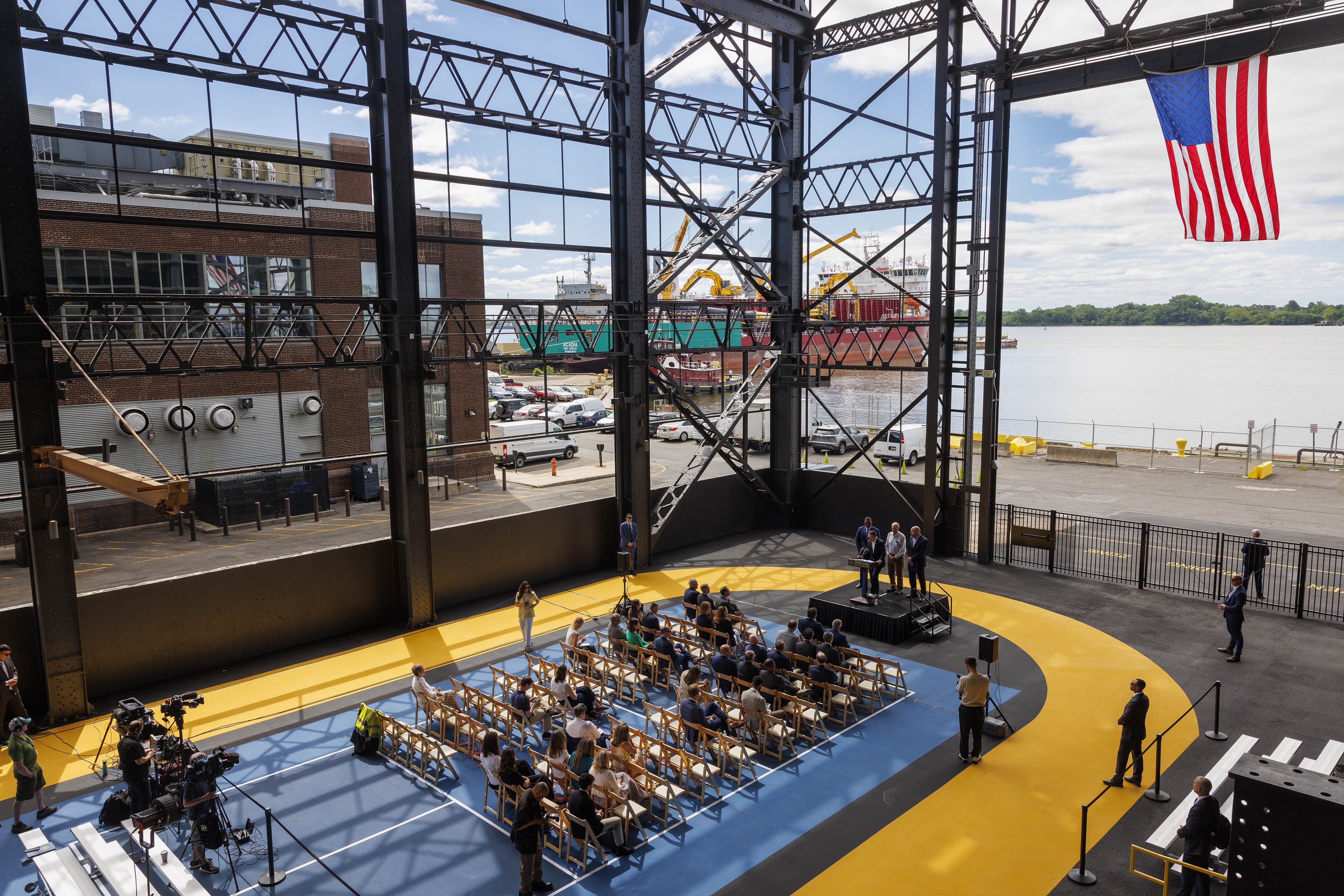
    Gov. Josh Shapiro (left) with Urban Outfitters cofounder and CEO Dick Hayne during an event Monday to announce planned hires in the region.Alejandro A. Alvarez / Staff Photographer

    On Monday, Shapiro and Hayne spoke in the outdoor portion of the new building, which has been partially converted into pickleball courts, to announce the company’s continued growth. An American flag hung above them swaying in the breeze, and airplanes flew overhead periodically to and from the Philadelphia International Airport.

    “When we started, we had a tiny, tiny store,” said Hayne on Monday, recalling the company’s first location near the University of Pennsylvania. “Today, we have over 800 stores across the world, including many in Europe, and our sales have grown extremely rapidly.”

    Hayne said he attributes that growth in part to “the relationship that we’ve had with our governmental agencies, the City of Philadelphia, the Commonwealth of Pennsylvania, and even a little bit with the federal government.”

    Hayne said Urban has invested millions in the state, calling Pennsylvania the company’s home and adding, “we intend to stay here. We have no thought of leaving.”

    The announcement on Monday echoed a similar moment in 2011 when then Mayor Michael A. Nutter, alongside Hayne, announced that Urban would be adding 1,000 jobs at the Navy Yard over the course of three years, and moving into two additional buildings there. The company employed some 1,500 people at the time.

    The new Bucks County facility, which is expected to be completed by early 2028, is for the company’s growing clothing rental subscription business, Nuuly. Launched in 2019, Nuuly had over 450,000 active subscribers as of this spring — over double the amount the brand had in 2023.

    Nuuly has a distribution center in Levittown which opened in 2019, and another in Missouri which opened in 2024.