Eric Hartman has taught civic education, human rights, and global citizenship courses at Drexel, Haverford, Temple, and the University of Pennsylvania, among other higher education institutions. He currently advises national nonprofit networks, colleges, and universities on civic and global education, posting occasionally @CivicEd.
In 2004, I cofounded a tutoring initiative for newly arriving Somali refugee families. Many of the tutors were Jewish. We were welcomed at the local mosque. I was invited to my first Shabbat dinner. Five years later, that mosque was vandalized as part of a pattern of anti-Muslim actions.
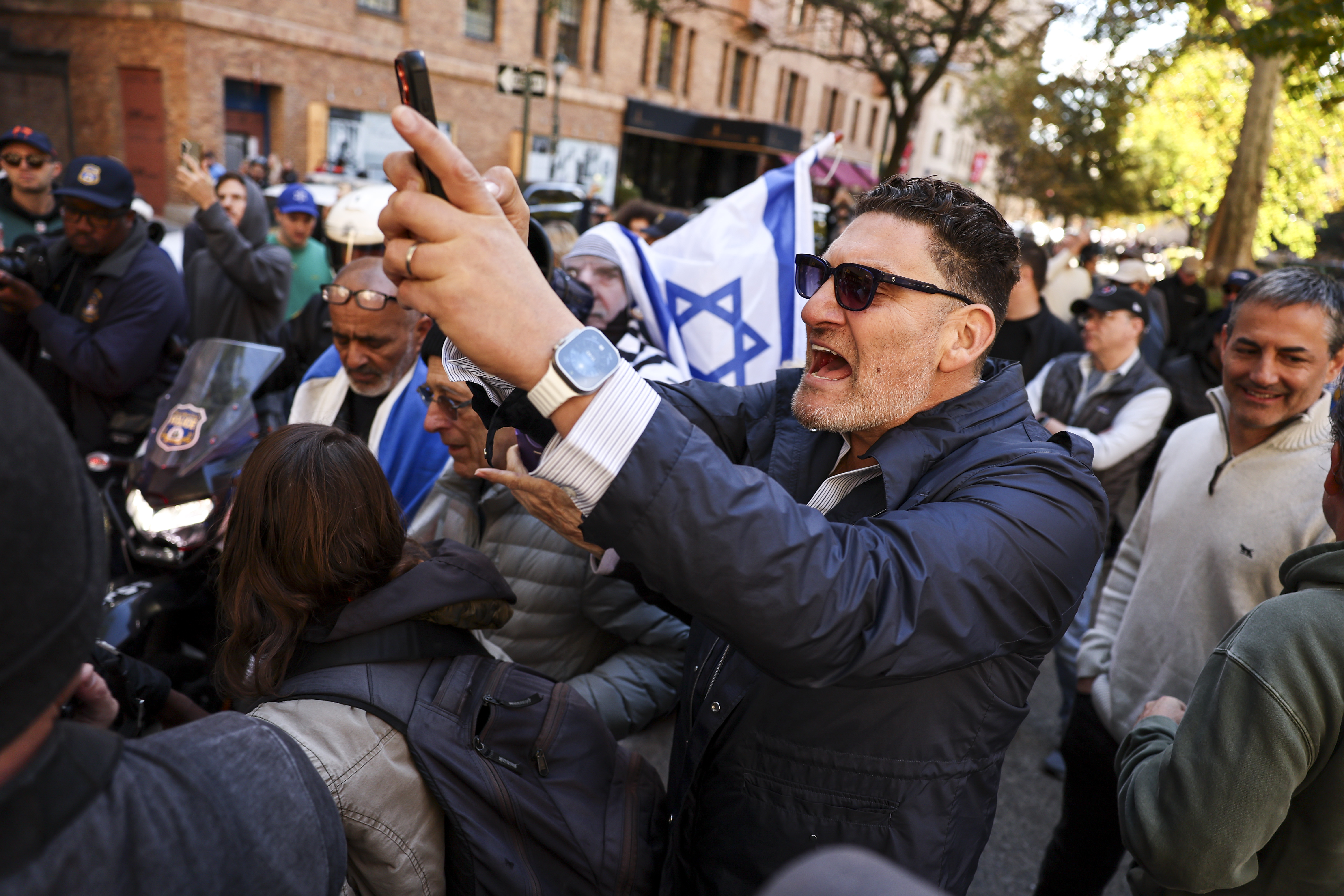
In the aftermath of terrorist attacks and devastating military campaigns, American Muslims and Jews have been unfairly lumped into identity groups, criticized for the way they worship and even for their origins.
Efforts like the widely condemned boycott of Jewish and Israeli businesses in Philadelphia, or the attempted cancellation of a film about an Israeli musician in Bryn Mawr two years ago, are deeply dangerous to democracy and human life.
We who believe in an inclusive, free, and fair America must always fight “othering” — dehumanizing and disrespecting people who may be different from us — based on religious identity or national origin.
To be clear: I do not support the actions of the Benjamin Netanyahu government. I admire and stand with the many Israelis and Palestinians working for peace and justice together, across numerous, diverse organizations. These local organizers are the people closest to the issue, with the most at stake.
Yet some people who are attempting to work for peace from the U.S. continue to confuse their concern with one country’s actions with the religious identity of a broader population affiliated with that country. There are two issues here. Is Israel a truly unique case? And is it fair to hold members of a diaspora responsible for the actions of a country of origin or even affiliation?
Some activists suggest Israel’s short history calls its very legitimacy into question. That’s wrong. Israel is older than most countries. Its 1948 founding predates African and Caribbean independence, along with the emergence of post-Soviet states. Israel actually predates the contemporary U.S., since Alaska and Hawaii didn’t become states until 1959.
But, critics say, Israel is uniquely problematic because it is an ethno-religious state. Like Sri Lanka and Thailand, Israel privileges one religion. Along with India and Ireland, Israel’s national identity tracks tightly with a single faith.
When activists denounce Zionism, they are pulling at this intersection of faith and national identity, but Zionism is a diffuse concept that continues to evolve. Many people who have been called Zionists are simply people who recognize Israel exists. Religious identity does not make Israel unique. The scale of violence it has recently engaged in, while horrifying, has also been advanced elsewhere.
In the global, inclusive hub that is the Philadelphia region, I hope my neighbors will continue to patronize the Russian and Ethiopian restaurants run by new and old Pennsylvanians. It would be unfair and un-American to target these business owners through guilt by association — even as the warfare in each associated context has led to more deaths than the horrific toll in Gaza. And yes, we should patronize these businesses even if advocates reveal they have given funding to ambulance services on Russian, Ukrainian, Ethiopian, or Tigrayan sides of the conflicts.
These grim comparisons bring neither joy nor justice. They underline the dangers of othering whole populations.
Despite these commonalities, lazy language strengthens the sense that there is some kind of exceptional nature to Israel. Take the common phrase “Arab-Israeli” conflict — a term that is strategically misleading and lethally incorrect. Egypt, Jordan, the United Arab Emirates, Bahrain, and Morocco maintain diplomatic relations with Israel, while intra-Arab warfare and repression have resulted in the Arab countries of Syria and Iraq each killing as many or more Arabs than Israel has.
The instability and othering across that region must not obstruct American inclusion.
I’ve been fortunate to break bread in Iranian restaurants, in Palestinian cafés, and with challah and hummus of Israeli origin. Our capacities to connect here cannot require passing identity tests affiliated with every person’s sprawling diasporic communities.
Two things about Israel stand out as unique. The country has a special, historic relationship with the United States. And Israel is the only Jewish nation-state in the world.
The first observation legitimately pulls Israel’s behaviors and policies in for tighter analysis by American citizens. But that would not explain questions about Israel’s very legitimacy, nor boycotts of anyone affiliated with it. Even as Iraq killed nearly 100,000 Kurds and China systematically repressed its Uyghur Muslim minority, human rights advocates call for justice, perhaps even regime change, but not for an end to the countries in question.
Israel’s Jewish identity cuts two ways. The vast majority of America’s six million Jewish citizens feel a special relationship with the country. Most often, while not endorsing any governing party’s platform or policies, that means affiliation with and commitment to Israel. This is a special opportunity and burden not felt in the same way by the U.S. community of Muslims, whose faith holds majority status in 50 countries worldwide, among which more than 20 officially recognize Islam as the state religion.
This relationship drives some Jewish individuals to want to hold the country to a higher standard. This is an admirable impulse, but in practice it can overlap with critiques that come to Israel for a much older reason — antisemitism.
That ideology continues to metastasize.
In October 2018, a gunman walked into Pittsburgh’s Tree of Life synagogue, killing 11 worshipers and wounding six others. This attack — the most significant attack on Jewish life in U.S. history — took place in the context of rising antisemitism and a long history of Jewish alliances with other minoritized groups. The murderer in the Tree of Life massacre was guided by white supremacist rationales. He criticized HIAS, a historically Jewish humanitarian nonprofit that assists refugees of all faiths and nationalities.
Across this century, HIAS has helped resettle people from many Muslim-majority countries. Refugees from Afghanistan, Iraq, Somalia, and Syria have immigrated here, where an array of nonprofit organizations, churches, mosques, and synagogues have welcomed them.
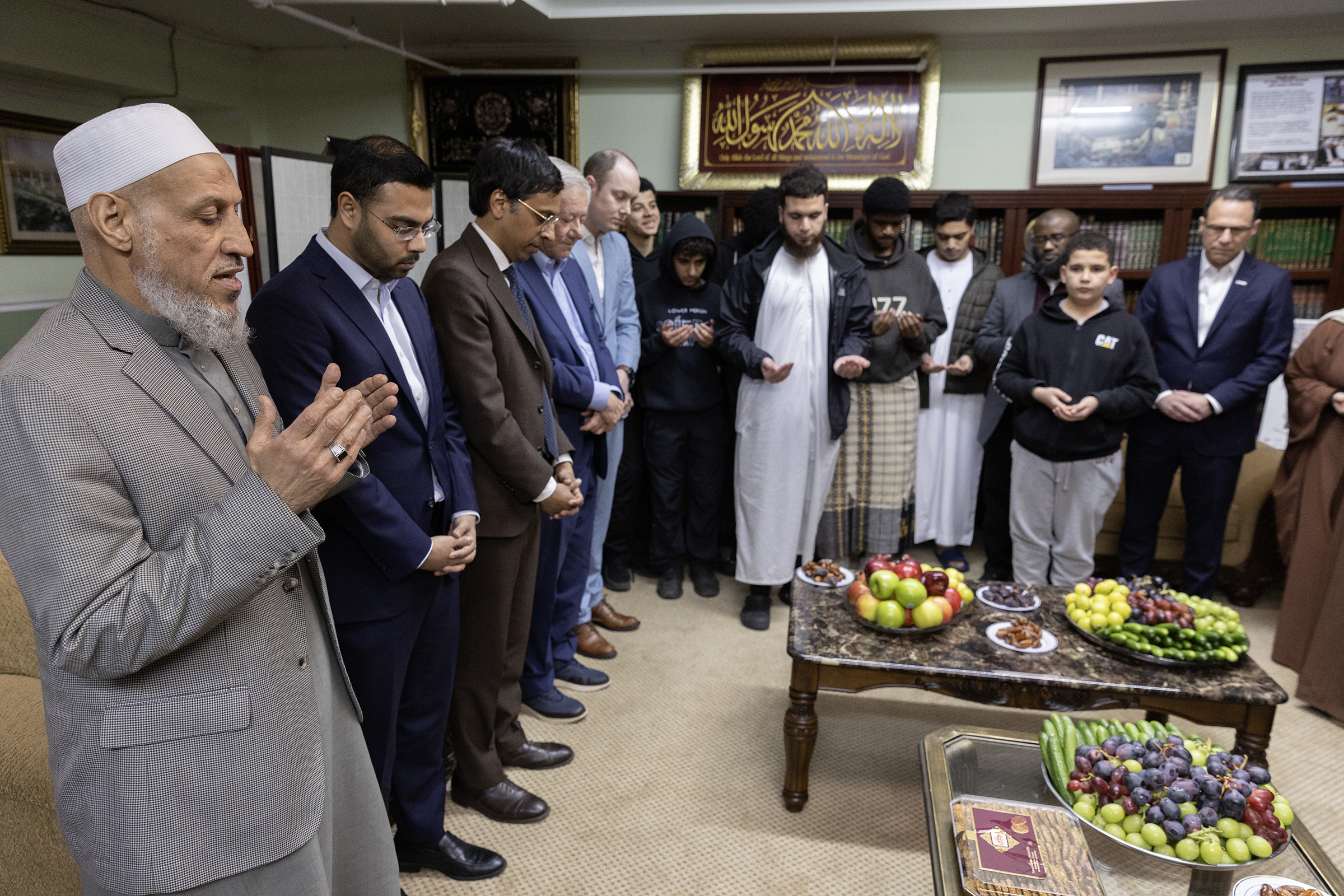
Our region and our state embody this inclusion. Gov. Josh Shapiro, who is inspiring about his Jewish faith, oversaw the largest state grant ever given to a Muslim organization. The Philadelphia chapter of the Council on American-Islamic Relations has repeatedly condemned antisemitic attacks on synagogues.
As Palestinian and Israeli justice and peace activists call for full rights of recognition and equality across their region, one of the most powerful things we can do here is to continue to prove that interfaith and interethnic community is possible. Such community need not sidestep the very real challenges and conflicts faced in the Middle East, but we must start with seeing one another as human beings, with dignity and rights — not caricatures of faith or nationality. We can also support peacemakers abroad.
The best version of the American tapestry is woven with extraordinary diversity of faith, background, and national origin. That is our original and ongoing aspirational promise.
In the most recent elections, newly elected national officials and state governors arrived with agnostic, Jewish, Muslim, evangelical Christian, and Catholic identities. The incoming electeds are Asian, Black, white, Latino, Indigenous, and many combinations thereof.
This is the revolutionary promise of the United States. To advance it, we must always and incessantly fight othering in all of its forms. That requires us to be analytically rigorous and perpetually suspicious of sweeping categorizations of any population.
Leave a Reply