Tag: Haverford

  • The businesses residents most want | Inquirer Haverford

    The businesses residents most want | Inquirer Haverford

    Hello, Haverford!

    Residents recently tallied a list of the businesses they’d most like to see open in the township. Here’s what those include. Also this week, a township native is gearing up to open a nearby general store, the county’s former emergency services director stands trial, plus students and alumni are urging Haverford College to protect free speech after it settled a recent lawsuit.

    In other news: Handel’s is finally opening and the township day is nearly here.

    — Lisa Dukart (haverford@inquirer.com)

    P.S. We want your feedback! Tell us what you think of the newsletter by taking our survey or emailing us back here.

    If someone forwarded you this email, sign up for free here.

    Residents want more communal spaces and safer streetscapes
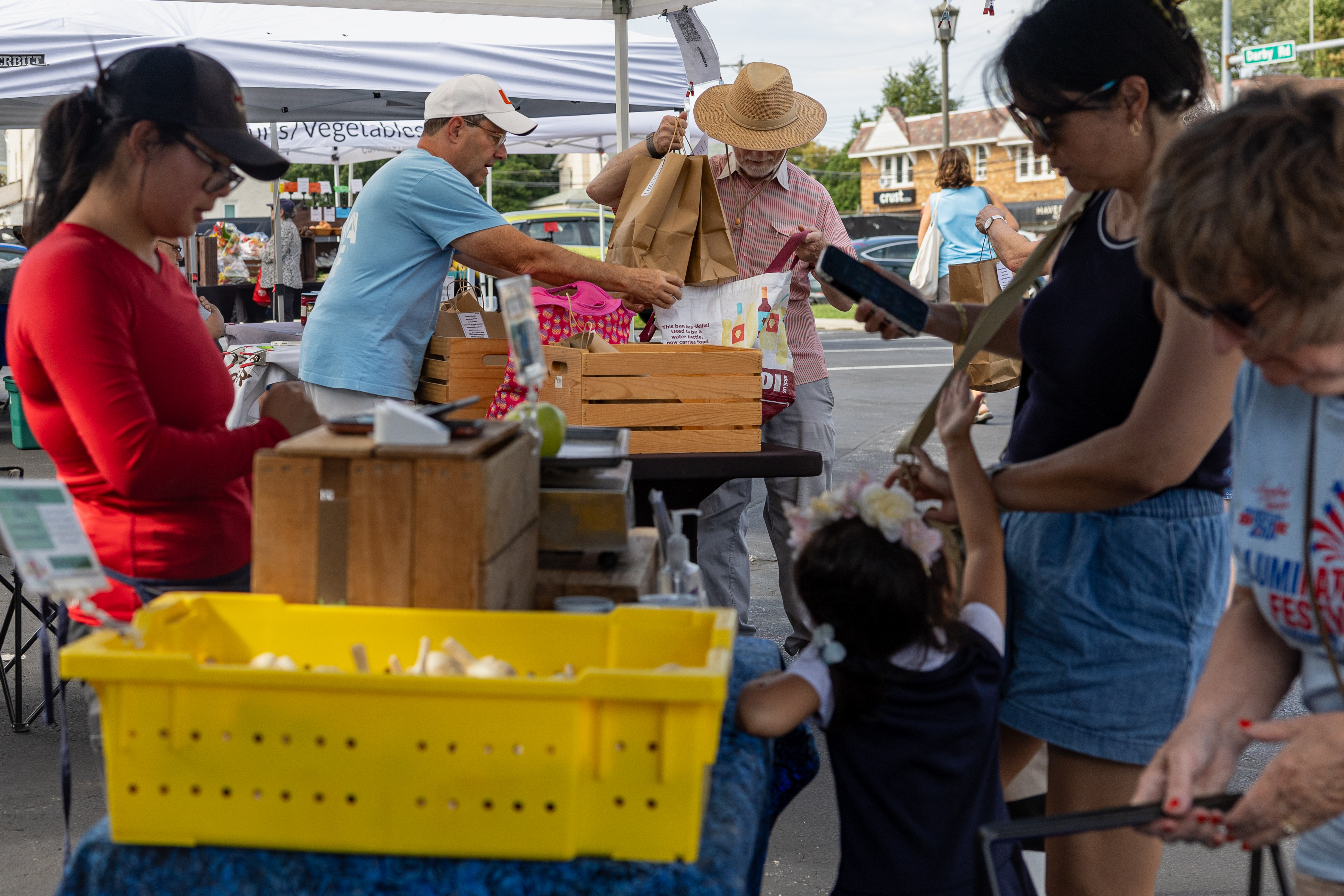
    An indoor farmers market, a multi-vendor marketplace, a movie theater, and a bakery are among the businesses residents most want to see open in the township, according to the latest consumer survey conducted by Discover Haverford.

    The biannual survey also shows that residents want more family-friendly businesses, communal spaces, and revitalized streetscapes to make shopping more accessible.

    Discover Haverford uses the data to help recruit businesses and inform potential small business owners about what’s most in demand. That was the case with Moore Books, which opened two years ago on West Eagle Road.

    The Inquirer’s Denali Sagner digs into the data and what respondents said they most want right now.

    💡 Community news
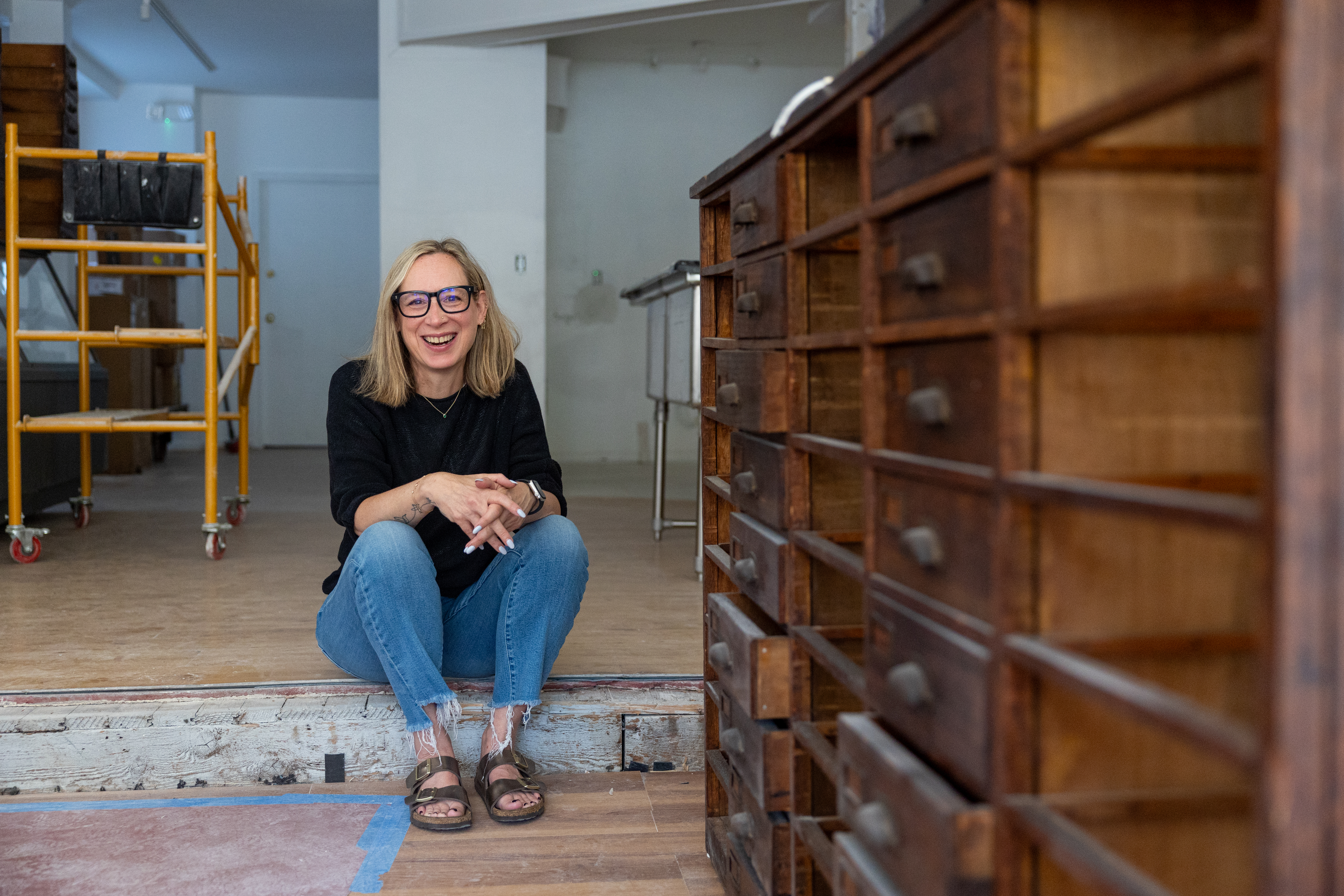
    Jennifer Kurland is opening a general store nearby. Aidan T. Gallo / Staff Photographer

    🗺️ Other nearby news

    • A Penn Wynne man has been charged with securities and wire fraud after allegedly defrauding investors of $8.8 million through his cannabis start-up, KindManage, LLC, over the course of nearly a decade. Prosecutors say David Dinenberg, 54, allegedly used hundreds of thousands of dollars of company funds for personal use such as his sons’ college tuition, social club memberships, and a luxury home rental in California.
    • Longtime Delaware County resident Anthony “Tony” Oriente made it to the bonus round on an episode of Wheel of Fortune last week, ultimately winning over $25,000, as well as a trip to Vancouver Island. Oriente, who lives in Media, has previously appeared on The Price is Right and Deal or No Deal. Catch the episode here.

    🏫 Schools briefing

    • Haverford High School lands at No. 33 in the latest U.S. News & World Report rankings of the best public high schools in the state. Nationwide, the school ranks No. 926.

    🍽️ On our plate

    • The long-awaited Handel’s outpost at 13 W. Benedict Ave. is opening today at 11 a.m. The popular ice cream spot took over the former Al Pastor location, which shuttered early this year.
    • Village Cafe opened at 1422 Manoa Rd. last week. The new Wynnewood spot serves a selection of coffees and pastries.
    • Vintner’s Table opened its Ardmore outpost on Monday. Located at 24 Cricket Ave., the Italian-inspired wine bar has a salumeria and lifestyle boutique.
    • Bryn Mawr’s The Bakery House opened its second location over the weekend at 35 W. Lancaster Ave. in Paoli. It sells treats such as custom cakes, pastries, and pies, as well as the viral dot cakes.

    🎳 Things to do

    🗓️ Haverford Township Day: Now in its 31st year, the annual community celebration features a parade, vendors, multiple musical performances, food, and kids activities. There’s also a 5K Saturday morning. ⏰ Saturday, Oct. 3, 9 a.m.-4 p.m. (rain date: Oct. 4) 💵 Pay as you go 📍 Along Darby Road

    🎨 Delco Arts Week: The annual countywide event pays homage to the region’s varied art scene. ⏰ Saturday, Oct. 3-Sunday, Oct. 11, times vary 💵 Prices vary 📍 Throughout Delaware County

    🛍️ Clover Market: Browse a curated selection of over 90 vendors, hear live music, and grab a bite to eat from a food truck. ⏰ Sunday, Oct. 4, 10 a.m.-4 p.m. 💵 Pay as you go 📍 7 N. Bryn Mawr Ave., Bryn Mawr

    🍷 Wine and Wander: Explore Stoneleigh after hours while sampling four types of wines. ⏰ Thursday, Oct. 8, 5:30-7:30 p.m. 💵 $65-$75 📍 Stoneleigh

    🏡 On the market

    A fully updated Ardmore Colonial
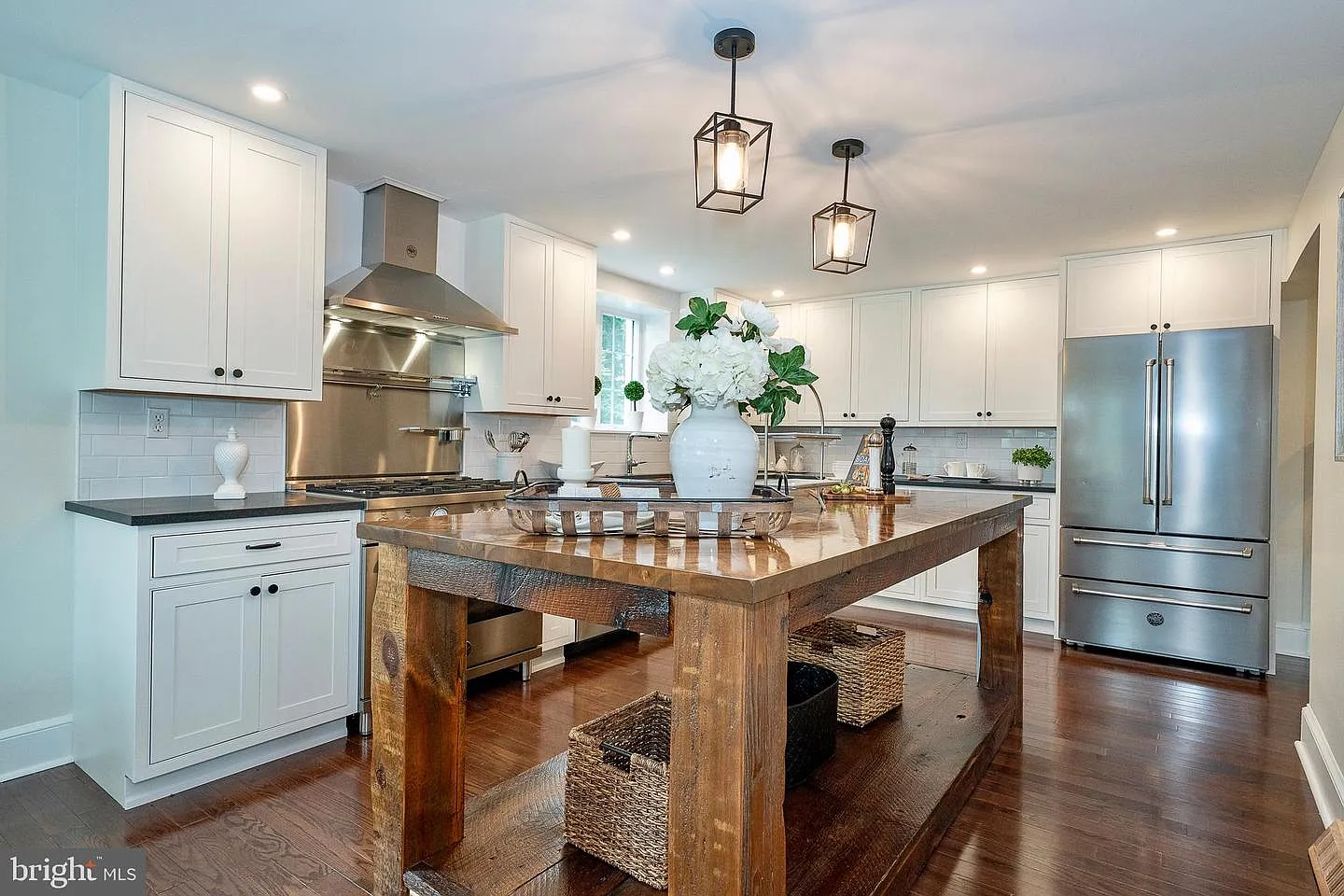
    This 1945 stone Colonial has undergone a full renovation as well as a two-story expansion to bring it into the 21st century. The first floor features a living room, kitchen with stainless steel appliances and honed granite countertops, a dining area with a bay window, and the newly added family room. All four bedrooms are upstairs, including a new primary suite with a walk-in closet. The home also has a finished basement and a patio out back.

    See more photos of the home here.

    Price: $824,900 | Size: 2,192 SF | Acreage: 0.37

    Each week we feature an interesting local listing in or around the township. Have one we should consider? Email us at haverford@inquirer.com.

    🗞️ What other Haverford residents are reading this week:

    By submitting your written, visual, and/or audio contributions, you agree to The Inquirer’s Terms of Use, including the grant of rights in Section 10.

    This suburban content is produced with support from the Leslie Miller and Richard Worley Foundation and The Lenfest Institute for Journalism. Editorial content is created independently of the project donors. Gifts to support The Inquirer’s high-impact journalism can be made at inquirer.com/donate. A list of Lenfest Institute donors can be found at lenfestinstitute.org/supporters.
  • Alumni, students call on Haverford College to protect speech, academic freedom following antisemitism legal settlement

    Alumni, students call on Haverford College to protect speech, academic freedom following antisemitism legal settlement

    A group of alumni and students called on Haverford College to “preserve the rights to free speech and academic freedom” after the college settled a lawsuit alleging it allowed antisemitic speech on campus and failed to support Jewish students amid a rising tide of anti-Israel rhetoric.

    In an open letter, nearly 340 alumni and students of Haverford, Swarthmore, and Bryn Mawr Colleges voiced opposition to the settlement, writing it would ”abrogate the rights of all Haverford community members to academic freedom, free speech, and the thoughtful exchange of ideas.”

    Concerned Jewish Faculty and Staff, a Massachusetts-based membership organization of Jewish university employees, published the Sept. 14 letter, which states that its signatories “affirm the necessity of combating antisemitism and all other forms of prejudice” while being “particularly mindful of the safety and rights of Palestinian students.” The letter references an act of violence against a Palestinian student in 2023. Kinnan Abdalhamid, a West Bank-born Haverford College student, was shot in Vermont that year.

    The letter comes as the Trump administration has threatened sanctions and launched investigations into antisemitism on college campuses in the wake of the Israel-Hamas war and ensuing campus protests, actions that some advocacy groups say have suppressed pro-Palestinian speech on campus.

    Haverford was sued in 2024 by a group of Jewish students, faculty, parents, and alumni represented by the Deborah Project, a pro-Israel legal group based in Merion Station that has filed suits against a number of schools and universities since the start of the war in 2023.

    The lawsuit, filed in U.S. District Court for the Eastern District of Pennsylvania, said Haverford students faced discrimination for supporting Israel, including not being allowed to speak during campus-wide gatherings and being disrupted by bullhorns and cowbells during a meeting about antisemitism.

    Ally Landau, a plaintiff and a student at the time of the lawsuit, alleged she was pressured to cancel an event promoting antisemitism awareness as it would prove “too antagonistic to the pro-Palestinian students on campus.”

    After the lawsuit was initially dismissed by a federal judge, the students filed an updated complaint, and the college settled with the Deborah Project in August. Under the settlement terms, Haverford College president Wendy Raymond released a public letter affirming the college’s support of Jewish, Israeli, and Zionist students. The college confirmed that campus events hosted by Jewish or Israeli students would receive the same security as other campus programs and agreed to form an antisemitism committee and require annual antisemitism awareness training for students, faculty, and staff.

    The alumni and students who signed the Sept. 14 letter say the settlement designates supporters of one particular political belief, Zionism, as a protected class, a move they describe as stifling legitimate political debate and misrepresenting the beliefs of many Jewish people. The group wrote that the settlement follows a larger trend “in which organizations like the Deborah Project, together with politically-motivated operatives in the Trump administration, have weaponized accusations of antisemitism in order to silence criticism of Israel on campus.”

    Lori Lowenthal Marcus, the Deborah Project’s legal director, said in an email that accusing the organization of weaponizing antisemitism “evokes the rank racism of the pre-Civil Rights era when racists demanded the law not be used to shield Black Americans from harassment and other harms.”

    The student and alumni group has no legal standing to make demands regarding the settlement, Lowenthal Marcus wrote. She added that they “could be subject to legal action if they insist on continuing on their path of tortious interference.”

    “Thank them for supplying their names and affiliations, so we know how to reach them,” Lowenthal Marcus wrote.

    Dominic Mercier, a spokesperson for Haverford College, wrote in an email that the college understands “that the settlement has evoked strong feelings from many community members, both positive and negative,” and that it is unable to share the settlement in its entirety.

    The settlement did not change the college’s civil rights policy, nor did it change its official list of protected classes, which does not list Zionism, according to Mercier’s email. Community members are not prohibited from criticizing Israel or Zionist beliefs, but the college “prohibits conduct that crosses the line from protected speech into discrimination or harassment on the basis of a protected class,” Mercier wrote.

    Academic freedom and freedom of expression “remain central to our shared experience and community expectations, and are not in tension with our continued commitment to be a campus free from acts of harassment and discrimination against any community members,” Mercier wrote.

    Raymond, in her August letter, wrote that all students, including those who support Zionism, are “welcome and enjoy equal access to the College and all of its educational programs and activities” and that acts of discrimination against Jewish, Israeli, and Zionist students “violate College policy and are antithetical to Haverford’s mission, values, and standards.”

    The alumni and student letter called on Haverford to declare that the college’s nondiscrimination and anti-harassment policies extend to Palestinian students. It also included demands that the college include material related to Islamophobia and anti-Palestinian racism in its annual Title VI training and ensure that antisemitism training does not “equate Jewishness with support for Israel, nor erase the existence of Palestinians.”

    The letter also asked Haverford to affirm that members of a newly established antisemitism committee would not include individuals unaffiliated with the college.

    The committee, whose members were announced the same day the letter was published, includes two Haverford professors; a member of the college’s board of managers; a student; the college’s director of interfaith life and practice; the director of the Rohr Center for Jewish Life; and a Haverford alumnus.

    It will also include two members not directly affiliated with Haverford: Michael Balaban, president and CEO of the Jewish Federation of Greater Philadelphia, and Jeremy Winaker, a rabbi and the executive director of the Greater Philly Hillel Network, which serves Haverford’s Jewish Student Union.

    Clarification: This story has been updated to clarify that Haverford College and The Deborah Project settled an updated complaint after an initial complaint was dismissed.
  • Inside the township’s composting program | Inquirer Haverford

    Inside the township’s composting program | Inquirer Haverford

    Hello, Haverford!

    Welcome to the first edition of The Inquirer’s weekly newsletter bringing you the most pertinent news from in and around Haverford Township. Each week, you can expect a mix of the biggest community stories, school district and municipal government updates, restaurant and retail comings and goings, as well as local events you won’t want to miss.

    Here’s what’s going on this week: The township’s new compost program is helping turn food waste into compost. We look at how it’s feeding area crops. Also noteworthy, a local gallery owner has been accused of being part of a scheme to sell fraudulent artwork, township resident and Super Bowl champion Brandon Graham has his eye on the future, plus, where to go leaf peeping this fall.

    As we get started, tell us what you think of our newsletter by emailing us back here or taking our survey. And feel free to drop us a line any time, whether it’s with tips, coverage ideas, or just to say hello.

    See you back here next week!

    — Lisa Dukart (haverford@inquirer.com)

    If someone forwarded you this email, sign up for free here.

    The township’s organic waste is being repurposed as part of a circular food system

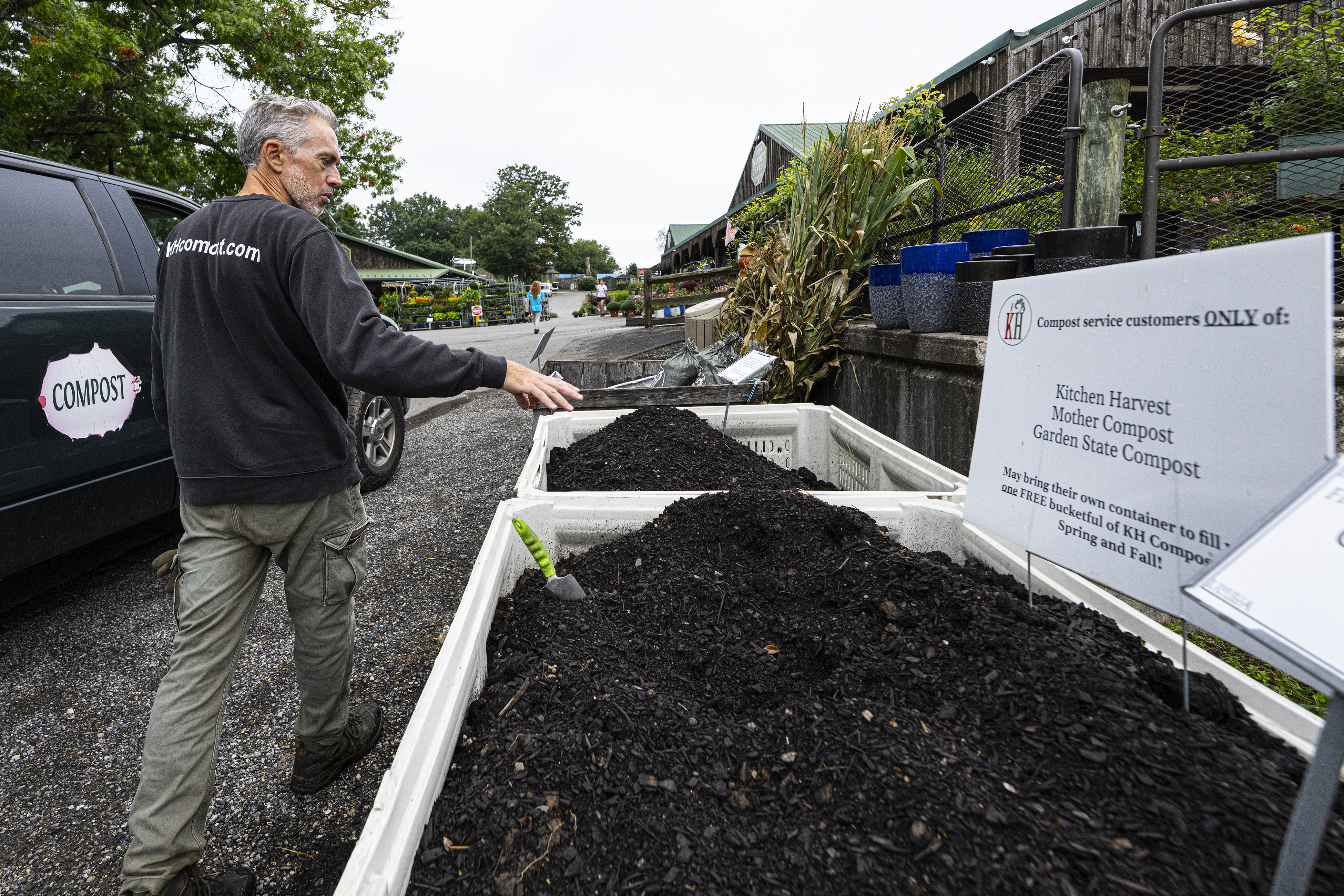
    Chris Pieretti’s Kitchen Harvest turns organic waste into compost at Linvilla Orchards.Jose F. Moreno / Staff Photographer

    Earlier this year, Haverford Township launched a curbside composting program, becoming the latest local municipality to seek ways to divert organic materials from landfills.

    But what happens to those banana peels, eggshells, and coffee grounds after they’re taken away? Thanks to the initiative, they’re being repurposed at Linvilla Orchards, where composting company Kitchen Harvest is converting food scraps into nutrient-rich, soil-like compost. In turn, the compost feeds Linvilla’s crops and enriches local gardens, creating a circular system.

    In July, 162 tons of organic material was collected, township manager Dave Burman said, adding that the amount of trash collected was down 141 fewer tons this July compared to last July.

    The Inquirer’s Denali Sagner digs into the township’s free program and how residents are diverting waste.

    💡 Community news

    🗺️ Other nearby news

    🏫 Schools briefing

    • Residents can meet with Superintendent Matthew C. Hayes at tomorrow morning’s community connection event at the administration building. The discussion will focus on school year updates.
    • The Haverford School is looking to demolish several buildings on Panmure Road and Buck Lane to make way for two artificial turf fields, a move that some area residents oppose, citing traffic concerns. The township’s planning commission earlier this month said it would not make a decision until a traffic study had been completed.
    • Manoa Nursery School at 153 N. Eagle Rd. has been shut down after operating without a license, but expects to open under new management shortly, the Daily Times reports.

    🍽️ On our plate

    • A La Mousse owner Anna Chen is working to improve mooncakes’ reputation by giving the intricate but otherwise unimpressive treats a twist, The Inquirer’s Kiki Aranita writes, including stuffing them with a range of fillings and flavors. Find Chen’s take on mooncakes at A La Mousse’s Narberth outpost ahead of the Chinese Mid-Autumn Festival tomorrow.
    • Nanu’s Hot Chicken reopened last week at 59 W. Lancaster Ave. in Ardmore after being forced to close at the end of July when a vehicle damaged the store.
    • Former Sixers icon Julius “Dr. J” Erving will be at the Fine Wine and Good Spirits on Greenfield Avenue in Ardmore Saturday at 2 p.m. to sign pre-purchased bottles of American Harvest Organic Vodka.

    🎳 Things to do

    🐑 The Farmstead Fair: Harriton House’s annual celebration includes tours, cooking demonstrations, a beer garden, vendors, games, and pumpkin decorating. ⏰ Saturday, Sept. 26, 10 a.m.-4 p.m. 💵 Pay as you go 📍 Harriton House

    🎸 Haverford Music Festival: Now in its 14th year, the festival includes performances by Grammy Award-nominated singer-songwriter Shannon McNally, blues artist Buffalo Nichols, and bluegrass outfit Demolition String Band. There will also be food trucks, kids activities, and a beer and wine garden. ⏰ Saturday, Sept. 26, noon-9 p.m. 💵 Free 📍 Intersection of Eagle and Darby Roads

    🎵 Imagine Lennon Live: Scot Arch and the Instant Karma Horns will perform a mix of Beatles tunes and John Lennon’s solo hits. ⏰ Saturday, Sept. 26, 7:30-10 p.m. 💵 $26.50-$36.70 📍 Kelly Center

    🌻 Eco-Printing with Wildflowers Workshop: Summer may officially be over, but that doesn’t mean its remnants can’t still make beautiful art. ⏰ Sunday, Sept. 27, 10 a.m.-1 p.m. 💵 $85-$95 📍 Stoneleigh

    🎶 Matchbox 30: The Tim William Bands will pay tribute to Matchbox 20 for the 30th anniversary of its iconic album Yourself or Someone Like You. ⏰ Wednesday, Sept. 30, 7:30 p.m. 💵 $29.50-$71.42 📍 Ardmore Music Hall

    🏡 On the market

    An Ardmore home with a chic, updated interior

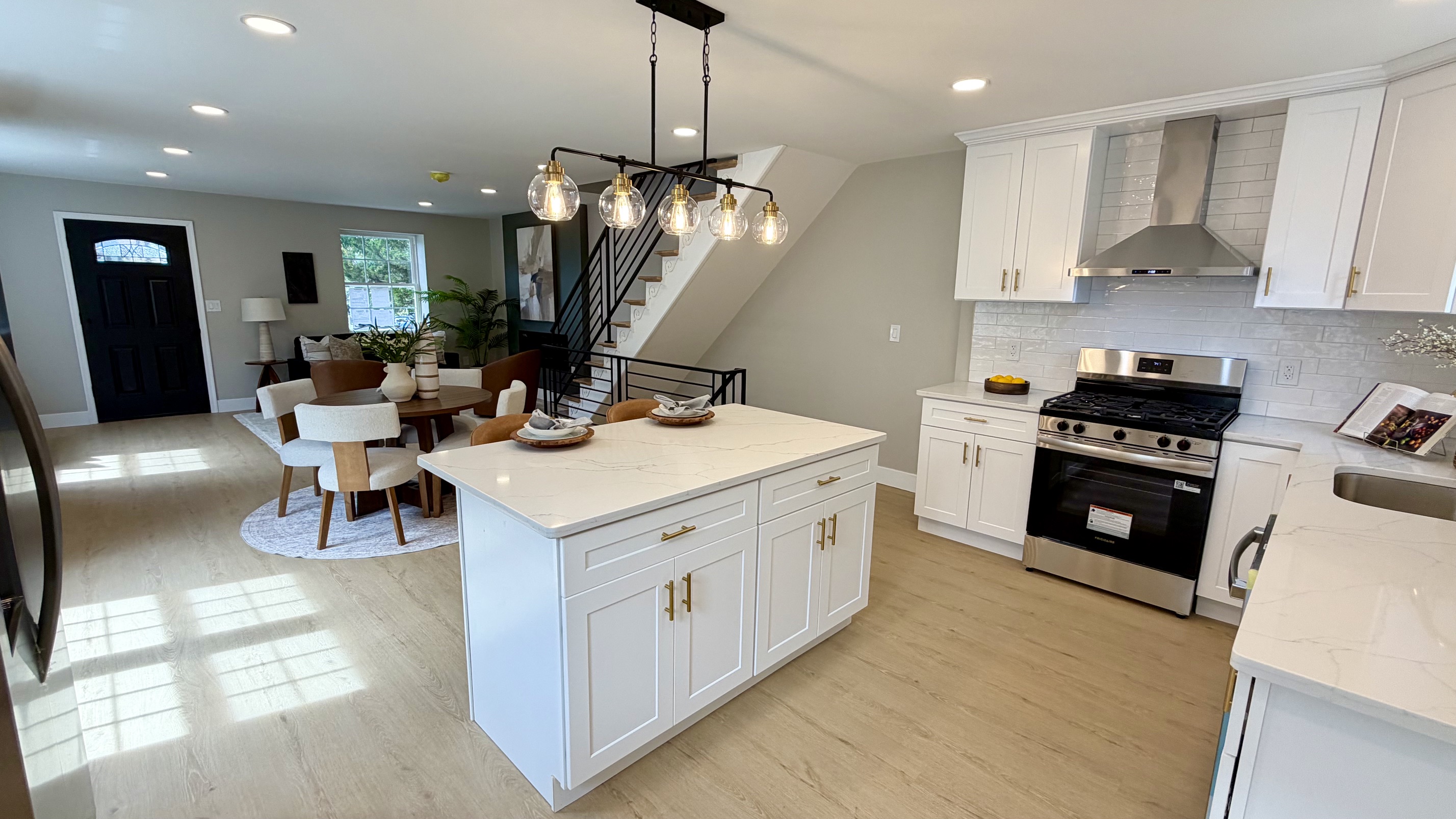
    Built in 1945, this three-bedroom Ardmore home has gotten a modern interior makeover to give the first floor an open-concept layout. The space connects a living room with an electric fireplace to a dining area and the kitchen, which has an island, stainless steel appliances, and quartz countertops. All three bedrooms are upstairs, and there’s a finished basement with a half bathroom downstairs. There’s an open house Saturday from noon to 2 p.m.

    See more photos of the home here.

    Price: $499,900 | Size: 1,260 SF | Acreage: 0.06

    Each week we feature an interesting listing in or around the township. Have one we should consider? Email us at haverford@inquirer.com.

    📈 Haverford market report

    • Median listing price: $595,000 (up $2,500 from July) 📈
    • Median sold price: $582,500 (down $7,500 from July) 📉
    • Days on the market: 32 (up three days from July) 📈

    This Haverford market report is published on a monthly basis. Above is data for August from realtor.com.

    🗞️ What other Haverford residents are reading this week:

    By submitting your written, visual, and/or audio contributions, you agree to The Inquirer’s Terms of Use, including the grant of rights in Section 10.

    This suburban content is produced with support from the Leslie Miller and Richard Worley Foundation and The Lenfest Institute for Journalism. Editorial content is created independently of the project donors. Gifts to support The Inquirer’s high-impact journalism can be made at inquirer.com/donate. A list of Lenfest Institute donors can be found at lenfestinstitute.org/supporters.
  • Charles P. Baker III, celebrated cofounder of Baker Industries for the ‘least employable,’ has died at 101

    Charles P. Baker III, celebrated cofounder of Baker Industries for the ‘least employable,’ has died at 101

    Charles P. Baker III, 101, formerly of Radnor, celebrated cofounder of Baker Industries, longtime workplace for the “least employable,” former owner of the C.P. Baker & Co. chemical firm, Army veteran, national squash champion, mentor, and volunteer, died Wednesday, Sept. 16, of congestive heart failure at HarborChase assisted living community in Wilmington.

    Born in Philadelphia, Mr. Baker grew up in the old Colonial Hotel at 11th and Spruce Streets in Washington Square West. He and his wife, Louise, founded Baker Industries in 1980, and the workforce development nonprofit has hired, trained, and mentored more than 12,500 workers with physical and intellectual disabilities, substance use disorders, recent periods of incarceration, and housing insecurity who could not find jobs elsewhere.

    Their own son, Justin, lives with epilepsy and, when he could not find suitable employment years ago, Mr. Baker and his wife started their own two-person mail order packaging firm in their Strafford garage. Their son was their first hire.

    “We decided, if we’re going to start something like this, let’s go for the people who need it the most,” Mr. Baker told The Inquirer in 1998, “the ones who are least employable.”

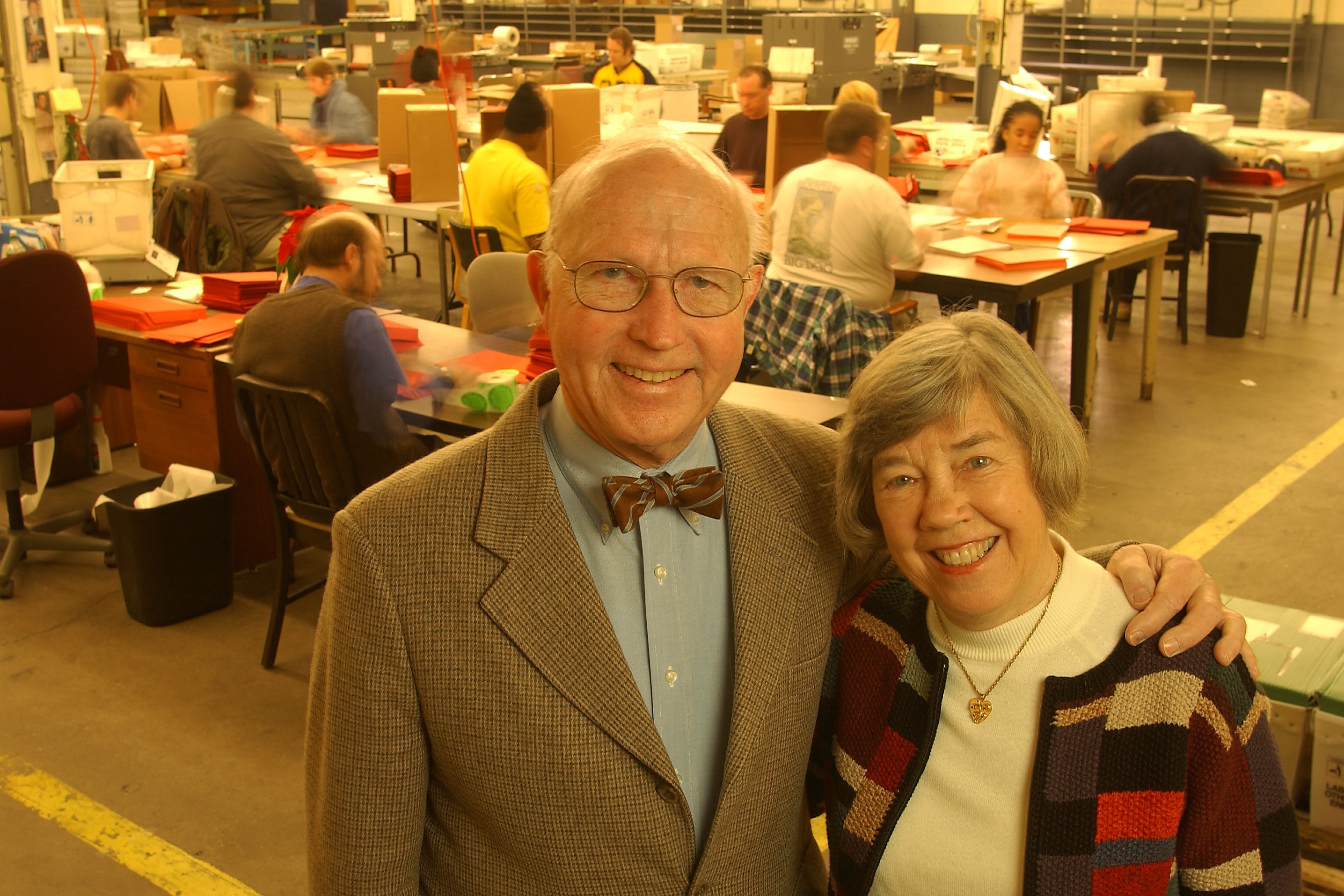
    Mr. Baker and his wife, Louise, stand inside their Baker Industries building in Malvern in 2003. Michael Bryant / Staff Photographer

    For nearly five decades, Baker Industries has contracted light industrial and office work from hundreds of businesses, and operated facilities in Philadelphia, Malvern, and elsewhere. Employees are paid an hourly wage, offered additional training, and encouraged to attend workshops, social events, and support group meetings.

    The company motto is “providing a steppingstone to regular employment,” and many workers have moved on to higher-paying jobs elsewhere. “We have a philosophy of work as rehabilitation,” Mr. Baker told the Daily News in 1988. “The goal is to show these people they can do a whale of a lot more than they think they can do.”

    Mr. Baker served as the unpaid president at Baker Industries until 2002 and then on the board of directors. In the 1950s, he assumed control of his family’s small chemical company, C.P. Baker & Co., and he expanded it before selling it in 1980.

    “Charlie and Weezie Baker believed there is healing in work,” colleagues at Baker Industries said in a Facebook tribute on his 101st birthday in June. “Not just jobs. Work. Showing up. Being part of something. Contributing alongside others.”

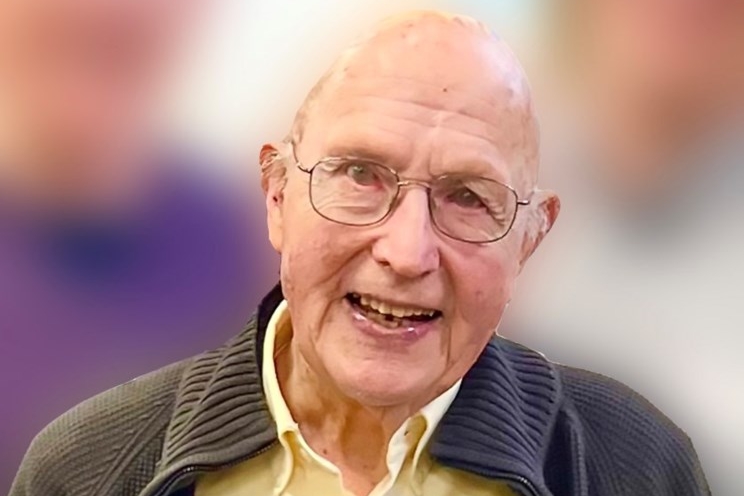
    Mr. Baker played many roles at Baker Industries.Baker Industries

    Turk Thacher, vice board chair at Baker Industries, said: “Charlie was beloved. He was kind to everybody.”

    Mr. Baker, his wife, and their company were featured often on TV shows, and in The Inquirer, the Daily News, and other publications. They won many awards for their community service and innovative business model.

    “I was grateful to have their guidance,” Nic Watson, president of Baker Industries, said, “and we will follow their example for years to come.”

    In 1991, the company was named an inspirational Point of Light by President George H.W. Bush. In 2004, Mr. Baker and his wife earned the legacy award for “community generosity” from the Chester County Community Foundation.

    “They went above and beyond their own self-interest,” a foundation official told The Inquirer then.

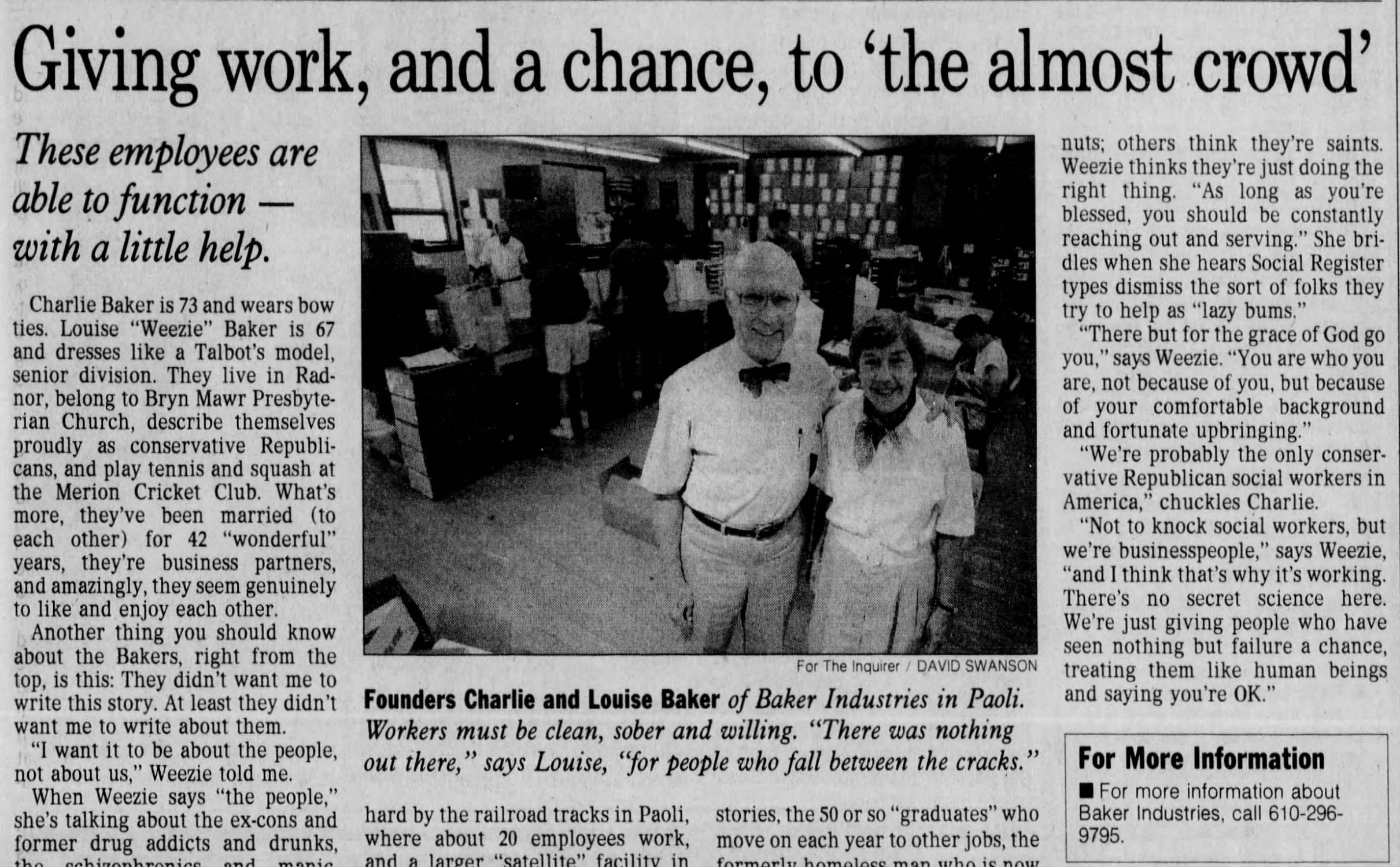
    This photo and article about Mr. Baker were published in The Inquirer in 1998.Newspapers.com

    Away from work, Mr. Baker was an avid squash player, skier, and sailor. He won the U.S. national hardball singles squash championship six times in the 80-and-older division from 2006 to 2016, skied into his 70s, sailed into his 80s, and played squash and tennis at the Merion Cricket Club until recently.

    He graduated from the U.S. Military Academy in 1946 and served more than seven years in the Army. He was stationed in Europe and rose to captain. His family called him a “relentlessly joyful spirit” in a tribute and said: “The world was a better place for his presence.”

    Charles Pitman Baker III was born June 24, 1925, in Philadelphia. His father, Charles Jr., was manager at the old Colonial Hotel, and Mr. Baker told stories of dropping water balloons on passing pedestrians from windows when he was very young and spending summers at the beach and on boats with the Ocean City Yacht Club.

    He was a star squash player at the Haverford School and known by classmates as “the Arm,” his 1943 senior yearbook said, “because of the vicious way he wields a racket.” His mother died when he was 11.

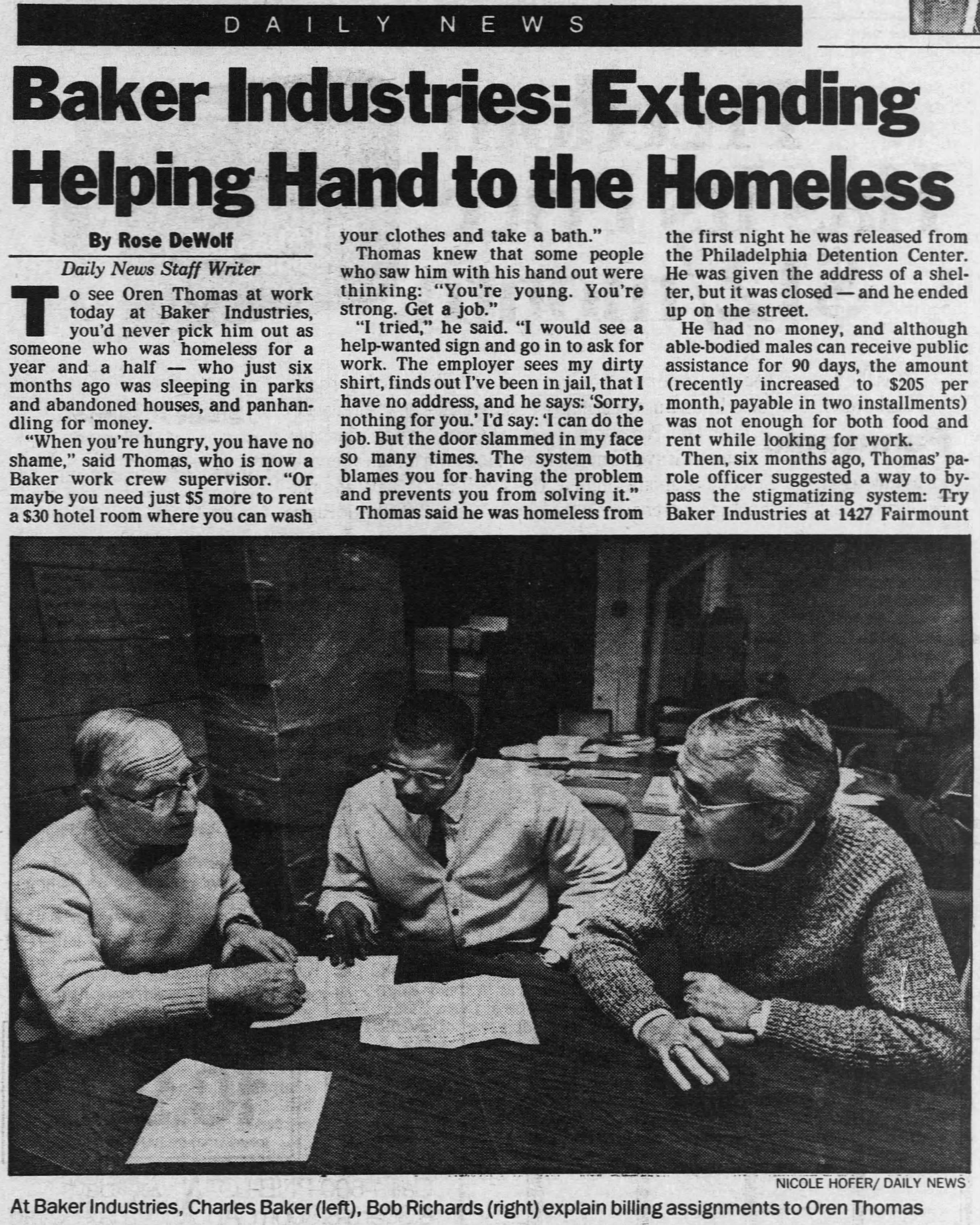
    This photo and article about Mr. Baker (left) appeared in the Daily News in 1990.Newspapers.,com

    He met Louise Wilhelm while water-skiing in Ocean City, and they married in 1955, and had sons Charles IV and Justin and a daughter, Sandra. His wife died in 2025.

    Mr. Baker and his wife attended Wayne Presbyterian Church, and he was known for his bow ties and wide smiles. He was funny, his daughter said, and liked to sing show tunes anytime anywhere, and write corny poems on birthday cards.

    “He was a wonderful dad who loved his family,” his daughter said. His family said in a tribute: “His legacy of service, humor, and kindness will live on for many generations to come.”

    His wife told The Inquirer in 2004: “Charlie has a kind heart.”

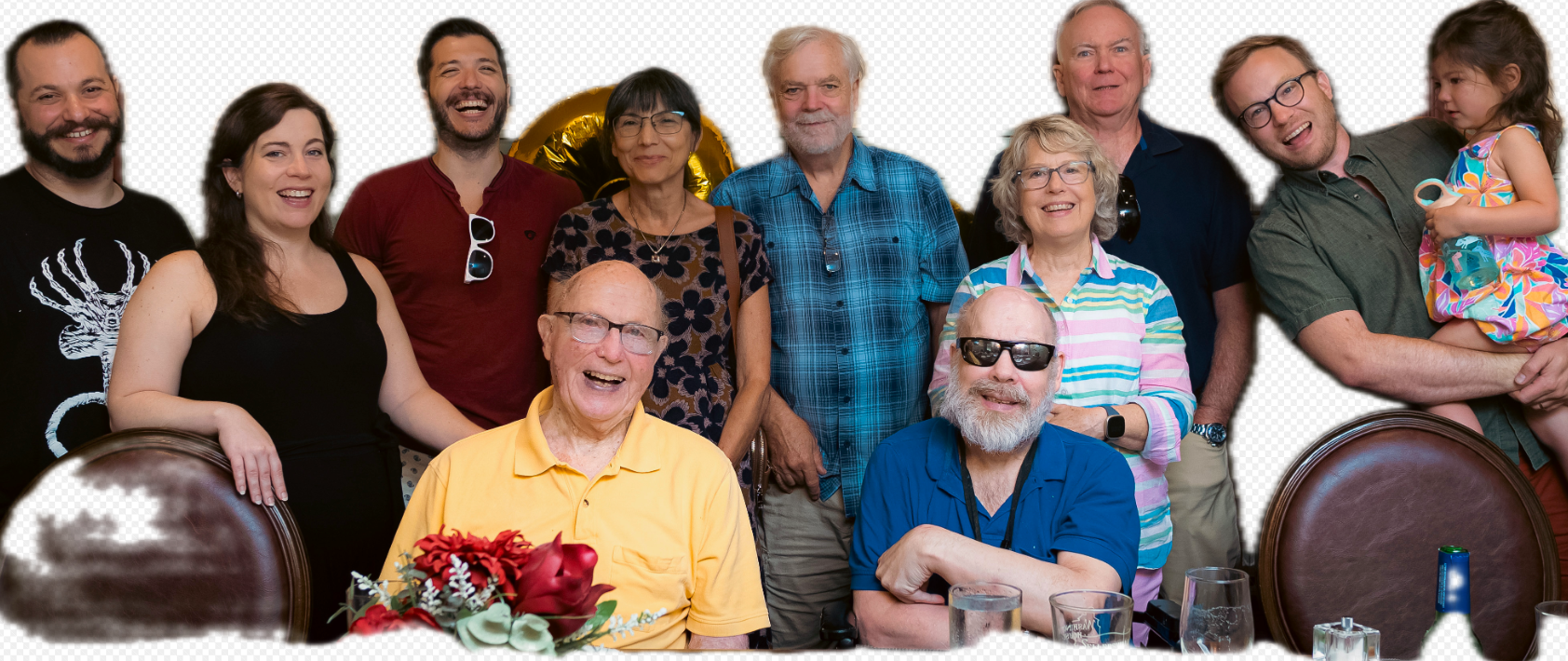
    Mr. Baker (front left) celebrated his 100st birthday in June 2025 with his family.Courtesy of the family

    In addition to his children, Mr. Baker is survived by four grandchildren, five great-grandchildren, and other relatives. Two sisters died earlier.

    Visitation with the family is to be from 10 to 11 a.m. Saturday, Oct. 17, at Wayne Presbyterian Church, 125 E. Lancaster Ave., Wayne, Pa. 19087. A celebration of his life is to follow. Bow ties are optional but encouraged, the family said.

    Donations in his name may be made to Baker Industries, 184 Pennsylvania Ave., Malvern, Pa. 19355.

    His wife told The Inquirer in 2004: “Charlie has a kind heart.”Baker Industries
  • Curbside compost is trending in the Philly suburbs. In Delco, many residents’ scraps are ending up at Linvilla.

    Curbside compost is trending in the Philly suburbs. In Delco, many residents’ scraps are ending up at Linvilla.

    Fifteen years ago, Chris Pieretti was just trying to get people to come around on compost.

    Now, the Upper Darby resident and compost aficionado spends his days traversing the region in his truck, collecting a potpourri of food scraps in green buckets, and turning eggshells, banana peels, and coffee grounds into a nutrient-rich, soil-like product.

    Pieretti is behind Kitchen Harvest, which collects compostable materials and processes them on a five-acre site at Linvilla Orchards in Delaware County. Kitchen Harvest is, in Pieretti’s words, part of “a better, more sustainable future of a full-circle food system.”

    It is part of a growing network of providers and composters across the Philadelphia region who are working to reduce waste and improve food system circularity, where scraps of food once grown in the Earth can return to it, fertilizing soil for new crops.

    With Haverford Township debuting its municipal compost program this summer, joining Media and Swarthmore, among other municipalities, compost purveyors say the practice is breaking out of its crunchy origins and becoming a key part of the region’s waste management strategy.

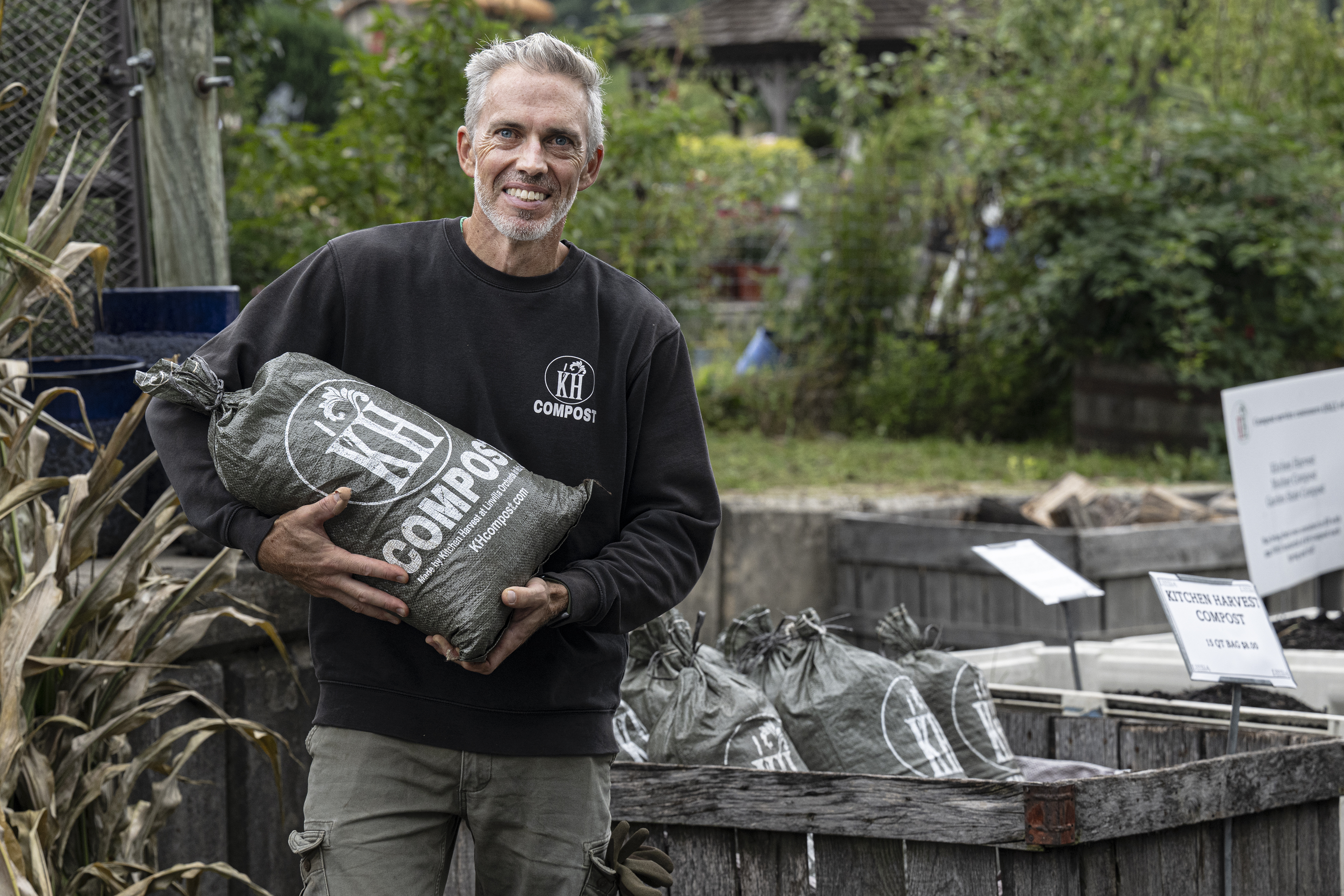
    Chris Pieretti holds a compost bag at Kitchen Harvest in Delaware County. Pieretti is working with local homes and municipalities to compost food scraps and yard waste. Jose F. Moreno / Staff Photographer

    What is composting?

    Composting is the process of recycling organic materials like food scraps and yard waste, breaking them down into a brown, soil-like material called compost, and using that material in farms and gardens to enrich other plants and crops.

    The composting process happens on micro and macro scales — in small home gardens and at multi-acre sites like Kitchen Harvest’s.

    Compost advocates tout both its environmental and agricultural benefits. In the U.S., food is the single most common material sent to landfills, where it is responsible for 58% of methane emissions, a powerful greenhouse gas, according to the Environmental Protection Agency. Adding compost to soil increases its nutrient content, conserves water by helping retain moisture, and reduces reliance on chemical fertilizers, the EPA says.

    “Food is only wasted when we throw it in the trash. It’s our choice to dispose of it in that method, but we don’t have to,” said Gwenn Nolan, founder of Mother Compost, a company that collects compost material throughout the Philly suburbs and brings it to the Kitchen Harvest site at Linvilla.

    Going from ‘crunchy’ to ‘waste management strategy’

    Many compost enthusiasts have a similar story: What started as a backyard experiment grew, through trial and error, into a way of life and, for some, a career.

    Nolan, of Mother Compost, got her start asking 10 friends on the Main Line to try composting so she could test demand for a compost collection service. She bought a small truck, picking up the bins of food scraps early in the morning before heading to her job in financial services. After the pandemic, residential demand ballooned, and Nolan made Mother Compost her full-time job. Now, the company serves around 1,500 homes; schools including Bryn Mawr College and Villanova University; culinary institutions including Reading Terminal Market; and corporate offices.

    Nolan collects compost in her truck and carts it out to Pieretti, whom she calls “the master mixologist,” for processing.

    “It’s really exciting to see the commercial side and the institutional side coming online as well,” Nolan said. “It’s becoming more a piece of the waste management strategy than just this kind of crunchy, environmental practice that I think people thought about it before.”

    Kate Jacoby, who runs Center City vegan restaurant Vedge with her husband, Rich Landau, is one of Nolan’s loyal customers. Jacoby began composting in her small Philadelphia backyard during the pandemic, expanding her home compost operation when the couple moved to Chester County in 2021 and, eventually, bringing composting to the Vedge kitchen.

    “I get such a satisfaction knowing that it’s going to go into the soil and it’s not going to sit in a landfill,” Jacoby said.

    Foods scraps like banana peels, onion skins, and lemons are turned into compost. JESSICA GRIFFIN / Staff Photographer

    An expanding suburban compost network

    As compost accessibility grows, so, too, does the number of municipal governments offering compost services to residents.

    Media became the first municipality to sign on with Kitchen Harvest in 2021, embracing a borough-wide compost program with a catchy “Gotta Getta Bucket” promotional video.

    “The community at-large really supported the idea, and the participation was really high,” Pieretti said of Media.

    Many suburban programs have followed in the footsteps of Bennett Compost, which has been serving the city of Philadelphia since 2009.

    Lower Merion in 2025 debuted both a community drop-off and a curbside pickup pilot program through Mother Compost and Bennett Compost. Swarthmore Borough launched a curbside compost program through EZComposting in January.

    When Haverford Township launched its Kitchen Harvest partnership this summer, Pieretti felt like he had “won the compost championship.”

    In July, Haverford Township collected 162 tons of organic material, an increase of 111 tons from last July, according to township manager Dave Burman, who called the program “pretty successful.” The township also collected 141 fewer tons of trash this July than the year prior.

    Haverford Township’s program is optional, with no additional cost or registration process for residents.

    “We’ve tried to make it as easy as we could for people to participate, and so far, so good,” Burman said.

    Buckets of finished compost at the Kitchen Harvest site at Linvilla Orchards. Jose F. Moreno / Staff Photographer

    At its best, proponents say, compost creates a circular system. Much of Kitchen Harvest’s compost product is used by Linvilla Orchards to feed the crops, and composters can buy back bags of the finished product at a discounted rate.

    Sarah Linvill, team member at Linvilla, said the farm is grateful to work with Kitchen Harvest and to “be hosts for that kind of work.”

    Composting services are “just invaluable to the community,” Linvill said.

    Nolan called Linvilla “a tremendous resource for the region” when it comes to compost.

    Composters like Jacoby, of Vedge, say they now cannot imagine a world where they simply toss an apple core into the trash.

    “If you really, really dig down and want to get kind of philosophical about it,” Jacoby said, “when your soil is healthy and it’s full of nutrients, you’re going to have better-tasting food for yourself to consume.”

    This suburban content is produced with support from the Leslie Miller and Richard Worley Foundation and The Lenfest Institute for Journalism. Editorial content is created independently of the project donors. Gifts to support The Inquirer’s high-impact journalism can be made at inquirer.com/donate. A list of Lenfest Institute donors can be found at lenfestinstitute.org/supporters.
  • What do Haverford Township residents want out of their local economy? A new survey says multi-vendor markets and walkability.

    What do Haverford Township residents want out of their local economy? A new survey says multi-vendor markets and walkability.

    Lorianne Moore always wanted to run her own business.

    Two years ago, after decades in the corporate world, Moore began to think about opening a storefront in her home community of Havertown. She and her husband, Joe Singer, kicked around the idea of a coffee shop or gift store, something people were really “looking for,” Singer said.

    When Moore brought her small-business dreams to Jeanne Angell, executive director of Discover Haverford, Haverford Township’s economic development organization, Angell said she knew exactly what Havertown needed.

    Consumer data collected by Discover Haverford at the time had found that residents’ number one desire for the community was a local bookstore.

    Moore, a “voracious reader,” figured her “love of reading and her passion for that would align awesomely with what the town was looking for,” Singer said. Moore Books opened in September 2024 and has since become a hub for readers, writers, and shoppers in one of Havertown’s core commercial neighborhoods.

    “I don’t know if we would have landed on bookstore without Discover Haverford, but once [Moore] started talking with them, it just made sense,” said Singer, who’s now the bookstore’s manager and events coordinator.

    The data that guided the opening of Moore Books was part of Discover Haverford’s biannual consumer surveys, which poll residents on the state of the local economy and help provide a framework for recruiting businesses to town, a partnership Angell said is exemplified in Moore Books’ story. Understanding what consumers want, Angell said, gives proprietors important information as they consider opening a brick-and-mortar business, a venture that can be economically risky, especially for small-business owners.

    Discover Haverford’s newest survey, published in July, has given officials a fresh round of data regarding consumers’ vision for the community’s future. So what do Haverford Township residents want most? Recent data points toward a desire for family-friendly businesses, communal spaces, and a revitalized streetscape.

    What do Haverford residents want?

    Discover Haverford conducted its biannual consumer survey in July, gathering data from 601 respondents about what types of businesses they’d like to see and how they feel Haverford Township’s commercial experience can be improved.

    When it came to grocery and retail options, nearly 60% of respondents expressed a desire for a multi-vendor marketplace, and nearly 80% said they’d like to see an indoor farmers market.

    On restaurants, 71% were interested in a bakery, 67% in a family restaurant, 63% in a Greek restaurant, and 57% in a BYOB restaurant.

    When it comes to non-retail businesses, respondents also showed an interest in movie theaters, concert venues, and day spas.

    (function(){function e(){window.addEventListener(`message`,function(e){if(e.data[`datawrapper-height`]!==void 0){var t=document.querySelectorAll(`iframe`);for(var n in e.data[`datawrapper-height`])for(var r=0,i;i=t[r];r++)if(i.contentWindow===e.source){var a=e.data[`datawrapper-height`][n]+`px`;i.style.height=a}}})}e()})();

    Angell said she’s long heard residents ask for a multi-vendor market, a desire that falls in line with the growing appetite for “third spaces,” or communal places to socialize that aren’t work or home.

    “I think people do need that, a place to feel that community,” Angell said.

    She noted, however, that a multi-vendor market is “a very difficult thing to recruit for,” requiring a large space and considerable funding. A local movie theater is another feat Angell said is difficult to pull off due to space constraints.

    (function(){function e(){window.addEventListener(`message`,function(e){if(e.data[`datawrapper-height`]!==void 0){var t=document.querySelectorAll(`iframe`);for(var n in e.data[`datawrapper-height`])for(var r=0,i;i=t[r];r++)if(i.contentWindow===e.source){var a=e.data[`datawrapper-height`][n]+`px`;i.style.height=a}}})}e()})();

    How else should Haverford Township create a more vibrant business community?

    Numerous respondents raised concerns over traffic safety. Some said the township needs more walkable town centers, safe bike lanes, and pedestrian crossings.

    Some said parking inconveniences and costs deter them from shopping in Haverford Township, while others said older storefront facades need to be revitalized to beautify the township’s commercial strips.

    The full Community Survey Report, designed to help guide future business decisions, can be read here.

    This suburban content is produced with support from the Leslie Miller and Richard Worley Foundation and The Lenfest Institute for Journalism. Editorial content is created independently of the project donors. Gifts to support The Inquirer’s high-impact journalism can be made at inquirer.com/donate. A list of Lenfest Institute donors can be found at lenfestinstitute.org/supporters.
    Clarification: The story has been updated to clarify the survey’s location.
  • Main Line art dealer is accused of helping sell fake Andy Warhol paintings

    Main Line art dealer is accused of helping sell fake Andy Warhol paintings

    A Main Line art dealer, whose gallery was raided by federal authorities this summer, is named in a new lawsuit, for allegedly participating in an international “pipeline” to sell fraudulent artwork.

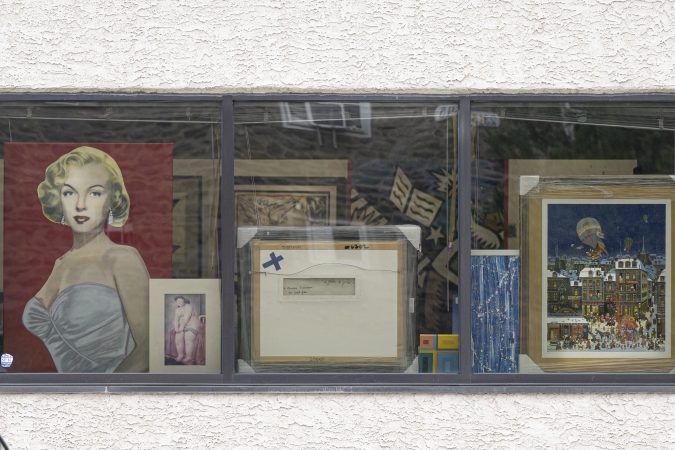
    Nathan “Nicky” Isen is among half a dozen people being sued by a Florida family who says they were scammed into buying fake Andy Warhol paintings and prints by a network of “suppliers, fake authenticators and distributors.” According to the lawsuit, filed last week in Miami, the enterprise stretched from Isen’s gallery, Dane Fine Art in Haverford Township, to Florida and Peru.

    Isen’s lawyer, Patrick Egan, said in a statement Sunday that “the claims in this lawsuit are just that, claims.”

    “My client categorically denies any wrongdoing and any connection with any alleged conspiracy,” the statement said. “We look forward to the opportunity to challenge these claims in court.”

    The lawsuit, filed by Richard and Judy Perlman, alleges that Isen had developed a “toxic” reputation among collectors and appraisers after he pleaded guilty to money laundering in 2015. He rebranded his then-gallery, I. Brewster & Co., to Dane Fine Art. (A website for I. Brewster & Co. now redirects users to Dane Fine Art.)

    But, despite the rebrand, the lawsuit contends Isen’s “modus operandi remained unchanged.” He was “selling pages torn from art books as authentic prints.”

    According to the 42-page lawsuit, Isen then “formed a conspiracy” with Leslie Roberts, an art dealer in an affluent Miami neighborhood.

    “This conspiracy provided what each needed: Isen got a gallery front in Florida with no connection to his toxic name, while Roberts got forged inventory,” the lawsuit filed by the Perlman family alleges.

    The Perlmans also sued Roberts in 2024. That case settled in January for an undisclosed amount, according to the Wall Street Journal. Roberts also pleaded guilty to art-related wire fraud and is scheduled to be sentenced later this month, the news outlet reported.

    Between 2023 and 2024, Isen’s gallery repeatedly invoiced Roberts’ gallery for, what the lawsuit called, “forged” Warhol works, which the Perlmans then purchased. Roberts told the Wall Street Journal he believed the Warhols were genuine at the time.

    In July, the FBI conducted “court-authorized law enforcement activity” at Dane Fine Art, in the 2300 block of Haverford Road.

    It’s unclear why the FBI searched the business. Isen’s lawyer did not respond to questions about the FBI raid and declined to comment on the matter to the Wall Street Journal.

  • Albert James Mamary, attending physician and professor of thoracic medicine and surgery at Temple, has died at 59

    Albert James Mamary, attending physician and professor of thoracic medicine and surgery at Temple, has died at 59

    Albert James Mamary, 59, of Wynnewood, attending physician and professor of thoracic medicine and surgery at Temple University, researcher, writer, mentor, artist, outdoorsman, craftsman, and amateur bicycling champion, died Thursday, July 9, of cholangiocarcinoma at Temple University Hospital.

    A 1999 graduate of Temple’s Lewis Katz School of Medicine, Dr. Mamary spent his career at Temple and affiliated hospitals. He was an expert in pulmonary disease, transplants, and sleep disorders at the Temple Lung Center, and became program director of the Pulmonary and Critical Care Fellowship at Temple Hospital in 2006.

    He earned a master’s degree in anthropology at the College of William and Mary in Virginia and his premedical school credits at the University of Pennsylvania. In a tribute, his family said: “His education in both medicine and anthropology reflected a lifelong belief that caring for a patient required understanding not only the disease but the whole person.”

    Over more than three decades at Temple — as a student, resident, fellow, professor, and physician — Dr. Mamary treated thousands of patients, mentored hundreds of students and doctors, lectured in classrooms and at seminars, and wrote more than 60 scientific papers and textbook chapters. He was named a top doctor by Philadelphia Magazine several times and was featured in The Inquirer and on 6abc TV for his lead role in a successful double-lung transplant in 2015.

    “It’s been 120 to 145 patients, individual patients that we’ve been able to help every year,” Dr. Mamary told CBS News in 2024. “That’s really the aim here, is to add years of life to patients who otherwise wouldn’t have that opportunity.”

    Colleagues called Dr. Mamary a “physician’s physician” and noted his “amazing intelligence and clinical acumen” in tributes. Gerard J. Criner, chair of Temple’s Department of Thoracic Medicine and Surgery, said: “His patients loved him not only for his clinical skills but also for the warmth, compassion, and humanity he brought to every encounter.”

    A former patient said online: “He was a calm in the storm of my end stage disease. … The world has lost a hero.”

    A former student said: “His kindness, thorough and balanced approach to medicine, and quiet, thoughtful approach to even the most stressful emergencies reminded me of a Jedi master.”

    Dr. Mamary and his wife, CeilaSue, married in 1996.Courtesy of the family

    Away from the hospital, Dr. Mamary liked to bike, hike, and camp. He built his own 18-foot mahogany canoe, walked the entire 272-mile Long Trail in Vermont, and won masters bicycling championship races.

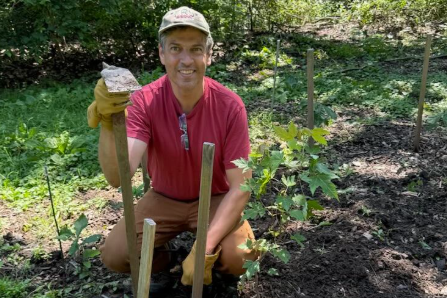
    He also painted and sculpted, and earned a bachelor’s degree in art and psychology at Haverford College. He and his wife, CeliaSue, initiated the Shortridge Memorial Park Arboretum in Wynnewood and earned a 2024 community service award from Narberth and Lower Merion officials.

    “James brought wisdom, kindness, curiosity, and genuine joy to every moment,” his wife said.

    Albert James Mamary was born June 12, 1967, in Hempstead, N.Y. He grew up in Binghamton, N.Y., became an Eagle Scout, and was a wilderness river guide for the Boy Scouts in Maine during his college years.

    Dr. Mamary was an avid bicyclist and won masters championship races. Courtesy of the family

    He met CeliaSue Jaffe in class at Haverford, and they married in 1996 and had daughters HannahRose and LilyRuth. They lived in East Falls and Wynnewood, and he rode his bike from home to Penn and then Temple as often as he could.

    Dr. Mamary enjoyed traveling, baking, cooking, and gardening. “His specialty is fruits and vegetables, and I grow the flowers,” his wife said.

    He followed the Phillies, rescued cats and dogs, and doted on his daughters. Everybody said he was funny and silly.

    “He was curious and always learning or doing something new,” his daughter LilyRuth said. “He took joy in simple things.” His daughter HannahRose said: “Even if he wasn’t my dad I would want him as a friend because he was so interesting and so easy to talk to.”

    Dr. Mamary was a wilderness river guide for the Boy Scouts in Maine during his college years.Courtesy of the family

    Dr. Mamary was diagnosed with cholangiocarcinoma, bile duct cancer, in 2020 and treated by longtime colleagues and friends at Temple, some of whom he had mentored. “It was a profound reflection of the life he lived,” his family said, “that so many of those he had taught ultimately became his caregivers.”

    His wife said: “He was a very vibrant and adventurous person but so thoughtful, steady, and reliable. James was incredible.”

    In addition to his wife and daughters, Dr. Mamary is survived by a sister and other relatives.

    Private services were held earlier.

    Donations in his name may be made to the Albert James Mamary Memorial Fund at the Cholangiocarcinoma Foundation, 5526 West 13400 South, No. 510, Herriman, Utah 84096.

    Dr. Mamary “was a very vibrant and adventurous person but so thoughtful, steady, and reliable,” his wife said. Courtesy of the family
  • Intensifying summers are putting the Philly suburbs’ aging infrastructure to the test: ‘We get a 100-year storm every year’

    Intensifying summers are putting the Philly suburbs’ aging infrastructure to the test: ‘We get a 100-year storm every year’

    Tori Bauver was sitting at home on July 11 when the sky outside of the Wyndon Apartments in Wynnewood began to darken. Bauver watched the clouds roll in, then the rain come, blowing “literally sideways” outside her window. She remembers leaning in to see the darkening landscape and noticing that rain had begun to penetrate her windows. Then the “outside went stark white” and water started pooling on her windowsills.

    “I was like, ‘Oh, my God. This is gonna flood. This apartment’s gonna flood,’” she said.

    The light fixture above Bauver’s bed filled with water, then poured over the edges. The ceilings began to leak, then one by one, they collapsed. The building’s roof ripped off, and Bauver had a clear, and unsettling, view of the sky from her living room.

    Bauver, now a resident of West Chester, where she and her partner moved after breaking the lease on her Wynnewood apartment, had been living in the Wyndon Apartments for two years when the July microburst storm tore through Lower Merion, destroying her home and more than $5,000 of her and her partner’s belongings. She was one of dozens of suburban residents who emerged from the storm with damaged property and a devastated home.

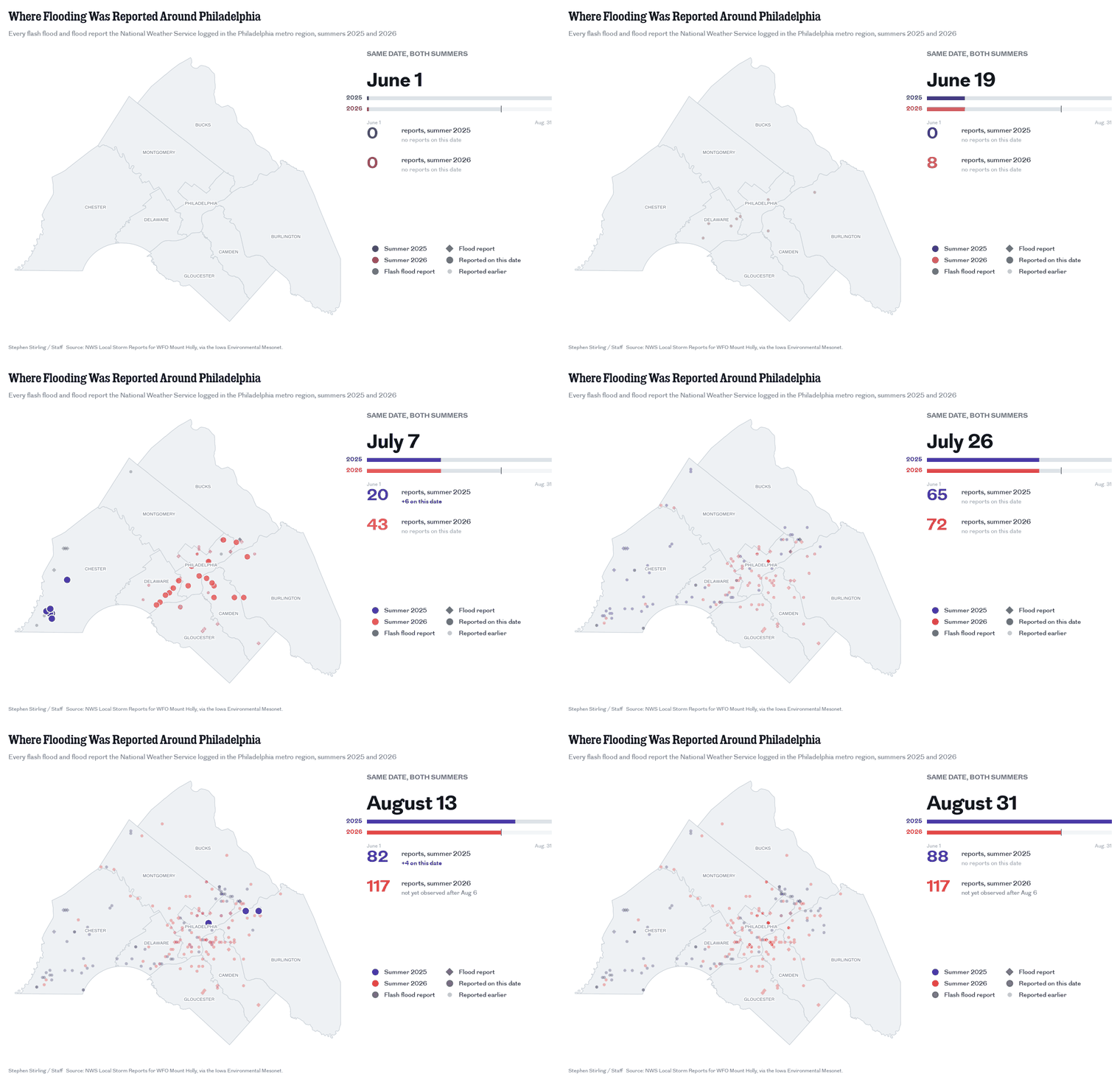
    As the Philadelphia region sees hotter and more humid summers, flash flooding, extreme precipitation, and life-threatening storms have become a more common feature of daily life. Weather events marked by downed trees, dangerous flash floods, waterlogged roadways, and eroded bridges are, more and more, forcing suburban residents and cash-strapped local governments to pour millions into repair and resilience projects, all while large swaths of the region’s infrastructure are built to withstand weather patterns of a bygone era, one in which storms like July’s microburst happened once in a decade, rather than multiple times a summer.

    As the region’s weather patterns intensify, officials and climate experts say the municipal mosaic of Philadelphia’s suburbs faces unique challenges when it comes to planning for a future marked by climate change.

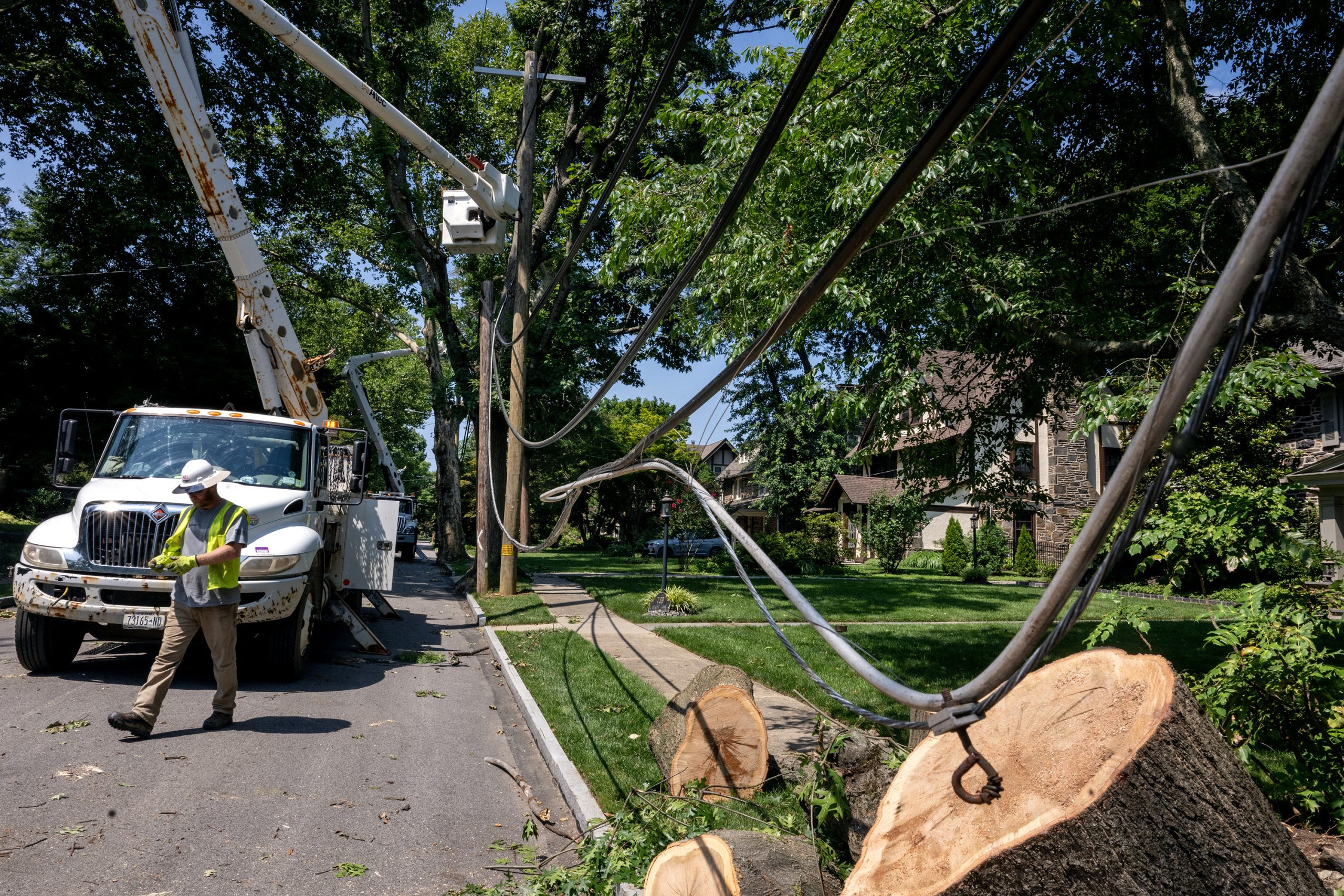
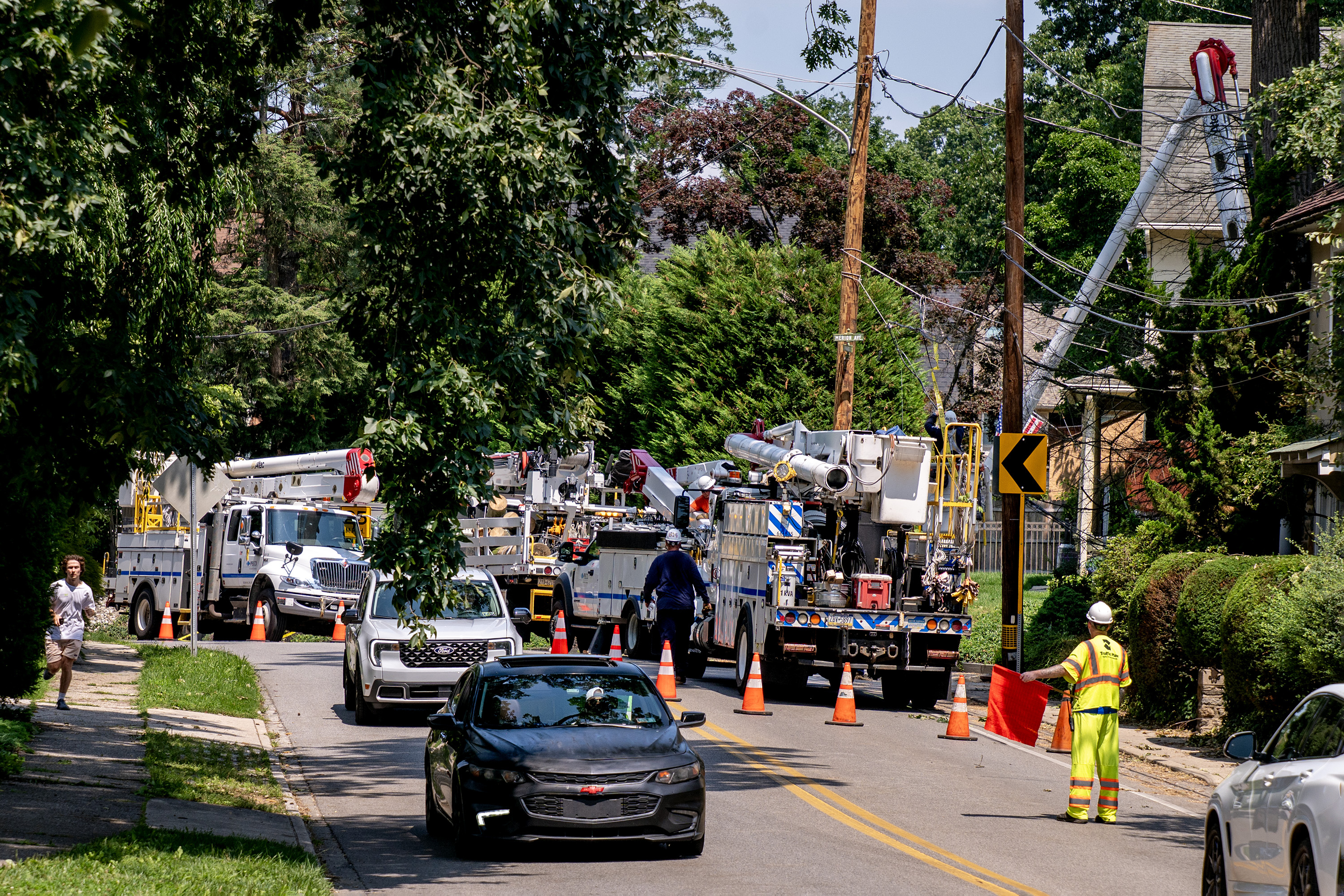
    Utility workers restore power in Merion Station on July 13 after a microburst storm ripped through parts of Philadelphia and Montgomery County.Tom Gralish / Staff Photographer

    The Philadelphia region’s changing weather

    The average July temperature in Philadelphia has risen 4.4 degrees since 1940. In the 1900s, Philadelphia averaged four days per year with temperatures above 95 degrees, according to a 2024 EPA report. This summer, Philly has seen six days with high temperatures above 95 degrees, according to the National Weather Service. By the end of the 21st century, that number could climb to more than 50 days per year.

    Hotter weather means more precipitation, and more frequent and intense rain events. For every 1.8 degrees the air temperature increases, the amount of water the atmosphere can hold increases by 7%.

    “The infrastructure we have now is not always built to a standard to accommodate the extreme weather we’re seeing now,” said Chris Linn, manager of the Office of Resilience and Environment at the Delaware Valley Regional Planning Commission.

    As Ray Courtney, a Lower Merion commissioner and chair of the township’s sustainability committee, said, “We get a 100-year storm every year.”

    Cars in a flooded parking lot at the Ferry Avenue PATCO station in Camden on July 6. Philadelphia and its suburbs have been hit with numerous flash floods this summer, as an increasingly hot and humid atmosphere gives way to more extreme weather.Tom Gralish / Staff Photographer

    Flooding as ‘the biggest and most common hazard’

    The impacts of intense storms are multitudinous and cascading, and the topography of Philadelphia’s suburbs can make it particularly difficult to find effective solutions.

    Linn said flooding is “the biggest and most common hazard that communities face,” and it presents the most “consistent and pervasive” issues for municipal leaders.

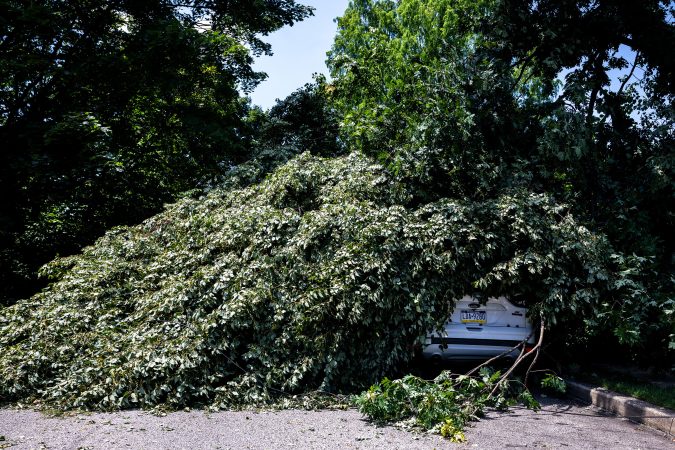
    Intense precipitation and flash floods, which have been a constant this summer, can disrupt transit, turn roads into rivers, and endanger residents’ lives. High winds and saturated soil frequently bring down trees, damaging homes and cars and knocking out overhead power lines. Disruptions to power can be particularly dangerous when residents are left without fans or air-conditioning during hot summers.

    Flooding has been reported more than 200 times in the Philadelphia region over the last two summers.Stephen Stirling

    “I see roads flooding consistently, trees coming down, power going out, and then our local government spending resources every time one of these storms happens. It’s overtime costs and tree costs, and then also all the private citizens having to spend costs cleaning up trees and other debris,” Courtney said.

    “These unlikely, freak events are really the ones that break us,” said Matthijs Bouw, architect and professor at the University of Pennsylvania’s Stuart Weitzman School of Design.

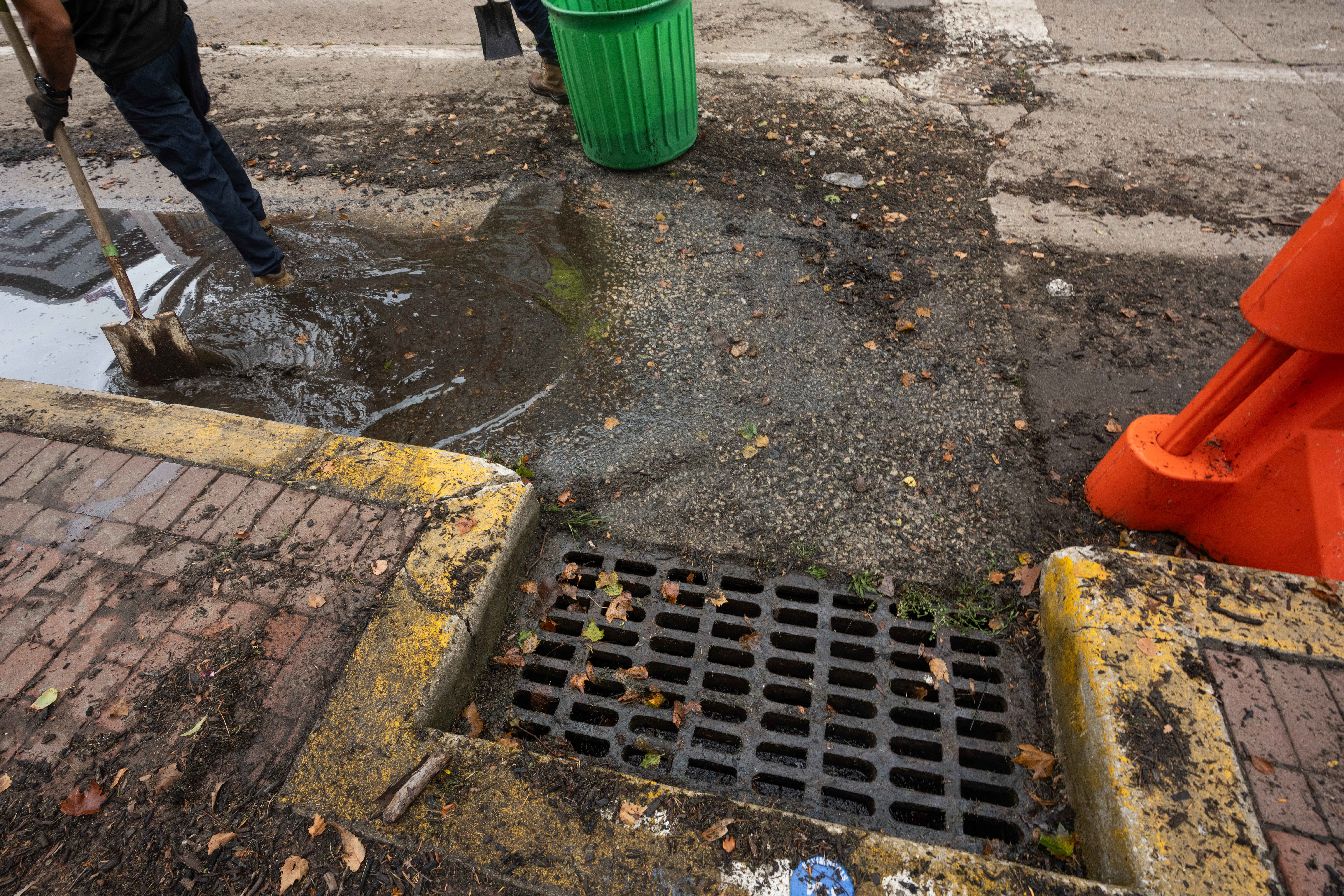
    A key tool for managing extreme weather is stormwater systems, or the collection of drains, basins, ditches, and pipes that collect rainwater and snowmelt and move it from developed areas into local waterways. Stormwater systems are critical in moving water off impervious, or impenetrable, surfaces, like the parking lots, paved roads, and shopping centers often found in the suburbs.

    The more developed a suburb is, the more runoff a storm will produce, increasing flooding risks, said Franco Montalto, professor of civil, architectural, and environmental engineering at Drexel University.

    Yet many municipalities are contending with aging stormwater systems that require costly repairs. Lower Merion’s 2018 Comprehensive Stormwater Management Plan listed aging pipes, undersized infrastructure, operational costs, and increasing flooding as challenges for the township. Many of Philadelphia’s suburban communities are composed of buildings that predate a 1978 state law requiring counties and local governments to plan with stormwater management in mind.

    Some communities are more vulnerable to climate impacts than others, with density, land cover, wealth, and the state of repair of existing infrastructure as factors. A 2021 climate change vulnerability analysis by Montgomery County found denser, water-proximate communities like Norristown and Pottstown to have some of the highest risk of increased stresses due to climate change. Greener, more rural parts of the county like New Hanover and Marlborough Townships presented lower risks.

    The aftermath and clean up of flooding in Camden on July 6. Stormwater systems are a critical tool for local governments to manage flooding. Jessica Griffin / Staff Photographer

    How can communities mitigate impacts?

    Experts described a range of interventions for managing climate impacts, from constructing rain gardens to rewriting zoning ordinances.

    Maintaining a healthy tree canopy and building rain gardens can help rainwater permeate into the ground. Larger infrastructure efforts like stream restoration projects and floodplain maintenance can help stabilize the built environment.

    However, Linn said, these interventions “don’t necessarily address more severe or catastrophic flooding in terms of mitigating those impacts.”

    Long-term climate resilience, experts said, relies on making land-use and zoning decisions that preserve floodplains and natural drainage patterns and ensure stormwater systems can manage our new, rainy reality.

    Montalto is interested communities that have become “safe to flood,” or that have created parks, parking lots, road medians, and other open spaces that trap water during floods, then properly drain it, keeping it away from buildings and roads. A basketball court built below a park, for example, can fill with water during a storm and slowly drain, mitigating runoff (one was recently installed in New York City). Copenhagen’s Cloudburst Management Plan, adopted in 2012 after a major storm, is a blueprint of sorts in Montalto’s mind.

    However, bringing “safe to flood” infrastructure to Philly’s suburbs may be a far-out goal.

    In the vast suburbs, the collection of boroughs, townships, and county lines makes unified action difficult, and forces officials to think along municipal, not watershed, lines. On the Main Line alone, rainfall and snowmelt drain into a collection of dozens of creeks and streams that do not start or stop where a municipal boundary is drawn, making it difficult to take coordinated and effective action when it comes to flood mitigation along certain waterways.

    Finding the funding to repair and replace stormwater infrastructure, too, can be taxing, as local governments stare down costly projects, even with the availability of state and federal grants. Political will factors in, with municipalities differing in their desire and ability to use taxpayer dollars to tackle climate issues.

    Philly’s suburbs, like the city, are also often old, dense, and built out, making it hard to retrofit them to be more climate-sensitive.

    “So many of our communities are built out and have been built out for a long time, so the vulnerabilities and the challenges are built in to the community,” Linn said.

    Utility workers restore power along Wynnewood Avenue in Merion Station on July 13.Tom Gralish / Staff Photographer

    Solving ‘complex issues’ in Montgomery County

    Despite the challenges, progress is being made, said Montgomery County Commissioner Jamila Winder.

    Montgomery County in 2025 led a flood mitigation planning study for the 362-square-mile Perkiomen Creek Watershed, which stretches across Montgomery, Bucks, Berks, and Lehigh Counties. The study identified flood-prone areas, evaluated mitigation tactics, and worked to build a framework for long-term resilience. The county is currently in the process of carrying out a floodplain restoration project along the Wissahickon Creek in Whitemarsh Township. Both projects came to fruition after Hurricane Ida tore through the region, bringing record floods and killing multiple people.

    The county has repaired 30 structurally deficient bridges since 2017 and has repaved dozens of miles of road. County workers also removed 200 dangerous trees earlier this year, resulting in a significant drop in emergency phone calls about tree damage, Winder said.

    Lower Merion in 2021 hired its first full-time sustainability manager and in 2023 completed its first sustainability plan. Radnor Township has adopted a comprehensive climate plan, and Haverford Township has set out to achieve 100% zero-carbon renewable power by 2035.

    The Pennsylvania Department of Environmental Protection in January announced more than $17 million in funding for environmental projects across the state, including stream restoration and stormwater management.

    Winder said, “We’re seeing that when we work across federal, state, county, and local leadership, that we can come together to solve some of these complex issues.”

    This suburban content is produced with support from the Leslie Miller and Richard Worley Foundation and The Lenfest Institute for Journalism. Editorial content is created independently of the project donors. Gifts to support The Inquirer’s high-impact journalism can be made at inquirer.com/donate. A list of Lenfest Institute donors can be found at lenfestinstitute.org/supporters.
  • How the Haverford antisemitism settlement harms free speech

    I believe in Israel.

    I oppose its current leadership and its policies in Gaza and the West Bank. But I support its right to exist as a Jewish state. And I reject the idea that Zionism is inherently racist or malevolent.

    That’s why it’s important for me to hear from people who see Israel differently than I do. I need them to question, provoke, and challenge me. That’s how I learn.

    And that’s also why I’m worried about the settlement Haverford College announced last week, pledging to protect Jewish students from antisemitic speech. In a statement, Haverford president Wendy Raymond declared that the college would not tolerate “discrimination, harassment, and bias” against “students who identify as Jewish” or “those who support Zionism.”

    So does that mean you won’t be able to say “Zionism is racism” or “Israel is an apartheid state”? The lawyer representing Jewish students who sued the school — and who said she was “very pleased” with the settlement — seemed to think so.

    “It’s a new form of antisemitism, saying, ‘Oh, no, I don’t hate Jews, I just hate Zionists,’” she said. “For a Jew to hear that was incredibly painful.”

    I’m sure that it was. I’m Jewish, and anti-Zionist rhetoric is hard for me to hear, as well.

    But that’s why I should hear it. Zionism is probably the most contested question on our campuses right now. Unless everyone can address it, freely and openly, we’ll never get a good purchase on it.

    Wendy Raymond, president of Haverford College, pledged that the college would not tolerate “discrimination, harassment, and bias” against “those who support Zionism.”Jose Luis Magana

    Ditto for Columbia, where I went to college 40 years ago. Back then, you could argue about anything. But now Zionism, too, is effectively off the table.

    That’s because the university adopted the International Holocaust Remembrance Alliance’s definition of antisemitism. According to the IHRA, “claiming the existence of a State of Israel is a racist endeavor” and “drawing comparisons of contemporary Israel policy to that of the Nazis” are antisemitic.

    But a competing standard, the Jerusalem Declaration on Antisemitism, argues that “criticizing or opposing Zionism as a form of nationalism” or offering “evidence-based criticism of Israel as a state” are not, on their face, antisemitic. Haverfordʼs settlement seems to lean entirely on the first definition and ignores the second, which has not been adopted by the college or most other institutions, but was endorsed by Bucknell University’s faculty last year.

    Under the IHRA definition, would a student or professor who said Israel was committing genocide in Gaza — like the Nazis did in Europe — face punishment at Columbia? I don’t think Israel’s action in Gaza constitutes genocide, but I know other historians do. And again, I need to hear from them.

    In their 2024 lawsuit against Haverford, Jewish students complained that a professor called supporters of Israel “racist genocidaires.” I can understand why they felt “pain and harm” about these kinds of comments, as Raymond acknowledged at the time.

    But you can censor anything — literally, anything — on those grounds. During the 2016 presidential campaign, students at Emory University said they were harmed by campus chalk messages backing Donald Trump. “Supporting him, repeating his catchphrases [is] an implicit attack on the Muslim, Latinx, Black, and other communities at Emory and across the country,” protesters declared. “This is not political expression; it is hate speech.”

    And in 2021, Harvard biology professor Carole Hooven caused an outcry when she told Fox News that gender could take any number of forms, but sex is binary: male or female. After a colleague denounced Hooven’s “transphobic and hateful” comments on Twitter (now X), she became a campus pariah. Her mental health plummeted, and she resigned.

    Like Zionism, the biology of sex is a hugely contested and complicated matter. And we won’t be able to learn more about it if we inhibit discussion of it.

    How many people celebrating the new restrictions on anti-Zionist speech at Haverford would be OK with prohibiting claims that sex is binary? Likewise, would any of the critics who pushed out Hooven rest easily if critics of Israel were silenced, too?

    We all want to have our own say, of course. But when we feel pained or harmed by someone else’s political expression, we call it hate speech. And we try to blot it out.

    To be clear, nobody should be subject to threats of physical violence. Whatever you think of Zionists on campus, you can’t say you’re going to assault or murder them. That’s against the law, and our colleges should be vigilant in enforcing it.

    But at Haverford, it would now appear, you can’t say anything negative about Zionism. Period. If you don’t think Israel should exist, you’re an antisemite. And you need to keep your big mouth shut.

    I know some people on campus have been “deeply hurt” by anti-Israel rhetoric, as Raymond said in her statement last week. But once that becomes the barometer for what the rest of us can say, we won’t be able to speak — or listen — across our differences. Isn’t that why we gather at universities in the first place: to learn from each other?

    Either you believe in free expression for everyone, or you don’t believe in it at all. Period.

    Jonathan Zimmerman teaches history and education at the University of Pennsylvania. He is the author of “Schooling Citizens: How Education Can Save Democracy,” which will be published next spring by the American Philosophical Society Press.