A few blocks and a few days apart, two of the same story: people showing up, in public, as exactly who they are.
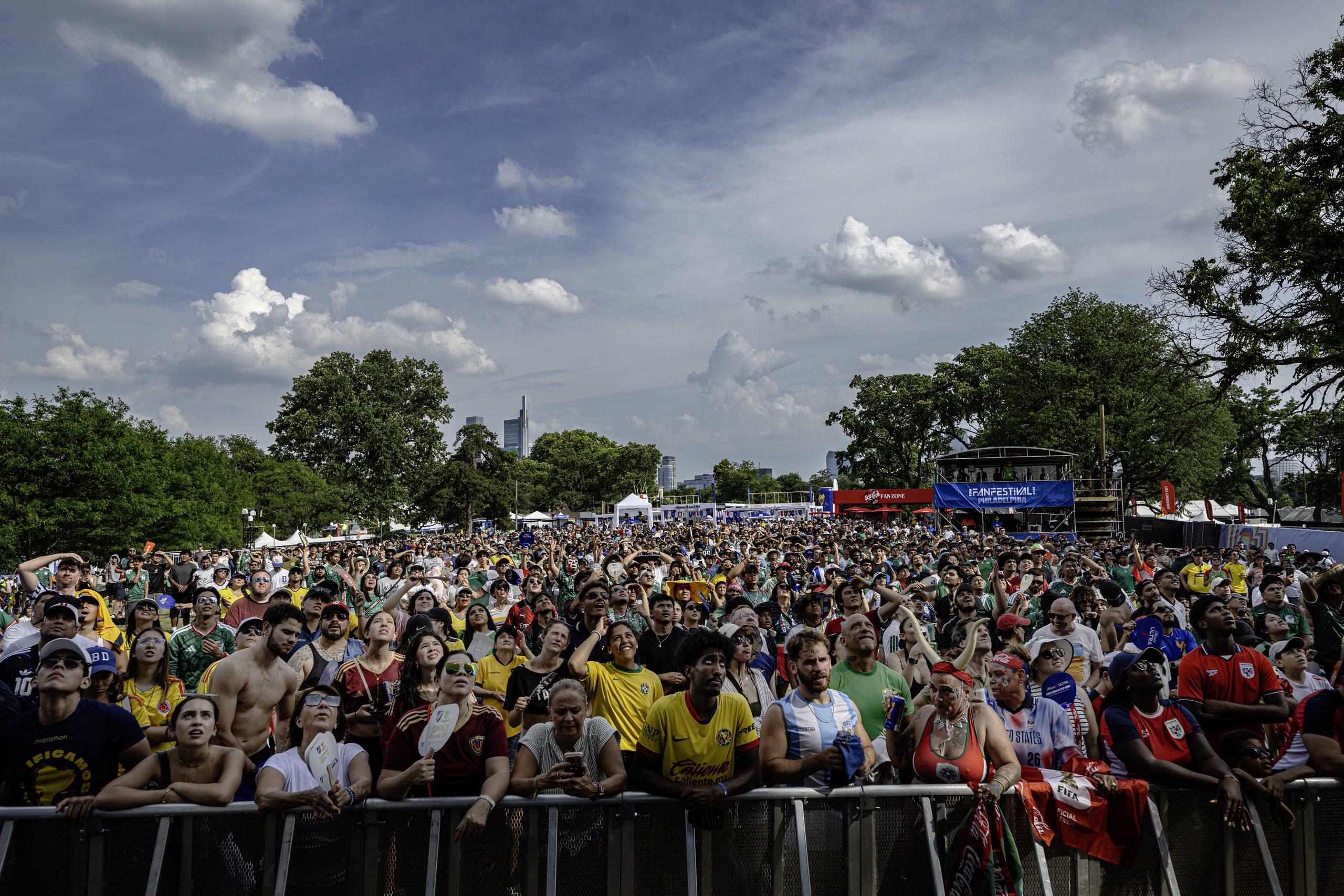
That’s what this World Cup summer has felt like across Philadelphia. Six matches at Lincoln Financial Field (or what was called Philadelphia Stadium for the tournament). A 39-day Fan Festival at Lemon Hill drawing tens of thousands a day. Northeast Philly, long home to one of the city’s largest Brazilian communities, turning into a sea of yellow jerseys. Africatown is filled with the flags of Ghana, Côte d’Ivoire, Curaçao. None of it required anyone to tone anything down.
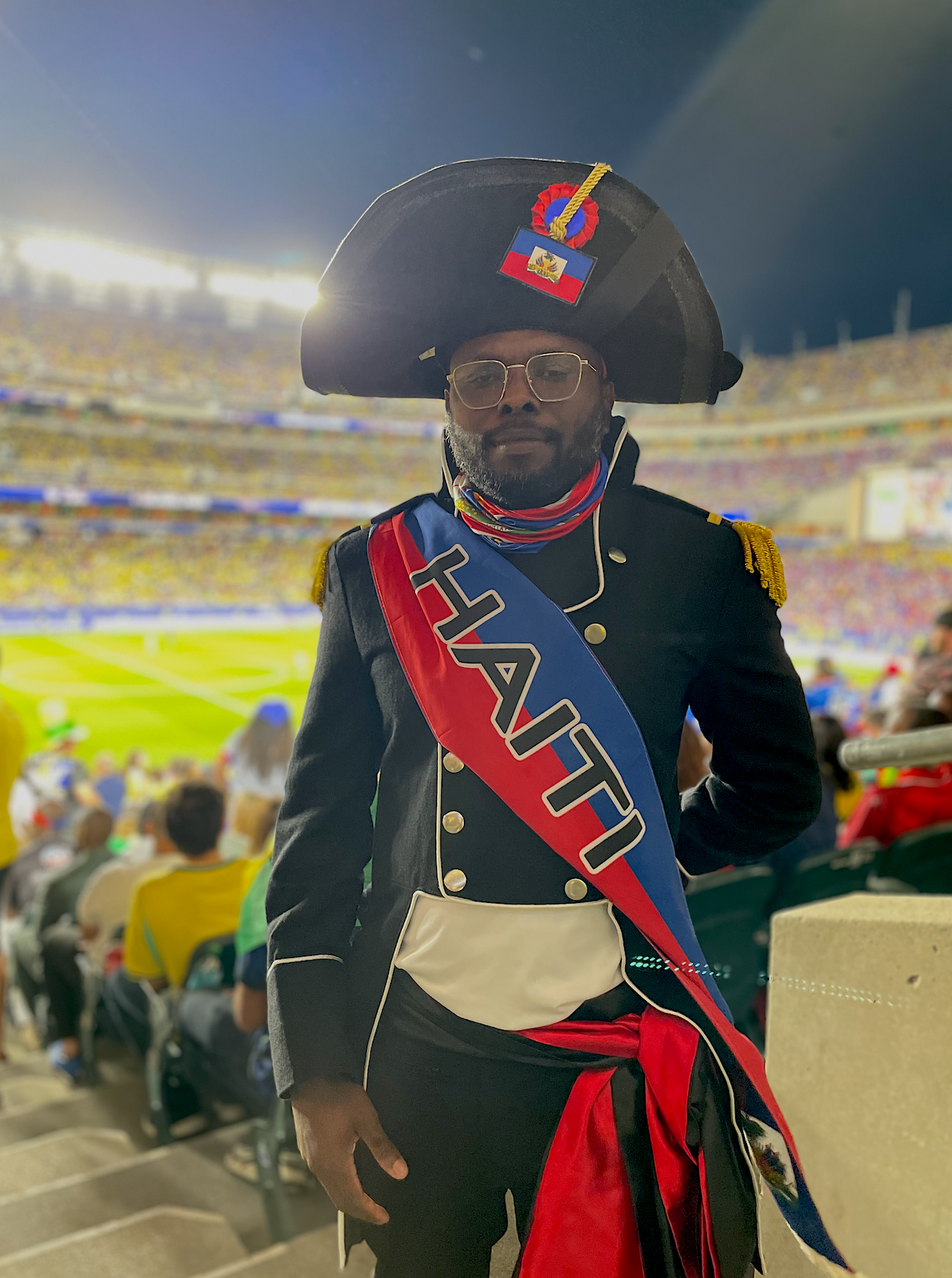
Maxence Jeanty, 41, a fan from Chicago arrived at the FIFA World Cup game at Lincoln Financial Field between Brazil and Haiti, dressed as Jean-Jacques Dessalines, the leader of the Haitian revolution.Kerith Gabriel / Staff
I’ve spent years thinking about what it costs people to make themselves “easier to hold.” I host a podcast called Immigrantly, and after more than 4 million downloads and conversations with guests from New York City Mayor Zohran Mamdani and political candidate Darializa Avila Chevalier to comedians Hari Kondabolu and Aparna Nancherla, the thing I hear most often isn’t about policy or politics.
It’s usually much simpler: First- and second-generation immigrants didn’t know they were allowed to be complicated. Allowed to hold two, three, four places inside themselves at once without apologizing for the seams.
I know that erasure personally. I was born in Pakistan and built my adult life in America, and for years I made myself legible in rooms that hadn’t asked me to. I told myself it was politeness. It took me well into my 30s to understand it was a choice I’d been making so often it stopped feeling like one.
Which is why this summer has been disorienting in some ways. On the one hand, the World Cup has allowed people to make their origin pride more legible publicly. On the other hand, visibility doesn’t necessarily mean safety, warmth, or belonging.
Philadelphia has spent 2026 rehearsing its own origin story — the run-up to the country’s 250th birthday, with a Round of 16 match on July Fourth itself, in the city where the Declaration of Independence was signed.
And at the exact same time, in the exact same city, thousands of people have been reminding us that America was never actually one thing. It was Curaçao and Ghana and Ecuador and Brazil and Haiti, all at once, all unbothered, in a city built by people who never stopped arriving.
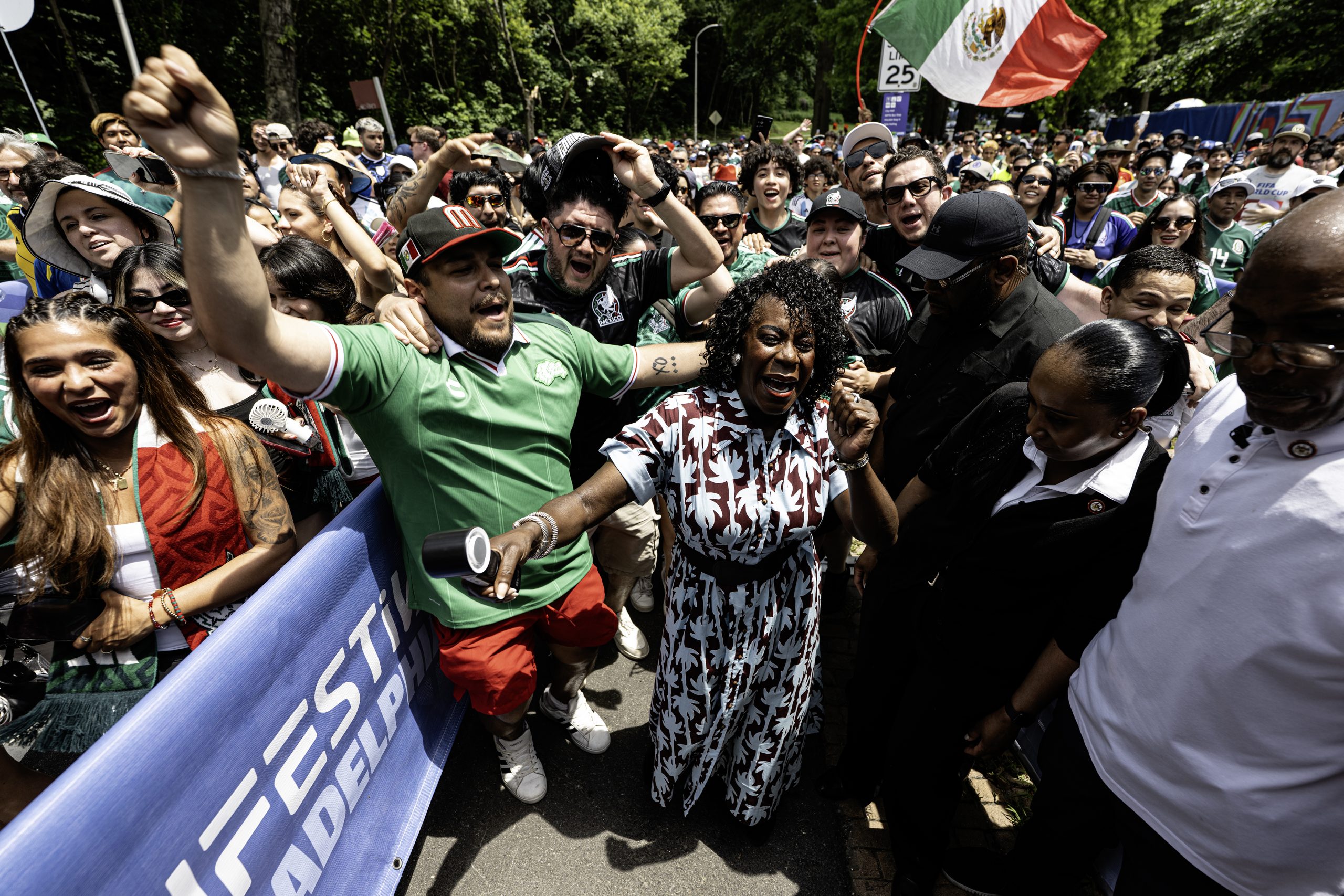
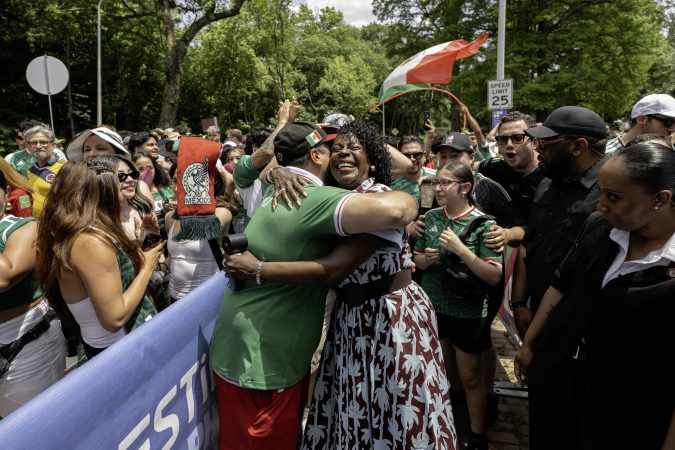
Philadelphia Mayor Cherelle L. Parker joins fans of Mexico’s soccer team in a chant during the FIFA Fan Festival at Lemon Hill on June 11, the opening day of the World Cup.Jose F. Moreno / Staff Photographer
Mayor Cherelle L. Parker put it plainly after the festival’s opening weeks: The energy across the city, she said, reflected Philadelphia “at its best — welcoming, diverse, joyful, and proud.”
I believe she meant it. I also know that sentence is easy to say about a festival and much harder to sustain on an ordinary Wednesday, after the last match, after the Fan Festival tents at Lemon Hill come down and Kelly Drive goes back to being Kelly Drive.
That’s the question I can’t stop asking: What happens on July 20?
Because the pride on display this summer isn’t new. The Brazilian families in the Northeast, the West African community that fills Africatown, the Haitian, Ghanaian, and Ivorian Philadelphians who’ve been here for decades — they didn’t invent their culture for this tournament.
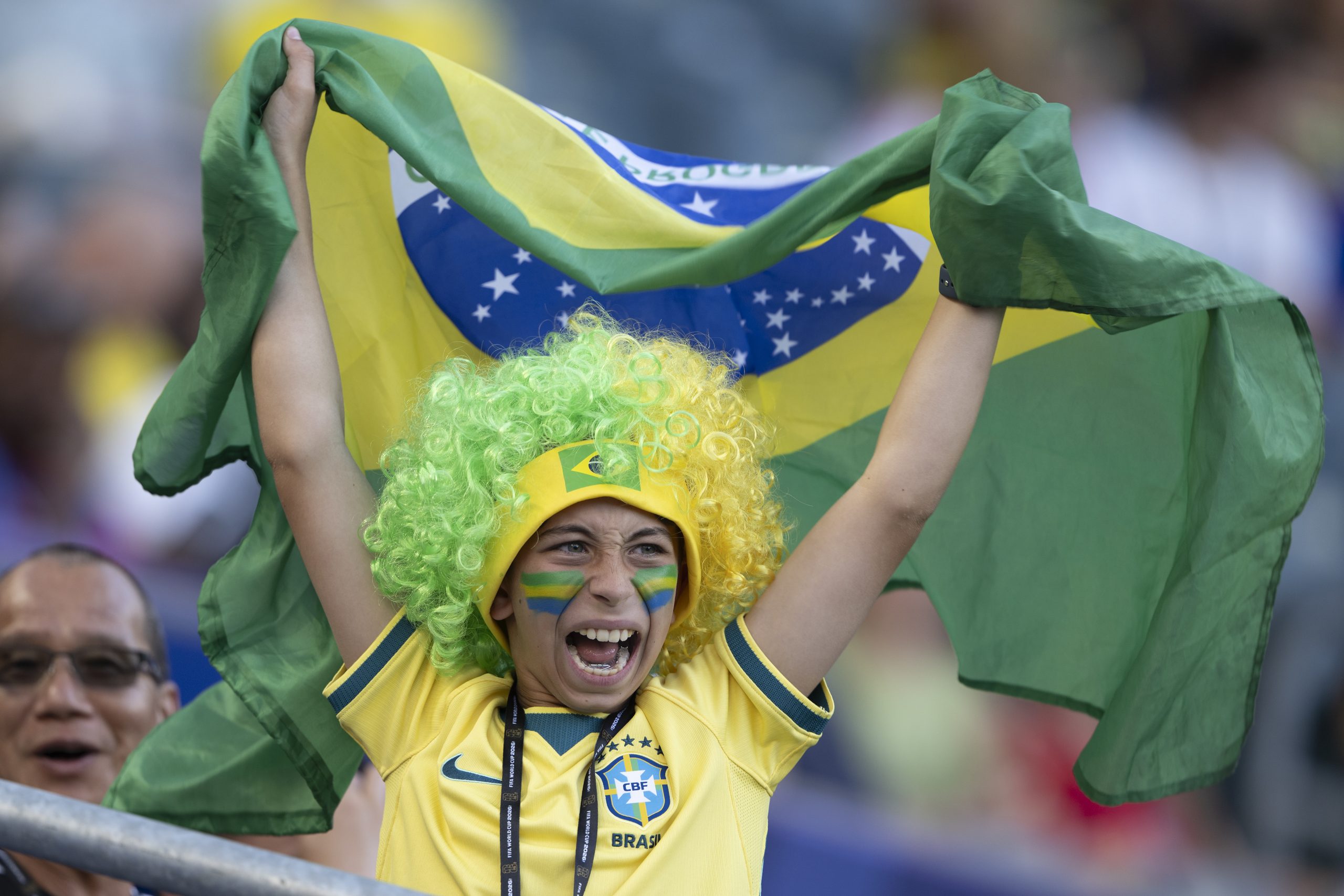
A Brazil fan waves his national flag before a FIFA World Cup Group C soccer match between Brazil and Haiti at Lincoln Financial Field on June 19. Jose F. Moreno / Staff Photographer
What the World Cup did was give them permission to bring it fully into public view, and give the rest of us permission to celebrate it instead of asking it to quiet down.
I think about the women I talk to through my work — the ones fluent in code-switching, who’ve spent decades reading a room and calibrating themselves to fit it. I want to point them toward Lemon Hill in July and say: Look at what happens when nobody has to shrink. Look at what this city sounds like when everyone’s whole self shows up at once.
The tournament will end. The flags will come down. Philadelphia will go back to being, simply, Philadelphia.
But the pride we’ve watched all summer doesn’t have to be seasonal. It doesn’t need a stadium or a festival permit.
It can be what a Tuesday looks like here, if we decide it is — a city that doesn’t just tolerate its immigrants during a global tournament, but actually wants to see them, unedited, all year long.
Saadia Khan is a Pakistani immigrant and mother, host of the podcast “Immigrantly,” a Columbia University human rights graduate, and creator of Belong On Your Own Terms, an app for multicultural individuals reclaiming their full identity. Find her work at immigrantlypod.com.
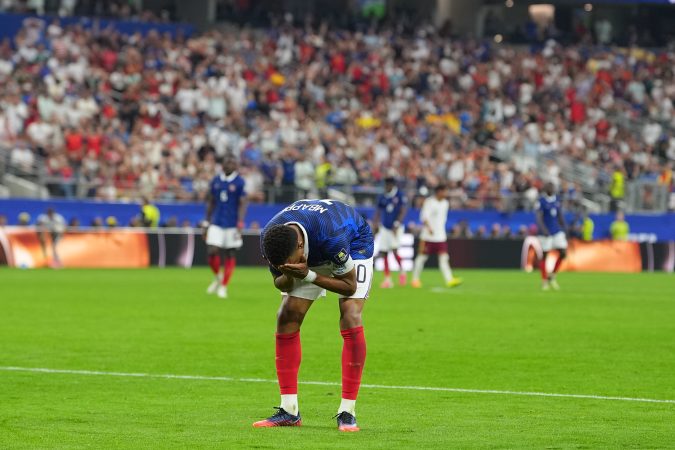
ARLINGTON, Texas — Kylian Mbappé won’t get a third consecutive trip to the World Cup final, but he remains tied for first with Argentina legend Lionel Messi in the race for the Golden Boot four years after he won it.
Mbappé was unable to generate many chances in France’s 2-0 loss to Spain in the World Cup semifinals on Tuesday.
Mbappé and Messi have eight goals each. Messi and defending champion Argentina will play in the other semifinal match against England on Wednesday (3 p.m., Fox29).
France will play the loser of that match in the third-place game on Saturday in Miami (5 p.m., Fox29). Spain will take on the winner at MetLife Stadium on Sunday (3 p.m., Fox29).
Mbappé had the fewest touches of any forward in the first half with 15. Perhaps his most prominent moment was trying to persuade referee Ivan Barton that the penalty resulting in Spain’s first goal shouldn’t have been called.
Mbappé’s best chance came in the 67th minute when his shot deflected off Spain defender Marc Cucurella and went just wide. France was already trailing by two goals at that point.
The 27-year-old Mbappé was issued a yellow card in the 86th minute when he rushed toward Unai Simón just as the Spain goalkeeper was bending over to pick up the ball. The two collided, sending Simón to the grass.
Mbappé started the match against Spain after exiting in the 77th minute of his team’s 2-0 quarterfinal win over Morocco, when he scored his eighth goal of the tournament.
Mbappé also scored eight goals four years ago in Qatar, where France lost to Messi and Argentina in a penalty shootout in the final. France beat Croatia to win the World Cup eight years ago in Russia.
Less than a week remains in what has been quite the summer of soccer already, thanks to the FIFA World Cup making a pit stop in South Philly and delivering six matches all while bringing a party to the Greater Philadelphia Region.
In fact, Philly hasn’t started basking in an afterglow just yet. The FIFA Fan Festival in Lemon Hill, which already committed to remaining open for the full 39 days of the tournament, is still bringing the noise to the Brewerytown section, with a week of scheduled concerts.
Half a million fans. Estimated $770M+ in economic impact. Over 6,600 jobs created. $51M in tax revenue.
The @FIFAWorldCup showed the world what PA can do—and the Philly Fan Festival is FREE through July 19. ⚽
— PA Department of Community & Economic Development (@PADCEDnews) July 13, 2026
This is in addition to showing the semifinal rounds between France and Spain on Tuesday (3 p.m., Fox29) and England and Argentina on Wednesday (3 p.m., Fox 29), all taking place before Sunday’s final match (3 p.m., Fox 29) at MetLife Stadium in East Rutherford, N.J.
Oh, and if you’re into consolation matches, don’t forget the third-place game on Saturday (5 p.m., Fox29).
However, there are a few things that still have an attachment to Philly when it comes to the World Cup. We found three, from the obvious of what’s going on this final week at the Fan Festival, to the not so obvious that you still will want to check out if you’re looking for a lasting piece of the world’s biggest sporting event.
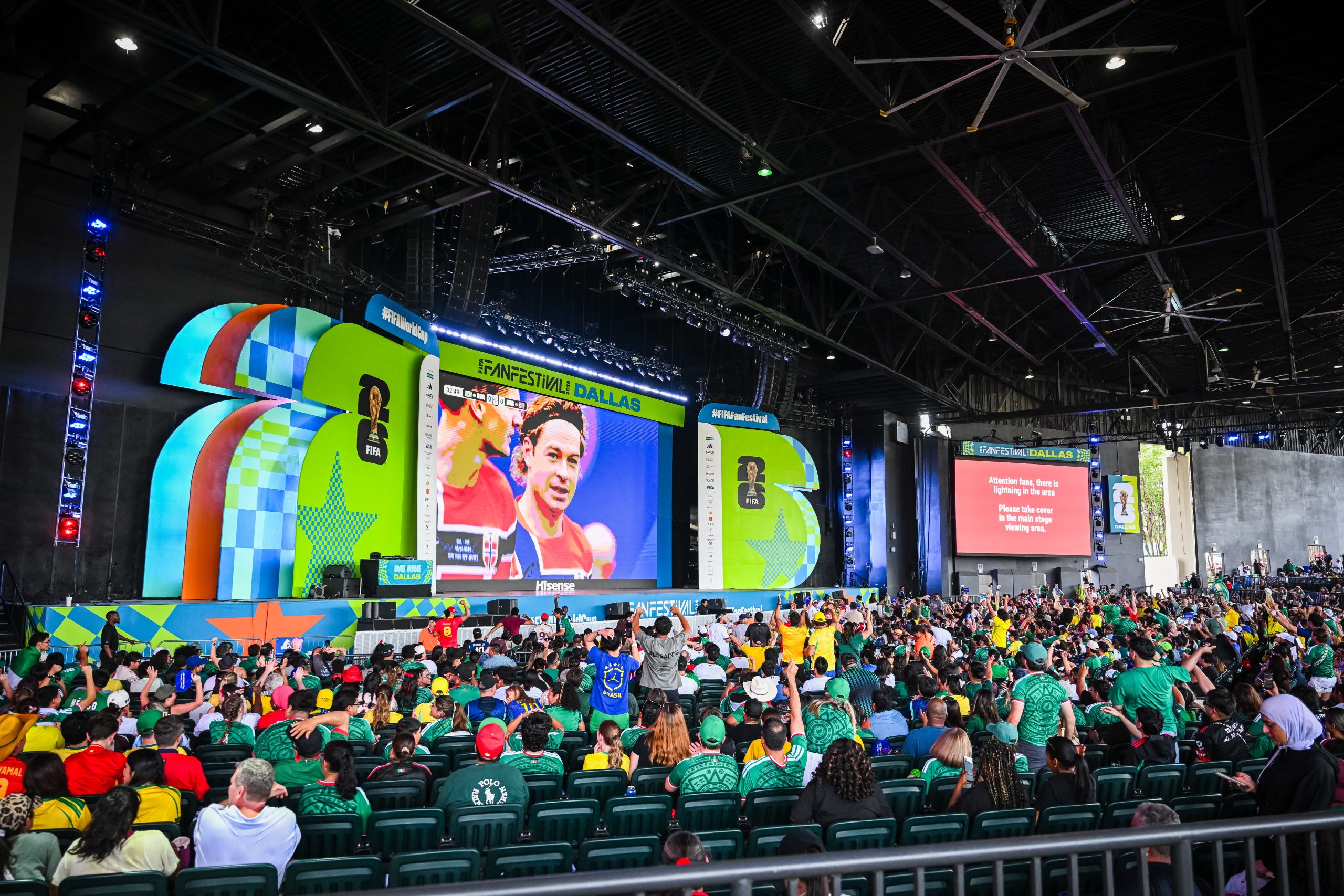
Soccer fans gather to watch Mexico play South Africa on a giant screen during the opening day of the FIFA Fan Festival at Lemon Hill on June 11. Jose F. Moreno / Staff Photographer
Totally free concerts
Philadelphia Soccer 2026 has been keeping the party going with a free concert series that sold out the event on back to back nights with concerts by Wisin on Sunday and the pop punk group the All-American Rejects, packing the house — on a Monday night.
There are still two more concerts to go, with electronic music legend Deadmau5 slated to arrive on Thursday and pop star Bebe Rexha scheduled to close it down on Friday. Both concerts will start promptly at 7 p.m., with festival gates opening at 5 p.m. on both days.
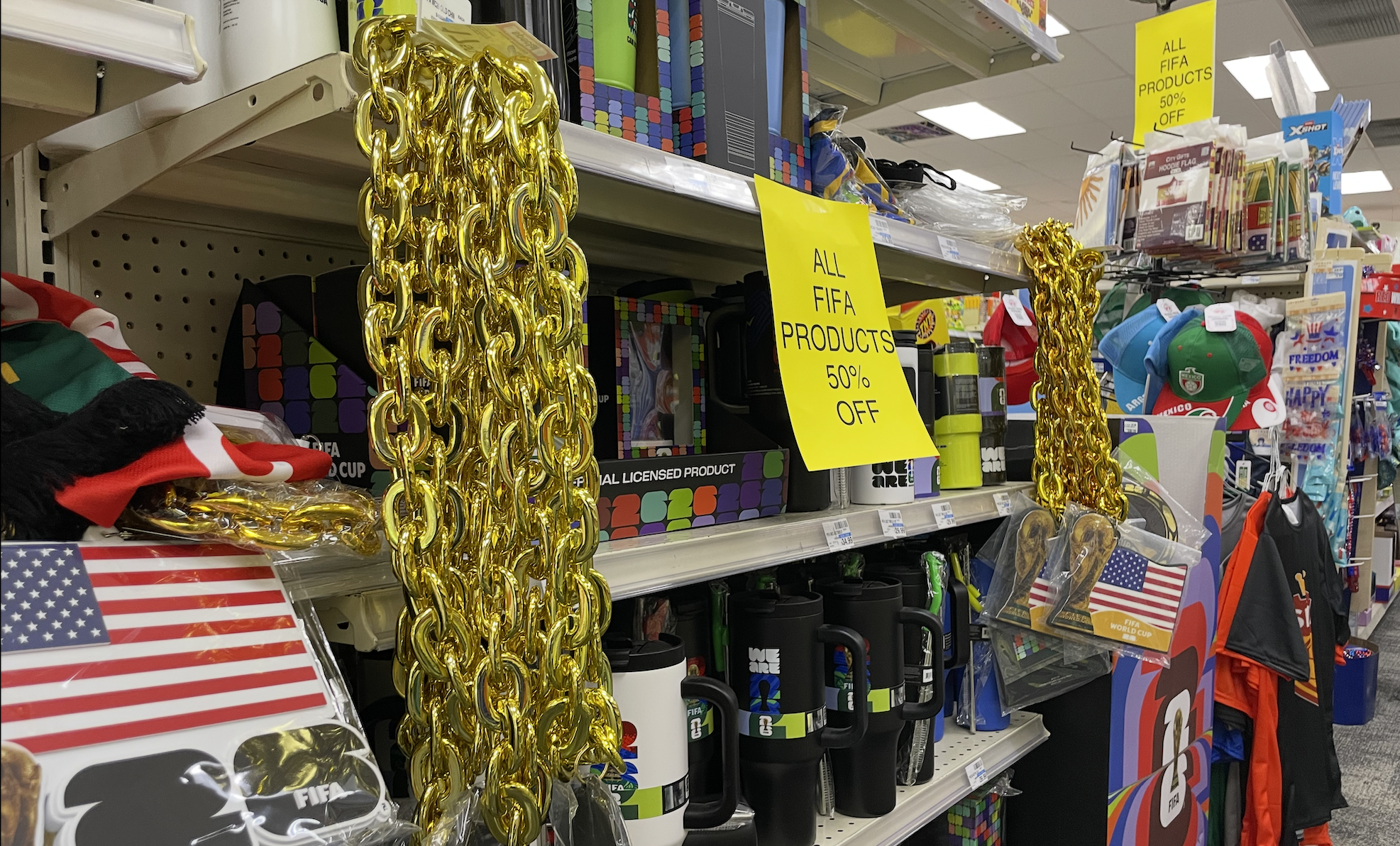
If you were wondering why your local CVS has been a primary supplier of World Cup gear, so were we. Everything from hats, water bottles and other tchotchkes has been on display for the latter part of a month. However, the retail price of some of that merchandise made it a tough call to pick up any swag.
FIFA World Cup merchandise is on sale for up to 50% off at several CVS Pharmacy locations in the Greater Philadelphia Region.Kerith Gabriel / Staff
Not anymore. As of Monday, several CVS Pharmacy stores are selling FIFA merchandise at up to 50% off, and a manager at a Montgomery County location who preferred to remain anonymous informed this reporter that merchandise could drop to up to 70% by the end of the month. So if you were eyeballing that $30 FIFA baseball cap, or that $35 coffee mug, know that you can get it on the low in the same place you pick up your seasonal allergy medication.
The game is still on
World Cup fever is still here throughout the city courtesy of a number of mini pitches that have popped up all over the city. From Fishtown to Queen Village, people are taking advantage of the fields that have been installed to provide more places to introduce the sport.
Most notably, Bank of America, which installed a series of small fields on the site of the old Tip Top Playground near the foot of the Girard Station stop on the Market-Frankford Line in Fishtown/Northern Liberties, which has had decent crowds coming through for pickup games, particularly during the week.
When you take into consideration that these games are going on under a July heat, not only is it impressive, it also confirms that the game always had a grip on Philly, but with the World Cup, it would appear that grip has gotten a bit tighter.
A journalistic mentor of mine back in the 1980s told me that Harry Truman, pressed for a comment on the passing of a political enemy, finally said, “It’s a damn shame when anybody dies.” Of course, like most perfect quotes, HST probably never actually said this, yet I find occasion to think of these words often. On Saturday night, South Carolina GOP Sen. Lindsey Graham — whose moral compass went haywire in the 2010s when a brief moment of truth–telling about Donald Trump melted into embarrassing capitulation — died suddenly from heart problems. He was just 71. It’s a damn shame.
Dems need to give up on fake blue-collar campaigns like Platner’s
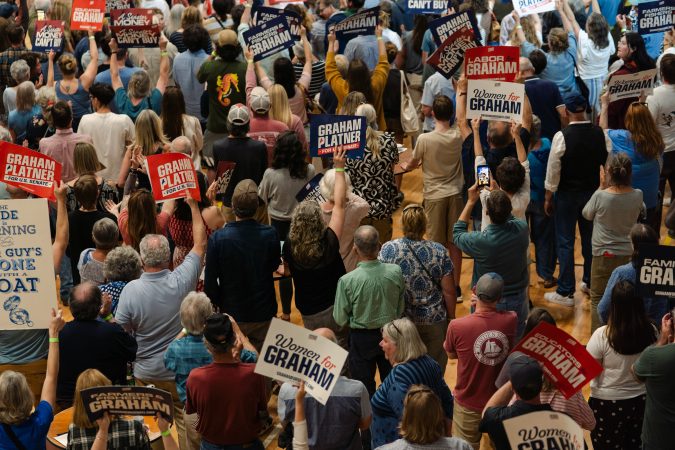
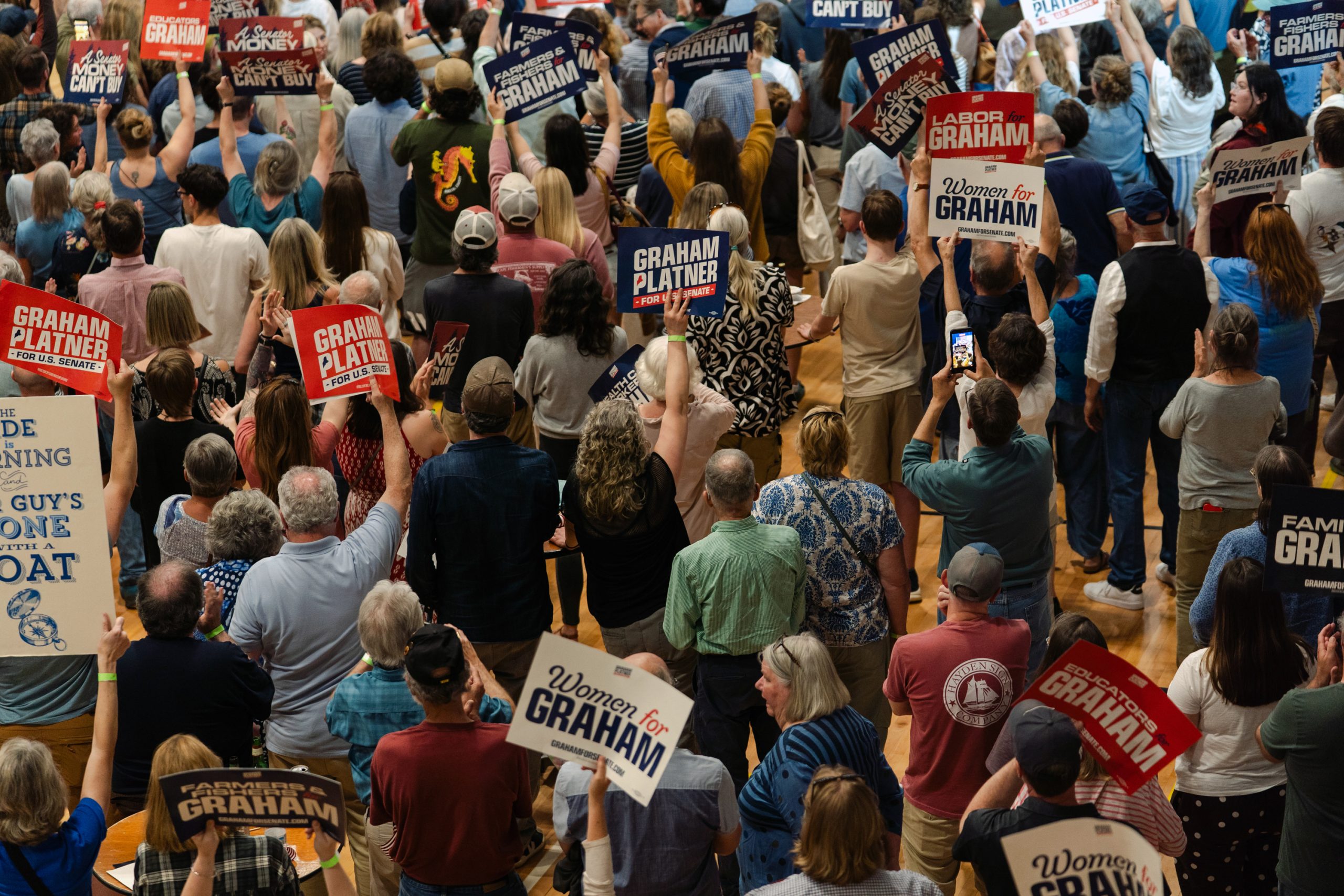
Supporters cheer for Graham Platner in Blue Hill, Maine, after he won the Democratic Senate primary on June 9. Platner’s bid for the Senate inspired progressive Democrats. But the campaign, which he suspended July 8, was messy, disorganized and ultimately doomed by a steady drip of scandal. SOPHIE PARK
Graham Platner, the failed Maine Democratic Senate candidate, was introduced to most of us outside of the Pine Tree State less as a human being than as a fully formed narrative.
The ruggedredhead with angry eyes was an ex-Marine from the Iraq and Afghanistan wars who became an oyster farmer and then a political outsider with all the right words for an electorate that’s mad as hell and isn’t going to take it anymore.
We now know that Platner’s origin story — compelling, but larded with omissions and sprinkled with lies — belonged on the fiction shelf. But even after the Democrats’ scandal-scarred June primary winner accepted the inevitable and ended his candidacy on Friday, he lives on as an avatar upon which everyone with a stake in a badly broken Democratic party can project their distrust and rage toward others — folks who ought to be their allies in an all-out war against fascism.
Days later, the Platner discourse is almost as toxic as the candidate himself. People who voice their opinions, even in 280 characters on social media, get called everything from sexist Bernie-bro rape apologists to Quislings who want big corporations to keep running the Democrats into the ground, and all the rest in between. Don’t even mention Israel. In fact, don’t @ me after this is posted.
Having said all that, there is a conversation that must be had by the Democrats, and probably a wider circle. And the disappearance of Platner himself from the picture makes that easier, because I think we can all stipulate that as a human being he was clearly not worthy to be a U.S. senator, even in the Senate’s current morally diminished state.
There is another Graham Platner somewhere on Earth 2 who also suffered PTSD and developed a drinking problem fighting in pointless wars, and who also got a Nazi tattoo and posted wretched stuff on Reddit, but turned his life around in a glorious redemption song. But that’s not the Platner we got on here on Earth 1. Instead of an apology, he was weirdly defensive about his past, because — we now know — he was hiding stuff that was even worse than that.
Although Platner has denied the most serious charge of a sexual assault, there should be zero tolerance in the Democratic Party for the type of sexual misconduct that’s been confirmed, let alone what’s been additionally alleged. That’s not just the only proper moral stance, but it sets Dems apart from a twisted GOP that nominated Trump three times. Platner’s disappearance is a blessing to everyone.
But even with that matter resolved, we still haven’t answered the bigger question that I posed the only other time I wrote about Platner back in the spring: Why did a majority of Maine Democrats — roughly 150,000 voters — ignore the party establishment to back this guy?
But first Democrats — and just about everyone, frankly — need to do a better job understanding not just the “why” of Platner supporters, but the “who.” Baked into the Platner myth was this notion that in running a gruff-sounding ex-Marine and oyster farmer, Democrats had found a key to regaining the long-lost white working class.
Two huge problems with this. First — and this will sound familiar here in Pennsylvania where shorts-and-hoodie-wearing Sen. John Fetterman grew up upper middle class before donning a blue collar — Platner comes from a fairly privileged background. He’s the son of a lawyer and upscale restaurant owner and grandson of a famous architect; he started high school at the super-elite Hotchkiss School.
Which brings us to the crux of the problem: the notion that Platner’s pre-implosion success was his ability to win back working-class voters in an overwhelmingly white state. Polls exposed this all as a lie. A late June survey from the New York Times/Portland Press Herald/Siena showed Platner losing white, non-college educated voters by a whopping 21% to the GOP incumbent Sen. Susan Collins. So what gave him a shot at winning? A massive 37% edge among college degree holders.
Look, we all know that it’s been the obsessive mantra of the political pundit class that Democrats will never fully win back America without restoring the working-class coalition that elected Franklin Roosevelt four times during the New Deal era. I hate to be a contrarian here, but what if that’s not true?
A society that over a half-century has once again made higher education an elite sport and now has a right-wing media and demagogues like Trump to heighten working-class grievances and blame the wrong people has created voters who — at least for now (hold this thought) — arguably aren’t worth chasing after.
The frayed alliance of progressives and liberals who comprise the core of the Democratic base do some dumb stuff — opposing new units that could lower housing costs, or “nice white parents” leading to de facto school segregation — that should stop.
An America that’s not inclusive and that isn’t fair when it comes to gross income inequality, not to mention who gets to see a doctor or send their kid to college, isn’t a cause worth fighting for. And there’s already a healthy number of working-class people — not the majority, not yet — who would agree with this.
Platner was a bad guy but he appealed to voters who wanted good things. Let’s not bemoan the fact that his movement was based on educated people. Let’s build on that. Instead of lowering our values to win elections, let’s play the long game to lift more people up to a better place.
It’s way past time for college-educated progressives and our allies to stop apologizing for the things we believe in. The current push to find a candidate who can replace Platner and fight for all the right stuff — without the personal baggage of their predecessor — is a great place to start. Maybe it’s even time to revive the old cliché: As Maine goes, so goes the nation.
Yo, do this!
Tuesday is the folk-music legend Woody Guthrie’s 114th birthday. I use the present tense because it very much feels like the singer who influenced living icons from Bob Dylan to Bruce Springsteen is still with us. Now, a friend, the pioneering rock journalist Greg Mitchell, has directed a new documentary about the musician, his political activism in the mid-20th century, and his lasting influence: Woody Guthrie and the Ghost of Tom Joad. It’s now streaming on PBS.org and will also be popping up on PBS stations this summer. You can — and should! — stream it here.
Monday night I read a remarkable piece of journalism that I feel compelled to share. Last week, a lot of America was talking about a photo from July 4 that showed a young Black woman on a D.C. Metro train surrounded by masked members of the white supremacist Patriot Front. There was so much commentary about what this woman must be feeling and thinking, and almost all of it — as shown by some remarkable reporting by former Inquirer journalist Ellie Silverman, writing for NOTUS — was wrong. The truth is heartbreaking.
Ask me anything
Question: Why do we not know what’s going on with (ailing Kentucky Sen. Mitch) McConnell? What is the Republican endgame? What’s the benefit to prolonging the process of determining a replacement? What is that process (seems to be in dispute)?
Answer: We know a little more now than we did when I addressed this issue last week. His staff on Sunday released a brief statement and what is being called a “proof of life photo” — with that morning’s Washington Post sports page visible in the shot — seeking to explain McConnell’s month-long hospitalization and hoped-for return to the Senate. There were, of course, immediate conspiracy theories that the photo was artificial intelligence, but there’s no compelling evidence of that. The biggest mystery is, why doesn’t the 84-year-old McConnell just quit, with only about six months left until he leaves office in January? Kentucky has changed its Senate replacement law a couple of times, mainly because GOP lawmakers don’t want Democratic Gov. Andy Beshear making the pick. The new law requires a special election, but there probably will not be one if McConnell stays in office through Aug. 3. Republicans seem desperate to avoid the special election, and I’m not sure why, since McConnell surely isn’t helping advance the Trump agenda from his hospital bed.
What you’re saying about…
You really didn’t think I could go a whole newsletter without mentioning soccer, did you? Last week’s question about Trump’s FIFA intervention and the reversal of the American Folarin Balogun’s red-card suspension drew a unanimous response: The president was wrong to get involved, and he seemed to create a negative vibe around the U.S. team before it got blown out of the World Cup by Belgium, 4-1. “To me, it appeared to be the wrong call, but the ref called it.” wrote ex-soccer mom Suzanne Urban Ryan. “We had to live with it. Trump getting involved was just really poor judgement based on his need to win a game that he is not even a player.” Added Jordan Lang: “I’m sure his corrupted meddling negatively affected the psychology of the U.S players.” Yup.
📮 This week’s question: Trump plans to address the nation in prime time Thursday with ginned-up information about his bogus and debunked claim that the 2020 election was stolen from him. He is laying the groundwork for November, and election interference on a scale to rival the Jim Crow South. How can Congress, the courts, the media, and everyday citizens respond to this dire threat before it spirals out of control? Please email me your answer and put the exact phrase “Trump election meddling” in the subject line.
Backstory on why ICE is killing immigrants, again
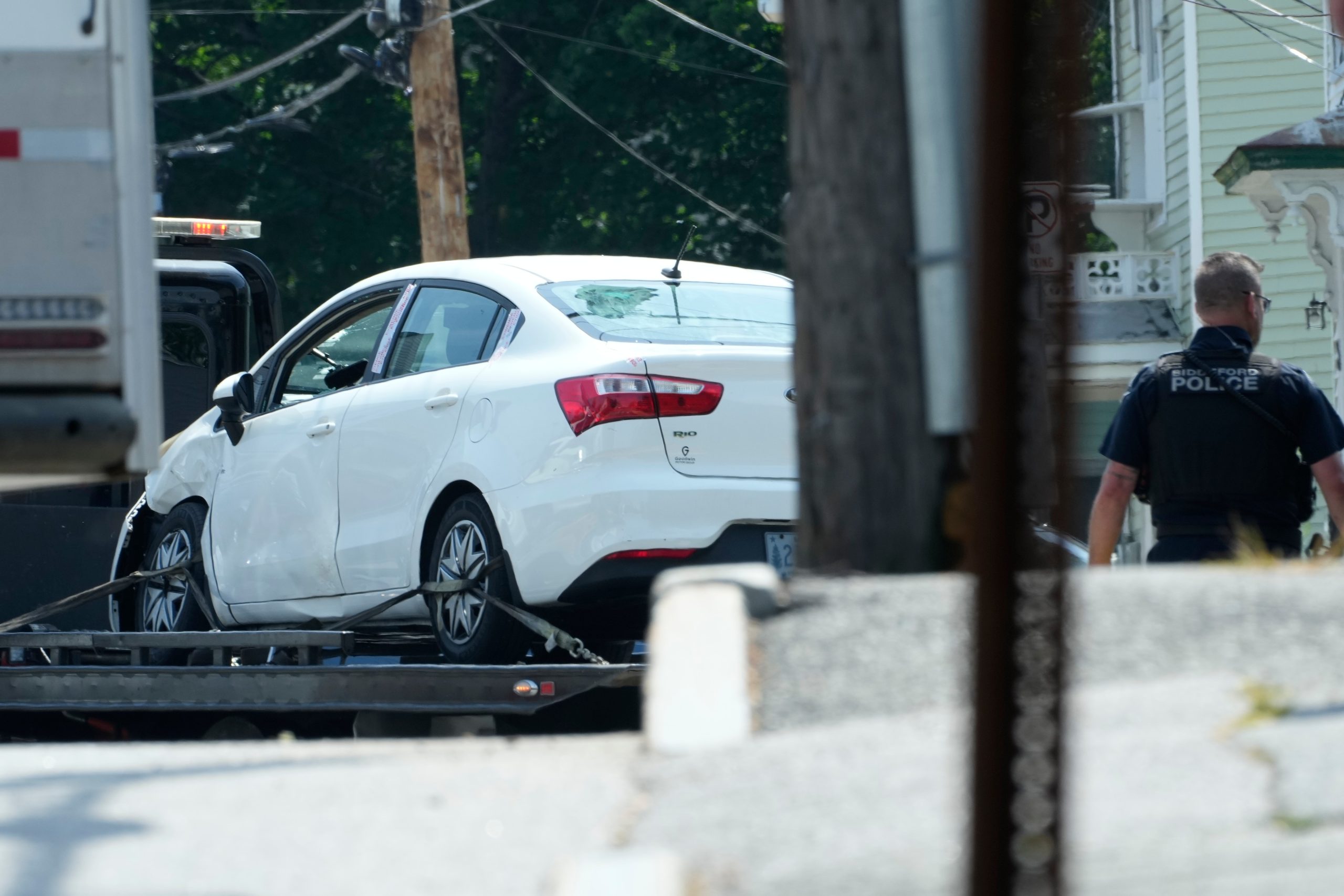
A vehicle with a damaged window is transported away from the scene of a shooting involving U.S. Immigration and Customs Enforcement, Monday in Biddeford, Maine. Robert F. Bukaty
The fight against police brutality against African Americans in the late 2010s found its rallying cry when New York City police choked and killed a street peddler named Eric Garner, whose last words were. “I can’t breathe!” Now, Monday’s latest fatal shooting by U.S. Immigration and Customs Enforcement agents that shattered the morning calm of Biddeford, Maine has produced a new mantra. As 26-year-old Joan Sebastian Guerrero lay dying on the pavement — shot in the head, then dragged from his car and handcuffed — a bystander heard him say in anguish: “I tried to stop.”
Moments earlier, the man, reported to be a Colombian national with a U.S. work permit, had left his home, possibly with his daughter, in a white Kia sedan, which was hemmed in by ICE agents in their vehicles. Although the Department of Homeland Security changed the wording of its statements over the course of the day, it ultimately reported that an ICE agent shot Guerrero because the driver attempted to flee and the officer was “fearing for public safety.” But ICE and DHS, whose officers have now shot and killed at least 11 people since Donald Trump returned to office, have repeatedly seen their versions unravel as more video and witnesses emerged. The two most recent attacks — Monday’s assault on Guerrero and last week’s Houston shooting of 52-year-old Mexican national Lorenzo Salgado Araujo — happened on working-class residential streets without clear videos of the shootings, and with ICE agents not wearing body cams.
Still, a pattern is starting to emerge as DHS and its new leader, the former Oklahoma senator Markwayne Mullin, put a flood of new, barely trained ICE recruits on the streets in attempt to make mass arrests of immigrants without the same level of hoopla and backlash that happened in cities like Minneapolis and Chicago under Mullin’s predecessor, Kristi Noem. In both the Houston and Biddeford shootings, ICE began the morning in what it claimed was a targeted operation seeking a specific immigrant with a removal order, only to try to arrest and ultimately kill men, in Salgado and Guerrero, who were not the supposed targets.
It’s quickly becoming clear that ICE’s new strategy is a recipe for disaster. Both Salgado and Guerrero, according to what we know from witness accounts, didn’t seem to know what exactly to do when their vehicles were surrounded by unmarked vans and yelling men. In both cases, ICE agents interpreted the predictable panic and chaos as aggression, and made a split-second decision to end a human life forever. It increasingly looks as if the federal agents — facing an impossibly ambitious goal from the Trump regime of arresting and deporting 1 million people a year — insist they have a name on a sheet of paper, when in reality they are racially profiling brown-skinned men driving to blue-collar jobs.
Like so many projects of our current government, the new ICE scheme is not only inhumane but also dumb and counterproductive. Mullin’s apparent new strategy was to meet the high arrest quotas sought by Trump and his immigration guru Stephen Miller without generating the kind of public protest and backlash that all but drove DHS out of Minnesota this winter. It’s not working. Even before Guerrero’s name was released, angry demonstrators took to the streets in Biddeford and stormed the office of the state’s GOP Sen. Susan Collins, who recently voted for a $70 billion cash infusion for immigration raids.
The tactics may have changed slightly, but the repulsive devaluation of human life has not. Mass deportation is a failure — strategically, politically, and morally.
What I wrote on this date in 2019
Some days my past writings read like Nostradamus, but more often than not they reveal how fleeting our political moments can be. On this date seven years ago, this columnist joined a lot of progressive voters in swooning over the early-stage presidential ambitions of Massachusetts Democratic Sen. Elizabeth Warren, who had just spoken at the left-wing convention Netroots Nation here in Philadelphia. “With her slam-dunk performance Saturday,” I wrote, “Elizabeth Warren became president … of the American progressive movement, anyway.” But Sen. Bernie Sanders had other ideas about that, and then Joe Biden and South Carolina voters came along with different ideas about Warren, Sanders, and control of the Democratic Party. Read the rest: “Netroots Nation was the day Elizabeth Warren became president of the American left.”
Recommended Inquirer reading
It was a full week for me, and for American outrage. First, I tackled the Houston ICE killing of 52-year-old Mexican national Lorenzo Salgado Araujo and the return of ambitious immigration raids to American cities. I noted that the new ICE strategy aimed to ramp up arrests without generating public outcry, and I urged readers not to go to sleep on mass deportation. Over the weekend, I wrote about the similarities between the Trump regime and the disastrous ancient reign of the Roman emperor Caligula. I detailed how Trump’s growing paranoia that he will be assassinated in office is causing new bloodshed in the Persian Gulf and inspiring fresh efforts to quash civil liberties here at home.
Kenesaw Mountain Landis must be spinning in his grave. He was the former federal judge who tried Chicago’s notorious “Black Sox” for throwing the 1919 World Series at the behest of New York gamblers, then became baseball commissioner to clean up the national pastime. For decades, Major League Baseball shunned even the slightest whiff of gambling connections that might taint the sport — but times have changed. My Inquirer colleague David Gambacorta — one of the best investigative reporters in the business — last week broke a remarkable story about how the lucrative betting site FanDuel egged on a local addicted gambler to keep playing until he lost some $1.5 million. Plot twist: FanDuel’s effort includedhaving Phillies slugger Bryce Harper send a personalized video to please the local bettor. It’s disturbing that a) Harper, with a 13-year $330 million contract, also feels the need to peddle $899 videos on Cameo and b) he has a relationship with people at a gambling website. But FanDuel is now “the official sports betting partner” of MLB — an appalling relationship that only encourages morally dubious behavior like the Harper video. The rank corruption of modern American society, including sports, is why we need investigative reporters like Gambacorta. You can read the next installments in this saga, and support his work, when you subscribe to The Inquirer.
By submitting your written, visual, and/or audio contributions, you agree to The Inquirer’s Terms of Use, including the grant of rights in Section 10.
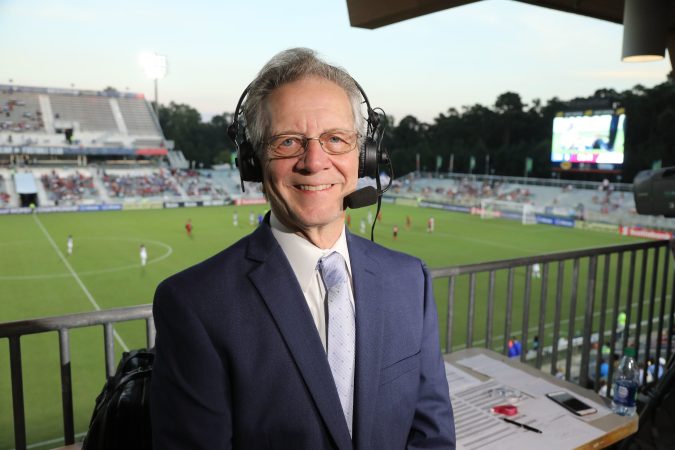
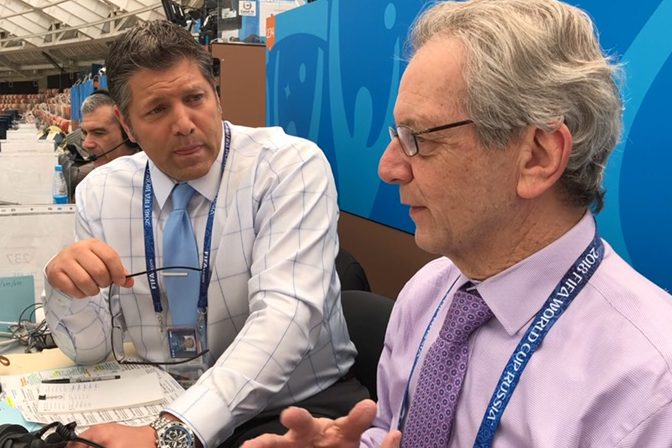
After 18 combined men’s and women’s World Cups over 40 years, American soccer’s most decorated play-by-play voice is stepping back from the sport’s biggest stage.
JP Dellacamera told The Inquirer that he has called his last World Cup game, and that it is his choice. He now waves goodbye after calling 11 men’s World Cups and seven women’s World Cups.
“Every year since 2006, the [men’s] World Cup in Germany, I have always looked at it like this could be the last one. Because you didn’t know which network [would] have it, you didn’t know about your own health and well-being — you have to stay healthy to do as many World Cups as you possibly can. … I think that the combination of this one being in our country again, and this being the last one for now on Fox, makes me want to go out this way in terms of the World Cup.”
He is not fully retiring. The 74-year-old will continue to call NWSL games for CBS Sports and ION, and hopes to continue working with Fox on its other soccer properties — in particular next year’s Concacaf Gold Cup and the 2028 European Championship.
“If Fox had [the World Cup] and they wanted me, I would stay with it,” he said. “I think I can be involved with the NWSL for two or three more years. And if Fox has other tournaments and they want me to do them, I can still do them.”
JP Dellacamera (left) at work for Fox during the 2019 women’s World Cup.Fox Sports
Otherwise, he said, “it was not a hasty decision. I’ve thought about it. But it’s the right time.”
The record will show that his last World Cup game was the Switzerland-Algeria round of 32 contest in Vancouver, B.C., on July 2. Coincidentally, one of his most famous days on air came in the same city and stadium, BC Place: the 2015 women’s World Cup final, where Carli Lloyd’s hat trick carried the U.S. to its first championship in 16 years.
“When you’re doing [a call with] a world feed and you’re not sure what the next picture is going to be, I don’t like to get caught in a story,” he said. “And I didn’t want to make it sound like it was me and my memory. So I passed on it, but I did think about it for sure.”
The previous title in 1999 still stands as No. 1, when he was on ABC’s call (which FIFA used as the world feed) of the final that vaulted women’s soccer into America’s mainstream for the first time. As has long been his trademark, he kept his call of Brandi Chastain’s winning penalty kick to just one syllable — “Goal!” — and let the scene carry the rest.
Dellacamera worked 10 games this summer, all with former U.S. women’s team and Philadelphia Independence midfielder Lori Lindsey. The first of them was Ivory Coast-Ecuador at Lincoln Financial Field, which let him return to the city where he was the Union’s local TV voice for over a decade. Last year, the club named the main broadcast booth at Subaru Park in his honor.
“Sometimes I look at signs, and one of the signs was that my very first game was going to be in Philadelphia, where I spent 13 years with the Union,” he said. “And so that meant something to me.”
Not all 10 games were classics, but he got his share of drama: late winners in Ivory Coast-Ecuador and Ghana-Panama, Cape Verde fighting Uruguay to a 2-2 tie, and the wild endings to Austria-Algeria and Belgium-Senegal. Those moments and others brought the latest rounds of praise from viewers who have long enjoyed hearing Dellacamera’s calls.
“People have said a lot of kind things to me over the years,” he said. “The one that usually gets to me is when somebody thanks me for being the voice for them for so long. You don’t realize that until somebody says, ‘You’re the voice I grew up with.’ … Things like that, they mean a lot to me, and I think as you get closer to the end of your career, it means more than it ever did.”
Alex Morgan scores her first goal since the opening game and retakes the lead in the Golden Boot race (6 goals, 3 assists)
JP Dellacamera (right) with broadcast partner Tony Meola at one of the World Cup games they’ve called for Fox Sports.Courtesy of Fox Sports
“I’ve never taken World Cups for granted,” he said. “The fact that I did one didn’t mean I was guaranteed to do two; the fact that I did six didn’t mean I was going to get to seven. So, I’ve never looked at it that way. It’s always been a privilege to do it — and you have to have luck in this business, too.”
These days, there are more American voices calling the world’s game than ever. John Strong leads Fox’s men’s soccer coverage, Tyler Terens joined the network this summer after years calling MLS games on Apple TV, and Mike Watts is a stalwart voice of the NWSL and USL. Dellacamera appreciates how they are another sign of the sport’s growth.
“The future of American soccer broadcasting is in great hands because of all the young talent that we’ve been able to develop over the years,” he said. “I’m very comfortable in knowing that we have a lot of depth, and a lot of talent.”
It’s been a busy summer for new Sixer Jaylen Brown — and not just because he was part of one of the NBA offseason’s biggest moves.
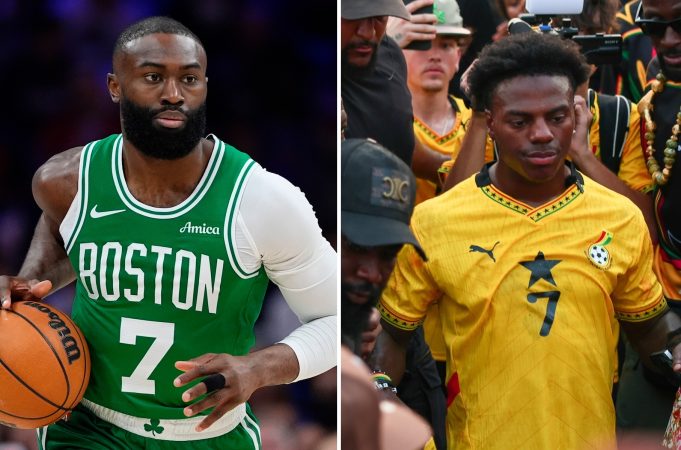
Brown also boxed on the streets of Morocco and attended the World Cup in Foxborough, Mass., near Boston, where he enlisted the help of YouTube star IShowSpeed to recruit free agent superstar LeBron James to Philly.
Earlier this summer, Brown traveled to Morocco with former Celtics teammate Tacko Fall and on Thursday posted a video on YouTube documenting their time experiencing the nation’s food, animals, and culture. Brown held a snake around his neck and a monkey on his shoulder, played drums with a group of men, and handed out free smoothies.
However, the most viral moment came when Brown took part in a friendly boxing session. A crowd quickly formed as Brown squared off in the street with a local, and cheers erupted as the NBA star showed off his skills.
It’s unclear whether the impromptu boxing match came before or after Brown was traded to the Sixers on July 1, but it appears Brown was in Morocco for the recent PLYRS UNTD Africa Experience.
During a livestream from inside the Boston Stadium (aka Gillette Stadium) during Morocco’s FIFA World Cup quarterfinal vs. France, Brown enlisted the help of internet personality IShowSpeed, an Ohio native whose real name is Darren Jason Watkins Jr., to send a message to James.
“You gotta tell LeBron he’s gotta pull up, man. Pull up to Philly,” Brown said in the livestream.
Watkins happily looked into the camera and told James, who reportedly has the Sixers, Cleveland Cavaliers, and Miami Heat among his top three teams, to join Brown and “PG13” in Philly. The only problem: Paul George isn’t on the team anymore.
Brown corrected him that George had been traded to the Celtics in the deal that sent Brown to the Sixers. The exchange quickly spread on social media with fans poking fun at the streamer for not realizing George had been traded.
Brown also seemed frustrated about the trade during the livestream.
“It’s a crazy business, bro,” he said. “Don’t become a basketball player. There’s no loyalty, there’s no love. … They packed me up, sayonara chat, I’m out of here.”
Jaylen Brown talks to IShowSpeed about Boston trading him:
“It’s a crazy business, bro. Don’t become a basketball player. There's no loyalty, there’s no love…They packed me up, sayonara chat, I'm out of here.”
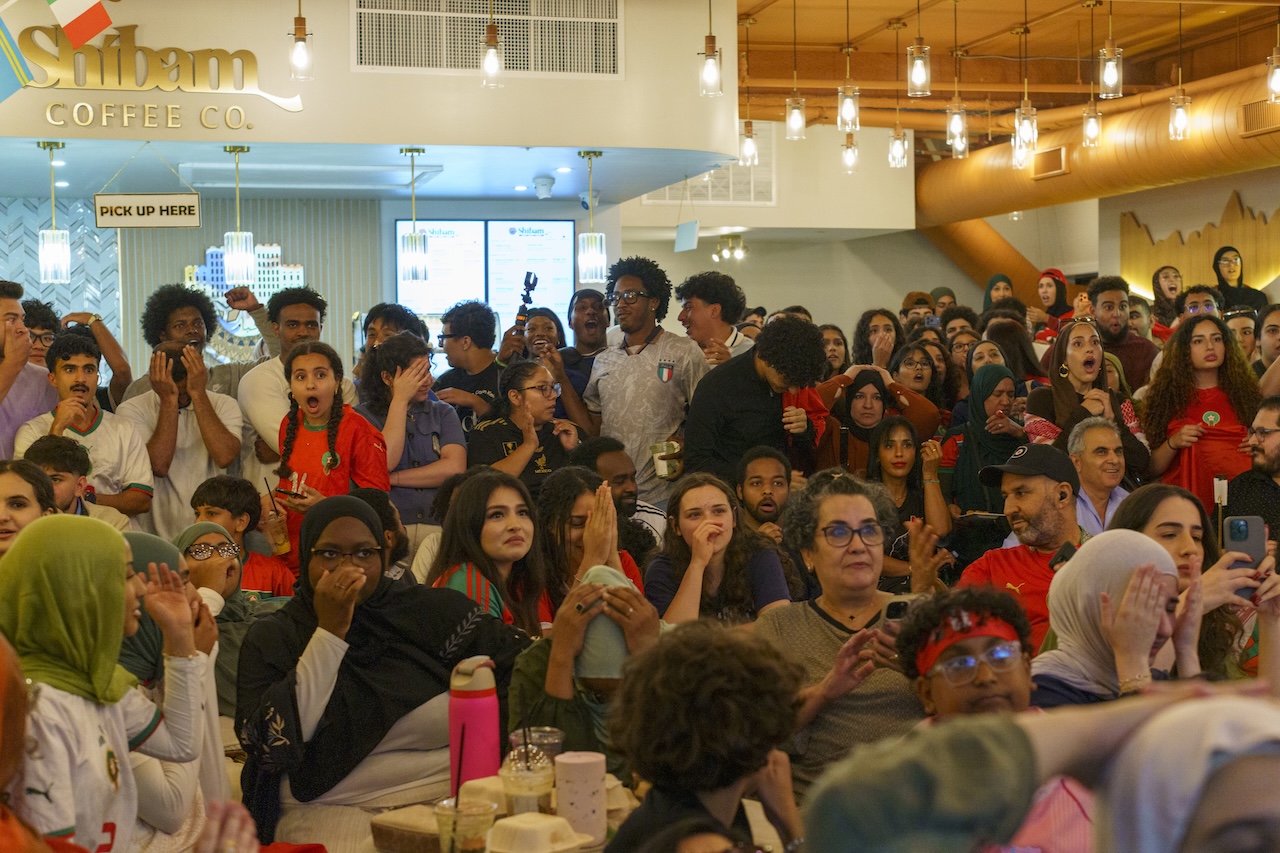
Driving to West Philadelphia’s Shibam Coffee Co., Ayham Muhanna got a flat tire.
Muhanna, a rabid Morocco fan, wasn’t going to let that stop him from making it to the cafe, which was hosting a watch party for Morocco’s World Cup quarterfinal matchup against France.
“I love the community. I love the vibes out here,” Muhanna said. “We could have gone anywhere else, but we decided to come to Shibam. After coming here for the first time for the Egypt and Iran game, we saw that the energy was through the roof. We saw that the community was all here showing out and showing love.”
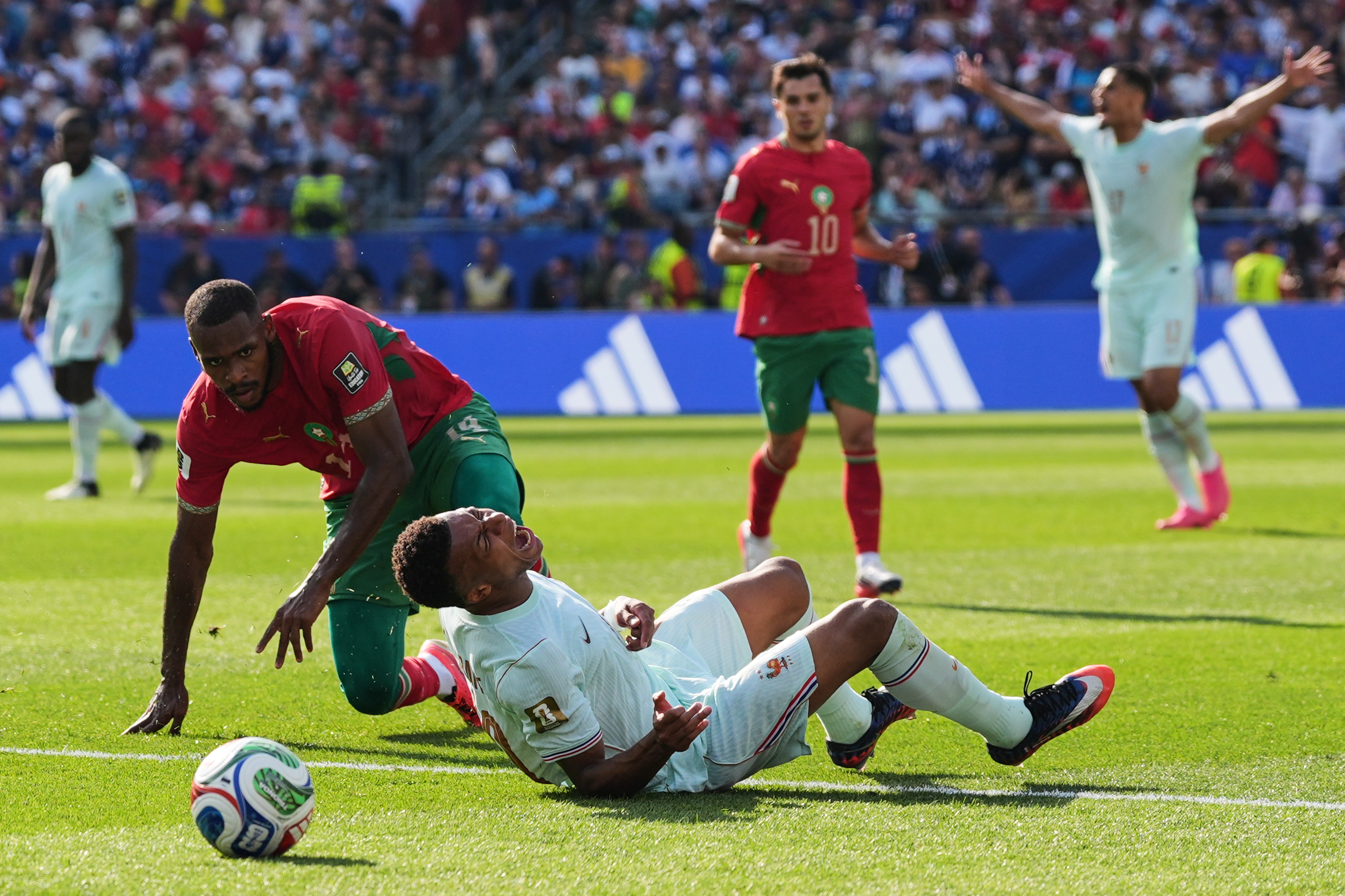
France’s Kylian Mbappe (center) reacts to being tripped by Morocco’s Issa Diop (left), during the World Cup quarterfinal soccer match on Thursday.Stephanie Scarbrough
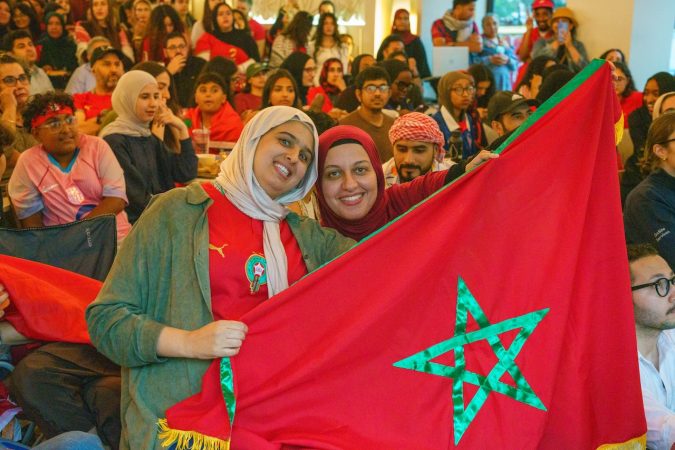
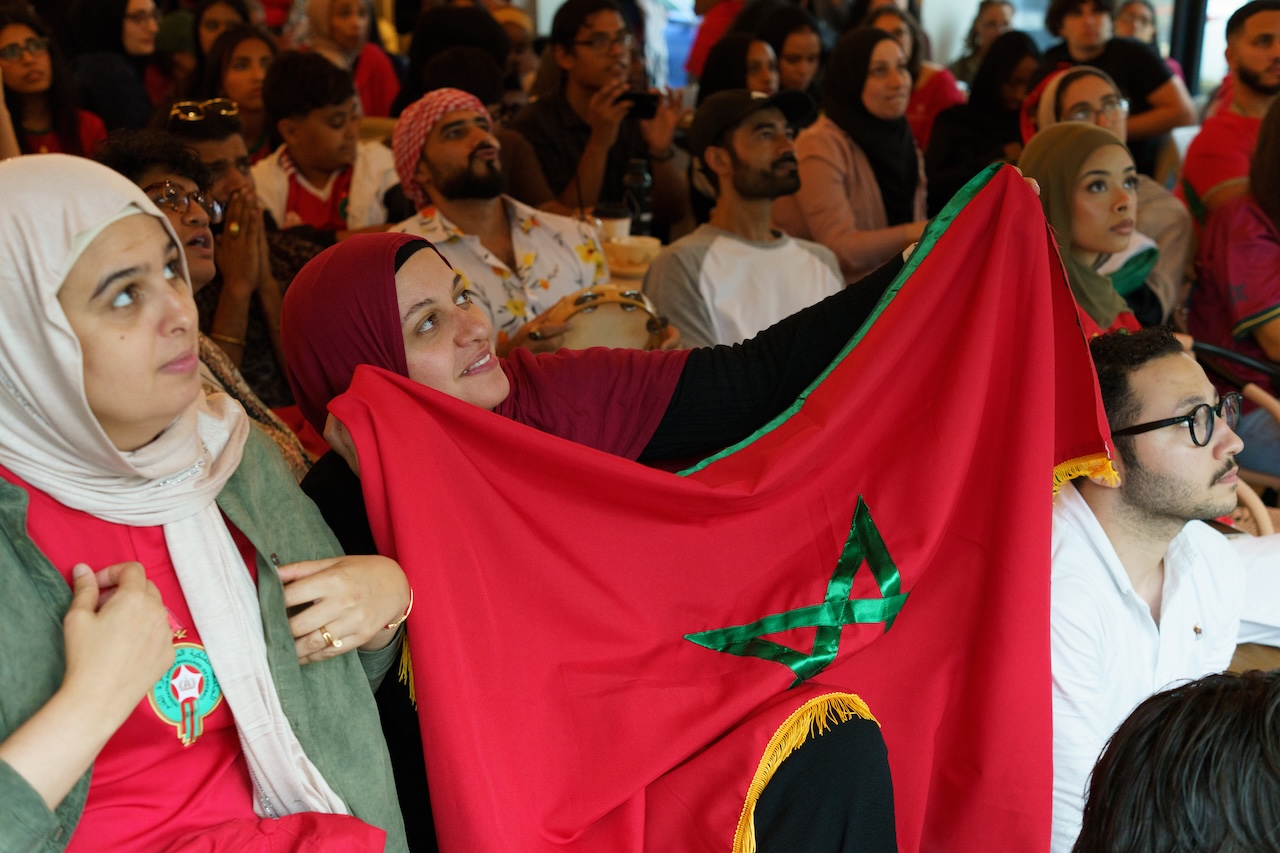
Although Morocco lost, 2-0, to France in Thursday’s match, the energy was palpable inside Shibam, a Yemeni coffee shop, as a mostly Morocco-supporting crowd packed the cafe. Yemen and Morocco, despite being thousands of miles apart, share many similarities in terms of language, culture, religion. During the World Cup, fans of each country tend to support one another. This was evident at Shibam, as most of the fans were members of the region’s vast diaspora.
The original Shibam Coffee Co. is based out of Dearborn, Mich., the only Arab-majority city in the United States. Fahad Azam is a part-owner of the West Philadelphia franchise, one of 19 Shibam locations in the country. While not a soccer fan himself, Azam saw an opportunity to further connect with the surrounding community by holding watch parties for the World Cup. The turnout for the first game blew away his expectations.
A packed house at Shibam Coffee in West Philadelphia is on hand to watch Morocco take on France in Thursday’s World Cup quarterfinal. Courtesy / Sam Foster
“It was a madhouse,” Azam said. “We didn’t know what we signed up for, but obviously we love the environment, we love the passion that everyone brings. We want to do more. The World Cup is not going to happen again next year. We wanted to show the community that we’re not just a coffee shop.”
That they did. Although Morocco’s offense was stagnant — France held a 22-5 shot advantage — the fans who packed into Shibam held out hope until the game’s final moments. The biggest crowd reaction came in the 28th minute after Moroccan goalkeeper Yassine Bounou denied France star Kylian Mbappé’s penalty attempt. Then, to start the second half, fans brought out tambourines and drums to lead the usually quiet coffee shop in song.
The line to get a coffee spanned the cafe. It was impossible to maneuver without bumping into multiple people. Nonetheless, when everyone rose to their feet in anticipation of a shot or as fans broke out into a rendition of Shakira’s “Waka Waka” after the pop star was shown on screen, any would-be negatives disappeared.
“I’m half Moroccan, so it’s always been in my family, supporting Morocco and coming out for them,” said Mahdi El-Hadi, a Newtown Square resident. “I’ve been a huge Morocco supporter since I was a kid. … We have the vibes; we have the music. We’re always super excited for every game.”
One watch party attendee, Yusra Aziz, owns a psychotherapy practice. At work, Aziz readily shares the importance of finding and embracing community to her clients. She listened to her own advice on Thursday. Aziz is the daughter of immigrants — her mother was born in Morocco while her father came over from Iraq. The joyful scene inside Shibam was a point of pride for her.
Fans in attendance at Shibam Coffee in University City for Thursday’s World Cup quarterfinal say that the sense of community was equally as important as the match between Morocco and France. Courtesy / Sam Foster
“When I was growing up, there was a lot of this type of vibe in our house,” Aziz said, gesturing to the crowd around her. “My family would host it. There would be a lot of our community members. When I was growing up, I could have only dreamed of having something like this. I did not see things like this growing up — cafes that were hubs for our community.
“It feels symbolic of what my parents did by coming here. They met here in Philadelphia, and I wouldn’t exist if they didn’t meet here. Looking at all these people here, I know that a lot of them are in similar circumstances. Their parents came here, and they were born here.”
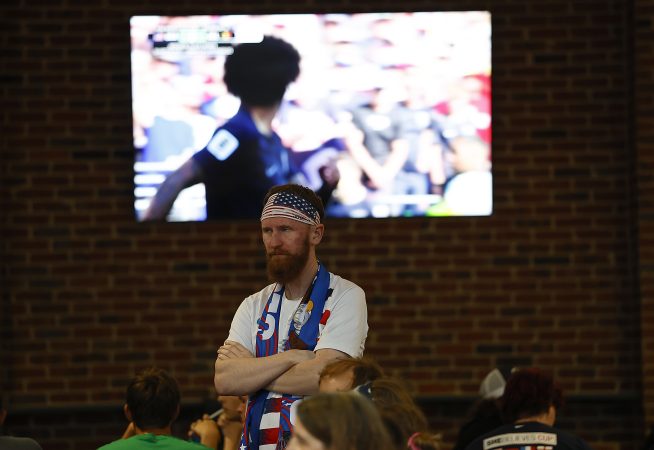
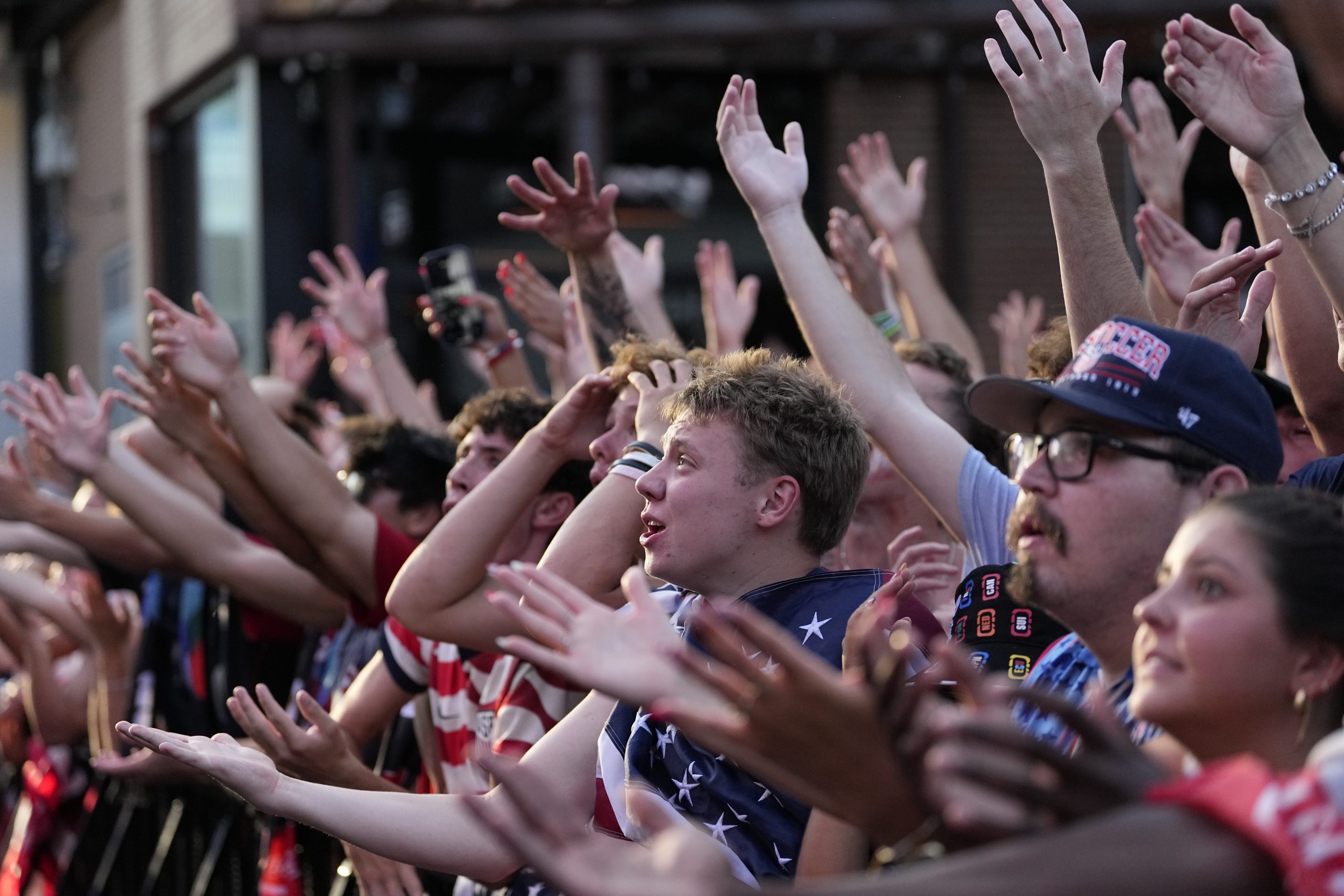
The U.S. men’s soccer team set another viewership record in its loss to Belgium, despite the lopsided 4-1 defeat.
A combined total of 50.125 million viewers watched on Fox (37.225 million) and Telemundo (12.9 million), whether via traditional television or online streaming.
Fox issued a revised number on Friday morning, acknowledging that its initial announcement of 33.086 million was for a time span bigger than the traditional “match window” metric used in soccer. The revision took the total over 50 million, making this the first soccer game to reach that bar.
It was the biggest audience for a television event since Super Bowl LX, and bigger than both of this year’s NFL conference championship games. The AFC matchup drew 48.6 million viewers, and the NFC drew 46.1 million.
Fox also said its audience alone was the biggest for any non-NFL broadcast since Game 7 of the 2016 World Series, when the Chicago Cubs ended their infamous championship drought. That mark was previously held by this year’s college football national championship game, which drew 30.1 million viewers across a range of ESPN channels.
Fans watching the U.S.-Belgium gane at a viewing party in Kansas City, Mo.Charlie Riedel
Fox noted that Philadelphia was the network’s No. 5 local ratings market for U.S.-Belgium, with a 14.22 rating and a 38 share. That means around 38% of all households watching television at that time tuned in to the game.
It wasn’t lost on U.S. fans that the blowout score turned some casual viewers sour. But the World Cup overall has continued to be a big deal, and that seems unlikely to change.
England’s dramatic 3-2 win over Mexico on Sunday night drew an audience worth a Sunday night NFL game: 46.690 million viewers combined between Fox (23.49 million) and Telemundo (23.1 million, a network record for soccer).
Earlier Sunday, Norway’s upset of Brazil in the Meadowlands drew 28.373 million viewers combined.
Fans watching Norway-Brazil at the official World Cup fan festival in Dallas.Jessica Tobias
According to publicly available data so far, 12 games this summer attracted audiences of over 20 million viewers across the two networks, including four in the round of 16: U.S.-Belgium, Mexico-England, Brazil-Norway, and Paraguay-France in Philadelphia on July 4 (22.924 million).
Data compiled by The Inquirer show that the top five soccer audiences in U.S. history, and seven of the top 10, have come during this World Cup.
We’ll see if the numbers grow again in the quarterfinals, which include a Saturday doubleheader of England vs. Norway and Argentina vs. Switzerland (5 and 9 p.m., Fox29 and Telemundo 62).
If all the favorites prevail, the semifinals would be France-Spain and England-Argentina. The first of those would match two of the sport’s biggest superstars, Kylian Mbappé and Lamine Yamal; the second would pit Jude Bellingham and Harry Kane against Lionel Messi in a renewal of one of soccer’s most famous rivalries.
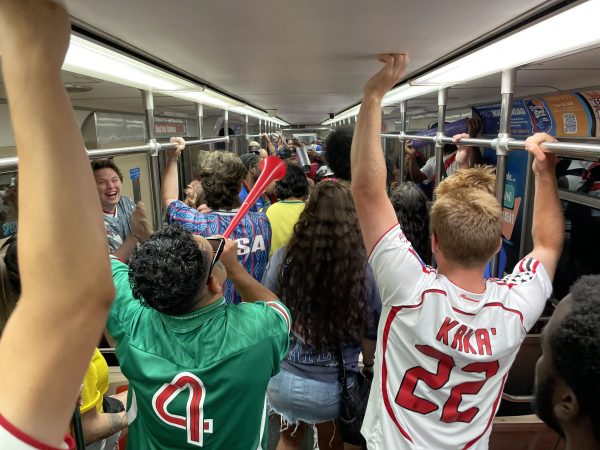
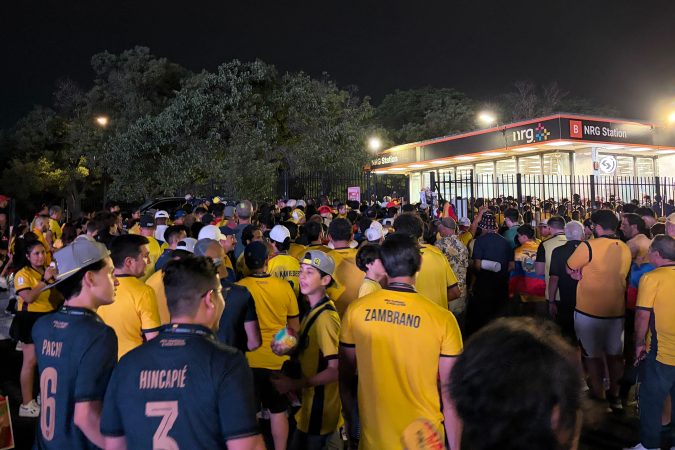
After Brazil beat Haiti in a World Cup match last month, 29,162 fans swarmed NRG Station to catch the subway.It was SEPTA’s second-highest reported crowd for a single stadium-complex event.
And the largest? The 31,087 people rode the B line after the Eagles won the NFC Championship in January 2025.
For three summer weeks, Philadelphia visitors leaned on transit — 155,333 passengers rode the subway also known as the Broad Street Line alone, SEPTA said.
From June 14 through July 4, the city hosted six World Cup matches, FIFA’s Fan Fest, and celebrations of the 250th anniversary of Independence Day.
“This was a unique opportunity for SEPTA — possibly one we will not get again for many years,“ spokesperson Andrew Busch said. ”We think there is a lot we can learn that will help improve special event service and everyday operations.”
Regional Rail also saw bumps in ridership, as did transit, primarily bus routes, serving the Fan Fest at Lemon Hill in Fairmount Park, SEPTA said. Bus routes 32 and 48 provided direct service, while Routes 7 and 49 had stops within walking distance of the festival entrance.
It helped that Brazil and Haiti’s June 19 game fell on the federal holiday of Juneteenth … and that sponsor Airbnb paid SEPTA to provide free rides home for people using the Broad Street Line on match days between halftime and the final whistle.
On July 4, when Paraguay and France met in an elimination round game and people were coming to Independence Day events, ridership on the overall system was up 15% compared to the previous year. Broad Street Line ridership was 62%; Regional Rail was up 48% and the lines serving FanFest were up 21%.
Transit agency analysts focused on post-match boardings on northbound trains at NRG Station because it was the most straightforward way to identify fans who attended the game and traveled on SEPTA, officials said.
Some riders headed to the stadium area were going to Stateside Live or checking out pregame festivities.
Customer service lessons learned, according to SEPTA:
Using megaphones to communicate with riders in crowded stations broke through the noise, helping people unfamiliar with SEPTA navigate.
Bringing a DJ to NRG Station soothed post-match crowds waiting for outbound trains. “More than a couple of dance parties broke out, and we think it helped keep the atmosphere festive,” Busch said.
SEPTA moved its start and end point for the B Line for the Sports Express trips from Fern Rock to Girard, easing crowds in Center City and shortening turnaround time.
Ridership on the Airport Regional Rail line typically increased 20% or more on the day before and day after a match.
Regional Rail’s Trenton line on the Northeast Corridor also carried more passengers than usual, as people took NJ Transit from New York City and northern New Jersey and connected to SEPTA.
While there were complaints about crowding, few major incidents were reported.
SEPTA gets another test next week with the MLB All-Star Game July 14 and related events, though they are expected to have a smaller impact.
One person after another shuffled toward her from the funeral line snaking down the center aisle, through the vestibule of St. Anthony of Padua Catholic Church, out to Forest Avenue in Ambler, and I wondered as I approached her how long Meg Kane could keep this up. The sad, grateful smile. The long, tight hugs. The posture she maintained, straight as a soldier, when the shock and grief simmering within her should have sent her to her knees.
It was Friday, April 12, 2024. Eight days had passed since the house fire that killed her parents — the kind of unbelievable tragedy that interrupts a local newscast, helicopters hovering over the smoldering ruins. Unbelievable, too, because it had happened to Meg. Over the quarter-century that we have been close, she has risen through the public relations industry to a place of power and influence within Philadelphia without compromising the qualities that made her, above all else, a decent human being. It always seemed that her intelligence and drive, her character and achievements, melded to form a shield that would protect her from catastrophe. Something like this doesn’t happen to someone like Meg, I thought that day, as if such a thought were anything other than a mind trick, a weak attempt to reconcile how and why my friend’s mother and father were dead.
The line stretched to more than 200 people, perhaps more than 300. No one standing in it should have been surprised at its length. Meg had relationships and connections throughout the Delaware Valley, of course, but more than that, she and her family had embodied the blending of some beautiful and long-conflicted aspects of Philadelphia’s history and culture. They had learned to live with and revel in the tensions inherent in certain traditions here. Their roots were that deep. Their hearts were that open. Hers most of all.
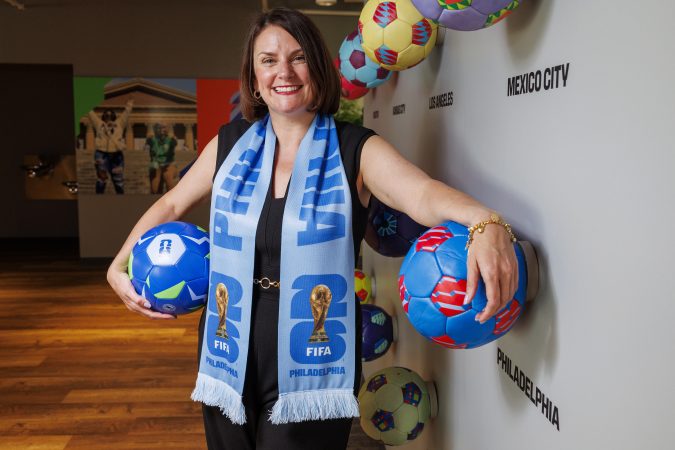
That background is one reason Meg has been the ideal face of the campaign to bring the World Cup to Philadelphia and promote it once it was here, to play up and celebrate the happy marriage of soccer and the city. It also is the reason that — through every match, every publicity event, every meeting, every long and restless night before and during this tournament, all while the eyes of the globe had been on Philadelphia — she has been holding all that pride in the same palm as so much pain.
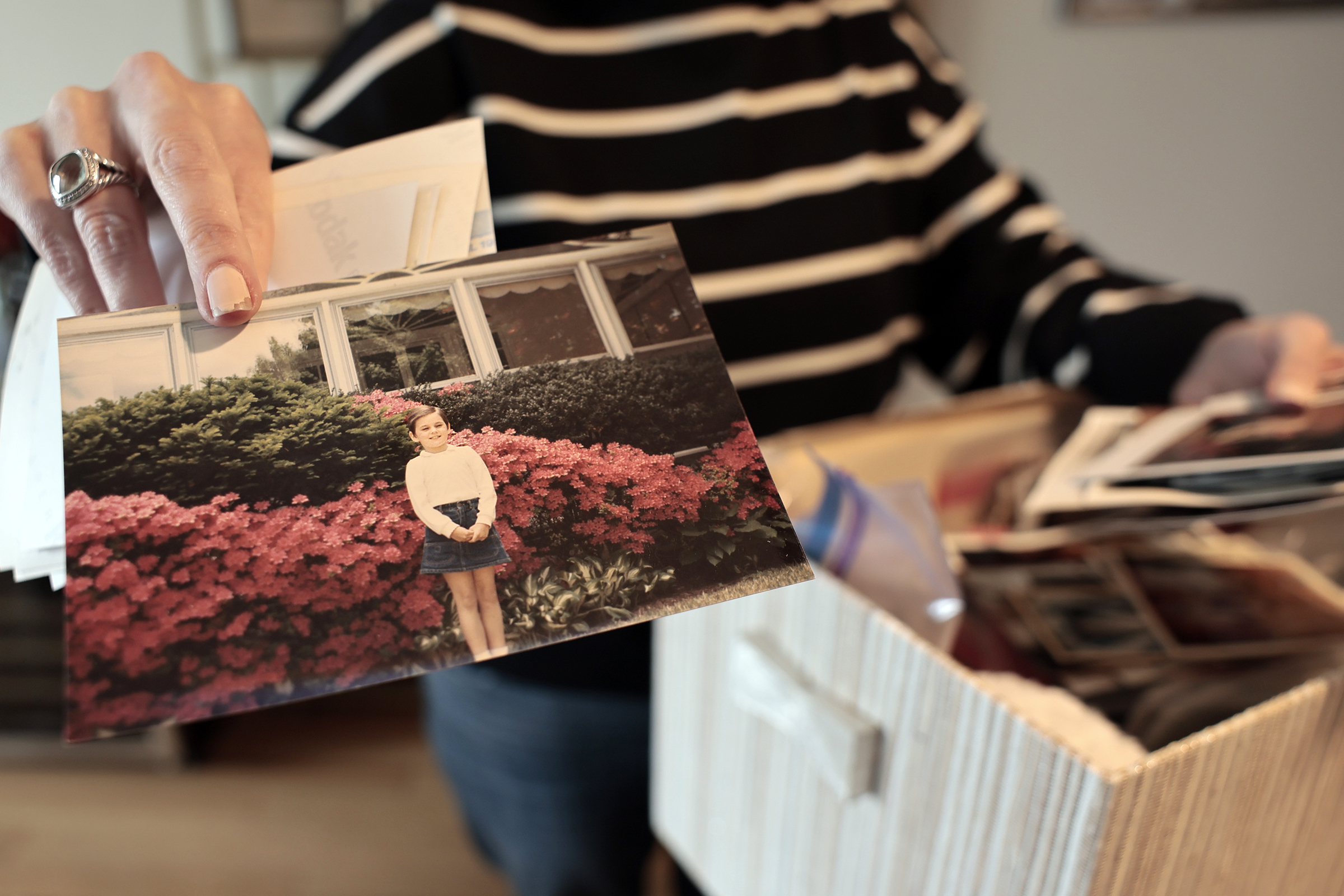
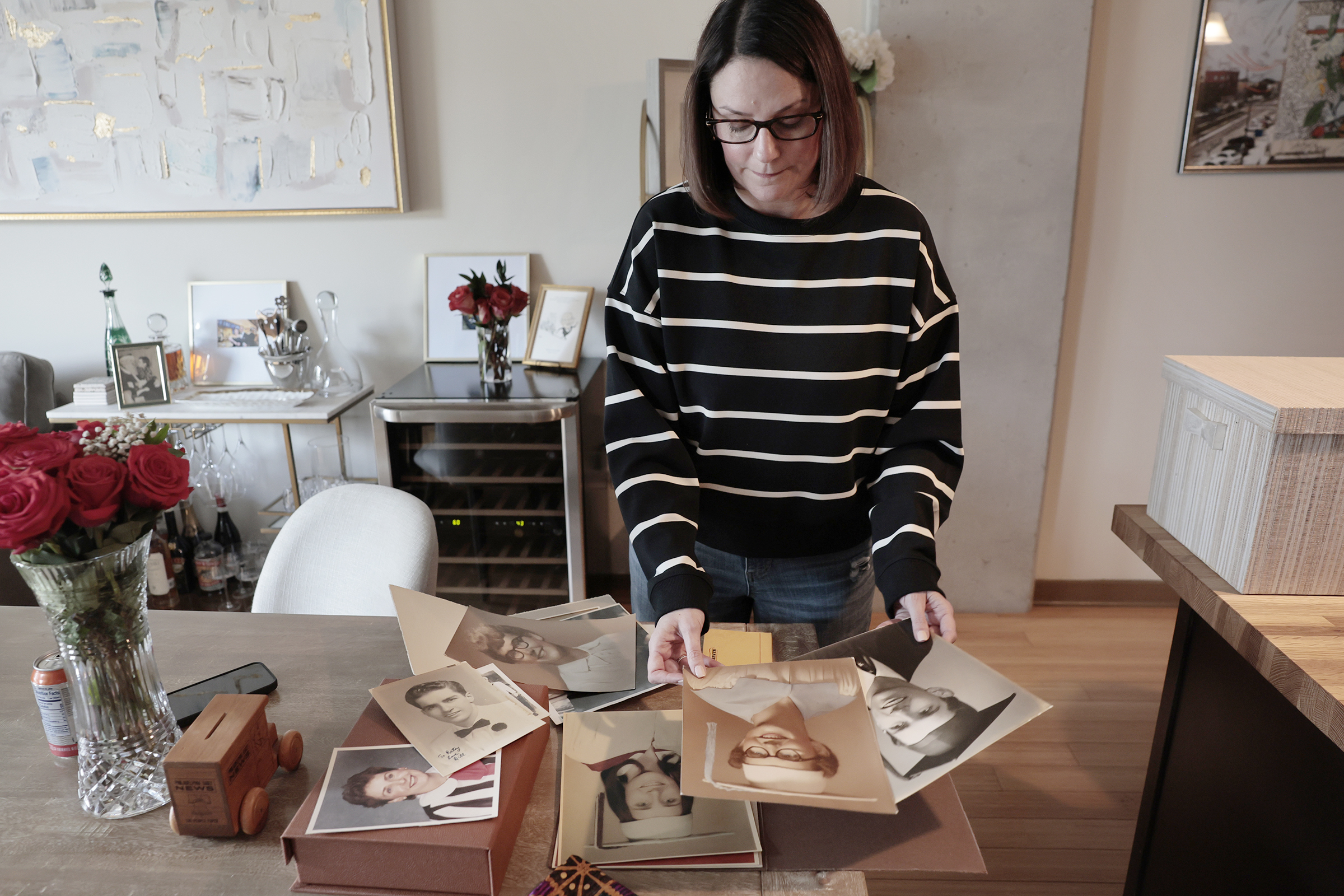
Meg Kane looks at a photo of her mother among old family photos in her Philadelphia apartment in May. The photos were recovered from the scene of an April 2024 house fire in Ambler that killed both of her parents.Elizabeth Robertson / Staff Photographer
Everything essential in life
There she is again. Another quickie interview on Fox29. Another guest spot on a PHLY Sports panel. Another four paragraphs of insightful quotes to us at The Inquirer. Another Amtrak ride up to New York or 14-hour flight to Doha, Qatar, to see what she could learn, then another debrief with her colleagues at Philadelphia Soccer 2026. Here’s what they did. Here’s why it did or didn’t work. Here’s what we can and should do.
Nothing new for Meg Kane. Nothing out of the ordinary. Revitalizing Tastykake’s brand and business when its headquarters relocated from Hunting Park to the Navy Yard … making ready the way for Pope Francis’ visit to town in 2015 … counseling the Philadelphia Orchestra and the archdiocese … all this at the tenderest of ages, all this before she turned 45 in January.
“When the odds are against us,” said her friend Christopher Pinto, the development lead of the Philly Pops, “this city calls Meg Kane to make the impossible possible.”
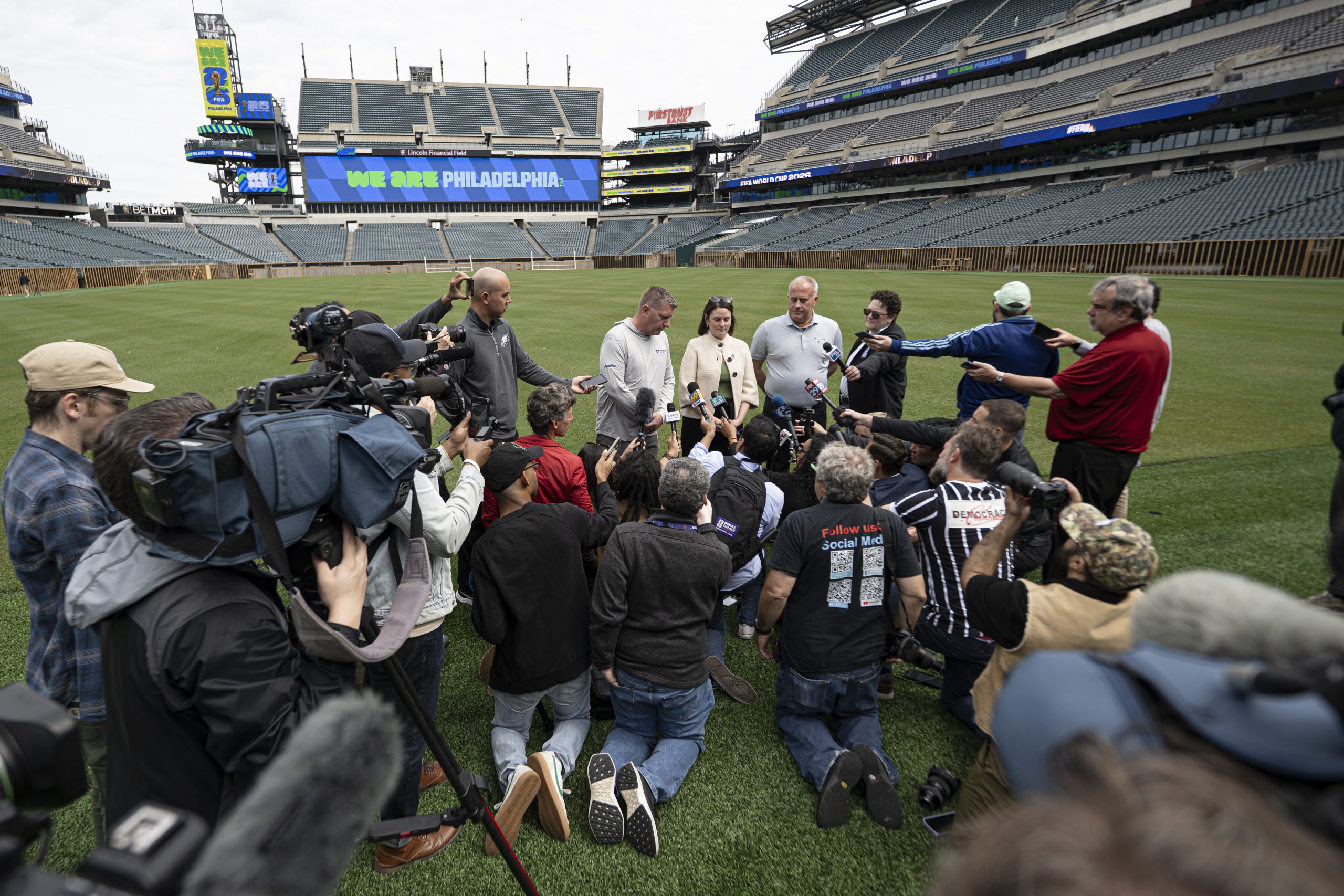
Meg Kane (center) speaks at a press conference about preparations for the FIFA World Cup in May at Lincoln Financial Field.Jose F. Moreno / Staff Photographer
Who was better to evangelize about Philadelphia, to make the case that it was an ideal location for the biggest event in the world’s most popular sport? Who else had the requisite combination of local expertise and enthusiasm to share the multitudes that the city contained? Meg’s mother, Debbie, and biological father, Richard, had divorced not long after Meg was born. Debbie then married Steve Wood in September 1983 — a Little Flower alumna and a North Catholic graduate reconnecting 15 years after they’d met as teenagers on the Wildwood boardwalk.
Meg wasn’t yet 3 when Steve became her stepfather, but the word was appropriate only in its most literal sense. He was Dad, too, and she was his daughter, full stop, and everything that was essential in his life became essential in hers …
… and everything included their early-afternoon car trips together starting when Meg was 7, when Steve would pick her up after another half-day at St. Martin of Tours School and drive down I-95 to 13th and Walnut, to the bar that Steve and his brother, Bill, had opened in 1980, to Woody’s — to the best-known gay social establishment that Philadelphia has ever known. While Steve balanced the books, Meg — still in her Catholic school uniform, her plaid skirt and saddle shoes — sat at the bar, the daytime bartenders fixing her fresh cherry Cokes, making them the right way, muddling the fruit and filling her glass with fountain soda, the little girl chatting up the customers and playing Ms. Pac-Man on the arcade machine upstairs and remaining mostly oblivious, never thinking anything there was strange or sinful, her parents never suggesting anything was.
As a child, Meg Kane’s afternoons sometimes included stops at her dad and uncle’s bar, Woody’s.Elizabeth Robertson / Staff Photographer
The cognitive dissonance might have caused constant friction in one family or torn another apart. It didn’t exist within Meg’s. Steve had one rule about the visits that Meg, her younger sister, Liz, and their younger brother, Stephen, made to Woody’s: If you see someone there you know, keep it to yourself. “It was important we never outed anybody,” Meg said. “At that time, there were people for whom Woody’s was an oasis, an escape, the one place they could be themselves.”
The bartenders there picked up extra work at Liz’s and Stephen’s christening parties. Bill’s partner, Lee Mallon, showed up to the family’s annual Christmas party dressed as Santa. Debbie, who became a principal at Norwood-Fontbonne Academy in Chestnut Hill after years of teaching in the archdiocese, loved to tell the story about the earnest couple who made an appointment to tell her something troubling … except the delicate topic had nothing to do with the couple’s children. The husband had been downtown, and he and his wife had been praying about whether to share what he saw with Debbie, and, well … Your husband walked into Woody’s. And Debbie let out a belly laugh. Oh, I know … By the way, have you forgotten what my last name is?
At the height of the AIDS crisis in the 1980s and ’90s, Steve and Bill kept employees on the payroll even though they couldn’t work anymore, held celebration-of-life luncheons at the bar, and covered the cost of memorial services and burials when no one else would. Those trips to hospitals and funeral parlors were rarely, if ever, spoken of within the Wood family. Steve’s mother had died when he was 4 and his father when he was 13. His siblings had raised him, and he considered business associates to be friends and friends to be family, and maybe a young woman who later would be charged with uniting a diverse but territorial city behind a common mission had to grow up immersed in such acceptance, such label-free loyalty.
There was Meg, riding with Steve every morning during her high school years from their new home in the Montgomery County suburbs to Academy of Notre Dame in Villanova — a school with a great speech-debate program for a teenager who knew she’d end up talking for a living — the two of them listening to WIP throughout those 45-minute commutes. “It’s how I learned to be a sports fan,” she said. “My passion was cultivated because of our relationship.” There was Liz, going her own way at Mount St. Joseph Academy. There was Stephen, heading off to St. Joseph’s Prep. But it wasn’t until Meg’s freshman year at La Salle, when a male student she didn’t know knocked on the door of her dorm room to thank her — Your family owns Woody’s, right? I don’t know what I would have done without it — that she perceived her family as resting at the center of every Venn diagram of Philadelphia, sharing something in common with every group and subgroup.
I met her during the first semester of her junior year at La Salle, when she took a journalism class I was teaching in the fall of 2001. It is an intimidating thing to be a 26-year-old adjunct professor, to have taught for just two years, and to suspect immediately that one of your students is smarter and wiser and more sophisticated than you are. Ten days into the term, on Tuesday, Sept. 11, she proved she was.
Class began at 9 a.m. I tried to get 20 minutes worth of lecture time in as black smoke billowed from the World Trade Center towers and my students, a few of whom hailed from New York and North Jersey, chewed their fingernails and fidgeted in their chairs. Finally, Meg shot me a look that said, I know you mean well, but … please, we gotta get out of here. When the class reconvened later that week, I asked for the students’ forgiveness for my stupid officiousness, for my failure to read the classroom, and we spent the rest of the period discussing and venting about the terrorist attacks and their aftermath. In September 2011, Meg sent me a letter — not an email, not a direct message, a letter, on paper, more permanent — recalling that week. You did what a teacher is supposed to do, she wrote. You earned our trust, and you never lost it. It remains a treasured gift, that letter and its contents, that benefit of the doubt, that measure of grace that I hadn’t earned and didn’t deserve.
By then, Steve and Bill had sold Woody’s and opened another bar, Knock, and Meg had lifted off and would continue climbing in her career: from La Salle — she was her class’s commencement speaker — to graduate school at Maryland; from earning a master’s degree to planning and publicizing some of the city’s biggest events; from getting a text message in November 2019 from Angela Val, who was the CEO of the city’s convention and visitors bureau at the time, to meeting her that night at the Ritz Carlton. We need you, Val told her. We’re going to bid on the World Cup.
It was the project of a lifetime. It gave her the runway and credibility to open her own PR firm, Signature 57, in 2021. It put her front and center as the captain of the city’s World Cup cheerleading squad — “the Pied Piper of Philly soccer,” someone called her. And she still could be the daughter and sister and friend she’d always been, ready at a moment’s notice to give whatever had to be given. Drive five hours one way to attend the funeral of a colleague’s parent? It’s a day. What’s a day? Get off a plane after a week of work in Ireland and head straight to a chamber of commerce dinner that night? Work an 80-to-100-hour week? Of course. How else would she be there for her family if she didn’t excel in her professional life, if she didn’t squeeze her responsibilities and extra efforts into the smallest possible windows of time?
Yes, she thought it, too: Something like this doesn’t happen to someone like me. But things did happen. Debbie retired and, without her work in education, struggled in the void, losing weight, chain-smoking so much that her favorite blanket became pocked with holes where fallen ashes — and even the still-lit tip of one of her Merit Menthols, as she was dozing off — had burned through the wool. Stephen moved back in with his parents after finishing at Penn State and stayed with them for nine years, teaching English at Norwood, helping Steve care for Debbie. Liz and her husband, Michael McCabe, both faculty members at La Salle College High School, lost a baby daughter, Eleanor, and one night, Steve sat with Meg at his dining room table, a Phillies game on TV in the background. He had grown up without a mother and father. He had watched dear friends waste away to a deadly virus. Yes, these things and more did happen, but “my dad,” Meg said, “had an incredibly positive view of the world,” and at the table, he described to her how he had tried to comfort Liz.
Don’t despair, he said. Don’t despair. It’s the only way to keep going.
The horror of a ticking clock
On Thursday, April 4, 2024. Meg was in a room at the Fairmont in Washington, D.C., already awake for close to two hours, writing and rewriting speeches and teleprompter scripts for the Horatio Alger Association Awards, a three-day event for the philanthropic juggernaut that had become a signature project for Signature 57: a CEO’s retirement, the introduction of 12 new members, two major dinners, an undertaking so massive that Meg and four coworkers bunkered for a week in the hotel to complete it.
Still in her pajamas, she was trudging to the bathroom to wash her face when her phone buzzed and lit up pink, the color that meant Liz was calling. She assumed something was wrong with Francis, Liz and Mike’s 4-month-old son.
Meg looked at her phone. It was 6:42 a.m.
Liz?
Meg, she shrieked, I’m watching the house burn down!
What?
I’m watching the news. I’m holding the baby, feeding the baby, and the house is on fire!
Meg told Liz to call the police. She put her phone down and walked to the bathroom, violently shaking, and did not wash her face. She called her boyfriend, Keith Audit, and told him, I need you to find out if my parents’ house in on fire, and Liz called back and said that the police had told her that someone would be in touch and she had tried calling Steve’s phone but it had gone right to voicemail and Liz kept saying, It’s definitely the house, and I don’t know what to do, and then Meg said out loud an irrational thing: We have to call Norwood. Stephen’s a teacher. Stephen’s not going to make it to school. Someone has to let Norwood know to get a sub. And Meg hung up with Liz and called Shannon Craige, Norwood’s curriculum director, who told her the students were on spring break and Norwood was closed.
Meg looked at her phone. It was 6:53 a.m.
She called Stephanie Bambach, the vice president of Signature 57, who was in a room above her. When she arrived at Meg’s room, Bambach was surprised that Meg’s demeanor was as measured as it was. She was not surprised that Meg’s voice was trembling.
I have to finish writing the remarks for Saturday night, Meg said. I’m only halfway done. I can’t leave.
It doesn’t matter, Meg.
Meg reopened her laptop and emailed every document and every draft of every unfinished document to Bambach. She grabbed a black striped sweater and a pair of black leggings, went into the bathroom, and got dressed.
“I remember looking at myself in the mirror,” she said later, “and saying, ‘You will never wear these clothes again.’”
Bambach arranged for a car service to pick up Meg at the hotel and drive her back to Philadelphia. The two of them rode an elevator down to the lobby. Meg held her room key. She tried to hand it to Bambach.
In case, Meg said, someone needs to use my room.
Bambach didn’t take the key. Keep it. Good thoughts. It’s going to be OK. You might come back.
I’m not coming back, Meg said. It’s not going to be OK.
In the back seat of a black sedan, Meg’s phone rang again.
I’m at the house, Liz said. I just spoke with a detective. Mommy and Daddy didn’t make it.
Meg took a deep breath. Where. Is. Stephen?
He’s OK, Liz said. He got out.
Meg looked at her phone. It was 7:43 a.m.
The black sedan pulled up to her apartment. Keith was waiting for her. She threw her bags in his car, and they drove to Temple University Hospital’s burn unit. Stephen was there, in a bed in a room in the back, his face and body covered in soot. That acrid, sickening odor. Physically, somehow, he was fine.
“We were the luckiest people on that floor,” Meg said later. “He was going to get out of that bed and go home. That day couldn’t have been worse, but my God, it could have been.”
She looked at her phone. It wasn’t yet 11 a.m.
Miles away
Two months. That’s how long she stepped away. From the World Cup campaign. From Signature 57. From everything except what was gone and what remained.
The fire’s official cause was undetermined. Its damage was incalculable. Steve and Debbie had no wills. Their birth certificates and Social Security cards were gone. Meg had to pick up the mail and pay the mortgage and pay other bills and access both their personal bank account and the finances for Knock and show up for every meeting with every lawyer and builder and contractor, everything moving incredibly fast and in slow motion at the same time, so many dear memories now coldly cataloged on an Excel spreadsheet.
She did not talk about the fire at all in public and only rarely in private. Her last name was not Wood; few strangers, if any, knew her connection to the tragedy. The relative anonymity was meager relief from the pressure she piled on herself. Who else could handle the fallout? Who else could inch everyone a little closer to normal again? It had to be her.
She didn’t have a newborn to raise, like Liz and Mike did. She hadn’t awakened in the dead of night to dodge flames and hold her breath to keep smoke from seeping into her lungs, like Stephen had. Hell, her poor brother couldn’t even cradle his baby nephew two months after their parents’ deaths: A potent combination — a crackle of July 4 fireworks and a quick post-traumatic contemplation of the fragility of human life — compelled him to hand Francis off to someone, anyone, before something terrible happened again. Nothing she was dealing with came close. Hell, she had been 150 miles away when the house went up. She hadn’t even been there.
Her friends worried that she was pushing herself to the brink of a breakdown and beyond. “She’s really not someone who leans on people,” Bambach said. “I wish she had leaned on us more in the aftermath. So much of her identity is who she is as a leader of Signature, of Philly Soccer, and accepting help from people was a position she was really uncomfortable with. As her friend, I had moments when I wished she would just ask for help.”
Two months. She couldn’t bring herself to take more time away from work. She ping-ponged between her guilt over what she had to do for her family and her guilt over her desire to return to her career. “I really struggled with that,” she said. “Everyone is replaceable at work. If I’m not there, does it run better without me? Are people doing better? Philadelphia World Cup 2026 — is it running better and smoother? Are they finding this to be easier without me? I thought about that even with Signature 57. I’m the founder and CEO, and I still grapple with that. You can go to dark places.”
Meg Kane was out of town the night a house fire killed her parents.Elizabeth Robertson / Staff Photographer
The things that remain
On the kitchen table of her Fairmount apartment, Meg Kane reached into a box to handle the delicate pieces of her parents’ past and her present. Three pages from a memoir by talk-show host Mika Brzezinski, their edges singed black, survived the fire; Meg found them when she first returned to the house’s site. A couple of old family photo albums, the pictures mounted under sticky plastic, the books stashed in a sealed Tupperware container, seem untouched, save for their smoky smell. “It’s really hard to …” she said. “It takes you back there.” So does a black magnetic card that she lifted out of the box. The key to her room at the Fairmont. She kept it.
There’s a vision she can’t shake: Steve waking Stephen up, making sure he got out of the house, then remaining at Debbie’s side, knowing he could not leave her, his children knowing he never would. He had to be so scared in those final moments. He had to be so brave.
“At the end, there’s just grief,” Meg said. “I’m not sure I’ve dealt with the grief. I don’t know I’ve felt it all the way. I don’t know that I’ve allowed it to be something I fully felt.”
So she stores it away, lets it out only during the brief and rare breaks in her schedule, when the events and interviews have paused and some stillness and quiet return to her life. In May, Stephen proposed to his girlfriend, and at the engagement party, Meg pulled him aside for a conversation. It lasted 15 minutes. “It was the talk that everybody was avoiding all night,” he said, a talk about how much he had grown over the last few years, “the kind of talk you would want from your mom or dad.”
It was the happiest moment in a spring and summer that have had many happy ones. She partied on Lemon Hill in Fairmount Park and marched with several hundred Croatian soccer fans from Center City to Old City and rode a subway train quaking from the chants and songs of Brazil’s futbol fanatics, and she saw Philadelphia reveal itself as a world-class sports showcase. They are just Band-Aids, to be sure, covering the paper cuts of knowing that her parents never got to meet their son’s fiancée or hear their grandson speak his first word. But for those of us fortunate enough to call her a friend, they are the answer to the question we were asking as we stood in that church two years ago. How would she get through each day? How would she keep this up?
She did it by holding on to something a father told his daughters. She did it in the only way any of us can. She remembered that she has loved and is loved, and she did not despair.