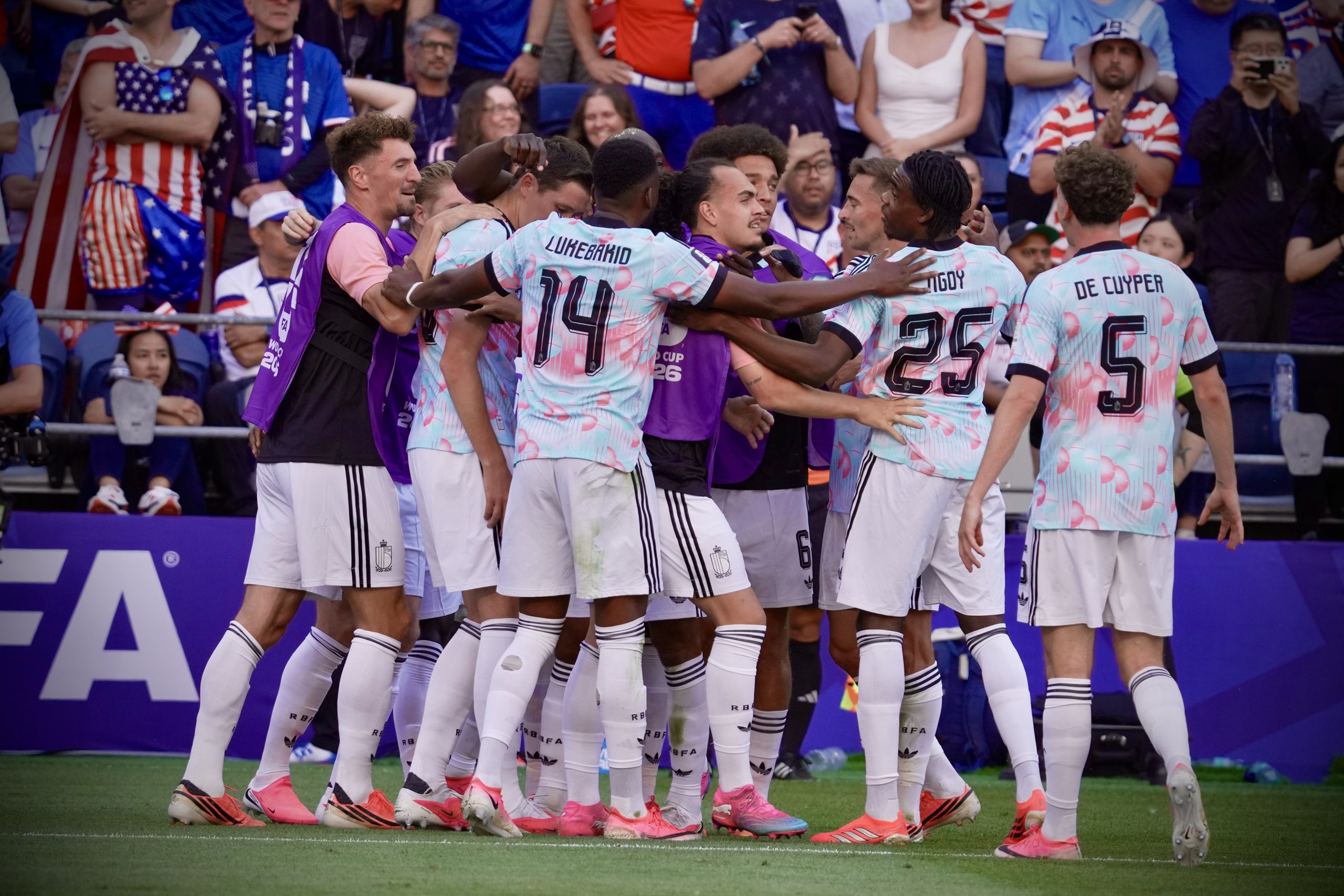
Tag: World Cup

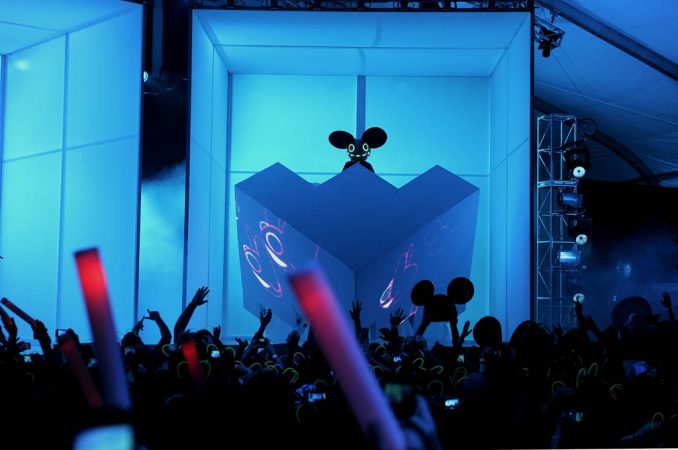
  • Deadmau5, All-American Rejects, Bebe Rexha, and more are headed to FIFA Fan Festival

    Deadmau5, All-American Rejects, Bebe Rexha, and more are headed to FIFA Fan Festival

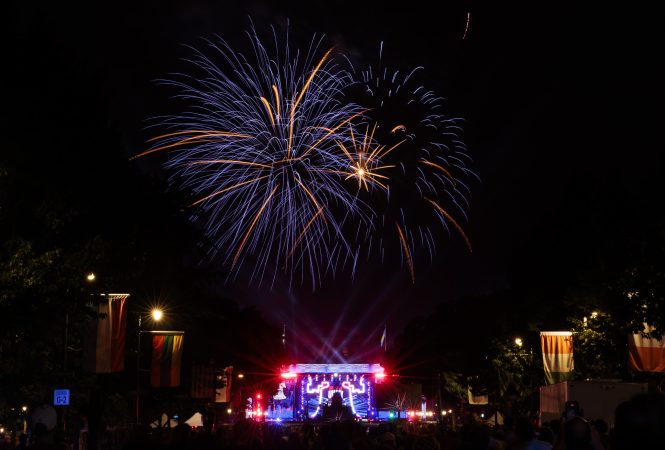
    The World Cup may have moved on from Philadelphia, and the United States may have bowed out of the tournament, but the FIFA Fan Festival in Lemon Hill is bringing in events designed to keep the party going.

    As 10 days and eight nations remain in the World Cup, the Fan Festival’s commitment to remain open for the full 39 days of the tournament begins Sunday with four concerts, including pop star Bebe Rexha (July 17) and world-renowned electronic DJ Deadmau5 on July 16.

    Typically, a Deadmau5 ticket starts at $85, according to secondary market sites. His concert, and the others, are free; fans just need to register on FIFA’s Fan Festival website for a daily ticket. Access into the festival is on a first-come, first-served basis with a max capacity of 15,000 people.

    “Deadmau5 has shaped electronic music with his level of production and technicality. Bringing his unique live performance style to FIFA Fan Festival Philadelphia is something special,” Michael DelBene, executive producer of FIFA Fan Festival in Philadelphia, said. “We truly believe there is something in this lineup for everyone and we hope to see visitors and Philadelphians alike come out and join us at Lemon Hill for their favorite act.”

    In addition to Deadmau5 and Rexha, singer-songwriter Wisin performs on Sunday, followed by the return of the All-American Rejects, a pop-punk band that was one of the early acts at the Fan Festival on June 13.

    With the World Cup set to end July 19, DelBene and Philadelphia Soccer 2026 noted that there could be further acts to come in addition to local artists, “cultural organizations, and community groups.”

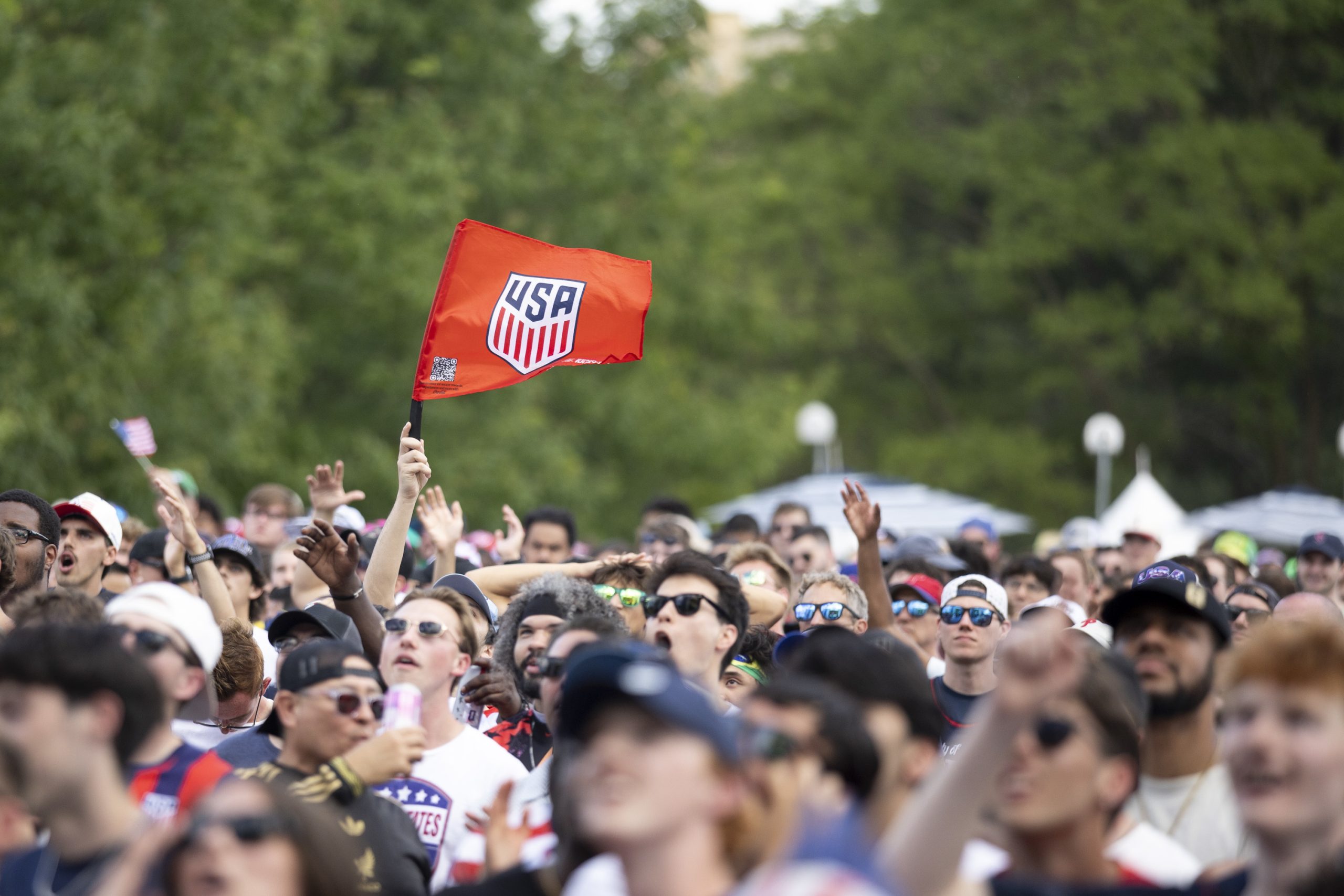
    FIFA Fan Festival at Lemon Hill Park as seen capacity crowds during the World Cup. They’re hoping that continues with a slate of free concerts next week. Tyger Williams / Staff Photographer

    FIFA Fan Festival free concert schedule

    • Sunday, July 12: Wisin, 2 p.m. (Festival gates open at noon and close at 4 p.m.)
    • Monday, July 13: All-American Rejects, 7 p.m. (Festival gates open at 5 p.m. and close at 9 p.m.)
    • Thursday, July 16: Deadmau5, 7 p.m. (Festival gates open at 5 p.m. and close at 9 p.m.)
    • Friday, July 17: Bebe Rexha, 7 p.m. (Festival gates open at 5 p.m. and close at 9 p.m.)
  • Christian Pulisic suffered a leg microfracture in the USMNT’s loss to Belgium

    Christian Pulisic suffered a leg microfracture in the USMNT’s loss to Belgium

    U.S. star Christian Pulisic fractured his right leg during the Americans’ World Cup loss to Belgium and will be sidelined for several weeks, a person familiar with the injury said Thursday.

    The person spoke to the Associated Press on condition of anonymity because the diagnosis, first reported by the Athletic, had not yet been announced by the U.S. Soccer Federation.

    Pulisic has a bone bruise and a microfracture of his tibia and fibula, the person said. He is expected to be able to resume training before AC Milan’s Serie A opener at Torino on Aug. 23, the person added.

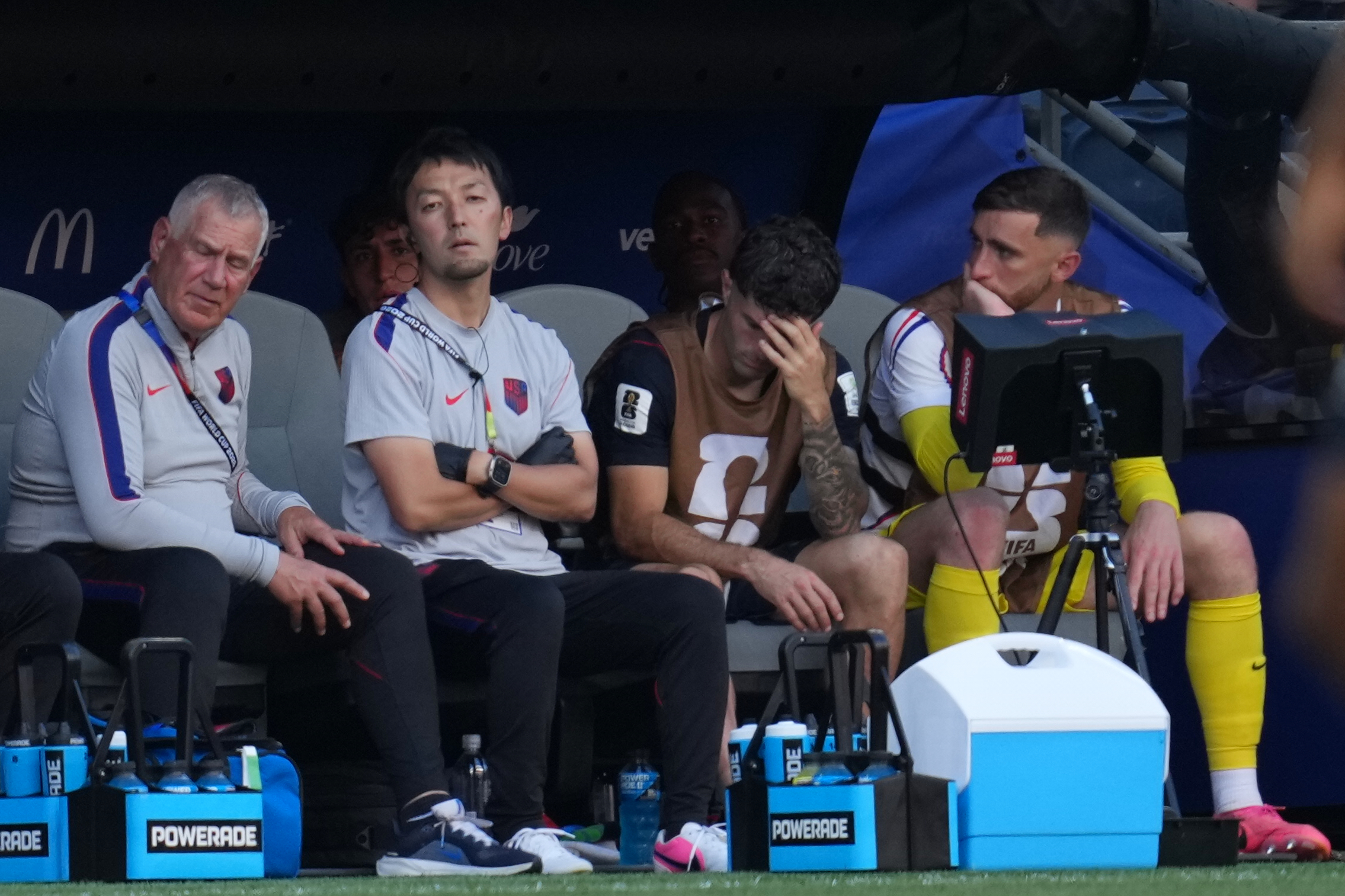
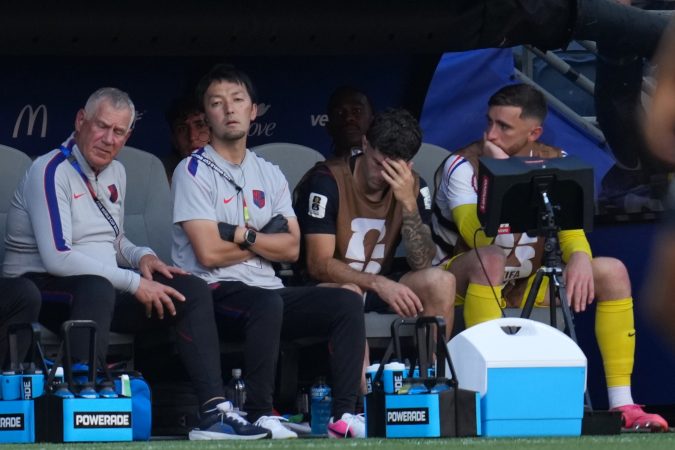
    Christian Pulisic (second from right) on the bench after leaving the U.S.-Belgium game.Abbie Parr

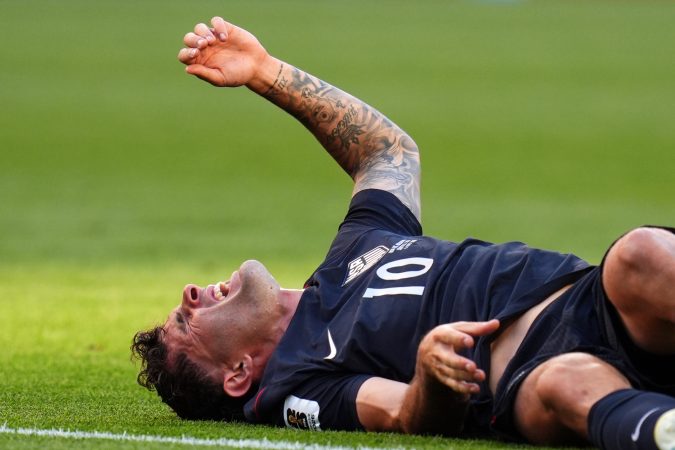
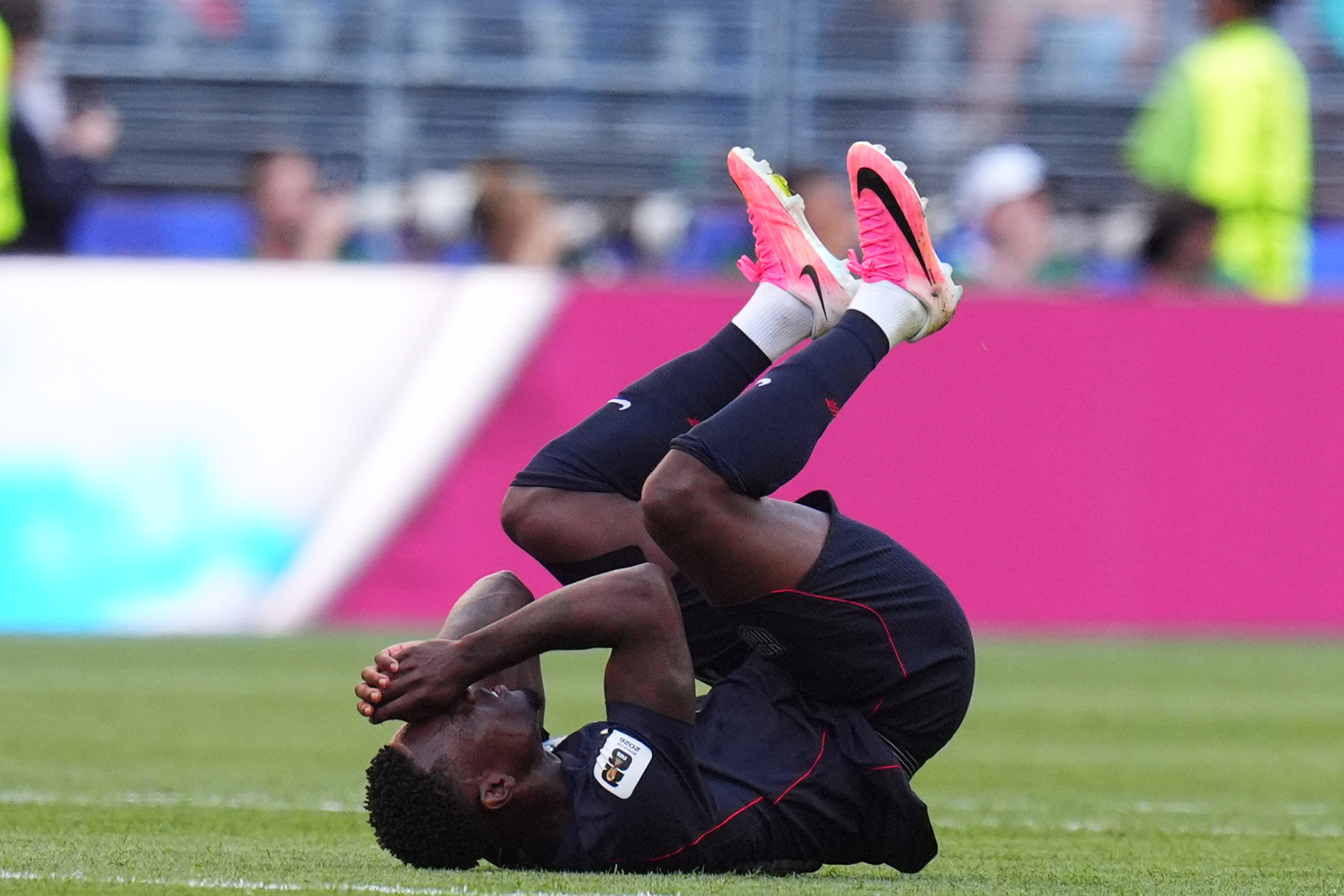
    Pulisic hit a leg of Belgium captain Youri Tielemans while attempting a shot in the 52nd minute of Monday’s 4-1 round of 16 loss in Seattle. He remained in the game but was hobbling, and Sebastian Berhalter replaced him in the 59th minute.

    The Hershey native failed to score in the World Cup, missed one of the Americans’ five matches because of a calf injury, and left two other games early. He has 33 goals in 90 international appearances.

    Pulisic, who turns 28 in September, is entering his fourth season with Milan.

  • The first week of July is typically Philly’s most violent. This year, the holiday weekend was markedly calmer.

    The first week of July is typically Philly’s most violent. This year, the holiday weekend was markedly calmer.

    The first week of July has typically been one of Philadelphia’s most violent, with recent Independence Day weekends marked by mass shootings, police officers shot, and bursts of violence that left a dozen dead.

    But this year, amid a dramatic decline in violence and a flood of visitors to the city, the holiday weekend was noticeably calmer than in years past, offering another encouraging sign that the dramatic decline in shootings held through one of its toughest tests.

    Twenty-three people were shot from July 1 through July 7 — a slightly higher total than most weeks in 2026, but nearly half the average number of shooting victims during the same period over the last decade, according to city data. In 2021, at the height of the city’s gun violence crisis, more than 70 people were shot in that week alone.

    If the current pace continues, Philadelphia is on track to record fewer than 200 homicides for the first time since the 1960s, a remarkable turnaround from just five years ago, when nearly three times as many people were killed.

    (function(){function e(){window.addEventListener(`message`,function(e){if(e.data[`datawrapper-height`]!==void 0){var t=document.querySelectorAll(`iframe`);for(var n in e.data[`datawrapper-height`])for(var r=0,i;i=t[r];r++)if(i.contentWindow===e.source){var a=e.data[`datawrapper-height`][n]+`px`;i.style.height=a}}})}e()})();

    Philadelphia Police Commissioner Kevin Bethel said in an interview that the July Fourth weekend is historically one of the most challenging for urban police departments.

    In each of the last four years, Philadelphia’s celebrations were overshadowed by violence: Last year, 13 people were shot in South Philadelphia; nine people were struck by bullets at a teen party in Southwest Philadelphia in 2024; five people were killed at random by an armored gunman in Kingsessing the year before; and in 2022, two officers were grazed by bullets on the Benjamin Franklin Parkway, sparking a stampede of fireworks spectators.

    Bethel said he and other city, state, and federal law enforcement officials spent about two years planning for this holiday weekend, preparing for potential crises that never came.

    Anticipating hundreds of thousands of visitors for FIFA Club World Cup events and the nation’s 250th birthday celebrations, the department canceled many officers’ vacation requests over the last month and, on the Fourth, deployed more than 2,000 members of local and state law enforcement across the city, he said.

    Philadelphia Police Commissioner Kevin J. Bethel, speaks at a press conference on the details for the Roots Picnic in May 2026.Tyger Williams / Staff Photographer

    Reinforcements from the Pennsylvania State Police and neighboring municipalities helped the city maintain staffing levels in neighborhoods that have historically seen more violence, Bethel said. Officers worked in the record-breaking heat, he said, with some starting their shifts at 7 a.m. and clocking out only after the concert on the Parkway ended at 3 a.m.

    The FBI took the lead on monitoring the skies, Bethel said, intercepting several drones that were flying illegally. (None of the drones, he said, was flying with “nefarious” intent.)

    He called the weekend a validation of the city’s planning and broader work that has contributed to the decline in gun violence.

    “I can’t tell you how many people grabbed me and said they felt welcomed and felt safe,” he said of the events over the last month. “Let’s own the win. Let’s not hide from it.”

    Bethel also said there had been no acts of violence around the approximately two dozen bars that were approved to stay open until 4 a.m. from June 11 to July 19 to accommodate crowds attending the FIFA, July Fourth, and MLB All-Star celebrations.

    “We’re seeing zero issues,” he said.

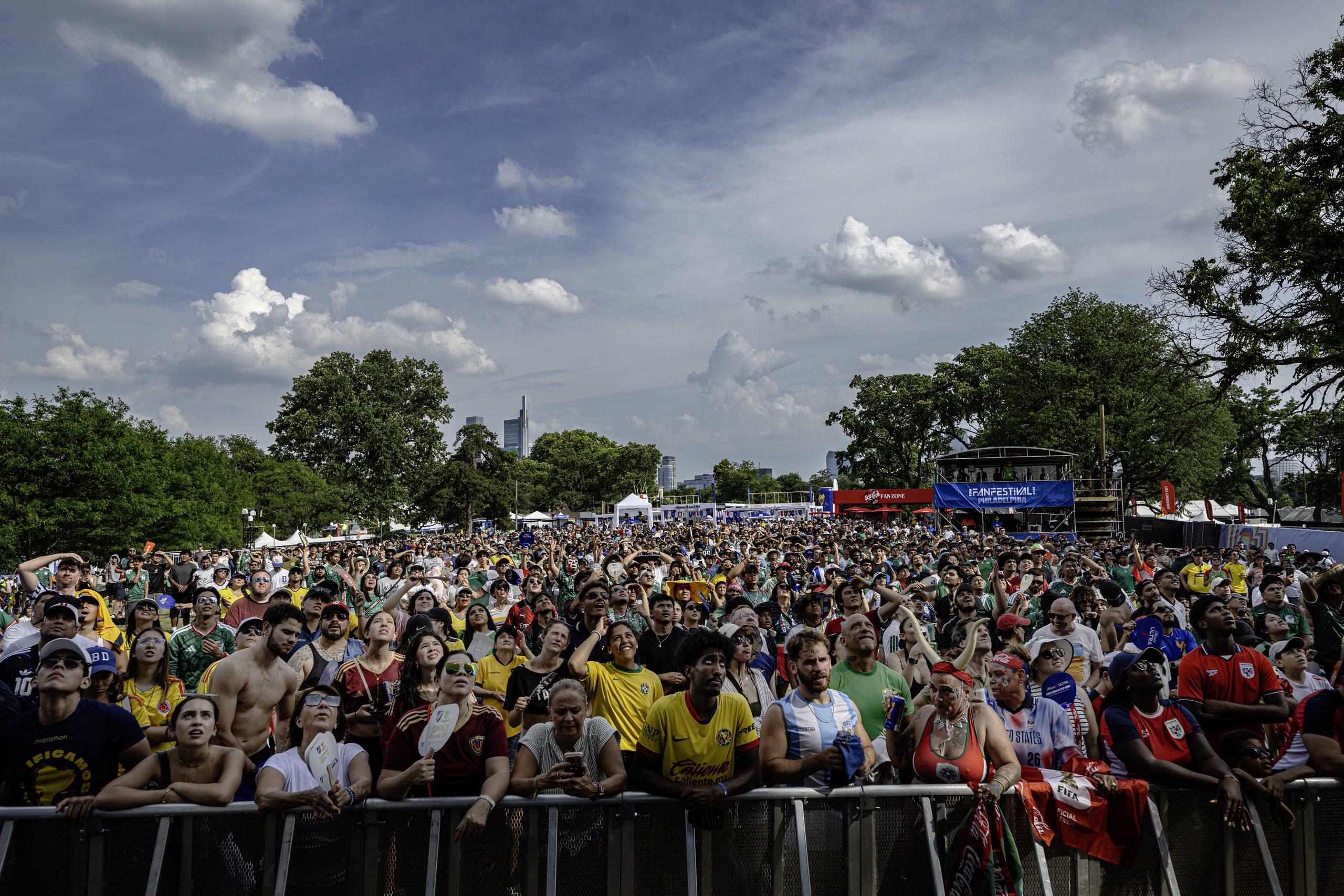
    Soccer fans gather to watch Mexico play South Africa on a giant screen during the opening day of the FIFA Fan Festival at Lemon Hill on Thursday, June 11, 2026, in Philadelphia.Jose F. Moreno / Staff Photographer

    The reduction in violence over the holiday weekend fits a broader pattern. Shootings and homicides in the city began to decline in 2023, mirroring a national trend, and have continued to fall. So far this year, 90 people have been killed in homicides — less than a third of the number recorded at the same time three years ago, according to police data.

    Just as there was no clear explanation for the spike in crime that began in 2019, criminologists and law enforcement officials say, it is similarly difficult to pinpoint the reasons for its decline. But there are theories: an overall return to normal life after the pandemic, expanded community-based violence prevention programs, more arrests in shootings and homicides, and targeted prosecutions of some of the city’s most violent gangs.

    One measurable change has been the police department’s improved clearance rates, which researchers have long viewed as a potential deterrent to future violence.

    The homicide clearance rate — the share of killings solved, including arrests made this year in both new and older cases — has climbed to nearly 99%, up from about 47% in 2022. The clearance rate for nonfatal shootings has risen to about 41%, roughly double what it was in 2021.

    Bethel said those arrests take would-be shooters and victims off the streets and interrupt cycles of violence.

    “We’re impacting retaliation, we’re impacting somebody being shot again, we’re impacting someone who may shoot and kill somebody,” he said.

    Jeff Asher, a New Orleans-based national crime analyst, said because the decline is likely driven by many programs and societal changes, it is hard to know what will sustain the progress.

    “I keep expecting [the crime rate] to stop falling, and it’s just not,” he said in an interview. “So, maybe this is the new normal. We just can’t say with a ton of confidence.”

    Still, the quieter weekend was not wholly peaceful.

    Three men were killed between Friday and Monday morning, leaving families and neighbors to mourn loved ones even as the city showed signs of sustained progress.

    On Monday morning, Shawn Caddell, 32, was killed during a robbery inside a Logan beer deli, police said. And on Sunday, two men were slain in areas that have long been hot spots for shootings: Emanuel Aguirre, 27, was fatally shot in the Hunting Park section of North Philadelphia, and Donald McPhaul, 51, was gunned down on Salford Street in West Philadelphia.

    A 16-year-old in South Philadelphia was among more than a dozen people who were shot and survived.

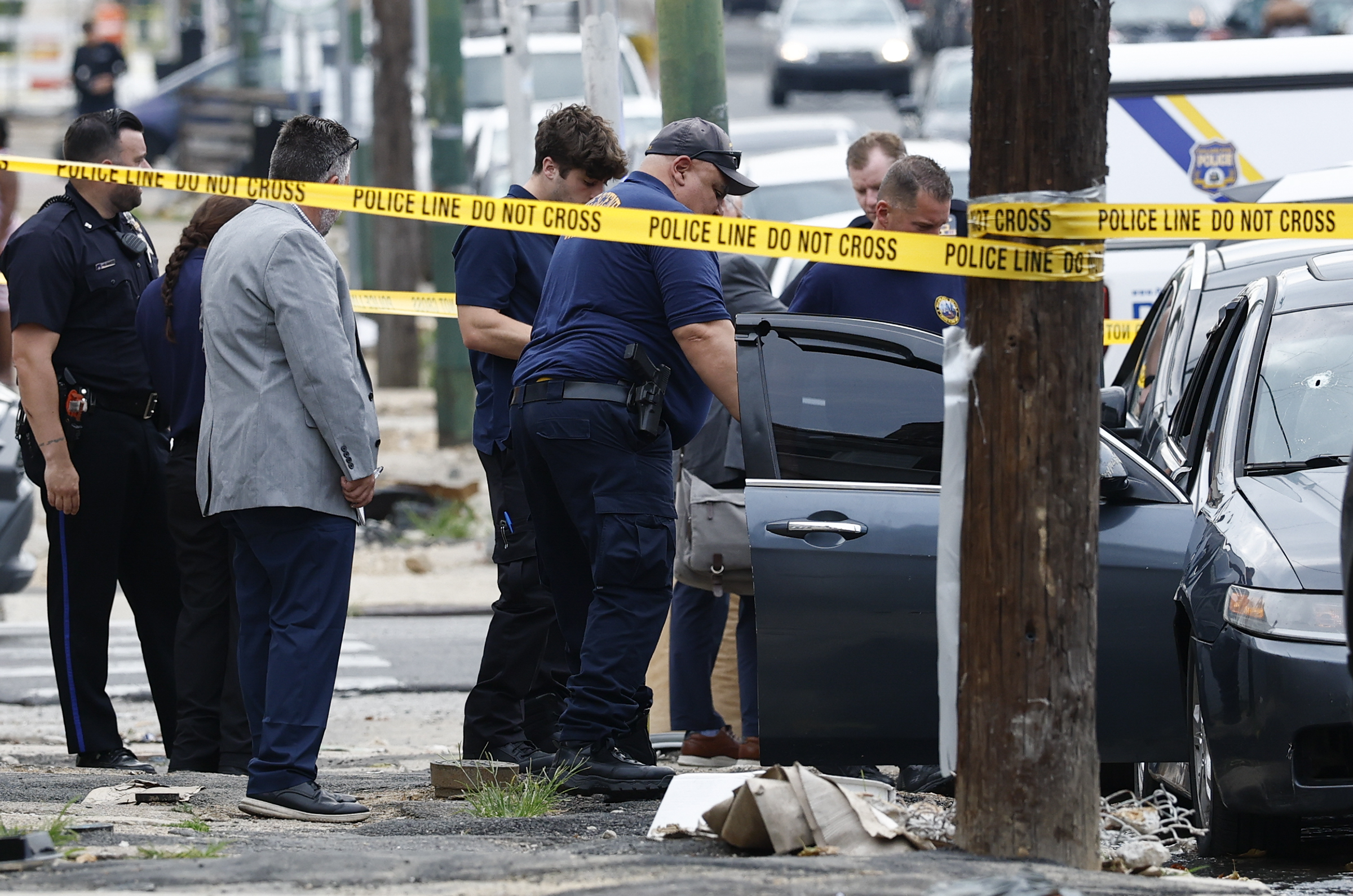
    Philadelphia police examine a car with a bullet hole after a man was fatally shot along the 500 block of East Wyoming Avenue on July 5, 2026.Yong Kim / Staff Photographer

    Bethel said the pockets of the city that have long experienced higher rates of violence — and that continue to see shootings, albeit fewer, today — remain a priority.

    “We are never going to give up in those communities,” he said. “We are going to keep working in those areas.”

    Recent polls have found that a majority of Philadelphians have noticed the decline and feel safer. But for residents on blocks where shootings remain a recurring threat, a citywide trend line can feel distant from daily life.

    Chantay Love, president of the victim-advocacy organization EMIR Healing Center, said the communities seeing recurring violence are still grappling with “the trauma and collateral damage that is left behind” from the last six years.

    Along the stretch of Market Street near where McPhaul was killed, more than 100 bullets were fired into a party on July 4, 2021, leaving two men dead. Earlier this year, 20-year-old Imani Ringgold was walking down the block with a slice of pizza when she was caught in the crossfire of an escalating gang feud and killed.

    Linda Days, 72, who lives in the area, said the shooting that killed McPhaul was another reminder of the violence she has come to expect since moving there seven years ago from Olney.

    Standing in her doorway on Tuesday, Days said it feels as if gunfire has become part of the soundtrack outside her home. But during the Fourth of July weekend, she said, she is especially careful to stay inside.

    “I don’t even come out to watch the fireworks,” she said.

  • The quarterfinals of the World Cup are chock full of soccer’s biggest stars

    The quarterfinals of the World Cup are chock full of soccer’s biggest stars

    When this World Cup finally took a day off on Wednesday, it had been 27 days since the tournament began.

    That was just one day fewer than it took to contest the entire 2022 edition in Qatar, and four days fewer than the 2018 one that was the last men’s World Cup played in June and July. (The Qatar edition was moved to November and December to get out of the Middle East’s summer heat.)

    So if you feel like it’s been a lot, you aren’t alone. Between the controversies that engulfed the U.S. team’s exit and the mania of so many other dramatic games, a day to rest and recharge wasn’t the worst thing.

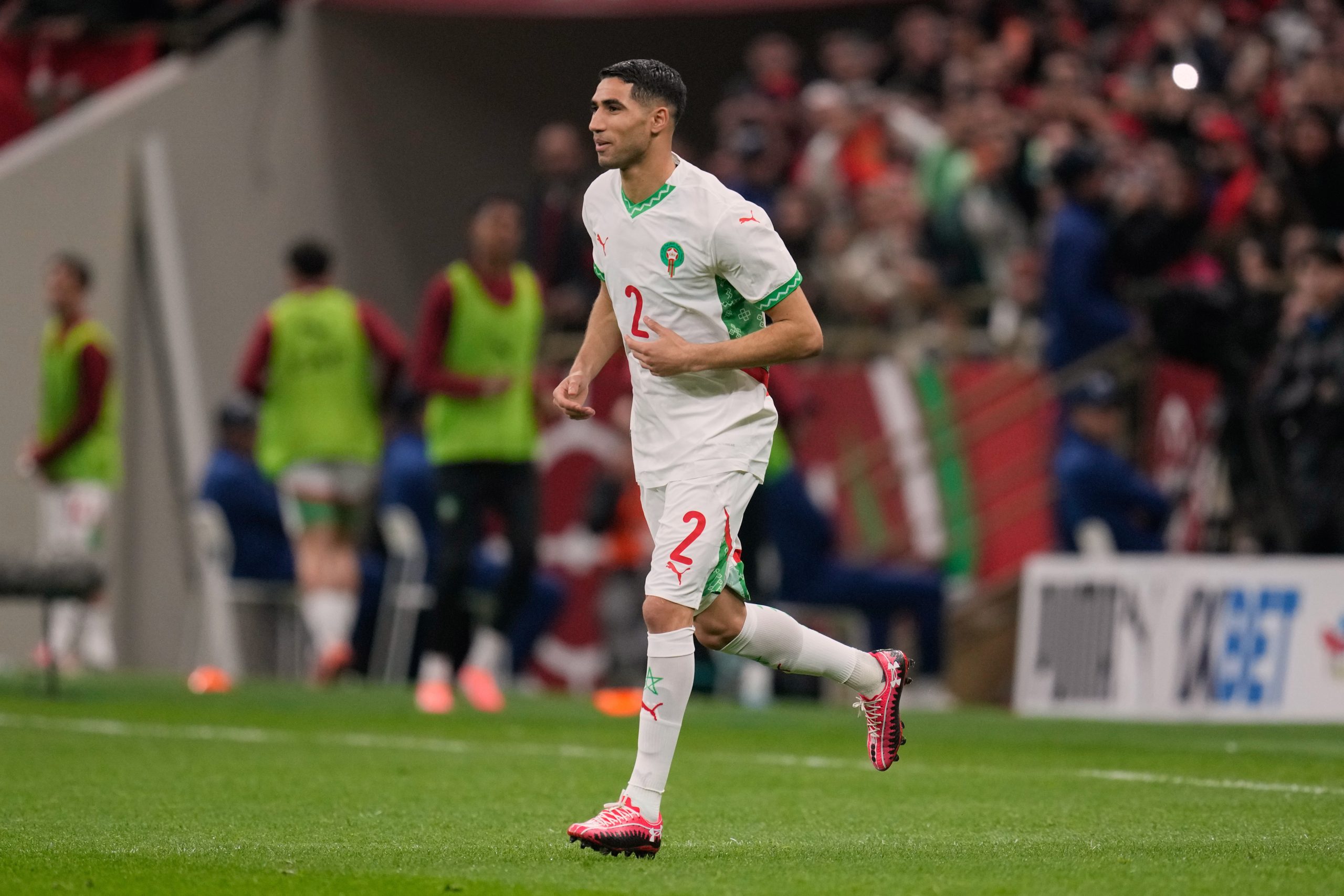
    Morocco’s Achraf Hakimi will look to guide his country past mighty France on Thursday in the quarterfinals of the World Cup. Themba Hadebe

    Now, the quarterfinals are here, and all four games have major star power. The first one might be the best of them: France vs. Morocco on Thursday in Foxborough, Mass. Morocco’s Achraf Hakimi will face many current and former teammates at his French club, Paris Saint-Germain, while trying to lead the Atlas Lions to their second straight semifinal four years after they became the first African team to make it that far.

    Philadelphia needs no introduction to France’s galaxy of talent at this point, having seen Les Bleus win both games they played in town. Now here they go again: Michael Olise, Ousmane Dembélé, Désiré Doué, Bradley Barcola, and, above all, Kylian Mbappé. They’ve been unstoppable so far, bringing not just their quality but a real motivation to carry Les Bleus to a historic third straight final.

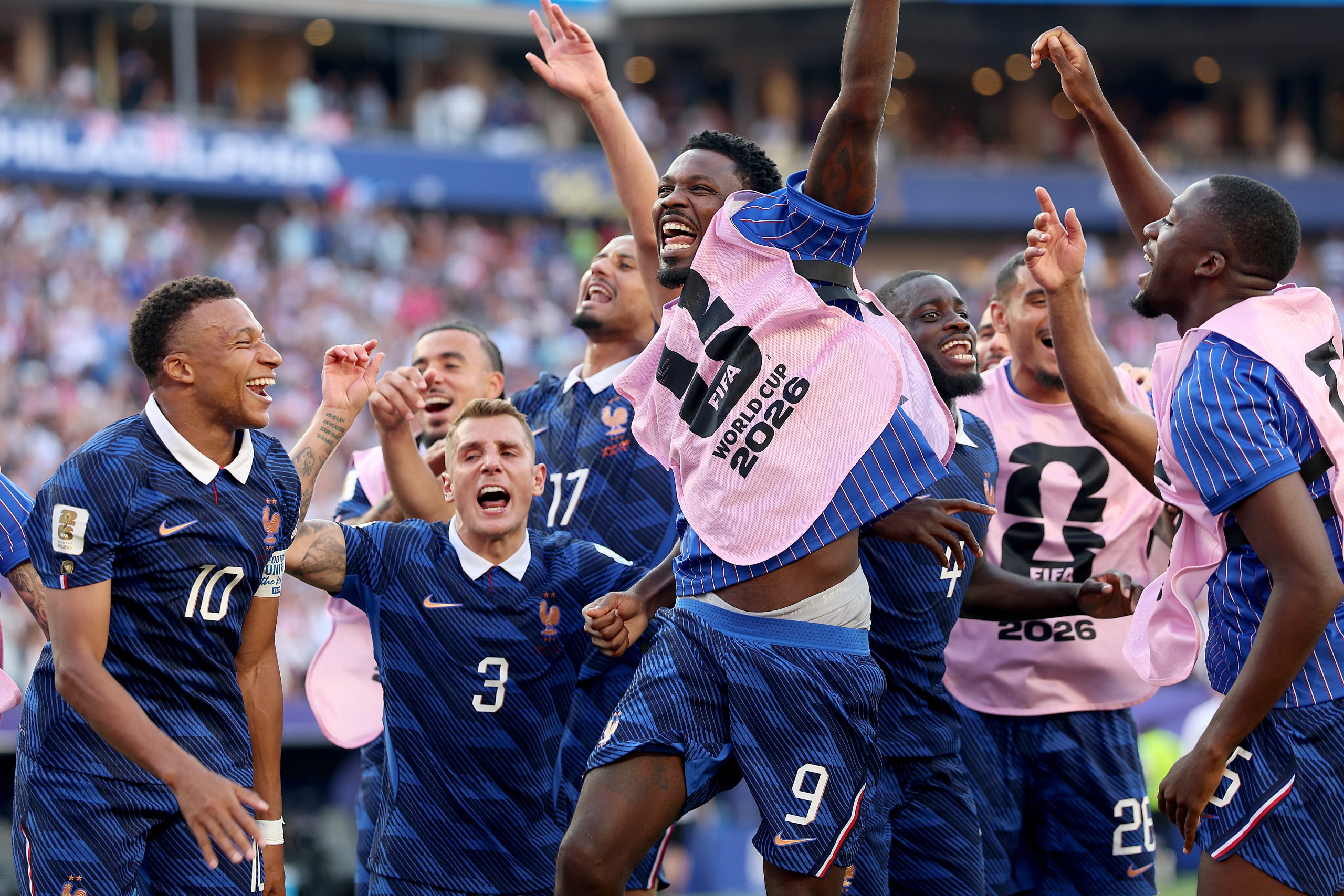
    Kylian Mbappé (left) and Marcus Thuram (center) leading France’s celebrations after their Round of 16 win over Paraguay in Philadelphia’s last World Cup game.David Maialetti / Staff Photographer

    The France-Morocco winner will play the winner of Friday’s Spain-Belgium matchup in Inglewood, Calif. Spain’s Lamine Yamal keeps earning headlines as the game’s top young phenom, and if France and La Roja advance, that semifinal would be a box office smash.

    As for Belgium, speaking of motivation, let’s see how this game goes for them. The Red Devils had all that any team could need against the U.S., but will they be as fired up this time?

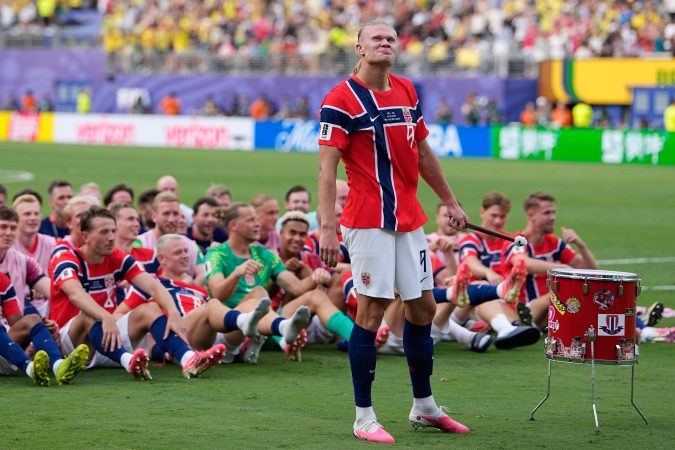
    The other quarterfinals will be played Saturday. First, England faces Norway in Miami Gardens, Fla., a matchup of a lot of players who know each other. Nine of Norway’s players play in the English Premier League, including superstar striker Erling Haaland at Manchester City and playmaker Martin Ødegaard at Arsenal.

    Those two clubs, in turn, have nine combined players on the Three Lions’ squad. City has newly signed $155 million midfielder Elliot Anderson, starting defenders Marc Guéhi and Nico O’Reilly, backup defender John Stones, and backup goalkeeper James Trafford. Arsenal has wingers Eberechi Eze, Noni Madueke, Bukayo Saka, and central midfielder Declan Rice.

    Crystal Palace also has a player on each side, Norway forward Jørgen Strand Larsen and England backup goalkeeper Dean Henderson.

    We’ll see how all that familiarity plays out on the field. We’ll also see what impact the weather has on the 4 p.m. kickoff, a forecast high of 90 degrees, South Florida’s humidity, and the perennial threat of thunderstorms.

    Lionel Messi’s Argentina return to Kansas City, Mo., where the reigning World Cup champions played their tournament opener, for the last quarterfinal. They came awfully close to not making it back, needing a stunning late comeback from a two-goal deficit to beat Egypt, 3-2, in the round of 16.

    Can Switzerland do what Egypt and Cape Verde couldn’t: finish the job and knock Messi out of his last World Cup? The task will be especially tough if standout playmaker Johan Manzambi can’t recover from the injury that caused him to miss the round of 16 win over Colombia.

    If England and Argentina advance, they’ll renew one of soccer’s most famous rivalries for the first time at a men’s World Cup since 2022. That would be quite a scene, especially under the roof in Atlanta.

    World Cup quarterfinals schedule

    All games are televised on Fox29 in English and Telemundo 62 in Spanish. All times listed are local to Philadelphia.

    Thursday

    4 p.m.: France vs. Morocco in Foxborough, Mass.

    Friday

    3 p.m.: Spain vs. Belgium in Inglewood, Calif.

    Saturday

    5 p.m.: Norway vs. England in Miami Gardens, Fla.

    9 p.m.: Argentina vs. Switzerland in Kansas City, Mo.

    Semifinals and beyond

    July 14

    3 p.m.: France or Morocco vs. Spain or Belgium in Arlington, Texas

    July 15

    3 p.m.: Norway or England vs. Argentina or Switzerland in Atlanta

    July 18

    5 p.m.: Third-place game in Miami Gardens, Fla.

    July 19

    3 p.m.: Final in East Rutherford, N.J.

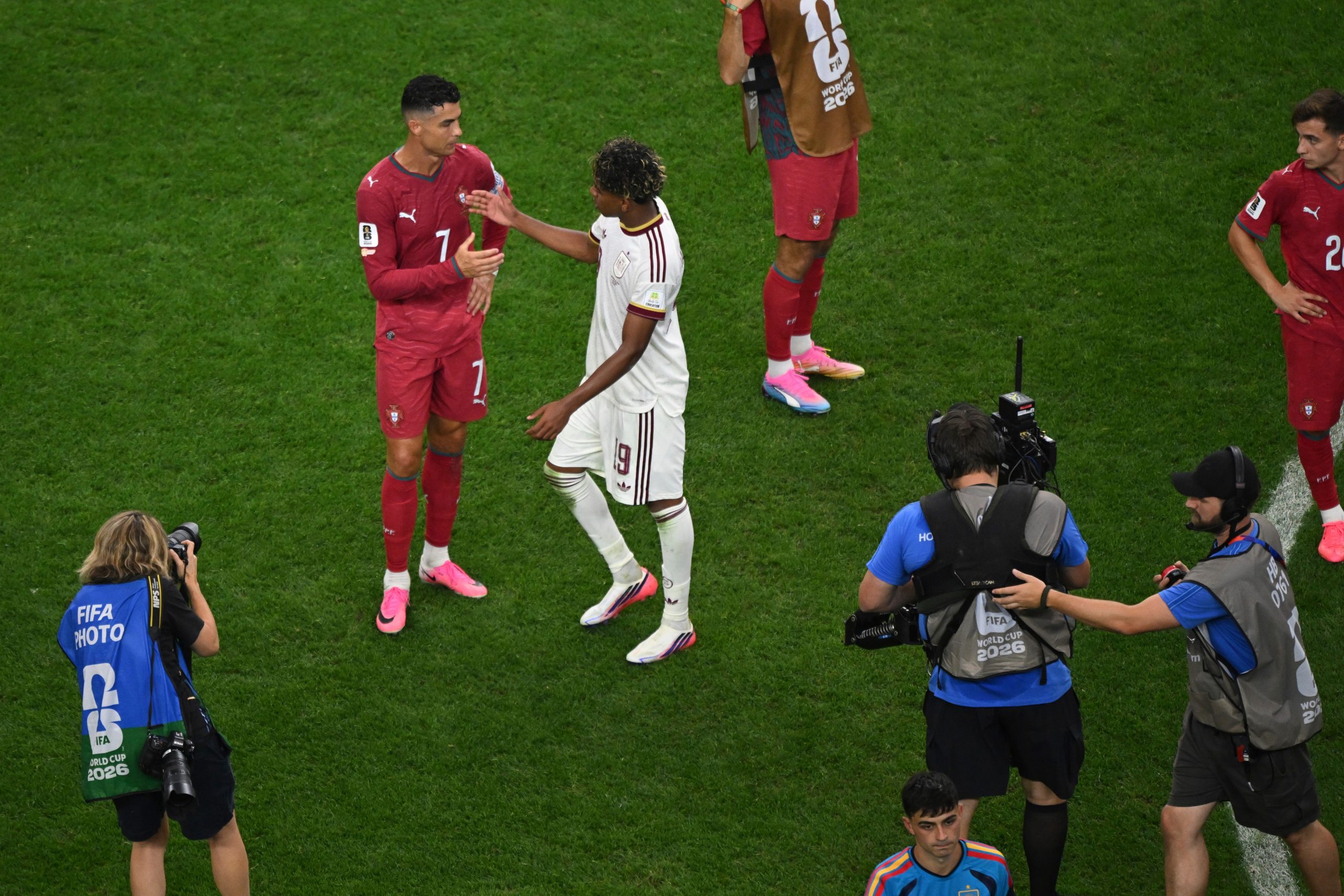
    Spain’s Lamine Yamal (right) shaking hands with Portugal’s Cristiano Ronaldo after Spain knocked Portugal out in the round of 16.Jessica Tobias
  • ‘Mbappé gave me a hug:’ These two soccer hopefuls from Kensington got the full World Cup experience

    ‘Mbappé gave me a hug:’ These two soccer hopefuls from Kensington got the full World Cup experience

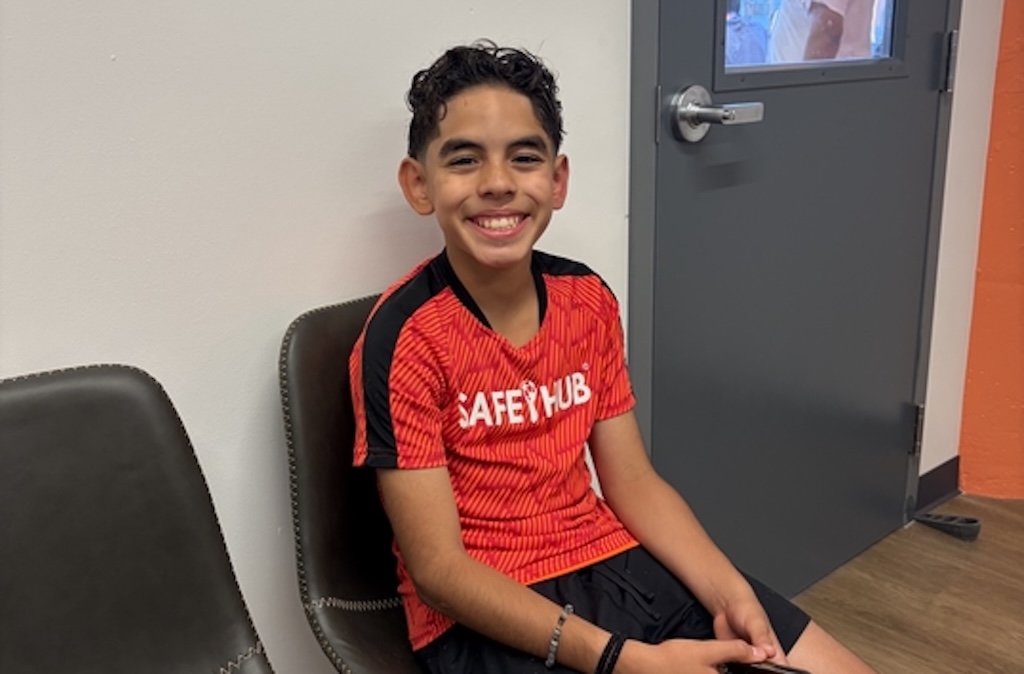
    It’s hard for Cesar Castellanos to dream of a better way to celebrate his 12th birthday.

    After celebrating his actual birthday with a few friends last Friday, Castellanos, a student at Juniata Park Academy, traveled to Lincoln Financial Field for Philly’s final World Cup match, the round of 16 game between France and Paraguay.

    But Castellanos wasn’t just there to watch.

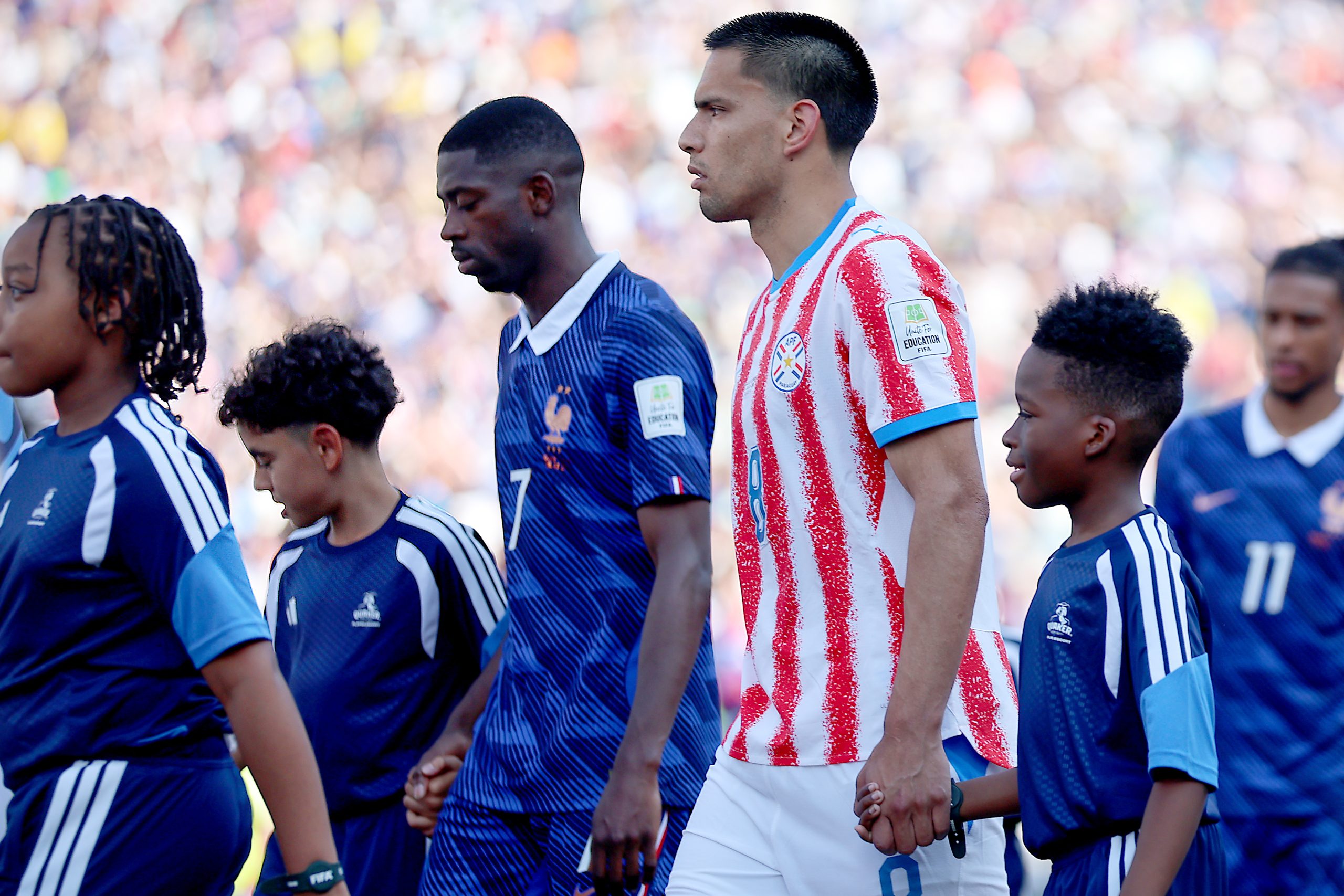
    The soccer-loving middle schooler walked onto the field with the players as a part of FIFA’s player escort program.

    Cesar Castellanos (left), 12, walks on to the field with France forward Ousmane Dembélé before they play Paraguay in the FIFA World Cup Round of 16 match in Philadelphia on July 4.David Maialetti / Staff Photographer

    Castellanos is a regular participant at Safe-Hub Philadelphia, a soccer-centric nonprofit that opened a campus in the Harrowgate section of Kensington in 2022.

    Safe-Hub is one of four community organizations Quaker Oats partnered with in Philadelphia to send children from underprivileged areas to World Cup matches. Safe-Hub hosted two nutritional clinics for its participants, and children who attended both were given a chance to be selected as player escorts.

    Castellanos attended both sessions, one on Martin Luther King Day and the other on Presidents’ Day. A few months later, he found out he had been selected for the round of 16 match on July 4.

    “I was really going crazy when I realized I got the chance,” Castellanos said before the match.

    Cesar Castellanos got the opportunity to walk out for the World Cup’s final game in Philly, with the reigning Ballon d’Or winner Ousmane Dembélé. Owen Hewitt / Staff

    Castellanos has played soccer at Safe-Hub for almost three years, starting in early elementary school. The aspiring midfielder follows international soccer closely and intends to continue playing through high school and beyond.

    As such, Castellanos was elated at the opportunity to be up close and personal with some of the game’s best players. After the tournament’s group stage, when it became clear that a star-studded French team could advance to the round of 16 match in Philadelphia, he began rooting hard for Les Bleus to return.

    He got his wish, with France meeting Paraguay for a matchup at the Linc on July 4. Castellanos did not know which team he would be paired with beforehand, though he hoped for one of France’s international superstars. As a native Spanish speaker, he could handle walking out with the Paraguayans, but he started learning some basic French, just in case.

    Sure enough, once he got into the tunnel before the match, Castellanos got paired with Ousmane Dembélé. Aside from being a star player for France, Dembélé is a forward for France’s biggest club team, Paris Saint-Germain, and the reigning winner of the Ballon d’Or, an award given to the top player worldwide.

    Castellanos couldn’t contain his excitement. He started to cry tears of joy, which led to some extra affection from the French side.

    “I had to keep my cool,” Castellanos said. “I couldn’t go crazy. But I was so excited … I was crying. Mbappé gave me a hug. Dembélé gave me a hug.”

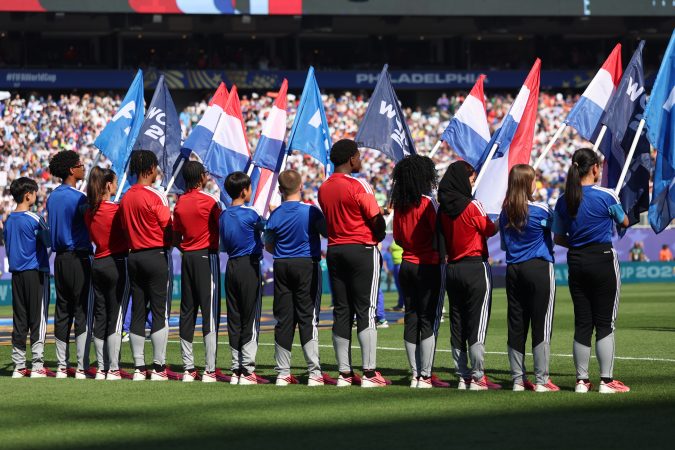
    Castellanos was not the only Safe-Hub participant on the field for the match. Isaac Oquendo was a flag bearer for the match, holding Paraguay’s flag on the pitch as the national anthems of each country played inside the stadium.

    Isaac Oquendo is a Kensington-area youth who received an opportunity to be a part of the matchday activities during Philly’s final game of the FIFA World Cup.Owen Hewitt / Staff

    Oquendo, 16, is a student at Roman Catholic and has been playing soccer at Safe-Hub for a year. Oquendo is part of the nonprofit’s PlayMakers program, which offers higher-intensity soccer training as well as off-field life skill workshops. As part of the program, Oquendo traveled to Boston for Festival 26, a youth soccer summit featuring delegations from across the world.

    Oquendo said the opportunity to get on the pitch with the players was an “amazing experience.”

    “I had a lot of fun,” Oquendo said. “It was great being with people who love the sport as much as I do, and seeing the players right behind me.”

    Oquendo said he received a brief lesson from World Cup organizers on how to hold the flag and where to stand on the field before he walked out. After the pre-match festivities ended, both Castellanos and Oquendo got to watch France’s win over Paraguay from the 100-level.

    “It was nerve-wracking,” Oquendo said. “It was a great experience, but it’s so nerve-wracking, going on the field and seeing the players walk past you. It was something else.”

  • As Folarin Balogun reflects on his world exploding, Belgium rejoices over beating the U.S.

    As Folarin Balogun reflects on his world exploding, Belgium rejoices over beating the U.S.

    SEATTLE — Even many who think Folarin Balogun’s red card was justified don’t blame him for the global fallout over the last few days.

    It isn’t his fault that he’ll be forever known as the player President Donald Trump lobbied FIFA president Gianni Infantino to get back on the field.

    “When that decision’s overturned, of course it’s going to be controversial,” he said, “So for me, it’s something that didn’t really surprise me too much. But as a player, my job is just to go out there and focus on my job.”

    Folarin Balogun reacts after Belgium’s third goal, which blew the game open.Manu Fernandez

    He spoke with the same clarity that he offered last Friday, when he discussed wanting to be a role model for fans.

    “I can only be honest, you know. I don’t think we had a good game today collectively,” he said. “We played well in the other games. We were very intense; we were able to generate energy with the crowd. And today, we didn’t give the crowd a lot to cheer for. That’s the most disappointing thing — that’s the part that hurts the most for me, personally.”

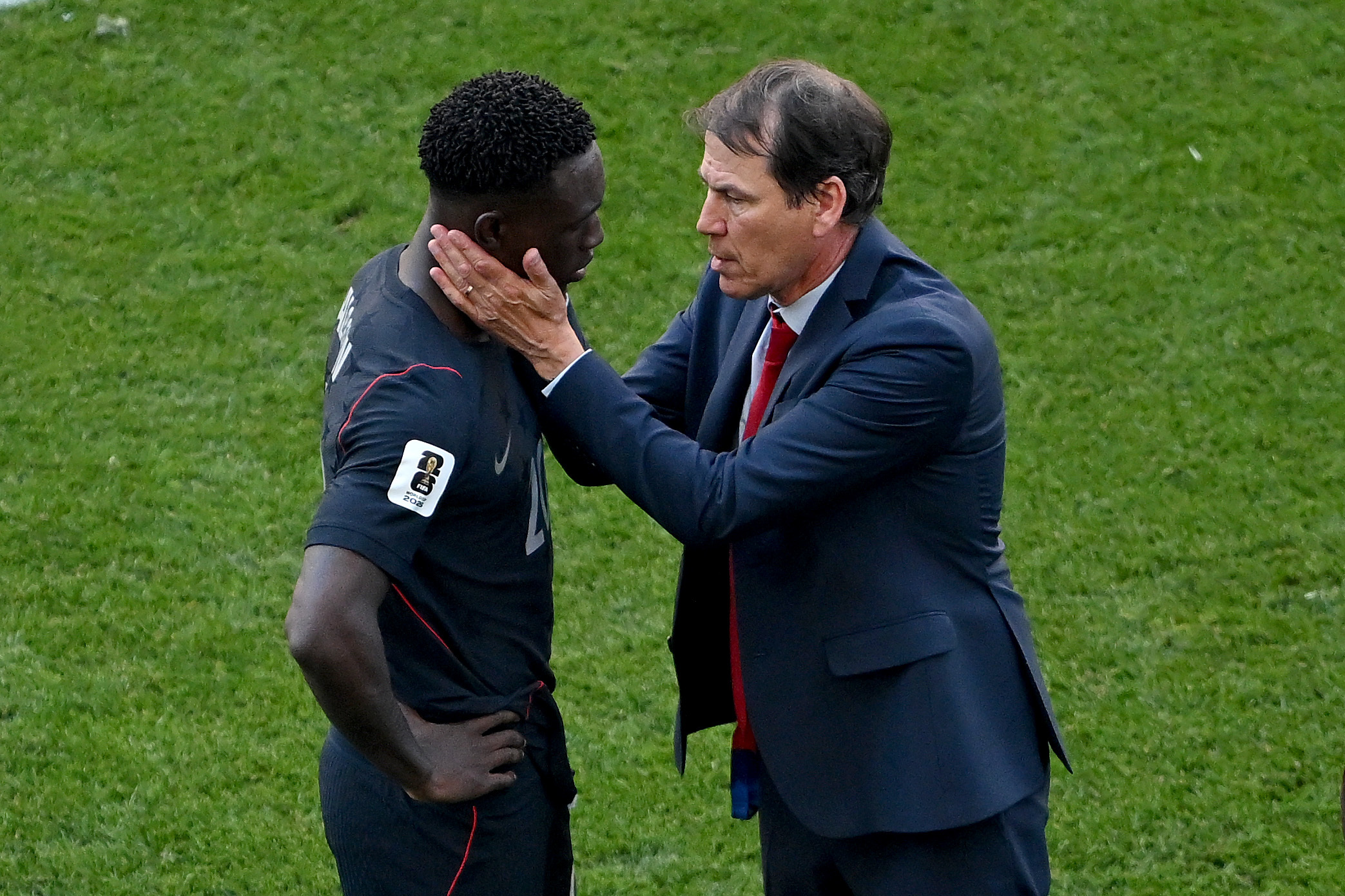
    And he acted with grace again when he went to speak with Belgium manager Rudi Garcia, whom he has known for a while, after the final whistle.

    “This is a game, there’s winners and losers, and similar to when I was given the red card, you have to handle it in the right way,” he said. “So, us losing today again, of course there’s huge disappointment. But for me, I wanted to just say congratulations to Belgium and Rudi Garcia and wish them good luck for the rest of the tournament.”

    Belgium manager Rudi Garcia (right) consoling Folarin Balogun in their conversation after the game.Getty Images

    Garcia returned the favor in his postgame news conference.

    “This wasn’t his fault,” he said. “He isn’t the one to blame, that’s what I told him. I appreciated that he came to see me.”

    How much did the scandal motivate Belgium? Any team could draw easy motivation from saying Trump and FIFA stacked the deck, so let’s go beat the U.S.

    “No, we just wanted to win the game on the field,” veteran goalkeeper Thibaut Courtois said. “It was a bit bizarre, it wasn’t the fault of the U.S. team or Balogun. … Whether he played or not, it was important for us to win.”

    Not all of his teammates were so polite.

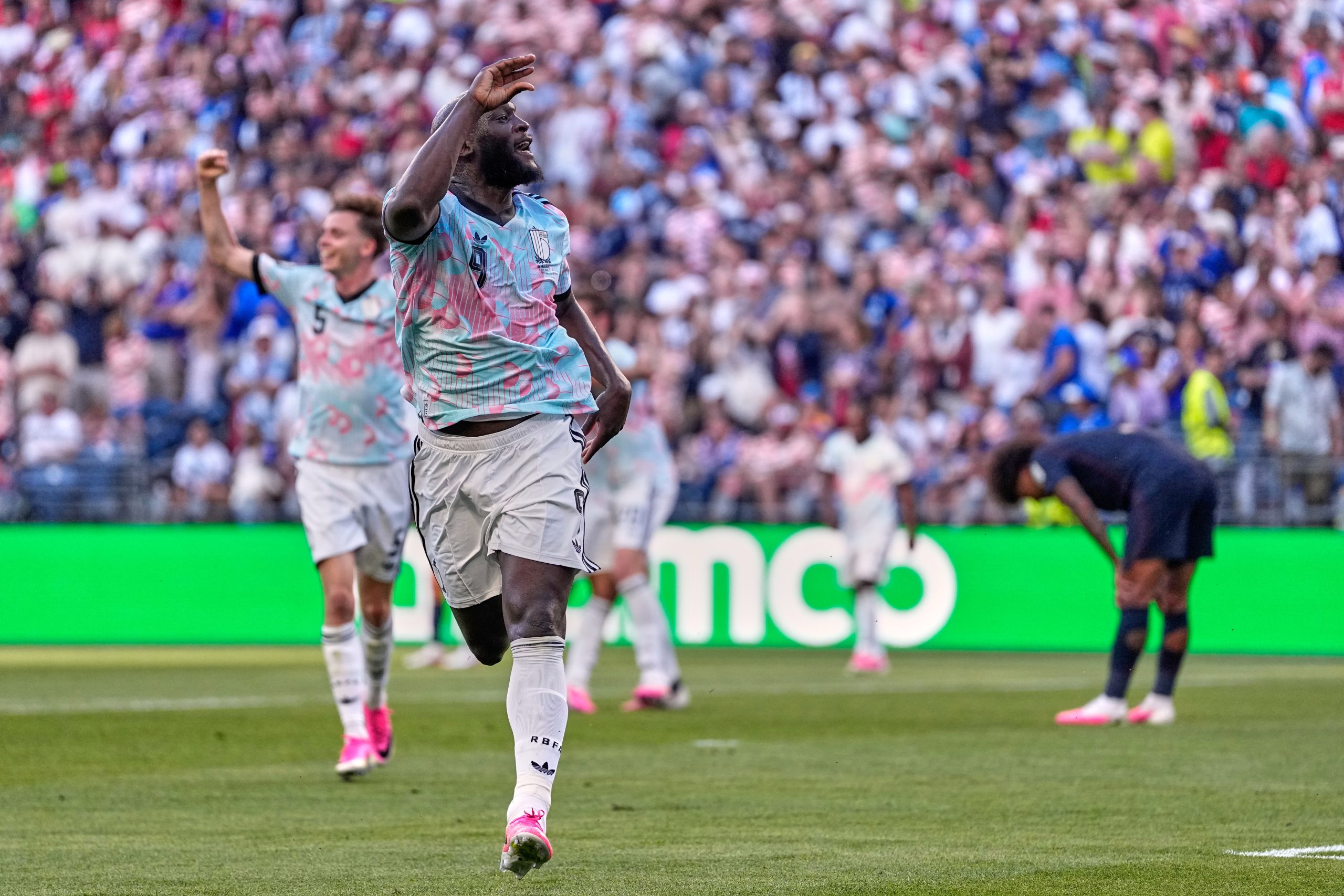
    Belgium’s Romelu Lukaku gave the universal gesture to talk less after scoring his team’s fourth goal.Lindsey Wasson

    “There’s always a justice somewhere in life,” midfielder Nicolas Raskin said. “And the fact that something happened like that, you can call it what you want, but we don’t think that was fair. And I think today, it just brought us a little bit of luck that we needed to win the game.”

    One of the Red Devils’ biggest stars, midfielder Youri Tielemans, had stronger words about why his team “had a fire in us” throughout the game.

    “Of course we aren’t going to hide it,” he told Belgian TV network RTBF. “We had a meeting about it when we got the news, and afterward, we said we have no excuse. Whether he plays or not, it’s up to us to show that we should talk on the field, and that’s what we did today. So I’m very happy, and very proud of the team.”

    When Romelu Lukaku scored his team’s fourth goal to cap the 4-1 win, he gave the universal “talk less” gesture to the crowd. The team then got together for a celebration that midfielder Axel Witsel acknowledged was a version of “the Trump dance.” Then they did it again in the postgame locker room.

    And after the final whistle, Belgium’s social media staff delivered its own shot.

    “Overturn this,” the post said.

  • Climate denial is what history will remember about July 4, 2026 | Will Bunch Newsletter

    Over the last decade, I’ve grown used to waking up before dawn and writing about a soul-crushing defeat from the night before. Usually it’s on a Wednesday, but somehow Donald Trump is always involved. Monday’s 4-1 demolition of the U.S. men’s national soccer team by Belgium pretty much confirmed that I won’t live to see Americans win the World Cup in my lifetime, so it’s time for acceptance. But these last three weeks have been a blast, and the party isn’t over. Sometimes the tritest words are also the truest: Maybe the real World Cup was the friends we made along the way.

    If someone forwarded you this email, sign up for free here.

    Future generations will remember America’s 250th for its state of denial

    The long-awaited arrival of the 250th birthday of the United States inspired a lot of talk about everything that’s changed since July 4, 1776, especially as “the man on a hobby horse” sinks to the founders’ worst fears about democracy and demagoguery.

    But historians of the future may dwell on another huge difference between the day the ink started drying on the American Declaration of Independence and July 4, 2026.

    The thermometer.

    Thomas Jefferson — his work as chief author of the nation’s founding document wrapped up — bought a new thermometer that morning and recorded the temperature in Philadelphia three times in his diaries that day, including a temperate 1 p.m. reading of 76 degrees.

    Jefferson’s thermometer might not have been up to the task of keeping up with Philadelphia’s climate 250 years later. On Saturday’s Semiquincentennial, temperatures maxed out at 101 degrees — the third straight day that the mercury reached that mark, which had never happened since records began in 1870. But with the fetid, humid air, it felt more like 110 degrees for anyone brave enough to celebrate America’s birthday outside.

    Philly should have seen this train coming. I mean, literally. Two days earlier, officials just outside of Reading, nearly two hours northwest of America’s founding city, plowed ahead with a welcoming party for Union Pacific’s Big Boy No. 4014, the world’s largest operating steam locomotive — even as the railway relic ran an hour late, with some thermometers posting 106 degrees.

    The result was what local officials called “a mass casualty event” — no one died, but rescue teams were summoned from neighboring counties to help revive more than 100 people suffering from heat exhaustion, in desperate need of water or an IV. Some 35 of the would-be train spotters were rushed to the hospital.

    “It was a little bit chaotic,” an EMS director told the local TV station in Reading. “I don’t think anyone anticipated the weather or the volume of crowds.”

    But they should have seen it coming. The Big Boy heat fiasco was almost too spot on as a metaphor for the slow train wreck of climate change, as the locomotive would spur on the Industrial Revolution that then triggered the rise of greenhouse gas pollution. To the extent that anyone out there still listens to scientists, they were quick to say this weekend: We warned you.

    The scientific group World Weather Attribution, which tracks the impact of human-made global warming, said last week’s heat dome over the Eastern Seaboard was indeed a rare event, yet — without the contribution of burning fossil fuels to a warming planet — it “would have been so extreme as to be virtually impossible.”

    Heat waves aren’t new. I was just 7 but still remember the July Fourth week of 1966 — exactly six decades ago — when it also topped 100 degrees. It’s one of the few things I remember from that grade-school time because it was so incredibly rare. Today, “once-in-a-century” heat waves are routine all over the planet. In June and looming again this week, Western Europe — where few homes are air-conditioned — has sweltered under temperatures that climate scientists weren’t expecting until around 2050.

    This suffocating July Fourth could have been — to steal a phrase from the multiplex marquee — America’s “disclosure day,” exposing the truth of a threat to humankind that’s been hiding in plain sight. Instead, it was our “denial day,” led by our planet’s denier-in-chief, Donald Trump, whose 250th birthday card to America only read: “Don’t look up.”

    The denial was immediate, as the president insisted — ignoring the experts who warned that the triple-digit temperatures and intense, gathering thunderstorms might spark a much bigger “mass casualty event” in Washington, D.C. — on going ahead with his bombastic and self-serving speech and a fireworks show that lasted well into the early morning hours of July 5.

    Our modern-day seersucker-wearing mayor of Jaws might as well have told the broiled holiday weekend throng, “But, as you see, it’s a beautiful day, the beaches are open, and people are having a wonderful time” — as ominous John Williams music swelled in the background.

    The denial was also metaphorical to the max — and not just when those predicted storms arrived and panicked MAGA Trump supporters were forced to take refuge at the National Museum of African American History and Culture, the history and culture their movement is so eager to erase.

    In New York Harbor, U.S. Coast Guard vessels forced the storied environmental sloop Clearwater — which took part in the historic Bicentennial tall ships parade back in 1976 — to leave the July 4 Parade of Ships because of two anodyne political banners taped to its sails: “Save the Clean Water Act” and “Indigenous Rights, Racial Justice, Climate Solutions.” Don’t look up, not even at a tall ship.

    Hours later, during the fireworks show, the Brooklyn Bridge caught fire, which had nothing to do with climate change, yet felt like a coded message from the overheated planet nonetheless.

    But maybe we shouldn’t wade too deeply into the metaphors when the worst denial is the all-too-real policy stuff. Every day, some nightmare headline about killer floods or disappearing glaciers is met with some nonsensical action from the U.S. government based on Earth 2, where none of this is happening.

    As the climate-change-intensified heat dome settled in over the Eastern United States, Trump issued pardons for nine people — and you really can’t make this stuff up — who’d been convicted of felony violations of the Clean Air Act by selling or installing devices for diesel trucks that defeated their emissions controls, because polluting our spacious skies is no longer a crime in Trump’s America.

    It cuts much deeper than this. Trump actually chose the July 4 peak of the heat wave to announce a massive cut in federal subsidies for wind and solar projects, a move that was expected under legislation passed last year. This was just one more layer to a sweeping agenda that has massively relaxed pollution regulations and even wasted taxpayer dollars to make sure clean energy projects aren’t built.

    America continues to get a whopping 82% of its energy from polluting fossil fuels, and that’s unlikely to drop over the next 30 months, regardless of how many Trump voters can cheat death on looming “mass casualty events.” But POTUS 47 warned voters he planned to set the world on fire if he returned to the White House.

    What’s harder to understand, frankly, is why the people who should be fighting Trump on climate change are running away from the front lines. Yes, I’m talking about Democratic Party leaders who’ve tossed climate action down the memory hole in the 2026 campaign — either terrified that any mention of climate will undercut their single-minded focus on affordability, or distract from fighting Trump’s brand of autocracy.

    And ditto for newsroom leaders who seem to have decided that environmental journalists are the first people to lay off, not to mention the other world chieftains who ought to be challenging Trump’s destructive policies, but are meeting the moment with a shrug. Even Canada’s center-left prime minister, Mark Carney, is now backing away from the aggressive climate action he once supported, claiming, “It’s too expensive.”

    That’s a lot of malarkey, as the president who just four years ago passed the largest climate action bill in U.S. history might say. Clean energy continues to rise elsewhere in the world because the alternatives, like wind and solar, are ultimately cheaper and also a source of desperately needed job creation. The fossil-fuel-boosted heat wave of July 4, 2026, proved that inaction is a threat not only to our lives and our liberty but also to the pursuit of happiness. It’s hard to celebrate 250 years of American democracy when climate denial is exposing that system as so badly broken.

    Yo, do this!

    • Did I mention the World Cup isn’t over? If you are a true fan of the Beautiful Game, you’ll brush off the quadrennial disappointment of the U.S. men’s team and get excited to watch one of the greatest generations of international soccer superstars we’ve ever seen. One of the more intriguing of the four quarterfinal matchups this weekend will occur when Harry Kane and his English squad face Erling Haaland and his Norwegian upstarts in the Miami heat. The match kicks off at 5 p.m. Saturday on Fox.
    • The new movie scene for the July Fourth holiday was a disappointment, so the heat wave was a perfect opportunity for revisiting the classics of the 1970s and ’80s with the generation that had not been born yet. We went back to the late Rob Reiner’s first great serious film, the coming-of-age saga Stand By Me. It’s hard not to feel nostalgia today for a time when 12-year-olds had to entertain themselves without iPhones and could disappear into the woods overnight, which felt less strange in 1986 when the movie was first released. It felt truly like a faint signal from a lost planet.

    Ask me anything

    Question: Talk about Mitch McConnell’s demise. — Wendy (@wensilver.bsky.social) via Bluesky

    Answer: Well, Wendy, that’s not exactly a question, and while the New York Times is reporting that the Kentucky senator and former majority leader was unconscious and in cardiac arrest when paramedics found him on June 14, his staff insists McConnell is still alive. That hasn’t stopped conspiracy theories that McConnell is on life support until August, when his replacement, named by GOP lawmakers, could avoid a messy November election. I don’t know about that, and I agree that it’s very poor form to speak ill of the dead. So the fact that he’s still alive is an ideal moment to remind everyone that his hijacking of the U.S. Supreme Court and his cowardice during Donald Trump’s second impeachment both started America on the path toward tyranny. So get well soon, senator. You still have a lot to answer for.

    What you’re saying about …

    Last week’s question about whether you are happy or concerned about progressive Democrats doing well in the 2026 primaries brought a mix of interesting responses that aren’t easy to categorize. Most of you want Dems who will fight harder than the current crew. “I have been voting since 1968, always for Democrats, but seldom with enthusiasm,” wrote Stephen Boone. “Finally, in my old age, there are a few decent politicians. I want more AOCs! More Zohran Mamdanis! …” Others felt more cautious. Wrote Thomas Desmond: “I think the progressive candidates are fine in deep blue seats, but may not be a great idea in purple or light-red seats that could prove winnable this year.”

    📮 This week’s question: It may be water under the bridge next week, but Donald Trump’s personal role in overturning the arguably wrongly given red card to U.S. star Folarin Balogun has sparked a heated debate. Was the red card an injustice to be reversed by any means necessary? Or did Trump’s involvement ruin the World Cup? Please email me your answer and put the exact phrase “Trump Balogun” in the subject line.

    Backstory on Trump ruining the World Cup like everything else

    If the big-screen tragedy of the U.S. men’s soccer team’s same-as-it-ever-was Round of 16 exit from the 2026 World Cup on Monday night had a theme song, it should have been John Lennon’s “Instant Karma.” For its first four (mostly) exhilarating matches, the USMNT gave a nation that was desperate for both an escape from relentless bad news — but also a connection to a wider world — the good vibes it desired. It truly felt like the Americans could go further than ever before (in modern times) in the planet’s greatest sporting event. TV ratings soared. Watch parties were packed. A broken land was coming together.

    Then Donald Trump showed up.

    To longtime soccer fans, the red card handed out last Wednesday to the U.S.’s top goal scorer, Folarin Balogun, for stepping (seemingly unintentionally) on the ankle of a Bosnian player during a 2-0 victory — a harsh punishment that meant not only his ejection from the pitch but a suspension for the upcoming Belgium match — was the essence of our love/hate relationship with soccer. It may be a beautiful game, but it’s the ugly calls that we debate for decades. For a non-soccer fan and malignant narcissist like Trump, for whom anything that goes against his desired outcome is proof of the world’s unfairness toward him, the looming loss of America’s star striker was an opportunity to act like the strutting strongman of a personalist dictatorship.

    The Trump White House called in the lawyers, treating soccer like it was a bad story about the president in the New York Times, or like trying to reverse the 2020 election. And POTUS got on the phone and called up a fellow dictator, Gianni Infantino, the president of the notoriously corrupt FIFA — a man who even invented a FIFA Peace Prize and gave it to Trump as protection so that his $13 billion soccer tournament wouldn’t get hurt. By Sunday, FIFA announced — without any effort at justification — that Balogun’s suspension was lifted and he was cleared to play. This had not happened during a World Cup since 1962. The raw power play cemented the world’s bitter opinion about today’s United States: a nation that refuses to play by the rules, whether it’s blowing up fishing boats or fixing a soccer tournament.

    There were too many ironies to bear — especially the fact that Trump had just gone all the way to the U.S. Supreme Court to fight to strip U.S. citizenship from people like Balogun, who was born to British-Nigerian parents in 2001 during an American visit, and millions of other immigrants who aren’t as talented with their feet. But the other irony was that — like so many corrupt schemes, whether from the mafia or the Trump White House — the president’s soccer coup failed. It felt like Trump had attacked the positive zeitgeist around U.S. men’s soccer with a neutron bomb. Balogun rarely even touched the ball. We’ll never know how much of Belgium’s 4-1 rout of the mistake-prone U.S. was simply a European powerhouse outclassing the Americans, as has happened so many times before, and how much was Trump destroying the juju.

    It did seem fitting that this sordid affair played out over the weekend of America’s 250th birthday, as it was more confirmation that Trump, in spite of what the hat says, actually has no clue what makes America great. If any one principle stood out from the founders’ 1776 and 1787 experiments, it is that the United States was to be based on fairness and following the rules, with no king imposing his will. The single greatest thing about America’s presidential elections was not who won, but the fact that the loser accepted the results, and there was a peaceful transfer of power — until Jan. 6, 2021. Likewise, nothing could ruin the often unbridled joy of the World Cup faster than a rigged competition.

    I’m still looking forward to the next 12 days, to watching the pinpoint passing of Argentina’s Lionel Messi or the raw power of Norway’s Erling Haaland, and to seeing who can actually win the World Cup on the pitch, and not in a back room. We already know the tournament’s biggest loser: Donald Trump.

    What I wrote on this date in 2014

    Looking back on this Attytood blog post from 12 years ago today is a reminder of how debates can evolve over time. My short piece on July 7, 2014, was a riff on an op-ed that called newspapers’ online comment sections in those early internet years “a hate crime” that should be cordoned off because of the vitriol spewed at immigrants or others outside the traditional American hierarchies. Back then, I disagreed, taking the side of free speech absolutism. “These are people who shouldn’t be censored … just set straight,” I argued. “The one true powerful weapon against offensive free speech … is your free speech, and mine.” Time proved me wrong: The Inquirer now avoids comments on most articles, including my columns. It turned out that “the wisdom of the crowd” that newsroom reformers once hailed was fatally infected with racism, sexism, and other forms of hate.

    Read the rest: “‘Newspaper Comment Sections Become Cordoned-Off Hate Crime Scenes.’”

    Recommended Inquirer reading

    • Only one column last week, as I enjoyed the July Fourth holiday by spending time with family and watching countless hours of soccer. In that piece, I wrote about an American 250th birthday that should have been a meditation on what makes our nation great, and where we so desperately need to improve — but which Donald Trump used as an excuse to rob the cash register when no one was looking. The president’s staggering $2.2 billion-plus payday during his first full year back in office — accomplished with a mix of crypto flimflammery, informed stock trading, and dealings with foreign dictators — is a five-alarm fire for the rule of law.
    • One final thought about the 250th birthday of the United States as the moment recedes into the rearview mirror. It’s true that 2026 has been a lousy year, economically, for newsrooms, but you would never know that from reading The Inquirer’s remarkable coverage of such an eventful time. I’ve already praised our world-class World Cup coverage, but our overworked staff also went out and covered a July Fourth party that happened despite killer heat, biblical storms, and a plague of locusts (not really, but it felt that way). This included some real accountability journalism, such as the Trump regime’s efforts to twist the truth around George Washington and slavery, as well as questioning the cost of the big day for city taxpayers. It was also a reminder that Philadelphia has been a hotbed for journalism and the rugged practice of bringing the First Amendment to life since the early days of the republic. Help keep it going another 250 years by subscribing to The Inquirer.

    By submitting your written, visual, and/or audio contributions, you agree to The Inquirer’s Terms of Use, including the grant of rights in Section 10.
  • The hype train of a ‘golden generation’ of U.S. players and their $6 million coach crashes out of the World Cup

    The hype train of a ‘golden generation’ of U.S. players and their $6 million coach crashes out of the World Cup

    SEATTLE — The hype around this World Cup didn’t just start when the last one ended four years ago. It took off as soon as the U.S. was picked as host, on the eve of the 2018 edition for which they failed to qualify.

    By the time this summer arrived, there was enough evidence to believe these players could make the history they dreamed of, wanting to do things no U.S. men’s team had done before on soccer’s biggest stage.

    So a bar was set for them. The program had just one knockout game win in its history. Winning two would mean a quarterfinal berth. It also presumably would mean toppling a giant somewhere along the way.

    Once the draw was made last fall, the name of that giant was Belgium, the nation that sent the U.S. home in 2014. That made an easy measuring stick for this generation. If they were that much better, they’d do what their predecessors hadn’t.

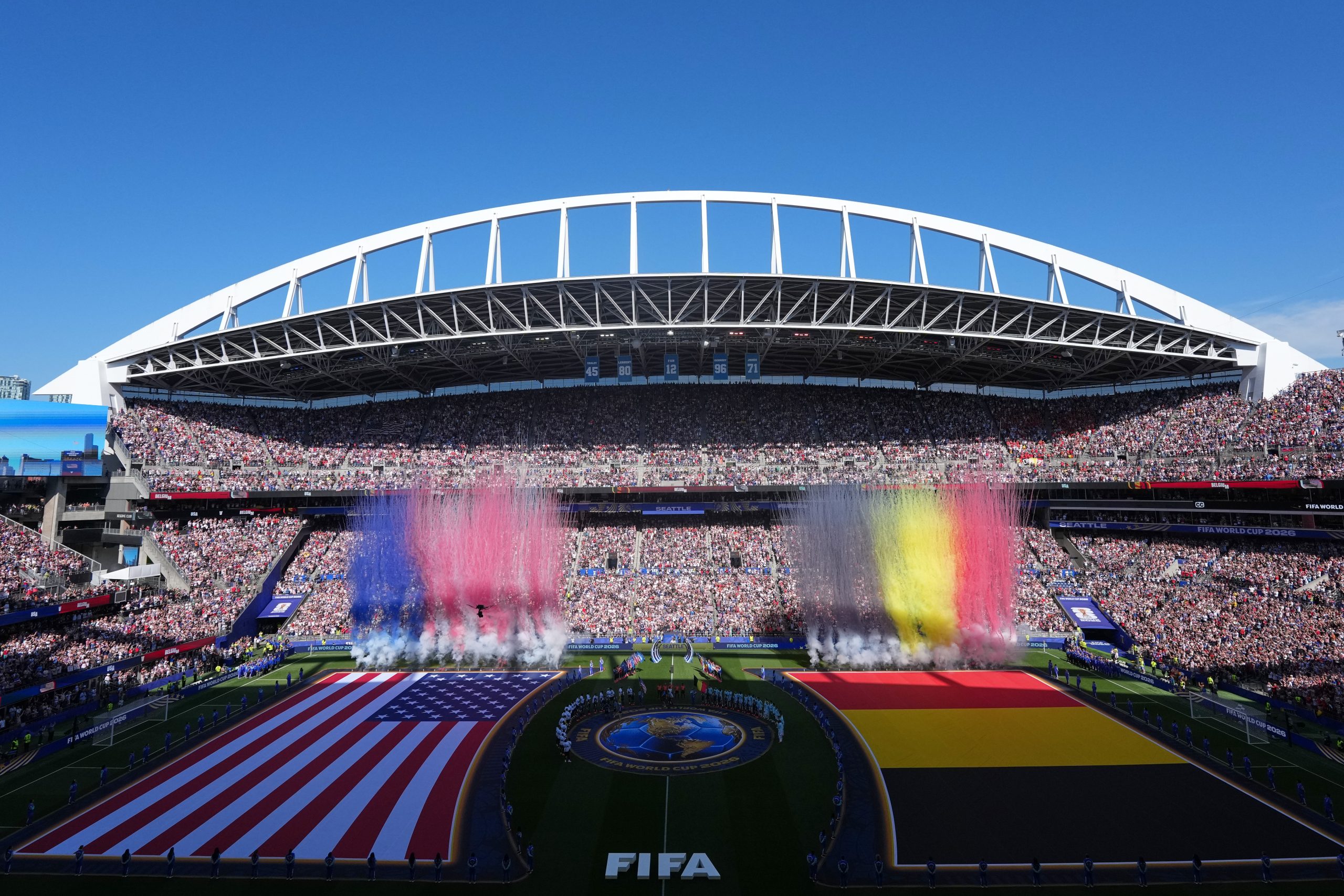
    The scene just after the national anthems in Seattle, when the packed crowd of U.S. fans hoped for a historic win.Nick Didlick

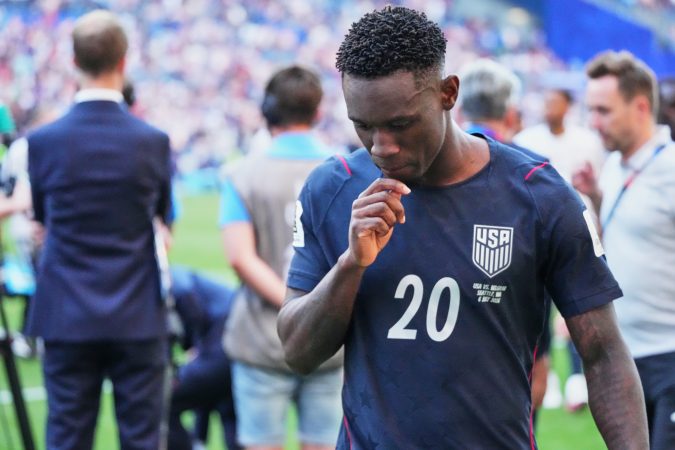
    By kickoff, the pieces were in place: Seattle’s cauldron atmosphere, the Red Devils’ inconsistency in prior games, and Folarin Balogun’s unexpected availability after President Donald Trump lobbied FIFA president Gianni Infantino.

    Much has been said about that last part, of course. But by the final whistle of the U.S.’ 4-1 blowout loss, it mattered far less than it had two hours earlier.

    For this game turned out to not be just about Balogun on the American side. The whole squad blew it on the biggest stage, and they knew it.

    “This moment hurts more, stings more, than probably any other moment in my life,” Wayne-born goalkeeper Matt Freese said after a horror game, especially on Belgium’s third goal that blew the game open, when he was stripped of the ball after straying out of his 18-yard box.

    “Yes, it stings,” midfielder Tyler Adams said. “This was a moment to have the opportunity to advance and really try and do something special, and we fell short.”

    Asked why the team was so flat, he answered: “It’s a great question. I wish I had the answer right now. I don’t know.”

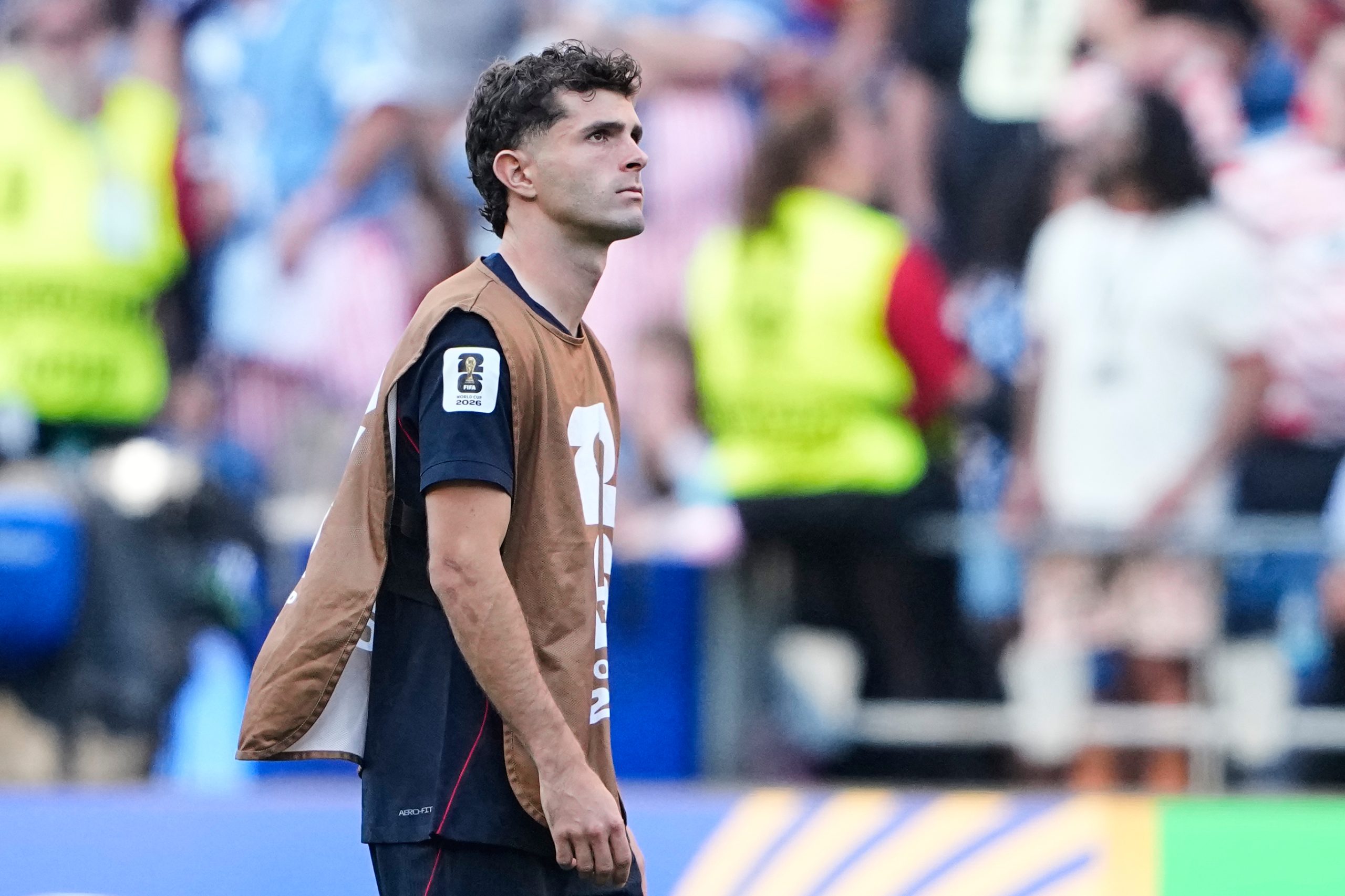
    Christian Pulisic tried to lift the mood, but he took some tough questions after leaving a game injured for the second time in this tournament. Along with that, the team’s most important attacker didn’t play the entirety of any game, though at least in the Bosnia win he played 88 minutes.

    His stats for the tournament: four games, 224 minutes, zero goals, one assist, four shots (two on target), and three chances created for others. After a first half against Paraguay that perhaps was the best of his career, he largely was muted.

    Christian Pulisic played 224 minutes across four games in this World Cup.Lindsey Wasson

    “I didn’t quite have the moments I was hoping to, to try to help us to really push and get over this next step of beating a really good team,” he said. “So I’m disappointed with myself, of course, but I’m going to try to stay positive. I did a lot of good things, and the team did as well.”

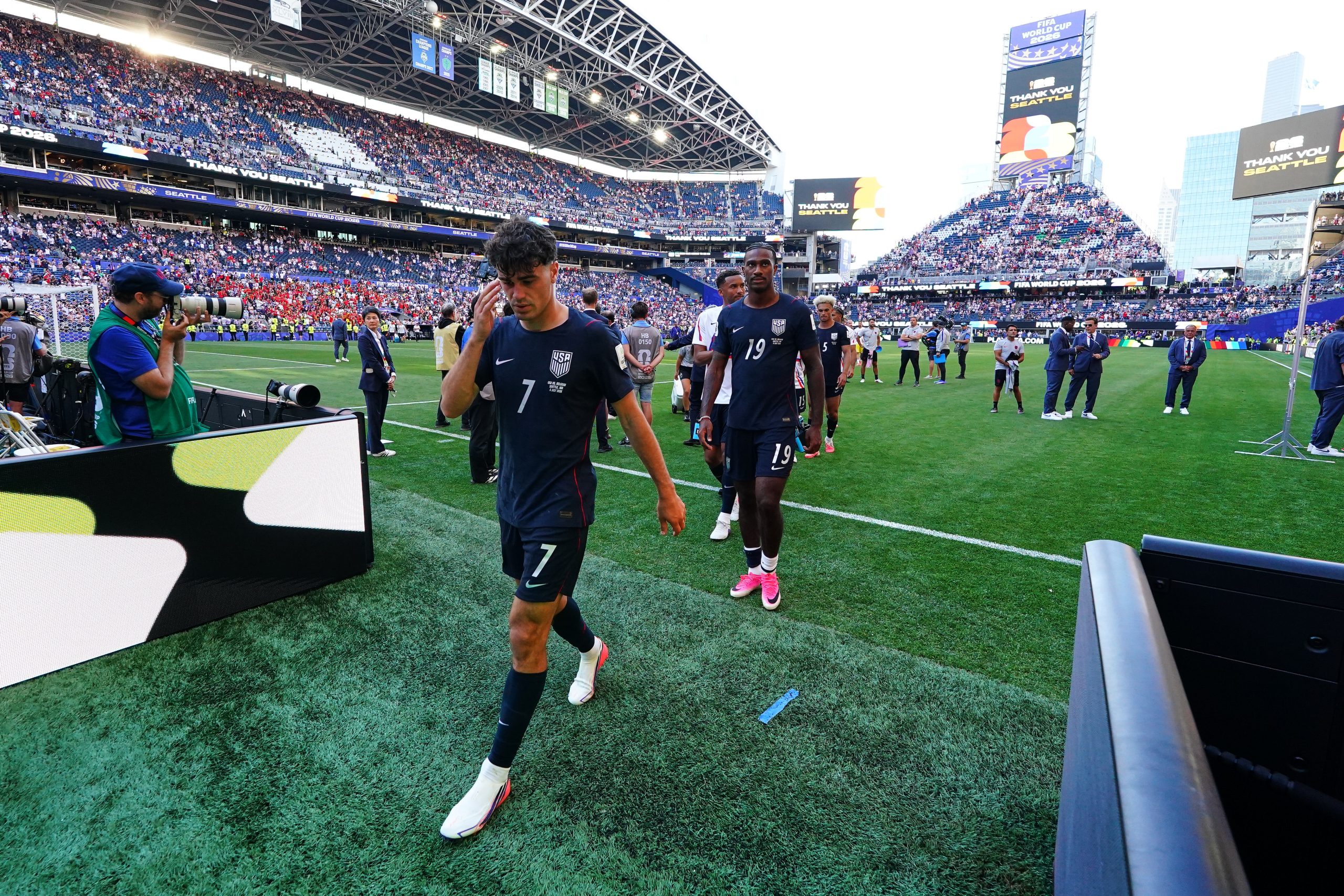
    Gio Reyna also was underwhelming. After earning enough of Pochettino’s affection to make the World Cup team, he played just 131 minutes over the five games, took two shots, created one chance, and scored a goal that was beautiful, but in a game that already was won.

    “If we lose to Bosnia, it’s obviously a big disappointment, and then if we win today, it’s probably a very big achievement for the group,” he said. “So it felt like we kind of just almost did what was expected. … It’s hard to say, I guess, what’s needed to make the next steps to really push through.”

    One thing would be the biggest stars delivering in the biggest moments. That has happened for Kylian Mbappé’s France, Lionel Messi’s Argentina, Jude Bellingham’s England, and Erling Haaland’s Norway.

    But it did not happen for the United States.

    Gio Reyna (left) walks off the field after the loss to Belgium.Ted S. Warren

    The Pochettino questions

    Questions must also be asked about manager Mauricio Pochettino. Among them: Was his $6 million salary, paid largely by U.S. Soccer donors from the hedge fund world, worth it?

    The short answer is yes, for what he did to raise the team from the depths it was in when he began. But the other questions are harder.

    Will it be worth splashing cash on another big name? Or, since he wasn’t clearly better in the biggest moments than his American predecessors, should there be a serious conversation about whether it’s necessary?

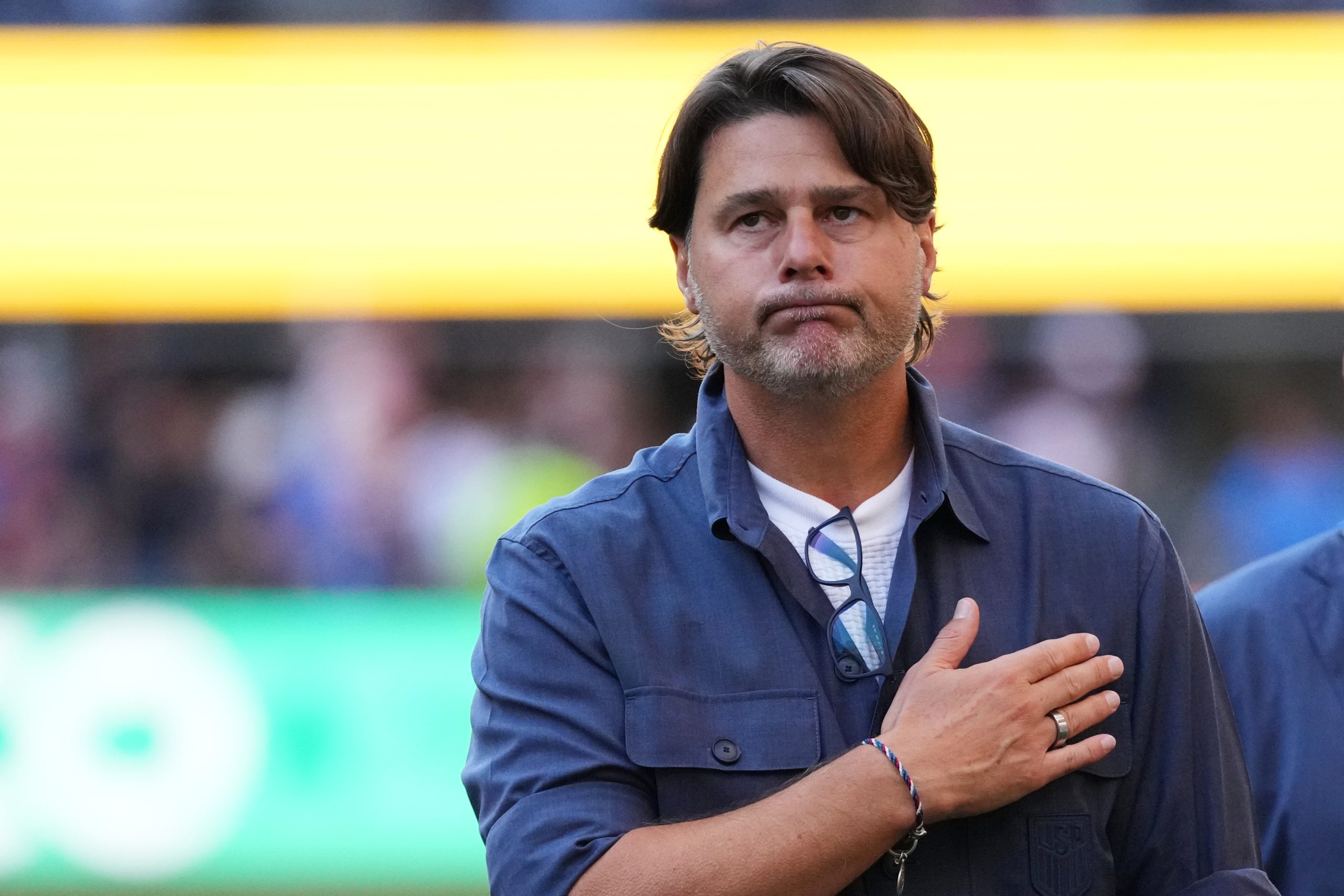
    Mauricio Pochettino’s gesture of thanks to U.S. fans after the final whistle.Ted S. Warren

    There are good candidates on the men’s side, starting with Ventnor City, N.J., native B.J. Callaghan. His success with Nashville SC combined with his past national team experience make him clearly qualified.

    Former Los Angeles FC manager (and longtime stalwart U.S. player) Steve Cherundolo also is on the list. New Jersey native Pellegrino Matarazzo, who has made his coaching name at European clubs, is too, though he might want more time overseas before coming home. Former Union coach Jim Curtin would be on the list if he hadn’t just been hired by Austin FC.

    But will the donors lean on U.S. Soccer to go for another famous name?

    One of those donors, Scott Goodwin, has quite a few friends in the soccer world — and some at the White House, too: The New York Times reported that he called them to complain about Balogun’s red card.

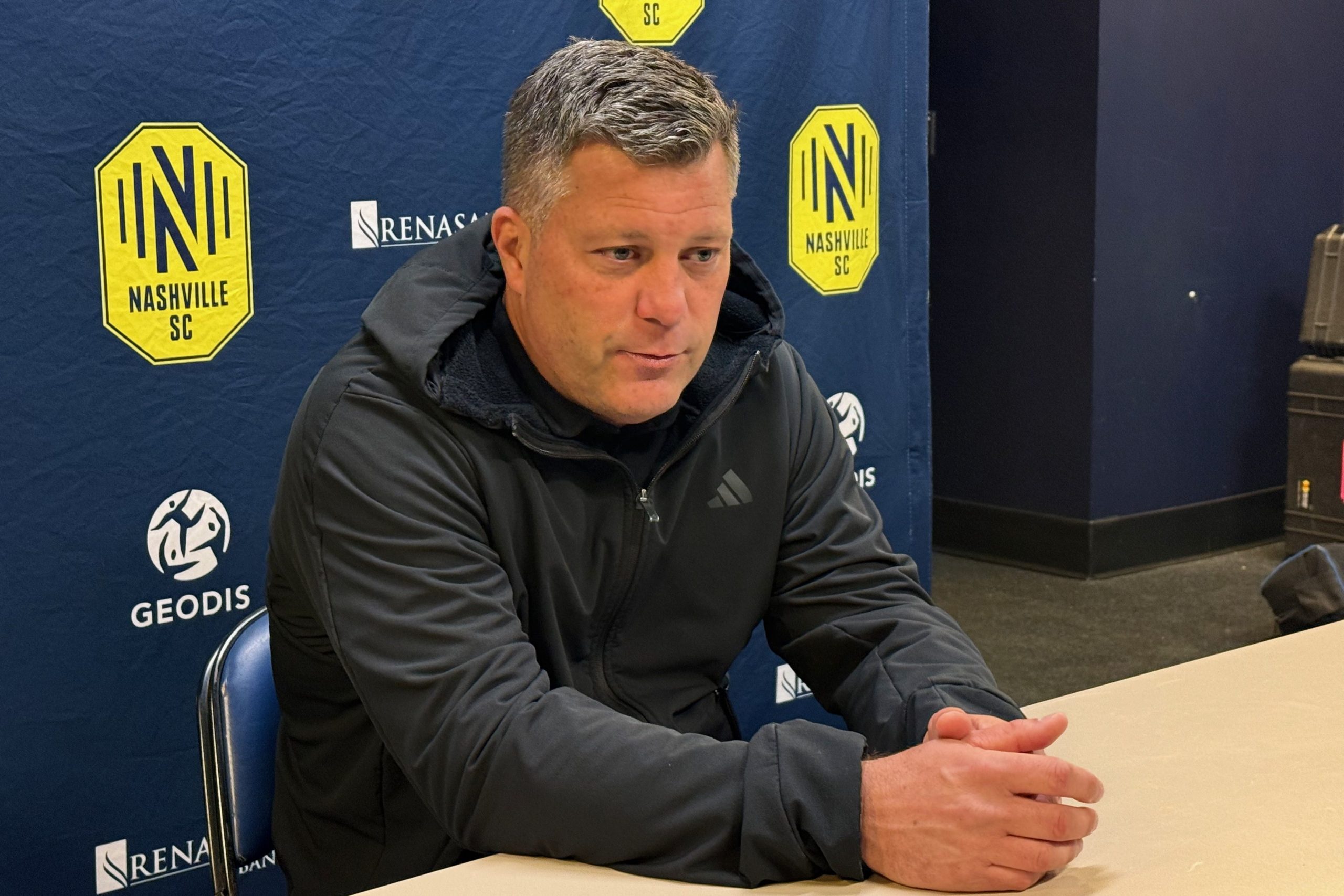
    B.J. Callaghan talking with the media when Nashville SC visited the Union earlier this year.Jonathan Tannenwald / Staff

    Two years ago, Goodwin called his soccer friends to complain about the U.S. team’s flop at the Copa América. They included two former U.S. players who remain well-known in soccer circles, MLS executive Alecko Eskandarian and broadcaster-turned-investor Kyle Martino.

    Goodwin was so angry at the U.S. team’s performance that he said, as he recalled to the New York Post last month: “This is a chance to get an amazing coach.”

    Then, as The Athletic put it just before the World Cup started, “To Goodwin, there were three names that fit the bill: Klopp, Pochettino and Manchester City’s Pep Guardiola.”

    None of them were American. None had ever coached in the United States. Was there an implicit view there that no American could be good enough for the job?

    Good questions for U.S. Soccer CEO JT Batson and chief operating officer Dan Helfrich: Do they think the difference between a big-name foreigner and a qualified American is worth another $6 million bet? And how much sway will the donors hold this time?

    U.S. Soccer declined to make leadership available to the media on Tuesday. A spokesperson told The Inquirer that there might be an availability in the coming days.

    And what about a second term for Pochettino, who’s now out of contract? The players grew attached to him, but that happens with almost any manager. He has talked with U.S. Soccer about another term, but there also have been plenty of hints that he’d like to go back to Europe.

    “I think now, because we were talking with the federation, it’s about to rest a little bit, to think, to have conversation, and then see what the decision is from the federation and from us,” Pochettino said Monday night. “I think we’ve built a very good relationship, but now is not a moment to talk about that. … For sure, in the next weeks, we can start to talk — if the federation wants to talk.”

    Late Tuesday morning, U.S. Soccer issued a statement about its side of those talks.

    “We had positive conversations with Mauricio before the World Cup about the future,” the federation said. “We agreed we would continue those conversations following a chance to rest and reflect post-World Cup.”

    It hinted at the future, but only barely.

    “We have a great deal of respect and gratitude for Mauricio, his staff and everyone part of the program,” it said. “We have shared excitement about our potential and also shared clarity about the amount of work at all levels still required to achieve our ambition.”

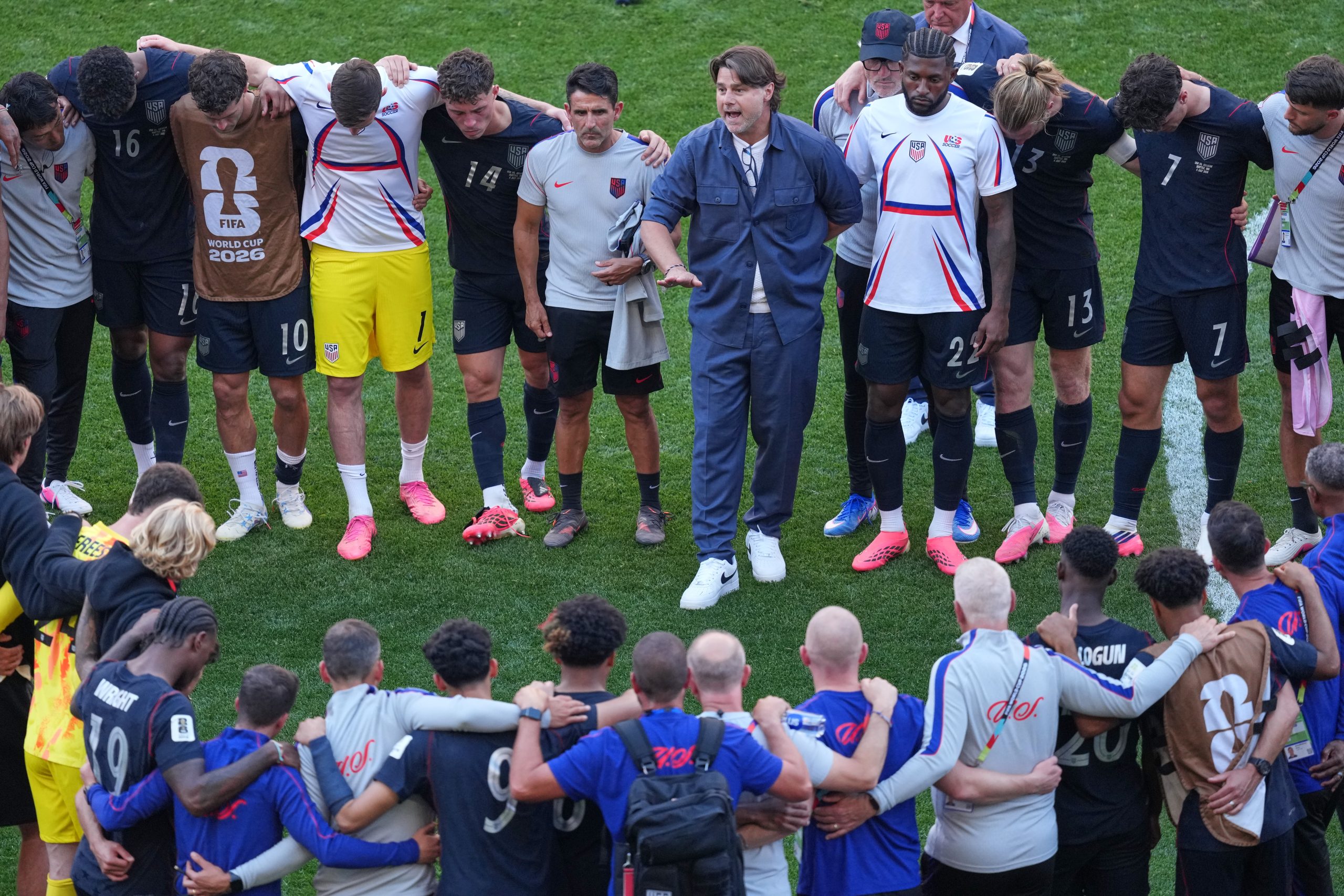
    Mauricio Pochettino (center) addressing players and staff after the loss.Nick Didlick
  • Phillies fans will see a familiar face on TV covering the MLB draft

    Phillies fans will see a familiar face on TV covering the MLB draft

    If the Phillies end up taking a pitcher with the No. 36 pick in the upcoming draft, the MLB network will have the perfect analyst on hand to break it down.

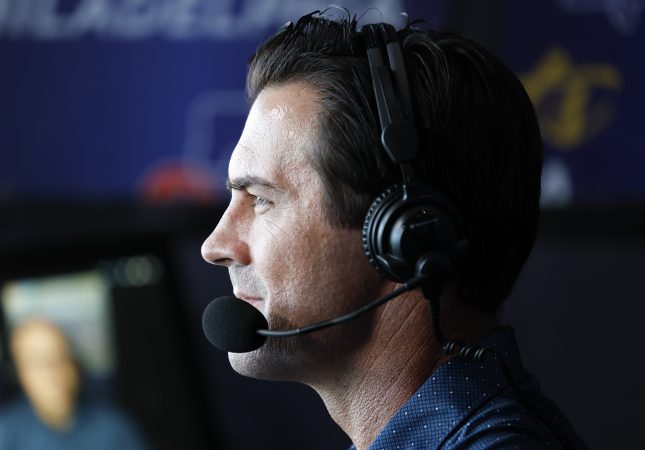
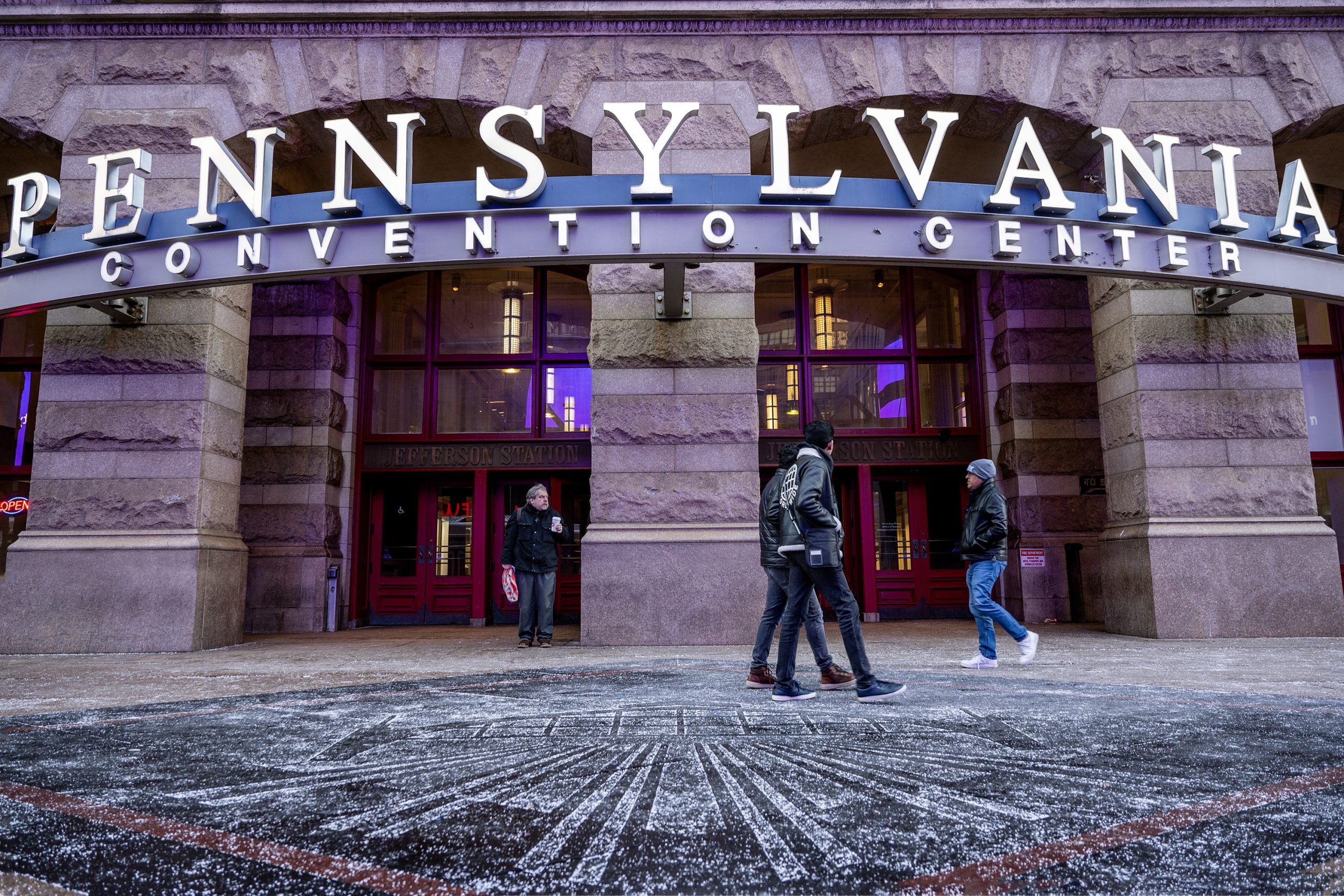
    Cole Hamels, the 2008 World Series MVP and current NBC Sports Philadelphia broadcaster, is joining MLB Network’s live coverage of the 2026 MLB draft, which kicks off Saturday afternoon at 1 p.m. at the Pennsylvania Convention Center.

    Longtime MLB Network coordinating producer Chris Roenbeck, who is working his fourth draft, said they’re always looking to add a “special wrinkle” to their coverage. With this year’s draft taking place in Philadelphia, the stars aligned to add Hamels to their broadcast.

    “When we started brainstorming months ago, we quickly thought of Cole, given his decorated career with the Phillies and being a first-round pick,” Roenbeck said. “We’ll go to him early and often for pitching insights, relying on his unique perspective, which will only enhance our broadcast.”

    Hamels is the only new addition to MLB’s Network’s draft coverage, which will be hosted by Greg Amsinger and feature analysis by Mark DeRosa, Harold Reynolds, and former Colorado Rockies general manager Dan O’Dowd.

    “We’re beyond excited to have Cole part of our draft team,” Amsinger said, noting Hamels’ “draft experience and pitching expertise will take our show to the next level.”

    Hamels is in his second season as a part-time Phillies announcer on NBC Sports Philadelphia, where he’s called four games so far this year. He’s expected to broadcast six to eight games, taking over a portion of the schedule given up this year by Hall of Famer Mike Schmidt, but the network would love to have more.

    “Certainly, we would love to have him every weekend,” Alexandra Matcham, the vice president of content for NBC Sports Philadelphia, told The Inquirer in March.

    Hamels won’t be the only Philly addition. The opening of MLB Network’s draft coverage will be voiced by Black Thought (aka Tariq Trotter), lead MC of the Philly hip hop group The Roots.

    NBC will broadcast the first 10 picks of the MLB draft

    The 2026 MLB draft will take place at the Pennsylvania Convention Center in Center City.Tom Gralish / Staff Photographer

    Hamels and company will be on hand to discuss the Phillies’ No. 32 pick, but MLB Network won’t air the first 10 picks of the draft

    Why? Because NBC will be broadcasting the first hour and a half of this year’s MLB draft as part of their three-year TV rights deal with MLB, taking over for ESPN.

    As a result, the MLB draft will begin at 1 p.m. Saturday on NBC before coverage shifts to MLB Network at 2:30 p.m., picking things up with the No. 11 pick.

    NBC will carry MLB Network’s production, so you won’t see Mike Tirico and crew this weekend.

    The entire draft will stream on Peacock, which will simulcast MLB Network’s coverage after NBC cuts away to cover the American Century Championship, often described as the Super Bowl of celebrity golf tournaments.

    The draft streaming on Peacock is good news for YouTube TV subscribers, where MLB Network has remained dark for three years due to a contract dispute. The network is also available to stream as part of MLB+, beginning at $5.99 per month.

    The MLB Network has broadcast the draft since 2009. ESPN was the first network to broadcast the draft, which aired the first round live on ESPN2 in 2007.

    Quick hits

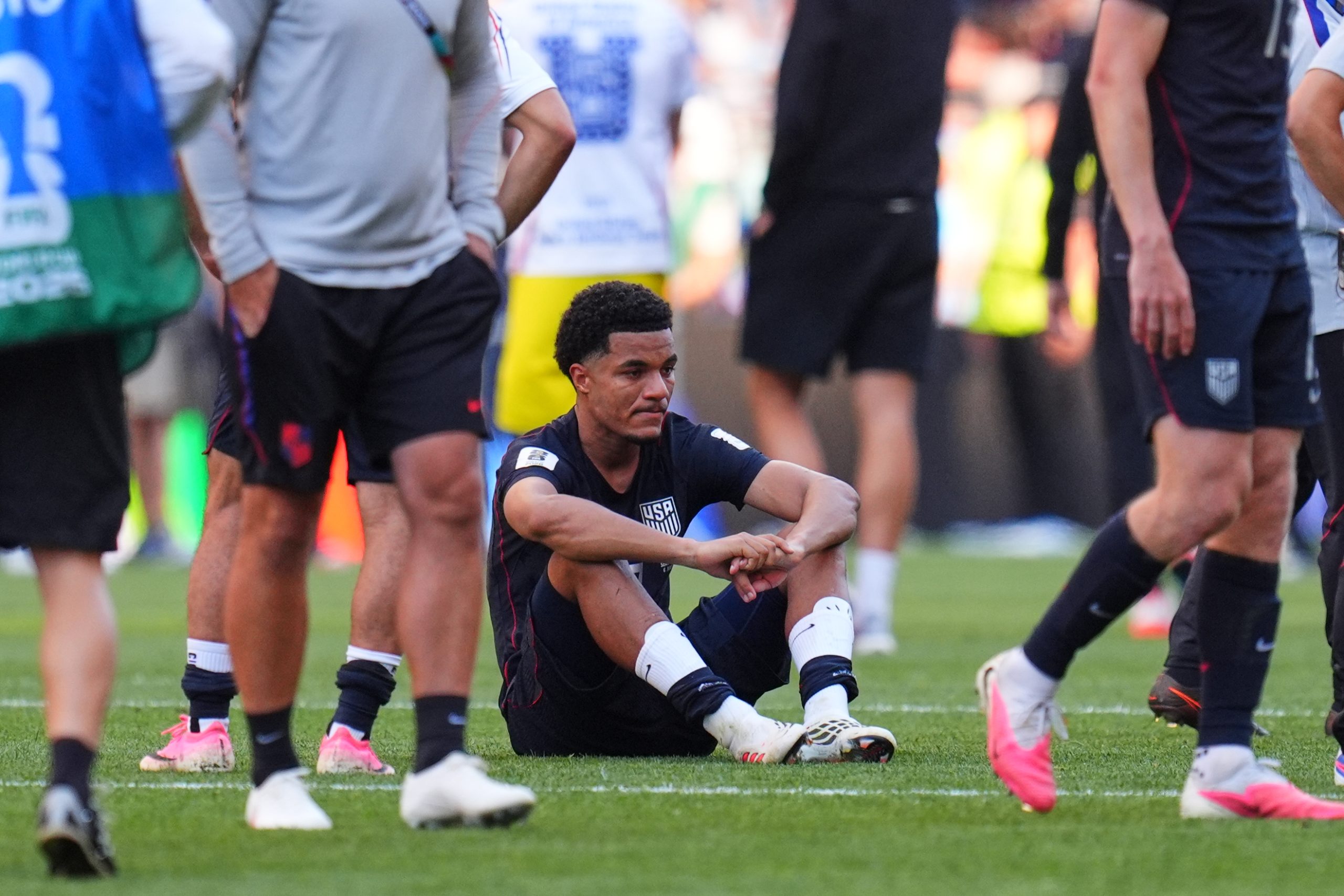
    Malik Tillman reacts after the U.S. was eliminated from the World Cup by Belgium Monday. Manu Fernandez
    • “This doesn’t have to be the last soccer you watch for the next four years.” That was John Strong, Fox’s lead World Cup announcer, pleading with American fans after the U.S. was eliminated from the World Cup by Belgium Monday.
    • Credit to Delran native and two-time World Cup champ Carli Lloyd, who wasn’t afraid to criticize U.S. star Christian Pulisic after the United States’ disappointing loss.
    • On a brighter note for American football fans, the NFL preseason is less than a month away. The annual Pro Football Hall of Fame game, featuring the Arizona Cardinals and Carolina Panthers, kicks off Aug. 6. The Eagles’ first preseason game against the Baltimore Ravens is one week later on Aug. 15.
    • Scott Franzke and the rest of the Phillies radio announcers are getting a second life on social media thanks to Nick Piccone, a lifelong fan in Delco who matches audio clips to the TV broadcast.
  • The USMNT lived down to Donald Trump’s expectations: They played like the losers he thought they were

    The USMNT lived down to Donald Trump’s expectations: They played like the losers he thought they were

    If you didn’t believe it before, you need to understand it now: Donald Trump never should have picked up that phone, never should have put in that call to one of his toadies, FIFA president Gianni Infantino, and never should have tried to exert his icky influence in a sport rife with corruption.

    The 4-1 loss by the U.S. men’s national team to Belgium on Monday night at Lumen Field in Seattle was a fitting result. It was an embarrassing end to the World Cup for the home country. It was cosmic payback for a club that hoped to benefit from a president who wanted to strongarm Team USA into the quarterfinals and found out that sports can resist even an autocrat’s attempts to stack the deck.

    Sometimes, once you show you’re willing to wallow in the mud, you can never wash the stain away. The justifications for the Trump administration’s overtures to FIFA to wipe out the one-game suspension for Folarin Balogun — and for FIFA’s acquiescence — were oh-so easy and obvious: This is FIFA.

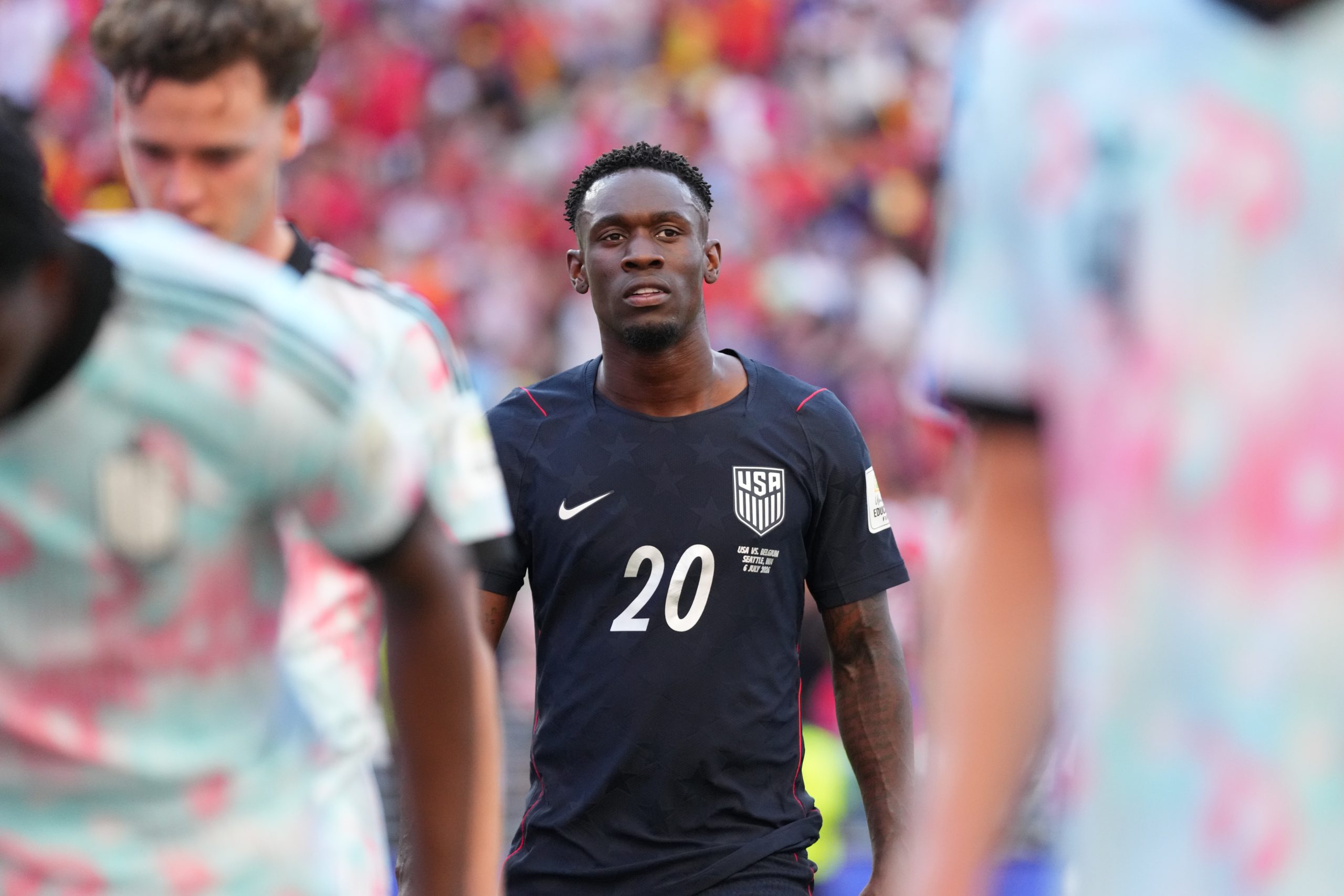
    U.S. forward Folarin Balogun (20) was the center of attention against Belgium in the World Cup’s round of 16 on Monday.Ted S. Warren

    This is an organization with a history of scandal and corruption so long and detailed that Robert Caro could only begin to chronicle it. This kind of back-scratching and deal-making is nothing new at soccer’s highest level. This is how things work, and everyone knows it and holds their nose against the stench, and all the complaints from Belgium and the other countries left in the World Cup were nothing but rank hypocrisy.

    If another national team were in the same situation that the USMNT found itself after Balogun was hit with that questionable (at best) red card last Wednesday against Bosnia and Herzegovina, its president or prime minister would have done the same thing Trump did, right? Any means necessary in an every-country-for-itself system, right?

    Wrong. The corrective to dishonor and dishonesty isn’t to do more dishonorable things. Yet that was the remedy that Trump sought and put Team USA in the position of accepting. No, Balogun never deserved a red card and the subsequent suspension. Yes, it was a terrible call. But terrible calls happen at all levels of sports, because sports — at least until the gamblers and robots take them over completely — are officiated and overseen by human beings, and errors and mistakes are part of the game.

    Stuff happens, and you deal with it as best as you can, and no one gets a do-over days later just because Donald Trump says so. His actions wouldn’t have been appropriate in youth soccer — imagine a parent of a punished player pressuring a league’s commissioner to lift a suspension and the commissioner giving in — let alone in the biggest sporting event on the globe.

    What’s more, Trump and those who supported or tolerated his interference in The Balogun Affair apparently never stopped to consider that he might be damaging his own national team’s chances. In that 2-0 victory over Bosnia, Balogun’s teammates not only survived the final 26-plus minutes of the match without him but also scored shorthanded to extend their lead.

    They had become underdogs. They had acquired the momentum that comes with being a team that had to fight adversity and had given a strong indication that it could overcome it.

    But once FIFA reversed its decision, that entire narrative — that sense that the USMNT might use Balogun’s suspension as inspiration and triumph in the face of an unjust call — disappeared. Now, the USMNT wasn’t the tough, resilient bunch that could withstand the absence of its best player. Now it was so out of its depth without Balogun that it needed the shady political boss to cut a deal in the smoke-filled room to bail it out.

    Belgium players react after their team scored one of four goals against the United States in Monday’s round-of-16 World Cup match. RUTH FREMSON

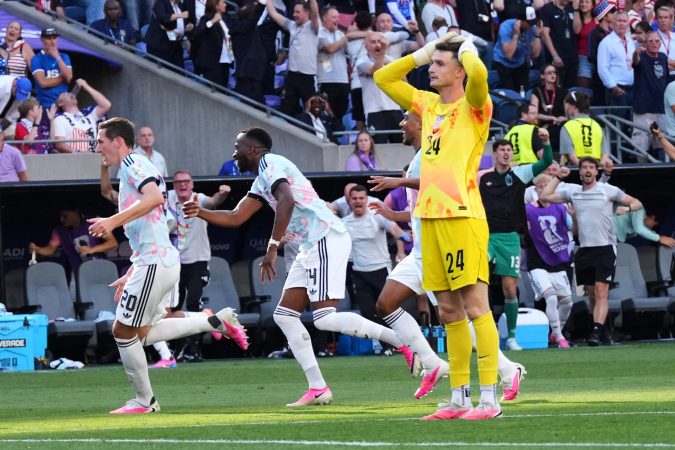
    Well, the Americans fit that pathetic profile Monday night. They allowed Belgium to take an early lead, then gave up the winning goal just 61 seconds after Malik Tillman tied the game at 1, then conspired to commit a crushing gaffe when goalkeeper Matt Freese played the ball outside the box, burped it up, and watched Hans Vanaken roll a shot past him for a two-goal Belgium edge.

    They were outplayed, outmatched, and outclassed, their performance all the more humiliating for the strings that their president had pulled for them, for the message that he had sent about their chances.

    Donald Trump told the world that these athletes needed a man willing to act like a mob boss to make things easier for them, that the USMNT wasn’t strong enough to take home victory on its own and without his help. It turned out he was right. He treated them like losers, and on Monday night, they met his expectations.

    What an un-American way to bow out.