MORRISTOWN, N.J. — Though the World Cup only just reached the rearview mirror, the soccer world is already speeding toward the new European club season.
Brenden Aaronson is proof.
After taking the three-week break that FIFA’s rules allow for players after major tournaments, the Medford native returned to work at his club, Leeds United of the English Premier League, on Monday. Conveniently, that was right as his teammates arrived in North Jersey amid Leeds’ first preseason tour of the U.S. in nearly 30 years.
“Just great to get home, spend some time in Jersey,” he told The Inquirer. “I just needed to just get home and see family. I hadn’t been home since last September. That’s been probably the longest time I’ve been away from home.”
Leeds fell to Wrexham of the second-tier Championship last Saturday in Tampa, 3-2, then beat fellow Premier League club Sunderland 1-0 on Thursday in Harrison, N.J. The finale is Sunday against powerhouse Liverpool in Chicago (4 p.m., ESPN Deportes), the same day Wrexham and Sunderland meet at Subaru Park (noon, ESPN).
Alas, Aaronson wasn’t in the game squad Thursday, as much as he wanted to play being close to home. He had a lot of friends and family in attendance, and a busload of fans from the Leeds supporters’ group in Philadelphia made the trip. (Their viewing parties at the Black Taxi in Fairmount are lively occasions.)
But if his absence disappointed the box office, it wasn’t too surprising since he’d only just returned. No one begrudged him the time to rest, having gone just about nonstop since the last preseason started.
Not for nothing, too, he was also able to finally enjoy being a husband after his whirlwind wedding that briefly took him out of U.S. camp in late May.
That was just one early turn in a roller-coaster ride through the World Cup.
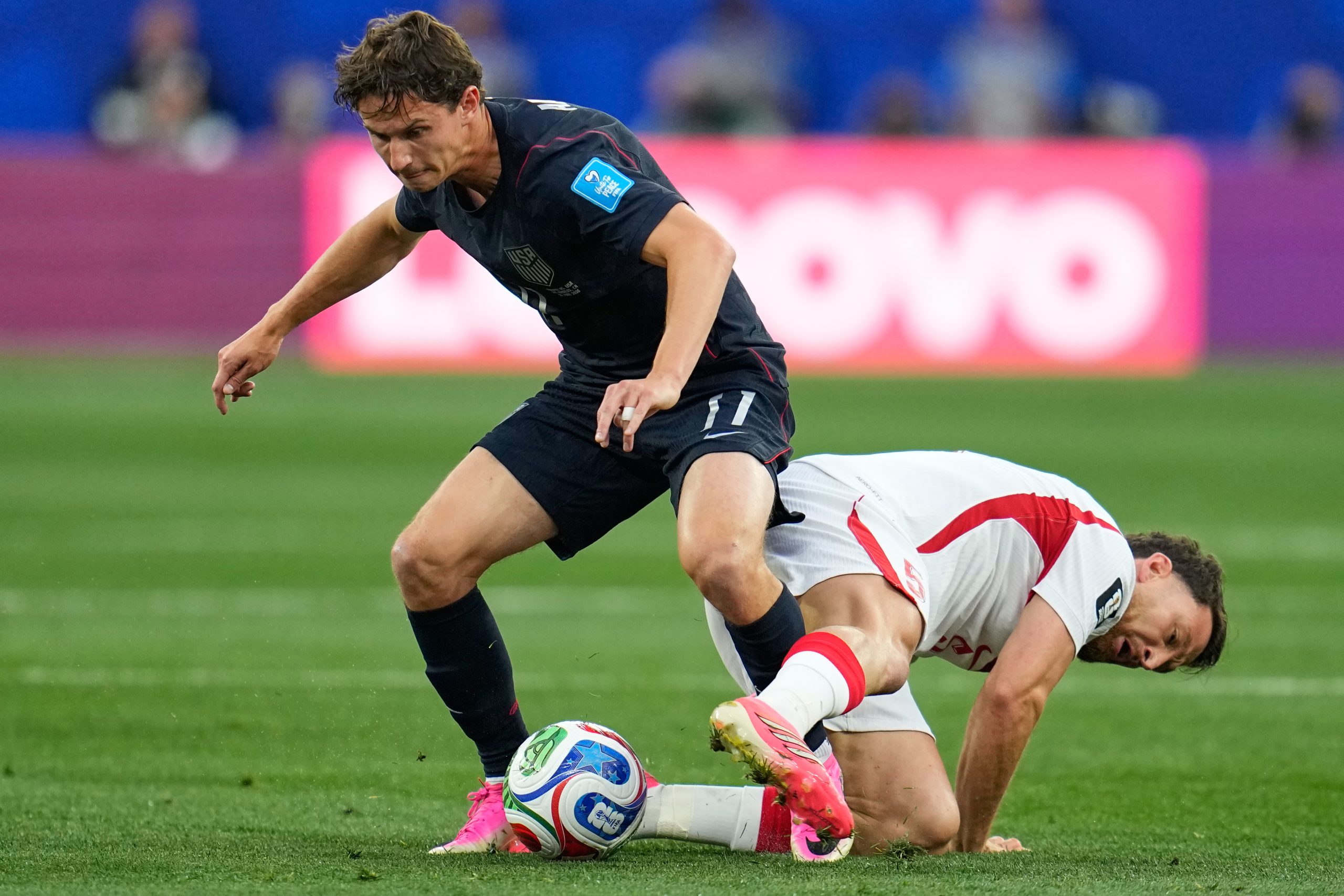
Brenden Aaronson (left) in action during the U.S.-Turkey group stage game, the only game of the World Cup he played in.Gregory Bull
“It’s a shame that our worst game was in the round of 16,” he said. “I don’t think that we were at our best that game — I don’t think it’s anything to blame this or that, I just think we weren’t at our best. And sometimes you have to put your hands up, because they were also very good on the day, Belgium.”
He added that “it did feel like an opportunity lost” for a group of players who “felt very, very confident” heading into the biggest game of their lives.
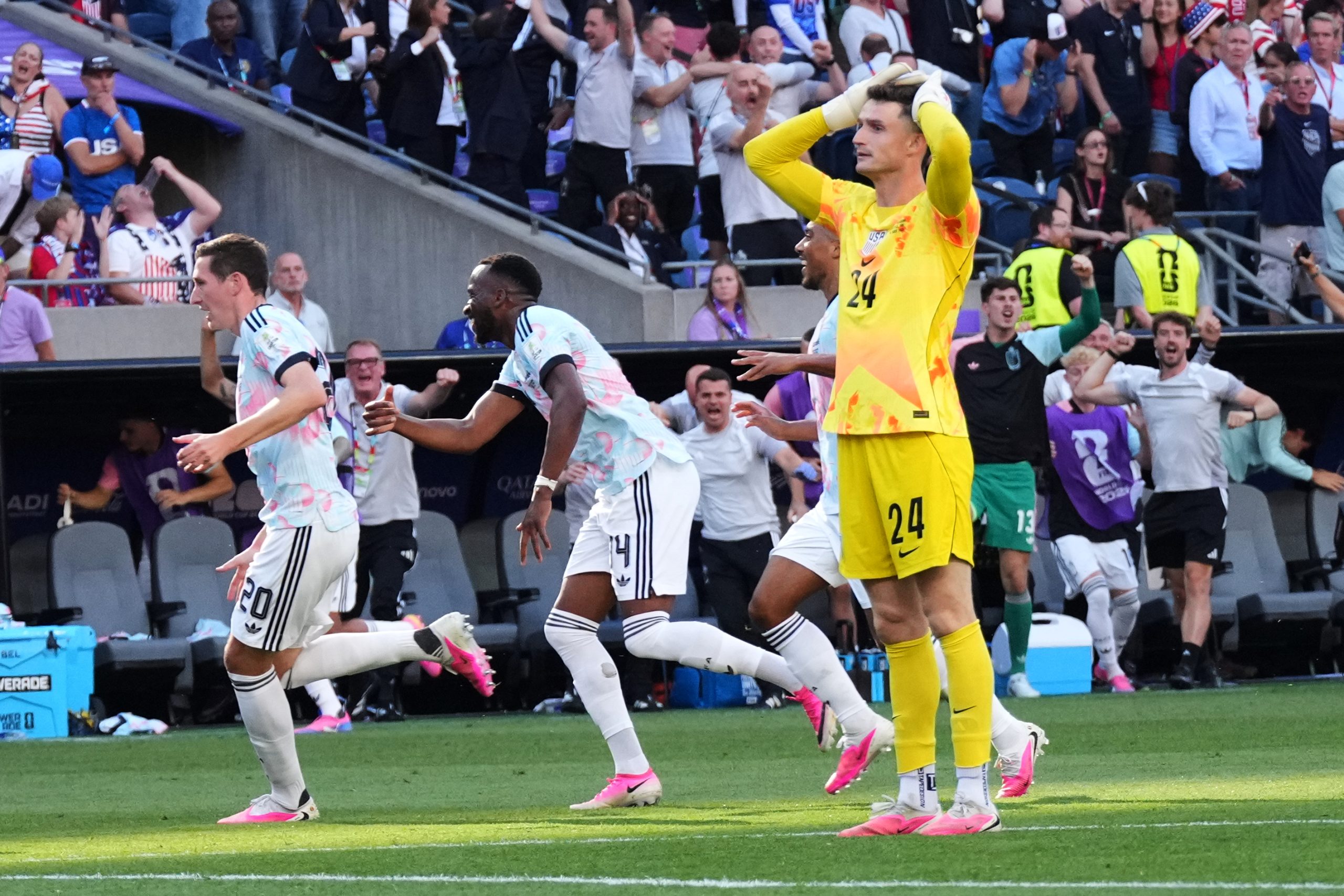
A dejected Matt Freese (right) amid Belgium players celebrating one of their goals against the U.S.
“I felt like we knew what we could do and what we could have accomplished, and we knew we could have went farther in the tournament,” Aaronson said. “So I think that’s the thing that hurt the most. … It’s not fun when you lose that type of game, but also, I think we were upset with the way that we played, too.”
The emotions were particularly strong around U.S. centerback and captain Tim Ream, whom Aaronson said “was really upset after the game, knowing that maybe this [was] his last one — it was difficult to see.”
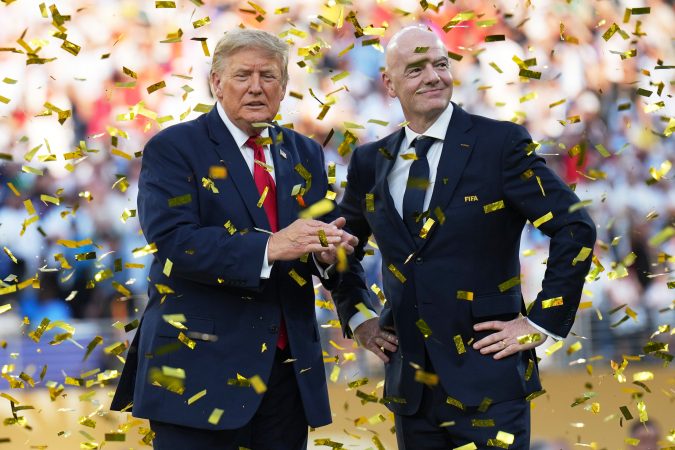
There was never any doubt about how the Balogun scandal affected Belgium’s team, especially President Donald Trump’s intervention with FIFA president Gianni Infantino to get Balogun reinstated. But there hasn’t been too much clarity about how it all affected U.S. players.
Folarin Balogun’s reinstatement might have ended up hurting the U.S. against Belgium more than it helped.
Aaronson came down on the latter side.
“I wouldn’t say it affected us,” he said. “I think we did a good job the whole time of kind of just staying in our little bubble and not really paying attention to the outside noise. We know in those moments, of course there’s media, it’s the World Cup, everybody’s going to be talking and stuff like this. But I didn’t really think much of it, to be honest, myself.”
He didn’t hesitate to add, though, “that it gave [Belgium] maybe a little more fire under their belly.”
On to a new season
As the next World Cup cycle begins, it’s natural that some players will move on, and newcomers will be welcomed. That’s likely to start in the fall, when the new FIFA calendar takes effect with a four-game national team window from Sept. 18-Oct. 3. And it will be no surprise if some of the players who’ve succeeded Aaronson at the Union get invitations, such as Cavan Sullivan, Frankie Westfield, and perhaps Quinn Sullivan too.
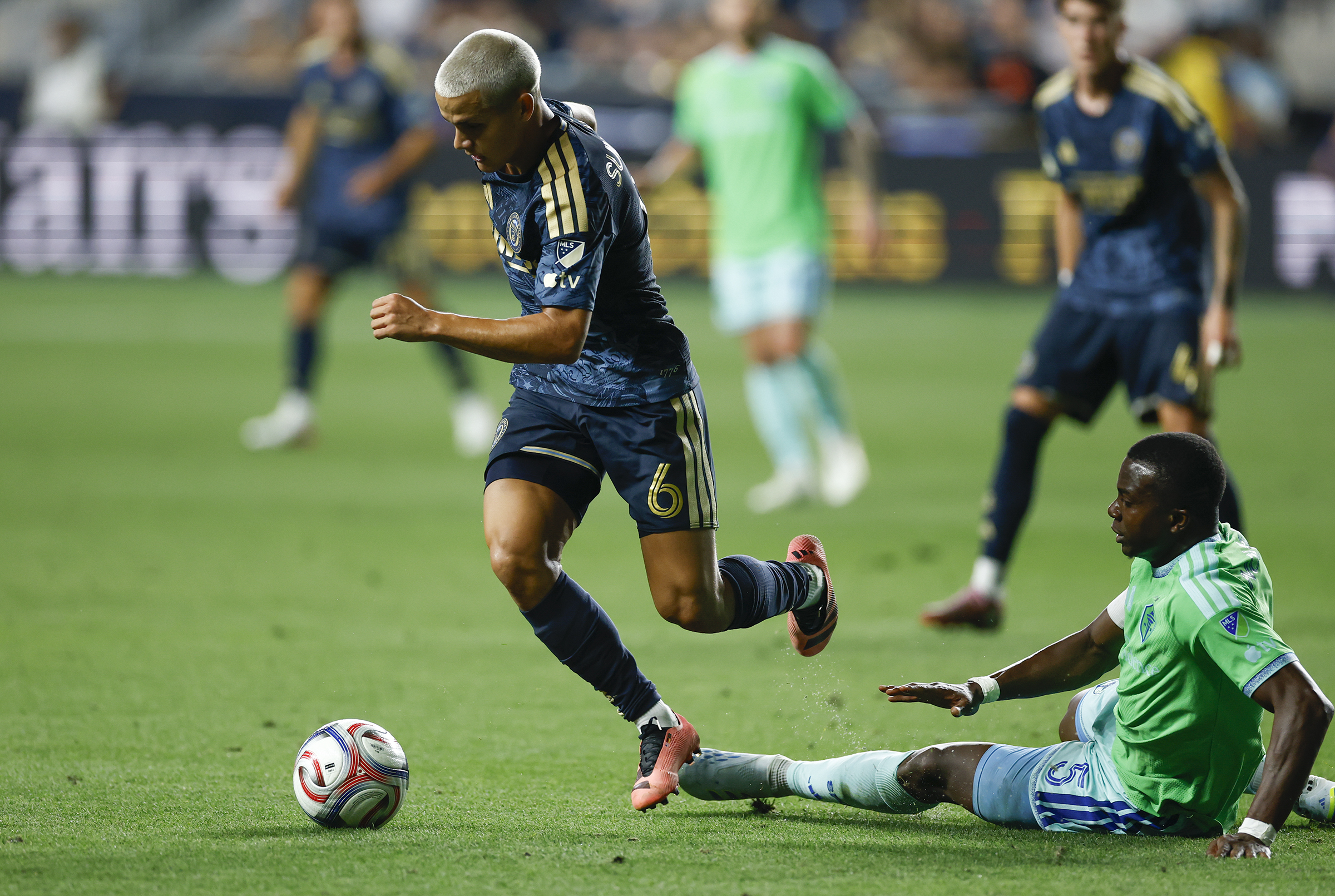
A lot of U.S. fans want to see Union midfielder Cavan Sullivan (left) get a shot with the senior team this fall.Yong Kim / Staff Photographer
“There’s a time period where you can test things out and try things,” Aaronson said. “So it’ll be interesting to see what goes on the next four years, but I’m excited for it. I think it’s an exciting time for the national team, and we need to keep getting better and better.”
Aaronson hasn’t gotten a ton of playing time from Mauricio Pochettino, who from all indications seems headed toward a new four-year contract as U.S. manager. But it’s hard to believe that a 25-year-old who plays regularly in the Premier League, the world’s top domestic circuit, will be cast off entirely.
He certainly intends to do his part to stay on the radar.
“My aspiration, of course, is to play every game for the club, be a big player at the club and score goals and get assists, and then ultimately transfer that to the national team,” he said. “I want to play every game for the national team — I think that’s what everybody wants to do. That’s just been my aspiration, my goals. I’ve always been hungry like that.”
Brenden Aaronson (right) signing autographs for fans during the U.S. team’s World Cup training camp.Jonathan Tannenawld
And he was pleased by the news that Pochettino is likely to return.
“I think it’s something that we can continue to grow on,” Aaronson said. “I mean, he’s coached the best players in the world [over his career]. Being able to study under him and learn from him is massive for me.”
This will be Aaronson’s fourth season at Leeds, one of England’s most passionately supported clubs, and his third in the Premier League. As with last year, when the Peacocks returned to the top flight, the first goal is to stay up. But now Leeds can aim a little higher, with new signings bankrolled by an ownership group tied to the NFL’s San Francisco 49ers.
“I swear, Leeds fans are everywhere,” Aaronson said. “It’s got such a big fan base, and it will continue to grow. Because what we want to do is put this club in the right spot, and that’s being in the top of the Premier League. So that’s the goal.”
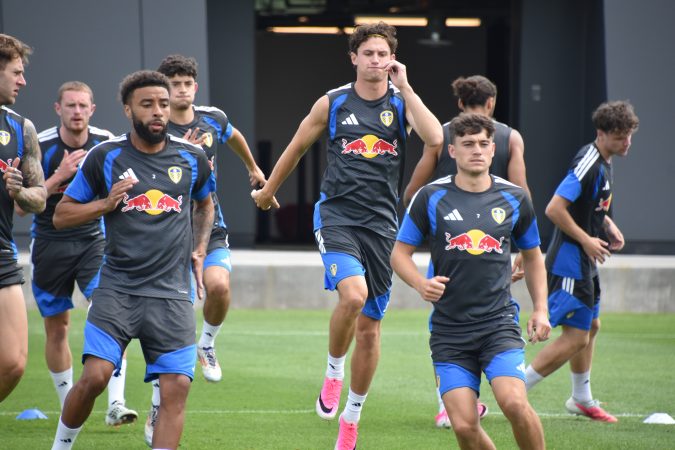
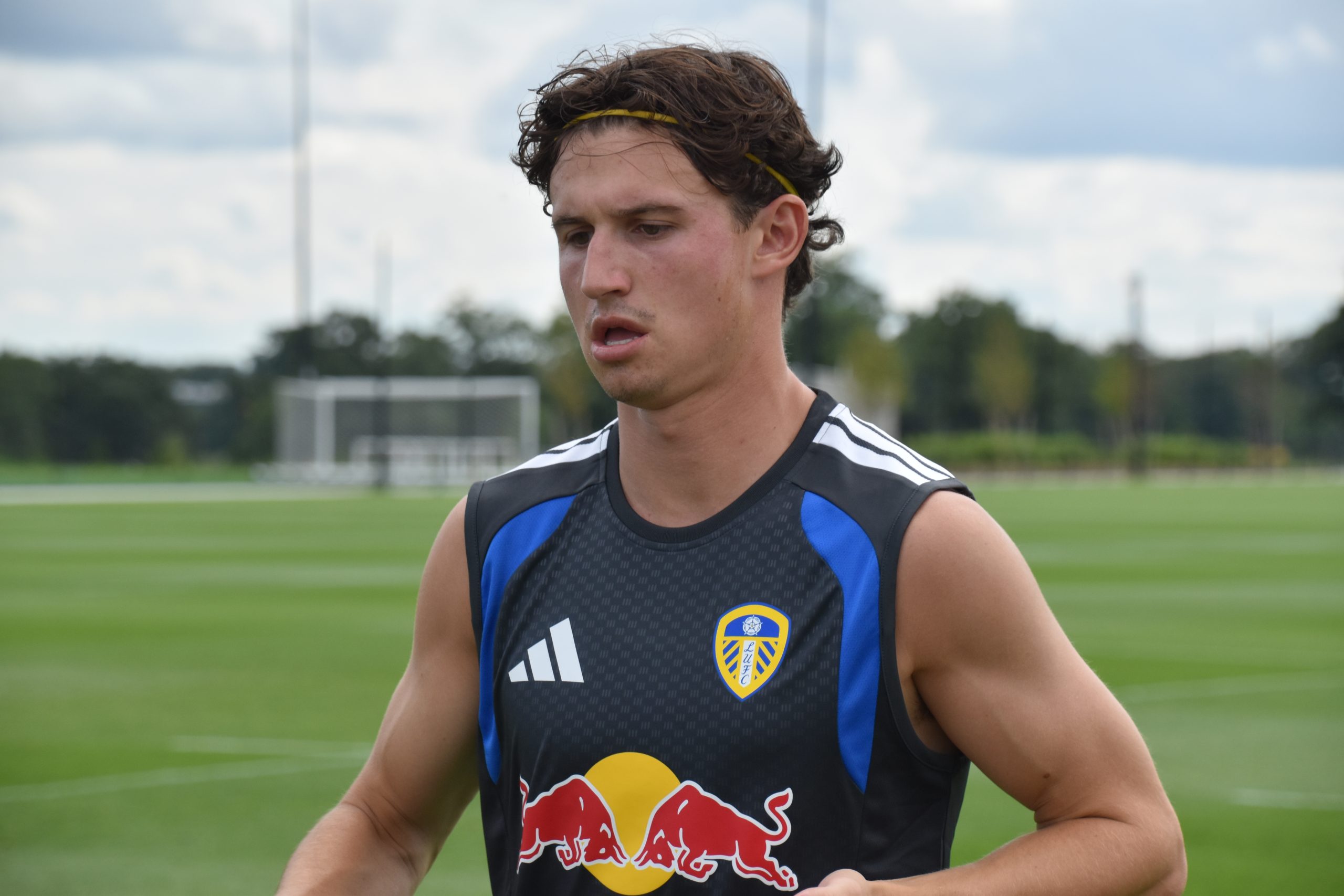
Brenden Aaronson at work during one of Leeds’ practice sessions leading up to Thursday’s game in North Jersey.Jonathan Tannenwald
He has his share of critics in England, largely for the same reason he has them over here: for all his industrious work on the field, he’s an attacking midfielder who doesn’t score a lot of goals. But Leeds manager Daniel Farke has been one of Aaronson’s biggest backers, and intends to stay that way.
“The task is more or less keep going exactly in the same way and develop exactly in the same way that he’s done since I’ve really worked with him,” Farke said. “I’m pleased for him that he was called up to the U.S. team — didn’t play perhaps as many minutes as he was hoping for, but he’s also a player full of potential, and he’s still in an age where he can develop and hopefully make the next steps. He is, in addition to that, also a great human being, and it’s a pleasure to work with him.”
Forward Lukas Nmecha, who scored the winner Thursday, also gave a nice endorsement.
“Firstly, on a personal level, he’s a lovely guy, works really hard,” he said. “On the football side, I think we all know what he brings. He’s very active in the game, he runs a lot, he creates a lot, and he’s just a good guy to have around.”
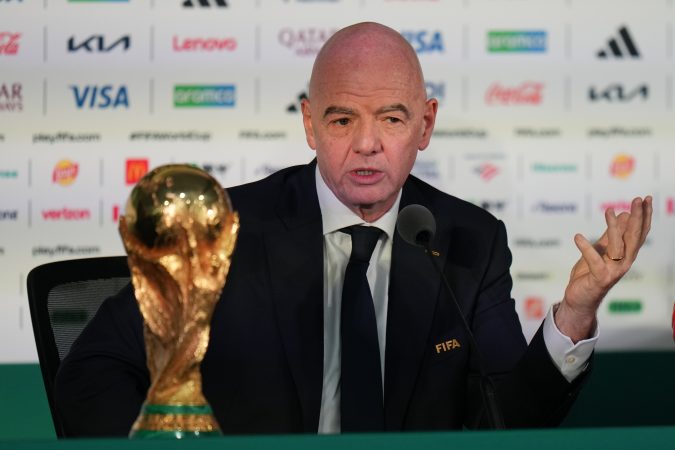
ZURICH — FIFA president Gianni Infantino is abandoning his divisive plan to sell World Cup profits to private equity after receiving pushback from all corners of the soccer world.
“Having listened carefully to all the views, it has become clear that the project has created divisions of a nature that, regardless of the level of support, are no longer in the interest of the objective set out in the first place,” Infantino said in a statement on Friday. “Our purpose has always been — and will always be — to unite and improve. As a result, this proposal will not proceed.”
Infantino had proposed creating a $20 billion company to run the World Cup with private investors including the Kushner family, but drew backlash that grew every day since Tuesday’s announcement.
European soccer body UEFA’s 55-member nations agreed to boycott the World Cup and all other FIFA competitions over Infantino’s plan on Thursday. North America’s Concacaf and the Asian Football Confederation also said they opposed the plan.
“Some things are simply too important to sell,” UEFA said in a statement. “The FIFA World Cup belongs to football. It always will. And so long as Europe has a voice, it will never be for sale.”
Infantino’s senior adviser, Carlos Cordeiro, a former Goldman Sachs banker who represented the soccer body on the White House Task Force for the World Cup, resigned on Friday and urged other senior FIFA staff to speak out.
“I cannot stand by while FIFA considers selling a stake in the World Cup,” Cordeiro said in a statement, just hours after FIFA insisted: “Nobody is selling football.”
Hours later, FIFA chief operating officer Kevin Lamour issued a statement to the Associated Press, saying FIFA staff were deceived by Infantino’s lack of openness in planning the sale over recent months and that the project must not continue.
“It is the project of one person,” Lamour, a longtime colleague of Infantino at FIFA and UEFA, wrote. “Not only must this project not go ahead … but the time has now come for football political leaders to ask themselves the right questions and make the right decisions.”
Infantino proposed spinning off FIFA’s commercial businesses — including World Cups and Club World Cups for men and women — into a $20 billion subsidiary with 20% owned by private investors.
The “anchor investor,” described by FIFA, is a New York-based investment firm created by Joshua Kushner, the younger brother of U.S. President Donald Trump’s son-in-law, Jared Kushner.
The next FIFA competition is the women’s Under-20 World Cup, which starts Sept. 5 in Poland — which UEFA members said they would boycott.
The misstep could prove costly for Infantino, particularly after the interventions by Lamour and Cordeiro.
Reelected unopposed in 2019 and 2023, Infantino is allowed one more four-year term under FIFA statutes. The deadline for the next presidential contest is Nov. 18, exactly four months ahead of the vote in Rabat, Morocco, where FIFA has its African headquarters.
Infantino’s job seemed secure, despite long-term unease with his style and previous attempts to force through unpopular projects, but could become more tenuous with the failed private equity proposal.
GENEVA — Two senior FIFA officials criticized Gianni Infantino’s World Cup sell-off plan Friday with one resigning as a presidential adviser and a second saying staff were deceived by a project that must not go ahead.
Carlos Cordeiro, who represented the soccer body on the White House Task Force for the World Cup, resigned in protest at the private equity plan.
“I cannot stand by while FIFA considers selling a stake in the World Cup,” Cordeiro, a former U.S. Soccer Federation president and Goldman Sachs banker, said in a statement resigning as adviser to FIFA President Gianni Infantino that urged other senior FIFA staff to speak out.
Cordeiro was president from 2018-20, and vice president for two years before then. After resigning from U.S. Soccer amid a controversy in the women’s team’s battle for equal pay, FIFA hired him as a senior adviser to the organization and eventually Infantino.
FIFA’s chief operating officer Kevin Lamour said in a statement to the Associated Press staff were “deceived” by Infantino’s lack of openness planning the private investor scheme and “deserve better than contempt and intimidation.”
“It is the project of one person,” Lamour, a longtime colleague of Infantino at both FIFA and UEFA, wrote. “Not only must this project not go ahead … but the time has now come for football political leaders to ask themselves the right questions and make the right decisions.”
Lamour did not resign the post he held since 2024 but said he had a duty to his colleagues.
“And if that means I lose my job, then so be it” the French official said. “I will understand and respect that decision. At least I’ll sleep well tonight.”
Ties to Trump’s family
Cordeiro often joined Infantino on working visits to meet U.S. President Donald Trump at the White House in recent years.
“Let me be clear. I had no involvement in this proposal, and I oppose it unequivocally,” Cordeiro said, calling the $20 billion commercial subsidiary “a bad deal for football.”
“Football has been central to my life, and after more than 35 years in banking, I understand both the value of this asset and the consequences of giving part of it away” he said. “That is why this proposal should be rejected.”
Infantino has proposed spinning off FIFA’s commercial businesses — including World Cups and Club World Cups for men and women — into a $20 billion subsidiary with 20% owned by private investors.
The “anchor investor,” described by FIFA, is a New York-based investment firm created by Joshua Kushner, the younger brother of Trump’s son-in-law Jared Kushner.
“FIFA already has access to extraordinary financial resources. The organization sits on billions of dollars in reserves and no debt,” Cordeiro said, noting FIFA’s revenue of $15 billion over the last four years tied to the men’s World Cup just ended.
“Against that backdrop, selling a permanent stake in football’s most valuable asset to raise $4.2 billion makes little sense. It is mortgaging football’s future without any compelling justification,” he said.
Cordeiro said he shared five years working for FIFA alongside Infantino with “dedicated, principled people who care deeply about the game.”
“I hope they, too, will speak up,” he wrote, “because decisions of this magnitude should be made in the interests of football, not those who stand to profit from it.”
Infantino has been president of FIFA for more than 10 years and had seemed sure to be reelected unopposed next March. FIFA has set a Nov. 18 deadline for challengers to come forward.
FIFA blames the media
UEFA threatened to boycott all FIFA games and events until the plan is dropped. North America’s CONCACAF also rejected Infantino’s offer of one-off $20 million payments to each member federation by a mid-September deadline.
Asia’s soccer body that has been a key ally in Infantino’s 11-year presidency opposed the investor plan and said FIFA must urgently review its management style.
The Asian statement came hours after FIFA blamed the media and doubled down on pursuing the project which now seems to have a majority of the 211 in opposition.
“Our planned consultation process was disrupted by incorrect media reports,” FIFA said in a statement early Friday. “We will proceed with this consultation process to ensure that each [member] has the ability to express its vote based on facts.”
The next FIFA event that would be targeted by the threatened European boycott is within weeks — the Women’s Under-20 World Cup hosted by Poland from Sept. 5. The senior women’s World Cup is next summer in Brazil.
In November, FIFA will hold an online congress to award the 2031 women’s World Cup to a joint bid of the U.S., Mexico, Jamaica, and Costa Rica; and the 2035 women’s World Cup to the British group of England, Scotland, Wales, and Northern Ireland.
Inquirer staff writer Jonathan Tannenwald contributed to this article.
An expanding crisis for soccer’s governing body reached into Infantino’s longtime inner circle when his pick to represent FIFA on the White House Task Force for the World Cup walked away calling the Joshua Kushner-backed $20 billion commercial subsidiary plan “a bad deal for football.”
Carlos Cordeiro is a former Goldman Sachs banker and officially Infantino’s Senior Adviser yet revealed he was not involved in the secretive investment plan that has rocked the sport since media reports revealed it Tuesday.
“I cannot stand by while FIFA considers selling a stake in the World Cup,” Cordeiro said in a statement formally resigning, just hours after FIFA insisted in a statement: “Nobody is selling football.”
Cordeiro’s exit — and call for other senior staff to speak out — intensified scrutiny on Infantino one day after European soccer body UEFA threatened to boycott all FIFA games and events until the plan is dropped. North America’s CONCACAF also rejected Infantino’s offer of one-off $20 million payments to each member federation by a mid-September deadline.
Cordeiro often joined Infantino on working visits to meet U.S. President Donald Trump at the White House in recent years, and took part in meetings of the administration’s World Cup task force led by Andrew Guiliani.
“Let me be clear. I had no involvement in this proposal, and I oppose it unequivocally,” said Cordeiro, the former U.S. Soccer Federation president.
Asia joins Europe and North America
On another seismic day in soccer politics, Asia’s soccer body that has been a key ally in Infantino’s 11-year presidency opposed the investor plan and said FIFA must urgently review its management style
The Asian Football Confederation said it “stands in solidarity” with UEFA and CONCACAF, the first two continental bodies to oppose Infantino whose combined 90 FIFA member countries near a majority of the 211 global total.
“Football should never have been placed in such a position,” said the Asian soccer body, which counts 46 of FIFA’s 211 members
Infantino has proposed spinning off FIFA’s commercial businesses — including World Cups and Club World Cups for men and women — into a $20 billion subsidiary with 20% owned by private investors.
The “anchor investor,” described by FIFA, is a New York-based investment firm created by Joshua Kushner, the younger brother of Trump’s son-in-law Jared Kushner.
“(T)he proposed (FIFA Forward Enterprise) cannot realistically achieve the necessary broad consensus and unity required to move forward” and must be reconsidered, the AFC said.
The statement did not name Infantino yet criticized FIFA for problems beyond the content of the private equity plan plus failing to consult about the secretive proposal.
“Rather, it has exposed fundamental weaknesses in FIFA’s consultation and decision-making processes that must now be addressed,” said the AFC, whose longtime president Sheikh Salman bin Ibrahim Al Khalifa narrowly lost the FIFA presidential election to Infantino in 2016.
“Accordingly, the AFC calls upon FIFA to undertake an urgent review of its governance and decision-making framework,” said the organization based in Kuala Lumpur, Malaysia.
Infantino’s job at risk?
Infantino had seemed — 11 days ago after the World Cup final in East Rutherford, New Jersey — to have a clear path to being reelected unopposed for a fourth and final term in office through 2031.
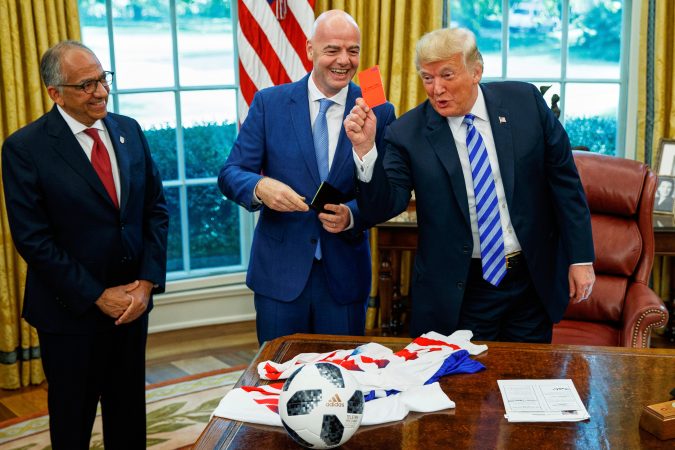
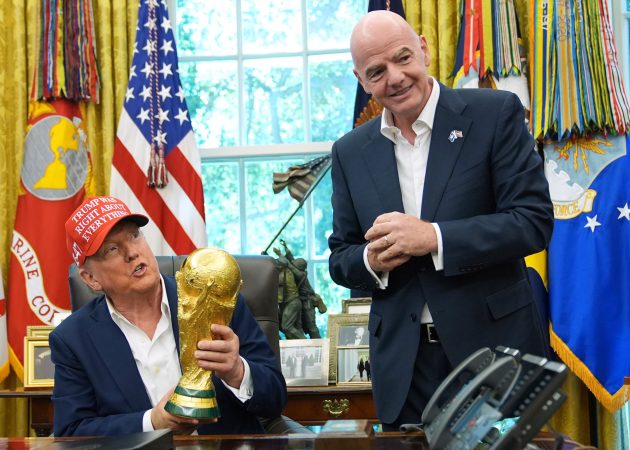
FIFA had briefed during the tournament that Infantino had letters of support from about 200 members, despite a furor over letting United States forward Folarin Balogun play against Belgium even though he received a red card in his previous game. Trump acknowledged asking Infantino to review Balogun’s mandatory one-game ban.
FIFA has set a Nov. 18 deadline for potential candidates to declare in a presidential vote of the 211 members scheduled next March in Rabat, Morocco.
FIFA blames the media
The Asian statement came hours after FIFA blamed the media and doubled down on pursuing the project which now seems to have a majority of the 211 in opposition.
“Our planned consultation process was disrupted by incorrect media reports,” FIFA said in a statement early Friday. “We will proceed with this consultation process to ensure that each (member) has the ability to express its vote based on facts.”
The next FIFA event that would be targeted by the threatened European boycott is within weeks — the Women’s Under-20 World Cup hosted by Poland from Sept. 5. The four British federations comprise FIFA’s only bidder to host the 2035 Women’s World Cup. That decision is due Nov. 23.
GENEVA — North America’s soccer body on Thursday rejected FIFA president Gianni Infantino’s plan to sell stakes in the World Cup to private equity investors, joining European nations in opposition.
The 41-member Confederation of North, Central American and Caribbean Association Football (Concacaf) held an urgent meeting Thursday after UEFA members agreed to boycott the World Cup and all other FIFA competitions to protest Infantino’s plan.
“During the meeting,” CONCACAF said in a statement, “the membership expressed deep concerns about the lack of due process surrounding the proposal, the artificially short deadline imposed, and the absence of any review or approval by the relevant FIFA governance bodies.
“In addition, the need for private equity investment to fund new and existing FIFA Forward programs following the most profitable FIFA World Cup in history was questioned.”
U.S. Soccer offered a grand total of a one-sentence statement: “U.S. Soccer stands with Concacaf and its members.” A spokesperson said that was all the federation will say for now.
UEFA made its declaration after an urgent online meeting of the confederation’s 55 members.
“UEFA and its national associations will not participate in FIFA competitions,” the European soccer body said in a statement. “Some things are simply too important to sell. The FIFA World Cup belongs to football. It always will. And so long as Europe has a voice, it will never be for sale.”
The strategy meeting was called to counter Infantino’s offer of $20 million to each of FIFA’s 211 global members that has to be accepted by mid-September.
Infantino’s secret proposal was revealed Tuesday to spin off its commercial operations in a new $20 billion subsidiary 20% owned by private investors. The core investor would be a New York investment firm created by Joshua Kushner, the brother of U.S. President Donald Trump’s son-in-law, Jared Kushner.
“This is not merely a profound failure of leadership, but an abdication of FIFA’s duty as the custodian of world football,” said UEFA, where Infantino was a longtime staffer and its CEO-like general secretary when he was first elected to lead FIFA in 2016.
“The moment external investors acquire ownership interests in FIFA competitions, football changes forever,” UEFA said. “Commercial return becomes a permanent obligation. Investor expectations become a daily pressure.”
Infantino has presented the private equity offer as a chance to “turbocharge” funding development of soccer across the world. A majority of the 211 FIFA members rely on its funding.
Officials from about 40 UEFA members spoke at the urgent meeting, with anger expressed that FIFA is not using some of its multibillion reserves to fund extra development programs.
The next scheduled FIFA tournament is in Europe — the Women’s Under-20 World Cup hosted by Poland starting Sept. 5. The following month, Europe stages its last qualifying playoffs for next summer’s women’s World Cup in Brazil.
Inquirer staff writer Jonathan Tannenwald contributed to this article.
Occasionally, I get to share good news in this space. Wu Shaoping — the Chinese dissident who fled to America but was detained by U.S. Immigration and Customs Enforcement after a Central Pennsylvania traffic stop — was freed from ICE’s Moshannon Valley Processing Center Friday night, not long after my column dropped and a couple ofmembers of Congress pressed for his release. His asylum case is still pending. I’ve learned there’s actually a lot more to this story — stay tuned.
The Trump regime is shifting billions from college into AI. That’s no accident.
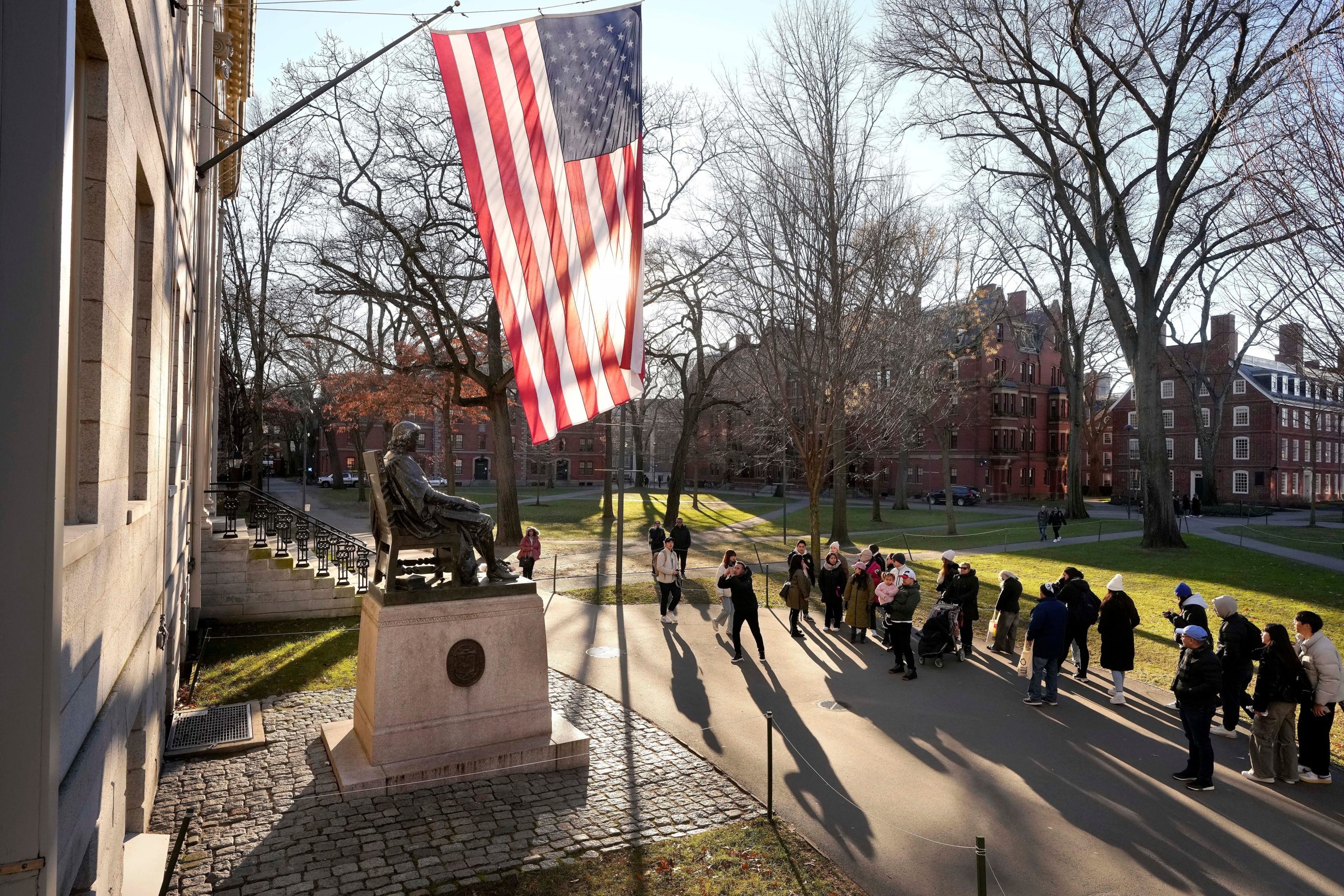
People take photos near a John Harvard statue on the Harvard University campus in 2024 in Cambridge, Mass.Steven Senne
The U.S. government has become pretty stingy when it comes to finding money for human beings — just ask any struggling single mother in Mississippi needing food stamps, or a physician in Africa waiting on vaccines that no longer arrive through American foreign aid programs.
But Washington always seems to have an open wallet for computers.
In fact, the very first one — ENIAC (Electronic Numerical Integrator and Computer), constructed right here in Philadelphia on the University of Pennsylvania campus as World War II came to an end — was funded by the U.S. Army Ordnance Corps at a cost of about $7 million in today’s dollars. Over the years, billions of dollars in federal funding would fuel key moments in the Computer Age, including the creation of the internet, which was also a Pentagon project.
Still, there was something chilling about last week’s report from the White House Office of Science and Technology Policy that called for a surge in research aid in one area: computers and robots using artificial intelligence, or AI. The nuts-and-bolts of the paper — “Science: A New Golden Age” — highlighted a new, more-than-$5 billion commitment for an AI-in-science program called the Genesis Mission.
But the White House paper also called for a radical shift in the way the federal government pays for science, with a massive move of $200 billion away from funding research and basic science at top universities — the system that has thrived since the time of ENIAC — and toward individuals and more directly applied AI projects, including those at private tech companies.
Goodbye, John Harvard. Hello, Claude.
“This plan raises profound concerns about the future of publicly funded science,” the top union leaders for educators — Todd Wolfson of the American Association of University Professors (AAUP) and Randi Weingarten of the American Federation of Teachers (AFT) — said in a joint statement last week. “It does nothing to make anyone healthier or safer, and it isn’t what Americans want.”
Wolfson, Weingarten, and other critics of the new science scheme from the Trump regime say it unravels long-standing protections for academic freedom and transparency on campuses in favor of a process that’s ripe for political interference. “This is a defining moment for American science,” the educators wrote.
Indeed, while the federal funding gains for AI are still mostly theoretical, the cuts for research projects on college campuses across the United States have been underway since Donald Trump took office in January 2025, and the impact has already been dramatic.
The playing field is complex, but a recent deep analysis by the Brennan Center for Justice found that the Trump administration successfully froze about $3 billion in previously approved grants for scientific research, is imposing a scheme to slash an additional $4 billion, and issued a budget proposal calling for a whopping $44 billion additional reduction.
The analysis noted that “these midstream freezes and cancelations have ripple effects far beyond the nominal dollars involved, prompting layoffs, interrupting careers, and destabilizing the budgets of research universities.”
But now it feels like the White House is stating the quiet part out loud: The bigger goal is simply to build smarter computers, even if that means humans get dumber. Intelligent robots still don’t vote in elections, after all, but poorly educated people do.
Ironically, the regime’s rationale for spending our tax dollars on making AI more powerful regurgitates a Cold War mentality that, on the surface, sounds like the reasons behind decades of massive college research funding and programs like the space race of the 1960s or the nuclear arms buildup: to stay one step ahead of the communists — this time in China.
The difference between then and now is that after World War II, Washington made a conscious effort to fund basic science and free inquiry as a way to distinguish the United States from the rigid planned economy of our then-biggest adversary, the Soviet Union. Now, the White House seeks to copy Beijing’s centralized planning. Can we truly promote science without lifting up the actual scientists?
Trump’s “Golden Future of Science” feels more like an extremely narrow wind tunnel. The irony is that many of today’s politicians in both parties see higher education as mainly workforce development, even as corporate recruiters say what they really want are more broadly educated critical thinkers. In other words, the AI era actually screams out for a boost for the humanities like literature or philosophy — the types of majors that are getting crushed in the Trump era.
An epic battle is looming between those obsessed with a new nuclear arms race around AI — especially the Silicon Valley billionaires who stand to gain and who, not coincidentally, have heavily funded the second coming of Trump — and a public that doesn’t want our communities ruined by noisy, energy-guzzling data centers that aim to take away our jobs while making reading a lost art.
A government scheme to build better computers while rendering humans obsolete used to be the stuff of dystopian science fiction. Maybe we can keep it that way before it’s too late.
Yo, do this!
About once a year or so, I write, “Yo, actually maybe don’t do this.” Last weekend, I ventured out of my underground lair to join every other American in devoting three hours to Christopher Nolan’s The Odyssey. To say I was underwhelmed would be, well, an understatement. The movie was a funeral for the now totally lost art of movie dialogue, amid a plot that meandered from gouge-your-one-eye-out boring to bursts of incomprehensible violence. It was a metaphor — Troy was My Lai, apparently — that got terribly lost at sea. But I do feel there’s something happening here. First the World Cup, now this mediocre whale of a motion picture: Americans are desperate to bea part of something, anything, that is bigger than our politics.
Regular readers know I’m a huge fan of the CNN modern history documentaries they now call the Decades Series, but the original format of politics, TV, and music did have gaping holes. A few years ago, they backfilled with a series on The Movies of our post-World War II world. Now, finally, Decades in Sports arrives on CNN with back-to-back episodes (presumably the 1960s and ‘70s) on Sunday night at 9 p.m. I can’t wait. Spoiler alert: Havlicek stole the ball.
Another thing you may have noticed is that Rep. Ro Khanna, who meandered west after Council Rock High School in Bucks County and became the congressman from Silicon Valley, is something of a friend of the newsletter. He’s back in our area frequently, and he’ll be at Philadelphia’s Parkway Central Library on Tuesday at 6 p.m. to deliver a special speech: “America at a Crossroads: A Vision for the Future on our 250th Anniversary.” He’ll talk about his background growing up here as the son of immigrants and the need for economic freedom that ends gross corruption and inequality — go check it out.
Ask me anything
Question: Who should be DNC [Democratic National Committee] chair? And does it matter? — Martha (@marthagrant.bsky.social) via Bluesky
Answer: It does matter. Despite everything else that’s happening in the world right now, one of the more revealing stories of the last week was the New York Times article about Democrats in disarray, focusing on embattled DNC chair Ken Martin, who before the 2024 election was the state leader in Minnesota. Under Martin, the party is sliding deeper in debt, and there are complaints about an abrasive personal style, the botched “autopsy” of the 2024 election, and the Democrats’ muddled message. A change should be made as soon as possible. Hopefully, party leaders could rectify the mistake of not picking Wisconsin’s more skilled ex-party chief, Ben Wikler. The problem is that, under the constant assault of GOP fascism, Dems need to fix this plane while it is flying at 37,000 feet.
What you’re saying about …
There was an excellent response to last week’s question about what a future Democratic president should do on Day One to erase the stench from two Donald Trump presidencies. I wish I could reprint all the suggestions, but recurring themes included a rapid purge of any Trump holdovers, abolishing ICE and related immigration raiders, and a speedy effort to prosecute the many wrongdoers. The two most frequent suggestions included major reform of the judiciary, from fixing the mangled immigration courts to ethics reform, and definitely an expansion of the U.S. Supreme Court. Mark Cohen suggested two more federal appeals courts and then “assign a Supreme Court justice to each one, bringing a total of 13 justices to the Court for fixed term of 18 years.” Another theme was erasing Trump’s various renovations to the District of Columbia. The ex-congressman Joe Hoeffel wrote, “Strip all the cheesy gold out of the Oval Office.”
📮 This week’s question: Speaking of Democrats, some top party officials like House Minority Leader Hakeem Jeffries seem to think the November election is primarily about “affordability.” That seems to miss the bigger moment, but I’m curious: What pithy message would you like to see Dems run on this fall? Please email me your answer and put the exact phrase “Democratic message” in the subject line.
Backstory on the Gen Z revolution rocking India
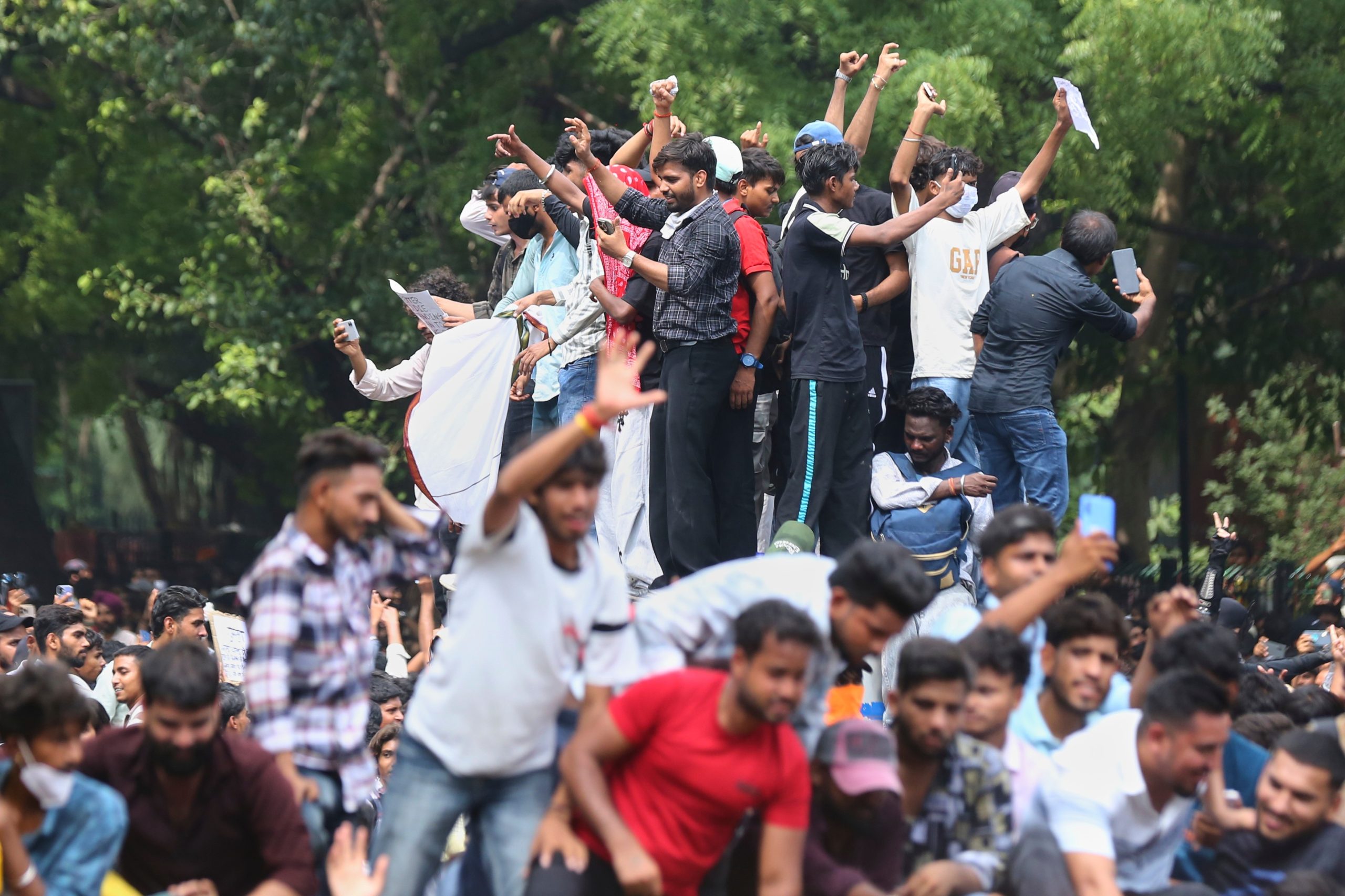
Protesters participate in a demonstration demanding educational reforms as part of the Cockroach Janta Party’s ongoing protest movement in New Delhi on July 25.Vipin
Last October, I wrote a column, with great interest and enthusiasm, about a growing revolution of Gen Z 20-somethings that was taking place across the global south — from Madagascar to Peru to Nepal, and elsewhere — who were fed up with the political corruption of grown-ups and threatening to topple governments. I wondered if this very online youth activism might spread to the United States or other more developed nations, but over the coming months, the momentum for these protesters and their Japanese anime pirate flags seemed to fade. The so-called Gen Z revolution looked like a historical footnote.
But it turns out that the embers of youth unrest were still smoldering, and this summer they have reignited in a big way in the world’s largest — if deeply flawed — democracy: India. And as is so often thecase, the spark was something nobody saw coming: a nationwide exam for entrance to medical school taken by roughly two million students, which the government moved to scrap after allegations that some of the questions had leaked. Some young people who’d studied for months for the exam took tothe streets in protest, and — as so often happens — a repressive police response only caused these demonstrations to get bigger. So did a comment from India’s chief justice, who described young, unemployed Indians as “cockroaches.”
That gave the protests a name when Abhijeet Dipke, a 30-year-old graduate of Boston University, posted on the social media platform X that he was starting the “Cockroach Janta Party” — a wordplay on the Indian authoritarian-minded leader Narendra Modi’s Bharatiya Janata Party. Incredibly, this “CJP” has seen its protests — calling successfully for the resignation of the education secretary and for other deeper reforms, using tactics such as sit-ins and hunger strikes — spread to some 30 cities while clogging the streets of the capital, New Delhi. The movement has become arguably the biggest threat to Modi’s strongman rule since the leader’s ascension in 2014.
All of which raises the same question I posed last fall: Could it happen here? In one sense, it already has. On Friday, about 500 Indian students and other members of the U.S.-based diaspora gathered under a statue of Mahatma Gandhi in Manhattan’s Union Square to express support for the “cockroaches” of their native country. Meanwhile, the kind of pressures that caused India’s youth to erupt — government meddling in higher education, diminished job prospects in a time of rising AI, to name two — are also found in the United States. Young people almost never protest over the same stuff that riles up their parents, as shown by the gray hairs that have populated the No Kings rallies against Donald Trump. When lightning strikes, it will probably be something as unexpected as a college entry exam. But thunderstorms are definitely in the forecast.
What I wrote on this date in 2019
A culture of death permeates the Donald Trump regime, from the doomed fishing boats of the Caribbean to an Iranian girls’ school to the scores now dying in immigration detention cells. But this is not exactly new. The seeds were planted in the first Trump presidency, when his attorney general, William Barr, led a push to revive the death penalty for federal prisoners in a big way. On July 28, 2019, I asked: “What took the American Caligula so long to bring back the spectacle of executions to electrify the masses (but not the prisoners … they’d be lethally injected) and juice his 2020 reelection campaign? Indeed, the five executions are scheduled around the Christmas holiday, presumably to remind us of its pagan roots.”
In 2026, I’ve been very focused on the individuals whose world has been turned upside down — or, in some cases, ended prematurely — by the horrors of life in these authoritarian United States. Last week, I took a deep dive into the story of Wu Shaoping, a Chinese dissident who fled his likely detainment by Xi Jinping’s regime and made it to Pennsylvania with his wife and teen daughter, only to get arrested at a traffic stop, turned over to U.S. Immigration and Customs Enforcement, and detained. The outcry may have had something to do with ICE’s release of Wu shortly after the column ran. Over the weekend, I wrote about the police killing of Corey Ruiz in Madison, Wisc. — noting that the shootings of civilians by cops have only increased since the massive George Floyd protest marches of 2020. I urged an end to the new numbness about police violence in America.
You didn’t really think I could make it all the way through the newsletter without mentioning the face that launched 1,000 hot takes: basketball king LeBron James. He stunned not just the sports world but America’s founding city by announcing Friday that he is taking his aging but still considerable talents to South Philadelphia, hoping to grab one last title with a completely revamped 76ers. Has there been any other story since then? The Inquirer has told you about the first time James played at the Palestra, his new uniform (No. 23), the speculation over how he will (or won’t) gel with the rest of the Sixers, the speculation over where he might live, hisrelationship with Tyrese Maxey and Joel Embiid, and on and on and on. Just wait until he actually takes the court this fall! Actually, don’t wait. Subscribe to The Inquirer today, slam dunk the paywall, and read every story from now until the hoped-for parade down Broad Street.
By submitting your written, visual, and/or audio contributions, you agree to The Inquirer’s Terms of Use, including the grant of rights in Section 10.
GENEVA — One week after the World Cup final, FIFA President Gianni Infantino attacked perceived critics for “spreading hate and false rumors” about the tournament.
Infantino praised FIFA for “delivering the best show in the world” and spoke of the World Cup bringing “joy and togetherness” in a 900-word statement published across a 15-page post on his Instagram account and on FIFA’s website late Sunday.
“Sorry that you were so consumed by hate and criticism that you missed it all,” Infantino wrote, addressing his comments to “those behind their pens and papers, behind their screens spreading hate and false rumors.”
FIFA and Infantino faced criticism during the World Cup for Iran team officials, a Somali referee, and fans being denied entry to the United States; alleged political influence by U.S. President Donald Trump in letting Folarin Balogun avoid a ban for a red card; unprecedented high ticket prices and commercialized breaks in play midway through each half of all 104 games.
“Every city was packed with fans from all around the globe,” Infantino wrote. “While they celebrated, you were busy planting seeds of hate.
“While you hide, we are exploring the streets of Canada, Mexico, and the United States, talking with fans, engaging with people, and ensuring everyone’s safety.”
Infantino has what is an increasingly testy relationship with the media during the 11th year of his presidency. His eve-of-tournament news conference in Mexico City was his first with a full gathering of international media since March 2023.
The previous such news conference in Rwanda, after his reelection by acclaim from FIFA member federations, saw Infantino ask his audience: “Why are you so mean?”
In Mexico City last month, Infantino suggested critics should “chill, relax.”
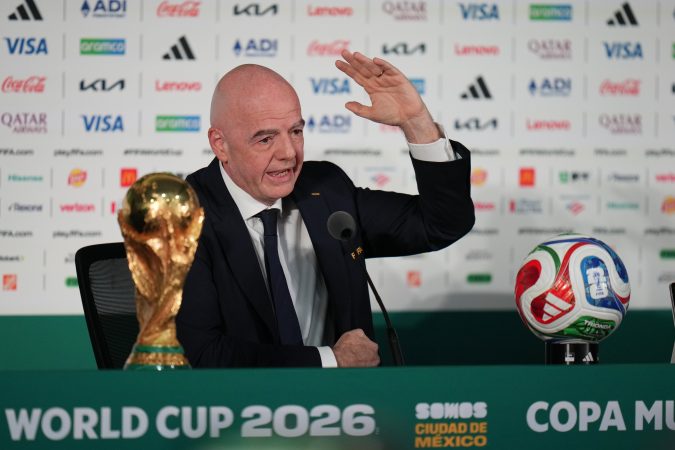
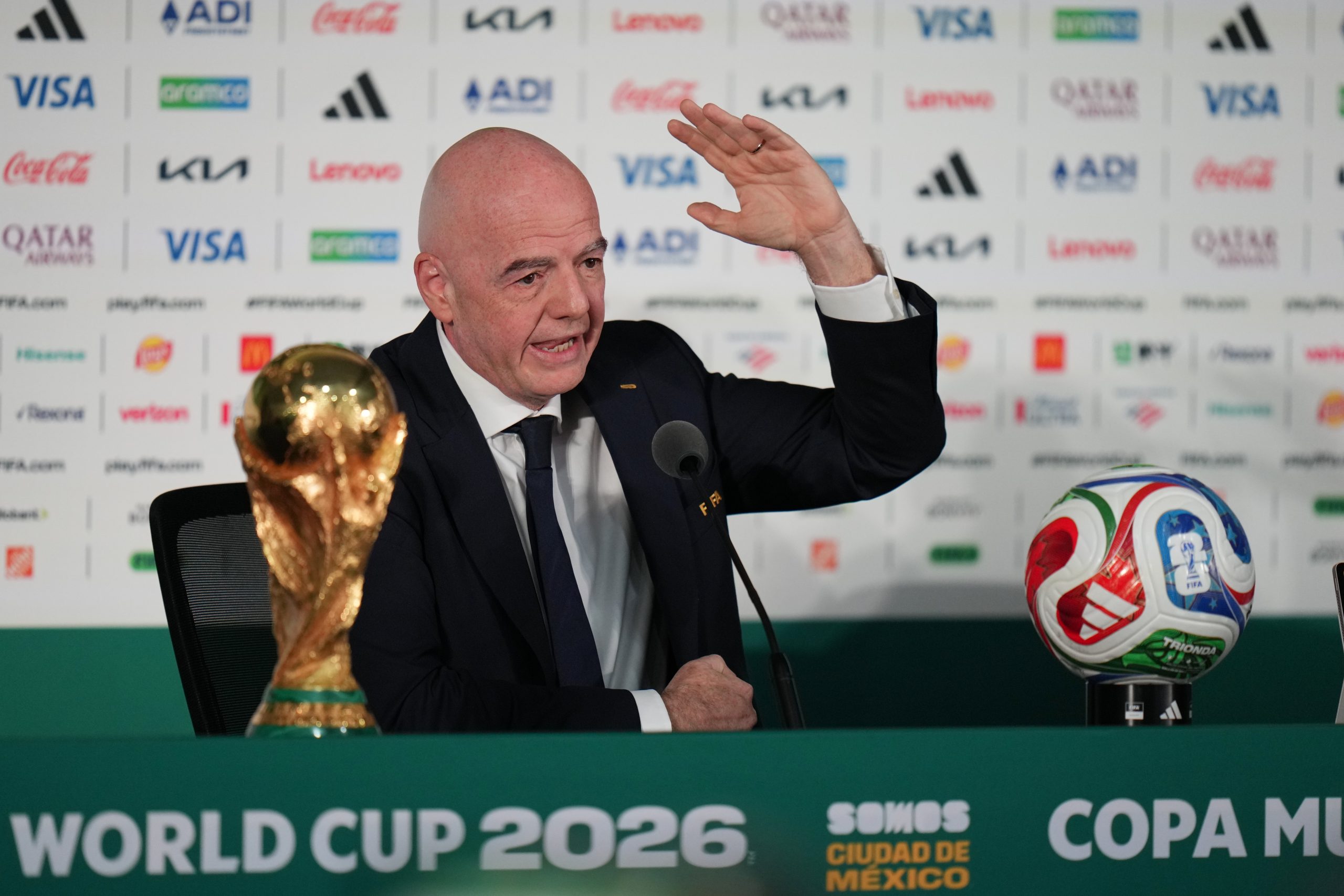
FIFA President Gianni Infantino speaks during a news conference at the stadium in Mexico City on June 10.Eduardo Verdugo
FIFA uniting the U.S. and Iran
Iran’s ability to play at least three games in the U.S. was a key pretournament issue, and the squad made a late switch to a training camp in Tijuana, Mexico instead of Tucson, Ariz.
“Iran entered the United States without incident or conflict,” Infantino noted in his statement. “While you spread hatred, we worked tirelessly to unite two countries at war.”
Fans denied visas to enter the U.S. included Michel Nkuka Mboladinga, the celebrated statue supporter of Congo, which was dealing with an Ebola virus outbreak. He attended one game in Mexico.
“You mentioned the few people denied visas and overlooked the millions who were approved, from all parts of the world,” Infantino wrote. “Countries facing serious health issues or other challenges were granted visas.”
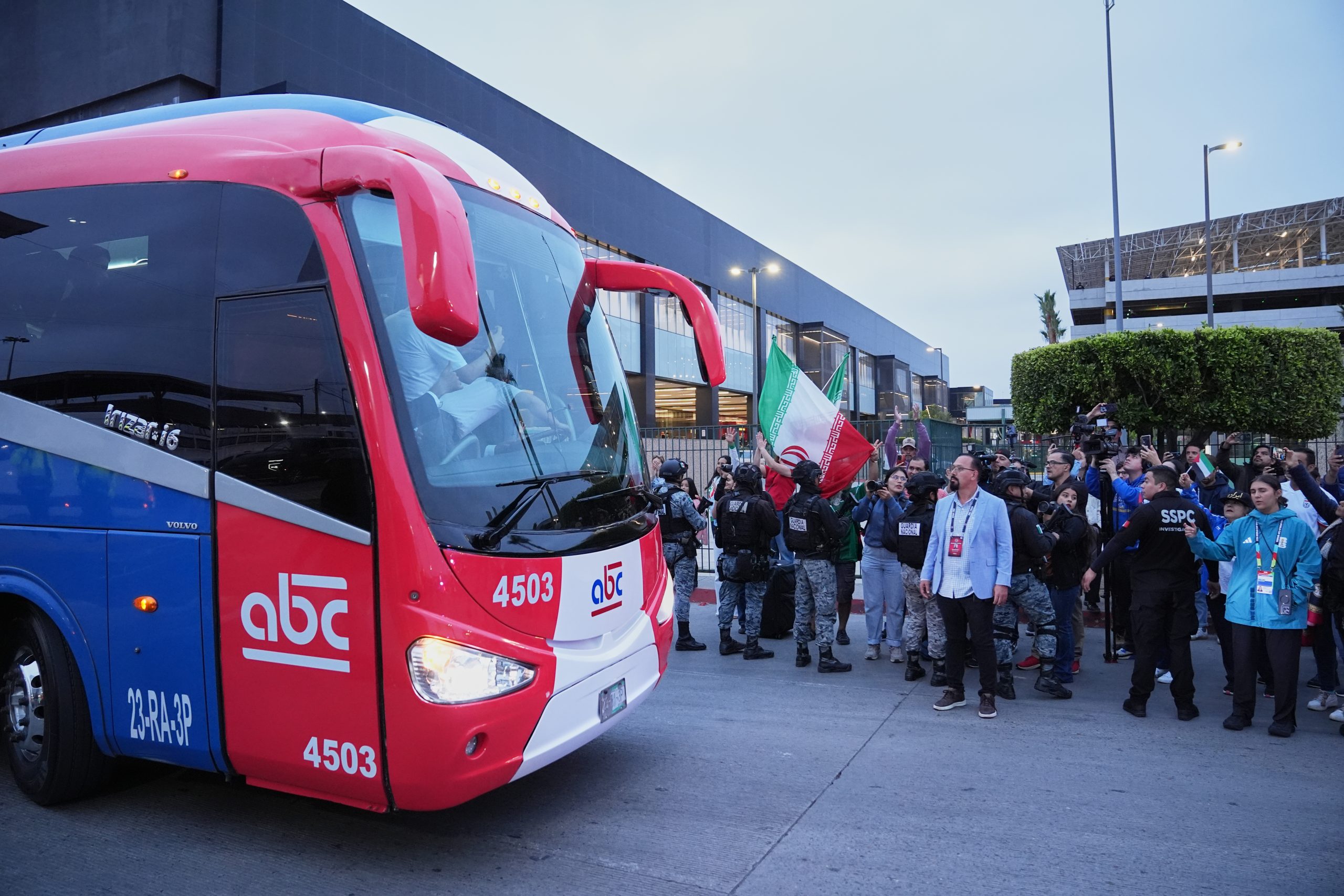
Iran’s team had to move its World Cup training camp from Arizona to Mexico at the last minute.Gregory Bull
Infantino defends Balogun decision
On fallout from the red card for U.S. forward Balogun, Infantino claimed “subsequent decisions not to ban players in certain situations are routine.”
FIFA did not overturn Balogun’s red card, which does occur in domestic club competitions, but instead took the more unusual step of deferring the one-game ban for a probationary period. FIFA has yet to publish the written verdict of its disciplinary judge.
“To those spending their time and energy hating us, please take a moment to reflect, meditate, pray, or watch a football match and truly observe the faces, the eyes, the emotions,” Infantino wrote.
When Danley Jean Jacques stepped back on to the field in a Union game on Wednesday, it had been just under a month since his first trip to a World Cup with Haiti ended.
But for as much as happened after that — 52 of the tournament’s 104 games, plus Major League Soccer’s return to action — the afterglow hadn’t fully faded yet. Nor does it need to for the first active Union player to play in a World Cup.
Jean Jacques will have that title forever. And at least until 2030, he’ll be the only active Union player to have played in a game on the world’s game’s biggest stage.
“I take great pleasure from representing my country in a World Cup,” he said. “We know how much glory there is in a World Cup. It’s great to have played in one.”
Jean Jacques also gets lifetime membership in one of the sports world’s most famous clubs: people who have played in a World Cup. Whether just one game, his three, or Lionel Messi’s record 34, all can say they’ve had the honor.
The memories will last a long time, not just for him but the nation’s fans. After Haiti was unable to play a home World Cup qualifier because of domestic unrest, the diaspora showed up to Philadelphia, Boston, and Atlanta in big numbers: a sea of blue that came through loud and clear to fans worldwide.
“It’s been a long time since we played in front of our home crowd,” Jean Jacques said of a drought that has endured for over five years. “During the World Cup, we had the good luck to play in front of our fans. It feels great to see Haitians cheering on their team, because I know they are thirsty for it. They need that, to see the team play in front of them. It really feels good.”
They also got to see Les Grenadiers put in a fighting effort. Though the team lost all three games, there were two goals to savor in the finale against Morocco, including a contender for goal of the tournament from Wilson Isidor.
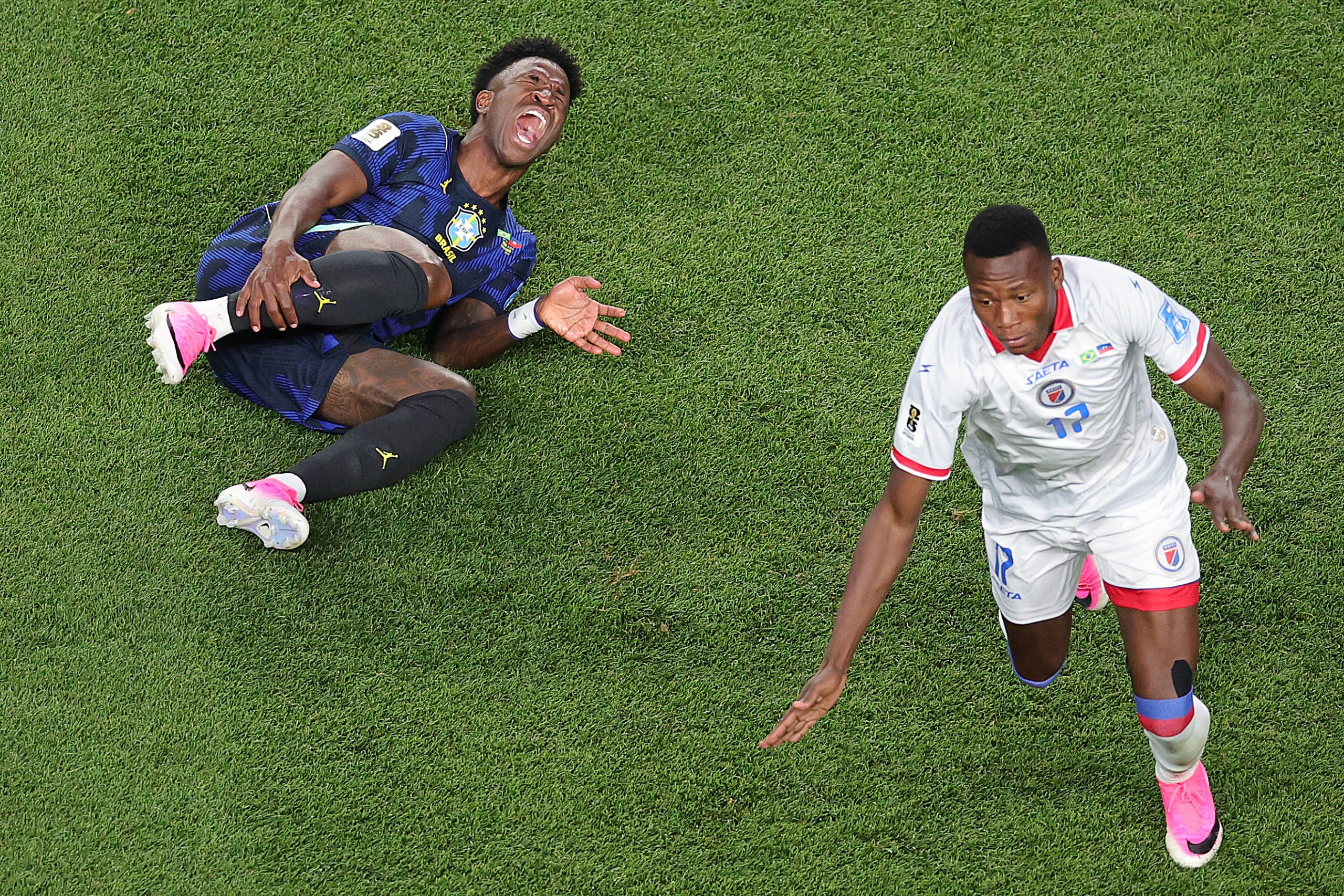
And there was the chance to play against Brazil, not just a soccer superpower but a team that has a proud soccer history with Haiti specifically — with the cherry on top for Jean Jacques of it being in Philadelphia. Though Haiti lost the game 3-0, he got to tussle with stars including Vinícius Júnior, at one point leaving the Real Madrid winger down on the deck after a challenge.
“I say thanks to the fans who came out to support me and my country,” Jean Jacques said. “It was a pleasure to play in a stadium that was full like that, and the fans were fully behind us. They give their all, and we give our all for them, too.”
He lamented that “unfortunately, the result of the game didn’t go our way, but on the field, we made sure to give our absolute best, and I want to thank the fans for spurring us on.”
He also offered a hope that “the best is yet to come,” for Haiti and himself. That might be a tough ask in a Union context this season, with the team facing a big deficit in the standings. But MLS is eternally forgiving, with nine teams from each conference making the playoffs.
Danley Jean Jacques (right) left superst Vinícius Júnior on the ground after a collision during the Brazil-Haiti World Cup game in Philadelphia.David Maialetti / Staff Photographer
“My teammates gave me a warm welcome back,” Jean Jacques said. “Honestly, it feels good to be back here and to start back up with the club again. … My goal for the rest of the season is to stay focused, give the maximum for the team, help the team win, and try to climb the standings too.”
Saturday’s 1-0 win over the Seattle Sounders marked just the halfway point of the regular season in terms of games played. It also marked a second straight win for the Union for the first time this year, raising their record to 3-10-4 (13 points).
Jean Jacques was quietly effective, as he often is. In 80 minutes, he registered two tackles, two clearances, three defensive recoveries, four duels won from eight contested, and 28-of-32 passing including five passes into the attacking third.
Three days earlier, he was more active in the 3-1 win over Red Bull New York: 12 defensive recoveries, five interceptions, two tackles, four duels won from six contested, and 25-of-32 passing including nine passes into the final third.
“When he’s at his best, to me he’s one of the best midfielders in the league,” interim manager Ryan Richter said Saturday night. “We’re getting, from what I see in the first two games [of his tenure], a really good version of him.”
He asked Jean Jacques to “keep working the way you are, keep being a positive influence with your teammates. If this team’s going to be good, Danley has to be one of the best players, and he has been in these first two games.”
As a little extra psychological boost, the Union now aren’t the worst team in MLS anymore. Atlanta United, coincidentally the team that will come to Chester on Saturday (7:30 p.m.), took over that mantle with a 4-1 blowout loss at New England.
Jean Jacques promised that the team is “going to do everything we can to make the playoffs,” and said spirits are high despite the scale of the task.
“It’s good for the team, good for the mindset and morale,” he said. “It had been a long time since we won, but now we’ve got that winning feeling back. So we need to keep that going for the rest of the season.”
Three major trends have dominated recent cultural discourse: charms, food and fashion collaborations, and mini totes. The tote from Wawa and Lands’ End harnesses all three into one sandwich-sized bag. And I’m obsessed with it.
Labubu bag charms took the world by storm in 2025, inspiring almost everyone with a handbag to personalize theirs with dangling dolls. The post-Labubu era isn’t so much a reaction to the somewhat cumbersome creatures dangling from key chains, but an evolution into a fixation with different charms, like a bracelet proclaiming one’s devotion to the World Cup, the cities in which games were played, and one’s willingness to wait for many hours in line to procure one from a Bank of America sponsor tent.
Lands’ End was paying attention to all three trends, leading to the Wawa and Lands’ End limited-edition tote. It debuted Wednesday on both the Lands’ End website, where it immediately sold out, and in select Wawa stores in New Jersey (which allegedly still have them in stock). This is an aggression toward the beautiful city of Philadelphia, but I digress.
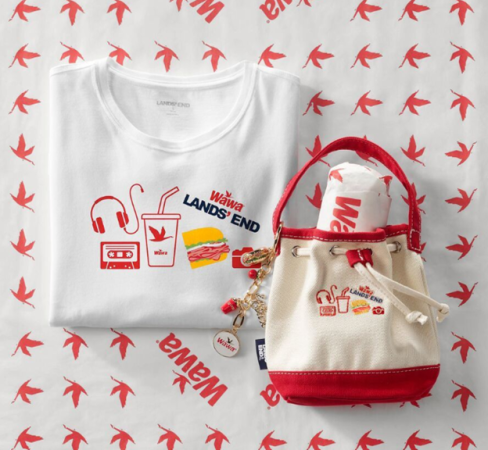
It’s called the Shorti® Tote. It costs $39.95 for the tote itself and a matching bag charm that features an enamel hoagie, tomato, Wawa coffee cup, and “East Coast” charm. The collaboration also includes a Wawa branded T-shirt from Lands’ End ($44.95) that comes wrapped up like a hoagie (of course). Wawa provided me with a sample bag for this review.
The collaboration celebrates the Jersey Shore and encourages you to take a Wawa hoagie to the beach, where it will be duly protected from the elements by the thick, high-quality cotton canvas of a dedicated bucket-shaped tote bag. As someone who does not ever go to the Jersey Shore, I found that the tote has numerous other merits: It’s perfectly sized for a small water bottle, my wallet, keys, flashlight (with which I snap food photos because I am a food writer), and other bits of detritus.
Unlike the Trader Joe’s tote, it has a drawstring opening that can keep all your belongings firmly inside. It’s entirely made of canvas (worthwhile to note because canvas totes with plastic handles are the absolute worst), with metal grommets to secure the drawstring. The embroidered graphic collage of cassette tape, wired headphones, a Shorti, analog camera, cup with straw, feels pretty ‘90s-coded (also so trendy right now), and the Wawa and Lands’ End logos are small and demure. True to its name, it also fits two hoagies very nicely.
It’s comfortable to hold on my forearm, and I have found that it’s also the perfect BYOB bag as it holds all the contents of my purse along with a bottle of wine. The only drawback I see is that it does not fit my Chihuahua, Coconut, whom I also generally like to throw into a tote bag.
The Shorti® Tote next to Coconut the Chihuahua, who does not fit inside the mini tote.Kiki Aranita / Staff /
But perhaps the greatest part of possessing this tote is the envy I have inspired.
“When you’re done reviewing it and need to give it to someone, I am available,” said my colleague Beatrice Forman as I slowly backed away from her.
Get your own.
Wawas that received totes are in Sea Isle City, Stone Harbor, Avalon, Somers Point, Cape May, Ocean View, Brigantine, Ship Bottom, Wildwood, North Wildwood, Ventnor, Marmora, Dorchester, Ocean City, Manasquan, Rio Grande, Normandy Beach, Margate, Villas, Long Beach Township, Barnegat, and Neptune.
Editor’s note: This article has been updated to correct the spelling of Lands’ End.