The eve of the World Cup was also the night before some Philadelphia bars could stay open until 4 a.m., according to a bill signed by Gov. Josh Shapiro in March.
But thanks to a sneaky provision in the bill, most establishments interested in a later last call weren’t yet eligible to do so — and in some instances won’t be until after July 4.
As of Wednesday evening, just 17 establishments were approved by the Pennsylvania Liquor Control Board to stay open until 4 a.m. for the duration of the World Cup, according to a list on the PLCB’s website. By Thursday morning the PLCB approved six more establishments, according to their website.
They represent roughly a third of the 65 Philly businesses that applied to the PLCB for approval, with the majority on the PLCB’s list marked as “in review” as of Thursday. The PLCB cancelled six applications due to ineligibility.
The PLCB started approving applications for extended hours on Wednesday, spokesperson Shawn Kelly told The Inquirer over email, and they will continue on a rolling basis. The last day applications will be accepted is June 19, Kelly said.
Establishments in the first wave of approvals include the strip clubs Sin City, Club Risque, and Cheerleaders; Rittenhouse Square sports bar Lucy; nightclubs Woody’s and Concourse Dance Bar; South Philly’s Live Casino! and bowling alley South Bowl, among others.
(function(){function e(){window.addEventListener(`message`,function(e){if(e.data[`datawrapper-height`]!==void 0){var t=document.querySelectorAll(`iframe`);for(var n in e.data[`datawrapper-height`])for(var r=0,i;i=t[r];r++)if(i.contentWindow===e.source){var a=e.data[`datawrapper-height`][n]+`px`;i.style.height=a}}})}e()})();
The permit process has caused confusion for some local bar owners, who said the delay in approvals have placed their World Cup plans on hold.
Rittenhouse Square jazz and billiards bar Cellar Dog applied for a permit to stay open until 4 a.m. on May 11, according to the PLCB’s records, and did not receive a permit until Thursday morning.
Owner Alfonzo Luna feared the last-minute notice would threw a wrench in the bar’s World Cup festivities. “We submitted everything right and on time, and we were just waiting,” he said on Wednesday night, prior to receiving approval. “I’m sure it’s a lot on [the PLCB’s] end, but for us it’s just frustrating to wait around because it puts a hold on any sort of marketing or operation changes that we that we need to make.”
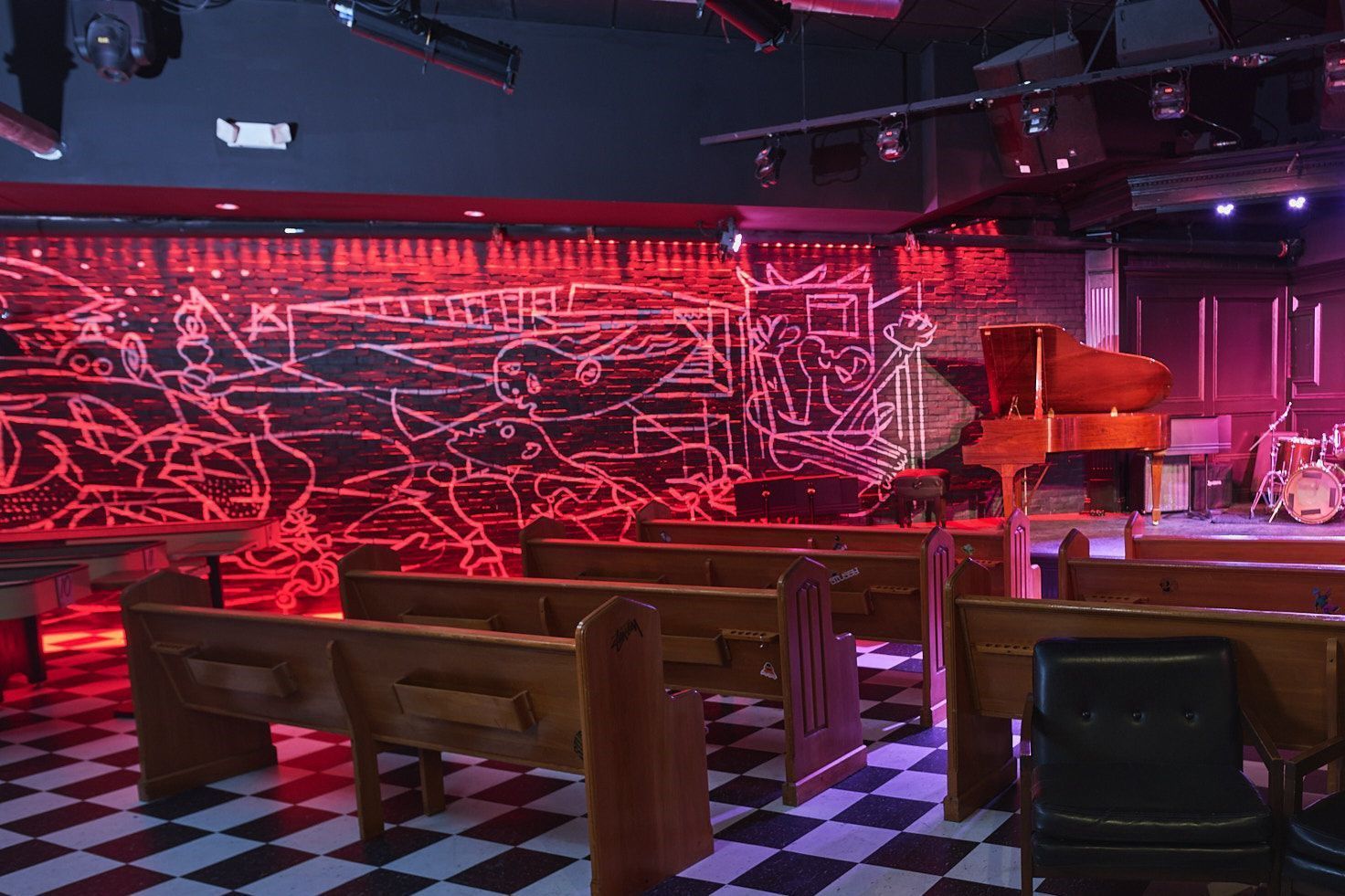
The performance space at Cellar Dog Philly, which has yet to be approved for a permit to stay open until 4 a.m. during the 2026 World Cup.Spencer Starnes
How is this process supposed to work?
The permits are part of legislation introduced by Pennsylvania state senators Sen. Joe Picozzi and Sen. Vincent Hughes and signed into law by Gov. Josh Shapiro in March that would enable establishments in Philadelphia to stay open until 4 a.m. from June 11 to July 19, which covers all World Cup matches, Semiquincentennial celebrations, and the MLB All-Star game at Citizen’s Bank Park.
The thinking was that establishments should be able to stay open later to serve an influx of tourists looking to catch late night World Cup matches. In practice, however, many bar owners told The Inquirer that juice of late night hours isn’t worth the squeeze, between higher insurance premiums, an uncertain return on investment, and navigating bureaucracy.
Late night permits are available to all hotels, breweries, distilleries with liquor licenses in Philadelphia City limits. To initiate the application process, establishments must first have paid $250 to the City of Philadelphia’s Dept. of Commerce and completed the Liberty Bell Safe Certification Program, a one-day safety and compliance training.
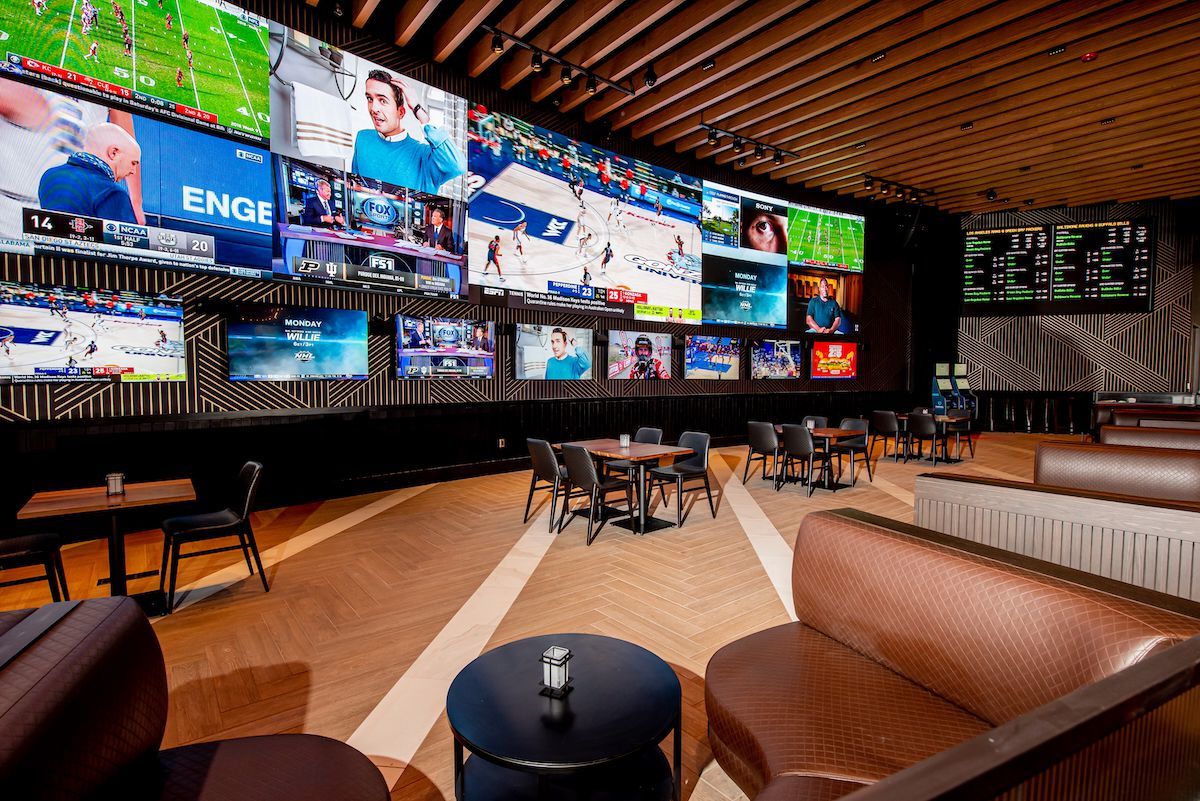
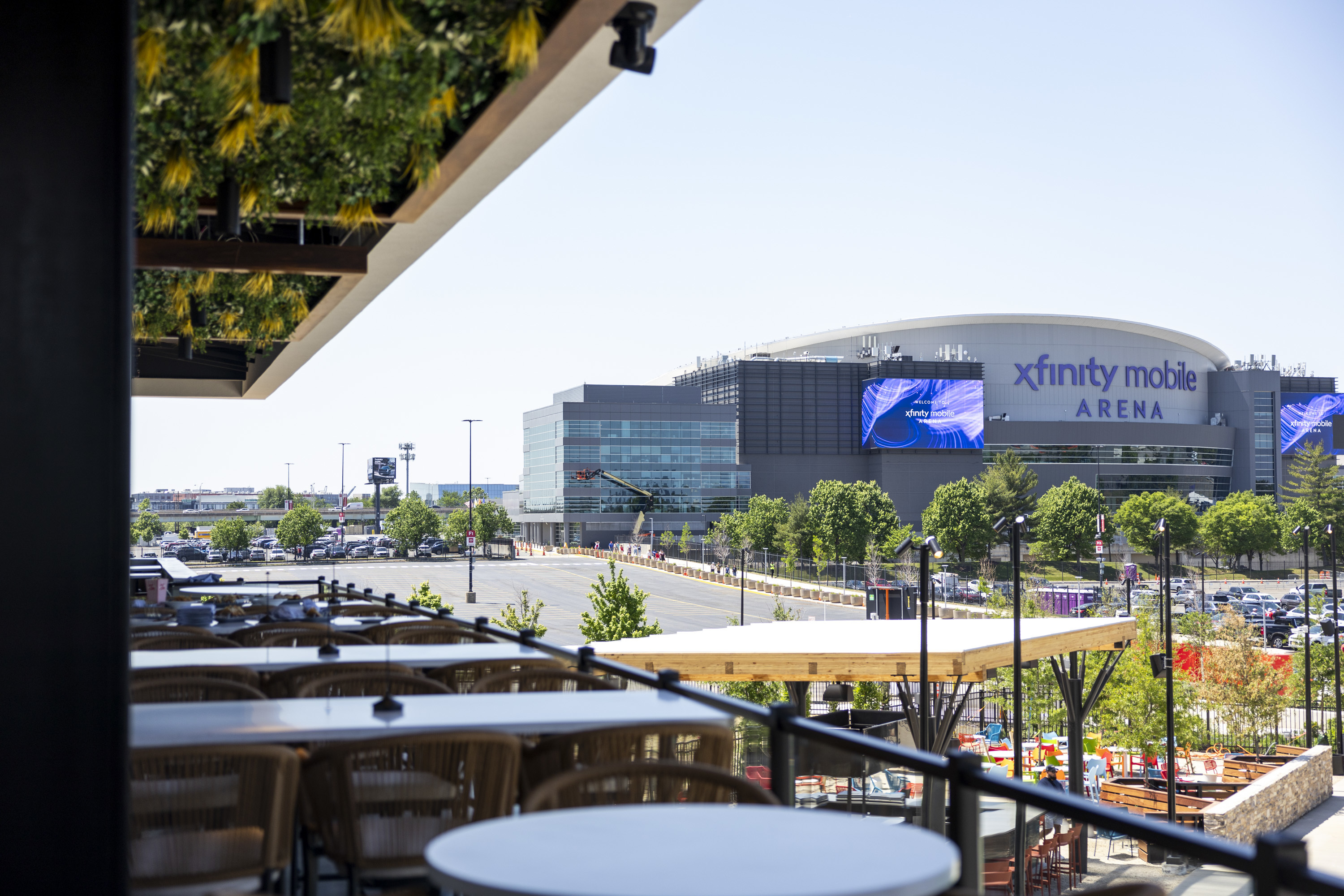
A view of the Sports & Social sports bar at Live! Casino and Hotel in South Philadelphia. The casino has been approved for a permit to extend bar hours until 4 a.m. during the 2026 World Cup.(Courtesy of Live! Philadelphia)
Then, establishments must apply for a $500 permit from the PLCB, which would enable them to stay open until 4 a.m. through July 19. To be approved, applicants can’t have any pending licensing, inspection, or fiscal objections associated with their business. The City of Philadelphia can also protest applications filed with the PLCB, Kelly said, and can request a permit be revoked at any time.
Also baked into the process: A “30 day hold mandated by law,” Kelly said, that gives the PLCB “no discretion to approve or issue” permits less than 30 days after an application is received.
In other words, if a bar applied on June 4 to be open until 4 a.m., the earliest they could be approved would be July 4, giving them a little over two weeks to take advantage of extended hours. The PLCB decided to hold off on issuing permits earlier to prevent establishments from using them illegally, said Kelly
To be open late for the World Cup’s entirety, Kelly said, a business would’ve had to apply by May 11. “The PLCB conducts a full and complete investigation of every application it receives. There is no set timetable for that review,” said Kelly. “If an applicant submitted all required documentation — and filed in time — they will receive the Philadelphia 250 permit for the full period.”
Popular sports bar Cavanaugh’s Rittenhouse applied for a permit on May 21, according to PLCB records, meaning the earliest they could stay open late is June 21. Director of Operations Mike Anderson said the delay, while frustrating, isn’t a big deal.
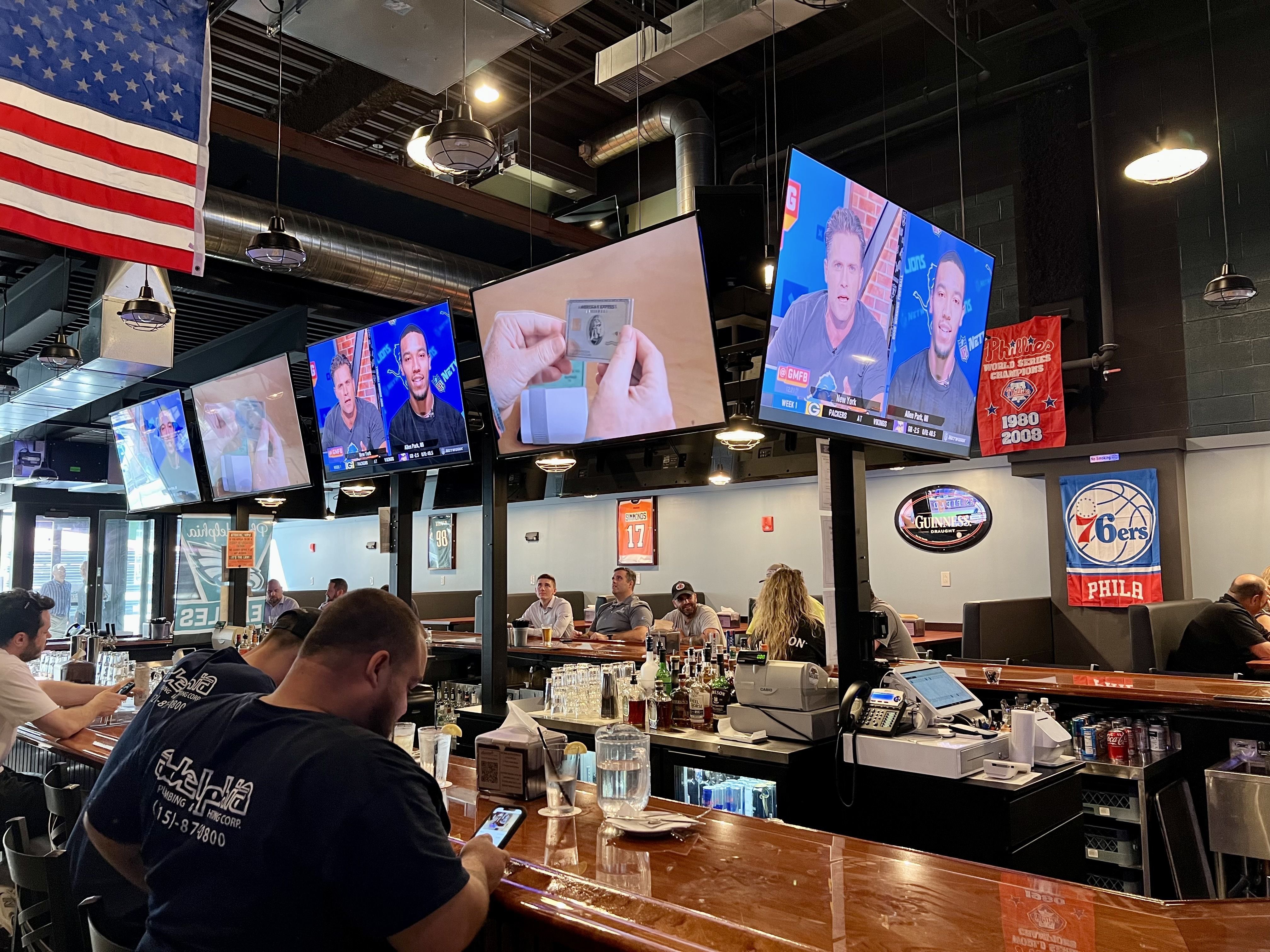
The bar at Cavanaugh’s Rittenhouse, which has yet to have their permit approved for extended hours during the 2026 World Cup.MICHAEL KLEIN / Staff
The bar had only planned to exercise the 4 a.m. privileges on a case-by-case basis, said Anderson, when vibes at the bar are high. “I didn’t want to be left out if everyone else was doing it,” he said. “It could be the thing you tell stories about.”
The permit process was “easy enough,” said Anderson, whose sole gripe is “the lack of guidance.”
“I am guessing that we will eventually be approved or denied,” Anderson went on. “To be honest, it doesn’t really matter if we get approved. If we get denied, I wish I could reclaim my costs.”
Some bar owners, however, are just grateful everything got done in time . Four of FCM Hospitality’s properties — Concourse, Craft Hall, Dolphin Tavern, and the sports bar Lucy’s — are among the first wave of businesses approved for extended hour. Owner Avram Hornik said the process “couldn’t have gone better than it had.”
The PLCB and the city “are building the plane as they fly it,” he said. “It’s really hard to do something new … but I think the city and the state did an excellent job to make this happen.”
This story was updated on Thursday. Staff reporter Michael Klein contributed to this article.
As Philadelphia launches festivities around the World Cup, the city has declared a heat health emergency beginning at 11 a.m. Thursday.
A heat health emergency is declared when temperatures are high enough that vulnerable people, like elderly or homeless residents, are at a higher risk of becoming sick or dying from heat.
Heat indexes could reach 103 degrees outside on Thursday and Friday, the National Weather Service warned. The city’s emergency declaration will last until 8 p.m. Friday but could be extended, health officials said.
More than 50 Philadelphia schools will dismiss early Thursday because of the heat, and city officials said they are ensuring fans in town for the World Cup are prepared for the heat wave ahead.
The city activates a number of special programs to protect residents during a heat health emergency, including the suspension of water shutoffs and increased outreach to people at risk.
How heat exacerbates health issues
Extreme heat can quickly overstress the bodies of people with certain conditions, including chronic illness and pregnancy, city officials said.Older adults and small children, as well as people who take medications that affect body temperature and people who use drugs or alcohol, are also at risk.
The city warned that strenuous physical activity, working in a hot environment, or simply not having an air conditioner can become risky in a heat emergency.
“The best way to protect our loved ones is to make sure they can get into air-conditioning during the hottest part of the day,” Health Commissioner Palak Raval-Nelson said in a statement, urging residents to check on friends, family, and neighbors over the next few days.
Residents should drink lots of water and avoid caffeine and alcohol to prevent dehydration. Those relying on fans should open windows.
People attending outdoor events are encouraged to bring water and identify shady or indoor, air-conditioned spots to rest. They should also wear sunscreen.
Lightweight, light-colored clothing can help, as can showering in water that is close to skin temperature.
Older people, children, and pets should never be left alone in cars.
Early warnings of heat stress include decreased energy, slight loss of appetite, faintness, lightheadedness, and nausea.
Rest in a cool environment, remove excess clothing, and drink fluids if you experience these symptoms, and call a doctor or 911 if there is no improvement.
Serious signs of heat stress include unconsciousness, a rapid heartbeat, headache, dry skin, chest pain, mental confusion, irritability, vomiting, diarrhea, muscle cramps, staggering, and trouble breathing. These symptoms warrant an immediate 911 call and medical attention.
World Cup visitors
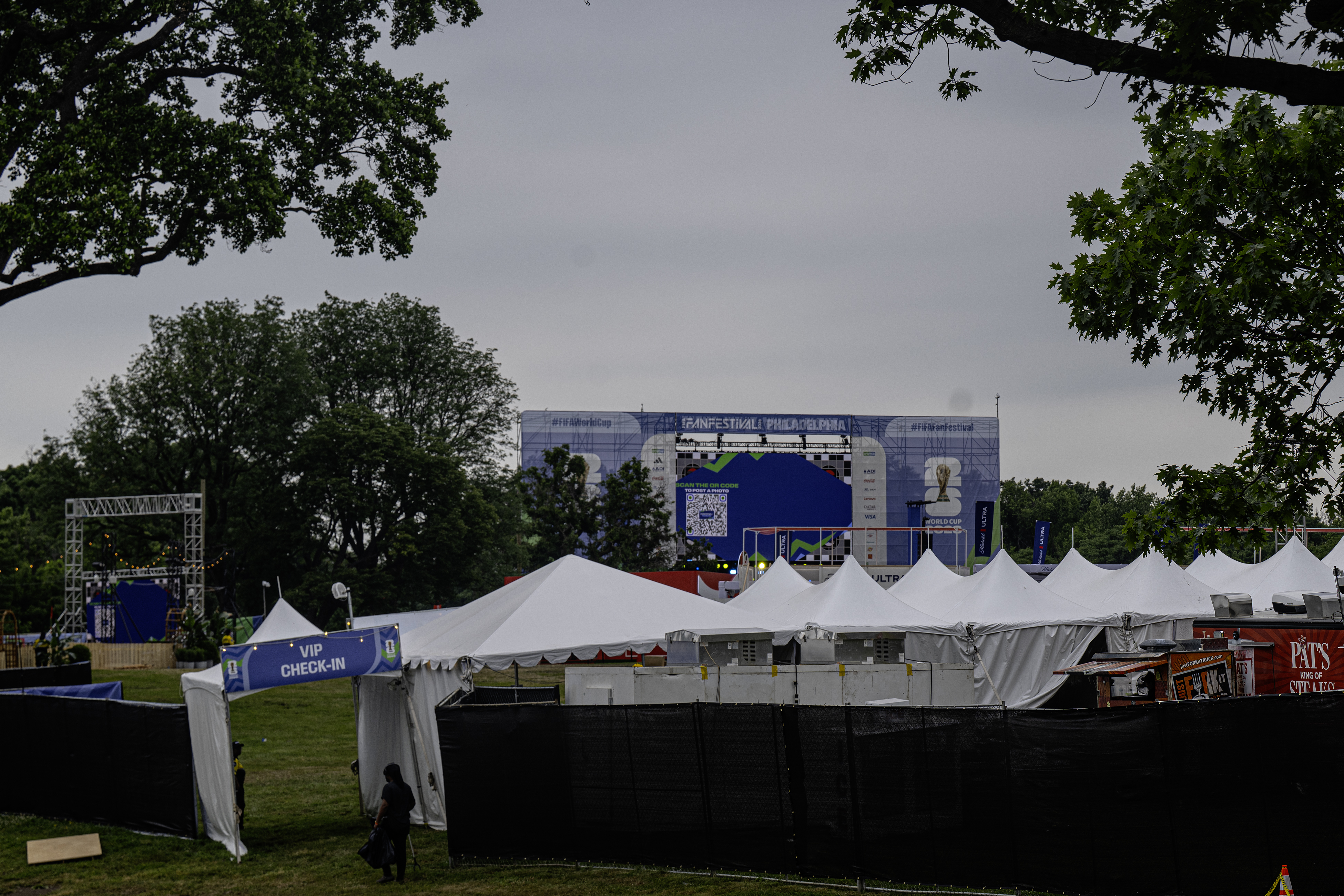
The FIFA Fan Festival at Lemon Hill, a massive gathering spot for World Cup fans to watch games, opens on Thursday. The site has two tents with fans and misters, multiple water stations, and picnic tables in shady areas to rest.
The city is operating four hospitality hubs between City Hall and Lemon Hill with shade, water, and misting stations between 10 a.m. and 8 p.m. every day.
Residents and visitors alike can text CUPPHL to 888-777 for free text alerts or follow the Philadelphia Office of Emergency Management’s WhatsApp channel for updates during the World Cup.
They can get year-round alerts by texting READYPHILA to 888-777.
Shelter from the heat
On Thursday and Friday, the city will open cooling centers with extended hours at community centers and libraries. Residents can also call 311 for information on the nearest center.
Philadelphia Parks and Recreation’s older adult centers will all be open with air-conditioning from 9 a.m. to 6 p.m.
The Philadelphia Corporation for Aging will also operate a hotline at 215-765-9040 for heat emergency questions from 8:30 a.m. to 8:30 p.m. Thursday and Friday, with nurses on hand to answer medical questions.
Homeless outreach
Street teams will patrol the city to offer shelter and other services to people sleeping outside. Anyone who sees someone outside in need of help can call a 24-7 outreach line at 215-232-1984.
IRVINE, Calif. — It only took two words for one of the U.S. men’s soccer team’s most important players to get everyone talking.
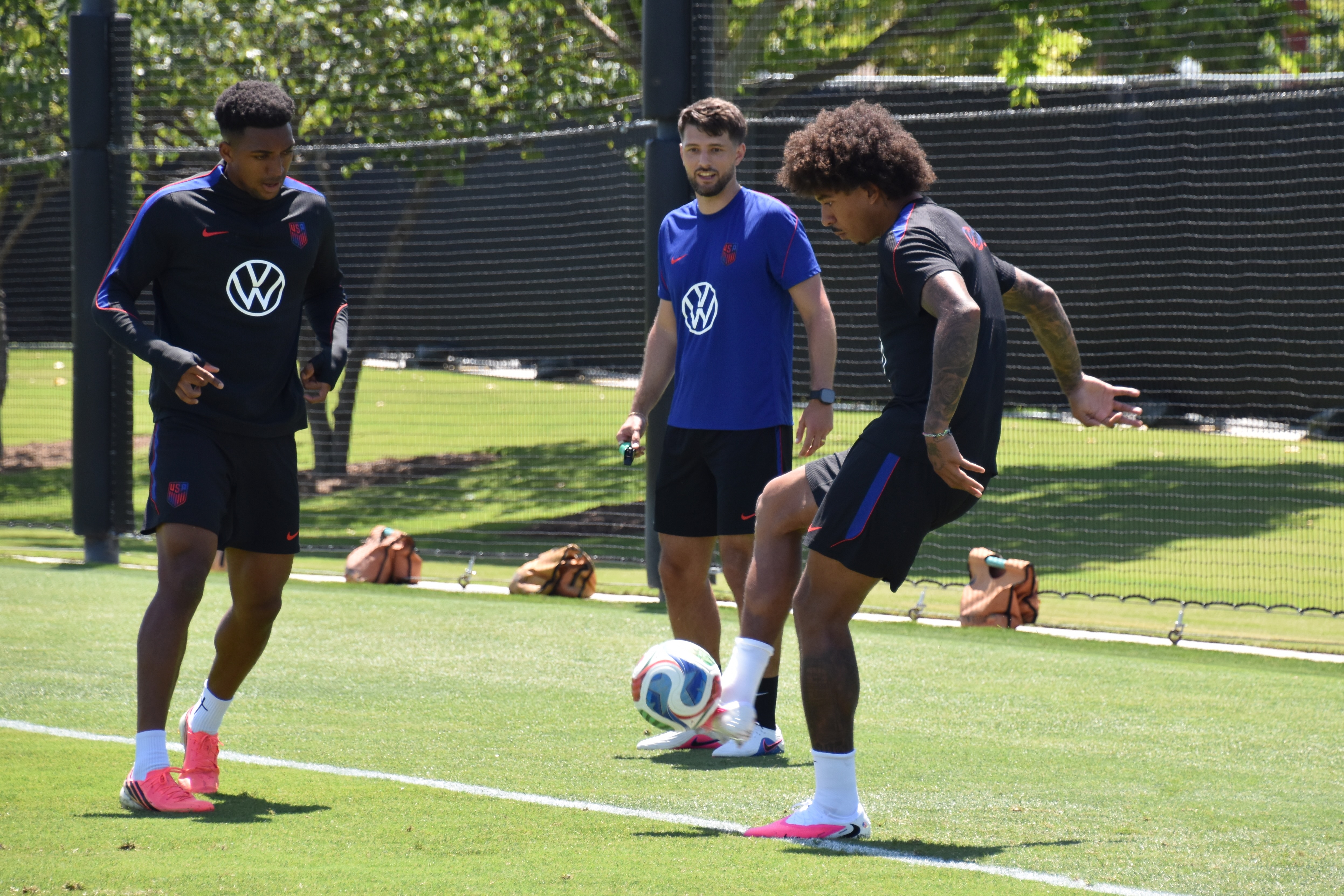
“I’m ready,” star centerback Chris Richards said before Wednesday’s practice, and after a few days on the field, where he looked good in his recovery from torn ankle ligaments.
“It’s a World Cup, so I’ll make myself ready regardless,” he continued as he stood in front of a big pack of media, a sign of the World Cup’s arrival and his importance. “I’m feeling good. Maybe a little swollen, but nothing tape can’t help. … If there’s any time to sacrifice yourself, it’s now. I want to play Friday, but I’m not the one making the decision.”
Richards suffered the injury on May 17, playing for his club team, England’s Crystal Palace. He hasn’t featured in a game for club or country since then, which is four total: the May 24 Premier League finale, the May 27 UEFA Europa Conference League final, and the U.S.’s two World Cup warmup games.
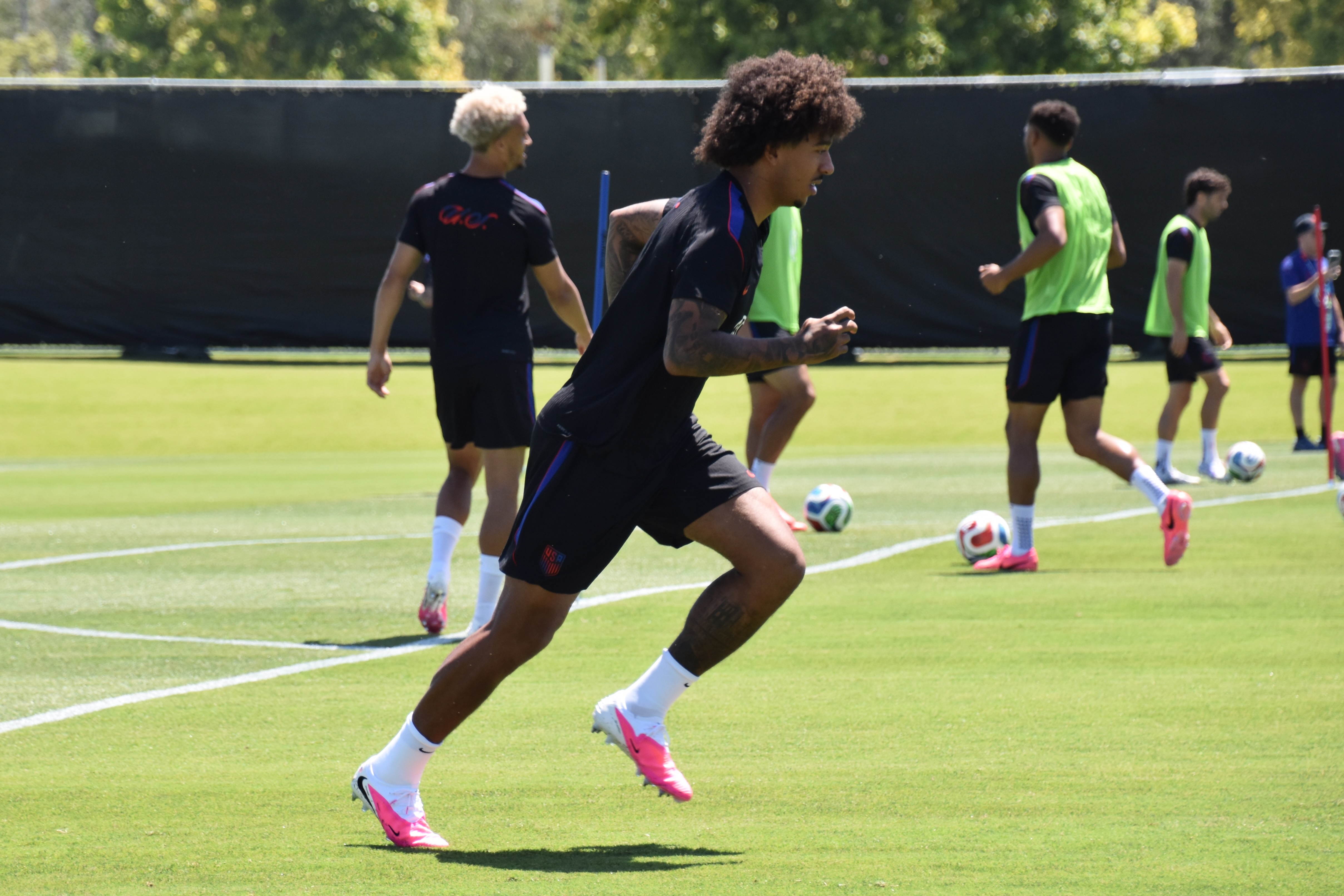
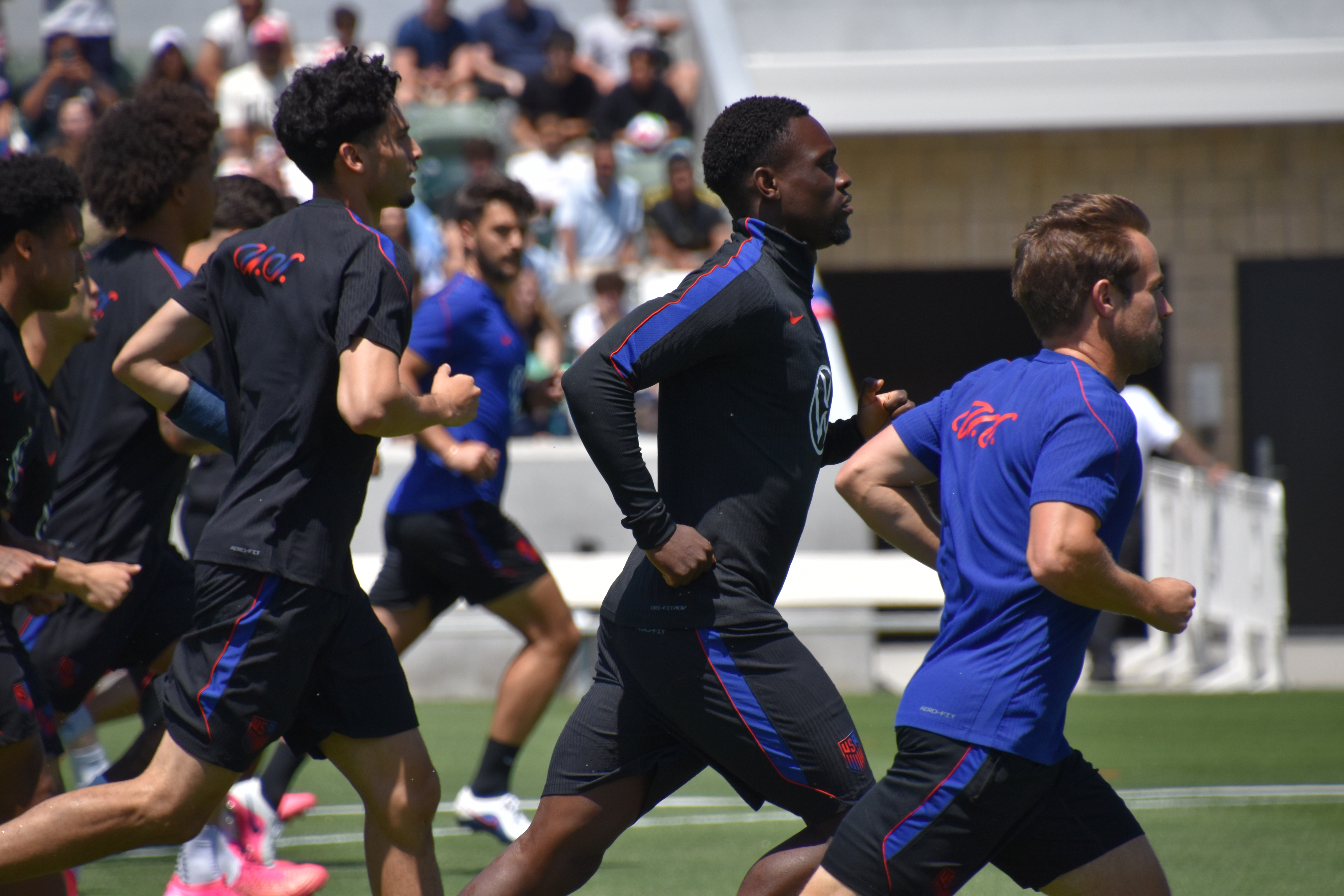
Chris Richards running during Wednesday’s practice.Jonathan Tannenwald
“When I first came out of the injury, I was pretty devastated, and I was honestly fearing the worst,” he said, later adding: “The first time I could probably relax was when I did get the diagnosis. After the game, my ankle was huge, and I came off in a boot and crutches. When I saw the diagnosis I was like, ‘All right, cool — whatever it takes, I have to make it for this first game.’”
He made the bench for the Conference League final, and the TV cameras caught him running onto the field at the final whistle to celebrate with teammates. That was a good sign. But it’s still nothing like a live game, and that’s now the question.
“I think the first time I really realized that I would be 100% for Friday was probably last week,” Richards said. “It was a lot of massages, a lot of ice, a lot of compression, things like that. But once I was finally on the pitch, it felt good. And I think that was the main thing.”
It also helps that the U.S. will have seven days between its first and second group games, with the latter June 19 against Australia in Seattle. The Americans’ World Cup opener is Friday vs. Paraguay (9 p.m., Fox 29) in Inglewood, Calif.
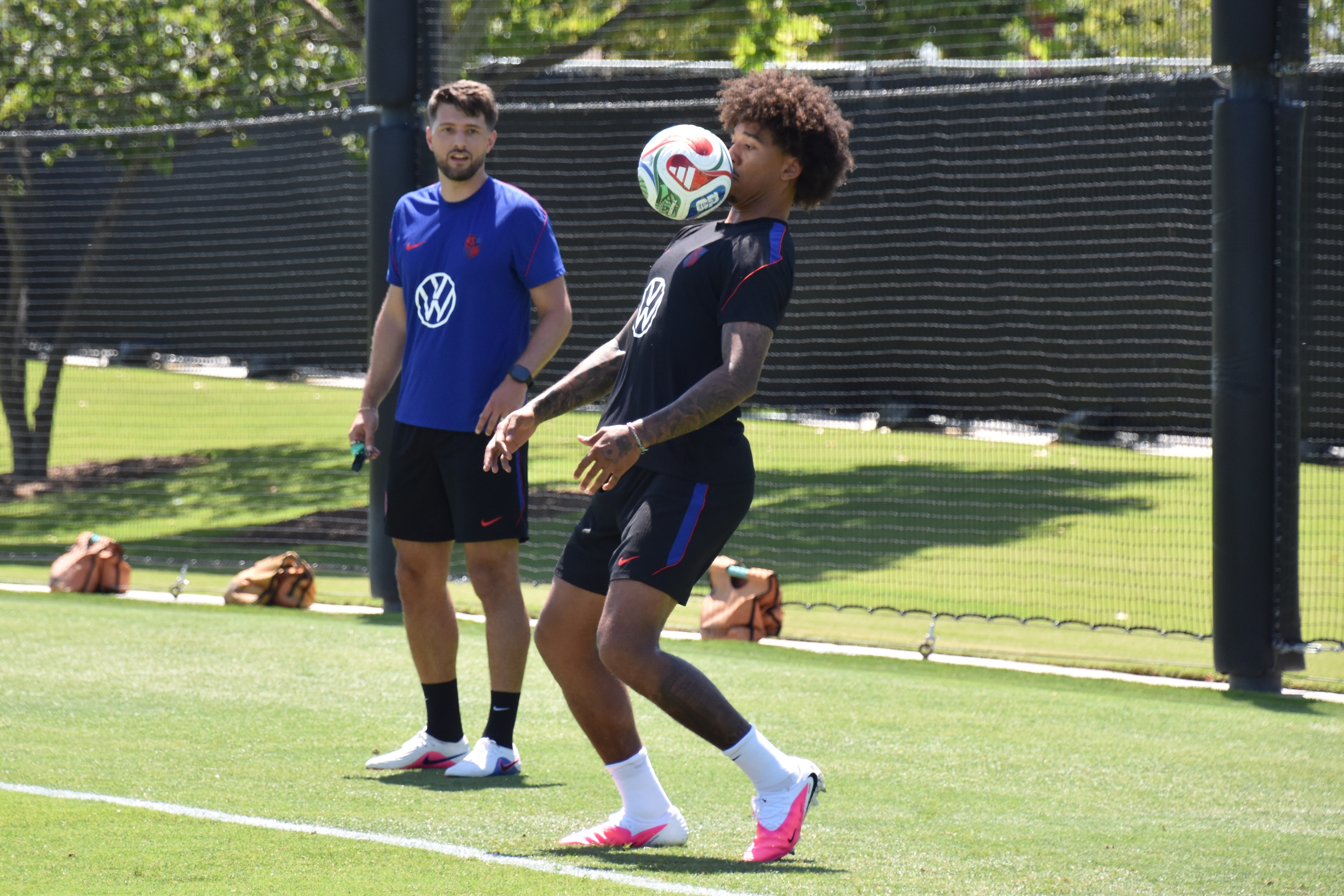
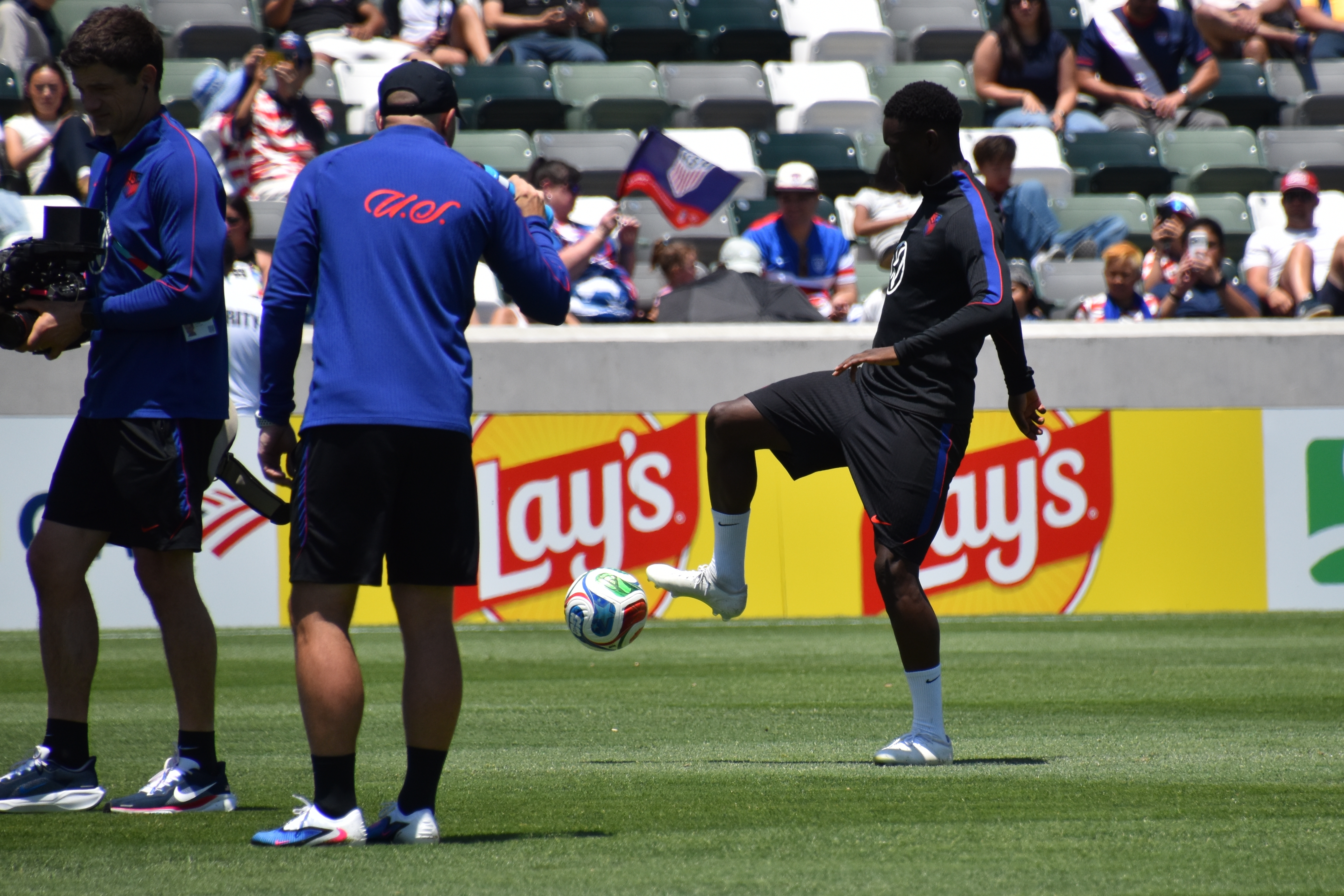
Chris Richards getting up close with the ball during a drill.Jonathan Tannenwald
“We have enough time between the games where I can get some recovery in,” Richards said. “So for me, if I can start on Friday, it’s not going to put the rest of the tournament in jeopardy for me.”
Granted, that was his opinion, and he has given it to U.S. coaches when asked.
“Every time they’ve asked me, I’ve told them I’m good — even when I first got into camp, I told them I’m good,” Richards said. “I think they’ve seen the progression over the last few weeks, and they’ve definitely seen me personally. I think I look good on the pitch now. Hopefully it’s been a good sign for them … Whatever they decide on Friday, I’ll back them, but I want to be on that field on Friday.”
He added that he has not been told if he’ll be subject to a minutes limit in the game.
Chris Richards (left) hasn’t played in a live game since May 17.Jonathan Tannenwald
“I’ve done full practices the last few days, and I think y’all have seen the intensity of our practices — they’re not light,” the Alabama native said. “So I feel good, no reaction to it, and I’m confident for what’s to come.”
Richards noted the minor controversy that arose when U.S. manager Mauricio Pochettino accused Crystal Palace of not being fully transparent about his status. He tried to be sympathetic to both sides.
“Palace wanted me to potentially be available for the Conference League final — which I understand, it’s a final — and it took me two days to get here [to U.S. camp] as well,” he said. “I expected it. I’ve had ankle injuries before, and there wasn’t really any setback. It was just a case of getting swelling down, then seeing what it’s like being on the pitch, and it just sometimes can take a little bit longer than expected.”
He said, “the initial diagnosis was day to day, but I think for me I was a bit more two to three weeks. We were right on schedule, and I feel good right now.”
Richards’ teammates know how much he means to the group. Fellow centerback and longtime friend Mark McKenzie spoke about that soon after Richards’ turn at the mic.
“To see that live, to see the rehab work he’s put in, whether it’s on the field and working with a lot of the performance coaches, trying to get that ankle exposed to as many different actions as possible,” the Union alumnus said, “and then off the field, you talk about recovery, you talk about every modality you could possibly think of and modalities you probably don’t even know about. Doing everything possible to get himself as fit as he could be for this game.”
As Richards spoke, former U.S. centerback Marcelo Balboa stood nearby. Now a media member, recalled his own race to make the 1994 World Cup after tearing his ACL in April 1993 — an era when recoveries could last over 12 months.
But he made it just in time to play in the tournament, started all four U.S. games, and almost scored an all-time goal when a bicycle kick attempt against Colombia went just wide.
“Never trust a player,” Balboa said with a laugh, but also some seriousness. “A player will always tell you he feels great and he’s ready to go. I think they have to evaluate how he is in training, if he’s full contact, if he’s ready to go 90 minutes, or is it better to make sure he’s ready for the rest of the tournament.”
He also emphasized that for a player, “mentally is the biggest part.” Judging by Richards’ remarks, he certainly seemed ready — even as Balboa’s words are a good reminder of the big picture.
“I wouldn’t put myself in the position if I didn’t think I could do everything 100%,” Richards said. “Part of playing this sport is you’re going to have some pain at some point, and I’m totally OK with that as long as functionally I’m good. That’s the No. 1 thing for me.”
When millions of soccer fans descend on North America this month for the 2026 FIFA World Cup, they will bring more than team jerseys and national pride.
They will also bring the microbes that travel with people.
Public health officials have spent years preparing for the tournament, which is expected to draw visitors from more than 100 countries to the United States, Canada, and Mexico. Although diseases such as Ebola and hantavirus have been in the headlines, public health experts say the diseases most likely to show up in clinics, emergency departments or urgent care centers are likely to be less exotic.
Instead, their top concerns include measles, dengue, respiratory viruses, and sexually transmitted infections that are already circulating. These diseases are likely to spread more easily as fans crowd into airports, hotels, stadiums, and festivals.
“Measles is what I’m most worried about,” said Krutika Kuppalli, an infectious diseases physician and associate professor at UT Southwestern Medical Center in Dallas.
Texas will host 16 World Cup matches in 2026 — more than any other state — with nine matches in the Dallas-Arlington area and seven in Houston. Dallas will host more matches than any other World Cup venue, including a semifinal. The first U.S. match is Friday, in Los Angeles, when the U.S. faces off against Paraguay.
Measles: A highly contagious virus meets a global mass gathering
Measles is the most contagious vaccine-preventable viral infection in the world. It can linger in the air for up to two hours after an infected person leaves a room and can spread rapidly among people who lack immunity. A traveler infected with measles could expose hundreds of people in airports, hotels, public transportation systems, restaurants, and stadiums before realizing they are sick.
The concern comes amid a resurgence of measles in parts of the Americas and elsewhere around the world. Health officials have attributed many recent outbreaks in the U.S. and elsewhere to declining vaccination rates and disruptions to routine immunization programs during and after the coronavirus pandemic.
“Measles is in many parts of the world, not just the United States, and all it takes is a small pocket to spread like wildfire,” said Katelyn Jetelina, a California epidemiologist who writes a weekly newsletter about public health and infectious diseases.
The U.S. has already recorded nearly 2,000 measles cases this year, continuing a resurgence that has alarmed public health officials.
South Carolina’s massive outbreak of 997 cases, mostly among unvaccinated children, was the largest outbreak since measles was eliminated from the U.S. more than a quarter century ago.
Dengue: A tropical disease that has become a hemispheric concern
Puerto Rico has recently experienced major dengue activity, and local transmission has periodically been detected in several U.S. states.
The mosquitoes capable of spreading dengue — Aedes aegypti and Aedes albopictus — are already established in many parts of the country.
Public health experts worry that some visitors carrying the virus could arrive in communities where the right mosquitoes are already present, creating opportunities for local transmission. Matches will be played during peak mosquito season in many host cities, including Miami, Houston, Dallas, and Los Angeles.
Kuppalli said vector-borne diseases are a particular concern in Texas, where clinicians may need to consider not only dengue, but chikungunya, oropouche (also known as sloth fever) and even malaria in travelers arriving from regions where those diseases are circulating.
“I think all of those vector-borne diseases would be fair game,” Kuppalli said.
COVID-19: Among the respiratory viruses that haven’t disappeared
Although COVID-19 no longer dominates public life the way it once did, public health and infectious-disease experts say they will be closely monitoring respiratory illnesses during the tournament.
Current levels of COVID-19 remain low in the U.S., but experts point out that there has been a summer wave every year since 2019.
Experts say they will be on the lookout not only for COVID-19, but also influenza, RSV and other respiratory pathogens.
Why experts are also watching sexually transmitted infections
Sexually transmitted infections are a recurring concern during major sporting events and mass gatherings because large numbers of visitors, nightlife activity and temporary social networks can increase opportunities for sexual contact.
Experts do not view STIs as an acute outbreak threat in the same way as measles or dengue, but they remain part of public health planning efforts.
What about Ebola and other high-profile diseases?
The public risk for Ebola remains low because the virus spreads through direct contact with bodily fluids. The 2014 World Cup in Brazil coincided with the West Africa Ebola outbreak in 2014-2016, the largest Ebola outbreak in history. And there was no outbreak during that World Cup.
Kuppalli said one concern is that heightened attention to Ebola could lead clinicians to overfocus on a patient’s country or continent of origin rather than taking a careful travel and exposure history. Someone with fever who has traveled from Africa, she said, should not automatically be assumed to pose an Ebola risk. Clinicians need to ask where the person has been, when they were there, what symptoms they have and what exposures they may have had.
How officials plan to spot problems before they spread
The CDC has expanded disease surveillance efforts in host states and is working with local health departments, hospitals, and emergency medical services to improve preparedness and response capabilities, officials said. The agency has also provided technical assistance to some host cities and is supporting training and coordination related to infectious-disease threats.
Federal officials say they are paying particular attention to diseases that could be imported through international travel, including measles and dengue.
With more World Cup matches than any other state, Texas is taking an unusually proactive approach to infectious-disease preparedness.
Kuppalli and other infectious-disease specialists have partnered with the state health department to establish a round-the-clock consultation hotline that will connect the state’s clinicians with experts in travel-related and emerging infections. The service will be available to healthcare providers across Texas and to medical staff working with World Cup teams seeking guidance on suspected infections tied to the tournament.
Kuppalli, one of the hotline’s medical directors, said the hotline will be staffed by 15 to 20 adult and pediatric infectious-disease specialists within the University of Texas health system. The hotline is designed to give real-time guidance to clinicians who may not regularly evaluate rare or travel-associated infections.
That kind of support may be especially important in Texas, where patients may show up not only at major academic medical centers but also at community hospitals, emergency departments and urgent care clinics spread across a large state.
To help monitor for any concerns from afar, one of the more unusual preparedness efforts is not being run by a government agency at all.
Georgetown University in Washington, D.C., and MedStar Health, one of the largest healthcare providers in the Washington metropolitan region, have established a Health Security Operations Center that will function as an independent hub for monitoring infectious-disease threats during the tournament.
The center, which became operational June 1, is pulling together information about emerging health threats from wastewater surveillance, hospitalization data, international disease alerts and reports from host cities, according to Rebecca Katz, who heads the operation. She is director of Georgetown’s Center for Global Health Science and Security.
Public health experts say wastewater surveillance can sometimes detect pathogens days before health officials see corresponding increases in diagnoses at clinics, emergency departments or hospitals.
The center plans to issue daily public situation reports throughout the World Cup and provide alerts if significant health risks are detected. It also plans to monitor disease activity in host cities and in countries sending large numbers of travelers to the tournament.
For June 9, the report notes growing measles outbreaks in the U.S., Canada and Mexico. The location of these surging outbreaks overlaps with the base camp and match locations of multiple teams, the report said. Pennsylvania is dealing with a large measles outbreak centered in Lancaster County, about 75 miles west of Philadelphia, one of the World Cup’s U.S. host cities. Côte d’Ivoire, or Ivory Coast, has its base camp in nearby Chester.
To Ed Grose, the FIFA World Cup is not looking like a bust for Philly-area hotels.
Yet the president of the Greater Philadelphia Hotel Association said the matches, which start Sunday and end July 4, have not brought booming business.
“It hasn’t delivered what we thought it would in terms of hotel rooms,” Grose said Monday.
Some of Center City’s 14,500 hotel rooms remain available on game days and game-day eves, he said, though he declined to provide an estimated occupancy rate.
Grose’s assessment — based on conversations with local hoteliers, he said — exemplifies the tourism uncertainty that remains just days before kickoff.
Philadelphia has raised about $140 million in public and private funding to host the World Cup, according to Front Office Sports, and officials are heavily marketing the six South Philly games and other fan events across the city.
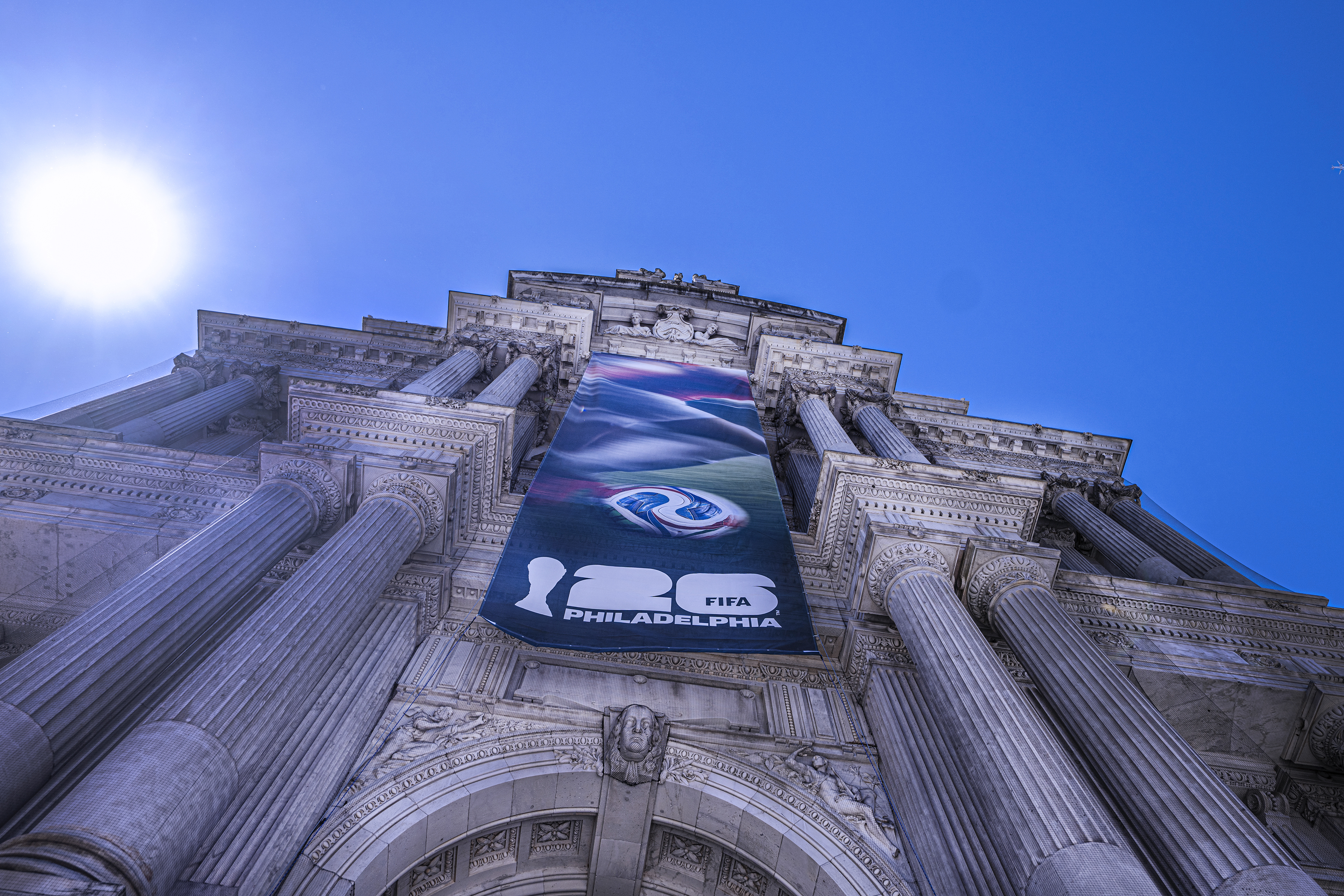
A FIFA World Cup banner hangs from an entrance of Philadelphia City Hall, as seen on June 3.Jose F. Moreno / Staff Photographer
The Wall Street Journal reported Monday that every U.S. host city except San Francisco was seeing hotel occupancy of 40% or less, citing a recent CoStar report. Host cities in Mexico and Canada saw slightly better hotel occupancy, though still under 50%, according to the Journal.
In Philadelphia, Google Travel searches show abundant hotel vacancies at prices under $300 or even $200 a night on some match days.
The region’s short-term rental market has seen some last-minute demand, with about 60% of local Airbnbs and Vrbos set to be occupied on game days and game-day eves, according to AirDNA, which analyzes the platforms’ booking data. In early May, fewer than half available rentals were booked on those days.
The inside of a South Philadelphia Airbnb was shown in early May, as its owner waited for last-minute World Cup bookings.Joe Lamberti / For The Inquirer
As of Monday, World Cup demand has helped drive a 15% year-over-year increase in the number of Philly-area bookings and an 8% increase in occupancy on game days and game-day eves, said Bram Gallagher, AirDNA’s director of economics and forecasting.
Those figures place Philly “right in the middle” of the World Cup markets, he said.
“Some places are doing very, very well and some places are seeing marginal benefits,” Gallagher said, noting that Mexican markets are doubling demand. “In Philly, Boston, Atlanta, we’re seeing respectable gains.”
Airbnb, which has partnered with FIFA, is still predicting that the World Cup will be “the biggest hosting event in Airbnb’s history — surpassing the 2024 Olympic and Paralympic Games in Paris,” according to a company statement, which noted “meaningful excitement for the tournament,” including among first-time guests.
Some Philly Airbnb hosts still wait for World Cup guests
Jenica Jones outside her South Philly Airbnb in early May. As of Tuesday, she said she has only gotten two World Cup bookings for a total of three nights.Joe Lamberti / For The Inquirer
A guest from the Dominican Republican reserved Jones’ South Philly rowhouse for two nights in June, Jones said, and the host was hopeful that World Cup demand would finally pick up.
It hasn’t.
The 42-year-old said she got just one other booking for a single night.
Her Airbnb has a perfect 5-star rating, sleeps seven people, and is less than three miles from Lincoln Financial Field, the site of Philly’s six World Cup matches.
The app’s dynamic-pricing tool had initially suggested she list the property for about $900 a night during the World Cup. Since then, she has dropped prices and offered discounts on some nights to entice soccer fans, she said.
“I was predicting being full the entire month of June,” Jones said Tuesday. “They’re just not coming in as I expected.”
Can World Cup fans get last-minute deals in Philly?
The Live! Casino Hotel Philadelphia (at left) is located in the stadium complex. As of Tuesday, it still had rooms available at high prices for some World Cup matches.Elizabeth Robertson / Staff Photographer
Despite the sluggish demand, last-minute planners shouldn’t count on scoring World Cup deals in the Philly region, according to hotel and short-term-rental experts.
Gallagher, of AirDNA, said the most affordable Airbnb and Vrbo properties were the first ones to book up during the tournament. But individual hosts like Jones may choose to lower prices if their homes remain unbooked.
Grose, of the Greater Philadelphia Hotel Association, said guests will pay higher rates on average during the World Cup than they would on a normal summer day.
Yet on Sunday and three of the other five match days, many Center City hotels appeared to have rooms available for about $300 or less per night, as of Tuesday, according to Google Travel. Prices skewed higher and availability seemed more limited on the holiday nights of Friday, June 19, and Saturday, July 4, though rooms were still available across the city, including at the few hotels near the stadiums in South Philly.
Grose said he remains optimistic about the coming weeks, which includes not only the World Cup and America’s 250th birthday celebration, but also the MLB All-Star Game in July.
“Overall, the summer is still going to be a good summer for us,” he said.
The World Cup is here. So how well do you know the players and nations descending on Philly? No studying — just put your knowledge to the test with our newest quiz.
Nine nations will play in five World Cup group stage games in Philly. How well do you know them?Julia Duarte / Staff Illustration
The World Cup is back on American soil for the first time since 1994, and Philadelphia is set to host six matches — including a round of 16 match — in the world’s largest international soccer tournament.
Brazil, France, and Croatia are among the nine teams that will take to the pitch at Lincoln Financial Field, which FIFA has renamed Philadelphia Stadium for the next month, for five group stage matches in the newly expanded 48-team World Cup tournament.
story continues after advertisement
Think you know footy? Test your knowledge with this quiz. It’s 10 questions — nine about the nations coming to Philadelphia during the group stage and one about the Stars and Stripes.
Question 1 of 10
Which Brazilian star has scored the most goals for the national team?
CorrectIncorrect. XX% of other readers got this question right.
Some of the sport’s most iconic players have suited up for the Seleçao, but none have scored more than Neymar, who has 79 goals in 128 international appearances.
Question 2 of 10
Ivory Coast is returning to the World Cup for the fourth time in its history. When did Les Éléphants most recently compete in the tournament?
CorrectIncorrect. XX% of other readers got this question right.
Ivory Coast qualified for three consecutive tournaments in 2006, 2010 and 2014. The African nation has never advanced out of the group stage, claiming a third-place finish in all three World Cup tournaments it has participated in.
Question 3 of 10
Which nation did Curaçao tie on the final day of Concacaf qualifying to secure its first trip to the World Cup?
CorrectIncorrect. XX% of other readers got this question right.
Curaçao secured a 0-0 draw against Jamaica in November that set it atop its qualifying group. Curaçao, a Caribbean island with a population of 155,000, will be the least populous nation represented at this year’s tournament.
story continues after advertisement
Question 4 of 10
Which team will come to Philly featuring the reigning FIFA Ballon d'Or winner, given to the player of the year in world soccer?
CorrectIncorrect. XX% of other readers got this question right.
When Les Bleus take on Haiti in a Group C matchup on June 19 (9 p.m., Fox 29), they will do so with midfielder-forward Ousmane Dembélé in tow, winner of the 2025 FIFA Ballon d'Or.
Question 5 of 10
Which nation did Ecuador play in the opening match of the 2022 World Cup?
CorrectIncorrect. XX% of other readers got this question right.
Ecuador kicked off the 2022 edition of the tournament by beating host nation Qatar, 2-0. Ecuador finished third in Group A, with a 2-1 loss to Senegal keeping La Tri out of the knockout rounds.
Question 6 of 10
Which Croatian player earned the Golden Ball award, given to the World Cup’s best player, in 2018?
CorrectIncorrect. XX% of other readers got this question right.
The former Tottenham and Real Madrid midfielder led Croatia to a second-place finish in Russia. Despite suffering a fractured cheekbone in April, Modrić was named to the Croatian squad and will make his fifth World Cup appearance this summer.
More on the World Cup
Everything you need to know about the World Cup in Philly
The Inquirer's comprehensive guide on the nine nations headed to Philadelphia this summer, their footprint on our city, and what those fans need to know about Philly.
Question 7 of 10
Ghana’s best World Cup result came in 2010, when it reached the quarterfinal round for the first time in its history. Which team did Ghana beat in the round of 16 to secure its place in the quarterfinal?
CorrectIncorrect. XX% of other readers got this question right.
Ghana secured a 2-1 victory over the U.S. on a dramatic 93rd minute goal from Asamoah Gyan. Ghana went on to lose its quarterfinal match to Uruguay on penalties.
Question 8 of 10
Which French player joined Pele as one of two teenagers to score in a World Cup final during France’s 4-2 defeat of Croatia in 2018?
CorrectIncorrect. XX% of other readers got this question right.
At 19, Mbappé became the youngest goalscorer at the World Cup in French history, scoring four goals in France’s run to the 2018 trophy. Mbappé needs two more goals to surpass Olivier Giroud as France’s all-time leading goalscorer.
Question 9 of 10
Haiti will return to the World Cup stage for the second time in its history this summer, breaking a 52-year drought. Which Haitian player starred in the Union’s MLS Supporters’ Shield-winning campaign last season?
CorrectIncorrect. XX% of other readers got this question right.
Danley started 14 times across all competitions this season for the Union, logging two goals. He also scored two goals for Haiti in its 2026 qualifying campaign.
More on the World Cup
Philly’s path to the World Cup was paved at Newt’s, where playing on cinder was a ‘badge of honor’
The growth of the region’s soccer scene will be celebrated when Philadelphia hosts the World Cup. But for years, the sport seemed to only exist locally in the neighborhoods around the cinder fields.
Question 10 of 10
The United States — the team has a slim chance of playing in Philly in the round of 16 — finished third in the first World Cup, but has advanced past the round of 16 just one time since 1930. In which year did the U.S. men make it to a tournament quarterfinal?
CorrectIncorrect. XX% of other readers got this question right.
The U.S. downed Mexico, 2-0, in South Korea to advance to the quarterfinals for the first and only time in a 32-team tournament. A 1-0 loss to eventual runner-up Germany ended the Americans’ best post-war run at the World Cup.
Your Results
You have skipped .
You scored XX out of 10.
The average reader scored XX out of 10
Don't worry, this is the first World Cup in Philly. Did you really expect to be an expert already?
Nice job. There's still room for improvement, but someone clearly follows soccer. If you're still interested, we've got plenty soccer coverage for you to read.
Wow! Let us guess, you only refer to soccer as football and spend weekend mornings at a local bar watching your favorite Premier League team?
A perfect score? Now that's impressive. Let's hope the USMNT has similar success in its run through the group stage this month.
The first group stage game in Philly is scheduled for Sunday, June 14, and will feature Ivory Coast and Ecuador. Ivory Coast will play two of its three group games in the city. For more World Cup coverage — whether you’re going to the games, watching the U.S. team from home, or just curious about what all the fuss is about — be sure to check out our comprehensive guide. And get the latest headlines here.
IRVINE, Calif. — Most of the time in soccer, one of the first things a team does is set its starting goalkeeper. But for the U.S. men, it appears that will be one of the last things that happens.
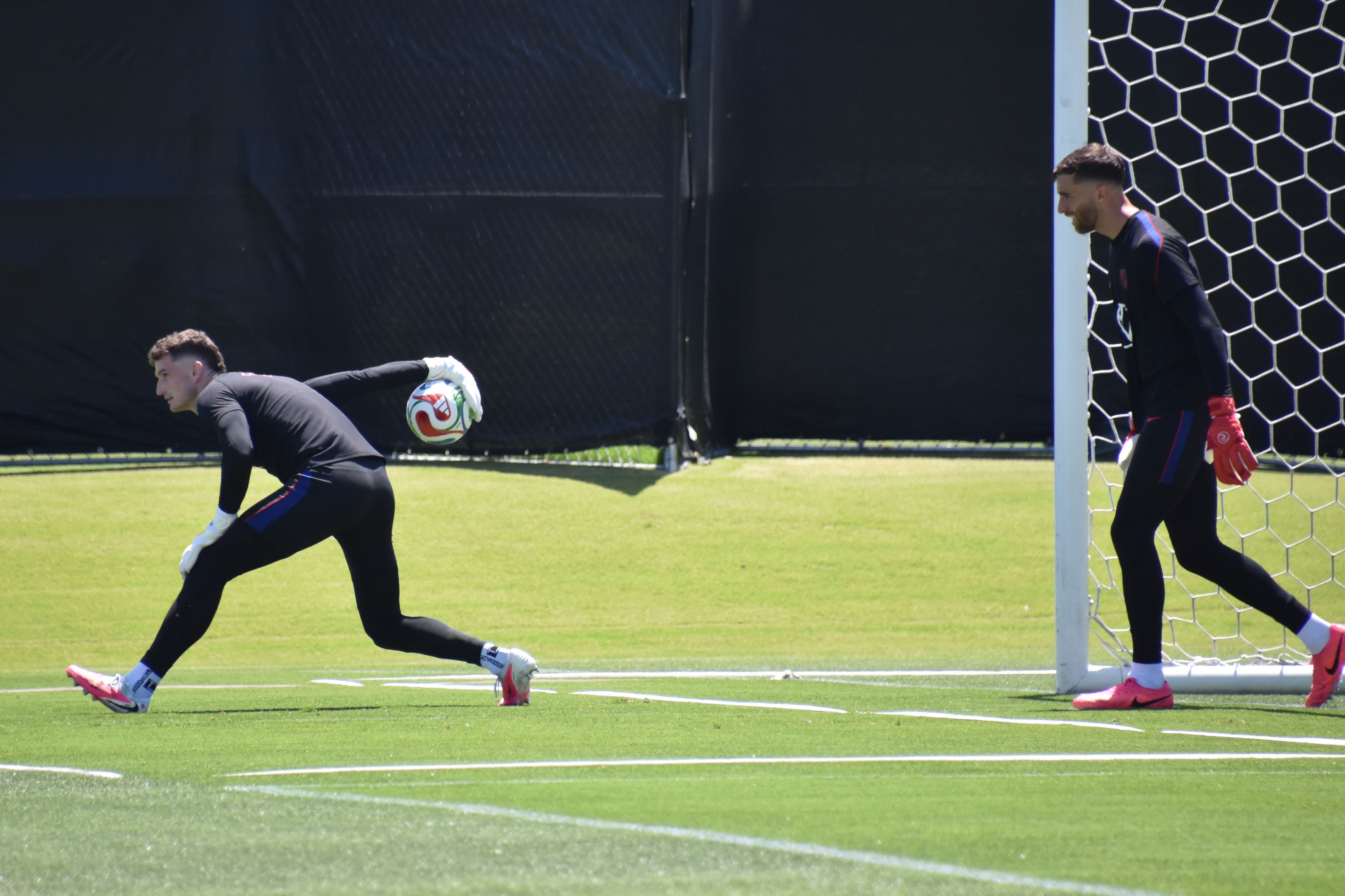
Leading candidates Matt Freese and Matt Turner have said in recent days that they don’t know who will get the nod for Friday’s group stage opener vs. Paraguay (9 p.m., Fox29, Telemundo 62).
“Not a ton of clarity,” Turner said Tuesday as he met with the media before the day’s practice. “It’s about training really well, keep fighting, and then the decision will be made on Friday.”
A day earlier, when Freese asked if he’d been told who the starter will be, he said, “No, just focused on training today.”
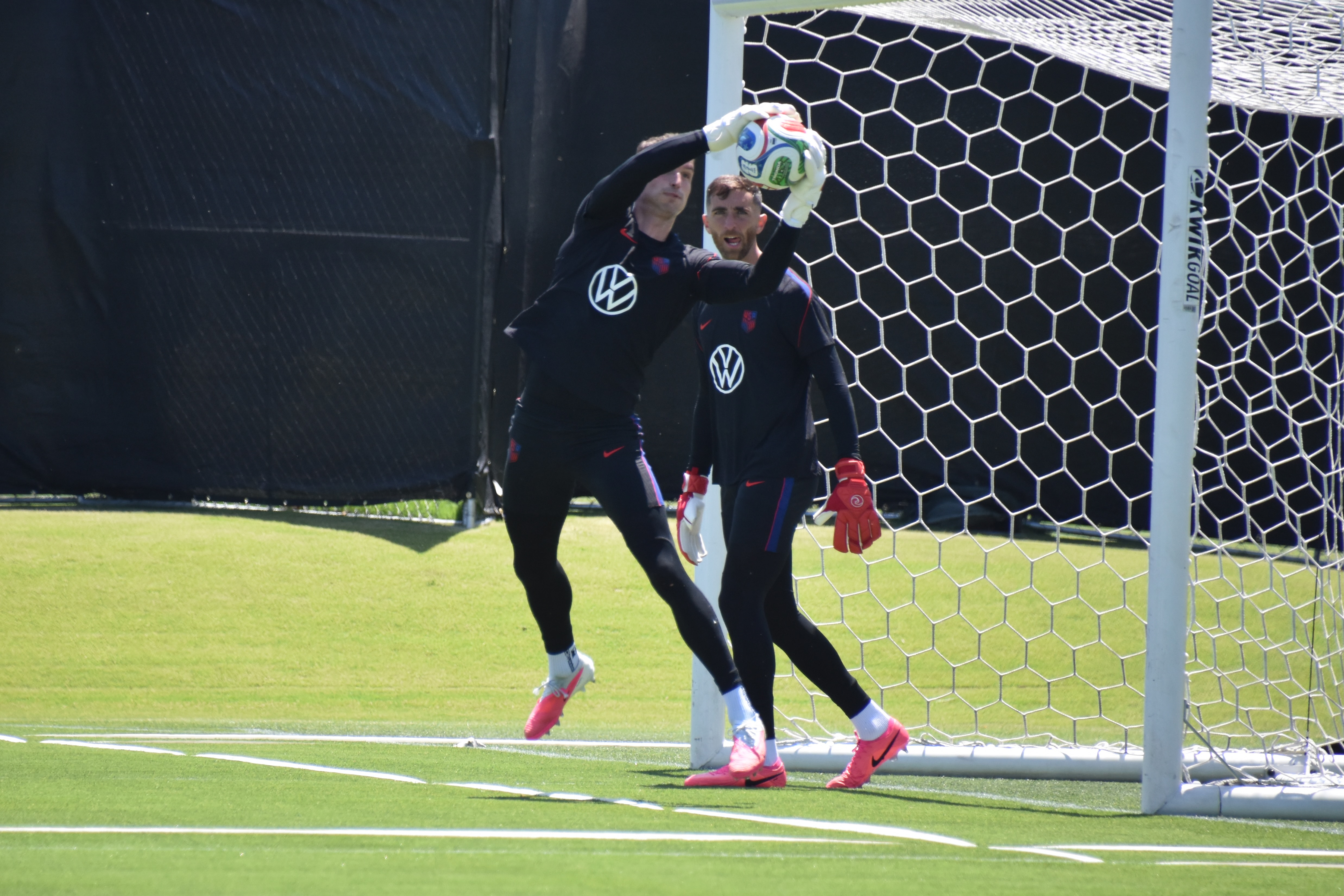
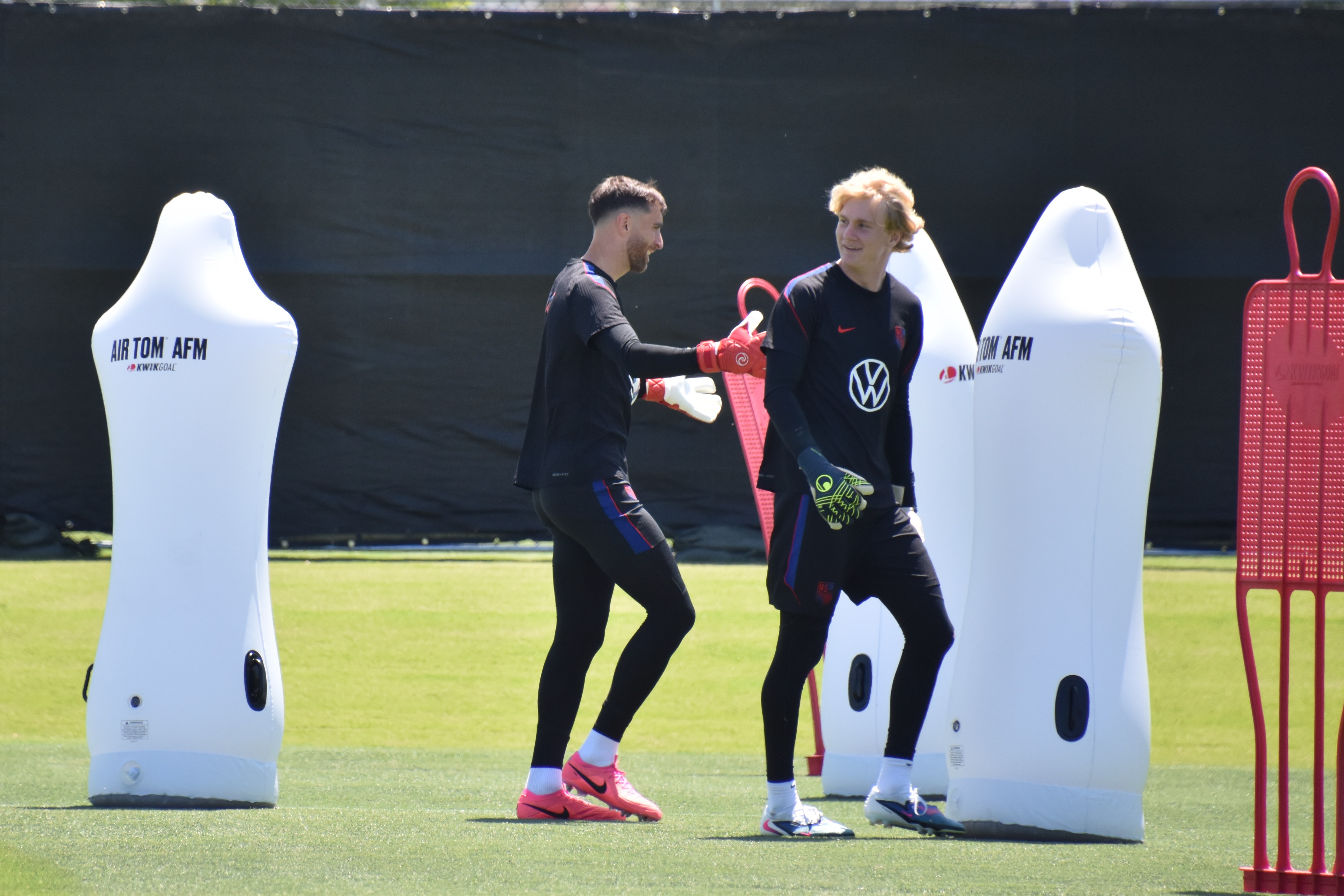
Matt Turner (right) watches Matt Freese in a drill at Friday’s practice.Jonathan Tannenwald
This is despite the fact that Freese has started 15 of the Americans’ 18 games since his debut last June, including a Gold Cup tournament that cemented his rise and U.S. manager Mauricio Pochettino’s demotion of Turner.
That demotion, in turn, came despite Turner having been the starter at the 2022 World Cup and for a long time afterward. Now, he’s the only goalkeeper on this World Cup squad with experience in the tournament.
With the clock ticking toward Friday night, what happens now — or at least until Pochettino is asked about it at his news conference on Thursday?
Even then, he might choose not to name a starter publicly.
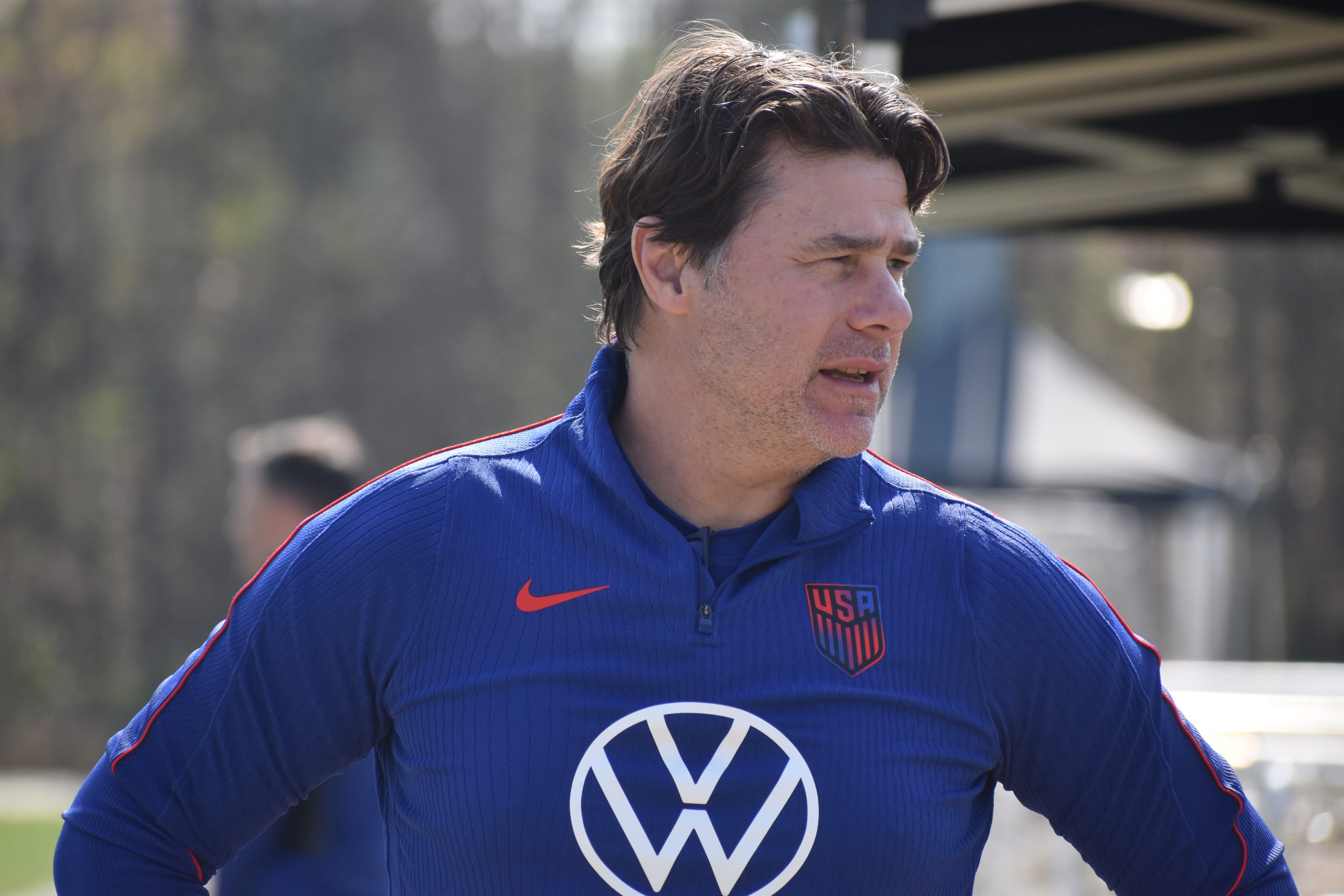
If Mauricio Pochettino has made his decision about his starting goalkeeper, he hasn’t said so publicly.Jonathan Tannenwald
From most of the indications we have so far, Freese is ahead. The fact that he started the final tuneup game vs. Germany signaled that after Turner played the first half of the first tuneup vs. Senegal.
What is certain is that each is laser-focused on trying to win the race and on his individual tasks to get there.
After two years on campus, he left to turn pro with the Union, and served as Andre Blake’s backup for four seasons before getting a trade to New York City FC so he could become a starter. He has kept improving since then, combining his saves, passing, and a work ethic that Pochettino appreciates.
Matt Freese (center) during the U.S. team’s game against Paraguay at Subaru Park in November. The teams will meet again in their World Cup opener on Friday.Elizabeth Robertson / Staff Photographer
“I think the mentality that I always have, and I always will have for the next 15 years of playing, is to never expect to be in a roster,” Freese said in a recent news conference. “You always want to chase it, no matter what. And even if you’re a guy who’s played 100 games in a row for the national team, I’m going to be someone that is chasing that next one.”
As cliché as it is to say, consistency is key, and Freese lives it intentionally.
“I think every player has his own routines and strategies, but what works for me is taking every game the same and doing the same routine,” he said, “and doing the same preparation, same mind work, same physical work. Because then you arrive into the game in your standard situation.”
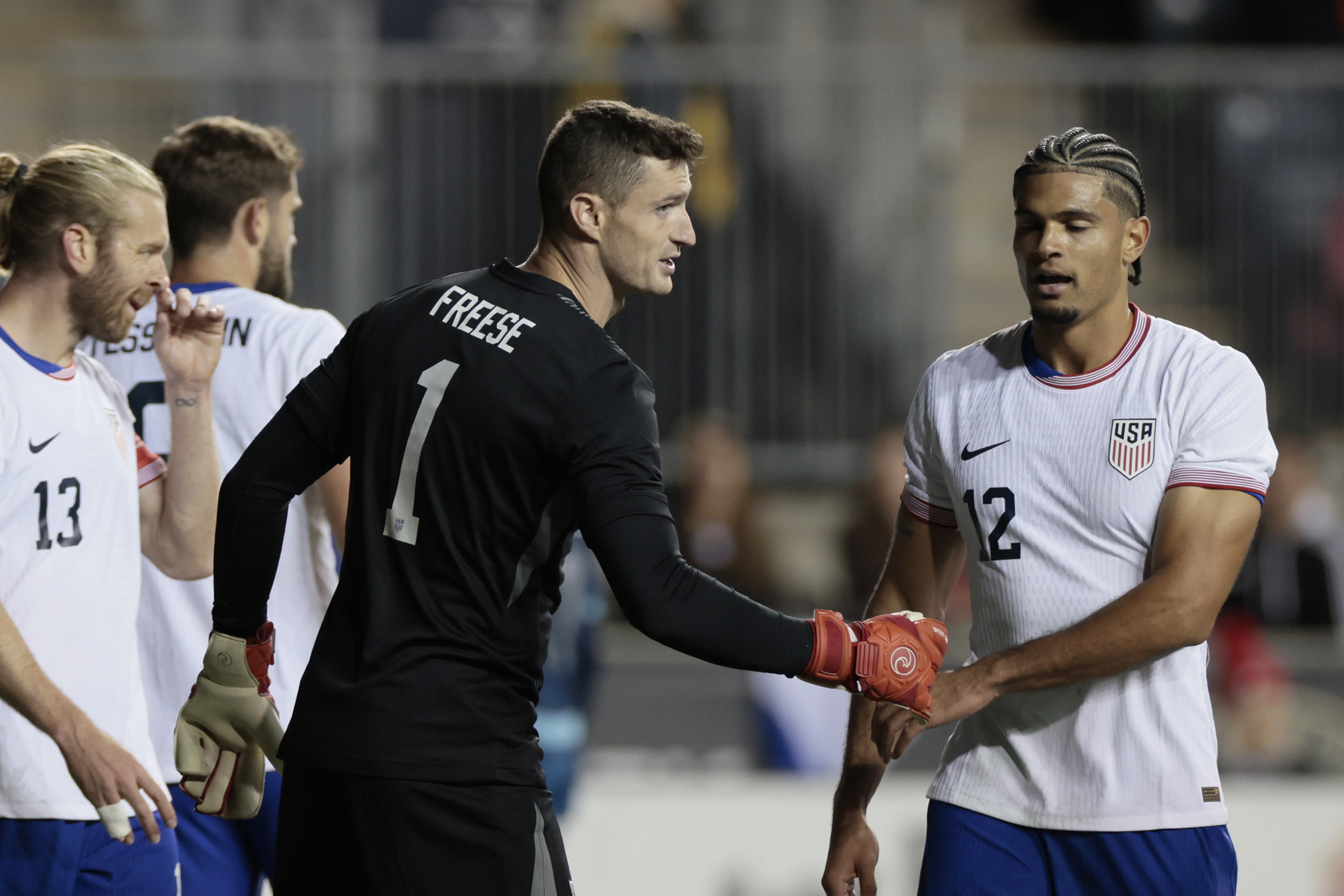
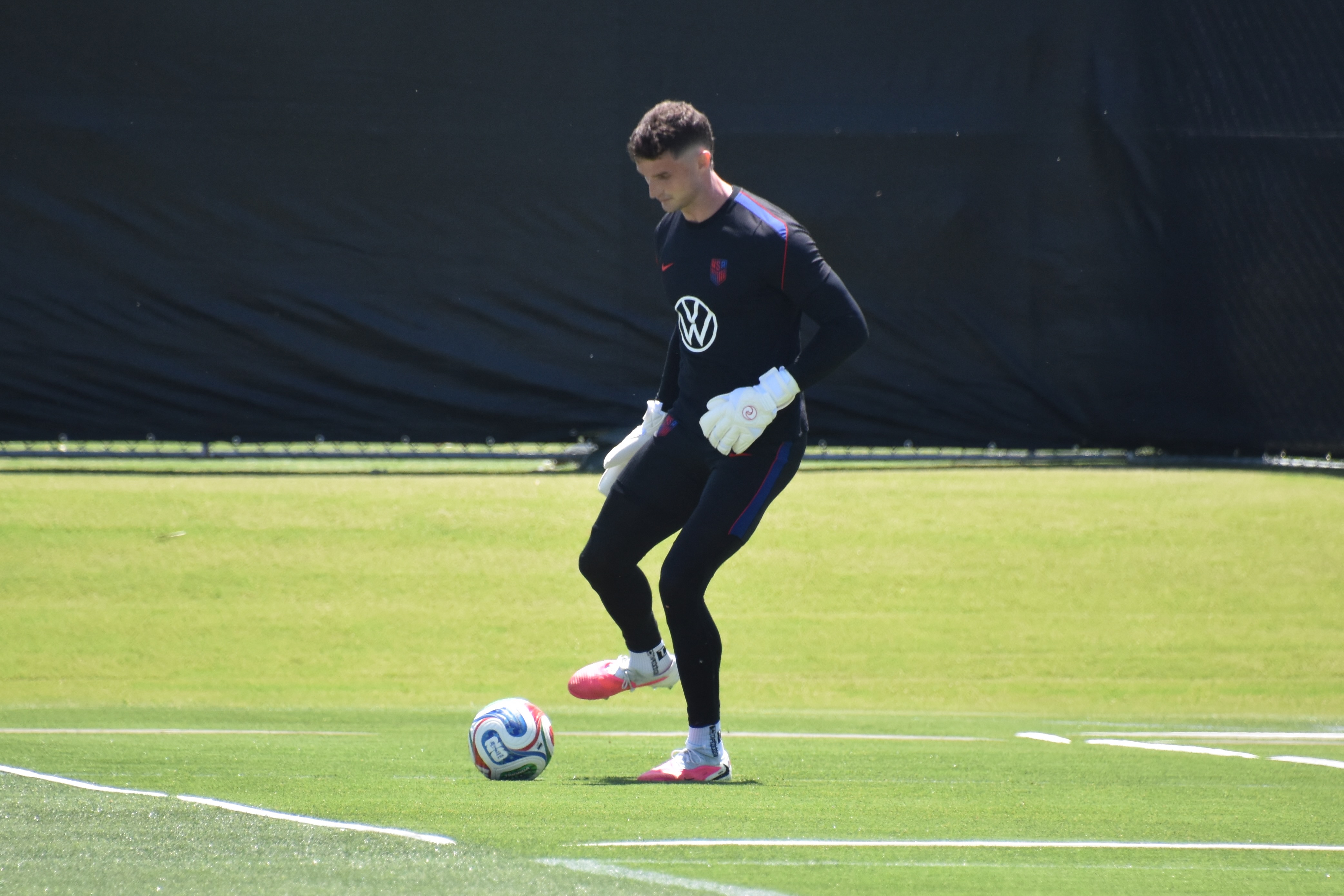
Matt Freese has started 15 of the U.S. men’s soccer team’s last 18 games.Jonathan Tannenwald
Freese acknowledged that “it’s obviously a World Cup, and it’s obviously different, and it’s obviously special: a once, twice hopefully, in a lifetime experience. And so that excitement will be there, naturally.”
But he persists, all the way down to what he packed for the trip.
“I bring my tea kettle, so I make the same tea. I’ve brought my own alarm clock from home,” he said. “The exact same stuff. I love keeping things consistent because if it works for you in small moments, then the game itself doesn’t change. So it helps me, at least, deal with those big moments and that pressure.”
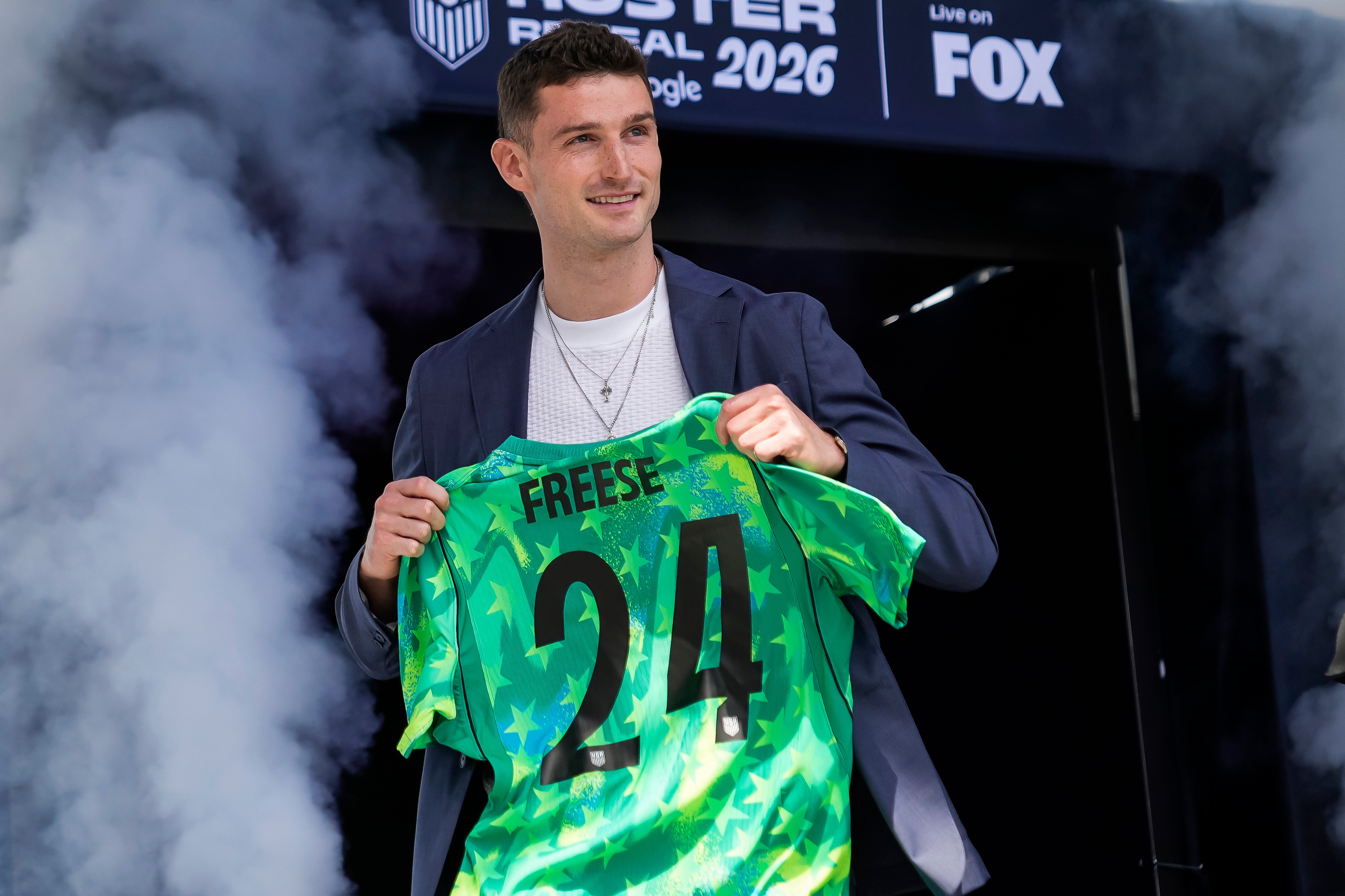
And there undoubtedly is pressure: to make a historic impact at this World Cup, and on him personally to continue the legacy built by Tony Meola, Kasey Keller, Brad Friedel, and Tim Howard. Howard often wore No. 24, the same one that’s on Freese’s back this summer.
Matt Freese with his No. 24 jersey at the introduction of the U.S. World Cup team last month.Eduardo Munoz Alvarez
“I was a fan of that goalkeeping corps for much of my life — still am,“ Freese said. “And so it’s an honor to be on this team and be part of that group, to hopefully continue that great legacy.”
He summed it up this way: “The ones that work hard without the promise of reward are the ones that usually succeed.”
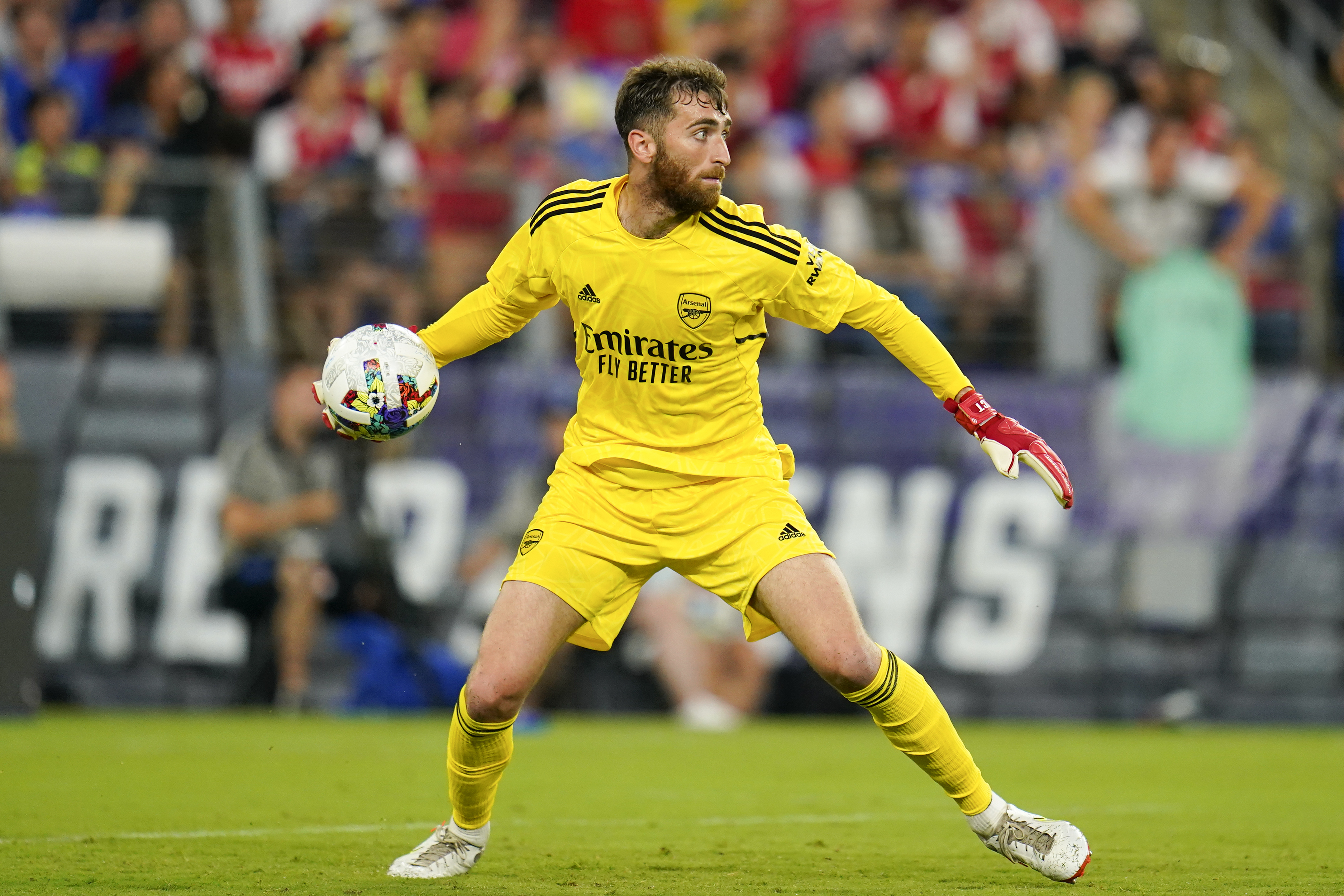
Now to Turner, who has his own remarkable story. The 31-year-old North Jersey native wasn’t well-known when the New England Revolution signed him undrafted out of Fairfield in 2016, but he quickly became a stalwart. That led not just to being the 2022 World Cup starter, but to a $6 million move to England’s Arsenal earlier that year.
But he failed to establish himself there, so he moved across England to Nottingham Forest, then Crystal Palace on loan, then France’s Lyon. None of those moves brought stability, and his U.S. stock started falling as a result.
Matt Turner played just seven games for Arsenal in his short time with the English Premier League giant.Julio Cortez
So he returned to New England on loan last summer, and this year has finally regained his form. By some statistical measures, he has done better than Freese in MLS this year.
With the U.S., Freese looked better in the March games vs. Belgium in Portugal. If Turner looked slightly better against Senegal than Freese did in conceding an early free kick goal to Germany, the fact that Turner only played half of his game means a full comparison isn’t possible.
“I think playing consistent minutes at the level that I’ve been playing at this year has helped me tremendously with staying ready,” Turner said, “unlike in the past, where I was kind of scrapping for minutes at the club level, and then when you show up to the national team, you’re not as sharp when your number is called. So it’s obviously been really great to be playing consistently, be an important player for my team as well, and, of course, that just helps with my preparation on a weekly basis, daily basis.”
One of Pochettino’s goals in his tenure has been to foster competition across the roster, so no player feels assured of a place — which can breed the complacency that sank the team at the 2024 Copa América. In that context, Turner was asked to expand on his “lack of clarity” remark: Is it a good dynamic or too unsettling?
Matt Turner (left) with the Union’s Andrew Rick, who’s serving as a guest player for U.S. practices this summer.Jonathan Tannenwald
“I think it’s a great thing, and I think he’s constructed a roster of guys that buy into that,” he said. “And it creates competition in training for spots on a weekly basis. Just because [a group of] 11 starts one game doesn’t mean the next 11 is going to be the same. Everybody knows that they’re looked at in the same light in the coach’s eyes, and if they merit and deserve an opportunity with this coach, they’re going to get one.”
And asked if he prefers to not have the starter at his position set yet, Turner was just as direct.
“Well, given the fact that I haven’t played a ton in the last year for the national team, of course, for me, that makes me feel like the door is always cracked [open] — everyone has a chance,” he said. “But I think the coach will always pick the guy that’s playing the best, and he’s going to make the right decision for the team. And whatever my role is going to be, I’m going to be ready to do it to the best of my ability.”
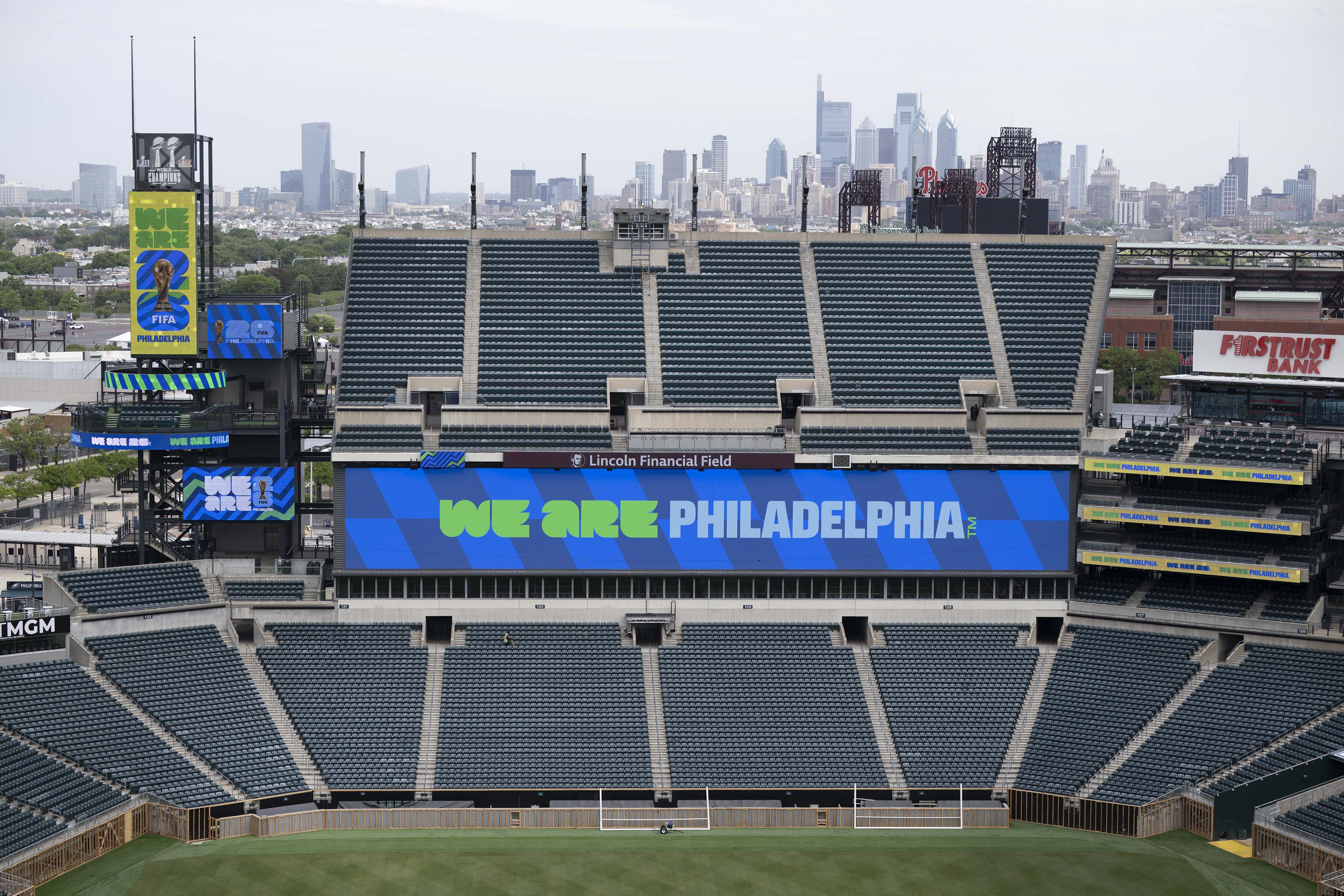
The World Cup officially lands in Philly on June 14, when the Ivory Coast takes on Ecuador at the temporarily-renamed Philadelphia Stadium (aka Lincoln Financial Field) in South Philly, with five more games to follow.
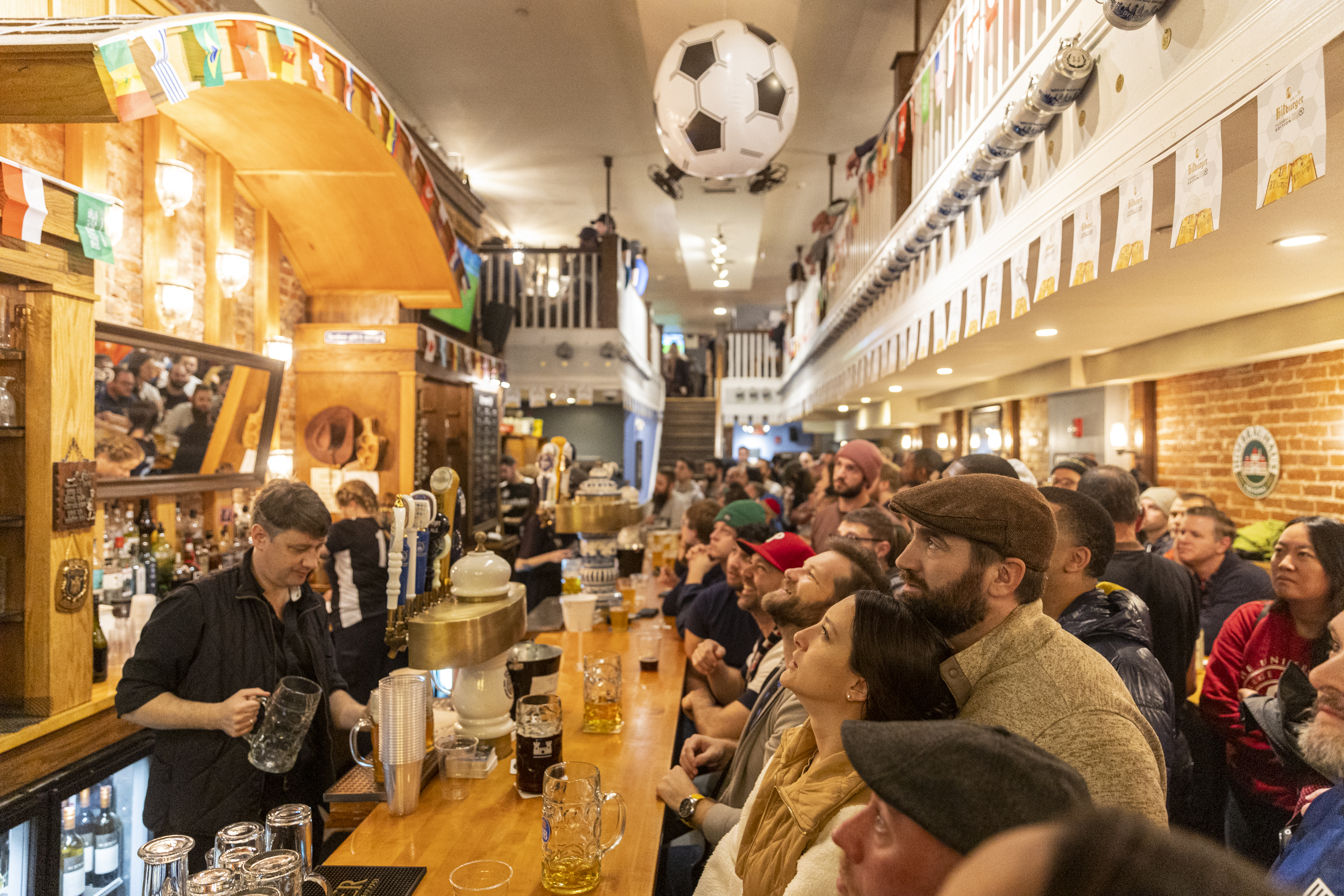
But let’s be real: Getting into a match is going to be difficult. And besides, nothing screams Philly more than taking in a game at a local bar alongside strangers and Citywides that will give you the courage to cheer even louder.
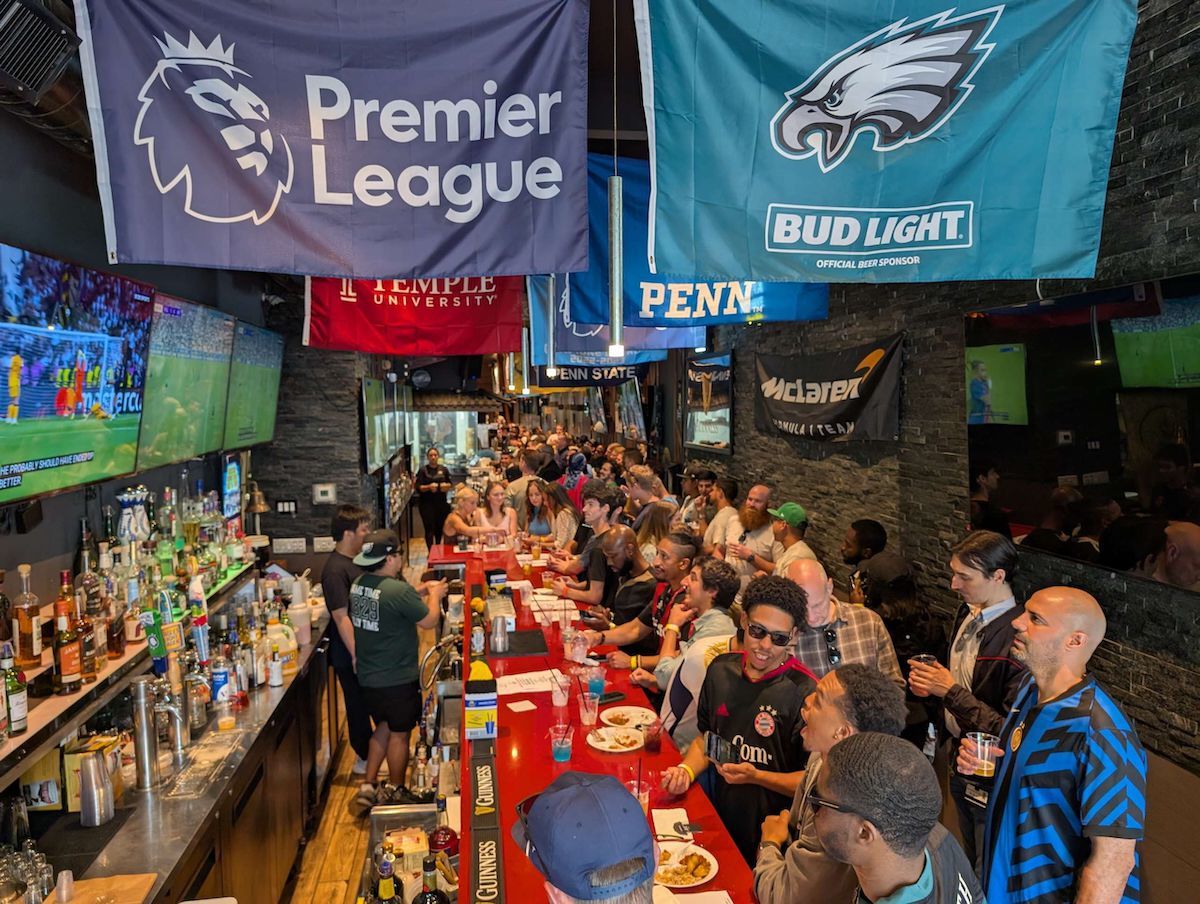
Here are 19 bars in Philly and the suburbs that are going all-in on the World Cup, including four planning to be open until 4 a.m. for late-night matches.
🍺 Bars allowed to stay open until 4 a.m.
Earlier this year, Gov. Josh Shapiro signed a bill into law permitting Philly bars to stay open until 4 a.m. for the duration of the World Cup. Just over 50 bars in the city thus far are eligible to apply for a permit to stay open that late, according to a list from the City of Philadelphia, and several told The Inquirer that extending their hours just wasn’t worth it.
On the eve of the World Cup, several bars were still waiting to get permit approval to stay open late.
These are four spots that plan to be open until 4 a.m. in Philly, from a bowling alley to a Latin American club-staurant.
The bar at Cavanaugh’s Rittenhouse, 1941 Sansom St., on Aug. 31, 2022.MICHAEL KLEIN / Staff
While Cavanaugh’s Headhouse location has a rep among Newcastle United and Liverpool fans as a solid bar for soccer matches, the sports bar’s Rittenhouse location is the one that will be open until 4 a.m. during the World Cup. Cav’s will be serving daily drinks and food specials, and is one of more than 20 bars participating in the Crawl for the Cup, a citywide World Cup-themed bar crawl, including a scavenger hunt, on June 20.
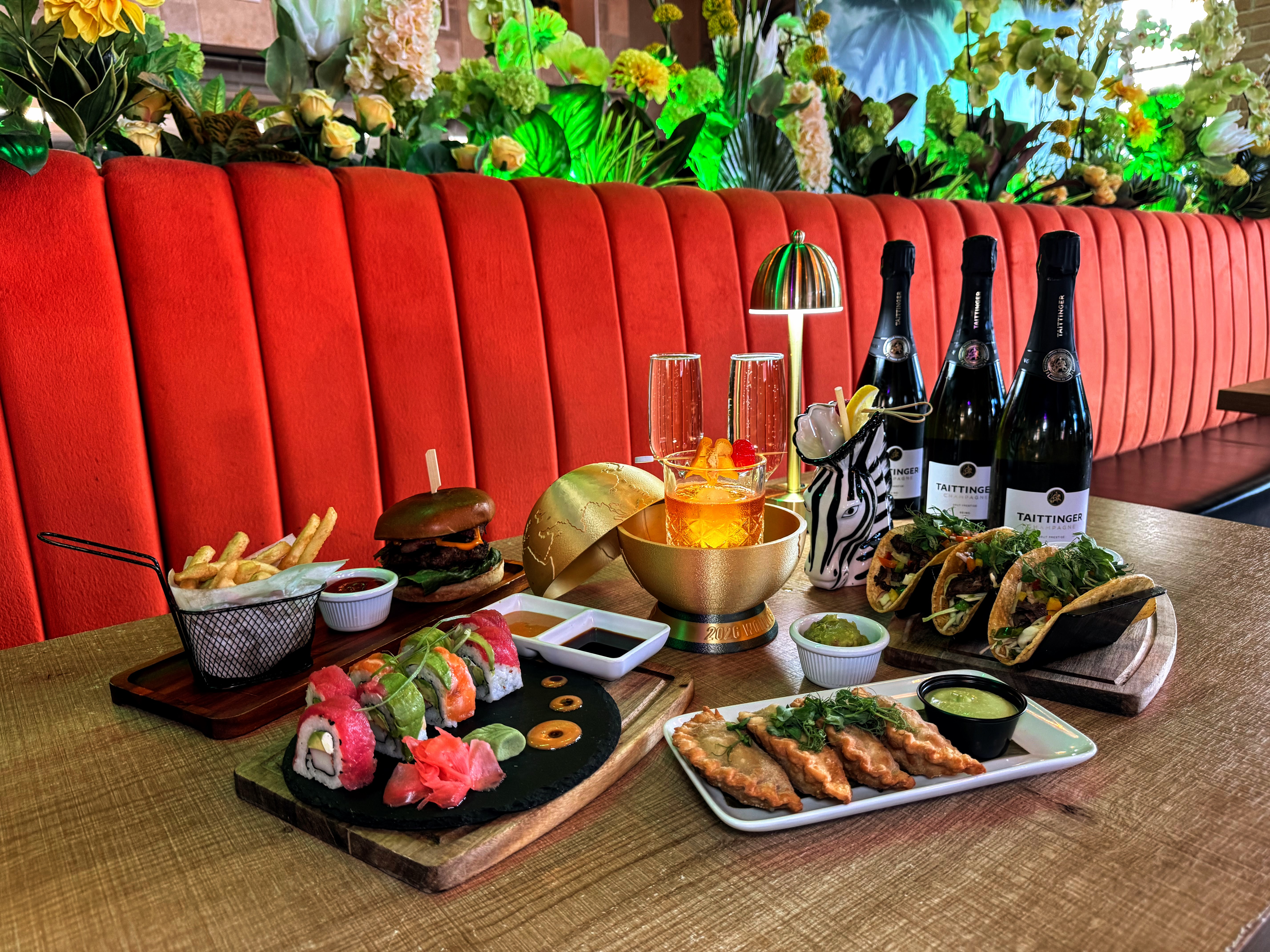
The World Cup is practically a 24 / 7 event at Mamajuana. The Latin American Northern Liberties club-staurant will be staying open until 4 a.m. on match days while also hosting Sunday brunches and watch parties for 10 games from June 13 through July 19. The club’s World Cup special promises mascot appearances, daily food specials, and limited-edition cocktails, such as the Golden Cup, an old-fashioned served in a gold globe-shaped goblet. A full schedule can be found on Mamajuana’s Instagram.
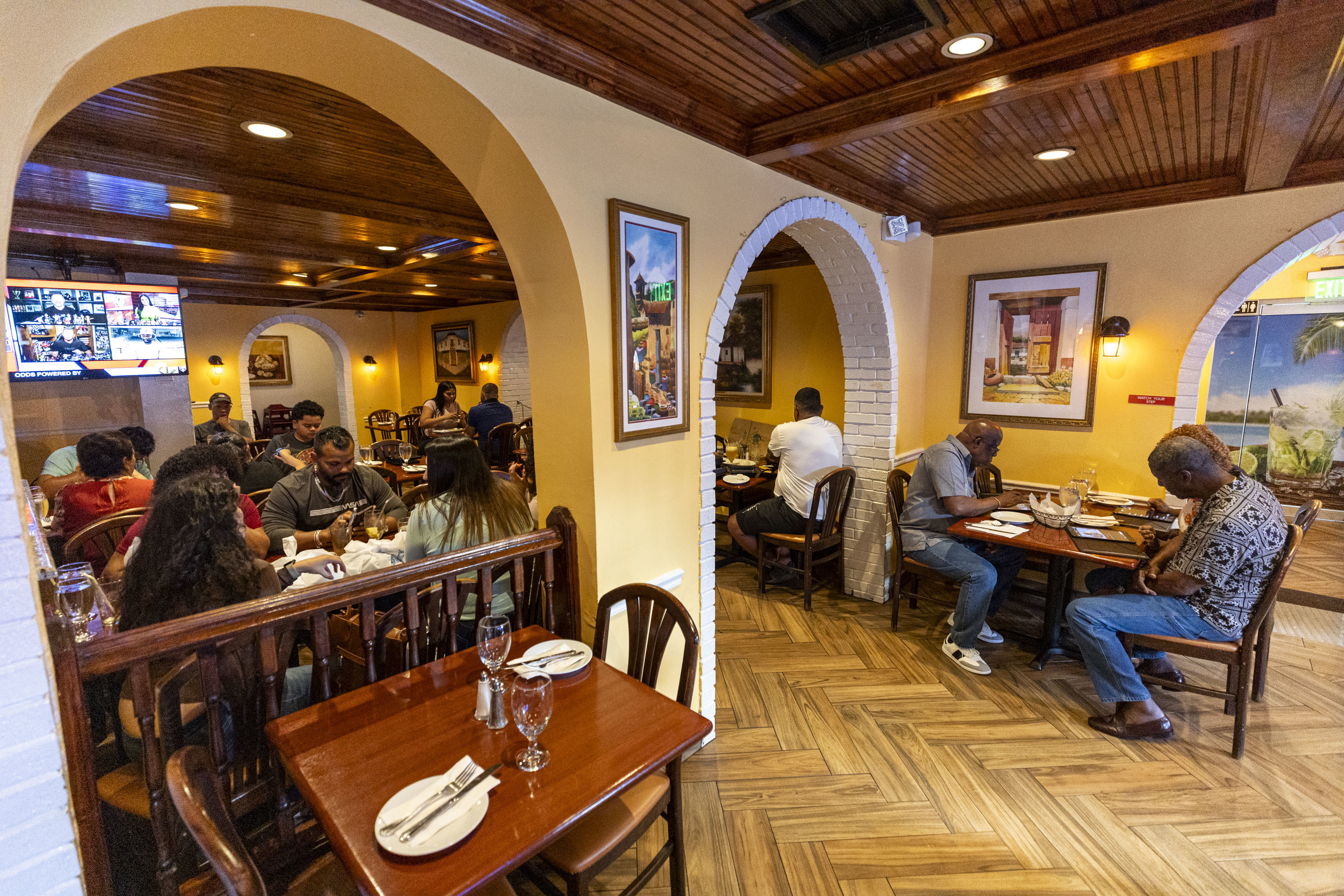
This lively Hunting Park institution will be open until 4 a.m. during the World Cup to broadcast games in its downstairs bar and upstairs night club. Tierra Colombiana’s menu spans Latin America, which means you can have arepas while Colombia plays, ceviche during Ecuador’s matches, and extra large mojitos all tournament long.
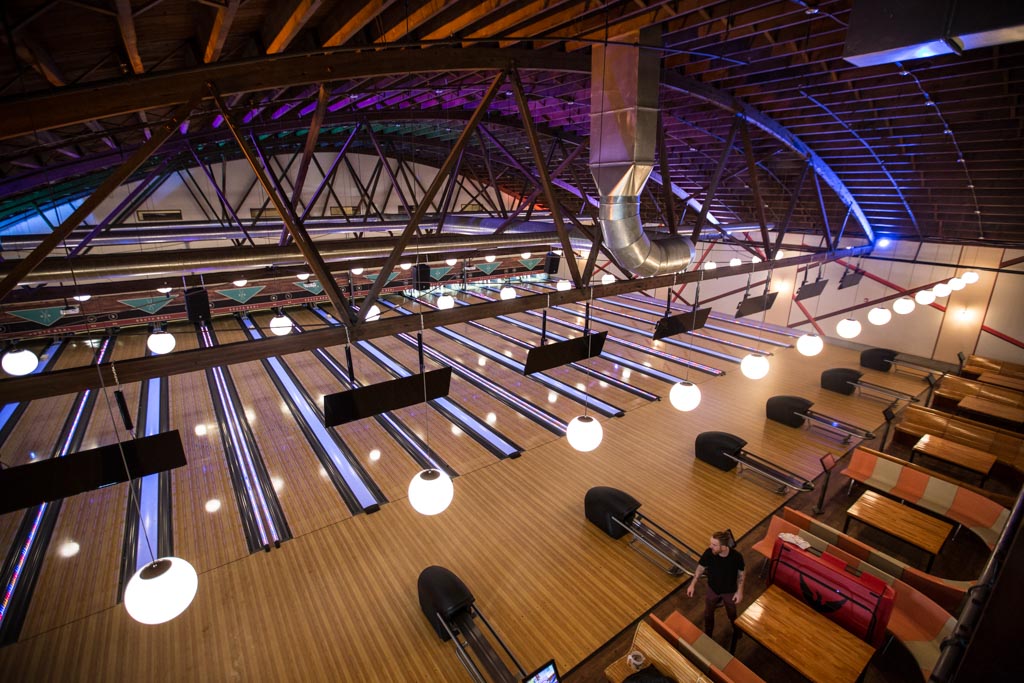
Soccer at a bowling alley? That’s literally the vibe at Oregon Avenue’s South Bowl, a bowling alley and bar (with an outdoor lounge) that is staying open until 4 a.m. to broadcast the following matches: Australia vs. Turkey on June 14, Austria vs. Jordan on June 17, and Tunisia vs. Japan on June 21. Games will play on the screens above each lane, which means there’s the potential to land a strike while watching pro athletes score goals.
If the 4 a.m. crowd isn’t your speed, these 10 Philly bars are hosting World Cup watch parties that don’t skimp on the fun — even if they aren’t going all night long.
Scenes from the opening night of Bok Bar — initially called Le Bok Fin — in 2015.Michelle Gustafson
The Black Taxi
This Irish pub in Fairmount has long been a host for English Premier League matches, at one point even displaying the trophy for an afternoon of photo ops. Roughly a half-mile from the FIFA Fan Fest at Lemon Hill, this is the spot to take in a game with a perfect pour of Guinness.
📍 745-747 N. 25th St., 📞 215-232-1086, 🌐 theblacktaxi.com
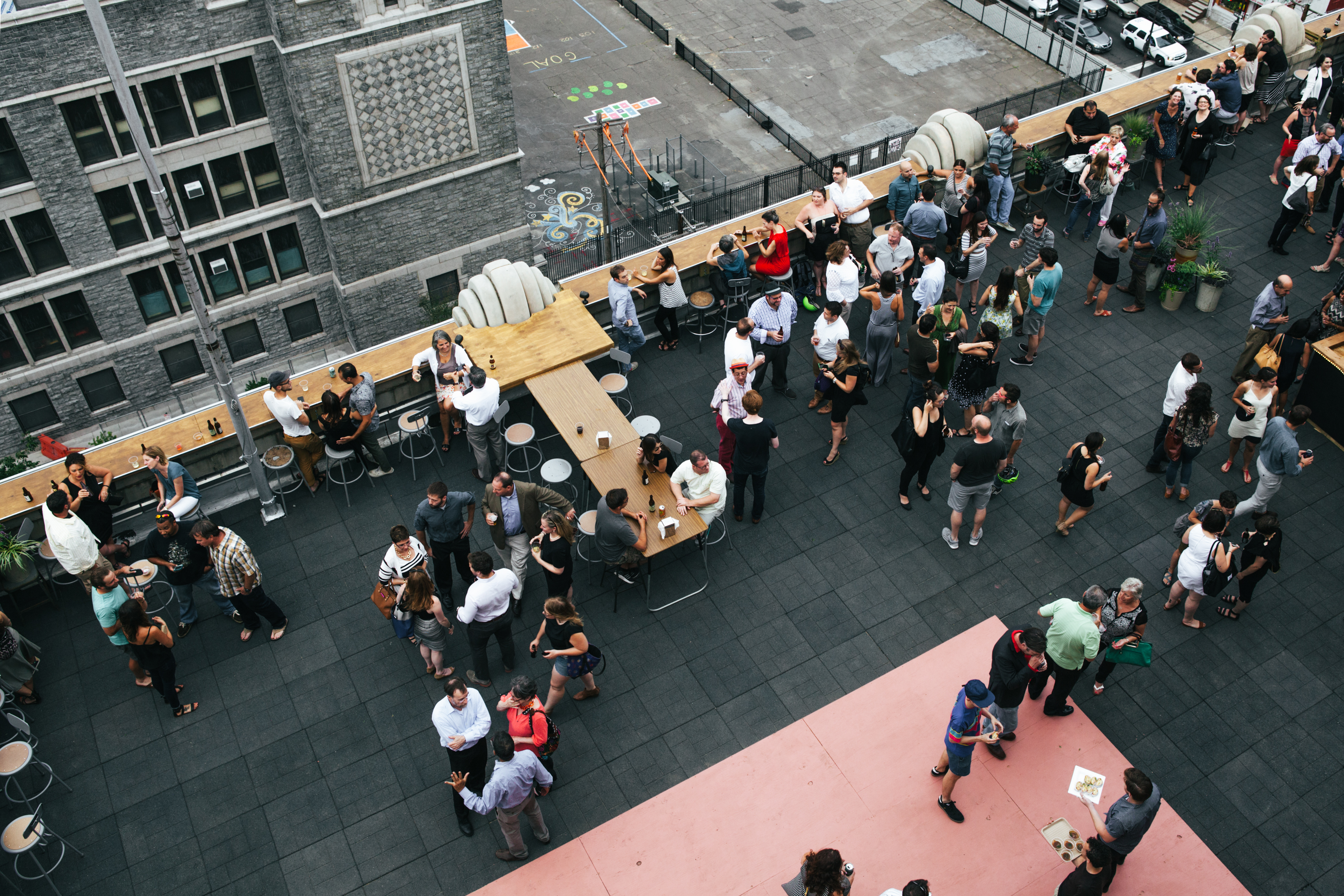
All of Philly’s tournament matches will be simulcast on screen’s atop Philly’s most famous rooftop bar, which is hosting Puyero Venezulean Flavor for a monthlong food pop-up in June that includes arepas, empanadas, and bite-sized churros. Where else can you see the lights from the Linc — I mean, Philadelphia Stadium — twinkle in distance during a knockout game on July 4?
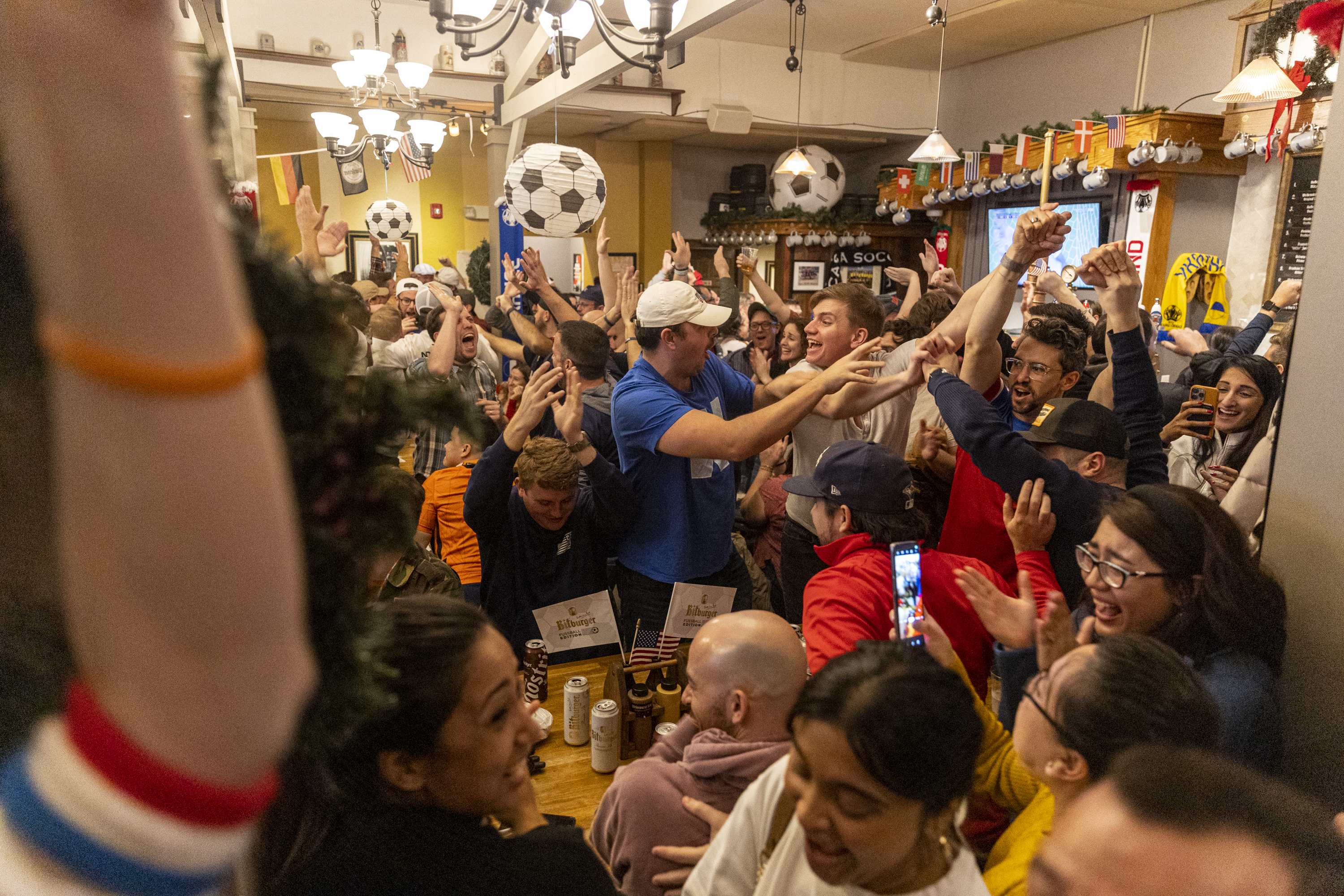
The crowd at Brauhaus Schmitz in Philadelphia cheers USA’s first goal against the Netherlands in the World Cup on Dec. 3, 2022.Tyger Williams / Staff Photographer
Bella Vista’s sprawling German biergarten is taking the party to the streets, closing down the block for free outdoor watch parties for matches on June 25, June 27, July 3, July 4, and July 19. Games will be broadcast on 20-foot-tall TVs in the middle of South Street, while indoors will feature 34 beers on tap, surprise giveaways, and burgers with novelty soccer ball pretzel buns. And on non-block party days, Brauhaus Schmitz will be still be airing World Cup matches indoors.
This Brazilian sports bar in Northeast Philly is the place to be for fans of team Brazil and is hosting not one, but two lively watch parties during the team’s match against Morocco on June 13 and Haiti on June 19. And if you’re only there for the vibes, Guanabara has a rooftop, three types of caipirinhas, and Brazilian-style cheesesteaks.
Known for its supremely satisfying smashburger, this neighborhood bar with a French twist has big plans for the Group Stage. Good King Tavern will open daily starting at 3 p.m. with an extended happy hour that features mini cocktails and street food-style snacks. Its upstairs wine bar, Le Caveau, will also be getting in on the action, which means you can sip a draft negroni and nosh on a fancy hot dog while watching your team of choice.
A bar where you can play 18-holes of mini golf between matches? Sign us up. Libertee Grounds will be gamifying its World Cup watch parties with the Pitch Passport, a punch card that rewards guest for watching every game at the bar-slash-indoor-mini-golf-course. How it works: Earn a punch for each nation when you a watch a match, which are redeemable for rewards such as a free beer, mini golf passes, or a lifetime membership. Drink specials will also be available.
This Chinatown sports bar is committed to soccer year-round, airing everything from Premier League matches to La Liga games on its 35 TVs. Expect the World Cup to be no different. Lion Sports Bar will be airing all matches at its original location and taking over Yamitsuki Ramen across the street for a ticketed open bar and buffet. Also available at both locations: a signature World Cup pink margarita garnished with collectible Lionel Messi stickers.
This longstanding Irish Pub in Center City is the official home of Philly’s Chelsea FC and Manchester City FC clubs, so you can expect that it will be a hub for World Cup games. The bar will air all 104 matches (with the sound on!) across 14 TVs and two projectors. Weeks one and two of the tournament are bringing specials on Michelob Ultra and Stella Artois, plus a ticket giveaway on June 13 for a future match.
The real fun at this rowdy, double-decker sports bar comes during the USMNT’s matches against Paraguay on June 12, Australia on June 19, and Turkey on June 25. The American Outlaws — the official support group for Team USA — will be taking over Top Tomato during those games for block parties with a live DJ that are open to all, no RSVP required.
The newly renovated (and re-christened) Stateside Live! now includes a rooftop bar and beer garden. Just steps away from the action at Philadelphia Stadium, what will it offer soccer fans? The entertainment complex is hosting the official World Cup pregame for ticketholders. A match ticket and $50 will get you expedited entry and access to a tailgate with a food voucher, while $175 buys a spot at a prematch buffet with cheesesteaks, roast pork sandwiches, and open bar.
Stateside Live! will also be open to the general public during all six of Philly’s World Cup games. Matches will be simulcast on the venue’s new outdoor stage alongside a selection of food trucks.
But if you’re looking to keep it extra local during the World Cup, these bars in the Philly suburbs are going above and beyond for the World Cup, from erecting a pop-up beer garden to brewing a special IPA.
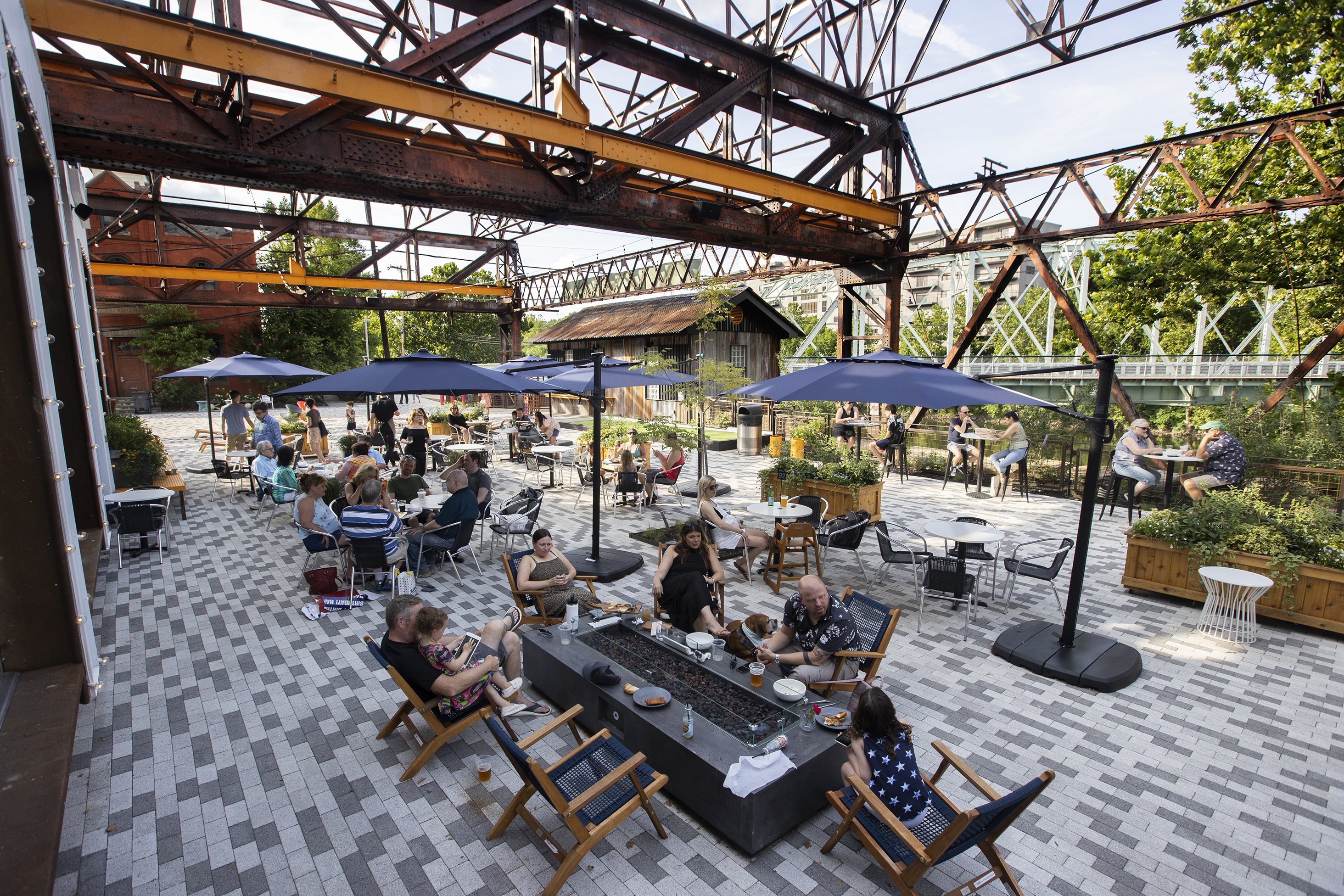
The Landing Kitchen, an all-day cafe created by Nicholas Elmi and Fia Berisha at the riverside redevelopment of the Pencoyd Ironworks on July 10, 2021.CHARLES FOX / Staff Photographer
Located in Bala Cynwyd, just across the Pencoyd Bridge from Manayunk, this all-day riverside cafe with a family friendly vibe will be broadcasting all quarterfinal, semifinal, and finals matches outdoors on a 164-inch screen. Chef Nicholas Elmi will be firing up a smoker for barbecue specials during the games, and guests are strongly encouraged to play bocce or relax at a fire pit during halftime.
Named one of the 10 best bars for watching soccer in the U.S. by the Men in Blazers, Bucks County’s Villa Capri is one of the only bars in the Philadelphia suburbs that has committed to airing all 104 World Cup matches — with the sound on. The Doylestown bar is also rolling a limited-edition cocktail menu for the tournament that includes drinks such as the $14 Equalizer margarita, which comes in passionfruit, pineapple, strawberry, or pomegranate.
This haunt for West Chester University students already has a reputation in Chester County as a Liverpool bar that airs Philadelphia Union games. During the World Cup, Kildare’s is going all in on USMNT. The bar will be shutting down a portion of Gay Street for a free, 21+ watch party during Team USA’s matchup against Paraguay on June 12. Kildare’s will also be showing a selection of other games starting at noon daily, with to-be-announced drink and food specials on offer.
Malvern’s Locust Lane Craft Brewery is hosting a pop-up World Cup beer garden in Upper Merion’s Nor-View Farm Park with free entry from June 11 through July 19. Games will be broadcast on TVs under the park’s pavilion, where attendees can bring their own chairs and enjoy a selection of $8 beers on tap, plus food from the Epicurian Garage Truck. The beer garden will open one hour before the first broadcast game and close before midnight; schedule can be found here.
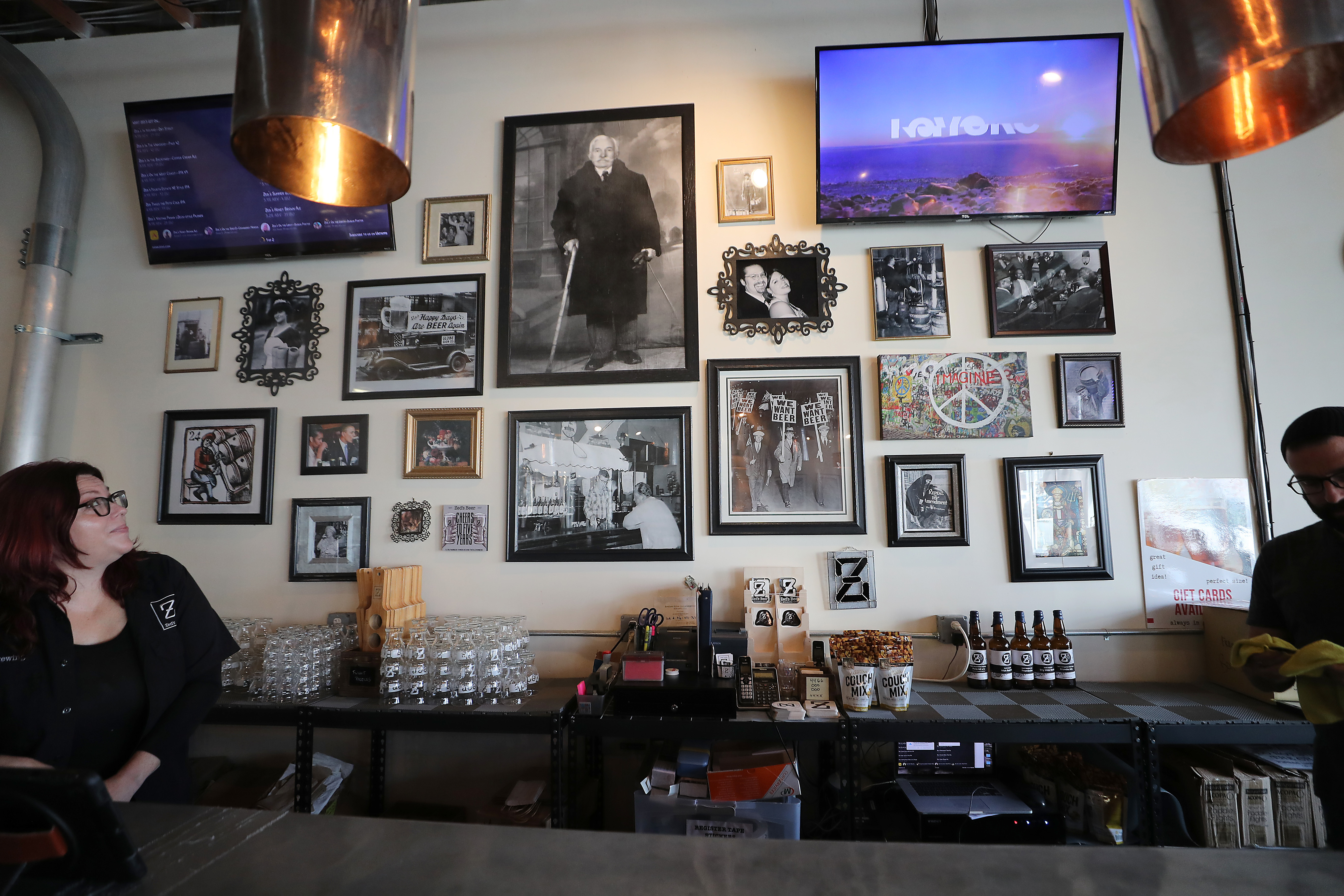
A former New Jersey Brewery of the Year, Zed’s Beer takes the World Cup as seriously as it takes its brews. The Marlton bar will be airing all Team USA matches, alongside several other key games as designated on the bar’s digital calendar. Also on offer: Soccer-themed quizzo and a new limited-edition IPA called the “48 hops for 48 teams.” Made with hops from each country with a qualifying FIFA team, this beer will be available for the duration of the tournament.
📍19 N. Maple Ave., Ste. A, Marlton, N.J. 📞 856-872-7632, 🌐 drinkzeds.com
This should be a moment for sports fans to be insanely happy. The finals are underway in both the NHL and NBA, and the matchups and the games so far have never been more compelling. Soccer’s World Cup — always the greatest show on earth — starts Thursday (see below). Yet, something seems off. If you wanted to attend Monday night’s Knicks-Spurs Game 3 at Madison Square Garden, it would have cost about $4,500 — not courtside, but in the last row. Equally insane and opaque ticket pricing has ruined the World Cup for many fans. Sports are supposed to be an escape from life’s problems, not a PowerPoint demonstration of them.
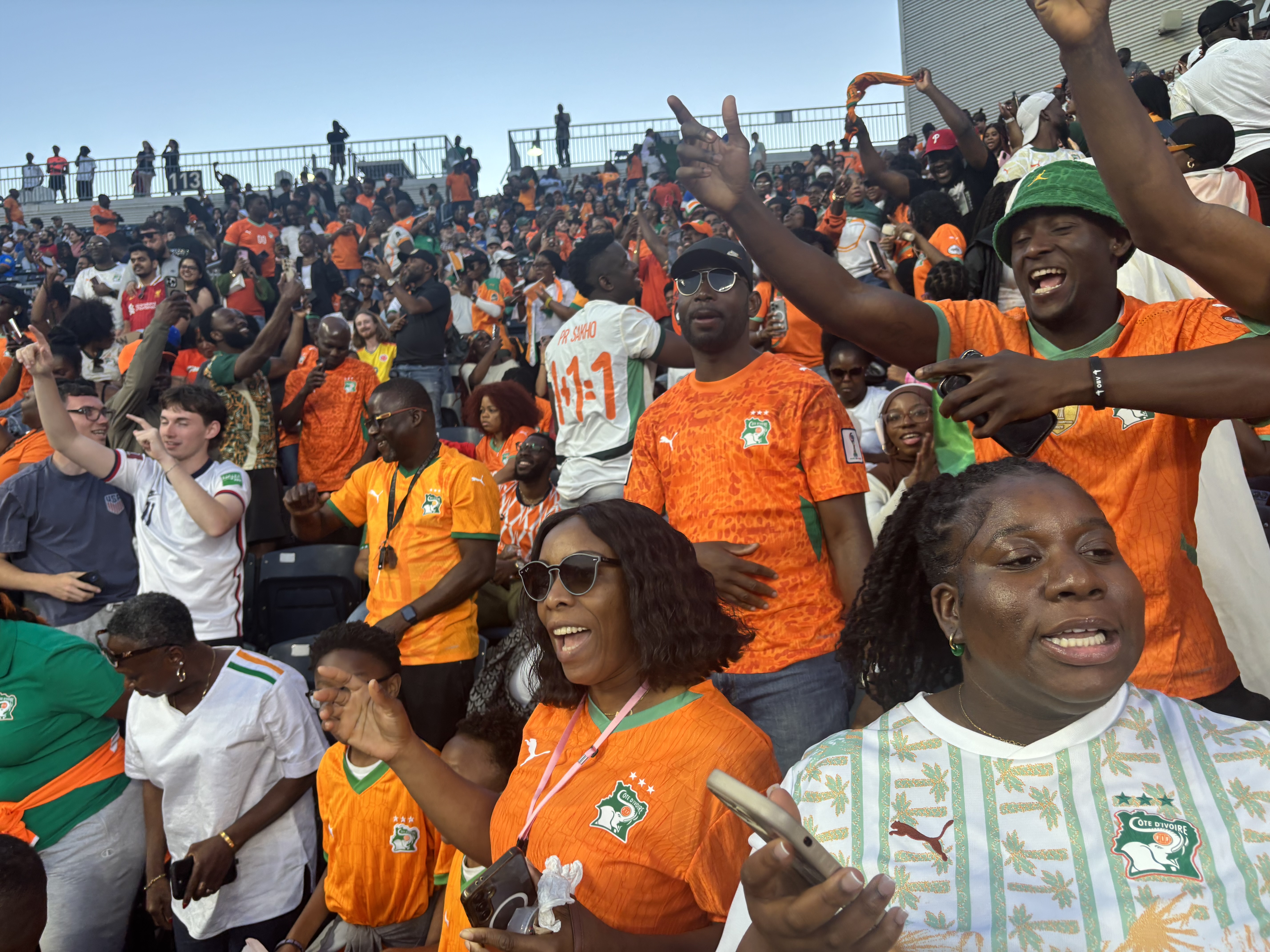
Orange-clad Ivorians bring soccer joy to a World Cup tune-up in Chester
Fans of the Côte d’Ivoire national soccer team erupt in cheers during their team’s 2-0 friendly match win over the Philadelphia Union II squad at Subaru Park in Chester on June 8, ahead of the 2026 World Cup.Will Bunch
The cosmic vibes were not great Monday night. On the car radio, the news brought a new cycle of bombs dropping across the Middle East, and yet another onscreen meltdown from an American president who is stumbling toward his 80th birthday in confused anger. Reports from the eve of the much-anticipated return of soccer’s World Cup to North America were less about the game and more about U.S. immigration outrages, including a Somali referee turned away at the airport.
Then at about 6:59 p.m., I walked through a long tunnel in suburban Chester and into an undulating orange sea of pure joy.
On the green soccer pitch of Subaru Park, the national team from Côte d’Ivoire lined up in rapt attention as “L’Abidjanaise,” the national anthem of the West African nation, blared from a loudspeaker. But in the stands, fans wearing their native country’s iconic orange jerseys could not sit still, laughing and waving their cell phones, confirming with videos that their heroes were actually here, on U.S. soil.
For a you-can’t-beat-it ticket price of zero dollars, in a year of maximum sports greed, members of an African diaspora scattered along the Eastern Seaboard had driven up or down I-95 for hours to watch Côte d’Ivoire — also known by the anglicized Ivory Coast — easily win its World Cup tune-up match against the young American prospects of the Philadelphia Union II, 2-0.
Fatim Toure, 27, in her Côte d’Ivoire jersey, and her 26-year-old sister, Ferima, wearing her headwrap like many female fans at the stadium, had driven down from North Jersey to see the match, and were now beaming as they watched the kickoff from the tunnel as the sun set on a crisp, perfect June evening.
Fatim said the sisters “were filled with nationalism and pride, so we’re excited to see how it goes.”
The cheerfulness of the Côte d’Ivoire faithful who turned the 18,500-seat stadium bright orange — drowning out scattered dots of Philadelphians in the Union blue of the regular home squad — was infectious. It was truly what the world needs now.
Soccer fans like me have been waiting since 1994 with patience, then anticipation, and finally something bordering on dread for the World Cup — Planet Earth’s ultimate sporting event — to finally return to U.S. grass. With the opener in Mexico City (75% of the matches are in the United States, with the rest in Canada and Mexico) slated for Thursday, news about the World Cup and soccer’s corrupt, authoritarian-loving governing body, FIFA, has been dominated by grim headlines.
Indeed, the political rise of Trump — the stuff of cartoon satire not long after the first World Cup matches were played here 32 years ago — and his hostile border regime have sparked the greatest angst, and on the eve of the kickoff, these fears are coming true.
Top soccer referee Omar Artan from the African nation of Somalia was turned away at Miami International Airport on Saturday, denied the pinnacle of his profession by U.S. Customs and Border Protection agents for reasons still unknown. The star striker for the Swiss national squad was also initially denied entry (since reversed), while a star player from Iraq was interrogated for hours.
Players from Iran — the nation Trump decided to bomb back in late February and is still engaged in a murky war — are going ahead with matches in Los Angeles and Seattle, but U.S. officials are forcing them to immediately return to their base camp over the Mexican border in Tijuana and not stay here overnight.
Côte d’Ivoire, an ethnic melting pot of 32 million people on Africa’s Atlantic coast where French is the official language, hasn’t been immune to the xenophobic U.S. turn on immigration. The nation is one of several under a restrictive travel ban by the Trump regime, and efforts to allow visas for some soccer fans have been plagued by confusion, including a $15,000 bond that was announced, then canceled.
While Monday’s free friendly match was a gleeful coming-out party for a diaspora that’s rooted in East Coast urban neighborhoods such as Southwest Philadelphia, most acknowledged that fans back in their native Côte d’Ivoire, where soccer is the national obsession, could never afford the cost of coming here — or the risk.
“The ICE situation has killed the entire momentum of the World Cup,” a Liberian-born woman from Southwest Philly, who said she came out to support her African neighbors, told me. “America could have used this to boost the economy and generate income, but because of the whole ICE situation, a lot of people are afraid to come.”
No World Cup squad will be more deeply tied to Philadelphia than Côte d’Ivoire, which plays two of its three matches at the temporarily unbranded Lincoln Financial Field, starting against Ecuador on Sunday night. The team is training in Chester at the Union’s facilities and staying in Delaware. But with the cheapest tickets on StubHub for that Ecuador showdown starting at $836, few whom I spoke with will be attending the matches that actually count for Côte d’Ivoire’s long-shot dream of becoming the first African nation to win the World Cup.
“I wish, but I couldn’t get any tickets, unfortunately — it was too expensive,” Audrey Yao, a 32-year-old Ivorian American researcher from the University of North Carolina who was visiting Philly from Chapel Hill, told me. “So the opportunity to see the team today — that’s why I’m here.“
For many Ivorians, Monday’s free friendly was essentially their World Cup, and they partied accordingly — swaying and gyrating to piped-in African Zouglou music between breaks, and celebrating wildly as keeper Alban Lafont stopped a penalty kick for Les Éléphants against rising young Union star Cavan Sullivan.
As a die-hard — emphasis on the word die — Union supporter for their 16-year tortured history, I’ve seen some great matches in Chester, but I’ve never had so much fun.
Monday night wasn’t just how the World Cup should have, could have been. It was very much the way America is supposed to be — with people who were proud and happy to be here, with one foot still planted in their bright-orange African heritage as they lived and breathed that Philadelphia freedom, with no masked goon squads there to hassle them.
By the setting-sunlit banks of the Delaware River, there was no U.S. Immigration and Customs Enforcement, no need to raid the ATM, no bad news from outside the stadium walls. Just 90 minutes of the Beautiful Game.
Yo, do this!
Don’t expect a lot of high-class book or film reviews this month, as my waking nonwork hours are devoted to watching the World Cup. Three games to circle this week are Thursday afternoon’s opening match in Mexico City between Mexico and South Africa (3 p.m., Fox); the first U.S. match against Paraguay in Los Angeles Friday night (9 p.m., Fox); and Philadelphia’s first contest between Côte d’Ivoire and Ecuador Sunday night at 7 p.m. on FS1, or in person at “Philadelphia Stadium” if you can spare the cash.
What if the biggest story of our time isn’t Trump’s outbursts, or even the World Cup — but the growing inability of our young people to sit down and read a book from cover to cover? The latest installment in this genre comes from university professor Tyler Jagt in a searing essay for the Chronicle of Higher Education: “My Students Can’t Read.” Is the culprit the smartphone and now AI, or the lost COVID-19 years, or the teach-to-the-test dictates of the Common Core curriculum? There’s a strong case for “All of the Above.”
Ask me anything
Question: You recently wrote about data centers. Have there been any groups who have successfully gotten data center plans aborted? What do you think are the most effective ways for communities to fight back? — @silvermoonfafo.bsky.social via Bluesky
Answer: There are already signs that the backlash against these massive, noisy, energy-and-water-sucking data centers powering the artificial intelligence revolution is becoming one of the most successful grassroots movements in American history. I wrote this spring about how everyday folks in rural Montour County, Pa., successfully blocked an Amazon-backed site that started with a lot of support from elected officials. How’d they do it? I wish there was some big secret, but basically it was: showing up. They organized petitions and got big crowds to speak at county commission and zoning board meetings, and the politicians had little choice but to listen. They have money, but we have people. Never forget that.
What you’re saying about …
Well, you won’t know it from today’s soccer-heavy newsletter, but not all readers share my deep passion for the Beautiful Game. Most questions that aren’t some variation on how much do you hate Donald Trump, or John Fetterman, or the media get low responses, but my World Cup question about a favorite team besides the U.S. set a record for reader nonparticipation. Andrew Ross is rooting for Portugal because he moved there from Philly three years ago (and we are all jealous). Weekly correspondent Mary Ann Petro isn’t rooting for anyone and hopes the Yanks “go down in flames.” I’m rooting for the U.S. and Côte d’Ivoire, but you knew this.
📮 This week’s question: Few things are more outrageous these days than Donald Trump’s expensive desecration of Washington, starting with that $1 billion-or-whatever proposed ballroom at the White House. So what happens to the ballroom when the good guys retake power? Tear the whole thing down, or blow it up on national television? Or repurpose it as a community health center or midnight basketball court, or something else? Please email me your answer, and please put “Ballroom future” in the subject line.
Backstory on how an LA mayor’s race could blow up America
Everything about the doomed bid of a B-list reality-TV star, Spencer Pratt, to become a Republican mayor in the ultra-liberal enclave of Los Angeles has been utterly predictable. That includes his campaign that was big on the kind of social media stunts that an entertainment-oriented LA media loved, and short on substantive ideas for a city with big problems that are both chronic (its incurable homelessness) and acute (violent immigration raids, the 2025 wildfires). It also includes the fact that Pratt wasn’t likely to get more than the roughly 27% his highest-profile fan, Donald Trump, received in 2024 from America’s second-largest city.
And now the least surprising thing of all: The right-wing conspiracy theories that Pratt’s apparent defeat by two Democratic women of color — incumbent Mayor Karen Bass and progressive upstart Nithya Raman — is their long-sought proof of massive voter fraud, after Pratt had started the lengthy vote counting in second place.
It’s not just the usual loudmouths on X. Trump is taking the lead role, again, in spreading election lies, telling Kristen Welker of NBC’s Meet the Press in their now-notorious Wisconsin interview that the California voting was rife with fraud, and, when asked for any proof, blurted angrily: “No, they’re crooked … Just like you’re crooked.” When House Speaker Mike Johnson was asked about these lies on Capitol Hill, he only amplified them, stating that “everybody knows instinctively that something is wrong.” No proof, just “instincts.” Trump’s handpicked and apparently incompetent top prosecutor for Southern California is now threatening an investigation.
Here’s the thing. California’s elections are among the most democratic and inclusive in America. There is extensive opportunity for the convenience of mail-in voting, and voters are allowed to send these ballots right up until Election Day. Local officials then have up to 30 days to meticulously count all the votes. That means a) it takes longer to declare a winner in California than anywhere else, and b) it unexpectedly turns out there are significant differences between who votes by mail instead of in-person, and the shape of the race can change dramatically from election night to the end of the lengthy counting. To today’s GOP, any fair and measured vote-counting must be a conspiracy.
Why does it matter? Pratt loses and — according to some reports — moves out of LA. End of story, right? Not exactly. We don’t know yet what ridiculous claims California’s train wreck federal prosecutor will make about supposed election fraud, but it’s almost guaranteed that the Trump regime is looking to make California the bogus argument for extreme measures to influence the general election in November.
Sending in troops? Seizing election machines? Invalidating results? It will all be on the table for Team MAGA in November, and the fact that the former bad boy from MTV’s The Hills couldn’t get elected mayor of one of the nation’s most diverse and liberal cities will be cited as a reason. Spencer Pratt has landed a starring role in the worst reality show ever.
What I wrote on this date in 2023
Even though it was only three short years ago, memories of this week in early June back in 2023 are a little foggy — because the skies here in Philadelphia and around the Eastern Seaboard were filled with suffocating, thick smoky haze from wildfires up in Canada. Before digging up my column, I’d forgotten that a Phillies game at Citizens Bank Park was canceled because of the horrendous air quality. I wrote: “In a perfect world, [President Joe] Biden would have donned an N-95 mask Wednesday and spoken in front of the orange blur of the Statue of Liberty to declare unconditional war on fossil fuels.”
I’ve never had so many column ideas swirling around in my head as this chaotic start to the summer of 2026. Last week’s Sunday column looked at the openly fascist coming-out party for the former U.S. chief immigration raider Greg Bovino, who attended a European white supremacist conference. I said it matters a lot that he is now screaming the not-that-quiet part about U.S. xenophobia out loud. I shifted gears over the weekend and wrote about the growing panic of U.S. elites over grassroots opposition to data centers, which has sparked bizarre accusations of Chinese influence, as well as spying on activists by some police agencies. The 1 Percent can’t admit it’s really the noise pollution and higher electric bills.
Wrapping up this week’s theme in a bow, I have to say I’ve been blown away both by the quality and the quantity of The Inquirer’s coverage of the World Cup, which has truly matched, if not surpassed, some of the national outlets. Lead writer Jonathan Tannenwald, with a well-deserved reputation as one of the nation’s top soccer journalists, has been following the U.S. team in its Georgia training and at its warmup matches, profiling key American players like its star Christian Pulisic, and filing other human interest stories like a Penn soccer standout who’ll be taking the pitch for Haiti. Other Inquirer writers have contributed with in-depth features about everything from the role the late Tug McGraw’s widow played in bringing soccer to Philadelphia, to the storied history of the cinder (ouch!) pitch in Fishtown that brought Philly “attytood” to the sport’s slow rise here. That’s not to mention the comprehensive guide we published earlier this year. You won’t be able to read all this without a subscription, so now is the time to finally sign up. And let the games begin.
By submitting your written, visual, and/or audio contributions, you agree to The Inquirer’s Terms of Use, including the grant of rights in Section 10.
IRVINE, Calif. — When the U.S. men’s soccer team left Qatar after the last World Cup, the repeated lament was the lack of a No. 1 striker.
Folarin Balogun’s name wasn’t entirely new at that point. Born in New York to Nigerian parents and raised in London, he had played for a U.S. youth squad in 2018. He started playing first-team club soccer at England’s Middlesbrough in the first half of 2022, and a brief hot streak there got him on U.S. fans’ radar.
The next European season brought Balogun’s real breakout and a bigger spotlight. Now not only did the U.S. want him, but so did Nigeria and the England program of which he played on youth clubs from 2018 to 2021.
For a stretch of spring 2023, the noise resembled college football teams recruiting a five-star high school quarterback. U.S. fans flooded Balogun’s Instagram page with comments, then-manager Anthony Hudson dropped hints about conversations, and even then-England manager Gareth Southgate was pulled into the chattering class.
Folarin Balogun on the ball during Monday’s U.S. practice, the only open one the team will have leading up to the World Cup.Jonathan Tannenawld
In March, it really looked like a recruiting circus. Around that month’s FIFA window, Balogun was spotted courtside at an Orlando Magic game, then at Yankees spring training, with U.S. Soccer’s help behind the scenes.
Now comes the biggest moment. Balogun, 24, almost certainly will be the Americans’ starting striker at the World Cup, beginning with Friday’s group stage opener against Paraguay in Inglewood, Calif. (9 p.m., Fox29, Telemundo 62).
“I feel like my individual journey is a bit full-circle now, approaching the World Cup,” he said Monday, the opening day of the U.S. team’s stay at its World Cup base camp. “Especially with the World Cup being here, the opportunity to represent my nation in front of a home crowd is going to be something special for me, for my family, for my friends, and for the team. So I’m definitely looking forward to it and very proud.”
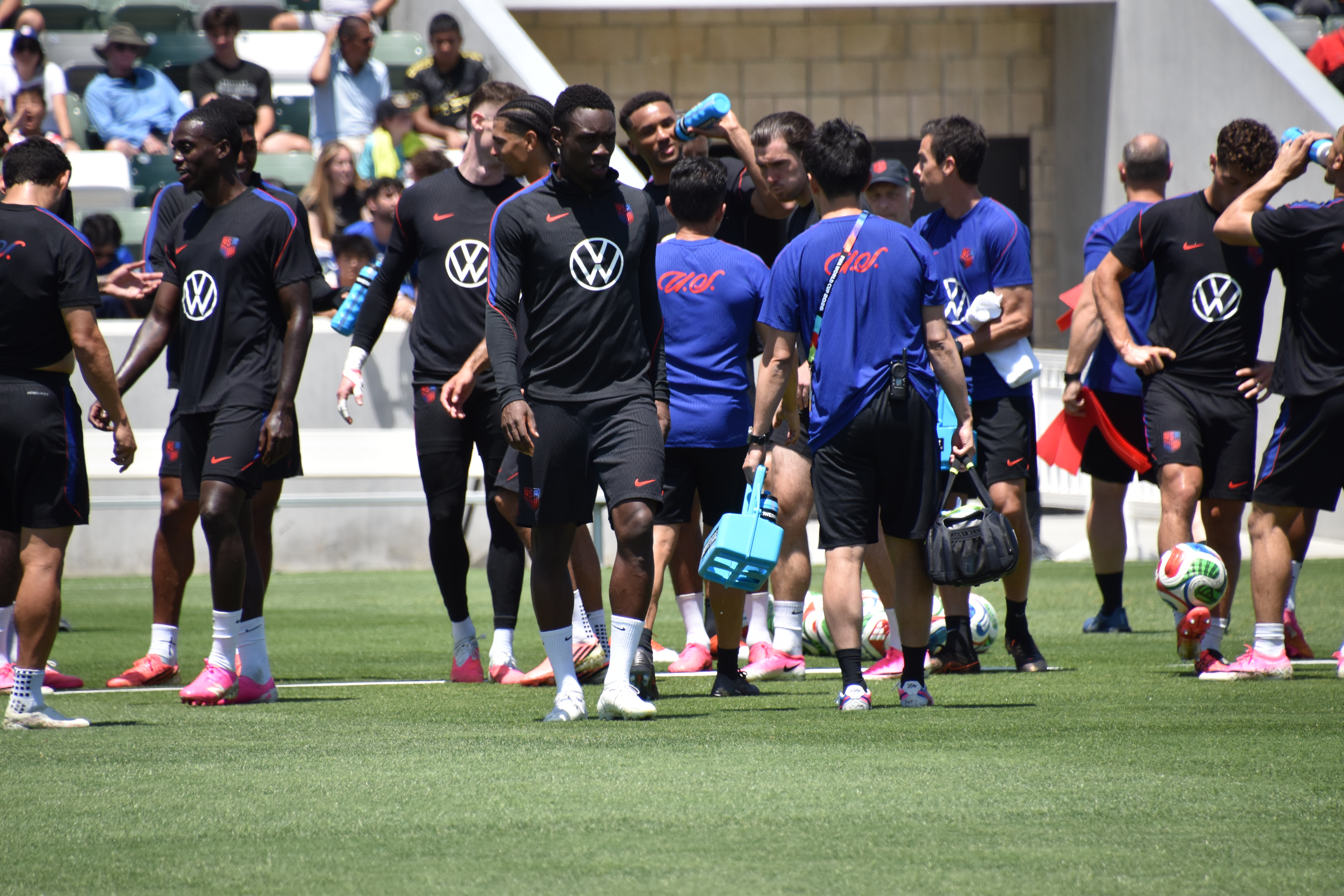
Folarin Balogun (center) among his teammates at Monday’s practice.Jonathan Tannenawld
His teammates know what he brings to the squad.
“His movements: left, right, being able to hold a ball up and bring other players in, and then his movement in behind,” U.S. centerback and captain Tim Ream said. “Just being in positions, and getting himself into goal-scoring positions, is something that we’ve been crying out for for a long time with the team and the group, and he brings that.”
Ream sat next to Balogun on the podium, so he joked about being wary of giving too many compliments. But he went on with them anyway.
“He’s probably the most annoying striker for me to have to deal with in training because he is so quick with his movements,” Ream said. “Physically strong and able to seemingly glide past people.”
Balogun admitted that being so close to the World Cup doesn’t feel real yet, but he knows the time is coming.
“I think it’s probably going to start to feel more real to me when I’m lining up and preparing to go out on to the pitch and I’m hearing the fans shouting and screaming,” he said. “I definitely think it will be real to me the closer I get, but this is the first opportunity for me to play in a World Cup. So I don’t really have any expectations, and I’m just trying to stay present, stay in the moment, soak everything in.”
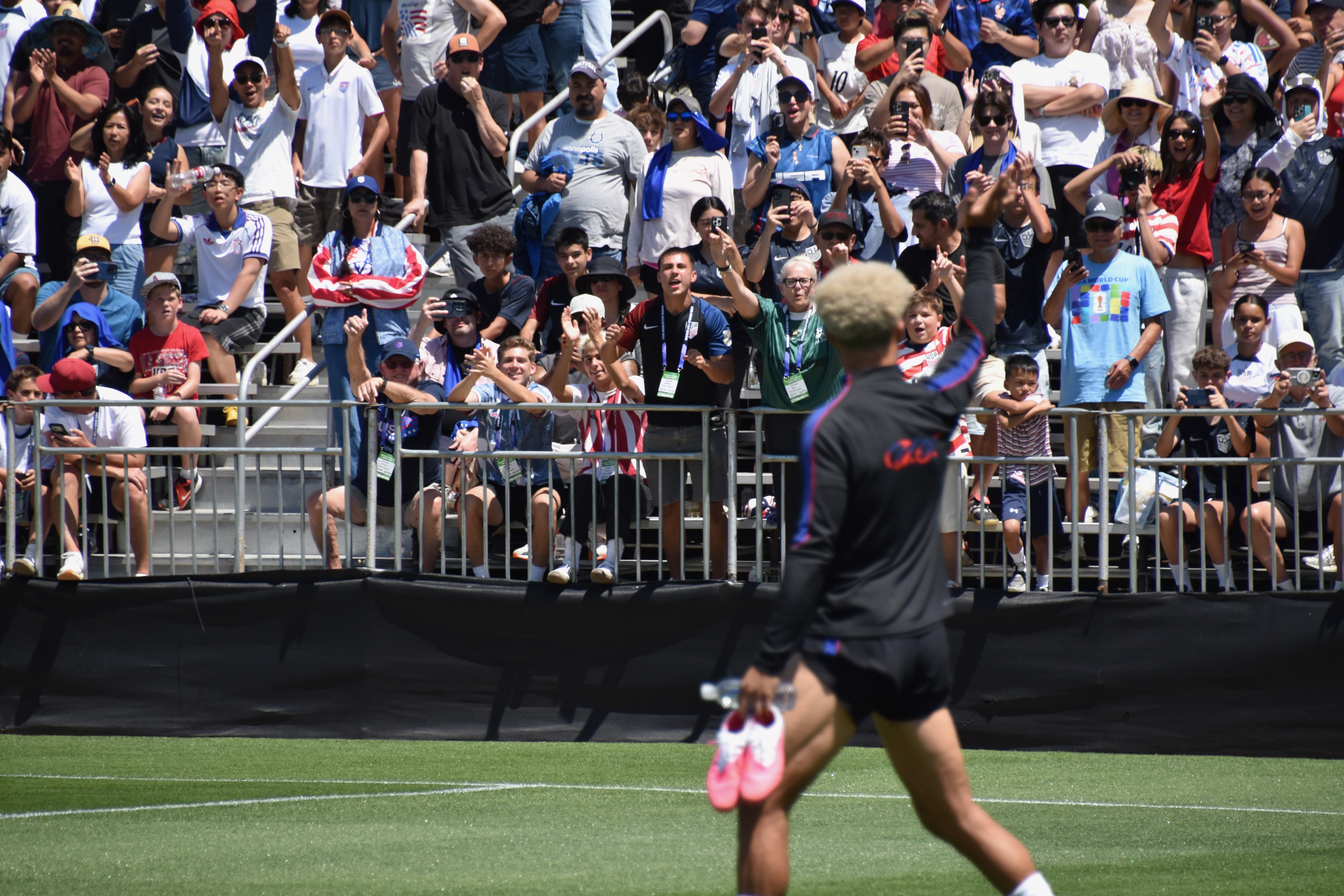
There were a few moments to enjoy on Monday, when the U.S. held an open practice for fans, its only one of camp. A full house of 5,500 fans attended at Championship Soccer Stadium, home of the second-tier USL Championship’s Orange County SC, with free admission through registration with the city of Irvine. U.S. Soccer said there were over 32,000 applicants.
Quite a few of them cheered for Balogun specifically, along with the many “USA!” chants that rose all morning.
Fans cheering for Antonee Robinson as he walked onto the field.Jonathan Tannenawld
“As I said before, it’s just coming to a full-circle moment, being able to perform on the biggest stage and give back to the fans,” he said. “That’s something I’m looking forward to doing, and I’m just happy I have the opportunity to do that.”
And he hasn’t forgotten that whirlwind time leading up to his commitment and what it showed him about soccer’s growth in the United States.
“I just remember an immense amount of appreciation from the fans,” Balogun said. “I didn’t realize at that moment how big football, soccer, was here in America. And to really feel that in full force was something that was inspirational for me. It made my decision easier.”
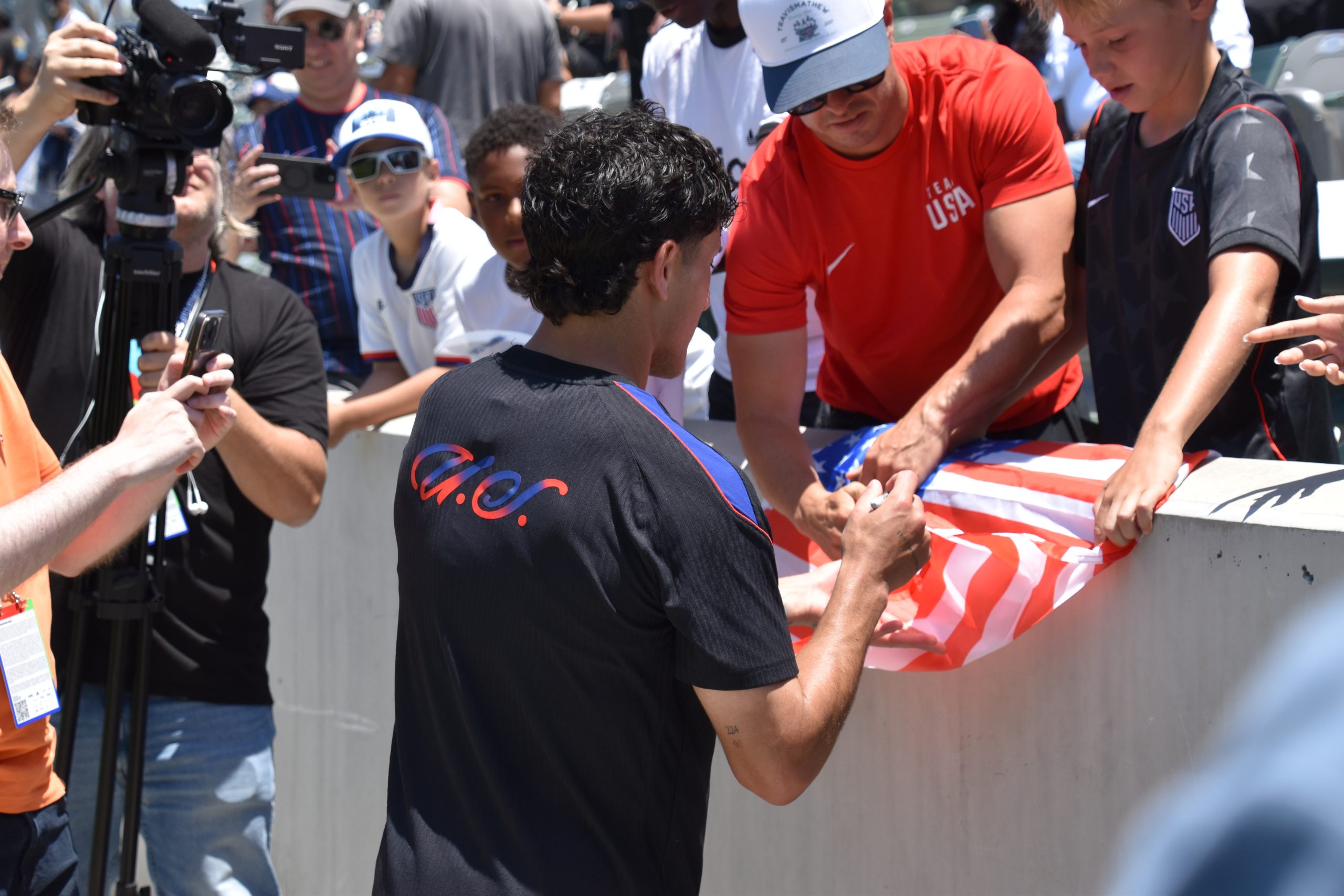
Alejandro Zendejas autographing a fan’s American flag after practice.Jonathan Tannenawld