The waterfronts of Chester and Wilmington are roughly 5,000 miles across the Atlantic Ocean from Abidjan, the Ivory Coast’s largest city. But, for at least three weeks during the FIFA World Cup, the Ivorian men’s national team will call the banks of the Delaware River home.
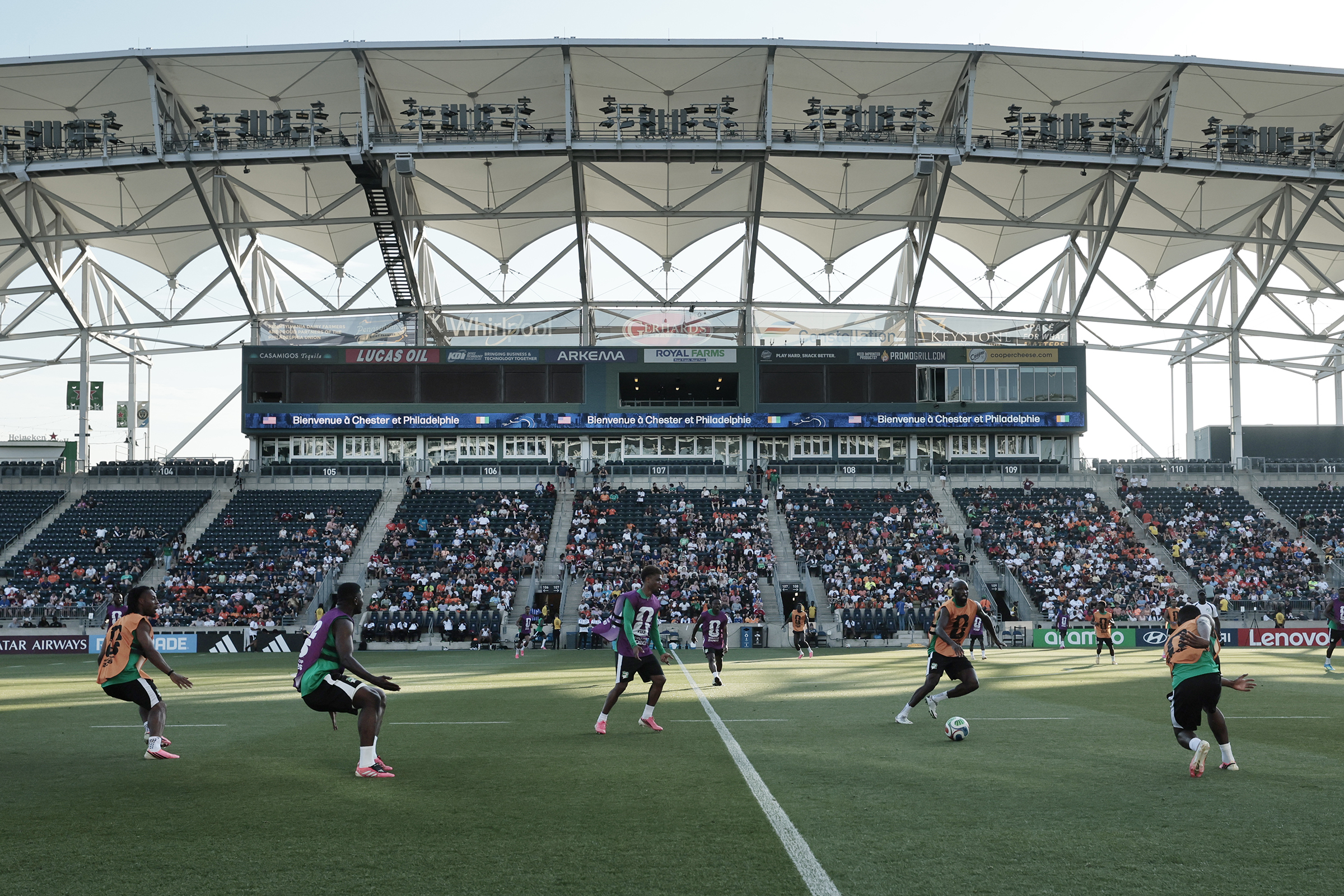
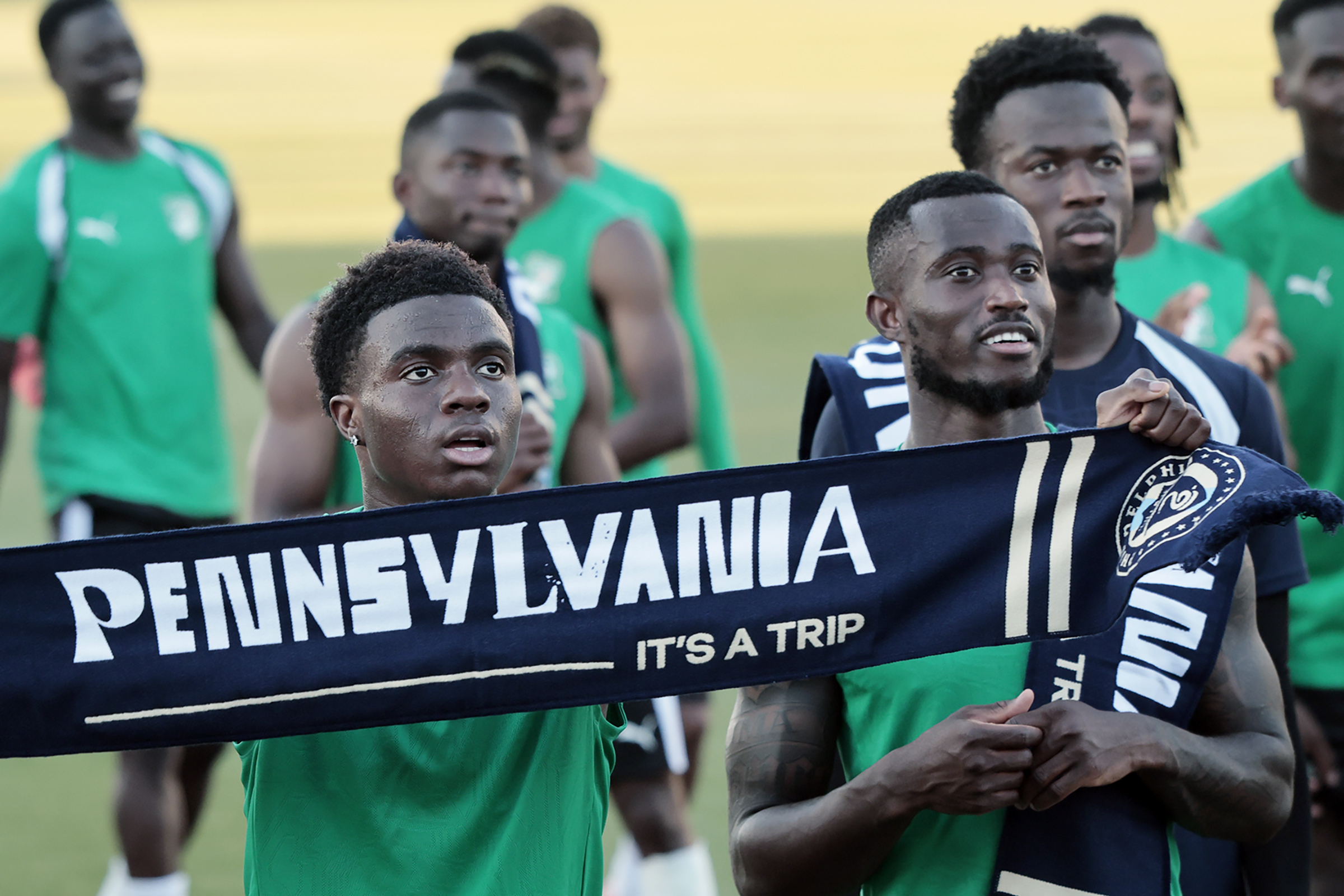
Les Éléphants hosted an open training session at Subaru Park on Friday evening, two days before they begins their World Cup campaign with a match against Ecuador at Philadelphia Stadium (aka Lincoln Financial Field) on Sunday (7 p.m., FS1).
Ivory Coast is the only nation scheduled to play at the Linc twice during the World Cup’s group stage, and it is the only team that will stay and train in the Delaware Valley during the tournament.
Ivory Coast is the only team with a base camp in the Delaware Valley during this summer’s World Cup.Elizabeth Robertson / Staff Photographer
The team has set up its base camp at Hotel Du Pont in Wilmington and will train at Subaru Park in Chester.
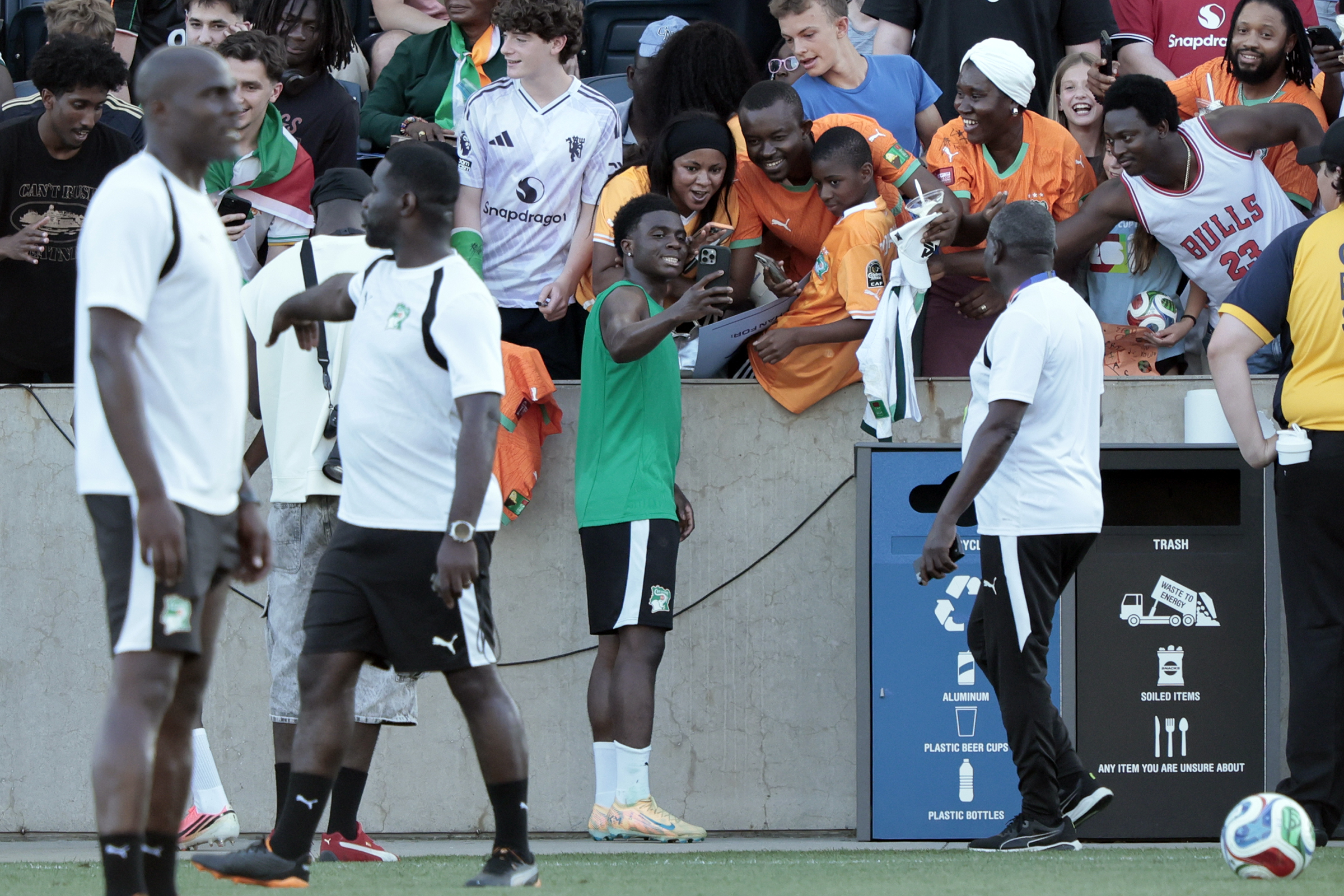
Ivory Coast’s open training session Friday evening was the second free event it has staged for the Philadelphia community. Les Éléphants beat Union II, 2-0, in a tuneup friendly on Monday that was open to the public.
The team took its official squad photo before a training session that featured some light 11-on-11 work before being welcomed to the region by a committee of representatives for Visit PA.
Ivory Coast manager Emerse Faé addressed the crowd briefly in French after the session, saying the team has received a “warm welcome” in the region since its arrival last Saturday.
“We were well-received by the delegation here,” Faé said through a translator. “We want to see you on Sunday for the win.”
For some, Friday night’s open practice was an opportunity to familiarize themselves before seeing Ivory Coast take the field for a match at the Linc.
Sam Shovers and Joe Santillo bought tickets to see Ivory Coast’s final group-stage match, a clash with Curaçao at the Linc on June 25.
“We wanted to get acclimated and support,” Shovers said. “I always wanted to go to the World Cup, so I’m trying to just get as invested and ingratiated in the vibes of it as possible.”
Members of the Ivory Coast national football team signed autographs and posed for photos following their practice Friday at Subaru Park. Elizabeth Robertson / Staff Photographer
Shovers was wearing a plain orange T-shirt, while Santillo sported an Ivory Coast-specific shirt he ordered from Amazon.
The friends said they plan on adopting the Ivorian team as one of their favorites for the tournament and have spent the last few weeks learning more about the nation and its culture — Santillo is quick to point out that Ivory Coast is home to the world’s tallest domed church.
The team is of special interest to Shovers, 30, who majored in African studies in college.
“Most of my studies were with sub-Saharan and English-speaking parts of Africa,” Shovers said. “This part of West Africa has been an exciting area to get excited about.”
Around the world
Many fans in attendance at the open training were sporting the orange Ivory Coast kit or other unofficial gear, but jerseys of all kinds popped up throughout the crowd of about 5,000 people.
Sam Haile, 47, showed up to Friday’s session wearing a red Liverpool jersey. He said he cherished an opportunity to watch a potential future star for his favorite club up close.
“It’s good to see a World Cup team coming to our community, letting us watch the free training,” Haile said. “They’ve got a couple of really good, top players.”
Haile said it was also an opportunity to get into the spirit of the World Cup without paying for an expensive match ticket. He planned on attending the Union’s Soccer Celebration to watch the U.S. match Friday night, and the FIFA Fan Festival later in the tournament.
Haile was born in Ethiopia before coming to Philadelphia to enroll at Drexel in 1997. He’s stayed in the region ever since, moving to Middletown, Del., in 2009. Haile said he will be supporting the Ivorians through their World Cup run, calling it “a pleasure to watch them.”
“I have a little bit of a feeling for them,” Haile said. “I hope they will go further in the tournament and stick around in Wilmington until the end.”
Cultural exchange
While Philadelphian fans got an introduction to Ivorian culture on Friday, the Ivorian squad got a taste of Philadelphia’s, too.
Jamie Pagliei, better known as The Philly Sports Guy on social media, gave the team an official introduction over Subaru Park’s public address system after the training session ended.
With his face painted red, white, and blue for the U.S. game later that night, Pagliei praised Philadelphia Soccer 2026 for helping to bring free events like Saturday’s training to the Philadelphia region during the tournament.
“I feel like that, out of every city that’s hosting, that Philadelphia and Pennsylvania is doing it right,” Pagliei said. “We are going to be the ones that might be the snapshot that FIFA uses, that says, ‘Hey, this is what we want out of our host cities moving forward.’”
As the Ivorian players walked off the field, some stopped to admire the West Powelton steppers and drum squad, which performed throughout the concourses and in the River End on Friday.
Antoine Mapp has been with the steppers since the group’s founding in 1991. He’s worked Sixers games and Phillies games as part of the teams’ official drum lines, but Mapp said drumming in front of Ivory Coast’s stars was the most starstruck he’s been.
“That was a surreal moment,” Mapp said. “I’ve been around the biggest stars in the NBA. That, right there, was probably the biggest moment I’ve ever felt, to have a whole football team standing there watching us perform. It’s an awesome, surreal moment.”
When organizers announced two years ago that Philly’s FIFA Fan Festival site for the World Cup would be at Lemon Hill, many Philadelphians responded with a collective: Huh?
Located between the Philadelphia Museum of Art and Girard Avenue, the grassy site in East Fairmount Park hasn’t hosted many big public gatherings, though it was the staging and undressing area for the Philly Naked Bike Ride in 2022.
In my many years in Philly, I’d never covered an event at the site — and I’d never been to a FIFA Fan Fest either, which features live broadcasts of the games, entertainment, vendors, and soccer-related activities. So I went on Thursday, the opening day of the 39-day festival, to bring a minute-by-minute report of what I experienced to you.
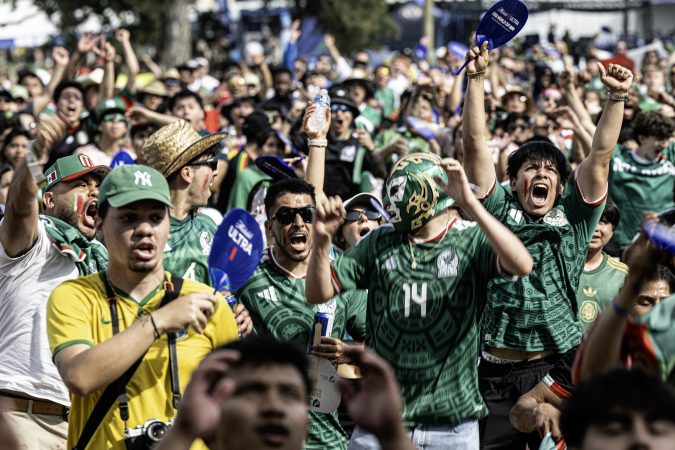
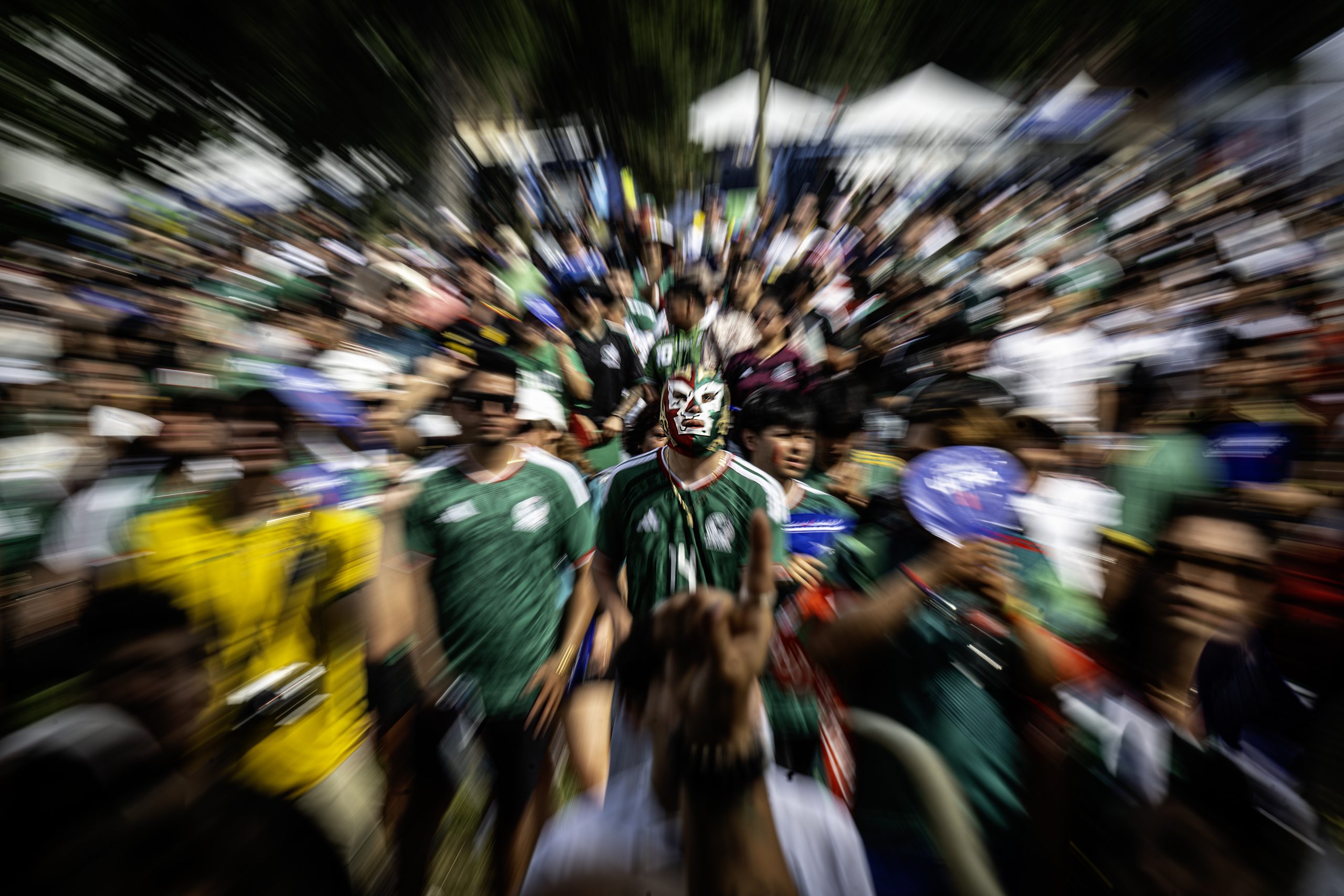
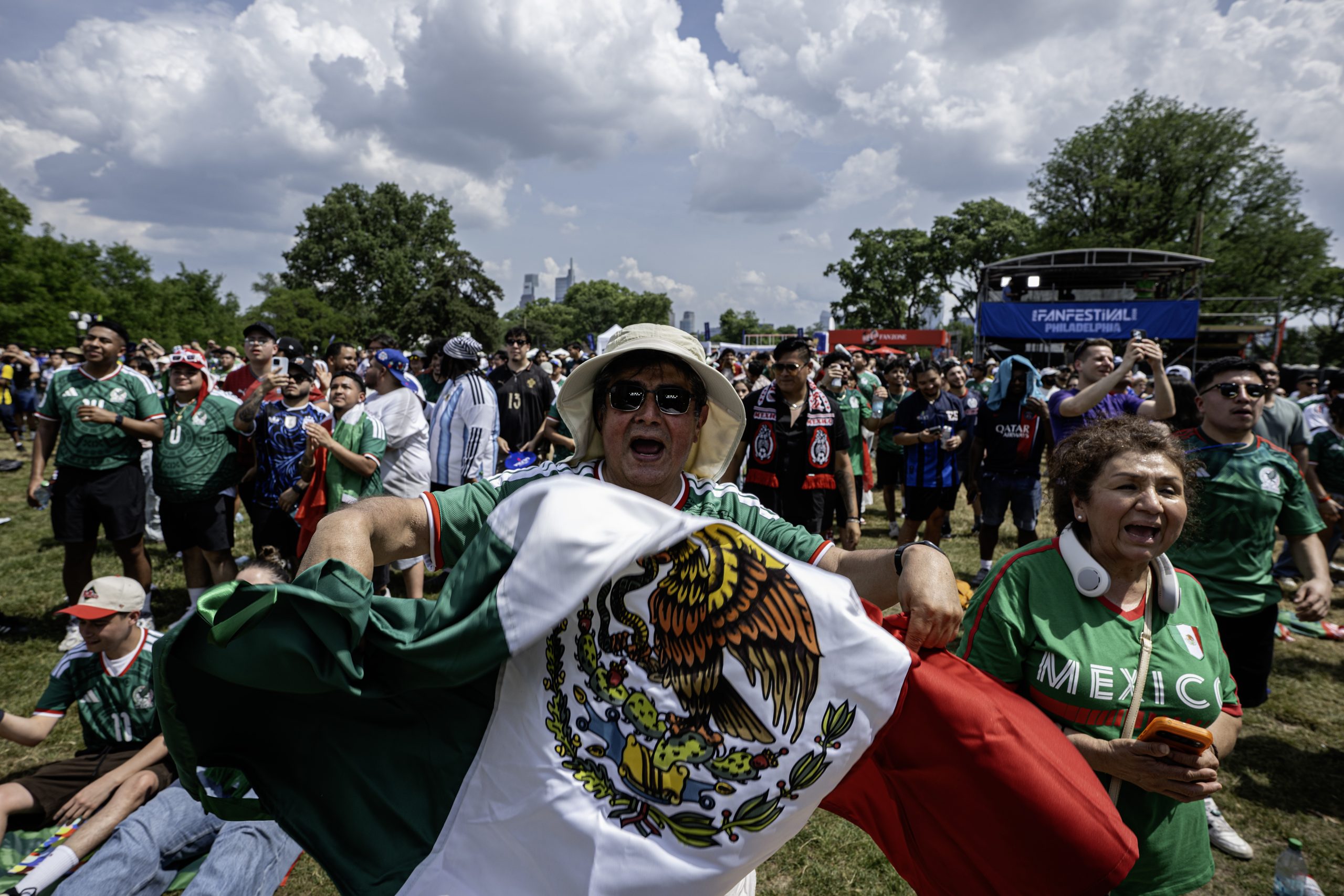
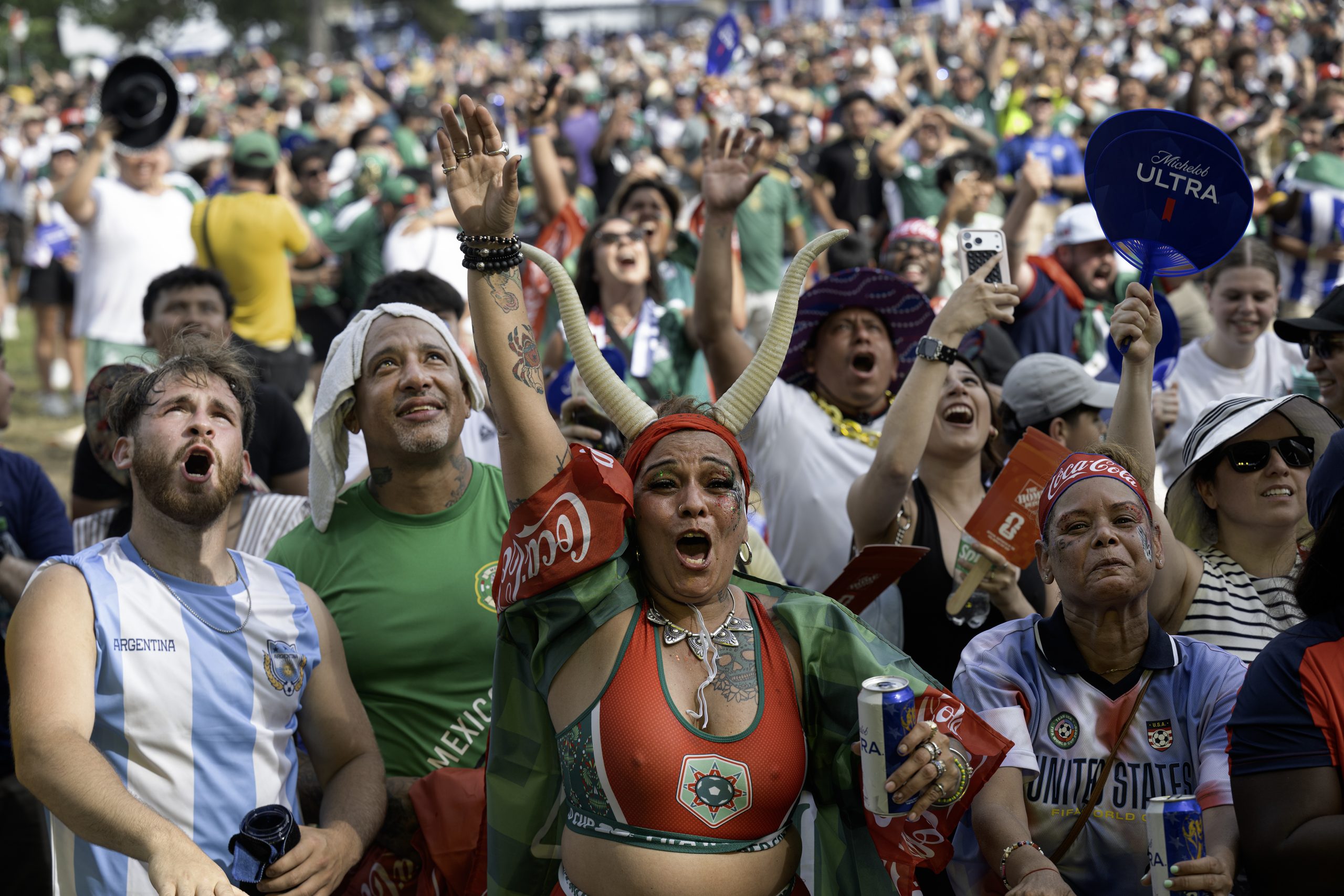
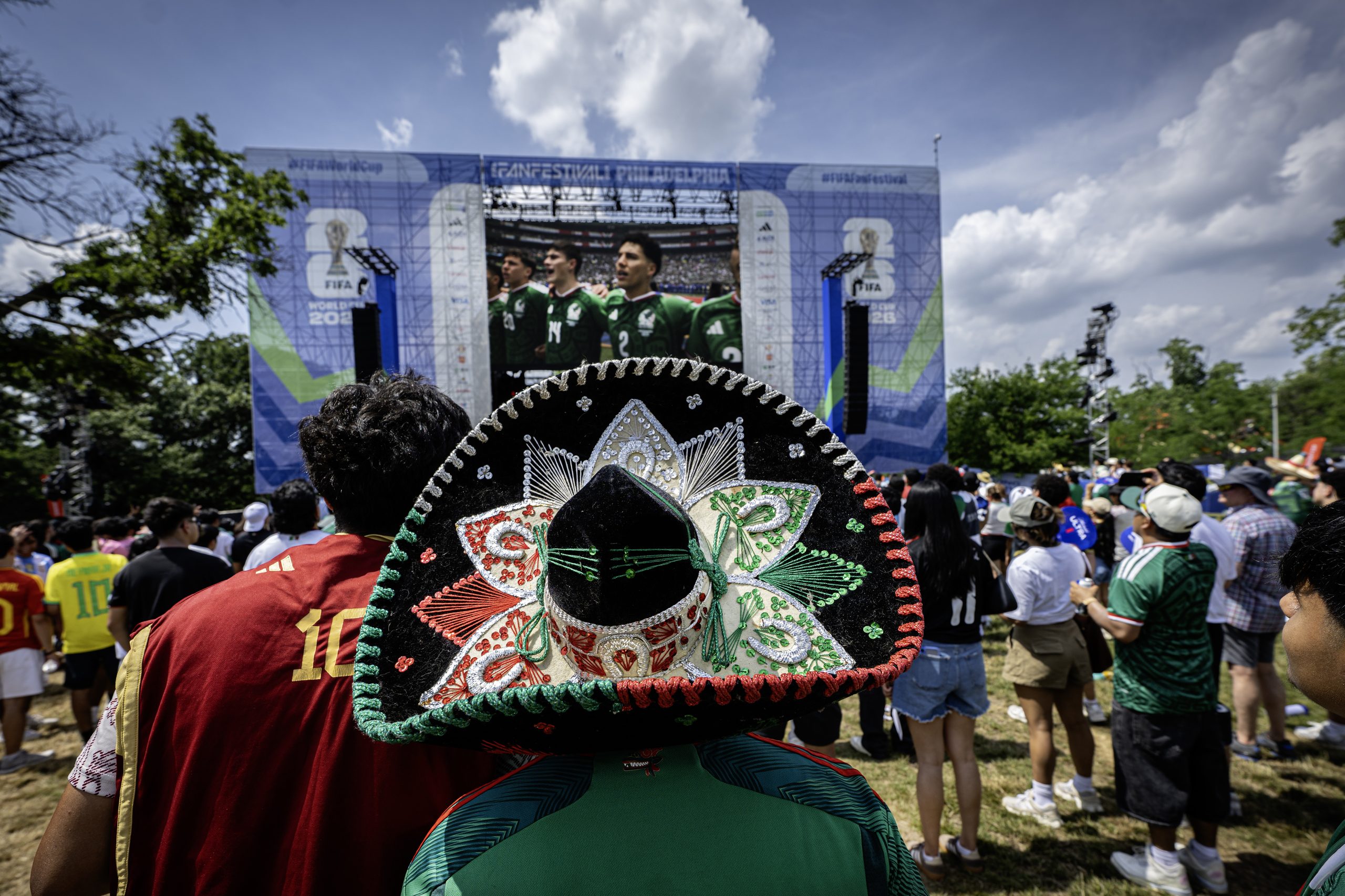
Using a zoom lens technique, Mexican fans watch the FIFA World Cup opening match between Mexico and South Africa on a giant screen during the opening day of the FIFA Fan Festival at Lemon Hill on Thursday.Jose F. Moreno / Staff Photographer
I knew the journey wouldn’t be easy. Not only were temps forecast to be in the mid-90s (with heat indexes over 100 and a heat health emergency in place), you can’t drive to the site, or get close with ride share apps. Roads around the venue are closed and street parking has been restricted to neighborhood residents.
To get to the event, the city is urging guests to take the Philly PHLASH bus, take SEPTA’s bus routes 32 or 48, use a bicycle, or walk. I chose the latter.
12:30 p.m.
I begin my journey at LOVE Park, where I see a group of five friends in their team Mexico jerseys — and a sixth in a white T-shirt and sombrero — getting their photo taken with the LOVE statute.
Alexis Arellano, 29, tells me they’ve come from Atlantic City to catch the Mexico v. South Africa game at the FIFA Fan Festival.
“It’s a once-in-a-lifetime opportunity. You’ve got to take advantage of everything they got going on. It’s in our backyard,” he said.
12:39 p.m.
I stop into the pop-up Philadelphia Visitor Center hospitality hub at the park. The space is tiny, but the air-conditioning feels like silk sheets on my sweaty skin. I strongly consider buying the $14 portable fan that sprays wooder at your face and ponder at a bucket hat that reads: “Freedom has a Philly accent.”
12:45 p.m.
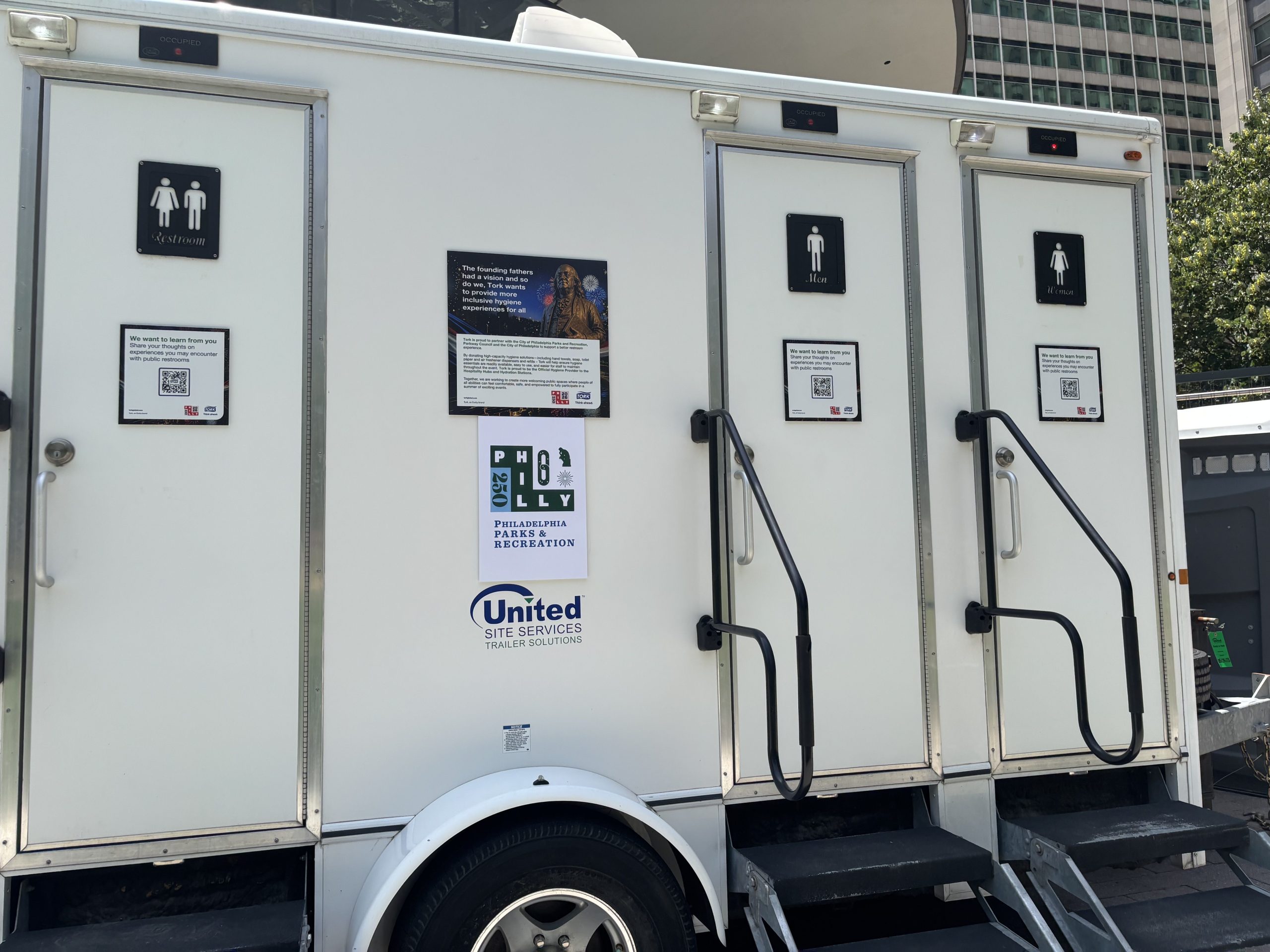
I head over to the public bathroom trailer that’s temporarily been installed in LOVE Park in front of the circular building known as flying saucer.
“What a waste,” I think, as I look up at the very cool saucer, which remains closed and empty, despite a call-out last year from the city for ideas to reactivate the space in time for the World Cup and the Semiquincentennial.
The new, temporary public bathroom trailer set up in LOVE Park.Stephanie Farr / Staff
I step inside the bathroom trailer. Not only is it air-conditioned, it’s outdoor-wedding-quality nice. Next to the trailer is a sink of water fountains and water bottle-filling stations.
1:15 p.m.
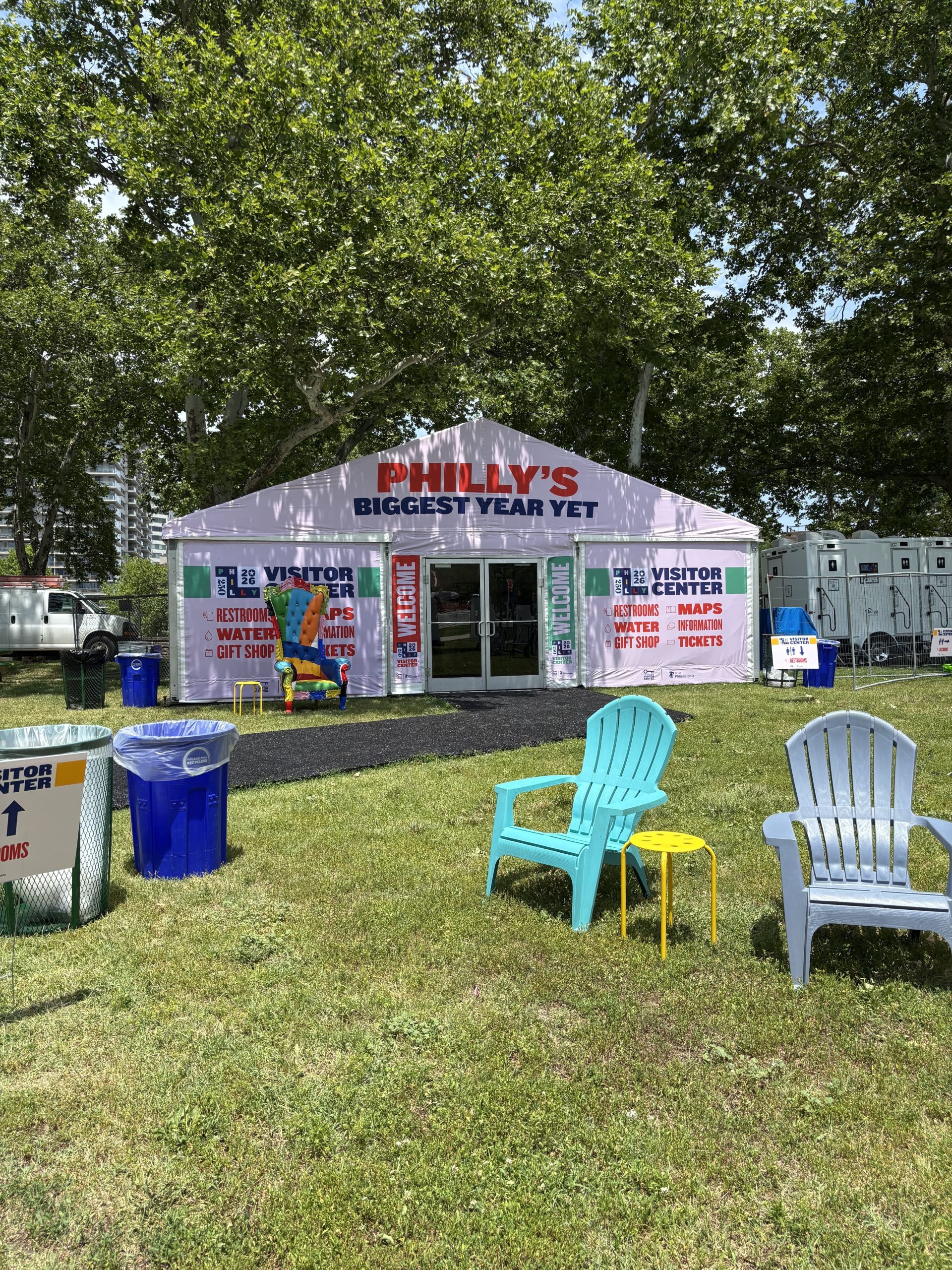
After making my way down the Ben Franklin Parkway, I spot another, larger hospitality hub across from Eakins Oval. This one has several large boards in front of it you can stick your face into to get a photo with Gritty, Rocky, or Patti LaBelle.
When I step inside the hub, I almost weep tears of joy because it’s so cold. It has much of the same items as the other, but with more Rocky merchandise (“Yo, Adrienne! Buy my stuff!”).
The pop-up Philadelphia Visitor Center hospitality hub across from Eakins Oval.Stephanie Farr / Staff
Outside of the hub, I meet Valentine Emeré, 20, and his parents, who are on holiday from France and had no idea the World Cup was in town. They’re in Philly as part of an East Coast tour of the U.S.
“It’s a very good city, it’s a living city,” Emeré tells me when I ask his thoughts on Philly. “We really like how many things there are to do.”
1:41 p.m.
I arrive at the FIFA Fan Fest welcome center tent. Aside from the oppressive heat, the walk was easier than I expected. I pass the Philly Phestival Marketplace, a row of vendors selling everything from nail polish to onesies that read “baby jawn.”
1:48 p.m.
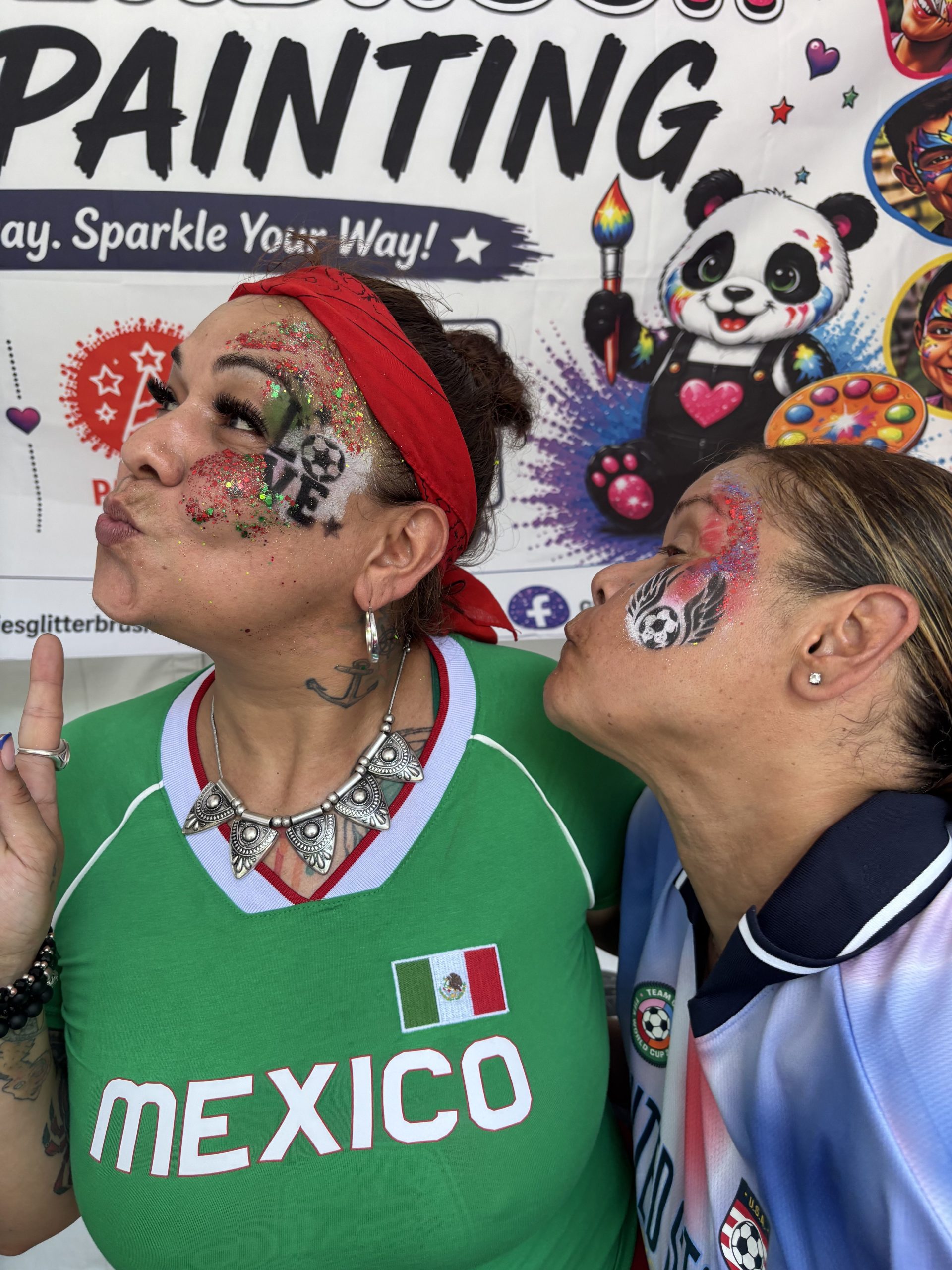
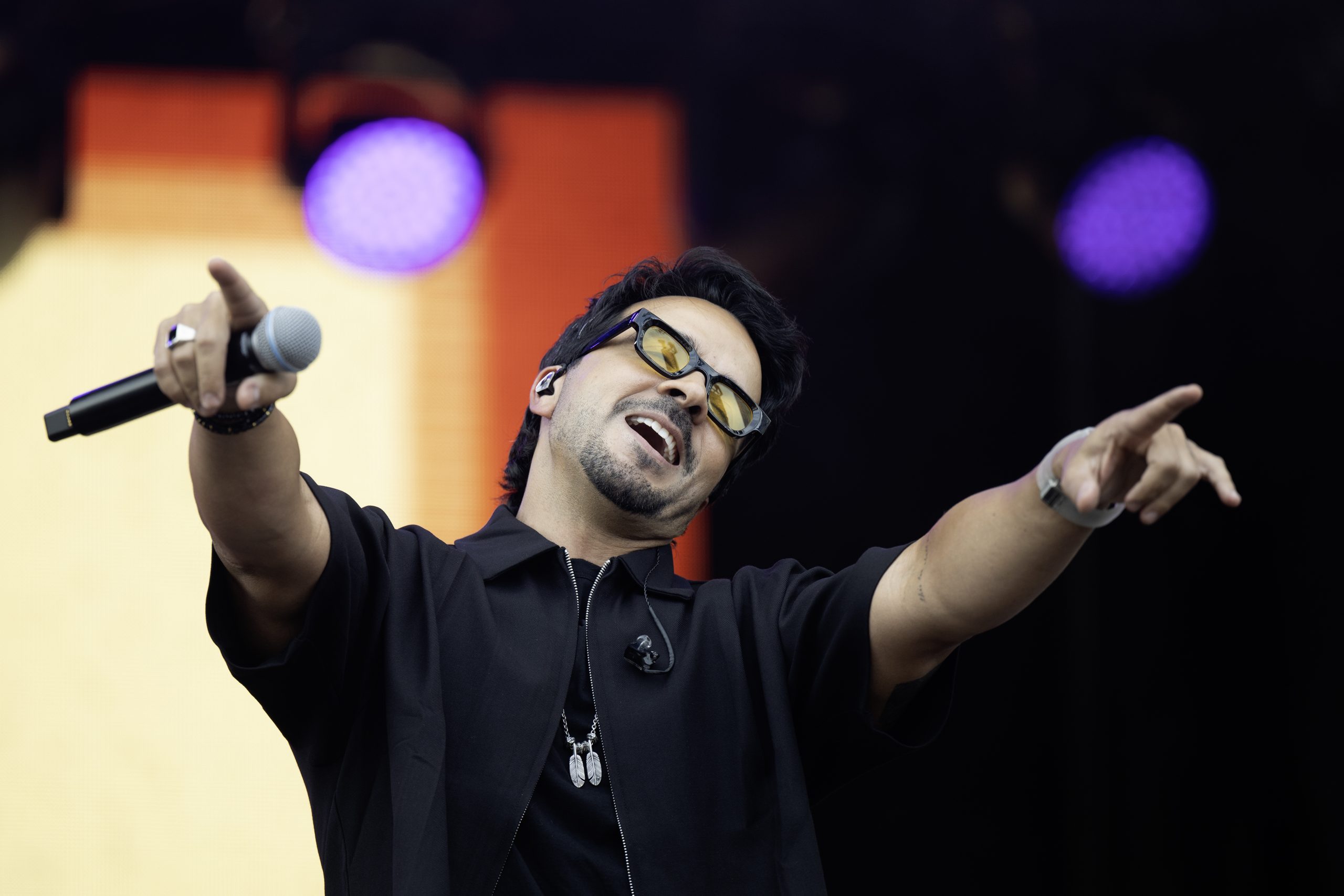
At the Glitterbrush Facepainting booth, I chat up Martiza Quendo of North Philly, who wore a team Mexico shirt, and Marissa DeMatteo of South Philly, who was repping team USA. They’d just had their faces painted and told me they came to Fan Fest because they love free merch and “participating in Philly.” Mostly they were there for the live Luis Fonsi concert after the Mexico vs. South Africa game.
Martiza Quendo of North Philly, at left in a team Mexico shirt, and Marissa DeMatteo of South Philly, at right in a team USA shirt, pose after getting their faces painted at the Philly Phestival Marketplace.Stephanie Farr / Staff
1:52 p.m.
As several hundred people wait in line for the gates to open, visitors pose for pictures in front of a large soccer ball surrounded by fresh flowers, a photo-op that looks straight out of the Philadelphia Flower show. An enterprising street vendor nearby tries, without success, to sell umbrella hats.
“You think business would be better in this heat,” he says.
2:10 p.m.
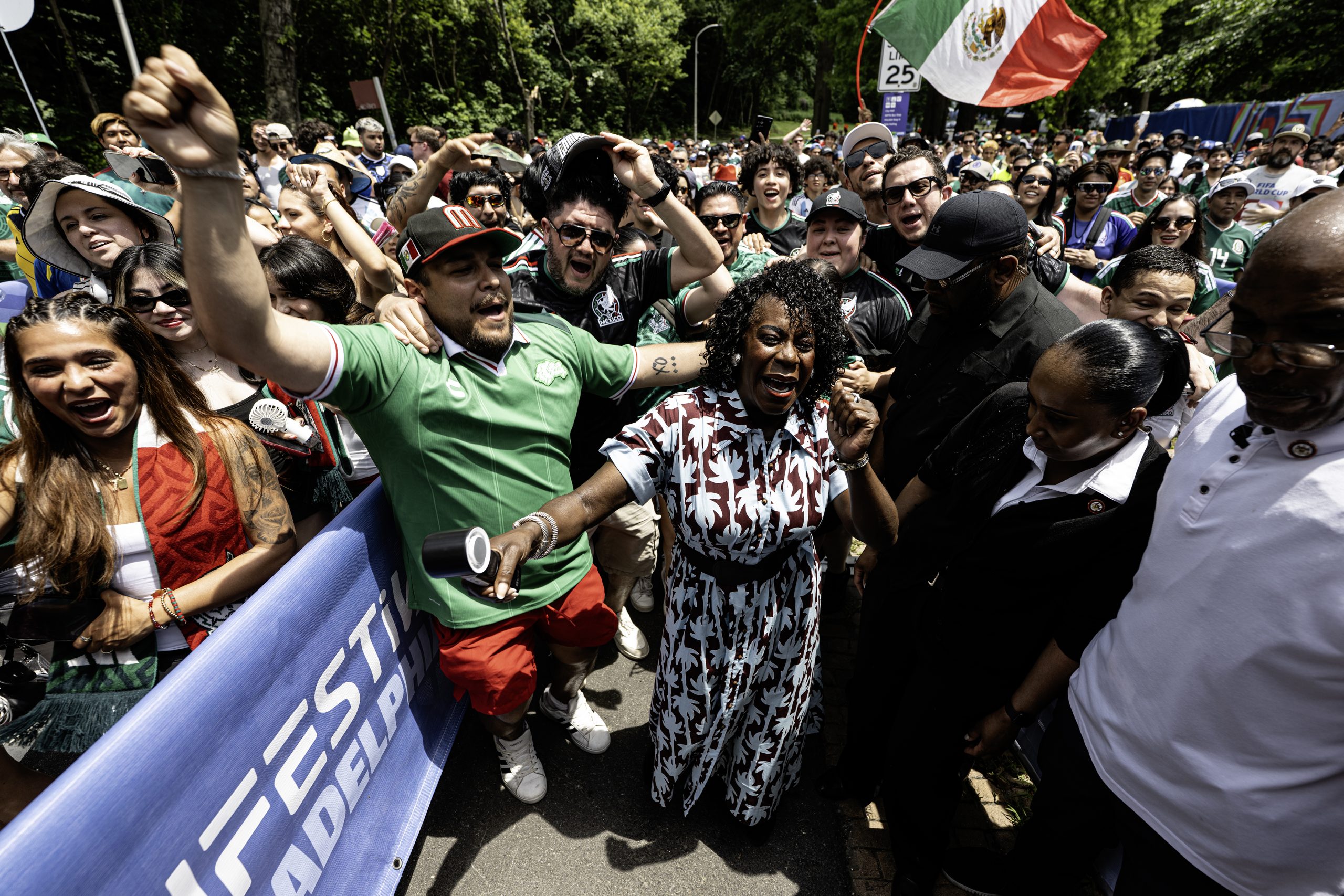
Philadelphia Mayor Cherelle L. Parker joins fans in a Mexican chant before entering the FIFA Fan Festival at Lemon Hill on opening day of the FIFA World Cup 2026 on Thursday, June 11, 2026, in Philadelphia. Fans gathered to watch Mexico face South Africa in the tournament’s opening match.Jose F. Moreno / Staff Photographer
Gates open to the festival, a little behind schedule, but folks get in calmly, quickly, and with little trouble. Some come in singing, others run in waving Mexican flags. My colleague, photographer Jose Moreno, later shows me pictures of Mayor Cherelle L. Parker walking in with the crowds.
2:18 p.m.
I stop by the Home Depot activation, billed as “Beckham’s Backyard,” which features the facade of a home with a 12-foot-skeleton in front of it. An employee tells me this mimics a backyard with Beckham’s flair.
“He’s not here though, right?” I ask.
“I wish. This would be a lot more popular if he was,” he said.
Inside, there is a giant Home Depot bucket with a TV screen inside showing games. The nearby Casamingos stand selling margaritas for $17 appears to be far more popular.
2:26 p.m.
I ask an employee manning the Bank of America activation why the line there is so long. He tells me they’re letting people make their own bracelets — with very cool Philly and World Cup charms — for free.
2:28 p.m.
At the Visit PA pavilion, the lines for the free prize wheel and claw machines — which dole out Visit PA-branded merch — were very long.
But nobody was at the “Soccer Jawn” video game, which pits two players head-to-head in a Pong-like game of soccer on a big screen. I yell to a young woman passing by to battle me and she accepts my challenge.
Biance Yetta, 16, of Easton, beats me 5-4. In my defense, she plays soccer on a traveling team and I’ve never played before in my life (though I’ve probably played way more Pong).
2:38 p.m.
A message plays on the 60-foot-wide main screen of the festival from astronauts aboard the International Space Station. I’m too far away to hear everything they say, but I can make out the words: “Sharing one planet, one game,” and that makes me smile.
2:40 p.m.
I walk into the massive FIFA Fan Fest store, which is so well air-conditioned I almost fall to my knees and thank the gods of consumerism.
I browse for a bit, but when I check the price of a FIFA cropped women’s sweatshirt — $104.99 — I walk right back out.
2:56 p.m.
The national anthem of South Africa begins and crowds gather around the big screen. Folks try to hide under what little shade is available, but most of us are forced to swelter in the sun.
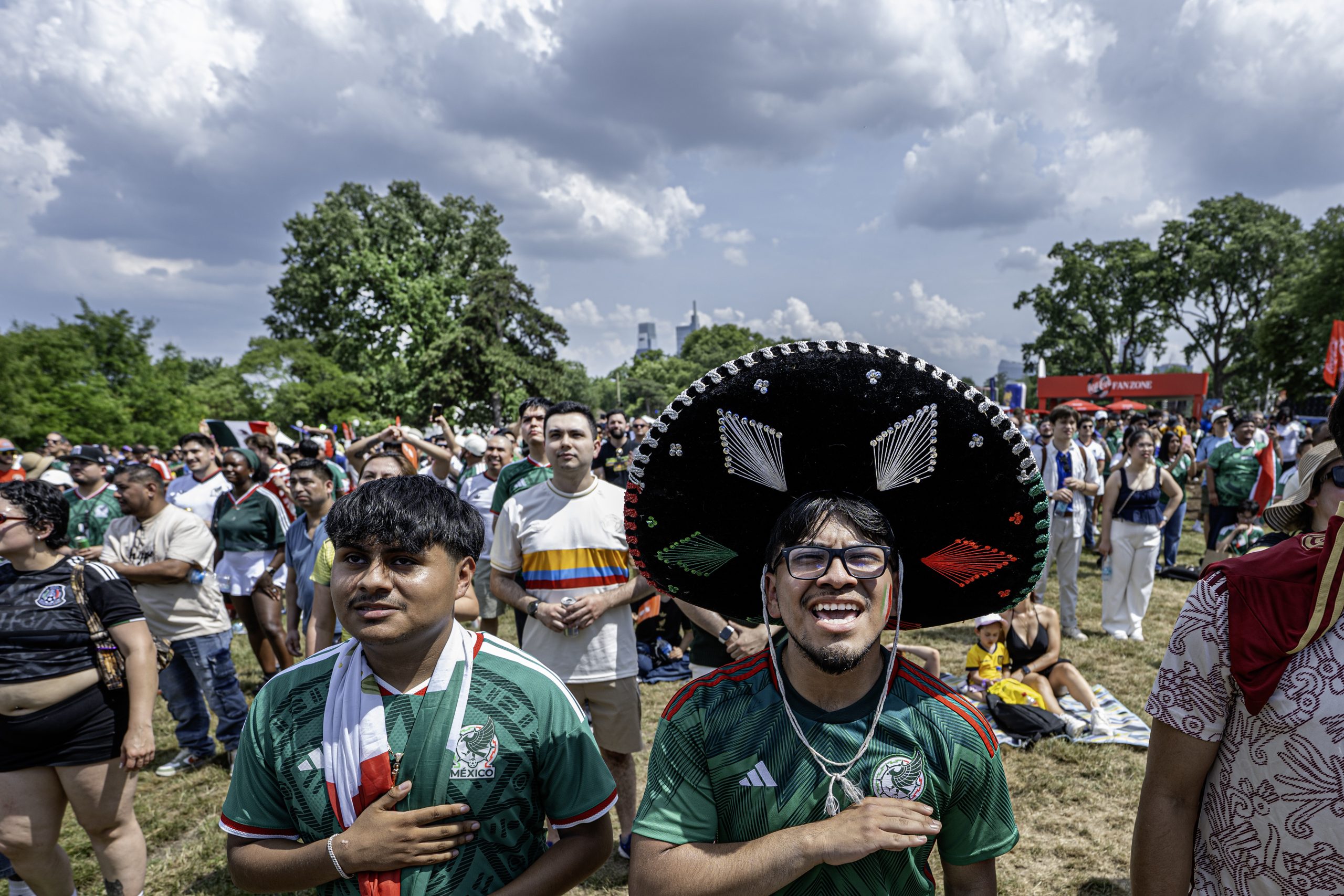
Shortly thereafter, the Mexico national anthem plays and many in the crowd — which now numbers in the thousands and is mostly team Mexico fans — sing along.
It feels electric being in the middle of them and watching the game begin, but I have more of the festival to explore.
Mexican fans sing the national anthem before the start of the FIFA World Cup opening match between Mexico and South Africa at the FIFA Fan Festival at Lemon Hill on Thursday.Jose F. Moreno / Staff Photographer
3:04 p.m.
I approach what looks like a nice little area called “The Orchard” and am immediately stopped by a security guard. I’m informed it’s a VIP-only area for sponsors (enjoy the perks, 12-foot Home Depot skeleton).
Next to it was another public viewing area with a smaller screen showing the game. This one had picnic tables under shade (huzzah!). Nearby was a food area with booths selling street corn, cheesesteaks, and churros — none of which sounded appetizing in 94-degree heat. I’d spotted a single water ice stand at another food vendor area across the way earlier, but the line was 42 people deep and there was one guy working the booth.
3:24 p.m.
I spot a woman in a Phamassador T-shirt, the Visitors Center program that’s recruited 10,000 volunteers to be ambassadors of Philly this summer.
Ruth Bangura, 19, tells me she’s a Philly transplant who’s “obsessed” with the city and wants to help others become obsessed, too. Despite the heat, she’s loving the “good energy” at Fan Fest and loves seeing people waving flags of all colors coming together.
“Everyone is different but at the same time, we’re all here for one game. This is the best thing that could ever happen to the United States right now,” she says. “This is the melting pot, this is what America is supposed to be instead of differentiating each other and dividing each other.”
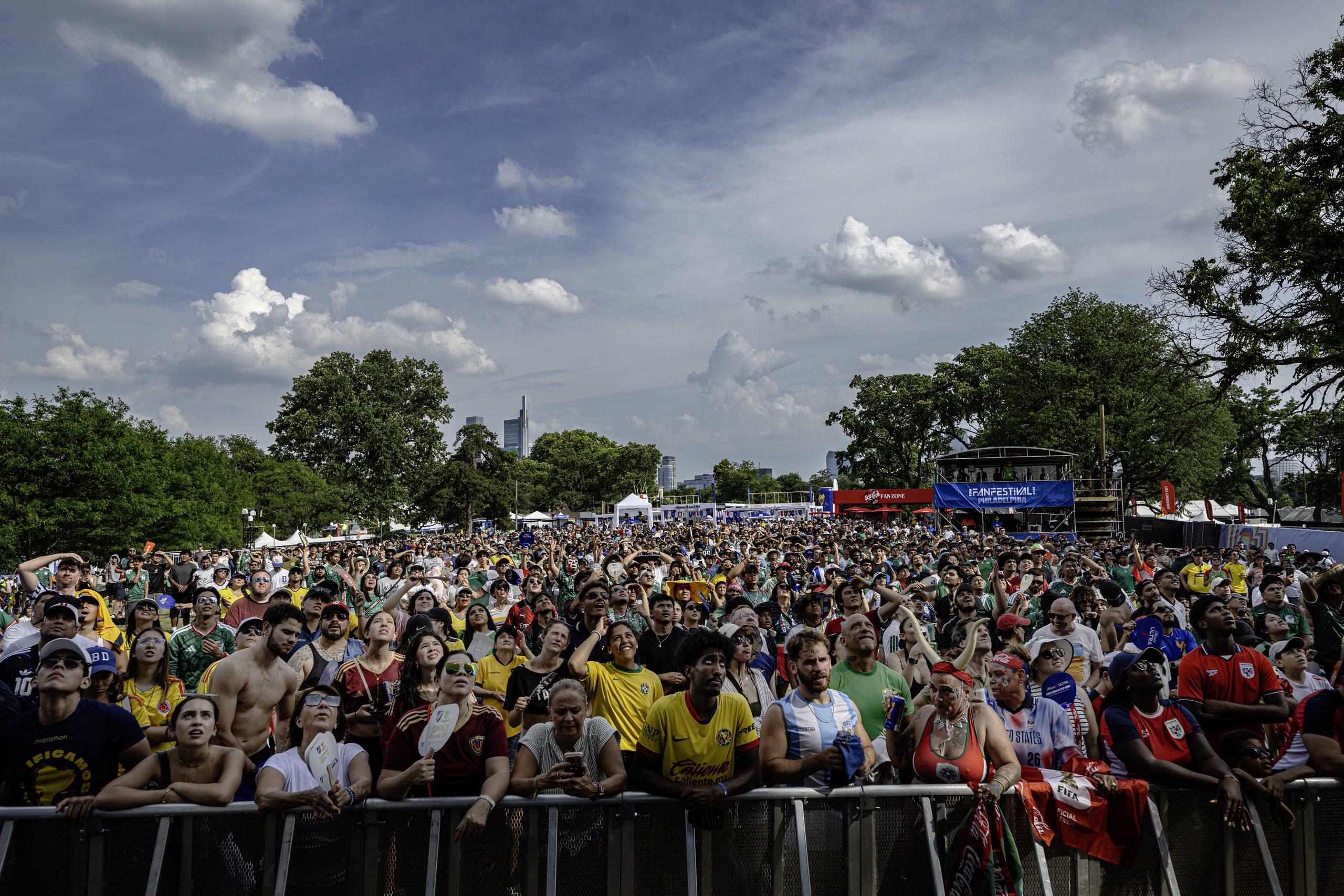
Soccer fans gathered to watch the FIFA World Cup opening match between Mexico and South Africa during the opening day of the FIFA Fan Festival at Lemon Hill on Thursday.Jose F. Moreno / Staff Photographer
3:31 p.m.
As I walk by an American Heart Association tent filled with CPR dummies, staffer Jennifer Russ asks if I want to learn CPR. She teaches me chest-compression as music that’s 100-to-120 beats per minute plays in the background. Like “Staying Alive,” these are songs you should time chest compressions to.
Russ’ manager tells me they’re on site because CPR is a skill they want people from all over the world to learn.
“And, honestly, sports is one of the main places cardiac arrests happen,” she says. “So this is great because it’s just such a big footprint.”
3:46 p.m.
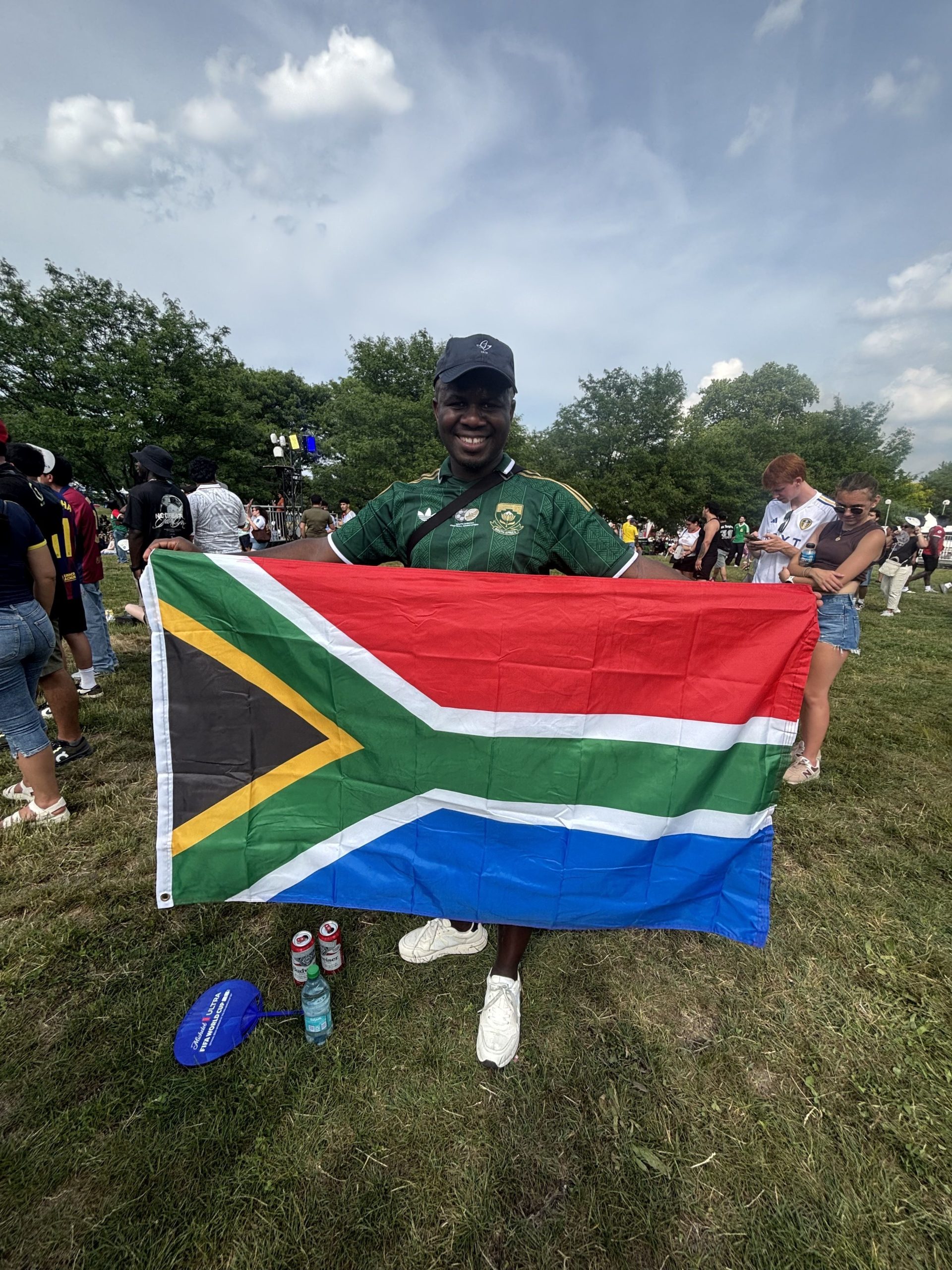
Back at the big screen showing the game, I introduce myself to Mla Mhlongo, 34, a native of South Africa now living in Claymont, Del., who came to support his national team. He tells me that when the World Cup was in South Africa in 2010, they showed all the games at outdoor parks, so Fan Fest feels like a small tase of home.
Mla Mhlongo, a South African native now living in Delaware, waves the South Africa flag in support of his home country at FIFA Fan Fest in Philadelphia.Stephanie Farr / Staff
“I’m enjoying the game with a lot of people; I’ve taken a lot of pictures with people from Mexico and people from around the world,” he says. “The World Cup is supposed to unite the world and it does that.”
4:06 p.m.
An Eagles chant breaks out in the crowd.
4:23 p.m.
I need to find shade. I head to one of the misting tents with fans, but the mist evaporates before it even reaches me.
4:38 p.m.
Once I cool down a little, I realize how hungry I am. I consider a jerk chicken wrap, until I realize it’s $24. I settle on a hot dog and soda for $14. I try to pay with cash and am told everything is card-only.
4:42 p.m.
As I sit to eat in the shade near the smaller screen, I realize that hardly a single person is on their phone. They’re tuned into the game or each other and I think about how nice — and rare — that is.
4:52 p.m.
I try my hand at the Philadelphia Union’s activations, which test your soccer shooting and passing skills by having you kick balls at a series of blinking lights. They’re fun — and one of the few activations that doesn’t require you to scan a QR code. I fail miserably at both games, at one point kicking the ball into the crowd outside the tent.
5:05 p.m.
Mexican fans celebrate after Mexico scores against South Africa while watching the FIFA World Cup opening match on a giant screen during the opening day of the FIFA Fan Festival at Lemon Hill on Thursday.Jose F. Moreno / Staff Photographer
The match on the big screen ends and fans of Mexico cheer their team’s win. People make their way to the stage under the screen for the Luis Fonsi concert. I spot the two facepainted Philly ladies I talked to earlier right up against the stage barrier.
5:17 p.m.
Singer Luis Fonsi performs during the opening day of the FIFA Fan Festival at Lemon Hill on Thursday.Jose F. Moreno / Staff Photographer
Fonsi takes the stage. A woman with a man in a Mexican wrestling mask, both of whom are wearing Mexican flags as capes, dance in front of me. I see a mom and daughter singing together in Spanish and a man dancing through the crowd, his arms raised. Everyone is happy and smiling.
5:30 p.m.
I leave early to beat the crowds and walk back. On my way out, I see a man at a picnic bench reading Booked by Kwame Alexander. He tells me the American Federation of Teachers is giving books away for free at the Philly Phestival Marketplace. I stop by the booth and talk with Leslie Koelsch, deputy director of communications for the federation.
“We launched the Summer Reading Cup and we’re giving away thousands and thousands of soccer-themed books this summer to get kids excited about reading,” she tells me.
5:42 p.m.
Just outside the fest, I see a sign for the “LOVE Park shuttle” and a row of four school buses. A driver tells me they’re giving free rides back to LOVE Park after the fest. It’s a wonderful service, but the buses don’t have air-conditioning and the first one isn’t anywhere near full yet, so I decide to continue on foot.
5:55 p.m.
Walking along the Parkway, I think about all the events I’ve covered there — the good and the bad, the celebrations and the protests — and I look at all the nationality flags waving in the warm breeze.
Soccer fans gather to watch Mexico play South Africa on a giant screen during the opening day of the FIFA Fan Festival at Lemon Hill on Thursday.Jose F. Moreno / Staff Photographer
I’ve had conversations with many people over the last few months who find it very hard — if not impossible — to consider celebrating anything amid the current climate of our country. But when you attend one of these events in Philly that brings people from all over the world together, you get something you don’t get when you sit at home and watch all the horrors of the news.
You realize how much people want to connect with one another, and how easily we still do, when we choose to.
Soccer fans gather to watch Mexico play South Africa on a giant screen during the opening day of the FIFA Fan Festival at Lemon Hill on Thursday.Jose F. Moreno / Staff Photographer
NEW YORK — So much in American soccer is defined by change that sometimes the constants get overlooked.
But one constant will be front and center during the World Cup and hopes to be welcomed by longtime and new fans alike.
This will be Rob Stone’s 13th tournament between men’s and women’s, in a 28-year run that spans nearly half his 57 years. His first was in 1998, when he was a reporter for ABC and ESPN, and he worked seven for those channels through 2011. In 2012, he moved to Fox, where he became the lead studio host for every World Cup the network has aired since the first in 2015.
Now comes a summer like none before, from a logistical and personal perspective.
— Jonathan Tannenwald (@thegoalkeeper) May 13, 2014
“The fact that it’s on home soil, you do allow yourself a moment to hit the pause button,” he told The Inquirer, “and rewind back to old MLS Cups in the ’90s and covering the U.S. team in ’98. And then do the math of where you are now, and the responsibility that’s on all of our shoulders. It’s a cool moment.”
The interview occurred amid mountains of preparation for the first World Cup with 48 teams and 104 games. It’s so much time and tonnage that Fox will have four studio hosts: Stone, Rebecca Lowe (borrowed from NBC), Jules Breach (from England’s TNT Sports and Channel 4), and Pien Meulensteen (from England’s Sky Sports).
“I’ll probably reflect better on it in late July when it’s done,” Stone said. “Right now, it’s like a refrigerator on your chest, and you’re just trying to catch your breath and be healthy and ready to run at a sprint pace on Day 1. This is a massive undertaking for our network, for sure, but I think more so for our country.”
Most of Fox’s studio coverage will come from the network’s Los Angeles headquarters, a perk of a home World Cup. But Stone will be on site at U.S. games, and perhaps other big ones, and is happy to be taking the show to fans. He has experience with it, too, as the host of Fox’s Big Noon Kickoff college football pregame show.
Rob Stone (left) with Landon Donovan and Maurice Edu at last year’s Concacaf men’s Gold Cup final.Fox Sports
“College football and soccer have always, to me, been kind of blood brothers,” he said. They run in the same circles: it’s the same amount of passion and that energy and that tailgating and that tribalism. So I’m really excited that Fox is saying, ‘Let’s get out with the people’ and really do have our finger on that pulse.”
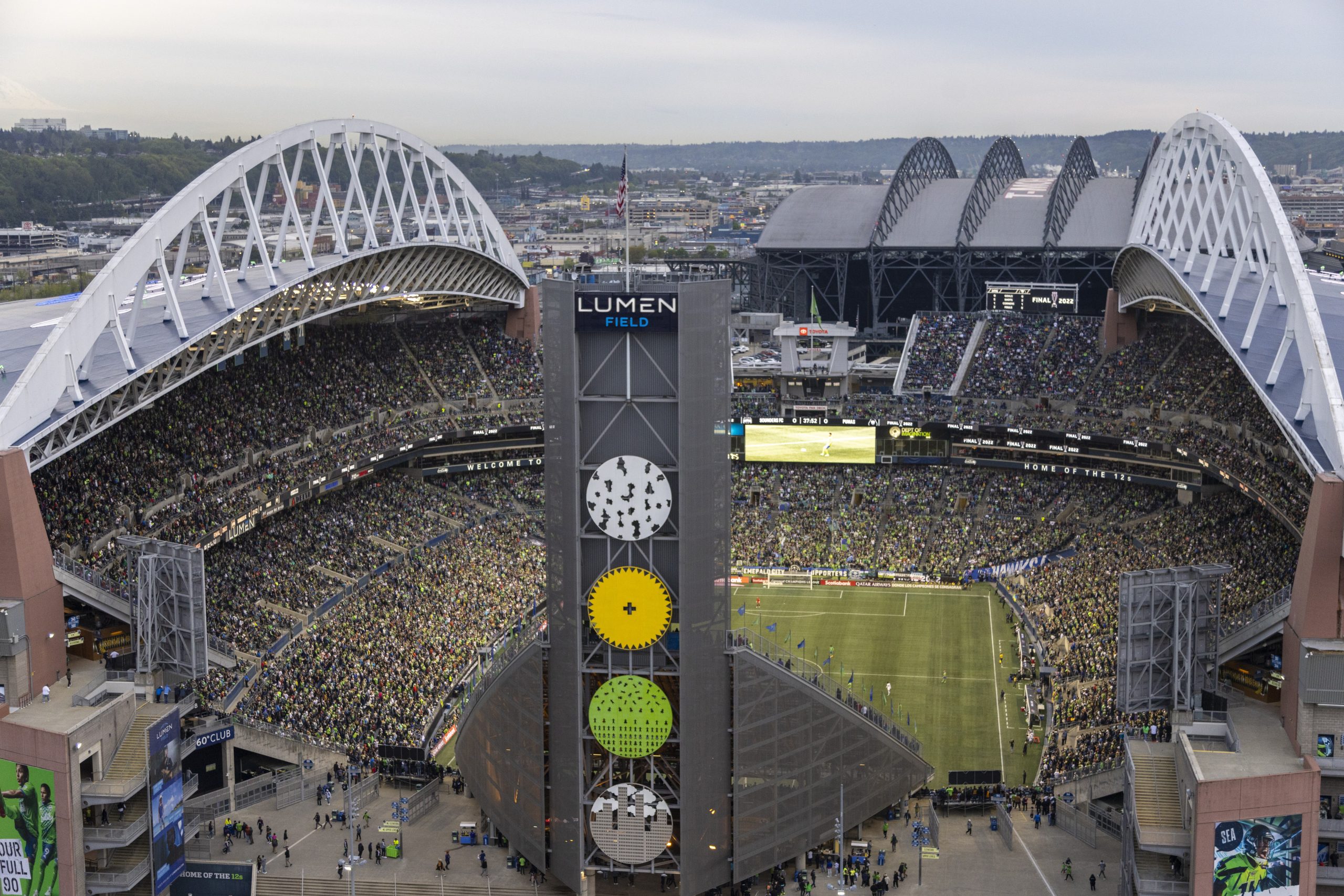
That will be the most true for the U.S. team’s second group-stage game, against Australia on June 19 in soccer-crazed Seattle. It’s the most-anticipated group game for many U.S. fans, not because of the opponent, but because of the expected atmosphere.
“That home-field advantage from Seattle should be amazing,” Stone said. “And I am so happy for that city that they get the opportunity to host their national team, and not just in a tuneup game, but in a game that could absolutely determine where they go through the course of this summer.”
The studio sets’ locations hadn’t been finalized when Stone spoke, not least because there are a lot more security layers at a World Cup than a college football game. But the idea is as clear to him as it undoubtedly is to fans: to “have a much better vibe and be able to report that, and let the viewer understand a little bit to a better extent what World Cup soccer is all about.”
An electric atmosphere is expected when the U.S. plays Australia on June 19 in Seattle.Seattle Sounders
‘A distinguished, educated soccer culture’
How does he handle the always-delicate balance of teaching new fans while not alienating diehards who don’t want to be condescended to? That exists in other sports, but it’s especially pronounced in soccer.
“It’s a really interesting conversation because if you compare the soccer tent in the U.S. to ’94, it’s worlds apart, right?” Stone said. “This is much more of a distinguished, educated soccer culture than it was back then in the early ’90s. But there’s still growth. There’s still opportunity for more.”
The specifics of a home tournament come into play for him here, too, with the potential for even bigger audiences than World Cups already draw on U.S. television.
“We definitely want to make sure that the newbies feel welcome to come in with the soccer intellectuals, if you will, and make it one big happy family where we can all get certain levels of enjoyment out of it,” he said. “But we have to be welcoming to new people and that new generation of the soccer fan, and this is a great opportunity to do it.”
Rob Stone (center) participates in Fox Sports’ World Cup media day in late May.Fox Sports
He added that he thinks “about the millions and millions of people who became soccer fans in our country because of ’94. We have another opportunity to do that this summer.”
Stone’s experience and professionalism have long drawn praise from across the industry.
“I mean, Rob Stone is American football for me,” Lowe said, only to realize her British roots had spun a double entendre. “I mean, he’s also American football, right? He’s American soccer.”
“His passion, his depth of knowledge, and his experience means that when you turn on your television, you are listening [to] and watching somebody you can be safe with,” she said. “There are so many avid football fans in this country who know everything about the game, and so does Rob. They need somebody on their screen reflecting back that level of knowledge, but also that depth of passion. He just gets it.”
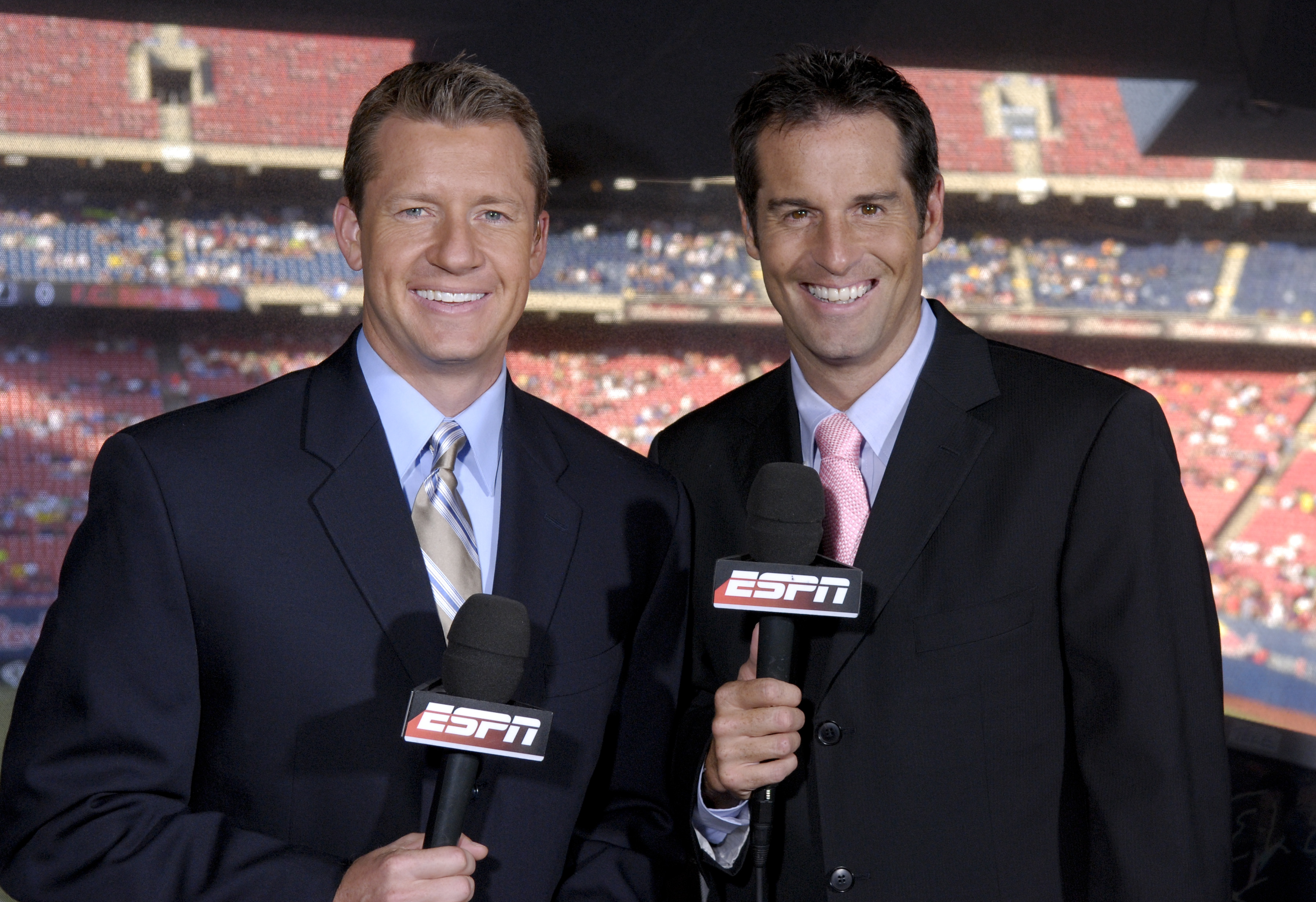
Rob Stone (left) on the call with John Harkes at an ESPN soccer broadcast in 2008.Lorenzo Bevilaqua
‘A grind-plus-one’
Longtime Fox analyst Stu Holden played for the U.S. national team in the 2010 World Cup, which was Stone’s last for ESPN. The two have known each other well for a long time; Holden joined Fox in 2014 and quickly became its lead game analyst.
“He is, and will be, remembered long, long after he’s done in television as one of the most important people in sports broadcasting for American soccer,” Holden said.
Stone also can teach his Fox colleagues who don’t know the sport well. Though it isn’t to some fans’ taste, the network is unabashed about wanting to bring in big names from other sports and popular culture.
“If you’re coming into a World Cup cold, I’m worried about you,” Stone said. “Alexi [Lalas] and I have talked about this for decades. Whenever a new talent comes in, and usually it’s a former athlete, we get to him or her really fast and [are] just like, ‘Hey, this literally is a marathon, and you need to be prepared mentally and physically before it starts.’”
As much of a grind as a World Cup is, he said this edition is “a grind-plus-one.”
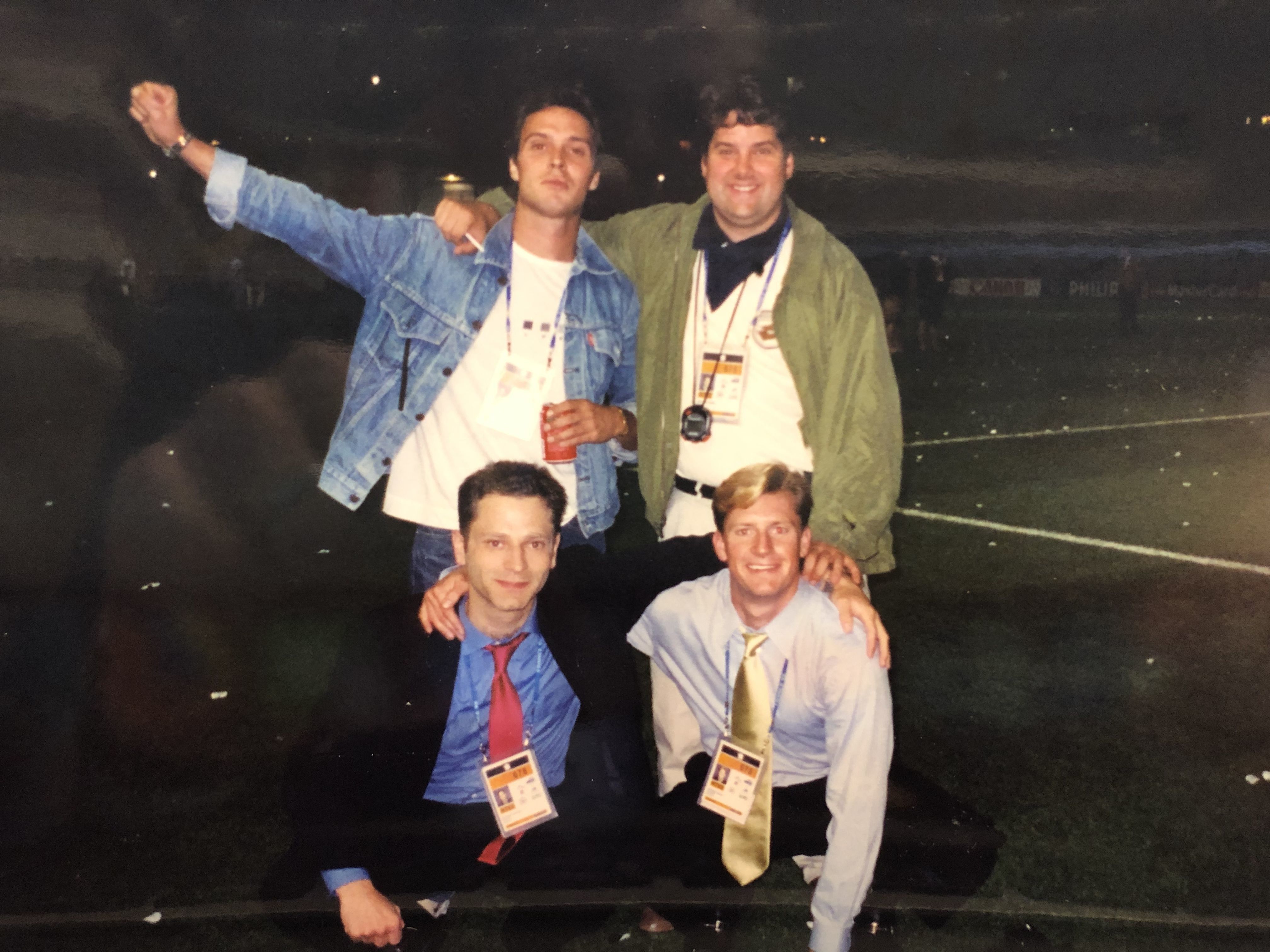
Longtime ESPN reporter Jeremy Schaap sent The Inquirer this photo with himself (bottom left), Rob Stone (bottom right), cameraman Nicolas Servant (top left), and producer Jim Witalka (top right) on the field at the Stade de France during the 1998 World Cup.Jeremy Schaap
For all the highs and lows to come this summer, the end also will bring a major moment. This tournament is Fox’s last of its 15-year contract with FIFA. The women’s World Cup will move to Netflix for next year’s tournament and 2031, and negotiations for the next round of men’s tournament rights haven’t started.
Stone doesn’t know what the future holds for those rights or for him. But he is aware that this World Cup could be not just Fox’s last, but his last.
“I’m not ready to say it’s an end of an era yet, because who knows where the next men’s World Cup is going to go,” he said. “I’m 100% looking at it like I’ve got more to go, and I’ve got plenty more in the tank. … There’s certainly that possibility out there that’s it for Fox. And if it is, we’re going to finish with a bang, just like we started.”
Still. Tina Fey is from Upper Darby. Taylor Swift is from Reading. At some point, Pennsylvania has to ask whether we’re comfortable with this arrangement.
We’re not saying they have to root for the Sixers. The Sixers haven’t always made that easy.
We’re just saying there are certain things that hit differently when they come from your own people. And watching two Pennsylvania icons cheer on the Knicks in the NBA Finals is one of them.
And somehow the marketing may be even better than the product. “It tastes like the oil from a real cheesesteak wrapper!” was highlighted as a testimonial, which is an astonishing sentence to see in the wild. Because that’s not a flavor profile most companies would voluntarily advertise.
The reaction online was divided. Half the internet was horrified, and the other half was brainstorming recipes involving Sarcone’s bread, pizza, omelets, pasta, and popcorn.
Somewhere between “that’s disgusting” and “OK, I’d try it” lies the city’s entire food identity.
The best part, though, is that the olive oil helps support Mama-Tee Community Fridge, which stocks community refrigerators across Philadelphia with prepared meals. And, let’s be honest, nobody can convincingly argue they aren’t at least a little curious.
A Wawa bag full of Tastykakes made it to the Vatican: A
According to the National Constitution Center, the pope, a Villanova graduate, gave a “big belly laugh” when he saw the Tastykakes.
And the story contains one of the most Philadelphia sentences ever printed: “Where else would this happen that you meet up with the archbishop toting Tastykakes in a Wawa bag?” Iconic.
The delegation was there for a serious purpose ahead of next month’s Liberty Medal ceremony. But it’s hard not to appreciate that somewhere inside the Apostolic Palace sat a Wawa bag and a box of Tastykakes.
Amy Poehler arrives at the Oscars on Sunday, March 2, 2025, at the Dolby Theatre in Los Angeles. (Photo by Richard Shotwell/Invision/AP)Richard Shotwell
Amy Poehler got cursed out at PHL. Tina Fey had the perfect response: A
Tina Fey’s response? “Welcome to Philly.” No outrage, no apology, and no attempt to explain the behavior.
Just a simple acknowledgment that, yes, this sort of thing occasionally happens here. Philadelphia is one of the few places where somebody might yell at you in an airport and another person will later explain that this is actually part of the culture.
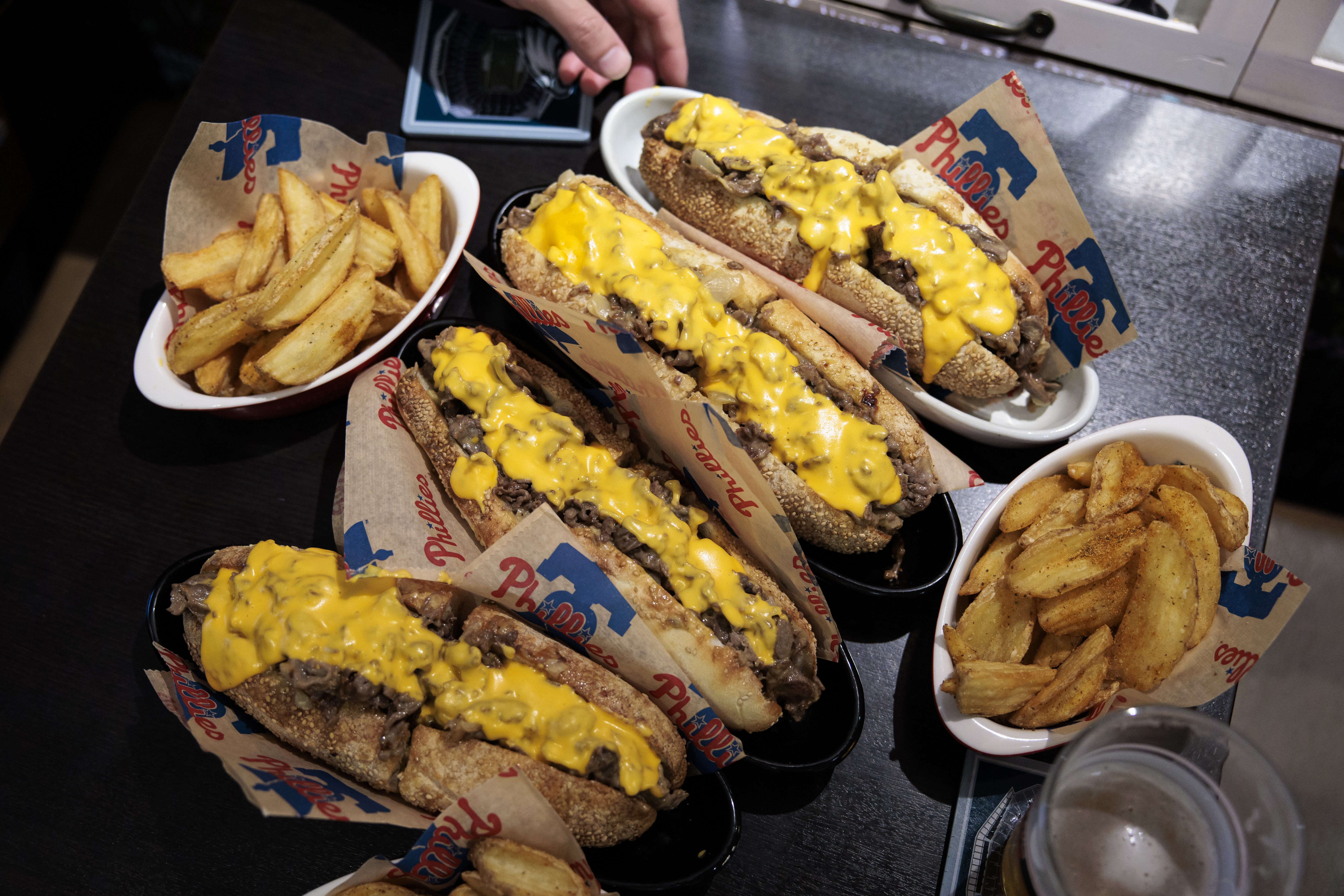
Philly cheesesteaks at Nihonbashi Philly on Sunday, Nov. 9, 2025, in Tokyo, Japan.Monica Herndon / Staff Photographer
An American cheese shortage in Japan is now a Philadelphia emergency: A-
There are international crises, and then there are international crises.
Philadelphia, of course, was ready to give solutions. Offers to smuggle in Cooper Sharp. Debates over Whiz vs. provolone. Strong opinions about what constitutes an authentic cheesesteak from 6,700 miles away.
The whole thing feels oddly moving. A couple in Tokyo became so obsessed with Philadelphia that they built a restaurant around cheesesteaks, pretzels, Tastykakes, and Eagles fandom. Now Philadelphians are responding as if a neighborhood institution is facing hard times. You stand up for us, we’ll stand up for you.
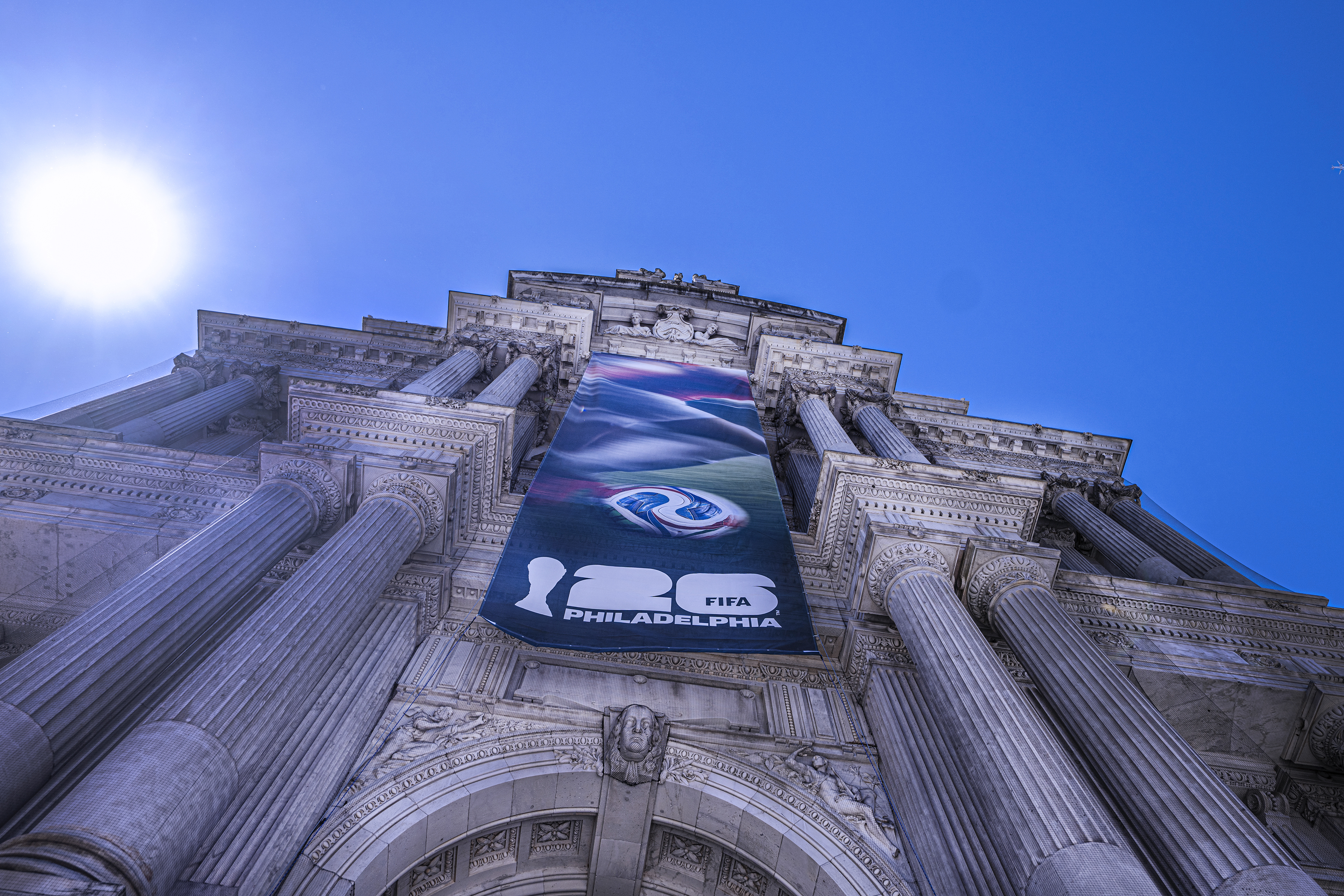
A large FIFA World Cup banner hangs from an entrance of Philadelphia City Hall as the city prepares to host matches during the FIFA World Cup, Wednesday, June 3, 2026, in Philadelphia.Jose F. Moreno / Staff Photographer
The World Cup hotel boom hasn’t exactly arrived: C+
For years, the World Cup was sold as a tourism bonanza that would fill hotel rooms, pack Airbnbs, and send visitors flooding into host cities.
Days before kickoff, plenty of hotel rooms remain available. Some Airbnb hosts who expected a month-long gold rush are still waiting for bookings. One South Philly host told The Inquirer she expected to be full all month and has gotten just a few nights reserved.
That’s not exactly soccer Coachella.
To be fair, this doesn’t mean the World Cup won’t be successful. Tens of thousands of fans are still coming, and hotels expect a solid summer between FIFA, the Semiquincentennial, and the MLB All-Star Game.
They’re just apparently not paying $900 a night for an Airbnb in South Philly.
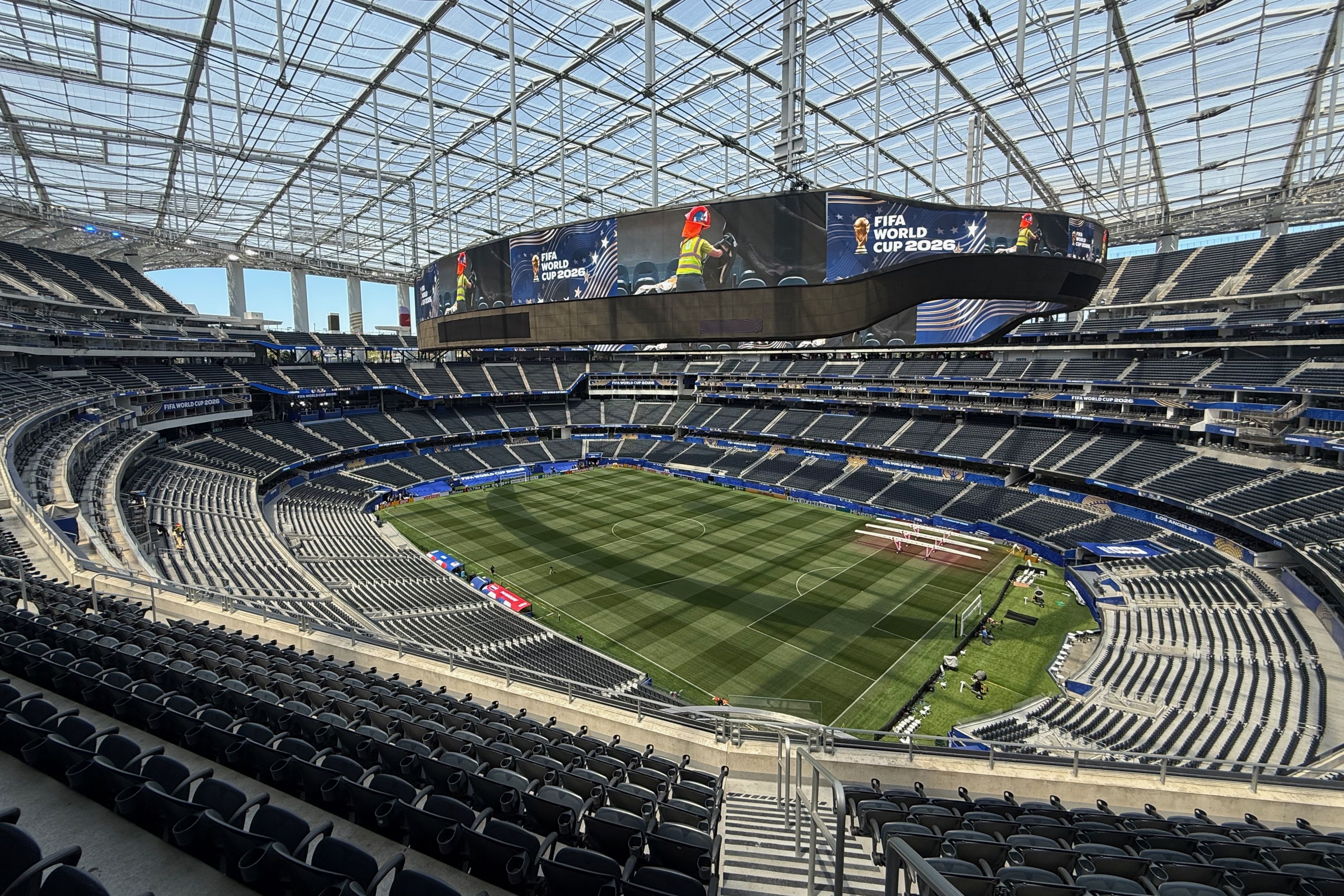
INGLEWOOD, Calif. — Simply put, the U.S. men’s soccer team’s World Cup got off to a dream start.
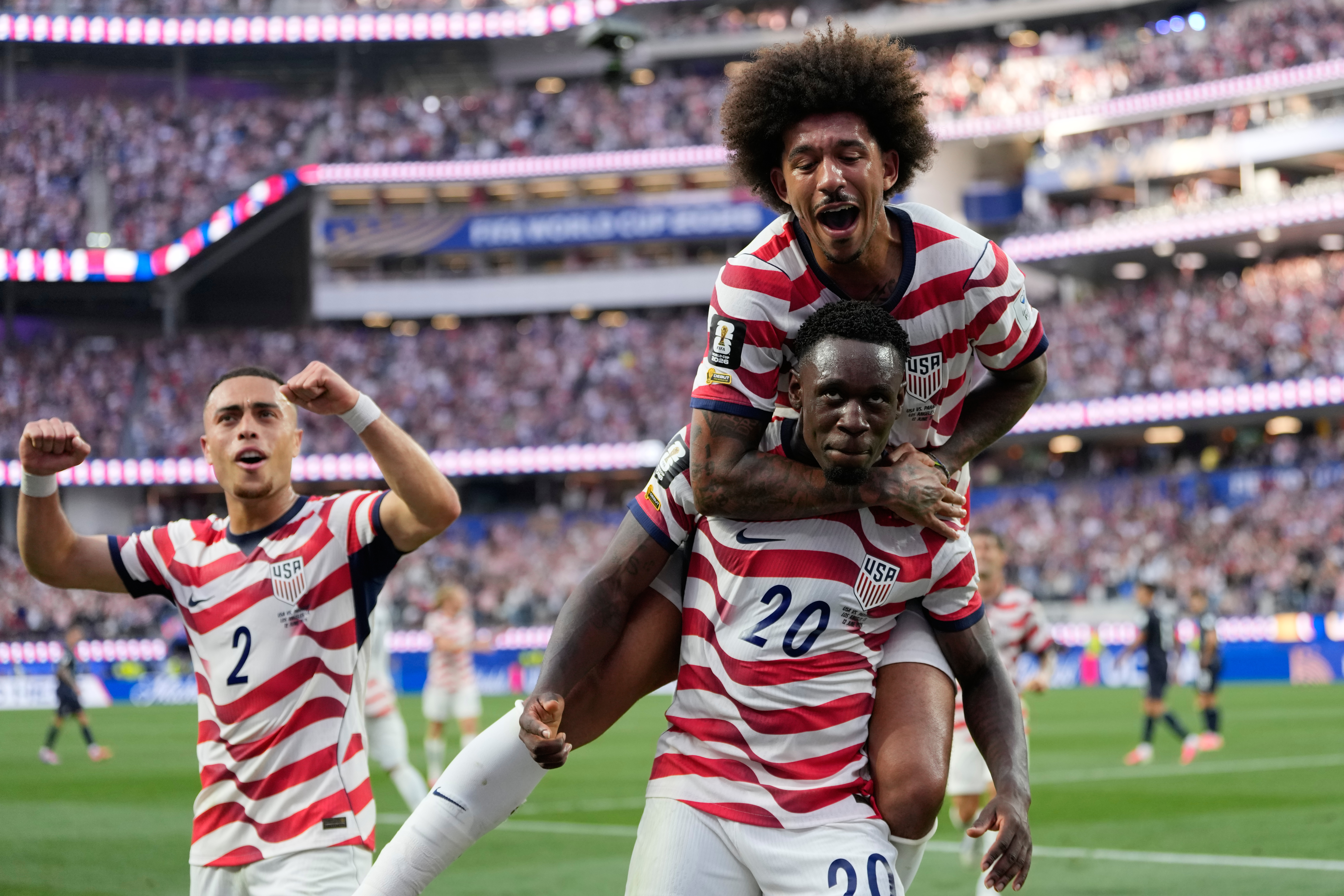
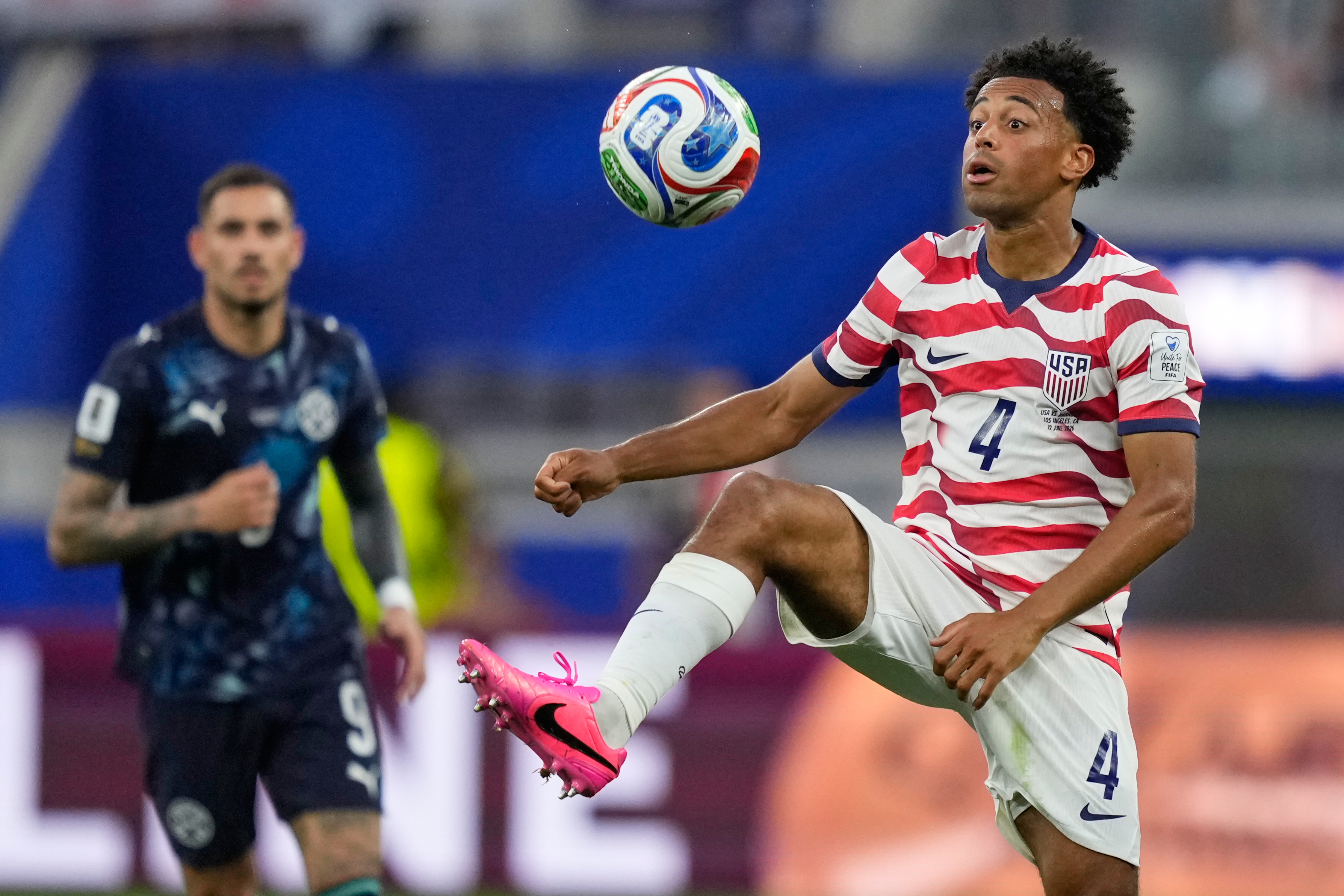
Folarin Balogun’s goals and Christian Pulisic’s playmaking led the Americans to a 4-1 win over Paraguay in their tournament opener, the highest-scoring performance ever by the U.S. men in a World Cup.
The crowd of 70,492 played a role too, belting out out the national anthem along with celebrity singers Dan + Shay and chanting “USA!” throughout the game.
With that as fuel, the U.S. needed just seven minutes to get on the scoreboard.
Weston McKennie created the opener in tandem with Pulisic. McKennie drove hard up the middle, including a cutback between two Paraguayan players, then fed Pulisic on the left. The Hershey, Pa., native uncorked a dazzling split of two players and a slip past a third, with the latter move sending the ball to McKennie. He aimed to lay it off for Balogun, but Paraguay’s Damián Bobadilla did the job instead by deflecting the ball into his own net.
It could have been 2-0 in the 28th, but Pulisic was offside in the buildup, and Balogun was off at the end. But the real thing arrived three minutes later, and this time, it was a no-doubter.
Pulisic was front and center again, seizing a sharp through ball from Antonee Robinson and charging up the left flank. The centering pass was on the money for a charging Balogun, who held up behind Paraguay’s back line and easily slotted home.
The crowd erupted again, a real roar despite FIFA’s price-gouged tickets that have kept so many soccer fans out of World Cup stadiums. There were pockets of empty seats, especially in the most expensive sections, another indictment of the governing body.
But the fans who were here, for all they paid, delivered. From the anthem to thunderous “USA!” chants, they showed up in a way the U.S. team often hasn’t felt — especially in Southern California. One need only think back to last year’s Concacaf Nations League final four in this same stadium, when indifference and unhelpful kickoff times left the Americans drowned out.
The U.S. lost both of those games. Now, in their first of two group games here, they were rolling — and not done scoring yet.
In the last minute of first-half stoppage time, Antonee Robinson corralled a loose ball in his own half. He gave it to Tim Ream, who had no pressure on him and took his time before passing to Tyler Adams. Paraguay again did not press, so Adams offered the ball to Malik Tillman. He turned, took one touch, then zinged a low pass through four Paraguayan players.
Balogun saw it coming even before Tillman had fully turned and was off to the races. He was past Paraguayan centerback Omar Alderete — of English Premier League club Sunderland — and stayed on his feet as Alderete tried to slide at him. He then cut left past a spinning Gustavo Gómez and slammed a shot into the top corner.
The goal made Balogun the first U.S. men’s player to score multiple goals in a World Cup game since Bert Patenaude at the first ever World Cup in 1930, coincidentally also against Paraguay. And the half was the highest-scoring by a U.S. men’s team since the famed 3-2 win over Portugal in 2002.
The second half started with a shock: Pulisic was subbed out. Sebastian Berhalter replaced him and went to a deeper central midfield spot, which sent Tillman up to Pulisic’s spot.
“I just got a bit of a kick in the first half,” Pulisic said postgame. “Back of my leg, sort of my calf area. Staying positive. I don’t think it’s anything.”
A U.S. Soccer spokesperson said manager Mauricio Pochettino would address the matter postgame.
Ream and Adams drew yellow cards early in the second half, though Ream’s was canceled. The Adams booking was especially significant, given the roster’s lack of central midfield depth.
Tyler Adams (right) will have to be careful to not get a yellow card in the next game against Australia. If he does, he’ll be suspended for the group stage finale vs. Turkey.Mark J. Terrill
Adams must now avoid cards through the second group-stage game, against Australia next Friday in Seattle (3 p.m., Fox29, Telemundo 62), to avoid being suspended for the crucial group-stage finale against Turkey on June 25.
With 25 minutes to go, the joy of the first half was replaced by nerves. Even though the U.S. was up, 3-0, Pulisic’s departure and Adams’ yellow put the building on edge.
Pochettino made two more substitutions in the 72nd, Tim Weah for Sergiño Dest and Ricardo Pepi for Balogun, but Adams stayed in.
Seconds later, Paraguay scored far too easily. Goalkeeper Orlando Gill sent a long ball forward, Miguel Almirón knocked it down to Julio Enciso, and he fed Maurício for an open shot.
The crowd could tell the vibes were changing and tried to stir the home team with another loud “USA!” chant. Weah shot high, and Tillman shot straight at Gill.
Gio Reyna was the last substitute, replacing Tillman in the 82nd.
There were seven minutes of stoppage time to endure at the end — and quite a few hard hits from Paraguayan players.
But the Americans endured and even earned one of the sport’s most famous compliments. As they ran out the clock in stoppage time, the crowd chanted “Olé!” as they passed the ball around the field.
In the final seconds, Reyna gave them an electric parting gift. A long passing sequence finished at his feet just outside the 18-yard box, and he stepped up unmarked to smash in the finale.
MILAN — Haiti has been forced to change the design of its World Cup jersey after it was deemed too political by FIFA just months after the Caribbean nation had to amend its Winter Olympic uniforms.
The jersey, by Colombian sportswear manufacturer Saeta, originally included a depiction of the final battle of the Haitian War of Independence in 1803 on its front. The image was rejected during FIFA’s approval process.
Saeta said in a statement Wednesday that it would comply with the ban even though the design “was not intended as a political statement,” but rather as a “tribute to the men and women who contribute every day to Haiti’s future.”
The jersey featured blue to mirror the sea and red for the nation’s “strength and passion,” the sportswear maker said. Players wore the now-banned jersey in a warmup match against Peru last week. The original design was marked as sold out on the SaetaUSA online shop.
Similarly, the International Olympic Committee required the removal of an image of Haitian founding father Toussaint Louverture from Haiti’s opening ceremony uniforms for the Milan Cortina Winter Games, ruling that it violated Olympic rules barring political symbolism.
Haiti has been forced to change the design of its World Cup jersey after it was deemed too political by FIFA.
The jersey originally included a depiction of the final battle of the Haitian War of Independence in 1803.
Haiti gained independence in 1804 and is widely regarded as the world’s first independent nation founded by formerly enslaved people after a successful slave revolt.
Italian-Haitian designer Stella Jean, who designed the Olympic uniforms, came up with a creative solution: Painting over the figure, leaving just a horse against the background of tropical foliage. The designs were so much in demand that Jean later created a production version featuring the original Louverture image.
“Either way, Haiti has to be setting a record: Two rebukes from the highest international sports authorities in just a few months,” Jean told The Associated Press on Thursday.
Haiti opens World Cup play on Saturday against Scotland in Foxborough, Mass., then plays five-time champion Brazil on June 19 in Philadelphia and Morocco on June 24 in Atlanta.
Between celebrating the World Cup and gearing up for America’s 250th birthday, Philly is awash in limited-edition, patriotic foods, and the potato chip aisle is no different.
Herr’s beloved Flavored by Philly campaign is now in its fifth year. The Chester County company collated nearly 100,000 votes for flavors that best represent American ideals.
The winners are: Freedom Loaded Cheese Fries, Liberty Hickory Barbecue, and United Jalapeño Cream Cheese. They’ll be available through the summer.
“America’s 250th is an amazing time to be able to share potato chip flavors made by the people for the people,” said Ed Herr, executive chairman of the board of Herr’s, in a statement. “Flavored by Philly: Taste the 250 is our way of honoring the city that continues to inspire our flavors and our fans.”
The Inquirer conducted two taste tests: sending the chips around the newsroom and consulting several local chefs.
Here’s what the newsroom thought.
“On this hot day, hickory barbecue wins for me. It tastes like your regular grocery store barbecue sauce, which is weirdly refreshing,” said deputy features editor Evan Weiss.
Features reporter Earl Hopkins agreed. “The hickory barbecue one is the top dog. It has that perfect hint of smokiness that brands like Lay’s wishes they could duplicate.”
The jalapeño cream cheese also found superfans in the newsroom. “Jalapeño cream cheese is my favorite!” said intern Morgan Ritter. “Loaded cheese fries tastes like a hotdog to me. I don’t love it.”
Arts and entertainment editor — and self-professed sour cream and onion fan — Bedatri Choudhury said, “This flavor takes the best (sour cream) part and adds heat to it, which I loved.”
Food reporter Beatrice Forman said, “I had like 10 loaded cheese fry chips trying to discern whether or not I liked them, and I actually still don’t know. I love cheesy chips, but there’s a burnt aftertaste that I’m assuming is to mimic the bacon bits on loaded fries, but bacon shouldn’t taste burnt.”
As for the hickory barbecue, Forman said, “What makes this different than regular barbecue? This is lazy. I did not deign to try it because doing so would dignify it as a chip worthy of our country’s 250th birthday.”
Philly chefs also weighed in.
Amy Rivera-Nassar of Amy’s Pastelillos said, “Where’s the spice? Philly represents a melting pot of culture. I wish we could have seen a flavor that represents the exciting, ever-growing, and diverse culinary landscape that we’ve become. And the jalapeño cream cheese just tastes like sour cream and onion.”
Wichittra Phansaeng of Dara liked all three flavors. “The loaded fries chips are just like eating cheesy fries with bacon, and I like that the jalapeño cream cheese is a little spicy.”
Freya Joy and Dane DeMarco, the chefs at Gass & Main, devoured the chips. “The jalapeño cream cheese is like an angry sour cream and onion, but don’t you tell me a jalapeño was at all involved in this,” Joy said.
“I’m digging the loaded cheese fries. It’s like a TGI Friday’s loaded potato skin if the bacon was crispy — which it never was,” said DeMarco. “I want to put all of these chips on a turkey sandwich.”
“These are all beach chips. Or poolside chips,” said Joy.
The United States men’s national soccer team kicks off their 2026 World Cup schedule Friday night against Paraguay (9 p.m., Fox 29) in a rebranded SoFi Stadium in Los Angeles. Here are our predictions for the game.
The U.S. got a lucky draw by landing in Group D, avoiding the European powerhouses and South American superpowers. And the U.S. has faced all three of their opponents — Paraguay, Australia, and Turkey — in matches over the past year.
Fox is broadcasting the World Cup for the third time, but it could be the network’s last. TV rights in the U.S. for the 2030 World Cup in Morocco, Portugal, and Spain (plus three opening matches in South America) have yet to be sold, and Fox might not be able to afford keeping the tournament if the NFL is successful in squeezing the network for more money.
The network’s going all out, with a roster of studio talent that includes NBC’s Rebecca Lowe and CBS soccer analyst (and ex-French star) Thierry Henry. Fox also took a big swing by adding former Sweden striker Zlatan Ibrahimović (better know as Zlatan) to its top World Cup studio team that will also include the polarizing Alexi Lalas.
In a first, FIFA has introduced mandatory three-minute water breaks in the middle of soccer’s famous uninterrupted play, due to the heat. They will take place midway through each 45-minute half, and Fox took full advantage Thursday to cut away for a two-minute commercial break during Mexico’s 2-0 victory over South Africa, cutting back after play resumed.
Here’s everything you need to know to watch or stream U.S. vs. Paraguay Friday:
What TV channel will U.S. vs. Paraguay air on?
Fox’s top soccer broadcasting team, John Strong (left) and Stuart Holden (right).Fox Sports
Tonight’s World Cup matchup between the U.S. and Paraguay will air on Fox, which once again has American TV rights to the tournament.
U.S. vs. Paraguay is scheduled to begin at 9 p.m. Philly time.
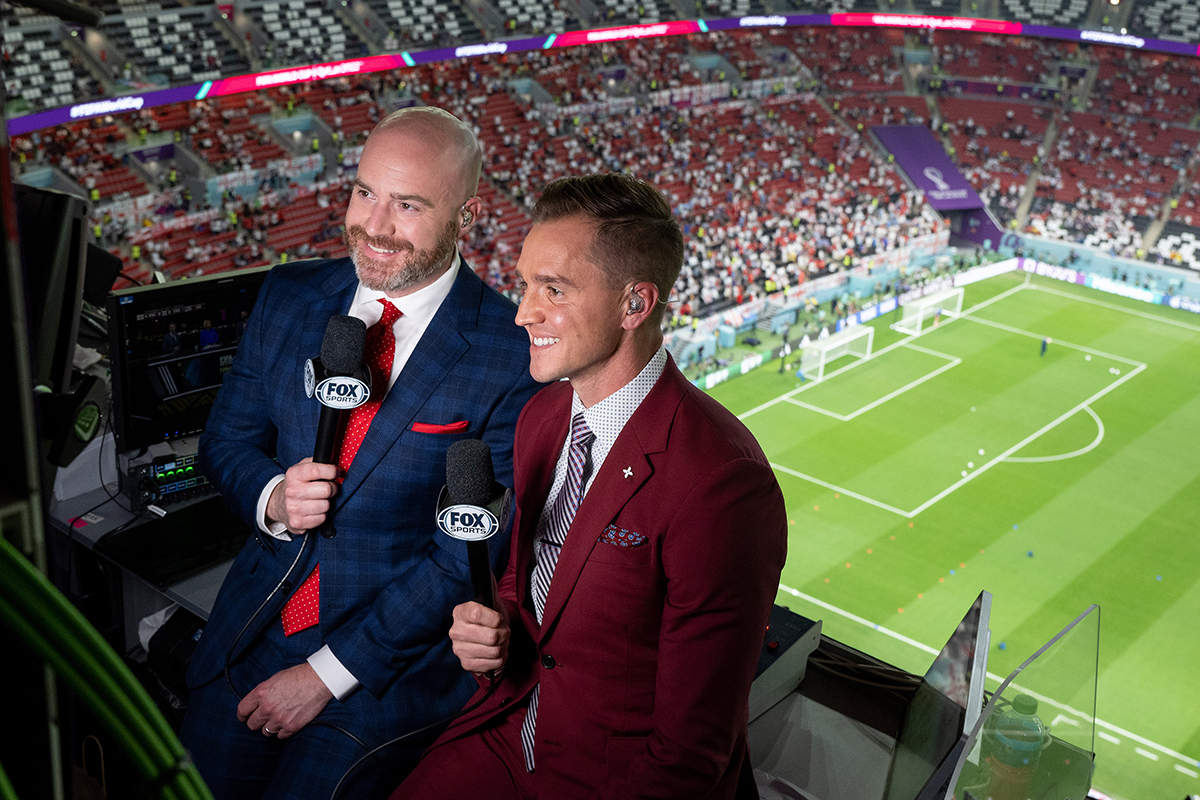
Calling the game will be Fox’s lead play-by-play announcer, John Strong. He’ll be joined in the booth for the third-straight World Cup by former U.S. midfielder Stu Holden.
Jenny Taft will report live from SoFi Stadium (which has been rebranded Los Angeles Stadium for the tournament).
Telemundo will broadcast the Spanish-language telecast, with Andrés Cantor and Omar Zerón calling the game.
FIFA World Cup Today, Fox’s studio show, will air beginning at 6 p.m.
All U.S. World Cup matches will stream for free
While Fox has its own subscription streaming service in FOX One, all Team USA World Cup matches will stream for free on Tubi. All that’s required is a free account.
If you live in or near Philadelphia, you can also stream any match airing on Fox 29 for free using a digital antenna.
Fans looking to stream a Spanish-language telecast will need to turn to Peacock, NBC’s subscription streaming service. You can also stream the game on the Telemundo app, but it’ll require a cable subscription.
Today’s World Cup schedule
Friday is Day 2 of the 2026 World Cup. Here’s a complete schedule of all the matches Friday:
Canada vs. Bosnia and Herzegovina (Group B): 3 p.m., Fox, Telemundo
United States vs. Paraguay (Group D): 9 p.m., Fox, Telemundo
U.S. full 2026 World Cup schedule
The U.S. will play three games during the group stage of the tournament. Here is their full schedule:
United States vs. Paraguay: Friday, 9 p.m. (Los Angeles)
United States vs. Australia: Friday, June 19, 3 p.m. (Seattle)
United States vs. Turkey: Thursday, June 25, 10 p.m., Fox (Los Angeles)
Philadelphia 2026 World Cup schedule
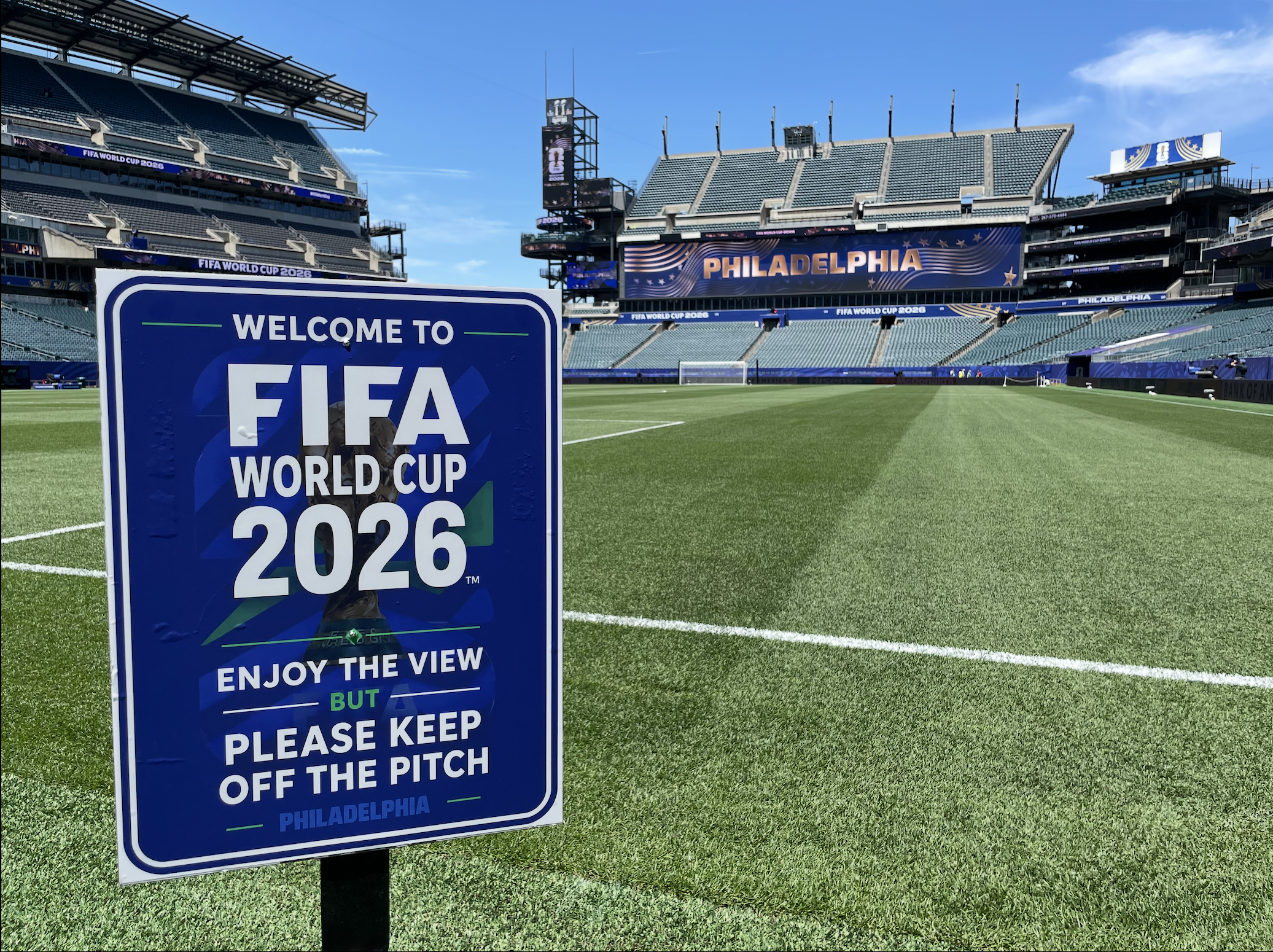
Lincoln Financial Field has been transformed into “Philadelphia Stadium” for the World Cup. Kerith Gabriel
Philly will host at least nine teams and six World Cup games, beginning with Sunday’s match between Ivory Coast and Ecuador.
It’s highly unlikely the U.S. will end up in Philly during the Round of 16 on July 4, but it’s not impossible. Here’s what would need to happen.
Here’s Philly’s full World Cup schedule:
Ivory Coast vs. Ecuador: Sunday, June 14, 7 p.m. (FS1)
Brazil vs. Haiti: Friday, June 19, 9 p.m. (Fox)
France vs. Iraq: Monday, June 22, 5 p.m. (Fox)
Curacao vs. Ivory Coast: Thursday, June 25, 4 p.m. (FS1)
Croatia vs. Ghana: Saturday, June 27, 5 p.m. (FS1)
Round of 16: Saturday, July 4, 5 p.m. (FOX)
More coverage of the 2026 World Cup
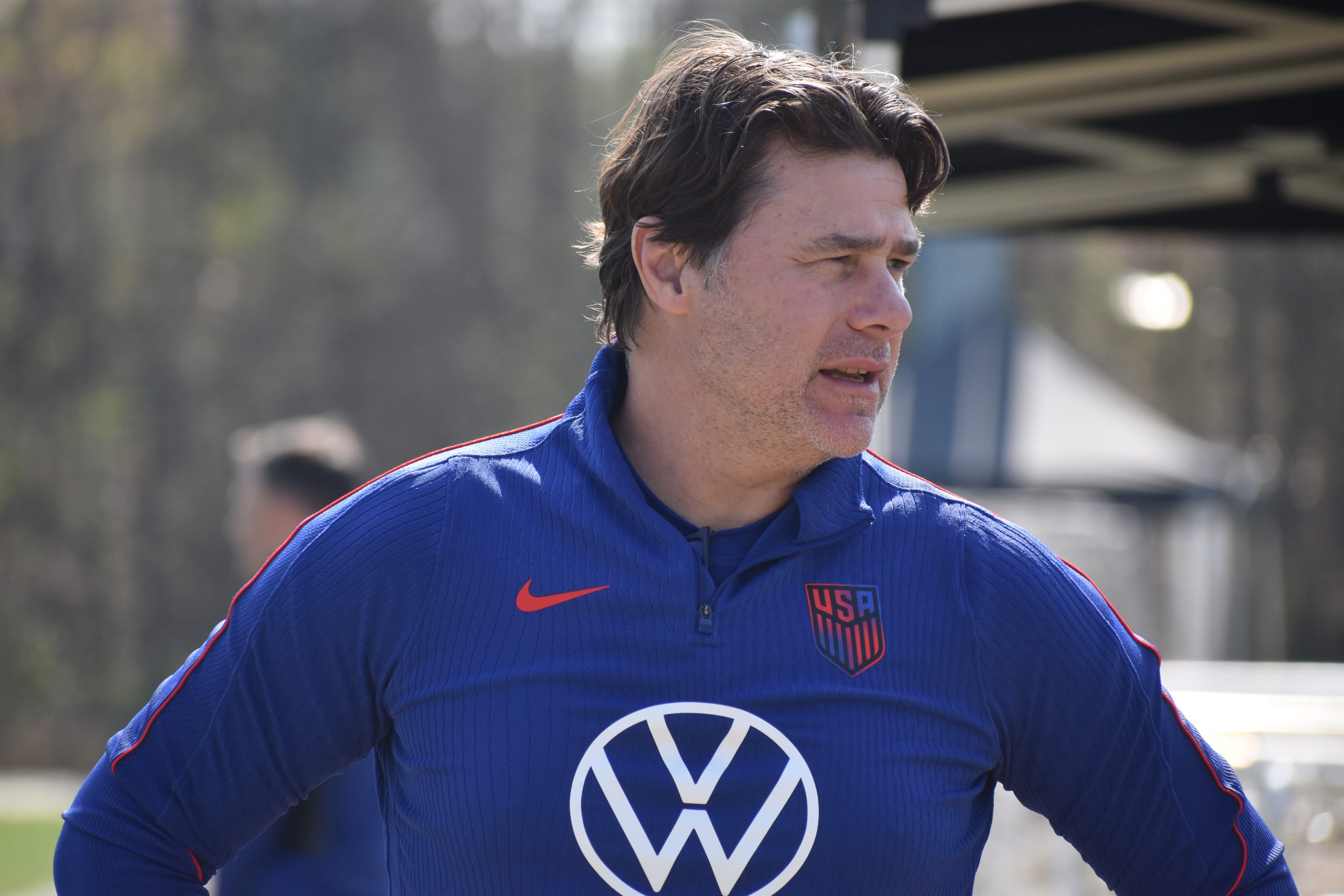
U.S. men’s national team manager Mauricio Pochettino.Jonathan Tannenwald
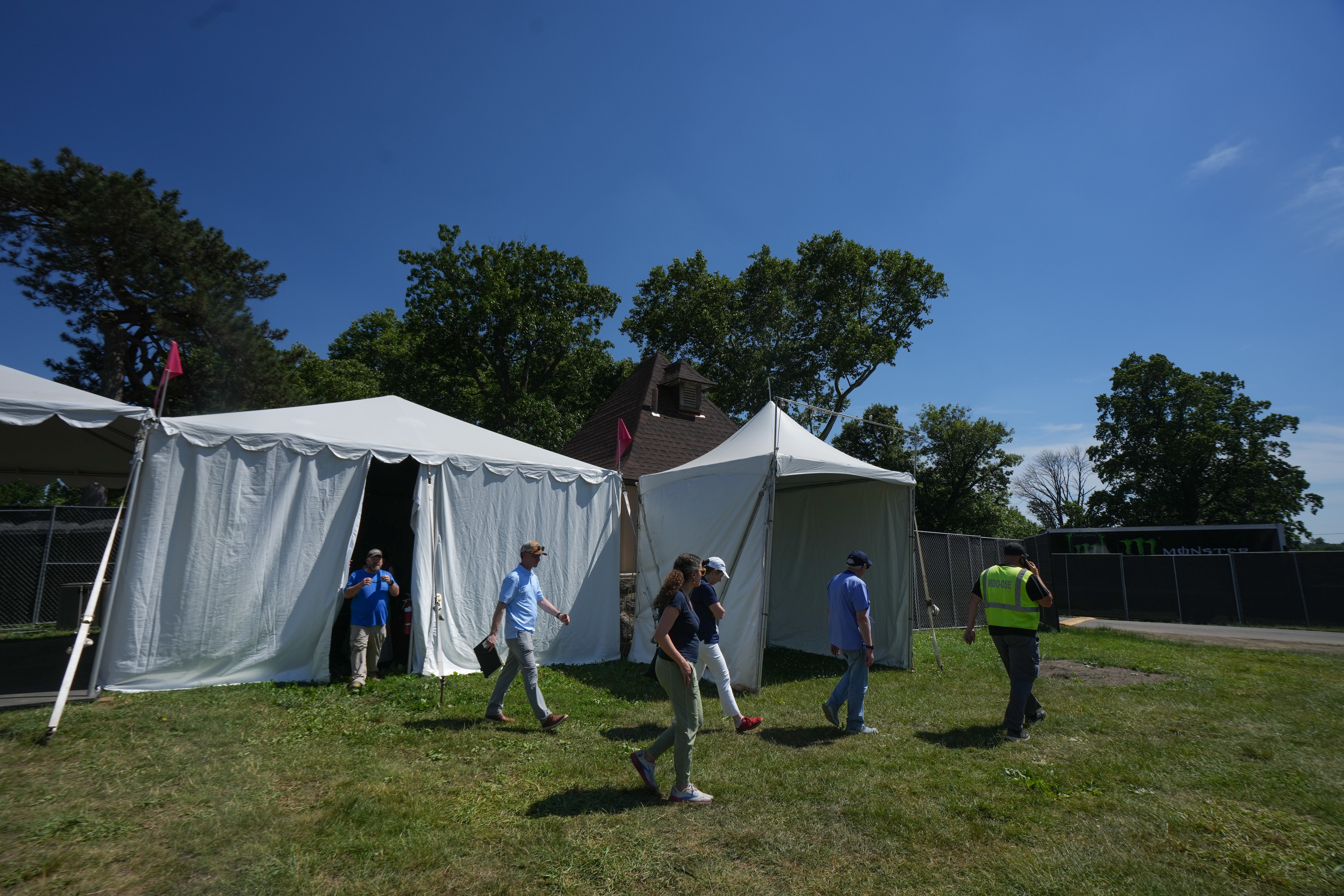
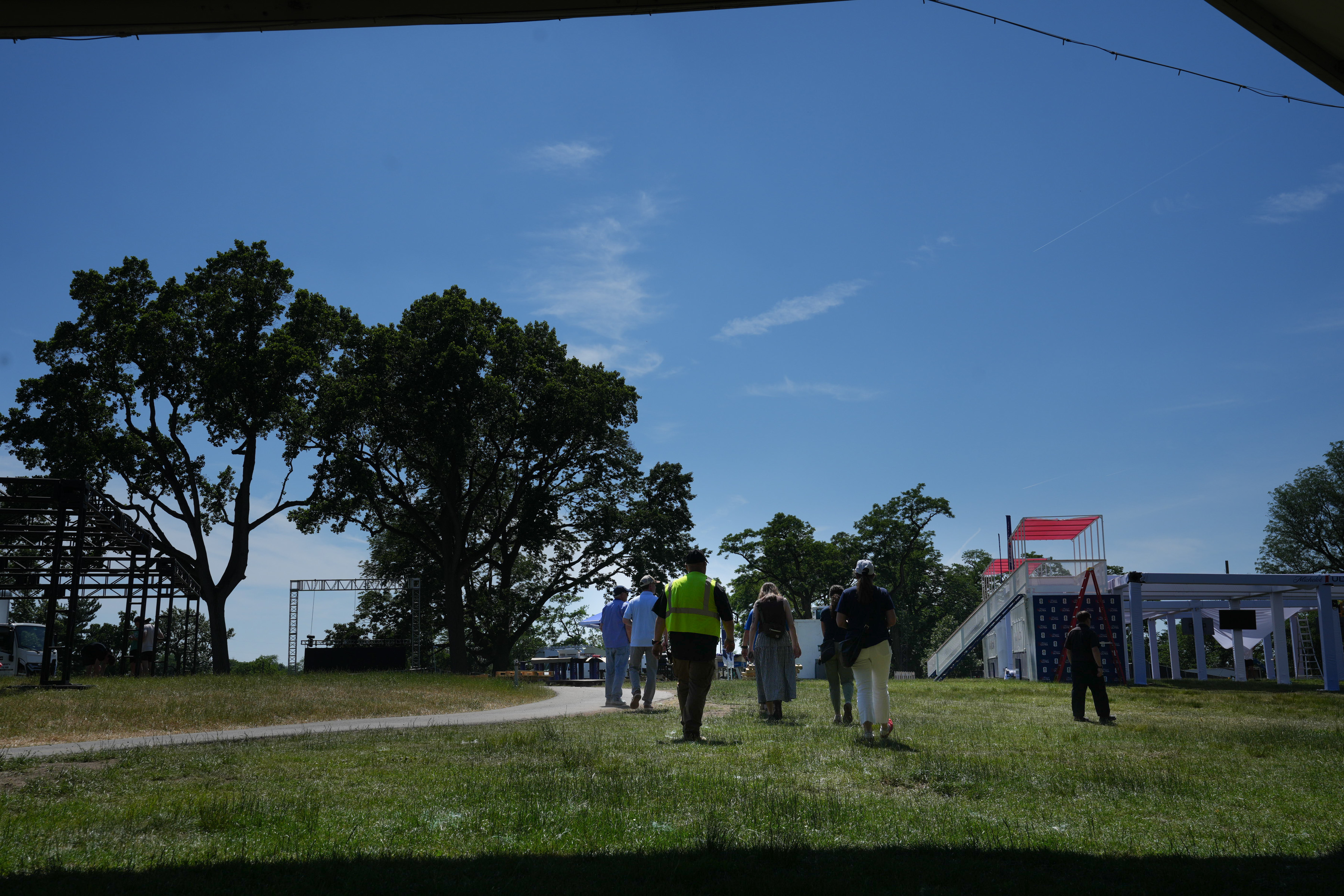
On a muggy Friday days before the World Cup began, a small team of medical emergency planners inspected the cavernous, air-conditioned tent erected for patients at Lemon Hill in Fairmount Park, not far from the enormous screen where thousands can watch matches through July 19.
Near a FIFA tent already full of merchandise, and branded “fan pavilions” in various stages of construction, Philadelphia’s host city medical lead, Patrick J. Brennan, paced what is now the medical home base for dozens of doctors, nurses, and EMTs over the next several weeks.
Brennan, who is also the chief medical officer of University of Pennsylvania Health System, pointed out where the dunk tanks for heatstroke victims would go. He walked through tents with massive fans and misters and visited a smaller first-aid tent for minor medical issues.
Philadelphia is no stranger to large events, from a papal visit to the NFL Draft to the annual Roots Picnic. But the World Cup fan festival at Lemon Hill will be open for more than a month — and is taking place in a summer of high-profile events expected to bring more than 1.5 million visitors to the city.
“That’s the difference — the duration of the event,” Brennan said.
Preparing for the full range of medical emergencies got underway nearly two years ago for Philadelphia’s public health leaders and largest health systems. They have prepared for heat-related illnesses, injuries, mass casualties, and terrorism.
Infectious diseaseis a leading public health concern among host cities and national health agencies.
Measles, a disease once considered eradicated through widespread vaccination and now on the rise across the country, is at the top of their list. An Inquirer analysis found that the Philadelphia region is pockmarked with vulnerable communities, where vaccination rates have fallen below the rate scientists say is necessary to prevent widespread illness.
Now thousands of people from all over the world will turn Philadelphia into a petri dish prime for the spread of infectious diseases. Yet another concern is an Ebola outbreak in parts of Africa, including the Democratic Republic of Congo, which has a team participating in the World Cup games in Houston.
Public health leaders say their best strategy for preventing widespread illness, especially should a case of highly infectious measles arise, is to respond as quickly and efficiently as possible.
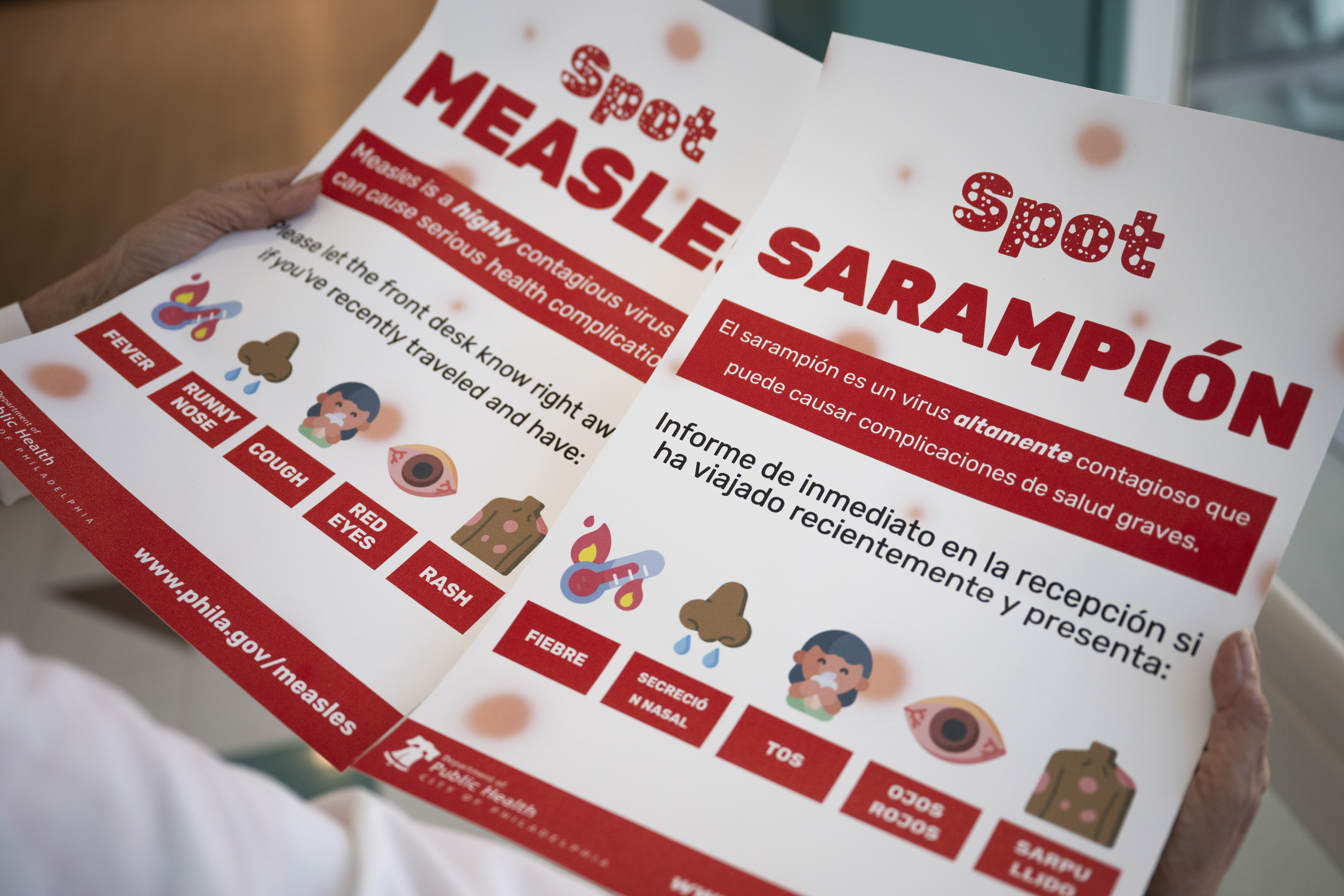
Hospitals have added questions about measles vaccination to their routine emergency department screening, with weekend and evening contacts on call at the city lab that would test potential measles samples. Newly posted flyers in local medical buildings explain how to recognize the early signs of measles — which many doctors have never encountered.
“My main concern with measles are the pockets where people are under-vaccinated, too few people are vaccinated to really stymie an outbreak,” Brennan said. “It’s going to be hard to prevent it from coming into the country.”
The city’s health department, public safety units, and leaders from top health systems, including Temple Health, Penn Medicine, and Jefferson Health, all had seats at the table.
They hashed out responses for potential public health emergencies ranging from bioterrorism, a mass casualty, and violence to routine heat-related health issues. Experts anticipate that the ongoing heat wave, paired with high levels of alcohol consumption, will lead many to experience heat exhaustion, dehydration, and potentially heatstroke.
The prep work built on efforts for past major events, such as Pope Francis’ visit in 2015 or the 2016 Democratic National Convention. New this time around, Philadelphia and World Cup host cities across the country are paying much more attention to infectious-disease concerns.
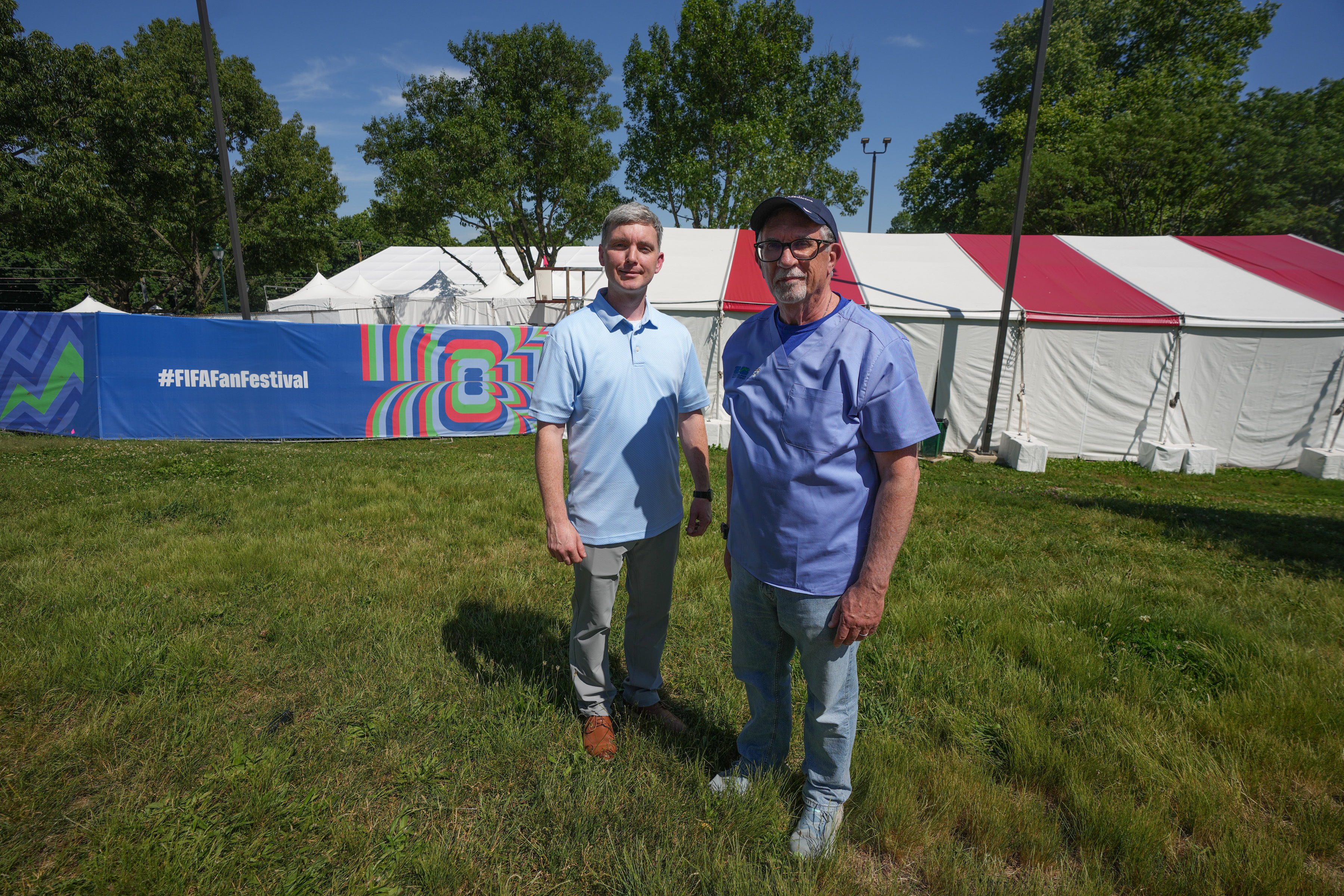
P.J. Brennan (right), Penn Medicine’s chief medical officer and the medical team lead for FIFA’s Philadelphia events, stands with Jack Welsh, an emergency preparedness specialist and clinical nurse at Penn Medicine, outside the main medical tent at the FIFA Fan Fest in Lemon Hill Park.Jessica Griffin / Staff Photographer
Until recent years, measles was not “immediately on the radar” for public health planning, said Jessica Caum, director of disease control for the Philadelphia Department of Public Health.
“We’re in a different place now with measles,” she said. “More cases, increases in vaccine hesitancy, decreases in vaccination rates — all of these things are important to keep in mind.”
The planners looked at staffing levels at medical tents and hospitals, including where surge staffing could come from. They developed a plan for where to quarantine a large number of people, in the event of an outbreak of measles or other infectious disease, but declined to provide details.
“We want to be as prepared as possible,” Caum said.
All that preparation still may not provide a firewall against weeks of sustained sports chaos.
The city’s game-day strategy, should a suspected measles case crop up, is to react as quickly as possible.
Temple trained its emergency department staff to ask new screening questions about measles symptoms and vaccination status in an effort to quickly identify anyone who is at risk, said Daniel Feinberg, chief medical officer for Temple University Hospital Inc.
Temple has been distributing measles information in Spanish and English to providers at its hospitals. Joe Lamberti / For The Inquirer
People whose vaccination status is unclear, or who say they are unvaccinated, will immediately be whisked to an isolation room if they show symptoms associated with measles, such as fever, cough, runny nose, and red eyes.
The telltale blotchy red rash does not typically appear for up to four days, though hospital administrators distributed photos of it to help medical staff recognize it.
Once isolated, people with suspicious symptoms will be tested, with the sample rushed to a city lab on call for such emergencies.
Administrators lined up contact information to reach the lab in the evenings or weekends, when it is typically closed, and discussed the fastest way to get a sample to the lab — potentially to have someone with good sneakers run.
“We don’t want any time wasted,” said Carlene Muto, vice president of infection prevention and occupational health services at Temple Health.
The MMR vaccine can protect against the virus if given to someone within 72 hours of being exposed. Measles immunoglobulin, which contains concentrated antibodies, can provide temporary protection against the virus if given within a few days of exposure. But it is often reserved for infants and other high-risk patients.
The faster health providers identify a measles case, the faster they can work to trace who else may have been exposed.
Medical tents are prepared to handle medical emergencies during the World Cup.Jessica Griffin / Staff Photographer
The risk of exposure is high when someone with measles attends a busy outdoor event, and the challenge of locating all the people who could have come in contact with the disease is immense.
Nine out of 10 unvaccinated people who come into contact with measles will get sick, making it among the most highly contagious diseases.
Anyone who does not get treated in time and has not been vaccinated will need to quarantine for 21 days.
At Jefferson, health system screening protocols are routinely updated to address the latest health threats, said Eric Sachinwalla, Jefferson’s medical director of infection prevention. Its hospitals recently added Ebola screening questions for patients who are being admitted and have traveled to at-risk countries.
Jefferson and other health systems are more likely to see “low-impact” but predictable threats: COVID-19 and other respiratory illnesses, sexually transmitted infections, and gastrointestinal diseases. These illnesses “can spread between people pretty quickly,” he said, but health systems are generally equipped to handle them.
A case of Ebola or measles, however, requires significant resources devoted to treatment and preventing further cases — so hospitals also have to carefully prepare for that possibility, he said.
“It’s balancing those two things. We plan for the high-occurrence things but also [diseases with] high potential impact,” Sachinwalla said.
Take the B (Broad Street) Line to 15th Street/City Hall, transfer to the eastbound L, and disembark at Spring Garden Station, on the southern edge of the neighborhood.
Correct, to a point.
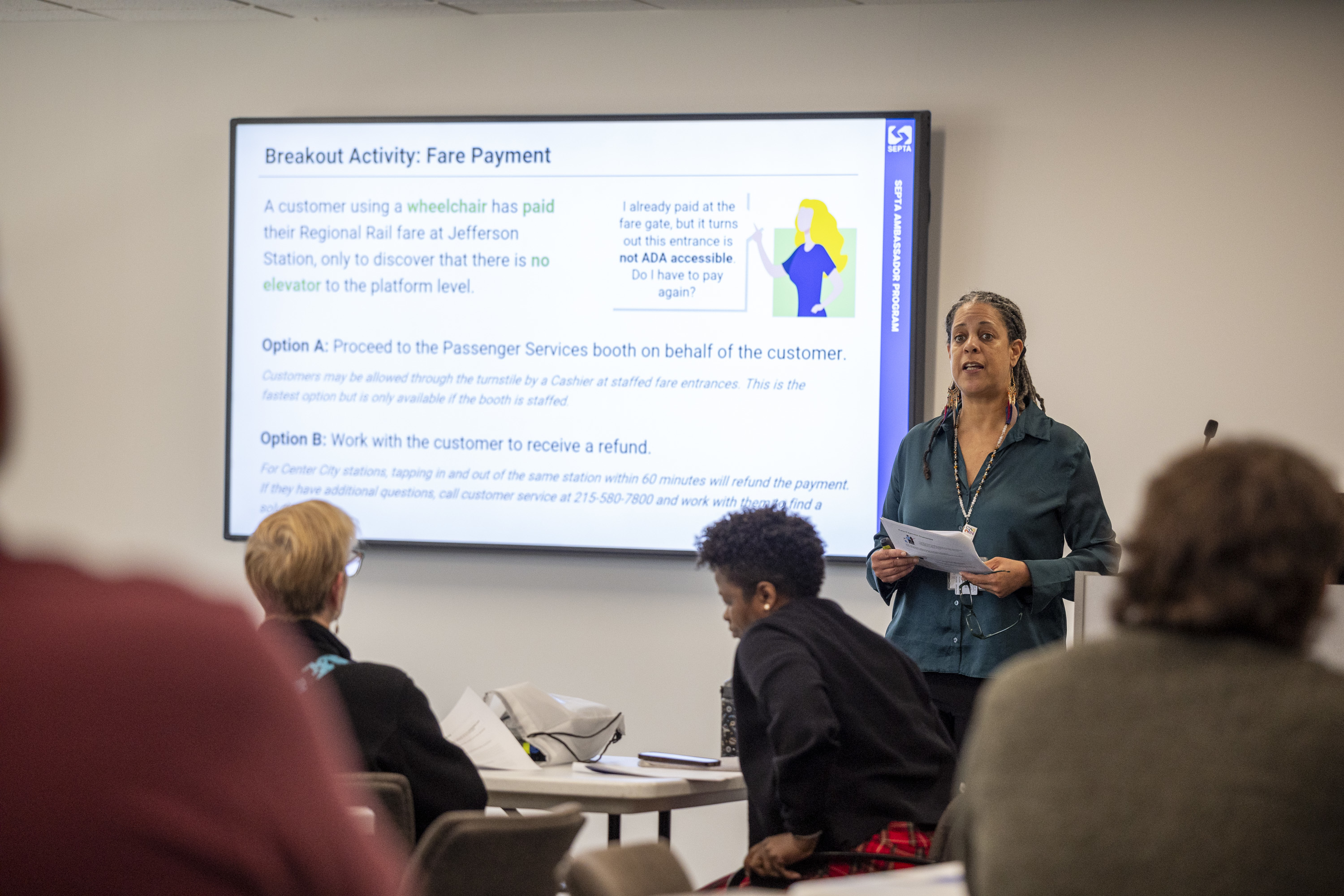
“I didn’t say where I need to get to in Northern Liberties, right?” said Jena Burley, the SEPTA training facilitator teaching the class.
Ack! Maybe the passenger would be better off taking the L for one more stop to Front-Girard, depending on the precise destination.
“Ask for as much specific information as possible,” Burley said.
SEPTA supervisors, administrators, and managers have been assigned 1,300 shifts as ambassadors in critical transit and Regional Rail stations from June 13 through July 19.
Jena Burley leads the SEPTA ambassador class.Tyger Williams / Staff Photographer
Four to 12 ambassadors will provide information, directions, and, ideally, a friendly welcome in each designated station — along with crowd control, and de-escalation techniques for conflict.
It’s a lot, which is why up to 1,000 employees have spent half a day in training with a detailed curriculum that feels like cramming for finals.
I worked with them through scenarios of escalating severity to simulate situations they will encounter: sweaty, frustrated crowds on platforms; medical emergencies; confusion over SEPTA’s fares and methods of payment; and how to troubleshoot travel glitches. And scarier stuff.
“This summer is an opportunity for SEPTA to shine, and you are such a big part of that,” said Lex Powers, chief officer for customer experience.
The Disney approach
This summer SEPTA is also debuting a new customer-service philosophy that subordinates other priorities to creating a safe and positive experience for people using the system.
The transit agency has used ambassadors since 2000 to help customers during special events like the Eagles Super Bowl parade last year, service changes, and the like. Officials rebooted the training program.
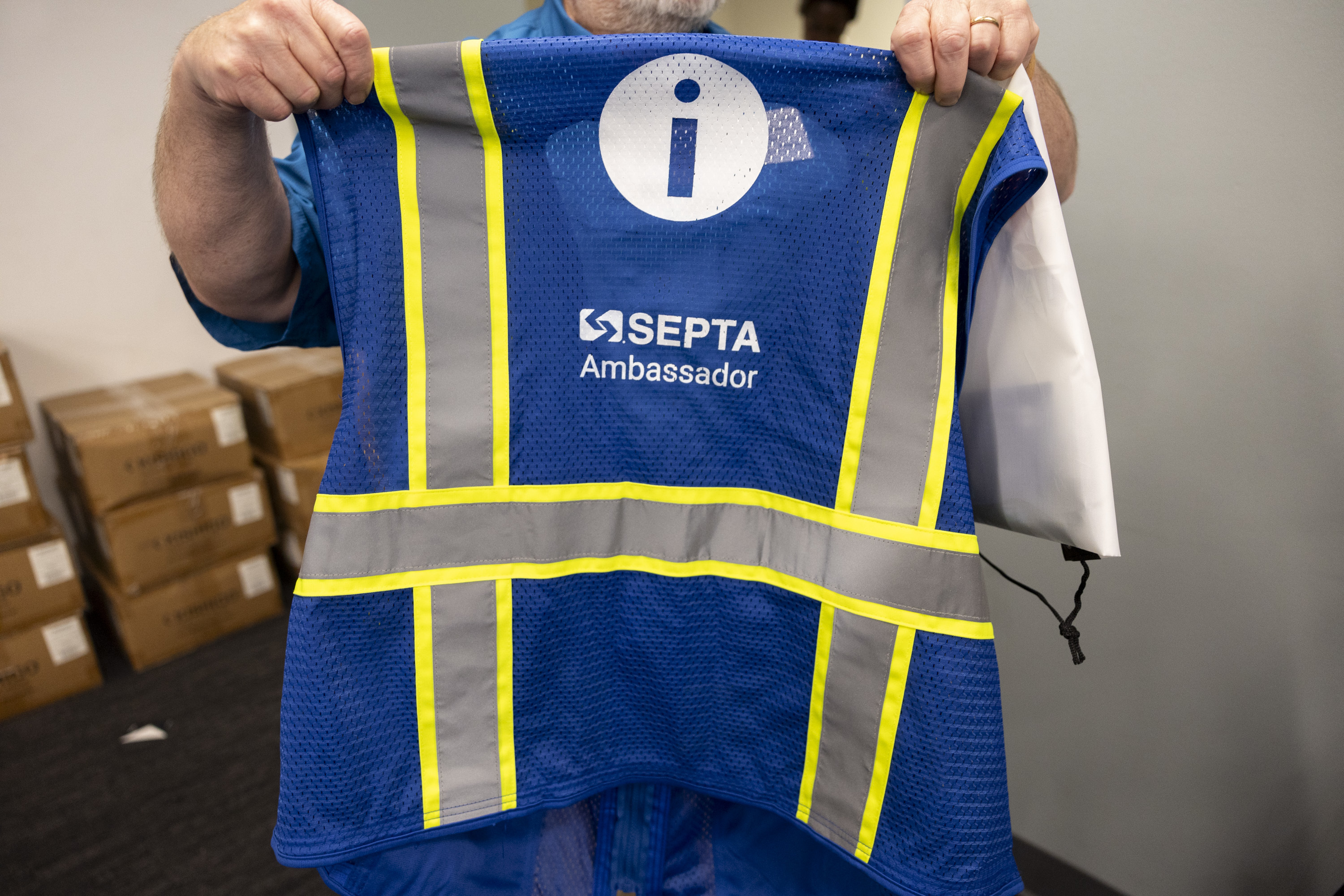
This summer, ambassadors will carry “cheat sheet” cards and wear blue vests to differentiate them from other workers in typical yellow safety vests.
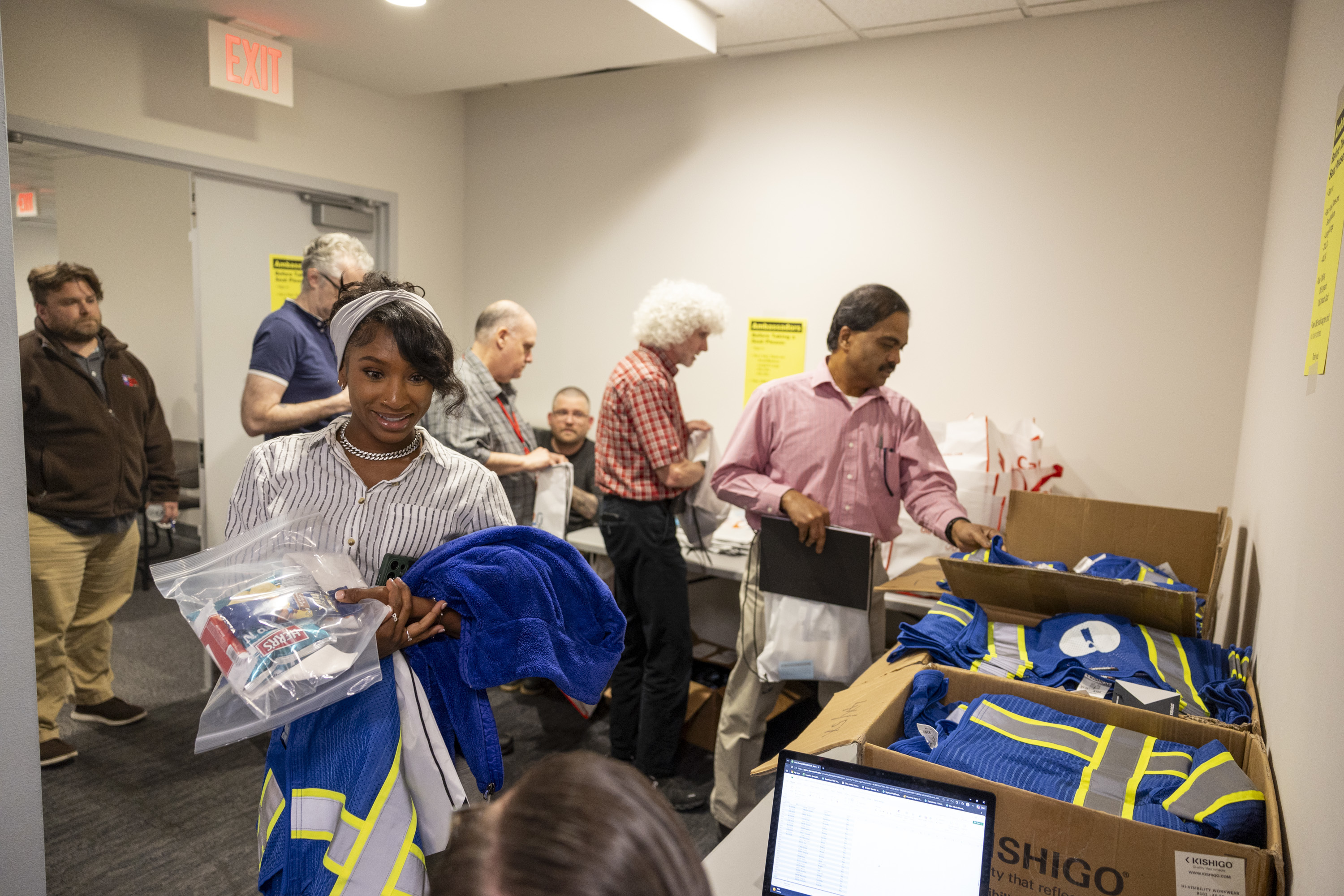
I got my own blue vest at the start of the class — pretty snazzy — and tried to earn it.
Brittany Davis, of Northeast Philadelphia, a service planner at SEPTA, gets her vest.Tyger Williams / Staff Photographer
Cultural correctness
The recent training included “cultural diplomacy” briefing sheets with guidance on customs and backgrounds of the countries with national teams playing here, prepared by the World Affairs Council of Philadelphia and protocol experts.
For instance,I learned:
Never flash the “OK” hand gesture to a Brazilian. It’s offensive, like flipping the bird.
When greeting or handing things to a person from Ivory Coast, use your right hand. It is a social slight to use the left, which is reserved for personal hygiene.
In some cultures, such as Ghana, it is customary to exchange pleasantries before getting down to business. People from Curaçao, influenced by Dutch culture, can be more direct and, while friendly, value personal space.
‘Bring the temperature down’
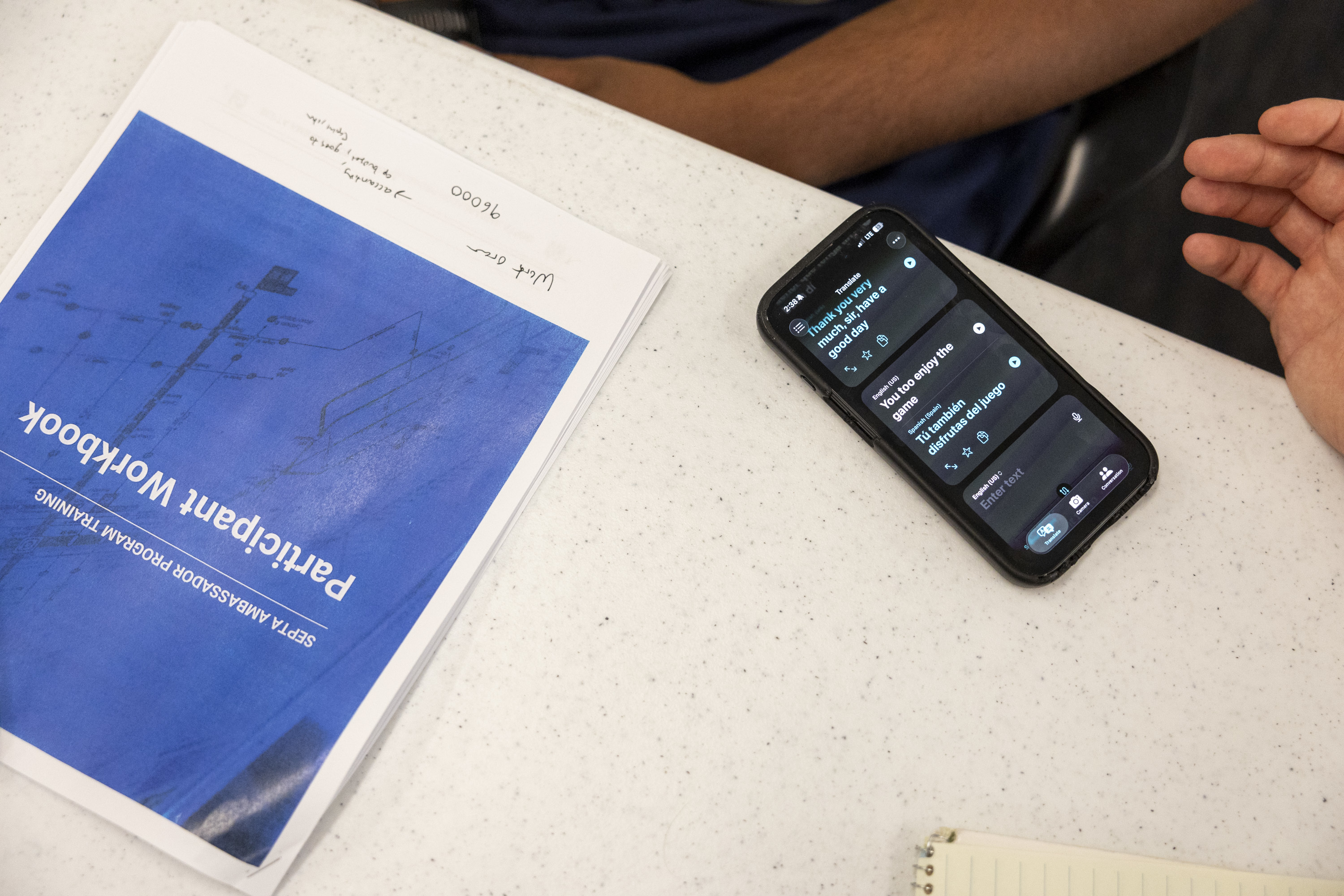
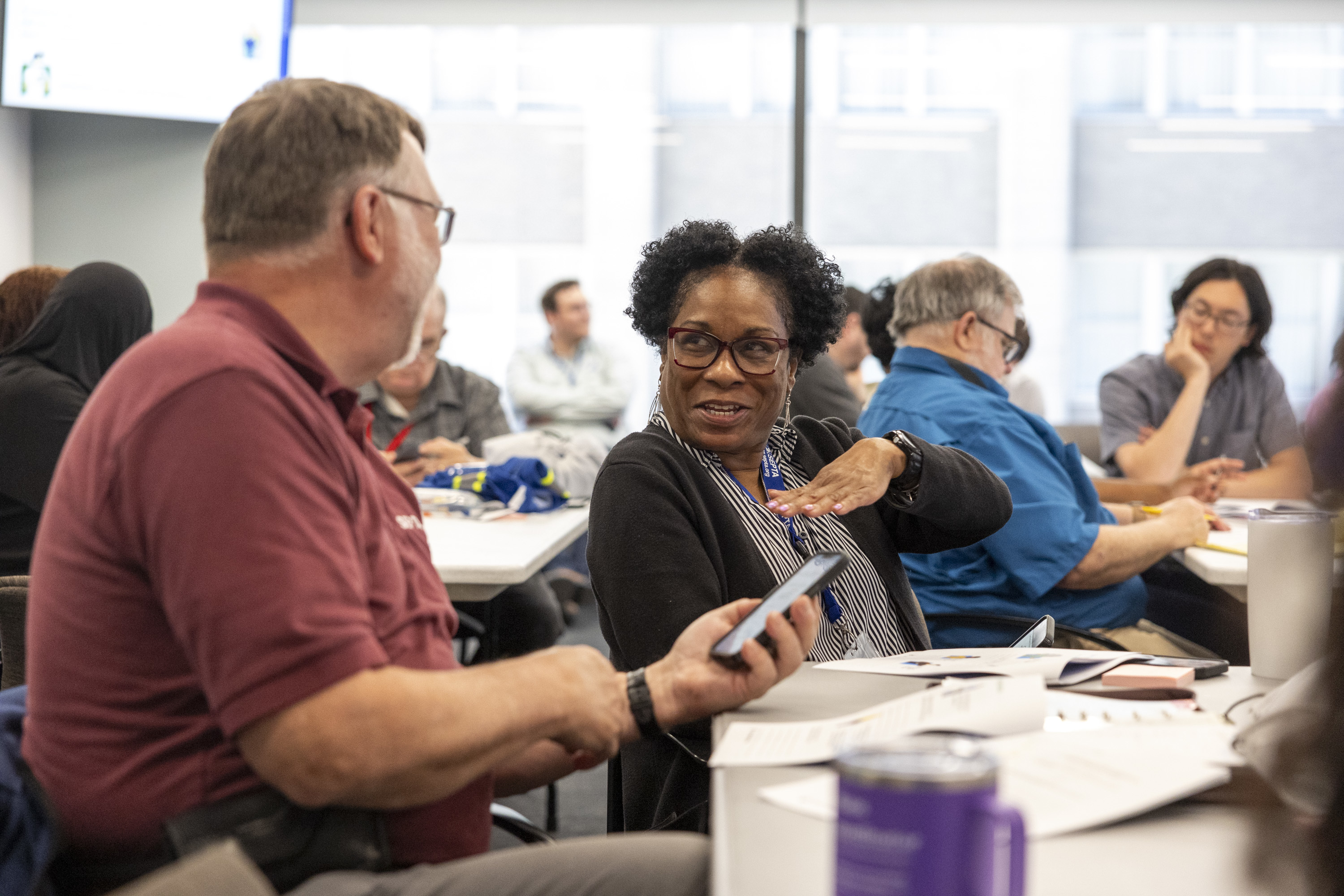
My fellow trainees and I shared tables in a conference room and huddled to work through often complex scenarios in a 24-page workbook.
You notice a particularly long line forming at one fare gate and go to investigate. …
A customer is tapping a credit card over and over, but it doesn’t work. Another customer tries to squeeze past them, increasing tension, and voices in the line start to rise.
“You want to bring the temperature down,“ said Noah Lee, manager of service-information development, with whom I shared a table. ”Take the person whose card doesn’t work off to the side to figure it out, and let other people go through.“
Nithin Vejendla, an operation planner, speaks Spanish in the Google Translator app.Tyger Williams / Staff Photographer
Nithin Vejendla said the bottleneck could be a two-person job and suggested bringing in another ambassador to wave people through the gate.
“Try empathizing with them,” said Vejendla, a SEPTA operations planner who was at my table. “Like, ‘I know it’s frustrating. I’ve had times where [tapping] doesn’t work. … We’ll get you on the next train.’”
Meanwhile, fix it. Is the person tapping incorrectly? Maybe the card reader’s bad, so try another turnstile. Consult a cashier.
The situation worsens.
A customer that has been held up in the line starts pushing and shoving the people in front of them. They are clearly agitated … [and] verbally threatening people.
“If they keep escalating, at that point your responsibility shifts to keeping the other passengers safe,” Vejendla said. “Maybe you stay between them and the fare gates, a physical barrier.“
Lee worked an ambassador shift during the 2025 Super Bowl parade and said he didn’t see anything like that.
“The atmosphere was joyful, and it was in the morning,” Lee said.
Vejendla, an operations planner who has worked at SEPTA for almost three years, was an ambassador for the Eagles parade and the Flower Show, and when SEPTA briefly cut and changed bus routes last year.
Later, trainees downloaded Google Translate to practice.
Vejendla speaks fluent Spanish and rough French. Powers, his boss, was teasing him about it.
“Lex was like, and I quote, ‘I can’t believe the system understood you. That French accent was terrible.’”
When emergencies arise
Sometimes, the scenarios are more serious. People wind up in the track area, trying to retrieve an item or having fallen off a platform. What do you do?
“Stop the train. Think about everything else later,” Burley said.
Heather Jordan, employee relations manager, (right), and Kim Smith, senior project engineer and track engineering with SEPTA, (left), are looking at the SEPTA app to answer questions for an exercise during the SEPTA’s Ambassador class.Tyger Williams / Staff Photographer
Go to the cashier and get them to push the Emergency Train Stop button, which activates a “stop” signal light. There are red flags in the booth to wave at incoming trains.
Moving your arm back and forth at chest level is a traditional railroad stop signal. “Or go berserk,” Burley said, waving your arms over your head or flashing a phone flashlight.
Do not enter the track area, and don’t try to pull a person up. The third rail carries 600 to 750 volts of electricity.
“You’re there to keep customers safe, but if you’re not safe, you can’t help,” Burley said.
As class ended and everyone left, I carried a deeper respect for the job of ambassador. I wished my fellow students good luck.