The World Cup is finally here, and for the next 39 days, billions of soccer fans worldwide will hang on the fate of the 48 national teams vying to be named the global best for the next four years.
There is nothing else quite like it.
If you haven’t followed it closely, try to imagine it as a kind of March Madness wherein the bracket’s unexpected turns and Cinderella runs can upend every expectation: add into it the international scope and quadrennial timing of the Summer Olympics; then top it off with the fervor of beloved religious observance — and you’ll be getting close.
My familial WhatsApp group started really buzzing two days ago, after New York City Mayor Zohran Mamdani posited the possibility of Morocco winning it all, and won’t stop buzzing until the confetti rains down on the overjoyed winners. In between will be everything from play-by-play game commentary, to status reports on Panini collections or taste tests of World Cup branded snacks, to shared photos of candles lit for the success of a favored team.
Because, when you are all in you are all in, am I right?
Thursday the opening match took place between Mexico (which, along with the United States and Canada, is co-hosting this World Cup) and South Africa.
On Sunday, our own Linc-turned-Philadelphia-Stadium will host Cote d’Ivoire vs. Ecuador. Philadelphia Inquirer columnist Will Bunch has written about the Cote d’Ivoire team — which he will see in person — and whose fans came to watch them in Chester even before the World Cup started.
The Vourvouliad (the collective we’ve coined for my extended family) long toyed with the idea of attending one of the Philadelphia matches as a group — but FIFA’s dynamic pricing put the kibosh on that by making every seat cost a small fortune.
But we’ll make do — as we have every mundial before this one — watching from afar.
Truth is, many of us are also approaching this World Cup with more than a little bit of trepidation. We will watch the World Cup matches taking place on U.S. soil with bated breath, given President Donald Trump’s xenophobia and his administration’s targeted deployment of Immigration and Customs Enforcement and other Department of Homeland Security agents to Black and brown cities, communities and gathering spaces.
But we longtime fans have too many great memories born of our experiences of soccer to boycott the World Cup altogether — even though some have called for that.
In fact, most of the fans that I’ve spoken with lately are consumed by the exact opposite: trying to find a way to get into a World Cup stadium.
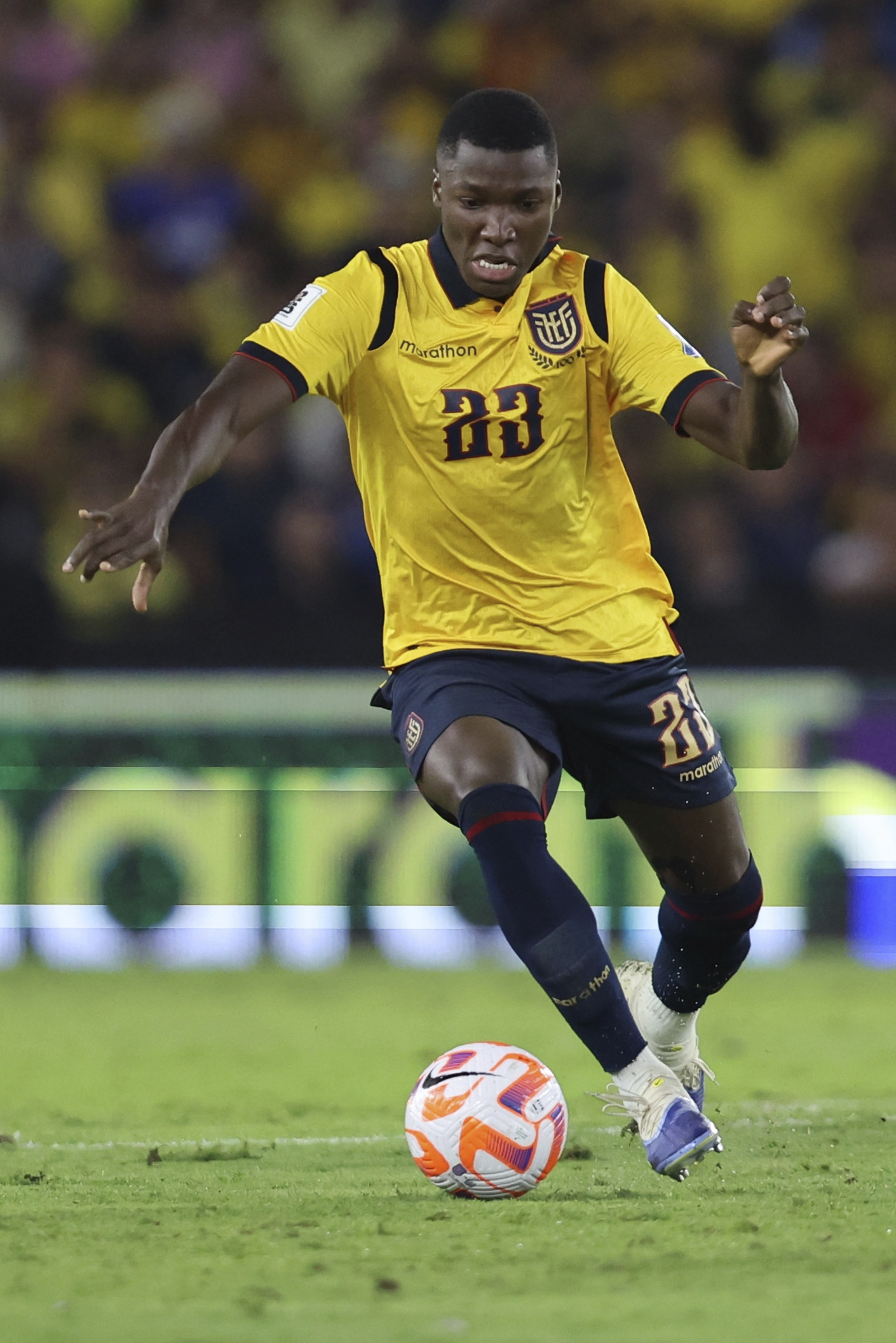
Ecuador’s Moisés Caicedo carries the ball during a World Cup 2026 qualifying soccer match against Argentina at Banco Pichincha Stadium in Guayaquil, Ecuador in September.A
Felipe, who — perhaps channeling Pelé, Neymar and countless other soccer icons — only wanted to go by one name, will be at the Philadelphia opener Sunday, rooting for his home country of Ecuador.
“I will be going to the stadium with my family. We will also be tailgating with some other friends from Ecuador before the game outside the stadium,” he told me. “I think it will be a great opportunity to meet other soccer fans there.”
“I am really excited for the World Cup, not only because Ecuador’s national team is in great shape but also because it is a once in a lifetime [opportunity] to have your home country’s national team playing a World Cup in the city you are living in,” Felipe added. “I wish the organization would take into account the fans’ enjoyment before the profit, but I guess this is the business model we sadly see in many other sports as well.”
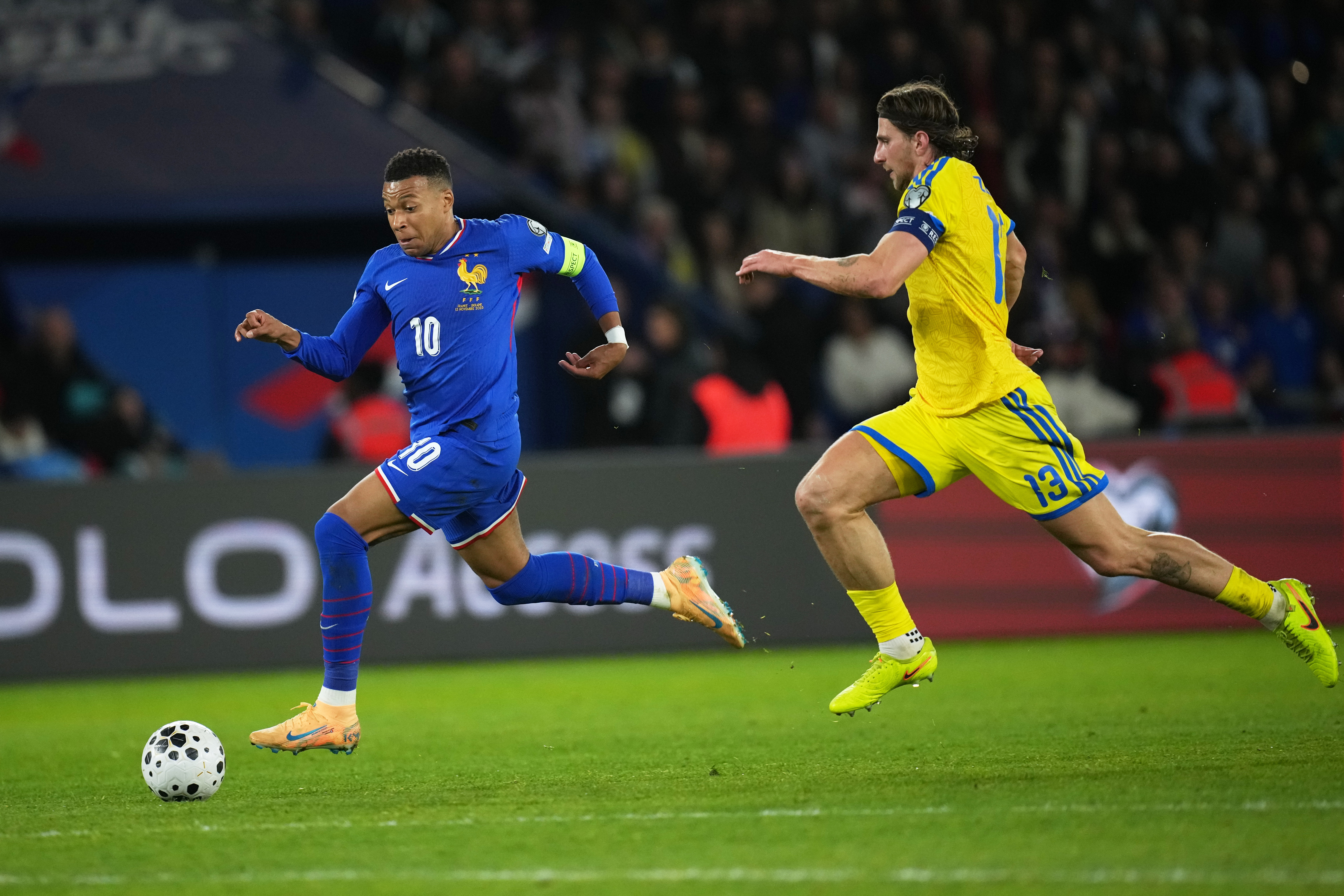
France’s Kylian Mbappé, left, scores his side’s third goal during a World Cup 2026 group D qualifying soccer match between France and Ukraine in Paris in November.Christophe Ena
Ben Rush-Goebel, who moved to Philadelphia from France more than a decade ago, probably won’t be at France’s match on June 22.
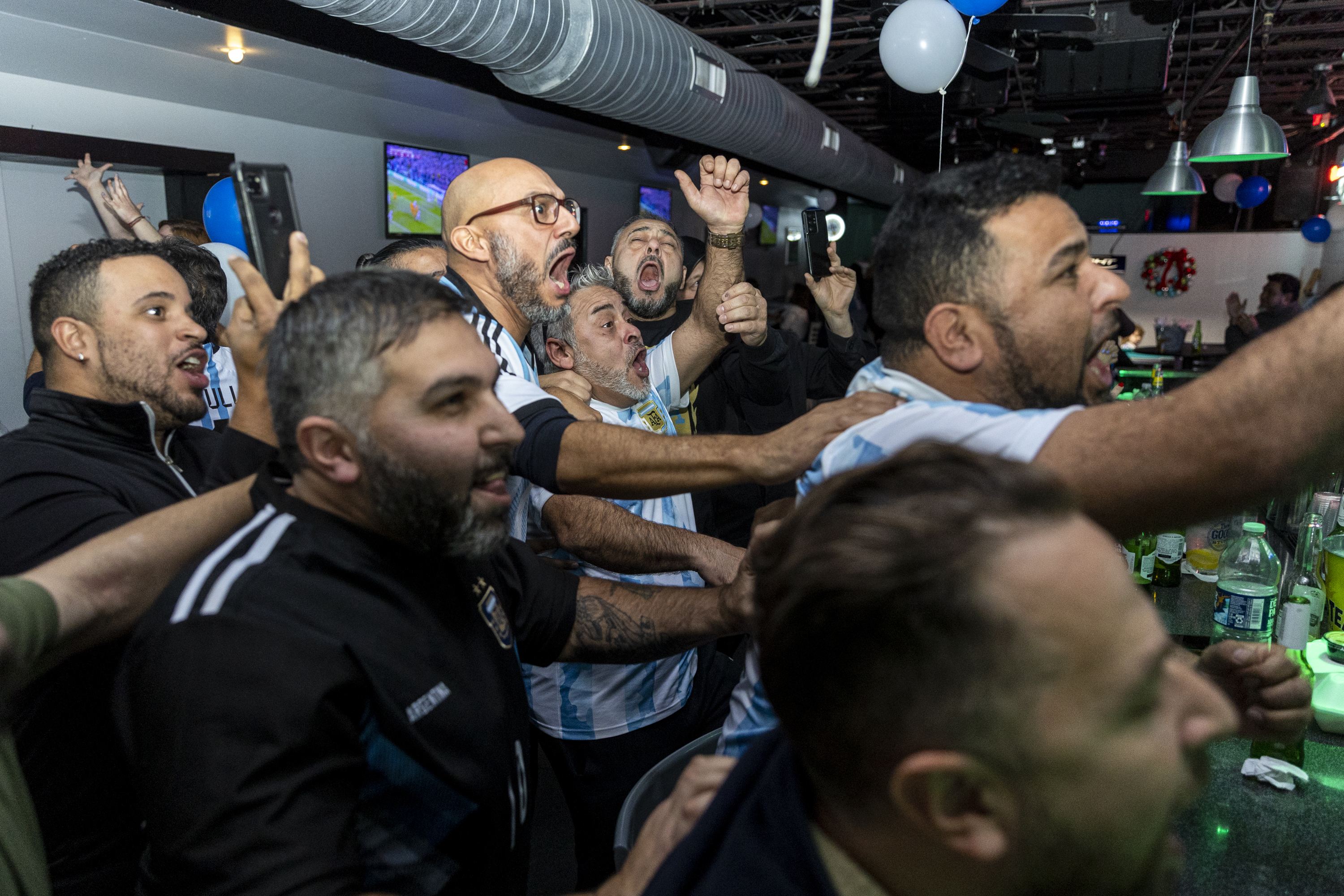
“The tickets are really too expensive,” he told me, “so unless I find a magical way to get to the Philly game, I will be watching it with my friends. I can’t wait to go to the FanFest to watch this game and others. Might also go to a bar. Fado has always been our spot. In 2018, when France went to the finals to beat Croatia, we were in the rain on South Street watching from the screen set up by Brauhaus Schmitz. This was the most amazing time as we rushed after the victory to buy cheap champagne to celebrate.”
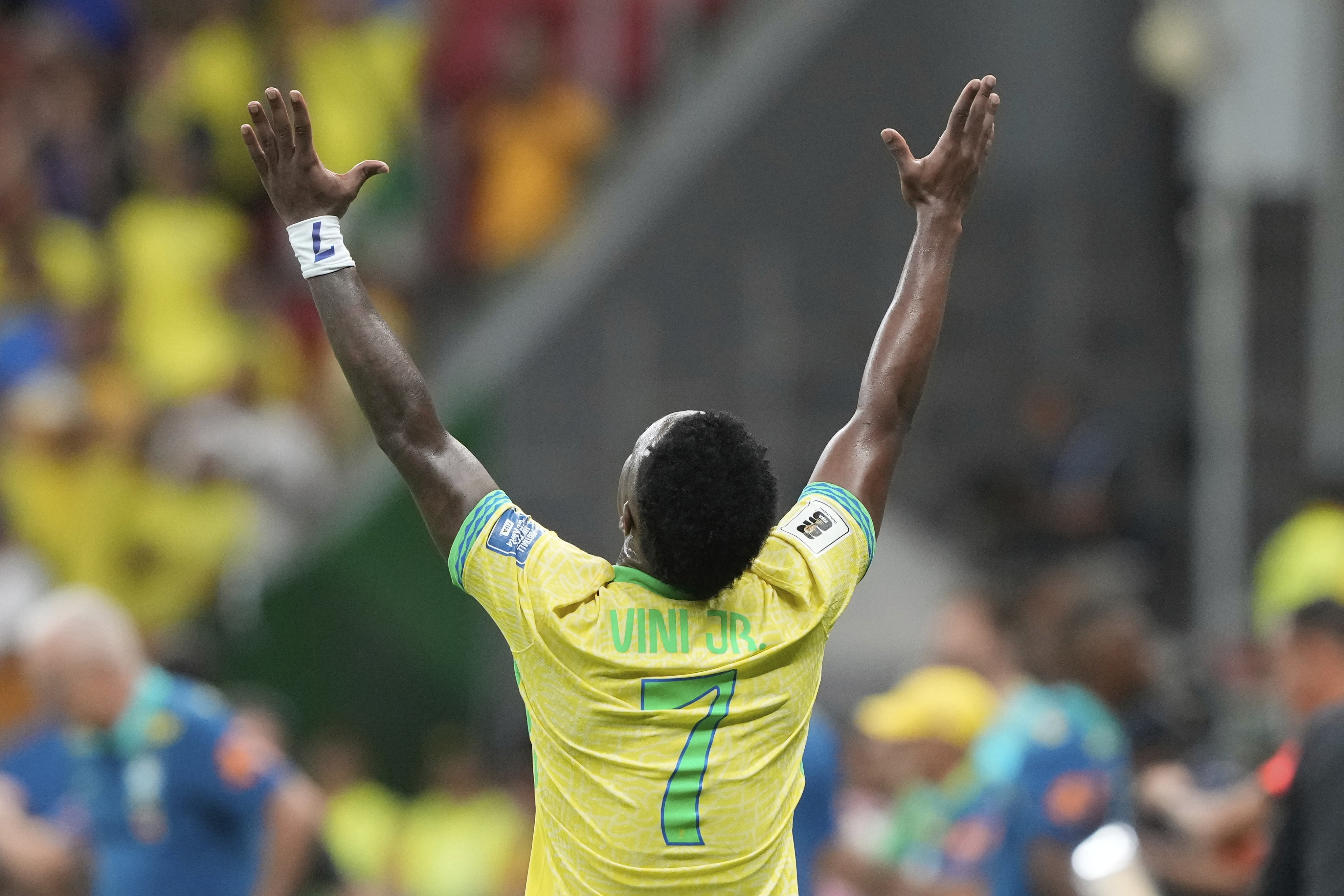
Brazil’s Vinícius Júnior celebrates after scoring his side’s second goal against Colombia during a FIFA World Cup 2026 qualifying soccer match at Mané Garrincha stadium in Brasilia, Brazil, in March 2025.Eraldo Peres
Rob Levin, raised in Brazil and rooting both for their Seleção and Argentina’s Albicelestes, will be watching Brazil play in Philadelphia June 19 from home, or with others at a watch party.
“Chevere to have the World Cup here,” he said. “It’s a shame that the ticket costs are so high and travel to and fro is so fraught — I hope all the fans behave and all players are treated well and with respect — no place for politics in these games. May everything go as smoothly as possible, as it should.”
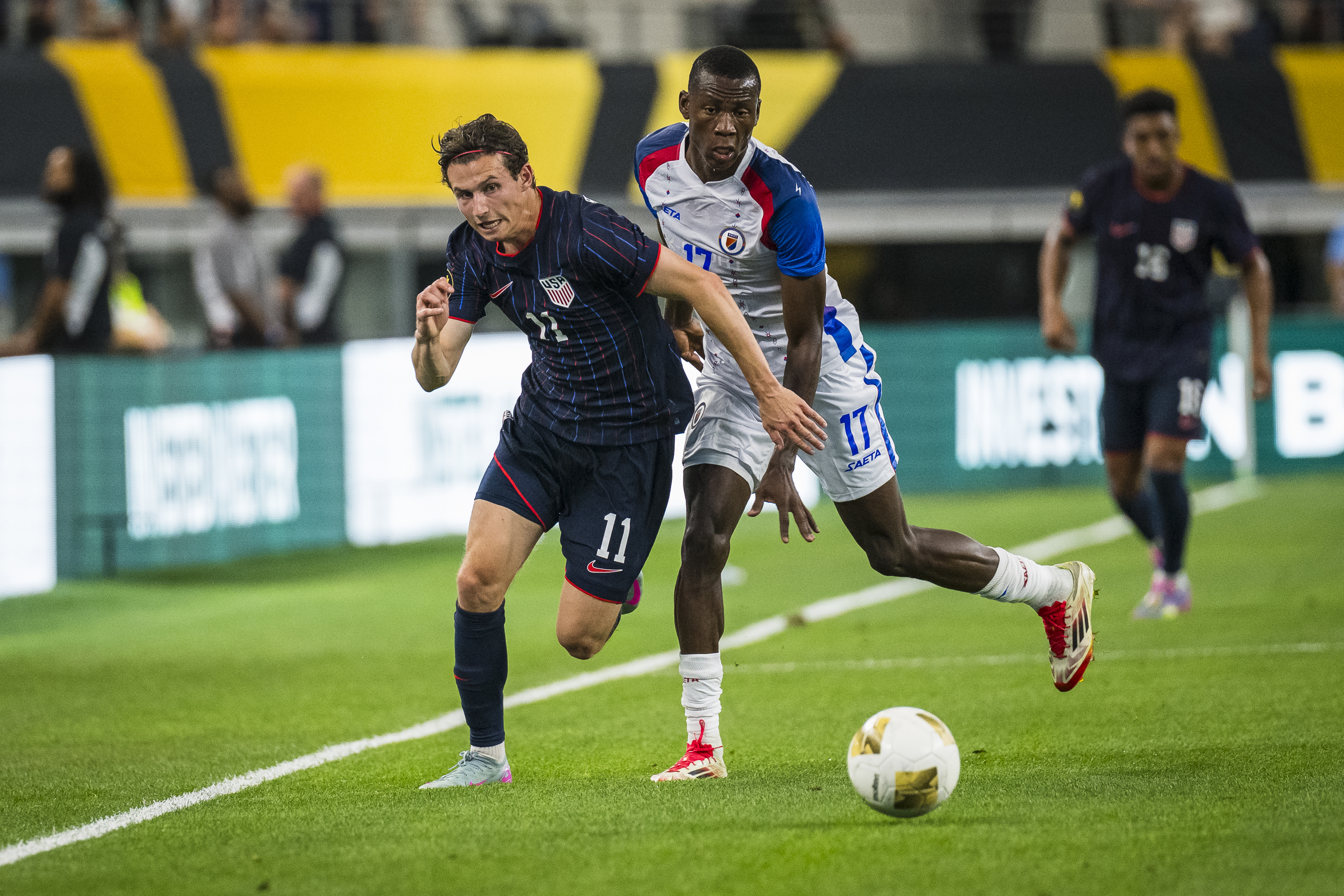
The Union’s Danley Jean Jacques, right, is the first active player from the Philadelpha club to play in a World Cup, on the Haitian national team.Jessica Tobias
Numa St. Louis, whose team, Haiti, is participating in the World Cup for the first time in more than 50 years, hasn’t given up on seeing the team play against Brazil on June 19.
“I’m still hoping to score a ticket for the Haiti-Brazil game,” he told me, “but if not, I’ll be enjoying the tournament the Haitian way — at community watch parties, breaking bread with friends and family, dancing, and vibing to Haitian music and rhythms while cheering on our team.”
“The entire Haitian community is energized by the opportunity to support our national team and celebrate this historic moment together …Win, lose, or draw, this team has already made us proud,” he added.
Like Levin, St. Louis worries about the welcome players and international fans might feel in the U.S. venues. “I have some concerns about how the United States is being perceived by many international fans,” he said. “Reports regarding the treatment of an African referee, Senegalese players, and issues involving Iranian supporters have raised questions about whether the spirit of the tournament is being fully embraced. The World Cup should be a celebration of cultures, people, and the beautiful game. It should feel welcoming, joyful, and inclusive for everyone.”
And it should resonate, even years later.
“My best soccer memory goes back to 1996, the first time Ecuador beat Argentina in Quito,” Felipe told me. “I was 12 years old and went to watch the game at the stadium with my grandfather who was a huge fan of soccer.”
Rush-Goebel points to that 2018 moment on South Street after France’s win as his favorite soccer memory: “A whole lot of French people, many of whom were my friends, my wife, [all of us] stressing together, in the rain, to an amazing victory!”
For myself, I have fond memories of seeing Mexican immigrants in Philly dressing their Jesus figures in El Tri’s national jerseys before Mexico played in the 2014 mundial — but you have to go all the way back to the 1970 World Cup in Mexico for my best memory.
Sure, I recall snippets of the televised semi-final “game of the century” between Italy and West Germany, and maybe even Pelé’s magnificent header that opened the final between Brazil and Italy…
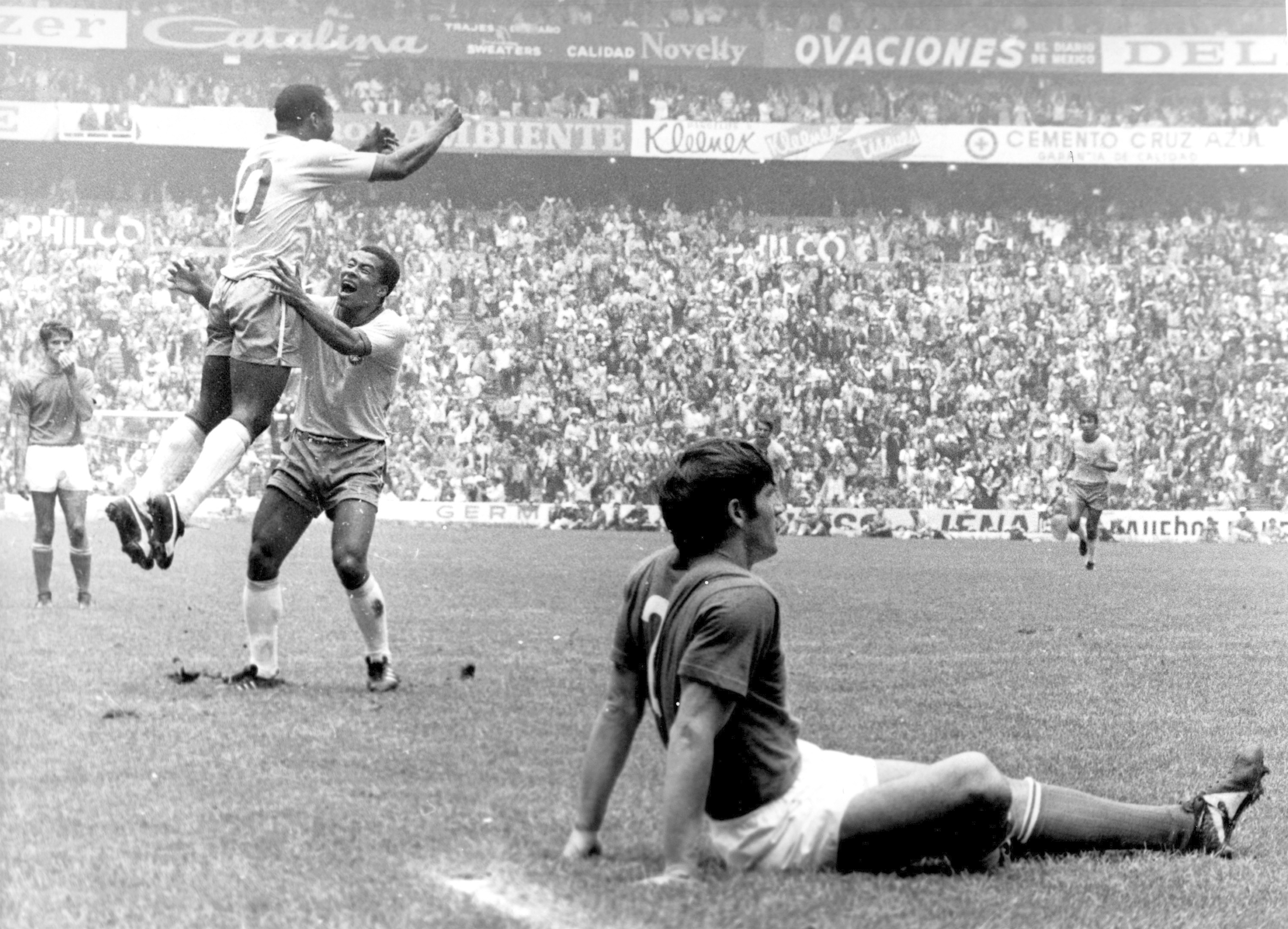
In this June 21, 1970 file photo, Brazil’s Pelé jumps for joy after scoring his team’s first goal against Italy in the first half of a World Cup final at Azteca Stadium in Mexico City, before winning 4 – 1. Kurt Strumpf
But what lives most vividly in my memory played out during the long lent leading up to those games.
I’m a kid, standing under the eucalyptus tree in my grandmother’s house in Guatemala with my brothers, trading Panini we purchased for centavos at the corner store in Zone 7 so that we could fill every team roster with stamps in our albums. We talked fútbol nonstop — me, who can’t stand sports, and my brothers, who love soccer and baseball with equal passion — and cheerfully bickered about who would go the distance.
For me soccer will always be about those two people I love, who I want to keep talking fútbol with until the day I die. The beautiful game is beautiful precisely because of the profound connections it invites and honors — be it with family members, friends or strangers across continents and time zones.
Or with a city, hosting its first ever World Cup matches with characteristic style and grit. May you hold our deep and indelible memories forever, Philadelphia.
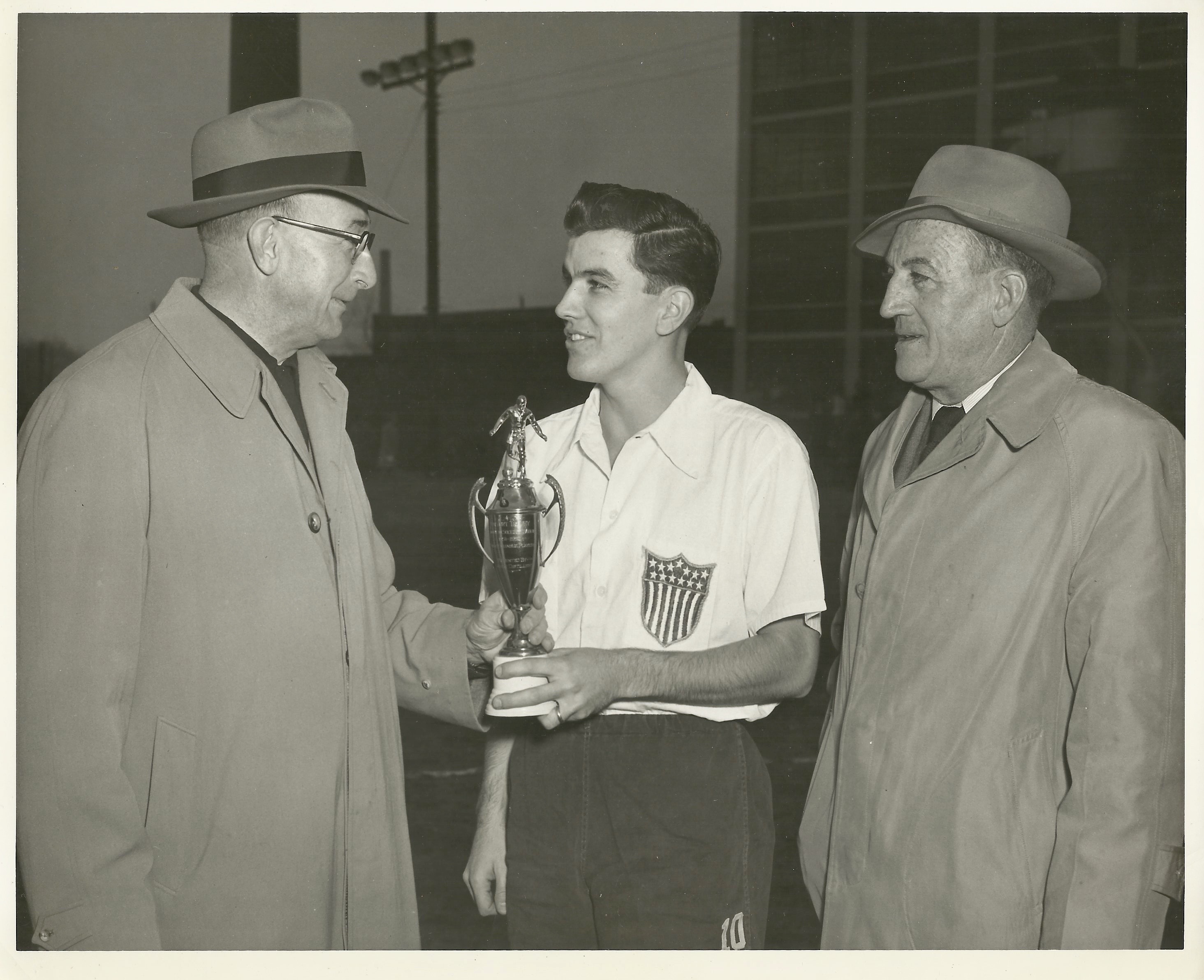
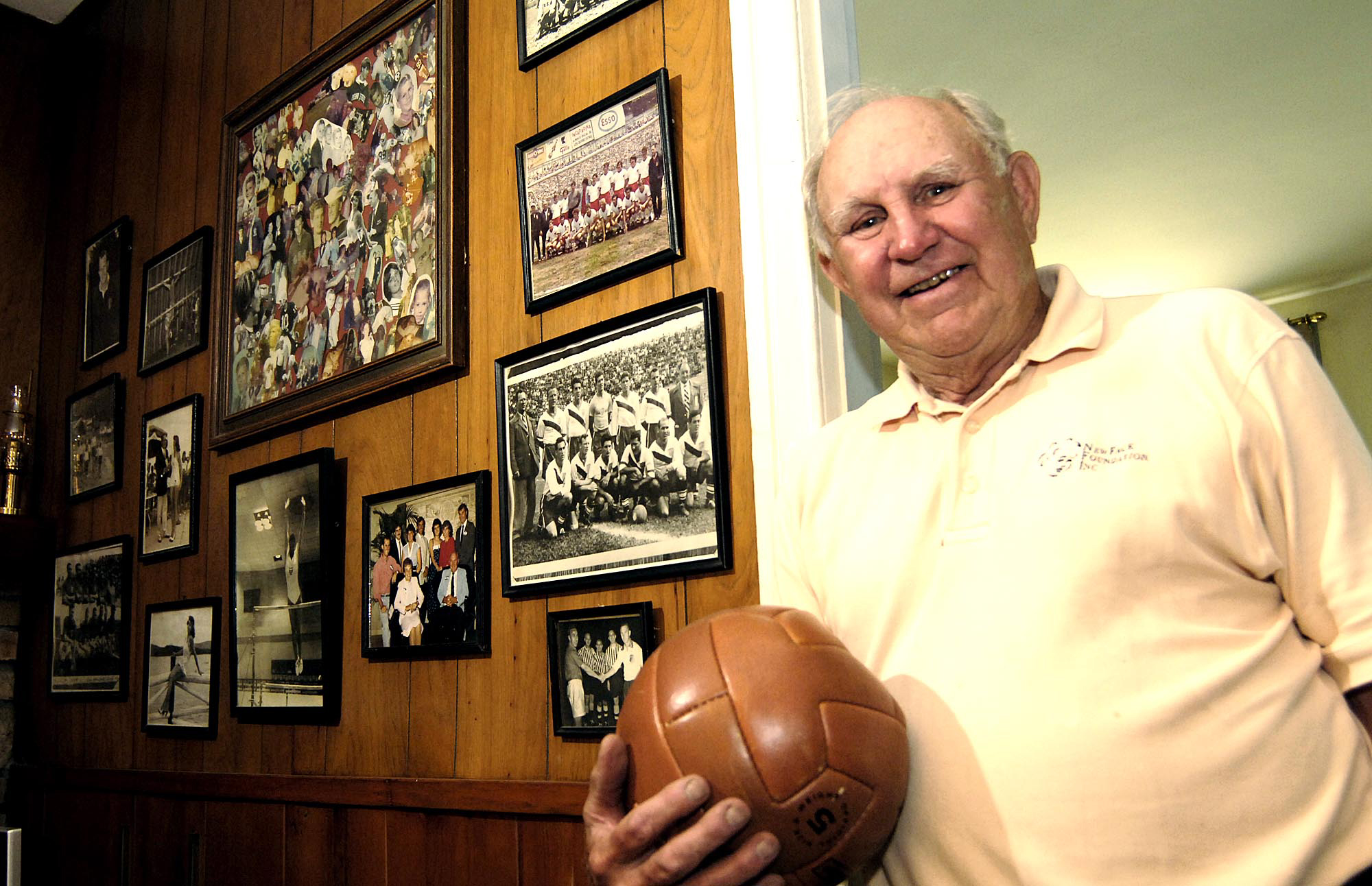
The parking lot was crammed, and the game was already underway when Benny McLaughlin pulled his Impala toward McVeigh Playground, the spot in Kensington where he played as a kid before traveling the world as one of Philadelphia’s true soccer pioneers.
He grew up on Hurley Street in a rowhouse across from the playground where neighbors hung out their windows in the summer of 1948 to fete McLaughlin with a ticker-tape parade after he made the Olympic team.
McLaughlin played professionally as a teenager, was a star at North Catholic, kicked leather balls that felt like cinder blocks in the rain, and helped the U.S. qualify for the 1950 World Cup.
But he had to miss the tournament in Brazil. Why? Because his job refused to give him time off.
McLaughlin, who once played in front of more than 100,000 people in Scotland, was told by a British journalist that he was good enough to play in England’s first division. Considered by one admirer to be the “Babe Ruth” of his neighborhood, in Philadelphia soccer circles, McLaughlin was an icon.
But he still needed a parking spot that Sunday afternoon in the early 1970s at his old playground. Finally, he was spotted behind the wheel.
“Someone goes, ‘Benny’s here,’” said his son, Andy, who sat in the passenger seat. “They waved him in and just said, ‘Park the car anywhere. Leave the keys. Drop it here.’”
Benny McLaughlin already had his cleats and shorts on. He was in his early 40s, there to play in a reunion game of old teams.
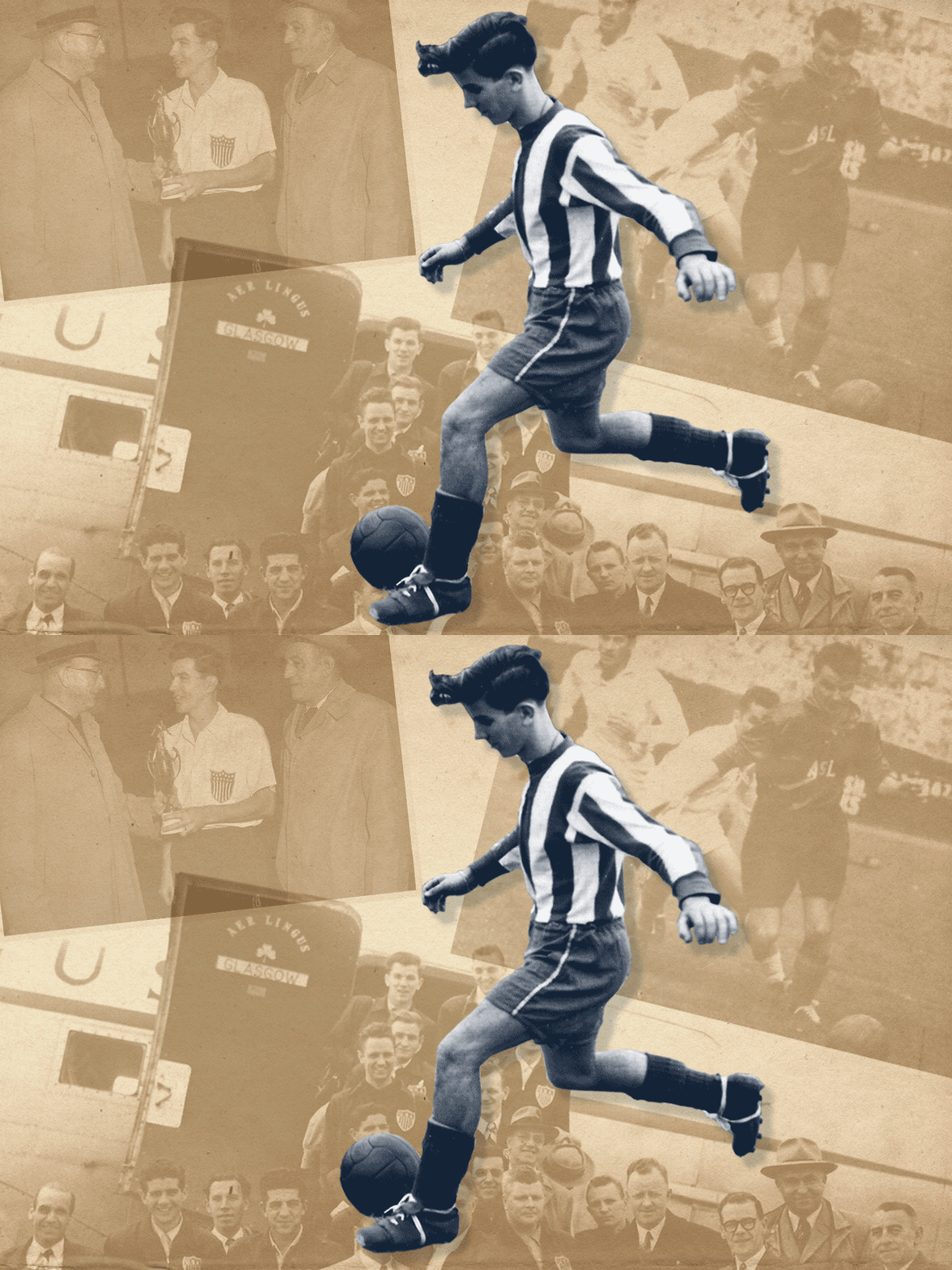
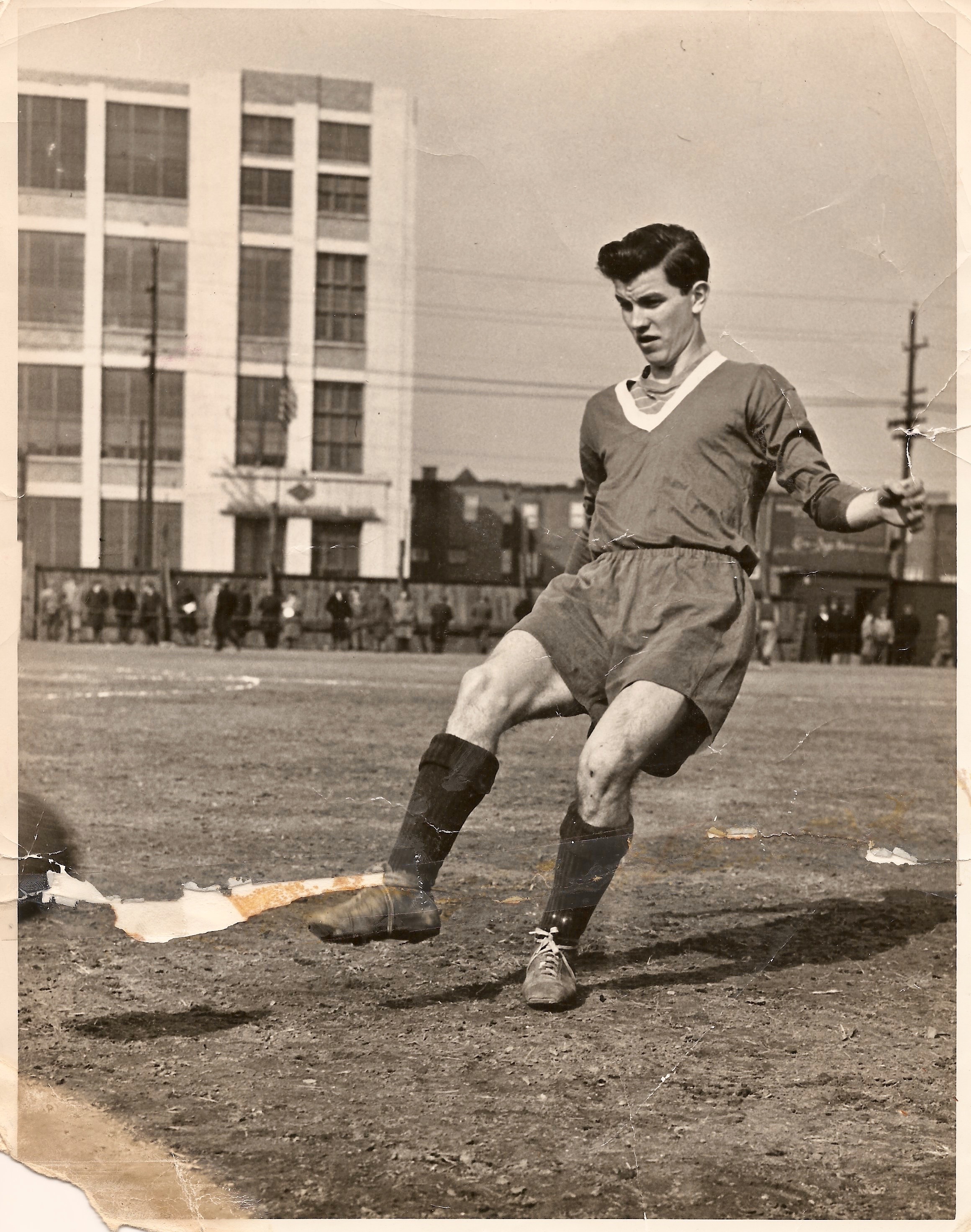
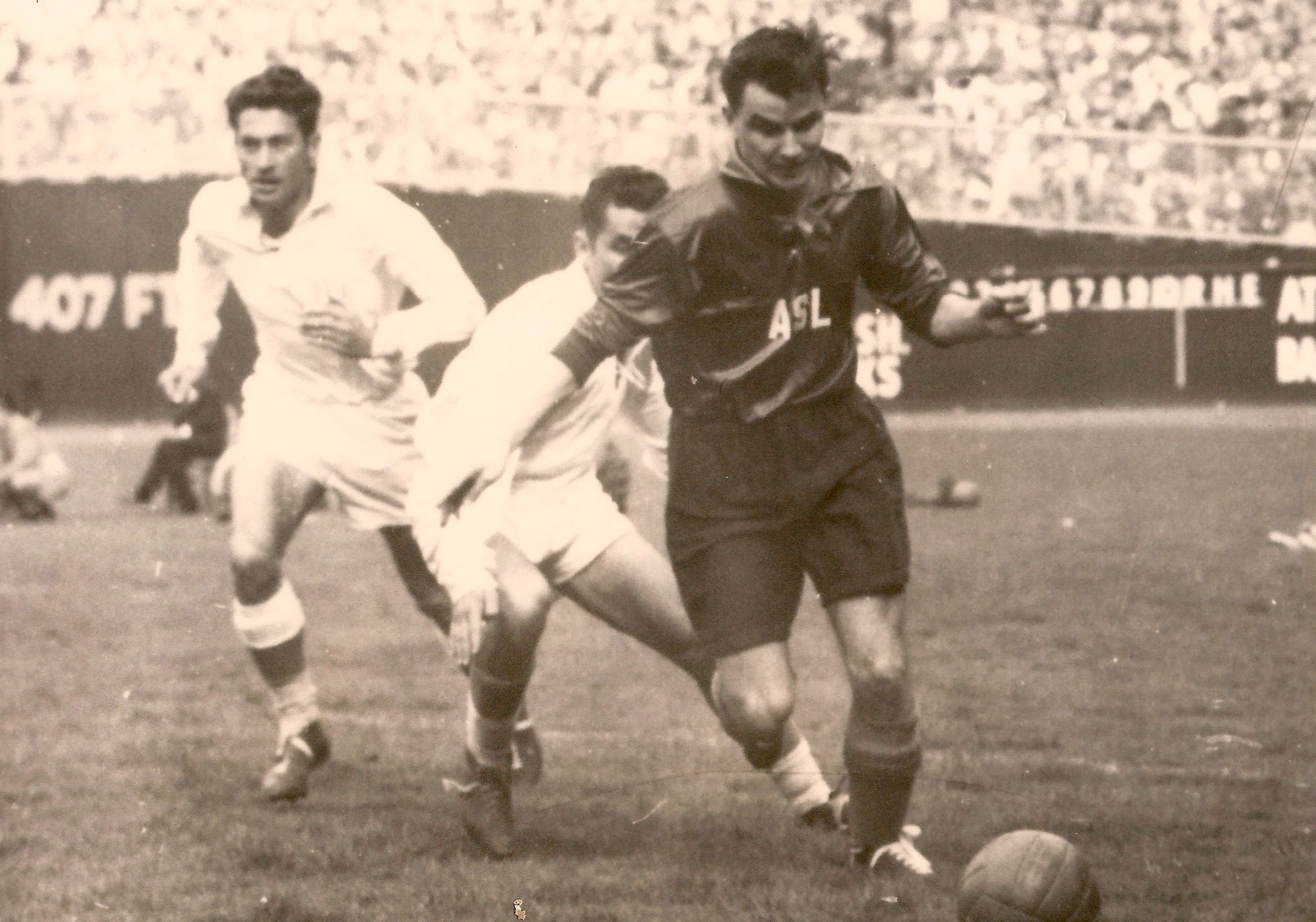
Benny McLaughlin playing for the Philadelphia Nationals at Holmes Stadium on Erie Avenue.Mark McLaughlin
Andy, then 12 years old, watched as his dad subbed in. A defender from the Five And One Club — another Kensington watering hole — pointed to McLaughlin and said he had him covered. Good luck.
“He made a move or two around the guy and the guy just fell down,” said Andy, 65. “He took a quick pop shot, and it was in. It was just smooth. I was going crazy. I get goose bumps thinking about it now. And it’s true. I witnessed it. He still had it.”
McLaughlin’s six children would often ask their dad how good he was back in the day. The dad guarded his heroics like state secrets. He was humble. McLaughlin was inducted into the National Soccer Hall of Fame in 1977 and told his kids that it was because he had good teammates.
Just once, Andy said, he wished his dad would brag. That wasn’t McLaughlin, who always had a second — or third — job while raising his family on Convent Avenue in the Northeast.
He finally gave his son a glimpse of the life he lived when he blasted that shot into the net at his old playground.
“That was the proof,” Andy said. “I was like, ‘Yeah!’ I was roaring. What would you do? My friends needle me like, ‘What happened to you?’ It’s like being Mickey Mantle’s son. What do you want from me?”
Benny McLaughlin was the 1951-52 American Soccer League MVP.Mark McLaughlin
Missing the World Cup
The World Cup will be broadcast worldwide over the next six weeks as players from 48 nations play in sold-out stadiums across three countries. Six games will be in Philadelphia, and the event is now a spectacle after years of planning.
But in 1950, it was anonymous to most Americans. McLaughlin, then 22 years old, was in Mexico the previous September to help the U.S. qualify for the 1950 World Cup. He graduated from North Catholic three years earlier and was an all-American at Temple before dropping out after one year to work.
He was hired in 1949 by Fischer & Porter, a factory in Hatboro that made parts for Navy ships and submarines, where his brother-in-law was an executive. McLaughlin asked the company if he could have a few weeks off to go to Brazil and play in the World Cup.
“They told him, ‘If you go, you no longer have a job,’” Andy said.
Len Oliver, a Hall of Fame soccer writer and Philadelphia native, once wrote that McLaughlin was one of the best American-born players of his era. He was a star. But he couldn’t play in the World Cup.
“Imagine that happening today,” Andy said. “Let’s say you’re a youth player, you make the national team, and you’re going to go represent the U.S. in a foreign country. They would wrap the company’s logo around you. It had to be a real kick in the teeth not to go. But he had to decide. He had a life decision to make. He needed to work. He wanted to get married. If the company said you can’t go, then what do you do?”
McLaughlin playing for the American Soccer League All-Stars in 1947 at Ebbets Field.Mark McLaughlin
That’s Bernie Flanagan
McLaughlin’s father, Bernard, immigrated from Scotland after being recruited by Bethlehem Steel to work at its plant and play on its soccer team. The McLaughlins eventually moved to Kensington, where Benny learned to play soccer in the streets as the boys used the neighborhood’s narrow passages as soccer fields.
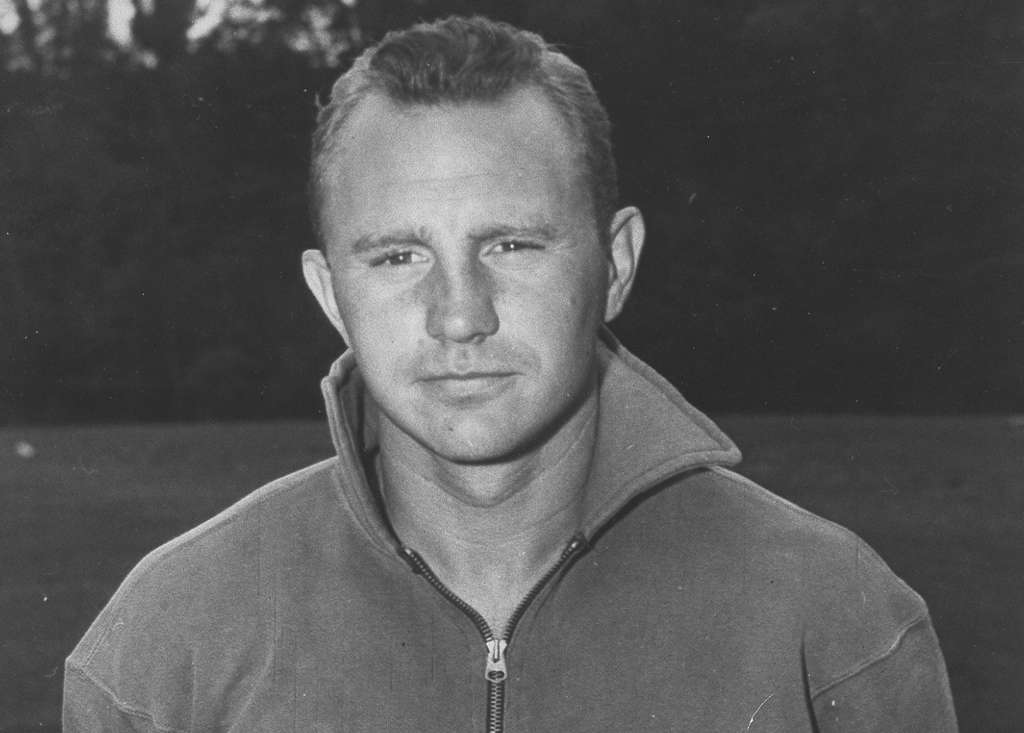
His skills blossomed at Lighthouse Boys Club where he played with Walter Bahr, another Kensington kid who became a giant in Philadelphia soccer. They were best friends and played together as teenagers on the Philadelphia Nationals, a professional squad that traveled to New York on the weekends.
McLaughlin was just 15, so he used a false name — Bernie Flanagan — to protect his amateur status while making $15 a game. A tipster wrote to the U.S. Olympic Committee in June 1948, informing them that Bahr and McLaughlin were pros. The USOC passed the information to the U.S. Soccer Federation, which said it would investigate the high schoolers. Nothing to see here, they said.
“Ben, a young fellow doing a graduate thesis came across these letters,” Bahr wrote to McLaughlin years later after being sent a series of correspondences about their amateur case. “Thought you’d get a kick out of them.”
McLaughlin and Bahr remained amateurs and played together on the U.S. team at the 1948 Olympics in London.
“He looked up and saw 90,000 fans,” said McLaughlin’s son, Bernie, 73. “His cousins from Scotland came over to see him play. He said he was never more proud to be an American.”
Two years later, he was ready for the World Cup. But the company did not budge. McLaughlin, engaged to be married later that year, couldn’t risk losing his job.
“He needed a job, right?” said his son Mark, 59. “All he ever said to us was that it was for personal reasons. What do you do? You choose family. That’s him.”
The U.S. team stunned England that summer in a 1-0 win that still stands as one of the most significant moments in American soccer history. It was so hard to fathom that the Brits back home thought the score was a mistake. They even made a movie about the upset.
Bahr assisted the winning goal, which was scored by the player Andy said replaced his dad on the roster. McLaughlin and Eugene Olaff — who was slated to be the backup goalie but couldn’t get off work as a New Jersey state trooper — read about the win in the newspaper.
“Imagine getting that news,” Andy said. “It had to be bittersweet. You’re thrilled for them but sorry for yourself. When you have time to evaluate it, what’s a few weeks when you’re making history?”
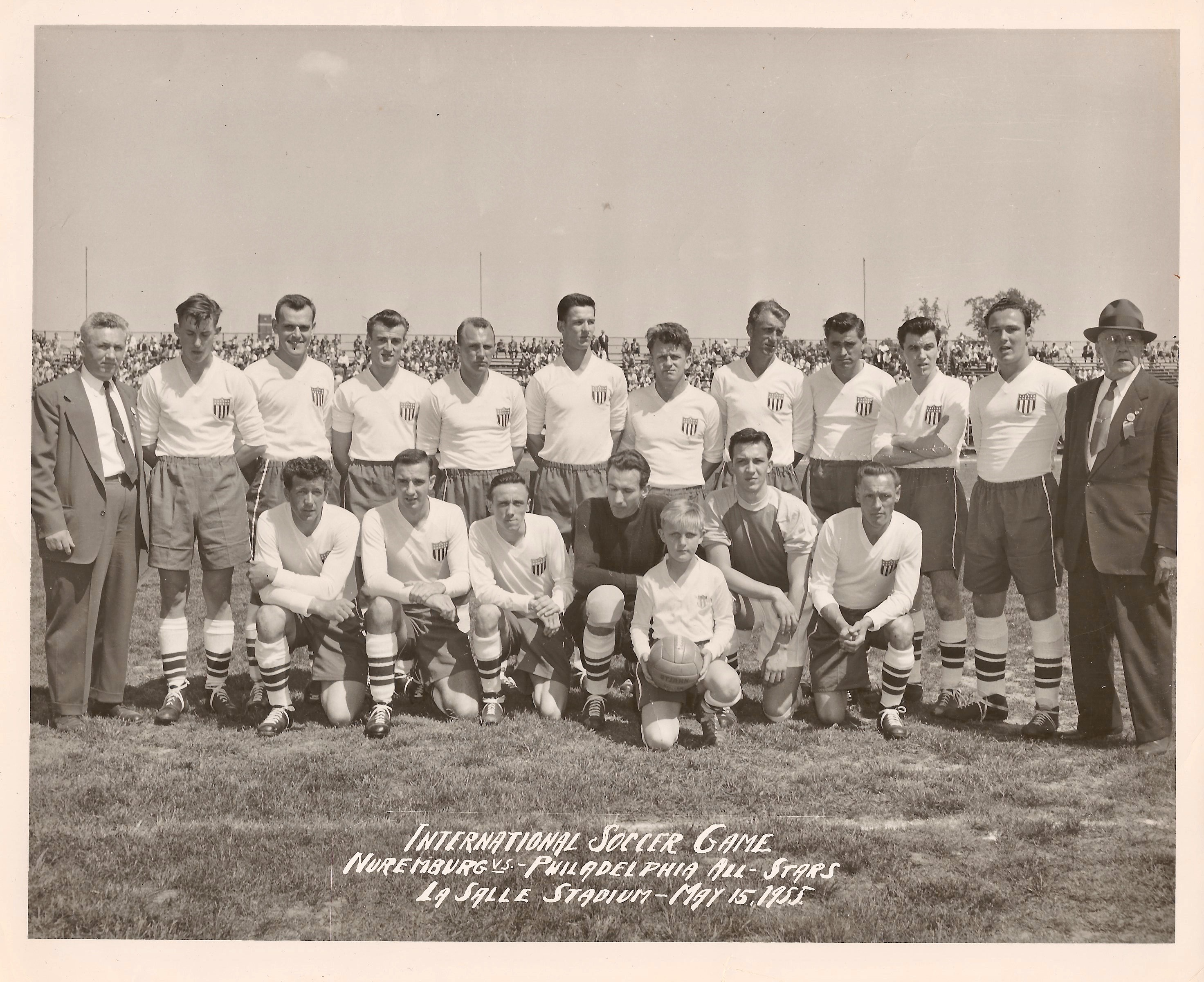
Benny McLaughlin (second from right in second row) at a Philadelphia All-Stars game in 1955.Mark McLaughlin
Benny’s legacy
Bernie was a freshman at St. Joseph’s when some teammates who grew up in his dad’s old neighborhood recognized his last name.
“My dad’s picture was hanging up in bars in Kensington,” he said as the taverns all sponsored teams. “They said, ‘Is your dad Benny McLaughlin?’ I said, ‘Yeah.’ They said, ‘Well, if you grew up in our neighborhood, you would’ve never had to buy yourself a beer.’”
About 10 years ago, Andy was sitting at a quiet bar on Torresdale Avenue when he heard a few guys talking about soccer. He joined the conversation.
“I said, ‘Yeah, my dad played one time,’” Andy said. “The guy said, ‘Oh yeah? Who’s your dad?’ I said, ‘Benny McLaughlin.’ He looked stunned. He said, ‘Your dad is Benny McLaughlin? Benny McLaughlin is your dad?’ He was fumbling for words. Finally, he says to the bartender, ‘This guy is on scholarship for the rest of the afternoon.’”
McLaughlin’s name still means something in Philadelphia, but his legacy has dimmed outside the city. Perhaps that would be different if he played in that World Cup and scored that iconic goal. But he never thought about it, his sons said. It didn’t make him bitter or dim his love of the game he learned to play as a kid in Kensington.
He kept a pair of old soccer cleats — “You would’ve thought they were Frankenstein’s boots,” Mark said — under the basement stairs and watched VHS tapes of European highlights, marveling at how they blasted the ball. He cheered the next generation of American players, some of whom grew up near Kensington. The game never left him.
“He always said that soccer is for the new generation,” Mark said. “He had no regrets for what he did. He was grateful for what he was able to accomplish. He never looked back.”
Ed Blaney, who played at St. Joe’s, told the McLaughlins that he credited their dad for his college scholarship. McLaughlin, he told them, helped make soccer relevant in the U.S., which caused more colleges to field teams.
Blaney played at North Catholic and grew up in Kensington, just like McLaughlin. He would not have been able to afford college without the pathway the neighborhood celebrity created. Forget the World Cup. That is McLaughlin’s legacy, Bernie said.
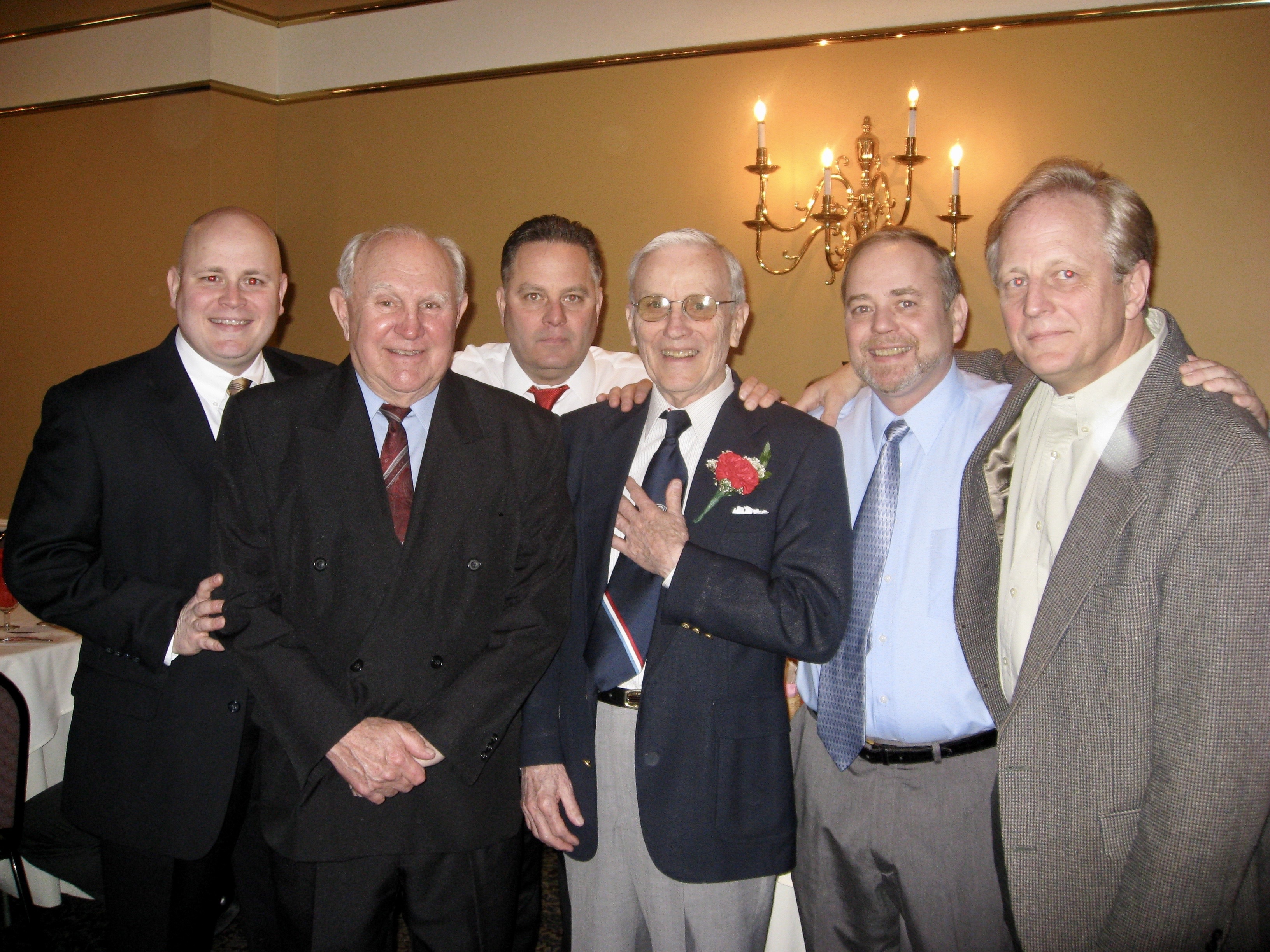
Walter Bahr and Benny McLaughin with McLaughin’s four sons: Mark, Andy, Brian, and Bernie.Mark McLaughlin
One last reunion
McLaughlin kept his job at Fischer & Porter for more than 20 years before working for the city in the redevelopment authority. He sold carpet at night and delivered kegs on the weekend, doing whatever it took to raise six children with his wife, Joan. McLaughlin made breakfast every Sunday — fried eggs and bacon — and often topped a summer barbecue with a drive to Goodnoe’s Ice Cream in Bucks County.
“I want to stop myself from bragging about him,” Andy said. “But I don’t. As great as a soccer player as he was, he was a great dad, too. He was always looking out for us. He always had a nice word for you. He was just a great, loving dad.”
McLaughlin was starting to fade in 2010 when his family moved him to a senior facility in West Chester. A few weeks later, a new resident named Harry Naughton was complaining about his hips. He told the staff he used to play soccer. They told him they had someone else living there who once was a big soccer player in Philly.
“Don’t tell me it’s Benny McLaughlin,” Naughton said.
The staff asked Naughton how he knew it would be McLaughlin.
“Who doesn’t know Benny McLaughlin?” he said.
Mark soon took his dad to Naughton’s apartment. Benny couldn’t say much, but his son knew he recognized his old teammate. Naughton was a goalie on the Philadelphia Nationals, the team McLaughlin played for under that fake name.
Mark took out his phone, called Bahr, and put him on speakerphone. The three teammates were together again.
Bahr asked Naughton how his back was feeling. He said it was giving him trouble, but how did Bahr know?
Benny McLaughlin (left) and Walt Bahr at Lincoln Financial Field for the Union’s first game in April 2010.Mark McLaughlin
“‘Oh, I just figured it would be bad from all the times you had to bend over to pick the damn ball up from the back of the net,’” Bahr said.
Benny McLaughlin, who died two years later in 2012 at age 84, laughed. So did the others as they chatted that afternoon about the old days.
McLaughlin played the game as a kid with wizardry, a skinny kid from Kensington who moved the ball with ease and always seemed to find an open teammate. Eric Charleson, one of America’s earliest soccer experts, once wrote that McLaughlin had “a fire, spirit, and determination that defied the rigors of the sport.” But he was more than that, Charleson wrote, as McLaughlin had “integrity, sportsmanship, and character.” That’s why he didn’t talk much about his career. His game said it all.
And there he was in his old buddy’s apartment, talking about the game they once mastered. The game they played on the streets in Kensington and the game they toasted in those little neighborhood taprooms. The game that took them around the world and the game that wasn’t yet popular enough to get you off from work. But McLaughlin didn’t mind. The game gave him enough memories. He didn’t need a World Cup.
“You almost saw a youth come into all of them,” Mark said. “They were young again for a minute. The joy and the smile. The eyes were shining. It was just so awesome. It was the best day ever.”
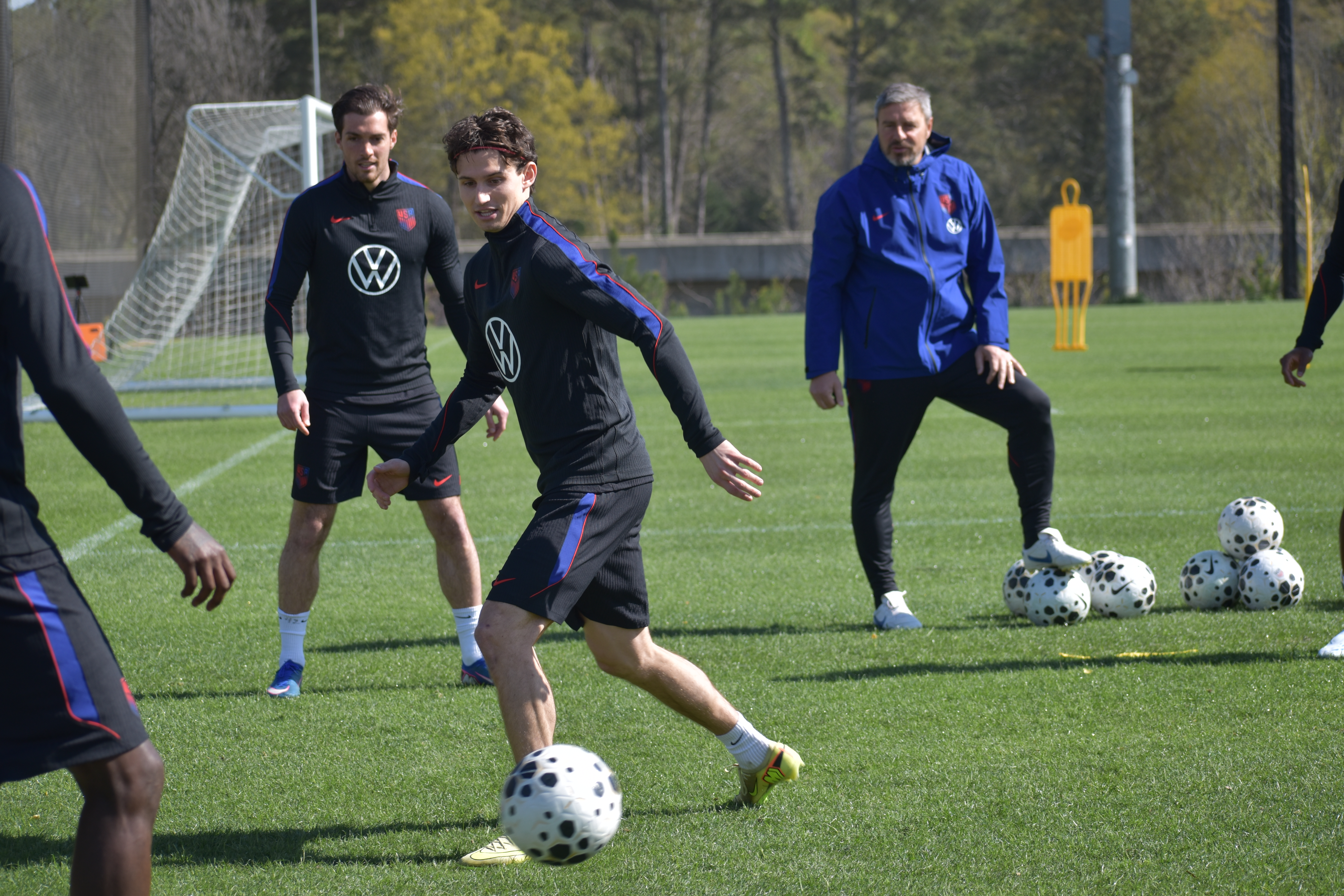
INGLEWOOD, Calif. — U.S. men’s soccer team manager Mauricio Pochettino has said many times during his tenure that he wants his players to believe they can win this World Cup.
If it’s unrealistic, or derided by fans and media, he does not care. His job has been to make his players think they can do it, and use that belief to put extra fuel in the tank.
(For the record, reaching the quarterfinals is the bar most outsiders have set; and if you ask this reporter’s opinion, that’s correct.)
On Thursday, in his final remarks before Friday’s opening game against Paraguay (9 p.m., Fox29, Telemundo 62), Pochettino finally turned to a more realistic tone.
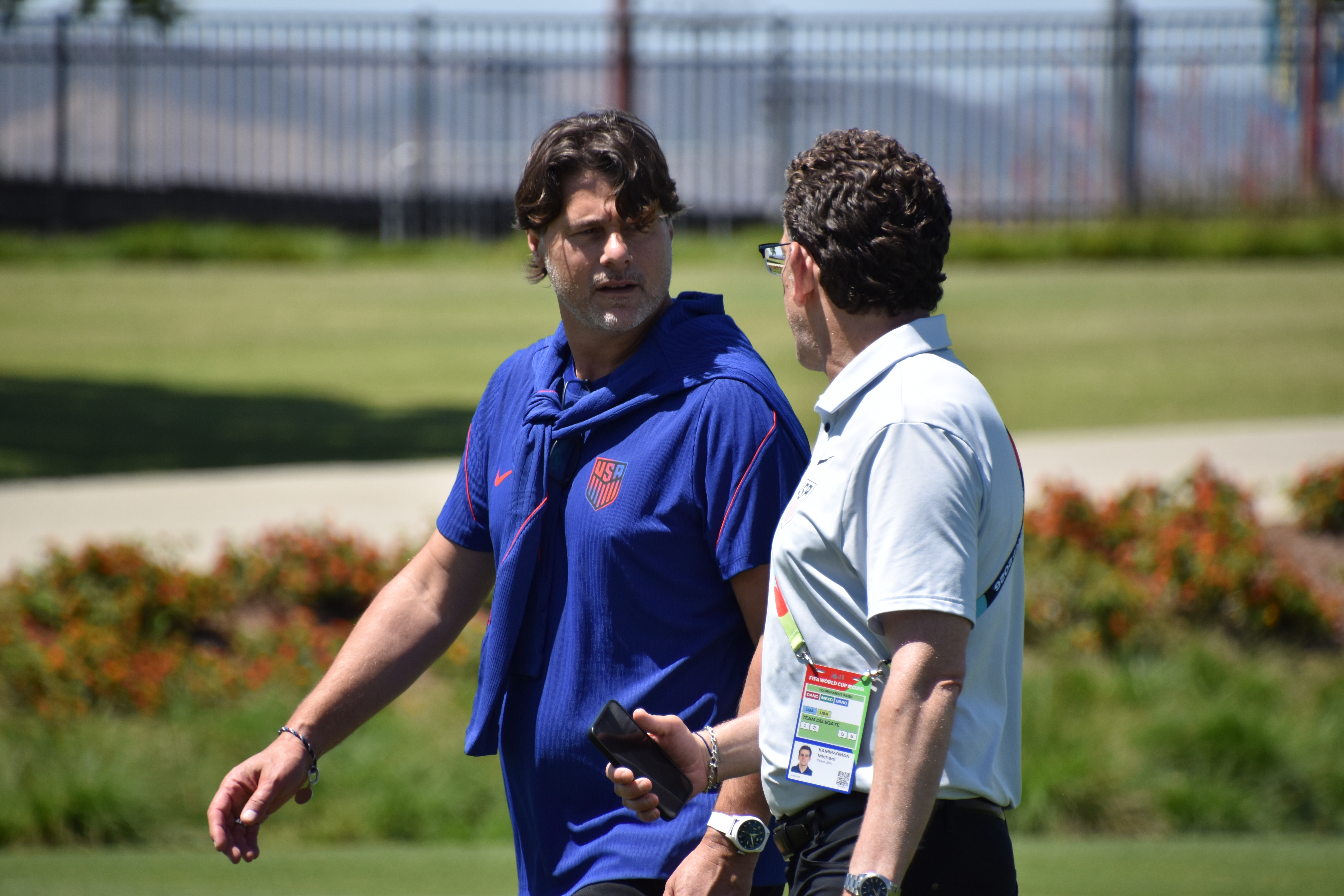
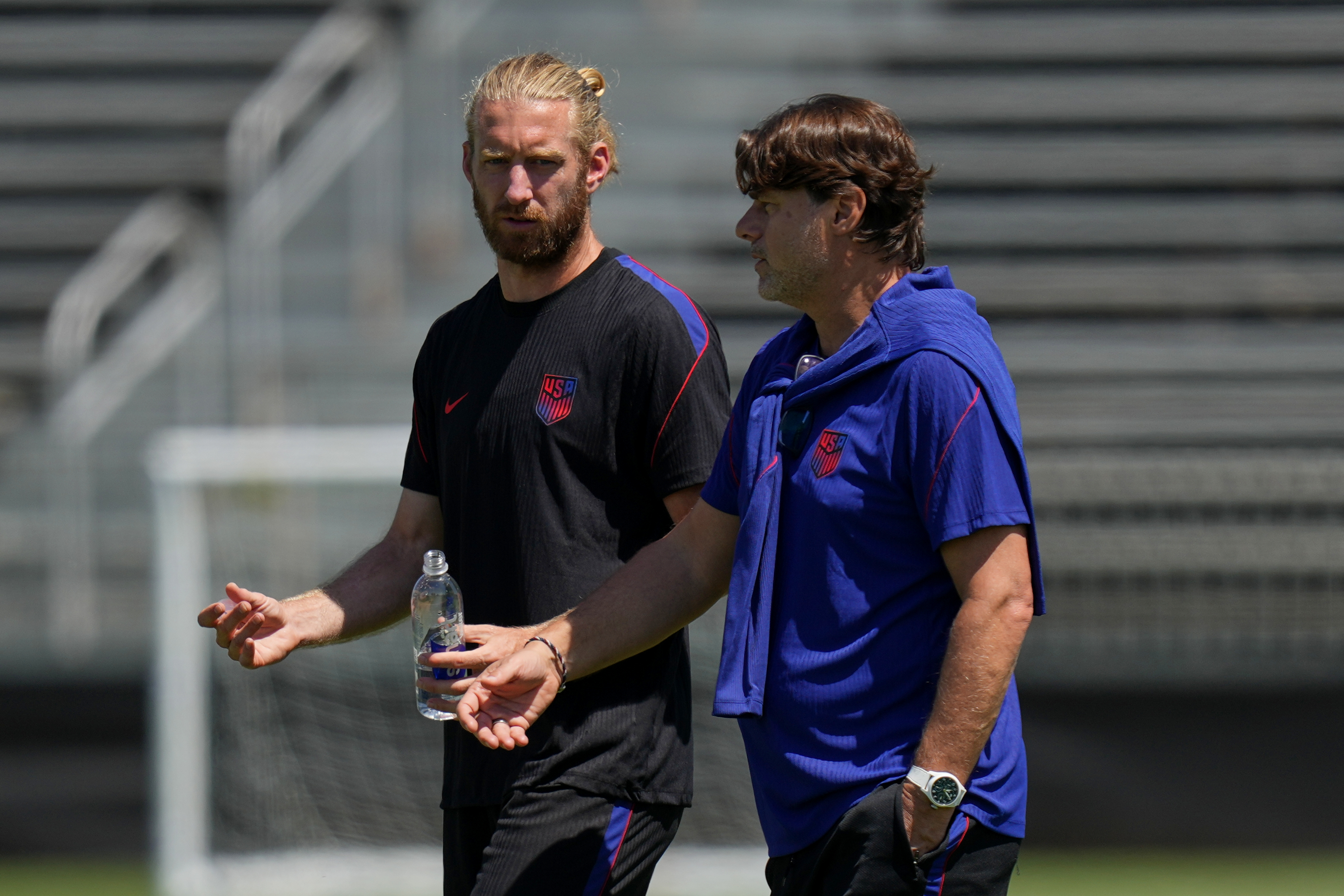
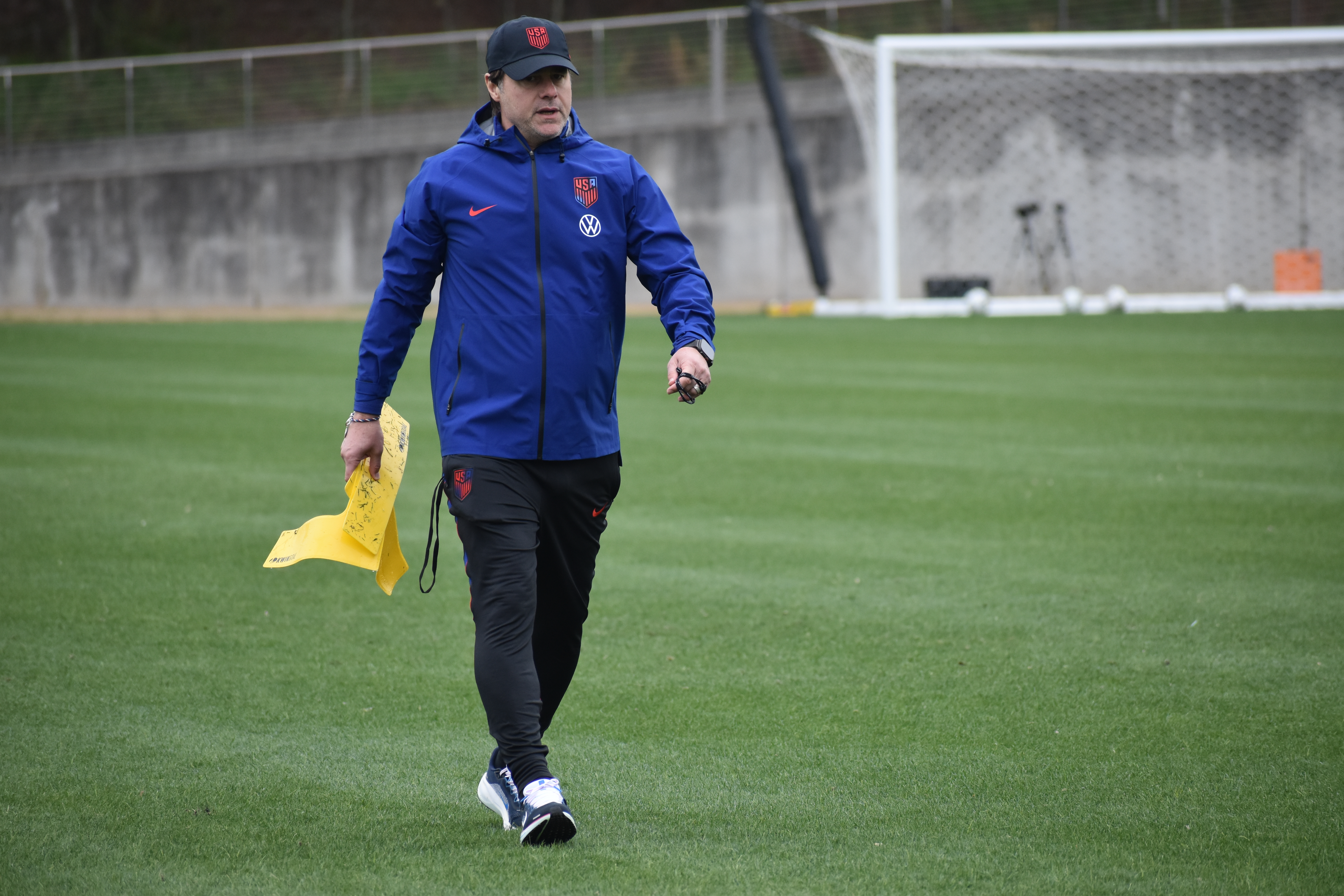
Mauricio Pochettino (left) walking with a U.S. team staffer at Thursday’s practice.Jonathan Tannenwald
Asked how he defines success now, he started by saying “it’s difficult.” Then, acknowledging those who hadn’t heard his passionate stances in the past, he set out his explanation.
“I think for me, ‘successful’ is winning,” he said. “It’s win tomorrow, and win after tomorrow, and win. If we don’t arrive to the final and we don’t win the World Cup, to talk about ‘successful’ is, I don’t know — for me and my mindset.”
Pochettino has heard from plenty of people in his 22-month tenure to date about the mountains American men’s soccer must climb, and the obstacles along the way. And now he knows firsthand how his players truly stack up against the world’s best, especially after games against powers Belgium, Portugal, Senegal, and Germany.
“If you say to me, oh, the conditions, or this [other thing], or we play against good national teams, I say, OK, OK,” he said. “But when we signed here, it’s because we wanted to come here, and to be involved in that unique event, but with the possibility to compete well, and believing in winning.”
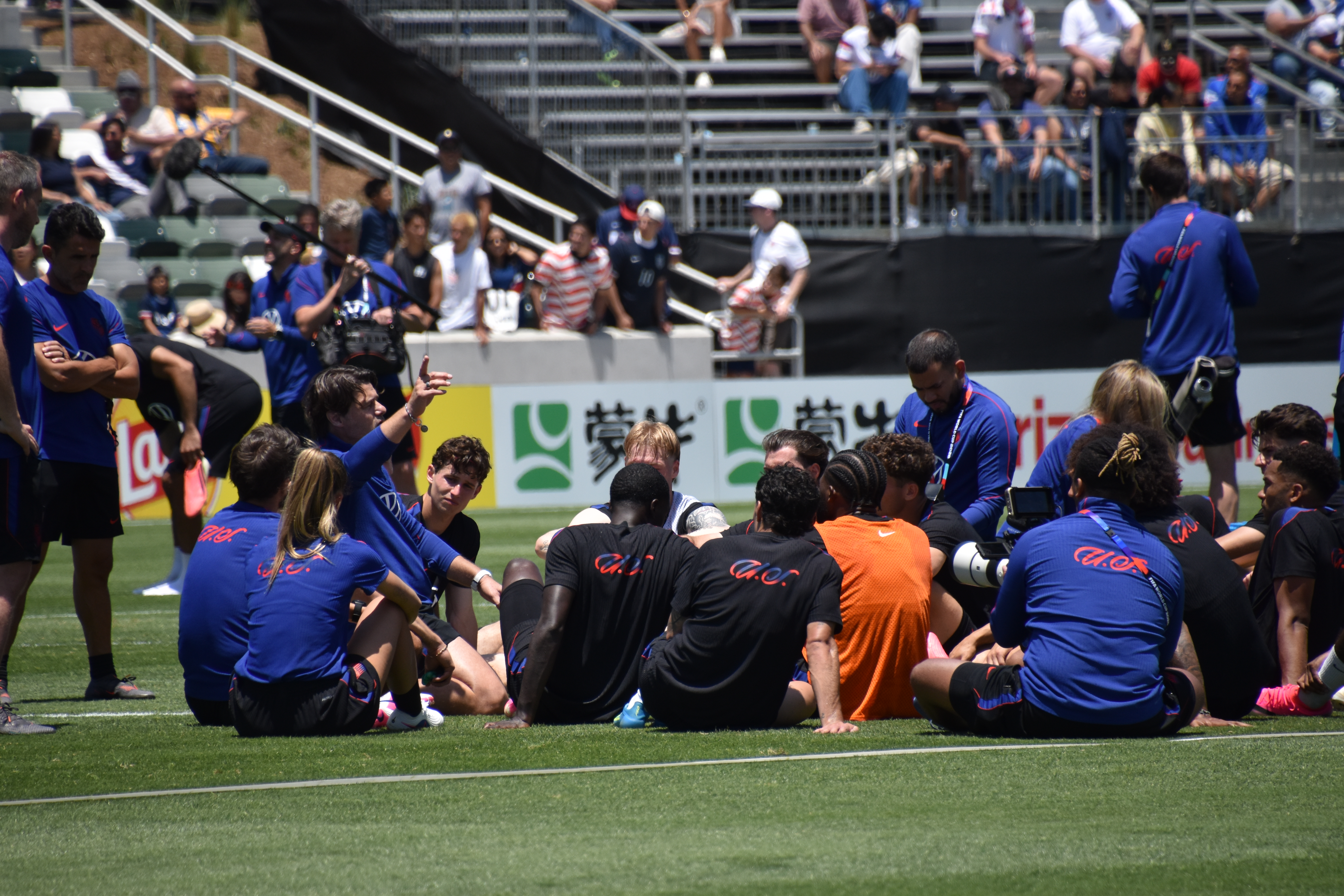
Mauricio Pochettino making a point to a group of players during the U.S. team’s open practice on Monday.Jonathan Tannenawld
Asked what he’ll say to his players before Friday’s kickoff, Pochettino joked that “I already spoke, I already talked — too much. I said [to them], don’t expect an unbelievable speech Friday.”
That’s mainly because in his opinion, they “don’t need an external motivation” at this point.
“They need the motivational speech and inspiration when they need to go to train and improve in every single area,” he said. “And then tomorrow, it’s late. … If you are not ready, sorry guys, it’s impossible to perform. What were [we] doing all this year and a half [we’ve been preparing]?”
‘Their emotional intelligence is very high’
But in a way, the manager gave that speech to the media from the podium on Thursday, in a news conference where he alternated freely between English and Spanish.
Mauricio Pochettino (right) talking with U.S. captain Tim Ream at Thursday’s practice.Andre Penner
“The players, tomorrow, need to go on the field and feel in a bad way that they need to perform,” he said. “And to perform is to respect some rules, but also the most important is not to be disconnected with your emotional relationship with the game. And we were talking about that: they need to think tomorrow and play like they are a child, with no pressure, with no responsibility.”
He also said he wants his players to “take it step by step,” and that “the key is not to look at the finish line before you actually get there.”
Pochettino particularly applied that to the players he’ll summon from the bench, a key part of any manager’s strategy with five substitutes allowed per game.
“How many players aren’t starters early in the World Cup, but end up big figures in the tournament?” he said. “It’s not just about how you start, but how you continue and how you finish.”
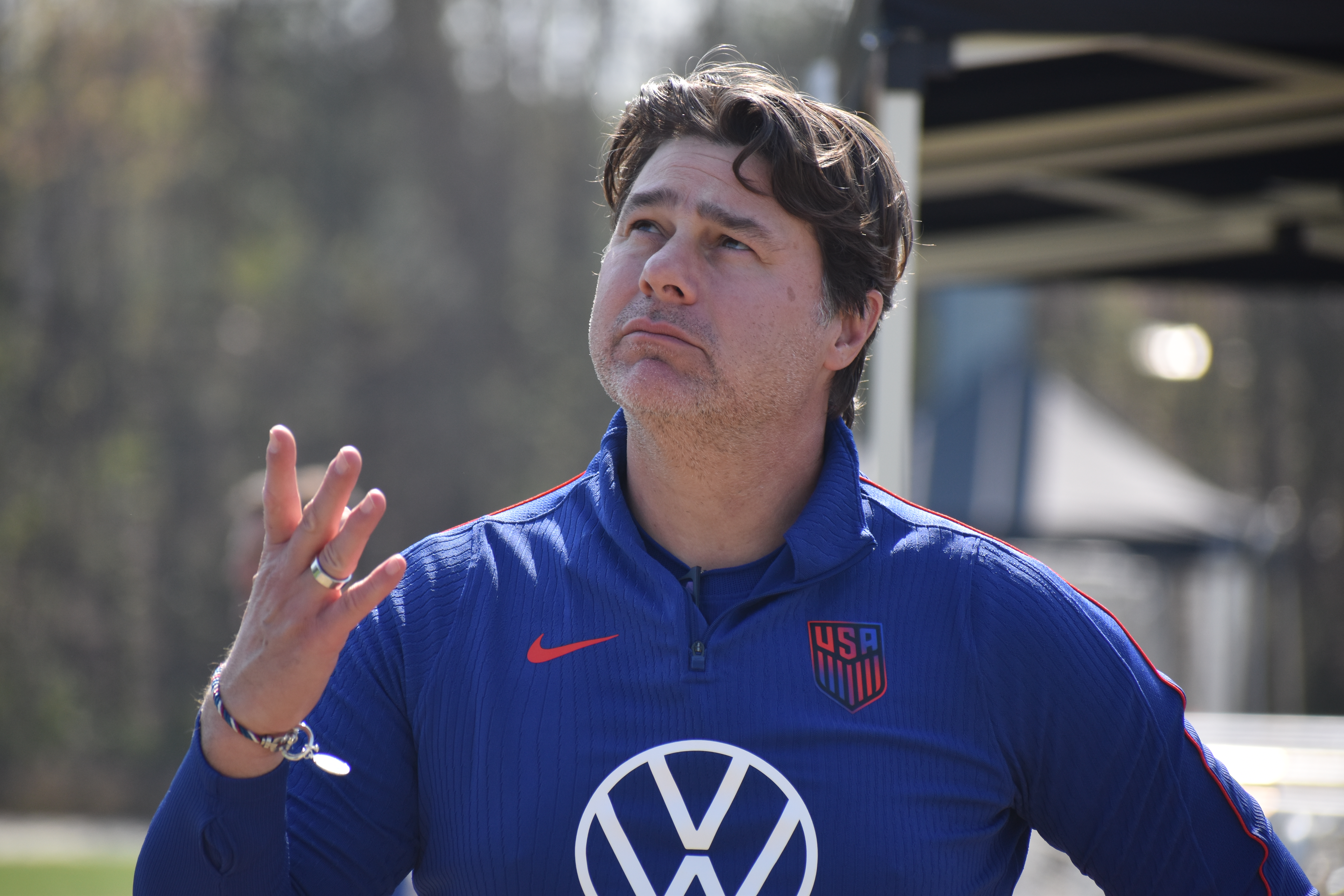
Mauricio Pochettino looks to the heavens during a philosophical moment at a U.S. practice in March.Jonathan Tannenwald
Perhaps his most revealing words came when he opened up about what he has learned from the players, for as much as they have learned from him.
“I really admire the players’ mindset,” Pochettino said. “I don’t think they should be underestimated, because their emotional intelligence is very high — well above the global average. They become great athletes because they possess that capacity and talent, and they develop that mental strength. I tell you, they are all intelligent.”
He has also learned the different ways required to connect with the 26 players on this squad, and the over 70 he has had in U.S. camps over his tenure.
“The trick is getting to know each individual so you can communicate effectively, finding the right frequency,” he said. “You realize that, ultimately, they all feel the same things, face the same struggles, and have the same needs. It’s about finding the right frequency to connect with each personality. They are giving us so much, and honestly, we are really enjoying the whole group.”
Keeping the lineup secret
As nice as it was to hear Chris Richards declare himself “ready” on Wednesday, that only counted for so much without his boss’s blessing. Pochettino gave it on Thursday, calling the key centerback “available.” He also said all 26 players on the roster are fit to play.
But he backed off saying whether Richards has the green light to start.
“Chris is available to be selected, and then we will decide if he’ll start from the beginning of the game or is on the bench,” Pochettino said. “But I think we celebrate the job that our medical staff and performance [staff] did — worked really hard to recover Chris, and recover some other players that arrived with minor things. No big issues. … It’s a really good feeling to have 26 players available to be selected.”
Pochettino said he knows what his starting lineup will be, but signaled that he hasn’t told the players. That includes the goalkeepers, the subject that has been second to Richards’ health in the most-discussed rankings.
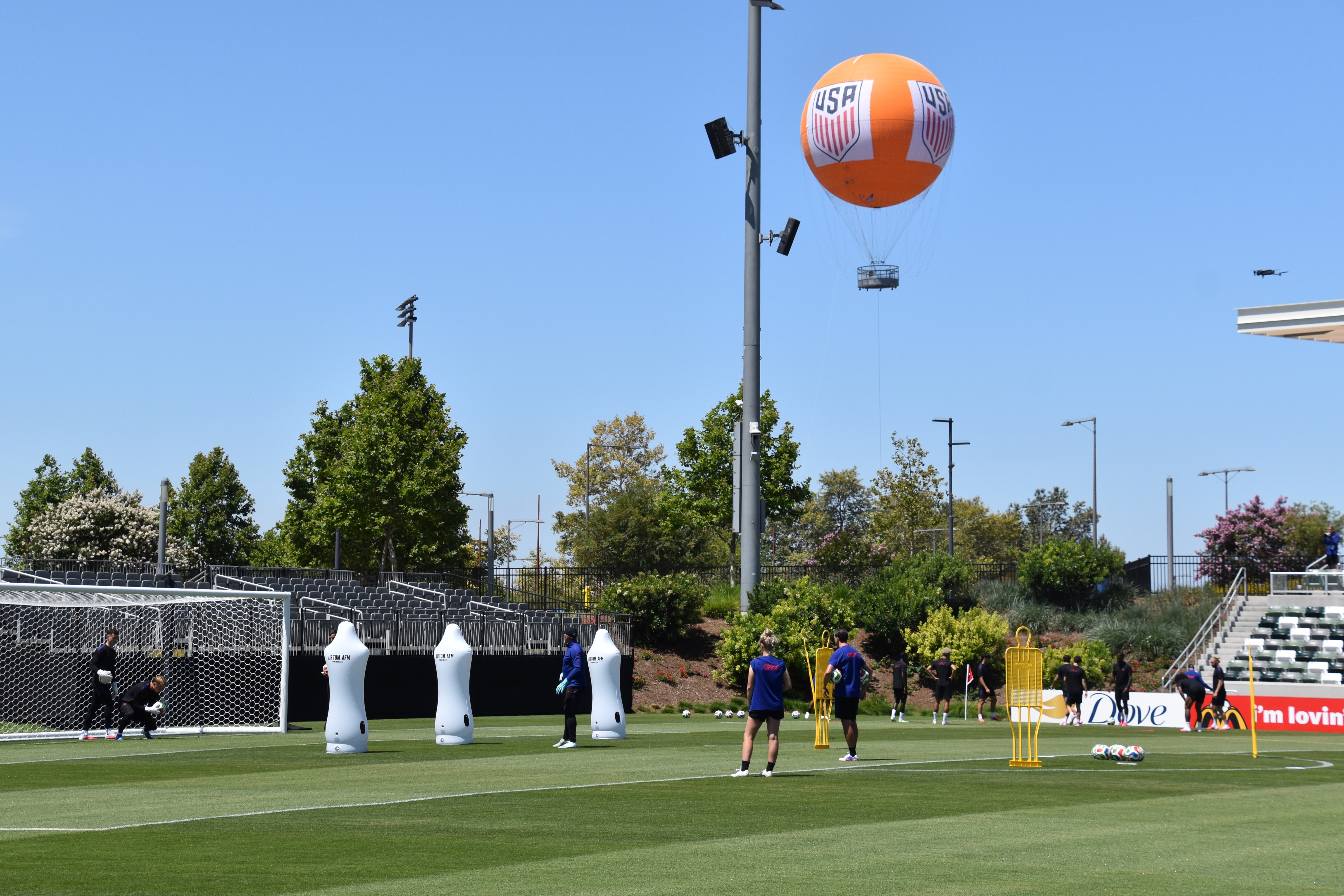
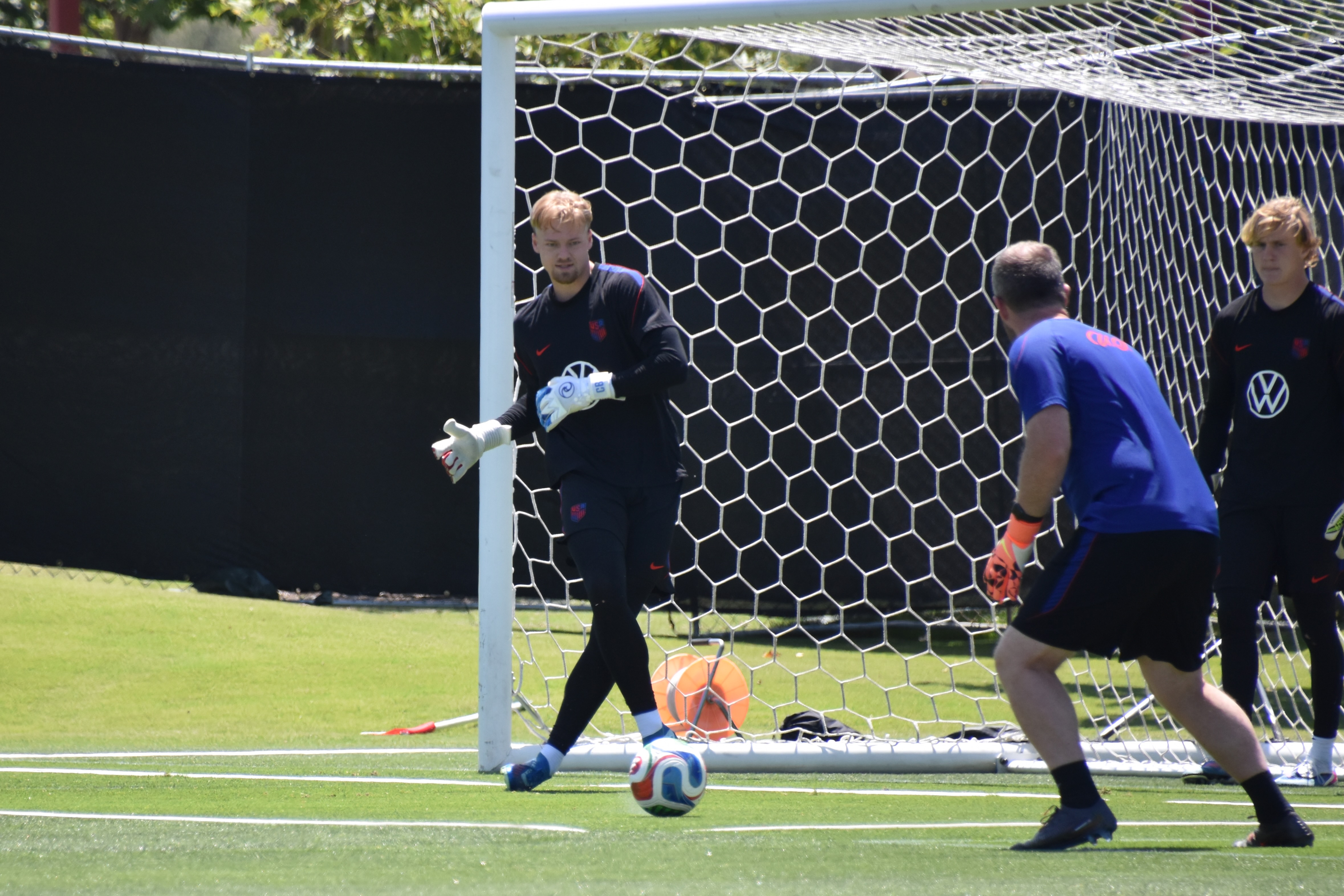
The goalkeepers at work during Friday’s practice in Irvine, Calif., amid a backdrop including a balloon decorated with U.S. Soccer’s logo.Jonathan Tannenwald
“No, I’m not going to tell you,” he said when invited to. “But I already decided. Only if something happens before the game [would it change].”
Asked if the players know, he said: “I don’t know if they know. Because if they know, you are going to start to call them.”
The room laughed with him at that. Such leaks are a tradition in other countries, including Pochettino’s native Argentina, and England where he worked for many years. It isn’t in the United States, though, at least not yet.
IRVINE, Calif. — There is no question that this U.S. men’s soccer team has players with talent and pedigree like never before. Even some of their predecessors, who are as prone to claiming “back in my day” as in any other sport, have said as much lately.
Now, at last, the time has arrived to prove it. For all the pomp and circumstance that Friday’s World Cup opener against Paraguay (9 p.m., Fox29, Telemundo 62) will bring, it also will serve as the ultimate measuring stick.
This is the 12th men’s World Cup in which a U.S. squad has taken part. In the first 11, going all the way back to the inaugural edition in 1930, the Americans have played 37 games.
They have won just nine.
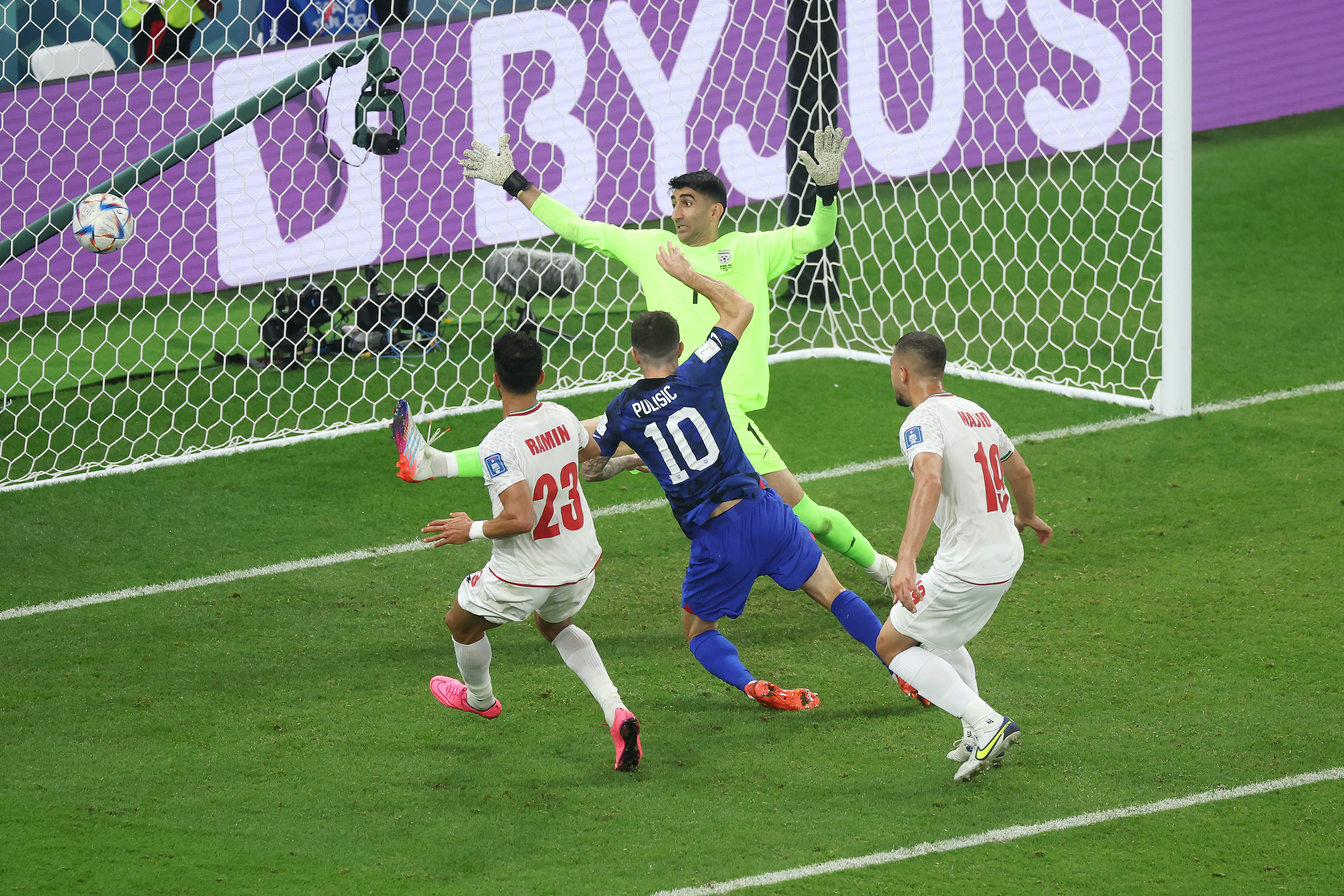
Christian Pulisic’s goal against Iran in 2022 came in the only U.S. win in that tournament.Alex Grimm
It’s not just that number, sitting alongside 20 losses and eight ties. It’s that the U.S. men haven’t won two games in a group stage since that 1930 tournament. They haven’t won two games in a single tournament since 2002, when they reached the quarterfinals with a round of 16 win over Mexico.
That, in turn, still stands as the only World Cup knockout-round win in program history. And the fact that it came against the opponent the U.S. knows best in the world means that while there isn’t an asterisk, it’s still not the same as beating a team from elsewhere.
Can this be the summer when that finally changes? And if so, what will it take?
“I think the maturity of the group now, I would say,” U.S. midfield star and longtime leader Tyler Adams said at Friday’s practice. “I know we’ve got some faces [for whom] it will be their first experience in the World Cup. But that being said, they’re all playing at a high level somewhere in the world, if not in MLS, and they’re all going to be able to contribute at a high level.”
Tyler Adams (left) speaking with the media before Friday’s practice.Jonathan Tannenwald
The U.S.’s group is easier than others, lacking a European or South American superpower and coincidentally having three rematches of friendlies from last year. A smaller gap in talent means intangibles like mentality and home-field advantage might make a difference.
“I think just continuing to put in good performances, and believing,” said Christian Pulisic, the Americans’ most important playmaker. “I think having the confidence that we’re able to beat anyone, I think that’s what it is. And I think we’ve gained some experience, especially the last World Cup, a lot of guys being around, and now we have an opportunity to prove it.”
Indeed, Pulisic and Adams are among 13 players on this World Cup squad — exactly half the roster — who were also in Qatar in 2022. But the message has also gotten through to players who weren’t, such as fast-rising defender Alex Freeman.
“I feel like for us it’s having, that confidence in ourselves,” he said. “Knowing that we’re on home soil and it’s a different type of environment, knowing that we have the fans behind us. Now it’s kind of just to show what we can do, knowing that on the field it’s going to be a different type of confidence, different type of intensity that we’ll have to show.”
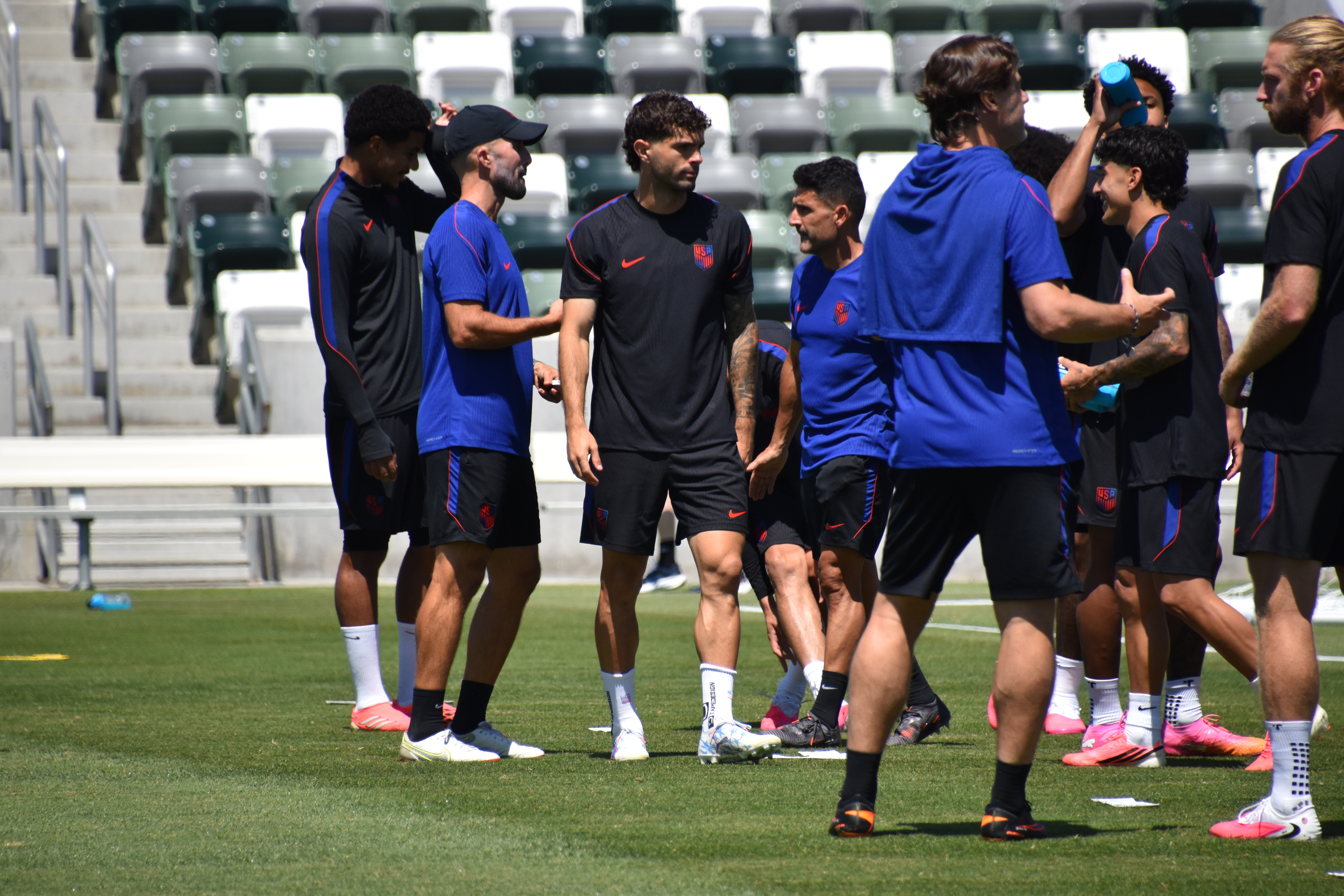
Christian Pulisic (center) getting to work on Friday.Jonathan Tannenwald
And how did they feel on game day eve?
“A good nervous, I feel like,” Adams said “I’ve never get nervous for games, but I just feel like … it just feels really real in the moment. And I’m to get out there with this group of guys, because I’m confident in what we can do.”
Adams wasn’t on the squad when the U.S. beat Paraguay in Chester last November because of an injury suffered a few days before that game. So when asked if that game matters now, his first answer was, “I mean, I didn’t play in it, so to me it doesn’t matter.”
But after the laughs all around that ensued, he agreed that the experience does help the team overall.
“It is nice when you’re breaking down film of an opponent, and you’re breaking down watching with players that we have on the field,” he said. “So I think for a lot of guys, it was probably a good experience.”
Freeman was on the field and became the center of attention when a brawl broke out at the end of the game. That was the latest lesson for the 21-year-old defender, who made a big move from Orlando City to Spain’s Villarreal two months later.
“I think for me and the team, we know how intense it is, right? And aggressive as well,” he said. “We feel like in those games, it’s going to be kind of the battle, who can strike first. I think for us, it’s to be aggressive first — I think we want to be those people that can go and make the game the way we want to do.”
So, here they are, in the final hours before the biggest game of their lives, with the opportunity for more biggest games of their lives afterward.
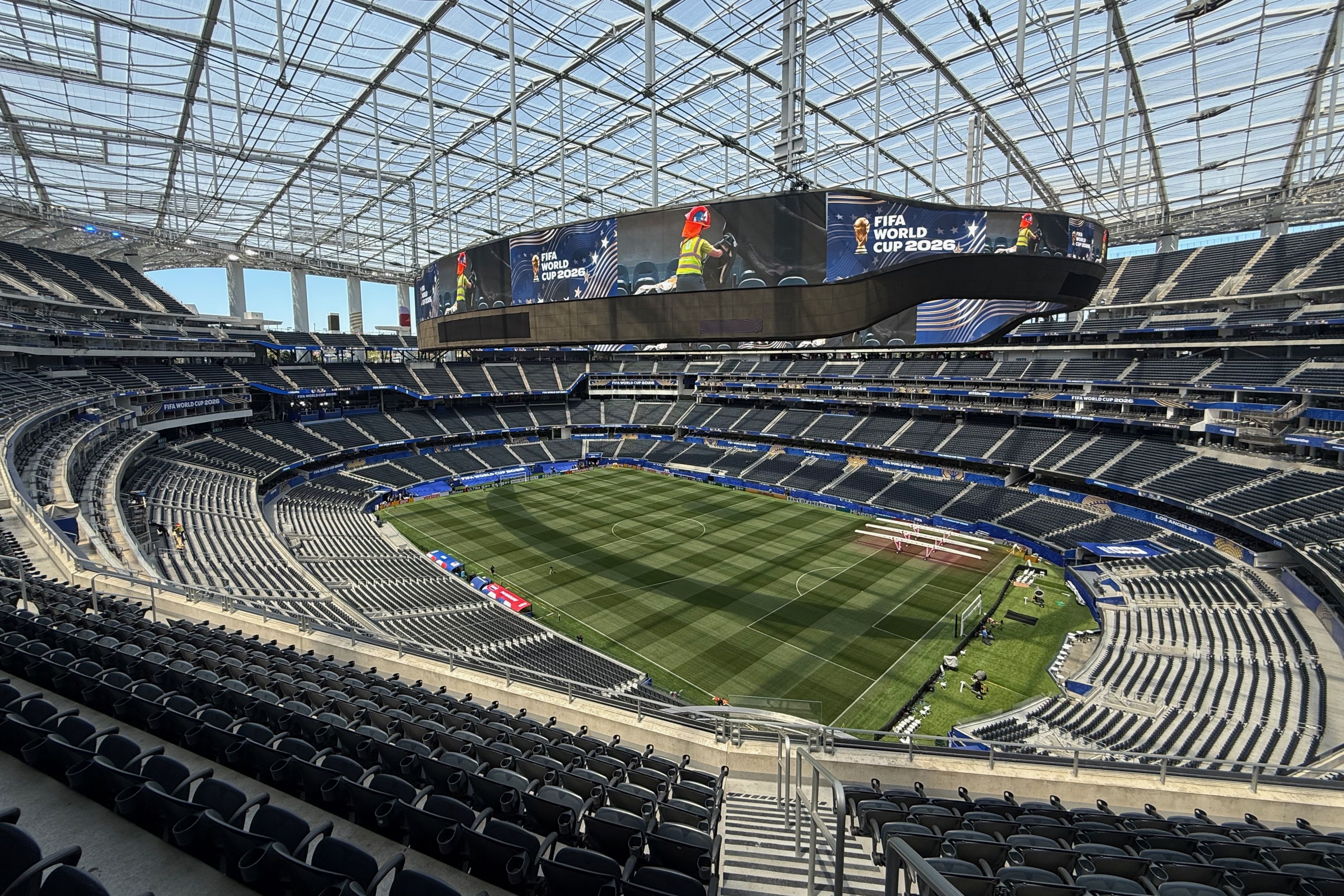
Final preparations were underway Thursday afternoon at the stadium in Inglewood, Calif., where the U.S. and Paraguay will meet on Friday night.Jonathan Tannenwald / Staff
“It’s not quite here — still got another day,” Pulisic said. “But definitely feeling more real, getting excited.”
And Adams gave one more rallying cry, adding to the list of them he has given.
“This is, for me, the biggest opportunity to just really grow the game, to inspire people, to show that American players are at the level of the rest of the world,” he said. “I’m not going to say it’s difficult to showcase that week in week out when you’re playing abroad, but that’s not the collective. Now you have a group of Americans playing together at a high level — let’s show everyone what we’re capable of doing.”
Earlier today, Tyler Adams was asked about the burden Christian Pulisic has carried on his shoulders for a decade as the biggest #USMNT star.
Here was Adams' eloquent response, and what Pulisic said a few minutes later about whether he feels less of a burden now:
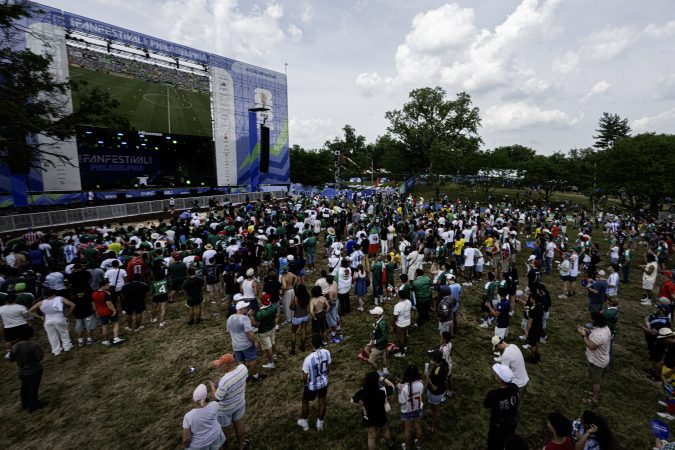
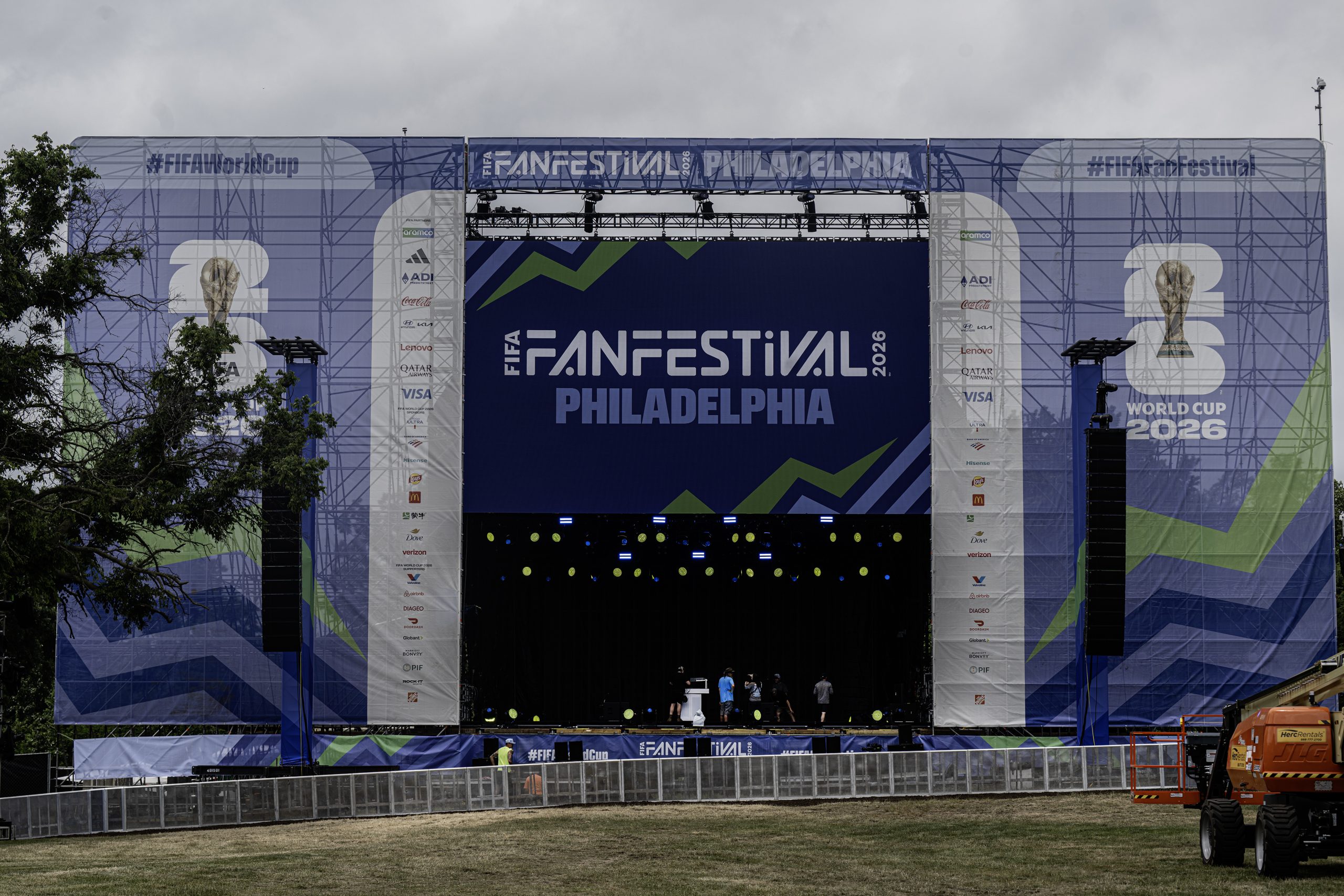
Philadelphia’s scorching, soupy weather could not stop soccer fans from making the trek to East Fairmount Park, where World Cup revelers filed in Thursday afternoon to celebrate the tournament’s kickoff at the FIFA Fan Festival.
Thousands of soccer lovers were present, arriving at Lemon Hill for the festival’s 2 p.m. start time — an hour before Mexico started its clash against South Africa in the World Cup’s first match, in Mexico City. Philly’s FIFA Fan Festival, which is slated to run for 39 days through the end of the tournament next month, arrived amid a heat advisory that saw temperatures push into the mid-90s with heat indexes surpassing 100 degrees, thanks to high humidity levels.
And that did not go unnoticed by festival attendees.
“This is far too warm for us,” said Rhys Gray, who traveled to Philadelphia from Scotland. Gray arrived in town Tuesday and plans to make the city his home base as he and his father follow Scotland’s games throughout the World Cup. Gray, who donned a matching plaid bucket hat and shirt for the occasion, said the city had been welcoming so far.
“I never felt so popular,” he added.
The FIFA Fan Festival serves as the city’s official World Cup watch party, and sprawls across a million square feet of lush, green space at Lemon Hill. It is capable of holding 15,000 attendees, many of whom are expected to take in matches on the festival’s 60-foot-wide screen on the main stage. The family-friendly event also features more than 80 food trucks, a massive shopping area, and a beer garden, among other amenities.
And while it attracted World Cup watchers from around the world Thursday, Philadelphia-area locals also made the trip. Many attendees seemed to be rooting for Mexico, judging by the sea of green-and-red soccer jerseys that dominated the space.
Among Mexico’s supporters was Bianca Vetta, who traveled to Philly from Easton with her mother. On Thursday, Vetta’s face was painted like the flag of Mexico, with red, white, and green marking her cheeks to show her support for the country’s team. Her father, she said, is from Mexico.
Bernard Dagenais, president and CEO of the Main Line Chamber of Commerce, also supported Mexico over South Africa. Dagenais, who parked at the nearby Philadelphia Museum of Art and walked to Lemon Hill, said his support for the country only made sense.
“Why not?” he asked. “They’re our neighbors to the south.”
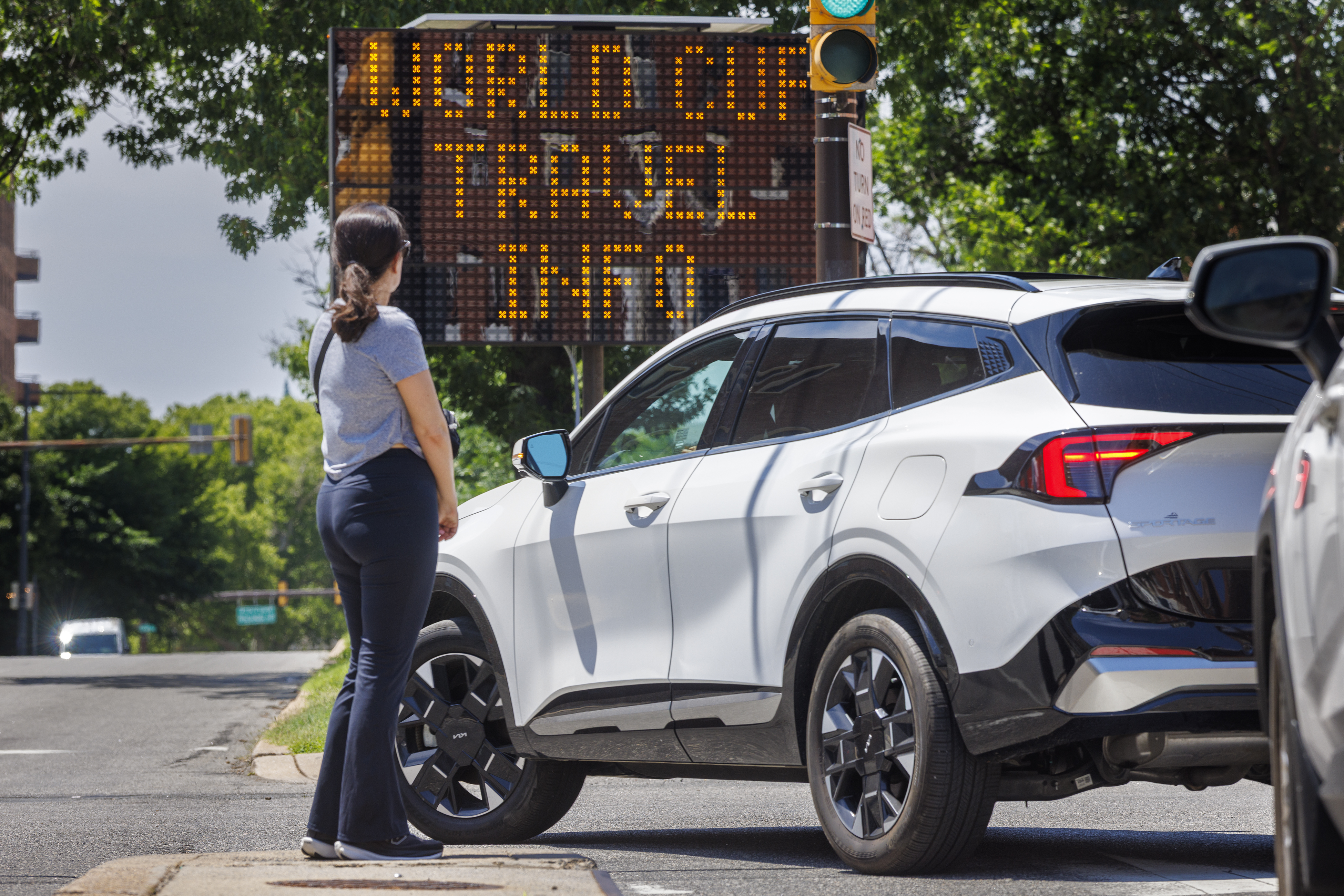
Dagenais’ walk is likely not to be unique during the festival’s run, as extensive road closures and parking restrictions arrived with the event. Organizers have encouraged attendees to take rideshares or public transportation, which some Philadelphia residents, like West Philly’s Eric Abreu, heeded.
Despite the travel restrictions, Abreu said, getting to the festival was convenient and trouble-free, thanks to a $10 Uber ride that dropped him off nearby. And while he plans to head back to the festival grounds in the coming days, he did note Thursday was a little on the warm side.
“Hopefully we just get a nice tan,” Abreu said.
Philadelphia itself, meanwhile, is slated to host its first World Cup game Sunday, when Ivory Coast faces off against Ecuador at Lincoln Financial Field. FIFA has temporarily renamed the arena “Philadelphia Stadium” for the World Cup, which will include six games in town through July 4.
Philadelphia’s role as a host city, however, seemed to be secondary to the match at hand Thursday afternoon. As the match started, attendees flocked to the festival’s largest screen, set out picnic blankets, and danced to music reverberating through the grounds. Cheers and applause in Philadelphia erupted as the teams took the field in Mexico City.
On Thursday afternoon, said attendee Patrick Aruta, a registered nurse at Penn Presbyterian Medical Center, the experience transcended any difficulties or controversies that may be associated with the World Cup. In that fleeting moment, he said, this was all there was — just enjoying the match, with thousands of other fans from far and wide.
“No matter what people say about the heat [or] the political climate, there is nothing like this. I forget who I am for a moment,” he said. “You can’t get this at any other sports game. Just the World Cup.”
America getting out of its group on American soil.
In this World Cup, that is the first goal — and the road begins Friday when the U.S. men’s national team kicks off against Paraguay (9 p.m., Fox29, Telemundo).
Paraguay is the first of three matches for the United States in Group D, where they’ll also face Australia (June 19, 3 p.m.) and Turkey (June 25, 10 p.m.).
It’s a group from which many feel the U.S. can emerge, and a recent pair of tuneup matches against Senegal and Germany provided additional validation.
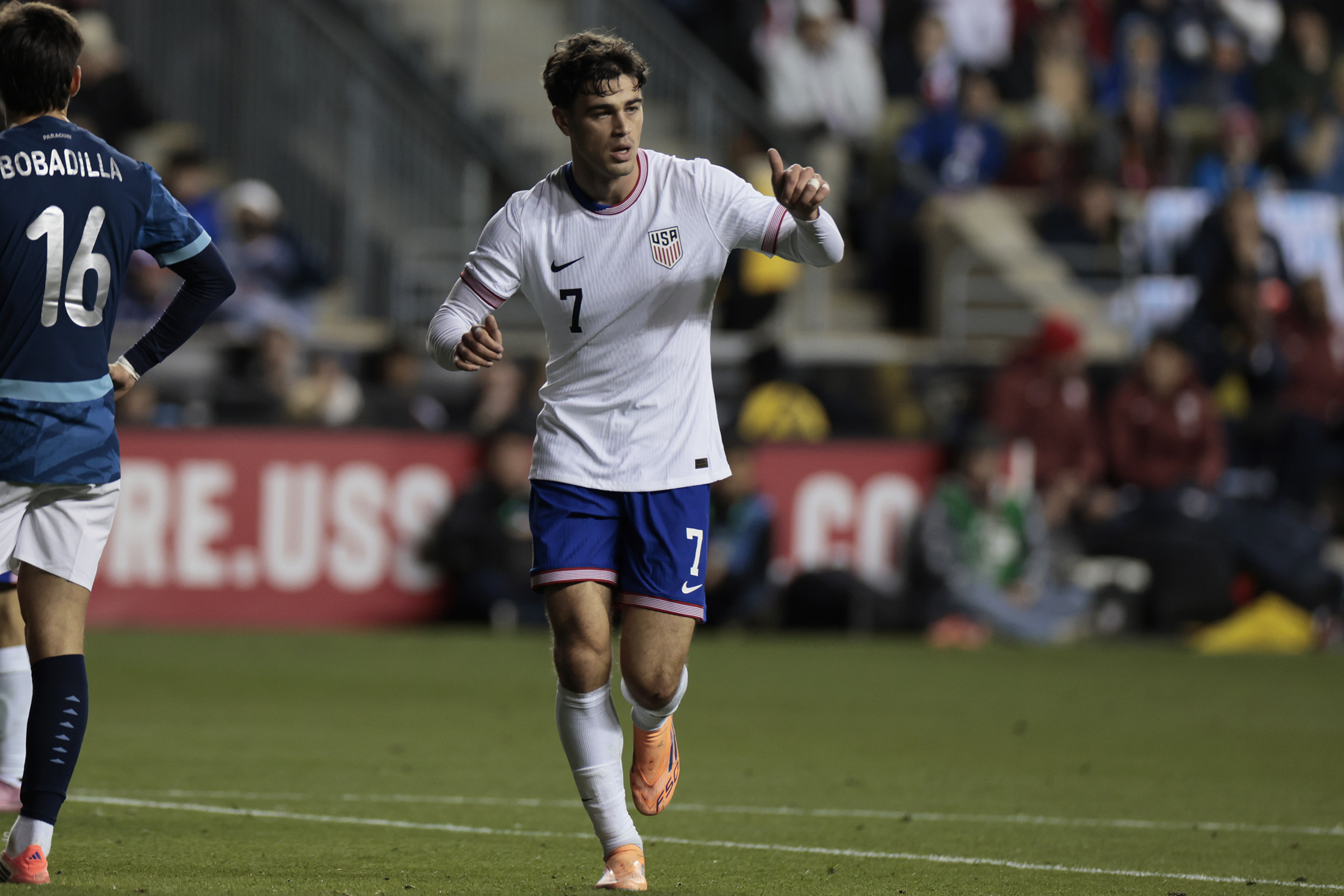
Gio Reyna was the goalscorer the last time the U.S. men played Paraguay in November at Subaru Park in Chester.Elizabeth Robertson / Staff Photographer
Paraguay is also a team the U.S. defeated 2-1 at Subaru Park in Chester just eight months earlier, with a sizable contingent of players who qualified for head coach Mauricio Pochettino’s World Cup roster.
We’ve been watching since the beginning of qualifying cycles, which, as the host nation, the U.S. didn’t need to qualify for. Along the way, we analyzed a wide pool that over two years competed in a Concacaf Nations League third-place game and a Gold Cup final in the lead-up.
The hope and expectation around this team are mostly justified. Because of that, I’m going to be a contrarian for a moment. Dating back to the first World Cup in 1930, the U.S. men have played 37 games on soccer’s biggest stage. They’ve won just nine, lost 20, and tied eight; and they haven’t won more than one group game in a tournament since that inaugural edition.
This team doesn’t face the pressure of world powers like Argentina and England, but it still faces plenty as a co-host desperate to give the sport a lasting legacy here. Paraguay, meanwhile, loves playing defense — and will likely play even more without injured star forward Julio Enciso.
It’s good for the U.S. that they beat Paraguay last November in a friendly at Subaru Park. But this game will be a lot harder, and I’m not at all sure the home team will have a big home advantage from the L.A. crowd. I think the U.S. wins it close.
One of the great things about being so deeply entrenched in this sport is the freeing feeling that wins and losses in tuneup matches offer very little insight into how good a team is. Win over Senegal? Somewhat ecstatic. Loss to Germany? Somewhat expected.
I think it comes down to a few things, but what I mainly look for in this first match against Paraguay is who Pochettino puts out there. He beat this nation with a group largely comprised of the same guys, and has an even stronger cast in this go-around. I think this is the perfect first match to get acclimated and one the U.S. takes three points in.
Prediction: United States 2, Paraguay 0.
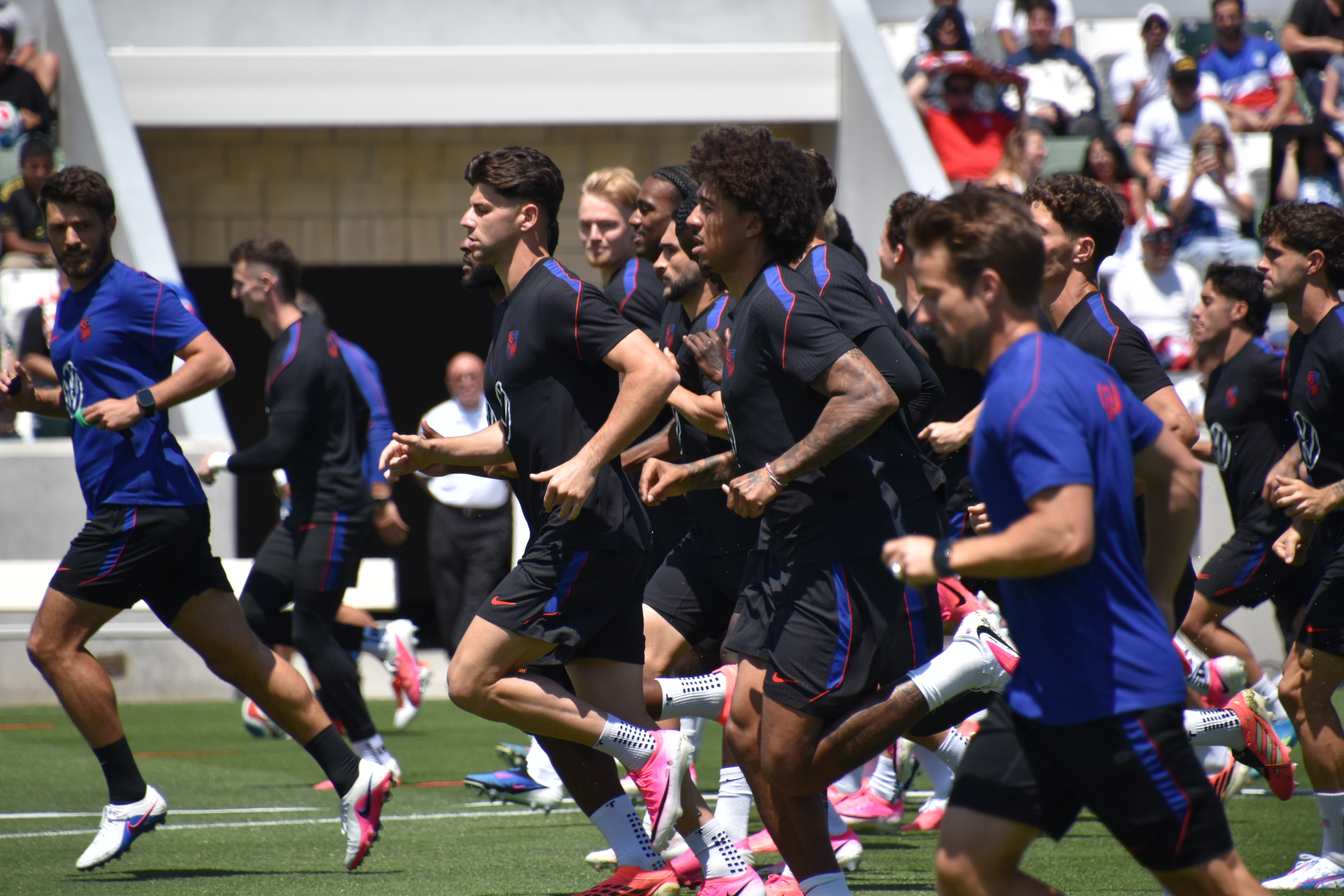
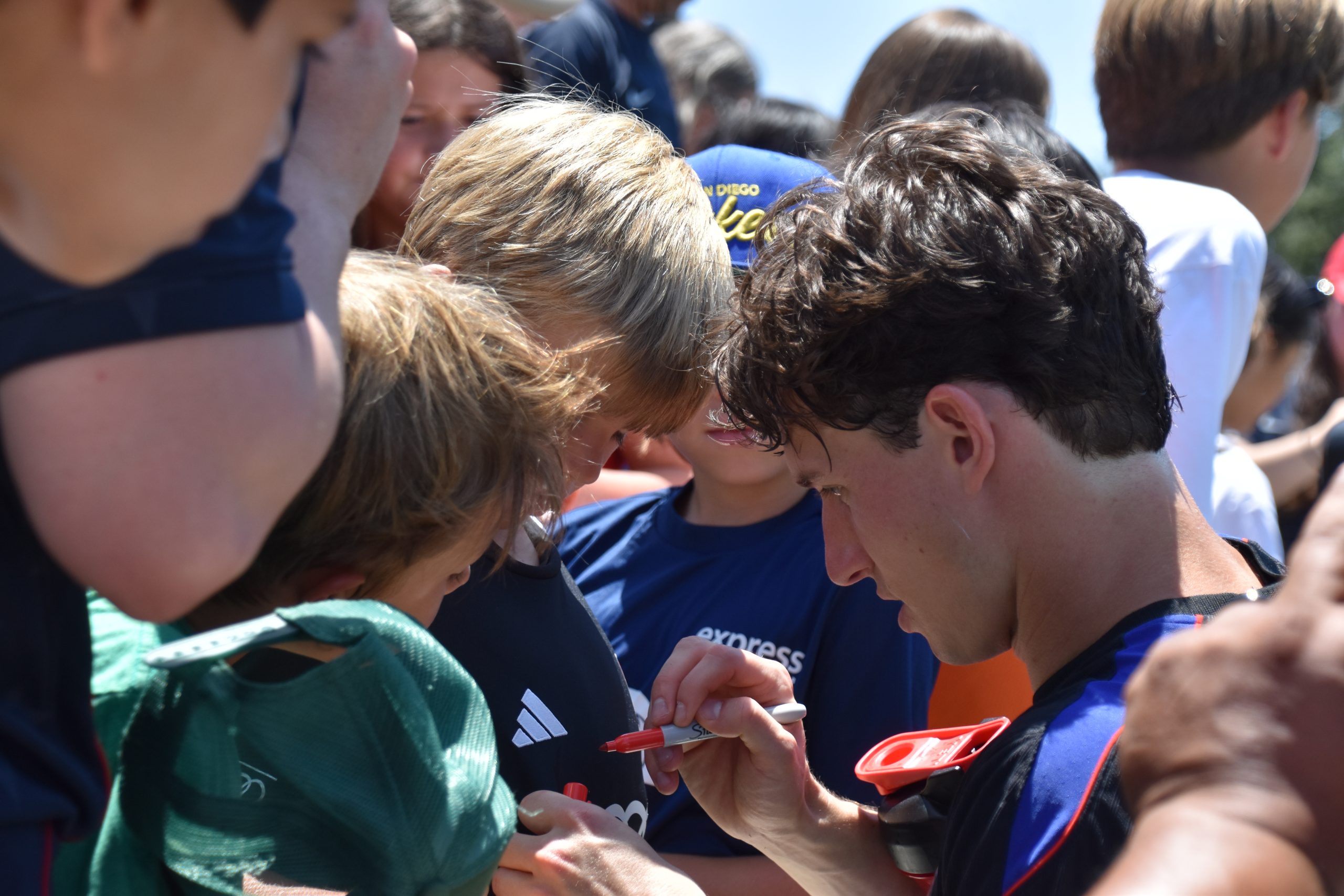
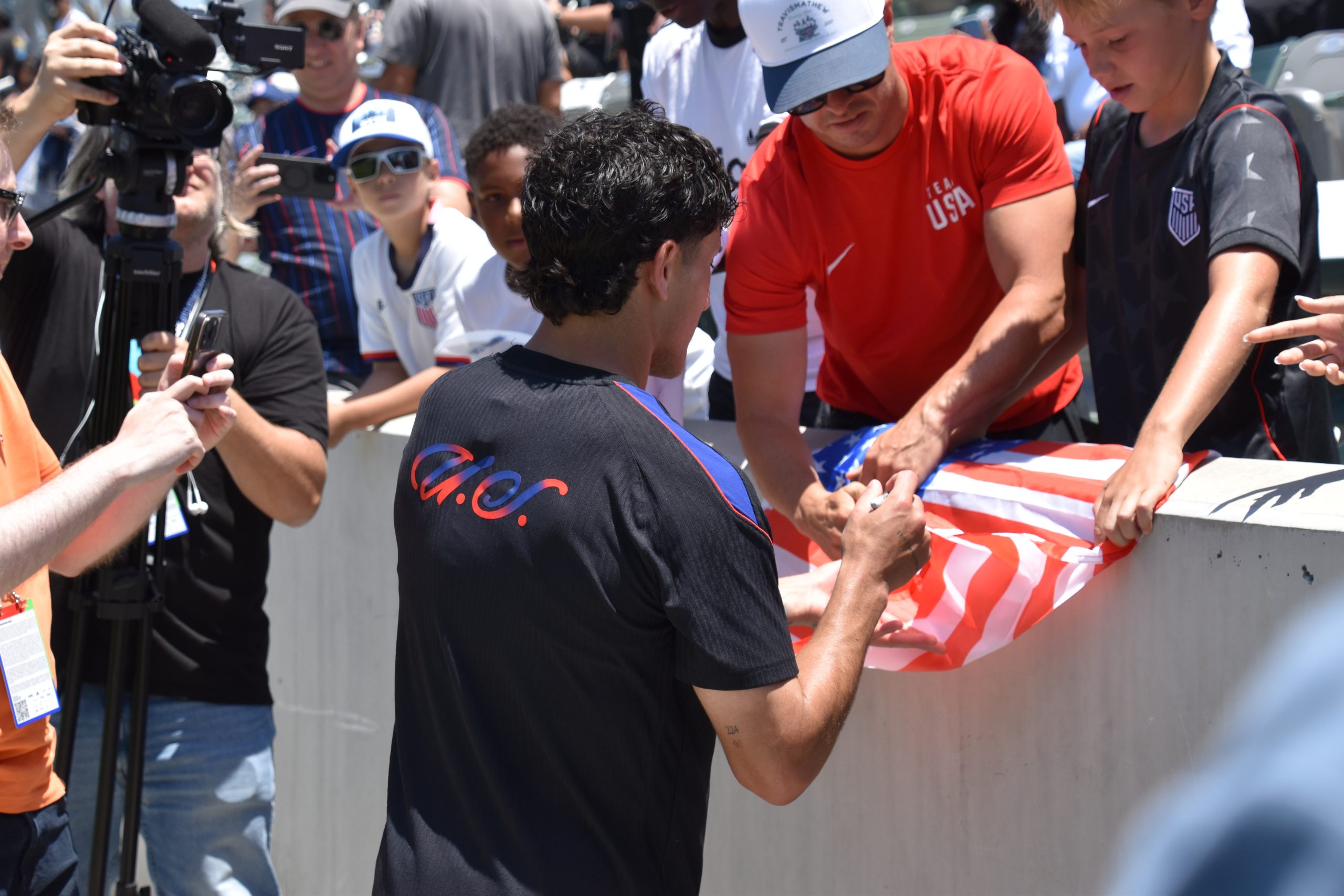
Medford native Brenden Aaronson (right) signs an autograph for a fan during a U.S. men’s national soccer team practice on Monday.Jonathan Tannenawld
Who will be the U.S. face of the U.S. World Cup? Easy. Christian Pulisic, Captain America, who gets America’s biggest soccer party started with a signature goal in the opener. Pulisic, whose goal in a friendly last month was his first goal for club or country in five months, brought the energy in the opening minutes of the 2022 opener before finally breaking through — and perhaps risking his future generations — for a goal against Iran.
The U.S. should win their group, and the path starts with a win on Friday. The Americans will take care of business against Paraguay and the country’s biggest soccer star will shine bright in L.A.
There’s no way that arguably the most talented team America has ever sent to a World Cup loses its first match on home soil … right? Doubts about the goalkeeper situation and the health of Chris Richards aside, this match is too big for the U.S. to lose.
Fortunately for the Americans, the U.S. will get the lowest-ranking member of Group D to start their World Cup campaign. They have already beaten Paraguay in a friendly during Pochettino’s tenure with a less talented squad, and there’s nothing that suggests that the Americans won’t be able to replicate that result on Friday on the big stage in Inglewood.
Some people might be surprised to realize that the United States has been part of the World Cup tournament since the very first edition in 1930 — and Philadelphia has been a part of that as well. The Philadelphia area has contributed players, coaches and administrators to the United States men’s national team for all that time.
Here’s a look at the World Cups the U.S. men’s team has participated in, the pepople in them with Philadelphia connections, and the Union connections to soccer’s biggest stage over the team’s history.
Uruguay, 1930
Players: A Penn graduate who played soccer and football and ran track in his time there, James Gentle signed as a striker with the Philadelphia Field Club and later coached at Haverford School.
Born in Scotland, Bart McGhee moved to Philadelphia as a child and played for numerous area teams. Against Belgium, McGhee scored the first-ever U.S. World Cup goal (the second overall World Cup goal) en route to a 3-0 win.
Goals from Bart McGhee, Tom Florie and Bert Patenaude led the 🇺🇸 to a 3-0 tournament-opening victory against 🇧🇪in Montevideo. pic.twitter.com/OTxIO4kzua
— U.S. Soccer Men's National Team (@USMNT) July 13, 2020
Jimmy Douglas, the USA’s goalkeeper, is credited with the first-ever World Cup shutout. He also played briefly for Philadelphia Field Club in his pro career.
The debut tournament of the World Cup was where the U.S. had its best-ever finish, reaching the semifinals. Host Uruguay won the tournament.
Players: Bill Fiedler was born, raised, and played his entire pro career in Philadelphia for the Philadelphia German-Americans and the Philadelphia Passon. He didn’t enter the one game the U.S. team played in the 1934 tournament.
Neither did Al Harker, who also had a long career for the Philadelphia German-Americans, playing for them for well over a decade.
Peter Pietras was born in Trento and played for five years with the Philadelphia German-Americans. He played in the game against Italy.
German-born Herman Rapp, appropriately enough, also played for the Philadelphia German-Americans when he went to Italy as part of the World Cup team, but he saw no action in the one game.
Francis “Hun” Ryan, born and raised in Philly, was the first World Cup player to have played for the still-active Lighthouse Boys Club team. He also played for the Philadelphia German-Americans and in the match against Italy.
Administration: Elmer Schroeder, who was the first American-born director of the U.S. Soccer organization, was previously the director at Lighthouse, starting at the age of 19.
David Gould, appointed as team manager by Schroeder, played for years in the area and also coached Penn soccer for 27 years.
The 1934 tournament was entirely single-elimination. The U.S. lost its one game to Italy, 7-1, which still remains a record for both countries at the World Cup, since that is the most goals Italy has ever scored in the competition. The score also remains the most goals the U.S. has ever conceded at the World Cup. Italy, the host country, went on to win the tournament.
Walter Bahr is one of seven National Soccer Hall of Famers who started at the Lighthouse in Kensington.
Brazil, 1950
Players: Walter Bahr was born, lived, and played professionally in the area with the Philadelphia Nationals. Bahr captained the team in all three group games the Americans played at the World Cup, including the stunning 1-0 upset of England. He provided the assist on the winning goal.
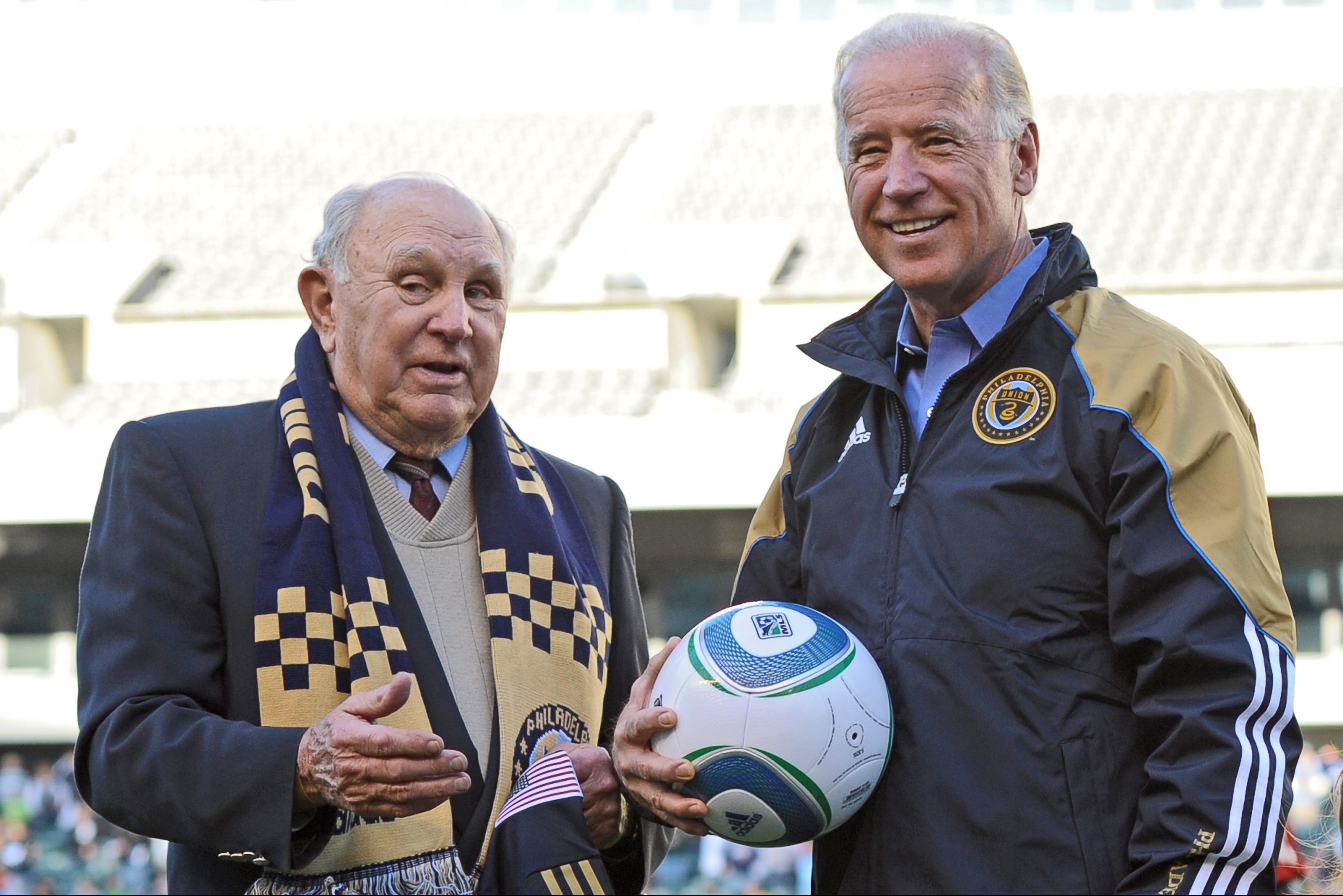
Sixty years later, he bridged the generations when he stood on the sideline with then-U.S. Vice President Joe Biden at the first home game in Union history.
Ed McIlvenny, who briefly played for Wrexham in Wales (now owned partly by Philly’s own Rob McElhenney), was a Scot who immigrated to the Philadelphia area. He became a teammate of Bahr’s on the Philadelphia Nationals and won a league title before returning to Britain for a short stint with Manchester United.
Administration: William Jeffrey was the manager of the U.S. team. Another native Scot, he coached Penn State for 26 seasons.
The United States lost their group games against Spain, 3-1, and Chile, 5-2, and did not advance to the knockout stage. The champion was Uruguay, which claimed its second title.
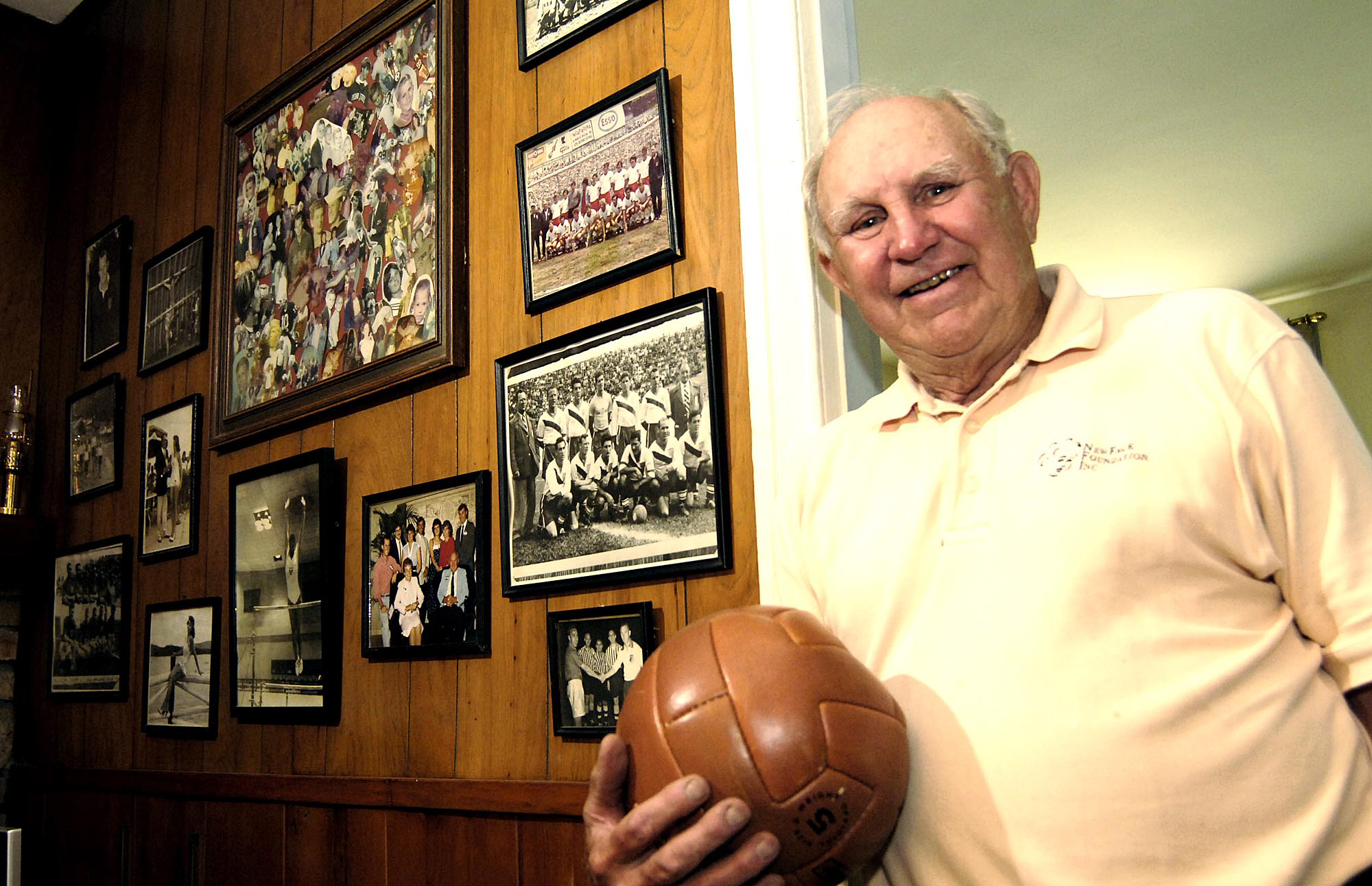
Walter Bahr at his home in Boalsburg, Pa., in 2006. Bahr kept lots of memorabilia from his days as a U.S. national team player.
Italy, 1990
Players: Peter Vermes, who grew up in Delran, played college soccer at Rutgers. He went on to earn 66 caps with the U.S. men’s national team and played in every group game at the World Cup.
The U.S. lost to Czechoslovakia, 5-1, Italy, 1-0, and Austria, 2-1. The champion that year was West Germany.
United States, 1994
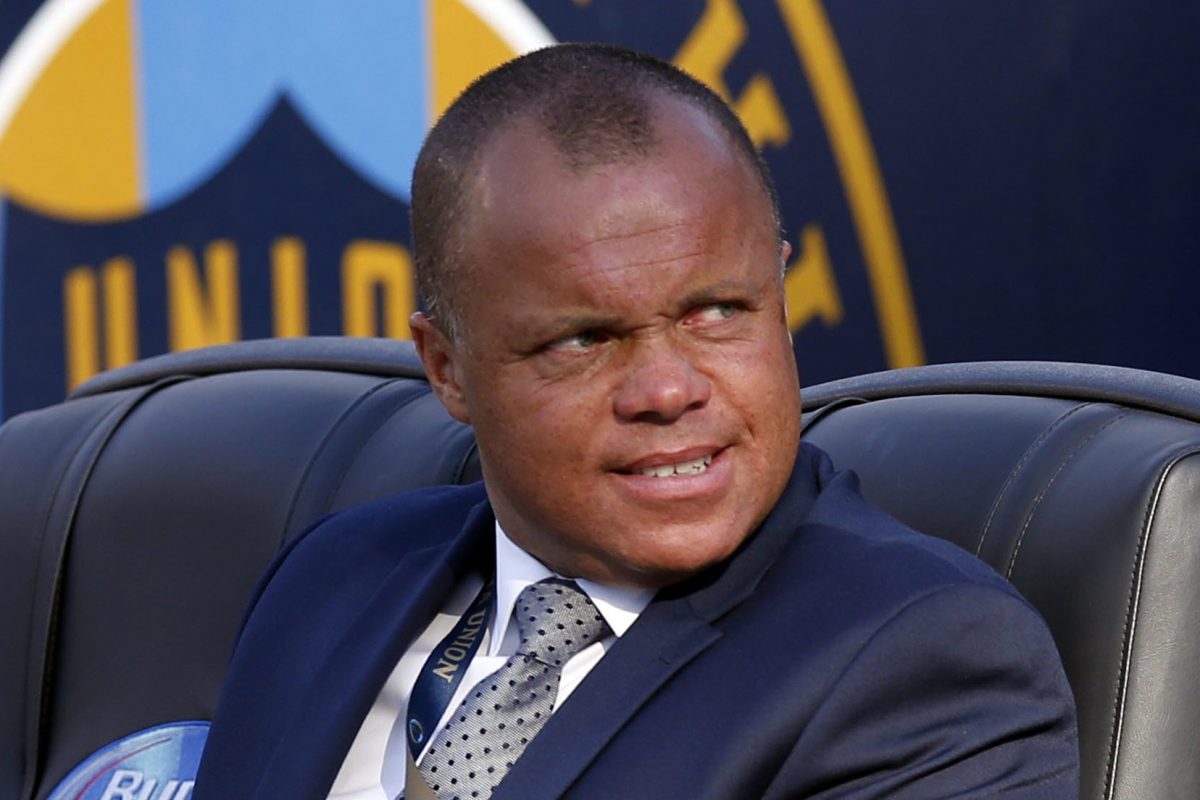
Players: While the Dutch American former midfielder Earnie Stewart was raised abroad, his connection to Philadelphia was established when he arrived to take on his first stateside job in 2015 as sporting director of the Union. Now Stewart serves as sporting director of the United States Soccer Federation.
In 1994, Stewart helped the American team advance from group play. He scored a goal in the team’s 2-1 win over Colombia, and played in the other group games, a 1-1 draw with Switzerland and a 1-0 loss to Romania.
The U.S. was eliminated in a 1-0 loss in the next round against Brazil, the eventual champion.
USSF sporting director Earnie Stewart previously held a similar role with the Union.
France, 1998
Players: Stewart also took part in this World Cup, where the U.S. lost to Germany, 2-0, Iran, 2-1 and Yugoslavia, 1-0. Host country France claimed the title for the first time.
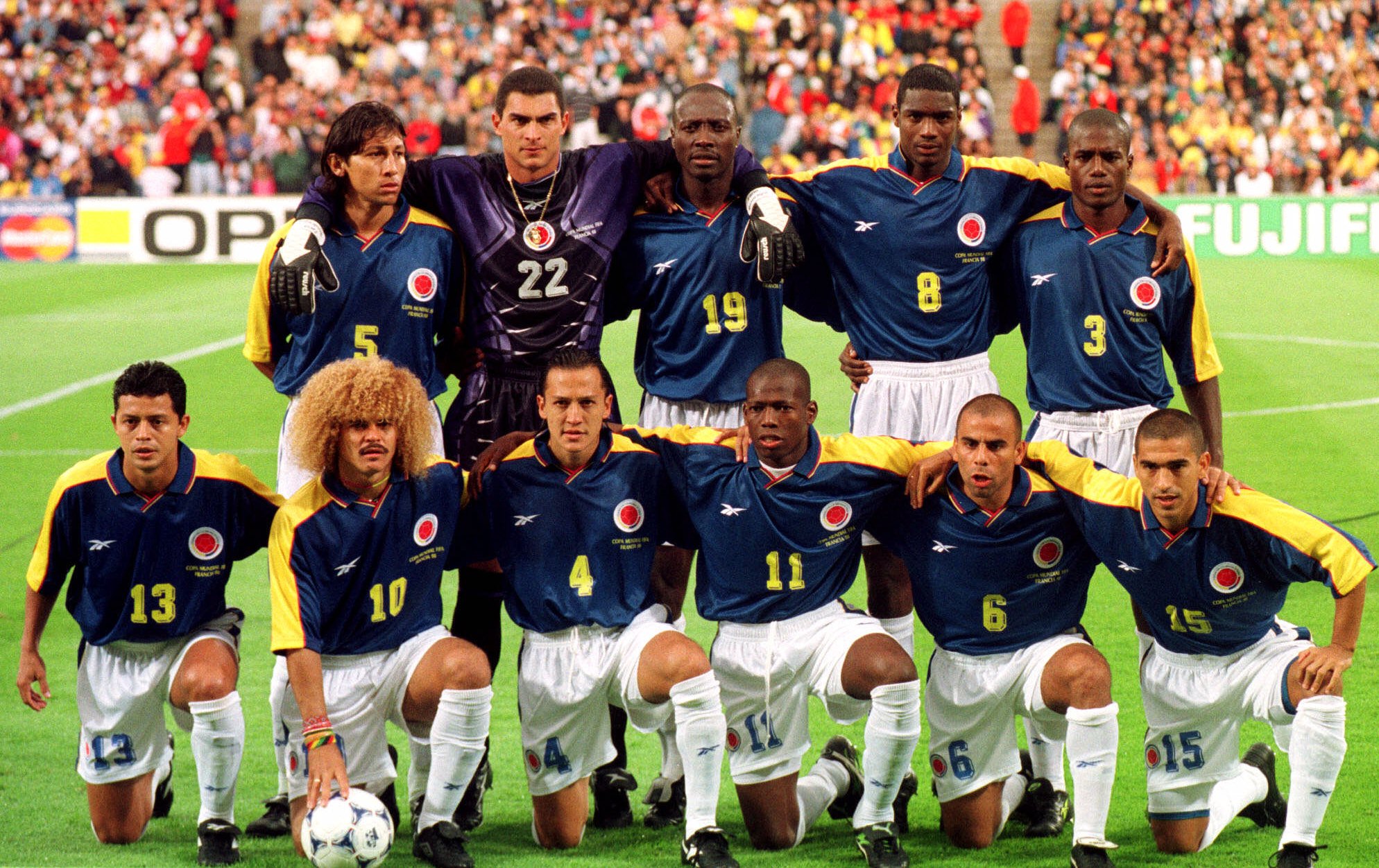
A future Union player was in this tournament, 12 years before the Union launched and a decade before Philadelphia even was announced as a future expansion market. (In fact, it was just the third year of MLS’s existence.) Goalkeeper Faryd Mondragón started all three of Colombia’s group games in net.
Faryd Mondragón stands second from left in the back row of Colombia’s team photo before its 1998 World Cup game against Romiania.
South Korea/Japan 2002
Players: Stewart again participated, playing in every game of the tournament for the U.S. and helping the team to its greatest tournament success since 1930. The Americans advanced out of the group stage after defeating Portugal, 3-2, losing to Poland, 3-0, and drawing with South Korea, 1-1.
The United States then advanced to the knockout rounds and defeated Mexico, 2-0. In the quarterfinals, the Americans played a tough match against Germany, but were eliminated, 1-0.
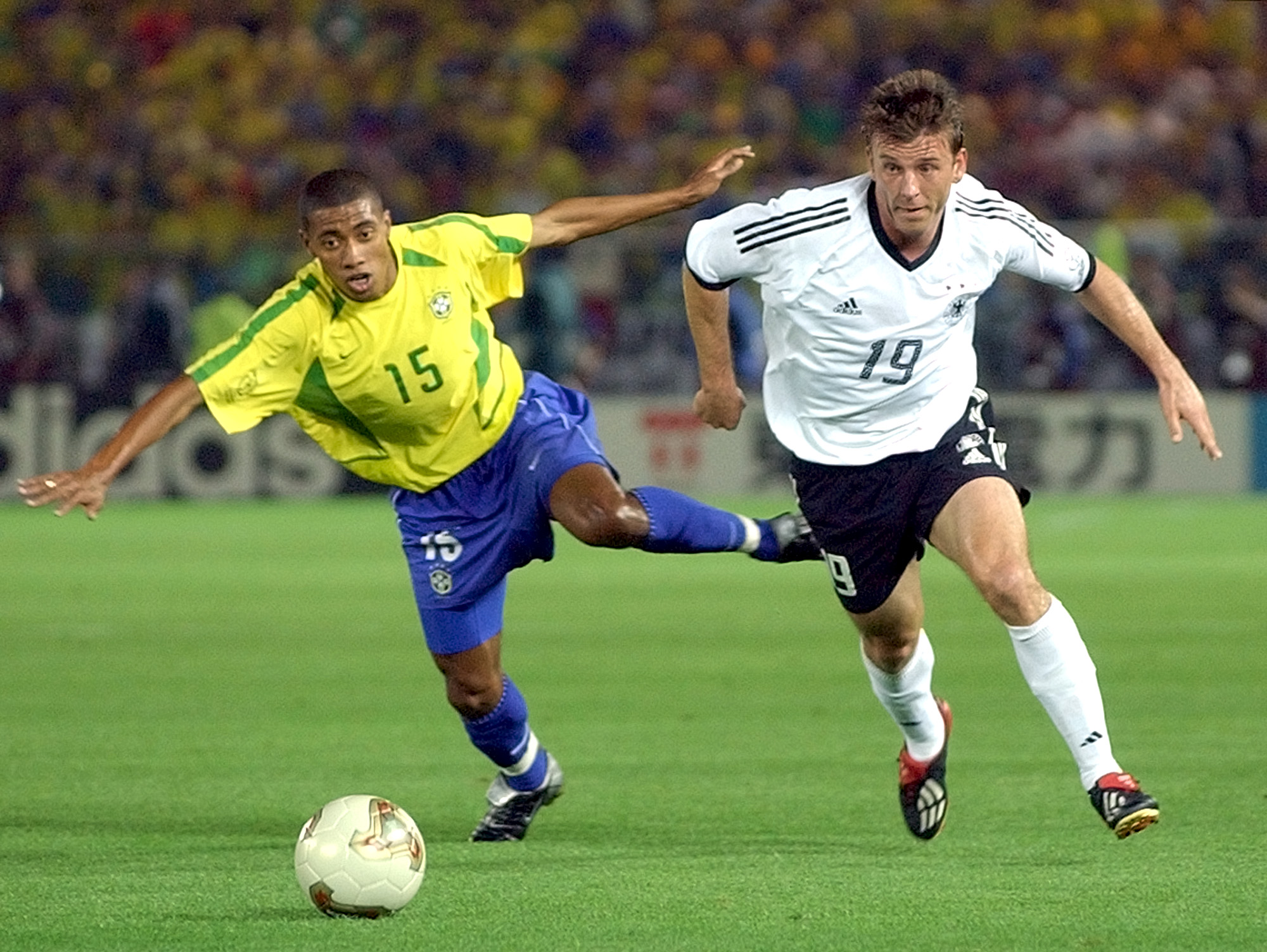
A future Union player was one of the stars of Brazil’s championship squad. Kléberson had two assists in the tournament, including on the goal in the final that sealed a 2-0 win and the Seleçao’s record fifth title.
Kléberson (left) in action during the 2002 World Cup final.
Germany, 2006
Players: Chris Albright, born and raised in Philadelphia, also played professionally for the Union and served on the team’s technical staff. He did not play in the tournament.
Bobby Convey, born and raised in Philadelphia, a former Penn Charter student, did play in all three group games, a 3-0 loss to the Czech Republic, a 1-1 draw with Italy, and a 2-1 loss to Ghana. Convey’s free kick helped create the own goal against Italy for the draw.
Middletown native Ben Olsen, who played for FC Delco, a local soccer powerhouse, played as a substitute against Ghana after Claudio Reyna was injured.
Future Union player Oguchi Onyewu started all three games of the tournament. The centerback signed with the club in 2017, his final professional season before retirement.
The Americans failed to advance. Italy won the tournament.
Philly native Bobby Convey played multiple games in the 2006 World Cup for the United States.
South Africa, 2010
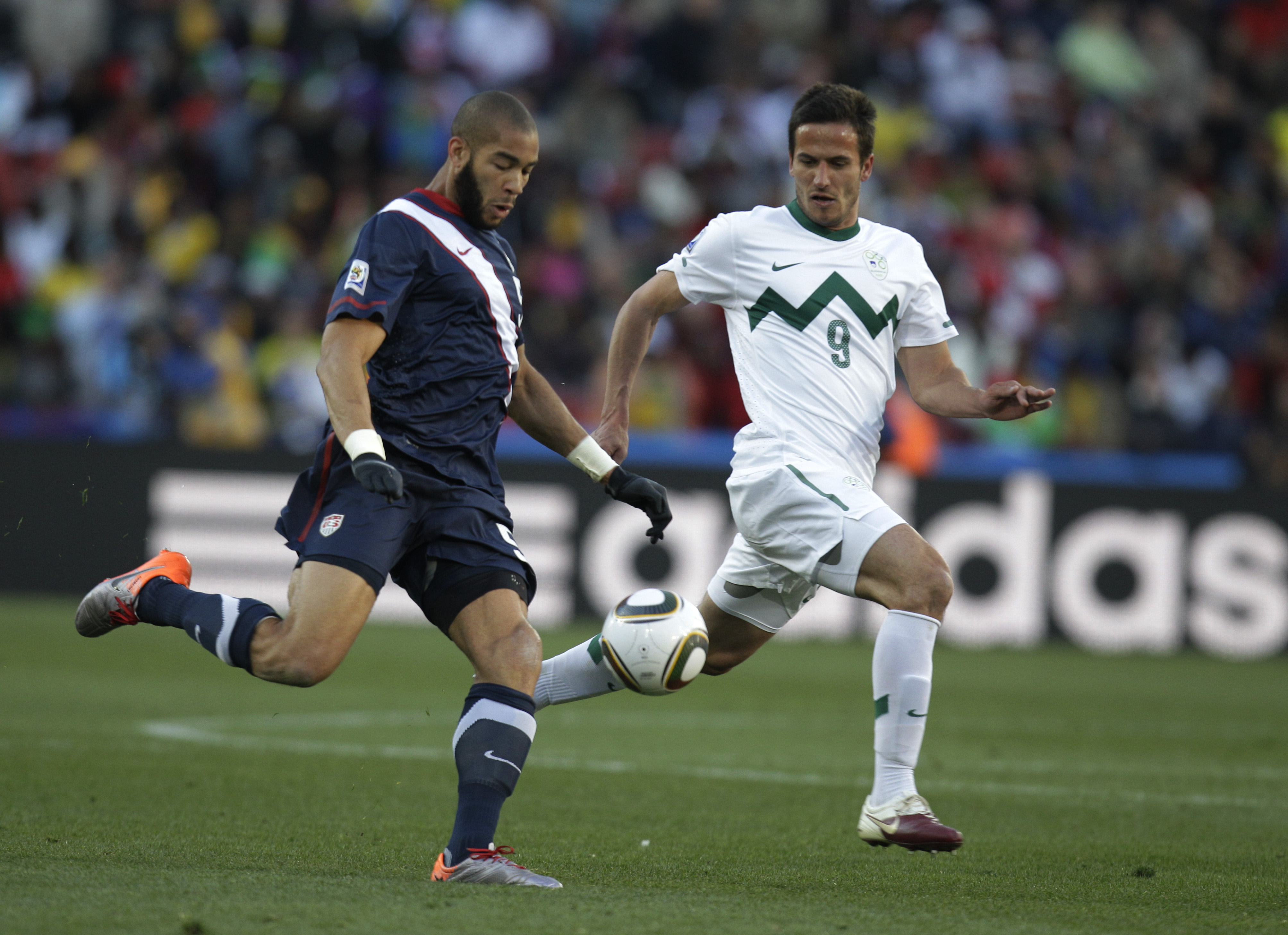
Players: Maurice Edu, who would go on to become one of the premier signings for the Union in 2015, played in the two games of the group stage following the 1-1 draw with England. He volleyed in a shot against Slovenia in the 2-2 draw that would have been the winning goal if it had not been waved off for a foul. He also played in the 1-0 win over Algeria.
Onyewu played in the first two games of the tournament.
A pair of future Union players featured for other countries: Tranquillo Barnetta for Switzerland and Kléberson for Brazil.
The United States advanced to the knockout stage but lost there to Ghana, 2-1, in added extra time.
Spain won its first title at this World Cup.
Oguchi Onyewu (left) in action at the 2010 World Cup.
Brazil, 2014
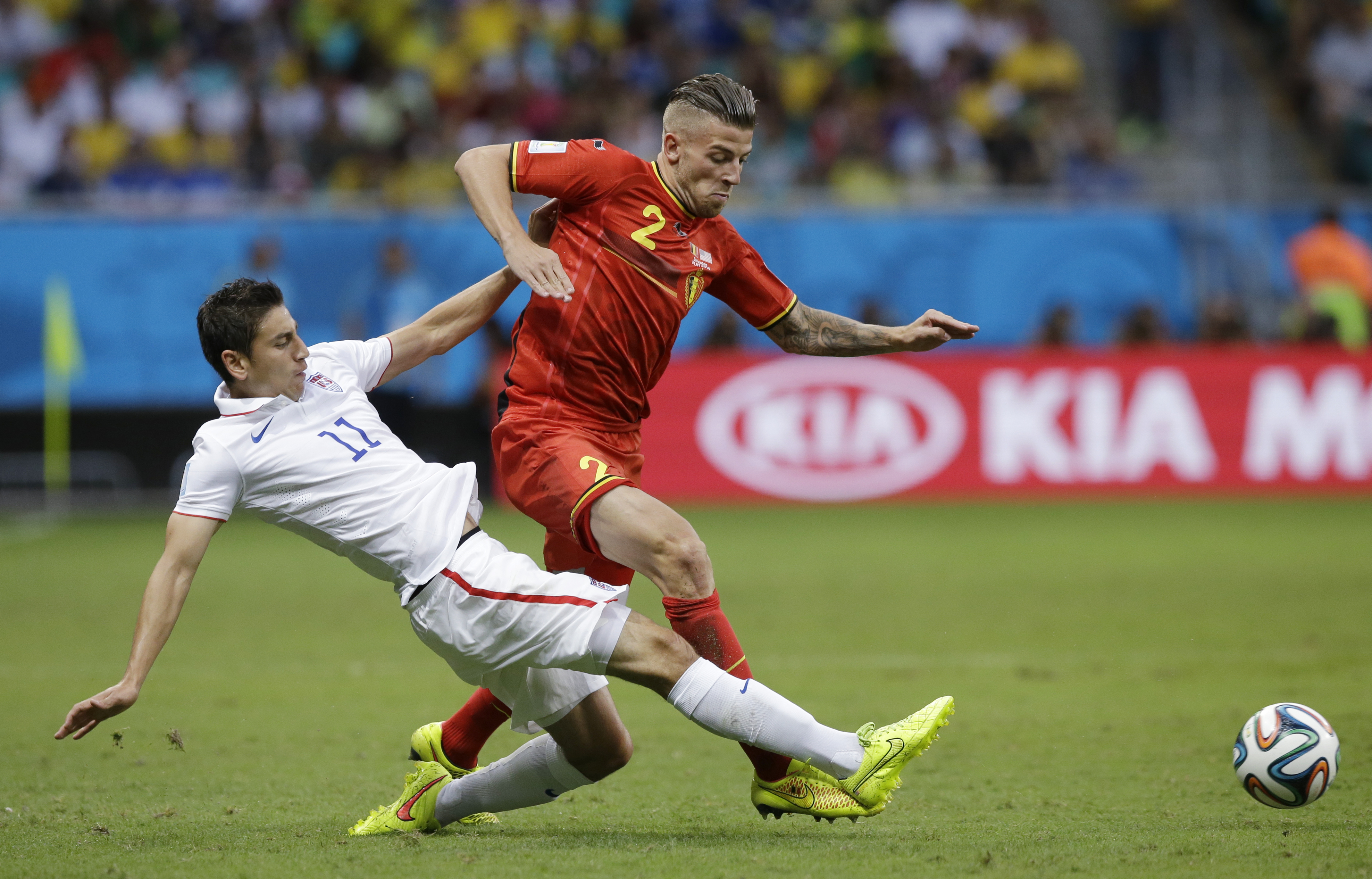
Players: Alejandro Bedoya, the Union’s longtime captain, played in all four U.S. games at the tournament. The Americans defeated Ghana, 2-1, drew Portugal, 2-2, and lost to Germany, 1-0. That was good enough to advance to the round of 16, where the U.S. lost in added extra time to Belgium.
Union centerback Carlos Valdés played for Colombia, though at the time he was on a string of loans away from the team. He’d asked for them because the Cafeteros’ coach at the time, José Pékerman, didn’t rate MLS. So Valdés tried to get elsewhere to make an impression (and he wasn’t alone).
Haris Medunjanin played for Bosnia, memorably getting Lionel Messi’s jersey after facing Argentina in the group stage. And David Myrie, who was on the Union’s inaugural season squad in 2010 (but didn’t last long), was on Costa Rica’s team.
Germany won the tournament, claiming its fourth title.
Alejandro Bedoya (left) in action for the U.S. during the round of 16 battle with Belgium.
Russia, 2018
Players: The U.S. infamously failed to qualify, which obviously put a big dent in things. But a former Union player and a future Union player took part for other countries. Gabriel Gómez played for Panama six years after his one season in Chester, and Marco Fabián played for Mexico eight months before he joined the club.
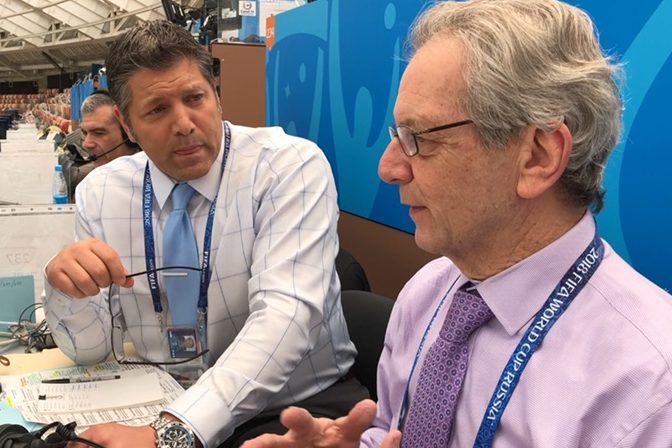
Broadcasting: Philly fans also heard a familiar voice on Fox’s TV coverage. This was the 13th World Cup of longtime Union play-by-play voice JP Dellacamera’s Hall of Fame career, including the eighth men’s tournament.
France won the title, led by Kylian Mbappé’s emergence as the sport’s new superstar.
JP Dellacamera (right) with his broadcast partner at the 2018 World Cup, former U.S. goalkeeper Tony Meola.
Qatar, 2022
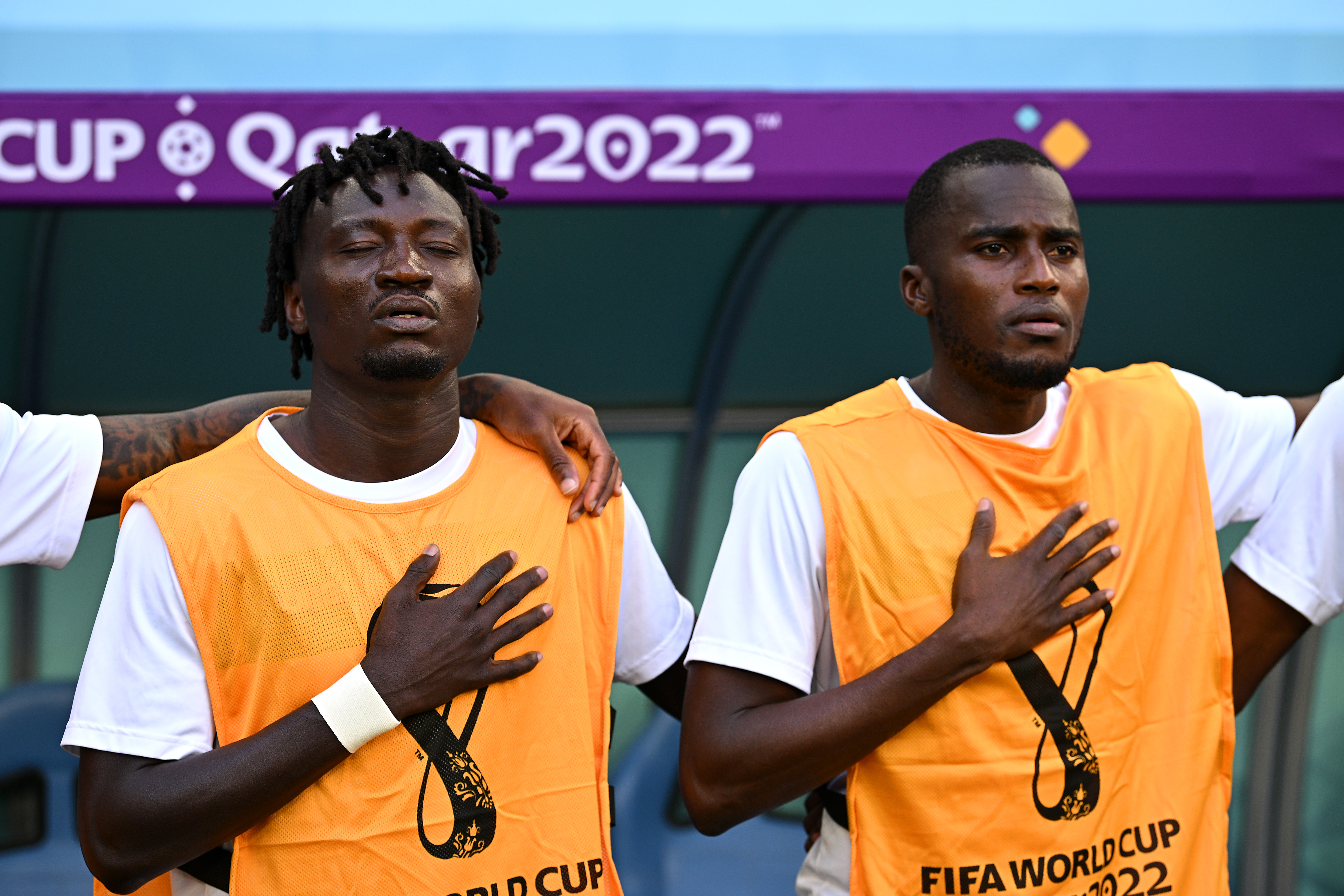
Players:Olivier Mbaizo became the first active Union player to make a World Cup roster, with Cameroon. He never got on the field, though if the Indomitable Lions had advanced from the group stage he’d likely have played in the round of 16 due to a teammate’s suspension.
Union alum Brenden Aaronson made his first U.S. World Cup team, two years after moving to Europe. The Medford native was at England’s Leeds United then, his second club after initially going from Chester to Austria’s Red Bull Salzburg for $6 million. The later move to Leeds commanded a $30 million transfer fee, and the Union banked $5 million of it in a sell-on fee.
Hershey’s Christian Pulisic was also on the U.S. squad, scoring the winning goal against Iran and finally fulfilling his promise as a superstar. The Americans advanced to the round of 16, then lost to the Netherlands.
Steven Vitória played for Canada seven years after his one season in Chester.
Administration: This was Stewart’s World Cup as U.S. Soccer’s sporting director.
A coach: Ventnor City native and Ursinus grad B.J. Callaghan was one of U.S. manager Gregg Berhalter’s top assistants.
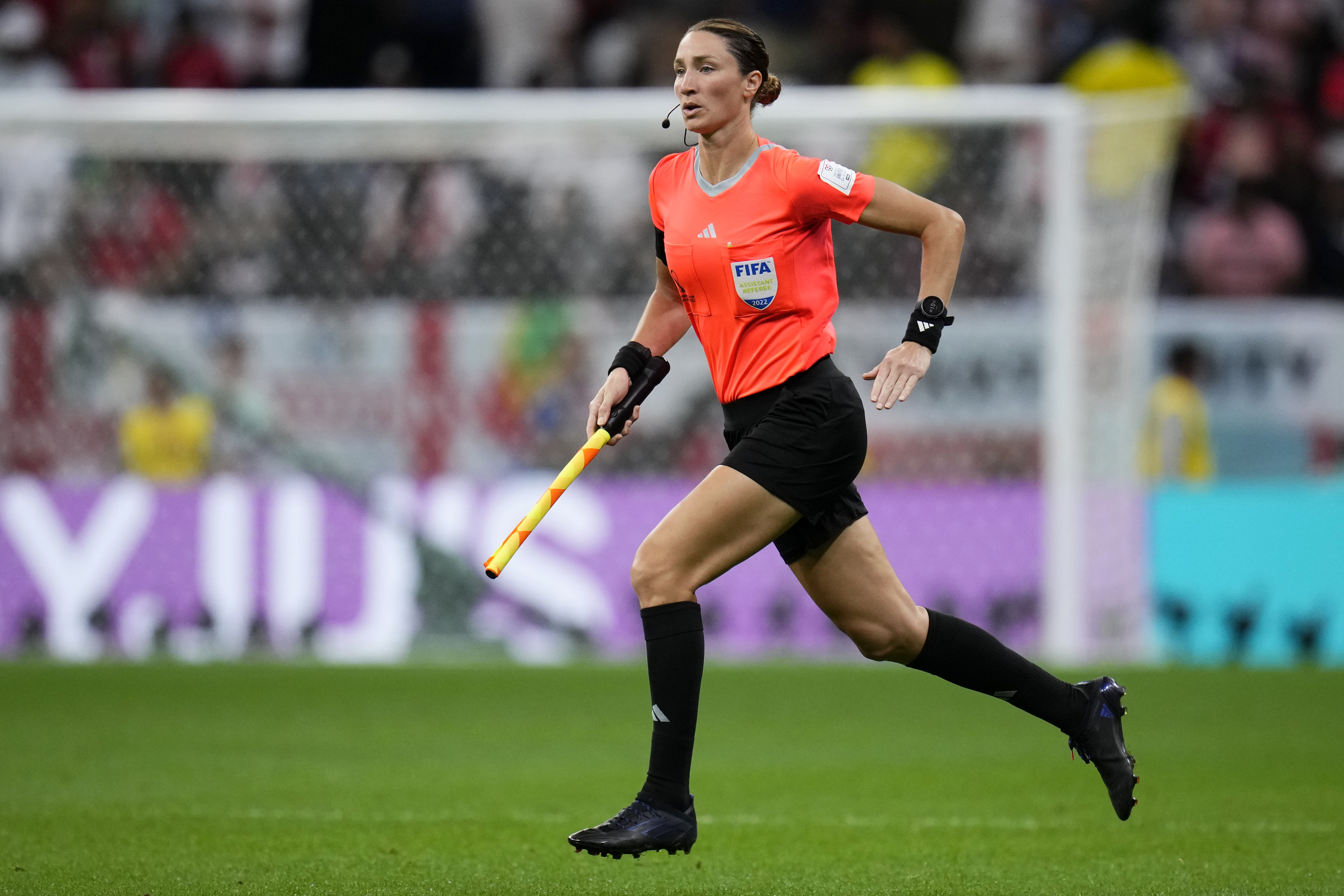
A referee: Though Kathryn Nesbitt wasn’t born in Philadelphia, the assistant ref had lived in the city since 2019 when she was appointed to her first World Cup.
Broadcasting: Dellacamera was in Fox’s booth again, while former Union captain Maurice Edu and Delran’s Carli Lloyd joined the network as analysts. Fox reporter Tom Rinaldi spent part of his college years at Penn, and was another familiar voice from plenty of trips to Philly for other sports.
Argentina won the tournament, finally giving Lionel Messi the biggest trophy and crowning him as men’s soccer’s greatest player of all time.
Olivier Mbaizo (left) on Cameroon’s bench at the 2022 World Cup.
USA/Canada/Mexico, 2026
Players: The Union’s Danley Jean Jacques and Olwethu Makhanya made the rosters of Haiti and South Africa, respectively. Jean Jacques was a stalwart of Les Grenadiers, and had the bonus of Haiti getting a group stage game in Philadelphia against Brazil. That was one of six tournament games in the city, as the men’s World Cup finally came here for the first time.
Makhanya’s inclusion, meanwhile, was surprising at the time.
Haiti’s squad also included Penn alum Duke Lacroix, who made the big stage over a decade after his college years with the Quakers.
Four Union alums made the U.S. squad: Aaronson, Wayne’s Matt Freese, Media’s Auston Trusty, and Bear, Del.’s Mark McKenzie. It was the most players from the Philadelphia region on a U.S. team since 1934. (Pulisic could count as an honorary fifth.)
Brenden Aaronson (center) made his second straight World Cup team in 2026.
Former Union midfielder Jamiro Monteiro made Cape Verde’s squad for its first ever World Cup. So did Philadelphia native CJ dos Santos, who had played for U.S. youth teams but switched to the nation of his father’s roots. He was in the Union academy for a while before leaving to Portugese club Benfica, then returning to MLS in 2022 with Inter Miami. In 2024, he moved to San Diego FC, and that was his club at the time of the World Cup.
A referee: Nesbitt was selected to her second straight men’s World Cup on the sidelines. Since 2022, she had been selected for the 2023 women’s tournament, and was part of the first American refereeing team to officiate a women’s World Cup final. (It hadn’t happened before because of how many times the U.S. made the final.)
Broadcasting: Dellacamera, Lloyd and Edu were back with Fox, this time joined by Philadelphia resident and former Independence and U.S. women’s team player Lori Lindsey. She and Dellacamera called some games together, including Ivory Coast vs. Ecuador.
Kathryn Nesbitt at the 2023 World Cup. The 2026 tournament was her third between men and women combined.
For the past year, FIFA, the governing body of international soccer, has leased an office on the 17th floor of New York’s Trump Tower that has sat all but empty. The rent goes to President Trump’s family business, but soccer officials say the space sits largely idle.
Paying rent to the Trumps was the choice of Gianni Infantino, FIFA’s president, who has made being close to Trump a top priority. He has lavished the president with praise, trophies and a medal. He has made pilgrimages to Mar-a-Lago, the Trump National Doral golf club and even the “Melania” documentary premiere.
Infantino has publicly boosted the president through impeachments and plummeting poll numbers.
It was all in service, Infantino’s supporters say, of ensuring that the World Cup, which begins this week, goes off without a hitch. Trump could disrupt the games in any number of ways. Infantino, allies say, is handling a volatile president who responds to praise and gifts.
“He’s straightforward in terms of what you need to do to manage the relationship,” said Majed Al Sahib, a soccer official from Saudi Arabia who said that Infantino was being pragmatic.
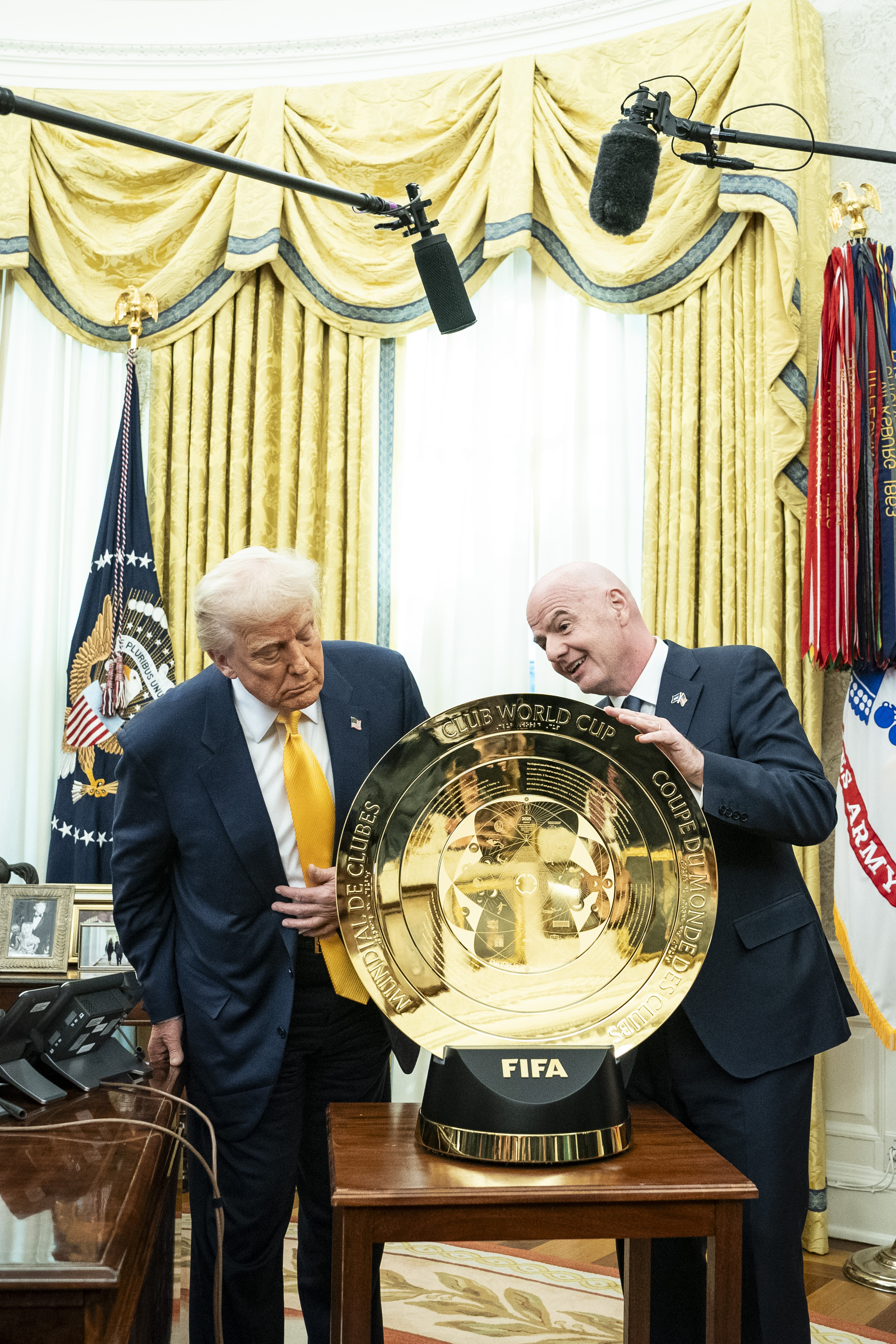
President Trump and Gianni Infantino at the White House in 2025 with a trophy intended for the winner of the Club World Cup competition. Trump kept it, and FIFA commissioned another.Haiyun Jiang / The New York Times
FIFA officials are clear about what they want from the World Cup. They want a higher profile in the United States and more growth in the world’s biggest consumer market. They also want to shed the reputation for corruption and cartoonish excess that led to Justice Department prosecutions.
Infantino failed to woo the Biden administration, former government officials said. But he found a receptive ear in Trump, who calls him “the king of soccer.” A decade ago, soccer executives were terrified to travel to the United States, fearing they’d be arrested. Now, Infantino is an Oval Office regular.
Infantino presided over the previous two World Cups, in Russia and Qatar, and drew criticism for cozying up to autocrats in both countries. His amity with Trump has him once again defending his way of operating in what is supposed to be a politically neutral position.
“I think it is absolutely crucial for the success of a World Cup to have a close relationship with the president, with the government,” Infantino said last year. “I have a lot of friends.”
This World Cup will be a test of whether that friendship pays off.
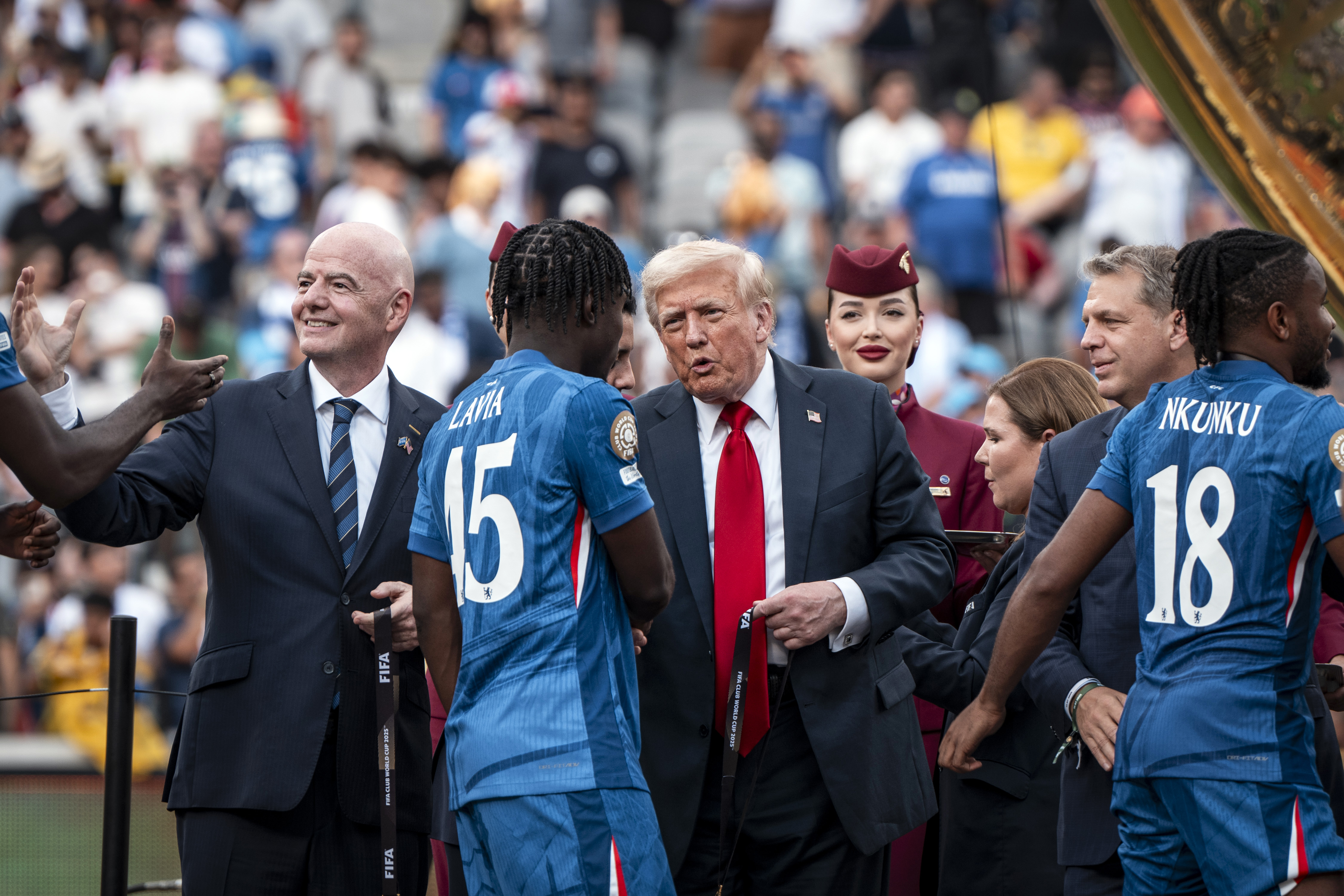
Infantino and President Trump onstage during the Club World Cup final in New Jersey last year.Haiyun Jiang / The New York Times
A top FIFA official says he believes there is an unofficial understanding that the authorities will not conduct immigration enforcement outside of stadiums. (A FIFA spokesman denied any deal and said enforcement was up to the government. The Department of Homeland Security did not address the question.)
The Justice Department also recently dismissed long-running criminal charges as part of its FIFA investigation. Prosecutors said the case “doesn’t fit within the administration’s priorities.”
And Trump seemed to defer to Infantino this spring on allowing Iranian players to come to the United States. “If Gianni said it,” the president said, “I’m OK.”
Still, Trump undercut Infantino recently by criticizing the high cost of tickets. And whatever reassurances may have been made on immigration, support staff for Iran’s national team was denied visas, along with a Somali referee.
Infantino’s coziness with the president also appears to be influencing FIFA in Trump-like ways that could outlast the tournament.
FIFA is exploring hotel deals that would license its name just as the Trump family has long done, according to three people familiar with the discussions. He has also expressed interest in launching a FIFA cryptocurrency, just as the Trumps have done.
A FIFA spokesman said the organization was paying “market rent” in Trump Tower and that the office would be used during the World Cup.
Inside FIFA, many officials privately question whether this has all been in service of Infantino himself. He has accompanied Trump on state visits, sat center stage at the inauguration and has attended diplomatic events.
What does any of that, his critics ask, have to do with soccer?
Infantino declined to be interviewed. His yearslong campaign to curry favor with Trump, and the hand-wringing it has prompted, was described in dozens of interviews with FIFA insiders and others close to the two men. Some spoke on condition of anonymity to describe private conversations.
“Infantino thinks he’s the leader in the relationship,” said Sepp Blatter, the former FIFA president whose ouster at the height of the corruption scandal paved the way for Infantino’s ascension. “But nobody can lead Trump.”
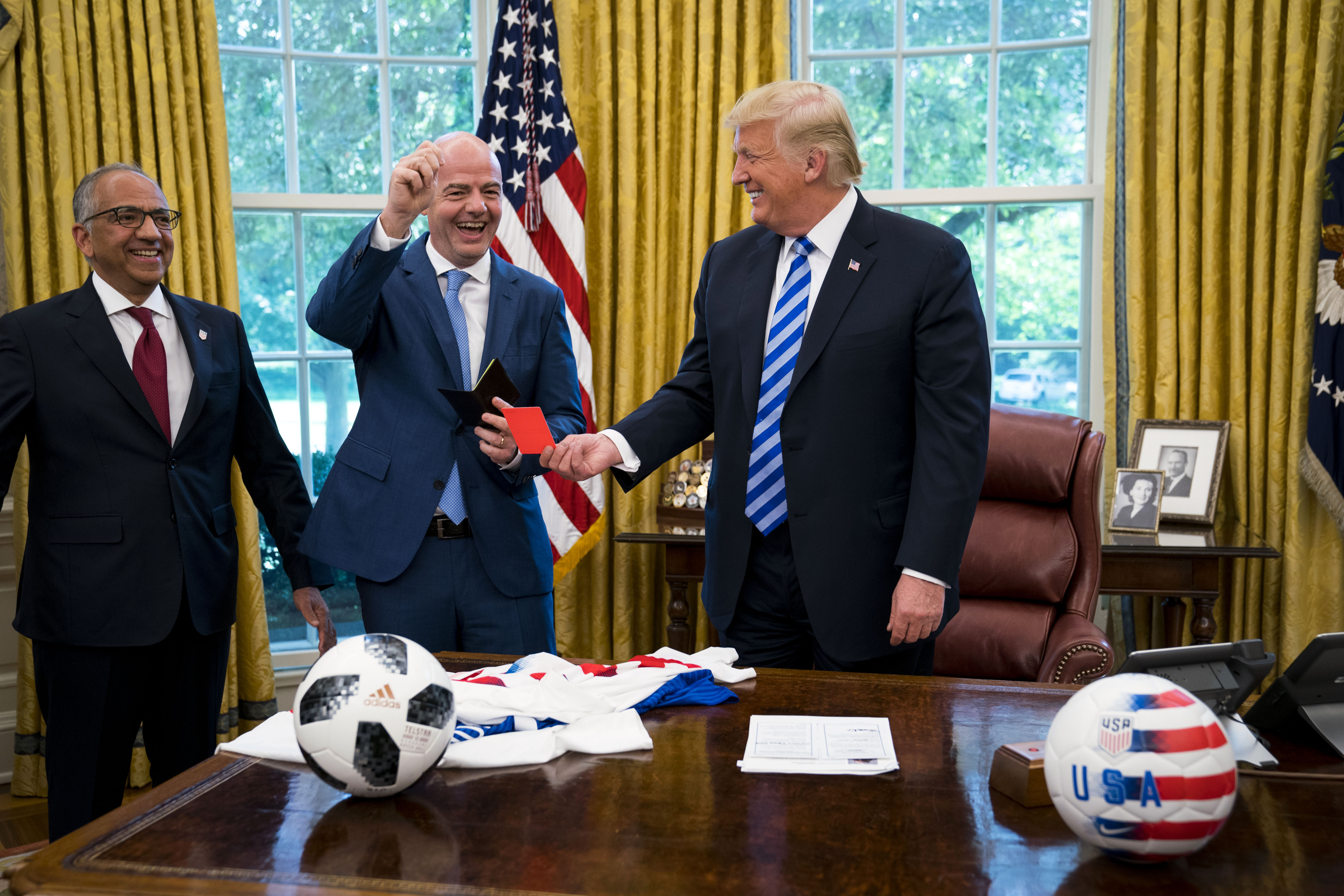
Infantino meets with Trump for the first time in the Oval Office and jokes about penalty cards.Doug Mills / The New York Times
The first meeting
The men first met in the Oval Office in the summer of 2018. The United States had just won the right, along with Canada and Mexico, to host the World Cup, and the mood was celebratory.
“You’re pretty famous, right?” Trump asked. “Pretty important and pretty famous.”
“Yeah,” Infantino replied. “It looks like it.”
Infantino, a lawyer and the son of an Italian immigrant who worked on Switzerland’s railways, had secured the FIFA presidency the same year that Trump was elected.
In that first White House meeting, he presented the president with a Trump jersey and a set of penalty cards that the men joked could be used on the news media.
“You are part of the FIFA team now,” Infantino said.
It was a remarkable turnabout. Three years earlier, the Justice Department had unveiled an indictment detailing corruption in world soccer. Major brands did not renew their sponsorship deals, and the organization suffered financial losses.
But if Infantino was eager to welcome the president onto FIFA’s team, he quickly found himself on the Trump Team — a pretty important, pretty famous endorser of a president in the middle of an impeachment inquiry.
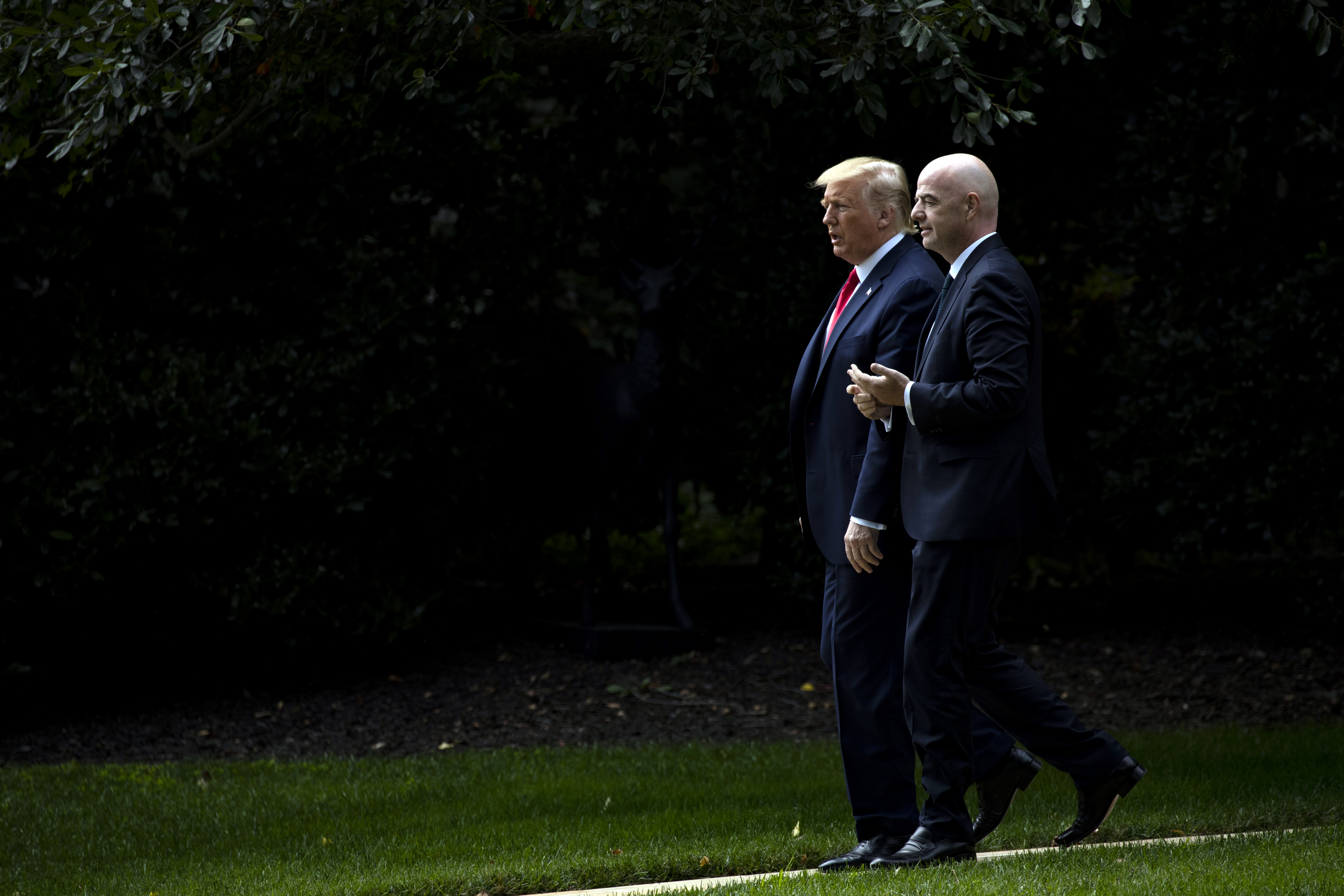
“Gianni, we’re going to have to extend my second term,” Trump said on the South Lawn in September 2019, as Infantino smiled beside him.
Months later, as lawmakers debated charges of obstruction and abuse of power against Trump, Infantino praised him before business leaders in Davos, Switzerland.
“You might wonder why the president of FIFA is introducing the president of the United States of America,” Infantino said. He joked that it had been suggested that the two of them might be the most important people in attendance.
Soon, Infantino was back at the White House, this time as an unusual guest for the signing of the Abraham Accords, which established diplomatic ties between Israel and some Arab nations. He also arranged a “courtesy visit” with the attorney general, who was overseeing the FIFA cases.
“I am fully convinced,” Infantino said after that meeting, “that the credibility and reputation of FIFA is being restored at the highest level.”
Then came the 2020 election, and Infantino’s fortunes changed.
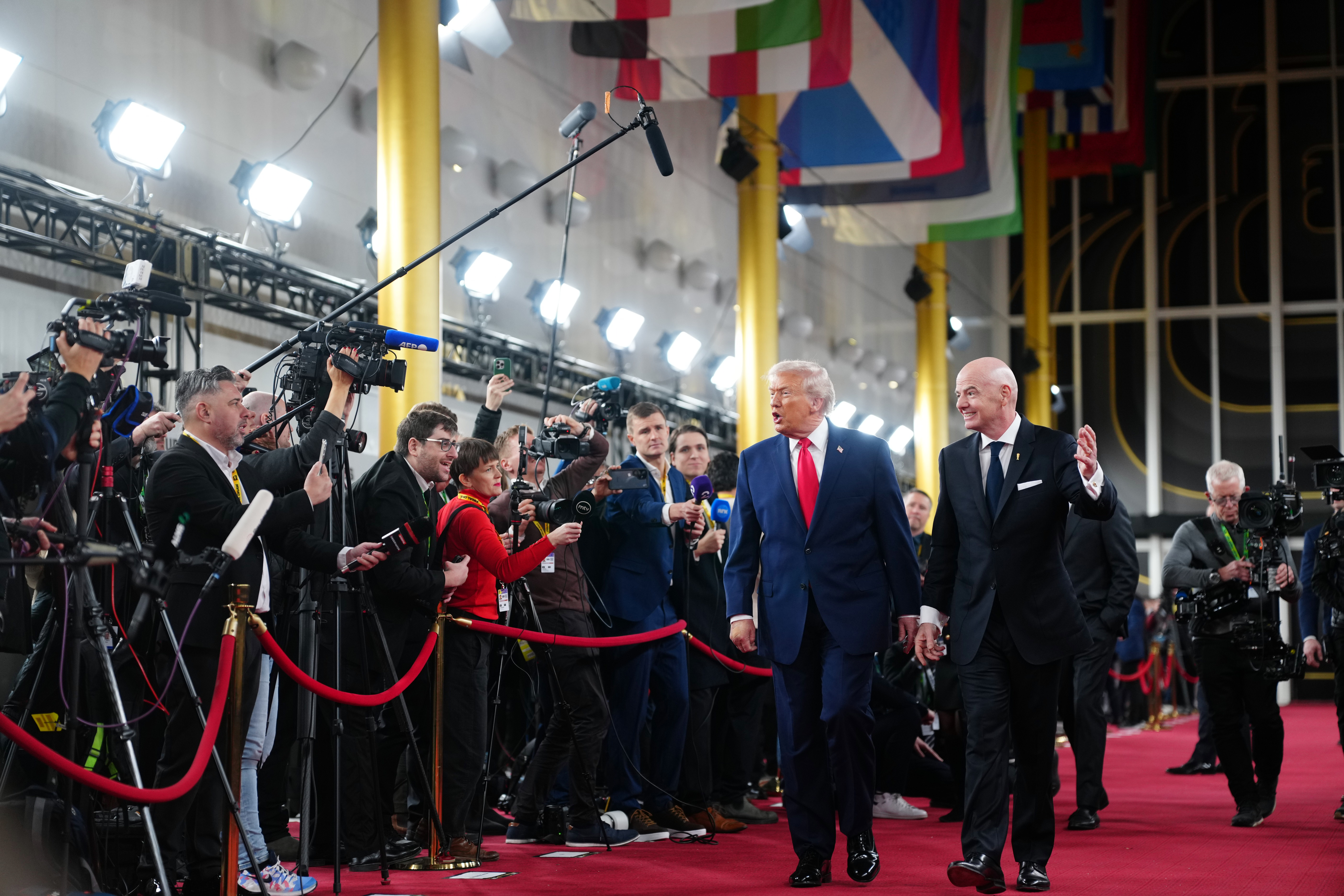
President Trump and Infantino attended the World Cup draw at the John F. Kennedy Center for the Performing Arts last December. FIFA had planned to have the event in Las Vegas but moved it to Washington.Tierney L. Cross / The New York Times
A chilly reception, and then a thaw
President Joseph R. Biden Jr. proved to be less welcoming to FIFA than his predecessor. There were no Oval Office greetings.
Administration officials said they had been wary of getting too close to a scandal-tainted organization. They saw no benefit in putting the president alongside Infantino.
“There was definitely a hands-off, keep-them-at-a-distance approach at the White House,” said Caitlin Durkovich, a former National Security Council official who helped oversee World Cup planning. She said FIFA repeatedly tried to arrange meetings with top officials.
In interviews, FIFA officials said that Infantino had been trying to raise FIFA’s profile. More practically, they said, he wanted people, when they Googled “FIFA,” to find anything but stories about bribery and kickbacks.
But even an attempt to meet formally with Secretary of State Antony J. Blinken at the 2022 World Cup in Qatar fell flat, according to three people familiar with FIFA’s efforts to arrange a meeting. Infantino’s few interactions with American officials were mostly perfunctory and private, like a half-hour meeting with the national security adviser to address security and visa wait times.
So when Trump won re-election in 2024, there was an opportunity to build on Infantino’s foundation. And Trump seemed eager to pick up where they had left off.
Days before Trump’s second inauguration, the men convened at Mar-a-Lago, the president’s private club in South Florida, and flashed thumbs-up signs for a photo that Infantino posted to Instagram.
Trump thanked him by name at a victory rally. And Infantino had an elevated seat behind Trump at the inauguration.
Infantino eagerly promoted all of it, sounding at times like Trump’s campaign partner. “Together we will make not only America great again, but also the entire world,” he said.
Infantino, it seemed, had achieved everything he wanted: accolades, endorsements and a World Cup task force, proposed by Infantino himself, that gave FIFA a formal place among Trump’s inner circle.
But soon it was clear that such closeness had drawbacks.
‘Private political interests’
When the world’s top soccer officials gathered in Paraguay for their annual meeting in May 2025, Infantino was on the other side of the globe, tagging along on Trump’s state visit to Persian Gulf countries.
The trip had little to do with soccer, and when he finally arrived at the FIFA meeting, he was several hours late. European soccer officials walked out, protesting his prioritization of “private political interests.”
“I felt that I needed to be there to represent football and all of you,” Infantino told them.
It was then that behind-the-scenes grumbles exploded into view. FIFA is an unusual amalgam of 211 countries and territories, each with its own politics. Infantino’s closeness to Trump had impressed some constituencies and alienated others.
“It’s a matter of priorities, and at that moment Trump was the priority for Infantino,” said David Goldblatt, author of “The Ball Is Round: A Global History of Football.”
But Infantino was undeterred.
One of his signature innovations was a 32-team tournament for the world’s best professional teams: the Club World Cup. But when he plugged the event from the Oval Office, he suddenly credited Trump as a co-creator. (After Trump kept the original Tiffany & Company trophy, FIFA presented the winners with another.)
Then, on the eve of the tournament, U.S. Customs and Border Protection announced that agents would be “suited and booted ready to provide security for the first round of games.”
Tournament officials panicked, terrified that immigration agents would arrest fans, according to three people who participated in planning discussions. Such a spectacle could deter attendance at the 2026 World Cup and potentially lead to a global backlash against FIFA.
By then, Infantino was living in Miami, in the president’s orbit. His advisers strategized about asking Trump for a moratorium on immigration actions, both during the club matches and the World Cup.
While no one close to either man has indicated what, exactly, they discussed privately, FIFA officials said that Infantino pressed the immigration matter. Whether for that reason or not, the government’s social media post was removed and ICE raids never materialized.
Soccer officials said they believed there was a similar understanding for the World Cup. But, as is often the case with Trump, nobody can say for sure.
The Department of Homeland Security, which oversees Immigration and Customs Enforcement, did not acknowledge any such agreement.
“U.S. Customs and Border Protection, in coordination with D.H.S. and other agencies, is dedicated to ensuring the safety and success of the FIFA World Cup,” a D.H.S. spokesperson said.
By some measures, the club tournament represented a win for Infantino’s strategy. He got an Oval Office platform, Ivanka Trump participated in the draw, immigration agents stayed away, and Trump attended the final match.
But it was also a reminder that when there is a limelight, Trump often seizes it for himself.
Appearing onstage after the final whistle, Trump lingered longer than planned, upending meticulous choreography, confusing the winning team and standing squarely before the cameras during the trophy presentation. FIFA and Secret Service officials were alarmed, and fireworks were delayed because of the president’s presence.
It went viral, with Trump basking in FIFA’s moment.
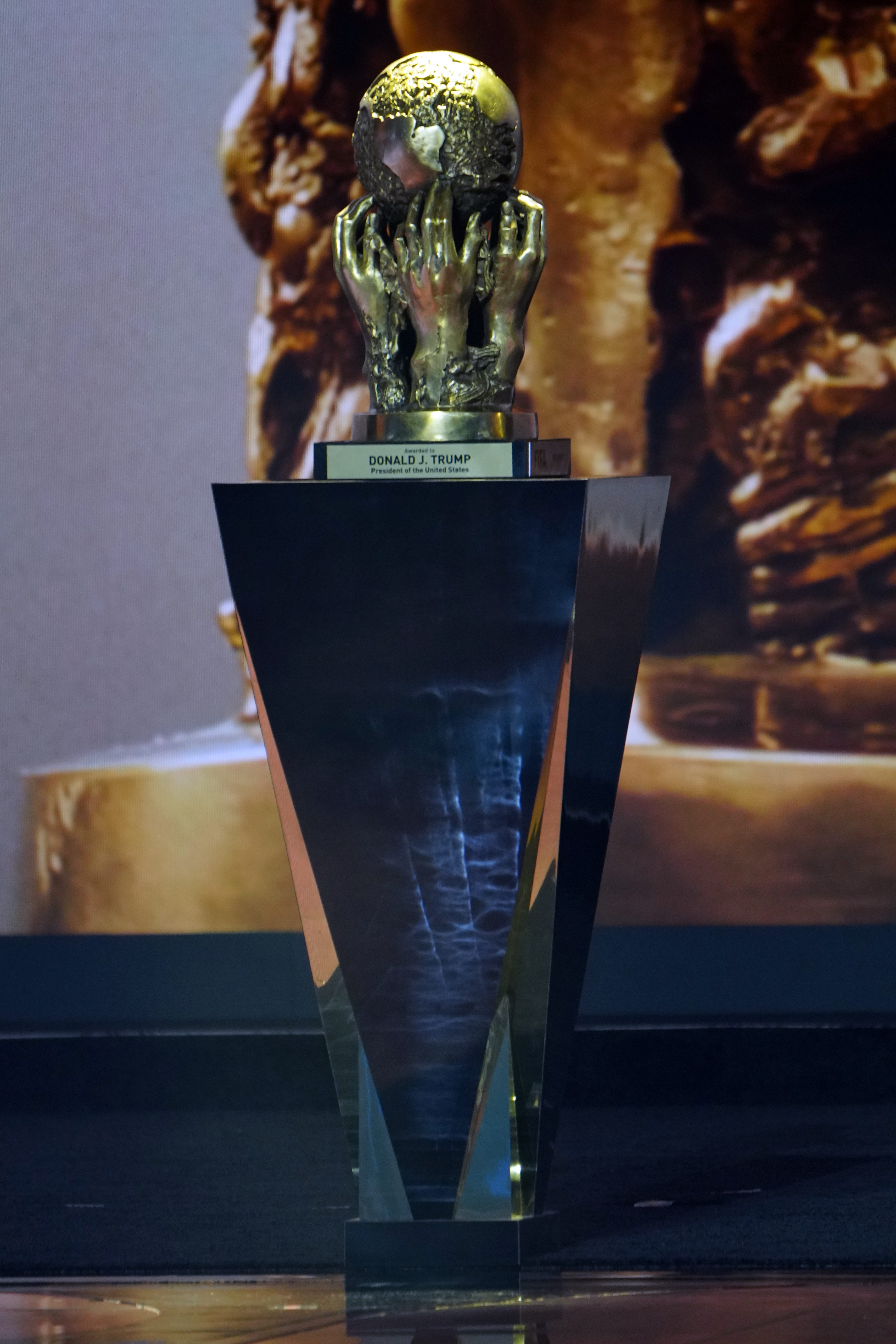
The FIFA Peace Prize awarded to President Trump. The trophy, co-produced by a FIFA employee’s father, was spontaneously sourced from miscellany in FIFA’s possession.Tierney L. Cross / The New York Times
The FIFA Peace Prize
Oval Office visits are now routine for Infantino.
“Always happy to be here, at home, if I can say that,” he said last year.
“You are home,” Trump replied.
When Trump assembled dignitaries and business titans for a state dinner for Crown Prince Mohammed bin Salman of Saudi Arabia, Infantino was there.
“I think we should all support what he’s doing,” Infantino said at a business conference in Miami. “Because I think it’s looking pretty good.”
Infantino has sought to capitalize on access to Trump allies. Under his watch, FIFA discussed with former Treasury Secretary Steven Mnuchin an investment in a streaming service, according to a senior FIFA official. Nothing materialized, only because the venture was put on hold, according to a person who was part of the talks.
More recently, FIFA has explored hotel licensing deals with a prominent South Florida developer who is poised to develop the waterfront opposite Mar-a-Lago.
Infantino also lobbied for Trump to be awarded the Nobel Peace Prize, which the president has craved. When the award went to the Venezuelan politician María Corina Machado, Infantino had an idea.
Three weeks after the Nobel announcement, senior FIFA officials were told that Infantino wanted to announce a peace prize of his own. How long, they asked, did they have to work out the details — the criteria, for example, or the makeup of the nomination committee? Those questions went unanswered.
Some of the most senior officials were told straightaway whom the first honoree would be, according to a person with direct knowledge of the plans, who learned about the prize and its recipient on the same day.
FIFA did not have time to consider what its prize would look like. But luckily, the father of an employee was a sculptor, and FIFA had in its collection of miscellany a miniature version of one of his pieces, according to two soccer officials. The trophy was in hand.
The FIFA Peace Prize was announced Nov. 5, with the award to be bestowed at the World Cup tournament draw a month later.
FIFA had planned to have that event in Las Vegas. But Paolo Zampolli, a longtime Trump ally serving as a presidential envoy, encouraged Infantino to reconsider.
“To move the president of the United States is a big process,” he recalled saying. Last-minute events might prevent a trip to Las Vegas, he said, but a local venue would better assure his attendance. “You know how important FIFA is for us,” Zampolli added. (FIFA said Zampolli had no influence over the choice.)
Infantino moved the event to the John F. Kennedy Center for the Performing Arts in Washington, teasing that the site might be called the Trump-Kennedy Center. Trump attended and, to nobody’s surprise, was the first recipient of the FIFA Peace Prize. He received a certificate, a medal and the repurposed trophy.
Trump called it “truly one of the great honors of my life.”
The award angered many soccer officials, who said that it had embarrassed FIFA and cast the organization as partisan.
Lise Klaveness, the president of Norway’s soccer federation and a human rights lawyer, said the prize breached FIFA’s rules on political neutrality. She announced that Norway would back an ethics complaint against Infantino.
Ms. Klaveness said in an interview that she recognized that FIFA needed “friendly relations” with the governments hosting World Cup games. But she said there needed to be “checks and balances,” to keep FIFA from being used for political purposes.
Infantino, though, has worn his friendship with the president on his sleeve. And his head. At one public meeting, world leaders and delegates were given red “USA” baseball caps. Infantino happily donned his, emblazoned with the numbers 45-47, signifying the Trump presidencies.
This winter, as Infantino marked a decade in the job, he celebrated with a party at a Four Seasons hotel in Miami. Ivanka Trump and her husband, Jared Kushner, attended.
The celebration carried into spring, when Infantino announced at a soccer meeting in Vancouver that he would run for a third term. He argued that the organization had repaired its reputation and played a slide show that included Trump.
“We have definitely come a long way these last 10 years,” he told soccer officials. FIFA, he said, was now “sitting at the top tables, in every aspect.”
It’s been 32 years since the men’s edition of the FIFA World Cup was played on U.S. soil. The long wait culminates this week with Thursday’s tournament kickoff in Mexico City.
On Sunday, Philadelphia will host its first of six scheduled matches between June 14 and a knockout round finale on July 4 at Lincoln Financial Field, which was renamed “Philadelphia Stadium” by FIFA for the duration of the matches here in Philly.
Here’s everything you need to know …
The big picture
According to Visit Philadelphia, the city’s tourism arm, expect an influx of 500,000 visitors flocking into city bars, restaurants, hotels, and businesses throughout the city and surrounding suburbs. However, we’re hearing there are plenty of good Airbnb options to choose from.
But not all of those people have tickets or can afford to attend, with this being the most expensive World Cup ever. FIFA enacted dynamic pricing for the first time, which sent initial ticket prices soaring. And yes, that’s even for games that don’t feature nations that are favorites to win.
Good news for those people: there are a ton of events happening over the course of Philly’s time in the tournament. From bars to beer gardens, watch parties to pickup games, here’s a cheat sheet of what to do around town, whether you’re a native or you just dropped in for a match.
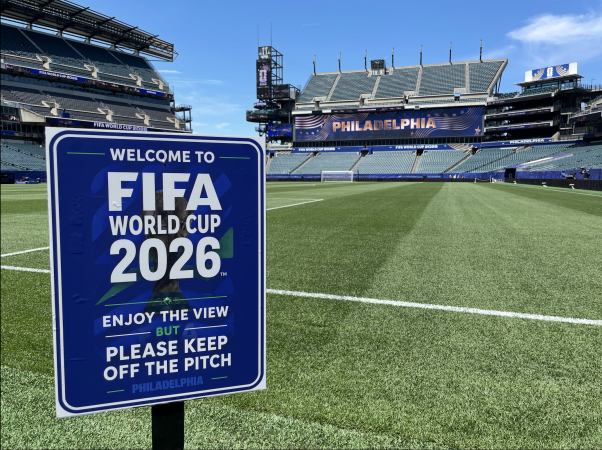
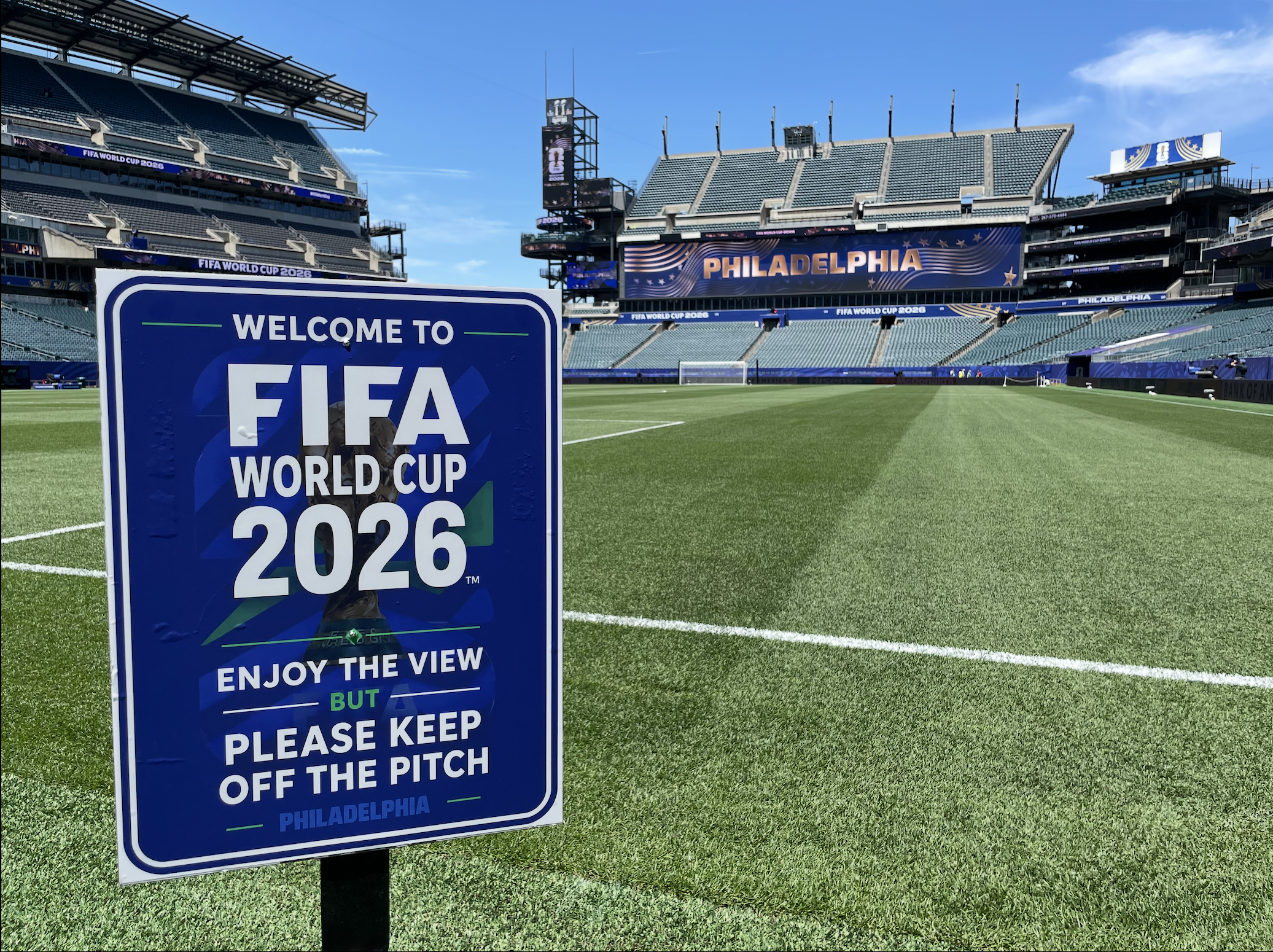
Lincoln Financial Field, known as “Philadelphia Stadium” is all set ahead of the start of Sunday’s World Cup opener in Philadelphia between the Ivory Coast and Ecuador.Kerith Gabriel
So you have a ticket. Congrats.
First thing you should know is that you’re going to find very few people calling Lincoln Financial Field (or the “Linc” as it’s known around here) by FIFA’s official name for the South Philly venue.
There are a host of different ways to get there, but the most efficient and direct path is jumping on SEPTA’s Broad Street Line (Orange Line) and taking it to the last stop, NRG Station. From there, FIFA has signs all over the South Philly sports complex and will have volunteers outside the turnstiles, directing you where to go. Subway trains should be running just fine — a miracle, considering SEPTA workers used World Cup traffic as leverage to potentially go on strike.
Once inside, you’ll see a colorful stadium retrofitted to support large crowds and a field designed with expert care.
Here’s hoping you got your tickets a bit cheaper than the initial asking price. Match prices in Philly and elsewhere have been astronomical.
Crew members make final preparations, including work on a 60-foot-wide screen, for a FIFA Fan Fest at Lemon Hill in Philadelphia on Tuesday, June 10, 2026.Jose F. Moreno / Staff Photographer
Don’t have a ticket? All good.
This section is for those who love the sport but just can’t fathom paying those prices — and affording rent this month. Not to worry, the same passion will be on display in Philly’s Brewerytown neighborhood thanks to the FIFA Fan Festival, the sprawling party taking over Lemon Hill Park. The festival is free to enter and opens June 11, and will last all 39 days of the tournament.
How to register — entry is free but you need to sign up first
What you can bring and what you should leave at home.
When the event will be open each day.
How to get there, and get out.
And what locals are saying about the event.
The festival is a great way to get into the World Cup mood without spending hundreds on a ticket.
Fans are expected to pack the city’s bars and restaurants for the 39 days of the World Cup. Tyger Williams / Staff Photographer
But if you’re looking to get a feel for the city’s soccer pulse without all the crowds, then we have a selection of bars and restaurants that are hosting watch parties, with some electing to stay open as late as 4 a.m. to accommodate soccer fans — so long as the Pennsylvania Liquor Control Board permits.
And if you’re looking to get past the basics while celebrating America’s 250th birthday, foodies can consider trying Philly’s 76 most iconic dishes or most essential restaurants. We dare you to try to catch them all like Pokémon.
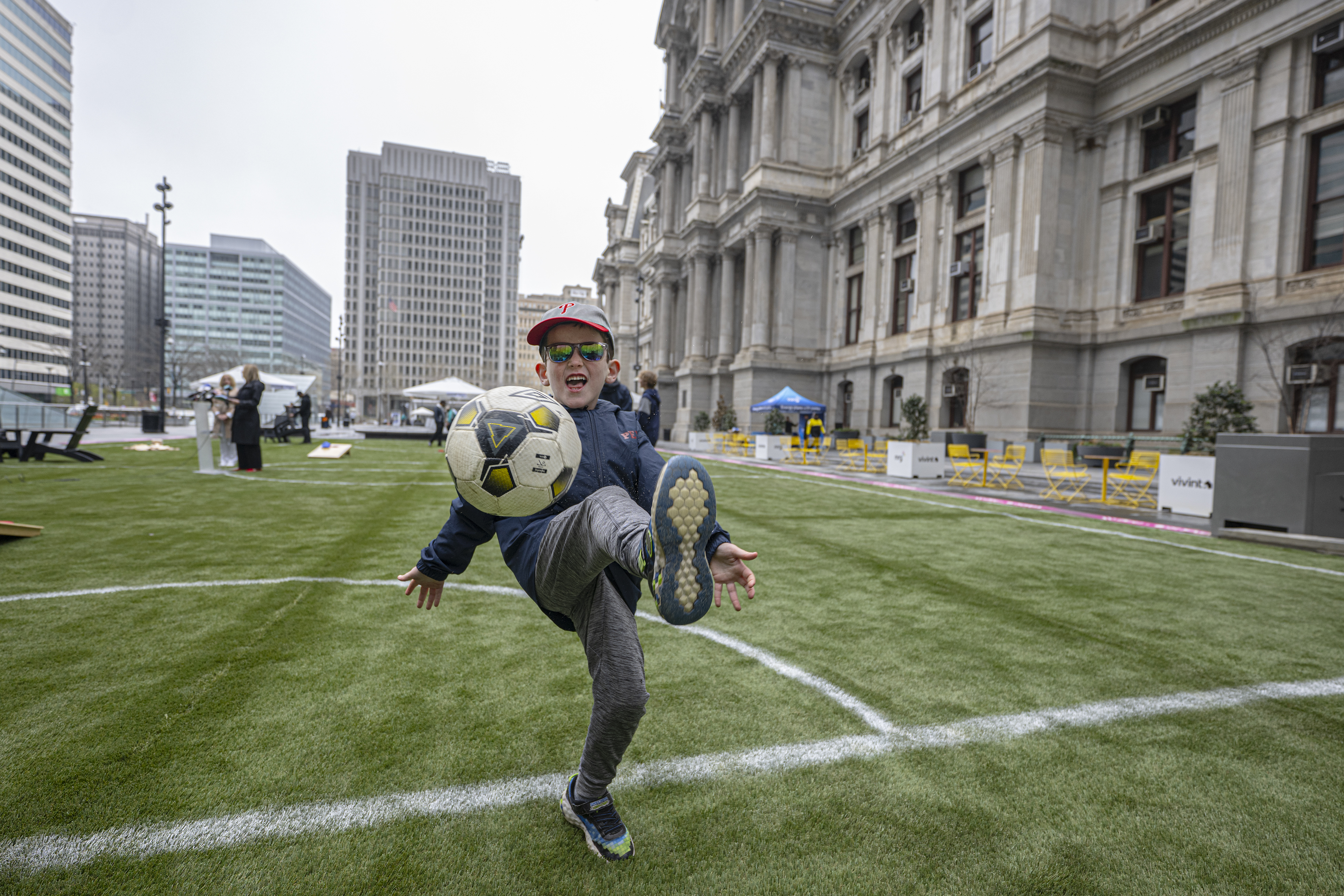
Going to be in Center City? Check out the mini-soccer pitch in front of City Hall’s Dilworth Park.Jose F. Moreno / Staff Photographer
Who is playing in Philly and when?
Nine teams are coming through Philly, and one, Ivory Coast, has set up its World Cup headquarters just outside the city in Wilmington. The Ivorians are training at the new WSFS Sportsplex, which opened late last year in Chester, and on Monday, their fans brought quite the party.
Here’s the full schedule of the group stage matches in Philly, with guides for all the nations playing here, including what to know about each, how they qualified, and for some, their unique footprint in the city:
On July 4 at 5 p.m., Philly will host one final match, a round of 16 knockout game that has a very slim chance of including the U.S. men’s national team.
Walter Bahr, one of the most celebrated United States soccer players to emerge from Philly, competed on the cinder fields at Newt’s playground in Fishtown on his rise to Team USA fame.Pat Little / AP
Philly’s rich soccer scene and history
Chester is the city that hosts Philly’s professional soccer team, the Philadelphia Union. This club went from being one of the league’s best last season to the bottom of the standings heading into a seven-week break for the World Cup.
However, over the last several weeks, the team has cleaned house in preparation for the return of games on July 22, after:
In the meantime, the team is focused on the World Cup and plans to host a series of watch parties at Union Yards, its beer garden across from the stadium.
Electronic traffic information sign at Spring Garden and N. 21st Street informing people in town for World Cup on where to find information, Tuesday, June 9, 2026.Alejandro A. Alvarez / Staff Photographer
Players, referees, and fans have been subjected to massive checks, with either full or partial bans on over 70 nations, many with teams competing in the tournament.
Here’s what city officials are saying about the World Cup, and the lengths some city council members are going to educate visitors to know when it comes to concerns around Immigration & Customs Enforcement.
There has been no shortage of opinions about the massive levels of greed surrounding this larger edition of the tournament and the hypocrisy of FIFA by calling their approach to the game “Football for All.”
Experts this week warned World Cup fans traveling around North America to be aware of the these communicable diseases.
Also, know that you can follow the Inquirer’s coverage of all things “football,” “futbol,” “futebol,“ “voetbal,” or soccer right here.
IRVINE, Calif. — The first men’s soccer World Cup on U.S. soil in 32 years kicks off this week, with great anticipation in Philadelphia and nationwide. That’s true for the 26 players of the U.S. team, too, as they seek to make a lasting mark on the tournament and the sport.
Here’s what to know about each of the players whom manager Mauricio Pochettino picked for his squad. They’re listed by position, then in alphabetical order.
U.S. manager Mauricio Pochettino.Jonathan Tannenwald
Goalkeepers
Chris Brady
Jersey number: 26 Age: 22 Club: Chicago Fire Hometown: Naperville, Ill. Height and weight: 6-foot-3, 170 pounds Senior national team games (Caps): 1
A clear and understandable third on the depth chart, he was picked to gain experience for what should be more trips to World Cups in the future.
Chris Brady (left) is on the team to get experience for the future.Jonathan Tannenwald
Matt Freese
Number: 24 Age: 27 Club: New York City FC Hometown: Wayne, Pa. Height and weight: 6-3, 194 Caps: 15
His rise through Harvard, the Union, New York FC, and now the national team might be the most underappreciated story of this U.S. squad. Freese made his senior U.S. debut last summer and immediately became Pochettino’s No. 1 netminder. Now, he seems on the cusp of starting at the World Cup, though the manager has repeatedly not committed to naming the starter in advance.
Matt Freese in the U.S. net when the Americans played Paraguay at Subaru Park last November.Elizabeth Robertson / Staff Photographer
Matt Turner
Number: 1 Age: 31 Club: New England Revolution Hometown: Park Ridge, N.J. Height/weight: 6-3, 185 Caps: 54
The starter from the last World Cup until the start of last summer, when the last of a few subpar performances cost him his spot. He’s been better than Freese statistically in MLS this year, but wasn’t as good with the national team in March.
Until a few days ago, we’d have listed him as an outside back who can also play centerback. But he did very well in a more central spot in the two pre-World Cup warmup games. Now, he might take the role again, especially early in the group stage as Chris Richards finishes rehabbing an injury.
Alex Freeman is the son of former Eagles and Packers wide receiver Antonio Freeman.Jonathan Tannenwald
Mark McKenzie
Number: 22 Age: 27 Club: Toulouse, France Hometown: Bear, Del. (though born in the Bronx, N.Y.) Height/weight: 6-0, 183 Caps: 29
Talented, charismatic, humble, and owner of one of the best resumes of any U.S. defender. His path from the Union to Belgium’s Genk to a stalwart of France’s Ligue 1 is the ideal path for a player to follow. Though he’s prone to occasional big mistakes, he also does a lot to make up for them.
Mark McKenzie (center) is one of the best-performing U.S. defenders in Europe.Jonathan Tannenwald
Tim Ream
Number: 13 Age: 38 Club: Charlotte FC Hometown: St. Louis Height/weight: 6-1, 176 Caps: 82
He’s been the captain almost since the start of Pochettino’s tenure in late 2024. Age is catching up to him, but his role in the locker room is unquestioned. If Pochettino sticks with a 3-4-2-1 tactical formation, that will give Ream some cover for having slowed down.
Tim Ream’s experience made him manager Mauricio Pochettino’s choice for captain.Jonathan Tannenwald
Chris Richards
Number: 3 Age: 26 Club: Crystal Palace, England Hometown: Birmingham, Ala. Height/weight: 6-2, 192 Caps: 36
The most irreplaceable player on the back line, his absence from the warmup games due to torn ankle ligaments was crystal clear. He seems close to returning to action, but until he’s officially on the field, U.S. fans will be understandably worried.
It may be impolite to say he’s last on the depth chart at this position, but it’s true — and his performances in the warmup games didn’t help his case to change that. Facing Kai Havertz and Nicolas Jackson is a different level from MLS. If Robinson was picked as insurance against Richards having to withdraw, that’s understandable, but he was Pochettino’s most-criticized choice.
Eleven years ago, he was a fast-rising prospect in the Union and U.S. youth ranks. Only now, though, all this time and five clubs later, has he finally made it to the biggest stage. He still cherishes his Philly area roots, serving on the Union academy’s board.
He’s better as a left wingback in a 3-4-2-1 than as a left back in a 4-2-3-1, especially on defense. Other than that, he was an easy choice to be Antonee Robinson’s backup on that side of the field.
Simply put, a special talent. He’s a havoc-wreaking talent on the right flank, and can pitch in on the left if needed. Dest has also improved his defensive game lately. The 3-4-2-1 setup is perfect for unleashing him.
Sergiño Dest (left) is a dynamic force for the U.S. on the flank.Scott Kinser
Antonee Robinson
Number: 5 Age: 28 Club: Fulham, England Hometown: Liverpool, England Height/weight: 6-0, 152 Caps: 54
Not far from Richards on the irreplaceable ranking. Left back has long been the toughest position for the U.S. to find talent at, but Robinson has had it locked down for five years — at least when he’s healthy. He’s a big presence in the locker room, too.
Antonee Robinson is a key player on the field and in the locker room for the U.S.Jonathan Tannenwald
Joe Scally
Number: 23 Age: 23 Club: Borussia Mönchengladbach, Germany Hometown: Lake Grove, N.Y. Height/weight: 6-0, 174 Caps: 26
For a while, it seemed he wouldn’t make the cut, with Dest and Freeman ahead of him at right wingback. Then he did enough at club level down the stretch of the Bundesliga season to earn the call. It also helps that he can also step in at centerback or defensive midfielder if needed.
He’s officially listed on the roster as a forward, but could play attacking midfield or wingback — and he’s done all three over time. The last of them feels likely in a 3-4-2-1 setup, so that’s why he’s listed here for now. If Pochettino switches to a 4-2-3-1, Weah’s best fit is as a winger instead of an isolated right back. But while that’s for arguing over, his talent, creativity, and pedigree are unquestioned.
Tim Weah (left) is the son of Liberian soccer legend George Weah, but has now carved out his own career in the world’s game.Jonathan Tannenwald
Central/defensive midfielders
Tyler Adams
Number: 4 Age: 27 Club: Bournemouth, England Hometown: Wappingers Falls, N.Y. Height/weight: 5-9, 159 Caps: 54
No longer the official captain, but the unofficial one for years. On the field, on camera, and in the locker room, the U.S. doesn’t have a better leader. Unfortunately, as we’re about to get into, a lack of depth at this position puts him in a tricky spot. Can he avoid yellow cards in the first two games so he isn’t suspended for the big finale against Turkey’s stars?
Although Tyler Adams (left) isn’t officially the U.S. captain anymore, he remains one of the team’s biggest leaders.Jonathan Tannenwald
Sebastian Berhalter
Number: 14 Age: 25 Club: Vancouver Whitecaps Hometown: Columbus, Ohio (born in London, England) Height/weight: 5-9, 154 Caps: 13
He’s another unlikely success story, but the son of former U.S. manager Gregg Berhalter earned his spot. Sebastian helped the Vancouver Whitecaps reach last year’s MLS Cup and Concacaf Champions Cup finals, and with the national team combines hard work with great skill at set pieces. In fact, he might be the best at them on the roster. Could that earn him a starting spot next to Adams?
The veteran was so far out of Pochettino’s picture that he went on vacation at the start of the September FIFA window. Then the manager suddenly needed him, and Roldan answered the call. It immediately felt like he’d never left, and he hasn’t left since then.
It isn’t his fault that this is the end of the depth chart. Will Pochettino regret not bringing Tanner Tessmann or Aidan Morris, both of whose talents merited inclusion? World Cups have a habit of nailing managers on the biggest risk they take. Jürgen Klinsmann learned it the hard way by leaving Landon Donovan home in 2014, and Gregg Berhalter bet a lot on benching Gio Reyna in 2022.
Cristian Roldan (center) has been a familiar face to U.S. fans for years.Jonathan Tannenwald
Attacking midfielders
Brenden Aaronson
Number: 11 Age: 25 Club: Leeds United, England Hometown: Medford, N.J. Height/weight: 5-10, 150 Caps: 58
Making his second straight World Cup team makes him the standard-bearer for Philadelphia on soccer’s global stage. So does earning a stalwart role at one of England’s most historic clubs, even if the first priority has been just staying in the Premier League. He’s happy to embrace being a role model for everyone back home, and now has the added emotional boost of a new wedding ring.
He’s a near-lock as a starter, but where will he play? The obvious answer of on the field can’t be enough. Will he be an attacking midfielder, the role he probably fits best, but potentially exposing the lack of depth behind him? Or will Pochettino slot McKennie next to Adams to try to get another playmaker on the field, and hope it doesn’t unbalance things?
He isn’t officially Captain America, but he knows better than anyone that that’s his unofficial designation. It took much of his decade-long national team career to become comfortable in that spotlight, and it still doesn’t always fit him easily. But he also knows better than anyone that if he delivers when it counts at the World Cup, he can carry his country to greatness.
Christian Pulisic remains the biggest star on the U.S. men’s team.Jonathan Tannenwald
Gio Reyna
Number: 7 Age: 23 Club: Borussia Mönchengladbach, Germany Hometown: Bedford, N.Y. (born in Sunderland, England) Height/weight: 6-1, 174 Caps: 38
For all his talent — and it’s up there with Pulisic — he only just did enough for club and country to make this squad. If he comes off the bench as expected, he might not have much time in games to make an impact. There will be real pressure to deliver.
His raw talent isn’t in question. Whether he can show it at a World Cup might be. Pochettino clearly likes Tillman, giving him lots of playing time. But things don’t always work right when he and McKennie are on the field. If Berhalter goes next to Adams and McKennie starts, Tillman might be relegated to a supersub — and have to compete with all the other candidates for minutes.
Malik Tillman has a lot of skill, but we’ll see how he shows it in the World Cup.Jonathan Tannenwald
Alejandro Zendejas
Number: 26 Age: 28 Club: Club América, Mexico Hometown: Juárez, Mexico and El Paso, Texas Height/weight: 5-6, 146 Caps: 14
He gets two hometowns because he grew up on both sides of the border, carrying the dreams of being a child of immigrants. The world’s game opened doors, and he charged through them from FC Dallas’ youth academy to Mexico’s Club America. Add a mix of skill and graft on the field, and you get a popular pick for this team.
Alejandro Zendejas autographing a fan’s American flag during the U.S. team’s open practice a few days ago.Jonathan Tannenawld
Forwards
Folarin Balogun
Number: 20 Age: 24 Club: AS Monaco, France Hometown: London, England Height/weight: 5-10, 161 Caps: 27
He was recruited in 2023 with all the pomp of a college football team chasing a star quarterback. Though injuries since then limited his appearances, he has shown overall why U.S. Soccer was right to push for him. Now the biggest payoff moment of all has arrived.
The last and most controversial cut from the 2022 World Cup team, he has finally made it four years later. He put in a terrific amount of work in that time, including having to overcome a move from FC Dallas to Germany’s Augsburg that didn’t work out. But he was always strong with the national team, scoring big goals and hustling all over the field. Like Zendejas, a lot of U.S. fans will root for him in particular.
Ricardo Pepi (right) and Folarin Balogun (left) running together during a U.S. practice.Jonathan Tannenawld
Haji Wright
Number: 19 Age: 28 Club: Coventry City, England Hometown: Los Angeles Height/weight: 6-3, 174 Caps: 20
The last player to score a goal for the U.S. men at a World Cup, and the first formally listed as a striker to do so in 20 years. At club level, he was a key player for Coventry this season to help the Sky Blues earn promotion back to the Premier League after 25 years in lower leagues. Though he’s third on this U.S. depth chart, his size and speed should ensure he gets on the field.