Tag: Weekend Reads

  • The N.J. Turnpike is expanding in South Jersey. Lawnside residents say the plan imperils an Underground Railroad stop.

    The N.J. Turnpike is expanding in South Jersey. Lawnside residents say the plan imperils an Underground Railroad stop.

    LAWNSIDE — For nearly 200 years, the historic Peter Mott House — believed to have once served as a stop on the Underground Railroad — has managed to withstand the encroachment of the outside world.

    In the 1950s, construction of the New Jersey Turnpike brought a heavily used trafficway within just a few hundred feet of the home. There was the time, in the 1980s, when a developer bought up a patch of surrounding land with plans to raze the structure and build housing units. And the arrival of the COVID-19 pandemic in 2020 left the home shuttered for three years — and its future temporarily uncertain.

    Now, the New Jersey Turnpike Authority plans to soon begin work on a $2 billion project to expand the turnpike, which would bring the highway — currently located just 220 feet from the Mott House — 12 feet closer to the building.

    The plans have prompted a wave of pushback from a small but vocal group of Lawnside residents, who fear that vibrations from the construction could damage the nearly two-century-old structure and that already “deafening” traffic noise in the area could become unbearable.

    Already, says Linda Shockley, the longtime president of the Lawnside Historical Society, which owns and maintains the Mott House, it can be difficult for visitors to hear over the hum of the turnpike. The back of the house, which boasts a quaint patio, is essentially unusable without the use of microphones, she said — and this is to say nothing of the potential environmental and safety implications of bringing a heavily traversed highway even closer to a residential area.

    The expansion, which also includes plans to widen nearby Warwick Road, has become — in Shockley’s words — “like a sword of Damocles hanging over us.”

    “What are you doing and when are you going to do it?” Shockley said. “And what say do we have over how it’s done?”

    Traffic on the New Jersey Turnpike passes at the end of a cul-de-sac near the historic Peter Mott House in Lawnside, N.J. Tom Gralish / Staff Photographer

    The construction arrives at a seminal moment for the historic borough, which this year is celebrating the 100th anniversary of its incorporation.

    Originally settled by formerly enslaved people who escaped or were freed and considered the first independent, self-governing African American community north of the Mason-Dixon Line, Lawnside has long boasted a historical significance far outsizing its modest 1.4-square-mile footprint.

    In the 1930s, it was home to a bustling entertainment district, drawing high-profile acts such as Ella Fitzgerald and Billie Holiday. Three decades later, Lawnside’s school district became one of the first U.S. governmental entities to declare the Rev. Dr. Martin Luther King Jr.’s birthday a holiday.

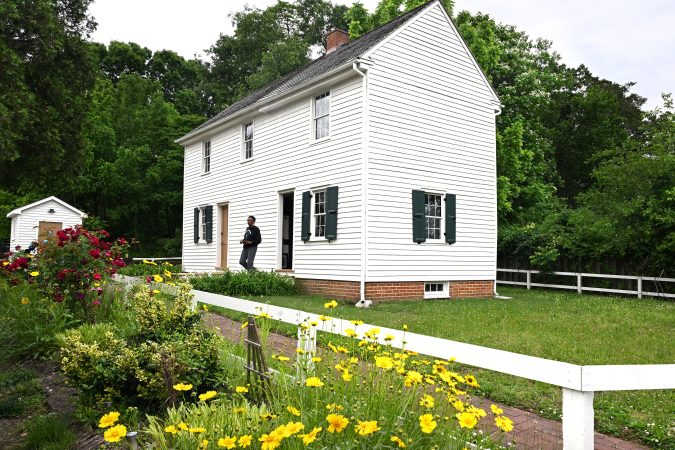
    No aspect of Lawnside’s history, however, has remained as vital to its identity than the Mott House, the onetime home of Peter Mott, a free Black farmer, preacher, and abolitionist, who, along with wife Elizabeth, was a conductor on the Underground Railroad.

    Built around 1845, the home is Lawnside’s oldest known house and is widely believed to have been a refuge for enslaved people traveling from the South — making it a strong symbol for the community at large.

    “This town has been a beacon of hope for African Americans,” said Darryl Lee Dozier, 60, a longtime Lawnside resident. “To be able to walk outside and say, ‘Harriet Tubman came through this town’ — that’s iconic, man.”

    At least 18 municipalities across Salem, Gloucester, Camden, and Burlington Counties will be affected by the turnpike project, but the proximity of the Mott House — as well as a neighboring housing development — to the construction has stoked fears that it will be uniquely vulnerable. State officials say they are working closely with local leaders to ensure that any adverse effects of the project are minimal.

    (function() { var l = function() { new pym.Parent( ‘peter-mott__graphic’, ‘https://media.inquirer.com/storage/inquirer/ai2html/peter-mott/index.html’); }; if(typeof(pym) === ‘undefined’) { var h = document.getElementsByTagName(‘head’)[0], s = document.createElement(‘script’); s.type = ‘text/javascript’; s.src = ‘https://pym.nprapps.org/pym.v1.min.js’; s.onload = l; h.appendChild(s); } else { l(); } })();

    AECOM, the infrastructure firm handling the engineering work for the turnpike project, told The Inquirer recently that Lawnside qualifies for noise barriers to help alleviate the effects of the project, and that “vibration monitoring,” as well as inspections, would be conducted throughout the course of the project.

    “Should the vibrations for any reason exceed a threshold that would cause concern, then the activities would pause and we’d figure out what’s going on,” said Matthew Rao, a project manager with AECOM.

    New Jersey Assemblyman William F. Moen Jr., who grew up in the area, said he has been engaged in conversations with the New Jersey Turnpike Authority about the project since 2020 and has been cognizant of the questions raised by Shockley and others.

    “I’m acutely aware of her concerns, and I think they’re valid,” he said. “This is the time to be talking about those things, and making sure, to the extent that they can be, that they’re reflected in the final plan of what’s going to happen.”

    Still, many in Lawnside remain wary.
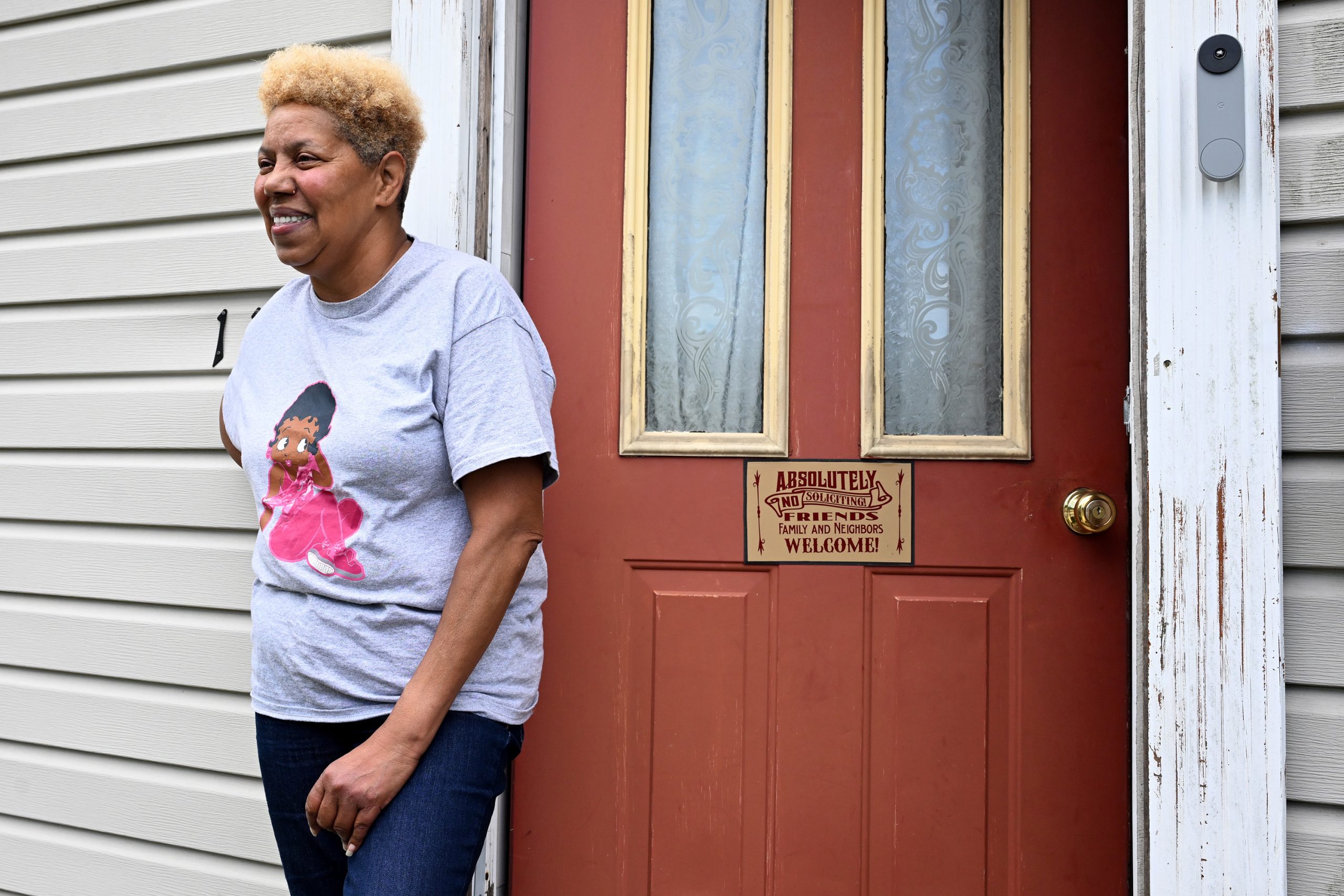
    Kia Jones at her home next door to the Peter Mott House in Lawnside, N.J. Tuesday, May 26, 2026. Plans to expand the nearby New Jersey Turnpike have left local residents concerned about how it could affect a beloved institution as well as neighboring homes.Tom Gralish / Staff Photographer

    Despite meetings with officials, said Kia Jones, 60, whose home sits near the proposed turnpike expansion, residents have largely felt powerless throughout the process.

    “Their whole attitude seems to be, ‘It’s a done deal — we’re just talking to you because we have to, but nothing’s going to change,’” she said.

    For some in this South Jersey borough of roughly 3,000 residents, meanwhile, the expansion raises unmistakable echoes of the 1950s, when construction of the turnpike left a profound impact on the community.

    At the time, America’s vast network of highways was displacing — and often targeting — Black communities across the country.

    Initially, Shockley said, only six homes in Lawnside were supposed to be affected by the turnpike’s creation. But by the time it opened in November 1951, she said, 27 families had been affected.

    “Some people’s houses were purchased, some houses were condemned,” Shockley said. “I’ve seen pictures of houses on flatbed trucks, being moved.”

    (It was not lost on some in Lawnside, Shockley points out, that the turnpike conveniently curves around the nearby Tavistock Country Club, a private golf club founded in 1920.)

    Though few in Lawnside are old enough to remember the turnpike’s arrival, many have felt the ripples.

    Lorraine Pollitt, 70, a lifelong Lawnside resident, grew up hearing about her great-grandparents’ farm, which, she said, had fallen in the turnpike’s right-of-way and, as a result, had to be sold.

    Seventy-five years later, Pollitt said, the expansion project feels like more of the same.

    “Just taking more from us here,” she said. “It’s always something.”

    For Shockley, who has served as president of the historical society since 1994, the effort to preserve and protect the Mott House has been a nearly 40-year endeavor.

    She first got involved in the late 1980s, when a local developer, Mark DeFeo, received permits from the borough to raze the house in order to build a small housing development.

    A group of residents organized to try to stop the home’s demolition, and Shockley — who was raised in Lawnside and had recently moved back from New York — joined the effort.

    It took three years and considerable legal wrangling, but the developer eventually agreed to sell the home to the group for $1.

    For its efforts, Shockley later told the New York Times, the group found itself in possession of “a decaying, vacant house … in danger of collapsing.”

    In the years since, however, the historical society, buoyed by a dedicated collection of volunteers, has turned the property into a gem that has garnered national renown. The group has raised hundreds of thousands of dollars toward upgrades and repairs through grants and donations.

    The house opened to the public in 2001, and, today, it offers a variety of programming, including a weeklong summer camp for middle schoolers on the history of the Underground Railroad, sitting on both the national and state registers of historical places.

    In her mid-30s when she joined the effort, Shockley is now in her 70s, her hair flecked with gray. She retired in 2021 from her job at the Dow Jones News Fund, a journalism nonprofit foundation.

    “Don’t tell anyone,” she joked one morning recently, from a seat inside the Mott House, “but I’m getting older.”

    Linda Shockley, president of the Lawnside Historical Society, at the Peter Mott House in Lawnside, N.J. Tuesday, May 26, 2026. Shockley has served as president of the local historical society since 1994. Tom Gralish / Staff Photographer

    But while there is still work to be done, she remains dedicated to doing it — one more battle in a long string of them.

    “Ask anybody who’s trying to do anything with historic buildings, or restore history or culture, and you find that, yeah, there’s always something — and there are always threats to it,” she said.

    “You soldier on.”
  • How Bucks County’s sheriff redefined his office to zero in on domestic violence

    How Bucks County’s sheriff redefined his office to zero in on domestic violence

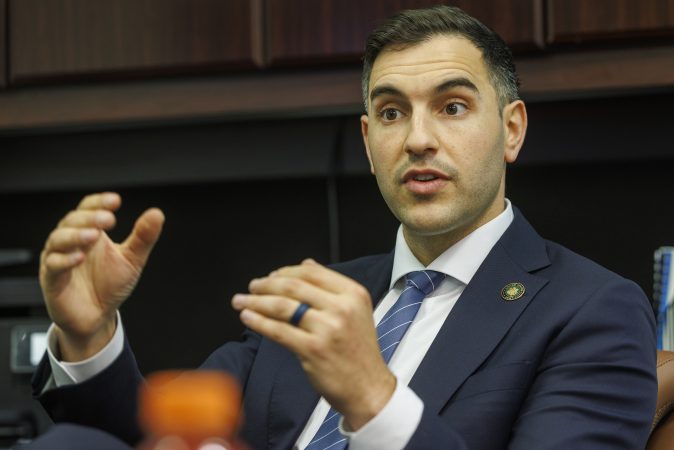
    In January, Danny Ceisler inherited a Bucks County Sheriff’s office that was a lightning rod for debate over deputies’ role in federal immigration enforcement. Now, as he reflects on the changes he’s made in his first six months in office, Ceisler says he is bringing the office back to standard procedure with a shift in staffing to prioritize addressing domestic violence.

    That shift comes amid an increase in the number of warrants — called Protection From Abuse orders — served against alleged perpetrators of domestic violence.

    Between February and May, Ceisler’s office has served 441 PFAs — an increase from the 370 that were served during the same time period last year.

    Ceisler, a Democrat who flipped the seat after four years of GOP control, has dedicated more staffing and resources to ensure those warrants are served in a timely manner, which can often be a life-or-death situation.

    “I view it as one of our real life-saving duties,” Ceisler said. “I mean if we can get an abuser out of a house at 8 p.m. on a Friday instead of 9 a.m. on a Monday — which is kind of what used to happen if they came in on Fridays — you could save a person’s life.”

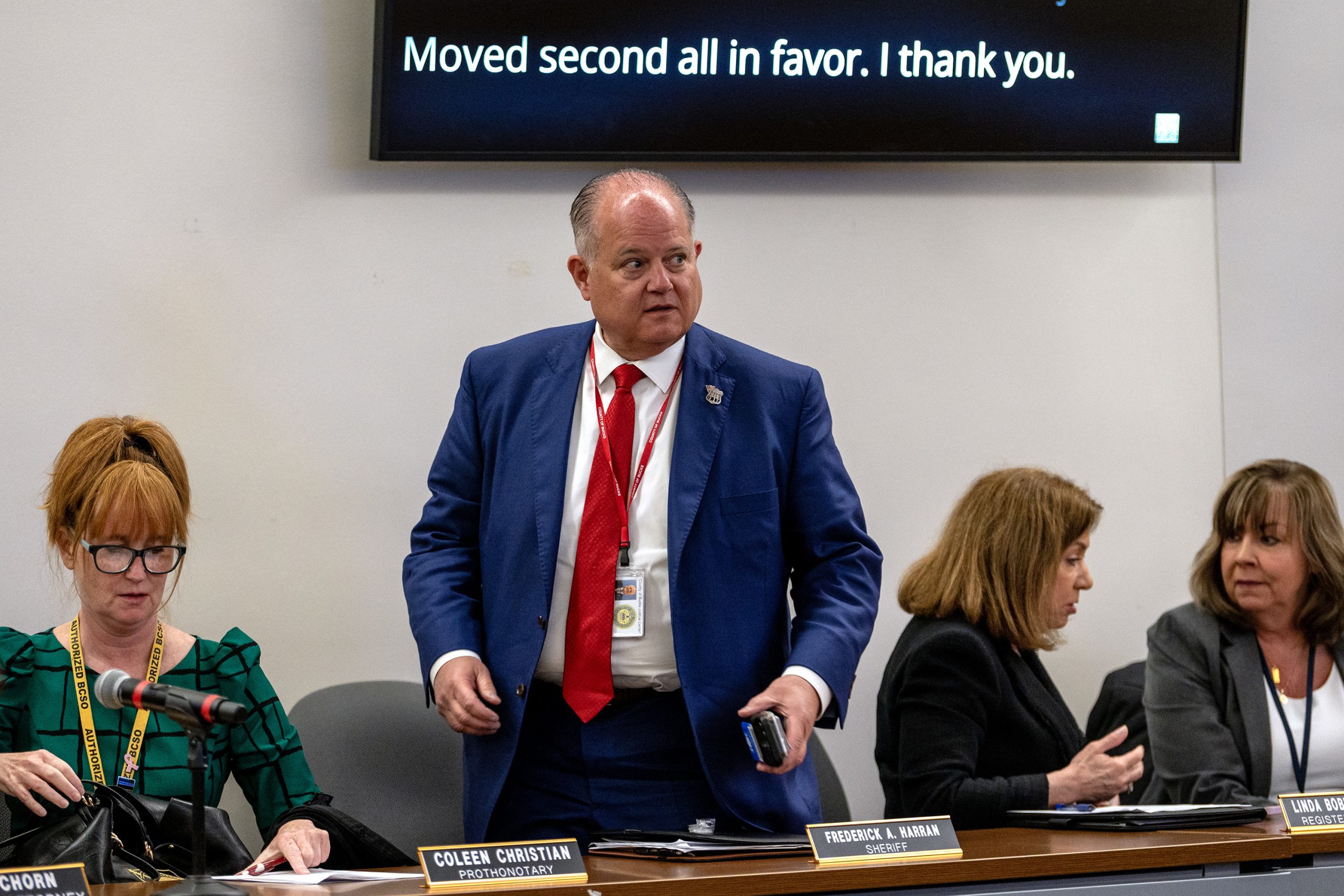
    Last November, Ceisler ousted former Sheriff Fred Harran, a Republican, who came under scrutiny for his embrace of President Donald Trump’s style of politics and his willingness to commit his office to a controversial agreement to assist U.S. Immigration and Customs Enforcement in federal immigration enforcement in the county.

    In addition, Ceisler has developed a so-called “armory” that holds confiscated weapons and added six people to a round-the-clock unit dedicated to evicting alleged abusers from their homes based on judicial orders.

    In the United States, one in three women and one in four men will experience domestic violence in their lifetime, according to the Pennsylvania Coalition Against Domestic Violence.

    Jen Locker, executive director at A Woman’s Place, a Bucks County-based shelter and community organization for survivors of domestic and intimate partner violence, said that throughout her 13 years working at the nonprofit, the sheriff’s office has always been “really phenomenal” at being present during hearings for PFA warrants and ensuring survivors feel safe. The organization offers court accompaniment services and assistance in filling out PFA petitions.

    But the biggest shift came when A Woman’s Place and the sheriff’s office met early on in Ceisler’s tenure and advocates expressed that one of the biggest challenges survivors face is the delay in serving PFAs.

    Soon after the meeting, Locker said, Ceisler prioritized the eviction unit.

    “Getting the offenders out of the home and getting the weapons out of the home are really, really crucial in maintaining safety for the survivors who are just trying to find a path forward safely,” Locker said.

    Ceisler’s counterparts in the other Philadelphia suburbs say the work he’s doing is one of the core functions of any sheriff’s office.

    And Ceisler argues that he’s bringing the office back to basics, noting that at one point he had to reassign deputies who were tasked with planning firearms training and that the office spent a lot of time on ICE training.

    “One of my predecessor’s issues was he was stepping on the toes of police departments and trying to do more police work or federal, you know, immigration work,” Ceisler said. “We’re just doing what we are statutorily empowered to do, and trying to do it to the very best of our ability.”

    According to data provided by the sheriff’s office, there has been a 94.1% clearance rate for PFAs under Ceisler’s tenure between February and March and a 90.4% rate during that same period last year under Harran. A “cleared” PFA means the warrant was successfully delivered, and any weapons were confiscated.

    In an interview, Harran pushed back on the characterization that the office, under his leadership, was dedicated to anything but local law enforcement issues. And he was adamant that deputies working under him also served PFA warrants, with a dedicated, four-person unit doing that work exclusively.

    “Danny knows the truth: We were never doing the work of immigration. I’ve said it a million times, I’ve testified with my hand on a Bible to it,” he said. “I don’t know what more I could’ve done to tell people that’s not what we were doing.”

    Ceisler’s “armory,” he said, is also not a new concept. Harran said he was in the process of establishing one.

    “Domestic violence is not going away,” he said. “To say he created a new unit, tomato, tomahto, call it whatever you want, we were doing same thing.”

    Former Bucks County Sheriff Fred Harran stands following County Commissioners meeting last year when they approved a resolution opposing his deputies participating in an Immigrations and Customs Enforcement 287(g) program to act as ICE officers.Tom Gralish / Staff Photographer

    In most of the other suburban counties, the sheriffs — all Democrats — say their offices have been serving the vast majority of PFA orders.

    In Chester County, Sheriff Kevin Dykes said his office has processed 247 PFA orders in the first quarter of 2026, as well as recovered eight firearms relinquished through that process. Dykes said his office rarely, if ever, has a backlog of PFA orders waiting to be filed, and works closely with local police departments to avoid that situation.

    “I think where the issue came in with Bucks is that Danny stepped into an office where the person running it had different priorities,” Dykes said. “In this instance, it’s just how the nature of this business is. One day we could have a high-profile trial in the courthouse, and the next we could have a threat on an official. It just changes day-to-day for us.”

    In Montgomery County, Sheriff Sean Kilkenny said his deputies are responsible for serving three-quarters of the PFAs filed. Last year that amounted to about 1,600.

    Kilkenny formerly headed the state’s Sheriff’s Association, and said having those departments take the lead in handling PFAs is the industry standard, one that he said has worked well for counties across Pennsylvania. He added that Ceisler “getting under the hood” of the process is part of the job for a new official.

    In Delaware County, where newly elected Sheriff Saddiq Kamara is wrestling with a staffing shortage, the sheriff’s office one day hopes to use Ceisler’s initiatives as a model.

    Kamara, a former Yeadon Police officer and onetime member of Gov. Josh Shapiro’s security detail, said his office currently has 35 vacancies for deputies. He’s working to reverse that, and has recently hired seven new deputies, but said the shortage has forced him to leave the serving of PFAs to local police departments.

    “It’s something that I really would like for us to do as well, but the Delaware County Sheriff’s Office is the third-busiest in the state,” said Kamara, referring to the number of prisoners they transport daily, as well as applications they receive for gun permits and other filings.

    “We just don’t have the capability of the resources and the man and woman power in our office,” he said. “What Danny is doing I think is a phenomenal idea, and we’re planning to do that in the near future as well.”

  • Trump administration can install its own slavery exhibits at President’s House, Third Circuit rules

    Trump administration can install its own slavery exhibits at President’s House, Third Circuit rules

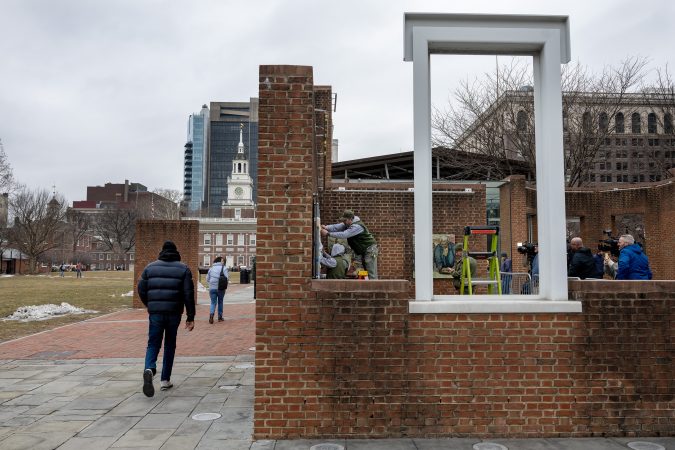
    President Donald Trump’s administration can replace the slavery exhibits it removed in January from George Washington’s Philadelphia residence, a federal appeals court ruled Thursday.

    A three-judge panel of the U.S. Court of Appeals for the Third Circuit unanimously agreed to toss out an injunction issued by a Philadelphia district court judge in February that ordered the National Park Service to restore interpretive panels telling the history of the nine individuals who were enslaved by Washington at the President’s House Site.

    The city does not have a right to dictate the content of the panels, the court found.

    The judges further found that the federal government’s proposed replacement panels, which historians say whitewash Washington’s role in slavery, “are full of historical context.”

    The proposed panels “highlight the momentous events that took place in the President’s House and the other sites at Independence National Historical Park,” Judge Thomas M. Hardiman, a President George W. Bush appointee, wrote in the opinion. “They acknowledge the evil of slavery, including its injustices and hypocrisies, and, by telling the story of the nine slaves that Washington kept in the President’s House, remind us of their essential humanity.”

    Judges Luis F. Restrepo, appointed by President Barack Obama, and Peter J. Phipps, appointed by Trump, joined the opinion.

    It was not immediately clear what would happen next at the site. The federal government did not immediately outline its next steps, and there are conflicting court rulings over the Trump administration’s push to remove displays from national parks that “inappropriately disparage Americans past or living.”

    But the ruling does bring to a close a chapter in the President’s House litigation, the first courtroom clash between Trump and Mayor Cherelle L. Parker’s administration. Any further review of the injunction is at the discretion of the three judges, the full Third Circuit, or the Supreme Court and is not guaranteed.

    Mijuel Johnson, a guide with The Black Journey: African-American Walking Tour of Philadelphia, leads District Court Judge Cynthia Rufe (right) as she visits the President’s House in Independence National Historical Park in February.Tom Gralish / Staff Photographer

    The city was unable to convince the Third Circuit panel it has joint decision-making power with the federal government over the entirety of Independence National Historical Park because of the local ownership of Independence Hall.

    Philadelphia has standing to argue in court that the federal government violated the contract signed when the city donated the President’s House to the National Park Service, Hardiman wrote. The agreement included a guarantee the federal agency would maintain the site.

    But the city had to prove it could win based on that argument to keep the injunction alive, and the judges disagreed.

    “The duty to ‘maintain’ is better understood as a general management obligation that accompanies ownership, not a promise that the exhibits will forever remain in place regardless of the owner’s wishes,” the opinion said.

    The city’s claim that the removal was “arbitrary and capricious” under the Administrative Procedure Act also did not find purchase. The federal law allows challenges only to “final” agency actions, but the newly proposed panels show the January removal was not the Trump administration’s “last word on the matter,” the opinion said.

    The ruling vacates U.S. District Judge Cynthia M. Rufe’s injunction from February that ordered the full restoration of the site to its state before exhibits were removed. The National Park Service restored some exhibits, but some metal interpretive panels could not be reinstalled because they required fixes.

    Avenging the Ancestors Coalition, one of the advocacy groups leading efforts to protect the President’s House, said in a statement that the group was disappointed by the decision but would persevere. The coalition was consulting its legal team to consider potential next steps.

    “This is definitely not the end of this fight, nor does it diminish the importance of ensuring that the full truth of our nation’s history is preserved and presented accurately,” the organization said.

    In a video statement Thursday, Parker said, “I will pursue every legal action possible in efforts to reverse this decision.”

    A spokesperson for the U.S. Department of the Interior simply said: “Trust in Trump.”

    Debate over history

    A worker cleans the glass on the panel for Oney Judge after re-hanging it at the President’s House in Independence National Historical Park in February.Tom Gralish / Staff Photographer

    The ruling is an inflection point in the tumultuous legal saga over whether the federal government has power to determine which version of U.S. history is displayed for public viewing — an issue even more salient ahead of the country’s 250th birthday on July Fourth.

    The Trump administration ordered the removal of the President’s House exhibits in January after almost a year of scrutiny of the site. Months later, the government offered its own vision for how those panels would be replaced, quietly uploading them to the National Park Service website in April.

    An Inquirer review of the panels found that the federal government had softened Washington’s role as an enslaver.

    For instance, one proposed panel argues the people who were enslaved at the President’s House “experienced a greater modicum of autonomy than elsewhere in the South such as to explore the city and sometimes even attend the theater, with Washington buying the tickets.”

    Historians argued the original panels were accurate, well-researched, and site-specific. The development of the site in the early 2000s was the product of collaboration across various disciplines including historians, artists, architects, and advocates.

    But Thursday’s ruling says the Trump administration’s proposed displays offer a nuanced view on Washington’s and John Adams’ roles in or opinions on slavery, adequately highlight the stories of the nine people enslaved at the President’s House, thoroughly acknowledge the horrors and brutality of slavery, and uplift key figures in Black history.

    “One panel … explains that Washington ‘often expressed discomfort with the institution and a desire to see it abolished,’ but, ‘as a Virginia plantation owner, his wealth and livelihood were deeply tied to it,’“ Hardiman wrote. ”Other panels provide an even broader overview of slavery and the struggle to extirpate it.”

    The ruling landed just less than three weeks before the 250th anniversary celebrations, and one day before Juneteenth. Attorneys for the federal government said the new panels had been manufactured and were ready to be installed.

    U.S. Rep. Brendan Boyle (D., Philadelphia), whose district includes Independence Park, said in a statement that Thursday’s ruling highlighted the urgency of passing his Protecting American History Act, which would shield historical displays at the park from government censorship.

    “Just a block away from where our nation was founded, Donald Trump is choosing the path of tyrants who rewrite history instead of learning from it,” Boyle said. “As we approach America’s 250th anniversary, we must tell the full truth of our nation’s history — the good and the bad.”

    Another legal case

    Last week, U.S. District Judge Angel Kelley in Massachusetts ordered the Trump administration to restore all exhibits it had removed as part of its “restoring truth and sanity to American history” push. Following the Third Circuit ruling, the appointee of President Joe Biden rejected a Justice Department request for a stay on the order, saying other circuits’ rulings were not binding on her.

    The administration has appealed to the U.S. Court of Appeals for the First Circuit.

    There is not a prescriptive way to resolve such conflicting rulings, which is why some legal scholars argue against so-called universal injunctions, in which one district judge’s ruling affects the entire country. The Supreme Court signaled its discomfort with those types of orders last year.

    Conflicting rulings have become more prevalent during Trump’s tenure, as his administration has issued drastic measures that take immediate effect, said Michael Foreman, a professor at Penn State Dickinson Law.

    Which order ends up prevailing will depend on whether the Massachusetts ruling is stayed, or if the issue escalates to the Supreme Court.

  • What can the Sixers expect with the No. 22 draft pick? Past drafts illustrate the unpredictability.

    What can the Sixers expect with the No. 22 draft pick? Past drafts illustrate the unpredictability.

    Tyrese Maxey is a prime example of the caliber of player a team could snag in the early 20s of the NBA draft.

    But Jameer Nelson, the 76ers’ newly promoted executive vice president of basketball operations, also was quick to note that Maxey is the exception, not the rule.

    “We got lucky with the person,” Nelson recently said of Maxey, the All-NBA point guard whom the Sixers drafted 21st in 2020. “We got lucky with the player.”

    The Sixers are in a similar spot this year, holding the No. 22 overall pick entering Tuesday’s first round. It has been a sped-up process for new president of basketball operations Mike Gansey, who was formally introduced last week after spearheading the draft in his previous job as the Cleveland Cavaliers’ general manager.

    To further illustrate the uncertainty that comes with selecting at this point in the draft, here’s a look back at pick Nos. 21 through 23 the last five years. It offers a collection of success stories, and players who have since fallen out of the league.

    2025

    21st pick: Will Riley, forward, Illinois

    22nd pick: Drake Powell, wing, North Carolina

    23rd pick: Asa Newell, forward, Georgia

    Riley (10.3 points in 74 games) earned NBA All-Rookie votes this past season, as a surprise on a Washington Wizards team with a barrage of recent high draft picks. Powell (6.5 points in 63 games) was in the Nets’ rotation, which comes with the caveat that Brooklyn was not exactly interested in winning last season. Newell averaged 5.2 points in 44 games for the Hawks but also spent time in the G League during Atlanta’s surge in the second half of the regular season.

    Yves Missi (right) has started 81 of 139 games in two seasons with the New Orleans Pelicans, averaging 7.5 points and 7.1 rebounds.Yong Kim / Staff Photographer

    2024

    21st pick: Yves Missi, center, Baylor

    22nd pick: DaRon Holmes, forward, Dayton

    23rd pick: AJ Johnson, guard, Australia

    Missi has started 81 of 139 games in two seasons with the New Orleans Pelicans, averaging 7.5 points and 7.1 rebounds. Holmes tore his Achilles tendon in his first summer league game as a Denver Nuggets rookie, then played in 25 games this past season following his recovery. Johnson has already become an NBA journeyman, playing for three teams (Milwaukee Bucks, Wizards, Dallas Mavericks) in two seasons.

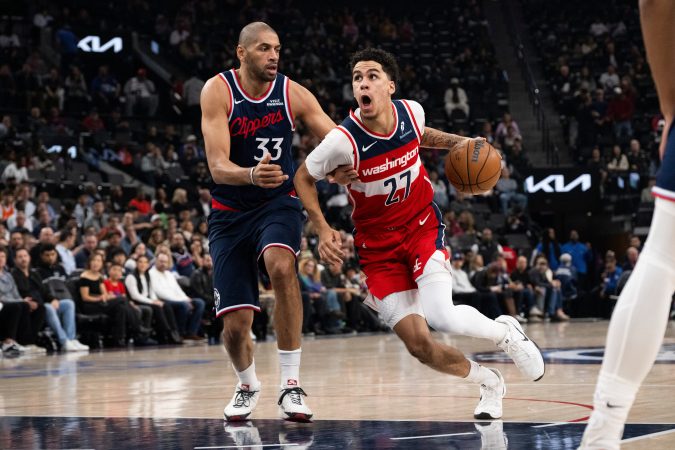
    The notable picks in this range from this year: Jaylon Tyson at 20th overall by the Cavaliers during Gansey’s tenure. And Kyshawn George, who is an intriguing, yet inconsistent wing for the Wizards.

    2023

    21st pick: Noah Clowney, forward, Alabama

    22nd pick: Dariq Whitehead, wing, Duke

    23rd pick: Kris Murray, forward, Iowa

    Clowney started 60 games for the Nets this past season, averaging 12.3 points on poor shooting efficiency. Whitehead, a former national high school player of the year, was waived by the Nets before the 2025-26 season and spent time in the G League before joining the Memphis Grizzlies on a 10-day contract. Murray (5.8 points, 3.6 rebounds) was in the rotation for the upstart Trail Blazers, who made the playoffs in the Western Conference.

    Christian Braun (right) won an NBA title with the Nuggets as a rookie.Mark J. Terrill

    2022

    21st pick: Christian Braun, guard, Kansas

    22nd pick: Walker Kessler, center, Auburn

    23rd pick: David Roddy, forward, Colorado State

    That 23rd pick belonged to the Sixers and was used in the trade to acquire key two-way guard De’Anthony Melton. Braun (12 points, 4.8 rebounds, 2.7 assists in 44 games in 2025-26) is a rotation player with the Nuggets, including as a rookie on their 2023 title team. Kessler, who joined the Utah Jazz in the Rudy Gobert blockbuster trade, had season-ending shoulder surgery in 2025-26 but is still regarded as a promising young big man (9.5 points, 9.3 rebounds in 201 career games).

    2021

    21st pick: Keon Johnson, guard, Tennessee

    22nd pick: Isaiah Jackson, big man, Kentucky

    23rd pick: Usman Garuba, big man, Spain

    Johnson was in the G League this past season following three stints with NBA teams, most recently when he averaged 10.6 points for the Nets in 2024-25. Jackson (6.7 points, 5.3 rebounds in 2025-26) was an Indiana Pacers reserve big man for parts of five seasons, before being sent to the Los Angeles Clippers in the Ivica Zubac trade. Garuba was last in the NBA in 2023-24, and is back in his hometown playing for EuroLeague power Real Madrid. He tore his Achilles tendon last month.

    Two notable picks in this range in this draft: Jalen Johnson at No. 20, who is now a versatile All-Star and franchise cornerstone for the Hawks. And Quentin Grimes at No. 25, the Sixers’ guard who now enters unrestricted free agency following last summer’s messy restricted free agency.

  • Who’s QB2? How should we feel about the rookies? Any more new faces? Biggest Eagles questions after offseason workouts

    Who’s QB2? How should we feel about the rookies? Any more new faces? Biggest Eagles questions after offseason workouts

    The offseason program is over, and the next time the Eagles get together at the Jefferson Health Training Complex, it will be for training camp — the official start to the 2026 NFL season.

    The longest stretch of downtime around the league is right now, so it’s a good time to take stock of what we just saw during organized team activities and mandatory minicamp.

    The workouts allowed for a first look at new offensive coordinator Sean Mannion’s offense and a few new key players for the Eagles, but they also left some lingering questions about the team during the break.

    Here are some of the things we’re still thinking about:

    How long should the probationary period be for the new-look offense?

    The short answer: Longer than will probably be allowed.

    Eagles fans read and watched analysis here and probably elsewhere that told them Mannion’s offense was little match for Vic Fangio’s defense during the recent practice sessions open to reporters.

    Jeffrey Lurie and Howie Roseman speak with Sean Mannion (right) during mandatory minicamp.Monica Herndon / Staff Photographer

    What’s the reaction going to be if the offense looks sloppy a few practices into camp? It’ll be an outsized one, for certain. But it shouldn’t be.

    There are a few reasons why:

    • Fangio’s defense might be among the best in the NFL this season.
    • The Eagles are installing a new offense with new blocking schemes.
    • Jalen Hurts is taking more snaps from under center.
    • The Eagles are using more play action and more motion.

    Football is football, and some players will say as much, but there are going to be some growing pains before the offense is firing on all cylinders.

    Plus, while the focus of many will be on the play-calling and what the playbook looks like, it may all just come down to the health and force of the offensive line anyway.

    That’s not what the question asked, though. How long should the probationary period be? The view here is that drawing major conclusions about Mannion’s offense won’t have enough context until at least three games into the regular season. Patience levels are personal, right?

    What’s going on at QB2?

    Is it possible that the A.J. Brown trade was such a foregone conclusion that the biggest roster storyline in an otherwise pretty standard offseason program was the backup quarterback position?

    Andy Dalton and Tanner McKee are splitting reps behind Hurts, Nick Sirianni says, but the coach wouldn’t commit to saying McKee is the backup quarterback, the spot on the depth chart he held last season. He doesn’t have to commit to anything in June or even July or August.

    But the fact that Dalton took so many reps with the second-team offense was interesting.

    Quarterbacks Andy Dalton (left) and Jalen Hurts work out during mandatory minicamp.Monica Herndon / Staff Photographer

    It’s fair to wonder if McKee will be on the roster by the time camp breaks, and the Eagles are crunching numbers to get to their initial 53-man roster. The Eagles used a fifth-round pick on quarterback Cole Payton after sending a seventh-round pick to Carolina for Dalton.

    It’s hard to imagine they will keep four quarterbacks on the roster, and it’s hard to imagine them wanting to expose a fifth-round pick to waivers unless Payton has the type of uninspiring training camp sixth-round pick Kyle McCord had last year.

    The guess here is that Howie Roseman is hopeful McKee puts some good play on tape in the preseason, and the Eagles get some draft value back in a trade for their 2023 sixth-round pick, who is entering the last year of his contract.

    Is a quiet spring from top Eagles rookies concerning?

    It shouldn’t be.

    But their first three picks were hampered by injuries.

    First-round pick Makai Lemon, who will be asked to contribute in a big way right away with Brown out of town, missed some time with a hamstring injury but is expected to be ready for camp. Sure, he didn’t get a ton of on-field reps, but it wasn’t like he was on an island somewhere while the Eagles were installing stuff in the meeting rooms.

    Makai Lemon was bothered by a hamstring injury during minicamp. Tyger Williams / Staff Photographer

    Eli Stowers, the second-round pick out of Vanderbilt, did not stand out in early workouts despite the Eagles raving about his athletic traits after selecting the tight end at No. 54. He then wore a sleeve on his right leg during the final workout of minicamp and sat out some drills.

    Markel Bell, the big tackle the Eagles took in the third round, also missed the last practice of minicamp.

    As for Stowers, Sirianni continued to have a lot of good things to say about him on the last day of the spring session. The former college quarterback is still only a few seasons into playing tight end, and while the Eagles are high on him — “He has an unusual skill set at the tight end position with the matchups that he is going to be getting,” Sirianni said — they also know he has a lot of work to do.

    It’s way too early to be alarmed about the rookie class.

    Will there be any roster additions before training camp?

    Roseman kind of answered that question just hours after the final on-field workout finished when he signed former Bills edge rusher A.J. Epenesa. That move made some more sense on Tuesday, when the Eagles placed free-agent signing Joe Tryon-Shoyinka on the reserve/retired list.

    Epenesa, who was drafted one spot after Hurts in 2020, originally signed with the Browns, but that deal did not finalize after Epenesa’s physical. Edge rusher was one spot, however, where the Eagles needed some more talent for some bottom-of-the-depth-chart competition. There’s a clear trio at the top in Jonathan Greenard, Jalyx Hunt, and Nolan Smith, and then there’s Arnold Ebiketie. Epenesa, who had six-plus sacks in three consecutive seasons from 2022 to 2024, figures to be in the mix for a roster spot.

    A.J. Epenesa, seen here as a member of the Bills, is a recent addition to the pass rushing depth chart. Gary McCullough

    Where else could the Eagles upgrade?

    Safety might be the only position on the team that still has some question marks. The Eagles plan to use Cooper DeJean at safety in their base defense with Quinyon Mitchell and Riq Woolen manning the outside corner spots. But that leaves around 75% of the reps next to Drew Mukuba for someone not named DeJean. Right now, it’s Marcus Epps’ spot to lose. But Epps is 30 and was available as a practice-squad addition last August.

    Behind Epps is Michael Carter II, who has played mostly nickel, and J.T. Gray, another 30-year-old with mostly special teams experience. Then there’s a mix of young and unproven players.

    Fangio has expressed confidence in Epps, and thinks Carter has the chops to play safety, but don’t be surprised if Roseman adds some more talent to the group before camp.

  • Before Leon Rose built the Knicks, he was a gym rat at Cherry Hill East, and coached hoops at his local JCC

    Before Leon Rose built the Knicks, he was a gym rat at Cherry Hill East, and coached hoops at his local JCC

    Seth Friedman was watching the NBA Finals on Saturday night in Graduate Hospital when he heard a familiar refrain.

    It came from Leon Rose, the mild-mannered architect of the New York Knicks. His team had just won its first title since 1973.

    Rose, 65, was asked how he felt knowing he’d built a roster that had ended a 53-year-drought. The Knicks president shook his head, shrugged his shoulders, and pivoted to his players.

    He praised their brotherhood, their grit, their empathy. He talked about their care for one another, and their selflessness, and how it allowed them to reach new heights.

    Friedman, sitting on his couch next to his wife, began to tear up.

    “It sounded like he was talking to us,” he said, “back when we were 13 or 14 years old.”

    The setting was vastly different. Instead of holding two-a-days for high schoolers, Rose was standing on a platform in San Antonio, Texas, with a sparkling trophy beside him.

    But the message was nearly identical. Friedman listened to it himself when he played for Rose in the mid-2000s at his local Jewish community center.

    “He literally preached that same mentality,” Friedman said. “That family mentality.”

    Leon Rose coaching at the Katz JCC in 2005. Seth Friedman is pictured in the bottom row, second from the right.Photo courtesy of Katz JCC

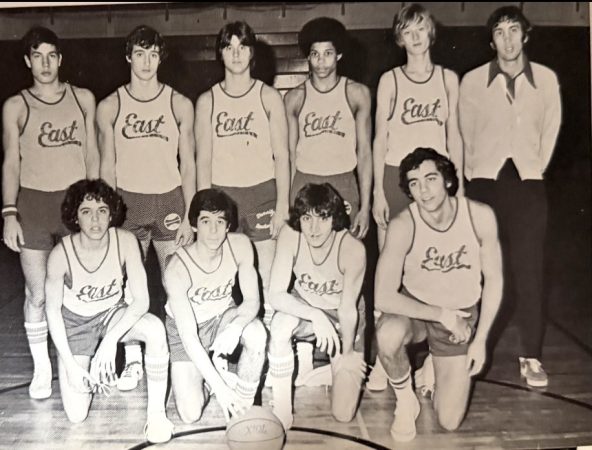
    For decades, the future Knicks president was a mainstay in his Cherry Hill basketball community. He played under head coach John Valore at Cherry Hill East from 1975 to 1979 and joined Valore’s staff in the early 1980s while studying at Temple’s law school.

    He moved on to work as an assistant coach through the late 1980s at Rutgers-Camden, a short commute from his day job at the Camden County prosecutor’s office.

    He’d leave collegiate coaching in 1988, but Rose would always find time for the sport, even as he ascended the ranks of the NBA. In the 1990s, while he transitioned to sports management, Rose often could be found playing pickup hoops at the Katz JCC in Cherry Hill.

    By the mid 2000s, he’d assembled a Rolodex of star-studded clients, including Allen Iverson and LeBron James. But that didn’t keep him away from the gym. For the better part of a decade, Rose served as a volunteer coach at the Katz JCC, preparing teams to compete in the Maccabi Games.

    The Knicks executive has achieved a lot since then. But those who know him best say he is the same understated guy who’d wear baggy sweatshirts and run his team through tap drills and sprints.

    “He was Coach Leon,” Friedman said. “He was one of us. Even now, you see him down the Shore, and you’d never know that he’s the person that he is.”

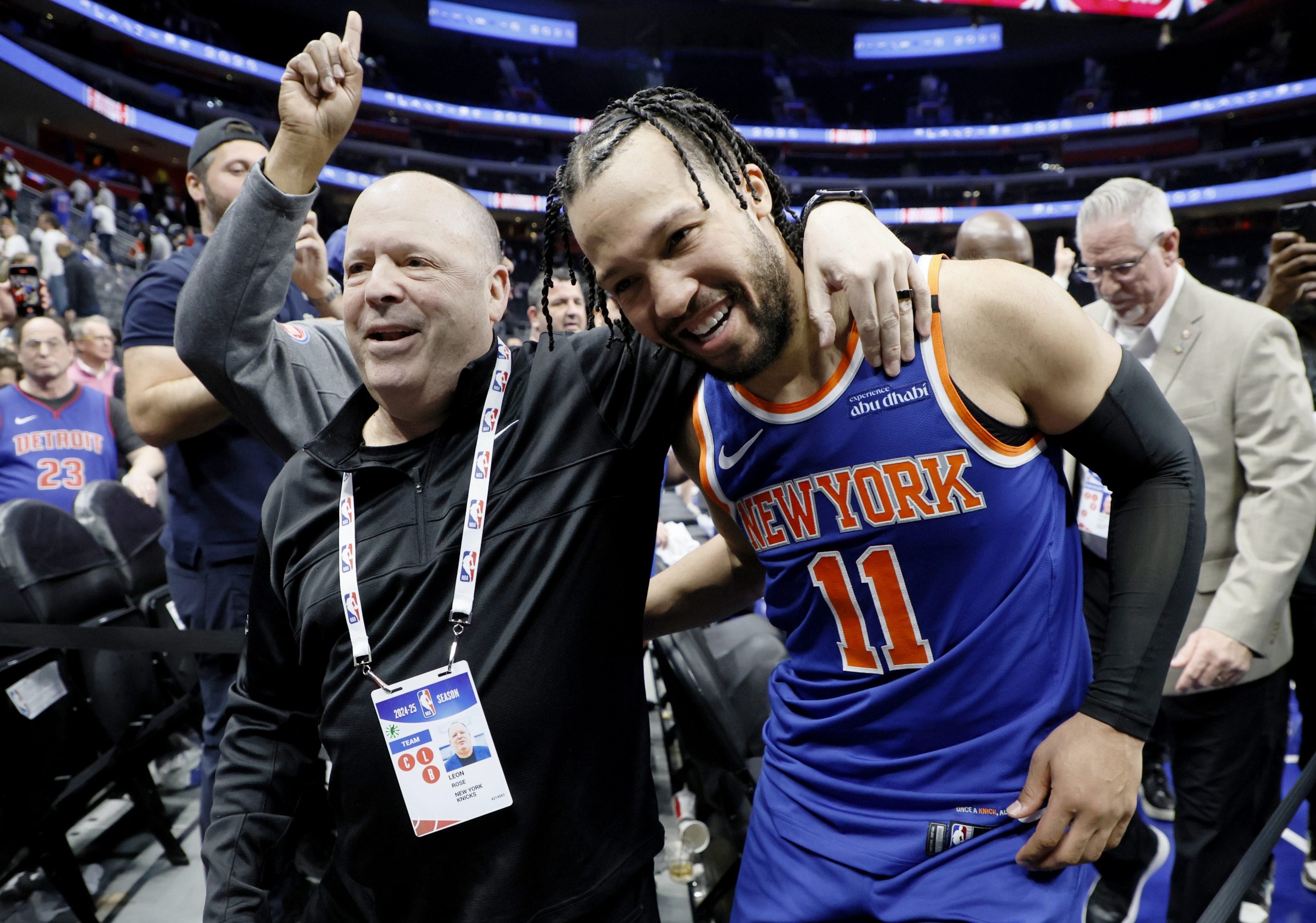
    New York Knicks Leon Rose (left) hugs guard Jalen Brunson (11) as they leave the court following a Game 6 win against the Pistons in the 2025 playoffs. Duane Burleson

    ‘A gym rat’

    Valore met Rose in 1975 when he was coaching junior varsity at Cherry Hill East. The freshman was undersized compared to his teammates, but he played above his stature.

    If there was a loose ball, the point guard would dive for it. If there was a charge, he would take it. Valore admired his toughness. So when he got the varsity job in 1976-77, he decided to bring Rose with him.

    The sophomore made the most of his opportunity. Cherry Hill East was a relatively new program at the time and largely was viewed as a “doormat,” in Valore’s words. Rose helped change that, building an unselfish culture from the ground up.

    He wasn’t a vocal leader, but he showed interpersonal skills that would serve him later on. The future NBA executive was direct and honest. He could have difficult conversations with teammates if he needed to about roles and behavior on and off the court.

    Rose also set a standard through his style of play. Cherry Hill East was up against stiff competition in South Jersey from teams like Camden and Haddon Heights, which boasted players who were 6-foot-2, 6-3.

    The point guard was unafraid to battle them.

    “He was a player that had to compete harder and tougher than the person he competed against,” Valore said, “because he was 5-7, 5-8, 5-9. That shows you the toughness he had within him.”

    Leon Rose at Cherry Hill East.Courtesy of John Valore

    Cherry Hill East’s culture quickly translated into wins. When Rose arrived, the varsity team finished just above .500. By the time he graduated, it was one of the best teams in its conference.

    But above all, Valore was most impressed by his pupil’s character. During a practice in 1979, the coach called his co-captain over. Valore’s wife, Joyce, had just given birth to their first child, J.C.

    The coach wanted Rose to be the boy’s godfather.

    “[Leon] was 17 years old,” he said, “and I saw everything I wanted to see. He was an exceptional person with relating to other people. He was something special.

    “He went back to his dad and explained the situation, and his dad gave the thumbs-up. And the rest is history.”

    After a few years studying and playing basketball at Dickinson College, Rose rejoined his high school team as an assistant coach in 1983. The 22-year-old was just as impactful on the bench as he’d been as a point guard.

    Over Rose’s three seasons with Cherry Hill East, the program produced four Division I players. One of those four, Nick Katsikis, ended up contributing to Seton Hall’s run to the 1989 NCAA championship game.

    Valore can see similarities in what Rose accomplished with the Knicks. When the agent was hired by James Dolan in 2020, the team was en route to its seventh straight losing season; “a doormat,” just like Cherry Hill East.

    Then Rose came along, and everything changed.

    “He was a gym rat,” Valore said. “He just loved the game.”

    Leon Rose coaching for the Katz JCC in 2004. Ed Vernick is pictured on the far right.Photo courtesy of Katz JCC

    From Maccabi gold to an NBA title

    Ed Vernick moved from Philadelphia to South Jersey in the early 1980s, the same time Rose was coaching with Valore.

    Unsurprisingly, the men became friends at the gym. Vernick was about to go on a trip to Ocean City and wanted a good place to work out. Rose overheard him talking, ripped off a piece of paper, and scribbled down an address.

    Vernick had no idea who the young lawyer was, but he took him up on his suggestion. A few days later, while he was running on a treadmill in that Ocean City gym, he saw Rose walking by.

    “He goes, ‘I just wanted to make sure you got here,’” Vernick said. “What a nice guy. I’m thinking, ‘Who does that?’ It was just one of those things that caught me.”

    About two decades later, when Rose was starting to coach basketball at the Katz JCC, he asked Vernick to be his assistant. Together, they spent the summer of 2004 preparing Cherry Hill-area kids for the Maccabi Games, a youth athletic competition for Jewish athletes from all over the world.

    Parents and players said Rose took this as seriously as the NBA Finals. He’d carefully craft his rosters, thinking hard about how each piece would fit.

    Once the team was constructed, he’d spend July running them into the ground with many of the methods Valore used at Cherry Hill East: switch drills, sprints, tap drills.

    Leon Rose coaching at the Katz JCC in 2005.Photo courtesy of Katz JCC

    The week before the Games was by far the toughest. Players would be required to train twice a day and would arrive at the gym at 6:30 a.m. and return at 2 p.m.

    “He got into us,” Friedman said. “But it got us ready. It got us prepared. It got us in shape. I hated it during it, but, looking back, those were memories I’ll never forget.”

    This was a major time investment for one of the most high-powered agents in the NBA, but Rose was deeply involved. He continued to coach before and after his son, Sam, and daughter, Brooke, were eligible to play.

    And he went far beyond what was expected of a volunteer. One year, Friedman said Rose took the team up to the Poconos for an exhibition game at Pine Forest Camp, which was known for its basketball program.

    “He’s driving us up to play an exhibition game like it’s an NBA team,” Friedman said. “He didn’t have to do that as a coach. But he did whatever he could to get us prepped and ready to win a gold medal.”

    About “80% of the team” came from Cherry Hill East, in Vernick’s estimation, and Rose often would be on the phone with Valore, asking about certain players.

    Like his former coach, Rose gravitated toward toughness, and that style emanated from the teams he built. In 2004, South Jersey’s 16-and-under Maccabi team faced Washington, D.C., for the gold medal.

    Leon Rose (in 2006) made his name as a superagent to the likes of Allen Iverson and LeBron James, but he did not flaunt that status to his young players. APRIL SAUL

    It was a low-scoring game, one that came down to the buzzer. Washington was bigger and more talented, but Rose’s group challenged every bucket.

    “I remember I could hear sneakers squeaking the whole game,” Vernick said, “and I just smiled. And I thought, ‘This is the way you play defense.’”

    South Jersey fell, 42-40, but it won gold the following year in Minneapolis.

    Rose spent six summers coaching at the JCC throughout the 2000s, winning two gold and two silver medals. He looked and acted like any other coach, donning Cherry Hill East basketball gear and sweatpants.

    He rarely — if ever — talked about who he represented, or what he did for work, but the players occasionally got a glimpse.

    When Friedman was a senior at Cherry Hill East, Rose arranged a surprise for his alma mater.

    It was March 2010. The Cleveland Cavaliers were in town. After practice, their coach swung by to talk to the high school basketball team and answer any questions they might have.

    It ended up being the coach who would lead the Knicks to a championship 16 years later.

    “He had Mike Brown come over,” Valore said. “He was fantastic. Off the cuff, not scripted. He gave a wonderful speech to the kids.”

    John Valore (left) and Zev Rose before a Knicks game in the early part of their 2026 playoff run.Photo courtesy of John Valore

    Cherry Hill at the Garden

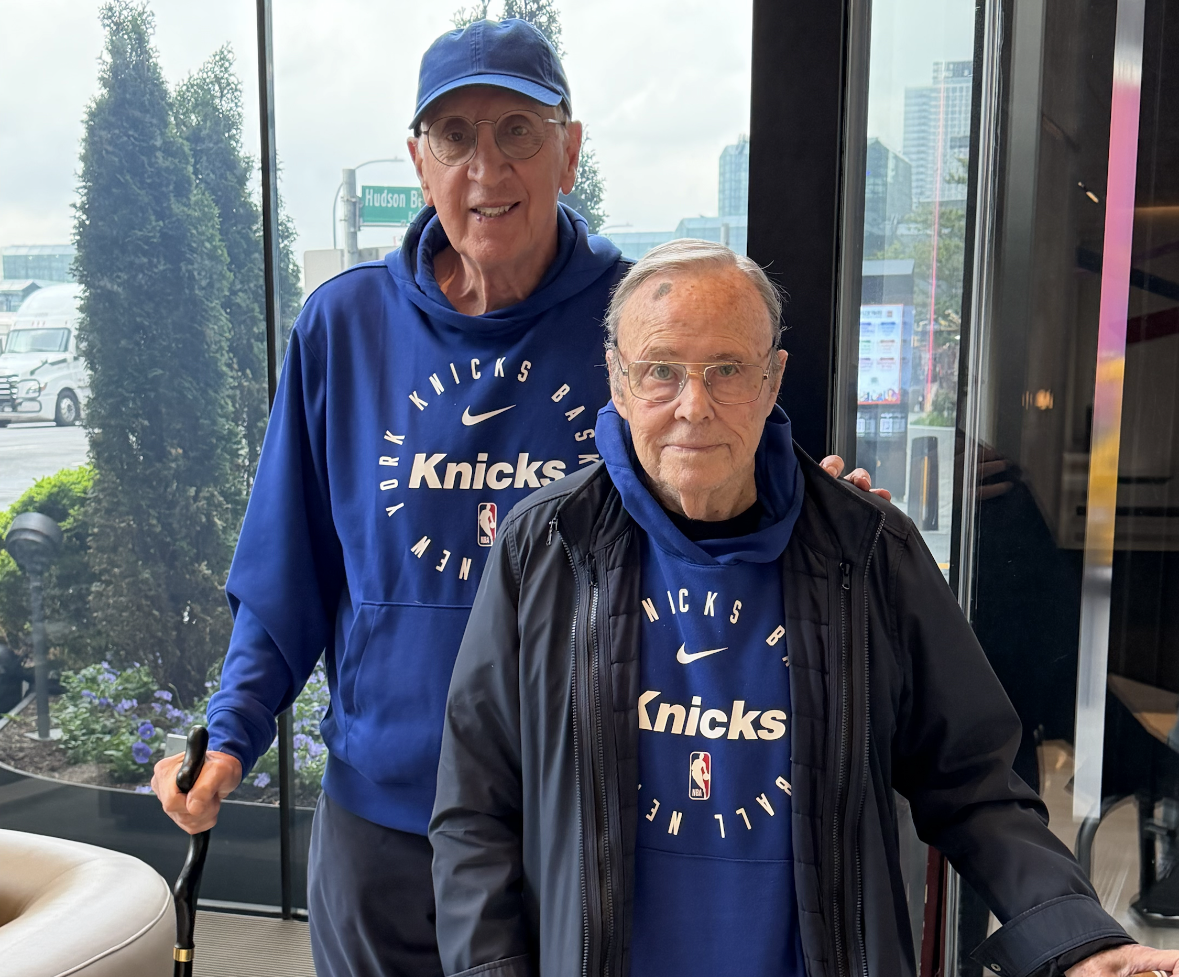
    Rose and his family now live in New York, but they’re never too far from Cherry Hill. His 88-year-old father, Zev, still resides in the area, and is a regular at the Katz JCC.

    Every once in a while, his son will send a limo to drive him and the 81-year-old Valore to Madison Square Garden. They were in the building for Game 4, sitting near the team president.

    At first, it looked bleak for New York. The Knicks fell behind early and trailed by 29 points in the third quarter. But they came storming back in the fourth and completed the comeback on an OG Anunoby tip-in.

    It was the largest comeback in NBA Finals history; a gritty win two coaches from Cherry Hill East would be proud of.

    Valore watched Game 5 at home in South Jersey. When it was over, just past midnight, the former coach texted his former player.

    The octogenarian kept his message brief. He thought about the undersized point guard who changed a culture when he was in high school.

    He thought about how he did it again, decades later, in New York; how hard he’d worked and the happiness he’d brought to his pocket of South Jersey.

    “Thank you,” Valore wrote to Rose, “and God bless.”

  • Andrew Painter has reached his Roy Halladay moment. It is on him to seize it.

    Andrew Painter has reached his Roy Halladay moment. It is on him to seize it.

    Somebody needs to tell Andrew Painter to remember one number.

    10.64

    He needs to say it out loud until it is ingrained in his memory, then he needs to take that memory with him.

    Ten-point-six-four.

    He needs to carry it, to own it, to believe in it. All the way down to Allentown and then to wherever his career takes him next. Buy a notebook, maybe. That’s what Roy Halladay did. Halladay knew that number better than anybody. He felt it. He owned it, rather than letting it own him.

    That number — 10.64 — was Halladay’s ERA in 67⅔ innings as a 23-year-old big leaguer. It is nearly three runs higher than the ERA that just earned Painter a demotion to triple-A Lehigh Valley after allowing six runs in two innings of the Phillies’ 12-4 loss to the Marlins on Wednesday. Halladay ended up spending his 24th birthday facing class-A minor league hitters in Dunedin, Fla. As the old saying goes: It’s not how far you fall, it’s how high you bounce.

    Painter is 25 days older than Halladay was when he lost his spot in the Blue Jays’ rotation in 2000. He is nearly a full year younger than Halladay was when he began the process of reinventing himself, both mechanically and mentally. It is a shame that Halladay is no longer around. He almost certainly would have shared all of this with Painter personally.

    Failing is easy. The hard work is what comes next. It’s an endeavor upon which Painter must embark. The 65 innings he has logged as a major leaguer offer plenty from which to learn. They have told him that his fastball will not play in its current form, whether he grips it with four seams or two. Against the Marlins on Wednesday, Painter threw just 19 of them on 56 pitches. Ten of those fastballs prompted swings. None of them were whiffs.

    Unlike a lot of young pitchers, Painter’s issues are not related to control. Heading into Wednesday, he was walking an average of 3.1 batters per nine innings, against 7.1 strikeouts. The big issue is the contact, a lot of it loud. The two-run home run he allowed to Kyle Stowers in the first inning was his 13th in the last 49⅔ innings. It is an unsustainable pace, grotesquely so. The Phillies had no other choice even without better options.

    You aren’t going to win many games when your starter lasts only two innings, allowed eight of 14 batters to reach base, and allows six of those eight batters to score. By the end, the Phillies had used six relievers, two of whom threw 26-plus pitches. That didn’t include backup catcher Garrett Stubbs, the human white flag. He was one of two pitchers who didn’t allow a run.

    Trea Turner slams his bat down after striking out in the sixth inning.
    Jose F. Moreno / Staff Photographer

    It was not a fun afternoon, especially for Don Mattingly. The Phillies interim manager got a good look at two of the biggest reasons his team may be destined to spend the rest of the season attempting to yo-yo away from .500 and toward 90 wins. It is very hard to break off a long winning streak when you have holes at the top of your lineup and the back of your rotation. In Painter and Trea Turner, the Phillies had both. Now, they have one.

    On Wednesday, Mattingly went back to the old drawing board with Turner, his struggling leadoff hitter. Turner went 3-for-5 with a double, his first three-hit game since May 9. The Phillies desperately need it to be the start of something.

    With Painter in the minors and no obvious replacement, the onus will fall even more squarely on Turner. He entered the day with a brutal .595 OPS. He has a lot more work to do to reestablish a rightful claim as a set-it-and-forget-it leadoff man. Mattingly can’t afford to be too patient, especially given the aftertaste of success from Tuesday’s experiment with Brandon Marsh in the one-hole.

    If the manager’s latest exhibition of patience doesn’t result in a serious heater from Turner, he shouldn’t hesitate to climb back outside of the box and see what happens with Marsh setting the table. Three consecutive lefty-on-lefty matchups for an opposing bullpen isn’t ideal, but it can be better than anybody-on-Turner. I don’t know if that counts as a real solution. After all, Turner still has to hit somewhere.

    It has been an unfortunate season for 24-year-old 40-man roster member Jean Cabrera, who has a 9.39 ERA in 13 starts between triple A and double A. Gage Wood, last year’s first-rounder, has pitched well in Reading. But a big-league promotion is a bit ambitious. The more realistic answer is to patch it together the way the Phillies did for much of 2024 and 2025.

    Andrew Painter gave up six earned runs on six hits, including two home runs, in two innings against the Marlins on Wednesday.
    Jose F. Moreno / Staff Photographer

    The bigger concern is Painter’s future. The Phillies have clung to the hope of him for four years now. He has shown plenty to justify the belief. He was brilliant in his debut, more than adequate in his next two. He logged back-to-back quality starts as recently as late May. He has not recorded more than four strikeouts in any of his last eight starts. But the fastball is a problem, and he must figure it out. The velocity isn’t there like it was in his peak prospect days. But 94-96 mph is not a bad baseline.

    Can it be fixed? If it can, it wasn’t going to happen at the major league level. With the All-Star break drawing near and Painter probably needing some form of workload management in his first big league season, it was hard to make an argument for keeping him in the majors. A lot of what comes next comes down to Painter. Responding to failure isn’t easy. But it is a personal choice.

  • New Pa. poll shows Shapiro leading handily against Garrity, trouncing Trump in popularity

    New Pa. poll shows Shapiro leading handily against Garrity, trouncing Trump in popularity

    Democratic Gov. Josh Shapiro has a commanding lead against his Republican rival Stacy Garrity in a head-to-head matchup, and he maintains steady job approval ratings five months ahead of the November election, according to a new poll of Pennsylvania voters from Franklin and Marshall College.

    Shapiro leads Garrity 50% to 28% in the 2026 governor’s race, a crushing advantage well outside of the survey’s margin of error of 5.1 percentage points. It is the first major poll released since both candidates officially secured their parties’ nominations in uncontested primaries last month.

    The survey, conducted June 8-14 by the Center for Opinion Research on behalf of Franklin and Marshall, involved 546 registered Pennsylvania voters. Roughly 42% were Democrats, about the same percentage were Republicans, and about 16% were independents.

    Shapiro won almost half of independents and just over a quarter of Republicans, who rated his performance as excellent or good.

    (function(){function e(){window.addEventListener(`message`,function(e){if(e.data[`datawrapper-height`]!==void 0){var t=document.querySelectorAll(`iframe`);for(var n in e.data[`datawrapper-height`])for(var r=0,i;i=t[r];r++)if(i.contentWindow===e.source){var a=e.data[`datawrapper-height`][n]+`px`;i.style.height=a}}})}e()})();

    About an equal proportion of all voters — 48% — said Shapiro is doing an excellent or good job as governor as those who said he is doing a fair or poor job.

    Shapiro’s approval comes as he continues building a national profile, likely with ambitions for higher office.

    He also boasts relative popularity despite voters’ deep concern with their personal finances and the state of the economy, the top issue among every partisan group.

    “The big concern that people face is economic, and even though that’s the problem that we see facing us, the blame goes outside of Pennsylvania,” said Berwood Yost, the director of the Center for Opinion Research. “People don’t see [Shapiro] as being responsible for the economic concerns that they have.”

    But people do blame President Donald Trump.

    Just 29% of voters said Trump is doing an excellent or good job, while 71% said he is doing a fair or poor job. It marked a 10-percentage-point drop from March, when his positive approval rating was 39%.

    While 63% of Republican voters gave Trump positive reviews in the new poll, that number was almost 80% in March.

    Just under half of respondents said they are “worse off” financially than one year ago, and 35% of voters said the economy, including unemployment, housing and real estate costs, and higher gas and utility prices, is the most important problem facing the state.

    “Pennsylvania should be doing so much better,” Garrity said in a previous interview with The Inquirer. “[Voters] know we’re falling behind. They know that we have a governor who’s more interested in Pennsylvania Avenue than helping Pennsylvania families. They’re very worried about utility prices because their electric bills are going up, up, up. Groceries are expensive.”

    But among those who mention economic problems, voters in the poll trust Democrats over Republicans, 42% to 24%, as the party that can best handle the issue.

    Shapiro’s campaign released a new TV and digital ad Tuesday focusing on his expansion of workforce opportunities, such as apprenticeships in trades like welding.

    “Governor Shapiro bet on workers like me. I’m proof that bet’s paying off,” said Ryan, a worker in Western Pennsylvania, in the ad.

    (function(){function e(){window.addEventListener(`message`,function(e){if(e.data[`datawrapper-height`]!==void 0){var t=document.querySelectorAll(`iframe`);for(var n in e.data[`datawrapper-height`])for(var r=0,i;i=t[r];r++)if(i.contentWindow===e.source){var a=e.data[`datawrapper-height`][n]+`px`;i.style.height=a}}})}e()})();

    Yost said Garrity is a “high-quality candidate” with a great resume that may keep down-ballot Republicans afloat, but she is competing against a popular incumbent in a year where Democrats are poised to win seats.

    “It’s rough to be a Republican at the moment,” he said. “You’re facing those headwinds, no matter what office you’re running.”

    On the economy, the issue voters care most about, a mere 17% of voters approve of how Trump’s administration is handling inflation.

    “The concerns about personal financial circumstances, the economy, and the cost of living — they’re paramount in people’s minds, and they’ve become more pronounced since March,“ Yost said. “That’s had an effect on the president’s job approval ratings in the state, which have declined pretty substantially.”

    In the last four gubernatorial races, the average margin of victory has been about 13 percentage points, Yost said, while presidential races tend to be much tighter — about 2.2 points.

    “What’s essential to understand is that these races happen in a different context than the presidential races. There are a lot of things different about them, and typically incumbent governors have a real advantage,” he said.

    State issues show more consensus

    Many of Shapiro’s budget priorities, such as restricting cell phones in schools and taxing skill games, have widespread public support.

    Almost nine out of 10 people support limiting access to cell phones in classrooms, which follows Shapiro’s urge for legislation to “get distractions out of the classroom and create a healthier environment in our schools.”

    And 71% of registered voters favor regulating and taxing so-called skill games, the slot machine look-alikes around Pennsylvania — an 11-percentage-point increase compared with previous F&M polling in 2024.

    The Pennsylvania Supreme Court ruled Monday the skill games are, in fact, slot machines and should be regulated as such, clearing the way for the state to place new rules on the devices. The decision was celebrated by Democrats who view the machines as “predatory.”

    Most voters, 70%, also support having an independent redistricting commission to draw state legislative districts, and 59% oppose mid-decade redistricting.

    Texas redrew its congressional maps last August at Trump’s urging, shifting five seats to lean more heavily Republican. California voters approved a constitutional amendment in November to permit the adoption of replacement maps that would favor Democrats. Other states have also voluntarily redrawn or created new maps following litigation.

    Shapiro said he also opposes mid-decade redistricting, telling reporters last August: “It’s not on the table here in Pennsylvania.”

    As parties compete for control of the U.S. House of Representatives this midterm election season, the poll found that voters prefer Democrats over Republicans by 12 points, 47% to 35%. Shapiro has personally backed several candidates and is hoping to use his influence to help Democrats win the majority this November.

  • A new Virtua Health internship program gives students with disabilities hands-on experience working in a hospital

    A new Virtua Health internship program gives students with disabilities hands-on experience working in a hospital

    During her internship at Virtua Mount Holly Hospital, student Alyssa Eiring greeted cardiology patients with her signature charm, “Welcome to cardiologyyyyyyy!”

    Her disarming and bubbly personality quickly put patients at ease, said medical secretary Heather Davenport, who mentored Eiring in the hospital’s cardiology department.

    “Coming into the hospital for testing isn’t someone’s happy place but Alyssa sure made it feel like that for everyone,” Davenport said.

    Eiring and five other students formed the inaugural class of Project SEARCH, a collaboration between Virtua Health and the Burlington County Special Services School District. The nine-month internship program gives students with intellectual and developmental disabilities hands-on job training.

    Eiring was born with Cornelia de Lange syndrome, a rare genetic disease that causes cognitive and developmental delays. At a graduation ceremony Tuesday, she won the “Compassion in Action Award” for “excellence in customer service.”

    The 21-year-old from Florence Township led the procession of graduates in royal blue gowns onto a stage festooned with blue, red, and silver balloons. She then took to the podium — one of two commencement speakers.

    “I have built real skills, gained so much confidence, and discovered what I am truly capable of achieving,” she said, addressing family, friends, educators, and Virtua employees gathered in a gymnasium on the campus of the Burlington County Special Services Transition Program in Westampton, N.J.

    “We are ready to take everything we have learned here and step out into the employment world.”

    “We did it!” she shouted, eliciting cheers.

    Alyssa Eiring, 21, of Florence Township, celebrates her graduation from Project SEARCH.Jessica Griffin / Staff Photographer

    Eiring will now begin looking for a job. Her 26-year-old sister, Toni Eiring, said she’s up to the task.

    “She has more faith in herself in the workplace,” her sister said. “Her demeanor changed. The way she stands on her own two feet. It’s almost like she developed a different part of her brain.”

    Grace Sullivan (back right, blue eyeglass frames) celebrates her graduation from Project SEARCH with her mother, Teresa Sullivan, and other family members inside the gymnasium on the Westampton campus of the Burlington County Special Services Transition Program. Jessica Griffin / Staff Photographer

    `A true turning point’

    Each student completed 10-week rotations in three hospital departments over the school year. Fellow graduate Tristian Villafuerte, who has autism, started off in patient transport and finished in food services.

    The 21-year-old Burlington Township resident called his second internship in equipment services “a true turning point.”

    “I was given the autonomy to independently navigate the hospital,” he said in his speech, noting he was responsible for collecting soiled equipment and bringing it back to the central supply for sterilization.

    “Having that trust placed in me changed everything,” Villafuerte said.

    Mary Jean Kneringer, principal of the Burlington County Special Services Transition Program, congratulates graduate Tristian Villafuerte. The 21-year-old from Burlington Township was hired by Virtua Health after completing an internship at its Mount Holly hospital.Jessica Griffin / Staff Photographer

    Villafuerte now joins Virtua Health, one of two graduates hired out of the program. He will work as an equipment services technician at Virtua Voorhees Hospital in Camden County.

    The program creates a new pipeline of employees in hard-to-fill areas, said Katherine Kealey, Virtua’s director of workforce development.

    “We have to start thinking about looking at other populations that we haven’t really tapped into previously,” Kealey said. “This is a really great opportunity for us to expand our workforce, mirroring the communities that we serve.”

    Myson Parham, left, and Kortu Lemu attend graduation at Virtua Health at Burlington County Special Services Transitions Campus, in Westampton, NJ, on June 16.Jessica Griffin / Staff Photographer

    Landing a `perfect’ job

    The program landed graduate Matthew Pettola, 21, of Cinnaminson Township, a job at Virtua. He starts later this month as a food services worker at the hospital’s Mount Holly location.

    Pettola won the “Purpose Driven Award,” recognizing the intern who “used unexpected challenges as a compass — turning difficult experiences into valuable insights.”

    He is autistic, and the frenetic pace of kitchen work proved a “perfect fit,” said his stepmom, Tracey Pettola.

    “Doing the tray line, food prep, dishwashing. It was real fast-paced, which is great for him because he’s fidgety,” she said. “It just worked for him. He loved it.”

    “Every day, he came home so much more confident. He was so excited to talk about his day. What he learned. He made friends. He became more social,” she said.

    Pettola’s father, also named Matthew Pettola, described the program as a “godsend.”

    Matthew Pettola (center) shows off the award he won after completing an internship at Virtua Mount Holly Hospital. His father, also named Matthew Pettola, and his stepmom, Tracey Pettola, attended his graduation on June 16.Jessica Griffin / Staff Photographer

    Teresa Sullivan watched her 21-year-old daughter become increasingly independent during her internship in the rehabilitation department.

    Grace Sullivan would tell her mother to relax and “stay in bed,” because she wanted to get herself up and out the door on her own.

    She took the bus to the hospital alone and started insisting on making her own meals once back at her Florence Township home. Her communication skills and ability to follow directions sharpened, her mother said.

    “We used to give her a little bit more guidance — now she puts her hand up and says, ‘I got it,’” Teresa Sullivan said.

    After accepting her certificate, Grace Sullivan, who was born with Down syndrome, walked to her mother in the audience. Smiling broadly, she handed her a rose as a thank you for supporting her.

    Her mother accepted the flower through tears.

    “I feel good. I liked all of it,” Grace Sullivan said after the ceremony. “My favorite thing was the patients and making friends with my coworkers.”

    The program is accepting applications for new interns, who will start Aug. 31.

    Teresa Sullivan embraces her daughter, Grace Sullivan, from the audience of her graduation ceremony. After receiving her certificate, Grace Sullivan walked over to her mother and handed her a rose to thank her for her support. Jessica Griffin / Staff Photographer
  • In Narberth, a zoning fight raises questions over whether a small borough can help solve the housing crisis

    In Narberth, a zoning fight raises questions over whether a small borough can help solve the housing crisis

    Brenna Carswell has lived on the same street in Narberth for a decade.

    Carswell moved to Narberth, a small Montgomery County borough encircled by Lower Merion, in 2011 from Upper Darby with her younger daughter after a divorce. She knew early on that her daughter would need more support than the Upper Darby schools could provide, so she scraped together the cash for a rental in the Lower Merion School District.

    “It’s been a great place for my girls to grow up,” Carswell said of her Main Line community. “It’s given them a town that I didn’t have.”

    After four years and three rentals, Carswell, 44, a small-business owner, bought a home in the borough. In early 2020, she sold her house with the intention of buying another place in Narberth, but the pandemic hit and Carswell was furloughed. She ended up in a rental across the street, where she still lives. By the time Carswell was ready to buy again, houses around her had exploded in price.

    She and her family have outgrown their space, but in the current market, “there’s literally nowhere to go.”

    Narberth’s borough council last August directed its planning commission to study how it could use zoning to increase affordable housing and support the local economy. Officials say living in the borough has become increasingly expensive, as experiences like Carswell’s become more and more common.

    In February, the commission came back with a handful of recommendations in two zoning districts: the higher-density residential area that surrounds the Haverford Avenue downtown, and the commercial mixed-use corridor along Montgomery Avenue.

    Recommendations included allowing apartments, cottages, and rowhouses by-right, in the ring around the downtown core, and permitting extra floors for apartment buildings that include affordable units in both zoning districts. The commission suggested reducing minimum parking requirements, allowing ground-floor apartments on Montgomery Avenue, and letting developers build off-site parking lots for apartment complexes.

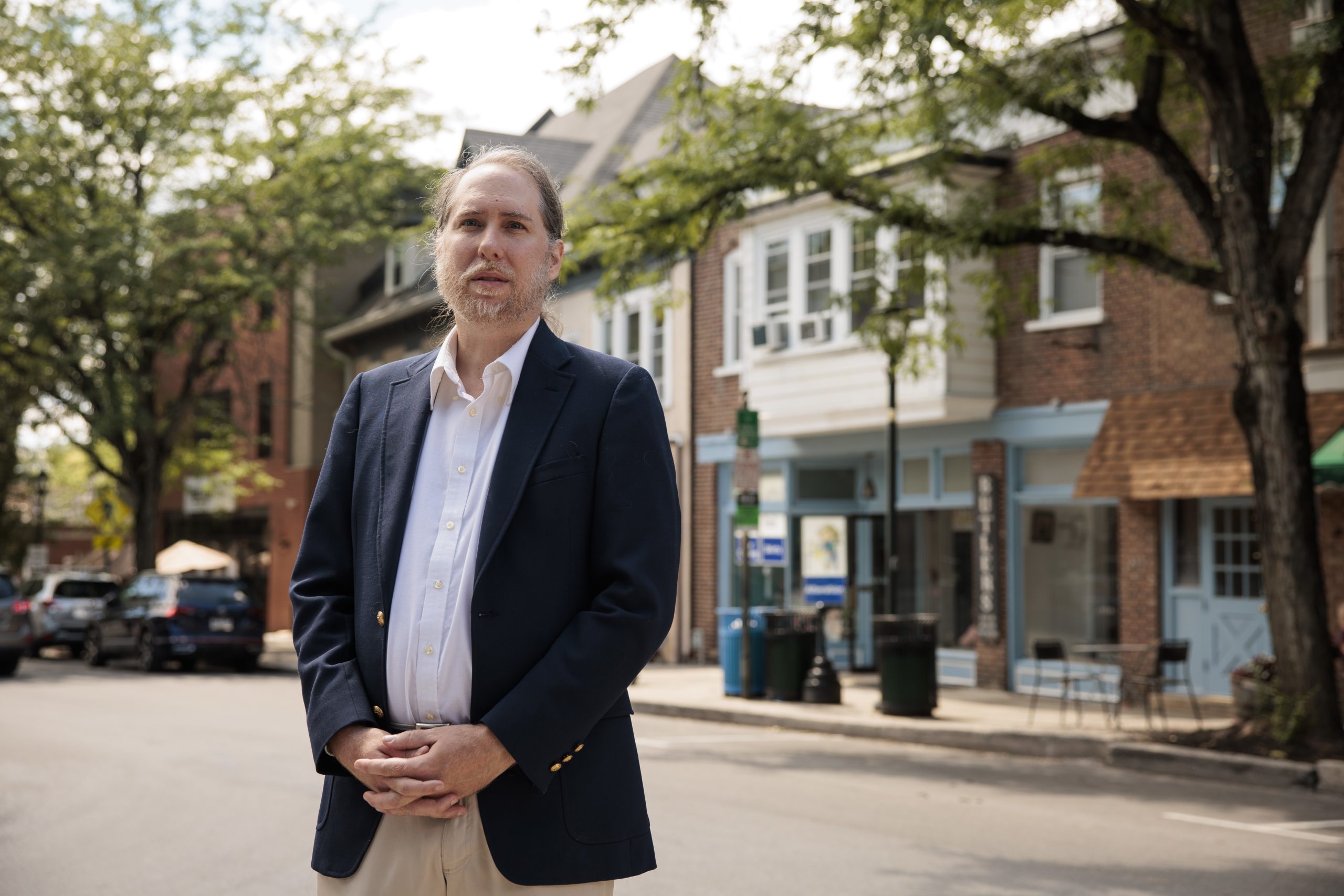
    Adam Krom, the planning commission’s chair, has said the changes would “provide flexibility” and incentivize developers to build both market-rate and affordable housing units in areas where similar developments already exist.

    But what began as a municipal land-use discussion has morphed into a monthslong debate in the borough over what, if anything, Narberth should do to fight America’s housing crisis. Proponents say changes would bring in much-needed tax revenue, create foot traffic for downtown businesses, and help preserve socioeconomic diversity. Others, however, feel that a small contingent on the borough council has charged ahead with proposals to increase density while ignoring growing concerns over traffic, neighborhood character, and the reality of supporting transit-oriented development with a transit system marred by uncertainty.

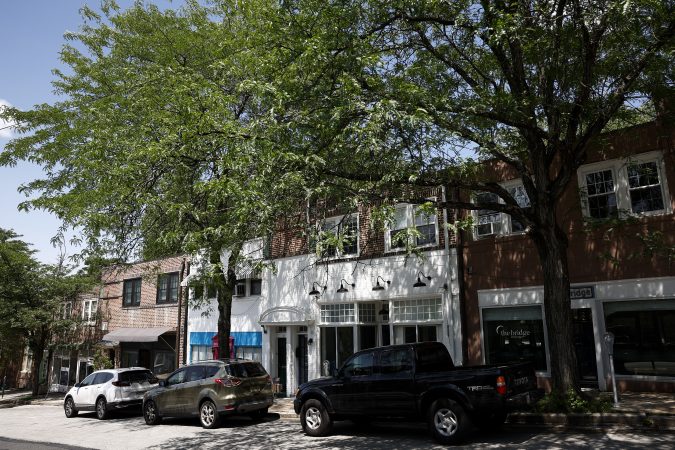
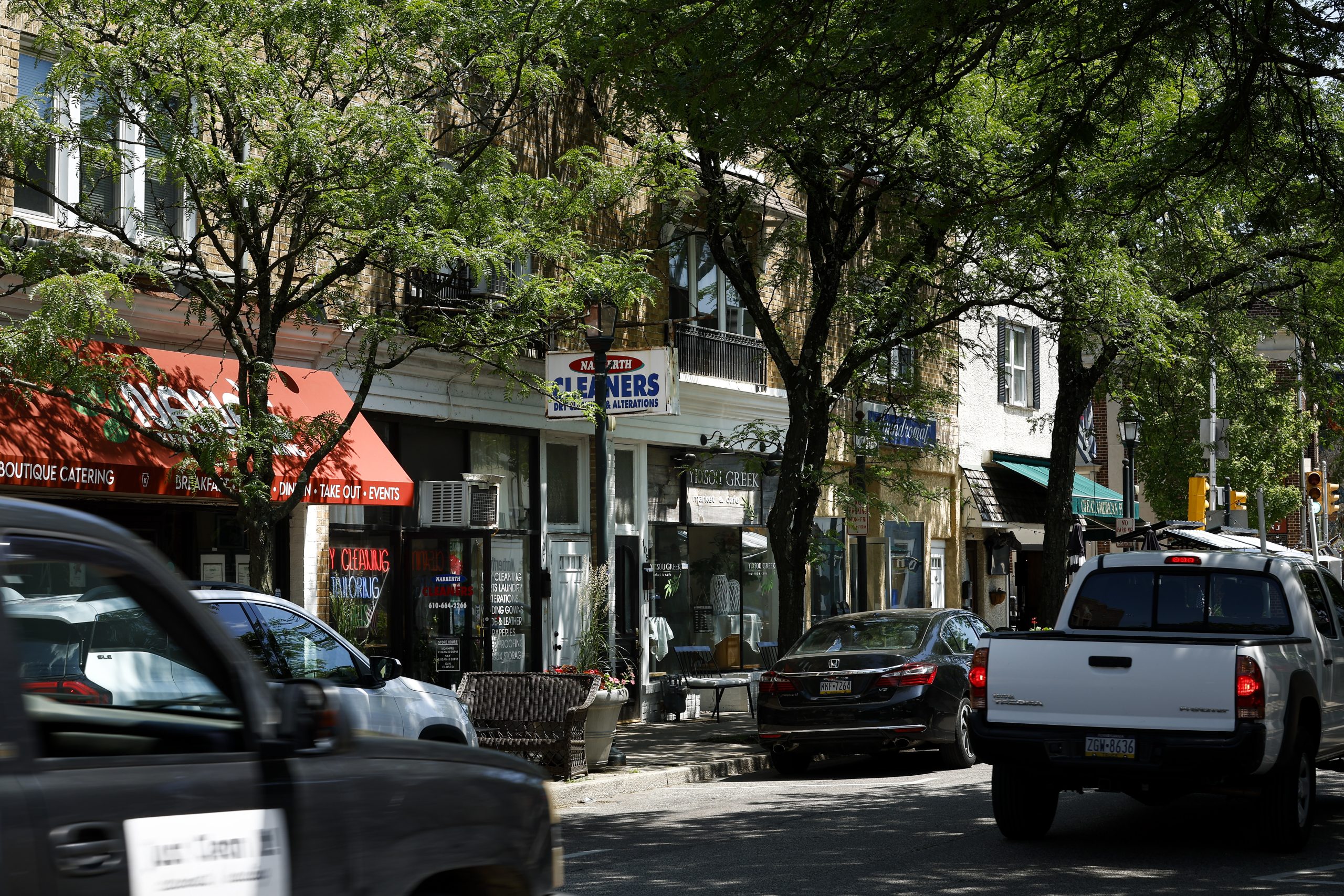
    Shops line North Narberth Avenue.Monica Herndon / Staff Photographer

    Rising costs, shrinking options

    In Narberth, and across the Philadelphia suburbs, the cost of housing is outpacing the ability of large segments of the population to afford it, said Scott France, executive director of the Montgomery County Planning Commission, which consults the borough on land-use issues.

    Narberth had the highest median housing sales price of any municipality in Montgomery County in 2024, at $751,000, a 70% increase from 2014.

    The average rent for a one-bedroom apartment in Narberth is $2,050 per month, according to Zillow rental data. As housing prices have risen, incomes have stayed largely stagnant. In 2024, 46% of renters and 19% of homeowners in Montgomery County were spending more than 30% of their income on housing, according to a Housing Blueprint recently published by the county.

    In Montgomery County, boroughs like Narberth were often the first point of entry for people looking to settle in the suburbs, France said, given their more urban-suburban feel and smaller lot sizes.

    Yet the factors that once made places like Narberth starter-home magnets have now made them increasingly inaccessible. As millennials have sought out premiums like walkability and transit access, the cost of both renting and homeownership in places like Narberth, Conshohocken, and Ambler has risen, France said.

    Montgomery County’s and Narberth’s housing woes are part of a well-documented housing shortage that has swept the United States, as a widening gulf between supply and demand has put homeownership further out of reach for many, especially for younger people.

    Some communities facing housing shortages have loosened zoning restrictions in order to court developers who are willing to build housing and, in certain cases, set aside affordable units in exchange for height and other bonuses. On the Main Line, luxury apartments have cropped up in large numbers, especially in areas where officials have used zoning to increase density.

    Fred Bush, president of Narberth’s borough council, said the county’s Housing Blueprint crystallizes why Narberth needs to ease its zoning regulations and incentivize development.

    “It’s very difficult for people who come in here — who are renting or who are looking to move in, young families — to find a place to stay,” Bush said.

    Narberth Borough Council President Fred Bush. Bush is part of a contingent of borough council members who see zoning changes as a key to increasing the availability of affordable housing in the borough.
    Monica Herndon / Staff Photographer

    ‘Is that what’s best for this area?’

    Narberth residents like Margot and Jason Deitz describe the push to rezone as confusing and misguided. The couple, both 40, have lived together in Narberth since 2020. Their house is near the Montgomery Avenue corridor, where changes are being considered.

    The Deitzes are among a large contingent who feel the proposals would complicate an already hairy parking situation, allow for buildings outside of Narberth’s quaint character, and tip the balance of the borough in favor of renter-occupied units. They feel the borough is putting the cart before the horse, trying to address national problems rather than the sidewalk repairs and parking shortages on their front steps.

    For Margot Deitz, the idea of building fewer parking spaces and asking residents to rely on SEPTA, a sometimes unreliable transit system, was confounding. Her questions to the borough council about parking went unanswered, she said. Both Margot and Jason Deitz wondered how, in a town with shuttered storefronts and parking problems, building new apartments became the council’s priority.

    Homeowner Michelle Karten, 52, went to a public meeting to ask questions about the proposals but felt the changes were a “foregone conclusion.”

    Karten said she hopes the borough can find a more “holistic” approach, rather than just allowing for the proliferation of luxury apartments. She believes the borough has already made a number of concessions to developers and does not need to offer density bonuses to get affordable housing.

    “Do we really need to go up that extra level? Is that what’s best for this area? And what other solutions could there be?” Karten said.

    Matt Patrick, 37, a homeowner in the borough since 2018, is “not against affordable units” but thinks the council is using the affordability crisis to push through incongruous density in spite of resident opposition.

    “It seems like more of a developer bonus than something aimed at conquering affordability,” Patrick said.

    Narberth’s SEPTA train station on the Paoli/Thorndale Line.Monica Herndon / Staff Photographer

    Luxury apartments’ “two truths problem”

    For others, the debates over parking requirements and maximum heights are a distraction from a looming reality: The national housing crisis has hit Narberth, and prices will only continue to rise without new inventory.

    Blessing Osazuwa, 28, thinks the changes are a “great idea.” Osazuwa grew up in Lower Merion and moved to Narberth three years ago. Her roommate’s family owns the house they live in, giving her a break on the rent that allows her to afford Narberth.

    “I love Narberth,” Osazuwa said. “I would love to stay, but there’s no way that I’ll be able to afford that on my own, and it’s a shame, because I feel like I contribute to the community.”

    Numerous residents said the conversation around zoning in Narberth has devolved into misconceptions and ad hominem attacks hurled from all sides, across public meeting forums and Facebook groups.

    Carswell said there is a misconception that Narberth and surrounding communities already have plenty of affordable apartments.

    Little exists in Carswell’s price range in or around Narberth. She has chased multiple “ghost” listings, reaching out to property managers only to find out listed units are occupied. She wants to stay in Narberth to provide consistency for her kids. When she explains her reality, she said, she is often told to just move somewhere else.

    Osazuwa said the refrain that those who cannot afford Narberth should simply move ignores a souring economic reality.

    “I tend to encounter that ‘pulling yourself up from the bootstraps’ mentality without regard to the times that we’re living in, without regard to inflation, without regard to the fact that jobs don’t pay as much,” she said.

    Advocates acknowledge that future development will likely rely on luxury rentals, many of which have popped up in neighboring communities like Ardmore and Bala Cynwyd and would be unaffordable to all but a wealthy set of renters. They believe, however, that any new housing units can help moderate the market, and even a few affordable units attached to the developments could provide housing for lower-income residents.

    “I agree that struggling families are not going to be moving into luxury apartments, but it just puts an overall downward pressure on rental prices for the rest of the market,” Bush said.

    Vincent Reina, a University of Pennsylvania professor and founder of the Housing Initiative at Penn, said there is “a two truths problem” when it comes to luxury apartments. High-end buildings do not fill the need for affordable housing. But, without new construction, existing prices can be pushed up even further as demand continues to outpace supply.

    “What you aren’t going to see is the natural market production of [low-cost] units because the price is too high,” he said. Without government incentives for affordable units, “the numbers just don’t pencil out.”

    Narberth Reel Cinemas. The borough is considering zoning changes that would increase density around its downtown core. JESSICA GRIFFIN / Staff Photographer

    Balancing ‘what should be complementary interests’

    The borough council has drafted comments to send back to the planning commission for consideration. The draft splits the difference on some issues, dropping the parking reduction and some height bonuses, but keeping other changes. It could be months before any changes are actually adopted.

    Council member Mike Salmanson said Narberth is trying to balance “complementary interests” in keeping the borough’s character while ensuring fiscal stability. Salmanson said the borough has maxed out how much it can charge in earned income tax. Because Pennsylvania does not require regular property reassessments, it is difficult for municipalities to collect the revenue they need without just raising tax rates.

    “Increased housing creates a broader tax base,” Salmanson said. “I see the advantages of that.”

    But he also called zoning changes that cater to current market conditions, and not the long-term success of the borough, “short-sighted.”

    Council member Cyndi Rickards believes the council has yet to meaningfully engage with incentivizing housing options beyond luxury apartments, such as reasonably priced ownership opportunities that would allow residents to build equity.

    “I really struggle to understand how those of us who own homes …
[see] luxury apartments as a tool for justice,” Rickards said.

    Carswell said she understands the concerns about zoning changes and was once opposed herself.

    “There is a deep fear, that I understand, that the good old days are slipping away,” Carswell said. “The good old days are gone. … The changes that happened to our economy on a national scale absolutely impacted Narberth.”

    This suburban content is produced with support from the Leslie Miller and Richard Worley Foundation and The Lenfest Institute for Journalism. Editorial content is created independently of the project donors. Gifts to support The Inquirer’s high-impact journalism can be made at inquirer.com/donate. A list of Lenfest Institute donors can be found at lenfestinstitute.org/supporters.