Cacia’s Bakery in Haddonfield appears to have closed its doors without any fanfare after two years in business.
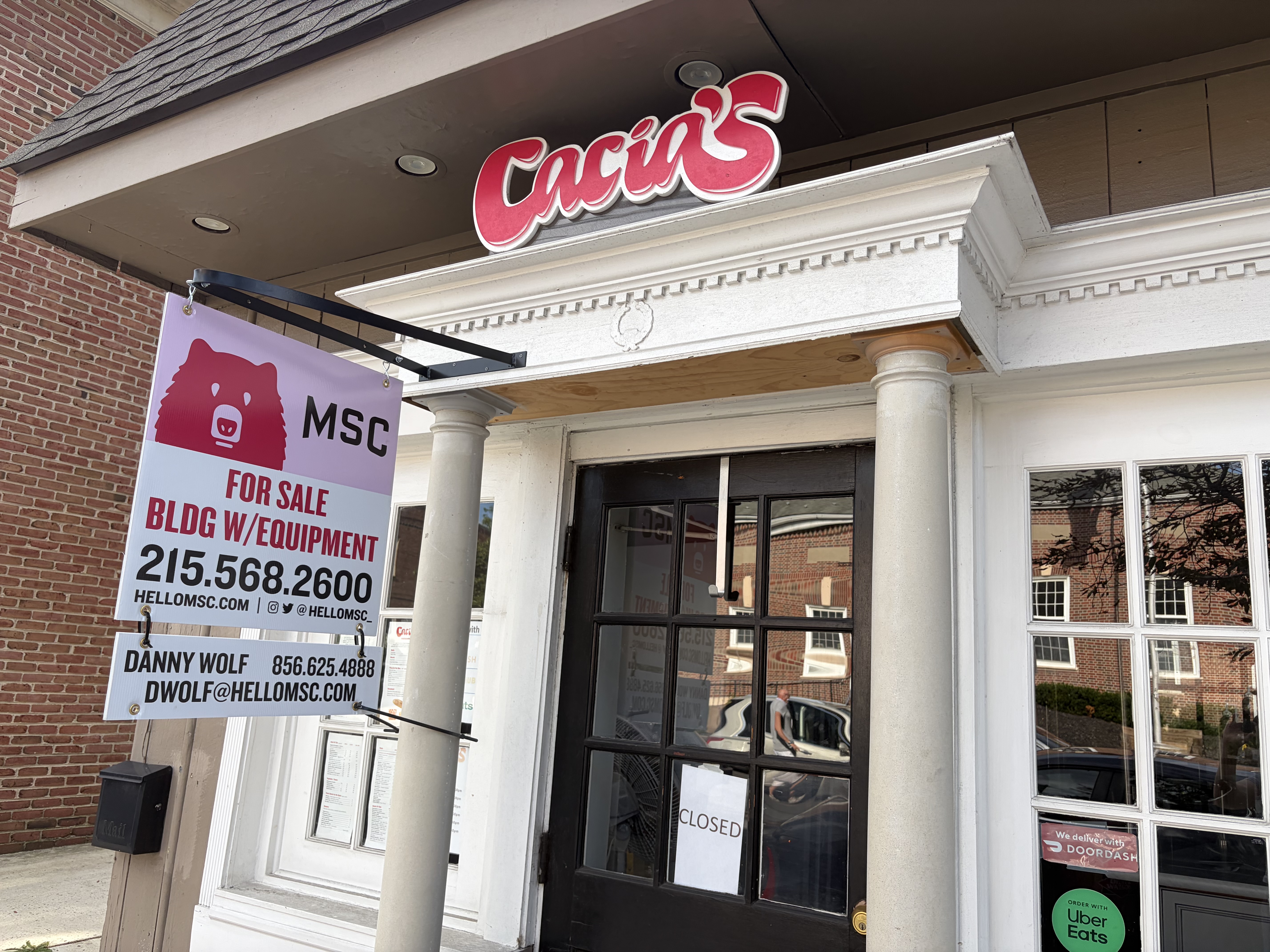
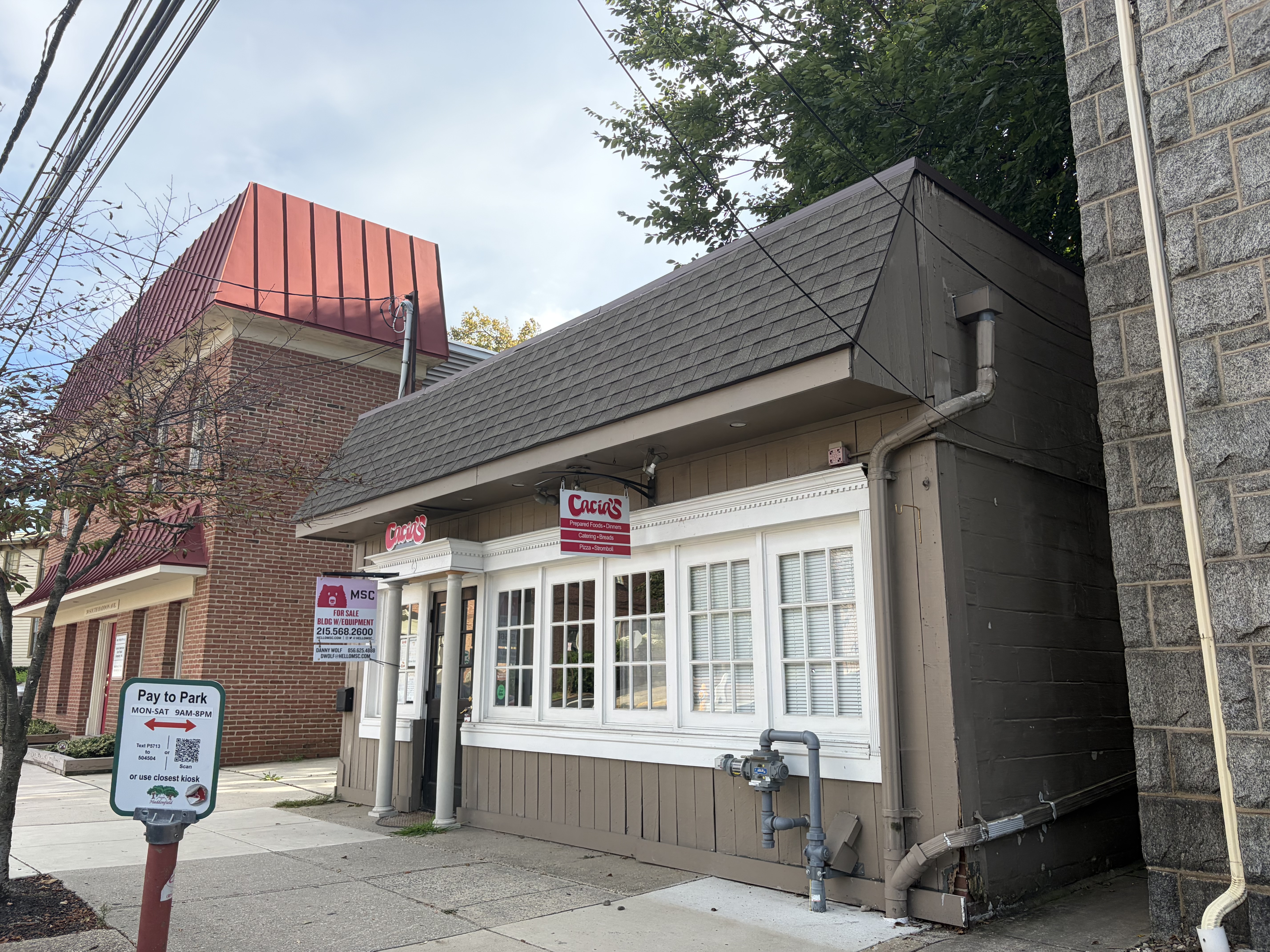
A “closed” sign has been posted on the front door of the Italian bakery at 26 S. Haddon Ave., and the store was dark during a visit last week. Another sign advertises the 1,100-square-foot building and the equipment inside for sale.
Cacia’s Bakery in Haddonfield has not made any public announcement about the closure, nor has the business responded to calls or emails requesting comment.
Leonard Guerriero, who owns the Haddonfield Cacia’s, according to deed records, also did not return requests for comment on why the bakery closed.
But the Cacia’s name has expanded across South Jersey over the years, with current spots in Williamstown, Cherry Hill, and Hammonton that sell Italian bread, strombolis, hoagies, cannoli, and more.
Sam Cacia, a third-generation owner of the South Philly location, said his family taught Guerriero how to bake before he became the private owner of the Cherry Hill and Haddonfield locations.
Cacia said the closure in Haddonfield was due in part to the tough parking situation and competition with sit-down restaurants downtown.
“When you ride around the block looking for a spot, it becomes a bit of a challenge. It just came to, like, there wasn’t enough demand,” Cacia said. “It’s a shame. [He] tried to bring the product to a different set of people and it didn’t work that way.”
Guerriero and co-owner Steven Santore opened the downtown Haddonfield bakery in the summer of 2024, NJ Pen reported, after their Audubon location was demolished by the New Jersey Department of Environmental Protection due to groundwater contamination. The bakery was across the street from the Haddonfield post office.
The pair purchased the Haddonfield property for $375,000 in 2023, according to deed records, from the owners of Spice C, a noodle joint in Chinatown.
The storefront previously occuped by Cacia’s in Haddonfield is now on the market.Sarah Nicell
MSC, a Philly-based real estate brokerage firm, is managing the property sale. Danny Wolf, senior vice president at MSC, said the property hit the market in August and is listed for $495,000. The price includes the equipment inside the bakery, including a double Blodgett pizza oven.
Wolf said the property already has potential buyers, though he declined to provide further details.
Bomb Bomb Bar, the old-time South Philadelphia tavern revived last year by chef Joey Baldino, has been named to the New York Times’ 2026 list of the best restaurants in America — Philadelphia’s only entry this year.
The city placed two restaurants — Mawn and Meetinghouse — on the list last year, Little Walter’s in 2024, and three — El Chingón, Kalaya, and My Loup — in 2023. Previous Philadelphia-area selections include Andiario, Gabriella’s Vietnam, Down North Pizza, Laser Wolf, and the now-closed Korshak Bagels.
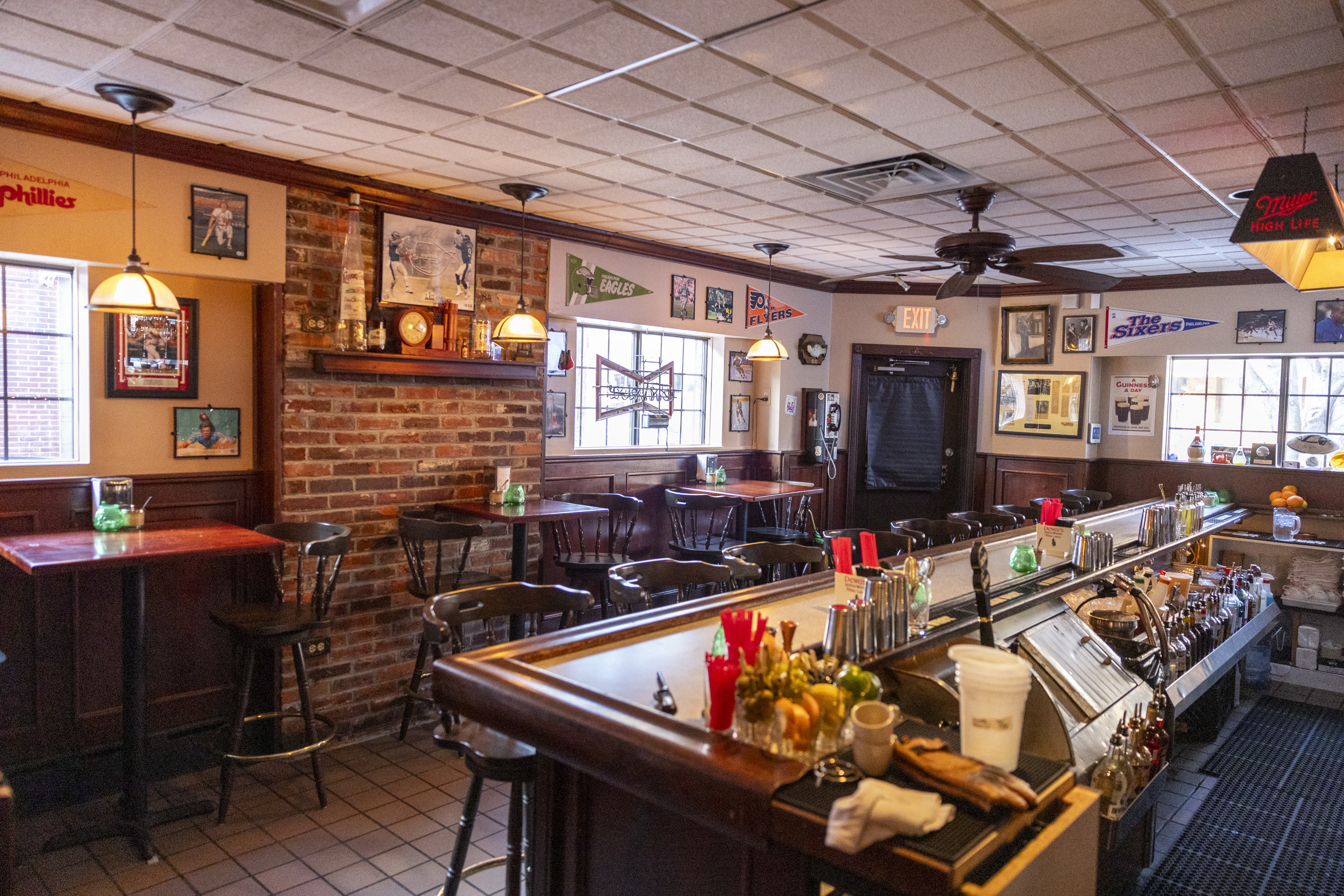
The front bar area of Bomb Bomb Bar.Tyger Williams / Staff Photographer
The Times praised Baldino’s ability to bridge old-school and contemporary red-sauce Italian cooking, describing him as a “singular talent” in the genre.
Baldino also owns Palizzi Social Club in Passyunk Square — itself a lovingly restored South Philly institution — and Zeppoli, a 35-seat BYOB in Collingswood.
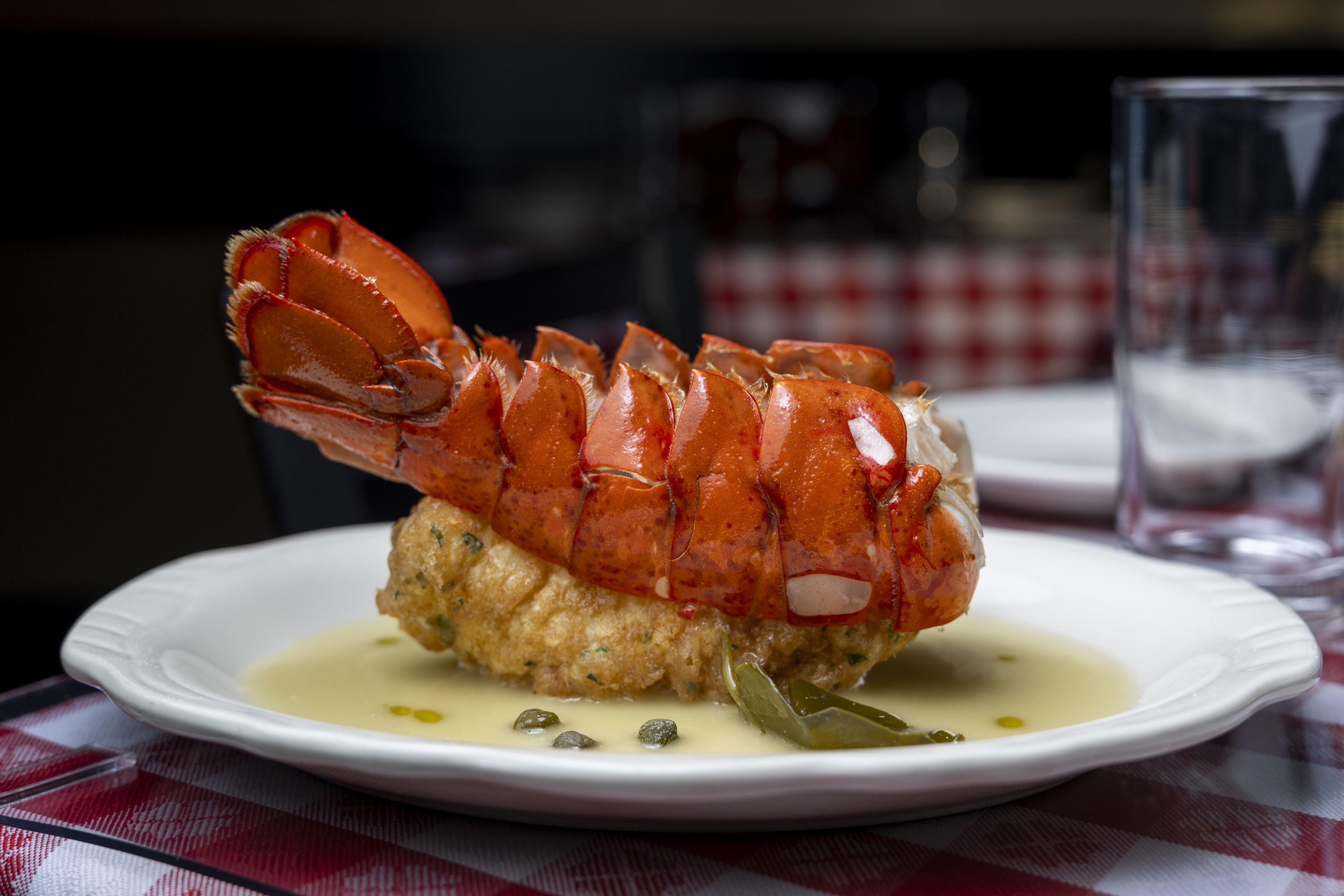
Bomb Bomb still looks much like the Lower Moyamensing neighborhood bar it has long been, but the Times said its stuffed calamari, mussels fra diavolo, and lobster francese reveal the transformation. It called those dishes “as poetically reverent as a heartfelt eulogy” and summed up the experience as finding a remembered neighborhood joint “better than ever.”
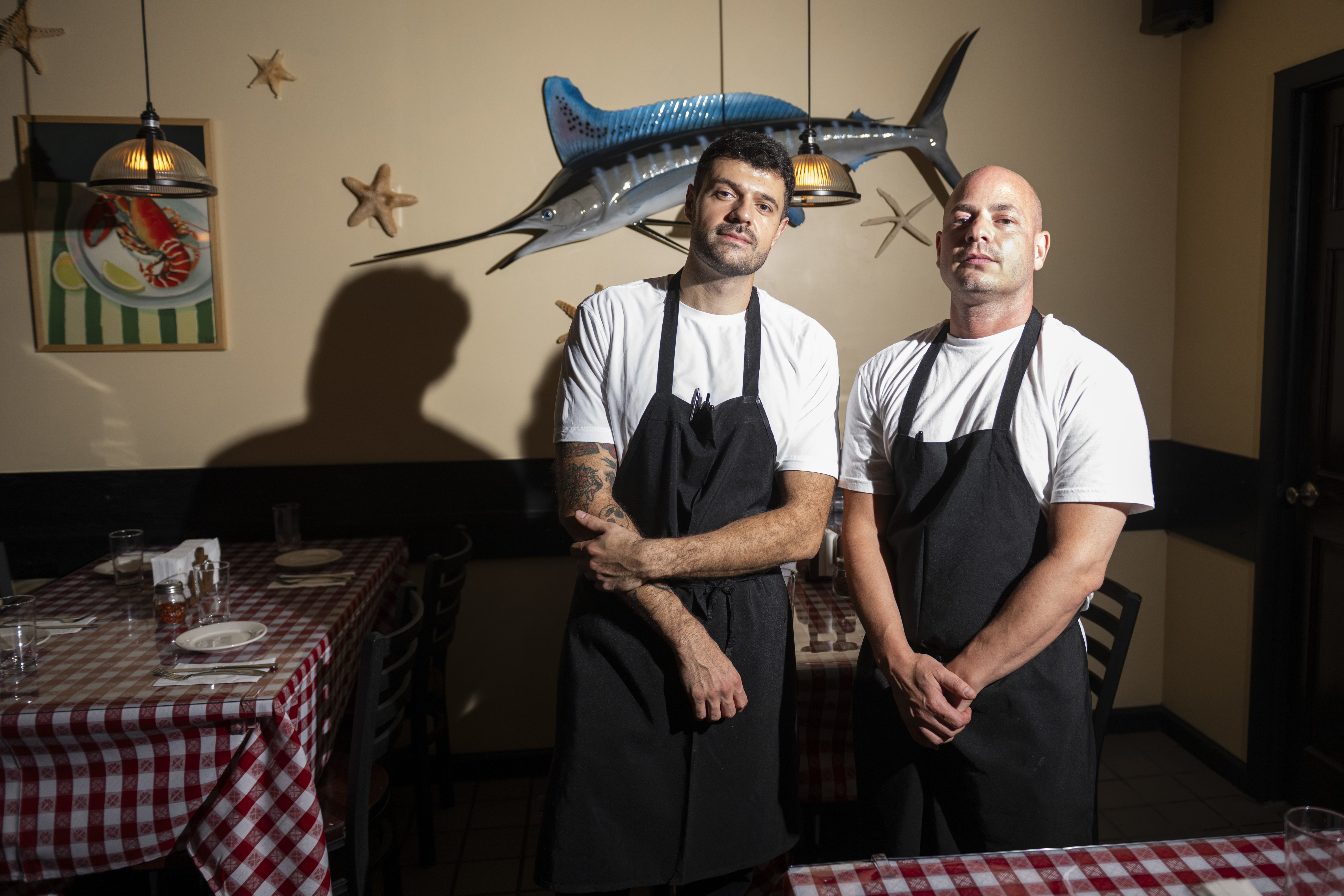
Bomb Bomb Bar owner Joey Baldino (right) with chef de cuisine Max Hachey in the dining room.Allie Ippolito / For The Inquirer
That assessment echoes Inquirer critic Craig LaBan’s February review, in which he called Baldino “Italian South Philly’s culinary preservationist-in-chief” and praised him for retaining Bomb Bomb’s essential character while elevating its seafood cooking and drinks.
Bomb Bomb’s rear dining room offers a $65 fixed-price menu, while the front bar is more casual. LaBan particularly admired the mussels fra diavolo — among the best versions he had eaten — along with the lobster francese, stuffed calamari, crab cakes, and black-ink spaghetti. Inquirer staffers later singled out Bomb Bomb’s crab cake and lobster shells among their best dishes of the week.
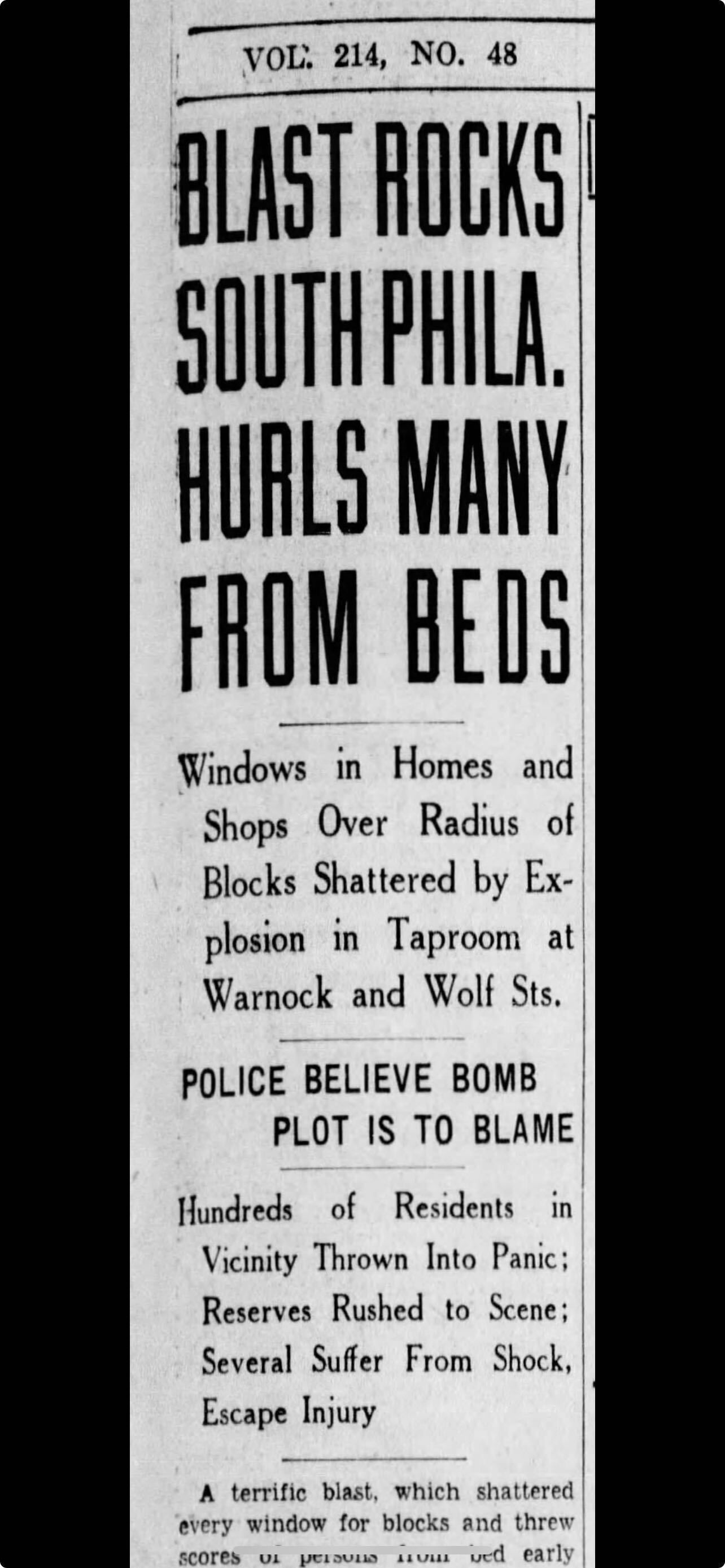
The acclaim adds another chapter to a South Philly institution with an unusually colorful back story. As The Inquirer reported in 2024, it dates from 1936, when a chef left his job at a South Philadelphia bar and grill to work at Bob’s, a new bar at 1026 Wolf St. His former boss ordered him to return. When the chef refused, Bob’s was firebombed in the middle of the night. No one was injured, but the blast shattered windows and “rocked houses to their foundations,” as a news article reported.
The Inquirer’s front-page story on Feb. 17, 1936, of a firebombing on the future site of Bomb Bomb Bar.Inquirer archives
When the chef rebuffed his former boss again, a second bomb went off. This time, according to lore, the chef returned to his old job.
By the time Frank Barbato Sr. bought Bob’s in 1951, everybody just called it the Bomb Bomb. Barbato began a 73-year family run built around seafood and red-gravy dishes and, later, barbecue, which was added to help the restaurant stand out. His son Frank Jr. and daughter-in-law, Deb, eventually took over.
The couple retired in late 2024, and Baldino bought the business in early 2025. He reopened it that October after a deliberately restrained renovation.
Reached by text Tuesday, Baldino called the Times recognition a “huge honor” and praised his staff, including chef de cuisine Max Hachey and manager Jack Kearney.
“We may have been blown up twice but we’re still cranking out some great food,” he wrote, adding two bomb emojis.
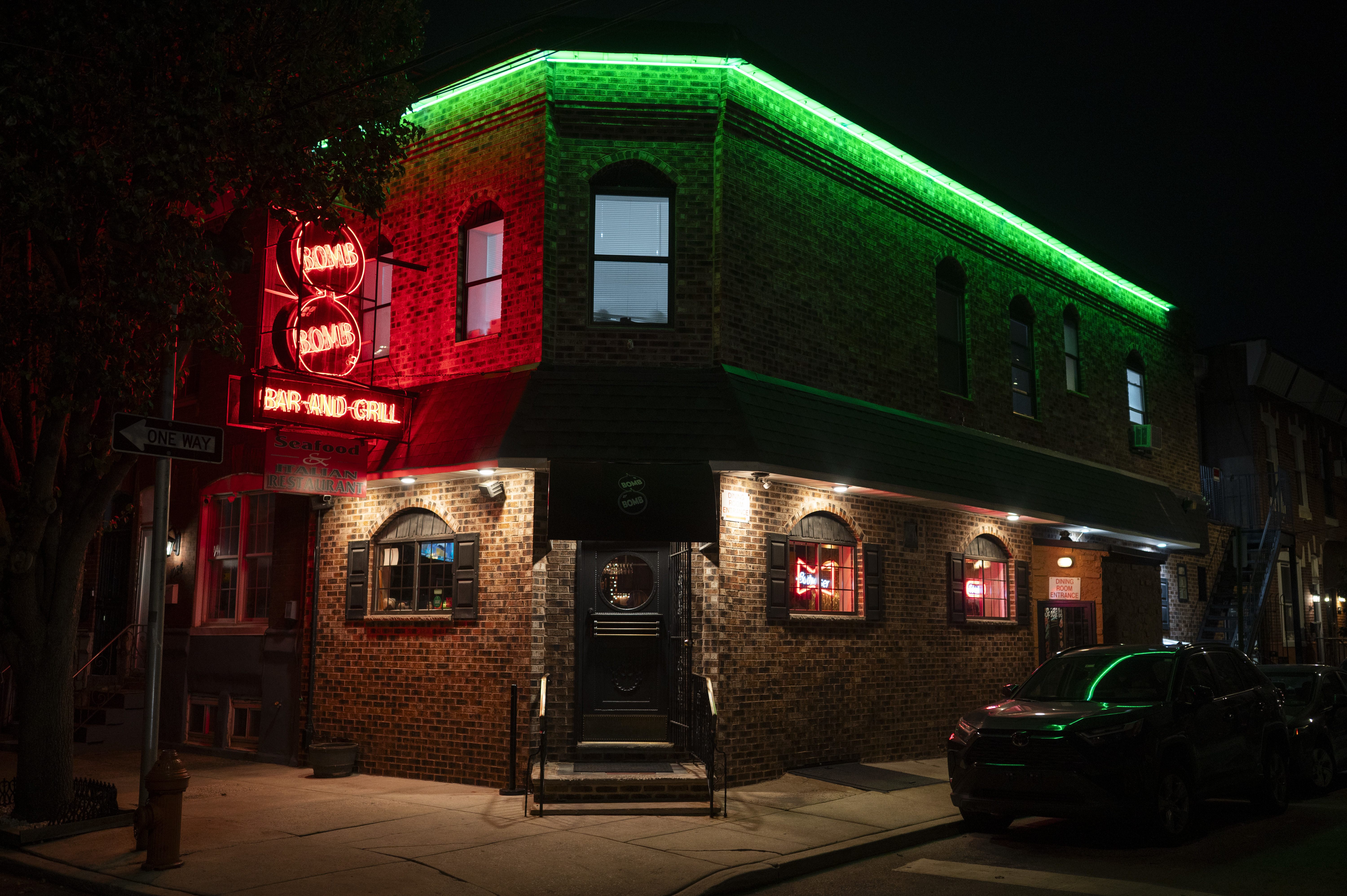
Bomb Bomb Bar at Warnock and Wolf Streets in South Philadelphia.Allie Ippolito / For The Inquirer
The vintage and collectible cars stacked behind glass at Fishtown’s new Cannonball club may be the obvious attraction, but founder Chris Allen thinks people need another reason to stick around — and, more important, to come back.
That’s where the focaccia sandwiches come in.
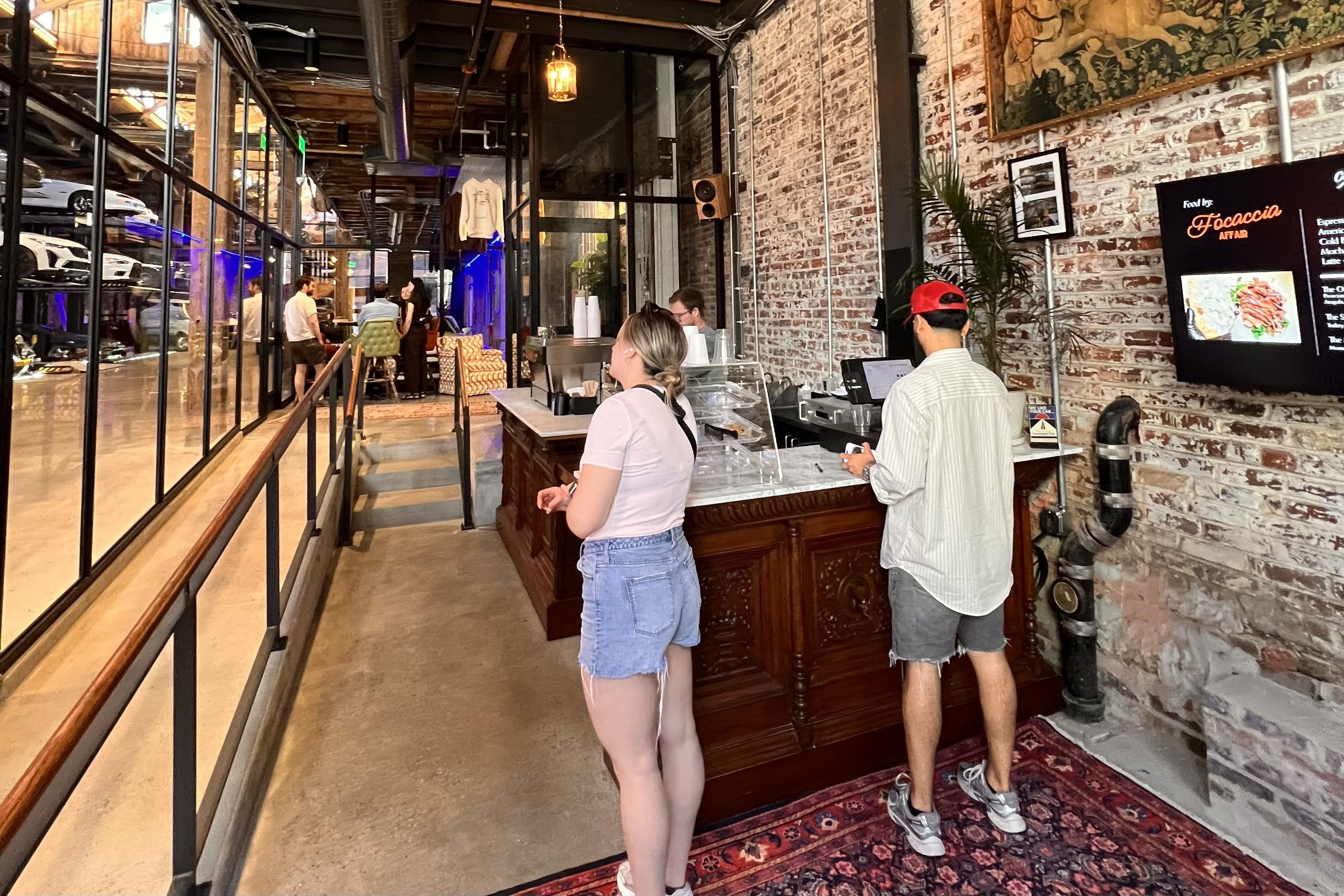
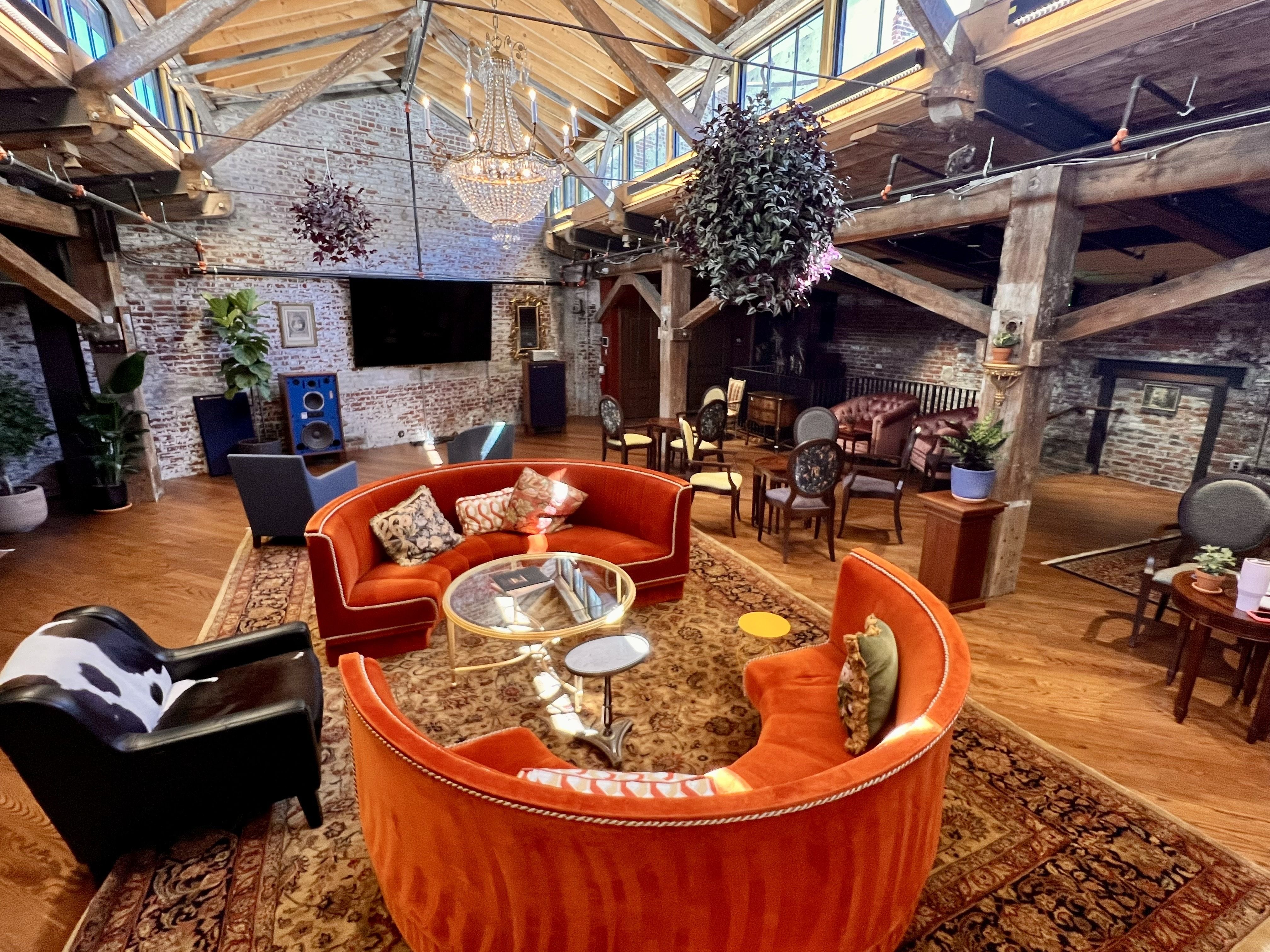
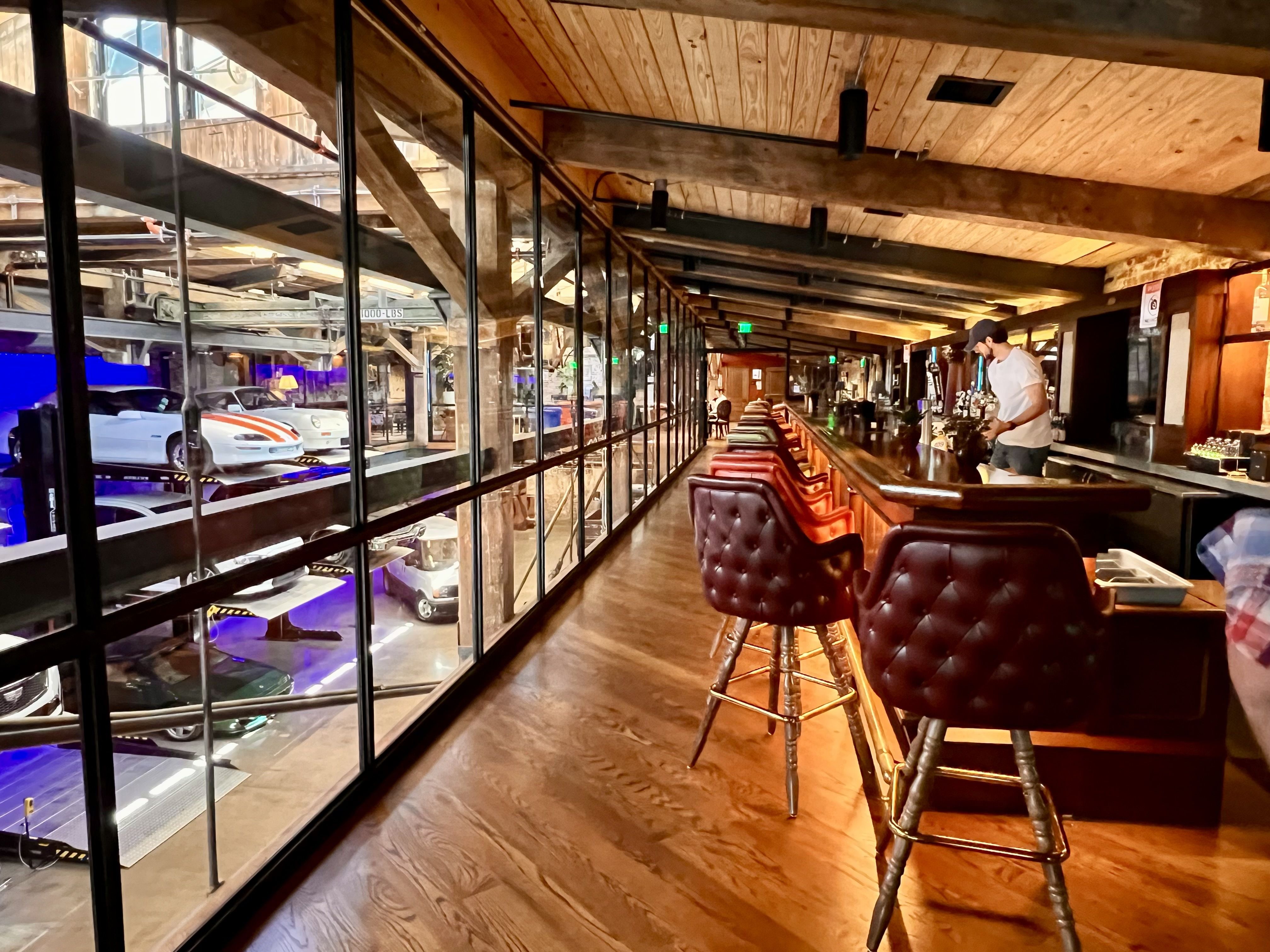
Cannonball, the new private club for car enthusiastsnear the Fillmore, has brought in Focaccia Affair — a fledgling business from Anthony Santucci and Gianluca Mazzarelli — to run its food operations. The club, housed in the sprawling former Morse Elevator Works at 1105 Frankford Ave., combines car storage with social and coworking space, a bar, and a public-facing cafe where you can gawk at classic cars through the window while sipping espresso.
Focaccia Affair’s cafe at Cannonball serves walk-ins.Michael Klein / Staff
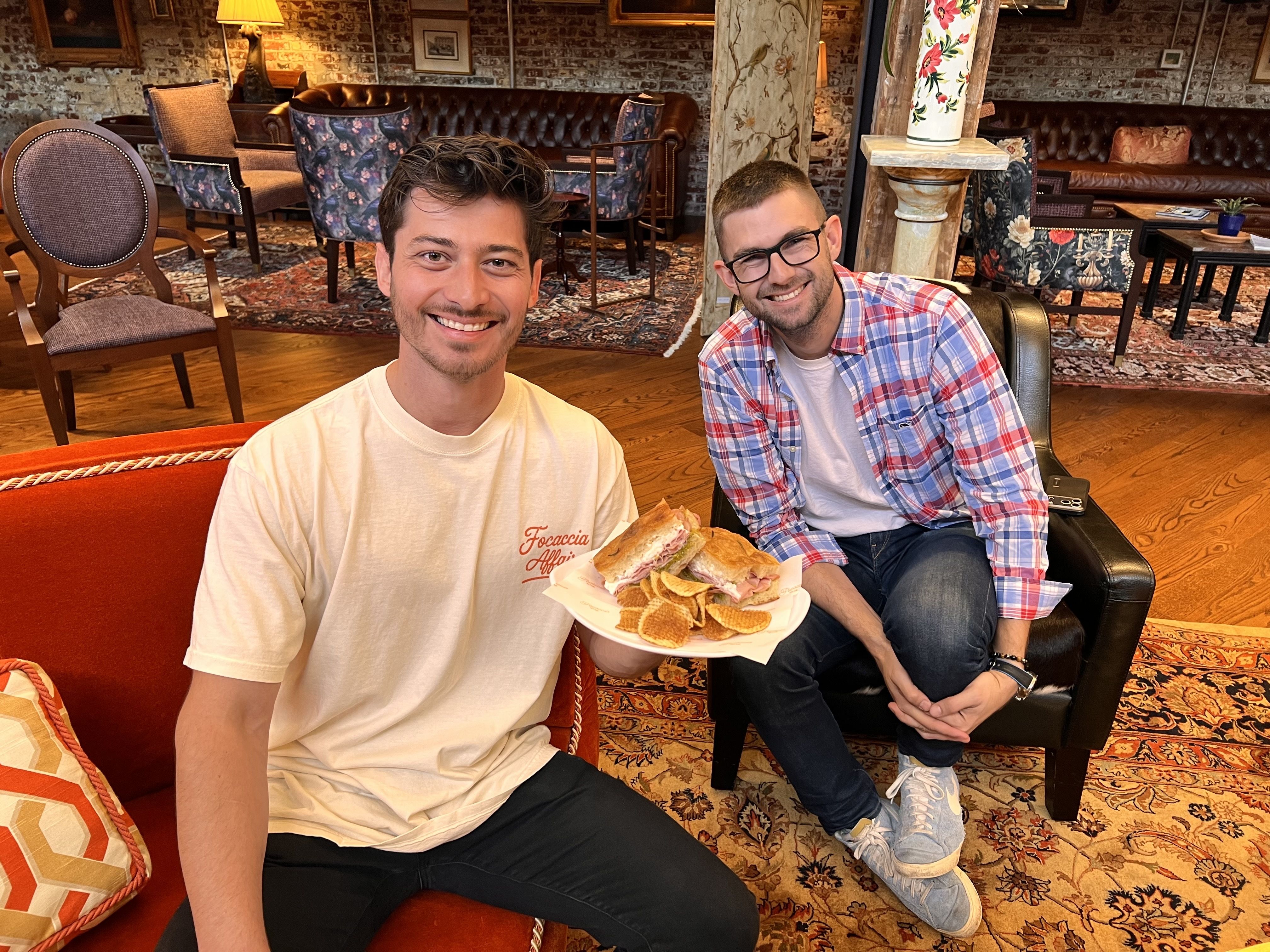
The cafe, open to anyone, is where Santucci’s focaccia sandwiches take center stage. He’s offering two sandwiches, plus cookies and coffee, to start.
Santucci, whose family operates Santucci’s Original Square Pizza, developed the bread after moving to San Diego before the pandemic. He had initially considered expanding his family’s pizza business there but began experimenting with focaccia as table bread and as a possible addition to the pizza operation.
The experiment eventually became something else.
Santucci and Mazzarelli, a former VIP manager at Barstool on Sansom Street, were friends whose common bonds include hockey and Italian food. After Santucci returned from a 2024 trip to Italy raving about a focaccia sandwich he had eaten, the two made one using the recipe he had been developing.
Focaccia Affair’s Anthony Santucci (left) and Cannonball founder Christopher Allen in the mezzanine seating area.Michael Klein / Staff
Focaccia Affair grew from there, although quietly. Santucci and Mazzarelli started testing the sandwiches over the last year through small catering orders and by dropping off food for restaurant staffs around Philadelphia.
The business is now making its formal debut on two fronts: at Cannonball, where it’s open daily, and at Barstool Sansom Street in Washington Square West. The Barstool menu, which started Thursday, is more extensive than Cannonball’s: six focaccia sandwiches, crostini (on focaccia), burgers on brioche buns, salads, and appetizers.
Santucci said the bread — which took months of development — is baked after a 48-hour cold fermentation. The result is focaccia with a crispy crust and fruity olive oil flavor. Its sturdy interior holds up to substantial fillings without turning the sandwich into a sloppy mess.
Seating on the mezzanine at Cannonball, 1105 Frankford Ave.Michael Klein / Staff
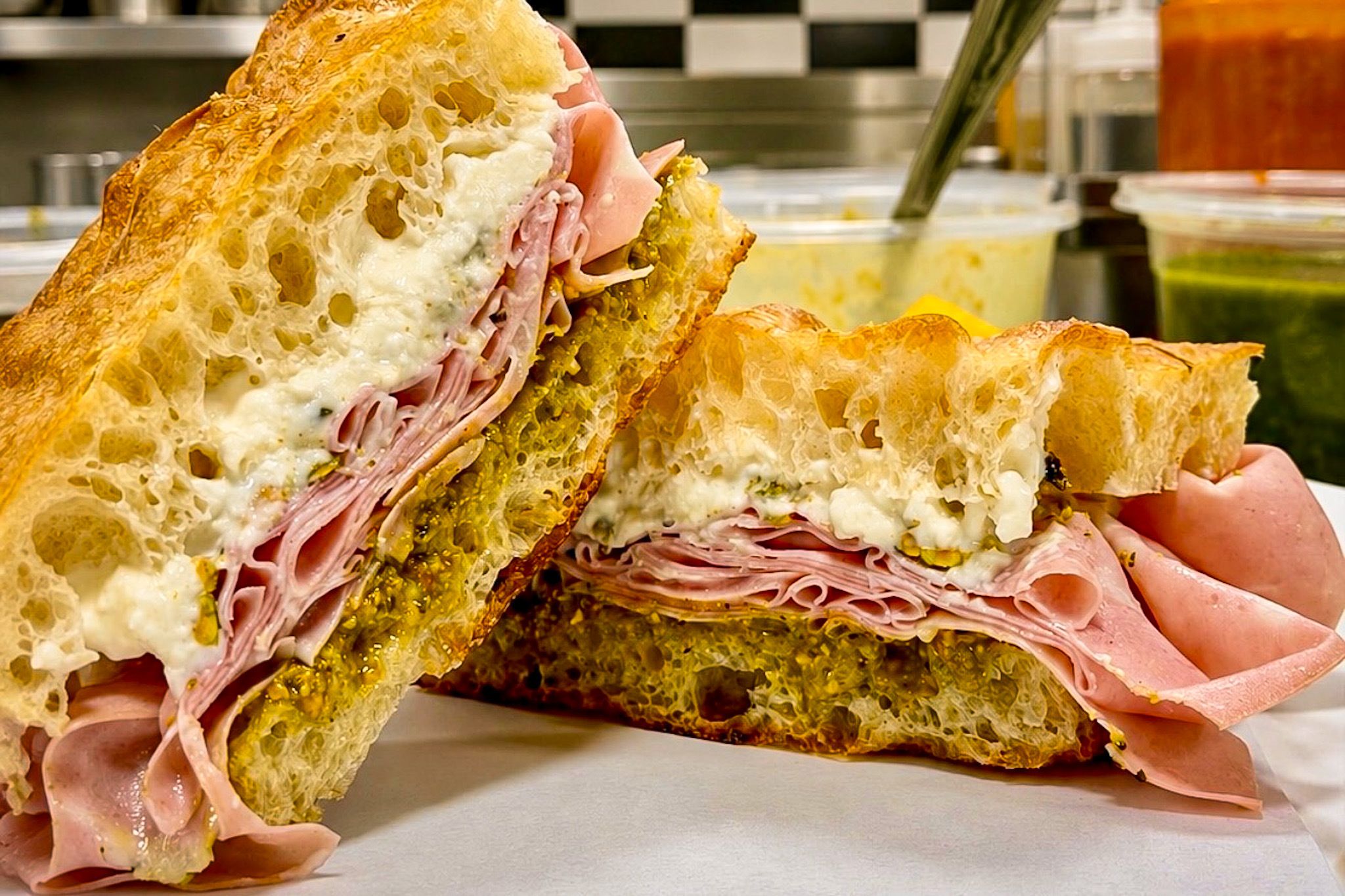
Cannonball’s cafe will generally offer two or three focaccia sandwiches at a time, rotating them seasonally. Currently, the Muse combines mortadella and stracciatella, a pairing that puts the bread’s structure to good use. (It also survives a test that many sandwiches do not: refrigeration. Gently reheated in a toaster oven the next day, I found the bread just as good.) The Situationship layers sliced turkey, goat cheese, arugula, and fig jam between focaccia, the jam’s sweetness playing against the peppery greens and tangy cheese.
Santucci has begun developing breakfast versions; the first combines soft-scrambled eggs and bacon with house-made Calabrian chile-infused hot honey. Pastries are being developed, too, including a pumpkin cinnamon roll with brown-butter icing.
Cannonball’s members-only bar overlooks the car storage.Michael Klein / Staff
Focaccia Affair also oversees food for Cannonball members and their guests upstairs. Dinner starts at 4 p.m. daily with a six- to eight-item menu modeled on Italian aperitivo culture: smaller dishes designed for sharing rather than conventional entrées. Fresh pastas and additional desserts are expected to join the menu in October.
Allen said food was essential to his plan for Cannonball, because even a spectacular collection of automobiles has limits as a daily attraction.
“You can visit the most amazing car collection in the world, but after 15 or 20 minutes, you want to sit down, have a coffee, and eat a sandwich,” he said. “Most of all, you want a reason to come back tomorrow.”
Focaccia Affair, 1105 Frankford Ave., instagram.com/focaccia_affair. Hours: 6:30 a.m. to 3 p.m. weekdays; 8 a.m. until roughly 3:30 or 4 p.m. weekends.
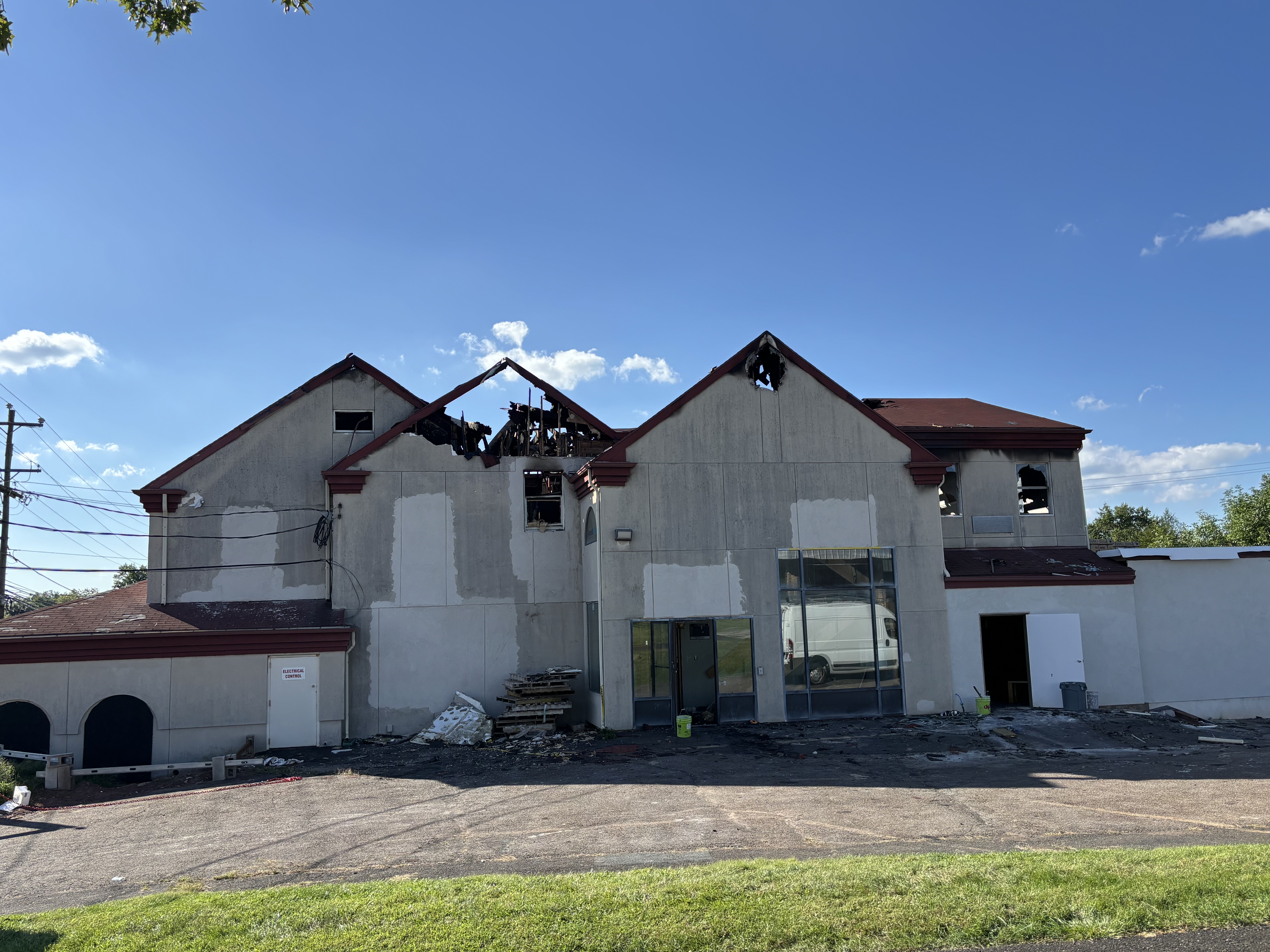
The dining tables were already inside the East Norriton building where the owners of White Yak Restaurant planned a second location when a fire ripped through the roof earlier this month.
Chef-owner Treley Parshingtsang’s husband, a contractor by trade, made the tables by hand. The couple was about six weeks from opening what would have been Montgomery County’s only Tibetan restaurant.
“I have so many packages that my brother shipped all the way from Tibet for the decorations,” she said through tears.
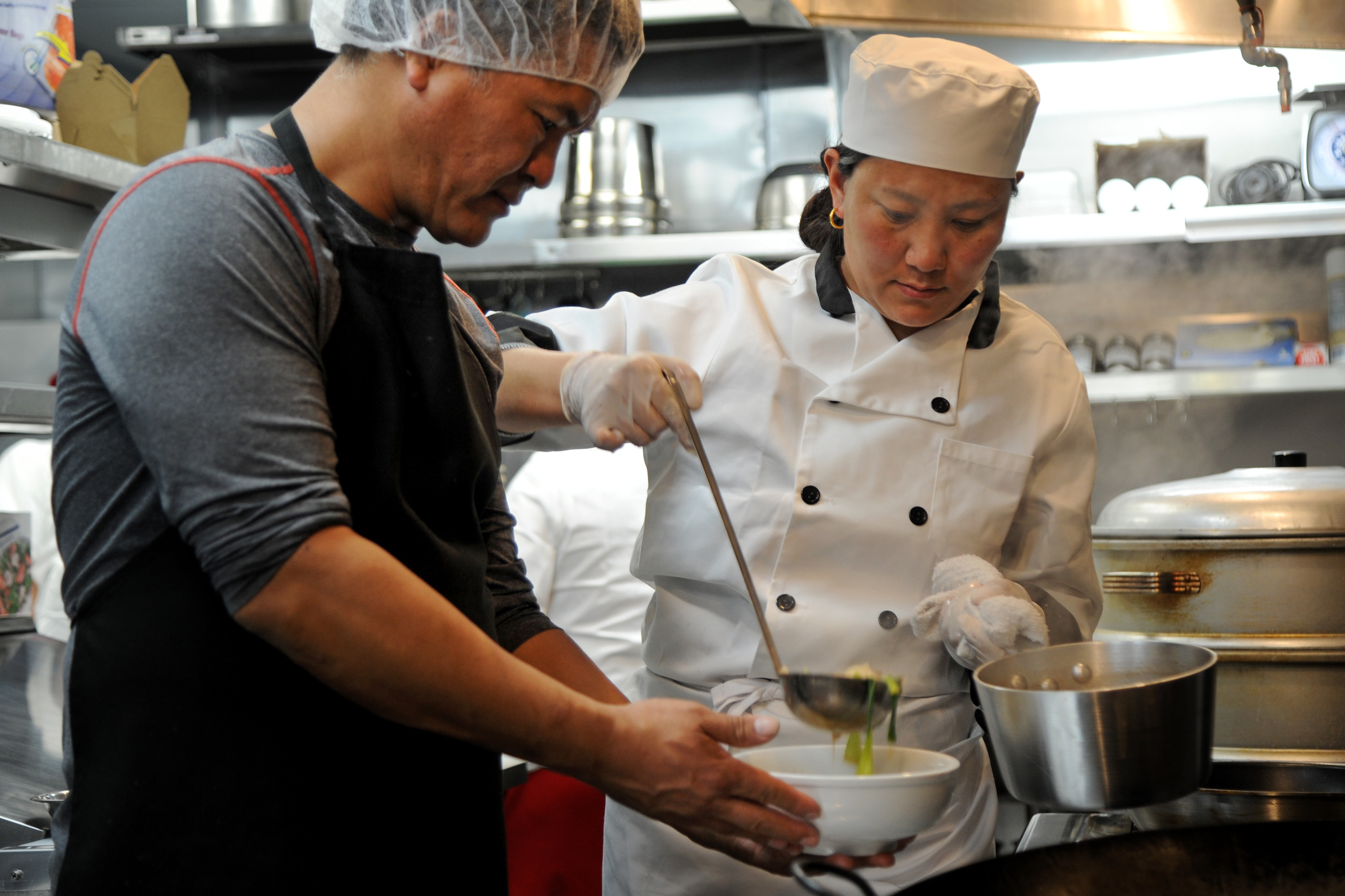
White Yak Restaurant’s Roxborough location has drawn a loyal following and criticalacclaim for its spicy momo dumplings, hand-ripped noodles, and house-made sausage. It’s been a regular on The Inquirer’s 76 best restaurants in the region.
Co-owners Tsering Parshingtsang (left) and Treley Parshingtsang spoon out Thenthuk soup with beef and hand-ripped noodles at White Yak, the Himalayan Tibetan restaurant in Roxborough Nov. 26, 2019.TOM GRALISH / Staff Photographer
Opening the first restaurant, at 6118 Ridge Ave., took six and a half years of work, Parshingtsang said, and her family had been working on the East Norriton location for four. The couple bought the building in 2021, property records show.
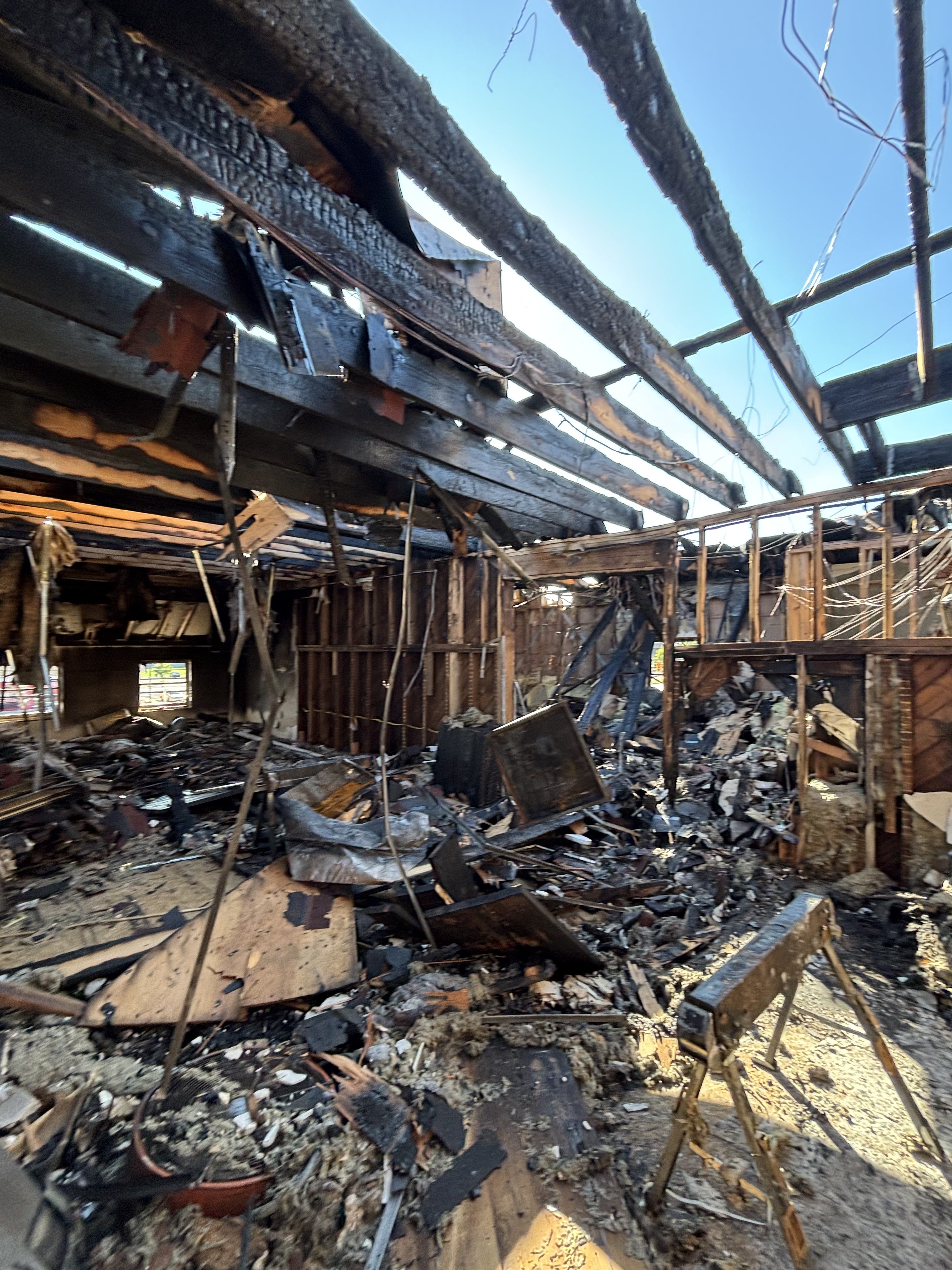
The fire broke out Sept. 5 at the 123 W.Germantown Pike building, White Yak Restaurant wrote on social media last week. Images show flames pouring from the roof of the 6,000-square-foot structure across from Friendly’s.
Though insurance and fire inspectors have surveyed the damage, the cause of the fire is still unknown, Parshingtsang said in an interview. The electricity wasn’t turned on, and the doors were locked.
The top floor of 123 W. Germantown Pike, razed by fire on Sept. 5, 2026.Tsering Parshingtsang
Parshingtsang is hopeful they can save the basement and first floor, but she’s worried about the rain pouring in from the open roof.
“That building is very special for us,” she said. “We have a lot of memories.”
The news drew messages of support, including from Montgomery County Commissioner Neil Makhija.
“[I] was so excited to welcome the White Yak Restaurant,” Makhija wrote on social media. “Their Roxborough restaurant is a favorite for our family.”
It’s too early to tell when White Yak will be ready to resume expansion plans, Parshingtsang said, but her family wrote in a statement on the restaurant’s social media page that they’re determined to move forward: “The building may be gone, but our dream is not.”
This suburban content is produced with support from the Leslie Miller and Richard Worley Foundation and The Lenfest Institute for Journalism. Editorial content is created independently of the project donors. Gifts to support The Inquirer’s high-impact journalism can be made at inquirer.com/donate. A list of Lenfest Institute donors can be found at lenfestinstitute.org/supporters.
Butter chicken has taken an indirect route to South Street’s Pronto Pizza: from its roots in North India to a Pakistani family kitchen in Northeast Philadelphia, then into an Italian American pizza shop and, finally, onto a roll.
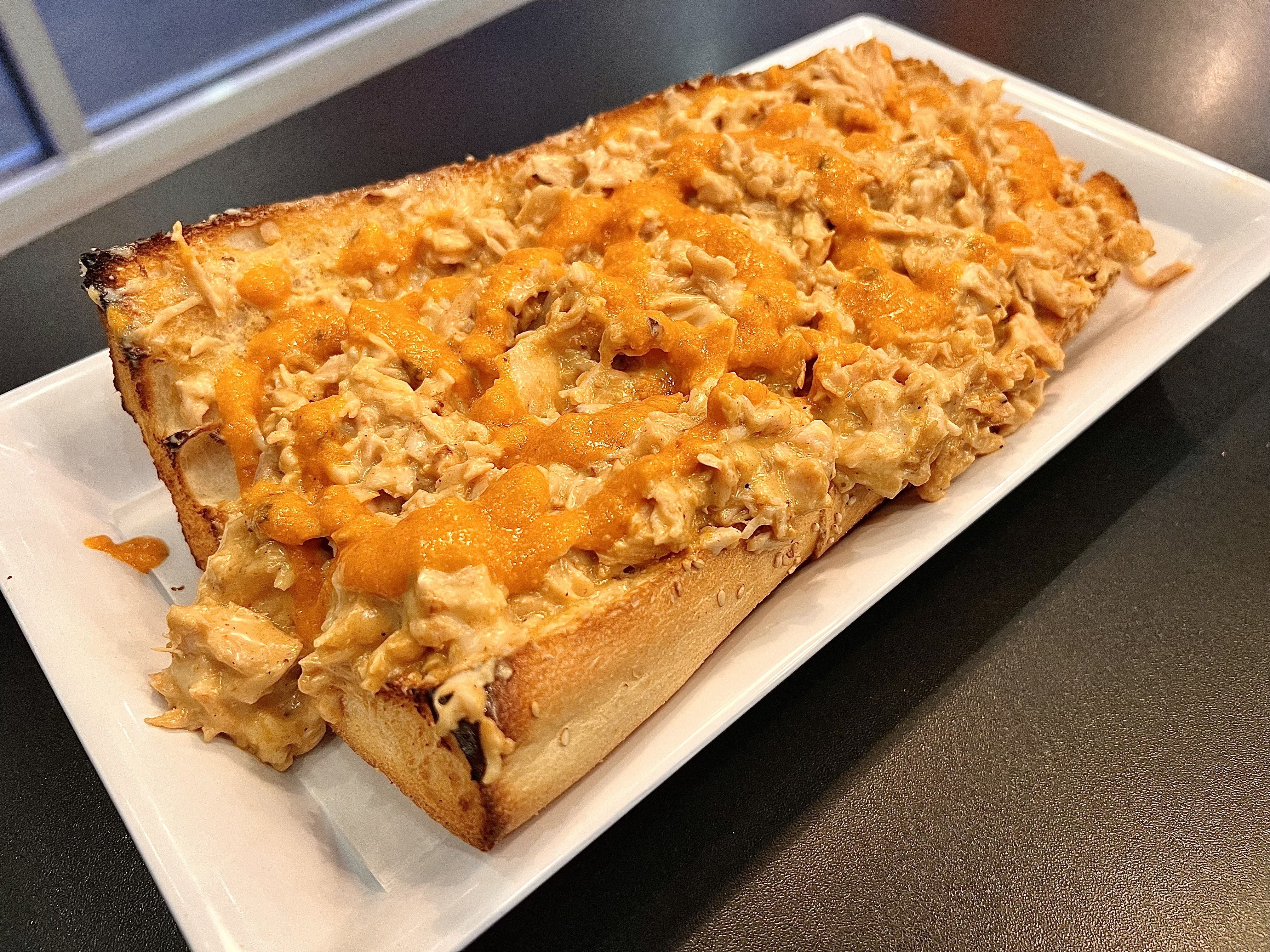
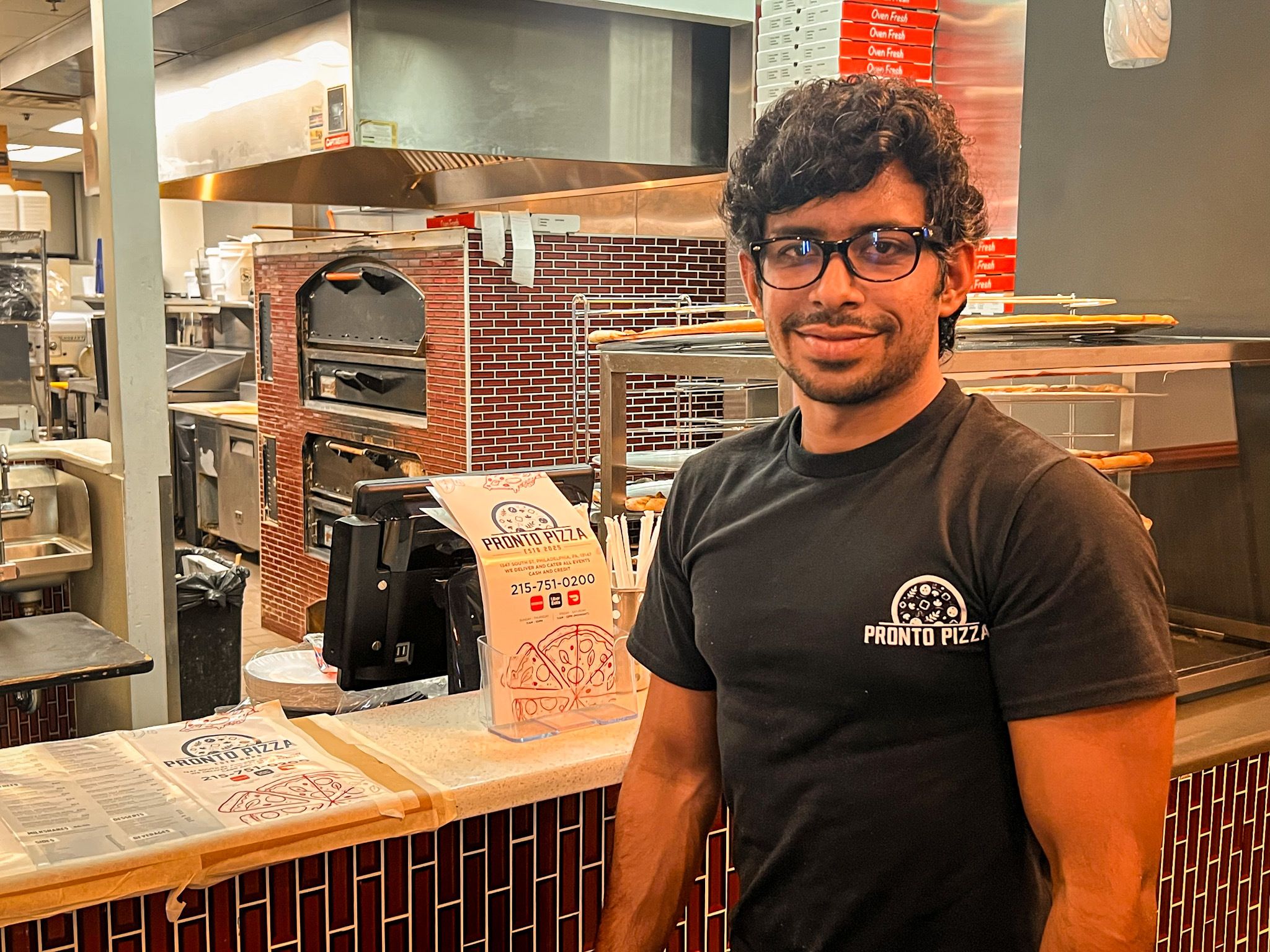
At Pronto, just off Broad Street, it’s a secret menu item. Owner Umair Cheema tops chopped marinated chicken with Cooper Sharp and butter chicken sauce based on his mother Asma’s recipe. The $12 sandwich is Cheema’s addition to a citywide assortment of cheesesteak variations that includes versions made with oxtail and salmon.
Cheema does not skimp. He lightly toasts the Liscio’s roll before adding nearly a pound of a mixture of chicken and melted cheese. Then comes a ladle or two of the rich butter sauce, which comes perilously close to gilding the lily.
Umair Cheema owns Pronto Pizza, 1347 South St., which previously was LaScala’s Pronto.Michael Klein / Staff
Cheema, 28, had eaten plenty of butter chicken in Pakistan, but he credits his younger brother, Adil, with inspiring Pronto’s version. After the family moved to Northeast Philadelphia in 2019, Adil routinely asked their mother to cook for him.
“One day my mom made butter chicken, and I was like, ‘Mom, this is outstanding. This is the kind of butter chicken I eat at restaurants,’” Cheema said.
A staple entree on Indian restaurant menus in the United States, butter chicken typically features yogurt-marinated chicken in a mild, creamy tomato sauce seasoned with onions, garlic, and spices such as garam masala, turmeric, cumin, and coriander. The dish has proved adaptable to other formats. Chef Reuben Asaram, for example, has incorporated it into his Mexican-Indian “Reubychanga.”
Pronto is also not the area’s only shop making a butter chicken cheesesteak. Double Down Kitchen at Ridge Hall in Ambler serves one alongside versions made with jerk chicken and bulgogi-marinated rib-eye.
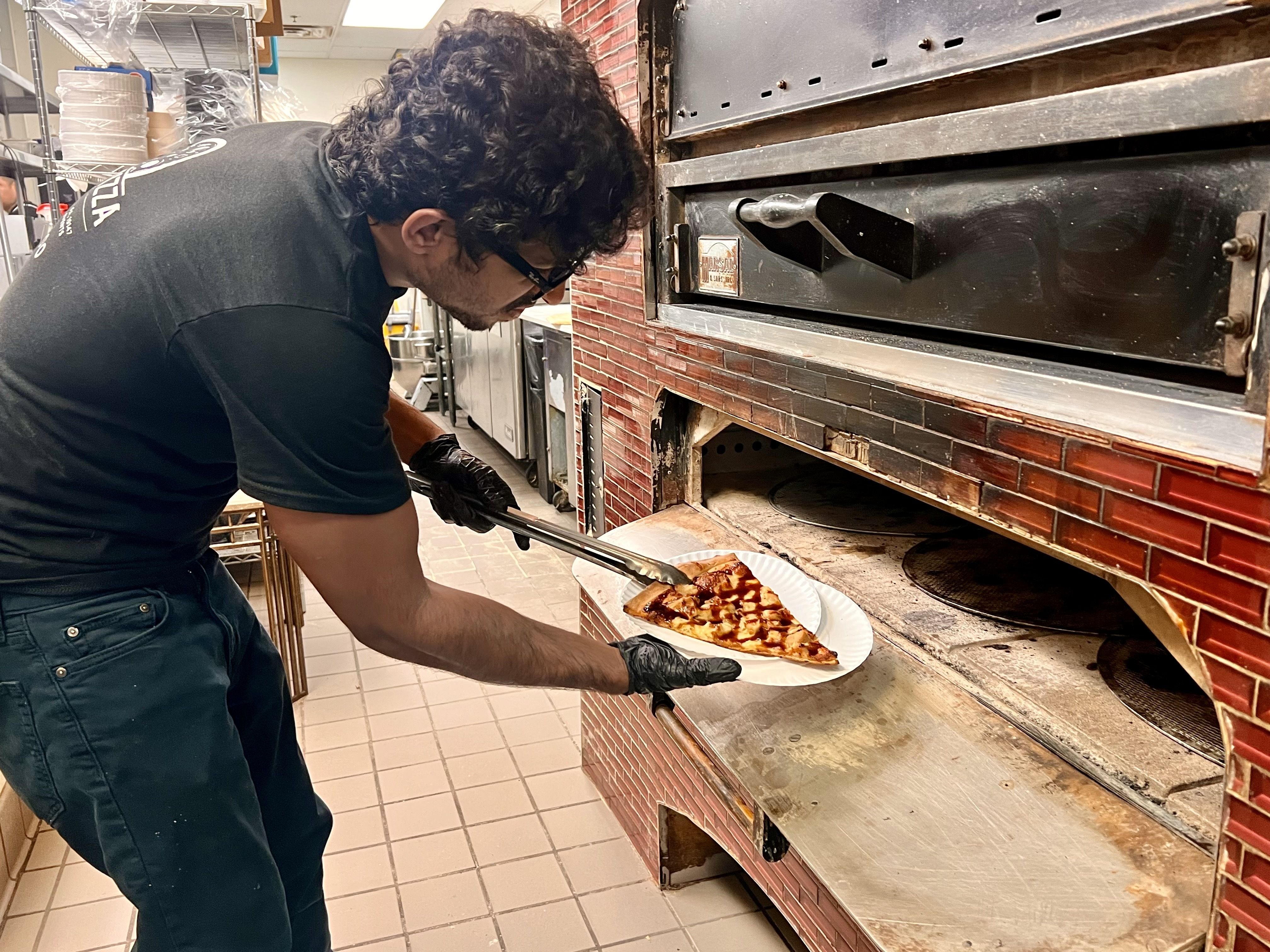
Owner Umair Cheema pulls a slice of pizza from the oven at Pronto Pizza, 1347 South St.Michael Klein / Staff
Cheema’s sandwich is part of his effort to broaden the menu at Pronto, which he bought from restaurateur Rob LaScala. He largely retained LaScala’s offerings of pizza, sandwiches, wings, pasta, meatballs, chicken Parmesan, and grilled salmon platters.
Cheema had not expected to enter the pizza business. After arriving from Pakistan, where his father had worked as a banker, he took a job at Kabobeesh, his aunt’s West Philadelphia restaurant. His father was diagnosed with severe diabetes soon afterward, while his mother found warehouse work.
“I took charge,” Cheema said. “I was like, ‘Let me deal with all of this now. It’s my time to handle this.’”
His opportunity came when an uncle learned that Naz’s Pizza in Chester was for sale.
“He called me and said, ‘Someone is really desperate. They want to sell their pizza shop. I know you have some money saved. If you really want to look into it, I’ll help you out, too.’”
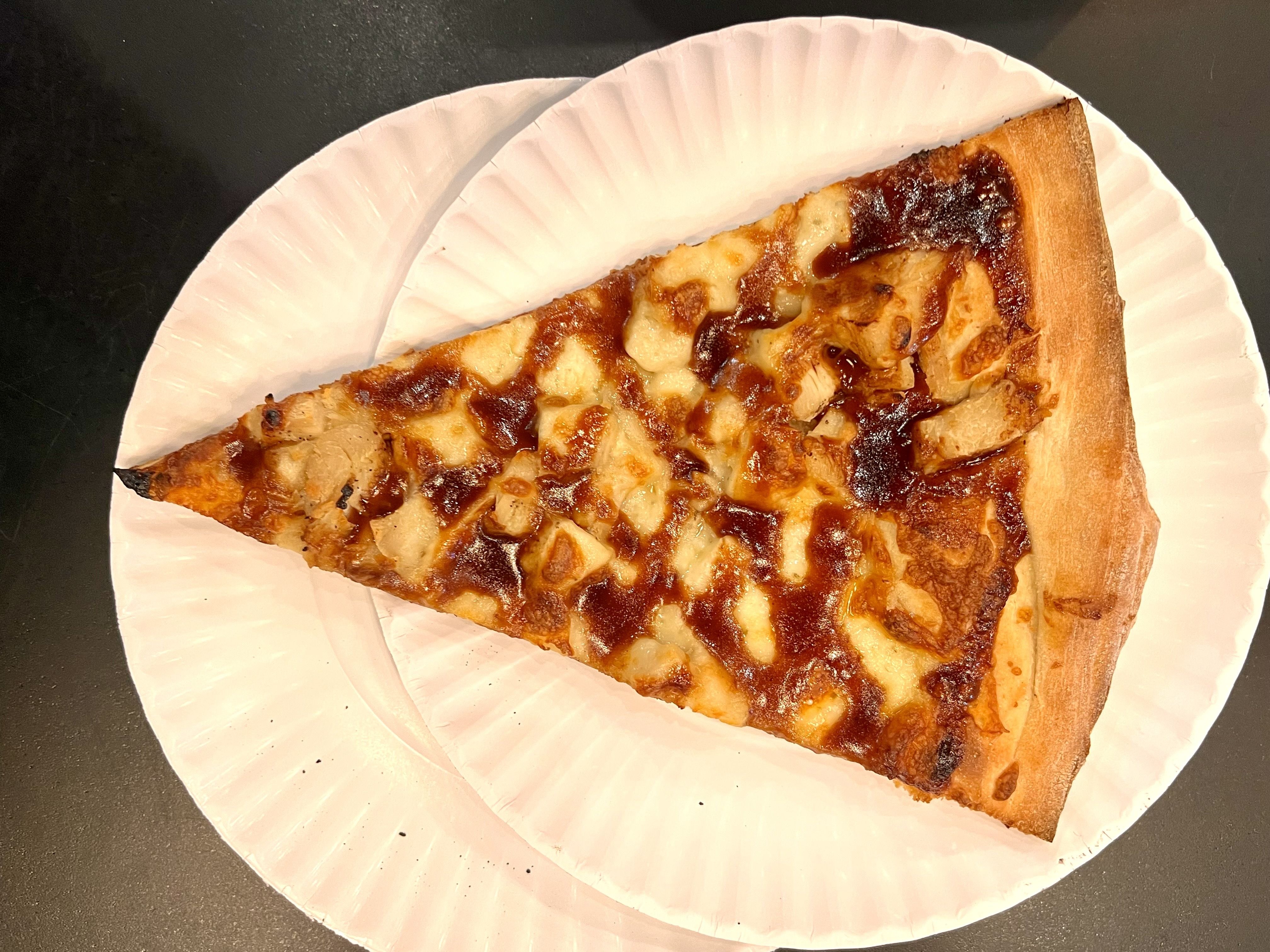
Barbecue chicken pizza slice at Pronto Pizza, 1347 South St.Michael Klein / Staff
Cheema drove to Chester the next day and arrived around 3 p.m., hardly primetime at most pizzerias. “I saw people coming in and the phones ringing,” he said. “That means a business is working. So I told my uncle, ‘Everything seems OK. They are short a couple of things, but we can fix it.’”
Cheema and his uncle bought the shop, and Cheema said sales doubled within six months. They eventually expanded to six shops before dividing the business to pursue separate growth; Cheema sold off the Chester store. Besides the Pronto at 1347 South St., Cheema owns another Pronto in Torresdale, Holme Style Pizza near Holme Circle, and Old English Style Pizza in Olney.
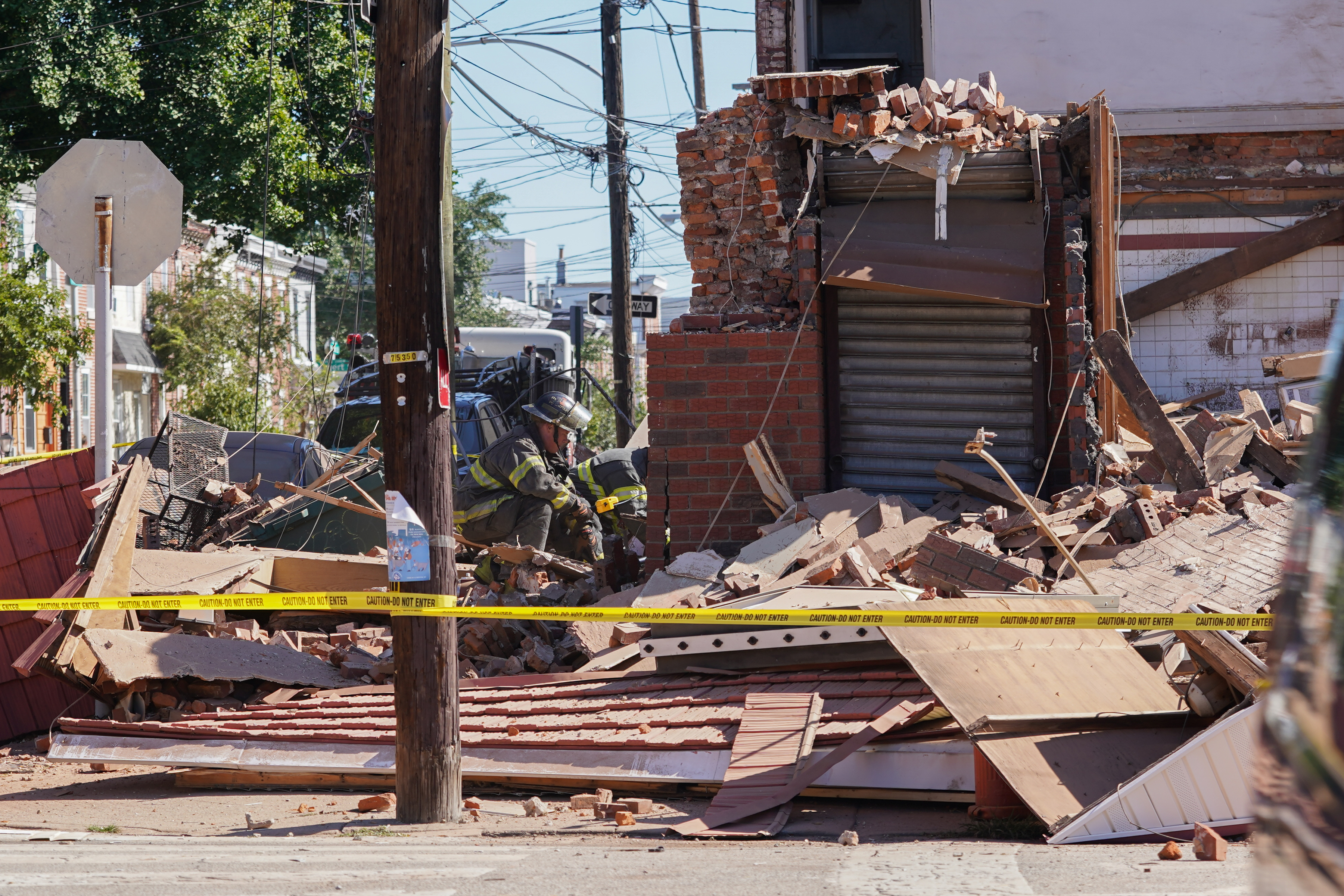
His most serious setback came in September 2022, when the three-story East York Street building housing Key Pizza, his busiest shop, collapsed. “You couldn’t tell there had been a pizza shop there the night before,” Cheema said. Construction work next door was blamed.
The roll-up door and some bricks are all that remained of Key Pizza at 2329 E. York St. after its collapse on Sept. 14, 2022.Jessica Griffin / Staff Photographer
No injuries were reported, but he lost the business, and the resulting insurance litigation was resolved only recently, about 3½ years later, he said.
Cheema does not plan to rebuild Key. He is focused instead on Pronto, its catering operation, and potential additional locations. The butter chicken cheesesteak gives him a way to integrate his family’s cooking into the kind of business in which he found his footing.
“Everybody in Philly knows what a cheesesteak is, and there are so many good places out there already selling cheesesteaks that are famous for them,” he said. “But I wanted to do something different, and something that still relates to Philly.”
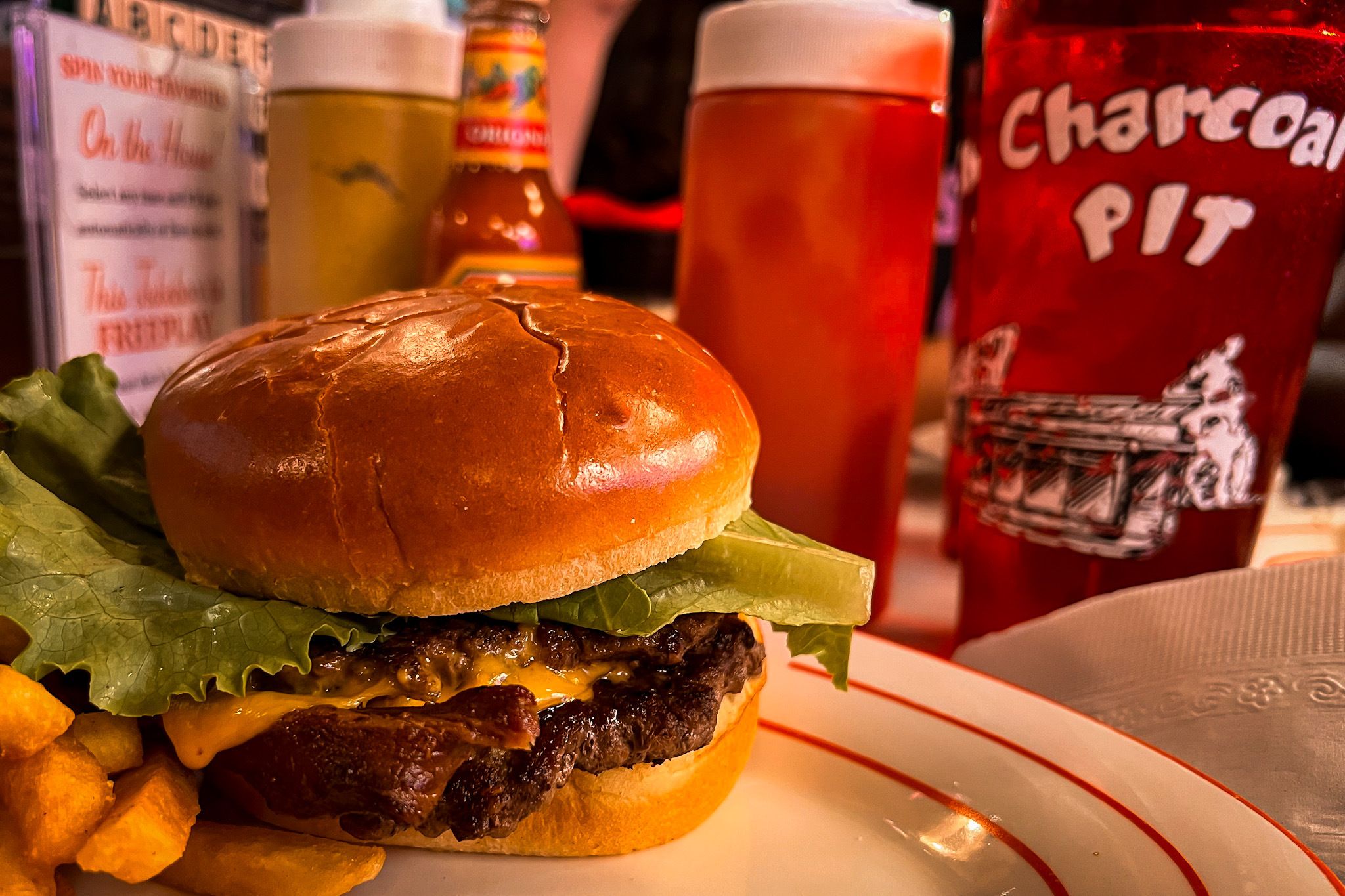
The Charcoal Pit has been serving burgers on Concord Pike in Wilmington since the Happy Days of the Eisenhower administration, when a 4-ounce hamburger was considered a meal rather than an appetizer. (Funny how, in the GLP-1 era, that portion suddenly seems just about perfect.)
This is honest food. The signature flame-broiled burger, ordered medium at my recent stop, arrived precisely that way — juicy and properly pink inside, speared by a charming retro toothpick helpfully confirming “medium.” The fries were similarly old-school: unevenly golden, crisp at the edges but softer through the middle.
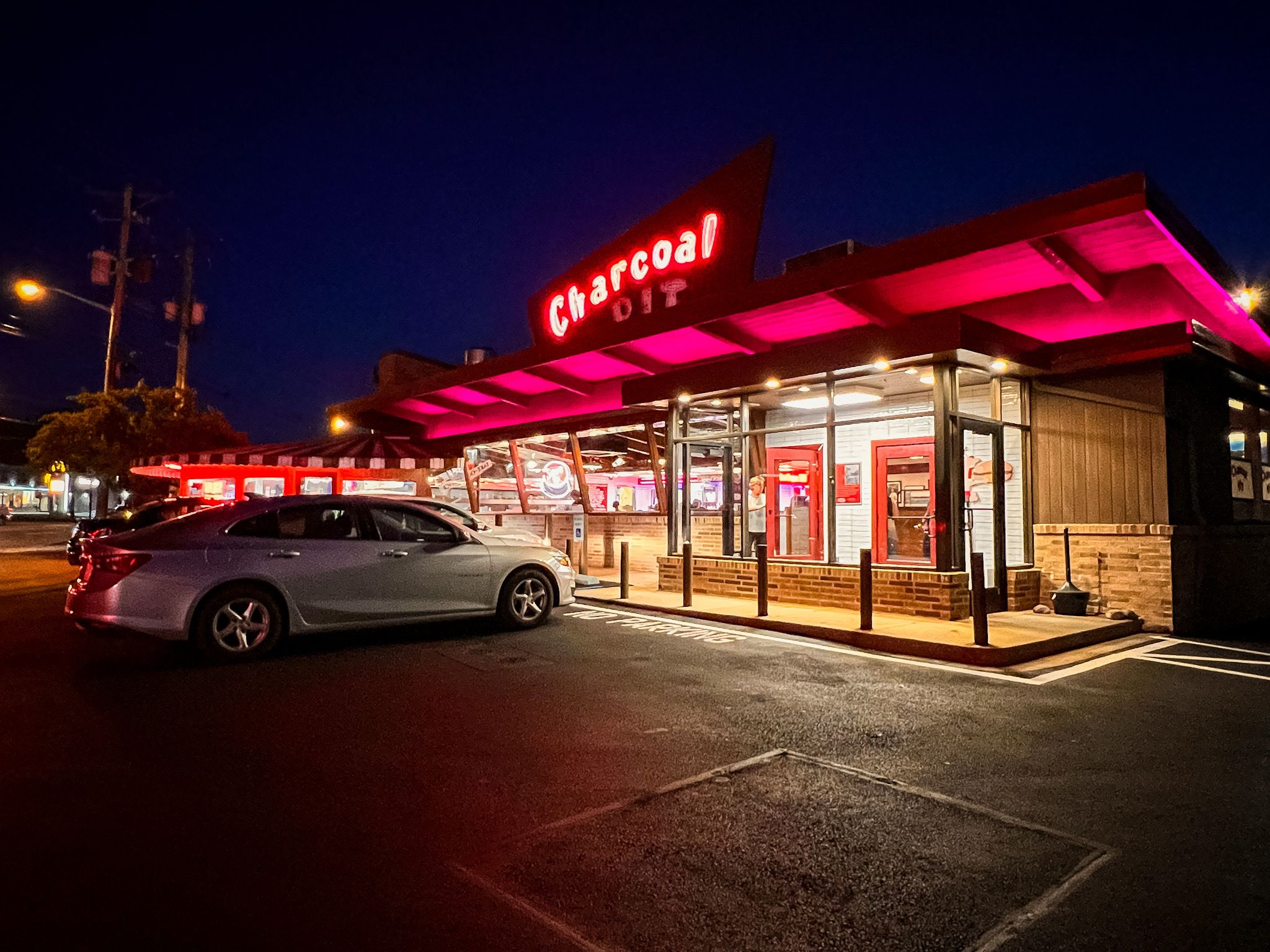
Charcoal Pit, 2600 Concord Pike, Wilmington, on Sept. 6, 2026.Michael Klein / Staff
Everybody heads to the Pit’s soda fountain, where we all skipped the idea of the 20-scoop “kitchen sink” sundae in favor of a more manageable three dips: Pistachio and peanut butter swirl are two winners.
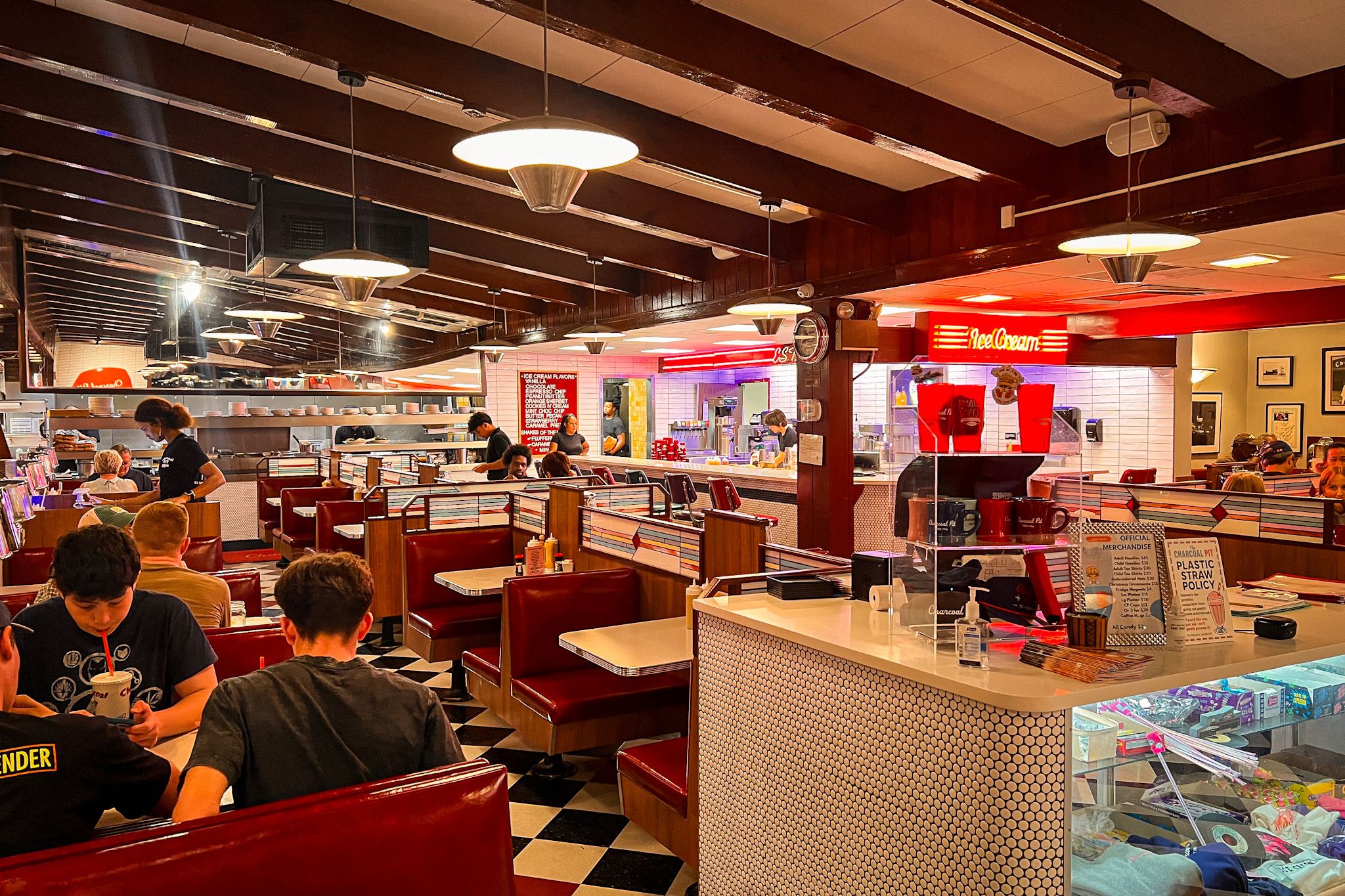
Burgers, shakes, and sundaes never go out of style, and neither does this dining room. The Charcoal Pit looks less like a re-creation of a 1956 diner than one that never got the memo the 1950s ended.
Despite renovations, enough survives that the nostalgia feels accumulated rather than contrived: red vinyl booths, a black-and-white checkerboard floor, saucer-shaped pendant lights, and mirrors multiplying the chrome stools and booths.
Charcoal Pit, 2600 Concord Pike, Wilmington.Michael Klein / Staff
One bit of history is more consequential. An oft-retold story holds that around 1960 or 1961, Joe Biden and several Archmere Academy football teammates walked out after the restaurant refused indoor service to their Black teammate, Frank Hutchins. Teammate Michael Fay later recalled Biden leading the walkout. As an adult, Biden frequented the Pit, stopping particularly for its butter pecan ice cream.
And one practical tip survives from a more innocent part of the past: Always put the kids on the inside of the booth, so they can reach the free-play jukebox and flip through the 1950s hits.
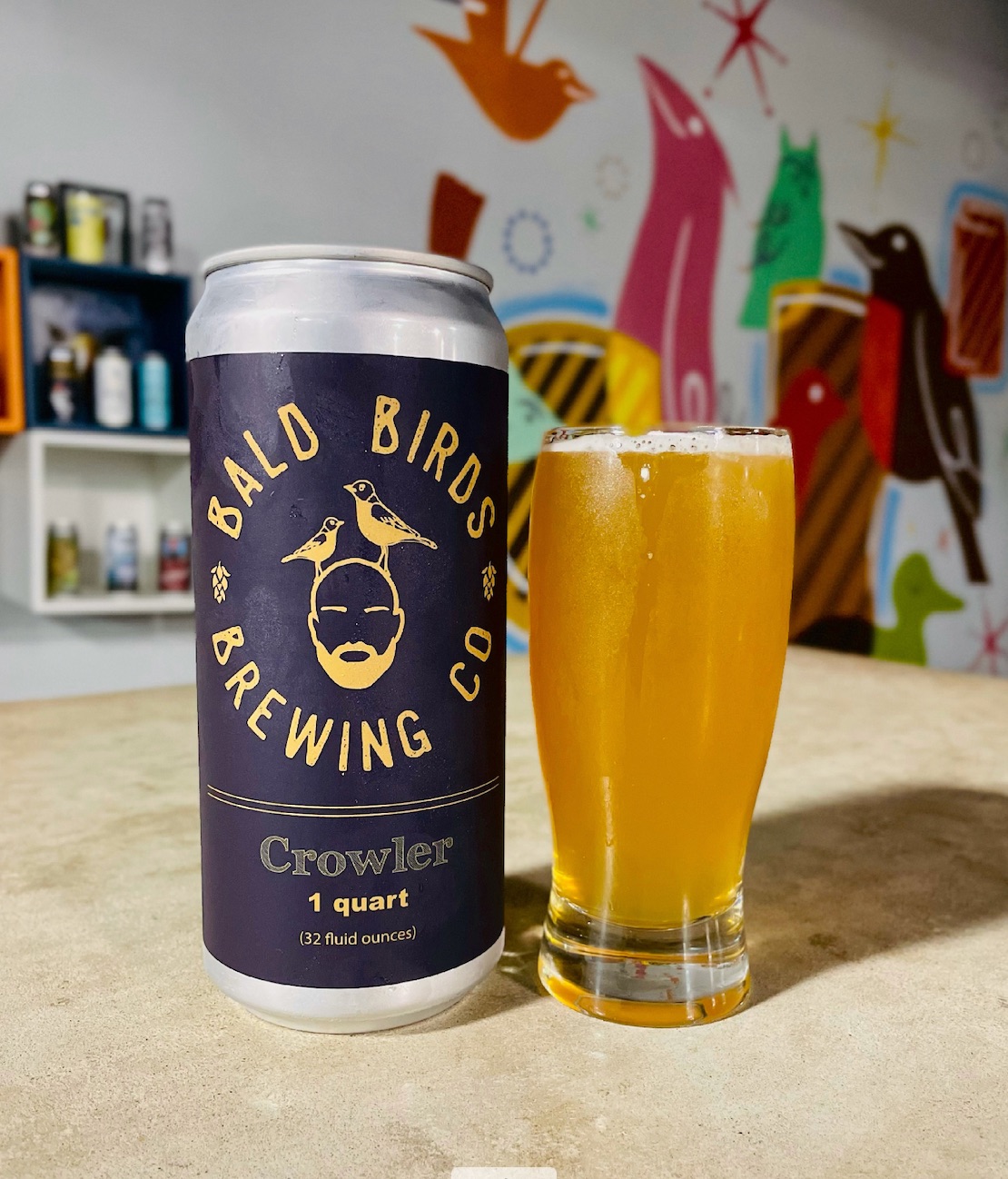
State regulators on Thursday announced that Bald Birds Brewing Co. violated state wage law at its Montgomery County and Lycoming County locations, and that the state recovered what amounted to several thousand dollars per worker.
But the brewery is taking issue with that description, contending that it voluntarily paid back staff after a payroll delay.
Gov. Josh Shapiro’s administration says it recovered more than $500,000 in wages and an additional more than $64,000 in damages for Bald Birds workers through an investigation by the Pennsylvania Department of Labor & Industry.
Brewery owner Joey Feerrar said the business made those payments without “any enforcement action,” and “calculated the penalties itself.” Feerrar says the department “did not recover anything.”
All this took place during what seems to have been a time of change for Bald Birds. The company closed its taprooms in Audubon and King of Prussia over the summer, as it refocuses on manufacturing and distribution, according to the website Breweries in Pennsylvania. That work is done through a partnership with Yards Brewing Co. and Connecticut’s Two Roads, called B3 Beverage Co.
“There was no agreement. No settlement, order, or payment plan was ever proposed or signed,” Feerrar said in a statement.
State regulators said they started receiving complaints from Bald Birds workers in January. They directed the company to pay the late wages in August and the company did so a few days later, a department statement said.
“After reviewing the complaints and conducting an audit of the employer’s records, L&I determined Bald Birds Brewery failed over the course of several months to pay employees on time,” the statement reads.
The total paid was nearly $583,000 to 124 workers including wages and damages. Under the state’s wage law “liquidated damages may be assessed when wages remain unpaid for more than 30 days beyond a regularly scheduled payday,” according to L&I.
The state said many workers went five weeks without paychecks.
A state announcement Thursday put the total at nearly $650,000, but the Department of Labor & Industry corrected its own statement Friday.
“The Department’s irresponsible description of these events has had an immediate and significant impact on the company, including jeopardizing the livelihood of every employee they claim to be championing,” Feerrar said in a statement.
“We worked in good faith and transparency with the Department, striving to do the right thing in a difficult situation, and that diligence was erased in a few keystrokes,” Feerrar said
Bald Birds Brewing Company got its start in 2018 with a location in Audubon. Owner Feerrar joined the B3 partnership with Yards last year.
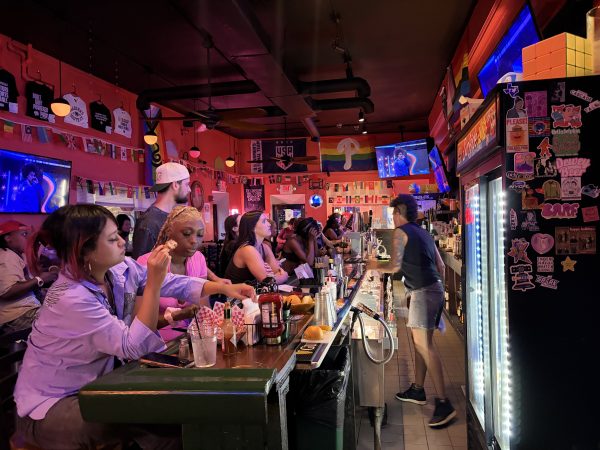
Nearly a year after its opening, Marsha’s, Philly’s only female-centric sports bar, is gathering staff and supplies to celebrate a partnership that the owner, Chivonn Anderson, says is “definitely a first.”
Dove, a national sponsor of the U.S. Open, is picking up the tab at 10 women-owned sports bars around the country during the U.S. women’s singles final this Saturday. Dove will pay for all food and drinks at the South Street bar during the game, or until supplies last, and will also be doing complimentary giveaways. For Anderson, the campaign is a dream come true.
“When I received an email from Dove’s PR company saying that they were looking to partner with women’s sports bars, we were just taken aback,” Anderson recalled. “Between 4 [p.m.] and 7 p.m., they’re going to pick up the tab for everybody that’s in the bar watching the finals, which is insane and amazing.”
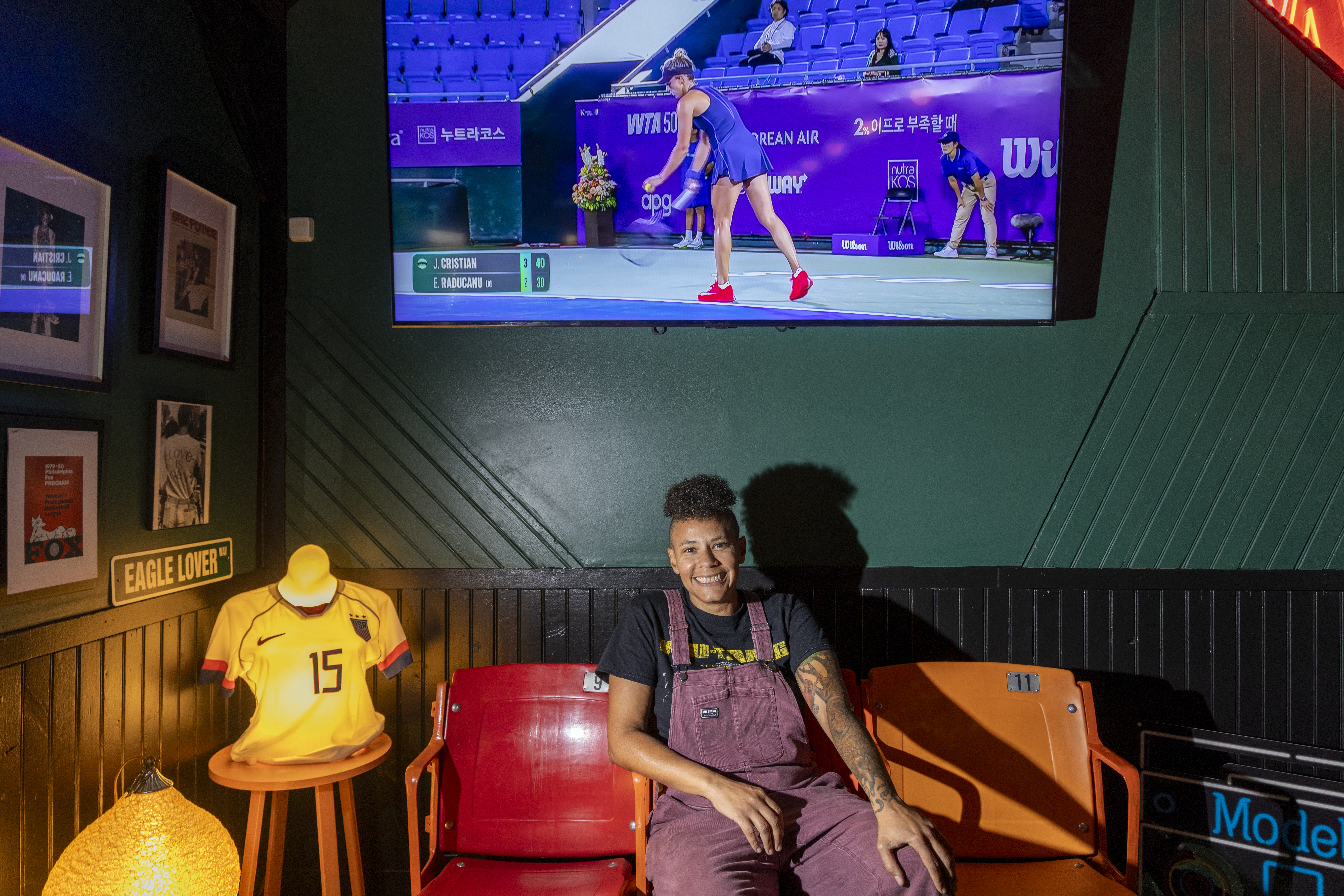
Marsha’s owner Chivonn Anderson says she was surprised that her bar was picked as one of several that will take part in Dove’s promotion. Melissa Lyttle / For The Inquirer
Marsha’s is preparing to be busy. Anderson has been gathering a full staff to help things flow as smoothly as possible. The bar will still open at noon, so patrons hoping to grab a seat for the game should plan to arrive early. Anderson says that “People are encouraged to tip, but there is a gratuity for the three hours of service paid for by Dove.”
Marsha’s is no stranger to a busy night, though, having gathered plenty of practice during the WNBA season and, more recently, serving as one of the few bars in the area to stream NWSL and WPBL games. The bar’s first anniversary is on Sept. 19, and it marks a big milestone not only for Anderson — but for women’s sports.
“It’s really exciting to see that our one-year anniversary is next week,” Anderson said. “To see all the things that we have been able to do in this past year feels really good. … The momentum has been there for a while. It’s just now women’s sports are finally getting their due publicity, and people are really paying attention to it.”
The match will pit Aryna Sabalenka against Elena Rybakina as the two meet in a Grand Slam final for the second time this year. Rybakina beat Sabalenka at the Australian Open earlier this year.
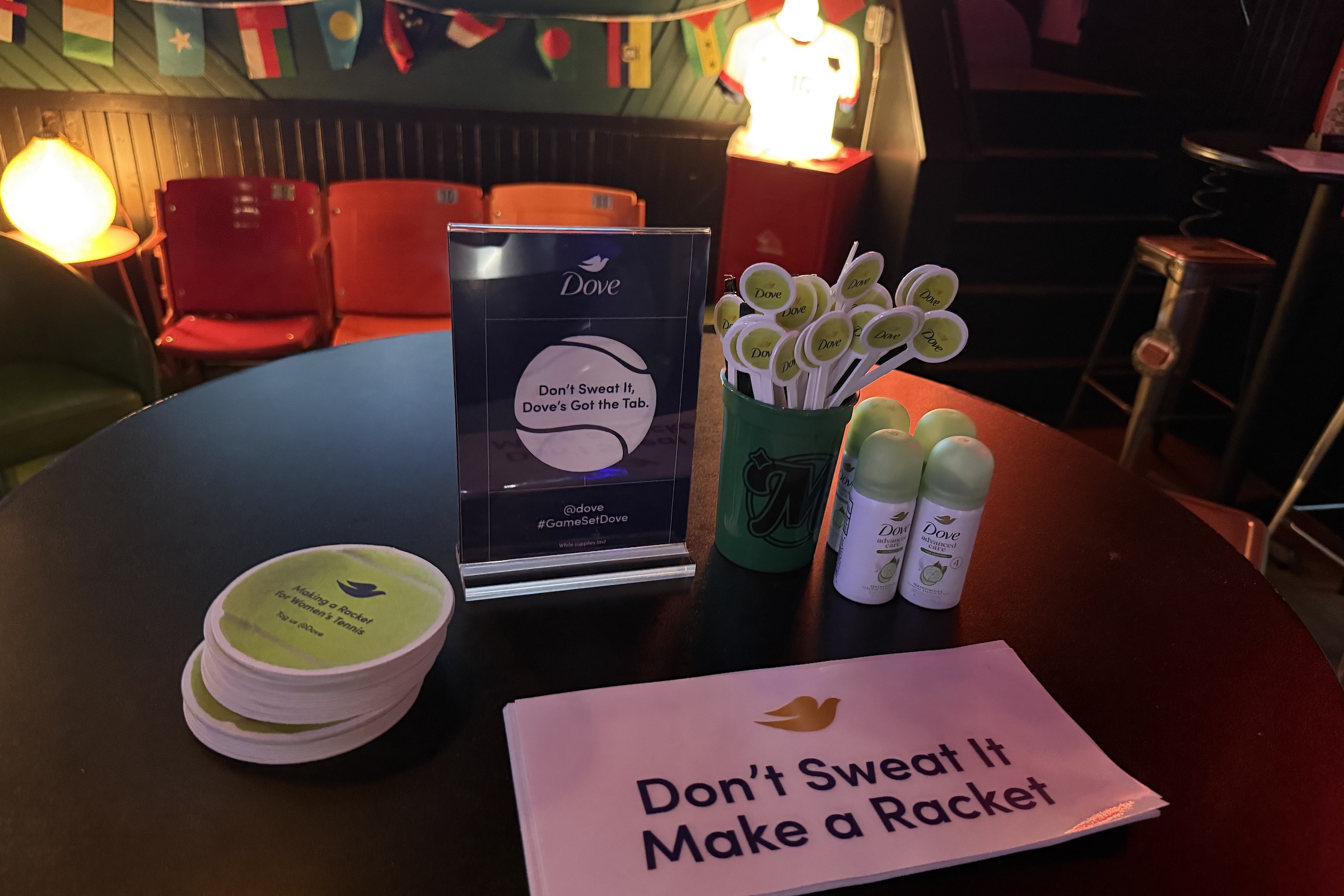
A look at some of the Dove items that will be available at Marsha’s on Saturday.Becca O'Reilly / For The Inquirer
The partnership is part of Dove’s “Don’t Sweat It. Make a Racket” campaign, an initiative Anderson says is doing the right thing by “highlighting small businesses that are trying to bring more awareness to this industry.”
“These advertisers are starting to realize that there’s a whole market out there that is untapped,” Anderson said.
Marsha’s will offer its full menu Saturday, including a pasta buffet and a Mexican buffet, and will sample new cocktails that could be added to the regular menu. The team hopes to use Saturday to “put their best foot forward” and highlight all Marsha’s has to offer, in both food and community space. The unexpected partnership is a boon for any bar, but especially for a space like Marsha’s.
“I really think that Dove is kind of setting a precedent moving forward in women’s sports,” Anderson said. “I think it’s a wonderful idea, and I hope other businesses kind of take note of what they’re doing, because it is pretty significant.”
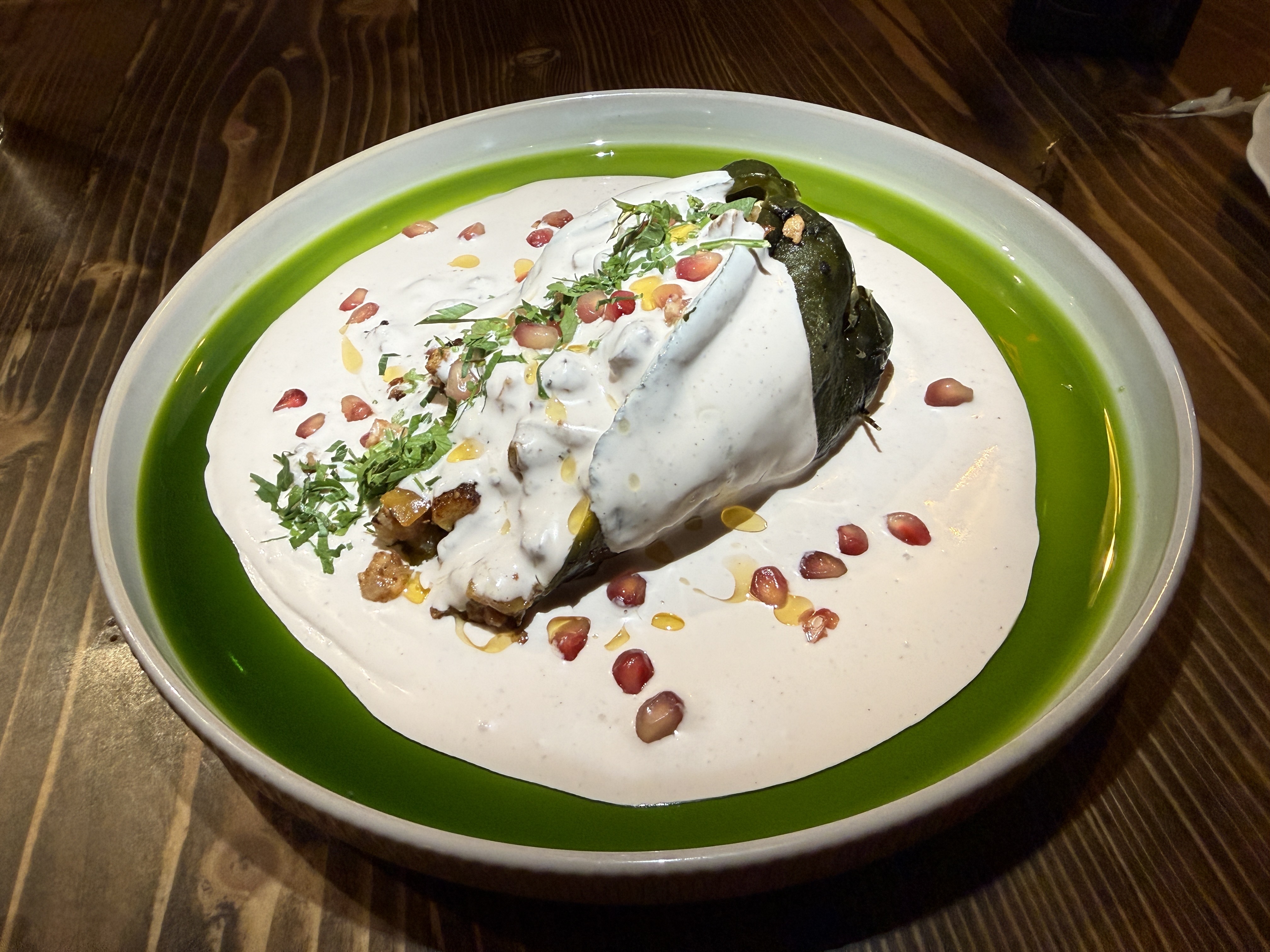
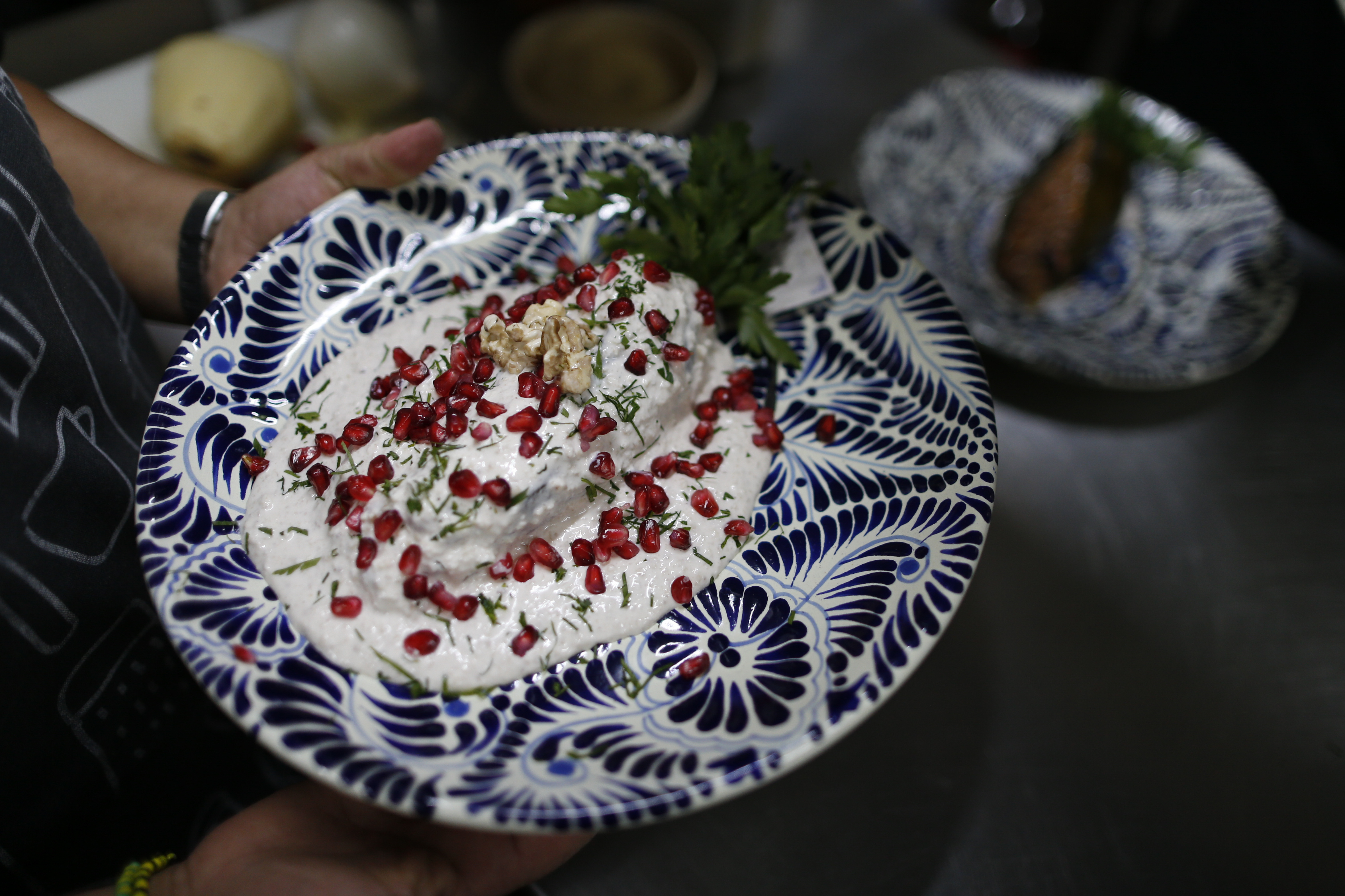
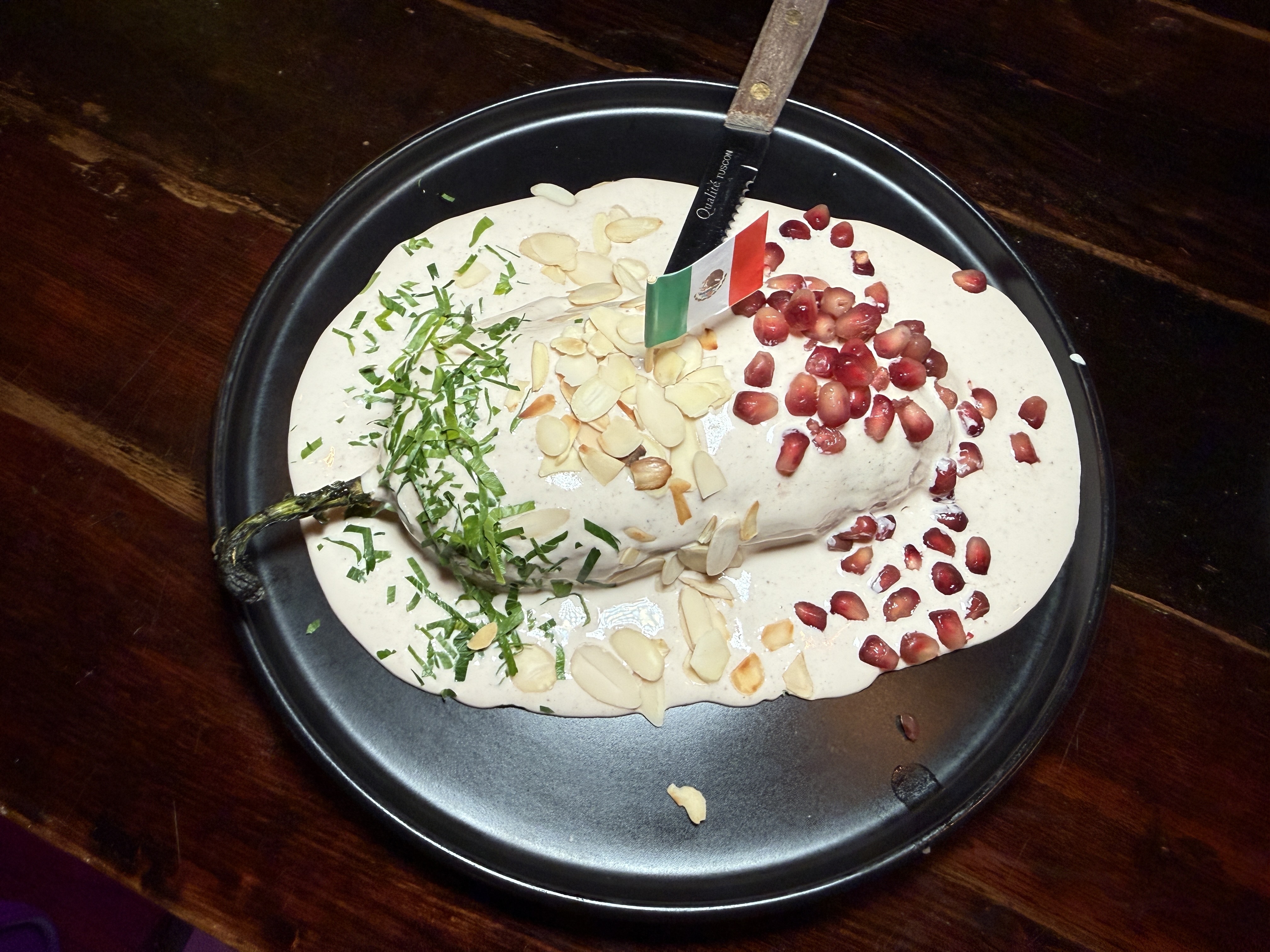
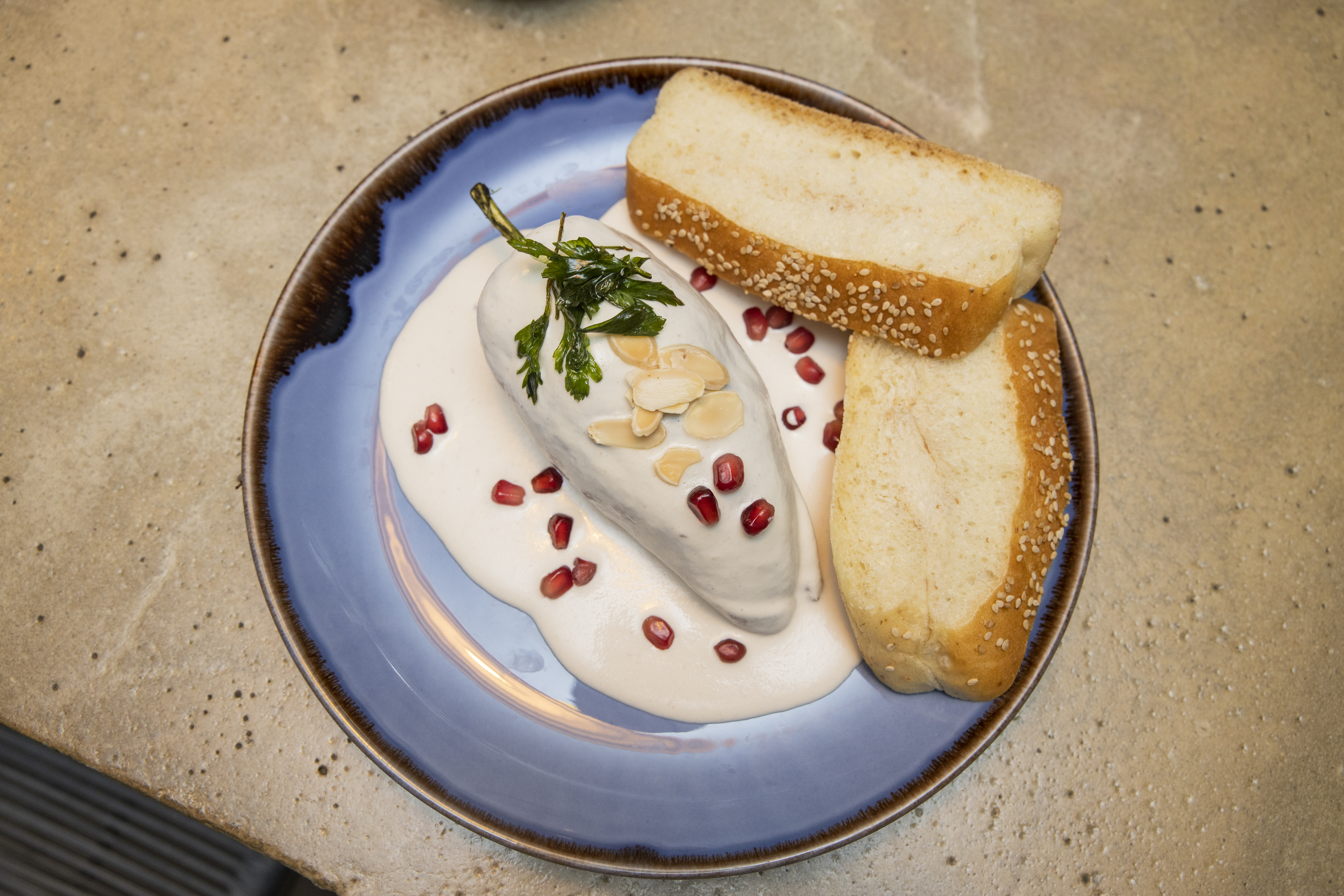
Chiles en nogada, no matter who makes them, are visually arresting dishes. They’re distinctive for their colors: a base of a deep green poblano pepper, a blanket of creamy white walnut sauce (the titular nogada), traditional pops of red from fresh pomegranate seeds, and a sprinkling of more green from parsley. These components represent the colors of the Mexican flag. The poblano is stuffed with picadillo, a mix of ground meats and fruits that marry savory and sweet flavors and can often be time-consuming to prepare.
Chiles en nogada season is fleeting, lasting just two to six weeks in late August and early September, when the dish’s main ingredients — poblanos and walnuts — are aligned and in season, along with the apples and peaches that are also at peak ripeness in Puebla, where the dish originated.
In Mexico, chiles en nogada has become a national dish, treated with great reverence and ceremony. At fine-dining establishments in Mexico City, diners can select which poblano they’d like stuffed, just as one might select a fish from a tank to be cooked. But you don’t have to go to Mexico to eat it — there are several excellent versions found in Philadelphia.
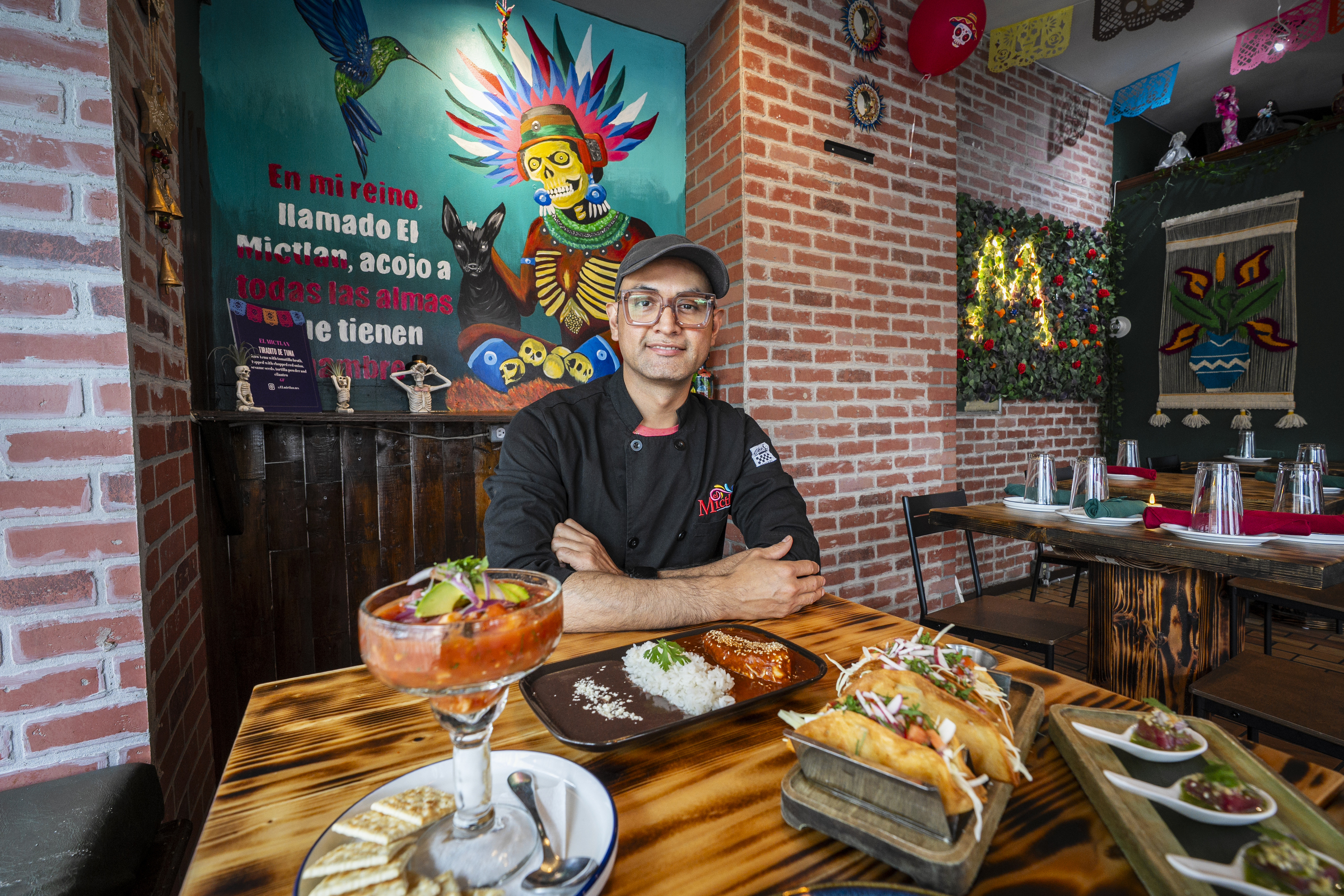
Chelo Manzanarez, chef and owner at El Mictlan, where the menu brings a taste of Guerrero and Acapulco to South Philly.Jessica Griffin / Staff Photographer
Chelo Manzanarez, the chef and owner of El Mictlan, which generally focuses on the food of Guerrero (the Mexican state located southwest of Puebla), has worked to make this fundamental Mexican dish his own.
“It’s usually a sweet and heavy dish, but I’ve tried to make it more flavorful and more personal,” Manzanarez said of the chile en nogada at his South Philly BYOB at Beechwood and Snyder Streets.
Manzanarez switched out beef in favor of a mix of pork and chicken, and he swapped raisins for dried dates. He seasons the picadillo with cinnamon, clove, and anise. He uses both green and red apples, “to get that contrast between sweet and sour.” He adds plantains and pineapples “for their tropical flavor.”
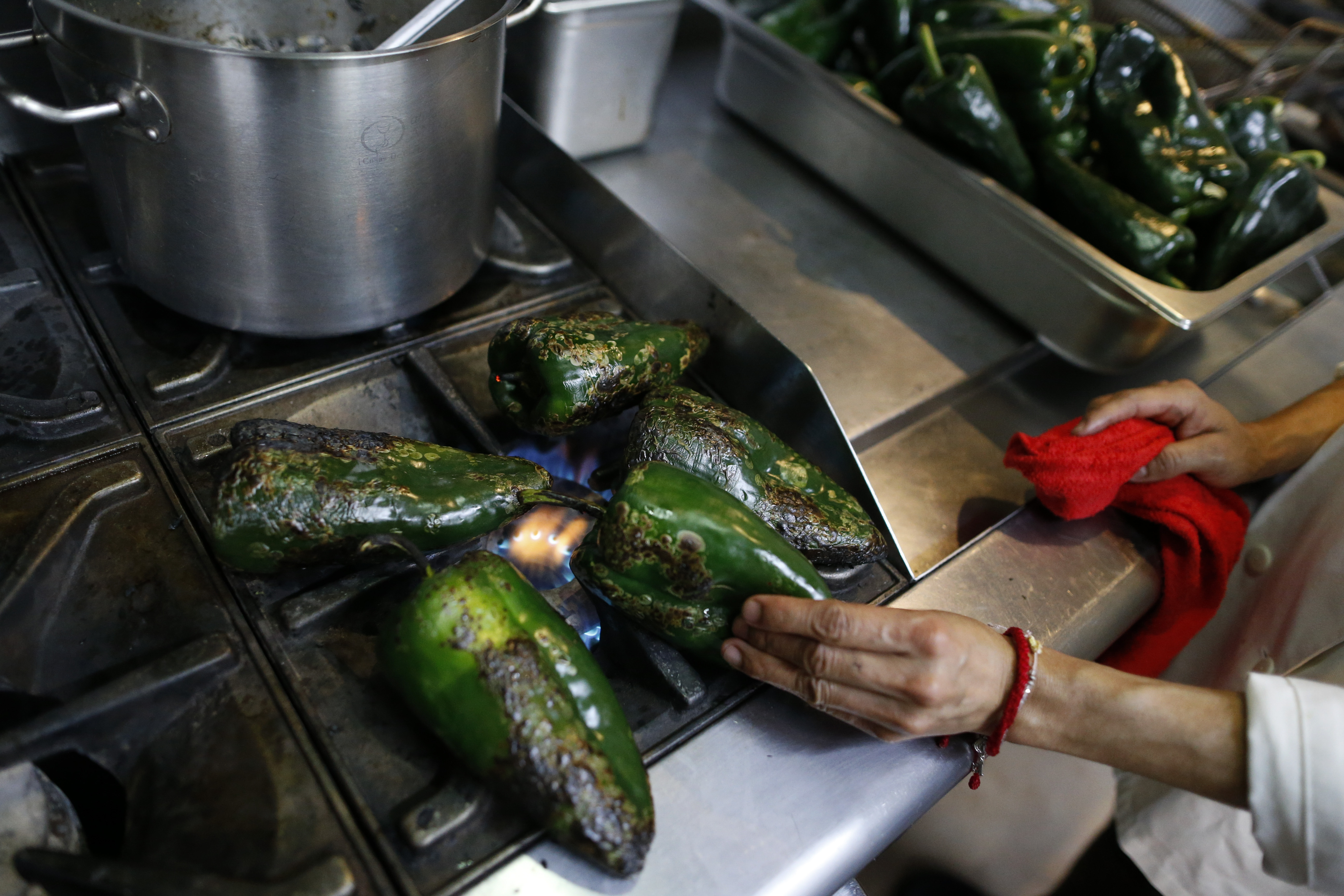
Making his chile en nogada is truly a labor of love for Manzanarez. “I cook each fruit and vegetable individually and caramelize them separately. Most of the work comes from dicing everything very small.” After mixing all cooked components together for the filling, he still has to roast the peppers, which he does for three to four minutes on each side before letting them sweat in a plastic bag, making it easier to remove their skins. “It’s complicated — getting the poblanos to the right consistency so that they don’t lose their shape,” he said.
For thewhite of the Mexican flag, Manzanarez eschews the traditional goat cheese, instead mixing cream cheese with queso fresco, walnuts, almonds, and a touch of milk. The result is creamy, luxurious, and not too rich.
A plate of chiles en nogada at Testal restaurant in downtown Mexico City.Rebecca Blackwell
Manzanarez finishes his chile en nogada with bright cilantro oil and red chili oil, doubling down on the colors as a deeper tribute to the Mexican flag.
He first came up with his recipe while working at La Llorona, also in South Philly. It’s a dish customers ask for every year.
A cook roasts poblano peppers on the stovetop in preparation for removing the skin, as kitchen staff make chiles en nogada at the Testal restaurant in downtown Mexico City in 2019. Rebecca Blackwell
Restaurants traditionally stop serving chiles en nogada after Mexican Independence Day, on Sept. 16. “But now we celebrate Independence Day for the whole of September,” said Manzanarez, which is how long he plans on serving it at El Mictlan.
More traditional iterations of the dish can also be found at La Llorona and El Chingon (usually only available at dinner).
La Llorona serves a richer but very classic version with the roasted poblano battered in egg whites and gently sautéed before being blanketed in an especially rich and dense nogada. The pepper is stuffed with ground beef and pork, peaches, and apples. Its parsley, sliced almond, and pomegranate seed garnishes replicate the stripes of the Mexican flag precisely.
The chile en nogada at La Llorona is stuffed with beef and pork and lightly battered in egg whites before being blanketed in nogada sauce.Kiki Aranita / Staff /
The availability of chef Carlos Aparicio of El Chingon’s chile en nogada ($30) is entirely dependent on the fresh walnuts he flies in, one kilogram weekly, from his hometown of San Mateo Ozolco, located in the Calpan municipality of Puebla — the same municipality where, according to legend, chiles en nogada were first invented by Augustinian nuns. They created the dish in 1821 in honor of General Agustín de Iturbide, after he signed the treaty that recognized Mexico’s independence from Spain. He became the first emperor of Mexico, and the dish represents the colors of what was then the Mexican Army’s flag.
The chile en nogada at El Chingon uses fresh walnuts flown in weekly from Puebla when they are in season.NaylaPolohovich
“This year, [Puebla] had a lot of rain so the walnuts fell off the trees too soon,” said Aparicio. “They really have to be fresh, and we can’t preserve them. As soon as they get here, we wash and clean them and put them in milk immediately.” After their milk bath, the walnuts get mixed with goat cheese, cream cheese, cinnamon, and sugar.
Aparicio’s chile en nogada is stuffed with beef, pork, and fruits, and garnished sparingly. Hewing to tradition, Aparicio’s serves it at room temperature.
Aparicio is hoping that this year he will receive at least one or two more shipments of walnuts, which means he can serve chiles en nogada for one or two more weeks. (El Chingon sells about 12 to 15 per day when it is available.)
Chiles en nogada season brings out the competitive nature in chefs and customers. “People will try to get every different chile en nogada in Philadelphia, make comparisons and [argue] about which one is the best,” said Manzanarez.
You have one, maybe two weeks left to decide for yourself.
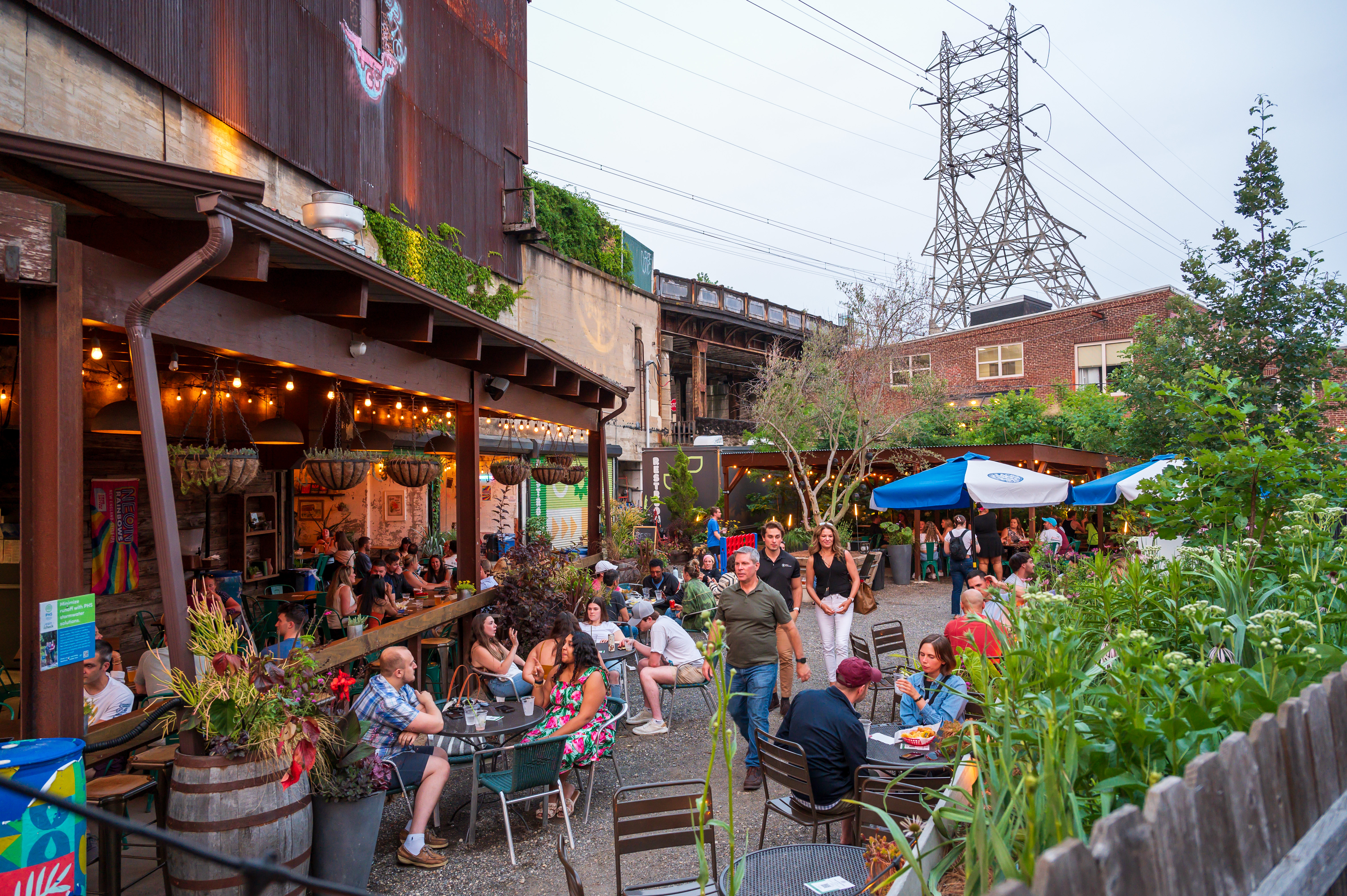
The Pennsylvania Horticultural Society (PHS) announced Wednesday that its popular pop-up beer garden in Manayunk will close permanently Oct. 5.
The property at 106 Jamestown Ave. is slated to become a six-story, 73-unit apartment building from local developer Dan Greenberg, although it faces community and political pushback.
Its hearing before the city’s Zoning Board of Adjustment was postponed last month.
“The day will serve as a celebration of PHS’s time in Manayunk and the many visitors, plant lovers, and community members who have made the garden a beloved gathering place over the years,” a PHS news release issued Wednesday said.
“PHS invites the community to come together this fall to enjoy the garden, share memories, and celebrate the lasting impact of this special green space in Manayunk,” the release said.
Since Greenberg’s plans were announced, community groups and neighbors have been pushing for the preservation of the public gathering space just off Main Street.
But PHS has emphasized that its pop-up beer gardens are not intended to be permanent.
The Manayunk location opened in 2020, while the site at 1438 South St. has been in operation since 2014.
As development plans for 106 Jamestown have advanced, PHS has been searching for another location in the city to open a new beer garden.
“Our team is actively assessing other potential sites and neighborhoods for future PHS Pop Up Gardens, but we don’t have a confirmed site to announce,” said Sin Gogolak, vice president of brand and communications for PHS.
The new location will not necessarily be in Manayunk or Northwest Philadelphia. But Gogolak confirmed they are looking in the city limits.
“PHS is grateful for the opportunity to have called Manayunk home for an extended period and is proud of what the garden has meant to the neighborhood,” PHS said in the news release.
A new zoning board hearing has not been scheduled for the apartment building at 106 Jamestown Ave.
The developer needs permission from the board to build apartments on land zoned for industrial and commercial uses and to build above the height limits set by the Main Street Manayunk zoning overlay.
Feedback from City Council and neighborhood groups will be considered by the zoning board.
“Fortunately for [Greenberg], he’s not finally purchased it yet because zoning is an essential part of the sale,” City Councilmember Curtis Jones Jr., who represents the area, said in an interview last month. The delay at the board “gives them the opportunity to talk to the community, but as it stands, I cannot support it.”