Tag: Weekend Food

  • Willow Grove’s new cafe and bakery has Yemeni coffee drinks, honeycomb bread, hot manakish — and a drive-through

    Willow Grove’s new cafe and bakery has Yemeni coffee drinks, honeycomb bread, hot manakish — and a drive-through

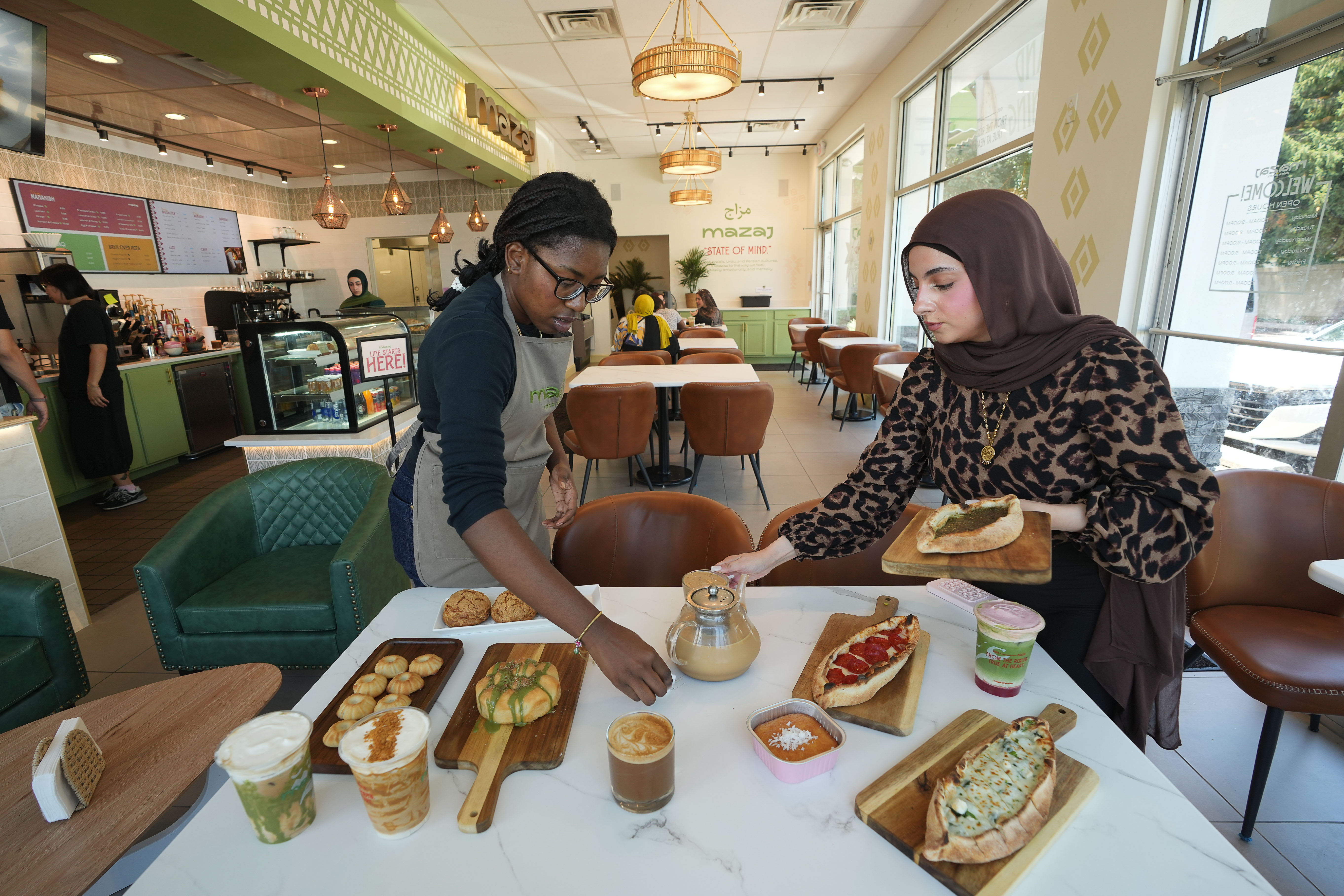
    What started as a halal coffee-and-pastry counter tucked inside a Narberth restaurant has grown into a full-fledged cafe in Willow Grove, with a bakery operation fueled by a mosaic-tiled oven turning out za’atar-topped flatbreads and pizza. And for good measure, the new Mazaj will have a drive-through.

    Mazaj, a Yemeni- and Saudi-inspired cafe, opened earlier this month in the former Grandma’s Grotto Pizza on Route 611 near Blair Mill Road.

    Owners Mohammed Tashkandi, Mohammed Aqlan, Yousef Muneer, and Omar Alkahily also operate Malooga, the Yemeni restaurants in Narberth and Old City. Mazaj began in March as the coffee bar and bakery inside the Narberth location, where the partners developed its drinks and pastries while spending more than two years searching for a place where the concept could stand on its own.

    They deliberately looked beyond the city limits, Tashkandi said. They wanted parking, easy access, and enough room to create the sort of coffeehouse where customers could settle in — without making a quick coffee run difficult.
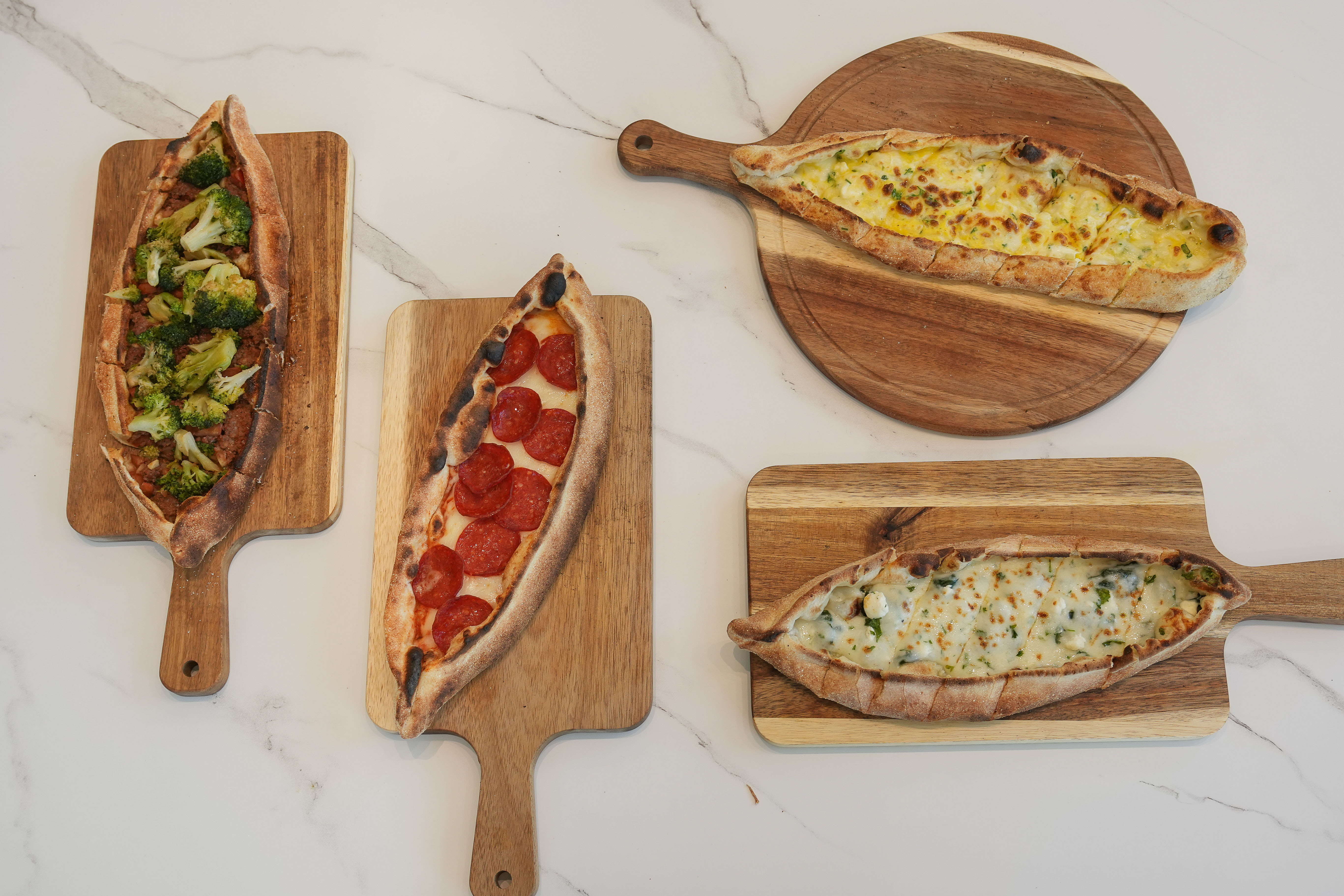
    Manakish are baked to order in a Forno Picone oven near the front of the cafe at Mazaj. The flatbreads can be spread with za’atar and olive oil or topped with cheese or meat.Jessica Griffin / Staff Photographer

    The Willow Grove location, at 2700 Easton Rd., just north of the Pennsylvania Turnpike interchange, is designed to do both. There are sofas and upholstered chairs for lingering, tables lining the windows, and — unlike Narberth — a drive-through for customers who have no intention of lingering at all. The drive-through is expected to open at the end of the month with premade pizzas and manakish that can be reheated in two minutes.

    “Two things can be true at the same time,” Tashkandi said. “Our homemade food, locally roasted coffee, and crafted drinks are intentionally chosen to elevate your day, whether you want to spend time in our spaces or grab something to go as you move through your day.”
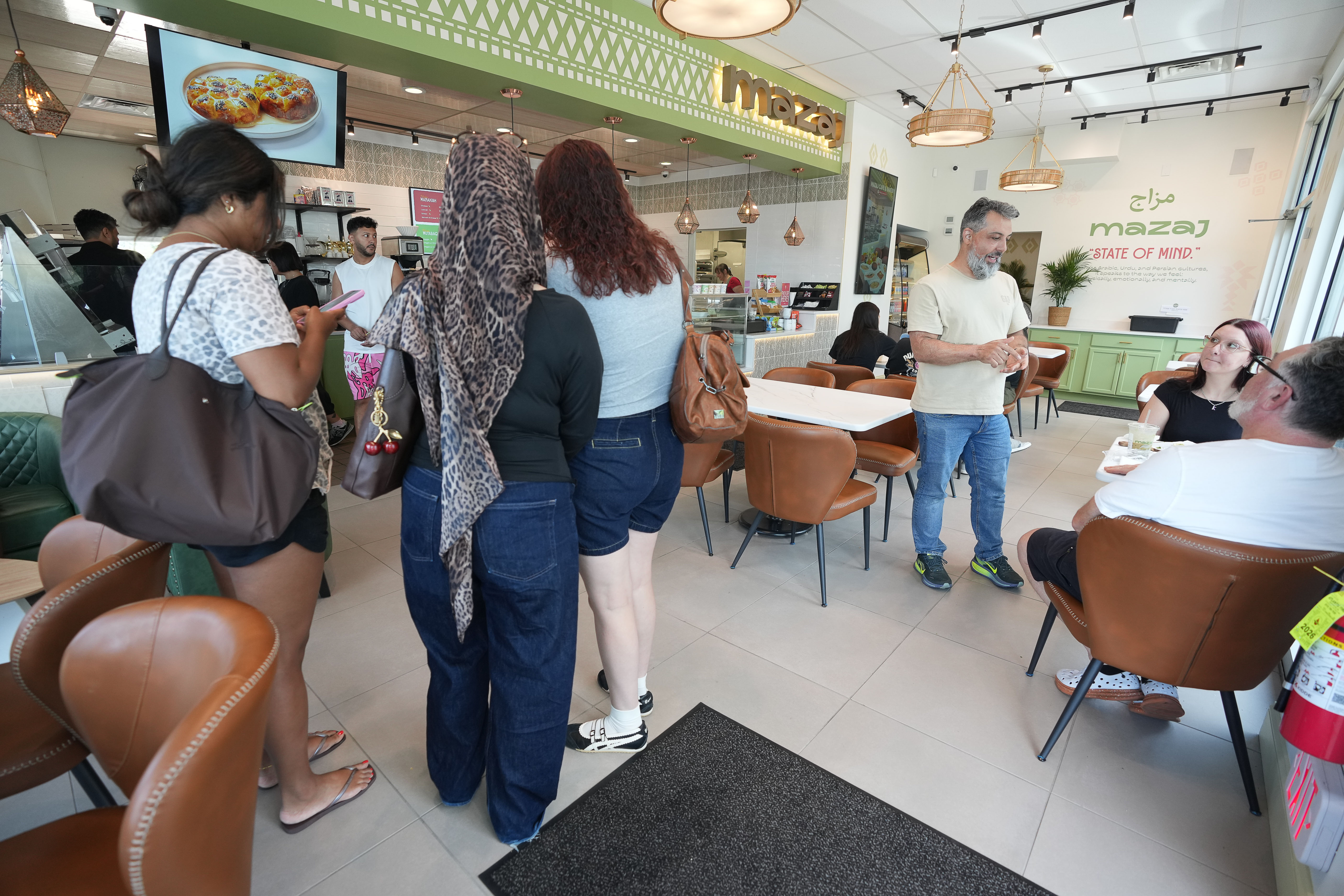
    A crowd has already formed at the new Mazaj in Willow Grove, Aug. 4, 2026.Jessica Griffin / Staff Photographer

    That dual identity is wrapped into the name. Mazaj — also spelled mizaj or mizaaj — is an Arabic word for “mood,” “temperament,” or “state of mind” that is also used in Urdu and Persian. The partners were compelled to choose it because of the idea that what people eat and drink can change how they feel.

    The menu crosses borders. Tashkandi is from Saudi Arabia, while his partners are from Yemen, but they don’t describe Mazaj strictly as a Yemeni coffee shop, an increasingly popular cafe format. They see it as a broader Middle Eastern cafe.
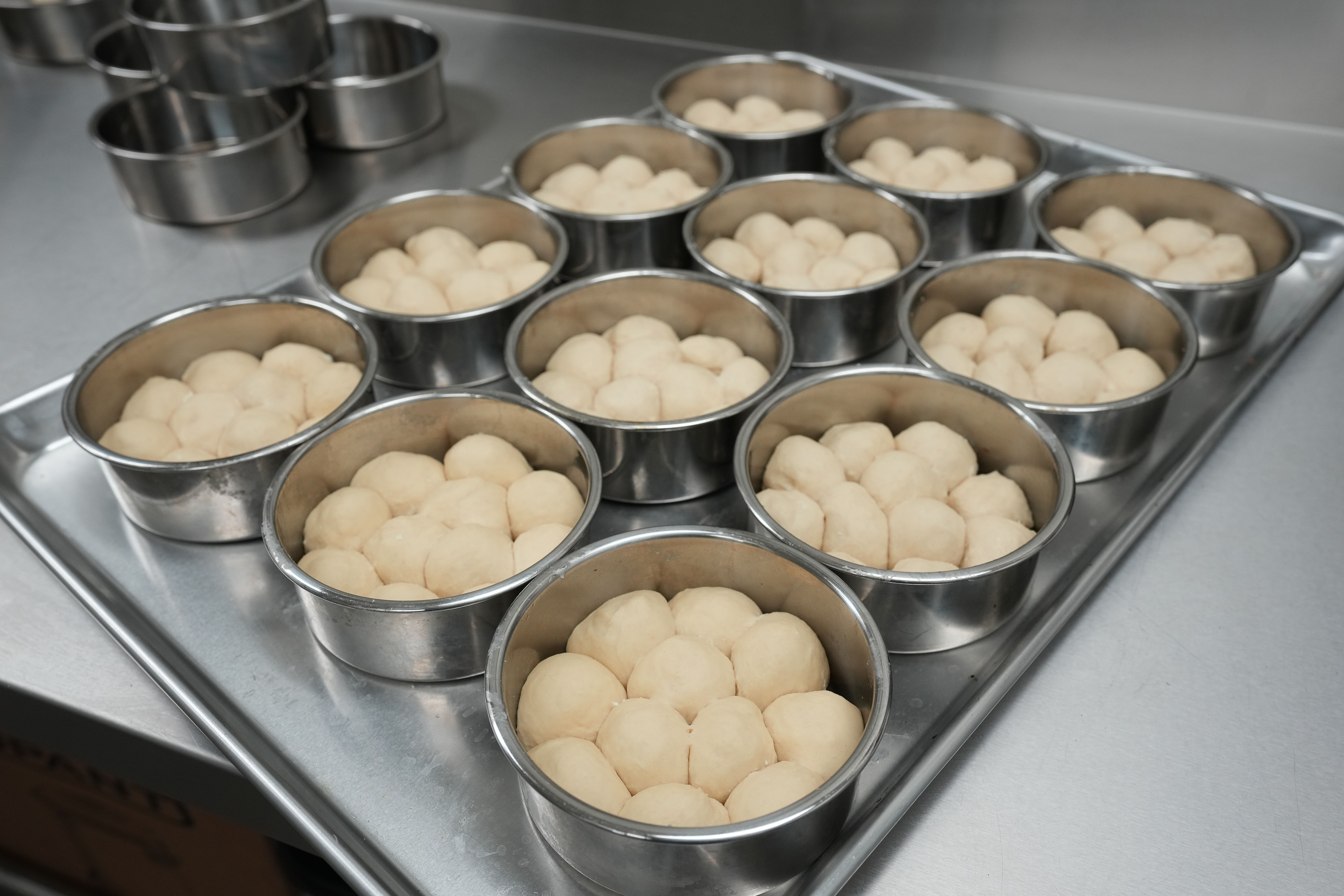
    Honeycomb, Yemeni pull-apart bread, before it is baked at Mazaj, in Willow Grove, Aug. 4, 2026.Jessica Griffin / Staff Photographer

    There are Saudi coffees and mutabbaq, the flaky stuffed pastry pockets popular in Yemen and Saudi Arabia, alongside Levantine manakish, honeycomb bread, date cake, and other pastries. The contemporary coffee-shop side of the menu brings espresso drinks, ceremonial-grade matcha, and flavored lattes.

    Mazaj’s manakish are baked to order in a Forno Picone oven, a striking, mosaic-covered centerpiece near the front of the cafe. The flatbreads can be spread with za’atar and olive oil or topped with cheese or meat.

    And now there’s pizza.
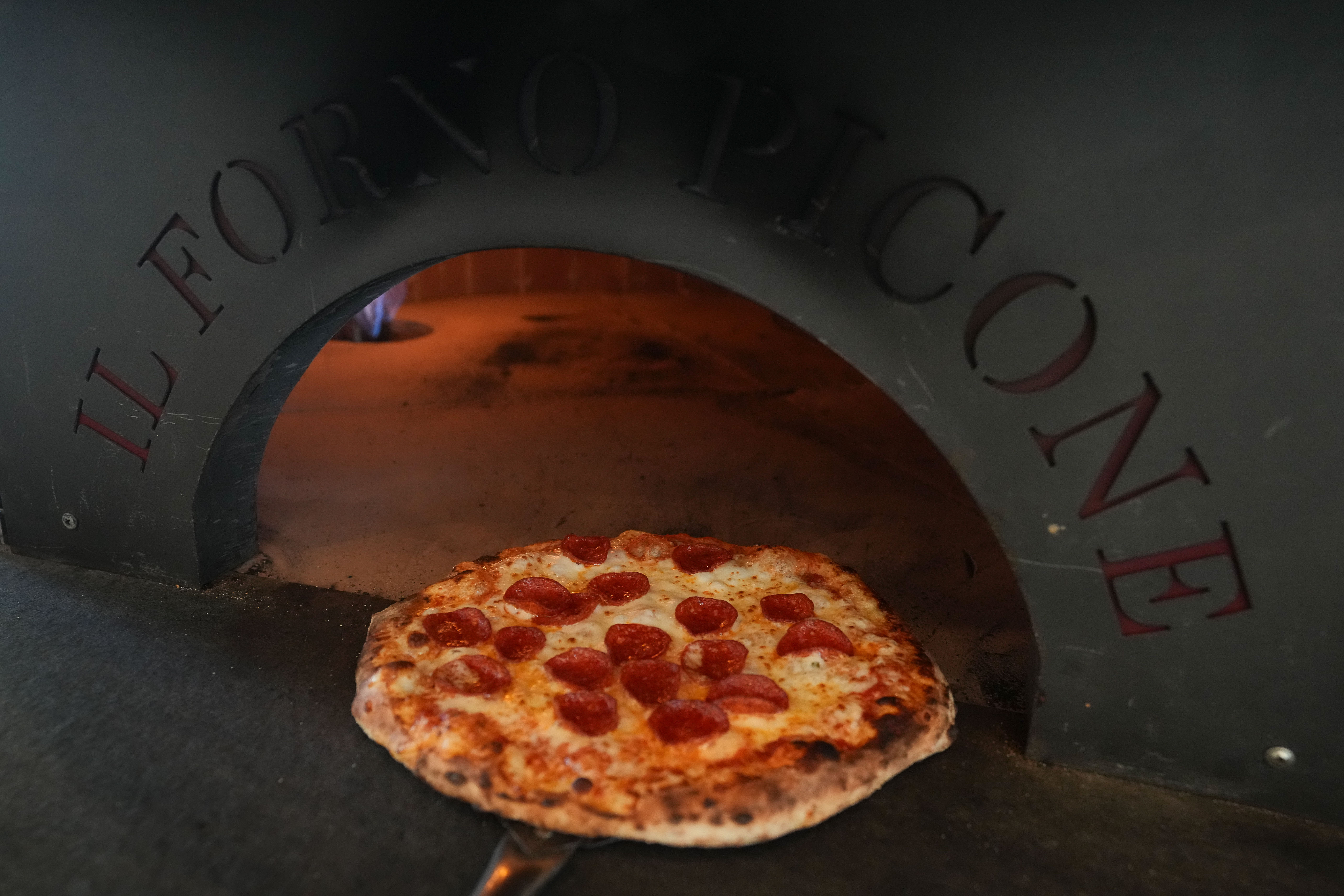
    Pizza topped with beef pepperoni coming out of the oven at Mazaj, in Willow Grove, Aug. 4, 2026.Jessica Griffin / Staff Photographer

    It is the major menu addition in Willow Grove, baked in the same oven as the manakish. A separate commercial deck oven handles the cafe’s pastries.

    The expansion has turned Willow Grove into the baking hub for the partners’ other restaurants. The owners are shifting production from Malooga to the new cafe, which will supply baked goods to both Narberth and Old City. The company has also begun laying the groundwork for a wholesale operation to sell pastries to other coffee shops and supermarkets, and the partners say they are meeting with potential franchisees.

    Head baker Samar Alasbahi leads a baking staff with backgrounds in Yemen and Syria. The pastries are made in-house, and Tashkandi said leftovers aren’t put back into the case the next morning. Unsold baked goods instead go to employees, neighbors, and others in the community.
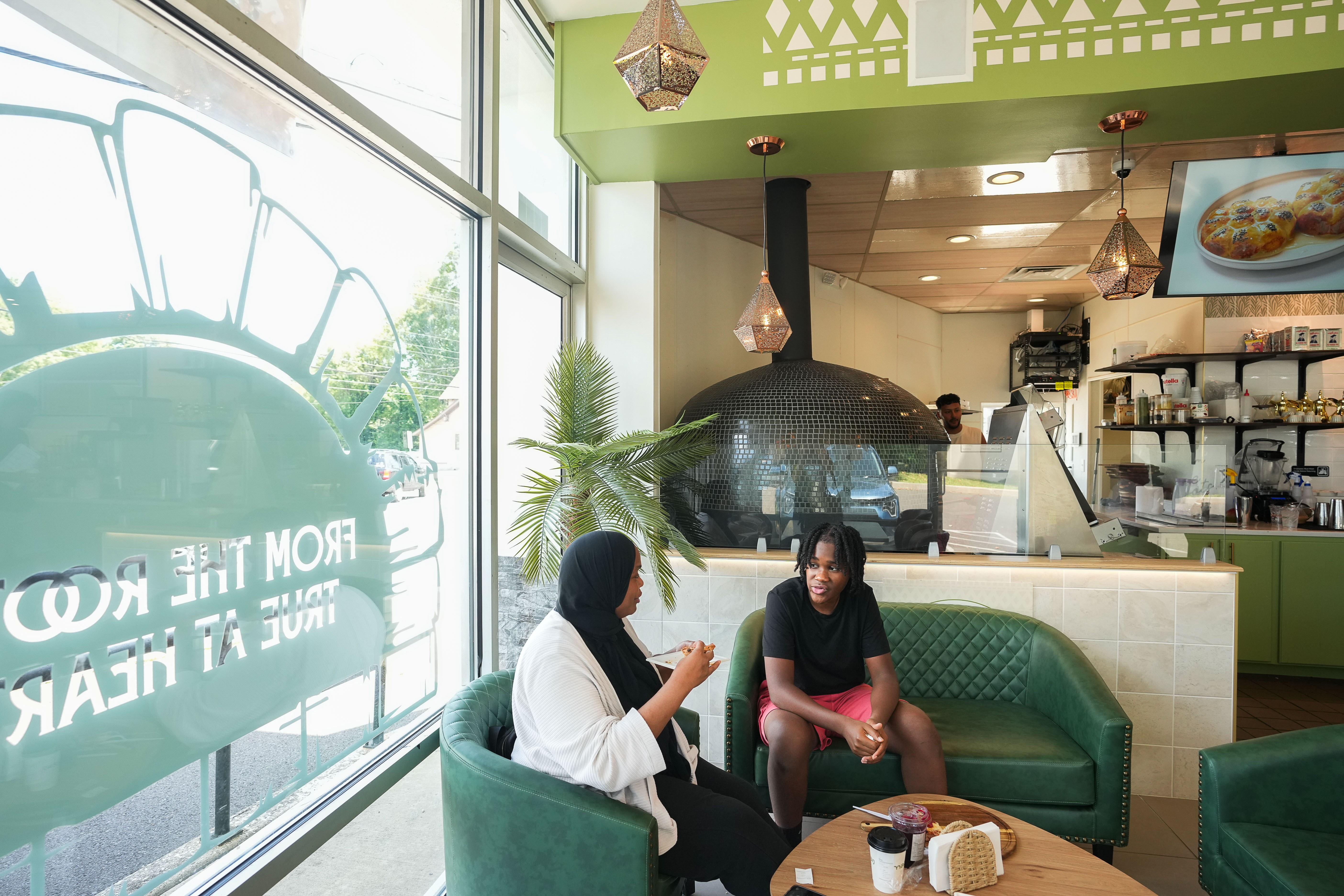
    Customers can linger in the comfy upholstered furniture at Mazaj.Jessica Griffin / Staff Photographer

    The partners have thoroughly remade the former pizzeria. Olive green and cream set the palette, with patterned tile, geometric motifs, Moroccan-style pendant lights, and a long pastry-and-coffee counter. Faux marble tables and caramel-colored chairs dot the narrow, window-lined dining room, while deep-green upholstered chairs and a sofa make up a small lounge. Behind glass near the front sits the new, dark-tiled brick oven.

    For all the Yemeni and Saudi influences behind Mazaj, Tashkandi said the idea is deliberately broader: a cafe where Middle Eastern food traditions overlap rather than stay within national boundaries. “We want the menu to reflect that diversity,” he said.

    Mazaj, 2700 Easton Rd., Willow Grove, 267-900-3167, mazajpa.com. Hours: 8 a.m. to 9 p.m. Monday through Friday, 8 a.m. to 4 p.m. Saturday and Sunday.
  • This corner store has the best chicken sandwich in Philly, but we don’t quite know what it’s called

    This corner store has the best chicken sandwich in Philly, but we don’t quite know what it’s called

    When Point Breeze resident Bonnary Lek, 46, first moved to the neighborhood in 2023, a neighbor told her that at the corner of 17th and Wharton Streets, “there’s an Asian couple who makes the best chicken sandwich in Philadelphia.” This particular sandwich has found fame in Point Breeze and far beyond, primarily through word-of-mouth.

    Some people refer to the store, which has no visible signage, as Mrs. Lee’s. Even Lek and her fiancé, Manong sous chef Juan De Ocampo, cannot agree on what to call the store. De Ocampo swears it’s “Jimmy’s.” Credit card receipts read “Kim Woa Store,” a name which is strikingly similar to another South Philly fried chicken sandwich institution, Kim Woo Store, which is at the corner of 19th and Moore Streets.

    Whatever the name of the store is, it’s an ordinary corner store with uneven linoleum floors laid with mismatched tiles, soda bottles lining the shelves along with single rolls of toilet paper and canned soup. Extremely neat, if a bit shabby.

    Longtime regulars drive in from New Jersey, Delaware, and as far south as North Carolina — mostly former Point Breeze residents who need their chicken sandwich fix. TikTok has brought customers as far away as Canada.

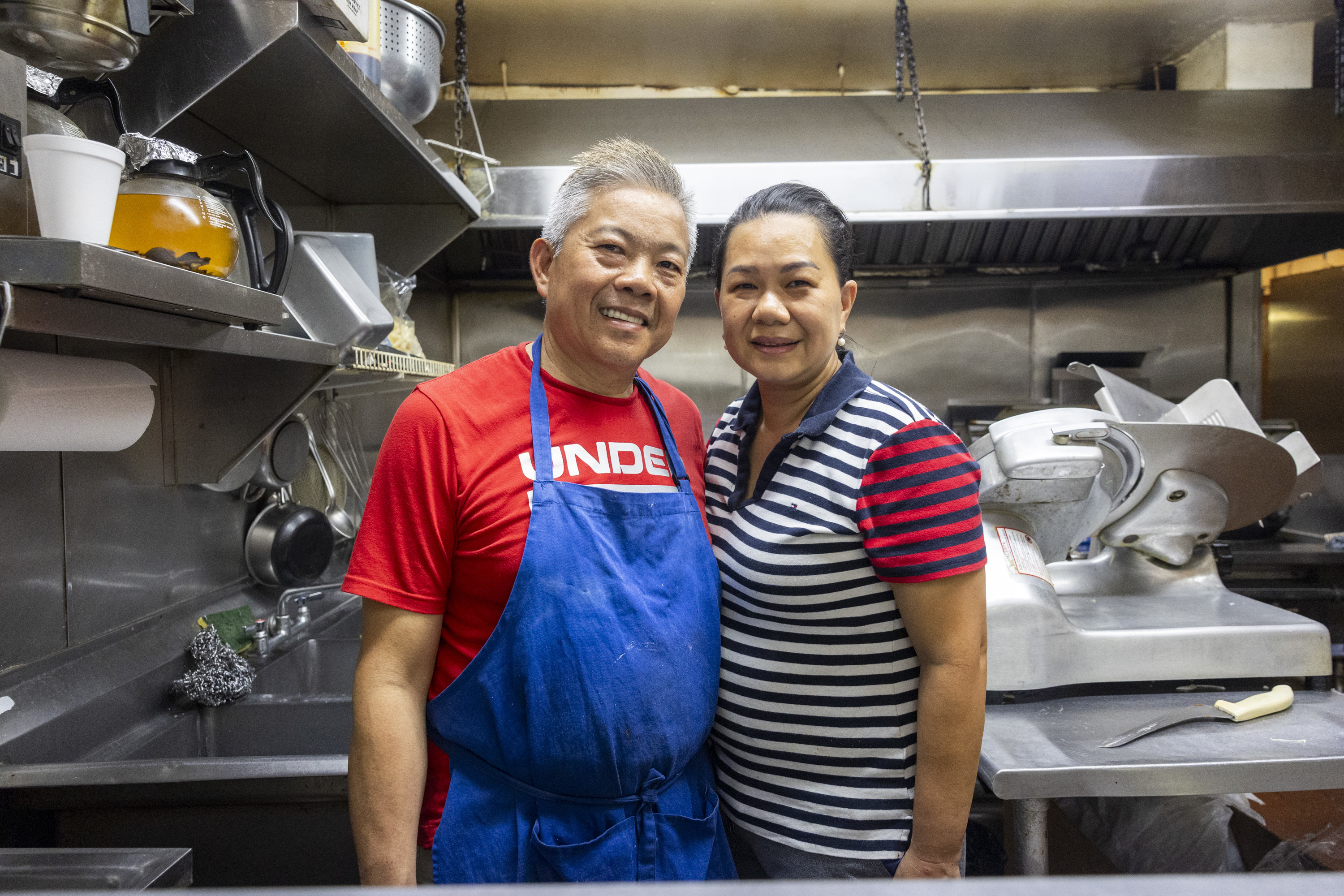
    The store is owned by Lynda Cong, 50, and Jimmy Cong, 53. They met in Philly in the early 2000s, after Lynda came to the area to study public health at Stockton University. Both the Congs are southern Chinese, but came from Saigon, now Ho Chi Minh City. They speak to their children (the two younger ones help out in the store, and two older ones are grown) in Cantonese.

    A customer, before he moved away seven years ago, presented the Congs with a custom sign that reads: “The Best Chicken Sandwich in Philly.” It hangs in the spotless, stainless steel kitchen, facing the interior of the store.

    Above the kitchen window: a handwritten menu with prices scratched out.

    Lynda Cong and her husband, Jimmy Cong, pose for a portrait at their corner store in Philadelphia on Aug. 5, 2026.Tyger Williams / Staff Photographer

    The Congs took the store over from Jimmy’s sister “between 10 and 15 years ago,” according to Lynda, when the sister retired. Jimmy’s sister was known as “Mrs. Lee” and she first opened the store in 1986. “Kim Woa” is an older Romanization of the Cantonese phrase “gam waa,” which translates literally to “golden splendor” and means “prosperity.”

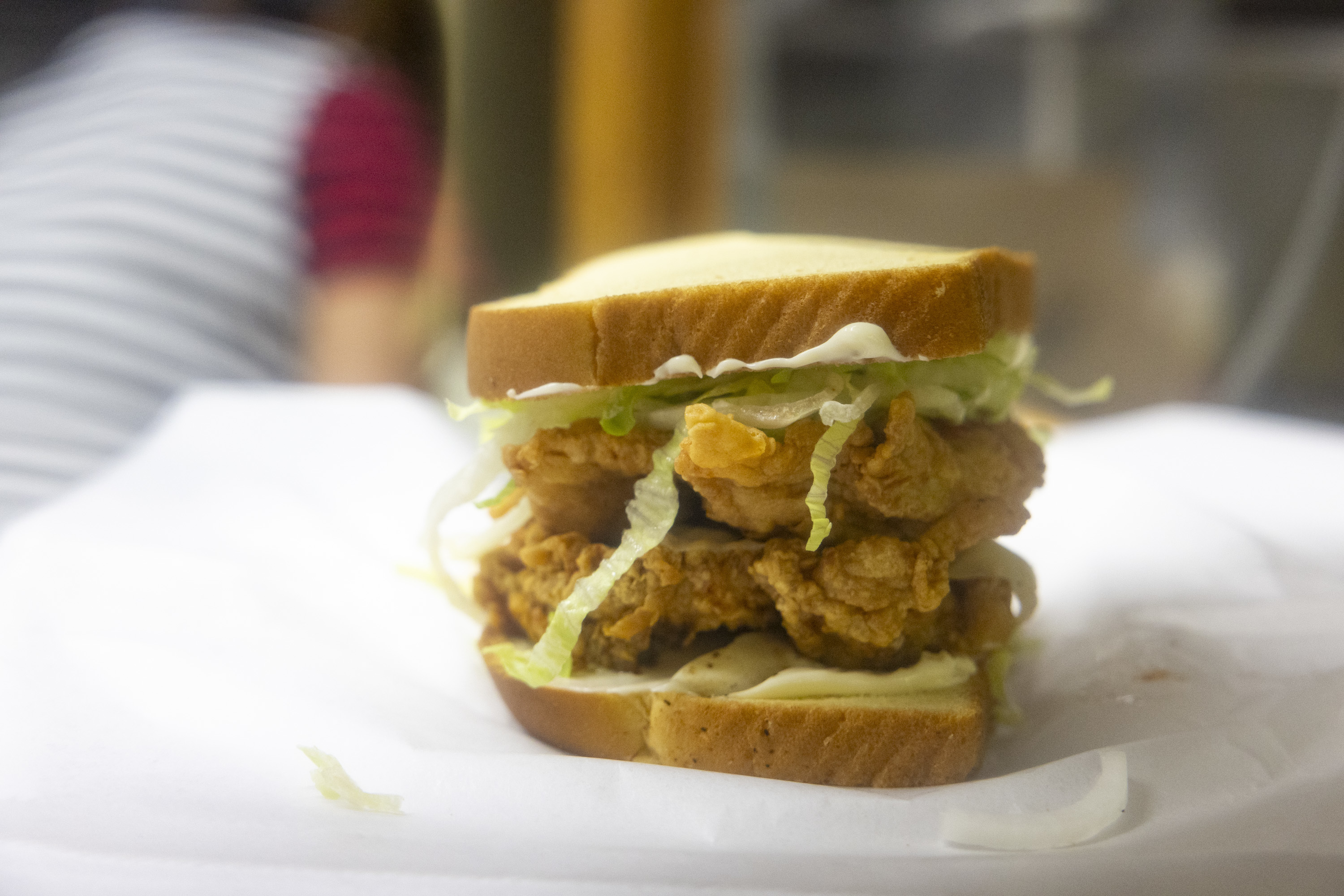
    “Golden” is apt, as it accurately describes the fried breading on the sandwich, which costs $9 and consists of two chicken breast cutlets, thickly breaded with a super crunchy exterior. Ordering it “with everything” means that it comes with pickles, mayo, onion, tomato, and lettuce, laid on two slices of potato bread.

    Earlier this year, a few TikTok influencers also discovered the sandwich, though it has still hardly reached the point of virality. The chicken sandwich whisper network, however, did prompt me to get one.

    After one bite, I promptly texted my editor, “I hit the chicken sandwich jackpot.”

    @reusparx

    Is this The Best Chicken Sandwich in Philly ? I let My Followers Pick My Spot & Meal for The day & This Was The First Suggestion ! So I’m at Kim Woo Store in Philly on 19th St I Got The Chicken Sandwich 🔥 . . . . . . . . . #food #fyp #philly #foodie #WhereToEat

    ♬ original sound – Reusparx

    The wings are improbably juicy, with the same crispy breading and are perhaps even more delectable than the famous chicken sandwich. “It’s just salt, pepper, flour, water, and garlic powder,” said Lynda, who has met this sudden interest in the sandwich with amusement. The Congs now sell about 50 of the sandwiches every day; they say the interest has only somewhat affected daily sales.

    The sandwich and the wings (three for $5 or six for $9.60), along with a massive array of salads, cheesesteaks, hoagies, wraps, and fried rice, emerge from a highly polished and well-scrubbed stainless steel kitchen. (You can order things that aren’t even on the menu. You can order whatever you’d like in a wrap.)

    Over the years, the Congs have watched the neighborhood around them evolve. They’ve added most of the menu items to meet new demands and new tastes. But the chicken sandwich has stayed the same.

    Kim Woa Store, 1300 S 17th St, 215-463-5426, Hours: Monday to Saturday, 9 a.m. to 6:30 p.m.

  • The Pub in Pennsauken is going up for sale

    The Pub in Pennsauken is going up for sale

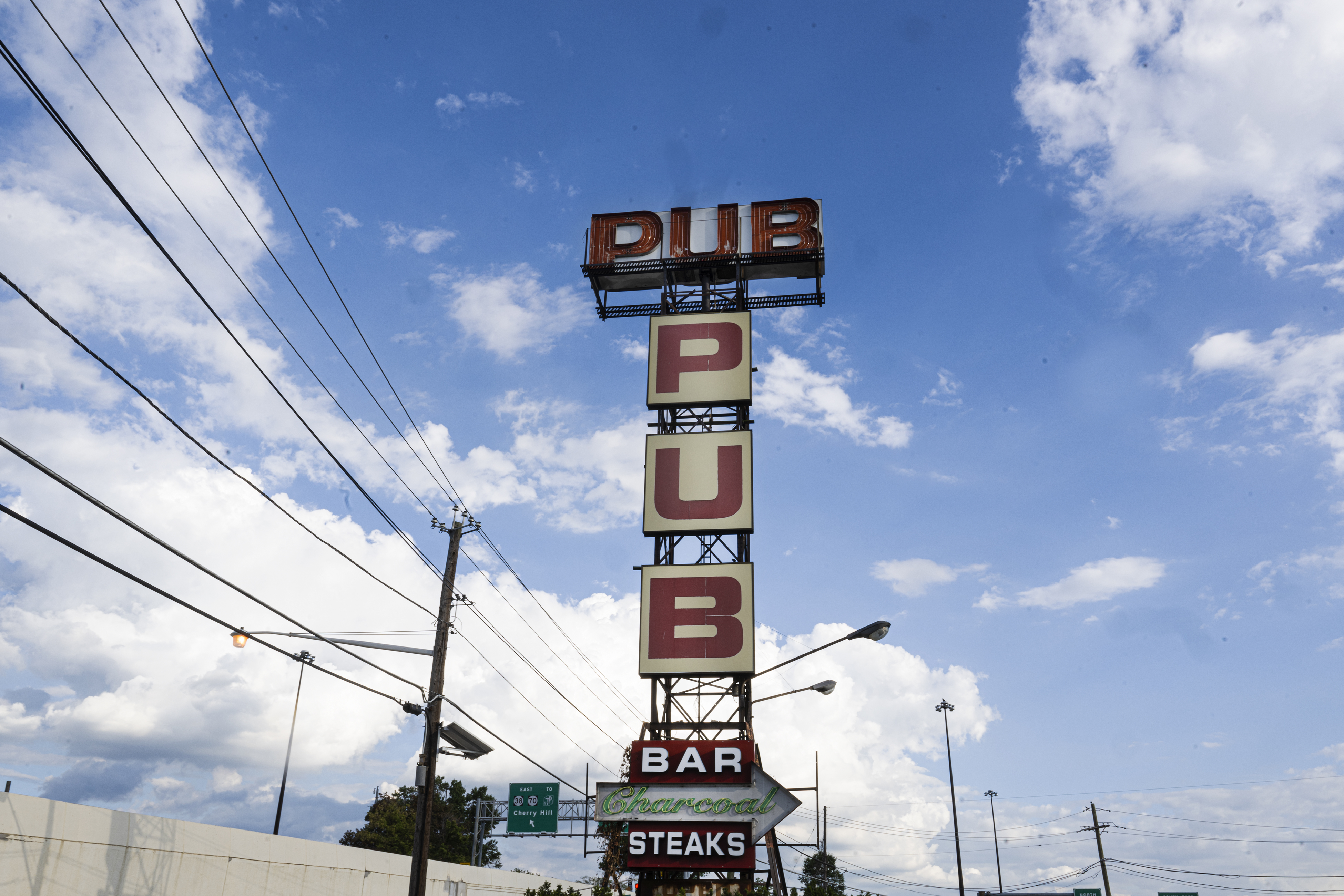
    The Pub, the landmark Pennsauken restaurant known for its open-hearth steaks, twin salad bars, and medieval banquet-hall atmosphere, is going on the market.

    The Gelman family, which has owned the establishment for 26 of its 75 years, said it plans to begin soliciting buyers Tuesday for the restaurant, business, and property at 7600 Kaighn Ave. on the old Airport Circle.

    There is no asking price, and the family is not using a real estate broker. Prospective buyers will be required to sign a confidentiality agreement before receiving financial and other information.

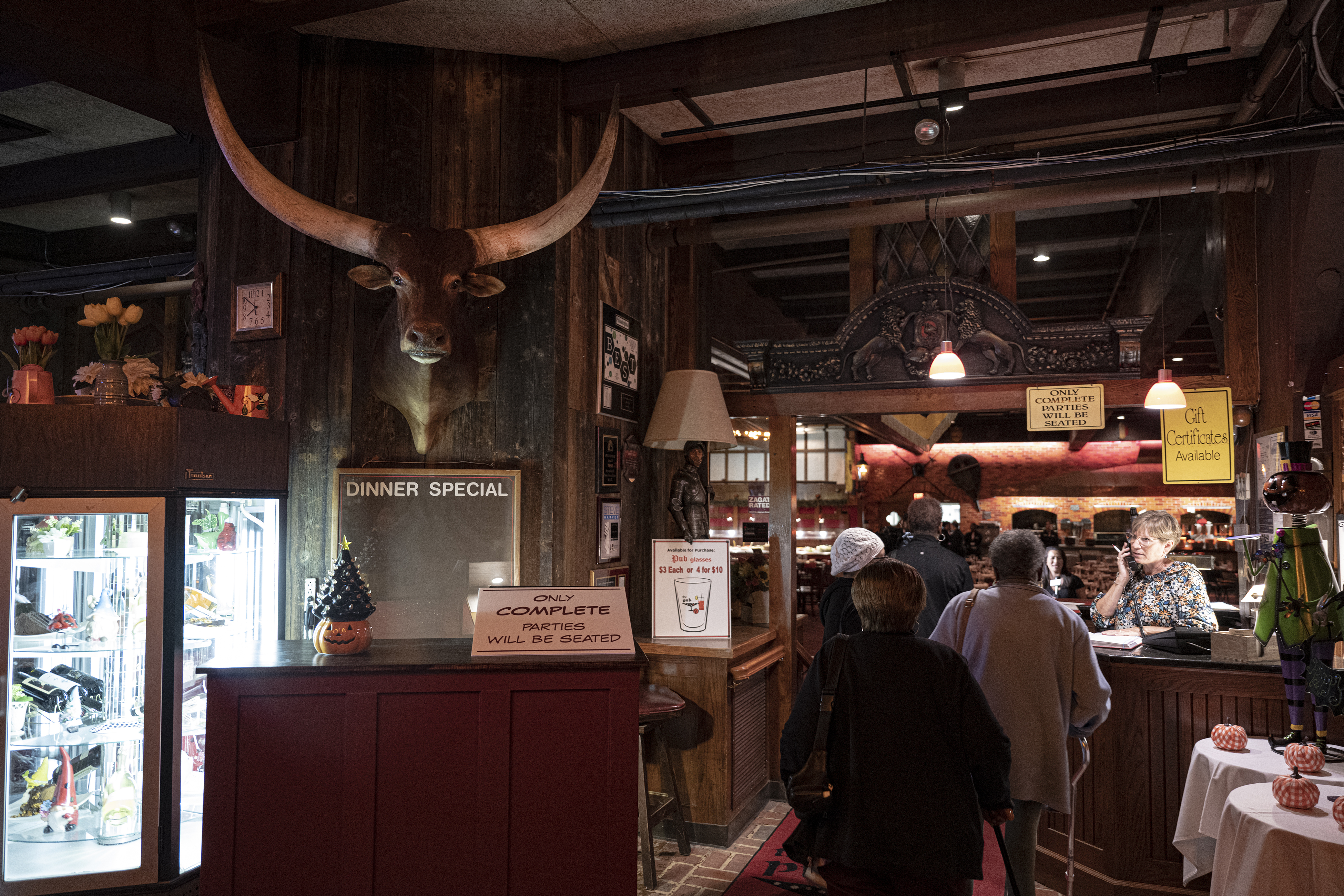
    The Pub, as seen in 2024, is largely a time capsule of ye olde steakhouse dining.Jose F. Moreno / Staff Photographer

    “We haven’t listed it with anybody, and we’re not going to list it with anybody,” said David Gelman, whose father, Marc, bought the restaurant in 2000. “This is something we’ve been talking about doing for a little while. I think now is the best time.”

    The offering does not mean that the Pub is closing, Gelman said. The restaurant began its annual summer break Aug. 3 and is still scheduled to reopen Sept. 18.

    “It’s just time,” Gelman said of the decision to sell. “I don’t think there’s one thing in general, but it’s time for a new steward, if you will, of the business or the property.”

    The Pub in September 2024 after its reopening following a summer of renovations. Jose F. Moreno / Staff Photographer

    That distinction — business or property — could be significant. The offering is aimed both at someone interested in continuing the Pub and developers who might see other possibilities for the large tract near Routes 38, 70, 73, and 130 and the Ben Franklin and Walt Whitman Bridges.

    “Restaurants are not what they were for many years,” Gelman said. “There may be a developer who has a grand plan or something like that. There are a lot of different opportunities out there.”

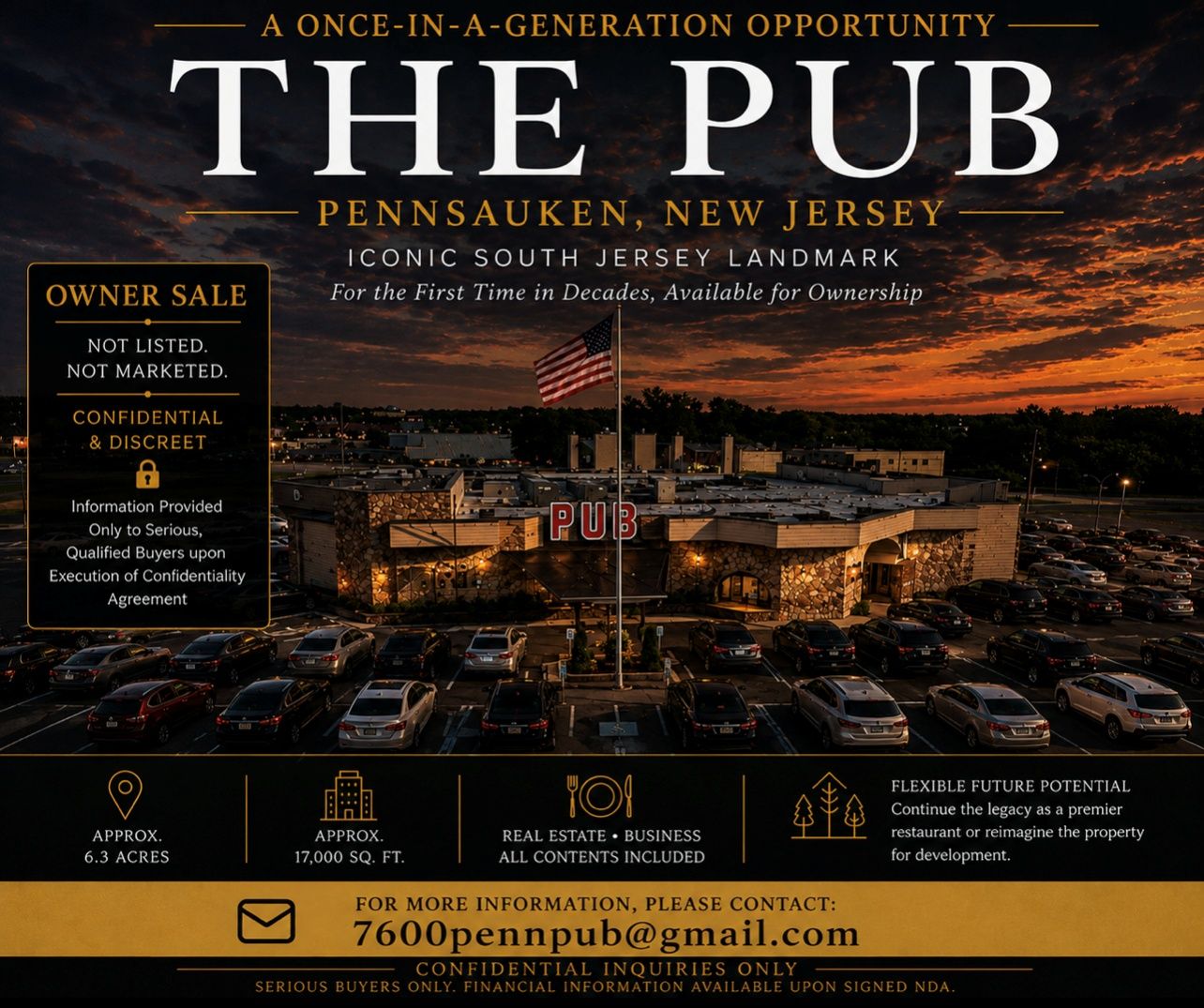
    Real estate solicitation for the Pub in Pennsauken.Courtesy of the Pub

    An advertisement seen by The Inquirer describes approximately 6.3 acres with a roughly 17,000-square-foot building and says the real estate, restaurant business, and contents are included. It lists an email address for contact.

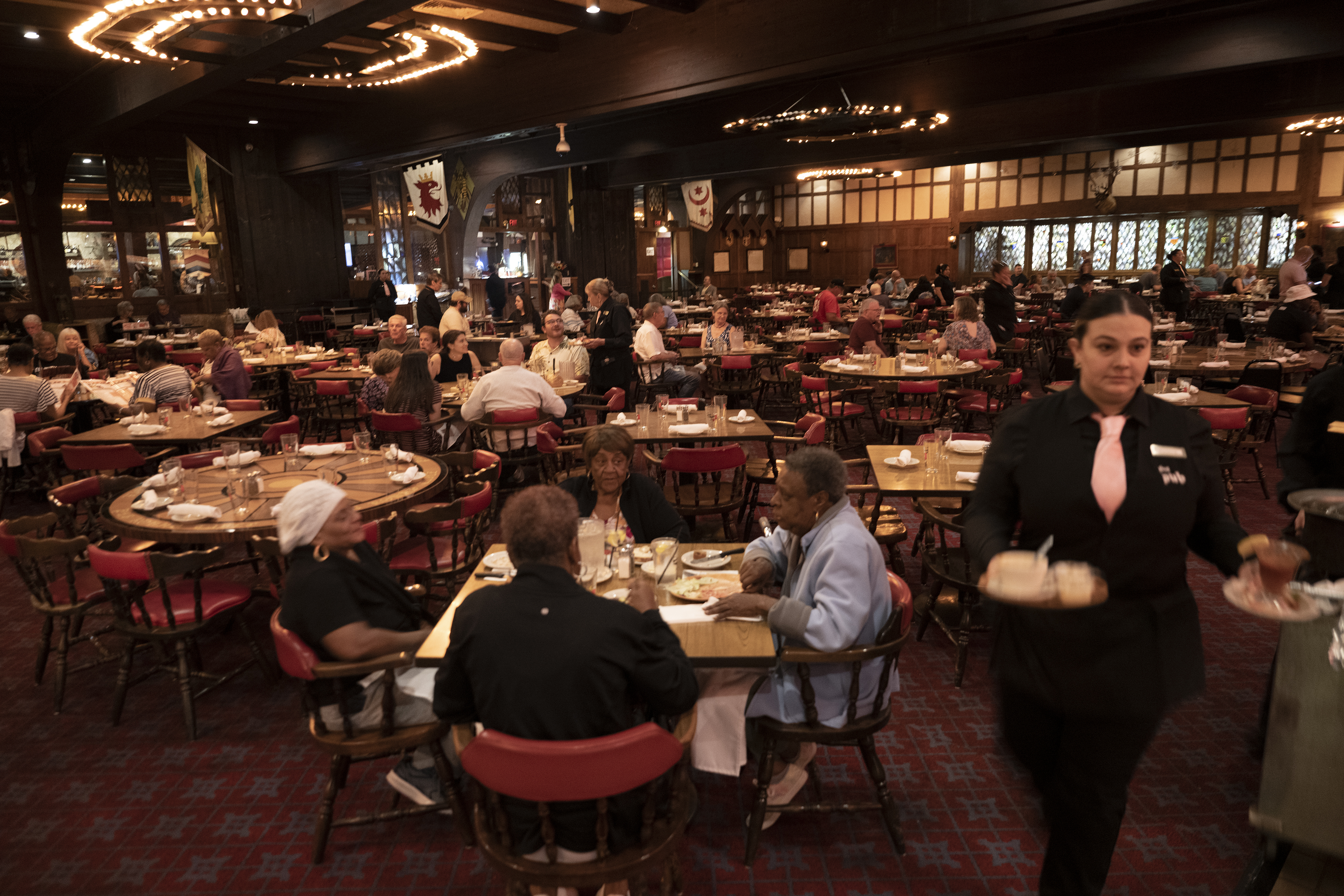
    The Pub can seat about 1,200 people in dining rooms dominated by a cavernous space resembling a medieval banquet hall, festooned with war flags, swords, and assorted taxidermy beneath wooden beams. Six open hearths are used to broil steaks.

    On a typical Saturday, 700 to 1,000 customers cycle through, and the restaurant may roast 10 to 15 of its best-selling prime ribs, each weighing 12 to 15 pounds. About 120 employees work there on a peak night.

    The Pub opened in 1951 at what was then Airport Circle, at Route 130 and Kaighn Avenue, and was rebuilt in the early 1960s after a fire. Marc Gelman, David Gelman’s father, bought it in 2000 after previous co-owner Gary Perez retired.

    David Gelman said owning it has meant maintaining a restaurant whose appeal is tied as much to memories and tradition as to its steaks.

    “It’s been great,” he said. “Keeping the traditions alive, really. A lot of good memories for us and for families in general. It brings them back to their childhood.”

    The timing of the sale announcement could cause confusion because the Pub is currently dark, but Gelman emphasized that the sale announcement and summertime closure were unrelated.

    The restaurant began taking extended summer breaks in 2024, when it closed from July 1 and reopened Sept. 20 after nearly $250,000 in repairs, including roof work, new kitchen equipment, painting, and carpeting. Last year, it closed from June 30 through Sept. 18 for plumbing, air-conditioning, kitchen, and carpeting improvements.

    Steaks sizzle on one of six open hearths at the Pub in 2024.Jose F. Moreno / Staff Photographer

    Gelman has said the shutdowns make sense because summer traditionally is slow. It gives employees time off and allowing work to be done without disrupting customers. This year’s break began Aug. 3, later than the previous years’ breaks.

    Gelman said his family was planning to reopen in September. If a buyer struck a deal before then, he said, the family would consider the buyer’s wishes, but he called completing a transaction within 30 days highly unlikely.

    The offering comes two years after 7600 Kaighn Ave. surfaced in commercial real estate marketing by Binswanger. The materials contemplated an industrial redevelopment, prompting speculation about the Pub’s future. At the time, Gelman said the Pub was not for sale or lease and Binswager representatives did not return messages seeking comment.

    On Monday, Gelman said his family had never authorized Binswanger to market the property and added that the family did not know how the offering had originated.

    This time, there is no ambiguity about the Gelmans’ intentions. Gelman said the family sees little reason to hire a broker when it can reach prospective buyers directly and provide information to those with serious interest and financial wherewithal.

    “There’s really no need to have it listed when social media nowadays and everything else is just as good, if not better,” he said.

    The family also owns Library II in Voorhees, Gelman said, but it is not part of the offering.

    As for what ultimately becomes of the Pub, Gelman said he would prefer to see the restaurant survive under new ownership, even as the family entertains other possibilities for the land.

    “It’s a landmark,” he said. “Hopefully it doesn’t go anywhere.”

  • A 68-year-old Northeast Philly restaurant staple is closing. Customers are stocking up on snapper soup.

    A 68-year-old Northeast Philly restaurant staple is closing. Customers are stocking up on snapper soup.

    Since it’s noontime on the first Thursday of the month, eight residents of Wesley Enhanced Living at Pennypack Park are chatting at the long table in the middle of the main dining room at Kelly’s Seafood in Northeast Philadelphia.

    Back in the kitchen, twin brothers Brian and Brett Kelly and Brian’s son Tommy are knocking out the lunch orders. Crab cakes sizzle in sauté pans. Snapper soup bubbles in the kettles.

    For the Wesley residents, this is the end of a longtime ritual.

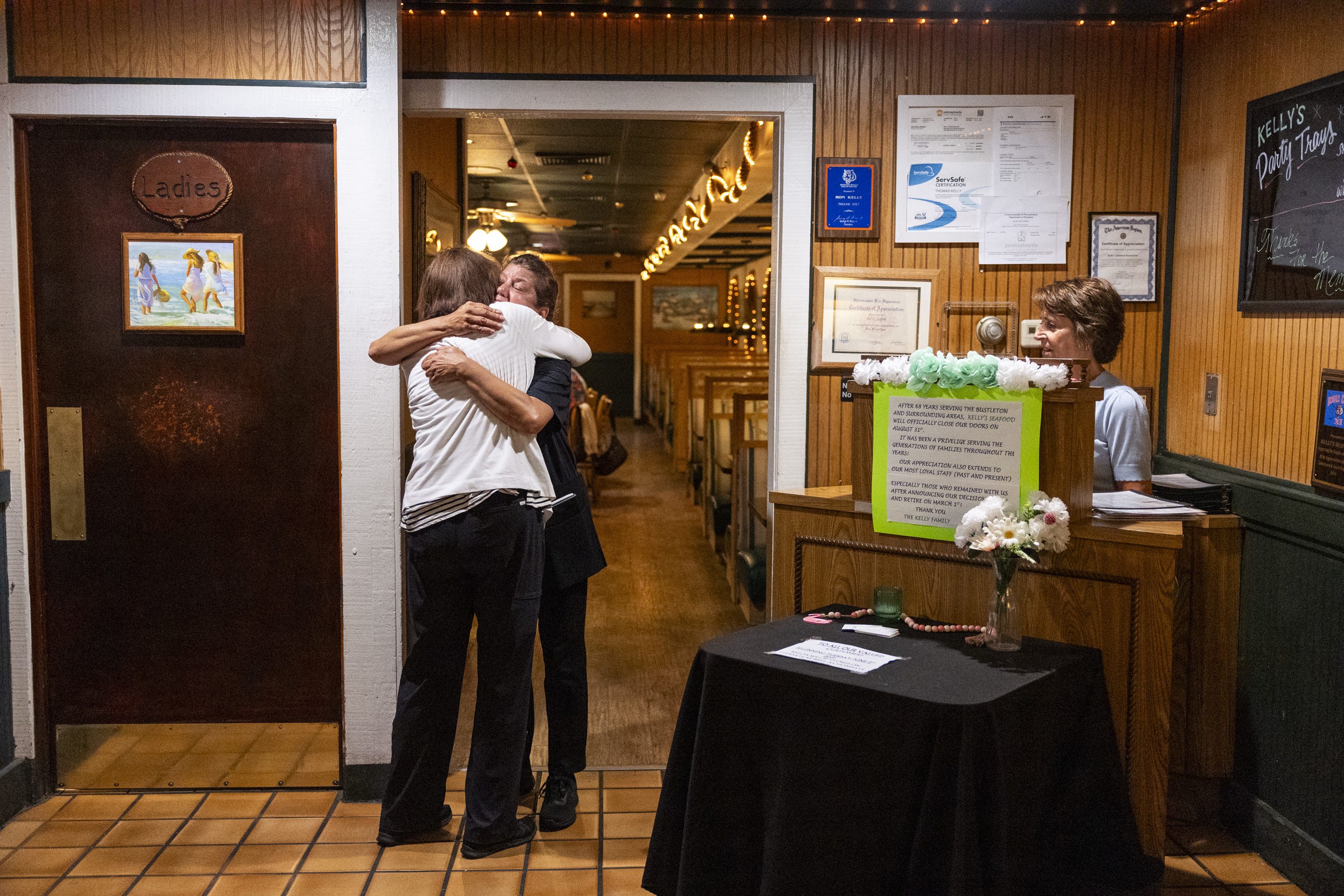
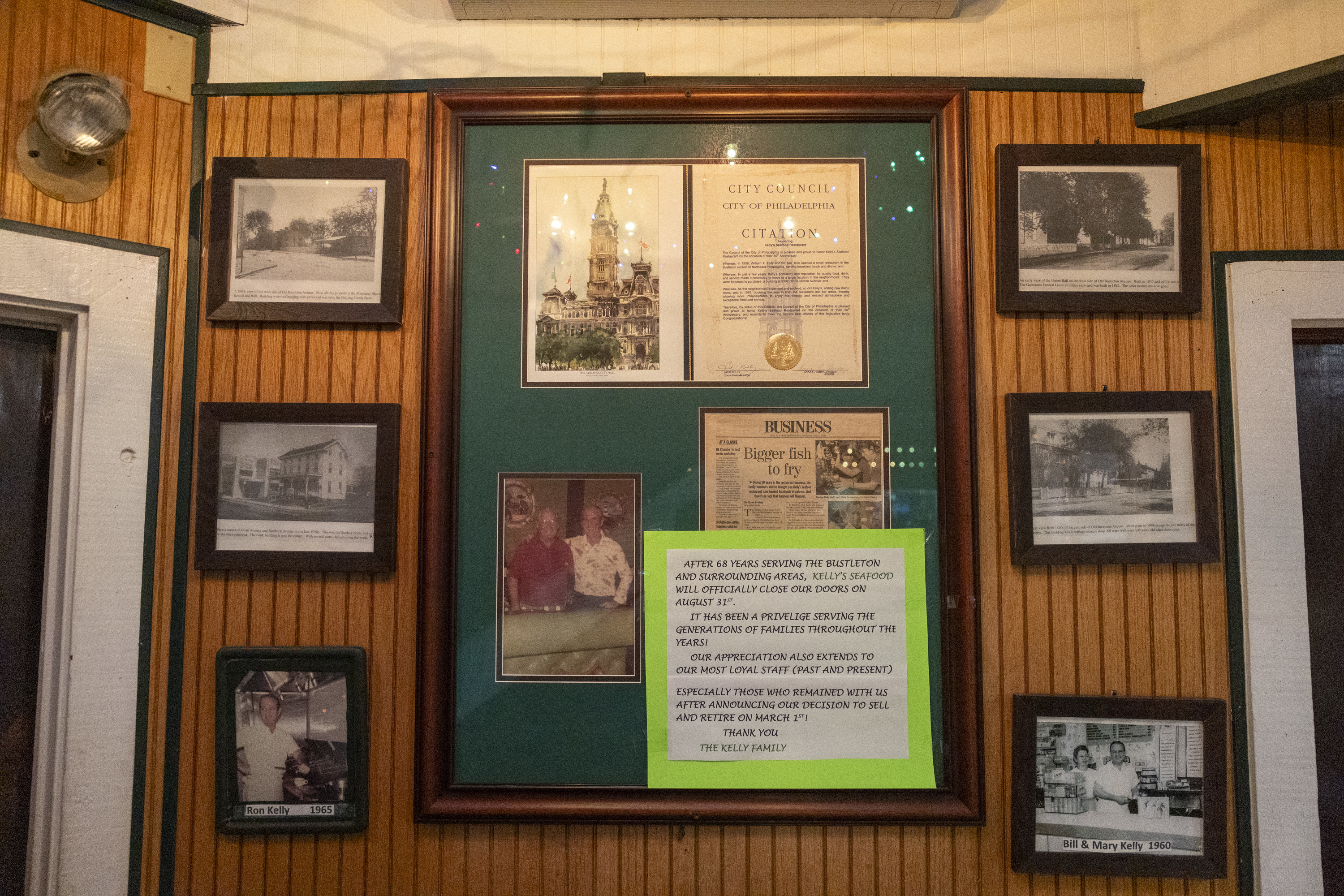
    Kelly’s Seafood, whose history stretches back 68 years, will close Aug. 31.

    “When they leave today, we’ll all be crying,” said server Chris Brown, who has worked at Kelly’s since 1988. The Kelly brothers’ sister, Denise Barreras, nodded.

    A few minutes later, their checks paid, the residents rose from the table.

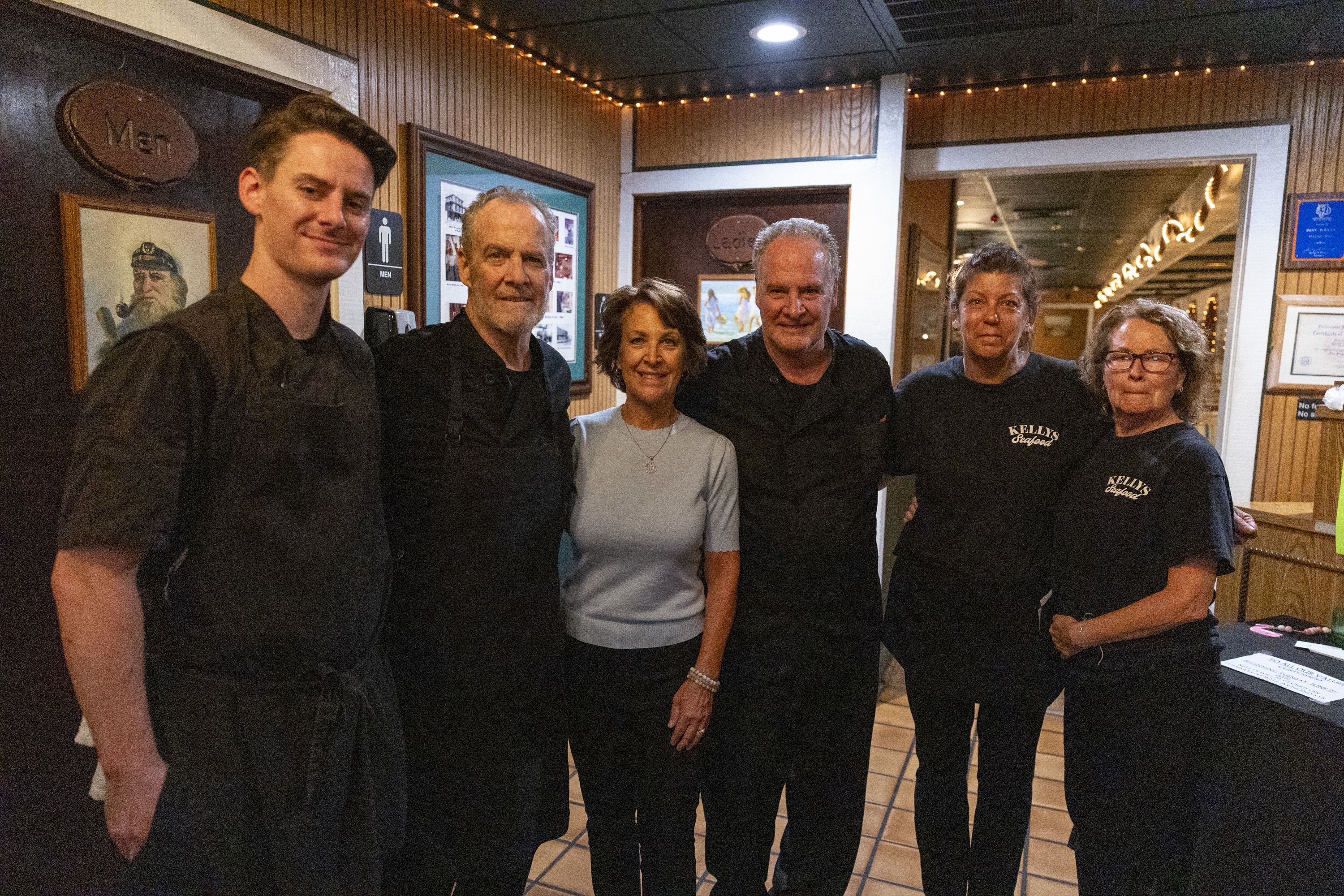
    The crew at Kelly’s (from left) Tom Kelly, siblings Brian Kelly, Denise Barreras, and Brett Kelly, server Chris Brown, and bartender Cathy Sims.Tyger Williams / Staff Photographer

    And just as Brown had called it: tears and hugs.

    Where will September’s first-Thursday lunch be? They’re not sure.

    Kelly’s, one of the last of the Northeast fish houses, has been the setting for countless rituals like theirs, a place where people who came as children later brought their own children.

    “People my age are saying they’ve been coming here since they were 10 years old,” said Brian Kelly, 62, who has been reading customers’ recollections since the closing was announced. “They’re talking about christenings, baptisms, graduations. It really makes you realize how many people have come through these doors over the years.”

    The Kellys had hoped to make it to 70 years. Instead, the family has reached the point where keeping the restaurant going would require more than they are willing — or able — to give it.

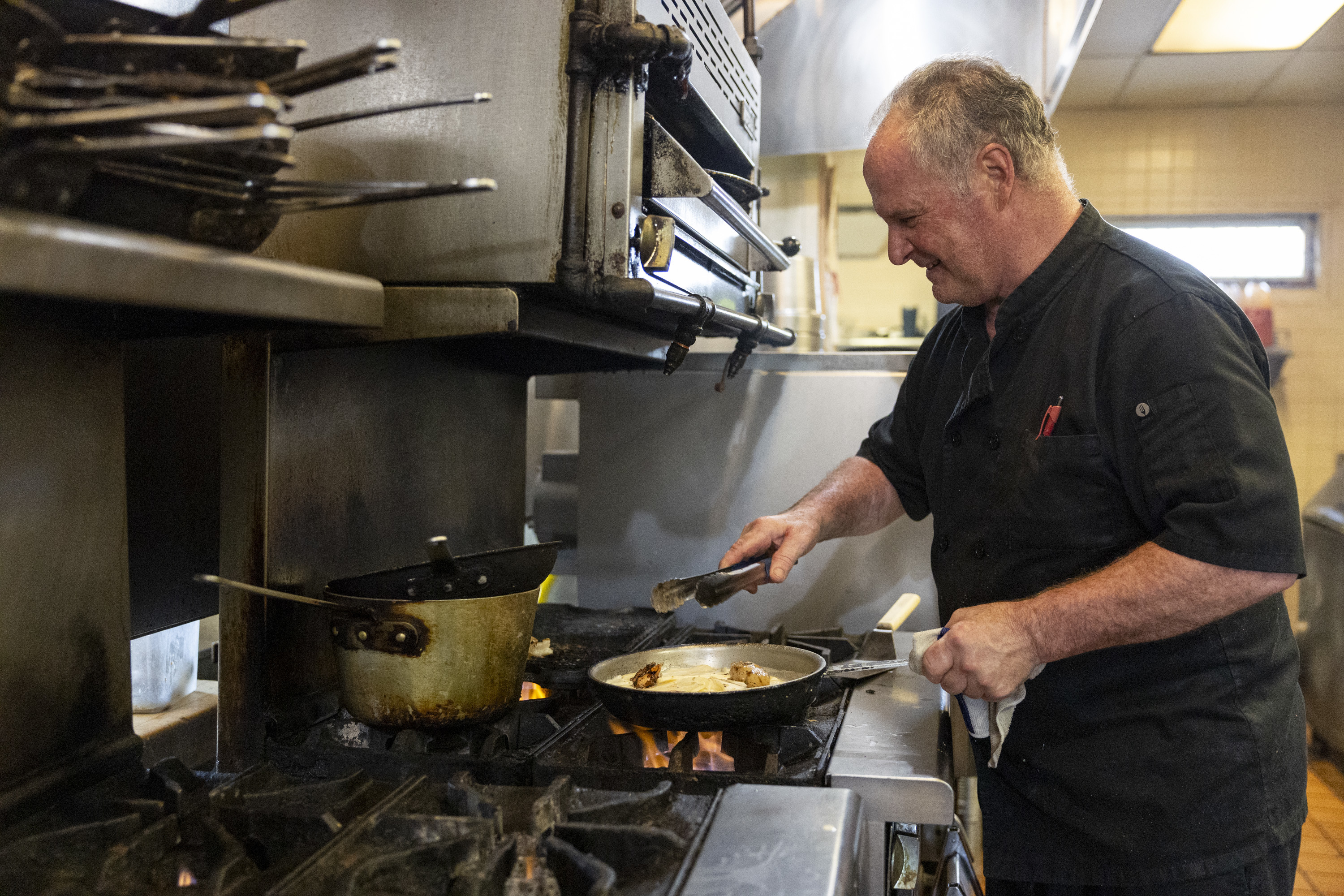
    Brett Kelly working the stove at Kelly’s.Tyger Williams / Staff Photographer

    Brian and Brett’s father, Ron, died in July 2023 at age 87. Of his nine grandchildren, only Brian’s son Tommy now works at the restaurant. An illness has sharply limited how much Brian can work, leaving Brett to pull double shifts since October.

    The family announced on March 1 that Kelly’s was on the market, hoping to give employees and customers plenty of warning. In late July, with the restaurant still unsold, they decided that they needed to set an end date.

    Kelly’s Seafood history

    The story began in 1958, when Ron Kelly and his father, William T. Kelly, opened Kelly’s Grille, a luncheonette in a shopping center a few blocks from the current restaurant.

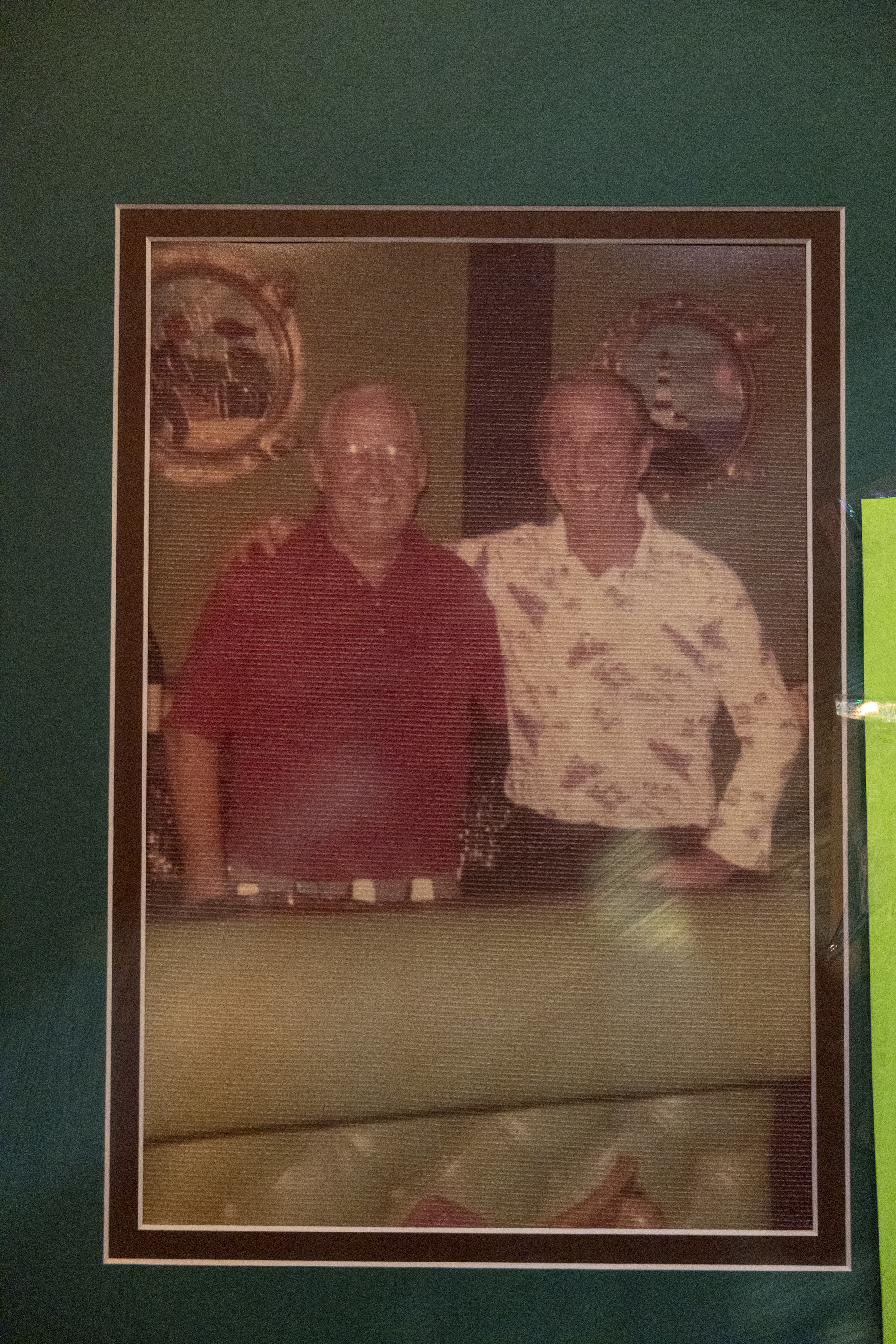
    Founders William (left) and Ron Kelly, in a photo hanging at Kelly’s Seafood.Tyger Williams / Staff Photographer

    William had worked on a milk wagon. Ron, newly out of military service, wanted to get into the restaurant business, and his father went along with him.

    In 1964, they moved Kelly’s to 9362 Old Bustleton Ave., just off Bustleton Avenue and Welsh Road, and Kelly’s Seafood took shape. (It is unrelated to the long-ago Kelly’s on Mole Street in Center City.)

    The family and restaurant became difficult to separate.

    William lived in the apartment above Kelly’s and cleaned the bathrooms every morning. Ron and Jean Kelly’s four children — Denise, Tim, Brian, and Brett — all grew up working there.

    Kelly’s Seafood lines its walls with memorabilia.Tyger Williams / Staff Photographer

    Brian and Brett walked over after school and spent Wednesdays and Thursdays in the basement, which they called “the dungeon,” breading shrimp and other seafood.

    “We were about 12 years old,” Brian said. “Today they’d probably shut us down for child labor. Back then it was just part of growing up in the family business.”

    Their brother Tim, now 63 and living in Florida, also started young, walking over after school to help. Eventually, all nine of Ron and Jean’s grandchildren worked at Kelly’s in some capacity.

    The restaurant itself looks as if it has been accruing memories for nearly seven decades.

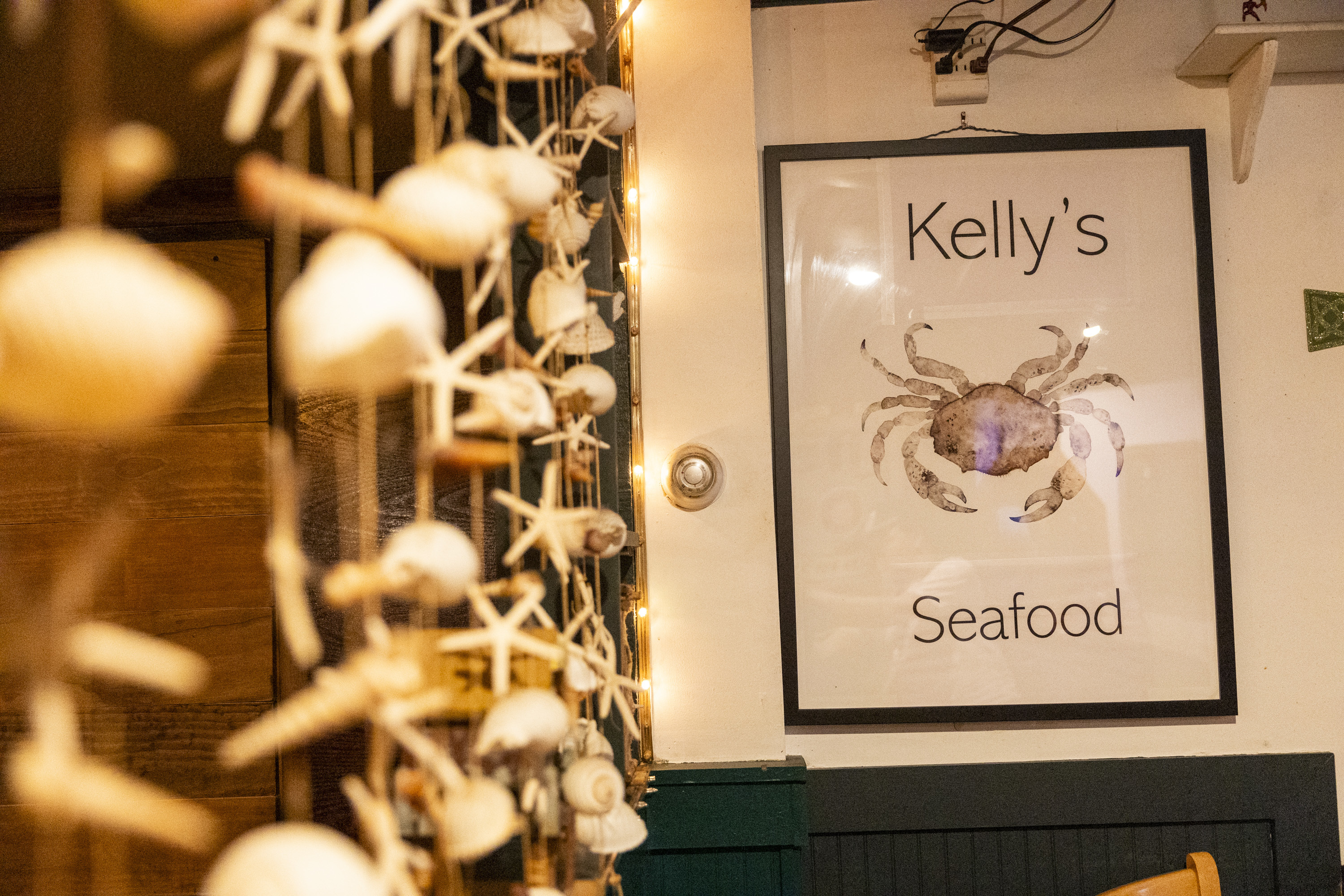
    Seashells hang from netting at Kelly’s.Tyger Williams / Staff Photographer

    The decorating scheme includes a decades-long accumulation of Shore-life artifacts — wood paneling, striped booths, fish prints, shells, ship models, string lights, and enough nautical memorabilia to outfit a small maritime museum.

    The accumulation includes people.

    Bartender Cathy Sims first came to Kelly’s as a customer, bringing her daughters here after their ring Mass at St. Hubert’s High. After she graduated from bartending school, Barreras hired her in 1997.

    She never left.

    “I love them,” Sims said. “They’re my best friends. And then I’ve got all my people who have been coming in for 20 years.”

    Brown started waiting tables in June 1988 after a former Dunkin’ Donuts coworker told her that Kelly’s was hiring. “I came over, and the rest is history,” she said.

    When the Kellys gathered the 25 employees in March to say the restaurant was for sale, they told them they would understand if anyone wanted to find another job.

    Nobody left.

    “They all said they’d stay through the end,” Brian said.

    Preparing for the finale

    The family wanted customers to have the same notice.

    “A lot of restaurants close and all of a sudden there’s a note on the door, and sometimes even the staff doesn’t know about it,” Brett said.

    The Kellys also wanted customers to have time to use their gift certificates. Brian said they have honored certificates dating to the mid-1990s and will reimburse anyone left with one after the closing.

    But the March announcement caused confusion. Some customers thought Kelly’s had already closed.

    Once the family set Aug. 31 as the final day, business surged again. One recent Wednesday was the busiest Wednesday Kelly’s had seen in three months.

    “A lot of people are saying, ‘We’ve got to get the family out there one last time,’” Brett said.

    And some are stocking up, especially on snapper soup.

    Customers have been calling Brett to ask whether they can buy it by the quart and freeze it. He tried freezing a bucket during the pandemic and found that, aside from some crystallization, it held up well enough.

    Now he is dispensing freezer advice along with soup.

    One day last week, he thought he had made enough to get through the following day. That night, customers bought 10 quarts and nine pints. The Wesley group took six quarts. “They were lucky because I just made it,” he said.

    Moving on

    What Kelly’s cannot stockpile is another generation willing to take over the way the previous ones did.

    Brett’s children worked here as teenagers, bussing tables, washing dishes, and doing whatever else was needed, but neither wanted the restaurant business.

    “All the nieces and nephews worked here one way or another,” Brett said. “They all did their part here. But nobody wants to basically do what Brian and I did — be hands-on with it. So we knew it would probably end with us.”

    Tommy works in the kitchen with his father and uncle, but he can’t run it alone. “Managing the business is a different world,” Brett said. “And we don’t have enough family coming in behind him to back him up.”

    Brett has watched what the restaurant demanded of his own generation. “I think the best move for him is to go try something else and maybe enjoy life more than we did,” he said. “Now we’re going to enjoy life more.”

    Brian’s illness hastened the decision. “I’m used to working all those hours, and I just can’t anymore,” Brian said. “I come in and help my brother when I can, but it’s not the same.”

    The restaurant, meanwhile, keeps demanding attention, even now.

    A month ago, an oven the Kellys had used for about 30 years died. It was too old to repair.

    “I’m thinking, ‘Geez, I’ve got to get a new oven for, like, three months?’” Brett said.

    They bought the oven.

    The approximately 7,300-square-foot building — including its liquor license, equipment, furnishings, and attached apartment — is listed for $2 million. The Kellys say there are prospective buyers, though no deal has been completed, and they don’t know whether the next owner will operate it as a restaurant.

    Nor do Brian and Brett know exactly what they will do after taking a well-earned break. They have kicked around the idea of someday opening something much smaller, perhaps selling Kelly’s staples such as snapper soup and crab cakes, or even operating a food truck.

    Brown expects to find another job eventually. First, she plans to take some time off.

    “I need to wrap my head around it,” she said.

    After 38 years, she isn’t angry with the Kellys for their decision.

    “I’m glad for them,” Brown said. “They deserve it. They deserve it.”

  • Fishtown’s latest pizzeria celebrates Black culture with pies topped with oxtail and collard greens, jerk chicken, and shrimp and grits

    Fishtown’s latest pizzeria celebrates Black culture with pies topped with oxtail and collard greens, jerk chicken, and shrimp and grits

    With pizzas sliding in and out of the Blodgett ovens from noon till night, In Crust We Trust looks like another entrant in Fishtown’s booming pizza scene at first glance.

    But the menu signals a different ambition.

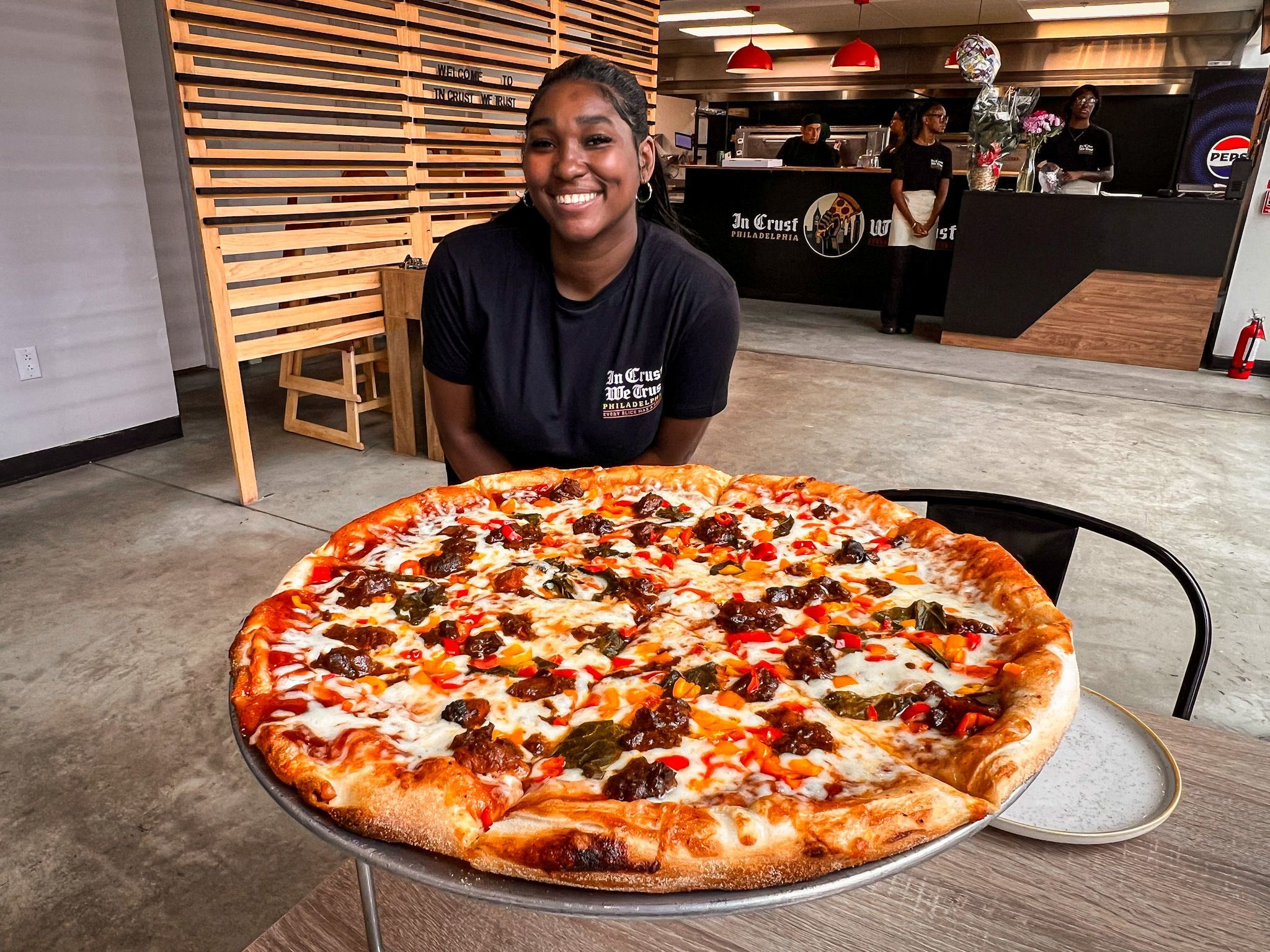
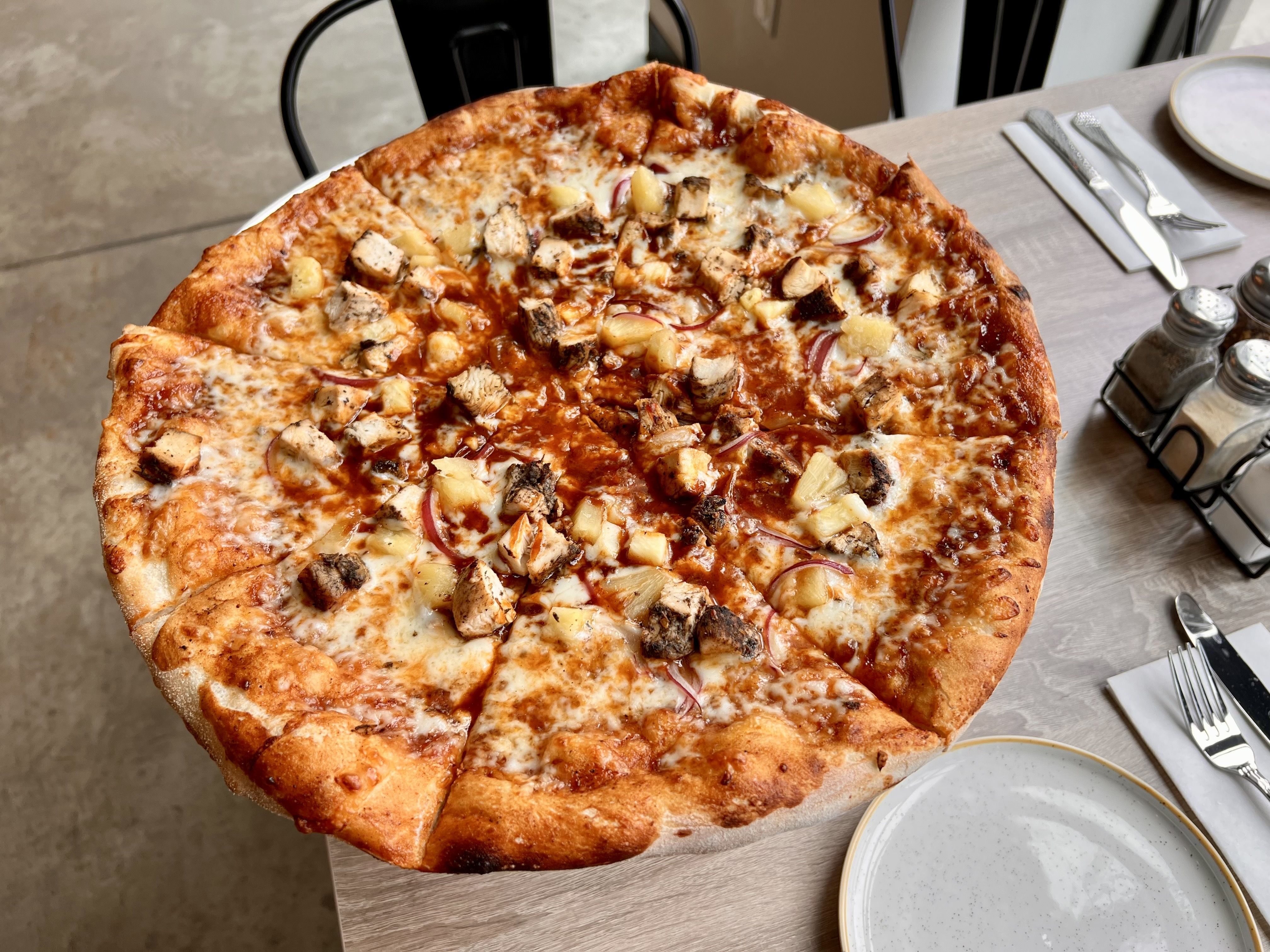
    You can eat quite well at the nearby Pizzeria Beddia, Liguria, Marina’s, Shackamaxon, D’Oliva, Scusi, Rustica, Urban Village, and Bar1010. But no other pizzeria in Fishtown offers pies topped with oxtail and collard greens, Cajun shrimp with broccoli and grits, or jerk chicken with pineapple and mango glaze.

    The Bottom (jerk chicken, mozzarella, pineapple, and mango glaze) at In Crust We Trust.Michael Klein / Staff

    In Crust We Trust, which opened Aug. 1 in the former Vince’s Pizzeria at Frankford Avenue and Richmond Street, across from the Fillmore, is the first solo restaurant from Anyae Wilson-Worley, 25.

    Though she grew up around restaurants and learned the business from her mother, restaurateur Felicia Wilson, Wilson-Worley is emphatic that In Crust We Trust is distinctly her own.

    Pizzaiolo Jose Maria worked with Wilson-Worley on intentional menu combinations for the New York-style pies. She said she wanted to bring Black culture into the recipes while creating a dining room that reflects it. “When people walk in, I want them to feel like a story is being told — taking them back to a Harlem Renaissance type of thing,” she said.

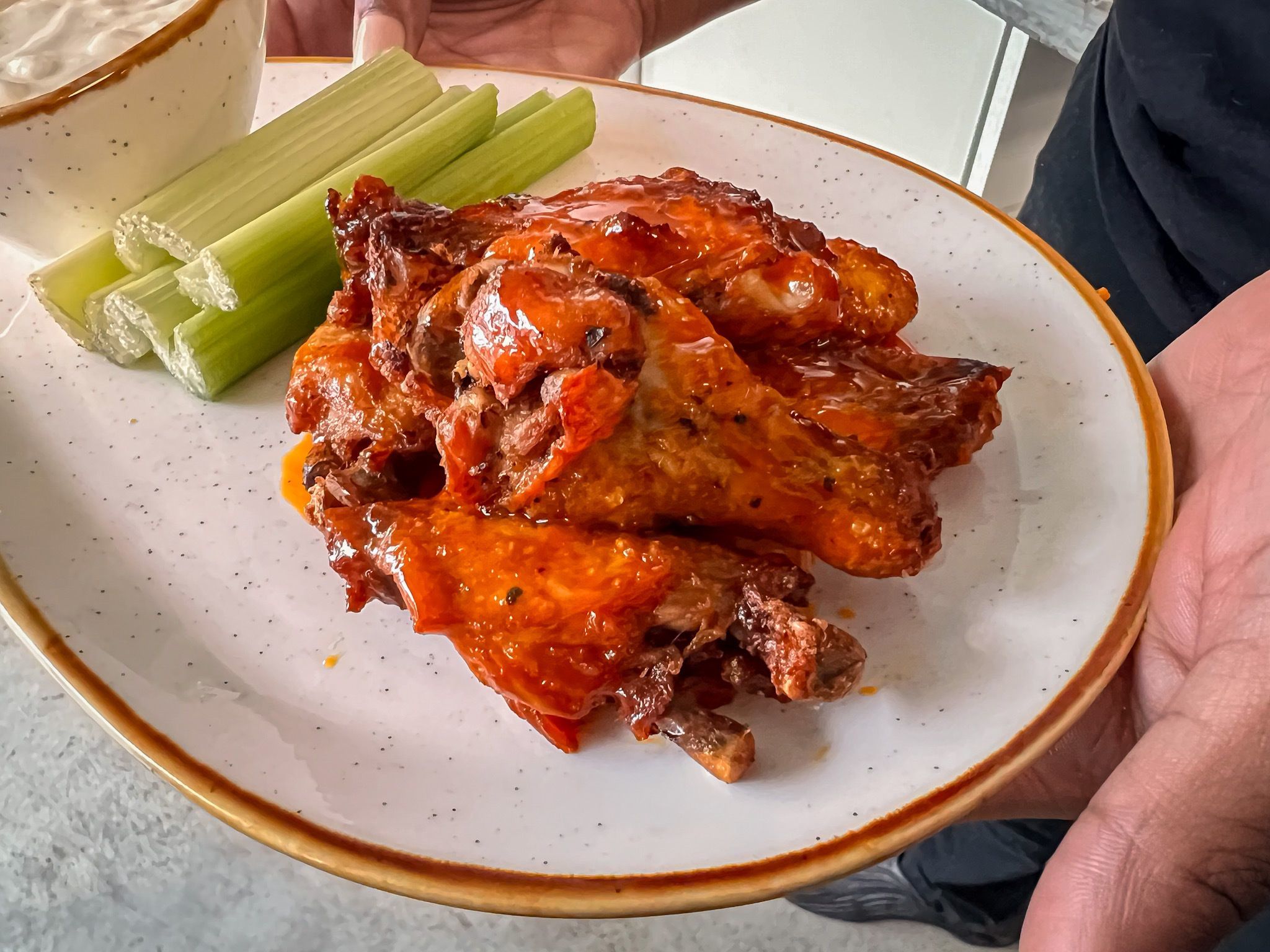
    Corner store wings, topped with cayenne pepper and peri peri, at In Crust We Trust on Aug. 2.Michael Klein / Staff

    The roughly 80-seat restaurant offers table service as well as a takeout counter and delivery. Beyond pizza, the menu includes wings, two salads, cheesy collard greens, and desserts (including a chocolate chip-oatmeal raisin-sugar cookie baked in a cast-iron skillet and topped with vanilla gelato) — all made with halal ingredients.

    Wilson-Worley is the oldest of Felicia Wilson’s three children. Her mother owns Amina, Avana, Fia, First Daughter Oyster & Co., and BlackHen. “She’s been much more than a role model,” Wilson-Worley said. “I definitely wouldn’t be in this position without my mother.”

    Still, restaurants were not part of Wilson-Worley’s original plan.

    She attended the University of Miami, where she majored in health sciences on the pre-med track. She said she was lucky enough to come out of school with no debt. “I took that as an opportunity to seize what was around me,” she said. “At the time [four years ago], my mom was in the height of opening all of her restaurants.”

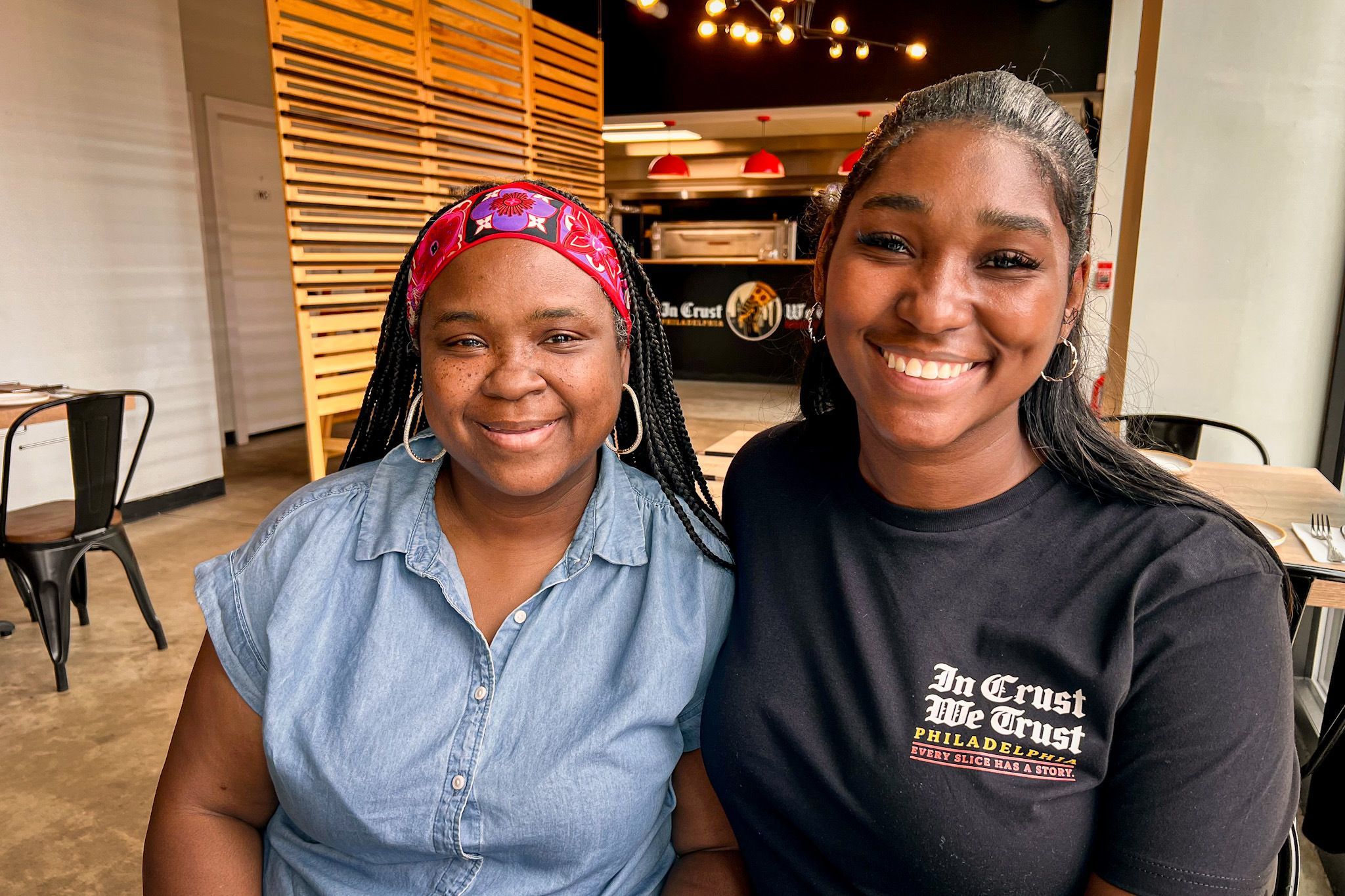
    Anyae Wilson-Worley (right) with her mother, Felicia Wilson, at In Crust We Trust on Aug. 2.Michael Klein / Staff

    While finishing school, she regularly flew back to Philadelphia to help with the expanding restaurant group. Eventually, she decided to stay to help her mother run the business.

    “Anyone who knows me can tell you that ever since my mom opened the restaurant, I always said, ‘This is not what I want to do. I don’t want to be here,’” Wilson-Worley said. “But now this has become my life.”

    Her mother provided the example and the education, but Wilson-Worley said the concept, menu, and identity of In Crust We Trust reflect her own perspective.

    Wilson-Worley describes Philadelphia as a city whose Black culture is foundational but not always fully recognized. Through the restaurant, she hopes to celebrate that culture while encouraging others to pursue their own ambitions.

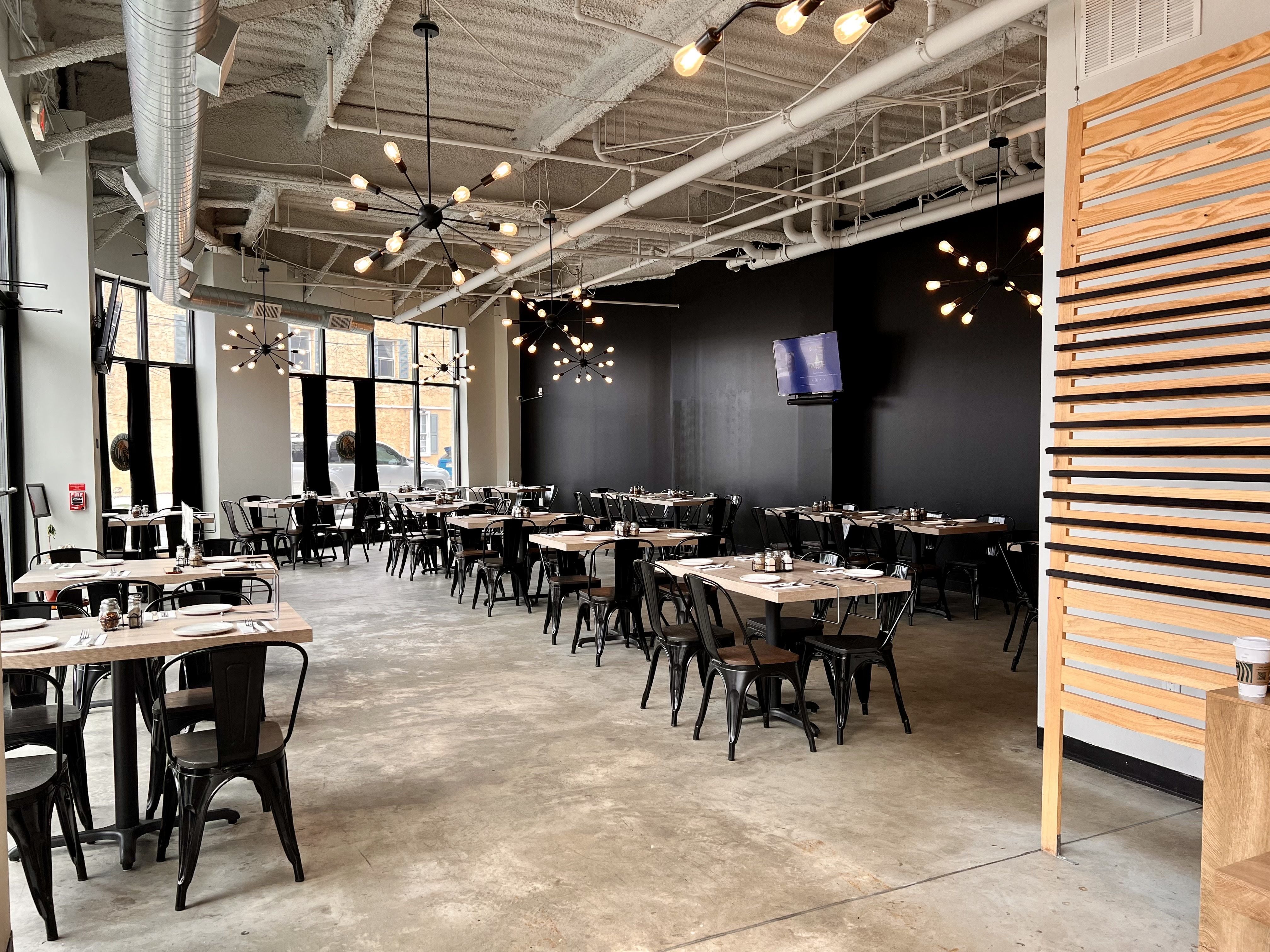
    Dining room at In Crust We Trust.Michael Klein / Staff

    “I hope to create a pathway for other Black people like myself to get involved,” she said. “Not only through food, but through anything.”

    The menu draws from years spent observing professional kitchens.

    “I’ve learned a lot from being around the chefs,” she said. “Watching them, listening to them, and working alongside them has expanded my culinary knowledge. I took everything I learned from them and applied it to create a menu that I’m really proud of.”

    Wilson-Worley also sees common ground with Down North Pizza, the Black-owned North Philadelphia pizzeria known for hiring formerly incarcerated employees. Both restaurants emphasize community engagement, though she said she does not view them as competitors.

    “I’m all about Black empowerment and working with other people like myself in this industry to contribute to the greater good of hospitality,” she said.

    Ultimately, she said, her goal is more immediate than making a statement with every slice.

    “I want people to feel loved and appreciated,” Wilson-Worley said. “When someone dines here, I want them to walk away thinking, ‘I’ve never had pizza like this before.’”

    In Crust We Trust, 965 Frankford Ave. Hours: 11 a.m. to midnight Monday to Thursday, 11 a.m. to 3 a.m. Friday and Saturday, and noon to 11 p.m. Sunday.

  • Angelo’s made cheesesteaks on seeded rolls a sensation. At Donkey’s in Camden, they’ve been doing it for decades.

    Angelo’s made cheesesteaks on seeded rolls a sensation. At Donkey’s in Camden, they’ve been doing it for decades.

    New Jersey Gov. Mikie Sherrill made a bold statement on a social media post last week.

    “The best cheesesteaks actually aren’t in Philly,” she said. “They’re right here in Jersey, and we’re about to go have one.”

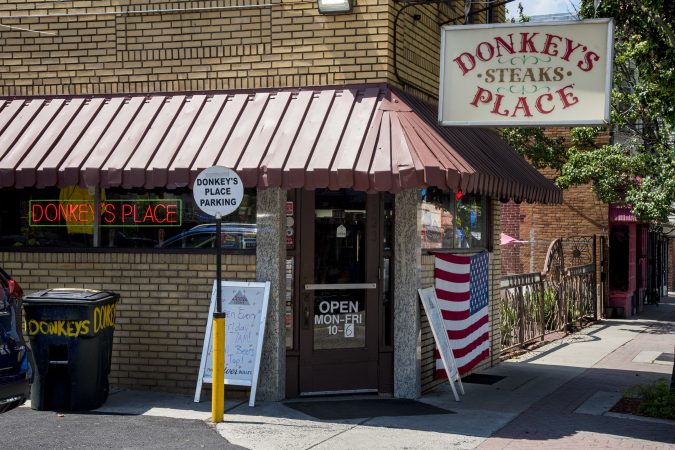
    She was talking, of course, about Donkey’s Place — the Camden cheesesteak staple that has long been a point of pride for South Jersey.

    Founded in 1943 by Olympic boxer Leon “Donkey” Lucas, Donkey’s earned its name from Lucas’ hard-hitting fists. “They said he had a punch like the kick of a donkey,” says Rob Lucas Jr., the third-generation owner of Donkey’s Place after his father, Bob, and grandfather Leon.

    Donkey’s has long been a favorite of locals and foodies in the know — Anthony Bourdain stopped by for his show in 2015.

    And while Philly favorite Angelo’s made waves in 2019 with its cheeseteak innovations — including a crusty, seeded roll — Donkey’s Place has been doing it that way for more than 80 years. (Angelo’s roll is baked in-house and crusted with sesame seeds, while Donkey’s uses poppy-seeded rolls.)

    <blockquote class="instagram-media" data-instgrm-captioned data-instgrm-permalink="https://www.instagram.com/p/Dan3pGhgajK/?utm_source=ig_embed&utm_campaign=loading" data-instgrm-version="14" style=" background:#FFF; border:0; border-radius:3px; box-shadow:0 0 1px 0 rgba(0,0,0,0.5),0 1px 10px 0 rgba(0,0,0,0.15); margin: 1px; max-width:540px; min-width:326px; padding:0; width:99.375%; width:-webkit-calc(100% - 2px); width:calc(100% - 2px);"><div style="padding:16px;"> <a href="https://www.instagram.com/p/Dan3pGhgajK/?utm_source=ig_embed&utm_campaign=loading" style=" background:#FFFFFF; line-height:0; padding:0 0; text-align:center; text-decoration:none; width:100%;" target="_blank"> <div style=" display: flex; flex-direction: row; align-items: center;"> <div style="background-color: #F4F4F4; border-radius: 50%; flex-grow: 0; height: 40px; margin-right: 14px; width: 40px;"></div> <div style="display: flex; flex-direction: column; flex-grow: 1; justify-content: center;"> <div style=" background-color: #F4F4F4; border-radius: 4px; flex-grow: 0; height: 14px; margin-bottom: 6px; width: 100px;"></div> <div style=" background-color: #F4F4F4; border-radius: 4px; flex-grow: 0; height: 14px; width: 60px;"></div></div></div><div style="padding: 19% 0;"></div> <div style="display:block; height:50px; margin:0 auto 12px; width:50px;"><svg width="50px" height="50px" viewBox="0 0 60 60" version="1.1" xmlns="https://www.w3.org/2000/svg" xmlns:xlink="https://www.w3.org/1999/xlink"><g stroke="none" stroke-width="1" fill="none" fill-rule="evenodd"><g transform="translate(-511.000000, -20.000000)" fill="#000000"><g><path d="M556.869,30.41 C554.814,30.41 553.148,32.076 553.148,34.131 C553.148,36.186 554.814,37.852 556.869,37.852 C558.924,37.852 560.59,36.186 560.59,34.131 C560.59,32.076 558.924,30.41 556.869,30.41 M541,60.657 C535.114,60.657 530.342,55.887 530.342,50 C530.342,44.114 535.114,39.342 541,39.342 C546.887,39.342 551.658,44.114 551.658,50 C551.658,55.887 546.887,60.657 541,60.657 M541,33.886 C532.1,33.886 524.886,41.1 524.886,50 C524.886,58.899 532.1,66.113 541,66.113 C549.9,66.113 557.115,58.899 557.115,50 C557.115,41.1 549.9,33.886 541,33.886 M565.378,62.101 C565.244,65.022 564.756,66.606 564.346,67.663 C563.803,69.06 563.154,70.057 562.106,71.106 C561.058,72.155 560.06,72.803 558.662,73.347 C557.607,73.757 556.021,74.244 553.102,74.378 C549.944,74.521 548.997,74.552 541,74.552 C533.003,74.552 532.056,74.521 528.898,74.378 C525.979,74.244 524.393,73.757 523.338,73.347 C521.94,72.803 520.942,72.155 519.894,71.106 C518.846,70.057 518.197,69.06 517.654,67.663 C517.244,66.606 516.755,65.022 516.623,62.101 C516.479,58.943 516.448,57.996 516.448,50 C516.448,42.003 516.479,41.056 516.623,37.899 C516.755,34.978 517.244,33.391 517.654,32.338 C518.197,30.938 518.846,29.942 519.894,28.894 C520.942,27.846 521.94,27.196 523.338,26.654 C524.393,26.244 525.979,25.756 528.898,25.623 C532.057,25.479 533.004,25.448 541,25.448 C548.997,25.448 549.943,25.479 553.102,25.623 C556.021,25.756 557.607,26.244 558.662,26.654 C560.06,27.196 561.058,27.846 562.106,28.894 C563.154,29.942 563.803,30.938 564.346,32.338 C564.756,33.391 565.244,34.978 565.378,37.899 C565.522,41.056 565.552,42.003 565.552,50 C565.552,57.996 565.522,58.943 565.378,62.101 M570.82,37.631 C570.674,34.438 570.167,32.258 569.425,30.349 C568.659,28.377 567.633,26.702 565.965,25.035 C564.297,23.368 562.623,22.342 560.652,21.575 C558.743,20.834 556.562,20.326 553.369,20.18 C550.169,20.033 549.148,20 541,20 C532.853,20 531.831,20.033 528.631,20.18 C525.438,20.326 523.257,20.834 521.349,21.575 C519.376,22.342 517.703,23.368 516.035,25.035 C514.368,26.702 513.342,28.377 512.574,30.349 C511.834,32.258 511.326,34.438 511.181,37.631 C511.035,40.831 511,41.851 511,50 C511,58.147 511.035,59.17 511.181,62.369 C511.326,65.562 511.834,67.743 512.574,69.651 C513.342,71.625 514.368,73.296 516.035,74.965 C517.703,76.634 519.376,77.658 521.349,78.425 C523.257,79.167 525.438,79.673 528.631,79.82 C531.831,79.965 532.853,80.001 541,80.001 C549.148,80.001 550.169,79.965 553.369,79.82 C556.562,79.673 558.743,79.167 560.652,78.425 C562.623,77.658 564.297,76.634 565.965,74.965 C567.633,73.296 568.659,71.625 569.425,69.651 C570.167,67.743 570.674,65.562 570.82,62.369 C570.966,59.17 571,58.147 571,50 C571,41.851 570.966,40.831 570.82,37.631"></path></g></g></g></svg></div><div style="padding-top: 8px;"> <div style=" color:#3897f0; font-family:Arial,sans-serif; font-size:14px; font-style:normal; font-weight:550; line-height:18px;">View this post on Instagram</div></div><div style="padding: 12.5% 0;"></div> <div style="display: flex; flex-direction: row; margin-bottom: 14px; align-items: center;"><div> <div style="background-color: #F4F4F4; border-radius: 50%; height: 12.5px; width: 12.5px; transform: translateX(0px) translateY(7px);"></div> <div style="background-color: #F4F4F4; height: 12.5px; transform: rotate(-45deg) translateX(3px) translateY(1px); width: 12.5px; flex-grow: 0; margin-right: 14px; margin-left: 2px;"></div> <div style="background-color: #F4F4F4; border-radius: 50%; height: 12.5px; width: 12.5px; transform: translateX(9px) translateY(-18px);"></div></div><div style="margin-left: 8px;"> <div style=" background-color: #F4F4F4; border-radius: 50%; flex-grow: 0; height: 20px; width: 20px;"></div> <div style=" width: 0; height: 0; border-top: 2px solid transparent; border-left: 6px solid #f4f4f4; border-bottom: 2px solid transparent; transform: translateX(16px) translateY(-4px) rotate(30deg)"></div></div><div style="margin-left: auto;"> <div style=" width: 0px; border-top: 8px solid #F4F4F4; border-right: 8px solid transparent; transform: translateY(16px);"></div> <div style=" background-color: #F4F4F4; flex-grow: 0; height: 12px; width: 16px; transform: translateY(-4px);"></div> <div style=" width: 0; height: 0; border-top: 8px solid #F4F4F4; border-left: 8px solid transparent; transform: translateY(-4px) translateX(8px);"></div></div></div> <div style="display: flex; flex-direction: column; flex-grow: 1; justify-content: center; margin-bottom: 24px;"> <div style=" background-color: #F4F4F4; border-radius: 4px; flex-grow: 0; height: 14px; margin-bottom: 6px; width: 224px;"></div> <div style=" background-color: #F4F4F4; border-radius: 4px; flex-grow: 0; height: 14px; width: 144px;"></div></div></a><p style=" color:#c9c8cd; font-family:Arial,sans-serif; font-size:14px; line-height:17px; margin-bottom:0; margin-top:8px; overflow:hidden; padding:8px 0 7px; text-align:center; text-overflow:ellipsis; white-space:nowrap;"><a href="https://www.instagram.com/p/Dan3pGhgajK/?utm_source=ig_embed&utm_campaign=loading" style=" color:#c9c8cd; font-family:Arial,sans-serif; font-size:14px; font-style:normal; font-weight:normal; line-height:17px; text-decoration:none;" target="_blank">A post shared by Donkey's Place - Camden (@donkeys_place)</a></p></div></blockquote>
    <script async src="//www.instagram.com/embed.js"></script>

    Lucas sources the rolls from Del Buono’s Bakery in Haddon Heights. Customers old and new cite it as a secret to the sandwich’s success.

    “I like it a lot,” says Bryan Neill, a real estate developer from Jenkintown who — after getting out of work from Moorestown early — decided to make the commute to Donkey’s for the first time. “You know, I don’t like too much bread. It’s a very thin roll. You get some flavor with the bread and the poppies, but a lot more focus on the meat and the onions.”

    John Lynch, a warehouse owner from Maple Shade, who has been coming to Donkey’s for roughly 25 years, agrees. “His rolls are the best. Most rolls get soft and break apart — not these. You can eat a whole sandwich and the roll never deteriorates. It’s such a difference.”

    The seeded roll has had some detractors — in a 2002 profile of Donkey’s in The Inquirer, food writer Rick Nichols noted that some “customers who are on probation worry the [poppy] seeds will taint their urine tests.”

    So why a seeded roll? Lucas has a theory. “I think they put the poppy seeds on so it wouldn’t slide out of your hands when you were trying to eat it, to give it a little traction,” he said. “It’s just so much better. Hard on the outside, soft on the inside, and the poppy seeds really put it over the top.”

    Donkey’s Place 📍 1223 Haddon Ave., Camden, NJ 08103. (856) 966-2616.

  • The best thing Hira Qureshi ate this week: the spanakopita at Stina

    The best thing Hira Qureshi ate this week: the spanakopita at Stina

    It’s been three years since my parents visited me in Philly, and I needed a restaurant that would impress the toughest critics I know.

    One place came immediately to mind: Stina.

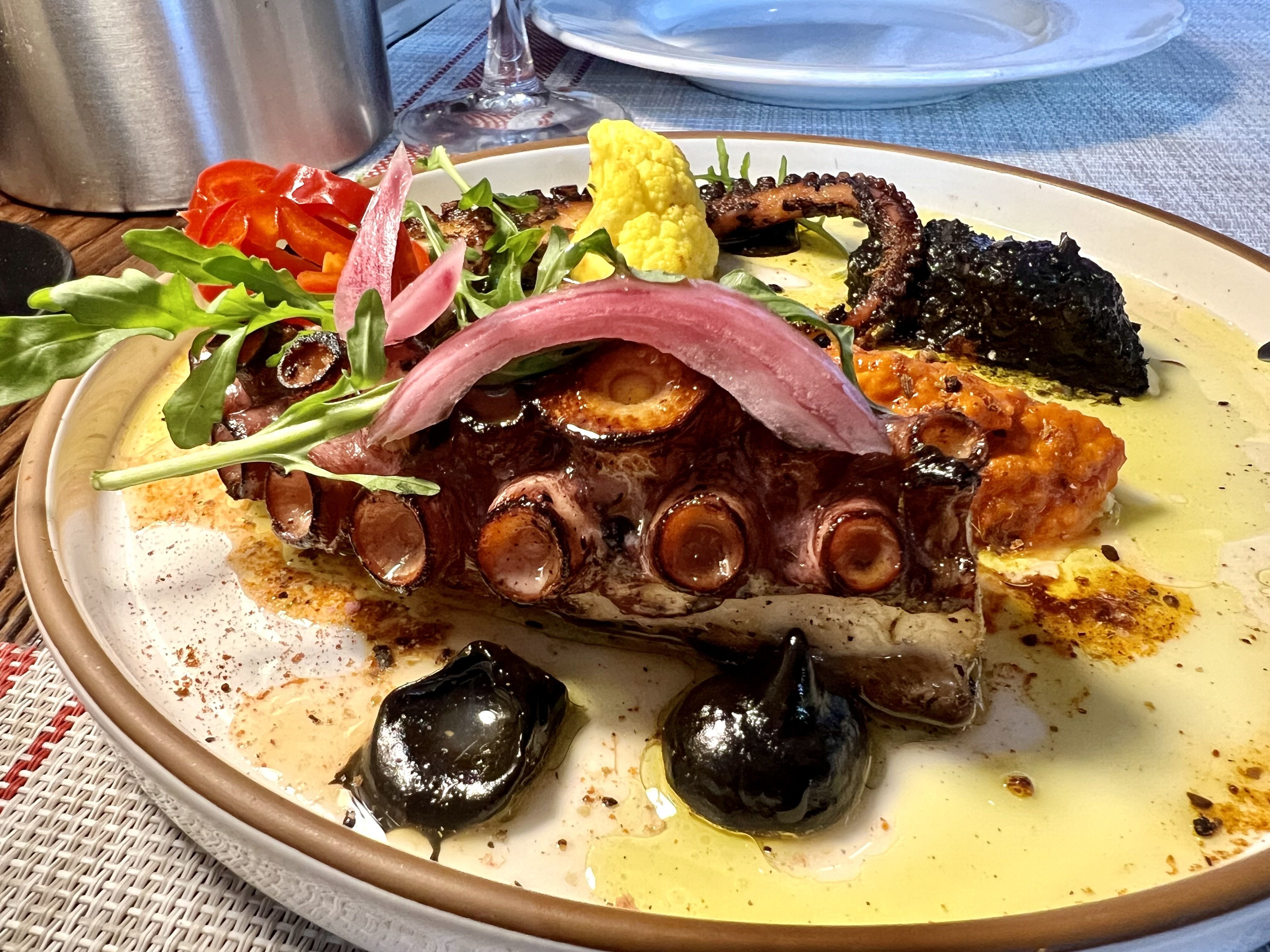
    Chef-owner Bobby Saritsoglou’s Snyder Avenue restaurant leans Greek, showcasing the joy of wood-fired dishes. It’s a crowd-pleaser, and a perfect spot to bring out-of-town visitors. The slow-cooked octopus is one clear example why.

    My father, who usually stays clear of octopus due to previous bad experiences, instantly fell for the gorgeous char on the S-shaped tentacle we got, which comes from the three-hour slow cooking. Dunking chunks of octopus into the almond romesco and black garlic purée on the plate, we devoured the crisp yet tender tentacle with awe and delight.

    “I didn’t think I’d be eating an octopus again,” my father said. “This is the best I’ve had in a long time.”

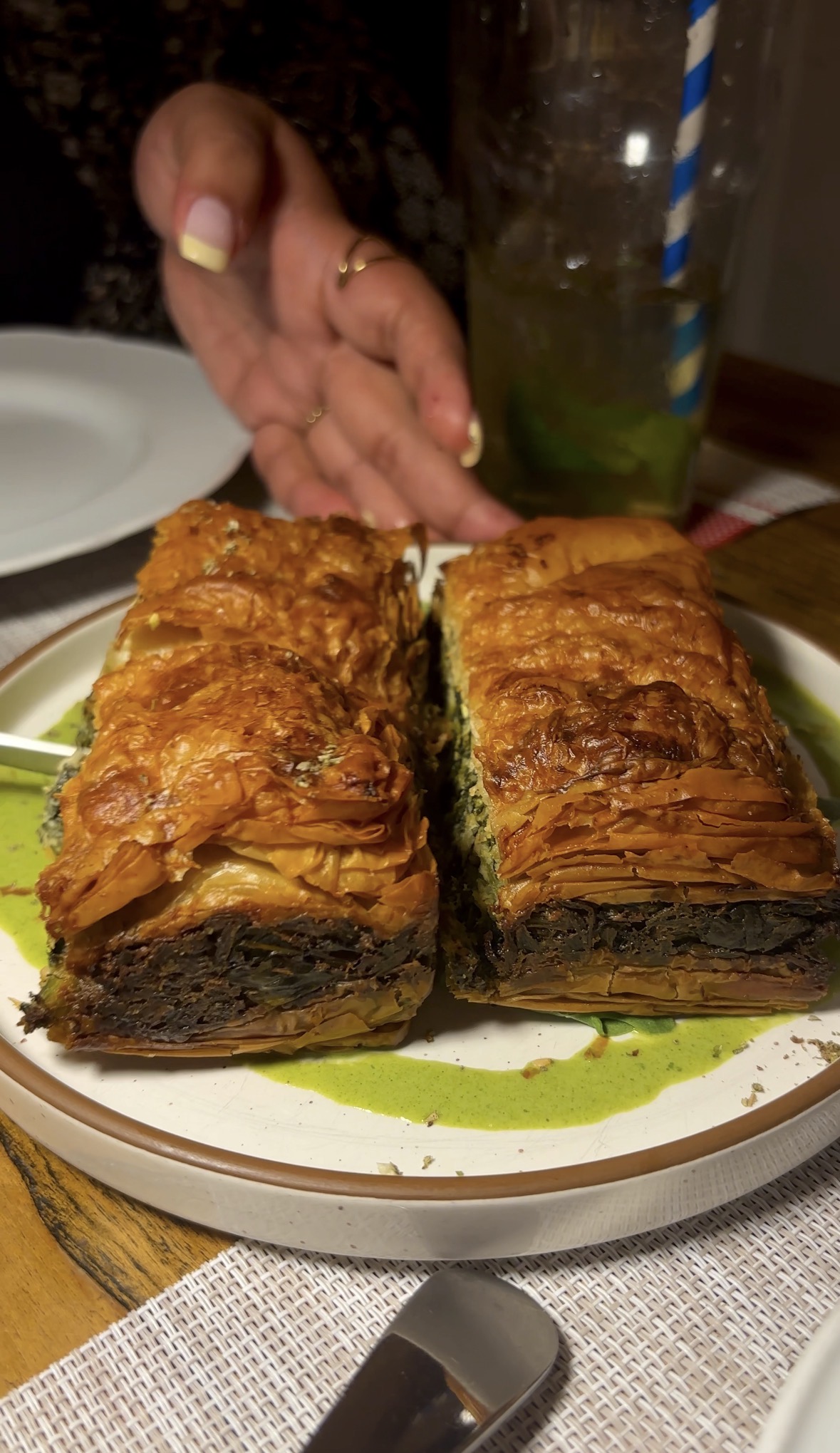
    The spanakopita at Stina.Hira Qureshi

    But then, a glorious crackling sound moved our attention away from the octopus to my sister, who was cutting into an overstuffed piece of browned, crispy phyllo. My mother, eager to sink her teeth into the spanakopita, couldn’t help but take two pieces for herself. “[With] that [sound], I know it will be good.”

    And she was right.

    The savory tastes of fresh spinach and barrel-aged sheep’s milk feta, with subtle notes of shallots, lemon zest, dill, parsley, and cracked black pepper shine through with each bite.

    Both dishes were the highlight of my Stina visit — and the best things my parents ate on their Philly trip. They even received high praises on my dad’s Facebook posts.

  • How one French wine region manages to keep prices steady

    How one French wine region manages to keep prices steady

    Red Côtes-du-Rhône is consistently one of the best bargains to be found in the French wine aisle. Not only have their prices held reasonably steady over the past decade as other French regions have seen notable price increases, but their price-to-quality ratio has remained reliably high as well.

    Côtes-du-Rhône is a generic regional wine appellation that covers most of France’s Rhône Valley as the river flows from Lyon to the Mediterranean. In practice though, only wines made in the stony flats of the southern Rhône are affordable enough to be sold under this name. While 21 different grapes are technically permissible in this appellation, the Grenache grape dominates, typically comprising at least 60% and up to 100% of any given red Côtes-du-Rhône.

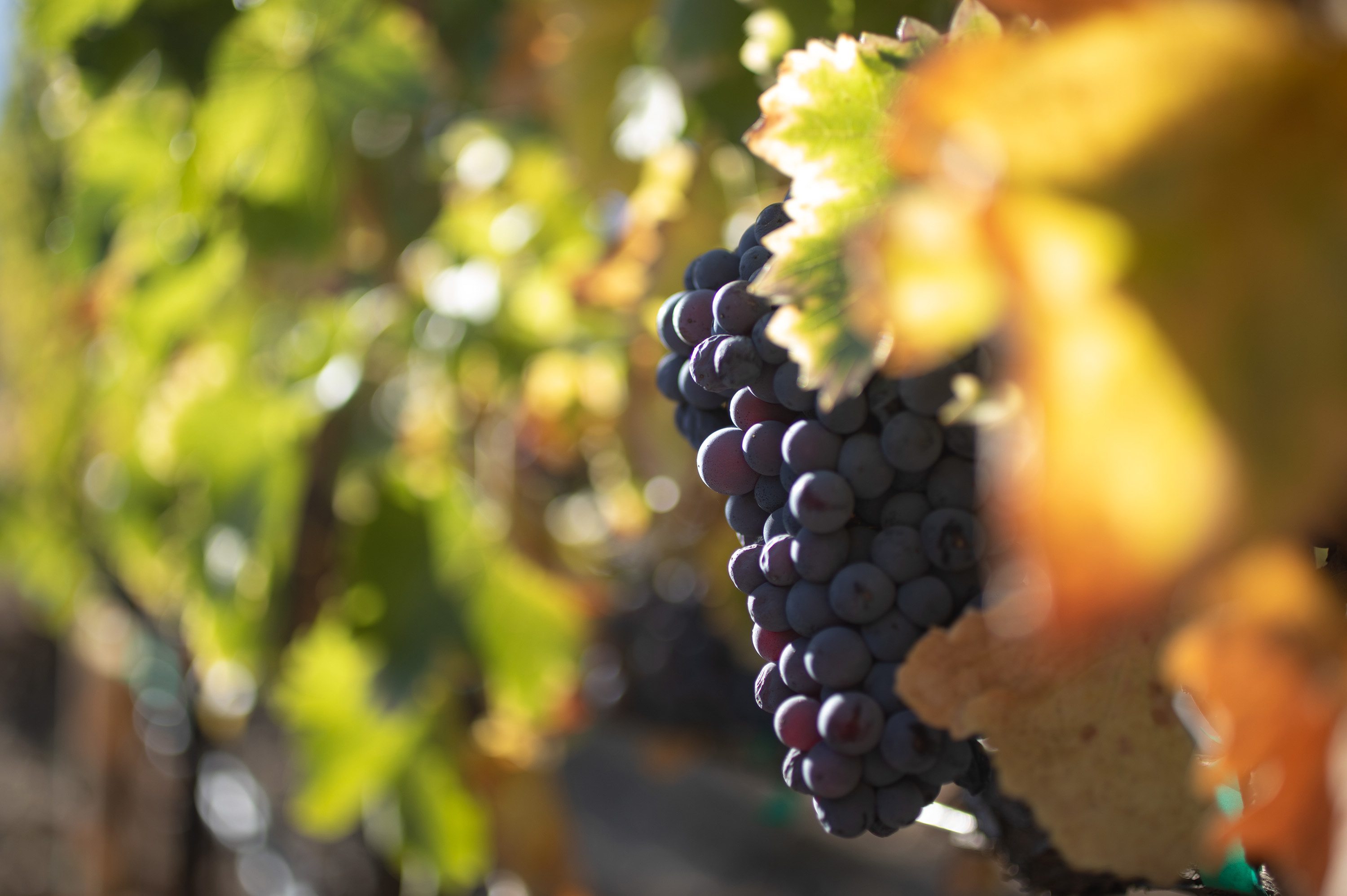
    Grenache is capable of producing excellent wine at a lower cost than most other grapes due to its freakish ability to produce large volumes of flavorful fruit even in arid conditions — vintners can rely on bumper crops to keep production costs low. The weakness of Grenache is that its grapes contain lower levels of the dark phenolic compounds in grape skins that give red wine its color and help it resist oxidative spoilage. This explains why vintners here typically blend in at least two other local grapes, Syrah and/or mourvèdre. Both are thicker-skinned varieties that deepen wine’s color and boost its antioxidant properties.

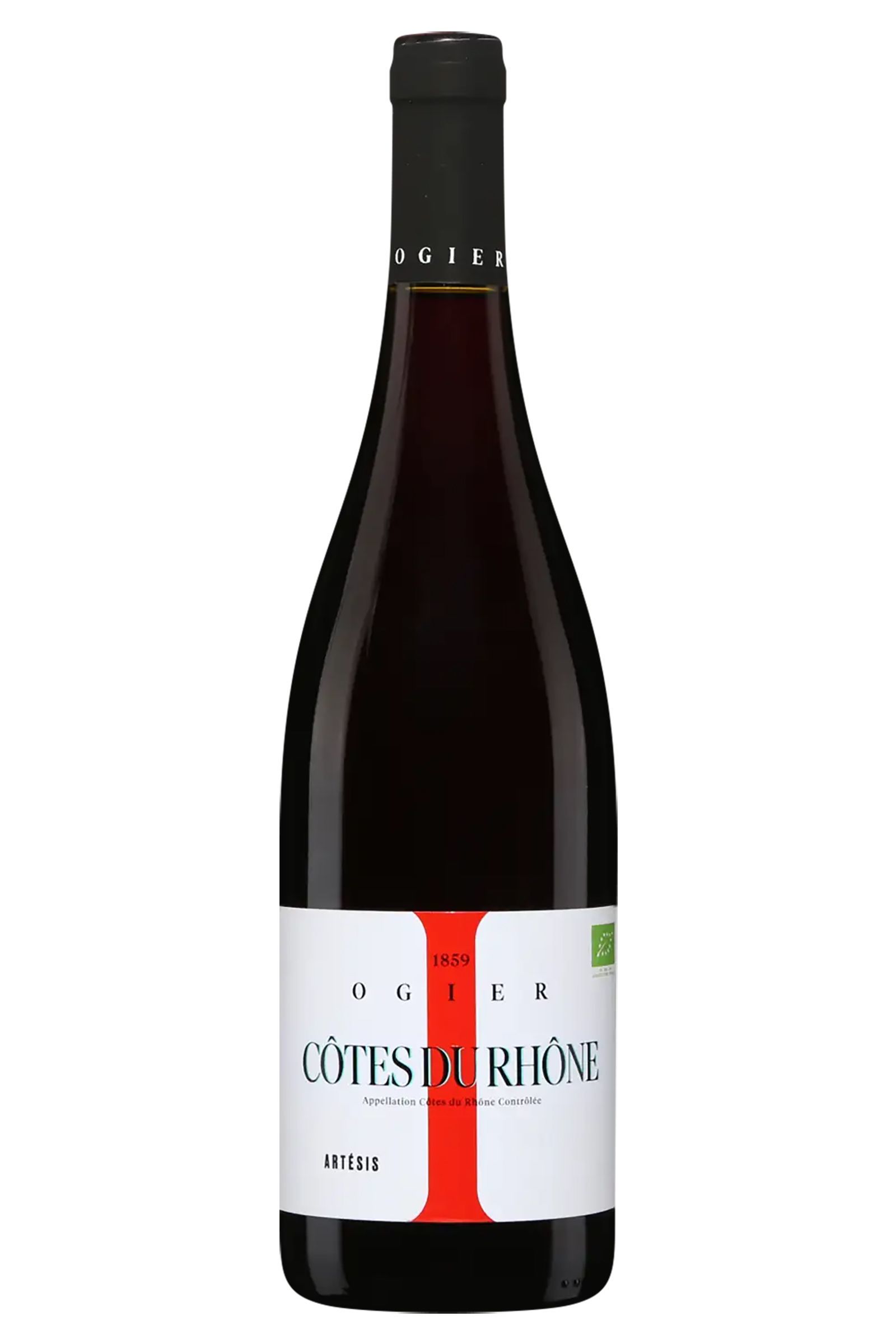
    This wine from one of the region’s most historic producers features vibrant flavors of fresh blackberry and red cherry, and an appetizing spiced-meat aroma reminiscent of soppresata salami.

    Ogier Côtes-du-Rhône “Artésis”Courtesy of Maison Ogier

    Ogier Côtes-du-Rhône “Artésis”

    Rhône Valley, France; 14.5% ABV

    PLCB Item #100048783 — on sale for $12.99 through Aug. 30 (regularly $14.99)

    No alternate retail locations within 50 miles of Philadelphia, according to Wine-Searcher.com

  • Philadelphia is the birthplace of the all-American cupcake

    Birthdays call for cake and the country’s 250th is no exception.

    America250, the federal agency behind the Semiquincentennial celebration, cut the official national birthday cake in a July 4th ceremony at the Library of Congress. Online, Goldbelly created “America’s Official 250th Birthday Cake Collection.” In Philadelphia, the Independence Visitor Center arranged 5,000 cupcakes into a flag formation.

    When Philadelphia served cupcakes, it was doing more than choosing the simplest way to apportion cake. It was remaining true to its roots as the birthplace of all-American cupcakes.

    The “cup cake” was the brainchild of Eliza Leslie, an accomplished Philadelphia author of cookbooks, fiction, and other prose. Leslie’s cupcake appears in her category-defining 1828 book, Seventy-Five Receipts for Pastry, Cakes, and Sweetmeats, considered the first baking book published in the U.S. and published at a time when recipes were called receipts.

    The small-cakes genre predates Leslie; the first known American cookbook author, Amelia Simmons, included a “light cake to bake in small cups” in her 1796 American Cookery. Simmons didn’t specify the type of baking vessel, so the “small cups” reference in the recipe title is the only allusion to a cupcake-sized cake.

    There are other records of similar baking practices, but Leslie was the first to call the petite cake a cupcake. Not only is her recipe titled “cup cake,” but she also includes specific instructions to bake in “small tins.” Cupcake history thus begins here, in this printed record of the name and form recognized today.

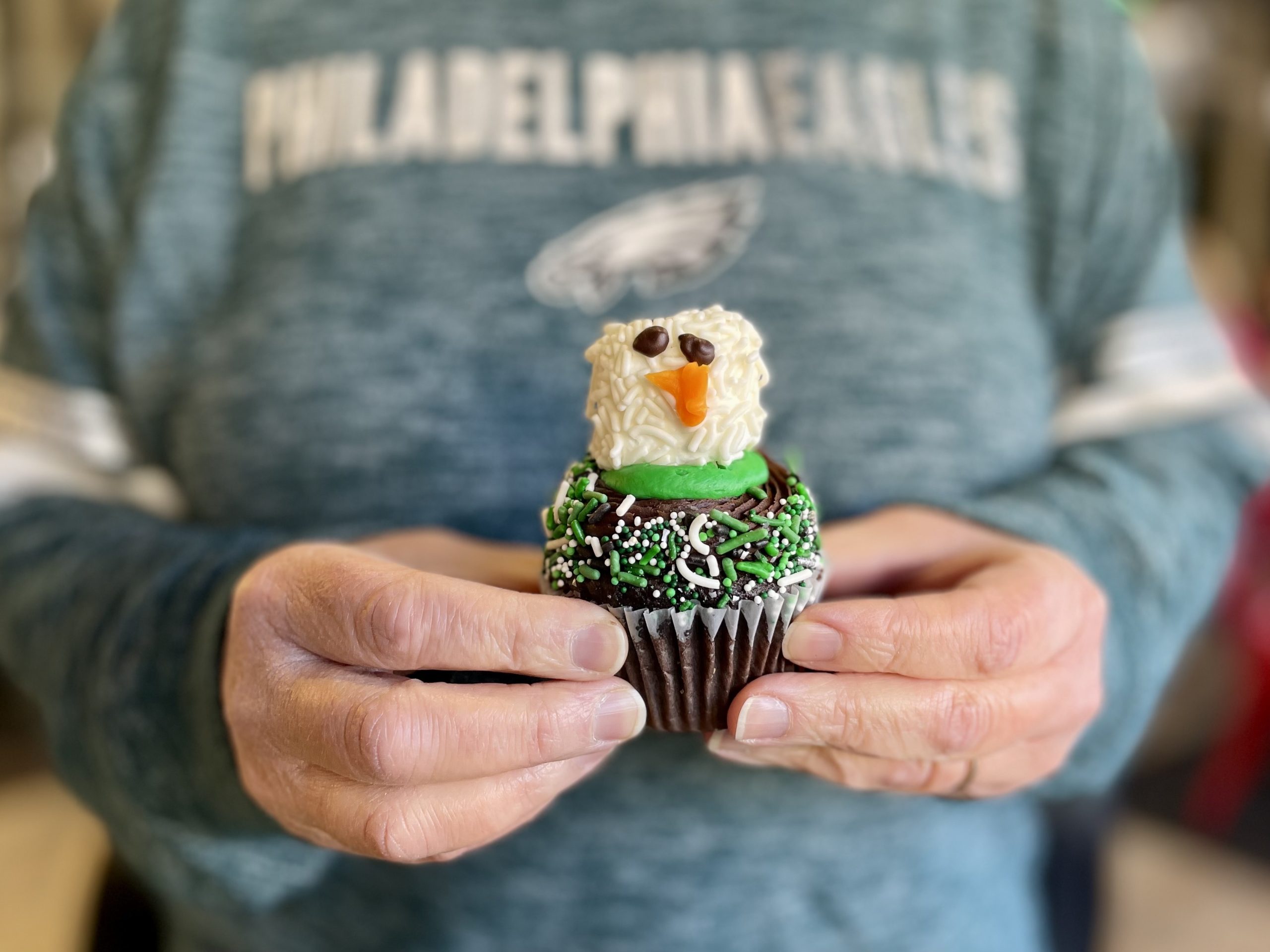
    A chocolate Eagles cupcake from Carlino’s Market in Ardmore.Craig LaBan / Staff

    Leslie was born in 1787 in Philadelphia’s historic core. She learned to read by age 5, educated at home by her father, Robert Leslie. U.S.-born of Scottish ancestry, Robert was a polymath who owned a clock and watchmaking company. Her mother was an American of Swedish descent.

    Eliza wrote that her father was an intellectual who “obtained the custom of the principal people [of Philadelphia], including that of Washington, Franklin, and Jefferson; the two last being his warm personal friends.” He likely debated revolutionary values with politicians, for “[i]t was by Mr. Jefferson’s recommendation that my father was elected a member of the American Philosophical Society,” Eliza wrote in her autobiography, published in Godey’s Lady’s Book in 1858.

    In her late 30s, she enrolled in cooking school, a decision that would change the course of her life. She learned to bake from Elizabeth Goodfellow, a respected Philadelphia pastry chef who owned a bakery and candy store. Leslie took notes and kept the recipes from her studies at Mrs. Goodfellow’s cooking school.

    In response to repeated requests to share the recipes she learned from Goodfellow, Leslie compiled them into a book, having grown tired of handwriting copies for friends. Seventy-Five Receipts was authored anonymously by “a lady of Philadelphia.” Leslie didn’t credit Goodfellow and Goodfellow herself never authored a cookbook.

    Leslie acknowledged her teacher in later books and dropped the anonymity to write under her real name or the pen name of Miss Leslie. Bucking social norms, Leslie was a lifelong childfree, never-married woman who earned her living as a writer.

    Leslie’s was the first American cookbook to list ingredients separately at the beginning of a recipe, a style she copied from Goodfellow. The previous convention was to state the ingredients within the narrative directions.

    She intended to write simple, logical recipes that resolved the common pain points American cooks faced. “There is frequently much difficulty in following directions in English and French Cookery Books, not only from their want of explicitness, but from the difference in the fuel, fire-places, and cooking tools generally used in Europe and America,” she wrote in the Seventy-Five Receipts preface.

    She prioritized locally grown, accessible, affordable ingredients and stressed the economic savings in home baking as opposed to buying cakes from a bakery. “Many of the European receipts are so complicated and laborious that our female cooks are afraid to undertake the arduous task of making anything from them,” she lamented. Confidently patriotic, Leslie affirmed that her recipes were, “in every sense of the word, American.” Her dishes could compete with the standard bearers, she insisted. They “will not be found inferior to any of a similar description made in the European manner,” she declared.

    While statesmen instilled independence in the U.S. political culture, Leslie and other women adopted the same mentality in American cooking. Their DIY spirit was creative, rebellious, defiant, and nonconformist vis-à-vis European culture. For example, Leslie was among the authors to publish an Election Cake recipe, fusing the political and the culinary.

    “Election Cake became the first food strongly associated with American politics,” wrote historian Gregg Mangan, who argued that this baking provided women with an opportunity to express themselves politically long before they got voting rights. Food and gender scholar K.C. Hysmith noted, “While women couldn’t vote, they could bend the ear of the voting-eligible men they hosted on election day. And at the very least, serving slices of cake allowed them access to political conversations they might otherwise miss.” More than just an item in the baker’s repertoire, Election Cake was an “exercise in everyday politics” and “statement of community organizing.”

    “Through their production of Election Cake and other recipes, including Independence Cake, Franklin Gingerbread, and Democratic Tea Cakes, women projected their influence into the public sphere and helped ingrain patriotism into our national culture,” Mangan wrote.

    Food historian Stephen Schmidt locates Leslie in the historical arc extending from America’s infancy to an evolving nation edging towards civil war. “By the end of her career, the tiny, parochial, overwhelmingly culturally English America of Leslie’s youth had been swallowed up by a far larger, rapidly industrializing and urbanizing, and increasingly diverse and factionalized America,” wrote Schmidt. “Food and cooking had changed in tandem, the prevailing taste of the times, at least as exhibited in the many cookbooks now on the market, having shifted from an essentially British, upper-class, 18th-century cuisine, freighted with rich, expensive ingredients and many practical difficulties, to a much simpler, easier, more naturalized cuisine that truly was ‘in every sense of the word, American.’”

    Leslie would go on to write juvenile fiction, etiquette guides, short stories, and a novel, while continuing to author smash-hit cookbooks. There’s broad consensus that her third, Directions for Cookery, was the most popular American cookbook of the 19th century.

    The must-have cookbook “passed through 60 editions from its first appearance in 1837 until 1870, a dozen years after the author’s death,” wrote Dover Publications in its 2013 reprint. According to historian Liz Susman Karp, it sold more than 150,000 copies.

    Made By History sponsors. FOR USE ON MADE BY HISTORY STORIES ONLY.Inquirer Staff

    Leslie spent her later years holding court in a fashionable hotel lobby, having established herself as a lifestyle influencer and public figure. “Long before her death, Miss Leslie had become a Philadelphia institution,” wrote Mary Tolford Wilson in a 1971 biography. “Grown portly and walking with difficulty, she lived for about a decade at the United States Hotel, where she not only met every visiting celebrity, but was herself sought out as one.”

    More than one modern authority has likened Leslie to Julia Child, another American author and chef who taught Americans to cook. In the introduction to a 2022 reprint, chef and author Dorie Greenspan wrote, “As I read Seventy-Five Receipts, I was reminded over and over of Julia. Both are a pleasure to read. Both clearly love sharing what they’ve learned. Both have a generous spirit — you sense it each time they comfort and encourage us as we follow their instructions. And both have an intelligence that sparkles on each page and within each recipe.”

    Leslie died in 1858 at the age of 70 and was buried at St. Peter’s Church in Philadelphia. Her 200-year legacy is baked into all the cupcakes Americans have eaten since she coined the term.

    Andrea Adleman is a journalist specializing in the cultural history of cupcakes. Her forthcoming Cupcake Nation book is based on her award-winning Washington Post story “The psychology of cupcakes.”

    Made by History takes readers beyond the headlines with articles written and edited by professional historians. Opinions expressed do not necessarily reflect the views of The Inquirer.

  • Barstool Sports’ Dave Portnoy hit at least 5 Philly-area pizzerias yesterday for ‘One Bite Pizza Reviews’

    Barstool Sports’ Dave Portnoy hit at least 5 Philly-area pizzerias yesterday for ‘One Bite Pizza Reviews’

    For more than a year, Giuseppe Tosco tried to get Dave Portnoy’s attention with a giant roadside sign outside his Montgomery County pizzeria that read, “We Want Dave Portnoy.”

    Two months ago, Tosco finally took it down to replace it with a sign advertising the new patio at Italian Delite in Trappe.

    On Tuesday, Portnoy walked in anyway. “The first thing he asked was, ‘Where’s the sign?’” Tosco said. “I told him we’d taken it down. He said, ‘Oh my God, it’s been that long?’”

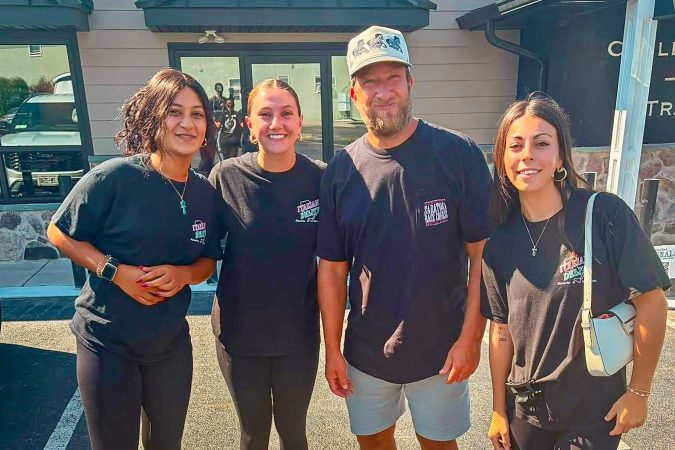
    The surprise visit was one of at least five stops Portnoy made across Philadelphia and its suburbs Tuesday as the Barstool Sports founder filmed new installments of his influential “One Bite Pizza Reviews,” whose scores can transform the fortunes of a neighborhood pizzeria.

    Besides Italian Delite, the confirmed stops included Johnny’s Pizza in Bryn Mawr, Marina’s Pizza in Fishtown, Liguria Pizzeria in Kensington, and Pizza Di Vita in Fairless Hills.

    In each review, Portnoy samples a plain cheese slice — often taking much more than one bite — and assigns it a score on a 10-point scale. His ratings have become one of the pizza world’s most sought-after endorsements, often drawing long lines and national attention for top-scoring shops.

    In 2019, Angelo’s Pizzeria in South Philadelphia scored a 9.1 — the highest score ever in the region. Del Rossi’s notched an 8.6 in 2024. In 2022, Pizza West Chester and Lillo’s Tomato Pies in Hainesport each got an 8.4.

    Three of Tuesday’s scores became known almost immediately, as onlookers shared them. Johnny’s received an 8.3, Liguria an 8.2, and Marina’s a 7.9. The owners of Pizza Di Vita and Italian Delite said they never heard their scores before Portnoy moved on; they are waiting for the videos to be released.

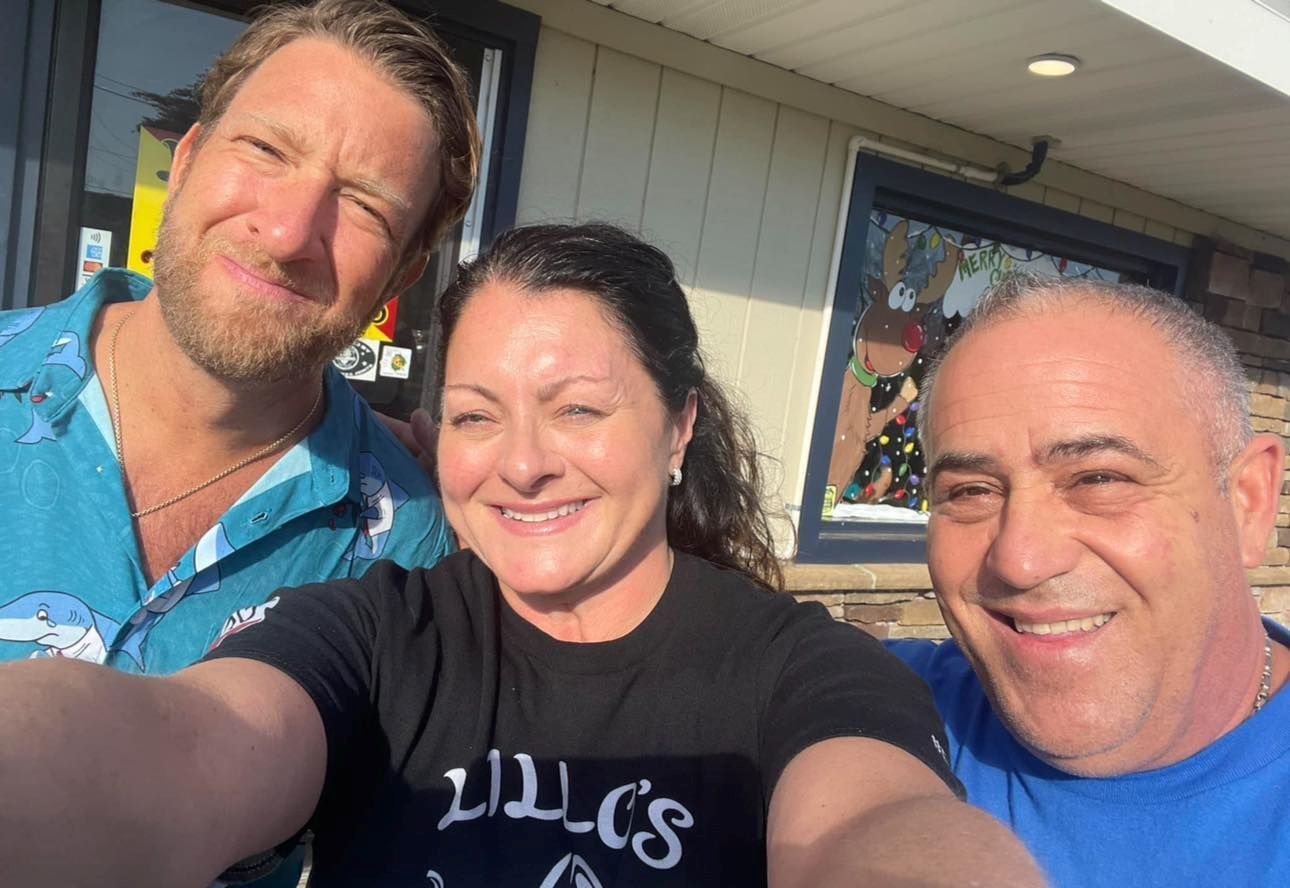
    Lisa and John Paxia of Lillo’s Tomato Pies in Hainesport with Barstool Sports’ Dave Portnoy (left) in November 2022.Courtesy of Lillo Paxia

    If Tosco spent more than a year trying to lure Portnoy to the Collegeville suburbs, John Bisceglie initially refused to believe the reviewer was coming to Johnny’s Pizzeria (which has a spot on The Inquirer’s 76 list).

    “Somebody texted me, ‘Dave’s in Philly. Heads up,’” Bisceglie said. “I just laughed it off. I’ve heard that before.”

    Still, he was working at his shop in Wayne when he sent a photo of Portnoy to his employees at Johnny’s Bryn Mawr, just in case.

    Then, manager Jaison Velásquez called.

    “He said, ‘I just got an order for Barstool,’” Bisceglie recalled. “I said, ‘Oh my God. It’s happening.’”

    Bisceglie stayed on the phone coaching his staff. “I told them, ‘Wait about 10 minutes so the pizza comes right out of the oven. Make it crispy. Well done.’”

    He credited Velásquez and manager Dan Bisceglie, his cousin, with staying calm. “He kept telling me, ‘I got this. Relax. I got this,’” Bisceglie said of Velásquez.

    When Portnoy awarded the pie an 8.3 on camera, Bisceglie knew it was significant.

    “Those pizza guys don’t hand out scores like that very often,” he said. “An 8.3 is a big deal.”

    For Tosco, at Italian Delite in Trappe, the visit was memorable before the review even began.

    Tosco said he had tagged Portnoy incessantly on social media. “I told him, ‘If you came, you came. If you didn’t, you didn’t. I just didn’t want to keep bothering you,’” Tosco said.

    The day became even stranger when Portnoy reviewed the wrong pizza.

    Tosco had been away at a catering meeting when his cousin called to say Portnoy had arrived after placing an order under the name “Austin.” By coincidence, the restaurant’s social media team was filming, and Tosco’s cousin had made workers prepare a practice pizza for the camera. That pie came out of the oven before Portnoy’s order.

    “My cousin said, ‘That’s not your pie,’” Tosco recalled. “Dave said, ‘I don’t care. I want that one.’”

    As Tosco pulled into the parking lot, Portnoy was already recording the review.

    Afterward, Tosco asked Portnoy to hang for five minutes. “I told him, ‘I just want to make you a Philly cheesesteak,’” Tosco said. “He said, ‘You seem like a good dude. I’ll come back in for you.’”

    Tosco still doesn’t know what score Portnoy awarded his pizza. “I ended up getting a cheesesteak review, too, which was really cool,” Tosco said.