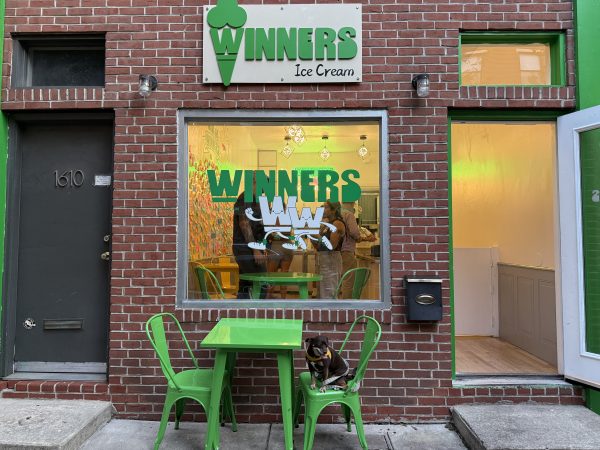
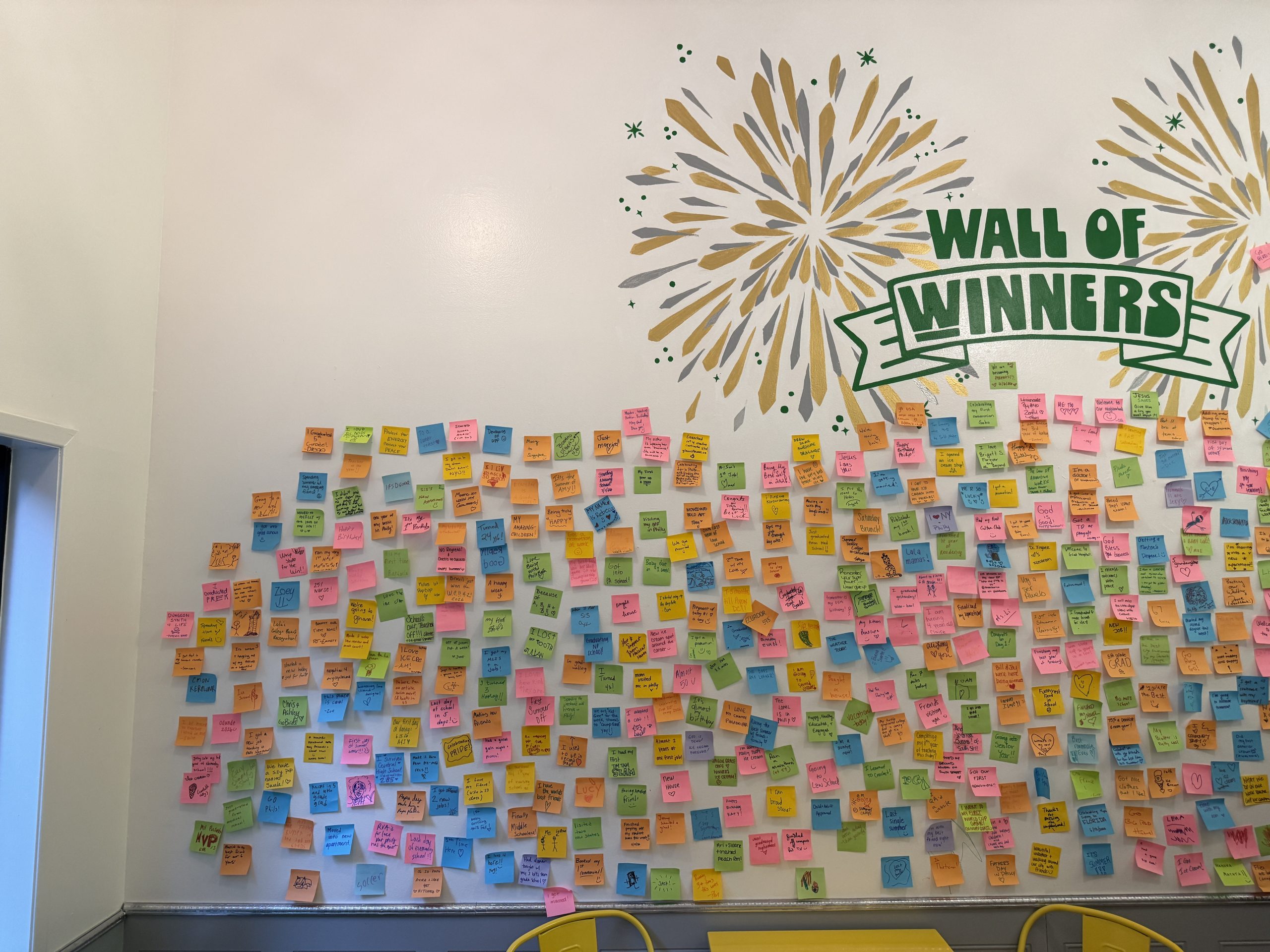
Winners Ice Cream has only been open three weeks, but its wall is already completely covered with notes from neighbors. The small shop was packed on a recent, hot Thursday evening, as customers of all ages lined up for scoops of nostalgic flavors with winning-themed names like “MVPeanut Butter Crunch,” “Champ Chocolate,” and “Sweet Success ‘Smores.” They were invited to leave Post-It notes on the wall that detailed their own personal wins.
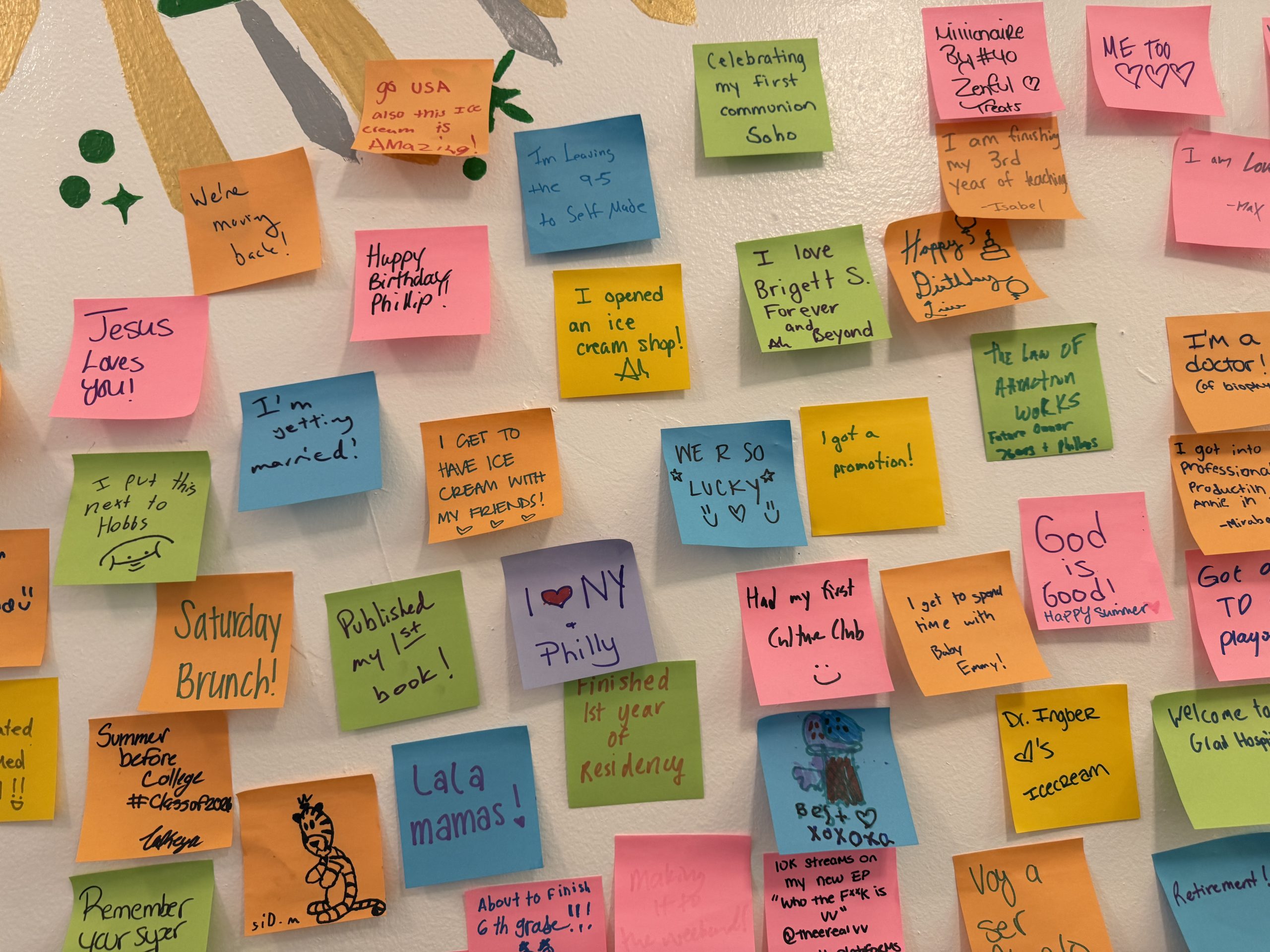
These notes ranged from “I’m getting married” to “Published my first book” to “I ate breakfast.”
This is owner Anh Nguyen‘s first shop. The 31-year-old, originally from Newark, Del., moved to Philly to manage branches of Surreal Creamery for the four years prior to his opening Winners.
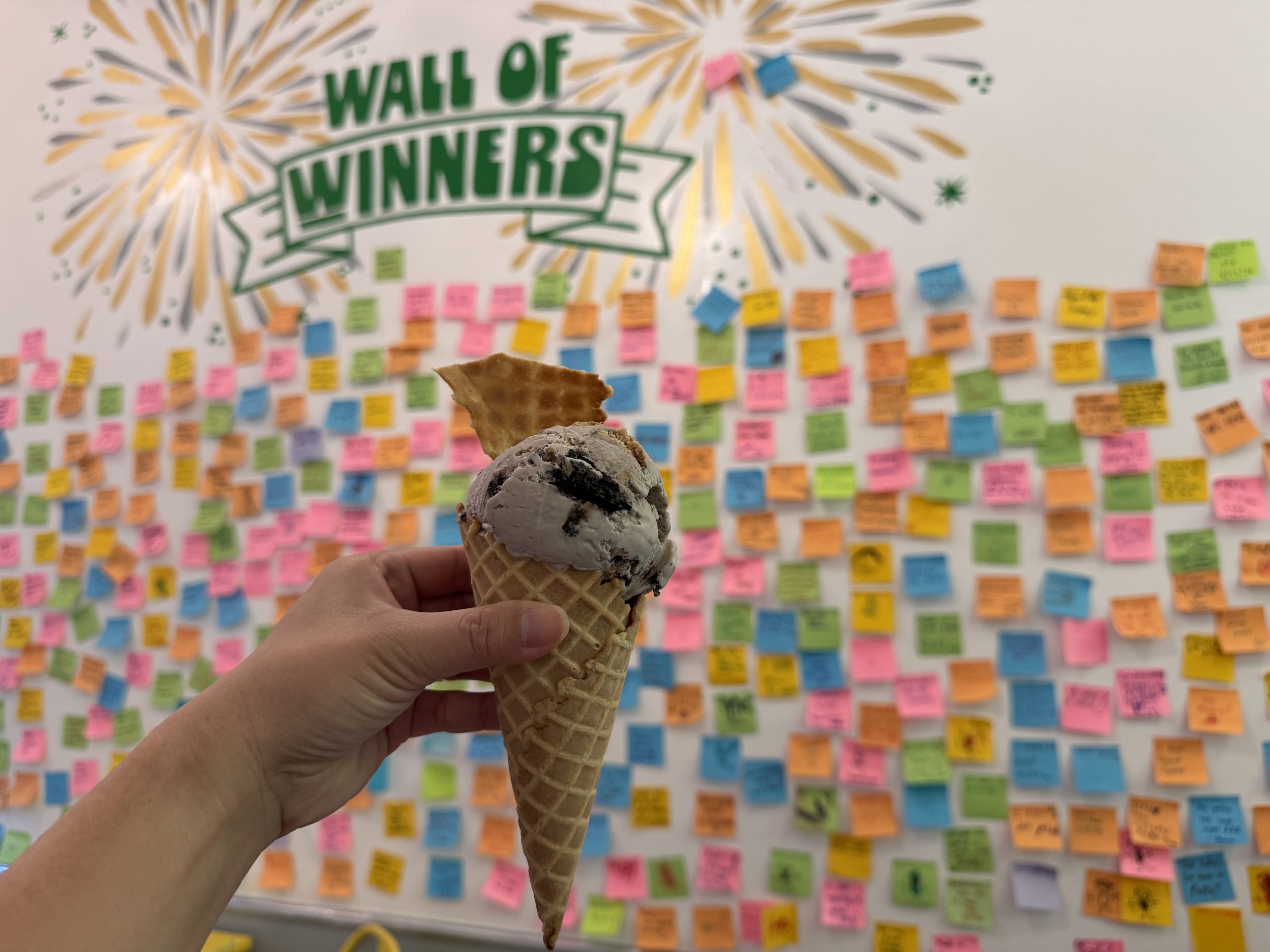
Cookies and cream dream in a waffle cone at Winners Ice Cream in Graduate Hospital.Kiki Aranita
Winners is so named because “we celebrate small wins, big wins, and all the wins in between with fantastic ice cream,” said Nguyen.
Nguyen built a production kitchen downstairs, where all his ice creams are made from a 14% buttermilk base. Although he is the sole proprietor, his family has been actively involved with helping him get Winners off the ground. His father helped with construction and his mother kept the crew fed while they spent hours at the shop “putting things together with hammer and nails. And since we’re Vietnamese, she always packed us jasmine rice with eggs, pork, or sautéed chicken.”
It took Nguyen and his father about a month and a half to build out the space. His three sisters have weighed in heavily, testing flavors and helping source ingredients. Nguyen currently makes 14 flavors of ice cream, with more in development, including “Match Point Matcha” (“All the flavors are winning themed,” he said) since the green tea flavor is so popular.
His current personal favorite? “Major Mint Chip, which I make by infusing fresh mint leaves into the ice cream base, and letting it steep overnight. I didn’t want to use extracts or food colorings in any of my ice creams.”
The flavor has crushed Girl Scout cookies (Thin Mints, of course) because Nguyen’s niece is a Girl Scout. To support her during cookie sales, he bought cases upon cases of cookies.
The wall of winners at Winners Ice Cream.Kiki Aranita
Winners, as well as Mod Spuds, which opened a week and a half prior to the ice cream shop, contributes greatly to “little treat culture” in the neighborhood. And they also share a similar aesthetic, because they share the same muralist. Nguyen peeked into Ange Branca’s Mod Spuds, a few feet away and also on South Street, noticed their painted walls, and asked to be connected with the artist, Hana Alshahab, who ended up painting the wall at Winners.
Winners is a dream come true for Nguyen, who has loved hard-scoop ice cream since he was a child. “You can add mix-ins to hard scoop and make flavors that are more out of the box, unlike with soft serve where the mix-ins won’t fit through the tube of soft serve machines.”
Most importantly, “I want Winners to be a community space to recognize and celebrate the moments in life that are often overlooked. Small wins can add up to big wins. I look at the wall and I get inspired and emotional,” said Nguyen.
The wall of winners at Winners Ice Cream consists of notes left by patrons.Kiki Aranita
In the sea of slips of paper denoting other peoples’ wins, one yellow one could easily be missed. It reads, “I opened an ice cream shop!”
“That one was mine,” said Nguyen.
Winners Ice Cream is at 1610 South St. It’s open from noon to 10 p.m. daily. Single scoops served in cups start at $5.75.
The Philadelphia area restaurant boom continues into the summer, with newcomers including a neighborhood cocktail bar, bakery/cafes, a suburban brewpub, a $2 million pizzeria, a vegan cafe, a destination dining room, and a fusion sandwich shop.
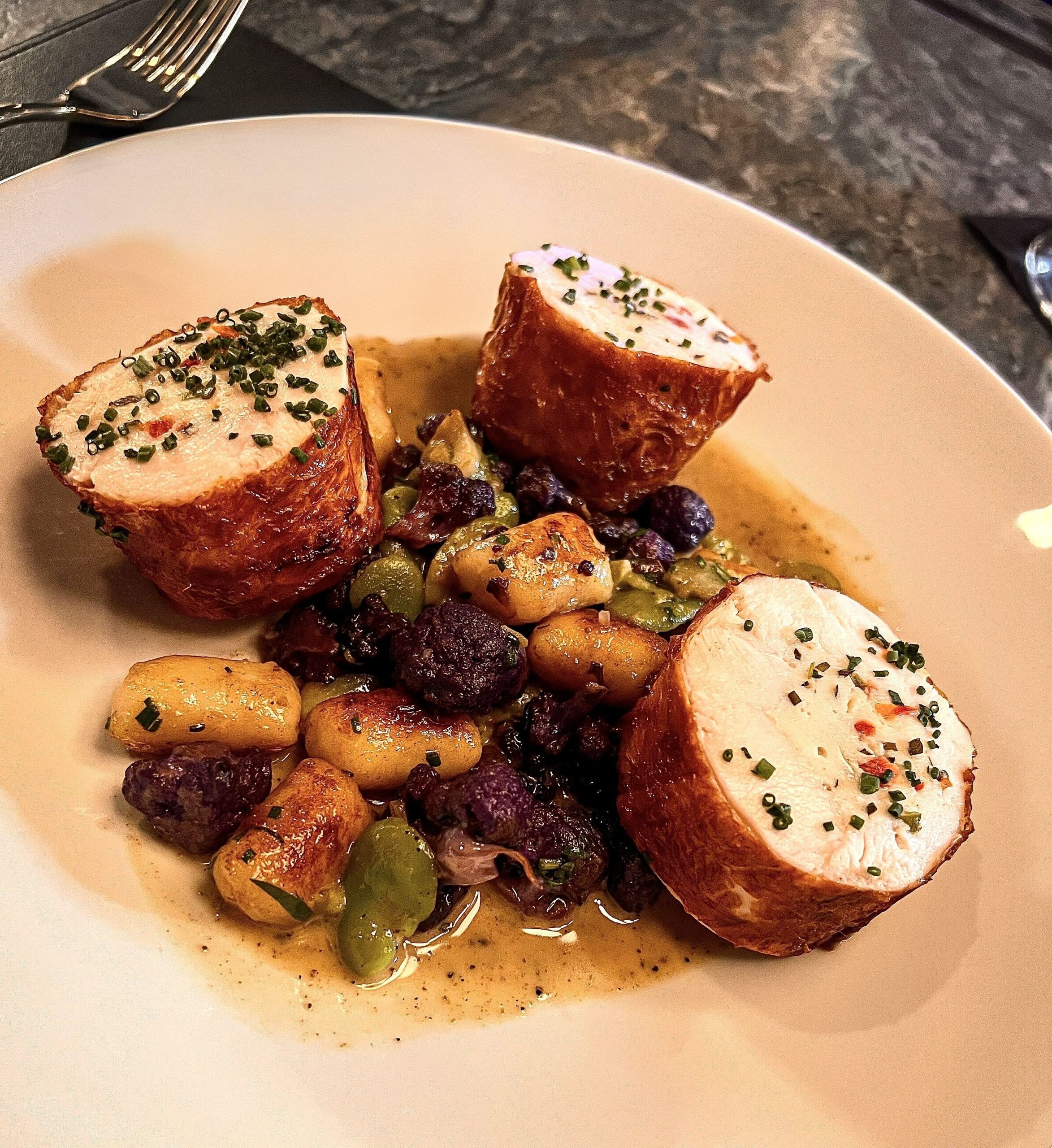
Chicken roulade with fava beans, gnocchi, and cauliflower at Academy Grill in Fort Washington.Michael Klein / Staff
Academy Grill(424 S. Bethlehem Pike, Fort Washington): Fine Line Dining’s next project, an Italian-inspired, white-tablecloth restaurant, will serve seafood, steaks, and pastas in the former Cantina Feliz space near Germantown Academy (hence the name). Chef Jeff Power, formerly of Dettera in Ambler, is leading the kitchen. Owners Mike Sloane and Jay Rosenthal, who also own the casual Fort nearby and Jasper’s Backyard in Conshohocken, plan to open July 7 for dinner, July 9 for lunch, and then operate Tuesday to Saturday for dinner.
Banjara Indian Bistro (689 Berlin-Cross Keys Rd., Sicklerville): Vaneet Chopra, whose family owns Cross Culture in Haddonfield and previously operated Banjara in Chestnut Hill, is behind this Indian restaurant due to open soon in the strip center that also houses Gouldsburger’s, the Breakfast Nook, and Saladworks. Owners told 42Freeway that it was awaiting final inspections.
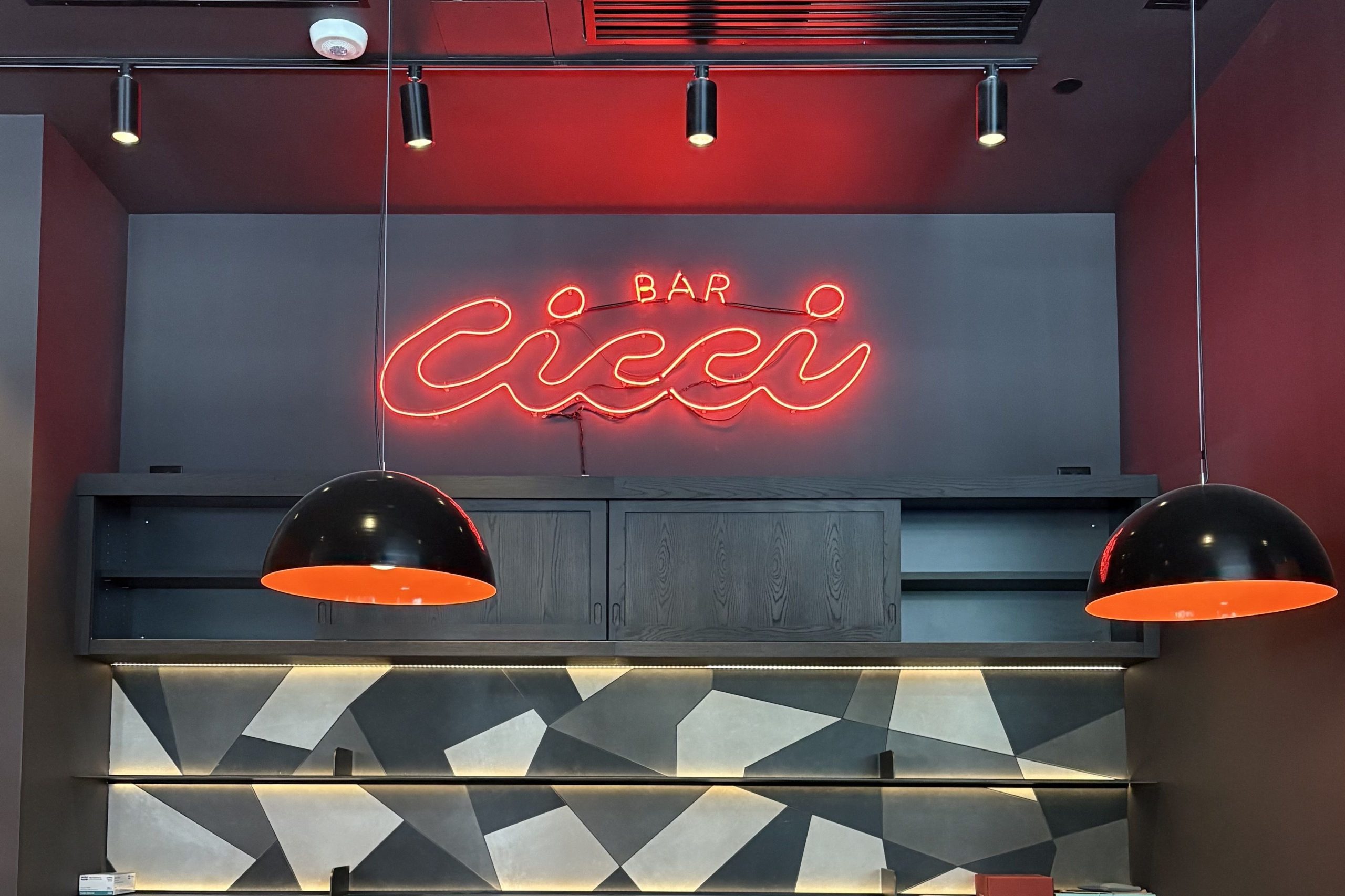
Bar Cicci is due to open in late July at 1620 Sansom St.Courtesy of Bar Cicci
Bar Cicci (1620 Sansom St.): Ellen Yin and High Street Hospitality Group are behind this Italian cafe-bar next to Uchi near Rittenhouse Square. Pronounced “chee-chee,” it is positioned as an all-day salon for espresso, pastries, panini, cicchetti, wine, and aperitivi. It’s due to open later this month.
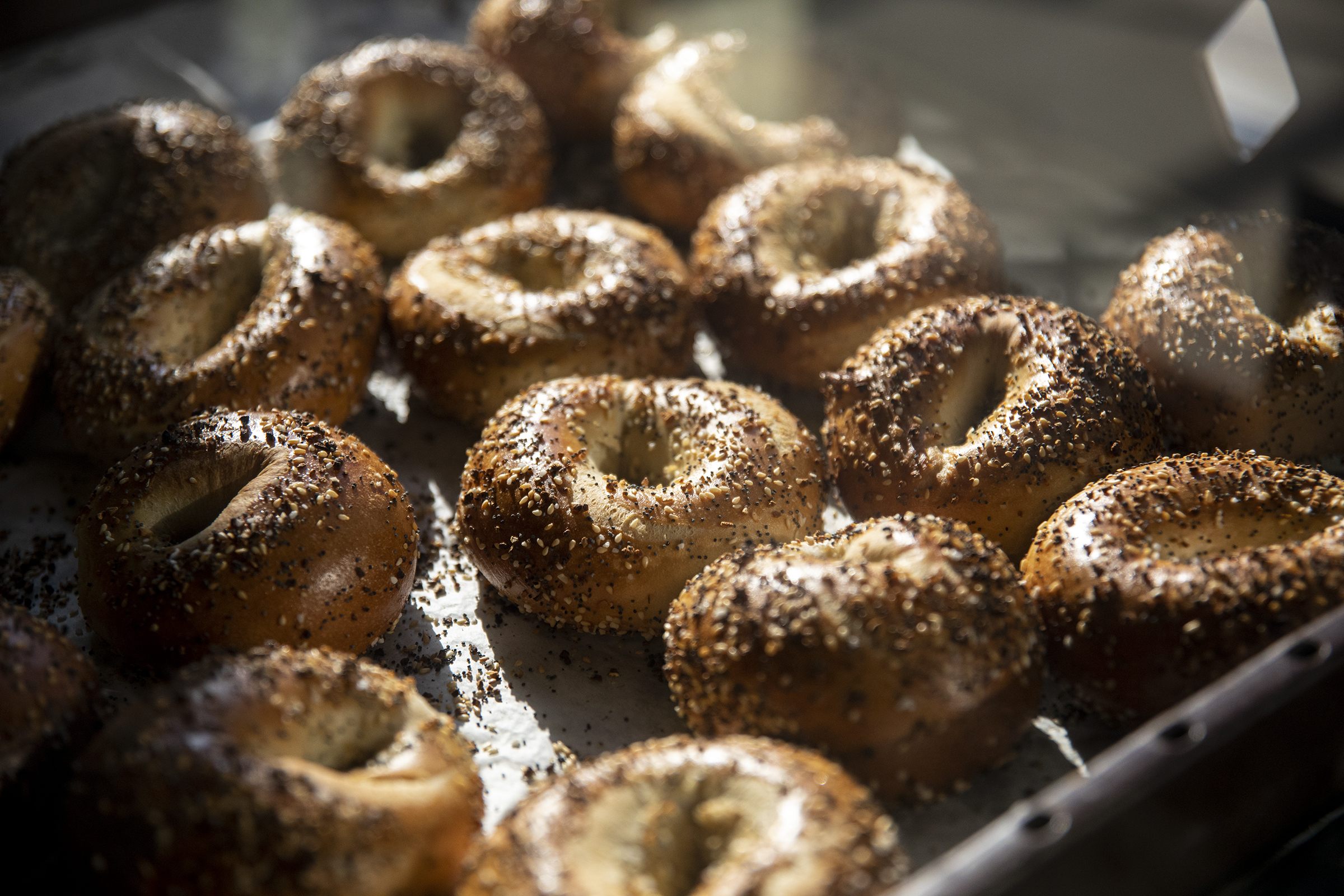
Bart’s Bagels’ first shop opened in 2020 in the Powelton section of West Philadelphia.Tyger Williams / Staff Photographer
Bluebird Distilling & Dough House is a $2.2 million expansion and renovation of the popular Phoenixville destination.Ed Newton
Bluebird Distilling & Dough House(100 Bridge St., Phoenixville): Bluebird’s $2.2 million expansion, Dough House, arrives July 7. It’s a neo-Neapolitan pizzeria and restaurant inside its downtown Phoenixville distillery, and adds an expanded cocktail bar, a 50-seat dining room, a chef’s counter, and an enlarged retail shop. Executive chef Devon Migeot, formerly of Zahav, Laser Wolf, Rosalie, and Tresini will serve naturally fermented pizzas, house-baked breads, and shareable small plates alongside the distillery’s cocktails.
Cheezy Vegan by Chef Reeky (1216 S. 17th St.): Now in soft-opening mode at 17th and Manton Streets in Point Breeze, this plant-based concept from Tarik “Chef Reeky” Ryant and Erin Mignogna-Dougherty (previously in Woodlyn, Delaware County) serves a full menu — breakfast, lunch, appetizers, coffee drinks, milkshakes, and smoothies — from a counter, with coffee beans roasted on-site. A sidewalk cafe is planned.
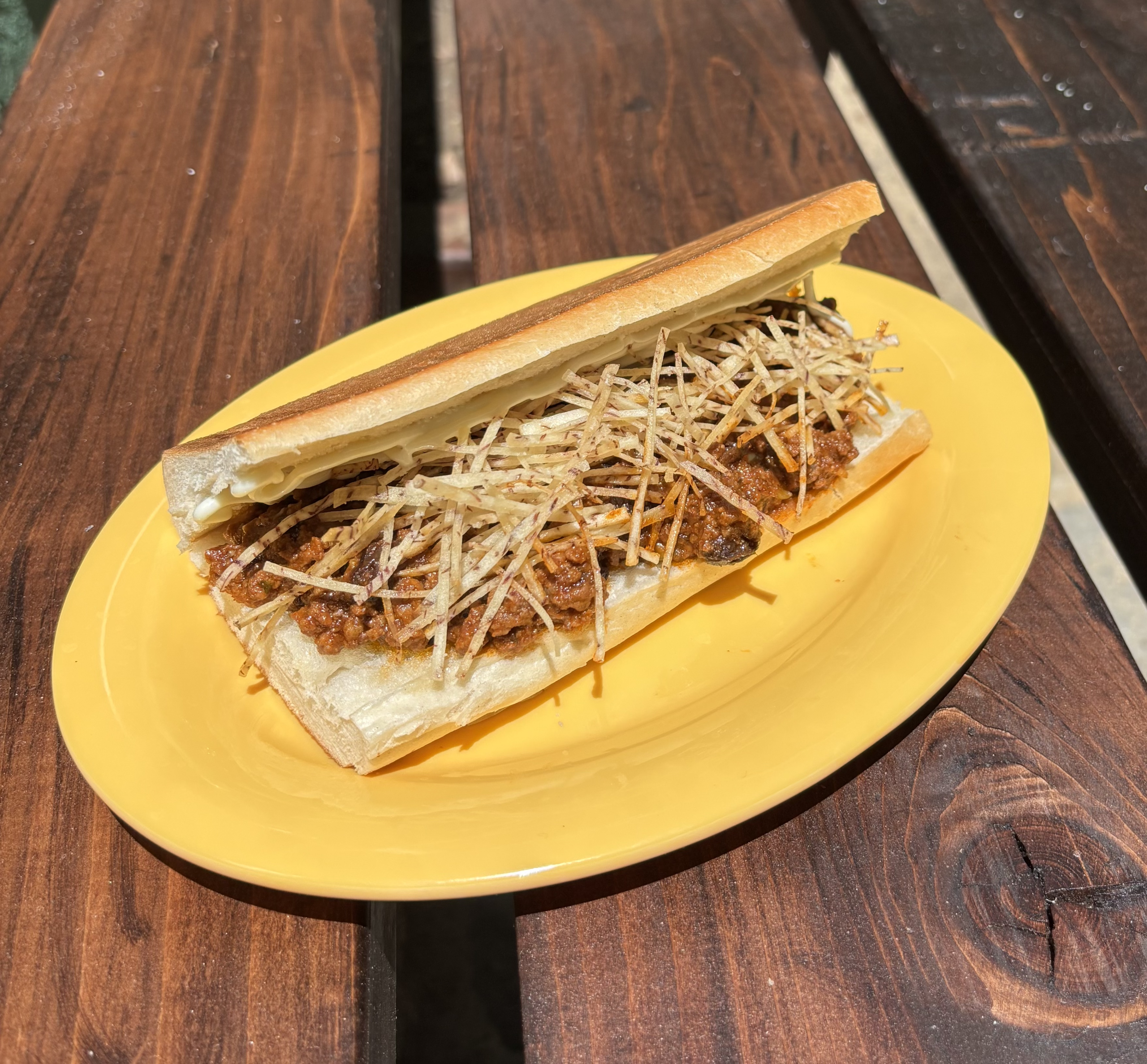
The pica pica sandwich at Chibanos, which comes with picadillo, Swiss cheese, mayo, and crispy taro sticks.Aya Iwatan
Chibanos(1127 Pine St.): Opening today at 8 a.m., this casual sandwich shop in Effie’s former Washington Square West building is an ode to owner Evan Jaroff’s multicultural upbringing, blending Chinese and Cuban flavors for a tight fusion menu. Breakfast sandwiches are made on Dodo Bakery bolo baos, there are pressed sandwiches like the pica pica (picadillo, swiss, mayo, crispy taro sticks) and mima frita (Chinese sausage croquetas, Swiss, mayo, cabbage, mojo vinagrette), plus salads, sides, and a robust drink list that offers both colada and black milk tea.
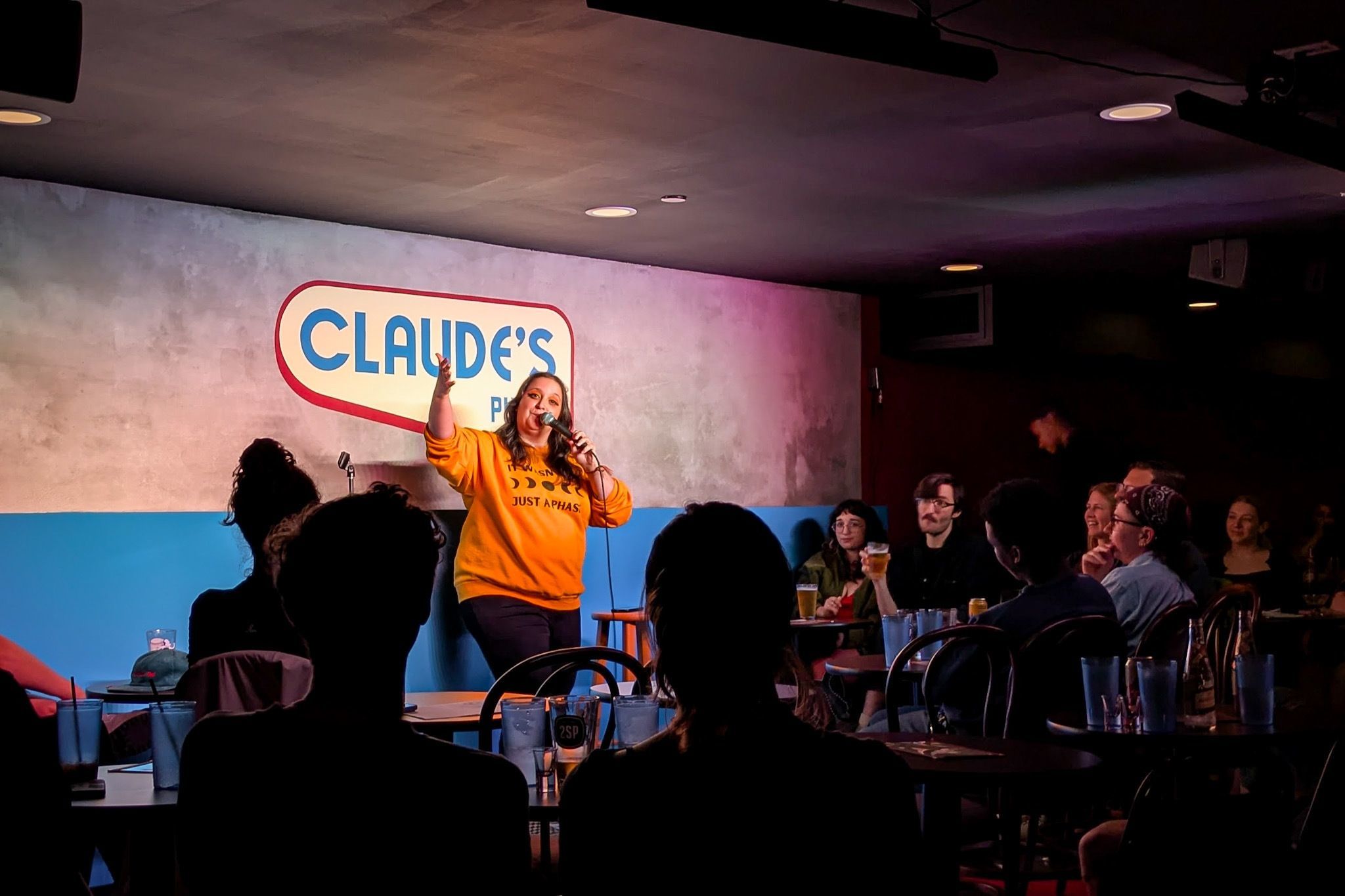
Comedian Meg Goetz entertains at a preview of Claude’s Comedy Club & Bar, 1123 S. Broad St.Reid Benditt
Claude’s Comedy Club & Bar (1123 S. Broad St.): Reid Benditt’s intimate South Philly venue for stand-up, in its opening days, sits alongside a bar serving cocktails, beer, and casual fare from 4 p.m. daily. He’s positioning this as an affordable alternative to larger comedy clubs, with modest ticket prices, no two-drink minimum, and a mix of touring performers and local comics.
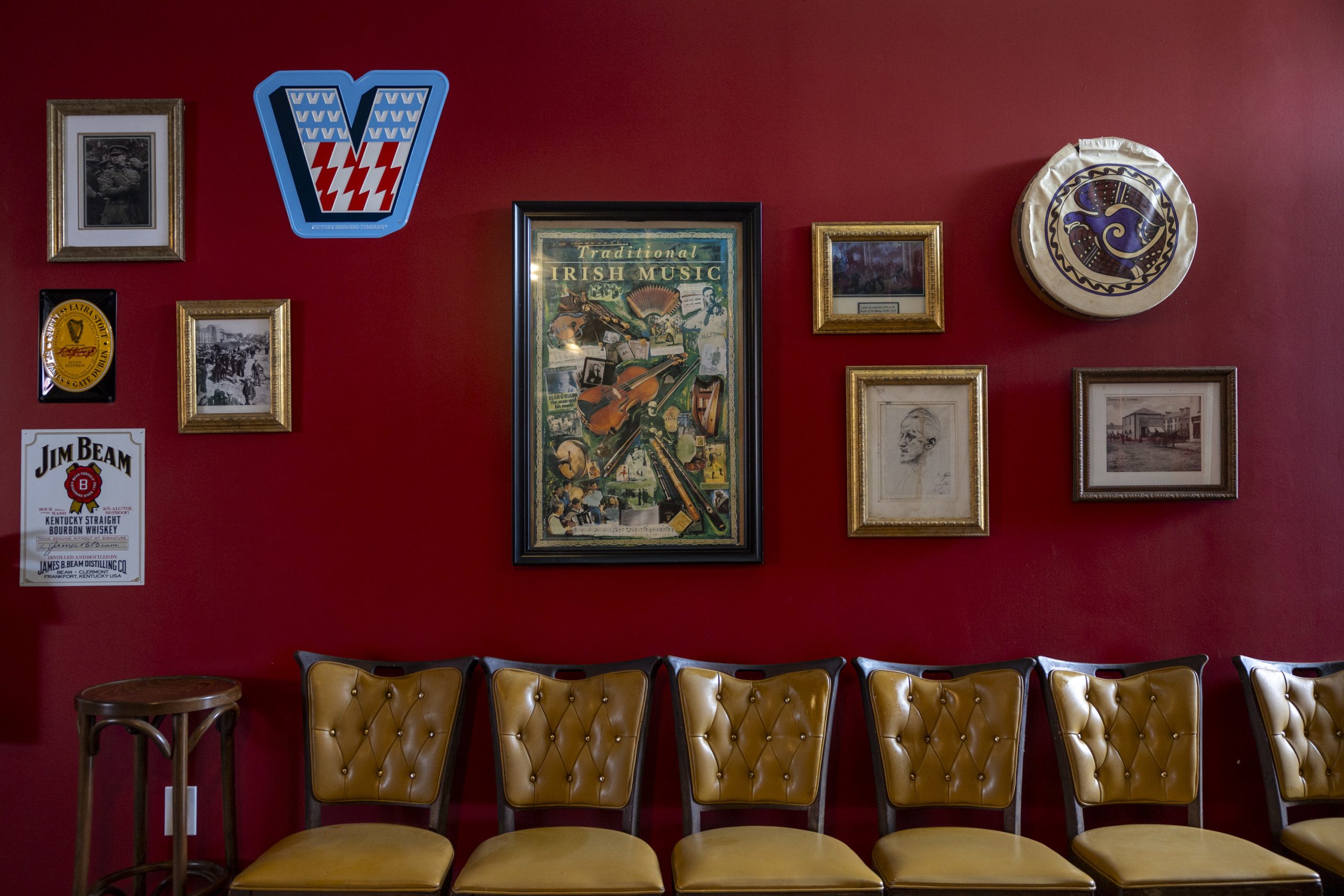
Dublin Brewing Co., Brendan FitzGerald’s Irish pub, in Downingtown.Tyger Williams / Staff Photographer
Dublin Brewing Co. (137 Wallace Ave., Downingtown): Irish-born homebrewer Brendan FitzGerald’s decade-in-the-making brewpub is designed as an authentic Irish pub, with an Irish dry stout, Irish red ale, IPAs, pale ale, Pennsylvania wine and spirits, and bar food. FitzGerald built the pub himself while continuing his day job, borrowing design cues from pubs in Howth and Dublin’s Temple Bar. It’s open for special events (check Instagram) while FitzGerald awaits final permitting.
Home Team Tavern (267 S. Black Horse Pike, Mount Ephraim): The short-lived Mount Ephraim Bar & Grill has been flipped into a compact, sports-minded neighborhood tavern from Greg Carta, who previously managed North Bowl and South Bowl in Philadelphia. He told 42Freeway that he’s aiming for an early July opening with a menu built around tavern pizzas, burgers, starters, and other game-day food.
Lillian’s, 1900 S. 19th St., during a preview on June 25, 2026.Michael Klein / Staff
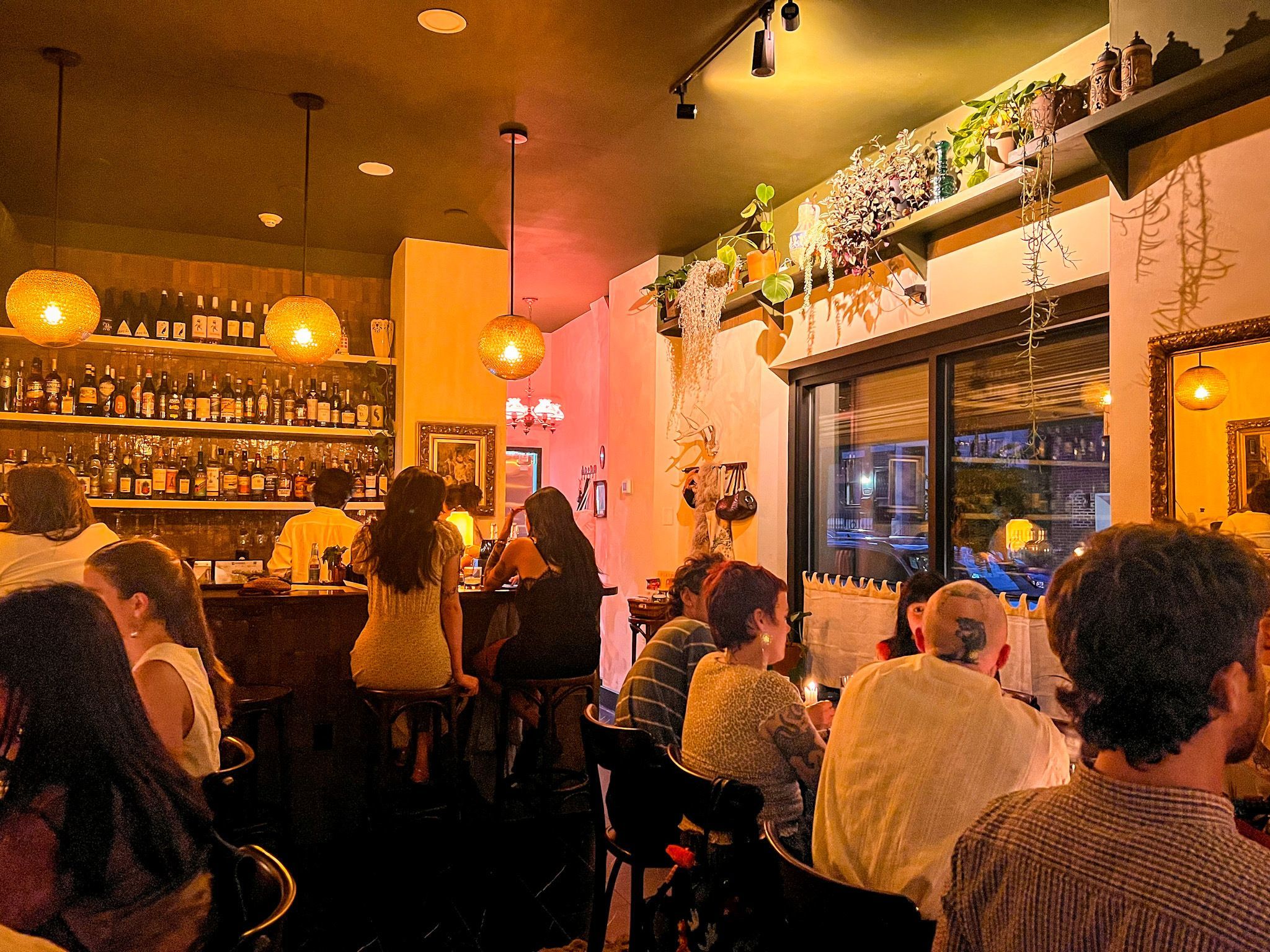
Lillian’s Bar (1900 S. 19th St.): This week, Point Breeze got a cozy neighborhood cocktail bar at 19th and Mifflin Streets with an evolving kitchen concept from Sam Ahern, a former bar manager at Fabrika who also worked at Cicala at the Divine Lorraine and Fitler Club after hosting backyard supper clubs during the pandemic. Ahern has brought in chef Alejandro Martín Sánchez (Mesona) to set up the concise menu of Mediterranean-leaning bistro fare, including sandwiches, salads, tinned fish, charcuterie, and cheese boards with kitchen operations overseen by Isobella “Izzy” Ioffreda. Guest chefs will take over for weekend or monthlong runs. First will be Miled Filianos of Habibi Supper Club, whose six-course dinners and happy hours are scheduled for July 9-11, 17-18, and 23-25. Cocktail program is led by Fitler Club alum Avdo Babic. Opens at 5 p.m. Tuesday through Saturday.
Luna at the Luxe (1705 N. American St.): Sarah Varisano expects to open her relocated Luna Cafe on Monday in the Luxe apartment complex in Old Kensington. The reboot keeps Luna’s familiar brunch, breakfast, and coffee-to-go identity, while adding a larger bar and beverage program, evening hours, and courtyard seating.
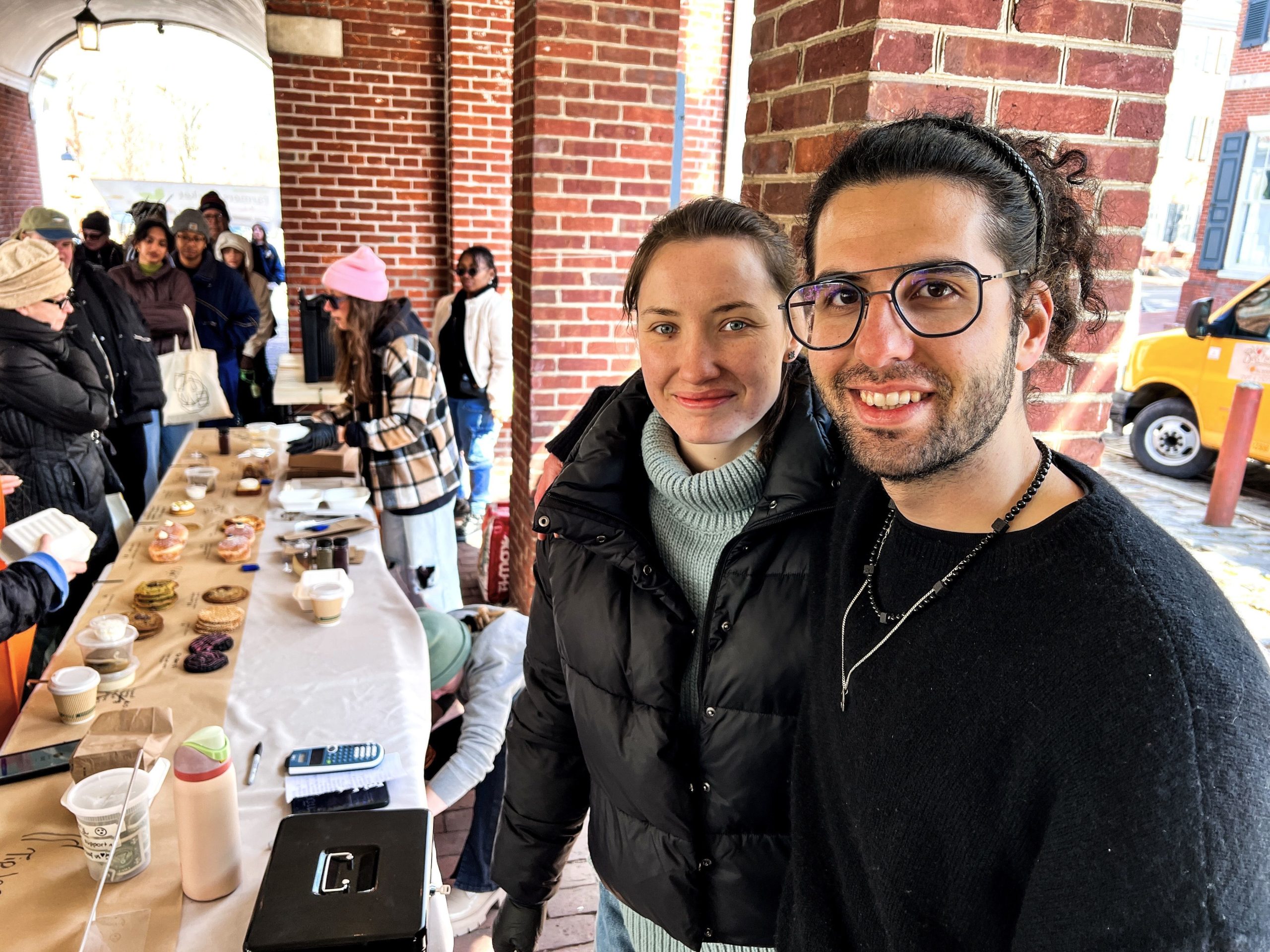
Bakery owner Saif Manna and his wife, Stefaniya Surikova, at their table at Headhouse Farmers Market.Michael Klein / Staff
Manna Bakery (110 W. Berks St.): Baker Saif Manna, shifting from pop-ups to a brick-and-mortar at the former Essen in Kensington, is looking for a late-month soft opening of his 50- to 60-seat bakery/cafe specializing in Levantine and Palestinian wares. It will initially open for daytime service, in addition to his farmer’s market stops. The menu expands to include individual manakish made in the style of Manna’s grandmother, rotating savory buns led by a chicken-sumac version, airy Palestinian-style brioche filled with seasonal fruit and creams, cookies, cakes, and gluten-free desserts such as a flourless chocolate cake and whipped rice pudding created in honor of Manna’s late father. The space also will host baking, cooking, coffee, and arts workshops with visiting chefs, bakers, artists, and baristas, and monthly supper clubs.
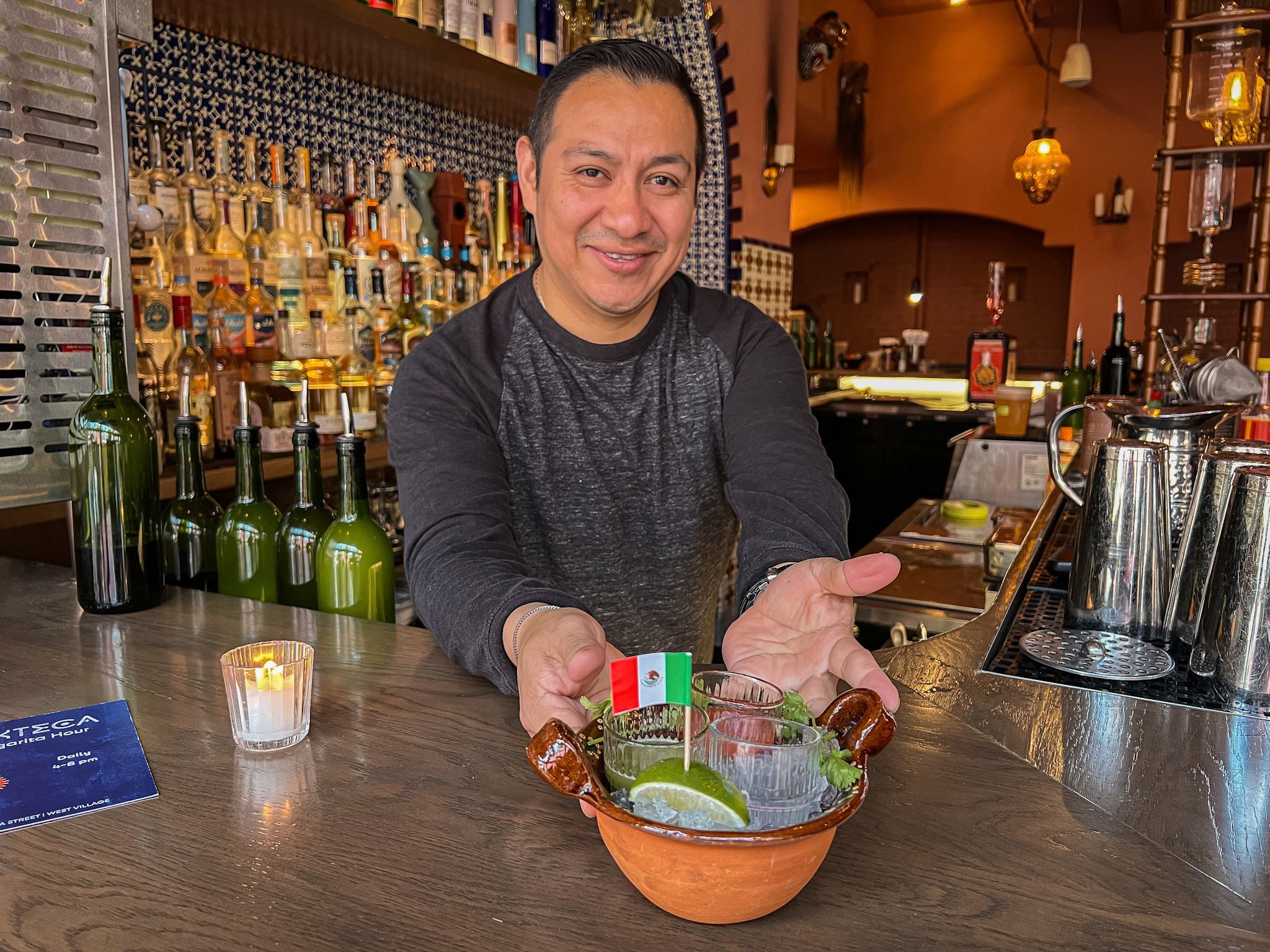
Bartender Euclides “Victor” Lopez behind the bar at Mixteca in New York City on June 4.Michael Klein / Staff
Mixteca (2113 E. York St): This agave-focused Mexican cocktail bar from New York’s Jeff Bell and Euclides “Victor” Lopez is taking over the former Martha in East Kensington. The Philly location, expected later in the month, marks the local debut for Mixteca and Apres Cru Hospitality. The plan includes tequila, mezcal, Mexican drinking culture, indoor-outdoor seating, and a reworked layout with an expanded bar and lounge.
Philly Po Boy Co. (102 W. Berks St.): Brothers Chris and Greg Lynch are looking for late month for their New Orleans-inspired sandwich shop under the Berks El stop, with po’boys, gumbo, jambalaya, beignets, and coffee from Applied Arts Coffee in New Orleans. Chris spent years cooking in New Orleans, while Greg’s Philly resumé includes Starr Restaurants and LMNO.
Sandpiper Cafe (1640 South St.): This all-day breakfast-and-lunch spot is due to soft-open Thursday at 1640 South St. It’s the latest from Gunawan Raharjo, who owns the West Passyunk Indonesian gem Indo Spice (noted in our list of Philly’s 76 most influential restaurants). Sandpiper’s American menu, served from 7 a.m. to 5 p.m. daily, will expand upon the menu at Raharjo’s other restaurant, Cafe Olivier in Old City. At Sandpiper, Raharjo is partnered with Deddy Pornomo.
Stella’s Ice Cream (1832 N. Front St.): This Idaho-based chain of ice cream shops planted its first East Coast location on June 27 in Kensington/Fishtown on what reporter Beatrice Forman has dubbed Ice Cream Row, mere blocks from Sweet 45 and 1-900-ICECREAM. Franchisee Shay Marlin had no prior ties to Idaho or the ice cream biz, but was drawn to Stella’s inclusive and family-friendly vibe. The shop offers 24 flavors of ice cream — including eight nondairy options — plus gluten-free waffle and sugar cones, sandwiches made on hulking brownies baked in-house, and yogurt-peanut-butter popsicles for pups.
Thirsty Turtle Tavern(270 White Horse Pike, Barrington): Just days old, this Camden County taproom in the former Chuck Lager/Wild Wing Cafe building near I-295 is the brand’s second, after Whitehall, Pa., and 42Freeway says it features a refreshed dining room, open kitchen, wood-fired pizza oven, sushi station, and patio.
333 Belrose Bar & Grill (333 Belrose Lane, Radnor): A slow-moving top-to-bottom renovation will add a larger bar, expanded kitchen, redesigned dining rooms, upgraded private-event spaces, and refreshed outdoor dining to this Main Line landmark, whose new American menu is overseen by chef Ross Esner.
Staff writer Beatrice Forman contributed to this article.
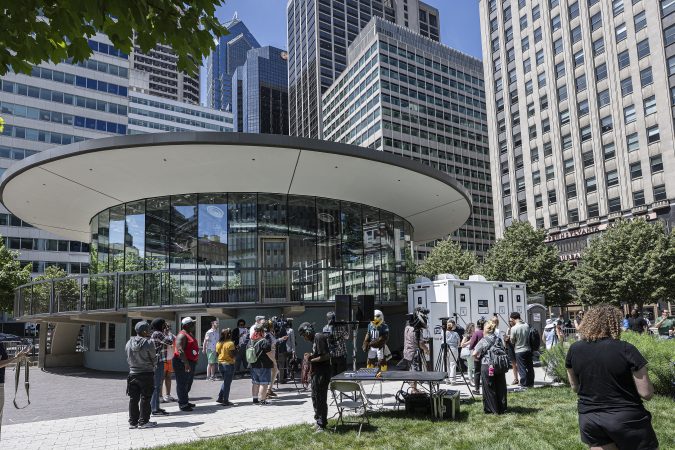
More than six decades after it landed in LOVE Park, Philadelphia’s long-shuttered “flying saucer” building is preparing for its next mission. The first step begins Saturday — not inside the circular glass pavilion itself, but with a new outdoor beer garden surrounding it.
Broad Street Beer Garden at LOVE Park is the opening phase of a food-and-drink operation led by Broad Street Brewing, the Bucks County brewery selected by the Philadelphia Department of Parks & Recreation as its operator after years of fits and starts.
Saturday’s debut, on the final FIFA World Cup game in Philadelphia and amid the hoopla surrounding America250 festivities, will feature a beer garden with a limited food menu. Two Philadelphia companies, Rival Bros. Coffee and High Street Hospitality Group, will be involved as well. High Street, which operates Fork, a.kitchen, and the Bread Room, will assume a larger culinary role when the restored pavilion itself reopens in early 2027 as a year-round cafe, restaurant, and coffee bar. Its name has not yet been announced.
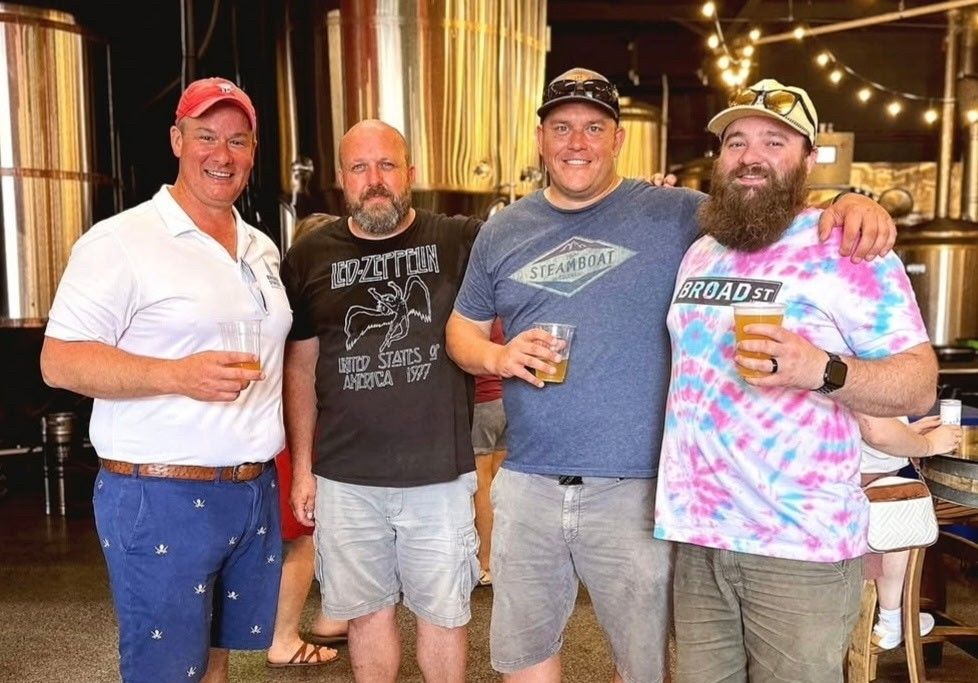
Broad Street Brewing’s partners (from left) Ed Webber, Tim Lohse, and Brandon Wellington with brewer Andrew Balmer.Courtesy of Broad Street Brewing
For the Parks & Recreation Department, the concession is about more than filling the building at 16th Street and JFK Boulevard. Revenue from the operation will be reinvested in LOVE Park and the Benjamin Franklin Parkway, helping fund programming, maintenance, and improvements.
“This has been a long time coming,” said Katie Burns Kays, the department’s director of business and event development. “Our goal wasn’t just to find somebody to fill the space. We wanted a strong partner who would bring the kind of energy and story we want to be telling at LOVE Park, for both residents and visitors.”
Kays said officials hope the arrangement becomes “a sustainable funding model for our public spaces.”
Broad Street Brewing, which opened three years ago in Bristol, emerged from a field of applicants that included Four Corners Management, operator of Parks on Tap; Triple Bottom Brewing Co.; Tica’s Taco; Bower Penn, which operates Bower Cafe locations; and Little Susie’s Coffee & Pie, according to city documents.
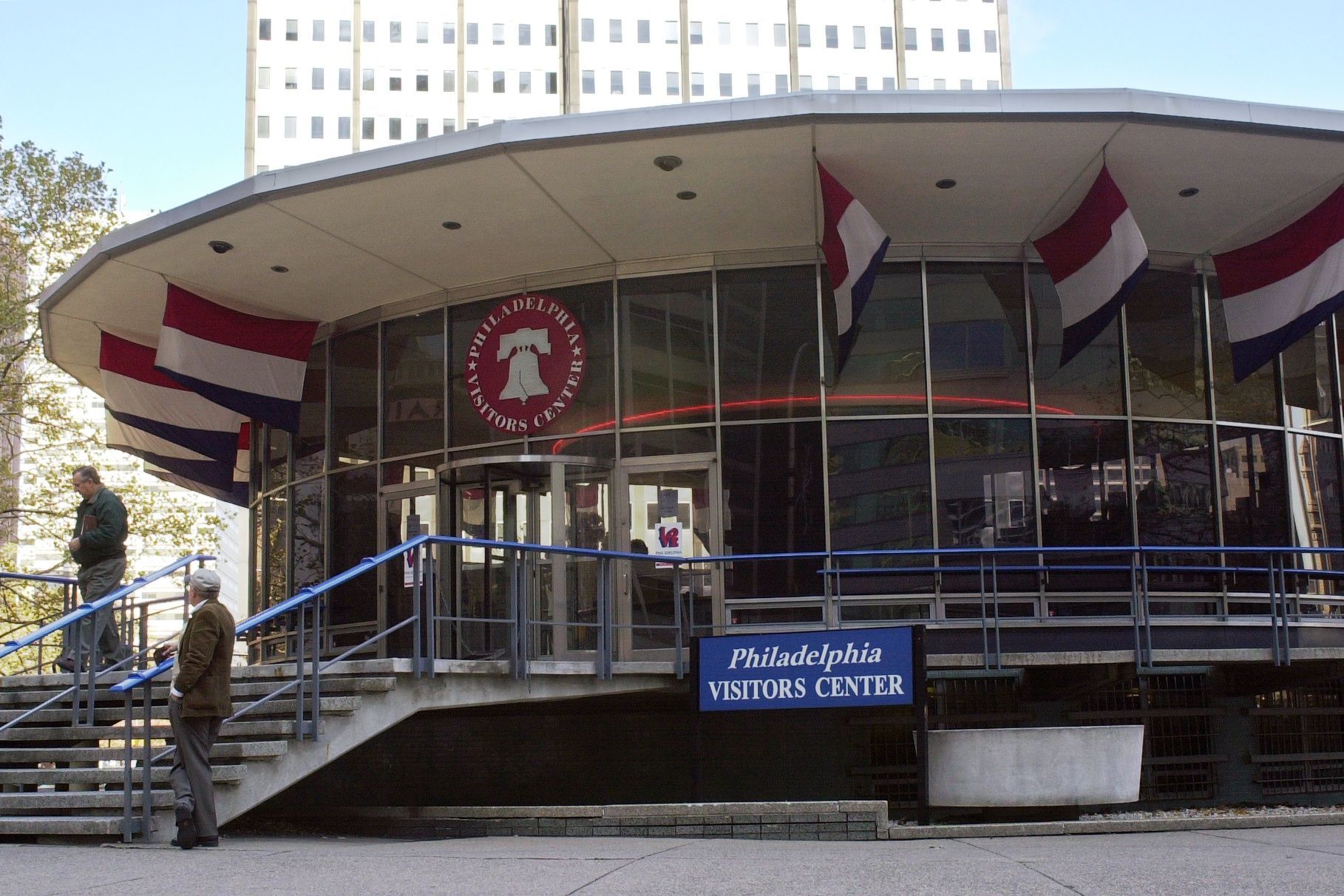
The center in November 2001, just before the Independence Visitor Center opened at Sixth and Market Streets. Tom Gralish / Staff Photographer
Kays said the city used what it calls a “best value” procurement process, weighing community engagement, operational experience, partnerships, and programming alongside revenue. Financial terms were not disclosed. The department’s standard concessions run for one year with up to four renewals, and Parks & Recreation plans to seek City Council approval this fall for a longer-term agreement to support the investment, Kays said.
“It’s exciting to feature three local businesses rather than a national chain,” Kays said. “We really want visitors to experience Philadelphia through Philadelphia businesses.”
For Broad Street co-owner Brandon Wellington, the project is also something of a homecoming. When Wellington lived at Broad and Race Streets, he first began brewing beer before setting the hobby aside for more than a decade. During the pandemic, he and longtime friends Ed Webber and Tim Lohse left their previous careers to launch Broad Street. Although the brewery established its production facility and taproom there, Wellington said the long-term goal was always to return to Philadelphia. He reached out to High Street partner Ellen Yin — whom he knew through his commercial kitchen-ventilation business — about partnering.
The opening phase will occupy the terrace surrounding the pavilion and about a third of the adjacent lawn, with about 250 seats divided among cafe tables, picnic tables, and Adirondack chairs. Wellington said the goal was to create a gathering place for commuters, office workers, tourists, and park visitors while bringing regular live music and community programming to LOVE Park. The initial beverage program will feature at least eight Broad Street beers on draft.
Broad Street Brewing expects to operate the outdoor beer garden through late October, serving beer alongside grab-and-go items such as smash burgers and maintaining a presence during Christmas Village as the permanent indoor build-out continues.
Once the historic pavilion can be outfitted with a commercial kitchen, the partners expect to open a year-round operation with about 100 indoor seats. High Street will oversee the food program, while Rival Bros. anchors the cafe. Wellington said they also envision rotating guest chefs and an automated tap wall pouring Broad Street beers alongside selections from breweries across Philadelphia. The indoor operation is expected to debut around March 2027.
“I just don’t want people to think this is simply a beer garden,” Wellington said. “While it’s being quarterbacked by a brewery, this will be Center City’s ultimate open-air hub — an oasis where local commuters, corporate professionals, and tourists can relax and connect.”
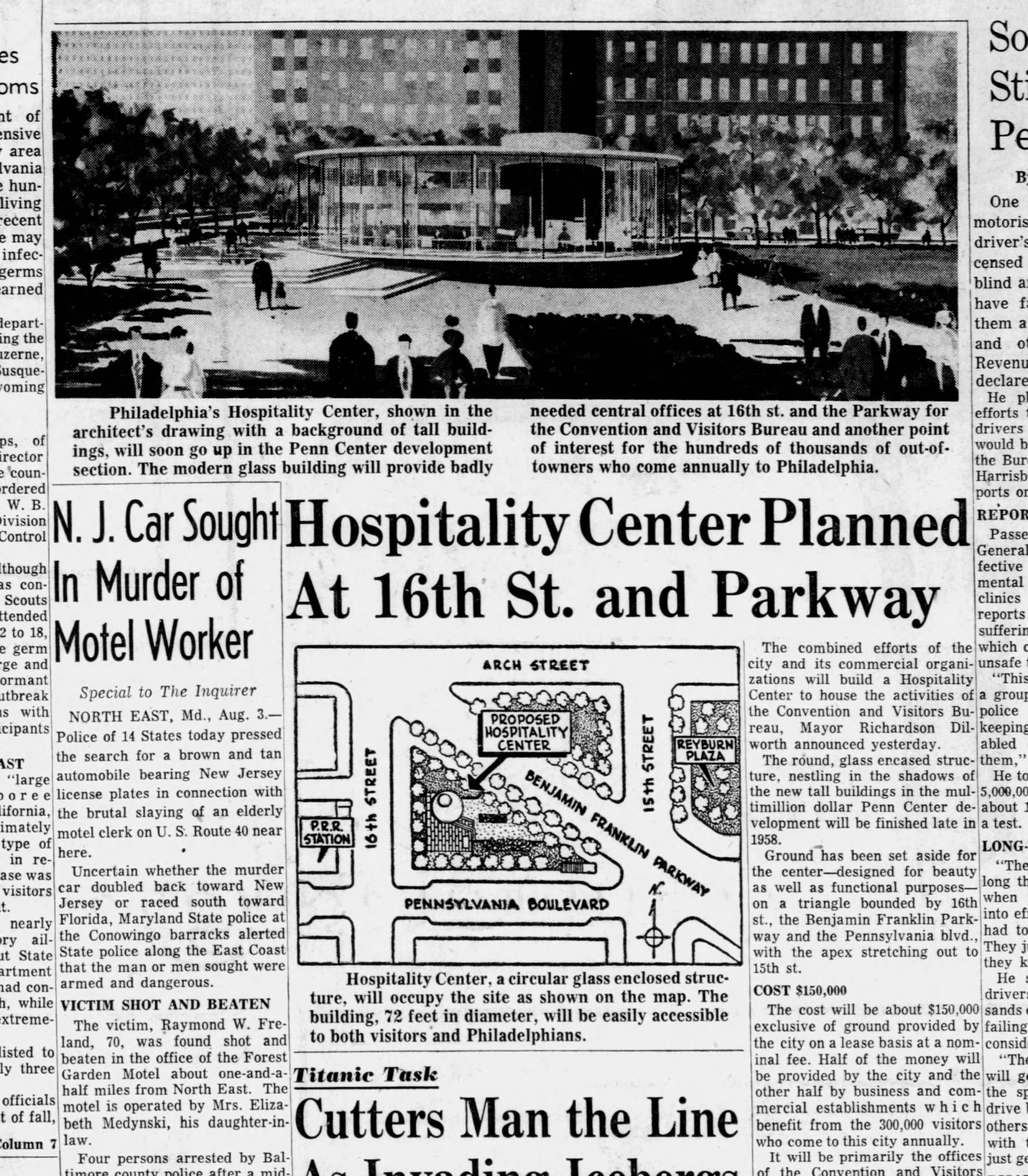
On Aug. 4, 1957, The Inquirer reported the plan for what become the flying saucer-like building. In those days, Ben Franklin Parkway extended through what is now JFK Plaza to City Hall.Newspapers.com
Long before it became known as Philadelphia’s “flying saucer,” the pavilion was conceived in the late 1950s as the Philadelphia Hospitality Center at what was then the corner of 16th Street and Pennsylvania Boulevard. News accounts placed the price tag at $150,000, exclusive of the land provided by the city.
Designed by Roy F. Larson of Harbeson, Hough, Livingston & Larson, the circular building opened in 1960 as a visitor information center for an era when families increasingly arrived by automobile. Its broad cantilevered roof and nearly continuous glass walls embodied the optimism of the Space Age and Philadelphia’s postwar redevelopment under city planner Edmund Bacon.
The pavilion predates both Robert Indiana’s LOVE sculpture and the boulevard that now borders it. When it opened, the roadway, which bisected the plaza, was called Pennsylvania Boulevard. Following President John F. Kennedy’s assassination in 1963, it was renamed John F. Kennedy Boulevard, giving the plaza the name by which it is now universally known.
Renamed the Fairmount Park Welcome Center shortly after opening, the building later served as park offices, a cafe, a concession stand, and exhibition space. After the Independence Visitor Center opened at Sixth and Market Streets in 2001, however, it gradually lost its original purpose and sat vacant for years.
Its future appeared uncertain during LOVE Park’s 2016-18 reconstruction. Although some questioned whether the aging structure should be demolished, preservation advocates successfully argued that it was among Philadelphia’s finest surviving examples of midcentury modern civic architecture. The city instead invested about $5.6 million to restore the pavilion, replacing its roof, mechanical systems, and custom-curved glass while preserving its distinctive appearance. It was added to the Philadelphia Register of Historic Places in 2025.
Last year, the city broadened its search, seeking a cafe, taproom, or other community-oriented food-and-beverage concept instead of a traditional restaurant. More than 50 prospective operators responded.
Kays said the city deliberately slowed the process to avoid repeating earlier missteps.
“The city has tried this before, and the business was not set up for success,” she said. “We wanted to be much more intentional this time.”
Daniel Martino didn’t set out to build an empire of pie shops. He just wanted somewhere to get coffee without leaving the neighborhood.
When he bought his home in Port Richmond in 2013, the closest coffee shop was an hour round trip, he said. “Selfishly, I thought, I can put a little coffee shop here.”
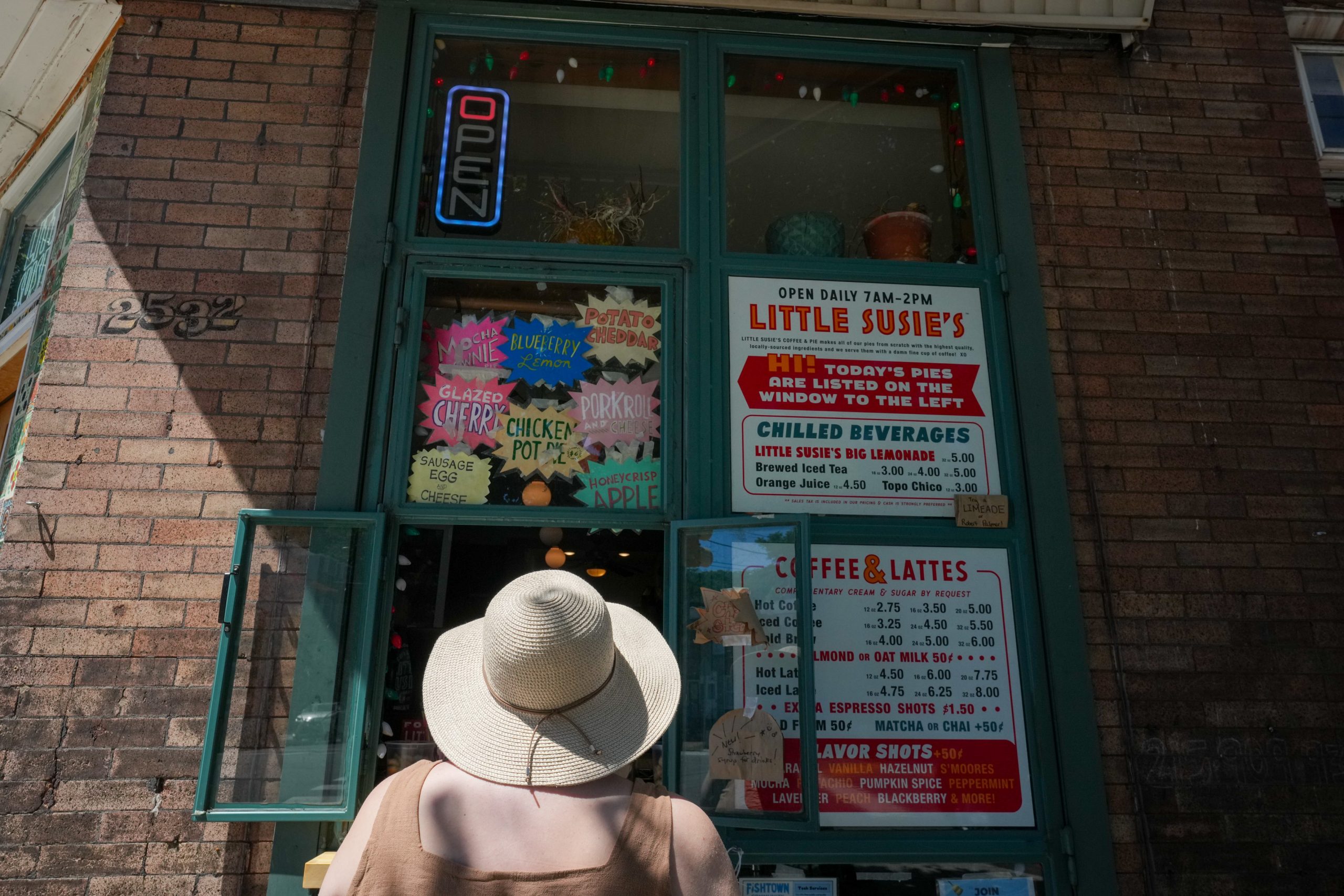
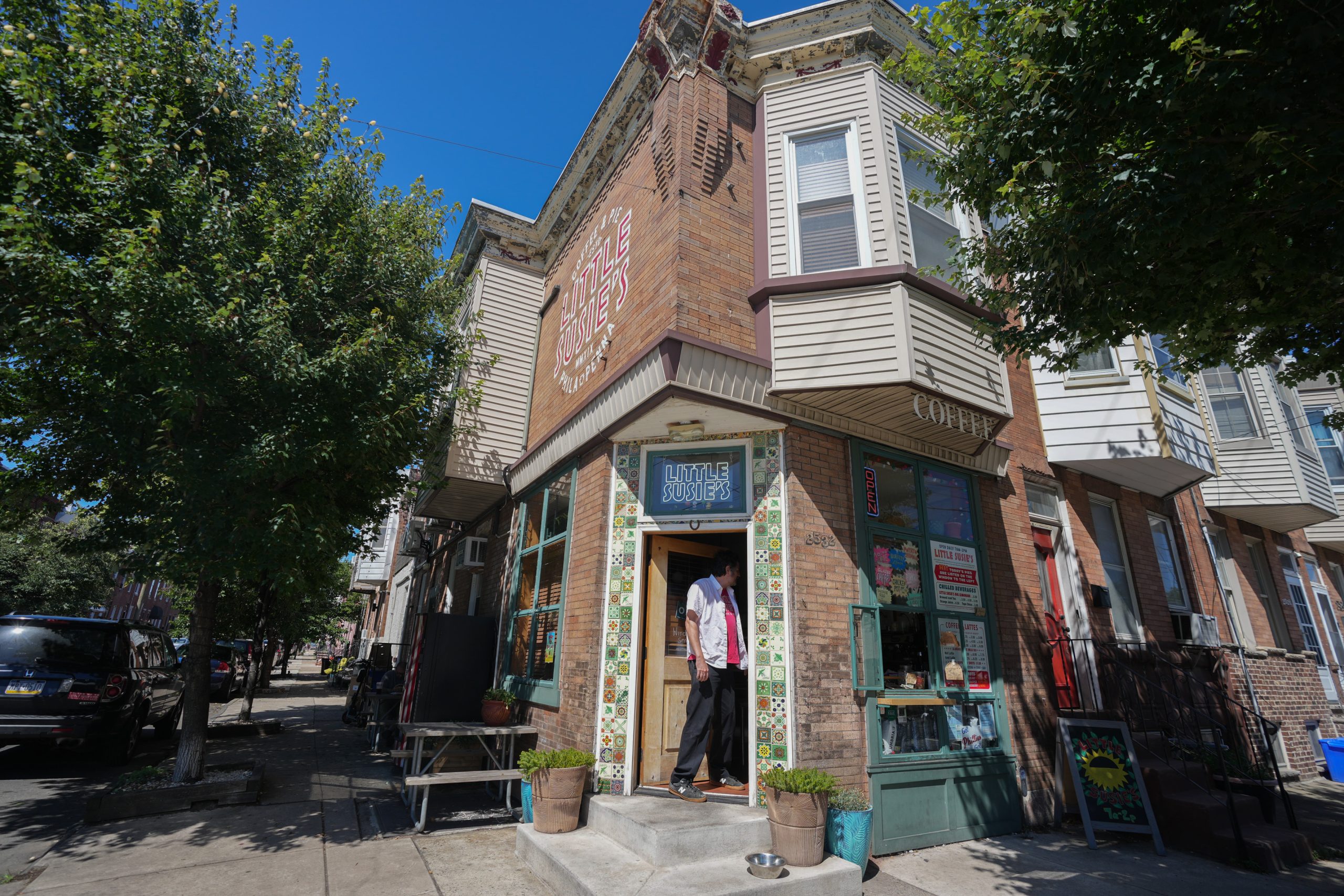
The takeout window at Little Susie’s flagship location at 2532 E. Lehigh Ave.Jessica Griffin / Staff Photographer
And what goes better with a cup of coffee than pie? He had a recipe he’d been baking for family get-togethers.
Seven years after Martino opened Little Susie’s Coffee & Pie in the building next door to his house, his modest idea has grown into four Philadelphia locations, with a fifth expected to open Friday at the former Pop’s Bun Shop in Bella Vista, a franchise headed to Milwaukee, and plans for additional shops in Fairmount and Northern Liberties. All his stores run from takeout windows, requiring little more than coffee stations and electric ovens.
Today, the company employs 28 people and turns out about 1,200 pies a day from a bakery occupying two cramped rooms in the corner rowhouse on Lehigh Avenue.
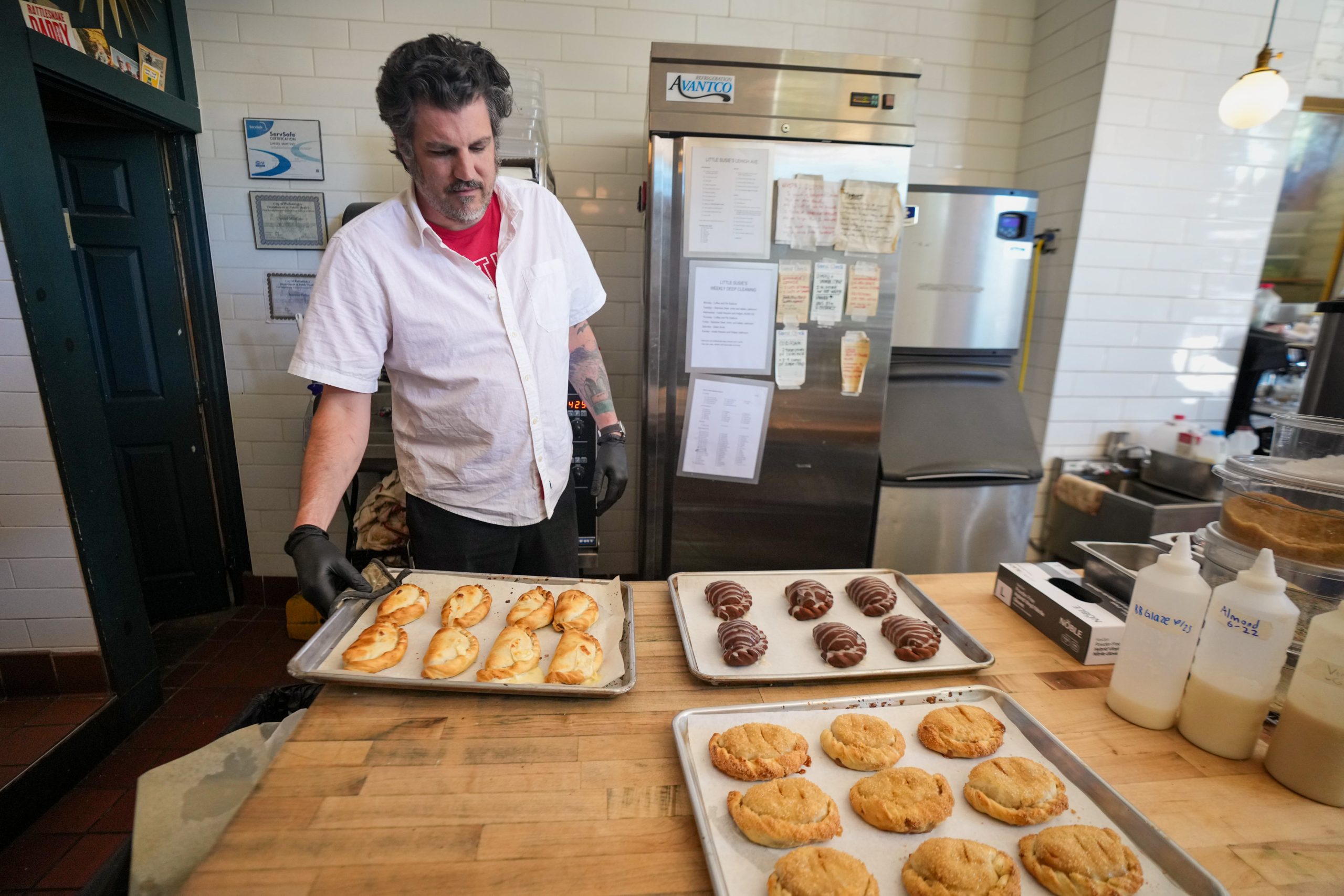
Owner Daniel Martino with trays of pies at Little Susie’s.Jessica Griffin / Staff Photographer
Martino, 46, who grew up in Northeast Philadelphia, has spent much of his working life around food. As a teenager, he worked at a swim club snack bar before taking a kitchen job at what is now Jefferson Torresdale Hospital.
After studying film at Temple University, he joined Public House Investments, which ran City Tap House, as a DJ before becoming the hospitality company’s creative director, designing menus, logos, ads, and marketing material.
When the property next door to his house became available, Martino said he used a home-equity line of credit to buy it before securing a Small Business Administration loan to renovate it.
The takeout window at Little Susie’s. Hand-lettered signs advertise the specials.Jessica Griffin / Staff Photographer
By the time Little Susie’s opened in December 2019, he said, “I had maxed out every credit card I had. I even had to go to the bank, hat in hand, and sign a signature loan for the last $10,000 just to get it open.”
His shop offered a simple menu, little more than coffees and lattes and four kinds of pies. There was a counter for seating. The first day brought in about $180, and “it was the greatest day of my life,” Martino said.
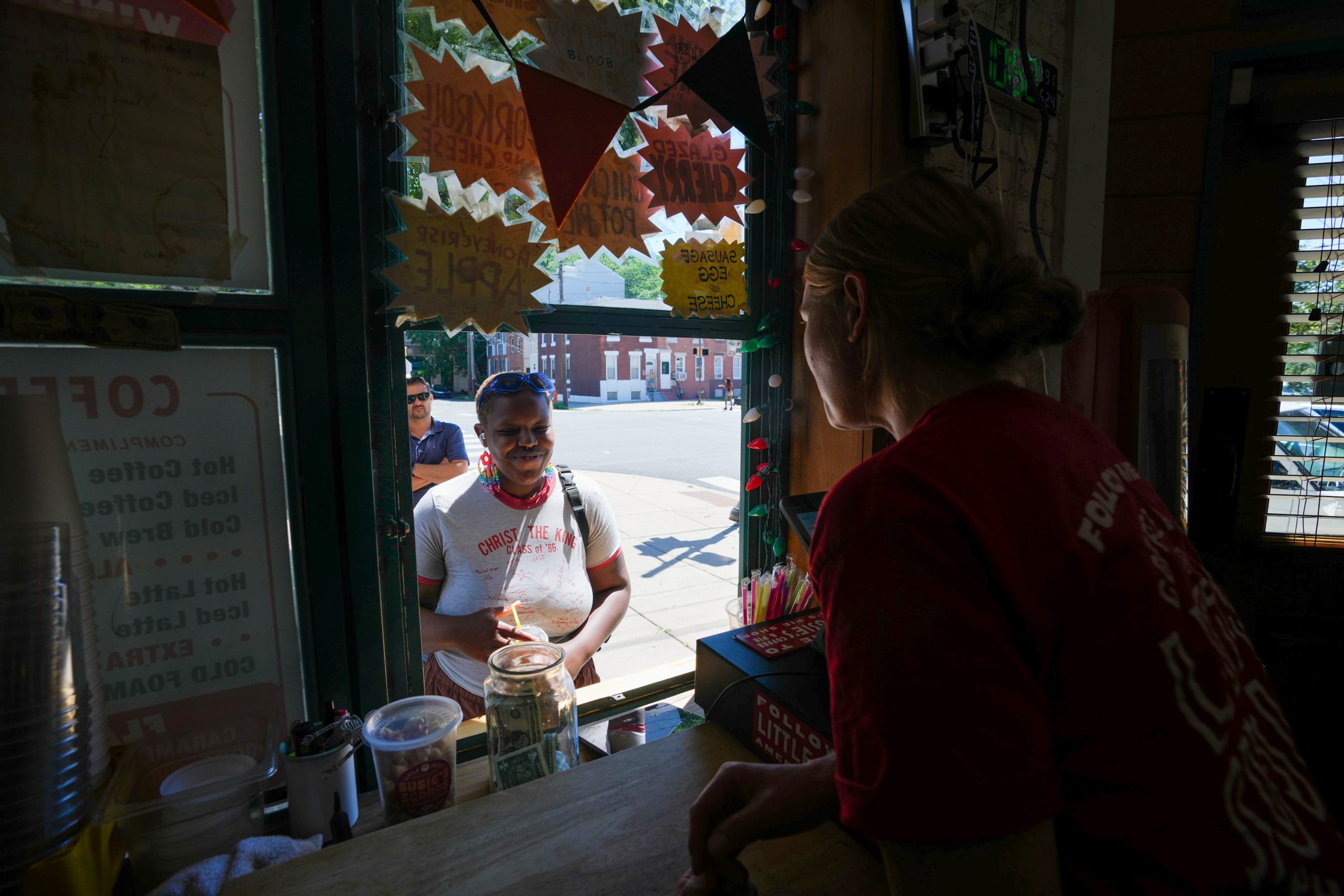
Then the pandemic arrived. When COVID-19 restrictions shut down indoor dining, Little Susie’s shifted to window service. Customers called in orders, paid over the phone, and picked up coffee and pies outside. Even after restrictions were lifted, the shop never reopened indoors.
It wasn’t what Martino had imagined. His idea was ”Cheers with coffee — the neighbors and the mailman talking about the weather,” he said.
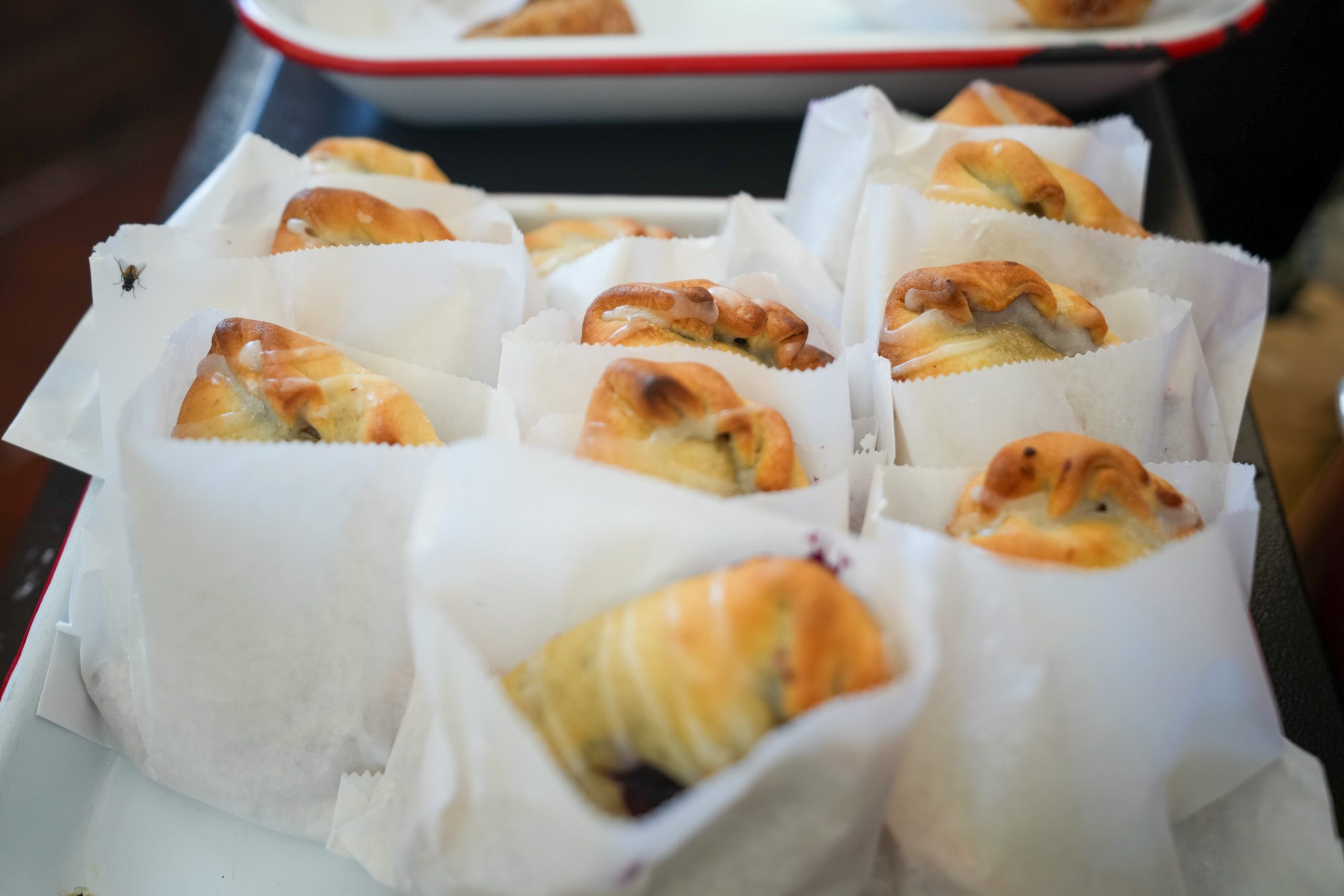
Instead, customers embraced the walk-up model and the seating at a picnic table beneath a maple tree. The pies especially quickly caught on. The signature is the crust. Rather than trimming away the excess dough, workers twist it around each pie by hand, creating what Martino calls “a fluffiness that the fork doesn’t provide — that flaky tenderness you want in a pie crust. The twist is its own special treat in and of itself.”
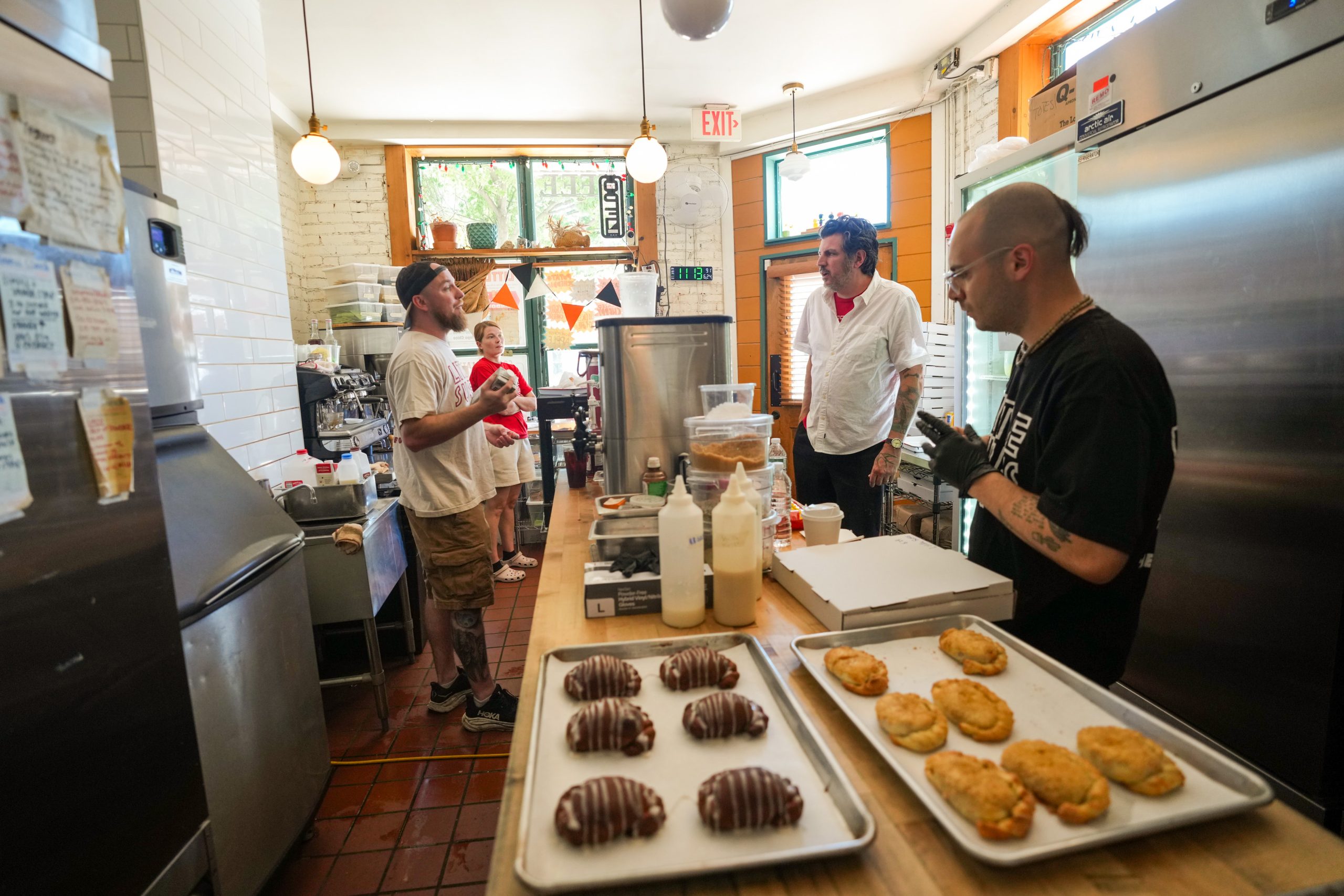
Owner Daniel Martino (rear, right) with staff and pies at Little Susie’s, set up in a rowhouse.Jessica Griffin / Staff Photographer
The pies, which are baked and not fried, are made with a simple crust of flour, butter, sugar, and salt. It’s a 48-hour process. Dough is mixed at the company’s Kensington location, where a 20-quart mixer runs nearly all day. The dough rests for 24 hours before it is brought to Port Richmond, where it is sheeted, filled, twisted, frozen, and delivered to the other stores to be baked to order.
Little Susie’s first menu included only blueberry, pork roll, apple, and mushroom Swiss fillings. Today, it offers about a dozen varieties, with eight available year-round and others rotating seasonally. “You can practically throw anything in this pie crust,” Martino said. “I haven’t been disappointed yet.”
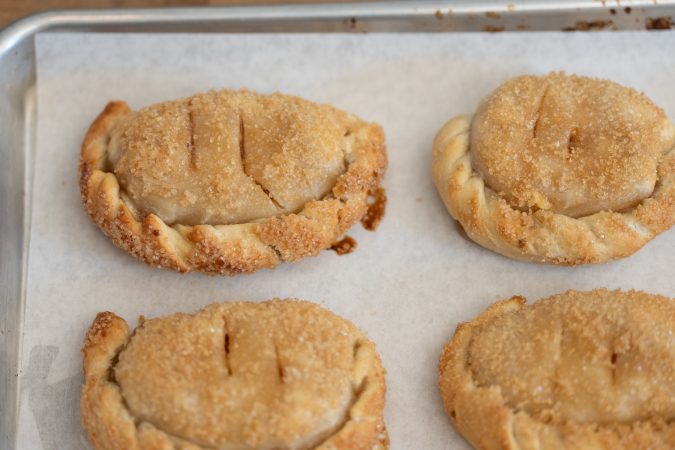
Pies at Little Susie’s.Jessica Griffin / Staff Photographer
Pork roll remains the top seller, followed by apple, and a sausage, egg, and cheese breakfast pie encrusted with everything bagel seasoning. Seasonal flavors have included ham and Brie, chocolate-covered strawberry, and Cajun crab and corn. None are gluten-free because of the shop’s limitations, he said.
Not every idea works. “We tried to make a cannoli pie, but the cream just melted right out,” he said.
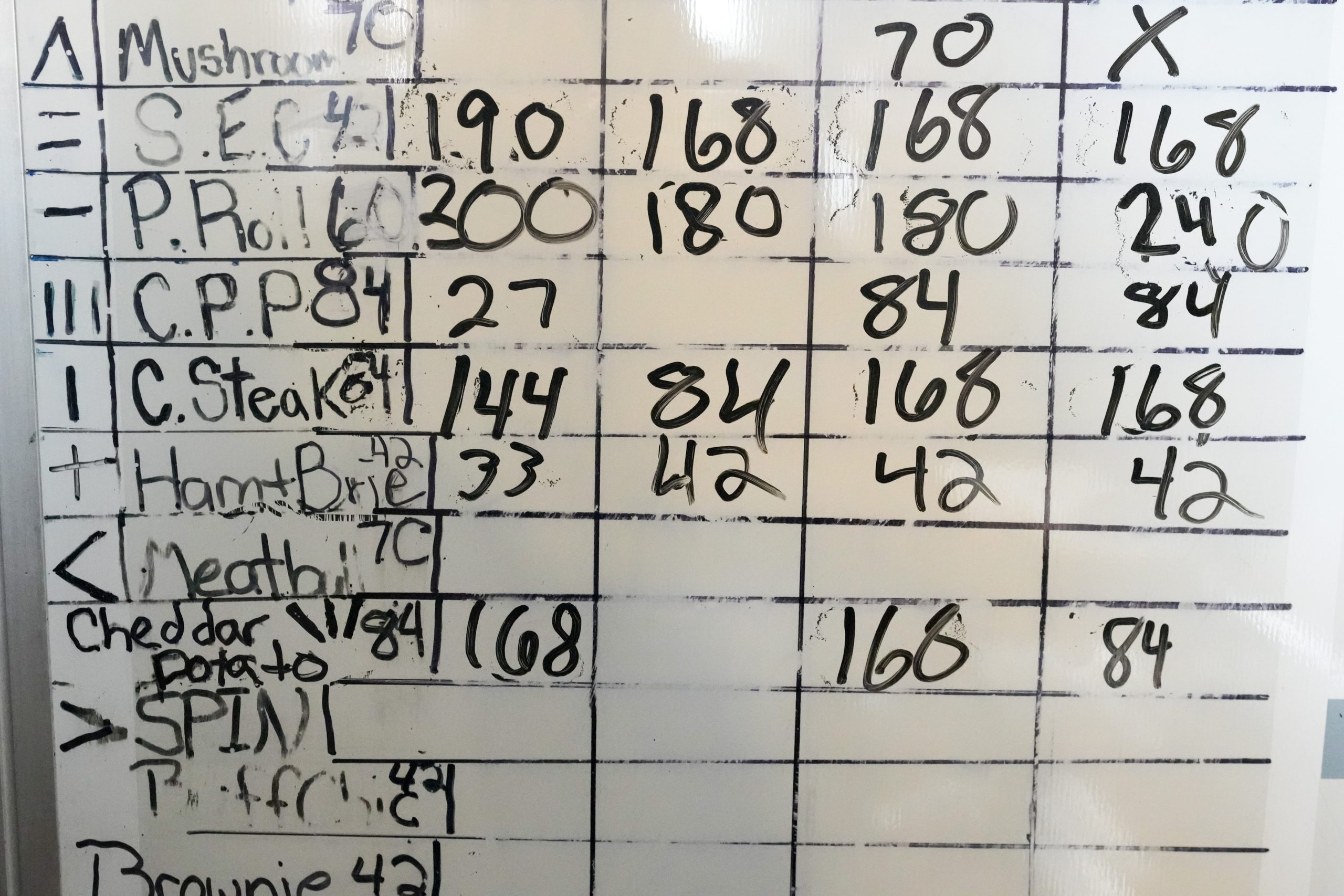
Each shop sells 200 to 300 pies a day. The production kitchen now employs 11 bakers, who track production on a whiteboard nicknamed “the Pieble.” Each variety get its own knife mark on top; an inverted V, for example, denotes mushroom Swiss.
The “Pieble” at Little Susie’s, the flagship pie takeout place located at 2532 E. Lehigh Ave., in Philadelphia, June 24, 2026.Jessica Griffin / Staff Photographer
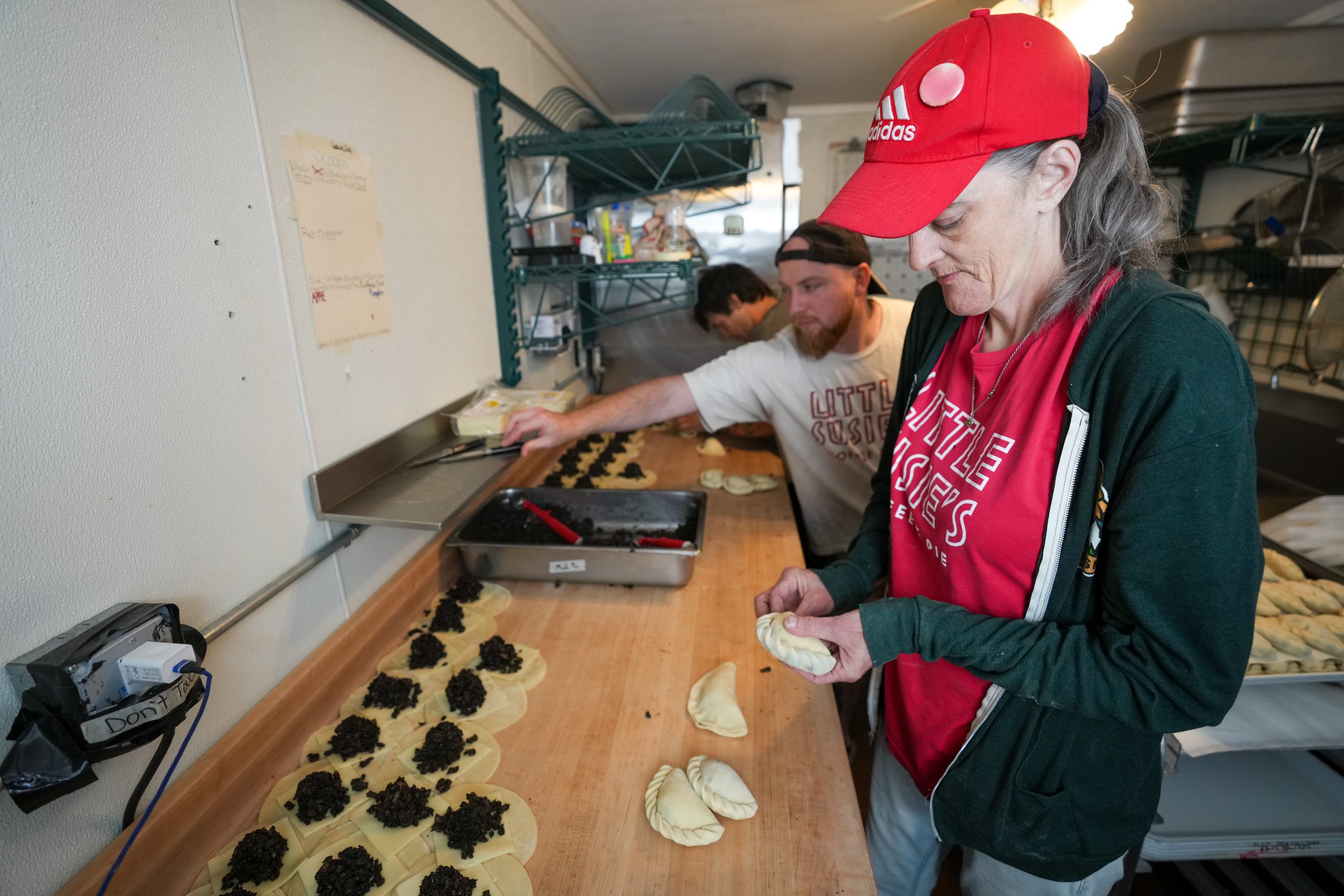
Lena Hurchick, who has worked at Little Susie’s for three years, said she enjoys “the competition of filling all the shops” and watching customers eat pies she helped make.
“Susie” was the name of the dog that belonged to the former owner of the building. “When we had the community meeting here, I said, ‘I’m thinking Little Susie’s,’ and people started crying,” he said.
Lena Hurchick crimps mushroom pies at Little Susie’s.Jessica Griffin / Staff Photographer
Expansion has brought complications. A planned Fairmount location was nearly ready to open before the city determined that the property required zoning approval for food sales. “The city does not make it easy,” he said, adding that it will take months to get onto the zoning board’s calendar.
Even so, he expects the company to keep growing. He has a handshake deal for a spot in Northern Liberties. Milwaukee is planned as the first franchise — operated by a friend — while Martino has begun thinking about a larger bakery in Philadelphia.
“We’re basically bursting at the seams,” he said. “We’re probably going to need a 10,000-square-foot facility.”
Owner Daniel Martino at Little Susie’s.Jessica Griffin / Staff Photographer
He wants that growth to remain slow enough that the pies are still made fresh every day. “I don’t want to get too far away from making them every day, because then it just becomes some frozen-food empire,” he said.
Little Susie’s Coffee & Pies’ locations are at 2532 E. Lehigh Ave. in Port Richmond, Second and Chestnut Streets in Old City, 1772 N. Front St. in Kensington, and 1754 S. Chadwick St. in Point Breeze. A fifth, at 800 S. Ninth St. in Bella Vista, is due to open Friday. Hours are 7 a.m. to 2 p.m. daily.
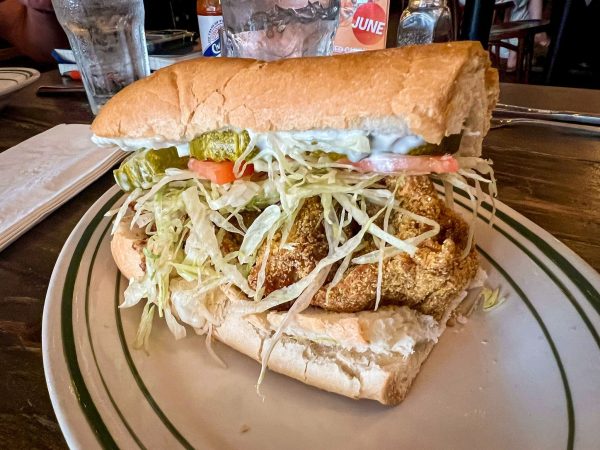
The good times roll at Khyber Pass Pub in Old City, where the menu of New Orleans-style comfort food includes a hearty share of vegan items. The chicken-style po’ boy, for example, delivers crispy, thinly breaded seitan while keeping the classic New Orleans formula intact. Served on a crackly Leidenheimer roll, it’s dressed with shredded lettuce, tomato, pickles, vegan mayo, and Creole mustard, delivering a satisfying mix of crunch, tang, and subtle heat. It’s a convincing plant-based rendition that feels like a true po’ boy, not a compromise. Khyber Pass Pub, 56 S. Second St., 215-238-5888, khyberpasspub.com
— Michael Klein
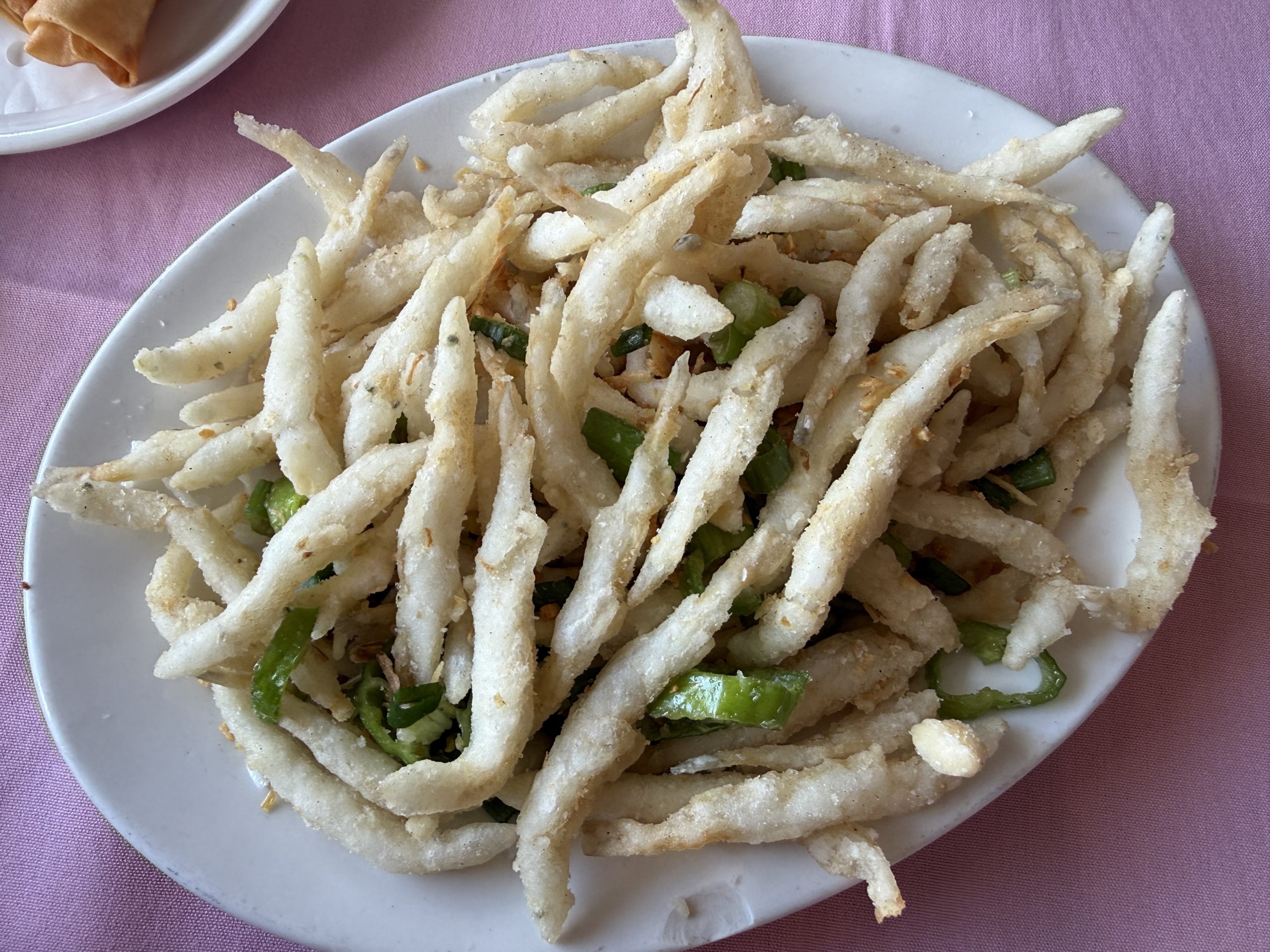
Fried silverfish — a Cantonese delicacy that’s pretty similar to a French Fry — at Grand Palace, 600 Washington Ave. #3B.Kiki Aranita / Staff
Fried Silverfish at Grand Palace
Weekend dim sum at Grand Palace in South Philly’s Little Saigon is a party where the whole family (second cousins and all) is invited, so the party-sized portions of Cantonese delicacies deserve special attention. The rice-flour-battered and fried silverfish (also known as noodlefish or whitebait) are generously sized and hopelessly addictive. More delicious than any French fry — though similarly salty, crunchy, and thin — the tiny fish are lightly funky and just barely scented with jalapeños and scallions. I haven’t stopped thinking about them since. Grand Palace Restaurant, 600 Washington Ave. #3B, 215-645-0079, grandpalacechineserestaurant.com
— Kiki Aranita
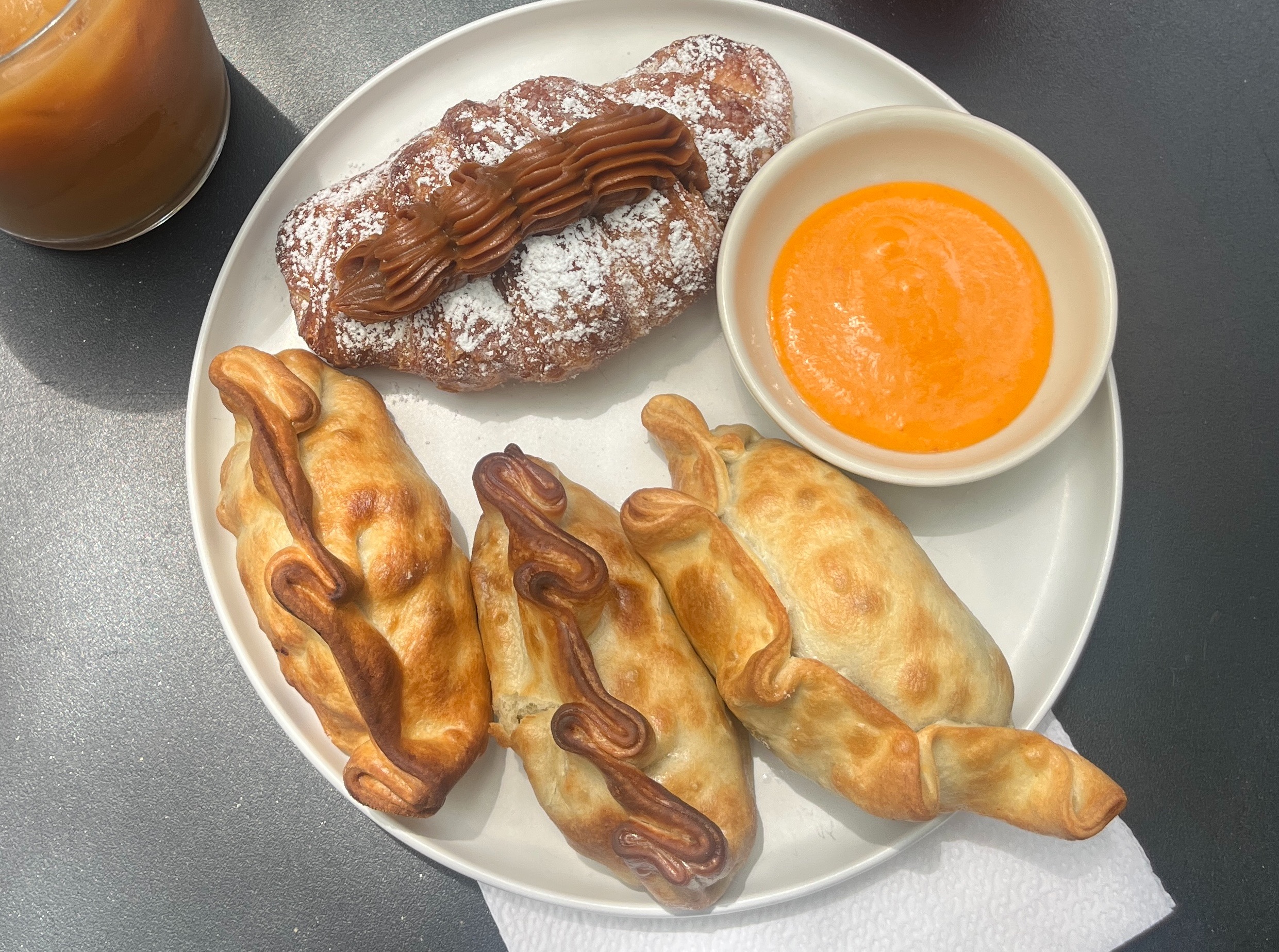
An array of empanadas and a dulce de leche medialuna at Jezabel’s in West Philadelphia.Beatrice Forman / Staff
Empanadas and a dulce de leche medialuna at Jezabel’s
Empanadas are the main attraction at Jezabel Careaga’s eponymous West Philly cafe, where the open-concept kitchen feeds into a dining room that allows customers to watch bakers knead, shape, and pack the dough tight with fillings. The lineup is special, but simple: a stewed chicken empanada lightly seasoned with aji dulce; a vegetarian version stuffed with leeks and gooey white cheese; and a vegan version packed with a summery lentil and corn salad. Careaga’s empanadas are baked — not fried — and so light that it’s easy to snack on several in one sitting.
Even more excellent are the cafe’s medialunas, an Argentinian pastry that sits somewhere between brioche and a croissant. The dulce de leche version is ultra-decadent, its butter crescent-shaped layers peeling apart to reveal a core of caramel cream. When Careaga returns to Fitler Square with a second location — likely opening this fall, I’m told — it’ll still be empanadas and medialunas galaore. Thank goodness. Jezabel’s, 206-208 S. 45th St., 215-554-7380, jezabelsphl.com
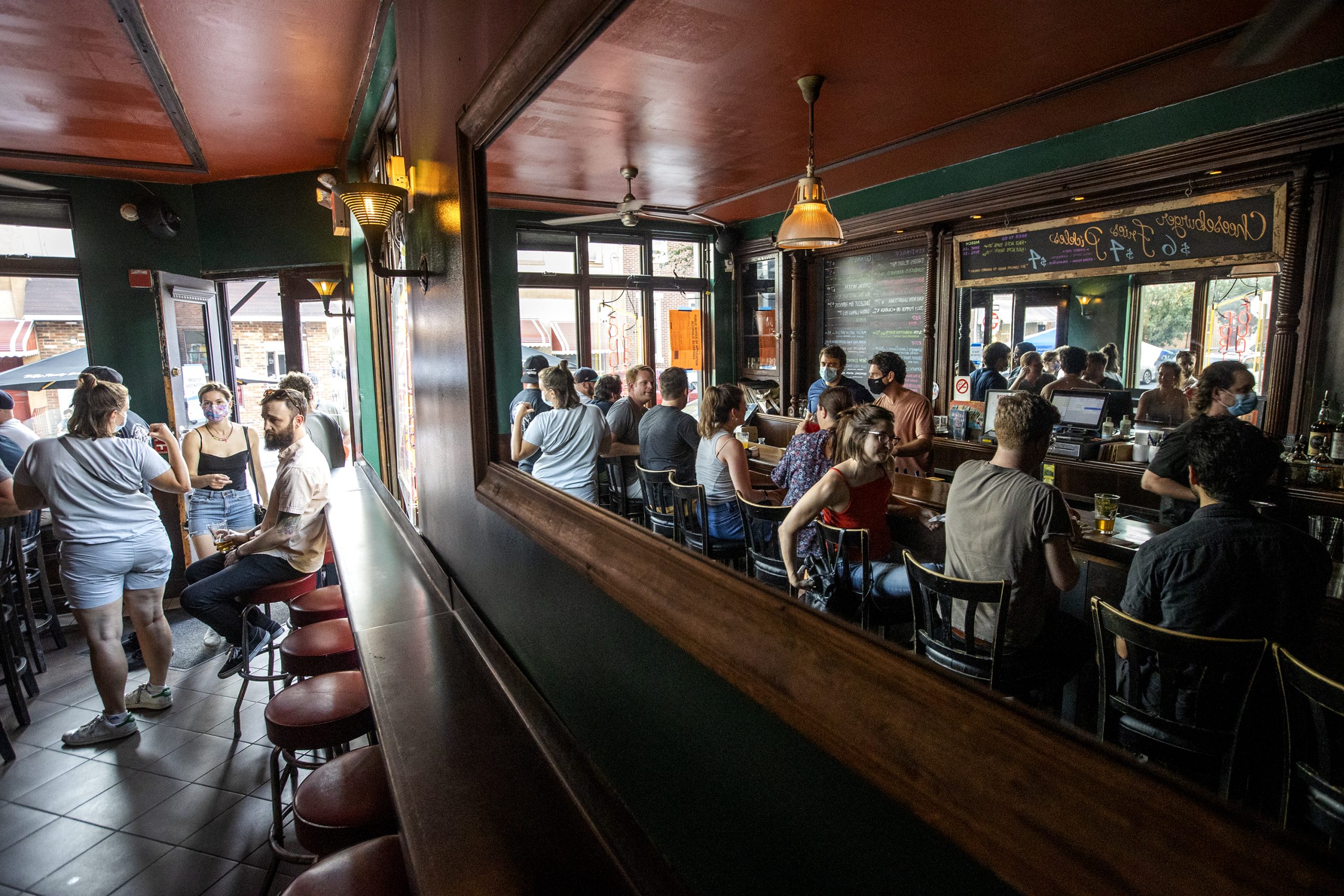
In 2026, you either die a bargain or stay around long enough to get hit by inflation. In other words, Fountain Porter’s iconic $6 burger is now $7, roughly the price of a fancy latte or a McDonald’s Quarter Pounder with cheese after tax.
The East Passyunk neighborhood bar made the nearly 17% price increase official last Wednesday, said owner Evan Clancy, after months of watching the prices of ingredients creep up.
Five days later, a post appeared in the popular r/PhiladelphiaEats subreddit breaking the news like a bargain hunting, beer-loving version of Paul Revere. “Recession indicator: Fountain Porter has officially raised the price of their burger,” the post read. “End of era.”
Commenters were aghast.
“Noooooooo,” bemoaned one Redditor. “Bring back boiled peanuts!” shouted another. A third cried of shrinkflation, alleging that the patty had gotten smaller. But most agreed on one thing: the burger is still dirt cheap and delicious.
“I still ate three total this past weekend,” wrote another Reddit user, undeterred by the change.
This isn’t first time inflation has come for Fountain Porter: When Clancy opened the bar at 1601 S. 10th St. in 2012, its burgers were just $5. Somewhere along the way — Clancy couldn’t recall when — he raised the price to $6 in recognition of the labor his staff put in to running a pub that, in many ways, also doubles as a burger factory.
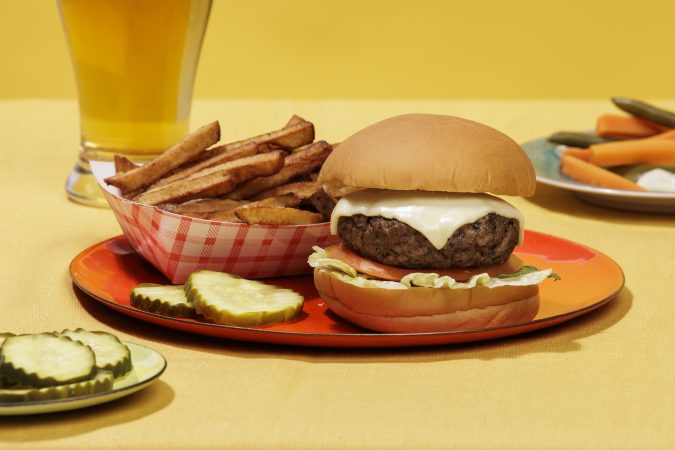
Fountain Porter makes upwards of 800 burgers a week, Clancy said, with the three cooks alone dedicated just to grilling and flipping patties. It’s also the platonic ideal of the sandwich, comprised of a modest beef patty with a salty char topped with American cheese, crisp lettuce, and a tomato slice on a Martin’s potato bun with two pickle chips on the side.
The burger and its price — along with the bar’s deep beer list, dirty martini, and solid Guinness pour — has cemented Fountain Porter’s status as a Philly icon, beloved equally by world class chefs and people who just really like eating and drinking.
“Their burger is the perfect size — not too small, not too big — and their lettuce is always cold and crispy,” Rachel Lorn, the co-owner of acclaimed South Philly restaurants Mawn and Sao, previously told The Inquirer.
The crowd is reflected in a mirror at Fountain Porter at 1601 S. 10th St. in 2021.CHARLES FOX / Staff Photographer
The burger will remained unchanged despite the price increase, Clancy said. He also doesn’t think it will harm the bar’s reputation, and was shocked that people cared enough to post about it on social media.
“If the burger is not good at $7, then it’s really not that good at all. And that’s not on me, that’s on whoever is heaping the praise,” said Clancy. “It’s never been about a budget burger. It’s about being fair and honest. That’s what a burger is supposed to be.”
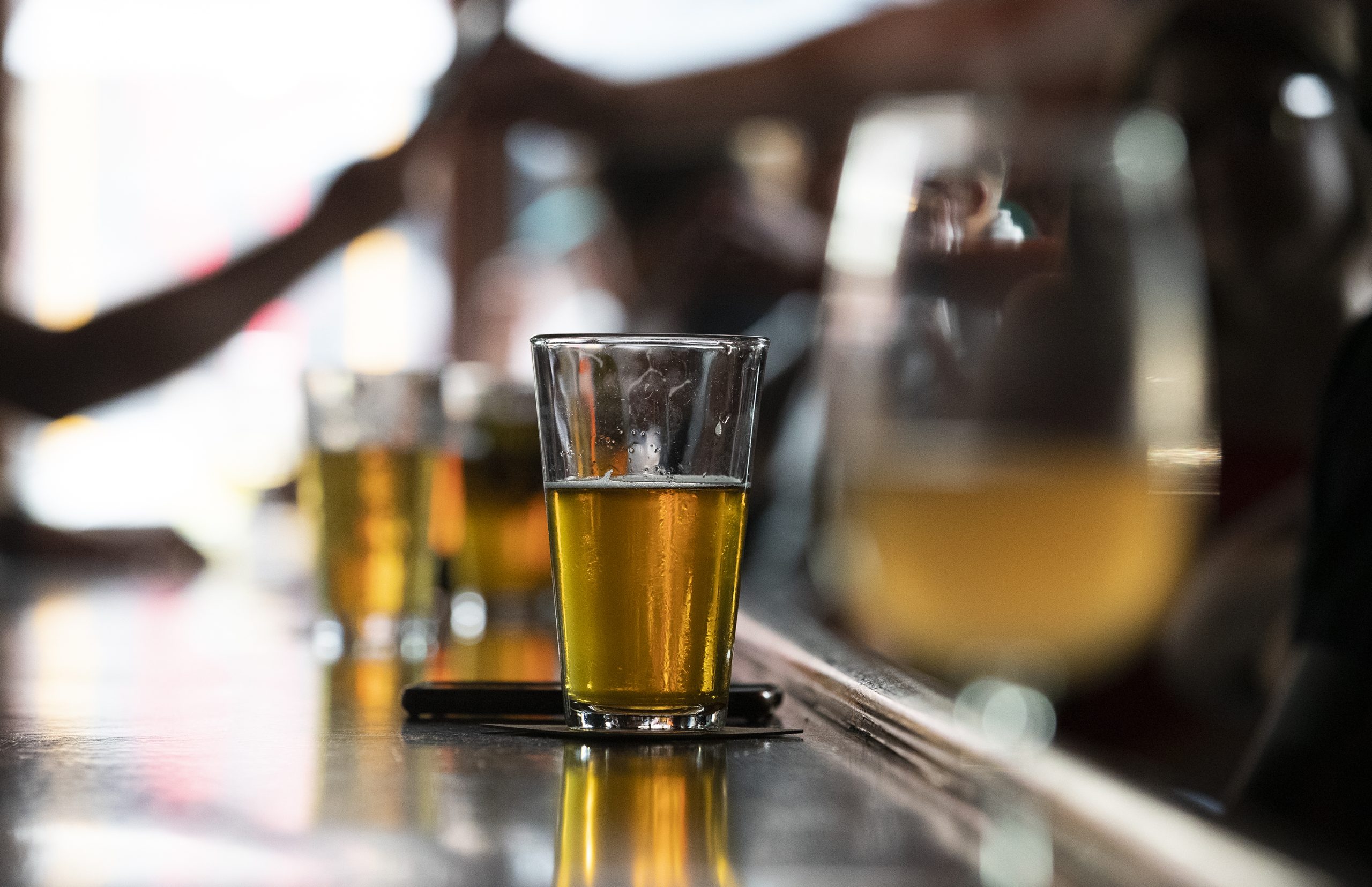
Drinks on the bar at Fountain Porter at 1601 S. 10th St. in 2021.CHARLES FOX / Staff Photographer
The price of the beef Fountain Porter uses in its burgers nearly doubled over the past two months, Clancy said, and he expects it to keep rising. The cost of tomatoes has also risen sharply and varies daily due to a mixture of tariffs and crop shortages, making it difficult for Clancy to budget. And, Clancy said, that despite Fountain Porter’s high volume of burgers, “we’re not making a lot of money off them.”
Besides, Clancy wondered, why shouldn’t his burger be allowed to get more expensive if everything else is?
“I know it’s a change, but we raised the price twice in 13 years, Clancy said. ”Tell me something else that hasn’t changed the price a lot in 13 years.”
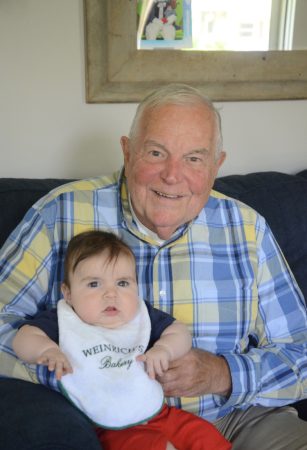
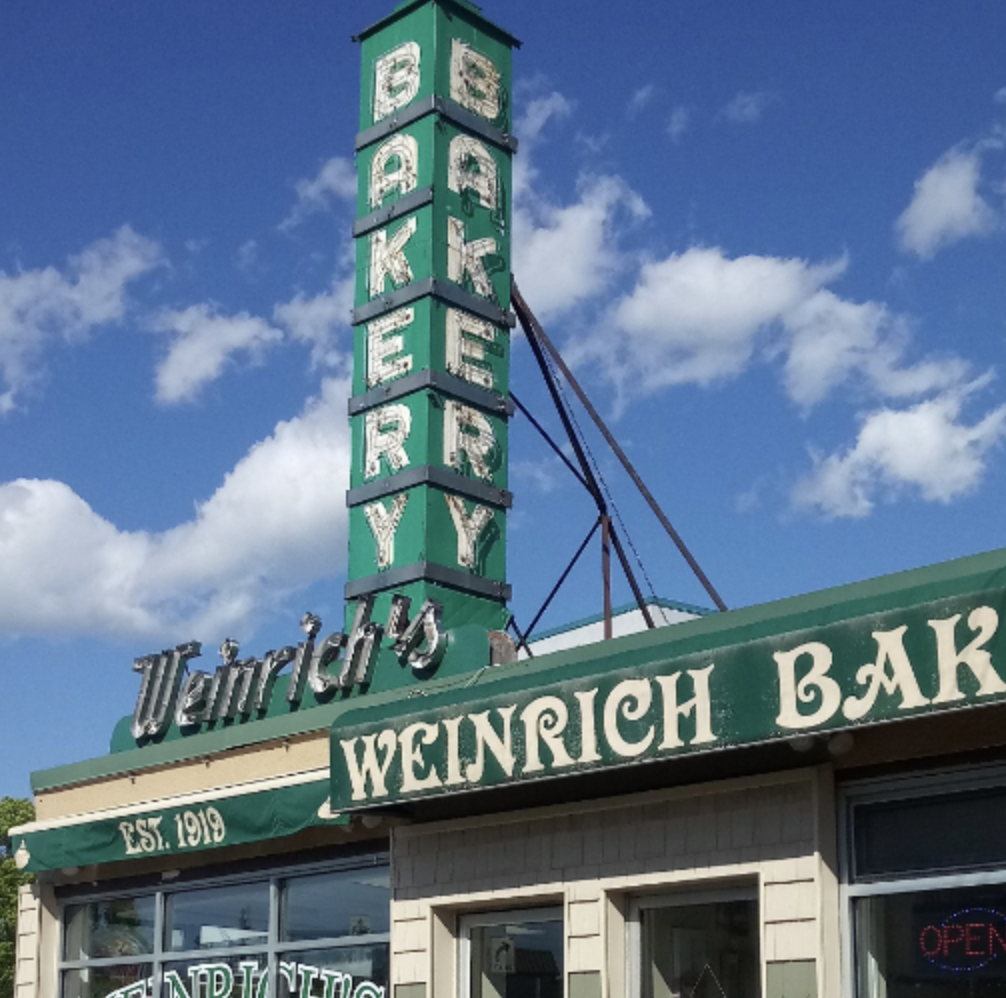
Born above a Philadelphia bakery and forged in Willow Grove, Edward M. Weinrich, 92, died of natural causes at his home beside a Florida river on June 17 surrounded by the sons who keep his beloved cake shop alive.
Weinrich’s parents ran a bake shop on Front Street in North Philadelphia before opening their Willow Grove konditorei — the German word for patisserie — at 55 Easton Rd. in 1952. By the 1970s, Weinrich had graduated from Villanova University, spent two years stationed in Hawaii with the Army, had five children, and taken over the Willow Grove bakery with his wife, Kippy, selling cookies, pies, danishes and cakes — many made from inherited recipes, like their famous butter cake.
“Still today there are recipe books in the bakery archive that are written in German,” said Stephen Weinrich, the youngest of his five sons.
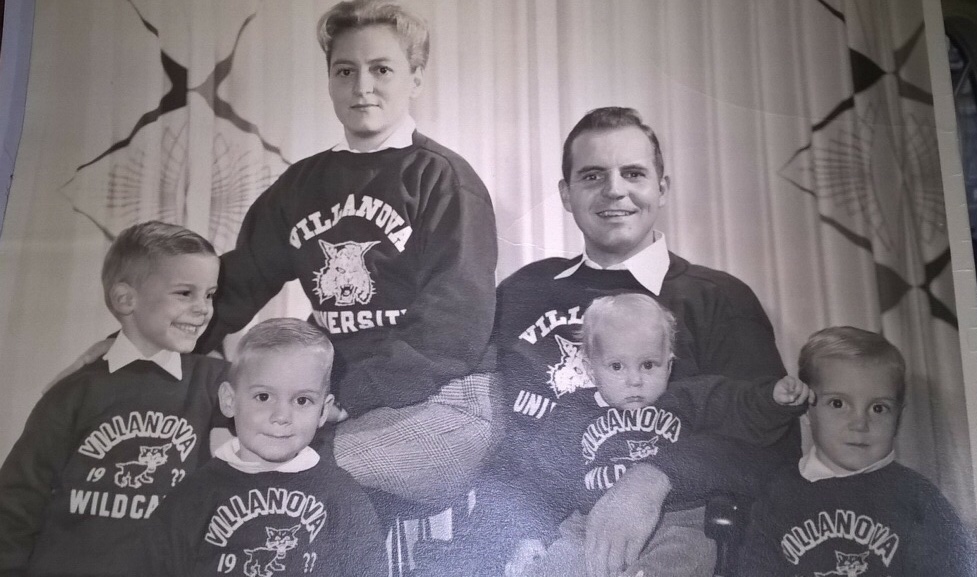
Edward and Kathryn Weinrich pose in Villanova sweatshirts with their four oldest children.courtesy of Stephen Weinrich
He also invented his own: In the 1960s, Weinrich worked with food scientists to develop his signature frosting — a buttercream that doesn’t turn gritty. It’s still used in custom cakes the store makes for birthdays, weddings, and First Holy Communions.
Weinrich learned the trade from his dad, Herman, who left Naumburg in 1913 to help his brother August run a Manhattan bakery, opening his own in 1919. (It is descendants of their cousin, Ludwig, who operate R. Weinrich German Bakery in Newtown Square.)
Weinrich made wedding cakes for many couples over the years. By the end of his career in 2005, he was making wedding cakes for their grandchildren.
“My mother … wouldn’t get dressed to go to the doctors, but she’d call and order and drive down in her nightgown and robe for a curbside pickup,” one social media user wrote. “Her last trip to the hospital, she only worried that we froze her Weinrich order so it didn’t go to waste.”
“We were just blown away,” said Michael Kirby, the bakery’s general manager and Weinrich’s great nephew. “It’s unbelievable how many people had such fond memories of him and the things we made.”
Their products travel far, Kirby added. “We have people come from across the country for our butter cakes because they can’t get them anywhere else.”
Weinrich’s Bakery in Willow Grove.courtesy of Weinrich's Bakery
Three of Weinrich’s sons still work for the bakery, which is now owned by the third son, Herman, and his wife, Beth.
Though they took over the store in the 2000s, Weinrich and Kippy still showed up regularly to offer advice and to greet many of the bakery’s lifelong customers.
After Kippy died of Alzheimer’s disease in 2015, Weinrich retired to Fort Myers, Florida. But he still asked about the bakery daily, Herman and Beth wrote on social media.
Their cousins’ kids are now there full-time, too, Stephen said: “We have a fourth generation of family working every day in the store.”
Weinrich was an active member of his parishes at St. David Roman Catholic Church in Willow Grove and then Immaculate Conception Church in Jenkintown, and a longtime supporter of the Abington Police Athletic League, Stephen said.
“He is and will forever be remembered for his kind presence and loyalty to all of us,” Herman and Beth wrote.
Funeral arrangements will be made after Weinrich is returned to Pennsylvania, the family said.
He leaves behind his sons and their families, including 16 grandchildren and seven great-grandchildren.
This suburban content is produced with support from the Leslie Miller and Richard Worley Foundation and The Lenfest Institute for Journalism. Editorial content is created independently of the project donors. Gifts to support The Inquirer’s high-impact journalism can be made at inquirer.com/donate. A list of Lenfest Institute donors can be found at lenfestinstitute.org/supporters.
After more than a century as a dry town, Collingswood is considering lifting its ban on alcohol sales within the borough.
For months, the three-person Collingswood Board of Commissioners has been discussing whether to lift the long-standing restrictions on liquor sales both as a potential new revenue source for the borough and as a way to bolster the local restaurant industry.
Per the state’s population-based license cap 一 one liquor license for every 3,000 residents — Collingswood would be able to issue as many as four retail consumption licenses that permit restaurants or bars to serve alcohol, or one distribution license for a liquor store within borough limits.
If liquor sales are eventually permitted, the borough could receive anywhere from $1,000 to $10,000 annually through licensing and renewal fees.
But discussions are still preliminary as the commissioners work to determine what is best for Collingswood’s existing restaurant and business owners, borough administrator Cassandra Duffey said.
“There’s a general sense that liquor can be a good thing, but there’s a concern that if it’s done in a way that’s unbalanced, it can also throw people off,” she said.
“Is there strength in the dry-town brand that has been around for years and years?” Duffey said.
Tracing back to its Quaker roots, Collingswood has prohibited alcohol sales by ordinance since the 19th century.
A change to the policy would require public approval through a referendum during the November general election, borough solicitor Caitlin Harney Norcia said.
To begin that process, the borough’s commissioners would need to adopt a resolution by Aug. 21 so that the Camden County Clerk’s Office has enough time to add the question to the ballot. In order to adopt the resolution, at least 15% of voters who participated in the last general election must sign a public petition in favor of putting the question on the ballot, Harney Norcia said.
After that, “repealing any kind of prior restrictions could all be done relatively easily,” Harney Norcia said, describing the logistics of updating local ordinances if a referendum passes.
If voters approve lifting the ban, Harney Norcia said, the borough could either award licenses in a competitive bidding process, which could generate one-time revenue for Collingswood’s budget, or enact an application and review process that includes annual fees and public presentations by prospective licensees.
But if the measure were to fail on Election Day, Collingswood would be barred from holding another referendum on alcohol sales for five years, according to state law.
Some business owners have expressed concern that the public bidding process could result in one of the borough’s few licenses being awarded to an outside business instead of an established Collingswood restaurant, Duffey said.
“The challenge is not to disrupt the balance of businesses that already exist here,” she said. “If you get a bidder that gets a license from outside of town, sure, you get the revenue, but then you’ve added somebody and it doesn’t necessarily benefit one of our businesses.
“The other option is to award [the licenses] directly, but then somebody must make a decision on who gets them, which is also a challenge,” she added.
The commissioners are in continued talks with the borough’s business improvement team, local restaurateurs, and others about the best approach, she said.
“Is there a way to distribute licenses or award licenses that is a boost for everybody?” Duffey said.
The internal debate in Collingswood comes less than two years after residents in neighboring Haddon Heights voted to get rid of its de facto ban on liquor sales. The town has set a $200,000 minimum bid for its first retail liquor license and is currently accepting applications ahead of a public auction sale in September.
Haddon Heights is hoping to leverage the new liquor licenses as a way to help boost a broader revival and redevelopment, Mayor Zachary Houck said.
The licenses “would hopefully draw in one or two additional restaurants or enhance existing restaurants and let us then continue to move that ball forward when it comes to enhancing our downtown historic district,” Houck said.
Making more, and more affordable, liquor licenses available statewide was a goal of legislation then-Gov. Phil Murphy signed into law in 2024. The measure was touted as an unprecedented reform of New Jersey’s liquor laws, long described by critics as arcane and antiquated.
“By easing restrictions and boosting the availability of licenses, we are creating new opportunities for small businesses, especially mom-and-pop establishments, to expand and facilitate development on main streets across New Jersey,” Stella Porter, a spokesperson for Murphy, told The Inquirer that year.
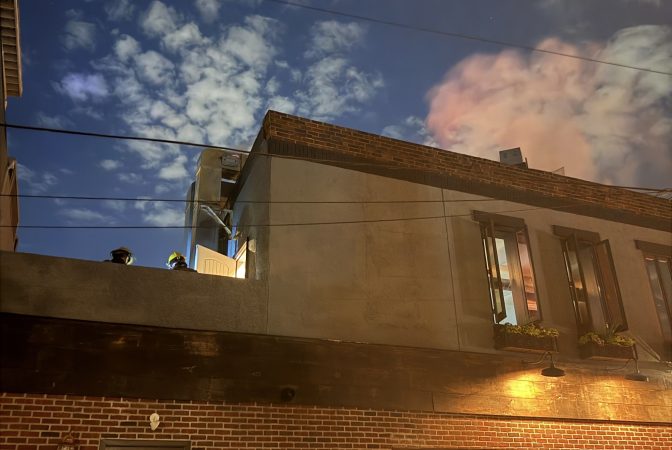
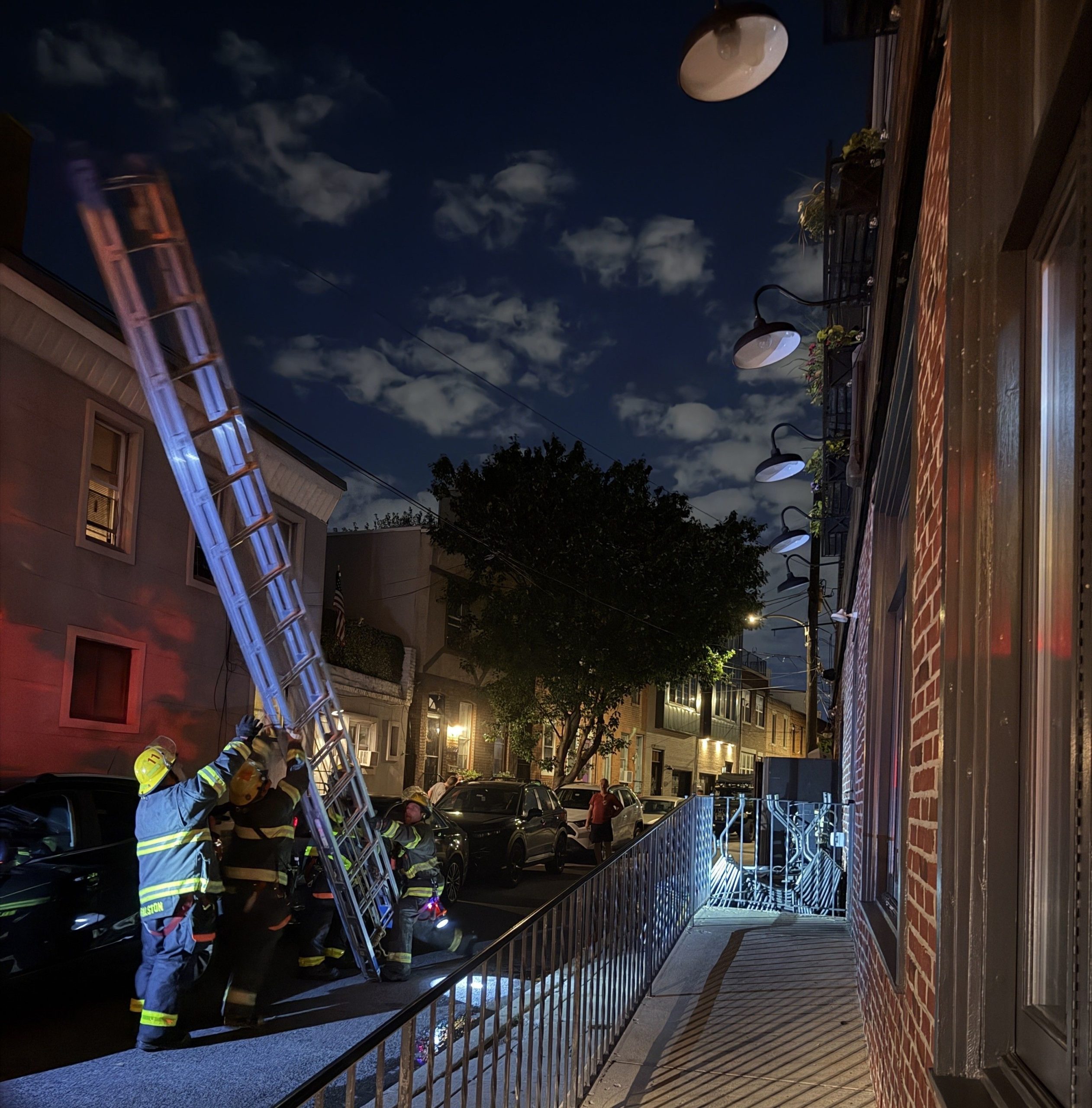
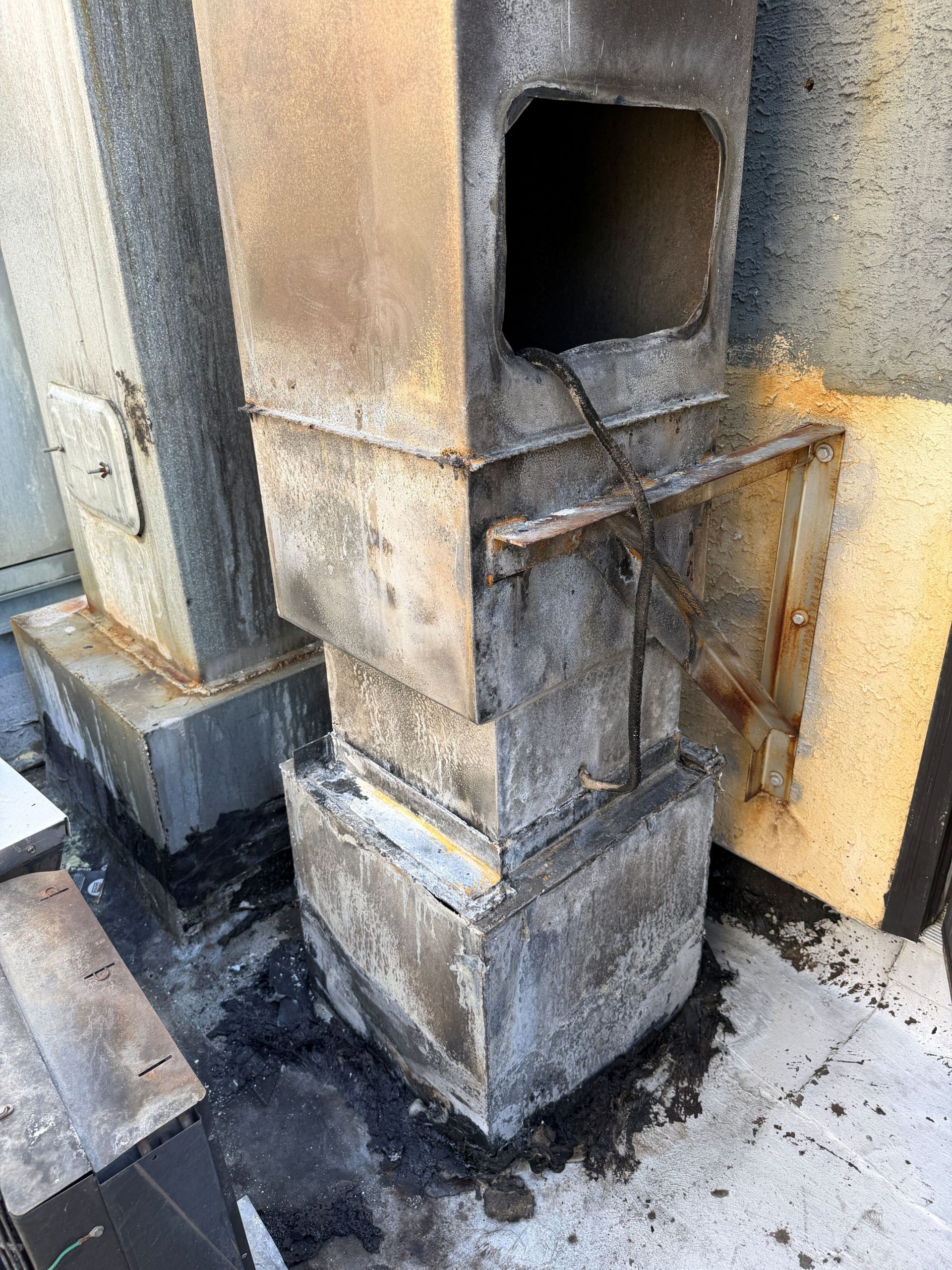
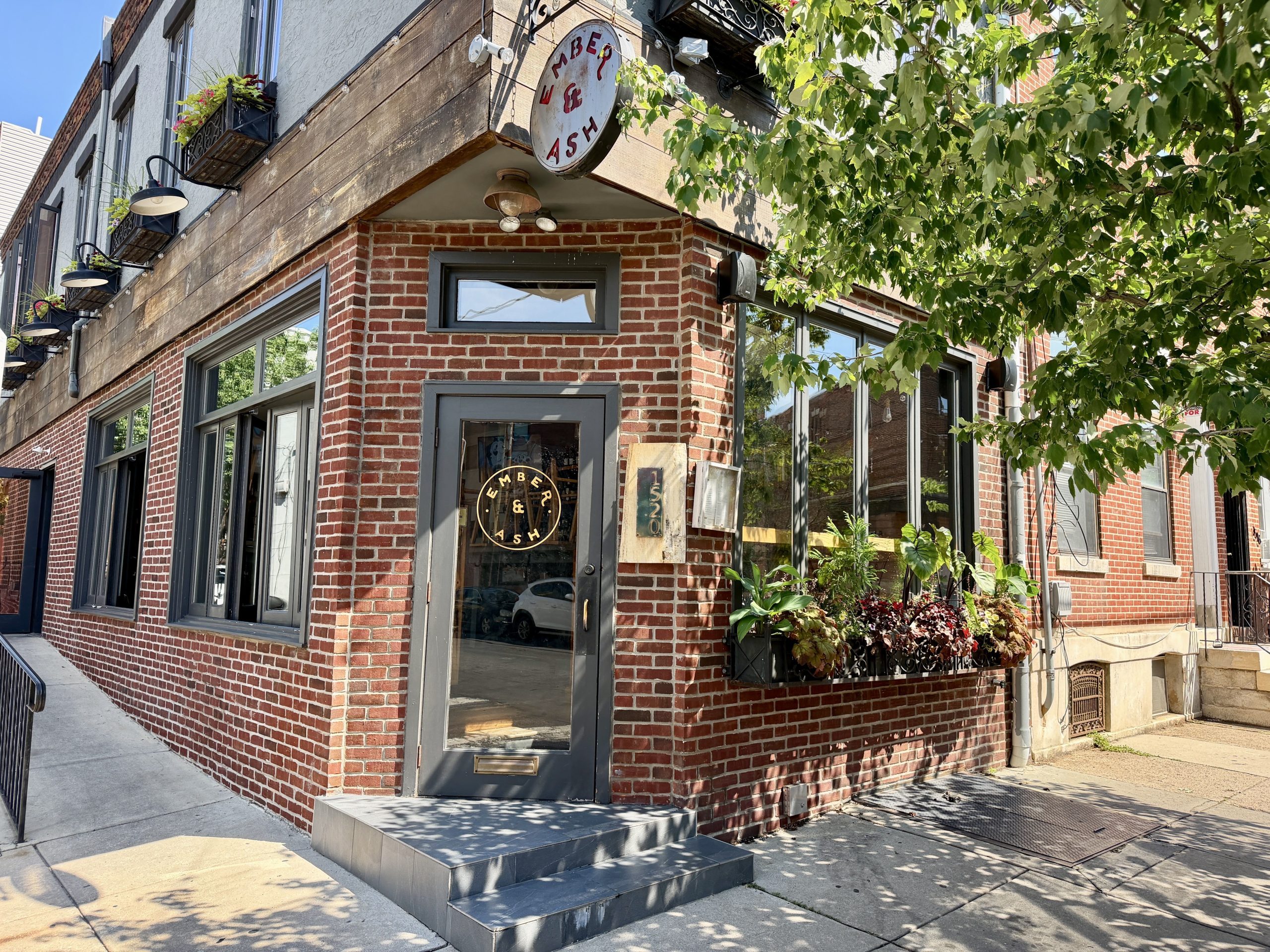
Ember & Ash restaurant on East Passyunk Avenue in South Philadelphia is closed indefinitely after a late-night fire Wednesday sent flames to the roof through its ventilation system, its owners said.
No injuries were reported. Owner Lulu Calhoun said she, her husband and chef-partner Scott Calhoun, and another chef, John Forkin, were leaving for the evening through the kitchen door about 10:20 p.m. when they heard a loud sound from above.
Firefighters positioning a ladder outside of Ember & Ash, 1520 E. Passyunk Ave., on June 24, 2026.Lulu Calhoun
“We didn’t know what it was,” she said. “We thought maybe like a helicopter or a jet.”
Scott Calhoun looked up to see fire on the roof. He grabbed fire extinguishers and ran upstairs to try to put it out, she said.
The couple called 911, and firefighters arrived almost immediately. Ember & Ash is about two blocks from Ladder 11 at 12th and Reed Streets, a fire company that was restored in 2024 after having been shuttered for 15 years. “We’re just so grateful, because it could have been a much, much worse situation,” Lulu Calhoun said.
A charred portion of the ventilation system at Ember & Ash, 1520 E. Passyunk Ave., as seen June 25, 2026.Lulu Calhoun
Thursday morning, the full extent of the destruction was still being assessed, but she said the restaurant was facing professional cleanup for water throughout the building and repairs to the hood and roof. Fire damage was not apparent from the Passyunk Avenue sidewalk. The Philadelphia Fire Department said the fire was under control in about an hour and 20 minutes but had no information on its cause.
“That’s the part that’s the most heartbreaking,” she said. “It’s not only our livelihoods, but our entire team.”
She said the timeline for repairs was not yet known, adding that the duct work had been professionally cleaned recently as part of maintenance.
Ember & Ash, 1520 E. Passyunk Ave., on June 25, 2026.Lulu Calhoun
The hearth at Ember & Ash, a live-fire restaurant built around a custom wood-burning grill made by Grills by Demant, has been the center of the kitchen since the restaurant’s opening in late 2020.
Fires that travel through ventilation systems can sideline a restaurant for months because damage is not always immediately visible and insurance claims can drag on. Kampar in Bella Vista has been closed since a February 2025 fire and has not announced a reopening date. Black Sheep in Rittenhouse has been closed since a May 18 fire. Tequilas in Center City was shuttered for about two years after a 2023 fire, though owners spent some of that time creating a second restaurant, La Jefa, in its rear dining room.
Calhoun said Ember & Ash was contacting customers with bookings along with parties that had reserved private events in July and August.
Sparkling wines are having a moment, and it’s hard to beat Spain in this category when it comes to great value. The country may be most commonly associated with red wine, but sparkling, white, and even rosé wines from Spain are all seeing significant growth in total exports. While there are other sparkling wine appellations in Spain, the vast majority — including this example — are labeled as cava.
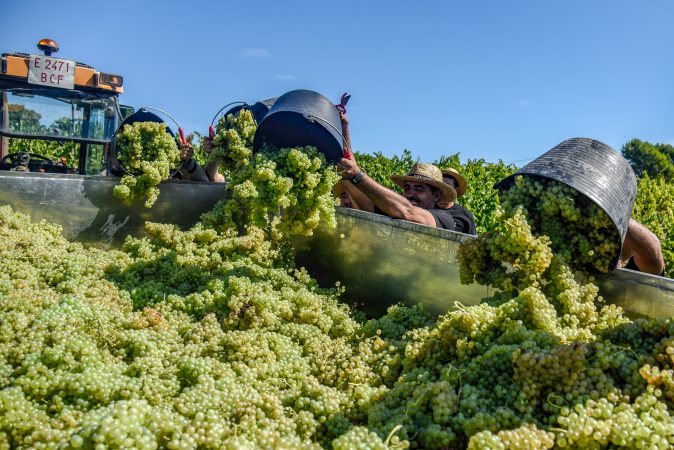
Where most wine appellations take their name from a place — think Champagne from France’s Champagne region — cava is different. The term means “cave” or “cellar,” referring to how it is made. Cava wines must, by law, follow the same traditional method of production as Champagne, which involves a second fermentation that takes place inside each bottle. The mechanism for adding the bubbles and letting the wine patiently age in a cellar is also central to its quality.
Cava’s appellation was first conceived as a means for wineries across Spain to be able to sell a high-quality sparkling wine regardless of their region. In practice, however, most cava is grown and produced in northeastern Catalonia, near Barcelona, using native Spanish grapes such as macabeo, parellada, and xarel-lo. That’s the case for this wine as well, which is labeled under the name of a Rioja-based brand better known for their reds. In Spain, it’s not uncommon for large wineries in one region to extend their range by sourcing wines from partners elsewhere.
Cava wines can be found at every level of ambition and price, from the cheap and cheerful to the ambitious and gastronomic. This wine falls at the simpler end of the continuum (as the price might suggest), with a delicate mouthfeel and refreshing flavors of apple, lemon, and blanched almond. It’s an ideal choice for relaxed day-drinking — mimosas highly recommended.
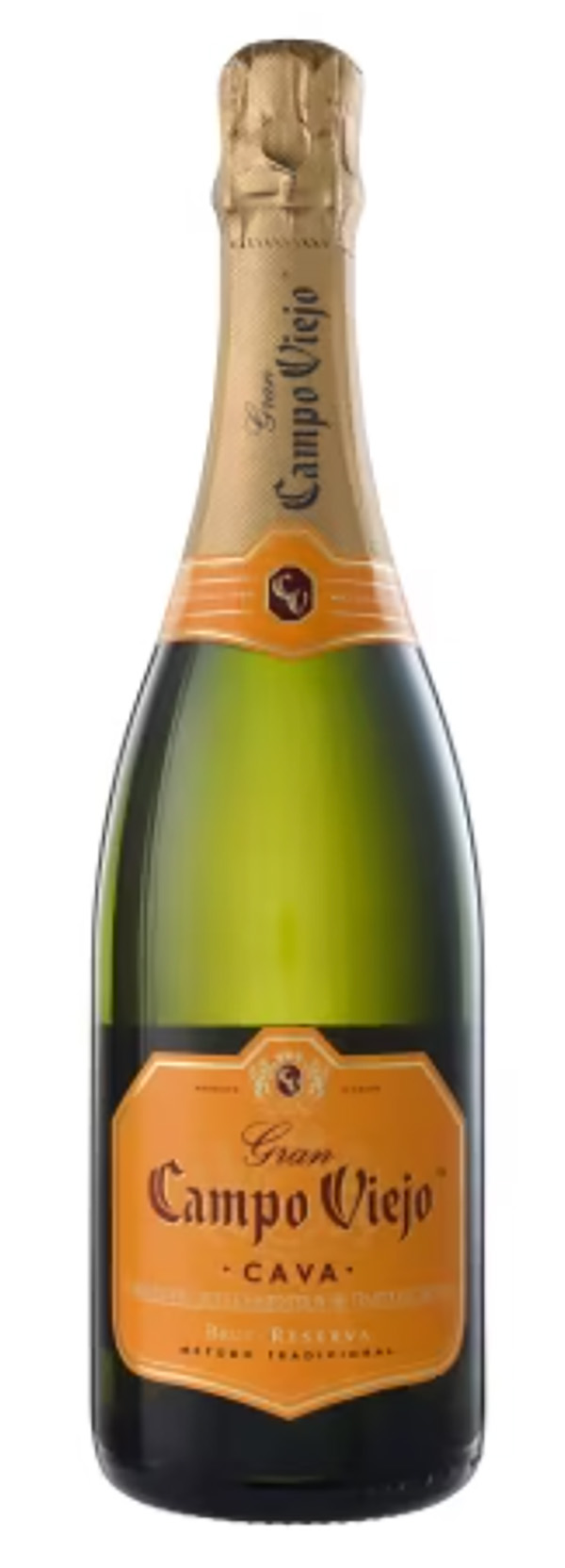
Gran Campo Viejo Cava Brut ReservaCampo Viejo
Gran Campo Viejo Cava Brut Reserva
Spain; 11.5% ABV
PLCB Item #6563 — $10.49 through July 5 (regularly $13.49)