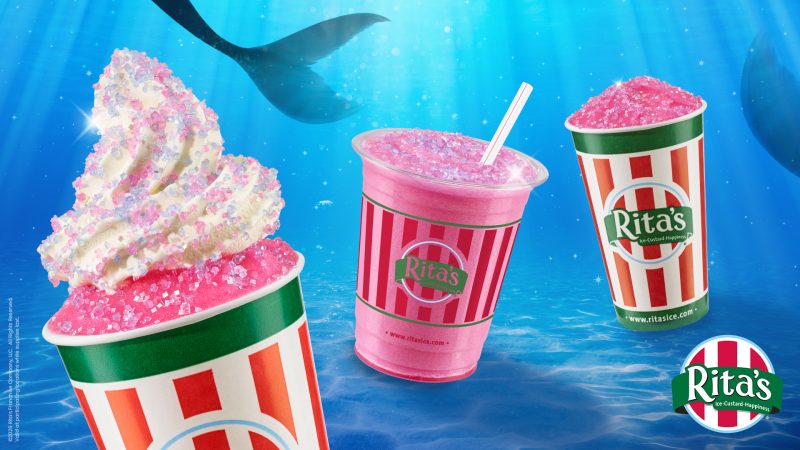
Rita’s Italian Ice & Frozen Custard has added a new limited-edition flavor to its summer menu.
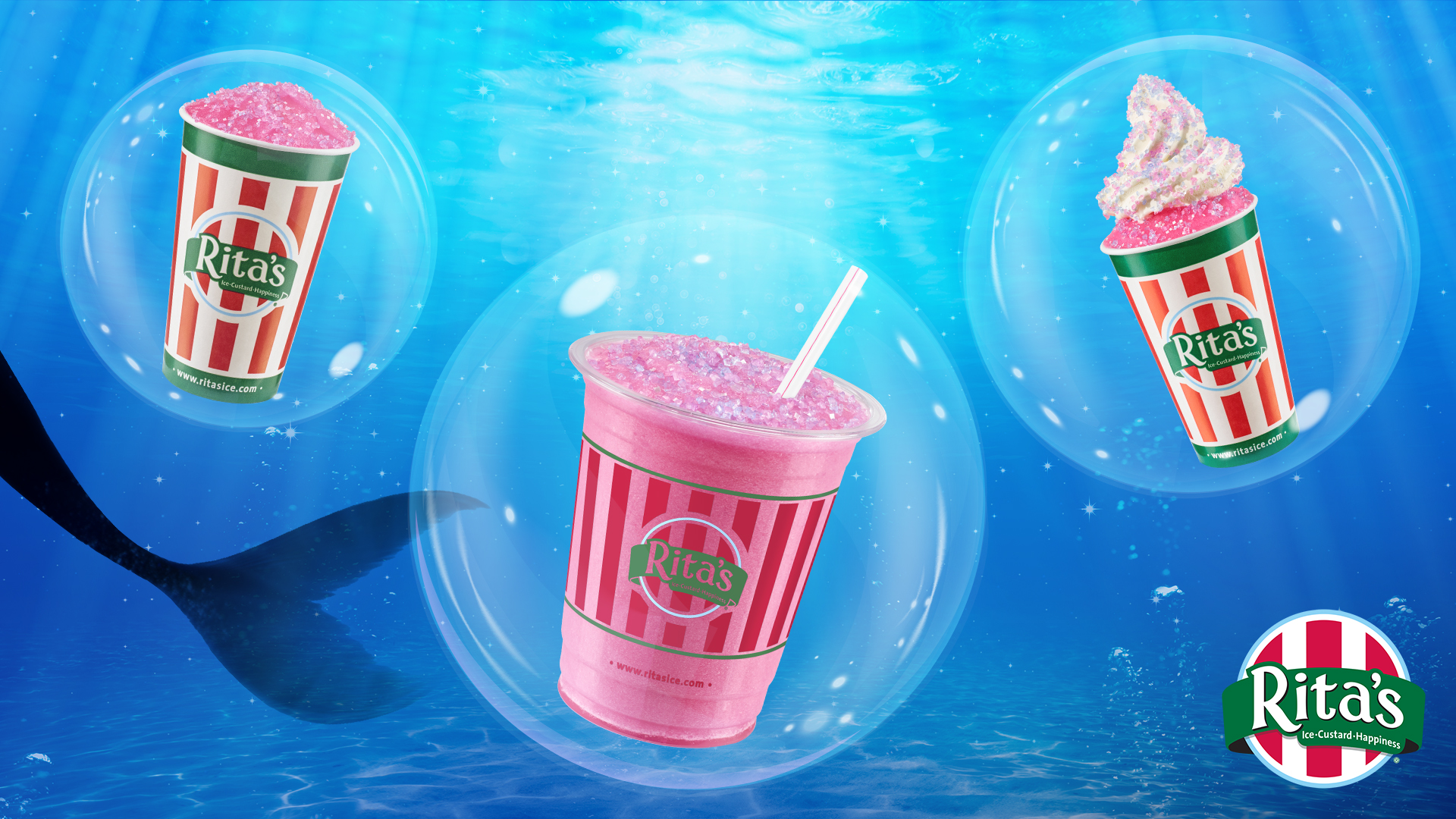
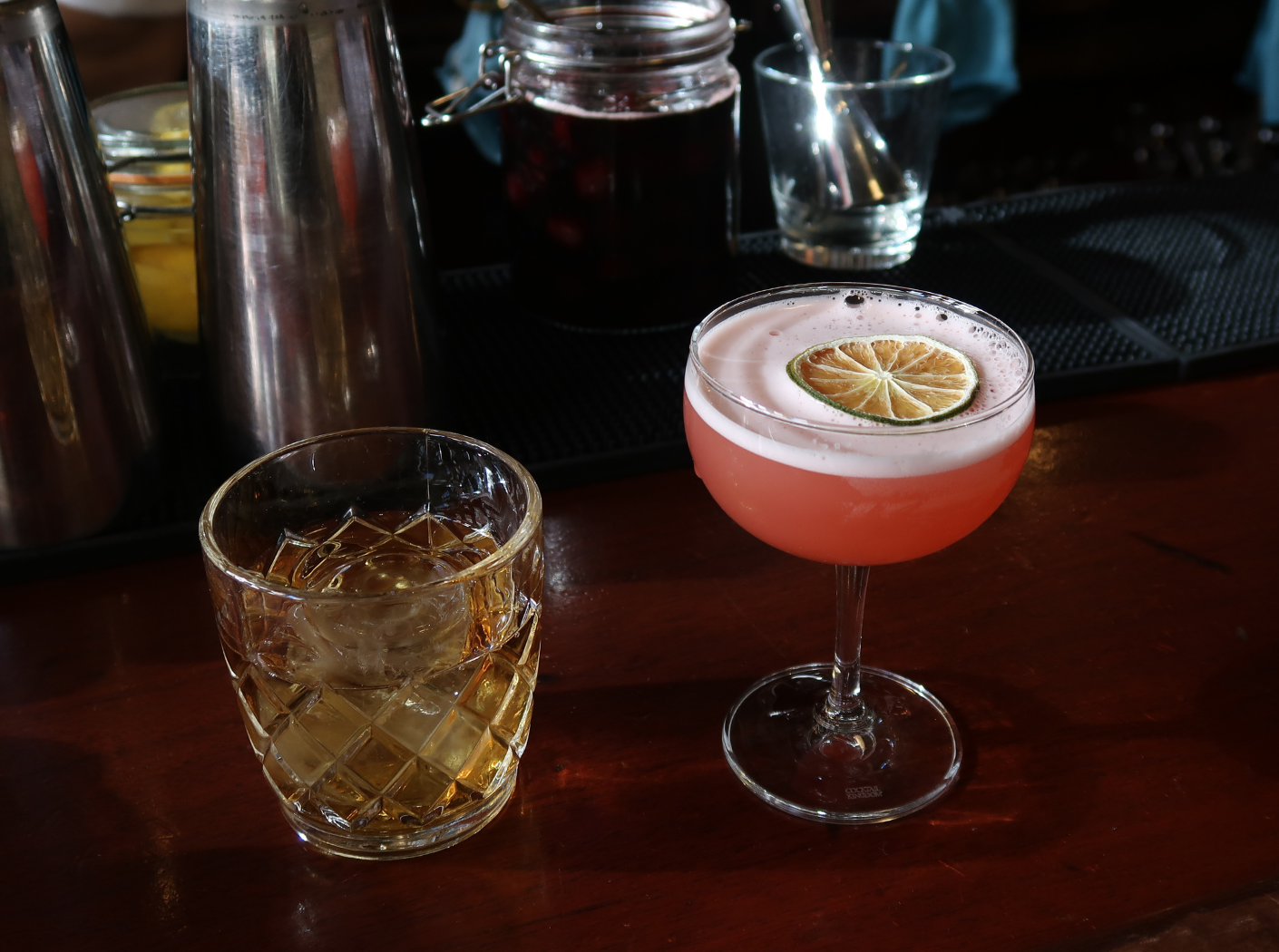
Mermaid Italian Ice is vibrant pink flavor that combines berry and marshmallow and comes topped with glitter.
The Bensalem-born water ice purveyor is offering the flavor at all 600 Rita’s locations nationwide until July 19.
Order the new flavor three ways: Italian ice, gelati, or ice blender.Rita's Italian Ice & Frozen Custard
Rita’s Italian ice is made daily on-site with a rotating selection of over 80 flavors. The menu also includes frozen custard, gelati, frozen coffee, Rita’s Blendinis, and milkshakes.
The new flavor comes three ways: as an Italian ice; a gelati (Mermaid Italian ice layered with vanilla frozen custard and topped with glitter); and as an ice blender (an icy berry-marshmallow blend shimmering with glitter.)
“At Rita’s, we’re always looking for ways to create joyful experiences that bring families together, and Mermaid Italian Ice does exactly that,” said Carmela Hughley, SVP of Marketing Insights and Innovation at Rita’s, in a statement. “This treat captures the magic and imagination of summer. We can’t wait for guests of all ages to dive in and experience this enchanting new flavor for themselves.”
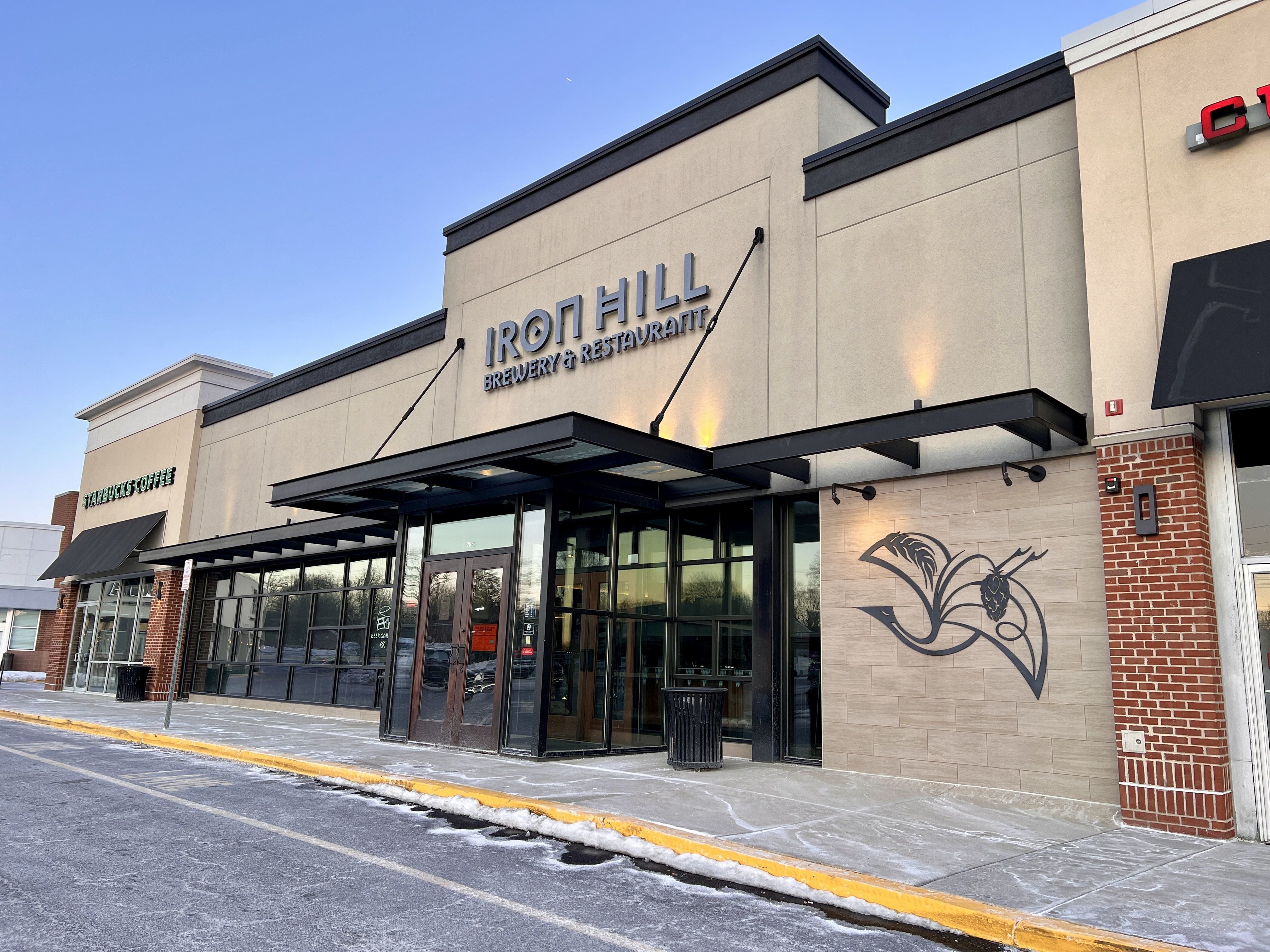
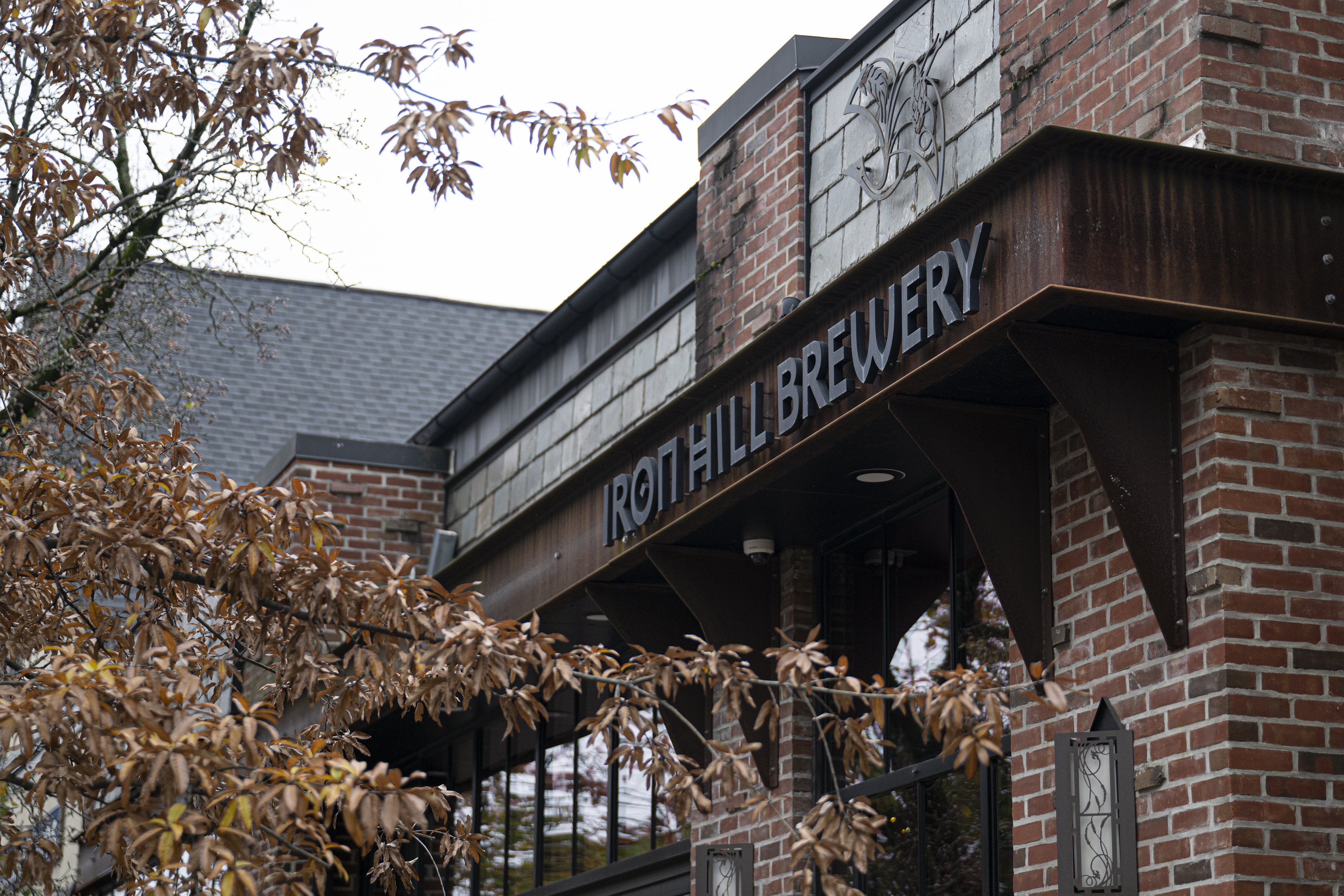
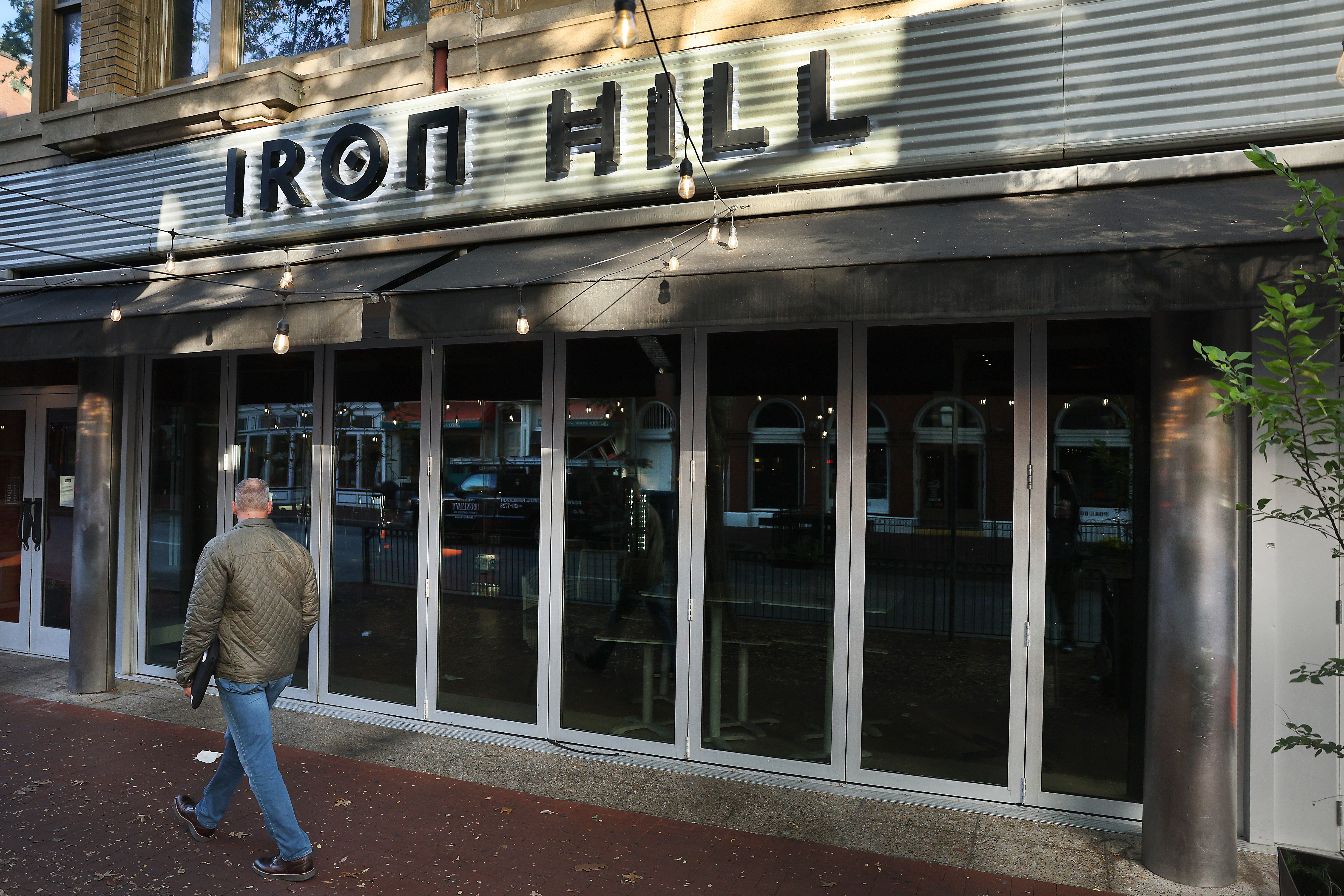
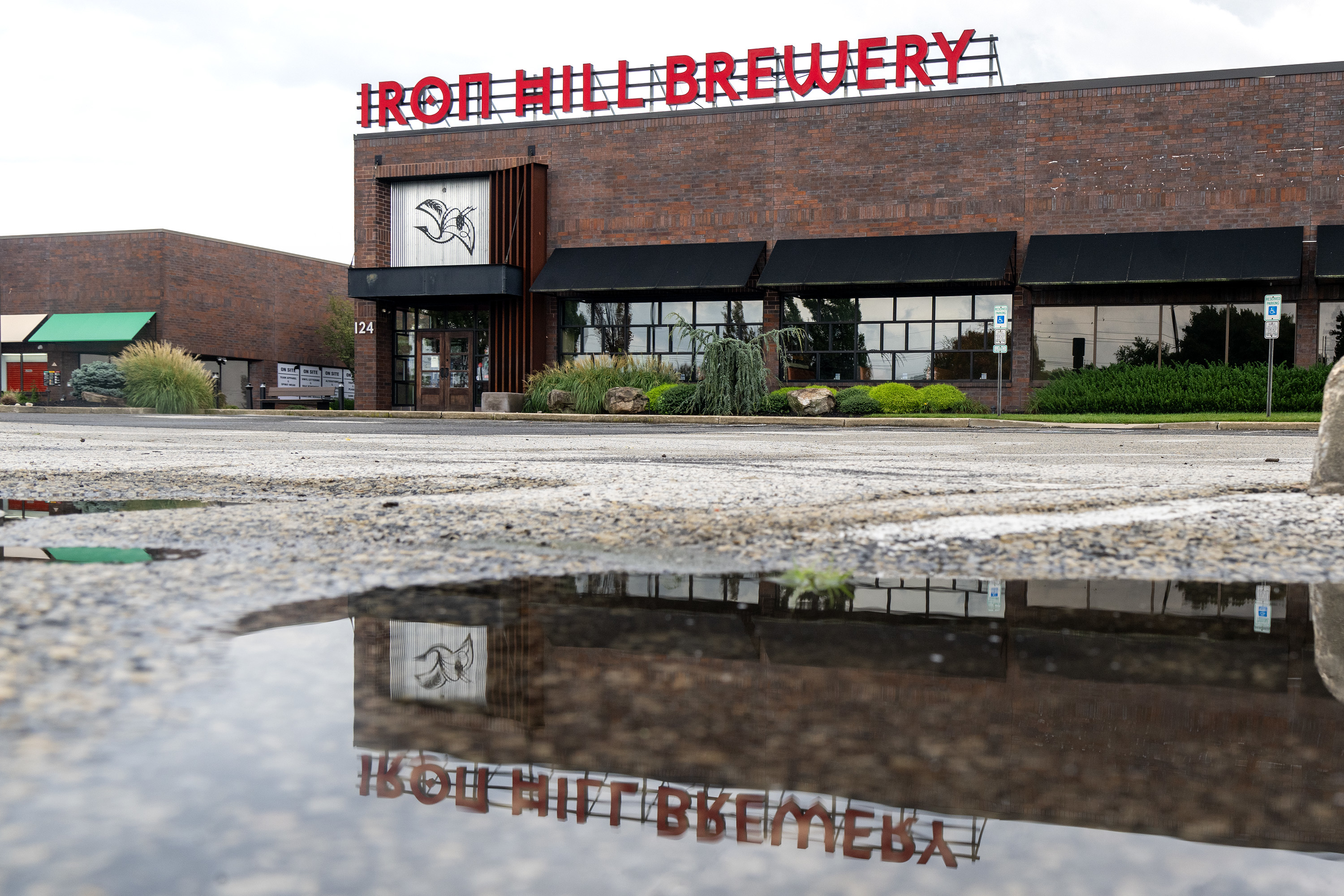
Another Iron Hill Brewery is set to reopen next week.
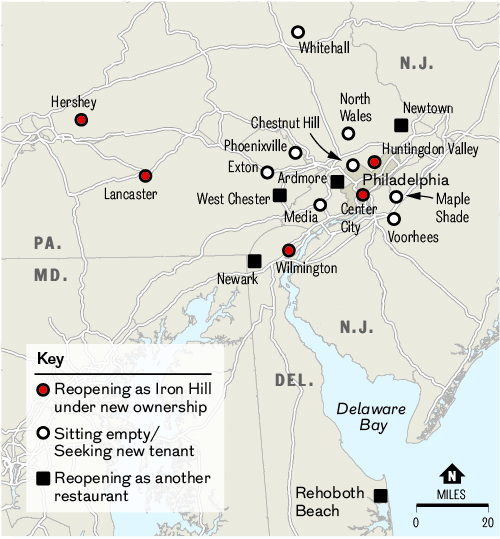
The Huntingdon Valley restaurant will be back in business Monday, June 22, according to the restaurant’s new ownership group. It will mark Iron Hill’s fourth post-bankruptcy revival and the only one in the Philadelphia suburbs.
Amid the reopenings, the new owners have launched a fresh loyalty program and special offers, including a free beer and free appetizer for customers with prebankruptcy gift cards that are no longer usable.
While Iron Hill had a suburban-Philly focus before bankruptcy, the Huntingdon Valley Shopping Center location is the only one set to be resurrected in the collar counties or South Jersey.
Bartenders there will be pouring a new IPA, Hop Chase, brewed exclusively for Huntingdon Valley, according to the new owners. They said patrons can sit inside or outside at the restaurant’s beer garden, which was the chain’s first when it opened in 2016.
“We’re creating a true neighborhood place for the guests we call family, somewhere the community can come together over laughter, great food and award-winning beer,” Naomi Yared, general manager of the Huntingdon Valley Iron Hill, said in a statement.
The former Iron Hill Brewery in Chestnut Hill sat empty in November. Property owners are still marketing the space for lease.Jose F. Moreno / Staff Photographer
Here’s what we know about these local Iron Hill Breweries as of publication time June 15:
A pedestrian walked by the closed Iron Hill Brewery in West Chester in October. Magerk’s Pub & Grill is now taking over the space.David Maialetti / Staff Photographer
In 2022, Smit Patel was a freshman at Thomas Jefferson University selling Indian Chipotle-style bowls in his apartment kitchen for students on campus. Now, the 22-year-old is whipping up viral dot cakes cups and Dubai chocolate lattes in his new cafe in Manayunk.
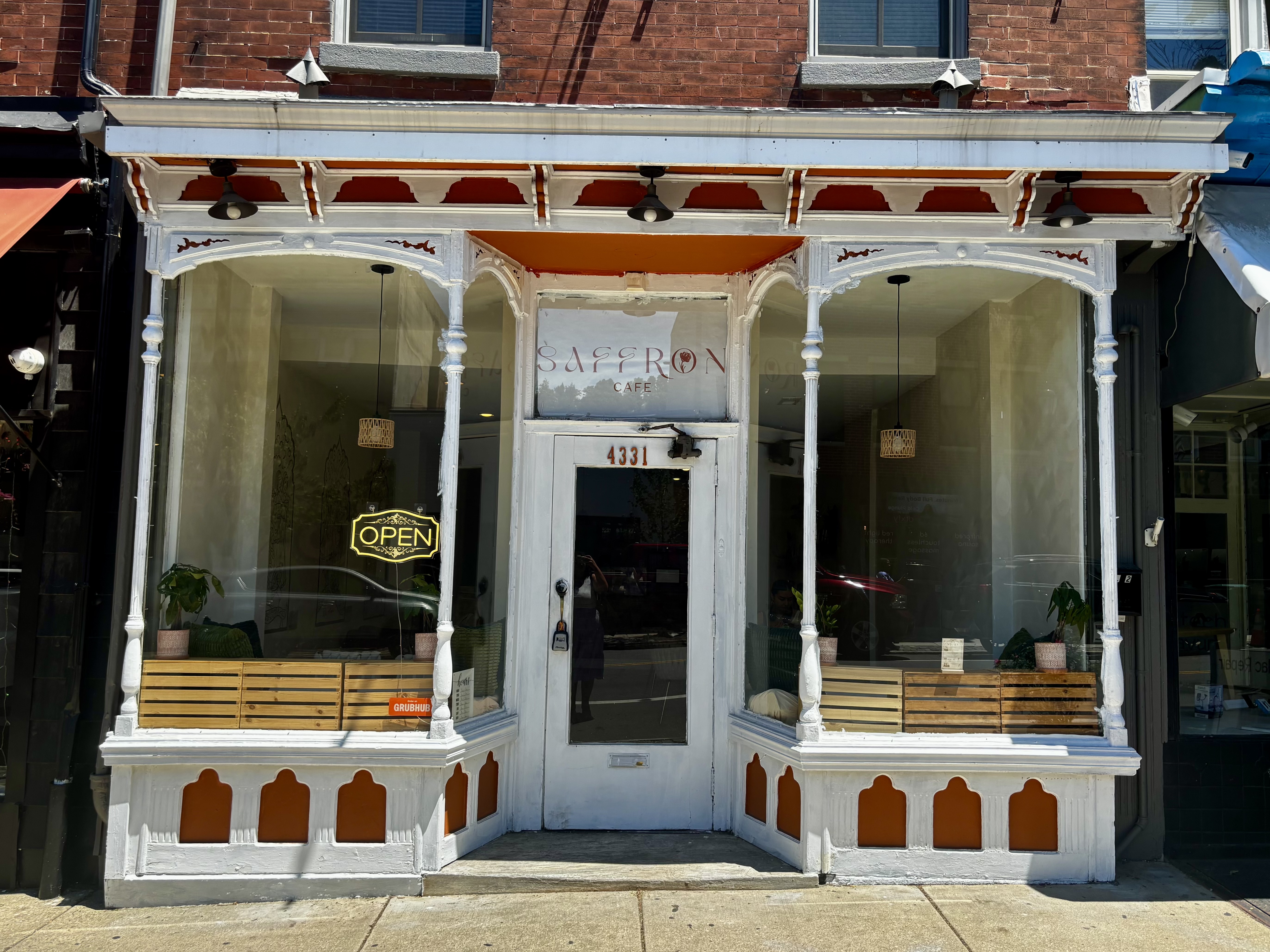
Patel, with his friend Ojas Patel (no relation), opened Saffron Cafe on 4331 Main Street in May.
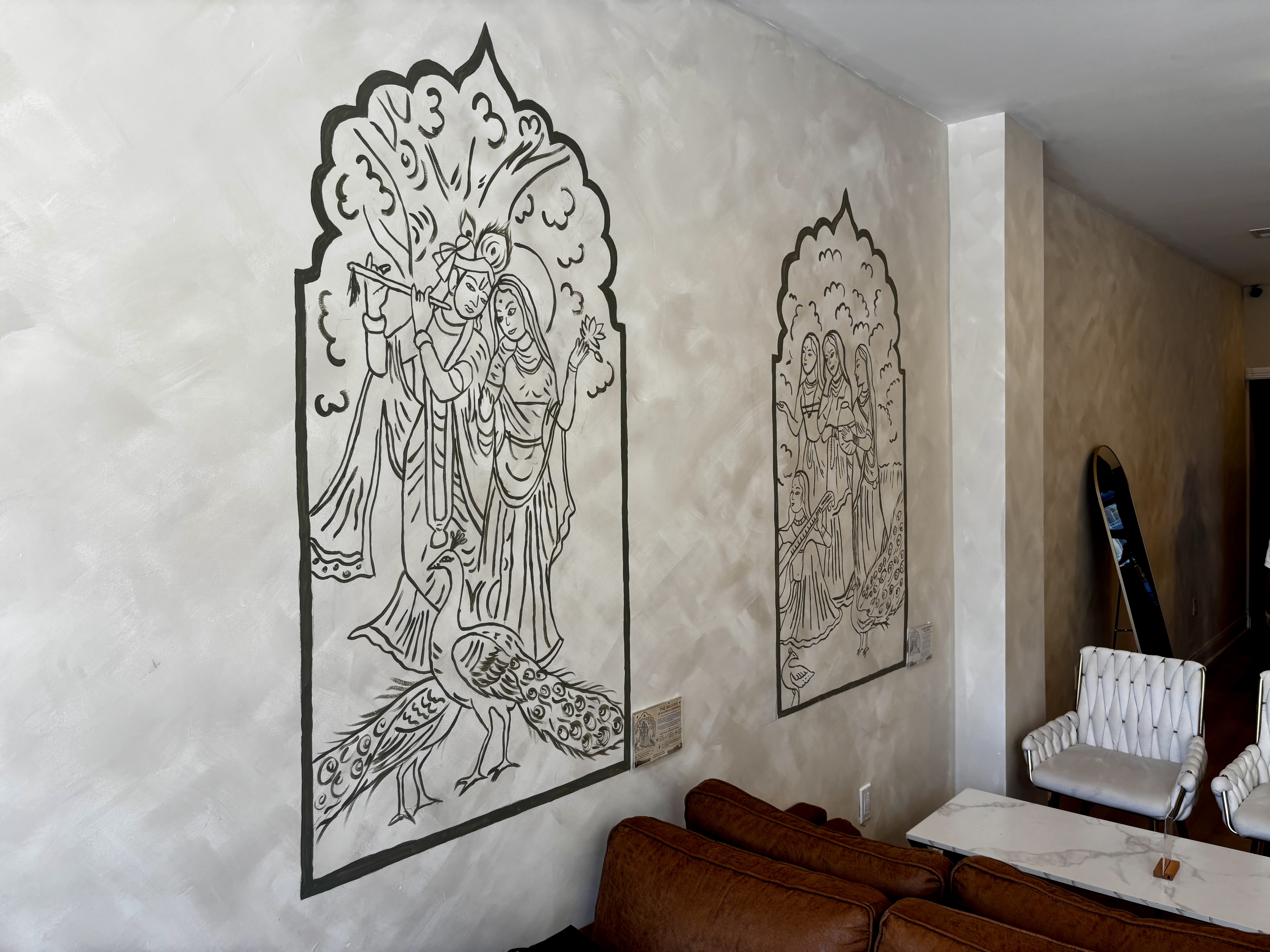
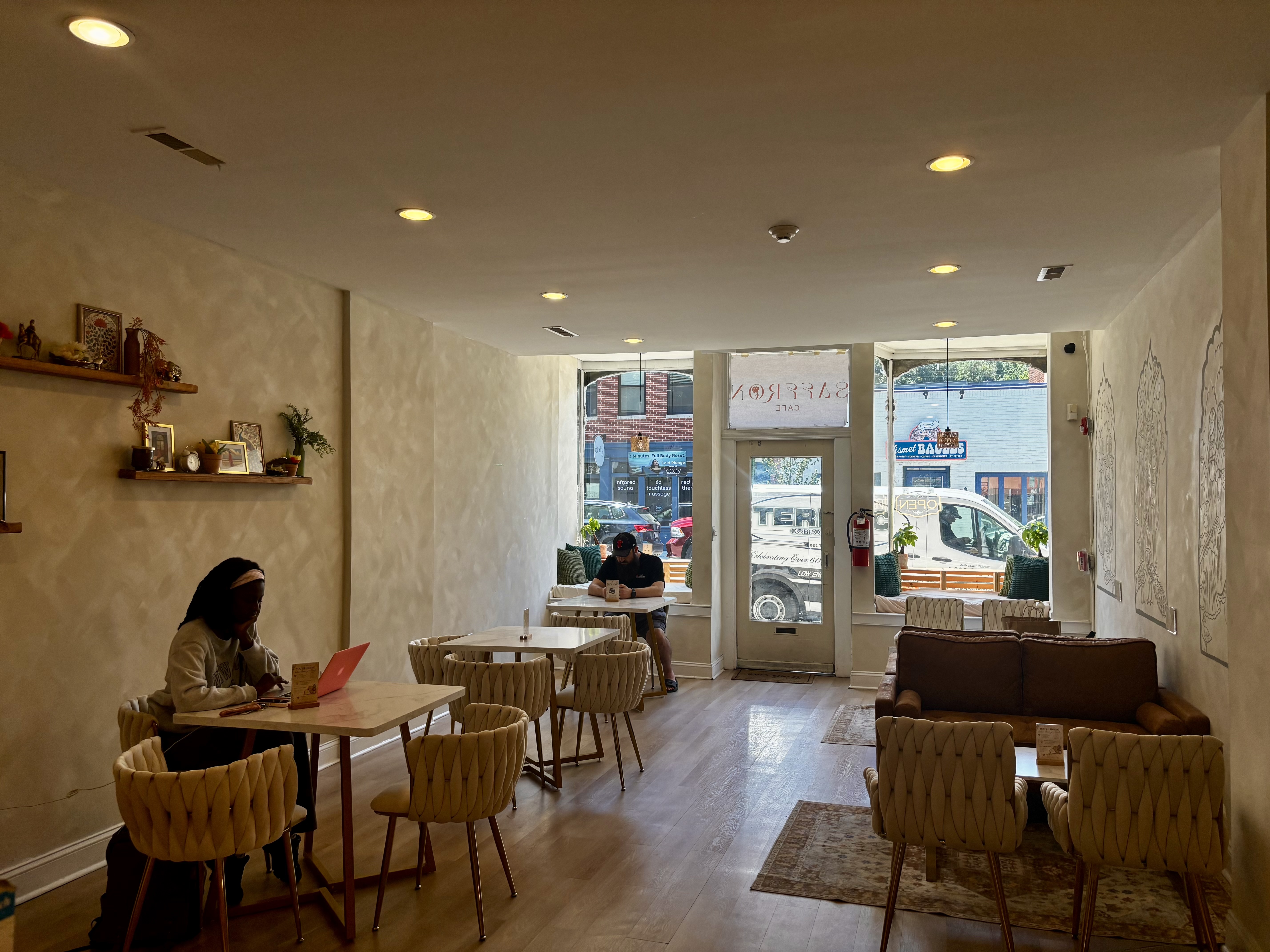
Murals decorate Saffron Cafe in Manayunk.Hira Qureshi
The 1800-square-foot cafe is filled with marble tables, cushioned chairs, and faux leather couches for customers looking to settle in for hours. The beige, lime-washed walls feature three murals, featuring Hindu deities Krishna and Radha, painted by Patel’s friend.
“We wanted to bring our culture to the cafe,” Patel said. “Not only are we focused on the Indian aspect, but we’re also focusing on how to bring both American and Indian cultures together and become the bridge for both.”
By day, the windows bathe the space in sunlight. At night, downlights in the ceiling illuminate the coffee shop. The cafe is open until 8 p.m. for the summer and until midnight when schools are back in session, a rarity in a city where coffee shops often close before sunset.
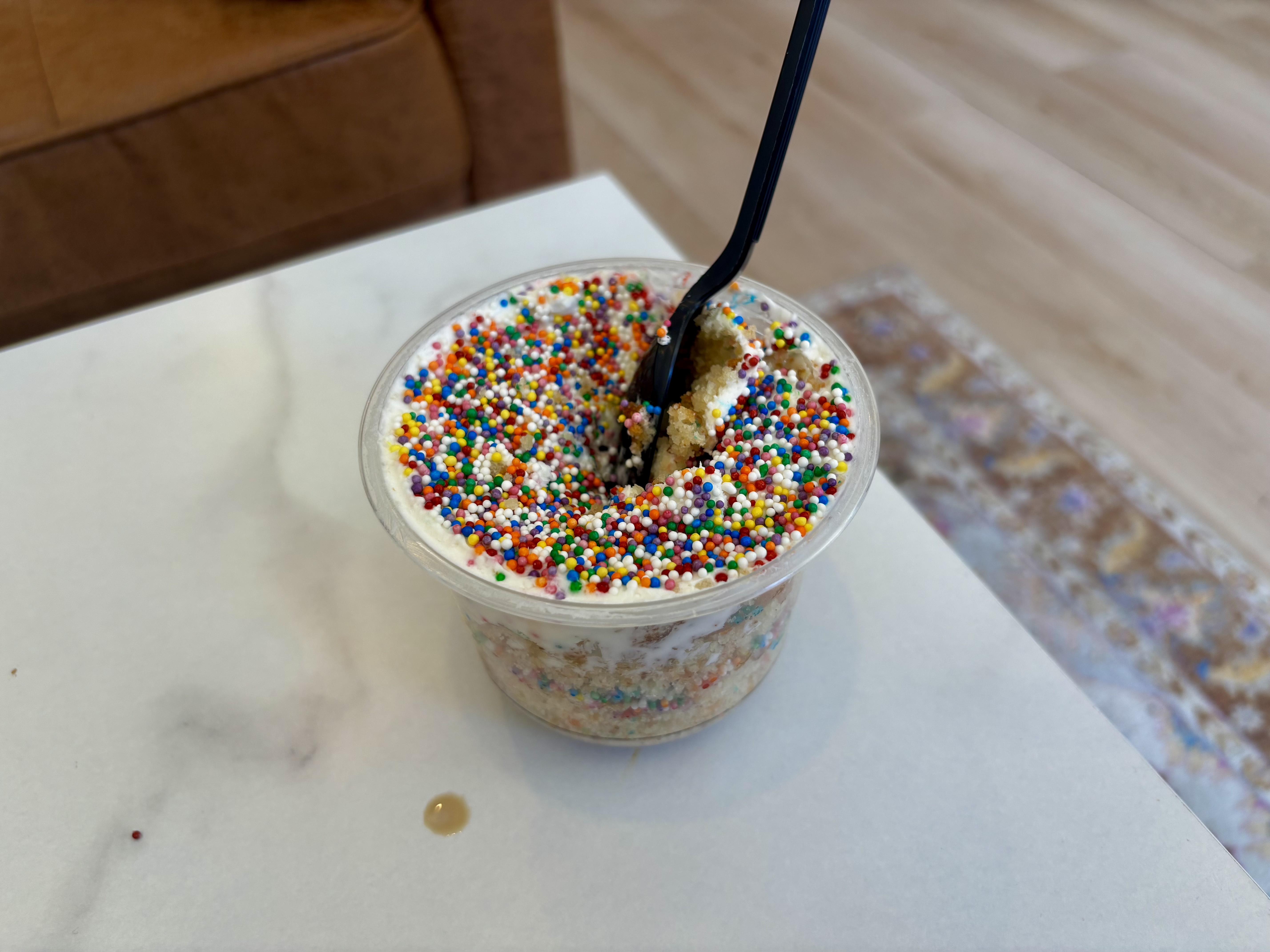
Find viral dot cakes at Saffron Cafe.Hira Qureshi
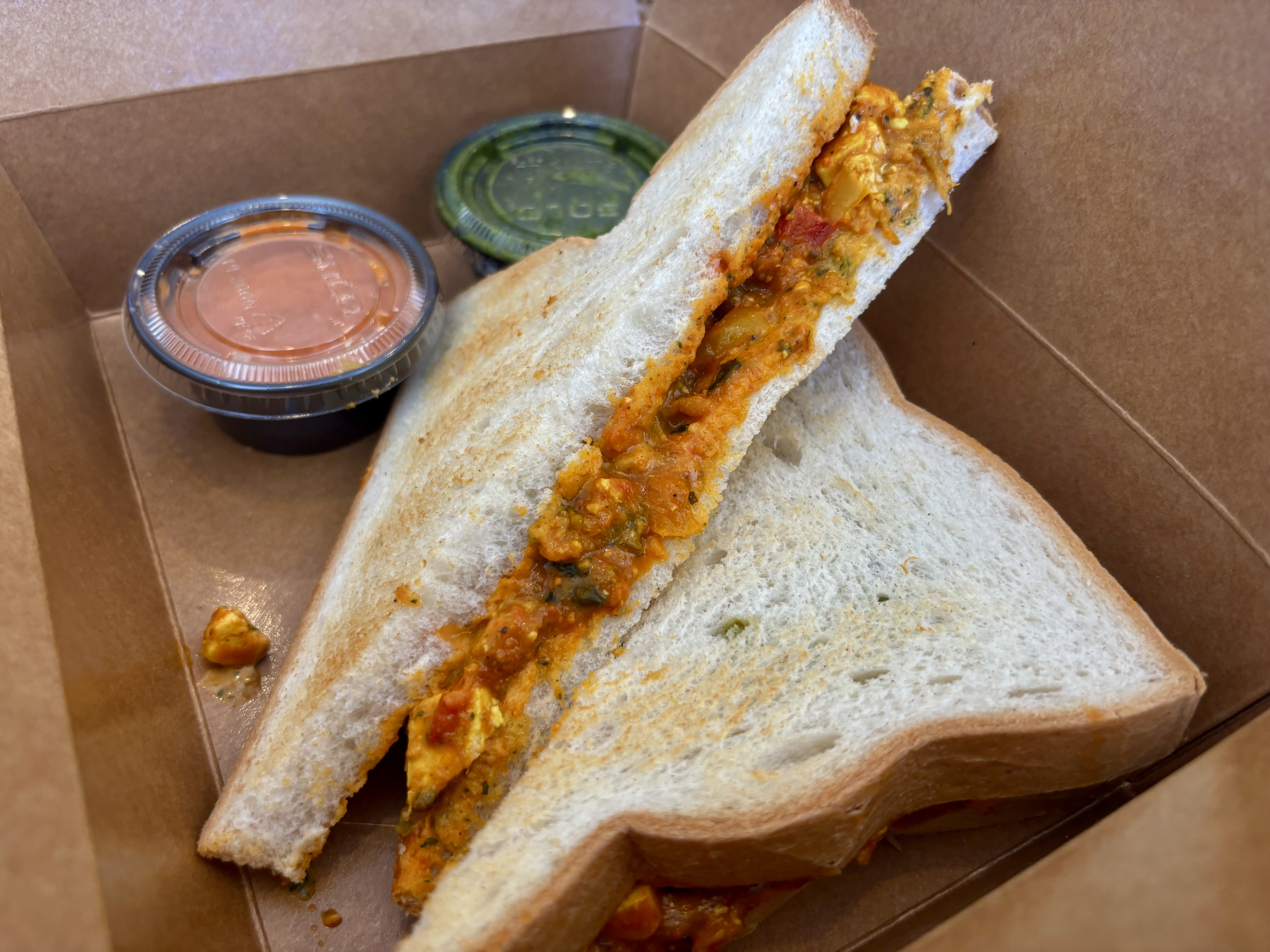
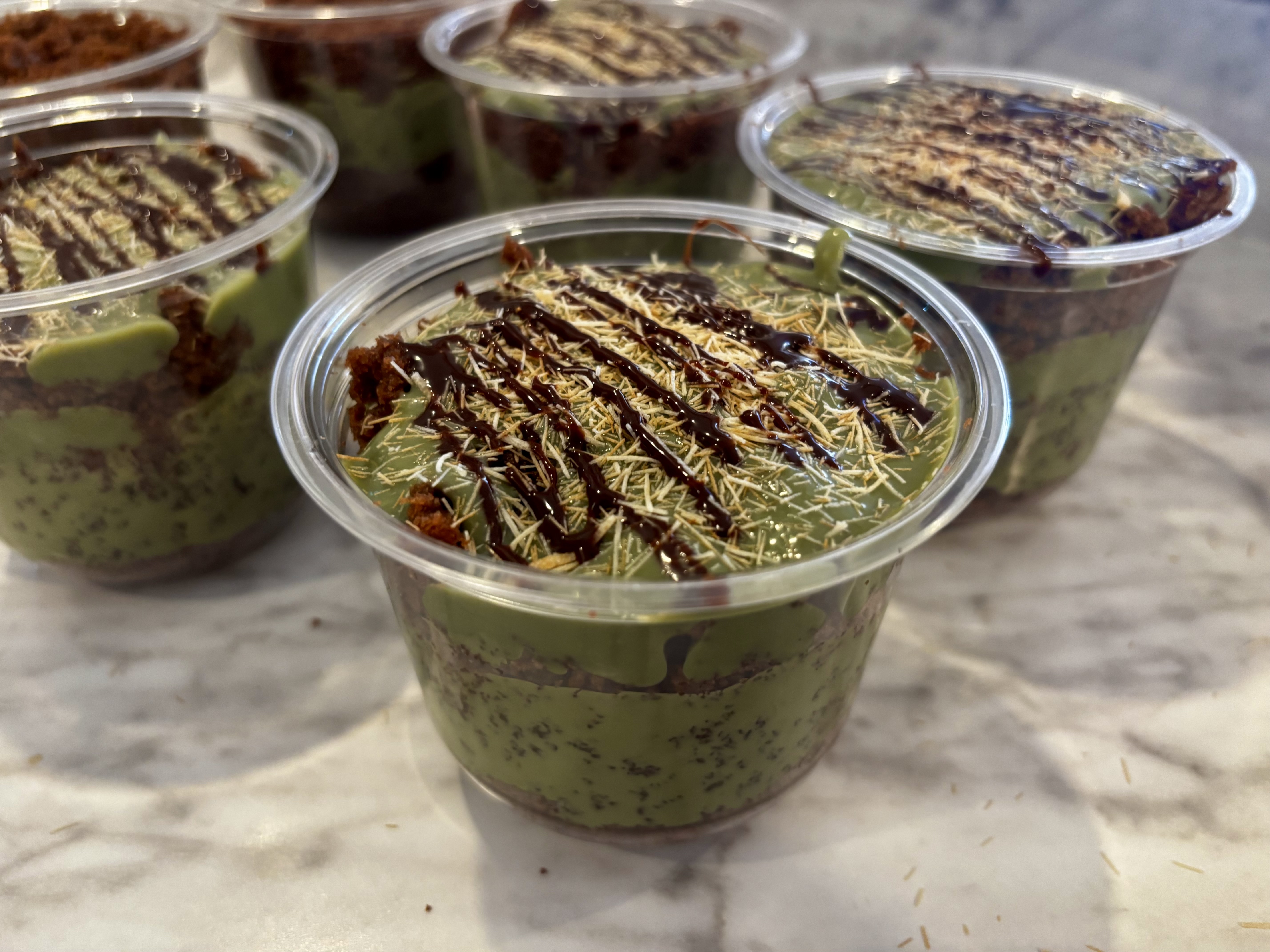
Housemade dot cakes — the viral cake in a cup concept made in layers, frosted, and topped with a colorful, spherical coating of nonpareils sprinkles — line the small display case on the checkout counter. There are Dubai chocolate and Biscoff cake cups and a variety of vegan eggless croissants (think Ferrero Rocher and strawberry cheesecake). The vegetarian, vegan-friendly menu also includes a sandwich featuring a spicy North Indian dish called maharaja paneer and a peas and potato spiced puff pastry. Customers can order from a variety of samosas stuffed with paneer tikka, potatoes and peas, and melted cheese and spicy jalapeños.
Paneer tikka sandwich at Saffron Cafe.Hira Qureshi
The cafe’s coffee menu offers masala chai and lassi, along with more familiar contemporary drinks like brown sugar shaken espressos, tiramisu lattes, and iced mango matchas. Patel also incorporated the viral dot trend to his drink menu with lattes and matchas topped with cream and finished with a colorful confetti crunch.
When he’s not running the cafe, Patel is a global lead for a financial institution based in New York — it’s how he came up with the cafe idea.
He visited Dubai last year for work and was inspired by the cafe culture there. He returned with ideas for an Indian American cafe and pitched the idea to his childhood friend Ojas in January. The two signed a lease in March, sorted permits and government regulations by April, and opened their doors in May with a soft opening featuring a 300-person Bollywood DJ event.
(The two owners plan to host the event on the 30th of each month, along with other events.)
Find Dubai chocolate cake cups at Saffron Cafe.Hira Qureshi
“Over here, people mainly go to cafes just to study or do some work and grab a cup of coffee,” said Patel. “In Dubai, people go to cafes more so as a form of connecting with other people, whether that’s strangers or the group of people they came with. And so, I thought Manayunk was a great spot to open a cafe with this concept of connecting people.”
And the Patels’ mission is reflected in the name of the cafe. When the two launched their idea, they wrote a letter to Hindu guru Mahant Swami Maharaj at BAPS Swaminarayan Sanstha temple in India (Patel attends the Downingtown temple, and Ojas attends the Delaware one)for blessings, guidance, and a name.
Saffron Cafe in Manayunk.Hira Qureshi
“He chose the name Saffron Cafe, and the reason for choosing the name is that saffron is orange [colored], which is similar to the color of fire in Hinduism,” Patel said. “When you come inside a cafe, we want you to burn your distractions and burn all the negativity and stuff. We want you to come into a new environment and connect with others. This cafe should uplift you.”
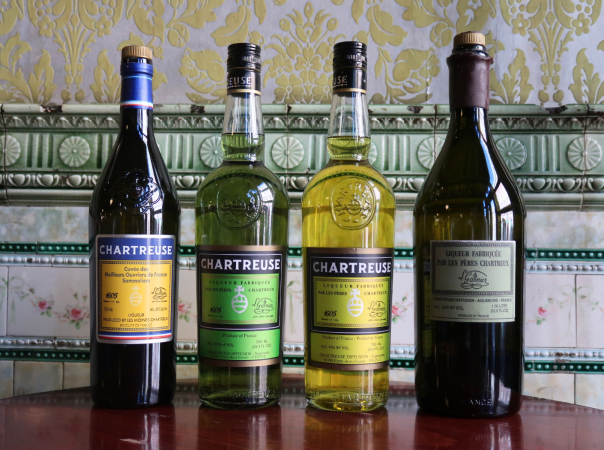
As global supplies of Chartreuse dwindle, its mystique only deepens and its popularity increases. Luckily, Philadelphia bars have concocted not merely ways to get their hands on the spirit, a botanical liqueur produced by Carthusian monks in the Chartreuse Mountains in southeastern France, but even their own, Philadelphia-made versions.
In 2021, the monks of the Carthusian order, an extremely secluded Roman Catholic order founded by Saint Bruno of Cologne in 1084 who adhere to a life of absolute silence and solitude, announced a cap on the production of their cordial, which they had been making since the 18th century. The recipe is culled from an ancient manuscript on the “Elixir of Long Life.”
The iconic green liqueur is made of 130 plants— there is also a Yellow Chartreuse that is milder and sweeter due to the inclusion of honey and saffron —and is the base for several famous cocktails, including the Prohibition-era Last Word and the Naked and Famous (a classic cocktail from New York’s Death & Co.). With robust alpine notes, it is also commonly served neat. It’s also a favorite of bartenders and mixologists nationwide.
“It adds depth and character to cocktails,” said Neill Laughlin, a partner and manager at Old City’s Sassafras.
With the rise of the craft cocktail movement in the early 2000s and then drinking habits during the pandemic, which drove people to start shaking up more cocktails at home, Chartreuse has only gotten increasingly more popular.
The monks’ decision to limit their production has had a trickle-down effect for Philadelphia’s cocktail programs, like the one at Sassafras, run by Laughlin and Donal McCoy. Philadelphia’s bars already struggle with obtaining specialty liqueurs due to Pennsylvania’s Liquor Board restrictions. But Sassafras, who maintains its own long history (almost 50 years in business), doubled down on Chartreuse-based cocktails, adding four to their new bar program (which changes quarterly). It’s no easy feat: a search of the PLCB’s Fine Wine and Good Spirits site shows no bottles of Chartreuse in stock at all.
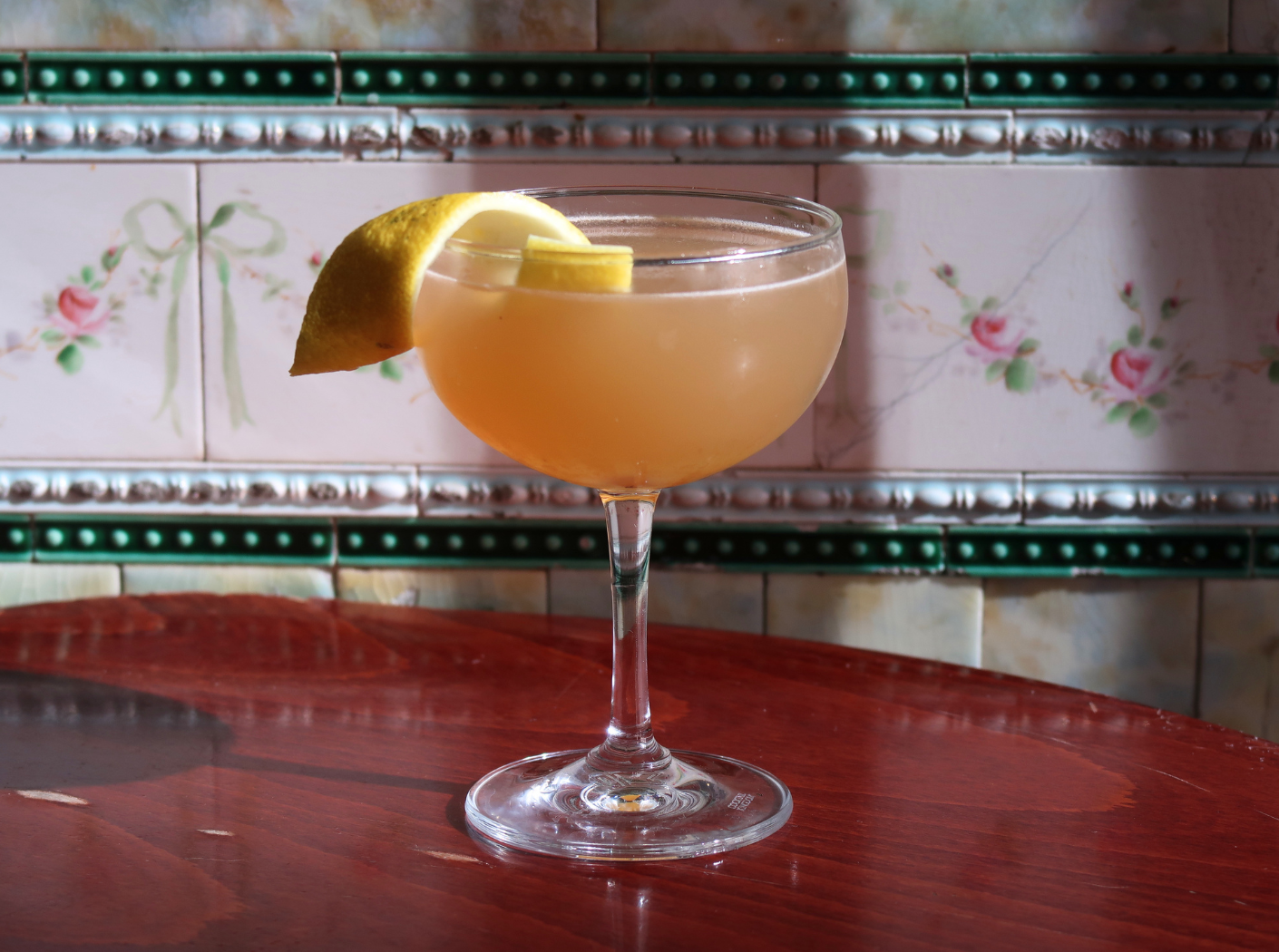
Champs-Elysees at Sassafras ($16) with St-Rémy VSOP, Green Chartreuse, lemon juice, Angostura bittersSassafras
“You need to have contacts within the PLCB,” explained Laughlin. “Certain [liquor] portfolios are broken down to different vendors and it’s a lot of homework to discover who has what products and how to get them. The liquor control board took it away from the stores and allocated Chartreuse to certain bars and restaurants — but you have to buy it in bulk.”
And so, Sassafras has been stocking up on Chartreuse for years. Supply is never regular. “There’s no warning when the ship [from France] comes in and how much you’re going to get,” said Laughlin, who just two weeks ago, managed to obtain four cases each of Green and Yellow Chartreuse.
“We’re comfortable offering six cocktails at Sassafras that use it,” said Laughlin. The newest cocktails at Sassafras include the 1904 ($65) featuring Yellow Spot Irish whiskey, Chartreuse VEP, and Antica Formula, Naked and Famous ($17) made with Catedral Espadin Mezcal, Aperol, Yellow Chartreuse, and lime juice, the Champs-Elysees ($16) with St-Rémy VSOP, Green Chartreuse, lemon juice, Angostura bitters. And for high rollers, the bar has also debuted one Chartreuse-based cocktail that costs $115 The Àrd-Rìgh (Irish Gaelic title meaning “High King”) is crafted with The Macallan Rare Cask, alongside Chartreuse VEP and Chartreuse MOF — “two exceptionally rare and highly coveted expressions of the French liqueur,” said Laughlin.
The Àrd-Rìgh (Irish Gaelic title meaning “High King”) at Sassafras is crafted with The Macallan Rare Cask, alongside Chartreuse VEP and Chartreuse MOFSassafras
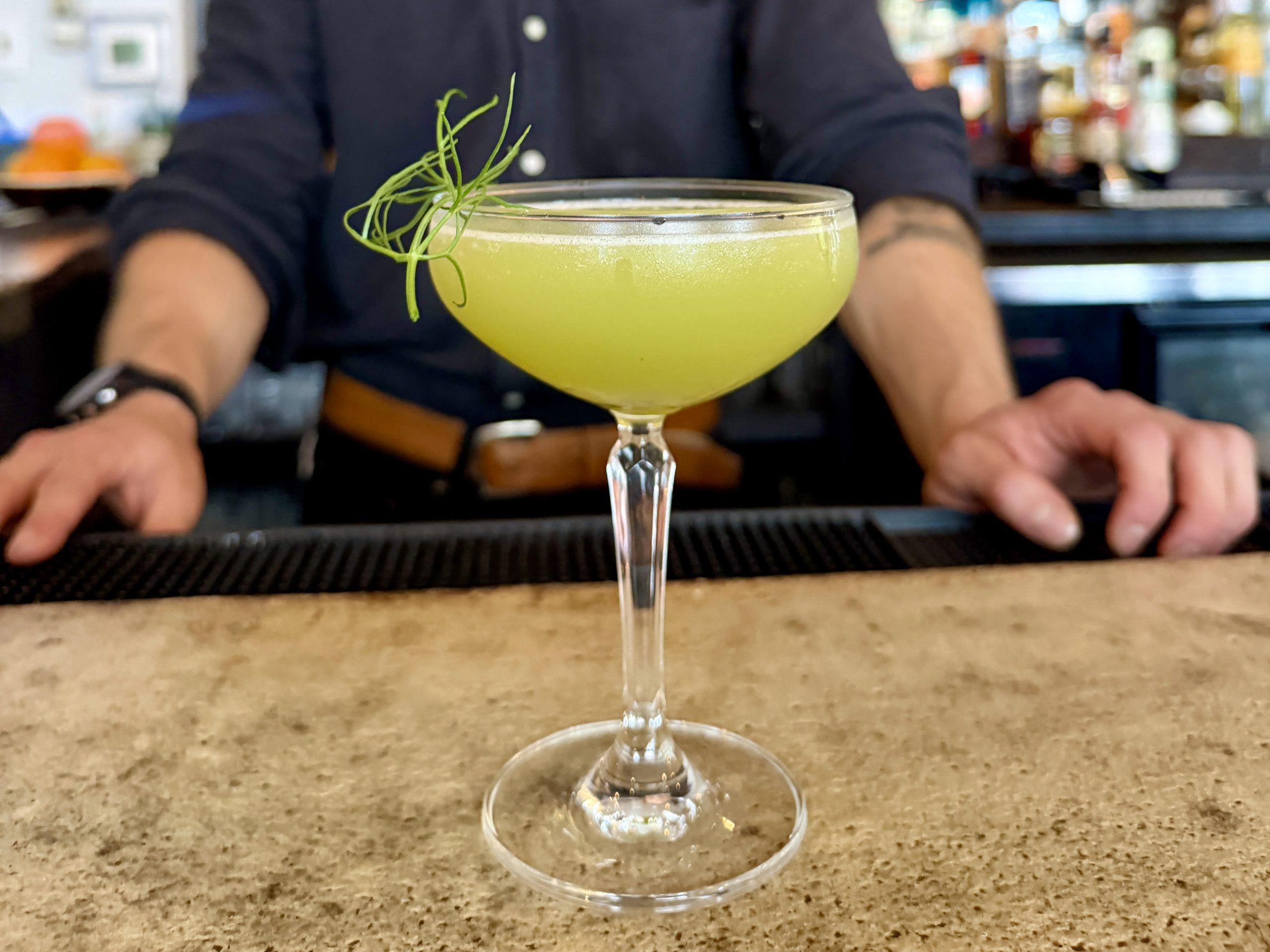
Chartreuse has also entranced newer cocktail programs, like the one at chef Scott Calhoun’s Ember and Ash. Calhoun also recently put a Chartreuse cocktail on his menu: “Our Herb Your Enthusiasm ($19) is a play on a gimlet with Green Chartreuse, gin, charred fennel and cucumber syrup, and lime,” he said.
Herb Your Enthusiasm from Ember and Ash on East Passyunk. The cocktail is a play on a gimlet with green chartreuse, gin, charred fennel and cucumber syrup, and lime.Lulu Calhoun
“When we start to get low on either and our purveyor is out, I scour the PLCB online system to have bottles shipped to my local store for pick up,” said Calhoun.
The dearth of Chartreuse has also inspired Chris Fetfatzes of Grace and Proper and Sonny’s Cocktail Joint, establishments known for crafting their own spirits like amari. Fetfatzes’ liqueur, dubbed the “Green Monk” is made with about forty botanicals and is inspired by the forty Kelpius monks of the Wissahickon, a doomsday cult that inhabited Wissahickon Valley Park in the 1690s.
“Green Monk has a hint of chamomile, a hint of mint, and a hint of génépy with a little bit of a menthol burn,” said Fetfatzes.
And given that it’s produced in Philadelphia and not by actual monks, a shortage is unlikely. .
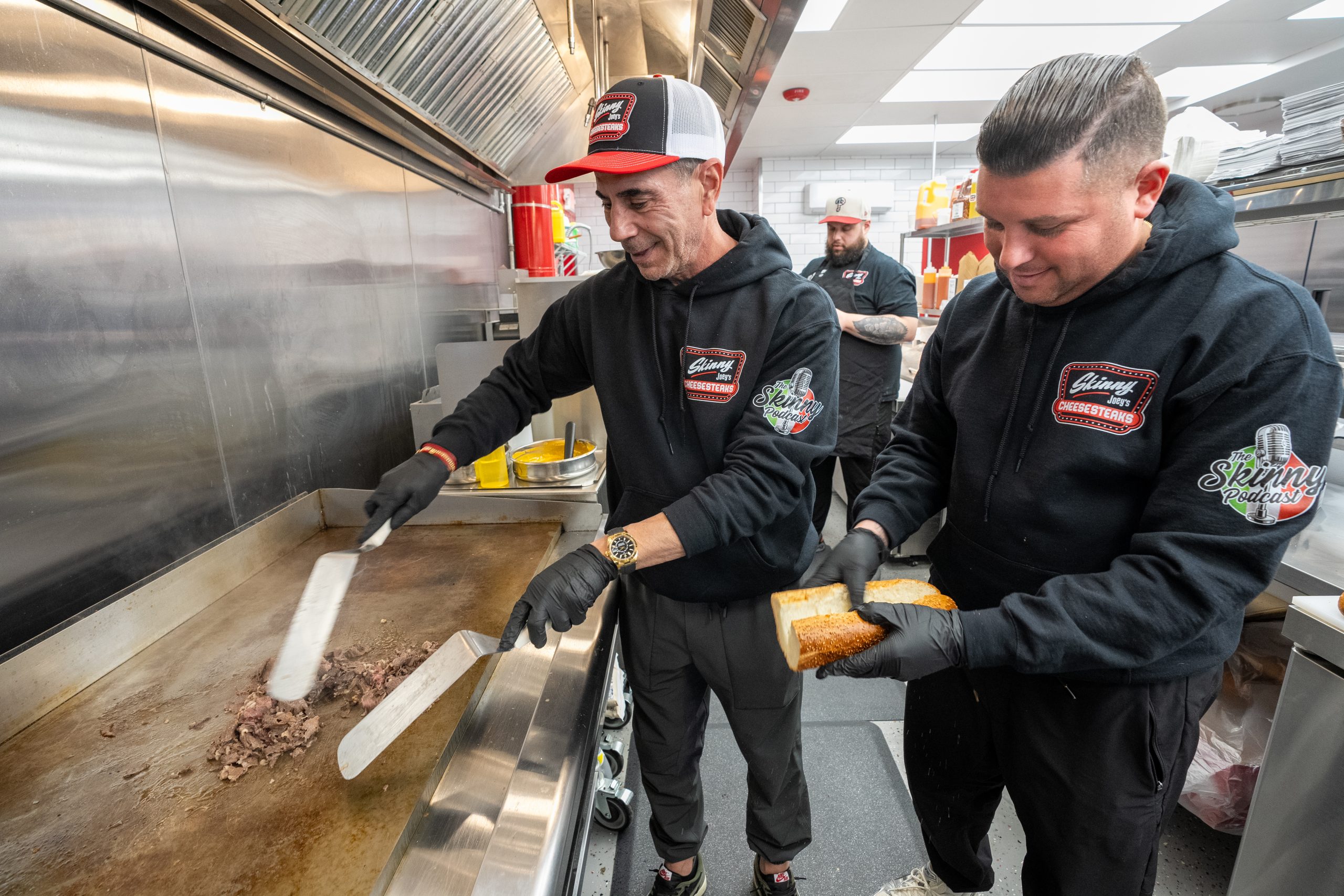
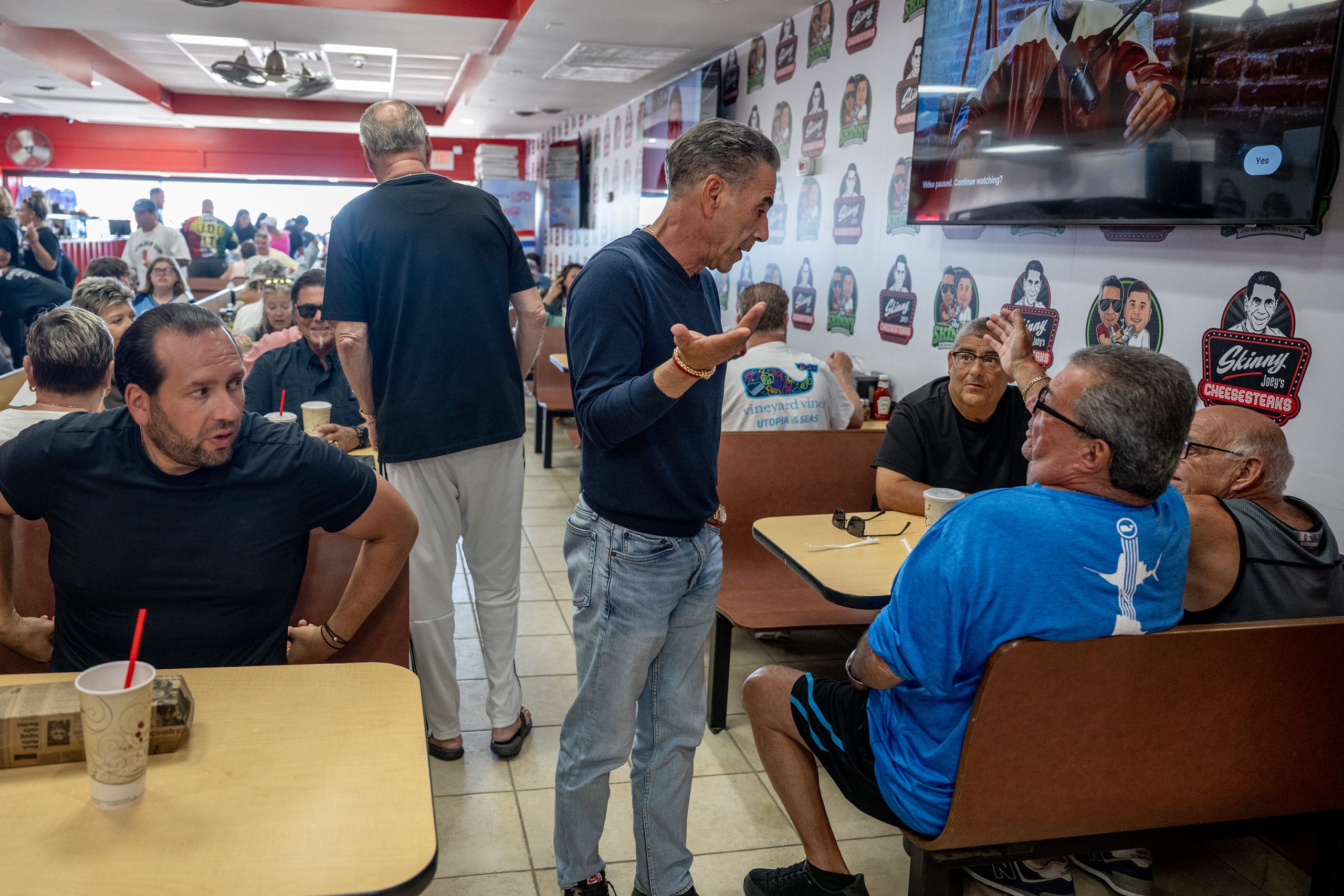
At noon on a bright June Tuesday, the scene at Skinny Joey’s Cheesesteaks & Pizza on the Wildwood boardwalk felt more like a South Philly block party than a soft opening.
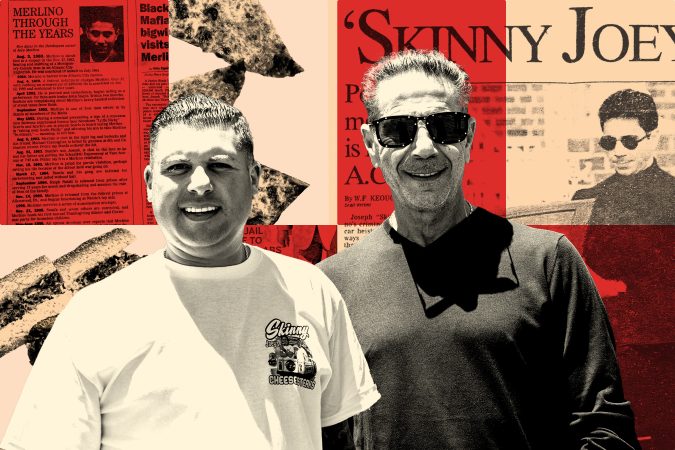
Joseph “Skinny Joey” Merlino worked the crowd at his new shop — hugging, shaking hands, posing for photos — moving easily among his friends and admirers. At 64, five years removed from the criminal justice system, the onetime alleged head of Philadelphia’s underworld is enjoying a second act that few could have predicted: cheesesteak entrepreneur, podcaster, and social-media personality.
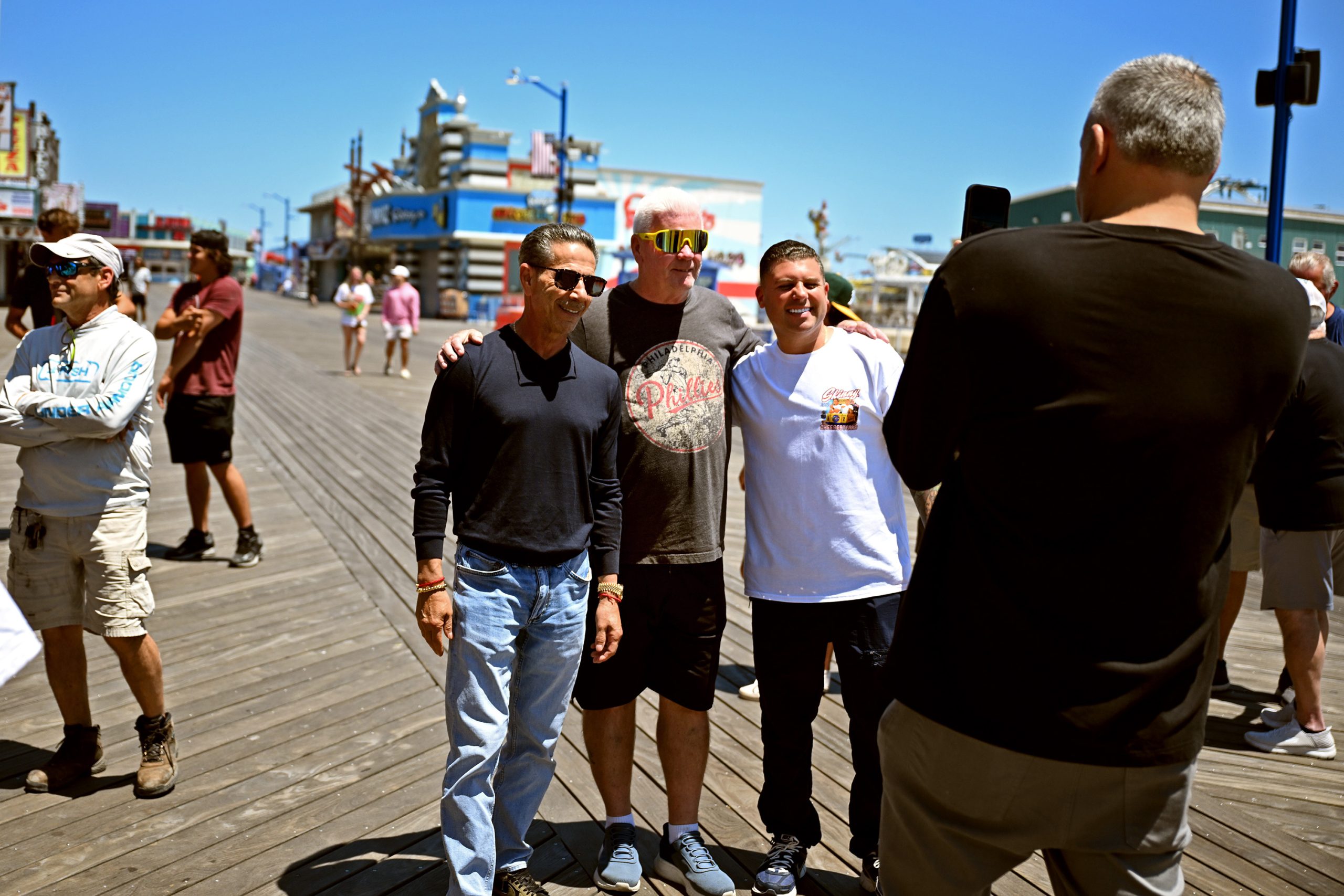
Joseph “Skinny Joey” Merlino (left) and Joe “Lil Snuff” Perri Jr. (right) posing with a customer outside the Skinny Joey’s Cheesesteaks & Pizza shop in Wildwood.Tom Gralish / Staff Photographer
Orbiting him with a phone and a grin was Joe “Lil Snuff” Perri Jr. — 30 years his junior — Skinny Joey’s collaborator and the man who helped set him up with a new career. While customers lined up out front for steaks, slices, photos, $35 hats, and $25 T-shirts, Perri was shooting clips for social media.
Their partnership has transformed Merlino from a flashy, polarizing tabloid fixture into a flashy, polarizing Instagram-age brand. Merlino provides the mythology, while Perri supplies the algorithm.
Symbiotically, they are building an unlikely enterprise. Merlino gives Perri access, credibility, and a bigger stage. Perri gives Merlino comic relief, social-media fluency, and a way to be seen as entrepreneurial rather than simply infamous as a reputed former mob boss.
“Without me, there’s no him,” Perri said. “Without him, there’s no me. It’s just a good mix.”
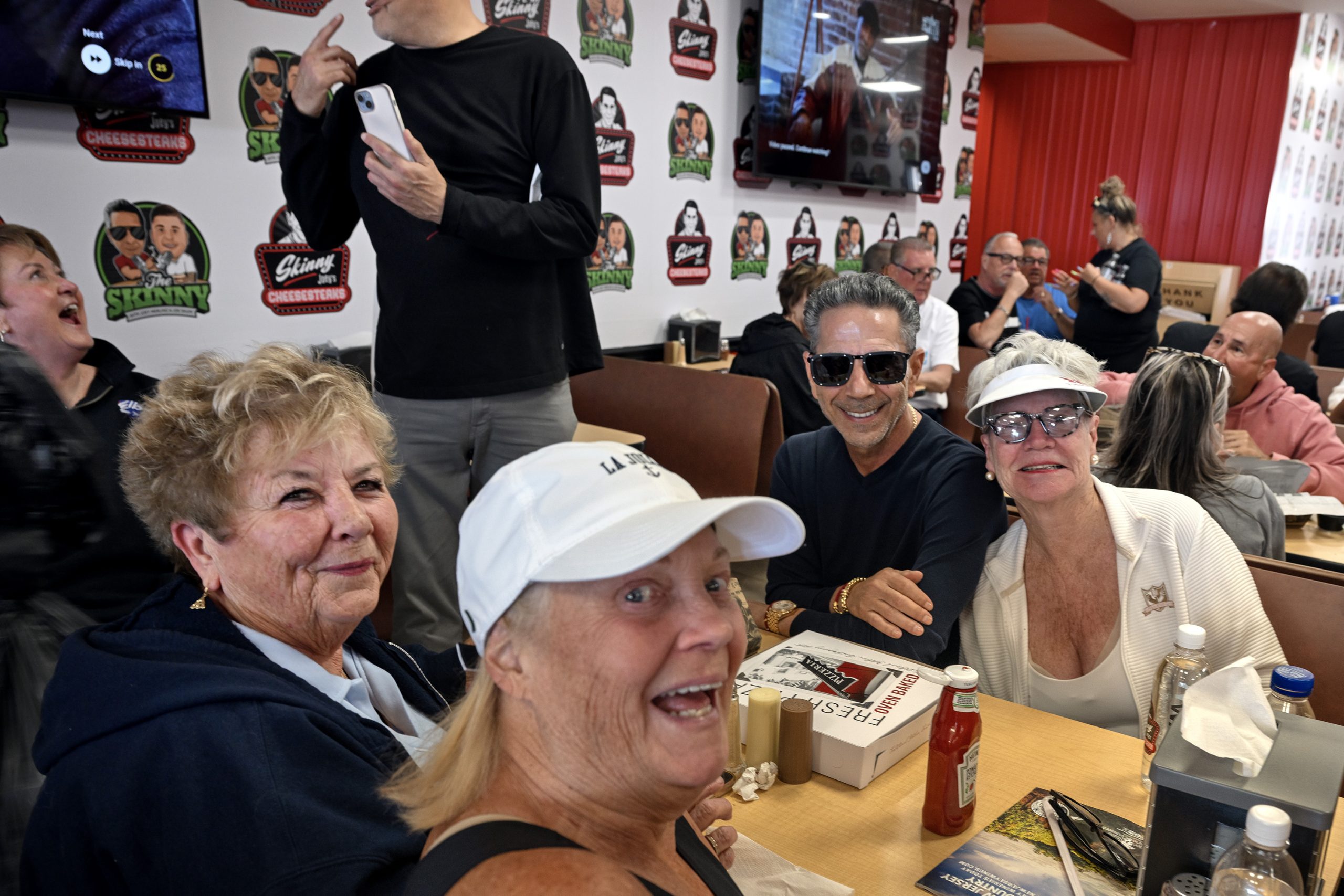
Joseph “Skinny Joey” Merlino joining customers at Skinny Joey’s in Wildwood during its soft opening on June 2. They call themselves “the Schuylkill Girls” (from left): Julie Shelton, Cindy McCullough, and Terry Landy, all of whom now live in Wildwood.Tom Gralish / Staff Photographer
A ‘mob media’ moment
George Anastasia, who covered organized crime for more than 30 years at The Inquirer and now teaches an organized-crime course at Rowan University, said Merlino’s new career fits a broader moment in mob media.
Former wiseguys, associates, historians, and fans now gather in a true-crime subculture known online as “MobTube,” where the lore is packaged into YouTube shows, Patreon feeds, podcasts, clips, and merch.
Merlino has lived the story that fuels the genre. One of Philadelphia’s most recognizable organized-crime figures, Merlino was convicted in 1990 for his role in a $352,000 armored truck robbery in 1987.
In 2001, he and six co-defendants were tried on federal racketeering charges, including three counts of murder and two of attempted murder. Merlino was acquitted on those counts, but served about 12 years on other charges, including gambling and extortion. A supervised-release violation briefly returned him to prison in 2014, and a second major racketeering case ended in 2018 with a guilty plea to a single illegal-gambling charge after a mistrial. In a separate trial in 2004, he was acquitted of the 1996 killing of Joseph Sodano, an underling in North Jersey. Merlino completed federal supervision in 2021, but he’s been banned from New Jersey casinos since 1988 and from Pennsylvania casinos since a 2016 incident at the former SugarHouse Casino.
And Merlino has made it no secret that he is different from many of the former figures who populate the MobTube genre. Unlike Sammy “The Bull” Gravano, John Alito, and Jimmy Calandra, Merlino never cooperated with prosecutors.
“He saw guys who cooperated come back and become media sensations,” Anastasia said. “And I think he got [annoyed] that these are all guys who, in his view, violated the code, and now they’re making money on that old life. He did his time as a stand-up guy. ‘So [to heck with that] — I’m going to make money, too.’ And he created this brand.”
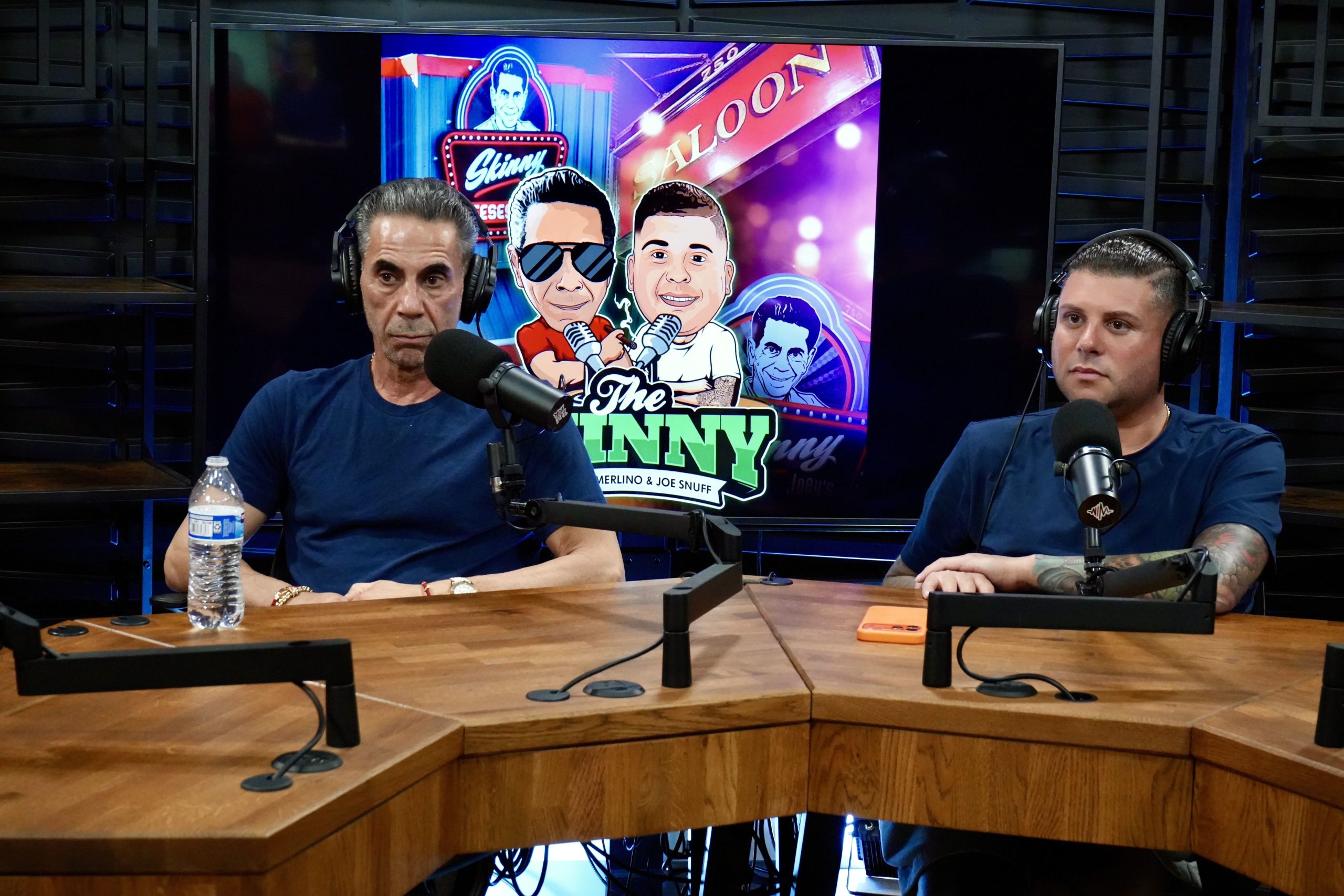
Joseph “Skinny Joey” Merlino (left) and Joe Perri Jr. on the set of “The Skinny” podcast.Courtesy of Joe Perri Jr.
Perri helped make that legible to a younger audience.
“Lil Snuff is part sycophant and part guide,” Anastasia said. “He’s the one who, in a lot of ways, sets the flow. Joey is going to be Joey, but somebody has to keep bringing him back to the point.”
The rise of Lil Snuff
Before he was Merlino’s co-host, Perri was Lil Snuff.
The nickname came from his father: As a 10-year-old, Joe Sr. turned around when a cousin was calling for a dog named Snuffy. Boom. He was Snuff. When his son was born at Methodist Hospital in 1992, Snuff became Big Snuff.
As a teenager, Lil Snuffbussedtables at Stogie Joe’s, the Saloon, and Fitzwater Cafe. At 18, he joined the stagehands union. At 21, he got a job at Mall Chevrolet in Cherry Hill. The older salesmen had relationships and repeat customers. Perri’s mentor told him that he needed a lane.
It was 2013, and social media was beginning to reshape promotion. Perri started making his own brassy, unscripted commercials. “Selling Chevys for less” became his tagline.
He also made videos about gambling and food, his two passions. He was not famous, but he was visible in the South Philly-to-South Jersey social media corridor where restaurants, sports, betting, family, and neighborhood identity blur into one feed.
At the same time, Perri said, he was abusing pills. In 2014, at 22, his parents found him a rehab center in South Florida. To make sure he got there safely, they called a family friend whose Italian restaurant in Boca Raton had recently opened:
Joey Merlino.
“My father grew up with his grandfather,” Merlino said, explaining the bond. “I grew up with his father. I’ve known him since he was born.”
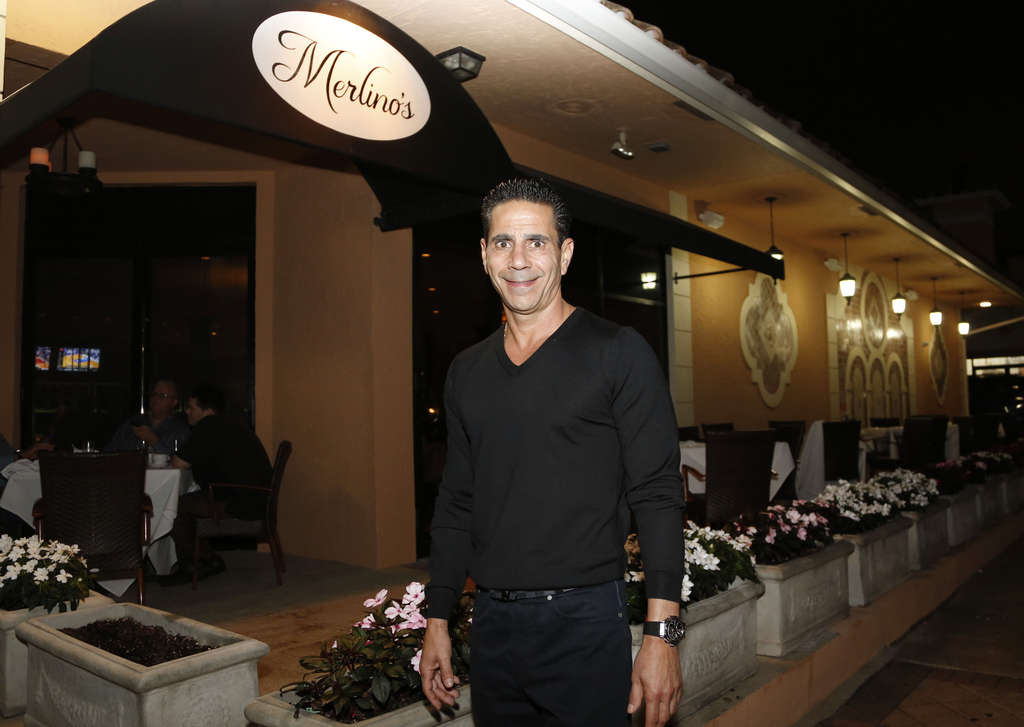
Joseph “Skinny Joey” Merlino in 2014 at the Boca Raton restaurant bearing his name.Terry Renna / For The Inquirer
Perri said it took several attempts before recovery stuck. He has been sober since Sept. 11, 2016. “I’m big with recovery,” he said. “That’s the main thing in my life. I put sobriety first and then everything after that.”
Merlino’s — where Merlino was maitre d’ because his legal situation then precluded ownership — closed in 2016, just before the feds arrested Merlino at his home in Boca in the lead-up to his second racketeering case. “If I didn’t have this trouble, it would still be open,” Merlino said earlier this month.
After Merlino attained freedom in July 2021, producers called with movie, television, and book deals. Merlino turned them all down. “Nothing seemed right,” Merlino said. Someone brought up the idea of a podcast.
“I didn’t even know what that was,” Merlino said.
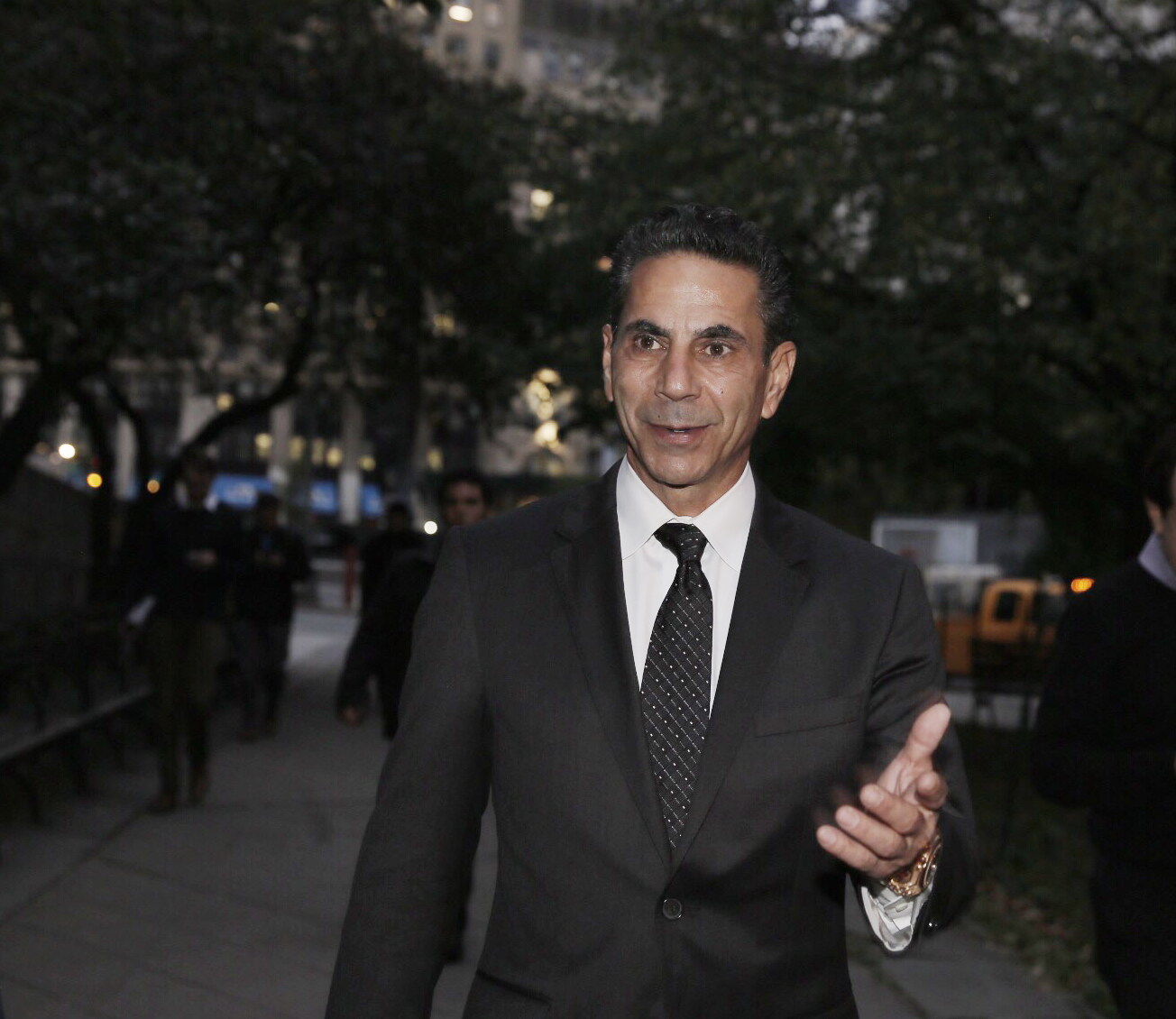
Joseph “Skinny Joey” Merlino leaving the federal courthouse in Manhattan after being sentenced on Oct. 17, 2018.Elizabeth Robertson / Staff Photographer
His friend Raymond “Wags” Wagner explained the concept and suggested a loose format built around food and sports betting. Actor Kevin Connolly of Entourage fame, who was involved early as a producer, told Merlino that he needed a co-host.
“They said, ‘Who would you want?’” Perri said. “They were sending him people, and he was like, ‘I’m not doing nothing with these people.’”
Then Ray Wags suggested Perri.
“Joey was like, ‘100 percent. Get him on the phone,’” Perri said. “Kevin Connolly said, ‘Send me your videos.’ I sent him my videos, and he said, ‘You’re the guy.’ The rest was history.”
The world of ‘MobTube’
Merlino and Perri launched the video podcast in 2023. Viewers are not just watching Merlino talk about the old life. They see him bust Perri’s chops about eating too much and mock his parlays. They get gambling tips, watch them interview athletes and celebrities — all part of a South Philly generational comedy.
Perri describes it in family terms. “My dad’s my dad, but he’s also my best friend, too,” Perri said. “We gamble together. We go out together. We have fun together. So they see me and Joey as that, and they can’t figure out how we mix so good.”
“He’s good,” Merlino said. “I’m old, he’s young. He talks good, he’s funny. He’s a pain in the balls, but it’s a good fit.”
They began The Skinny podcast on YouTube, but now focus more on Patreon, where the content is unfiltered. And better monetized. Perri says TheSkinny has 1,600 Patreon subscribers paying $15.95 a month. He said their social-media pages combined average 30 million views a month.
Perri’s wife, Danielle, handles bookings and schedules. “I produce,” Perri said. “I cut the clips. I do everything. It’s me and Joey. Two-man show.”
A wider audience
When they started, Perri was still selling cars at Mall Chevrolet. But the now-shuttered dealership got tired of people showing up hoping to see Merlino instead of test-driving a Suburban.
Perri quit. The show grew.Merlino’s reinvention has coincided with a broader shift in the gambling world. Legal sportsbooks, now ubiquitous on television and online, have largely supplanted the corner bookmaker, turning an activity once associated with organized crime into a mainstream consumer business. Guests span sports, hip-hop, gambling, and entertainment, including Wallo267, Fat Joe, Ric Flair, and Bernard Hopkins.
Each booking widened his audience, and Merlino was being absorbed into a broader celebrity ecosystem.
Last October, Netflix released Mob War: Philadelphia vs. The Mafia, a docuseries revisiting the violent 1990s power struggle between John Stanfa and Merlino’s younger faction. It steered even more viewers to Merlino and Perri’s world.
‘Skinny Joey,’ wit’
Then came the cheesesteaks.
One night, Perri, Merlino, and friends were playing poker. Merlino wanted cheesesteaks. Perri said he’d make them.
“He’s like, ‘You can’t make cheesesteaks,’” Perri said. “I said, ‘Are you nuts? I’ve been making them my whole life.’”
Perri cooked some. “He was like, ‘This is the best f— cheesesteak ever,’” Perri said. “He said, ‘Let’s open up a cheesesteak place.’ I said, ‘All right. Call it Skinny Joey’s Cheesesteaks.’ And that was it.”
The first shop opened in March 2025 at 3020 S. Broad St., near the sports complex. From the start, Skinny Joey’s was more than a sandwich shop. It was a set. The shop leaned into Merlino’s notoriety; the sandwiches are wrapped in a collage of newspaper articles about his past.
Joseph “Skinny Joey” Merlino (left) working the grill beside Joe “Lil Snuff” Perri Jr. at the Skinny Joey’s Cheesesteaks in Philadelphia at its opening in March 2025.Jessica Griffin / Staff Photographer
Celebrities showed up: Jason Kelce, Landon Dickerson, Mack Wilson. A customer eating a cheesesteak was good content. A recognizable person eating one on camera was better.
The restaurant also became a magnet for the kind of drama that fuels digital engagement: online beef. Podcaster Gene Borrello, a former Bonnano crime family associate and Merlino antagonist, weighed in last year on an apparent feud between Skinny Joey’s camp and Frank Olivieri of Pat’s King of Steaks. Merlino and Perri had taken issue with a video posted by Olivieri — whose great-uncle invented the steak sandwich — in which he chided shops that chop the meat on the grill. Like most online food feuds, this seems to have subsided.
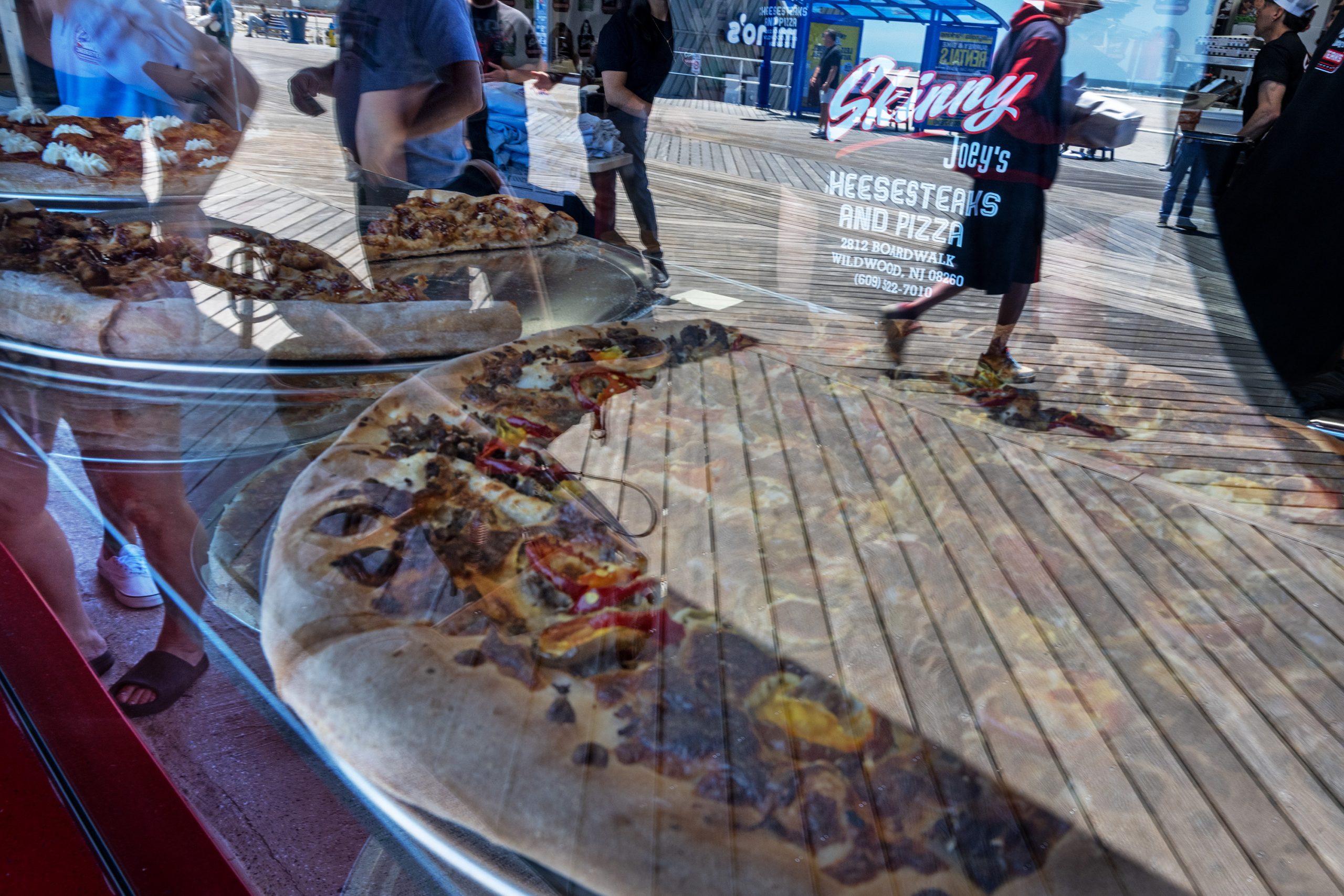
Then came the deal for Wildwood, where Skinny Joey’s replaced Joe’s Pizzeria, which had been on the boardwalk at Magnolia Avenue for 15 years. There, Skinny Joey’s added pizza and stromboli, which are not sold at the South Philadelphia location.
Reflections in the pizza display case on the boardwalk at Skinny Joey’s Cheesesteaks & Pizza in Wildwood.Tom Gralish / Staff Photographer
The pizza recipe comes from Vito’s on Haddonfield Berlin Road in Cherry Hill, and the stromboli from Pizza Shack at 15th and Oregon in South Philadelphia, both owned by Skinny Joey’s business partners Stephen Casasanto and John Fioravanti, whom Merlino also described as longtime friends.
More locations are planned. Perri said a Boothwyn shop is expected around Sept. 1, and several others are in the pipeline.
Bypassing the gatekeepers
Merlino is an extreme case of a recent phenomenon. People with complicated histories — criminal, scandalous, controversial, or simply overexposed — no longer need traditional gatekeepers to reintroduce themselves. They can speak directly to followers and monetize the attention.
Perri is not a journalist, of course, or a publicist, exactly. He is not merely a manager, producer, or sidekick. He is something in between — a new kind of local media operator.
He knows the scene, and how to make content feel unscripted even when the business behind it is deliberate. He is close enough to Merlino to bust his chops and deferential enough to preserve the hierarchy. He can translate Merlino to younger audiences without making him seem managed.
Perri softens Merlino without sanding him down. Merlino still curses, rants, and mocks rivals. Anyone they disagree with is a “bedbug.”
Joseph “Skinny Joey” Merlino greets a table of customers at Skinny Joey’s Cheesesteaks & Pizza in Wildwood.Tom Gralish / Staff Photographer
“At the end of the day, Joey isn’t going to change who he is for anybody,” Perri said. “If he can’t talk the way he wants to talk, what’s the point?”
That is part of the appeal and part of the discomfort. The audience knows Merlino’s history. They may see him as funny, defiant, loyal, misunderstood, or simply entertaining.
“There’s a segment of the American population that has always been fascinated with the outlaw: Billy the Kid, Jesse James, Don Corleone, Al Capone,” Anastasia said. “What the internet has provided is: Here are these guys in their own words. Are they being genuine? I don’t know. You can say that about any personality. But here’s a look at them without any filter.”
The filter used to be people like Anastasia.
“I was, in a lot of ways, the middleman between the people who were interested in this and the guys who were doing it,” he said. “And people who are interested in this don’t need the middleman anymore. They just go online and listen to whoever they want to listen to.”
Between celebrating the World Cup and gearing up for America’s 250th birthday, Philly is awash in limited-edition, patriotic foods, and the potato chip aisle is no different.
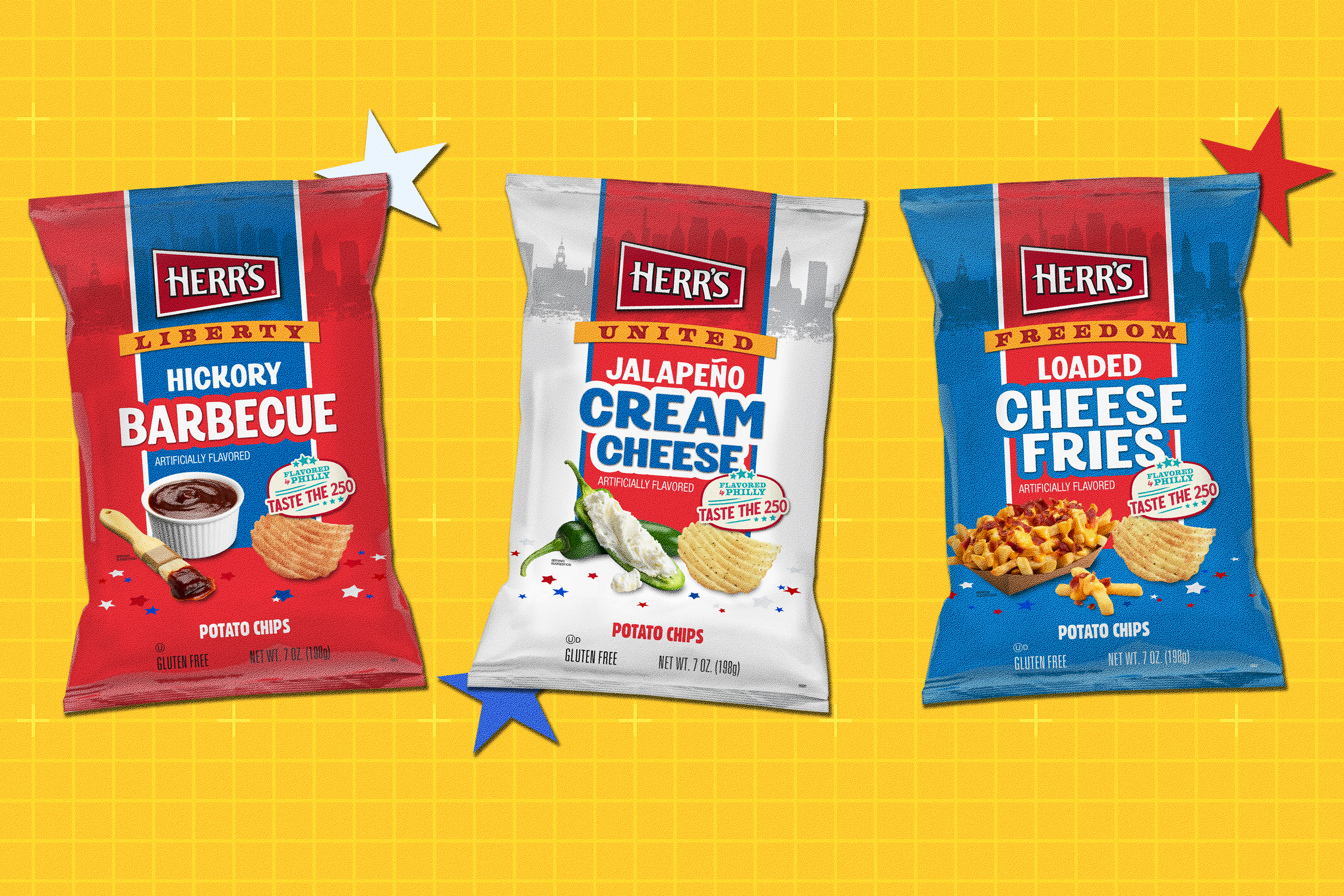
Herr’s beloved Flavored by Philly campaign is now in its fifth year. The Chester County company collated nearly 100,000 votes for flavors that best represent American ideals.
The winners are: Freedom Loaded Cheese Fries, Liberty Hickory Barbecue, and United Jalapeño Cream Cheese. They’ll be available through the summer.
“America’s 250th is an amazing time to be able to share potato chip flavors made by the people for the people,” said Ed Herr, executive chairman of the board of Herr’s, in a statement. “Flavored by Philly: Taste the 250 is our way of honoring the city that continues to inspire our flavors and our fans.”
The Inquirer conducted two taste tests: sending the chips around the newsroom and consulting several local chefs.
Here’s what the newsroom thought.
“On this hot day, hickory barbecue wins for me. It tastes like your regular grocery store barbecue sauce, which is weirdly refreshing,” said deputy features editor Evan Weiss.
Features reporter Earl Hopkins agreed. “The hickory barbecue one is the top dog. It has that perfect hint of smokiness that brands like Lay’s wishes they could duplicate.”
The jalapeño cream cheese also found superfans in the newsroom. “Jalapeño cream cheese is my favorite!” said intern Morgan Ritter. “Loaded cheese fries tastes like a hotdog to me. I don’t love it.”
Arts and entertainment editor — and self-professed sour cream and onion fan — Bedatri Choudhury said, “This flavor takes the best (sour cream) part and adds heat to it, which I loved.”
Food reporter Beatrice Forman said, “I had like 10 loaded cheese fry chips trying to discern whether or not I liked them, and I actually still don’t know. I love cheesy chips, but there’s a burnt aftertaste that I’m assuming is to mimic the bacon bits on loaded fries, but bacon shouldn’t taste burnt.”
As for the hickory barbecue, Forman said, “What makes this different than regular barbecue? This is lazy. I did not deign to try it because doing so would dignify it as a chip worthy of our country’s 250th birthday.”
Philly chefs also weighed in.
Amy Rivera-Nassar of Amy’s Pastelillos said, “Where’s the spice? Philly represents a melting pot of culture. I wish we could have seen a flavor that represents the exciting, ever-growing, and diverse culinary landscape that we’ve become. And the jalapeño cream cheese just tastes like sour cream and onion.”
Wichittra Phansaeng of Dara liked all three flavors. “The loaded fries chips are just like eating cheesy fries with bacon, and I like that the jalapeño cream cheese is a little spicy.”
Freya Joy and Dane DeMarco, the chefs at Gass & Main, devoured the chips. “The jalapeño cream cheese is like an angry sour cream and onion, but don’t you tell me a jalapeño was at all involved in this,” Joy said.
“I’m digging the loaded cheese fries. It’s like a TGI Friday’s loaded potato skin if the bacon was crispy — which it never was,” said DeMarco. “I want to put all of these chips on a turkey sandwich.”
“These are all beach chips. Or poolside chips,” said Joy.
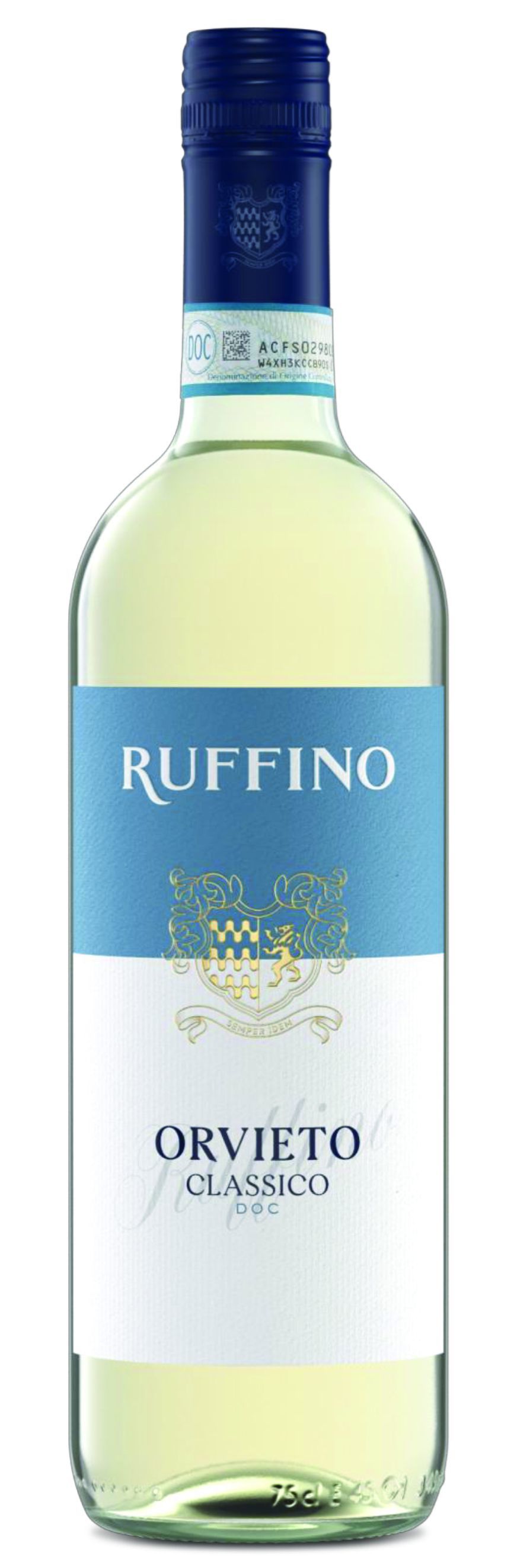
White wines with a subtle touch of sweetness do not get the respect they deserve. This delightfully fruity example from Umbria hovers on the boundary between fully dry and overtly sweet in a way that can be written off as unserious among Italian whites. It is seriously delicious though, with a succulent pearlike flavor profile that makes it an ideal partner for many of the acidic and bright delights from neighboring Tuscany, like panzanella or pappa al pomodoro.
Sweetness in white wines is often unfairly associated with the cheapest boxed wines, since a hint of sweetness can mask the weak flavors of low-quality grapes very effectively. However, there are some regions that have a longstanding tradition of making their wines taste faintly sweet simply because they like it. The Umbrian town of Orvieto, for example, has been known since the Middle Ages for a hyper-sweet dessert wine once prized by popes and kings. That historical association led the region to produce semi-sweet and faintly sweet versions using a similar mix of grapes, with the local grechetto and trebbiano varieties taking the lead in the blend.
This particular example of Umbrian wine is on the drier side. It tastes light, fresh, and just faintly sweet, at a similar level to that found in most Italian prosecco. This whisper of sweetness adds a dessertlike quality to its flavors of fresh-picked orchard fruits — think wine-poached pears with pistachio custard cream. Specific, but it works. This kiss of sugar also helps the wine partner brilliantly with foods that contain sugar or spice, from brunch classics to Asian sauces that have a kick.
Ruffino Orvieto ClassicoCourtesy of Ruffino
Ruffino Orvieto Classico
Umbria, Italy; 12.5% ABV
PLCB Item #5724 — $10.39 through July 5 (regularly $11.39)
Also available at: Canal’s in Mt. Ephraim ($11.99; mycanals.com), Moorestown Super Buy Rite in Moorestown ($11.49; moorestownbuyrite.com), and Total Wine & More in Wilmington and Claymont, Del. ($11.49; totalwine.com).
Back in 2022, Eric Carosella, 28, was a young South Philly filmmaker searching for inspiration for his debut feature film.
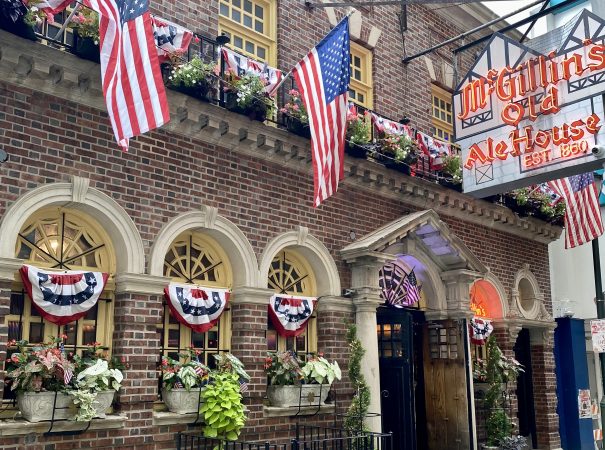
Bouncing ideas off a friend over beers in the cozy upstairs room of McGillin’s Olde Ale House — he had long been a fan of the storied and timeworn 165-year-old tavern on Drury Street — it hit him.
History pours from every nook of Philly’s oldest operating public house.
The sepia-toned ghosts and rogues gallery of tipsy-eyed merrymakers captured in the countless photographs paper the bar’s dark-paneled walls. A blue-collar mentality of survival has kept the suds flowing in an alehouse that has endured a Civil War, two World Wars, prohibition, a Great Depression, and two pandemics.
Carosella didn’t need an idea. He was sitting in it.
“It’s been the town hall of Center City for as long as it’s been there,” he said. “It has a history that’s really tangible — and a certain charm that you can’t really find anywhere else.”
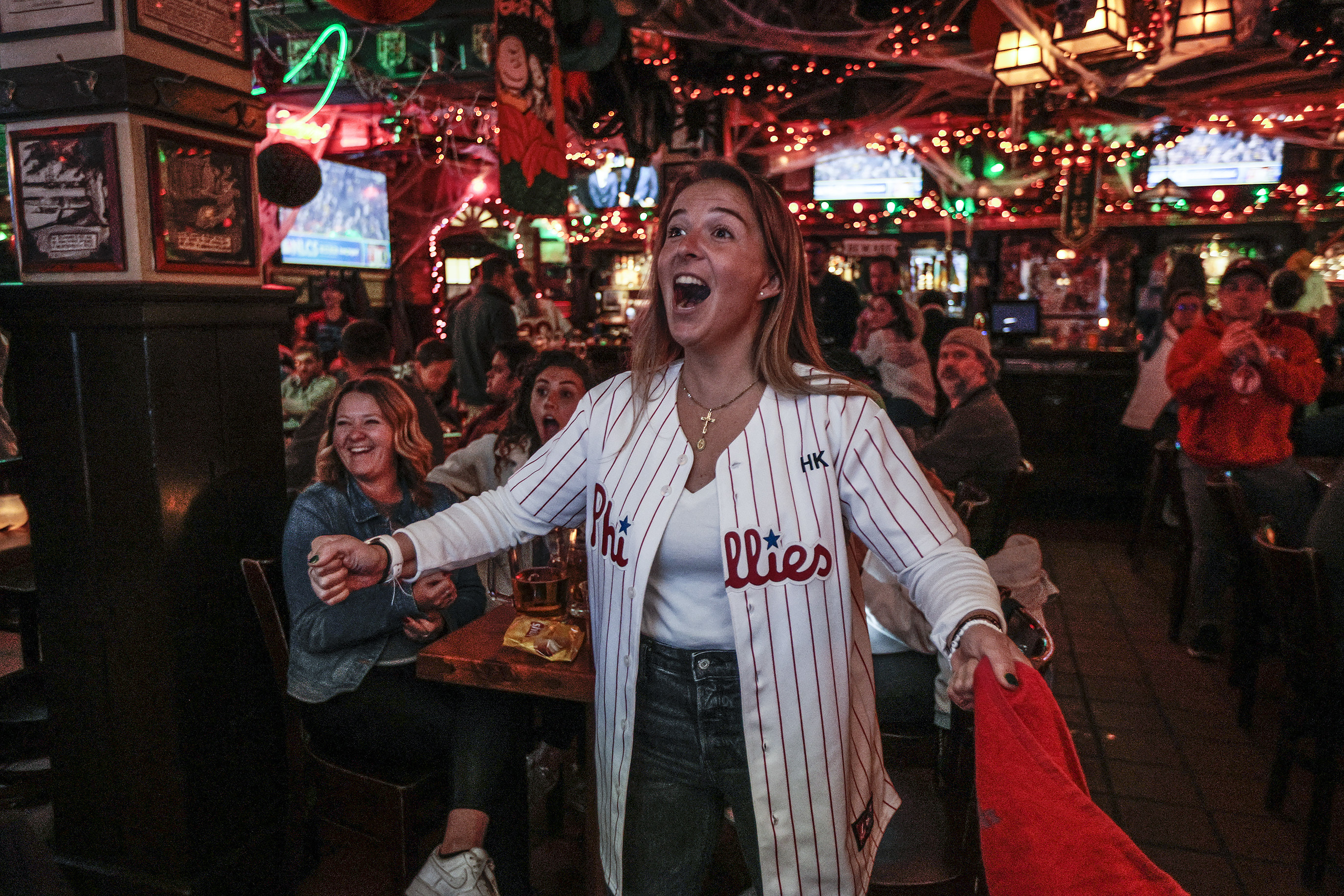
Bella Tierce from New Jersey watches as the Phillies Kyle Schwarber homers against the Padres while watching the game at McGillin’s on Oct. 18, 2022.Steven M. Falk / Staff Photographer
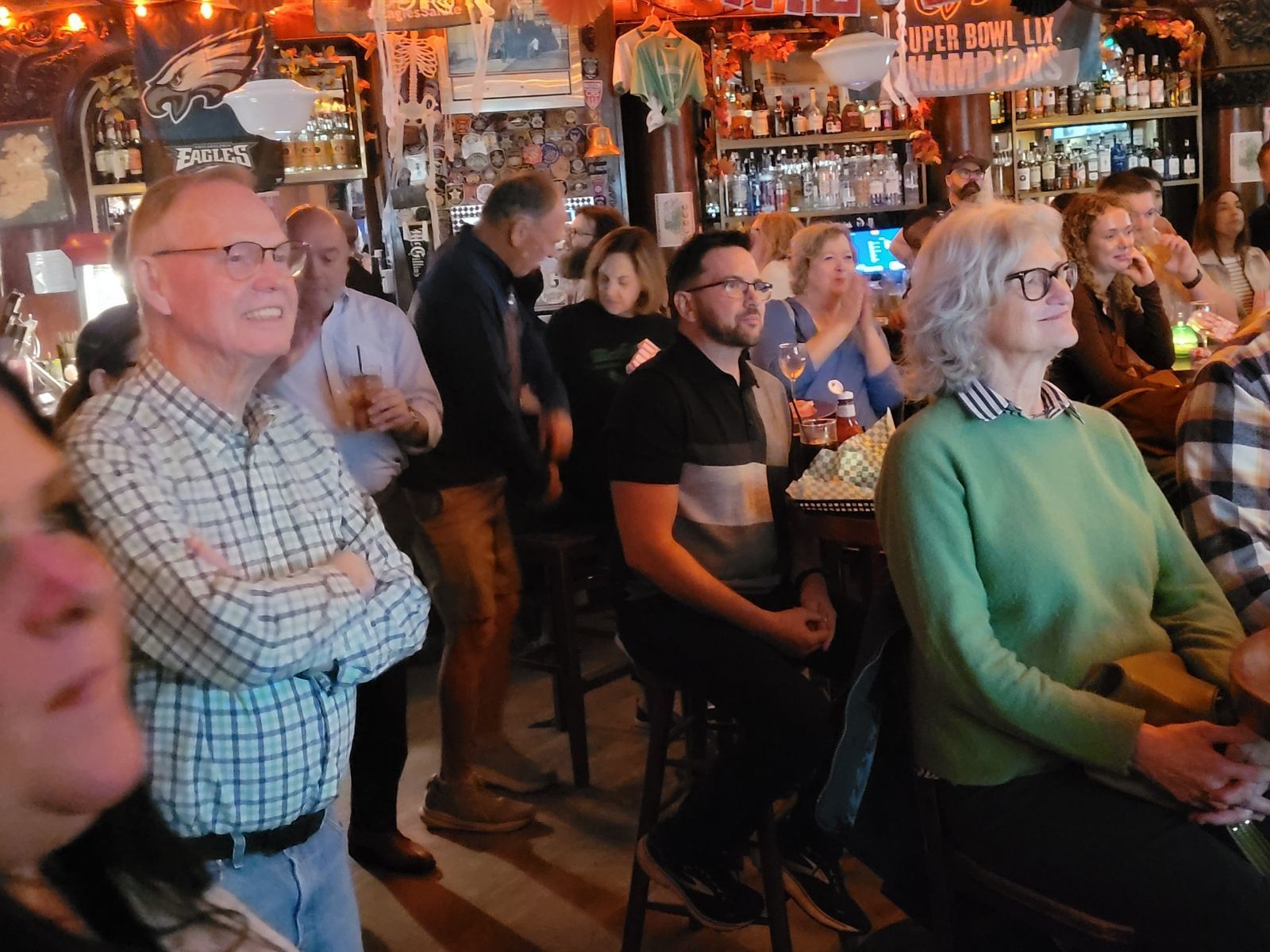
On Thursday, Carosella’s documentary, McGillin’s: Philadelphia’s Oldest Bar, debuts on WHYY, with a watch party planned in the same paneled parlor where inspiration struck the director. This comes after a showing of the film at McGillin’s in October, when a packed house cheered and toasted the 42-minute documentary that tells the tale of a tavern — but also of a city.
‘Everyone has a McGillin’s story’
Carosella made his four-year passion project through the local production company he founded after college, Clearbound Media, with friends and creative partners, Christopher Gaida, Brendan McCafferty, and Tina Duncan.
The film quickly evolved into something more than just an ode to colorful characters and a history of the bar that Irish immigrants and husband and wife, William and Catherine McGillin, opened as the Bell in Hand Tavern in a rundown Drury Street trinity in 1860.
Longtime patrons and employees packed McGillin’s Olde Ale House on Oct. 2, 2025, to watch a screening of “McGillins: Philadelphia’s Oldest Bar,” a documentary about the historic Center City bar.Courtesy of Eric Carosella
That same year, a fellow named Abraham Lincoln got elected president.
You can’t tell the story of McGillin’s without telling the history of the city, and its fiercely proud and passionate denizens, said Carosella, who studied film at Pace University and works days at his family’s South Philly building supply store.
“It’s a place Philadelphians have been coming to connect and have fun and find love and watch sports for more than 150 years,” he said. “Everyone has a McGillin’s story.”
Interviewees include McGillin’s co-owner, Chris Mullins Jr., whose family has run the bar since 1958; Philly urban historian Stephen Nepa; and famed brewmaster Carol Stoudt, who founded Stoudts Brewing Company in Adamstown in 1987, and whose beer has flowed from McGillin’s 31 taps for decades.
Staff and proud regulars like Philly sports radio and TV personality Natalie Egenolf also make appearances.
“There’s that tradition, oral history and family stories that keep people coming back year after year after year,” Mullins Jr. says in the film. “It’s part of my DNA, part of our customer’s DNA, part of our staff’s DNA. Not everyone can tell stories from a hundred years ago. We can.”
And there are plenty of stories.
Drunken politicians and late-night ragers
Over the years, starlets and stars, and working stiffs have rubbed elbows at McGillins.
Starting out, “Pa” and “Ma” McGillins raised 13 children in the upstairs rooms of their beat-up alehouse, which didn’t look anything like the bar today, even as it quickly expanded into connecting row houses. Reserved and spare, Pa McGillin stubbornly refused the pleas of his wife and customers to spruce up the joint, says Mullins Jr., who serves as the bar’s oral historian in the film.
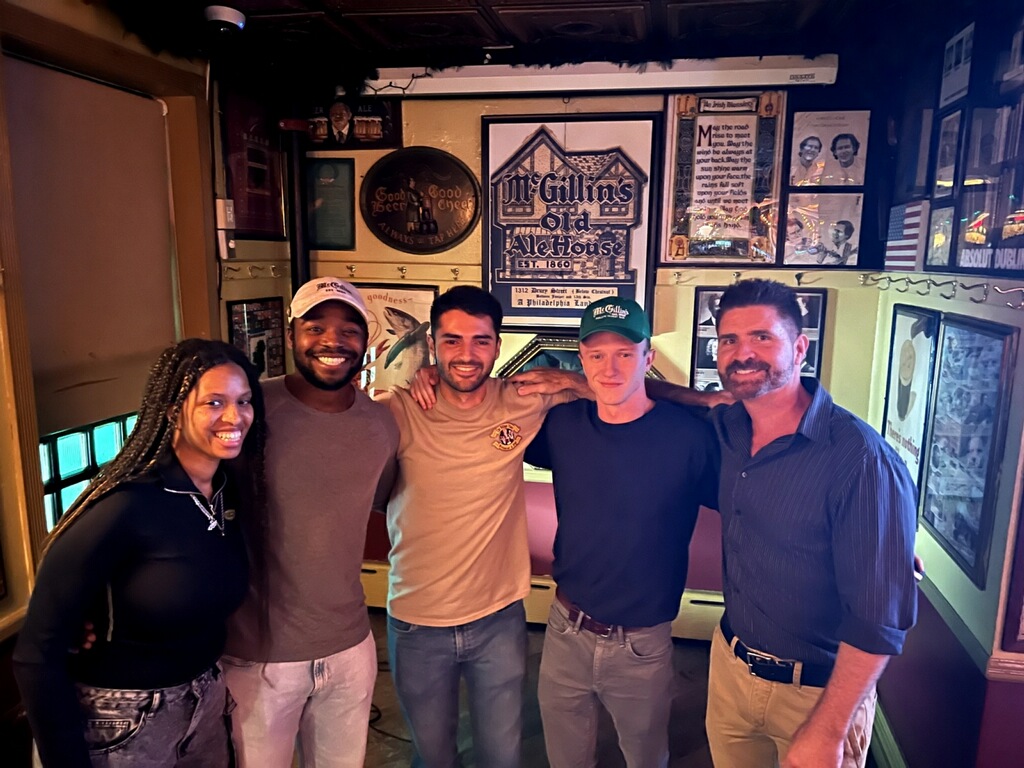
South Philly filmmaker Eric Carosella (center) poses with the crew of his debut feature documentary on McGillin’s Olde Ale House. The 42-minute film – McGillin’s: Philadelphia’s Oldest Bar airs on WHYY June 11. Tina Duncan, editor (L), Kyle Henley, second assistant director, Eric Carosella, director, Brenden McCafferty, camera operator, and Chris Gaida, producer.Courtesy of Clearbound Media
After Pa’s death in 1901, Ma McGillin got to work. She tore the alehouse down and rebuilt it as it looks today. She also renamed Bell in Hand to its nickname, McGillin’s Olde Ale House.
The iron-fisted alehouse matriarch took no guff. She posted a list of rowdy regulars who could no longer cross the sill, blacklisting even prominent Philly politicians and big-spending swells for breaking house rules.
During the dry years of prohibition, Ma McGillin shut the front door of the tavern, and then quickly opened a side entrance, says Mullins Jr.
“There are a lot of theories that we probably did operate through prohibition,” says Mullins Jr. “Being so close to City Hall, it’s quite possible that some of these people were sneaking in here for some of the beer that was left down in the cellar.”
It was national news when Ma McGillin died in 1936. For a time, her daughter, Mercedes McGillin Hooper, and her husband, William “Doc” Hooper, ran things.
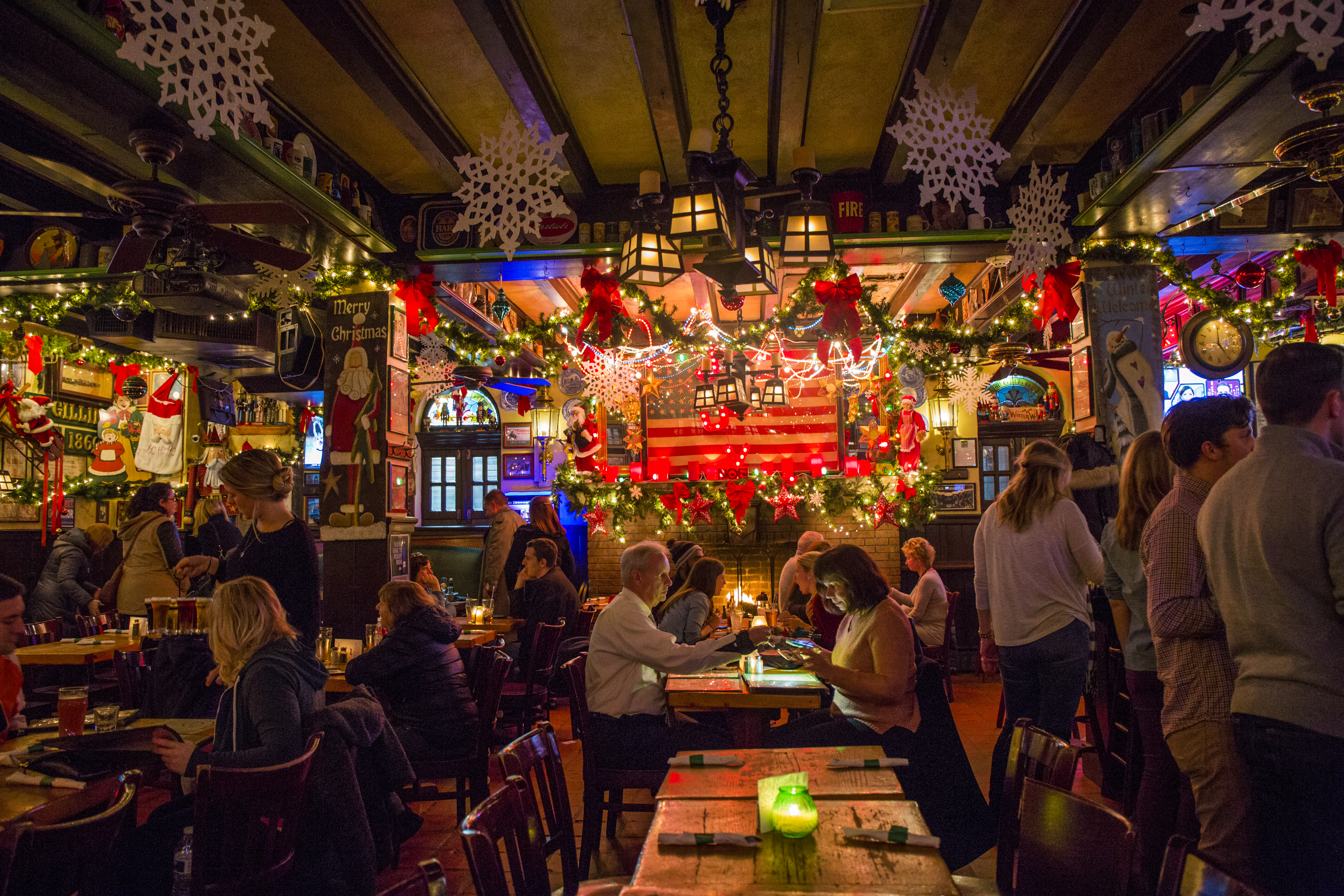
Christmas decorations at McGillin’s Olde Ale House in a photo from 2024M.Fischetti
“He was definitely a little wild,” Meg Woody, the Hoopers’ great-great-granddaughter, says of Doc.
Doc Hooper’s legendary late-night parties at McGillin’s never suffered from a shortage of women.
“Not like a tawdry house,” she says in the film, with a smile. “But there was definitely some experienced Philadelphia ladies hanging in the pub after hours.”
Growing more legendary
McGillin’s has since evolved into a craft beer bar, sports-watching haven, and match-making mecca. In February, the bar hosted a reunion for married couples who met at McGillin’s. It was packed.
Coincidentally, the bar is also where Martino Picareiello, Carosella’s drinking partner that fateful night four years ago, met his soon-to-be-bride, Aimee.
That same night when inspiration struck, right before walking out the door.
What’s at the heart of Carosella’s film is the idea that what makes the bar truly rare is just how special a place it has in so many Philadelphian hearts.
“We made this movie to showcase their stories,” he said, adding that for weeks after the crowd erupted in cheers at last year’s bar screening, he was flooded with emails from staff and patrons, old and new, who shared their own cherished McGillin’s memories.
After its debut on WHYY, the documentary will be available to stream on PBS Passport. Carosella hopes to develop it into a larger series on America’s oldest bars.
The thriving tavern only grows more legendary with each passing year, Carosella said.
“And it truly deserves it,” he said.
“McGillin’s: Philadelphia’s Oldest Bar”plays on WHYY-TV (Channel 12) on Thursday, 7:30 p.m. The watch party starts at 6:30 p.m. at McGillin’s Olde Ale House, 1310 Drury St. RSVP at events.ticketleap.com
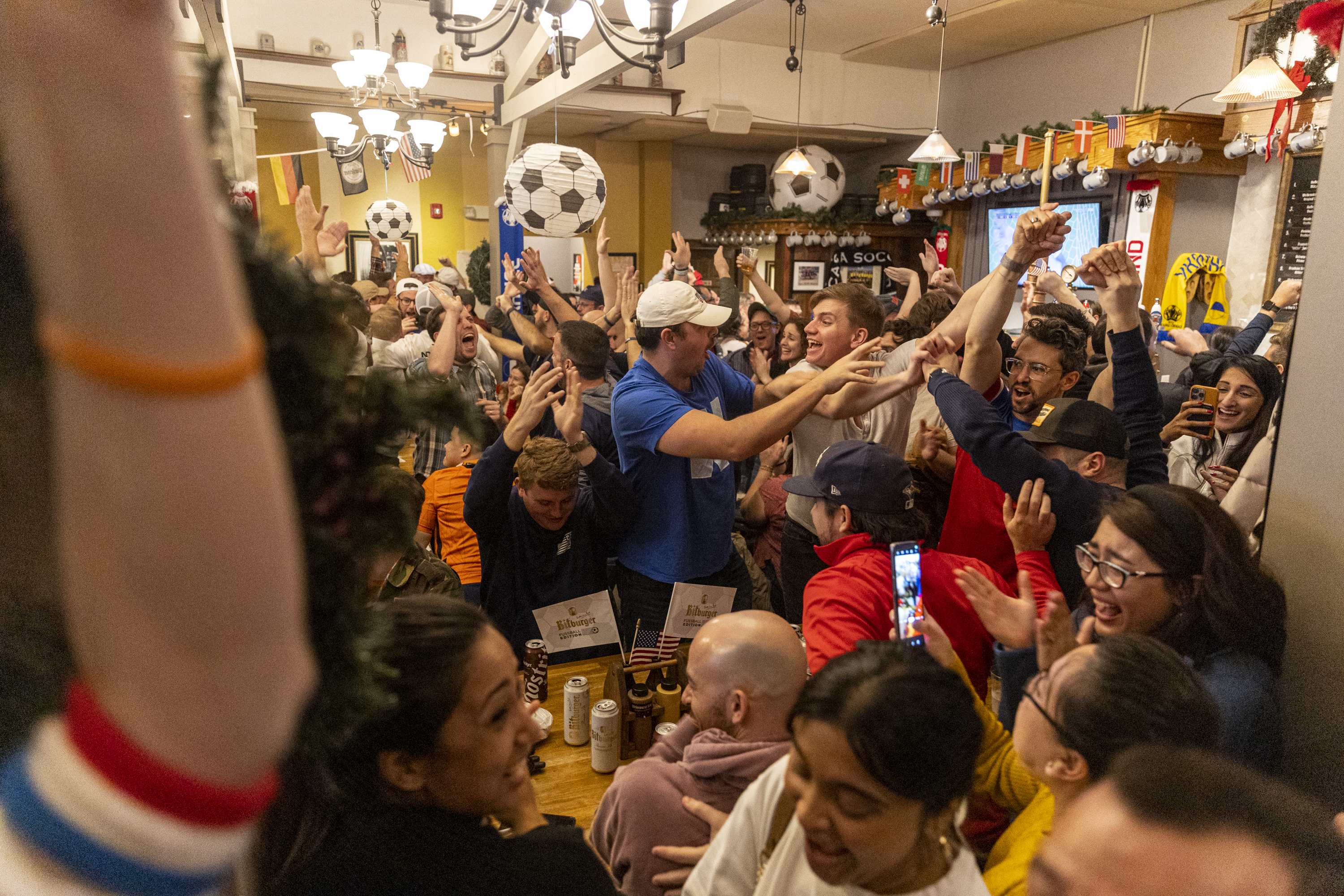
The eve of the World Cup was also the night before some Philadelphia bars could stay open until 4 a.m., according to a bill signed by Gov. Josh Shapiro in March.
But thanks to a sneaky provision in the bill, most establishments interested in a later last call weren’t yet eligible to do so — and in some instances won’t be until after July 4.
As of Wednesday evening, just 17 establishments were approved by the Pennsylvania Liquor Control Board to stay open until 4 a.m. for the duration of the World Cup, according to a list on the PLCB’s website. By Thursday morning the PLCB approved six more establishments, according to their website.
They represent roughly a third of the 65 Philly businesses that applied to the PLCB for approval, with the majority on the PLCB’s list marked as “in review” as of Thursday. The PLCB cancelled six applications due to ineligibility.
The PLCB started approving applications for extended hours on Wednesday, spokesperson Shawn Kelly told The Inquirer over email, and they will continue on a rolling basis. The last day applications will be accepted is June 19, Kelly said.
Establishments in the first wave of approvals include the strip clubs Sin City, Club Risque, and Cheerleaders; Rittenhouse Square sports bar Lucy; nightclubs Woody’s and Concourse Dance Bar; South Philly’s Live Casino! and bowling alley South Bowl, among others.
(function(){function e(){window.addEventListener(`message`,function(e){if(e.data[`datawrapper-height`]!==void 0){var t=document.querySelectorAll(`iframe`);for(var n in e.data[`datawrapper-height`])for(var r=0,i;i=t[r];r++)if(i.contentWindow===e.source){var a=e.data[`datawrapper-height`][n]+`px`;i.style.height=a}}})}e()})();
The permit process has caused confusion for some local bar owners, who said the delay in approvals have placed their World Cup plans on hold.
Rittenhouse Square jazz and billiards bar Cellar Dog applied for a permit to stay open until 4 a.m. on May 11, according to the PLCB’s records, and did not receive a permit until Thursday morning.
Owner Alfonzo Luna feared the last-minute notice would threw a wrench in the bar’s World Cup festivities. “We submitted everything right and on time, and we were just waiting,” he said on Wednesday night, prior to receiving approval. “I’m sure it’s a lot on [the PLCB’s] end, but for us it’s just frustrating to wait around because it puts a hold on any sort of marketing or operation changes that we that we need to make.”
The performance space at Cellar Dog Philly, which has yet to be approved for a permit to stay open until 4 a.m. during the 2026 World Cup.Spencer Starnes
How is this process supposed to work?
The permits are part of legislation introduced by Pennsylvania state senators Sen. Joe Picozzi and Sen. Vincent Hughes and signed into law by Gov. Josh Shapiro in March that would enable establishments in Philadelphia to stay open until 4 a.m. from June 11 to July 19, which covers all World Cup matches, Semiquincentennial celebrations, and the MLB All-Star game at Citizen’s Bank Park.
The thinking was that establishments should be able to stay open later to serve an influx of tourists looking to catch late night World Cup matches. In practice, however, many bar owners told The Inquirer that juice of late night hours isn’t worth the squeeze, between higher insurance premiums, an uncertain return on investment, and navigating bureaucracy.
Late night permits are available to all hotels, breweries, distilleries with liquor licenses in Philadelphia City limits. To initiate the application process, establishments must first have paid $250 to the City of Philadelphia’s Dept. of Commerce and completed the Liberty Bell Safe Certification Program, a one-day safety and compliance training.
A view of the Sports & Social sports bar at Live! Casino and Hotel in South Philadelphia. The casino has been approved for a permit to extend bar hours until 4 a.m. during the 2026 World Cup.(Courtesy of Live! Philadelphia)
Then, establishments must apply for a $500 permit from the PLCB, which would enable them to stay open until 4 a.m. through July 19. To be approved, applicants can’t have any pending licensing, inspection, or fiscal objections associated with their business. The City of Philadelphia can also protest applications filed with the PLCB, Kelly said, and can request a permit be revoked at any time.
Also baked into the process: A “30 day hold mandated by law,” Kelly said, that gives the PLCB “no discretion to approve or issue” permits less than 30 days after an application is received.
In other words, if a bar applied on June 4 to be open until 4 a.m., the earliest they could be approved would be July 4, giving them a little over two weeks to take advantage of extended hours. The PLCB decided to hold off on issuing permits earlier to prevent establishments from using them illegally, said Kelly
To be open late for the World Cup’s entirety, Kelly said, a business would’ve had to apply by May 11. “The PLCB conducts a full and complete investigation of every application it receives. There is no set timetable for that review,” said Kelly. “If an applicant submitted all required documentation — and filed in time — they will receive the Philadelphia 250 permit for the full period.”
Popular sports bar Cavanaugh’s Rittenhouse applied for a permit on May 21, according to PLCB records, meaning the earliest they could stay open late is June 21. Director of Operations Mike Anderson said the delay, while frustrating, isn’t a big deal.
The bar at Cavanaugh’s Rittenhouse, which has yet to have their permit approved for extended hours during the 2026 World Cup.MICHAEL KLEIN / Staff
The bar had only planned to exercise the 4 a.m. privileges on a case-by-case basis, said Anderson, when vibes at the bar are high. “I didn’t want to be left out if everyone else was doing it,” he said. “It could be the thing you tell stories about.”
The permit process was “easy enough,” said Anderson, whose sole gripe is “the lack of guidance.”
“I am guessing that we will eventually be approved or denied,” Anderson went on. “To be honest, it doesn’t really matter if we get approved. If we get denied, I wish I could reclaim my costs.”
Some bar owners, however, are just grateful everything got done in time . Four of FCM Hospitality’s properties — Concourse, Craft Hall, Dolphin Tavern, and the sports bar Lucy’s — are among the first wave of businesses approved for extended hour. Owner Avram Hornik said the process “couldn’t have gone better than it had.”
The PLCB and the city “are building the plane as they fly it,” he said. “It’s really hard to do something new … but I think the city and the state did an excellent job to make this happen.”
This story was updated on Thursday. Staff reporter Michael Klein contributed to this article.
“American cheese is all gone from Japan,” read Nihonbashi Philly’s frustrated post to Instagram on May 30. Going forward, the restaurant would be using Whiz and provolone only.
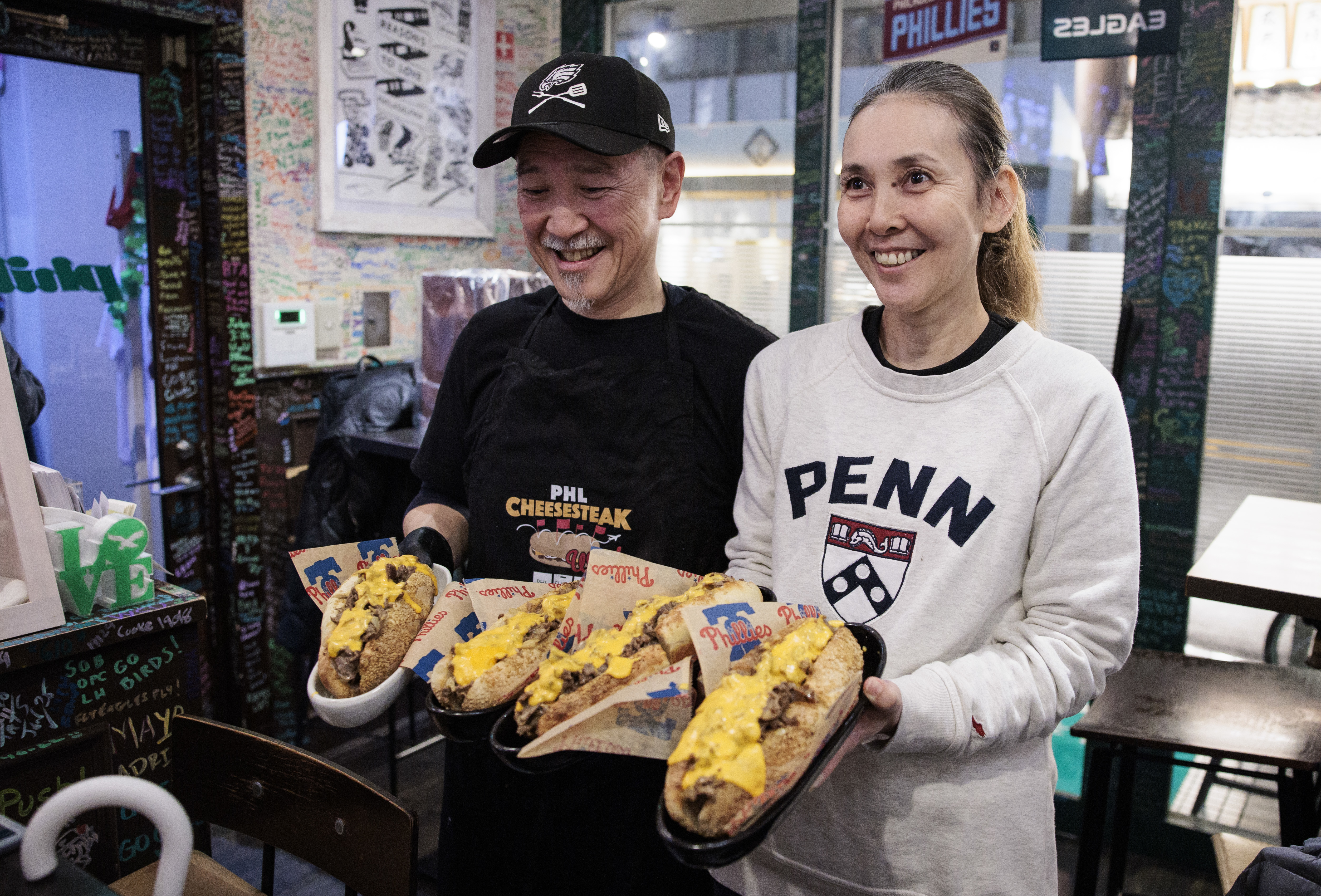
Tomomi and Kosuke Chujo own and operate Philadelphia’s unofficial embassy in Tokyo’s Nihonbashi neighborhood, a restaurant named Philly that serves cheesesteaks, house-made pretzels, and Tastykakes. They’re ambassadors of the cheesesteak and have become semi-regular fixtures in Philadelphia’s dining scene since their first trip to Philadelphia in 2020.
Their post was met with hundreds of comments of support, ranging from “American cheese is terrible anyway” to offers to smuggle in Cooper Sharp for them.
But while Cooper Sharp has become the preferred cheese on American cheesesteaks (at least, those that aspire to the level of Angelo’s) in recent years, the Chujos have long had a love for the Kraft-esque Kirkland American cheese they found at Japan’s Costcos.
Kosuke Chujo and his wife, Tomomi, posed for a portrait with cheesesteaks at Nihonbashi Philly on Sunday, Nov. 9, 2025, in Tokyo, Japan.Monica Herndon / Staff Photographer
For the Chujos, Kirkland brand Deluxe American Cheese has been their go-to cheese since 2021. When they did taste tests before they opened the restaurant, it won by a large margin over any other cheeses available to them, (though when Craig LaBan went to visit last year, the cheese was his only complaint, writing, “It was a satisfying cheesesteak, even if the cheese was not quite right — slices of American cheese that lacked the creamy flow and piquant savor of the now-standard Cooper Sharp, currently unavailable in Japan.“)
Nihonbashi Philly normally goes through 60 pounds of American cheese every week. Despite it being a relatively stable product, it still requires refrigeration. Tomomi Chujo has never been able to stock up in large quantities because of how small her restaurant is, and because she does not have a walk-in cooler.
So when Tomomi went to restock, she was startled to find the cheese missing.
“I went to Costcos in three other prefectures and bought what they had,” she said. “I check every day now, but they don’t have any more,”
The Inquirer reached out to Costco Japan and was told in an e-mailed statement that “this item has been discontinued and is no longer available at Costco locations in Japan.” The company declined to provide a reason for the change.
There are other options — Japan has a specialty dairy culture of its own, headquartered in Hokkaido, which is world-renowned for its milk. And Kraft cheese is also manufactured in Japan by Morinaga, a dairy conglomerate.
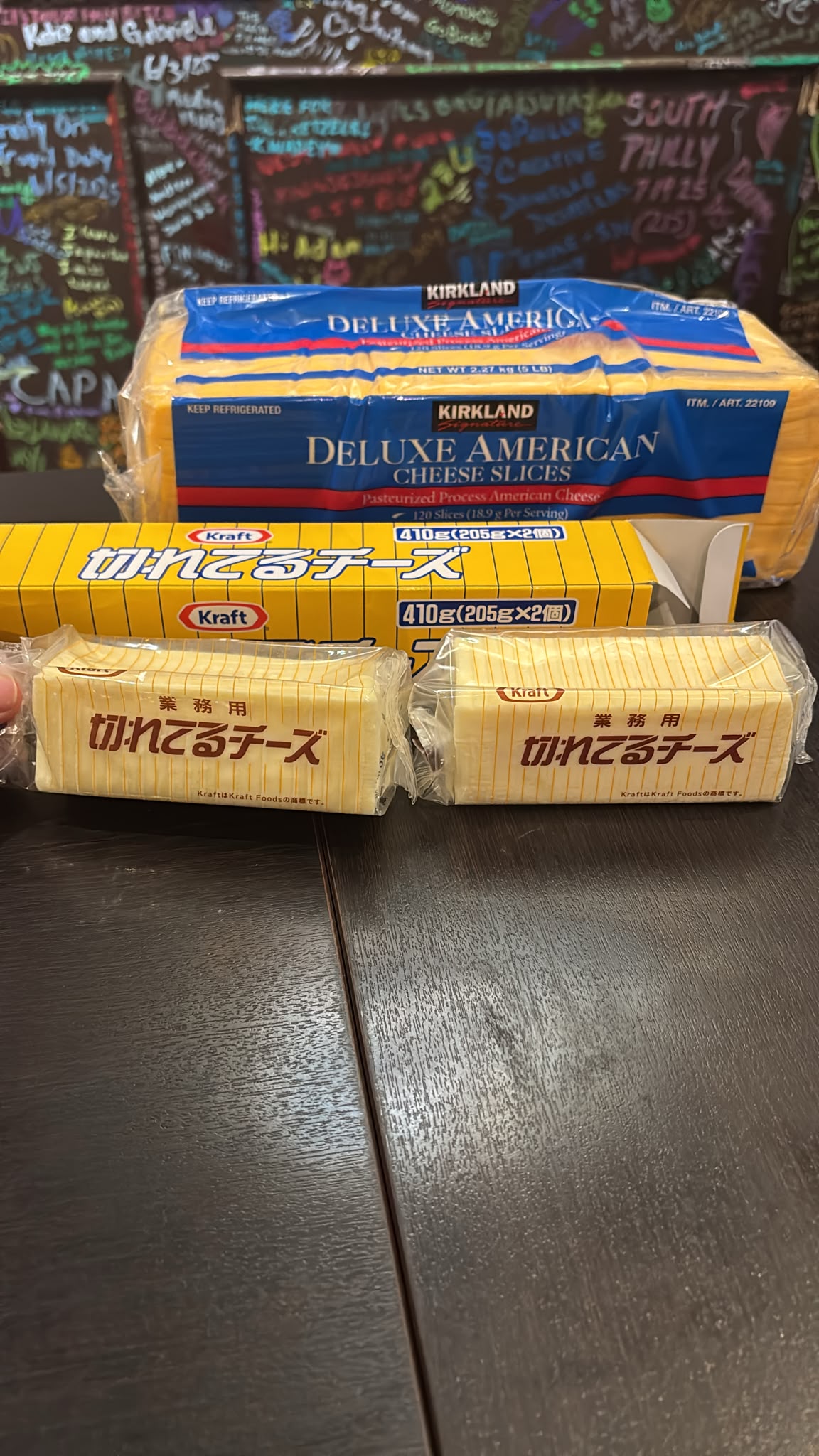
“The Kraft cheese made by Morinaga costs much more and it’s not that tasty,” explained Tomomi Chujo, who also e-mailed photos of Kirkland and Kraft Morinaga blocks illustrating their extreme differences in size and color. The Kirkland cheese melts better and costs significantly less.
“Cheese from Japan tastes like dairy and cream. It’s milkier and bland,” said Tomomi Chujo.
Morinaga American cheese in bulk is about half the size of the Kirkland package but twice the price. The Chujos say using Japanese cheese would make their cheesesteaks, which currently cost about $18, far too expensive for the average Japanese consumer.
A comparison of Kraft cheese manufactured by Morinaga in Japan and the Kirkland brand of American cheese.Nihonbashi Philly
With the American cheese gone for now, they Chujos are still committed to making Japan’s best cheesesteaks. And they’re open to other cheeses.
The Chujos occasionally bring Cooper Sharp back to Japan to use at Nihonbashi Philly.
“But there’s nothing like Cooper Sharp [for sale] in Japan,” she said.
On the Chujos’ most recent trip to Philly in May, they served their version of the cheesesteak at the Philly Opener and to the Eagles.
They flew with Japanese flour, Tomomi baked the loaves at Lost Bread’s bakery, and they made their cheesesteak with Cooper Sharp cheese, which is readily available in Philly.
The Chujos should be able to restock their Cooper Sharp supplies and make a few Costco runs for American cheese again this summer when they’re in Philly, though of course, they can only bring so much back to Japan.