Tag: Weekend Food

  • Lights, cameras, recipes: Philly’s home cooks are creating the menu for a new Center City restaurant

    Lights, cameras, recipes: Philly’s home cooks are creating the menu for a new Center City restaurant

    It’s three weeks before Recipe Philly’s opening day. The kitchen is finished, most of the 100 workers have been hired, and the dining room is a jumble of chairs, tables, and unfinished walls. But instead of construction crews applying finishing touches, cameras and lights have taken over.

    Opening a restaurant has been likened to putting on a show, and Recipe Philly — on the site of the long-ago McDonald’s at Broad and Arch Streets — is exactly that.
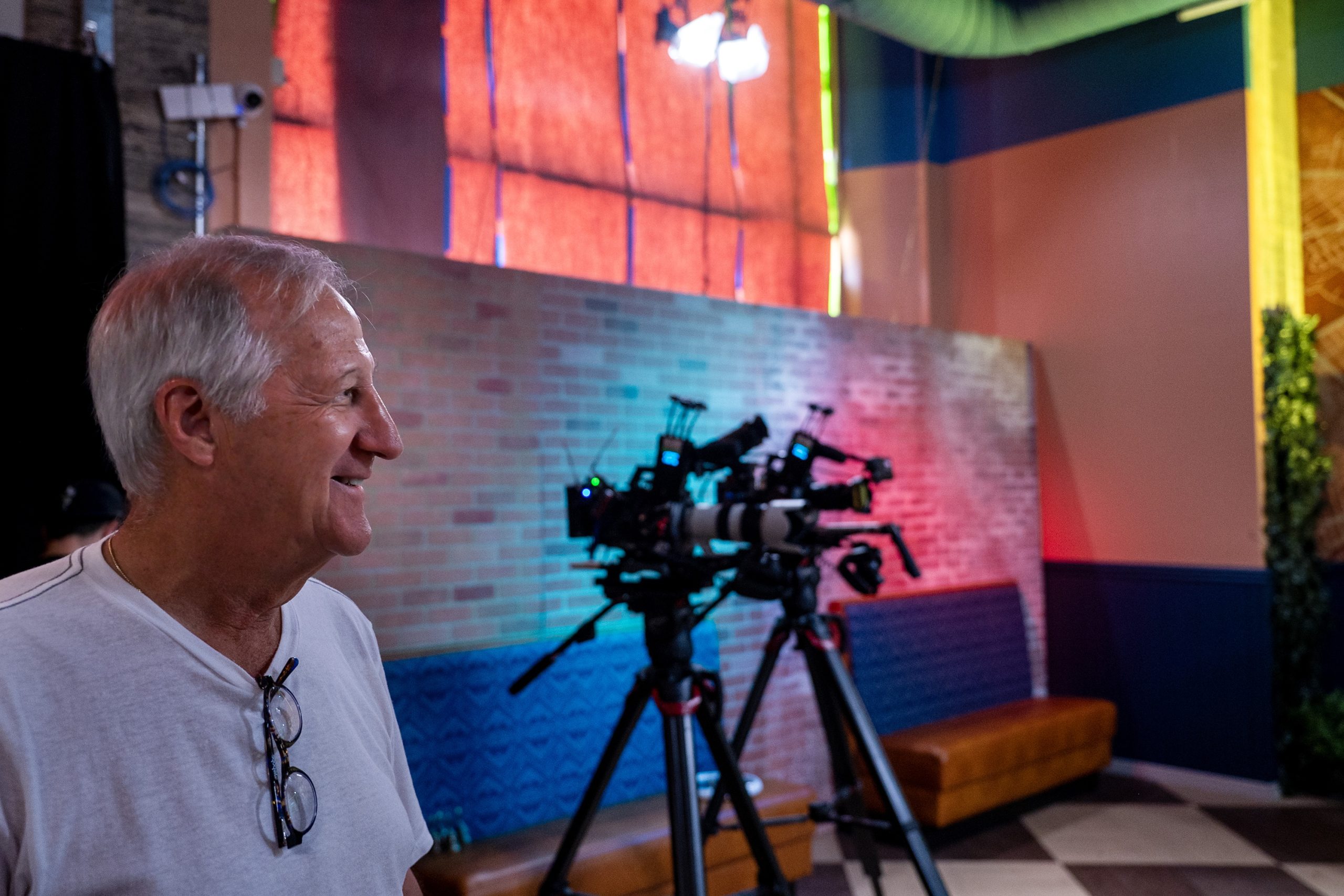
    Ed Baumstein, who dreamed up the Recipe Philly restaurant and reality series, on the set before contestants arrive.Tom Gralish / Staff Photographer

    Its creator, retired corporate executive Ed Baumstein, decided to turn the making of the restaurant into a reality show. When Recipe Philly opens in mid-August, customers won’t be ordering entrees created by an executive chef. They’ll be eating dishes developed by home cooks across the Philadelphia region whose recipes survived months of auditions, judging, recipe testing, and filming for an eight-episode series that Baumstein is shopping around.

    Everything is under wraps. The producers are keeping the outcome secret, declining to identify contestants or winning recipes.

    Recipe Philly’s roots date to the 2008 recession, when Baumstein was running SolomonEdwards, the Philadelphia consulting firm he founded in 1999. As businesses tightened spending, his chief financial officer suggested canceling the company’s annual holiday party.

    Instead, Baumstein invited employees to his suburban home for a potluck dinner.

    “I was just blown away by the enthusiasm that our colleagues brought to the Christmas party,” Baumstein said. “They were super-excited about making their dishes. They watched the buffet table to see who was eating their dishes. We gave out little prizes, and just getting that three minutes of fame was unbelievable.”
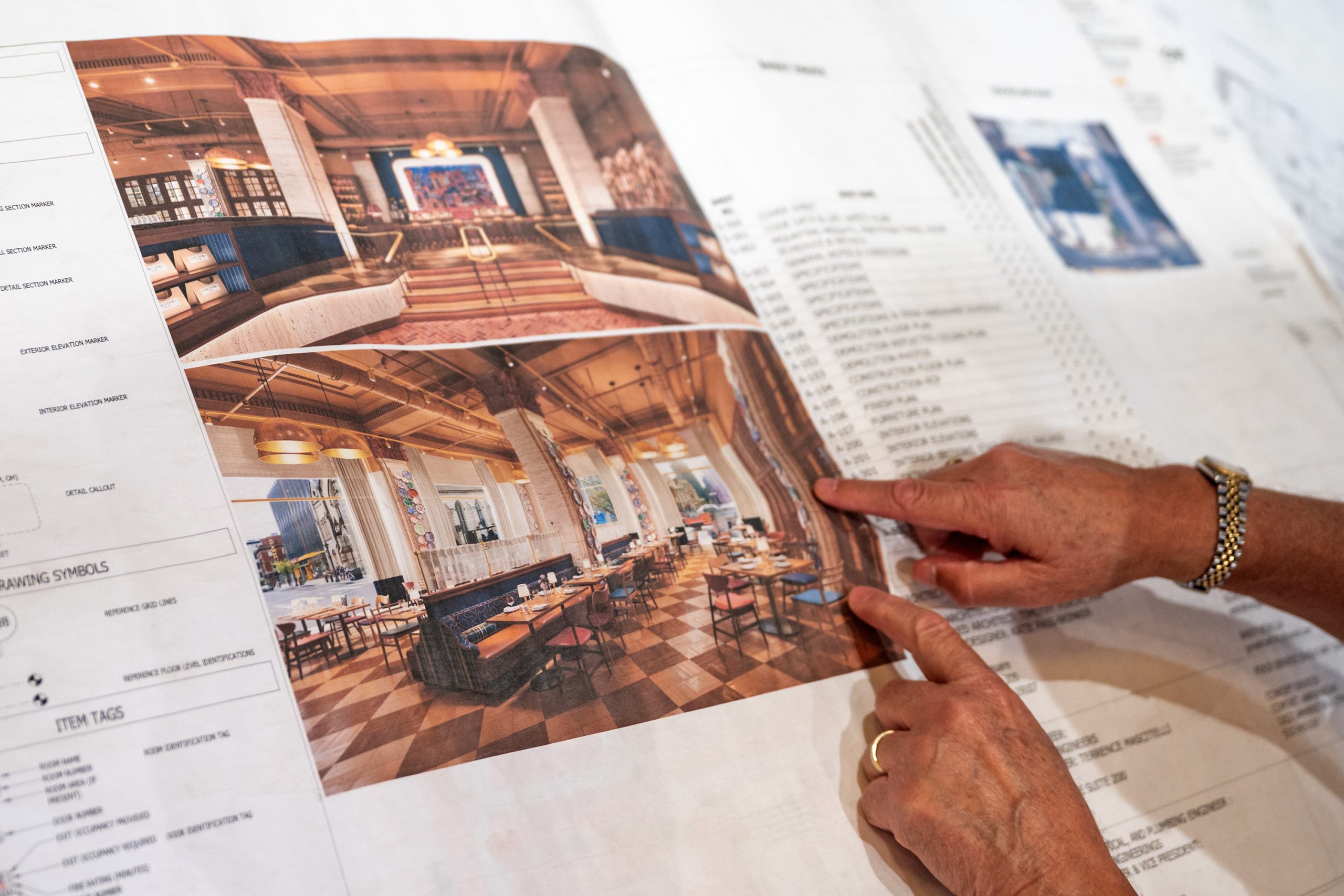
    Ed Baumstein looks over plans for Recipe Philly, which is expected to open in mid-August.Tom Gralish / Staff Photographer

    When Baumstein, 70, sold his company and retired nearly four years ago, he decided to turn that idea into Recipe Philly — a $3.8 million investment and his first restaurant. At 150 seats in the dining room and 22 at the bar, “we decided to go big,” Baumstein said.

    He announced the project last November with a casting call inside the Convention Center’s Broad Street atrium, where more than 1,000 people showed up to fill out recipe cards and share stories behind their dishes. Producers narrowed the field to 100 contestants, then further winnowed the competition to roughly 60 who advanced to the filmed cooking round.
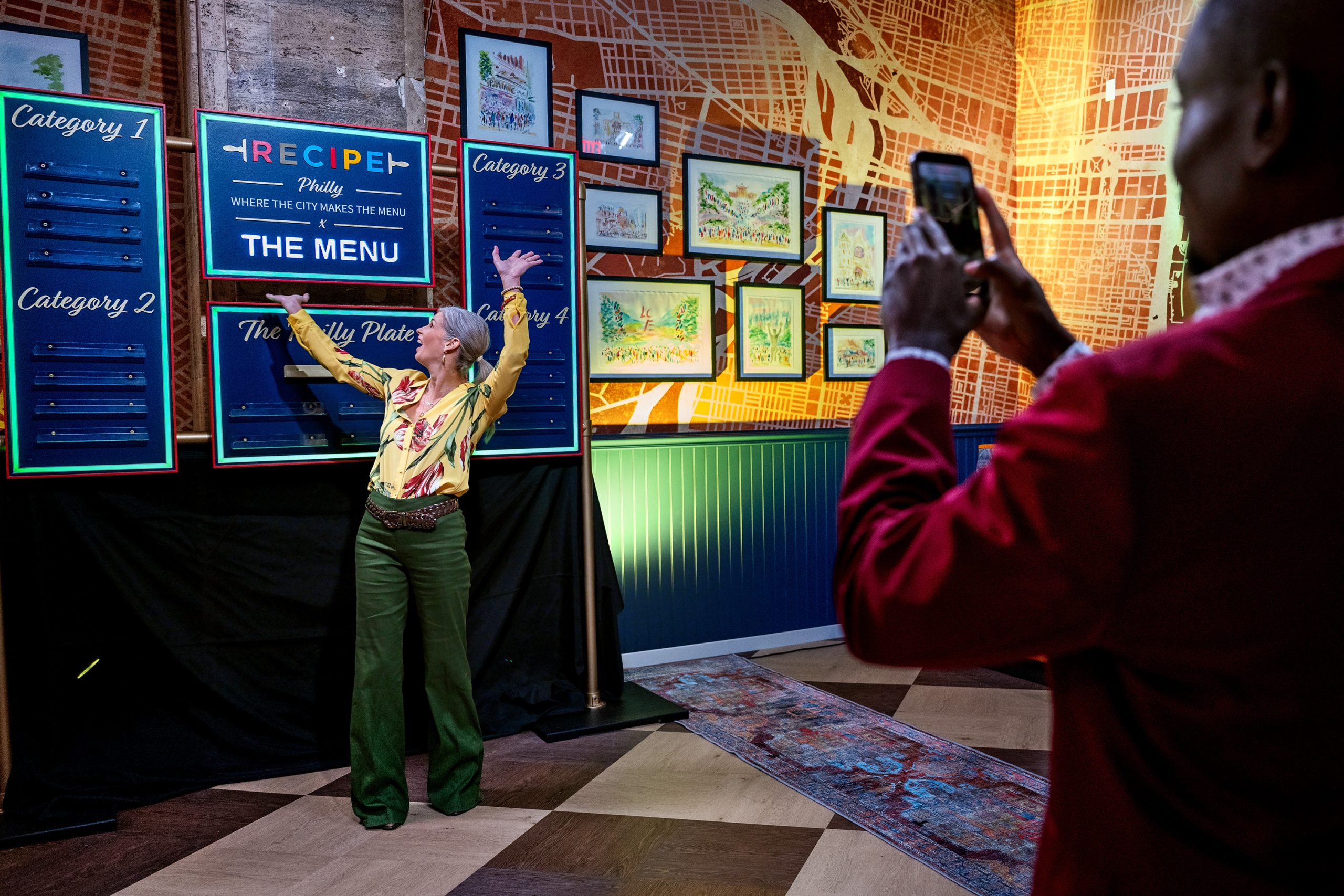
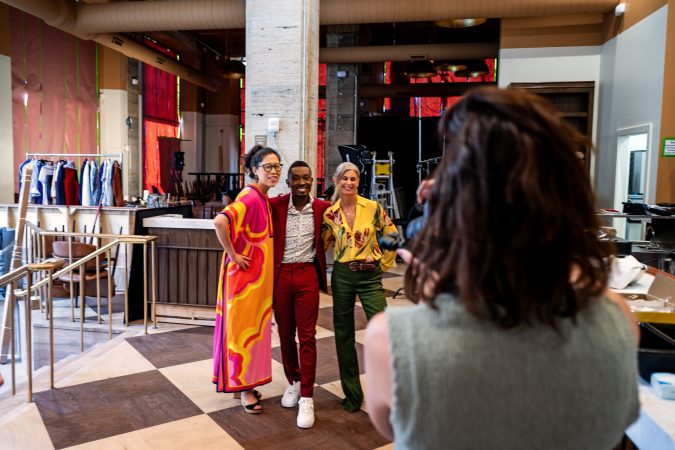
    Josh Moore (right) photographs fellow judge Jennifer Carroll on the set of Recipe Philly.Tom Gralish / Staff Photographer

    Contestants competed in categories including appetizers, soups and salads, poultry, seafood, pasta, meat entrées, desserts, and an “other” category for creative outliers. The process ultimately yielded 31 recipes that will appear on the restaurant’s opening menu.

    The competition didn’t end there. The remaining episodes being filmed this month have shifted from building the menu to crowning a champion.

    Sixteen contestants earned “silver spoons” from the judges and advanced into semifinal rounds devoted to particular categories. Those winners will compete for $70,000 in prize money — including one winner of $10,000. But regardless of who wins, the original 31 recipes will be served opening night.
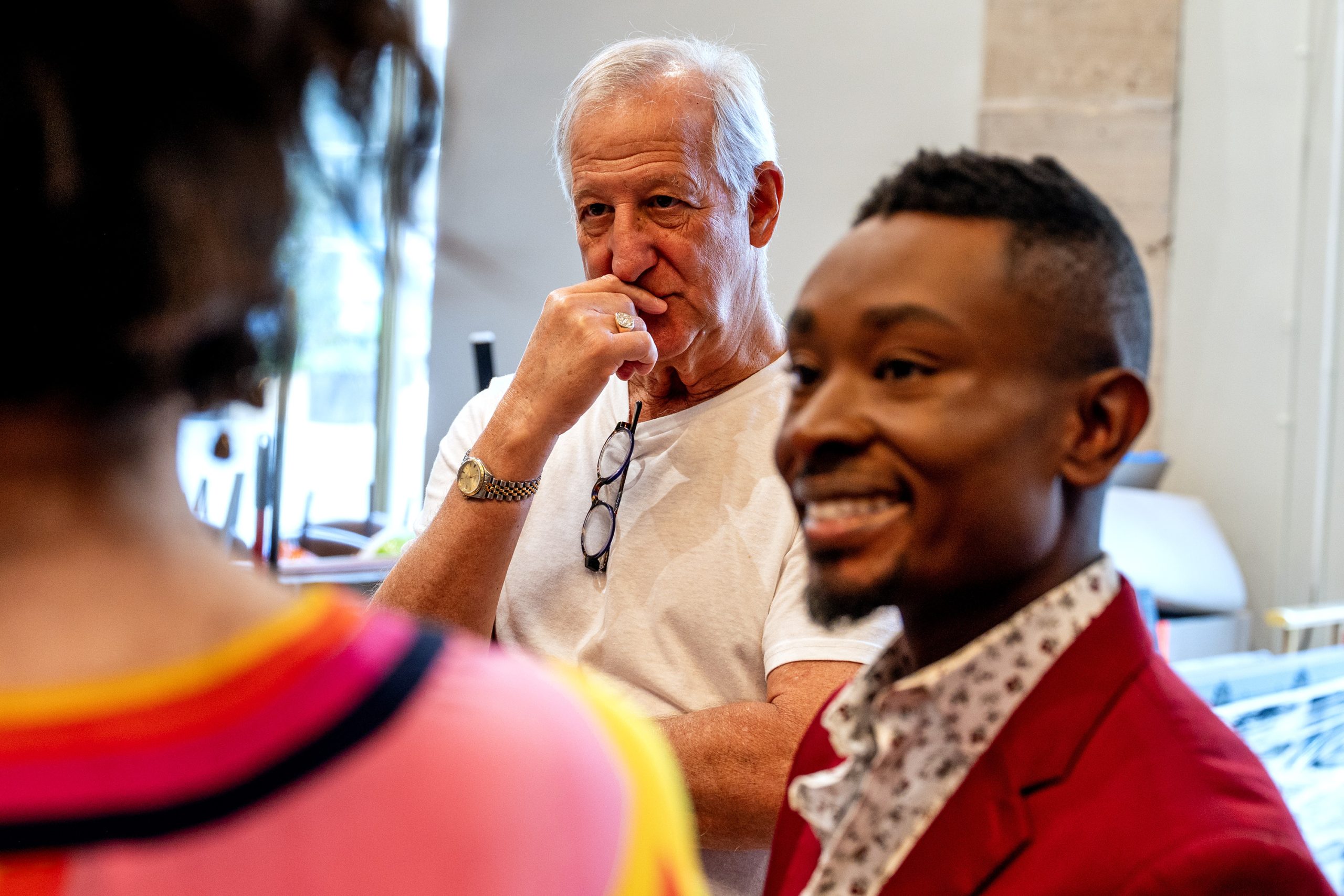
    Ed Baumstein (center) chats with Recipe Philly judges Clara Park (left) and Josh Moore.Tom Gralish / Staff Photographer

    “The city is building the menu,” said Josh Randall, a veteran casting producer for American Idol who is the show’s host and one of its producers. “These aren’t celebrity chefs. They’re neighbors, friends, brothers, sisters, parents — people who ordinarily wouldn’t have an opportunity to be on television.”

    Randall said that distinction attracted him to the project. When Baumstein first approached him, the concept was still evolving.

    “As a documentary, maybe it’s a 90-minute film,” Randall said. “As a competition, I thought it could sustain eight episodes.”
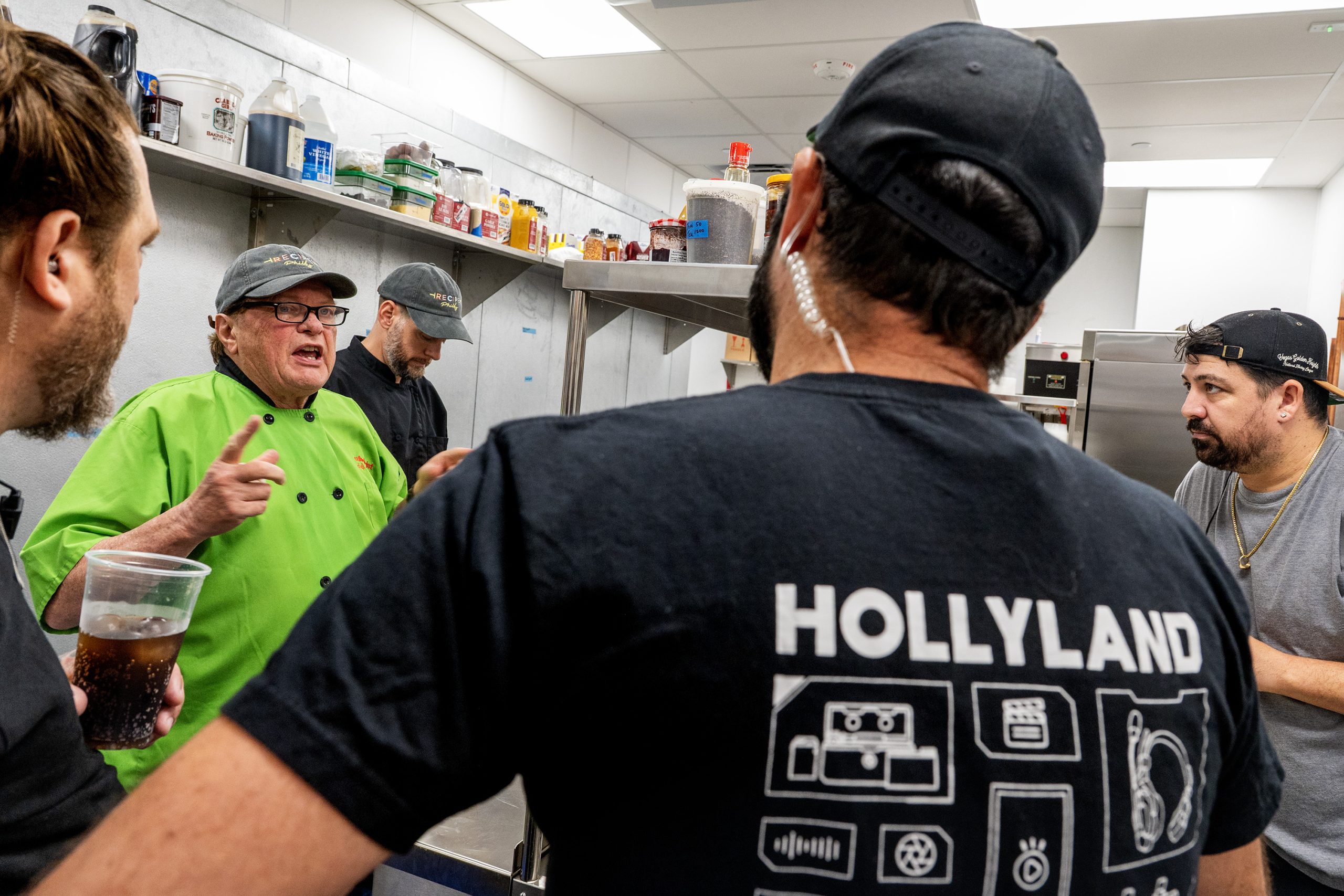
    Chef Andy Revella (left) talks the production staff in the kitchen at Recipe Philly. At right is supervising producer Jon Espinoza.Tom Gralish / Staff Photographer

    But he insisted that the show avoid the drama that dominates many reality competitions.

    “A lot of reality television is cutthroat,” Randall said. “I was drawn to the chance to create something lighter that celebrates people rather than tearing them down.”

    This might be the friendliest reality series ever. The judges — Jennifer Carroll, a veteran of Top Chef; Clara Park, a Chopped champion; and influencer Josh Moore, who goes by @josheatsphilly — say they’ve cried multiple times while hearing the stories. “You end up rooting for everyone,” Park said.

    Carroll said nearly every contestant arrived with more than a recipe.
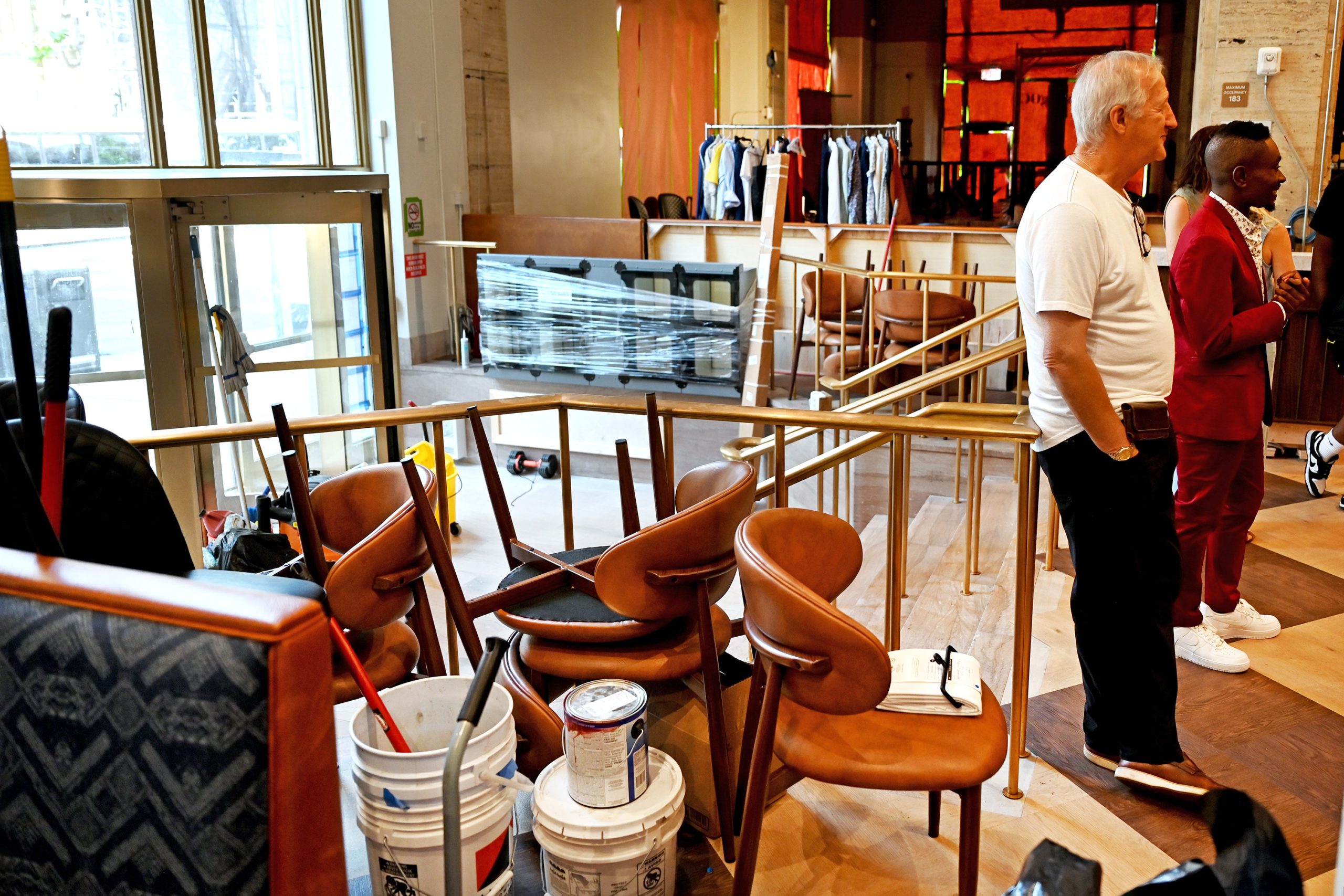
    Ed Baumstein (left) in the still-unfinished Recipe Philly restaurant.Tom Gralish / Staff Photographer

    “Every contestant has a personal story behind the dish,” she said. “Some recipes have been passed down through generations. Others are completely original.”

    She said the judges make a point of talking with contestants after judging because rejection can sting.

    “This show is the opposite of a lot of competitive cooking shows,” Carroll said. “It’s not about tearing people down or humiliating them. It’s about lifting them up.”

    Moore conceded that he expected more sentimental cooking than exceptional cooking.

    “I wondered whether someone might show up with something very simple,” he said. “Instead, people have really brought their best.”

    For Park, one of the biggest surprises has been watching Philadelphia’s diversity emerge through its food.

    “You literally see all the different neighborhoods and ethnic communities of Philadelphia come to life through these dishes,” she said. “There are dishes I’ve never seen before that are emblematic of certain cultures.”

    Behind the scenes, another challenge awaited. Home recipes are scaled to the dinner table. Some require elaborate preparation. Many rely on instinct rather than measurements.
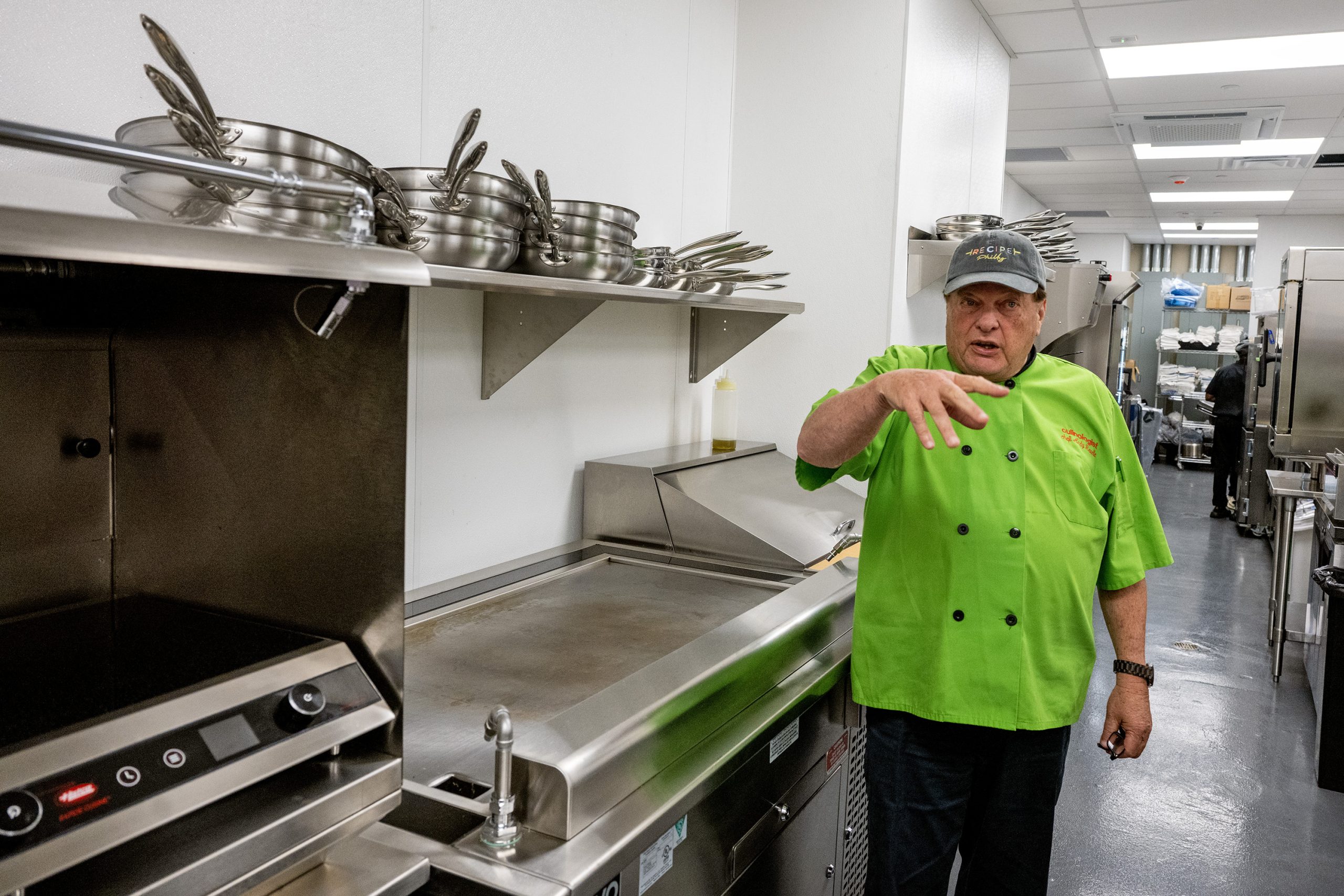
    Chef Andy Revella in the kitchen, which has hoodless venting, at Recipe Philly.Tom Gralish / Staff Photographer

    That work fell to chef Andy Revella, 74, the restaurant’s operating partner, whose resume includes Bennigan’s, Steak & Ale, Rainforest Cafe, and Harrah’s restaurants worldwide. Jarrett O’Hara, formerly culinary director of Federal Donuts, is vice president of culinary operations.

    “We’re just going to take their recipe and say, ‘Here’s how we’d do it in a restaurant,’” Revella said. “The flavor, the taste, and the look stay the same. The process is different.”

    The judges also had to consider labor, food costs, consistency, and whether recipes could realistically be reproduced hundreds of times.
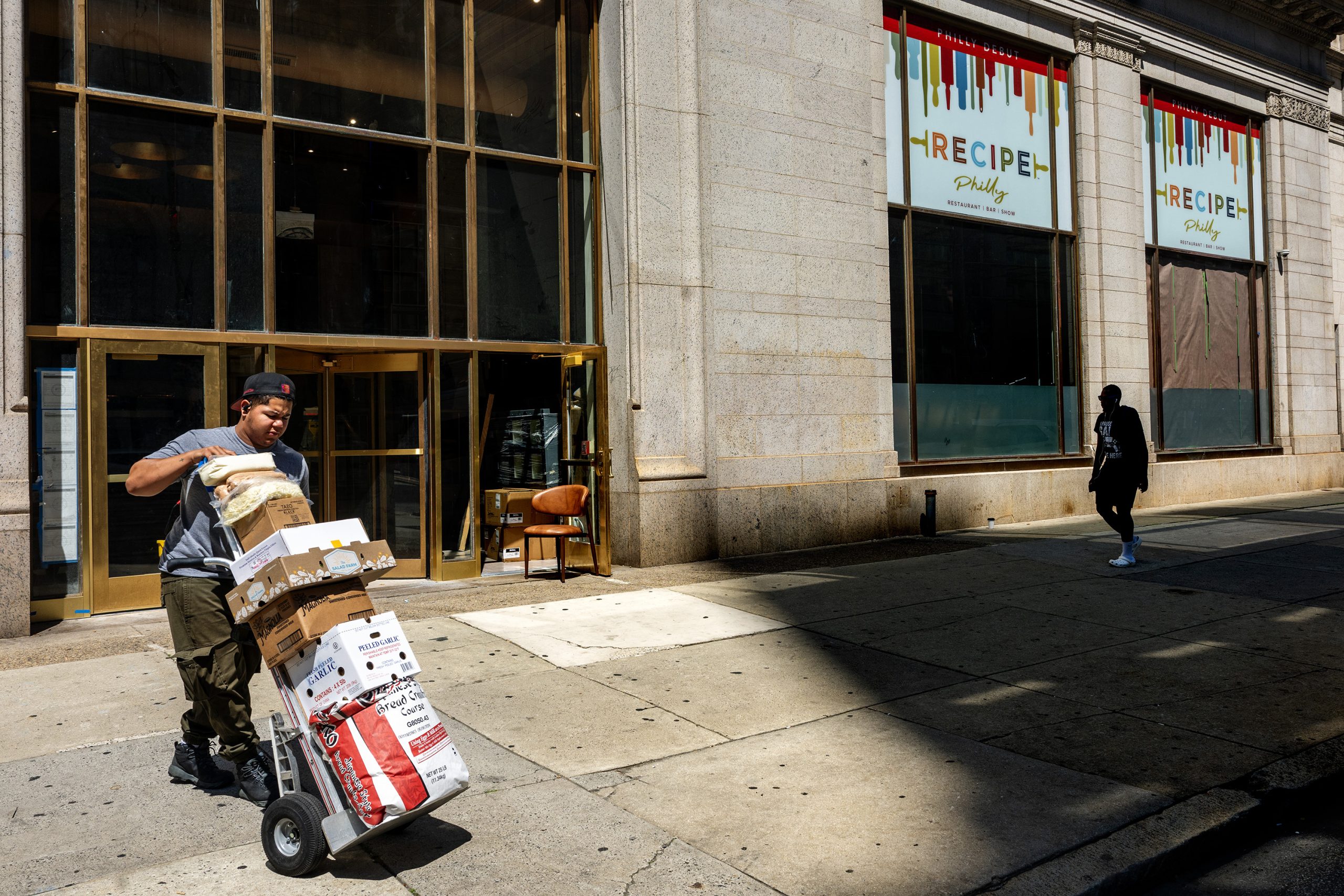
    Food is delivered to Recipe Philly for the filming.Tom Gralish / Staff Photographer

    “What one person can prepare at home is very different from what a restaurant can consistently reproduce for hundreds of guests,” Park said.

    Even the kitchen itself departs from convention.

    Revella has set up all-electric kitchen featuring self-contained filtration systems, advanced grease interception, and other technology designed to improve indoor air quality while reducing wastewater.

    “When we talk about a green kitchen, the first thing you’ll notice is there are no traditional exhaust hoods,” Revella said. “We don’t put grease into the air.”

    The flat-top griddle, which ordinarily would sit beneath a hood, is equipped with a device that traps grease and smoke.

    Baumstein said the environmental approach mattered as much as the technology.

    “I grew up with Earth Day and environmental awareness,” he said. “Doing something positive for the environment has always mattered to me.”

    The restaurant, designed by Nelson Worldwide, aims to feel more like someone’s home than a television set. Warm wood tones, intentionally mismatched plateware, a mural of the Italian Market behind the bar, a wall of vintage rolling pins, and a 40-seat private dining room reinforce the idea that the menu began in home kitchens. The look is whimsical in the restrooms, with wallpaper depicting Ben Franklin blowing a bubblegum bubble.
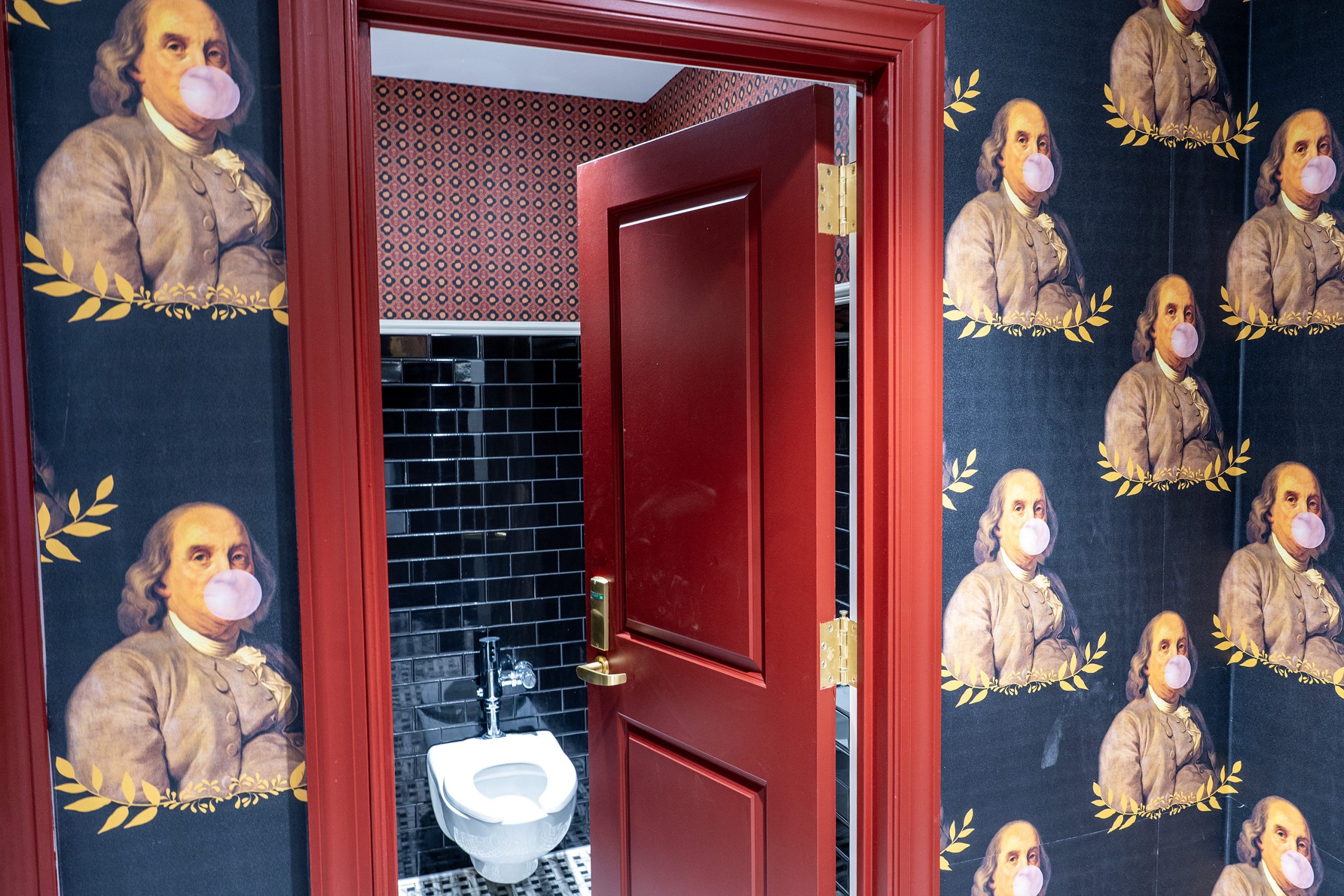
    Restrooms at Recipe Philly.Tom Gralish / Staff Photographer

    “We wanted people to feel like they were walking into someone’s home kitchen,” Baumstein said. “Since the restaurant is built around home cooks, we wanted every aspect of the design to reflect that idea.”

    Recipe Philly will serve lunch and dinner. Baumstein said entrees will be priced from $25 to $35.

    Randall hopes diners eventually see past the television-production aspect and recognize something more enduring.

    “I fell in love with the heart of the project,” he said. “Then I met the people from the city and realized they had stories that deserved to be told in a fun way.”
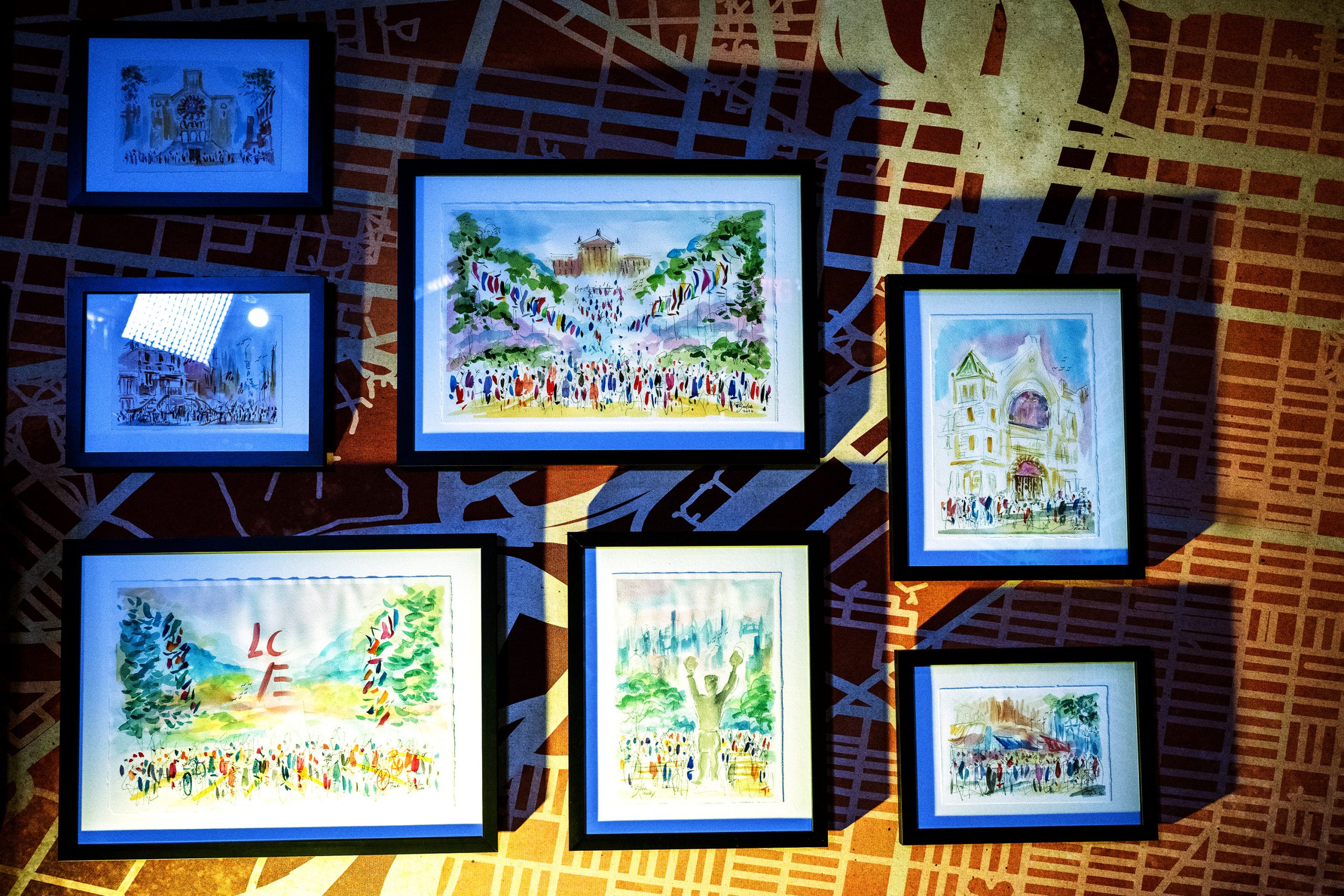
    Watercolors by Philadelphia artist Joe Barker decorate the set of Recipe Philly.Tom Gralish / Staff Photographer
  • River Twice is expanding next door, bringing more Mother Rucker burgers, more seating, and a bar

    River Twice is expanding next door, bringing more Mother Rucker burgers, more seating, and a bar

    To everyone who has hankered for a Mother Rucker burger at River Twice on a day other than a Monday, Amanda Rucker and chef Randy Rucker have a solution.

    River Twice will expand this fall into the former Manatawny Still Works space next door, adding a full-service bar to the dining room and chef’s counter at Tasker Street and East Passyunk Avenue.

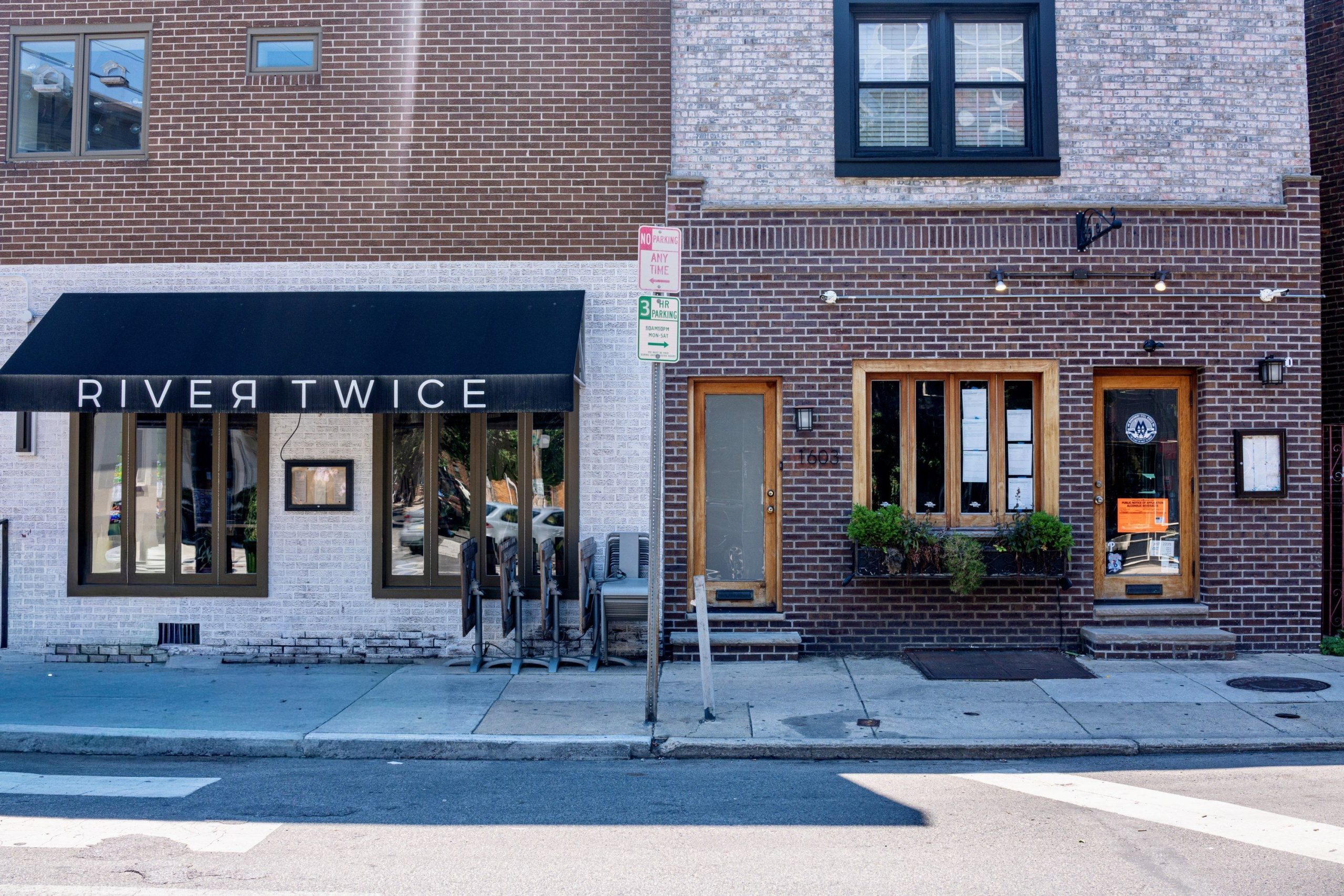
    River Twice is expanding next door into 1603 E. Passyunk Ave., the former Manatawny Still Works.Mike Prince

    The Ruckers are targeting a September debut for the space at 1603 E. Passyunk Ave., which connects to the Michelin-recommended restaurant by a passageway. Though the renovation will eliminate a few seats in the existing dining room, the project will add 24 seats overall, including a 13-seat bar, a standing drink rail, a temperature-controlled wine display, and a second restroom.

    After Manatawny announced last summer that it was closing its tasting rooms, the landlord Passyunk Avenue Revitalization Corp. approached the Ruckers about taking over. “We live in the neighborhood with our kids, and it felt like a chance to plant even deeper roots here,” Amanda Rucker said.

    For Randy Rucker, the biggest attraction was the opportunity to broaden the restaurant’s appeal.

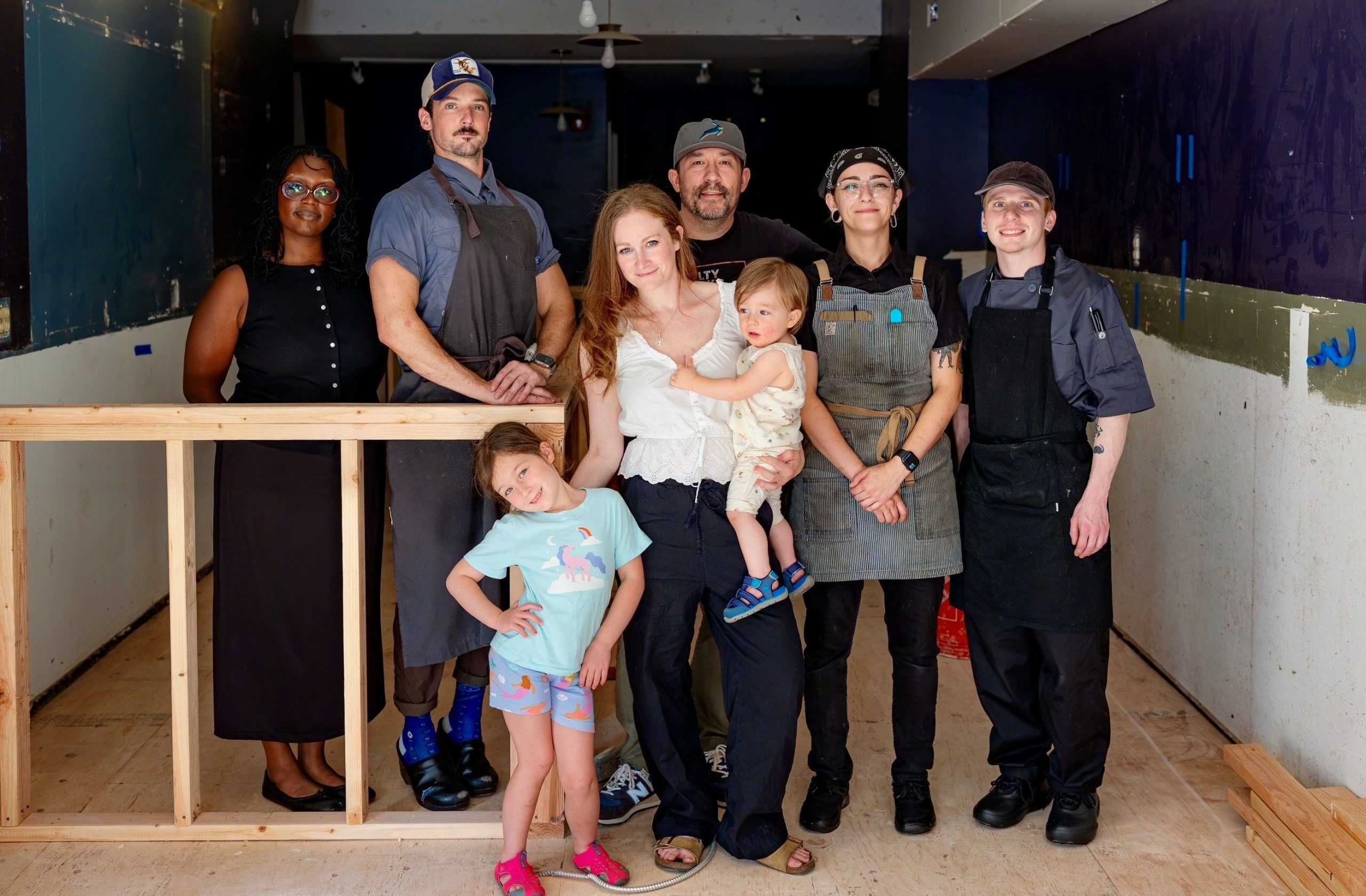
    River Twice owners Randy and Amanda Rucker (center, with children Ruby and Stiles), with Jhazmyn Wallace, Jeff McConnell, Autumn Impalli, and Bret Whartenby.Mike Prince

    “River Twice has always been a commitment,” he said. “People come in for a multicourse dining experience. Having a dedicated bar program lets us serve people who just want to stop in for a drink and a snack without committing to the tasting menu.”

    The addition will remain part of River Twice, not a separate concept. It will have its own cocktail program and an à la carte menu, while guests seated at the bar will also be able to order the tasting menu.

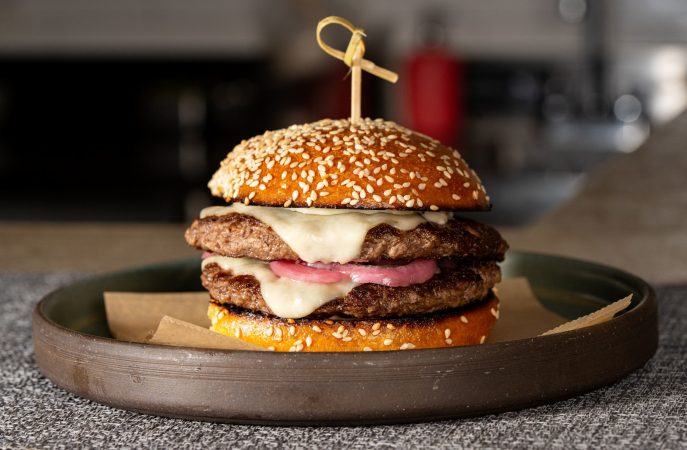
    Besides the Mother Rucker burger — two quarter-pound patties from Allen Bros. with American cheese, everything-spiced mayo, and pickled onions on a seeded Mighty Bread Co. bun, offered now only on Mondays — the bar menu will include shrimp toast with uni, ricotta beignets, nightly oyster crudo, and rotating cheese selections from the Farm at Doe Run. General manager/beverage director Jhazmyn Wallace will oversee the cocktail program.

    River Twice’s tasting menu will also expand from four to five courses, beginning with canapés.

    The project gives Amanda Rucker her largest artistic canvas yet. After designing the interiors of both River Twice and their second restaurant, Rittenhouse’s Little Water, she is painting a mural that will span the entire south wall of the new bar.

    The bar is expected to operate Thursday through Monday beginning at 5 p.m.

  • High-protein soft pretzels and soups are on the menu as Philly’s iconic food brands compete for GLP-1 consumers

    High-protein soft pretzels and soups are on the menu as Philly’s iconic food brands compete for GLP-1 consumers

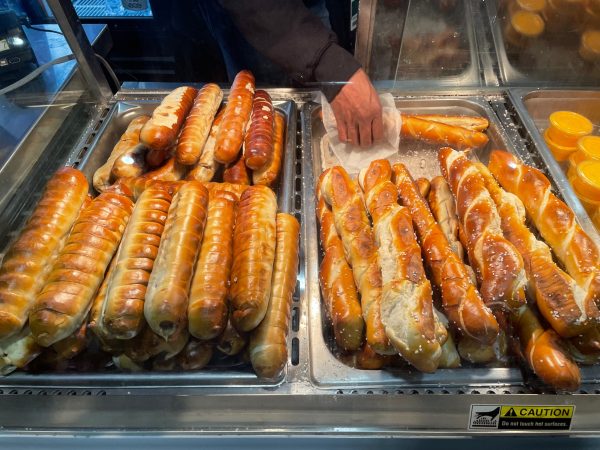
    A soft pretzel from Philly Pretzel Factory currently has about 12 grams of protein.

    But sometime soon, you will be able to buy one with much more.

    The company says it is in the early stages of developing a high-protein pretzel, one of several new products it hopes will attract consumers concerned about weight loss.

    “Obviously, the trend is protein,” said company president Marty Ferrill. “Even people who are on GLP-1s, they’re looking for more protein-rich foods.”

    Philly Pretzel Factory is just one of the area companies changing their products to accommodate consumers who are eating less and “protein-maxxing.” The viral nutrition trend refers to an increasing obsession with eating more protein based on the idea that it builds muscle.

    A recent Gallup survey reported approximately one in eight U.S. adults are taking appetite-suppressing GLP-1 medications.

    GLP-1 drugs such as Ozempic and Wegovy were initially created to treat individuals with type 2 diabetes by regulating blood sugar levels, but their hunger-suppressing effects have spurred wider adoption for weight loss. A JPMorgan report estimates that by 2030, up to 30 million Americans may be using GLP-1 medications, especially as pill formats become available.

    As the medications rise in popularity and appetites shrink, the food industry could face headwinds. A recent study found that within six months of starting a GLP-1 medication, households with at least one GLP-user reduce their annual grocery spending by $390 on average.

    But this isn’t the industry’s first rodeo.

    The low-fat craze of the 1980s and the carb-phobic diets of the 2000s also forced food brands to rethink their products.

    “Until there’s a magic pill where you just don’t have to eat, period, the food industry will respond,” said Ernest Baskin, chair of St. Joseph’s University’s Food, Pharma, and Healthcare Department. “They’re going to change their product to appeal to the next generation of consumers.”

    Making every bite count

    Philly Pretzel Factory’s protein-enriched pretzels are an example of functional foods, which are foods that have been formulated to contain added nutrients and health-enhancing substances.

    Functional foods can be especially important for GLP-1 users, who eat smaller portions but still require their necessary vitamins and minerals.

    “In a world where you’re not eating as much, you want everything to count,” said Baskin.

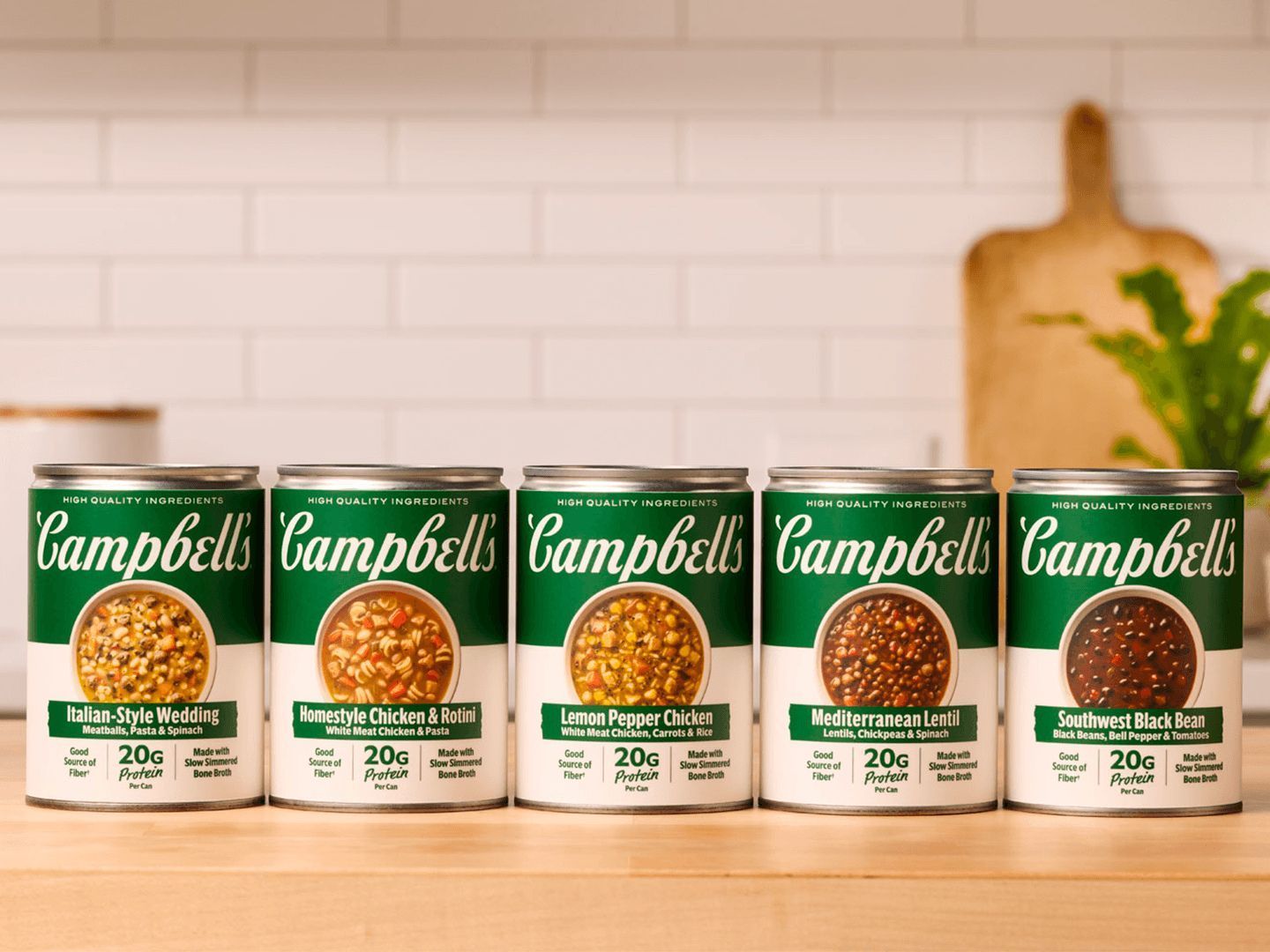
    Campbell’s, the Camden-based food and snack giant, has ventured into the functional foods market with a recent launch of five protein soups that offer 20 grams of protein per can.

    The Campbell’s Company launched five new protein soups with 20 grams of protein per can.The Campbell's Company

    The company also released a new protein-fortified snack option with Snyder’s of Hanover’s harvest wheat pretzel sticks, which offer 6 grams of protein per serving. (As opposed to 3 grams for a standard pretzel stick serving.)

    The options “give consumers choices that fit their nutritional goals and lifestyles while helping get more out of every bite,” says Dave Chalk, Campbell’s vice president of enterprise insights and analytics.

    The recipes of popular Philly foods are changing too, as consumers prioritize better-for-you ingredients. In addition to the protein pretzel at Philly Pretzel Factory, their regular pretzels are undergoing a “clean label” reformulation.

    Ferrill said the company is ensuring consistent taste while changing some components: using unbleached flour instead of bleached, removing the additive potassium bromate, and replacing whey protein with a plant-based substitute. That means the franchise’s iconic pretzels will become vegan this year.

    “The urgency is [greater] now than it was three years ago,” said Ferrill, noting that the company has been developing the clean-label pretzel for years.

    Greater control over meals and portions

    At Honeygrow, a fast-casual chain that offers salads and stir-fries, customization is another option for GLP-1 users, said Todd Miller, senior vice president of marketing.

    More Honeygrow customers are choosing whole-wheat noodles — which offer 17 grams of fiber and 13 grams of protein — for their stir-fries, or crafting more vegetable-forward meals, said Miller.

    A chicken parm stir-fry at Honeygrow is at the 11th Street location in Philadelphia in 2024.Jessica Griffin / Staff Photographer

    “What is becoming increasingly important is the ability to personalize a meal around the nutrients and portions that matter to each customer,” Miller said.

    Campbell’s is banking on similar personalization preferences. Some research shows GLP-1 users are dining out less to control portion sizes and ingredients. With brands like Pacific Foods, Swanson, and Rao’s under the Campbell’s umbrella, the company’s cooking essentials business is benefiting.

    “The biggest opportunity within Campbell’s portfolio is the confidence consumers have gained with cooking at home,” Chalk said.

    People still want good food

    Despite moving toward healthier choices, many food companies are serious about not compromising flavor.

    For Honeygrow, that means continually introducing limited-time offers and keeping up to date with new ingredients to attract customers. Currently, Honeygrow’s seasonal summer menu includes a ginger scallion stir-fry and a pomegranate acai salad.

    “Even though you’re on a GLP-1, that doesn’t mean that you don’t want delicious food,” said Miller.

    Taste matters. When choosing what to eat, people are looking for enjoyment, comfort, and connection, said Ami Lawson, managing director of food and beverage marketing agency Quench.

    “The brands that will win aren’t the ones chasing the GLP-1 trend, they’re the ones delivering foods that people genuinely feel are worth eating,” said Lawson.

    Nostalgia and memory also play a significant role in food choice. Take soft pretzels, a Philly food staple.

    “If you grew up eating pretzels, you’re probably going to give up other things before you give up your pretzels,” Ferrill, of Philly Pretzel Factory, said.

  • Philly isn’t applying to host the next James Beard Awards. Some insiders say that’s a mistake.

    Philly isn’t applying to host the next James Beard Awards. Some insiders say that’s a mistake.

    Philly may be among the James Beard Awards’ most valuable players, but it won’t be their next host.

    The Philadelphia Convention & Visitors Bureau — the organization that brought the Michelin Guide to Philly last year — doesn’t plan to pursue a bid to host the James Beard Foundation’s annual awards ceremony, a spokesperson told reporters Monday.

    Considered to be the restaurant industry’s Oscars, the Beard Awards have celebrated the best in food service and media across the United States every spring since 1991.

    The ceremony moved from New York City to Chicago in 2015, where it has been held with increasing fanfare for the past 11 years. Now, the awards are searching for a new city to take up the mantle for a five-year term, from 2029 through 2033.

    “Recognition through the awards can be transformative — driving visibility, strengthening businesses, and creating new opportunities for recipients both immediately and over time,” the Beard Foundation said last week in a statement announcing a request for information from potential host cities. “These benefits extend to the host destination as well: The multiday event showcases the local culinary community while generating national media attention and meaningful economic impact.”

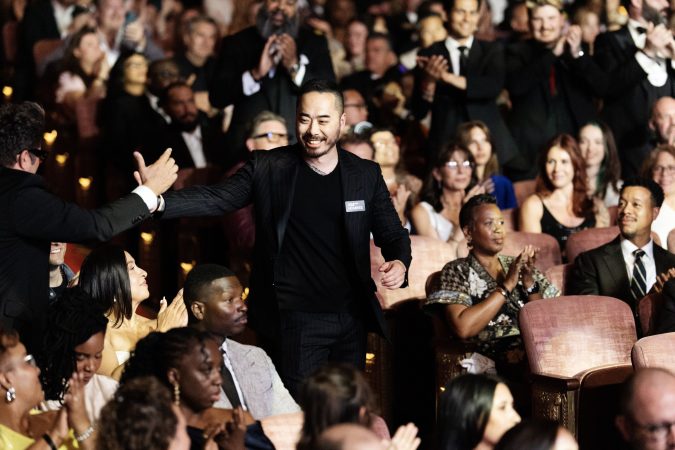
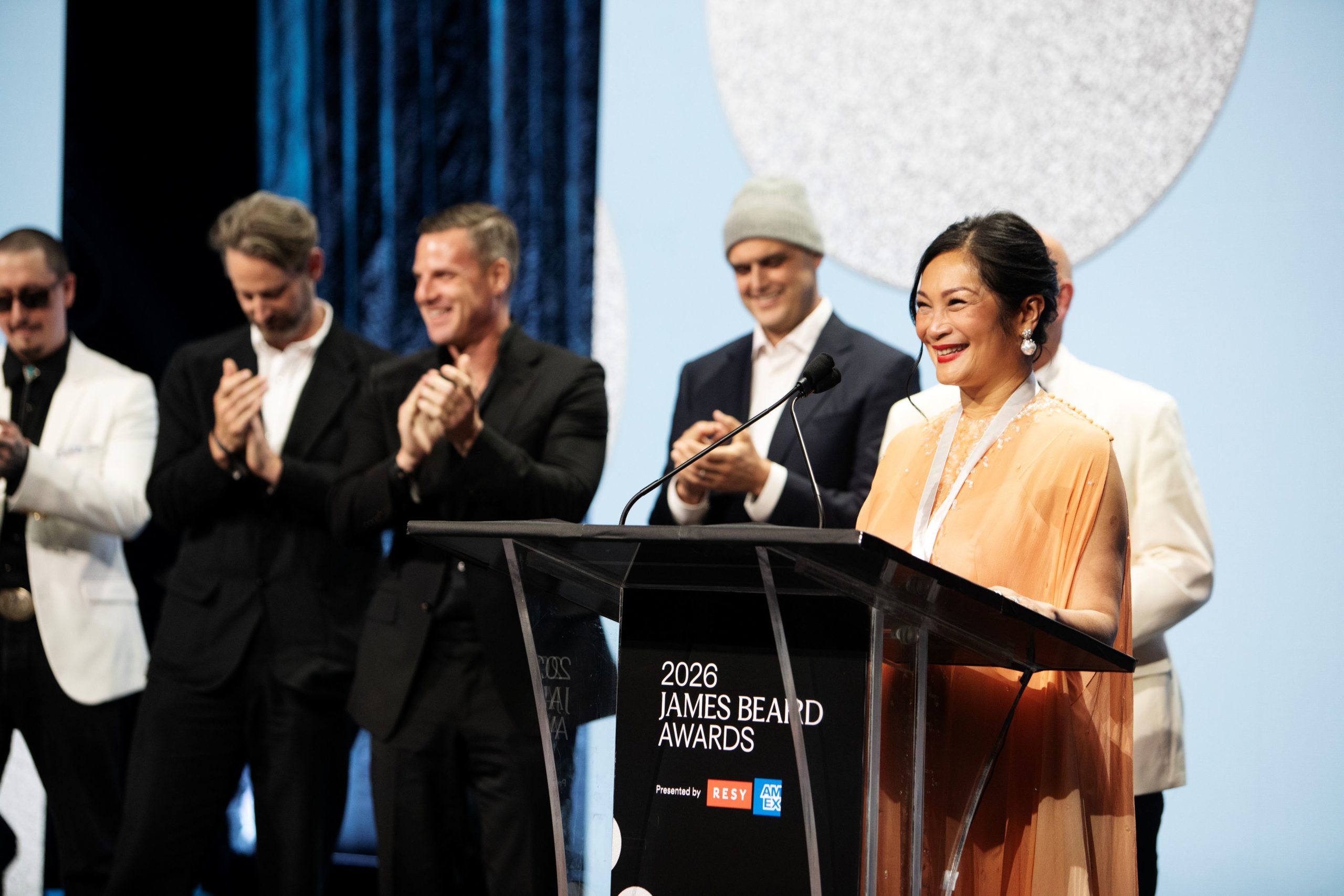
    Chef Chutatip “Nok” Suntaranon and her Kalaya partners accept the 2026 James Beard Award for Outstanding Restaurant.© Eliesa Johnson / James Beard Foundation

    Hosting the awards also comes with significant price tag: The Beard Foundation is asking interested cities to commit to spending a minimum of $4 million for the first year, with annual increases of up to 5% after. Cities can source the money through a mix of cash investment, sponsorships, and public sector funds.

    Cities can send in preliminary information — including an estimate of hotel stock, prospective venues, and responses to short-answer questions — to the Beard Foundation through Aug. 7. Selected applicants will then be invited to submit official proposals. The next host will be announced in early 2027.

    Philly has likely ruled itself out.

    “Our mission is to attract citywide conventions, meetings, and major events that generate significant overnight visitation and hotel demand,” Convention & Visitors Bureau spokesperson Jaime Martorana wrote over email. “After reviewing the James Beard Awards’ event hosting requirements, we’ve determined they aren’t fully aligned with the PHLCVB’s mission and mandate.”

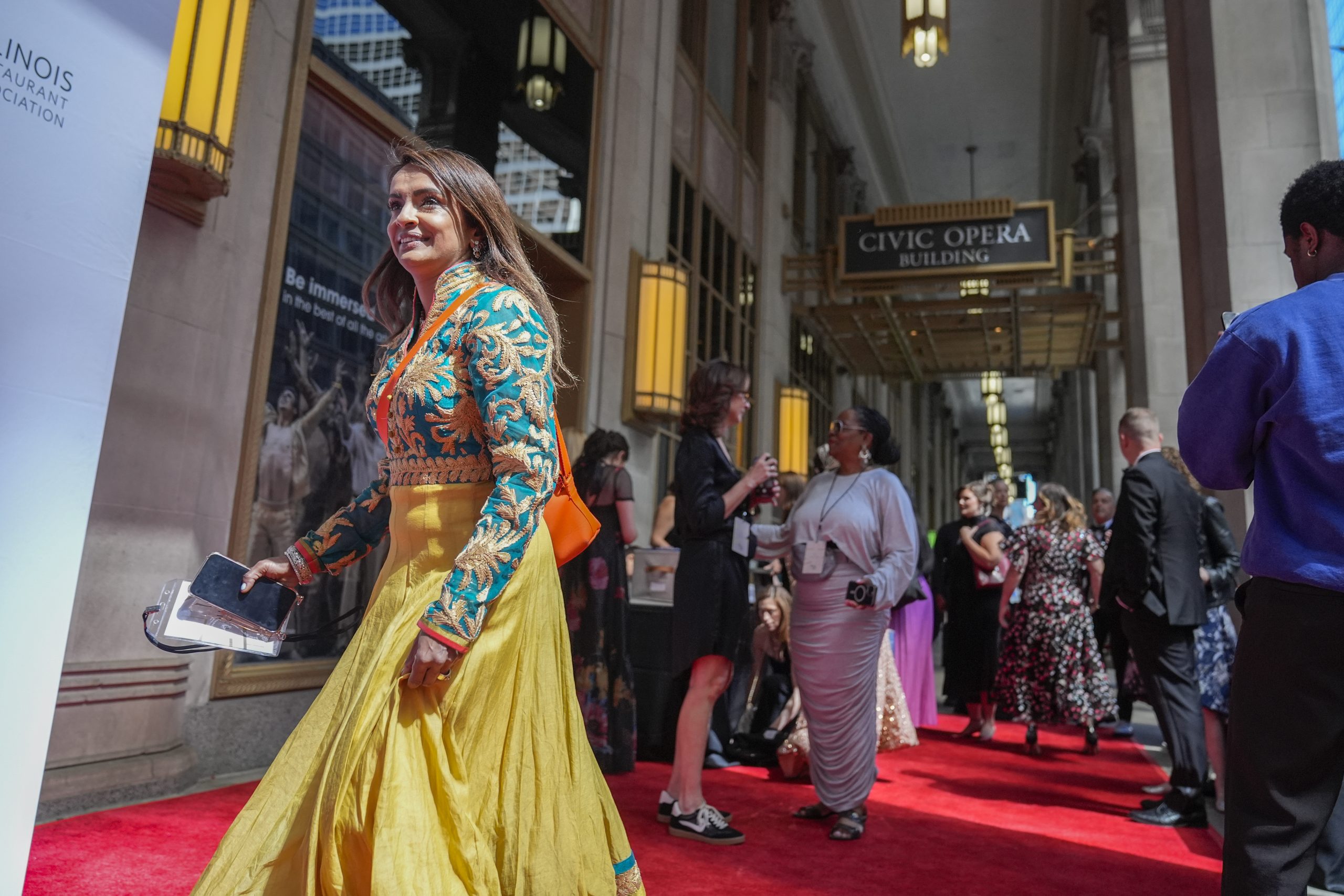
    People arrive at the 2024 James Beard Awards in Chicago. The Oscars of the restaurant industry is looking for a new city to host the awards from 2029 to 2033.Erin Hooley

    Philly’s untouched resumé

    It’s unclear which hosting requirements don’t match up with the Convention & Visitors Bureau’s mandate of bringing major events to Philly.

    Reviewed by The Inquirer, the seven-part application asks cities to detail the high-profile events it has hosted in the last three years, outline its transit options, and explain how their restaurant scene upholds values of “culinary excellence, sustainability, inclusion, [and] accessibility.”

    Philadelphia spent the past two months juggling nonstop major events, from six World Cup matches, the MLB All-Star Game, and, perhaps biggest of all, the nation’s 250th birthday. All the while, the city’s estimated 19,000 hotel rooms reached a record-high 90% occupancy as hundreds of thousands visited Philly. Even the delay-plagued, chronically-underfunded SEPTA rose to the occasion, with expanded service, free fare, and dance parties.

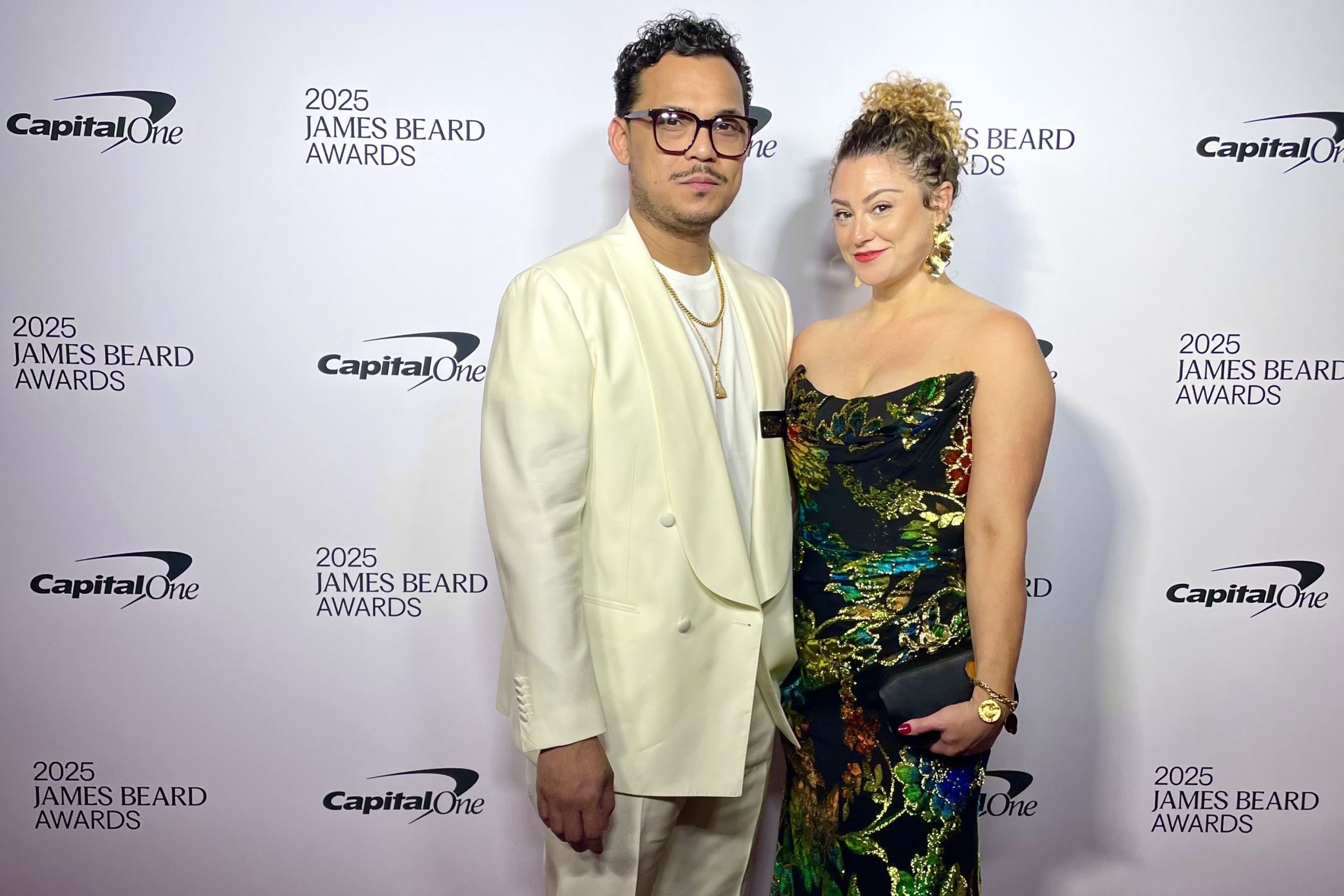
    Hanna Williams (left) and husband, Chad, at the 2025 Michelin Guide Northeast Cities awards at the Kimmel Center in Philadelphia. Their restaurant, Friday Saturday Sunday, is the only local restaurant to have a James Beard Award and a Michelin Star.Elizabeth Robertson / Staff Photographer

    Philly is also a James Beard Awards darling, fielding finalists nine out of the past 10 years. In June, chef Chutatip “Nok” Suntaranon’s Thai restaurant, Kalaya, won outstanding restaurant, while Royal Sushi & Izakaya’s Jesse Ito was named Best Chef, Mid-Atlantic, a region that spans New Jersey, Delaware, Maryland, Virginia, and Washington.

    Visit Philadelphia, the city’s official tourism nonprofit, has worked with the James Beard Foundation since 2016, including hosting the 2020 nominee announcement and several dinner and marketing events in the years since.

    “It seems to me like we should at least be having a conversation about what the relative merits of hosting are, especially since the Beards have been very good to us,” said Jonathan Deutsch, the director of Drexel University’s Food Lab and a previous judge for the Beard Awards’ media and leadership categories.

    Deutsch and others in the local food scene say it’s a mistake for Philly not to try, forgoing at least a little bit of the momentum Philly has built as a destination for world-class dining and tourism. Freelance journalist and Inquirer contributor Adam Erace — who chaired the Beard Awards Mid-Atlantic subcommittee from 2010 to 2020 — highlighted that Philly’s status as a Northeast corridor city with a reliable airport makes it easy for nominees to commute.

    Mawn’s Phila Lorn (left) and Rachel Lorn at the 2025 James Beard Awards in Chicago. Lorn won emerging chef that year.Courtesy of Rachel Lorn

    Plus, he said, we’ve done this before, pointing out that the city hosted a Michelin Guide ceremony in November and routinely hosts the Chef Conference.

    “We’ve spent the past 10 years pushing as a city to grow. If anybody’s ready, we’re ready,” said chef Chad Williams, whose Rittenhouse Square restaurant Friday Saturday Sunday won the James Beard award for Outstanding Restaurant in 2023 and was a finalist for Outstanding Bar in June.

    What could Philly miss out on?

    In a few words: millions of dollars in economic impact.

    The 2026 James Beard Awards in Chicago generated $8.3 million in direct spending from the operational costs associated with putting on the ceremony, plus offsite spending by attendees, according to a report the foundation commissioned from the Oxford Economics Co. That direct spending turned into $17 million in overall economic impact on the greater Chicago area, including $1.2 million in local and state tax revenue.

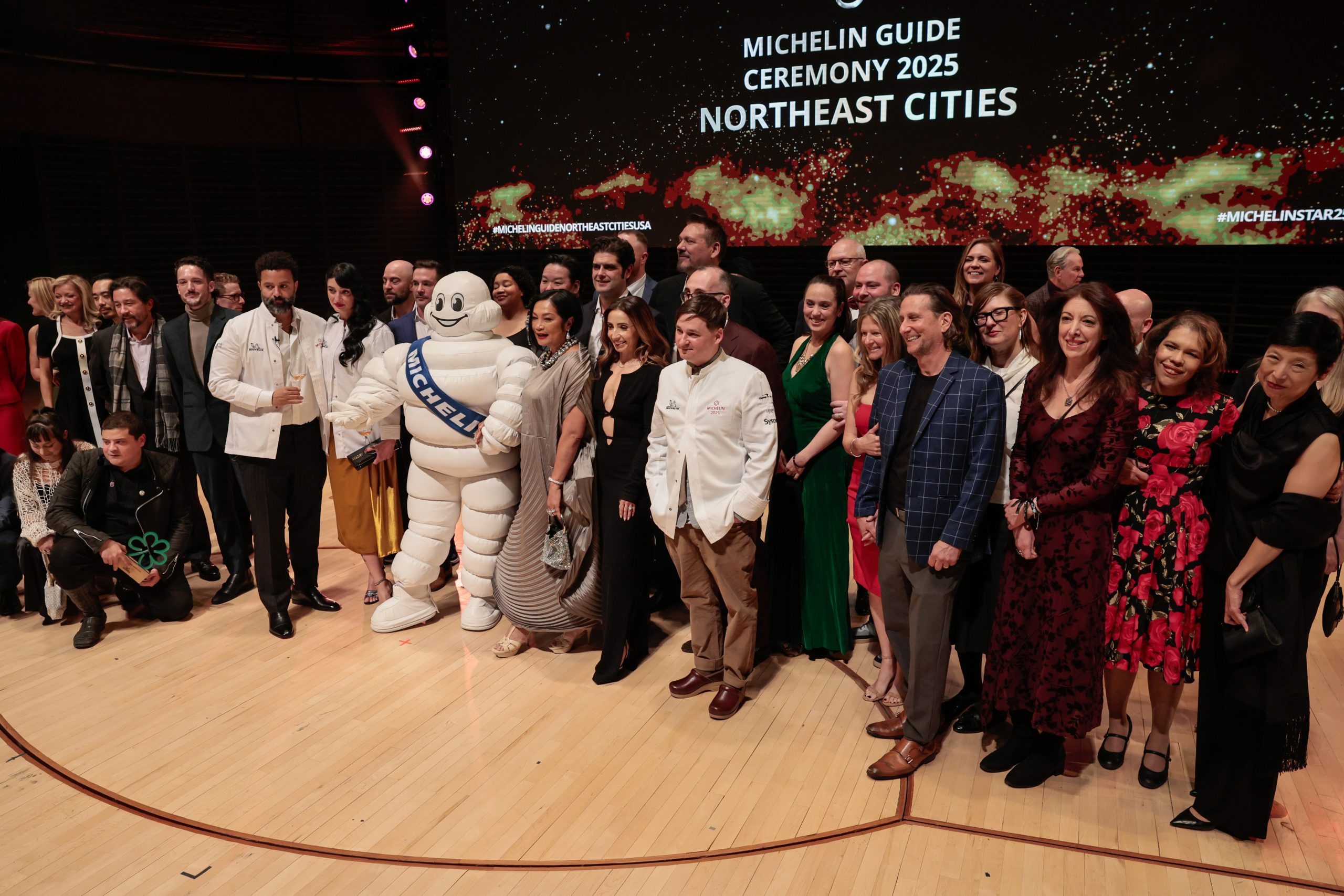
    Philadelphia chefs are acknowledged at the Michelin Guide announcements at the Kimmel Center Tuesday, Nov. 18, 2025, in Philadelphia.Elizabeth Robertson / Staff Photographer

    Erace and Deutsch, who both have attended the Beard Awards, describe it as a weekend of dinners, pre-parties, after-parties, and pop-ups that encourage attendees to eat and drink in the host city. This year’s awards included roughly 41 events in the days leading up to the ceremony, Illinois Restaurant Association president Sam Toia told the Chicago Sun-Times.

    The restaurant awards’ voting body — composed of anonymous judges with industry experience selected via committee — is only allowed to vote for restaurants they’ve eaten at in the past year, explained Erace. This gives Chicago a small leg up. Hosting the awards enables more judges to eat in the city and speak to its restaurants’ quality.

    “It seems like a missed opportunity,” said Deutsch. “You have top chefs, journalists, cookbook authors, passionate foodies … who are paying a couple of thousand dollars over the weekend for airfare, dining, and a hotel just to experience the awards.”

    What about the Michelin Guide?

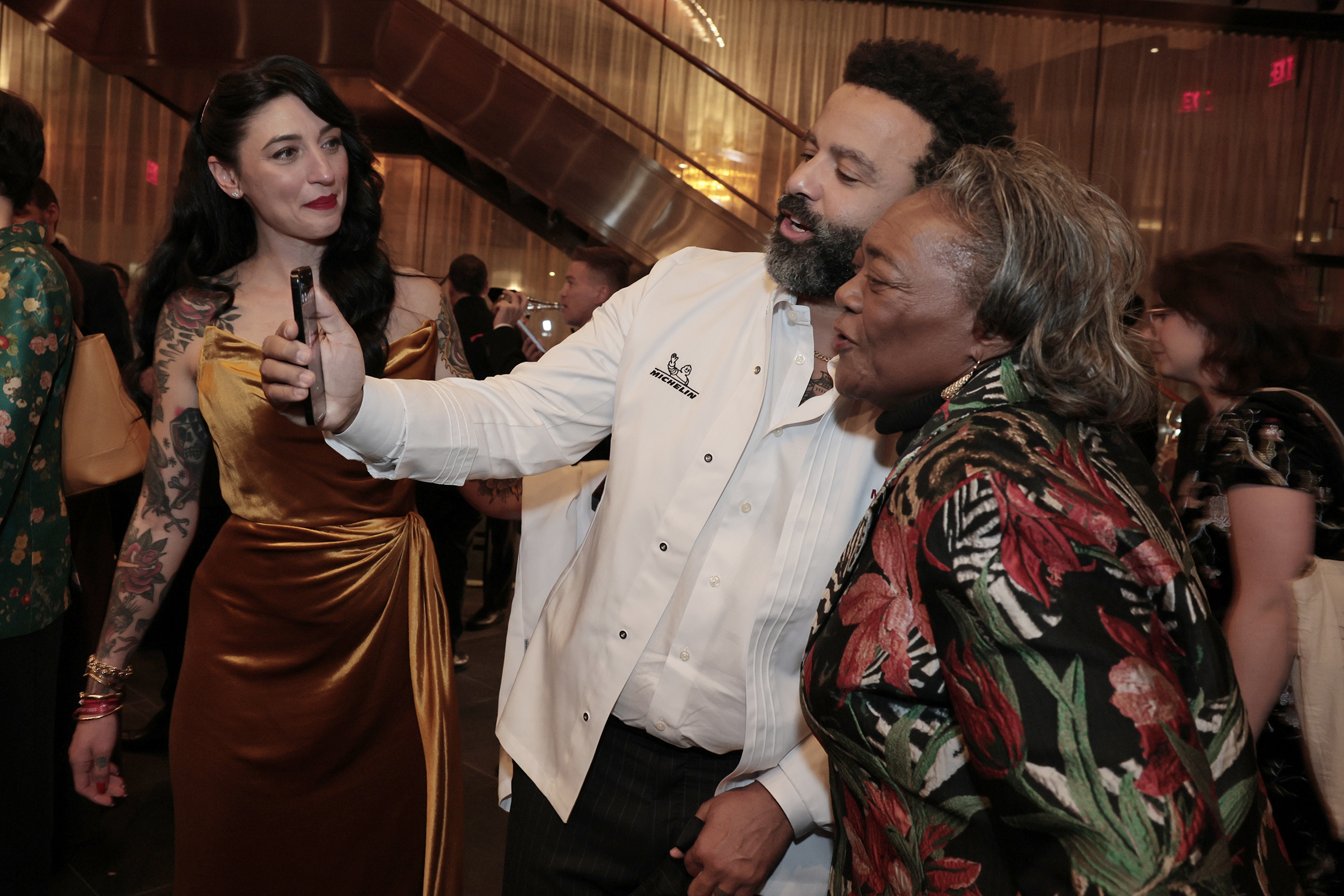
    Last year, the Convention and Visitor’s Bureau successfully bid to bring the Michelin Northeast Cities Guide — and its award ceremony — to Philly for the first time.

    Provenance, Her Place Supper Club, and Friday Saturday Sunday each earned their first star from the coveted gastronomic guide, with 31 other Philly restaurants falling among the guide’s Bib Gourmand and Recommended tiers. Most of them reported at least a modest increase in business right after.

    “Now that the busiest period of our 2026 event calendar has concluded, we’ll be reconnecting with the restaurants and chefs recognized in the Guide to better understand how the first half of the year performed and how Michelin recognition has supported their businesses,” Martorana said.

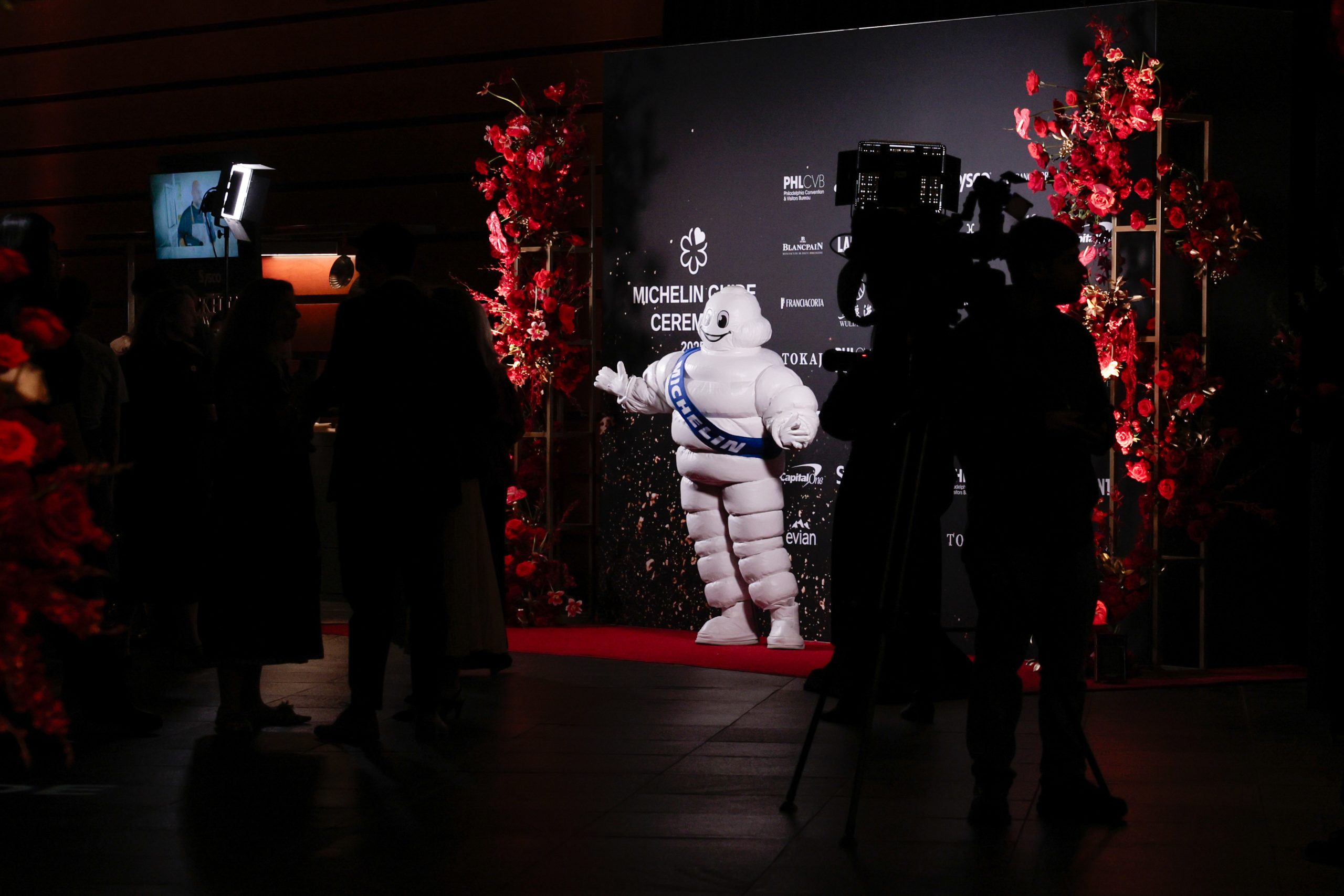
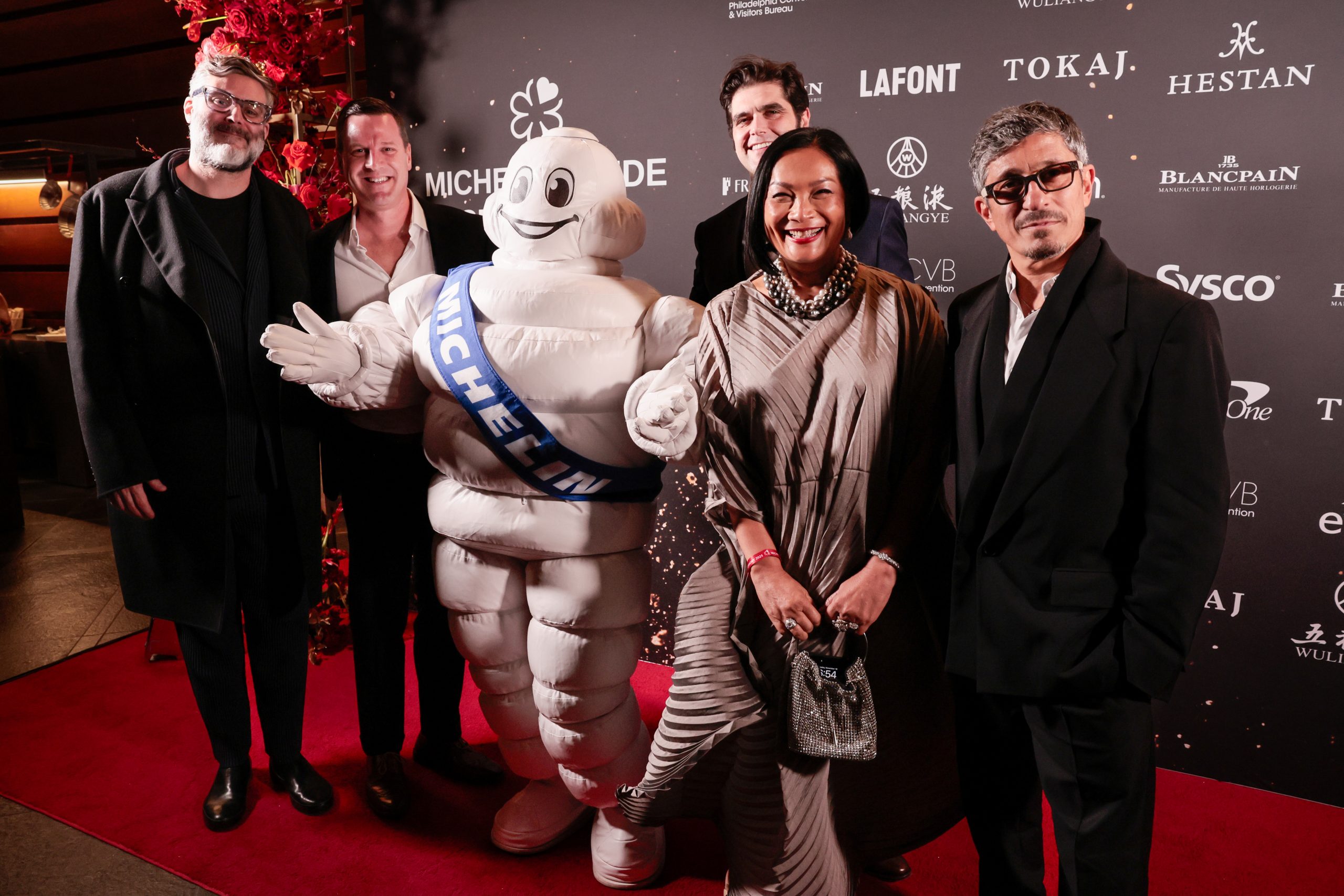
    The Michelin Man, whose name is Bibendum, arrives at the Michelin Guide announcements at the Kimmel Center, on Tuesday, Nov. 18, 2025, in Philadelphia.Elizabeth Robertson / Staff Photographer

    It’s still unclear how much it cost to court the guide, or how much it boosted Philadelphia overall. The Philadelphia Convention & Visitors Bureau declined to share how much it paid Michelin and has yet to make data available about the spending generated by Michelin’s newfound Philadelphia presence.

    Cities pay to be included in the Michelin Guide, often cobbling together funding from a mix of tourism organizations, public investment, and sponsorships. The price of admission is steep: Boston and Atlanta both paid upward of $1 million to bring the Michelin Guide to their cities, while Texas raised $2.7 million from Dallas, Austin, San Antonio, Fort Worth, and Houston to get a dedicated Texas guide. Some locals, like Virginia and Buffalo, rebuffed Michelin entirely, calling the fees unsustainable.

    In Philly, the Michelin Guide and the James Beard Awards can appear to be an echo chamber, with the same set of restaurants receiving praise from both. Williams — whose restaurant Friday Saturday Sunday is the city’s only restaurant to receive a Michelin Star and a Beard Award — said each accolade generated “equal” bumps in reservations.

    From left: Joe Beddia, Greg Root, Nick Kennedy (rear), Chutatip “Nok” Suntaranon, and Roland Kassis, with the Michelin Man at the Michelin Guide announcement event at the Kimmel Center Tuesday, Nov. 18, 2025, in Philadelphia.Elizabeth Robertson / Staff Photographer

    The sameness begs the question: Does Philly need both?

    Deutsch wondered if the city’s decision to not go for the Beard Awards has to do with “fine-dining fatigue,” or if the powers that be feel like “they spent a lot of money to check that box for the next few years,” he said.

    The Michelin Guide is technically the better bet — at least numbers-wise, Erace acknowledged.

    “Thirty-something restaurants get some kind of recognition, and they can take that to the bank forever,” he said. “With the Beards, there’s only so many winners every year.”

  • Rita’s launches specials inspired by ‘The Office’ and ‘Friends’ for a new water ice flavor

    Rita’s launches specials inspired by ‘The Office’ and ‘Friends’ for a new water ice flavor

    Rita’s Italian Ice & Frozen Custard teamed up with cable network TBS to launch a new water ice flavor with some television flair.

    The new flavor? Shirley Temple. The collabs? With some of the network’s most popular TV shows.

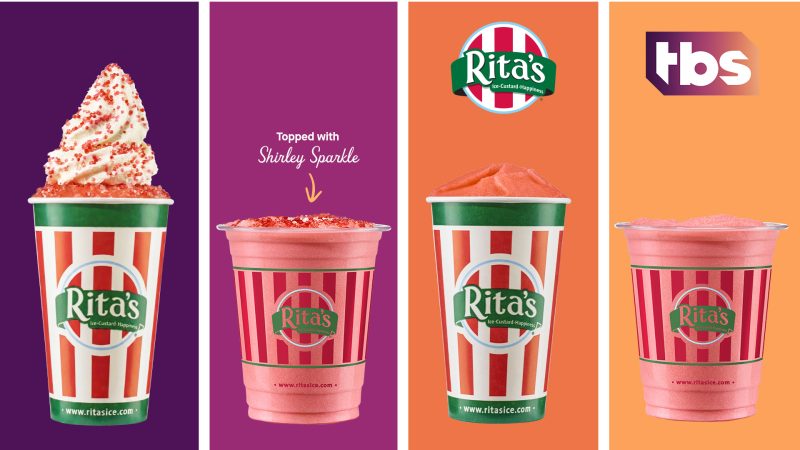
    The “Bazinga Blast” — Rita’s Shirley Temple Italian ice topped with edible glitter — is an ode to The Big Bang Theory, for example. “Office Favorite,” with layers of vanilla frozen custard and Shirley Temple Italian ice, pays homage to The Office.

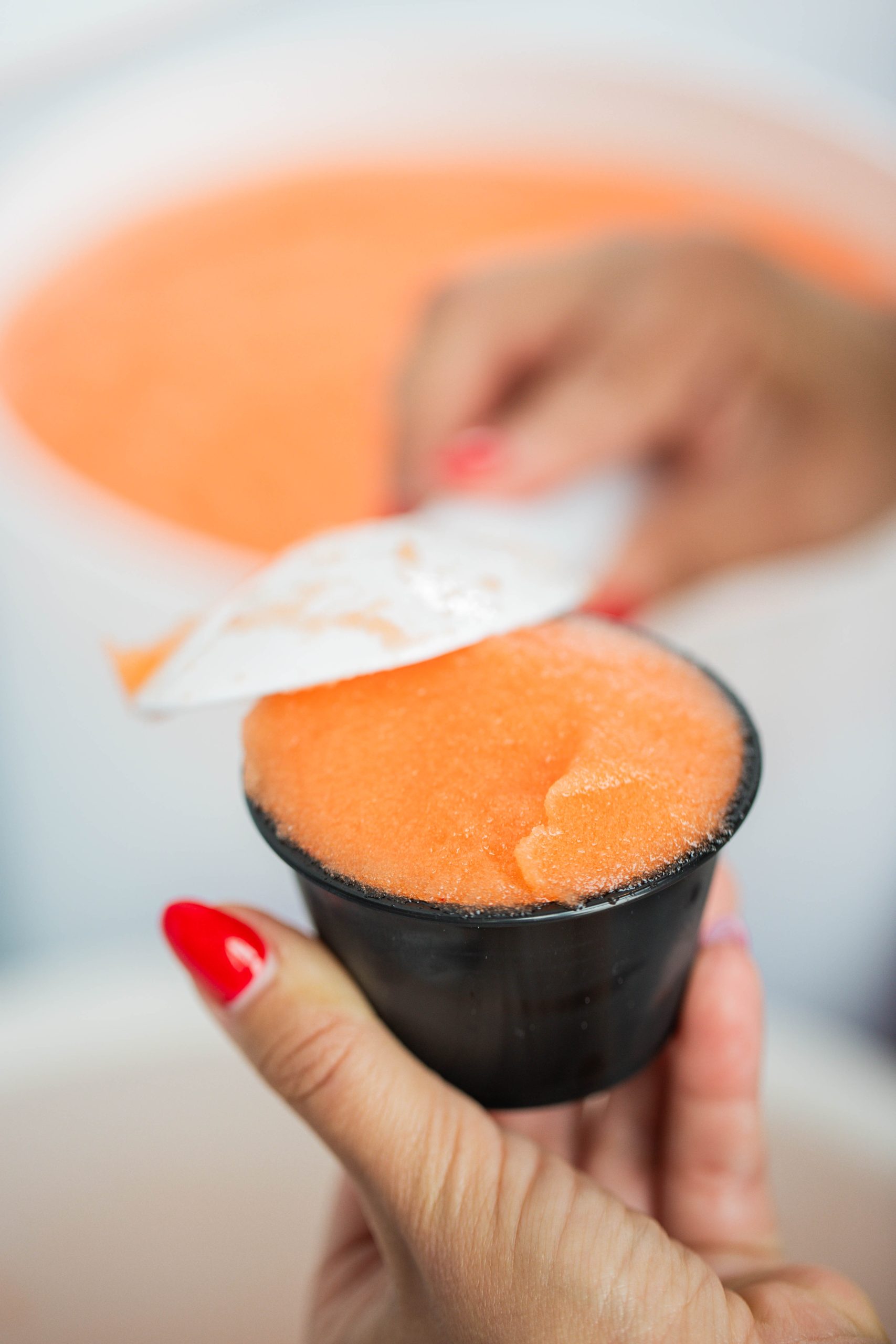
    The “Brain Freeze Misto,” a creamy vanilla frozen custard blended with Shirley Temple Italian ice, is a tribute to Impractical Jokers. Friends inspired the “Central Chiller Ice Blender,” a frozen blended drink made with the Shirley Temple Italian ice and edible glitter. The collaborations are available at participating Rita’s locations until Aug. 23.

    Rita’s is offering a new Shirley Temple flavor collection through Aug. 23.Rita's Italian Ice & Frozen Custard

    “Summer has always been about creating memories with family and friends, and that’s exactly what this partnership is all about,” Carmela Hughley, SVP of marketing insights and innovation at Rita’s Italian Ice & Frozen Custard, said in a news release. “After introducing our new Shirley Temple Ice, we wanted to build an experience that celebrates everything people love about summer — from nostalgic flavors to iconic television moments. Together with TBS, we’re inviting fans everywhere to have A Shirley Good Time.”

    Water ice — number two on Inquirer’s 76 iconic foods list — is the treat of summer, winning big at an Atlantic City festival and making up a key component of water ice martinis, the Philly area cocktail of the season.

    There will also be a mobile way to get those new specials thanks to “A Shirley Good Time Treat Truck Tour.” Throughout the summer, Rita’s and TBS will hit the road with frozen treats, giveaways, and interactive experiences in select markets across the country.

    The Italian ice chain is also offering a chance to win free Rita’s for a year, plus a TBS x Rita’s swag pack, for three fans.

    Customers can enter the TBS and Rita’s Shirley Temple Giveaway by publishing an original photo post or reel on Instagram, Facebook, or TikTok featuring the new Italian ice flavor, tagging Rita’s in the post, and including #AShirleyGoodTime and #RitasItalianIce in the caption.

    “TBS has long been home to the comfort comedies fans turn to again and again, making Rita’s the perfect partner for this summer celebration,” Melissa Chambless, EVP of marketing at Warner Bros. Discovery, said in a statement. “The best partnerships create experiences that extend beyond the screen, and A Shirley Good Time does just that, bringing together iconic comedies, nostalgic flavors, and fan-focused experiences designed to spark connection, laughter, and unforgettable summer memories.”

  • Middle Child’s BLT season has arrived. This is how they prepare for the frenzy.

    Middle Child’s BLT season has arrived. This is how they prepare for the frenzy.

    Philadelphians know it’s officially peak summer thanks to a recent announcement: the beginning of BLT season at Middle Child, where the seasonal sandwiches draw lines down the block.

    “We become Pat’s and Geno’s but instead of making cheesesteaks all day, we’re making BLTs,” said Matt Cahn, the owner of the Center City sandwich shop Middle Child and Fishtown’s Middle Child Clubhouse. You won’t see fresh tomatoes on the menu at any other time of the year, but come mid-July: “It’s just BLT, BLT, BLT,” said Cahn.

    You could say tomato season is Middle Child’s Super Bowl. It is intense but short. BLTs are only made for about four weeks, when tomatoes are at their best. It starts Wednesday, July 22 at 11 a.m. (9 a.m. on ensuing days) until sell-out. Each location makes roughly 200 to 250 sandwiches per day.

    While there are other top-tier tomato sandwiches in town — don’t miss the River Twice entry, adorned with gamtae and a quenelle of caviar, for example, or Loretta’s in Headhouse, with herbed aioli and the same vaunted produce as Middle Child’s — none stir up quite as much fervor.

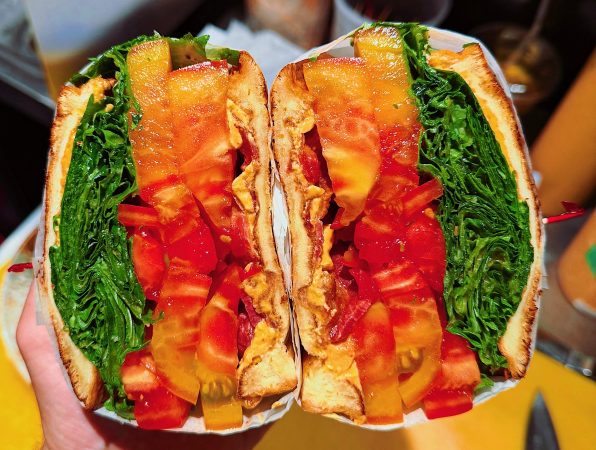
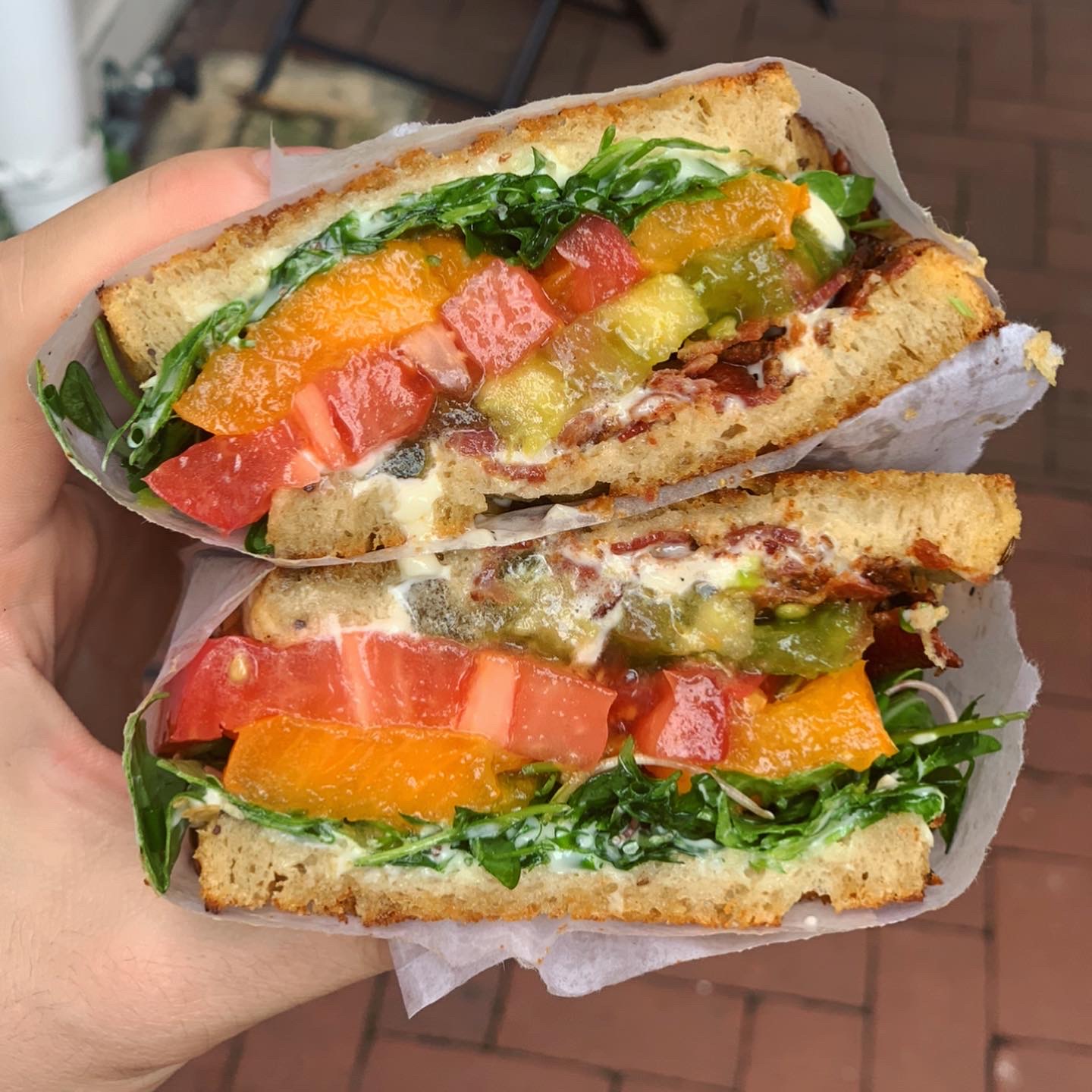
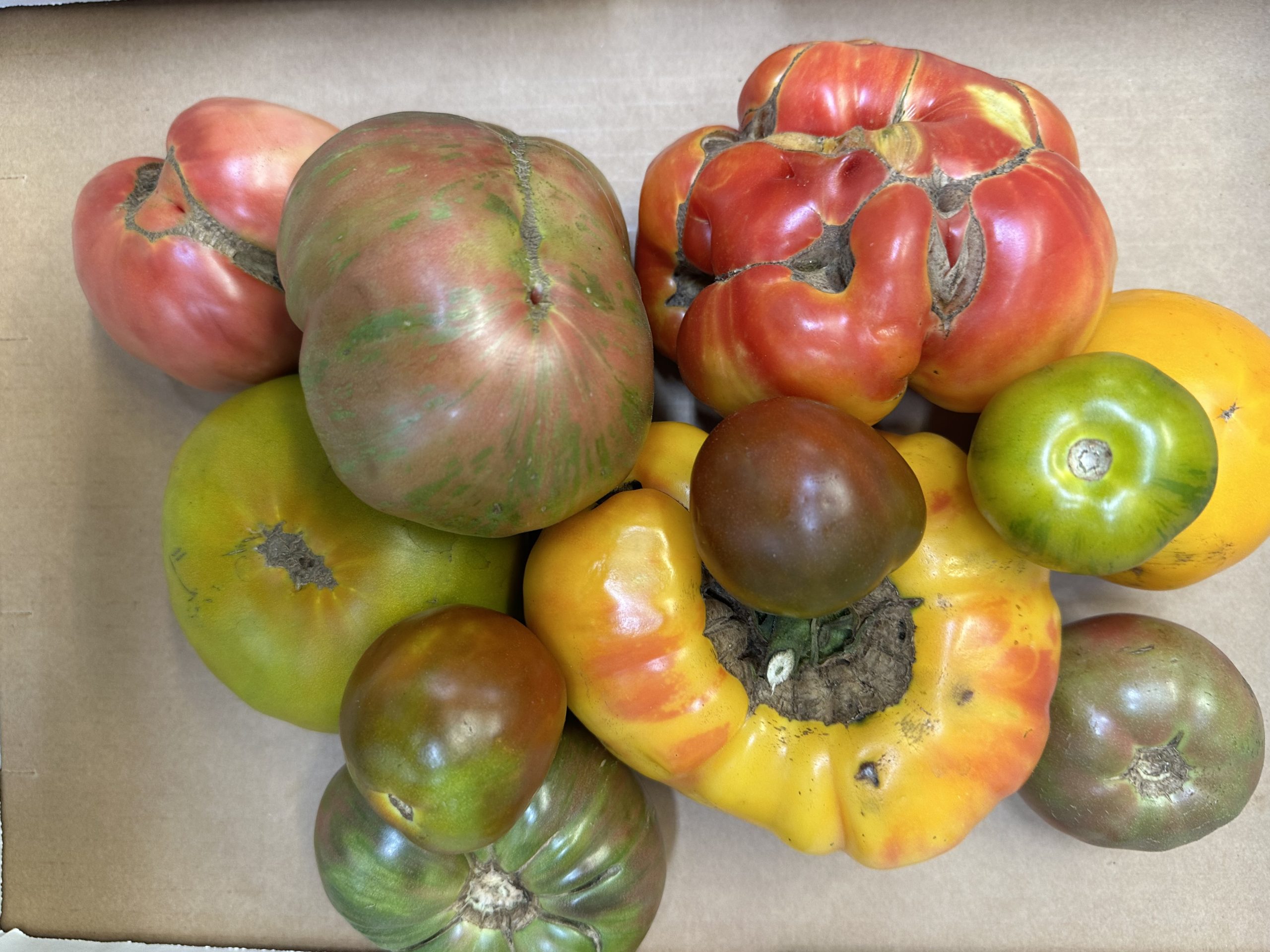
    Middle Child’s tomatoes, cut into thick, rainbow-hued slabs, always come from Urban Roots Farm in Newtown Square. Tomatoes arrive at peak ripeness, and they only have a shelf life of about two days.

    “These tomatoes are really expensive,” said Cahn. They’re about $38 to $40 per flat or case, which means there’s $2.60 worth of tomatoes on each sandwich. “It costs more than the turkey does on turkey sandwiches.”

    Their classic BLT ($16) consists of those tomatoes, five pieces of Leidy’s bacon (“Nothing fancy … because the sandwich is all about the tomatoes,” said Cahn), Duke’s mayonnaise, and locally grown arugula dressed with tomato vinaigrette all sandwiched on slices of rye bread from Merzbacher’s bakery. The sandwich can also be made vegetarian (substituting bacon for avocado), vegan (with avocado and veganaise), and gluten-free.

    The famed BLT at Middle Child with local heirloom tomatoes at peak ripeness.Matt Cahn

    The BBLT ($21) is served on a LeBus ciabatta, and that second “B” stands for a whole ball of Jersey-made burrata from Lioni Latticini. It also features a chili-tomato jam, made of tomato scraps and usually Calabrian chilis, though Cahn has been experimenting with red chili flakes and gochujang this year.

    This year, for the first time, Middle Child Clubhouse will offer a slightly different evening BLT, with thick-cut slab bacon, for $18 — if Clubhouse’s tomato supply lasts till dinner service. Cahn said he expects even more tomatoes in a week or two, meaning more availability for dinner BLTs.

    Waste not

    This is Middle Child’s ninth tomato season since opening in 2017, and every year, the cult obsession with the sandwiches has grown. Every season, Cahn tweaks the processes of both selling and making the sandwiches.

    Diners at Middle Child Clubhouse, 1232 N Front St. in Fishtown in February 2022.MONICA HERNDON / Staff Photographer
    Tomatoes from Urban Roots Farm in Newtown Square, Pa.Matt Cahn

    Tomatoes are particularly delicate. They’re perfectly ripe for only a day or two before they start turning to mush and growing mold. And because they’re cored and sliced to lie flat, they generate a lot of waste. The tomato scraps, along with tomato “seconds” — or tomatoes a little too soft to slice — go into that chili-tomato jam and the tomato vinaigrette that dresses the arugula.

    The base for both of those sauces is tomato water, which Middle Child’s team collects every day.

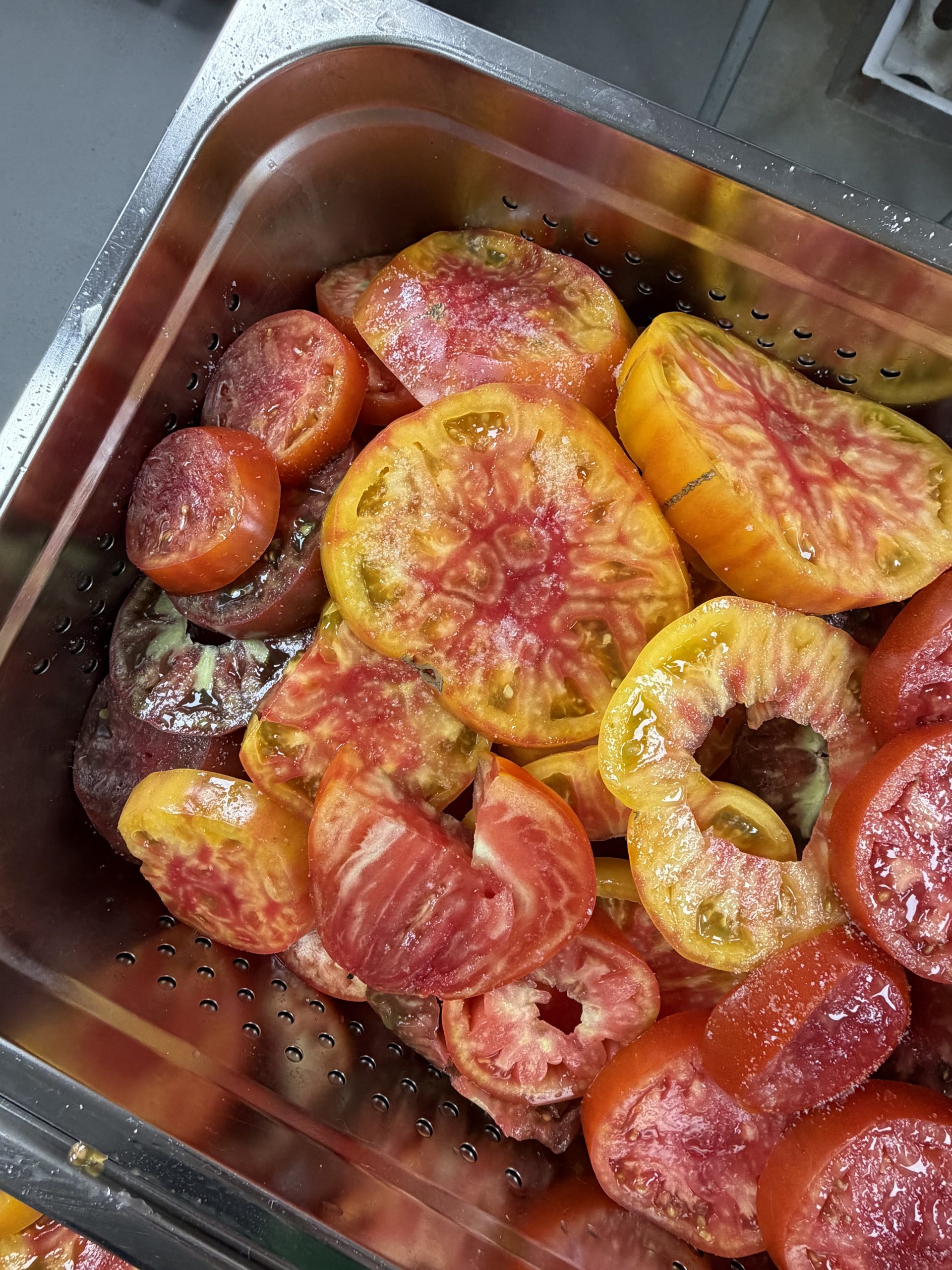
    “Every morning we treat the tomatoes like steaks. We season them a couple hours before service with Diamond Crystal kosher salt, then shingle them on a perforated pan and layer the shingles,” said Cahn. Gravity presses down the layers and the tomato water accumulates below. It’s a boon to Middle Child Clubhouse’s bartenders: In past years, they have made tomato agua fresca, tomato water ice, frozen tomato pops, and tomato martinis with the salty tomato water.

    Middle Child slices and salts the Urban Roots tomatoes before assembling them into sandwiches.Matt Cahn

    What to expect

    There are some loosely enforced “rules” during BLT season. First, you should eat the sandwich within 10 minutes of receiving it.

    Second, embrace the wait. Middle Child will turn off online orders in the thick of BLT season to prevent customers from jumping the actual line. Cahn encourages customers to enjoy the madness. “Part of the fun is going and [waiting]. People are chatting and getting to know each other and there’s a lot of debate over whether or not it’s worth the hype,” said Cahn.

    “The first week is really crazy, but in a couple weeks, once the tomato plethora has really come in,” the lines get more manageable, Cahn said. And they move quickly, thanks to a full week of BLT training, in which the staff practices until they’ve mastered every detail, down to meticulously wrapping the final product.

    “The sandwich is a structural game of Jenga,” said Cahn.

  • Northern Liberties’ new steakhouse is solid, but in need of a soul

    Northern Liberties’ new steakhouse is solid, but in need of a soul

    My Uber driver could be forgiven for becoming a tad disoriented as we gingerly approached Terra Grill. After all, this newly cobbled stretch of Germantown Avenue in Northern Liberties has not appeared on a Philadelphia map since the 19th century, when the massive Schmidt’s Brewery rose here in 1860 on 14-plus acres east of North Second Street.

    The legendary brewery is long gone, closed in 1987, demolished in 2000, and replaced in 2007 by developer Bart Blatstein’s original Piazza project, which supercharged gentrification of this once-industrial neighborhood. The mixed-use development quickly sputtered after an ownership change in 2013, just as nearby Fishtown and Kensington began to thrive.

    Can Terra Grill help revive the Piazza dream? I’m not convinced a steakhouse alone will do the trick, even if it’s something different for Northern Liberties. (Remember the short-lived “vibe dining” of meat-forward SIN?)

    But the development’s current owners, Post Brothers, clearly hope this modern American grill will help restore at least some of the neighborhood’s shine. It’s a $6 million anchor for the Piazza Alta, a new 1,100-unit high-rise complex targeted to families, not just the “frat boys in backwards trucker hats” that Post CEO Michael Pestronk said occupied the Piazza during its decline under their predecessor, Kushner Cos., whose tenure saw falling rents and shuttered retail storefronts.

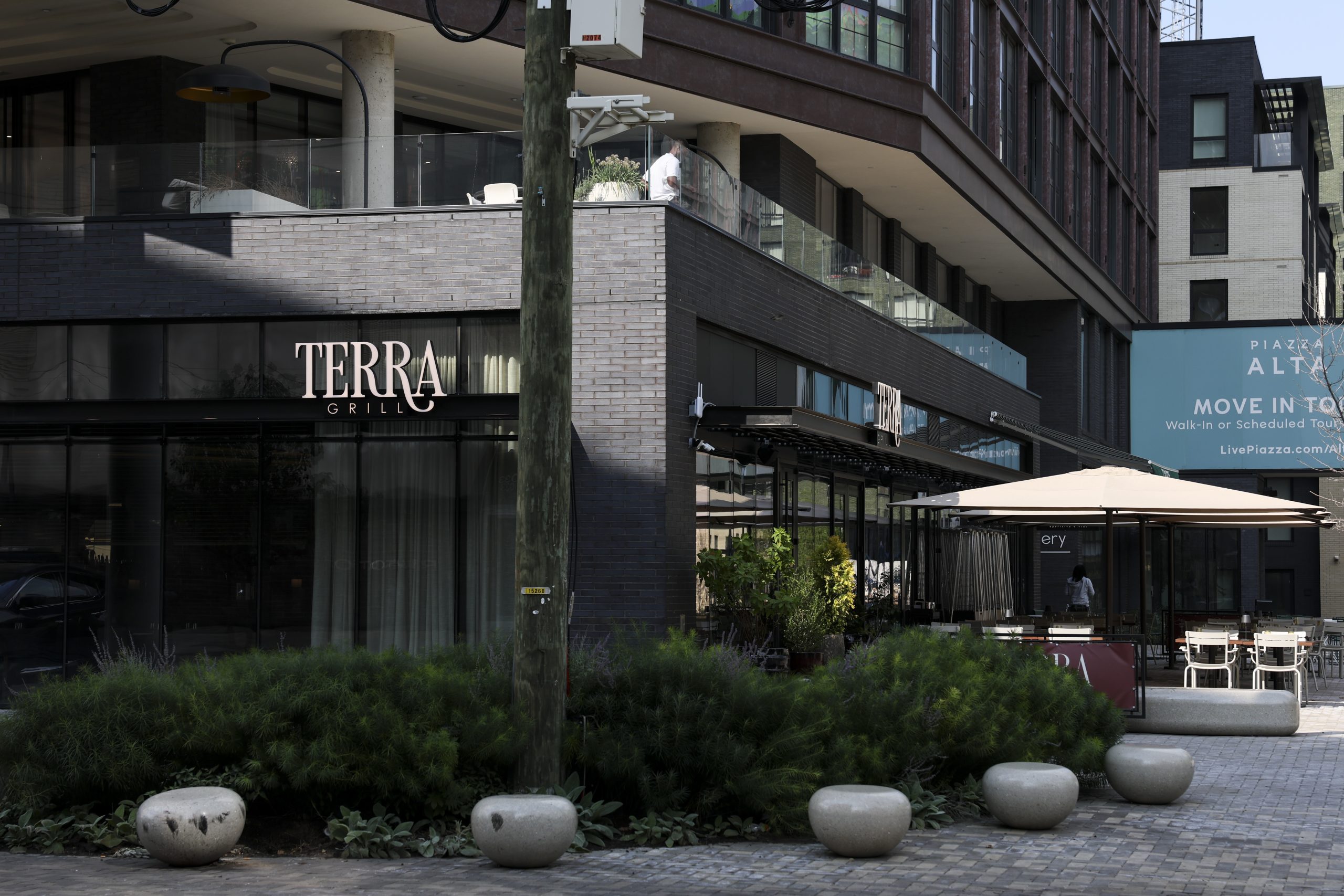
    The exterior of Terra Grill on July 9 in Philadelphia.Monica Herndon / Staff Photographer

    The fact that there are people blithely wandering across our car’s path as we approach Terra Grill’s landscaped facade is both confusing and deliberate. Post Brothers has resisted adding road striping to the avenue (a technically private stretch now open to the public) to “prevent it from becoming a speedway.” The unmarked stones are meant to foster a street-facing, Euro-style pedestrian plaza.
    Recruiting a nationally known chef for this project in Laurent Tourondel is also part of the strategy to give the neighborhood an upscale, Center City-esque aura — signaling that this once-edgy neighborhood has a new polish on top of its existing gastropubs (Standard Tap, North Third), cutting-edge vegan cooking (Pietramala), brunch spots (Honey’s Sit ‘N Eat, Cafe La Maude) and standout BYOBs (Pera, Apricot Stone). With an apartment boom bringing thousands of new residents and median incomes skyrocketing over the last decade, the affluence and density is suddenly there to potentially support something fancy like Terra Grill, whose entrees hover in the mid-$30s before you even touch the $50-plus prime steaks.

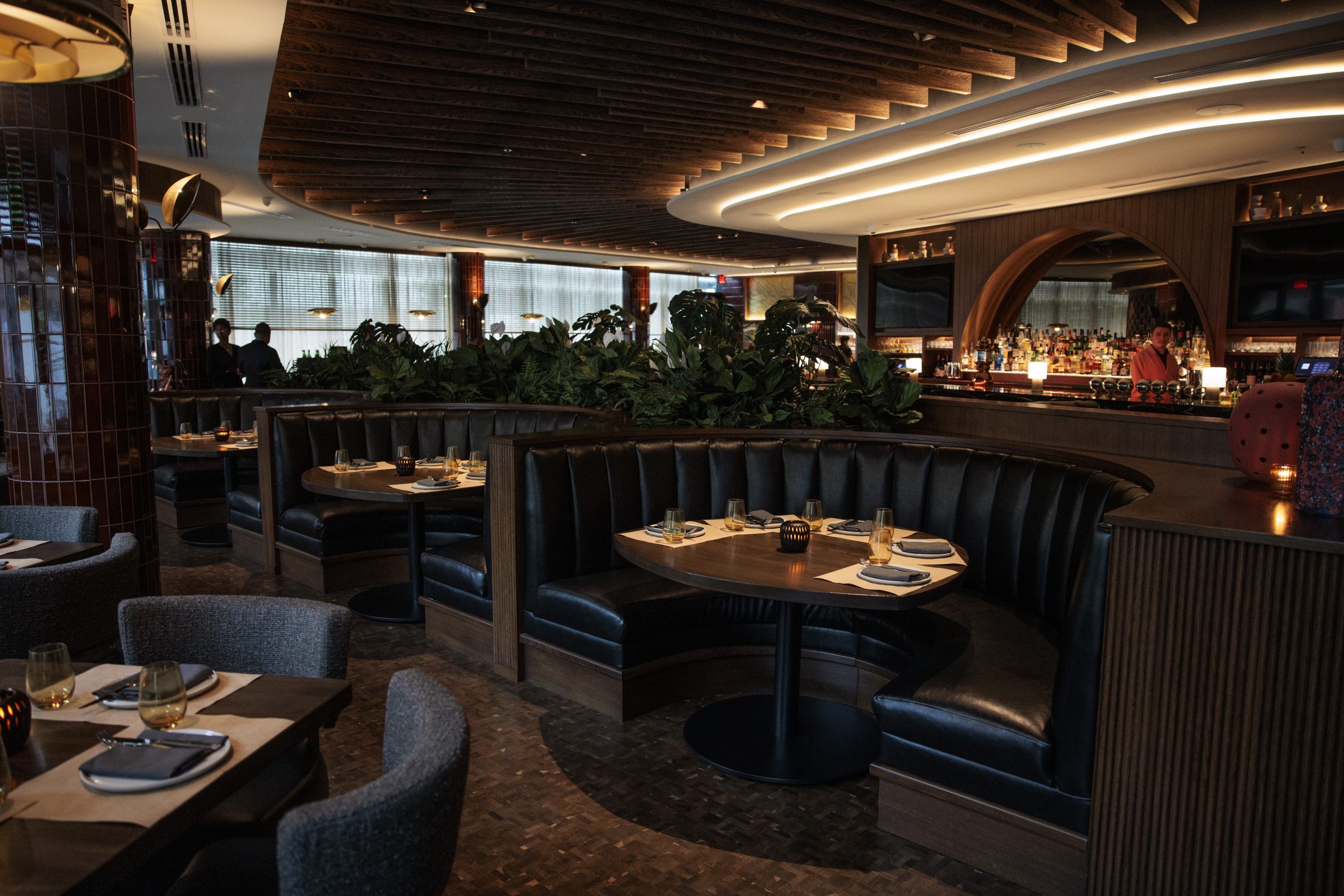
    The interior of Terra Grill on July 9 in Philadelphia.Monica Herndon / Staff Photographer

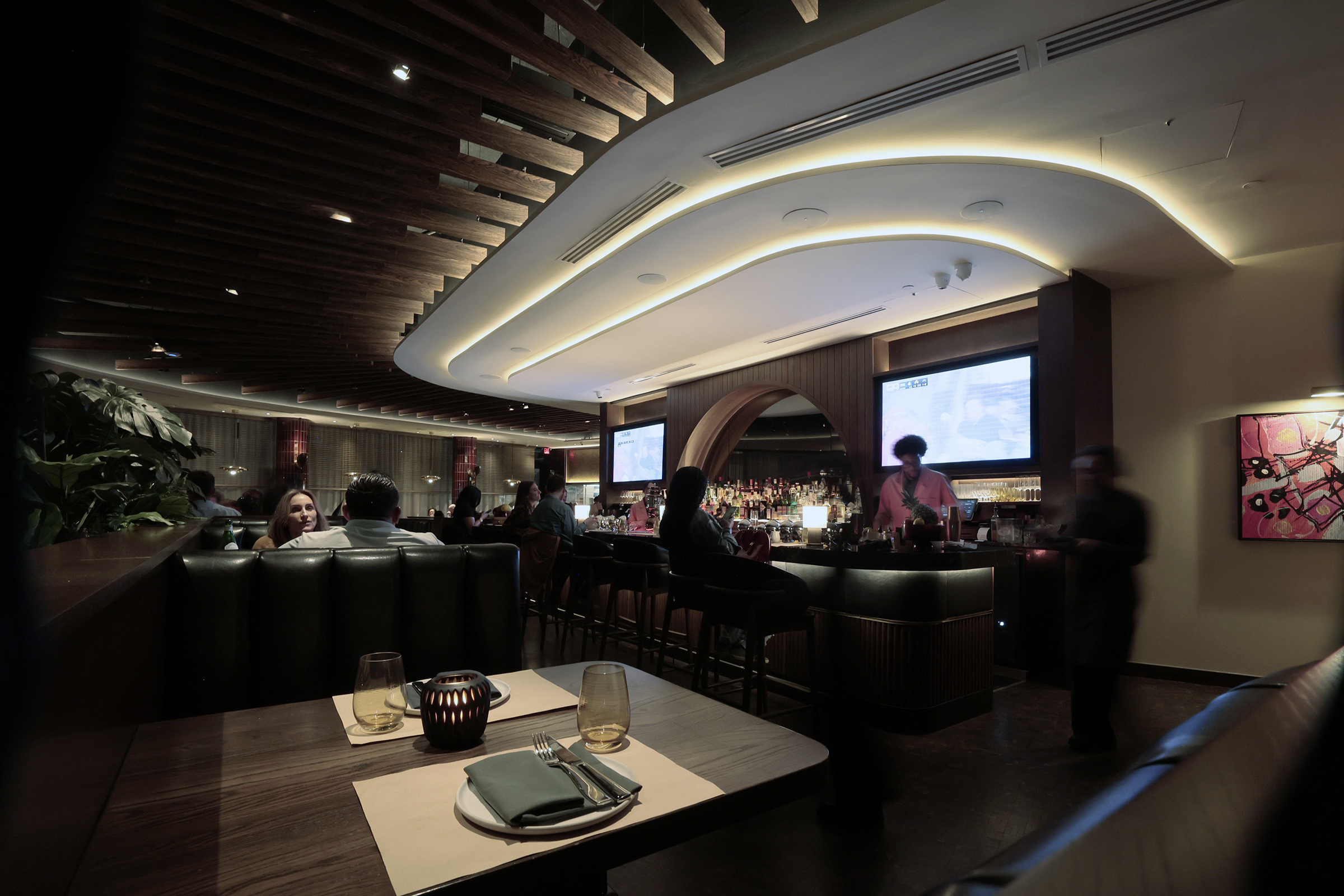
    Is it a particularly adventurous place to dine? Not especially. But that may not matter. The restaurant exudes a textbook chophouse vibe, with circular booths clad in cushy black leather, a marble-topped bar, dark wood accents, walls of wine bottles, and hot pans of fresh, salt-speckled Parker House rolls served with little crocks of whipped miso-garlic butter.

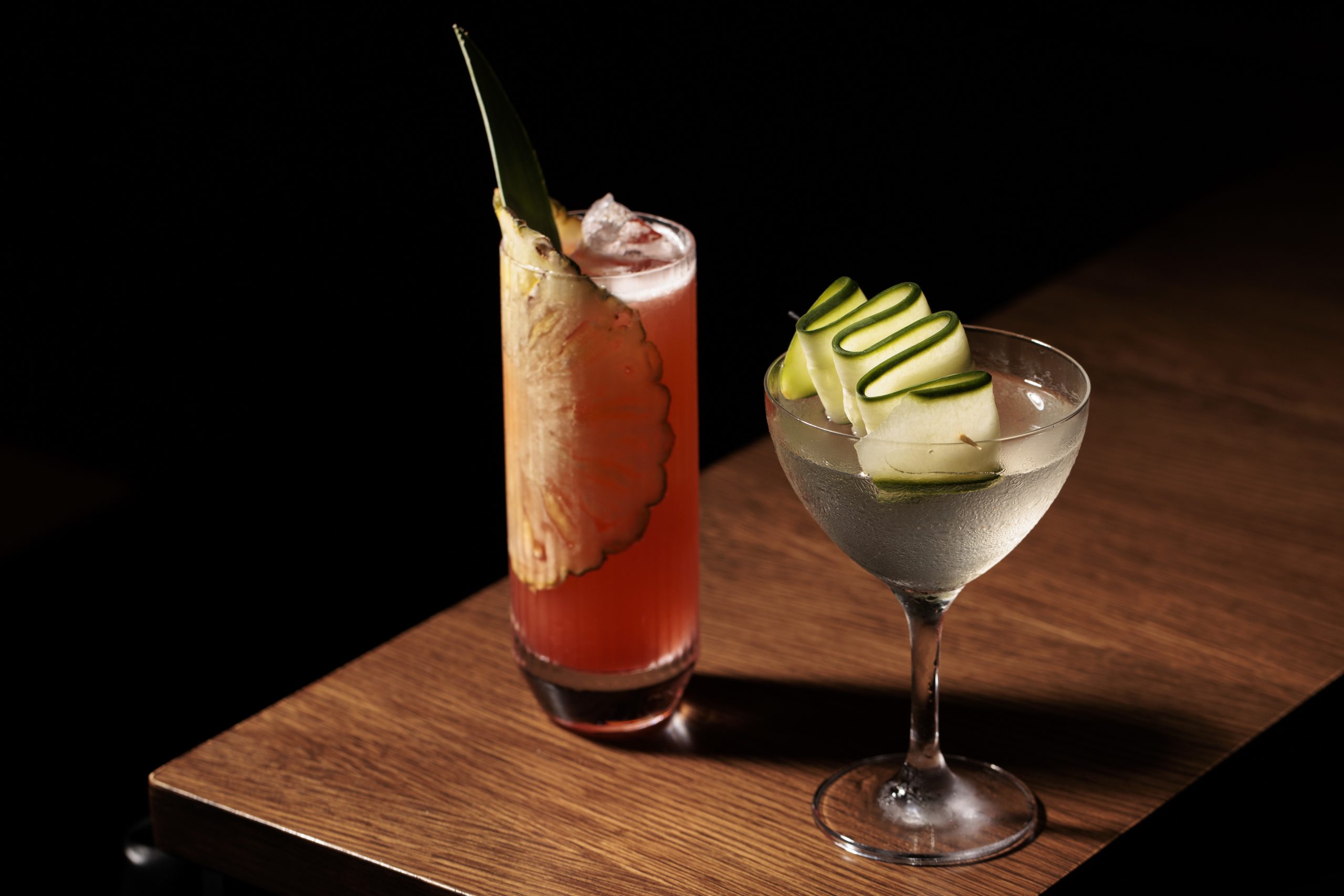
    There are culinary twists on classic cocktails to spark the meal, like the Quick & Dirty, an entry-level dirty martini washed with tzatziki yogurt and piqued with giardiniera brine, or the Golden Hour white Negroni, infused with red and golden raspberries as a nod to Philly’s Clover Club.

    The Crazy Bird and Quick & Dirty cocktails at Terra Grill on July 9.Monica Herndon / Staff Photographer

    It’s the bar program’s nod to the kitchen ethos of the French-born Tourondel, a respected chef based out of New York best known for BLT Steak (which he no longer owns) and BLT Fish, which briefly held one Michelin star and is now closed. Tourondel has since evolved into a management chef for hire, having opened 58 restaurants, from Kazakhstan to Panama, over the course of his career. He now operates 12 locations under his company, from Manhattan (L’Amico) to South Beach, where we recently dined on a delicious and stylish rendition of steak and eggs for brunch at LT Steak & Seafood.

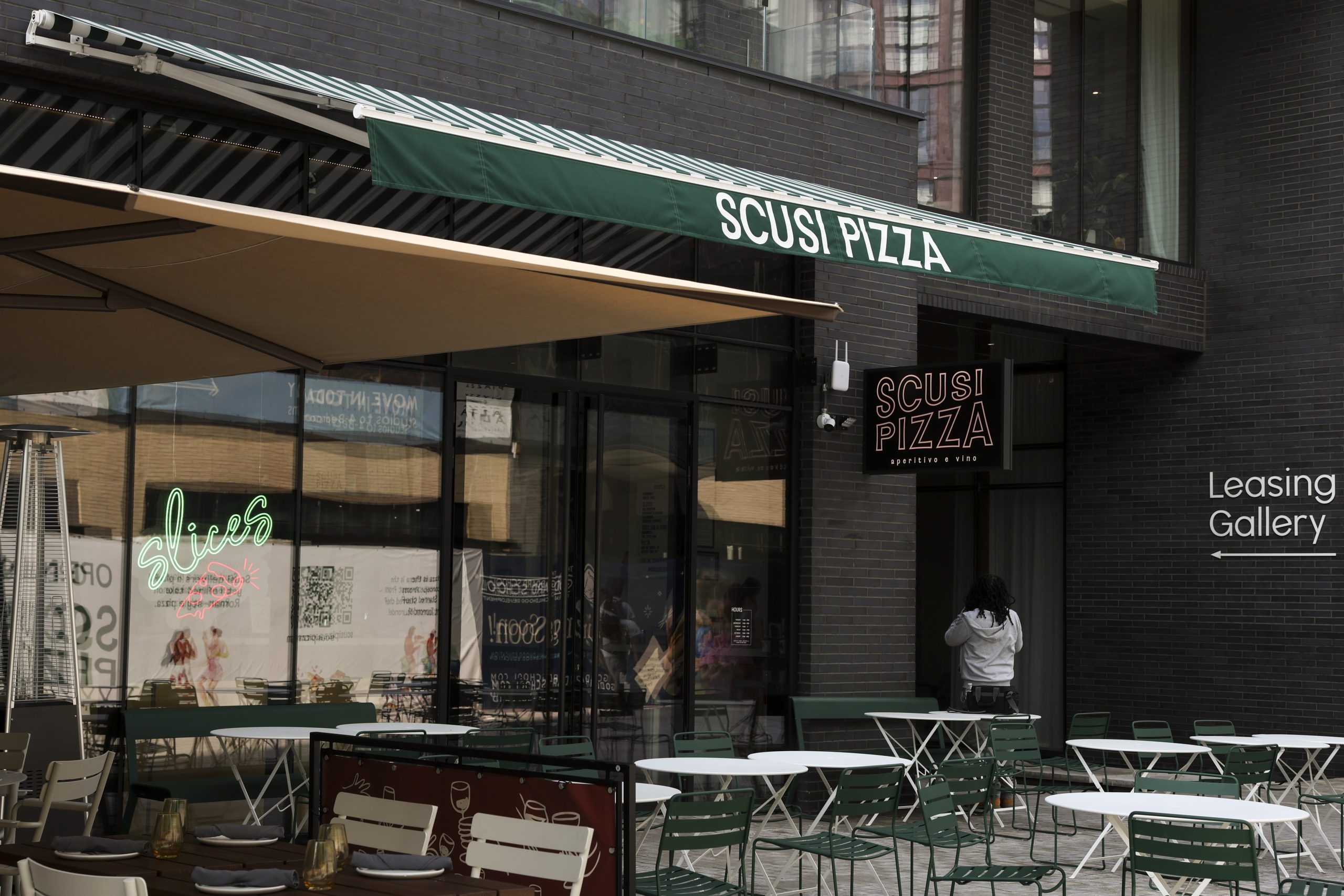
    Terra Grill is large, with 139 seats inside and 50 on the patio, alongside the chef’s cozier and more casual Roman-inspired Scusi Pizza. But the menu is essentially straight off the Tourondel rack: quality ingredients in familiar dishes treated with a thoughtful flourish or a seasonal touch. In other words, something for everyone.

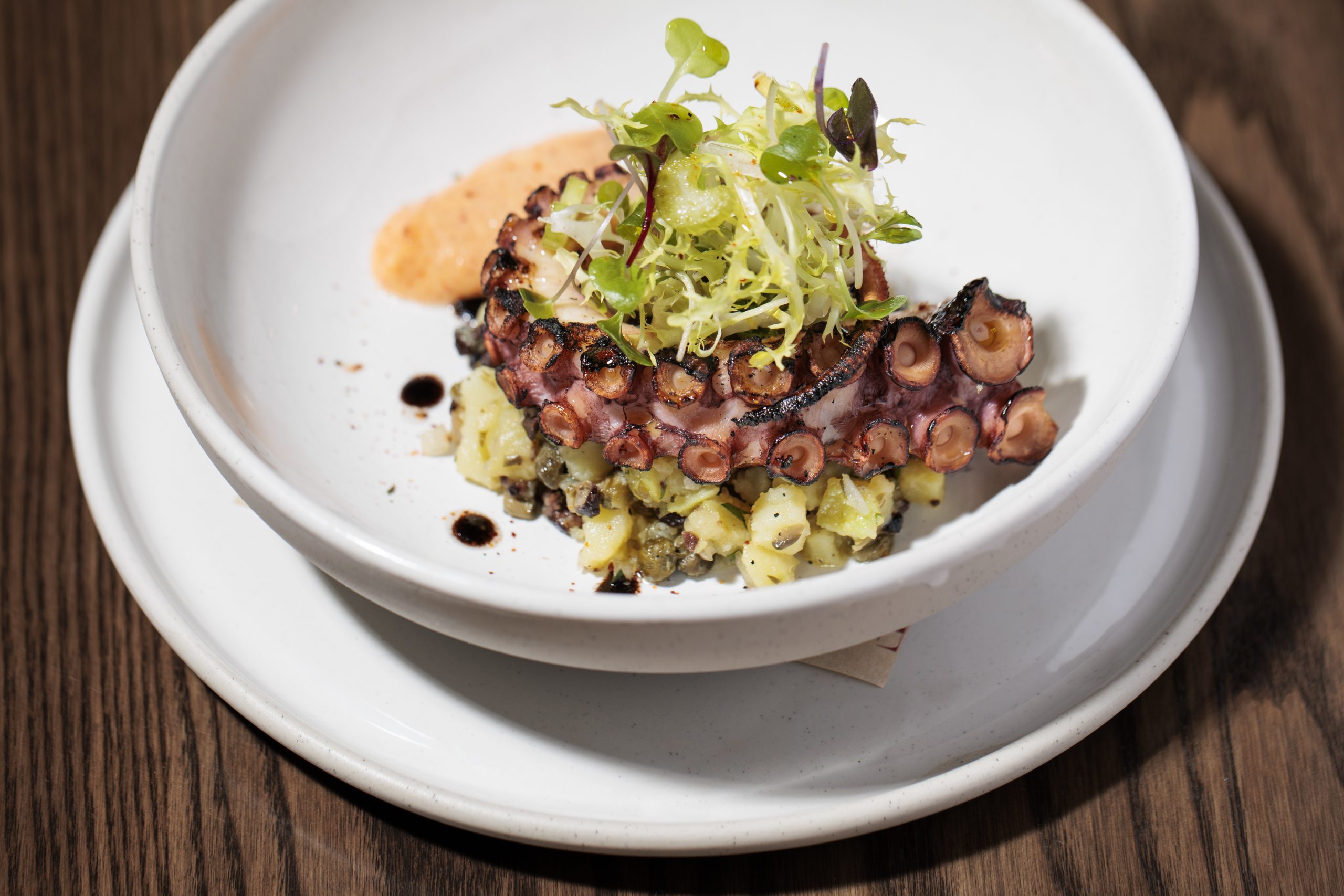
    The grilled octopus at Terra Grill.Monica Herndon / Staff Photographer

    I especially enjoyed Tourondel’s octopus starter, coiled into a thick ring with its tentacles pointing out over a hash of crushed fingerling potatoes bright with lemon, olive oil, espelette aioli, and black dots of cured-olive purée. A baked crab cake is meaty and fresh, and fun to eat from the shell that it’s been stuffed back into.

    Beside such successes, though, there are some fusion dishes that felt off-key, like the fried calamari with sweet chili dip, or the chimichurri-dabbed short ribs wrapped in bao buns whose puffy hinges had gone stale. A luxe hot dog encased in puff pastry with Gruyère and sauerkraut would have been delicious had its Wagyu dog not been so dense and rubbery. (Just as with burgers, a Wagyu pedigree does not make a hot dog better.) A tuna tartare stuffed into a flower-like bloom of shaved watermelon radishes beneath an avocado dome was flavorful and satisfying. But a mizuna salad draped with yuzu-dipped slices of yellowtail was awkward to eat and a waste of good fish.

    The prime rib eye with dauphine potato puffs and grilled asparagus at Terra Grill.Monica Herndon / Staff Photographer

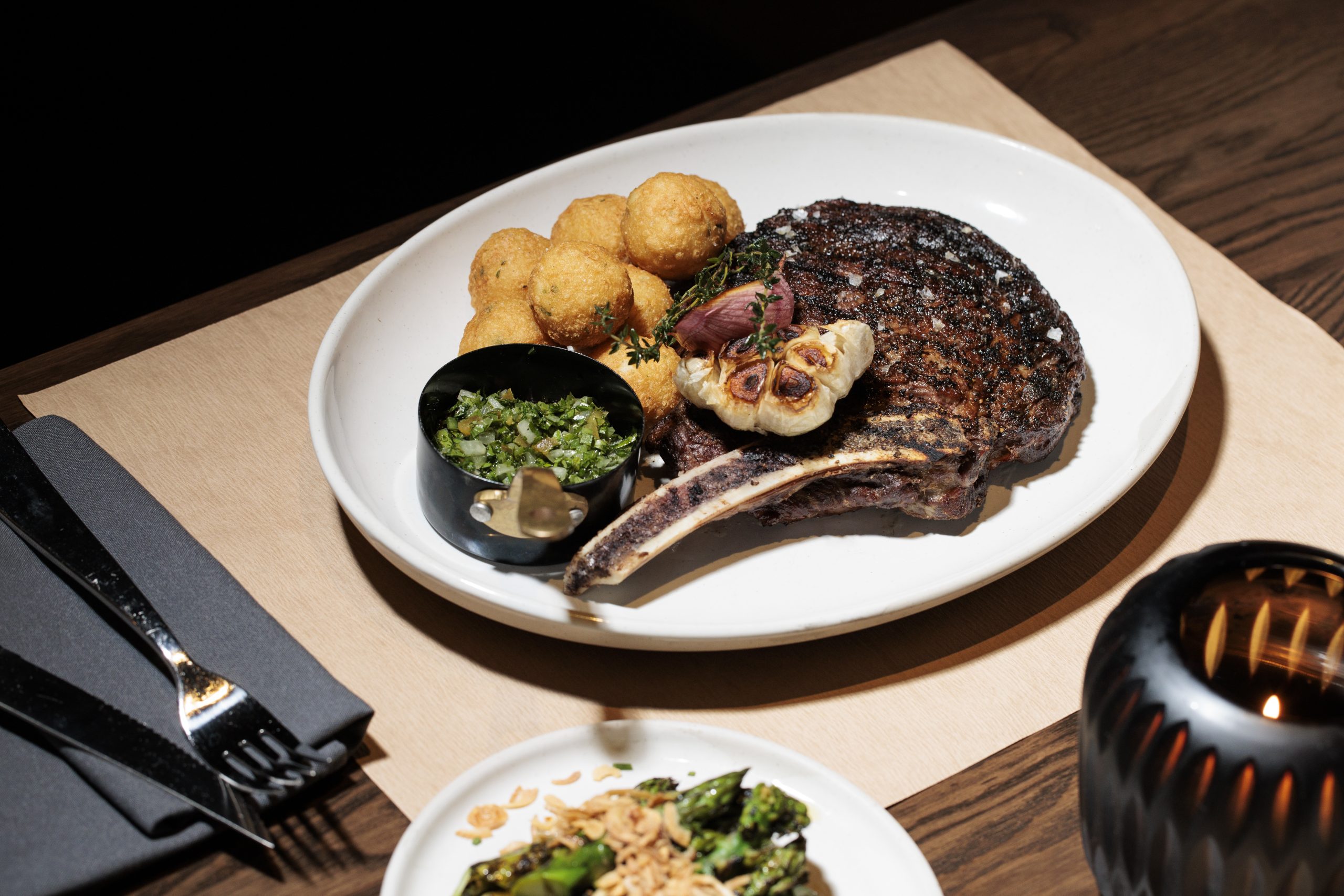
    The entrees are naturally headlined by the steaks — all high-quality prime grade (except for the Angus filet mignon) and properly cooked over the live flames of a hardwood grill, served simply with the sauce and side of your choice. The 22-ounce rib eye was the ultimate beefy cut of the four options, and also the most expensive at $98. The entry-level skirt steak wasn’t huge for $52 (and oddly, more expensive than the signature dish at Tourondel’s Skirt Steak in Midtown Manhattan), but the 10-ounce flap of black garlic-marinated beef glazed in hoisin was delicious, especially with crispy croquettes of dauphine potato puffs on the side.

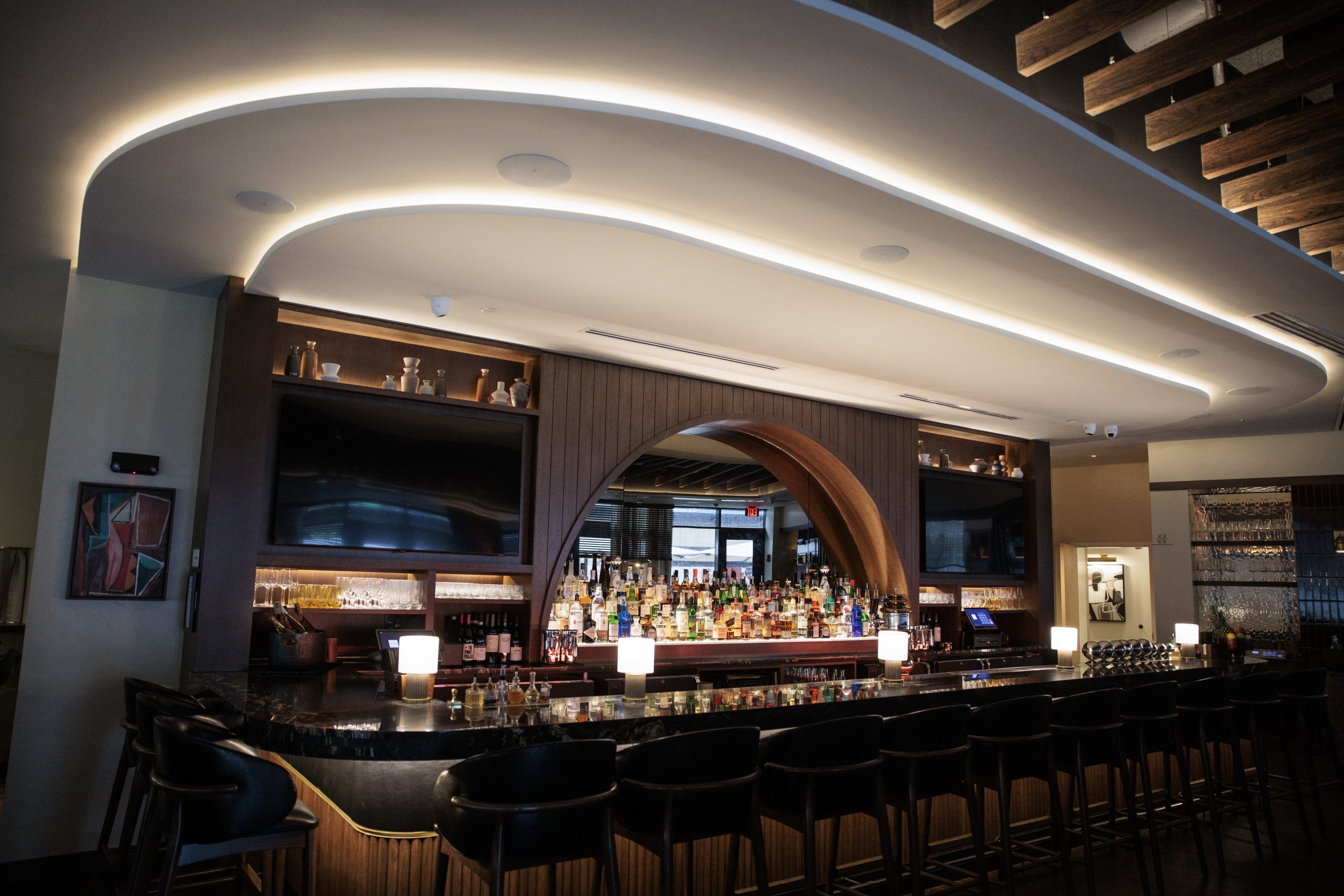
    The bar at Terra Grill restaurant, 1099 Germantown Ave.Elizabeth Robertson / Staff Photographer

    Considering designer Olya Volkova’s attention to fostering the clubby comforts of a swank dining room, it’s a shame the mood is so often squashed by the glaring flash of big TVs behind the central bar. It speaks to a personality conflict this fledgling restaurant is still trying to resolve: Is Terra Grill a special-occasion destination, or a chic weekly hangout for neighbors to watch the Phillies over a $28 burger?

    I’d actually come back for that prime beef burger encrusted with seven different kinds of peppercorns and topped with molten raclette cheese — if only they manage not to overcook it next time.

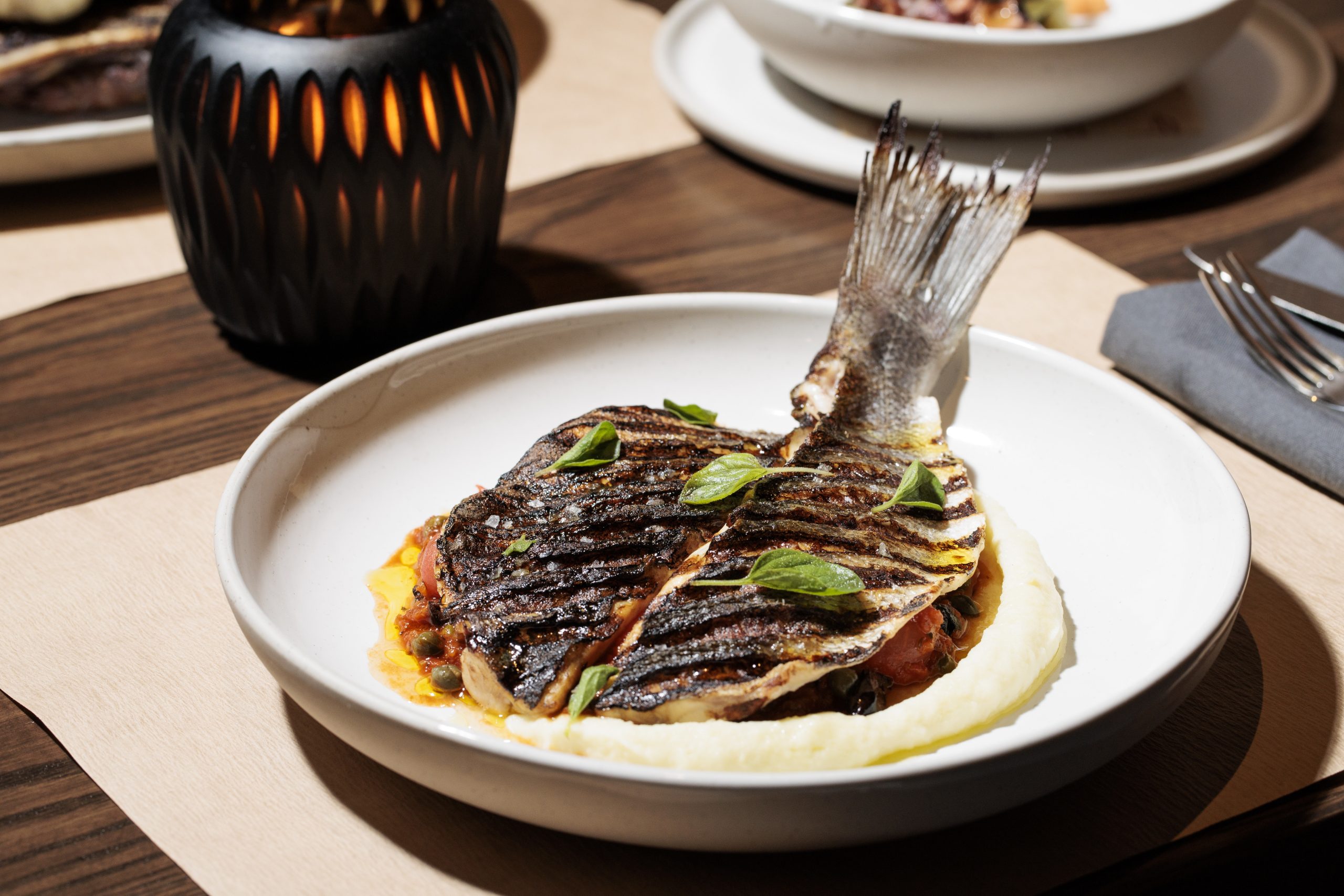
    I can also see returning for the excellent branzino, which gets butterflied and crisped skin-side down over the wood fire and served with a seasonal garnish — a lemon-soy salsa verde in spring, and now a summery puttanesca of blistered tomatoes with capers and olives. That fish is a fair deal at $36. However, even the chef conceded the entree of head-on red shrimp was “a little small” when I sent him a picture of my plate with three crustaceans for $36.

    The grilled branzino puttanesca at Terra Grill.Monica Herndon / Staff Photographer

    The rigatoni in lamb Bolognese is understandably popular with Terra’s regulars, both hearty and flavorful for $28. But it also feels random on a menu that has few other Italian flourishes — even if Tourondel’s adjacent pizzeria, Scusi, is right next door.

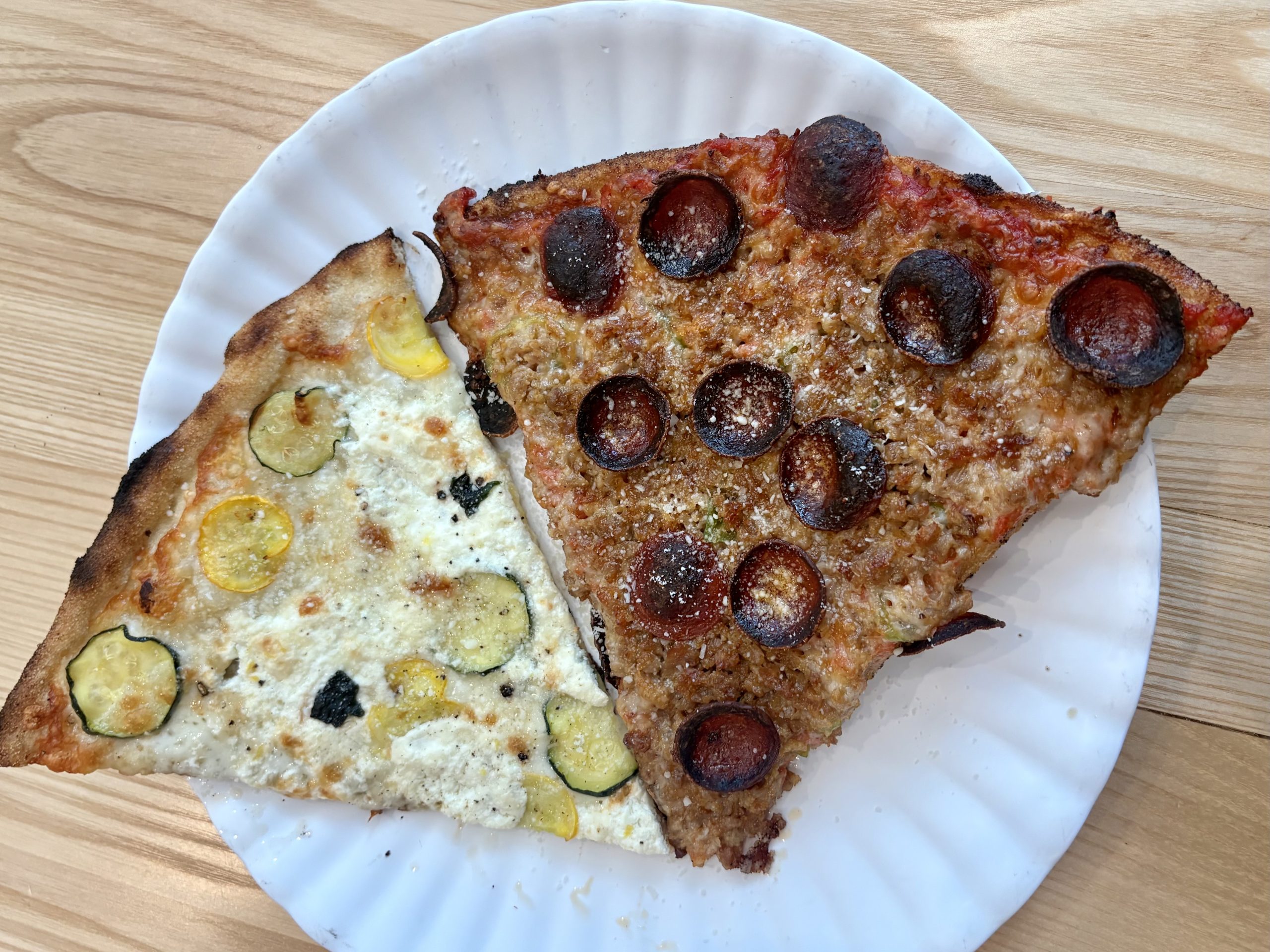
    With its blond wood, aperitivo hour, and appealing menu of salads and pies (many available by the slice), Scusi could very well be just the affordable counterpart Terra needs. But its thin-crusted Roman pies were so strangely heavy from a blend of grains, including bran, that the dough was leaden and tough. My weighty slice of sausage and pepperoni was also incinerated.

    Two slices of pizza at Scusi, located in the Piazza Alta in Northern Liberties.Craig LaBan / Staff
    Scusi Pizza next door to Terra Grill.Monica Herndon / Staff Photographer

    Having previously enjoyed Tourondel’s Neapolitan-style Sag Pizza in the Hamptons, I know he’s capable of good pies. But Scusi’s troubled crusts reflect one of the perils of having a remote-control chef conducting from out of state.

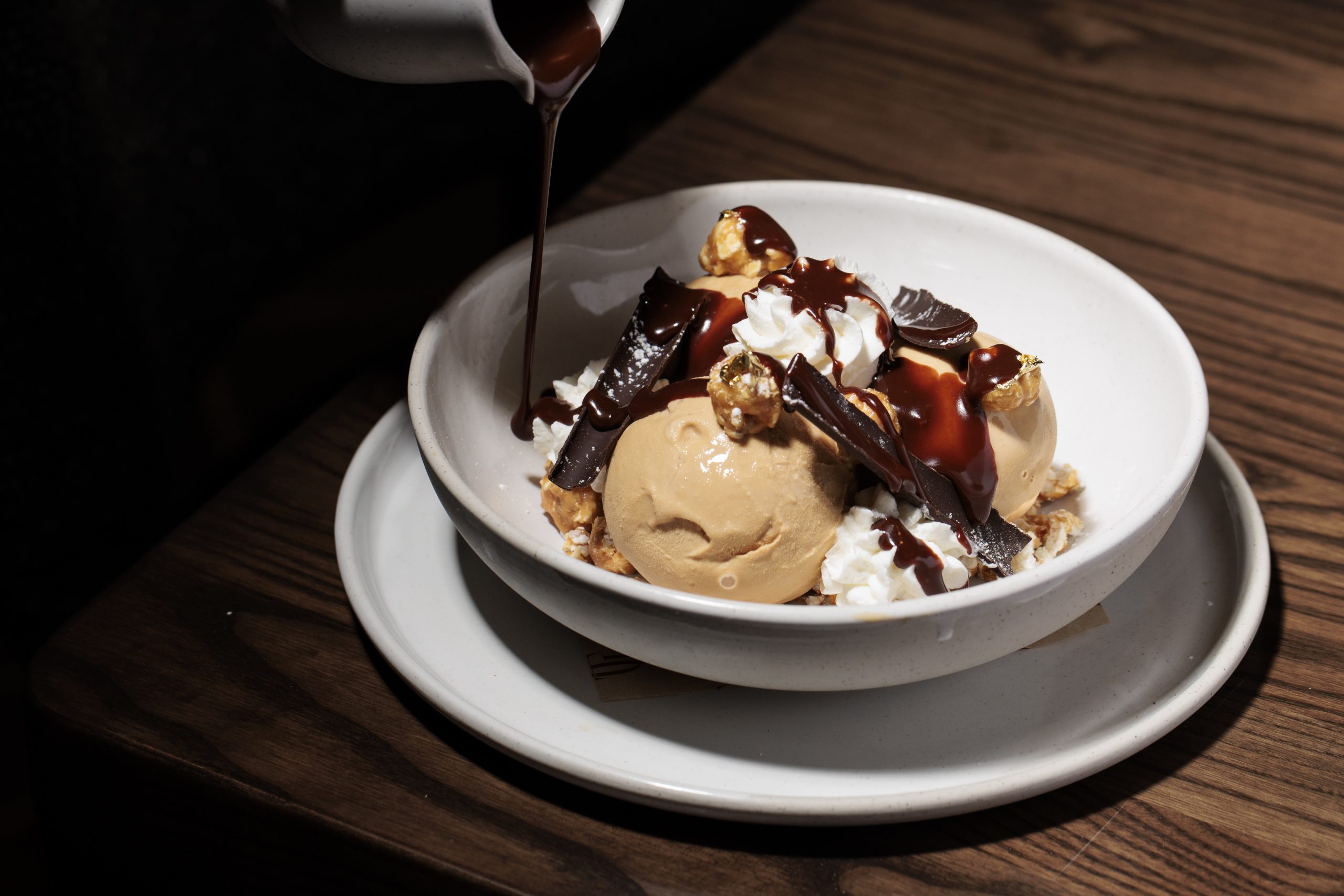
    Even more difficult than executing recipes, though, is finding the soul of a cookie-cutter concept, such that it feels like it fits the fabric of a place. Of course, in a literal blank slate like the Piazza Alta, the right restaurant can help set that tone. I did enjoy much of my food here, including the whimsical finale of a caramel popcorn sundae with a tableside chocolate sauce drizzle.

    There are good ingredients in place. And the service is friendly enough (despite some rushed pacing with the starters). But there is still a paint-by-numbers corporate energy to Terra Grill.

    The caramel popcorn sundae at Terra Grill.Monica Herndon / Staff Photographer

    Maybe its stride will come with more customers: The restaurant was less than half full during my visits. Perhaps they will materialize if the neighborhood gains the kind of momentum its developers hope to conjure — including the promise of an undisclosed local star chef slated to take a prime space across from Terra. Tourondel’s restaurants alone do not carry the gravity to fully animate this recently revived stretch of Germantown Avenue, but Terra could complement a broader scene. Just like the chaotic, slow-motion traffic patterns outside the restaurant’s doors, it feels like a work in progress.


    Terra Grill

    1099 Germantown Ave., 267-962-0011, terragrillrestaurant.com

    Dinner 5 to 9 p.m. Sunday, Wednesday, and Thursday; until 10 p.m. Friday and Saturday. Brunch 11 a.m. to 3 p.m Saturday and Sunday.

    Entrees, $28-$98.

    Wheelchair accessible.

    A little over half the menu items are gluten-free, with several others being easily modified with care to avoid cross contamination. Fried items are not available.

    Menu Highlights: Parker House rolls; fried calamari; lemon chicken parm sandos; grilled octopus; stuffed crab cake; grilled branzino; Terra burger; prime steaks (skirt; strip, rib eye); potato puff dauphine; caramel popcorn sundae.

    Drinks: Creative takes on classic cocktails with culinary twists are front and center, including a tzatziki-washed riff on a dirty martini and the rummy Crazy Bird tinged with bitter Campari. The sub-50 label wine list covers multiple styles with a balance of big names (Whispering Angel, Jordan) and lesser-known options (Decibel, Txakoli rosé). There are solid choices by the glass at $20 and under.

    The interior of Terra Grill on Thursday, July 9, 2026 in Philadelphia.Monica Herndon / Staff Photographer
  • Philly flavors reign supreme at Atlantic City water ice festival

    Philly flavors reign supreme at Atlantic City water ice festival

    Philly is synonymous with water ice — it’s number two on Inquirer’s 76 iconic foods list for a reason. And over the weekend, two Philly shops claimed the top spots at Ocean Casino Resort’s first water ice competition.

    The festival, at the Atlantic City resort’s TopGolf Swing Suite, featured 14 vendors from New York, Pennsylvania, New Jersey, and Delaware.

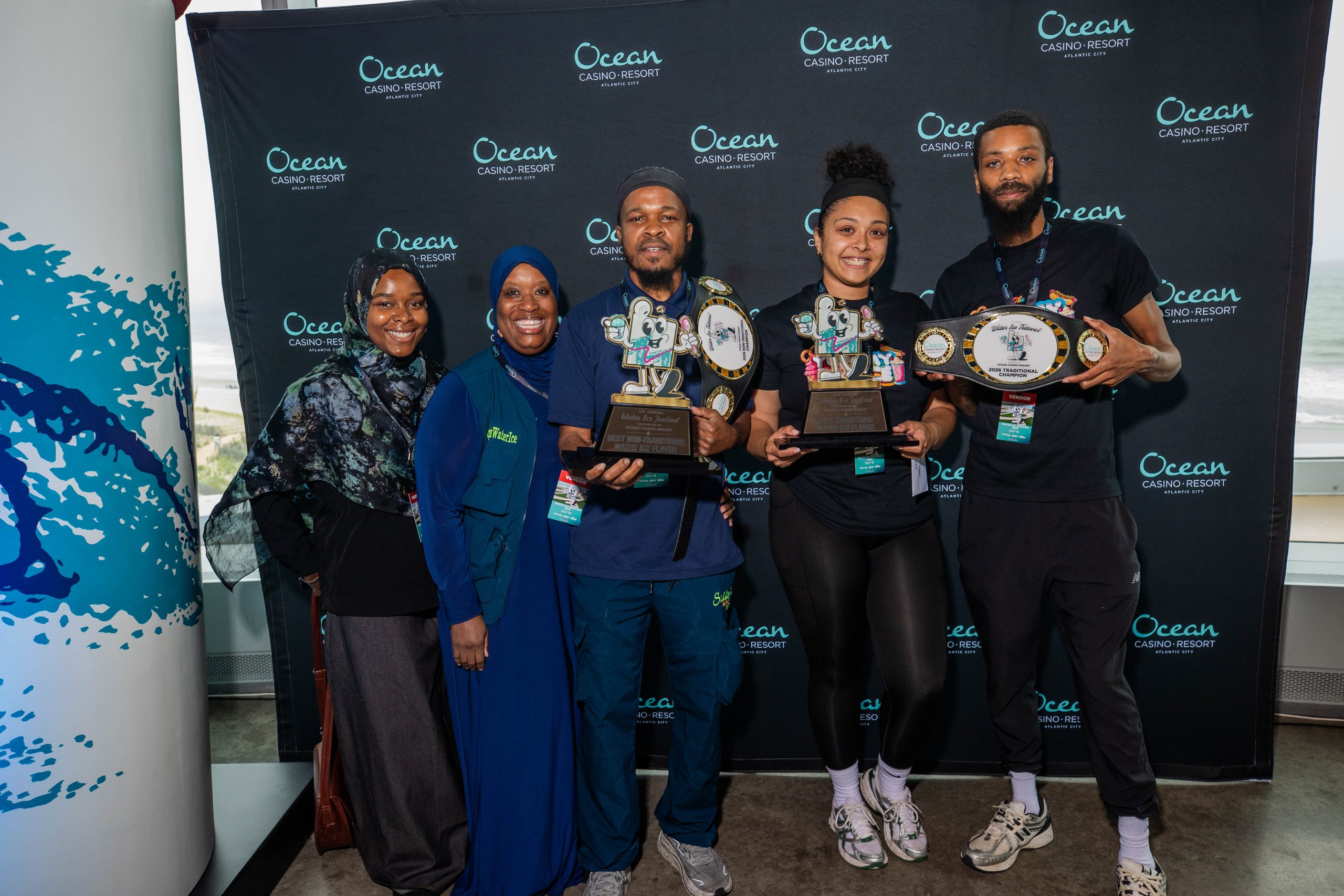
    Siddiq’s Water Ice and the Yummy Palace took first place in separate categories at the Water Ice Festival at Ocean’s Casino Resort.Ocean Casino Resort

    The coconut water ice from Chinatown’s the Yummy Palace won best traditional flavor. The lime mojito from West Philly’s Siddiq’s Water Ice was crowned the best nontraditional flavor.

    The winners took home a trophy and a championship belt, along with an overnight stay in a VIP suite, $500 dining credit, two spa treatments, and two tickets to a show of the winner’s choice. The winning flavors will be featured for three months at Scoops in The District.

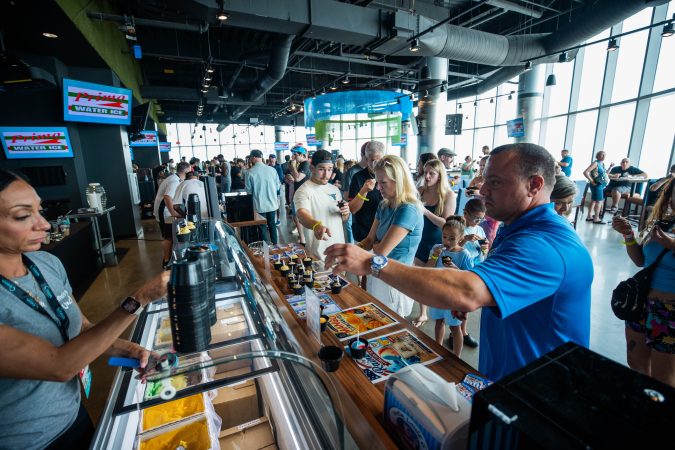
    From 2 to 5 p.m., guests of the family-friendly, ticketed event enjoyed unlimited tastings, engaged in photo opportunities and face painting, and sampled offerings to vote in the Water Ice Flavor contest. The event was hosted by social media influencer Aunt Mary Pat.

    Other Philly water ice vendors included Philadelphia Tropical Treats, South Philly Ice, John’s Water Ice, and Philadelphia Water Ice Factory. But only covers the surface of just how many shops the city has to offer — consider the Inquirer water ice map for more options.

    Inside Water Ice Festival at Ocean’s Casino Resort.Ocean Casino Resort

    Cherry Hill’s Primo Water Ice, Mahwah’s The Ice Factory, Patterson’s Gelotti, Wilmington’s Fusco’s Water Ice & Ice Cream, Sicklerville’s Rosati Ice, Williamstown’s Stio’s Water Ice & Ice Cream, and Bensalem’s Volpe’s Italian Ice also participated.

    “We’re thrilled to have seen the excitement from the hundreds of guests that joined us on Saturday for Ocean’s first-ever Water Ice Festival,” said Bill Callahan, general manager of Ocean Casino Resort. “Fans voted for their favorites, and we’re excited that two local businesses were recognized as the best of the best! We look forward to making this an annual summer tradition for years to come.”

  • Chibanos, a Chinese-Cuban sandwich shop built on family recipes, opens in Washington Square West

    Chibanos, a Chinese-Cuban sandwich shop built on family recipes, opens in Washington Square West

    Washington Square West’s latest restaurant brings Chinese flavors to Cuban classics, from pressed sandwiches and fried yuca to flan and croquetas.

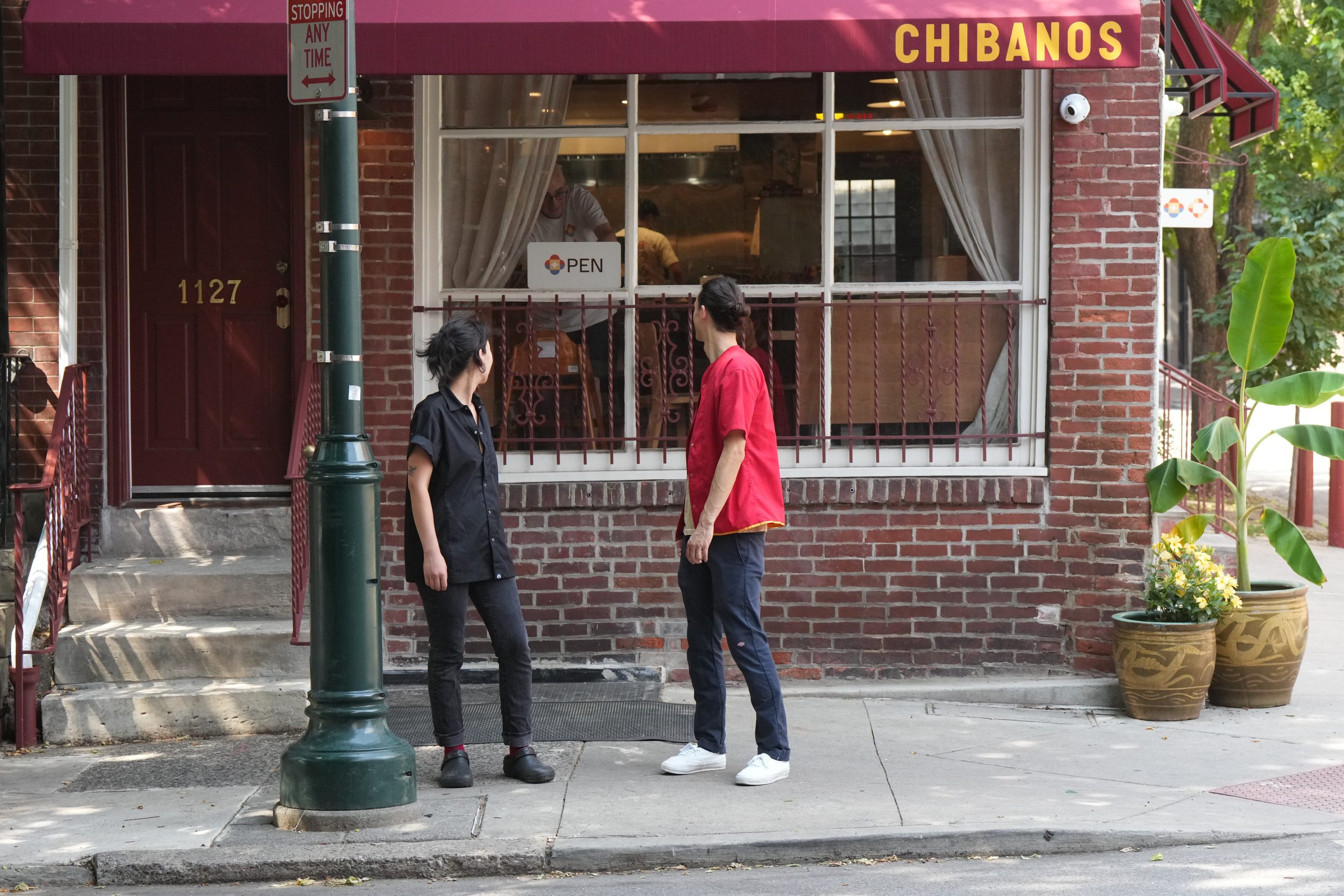
    Chibanos opened July 1 at 1127 Pine St., formerly Effie’s, with a menu that’s an ode to the food owner Evan Fong Jaroff grew up eating as a third-culture kid in the Philly suburbs. The restaurant’s name is shorthand for what Jaroff’s mother’s family were called growing up: “Chino Cubanos,” or Chinese Cubans.

    Jaroff’s mom, Ana, immigrated to the United States from Cuba in the 1960s after the Cuban Revolution. Food helped Jaroff make sense of and learn to appreciate his background as a mixed-race kid, he said.

    At their home in Lansdowne, the Jaroffs used “soy sauce like salt,” he said, and ate traditional Southeast Chinese fish dishes alongside rice and beans, yuca, plantains, and minced beef picadillo. On Nochebuena (aka Christmas Eve), his mom would present a plate of lechón, or slow-roasted pork, coated in a secret marinade. Leftovers would be used for sandwiches.

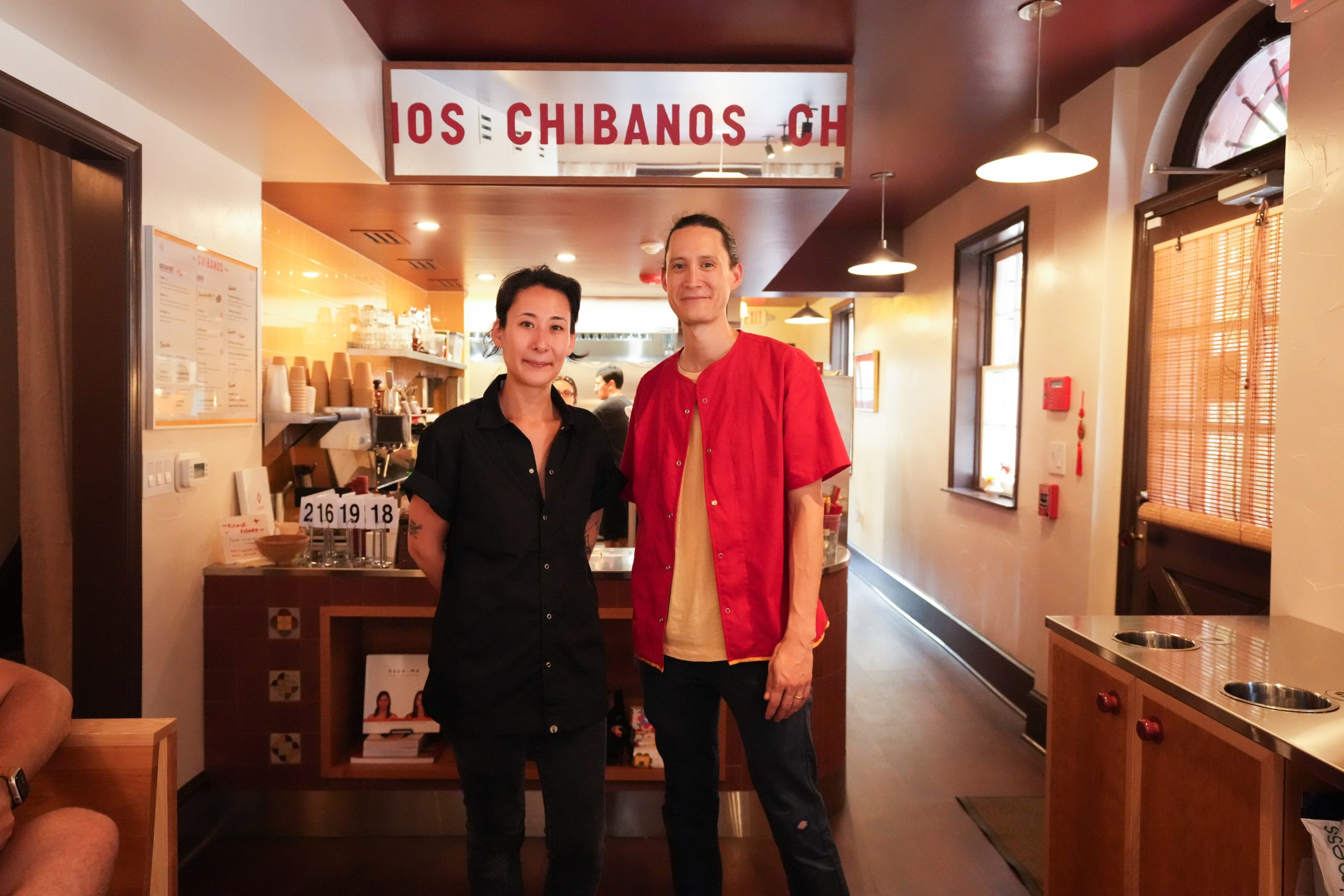
    Aya Iwatani (left) and Evan Jaroff inside Chibanos, their Cuban-Chinese sandwich shop that opened on July 1 at 1127 Pine St.Jessica Griffin / Staff Photographer

    “When you’re mixed race, you’re always compared to one or the other. When I lived on the East Coast, I was just Asian. When I lived on the West Coast, I was just white,” Jaroff, 39, said. “But I’m a whole person.”

    Reckoning with his racial identity was the catalyst for Chibanos, which Jaroff started as a pop-up in 2022 after leaving his finance career in London and moving back to Philly. Lacking culinary experience, he enlisted the help of chef Aya Iwatani, a Honeysuckle Provisions alum, to reinterpret his childhood memories into a set of sandwiches that felt authentically Chinese and Cuban, such as a Cubano stuffed with his mom’s famous pork and salted Chinese mustard greens, or jackfruit and tofu seasoned with a garlicky mojo.

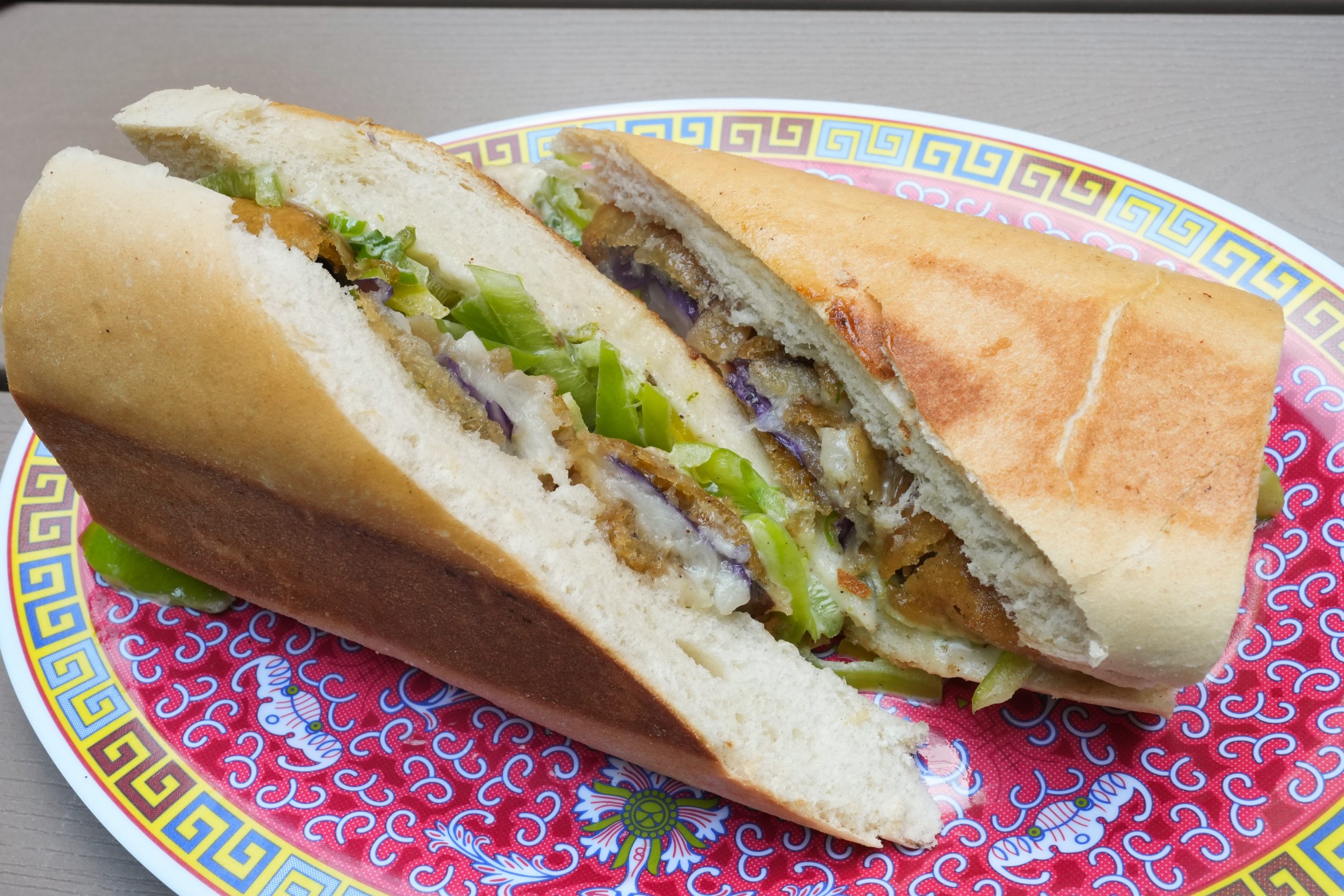
    The eggplant empanizado sandwich on a LeBus Bakery Cuban roll at Chibanos, owner Evan Jaroff’s Chinese-Cuban sandwich shop in Washington Square West.Jessica Griffin / Staff Photographer

    Successful takeovers at Solar Myth, Jiggy Coffee, and Forin were enough for Jaroff to go all-in on a brick and mortar. He purchased the building — once home to Effie’s, the beloved Greek BYOB that closed after 27 years — in August 2024.

    Jaroff said he was drawn to the 200-year-old rowhouse because its history gave it a lived-in feel.

    “I want people to say, ‘Oh, Chibanos? That place looks like it’s been there for 10 years,’” he said.

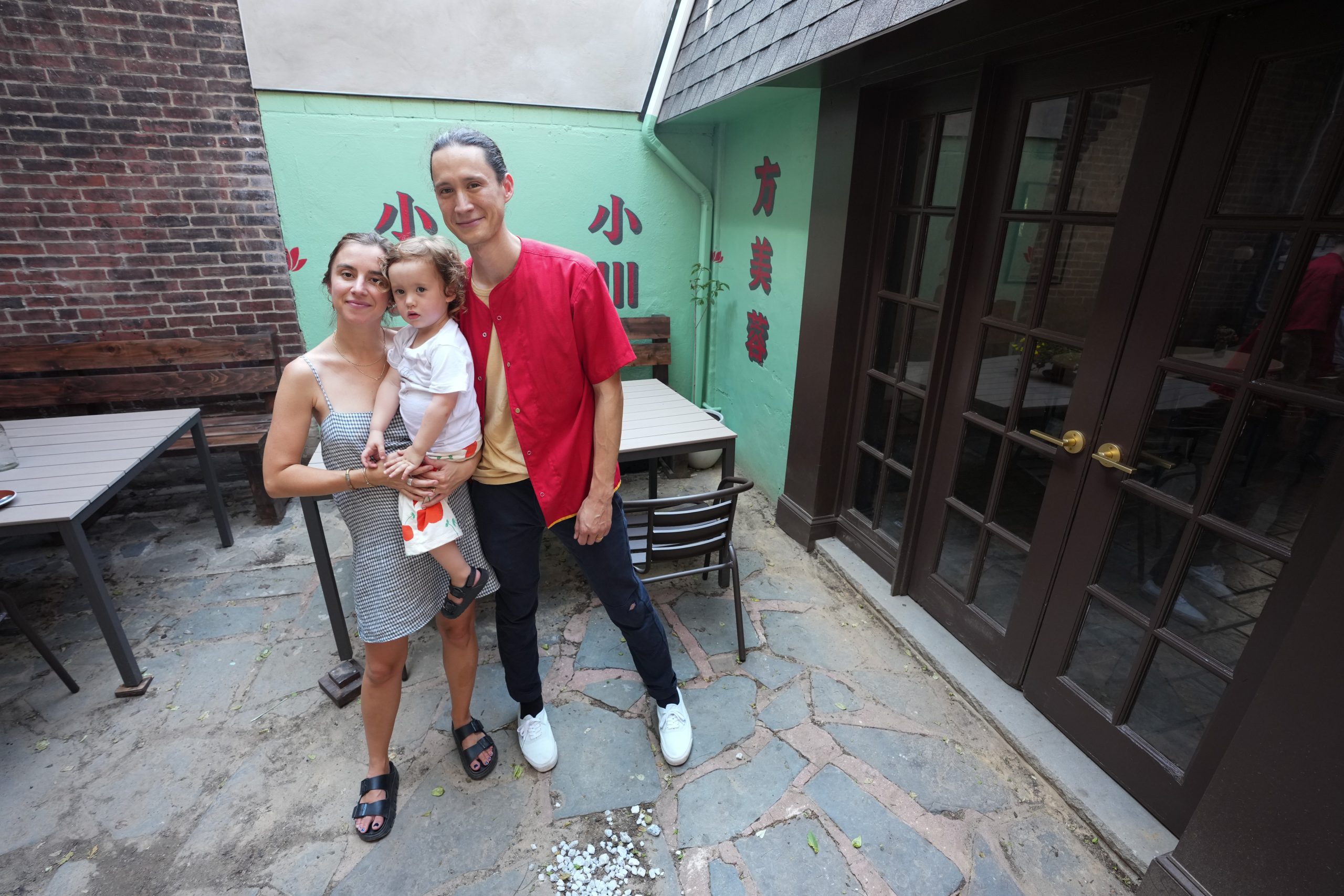
    Nearly two years after the sale, the 1,725-square-foot restaurant is now a casual sandwich shop-meets-cafe, with a revamped courtyard, communal seating, and a fresh paint job. The patio’s turquoise walls bear the names of Jaroff, his brother, and mom, spelled in Chinese characters.

    The space flows seamlessly from the counter-service storefront to the courtyard and a rear dining area that looks like a minimalistic tea room — all dark wood and conversational seating. Jaroff said the indoor-outdoor vibe is a nod to Cuba and Southern China, which have the same latitude and thus similar climates.

    Owner Evan Jaroff with his wife and son at Chibanos, his Chinese-Cuban sandwich shop. The menu pulls from recipes from Jaroff’s mom, a Chinese woman who was raised in Cuba.Jessica Griffin / Staff Photographer

    Chinese food done the Cuban way

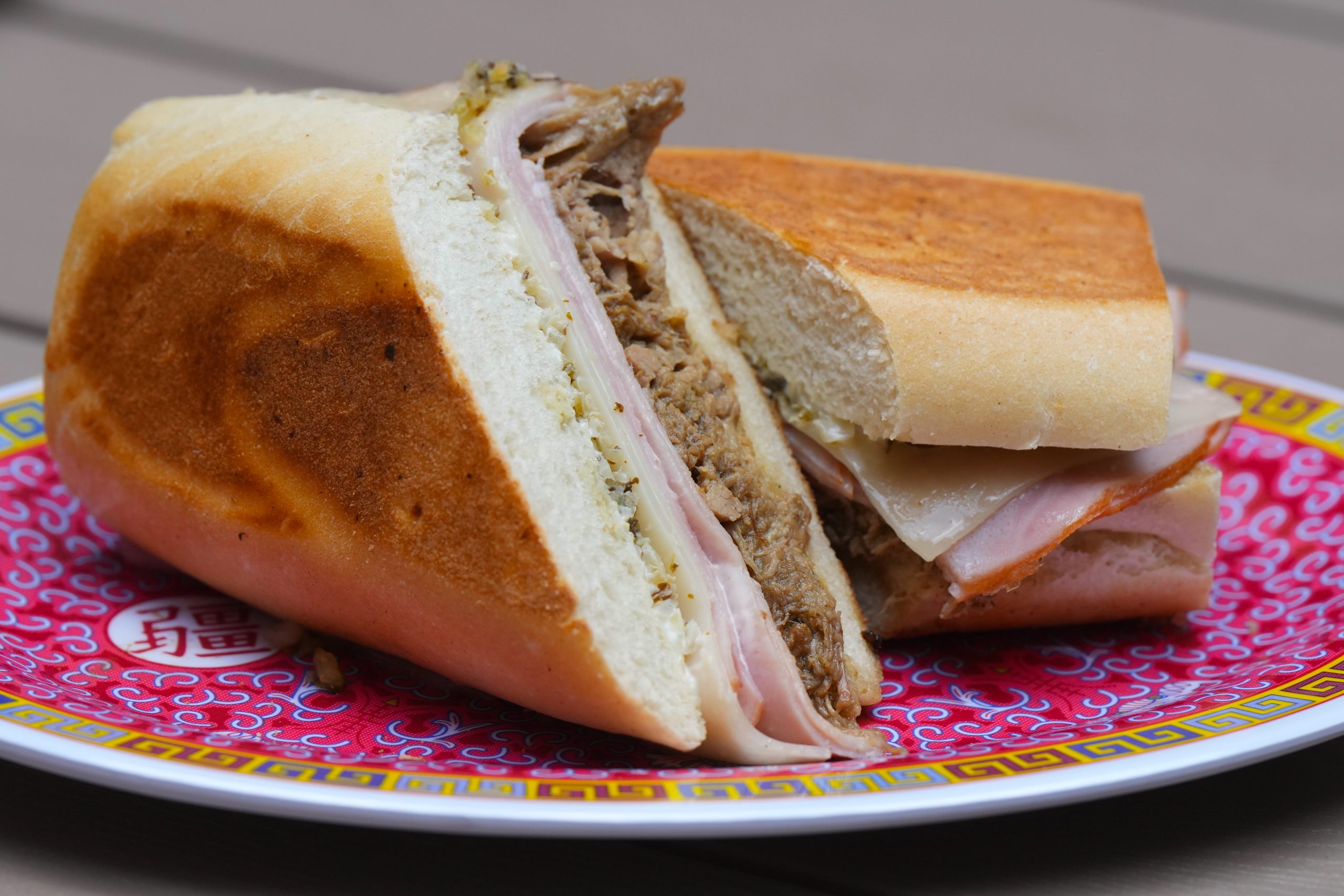
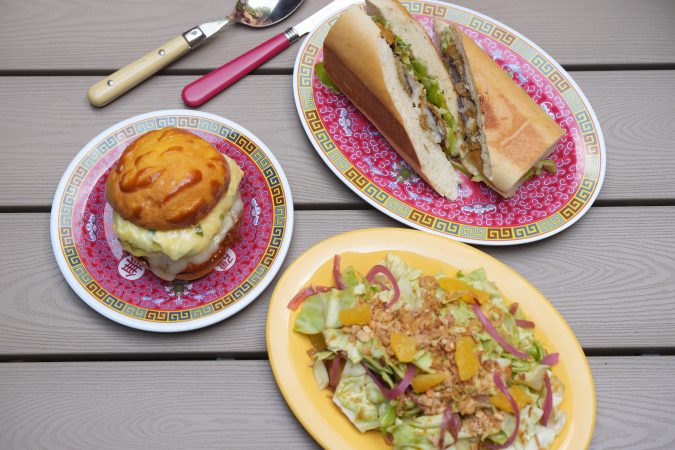
    The centerpiece of Chibanos’ menu is a lineup of six pressed sandwiches on LeBus’ Cuban loaves, which Iwatani — now Chibanos’ head chef — and Jaroff chose for its just-dense-enough texture after auditioning an array of ciabattas and hoagie rolls. The eggplant empanizado — layered with salt-and-pepper eggplant, pickled serrano peppers, and cubanelle scallion slaw — is a standout. So is the chibano, the restaurant’s namesake riff on a Cubano that uses Jaroff’s mom’s pork recipe.

    The chibano, Chibanos’ version of a Cubano sandwich with roast pork, ham, Swiss cheese, mustard greens, and mayo.Jessica Griffin / Staff Photographer

    The key, Iwatani said, is the marinade, which took several tries to get Ana’s stamp of approval. “The first time, she was like, ‘It’s pretty good, but not quite there,’” Iwatani said. “You have to use sherry.”
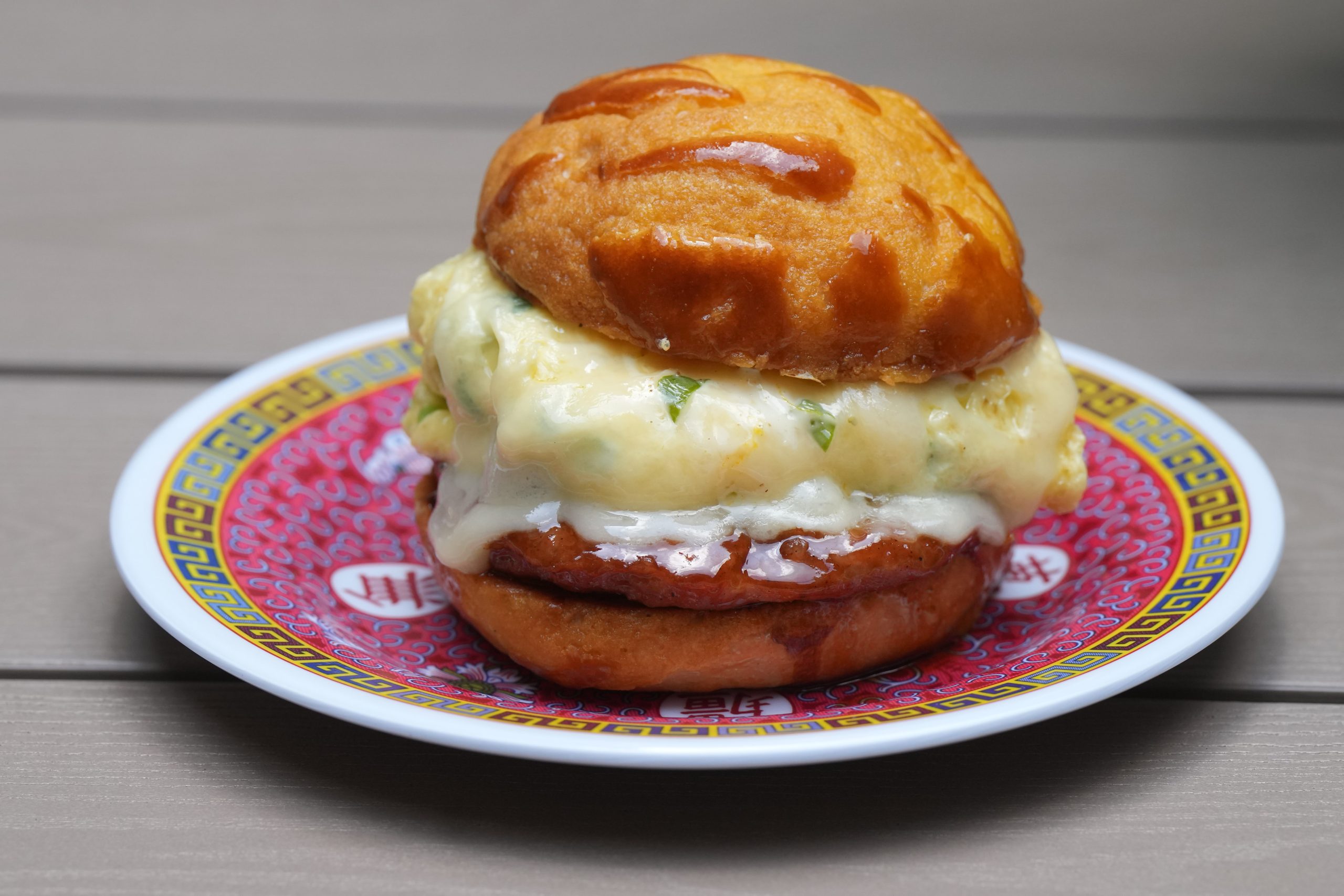
    The rest of Chibanos’ menu was developed after its pop-up run. Hits include croquetas stuffed with slightly sweet Chinese sausage, fried yuca made for dipping in a sofrito-spiced ranch, and a surprisingly light jasmine tea-infused flan. There’s also the sweet-savory-salty Chino breakfast sandwich: Fluffy eggs and char siu-style sausage are stuffed between a mayo-slicked Dodo Bakery bolo bao. The buns allude to the custard-filled rolls from Chinatown Jaroff grew up eating for breakfast.

    The Chino breakfast sandwich on a Dodo Bakery bolo bao at Chibanos, a Chinese-Cuban sandwich shop at 1127 Pine St.Jessica Griffin / Staff Photographer

    Chibanos joins the dying tradition of Chino Latino cuisine, a genre that dominated New York City from the 1970s to 1990s as Chinese immigrants from Latin America settled in the U.S. to escape political instability. Chinese (lo mein, spare ribs, etc.) and Latin American (ropa vieja, pernil, etc.) staples sit column A-column B style on menus optimized for pairings at iconic restaurants like La Dinastia and the now-closed Caridad 78.

    Cuba historically had a vibrant Chinese culture. One of Latin America’s oldest Chinatowns was established in Havana in the 1920s by Chinese migrants and former indentured servants who opened restaurants that incorporated Caribbean ingredients into traditional Chinese recipes.

    Aya Iwatani (left) and Evan Jaroff outside Chibanos, their Cuban-Chinese sandwich shop that opened on July 1 at 1127 Pine St.Jessica Griffin / Staff Photographer

    Jaroff doesn’t view Chibanos as fusion but rather a tribute to the unique style of cooking he learned from his mom.

    “I don’t think of us as a Cuban restaurant. I don’t think of us as a Chinese restaurant,” he said. “Don’t put us in a box … We’re our own thing.”
    Chibanos, 1127 Pine St., chibanos.com. Hours: 8 a.m. to 3 p.m. Wednesday through Sunday.

  • How do you spur tourism in Delco? An ‘ice cream passport’ offers one sweet answer.

    How do you spur tourism in Delco? An ‘ice cream passport’ offers one sweet answer.

    Delaware County’s tourism agency wants to reward you for eating ice cream this summer. Really.

    Visit Delco, Delaware County’s tourism promotion agency, launched the Delco Ice Cream Trail Pass in May, a 16-stop mobile “passport” that encourages participants to try out local ice cream and water ice shops, collecting points along the way that can be redeemed for prizes. The Ice Cream Trail takes participants across Delaware County, from Just Homemade Ice Cream in Aston up to the Vanilla Bean in Wayne, and back around to CJ’s Waterice & Ice Cream in Collingdale. It was borne out of a desire to get Delco residents into their communities, and local economies, through a treat that cuts across all age groups, neighborhoods, and walks of life.
    “We just wanted to create a fun and accessible experience for the summer that encourages people to explore Delco,” said Amy Bohr, Visit Delco’s marketing director.

    Participants on the trail, which runs from Memorial Day through Labor Day, can sign up online and save the “passport” on their phones before visiting the ice cream shops, earning points at each location. Points can be applied toward rewards, including a baseball hat-shaped bowl, an ice cream scoop, or a bucket hat. Prizes can be collected at the Visit Delco office in Rose Tree Park.

    So far, 1,500 people have signed up for the pass, and 450 have “checked in” at one or more ice cream shops, according to Visit Delco.

    Visit Delco’s goal is largely to encourage nonresidents to visit, and spend money, in the suburban county. The agency helps connect visitors with places to stay, restaurants to patronize, and attractions to see, like the Delaware County Symphony or the Media Theatre. The agency also provides grants to local municipalities and organizations to help boost tourism and spur economic activity.

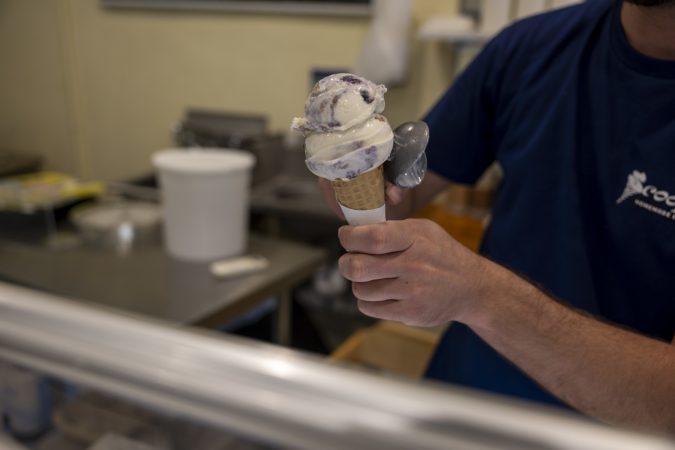
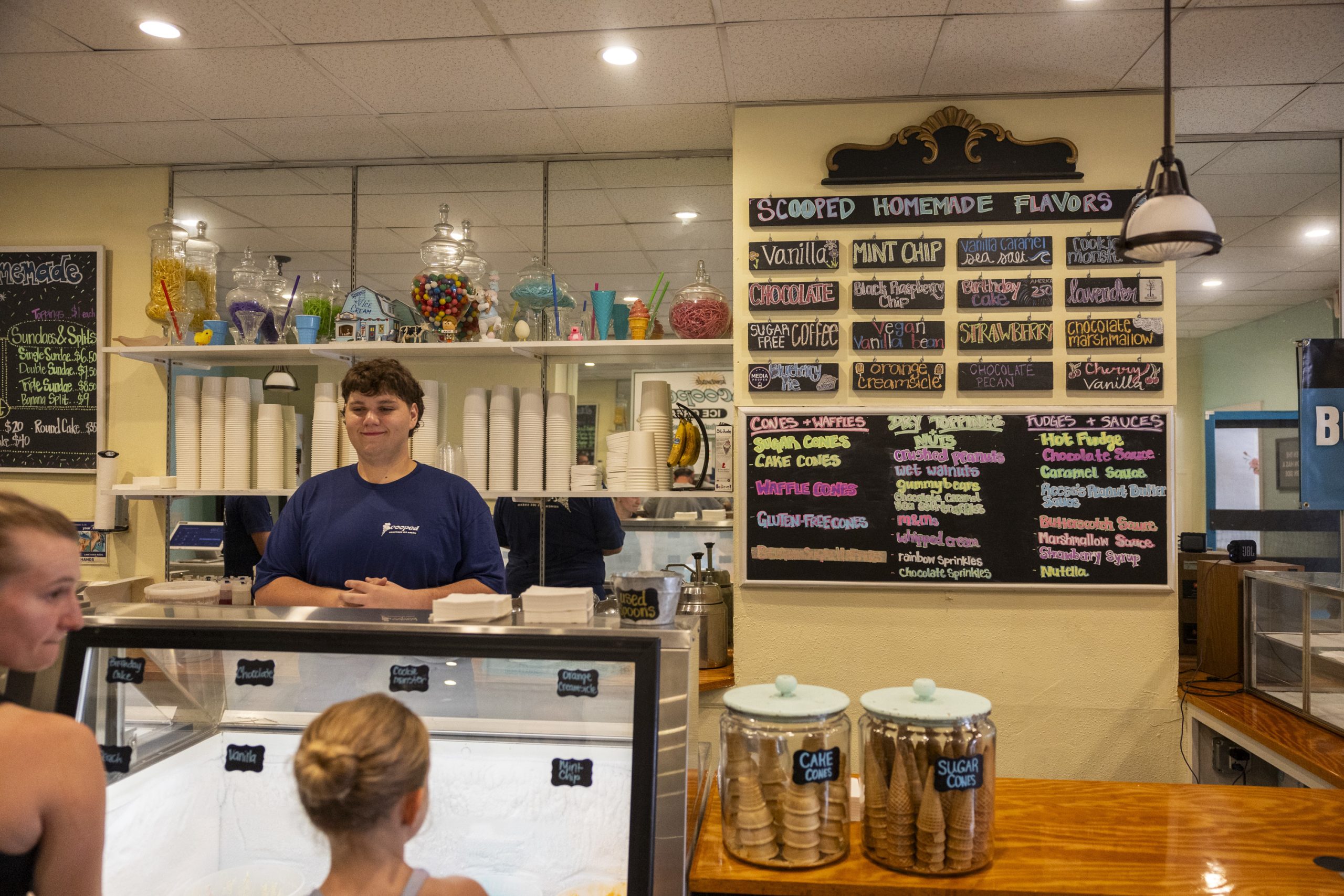
    Michael Mooney, 19, of Ridley Park, helps customers at Scooped Ice Cream in Media. Tyger Williams / Staff Photographer

    However getting locals out into Delaware County is also key for the agency, and for the economic health of the county’s many municipalities, Bohr said. The Ice Cream Trail, along with Trails and Tails, another “passport” program for dog-friendly trails and parks, are formulas to help encourage locals to visit a part of the county they might otherwise skip.

    “When residents visit a new ice cream shop, or explore a town or a Main Street where that shop’s located, they spend a day in the community, perhaps they haven’t done it in a long time, and everyone benefits,” Bohr said.

    Locals are Delco’s “best ambassadors,” she said, often recommending favorite spots to family and friends and coming back again to shop or dine.

    Kyle Lefkof, owner of Scooped Ice Cream in Media and Chester Springs, said regulars and newcomers alike have stopped by to check a box on the Ice Cream Trail and enjoy a sweet treat.

    “I think this is bringing in new business and giving the existing customers something fun to do,” he said.

    Scooped opened in Chester Springs in 2009 and Media in 2017. Lefkof took over the business from his aunt and uncle in 2023, and has been running it since. Scooped serves “super premium, gourmet ice cream” with 14% butterfat and “top-shelf ingredients,” Lefkof said.

    Ice cream is often “the highlight of people’s days,” he said. “It’s really nice to be a part of that.”

    Delaware County’s Ice Cream Trail runs through Labor Day. Participants can download the pass and see all 16 stops here.

    This suburban content is produced with support from the Leslie Miller and Richard Worley Foundation and The Lenfest Institute for Journalism. Editorial content is created independently of the project donors. Gifts to support The Inquirer’s high-impact journalism can be made at inquirer.com/donate. A list of Lenfest Institute donors can be found at lenfestinstitute.org/supporters.