Tag: University of Pennsylvania

  • Penn and CHOP researchers lost millions in federal funding for healthcare research last week, forcing programs to close

    Penn and CHOP researchers lost millions in federal funding for healthcare research last week, forcing programs to close

    Children’s Hospital of Philadelphia researcher Christopher Forrest has spent nearly a decade training early-career scholars on how to design studies that improve care for kids with congenital heart disease, stroke, and influenza.

    That work ended last month, when he had to shut down his PEDSnet Scholars program. The federal funding designated for it stopped coming last fall.

    Forrest received official notice last week that the Agency for Healthcare Research and Quality (AHRQ) had canceled his $5 million grant — originally intended to last through 2028. The letter gave no specific reason, stating only that continuing the grant was not “in the best interest of the Federal Government.”

    PEDSnet Scholars trained researchers to study how healthcare systems can be organized and financed to improve health outcomes. It was one of 16 such programs nationwide funded by AHRQ. Another program site, located at the University of Pennsylvania, received an identical cancellation notice last week from AHRQ.

    “These are not controversial topics,” Forrest said.

    Eighty-two affected grants totaling an estimated $211.6 million as of Tuesday had come to the attention of AcademyHealth, a nonprofit that supports health researchers and has been tracking AHRQ grant cancellations. Those include funding for research projects, career development, training programs, and centers.

    Some researchers received letters saying their work did not align with the agency or federal government’s priorities, followed by a list of the priorities, AcademyHealth president Aaron Carroll said.

    However, many of these projects appear to be directly aligned with priorities, he said.

    One involved a randomized trial of antibiotic stewardship — efforts to encourage careful and responsible use of antibiotics to avoid resistance — across 40 hospitals. Yet in the letter canceling it, antibiotic resistance was listed as a priority.

    “It can’t possibly be that all of these grants that are seeking to improve the quality, safety, and efficiency, and patient-centeredness of healthcare delivery are all incompatible with this or any other administration’s priorities,” said Scott Halpern, a Penn health services researcher whose funding was also canceled.

    Billions in scientific funding have been disrupted under President Donald Trump’s administration over the last year and a half, prompting lawsuits and court reversals in certain cases.

    The Department of Health and Human Services did not respond to requests for an exact count of the grants impacted, saying in a statement that the AHRQ director determines “whether continuation funding is in the best interest of the federal government.”

    “To be clear, these grants were not terminated — they were not awarded continued funding,” the HHS statement said.

    ‘Incredibly demoralizing’

    In late 2025, Halpern had planned to hire a new staff member for the Penn PORTAL program, one of the 16 AHRQ-funded training programs, separately funded from CHOP’s program.

    His team identified a candidate, but — unable to access funding from their $5 million grant since the fall — delayed extending an offer.

    The position was ultimately eliminated. They also rescinded offers to train new scholars in the program.

    Halpern received his official notice last week that his grant, set to continue into 2028, was canceled. He had only spent $1.5 million of it so far.

    Instead of having 10 trainees this month as planned, the Penn program has zero.

    “To not have the resources to support the people who will make a difference in the future is incredibly demoralizing,” Halpern said.

    He drew on philanthropic resources and a roughly $150,000 commitment from Penn Medicine to finish training his first cohort. However, the second cohort of scholars was stopped midway.

    As a result, projects on improving translation services for hospitalized patients and expanding access to hormone therapy for menopausal women were canceled.
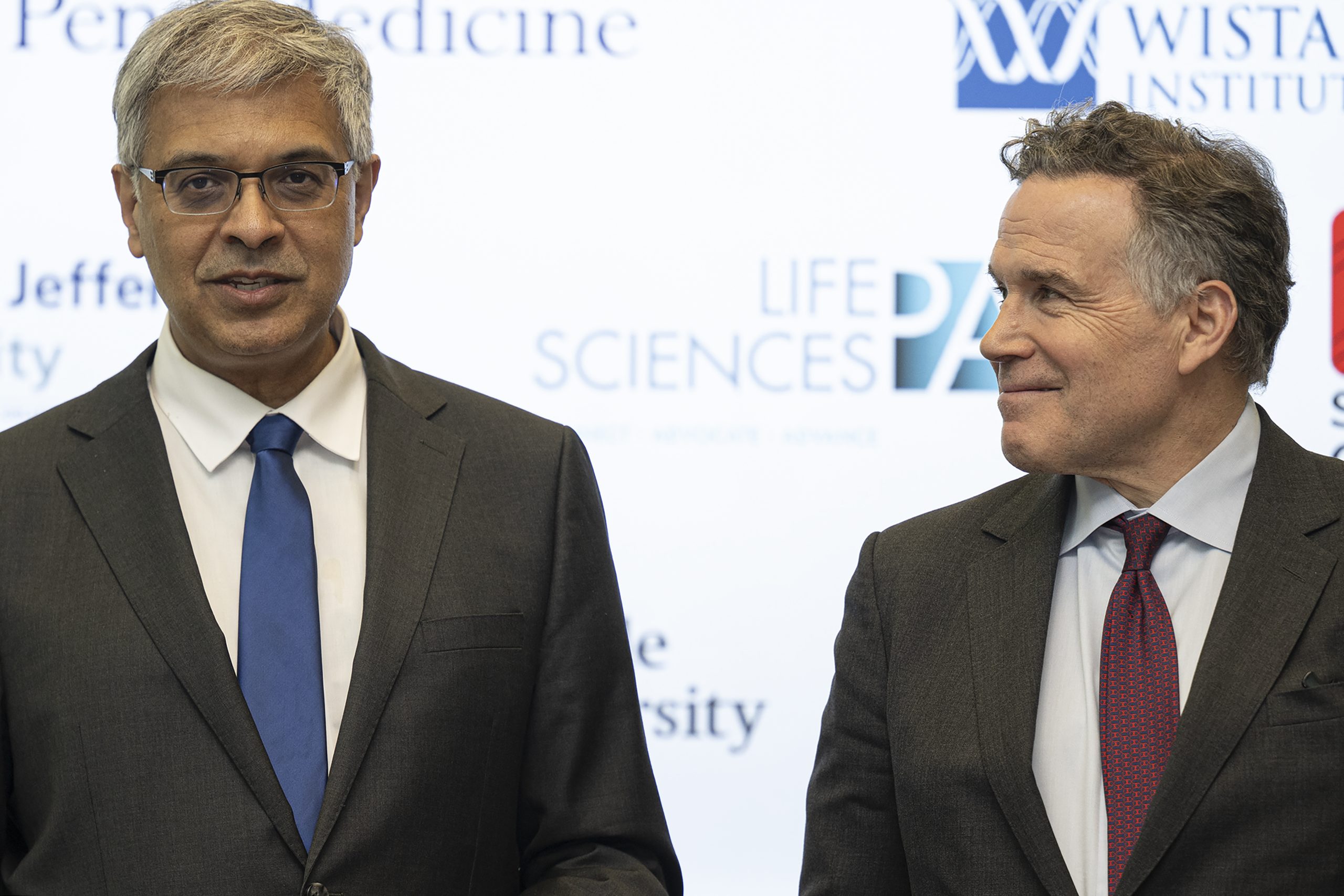
    Jay Bhattacharya (left), director of the National Institutes of Health, and Sen. David McCormick (R., Pa.) speak to the media in March, after touring University of Pennsylvania facilities to highlight NIH-funded research in Philadelphia.Jose F. Moreno / Staff Photographer

    Grant cancellations from AHRQ will have longstanding impacts on advancing healthcare in the United States, a Penn Medicine spokesperson said in a statement, declining to answer more specific questions.

    “Some research projects at Penn Medicine have felt those cuts at their core and impactful work now cannot progress as planned,” the statement said.

    CHOP did not respond to a request for comment.

    In limbo

    Penn researcher Jaya Aysola had not heard as of Tuesday whether her AHRQ grant is canceled, but she assumes the notice is coming.

    She had received a $3.8 million grant to serve as a coordinating center for the 16 training centers starting in 2024. The grant should have been renewed for its second year last November, but that didn’t happen.

    At first, she was told by the agency that it was delayed due to the government shutdown. Then she was told it was held up due to a lawsuit filed by the Society of General Internal Medicine, a physicians group, in August over AHRQ shutting down its grantmaking program.

    Since then, “it’s been radio silence,” she said.

    All but roughly $300,000 of her grant remains unused. Unable to access funds since last fall, she had relied on bridge funding from the university to support staff and research faculty.

    When that funding ended earlier this year, she had to find new jobs and projects for three of her full-time employees, as well as three part-time employees.

    “We already shut down most of the operations,” Aysola said.

    The work she has done since has largely been pro bono with her personal time and limited internal funding.

    Aysola convened a meeting this spring with the 16 AHRQ-funded training centers to discuss how other programs were bridging the gap in funding. Most had paused on accepting new trainees, and have prioritized finishing the current cohort’s work.
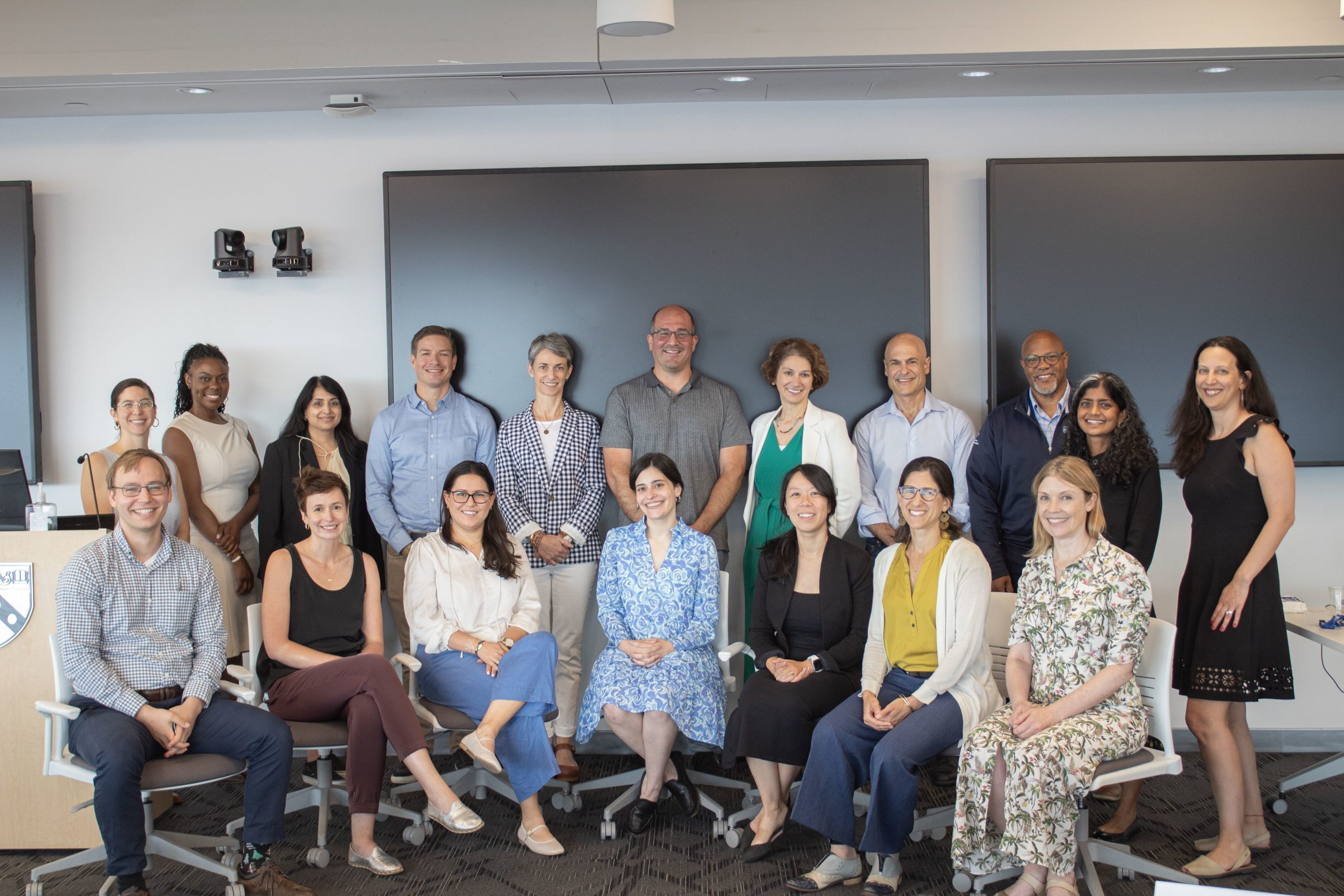
    A July 2025 group photo featuring scholars and faculty leaders in the Penn PORTAL program, which was affected by recent cuts to AHRQ grants.Courtesy of Scott Halpern

    At Halpern’s Penn PORTAL, the first cohort of scholars’ projects have already been implemented. Across the Penn health system, they “are yielding improvements in the patient experience of care,” Halpern said.

    None of the projects led by later cohorts, who would have been trained had the full five years of funding been maintained, are likely to see the light of day, he added.

    He hopes to bring awareness to what he considers an inappropriate cancellation of AHRQ funding. Many organizations are exploring options in terms of advocacy and potentially legal engagement, he added.

    CHOP’s Forrest estimates 30 faculty will never be trained due to PEDSnet Scholars losing its grant funding.

    “It’s very sad because it’s been so instrumental to my career, and I had hoped that it would be instrumental to the career of many of our junior faculty,” Forrest said.
  • I’m a Philly neonatologist. Every time I discharge a baby from the NICU, I worry about the air they’ll breathe at home | Expert Opinion

    I’m a Philly neonatologist. Every time I discharge a baby from the NICU, I worry about the air they’ll breathe at home | Expert Opinion

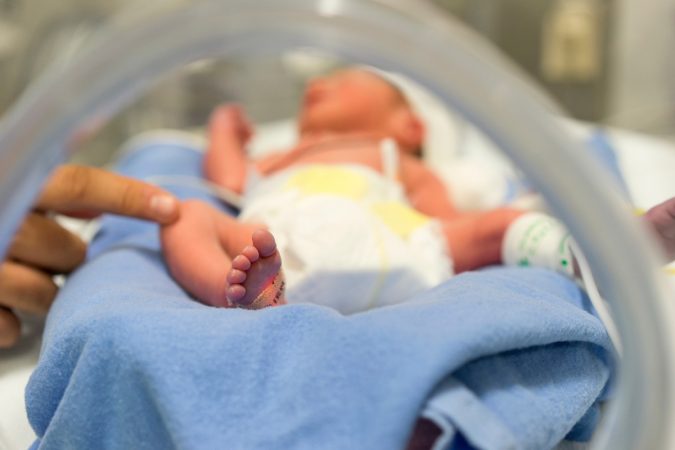
    Discharge day in the neonatal intensive care unit, or NICU, should feel like a finish line. After weeks or months of monitors, alarms, oxygen, feeding tubes, blood tests, and waiting, a family can finally take their baby home.

    As a neonatologist, I know how much work it takes to get that baby there. Their lungs have grown stronger. Their feeding has improved. Their medications have been adjusted and readjusted. The car seat test has been passed.

    But every time we prepare to discharge a preterm infant, I find myself thinking about something that is not listed in the NICU discharge summary: What is the air like in the home and neighborhood where this child lives?

    That question has animated my clinical and research life. Before I was a neonatologist, I worked in a toxicology lab studying fine particulate matter, or PM2.5. These are tiny particles produced by sources such as vehicle exhaust, power plants, and industrial emissions. They are small enough to be inhaled deep into the lungs and may enter the bloodstream. In the lab, we studied how early-life exposure to polluted air could affect the developing heart and lungs.

    Years later, caring for preterm infants in Philadelphia, I am confronted by the same question. Not in a dish or an animal model, but in the lives of my patients — whose lungs are still developing when they leave the hospital — and their parents.

    Preterm infants face double exposure

    Before my patients are born, their pregnant parent is already breathing the air in the place they call home, whether that’s in Philadelphia, Delaware County, or beyond. When a pregnant parent breathes polluted air, it may increase the risk of preterm birth, making it more likely I’ll see that baby in the NICU.

    But delivery does not end the exposure. The same air pollution may still be there when the infant comes home. The difference is that now, alongside their parent, a preterm infant with developing lungs is breathing it too.

    That means some infants may face a double exposure: first before birth, then again after discharge.

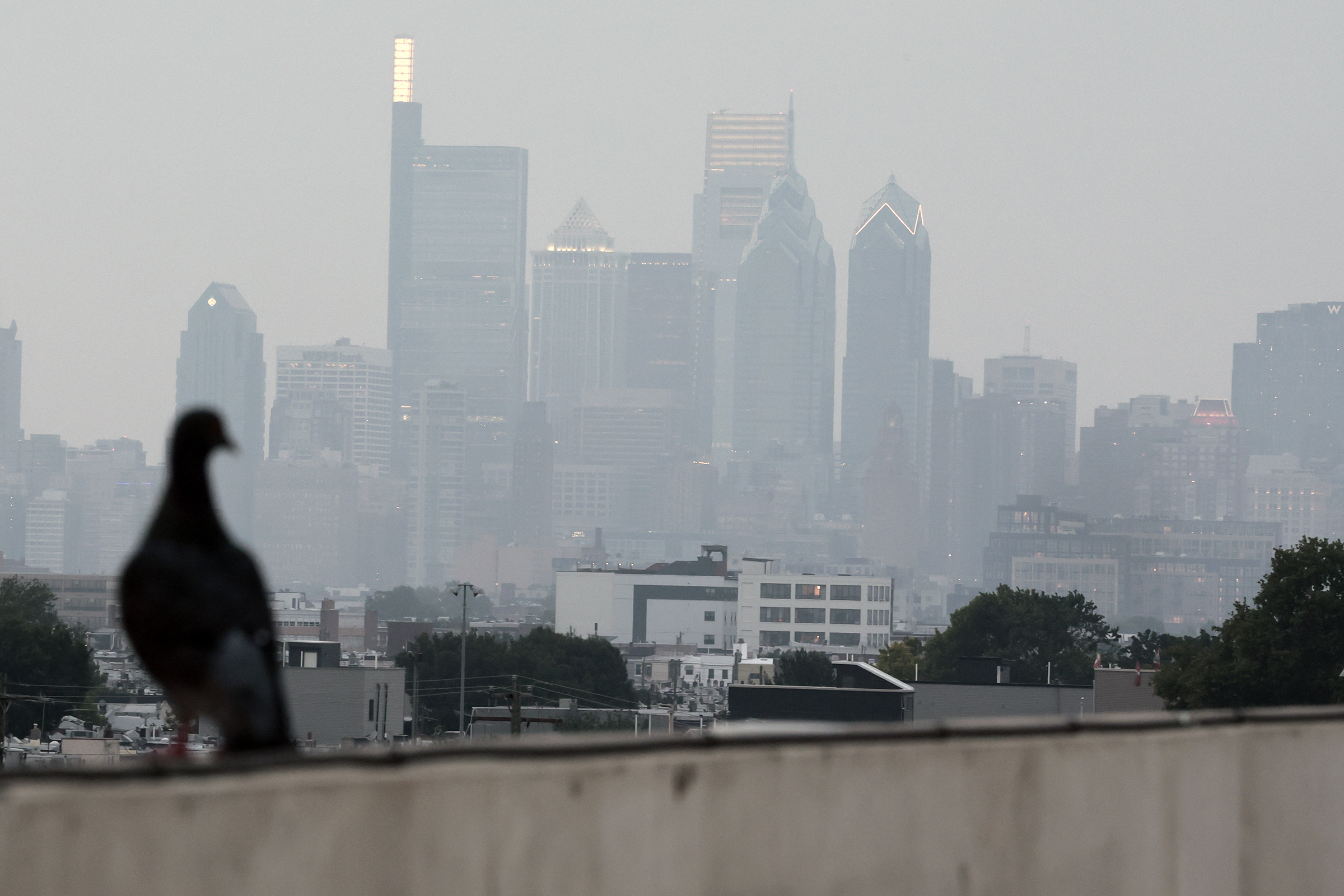
    As seen from the Live! Casino parking garage, haze hangs over the Center City skyline on July 15. Smoke from the Canadian wildfires was creating unhealthy air quality.Elizabeth Robertson / Staff Photographer

    Small pollution differences can have big impacts

    In Philadelphia and other large cities, the distribution of dirty air — and therefore the likelihood of facing this double exposure — reflects how American cities have been built. Highways, industrial sites, and traffic corridors have long been concentrated near communities that have also been negatively affected by policy choices such as redlining and disinvestment. Black families and lower-income families are more likely to live in neighborhoods where the air is worse and to face higher rates of preterm birth.

    My own research has focused on infants with bronchopulmonary dysplasia, or BPD. This is a chronic lung disease that affects many babies born very prematurely. These infants often spend weeks or months receiving respiratory support in the NICU. Even after they leave, their lungs remain vulnerable.

    In one Philadelphia study of 378 preterm infants with BPD who were cared for in NICUs affiliated with the Children’s Hospital of Philadelphia, we used a state-of-the-art air pollution model to estimate PM2.5 exposure at each infant’s home address and examined the association of PM2.5 exposure with respiratory illness during the first year after discharge.

    What we found was striking because the pollution levels at home were low. In fact, the average exposure was below the long-standing federal annual standard. Yet among infants with the mildest and most common form, grade 1 BPD, each small increase in annual PM2.5 exposure was associated with substantially higher odds of the infant developing a respiratory illness severe enough to require emergency care.

    More recently, we followed this same cohort of children through early childhood. We found that higher PM2.5 exposure in the first year after discharge was associated with a higher risk of asthma by the age of 5, an age when many kids enter kindergarten. In other words, what a baby breathes in the months after going home may be associated with respiratory health years later.

    The American Lung Association’s 2026 State of the Air report again shows that poor air quality remains a real problem in the Philadelphia region. Those rankings may sound like background noise. Another annual report. Another set of grades. But for my patients, air quality is meaningful. It is part of the discharge plan, whether we name it or not.

    What families and policymakers can do

    So what do we do? It is tempting to propose individual solutions. Families can use indoor air purifiers. They can avoid outdoor activity on bad-air days. They can keep windows closed during wildfire smoke events.

    The Environmental Protection Agency strengthened the annual PM2.5 standard in 2024, lowering it from 12 to 9 micrograms per cubic meter. In practice, the standard establishes a nationwide, health-based benchmark for outdoor air quality and requires states to develop pollution-reduction plans for areas that fail to meet it. That change matters because a growing body of evidence suggests that breathing PM2.5 can harm health even at levels once considered acceptable.

    My patients are part of that evidence. Their lungs are telling us that small differences in PM2.5 exposure may matter and that exposure to PM2.5 levels once considered low may have substantial implications for health when infants breathe that air day after day over a long period of time.

    There are also local interventions worth taking seriously. Cities can reduce traffic-related emissions near homes, schools, and childcare centers. They can electrify municipal vehicle fleets. They can enforce industrial pollution limits. They can invest in high-quality housing. They can also expand tree canopy and green space, which can help capture airborne pollutants and reduce urban heat.

    When clinicians discharge a baby from the NICU, we are making a quiet bet that the world outside the hospital will help that child thrive. But decisions made far beyond the bedside shape the quality of the air all children breathe.

    Tim Nelin is an instructor of pediatrics at the University of Pennsylvania’s Perelman School of Medicine.

    Reprinted from The Conversation.

  • Pennsylvania’s state universities will consider offering three-year bachelor’s degrees

    Pennsylvania’s state universities will consider offering three-year bachelor’s degrees

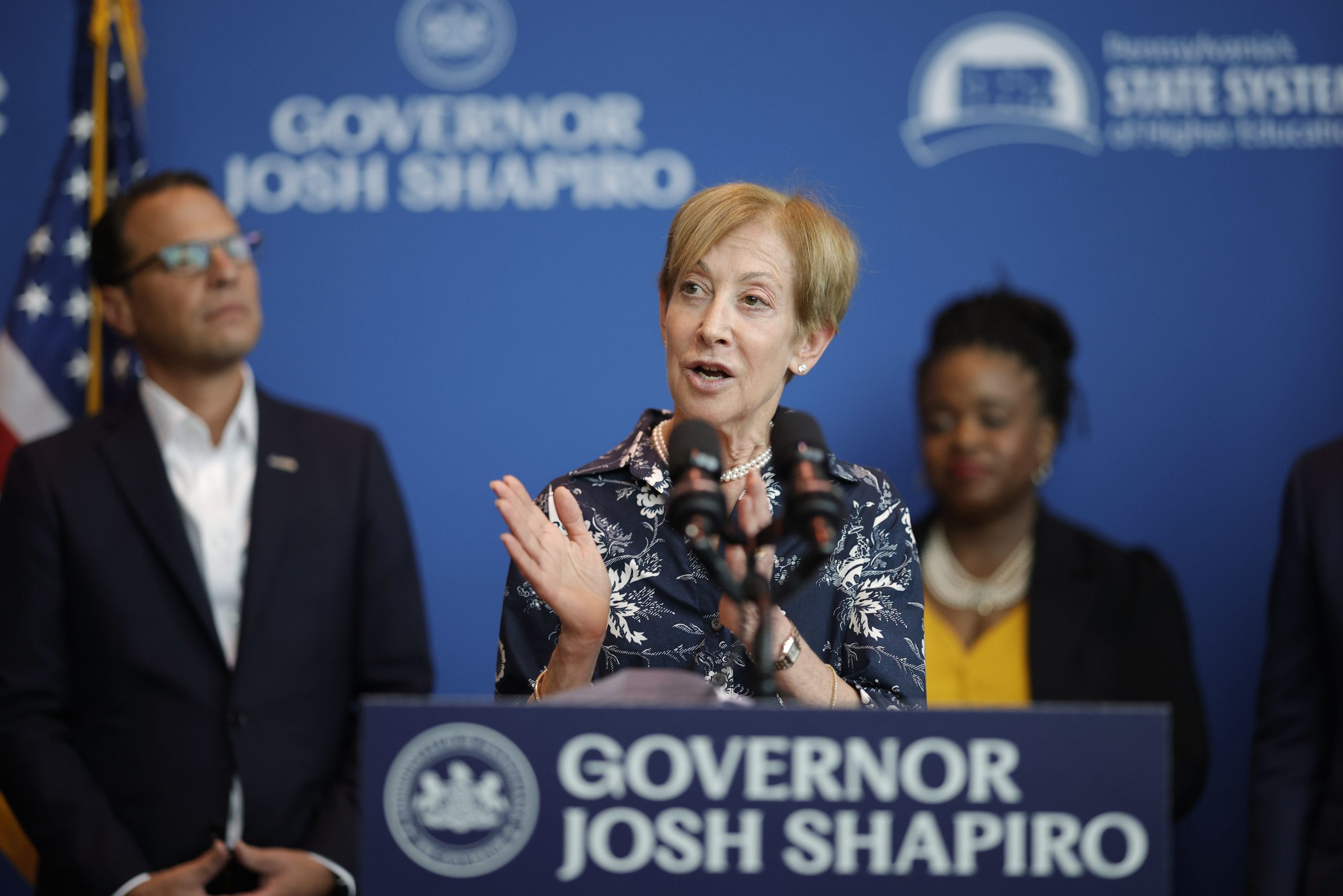
    Pennsylvania’s 10 state universities, facing declining enrollment, will consider offering some three-year bachelor’s degrees as a way to make college more affordable and allow students to get into the workforce more quickly.

    The Pennsylvania State System of Higher Education would join a growing number of colleges nationally launching accelerated bachelor’s degrees that reduce the required credits for graduation from the standard 120 to between 90 and 100.

    The development comes as colleges continue to face criticism over costs and some schools try to stem declining enrollments. PASSHE has lost 30% of its enrollment since 2010, though it recorded an increase last fall for the first time in 15 years.

    For a long time, the four-year bachelor’s degree has been the norm. Some students certainly have completed their degrees more quickly, but only by taking all the required credits at an accelerated rate.

    The new approach, which PASSHE’s board of governors plans to discuss in October, would reduce the number of credits needed.

    “This initiative would provide more options,” said system Chancellor Christopher Fiorentino. “A three-year degree focuses on essential competencies while preserving the liberal arts core. We can reach more students who don’t fit into the traditional path.”

    Three-year degrees emphasize what students should know and be able to do by the time they finish, said Madeleine F. Green, executive director of the College-in-3 Exchange, which is pushing for three-year degrees to become “a widely accepted path” to a bachelor’s.

    “The benefits are reduced cost and time to degree and equal or better learning outcomes than those resulting from a four-year degree,” Green said. “… It is widely accepted in higher education that time does not equate to learning.”

    But the movement already has garnered detractors. The American Association of University Professors and American Federation of Teachers have blasted the idea as more states, including Ohio, Massachusetts, Indiana, and Virginia, explore, plan for — and in some cases even mandate — three-year degrees.

    The three-year degree movement “threatens academic integrity by substituting for a comprehensive education a stripped-down curriculum that prioritizes speed over essential intellectual development,” the two groups said in a joint statement in response to new accelerated degree programs at Suffolk and Merrimack Universities in Massachusetts.

    “Compressing or reducing the curriculum threatens to narrow students’ education at precisely the moment when society needs graduates with stronger critical thinking, communication skills, scientific literacy, and civic understanding,” they said.

    There is no comprehensive inventory of colleges nationally that offer three-year degree programs, Green said. A June study by the Rand Corporation cited 119 programs that had been “publicly announced” as of May 2026, she said. Those programs are in fields such as business, cybersecurity, criminal justice, health administration, public health, and design, the report said.

    The Higher Learning Commission, the nation’s largest college accrediting body, had approved 58 reduced-credit bachelor’s degree programs at 26 institutions, none of them in Pennsylvania or New Jersey, said Laura Janota, a spokesperson for the commission.

    The Middle States Commission on Higher Education, which accredits colleges in the Pennsylvania and New Jersey, does not require special approval for three-year degrees.

    But PASSHE likely would have to get approval from the state. Green, of College-in-3, said both Pennsylvania and New Jersey have regulations that state a bachelor’s degree is 120 credits.

    “We are reviewing all regulatory questions as part of this effort and will share what we learn with the board in October,” said Kevin Hensil, PASSHE spokesperson.

    Robert M. ZemskyCourtesy of the University of Pennsylvania

    ‘Product rejection’

    Robert M. Zemsky, an emeritus professor at the University of Pennsylvania’s Graduate School of Education who co-started College-in-3, said he’s aware of more than 90 colleges planning to or considering offering reduced-credit bachelor’s degrees. The idea attracted quite a bit of attention in 2009 when he first floated the idea — even a cover story in Newsweek — he said, but accrediting bodies were not on board at that time.

    But now, he said, colleges are beginning to realize that their product is being rejected by students who drop out or transfer after their first year or fail to enroll at all.

    “What’s different is the key people in higher education are beginning to figure out that it really is product rejection,” he said, “and they’re going to have to redesign what they do top to bottom.”

    He estimated by 2027 that there would be 200 colleges offering three-year degrees and 500 by December 2028.

    “After you get to 500, it will be everywhere,” he said.

    Christopher Fiorentino, PASSHE chancellor.ED HILLE / MCT

    Fiorentino, the PASSHE chancellor, said he planned in the coming months to propose ways PASSHE could begin to offer a limited number of three-year degrees. PASSHE’s 10 universities are West Chester, Cheyney, Commonwealth, Indiana, Penn West, Shippensburg, Slippery Rock, Kutztown, East Stroudsburg, and Millersville.

    He said adults with some college credits and no degree may be interested, or partnerships in which students attend community college for two years and then finish their bachelor’s in one-year at PASSHE.

    Four-year degrees would remain the norm, he said.

    ‘Less-than degrees’

    Kenneth M. Mash, president of the Association of Pennsylvania State College and University Faculties.Tyger Williams / Staff Photographer

    The move was harshly criticized by faculty union head Kenneth M. Mash, as providing substandard education.

    “Too many students that we are admitting are underprepared for the college experience,” Mash, president of the Association of Pennsylvania State College and University Faculties, said at the board of governors meeting earlier this month. “Well, if they’re underprepared coming in, and we’re telling them you only have to be here for three years, how are they ever going to be ultimately prepared for their future?”

    He said the nation’s elite universities and top research universities aren’t the ones promoting three-year degrees, but rather those that serve large numbers of first-generation students and students of color.

    “I can’t help but wonder why it’s OK to offer these less-than degrees to these students,” he said.

    Federal and state aid programs should be expanded to make college more affordable, according to faculty union groups.

    Cynthia Shapira, chair of the Pennsylvania State System of Higher Education board of governors. Courtesy of the Pennsylvania State System of Higher Education

    But Cynthia Shapira, PASSHE’s board chair, said some states already are home to institutions offering or considering three-year degrees and PASSHE has an obligation to consider doing the same.

    “The idea to not even consider [it] … would be to put our heads in the sand,” she said.

    Eliminate some general education courses and electives

    Fiorentino said the same kind of criticism was leveled at online programs and community colleges when they first started. Pennsylvania was slow to embrace online programs and now lots of Pennsylvania residents are enrolled in programs out of state, he said. He said he doesn’t want PASSHE to be left behind again.

    “We owe it to our students,” he said. “We owe it to the commonwealth, and we owe it to our institutions to at least take a hard look at these three-year degree opportunities.”

    In an interview earlier this year, Fiorentino said that eliminating 30 credits from the four-year degree would be the equivalent of removing 10 courses. Schools would have to explore what to eliminate, he said. They could choose to get rid of some general education courses, general elective courses, and electives in the major, he said.

    The system, he said, will look at “how do you make adjustments to get students out more quickly and still have them prepared to perform effectively in the world.”

    Zemsky, the Penn professor, said general education courses, which have been criticized by some students as a waste of time and money, could be scaled back.

    Eventually, he said he thinks more students will opt for three-year degrees as opposed to four-year degrees.

    How employers will react is uncertain. Three-year degree programs are too new for data on how graduates will fare in the job market or graduate school admissions.

    “We’re looking at 2028, 2029 before there’s going to be any real graduation of three-year degree people,” Zemsky said.

    Green said most colleges pursuing three-year degrees have had conversations with employers.

    “Employers are more interested in students’ skills than in the number of credits they earned in obtaining the degree,” she said.

    Moving to three-year degrees will affect university budgets, and colleges will have to adapt, Zemsky said.

    “Right now, we spend a lot of money on things that the customer doesn’t want,” he said.

  • A Penn Medicine employee shuttle was struck by a car and knocked on its side early Friday in South Philly

    A Penn Medicine employee shuttle was struck by a car and knocked on its side early Friday morning in South Philadelphia, police said.

    One passenger was initially in critical condition, but has since been upgraded to stable, Philadelphia police said.

    The van was transporting 11 employees, plus the driver, the University of Pennsylvania Health System said. All were taken to hospitals for evaluation and treatment, Penn said, but other details on the passengers’ conditions was not provided.

    The white Ford van was traveling east on Reed Street when a red Honda Civic Sport traveling south on South Christopher Columbus Boulevard struck the front driver’s side.

    The impact caused the van to spin and tip onto the driver’s side, before stopping near train tracks in the road’s median.

    The incident remains under investigation, police said.

  • Penn State board committee votes to raise tuition, room and board 2.5% for in-state University Park students in 2027-28

    Penn State board committee votes to raise tuition, room and board 2.5% for in-state University Park students in 2027-28

    A Pennsylvania State University board of trustees committee on Thursday voted to recommend a 2.5% tuition and room and board increase for undergraduates on the University Park campus in 2027-28.

    That’s a larger increase than the 2% tuition hike already approved for 2026-27. Penn State sets its costs a year ahead of time; rates for 2026-27 were set last year.

    Meanwhile, in-state undergraduates at the Commonwealth campuses would see no tuition increase for the fifth consecutive year and smaller increases for room and board than those at University Park.

    The full board will vote on the proposed rates on Friday.

    Under the plan, undergraduate freshmen and sophomores at University Park would pay $21,400 in annual tuition for 2027-28, up $522 over last year.

    For those out-of-state, the annual tuition rate would rise 4% to $46,356, up $1,782.

    Room and board for both would rise 2.5% to $15,896 annually, which the university said was its lowest increase in the last nine years.

    The proposed tuition increases will raise $59 million in additional revenue, said Sara Thorndike, senior vice president for finance and business.

    While the proposal was passed unanimously by the committee, several board members raised questions.

    “I’m going to reluctantly support the tuition increase,” said board member Brandon Short. “We’re dealing with an existential crisis, and it’s not unique to Penn State that the cost of education is increasing at a … faster rate than what people think the value of a college diploma is … We all hold our noses and vote for the increase, but at some point, it’s not an easy answer, but we’ve got to come together and figure it out.”

    The university needs to make tough decisions and engage in “outside-the-box” thinking, he said.

    “Doing the same thing over and over again and expecting different results is the definition of insanity,” he said.

    Thorndike said the university has been cutting costs and continues to look for more efficiencies as it maintains a balanced budget.

    “We’re doing individual unit budget cuts,” she said. “We’re doing budget cuts associated with inflation, finding new revenues, and then asking for a modest tuition increase, so it’s a combination of all of those things to get to this point.”

    New board member Joseph S. DeRenzo questioned if in-state tuition increases could be kept lower at the expense of larger hikes for out-of-state students, or if larger increases could be charged for high-demand degrees in business and engineering.

    “Our out-of-state rates are actually very similar or high compared to our peers, and we’re already seeing an impact again on how much they’re discounting compared to what we’re discounting and how that’s affecting enrollments,” Thorndike said. “If we start to see a decline in out-of-state enrollments, that will not help us be able to keep our in-state rates low. It will actually have the opposite effect.”

    Thorndike also said that tuition revenue is projected to be $37 million under budget this year because of lower enrollment at the Commonwealth campuses, as well as international and graduate enrollments.

    Other local colleges also are raising tuition. The Pennsylvania State System of Higher Education, which oversees 10 universities including West Chester and Cheyney, last week raised tuition 4.3% — the largest percentage increase in a decade. Also last week, Rutgers University increased tuition 3% for in-state and out-of-state students, which the school touted as its lowest increase in four years. Meals and housing on average were increased 4%.

    And Temple University voted to raise tuition an average 3.4% for both in-state and out-of-state students.

    Earlier this year, the University of Pennsylvania increased its total costs by 3.8% for 2026-27.

    The 2027-28 budget includes a 3% pool for merit-based salary increases for employees and 4% for graduate assistant stipends, the university said.

    Undergraduate tuition for students from out of state would increase by 4% at University Park and 1% at the Commonwealth campuses.

    As for graduate students, those in-state at Commonwealth campuses would pay a 1% increase in tuition and 2% for those out of state. At University Park, in-state students will see a 2% hike and out-of-state students 4%.

  • The whitewash is the lesson

    The whitewash is the lesson

    I taught high school history in Vermont in the 1980s, during the waning years of the Cold War. When we got to Hiroshima and Nagasaki, I dug up the translation of a Soviet textbook and made copies of the pages that described America’s atomic attacks on Japan.

    I gave the pages to my students and asked them to compare the Soviet account to the one in their textbook, which said the U.S. dropped the bombs because Japan wouldn’t surrender. By contrast, the Soviet book claimed that our real aim was to demonstrate our technological prowess and block the global spread of communism.

    Many years later, I got an email from a former student who said that exercise opened her mind to the way different people think about the world. And it made her realize that history isn’t simply a record of names, dates, and events. It’s a debate about their meaning and significance.

    We have a great opportunity to teach that lesson right now. And we don’t have to look abroad to find material for it.

    The debate over history is here. It’s happening all around us. The only question is whether we can muster the will — and the courage — to expose our young people to it.

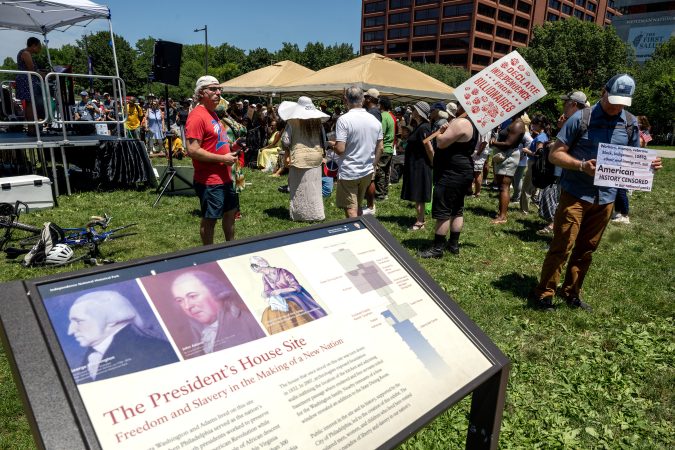
    Consider the controversy over slavery exhibits at the President’s House here in Philadelphia. Back in January, the Trump administration ordered the removal of panels about the nine African Americans whom George Washington enslaved. And last month, a federal appeals court upheld the right of the White House to replace those panels with, yes, a different interpretation.

    The administration’s new panels — which you can read online — acknowledge that Washington and other Founding Fathers practiced slavery. But the panels remove earlier language, highlighting its brutality. Instead, we are told, enslaved people living in the President’s House “experienced a greater modicum of autonomy than elsewhere.”

    On July 4, protesters converged upon the site and taped printed copies of the original panels to the walls. “I know they’ll get torn down,” one demonstrator said, “but hopefully there’s enough people here today for the holiday that they’ll be seen, and maybe it’ll inspire someone else to do the same.”

    Here’s who I hope will be inspired: America’s history teachers. They should give the text of the original panels — and also of the new ones — to their students, just as I shared American and Soviet interpretations of the atomic bombings.

    And they should ask their students about the differences. Why did one of the earlier panels highlight “The Dirty Business of Slavery” — especially the buying and selling of human beings — and why did the Trump administration omit that? Why did it also leave out most of the details about Ona Judge, Martha Washington’s personal maid, who escaped to freedom in 1796?

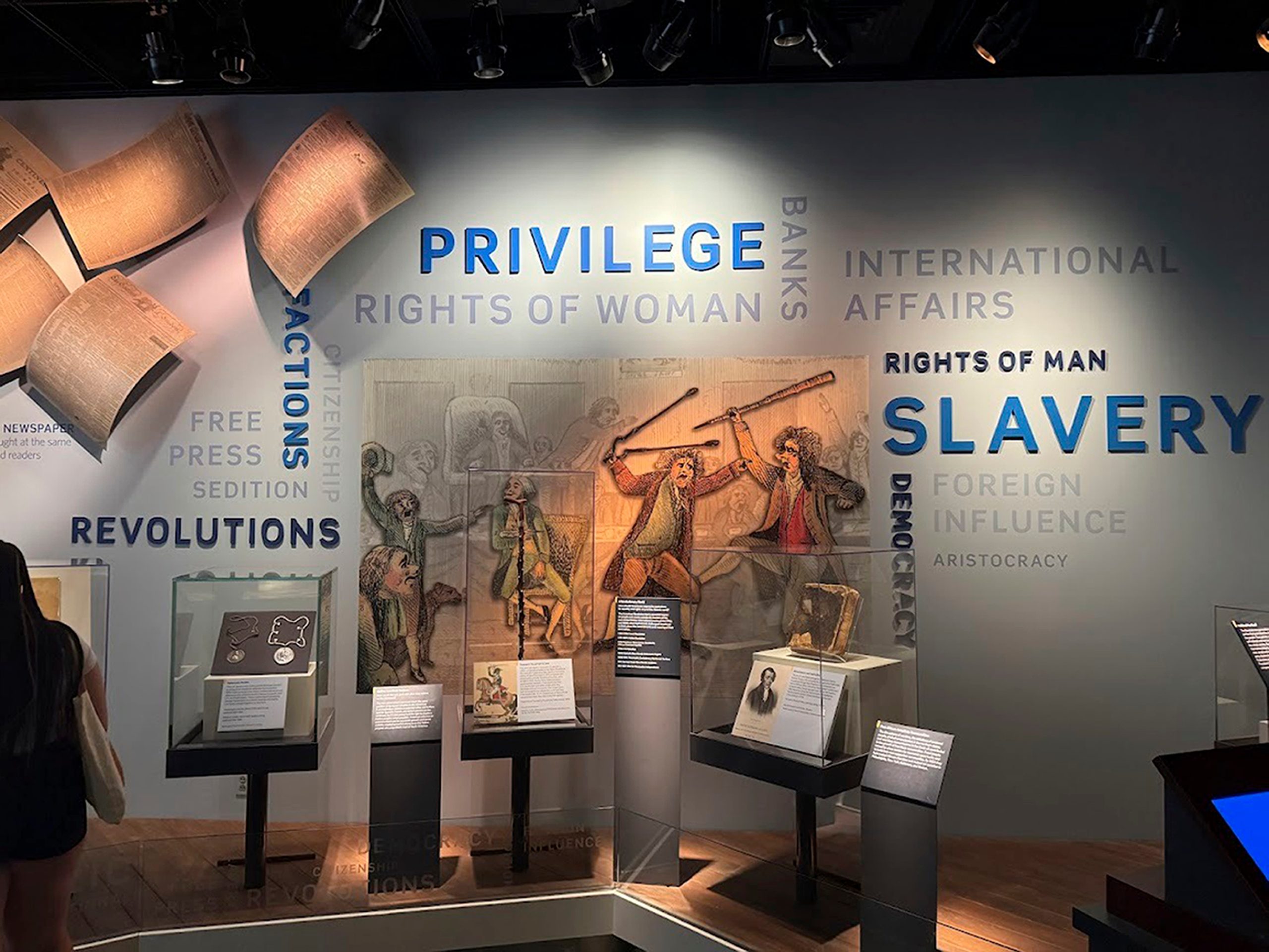
    Teachers should also share the Trump administration’s recent report attacking the Smithsonian’s National Museum of American History. There’s too much at the museum about racism and oppression, the White House says, and not enough about progress and freedom.

    A display in the “Great Debate” section of a democracy exhibit at the Smithsonian’s National Museum of American History, seen in August 2025.Calvin Woodward

    Again, is that right? Schools that are close enough to Washington, D.C., should take students to the museum and let them decide for themselves. Everyone else should assign the Trump administration report and rejoinders to it by historians and others.

    Teachers have been doing lessons like that for a long time. In the 1980s, Oregon history instructor Bill Patterson had his students compare their state-approved textbook with A People’s History of the United States by radical scholar Howard Zinn.

    And if you think this was all just an exercise in left-wing propaganda, think again. Patterson’s students wrote letters to Zinn and took issue with his interpretations, including his claim that the bombings of Hiroshima and Nagasaki were unnecessary.

    I can’t remember what my own students decided about America’s use of atomic weapons in Japan. But I’m glad I didn’t give them a single interpretation of it. That’s not education; it’s indoctrination.

    A few days after he returned to the presidency in January 2025, Donald Trump issued an executive order “ending radical indoctrination in K-12 schooling.” But in its first sentence, the order calls on schools to “instill a patriotic admiration for our incredible nation.”

    That’s indoctrination, too. I know the White House doesn’t want the kind of debate I’m advocating here. But neither do some people on the left, who will inevitably dismiss my approach as “bothsidesism.”

    Please. Our students need to come to their own conclusions about the President’s House, the Smithsonian, and everything else. If you only want them to hear your side, you’re in the same league as Trump and his disciples.

    News flash: We disagree about our nation. On its 250th birthday, the best way to celebrate it would be to present our differences to our students openly and honestly. It’s not our job to tell them what to think. It’s their job to figure it out.

    Jonathan Zimmerman teaches history and education at the University of Pennsylvania. His next book, “Schooling Citizens: How Education Can Save Democracy,” will be published in the spring by the American Philosophical Society Press.

    Editor’s Note: An earlier version of this column incorrectly noted that the story of Ona Judge, a woman enslaved by George Washington, was not part of a new display at Independence Mall. She is, in fact, featured in the exhibit.

  • Kathy M. Winter, lifelong artist, teacher, and former parish council president, has died at 91

    Kathy M. Winter, lifelong artist, teacher, and former parish council president, has died at 91

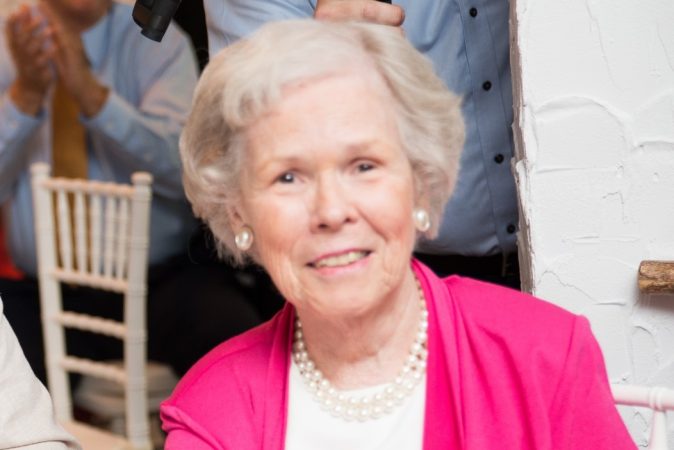
    Kathy M. Winter, 91, formerly of Philadelphia, lifelong artist, art and grade school teacher, author, and former council president at Our Mother of Consolation Parish in Chestnut Hill, died Tuesday, June 9, of complications from pneumonia at Forbes Hospital in Monroeville, Pa.

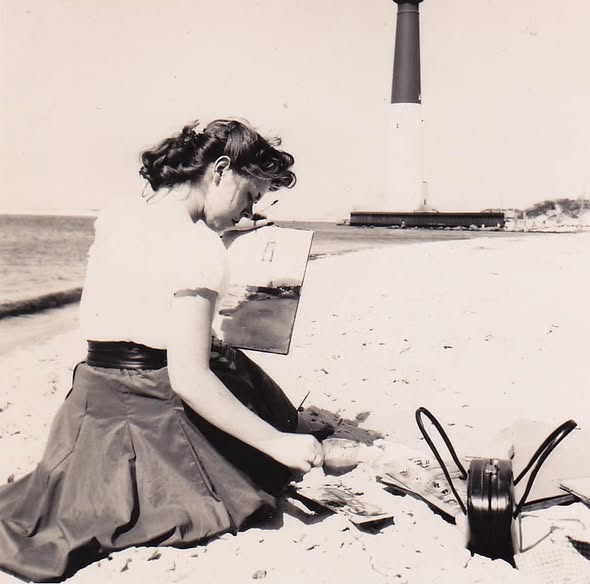
    Born in Philadelphia, Mrs. Winter studied art at the Pennsylvania Academy of the Fine Arts and earned a bachelor’s degree in fine arts at the University of Pennsylvania. She specialized in portraits, still life, and landscapes, and worked mostly in watercolors, pastels, oils, and acrylics.

    She painted portraits of celebrated naval chaplain John F. Laboon and Chinatown icon T.T. Chang, and contributed to a collection called “Lost Dreams on Canvas” that featured portraits of innocent victims of violent crime in Philadelphia. “You get into a portrait like that,” Mrs. Winter told the Chestnut Hill Local in 2012, “and you’re into the person.”

    She painted the statue of St. Gianna Beretta Molla for the Shrine of the Nativity of Our Lord in Warminster, and her painting of a restored statue of St. Gabriel for a church in New Orleans was featured in The Inquirer in 2007. She also designed stained glass windows for St. Bede the Venerable Church in Holland, Bucks County, and the chapel at Shore Memorial Hospital in Somers Point, N.J.

    “The best thing,” Mrs. Winter told the Chestnut Hill Local in 2012, “is that you don’t have to retire from making art.” Courtesy of the family

    Mrs. Winter studied Chinese brush painting with artist Phoebe Shih in Flourtown and showed her work at the Woodmere Art Gallery, the Conshohocken Art League, Daylesford Abbey, the Lutheran Theological Seminary, the Knickerbocker Exhibition in New York, and elsewhere. She also taught art classes at the Abington and Main Line Art Centers, the Conshohocken Art League, Our Mother of Consolation School, and elsewhere.

    “The best thing,” she told the Local in 2012, “is that you don’t have to retire from making art.”

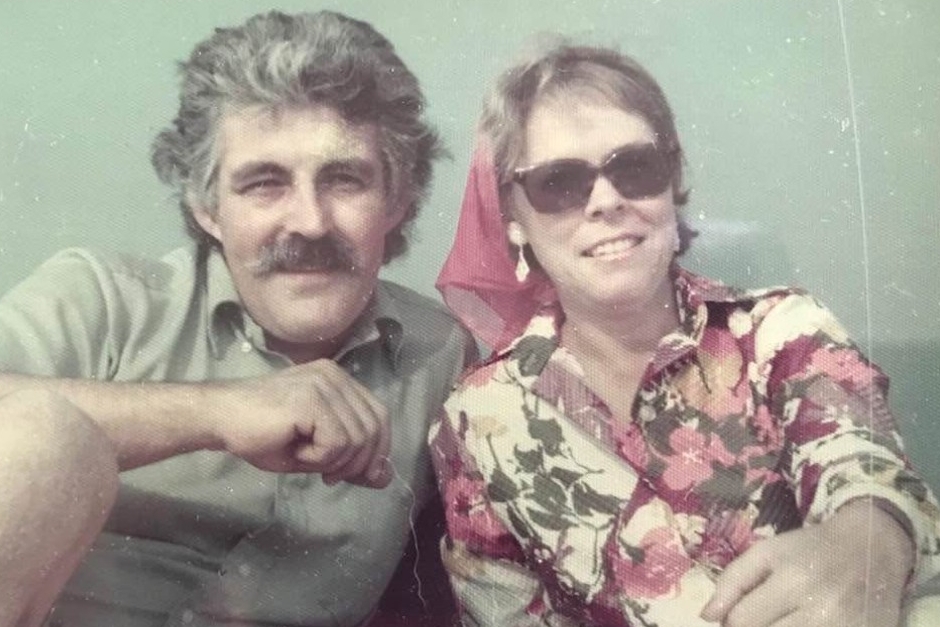
    She met her husband, sculptor Joseph Winter, at the Pennsylvania Academy of the Fine Arts in 1953, and they opened Winter Art Studio in their Chestnut Hill home in 1983. For several commissions, he created the sculpture, and she painted it.

    “Since Joe was a sculptor and I’m a painter, we complemented each other very well,” Mrs. Winter told the Chestnut Hill Local in 2021. “If we had both been painters or both been sculptors, it would not have worked out so well. There would have been too much competition.”

    Mrs. Winter painted fruit and flowers.Courtesy of the family

    In 2021, she self-published a 48-page children’s book called How the Bears Got to the Park. It features illustrations by her husband, and the plot she wrote is based on his award-winning 1966 sculpture Family of Bears that is displayed at Three Bears Park at Third and Delancey Streets in Society Hill.

    Mrs. Winter was a longtime member and onetime council president at Our Mother of Consolation Parish. She and her husband moved to Chestnut Hill from Southwest Philadelphia in 1962 so their children could attend the parish school, and she taught all subjects to third and fourth graders for a few years.

    Parish members scheduled Mass intentions to honor her on June 28, July 5, and July 10. “She was very determined,” her daughter Genienne Navarro said. “She never let anything stand in her way and would move mountains to get something done.”

    Kathleen Marie McKenna was born April 21, 1935. Her family moved to Virginia when she was young and returned to Philadelphia a few years later, and she graduated from West Philadelphia Catholic High School for Girls.

    Mrs. Winter and her husband, Joe, married in 1956. Courtesy of the family

    A perceptive nun recognized her artistic skills in high school and arranged for an admission interview with officials at the Pennsylvania Academy of the Fine Arts. She received a full scholarship, met her husband there, and they married in 1956 and had daughters Kathy and Genienne and a son, Joseph.

    Her husband died in 2020, and she moved to the Pittsburgh area a few years ago to be close to family. Mrs. Winter kept in touch with former classmates at the Pennsylvania Academy of the Fine Arts for years and took additional art classes later at Temple University and Chestnut Hill College.

    She played piano, doted on her family, and survived cancer in the 1970s. A longtime friend called her a “true, loving, nourishing, protective, guiding, steadfast Blessed Mother to me.”

    Her family said in a tribute: “She will be remembered for her friendship, spiritual support, listening ear, humor, deep caring, generosity, and undaunted optimism.”

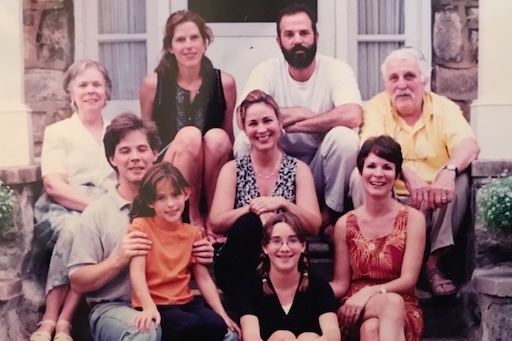
    Mrs. Winter (rear left) enjoyed time with her family.Courtesy of the family

    Her daughter Genienne said: “Her favorite saying was, ‘Nothing is impossible with God.’”

    In addition to her children, Mrs. Winter is survived by six grandchildren, three great-grandchildren, and other relatives. A sister died earlier.

    A memorial service is to be at 11 a.m. Saturday, Sept. 19, at Our Mother of Consolation Church, 9 E. Chestnut Hill Ave., Philadelphia, Pa. 19118.

    Donations in her name may be made to Our Mother of Consolation Church and School, 9 E. Chestnut Hill Ave., Philadelphia, Pa. 19118.

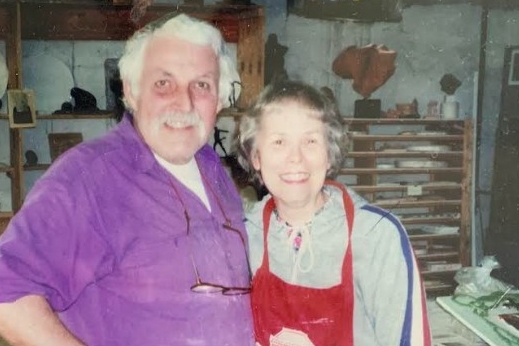
    Mrs. Winter and her husband, Joe, pose in their Chestnut Hill home studio. Courtesy of the family
    Mrs. Winter was an expert in designing stained glass. Courtesy of the family
  • Richard D. Wood Jr., Wawa chair emeritus and ‘guiding heart and soul,’ has died at 88

    Richard D. Wood Jr., Wawa chair emeritus and ‘guiding heart and soul,’ has died at 88

    Richard D. Wood Jr., 88, of Wawa, Delaware County, chair emeritus and former chief executive officer and president of Wawa Inc., Convenience Store News Hall of Famer, lawyer, trustee, mentor, veteran, and philanthropist, died Friday, July 10, of age-associated decline at his home.

    Born in Philadelphia, Mr. Wood earned a law degree at what is now the University of Pennsylvania’s Carey Law School in 1964 and joined his family’s nascent Wawa food market company in 1970 as its first general counsel. His great-grandfather founded the Wawa dairy in 1902, and his father’s cousin opened the first Wawa food market in 1964.

    By 1977, Mr. Wood had ascended to president of the company, and its innovations, including 24-7 hours of operation and custom-made hoagies, made it the region’s dominant convenience store. He became CEO in 1980 and chair in 1982, and was named chair emeritus in 2020.

    In 2020, Inquirer business writer Joseph N. DiStefano said Mr. Wood “presided over the board during the period of Wawa’s rapid growth from a regional cokes-smokes-milk-and-hoagies chain to a convenience store and gas outlet with more than $12 billion in annual sales and 850 stores from New Jersey to Florida.”

    For more than 40 years, Mr. Wood supervised Wawa’s multistate expansion, addition of gas pumps, expanded inventory, rigorous employee training, and popular employee stock ownership plan. During his tenure, the company grew to more than 36,000 associates and was one of the largest privately held companies in the country.

    Through it all, Mr. Wood was affable and curious, friends and family said. He wanted to know everybody’s name and what they thought, and he enjoyed touring the stores and chatting up associates and customers, especially on Christmas Day. He told colleagues he wanted to “create an environment where each of us believes that we can make a difference.”

    “Dick Wood was our true lead goose who was the guiding heart and soul of the company,” Chris Gheysens, Wawa’s chairman and CEO, said in a tribute. “He is the reason why Wawa is the company we are today and why we enjoy so much share of heart from our customers and dedication from our associates.”

    Mr. Wood hired students and women to work in the stores, and offered flexible schedules to accommodate their availability. He oversaw Wawa’s $200 million of donations to community nonprofits and its college tuition reimbursement plan for associates.

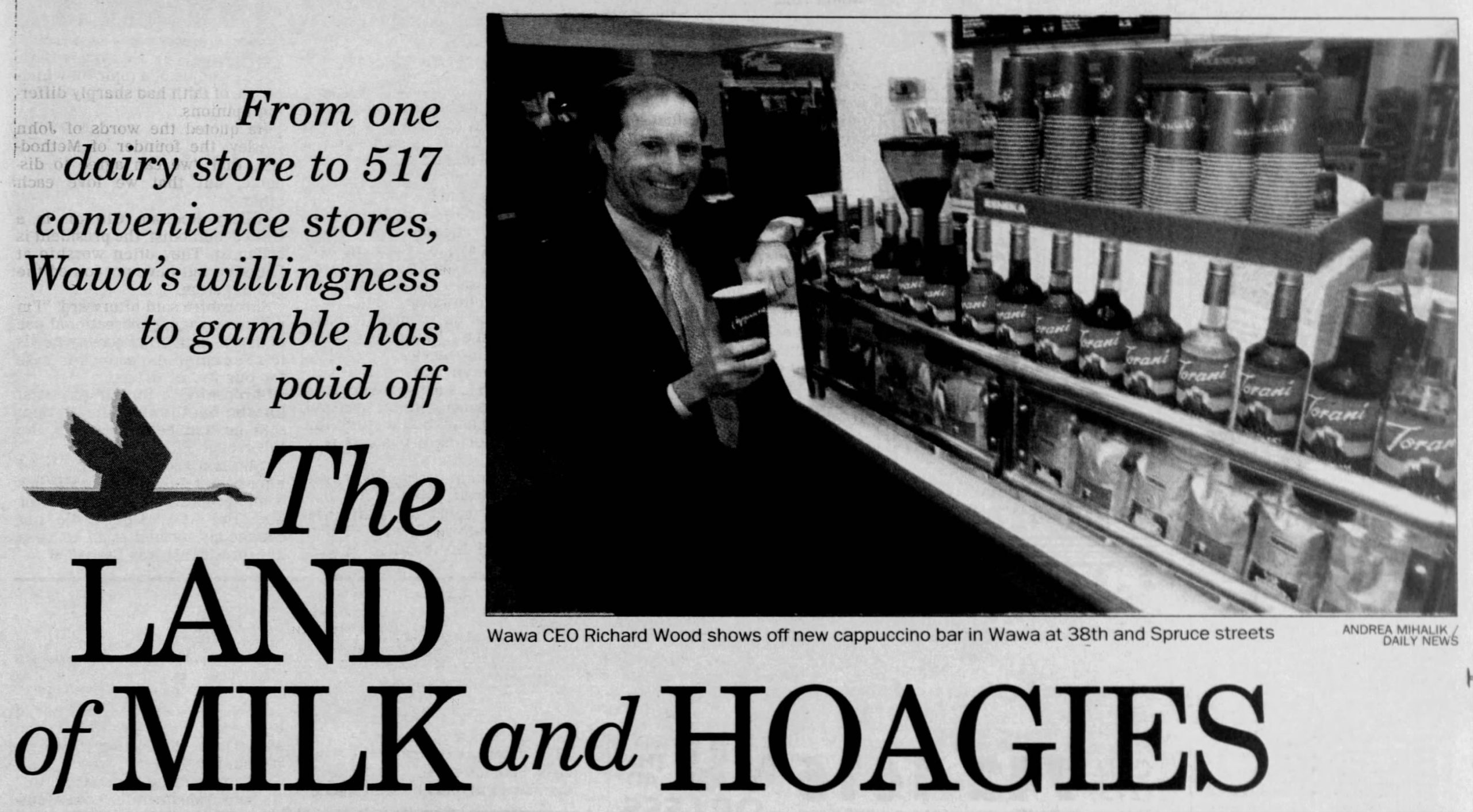
    This photo of Mr. Wood and a story about Wawa appeared in the Daily News in 1994. Newspapers.com

    In 2021, to mark his 50th anniversary at the company, Wawa established the Dick Wood College Scholarship Fund for associates. He told Inc. magazine in 2018: “Values and culture mean more in this company than being smart.”

    Colleagues called him “humble, gracious, curious, and kind” and “a beloved treasure to the company” in tributes. His life-size bronze statue greets visitors at Wawa’s corporate headquarters.

    “He made people feel important,” said Barbara Ennis, his longtime assistant, ”because to him, they were.”

    Mr. Wood was onetime chair of the executive committee of the National Association of Convenience Stores and on boards at Children’s Hospital of Philadelphia, Riddle Memorial Hospital, Philadelphia National Bank, Bok Tower Gardens in Florida, and other organizations. He appeared often in The Inquirer and Daily News, spoke on panels and at conferences about corporate leadership, and was inducted into the Convenience Store News Hall of Fame in 1996.

    Mr. Wood (left) worked closely with fellow CHOP trustee N. Scott Adzick.Children's Hospital of Philadelphia

    He served on the Chester Heights Borough Council in the early 1980s and was named 1996 businessman of the year by the Great Valley Regional Chamber of Commerce. Before Wawa, Mr. Wood was a public defender in Philadelphia and a lawyer at Montgomery McCracken.

    “People loved to follow him,” said his son, Richard D. Wood III. “He was larger than life,” said his daughter, Lisa Wright.

    As a philanthropist, Mr. Wood and his family donated $25 million to Children’s Hospital of Philadelphia in 2021, and CHOP named its Richard D. Wood Jr. Center for Fetal Diagnosis and Treatment in his honor. His family also funded the Richard D. Wood Jr. and Jeanette A. Wood Endowed Chair in Pediatric Diagnostic Medicine, and he instituted a volunteer services program at CHOP.

    Sometimes, his family said, Mr. Wood walked the halls of the hospital, sharing Wawa coffee and conversation with patients and families. CHOP honored him at its 2019 Carousel Ball. Madeline Bell, CEO at CHOP, said: “I will truly miss his warmth, wisdom, and generous spirit.”

    Mr. Wood and his wife, Jeanette, married in 1964.Courtesy of the family

    Howard Stoeckel, former Wawa vice chair, CEO, and president, said in a tribute: “He had a special mix of heart, compassion, empathy, and humility that made him a true believer and practitioner of servant leadership.”

    Richard Davis Wood Jr. was born March 4, 1938. He graduated from St. Paul’s School in Concord, N.H., earned a bachelor’s degree in business at the University of Virginia, and served for a year in the Marine Corps and later in the Marine Corps Reserve.

    He met Jeannette Andrews when he was visiting New York with friends, and they married in 1964. They lived in Philadelphia and Wawa, and had a daughter, Lisa, and a son, Richard III. His wife died in 2025.

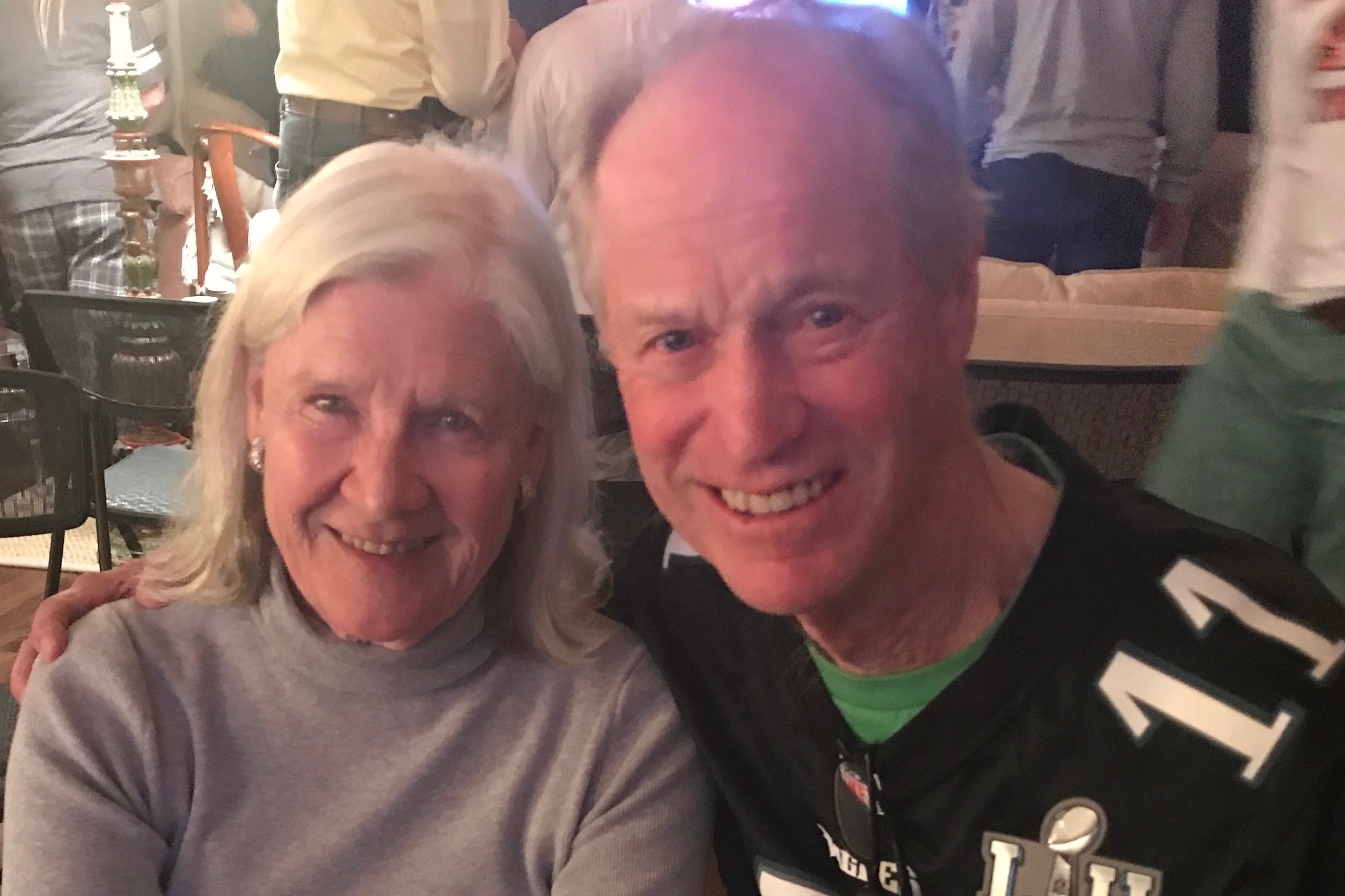
    Mr. Wood was an avid golfer, and he belonged to the Gulph Mills and Pine Valley Golf Clubs, and the Mountain Lake Club in Florida. He played tennis and bridge, and was a longtime season ticket holder for the Eagles and Flyers.

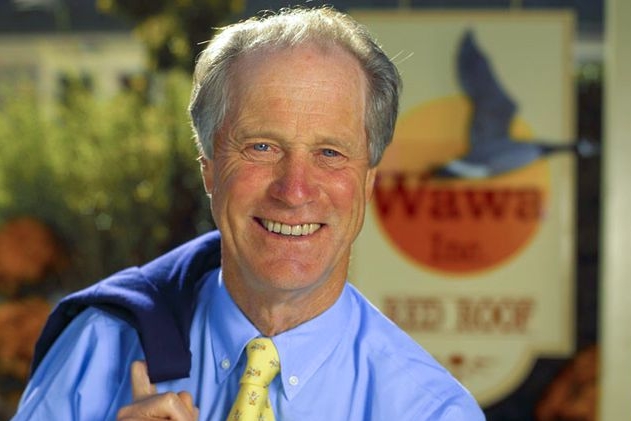
    Mr. Wood (right) enjoyed meeting and talking with Wawa associates and customers.
    Jonathan Wilson / Staff Photographer

    He and his wife traveled, hosted family holiday parties, and spent memorable winters in Lake Wales, Fla. He drove his favorite Honda Accord for years and followed Virginia college football and basketball closely.

    He championed conservation, education, and health. “He treated every single person the same,” his daughter said. His son said: “Humility defined him.”

    Mr. Wood said in a 2020 video for CHOP: “It’s a great feeling to know that you’re helping out.”

    In addition to his children, Mr. Wood is survived by five grandchildren, a sister, a brother, and other relatives. Two brothers died earlier.

    A celebration of his life is to be held later.

    Donations in his name may be made to the Richard D. Wood Jr. Center for Fetal Diagnosis and Treatment at Children’s Hospital of Philadelphia, Box 781352, Philadelphia, Pa. 19178; and Bok Tower Gardens, 1151 Tower Blvd., Lake Wales, Fla. 33853.

  • Feds award $43 million to Philly gene therapy research to advance treatments for rare diseases

    Feds award $43 million to Philly gene therapy research to advance treatments for rare diseases

    The U.S. government has awarded Children’s Hospital of Philadelphia $39 million to develop a scalable platform for treating rare genetic, liver-related diseases in infants and children.

    The federal Advanced Research Projects Agency for Health (ARPA-H) also announced this week another $4 million for local gene therapy pioneer Jim Wilson to design gene therapies using AI at his University of Pennsylvania spinout, GEMMABio.

    The $43 million in funding earmarked for Philadelphia researchers comes through a new federal effort to advance gene therapies for rare diseases.

    CHOP’s team includes the duo behind last year’s first-of-its-kind, personalized gene-editing treatment involving a Philadelphia-area infant, known as Baby KJ. CHOP’s Rebecca Ahrens-Nicklas and Penn Medicine’s Kiran Musunuru together created a custom drug to correct the genetic mutation driving Baby KJ’s rare metabolic disease — dramatically improving his liver function.

    The funding will expand their work and bring in another CHOP researcher, Lindsey George, who develops gene therapies for bleeding disorders.

    “We’re trying to move beyond just one diagnosis or one gene,” Ahrens-Nicklas said.

    Philly-based scientists comprise two of seven research teams nationwide to receive funding through ARPA-H’s new $160 million effort.

    Called THRIVE, the program aims to help the roughly one in 10 people — most being newborns, infants, and children — with chronic genetic diseases. Ninety-five percent of rare diseases have no approved treatments.

    Leaders want to develop “precision genetic medicines through platforms that can test multiple treatments for multiple diseases in a single clinical trial,” ARPA-H director Alicia Jackson said in a Thursday news release.

    CHOP’s expanding focus

    The CHOP team will focus on building a scalable gene-editing platform that can be used to treat a variety of infants and children.

    Their initial focus is on liver-related genetic diseases, ranging from urea cycle disorders to blood clotting diseases.

    “Essentially it’s the same drug, whether or not you’re targeting a genetic variant that causes a rare metabolic disease or a genetic variant that causes a rare coagulation disorder,” Ahrens-Nicklas said.

    Their five-year plan includes launching preclinical and clinical trials testing the safety and efficacy of their individualized treatments.

    They will also pursue regulatory approvals, work with payors, and implement their therapies at community sites and remote hubs to expand access.

    “We are the three musketeers that already text 25,000 times a day, and will continue to do so,” Ahrens-Nicklas said.

    Wilson experimenting with AI

    Wilson founded academia’s first gene therapy program back in 1993 as a professor at Penn.

    He left in 2024 to spin out biotech start-ups dedicated to tackling rare diseases with genetic medicines.

    “The question is, can we find ways to scale this bespoke personalized medicine strategy, so that it is affordable and cost-effective?” he said.

    In partnership with a biotech called ProFluent, GEMMABio will use AI to design its base editors — the machinery that goes in and make edits to DNA.

    The tool could be rapidly adapted to different patients and diseases, theoretically making the process more affordable, scalable, and efficient, Wilson said.

    His $4 million award will fund preclinical studies of their technology.

    GEMMABio’s initial focus is on two rare liver diseases “for which there is significant unmet need,” he said, including Maple Syrup Urine Disease and homozygous familial hypercholesterolemia (HoFH).

  • The state system that runs West Chester and 9 other Pa. colleges votes to raise tuition 4.3%

    The state system that runs West Chester and 9 other Pa. colleges votes to raise tuition 4.3%

    Students in the Pennsylvania State System of Higher Education will face a 4.3% tuition hike — the largest percentage increase in a decade — if the system does not get a boost in state funding.

    PASSHE’s board of governors voted unanimously Thursday on the plan, which would enact the tuition increase if the system does not receive a 5%, or $31 million, increase in its state appropriation, which currently stands at $625 million. Gov. Shapiro has proposed flat funding for the system, and budget negotiations are continuing.

    Tuition would rise to $8,338 annually, up $344 from $7,994.

    “We’re all disappointed to … have to make this motion,” board chair Cynthia Shapira said. “We hope we do get the increase.”

    The 10 universities in the system are Cheyney, West Chester, Commonwealth, East Stroudsburg, Indiana, Kutztown, Lock Haven, Millersville, Penn West, and Shippensburg. Collectively, they enrolled 83,005 students last academic year, when the system experienced its first enrollment increase in 15 years. About 90% of students are Pennsylvania residents.

    The vote to increase tuition came one day after Temple University approved a budget that increased tuition an average of 3.4% for next year.

    Rutgers University also on Thursday voted to increase tuition 3% for in-state and out-of-state students, which the school touted as its lowest increase in four years. Tuition for a typical in-state, full-time arts and sciences undergraduate will increase on average $448 for the year, rising from $14,933 to $15,381, the school said. Meals and housing on average will rise 4%, from $15,332 to $15,945.

    Earlier this year, the University of Pennsylvania increased its total costs by 3.8% for 2026-27. Pennsylvania State University, which approves tuition increases a year in advance, hiked tuition 2% for in-state students at University Park for 2026-27 and froze it for those attending Commonwealth campuses.

    The resolution approved by the PASSHE board calls for the increase to be rolled back “if sufficient funding in state appropriation is received.”

    System chancellor Christopher Fiorentino said the tuition increase would cover the $31 million gap if the system does not get the increase. The board of governors took the same action last year and did not roll back a 3.6% tuition hike because the state held its funding flat.

    “We’re still really the most affordable four-year option that’s out there,” Fiorentino said in an interview before the meeting, comparing PASSHE schools to state-related universities like Temple and Penn State where tuition is more than twice that amount.

    Until 2025, the system had kept tuition at the same rate for seven years; if it had enacted inflationary increases, tuition would be $1,800 higher now, Fiorentino said. Preceding the freeze, tuition hikes were 2.5% in 2016-17, 3.5% in 2017-18, and 3% in 2018-19.

    Fiorentino said he continues to make the system’s case to legislators for more funding.

    “Our graduates earn 65% more over their careers than people without college degrees, which is about a million dollars in lifetime earnings,” he said. “Ninety percent of our students are from Pennsylvania, and 80% of them take their first job in Pennsylvania after they graduate. Investing in the PASSHE system … is truly an investment in the workforce of the Commonwealth of Pennsylvania.”

    System to launch new ‘last dollar’ scholarships

    The system also announced that beginning in fall 2027, it would provide “last dollar” scholarships to all Pennsylvania students who receive federal Pell and state Pennsylvania Higher Education Assistance Agency grants. For many students from the lowest-income families, the grants cover full tuition, but some families in the middle range who receive smaller amounts of aid are still on the hook for part of the cost, the chancellor said.

    “They’re the ones that tend to get caught in a bind, and they’re the ones that we’ve been worried about,” he said. “We’re going to cover the balance of their tuition” and make sure they are not affected by future tuition increases.

    Fiorentino said he hopes that donors will want to contribute to the effort so the level of aid can be expanded.

    The new scholarship program, called the PASSHE Pledge, will not cover room and board or fees.

    He did not have an estimate of how many students would qualify, but said system officials have been worried about losing them. And that would add to the enrollment decline at a time when the system, like other colleges, already is challenged by a shrinking pool of available high school students.

    “We’re hoping this is going to increase our enrollment numbers,” Fiorentino said.

    It is too early to predict fall enrollment, he said, but some of the system’s 10 universities are doing better with deposits than last year, some the same, and some a little worse.

    “We’re cautiously optimistic that we’re going to be stable,” he said.

    The system is partnering with community colleges to streamline the transfer process and concentrating on bringing students with some college credits and no degree back into the system, he said.

    “We will continue to work hard to maintain and grow our enrollments,” he said.