Lindsay Ward grows more nervous with each passing year, knowing her ultra-rare genetic disease could emerge at any time.
The 37-year-old schoolteacher from West Deptford, New Jersey, inherited the genetic mutation that causes RVCL — retinal vasculopathy with cerebral leukoencephalopathy — which damages small blood vessels throughout the body and typically shows up between the ages of 35 and 50. It causes premature death as brain, retinal, liver, and kidney damage accumulate.
Many patients die within five to 10 years of symptom onset.
“It’s relentless,” said Jonathan Miner, who directs the RVCL Research Center at Penn. “They go from being completely healthy to becoming blind, unable to walk or talk, with kidney failure and other problems.”
The disease currently has no cure. However, Miner recently received a $10 million gift from the Illinois-based nonprofit Clayco Foundation to develop a potential treatment.
The idea behind his small-molecule drug is to eliminate the faulty protein driving the disease before it can cause damage. The drug will still need to be tested in animals to evaluate safety before possibly moving into clinical trials.
Most exploratory scientific efforts do not advance to the point where they are found safe and effective in humans. Even if the results are promising, it could take years before a potential new drug becomes widely available.
Ward has already seen the disease ripple through her family.
Her uncle died from RVCL last year. Her mother, Barbara Small, was diagnosed in 2018 after almost four years of symptoms.
She hopes for a treatment that can help her avoid their fates.
“I do as many active things as humanly possible because I’m so worried about becoming frail,” Ward said. “I see the weakness that my mom has and I don’t want that.”
Lindsay Ward, who inherited the mutation that causes RVCL from her mother, lives an active lifestyle.CHARLES FOX / Staff Photographer
What is RVCL?
Fewer than 50 families worldwide are known to have RVCL.
The rare disease is often misdiagnosed as various autoimmune diseases, including multiple sclerosis and lupus. Only through a genetic test can patients verify an RVCL diagnosis — characterized by a mutation in a gene called TREX1.
The gene encodes a protein of the same name, TREX1, which, when mutated, becomes misplaced in a cell and damages DNA.
Over time, this causes small blood vessels to break down and disappear. The loss of blood flow leads to organ damage, including blindness, glaucoma, chronic kidney disease, strokes, and neurological effects.
When asked how he felt about the donation, Miner reflected on seeing many patients die from the disease and kids lose their parents young.
“I believe that everybody deserves a chance to live,” he said.
A potential drug
Jonathan Miner directs the RVCL Research Center at Penn.Credit to StoryTrack Studio
Miner’s drug candidate belongs to a new class of medicines called a degrader.
The drug eliminates the mutated TREX1 protein by pairing it with another protein called “E3.” E3’s role is to label other proteins for destruction, much like putting a shipping label on a package to direct it to the right address.
By labeling TREX1, “it basically tells the cell’s own machinery to eliminate this faulty protein,” Miner said.
If the drug proves effective, patients would ideally take it before they get sick, to prevent injury to blood vessels and organs.
When tested in mice with the disease, the drug protected cells from DNA damage and prevented premature death.
“We haven’t seen side effects in the mice, but we need to do much more extensive studies to prove that there are no side effects in animals before we can move forward,” Miner said.
The first and only FDA-approved degrader was developed for advanced breast cancer and approved in May. Miner’s TREX1 degrader is one of many variations on the novel technology that have emerged.
The $10 million donation will fund preclinical safety studies. The goal is to complete this testing over the next year, and, if it proves to be safe, move on to humans.
If the drug advances to a clinical trial, it would still take years to test the safety and efficacy. Most treatments evaluated in clinical trials do not become standard practice.
“Nothing has moved the needle yet in terms of delaying death and disability,” Miner said. “This, we think, gives us a real chance.”
Waiting
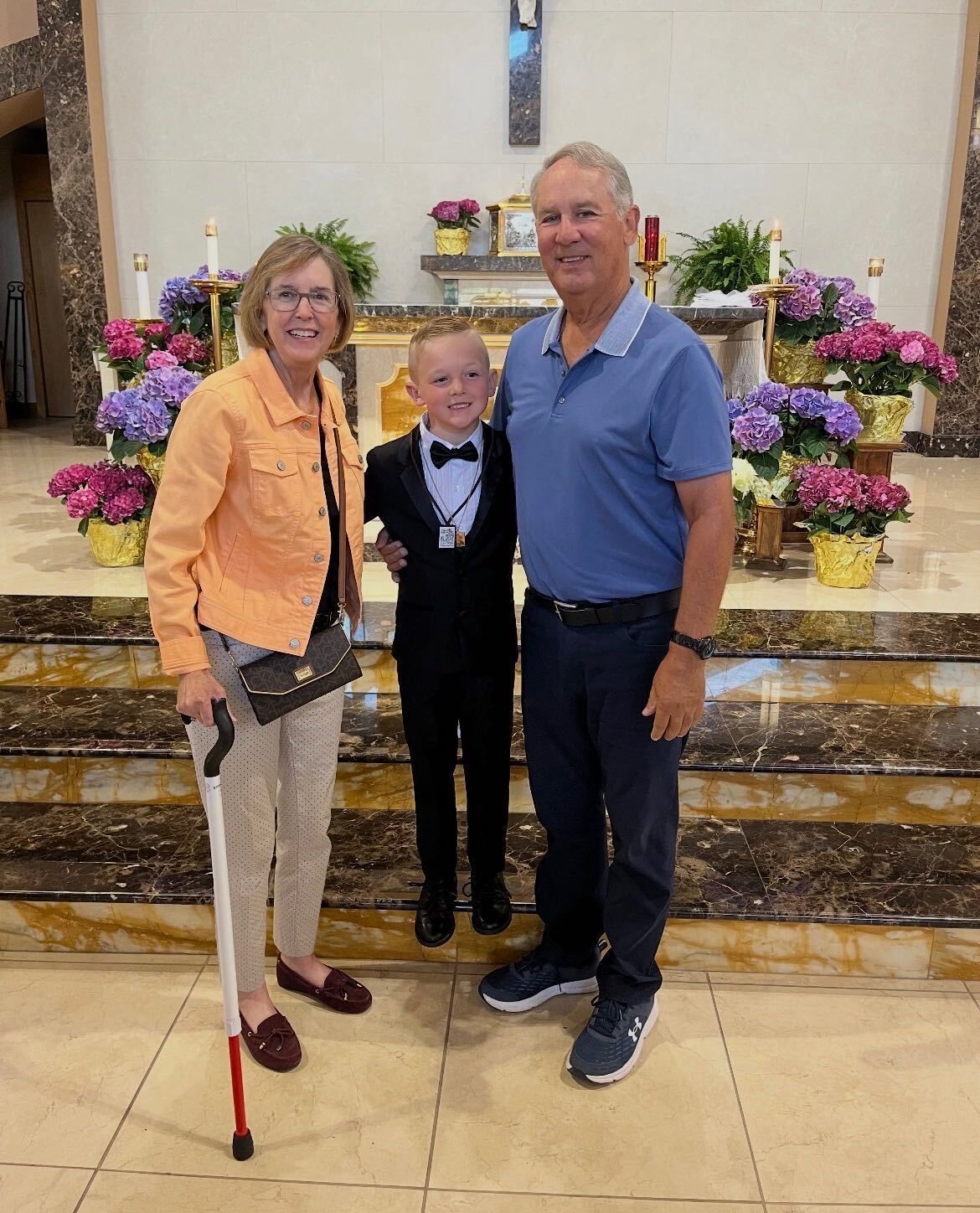
Barbara Small, her husband Dave, and grandchild Declan.Courtesy of Lindsay Ward
Ward’s 67-year-old mother, Barbara Small, who lives in Cape May Courthouse,started to show symptoms in her 50s.
What began as blurry vision and a damaged optic nerve progressed to a stroke. Roughly four years later, in 2018, she was diagnosed with RVCL.
Today, she is “pretty much blind” in one eye, Ward said, and has had a few strokes. She will frequently have aphasia, a communication disorder that can cause trouble speaking, and memory issues. Small is physically weak overall, and cannot walk very far without having to sit down.
“It is very challenging to see what your future will be,” said Ward, who helps take care of her mother.
Ward gets an MRI and diagnostic eye testing every six months to check for symptoms.
She and her husband, Matt, have three kids, with the youngest being a year and a half old. They don’t know whether their children inherited the mutation (testing is not recommended in children due to the late onset of the disease).
Lindsay Ward, 37, has three children with her husband, Matt.Courtesy of Lindsay Ward
However, if a preventive treatment were to come out, she would test them sooner.
Ward recently attended the International RVCL Symposium at Penn, where Miner presented on his research and potential clinical trial.
For patients like her mother, the treatment would likely just stabilize her condition and not reverse existing damage, she said. However, Ward is hopeful that the drug, if proven to be safe and effective, could help prevent her and her kids (should they test positive for the mutation) from becoming symptomatic.
“I would like to live a long, healthy life,” she said. “That would be my goal.”
Gabriella’s Vietnam, the acclaimed South Philadelphia restaurant known for showcasing regional Vietnamese cooking, will close in mid-December after nearly six years as chef-owner Thanh Nguyen searches for a new home.
Nguyen began looking for another location last fall after the building at 1837 E. Passyunk Ave., near Mifflin Street, was sold. She has continued operating under a month-to-month lease while planning the restaurant’s next chapter.
The building’s new owners, Bharat Bist and Gigi Giri — who operate Mount Masala in Voorhees and Nepali Momo Kitchen in Spring Garden — plan to open a yet-to-be-named Himalayan restaurant there early next year. Giri said the menu will combine Mount Masala’s bold stews with Nepali Momo Kitchen’s extensive lineup of momos, the steamed, filled dumplings.
“I have a dream to do something different,” said Giri, whose husband, Bist, is the chef.
The couple also plan to open a shop serving coffee and momos on Third Street near South Street within the next two months.
Nguyen said she and Giri reached an agreement that allowed Gabriella’s to remain open through mid-December.
“Gigi was very sweet and nice,” Nguyen said. “She didn’t kick me out right away, and she gave me a year.”
Gabriella’s backstory and future plans
Gabriella’s, which opened in February 2021 in the former home of Ange Branca’s Saté Kampar, has earned widespread acclaim. It appeared on The Inquirer‘s 76 list and was named to the New York Times’ 2022 list of Best New Restaurants.
The restaurant helped broaden Philadelphia’s understanding of Vietnamese cuisine beyond pho and bánh mì, centering its menu on dishes from across Vietnam’s regions. Among its specialties are lemongrass clams and a catfish hot pot, dishes rarely found elsewhere in the city.
For Nguyen, Gabriella’s also fulfilled a longtime personal ambition.
“I came to the U.S. and went to school for my family, not for me,” said Nguyen, who left the University of Pennsylvania one English composition class short of completing an undergraduate degree in biochemistry. “I wanted to make a business like my family did.”
She told The Inquirer’s Craig LaBan that her parents own a seafood market in Ho Chi Minh City, formerly Saigon, and initially disapproved when she entered the restaurant business with her husband, Chris.
The couple began building their restaurant company in the suburbs in 2012, opening Banh Mi Bar & Bistro in Norristown, followed by Melody’s Grillhouse in Ambler. Gabriella’s Vietnam, named for their younger daughter, marked a shift toward a more ambitious menu focused on traditional Vietnamese cooking beyond the country’s best-known dishes.
Nguyen hopes her next restaurant will have a full liquor license, allowing her to expand the beverage program alongside the food. Gabriella’s now operates under a satellite license through Five Saints Distilling that permits it to serve Pennsylvania-produced spirits, including the vodka used in its signature pho cocktail.
Developing those drinks sparked an unexpected passion for mixology, Nguyen said, and she envisions her next restaurant having a larger cocktail program and a menu of bar snacks to complement its Vietnamese cuisine.
“I had several restaurants in the suburbs, but when I came to Philly, I realized Philly was really missing traditional Vietnamese food besides bánh mì,” Nguyen said. “There are so many other foods popular in Vietnam that don’t get as much focus. And I want people to try it.”
The University of Pennsylvania, Rutgers University, Pennsylvania State University, and Princeton University belong to a national university group whose leaders helped the U.S. Department of Education develop a new list of reforms it would like all colleges to adopt by the end of the year.
U.S. Secretary of Education Linda McMahon on Monday sent a letter to colleges asking them to agree in public statements on their websites to wide-ranging reforms that includecracking down on protests, hiring more conservative faculty, combating grade inflation, taking steps to ensure there aren’t “covert” attempts to use race-conscious admissions practices, and containing tuition costs, among other changes.
There is no plan to sanction schools that don’t sign on, but those that do could be in line to get more research funding, according to Bloomberg, the first to report on the letter, citing a White House official.
The latest effort by President Donald Trump’s administration to reshape higher education at least initially appears to be getting a warmer response than the list of demands made in its controversial compact that was rejected by most universities, including the University of Pennsylvania, last year.
The reforms were developed with the help of four university presidents from the Association of American Universities, including the group’s board chair and vice chair, according to Bloomberg.
“We’d much rather be a partner than play the guessing game as we have been,” Douglas Girod, president of the University of Kansas and board chair, told Bloomberg.
AAU president Barbara Snyder told Bloomberg she planned to call on her member colleges to support the plan.
Penn is one of 71 research universities nationally and in Canada that belong to the group. The university did not respond to a request for comment on whether it planned to participate.
Penn last October rejected the White House’s university compact, which would have given the school preferential consideration for federal funding in exchange for agreeing to operational demands. Many groups on campus had spoken out against the compact, and Penn president J. Larry Jameson in a letter to the federal government at that time said he outlined areas where Penn found “existing alignment” with the compact and where the school had “substantive concerns.”
“For the good of the nation, university leadership must seize this occasion to drive essential reforms — a process some began by adopting positions of institutional neutrality and improving policies related to campus protests,” McMahon wrote in her letter Monday. She called on all colleges to “describe to the American public your commitments to rigorous teaching, pathbreaking research, and national service — commitments that make our universities a bedrock institution of the American republic.”
She acknowledged that not every college’s response would be the same, but presented schools with a series of questions that they should address. Among them are:
“How will your institution ensure admissions decisions are based on merit, achievement, and your university’s educational purpose?”
“How will you guarantee that unruly and violent protesters do not harass students or disrupt classes, research, public lectures, and campus operations?”
“How will your faculty hiring and evaluation practices support academic vitality and ensure that all relevant perspectives are taken seriously?”
“What can your school do to contain costs, improve pricing transparency, and ensure that every academic program equips students to repay their loans?”
“How will your school protect academic programs from foreign influence and safeguard the integrity of the research enterprise?”
McMahon also warned against allowing academic disciplines to foster political and social goals.
“When disciplines skew toward one side of the ideological spectrum, the truth-seeking function of the university suffers and public trust declines,” McMahon wrote.
Penn State said its leadership team had received the letter and is reviewing it.
Rutgers said it also had received the letter and “welcomes constructive dialogue with federal and state policymakers and remains focused on providing an excellent, accessible education that advances research to serve New Jersey and the nation.”
Princeton did not immediately respond to a request for comment.
“We look forward to learning more from the Department of Education about this effort and collaborating to advance shared goals,” Waded Cruzado, president of the Association of Public & Land Grant Universities, said in a statement. Penn State, Rutgers, Temple University, and the University of Delaware are part of that group.
The other three AAU presidents involved in drafting the new reforms include Andrew Martin at Washington University in St. Louis, Michael M. Crow at Arizona State University, and Ron Daniels at Johns Hopkins University.
Temple is not a part of AAU, but Temple president John Fry has worked closely with Crow, whose university sponsors the University Innovation Alliance that Temple joined last year. The alliance is a national organization of public universities aimed at finding innovations to improve learning and increase college attendance, retention, and graduation rates ― especially for low-income students ― then scaling those innovations across campuses. It was founded by 11 presidents including Crow.
Fry at the time described Crow as a mentor and said that he had known him for more than 30 years. They started presidencies simultaneously in 2002, Fry at Franklin and Marshall College in Lancaster, and Crow at Arizona State.
In a statement, Temple said it was “carefully reviewing” the letter from McMahon.
“Upon initial review, much of what is outlined in the letter is consistent with core tenets of what we do as a university,” the school said. “Our approach will continue to be guided by our mission and our strategic plan.”
Martin, of Washington University, told Bloomberg that he planned to respond to the McMahon letter.
“My expectation is this letter will have some things in it not everybody will agree with, but that universities will consider it,” he told Bloomberg. “Certainly compared to the compact, I think this is a step in the right direction.”
When the largest World Cup in history ended at MetLife Stadium, it marked the culmination of a summer in which millions of visitors moved through American host cities under the eyes of computerized systems most of them never noticed.
The federal government directed more than $1 billion to World Cup security, funding facial recognition cameras in and around stadiums, police drones over crowds, and AI-driven monitoring of transit hubs. More than 120 civil society organizations issued a travel advisory warning visitors about the screening they would face.
The tournament turned host cities into laboratories for urban artificial intelligence, and the experiments ran on tourists.
The two of us have conducted research on the use of electronic monitoring in urban areas, and we do not write to argue that cities should abandon these tools. Tourism contributed $10.9 trillion to the global economy in 2024, roughly 10% of global GDP, and safety increasingly decides where that money goes. Thirty-two percent of travelers now call safety the primary factor in choosing a destination, up from 23% in 2021.
AI can genuinely help cities deliver that safety. London’s transit authority uses smart video to spot trouble on crowded platforms. Singapore’s police fly drones that map crowd density at large events in real time. Used well, these systems find lost children, reroute crowds before crushes form, and speed emergency response.
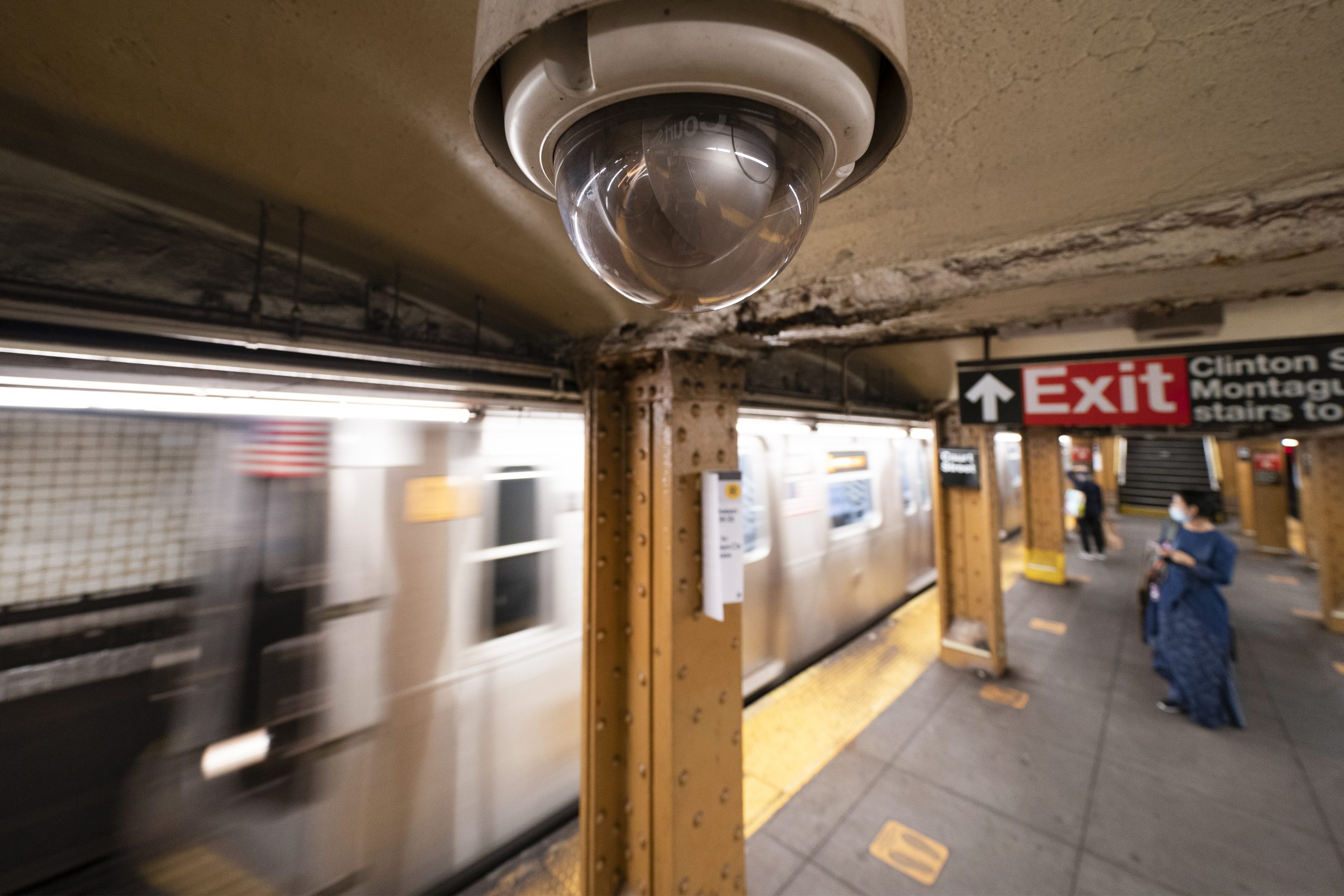
A video surveillance camera hangs from the ceiling above a New York City subway platform in October 2020. Mark Lennihan
The problem is the gap between deployment and governance.
Cities are running the experiment first and writing the protocol later.
That order of operations should worry anyone who remembers that surveillance systems, once installed, rarely come down. Mega-events have long served as the justification for permanent expansions of monitoring capacity.
The gap matters because safety is not only physical. Our research frames tourist safety in three dimensions: physical safety from crime and disaster, digital safety from data breaches and fraud, and psychological safety, the felt sense of trust that makes a visitor relax in an unfamiliar place. An algorithm that marginally improves the first while quietly eroding the other two is a bad trade.
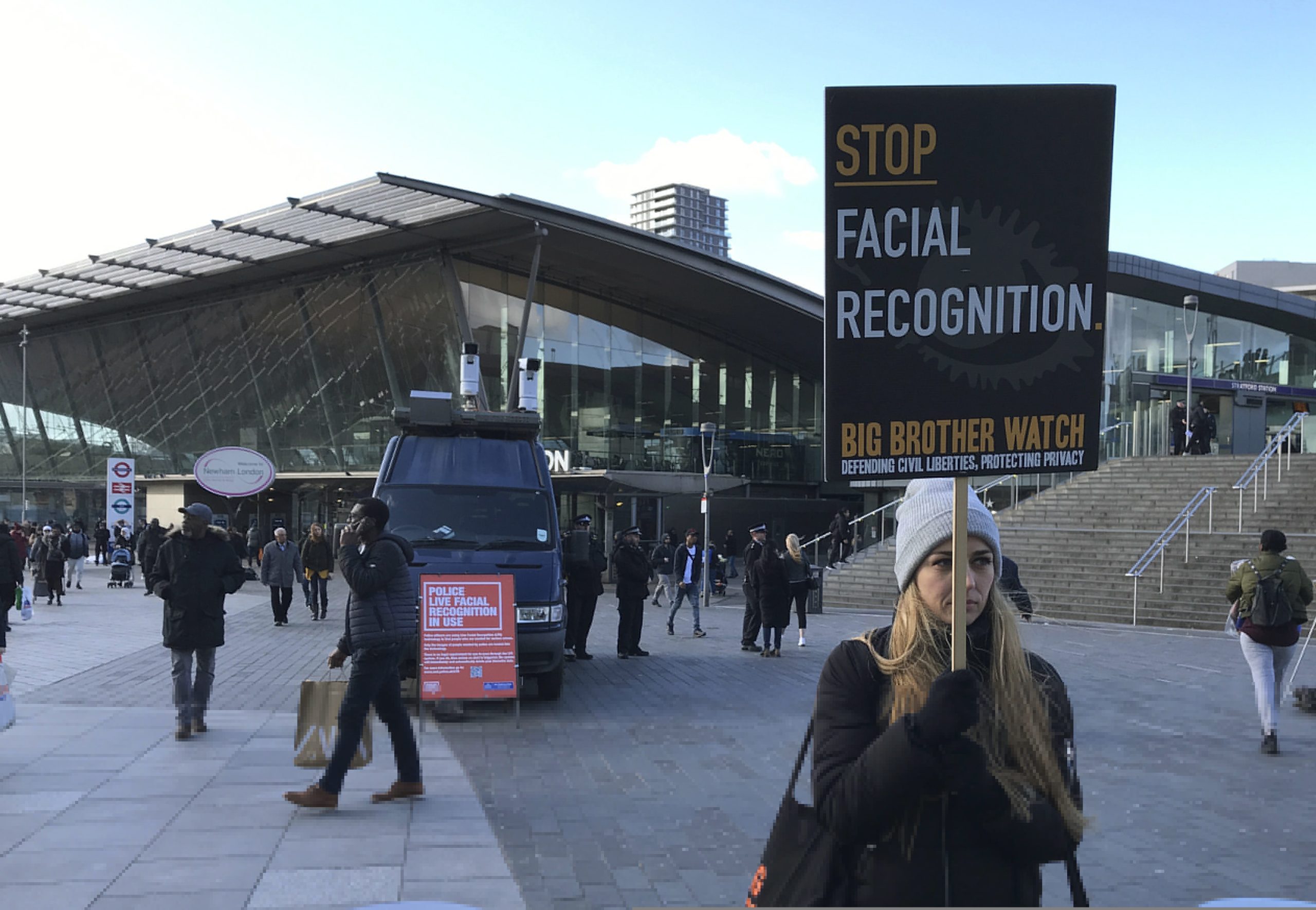
Rights campaigner Silkie Carlo demonstrates in front of a mobile police facial recognition facility outside a shopping center in London in February 2020.Kelvin Chan
The public senses this. Two-thirds of respondents in surveys we reviewed insist that people should be informed when AI is used to prevent, detect, or investigate crime. London learned the hard way that deploying facial recognition vans in high-footfall areas without that transparency generates backlash that outlasts the deployment.
Some cities show what the alternative looks like.
Barcelona created an external advisory council of independent experts that evaluates high-stakes algorithms before deployment; that panel rejected fully automated decision-making outright. Helsinki maintains a public AI register that lists every municipal algorithmic system — what it does, what data it uses, and what safeguards constrain it — so any resident or visitor can look up exactly what is watching them. Neither city sacrificed safety for principle. They built the trust that makes safety technology legitimate.
This convenience store in Tacoma, Wash., tested facial recognition technology to prevent theft in 2019. Melissa Hellmann / MCT
American cities do not need to invent this from scratch. The road map we propose starts with three steps any city council can take this year:
adopt an AI governance framework tailored to tourism and public safety;
extend legal protection to residents’ and visitors’ data whenever private vendors handle it;
publish a public register of every AI system the city operates.
None of these steps requires new technology. All of them require political will.
That means the great wave of municipal AI adoption is still ahead of us, and so is the chance to shape it.
Los Angeles hosts the Olympics in 2028. The cities that spent this summer as laboratories should spend the next two years writing the rules — in public — before the next surge of visitors arrives. Tourists chose these cities for a sense of welcome and security. Cities owe them systems worthy of that trust.
Eugènie L. Birch is the Nussdorf professor of urban research at the Weitzman School of Design, and co-director, Penn Institute for Urban Research at the University of Pennsylvania. Mauricio Rodas is the former mayor of Quito, Ecuador, and professor of practice at the Weitzman School of Design. Luke Campo, a graduate of the University of Pennsylvania, supported this research.
Psychiatry’s leading guide to diagnosing mental health conditions is due for a major update — and a University of Pennsylvania psychiatrist is heading the effort.
Called the Diagnostic and Statistical Manual of Mental Disorders, the DSM was first published in 1952 and has historically been updated every 10 to 20 years.
The American Psychiatric Association released the last major update, the DSM-5, in 2013. (A text revision came out in 2022.) There is currently no estimated date of publication for the next edition, given the scale of the project.
Maria Oquendo, who chairs Penn’s department of psychiatry, was tapped to lead the strategic committee for the sixth edition. That will entail developing a road map for the future of the DSM, based on more than a decade of advances in research and patient care.
“I am very honored and also very daunted,” Oquendo said.
The group has proposed creating a “living DSM,” changing the manual’s name, and making diagnoses more “person-centered.”
There are subcommittees focused on the socio-economic, cultural, and environmental determinants of health, the biological factors behind mental health conditions, symptoms spanning multiple conditions, and functioning and quality of life.
Past DSM updates have similarly introduced sweeping changes — including changing how autism is diagnosed and adding “prolonged grief disorder” as a condition.
The manual is commonly used by mental health professionals, researchers, insurance companies, and the legal system.
The committee wants to make sure a small change doesn’t cause drastic ripple effects for the public, such as disqualifying people from insurance coverage or altering “the standard for deeming someone not criminally responsible,” Oquendo said.
“If it has a big impact, then the rationale has to be extremely robust,” she emphasized.
The Inquirer spoke with Oquendo about what changes could be coming in the next edition of the DSM in a conversation lightly edited for length and clarity.
Maria Oquendo, who chairs Penn’s department of psychiatry, was tapped to lead the strategic committee for the next edition of the DSM.Courtesy of Penn Medicine
What is the DSM?
The DSM is a clinical manual intended to help clinicians make diagnoses.
It provides not only a list of all of the diagnoses but also descriptions that include some background information like family history. Importantly, it makes sure that when I, as a clinician, am talking about obsessive compulsive disorder, the person who’s listening to me knows exactly what I’m talking about.
The reach of this book is quite global, and in many places such as Western countries, it’s used as the primary diagnostic tool.
What changes are you hoping to make with the new edition?
There are people who refer to the DSM as the Bible. It’s not the Bible. At best, it’s a dictionary. And what we want to do is increase focus on contextual factors that are important for making a diagnosis. Ideally a person-centered explanation is about not only what the disorder is, but what’s contributing to it. We know that socio-economic, cultural, and environmental factors are super important for mental health.
If you’re assessing someone, knowing about that can be really helpful to understanding that person and where they are coming from.
As an example, if somebody comes from a culture like my culture (Puerto Rico), where people have very strong connections with the deceased, sometimes they experience the deceased person’s presence or hear them talk, especially at night. That could be construed to be hallucinations, and yet in the context of not only my culture but many cultures, that would be completely normative.
What other changes are being considered?
We are very focused on making sure that functioning and quality of life get the attention that they deserve. There are some people who have lots and lots of symptoms, and they’re happy as a clam. The amount of distress that a person feels can vary quite significantly, and it’s very relevant in terms of not only diagnosis but treatment planning. What are the best interventions to help that person get better?
We also have a section on biomarkers and biological factors. That’s really important because, to date, the DSM has been kind of agnostic about what the contributors to mental disorders are. But we know that there are biological contributors, and we also know that the environment is extremely important, and it’s the interaction of those two things that is critical in terms of whether an individual manifests a mental disorder or not.
What do you mean by biological factors?
I don’t necessarily only mean things like genetics and predisposition. Experiences like trauma can change our biology. We know that the stress response system in the brain can change very dramatically after trauma. That’s another biological contributor to a mental disorder that is not innate.
Another proposed change is to encourage broader diagnoses. Can you elaborate on that?
Historically, the DSM has encouraged precise diagnosis to the extent that it’s possible. But we think that in most first encounters, it’s very common not to be sure what the diagnosis is. You may know that a person has a mood disorder of some type, but you may not be sure if they really have bipolar disorder or major depression, as an example. Sometimes it takes time for that to become clarified. You need to get collateral information from loved ones to confirm what’s happening in the environment, or it may take time because you just need the symptoms to evolve.
We’ve looked at data from insurers, and found that people are using more general diagnoses. What we want to do is provide a platform so that people can start from that, and as they get to know the patient better, refine their diagnosis with more data and more information.
What about the proposal to change the DSM’s name?
It’s called the Diagnostic and Statistical Manual because, when it was first developed, the goal was to be able to develop estimates of the frequency of diagnosis, so public services could be planned. But now that’s not what it’s used for at all. We actually are planning to change the name to Diagnostic and Scientific Manual because we want to strongly communicate that this is based on science.
How could this next update make the manual a “living DSM”?
The American Psychiatric Association really wants to make sure that this next DSM can stay as up to date as possible. The idea is that there would be a book version, but also an electronic version that would be updated on a periodic basis.
One of the things that’s really tricky about that is that you want to keep things current — we don’t have to wait 13 years for things to be updated. But if you change things too much, you drive people in the field crazy.
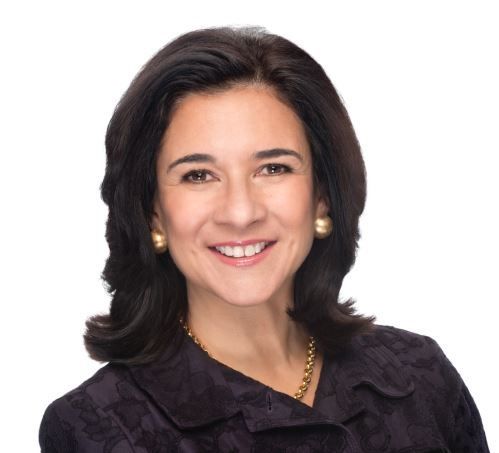
Neysa Adams, 104, of Philadelphia, 1971 chair of the local United Fund women’s committee, former president of the Rebecca Gratz Club, onetime vice president of the women’s council for the Federation of Jewish Agencies, former associate trustee at the University of Pennsylvania, scientist, high school teacher, investment adviser, and philanthropist, died Friday, June 26, of heart disease at the Hearth at Drexel.
Born and reared in Philadelphia, Mrs. Adams graduated from Olney High School and lived over the years in East Oak Lane, Germantown, and Elkins Park. She earned a degree in biochemistry with honors at Penn, did scientific research for a time, and taught English and history for two years at Philadelphia High School for Girls.
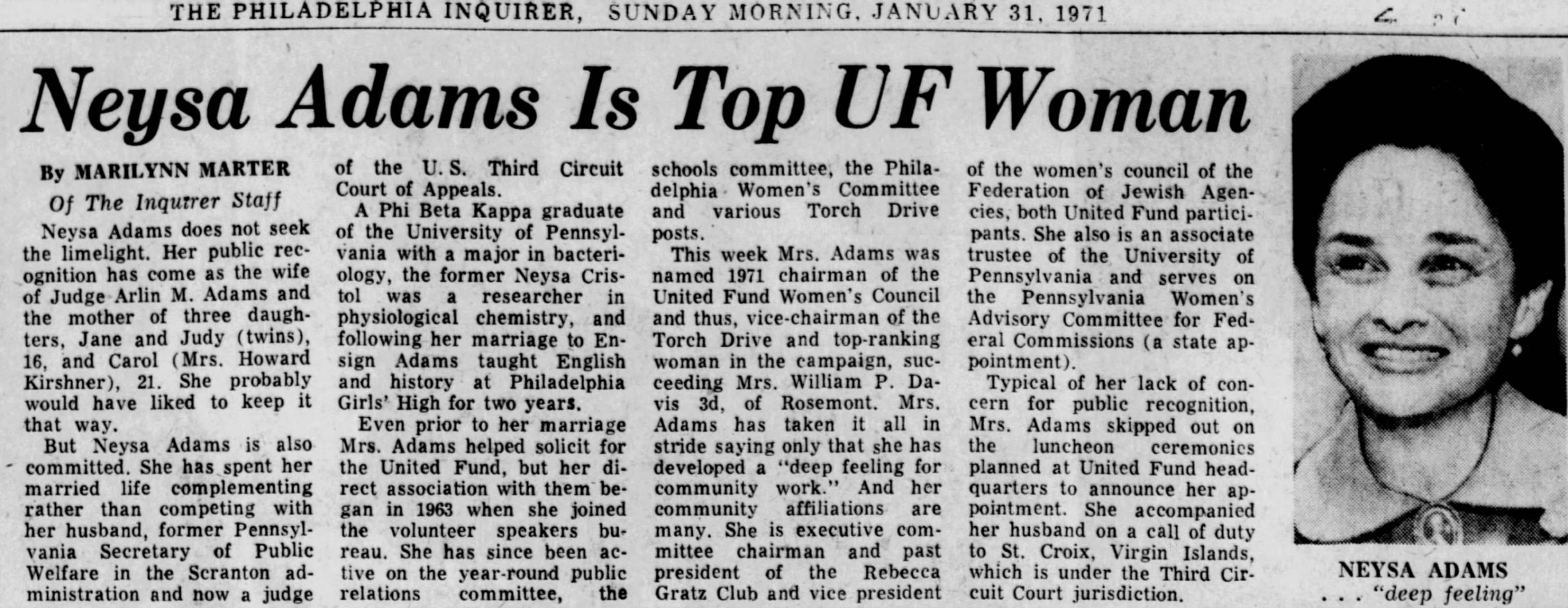
Smart, friendly, and energetic, she joined the Philadelphia United Fund volunteer speakers bureau in 1963, became active with the fund’s public relations committee, schools committee, and women’s committee, and organized many community fundraising campaigns. In 1971, she told The Inquirer she had a “deep feeling for community work.”
Mrs. Adams also served on the board at what is now Penn’s School of Social Policy and Practice and was active with the Emergency Aid of Pennsylvania Foundation, the National Conference on Social Welfare, and state and federal women’s advisory commissions. In 2003, then-Gov. Ed Rendell recognized her as a Distinguished Daughter of Pennsylvania for her “outstanding service and contributions to the Commonwealth of Pennsylvania.”
She also established Neysa Adams’ Library Fund at Reform Congregation Keneseth Israel in Elkins Park. Friends called Mrs. Adams “wonderful,” “outstanding,” and “one of life’s brightest lights” in tributes.
One friend said: “Neysa was one of the kind.”
This story about Mrs. Adams appeared in The Inquirer in 1971.Newspapers.com
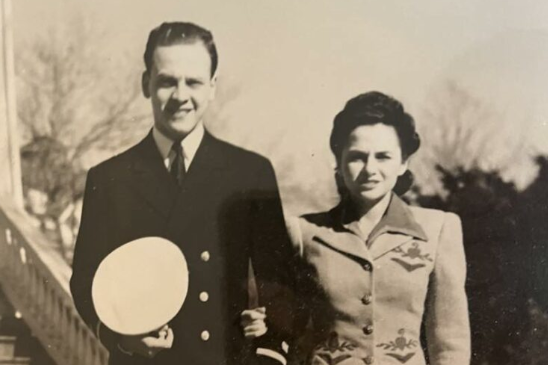
Neysa Norma Cristol was born Aug. 7, 1921. She met Arlin Adams in high school, and they married in 1942 while he was on leave from the Navy. They had daughters Carol, Judy, and Jane. Her daughter Jane died in 2017.
Mrs. Adams and her husband, a state secretary of public welfare and longtime federal judge, traveled the world, mostly through his work, and she met a queen, a pope, several U.S. presidents, and other international notables. “Her resilience, intellectual curiosity, and dedication to serving others stand as a testament to a life well lived,” friends at the Hearth at Drexel said in 2024.
She was active at Keneseth Israel, enjoyed cooking, and was an avid reader. She also worked as an investment adviser.
She was featured on 6abc TV last August on her 104th birthday and said: “Get those things that make you happy. Enjoy them while you can.”
Mrs.Adams and husband, Arlin, married in 1942 while he was on leave from the Navy.Courtesy of the family
Her daughter Carol said: “She was outgoing and had lots of friends. It seemed like she knew everyone in Philadelphia.”
In addition to her daughters, Mrs. Adams is survived by four grandchildren, one great-grandson, and other relatives. A sister and a brother died earlier.
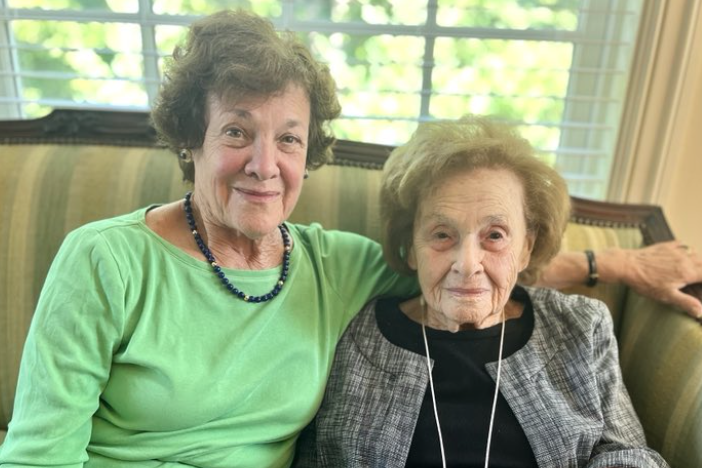
Mrs. Adams (second from right) doted on her husband and three daughters. Courtesy of the family“It seemed like she knew everyone in Philadelphia,” said Mrs. Adams’ daughter Carol (left). Courtesy of the family
Occasionally, I get to share good news in this space. Wu Shaoping — the Chinese dissident who fled to America but was detained by U.S. Immigration and Customs Enforcement after a Central Pennsylvania traffic stop — was freed from ICE’s Moshannon Valley Processing Center Friday night, not long after my column dropped and a couple ofmembers of Congress pressed for his release. His asylum case is still pending. I’ve learned there’s actually a lot more to this story — stay tuned.
The Trump regime is shifting billions from college into AI. That’s no accident.
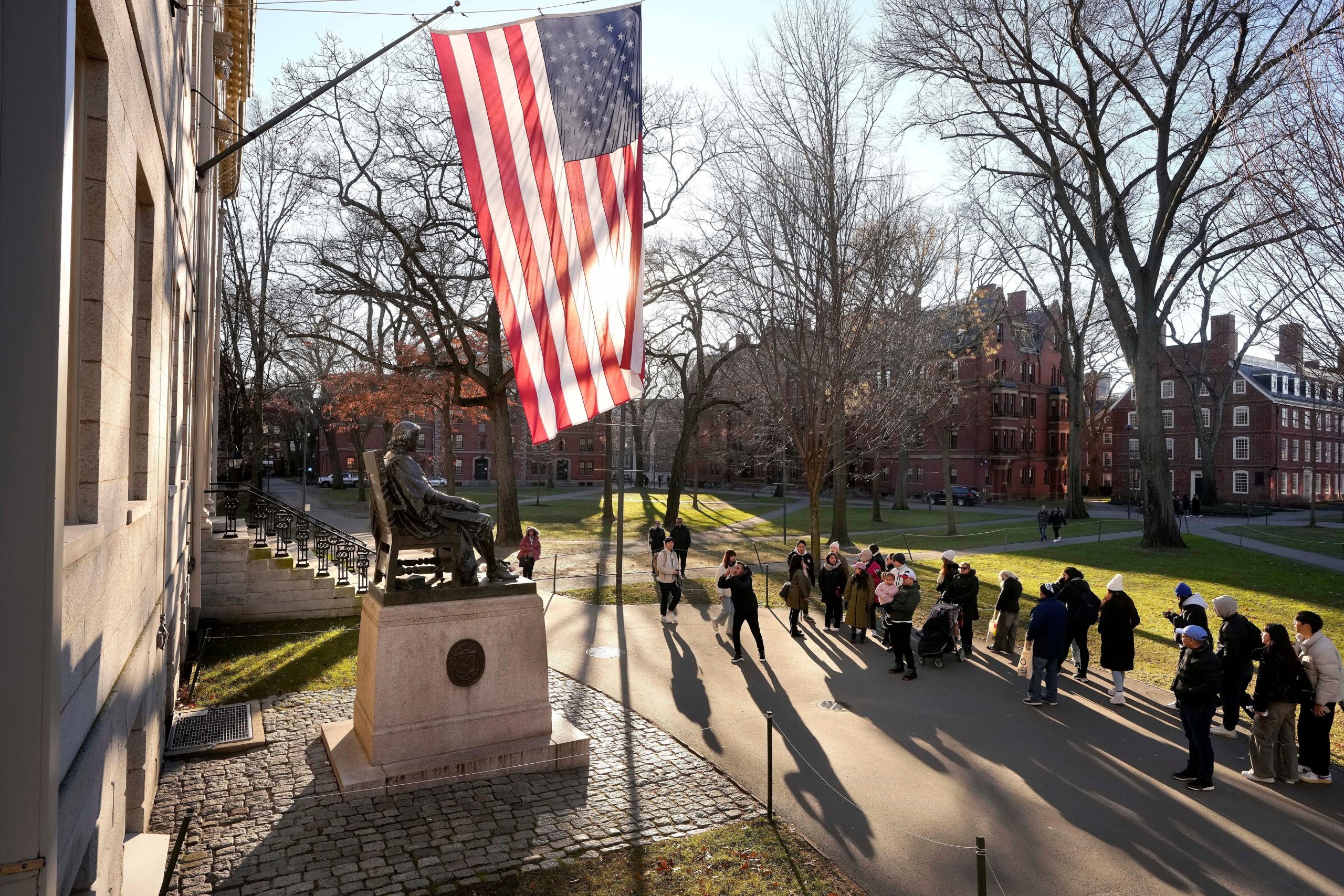
People take photos near a John Harvard statue on the Harvard University campus in 2024 in Cambridge, Mass.Steven Senne
The U.S. government has become pretty stingy when it comes to finding money for human beings — just ask any struggling single mother in Mississippi needing food stamps, or a physician in Africa waiting on vaccines that no longer arrive through American foreign aid programs.
But Washington always seems to have an open wallet for computers.
In fact, the very first one — ENIAC (Electronic Numerical Integrator and Computer), constructed right here in Philadelphia on the University of Pennsylvania campus as World War II came to an end — was funded by the U.S. Army Ordnance Corps at a cost of about $7 million in today’s dollars. Over the years, billions of dollars in federal funding would fuel key moments in the Computer Age, including the creation of the internet, which was also a Pentagon project.
Still, there was something chilling about last week’s report from the White House Office of Science and Technology Policy that called for a surge in research aid in one area: computers and robots using artificial intelligence, or AI. The nuts-and-bolts of the paper — “Science: A New Golden Age” — highlighted a new, more-than-$5 billion commitment for an AI-in-science program called the Genesis Mission.
But the White House paper also called for a radical shift in the way the federal government pays for science, with a massive move of $200 billion away from funding research and basic science at top universities — the system that has thrived since the time of ENIAC — and toward individuals and more directly applied AI projects, including those at private tech companies.
Goodbye, John Harvard. Hello, Claude.
“This plan raises profound concerns about the future of publicly funded science,” the top union leaders for educators — Todd Wolfson of the American Association of University Professors (AAUP) and Randi Weingarten of the American Federation of Teachers (AFT) — said in a joint statement last week. “It does nothing to make anyone healthier or safer, and it isn’t what Americans want.”
Wolfson, Weingarten, and other critics of the new science scheme from the Trump regime say it unravels long-standing protections for academic freedom and transparency on campuses in favor of a process that’s ripe for political interference. “This is a defining moment for American science,” the educators wrote.
Indeed, while the federal funding gains for AI are still mostly theoretical, the cuts for research projects on college campuses across the United States have been underway since Donald Trump took office in January 2025, and the impact has already been dramatic.
The playing field is complex, but a recent deep analysis by the Brennan Center for Justice found that the Trump administration successfully froze about $3 billion in previously approved grants for scientific research, is imposing a scheme to slash an additional $4 billion, and issued a budget proposal calling for a whopping $44 billion additional reduction.
The analysis noted that “these midstream freezes and cancelations have ripple effects far beyond the nominal dollars involved, prompting layoffs, interrupting careers, and destabilizing the budgets of research universities.”
But now it feels like the White House is stating the quiet part out loud: The bigger goal is simply to build smarter computers, even if that means humans get dumber. Intelligent robots still don’t vote in elections, after all, but poorly educated people do.
Ironically, the regime’s rationale for spending our tax dollars on making AI more powerful regurgitates a Cold War mentality that, on the surface, sounds like the reasons behind decades of massive college research funding and programs like the space race of the 1960s or the nuclear arms buildup: to stay one step ahead of the communists — this time in China.
The difference between then and now is that after World War II, Washington made a conscious effort to fund basic science and free inquiry as a way to distinguish the United States from the rigid planned economy of our then-biggest adversary, the Soviet Union. Now, the White House seeks to copy Beijing’s centralized planning. Can we truly promote science without lifting up the actual scientists?
Trump’s “Golden Future of Science” feels more like an extremely narrow wind tunnel. The irony is that many of today’s politicians in both parties see higher education as mainly workforce development, even as corporate recruiters say what they really want are more broadly educated critical thinkers. In other words, the AI era actually screams out for a boost for the humanities like literature or philosophy — the types of majors that are getting crushed in the Trump era.
An epic battle is looming between those obsessed with a new nuclear arms race around AI — especially the Silicon Valley billionaires who stand to gain and who, not coincidentally, have heavily funded the second coming of Trump — and a public that doesn’t want our communities ruined by noisy, energy-guzzling data centers that aim to take away our jobs while making reading a lost art.
A government scheme to build better computers while rendering humans obsolete used to be the stuff of dystopian science fiction. Maybe we can keep it that way before it’s too late.
Yo, do this!
About once a year or so, I write, “Yo, actually maybe don’t do this.” Last weekend, I ventured out of my underground lair to join every other American in devoting three hours to Christopher Nolan’s The Odyssey. To say I was underwhelmed would be, well, an understatement. The movie was a funeral for the now totally lost art of movie dialogue, amid a plot that meandered from gouge-your-one-eye-out boring to bursts of incomprehensible violence. It was a metaphor — Troy was My Lai, apparently — that got terribly lost at sea. But I do feel there’s something happening here. First the World Cup, now this mediocre whale of a motion picture: Americans are desperate to bea part of something, anything, that is bigger than our politics.
Regular readers know I’m a huge fan of the CNN modern history documentaries they now call the Decades Series, but the original format of politics, TV, and music did have gaping holes. A few years ago, they backfilled with a series on The Movies of our post-World War II world. Now, finally, Decades in Sports arrives on CNN with back-to-back episodes (presumably the 1960s and ‘70s) on Sunday night at 9 p.m. I can’t wait. Spoiler alert: Havlicek stole the ball.
Another thing you may have noticed is that Rep. Ro Khanna, who meandered west after Council Rock High School in Bucks County and became the congressman from Silicon Valley, is something of a friend of the newsletter. He’s back in our area frequently, and he’ll be at Philadelphia’s Parkway Central Library on Tuesday at 6 p.m. to deliver a special speech: “America at a Crossroads: A Vision for the Future on our 250th Anniversary.” He’ll talk about his background growing up here as the son of immigrants and the need for economic freedom that ends gross corruption and inequality — go check it out.
Ask me anything
Question: Who should be DNC [Democratic National Committee] chair? And does it matter? — Martha (@marthagrant.bsky.social) via Bluesky
Answer: It does matter. Despite everything else that’s happening in the world right now, one of the more revealing stories of the last week was the New York Times article about Democrats in disarray, focusing on embattled DNC chair Ken Martin, who before the 2024 election was the state leader in Minnesota. Under Martin, the party is sliding deeper in debt, and there are complaints about an abrasive personal style, the botched “autopsy” of the 2024 election, and the Democrats’ muddled message. A change should be made as soon as possible. Hopefully, party leaders could rectify the mistake of not picking Wisconsin’s more skilled ex-party chief, Ben Wikler. The problem is that, under the constant assault of GOP fascism, Dems need to fix this plane while it is flying at 37,000 feet.
What you’re saying about …
There was an excellent response to last week’s question about what a future Democratic president should do on Day One to erase the stench from two Donald Trump presidencies. I wish I could reprint all the suggestions, but recurring themes included a rapid purge of any Trump holdovers, abolishing ICE and related immigration raiders, and a speedy effort to prosecute the many wrongdoers. The two most frequent suggestions included major reform of the judiciary, from fixing the mangled immigration courts to ethics reform, and definitely an expansion of the U.S. Supreme Court. Mark Cohen suggested two more federal appeals courts and then “assign a Supreme Court justice to each one, bringing a total of 13 justices to the Court for fixed term of 18 years.” Another theme was erasing Trump’s various renovations to the District of Columbia. The ex-congressman Joe Hoeffel wrote, “Strip all the cheesy gold out of the Oval Office.”
📮 This week’s question: Speaking of Democrats, some top party officials like House Minority Leader Hakeem Jeffries seem to think the November election is primarily about “affordability.” That seems to miss the bigger moment, but I’m curious: What pithy message would you like to see Dems run on this fall? Please email me your answer and put the exact phrase “Democratic message” in the subject line.
Backstory on the Gen Z revolution rocking India
Protesters participate in a demonstration demanding educational reforms as part of the Cockroach Janta Party’s ongoing protest movement in New Delhi on July 25.Vipin
Last October, I wrote a column, with great interest and enthusiasm, about a growing revolution of Gen Z 20-somethings that was taking place across the global south — from Madagascar to Peru to Nepal, and elsewhere — who were fed up with the political corruption of grown-ups and threatening to topple governments. I wondered if this very online youth activism might spread to the United States or other more developed nations, but over the coming months, the momentum for these protesters and their Japanese anime pirate flags seemed to fade. The so-called Gen Z revolution looked like a historical footnote.
But it turns out that the embers of youth unrest were still smoldering, and this summer they have reignited in a big way in the world’s largest — if deeply flawed — democracy: India. And as is so often thecase, the spark was something nobody saw coming: a nationwide exam for entrance to medical school taken by roughly two million students, which the government moved to scrap after allegations that some of the questions had leaked. Some young people who’d studied for months for the exam took tothe streets in protest, and — as so often happens — a repressive police response only caused these demonstrations to get bigger. So did a comment from India’s chief justice, who described young, unemployed Indians as “cockroaches.”
That gave the protests a name when Abhijeet Dipke, a 30-year-old graduate of Boston University, posted on the social media platform X that he was starting the “Cockroach Janta Party” — a wordplay on the Indian authoritarian-minded leader Narendra Modi’s Bharatiya Janata Party. Incredibly, this “CJP” has seen its protests — calling successfully for the resignation of the education secretary and for other deeper reforms, using tactics such as sit-ins and hunger strikes — spread to some 30 cities while clogging the streets of the capital, New Delhi. The movement has become arguably the biggest threat to Modi’s strongman rule since the leader’s ascension in 2014.
All of which raises the same question I posed last fall: Could it happen here? In one sense, it already has. On Friday, about 500 Indian students and other members of the U.S.-based diaspora gathered under a statue of Mahatma Gandhi in Manhattan’s Union Square to express support for the “cockroaches” of their native country. Meanwhile, the kind of pressures that caused India’s youth to erupt — government meddling in higher education, diminished job prospects in a time of rising AI, to name two — are also found in the United States. Young people almost never protest over the same stuff that riles up their parents, as shown by the gray hairs that have populated the No Kings rallies against Donald Trump. When lightning strikes, it will probably be something as unexpected as a college entry exam. But thunderstorms are definitely in the forecast.
What I wrote on this date in 2019
A culture of death permeates the Donald Trump regime, from the doomed fishing boats of the Caribbean to an Iranian girls’ school to the scores now dying in immigration detention cells. But this is not exactly new. The seeds were planted in the first Trump presidency, when his attorney general, William Barr, led a push to revive the death penalty for federal prisoners in a big way. On July 28, 2019, I asked: “What took the American Caligula so long to bring back the spectacle of executions to electrify the masses (but not the prisoners … they’d be lethally injected) and juice his 2020 reelection campaign? Indeed, the five executions are scheduled around the Christmas holiday, presumably to remind us of its pagan roots.”
In 2026, I’ve been very focused on the individuals whose world has been turned upside down — or, in some cases, ended prematurely — by the horrors of life in these authoritarian United States. Last week, I took a deep dive into the story of Wu Shaoping, a Chinese dissident who fled his likely detainment by Xi Jinping’s regime and made it to Pennsylvania with his wife and teen daughter, only to get arrested at a traffic stop, turned over to U.S. Immigration and Customs Enforcement, and detained. The outcry may have had something to do with ICE’s release of Wu shortly after the column ran. Over the weekend, I wrote about the police killing of Corey Ruiz in Madison, Wisc. — noting that the shootings of civilians by cops have only increased since the massive George Floyd protest marches of 2020. I urged an end to the new numbness about police violence in America.
You didn’t really think I could make it all the way through the newsletter without mentioning the face that launched 1,000 hot takes: basketball king LeBron James. He stunned not just the sports world but America’s founding city by announcing Friday that he is taking his aging but still considerable talents to South Philadelphia, hoping to grab one last title with a completely revamped 76ers. Has there been any other story since then? The Inquirer has told you about the first time James played at the Palestra, his new uniform (No. 23), the speculation over how he will (or won’t) gel with the rest of the Sixers, the speculation over where he might live, hisrelationship with Tyrese Maxey and Joel Embiid, and on and on and on. Just wait until he actually takes the court this fall! Actually, don’t wait. Subscribe to The Inquirer today, slam dunk the paywall, and read every story from now until the hoped-for parade down Broad Street.
By submitting your written, visual, and/or audio contributions, you agree to The Inquirer’s Terms of Use, including the grant of rights in Section 10.
The Trump administration has agreed to drop its subpoenaordering the University of Pennsylvania to release the names of Jewish people on its campus, marking what seems to be a victory in the Ivy League school’s battles with the federal government.
The Equal Employment Opportunity Commission has said “it will not take any further measures to enforce the subpoena seeking identification and personal contact information of employees,” according to a resolution agreement filed Thursday in the U.S. Court of Appeals for the Third Circuit. The agency also agreed not to seek the information through other means, according to the agreement.
The commission had been requesting the information to further its investigation into antisemitism complaints on Penn’s campus.
The EEOC initially won the court’s approval to enforce the subpoena, but Penn appealed the decision. Penn said it has agreed to drop its appeal and, according to the resolution, the school agreed not to ask that the district court’s opinion in the case be vacated.
It was not clear what caused the federal agency to change course or the status of the commission’s antisemitism investigation. An EEOC spokesperson said: “We will decline to add anything beyond court filings.”
Penn released a statement. “With the support of many members of the community who have stood with Penn throughout, the university has been able to protect its employees’ rights and none of the subpoenaed personal contact information was disclosed,” a university spokesperson said. “Penn remains committed to fighting antisemitism and all other forms of discrimination, to ensure everyone it serves can learn, work, and thrive.”
The move brings the monthslong battle between the federal agency and the Ivy League university over the subpoena to a close.
The EEOC’s decision to subpoena the information drew widespread criticism from faculty and others, on and off the campus. Among those that opposed the subpoena was the Penn chapter of the American Association of University Professors.
“This victory shows that universities should not capitulate to unjust and unconstitutional demands from the Trump administration,” said Lorena Grundy, vice president of AAUP-Penn. “AAUP-Penn will continue to defend the rights of all communities at Penn, and we look forward to continuing to grow the coalition that has grown out of this effort.”
The Anti-Defamation League Philadelphia, which has supported the EEOC’s effort to address antisemitism at Penn and has been critical of college campuses’ handling of antisemitism complaints, said it was pleased the EEOC was not pursuing the subpoena.
“As we’ve said, demanding lists of Jewish employees and campus organizations is a different matter, one with a troubling history we cannot ignore,” said Andrew Goretsky, senior regional director. “We’re pleased the EEOC has apparently agreed not to pursue its requests for sensitive information and that information was not disclosed. We’ll continue working with our partners to support Jewish students, staff, and faculty at Penn.”
Roy Hamilton, faculty senate chair, said he was “heartened to see that this matter has been resolved in a way that protects the privacy of Penn employees while allowing the university to move forward.
“Our shared focus remains on fostering a community where all members are treated with dignity, respect, and fairness.”
Penn has faced other pressure from the federal government. Last summer, the school struck an agreement with the Trump administration over the participation of transgender athlete Lia Thomas on the women’s swim team. The school met a number of the White House’s demands, including adhering to the Trump administration’s definitions of sex, female, male, women, and men, and sending letters of apology to female athletes who felt aggrieved by Thomas’ participation on their team during the 2021-22 season.
Penn pointed out at the time that the agreement was restricted to athletics and did not affect other university operations.
The EEOC last year — as part of its quest to find people potentially affected by antisemitism concerns at Penn, officials said — demanded a list of employees in Penn’s Jewish Studies Program, a list of all clubs, groups, organizations, and recreation groups related to the Jewish religion, including points of contact and a roster of members, and names of employees who lodged antisemitism complaints.
The original complaint was launched by EEOC Commissioner Andrea Lucas, now chair of the body, on Dec. 8, 2023, two months after Hamas’ attack on Israel that led to unrest on college campuses, including Penn, and charges of antisemitism. It was also just three days after Penn’s then-president, Liz Magill, had testified before a Republican-led congressional committee on the school’s handling of antisemitism complaints; the testimony drew a bipartisan backlash and led to Magill’s resignation days later.
The commission sued Penn in November for failing to turn over the information sought in the subpoena.
Judge Gerald J. Pappert ruled in March that Penn must comply with the subpoena, signaling a major loss for the university in its fight to keep employees’ and students’ personal information from the federal government. In his 32-page ruling, Pappert largely dismissed arguments from Penn and others who intervened on the school’s behalf that releasing the information sought by the commission would put employees at risk, create an undue burden on the school, and cause employees to disaffiliate from such groups.
Pappert had ruled the school had to provide the information to the EEOC, though it did not have to state which particular organization each person is affiliated with.
Penn sought a stay of the order and said it would be “irreparably harmed” if it had to comply before the school had a chance to appeal.
Pappert in April granted Penn a stay while the appeal proceeded. But Pappert at that time also underscored the school’s unlikely success in an appeal.
“The charge of discrimination is valid, the EEOC’s subpoena seeks information relevant to the charge and the subpoena does not unduly burden Penn,” he wrote. “The subpoena also does not violate substantive due process or the First Amendment.”
Penn has said it provided information to the EEOC in cases where employees consented but steadfastly refused in others.
“Violating their privacy and trust is antithetical to ensuring Penn’s Jewish community feels protected and safe,” Penn said when the EEOC filed the suit.
The school offered to help the EEOC reach employees who were willing to speak with the agency by informing all employees of the investigation and how they could reach the agency.
Jon Fansmith, senior vice president for government relations and national engagement at the American Council on Education, said the resolution “reinforces the merits of Penn standing up to something that was clearly inappropriate and excessive from the start.”
The government alleged wrongdoing and then tried to find the evidence to prove it in part by issuing the subpoena.
“This is clearly an abuse by the government of their authority,” Fansmith said.
A partner at one of the city’s largest law firms who once worked as a federal prosecutor was confirmed Thursday by the U.S. Senate to become the Philadelphia region’s newest federal judge.
Antonio Pozos’ nomination to join the region’s U.S. District Court was approved by a vote of 49-44. There was no discussion as the Senate voted to approve his nomination, which earns him a lifetime seat on the bench.
Pozos, 44, most recently a partner at Faegre Drinker Biddle & Reath, is the first person appointed to the region’s district court since President Donald Trump began his second term last year. During his first term, Trump had five judges confirmed to the region’s federal bench.
Pozos will fill a vacancy created by last year’s retirement of U.S. District Judge Mitchell Goldberg, giving the court 22 district judges and eight senior judges.
District court judges oversee a variety of criminal and civil cases each year, and typically issue the first rulings on legal questions that can sometimes reach the U.S. Supreme Court.
Although some of Trump’s recent nominations to judicial posts across the country have been controversial — including his decision to nominate his former personal lawyer, Emil Bove, to the Philadelphia-based U.S. Court of Appeals for the Third Circuit — Pozos’ candidacy received some bipartisan support.
Shortly after his nomination was announced, Pennsylvania’s Democratic senator, John Fetterman — who, under Senate rules, had the ability to block Pozos’ candidacy from advancing — decided to allow the process to move forward, the first time any Democrat had done so for a district court nominee during Trump’s second term.
Fetterman also voted Thursday to confirm Pozos.
During a confirmation hearing last month, U.S. Sen. Dave McCormick (R., Pa.) called Pozos a “successful attorney, a strong Pennsylvanian, a decorated public servant, and he’s eminently qualified for this role.”
Pozos was criticized by some Democratic senators during the hearing for hesitating to use the word attacked when describing the riot at the U.S. Capitol on Jan. 6, 2021. He instead said it “appeared that there was violence and trespass” that day, and called the events “profoundly troubling.”
Pozos lives in Bryn Mawr and is a graduate of Harvard College and the University of Michigan Law School, according to a questionnaire he submitted to the Senate Judiciary Committee.
Before he became a partner at his firm in 2018, the questionnaire said, he spent three years as a prosecutor in the Justice Department’s criminal fraud section in Washington, where he often worked on cases involving healthcare fraud. He previously worked as an associate in a Washington-based firm and clerked for U.S. District Judge Anthony J. Trenga in Virginia.
In Philadelphia, Pozos has served as a lecturer at the University of Pennsylvania’s Carey Law School and is on the board of Drexel University’s Kline School of Law.
With Pozos’ confirmation to the bench, Trump has now appointed six of the Philadelphia region’s district judges, who handle cases that arise from the city, its suburbs, and counties in and around Reading and Allentown. Former Presidents Joe Biden and Barack Obama each appointed seven judges to the bench, and two were appointed by George W. Bush.
Trump has had a more outsize impact on the region’s appellate court, where he has appointed six of the court’s 14 members across his two terms.
Philly music this week features Connor Barwin’s Make the World Better Concert Weekend at the Dell, four nights with Jill Scott at the Met, Tim McGraw in Camden, Shakira in Atlantic City, the Disco Biscuits in King of Prussia, and Shinedown in South Philly. And more.
Thursday, July 23
Man Man
Philly-born and Los Angeles-based experimental rock band Man Man — fronted by Ryan Kattner, who performs as Honus Honus — is playing a hometown show. Man Man’s most recent album, Carrot on Strings, came out in 2024, but the band has a new single, “So It Goes,” that found its audience through the video game Cyberpunk 2077. Also, Kattner — who has two children with Crazy Rich Asians actress Constance Wu — plays an undead bass player in the AMC series The Vampire Chronicles. Death Valley Girls opens. 8:30 p.m., Underground Arts, 1200 Callowhill St., undergroundarts.org
Tim McGraw is playing the Freedom Mortgage Pavilion in Camden on Thursday.Courtesy of the Artist
Tim McGraw
Did Tim McGraw perform at Taylor Swift’s wedding? And if he did, did he sing “Tim McGraw”? We don’t know because, remarkably, the omertà code of silence remains intact about what happened during the Swift-Travis Kelce nuptials. We do know, however, that the country star will be singing in Camden, and along with including his recent singles “Pawn Shop Guitar” and “Song for America,” he will probably wear a Phillies jersey in honor of his famous father, Tug. 8 p.m., Freedom Mortgage Pavilion, 1 Harbour Place, Camden, freedommortgagepavilion.com.
Brent Smith and Zach Meyers of Shinedown perform during the Pierre Robert Show of Life concert on Dec. 17, 2025, at the Fillmore. (Photo by William Thomas Cain/CAIN IMAGES for WMMR)William Thomas Cain/CAIN IMAGES for WMMR
Shinedown
Shinedown singer Brent Smith and guitarist Zach Myers performed as a duo in December at the Fillmore memorial concert for Pierre Robert. So now that they’re coming back with their bandmates Barry Kerch and Eric Bass on tour for their new album, Eight, expect a tribute to the beloved Philly DJ. Coheed and Cambria, From Ashes to New, and DJ Rock Feed open. 8 p.m., Xfinity Mobile Arena, 3601 S. Broad St., xfinitymobilearena.com
Anthony Hamilton
Before the Make the World Better Concert Weekend rolls in to the Dell, one of the highlights of the Strawberry Mansion venue’s R&B series arrives. Rough-and-ready North Carolina vocalist Anthony Hamilton was raised in the Black church and has brought spiritual ardor to his secular music over a 30-year career. Joe and Jon B open. 7 p.m., Dell Music Center, 2400 Strawberry Mansion Drive, dellmusiccenter.com
Preservation Hall Jazz Band
Under the direction of Philly-connected sousaphonist Ben Jaffe, New Orleans’ Preservation Hall Jazz Band brings the bon temps while always respecting Crescent City tradition. Expect this show to be a lively tribute to Ronell Johnson, the band’s trombonist who died in June at age 49. Meters bassist George Porter & the Runnin’ Pardners and John Papa Gros opening. 6 p.m., Concerts Under the Stars, 175 W. Valley Forge Road, King of Prussia, concertsunderthestarskop.com
Hannah Cohen plays Free at Noon on Friday at World Stage and 118 North in Wayne that evening.Courtesy of the Aritist
Friday, July 24
Corey Hanson
The singer of the Los Angeles psychedelic rock band Wand has moved away from garage rock to a piano and strings sound on his not-entirely-tongue-in-cheek titled fourth solo album, I Love People. Microgoblet opens. 8 p.m., Johnny Brenda’s, 1201 N. Frankford Ave., JohnnyBrendas.com
Hannah Cohen
Earthstar Mountain, Hannah Cohen’s 2025 album, is a dreamy, pastoral collection that conjures 1970s Fleetwood Mac dreams with a touch of Brazilian bossa nova, and Sufjan Stevens and Clairo as guests. Emily Moales, the pianist and songwriter who records as Star Moles and is part of the South Philly-based Historic New Jersey collective, is the opening act. 118 North, 118 N. Wayne Ave., Wayne, 118NorthWayne.com.
Philly alt-rock star Kurt Vile outside Silk City Diner on May 24, 2026, in Philadelphia.Yong Kim / Staff Photographer
Friday, July 24 and Saturday, July 25
Connor Barwin’s Make the World Better Concert Weekend
The former All-Pro Eagle’s fundraising concerts for the MTWB foundation, which rebuilds Philly parks and rec centers, are back at the Dell after one year in FDR Park. Slanted and Enchanted Stephen Malkmus-led indie avatars Pavement — the subject of Bryn Mawr native Alex Ross Perry’s 2024 meta movie Pavements — headlines Friday, with Ratboys opening. Local heroes Kurt Vile & the Violators top the bill Saturday, with They Are Gutting a Body of Water and Twisted Teens. 7:30 p.m., Dell Music Center, 2400 Strawberry Mansion Drive, dellmusiccenter.com
Friday, July 24; Saturday, July 25; Monday, July 27; and Wednesday, July 29
Jill Scott takes to the stage for One Philly: Unity Concert for America on the Benjamin Franklin Parkway on July 4, 2026. The first of her four shows at the Met Philly is Friday.Yong Kim / Staff Photographer
Jill Scott
Jill Scott performed her entire set at the July 4 One Philly: Unity Concert for America on the Ben Franklin Parkway before the skies opened and caused a four-hour delay. For her festival-length set, she was in fine form and her band sounded fantastic. Now it’s time for four full-length shows at the Met in support of her new album, To Whom This May Concern. 7:30 p.m., Met Philly, 858 N. Broad St., themetphilly.com
Saturday, July 25
Shakira
Shakira and New Jersey: Perfect together. Last weekend, the Colombian superstar performed her global hit “Dai Dai” with Burna Boy at the FIFA World Cup final at Met Life Stadium. On Saturday, she’ll be in Atlantic City in a room that’s smaller than the vast venues she’s accustomed to playing around the world. 8:30 p.m., Jim Whelan Boardwalk Hall, 2301 Boardwalk, Atlantic City, boardwalkhall.com
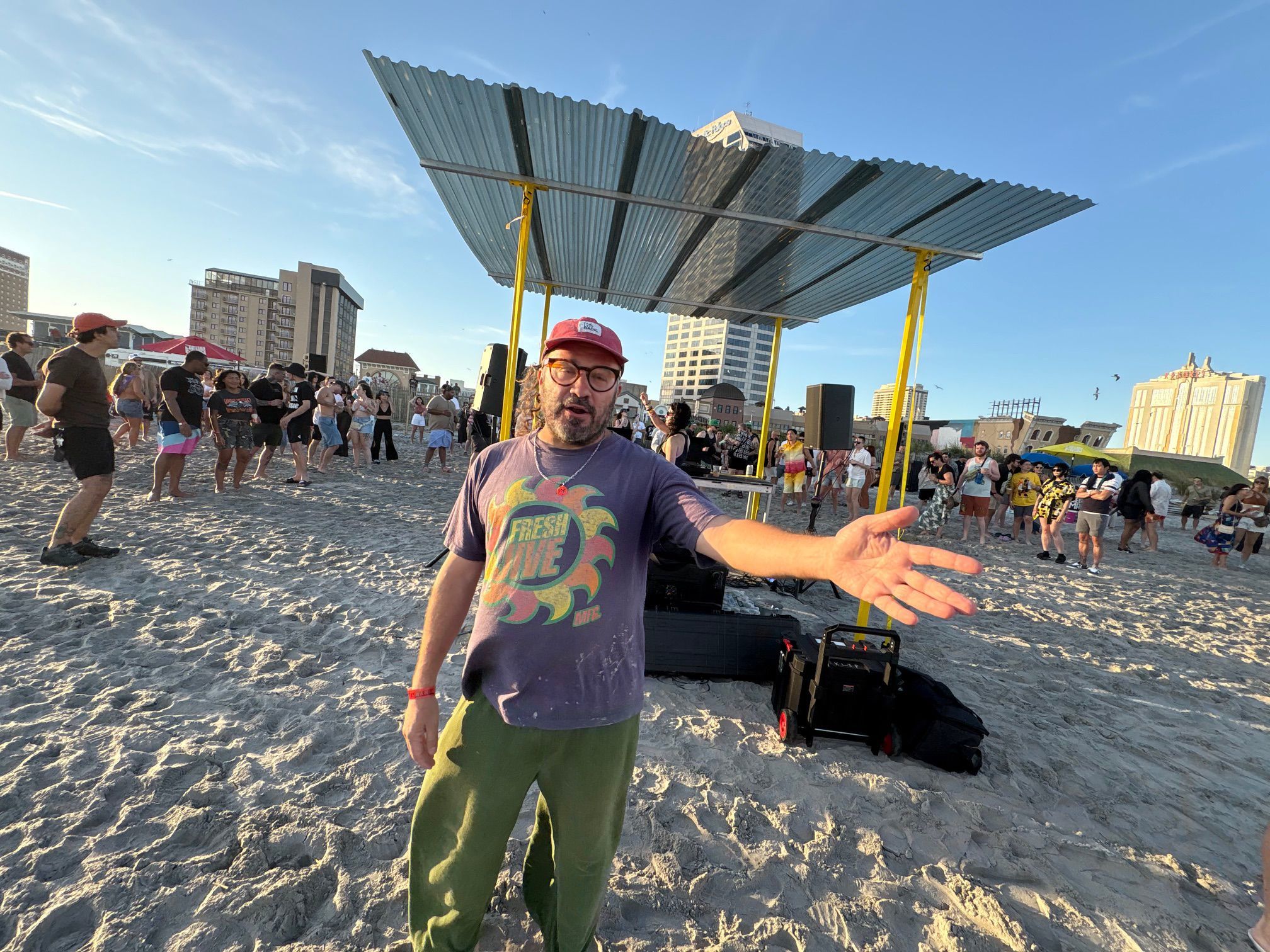
Dave P. at the Making Waves festival on the Atlantic City beach in August 2025.Dan DeLuca
Making Waves
The big Making Time ∞ blowout happens at Fort Mifflin in September, but the prelude will be staged this weekend in Atlantic City. Now in its second year, electronic music impresario David Pianka’s Making Waves day at the beach runs from 2 to 11 p.m. on the Atlantic Ocean side on the boardwalk at New York Avenue with DJ sets by VTSS, Detroit in Effect, Baalti, DJ Python, Fundido, and Universal Cave, then moves inside for an Anchor Rock Club after-party, with Curses, ADAAB, Jewelsea, and Dave. P himself. 2 p.m., Anchor Rock Club, 247 S. New York Ave., Atlantic City, makingtimeisrad.com/making-waves
Saturday, July 25 and Sunday, July 26
Disco Biscuits
University of Pennsylvania-born electronic jam band Disco Biscuits is doing two nights in King of Prussia. Longtime drummer Allen Aucoin and the band parted ways last fall after more than 20 years, and these shows will be with new drummer Marlon B. Lewis. DJ Marb Menthols of Goose opens both shows, with Eggy playing the first night and Lespecial the second. Note the early start. 4:30 p.m., Heuser Park, 694 West Beidler Road, King of Prussia, concertsunderthestarskop.com
Sunday, July 26
Toto, Christopher Cross & the Romantics
1980s nostalgia in full effect. Toto guitarist Steve Lukather has been a regular visitor to Philly stages in recent years, singing his band’s hits “Africa” and “Hold the Line” on dates with Ringo Starr’s All Star Band. Now he gets to do it with his own band. Christopher Cross is iconic in Yacht Rock circles for his hit “Sailing,” which came out in 1979. He’s also a great storyteller, as evident on a recent episode of The Questlove Show podcast. The Romantics have at least two songs you know in “What I Like About You” and “Talking in Your Sleep.” 6:45 p.m., TD Pavilion at the Highmark Mann, 5201 Parkside Ave., highmarkmann.org
Bruce Hornsby performs during the Bourbon and Beyond music festival in Louisville, Ky., on Sept. 20, 2024. He plays Ocean City Music Pier on Monday. (Photo by Amy Harris/Invision/AP, File)Amy Harris
Monday, July 27
Bruce Hornsby & the Noisemakers
Fun facts about piano-playing “The Way It Is” hitmaker Bruce Hornsby: He’s toured with the Grateful Dead, I once saw him play accordion and sing Christmas songs with Bruce Springsteen, and the 6-foot-4 Virginian once beat his friend Allen Iverson in a game of one-on-one. He also has a freewheeling new album called Indigo Park that features guest appearances from Bonnie Raitt, Ezra Koenig, and the late Bob Weir. 7 p.m., Ocean City Music Pier, 825 Boardwalk, Ocean City, N.J., ocnj.us.