Tag: University of Pennsylvania

  • Four Philadelphia artists are a part of this year’s Whitney Biennial

    Four Philadelphia artists are a part of this year’s Whitney Biennial

    Whitney Biennial curators travel the length and breadth of the country, paying visits to artists in their studios, surveying their work, and picking creators whose work they think represents the present climate of art making in the country. Together, they bring a once-every-two-years expansive exhibition to New York’s Whitney Museum of American Art, often regarded as the most prestigious and faithful register of American art.

    Past biennial curators — the 2024 edition was curated by the Institute of Contemporary Art’s former associate curator, Meg Onli — have embarked on these travels separately, but for the country’s 250th year and the biennial’s 82nd, Whitney curators Marcela Guerrero and Drew Sawyer traveled together.
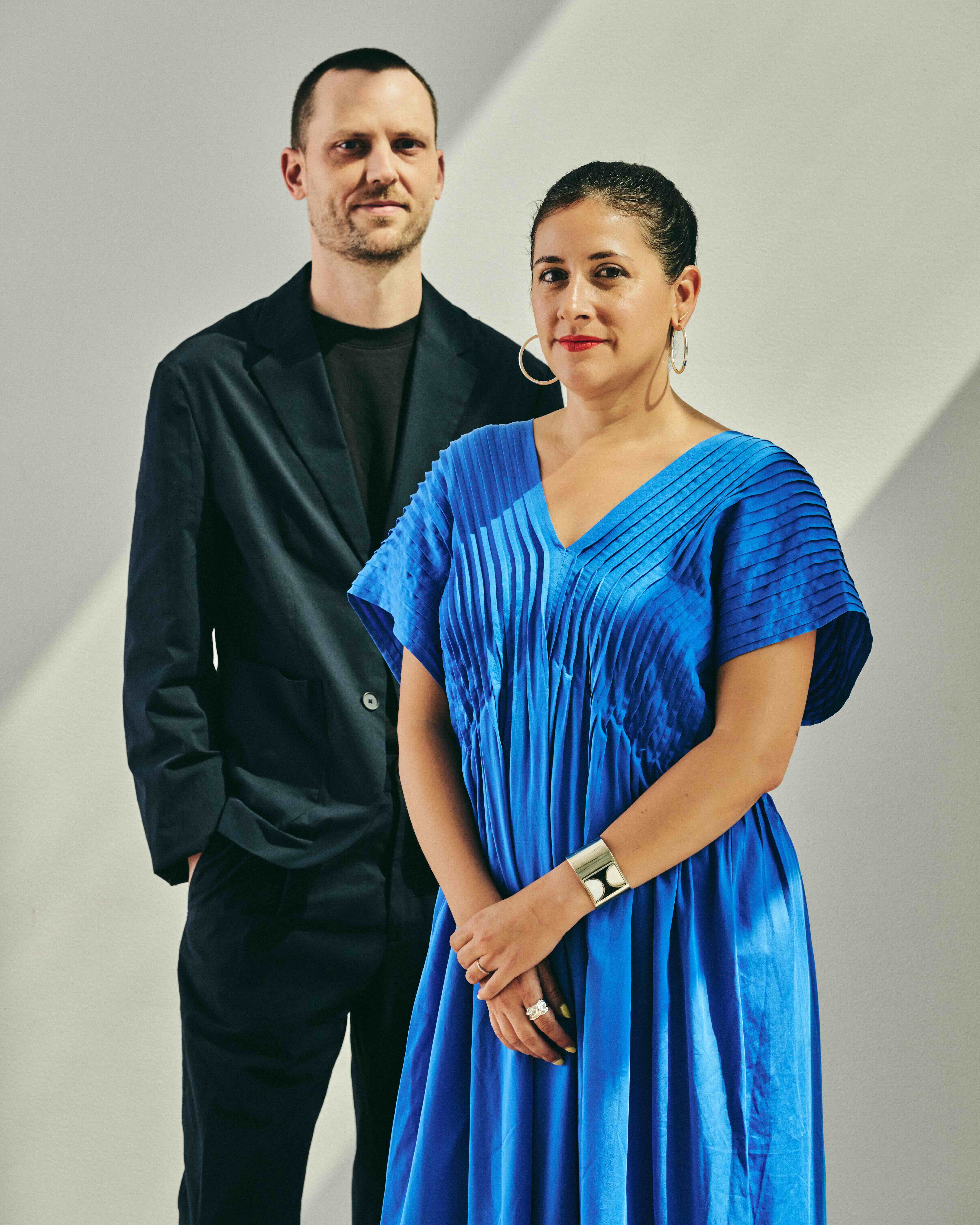
    Whitney Museum of American Art’s Biennial 2026 curators Drew Sawyer, Marcela GuerreroBryan Derballa

    “We wanted to just listen to artists and see where they were at, see what they were thinking about, how they were processing recent events,” said Guerrero. They traveled for a bit over a year, nationally and internationally, and visited more than 300 artists.

    “The idea of relationality and how do we relate in different ways” at political and interpersonal levels, is a theme that eventually emerged from their survey, Guerrero said.

    While in the past some curators have traveled as far as Hawaii, Guerrero and Sawyer’s short travel to Philadelphia in the winter of 2024 proved equally fruitful.

    “Philly was such a productive trip and very coherent in terms of what we were hearing from artists on gentrification, displacement, and the cost of living,” Guerrero said.

    Artists in Philadelphia, Sawyer noticed, “seem to be particularly preoccupied with ideas of infrastructure” and there exists a strong sense of connection among them. Several of the city’s artist are graduates of the MFA programs at the University of Pennsylvania and University of the Arts, taught by the same professors like Michelle Lopez (whose work is included in this year’s biennial) and Sharon Hayes (whose work was a part of the 2024 biennial).
    Maia Chao, “Being Moved,” 2026. Performance, Whitney Museum of American Art, New York, May 14–17, 2026. Commissioned by the Whitney Museum of American Art.Julieta Cervantes

    Performance artists Maia Chao and Jonathan González, both of whose works are part of the biennial, live in West Philadelphia and are friends and collaborators. Emilio Martínez Poppe attended Penn and studied with Lopez, and was particularly interested in the idea of infrastructure from the perspective of the labor of public sector employees to help build and maintain our social and civic architectures.

    “A kind of certain institutional critique, I would say, was common” among Philadelphia artists, said Sawyer.

    “One of my biggest takeaways is the real vibrancy of the artistic scene in Philadelphia,” he said.

    Here are the Philadelphia artists whose works appear in the Whitney Biennial.
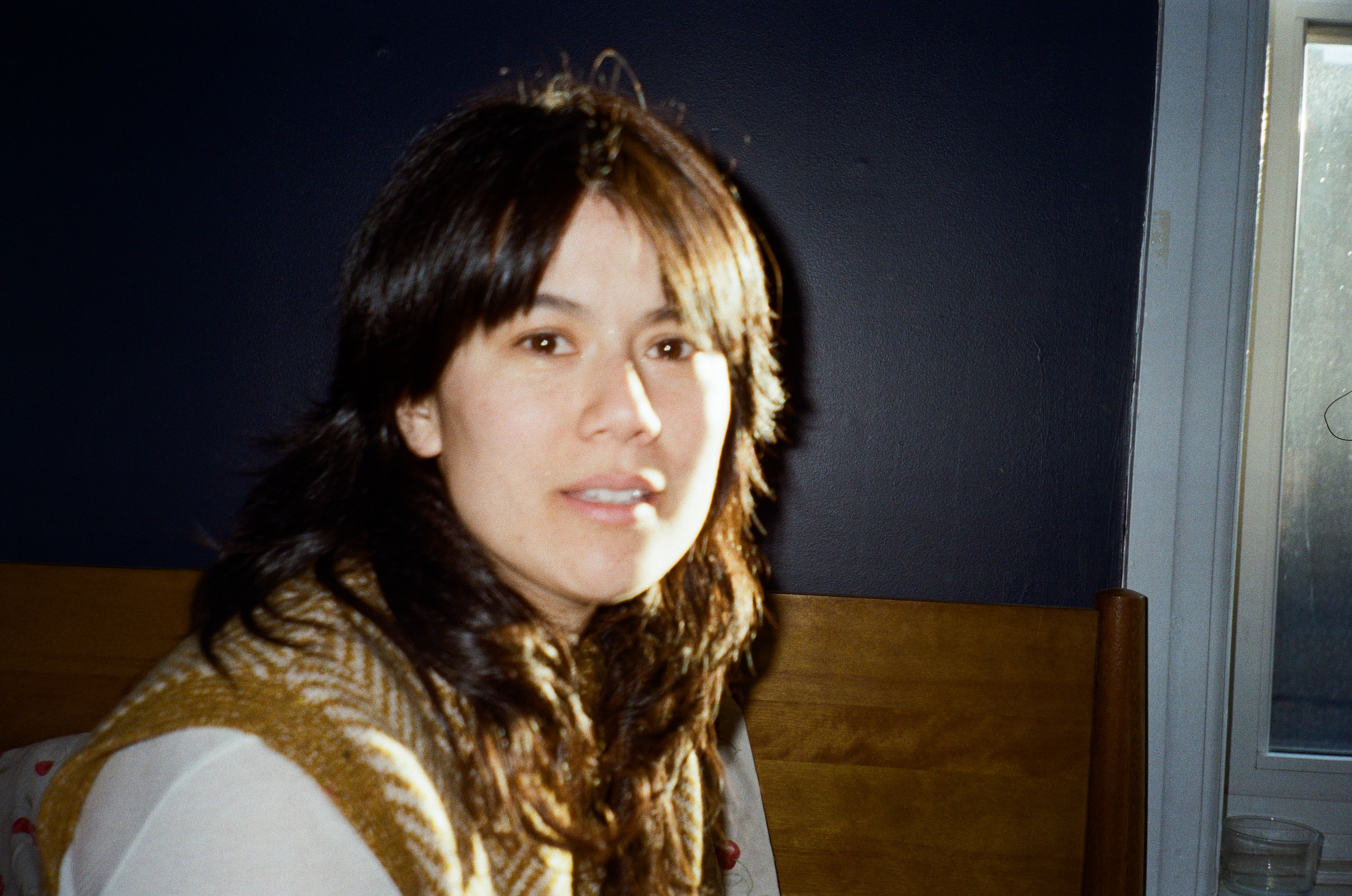
    West Philadelphia-based artist Maia Chao’s performance pieces “Being Moved’ and “Scores for the Museum Visitor” are part of the 2026 Whitney Biennial.Amelia Golden

    Maia Chao

    “Scores for the Museum Visitor,” “Being Moved”

    Maia Chao’s performance art emerges from studying social behavior. Where some might see the mundane walk from home to work, she sees choreography, a rhythm, and an interaction of the body with its surroundings.

    Her biennial performance piece Being Moved, choreographed by Lena Engelstein, takes inspiration from how museum visitors interact with the art. “It reframes the focus from the art itself to the visitors’ experience,” she said. The title refers to both “this potential to be moved by an artwork,” but also “of the ways that the institution makes us move, makes us move our bodies, and makes us behave in the presence of extremely valuable assets.”

    That tension of the push and pull of a museum — where its mission might seem inviting and welcoming but once inside, rules around how to behave, what to touch abound — is at the center of Chao’s piece.
    Maia Chao, “Being Moved,” 2026. Performance, Whitney Museum of American Art, New York, May 14–17, 2026. Commissioned by the Whitney Museum of American Art.Julieta Cervantes

    When visiting the biennial beyond Chao’s performance schedule, visitors view Scores for the Museum Visitor as a set of prompts, an invitation to create “micro performances” of their own.

    Among the scores are: “Identify another museum visitor. From afar, copy their movements as closely as possible.” “While holding a museum brochure, clasp your hands behind your back. Drop the brochure.” “Find a bench. Take a seat. Imagine the artworks slowly falling to the floor.”

    “These are invitations to kind of transgress the rules, [for] engaging with the artwork, or interpreting and encountering an artwork,” the artist said.
    Maia Chao, “Being Moved,” 2026. Performance, Whitney Museum of American Art, New York, May 14–17, 2026. Commissioned by the Whitney Museum of American Art.Julieta Cervantes

    Chao first caught the curators’ attention with Agents of Deterioration (2024), made in collaboration with Ethan Philbrick, a performance piece commissioned by the Hirshhorn Museum and Sculpture Garden. Sawyer was drawn in by Chao’s “legacy of institutional critique through affective registers.”

    “There’s a real kind of commitment to the institution, even as Maia is critiquing it, which we felt was important in this moment where there’s, from many different directions, an eroding of faith in institutions. We were really interested in the way she both critiques and pushes institutions to do better,” he said.

    Artist and Penn professor Michelle Lopez whose “Pandemonium” is part of the 2026 Whitney BiennialKelsey Valencia, Denniston Hill Residency

    Michelle Lopez

    “Pandemonium”

    Pandemonium is a fully Philadelphia piece of art. It was made in collaboration with the Moore College of Art and Design and the Franklin Institute, supported by the Pew Center for Arts & Heritage and the University of Pennsylvania, filmed at Northeast Philadelphia’s RAIR (Recycled Artist in Residency), premiered at the Fels Planetarium and the Galleries at Moore, and inspired by artist Michelle Lopez’s earlier work exhibited at the ICA.

    Installation view of Whitney Biennial 2026. Michelle Lopez, “Pandemonium,” 2025.Jason Lowrie/BFA.com

    “Philadelphia is just a really supportive environment for artists,” said Lopez, who is an associate professor of fine arts at Penn’s Stuart Weitzman School of Design, where she leads the sculpture program. “I could not have made that work in New York.”

    The video project, as Lopez says, came from a desire to “situate the viewer in the eye of a storm so that they could feel, on a somatic level, what it was like to have their environment really collapse around them.”
    Installation view of Whitney Biennial 2026. Michelle Lopez, “Pandemonium,” 2025.Gus Powell

    At the Whitney Museum, Pandemonium plays on a domed screen on the ceiling of the gallery and demands that the viewer sit below it and look up. What they witness is things moving around with a violent force against the sky — debris, newspapers, packaging, clothing (including Lopez’s own and her son’s old underwear), and other markers of extreme human consumption.

    In order to make this mayhem happen, Lopez, who is trained in sculpture, built a tornado machine using a robotic contraption, industrial fans, and leaf blowers. Together they created a simulation of a tornado at RAIR which was then filmed and eventually screened in the Fels Planetarium.

    “A lot of the work imagistically, came from seeing images of tornadoes and hurricanes wiping out towns. I was really interested in the way nature could collapse culture,” said Lopez, who lives in South Philadelphia.

    Installation view of Whitney Biennial 2026 (Whitney Museum of American Art, March 8–August 2026). Michelle Lopez, “Pandemonium,” 2025.Jason Lowrie/BFA.com

    While a Whitney gallery is nowhere close to the grandeur and wonder of the Fels Planetarium, the 360-format video manages to suck in a viewer who feels almost weightless as the feeling of being thrown around by the forces of nature is simulated.

    When the curators visited Philadelphia for studio visits, “top on our list was Michelle Lopez,” said Sawyer. “We were aware that she had been working on this major moving image project that departed from what she’s most well known for, which is sculpture. So we were really excited to meet with her, especially because her work had not been a part of the biennial before.”
    Artist Emilio Martínez Poppe, whose work “Civic Views” was on display in the City Hall courtyard last year. This year, it’s a part of the Whitney Biennial.Neal Santos

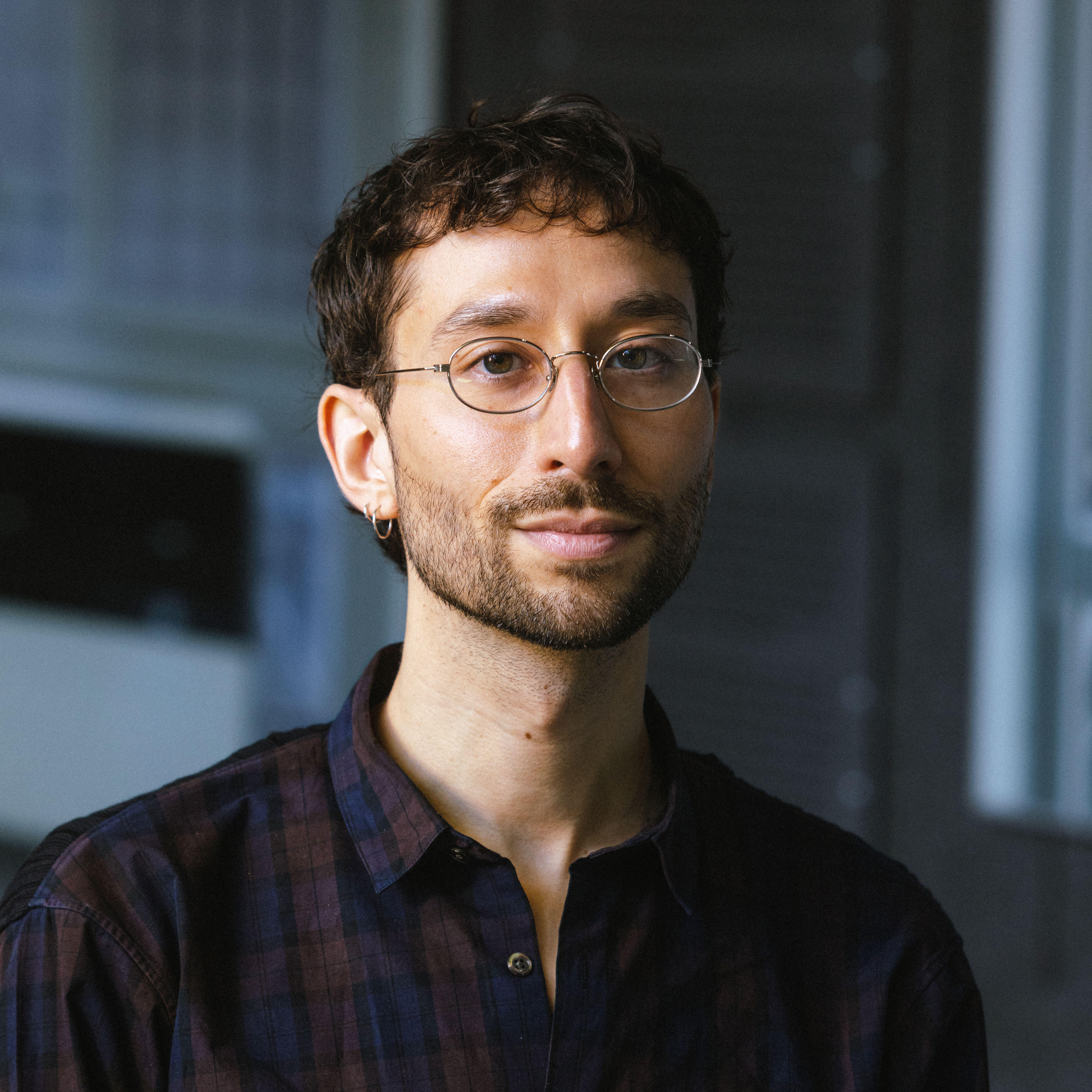
    Emilio Martínez Poppe

    “Civic Views”

    Like Lopez’s Pandemonium, artist Emilio Martínez Poppe’s Civic Views is an artwork that is only possible because the city of Philadelphia exists. Several Philadelphians have already seen Martínez Poppe’s work when it was on view last year in the City Hall courtyard.

    Martínez Poppe was then studying city planning and working toward an MFA in visual art from Penn when he was mulling over the future of city planning graduate students who’d go on to join the public service workforce.

    It was in conversation with professors that he found out that the oldest surviving daguerreotype in the country, which is stored at the Historical Society of Pennsylvania, was taken by Joseph Saxon, who was a public sector employee working for the U.S. Mint.

    “That was shot out of the U.S. Mint, where the Widener Building is today. He’s following Daguerre’s technological recipe, he uses it to photograph what he sees through the window. Unlike Daguerre, who was a theater entrepreneur, Saxton was a public sector employee who was doing something he was not hired to do,” said Martínez Poppe. “He was hired to work on the newly nationalized currency and he was tinkering with this invention in his office, and that view is one of the only real entry points that we have into his position at his job there, which is interesting.”
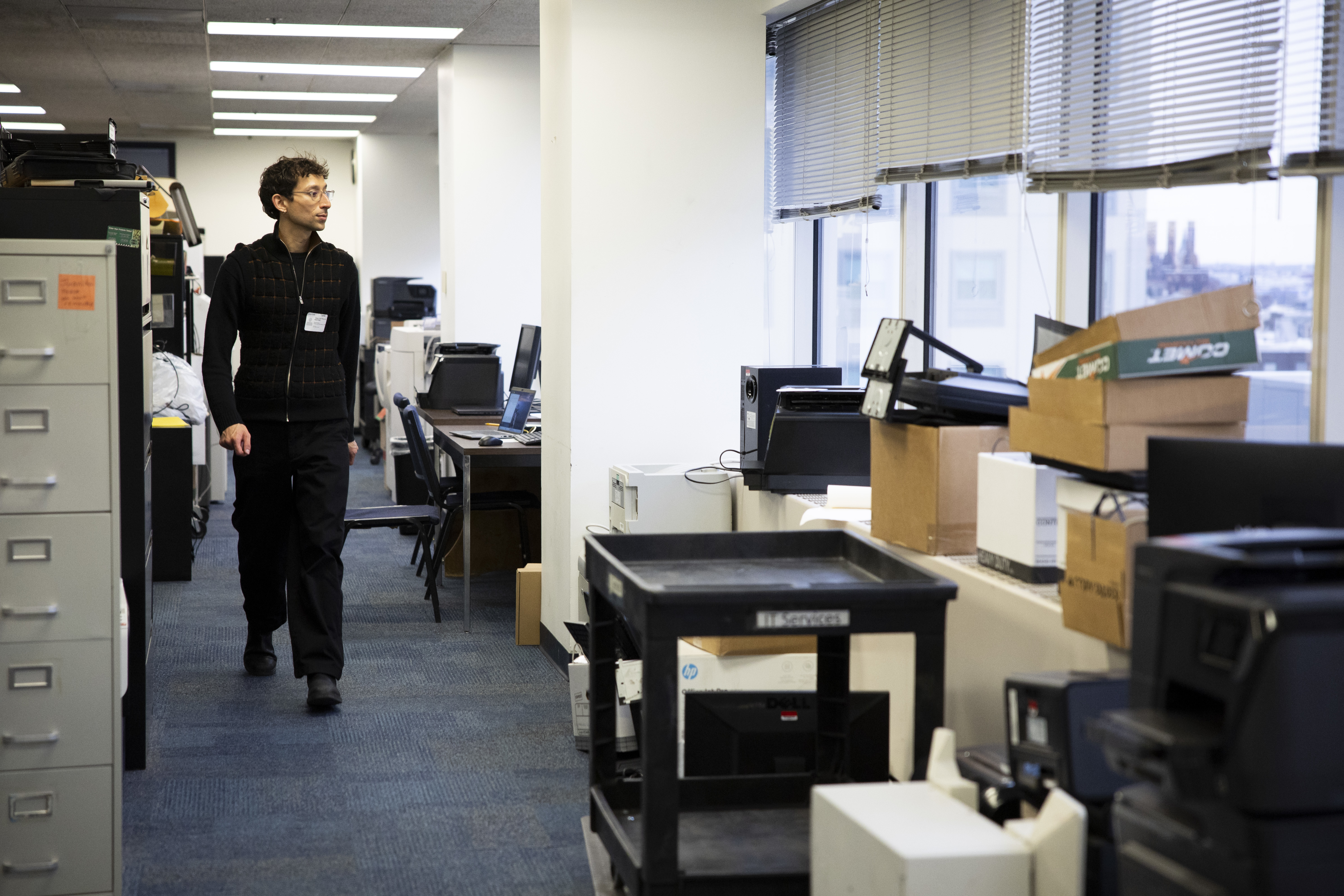
    Emilio Martínez Poppe looks out the windows at the Department of Behavioral Health and Intellectual disAbility Services office on Tuesday, Feb. 11, 2025 in Philadelphia. Emilio Martínez Poppe is working on a project curated by Jameson Paige that documents the views from municipal service buildings. The project also includes interviews with city workers.Monica Herndon / Staff Photographer

    Inspired, Martínez Poppe visited municipal buildings all across Philadelphia and photographed views from the inside out so he could document what city workers see from their windows. Alongside, he conducted “dozens of long form, anonymized interviews” with city workers from more than 20 agencies.

    “I would ask them, what was your perspective of city government before working here, who taught you about the value of public sector work? Often, so many people would tell me it was their mothers.”

    Civic Views is a result of those conversations — a coming together of anonymized interview snippets and photographs displayed in a scaffolding-like structure in the middle of a Whitney gallery. “It’s the scaffolding that dissolves the authoritative center, even in the Whitney Biennial,” said Martínez Poppe.

    Since his exhibition in Philadelphia, there has been a municipal workers strike and threats of a SEPTA strike, and President Donald Trump’s DOGE cuts have resulted in thousands of public sector employees being laid off in the city.
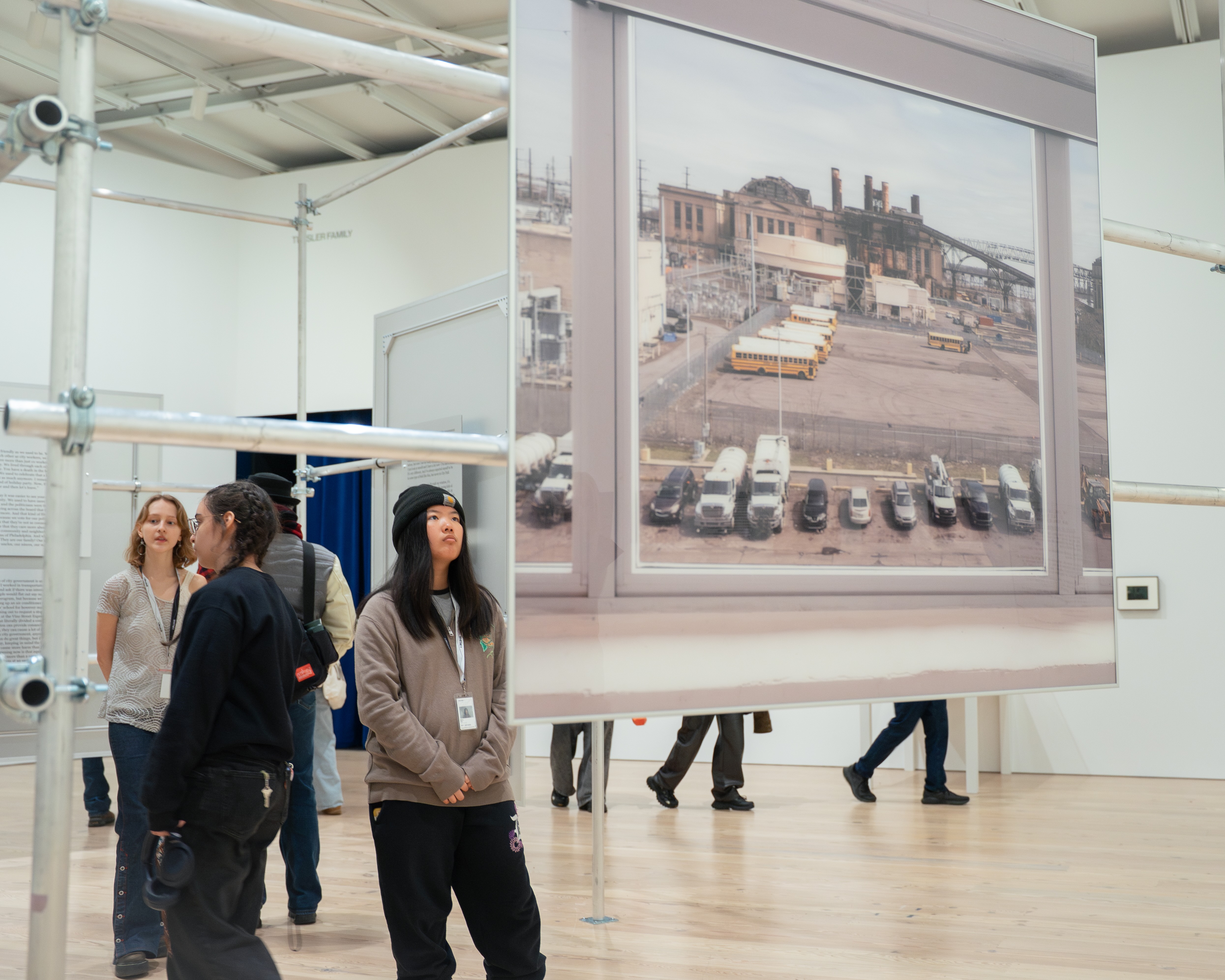
    An installation view of Emilio Martínez Poppe’s “Civic Views.”Summer Surgent-Gough

    “The public sector is vulnerable to radical change, for better or worse. With my work, I want to say that it’s time to seize the means, seize our technology to create the world that belongs to us,” the artist, who now works for the New York City Mayor’s Office as a civic arts programs coordinator, said.

    “We need to assume that responsibility. That’s why the project centers the voices of workers and how their positions shape their views. But also how their views shape the structures that we are living in and living through.”

    On the curators’ Philadelphia visit, Guerrero recalled seeing Civic Views and people of the city interacting with it. “It was very touching,” she said. Her favorite part about the work is that it uses “the tropes of the camera, of the interview, of bureaucracy, but then upends it completely.”
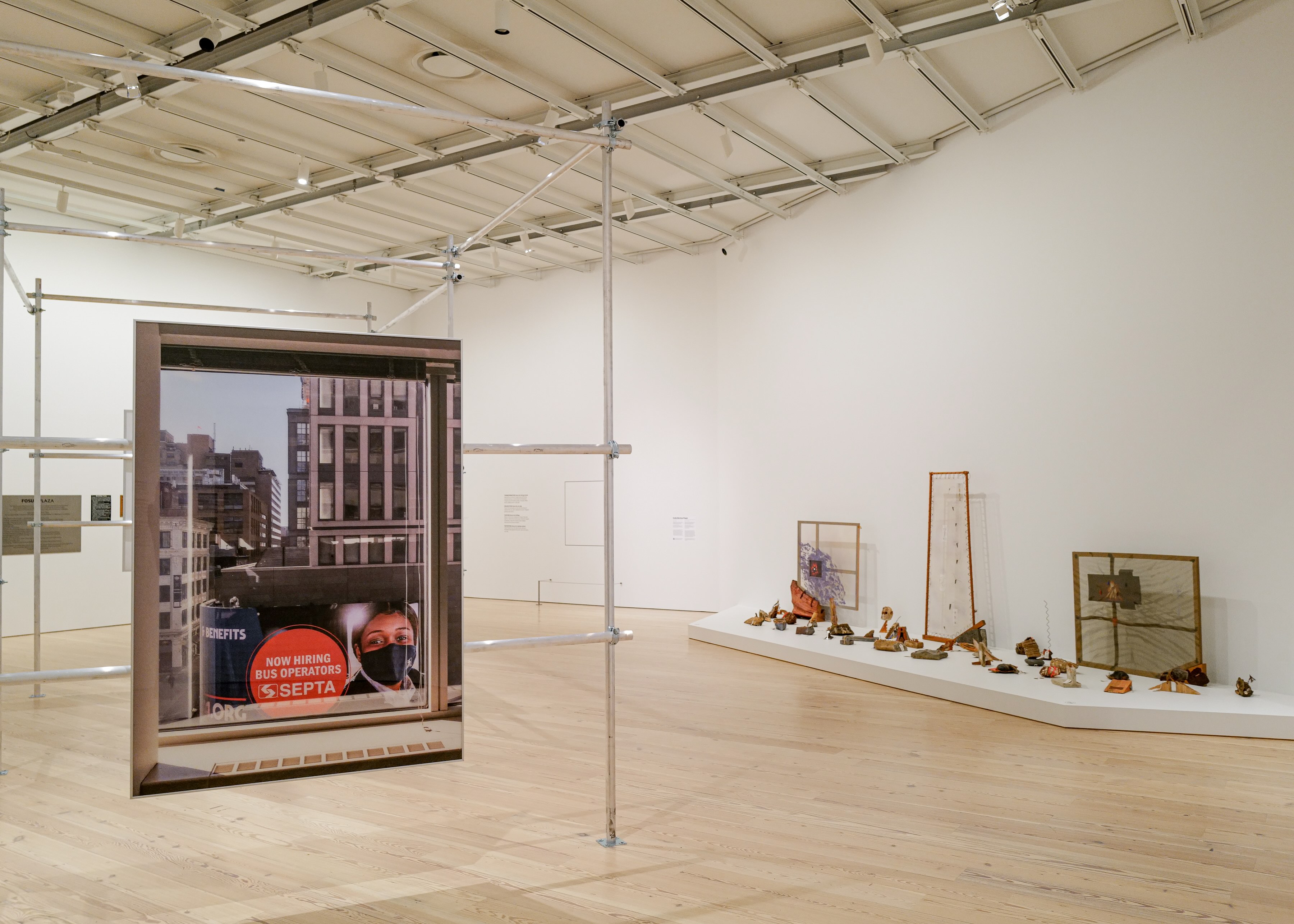
    Installation view of Whitney Biennial 2026 (Whitney Museum of American Art, March 8–August 2026). “Civic Views” (2024) by Emilio Martínez Poppe, “Philadelphia Housing Authority, South,” 2024; Emilio Martínez Poppe, “Philadelphia Department of Sanitation, North,” 2024; Emilio Martínez Poppe along with works of Kainoa GruspeJason Lowrie/BFA.com

    “You see how important the job of a public servant is,” she said, “and how you know they’re in kind of a double bind because they’re the face of the government and also they receive the same services they provide … their kids are in the public school system, they depend on the Department of Sanitation.”

    She finds this complexity “beautifully translated” in Civic Views. “You can really put yourself in the shoes of the person who’s speaking and feel the care that really goes into this type of work that should not be overlooked.”

    Artist Jonathan González whose performance piece ‘magic hour — golden time’ is part of the 2026 Whitney BienialRudy Gerson

    Jonathan González

    “magic hour — golden time”

    Like Chao, Jonathan González’s work also sees a two-pronged approach with performance and photography. Three Super 8 photographs, A, B, and C, mark the locations, across the museum, of the three-hour long performance piece presented by González and their co-artists.

    “Each photograph shares with the performers how to perform the work,” said González, who also lives in West Philadelphia. Magic hour-golden time, they said, “is a double leaning. Magic hour comes from the usage in broadcast television when you have the highest viewership. And golden hour is that moment of the sunset. And so the piece is merging this experience of looking out and also being seen over three hours.”
    Jonathan González, “magic hour–golden time,” 2026. Rehearsal performance, Whitney Museum of American Art, New York, May 12, 2026. Commissioned by the Whitney Museum of American Art.Julieta Cervantes

    From three terraces around the museum, the performers follow the sun’s movement for three hours. In the first hour, the performers “embody the architecture that surrounds the museum” and makes up the city’s skyline. The second hour, they said, “is a procedure of call and response … the dancers dance with every dance you’ve ever danced, and take information from one another as dancers, as well as from the pedestrians.”

    The final hour, González said, is performed on an inaccessible terrace. “It can only be viewed from across the street, you cannot see it from the museum. It’s called the ‘Endless Bow,’ and it’s 60 minutes of bowing to the sun and bowing to the world and bowing to the performance.”

    Philadelphia, the former University of the Arts professor said, gives them “the capacity to slow down to hear these voices, and have dreams, visions come to you.” The city allows them the time to spend time in the studio with friends like Chao and inspires them to “collaborating not toward a particular product or aim, but much of the time experimentation.”
    Jonathan González, “magic hour–golden time,” 2026. Performance, Whitney Museum of American Art, New York, May 12, 2026. Commissioned by the Whitney Museum of American Art.Julieta Cervantes

    “Just the fertile nature of Philly as a historical Black geography has been really important for me to really situate the questions of time and what happens to a city at the late stage of industrialization, and to really think critically about what a group can do, what mutuality is,” they said.

    “Certain artists just stay in your mind, and you want to come back and see what they are working on,” said Guerrero recalling her first tryst with González’s work. “The work felt so mature. There’s this notion of how, through improvisation, you can be attuned to your surroundings. In the case of their performance, they make these other effective strategies [for attunement] that don’t always rely on the senses, and that is something that is very present in the show.”


    The Whitney Biennial 2026 is on view through Aug. 23 and on partial view, which will include all of the Philadelphia artists’ static works, through Oct. 12. The Whitney Museum of American Art, 99 Gansevoort St., New York. whitney.org

  • Hospital staff aren’t explaining medication side effects to one in three Philly patients, survey says

    Hospital staff aren’t explaining medication side effects to one in three Philly patients, survey says

    Philadelphia-area patients say they are often being left in the dark about side effects that could result from new medications given during hospitalizations, even though hospitals are required to explain the potential risks.

    One in three patients at Philadelphia-area hospitals claimed that staff did not consistently explain possible side effects of medication, according to a leading patient satisfaction survey conducted annually by the Centers for Medicare and Medicaid Services.

    To gauge the patient experience, the Hospital Consumer Assessment of Healthcare Providers and Systems (HCAHPS) survey asks questions about the hospital environment and how staff treated them during their stay. These quality indicators are less tangible than closely watched rates of infections or falls but still can offer meaningful insight into hospital culture and help administrators identify gaps in care.

    The regional hospitals where large portions of patients surveyed reported not being told about medication side effects included three operated by the Virtua health system in New Jersey. About 40% of patients at Our Lady of Lourdes, Mount Holly, and Willingboro said staff had “never” or only “sometimes” explained side effects.

    “These survey results reinforce that it is not enough for patients to receive clear information most of the time,” Jen Khelil, executive vice president and chief clinical officer at Virtua, said in a statement.

    (function(){function e(){window.addEventListener(`message`,function(e){if(e.data[`datawrapper-height`]!==void 0){var t=document.querySelectorAll(`iframe`);for(var n in e.data[`datawrapper-height`])for(var r=0,i;i=t[r];r++)if(i.contentWindow===e.source){var a=e.data[`datawrapper-height`][n]+`px`;i.style.height=a}}})}e()})();

    “Our goal is for every patient to feel fully informed about new medications, including their potential side effects, every time,” Khelil said.

    Medication safety

    The most recent HCAHPS report, released in June, includes responses from about 2.3 million patients across the country, including nearly 32,000 from Philadelphia-area hospitals, between July 2024 and June 2025.

    The survey covers topics such as noise levels, room cleanliness, staff friendliness, and whether they would overall recommend the hospital.

    Among the questions: Before giving you any new medicine, how often did hospital staff tell you what the medicine was for?

    Patients can answer “never,” “sometimes,” “usually,” or “always.” The survey results published by CMS combine “never” and “sometimes” answers.

    These multiple-choice answers are subjective. But generally speaking, doctors and nurses should strive to always explain side effects, said Jeffrey Millstein, an internist and regional medical director for Penn Primary Care who regularly writes about the doctor-patient relationship as an Inquirer contributor.

    Patients who do not fully understand potential side effects may disregard a dangerous complication as “normal.” Alternatively, a common, harmless side effect could be alarming to a patient who wasn’t educated about what to expect when taking a new medication, he said.

    “They need to know the real red flags, and to not discontinue their medicine for the wrong reason,” he said.

    In busy medical settings, staff may focus on other aspects of medication adherence, such as explaining what the medication does, instructions for when and how to take it, and whether it will negatively mix with a patient’s other medications. Side effects may be mentioned last, quickly, or by telling patients to refer to a manufacturer’s pamphlet with warnings.

    “That’s really useless,” Millstein said. “It doesn’t put anything in context.”

    Doctors and nurses should open a conversation about side effects by asking patients what they know about a drug, or what concerns they have, which can allow staff to dispel inaccurate information, he said.

    Philadelphia-area hospitals respond

    Across the Philadelphia region, three Penn Medicine hospitals scored the highest marks for explaining medication side effects.

    More than half of survey respondents who stayed at Chester County Hospital, Penn Presbyterian Medical Center, and Hospital of the University of Pennsylvania said staff “always” explained side effects. About a quarter of respondents said they had received such information “sometimes” or “never” during their stay at the Penn hospitals.

    (function(){function e(){window.addEventListener(`message`,function(e){if(e.data[`datawrapper-height`]!==void 0){var t=document.querySelectorAll(`iframe`);for(var n in e.data[`datawrapper-height`])for(var r=0,i;i=t[r];r++)if(i.contentWindow===e.source){var a=e.data[`datawrapper-height`][n]+`px`;i.style.height=a}}})}e()})();

    Lower Bucks Hospital and Roxborough Memorial Hospital — both owned by California-based Prime Healthcare Foundation — received the region’s lowest marks for explaining side effects.

    Forty-five percent of survey respondents said Lower Bucks staff had “never” or only “sometimes” explained side effects, while 34% said they had “always” received such information during their stay.

    Michelle Aliprantis, a spokesperson for Prime, said the 2024-2025 data in the CMS survey does not reflect more recent efforts at the hospitals to improve bedside medication education and postdischarge follow-up. The health system has also expanded pharmacy consultation to ensure patients understand medications.

    “We are always focused on continued improvement,” Aliprantis said in a statement.

    Virtua’s chief medical officer said the health system closely monitors results from the CMS survey, which includes responses from about 2,000 patients across the New Jersey hospital system.

    Administrators review feedback from a total of some 300,000 consumers a year from satisfaction surveys, Google ratings, and other ratings systems.

    Virtua has been working to improve consistency and patient communication.

    “We remain committed to listening, learning, and improving so that every patient receives clear, compassionate, and consistent communication,” she said.

    (function(){function e(){window.addEventListener(`message`,function(e){if(e.data[`datawrapper-height`]!==void 0){var t=document.querySelectorAll(`iframe`);for(var n in e.data[`datawrapper-height`])for(var r=0,i;i=t[r];r++)if(i.contentWindow===e.source){var a=e.data[`datawrapper-height`][n]+`px`;i.style.height=a}}})}e()})();

  • Black Americans are reviving an ancient Nigerian apprenticeship model to build wealth

    Black Americans are reviving an ancient Nigerian apprenticeship model to build wealth

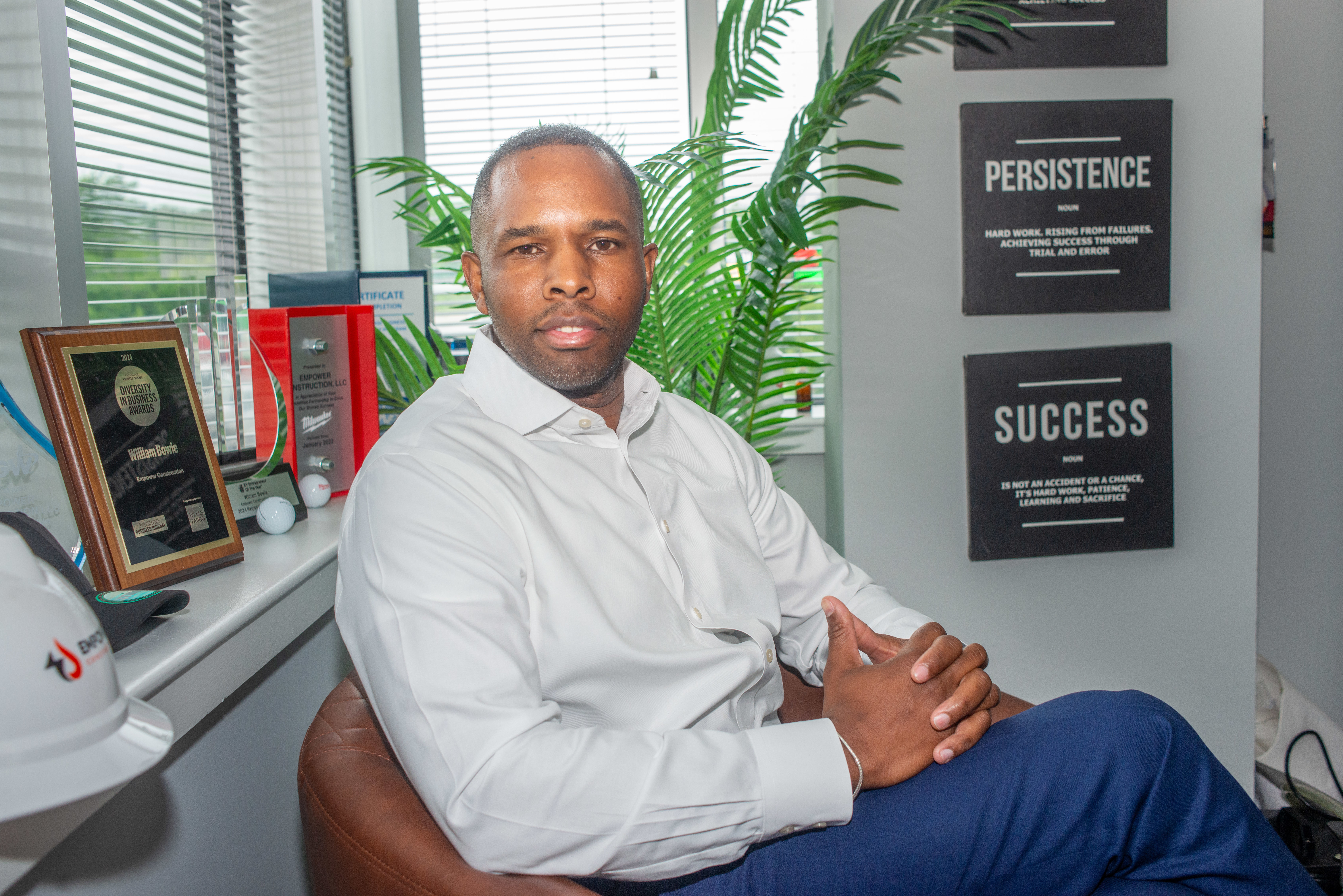
    Growing up, William Bowie measured poverty in cups of water warmed in the microwave for his morning baths at a sink. He lived in the Richard Allen public housing project in the Poplar section of North Philadelphia, raised with his brother by a single mother. Even as a high schooler, he was eager to improve his life’s circumstances, but lacked just about everything he needed to do so except a willingness to work hard.

    Three decades later, Bowie is president and CEO of his own nine-figure construction company, a journey that he largely attributes to a Philadelphia-based trade community apprenticeship system, similar to the “Nwa Boy” model that has been practiced in West Africa for centuries.

    “I kind of challenged myself,” said Bowie, who’s 42, referring to his mindset when he was embarking on his career. “Why can’t I be the best? And why can’t I open that door for others?”

    Bowie’s path is hardly an isolated success story. It is one node in a growing, informal network — from union apprenticeships in Philadelphia to a training cohort in Oakland, Calif. — of programs borrowing the Nwa Boy model’s core promise: a credentialed path from labor to ownership, built on relationships and trust rather than credit scores or venture capital.

    As race-conscious funding efforts designed to level the playing field for African Americans are dismantled, that promise is drawing new attention from investors, workforce officials, and Black entrepreneurs looking for an alternative route to generational wealth.

    The Nwa Boy system, which has its roots in the communities of the Igbo people in southeastern Nigeria, works this way: An established craftsman or business owner — known as the “Oga,” or master — takes on the training of a young person — known as the “Nwa Boy” (pronounced: nwah), or apprentice — often straight out of secondary school.

    The apprentice lives and works closely with the Oga for as long as eight years, learning the nuances, logistics, and administration of their chosen craft.

    When the apprenticeship ends, the Oga provides the graduate with a “settlement,” or capital — which often includes giving them money or business space — to launch their own independent businesses. The apprentice then continues the cycle.

    The Harvard Business Review has called the Nwa Boy system “a Nigerian model for stakeholder capitalism” in which community, workers, and shared prosperity take precedence over individual shareholder return.

    In 1970, at the conclusion of three years of civil war, the Igbo people used the Nwa Boy system to build a multibillion-dollar economy from the ground up. That’s when the Nigerian government seized control of the nation’s financial institutions and gave the equivalent of only about 20 British pounds (or roughly $400 in today’s money) to every Igbo adult, regardless of how much they had in their bank accounts before the conflict.

    Today, at a moment when Black Americans are witnessing the erosion of affirmative action and DEI programs through court rulings and presidential executive orders, Bowie and others believe the Nwa Boy system may provide an answer to the question of what happens when the system meant to fix a problem becomes the next thing that needs fixing.

    As he was embarking on his career in construction, North Philadelphia native William Bowie said he asked himself, “Why can’t I be the best? And why can’t I open that door for others?”William Thomas Cain / For The Inquirer

    The blueprint

    While Bowie’s blueprint moves from employment to ownership, it did not happen in a vacuum.

    After finishing his first year at Drexel University, Bowie faced a dilemma — he had no way to pay a $6,500 bill to enroll for his sophomore year.

    “I tested into a magnet school,” Bowie said. “Academics wasn’t a problem. I was thriving in that environment. It’s just that financially I couldn’t afford it after the first year.”

    Bowie was not deterred.

    “I looked for a different path,” he said. “I tried to make money to get back into my second year in college.”

    In Nigeria, young men had been solving the same problem for generations — not with legislation, but with a handshake that meant more than a contract between an Oga and their apprentice. The pact is simple: The master teaches. The apprentice serves.

    In North Philadelphia, though, the syndicate of trust had little that resembled the stalls of Lagos’ Alaba International Market. It had Frank Murray.

    Murray, a member of the International Brotherhood of Electrical Workers (IBEW) and a family friend of Bowie’s mother, Margaret, encountered a young man desperate for an opportunity. He told Bowie, “This is where the money is at.”

    In the Nwa Boy system, the Oga does not simply teach a trade — he transfers his reputation, his customer network, and at the end of the apprenticeship cycle, his start-up capital. The system does not run on contracts, but on trust enforced by community witnesses.

    Murray gave Bowie the same thing — a pathway — and Bowie walked through it. Bowie joined IBEW at 19 years old.

    He completed a four-year U.S. Department of Labor-certified apprenticeship in three and a half years, earned $75,000 in his first year, and rose to become the youngest area manager overseeing about $300 million in business.

    Bowie says IBEW gave him what the Nwa Boy system has always understood, and American institutions have always struggled to replicate — a means to succeed that required no college degree, no venture capital pitch, and no generational wealth.

    ‘Financial gravity’

    Bowie’s playbook from two decades ago is what many American venture builders and investors are now being forced to consider as the formula for prosperity is being recalibrated. They must confront the brutal reality that even seven-figure salaries are no guarantee for wealth creation.

    “A paycheck — even a seven-figure one — is just a stay of execution. It doesn’t detach you from financial gravity,” Brandon Jones, founder and CEO of Gravy Capital, said during a virtual panel in April hosted by Visible Hands VC.

    When Bowie applied for capital to launch his company, Empower Construction, he felt the earth tugging at his dreams. Even though he had two decades of industry experience and managed a $300 million book of business, the banks still said no.

    What finally opened the door was not a stronger application, but a different messenger.

    One of Bowie’s mentors, Daniel K. Fitzpatrick, an executive at Citizens Bank, made a single phone call to his colleagues. A line of credit came through. To Bowie, it was the equivalent of receiving an Oga’s settlement.

    Saantis Fenmu Davis, a Philadelphia-based financial literacy educator and founder of Geb Cultural Exchange, said the problem starts earlier than the bank. He said it’s essential that Black Americans are taught how to be producers and investors, and not just consumers. “While higher spending and status-signaling often masquerade as affluence, they represent a fundamental mirage of social capital, which may or may not translate to equity or wealth,” he said.

    Saantis Fenmu Davis, a Philadelphia-based financial literacy educator and founder of Geb Cultural Exchange, says consumerism is a “fundamental mirage of social capital.”Courtesy of Saantis Fenmu Davis

    Murray did not teach Bowie to consume. He taught him to produce.

    Patrick Clancy, president and CEO of the city’s workforce development program, Philadelphia Works, is trying to replicate what Murray did across its programs. Philadelphia Works manages roughly $11 million in apprenticeship funding across skilled trades and emerging sectors including IT, healthcare, and education.

    Murray was Bowie’s Philadelphia Works, but the path is not without its shadows.

    For every successful apprenticeship program or Nwa Boy story told, there is a possibility of exploitation.

    In the Nwa Boy framework in Lagos, Nigeria, some apprentices have reported exploitation at the hands of their masters.

    Naboth Nwaikwu spent 20 grueling years navigating three successive apprenticeships before finally being settled. He was an orphan. His first master did not settle him because his aunt and uncle instructed him not to. The same thing happened the second time.

    It wasn’t until his third attempt, under the apprenticeship of a friend, that he got his settlement, all of which could not account for the years lost.

    Nwaikwu now sells construction accessories for a living at Lagos’ Alaba International Market, and makes enough profit to take apprentices of his own if he wanted to, but told me he refuses to do so because “There is a thin line between unpaid apprenticeship and indentured service. I do not want to be the one to cross it.”

    Uyi Samuel Oni, a corporate attorney licensed in Nigeria and trained at the University of Pennsylvania’s Carey Law School, said the covenant must become a contract before it can successfully cross continents. “The Nwa Boy system must avoid negative historical connotations linked to terms such as master,” Oni said.

    Uyi Samuel Oni, a corporate attorney licensed in Nigeria and trained at the University of Pennsylvania’s Carey Law School, says the Nwa Boy covenant must become a legally binding contract before it can successfully be used in America.Courtesy of Uyi Samuel Oni

    A legally compliant American adaptation, he said, must be a win-win for both parties — not merely vocational or community service, but a binding agreement that protects the apprentice’s right to the capital payout that makes ownership possible.

    In Oakland, a program called Built Here has emerged as a 21st-century proxy for the Nwa Boy system.

    Onye Ahanotu, a former Harvard engineering research fellow and founding member of Built Here, uses training cohorts to mirror the communal trade apprenticeships of southeastern Nigeria. “We meet every week,” Ahanotu said.

    The frequency is intentional. In the Nwa Boy system, the covenant is not a one-time transaction — it is a continuous relationship between master and apprentice, reinforced week by week, skill by skill, until the apprentice is ready to stand alone.

    Clancy, of Philadelphia Works, understands that frequency. But he said the barriers that push apprentices out are not about ambition. They are about logistics. Most apprentices who do not complete the program fall off because of logistics — literacy gaps, a lack of childcare, transportation difficulties, and rigid drug-testing requirements.

    The apprenticeship demands sacrifice.

    Bowie was 19 years old and the only African American male in a trade that was overwhelmingly white and male. The culture shock was real. His determination was not given. It was chosen every single day.

    Bowie narrated his apprenticeship years as a period of determination and exposure to wealth — not suffering. Once he entered IBEW, his obstacles became opportunities.

    Clancy said Philadelphia Works offers pathways into the building trades and is open to second-chance applicants. Prior convictions are not automatic disqualifiers. The door is open. Most people do not know it is there.

    At the Philadelphia Navy Yard, Hanwha builds ships. The company needs welders. It cannot find them.

    Patrick Clancy, president and CEO of Philadelphia Works, the city’s workforce development program, which offers pathways into the building trades and is open to second-chance applicants.Courtesy of Patrick Clancy

    Not because the welders do not exist. Not because the work is not there. Not because the wages are not competitive — apprenticeship wages in the building trades start at $25 per hour and can exceed $100,000 annually with overtime. The positions have gone unfilled for three years, Bowie said, because nobody told the kids in North Philadelphia, West Philadelphia, and Germantown that the door is open.

    Bowie knows this the way he knows everything about the trades — from the inside. He gives talks online. He goes into Philadelphia schools. And while he may not have known about the Nwa Boy system when he was an apprentice, he regularly references its principles today.

    He stands in front of teenagers the same age he was when the system ran out of road for him and tells them what Murray told him: This is where the money is at.

    “In Philadelphia, there’s a shipbuilding company at the Navy Yard,” Bowie said. “They need welders. They can’t find them. And you’re telling me that in the city of Philadelphia, in the communities that we come from, that we can’t find welders?” He paused. “The parents don’t know. The kids don’t know. Nobody’s telling them.”

    Clancy is trying to change that. Philadelphia Works is actively pursuing apprenticeship funding for Hanwha’s shipyard — planned cohorts of 20 to 30 apprentices at a time. The infrastructure, funding, and jobs exist. What is missing is the same thing that was missing when Bowie was standing at the edge — someone to point at the door.

    Murray pointed. One phone call — and a kid from the Richard Allen Homes became a $100 million CEO. Philadelphia has not yet produced its Frank Murrays at scale.

    Bowie is working on it. One conversation — and one handshake — at a time.

    Ibe Imo is a Philadelphia-based investigative journalist whose reporting examines technology, power, capital, and the systems that determine who builds wealth and who pays for it. He is a recent graduate of the master of journalism program at Harvard University.

  • How Philly’s new Broad Street planters will turn what could be a grand urban avenue into a highway

    Broad Street is one of Philadelphia’s great ceremonial boulevards.

    A defining urban design element in William Penn’s pathbreaking 1682 plan for Philadelphia, Broad Street intersects with Market at Penn Square, creating the armature for the colonial city that gives Philadelphia its je ne sais quoi — its unique sense of place. For out of this intersection sprang our majestic City Hall, anchoring the four original quadrants of Penn’s city, each coalescing around one of Penn’s great public squares.

    South Broad Street is a place where the city comes together. Think of the great swell of civic ecstasy that suffused the street on either of the occasions in recent years when it hosted the Eagles’ Super Bowl victory celebrations. And then there is the perennial only-in-Philadelphia Mummers Day Parade, which animates the street on New Year’s Day as glittering costumes and the strains of string bands bounce and reverberate among the canyons of South Broad.

    Still, the street struggles to invite people to linger, stroll, dine, and shop along its sidewalks on a daily basis, never matching the urban vibrancy of the great streets of the world like Fifth Avenue in Manhattan or Oxford Street in London. And it’s not for lack of trying.

    The Avenue of the Arts was created to do just this during the Rendell administration. In defining an area for the performing arts, the street soon saw the arrival of the Kimmel Center, the Wilma Theatre, and other arts-based performance spaces. And yet, the street continued to flounder as a welcoming urban place.

    Now, to be sure, South Broad has a lot going for it. One need only stand at the intersection of Broad and Walnut, surrounded by handsome towering buildings with majestic light fixtures along the sidewalk, and you have a sense of what the street was — and what it could be. The street certainly needs some TLC, but not radical surgery.

    Which makes the recent “improvements” on the block of South Broad in front of the Kimmel Center all the more perplexing.

    For there, officials have unveiled a beta test for a new Avenue of the Arts streetscape project smack in the middle of South Broad Street that includes an egregious four-foot-high continuous planter with trees on top of it. All intended to increase the attractiveness of the street and thereby encourage a livelier street life.

    But therein lies the rub.

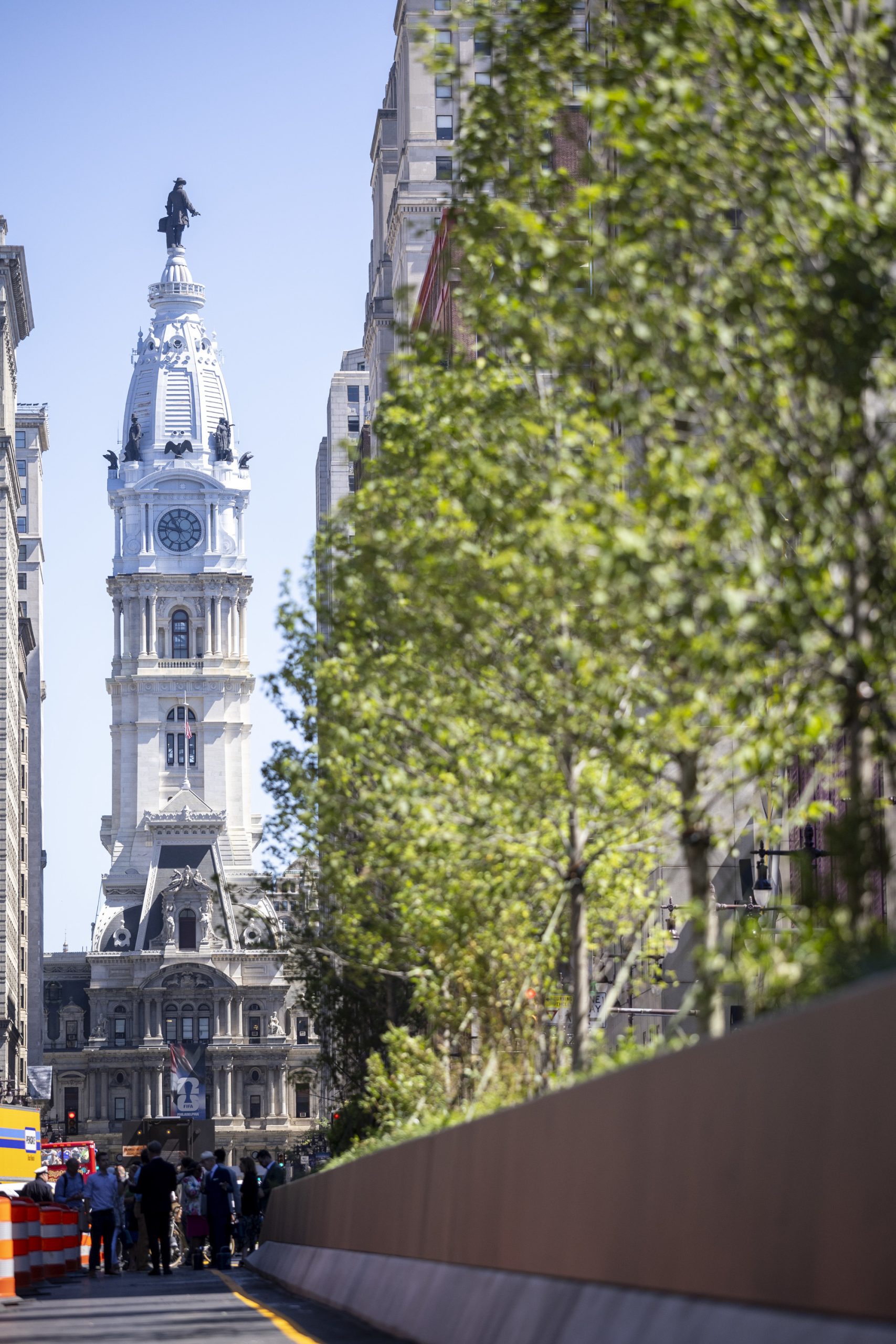
    In creating this continuous concrete highway divider-cum-planter in the center of the street, the project actually has a chilling effect on South Broad. Not only do the planter and the trees destroy the primacy of the view of City Hall tower along the street, but it reinforces the nature of Broad Street as a highway, and makes it impossible to see the other side of the street while either walking or driving. And forget about parades and festivals.

    The planters and trees destroy the primacy of the view of City Hall Tower along the street, write Alan Greenberger and Harris M. Steinberg.

    We are told this is to be replicated on the street from City Hall to Washington Avenue to the tune of $150 million, or $15 million per block. Who thought this was a good idea?

    And, as if to add insult to injury, the project proposes outsized planters along the sidewalks that will further isolate the two sides of the street, crowd out whatever street life exists, and create, along with the tall planter in the center of the street, a series of cattle chutes for 10 blocks.

    Welcome to Broad Street Narrows.

    This can’t stand. The project must not be replicated along the length of the Avenue of the Arts. There are ways to integrate plantings into great streets, such as along Michigan Avenue in Chicago, but they are low in scale, do not include trees in the center of the street, and do not destroy the sensation of the street as a whole.

    And the proposed planters have got to go, as well. One could think of planting shade trees along the sidewalk offering respite from the sun and inviting people to sit along the street and have a bite to eat. The subway concourse below South Broad is extremely wide and could undoubtedly accommodate the tree roots below grade.

    The goal of increasing street life is crucial. To do so, it would be better to widen the sidewalks to allow for cafes and strolling. Street life needs foot traffic, and foot traffic is generated by people living, working, and shopping in the area, along with attending performances.

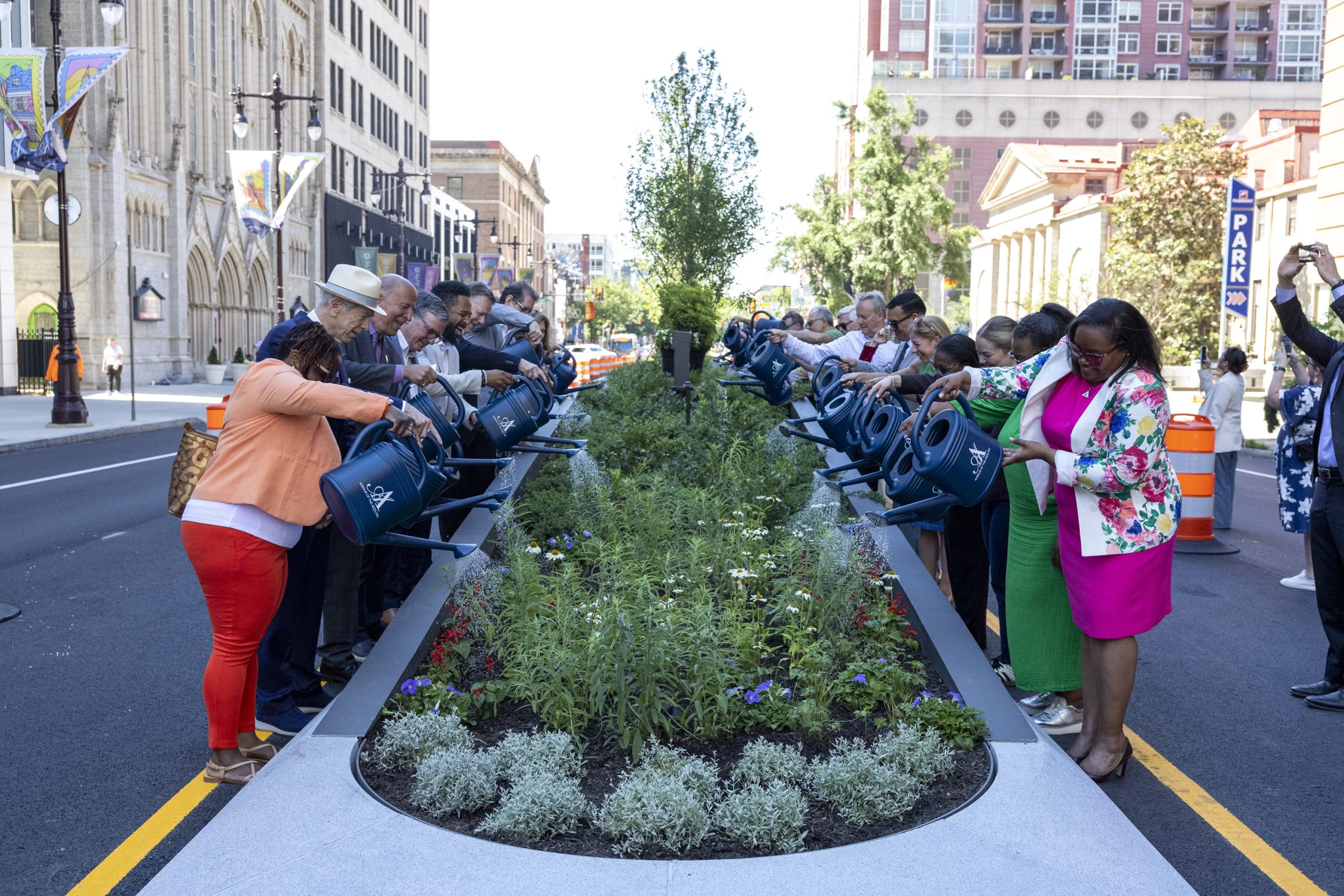
    Guests at a June ceremony to unveil one of the redesigned medians water the greenery in its planter just outside the Kimmel Center.

    How is it that a street lined with hotels, residences, and offices has only one place for outdoor dining — at Arthaus? Broad Street wants bustling sidewalks, but landscaping and hardscape improvements alone will not increase street life. We learned this the hard way on the ill-fated Chestnut Street Transitway of the 1970s, and the planter fiasco should serve as a cautionary tale for the current design process for Market East.

    We must not fall prey to the false choice that in order to maximize urban vibrancy, we must sink millions of dollars solely into landscaping and other surface improvements.

    South Broad can be the best it can be with some thoughtful planning and a little gentle nurturing — it doesn’t need a Jersey barrier running down the middle of the street.

    Alan Greenberger served as deputy mayor for economic development and director of commerce under Mayor Michael A. Nutter, and chaired the Philadelphia City Planning Commission. Most recently, he served as vice president of real estate and facilities at Drexel University. He is a fellow of the American Institute of Architects. Harris M. Steinberg served as the founding executive director of PennPraxis at the School of Design at the University of Pennsylvania. He led the planning process for the Central Delaware Waterfront, which is currently guiding the development of the riverfront. Most recently, he served as the founding executive director of the Lindy Institute for Urban Innovation at Drexel University. He is a fellow of the American Institute of Architects.

  • Aramark forged a partnership with Penn Medicine for more affordable employee health benefits

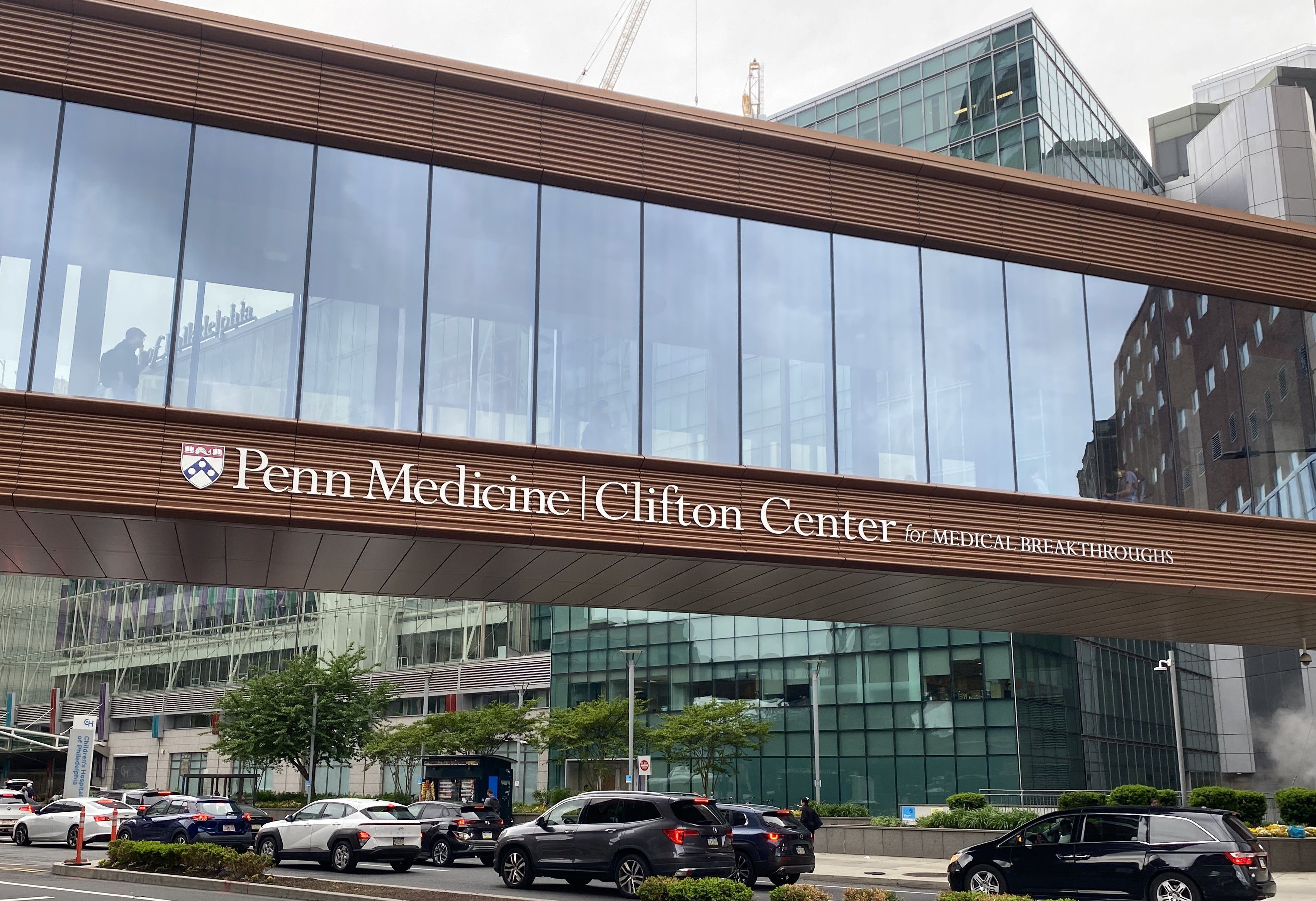
    Aramark and the University of Pennsylvania Health System launched a partnership this year to offer the food service giant’s Philadelphia-area employees healthcare in a test of a new model for reducing costs.

    Aramark employees who choose the benefit option, called the Penn Medicine Premier Plan, face no deductibles and lower copays when they and their dependents use Penn doctors and facilities.

    The move by Aramark into what is called direct contracting comes as employers are contending with years of surging healthcare costs. It’s an example of experimentation designed to slow spending growth in spending and perhaps improve quality, experts said.

    “We certainly would like to save money on the model, but its primary focus is to make benefits more affordable” by getting lower prices than it would get by going through an insurer, said James Startare, Aramark’s vice president for benefits.

    The model is called direct contracting because Aramark negotiated prices and other terms of the contract directly with Penn, instead of relying on an insurer to negotiate prices.

    It’s Penn’s first such contract and the first large-scale direct contract in the Philadelphia region. Aramark talked with other systems in the area, but Penn emerged as the partner willing to enter into the experimental contract. Penn described the deal as a multiyear contract ultimately expected to roll over from year to year.

    Aramark didn’t provide details on savings, but its goal was to negotiate prices that are lower than those it would pay though a benefits administrator, such as Aetna.

    By eliminating deductibles that function as a barrier to care, the plan is expected to encourage primary care visits. This could reduce long-term costs by catching patients’ health problems early.

    For health systems like Penn, such contracts offer a chance to increase market share, streamline payments, and hone their ability to manage the health of a population.

    The Penn Medicine Premier Plan features no deductibles and lower copays when Aramark employees and their dependents use Penn doctors and facilities. Harold Brubaker / Staff

    Aramark’s move into direct contracting

    Penn is Aramark’s third major direct contracting partner.

    Employers, even those like Aramark that are self-insured, typically rely on an insurer’s negotiated prices.

    With the new direct contract, an Aetna administrative unit still processes the claims for Aramark, and patients who go outside Penn for care use the Aetna network.

    Aramark launched its first such contract in 2024 in Dallas and expanded to Chicago last year, each time getting a strong employee enrollment, though it took two years in Chicago, Startare said.

    In the Philadelphia region, 35% of eligible employees (those who work 30-plus hours a week on average) have chosen the Penn plan, which took effect Jan. 1, Startare said. That amounts to 800 employees.

    Coincidentally, the health contract started at the same time as Aramark’s contract to manage food and other services at Penn Medicine facilities, but the two deals were not linked.

    Employees who were moving to Aramark with the food services contract were worried about losing their Penn benefits, said Megan Lieberman, a patient services manager at Chester County Hospital who was among those who became an Aramark employee.

    But the Penn Premier Plan was very similar to what they were used to. “It was definitely a huge relief to know that we got to hang on to those benefits,” Lieberman said.

    A separate contract covers pediatric services at Children’s Hospital of Philadelphia for Aramark employees and their families.

    Next year, Aramark plans to take direct contracting into central New Jersey, but did not name the system it’s using there.

    What’s in it for Penn

    The Aramark contract is an opportunity to focus on “chronic disease management, preventive care, cancer screenings, things like that” for a specific group of 1,400 patients who are motivated to stay within the Penn system, said Mark Angelo, Penn’s chief medical officer for population health.

    A key goal is to reduce the deductibles, copays, and prior authorizations that can slow access to preventive care. The model is designed to take care of people before they end up in high-cost places like the emergency department or hospital, Angelo said.

    Keeping more patients within Penn is expected to result in savings because of better care coordination and fewer repeated tests, Angelo said. Penn Premier plan members can seek care outside of Penn, but it will cost them more out-of-pocket.

    As it is, the typical Penn patient also uses other health systems for some services, said Roy Schwartz, Penn’s vice president for payer strategy.

    “Sometimes it’s the right choice, sometimes it can fragment their care,” Schwartz said. “There should be savings just simply coming from having integrated, coordinated care at a place like Penn.”

    Penn does not yet have much of its own data on Aramark employees, but indications from Aramark are that the plan’s members were using more Penn services in the first six months, Schwartz said. “It was not just patients who were using Penn anyway for pretty much everything.”

    Penn and Aramark officials plan to meet regularly to review results and consider modifications. “We’re hoping this works out well for everybody because we’d love to do some more of these,” Schwartz said.

    Momentum behind direct contracting

    Employers nationally have long contracted directly with doctors and health systems for specific procedures, like joint replacements, cancer care, and heart surgery. For years, they’ve also paid directly for primary care through on-site clinics.

    Aramark’s move to an all-encompassing healthcare plan with a single provider fits into a newer trend gaining momentum nationally. Investors have created platforms like Cost Plus Wellness, Mishe Health, Nomi, and Transcarent to help health systems implement direct contracts.

    Northwell Health, a major health system in New York and Connecticut, started a for-profit subsidiary called Northwell Direct and now has more than 70 contracts that cover more than 300,000 people.

    Northwell Direct’s biggest contract covers 100,000 building service workers in the New York area and their dependents. It took effect this year and is expected to save 20% in the first year.

    Big savings to start are not guaranteed.

    “They may not go into it with a lower cost, but they’re going to go into it with better access, better quality for their employees, and what they’re finding is eventually those lower costs will come,” said Jenny Goins, chief of staff at the National Alliance of Healthcare Purchaser Coalitions.

    The Washington nonprofit is putting together a direct contracting advisory council to help more employers to do what Aramark is doing, Goins said.

    The model is not expected to replace traditional coverage anytime soon in the Philadelphia region.

    “It is not for everyone, and it does take effort and coordination on the part of the employer,” said Tom Belmont, CEO of the Greater Philadelphia Business Coalition on Health. “Also, some health systems are ready for the discussion, while others are not.”

  • Thora Jacobson, award-winning former chief executive officer at the Fleisher Art Memorial, has died at 77

    Thora Jacobson, award-winning former chief executive officer at the Fleisher Art Memorial, has died at 77

    Thora Jacobson, 77, of Philadelphia, award-winning former chief executive officer at the Fleisher Art Memorial, former executive director at the Philadelphia Art Alliance, former director of design review for Mural Arts Philadelphia, former chief operating officer for Philagrafika, former chair of the Philadelphia Art Commission, onetime adjunct instructor at Drexel University, independent curator, artist, mentor, Mummers Parade judge, and much more, died suddenly Sunday, Aug. 2, at her home. The exact cause of her death has not been determined.

    Born and reared in Ridley Park, Delaware County, Ms. Jacobson became interested in art education, administration, and conservation at Trinity Washington College in Washington in the 1960s. She settled in South Philadelphia after college in the 1970s and spent the next 50 years organizing, promoting, and inspiring local artists and art organizations.

    “Philadelphia richly deserves to be known as a place that honors its own,” she told The Inquirer in 2006.

    She joined Fleisher in 1972, rose to CEO in 1983, and left in 2006 to work over the next two decades at Philagrafika, Mural Arts Philadelphia, the Philadelphia Art Alliance, and elsewhere. During her 34 years at Fleisher, she developed its Center for Works on Paper, the Community Partnerships in the Arts program, and the Challenge series juried competition.

    She also oversaw three capital campaigns and told The Inquirer that her priority was “seeing connections and possibilities between and among artists, institutions, and their constituencies.” A colleague said on Facebook: “To many of us she was Fleisher.”

    She prepared Philagrafika to host the city’s first international festival of printmaking in 2010, consulted with artists on major projects at Mural Arts, and organized popular national juried exhibitions at the Art Alliance. “Her love and commitment to the arts knew no bounds,” Jane Golden, executive director of Mural Arts Philadelphia, said in a tribute. “Thora’s imprint was profound.”

    John Ittmann, former curator at the Philadelphia Museum of Art, told The Inquirer in 2006: “Thora is a real firecracker. She has a wonderful type of energy that is really infectious.”

    Ms. Jacobson was also chair of the Philadelphia Art Commission for a decade, interim director of operations for the Asian Arts Initiative, vice president of the Philadelphia Volunteer Lawyers for the Arts, trustee of the National Guild of Community Arts Education, member of the American Swedish Historical Museum, and, most recently, a visual arts management consultant.

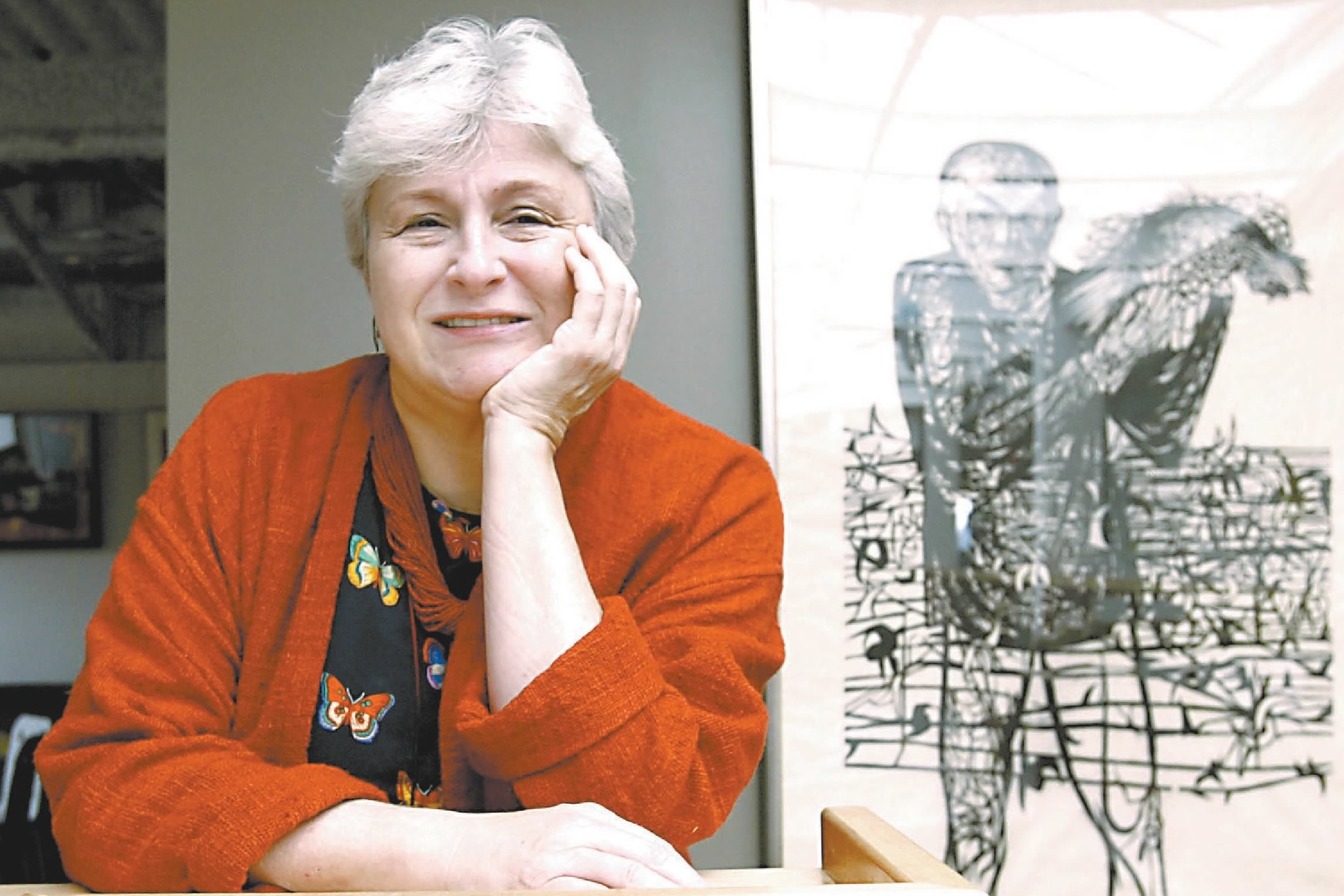
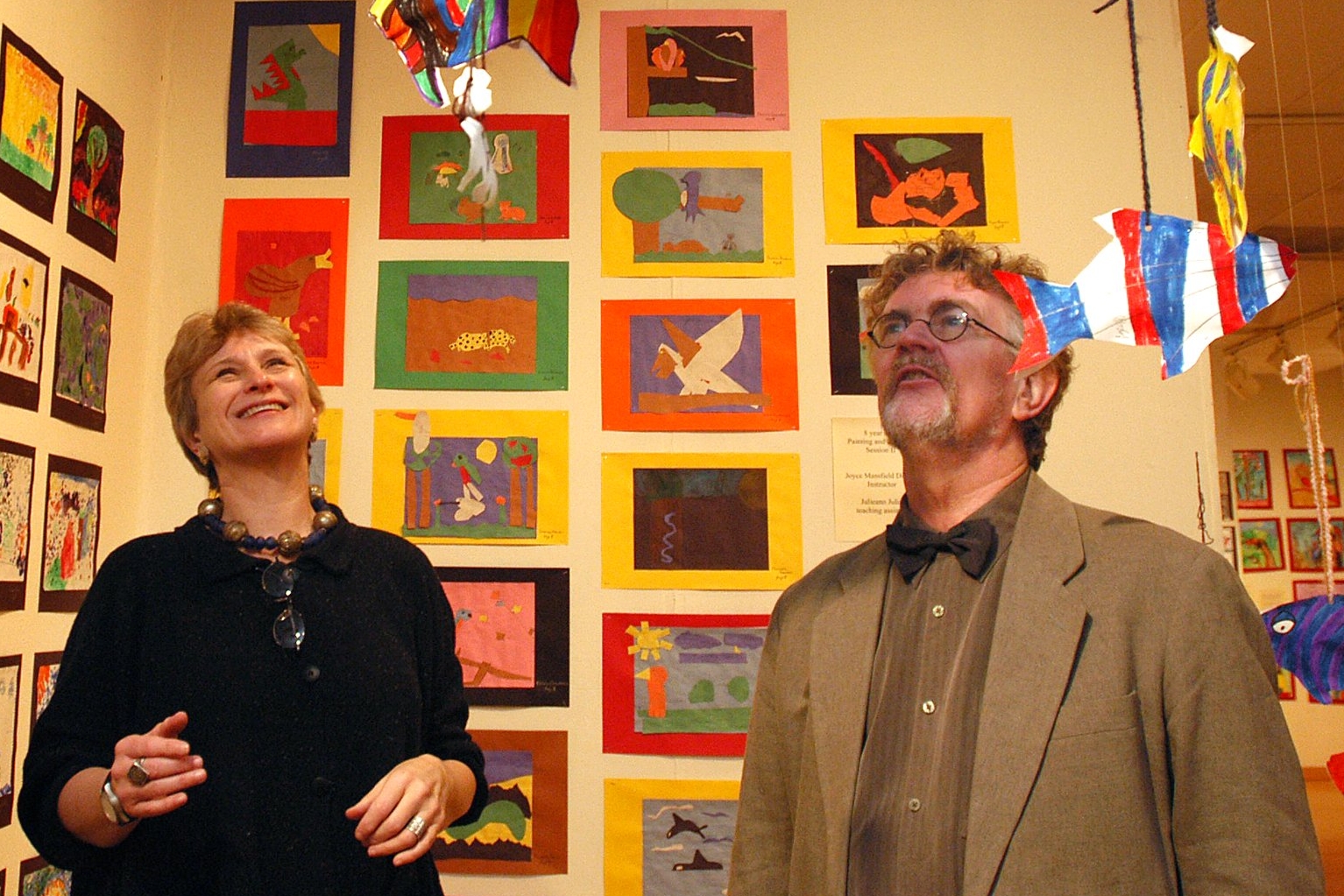
    Ms. Jacobson and fellow curator Warren Angle admire an exhibition at the Fleisher Art Memorial in 2002. April Saul / Staff Photographer

    “Thora was kind and clear,” colleagues at Social Impact Studios said on Facebook, “but firm as she pushed us to keep tweaking things until they were as strong as they could be.”

    She was an adjunct instructor at Drexel University from 2010 to 2014 and led research projects at Drexel and the University of Pennsylvania on social impacts of art in Philadelphia neighborhoods. Her first job out of college was coordinator of the student center at the Art Museum.

    She curated and juried shows, and wrote forwards and essays for art books and catalogs. She drew in her spare time and judged the Mummers Parade for years.

    She was featured in The Inquirer and Daily News, and appeared in the 1992 TV art documentary Monuments in Love. In 2006, she earned the Visionary Woman Award from Moore College of Art and Design, and was honored for lifetime achievement by Tri-State Artists Equity.

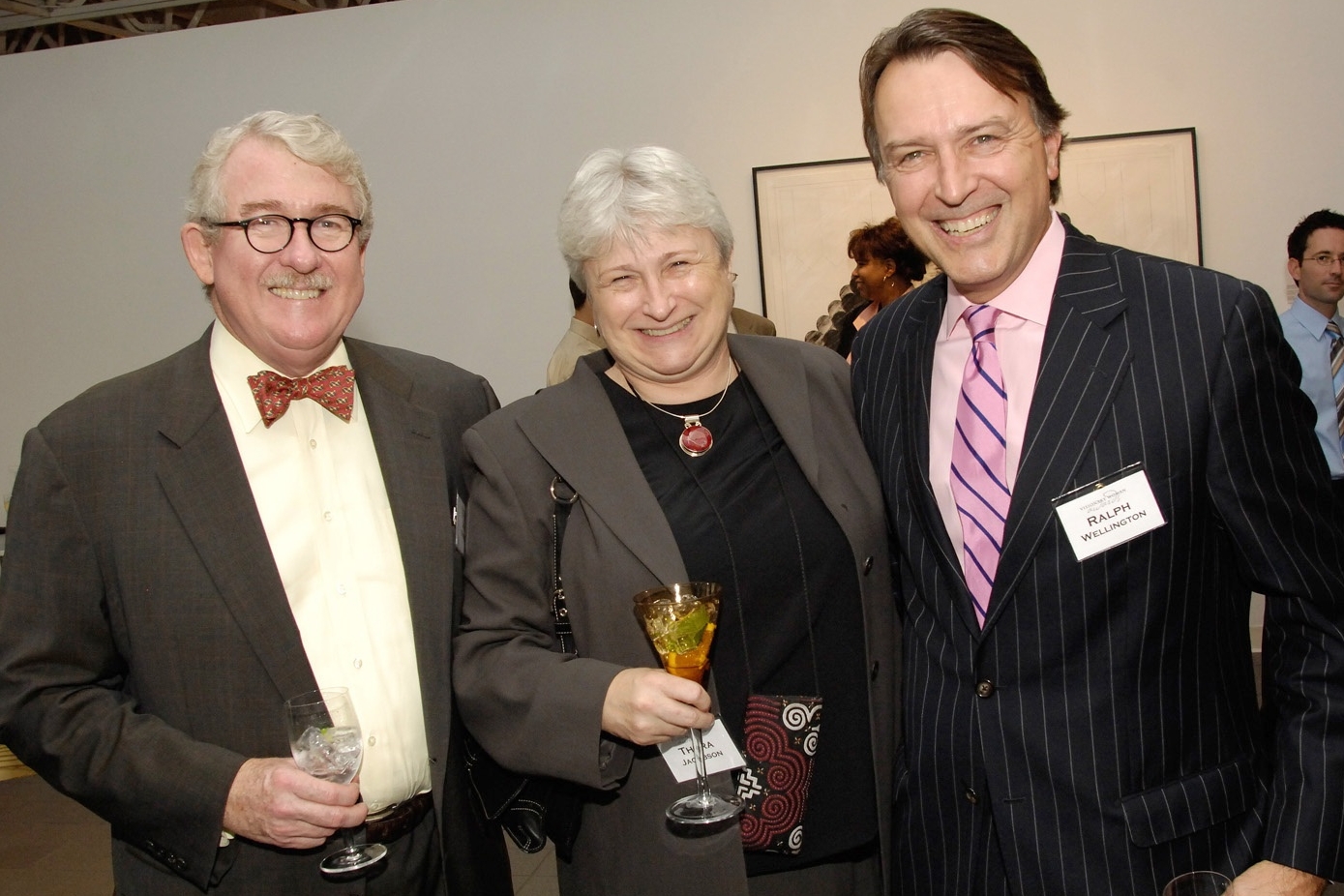
    Ms. Jacobson, standing between Jim Straw, to the left, and Ralph Wellington to her right, earned the Visionary Woman Award from Moore College of Art & Design in 2006.Gary Horn Photography

    “She’s really respected throughout the arts community in Philadelphia,” Happy Fernandez, then president of Moore, said in 2006. Anne d’Harnoncourt, then director of the Art Museum, said Ms. Jacobson’s “impact has been enormous.”

    William Valerio, director and CEO of the Woodmere museum, said: “Thora was a towering figure in the arts of Philadelphia, a builder of institutions whose accomplishments are lasting.”

    Thora Elizabeth Jacobson was born Feb. 19, 1949, in Ridley Park. She was the youngest of three children; her father died when she was 3. She played field hockey in high school, was fascinated by words and language, and graduated from the old Holy Child Academy in Sharon Hill.

    She met her husband, Antonio Sorgini, when he was taking classes at Fleisher, and they married in 1980 and had a son, Antongiulio. Her husband died in May.

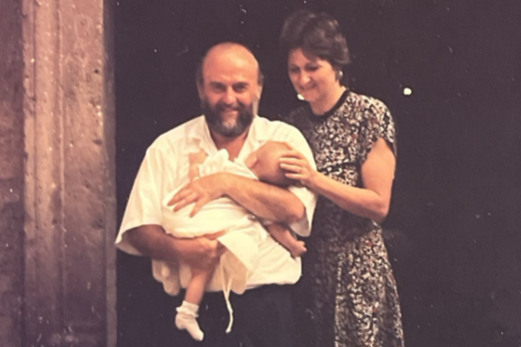
    Ms. Jacobson, her husband, Antonio Sorgini, and their son, Antongiulio, lived in South Philadelphia.Courtesy of the family

    Ms. Jacobson was a talented seamstress and baker. She did humorous impersonations, collected art, and enjoyed working with young people.

    Friends noted her “many kindnesses” and “decades-long advocacy for artists and the cultural community” in online tributes. Woodmere’s Valerio said: “She was both a strong voice and a warm friend to many.”

    Her son said: “She had a sharp wit and relished cheerful banter among friends and colleagues. Above all, she took the work of mentorship very seriously.”

    In addition to her son, Ms. Jacobson is survived by a sister and other relatives. A brother died earlier.

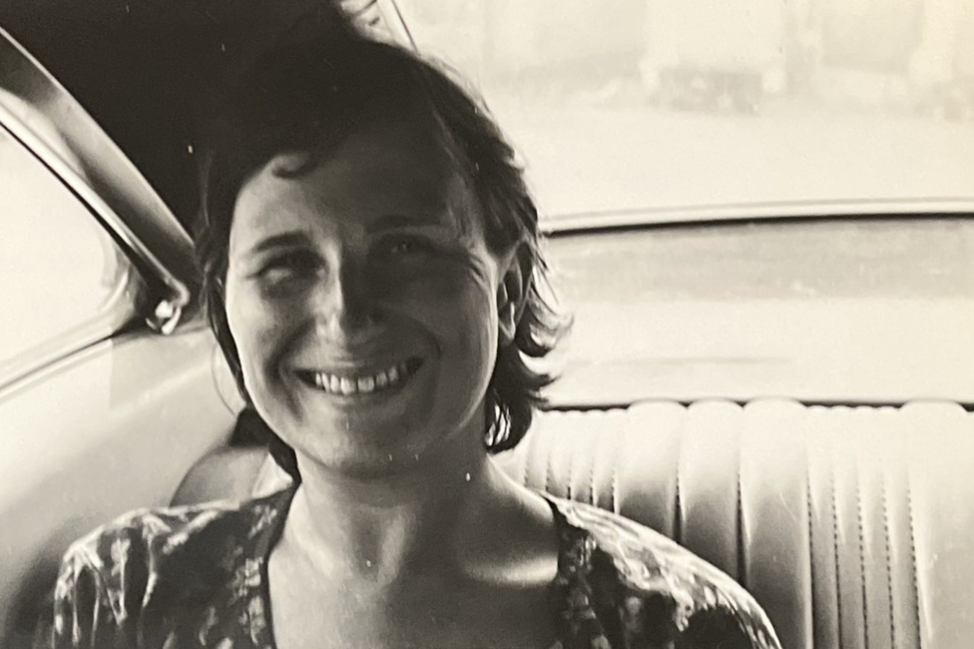
    Friends noted Ms. Jacobson’s “many kindnesses” and “decades-long advocacy for artists and the cultural community.”Courtesy of the family

    A celebration of her life is to be held later.

    Donations in her name may be made to the Fleisher Art Memorial, 719 Catharine St., Philadelphia, Pa. 19147; and Mural Arts Philadelphia, 1727-29 Mount Vernon St., Philadelphia, Pa. 19130.

    Ms. Jacobson was a talented seamstress and baker.
    Mark Garvin, / Philadelphia Museum of Art
  • Hundreds of Philly buildings rely on Vicinity’s steam plants. Their workers want better pay and safer facilities.

    Hundreds of Philly buildings rely on Vicinity’s steam plants. Their workers want better pay and safer facilities.

    Thomas White is a control room operator at a Philadelphia plant working with chillers and steam boilers to provide heat and air-conditioning for Jefferson Health and Thomas Jefferson University. When he started his job some 18 years ago, he and many of his coworkers had served in the U.S. Navy.

    That shared experience was an advantage, he says, because they all came with the same training. The Navy used steam-driven ships.

    “You just had to learn where things were because you already knew what they did, you knew how to do it, spoke the language,” he said.

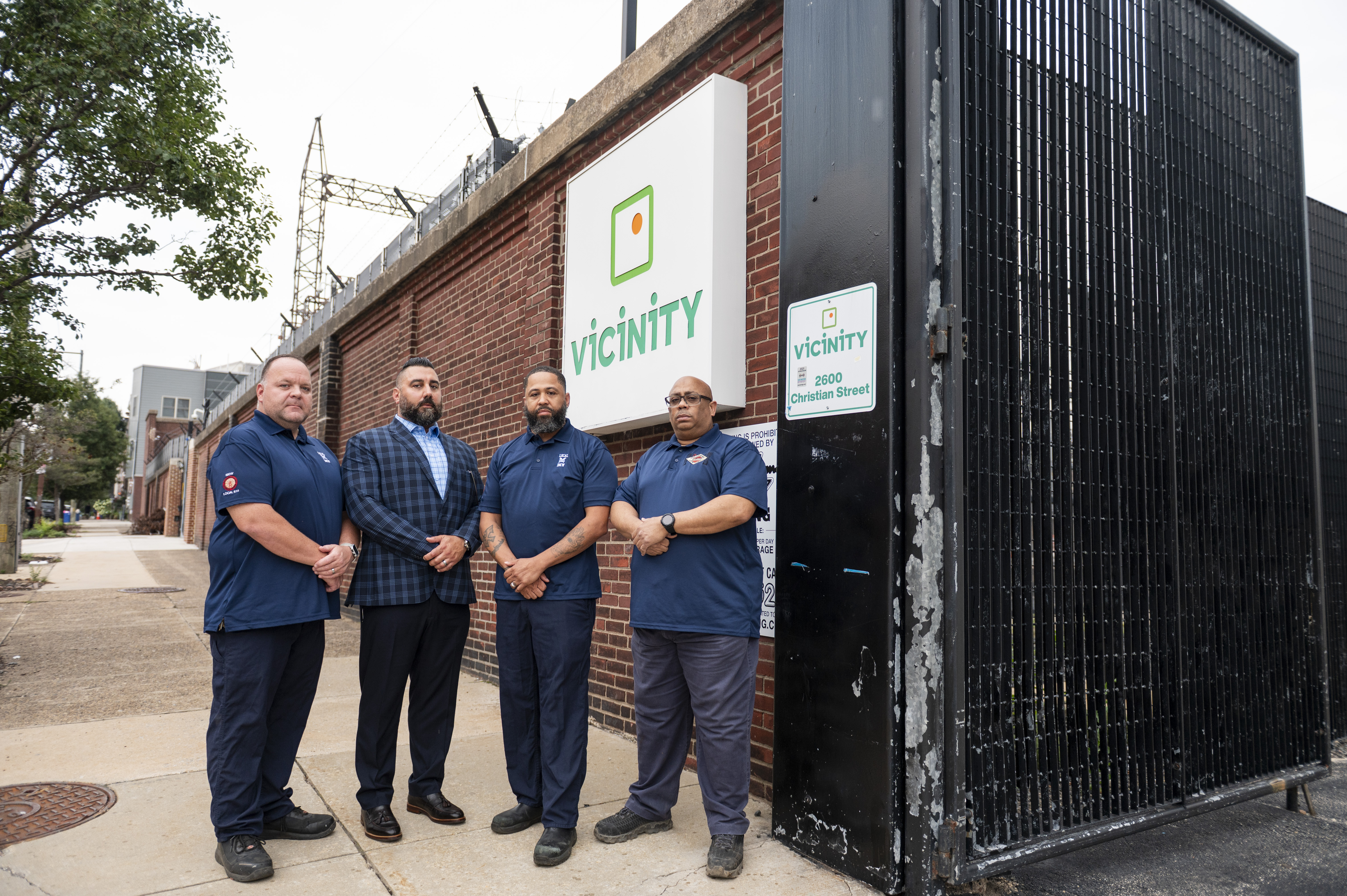
    White and his colleagues work around-the-clock shifts for Vicinity Energy, operating a system that generates steam and electricity to provide customers with heat, air-conditioning, and chilled water. In Philadelphia, Vicinity serves hundreds of buildings, including Two Liberty Place, Thomas Jefferson University Hospital, and the Philadelphia Museum of Art, as well as the University of Pennsylvania, which buys over half the steam Vicinity sells in Philadelphia.

    Since he’s been on the job, White says the Navy-veteran hiring pool has shrunk, as the Navy moved away from steam and toward diesel and gas turbines. Now hires come from refineries shutting down or trash plants, and they need training.

    “There’s just a few of us older guys that are left over to try to pass this institutional knowledge down,” said White, who is a member of IBEW Local 614, along with 56 other Philadelphia employees of Vicinity. They do this training on their own time, White said, so they don’t get paid for it.

    Their union is negotiating a new contract and could go on strike if they can’t reach a deal. They want raises, better short-term disability pay, a safer workplace, and compensation for the time they spend training new hires. Their current agreement expired in March.

    “Vicinity Energy is committed to bargaining in good faith and believe those discussions belong at the bargaining table, not in the media,” a spokesperson for the company said in a statement. “Throughout this process, the safety of our employees, customers, and the communities we serve remains our top priority, and we remain committed to safe, reliable operations.”

    The steam plant workers voted to authorize a strike on Saturday if their union calls for it, with 77% participating in the vote, and 97% voting yes.

    If they do walk off the job, they’d be closely following in the footsteps of IBEW Local 614’s Peco employees, who recently went on strike before reaching a contract deal last month. A strike authorization vote doesn’t guarantee a strike will happen but can be used as leverage in bargaining.

    The union has alleged that a Vicinity supervisor threatened to “discharge” workers who strike, according to an unfair labor practice charge filed with the National Labor Relations Board earlier this month. Vicinity did not comment on the charge.

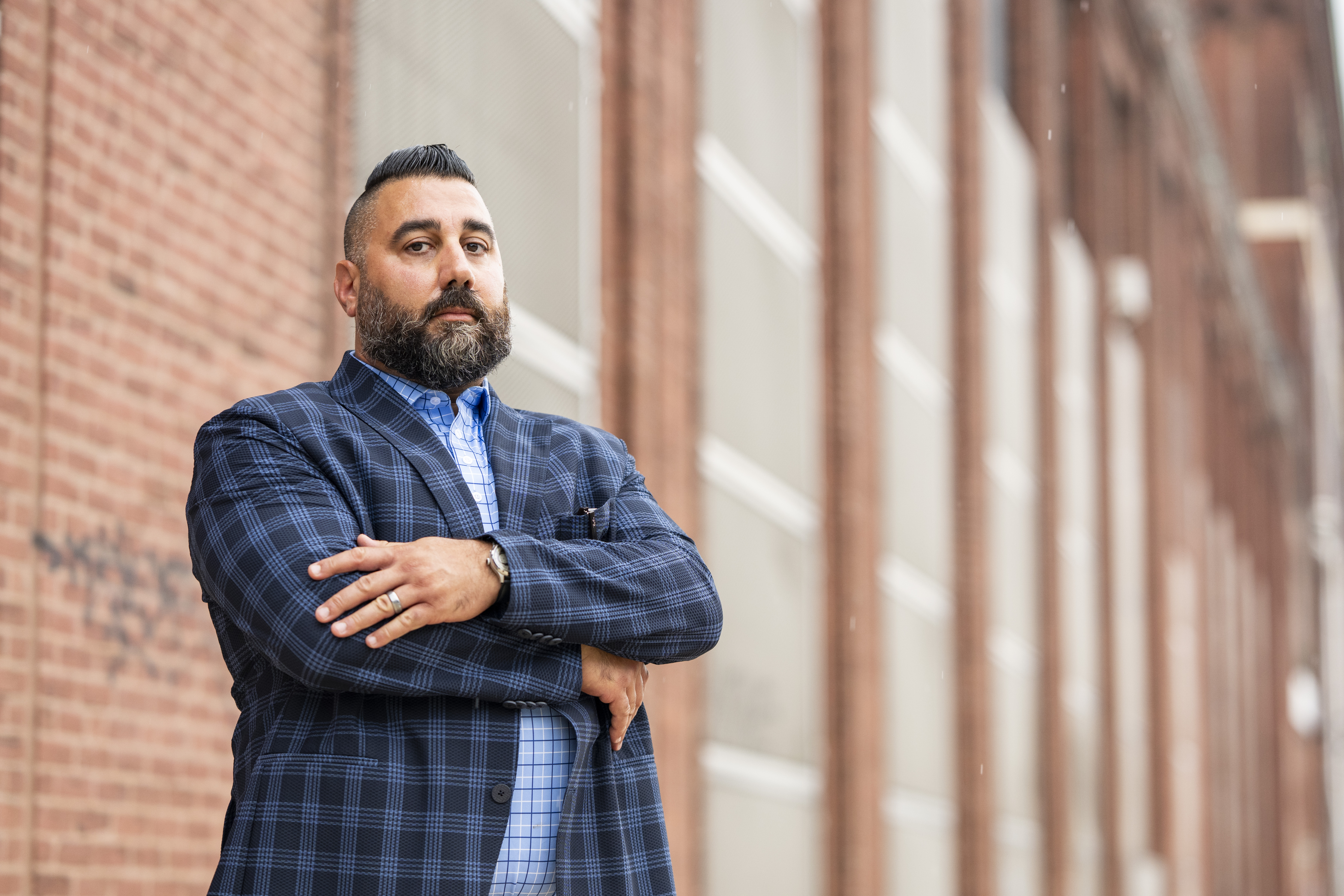
    The union is still bargaining in good faith, president Larry Anastasi said.

    Steam plants require human operators, so a strike could be very disruptive for steam-powered buildings across the city. Given that, Anastasi said, it’s important “that we do everything in our power” to keep a strike from happening.

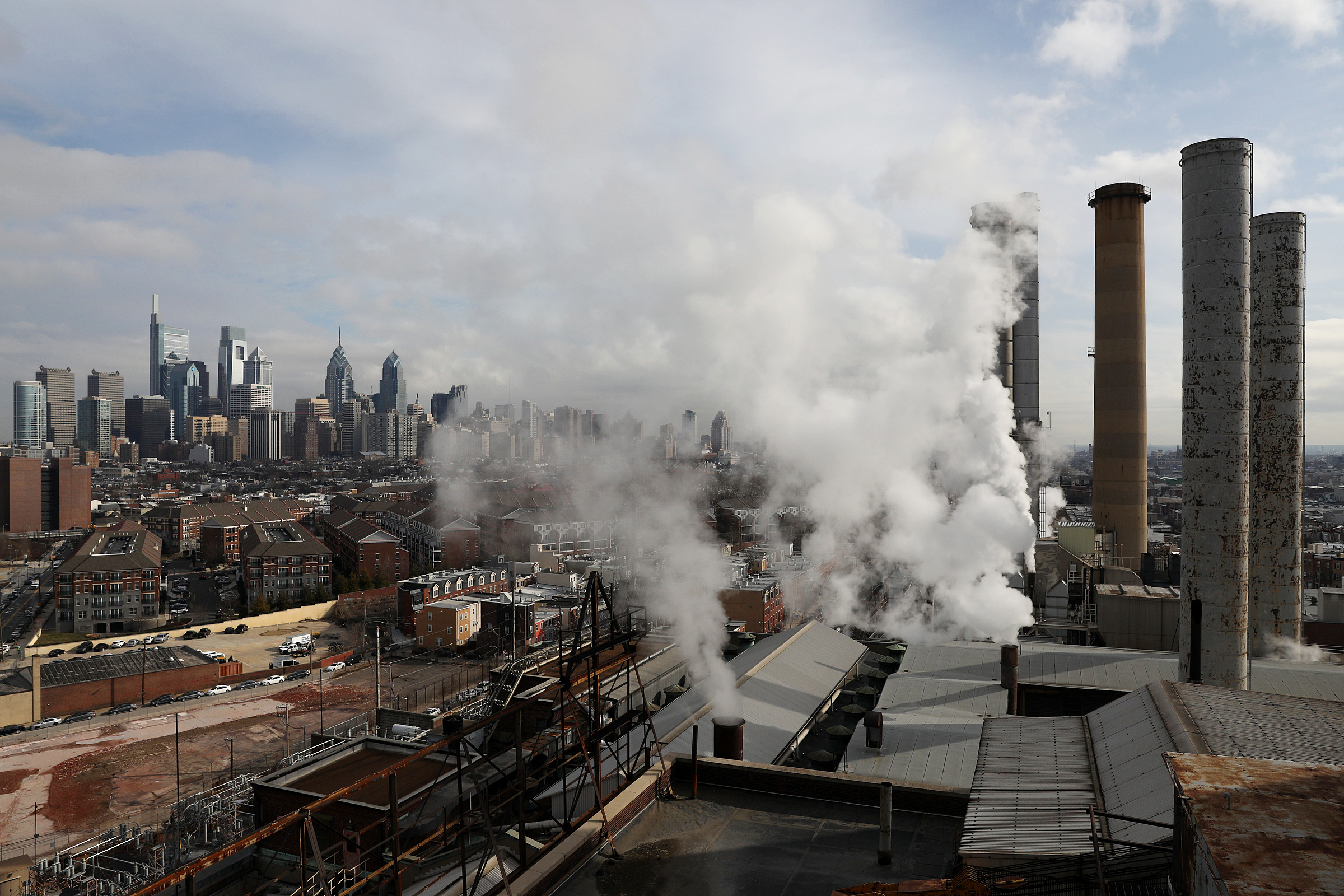
    The Vicinity Energy cogeneration plant is pictured in Philadelphia’s Grays Ferry section in 2020. The plant, originally opened by Philadelphia Electric, produces electricity and steam for heating Center City buildings.Tim Tai / Staff Photographer

    An old system changing hands

    Philadelphia’s steam system was originally built by Peco at the start of the 20th century.

    “Because it’s so old, I think people forgot its value,” Anastasi said.

    Veolia Energy bought the system in 2007. Vicinity’s parent company, private-equity firm Antin Infrastructure Partners, bought it from Veolia in 2019 as part of a larger deal valued at $1.25 billion. At the time, the company committed to $50 million in capital spending over five years in Philadelphia.

    Larry Anastasi, president of IBEW Local 614. The union leader also represents Peco employees who reached a new contract with the company in July. Allie Ippolito / For The Inquirer

    Boston-based Vicinity manages some 41 miles of underground pipe infrastructure in Philadelphia, according to the company’s website. The business services 400 buildings in Philadelphia, and its main plant is in Grays Ferry, at 2600 Christian St.

    Vicinity’s Philadelphia business brought in over $99 million in revenue last year but reported a net loss of $11 million in 2025 after paying for fuel, operating expenses, and other costs.

    The turbine hall is pictured inside the Vicinity Energy plant in Philadelphia’s Grays Ferry section in 2020. Tim Tai / Staff Photographer

    What do workers want?

    After months of negotiations, it’s hard to keep morale up among workers, said Kenneth Gordy, a union shop steward and control room operator. Gordy said he feels workers are underpaid for the highly skilled and dangerous work they do.

    Operators typically clock in for 12-hour shifts beginning at 6 a.m. or 6 p.m. They get two weekends off per month.

    Operators earn roughly around $50 an hour, said Anastasi. He said “substandard” wages and benefits have led to turnover.

    “We want our wages to reflect the knowledge, the level, the skills, the things that we do. We’re not asking for extraordinary things,” White said.

    Union members also want fully funded short-term disability. They used to be able to get 100% pay during short-term disability years ago, but they now get around 60% during such leave, Anastasi said.

    “Guys are using their bodies in this plant. We’re beating ourselves up,” said Sean Finnegan, an auxiliary operator who maintains equipment.

    The workers also want their employer to make repairs to the plants where they work, citing unsafe conditions such as asbestos, as well as standing water in work areas, Anastasi said. Part of the ceiling was falling down in one area recently, White recalled.

    “A new private equity firm takes over, and none of the repairs get made,” Anastasi said.

    Control room operators work at the Vicinity Energy cogeneration plant in Philadelphia’s Grays Ferry section in 2020. Tim Tai / Staff Photographer

    Anastasi also wants to improve retirement benefits for the Vicinity workers. He wants their employer to contribute to the union’s annuity program, so workers can get monthly payments upon retirement.

    Anastasi is coming off a retirement win for his union’s Peco members, who clawed back pensions in their recent contract with the energy company. The union heralded the deal as a “historic contract victory.”

    The steam plant workers’ most recent bargaining session was Aug. 3. The next session has yet to be scheduled, the union said Thursday.

  • Albert James Mamary, attending physician and professor of thoracic medicine and surgery at Temple, has died at 59

    Albert James Mamary, attending physician and professor of thoracic medicine and surgery at Temple, has died at 59

    Albert James Mamary, 59, of Wynnewood, attending physician and professor of thoracic medicine and surgery at Temple University, researcher, writer, mentor, artist, outdoorsman, craftsman, and amateur bicycling champion, died Thursday, July 9, of cholangiocarcinoma at Temple University Hospital.

    A 1999 graduate of Temple’s Lewis Katz School of Medicine, Dr. Mamary spent his career at Temple and affiliated hospitals. He was an expert in pulmonary disease, transplants, and sleep disorders at the Temple Lung Center, and became program director of the Pulmonary and Critical Care Fellowship at Temple Hospital in 2006.

    He earned a master’s degree in anthropology at the College of William and Mary in Virginia and his premedical school credits at the University of Pennsylvania. In a tribute, his family said: “His education in both medicine and anthropology reflected a lifelong belief that caring for a patient required understanding not only the disease but the whole person.”

    Over more than three decades at Temple — as a student, resident, fellow, professor, and physician — Dr. Mamary treated thousands of patients, mentored hundreds of students and doctors, lectured in classrooms and at seminars, and wrote more than 60 scientific papers and textbook chapters. He was named a top doctor by Philadelphia Magazine several times and was featured in The Inquirer and on 6abc TV for his lead role in a successful double-lung transplant in 2015.

    “It’s been 120 to 145 patients, individual patients that we’ve been able to help every year,” Dr. Mamary told CBS News in 2024. “That’s really the aim here, is to add years of life to patients who otherwise wouldn’t have that opportunity.”

    Colleagues called Dr. Mamary a “physician’s physician” and noted his “amazing intelligence and clinical acumen” in tributes. Gerard J. Criner, chair of Temple’s Department of Thoracic Medicine and Surgery, said: “His patients loved him not only for his clinical skills but also for the warmth, compassion, and humanity he brought to every encounter.”

    A former patient said online: “He was a calm in the storm of my end stage disease. … The world has lost a hero.”

    A former student said: “His kindness, thorough and balanced approach to medicine, and quiet, thoughtful approach to even the most stressful emergencies reminded me of a Jedi master.”

    Dr. Mamary and his wife, CeilaSue, married in 1996.Courtesy of the family

    Away from the hospital, Dr. Mamary liked to bike, hike, and camp. He built his own 18-foot mahogany canoe, walked the entire 272-mile Long Trail in Vermont, and won masters bicycling championship races.

    He also painted and sculpted, and earned a bachelor’s degree in art and psychology at Haverford College. He and his wife, CeliaSue, initiated the Shortridge Memorial Park Arboretum in Wynnewood and earned a 2024 community service award from Narberth and Lower Merion officials.

    “James brought wisdom, kindness, curiosity, and genuine joy to every moment,” his wife said.

    Albert James Mamary was born June 12, 1967, in Hempstead, N.Y. He grew up in Binghamton, N.Y., became an Eagle Scout, and was a wilderness river guide for the Boy Scouts in Maine during his college years.

    Dr. Mamary was an avid bicyclist and won masters championship races. Courtesy of the family

    He met CeliaSue Jaffe in class at Haverford, and they married in 1996 and had daughters HannahRose and LilyRuth. They lived in East Falls and Wynnewood, and he rode his bike from home to Penn and then Temple as often as he could.

    Dr. Mamary enjoyed traveling, baking, cooking, and gardening. “His specialty is fruits and vegetables, and I grow the flowers,” his wife said.

    He followed the Phillies, rescued cats and dogs, and doted on his daughters. Everybody said he was funny and silly.

    “He was curious and always learning or doing something new,” his daughter LilyRuth said. “He took joy in simple things.” His daughter HannahRose said: “Even if he wasn’t my dad I would want him as a friend because he was so interesting and so easy to talk to.”

    Dr. Mamary was a wilderness river guide for the Boy Scouts in Maine during his college years.Courtesy of the family

    Dr. Mamary was diagnosed with cholangiocarcinoma, bile duct cancer, in 2020 and treated by longtime colleagues and friends at Temple, some of whom he had mentored. “It was a profound reflection of the life he lived,” his family said, “that so many of those he had taught ultimately became his caregivers.”

    His wife said: “He was a very vibrant and adventurous person but so thoughtful, steady, and reliable. James was incredible.”

    In addition to his wife and daughters, Dr. Mamary is survived by a sister and other relatives.

    Private services were held earlier.

    Donations in his name may be made to the Albert James Mamary Memorial Fund at the Cholangiocarcinoma Foundation, 5526 West 13400 South, No. 510, Herriman, Utah 84096.

    Dr. Mamary “was a very vibrant and adventurous person but so thoughtful, steady, and reliable,” his wife said. Courtesy of the family
  • Janet Klein, celebrated longtime historic preservationist and philanthropist, has died at 96

    Janet Klein, celebrated longtime historic preservationist and philanthropist, has died at 96

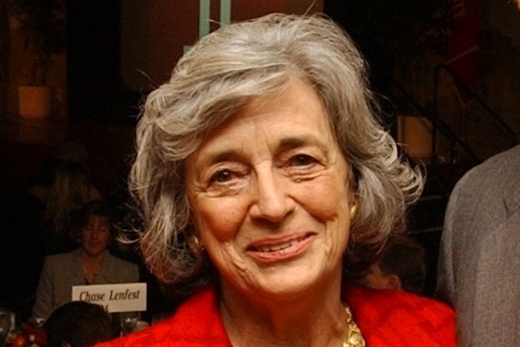
    Janet Klein, 96, of Rydal, Montgomery County, former member of the Philadelphia Historical Commission, historic program director for the Fairmount Park Commission, regional project coordinator for the National Trust for Historic Preservation, chair of the Pennsylvania Historical and Museum Commission, volunteer, and philanthropist, died Tuesday, Aug. 4, of age-associated decline at her home.

    Born in Philadelphia, Mrs. Klein earned degrees at Philadelphia High School for Girls and the University of Pennsylvania. She and her husband, Lewis, traveled the world after they married in 1952, and she told The Inquirer in 1973 that she became interested in local historic preservation after returning from abroad in 1964.

    “I felt something was lacking here,” she said. “There was no pride nor a thorough knowledge of what we really have in Philadelphia to share with visitors.”

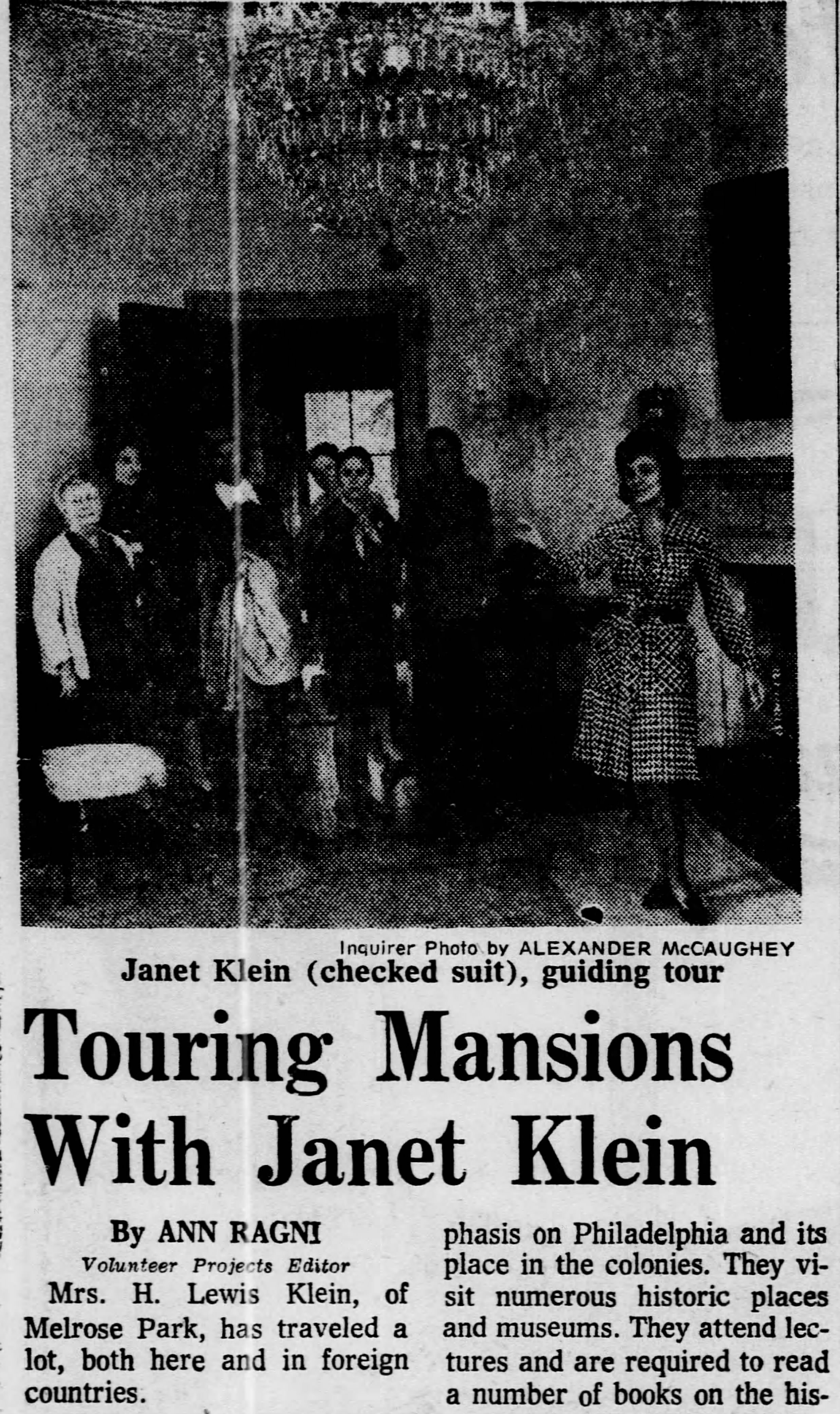
    So she joined the Philadelphia Museum of Art’s tour guide program, rose to chair of guides for the Fairmount Park house tours, and conducted hundreds of tours for thousands of visitors to the eight historic houses in the park. “The guides,” she said in 1973, “can’t help but sense that somehow they have passed on to the visitors the continuing life of historic Philadelphia.”

    Eventually, Mrs. Klein became historic program director for the Fairmount Park Commission, was appointed to the Philadelphia Historical Commission by then-Mayor Wilson Goode in the 1980s, and served as chair of the Pennsylvania Historical and Museum Commission from 1997 to 2003. Friends called her “formidable” and compared her to the Energizer Bunny.

    Keen to spark public interest in historic sites, Mrs. Klein forged partnerships between site officials and schools, community groups, businesses, and the media. In 1997, she oversaw filmmakers as they shot scenes for the movie Beloved at the Landis Valley Museum in Manheim Township.

    She appeared often in The Inquirer and said in 1989: “We often find that people who live just around the corner from a house museum don’t know it existed.”

    At Fairmount Park, she redefined the commission’s operating procedures and enlisted students as volunteers at its public mansions. At the city historical commission, she led walking tours of Old City and helped determine the historic designation of the old Lit Bros. building, the Boyd Theatre, the Dilworth house, and other significant structures.

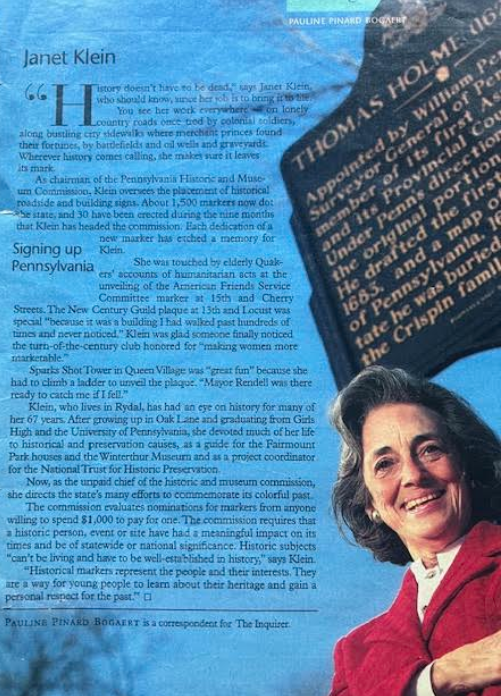
    This story and photo of Mrs. Klein (right) was published in The Inquirer in 1973.Newspapers.com

    With the state historical and museum commission, she erected historical markers across the state, helped designate the Art Museum as a Commonwealth Treasure in 2002, and directed the commission’s public relations, tourist promotions, and preservation efforts.

    “History doesn’t have to be dead,” she said in 1998. “Historical markers represent the people and their interests. They are a way for young people to learn about their heritage and gain a personal respect for the past.”

    She also led the Comprehensive Historic Assistance Program for the National Trust for Historic Preservation in the 1980s, helped create the Liberty Trail near Independence Hall, and directed the restoration of the first historic home in the Lukens National Historic District of Coatesville.

    She served on the board of visitors at Temple University’s Ambler campus and Klein College of Media and Communications, on the collections committee at the Union League, and as a guide at the Winterthur Museum in Delaware. She was active with the Pennsylvania Department of Conservation and Natural Resources, the Museum Council of Philadelphia, and other groups.

    This story and photo of Mrs. Klein appeared in The Inquirer in 1998.Temple University

    She was honored for her service by the Women’s Center of Montgomery County in 1999 and by the Preservation Alliance for Greater Philadelphia in 2001, and was named a Distinguished Daughter of Pennsylvania in 2000. In 2018, she earned an award for service and philanthropy from Coatesville’s National Iron and Steel Heritage Museum.

    As philanthropists, Mrs. Klein and her husband supported what became, named after them, the Klein College at Temple, the National Association of Television Program Executives, the Police Athletic League, the American Heart Association, and other organizations dedicated to education, healthcare, youth development, and social service. They created the Janet and Lew Klein Making A Difference Award for the Pennsylvania Association of Broadcasters and donated his professional papers to Temple.

    “She was an inspirational community leader,” said David Boardman, dean of Temple’s Klein College, “who inspired others through her generosity, her brilliance, and her warmth.”

    Janet Surman was born March 3, 1930. She grew up in Oak Lane and earned a bachelor’s degree at Penn.

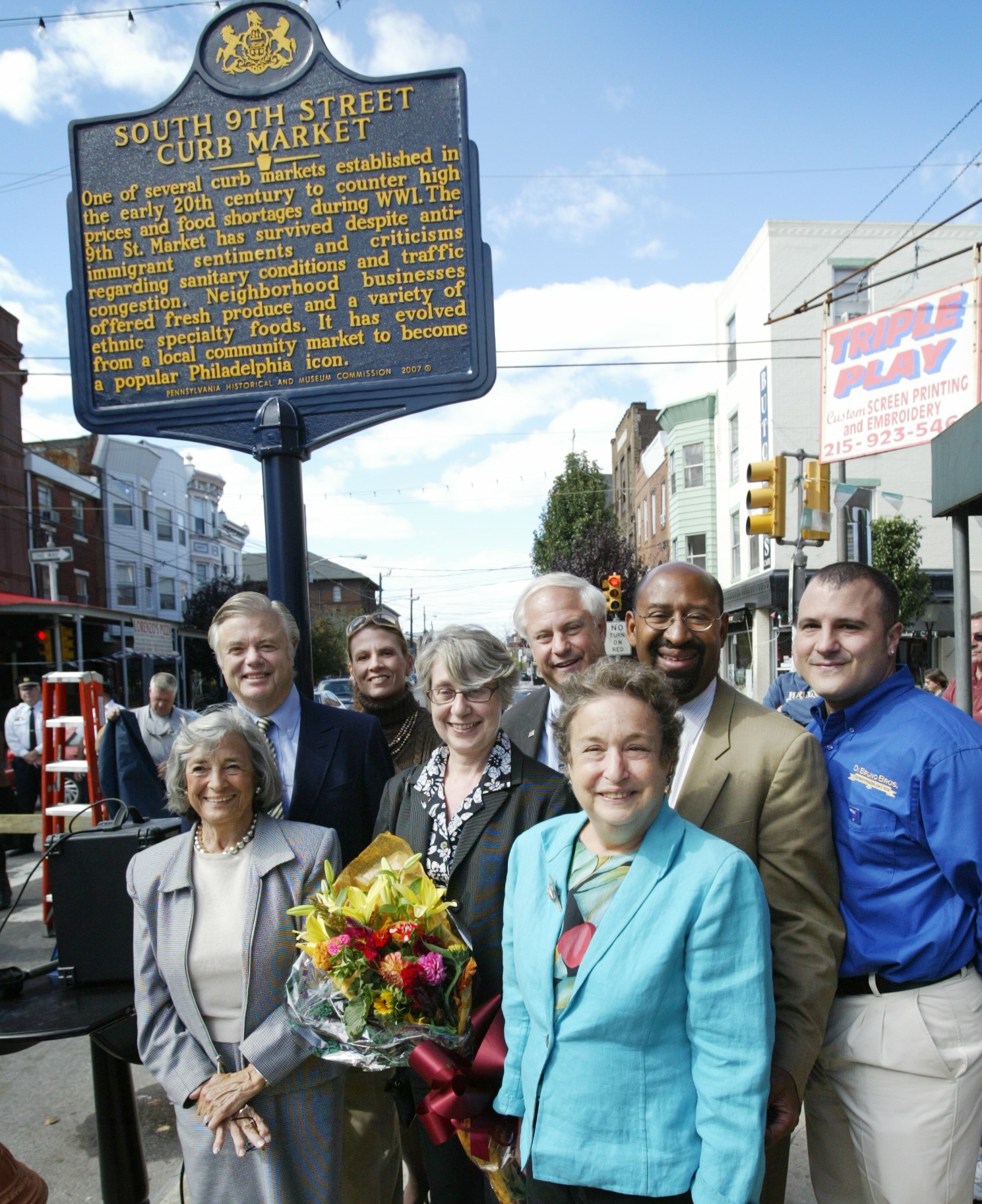
    Mrs. Klein (left) appeared with others in 2007 to celebrate a historical marker at the corner of 9th and Christian Streets.Alejandro A. Alvarez / Staff Photographer

    She met Lewis Klein in college, and they married in 1952. They had a son, Stephen, and a daughter, Ellen, and lived in Melrose Park and Rydal. Her husband, a pioneering TV broadcaster and cofounder of Gateway Communications, died in 2019.

    Mrs. Klein and her husband traveled the world for decades and attended dozens of galas and fundraising events. She enjoyed gardening, was an avid reader, and liked to play Scrabble.

    In 1993, Inquirer columnist Clark DeLeon called her “a wonderful, funny, vivacious lady.” Temple’s Boardman said: “She was truly one of the best human beings I’ve ever had the privilege to know.”

    In addition to her children, Mrs. Klein is survived by a granddaughter, two great-grandchildren, and other relatives.

    A celebration of her life is to be held later.

    Donations in her name may be made to the Abington Police Athletic League, 1166 Old York Rd., Abington, Pa. 19001.

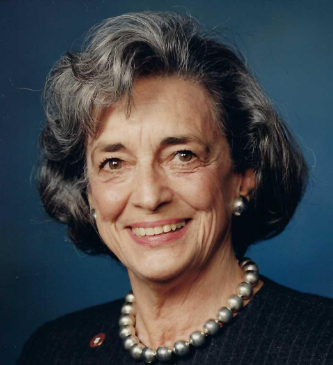
    Mrs. Klein grew up in Oak Lane and earned a bachelor’s degree at Penn. Courtesy of the family
  • How the Haverford antisemitism settlement harms free speech

    I believe in Israel.

    I oppose its current leadership and its policies in Gaza and the West Bank. But I support its right to exist as a Jewish state. And I reject the idea that Zionism is inherently racist or malevolent.

    That’s why it’s important for me to hear from people who see Israel differently than I do. I need them to question, provoke, and challenge me. That’s how I learn.

    And that’s also why I’m worried about the settlement Haverford College announced last week, pledging to protect Jewish students from antisemitic speech. In a statement, Haverford president Wendy Raymond declared that the college would not tolerate “discrimination, harassment, and bias” against “students who identify as Jewish” or “those who support Zionism.”

    So does that mean you won’t be able to say “Zionism is racism” or “Israel is an apartheid state”? The lawyer representing Jewish students who sued the school — and who said she was “very pleased” with the settlement — seemed to think so.

    “It’s a new form of antisemitism, saying, ‘Oh, no, I don’t hate Jews, I just hate Zionists,’” she said. “For a Jew to hear that was incredibly painful.”

    I’m sure that it was. I’m Jewish, and anti-Zionist rhetoric is hard for me to hear, as well.

    But that’s why I should hear it. Zionism is probably the most contested question on our campuses right now. Unless everyone can address it, freely and openly, we’ll never get a good purchase on it.

    Wendy Raymond, president of Haverford College, pledged that the college would not tolerate “discrimination, harassment, and bias” against “those who support Zionism.”Jose Luis Magana

    Ditto for Columbia, where I went to college 40 years ago. Back then, you could argue about anything. But now Zionism, too, is effectively off the table.

    That’s because the university adopted the International Holocaust Remembrance Alliance’s definition of antisemitism. According to the IHRA, “claiming the existence of a State of Israel is a racist endeavor” and “drawing comparisons of contemporary Israel policy to that of the Nazis” are antisemitic.

    But a competing standard, the Jerusalem Declaration on Antisemitism, argues that “criticizing or opposing Zionism as a form of nationalism” or offering “evidence-based criticism of Israel as a state” are not, on their face, antisemitic. Haverfordʼs settlement seems to lean entirely on the first definition and ignores the second, which has not been adopted by the college or most other institutions, but was endorsed by Bucknell University’s faculty last year.

    Under the IHRA definition, would a student or professor who said Israel was committing genocide in Gaza — like the Nazis did in Europe — face punishment at Columbia? I don’t think Israel’s action in Gaza constitutes genocide, but I know other historians do. And again, I need to hear from them.

    In their 2024 lawsuit against Haverford, Jewish students complained that a professor called supporters of Israel “racist genocidaires.” I can understand why they felt “pain and harm” about these kinds of comments, as Raymond acknowledged at the time.

    But you can censor anything — literally, anything — on those grounds. During the 2016 presidential campaign, students at Emory University said they were harmed by campus chalk messages backing Donald Trump. “Supporting him, repeating his catchphrases [is] an implicit attack on the Muslim, Latinx, Black, and other communities at Emory and across the country,” protesters declared. “This is not political expression; it is hate speech.”

    And in 2021, Harvard biology professor Carole Hooven caused an outcry when she told Fox News that gender could take any number of forms, but sex is binary: male or female. After a colleague denounced Hooven’s “transphobic and hateful” comments on Twitter (now X), she became a campus pariah. Her mental health plummeted, and she resigned.

    Like Zionism, the biology of sex is a hugely contested and complicated matter. And we won’t be able to learn more about it if we inhibit discussion of it.

    How many people celebrating the new restrictions on anti-Zionist speech at Haverford would be OK with prohibiting claims that sex is binary? Likewise, would any of the critics who pushed out Hooven rest easily if critics of Israel were silenced, too?

    We all want to have our own say, of course. But when we feel pained or harmed by someone else’s political expression, we call it hate speech. And we try to blot it out.

    To be clear, nobody should be subject to threats of physical violence. Whatever you think of Zionists on campus, you can’t say you’re going to assault or murder them. That’s against the law, and our colleges should be vigilant in enforcing it.

    But at Haverford, it would now appear, you can’t say anything negative about Zionism. Period. If you don’t think Israel should exist, you’re an antisemite. And you need to keep your big mouth shut.

    I know some people on campus have been “deeply hurt” by anti-Israel rhetoric, as Raymond said in her statement last week. But once that becomes the barometer for what the rest of us can say, we won’t be able to speak — or listen — across our differences. Isn’t that why we gather at universities in the first place: to learn from each other?

    Either you believe in free expression for everyone, or you don’t believe in it at all. Period.

    Jonathan Zimmerman teaches history and education at the University of Pennsylvania. He is the author of “Schooling Citizens: How Education Can Save Democracy,” which will be published next spring by the American Philosophical Society Press.