The Eagles held their first practice of minicamp on Tuesday at the Jefferson Health Training Complex. Here are my observations:
Pave the Lane
We had our first Lane Johnson spotting of the spring, and, really, since November when he suffered a season-ending Lisfranc foot injury. The right tackle also spoke with reporters after practice for the first time since October. He talked about former offensive line coach Jeff Stoutland’s departure, among other topics.
Johnson looked in fine shape. He opted to miss most of the Eagles’ offseason program, but returned for this week’s mandatory workouts. We also got our first look at defensive tackle Jalen Carter, who was absent from the two open organized team activities. He is believed to be fully recovered from his shoulder woes, but he didn’t participate in team drills. Outside linebacker Joe Tryon-Shoyinka was the only player from the 90-man roster who was missing.
Makai Lemon remained out with an apparent hamstring strain. The rookie wide receiver was initially sidelined last week. If he misses Wednesday’s session, he should be fully recovered in time for training camp. Tight end Grant Calcaterra was a new addition to the injury list and watched practice. Linebacker Jihaad Campbell is still working his way back from shoulder surgery.
Receiver Britain Covey was still out, as were fullback Carson Steele, linebacker Chandler Martin and safety Tucker Large. Edge Jonathan Greenard also wasn’t active. He, too, is recovering from shoulder surgery, but should be ready by late July.
Offensive start
It would be simple to focus on Vic Fangio’s defense considering how well it performed in seven-on-seven and 11-on-11 drills. His first two units outplayed the offense in my estimation. And maybe they should have since first-time offensive coordinator Sean Mannion is installing a new scheme. Fangio returns seven starters on his side of the ball with many entering Year 3 in his system.
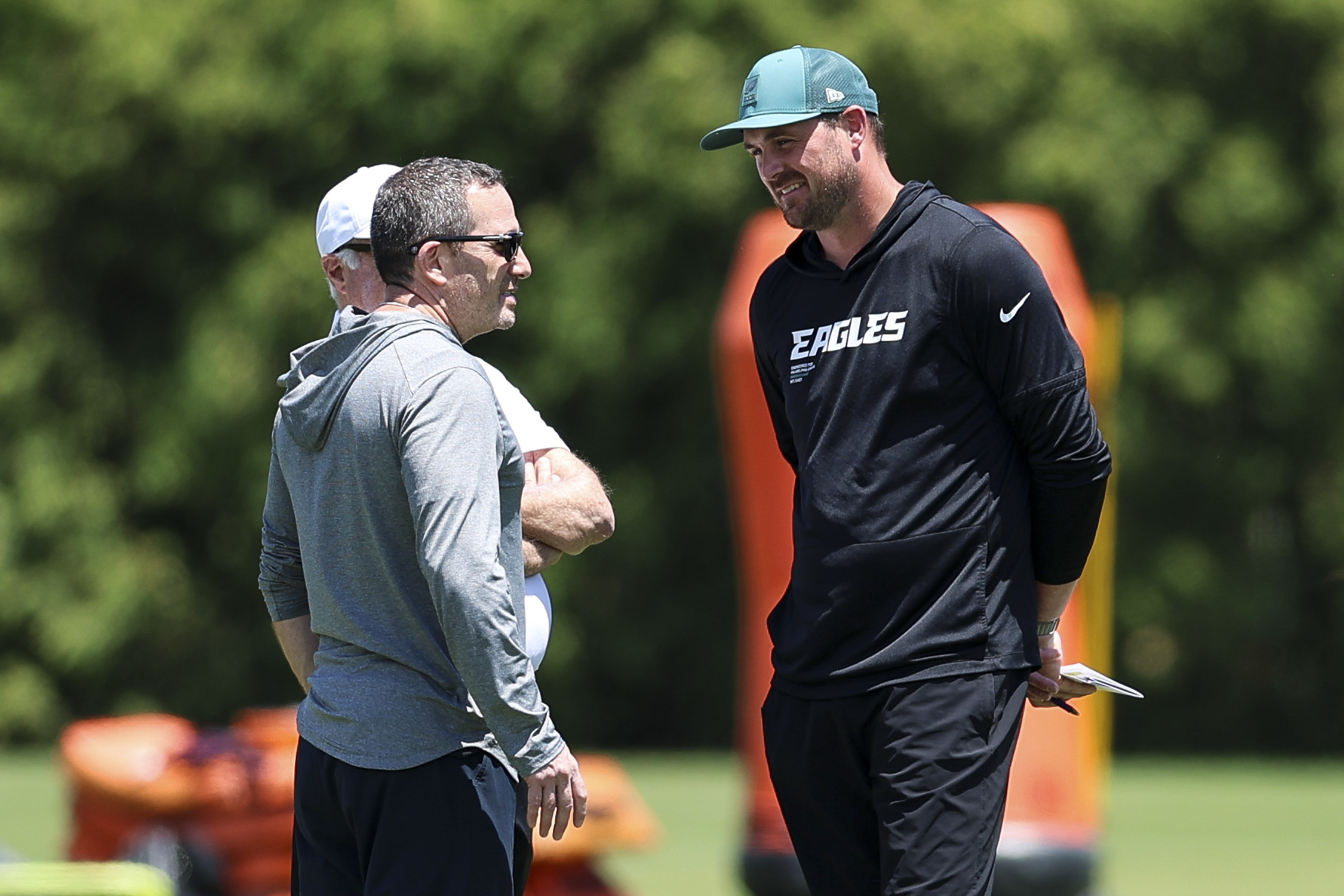
Sean Mannion (right), shown with Howie Roseman (left) and Jeffrey Lurie during mandatory minicamp on Tuesday. Mannion’s first-team offense struggled.Monica Herndon / Staff Photographer
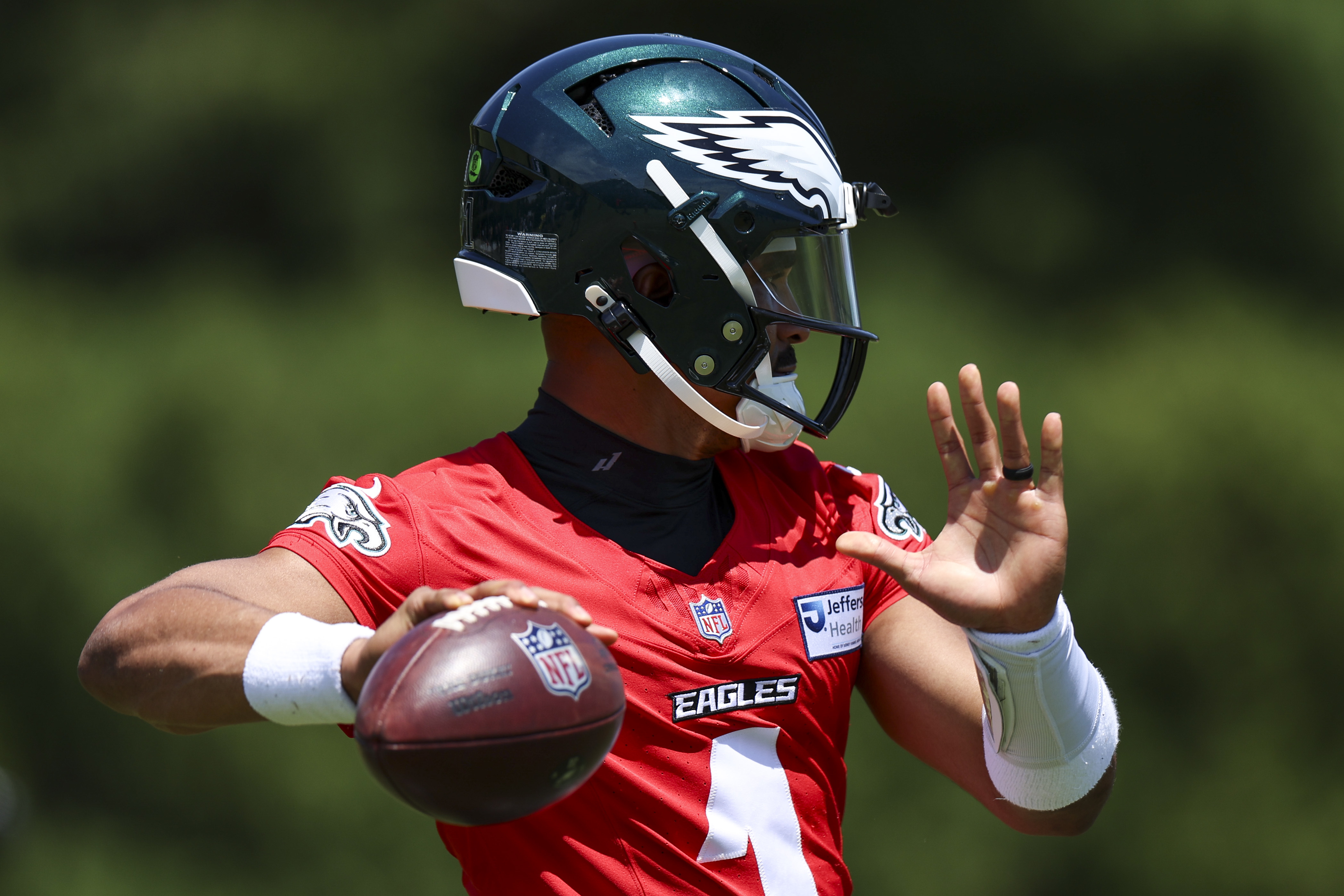
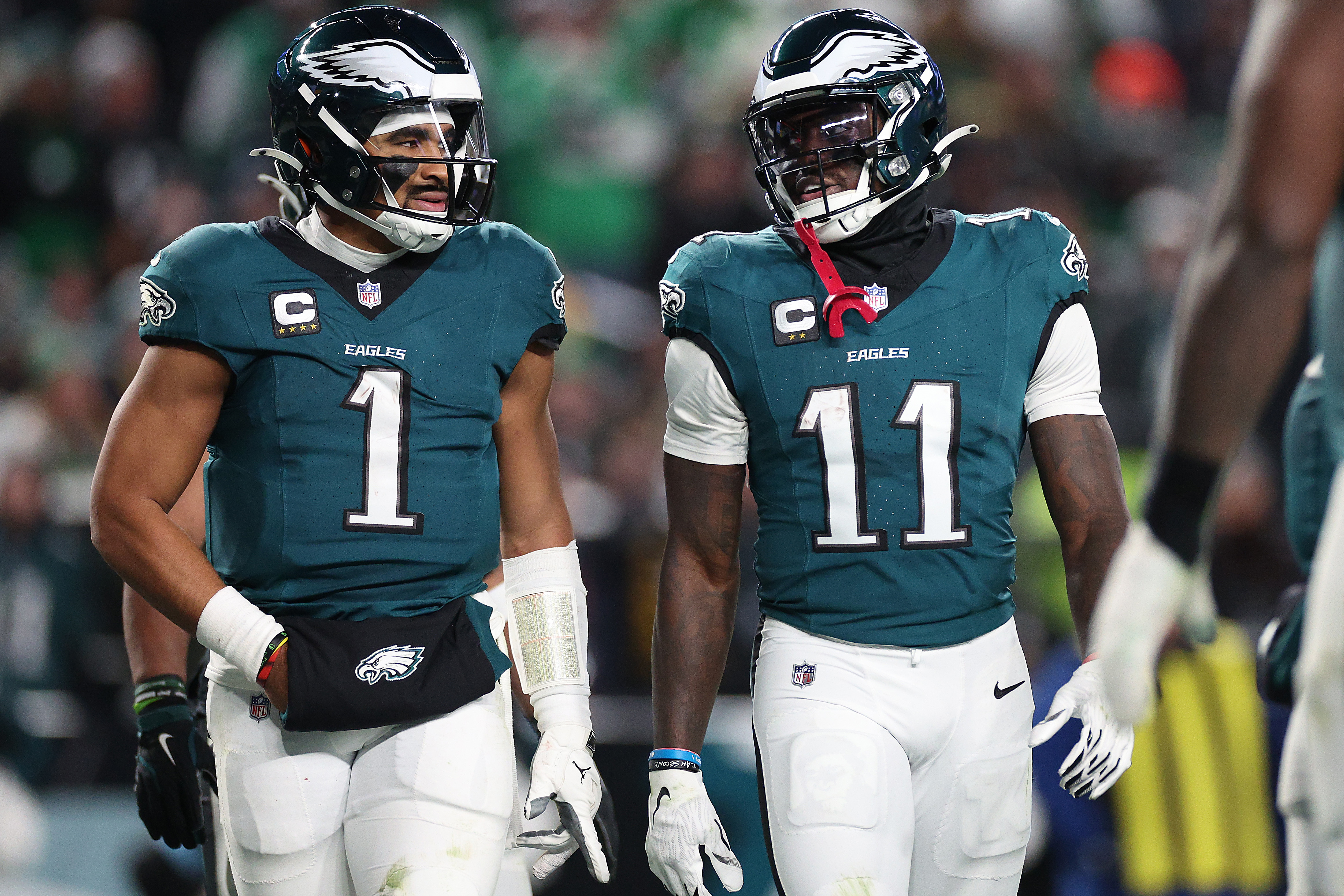
But this offseason is mostly going to be about how quarterback Jalen Hurts and Co. adjust to learning a new offense. There are going to be some ugly moments early on. And we saw plenty on Tuesday. Hurts threw over and behind a covered (by Riq Woolen) DeVonta Smith on two pass plays during seven-on-sevens. The second could have been intercepted by post safety Drew Mukuba if he wasn’t intent on breaking up the pass. There was another toss into traffic that surprised receiver Hollywood Brown and bounced off his shoulder. In team drills, Hurts heaved one ahead of Smith, who had cornerback Quinyon Mitchell on his heels. He later just flicked a pass out of bounds rather than to an open Smith, who was near the line of scrimmage.
There were completions, with most of them of the check down variety to running back Saquon Barkley or tight end Dallas Goedert as a safety outlet. There were also a few over-the-middle hookups. But the first-unit pass offense, which often worked from under center and off play action, looked out of sorts. On a red zone play, Smith and receiver Dontayvion Wicks were run out of bounds by defenders and Hurts had nothing. Nevertheless, it’s way too soon to make any proclamations about the season. There were bound to be growing pains.
Dutch Dalton
The same thinking could apply to the apparent competition for the backup quarterback spot. Andy Dalton continued to get snaps ahead of Tanner McKee. We haven’t been to every workout this spring and were told that the two split time with the second offense. But McKee no longer has a firm grip on the No. 2 spot, which is mildly surprising.
Eagles linebacker Jalyx Hunt (center) intercepted Andy Dalton during minicamp practice on Tuesday.Monica Herndon / Staff Photographer
It’s not like Dalton has overly impressed. Like Hurts a week ago, Dalton’s first pass in seven-on-sevens resulted in an interception. Outside linebacker Jalyx Hunt dropped into coverage and undercut a slant route for the pick. Later on, Dalton was nearly intercepted by cornerback Jonathan Jones. He had some solid throws, too. Dalton found receiver Elijah Moore down the seam on a busted coverage. He twice hit receiver Johnny Wilson on crossers. And he found Danny Gray in the end zone after the receiver beat his man to the sideline.
Tight lies
As Goedert said after practice, the tight end position is central to the Shanahan/McVay style of offense. A lot of that has to do with deception and marrying the run with the pass. But Goedert and others have been featured a fair amount in what is essentially a passing camp. New guy Johnny Mundt might have been brought in primarily as a blocker, but he broke through the secondary and probably would have pulled in a Dalton deep ball had safety Michael Carter not held him.
E.J. Jenkins was on the receiving end of passes from Hurts and Dalton. He saw more time with Calcaterra out. Rookie tight end Eli Stowers has been quiet in the practices we’ve attended. He has a lot to learn.
Johnson’s return meant a slight change on the offensive line with rookie Markel Bell dropping from first-team right tackle to second-team left tackle. Here’s a look at the updated depth chart:
Drew Kendall was the lone O-lineman I didn’t spot in team drills.
Depth thoughts
Jordan Davis and Moro Ojomo were the first-team defensive tackles in nickel with Carter watching. Byron Young was the third interior lineman in base personnel and was still ahead of second-year defensive tackle Ty Robinson.
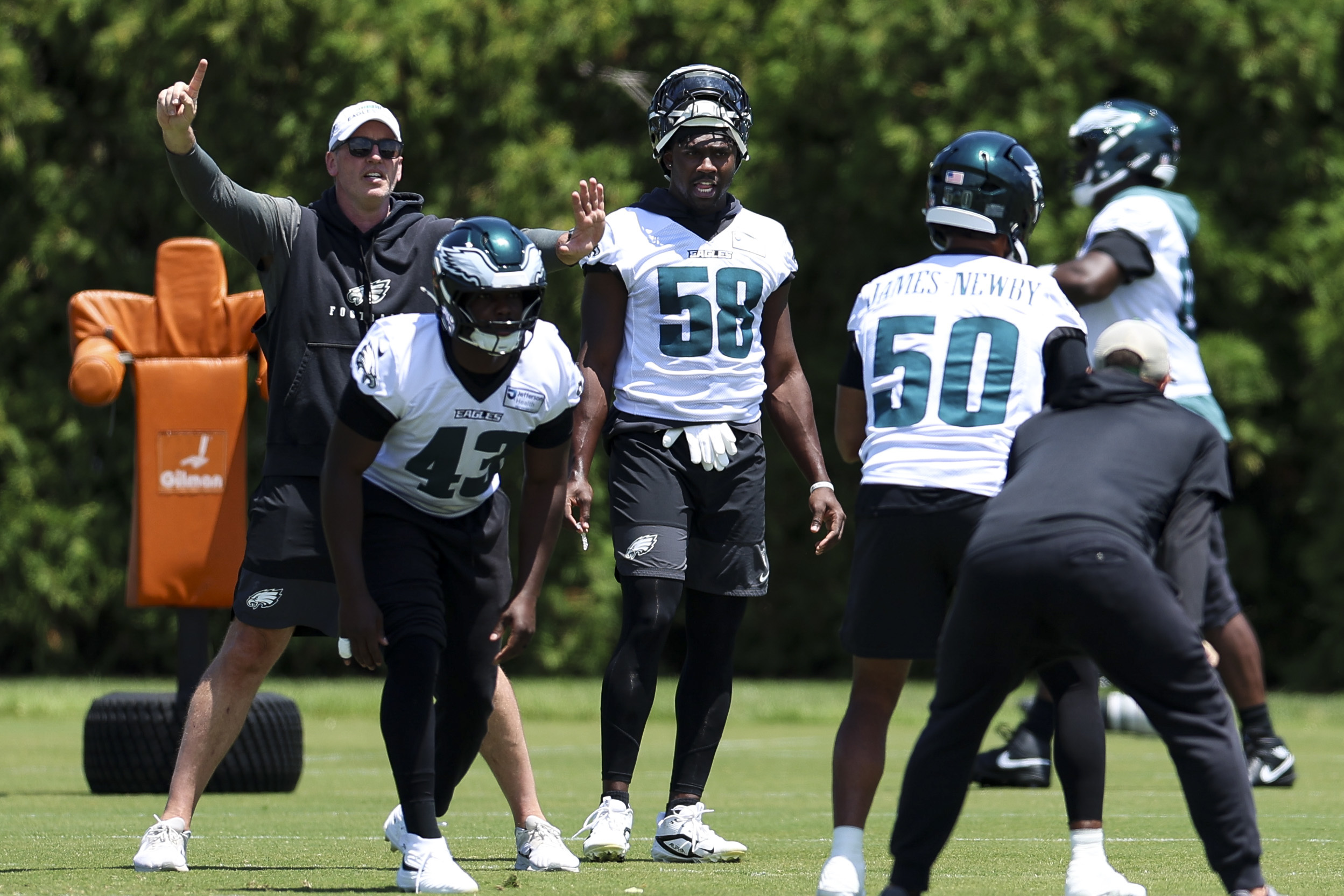
Jeremiah Trotter Jr. took most of the first-unit repetitions alongside Zack Baun at inside linebacker with Campbell out.
Trotter was around the ball all practice. He blitzed and forced Hurts outside the pocket in team drills. A play later, he filled the hole on a Barkley run. And he nearly picked off rookie quarterback Cole Payton when he worked with the third-unit defense. (Payton almost tossed another interception on the next play, but cornerback Tariq Castro-Fields couldn’t hang on to a ball that hit him in the hands.)
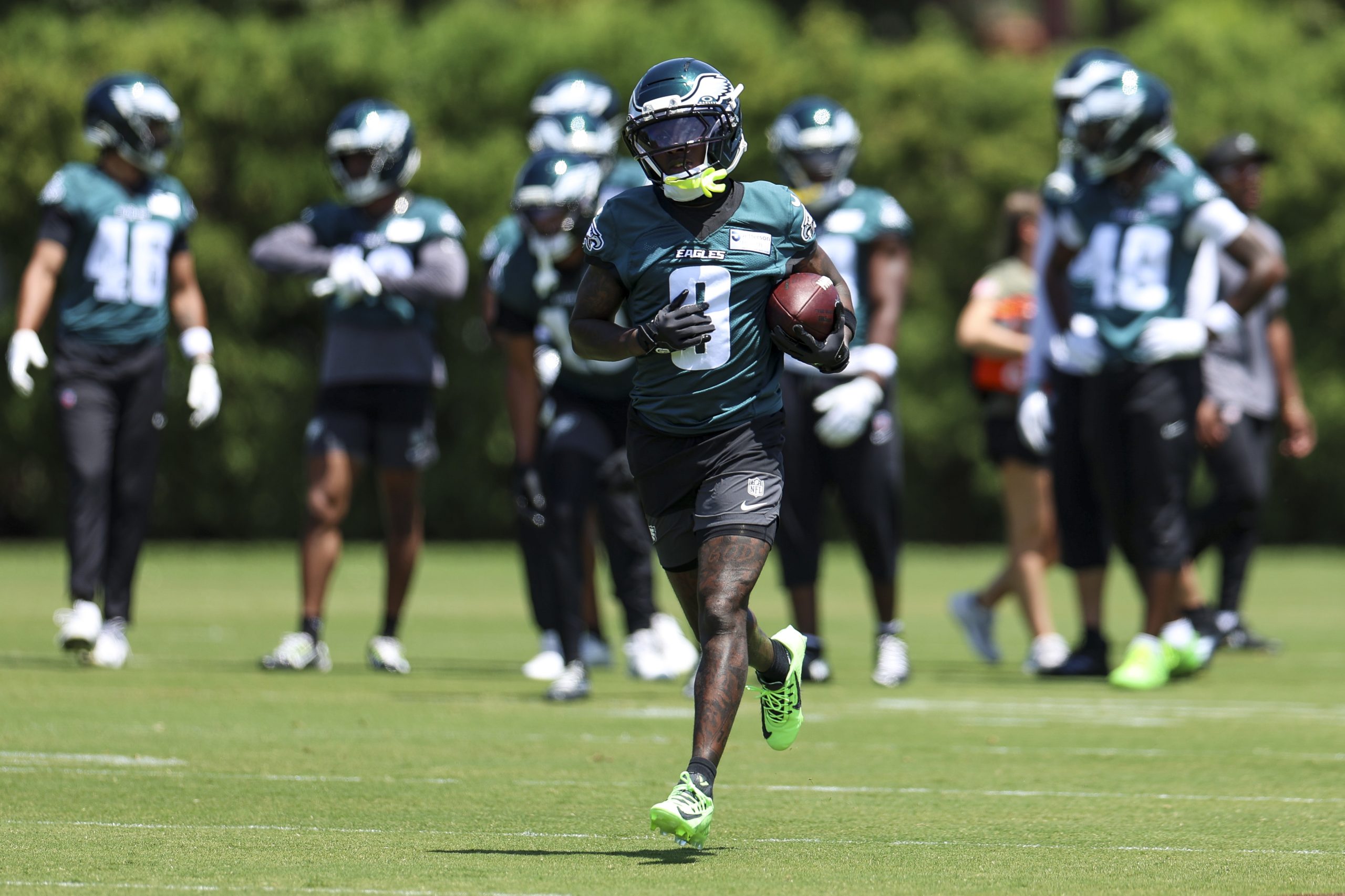
Eagles wide receiver Hollywood Brown is one of the new additions vying for a role in the remade position group.Monica Herndon / Staff Photographer
Receiving line
Coach Nick Sirianni didn’t have much to say about A.J. Brown, who was traded to the Patriots last week. He instead focused on the Eagles’ existing receivers when asked about Brown before practice. Sirianni first mentioned Smith, Lemon, and Wicks before he got to Hollywood Brown and Moore. He also mentioned Wilson and Darius Cooper, who didn’t partake in team drills, as “dirty work” receivers.
Brown and Moore were featured most on this day, partly because of the first-unit offense’s struggles. Brown caught several passes from McKee late in the session and flashed strong hands on low throws. Moore, playing with the starters, was set up on a screen pass, but Young wasn’t fooled by misdirection. The receiver later caught a seed from Hurts over the middle.
Highs and lows
McKee had some highlights with the third group. He connected with tryout receiver James Proche on a few occasions. He hit receiver Samori Toure over the middle off play-action.
There were defensive standouts, as well. Hunt and Ojomo teamed up for a would-be sack. Defensive tackle Ta’Quon Graham batted a Dalton pass. Rookie cornerback Maximus Pulley broke up a Payton toss. ChanceCampbell almost got to a Dalton misfire. And corner Kelee Ringo forced a wide throw in the end zone in man coverage.
Extra points
I narrowed my binoculars on the Eagles’ two international pathway prospects: defensive tackle Uar Bernard and edge Joshua Weru. Needless to say, getting those two acclimated to football at this level will be a process. … The Eagles return on Wednesday for the last practice of minicamp.
The least-loved New Yorker since Boss Tweed, the Donald on Monday took it upon himself to ruin pregame plans and pleasures of thousands by becoming the first sitting president to attend an NBA Finals game.
It tracks: Trump always seeks to steal the shine from winners, and the Knicks, fueled by NCAA champs Jalen Brunson, Josh Hart, and Mikal Bridges, were winning like nobody’s business. They had won 13 consecutive playoff games and held a two-games-to-none lead over San Antonio when they took the court at Madison Square Garden.
Trump’s presence created traffic snarls and ingress nightmares, and he was buried by boos during the singing of the national anthem, but nobody in the joint paid him much mind after that. He’d wanted to sit with Spike Lee and Larry David courtside, but the Secret Service (and perhaps his more sane advisers) persuaded him to retreat to a suite. There, in the shadows, he rested as the streak ended, a 115-111 downer in Game 3.
Later, Trump blamed Karl-Anthony Towns. He wasn’t wrong.
Look, it wasn’t all Trump’s fault, or KAT’s fault. It wasn’t anybody’s fault, really.
Well, maybe it was the refs’ fault. That’s what Knicks coach Mike Brown claimed.
“They outshot us 14-3 [from the line] in the third quarter. Maybe we did foul. But they fouled, too,” Brown said. “If they do this, 24-8 [in the second half], in Game 4, it’s going to be tough to win.”
It will be interesting to see the league’s reaction to Brown’s comments, since he was fined twice in 2024 for interactions with officials before he was fired by the Kings.
“That didn’t cost us the game,” said Towns, who finished with just 11 points. “We turned the ball over. We didn’t execute. We didn’t do the things that got us 13 straight wins in a row.”
It was a very non-’Nova-Knicks night, the sort they cannot afford against an assemblage like San Antonio’s.
The Spurs won nine more regular-season games than the Knicks. Third-year center Victor Wembanyama finished third in MVP voting this year and was Defensive Player of the Year, De’Aaron Fox was an All-Star this season, Keldon Johnson was this season’s Sixth Man of the Year, and guard Stephon Castle won Rookie of the Year last season.
Wemby had 32 points, eight rebounds, six assists, and three blocks. Castle has 23 points. Fox had the dagger and eight assists.
They are a very, very good team.
The Knicks trailed by five with 9 minutes, 18 seconds to play when Brunson, who leads the Knicks like he led the Wildcats, returned to the game. That set the scene for another comeback, like Game 1 in the Eastern Conference finals against the Cavaliers or Game 2 on Friday in San Antonio, Texas. Those comeback wins branded these Knicks the same way the gritty, deep Villanova teams were branded when the won NCAA titles in 2016 and 2018 under Jay Wright.
Alas.
The Knicks got 32 points from Brunson. They got 16 points and nine rebounds from Josh Hart. But they got just two points from Bridges, the hero of Game 2 just three nights before.
Alack.
Whether it was the 13-game run, the 53-year drought, or the presence of the president, Brunson & Co. were making no excuses.
“There are going to be a lot of distractions, positive and negative,” Brunson said. “Most important is how we compose ourselves as a team, and we have to make sure we have accountability as a team.”
Brunson hit a putback-and-one, a jumper as the shot clock expired, and a three-pointer with 33.7 seconds to play that cut the lead to three points, but Fox’s jumper with 12.2 seconds and two late free throws from Castle were just enough.
You felt early that not even the steely pedigree forged on the Main Line almost a decade ago would be enough Monday.
Wembanyama had nine points and a blocked shot in the first five minutes. Bridges committed two fouls and a turnover and had his shot blocked in the first four minutes.
That’s how the Spurs built a double-digit lead. A constellation of stars of stage and screen looked on, hoping for a sweep, the sweetest possible end of a 53-year title drought. From Lee to David to Ben Stiller, they all felt it. The Knicks seemed … affected. Tight. Flat.
Mostly, anyway.
The Knicks took their first lead when Brunson — who else — canned a 25-foot three-pointer with just over four minutes left before halftime. He hit it over Wembanyama, reluctant to extend his defense too far, lest Brunson burn him to the basket again.
About a minute later, with the Knicks down by four, Castle bulldozed Brunson while pursuing an offensive rebound. Hart scored on the ensuing possession and tied it at 54. Hart’s trey gave the Knicks the lead again, and Brunson dropped another 25-footer on Wemby. Brunson’s feed with 9.6 seconds soon sent Towns to the line, where he made both free throws, the end of a 14-3 run, and the Knicks’ halftime lead was 64-57 after they dominated the second quarter, 42-24.
But the Spurs won the third quarter by eight, scored the first six points of the fourth, and held off the valiant ’Nova Knicks.
They resume the series Wednesday, but don’t expect Trump to be back.
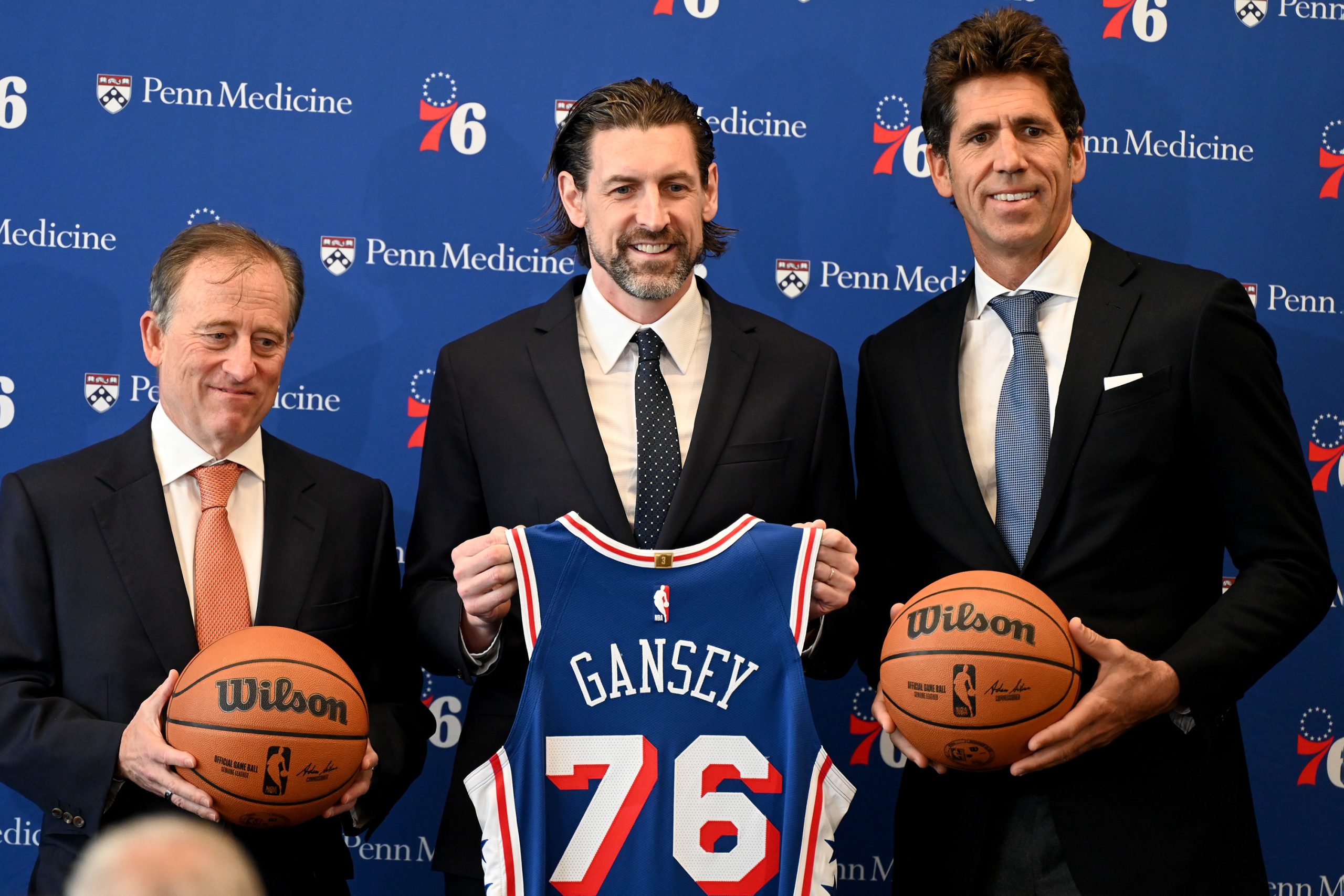
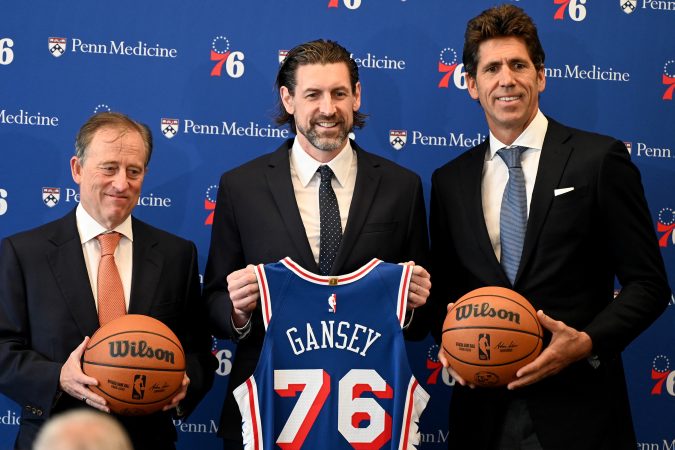
Really, there wasn’t anything that Mike Gansey could have said that would have changed the expectations for the 76ers.
Which is good, because he didn’t say much.
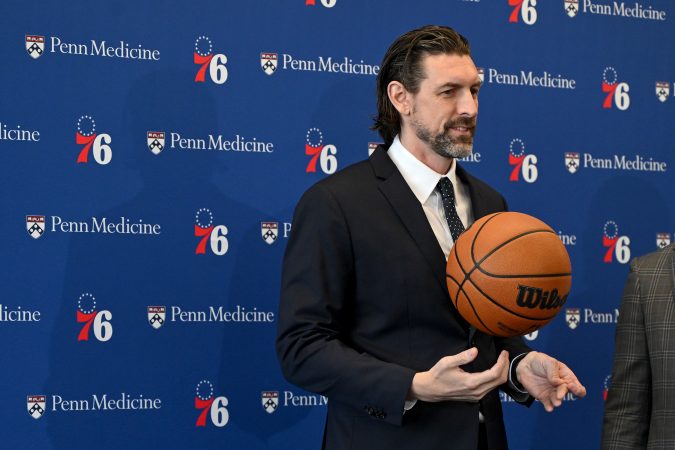
Gansey’s first news conference as the 76ers’ president of basketball operations offered little in the way of detail about the team’s path forward. He acknowledged that Joel Embiid and Paul George are players who are currently on the Sixers roster. He noted that Tyrese Maxey and VJ Edgecombe are, too. He explained that he and his front office will attempt to select the best possible player with the No. 22 pick in the NBA draft later this month. You could say Gansey’s plan was short on specifics, except there weren’t many generalities, either.
“I just got here,” the 43-year-old Ohio native and longtime Cleveland Cavaliers personnel man said at one point while prefacing one of his comments.
All of this was to be expected. Smart, even. There is some short-term value a new hire can reap from winning the first news conference. But it often is outweighed by potential long-term damage he can sow. Look at Gansey’s three immediate predecessors. Each was haunted, even undone, by the narrative they sold at the outset.
Sam Hinkie’s biggest problem wasn’t The Process itself. It was his explicit acknowledgment of it. Daryl Morey was ultimately defined by his unabashed and steadfast belief in the power of veteran superstars rather than his draft night successes. In between was Bryan Colangelo, who went all-in for Markelle Fultz as the Sixers launched a Welcome to the Moment marketing campaign.
There were no slogans from Gansey on Monday. The surest sign that the Sixers have entered a new era is that we have no clue what it will look like. For more than a decade, the team has conducted its day-to-day business within the framework of a grand and easily articulated strategic vision. The Morey/Colangelo years were as well-defined a process as Hinkie’s capital-P Process years. Jimmy Butler, Tobias Harris, James Harden, George, every veteran backup center who used to be an All-Star. Star hunting, in the mortally immortal words of Brett Brown.
Gansey, meanwhile, explained his vision only in the broadest, most abstract terms. He spoke of a desire to create “alignment” throughout the organization and remarked that he expected that he and coach Nick Nurse would be “attached at the hip.” On a couple of occasions, Gansey said he wanted to build an organization with people who are “fountains, not drains.”
“We’ve got to do the work, you know?” Gansey said. “Obviously, draft coming up, for example, you’re talking to plenty of coaches, people that have been around these guys, and you want to bring in good people here. If they don’t want to be here, or you don’t feel they can fit with our culture, then we don’t want it. We want people that want to be in Philadelphia and we want guys that — I want competitiveness. I want toughness. I want guys that hate to lose. Those are the kind of people I’m going to try and target and want to bring onto this roster.”
Mike Gansey expects to be “attached at the hip” with Sixers head coach Nick Nurse.Monica Herndon / Staff Photographer
The first part of that comment is the important part. The Sixers have no magic bullet to shoot nor rabbit to pull. They likely are going to need to build a team the old-fashioned way. With Embiid and George under contract at roughly $115 million per year combined for the next two seasons, the most the Sixers can spend in free agency is $15 million (via the nontaxpayer mid-level exception) plus minimum-level contracts.
“I don’t look at it as a timeline,” Gansey said. “I just look at like we have those four and we got to maximize those four. Obviously, VJ and Tyrese are younger, but Paul and Joel can still play at a high level. We were 24-14 when Joel played, and obviously the playoffs coming back from Boston. Like, we got to rely on those four and obviously keep [them] on the floor and then just build around them.”
Mike Gansey and Jameer Nelson faced each other four times in college when Gansey was at St. Bonaventure and Nelson at St. Joe's. Major A10 flava to Sixers new front office
The important work over these next couple of seasons could look a lot like the roster grind Gansey helped preside over during his time with the Cavaliers, when he was Cleveland’s point man on the draft and related talent. Two rotation members from this year’s Eastern Conference finals team were Dean Wade, signed as an undrafted free agent in 2019, and Sam Merrill, initially signed to a 10-day contract in 2023. A third, Jaylon Tyson, was selected at No. 20 overall two years ago.
One of the shrewder value plays swung by Cavs president Koby Altman during Gansey’s time with the team was the signing of restricted free agent Lauri Markkanen to a four-year, $67 million contract via a three-way sign-and-trade with the Cavs and Chicago Bulls. One year later, the Cavs made Markkenen the centerpiece of a trade package (along with three firsts and two pick swaps) that landed them star guard Donovan Mitchell. Two years later, Markkanen signed a five-year max contract extension with the Jazz.
The most intriguing variable in the Sixers’ strategic decision-making is a competitive landscape that could be on the verge of shifting dramatically in the favor of teams such as theirs. In the new framework, a team that narrowly misses the playoffs would have better lottery odds than the four worst teams in the league, meaning the Sixers won’t have much of an incentive to bottom out or blow it up to maximize their chances of a successful rebuild.
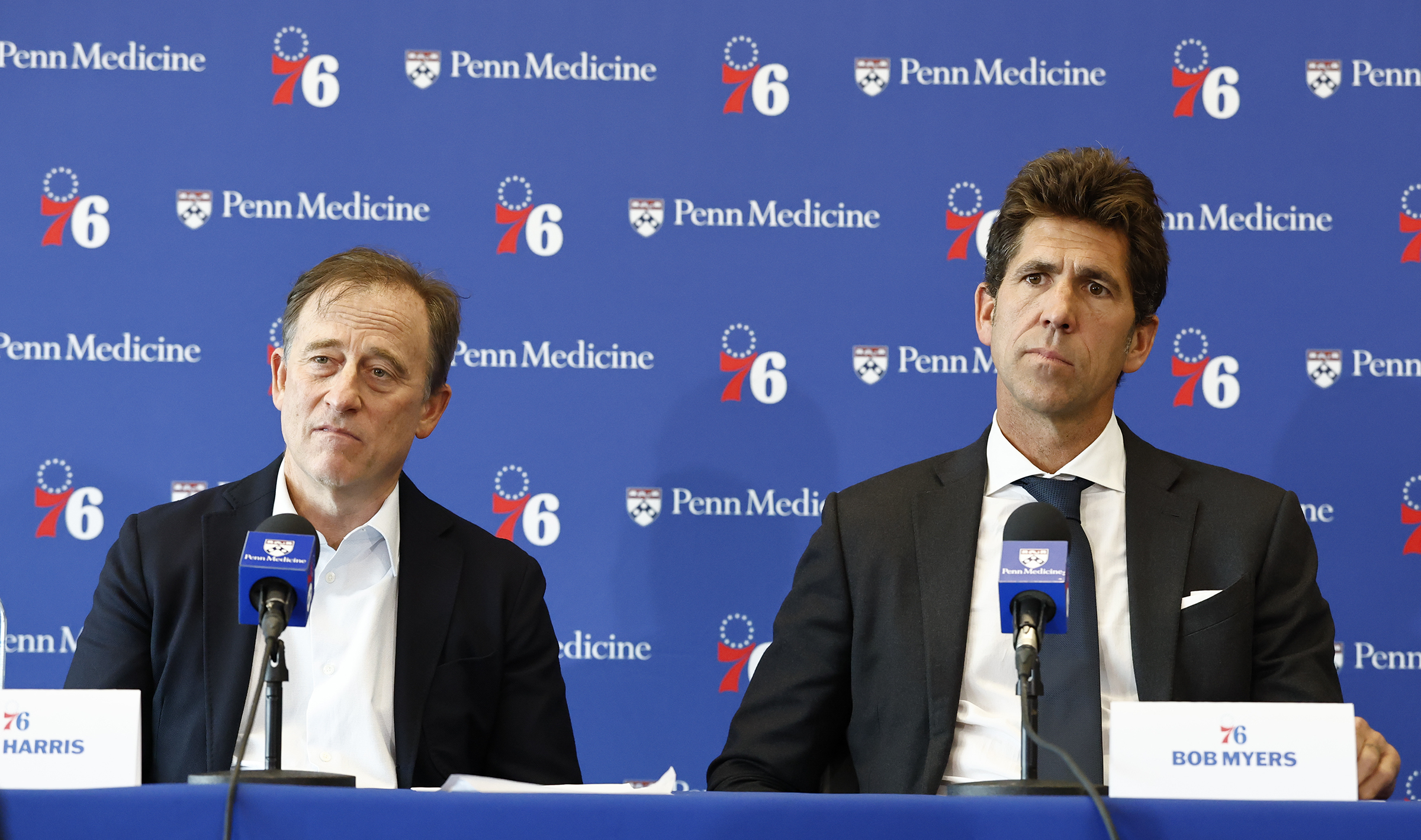
Harris Blitzer Sports & Entertainment president Bob Myers (right) helped hire Mike Gansey and will work closely with him. At left is Sixers managing partner Josh Harris.Tom Gralish / Staff Photographer
The dominant operating strategy for the next few years would seem to be playing it smart but honest: prioritize the three-to-five-year-plan while making this year’s team as good as possible within the constraints. The Eastern Conference landscape likely will get a lot tougher next season. With Pacers star Tyrese Haliburton returning to the 2024-25 Eastern Conference champs and Boston Celtics star Jayson Tatum fully recovered from Achilles surgery, the East should have at least three teams (including the New York Knicks) well out of reach of the Sixers.
That doesn’t include the Detroit Pistons or the Cavs, both of whom have a 60-win season within the last two years. Nor does it include the Miami Heat, who are a perpetual threat to shake up the offseason, especially with a Giannis Antetokounmpo trade lurking. Meanwhile, the Atlanta Hawks and Charlotte Hornets ended the season on runs of 26-11 and 28-12. Factor in a talented Orlando Magic roster that underperformed in 2026, and the Sixers easily could enter the season as the eighth- or ninth-best team on paper, regardless of what they do this offseason.
“We’ve got to find an identity,” said Bob Myers, the longtime Golden State Warriors executive who hired Gansey and will work in conjunction with him as president of sports at Sixers parent company, Harris Blitzer Sports & Entertainment. “We just don’t have one.”
NEW YORK — There were 66 New York Police Department vehicles and two garbage trucks acting as barriers parked around the corner of 33rd Street and 8th Avenue. Forty-three of the vehicles, including 35 motorcycles, were lined up on 33rd alone.
Both streets were locked down, and it wasn’t because John Turturro was inside Madison Square Garden.
Trump was coming.
President Donald Trump on Monday became the first sitting president to attend an NBA Finals game. He did so in the worst possible setting: the middle of the biggest, most congested city in the United States.
Trump, a native New Yorker, said he was invited by Knicks owner James Dolan. He choppered into the city and took a limo to the arena, but did not sit courtside as planned.
With the best seats auctioning off for more than $500,000 and the worst seats going for more than $6,000, maybe he couldn’t afford it.
During the national anthem, he was shown in a suite, saluting.
The boos were absolutely monumental, long and sustained, drowning out the hearty singer, Avery Wilson, and whatever cheers there might have been.
Knicks guard Josh Hart expressed regret that ticket prices were so high that many long-suffering Knicks fans, whose team last won a title 53 years ago, would have to watch on TV.
“I kind of wish ticket prices weren’t as crazy as they are. I feel like a lot of people have been waiting for this moment for a very long time,” Hart said. “Unfortunately, they’re not able to get into the building with the cheapest ticket $7,000 or $8,000. That’s ridiculous.”
You wondered what, then, Hart thought of Trump and his entourage taking up so much space in the World’s Most Famous Arena. Hart has been a frequent critic of Trump’s, celebrating on X, then known as Twitter, when Trump lost the 2020 election.
YESSIR!!!! GET TRUMP’S DUMBASS OUT THE WHITE HOUSE!!!!!!
Hart has not issued any comment on Trump attending Monday night.
Trump’s presence only amplified what you knew would be a frenetic, eclectic, and electric atmosphere.
There was Spike Lee mugging courtside in a signed Pope Leo jersey. Signed.
Comedian Larry David and Patriots owner Robert Kraft were hugging and texting courtside.
Knicks courtside for Game 3: Ari Emanuel, Mark Shapiro (in Jalen Brunson’s high school shirsey), Larry David & Robert Kraft. pic.twitter.com/IAvNCaacYh
Ben Stiller arrived four hours early, game face on, and was rubbing elbows with Pat McAfee, Stephen A. Smith, and what seemed like the rest of the ESPN staff that isn’t covering the College World Series.
Jeremy Lin was in a leather Knicks jacket, and, for some reason, was stretching his Achilles tendons backstage. He looked fit. Secret weapon?
Long before tipoff, thousands of folks outside were being misdirected by confused cops for an hour, then standing in lines another 90 minutes to get through security. There didn’t seem to be an empty seat by game time.
New Yorkers knew what was up. They’re used to Trump messing up Manhattan traffic.
These people have been waiting an hour to get into Madison Square Garden.
Here is a first person account:
“They routed everyone down to 34th and 8th.
Police barracade.
Through metal detectors to a point about 200 feet from MSG.
ESPN studio host Ernie Johnson, his bow tie undone, was getting wanded by Secret Service as he entered the arena 4½ hours early, then waited among a herd of press types for 20 minutes to be let in 30 minutes early, then waited 15 minutes for the only accessible elevator before they turned on the escalators around the corner.
Spurs center Victor Wembanyama went through the same process two hours later.
Victor Wembanyama going through a security checkpoint due to President Donald Trump being at Game 3 of the NBA Finals.
All players and staff for the Spurs and Knicks have to go through multiple layers of security at Madison Square Garden tonight. pic.twitter.com/8RGgCc4JQo
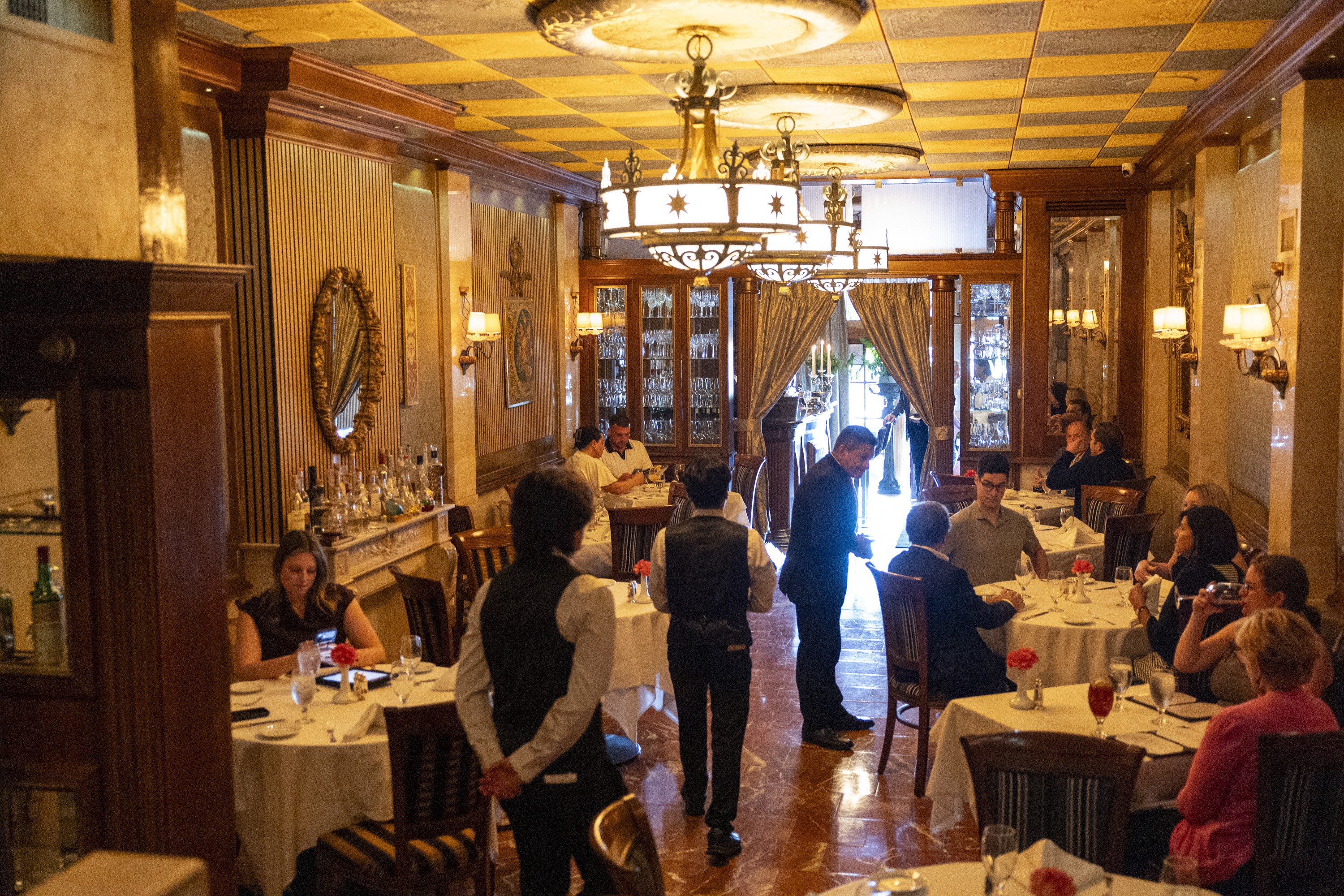
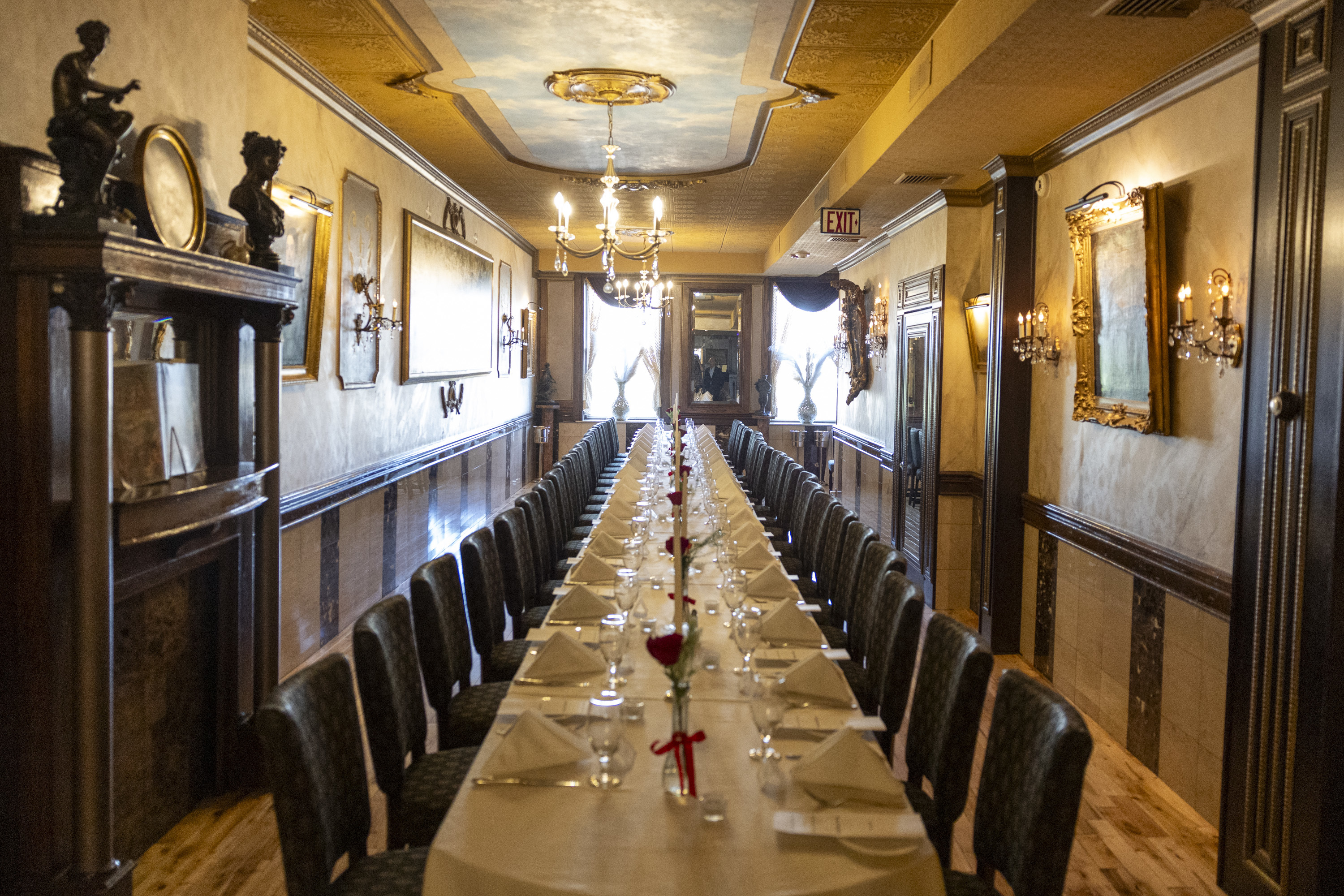
We were led to a table lost in the shadows in the farthest corner of La Famiglia. The tall white candle waiting for us was lit and its flickering wick filled the space with a bright warm glow that revealed a posh little nook — the lavishly muraled walls wrapped around a table padded with silken napkins and not one, but two layers of linen tablecloths. Our view of the room revealed a world that still hummed with fine-dining trappings that, outside this venerable Old City space, have nearly disappeared.
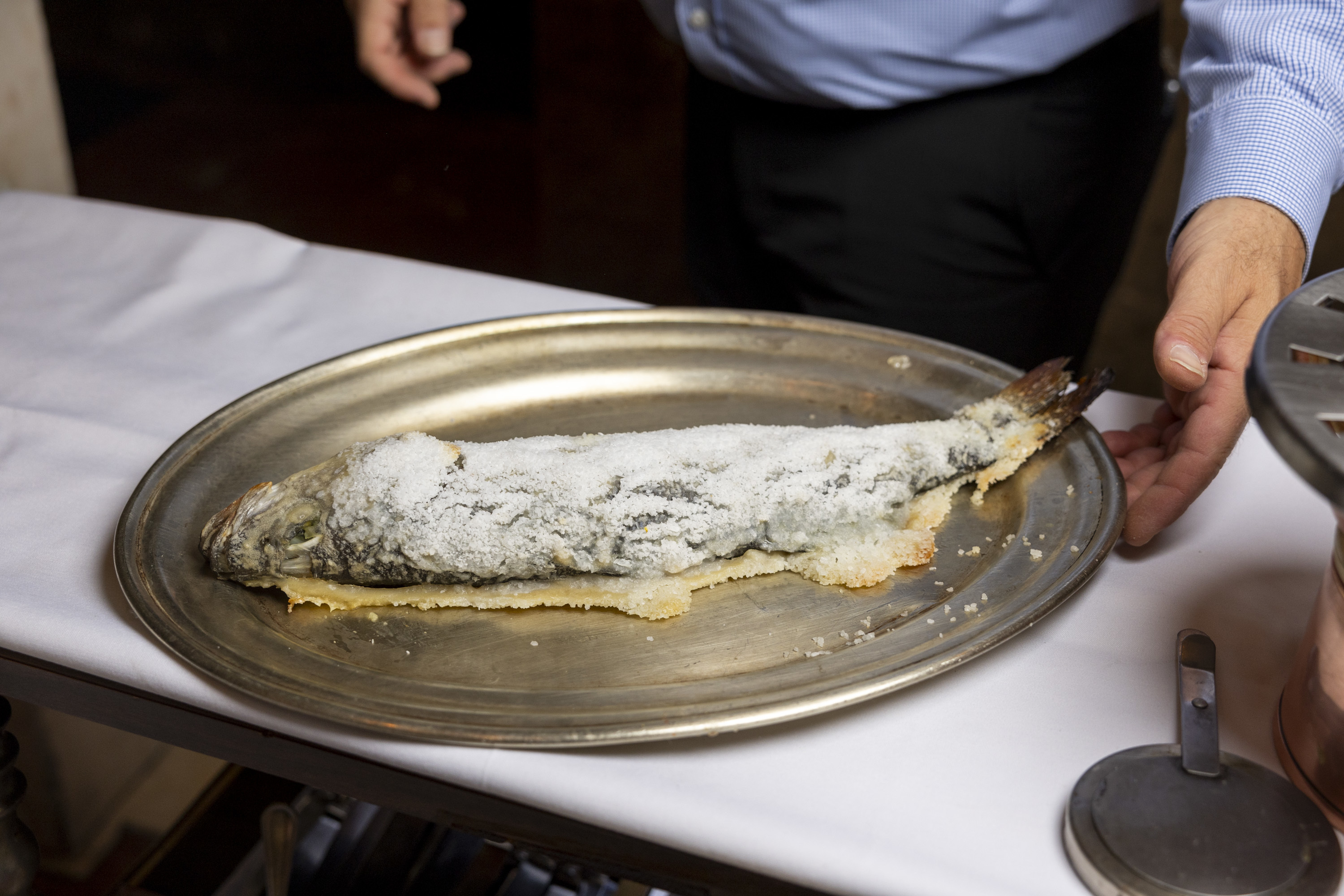
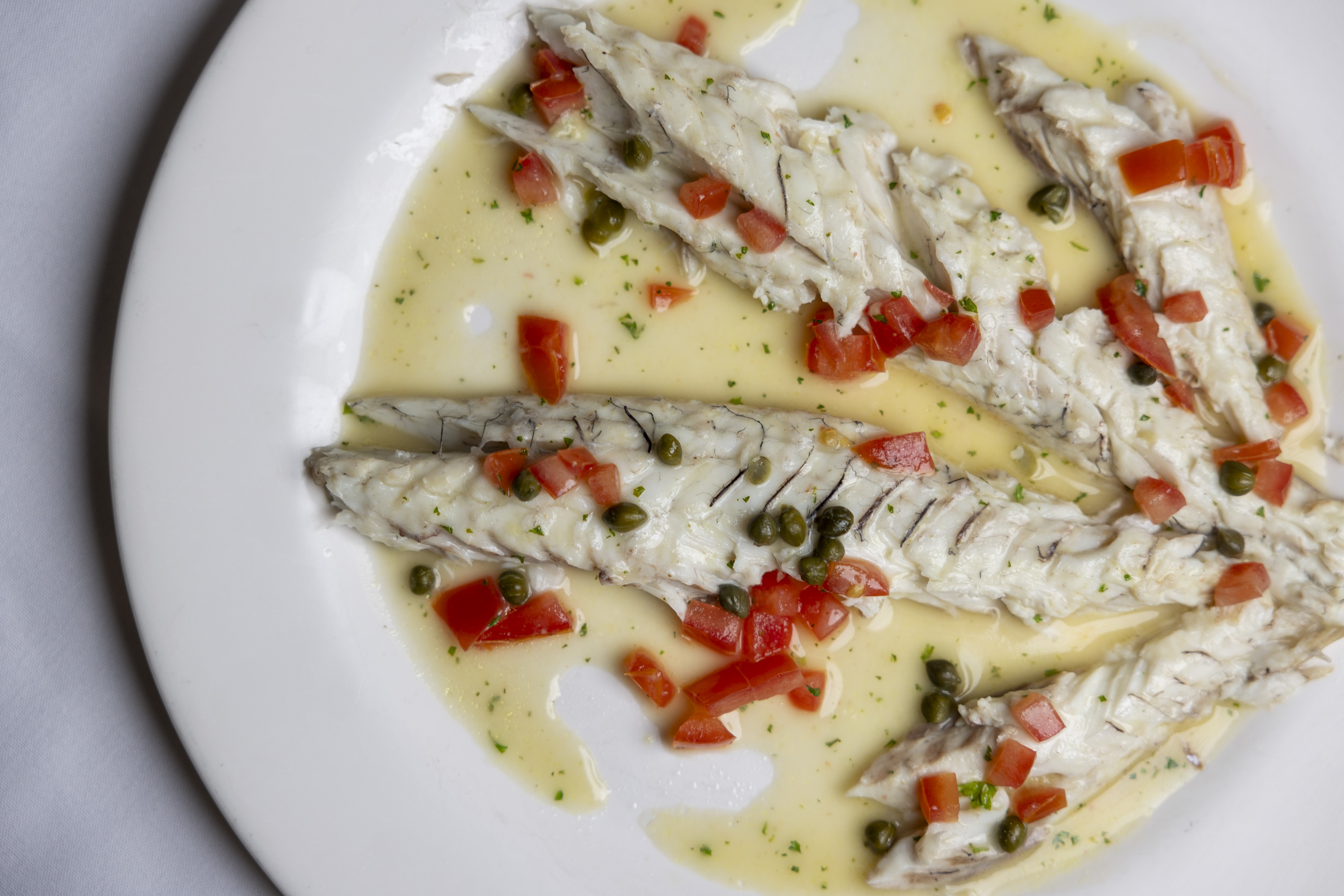
Crisply suited servers rolled guéridons across polished pink marble floors to decant grand old wines from La Famiglia’s legendary cellar. Other carts bearing whole branzinos entombed in salt crusts paused tableside, where the fish were deftly deboned into a bloom of fillets, then glossed with olive oil, tomatoes, and capers. I haven’t seen so many men eating in blazers in years.
The branzino at La Famiglia in Philadelphia. The fish is baked whole in salt before it is filleted tableside.Tyger Williams / Staff PhotographerThe branzino at La Famiglia.Tyger Williams / Staff Photographer
“Back in the ‘70s and ‘80s, people used to come here really really dressed!” says co-owner Giuseppe Sena, 73, recalling the era shortly after he and his brothers founded La Famiglia in 1976 with their parents, and his father Carlo “Papa” Sena’s classic Neapolitan cooking drew the city’s most well-heeled gourmands. “The women would come in chinchilla furs and so many diamonds the restaurant would be sparkling!”
Many longtime customers are still regulars. I ran into my retired rabbi here the same night that I ran into the retired poll judge from my local voting ward, both discerning eaters. The hushed tones and formal hospitality, as well as this menu’s fondness for center-cut meats, porcinis, and hard-to-find old wines, still appeals to a certain generation. The yet-to-retire and under 60 set? They are far rarer in the gilded confines of 8 S. Front Street, a Colonial-era building that was once a tea warehouse.
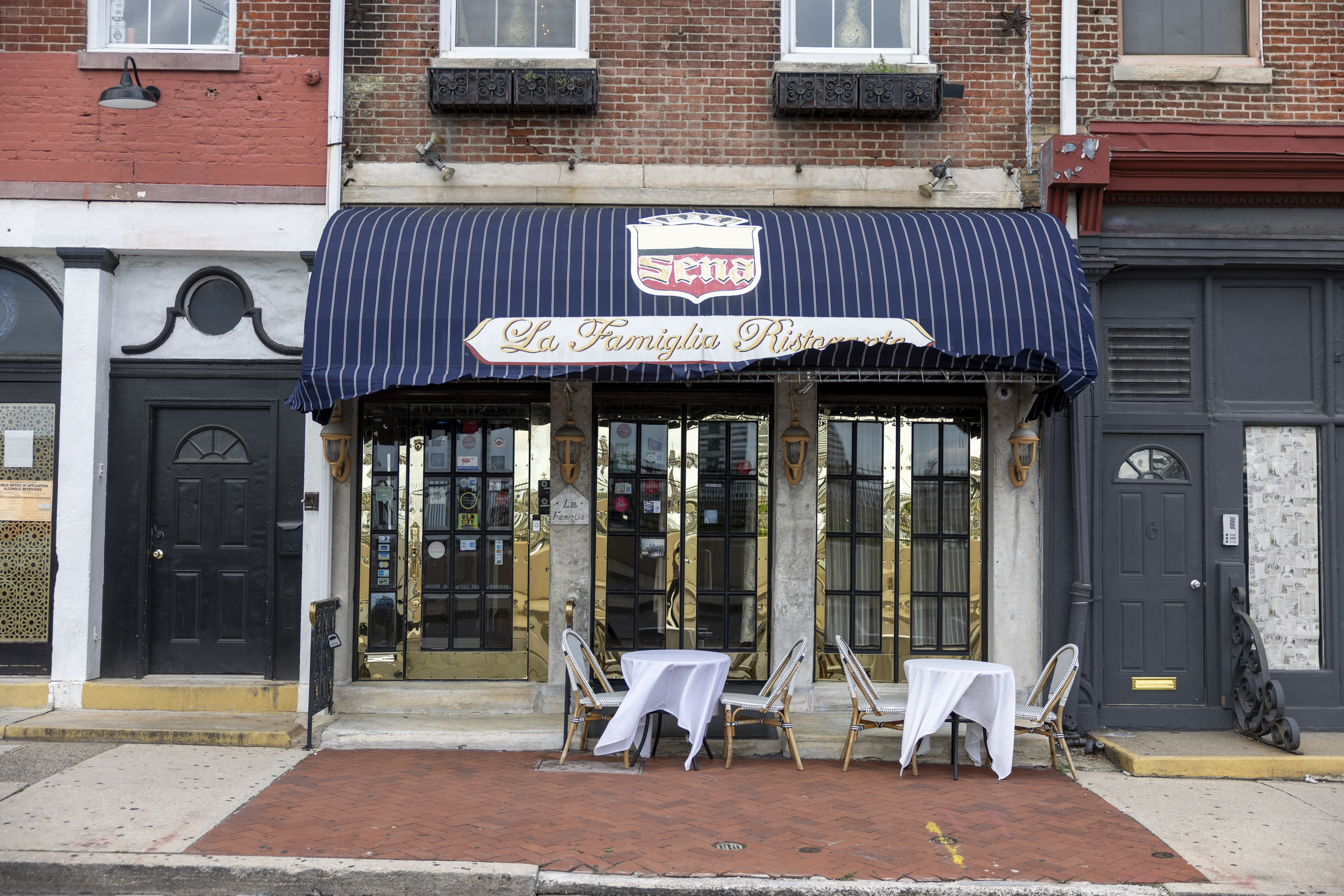
Diners at La Famiglia in Philadelphia.Tyger Williams / Staff PhotographerThe outside of La Famiglia.Tyger Williams / Staff Photographer
It’s been over two decades since I last reviewed La Famiglia, and even then I considered it old-fashioned, not to mention too expensive. But revisiting this classic 23 years later, I view it now through a different and fonder lens, not only because the cooking was more consistent, but because the context has shifted.
La Famiglia is among the last of a generation of continental-style restaurants with European-born chefs and well-starched dining rooms that ruled Philly’s fancy Italian scene in the late 20th century, including long-gone destinations such as Gaetano’s, Monte Carlo Living Room, and the original La Buca. But it has earned its status as a survivor. After two absolutely delicious recent visits, I can attest it’s clearly more than just a museum piece.
Set against the diverse riches of Philadelphia’s current Italian dining scene, from the stalwart red gravy icons of Italian American cooking (Villa di Roma, Dante & Luigi’s) to the alta cucina of Vetri, regionalists such as Le Virtù or Irwin’s, the nostalgia revivals of Palizzi Social Club and Bomb Bomb Bar, along with fresh contemporary takes from Emilia, La Famiglia’s retro experience still occupies a unique and worthy place to dine. With check averages for a complete meal between $90 and $100, it’s still a big night out but nowhere near the top of Philly’s current price range.
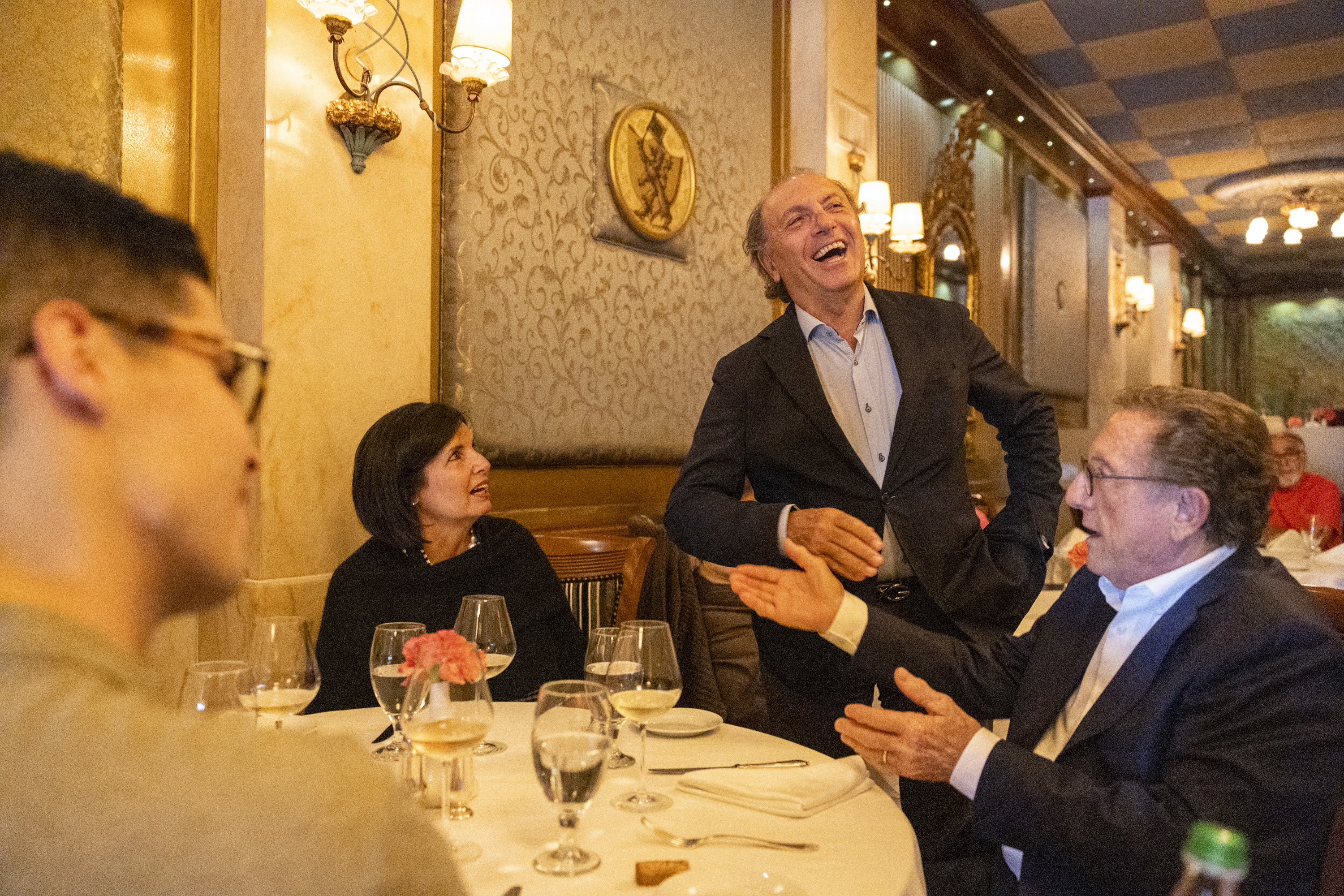
Upstairs event space and large dining area at La Famiglia.Tyger Williams / Staff PhotographerCo-owner Giuseppe Sena shares a laugh with Dawn and Luca Sena, of Society Hill, regulars and relatives, at the restaurant in Philadelphia.Tyger Williams / Staff Photographer
The menu isn’t exactly innovative, but has been updated multiple times over the years. An overall delicacy remains to the cooking, now under the care of current chef de cuisine Luis Yauri, that, guided by Giuseppe Sena and his nephew, Carlo, follows a direct lineage to the recipes and techniques Papa Sena had perfected at Zi Teresa in Naples before coming to Philadelphia in 1967.
You can taste some of those original dishes on a throwback menu for the month of June in honor of La Famiglia’s 50th anniversary, including snails in spicy red sauce and gnocchi Sorrentina. But the signature pasta, penne alla Famiglia, is the only original dish that still lingers on the current menu — and for good reason. The quill-shaped tubes are glazed in a buttery sauce tinted pink with fresh tomatoes, lightly sweetened with caramelized onions and dotted with savory nubs of rendered prosciutto, the epitome of patient cooking.
The founder’s elegant approach is also still evident in fried appetizers that employ only the finest grain of housemade breadcrumbs and an insistence on using only egg whites, rather than the more typical and heavier method of whole eggs with a flour dredge. The resulting wafer-thin snap on the crocchette just barely contains the whipped potato centers laced with three kinds of cheese. The rounds of eggplant are so sheer and deftly fried they form a fork-tender stack, along with truffled porcinis, fresh tomato sauce, and mozzarella, of a dreamy Parm-like starter called a tortino.
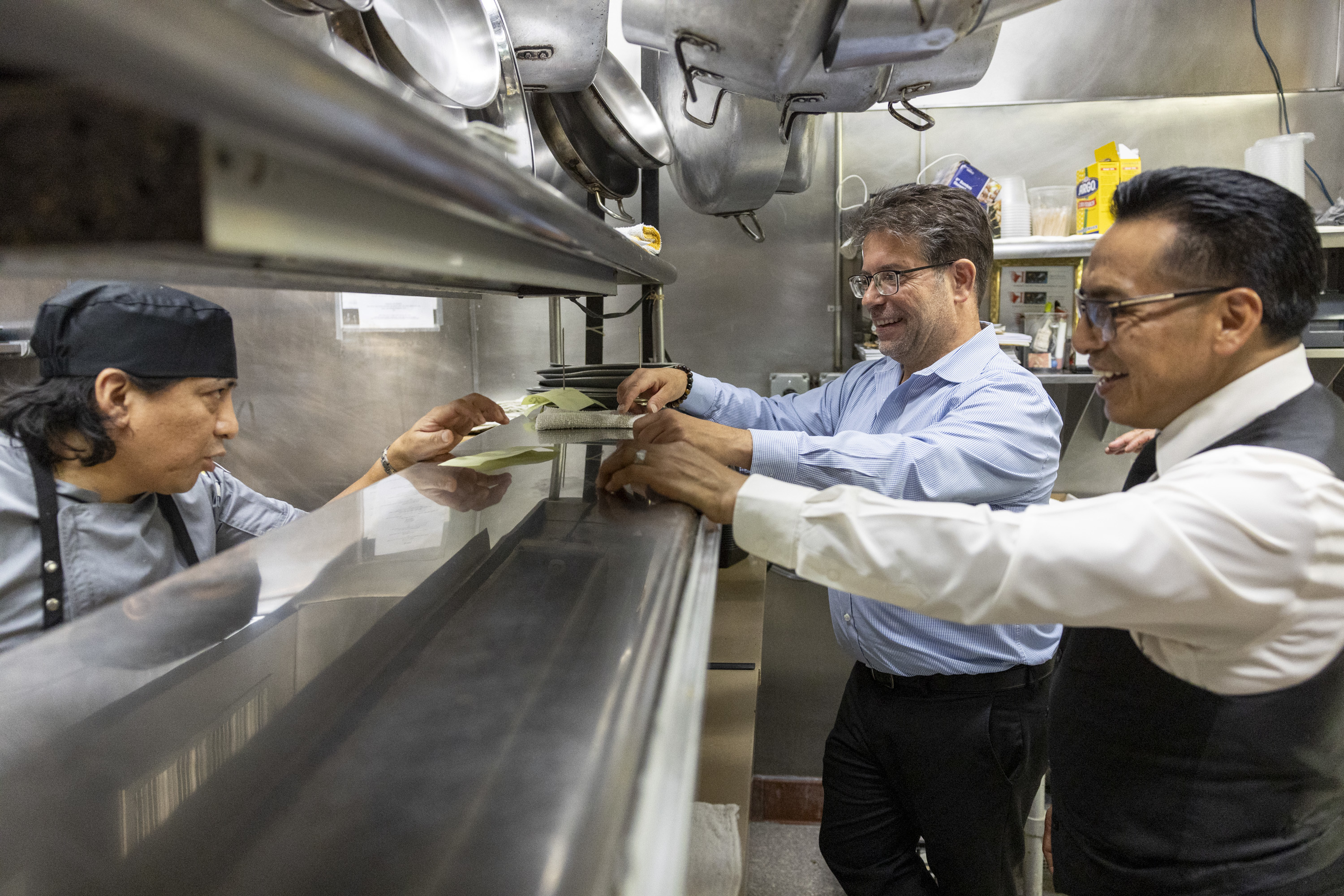
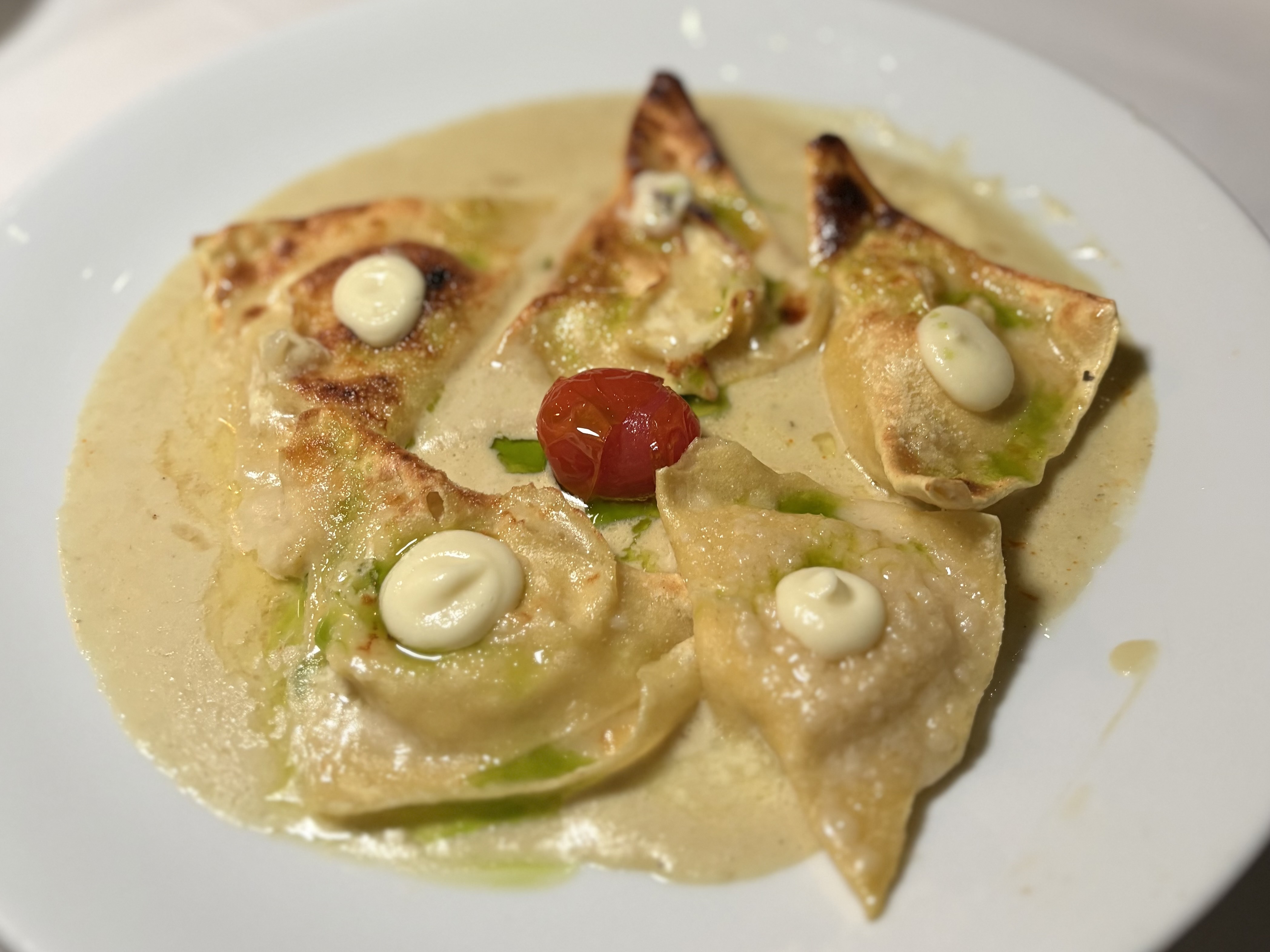
Carlo Sena, general manager and co-owner of La Famiglia, in the back of the kitchen checking orders in Philadelphia.Tyger Williams / Staff PhotographerTriangolo ravioli stuffed with burrata in eggplant cream sauce at La Famiglia.Craig LaBan / Staff
Some of my favorite dishes here are unfashionably drab but deliver vivid flavors, like the vitello tonnato that dabbed silken-soft pads of veal tenderloin with a tonnato sauce that zinged with the briny umami of pureed tuna, capers, and anchovies. I could also taste Neapolitan sunshine in the eggplant cream that glazed the burrata-stuffed triangolo ravioli that arrived lightly broiled to a cheesy crisp.
For the most part, these plates have largely been updated with splashes of flavorful herb oils that add colorful halos to the refined sauces that are always in service of La Famiglia’s sweet spot: luxury proteins.
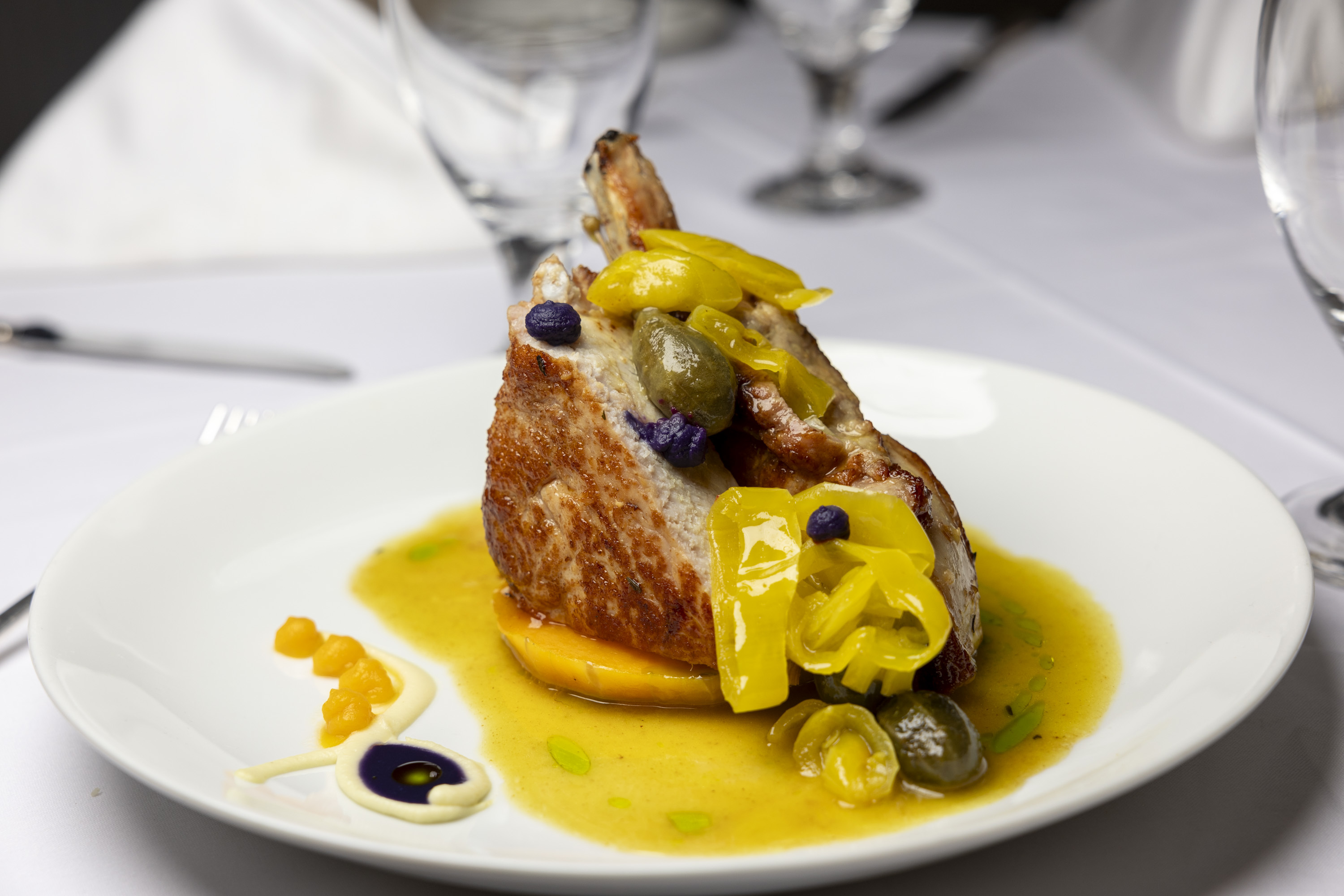
The pork chop at La Famiglia.Tyger Williams / Staff Photographer
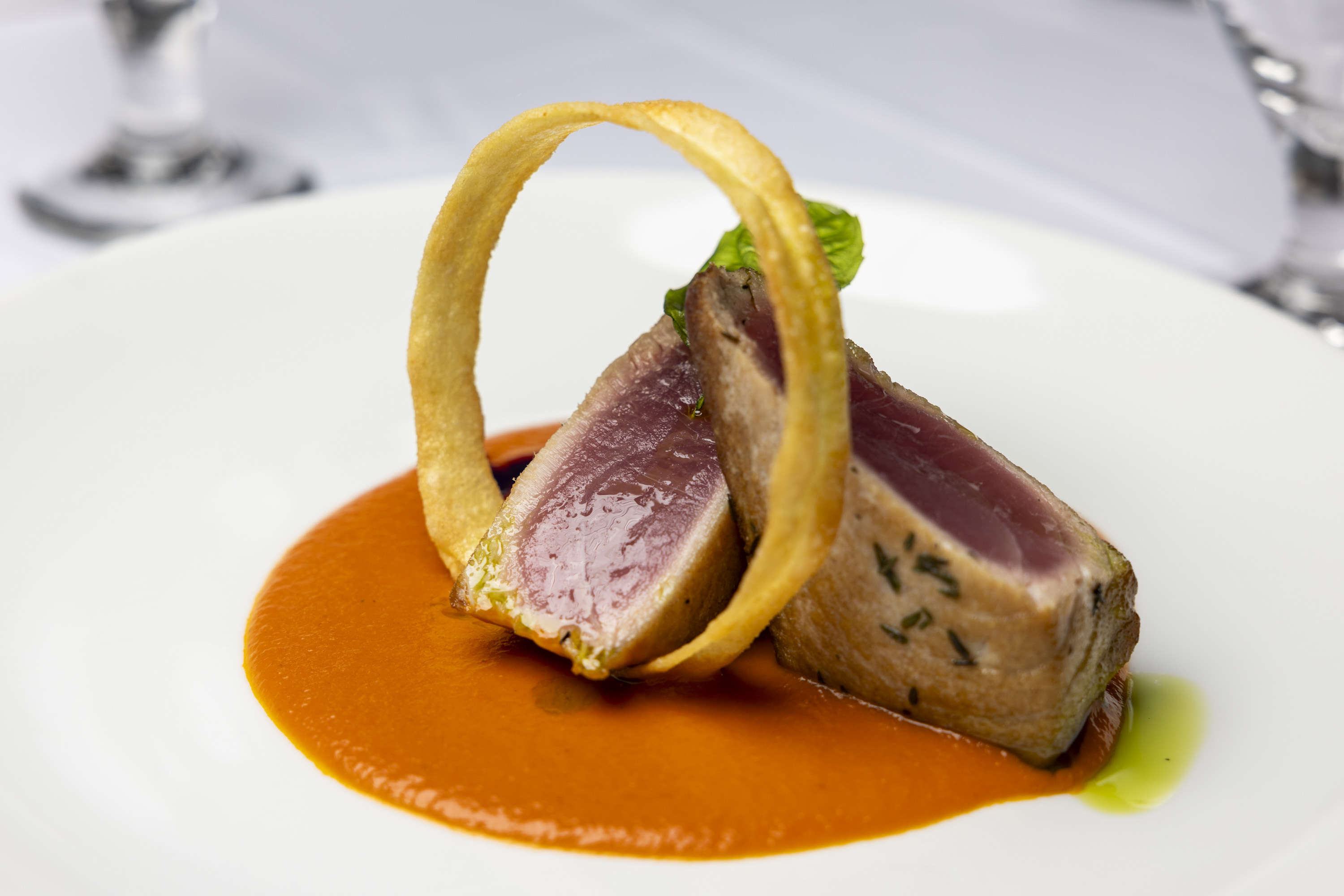
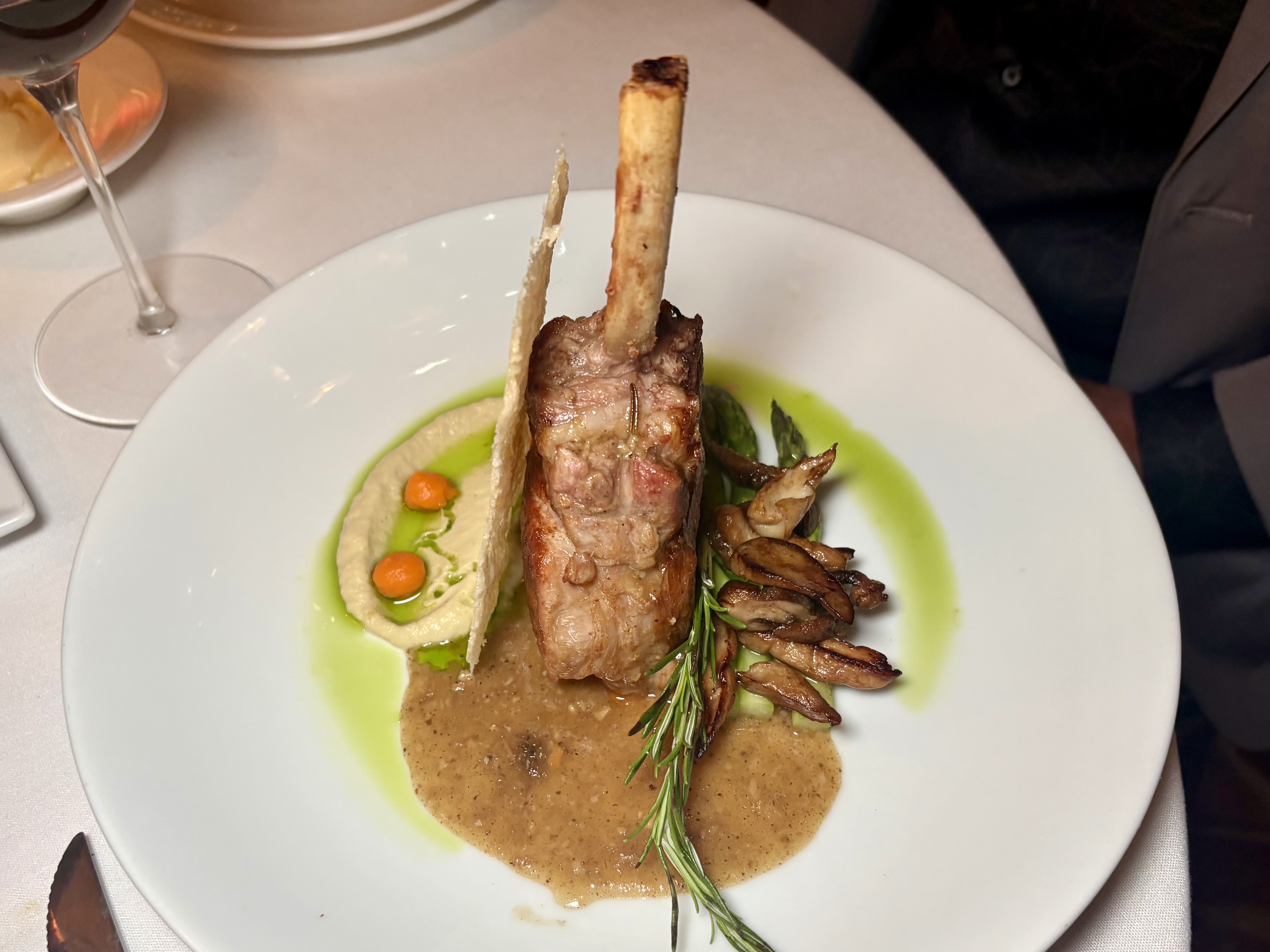
A ruby-rare hunk of grilled ahi tuna comes sliced on the bias atop a sun spot of pureed tomatoes and olive oil, a Mediterranean tableau framed dramatically by a crispy ring of baked pappardelle. An incredibly tender veal chop arrives standing upright against a crisp frico of a Parmesan cheese over porcini cream sauce dotted with carrot mousse.
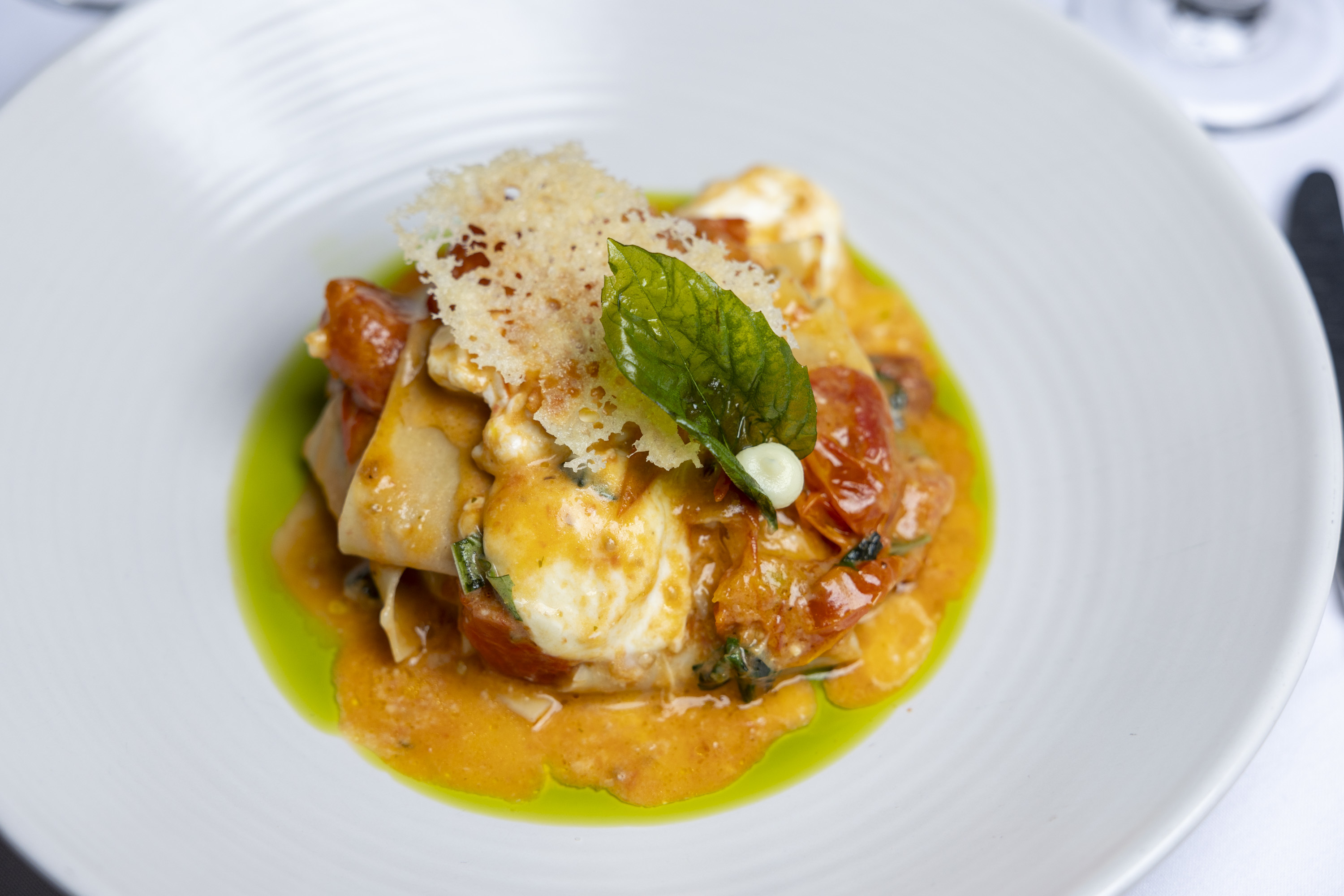
An amazingly juicy pork chop channels South Philly swagger with zesty banana peppers added to its white wine sauce, alongside plump caper berries. Filet mignon, a plush cut I almost never order over less tender but more flavorful steaks, rises here on a rich Barolo wine sauce infused with juniper and rosemary. The veal Milanese, meanwhile, whose breadcrumbs are pounded directly into the meat, is superbly crisped before it’s topped with a juicy fresh salad of tomatoes and red onions. A pappardelle special was all about showcasing fresh burrata chunks that wept a lush milkiness into the juices of lightly roasted cherry tomatoes to form their own kind of tangy orange sauce.
The pappardelle with burrata and roasted tomatoes at La Famiglia in Philadelphia, Pa., on Thursday, May 28, 2026.Tyger Williams / Staff PhotographerA veal chop is served with porcini sauce at La Famiglia Ristorante.Craig LaBan / Staff
If there was one savory disappointment, it was the puny nuggets of lump crab that came with scallops for the linguine, an uncharacteristic dip in quality for a restaurant that prides itself on luxury.
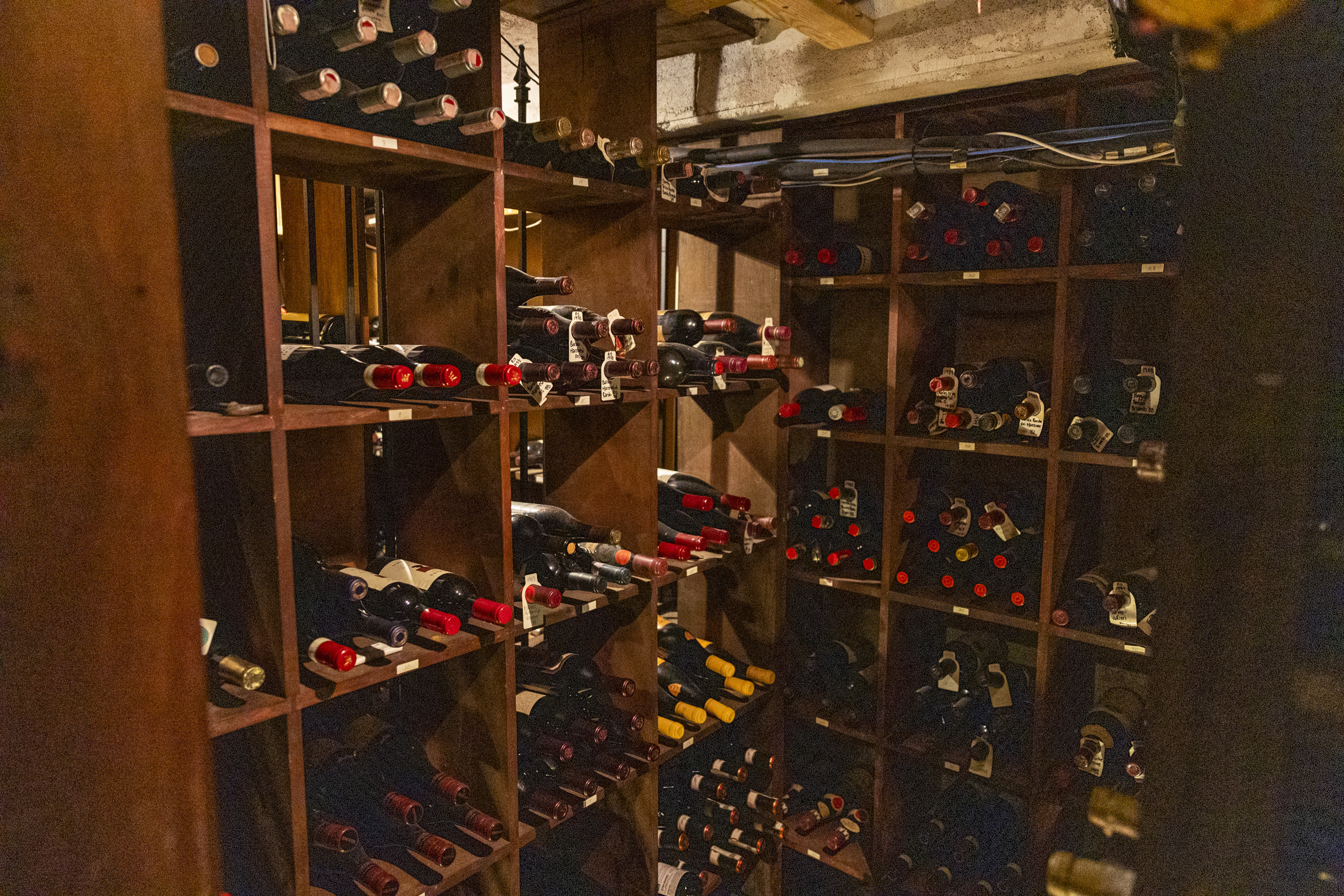
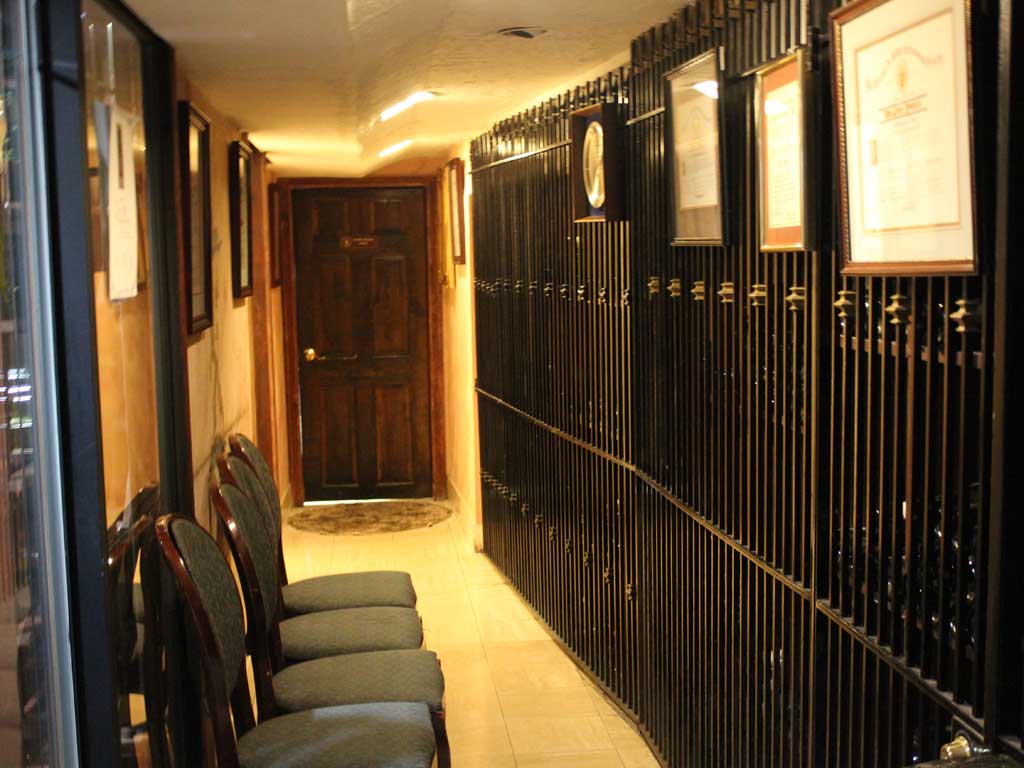
One other gold-plated aspect of La Famiglia that remains steadfastly exceptional is the wine cellar, whose 12,000-plus bottles and 912 selections are kept in the dank chill of temperature- and humidity-controlled cages in the basement. A trip to this subterranean treasure cave is essential, not only since it’s the corridor to the restrooms, but because you can also view illuminated holes in the ground where colonial-era privies were excavated during La Famiglia’s construction in the mid-1970s, a reminder that this address occupies one of the oldest corners of the city.
The downstairs wine cellar at La Famiglia.Tyger Williams / Staff PhotographerCellar at La Famiglia, 8 S. Front St.MICHAEL KLEIN / Philly.com
Decades of collecting and careful preservation have resulted in what is still one of the city’s greatest assemblages of vino, largely Italian but international in scope, from a 1945 Brunello di Montalcino Riserva that had been walled off for protection during WWII, to 19th-century Madeiras, as well as verticals of late-’70s and early-’80s California cabs from Heitz Cellar and Beaulieu Vineyard. The restaurant has increasingly begun offering premium wines by the glass — Barolo and Amarone — as a nod to current drinking trends. (An iPad has also replaced the massive old “wine bible.”)
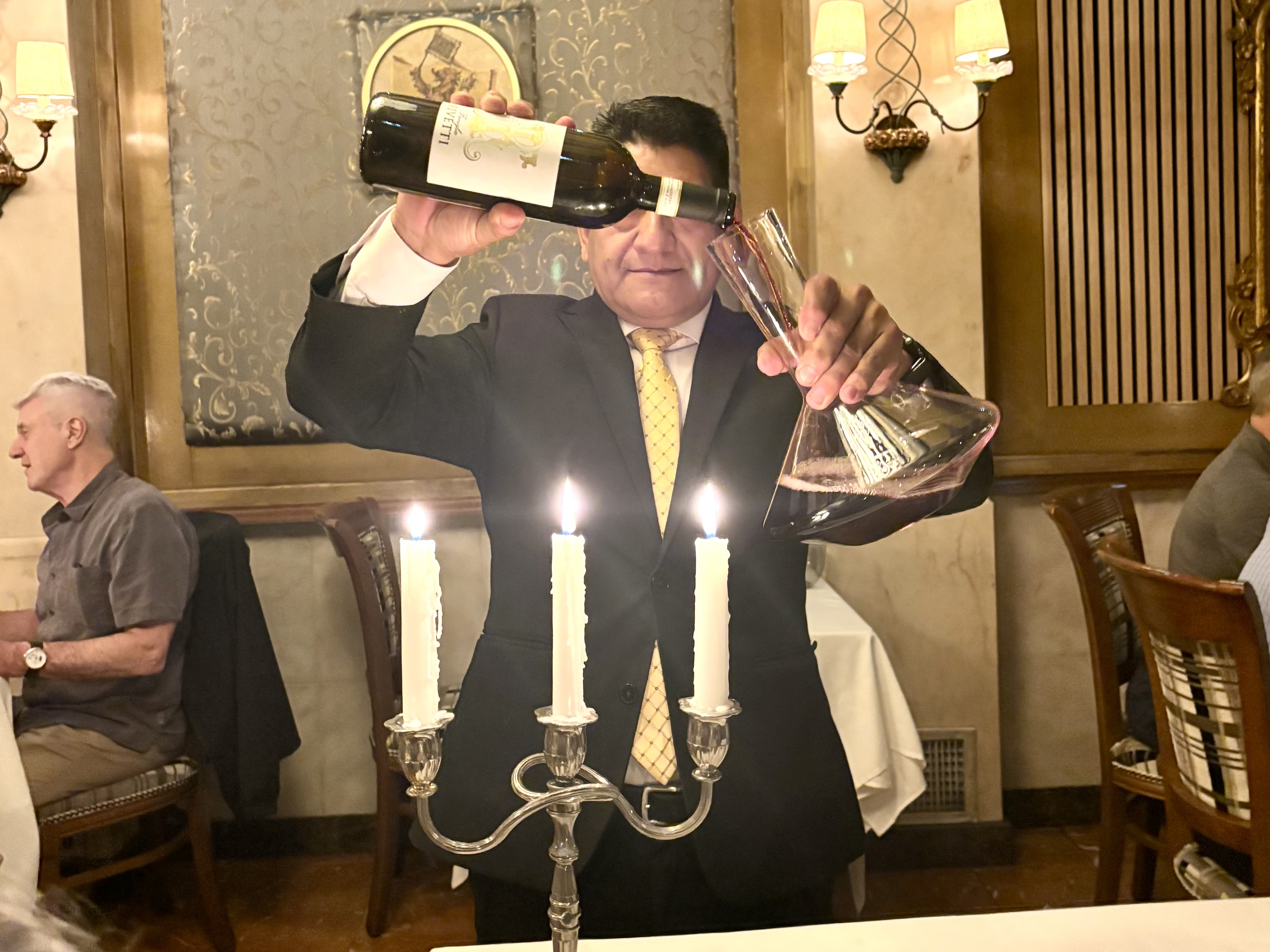
We decided to go all in and indulge in a bottle of Barbaresco. The sky’s the limit there, including the last $4,000 bottle from 1961 that was Angelo Gaja’s first vintage. We didn’t have the time for anything so old to be opened far enough in advance (not to mention the budget), we took maître d’ Jesus “Gaetano” Maldonado’s spot-on suggestion of a 2019 Famiglia Rivetti for $195.
Maître d’ Jesus “Gaetano” Maldonado decants a bottle of Famiglia Rivetti Barbaresco at La Famiglia.Craig LaBan / Staff
After a careful tableside decanting over a flickering candelabra to scout for sediment, the wine was luminous within 15 minutes of touching air, a gorgeously supple red with notes of black cherries, tobacco, rose petals, and spice that boosted the flavors of every dish on our table with a shine of glamour.
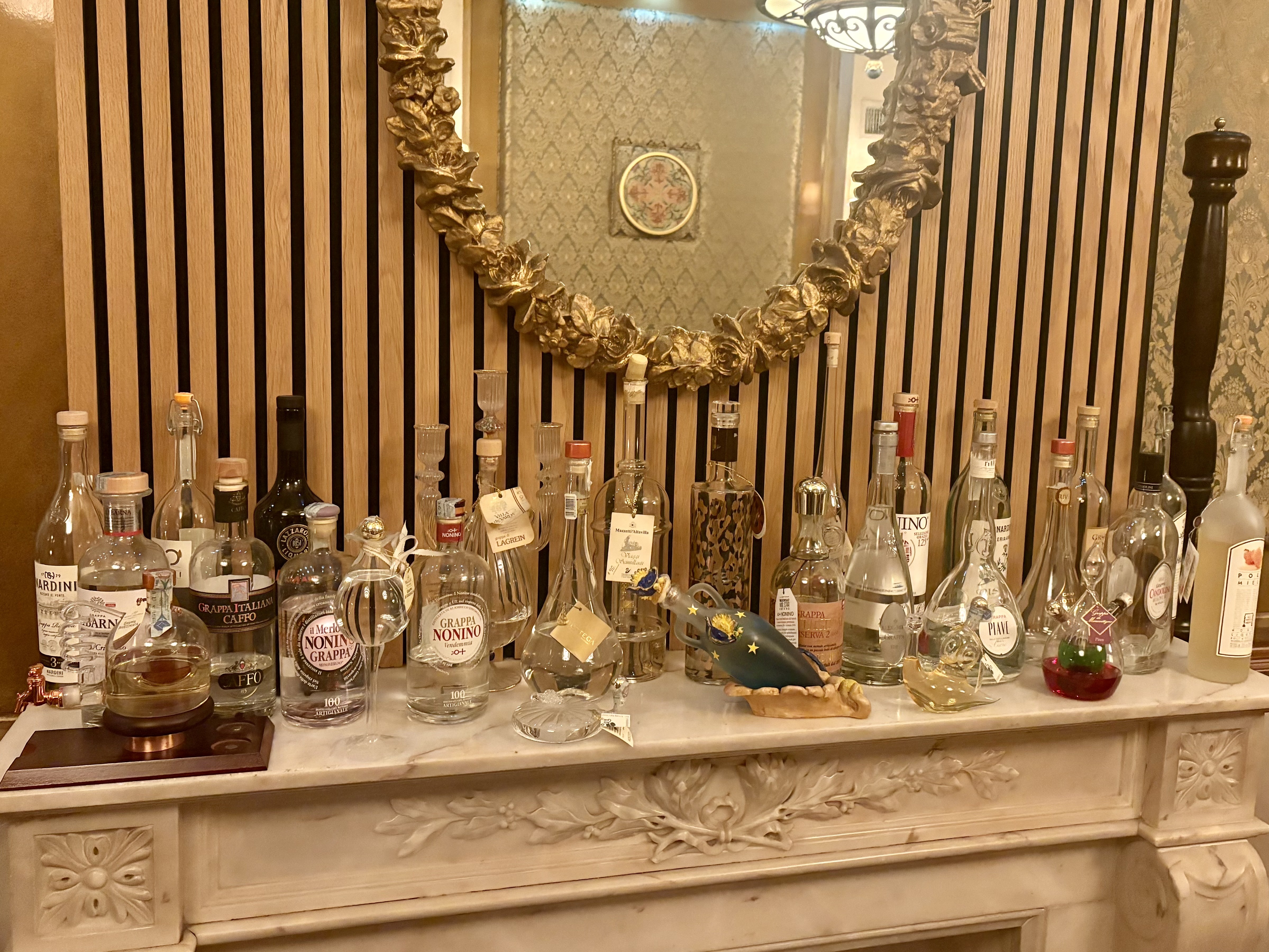
When it comes time for dessert, La Famiglia unfortunately settles for the tiramisu, cheesecake, and cannoli clichés, which were fine but unexciting, and mostly not made in-house. But the ristorante’s alcoholic assets, not surprisingly, offer a beguiling alternative: a collection of nearly three dozen rare grappa bottles beckon from a marble fireplace mantel. I sipped a little snifter of the clear and fruity brandy, an aged Rossi d’Asiago Dal Toso Elegance made from five different grapes, and it warmed my gullet and flooded my mind with a glow of contentment that felt like a forgotten pleasure. Decadent. Out of fashion. But undoubtedly still beautiful, not unlike eating at La Famiglia itself.
More than two dozen grappas line the fireplace mantel at La Famiglia Ristorante.Craig LaBan / Staff
La Famiglia Ristorante
8 S. Front St., Philadelphia, Pa. 19106, 215-922-2803;lafamiglia.com
Dinner Tuesday through Saturday, 5 to 9:30 p.m.
Entrees, $25-$75. Gluten-free pasta available.
The dining room is not wheelchair accessible, except with the assistance “of two strong guys.” The bathrooms, however, are located downstairs and completely inaccessible to wheelchairs.
Menu Highlights Arancini; crocchette di patate; vitello tonnato; tortino di melanzane; penne alla Famiglia; ravioli with burrata in eggplant cream; tuna with heirloom tomato sauce; veal chop with porcini sauce; pork chop with banana pepper-caper berry sauce; whole branzino in salt crust.
Drinks Italian-themed cocktails are a solid start to the meal, but the legendary wine cellar is the main attraction, a 12,000-bottle collection offering some of the world’s most famous Italian, French, and American producers. While the bottles (priced with generous mark-ups) tend to suit big spenders, La Famiglia’s much improved collection of wines by the glass, with choices under $20 along with more premium options hovering below $30, keep quality sipping within reach.
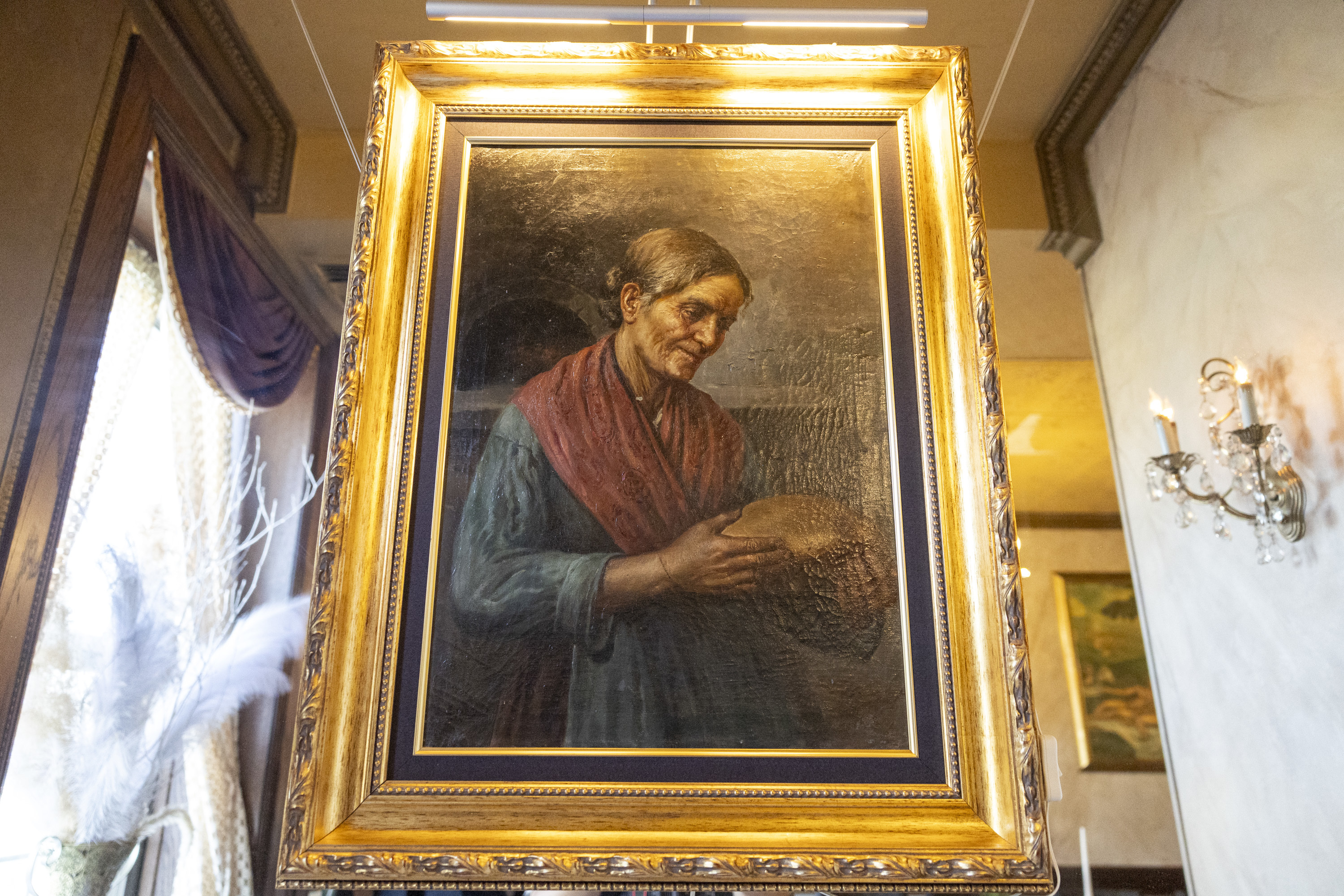
A painting of Giuseppe Sena’s great-grandmother Rachele Labbiento, seen upstairs in the event space and large dining area at La Famiglia.Tyger Williams / Staff Photographer
It is fitting that the Sixers will introduce their new personnel chief on a day that could end with the Knicks one win away from their first NBA championship in 53 years. The last time they held one of these press conferences, the Knicks were coming off their sixth straight season with fewer than 33 wins and heading into a campaign where their starting lineup would include Nerlens Noel and Elfrid Payton.
By the end of Daryl Morey’s first season as president of basketball operations, the Sixers would have a 15-game winning streak against the Knicks dating back to 2017. Six years later, there’s no better way to measure the organization’s stagnation than against the ascendancy of its closest neighbor.
In short, the Sixers have selected a heck of a contextual backdrop for Mike Gansey’s first meeting with the Philadelphia media. Not only are the Knicks up 2-0 in the NBA Finals, but they are there with a starting lineup that features four players drafted no earlier than 23rd overall, plus a center whom Joel Embiid once used as his literal and figurative punching bag. Granted, the Knicks were not the team that drafted any of the five. But they also weren’t the team that traded one of them away.
The Villanova angle has been well trod. For good reason. It is a remarkable twist of the knife. Less examined are the more painful connections.
In 2017, the Sixers traded up for Markelle Fultz in a first round where OG Anunoby went at No. 23 and Josh Hart at No. 30. They are two of five players from that year’s draft who participated in this year’s conference finals.
The following year is the year best known as the one where the Sixers drafted Mikal Bridges at No. 10 and then traded him away for a guy who would play 13 career games. It was also the year where they drafted Landry Shamet seven spots before the Mavericks took Jalen Brunson. The kicker is that Shamet is now on the verge of a ring as a key reserve with the Knicks.
This exercise is mostly an example of the fun of cherry-picking your hindsight. But there is some level of truth in it. Like Morey, Gansey will be inheriting a team that is largely a function of some consequential missteps in its long ago past. The original vision was to lose a lot of games in the hopes of drafting a homegrown triumvirate like Fultz, Embiid, and Ben Simmons. The Sixers ended up with more chances than they deserved at executing a pivot. Each time — with Bridges and Jimmy Butler, notably — they kicked the ball right back out of bounds.
Now, somehow, they have another chance.
Gansey’s hiring comes at a critical time for the Sixers. Somehow, they find themselves at an inflection point that could prove just as critical as those they deflected in the past. Tyrese Maxey and VJ Edgecombe are both gifts from forgiving gods. Maxey was selected with the No. 20 overall pick that the Sixers initially traded to the Magic in the Fultz draft and then reacquired by trading a then-floundering Fultz to the Magic. Edgecombe was selected with the No. 3 overall pick that the Sixers landed because of how bad they were in Year 1 of the Paul George/Embiid Era.
Monday’s press conference will hopefully be an opportunity to hear Gansey’s response to a question that nobody from the Sixers has yet answered. Bob Myers and Josh Harris took turns dodging it a month ago in the wake of Morey’s firing. They surely posed it during their interview sessions with the former Cavaliers general manager. However much say Gansey ends up having relative to Myers, his hiring is pretty good evidence that their philosophies are all in alignment here at the beginning.
Where do the Sixers go from here?
While the futures of Embiid and George are clearly the biggest variables, they also might be beside the point. There is only one answer. Their future is here, with the Sixers. Each of their contracts renders impossible a mutually beneficial trade, at least for next year. Gansey’s real challenge is how to factor that reality into his attempts to build around Maxey and Edgecombe.
Maybe that is giving him and the Sixers too much credit. I suppose there is a chance he comes out and says he sees a roster that is built to win now, that Embiid is still the centerpiece of this team and George is still a fine championship-caliber starter. I suppose he could look at the No. 22 pick in this year’s draft and the Sixers’ relative wealth in future drafts and see mostly the capital it would take to add a win-now player to George, Embiid, Edgecombe, and Maxey.
But I doubt it.
Josh Harris and Bob Myers meet with the media at the 76ers Training Complex on May 14.Yong Kim / Staff Photographer
If that was a philosophy Myers and Harris agreed with, they wouldn’t have had a reason to part ways with Morey. The change at the top only made sense if they sought a change in vision. Let’s hope we hear Gansey articulate that vision.
There are lots of different ways to build a championship contender. There are lots of different timelines. The Knicks remade their entire roster from scratch in the span of a couple of seasons, but they built a team so sensible that it feels like it was drafted and developed together. The Spurs hit on three top-five draft picks in Victor Wembanyama, Stephon Castle, and Dylan Harper.
In the push-pull between present and future, how much will the Sixers value players who make them a better team now vs. players who might make them the team they’ll need three years from now? Gansey’s first task as president of basketball operations is to sell his fan base on that vision.
James Develin was raised in Gilbertsville, Pa., on the voice of Merrill Reese and the mystique of Brian Dawkins, “Weapon X.” But in the wake of Super Bowl LII on Feb. 4, 2018, he felt sad.
There was good reason for this. The fullback was in his sixth season with the New England Patriots. He’d won two Lombardi trophies, in the 2014 and 2016 seasons, and was eager to add a third.
But the Eagles were a team possessed. They were dominant in the trenches. Bursts of offense came from unlikely contributors. Backup quarterback Nick Foles had the game of his life.
Develin returned home a few days later to a barrage of clips from the Super Bowl parade. Hoagie shops started selling sandwiches called “Philly Special” and “Philly Philly.”
Every Wawa had championship T-shirts on display. Develin couldn’t even get his coffee without being reminded of the worst loss of his career.
“Losing that one … you were so close, and now you know exactly what the Eagles are enjoying,” Develin said. “And you’re home, watching them doing it, right outside your front door. Man, that was tough.”
Life has gotten easier since then. Develin retired in 2020, but won a third Super Bowl with New England before that. He began to pursue a career in business.
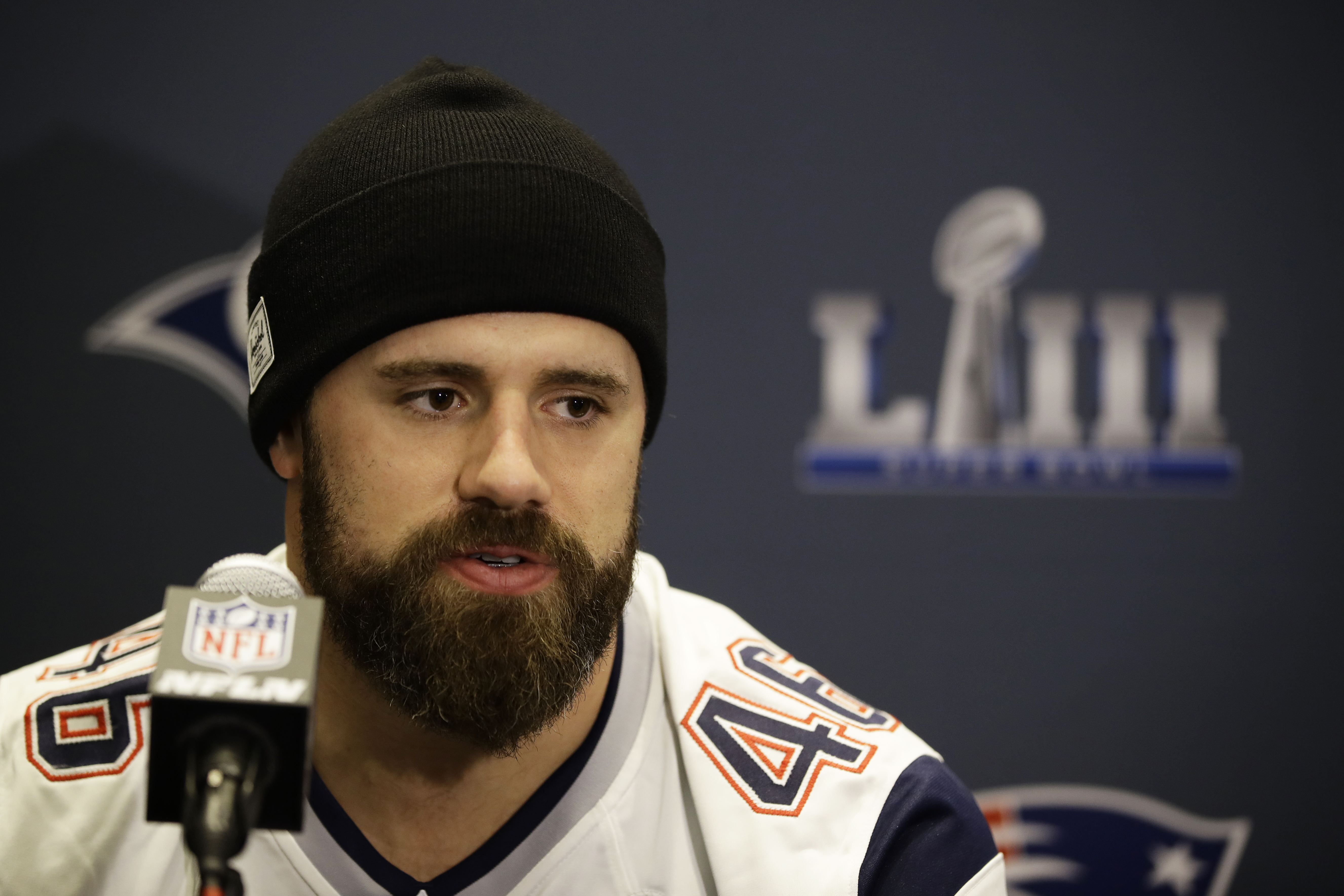
James Develin, pictured at a news conference days before his Patriots’ Super Bowl LII loss to the Eagles. David Swanson / Staff Photographer
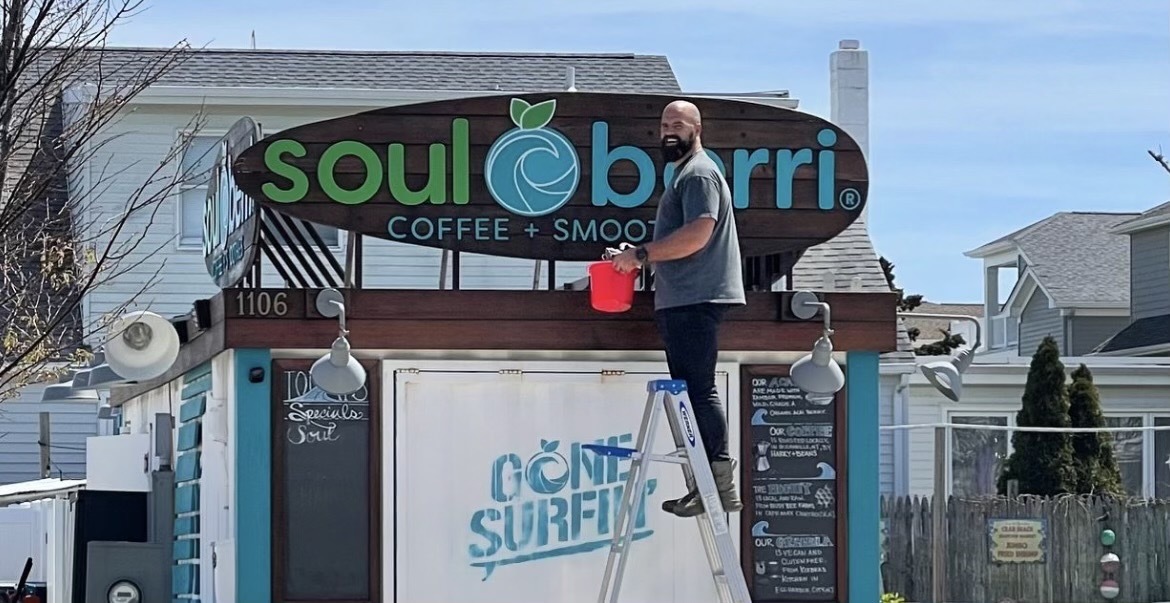
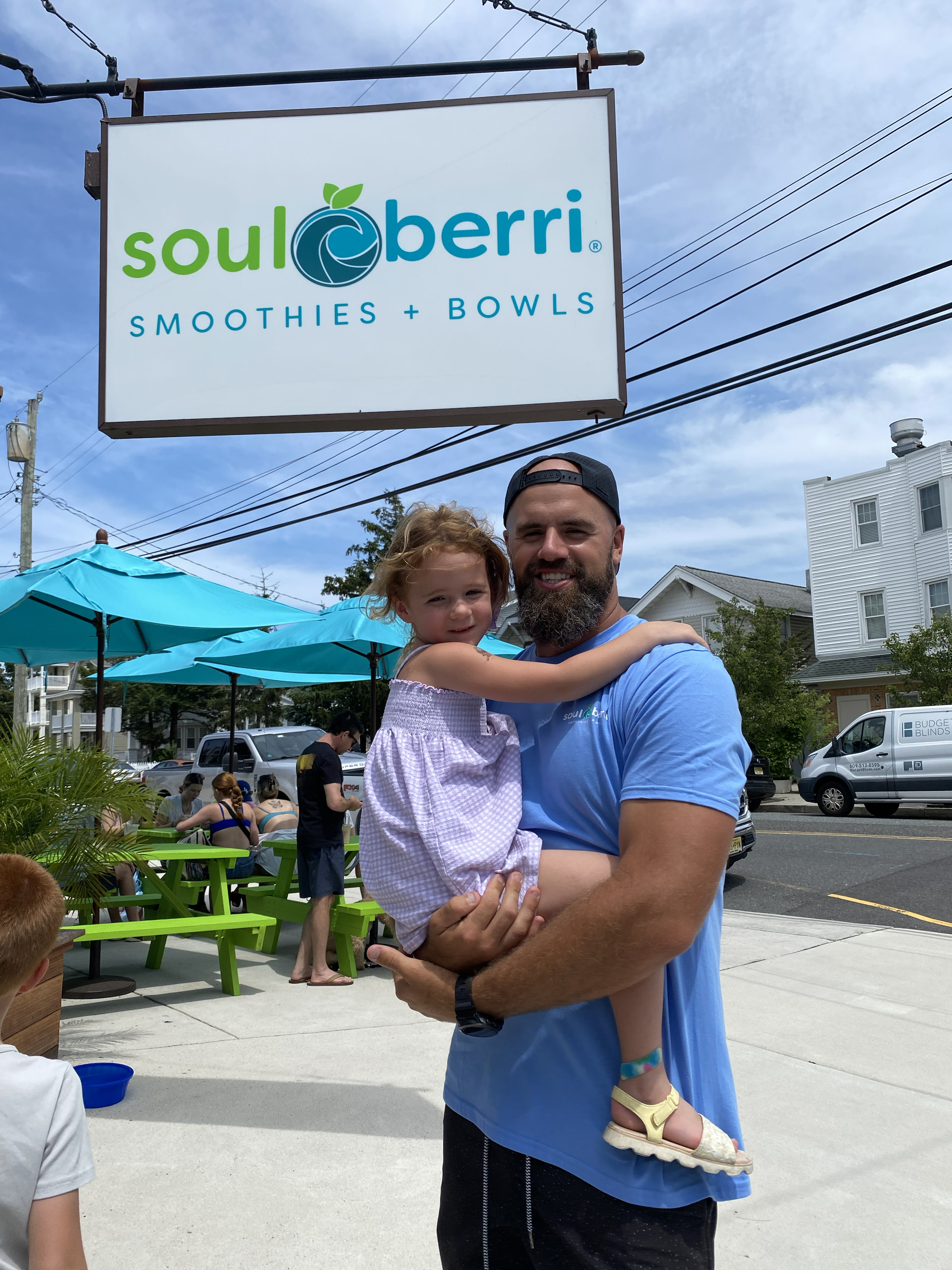
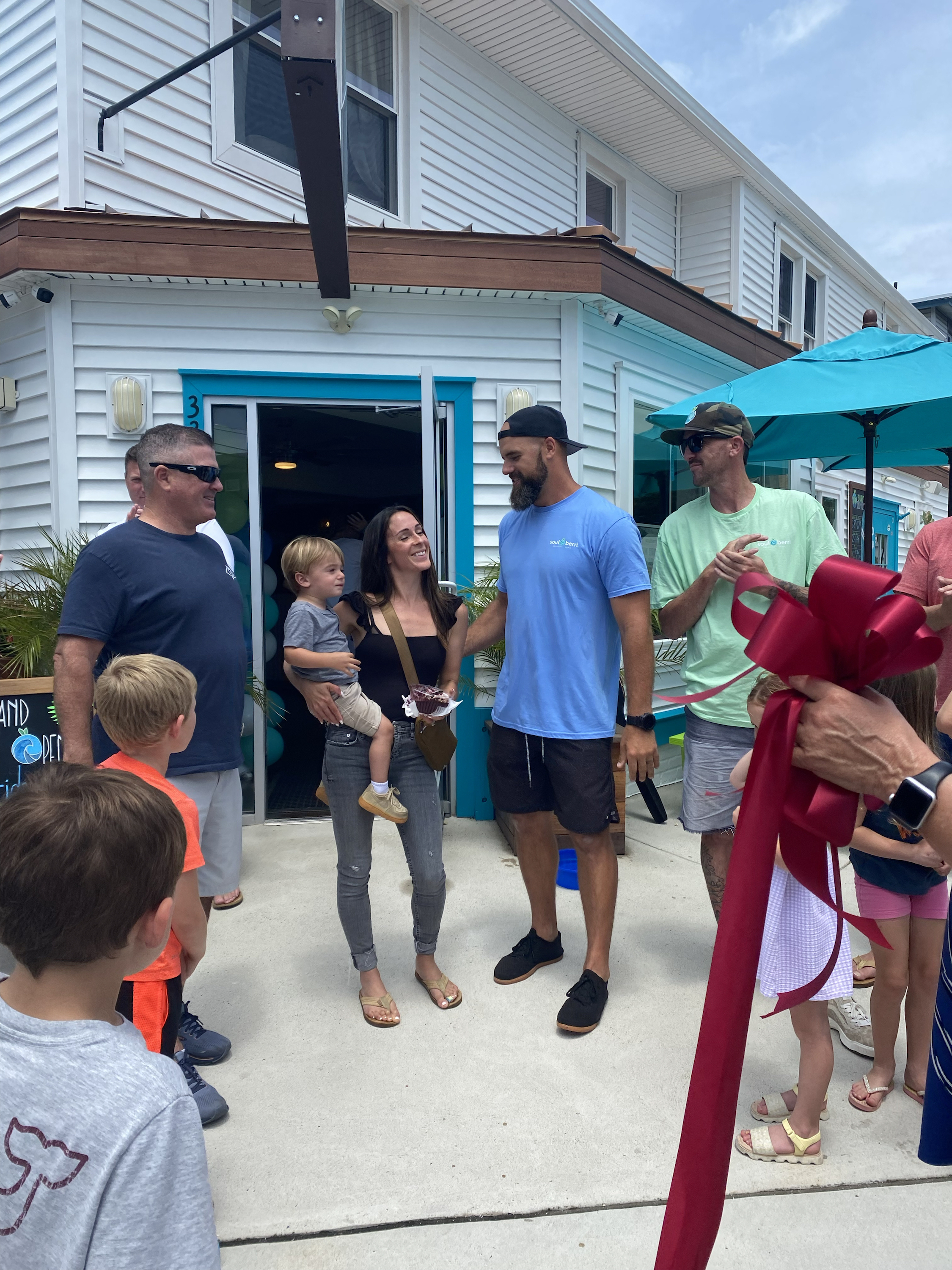
He and his wife, Jenny, grew up together and decided to stay in the area. They moved to Collegeville and got a place down the Shore. In 2021, Develin purchased Soulberri, a smoothie shop in Brigantine where he was a frequent customer.
The longtime Patriot is not your typical athlete-turned-entrepreneur. During the summer, he’s at Soulberri every day. When Develin added a location in Ocean City in 2023, it was he and general manager Ryan Bonanni who built it from the ground up.
Develin handles payroll. He sands and stains mahogany wood benches. He plants flowers and paintswalls.There is no task too small for the former fullback.
“He doesn’t like to sit around,” said Bonanni. “He’s hands on.”
It has been an interesting and atypical career path, one that is not short on irony.Eight years after Super Bowl LII,Develin is selling açai bowls and dairy-free ice cream to people who actively rooted against him.
But the former Patriot has embraced this.
“Every once in a while, someone driving yells, ‘Go Birds,’ or something,” he said. “And it could be anybody. Because 90% of the area is Eagles fans.
“And I have no qualms with that. I understand what it’s like being an Eagles fan. So I am all for it.”
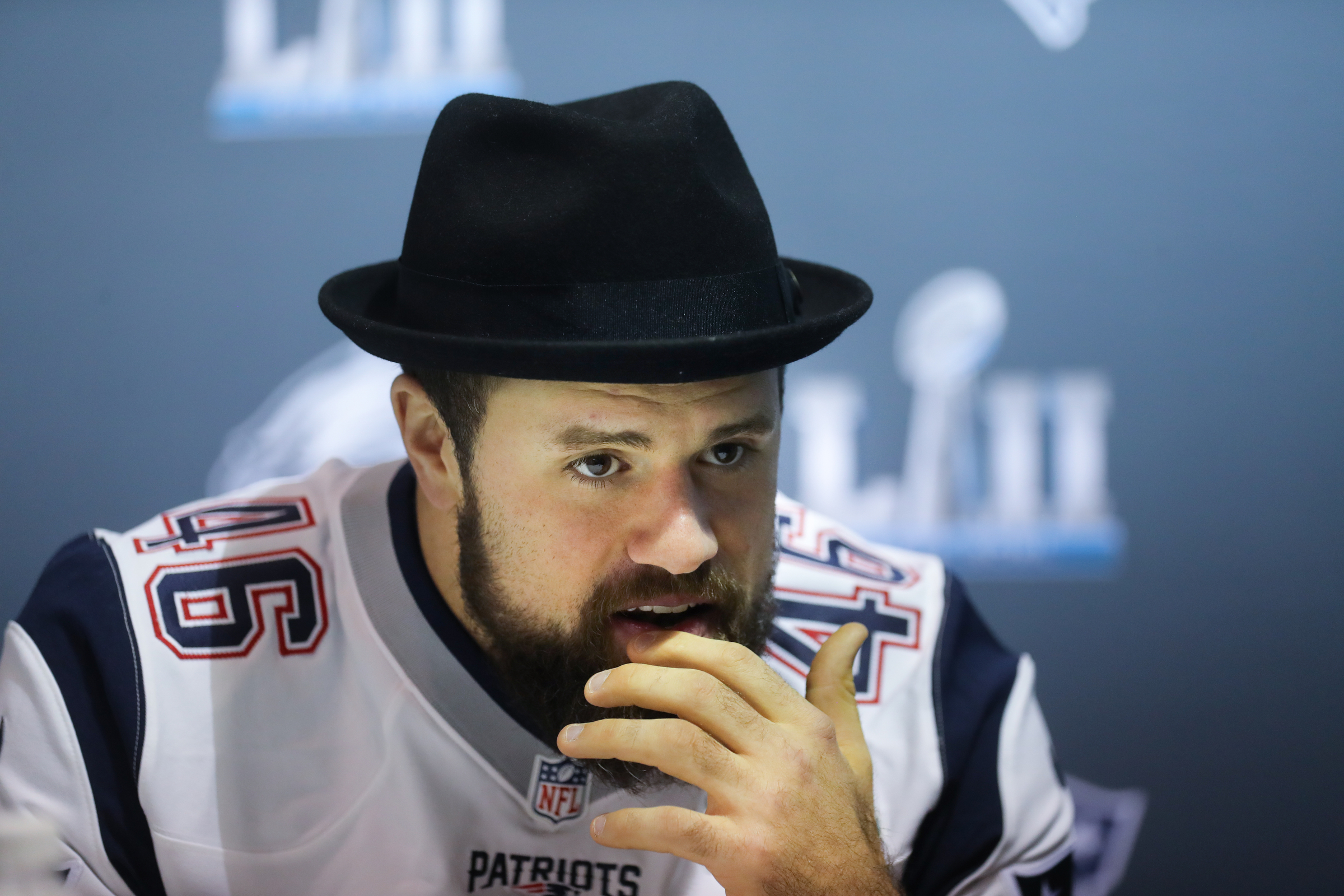
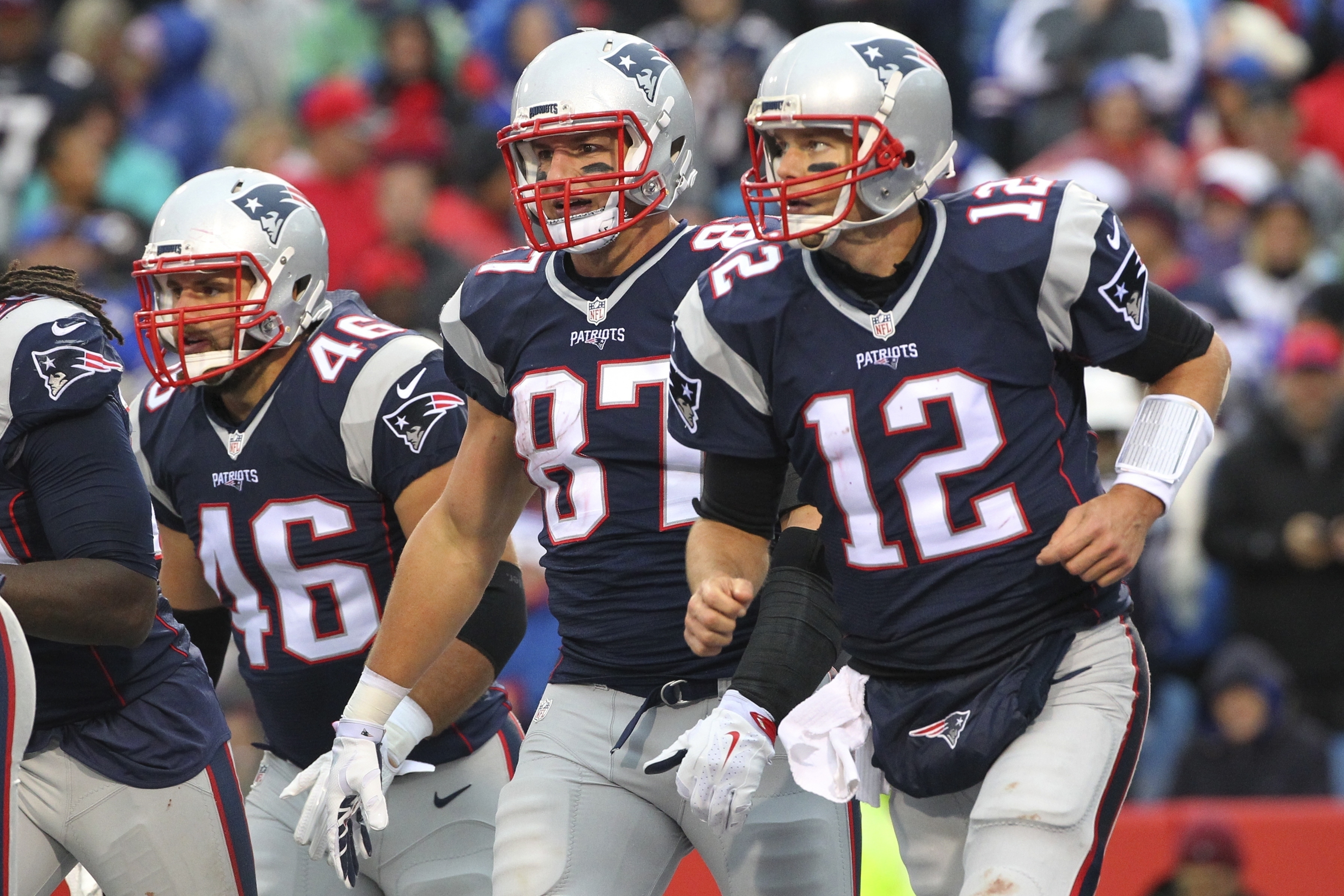
James Develin (46) played alongside some of the biggest NFL stars of his era including Rob Gronkowski (87) and Tom Brady (12). Bill Wippert
From ‘hating’ Tom Brady to becoming teammates
It was not long ago that Develin was one of those fans.
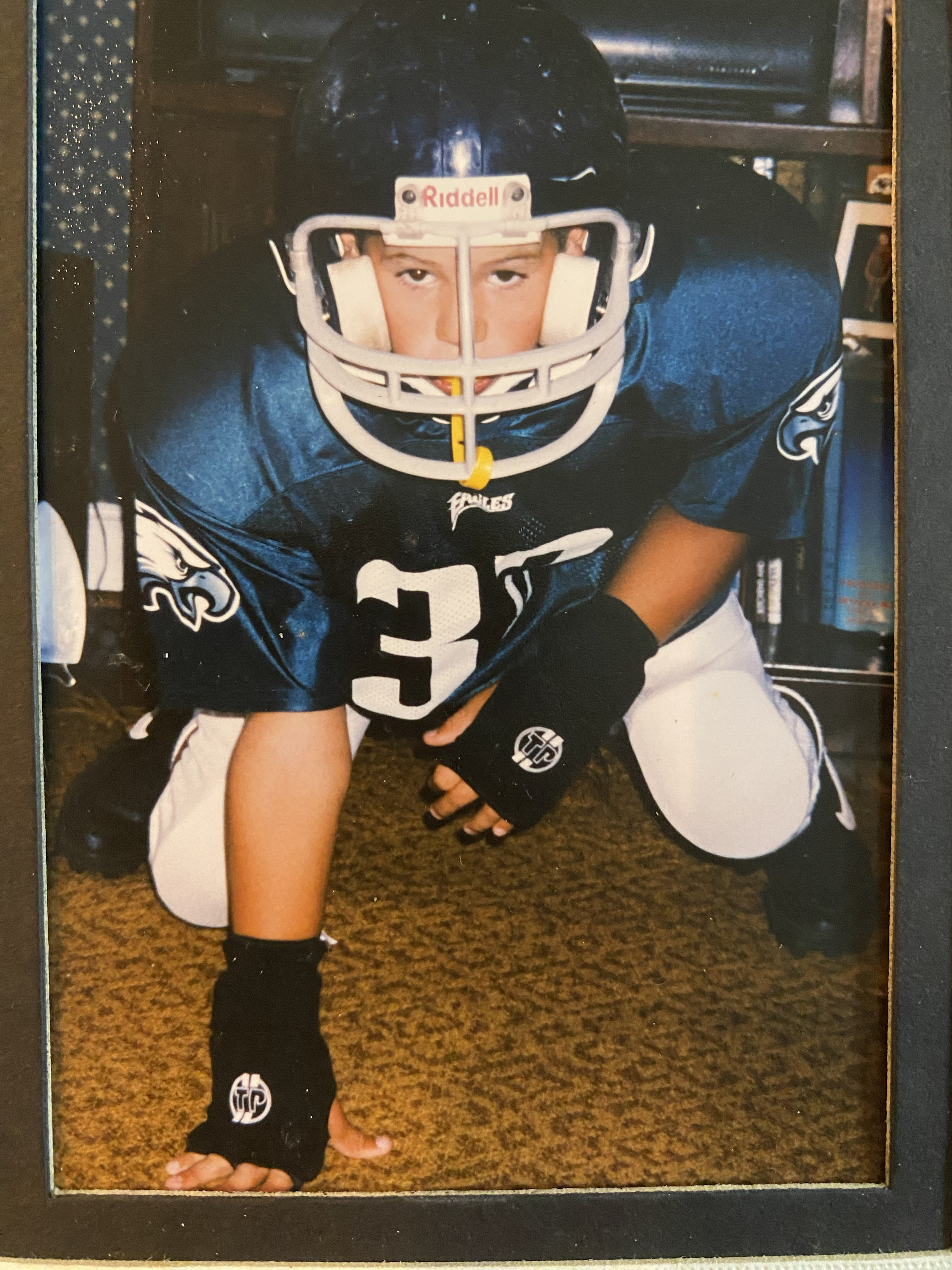
He says he can still remember picking up hoagies on Sunday afternoons as 94.1 WIP hummed in the background. Develin’s father, Jim, lived and died with every snap, and passed his unbridled enthusiasm on to his kids.
James Jr. started following the team in the early 2000s, a successful era of Eagles football. He gravitated to the ruthlessness of Jeremiah Trotter, the dynamism of Brian Westbrook, the passion of Dawkins.
He also experienced the heartbreak. Develin was 16 years old when the Eagles made it to their second Super Bowl during the 2004 season, against none other than the Patriots. He was in his friend’s basement in Gilbertsville, watching it on a big-screen TV with some neighbors.
Develin described the aftermath as a “somber scene.”
“That game was a tough one, because it was somewhat close, and in the end, in typical Eagles fashion, they would just kind of break your heart,” Develin said. “McNabb’s throwing up. T.O comes back on the broken leg. You just wanted them to do it, but they didn’t quite have enough ammo in the gun.”
He added: “I was hating on Tom Brady and the Patriots so bad.”
James Develin rooted for the Eagles as a youth in Gilbertsville. courtesy of James Develin
After graduating from Boyertown High School in 2006, Develin attended Brown University, where he studied mechanical engineering. He played football all four years, primarily as a defensive lineman, and had success — but not enough to attract NFL attention.
Nevertheless, Develin was itching to stay in the game. The Ivy League alum had few resources to do so. No teams or agents reached out initially; Jim Ulrich of Enter-Sports Management eventually did, in late 2009, and brought Develin on as a client.
The Cleveland Browns invited him to a tryout ahead of rookie minicamp in the spring of 2010, but he was quickly cut.
Not long after that, Ulrich reached out to longtime former Cowboys scout Jim Garrett, who lived in Monmouth County, N.J., and was the father of then-Cowboys assistant Jason Garrett. Ulrich asked if Develin could have a workout.
The Eagles-loving Develin family had mixed feelings about this.
“I remember my dad making a comment, like, ‘Man, I want you to succeed, I want you to get in the NFL, but if it’s the Cowboys … man, that might be a tough sell,’” Develin recalled.
But Develin’s first gig in professional football would come not with Dallas but the Yard Dogs of the Arena Football League, a team that paid $200 per week ($400 for active players).
Develin lasted just over a month, playing in only one game in 2010. Later that year, he tried out for the Florida Tuskers of the United Football League, and earned a spot as a backup fullback, a position he’d never played with regularity.
The team’s starting fullback developed vertigo, and all of a sudden, the rookie found himself playing every week. NFL teams began to call.
He bounced around practice squads, from the Cincinnati Bengals in 2010 and 2011, to the Patriots in 2012, before finding a permanent home in New England.
James Develin would develop into an NFL veteran and win multiple Super Bowls at a position he had never played before becoming a pro. Matt Rourke / AP
By 2013, Develin was appearing in every game. He was now teammates with the quarterback he derided from a Gilbertsville basement in 2004, and realized that Brady wasn’t a “cry baby,” like he’d originally thought.
“When I got there in 2012, I was a practice squad guy,” Develin said. “I had a tumultuous journey, playing in two different leagues, changing my position, and doing the whole thing. He didn’t know me from anybody.
“I could have been there one day, and gone the next. But he gave me the time of day, introduced himself, and said, ‘Hey, we’re happy to have you.’”
The Patriots re-signed him in the summer of 2015. By 2018, Develin had a Pro Bowl appearance, 81 regular-season games and 10 playoff games behind him.
When it became apparent that Philadelphia would be his opponent in the Super Bowl, his heart sank.
“I was like, ‘Are you kidding me?’” Develin said. “Do I have to play the team I grew up idolizing?’”
The Develins had about 30 family members in attendance at U.S. Bank Stadium in Minneapolis. James was able to get tickets, but so was Jenny, who had a cousin who worked for the Eagles at the time.
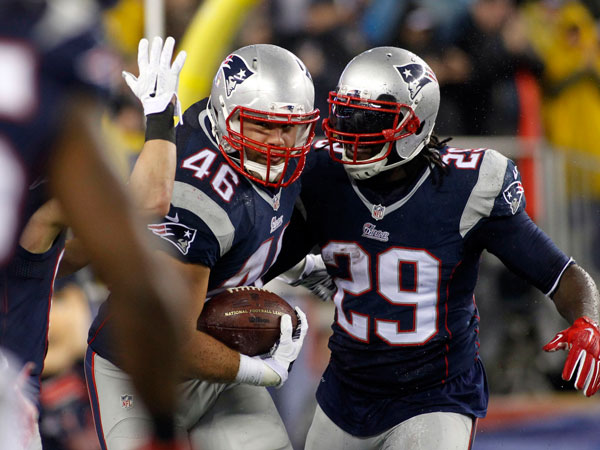
James Develin (46, with future Eagle LeGarrette Blount) played in 97 NFL games (regular season and playoffs) across seven seasons.
They were not all donning Patriots gear. The fullback estimated that of the group of 30, about 25 people were in green and white. Some tried to be diplomatic.
“There were a couple cousins who wouldn’t wear Pats stuff, but they didn’t want to wear Eagles stuff to disrespect me, so they’d wear my college jersey,” he said. “The only person to ever wear a Brown University jersey to an NFL game.”
In the first quarter, after the Eagles went up 3-0, the Patriots started driving down the field. They had second-and-4 from the Eagles’ 8-yard line, and Develin was tasked with blocking Nigel Bradham.
He’d blocked Bradham before, when Bradham was with the Buffalo Bills, and felt confident he’d be able to do it again. But on this night, the linebacker was more explosive than ever.
Bradham beat Develin across his face and tackled running back James White for no gain. It’s a moment the Gilbertsville native thinks about often. If he’d made that block, perhaps the Patriots wouldn’t have had to settle for a field goal.
“Man, if I had just made that block, would it all have been different?” he mused. “Would I have had to sit around and watch Jason Kelce’s Mummers speech for the next two months?
“It is such a such an Eagles fan thing to happen. I had a front-row seat to them winning their first one, but I’ll never be able to really enjoy it, because it was at my expense.”
James Develin and his family became business owners in Brigantine and expanded the operation to Ocean City. courtesy of James Develin
A ‘little haven’ in Brigantine
After Develin retired in early 2020, he decided to take a year off. He enrolled in business classes through the NFLPA, and eventually ended up working for the players’ trust, as a liaison between the union and its members.
He and Jenny and their four kids spent the pandemic at their Shore house in Brigantine. They fell in love with the quiet beach town. It wasn’t too congested, even during summer holidays.
Life was simpler, almost by necessity; Develin said there was “pretty much one of everything” on the island.
“It became our little haven,” he said. “I just fell in love with the speed of life down there. Even in the winter, going down there, and just the small-town feel.”
A mutual friend introduced Develin to the owner of Soulberri, Will White, who was looking to sell the business. Develin bought it in October of 2021, and dove right in.
The cadence was completely different from what Develin was used to. Instead of getting ready for minicamp in the spring, and training camp in the summer, he was now on Soulberri time, figuring out when to apply for a mercantile license, and pay for insurance.
James Develin (second from right) has rekindled his Eagles fandom despite his Patriots connection. courtesy of James Develin
But he was a quick study, and made it clear that he was willing to learn. Even before Develin became owner, he had one of Soulberri’s long-tenured employees give him a tutorial.
She walked him through every station, from washing the dishes, to filling the blender, to topping off the açai bowls. It was a busy weekend, but the former fullback wanted to try a shift himself.
So he got behind the counter, and worked for a few hours.
“It was chaotic,” he said. “I didn’t know the recipes, so I felt like I was holding everything up. But I started to get the hang of it.”
Every now and then, locals will ask if he’s the “football player,” but it doesn’t come up often. And now that Develin is back in the area, he has rekindled his Eagles fandom.
His kids wear their father’s jersey, but also Dawkins’ and Reggie White’s. They’ve watched “Weapon X” highlights over bowls of cereal.
Now that Develin has more free time, he is teaching them the unabridged history of the franchise, including “deep cuts” like former quarterbacks Ty and Koy Detmer.
“So they understand that it wasn’t always the Eagles going to Super Bowls,” he said. “There were a lot of lean years, too. But we’ve had good players, so respect the team and understand what your fanhood means.
“I loved growing up here. That’s why I came back here. That’s why I want to raise my kids around here. Even though I won a lot of games as a Patriot, I still have a lot of respect and loyalty to this area.”
A.J. Brown now is a Patriot, an ironic misnomer since he’s such an obvious traitor.
Philadelphians generally seem relieved that Brown’s diva act no longer will be a distraction for a perennial title contender. That’s just A.J. fatigue. What he has done is no better than what Carson Wentz did five years ago: hamstrung his franchise, dissed the fan base, and hung his teammates out to dry.
After Brown signed a three-year, $96 million contract extension in April 2024, he spent most of the next two years complaining. His main complaint: His skills were being wasted in an Eagles offense designed by Nick Sirianni and quarterbacked by Jalen Hurts, even though it was potent enough to win Super Bowl LIX.
During the 2025 season, Brown reportedly requested to be traded. He greased the rails to that end, continually whining, culminating in a midseason social media post in which he called the offense a “[bleep]-show.”
That prompted owner Jeffrey Lurie to publicly meet with Brown, after which Brown refrained from further criticism. However, at that point, it became inevitable that Brown would be traded.
And that, inevitably, would hurt the team.
Before the draft in April, sources say Howie Roseman asked for a first-round pick in 2026 or, at worst, in 2027. Nobody bit. On June 1, the first day of a new league year, when a salary cap hit would be spread over two years, Roseman settled for a first-round pick in 2028 and a 2027 fifth-round pick.
It will hurt the fans, now deprived of supporting the best receiver in franchise history.
It will hurt the front office, since Brown’s departure will dent the salary cap $43 million, the fourth- (or fifth, depending on how you look at Daniel Jones and the Giants)-highest amount of dead money ever absorbed and the most dead money of a non-quarterback.
More than anyone, though, it will hurt his teammates.
Why?
Because the Eagles cannot immediately fill the talent void left by Brown. This is partly because Brown has cost them so much money against the cap, so the Eagles would not be able to sign a player of his caliber. Which means there is a massive drop off in total roster talent.
This leaves the rest of the players in a difficult spot.
Every player has a finite window in which he can win. Over the past few seasons many of the current Eagles had a choice of where to play, and many chose the Eagles because the Eagles had an elite roster, and no skill player on that roster was more elite that Brown.
His 14.8 yards per reception rank first among receivers with at least 275 catches since 2022. His 5,034 receiving yards rank fifth. He is different.
When Brown signed his extension, Eagles in the locker room, Eagles in the coaches’ offices, and Eagles in the executive suites reasonably expected at least four more seasons of this sort of production from Brown.
Instead, they have a $43 million hole on the ledger over the next two years. In the short term, at least, this could be catastrophic.
It was nearly so last time.
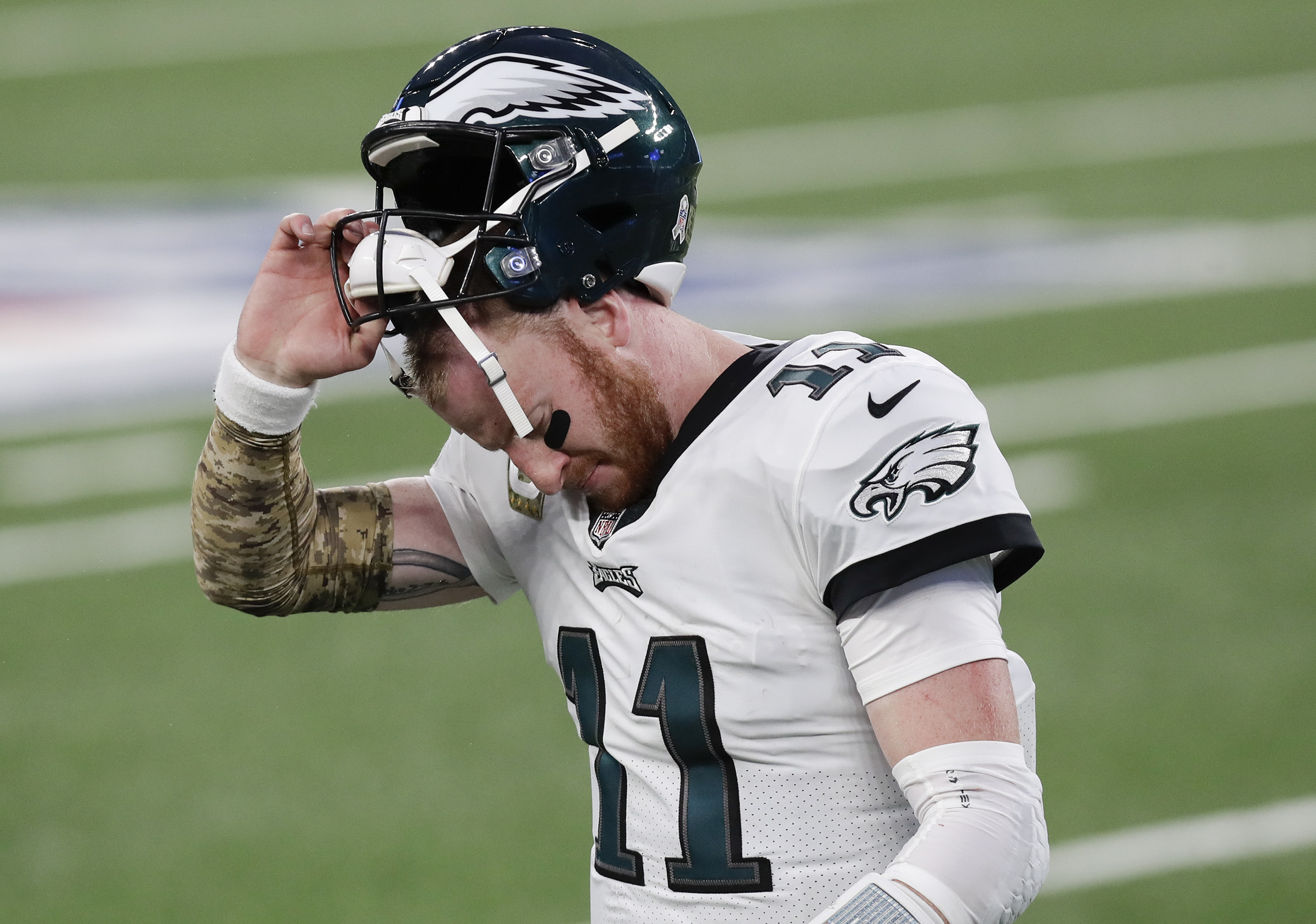
Carson Wentz sulked, then struggled, then forced his way out of Philly. YONG KIM / Staff Photographer
Carson Wentz
The reason Ginger Jesus went Judas on the Birds differs from Brown’s, but it is no less shameful.
Wentz resented that the Eagles took Hurts in the second round of the 2020 draft. This, despite their stated intent to use Hurts as a long-term insurance policy against Wentz’s frequent injuries. In the meantime, Hurts would be used as a gimmick player, in the manner of Saints utility man Taysom Hill.
Wentz then was outraged when he was benched late in the 2020 season after throwing 15 interceptions and taking 50 sacks, numbers that would lead the league at the season’s end despite Wentz playing in just 12 games. After the season, after getting coach Doug Pederson fired, Wentz still forced a trade.
That carried a $33.8 million cap hit, which was the NFL record at the time. Hurts took over as a second-year project quarterback of a team in disarray coached by a relative unknown in Nick Sirianni.
He rebounded with 27 touchdown passes with seven interceptions and rebounded with a 94.6 passer rating in 17 starts for the Colts, who, with an inferior team, matched the Eagles’ 9-8 record but missed the playoffs. Hurts threw 16 TDs with nine picks (but added 10 rushing scores) and was horrid in a playoff loss.
It began something great. Wentz’s career fizzled as Hurts led the Eagles to two Super Bowls. But, in 2021, it wasted a prime year for such players as Lane Johnson, Fletcher Cox, Brandon Graham, Jason Kelce, Darius Slay — players who chose to remain Eagles with the understanding that Wentz would be their quarterback.
Why would they expect that?
Because in June 2019, Wentz had signed a four-year, $128 million contract extension … that didn’t kick in until 2021.
That’s right.
Wentz took a $66 million bonus to play for the Eagles from 2021 to 2024, but he didn’t take a snap for the team in that span.
Not bad work if you can get it.
Howie Roseman found a path out of the Carson Wentz quagmire and history may reflect that he did the same with A.J. Brown. Yong Kim / Staff Photographer
No pain, no gain?
Fate, genius, and effort combined to make lemonade from Wentz’s sour grapes.
Fate, in that Wentz stayed healthy enough to convert the conditional pick in 2022 into a first-rounder.
Genius, in that Roseman used the first- and third-round picks from the Wentz trade as part of the capital to add DeVonta Smith, Jalen Carter, Jordan Davis, and, yes, even Brown. Can he do the same with the less valuable haul from Brown’s trade?
Effort, in that no player in the NFL has worked harder at becoming the best player he can be than Hurts. He has his limitations, but Hurts is a Super Bowl MVP with three Pro Bowl nods.
If you’d like more irony, then you might like this:
If Hurts doesn’t produce in the offense of new coordinator Sean Mannion, then Roseman might have to use the first-round pick he got by trading Brown to draft Hurts’ replacement.
You know who’d help Hurts produce in the new offense?
The Flyers need a first-line center. Everyone knows this. Everyone acknowledges this, even the Flyers themselves. Most of their best and most promising forwards — Travis Konecny, Porter Martone, Owen Tippett, Matvei Michkov — are wingers. They have salary-cap room on their roster and players and prospects and picks they can trade.
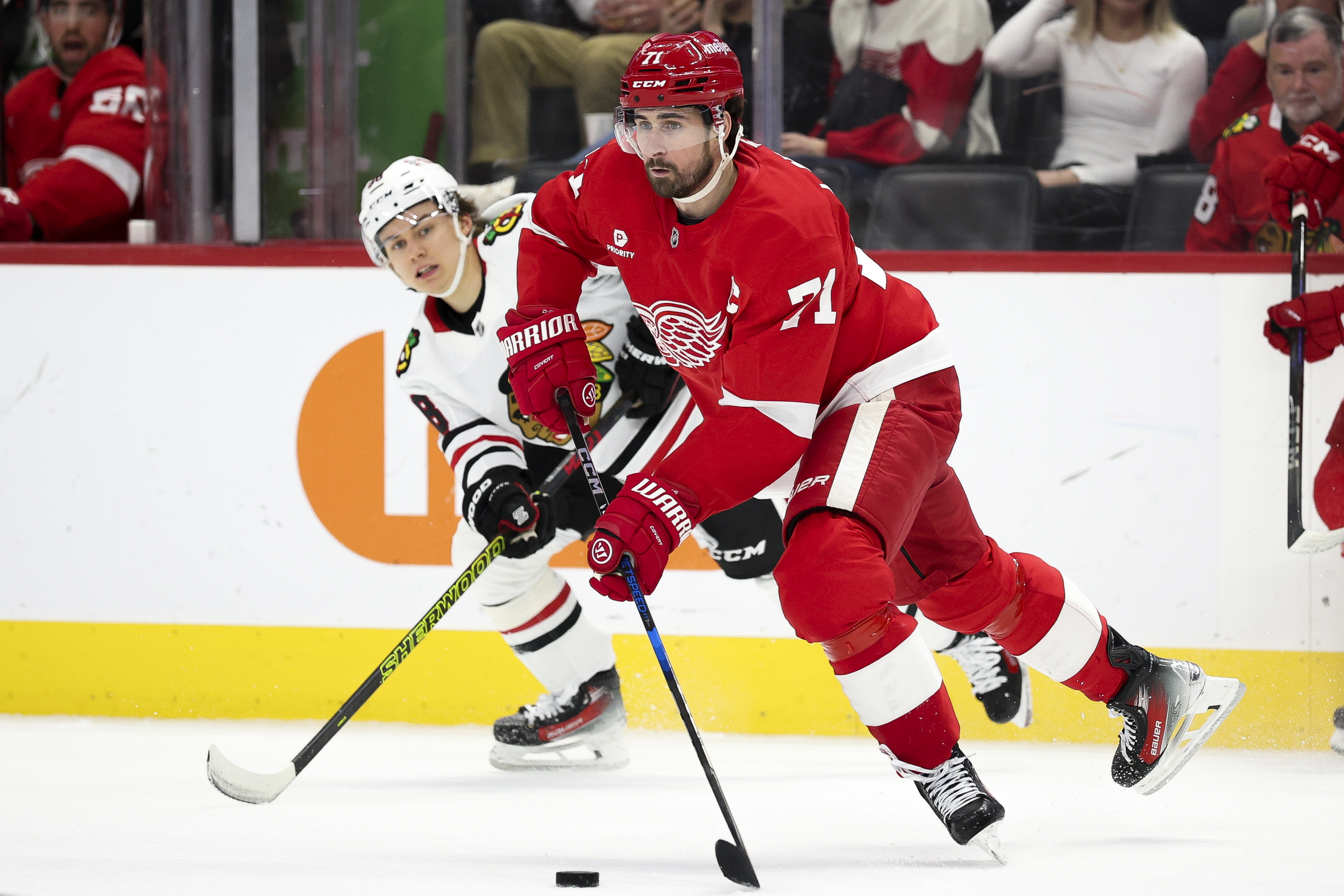
Dylan Larkin is a first-line center. Everyone knows this. Everyone acknowledges this, even the Detroit Red Wings, the only team Larkin has known over his 11-year career in the NHL. He turns 30 on July 30. Six-foot-one and 204 pounds, he has scored 30 goals or more in a season six times, including each of the last five, and is the Red Wings’ captain and a conscientious defensive player. He is amid an eight-year contract that runs through the 2030-31 season and counts $8.7 million annually against the cap.
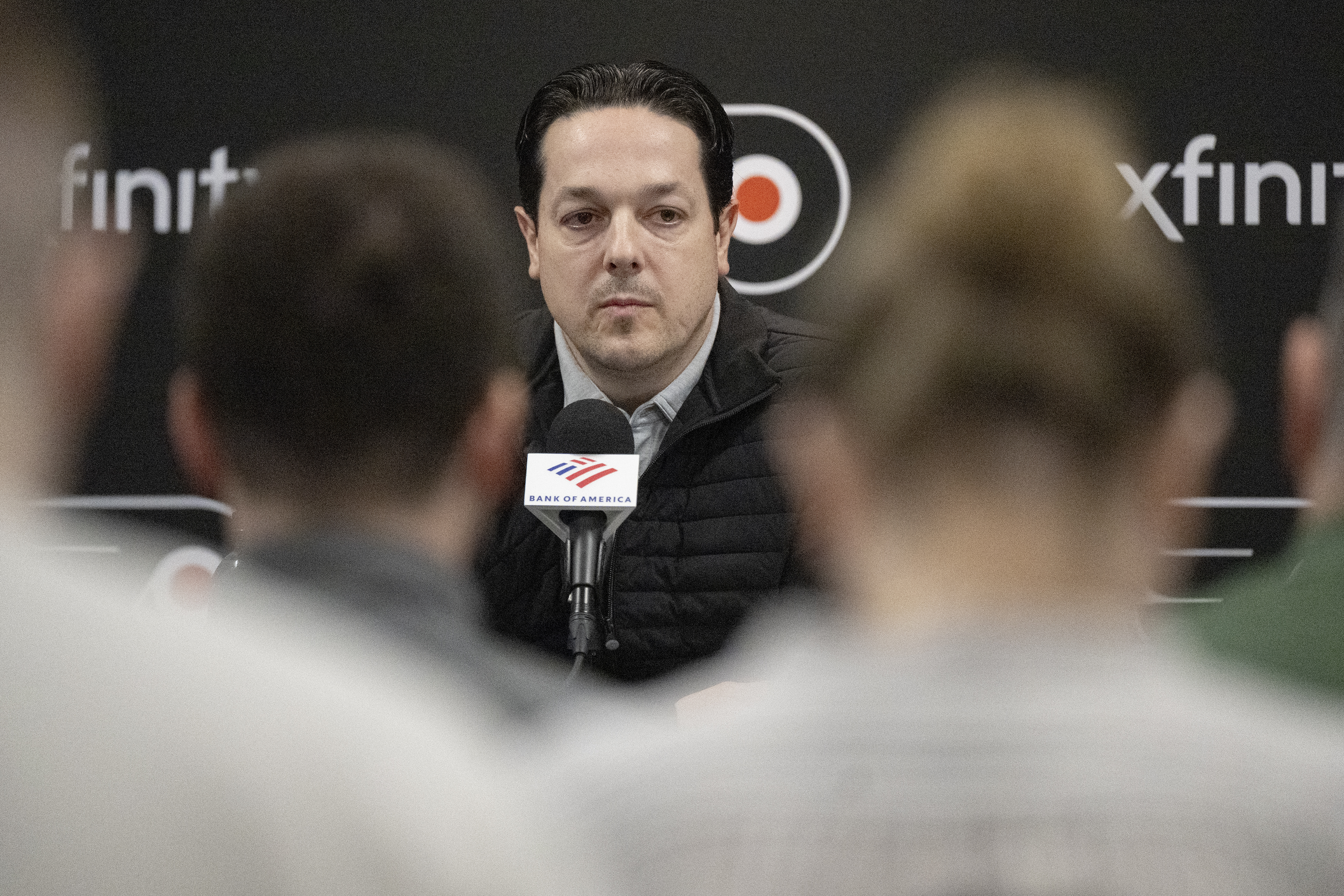
You don’t have to be hockey’s answer to Howie Roseman to see where we’re going here. A deal for Larkin — depending on what they’d have to give up to get him — would make a lot of sense for the Flyers. It would fit general manager Danny Brière’s broad plan of being open to moves that had the potential to help the team in both the short and long terms.
“We’re in a good spot, as far as the salary cap goes, as far as our picks go, as far as our prospects go,” Brière said last month. “There’s a lot of upside there. If there’s an opportunity to jump on something that could help us, yeah, it’s my job to look at everything. But I don’t feel that I’m forced to make a move just to make a move because we’ve made it into the playoffs this year.”
The Flyers do have interest in Larkin, two team sources confirmed. But it’s believed that they are not currently among his top preferred destinations, and he has plenty of leverage in the form of a full no-trade clause.
He reportedly wants out of Detroit because of his frustration over the franchise’s direction under GM and former Red Wings great Steve Yzerman. The Red Wings have missed the playoffs for 10 consecutive seasons and have not won a postseason series since 2013, and Larkin was critical of the organization for failing to make any significant moves at this year’s trade deadline.
“We didn’t gain any momentum … and guys were kind of down about it,” he told reporters in April. “It’d be nice to add something and bring a little bit of a spark on the ice and maybe a morale boost as well.”
Danny Brière conveyed at his end-of-season news conference that he would exhibit pragmatism in making a young and promising team better. Jose F. Moreno / Staff Photographer
The Flyers generated that kind of spark this season by qualifying for the playoffs for the first time in six years, beating the Pittsburgh Penguins in the first round, and rejuvenating a dormant but still-loyal fan base. They are perceived as a team on the rise, and the expectation around the NHL, among their fans, and within their own locker room will be that they’ll not just return to the playoffs but be capable of going deeper once they get there.
Though Brière has maintained for a while now that he has no problem being patient and waiting for the Flyers’ young talent to develop further, that atmosphere will put some pressure on him to improve the roster as soon as he can.
“I know all the players are going to come back, and that’s definitely going to be their goal,” he said. “I don’t want to lower expectations, either. I think they believe they can make the playoffs again. They want another taste of it.”
It’s plausible that Larkin will come around to the idea that the Flyers can scratch his itch for meaningful springtime hockey, and it’s difficult to imagine a hungrier, more motivated player than a star in his prime who has been on just one playoff team in his 11 years in the league.
The question that Brière and his brain trust will have to answer, of course, is, what might it take to get Larkin, and will he be worth it? Would it take, say, Tippett, Jett Luchanko, and a couple of draft picks? Would it take more? Less? Which player or players on the current roster would the Flyers be willing to sacrifice for a player who would be as fine a fit as Larkin?
The Flyers’ offseason just went from interesting to fascinating, fast.
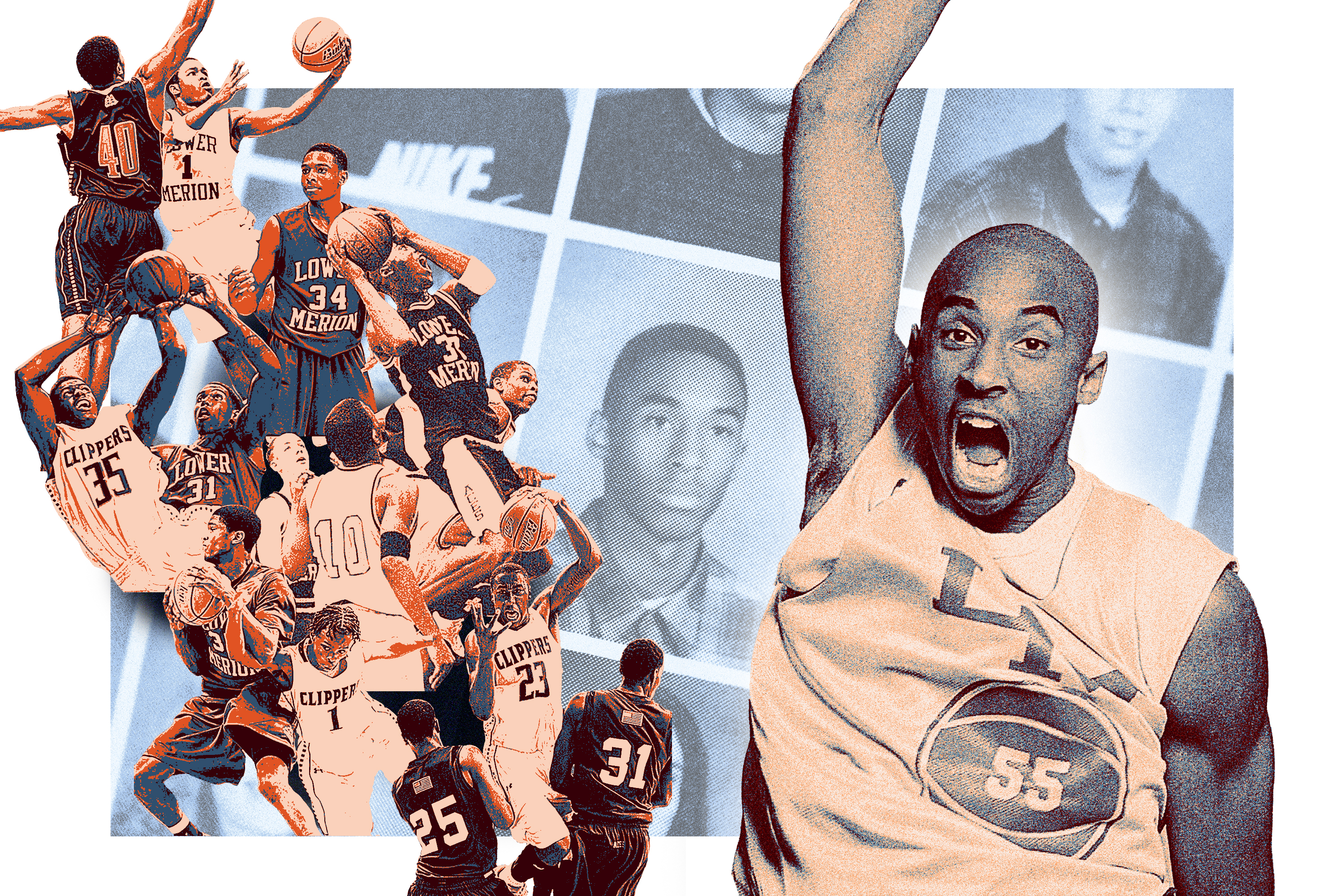
John Linehan and Kobe Bryant used to talk. A lot. This would not have been unusual for other AAU teammates, but these two were fierce high school rivals.
Linehan was a scrappy point guard for Chester. Bryant was a relentless shooting guard for Lower Merion. Both were competitive, almost to a fault, and in the days leading up to big games, they’d get chippy.
The week before the 1996 PIAA Class AAAA District 1 title game, for example, the players talked every day on bulky landline phones, with Bryant often calling Linehan at his home in Chester.
“I just said, ‘You know, John, I haven’t won a championship yet, and you have,’” Bryant told The Inquirer in 1996.
Linehan knew what his friend was doing. The future NBA star did the same thing a few weeks later, on March 19, a day before the teams met again in the state semifinal.
“He was trying to get me to trash talk,” Linehan said. “I think he needed a little edge. I didn’t want to give him too much. I was like, ‘Man, you crazy.’”
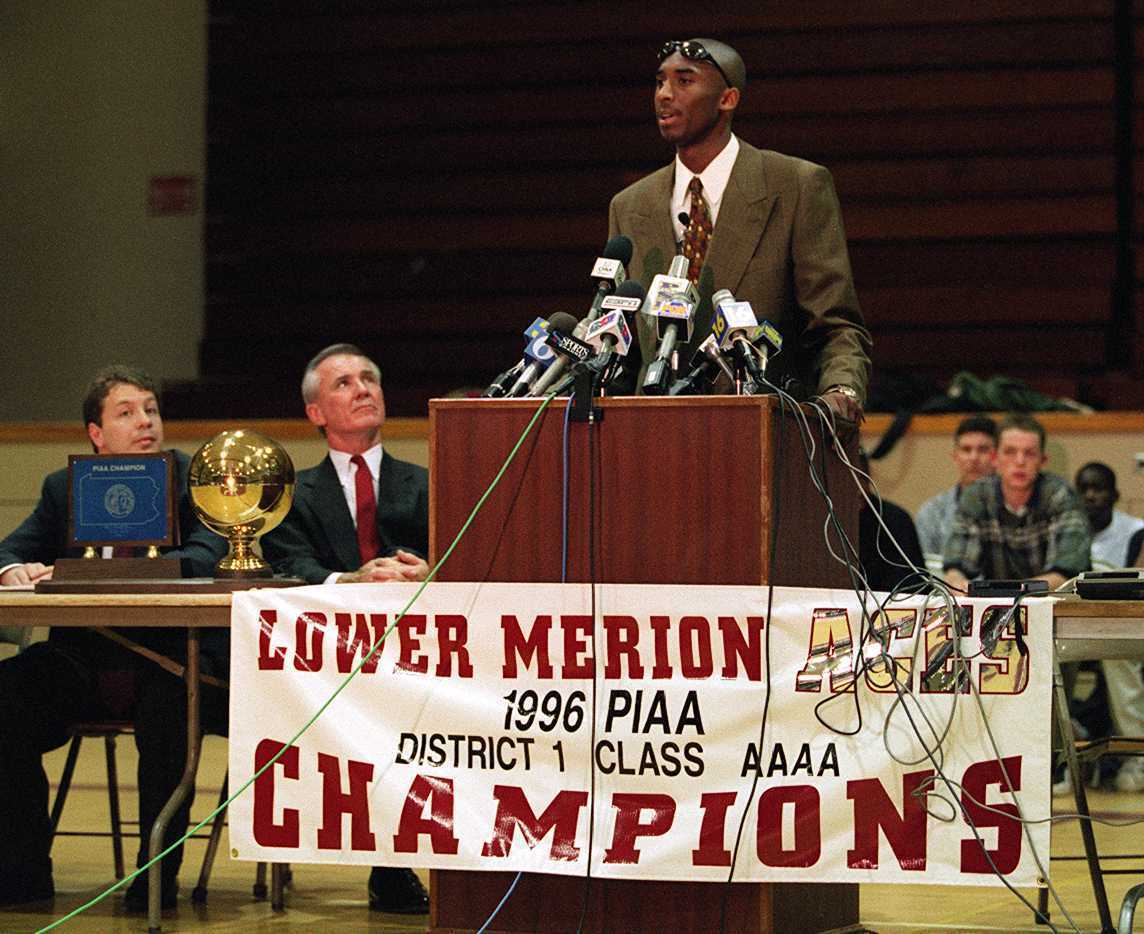
The late Kobe Bryant, a former Lower Merion basketball star, announcing he will go directly into the NBA draft out of high school.ALEJANDRO A. ALVAREZ / Staff Photographer
Lower Merion wasn’t a basketball school when Bryant arrived in the fallof 1992. It paled in comparison to the local powerhouses like Simon Gratz, Coatesville, and Chester.
But Bryant changed that. Even in his freshman year, a season in which the Aces went 4-20, he brought a new standard, working out before class and introducing a level of toughness that was foreign to his teammates.
Bythe mid-1990s, Lower Merion was among the best high school teams in the Philadelphia area. Its players were more confident, celebrating after big shots, and talking loud on the court.
The Aces didn’t play as many games against Coatesville, a rising power led by Rip Hamilton. They couldn’t consistently measure themselves against Gratz, which didn’t participate in the PIAA playoffs untilthe 2004-05 season.
But they could against Chester. And so, a decades-long rivalry was born.
From 1996 through the mid-2010s, Chester and Lower Merion put on some of the greatest high school basketball games in the area. They’d often sell out venues like the Palestra and Villanova’s Pavilion. Some fans would even scalp tickets.
Their communities were almost diametrically opposed. Chester was predominantly Black; Lower Merion was predominantly white. Chester was plaguedby poverty; Lower Merion was considered affluent.
Chester, with its Biddy League, had a legacy of basketball greatness, and a steady pipeline of talent. Lower Merion had nothing comparable. But these differences melted away on the court.
And while the rivalry is not what it once was, it lives on today.
“The pride and the intensity and the history will never fade,” said Lower Merion coach Gregg Downer. “I mean, if we played them tomorrow night, that would be an intense game.”
The Bryant-Linehan era
When Downer was named head coach in 1990, he already was well-aware of Chester’s tradition. He’d played youth basketball growing up in Media and had heard about the stars who’d come out of the Biddy League.
It was obvious that his team would have to go through the Clippers to win any sort of accolade. But it wasn’t until Bryant’s arrival that Downer’s aspirations became a real possibility.
The shooting guard, who was the son of former 76er Joe “Jelly Bean” Bryant, was mature for his age. He’d demand more, mentally and physically, of older teammates. Doug Young, a former Lower Merion forward, remembered seeing Bryant leaving the locker room at 7 o’clock one September morning in 1993.
He’d been at the high school gym since 5 a.m., working out by himself. To the Lower Merion basketball team, this was a “crazy” concept, so Young and his cohorts decided to join him.
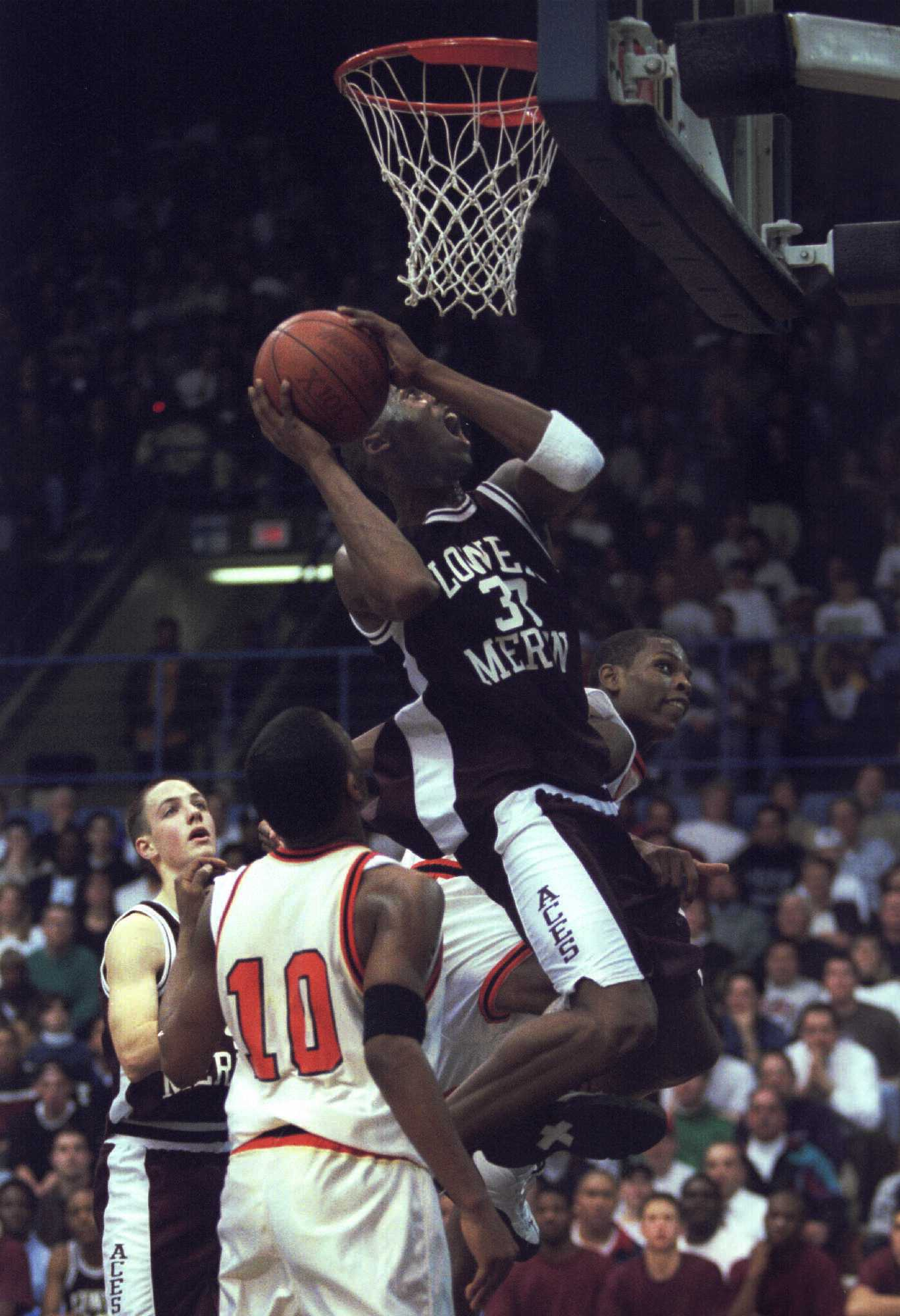
In the District 1 championship game against Chester, Kobe Bryant goes to the hoop over the Clippers’ John Linehan.Jay Gorodetzer / Staff Photographer
They arrived the next day at 5:06 a.m. The players knocked on the door. Bryant didn’t answer.
“He wouldn’t open it,” said Young, who graduated in 1995. “You’re either there or you’re not. We were six minutes late.”
His teammates waited outside until 6:30 a.m., when the school opened. They made sure to show up before 5 a.m. from that day on.
Downer was wired the same way. The coach — and his NBA-bound pupil — would push the team in practice. Losses were particularly tough. The players would go through endless sprints and rebounding drills that sent them running to the trash can.
It wasn’t fun. But over time, the method created a newfound tenacity.
“No one walked into high school saying, ‘Oh, yeah, I want to win a state championship,’” Young said. “But [Kobe] knew what that was. He was like, ‘I don’t know any other way. If we’re not going to win a championship, what the heck are we playing for?’”
Chester was always going to be an obstacle, so Downer tried to play into the battle. He’d use analogies for the tough, hard-nosed team, comparing it to an animal stalking its prey.
The coach began to screen movies to underscore this point. Together, in a Lower Merion classroom, Downer’s players watched Jaws and other tales of survival, like The Edge, a 1997 thriller about a plane that crashes in the Alaskan wilderness.
“This bear is stalking them, and the couple is saying, ’What are we going to do about this bear?’” Downer said. “And one of them says, ‘The only thing we can do is kill the bear.’
“And I remember being like, ‘We can do this.’ But the only solution is to — not to be overly graphic — but to kill them.”
(The bear in this analogy was Chester.)
He added: “We tried everything humanly possible to get through to this team.”
The first few games were ugly. In 1995, Lower Merion met the Clippers in the District 1 championship, only to lose by 27 points. But they came back with a renewed focus the following year, in 1995-96, going 25-3 in the regular season to earn a district final rematch against Chester.
The Aces showed up at the arena with “27″ printed on their warmup shirts. Bryant, armed with fresh bulletin board material from Linehan, dropped 34 points against the Clippers en route to a 60-53 Aces win.
The shooting guard scored 39 points later that month — with a broken nose — in a 77-69 state semifinal win over Chester. Lower Merion went on to beat Erie Cathedral Prep, 48-43, to win its first state championship since 1943.
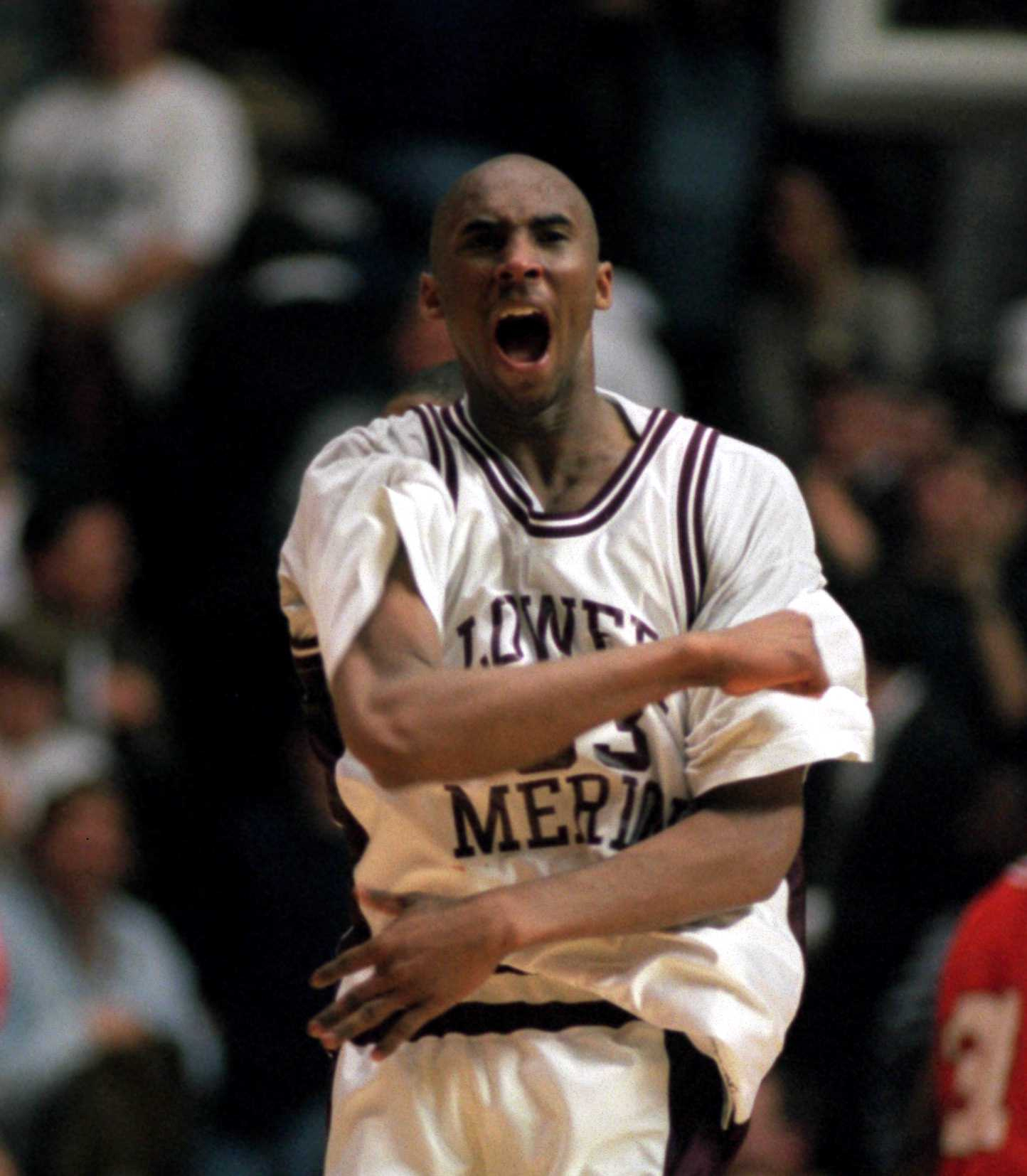
Kobe Bryant celebrates after defeating Chester at the Palestra in 1996 to advance to the state final.Ron Cortes / Staff Photographer
To Linehan, the difference Bryant made was obvious. He joked that he’d “never heard of Lower Merion” before his friend arrived. But once he did, Chester realized it would have to go to great lengths to prepare for the phenom.
Ahead of a big game against Lower Merion in the mid-1990s, the coaching staff reached out to Clippers alumnus Zain Shaw. He played at West Virginia and in Europe and possessed some of the same characteristics as Bryant — a tall frame and an athletic build with strong ballhandling skills.
The Clippers invited Shaw to practice, where he played the role of Bryant (to the best of his ability).
“Kobe was so special, we had to bring in a pro to help us prepare,” said Linehan, who later starred at Providence.
But there was another impact the future Lakers star had, one that had nothing to do with his own prowess. Linehan noticed that Bryant’s Lower Merion teammates started to take on some of his qualities. Suddenly, they were playing brash, confident basketball.
“We didn’t have reason to believe, until Kobe got there, that we belonged on the court with Chester,” Young said. “The fear was real. Teams were afraid of Chester because they’d run you out of the building.
“The idea of Lower Merion being on the court in a meaningful game against [them] was such a crazy thought. But then, you started to believe.”
The buzzer-beater heard ’round Chester
Bryant never got over the rivalry, even after he embarked on his Hall of Fame NBA career in 1996. Sometimes, he’d call the coaching staff before big games against Chester, leaving expletive-laden voicemails to use as motivation.
The Lakers shooting guard also created an incentive structure for his former team.
“You couldn’t get a pair of Nike sneakers unless you qualified for the playoffs,” Young said. “If you don’t earn it, you don’t get it.”
He became especially involved in 2005-06. After a lull in the early 2000s, Chester and Lower Merion found themselves neck-and-neck again. The Aces were led by the duo of Ryan Brooks and Garrett Williamson, and the Clippers boasted a deep roster, headlined by Darrin Govens. All of them eventually played in the Big 5.
(Chester was so stacked that it brought a 1,000-point scorer off the bench in Noel Wilmore.)
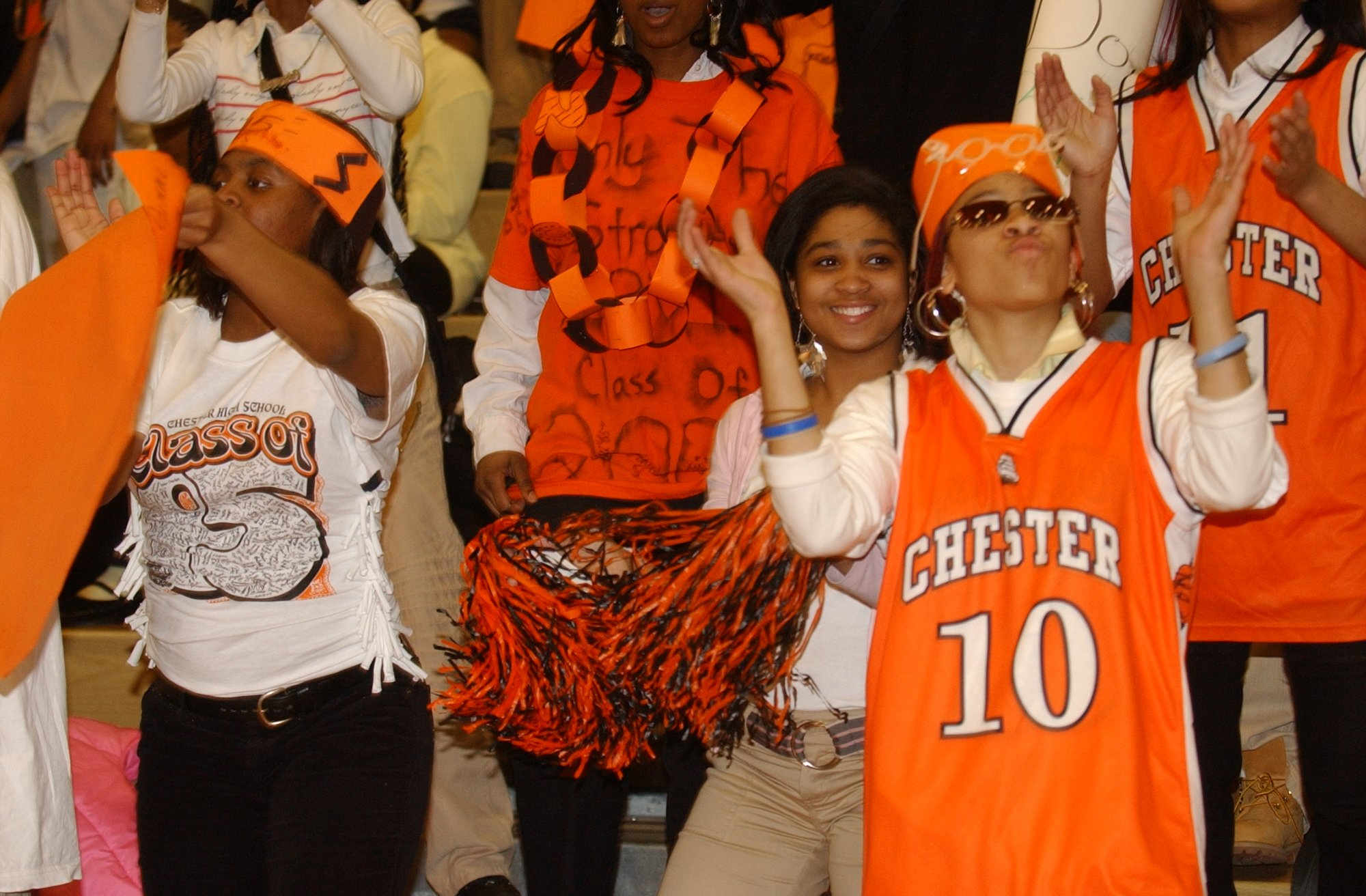
Students from the class of 2005 show their support as Chester and Lower Merion play in the state final. Hinda Schuman / Staff Photographer
The rivals met in the state championship on March 19, 2005. Despite strong performances from Williamson and Brooks, the Clippers pulled away in the second half thanks to a dominant third quarter from Govens. Chester won, 74-61.
The teams reconvened the following season with their competitive spark fully reignited. They faced each other three times that year. Chester took Round 1, a one-point regular-season victory on Dec. 27.
Round 2 was in the district final on March 3. Before the game, in front of a packed crowd at the Pavilion, Chester sophomore Karon Burton walked up to the layup line.
Lower Merion’s student section caught his ear with a chant about coach Fred Pickett’s stout stature.
The dig didn’t intimidate Burton. If anything, it fueled him. He grew up playing street ball in Chester and always loved trash talk.
Instead of cowering, like the crowd hoped, the sophomore delivered an unforgettable outing. The game went into overtime, and was tied at 80 with only a few seconds remaining.During a timeout, assistant coach Keith Taylor pulled Burton aside.
“He was like, ‘Hey, listen,’” Burton said. “They’re going to double Darrin. If you get that ball, do your thing.’”
Taylor’s words proved prescient. As Lower Merion’s defenders swarmed Govens, the Clippers inbounded the ball to Burton.
He took a pull-up jumper from beyond the arc and drilled it for an 83-80 win. The Chester fans stormed the court. Burton, who later joined Wilmore in the 1,000-point club, said he felt like a celebrity in his hometown.
“It was like watching a buzzer-beater in the NBA,” he said. “I just ran to my teammates, they picked me up. It was a crazy feeling.
“I’m a big Kobe fan, too. Kobe’s my favorite player ever. So when I came and I hit the game-winner on that team …”
Round 3 took place a few weeks later, in a state semifinal rematch at the Palestra on March 22. Bryant called Lower Merion’s coaches before the game.
“I don’t remember specifically what he said, but I’m sure there were a lot of [expletives] dropped,” said Young. “Like, ‘Don’t call me back if you don’t beat those [expletives].’ That was a line we heard from him a couple times.”
This one didn’t go Chester’s way. After trailing the Clippers, 47-37, at the end of the third quarter, the Aces came roaring back in the fourth and put up 33 points to eke out a 70-65 win.
The celebration in the locker room was cathartic. Water sprayed into the air. Players sat atop each other’s shoulders and turned the showers into a slip ‘n slide. Bryant called in, again, as other members of the 1996 team filtered through.
Darrin Govens scored his 1,000th point for Chester against Lower Merion in the state championship in 2005.Hinda Schuman / Staff Photographer
This was not how Govens wanted to end his high school career. And a few months later, when he arrived at St. Joseph’s on a basketball scholarship, he saw a familiar foe.
It was Williamson, his new Hawks teammate.
“We were sitting on the opposite side of the bench,” Govens said. “I didn’t want to sit next to him; he didn’t want to sit next to me. We’d kind of avoid each other and just head nod.
“Even in running drills, it was a competition. He looked to the left. I looked to the right. We tried to beat each other in sprints. But then we realized, ‘All right bro, we’re teammates now.’”
‘Hero status’
Chester had always rallied around its high school basketball team. Linehan said it was akin to playing for the Sixers. The teenagers were treated like professional athletes — especially those who had been a part of big wins.
The Clippers’ public address announcer, James Howard, called this “hero status.”
“All of a sudden, your money’s no good,” he said. “Barbers take care of you, make sure your hair looks nice before games. Free food. Little kids look up to you and ask for your autograph. That’s how it is.”
In Chester, there were plenty of heroes to draw from. There was Linehan, but also Jameer Nelson, who met a young Burton in the late 1990s. Nelson, a friend of Burton’s cousin, gave the aspiring basketball player a gift before he left for St. Joe’s: his MVP medal from the Chester summer league.
“He was one of the biggest guys in our city,” Burton said, “so it’s definitely something that I’ll always remember.”
By the early 2010s, when the rivalry was reignited for a third time, Lower Merion had built more of a basketball tradition. Aces guard Justin McFadden said he’d get stopped in Wawa before big games against the Clippers.
Chester celebrates its win over Lower Merion for the state championship in 2012. Steven M. Falk / Staff Photographer
“It became a community thing,” he said. “People would be asking, ‘What do you guys think about Chester? Do you think we can get it done?’”
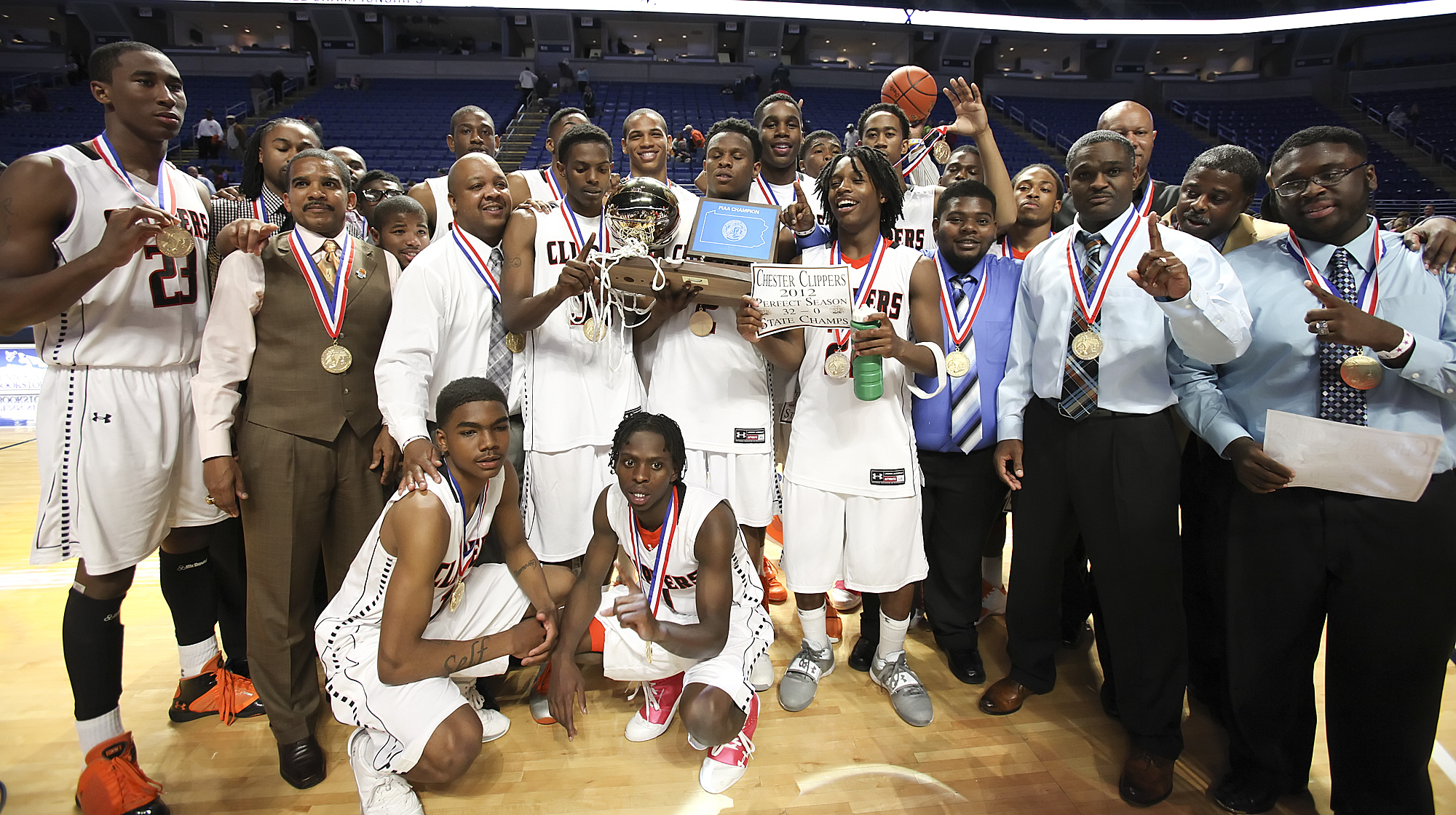
In 2012, the schools met in the state championship for the first time since 2005. Junior forward and future NBA starter Rondae Hollis-Jefferson put up a double-double to lead the Clippers to a resounding 59-33 win over the Aces. It was their second straight title and their 58th straight victory.
A year later, after going 17-0 in the Central League, the Aces met the Clippers in the state final again. Chester had won 78 straight games against in-state opponents. Snapping that streak would be daunting, but Downer had a plethora of motivational tactics at his disposal.
Just as they had in the 1990s, The Aces again spent pockets of the season watching Jaws, The Edge, as well as an addition: Al Pacino’s “Inch by Inch” speech in Any Given Sunday.
“He would have that fired up on YouTube, ready to go,” McFadden said. “Looking back, [your reaction] is a chuckle, but in the moment, it worked. We knew that this was the hill that needed to be climbed.
“And every time they played that speech, we got goose bumps. We were ready to fire.”
Chester got out to an early lead, but Lower Merion rallied behind a 22-point, 11-rebound performance from B.J. Johnson, who later starred at La Salle. The Aces snapped the streak and won their seventh state title with a 63-47 victory.
Lower Merion’s Jaquan Johnson goes to the net as Diamonte Reason guards him in the Chester-Lower Merion state championship game in 2013.Elizabeth Robertson / Staff Photographer
The Clippers then were coached by Larry Yarbray. Pickett, who was diagnosed with cancer in2010, was in declining health. Just before he died in 2014, Downer decided to say goodbye.
He and his former assistant coach Jeremy Treatman drove out to Pickett’s home in Chester. They went to his bedside.
“And we talked,” Downer said. “And we held hands. It was a really touching moment for me. This is a man that carried Chester on his back. That tried to carry Lower Merion on his back. And I knew it was the last time I was going to see Fred.
“We walked out the door, and we told each other that we loved each other. And I never thought he would say that to me, or vice versa. But it was just kind of like, ‘You know what? We’ve had some amazing battles, and there’s a lot of respect there.’”
Keeping the tradition alive
In recent years, the Chester-Lower Merion rivalry has diminished.
There was a brief period when the teams were in different classifications. Both programs have lost players to private schools that can recruit, and the addition of the Philadelphia Catholic League to the PIAA has made the state playoffs more competitive.
One place the Aces and Clippers could meet is in the district tournament, where they reunited in 2024. But they haven’t played each other since. And Howard says the contests don’t have the same feel.
“Both teams have lost D-I talent,” he said. “It’s not as high-flying, above the rim, as it was in the past. But still a great game. Sold out at Lower Merion, and at Chester, same thing.”
The history will always be there, though, and Burton is doing his best to keep it alive. His 8-year-old son, Karon Burton Jr., is playing in the Biddy League. His father is his coach.
Sometimes, they go on YouTube and watch old Clippers games. Junior’s favorite, of course, is the 2006 district final.
Burton believes that his son has a promising future, but isn’t sure of where he’ll go to high school yet. He doesn’t want Karon Jr. to feel obligated to follow his father’s path.
But if it worked out that way, what a story that would be.
“I’d love to be the first father and son to have 1,000 points,” Burton said. “With the same name? That would be crazy.”