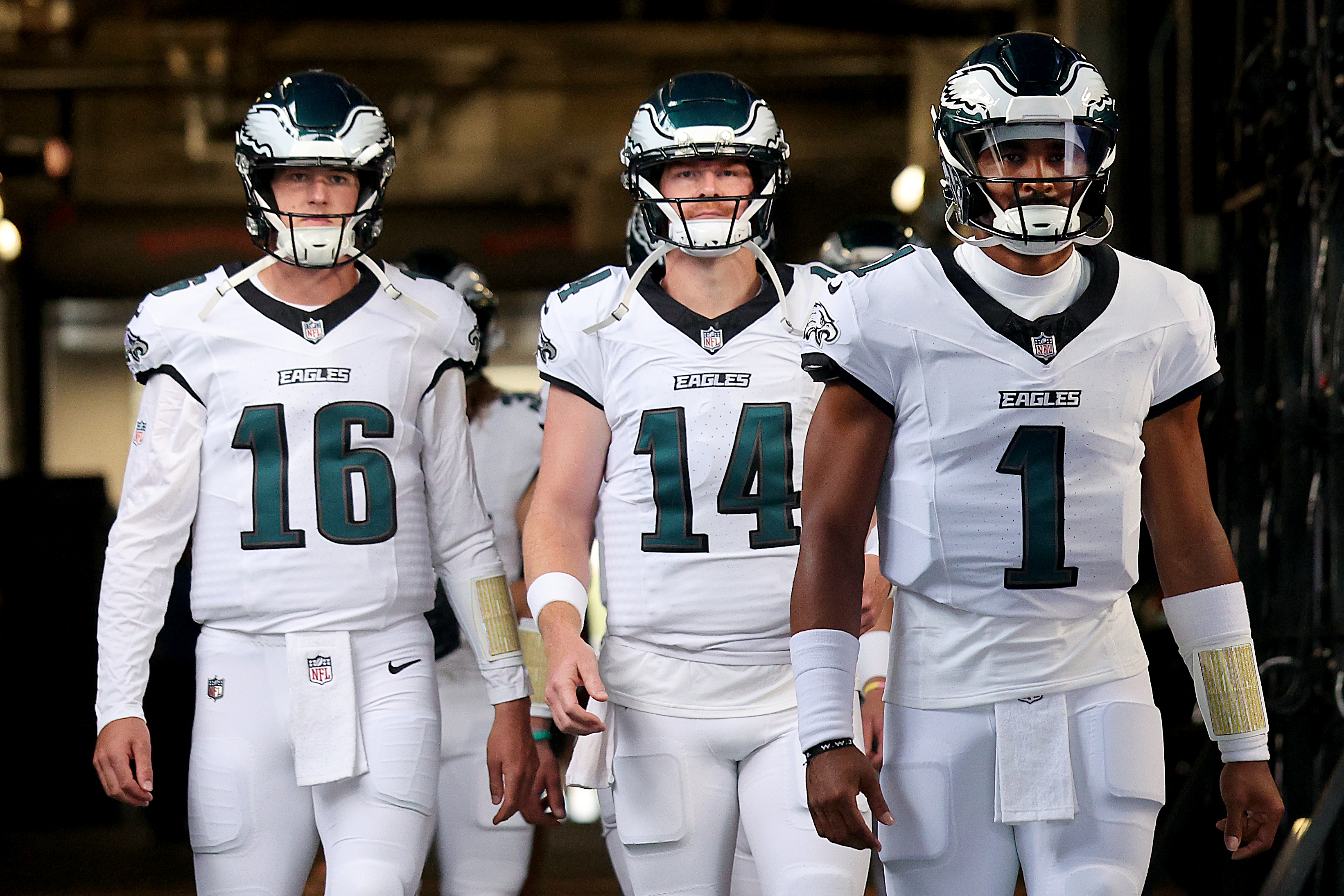
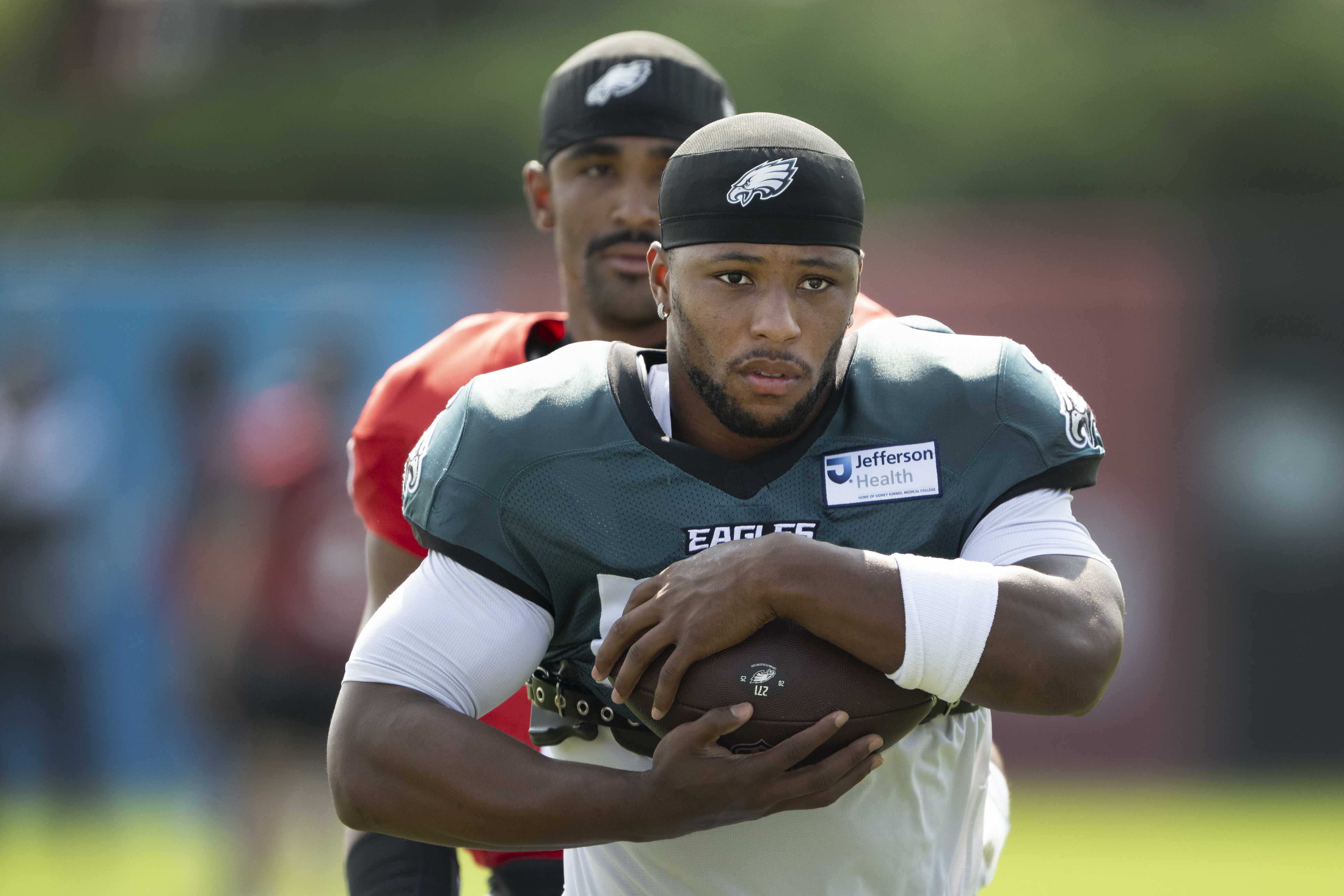
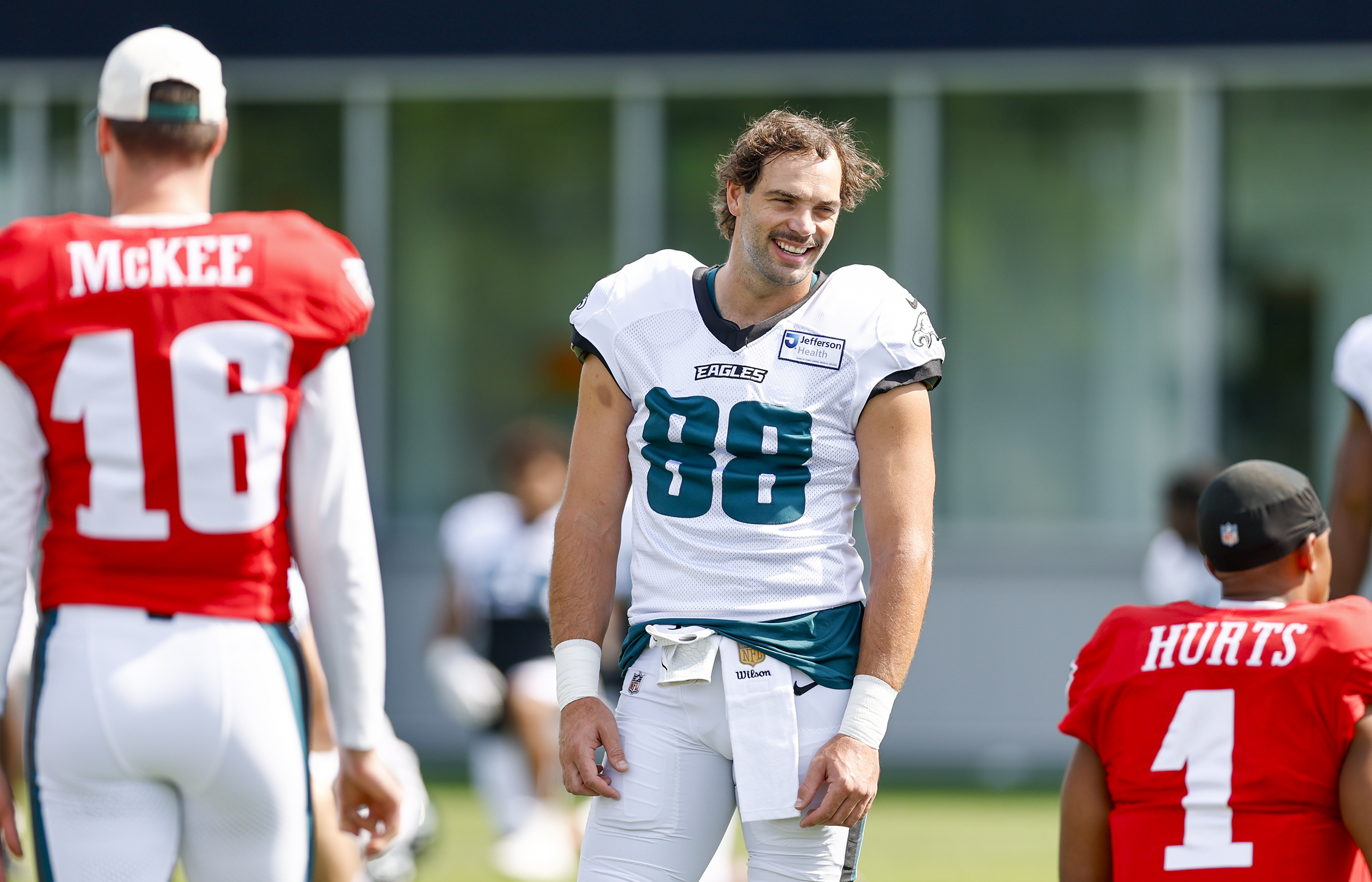
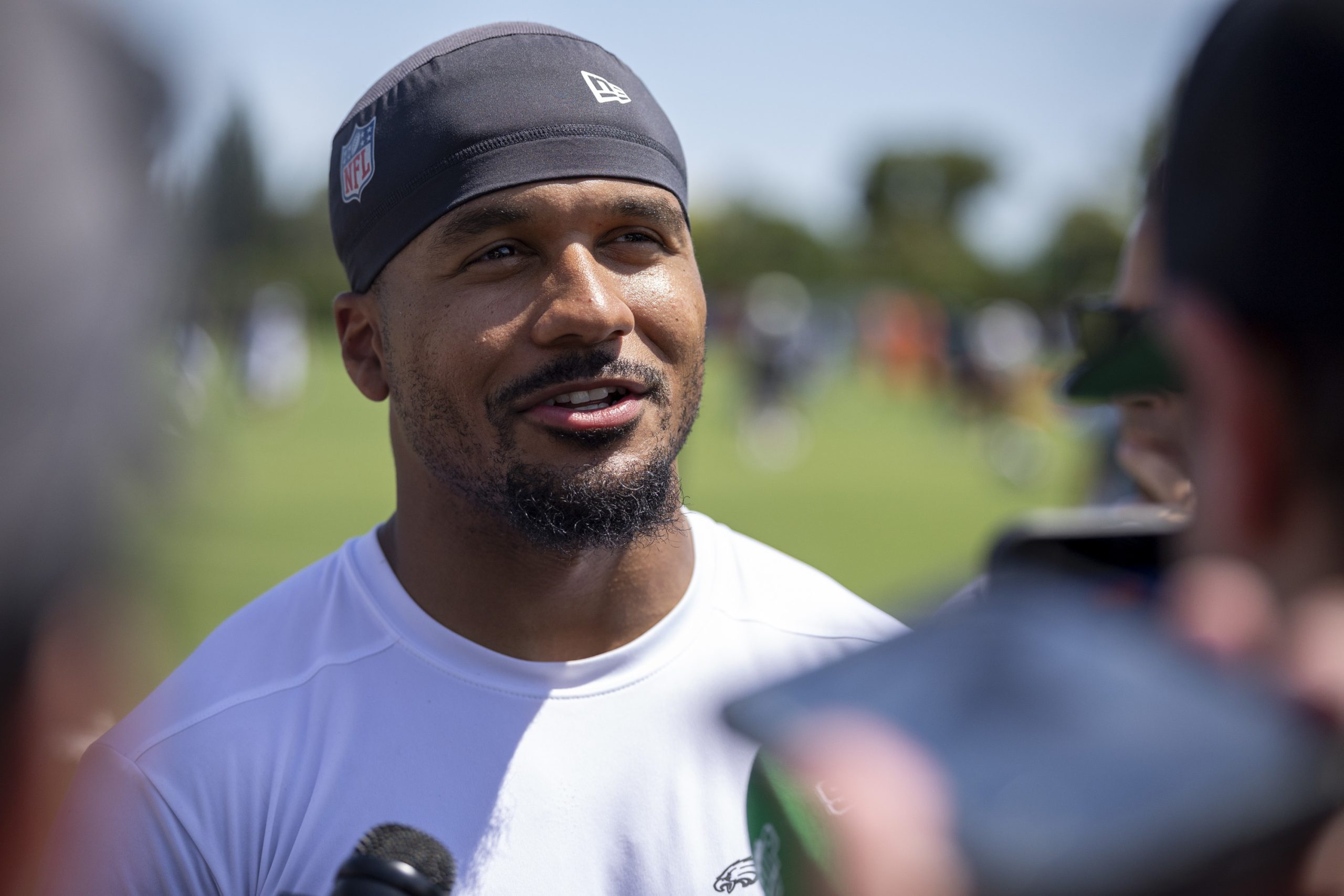
The Eagles used to value the backup quarterback position, perhaps more than any other team in the NFL. Looking at their rosters in 2025 and 2026, it’s hard to believe they still do.
This might not matter at all, except Eagles starter Jalen Hurts gets hurt a lot, and quarterbacks are the most important players in all of team sports.
Still, it seems like a lot of energy to spend on a guy who won’t play much. Backup quarterback angst: The sort of nattering matter that makes the NFL preseason interminable; the sort of infuriating football geek-talk that fantasy nerds Snapchat about.
You know. Guys like Lurie and Roseman.
In 2017, the Eagles committed $11 million to their backup quarterback spot. So important was the position to owner Jeffrey Lurie that he told GM Howie Roseman to sign Nick Foles, whom Andy Reid had just cut from the Chiefs. It meant eating $7 million of the contract of Chase Daniel, whom the Eagles promptly released.
Despite missing the playoffs in 2016 with rookie Carson Wentz at quarterback, Lurie saw 2017 as a real chance to win the franchise’s first Super Bowl, and he considered Foles, who’d had a strong run as an Eagle, to be a better option than Daniel, who’d never had a strong run anywhere.
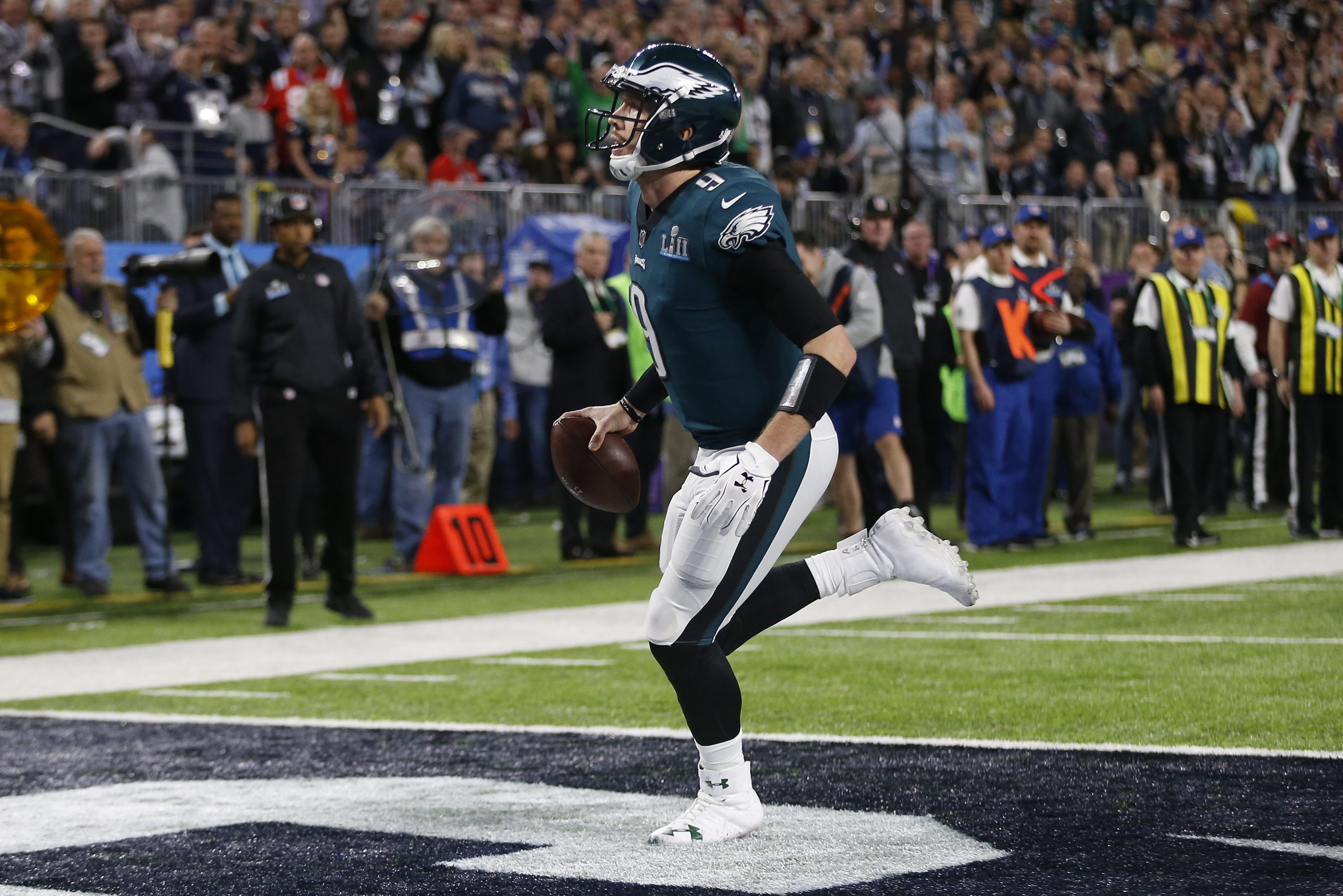
The rest, as they say, is history: Wentz got injured, Foles replaced him, played well down the stretch, and won the MVP award inSuper Bowl LII where he outplayed Patriots legend Tom Brady and outfoxed coach Bill Belichick.
Nick Foles became an unassailable Eagles legend, but that doesn’t mean all backup quarterbacks are created equal. Michael Bryant / Staff Photographer
“Our priority, as you’ve seen, is to make sure we have the very best possible other starting quarterback,” Lurie said during Super Bowl week.
That’s generally been true, and it’s generally made sense for the Birds, since Lurie prefers mobile quarterbacks, who, of course, are more likely to get hurt.
Lurie signed Michael Vick out of prison in 2009, and Vick supplanted Donovan McNabb the next season and went to the Pro Bowl in his second of four years as an Eagle. Lurie drafted Hurts in the second round in 2020 with plans that Hurts would be the long-term backup to Wentz, but that’s before Ginger Jesus lost his job, and maybe his mind. Lurie sanctioned the recent, sensible acquisitions of Gardner Minshew, Marcus Mariota, and Kenny Pickett.
But in 2019, Lurie also approved the signing of Josh McCown, a 40-year-old with a 79.7 passer rating with eight other teams. McCown replaced Wentz early in the Eagles’ home wild-card playoff game, played atrociously (predictably), and cost the Birds their postseason.
Last season, Lurie allowed the Birds to enter the season with third-year sixth-round pick Tanner McKee as the backup of a team defending its second Super Bowl title. It didn’t matter, since Hurts stayed healthy. But McKee got to start game 17 against the Commanders, and he was poor: 21-for-40, 241 yards, one touchdown, one interception, with a forgettable fourth quarter that cost the Eagles their chance to win the game and capture a better seed. It looked OK in the moment, but upon further review, the Eagles (and I) decided that McKee is not the answer.
The Eagles (not I) determined that Andy Dalton is the answer.
They were wrong.
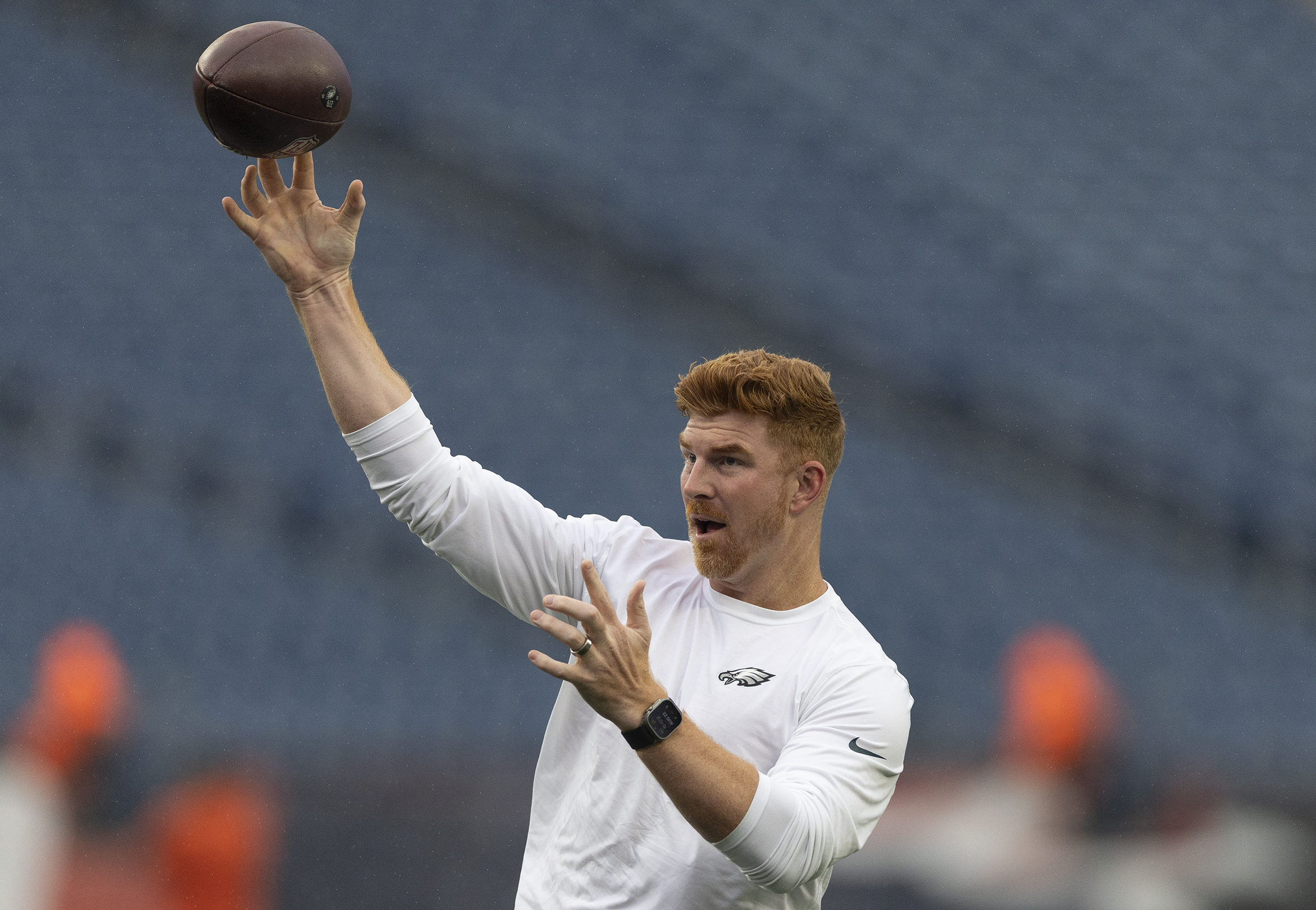
The Eagles’ bet on Andy Dalton does not appear to be going according to plan. Yong Kim / Staff Photographer
The Birds in March traded a seventh-round pick to the Panthers for Dalton.
No player at Eagles preseason work or in training camp has been a bigger disappointment than Dalton.
That isn’t really fair. There should have been minimal expectations of Dalton.
He’ll be 39 in October. He’s 1-6 in his last seven starts over the past three years, during which time his passer rating is 84.5. Aberration? No. In the five seasons before that, his rating was 85.5 in 57 games. He’s been the backup in Carolina the past three seasons, essentially a big brother for Bryce Young, the underperforming No. 1 overall pick from 2023, and an assistant coach of sorts.
That’s the role he was expected to serve in Philadelphia, where new offensive coordinator Sean Mannion has installed a new scheme. Dalton can help with the adjustment for Hurts, and you’d think Dalton would have a significant advantage over McKee in executing the offense.
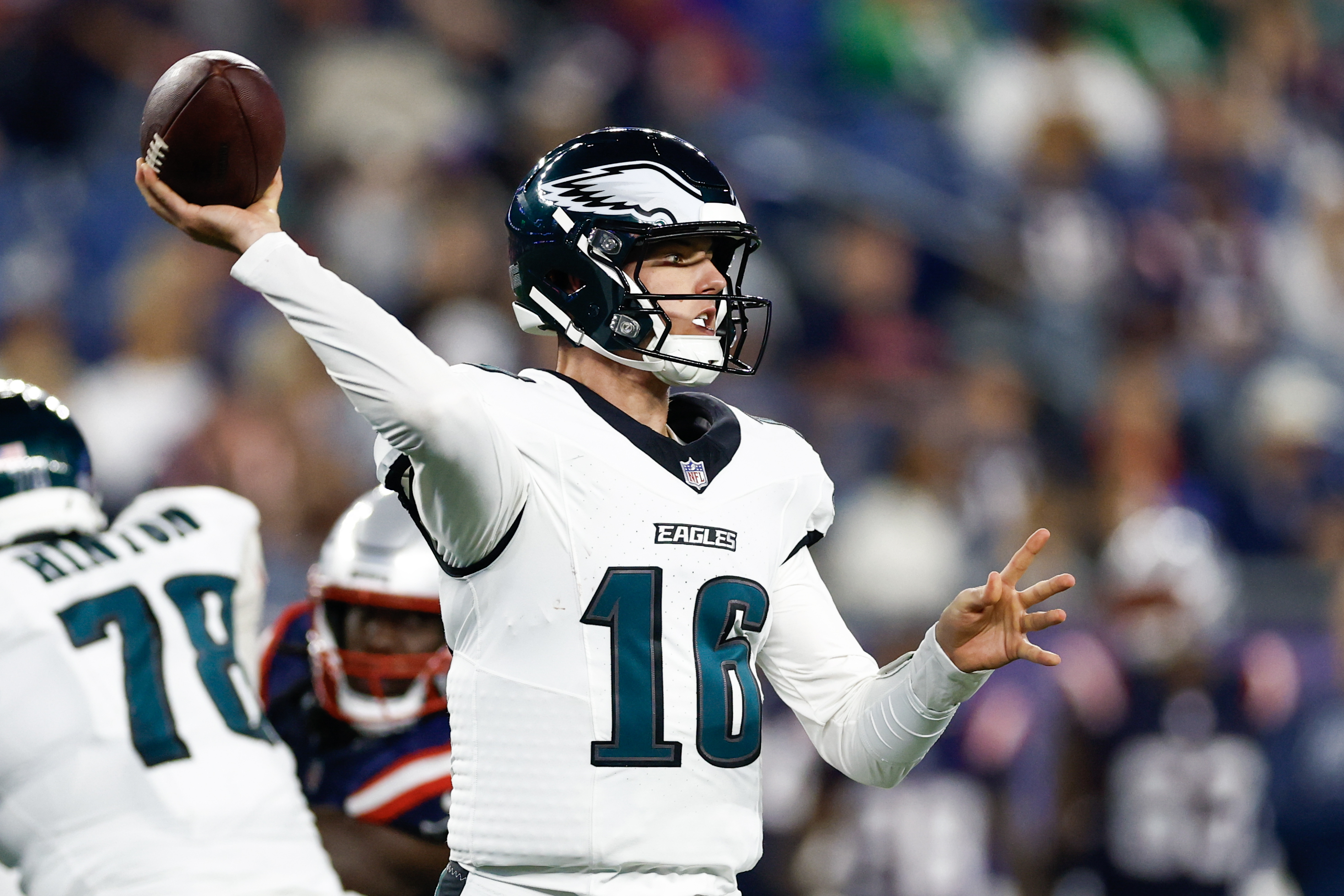
Tanner McKee again appears to be the best backup option for the Eagles. Yong Kim / Staff Photographer
But no. Dalton has looked appreciably worse than McKee — so much worse that McKee’s unremarkable performance looks good by comparison.
Entering the third and final preseason game Friday, the competition, such as it is, for the backup job clearly tilts in McKee’s favor. Which delivers this uncomfortable truth:
The Eagles, who have made the playoffs five years in a row, don’t really have a viable backup quarterback. That’s the fault of the front office.
Roseman.
Lurie.
What should they have done?
Maybe they should have signed Mitch Trubisky, who got two years and $10.5 million to back up Cam Ward in Tennessee. Maybe another dance with Minshew, who got $8.25 million to back up Jacoby Brissett in Arizona. Both would have cost a lot more than Dalton’s $1.5 million, but that’s also just about what Tua Tagovailoa got from the Falcons to be the emergency plan if Michael Penix Jr. wasn’t back in time from his knee injury.
All three of those QBs are in spots where they will have a likelier chance to resurrect their careers. Maybe that’s why the Eagles weren’t able to land one of them, and why they had to trade a pick for Dalton.
To be fair to Roseman and Lurie, the Birds also drafted a quarterback in April: Cole Payton, in the fifth round, out of North Dakota State, who currently is not close to being an option.
To be fair to Payton, he might be as good an option as the other two.
The Eagles held the 17th and final open practice of their 2026 training camp on Wednesday at the Jefferson Health Training Complex. Here were my observations from Day 17 (and links to Days 1, 2, 3, 4, 5, 6, 7, 8, 9, 10, 11, 12, 13, 14, 15, and 16):
Ouch couch
Guard Landon Dickerson and tackle Lane Johnson were back in action and without injury designations after Tuesday night’s open practice at the Linc. Dickerson was given a rest day Tuesday, while Johnson left the scrimmage early, never to return. Cornerback Jonathan Jones also returned after an extended absence due to a shoulder injury. He was limited in what was a light practice without pads.
The following players were still sidelined: tight end Eli Stowers (hamstring), tackle Markel Bell (thumb/leg), tight end Grant Calcaterra (back), cornerback Jakorian Bennett (knee), and safety Cole Wisniewski (concussion). Center/ guard Willie Lampkin appeared to tweak something late in practice and left team drills. He missed Monday’s workout after suffering a stinger in the second preseason game on Saturday.
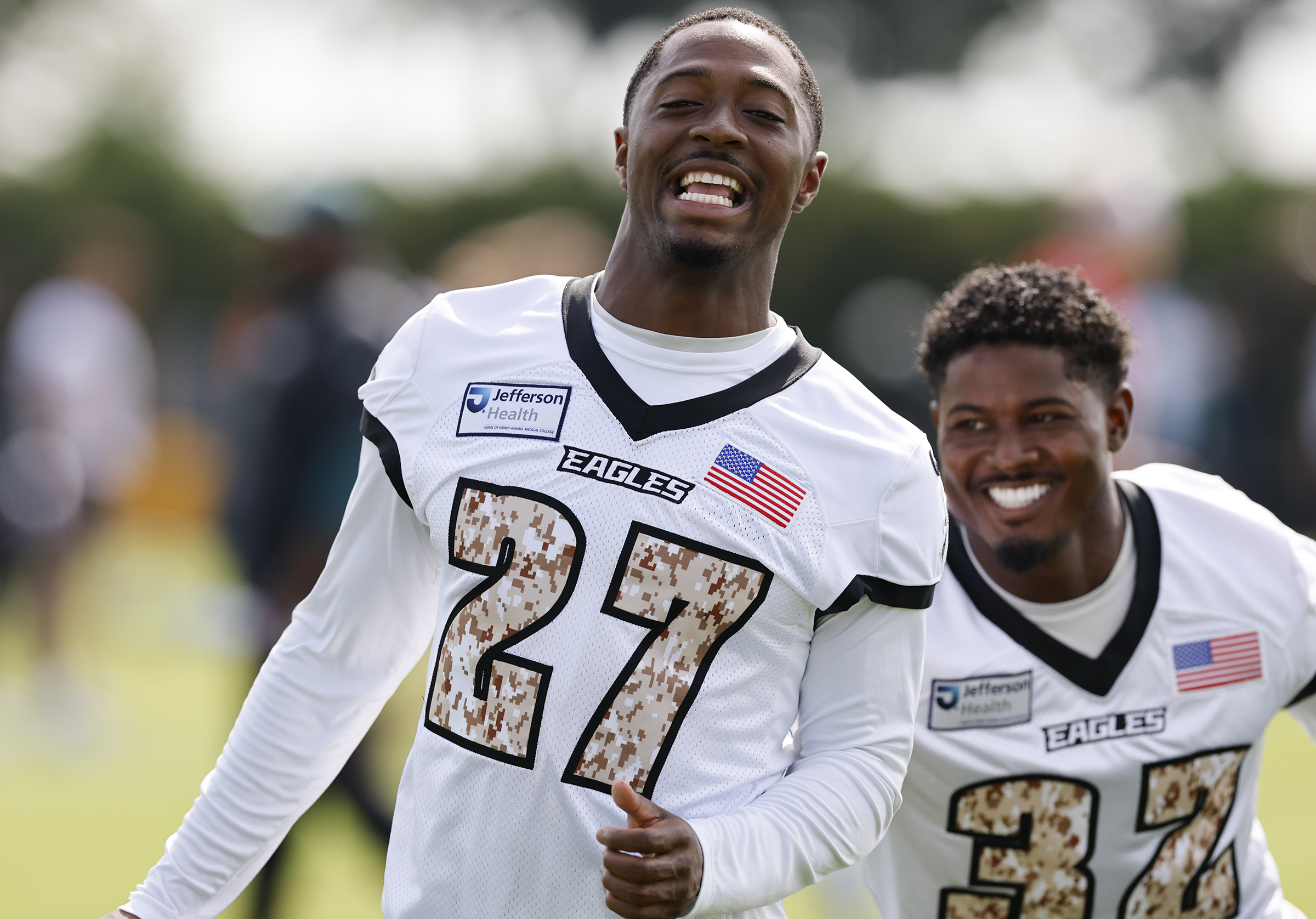
Quinyon Mitchell (27) has looked every bit the All-Pro in his third training camp as an Eagle. Yong Kim / Staff Photographer
Corner boys
Now is as good a time as any to recognize the Eagles’ triumvirate of cornerbacks. They could have the best unit in the NFL, although only time will tell if Riq Woolen can be consistent enough to be mentioned alongside Quinyon Mitchell and Cooper DeJean. He’s had a good camp, with more than five interceptions at last count. There have been down days like the first joint practice in New England. Vic Fangio said before practice that Woolen can get “a little sloppy,” but overall he’s had a solid summer.
More could be said of Mitchell and DeJean. The occasional struggles of Jalen Hurts and the first-unit offense, as Sean Mannion installs his new scheme, can be partly attributed to all three corners. Woolen broke up Hurts’ first pass in seven-on-sevens to receiver DeVonta Smith. In team drills, Mitchell had sticky coverage on receiver Hollywood Brown and notched a pass breakup. A little later, DeJean didn’t bite on a Smith double move and forced Hurts to throw the ball out of reach.
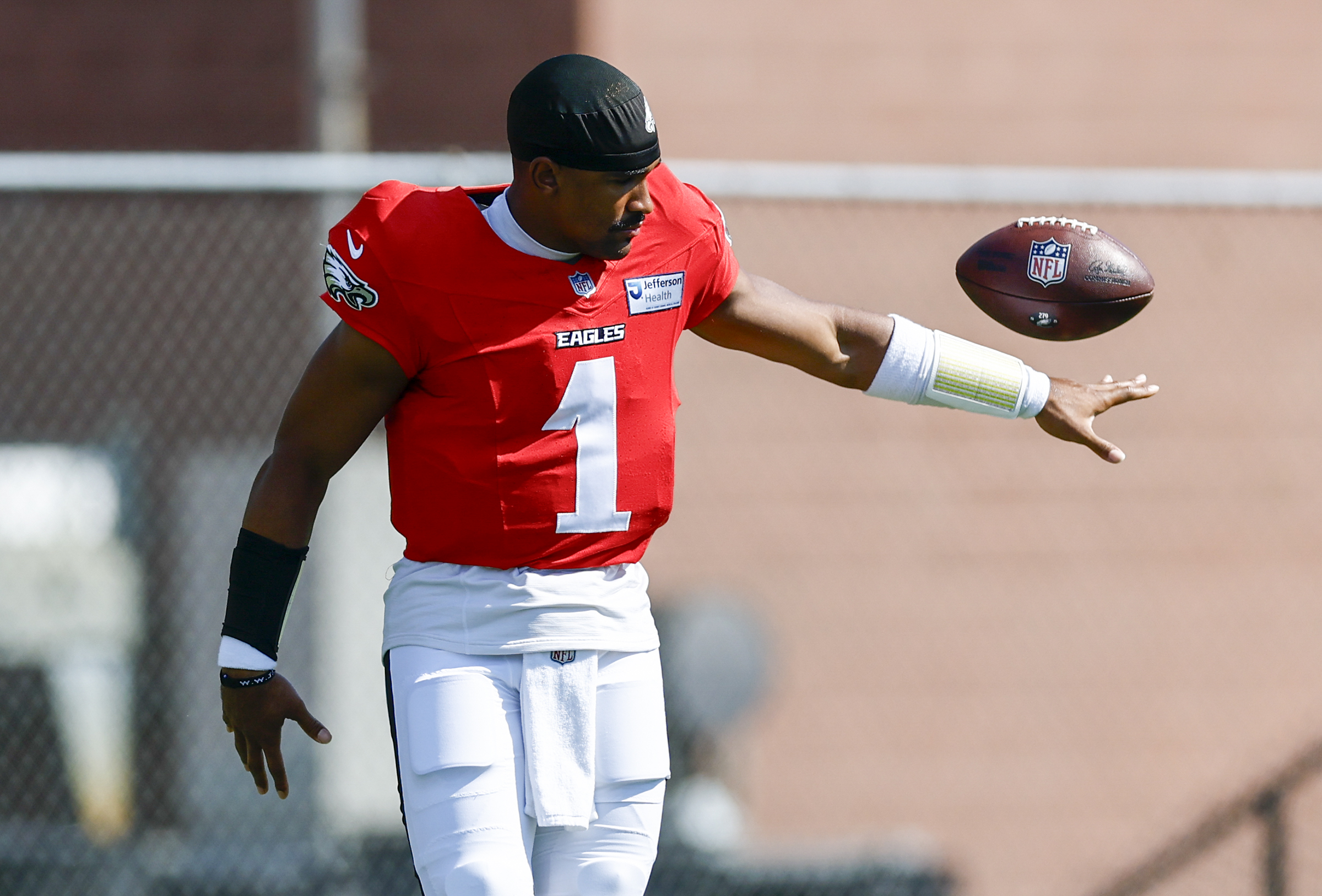
It was another hot-and-cold practice for Jalen Hurts (1). Yong Kim / Staff Photographer
Quick draw
Hurts and the offense had some moments after a messy practice in front of fans at the Linc. He hit Smith on a post route in the back of the end zone vs. zone coverage in seven-on-sevens. Later, in 11-on-11s, Hurts did well to get the ball to an open Makai Lemon after his primary read. He had what appeared to be a touchdown himself off a draw. And in a later set, he dumped to tight end Cameron Latu, who had room after the catch.
Mannion likes his offense to get out of the huddle and get the play off quickly at times. The change of pace can throw off a defense, although it denies Hurts the chance to read the coverage presnap. Mannion had a play dialed up on Wednesday that got Smith matched up against linebacker Zack Baun after a play-action fake. Hurts just flicked his receiver the ball for a decent gain after the catch.
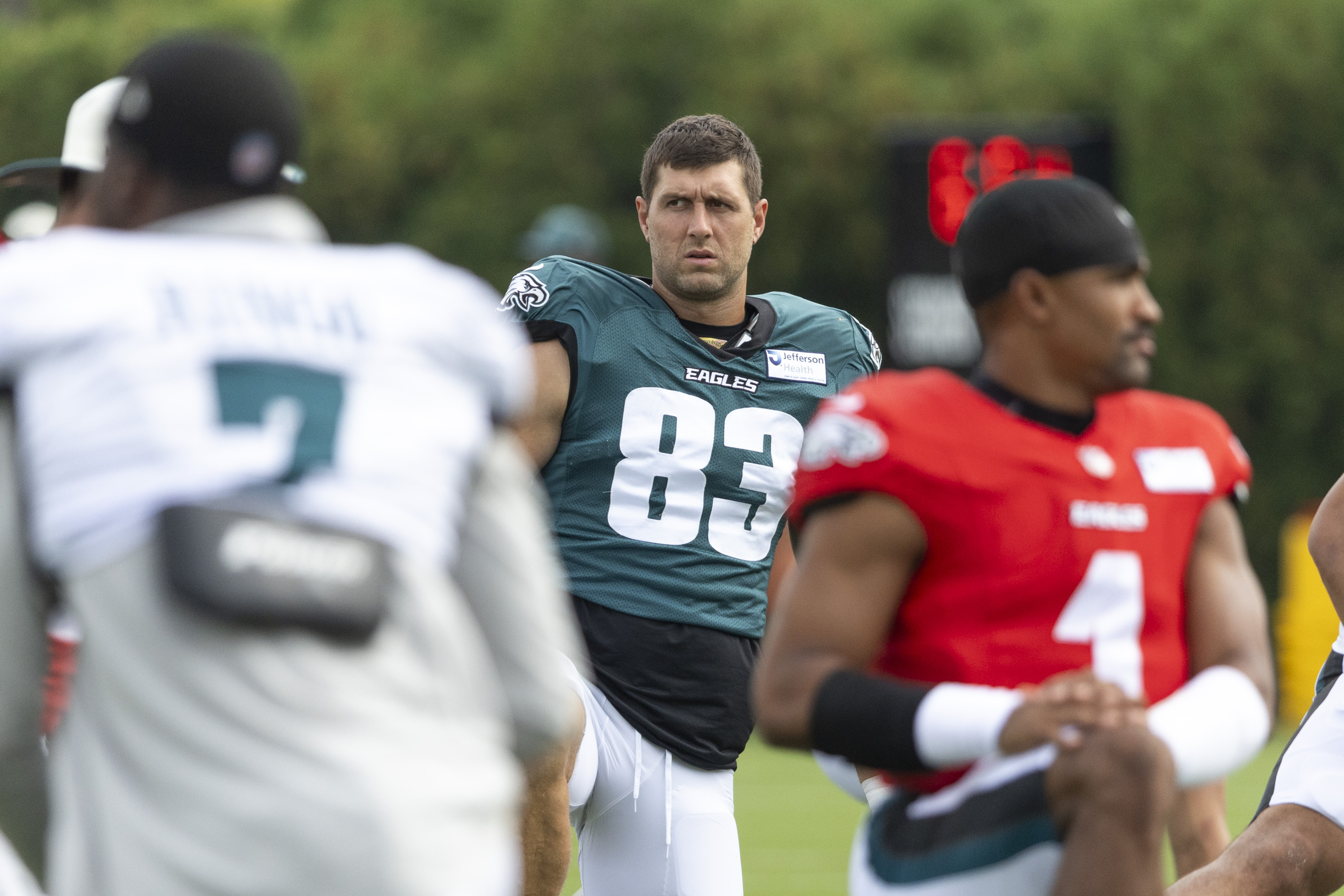
Johnny Mundt (83) continues to try to build chemistry with quarterback Jalen Hurts (1). Tyger Williams / Staff Photographer
Tight lies
There were also unsuccessful moments, of course. Hurts appeared to have Lemon on a dig route over the middle — even if he wasn’t part of his initial read — and left the pocket and threw the ball away. Screens to running backs haven’t been a huge part of the offense in camp, but there have been intermittent sprinkles. Saquon Barkley got the ball in the flat in team drills and received a boundary block from Smith. But left tackle Jordan Mailata couldn’t square up safety Andrew Mukuba, who made the stop.
Tight ends haven’t been as featured in the pass offense either, but that could come with time or be dependent upon the opponent. Hurts has history with Dallas Goedert. They have had their connections over the last month. Johnny Mundt is the clear “Y” blocking tight end, but when Hurts has gone to him through the air, there have been apparent miscommunications. There was another on a hitch route Wednesday when the ball flew behind Mundt.
Eagles tight end Stone Smartt works out as special teams coordinator Michael Clay (left) looks on earlier in training camp.Monica Herndon / Staff Photographer
This and that
The tight end position is a little uncertain after the top two guys. One guy who hasn’t gotten much mention here, but has performed better the last few weeks is Stone Smartt. He has four years of NFL experience and has showed it of late. He had five catches vs. the New England Patriots on Saturday and a couple on Wednesday, including a snag just ahead of defender Michael Carter II.
Keyshawn James-Newby missed most of camp with an ankle injury. But the rookie edge is back and he flashed for the first time when he rushed around tackle Myles Hinton for a pressure.
Tanner McKee (16) appears likely to see action on Friday against the Bengals.Yong Kim / Staff Photographer
Back to the future
It seems likely that Andy Dalton and Tanner McKee will play in Friday’s preseason finale, if Nick Sirianni’s claim that the backup quarterback competition not being over is true. McKee was first up during seven-on-sevens. It was a mixed bag. He hit Brown underneath and then Lemon, who still caught the pass after it hit one of the simulated pass rushers. McKee then just oddly tossed a pass into the dirt. But he hooked up with running back Tank Bigsby for a touchdown.
Both quarterbacks had their moments in team drills. Dalton lofted a touchdown pass to receiver Quez Watkins, while McKee hooked up with receiver Elijah Moore for positive yardage. Latu lost a defender with a double move, but McKee’s strike sailed through his hands. Watkins picked up more than a first down when he had blockers on a downfield screen.
Trending up
With camp officially over, and Wednesday’s practice short on competitive periods, here’s one beat reporter’s list for players trending up:
Jalyx Hunt. The outside linebacker has been one of the best defensive players and drew raves from Patriots people after last week’s joint practices. On Wednesday, Hunt beat Mundt — as he should — and met Barkley in the backfield for a would-be tackle for loss.
Drew Kendall / Lampkin. I’m splitting this entry between the two second-year interior O-linemen. They were relative unknowns coming into camp, but have seemingly solidified the center and guard backup spots. There are concerns about experience, size and durability with both, but new O-line coach Chris Kuper has them looking ready. Kendall and Lampkin had key blocks on two Dameon Pierce rushes on Wednesday.
Moro Ojomo. The defensive tackle just keeps raising the bar. Ojomo is in a contract year and will likely price out the Eagles — who just extended Jalen Carter and Jordan Davis —next offseason.
Tyler Steen. The right guard is another player entering the fourth year of his rookie contract. Steen has a better chance of staying in Philly than Ojomo, but his return could cost some if he continues to grow in confidence.
Jeremiah Trotter Jr. The inside linebacker is entering his third season and is still a backup. But if either Baun or Jihaad Campbell goes down, Trotter should be able to step in without missing a beat. He’s been that good in camp.
Honorable mention: Michael Carter II pushed in the safety chase and should be the dime defensive back. Outside linebacker Joshua Weru, despite his inexperience, has flashed enough potential to make the 53-man roster. Marcus Epps never let Carter supplant him at safety. A.J. Epenesa has done enough to earn the third edge spot — for now. Receiver Dontayvion Wicks locked down the No. 2 spot opposite Smith.
Was down, now up:Ty Robinson was relegated to developmental period duty at the start of camp, but the light bulb went off and the defensive tackle started racking up sacks. Will Shipley didn’t exactly struggle in the early going, but he came on strong and was excellent in the joint practices. Cornerback Kelee Ringo might not have been on the outside looking in, but he needed to show he was more than just a good special teams gunner. He’s got liabilities but should be a roster lock.
Hollywood Brown has a 1,000-yard NFL season to his credit but his play in training camp was not a revelation. Yong Kim / Staff Photographer
Trending down
Hollywood Brown. He’s probably on the 53-man roster, and may end up getting more playing time if Lemon needs developing. But Brown hasn’t popped like the speedster was expected to. He may need some time to adjust to a new scheme.
Andy Dalton. The veteran quarterback didn’t ask to be traded here. That doesn’t excuse his spotty play in an offense he had experience with. But it’s hard to see why the Eagles felt it necessary to push McKee and cut into his repetitions in a new scheme. Maybe Dalton can turn it on at the end to win the job.
Dickerson. No one can deny the left guard’s toughness and what he’s already accomplished. He still has gas in the tank. But of the five starting O-linemen, he may not be an ideal fit in the new wide-zone blocking scheme. As for whether he can make it through the season, that is to be determined. An example of Dickerson’s sluggishness in the new scheme came on Wednesday when he was late to the second level and Campbell plugged Barkley.
Jonathan Greenard. The Eagles’ big offseason trade acquisition has missed all of camp with a pectoral muscle injury. Fangio indicated he might not be ready for the opener. Greenard should be the top edge when healthy, but his start in Philly has been underwhelming.
Lemon / Stowers. Rookies should be given the benefit of doubt. Lemon and Stowers could end up delivering on their draft stock. But when you’re a first- and second-rounder, expectations are higher and you should be ready to contribute early. Lemon was out for three weeks with a hamstring injury. He’s back, but there’s going to be an obvious learning curve. Stowers was improving, but a recent hamstring injury has set him back. He’s not yet an NFL blocker and has hardly practiced with Hurts. How much can he realistically do early in the season?
Honorable mention:Jakorian Bennett has been out since injuring his knee in the preseason opener. The corner didn’t look like a roster lock before the setback. Grant Calcaterra is a decent receiver, but blocking isn’t a strength. A recent back injury could end his roster hopes. Fred Johnson has stepped in and helped the Eagles win games the previous two seasons. But like Dickerson, the tackle may not be best-suited to the new scheme. The Eagles may be waiting for another team to cut a more NFL-ready long snapper rather than stick with a rookie in Rocco Underwood.
Was up, now down:Darius Cooper shined early in camp, especially when Smith and Lemon were sidelined. But he’s been inconsistent of late. Case in point: He eased up on a route on Wednesday and allowed safety Andre Sam to tip the ball to Carter for an interception. Jonathan Jones seemed like the obvious first guy off the bench at outside cornerback. But a shoulder injury has clouded his future. Jones’ experience could keep him inside the bubble.
Extra points
Owner Jeffrey Lurie will be inducted into the Eagles Hall of Fame at halftime of the Oct. 26 game vs. the Cowboys at the Linc. … The Eagles will have a closed walkthrough on Thursday ahead of hosting the Cincinnati Bengals in Friday’s final preseason game. … Practices are now closed except for the warm-up and individual drills periods for the rest of the season. This will be my last batch of observations until workouts next spring. Thanks for reading.
There are ghosts rumbling through the rafters at Mr. Edison. And I’m not sure they’re happy.
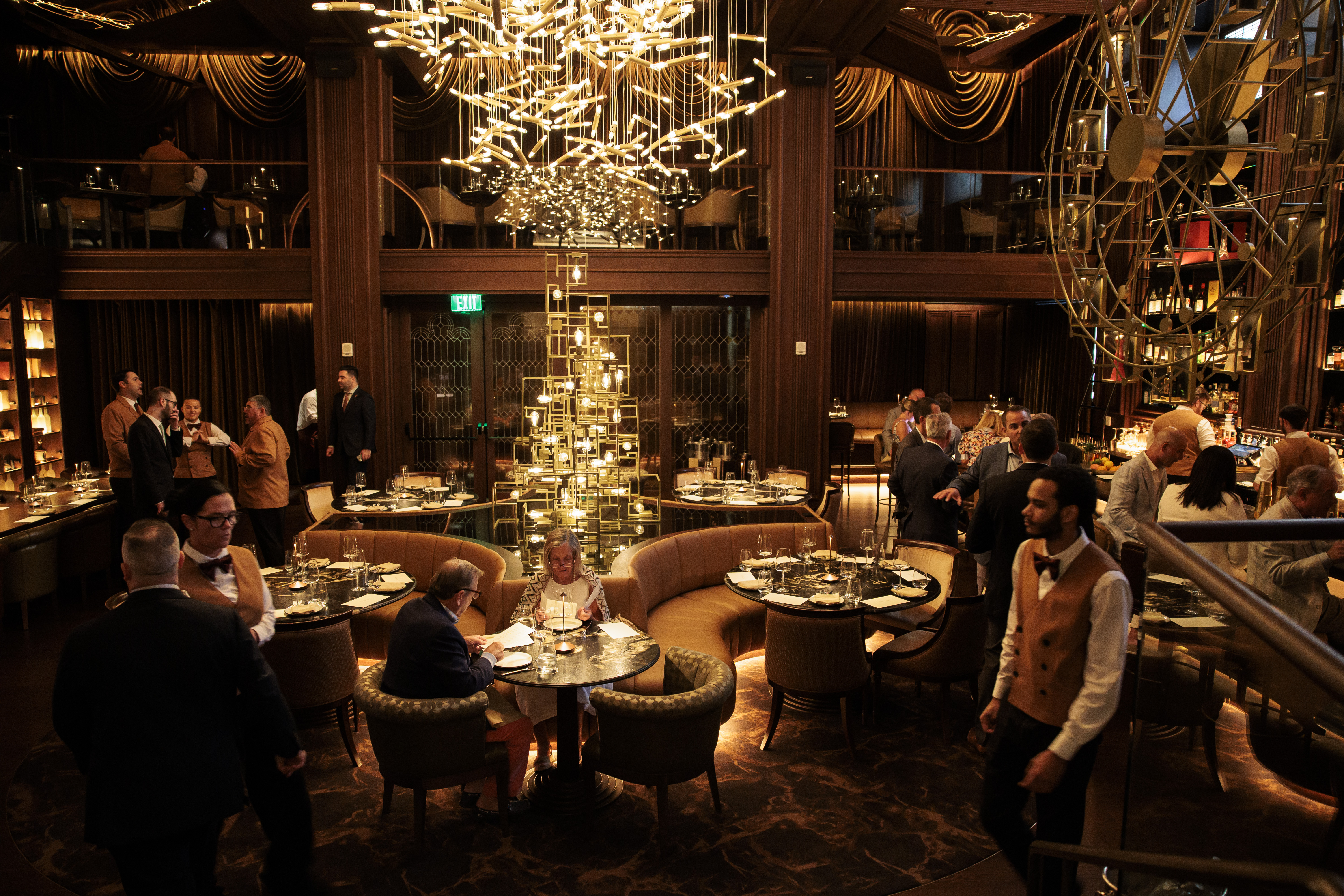
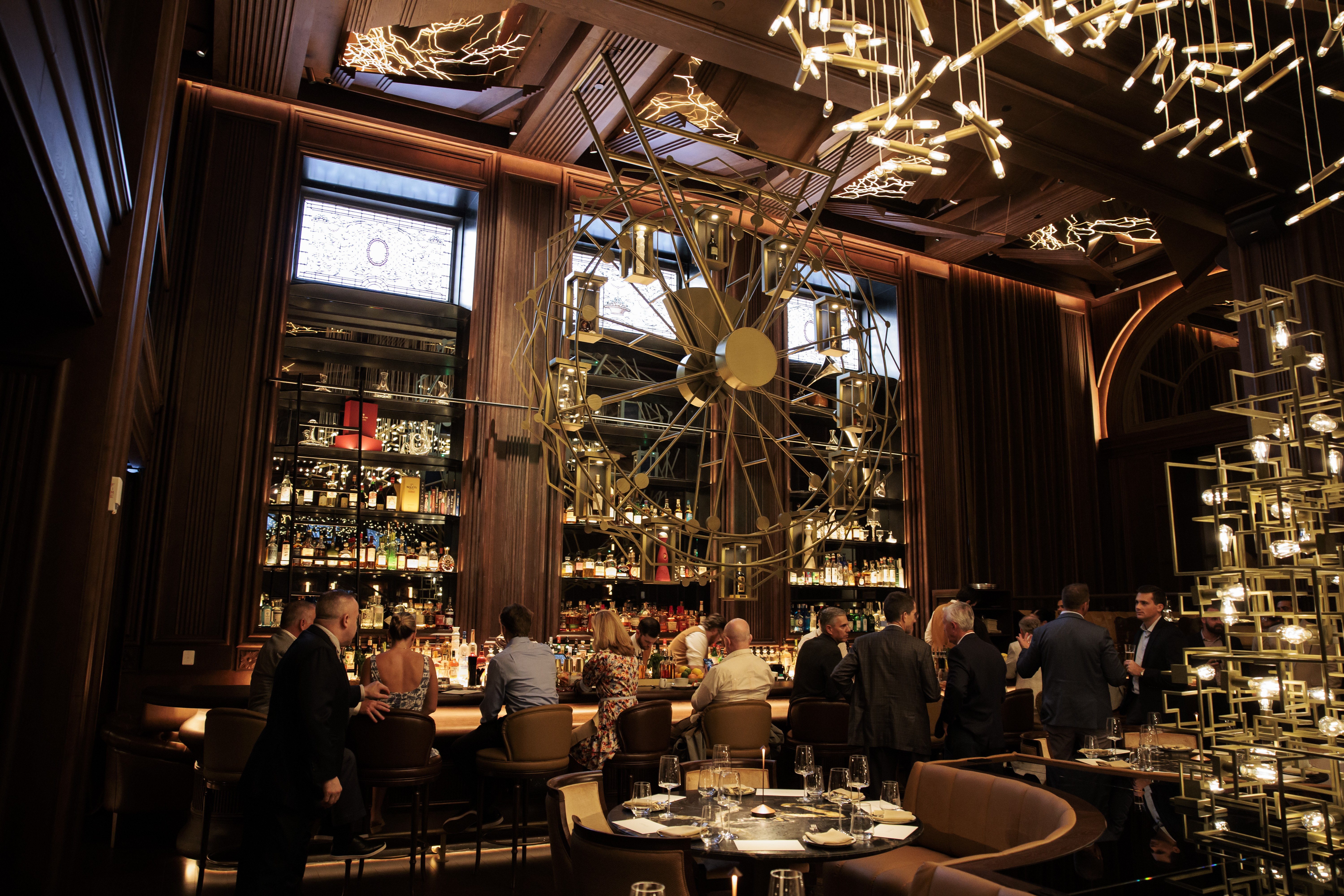
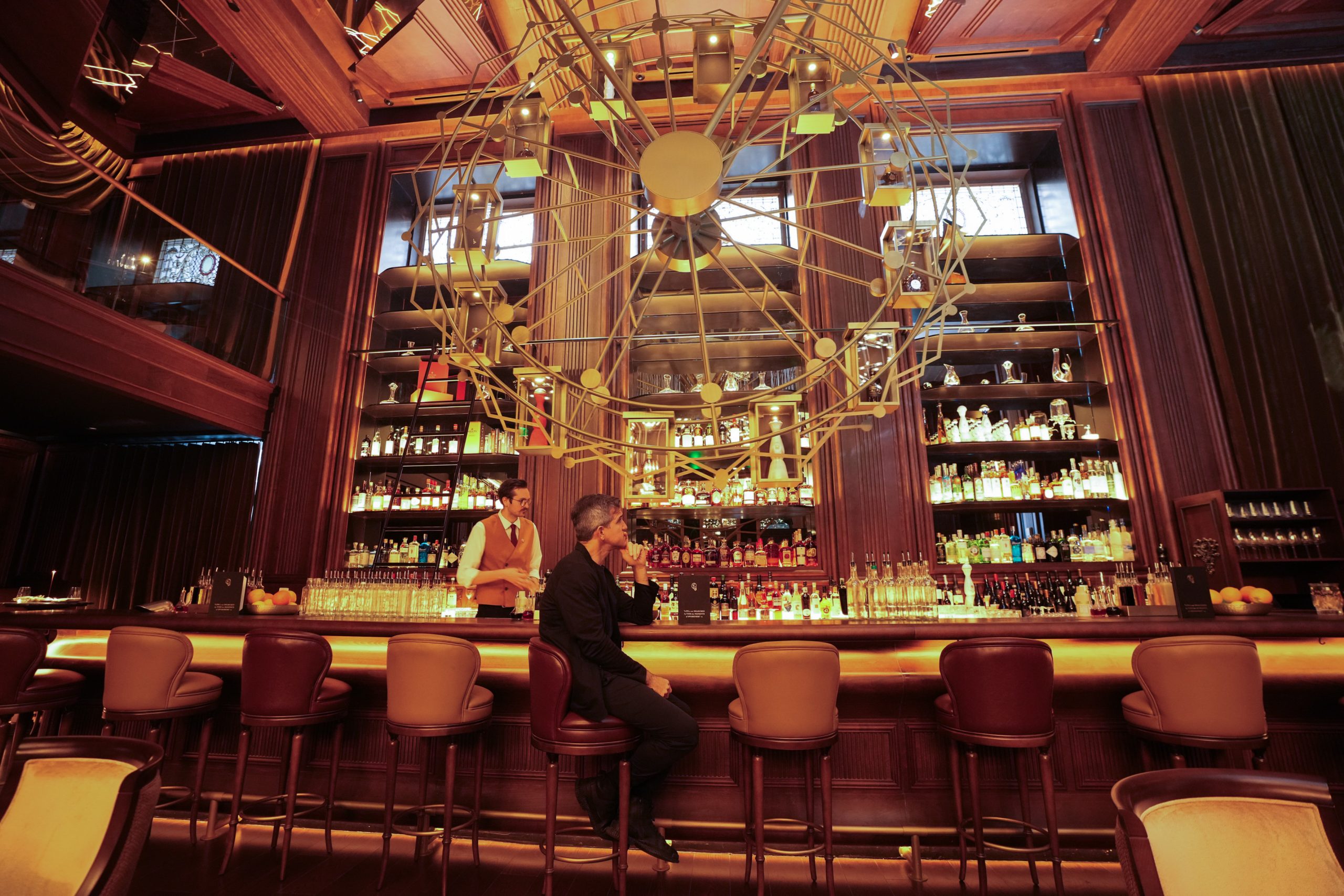
So much energy — both living and remembered —pulses through this dramatic two-story restaurant inside the landmark Bellevue hotel that, as we follow a hostess in what looks like silk pajamas up the long staircase to our table on the mezzanine, the ceiling panels appear to explode with a mirrored tableau of reflected lightning bolts. A chandelier of suspended Edison bulbs showers the plush booths below in a cascade of frozen sparks while a 12-foot brass Ferris wheel nearby cycles slowly over the bar, dangling some of the world’s most extravagant bottles of booze in its hydraulic glass cages.
Am I the target audience for a $350 pour of the Louis XIII “on rotation”? Definitely not. But Mr. Edison has obviously found them, given its guests supposedly go through a bottle a week of the famed cognac (which retails in Pennsylvania for $5,300).
The bar at Mr. Edison in the Bellevue Hotel on Tuesday, Aug. 18, 2026 in Philadelphia.Monica Herndon / Staff Photographer
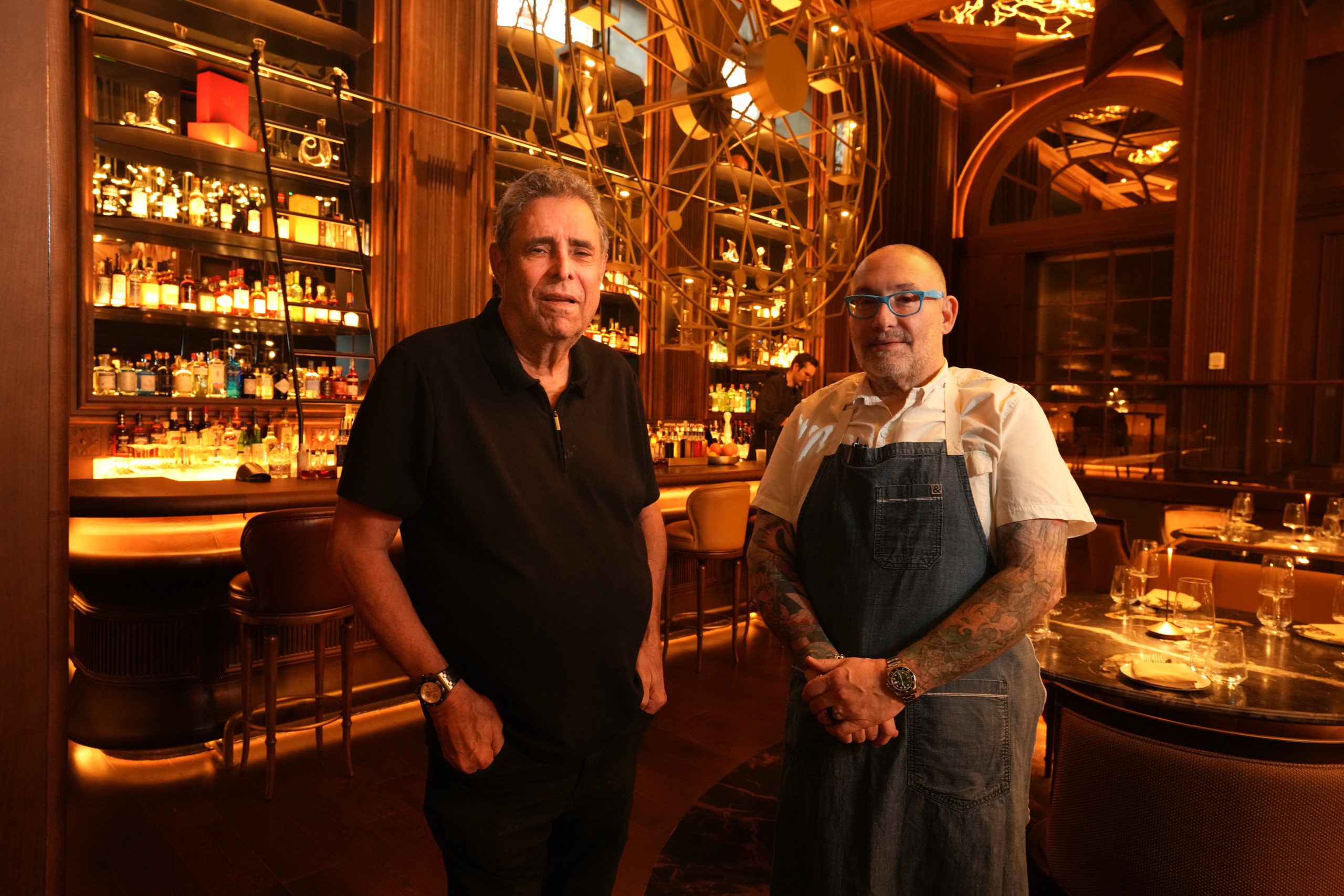
This carnival of pomp and perpetual motion is overwhelming to take in all at once, along with a live jazz band playing to a crowd tightly cinched into formalwear and glittering jewels. The spirit of Thomas Edison, who in 1904 helped electrify this grand old hotel, would no doubt be moved by this namesake tribute from owner Jeffrey Chodorow, the pioneering restaurateur with a hand in more 60 restaurants, including China Grill and Asia de Cuba.
While those two stars of late 20th-century dining in New York (and Miami) were trendsetters for the eater-tainment fusion movement, Mr. Edison is a decidedly nostalgic throwback to a 1940s-style supper club. It’s built around updates to classic Philly foods, from fried oysters and chicken salad zapped with kimchi to more dutiful re-creations of cakes from Old Original Bookbinder’s and Frog.
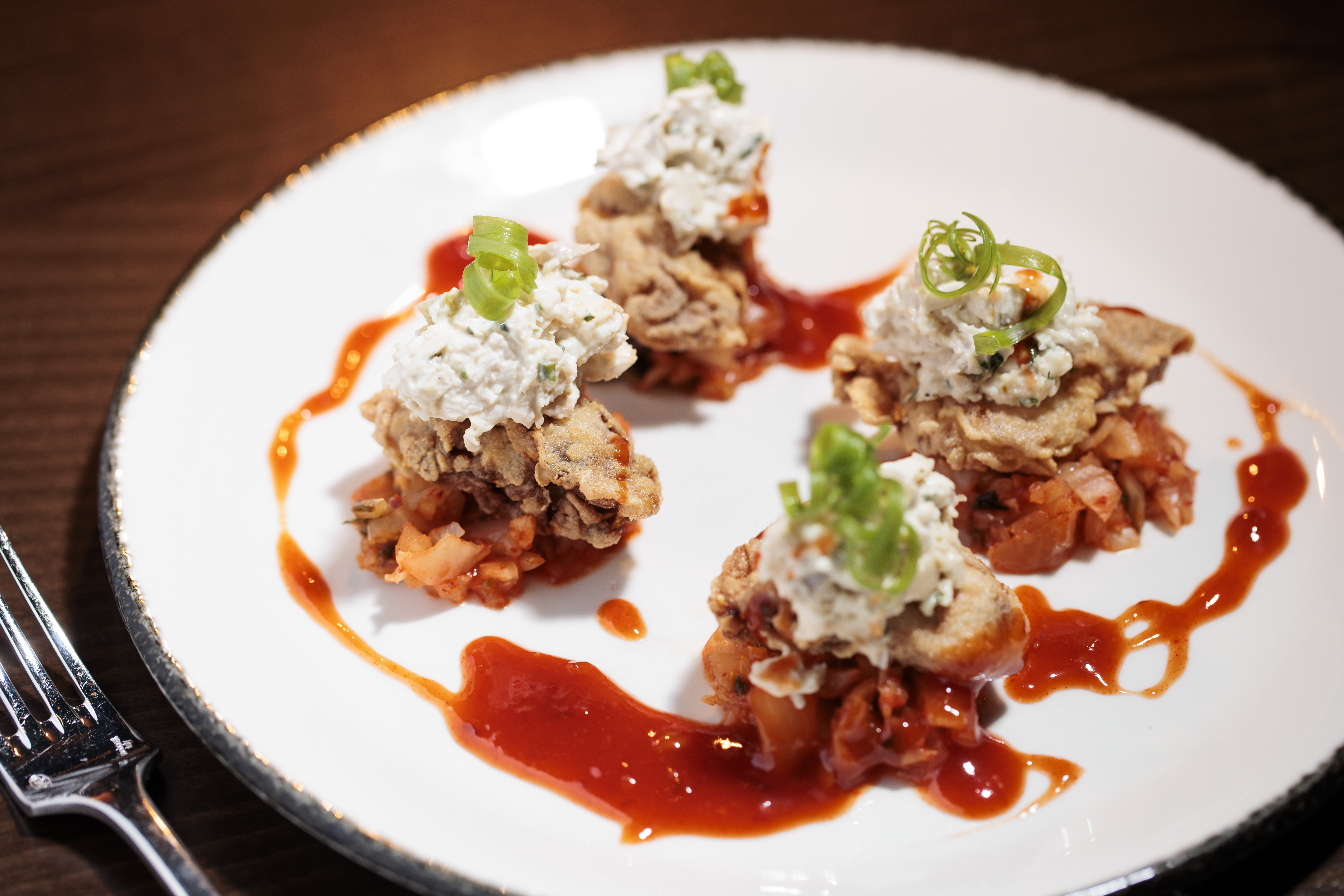
The Korean fried oysters at Mr. Edison in the Bellevue Hotel on Tuesday, Aug. 18, 2026 in Philadelphia.Monica Herndon / Staff Photographer
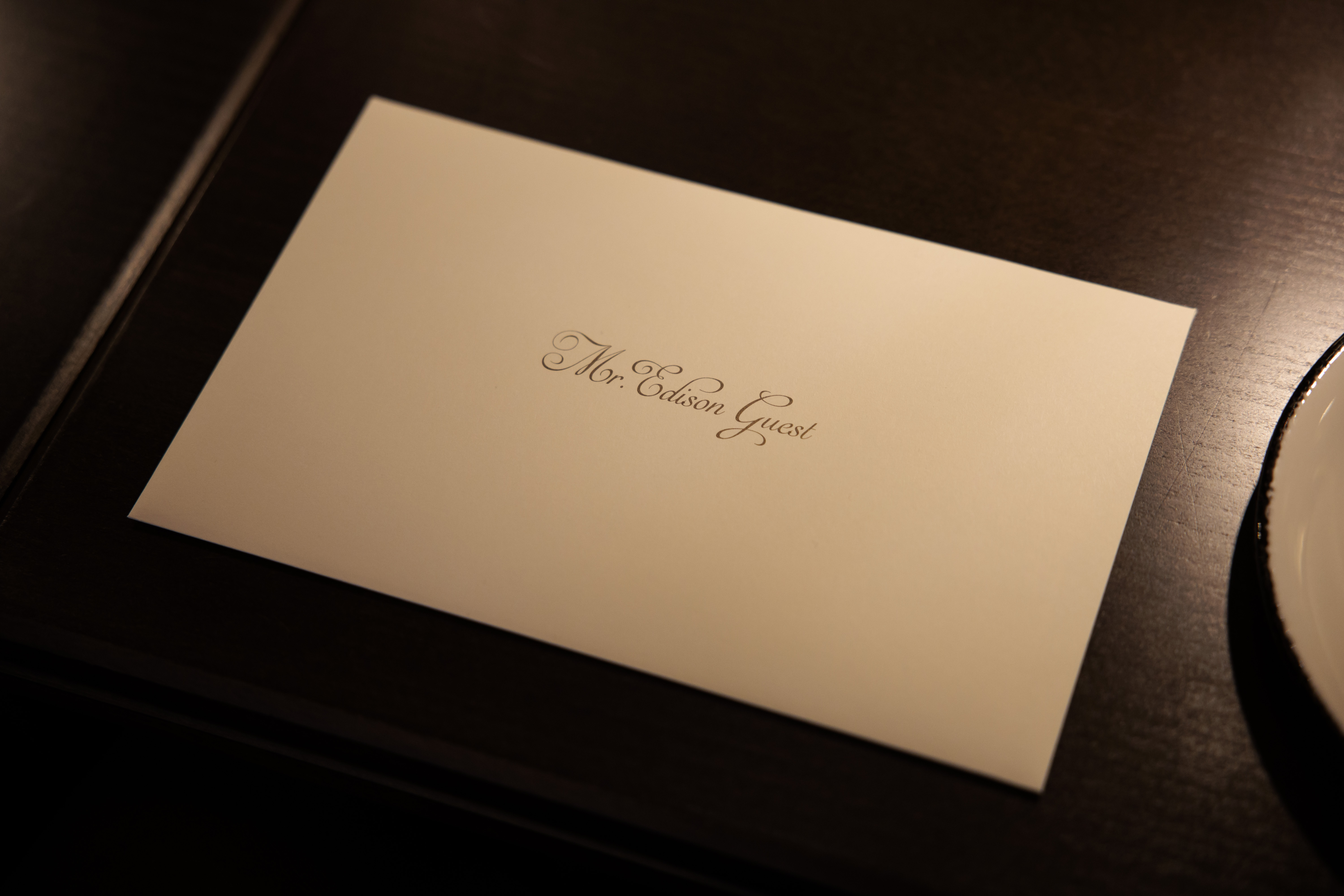
For Chodorow, 76, who studied at Wharton, Mr. Edison’s food is a love letter to legends of the 1970s restaurant renaissance, whichhe enjoyed while practicing law here in the early 1980s. Names like Le Bec-Fin, Le Panetière, and Jimmy’s Milan are invoked like wishful spells across the menus, which arrive tucked inside a souvenir envelope like wedding invitations. (Chodorow, not coincidentally, threw an elaborate engagement party for his wife at the Bellevue in 1982.)
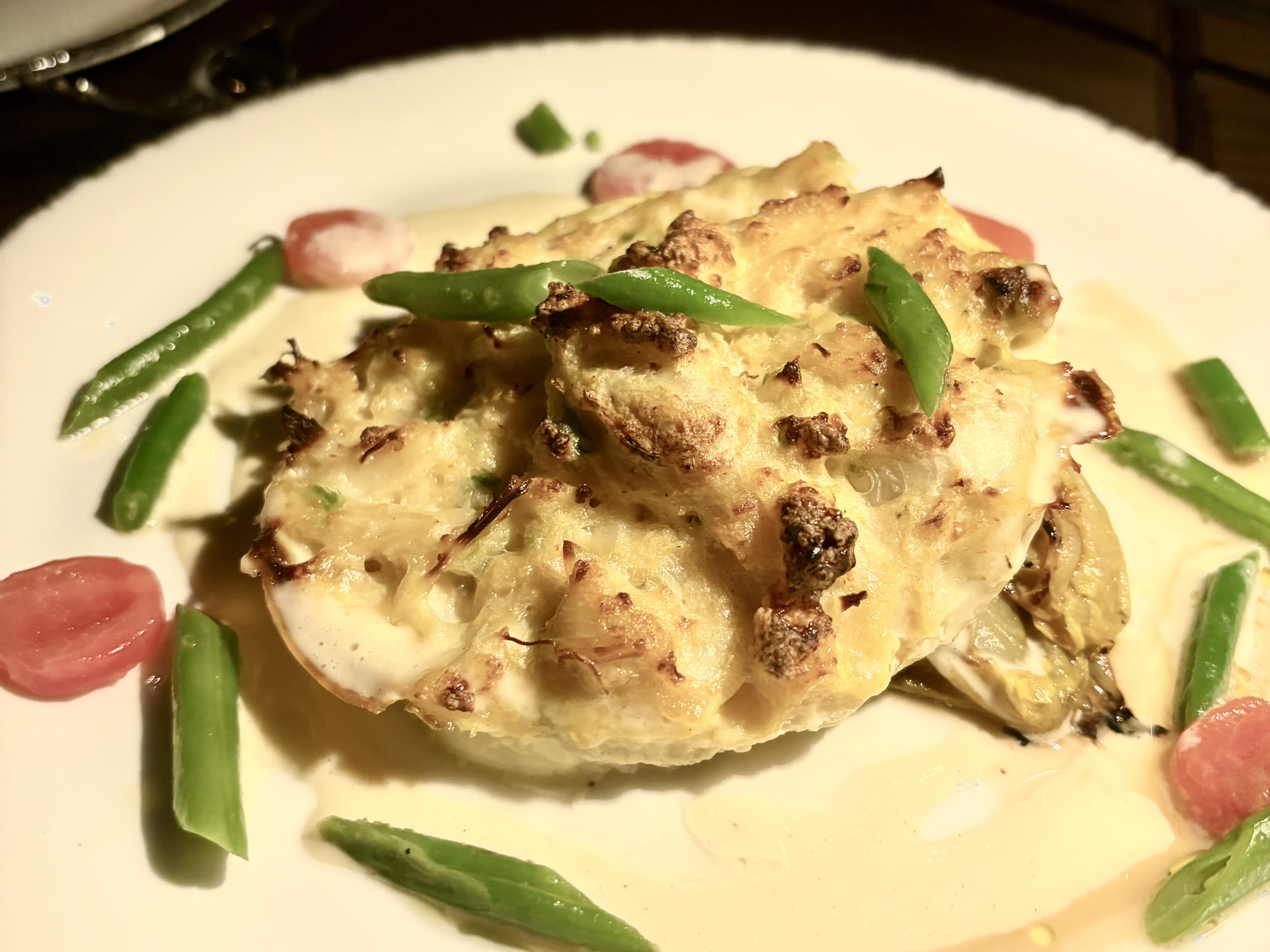
If the Ghosts of Philly Restaurants Past have indeed answered their summons, they might be frowning down on these plates with dismay. The galette de crabe “Le Bec-Fin,” known for its use of seafood mousse to produce a delicately puffy soufflé jeweled with sweet crab, arrived here so deflated and overcooked it tasted like a fishy frittata.
“Chef [Georges Perrier] would probably lock the doors and burn the place down,” replied one of Le Bec’s longtime former chefs after I texted him a picture of my gruesome galette.
Mr. Edison’s rendition of Le Bec-Fin’s crab galette is a far cry from the original.Craig LaBan / Staff
In fact, Mr. Edison’s culinary director, Matt Levin, 53, also cooked at Le Bec-Fin early in his career, which subsequently saw him burst onto the scene in the early 2000s at New Hope’s Moonlight and Lacroix at the Rittenhouse before going solo with Adsum and Square Peg, then eventually landing in the catering world. Most recently, he cooked at the Pineville Tavern in central Bucks County. While his recipe might be the same, Levin’s decision to jettison Perrier’s ring mold for a shallow panwas a fateful miscue. The galette evolved by my second meal into a soggy sponge, still not ideal for $45.
Fewer diners today recall Le Panetière, where Chodorow remembers first tasting Perrier’s food in the late 1960s. But anyone would realize upon one bite of this duck à l’orange tribute that the meaty breast, although still medium-rare, was inexplicably dry and as tough as a chew toy.
Jeffrey Chodorow (left) and chef Matt Levin, at Mr. Edison, the new restaurant at the Bellevue, in Philadelphia, on June 23, 2026.
If only I could have found the frequently absent captain overseeing our table on the mezzanine before the two-hour-plus mark of our glacially slow meal, when he finally asked us, too late and far too smugly, “Did that hit the spot?”
“Not very well,” I replied honestly with a detailed report, noting we’d hardly eaten this $90 sharing splurge as a result. He shrugged a faint reply, then handed us our bill with not even the slightest gesture of apology, though I was not surprised. He’d also forgotten so much as a candle for our dessert after we told him upon arrival (after he asked) that we were celebrating a birthday.
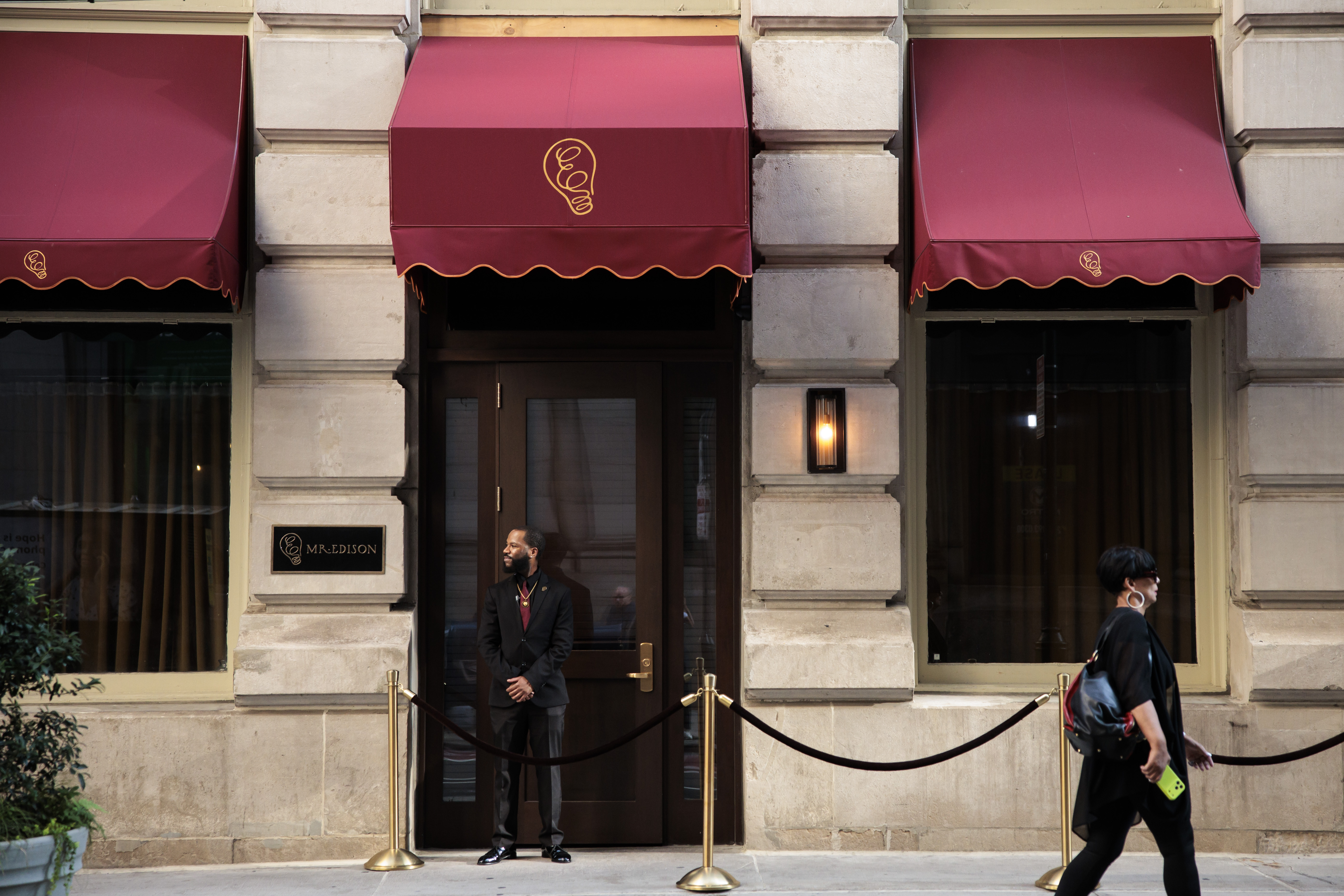
An envelope at each seat holds the menus at Mr. Edison in the Bellevue Hotel on Tuesday, Aug. 18, 2026 in Philadelphia.Monica Herndon / Staff PhotographerThe exterior of Mr. Edison in the Bellevue Hotel on Tuesday, Aug. 18, 2026 in Philadelphia.Monica Herndon / Staff Photographer
As a restaurant romantic, I value grand ambitions such as those that shaped Mr. Edison, a $10 million makeover of the former Polo store that recalls the showplace splendorof Walnut Street’s Restaurant Row in the late 1990s (Striped Bass, Susanna Foo, Brasserie Perrier) more than the DIY quirkiness of the restaurant renaissance that preceded it. It’s far preferable to the cookie-cutter chains that otherwise populate South Broad Street. But executing that ideal in a 133-seat room in 2026 — when, as chef Levin noted, people can make more working for food-delivery apps than actually cooking the food — is a challenge. With check averages of $120 (before tip and tax), no customer wants to hear excuses.
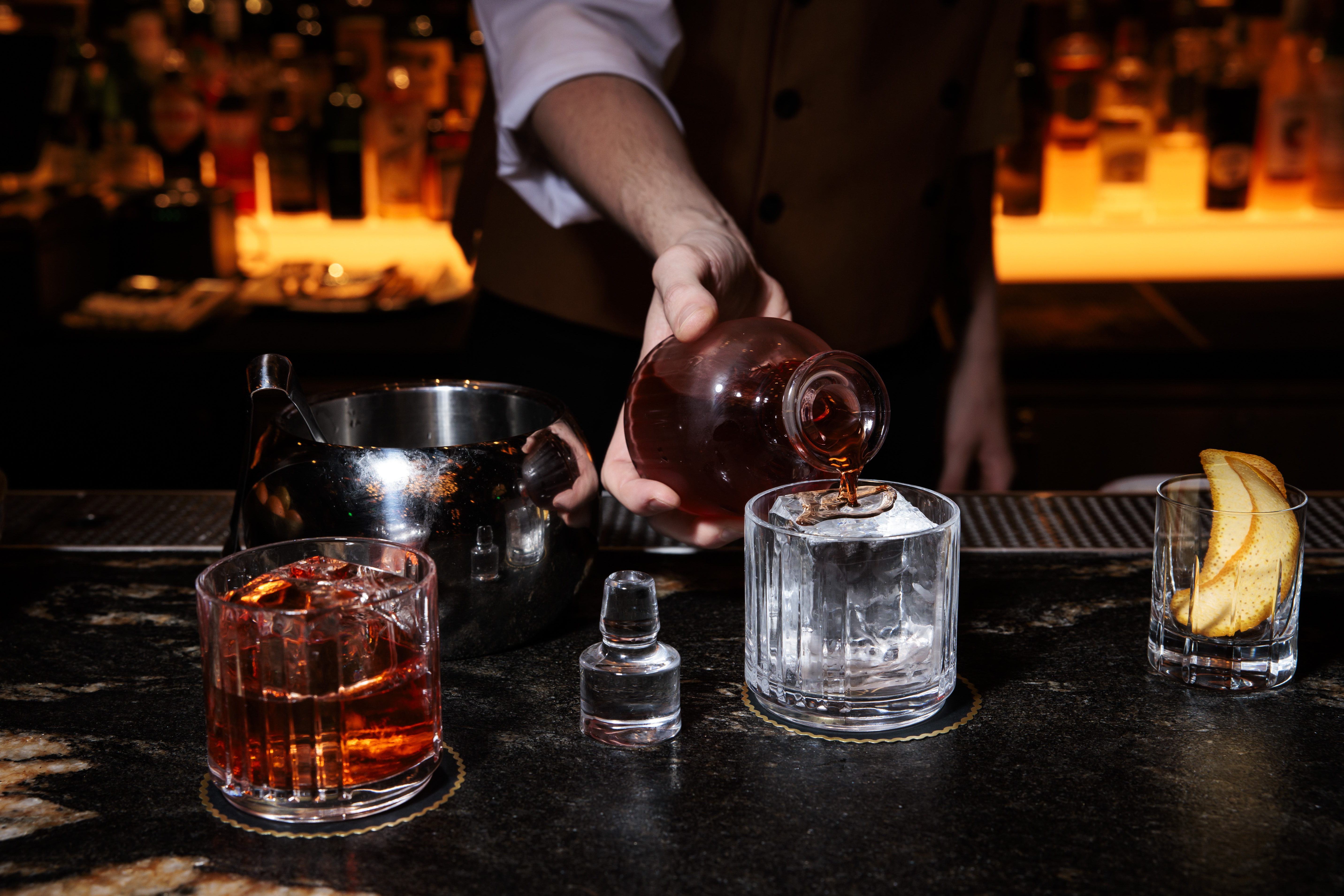
Improvement is within reach. We were seated at my following visit on the daisy wheel banquette that anchors the downstairs dining room, and the service there was much sharper. We had a perfect vantage to hear Drew Nugent & the Midnight Society swing onstage and to drink this bar’s outstanding cocktails, including the large carafe of a superb Negroni (this variation blending Cocchi di Torino and Punt e Mes) poured tableside over giant ice cubes. At $57 for the equivalent of three-plus cocktails, it’s one of Mr. Edison’s best values.
Bartender Michael Chukinas pours the tableside house Negroni at Mr. Edison in the Bellevue Hotel on Tuesday, Aug. 18, 2026 in Philadelphia.Monica Herndon / Staff Photographer
I’d definitely return for a seat at the titanium granite bar to enjoy the well-curated lineup of live music, sip other cocktail hits (the white coffee-infused Wizard or tropical 30 Minute Nap), and graze on some of the small plates.
The Korean fried oysters with kimchi and chicken salad was an intriguing riff on one of my favorite historical Philly food oddities, the spice and fermented funk of the cabbage cutting through the clubby richness. Waffle chips to scoop paddlefish caviar from fancy French onion dip was an accessible alternative to the far pricier sturgeon caviar service. The quail yolk-dotted beef tartare ringed by fried beef tendon puffs was irresistible, while a petite portion of seared filet mignon fanned over a creamy au poivre sauce with morels tapped another red-meat craving without the steakhouse clichés.
The Jimmy’s Milan salad — essentially crunchy lettuce tossed with bacon, big shrimp, hard-boiled eggs, and a zesty Russian-Italian hybrid dressing — is proof that some vintage pleasures don’t need to be reinvented to be appreciated. The restaurant’s $48 baked potato, stuffed with nearly half a pound of sweet lump crab au gratin, was the most memorable thing I ate at Mr. Edison, a super spud splurge that could hit yet another level with a $40 “blackout” addition of caviar.
A couple of the small plates fell short. A meaty flap of tuna carpaccio was not pounded thin enough. The corn-encrusted soft-shell crabs over mole verde were not soft enough, leaving me with a mouthful of shells.
Updating classics is a tricky prospect, and often Levin’s contemporary reworking drifted too far afield for its own good. The baked “Edison meets Rockefeller” oysters were so underdressed, with splashes of Mornay and fines herbes butter replacing the typically lush green puree, it lacked the indulgence to suit its name, even with a crispy nugget of guanciale. A $110 rendition of lobster Thermidor was not simply unrecognizable; without the full shell, into which it is typically stuffed and gratinéed, it was one-dimensional and boring.
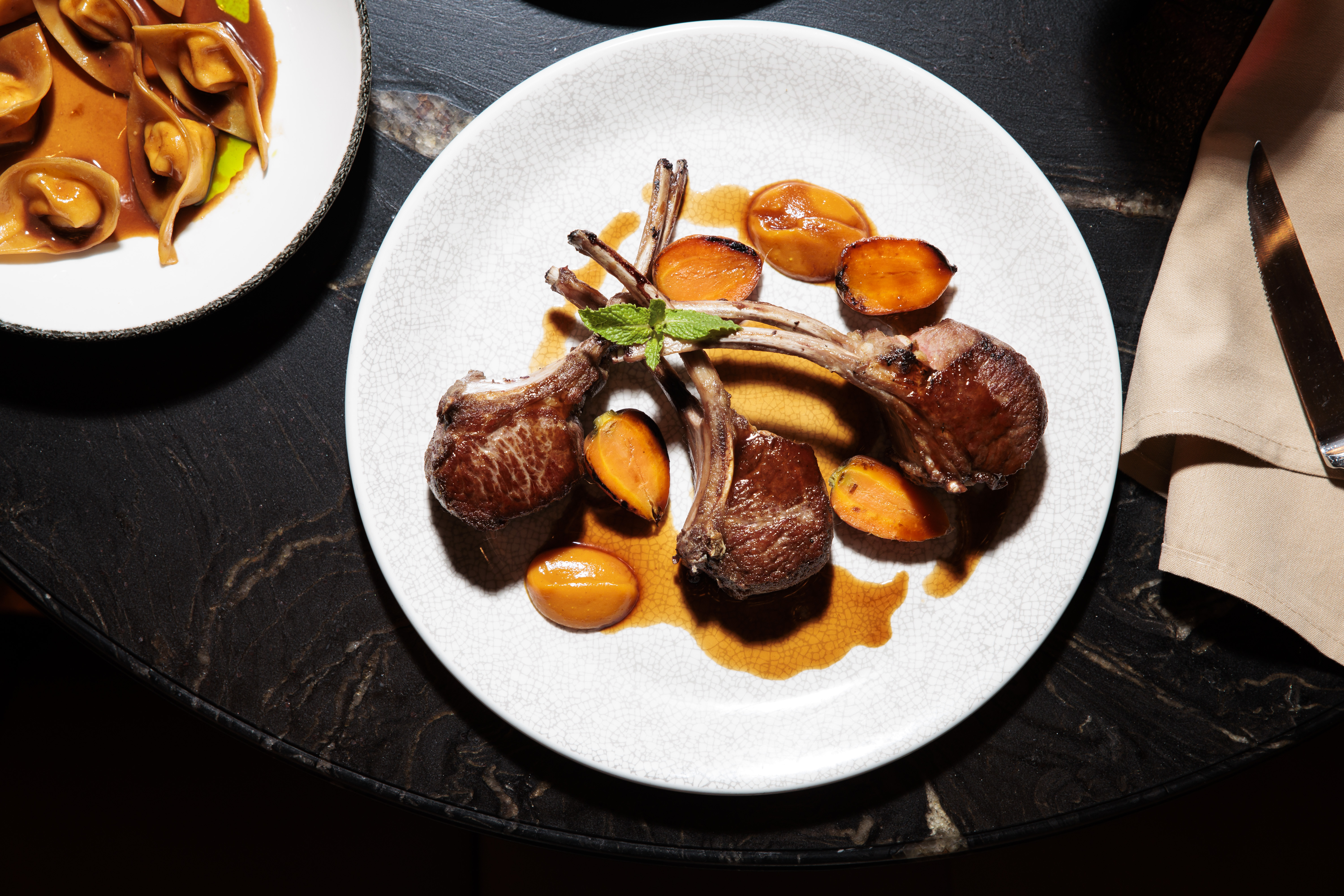
The grilled lamb chops spiced with vadouvan curry with Thumbelina carrots were the most satisfying of the “Grand Plates” for two, while the butterflied whole dorade over chimichurri and the buffalo milk ricotta ravioli were safe bets for the unadventurous.
The lamb chops at Mr. Edison in the Bellevue Hotel on Tuesday, Aug. 18, 2026 in Philadelphia.Monica Herndon / Staff Photographer
Too many other big dishes stumbled over the basics of seasoning — like a veal chop Milanese that cradled a handful of flaky salt atop its breaded crust. The brick chicken was so salty that my gums ached until the end of the meal.
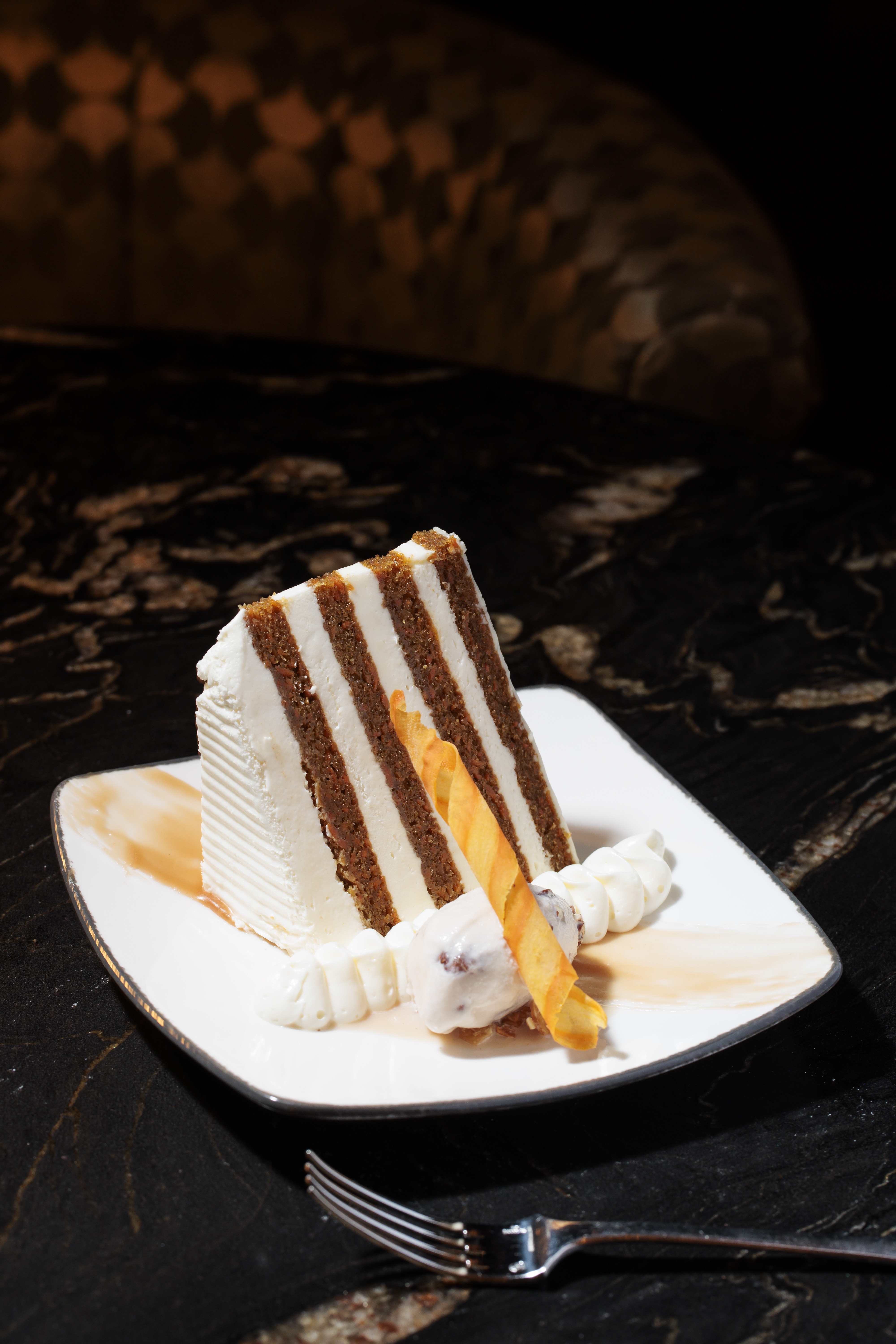
Tucked into the stuffiest far corner of the mezzanine behind the bar for this final visit, I’d hoped an old-fashioned dessert would offer enough sweetness to counter that salty bird. I considered one of the winners I’d already enjoyed at previous visits: a re-creation of the coconut cake from Old Original Bookbinder’s, a tasty nod to Frog’s legendary carrot cake with butter pecan ice cream, or the dense chocolate-and-peanut-butter tart.
I opted for the crème brûlée to keep it easy, only to find its caramel crust — ideally torched to order and still warm — was cold by the time it ascended to our second-floor perch beneath the lightning-bolt rafters. I looked down toward the bar’s Ferris wheel as it cycled up toward us and couldn’t help but imagine the Ghosts of Philly Restaurants Past riding along with those glass cages, so hopeful for their comeback moment. Rising then falling, again and again, they sent shrugs of disappointment in my direction as they rolled away.
The carrot cake at Mr. Edison at the Bellevue Hotel on Tuesday, Aug. 18, 2026 in Philadelphia.Monica Herndon / Staff Photographer
Mr. Edison
Dinner Sunday through Thursday, 5 to 11 p.m.; Friday and Saturday, until midnight.
Small plates, $19-$45; Sharing plates for two, $58-$115.
Fully wheelchair accessible to all parts of the restaurant, including two wheelchair accessible seats at the bar.
Gluten-free: At least half the menu is either gluten-free or can be modified, including items cooked in a gluten-free fryer.
Menu highlights: Caviar dip; Jimmy’s Milan salad; Korean fried oysters; filet au poivre; baked potato with crab gratin; buffalo ricotta ravioli; lamb chops; carrot cake.
Beverage program: Don’t let the ostentatious bling bottles on the Ferris wheel fool you. The bar is Mr. Edison’s strong suit, with well-crafted and thoughtful updates to classic ideas using modern techniques and quality ingredients. The tableside Negroni towers are worth it, along with other cocktail highlights. The wine list is more predictable.
Mr. Edison, the new restaurant at the Bellevue from Jeffrey Chodorow, in Philadelphia, June 23, 2026.
Maybe the best thing that can happen to college sports’ integrity is everything that is happening to its integrity right now. It would be ironic, in a way. The NCAA and its member institutions are where they are because they spent decades adhering to a policy of inertia. Only now does it look like a viable strategy, after their world is already burning around them. Sometimes, in order to gain back what was lost, one must lose what little remains.
Very little remains. Let’s be clear about that. That was true even before last weekend’s news that former Eagles undrafted rookie free agent Dae’Quan Wright was planning on returning to the college ranks after being waived by the Browns. In fact, the hand-wringing that has accompanied the tight end’s reported agreement with LSU is mostly an admission of naiveté or ignorance on the part of the hand-wringers.
The NCAA is more than a decade into a series of logical premises and conclusions that was always going to lead power conferences like the SEC and Big Ten to where they are right now. The university presidents who operate behind the NCAA’s bureaucratic anonymity chose this path when they allowed the almighty dollar of television contracts and the vanity of a news cycle monopoly to become the primary goal of collegiate sports rather than sports played by, for, and among collegiates.They are living in a reductio ad absurdum of their own creation.
The best thing any of us can do for our sanity is to lean back and enjoy watching them lose theirs. It no longer makes sense to react to each development as if university athletic departments are tethered to some sort of ethical baseline that sets them apart from any other major professional sports organization. They pulled up that anchor long ago. The ship has sailed.
Frankly, the idea of an undrafted athlete moving from the bottom of an NFL training camp roster to a college football starting lineup pales in comparison to the legion of current college football starters who are making bigger bank than they would as NFL players on rookie contracts. The average Power 4 quarterback is currently signed to a name, image, and likeness deal worth $3.1 million, according to Sportico. It always made sense that there would come a day when a player would ask out of a contract from the Browns for a more competitive offer funded by Big Willy’s Jeep-Chevy of Baton Rouge. That’s the way NIL was always going to work.
Average NIL spend has nearly tripled in the past three seasons, reflecting an accelerating market. Power 4 programs spend roughly $24.8M on football alone.
Top position groups can expect annual NIL earnings of $3.1M (QB), $1.0M (WR) and $932K (RB). QB has the best ratio of… pic.twitter.com/U4HYYXcAJT
The ridiculousness is the real sport, now. We should treat it as such. For years, the NCAA chose to address the logical implications of its profit drive with a weird and counterintuitive combination of hope, avoidance, and authoritarian dictates. They fully recognized that the genie would one day escape the bottle. Now, they’re left to hope that Ja’Marr Chase and Joe Burrow already have plans for their bye week, when LSU plays Mississippi State.
Lane Kiffin’s central role in the latest lunacy is fitting. College football’s Kendall Roy has spent the early part of this week channeling the exact sort of ends-based nihilism so sublimely satirized by HBO’s Succession. He did the same last year when he left his Ole Miss team on the eve of the college playoffs in order to sign a mega contract with LSU. Nick Saban, his former boss at Alabama, leveraged the full power of the media-sports industrial complex to absolve him of responsibility.
“We need to take a better approach to the business aspect of what we do in college athletics,” Saban said on ESPN’s pregame studio show after Kiffin left Ole Miss. “In the NFL, you can’t leave your team until you are finished playing. You can’t talk to another coach in the regular season. There’s a defined time when you can talk to them if they are in the playoffs. We should match the academic calendar with the football calendar.”
Well, yeah. You should. But there are a whole lot of competing self-interests standing between ought and is. Like any system, it is first and foremost a reflection of those who agree to its framework. Major college football has become nothing more than Boar on the Floor in pads. Any television news segment on NCAA should conclude with a clip of Logan Roy smirking at all the piggies at the trough.
Dae’Quan Wright is among the NFL players trying to play another season of college football.Carolyn Kaster
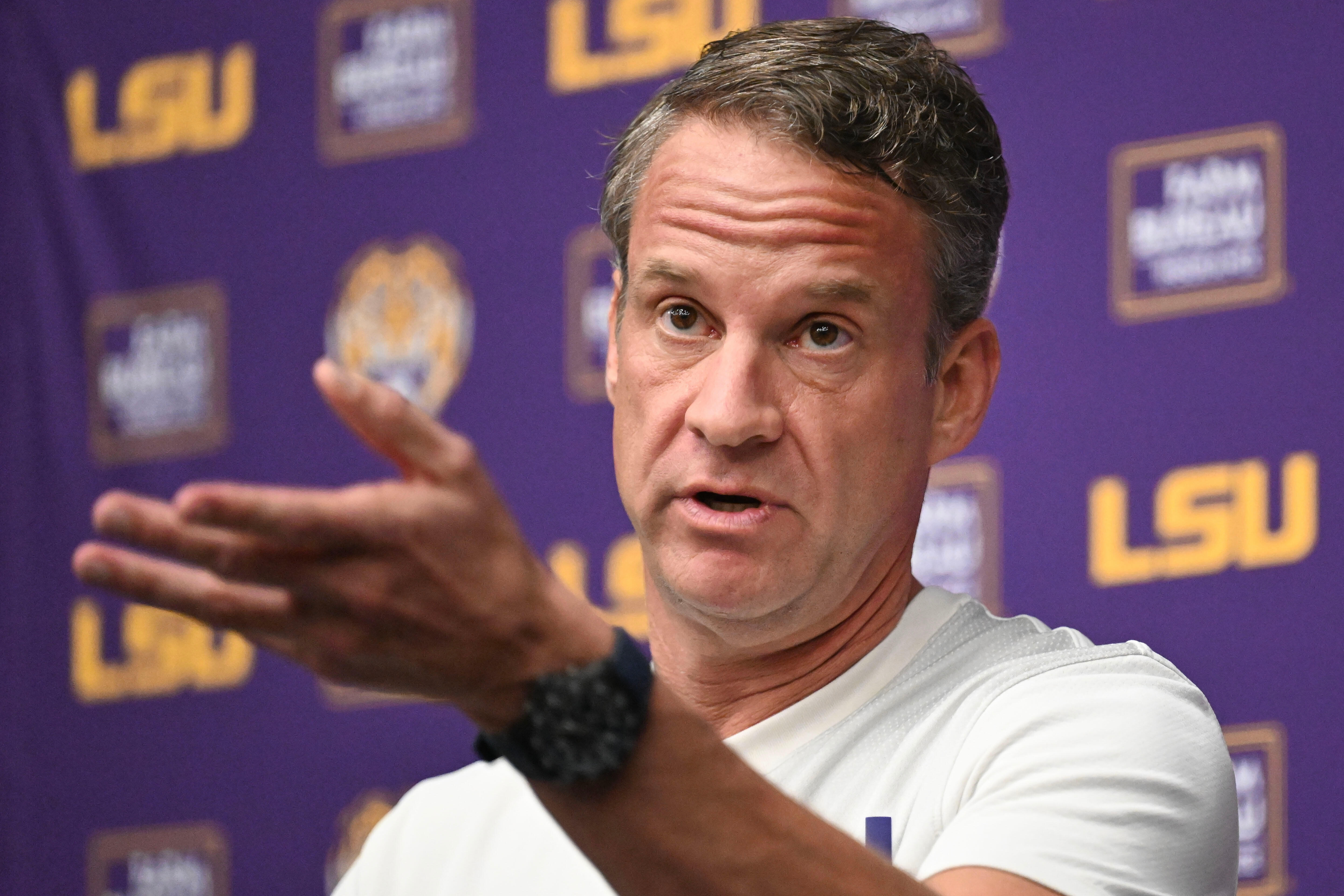
“In general, should NFL players come back to college? I believe — it doesn’t matter necessarily what I believe — that answer would be no,” Kiffin said in a Monday news conference while defending his recruiting of at least two former Ole Miss players who’d spent the summer in NFL training camps.
Focus on Kiffin’s interjection.
It doesn’t matter necessarily what I believe.
You’ll struggle to find seven words that more accurately summarize both the current state of college sports and its contributing factors. In a more principled world, they would be written off as the words of a coward. In our current world, they might as well be written in Latin beneath the flag or family crest or company logo of a disconcerting number of tech titans, politicians, and Fortune 500 firms, not to mention the hundreds of university presidents who have long embraced the plausible deniability of the concept of shareholder value. The best thing you can say about the system of higher education in the United States is that it remains steadfastly by and of the system at large.
The only hope is that it burns itself as quickly and completely as possible. The inevitable end game for the major football-playing schools won’t look much closer to the mandates of their university charters. The big schools will break away, impose a salary cap, hiring and transfer restrictions — all of the things major sports leagues long ago did as a result of similar competitive inevitabilities. They will sign their own television contract, sell their own licensing agreements, consolidate the revenues. The nonpower schools will exist mostly as a counterweight to any antitrust claims. Meanwhile, the rest of us will continue to contemplate the question: Do we really care about college sports if they are no longer about the college?
As a former psychiatric hospital nurse, Justinna Dixon knows what it’s like to feel passionate for a job and overwhelmed by it at the same time.
Dixon graduated from nursing school at the height of the COVID-19 pandemic, and threw herself into her work, caring for people struggling with mental health and addiction issues. But her new-nurse shine quickly dulled under the burden of long hours, high caseloads, and insufficient support.
Now a postdoctoral fellow at Penn Nursing’s Center for Health Outcomes and Policy Research, Dixon is studying the burnout she experienced. She hopes her work will help hospital systems better understand what contributes to burnout and what they can do to improve.
Two out of five inpatient psychiatric mental health registered nurses experience high burnout, according to Dixon’s latest study, published in July in the Journal of Psychiatric and Mental Health Nursing. The study, based on data from 740 registered nurses across 10 states, found that workplace improvements — such as increasing staffing — can help nurses feel more supported and provide better care.
Dixon spoke to The Inquirer about her research and experience as a nurse in an interview lightly edited for length and clarity.
What in your experience as a nurse made you want to study burnout?
I’m a Ph.D.-prepared registered nurse. After I finished my bachelor’s degree in nursing in 2020 from Rutgers University, I worked as an inpatient psychiatric registered nurse for two years. I worked within the same types of units that I talk about in this study. I have personally seen and even felt myself how, when we didn’t have enough leadership support and adequate staffing, it made the job much harder. It made me and my other fellow colleagues give worse care to our patients and made our patients suffer even more than they already were.
What were the study’s most significant findings?
One of the main takeaways is that 40% of current inpatient psychiatric nurses right now are burned out. One of the other takeaways: Staffing was a huge driver of these outcomes, the impact of the work environment on the poor job outcomes of the nurses.
Were you surprised by what you learned?
To be honest, I’m actually not struck by any of my findings, because I have lived it. Normally, on medical-surgical units in a general acute hospital, nurses are assigned around four to five patients to take care of for their shift.
I worked on a substance-abuse detox unit in a psychiatric hospital. In this unit, one of the most medically complex units in the psychiatric hospital, I was typically assigned around 10 to 12 patients. One time, we were very short-staffed and had a full house or an almost full house, and we had one patient who was just so sick from actively withdrawing. We were so overwhelmed with all the other patients on the unit, taking admissions on top of caring for our other patients, being short a nurse.
To be honest, we just couldn’t take care of him the way we wanted to, we couldn’t get him the medication he really needed to quell his uncomfortable symptoms. He was in a lot of distress, and he ended up getting so overwhelmed he threw a chair into our nursing station. It was terrifying for the nurses, but imagine how the other patients felt. It made us delay their care because now we have to deal with this situation, and they’re all sick, too.
What could hospitals do to reduce nurse burnout?
Nurse staffing is a very complex issue. But there are some things I think could move the needle. In the current system, hospitals are not financially incentivized to improve their staffing. Hospitals are typically able to bill individually for physicians or other prescribing provider services. But for registered nurses, there’s really no financial structure that allows hospitals to bill insurance companies to pay for a nurse’s contributions to patient care. Nurses are actually lumped in with hospitals’ overhead costs.
I think that a potential solution to incentivize hospitals to improve hiring is giving them a financial incentive to do so. Another thing that I think could really help is enlisting the public. As nurses, we try to advocate so much for our patients. But maybe we could let our patients advocate for us, too.
The Eagles held the 15th open practice of their 2026 training camp on Monday at the Jefferson Health Training Complex. Here were my observations from Day 15 (and links to Days 1, 2, 3, 4, 5, 6, 7, 8, 9, 10, 11, 12, 13, and 14):
Makai retry
Makai Lemon was a full participant for the first time since injuring his hamstring three weeks ago. While the rookie wide receiver was limited for Thursday’s joint practice with the New England Patriots, this was Lemon’s first opportunity to play in competitive periods. The next step will be practicing in full pads for Tuesday’s open practice. It’s unclear whether he’ll be active for Friday’s preseason finale vs. the Cincinnati Bengals. Lemon said afterward that he expects to be ready by the Sept. 13 season opener.
Makai Lemon said he believes he will be ready for the season opener in terms of learning the offense and having Jalen Hurts’ trust. https://t.co/YNuuUFRZr7
Lemon confirmed that he strained the same hamstring he injured during spring workouts. He said he needed to be “more professional” off the field to avoid future soft-tissue injuries. The Eagles’ top draft pick has a fair amount of catching up to do if he wants to be an early focal part of the offense. He worked mostly out of the slot with the first unit. Eagles coaches aren’t backing off on Lemon — at least not yet.
A pass came his way early in 11-on-11s and the ball caromed off Lemon’s hands incomplete. It would have been a tough grab, but it appeared as if he eased up on his route over the middle. The importance of chemistry between a quarterback and a receiver cannot be overstated. It could take time before Jalen Hurts completely trusts the rookie. I watched his release off the line closely on several repetitions and there is a suddenness to his first move. Hurts went back to Lemon later on a short crosser. He was able to stop on a dime and turn upfield for a few extra yards.
Eagles tight end Eli Stowers’ rough camp continued with an injury that sidelined him Monday. Yong Kim / Staff Photographer
Stowers sour
Lemon’s return coincided with a setback for second-round rookie Eli Stowers. The tight end was sidelined with, yes, a hamstring injury. His chances of playing much on offense to start the season were always in jeopardy, considering the Eagles’ depth and his lack of blocking experience, but Stowers can’t afford to miss extensive time if he wants to at least be a part of special teams in Week 1.
The following also suffered injuries during Saturday’s preseason game and were held out of practice: tackle Markel Bell (thumb/leg), center/guard Willie Lampkin (stinger), cornerback Mac McWilliams (shoulder), safety Cole Wisniewski (concussion), receiver Quez Watkins (foot), and cornerback Ambry Thomas (groin).
Cornerback Jonathan Jones (shoulder), tight end Grant Calcaterra (back), and cornerback Jakorian Bennett (knee) were still not practicing. Defensive tackle Byron Young (shoulder), running back Dameon Pierce (hamstring), and tackle John Ojukwu (pectoral) returned and were limited. Receiver Danny Gray remained limited with a groin injury.
Eagles wide receiver DeVonta Smith was back in action on Monday. Yong Kim / Staff Photographer
Receiving line
Receivers DeVonta Smith (hamstring) and Elijah Moore (neck) also were back to being full-time participants. The offense looked different with a full arsenal of receivers, but Hurts had to relish having top guy Smith back in the fold. He hit the receiver on a dig route over the middle and ahead of cornerback Quinyon Mitchell during seven-on-sevens. Smith just needs to get to the season healthy.
Hurts still sprinkled throws to most of his skill position players. His first two throws in seven-on-sevens went to tight end Dallas Goedert and receiver Dontayvion Wicks, who churned upfield for yards after the catch. Darius Cooper continued to get snaps with the starters even though Smith, Wicks and Lemon were the first three on the field in “11” personnel. Hurts hit Cooper on an intermediate route between the numbers.
The play-action bootleg continued to pay dividends with completions to Wicks and Moore. Those are layup throws if the offense can sell the outside zone run fake, even if Hurts has to check down. The quarterback later hooked up with receiver Hollywood Brown on a deep corner route, although defensive tackle Jordan Davis may have been initially credited with a sack.
Hunting Moro
Hurts had to eat a number of his dropbacks or throw the ball away because he was either sacked or pressured out of the pocket. Defensive tackle Moro Ojomo got to the quarterback on two occasions. Outside linebacker Jalyx Hunt notched a would-be sack. He recorded an earlier tackle for loss and spun running back Tank Bigsby around.
Ojomo and Hunt have been two of Vic Fangio’s top performers in camp. The former is in a contract year, while the latter could be playing for an early extension next offseason. I’m not saying they have extra motivation to play well this season, but it doesn’t hurt.
Off target
When Hurts had time to throw, the results were mixed. He hit Wicks on the run to his right, but his receiver was unable to get both feet inbounds. He went to Wicks again — this time on a slant — but Hurts’ pass was a missile and deflected off his receiver’s hands.
Lemon motioned outside and Smith ran a little wheel route out of the slot later in the red zone, but Hurts’ pass was errant. Brown got behind safety Drew Mukuba on a deep post, but the pass sailed long. There were some other unfortunate moments: Running back Will Shipley got open over the middle, but linebacker Jihaad Campbell appeared to trip him up before the ball arrived.
Hurts doesn’t often throw to Johnny Mundt, which could explain why the blocking tight end was unable to reel in a pass thrown slightly behind him.
Saquon Barkley was featured Monday after not playing in the preseason game on Saturday. Jose F. Moreno / Staff Photographer
Rushing roulette
With the starters dormant for the previous three days, coaches gave the first units most of the reps in practice. Right tackle Lane Johnson and left guard Landon Dickerson didn’t take any rest plays off. The season is obviously inching closer. The O-line opened some creases for running back Saquon Barkley, who had several strong runs.
Linebacker Zack Baun got to Barkley in the backfield when he was unblocked off the edge. But the tailback had a couple of positive runs to the perimeter. He had to jump around Dickerson when the guard fell back and nearly into his lap on one carry. And Lemon had trouble blocking on the outside on a stretch run later on. But offensive coordinator Sean Mannion’s run offense appears to be rounding into form after a strong first joint practice in New England.
The Eagles’ second-unit O-line stood out in the preseason game, although injuries to Lampkin and Bell will warrant monitoring. Center/guard Drew Kendall projects as the first off the bench at the interior positions, however.
Eagles tight end Dallas Goedert will be asked to block more at the point of attack this season. Yong Kim / Staff Photographer
Dallas does blocking
Goedert has had a quiet camp compared to other years. He explored opportunities elsewhere the two prior offseasons, but is back on another one-year deal. Goedert was still an effective receiver last season. He had 60 catches and a team-high 11 touchdowns. But he’s 31 and clearly not as explosive.
Blocking was an issue a year ago. He’ll be asked to do more of it at the point of attack this season. He got pushed back into Hurts during Monday’s practice and the quarterback was forced to eventually scramble out of bounds. Goedert had a reception on a run-pass-run option play, but he also later had a drop on an out route.
Goedert motioned out of the fullback spot as a lead blocker for Barkley at one point. I can’t imagine he’ll fill that role in games. Mannion declined to reveal his plans for the fullback position. We’ve seen very little of it in camp, although Mundt, tight end Cameron Latu, and running back Carson Steele could be in-season candidates.
Tanner McKee might have pulled ahead in the QB2 competition. Yong Kim / Staff Photographer
It takes two
If you’re a Tanner McKee fan looking for a morsel that he’s moved ahead of Andy Dalton in the backup quarterback competition, he was first up with the second-unit offense. It’s happened before, and Dalton took as many reps with the backups, but maybe it meant something this time around.
McKee checked down on a naked bootleg and also found Bigsby, who made a defender miss in space. He later hit Cooper on a comeback route and had to throw the ball away on another play-action rollout. Dalton connected with Moore for a nice pickup, but his other snaps were either handoffs or a dropback in which he had to eat the play.
Michael Carter II ran with the first-teamers on Monday. Tyger Williams / Staff Photographer
This and that
Hurts hit one of the peace sign thingamajigs that replicate pass rushers during seven-on-sevens. … Michael Carter II got some first-unit snaps at slot cornerback. … Johnson had a nice kickout block to spring Barkley. … Myles Hinton was the second-unit left tackle with Fred Johnson moving over to the right side for Bell. … Micah Morris was the second-unit left guard. The rookie played well vs. the Patriots.
Extra points
Defensive tackle Gabe Hall squeezed through on a pass rush, but he got crunched in a body pileup and limped off the field. … Noted golf architect Gil Hanse was a guest of Fangio’s. Hanse and his business partner Jim Wagner have been behind renovations of local classic Philadelphia courses like Merion Golf Club and Aronimink Country Club, host of this year’s PGA Championship. Fangio is around a 15 handicap, but is a notorious sandbagger. … The Eagles will hold their lone practice open to fans at Lincoln Financial Field on Tuesday at 6 p.m. They follow on Wednesday with a workout at the Jeff and will have a closed walkthrough on Thursday.
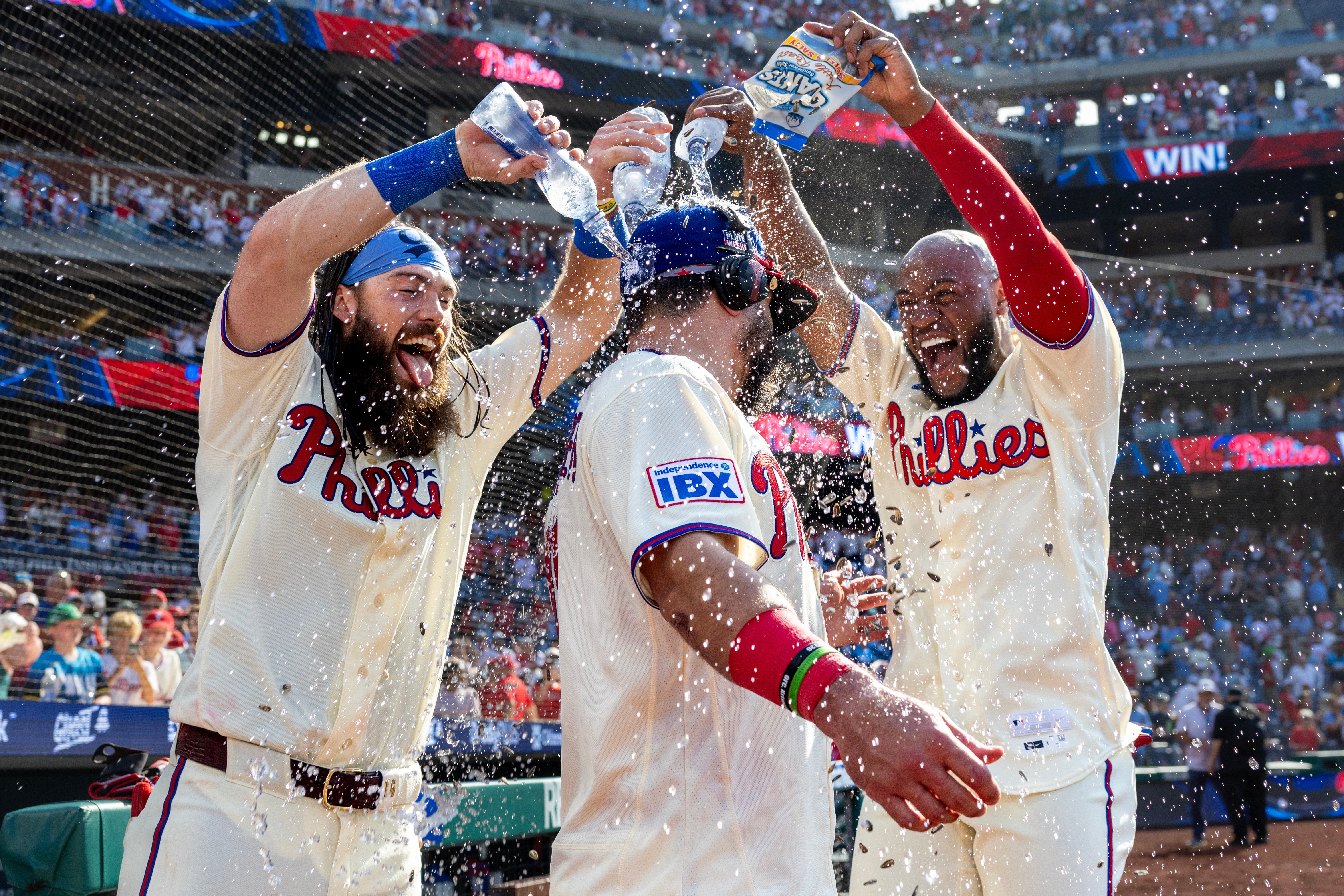
The Phillies are the hottest team in baseball, hotter than they’ve been all year, winners of nine straight for the first time since May of last season and just the second time in the Schwarber Era, which began in 2022.
We’ll call it the Schwarber Era because it was Kyle Schwarber’s 459-foot, two-run, walk-off Schwar-bomb that extended the winning streak Sunday afternoon, and because, with due respect to Bryce Harper and Zack Wheeler, Schwarber is the soul of this ballclub.
Everybody always loves Schwarber. Not everybody loves these Phillies.
Maybe you don’t. Who can blame you? Whether it’s collapses against the Diamondbacks or Mets, or an inexplicable bunt or an unforgivable error against the Dodgers, these Phillies have a way of breaking your heart.
Once bitten, twice bitten, thrice bitten … goodbye?
Paul told the Galatians, “Be ye not faint of heart,” but the greatest apostle would be ashamed of Phillies fans today. Why?
Because these Phillies are for real.
They’re beating good teams by playing mature, sound baseball, and they’re doing it generally without the best efforts of their best players.
Nevertheless, they’re 16-5 in their last 21 games and a season-high 15 games over .500 going into Monday’s series opener in Seattle. They were 9½ games behind the Braves in the NL East when the streak began, but now they’re just three games out with 31 games to go, seven of them head-to-head with Atlanta. The Phils held the No. 2 wild-card slot, two games behind the Cubs, two ahead of the Padres, and four games ahead of the Diamondbacks, the first team out.
The Phillies on Monday began a nine-game, 10-day road trip three time zones west. They face the Mariners, then the Angels, two relatively poor American League teams, by the time they get to Arizona.
They swept Miami, St. Louis, and Minnesota, all teams with valid playoff aspirations, at least until they played the Phillies. That’s the biggest reason why you should learn to love again.
Here are four more.
The Phillies are winning despite middling performances of late from their aces, including Cristopher Sánchez.Yong Kim / Staff Photographer
2: They’re streaking without good starts from the Big 3
During the streak, top three starters Wheeler, Cristopher Sánchez, and Jesús Luzardo all left the game while trailing after an ungainly outing. They surrendered a combined 10 earned runs in 17⅔ innings. The Phillies won anyway.
All three are healthy. They just faced decent offensive teams in the dregs of summer. The Mariners have scored the fewest runs in baseball. The Angels have the second-worst OPS. The next seven days should be a feast for the Big Three.
Luis Arraez is an unconventional but productive cleanup hitter for the Phillies.Elizabeth Robertson / Staff Photographer
3: The Arraez Affect
Since three-time batting champ Luis Arraez, a deadline addition, joined the lineup Aug. 4, the Phillies have mimicked his approach. Their swings are more controlled. The hitters are more on balance.
The result: fewer home runs, but more hits.
They’ve hit nine homers in the nine wins, a rate of 1.0 per game. They’d hit 148 home runs in their first 123 games, a rate of 1.2 homers per game. Sometimes, less is more.
Since Arraez’s arrival and his insertion in the No. 4 spot, No. 3 hitter Bryce Harper has a .506 on-base percentage with 25 walks. No. 5 hitter Alec Bohm saved his season: He’s hitting .393 with a 1.015 OPS and 15 RBIs in 17 games. Bryson Stott, who bats sixth, is hitting .295 with 15 walks.
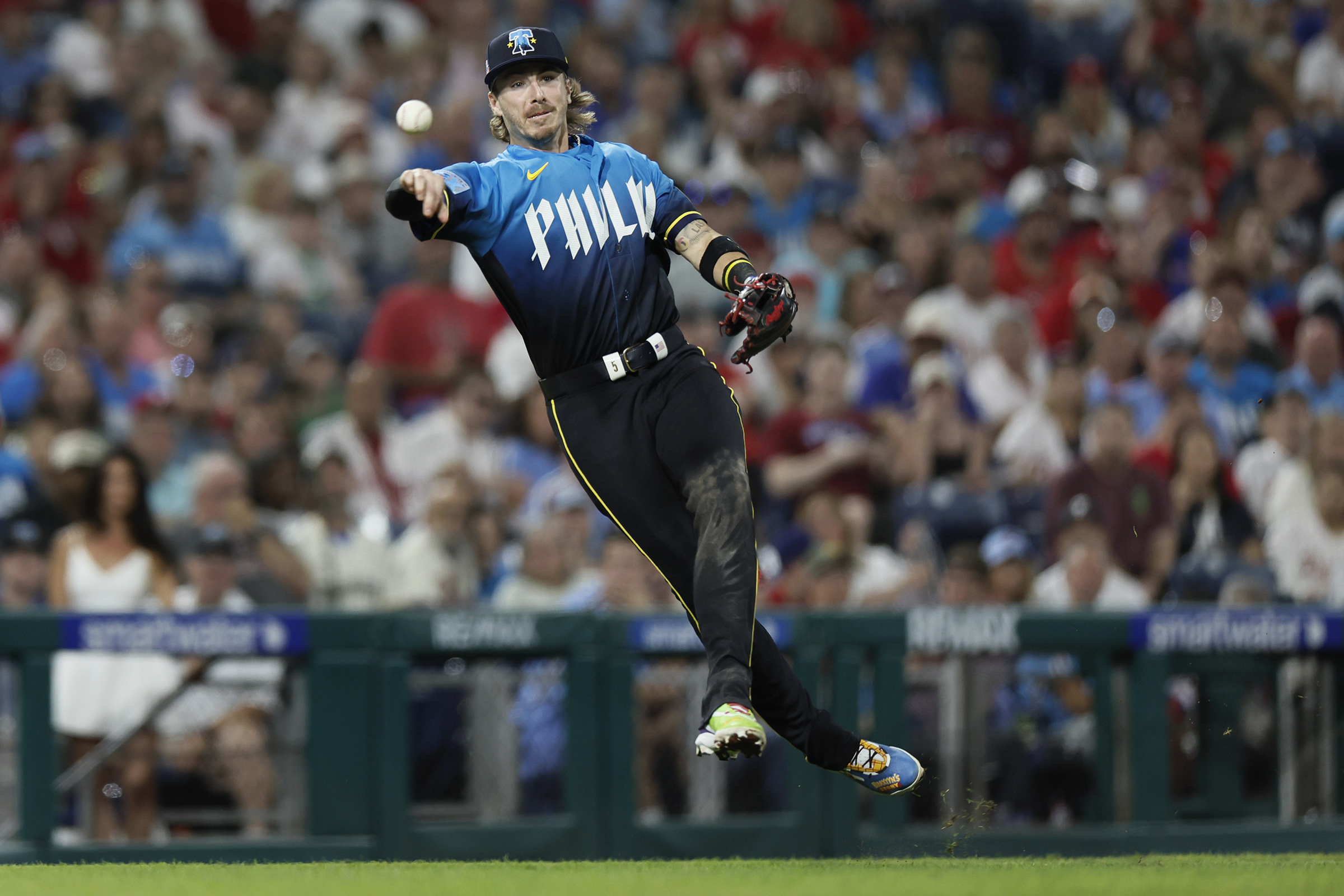
Bryson Stott has been great at third base since his move there following the Arraez trade.Elizabeth Robertson / Staff Photographer
4: The defense got better
The Phillies chose to play Arraez at second base. This meant Stott had to move from second to third base, Bohm had to move from third to first base, and Harper had to move from first back to right field.
The unintended consequence: This is the best Phillies infield since 2011, when Placido Polanco won a Gold Glove at third base and Jimmy Rollins should have won it at shortstop. Granted, this is a low bar — Phillies infields have been atrocious for 15 years — but Stott, a shortstop by birth, already was an elite second baseman, and his play at third has been otherworldly. Bohm is an unnatural third baseman but a natural first baseman, unlike Harper, who is a very good outfielder. Arraez is a fine second baseman, and even Trea Turner looks better at shortstop.
Aaron Nola has been solid of late after a very slow start to his season.Yong Kim / Staff Photographer
5: Andrew Painter and Aaron Nola settled in
Andrew Painter, who is 23, spent all of 2025 in triple A coming back from elbow surgery that cost him all of 2023 and 2024. His big-league debut was March 31. He was inconsistent, and was sent back to triple A in mid-June.
We call this “normal.”
Aaron Nola, who is 33, threw more innings than anyone else from 2018-24. In 2025 he suffered his first significant injury since 2016, which cost him three months in the middle of the season. He struggled the first three months of this season.
Nola’s ERA in his last nine starts is 3.63. He’s had one bad start. He’s learned to lean on his knuckle-curve.
You know what happens when you get 3.6-ish ERAs from fourth and fifth starters? You win divisions, you win pennants, and you win back the hearts of your fans.
Love Hurts
I get it. It’s hard to love a team with a $300 million shortstop hitting .245; a team that had to release $20 million outfielder Nick Castellanos and $18 million starter Taijuan Walker; a team with a bullpen that is injured and ineffective and, with the exception of the closer, utterly maddening.
But in matters of the heart, there are no guarantees. You take a chance, you ride the thrill, and, as fate decides, your devotion is rewarded … or not.
“ ‘Tis better to have loved and lost than never to have loved at all.”
Lord Tennyson was English, and he died in 1892. His grandson, Lionel, became England’s cricket captain, and Tennyson simply wallowed in heartbreak: It took him 17 years to finish the elegy.
In a different time the poet properly known as Alfred, Lord Tennyson — a moderate conservative rashly bearded — surely would have been a baseball fan.
Given his predilection for misery, he probably would have followed the Phillies.
Universal Health Services Inc. has long dominated as the nation’s largest provider of behavioral health services through its network of 182 hospitals and 110 outpatient facilities.
Last week, the King of Prussia company added a new dimension, completing the acquisition of Talkspace Inc., a virtual behavioral health company, for $835 million. It was UHS’s biggest deal in 15 years.
“We look at this as a real significant moment for healthcare,” UHS CEO Marc D. Miller said in an interview Tuesday. “It’s not simply a transaction for the company, but creating something in behavioral health that hasn’t existed.”
UHS’s goal is to create what Miller described as a new mental health continuum of care — including an AI agent introduced in June with human oversight and immediate intervention by licensed clinicians for safety if needed.
Talkspace’s network of 6,000 therapists conducted 933,000 treatment sessions with patients covered by insurance or employee assistance plans in the first half of this year. It had an additional 5,000 active patients who paid directly for the service during that period, according to Talkspace’s quarterly report.
The New York-based company reported $123.4 million in revenue and a $7.8 million net loss for the first six months of 2026.
UHS’s behavioral health arm had $3.9 billion in revenue and $773 million in profit before taxes in the six months that ended June 30. Philadelphia-area facilities include Friends Hospital in Philadelphia, Horsham Clinic in Ambler, and KeyStone Center in Chester.
UHS also owns the largest behavioral health company in the United Kingdom. Including its 30 acute-care hospitals, UHS’s six-month revenue totaled $9.1 billion.
The Inquirer spoke with Miller about how Talkspace is expected to complement UHS’s current business. This interviewhas been lightly edited for length and clarity.
What made Talkspace attractive to UHS?
By acquiring Talkspace for UHS, we’re creating the industry’s first nationally scaled end-to-end connected continuum in all of behavioral healthcare. Nobody has what we now have. For example, you can go to Talkspace to get treatment on your phone through the app, access therapists wherever you are, whatever’s comfortable for you. The vast majority are patients that UHS never would have touched.
Now, they’re going to know about UHS, so it would be natural that if they need excess care after they’ve had some care with Talkspace, they’re going to immediately be referred to all of the different options that UHS offers. On the flip side, we’re now going to have this Talkspace option after somebody’s either in one of our more intensive outpatient programs or an inpatient, so we can quickly say, as part of your aftercare, you might want to go to Talkspace, which is a subsidiary of UHS.
The concept makes sense. How do you make it work?
It’ll be totally integrated. Most of the insurers that they’re contracted with we’re contracted with, so there won’t have to be huge changes. There are some different contracts, and there will certainly be some things to work out, and there are some small pockets where they’re with somebody that we’re not. But for the most part, that’s not a big concern.
As far as the referral networks, we’re just doubling what we have. So there’s the current referral networks that go into UHS. There’s the current referral networks to Talkspace that are vastly different.
We’re now going to put this together, and we’re going to kind of double up the opportunities to both companies. It’s incredibly positive.
Talkspace’s AI agent Tee has gotten attention. Why is it different from using ChatGPT or Claude like a therapist?
Tee was purpose-built for mental health. Rather than just adapting a general purpose chatbot to a clinical context, this was built for this. That’s a huge difference. This was built by mental health experts who had safety and privacy in mind, and it was designed to complement human care.
People right now are going to ChatGPT and Claude and all these things and asking them questions that are totally disconnected, totally disjointed from any care they could be getting. If they’re not getting care, they’re really relying on something that is not expert to help them in a most serious endeavor.
Editor’s note: This article has been updated to correct UHS’s revenue and profit for the six months that ended June 30.
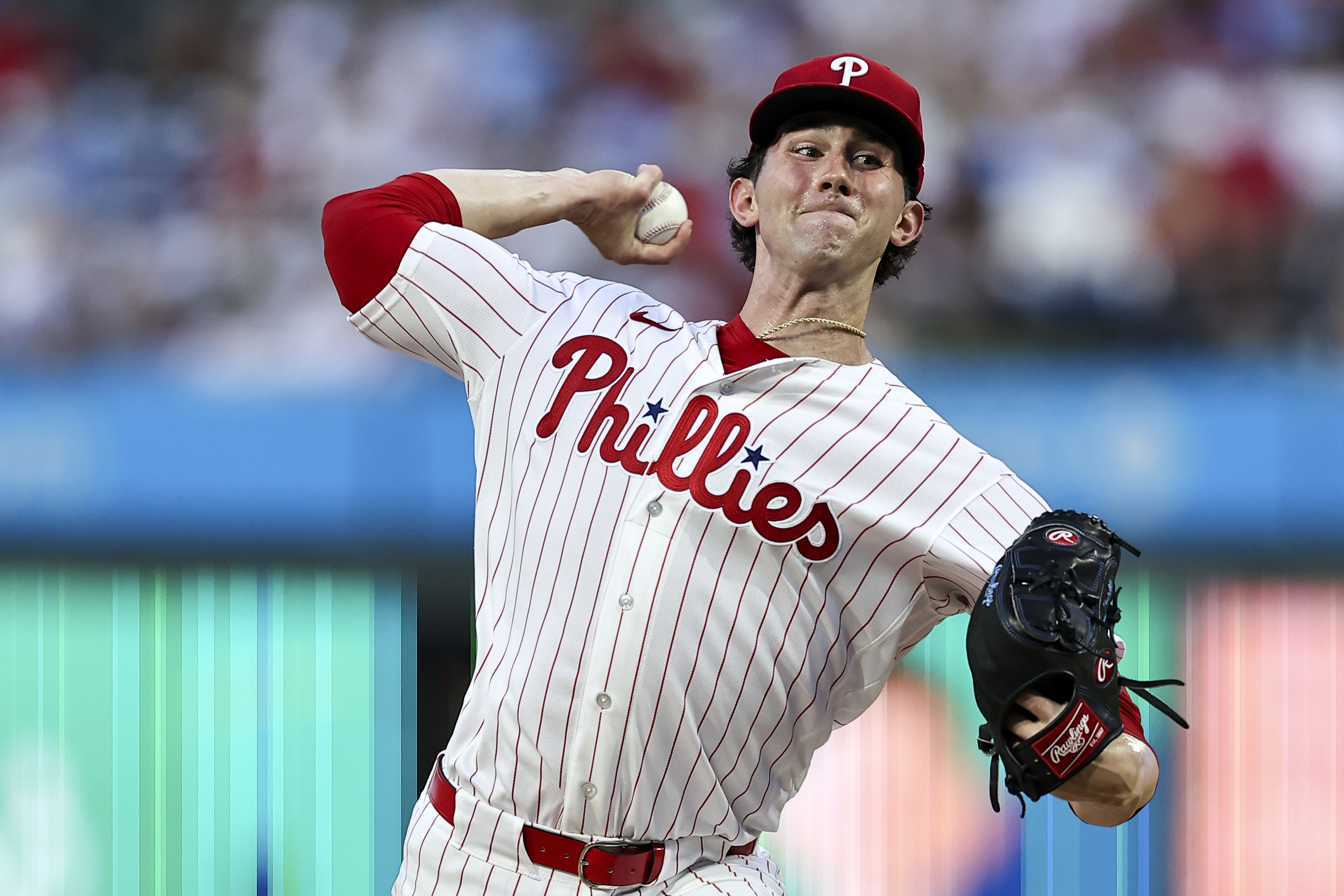
A little past 6 o’clock on Saturday evening, Andrew Painter delivered a couple of pitches that could have some serious implications for the Phillies. Both of them were four-seam fastballs that registered 97 mph on the gun and crossed home plate at the sternum of Cardinals leadoff hitter JJ Wetherholt. The important thing is where those pitches ended up: inside the mitt of Phillies catcher J.T. Realmuto, rather than in play, or in the seats. Wetherholt swung at both. He did not make contact with either.
That two-pitch sequence may sound like a small thing. It mostly was, at least within the context of the game. But it was a very big thing with regard to the futures of both the Phillies and their prized pitching prospect. It was a reason to believe.
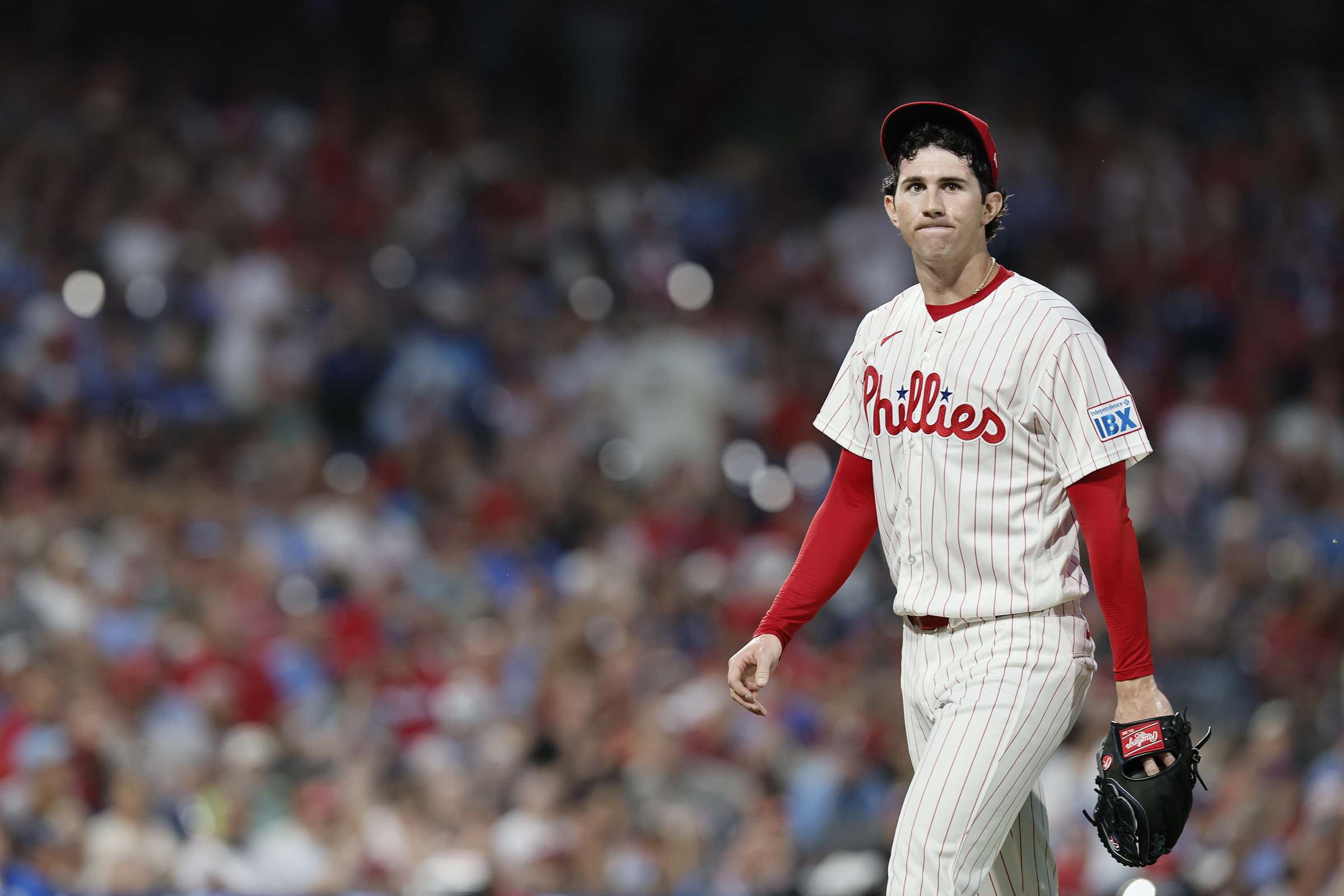
The top-line numbers suggest that Painter is a young man in the midst of a renaissance. Since returning from a six-week stint in the minors on July 31, the 23-year-old righty has posted a 3.62 ERA with 26 strikeouts, 10 walks, and two home runs allowed over 27⅓ innings. His most recent start was his finest yet: 103 pitches, seven innings, one run allowed, eight strikeouts, no walks.
That his season-long ERA is still 6.02 speaks to the extent of the struggles he endured during the first 14 starts of the season. It also warrants a skeptical eye. Yet the deeper you pore through the entrails of Painter’s recent performances, the more evidence you’ll find that suggests the rookie really is in the midst of a radical transformation.
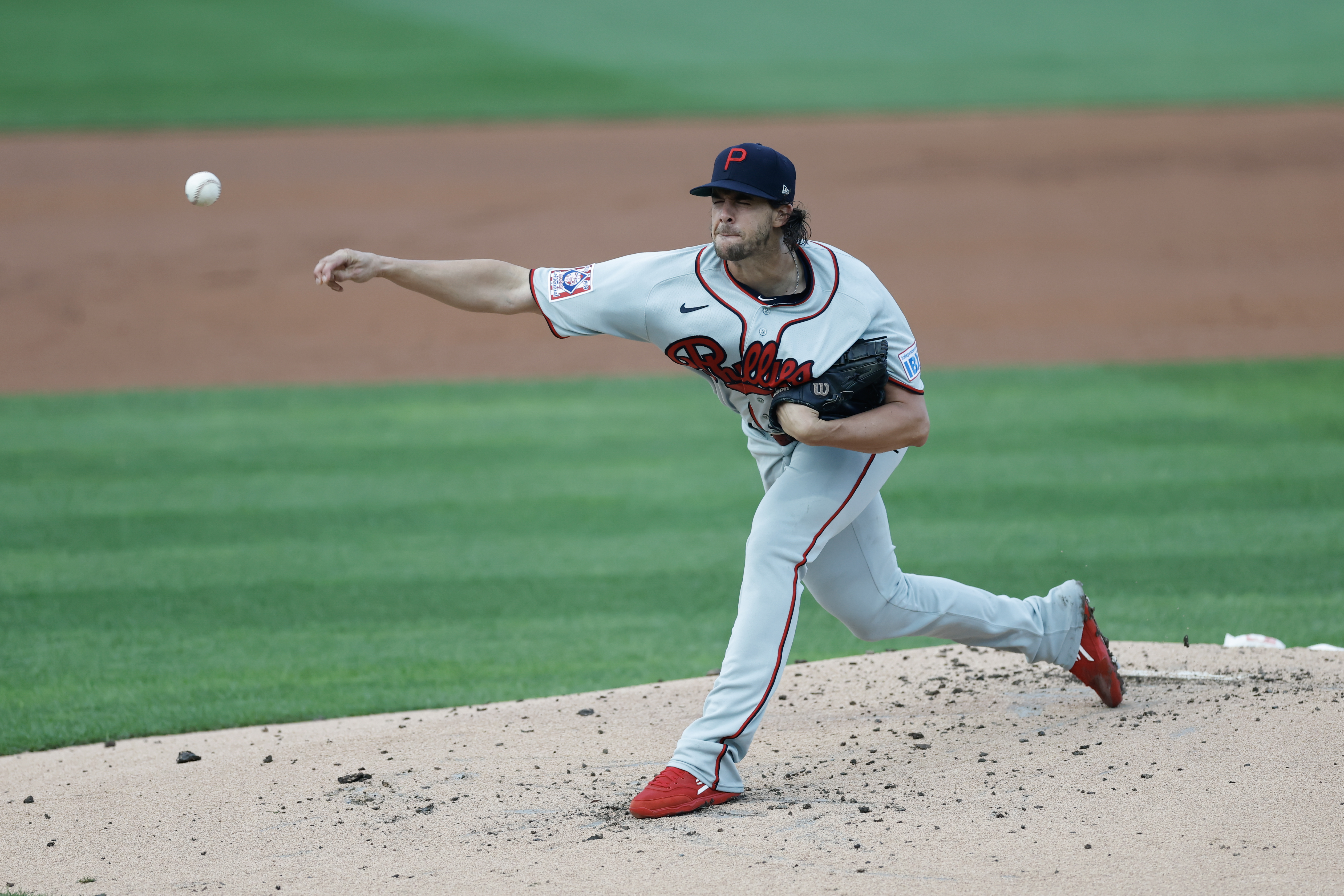
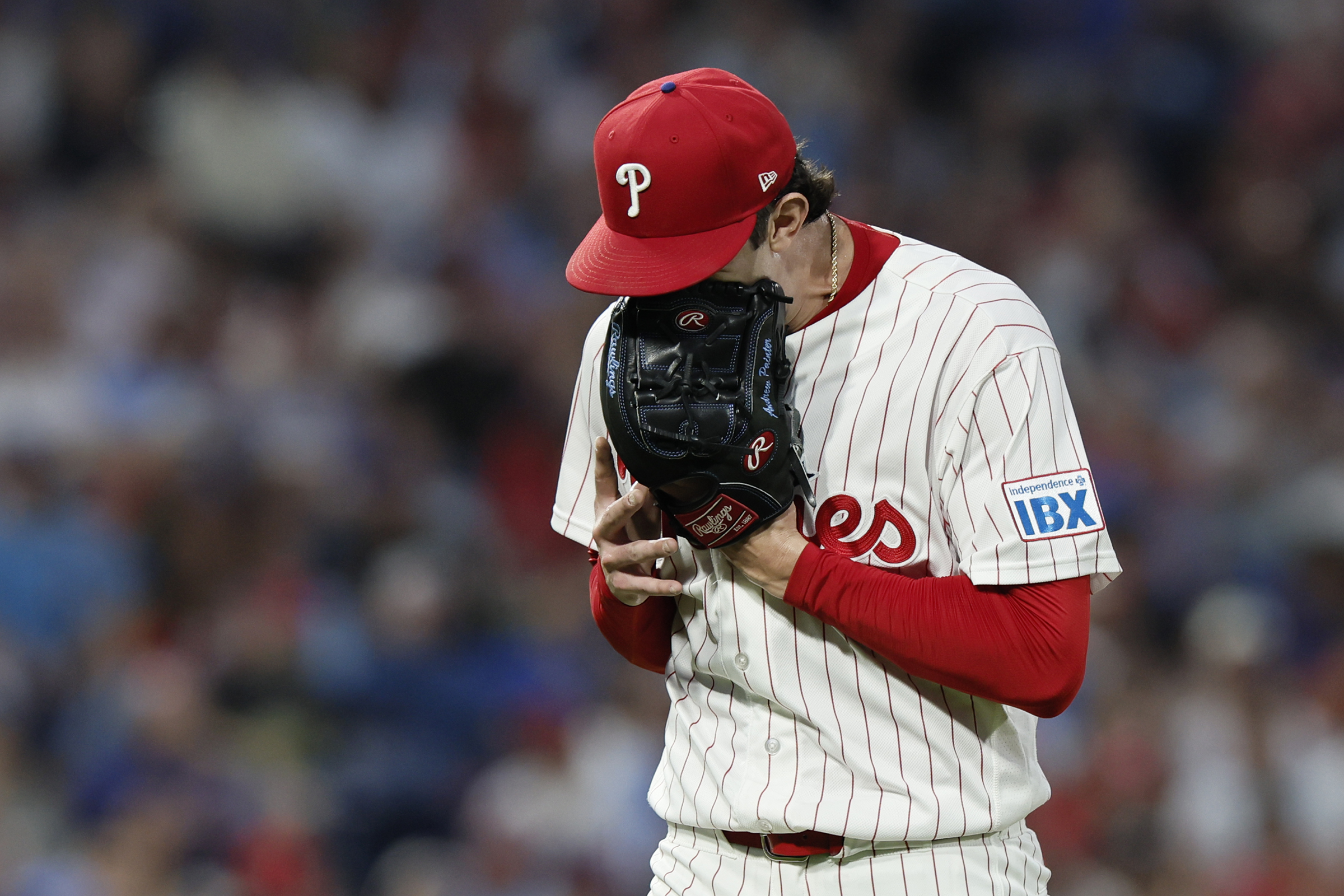
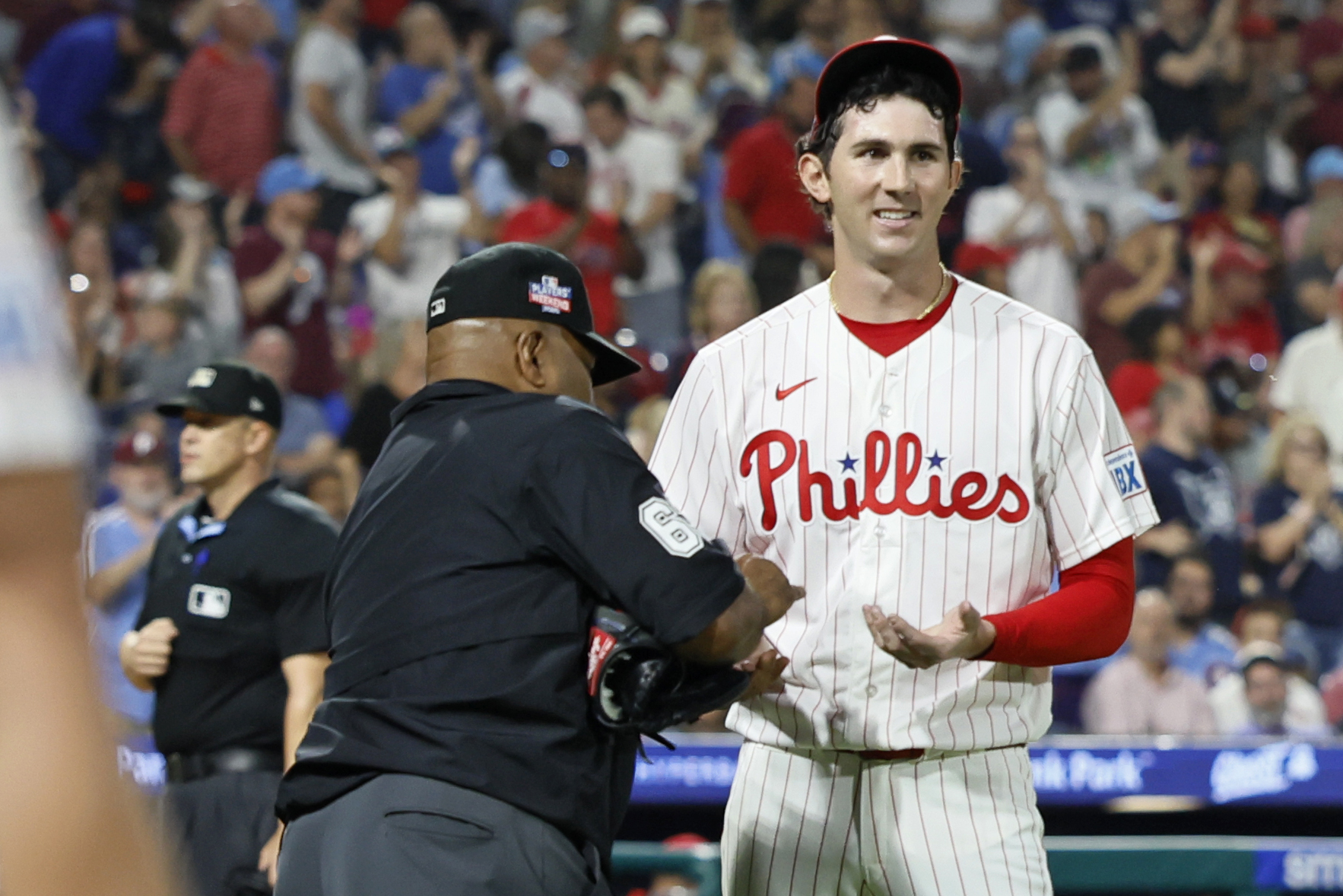
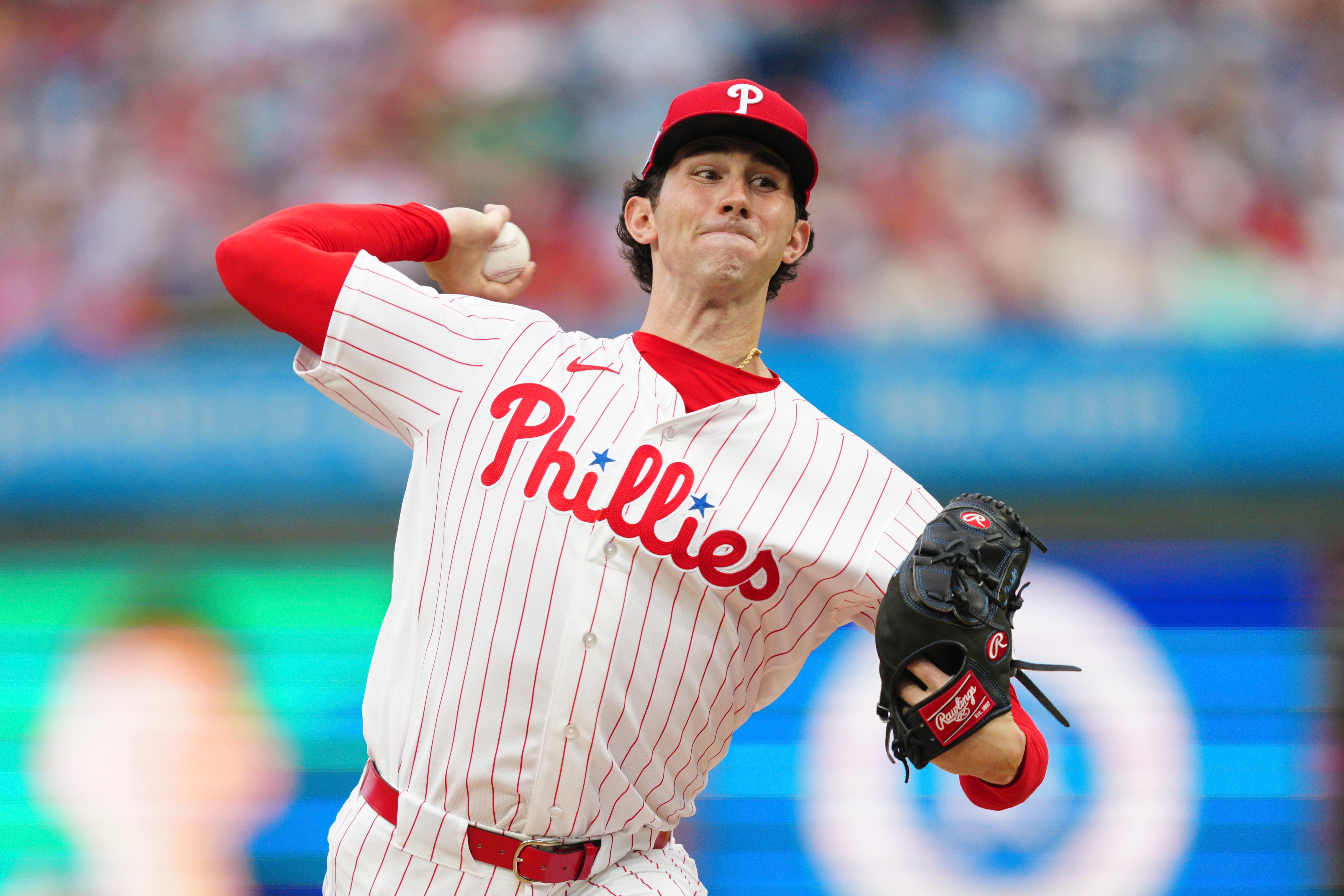
Phillies pitcher Andrew Painter yells into his glove after striking out Cardinals slugger Jordan Walker for the final out of the sixth inning Saturday.Elizabeth Robertson / Staff Photographer
It all starts with four-seam fastballs like the ones that prompted Wetherholt’s whiffs in the first inning on Saturday. By the end of the game, Cardinals hitters had failed to make contact on five of their 15 swings against Painter’s four-seamer. That may not sound like a lot, but consider this: In Painter’s last two starts before his demotion in June, he generated just three whiffs on 23 swings at his fastballs.
The numbers are staggering. When the Phillies sent Painter down to the minors in June, his four-seam fastball ranked as one of the least effective in the sport. He wasn’t missing bats with it: His whiff percentage ranked 276th out of 278 pitchers who’d thrown at least 200 pitches. Opponents had 38 hits against the pitch in just 12 starts. Their .404 batting average against Painter’s four-seamer was higher than against any other pitcher’s. He ranked among the bottom 4% in slugging percentage (.763), strikeout percentage (7.65%), and wOBA (.481). Only one pitcher in the majors had a four-seamer rated lower than Painter’s per FanGraphs’ Pitch Value metric.
Now, suddenly, Painter’s four-seamer has become one of baseball’s most difficult to hit. Of the 84 pitchers who have thrown at least 100 four-seamers since July 31, only seven have a higher whiff percentage inside the strike zone than Painter’s. Opposing hitters are making contact with just 78% of his fastballs in the strike zone. That’s lower than even Brewers fireballer Jacob Misiorowski. It is a massive difference from Painter’s 93.2% zone contact percentage in his first 14 starts. Painter isn’t generating out-of-zone swings-and-misses on the level of the Miz, but his overall contact rate still ranks in the top 25% of pitchers since July 31.
Andrew Painter’s four-seamer has gone from liability to strength in his return to the Phillies.Monica Herndon / Staff Photographer
It’s a lot easier to believe in real change when there is a logical explanation for it. With Painter, the four-seamer is the thing. His spin rate is up by about 6%. In his last two starts, the induced vertical break on his fastball was better than in any previous start, with an increase of about 10% over his predemotion baseline. Against the Cardinals on Saturday, he threw nine pitches at 98-plus mph, two of them at 99-plus. Sixteen of his 33 sinkers and four-seamers clocked at 97-plus mph. Compare that to his last start before his demotion, when Painter didn’t touch 98 and only reached 97 on five pitches.
“There’s a presence out there,” Phillies interim manager Don Mattingly said. “He’s on the attack. He looks confident. Obviously, the stuff has to be good, or all that doesn’t matter if you’re not getting anybody out.”
You saw it on Saturday. In the third inning, Jose Fermin struck out on a foul-tipped four-seamer. In the fifth, Jimmy Crooks swung and missed at a 1-2 four-seamer that registered 98.2 mph on Statcast. In the sixth, Alec Burleson swung and missed at another 98 mph four-seamer.
Painter still has plenty of work to do to reach the level of dominance many envisioned when he was rated as one of the top pitching prospects in the sport. But the improvement is very real. Make no mistake about that.
When Andrew Painter was optioned to triple-A Lehigh Valley in June, he received something he sorely needed: space. Seventy-seven miles north of Citizens Bank Park, far from the scrutiny of Philadelphia, the right-handed pitcher was able to work and think.
He could try grips, mechanical tweaks. In three straight games with the Iron Pigs, he threw three different changeups. This is not the type of thing Painter would be able to do in the big leagues, especially not in the midst of a playoff push.
“You’re able to go down there, and games don’t really mean much,” Painter said. “Obviously you’re playing to win, but it’s about development. There’s obviously a lot less stress, and you’re able to kind of freely work on things.”
“Freely” is an apt description. Before Painter was sent down on June 18, he looked anything but free. The 23-year-old labored through each start. He struggled with command. His fastball lacked its signature rise.
By June 17, his ERA had ballooned to 7.06 ERA.
The monthlong hiatus to Allentown appears to have helped. It allowed the highly touted rookie to take a hard look at what worked and what didn’t, and make changes without fear of failure.
Andrew Painter has a 3.62 ERA in five starts since being recalled from triple-A Lehigh Valley.Derik Hamilton
The Phillies’ pitching coaches dove deep into his mechanics and unearthed some telling data points. Chief among them was the way Painter moved his lower half.
Before, he was standing more upright, almost as if his back leg was completely straight.
The coaches suggested that he hinge his back hip, and bend his back knee more. What might seem like a small tweak has produced notable results.
Now, Painter is driving more toward the plate, which has improved his command. He’s moving more efficiently, which has helped him sustain velocity deeper into games.
In the rookie’s outing on Saturday, his fastest pitch of the night — and of his young career — was his 100th. It clocked in at 99.6 mph.
“To me it feels like it’s less effort, and I think that kind of goes to … now when I’m in the sixth inning, there’s a little bit more energy,“ he said. ”Whereas before it was kind of [like] I was reaching for everything, and those were 94s, 95s.”
He added: “I think everything’s good when I’m just synced up, right? I feel like some guys try to throw it as hard as they can, and it ends up being slow, because they’re not in as powerful of a position.
“For me, the moves that we worked on with the lower half, kind of allows me to just be behind the ball a little more.”
Andrew Painter has 26 strikeouts in 27 1/3 innings since rejoining the Phillies.Elizabeth Robertson / Staff Photographer
Another suggestion from the Phillies pitching corps was to adjust his fastball grip. Painter widened his fingers slightly, and shifted them more diagonally, so they aren’t right on top of the seams.
“Because when I was throwing fastballs in the first half, the seams were almost taking it down, so it was killing vertical [break],” Painter said. “Whereas [my fastball] has always risen.”
The changes haven’t just been mechanical. Those who work with Painter believe he has a different energy about him, more of a self-assured confidence. Lehigh Valley pitching coach Phil Cundari said they’ve focused on staying present; to not dwell on an inning, or even a pitch.
Cundari is uniquely qualified to help with this. Before he joined the Phillies organization in 2023, he was a licensed psychotherapist and had his own clinical practice.
Harvey Dorfman, the legendary mental skills coach who helped transform Roy Halladay’s career, was one of Cundari’s mentors. Halladay was introduced to Dorfman in 2001, in the midst of his lowest point in professional baseball.
Halladay had been demoted to the minor leagues after posting a 10.64 ERA through 67⅔ innings in 2000. He was at single-A Dunedin in the Blue Jays organization when Halladay’s wife, Brandi, bought him Dorfman’s book, The Mental ABC’s of Pitching.
That, coupled with some mechanical tweaks, guided Halladay back to the big leagues and onto a path toward the Hall of Fame. No one knows what path Painter will take, but he finds himself at a similar crossroads; humbled, at 23 years old.
From what Cundari can see, the rookie has responded well.
“The experience and the path that he’s had, both of those things are pretty challenging to try and overcome,” Cundari said. “But I think he’s done a great job. I think what you’re seeing right now is someone who’s much more in command. Not just of his stuff, but of his emotions, and who is in command, mentally.
“And you’re seeing a really confident young man up there. So, outings like [Saturday] night, hopefully we’re going to see more of those.”