Tag: topic-link-auto

  • Trump gets caught in a dilemma over a Saudi plea for military help

    Trump gets caught in a dilemma over a Saudi plea for military help

    For two weeks, the question of whether to yield to pleas from Saudi Arabia and order the U.S. military to strike targets in Yemen controlled by the Iran-backed Houthis has bedeviled President Donald Trump.

    A decision to go forward could open another front in the war against Iran that Trump started but has been unable to end as it spreads economic shock around the globe.

    The president had wavered for weeks over the Saudi appeals for help in fighting the Houthis, who took advantage of the instability in the Middle East and reignited their war with the kingdom this summer.

    But things came to a head Thursday: Crown Prince Mohammed bin Salman, the kingdom’s de facto leader and a major ally in the Iran war, called the president to implore him, again, to step in to help blunt the rapidly advancing group, administration officials said.

    Trump had met with advisers just the day before and told them he did not favor strikes. But after speaking with the Saudi crown prince, he reversed himself and told the Pentagon to prepare for airstrikes against the Houthis.

    But by midday Sunday, the president appeared to have reversed himself again. There would be no U.S. airstrikes against the Houthis — at least not for the time being, according to administration officials. The officials spoke on the condition of anonymity because they were not authorized to discuss military planning.

    The White House press office declined to discuss Trump’s deliberations for the record. A senior administration official would say only that “the U.S. has a defense agreement with Saudi Arabia and we will always defend our allies.”

    Most of the president’s inner circle was either deeply skeptical or outright opposed to joining the Saudi fight against the Houthis, especially given the existing strains facing the U.S. military in the war with Iran, according to a senior administration official.

    Trump’s decision to pull back from, or at least delay, striking Houthi targets came as commanders had approved target lists, troops were loading bombs onto U.S. warplanes selected for the missions, and the wave of attacks was just about to begin, according to two people briefed on the operation.

    In a telephone call with Fox News on Sunday morning, the president told reporter Trey Yingst that he was in “deciding mode” on what to do in the larger war with Iran. On the topic of the Houthis, the president said the United States was in constant communication with the group, mentioning that the Houthis had so far agreed not to fight the United States, Yingst reported.

    The gyrations reflect the quandary in which the president now finds himself: He is correct when he says that the Houthis have steered clear of attacking U.S. ships. But they have gone after Saudi Arabia, creating a dilemma for Trump.

    Some U.S. military officials have argued that the United States needs the kingdom’s help with the war in Iran, and Saudi officials have shown they are willing to exercise what leverage they have in the absence of U.S. cooperation. For instance, in May, Saudi Arabia effectively halted the Trump administration’s plan to use the U.S. military to escort commercial oil tankers through the Strait of Hormuz by refusing the United States use of its airspace and American air bases in the country.

    If the United States did join the Saudi fight, it could be in conjunction with a new planned ground offensive by Yemeni government troops, officials said. But those forces have proved ineffective against the Houthis.

    The Houthis have been fighting with Yemen’s internationally recognized government, which is backed by Saudi Arabia, since 2014. The violence slowed after a truce took effect in 2022, but the group waded into the widening war in the Middle East this summer by declaring a blockade on Saudi shipping in the Red Sea and attacking Saudi vessels.

    Amid the fighting, the Houthis captured critical areas near the Bab el-Mandeb Strait — a major choke point along the Red Sea — threatening to unsettle global energy markets already reeling from the U.S.-Israeli war against Iran.

    Current and former U.S. diplomats and commanders who served in the Middle East expressed skepticism that a limited U.S. bombing campaign would compel the Houthis, who withstood nearly eight weeks of U.S. bombardment last year, to negotiate and drop their most hard-line demands.

    In the spring of 2025, the U.S. military bombed the Houthis for more than 50 days to restore freedom of navigation in the Red Sea and to stop the group’s attacks on commercial and U.S. naval shipping vessels.

    During that campaign, U.S. Central Command struck more than 1,000 targets, including radar systems, air defenses, ballistic missile sites, drone launch areas, and a drone production hub near Sanaa, the Yemeni capital.

    The Houthis fought back and shot down several American drones, and they continued to fire at naval ships in the Red Sea, including a U.S. aircraft carrier.

    The U.S. strikes burned through weapons and munitions at a rate of about $1 billion in the first month alone. During the campaign, two $67 million F/A-18 Super Hornets tasked with conducting strikes against the Houthis accidentally tumbled off America’s flagship aircraft carrier into the sea.

    Less than two months into that campaign, Trump abruptly announced a ceasefire with the Houthis, proclaiming that they “gave us their word that they wouldn’t be shooting at ships anymore, and we honor that.”

    The Houthis stopped firing at American ships. But that would probably change if the United States were to restart an air campaign, one official said. The official also warned that, with the Strait of Hormuz still unstable since the war against Iran started, the world might soon be dealing with further disruptions in petroleum and gas transit routes in the Bab el-Mandeb.

    Since last year’s ceasefire, the Houthis have reconstituted much of their capabilities and are even using artificial intelligence to develop and engineer new types of missiles.

    The current and former officials said that defeating the Houthis would be difficult, even with the U.S. military helping the Saudis.

  • Across the country, homebuyers have the upper hand. But it’s a seller’s market in Montco, Chesco, and Bucks.

    Across the country, homebuyers have the upper hand. But it’s a seller’s market in Montco, Chesco, and Bucks.

    In most of the country’s largest housing markets, more people are selling homes than buying them, giving buyers more chances to get a home.

    But in most of Philadelphia’s collar counties, buyers outnumber sellers, which gives sellers an advantage as more people compete for their properties.

    In August, the combined market that the real estate brokerage Redfin calls Montgomery, Chester, and Bucks Counties was one of only five seller’s markets out of the 49 most-populous U.S. markets that Redfin analyzed. There were about 5,800 sellers and almost 7,300 buyers in the market last month.

    The area’s place in Redfin’s list reflects strong demand for homes and a housing supply that isn’t keeping up.

    “You actually have increasing demand,” said Chen Zhao, head of economics at Redfin. And “your supply is actually decreasing rather than increasing, which is what you see in most parts of the country.”

    But the region is more buyer friendly than it used to be. In the years after the start of the pandemic, the gap between the shares of sellers and buyers was twice what it was this August. Only last year did the gap start narrowing significantly as more sellers entered the market, Zhao said.

    Redfin used a model to estimate the number of homebuyers and home listing data to estimate the number of sellers.

    (function(){function e(){window.addEventListener(`message`,function(e){if(e.data[`datawrapper-height`]!==void 0){var t=document.querySelectorAll(`iframe`);for(var n in e.data[`datawrapper-height`])for(var r=0,i;i=t[r];r++)if(i.contentWindow===e.source){var a=e.data[`datawrapper-height`][n]+`px`;i.style.height=a}}})}e()})();

    A lot of buyer’s markets

    Almost three-quarters of the major metros Redfin looked at — 36 of 49 — were buyer’s markets in August, meaning sellers outnumbered buyers. (One of the country’s 50 biggest metros, Fort Lauderdale, Fla., did not have enough data for the analysis.)

    Homebuyers in buyer’s markets tend to have the upper hand in negotiations, because they have more choices, and sellers compete for them instead of the other way around. Housing supply has increased as homes hit the market that builders started constructing years ago and homeowners who didn’t want to give up their low mortgage rates are forced by life circumstances to sell, Zhao said.

    But the picture isn’t all rosy for the country’s buyers. Home prices and mortgage interest rates continue to climb, pricing some people out of the housing market. Nationally, home-buying demand has dropped slowly and steadily over the last few years, Zhao said.

    But there are opportunities for those who can afford to purchase a home, whether with household wealth or homebuyer assistance programs.

    The combined market that Redfin defines as Philadelphia and Delaware County is a buyer’s market. It had about 5,900 buyers and about 8,900 sellers in August.

    But because of continuing demand, it’s still one of the five markets where sellers were least likely to give concessions to buyers in August, according to a separate Redfin report. These buyer incentives include covering closing costs and paying for repairs.

    Comparing markets

    The Nashville area had the strongest buyer’s market in the country in August, according to Redfin. It had more than double the number of home sellers compared to buyers.

    That was also true in the metros of Miami, Orlando, and Las Vegas, and the Texas metros of Houston, San Antonio, Austin, and Dallas.

    In the Nashville metro, the market turned more strongly in favor of buyers last month, because the number of home listings rose 4% from the previous month, while the number of buyers dropped by only 0.4%.

    Redfin considered eight housing markets to be balanced, with roughly the same number of buyers and sellers in August. Balanced markets include New Brunswick, N.J.; New York; and Baltimore.

  • After decades of fund growth, Vanguard pivots

    After decades of fund growth, Vanguard pivots

    “Trees don’t grow to the sky,” the late Vanguard Group founder John C. Bogle Jr. was fond of warning — meaning that it’s a mistake to think happy days and profitable trends will go on forever.

    Malvern-based Vanguard itself seemed to defy Bogle’s warning. Led by Vanguard’s index funds simulating the S&P 500 and other broad market benchmarks, founded 50 years ago on Aug. 31, Vanguard grew relentlessly, even accelerating after the dot-com bust and in the Great Recession, when rival Fidelity and other investment firms shrank and cut staff.

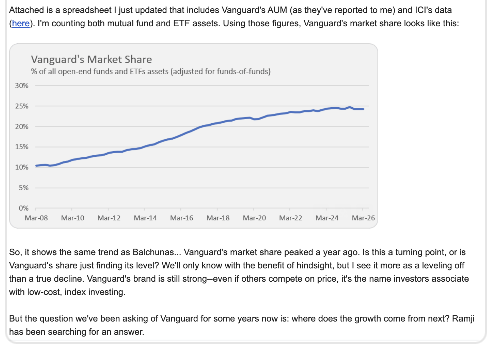
    But data posted by Morningstar Inc. and confirmed by other investment trackers show Vanguard’s share of the U.S. mutual fund and exchange-traded industry, a business that now totals $40 trillion, has plateaued in recent years and actually shrank to 27% from 28% over the past year.

    Vanguard Group’s market share of U.S. mutual funds and exchange-traded funds (EPS), as measured by Jeff DeMaso, publisher of the Independent Vanguard Adviser, using data collected from the Investment Company Institute and other industry sources. The text also references similar findings by Eric Balchunas, a Bloomberg investments analyst and author of a book on Vanguard’s founder, “The Bogle Effect.”Jeff DeMaso

    “SHOCK: Vanguard’s market share of US fund assets has begun to DECLINE after rising for 50 years,” Eric Balchunas, a Bloomberg LP fund analyst and author of The Bogle Effect, posted earlier this month on social media.

    It’s not that Vanguard took its eye off the ball, Balchunas said in an interview. Like other fund groups, Vanguard has shifted some retirement-plan assets — it won’t say how much — into other accounts that don’t show up in the publicly traded fund listings.

    But the shift marks the end of an era, he said, not so much a loss for Vanguard but “a dream realized” as the legacy of founder Bogle, who died in 2019. Fidelity, BlackRock, Schwab, and other Vanguard rivals “lowered fees and increased value” to shareholders because Vanguard’s strategy forced them to compete with low prices and simple products.

    “Vanguard’s market share peaked a year ago,” said Jeff Del Maso, publisher of the Independent Adviser for Vanguard Funds, after reviewing industry data. “I see it more of a leveling off than a true decline. But where does the growth come from next?”

    More Vanguard effects?

    Salim Ramji, a former BlackRock fund executive tapped by Vanguard’s board in 2024 as the company’s first “outside” CEO, has outlined in public interviews some other areas where Vanguard hopes to transfer its energy. He declined to be interviewed for this article.

    Under Ramji, Vanguard has:

    • Added dozens of new bond funds and other debt investments, which tend to attract investors when interest rates go higher, economic expansion slows, and stock prices slow.
    • Emphasized a new generation of cash savings accounts, years after Vanguard did away with its old bank-style checking accounts. Under Ramji, Vanguard has expanded promotion of its FDIC-insured Vanguard Cash Plus Account, with yields comparable to bank certificates of deposit in an effort to keep Vanguard customers from moving short-term money to banks and outside firms and to lure in new investors.
    • Added investor advice. Ramji’s predecessors built advisory services since the 1990s with phone-based, digital, and hybrid systems. Seeing a big still-untapped market, Ramji in August agreed to pay $4.6 billion for Altruist, whose founder, self-described Bogle disciple Jason Wenk, developed Hazel, an “AI-forward” financial tech and custody platform popular with independent investment advisers who sell Vanguard funds. Wenk will run the business, separate from Vanguard’s Digital Advisor and Personal Advisor units, when the deal closes.
    • Partnered with Wellington Management and Blackstone to launch private investment funds, starting in July. The WVB funds expect to report their holdings after Sept. 30. WVB All Markets and a smaller WVB Blackstone All Privates fund are being sold for now through Bank of America and its Merrill Lynch affiliates.

    But Ramji has stopped short of following other investment houses into predictions markets and cryptocurrency investments.

    “We believe investments deliver cash flows or have prospects of cash flows,” which these speculative investments don’t, Ramji said last month in an interview with Peter Mallouk of $800 billion asset, Kansas-based financial adviser Creative Planning LLC. Ramji compared such products to “a slot machine where the house always wins. That does harm to the individual investor.”

    Avoiding activism

    Under Ramji, Vanguard has promised not to use its extra clout — its funds own around 8% of most U.S. stocks — to pressure companies to change policies.

    Vanguard has backed off “environmental, social and governance” commitments. In March‚ Vanguard agreed to pay $30 million to Texas and other Republican-run states to settle litigation alleging that Vanguard violated antitrust laws when it joined environmentally minded groups that sought to reduce U.S. reliance on coal and other carbon energy sources.

    The settlement with the states helped lower Vanguard’s profile in the fraught world of political investing. Ramji went further than other firms. BlackRock and others sued by the states have so far declined to settle similar lawsuits.

    Analyst Balchunas is bullish that Ramji has cleared the way to reach more customers, extending “the Vanguard effect,“ even if its fund business has plateaued for a time.

    “The Vanguard effect is bigger than Vanguard now,” Balchunas said.

    This story has been updated to delete an incorrect figure for the WVB All Markets Fund.

  • Black and Jewish Philadelphians must rebuild an essential alliance

    Black and Jewish Philadelphians must rebuild an essential alliance

    Black and Jewish communities in America share a long history of supporting each other against hate and discrimination.

    Together, our people helped advance laws that challenged discrimination in housing, employment, and education. Together, we supported initiatives that helped move our country closer to its highest ideals.

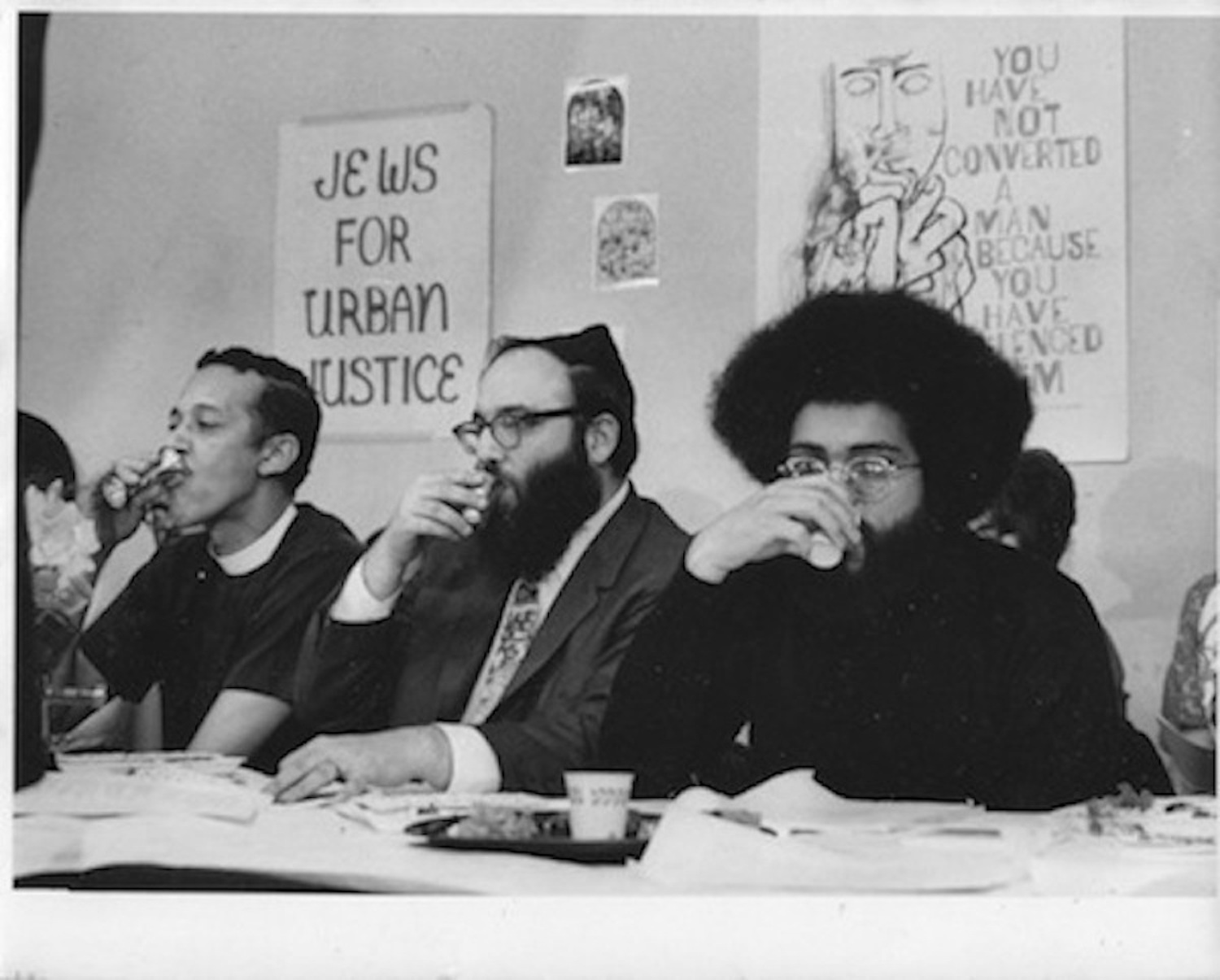
    Rabbi Arthur Waskow (center) with the Rev. Channing Phillips (left) and TV director Topper Carew (right) at the first Freedom Seder held in April 1969, at Lincoln Temple United Church of Christ in Washington, D.C.Courtesy of the family

    But in recent years, the relationship between the Black and Jewish communities has become strained, even as antisemitism and racism threaten us all.

    That is why the two of us — each a rabbi from the Main Line — recently went to Georgia, along with dozens of clergy from across the country, for the Atlanta Summit of Black Pastors and Rabbis. We gathered at the Temple, Ebenezer Baptist Church, and the King Center, locations that made us recall the accomplishments and the sacrifices of the Black-Jewish alliance. We came to explore what is required to rebuild the partnership now.
    Rabbi Geri Newburge stands outside The Main Line Reform Temple in Wynnewood in April 2020.JOSE F. MORENO / Staff Photographer

    As we experienced firsthand, the Black and Jewish communities do not always understand each other. Views on diversity, equity, and inclusion (DEI), Zionism, racial justice, power, and vulnerability can contrast sharply based on our personal experiences. But we were able to speak candidly about the times our communities had felt unseen or abandoned by each other.
    One exchange brought those differences into focus.

    Black participants described economic precarity following federal workforce cuts associated with the Department of Government Efficiency (DOGE) and attacks on DEI, particularly for Black women. Jewish participants spoke, in turn, of social precarity amid rising antisemitism. Hearing both made our shared responsibility clearer.

    Those conversations led to the understanding that Black and Jewish Americans need an agreement against abandonment. It is a simple but demanding idea: When your community is threatened, ours will not disappear. When disagreement becomes painful, we will not walk away. We will listen, speak honestly, and doggedly refuse to give up on our relationships.

    That does not mean we will see eye to eye on every issue. It means we will have the commitment to hear hard truths without turning disagreement into disdain.

    Speakers like civil rights organizer Eric Ward helped us to understand how the challenges are interconnected. As he explained, many people understand antisemitism to just be the hatred of Jews, but in reality, it is also a conspiracy theory about how society works. Because antisemitic conspiracy theories ignore the real roots of societal issues — such as socioeconomic inequality and structural oppression — and instead focus on tropes and pat narratives, they help sustain racism and authoritarianism as well, creating a toxic blend that threatens both Black and Jewish communities.

    The comments from Black Jews in attendance were, perhaps, most illuminating. Because they sometimes experience racism in Jewish spaces and antisemitism in Black spaces, their lives counter the perception of a neat division between “our community” and “theirs.” With their unique experiences, their voices must be central to the work ahead.

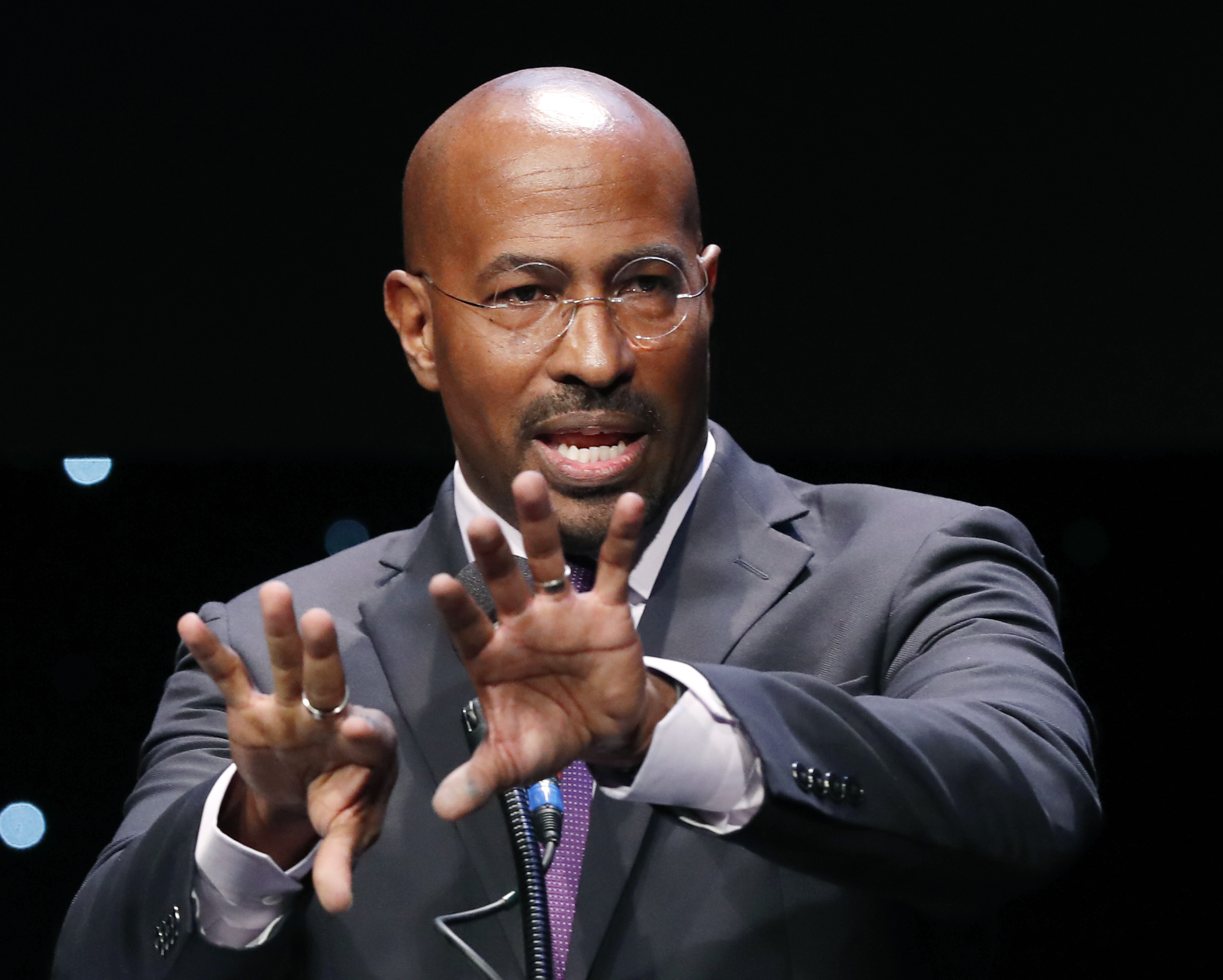
    Political commentator Van Jones told those gathered for the Atlanta Summit of Black Pastors and Rabbis that a Black and Jewish alliance today must harness the diverse strengths each community possesses.Kathy Willens

    Another speaker, political commentator Van Jones, cautioned that the alliance we are building cannot simply recreate the one from the 1960s. Back then, Jews were still reeling from the direct memory of the Holocaust, while Black Americans were still living under the restrictions of Jim Crow. That alliance grew from shared vulnerability, but the next iteration must harness the diverse strengths each community possesses today.

    Jones invoked the image of a relay runner receiving and passing a baton. Honoring the generation that came before, he said, means accepting responsibility for the next leg of the race.

    For us, that work begins right here in Greater Philadelphia.

    Rabbi Eric Yanoff serves Adath Israel on the Main Line in Merion Station.Courtesy of Eric Yanoff.

    We returned home committed to building and securing stronger relationships between the Black and Jewish communities before a crisis makes them necessary. We will come together with our colleagues in the Black Christian community and invite our congregations to learn from each other. We will create opportunities for shared study, worship, and community service. We will speak honestly about racism and antisemitism.

    Ultimately, we will build the trust that allows us to call on each other when our communities are hurting.

    Relationships require intention, humility, and time. They also require both communities to reject the idea that advocating for someone else diminishes our ability to defend our own people. We will not always see the world in the same way. But we can promise not to leave each other alone in it.

    Rabbi Geri Newburge serves Main Line Reform Temple-Beth Elohim in Wynnewood. Rabbi Eric Yanoff serves Adath Israel on the Main Line in Merion Station.

  • You should feel safe, not judged, at a doctor’s visit | Expert Opinion

    You should feel safe, not judged, at a doctor’s visit | Expert Opinion

    A friend and colleague recently told me that he can feel anxious about going to see his doctor for follow-up care if he has not accomplished the health goals discussed at his last visit.

    When I asked why, he said he worried that he would be labeled “nonadherent” or scolded for being unprepared. He did not want to waste his doctor’s time.

    I was surprised, since many of my own patients come in for visits without completing every goal we set out. I may not have communicated the plan clearly, and sometimes, as the saying goes, life gets in the way.

    Then I began to wonder about patients who cancel appointments, miss follow-up visits, or never schedule them at all. Could some be avoiding care because they fear being judged for not meeting expectations?

    As physicians, we often emphasize treatment plans and health goals. Less often do we consider whether patients feel safe admitting when they have struggled to follow them.

    I would never scold a patient if they did not complete everything on the to-do list. At the same time, I don’t think I have ever directly said that I want to be sure they come back for follow-up regardless. I realized that I could address this with phrasing like:

    I trust you will try your best to follow our plan. But whether you are able to get these things done or not, I still want to see you back in a few months.

    Astute problem-solving, empathy, compassion, and clear communication are qualities clinicians aspire to in our professional roles. Equally important, though less emphasized, is creating a psychologically safe environment. This means ensuring patients can speak honestly without feeling at risk of being judged.

    Psychological safety was originally studied in workplace teams, based on the work of Harvard researcher Amy Edmondson. To reach high performance, Edmondson found team members need to feel comfortable taking risks, admitting mistakes without fear of shaming or reprisal.

    The principles of psychological safety apply to many settings. Planet Fitness, for example, posts signs on the walls and equipment declaring “Judgement Free Zone” and “No Gymtimidation” in an effort to make members feel welcome regardless of their level of fitness.

    In medicine, a psychologically safe office or exam room may help patients feel more comfortable being vulnerable and discussing more emotionally sensitive concerns. It may also improve the likelihood of scheduled follow-up.

    So what did I tell my friend-colleague? I suggested that he think about the source of his follow up worries. Some of this may require self-exploration, but there may also be areas where his own medical practice could do a better job at creating a psychologically safe, nonjudgmental environment that encourages follow-up.

    Patients should know that a missed goal is not a failed appointment. In health, as in life, progress is rarely linear. In fact, the times when things have not gone according to plan are often the times when medical follow-up matters most. Clinicians should make that message clear.

    Jeffrey Millstein is an internist and regional medical director for Penn Primary and Specialty Care.

  • Two-minute thriller | Sports Daily Newsletter

    Two-minute thriller | Sports Daily Newsletter

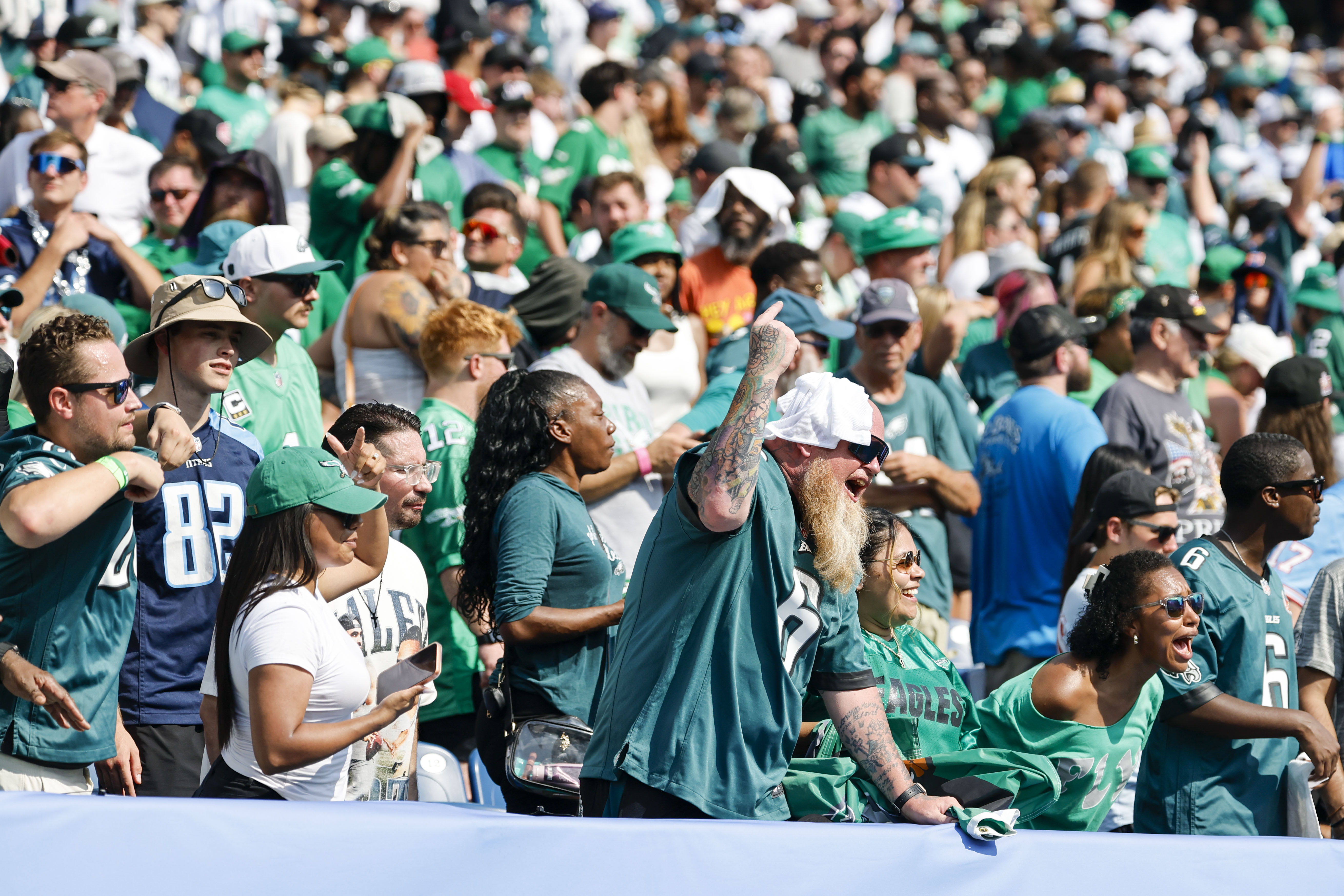
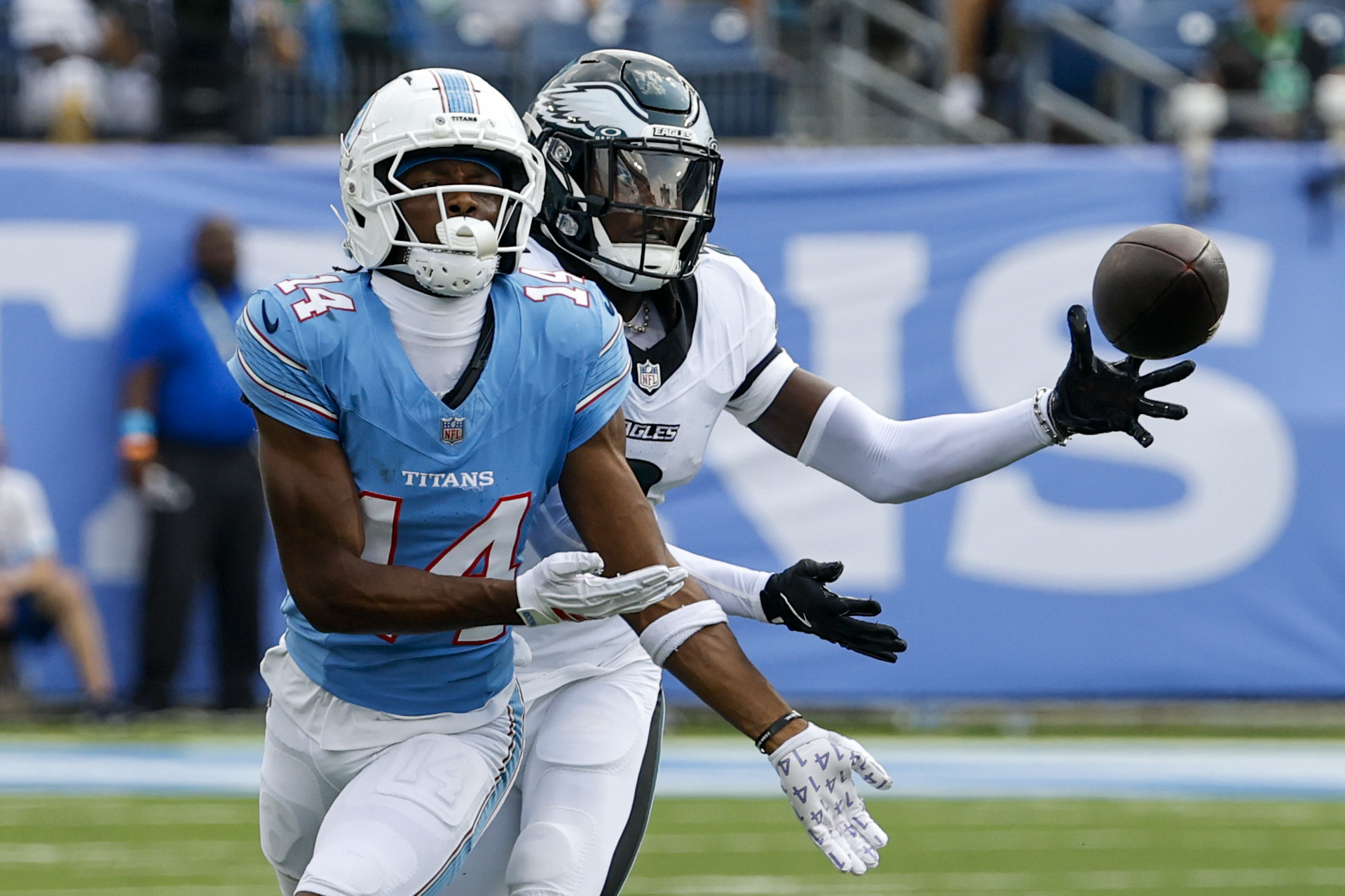
    It came down to the final two minutes on a steamy Sunday in Nashville.

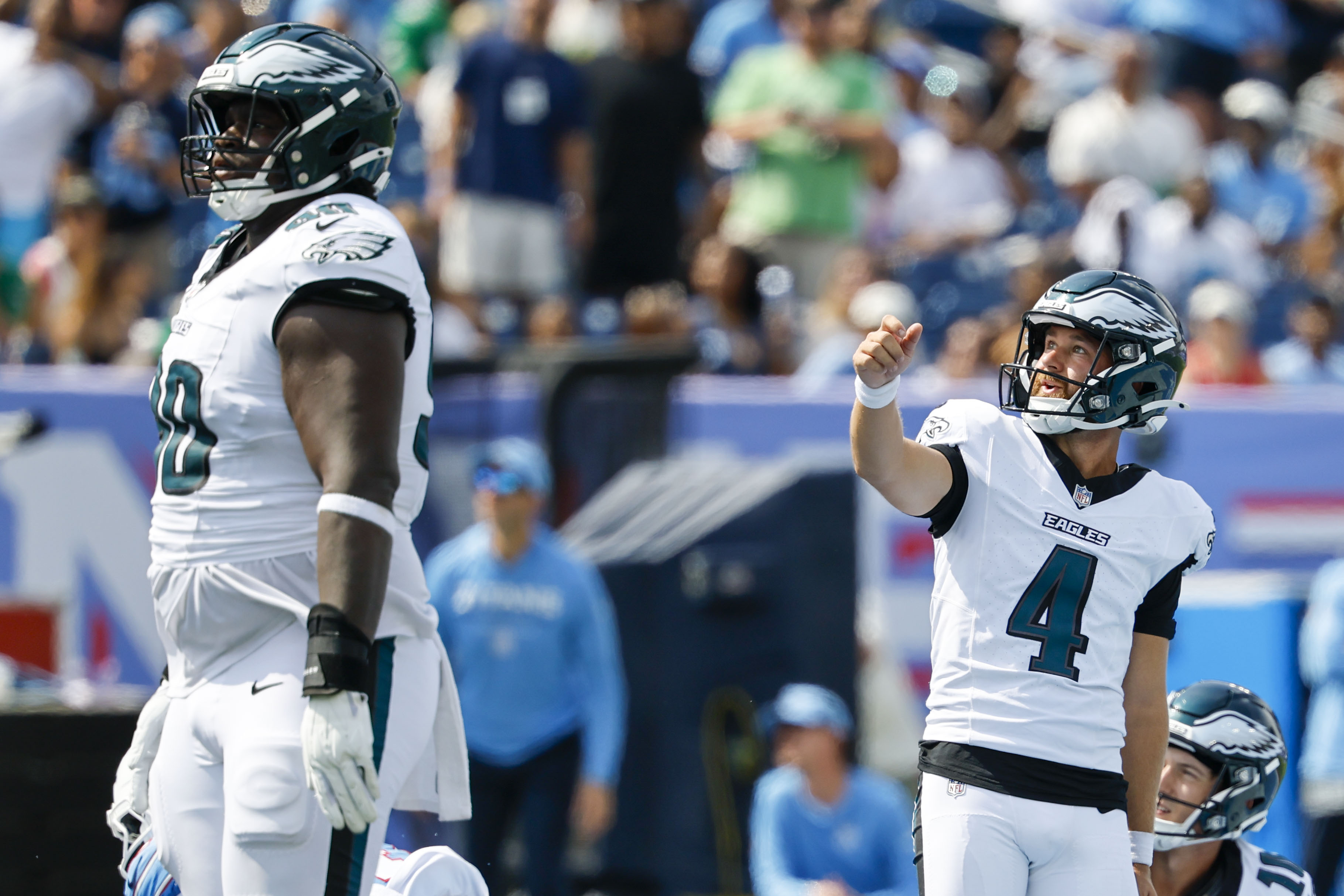
    The Eagles were down by three points after the Titans made a 32-yard field goal late in the fourth quarter. It was the Birds’ final chance with the ball to either score or tie the game.

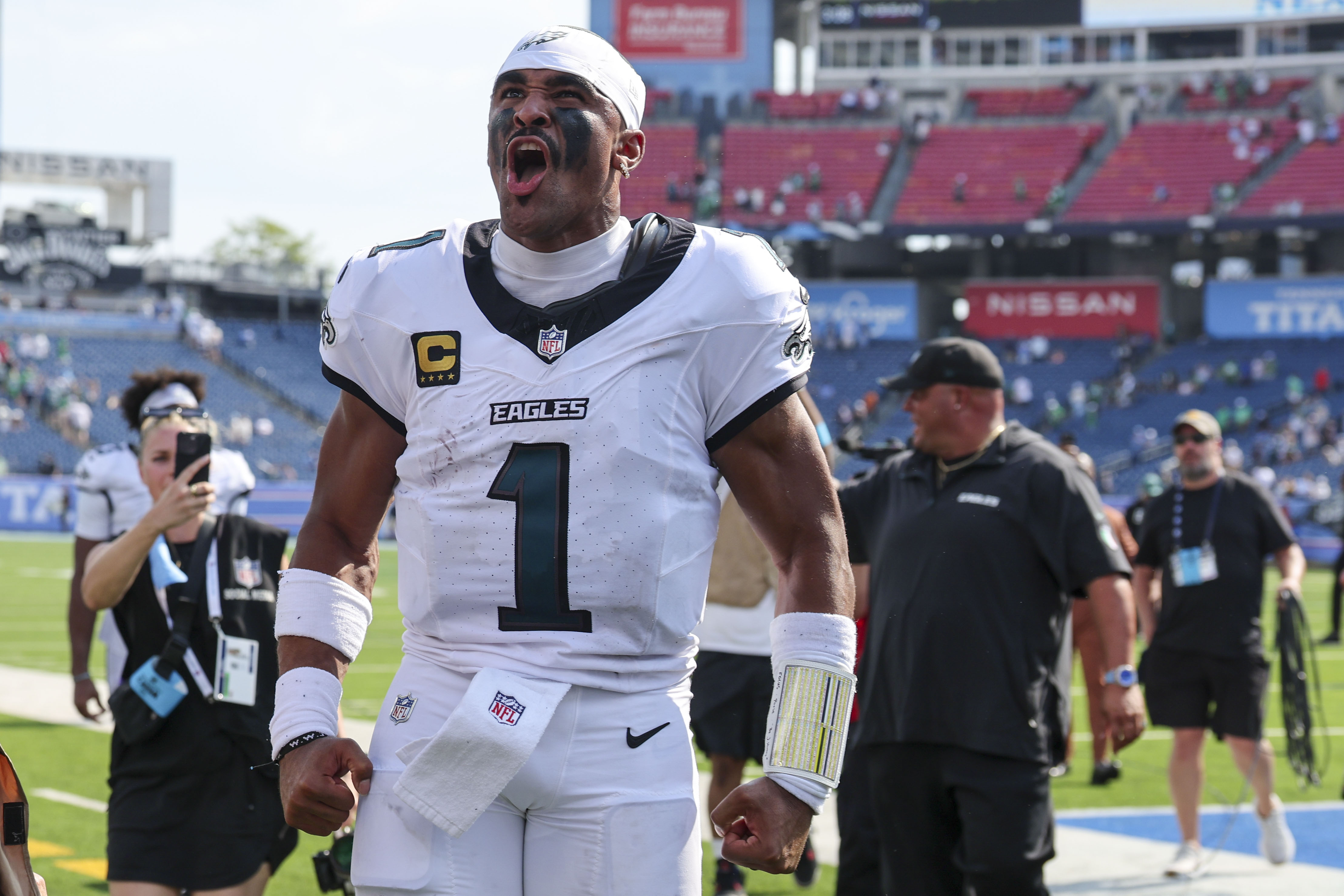
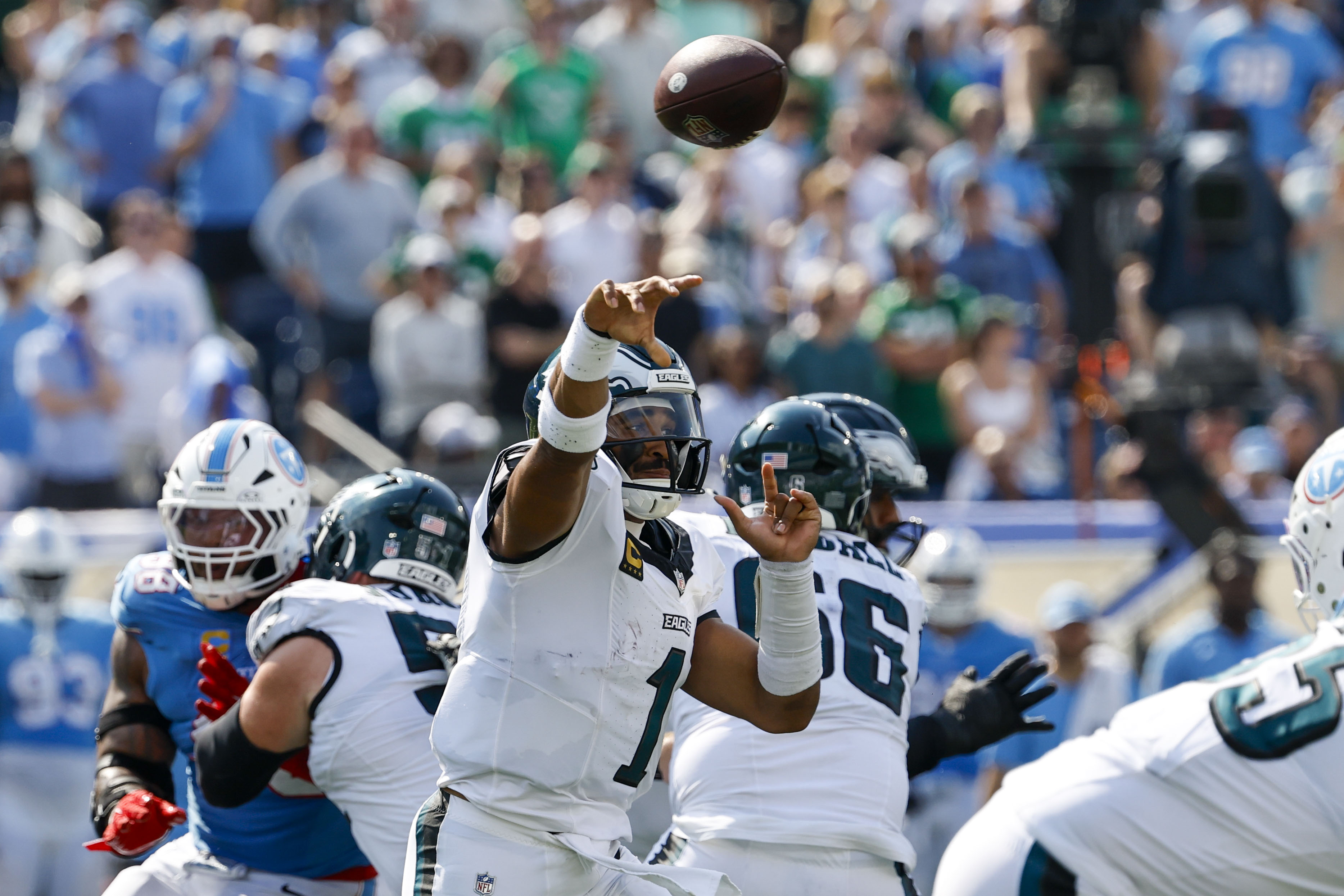
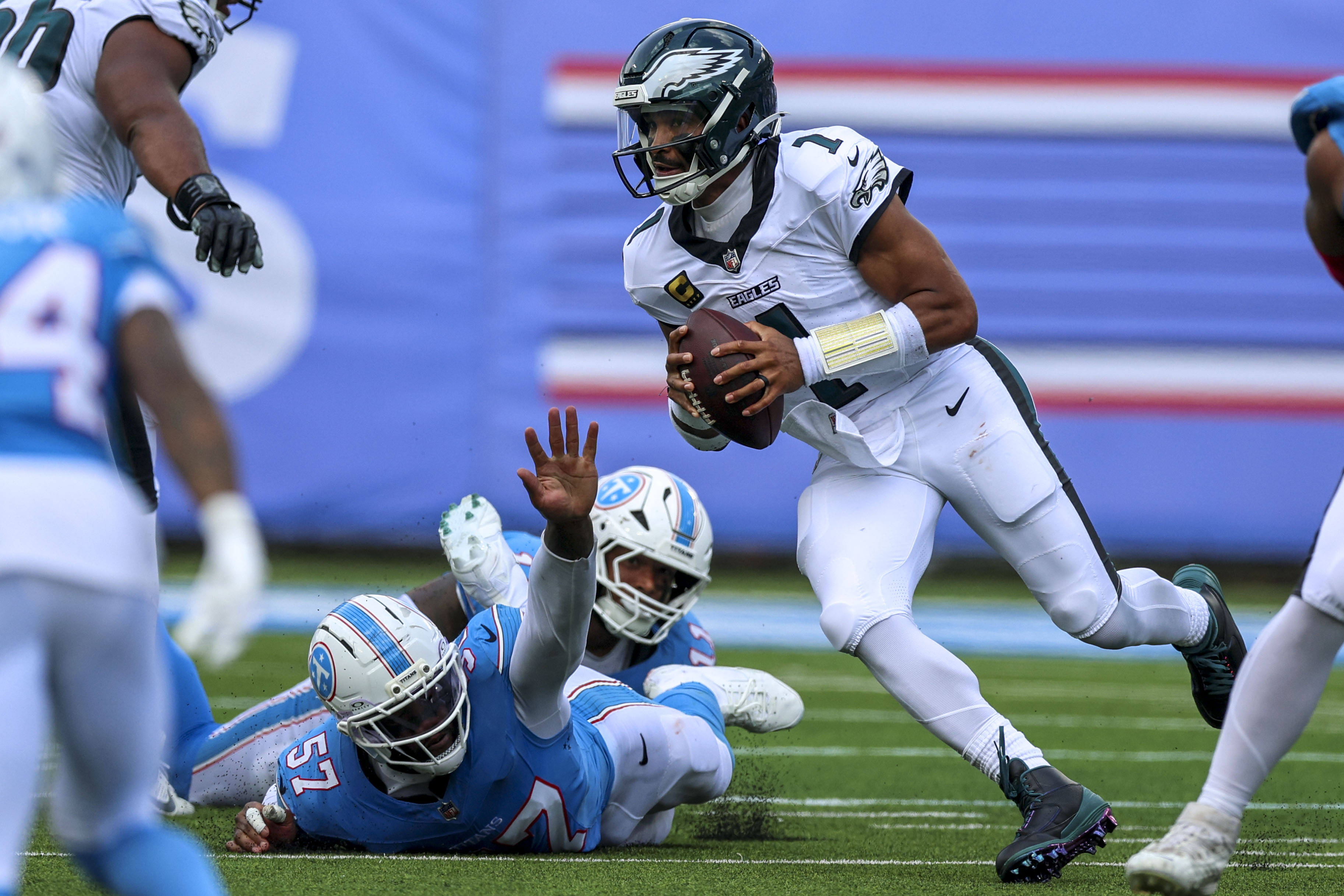
    So all eyes turned to Jalen Hurts, who threw two interceptions Sunday, and his performance that followed made up for it.

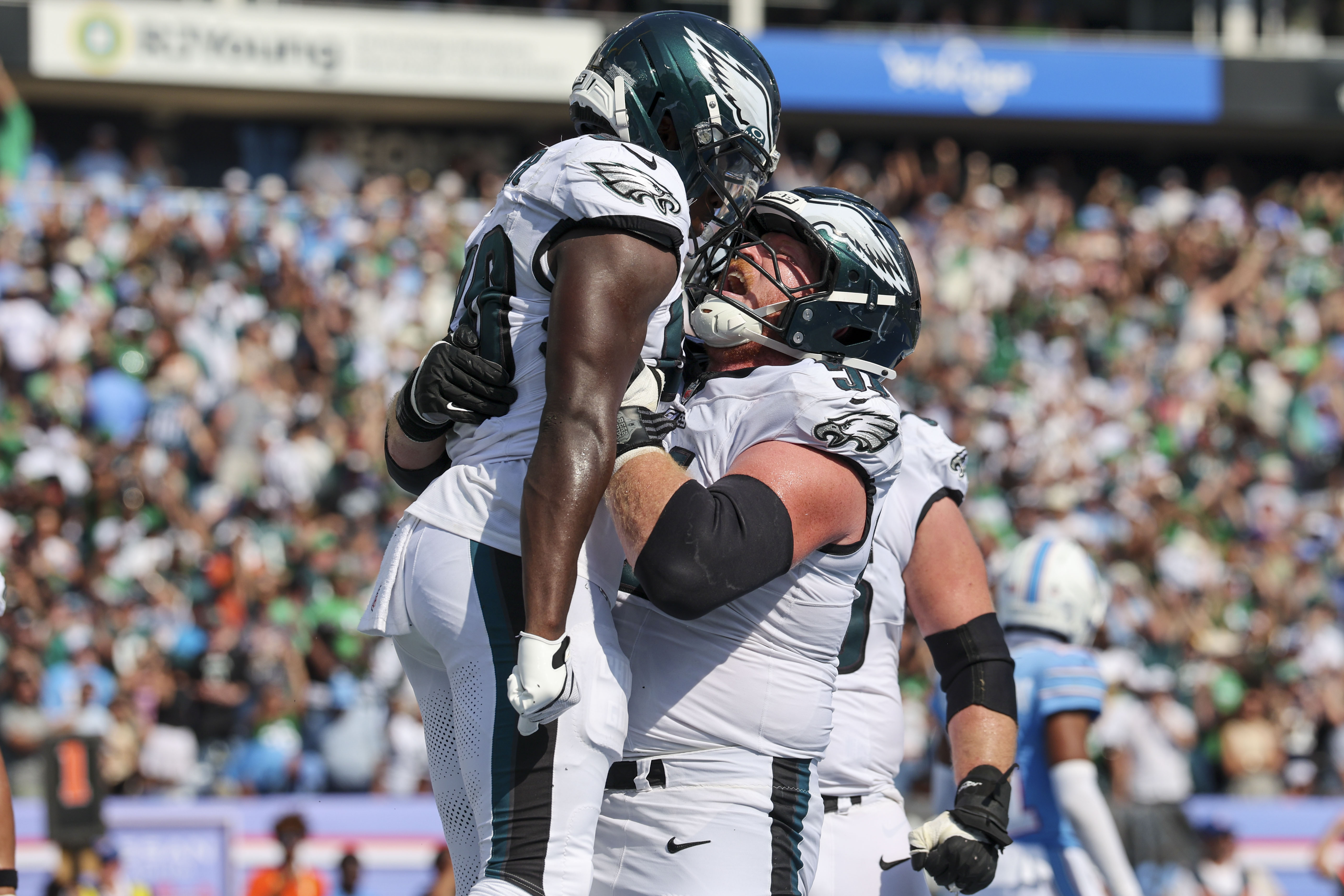
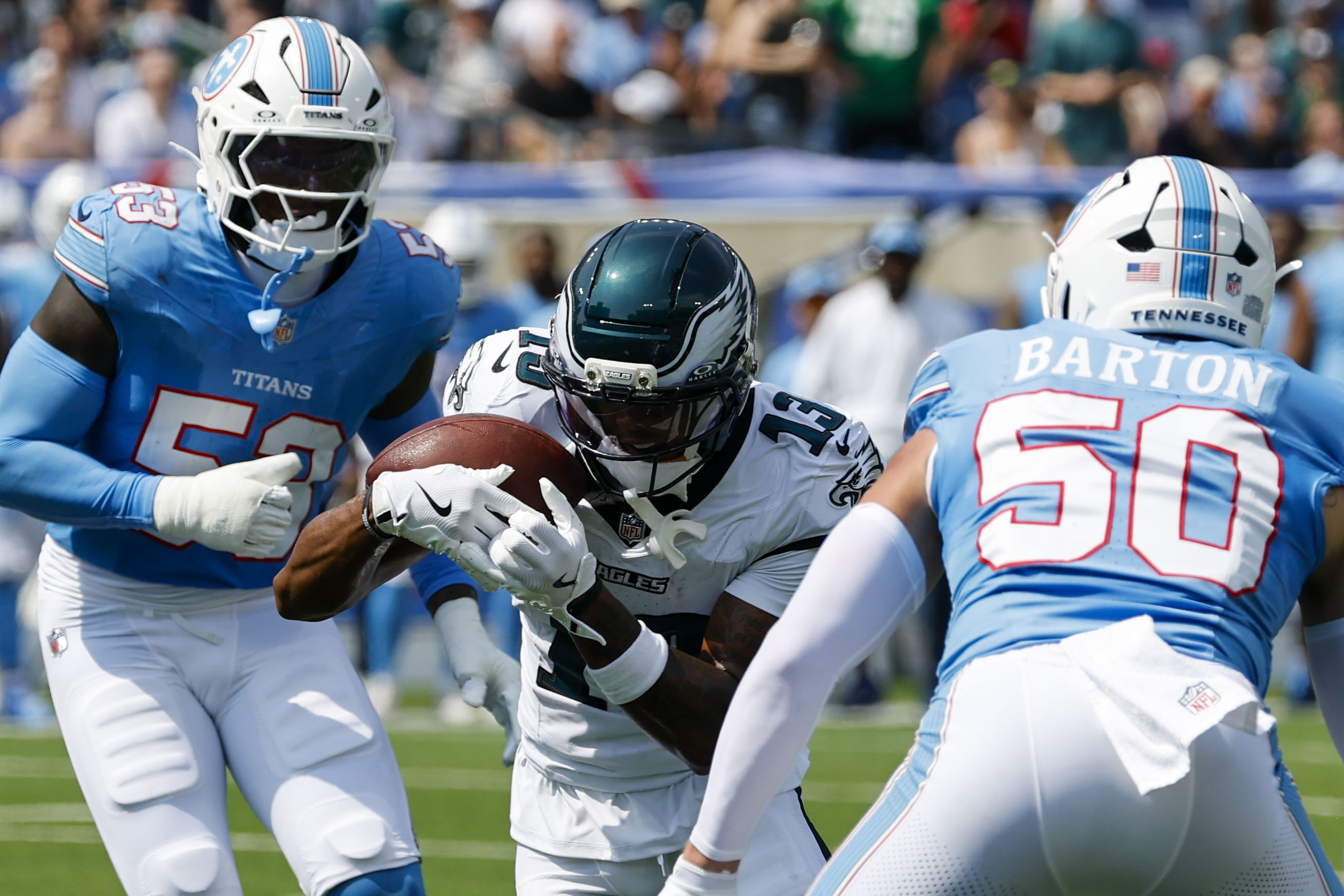
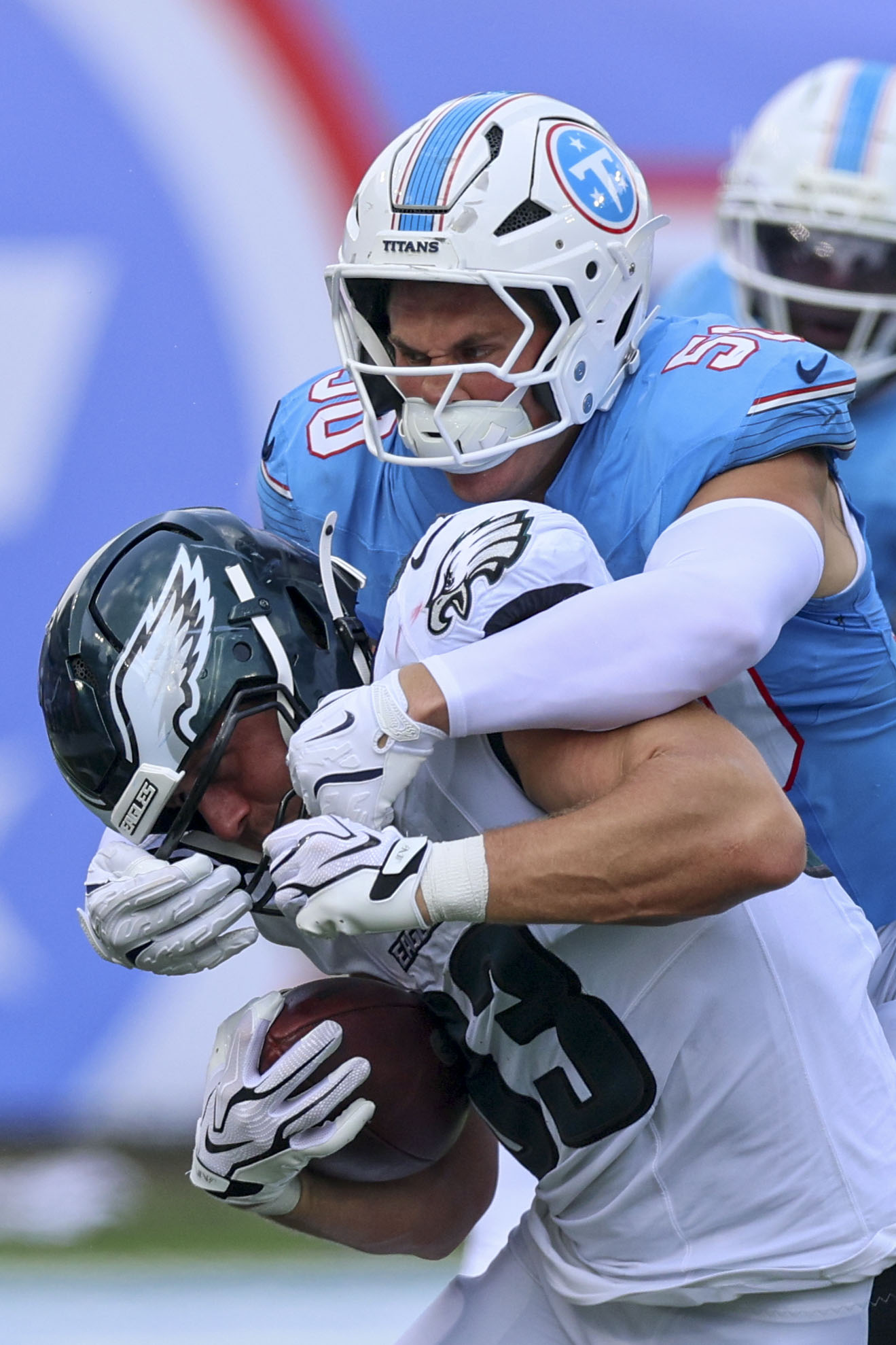
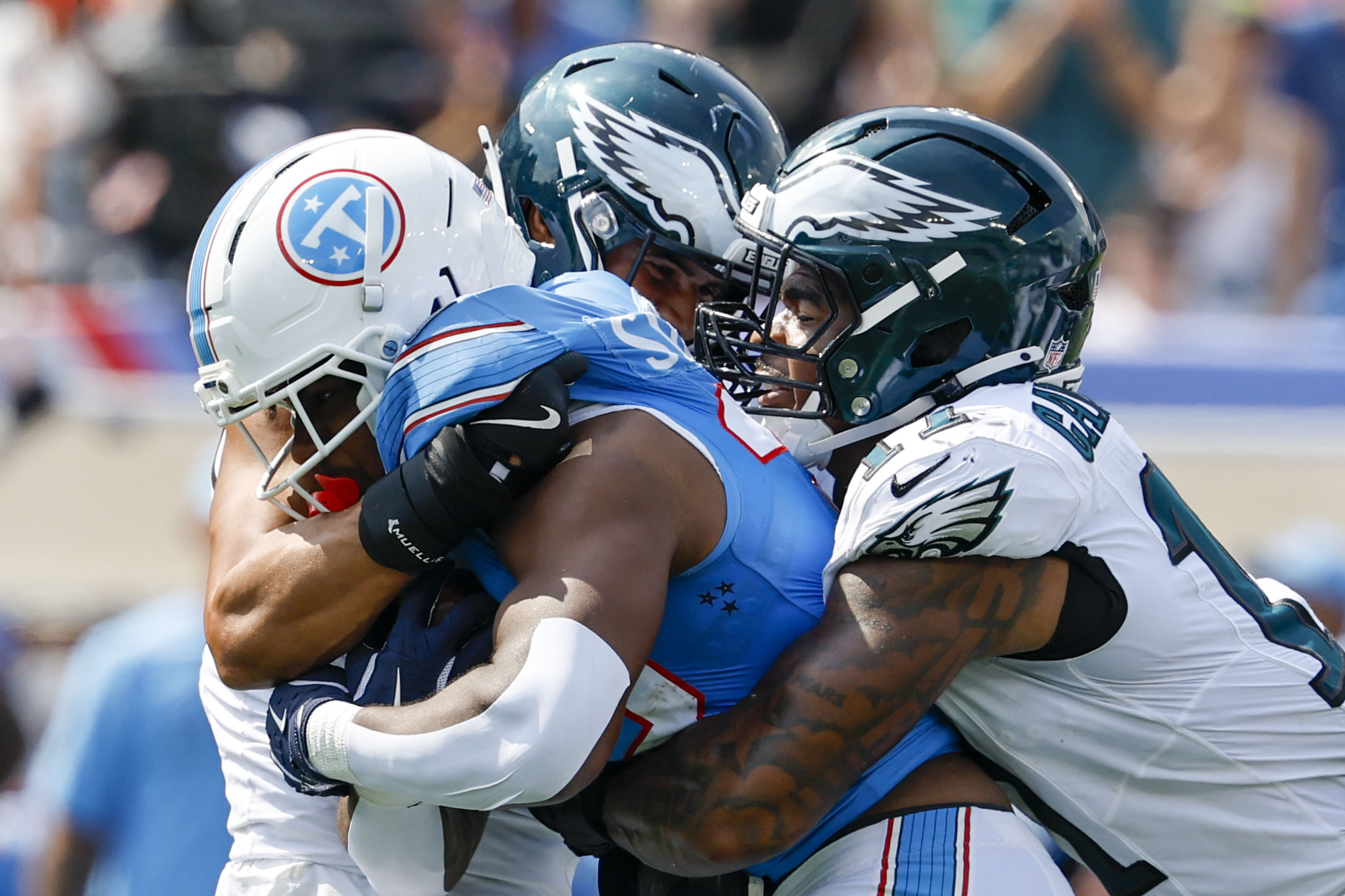
    Hurts orchestrated a nine-play, 65-yard scoring drive, capped by a 3-yard Darius Cooper touchdown to seal the Eagles’ 24-20 comeback victory.

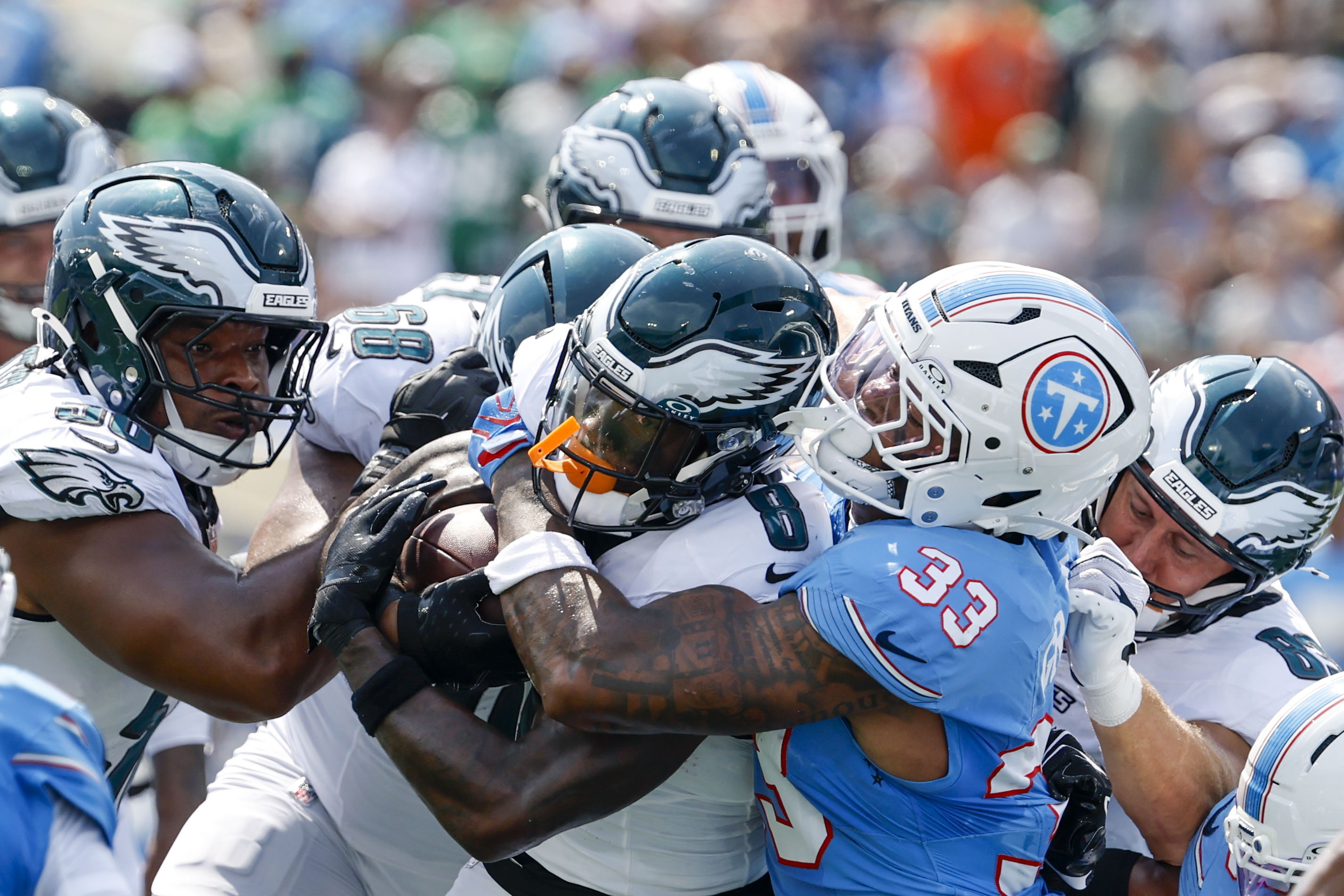
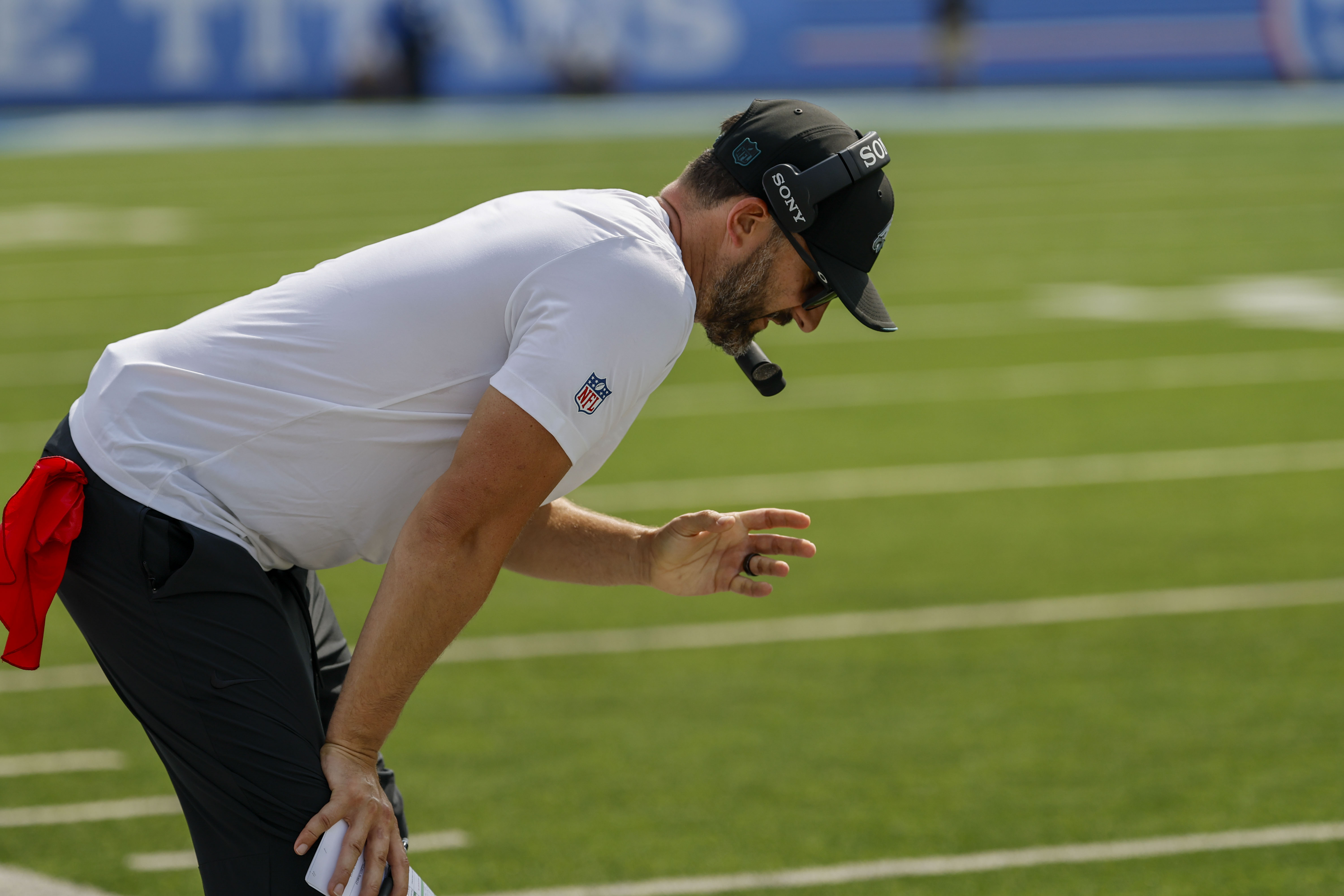
    Sean Mannion’s offense struggled to find its rhythm for much of the day. The offensive line’s play made the win more difficult than it should have been, which impacted the run game.

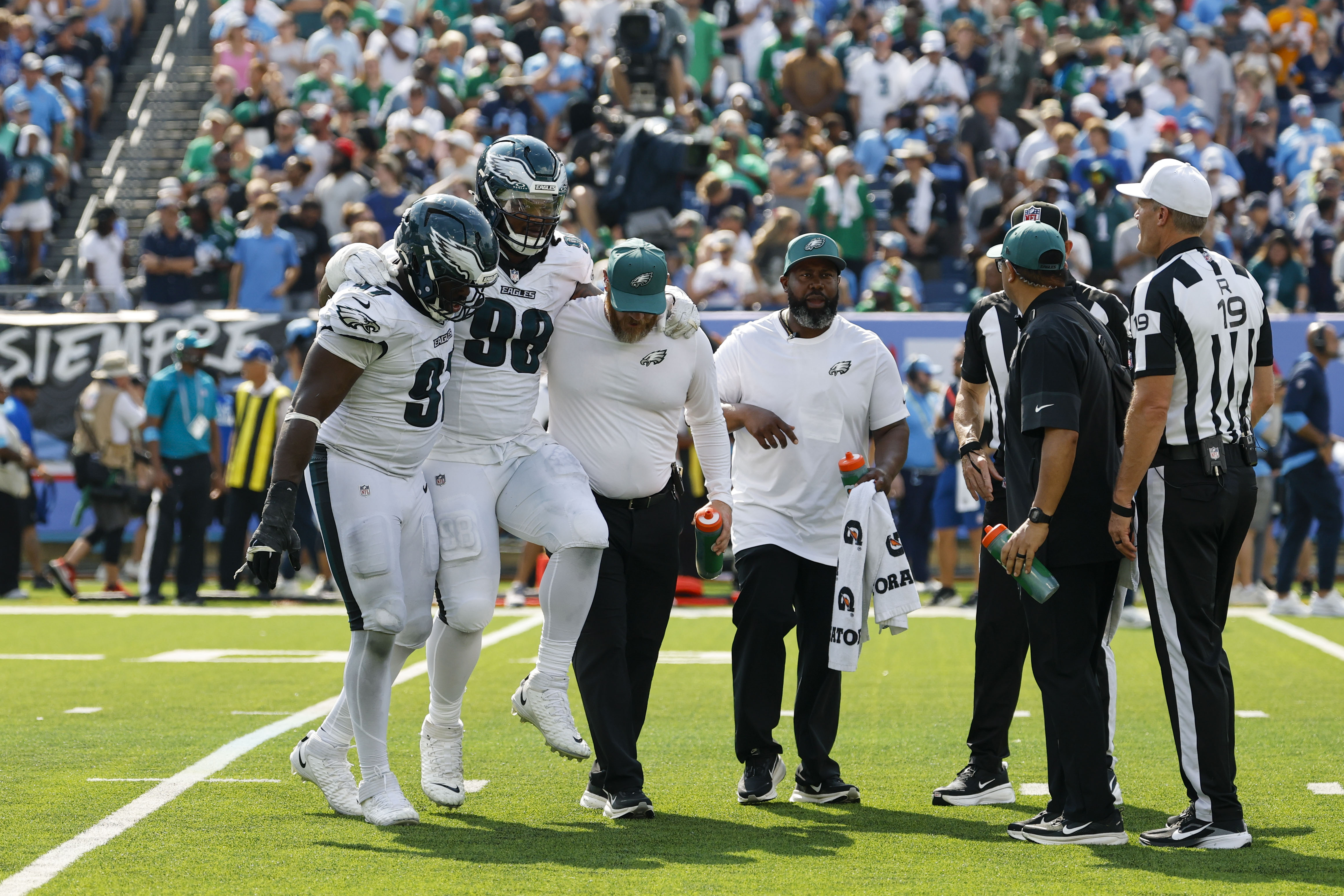
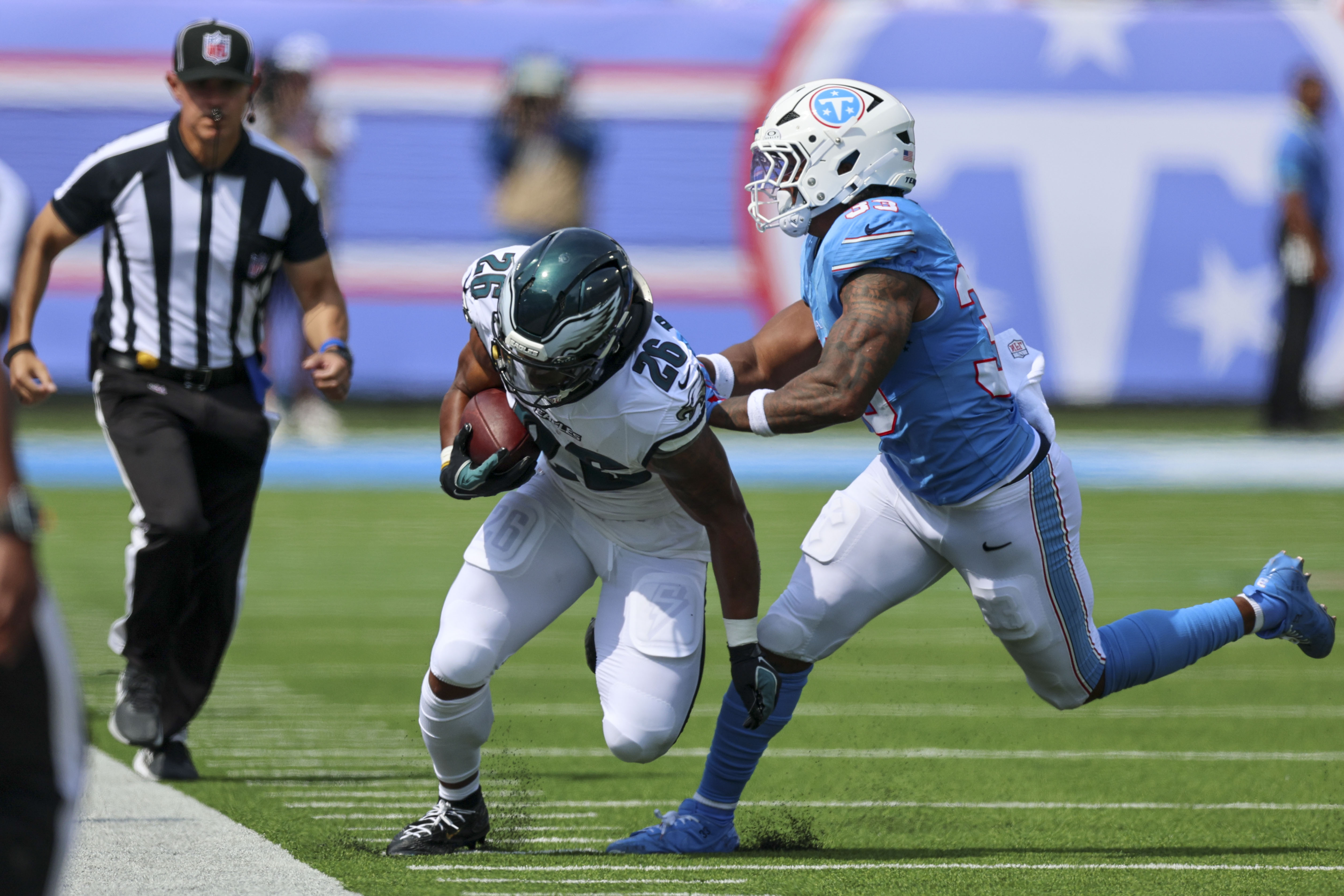
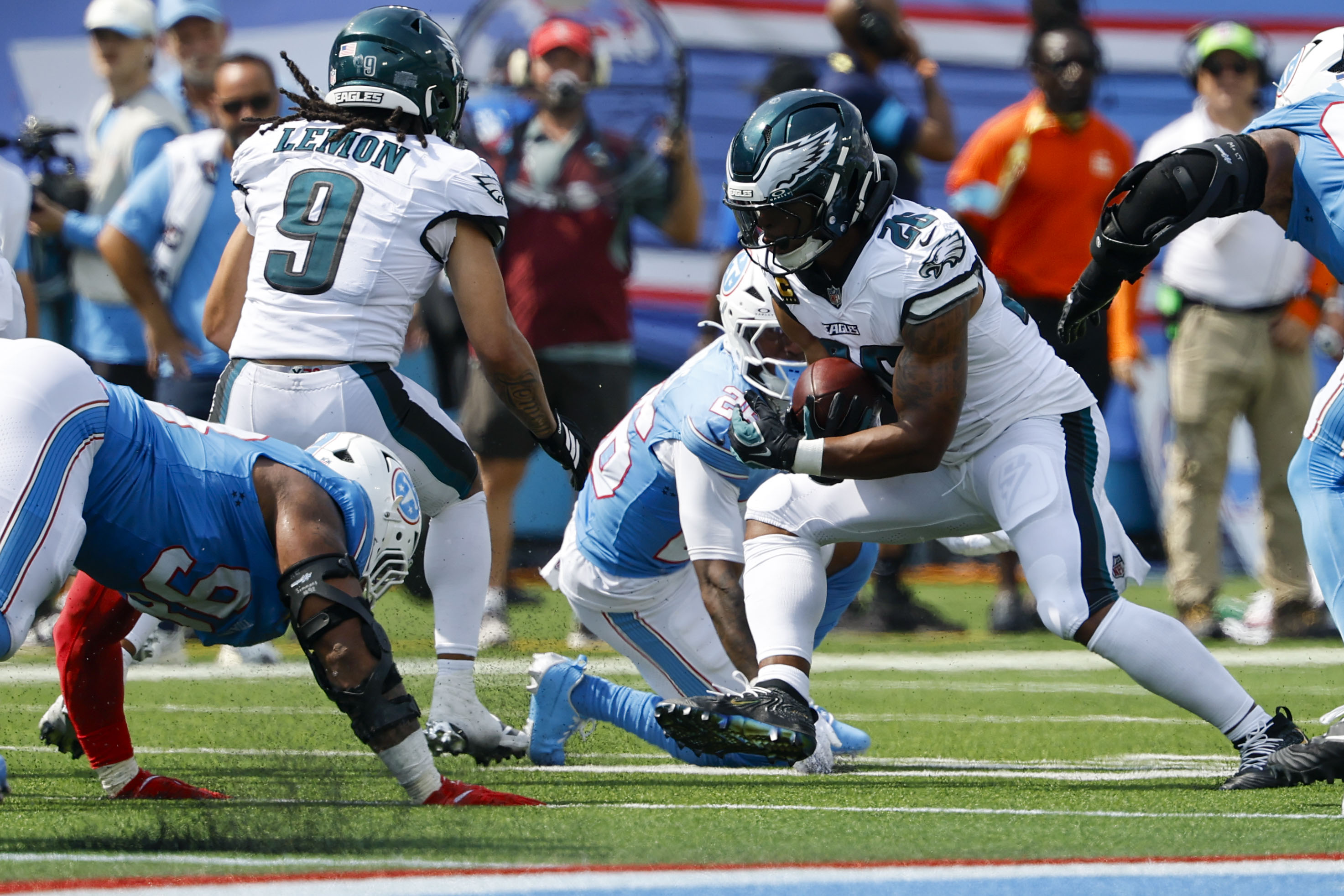
    Also, Saquon Barkley suffered a stinger and ran just four times Sunday.

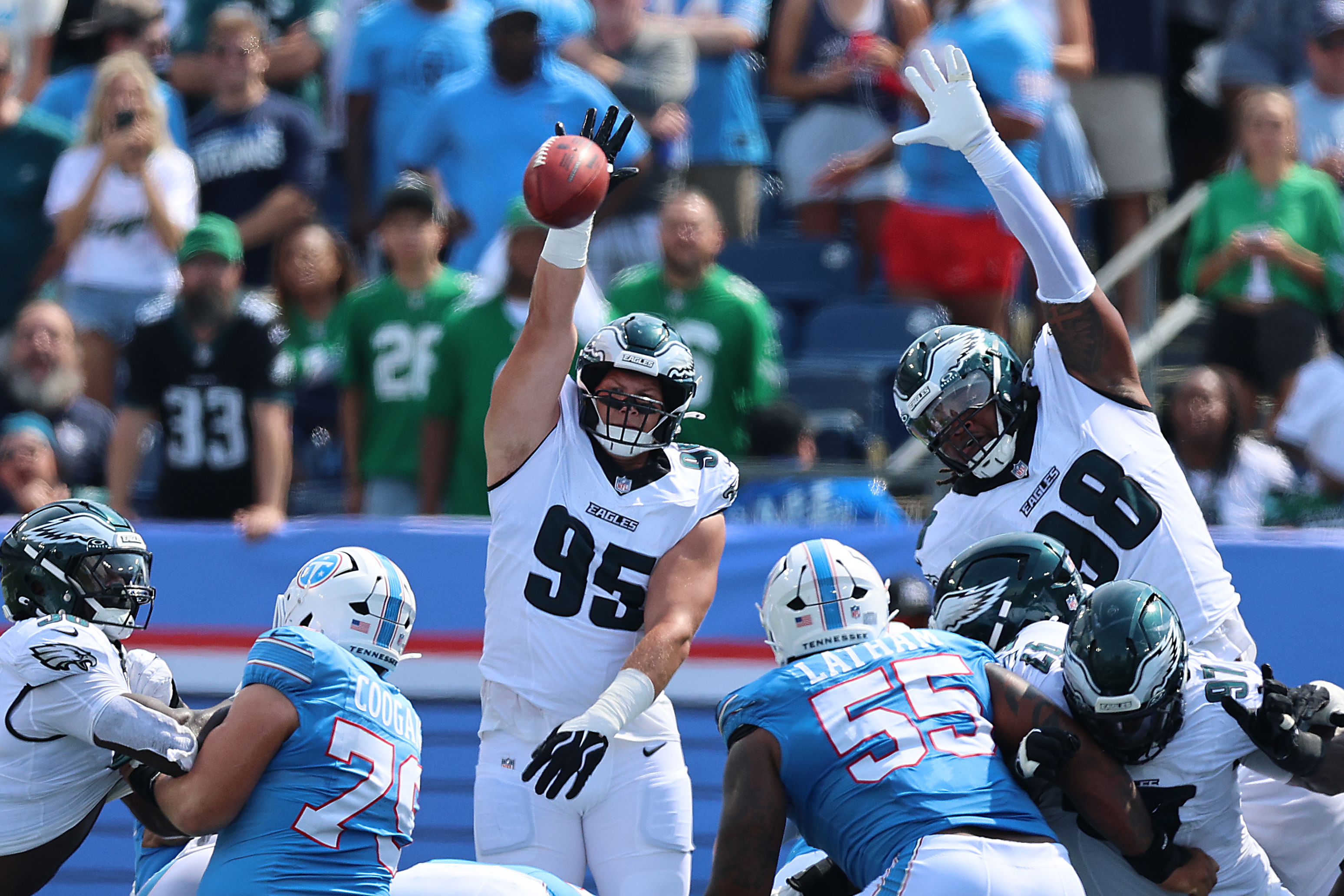
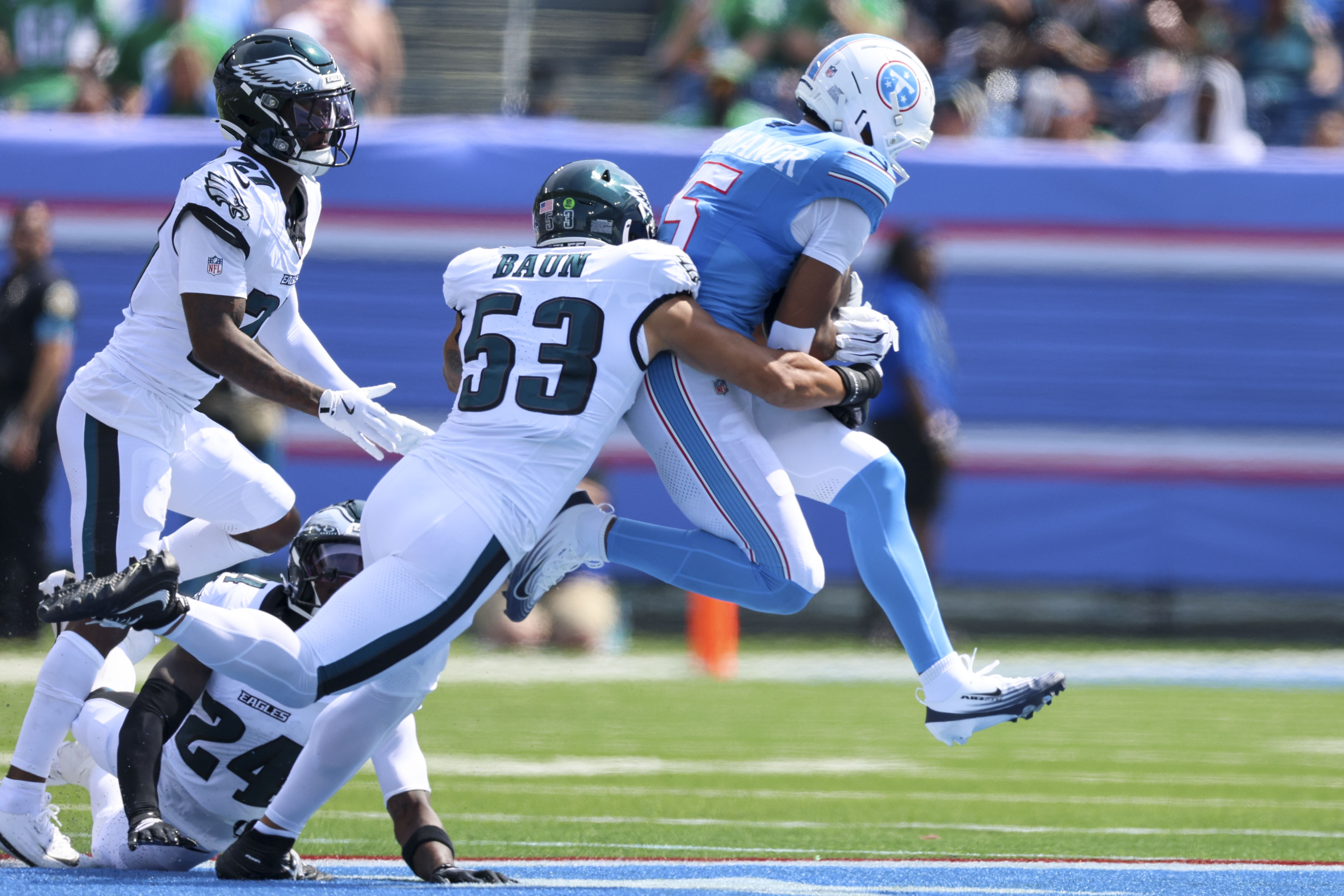
    The defense also suffered some big lapses that almost cost the Eagles a win, but some positives were the wide receiver and tight end rooms. Jeff McLane shares with us his instant grades on the Eagles’ performance.

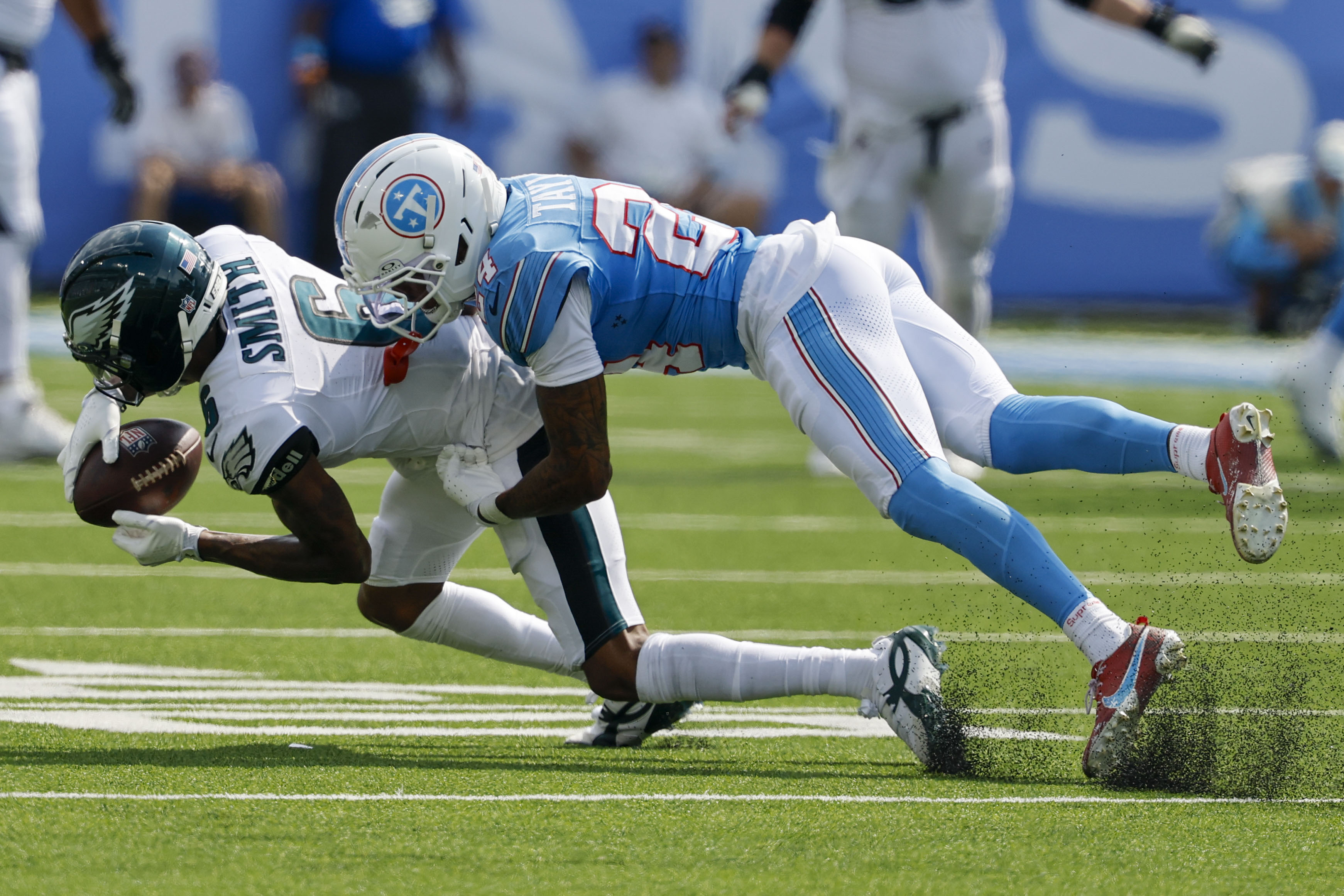
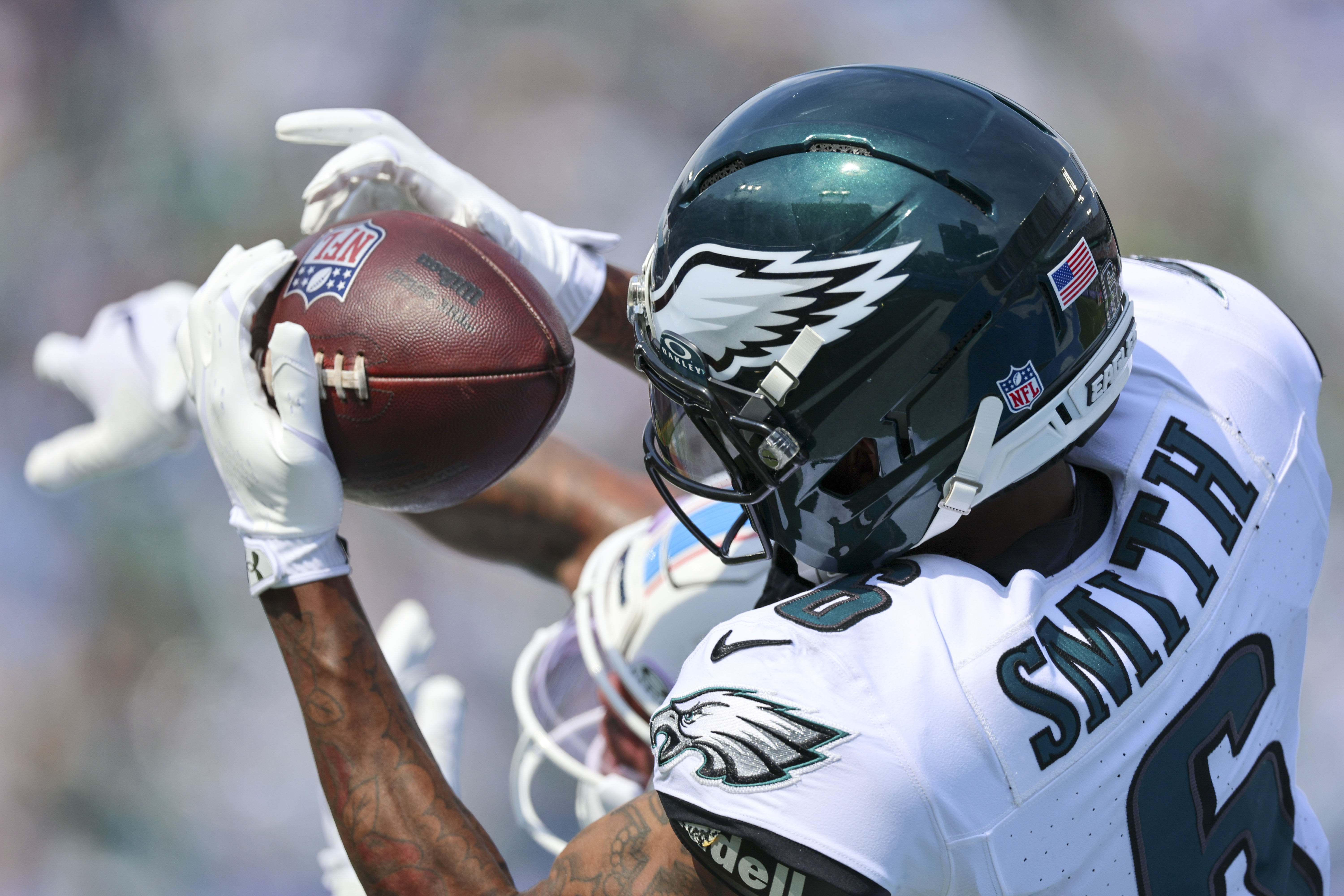
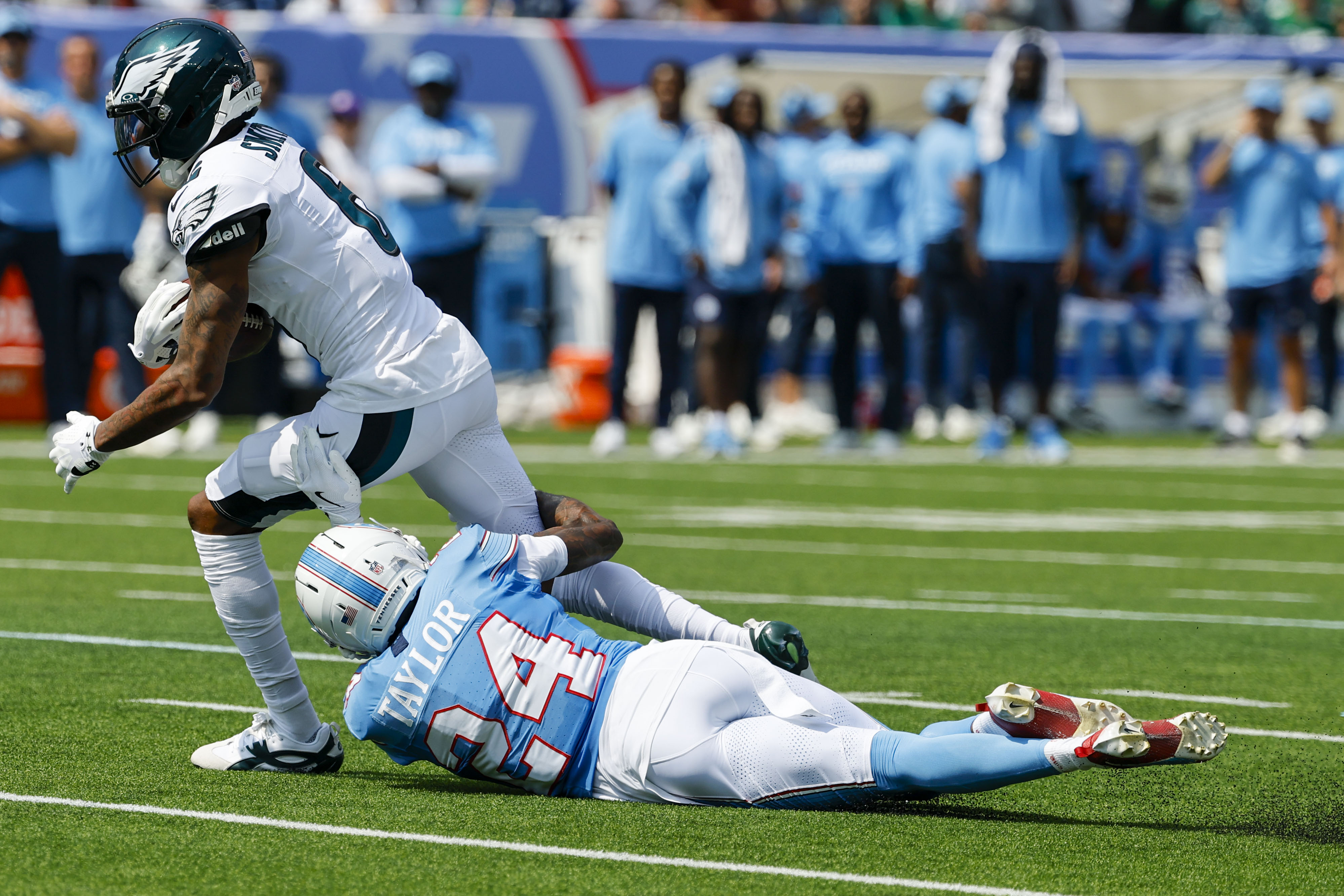
    Let’s give wide receiver DeVonta Smith some credit. Just when the Eagles looked finish the star receiver came through with a 19-yard sideline catch with 14 seconds remaining.

    It may have not been perfect, but for the fourth time in five years, the Eagles are 2-0.

    — Isabella DiAmore, @phillysport, sports.daily@inquirer.com.

    If someone forwarded you this email, sign up for free here.

    ❓What did you think of Jalen Hurts’ play against the Titans? Email us back for a chance to be featured in the newsletter.

    Three’s the magic number

    Justin Crawford hit a three-run triple to power the Phillies past the Mets on Sunday.Noah K. Murray

    Alex McFarlane has been put in a lot of tough situations. He inherited a runner from Cristopher Sánchez in the seventh inning, and had then allowed two singles to flip the Mets’ lineup back over.

    To get out of the jam, he had to contend Juan Soto, and the rookie did just that. Then an inning later, Justin Crawford delivered a three-run triple in the Phillies’ 7-2 win over the Mets, as the club shrank their magic number to clinch the playoffs to three.

    And the Phillies are optioning reliever Orion Kerkering to triple A, following his second-half struggles. In four appearances in September, Kerkering had an 18.68 ERA.

    Up next: After an off day on Monday, the Phillies begin their penultimate series of the season at home Tuesday against the Brewers (6:40 p.m., NBCSP).

    What we’re …

    🏈 Watching: Highlights from the Eagles-Titans broadcast. And did you see what Jalen Hurts said about Titans DT Jeffery Simmons?

    🙌 Praising: Friends and family coming together in Maple Shade in support of Xavier Taylor, who is still recovering after being struck by a baseball.

    🤔 Wondering: What happened to Adem Bona? According to the Sixers, he suffered a left foot sprain in FIBA World Cup Qualifiers.

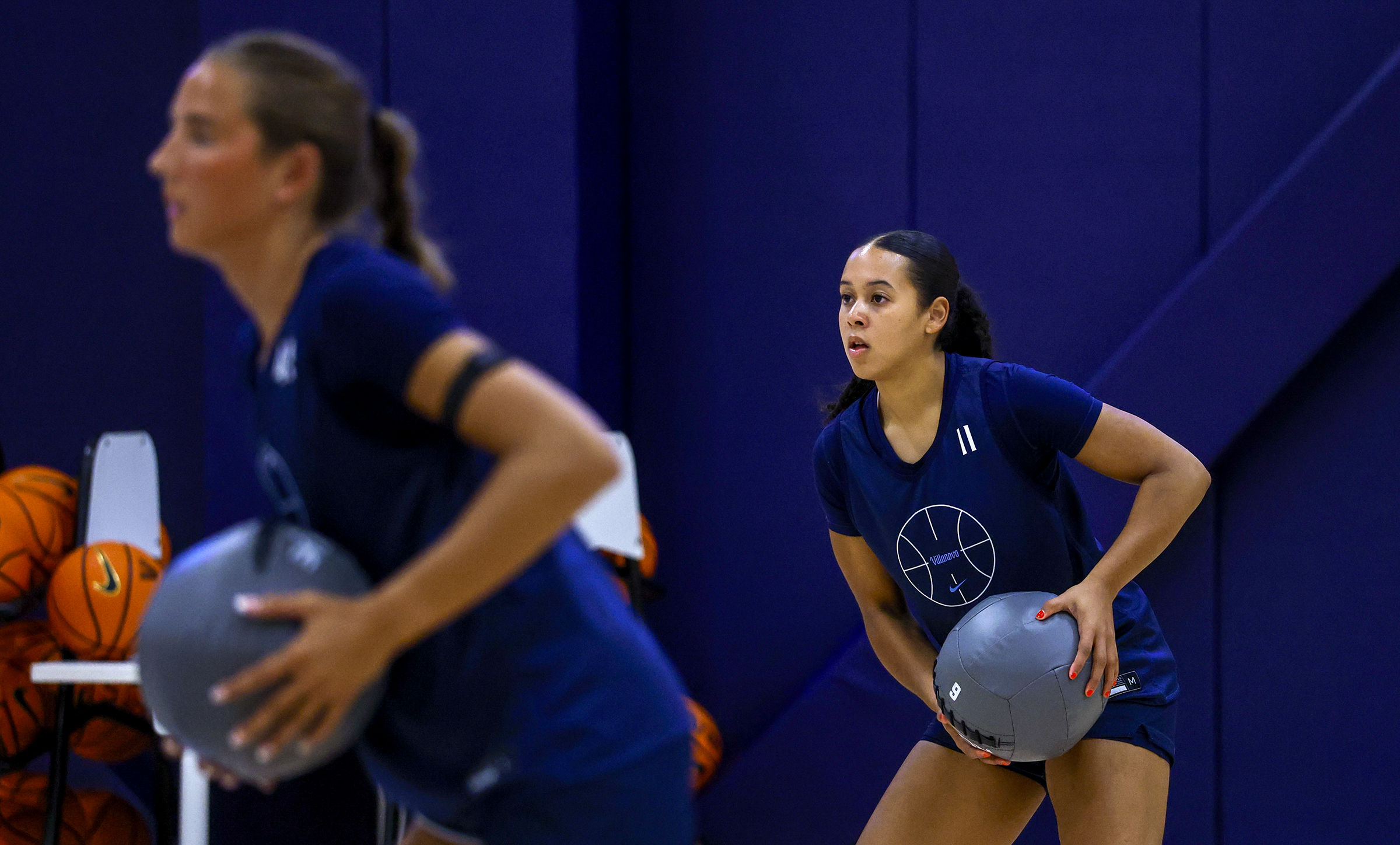
    📖 Reading: Villanova star Jasmine Bascoe played on Canada’s national team. Here’s what she learned from the experience.

    Changing the narrative

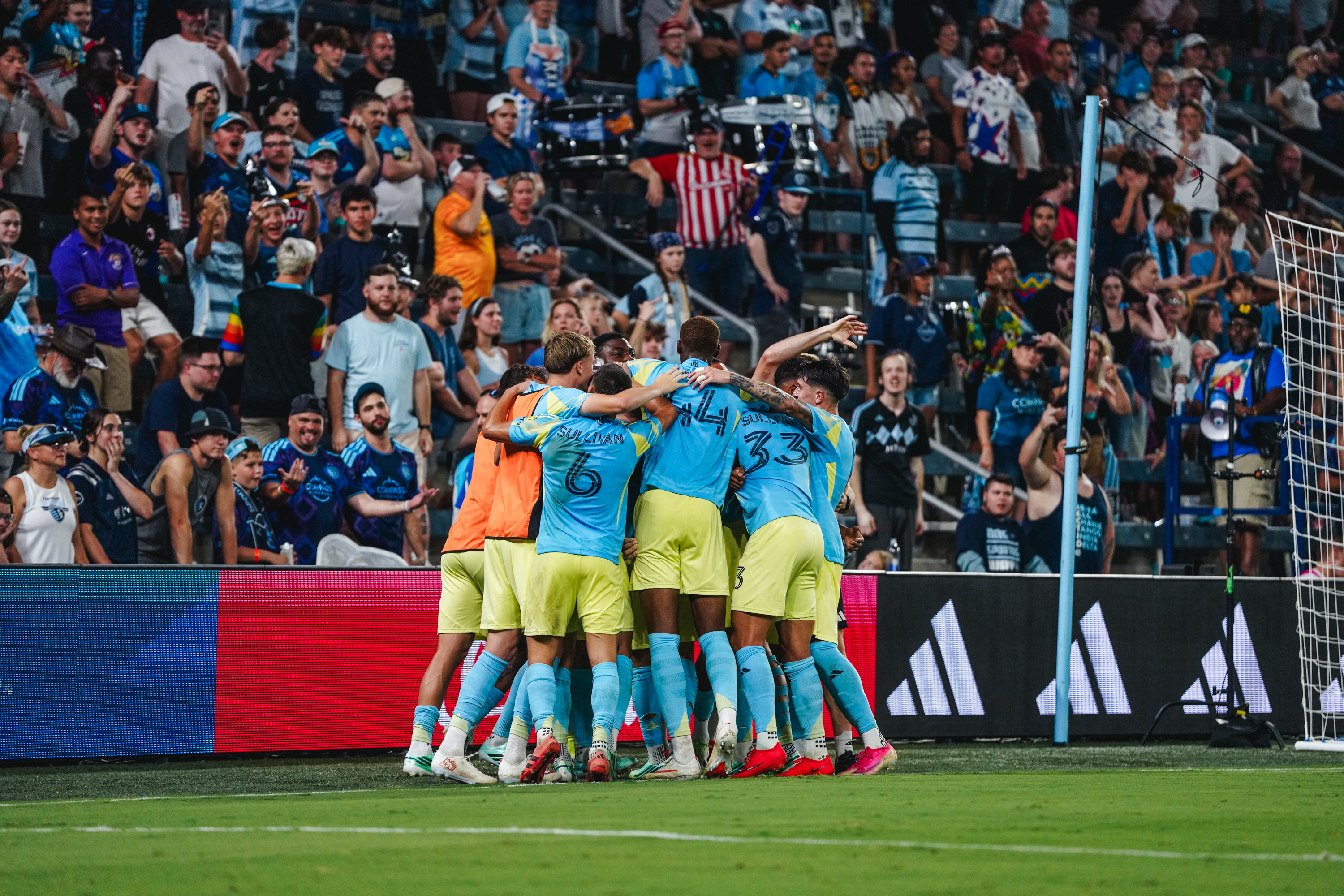
    Heroics from the Union led to a 4-3 come-from-behind win against Sporting Kansas City at Children’s Mercy Park on Saturday.Courtesy / Philadelphia Union

    The Union changed the narrative in what might be one of the best come-from-behind wins of the season on Saturday against Sporting Kansas City.

    Union interim manager Ryan Richter and Co. continue to surge up the Eastern Conference ladder as a team that was written off in June — after limping into the World Cup break with just one win in 15 matches. Now, the Union have scored 14 goals in their last three games and are on an 11-game unbeaten streak.

    ‘Conviction to be great’

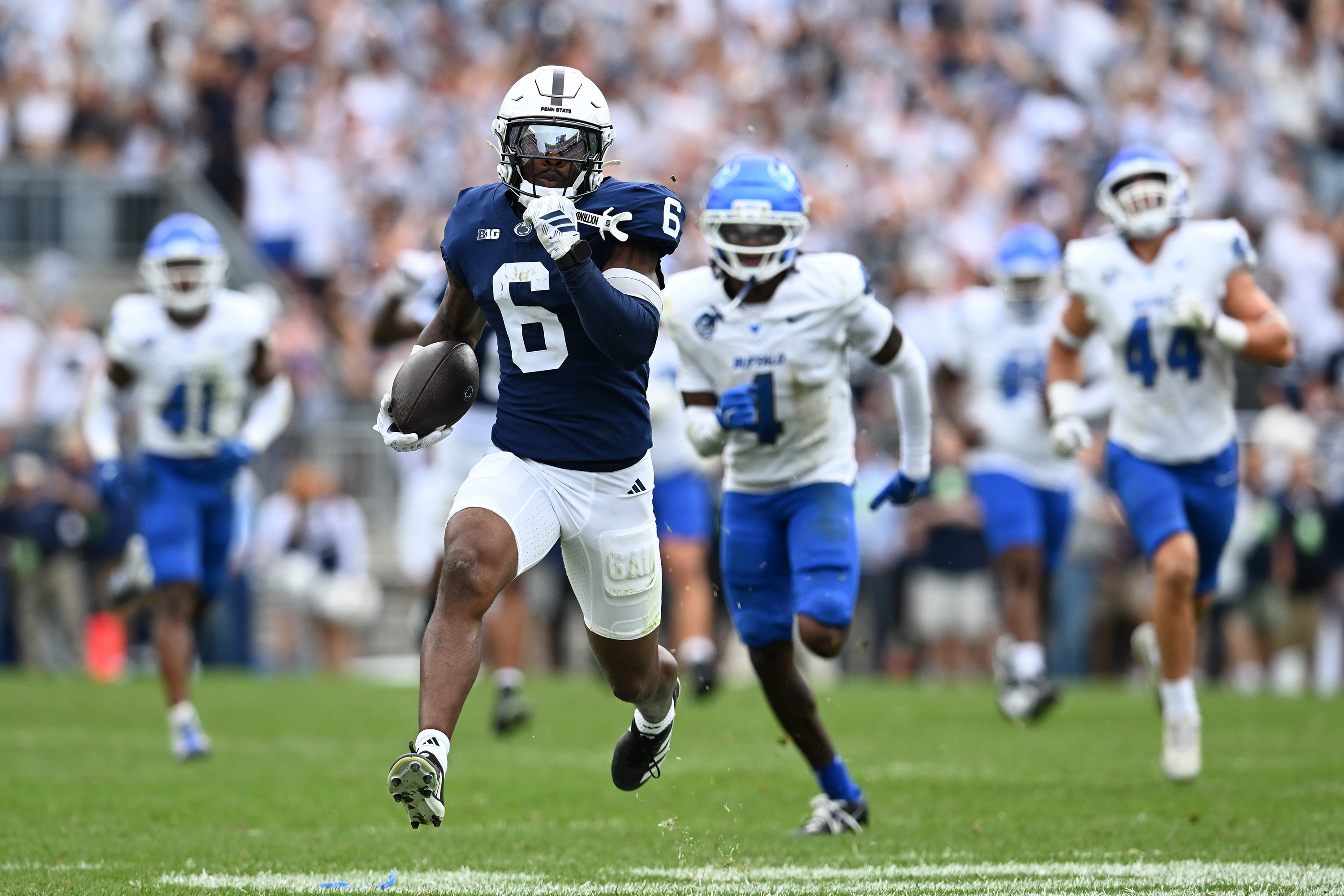
    Penn State wide receiver Koby Howard finished with 135 total yards and two touchdowns against Buffalo on Saturday.Barry Reeger

    Koby Howard has been putting in extra work since the spring and it seems to be paying off. The sophomore receiver continued his great start of the 2026 season with 135 total yards and two touchdowns in Penn State’s 55-13 win over Buffalo.

    (The win also bumped Penn State from No. 14 to No. 13 in the AP Top 25 college football poll.)

    Howard has 344 receiving yards and three total touchdowns through three games this season. He’s averaging 28.67 yards per catch and is on pace to break the Nittany Lions’ single-season receiving yards record. Matt Campbell isn’t surprised by the sophomore’s success.

    In other college football news:

    David Murphy’s take

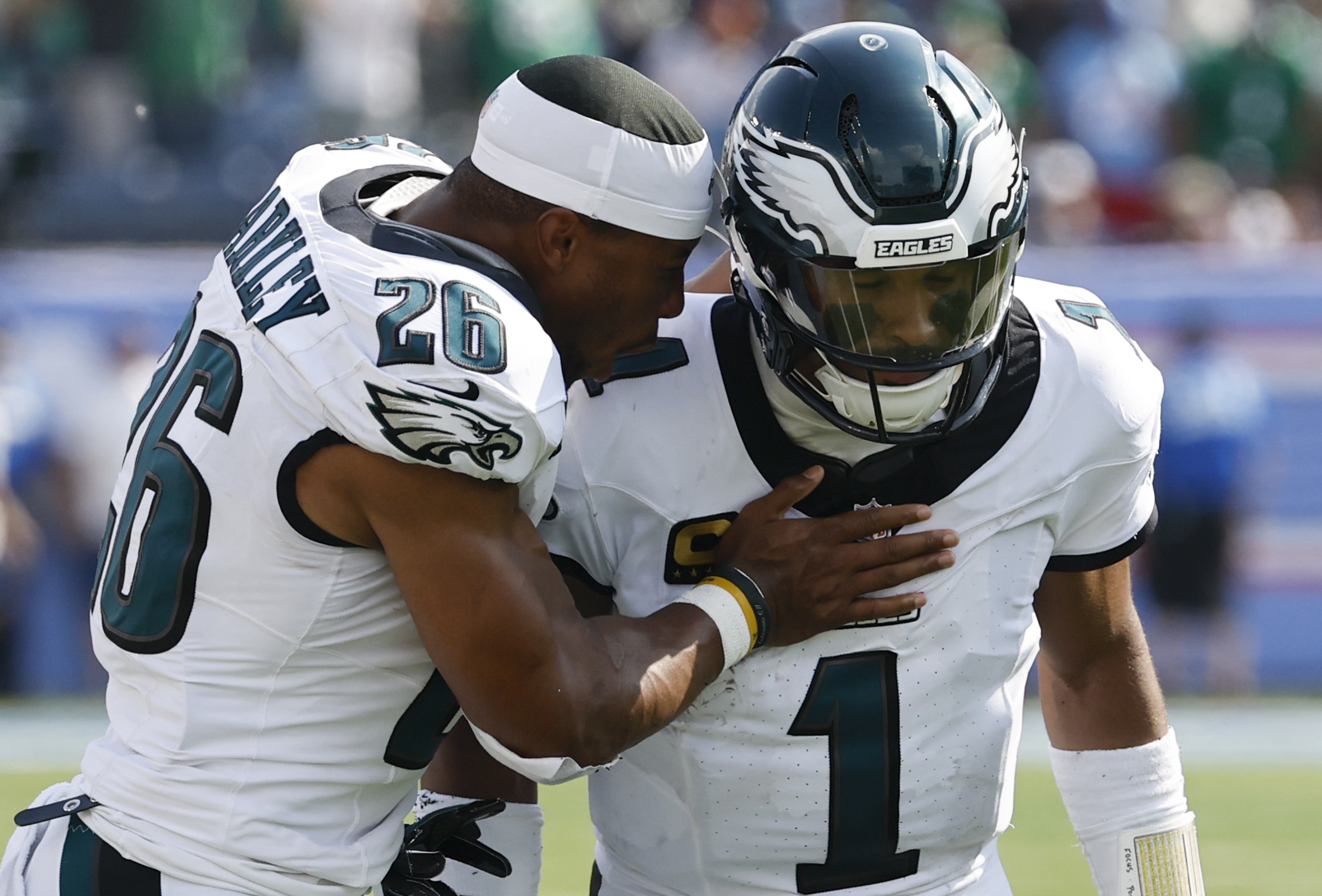
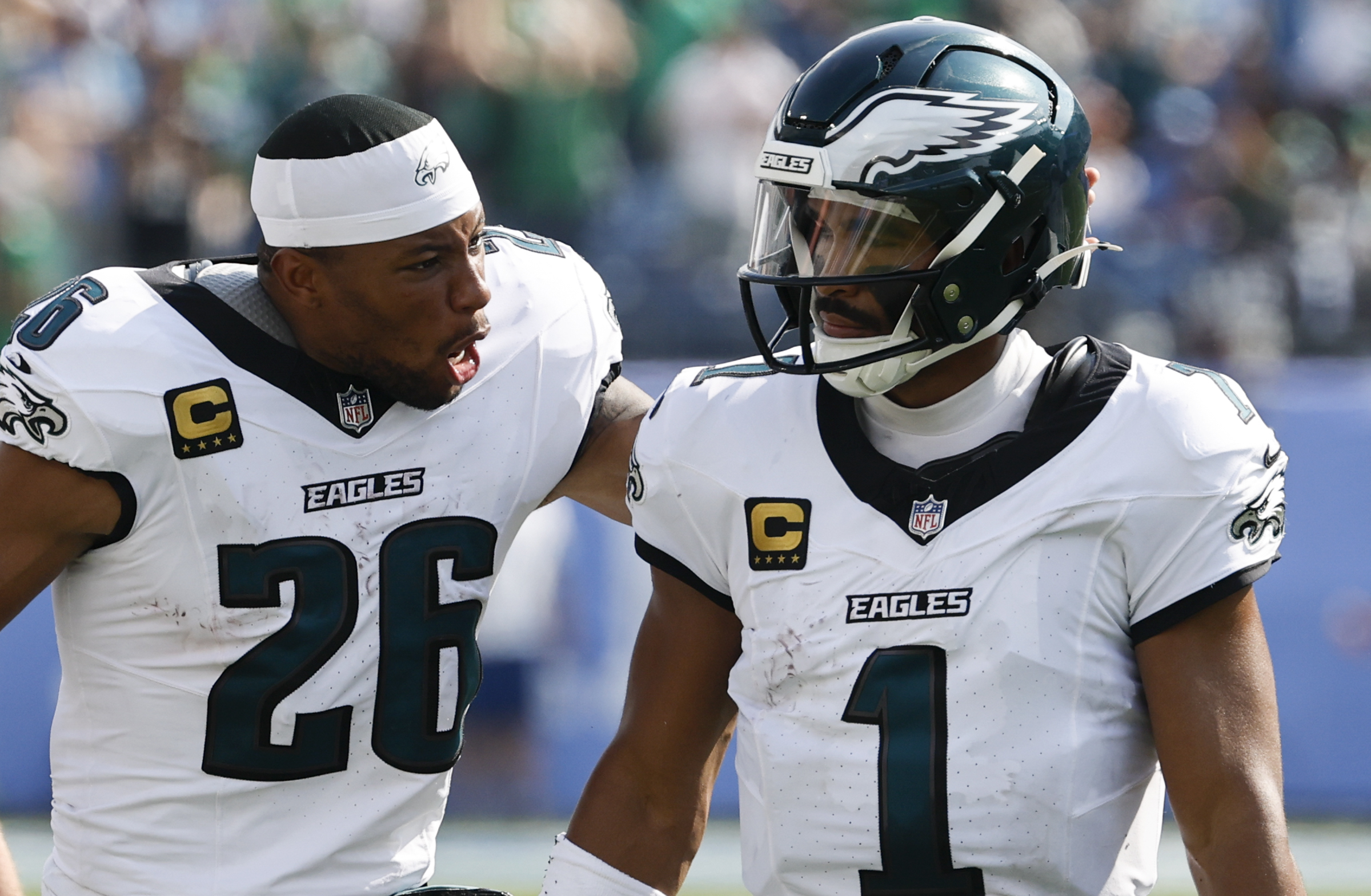
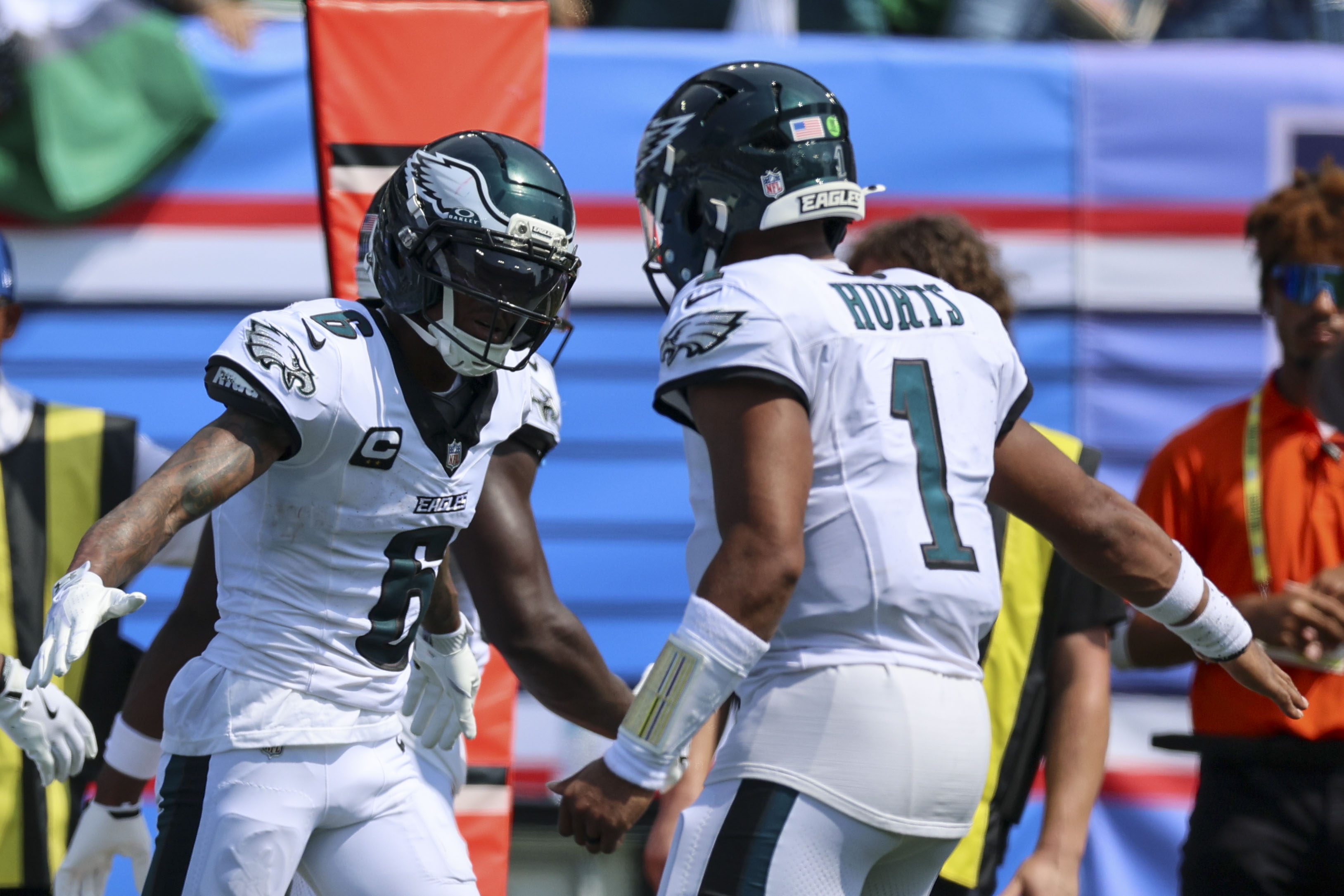
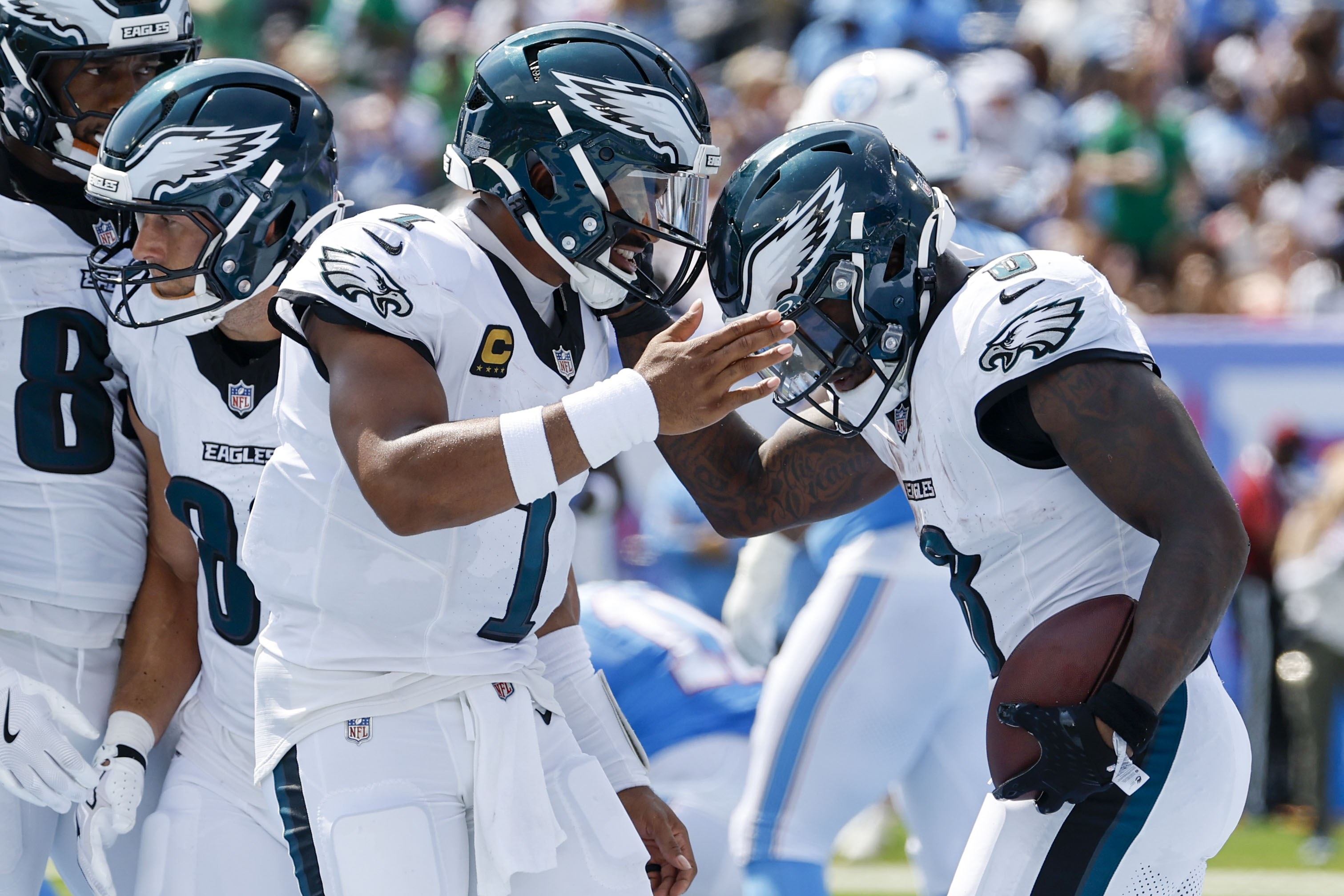
    Saquon Barkley (center) and Eagles quarterback Jalen Hurts celebrate Hurts’ late touchdown pass in Sunday’s win.Yong Kim / Staff Photographer

    You can say a lot of things about Jalen Hurts, but he has shown time and again at every level of football that talent and self-belief prevails. Rarely will you see a quarterback make a more consequential series of throws than the ones Hurts made late on a muggy afternoon in Week 2.

    There are lots of things to be ironed out, but it is far better to iron these things out while 2-0. And once again, Hurts was the difference, writes columnist David Murphy.

    We compiled today’s newsletter using reporting from David Murphy, Olivia Reiner, Jeff McLane, Jeff Neiburg, Kerith Gabriel, Ryan Novozinsky, Lochlahn March, DeAntae Prince, Mia Messina, Conor Smith, Lexie Linderman, Mike Livingston, Dylan Johnson, and Hannah Chang.

    By submitting your written, visual, and/or audio contributions, you agree to The Inquirer’s Terms of Use, including the grant of rights in Section 10.

    Thanks for starting off your Monday with our newsletter. We’ll be back in your inboxes on Tuesday. — Bella

  • Villanova star Jasmine Bascoe represents home nation on global stage: ‘What more could you ask for?’

    Villanova star Jasmine Bascoe represents home nation on global stage: ‘What more could you ask for?’

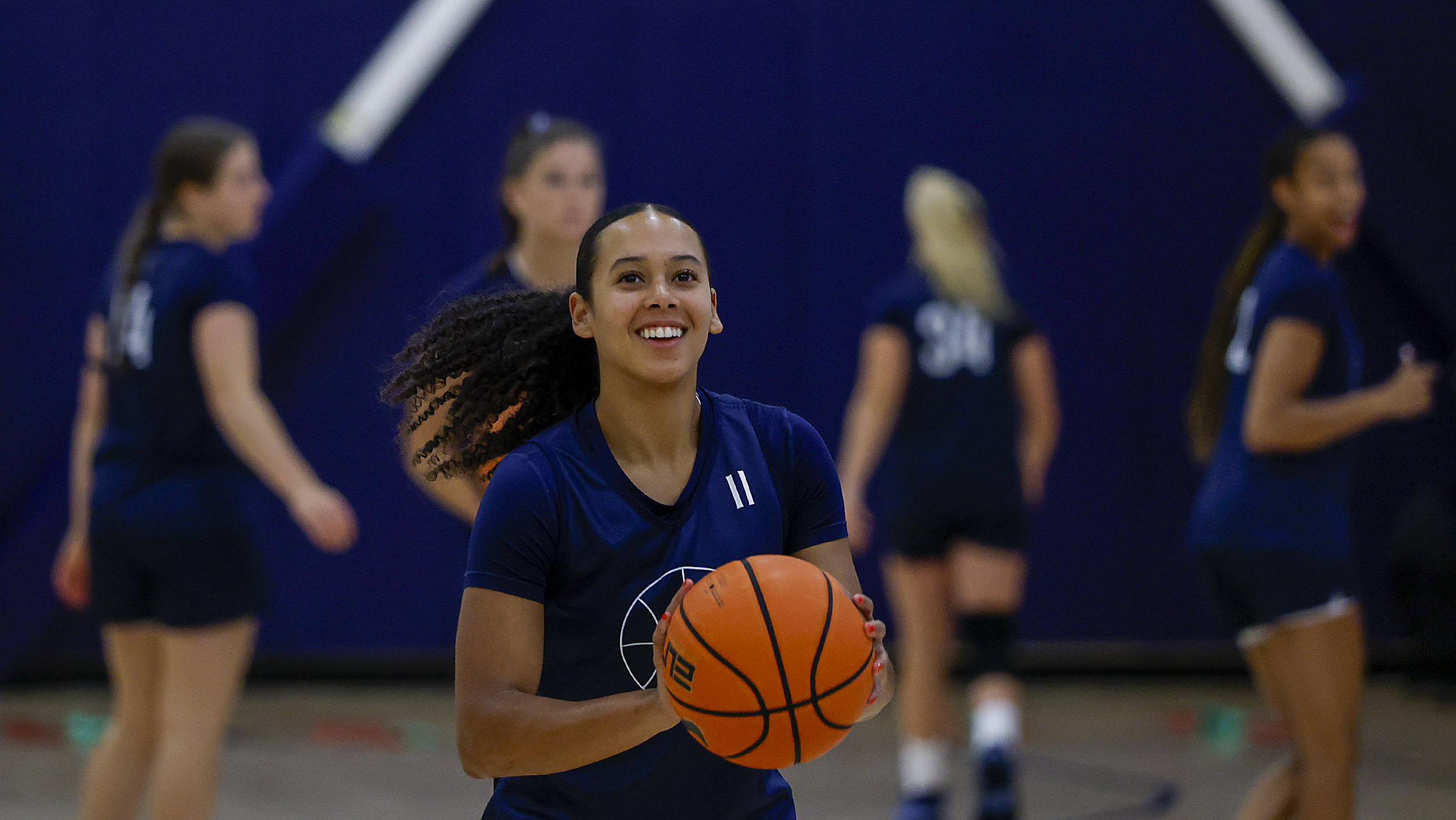
    In her first two seasons with Villanova, Jasmine Bascoe has established herself as one of the best women’s basketball players in the Big 5. Now, she’s establishing a role with Canada’s national team.

    In August, Bascoe was named to Canada’s 12-player roster for a FIBA women’s basketball Olympic prequalifying tournament later that month in Guadalajara, Mexico.

    While the tournament marked Bascoe’s senior team debut with Canada, she previously represented her home nation at the FIBA U19 Women’s Basketball World Cup in 2025. At 20 years old, the junior guard was now playing for the country’s top women’s team.

    Canada went 5-0 in the tournament, capped by an 83-53 win over Mexico in the final on Aug. 23. With the tournament win, Canada secured the only available spot in the FIBA women’s Olympic qualifying tournament in March 2028.

    Bascoe led Canada in assists with 5.4 per game, and was second in points with 10.8 per game.

    At training camp for the tournament, Bascoe, who was coming off an injury, said she learned from watching those around her before she could get involved herself. By the time the tournament began in August, she was getting used to playing alongside Olympians like Yvonne Ejim, Sami Hill, Shaina Pellington, and Syla Swords.

    She said the veterans’ constant communication allowed the team’s younger players, like Bascoe, to learn more.

    “They weren’t on us right away to be perfect, which obviously gives us a lot more confidence as well,” Bascoe said. “They were everything we needed them to be. They were leaders, but then at the same time, they were great friends. Like they honestly were some of my closest friends this whole summer, which was just amazing, and just getting to hear stories from them and their other pro experiences and their NCAA experiences, I mean, what more could you ask for?”

    Villanova women’s basketball junior guard Jasmine Bascoe (right) is back with the Wildcats after a summer representing her home nation.Yong Kim / Staff Photographer

    The fifth Olympian on the team was Kayla Alexander, who represented Canada in Tokyo in 2020 and in Paris in 2024. At 35, she currently plays for the WNBA’s Toronto Tempo and holds Canada’s all-time career rebound record. She’s also from the same hometown as Bascoe: Milton, Ontario.

    After the tournament, Bascoe told Alexander just how much fun she had playing with someone she said is “an amazing person” and “a great leader.”

    “I’ve always looked up to her as a person, but it’s so great,” Bascoe said. “She keeps everyone so level-headed and always on the same page. And she’s a great lifeline between us and the coaches. And so it just made the whole summer very smooth.”

    In her sophomore season at Villanova, Bascoe led the Big East in assists (4.9) and scoring (18.9), finishing ahead of UConn’s Azzi Fudd, who was the No. 1 overall pick in the WNBA draft this year, and Sarah Strong. She also was named the Big 5 Player of the Year.

    Bascoe said the pace and physicality of a tournament involving professionals further improved her game, and it’s something she hopes to implement during her junior year with the Wildcats. As an upperclassman now, Bascoe said sheer speed is no longer going to work for her, and she wants to start incorporating physicality into her style of play.

    “I just think it was a summer full of learning for me,” she said. “Playing at that level is not easy. It’s physical, it’s fast, and it just prepares you so good for everything else, like NCAA, everything. So it was amazing, and I was just fortunate to be able to get some games under my belt with the senior team and end on a good note. … It was a very fulfilling summer, and now I’m ready to bring everything back here to Villanova.”

  • Raymond Horsch had access to a Kensington crematorium linked to illegal body parts sales, years before missing persons investigation

    Raymond Horsch had access to a Kensington crematorium linked to illegal body parts sales, years before missing persons investigation

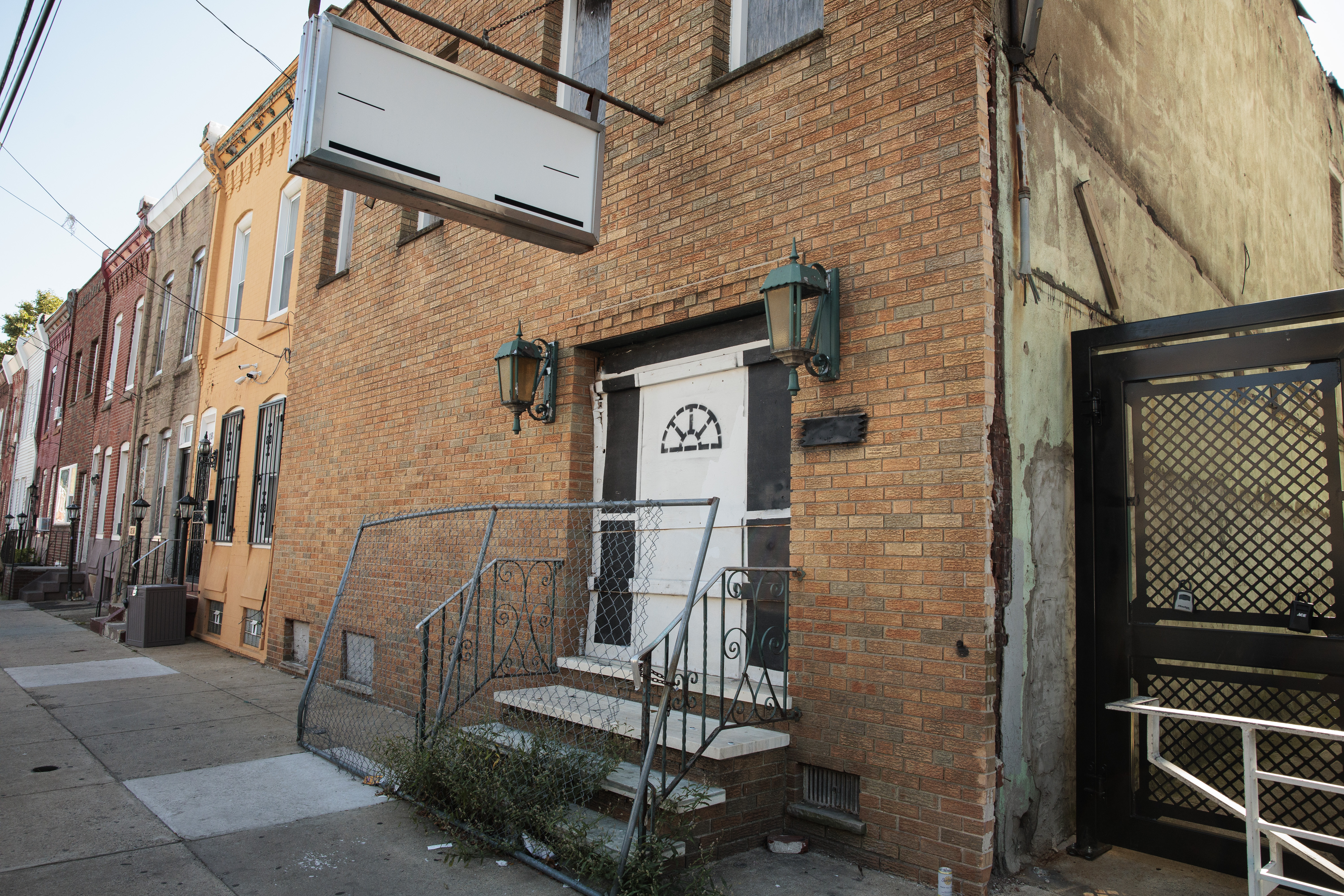
    Years before police launched an investigation into the missing women connected to Raymond “R.C.” Horsch, the late pornographer stood inside a Kensington art gallery and presented what appeared to be the autopsy photos of a dead, unidentified woman.

    His exhibition at the 2014 show ended with a video of the woman’s body being loaded into an incinerator — footage that he said was filmed at “a Kensington warehouse where the city morgue would send unidentified remains,” according to a review published on an art blog at the time.

    “The Medical Examiner totally botched the autopsy and didn’t even bother to sew her up properly. My horrible photograph is all that is left of her, the only trace of her short, sad existence,” Horsch wrote in a release promoting the exhibition. “She has nothing else, not even a name.”

    While Horsch was known to distort, embellish, or completely fabricate events, a law enforcement source and people familiar with this period of his life said this much is true: The pornographer had access to a Kensington crematorium connected to the notorious Garzone Funeral Home, which was shuttered over illegal body parts sales.

    There, sources said, Horsch gave an employee drugs and cash in exchange for access to the crematorium so he could photograph and film the remains of the dead.

    The funeral home and crematorium operated until 2007, when state authorities brought charges against the family-run business alleging the owners were selling body parts on the black market, according to court records and news reports.

    Horsch, who died in May 2025 of a lung condition, was not named or charged in that scandal.

    But police are looking into Horsch’s relationship to the crematorium as part of a sprawling local and federal investigation into at least seven missing women, according to a law enforcement source who spoke on the condition of anonymity to discuss an ongoing probe.

    No bodies have been found, and five women police have identified as likely deceased went missing from 2016 to 2023, years after the crematorium connected to the Garzone Funeral Home had closed. Police are still investigating the women’s whereabouts, including ongoing searches for evidence in Horsch’s Olney home and basement.

    The case has been complicated by Horsch’s tendency to blur fact and fiction, and many of his pornographic works featured staged death scenes and fake blood. But police have also recovered numerous videos and photos from Horsch’s home they have said seem to show real violence and actual killings.

    At least as far back as the early 2000s, Horsch was known to prowl the streets of Kensington, offering drugs and cash to women in exchange for starring in his violent pornographic films.

    He was public about his obsession with taking degrading photographs of women in addiction. Years after Horsch staged his 2014 art show in Kensington, he uploaded a photo series to his website featuring women “imagining and acting their own deaths” interspersed with images of fatal overdose victims. In a description of the gallery, Horsch wrote he took the photos in “unknowing collaboration with the Philadelphia Medical Examiner,” as well as local paramedics.

    The Philadelphia Medical Examiner’s Office declined to confirm whether the city sent unclaimed corpses from the morgue to the Garzones’ crematorium.

    Louis and Gerald Garzone, who together operated the crematorium connected to the funeral home under the name Liberty Cremations, pleaded guilty to selling over 240 corpses to a New York-based biomedical tissue company in 2008. The tissue cutters illegally stripped the bodies for bones, tendons, and organs, then sold them to hospitals.

    Some of the tissue was infected with disease, officials said at the time, and was transplanted into patients without their knowledge. Law enforcement seized the crematorium and funeral home as part of the criminal case, court records show.

    Horsch once bragged that he had access to the crematorium through an employee named “George,” whom he paid with drugs, and had filmed a scene for a movie there, according to a woman who worked with Horsch on several films beginning in 2003. She spoke on condition of anonymity to avoid being publicly linked to the pornographer.

    Gerald Garzone said in a phone interview that he had never heard of Horsch and had no knowledge of corpses being photographed in his former business. He acknowledged knowing a man named George from the neighborhood but declined to say whether he had ever employed him.

    “I don’t know anything about that,” he said.

    A 2007 file photo of the Garzone Funeral Home at 1830 E Somerset St., in Philadelphia.Laurence Kesterson / Staff Photographer

    Four people familiar with Horsch and Garzone’s business operation identified the man as George Newsome, a Kensington resident who lived a block away from the crematorium at a house on Ruth Street that Horsch was known to frequent.

    Newsome was arrested for heroin possession in 2011, court records show, and again for cocaine possession in 2013. He died a year later, according to an obituary.

    Investigators continue to sort through more than a million photos and videos on hard drives recovered from Horsch’s home on West Chew Avenue. Local and federal investigators said they have reviewed about 30% of the materials so far and have identified 58 different people in the footage.

    Among them, police said, are images of four women who appear to be dead: Maribel Fresses; Gabrielle Amarando; a 25-year-old whose identity relatives asked to remain private; and a woman in her mid-20s whom investigators are still working to identify. Police said they also recovered footage of Horsch filming himself choking 27-year-old Nicole Fusaro with a zip tie until she was dead.

    Police began searching Horsch’s Chew Avenue property shortly after a chance car stop on June 19 involving his son, Eugene, uncovered an ID in the name of Blair Tonzelli, who was reported missing in 2023.

    Investigators then began reexamining the disappearance of Amy McHale, Raymond Horsch’s ex-wife, who was last seen at the Olney home in 2016.

    Inside the property, police found five urns full of cremains, two of which police are still working to identify. The basement contained vats of unknown chemicals and a 55-gallon drum with connections to a sewer drain. There were also pages of writings that referenced serial killer Ted Bundy and described how someone enjoyed hurting a woman with a zip-tie.

    Raymond Horsch had previously written in self-published novels about dissolving a woman’s body in chemicals. Police have sent the chemicals and liquids recovered from the basement to a specialized lab in Chicago for testing.

    Eugene Horsch remains incarcerated on federal gun and drug charges. He has not been accused of any violent crimes involving the missing women.

  • The Eagles need Jalen Hurts 2.0 now more than ever. His evolution and clutch gene are carrying a rough offense.

    The Eagles need Jalen Hurts 2.0 now more than ever. His evolution and clutch gene are carrying a rough offense.

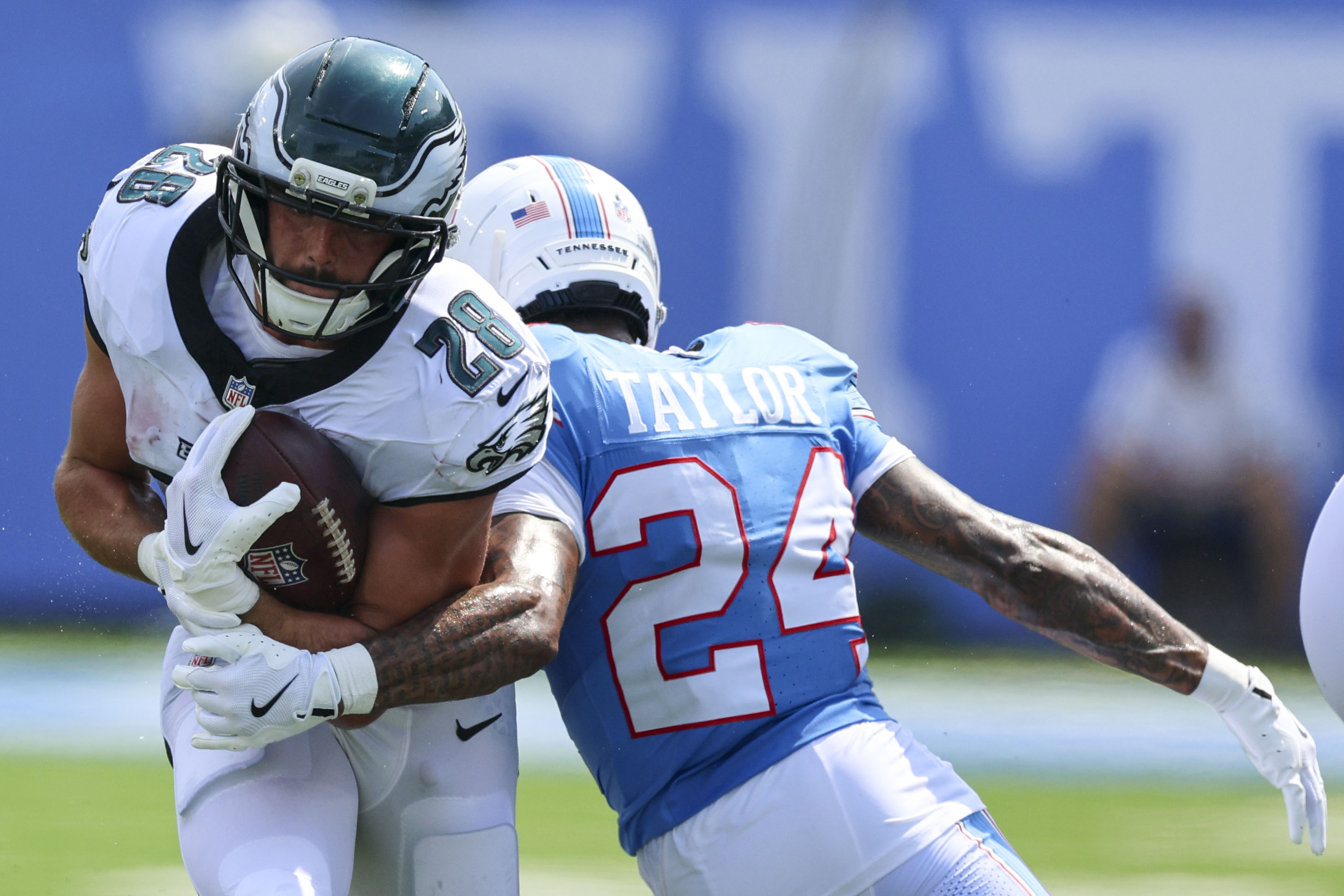
    NASHVILLE, Tenn. — Jalen Hurts tossed two costly interceptions. The first was returned 92 yards and converted into a touchdown, while the second came late in the fourth quarter and allowed the Titans to take a 20-17 lead.

    And yet, Hurts wasn’t asked a single question about the picks postgame. His performance in rallying the Eagles past Tennessee, 24-20, in nearly every other moment, including a masterful two-minute drive, far overshadowed his two throwing errors.

    But there was something unique about Hurts carrying the offense at the scorching Nissan Stadium on Sunday. He’s strapped the Eagles onto his back before. He’s had better games against better opponents when the stakes were much higher. He’s been clutch on many previous occasions.

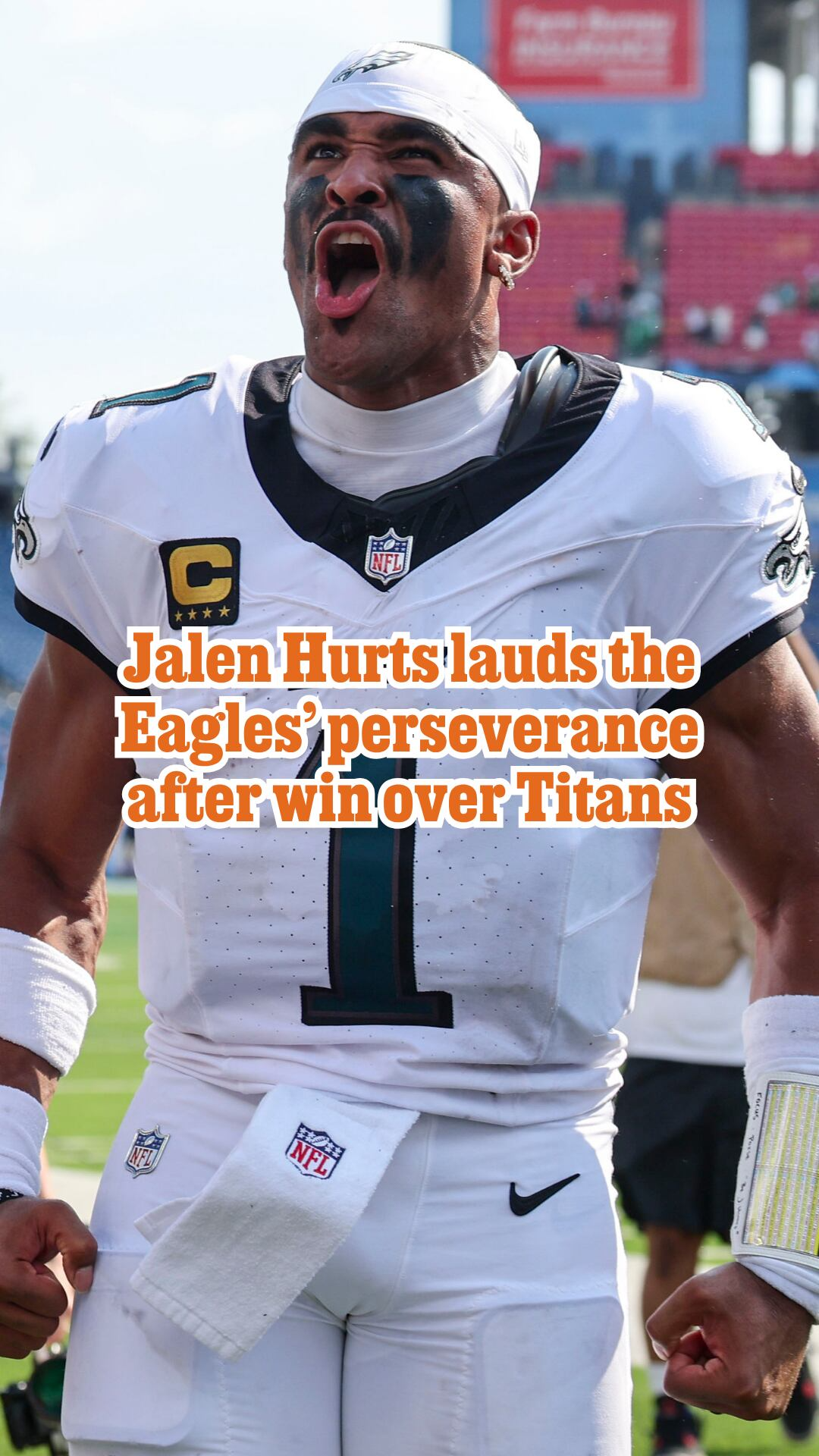
    Jalen Hurts lauds the Eagles' perseverance after win over Titans
    Video: Jalen Hurts lauds the Eagles’ perseverance after win over Titans

    No, this was a different Hurts. This was the 2.0 version. This was Hurts evolving as a quarterback in a new scheme that gives him more freedom as a passer. We saw glimpses of it in Week 1 vs. the Washington Commanders. He took another step in Week 2.

    If the narrative entering this season was that the 28-year-old faced a make-it-or-break-it tipping point, after another offensive coordinator change and a seemingly unresolved contract situation, Hurts has shown through two weeks that he’s making it.

    He’s been that instrumental in the Eagles’ 2-0 start despite the schematic hiccups and struggles on the offensive line.

    “I don’t even think words can describe how much you’ve got to manage as a quarterback in this league from a responsibility standpoint, and the weight that comes with the position and the responsibility,” Hurts said when asked about his calm amid an otherwise stormy offensive day.

    “Ultimately, you gotta keep the main thing the main thing throughout that. You gotta keep your poise and keep your focus.”

    An early injury to Saquon Barkley was one more thing Jalen Hurts was forced to overcome on Sunday. Yong Kim / Staff Photographer

    Third down after third down, Hurts and his receivers bailed out the early-down malaise. The Eagles have long needed an offense that establishes the run game. Hurts’ limitations as a dropback passer have partially made that necessary, but it’s also been a byproduct of coach Nick Sirianni’s conservatism.

    The Eagles just might not have the pieces to be a run-based unit this season. There were likely to be some early bumps with the new wide-zone blocking scheme. But for as much as Sean Mannion needs the outside-zone runs to set up play action, he can’t keep calling early-down runs or quasi-runs that are passes that fail.

    The Eagles have been wretched on first down. They averaged just 0.9 yards in the first game of the season. They were a little better in the second, but the running backs managed just 2.7 yards on 15 first-down rushes vs. the Titans.

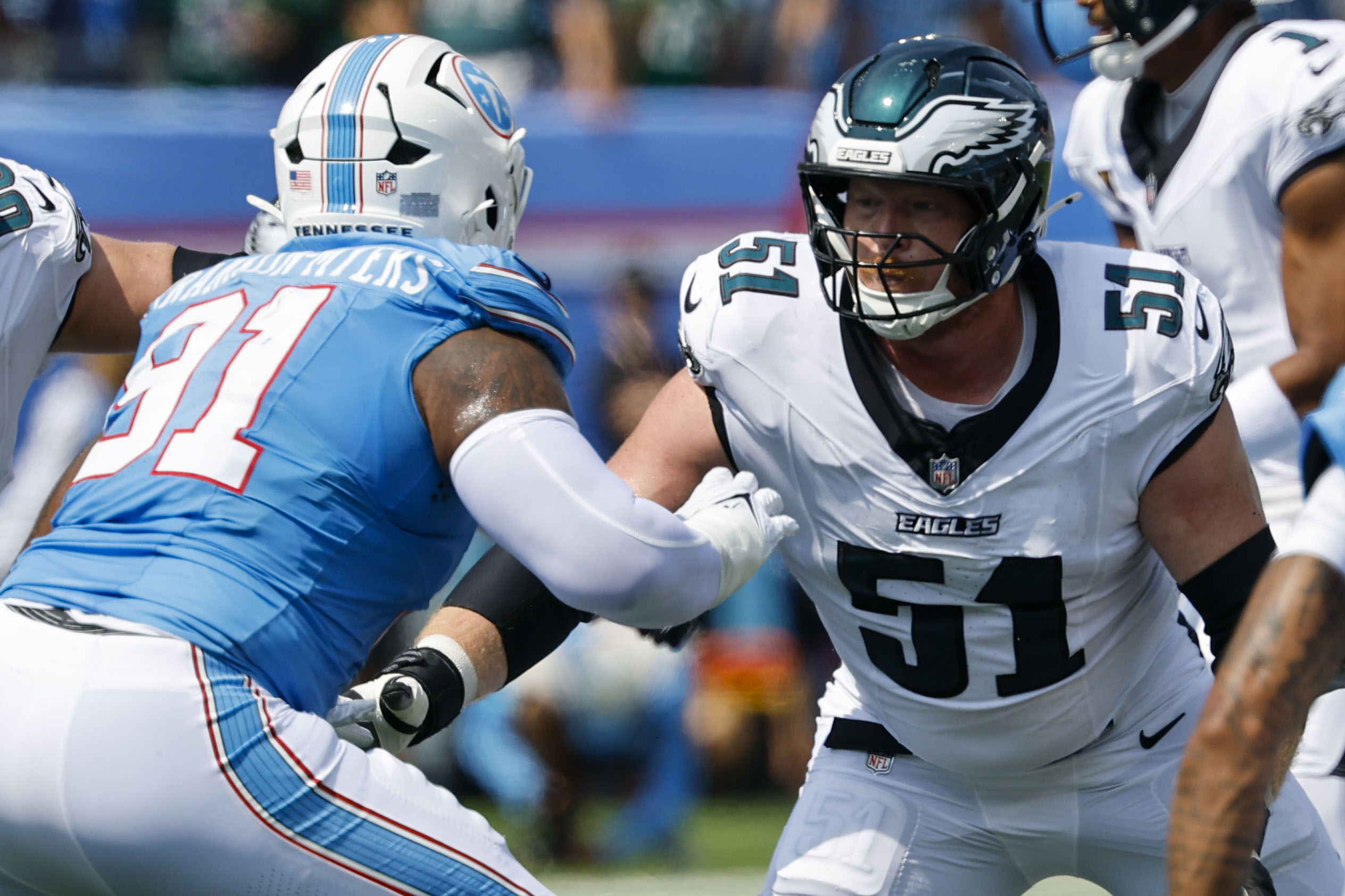
    The Eagles shuffled the O-line after Landon Dickerson went to injured reserve last week, moving Cam Jurgens to the vacant left guard spot and inserting Drew Kendall at center. There were going to be miscues with Jurgens having never played guard on that side, especially with Jeffery Simmons lining up over him.

    But Mannion kept calling runs even if they often were away from the All-Pro defensive tackle.

    “It’s more to do with execution, but then also you know the moving pieces that we had in,” tackle Jordan Mailata said about the run-blocking issues. “This is our first game together as the starting five for us. And I’ve always emphasized the continuity of having the same O-line guys.”

    Sirianni wouldn’t divulge whether he’ll stick with the same configuration, but keeping the same core for at least the next three games — or more, depending upon Dickerson’s health — seems likely.

    Cam Jurgens (51) and the offensive line has been slow to adjust to the Sean Mannion scheme. Yong Kim / Staff Photographer

    “I’m a soldier,” Jurgens said. “I march to my orders, and whatever I’m asked to do, I’m going to do it to my best abilities.”

    There were other missing parts. Running back Saquon Barkley left early with a stinger (although he returned), while tight end Dallas Goedert was sidelined with a knee injury. Sirianni said he wouldn’t grade on a curve because of the new faces and scheme changes.

    “We want to be able to run it more efficiently,” Sirianni said. “I haven’t seen any of the numbers, but everything comes off of the run and the play action. And so, the guys battled though. That’s what you’re so proud of there. … But there’s definitely room for improvement, as we all know.

    “We all see that.”

    The pass protection wasn’t much better, although when the O-line needed to stand tall on the last drive, Hurts mostly had enough time in the pocket. But getting sacked three times, hit an additional three times, and having to Houdini out of pressure isn’t likely sustainable.

    According to the advanced analytics site Sumer Sports, the Eagles have the largest difference in early-down offensive success rate vs. late-down offensive success rate to start a season since 2022, with an early-down success rate of 31.5% in the third percentile, and a late-down rate of 60.6% in the 96th percentile.

    Hurts kept facing long third downs and kept hitting receivers DeVonta Smith and Dontayvion Wicks downfield. He converted nine third downs of more than 4 yards, three of which were third-and-12.

    Jalen Hurts helped facilitate a big day for DeVonta Smith (6) and completed passes to nine different targets on Sunday. David Maialetti / Staff Photographer

    But both his interceptions also came on third-and-longs. He kept bouncing back.

    “Jalen’s able to flush it and lead us down the field in a critical situation,” Sirianni said. “Just proud of the way he played and the way he had his resolve, but that’s who he is, right? That doesn’t surprise me. He’s that on a daily basis.”

    Whether it’s by design or not, Sirianni has had to entrust his 28-year-old quarterback with more responsibility, and that may require accepting a few more interceptions than either has become accustomed to.

    If the Kyle Shanahan-type parts of Mannion’s under center, play-action scheme haven’t yet taken hold, the implementation of more full progression reads has. Hurts completed passes to nine receivers for only the fourth time in his NFL career, and the first since 2022.

    He got late into his reads on several throws, including the game-winning 3-yard touchdown toss to Darius Cooper. Earlier, he found Cooper for a 23-yard gain when the receiver was beyond his first two reads.

    “I think it’s just a byproduct of our approach in our offense,” Hurts said. “I’ve really embraced and enjoyed the teaching progression and how things are taught.”

    Hurts has heard the noise about his not being able to diagnose defenses, dating back to his second season when the Tampa Bay Buccaneers said as much in an Eagles wild-card playoff loss. Simmons said the Titans wanted to make Hurts “play quarterback” in the lead-up to the game.

    “I heard it,” Hurts said.

    He let his play do the talking, though.

    “I’m happy we won,” Hurts said when asked for a response.

    Hurts can still do the athletic and mobile things that separate him from many other quarterbacks. He ran twice on designed runs, scrambled two times for 11 yards, and used his lower-body strength to convert on the return of the Tush Push.

    But he’s quieted some doubts about how he would adapt to the biggest scheme change of his NFL career, and about how last season ended. In Week 1, he hit Goedert for a touchdown on a four verticals concept similar to the fateful last play in the playoff loss to the San Francisco 49ers. In Week 2, he bested the opposing defensive coordinator in that game — Titans coach Robert Saleh.

    “Finally good to get him,” Hurts said.

    It’s early, of course. If the problems on Chris Kuper’s O-line are going to be waved away with the same reason, then Hurts’ strong start should be taken with a grain of salt. The same could be said about the climate — both teams had to suffer through it — even if Eagles players were melting through cleats.

    “Was like a NASCAR pit crew helping me get ready for the second half,” said Jurgens, who said he went through two pairs.

    It may be another Eagles victory, with agony and outside voices thrilled to complain about it. But Hurts knows better. The work was done. The task at hand remains.

    “We’re still progressing,” Hurts said. “Think there’s a lot for us to continue to improve on, to align toward. But you want to do that and find ways to win.”

    He’s done that as much as any quarterback over the last five seasons. But he may have to shoulder more than he ever has before.

  • Why haven’t state officials revealed more about Pennsylvania’s measles deaths?

    Why haven’t state officials revealed more about Pennsylvania’s measles deaths?

    In the last month, Pennsylvania health officials have announced four measles-associated deaths but have been tight-lipped about almost every detail, beyond sharing their county of residence and that all were unvaccinated.

    Most of what the public knows about the four deaths linked to the outbreak — ranging in age from a newborn to a 40-year-old — has come from local coroners in Jefferson, Mifflin, and Lancaster Counties. In one case, a family also spoke to the media.

    Pennsylvania’s health department has cited state privacy laws that they say prohibit them from releasing more information. Legal and public health experts acknowledge the state faces legal restrictions, but some argue that the state should do whatever it can to ensure more information about the deaths is made public.

    More details about a death, they say, help the public to understand the risks of measles and the benefits of vaccination to prevent the spread of the highly contagious disease.

    Transparency around how the state defines measles-associated deaths and unvaccinated people can also head off misinformation, they said, in a highly politically charged environment.

    The spreading outbreak has sickened 767 people — now the largest outbreak in the United States — and hospitalized 150 people as of Friday. The deaths reported by the state mark Pennsylvania’s first in 35 years, and the most seen nationally from measles in three decades.

    Here’s what to know about Pennsylvania’s privacy laws and how officials communicate in infectious disease outbreaks.

    What is known about the measles-associated deaths in Pennsylvania?

    State officials announced two “measles-associated” deaths in Lancaster County late last month, though they did not define the term in an initial news release on the cases. They did not provide any additional information, beyond saying both victims were unvaccinated and residents of Lancaster County.

    Lancaster County’s coroner subsequently shared that he had investigated one of the deaths, involving an infant who contracted measles in utero and died shortly after birth. The baby tested positive for measles, but, the coroner said, died from a ruptured spleen. Physicians have pointed out that measles can damage a person’s spleen, putting it at higher risk for rupture.

    The state has continued to characterize the Lancaster County infant’s death as “measles-associated,” meaning it occurred within 30 days of symptom onset in a person with clinical evidence of infection and a positive laboratory test for measles, and who did not die of another unrelated cause, like a car crash.

    Lancaster’s coroner said a second death, in a 6-week-old Lancaster County baby, was caused by measles. The child also had Amish lethal microcephaly, a fatal genetic disorder that makes it especially risky to contract a respiratory illness like measles.

    State officials confirmed two more measles-associated deaths last week.

    Jefferson County’s coroner said measles led to the death of a 40-year-old unvaccinated woman with severe respiratory conditions. A postmortem test showed the woman had an active measles infection, and she had also been exposed to a person with a lab-confirmed measles case.

    Mifflin County’s coroner also confirmed that an unvaccinated 18-year-old died of a rare neurological complication of measles.

    (function(){function e(){window.addEventListener(`message`,function(e){if(e.data[`datawrapper-height`]!==void 0){var t=document.querySelectorAll(`iframe`);for(var n in e.data[`datawrapper-height`])for(var r=0,i;i=t[r];r++)if(i.contentWindow===e.source){var a=e.data[`datawrapper-height`][n]+`px`;i.style.height=a}}})}e()})();

    Why are state and federal officials clashing over the deaths?

    Starting with the initial news conference to announce the first two deaths, Democratic Gov. Josh Shapiro has traded barbs with President Donald Trump’s Health and Human Services secretary, Robert F. Kennedy, Jr., over the outbreak.

    Shapiro has accused Kennedy, a longtime anti-vaccine activist, of spreading misinformation contributing to a decline in vaccination rates. Kennedy said in a social media post that Shapiro’s staff may have “fabricated” the deaths, after the Lancaster County coroner’s comments, though Kennedy later acknowledged one infant’s death was caused by measles.

    Federal officials said Tuesday they were aware of the third and fourth deaths reported in Pennsylvania but have not updated the federal website tracking measles cases to reflect any of the deaths reported by Pennsylvania. They have said they will record measles-related deaths when the National Center for Health Statistics “identifies measles as the underlying cause based on death record information submitted by the states.”

    Democrats and public health experts have harshly criticized the decision, saying it’s a departure from established procedures for recording infectious disease deaths.

    State health officials said they have discussed the details of each case with CDC professional staff, “at length.”

    “At no point did CDC staff express any concern or issue with the data we provided,” they wrote in a statement.

    Why is the health department not releasing more information on measles-associated deaths? Why can coroners give out more information?

    Pennsylvania health officials have cited two state laws: one prohibiting public access to death records and another that requires the state to keep records of diseases confidential, except when it’s necessary to inform the public of the risk of communicable disease.

    But coroners and medical examiners are county officials who operate by different rules, the state said in a frequently-asked-questions document posted online last week. Laws governing coroners’ duties and the state’s right-to-know statute allow them to provide the public with identifying details like a person’s cause and manner of death, the state says.

    “Releasing additional details beyond what we did could have led to the unnecessary identification of individuals and their families. Further, the specific details of a single case do not change the important message that measles is a highly contagious virus that can cause severe illness and complications, and the MMR vaccine is the best protection against it,” state health officials said in a statement.

    Legal experts say decision-making around what to reveal about a death during a measles outbreak is difficult, and privacy laws do apply to health departments.

    Robert Field, a professor emeritus at Drexel University’s Thomas R. Kline School of Law, said health departments typically release aggregate data about disease outbreaks, not individual deaths.

    “Confidentiality and privacy are major issues for any health department, which is why the regulations are stricter,” he said. With just a few measles-associated deaths reported, he said, releasing further details about the deaths could risk identifying families.

    “A newborn dying with a ruptured spleen — there aren’t a lot of those,” he said, referencing one case in Lancaster County. “In terms of additional information, further details that would ID the patients — that would be off-limits.”

    Why are some experts criticizing state officials over their communications strategy?

    Releasing less information about a death risks creating an “information vacuum,” especially in a highly politically charged environment, said Amesh Adalja, an infectious disease physician at the University of Pittsburgh Medical Center.

    Unlike the first two deaths, announced by the state last month without further detail, the public immediately knew more about the two disclosed last week, he noted, crediting coroners in Jefferson and Mifflin Counties who have been forthcoming with information about the deaths.

    “Coroners talking in detail about cases they’ve been handling, as well as the parents of the neonate that died” provided “really important information that helped bring a lot of clarity to an information vacuum,” said Adalja, who is also a senior scholar at the Johns Hopkins Center for Health Security.

    Adalja has said the state should have been clearer from the onset about how it defines measles-associated deaths, and could have provided information about the victims’ general age ranges — for example, whether they were adults or children. And the state could involve other officials who are not restricted by the same privacy laws, he said.

    “If they assess they are bound by Pennsylvania state law in a way that county coroners are not, include coroners in the press conferences,” Adalja said.

    He added that Shapiro and Kennedy’s political fight over the nature of the deaths risks overshadowing a serious measles outbreak that has sickened hundreds.

    “The anti-vaccine movement has really made inroads here — people are calling this a hoax,” he said. “It’s obviously not a hoax. And there are real actions that need to be taken. It’s much harder to do that work when you [are] engulfed in some political problem.”

    (function(){function e(){window.addEventListener(`message`,function(e){if(e.data[`datawrapper-height`]!==void 0){var t=document.querySelectorAll(`iframe`);for(var n in e.data[`datawrapper-height`])for(var r=0,i;i=t[r];r++)if(i.contentWindow===e.source){var a=e.data[`datawrapper-height`][n]+`px`;i.style.height=a}}})}e()})();

    Arthur Caplan, a New York University professor emeritus, wrote in an Inquirer op-ed Thursday that the state should provide “maximum information” about the deaths “in order to prevent further harm.”

    He sharply criticized Kennedy, accusing the nation’s top health official of spreading misinformation about vaccine safety and the threat of measles: “[Nothing] the federal government has to say about measles is trustworthy,” he wrote.

    In an interview, he said state should weigh privacy obligations with the need to inform the public about whether victims had exposed others to measles.

    “In the middle of an epidemic, those laws need to be pushed as far as you can,” he said.

    Drexel’s Field said the state could also have emphasized that “unvaccinated” does not necessarily mean that a person chose not to take a measles, mumps, and rubella vaccine. Some people, like newborns, pregnant women, and people with weakened immune systems, are unable to be vaccinated.

    “People should know that if they choose not to be vaccinated and contribute to the spread, it could affect people who did not decline vaccination by choice but are in such fragile health that there is no choice,” he said.

    State officials have said that even revealing that someone was too young to be vaccinated would be enough to identify the deceased in small communities.

    It’s imperative that health officials balance the need to inform the public and maintain trust amid the growing outbreak, Field said, especially as vaccination rates drop.

    “If the credibility of the state health department is questioned by the public, then I think we’re in big trouble. And that would be a very unfortunate outcome of this,” he said.