In 2024, Philadelphia’s emergency room doctors began raising alarms about opioid users in severe drug withdrawal who weren’t responding to the usual medications to ease their symptoms.
Within months, doctors and health officials had identified the likely culprit: Medetomidine, an animal tranquilizer never approved for human use, had infiltrated Philadelphia’s illicit opioid supply. Now present in more than 80% of opioids sold illegally on the street, it causes dangerous blackouts and slow heart rates.
People withdrawing from medetomidine often then experience skyrocketing blood pressure, high heart rates, shaking, nausea, and vomiting. In some cases, the effects are so severe that patients require hospital intensive care.
Until last month, doctors had few ways to track the rise inmedetomidine cases in their hospitals. That’s because there were no codes associated with them in the International Classification of Diseases (ICD) system, the standard for describing diseases, injuries, and other health information in patient records and for medical billing.
ICD codes are how doctors communicate what patients were treated for and how insurers are billed for their services. They are also crucial for tracking trends in public health.
Philadelphia health officials lobbied the Centers for Disease Control and Prevention for ICD codes to track medetomidine withdrawal and toxicity, the immediate aftereffects of the drug.
As of Oct. 1, doctors across the country can use an ICD code for medetomidine toxicity. By that date next year, the CDC will also institute an ICD code for medetomidine withdrawal.
The tracking will help doctors around the country to log patients’ symptoms more accurately, potentially improving care, said Daniel Teixeira da Silva, the director of the city health department’s Division of Substance Use Prevention and Harm Reduction.
“The goal of this is to be one part of the effort to improve care for people who use drugs,” he said.
Sharing best practices
Philadelphia’s health department learned from the city’s experience with xylazine, another animal tranquilizer that rapidly spread through the illicit drug supply several years ago. Xylazine, known as tranq on the street, caused extreme withdrawal symptoms and severe skin wounds leading to infections that could reach bones, spurring a rise in amputations.
Illicit drugs may be adulterated to enhance effects, save money, and other reasons. But with medetomidine, experts are not sure. Some have theorized that its use could be a response to the crackdown on xylazine, or a result of dealers attempting to entice customers with newer, stronger products.
Medetomidine is showing up in four out of five drug samples tested in the city’s most recent report this year, Teixeira da Silva said.
Philadelphia health officials and doctors also spearheaded efforts to create ICD codes for xylazine withdrawal and wounds, which went into effect last year.
“We have health systems that are adapting in real time,” Teixeira da Silva said. “They share what they’re doing, how they’re modifying withdrawal protocols and sharing best practices.”
Without specific ICD codes to track medetomidine symptoms, doctors had to cobble together other diagnoses on a patient’s chart to document their symptoms. But that still couldn’t give the full picture of a patient’s condition, said Kory London, the director of clinical operations at Jefferson Methodist Hospital.
For example, he said, patients would be admitted to the hospital for “opioid withdrawal,” a diagnosis that couldn’t capture the severe, life-threatening symptoms caused by medetomidine, a non-opioid sedative.
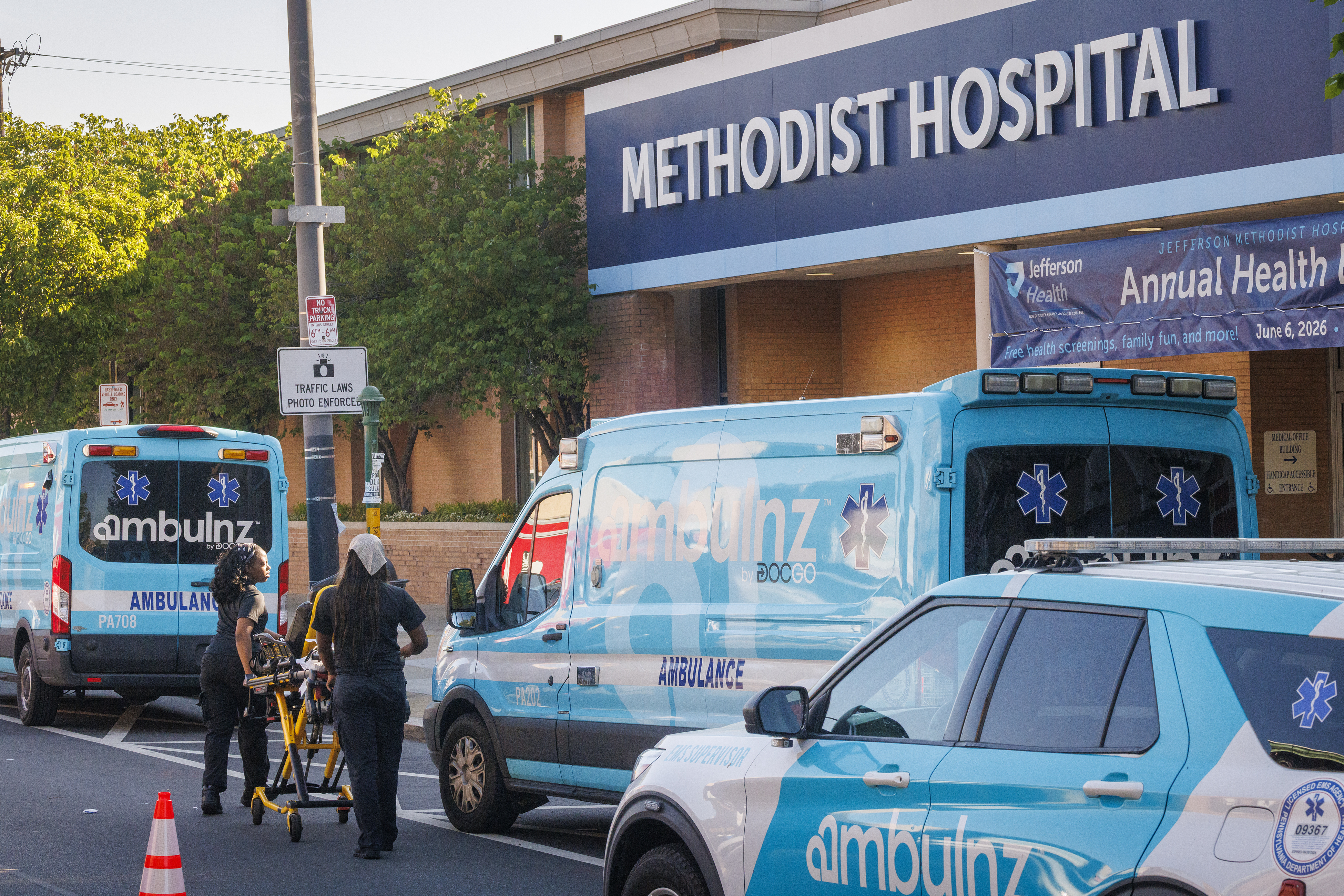
Jefferson Methodist Hospital regularly sees patients dealing with the effects of medetomidine, a powerful animal tranquilizer that has contaminated Philadelphia’s illicit opioid supply. Alejandro A. Alvarez / Staff Photographer
Before the rise of medetomidine, patients withdrawing from opioids stayed in the hospital for a shorter time and needed less medication and monitoring, said Phil Durney, the inpatient medical director of Jefferson’s addiction consult service.
“That same cohort is still coming to the hospital — but now they’re so critically ill that they’re requiring IV medication, having really dangerous blood pressure and heart rate shifts,” he said.
Frequently, patients need treatment in the ICU and require a completely different treatment regimen than a traditional opioid user, a challenge for doctors to document without a distinct ICD code.
“That’s really the blind spot,” Durney said.
The new codes will allow hospitals to understand the severity of a new drug crisis — and marshal resources to serve patients better.
“It’s really important that we are able to give the most accurate assessment of what’s happening with patients and what’s happening with the drug supply so we can try to act more efficiently in the future,” Durney said.
Medetomidine’s hold in Philadelphia
There’s little evidence cases are ebbing in Philadelphia, though the city did report a slight drop in emergency department visits for drug withdrawal in recent months.
(function(){function e(){window.addEventListener(`message`,function(e){if(e.data[`datawrapper-height`]!==void 0){var t=document.querySelectorAll(`iframe`);for(var n in e.data[`datawrapper-height`])for(var r=0,i;i=t[r];r++)if(i.contentWindow===e.source){var a=e.data[`datawrapper-height`][n]+`px`;i.style.height=a}}})}e()})();
Jefferson’s addiction medicine service mostly treats patients dealing with the effects of medetomidine, Durney said.
Even before the tracking code debuted last month, the health system had learned to identify medetomidine cases more quickly and treat them more effectively, he added. “But the majority of our patients are still requiring ICU-level care, experiencing really serious medical diagnoses,” Durney said.
And, London said, doctors and health officials are always on the lookout for a new adulterant in the supply.
“By the time a code is released, we have the potential of another adulterant,” Durney said.
Local addiction treatment providers have considered advocating for a catch-all ICD code that would allow doctors to track withdrawal from “new psychoactive substances.”
“I don’t think any of us have confidence this problem is going away,” London said. “The long term outlook is still [that] we’re waiting for the shoe to drop on the next adulterant.”
Lower Merion’s firefighters are asking the township to help bridge financial gaps as volunteer participation wanes and operating costs and calls for service rise.
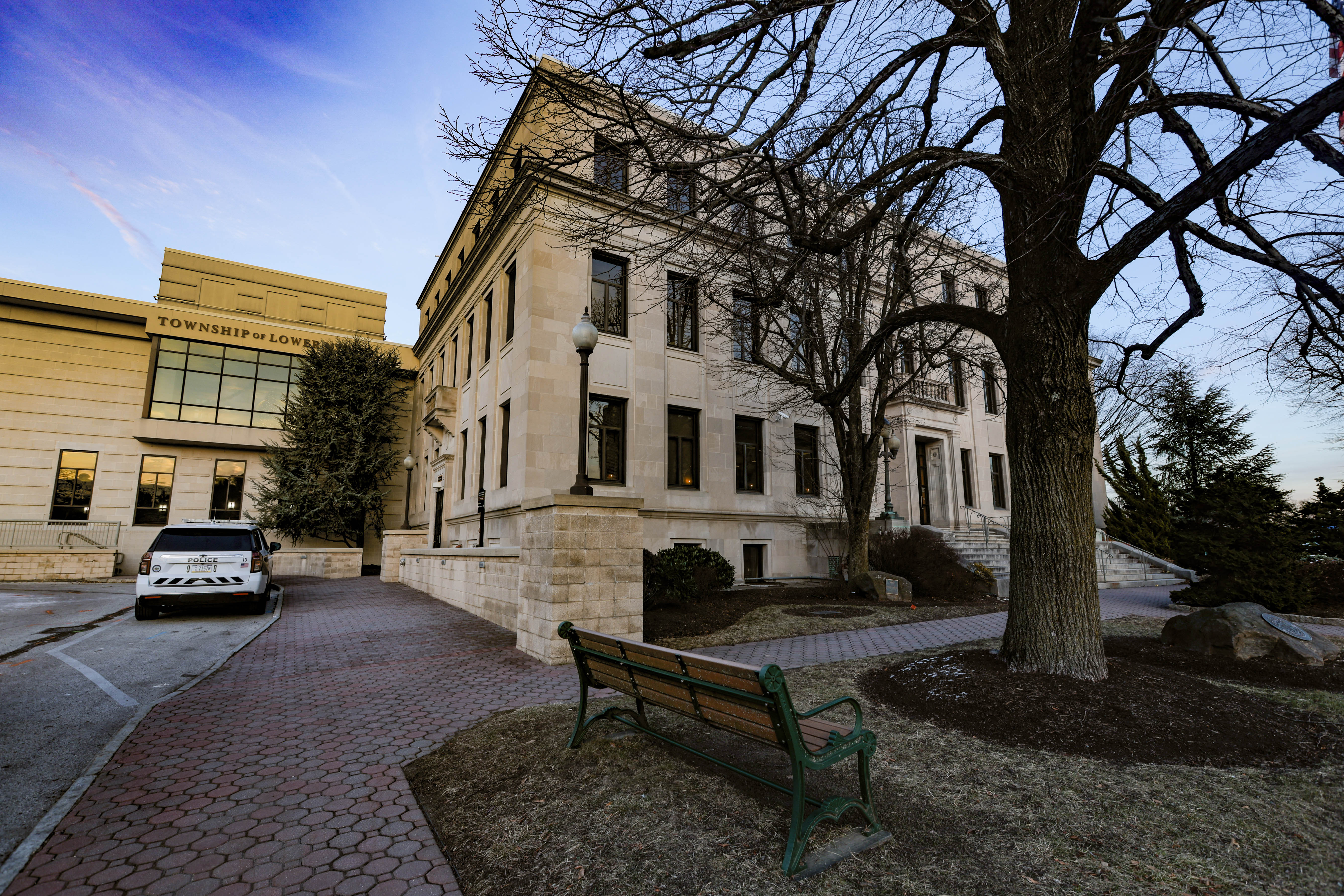
Lower Merion Fire Department officials made their case before the board of commissioners on Wednesday night, arguing that the township’s typical financial contribution to the fire department will not be sufficient in 2027 as they respond to more calls with fewer volunteers, and as everything from health insurance to truck maintenance costs more than it once did.
The Lower Merion Fire Department is made up of seven independent fire companies: six in Lower Merion, which receive funding from the township, and one in Narberth. Each are staffed largely by volunteers and are supplemented with a handful of full-time personnel.
The fire department is asking the township for an additional $1.1 million in funding in 2027 to meet operational and personnel needs. The department’s request is on top of the nearly $2.5 million Lower Merion is already poised to allocate to the fire department next year. Fire department officials say the additional funds will be used to hire a fourth full-time firefighter at each of Lower Merion’s sixfire stations and bolster the department’s finances as it strains to meet mounting operating costs.
Lower Merion’s 2026 budget projected net expenditures of $167 million.
Lower Merion’s fire companies are funded largely through contributions from the township, fundraising events, donations from residents, grants, and investment revenue. Since 2017, the township has approved modest annual funding increases for the fire department within the 2%-3% range.
“Our volunteer system is stressed right now,” Brooke McMullin, president of the Merion Fire Company, told commissioners.
Lower Merion’s volunteer firefighting apparatus is more than a century old. The Merion Fire Company was founded in 1890 by a group of citizens who rented a garage and borrowed horses to respond to incidents. In 1908, the volunteers raised funds to build a firehouse on Greenfield Avenue, where the Merion Fire Company still operates. By 1946, Lower Merion had a network of six volunteer fire departments, and Narberth had its own.
In the mid-1960s, it became apparent that volunteer fire departments were having difficulty responding to calls during the day, McMullin said, prompting the township to fund three paid firefighters for each department. Lower Merion’s firefighting system has operated that way ever since.
Now, a cascade of factors has made it more difficult for Lower Merion’s fire companies to respond to calls.
At the same time, calls to Lower Merion’s fire companies increased 30% between 2017 and 2025.
Demand on township firefighters has risen in part due to the 2018 implementation of a mutual aid system that dispatches crews from multiple fire companies to incidents, a policy that allows Lower Merion to meet personnel standards set by the National Fire Protection Association but requires more manpower.
Coinciding with staffing challenges, the cost of everything from health insurance to fuel has also risen, said McMullin.
Truck maintenance costs alone have increased 136% from 2019 to 2026, according to data presented to commissioners at the meeting.
“It’s eating into our reserves and also forcing us to raise more money,” McMullin said.
While firefighting costs have risen 31% over the past six years, McMullin said, township funding has only gone up 17%.
Efforts to support volunteers have helped, officials said.
Some Lower Merion firehouses have set up remote work stations so volunteers can respond to calls more quickly during the work week. In Gladwyne, subsidized housing is offered to firefighters, many of whom wouldn’t otherwise be able to afford living in the expensive community.
Lower Merion Township offers a 100% property tax rebate for volunteer firefighters and ambulance personnel who meet a certain number of volunteer hours each year.
In making the case for bolstering Lower Merion’s volunteer department, McMullin pointed to Cherry Hill, a demographically comparable community to Lower Merion, which largely phased out volunteers and created a consolidated township fire district in 1994.
The Cherry Hill Fire District’s 2025 budget was $33 million. Lower Merion’s proposed 2027 budget, according to McMullin, is closer to $6 million.
Having a volunteer force supplemented by career firefighters is a “bargain that the citizens of Lower Merion Township are receiving,” he said.
Commissioner Daniel Bernheim at the meeting said asking volunteer firefighters to fundraise for their budget may be untenable.
“[Residents] don’t recognize that the backbone of our fire service are the volunteers, and we are asking the volunteers to volunteer more of their time to raise money so they can volunteer to save life and property. There’s something where that paradigm, back maybe in 1890, made sense[and] does not anymore,” Bernheim said.
This suburban content is produced with support from the Leslie Miller and Richard Worley Foundation and The Lenfest Institute for Journalism. Editorial content is created independently of the project donors. Gifts to support The Inquirer’s high-impact journalism can be made at inquirer.com/donate. A list of Lenfest Institute donors can be found at lenfestinstitute.org/supporters.
An ambitious plan for 420 apartments and commercial space in West Philadelphia’s Cathedral Park neighborhood hit a snag as the city’s Zoning Board of Adjustment ruled against part of the project, the developer said.
Haverford Square Properties sought to build taller than the property’s land use rules would allow, but the zoning board ruled against the developer this week on part of the project after a contentious hearing Oct. 21.
The project’s three buildings are planned to be 65 feet tall, but the existing zoning restricts it to 45 feet.
“The additional height here is absolutely crucial to support a viable mixed-use development in this location,” Meredith Ferleger, a Dilworth Paxson zoning lawyer, who represents the developer, said at the Oct. 21 hearing. “Bluntly put, a building of 45 feet high cannot support the necessary height for a commercial space that will attract tenants to this area.”
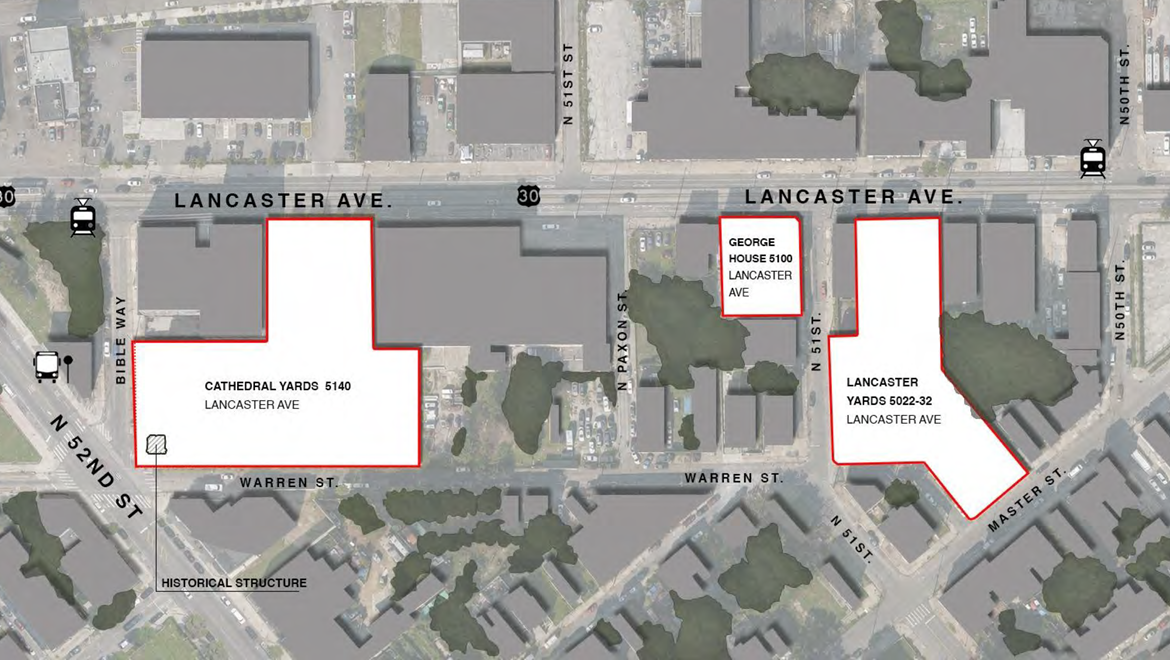
Haverford Square is proposing the 215-unit Cathedral Yards at 5140 Lancaster Ave., the 160-unit Lancaster Yards at 5022-32 Lancaster Ave., and a 45-unit building at 5100 Lancaster Ave. The project would include 42 affordable units.
The zoning board ruled against 5100 Lancaster Ave., and the hearings for the other buildings will occur in February, and are asking for breaks to build more densely too.
The area is partially industrial and riddled with vacancy. While there are rowhouse blocks nearby, none of the properties directly abuts single-family homes.
“There could be [neighboring rowhouses] in the future, though,” Tya Winn, a member of the zoning board, said during the hearing.
“This is a lot of density,” Winn said. “While I can try to see your vision, it’s not the reality in most places in Philadelphia. … This is going to be a lot of height in a place where there’s nothing that high.”
German Yakubov, president of Haverford Square Properties, pushed back against such criticisms at the hearing. He argues that the extra height is needed to allow higher ceilings to attract tenants to the proposed 30,000 square feet of retail space.
He also argues that height variances have been given for other projects on Lancaster Avenue.
“What we’re proposing, there’s an unsafe structure directly next to it, there’s an abandoned building across the street, there’s a junkyard literally across the street from here,” Yakubov said. “What we’re doing is to transform the neighborhood.”
A map of Haverford Square Properties’ three proposed projects along Lancaster Avenue.Wisdomtree Group
Several neighborhood groups spoke against the development before the zoning board, with many criticizing the density and lack of parking.
Haverford Square would include only 65 parking spaces, arguing that the development sits on a trolley line and has bus access.
“The dramatic increase in population density from 420 units will severely strain our community’s infrastructure and the public services, and we think that it will become overcrowded,” testified Malaika Gilpin, co-director of the One Art Community Center, which is near the proposed project.
One Art Community Center had earlier sought to buy the property once occupied by Greater Bible Way Temple, which stood at 5140 Lancaster Ave. until it was demolished after a 2019 fire. The congregation eventually sold the property to Haverford Square instead. Haverford Square’s proposal preserves the remaining church tower.
Councilmember Curtis Jones Jr., who represents much of the area, supported the developer’s proposal, noting in a letter that “the design and ground floor retail are a welcome addition to the neighborhood.”
Nonetheless, the zoning board ruled in the first hearing against Haverford Square. Yakubov said he planned to petition for reconsideration.
If the developer doesn’t get the zoning board’s permission to move forward, Haverford Square has a smaller version of the project. It would feature no parking, up to 4,000 square feet of commercial space, and 389 residential units.
“The by-right application is going to have zero parking and almost no commercial,” Yakubov said in an interview after the ruling. “It’s going to be effectively lower moderate income housing as opposed to [this larger plan] that would be there to revitalize the area.”
Correction: This story has been updated to reflect that further zoning board cases on the other two parts of the project are forthcoming.
Before it became Philadelphia’s favorite all-purpose noun, jawn was joint. And, tragically for Philadelphians, it came from New York.
Originally used to refer to a place, like a bar or nightclub, joint took on a broader meaning once it spread to Philadelphia. In 1981, University of Pennsylvania linguist William Labov famously recorded a young Black man from West Philly using the word to refer to a number of things including a place, a bag, several women, and, last but not least, his penis.
Over time, the pronunciation changed, too, with oi stretching into an aw sound so long it knocked the t clean off the end. Joint was now jawn, a word unique to Philadelphia.
But the concept behind jawn — a word that could mean anything? That actually isn’t unique at all.
Yoke tales
Just as every culture has its own version of a hoagie, people all over the world have their own way of saying things. Including their own ways of saying, well, thing. Or thingy. Or thingamajig.
“There are tons of these all-purpose words across languages around the world,” said Andrea Beltrama, a sociolinguist at the University of Delaware.
In fact, they’re so common that linguists have a term for them: placeholders. They are the words you reach for when you can’t remember or don’t know what something’s called, can’t be bothered to name it, or figure the person you’re talking to already knows what you’re talking about.
Their meaning comes not from the words themselves, Beltrama explained, but from the situations in which they’re used. The listener has to fill in the blanks, allowing a single word to stand in for a remarkable number of things. That’s the trick all these jawns have in common. But the actual word you use — and just how far you can stretch it — depends on where you are in the world.
In Ireland, there’s yoke. Like jawn, it’s an informal word you can use when you don’t know an object’s actual name. Originally, a yoke was the wooden contraption that kept two oxen together as they pulled a plow. These days, the Irish use it when they don’t know what something’s called, especially when they have no idea what it does.
“When you don’t recognize the purpose of an object, then you ask, ‘What’s this yoke for?’” explained Raymond Hickey, a linguist who studies Irish English. So if you don’t know much about tools, you might call a monkey wrench a yoke. If baking isn’t your thing, a flour sifter could be a yoke. And unless you regularly hitch oxen to a plow, a yoke is probably a yoke.
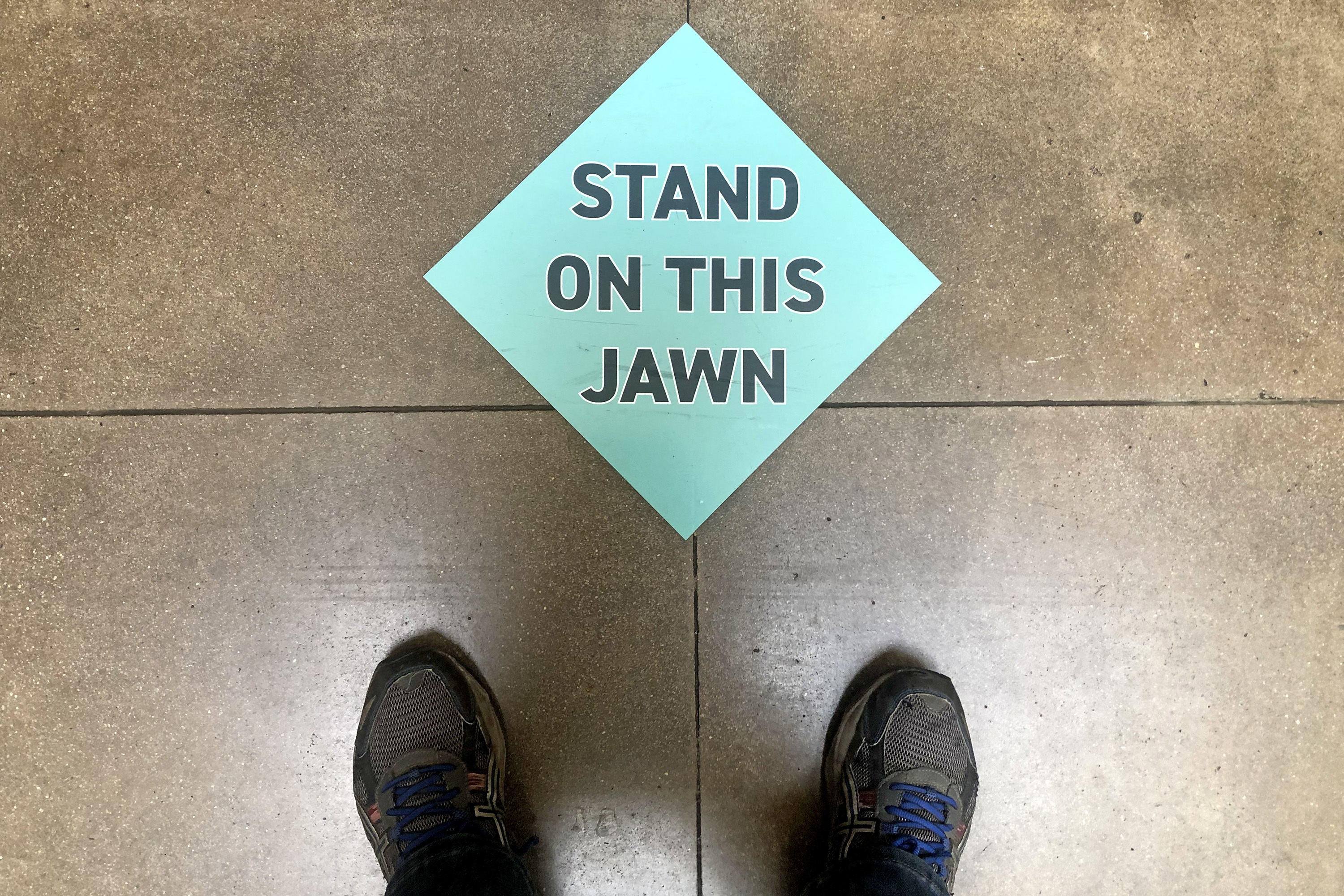
A uniquely Philadelphia six-foot social distancing marker at the Bourse during the COVID-19 pandemic in 2021.TOM GRALISH / Staff Photographer
‘Oh, this bagaglio’
Ireland isn’t the only place with a jawn of its own. Italy has one too. Actually, it has several. “There are all sorts of region-specific [Italian] words that do exactly what jawn does,” said Beltrama, the University of Delaware sociolinguist. Take the word bagaglio, for example. To most Italians, it means a piece of luggage. But in the northern city of Bologna, people use it much like Philadelphians use jawn. “Whenever you want to talk about something without naming it,” Beltrama said, “you say, ‘Oh, this bagaglio,’ meaning this object or this thing.”
So a salt shaker can be a bagaglio in Bologna but not in Venice. Just like it can be a jawn in Philadelphia, but not in Baltimore. And because their use is so specific to those cities, these words are more than just placeholders. They are identity markers too, a way of saying I’m from here.
As Beltrama explained, “It’s part of the Bologna identity to be able to use [bagaglio] in this particular way because no one else in the country would do that.”
‘No, because da kine’
The thing about bagaglio and yoke, though, is that both words have real meanings. Luggage and a wooden headlock for oxen, respectively. Jawn has no meaning other than the special meaning the speaker confers on it: restaurant, box, girlfriend, pants, etc.
But jawn isn’t alone in that respect, either. Consider da kine, an expression in Hawaii Creole (commonly called Pidgin). It loosely comes from the English phrase “the kind,” though you’d never know it from the way people use it today. Like jawn, it has no fixed meaning and can stand in for all sorts of things. Actually, more things.
“Da kine is unusually flexible,” said Tohru Seraku, a linguist at Hankuk University of Foreign Studies in South Korea. While jawn generally sticks to nouns, da kine can replace verbs, adjectives, even whole sentences.
In one example Seraku studied, a man recalling why he left school as a child used da kine in place of the verb quit: da kine because we didn’t have enough money. In another, a man explaining why his bosses didn’t object to his leaving a job simply said, “No, because da kine,” using da kine to stand in for an entire explanation he went on to provide.
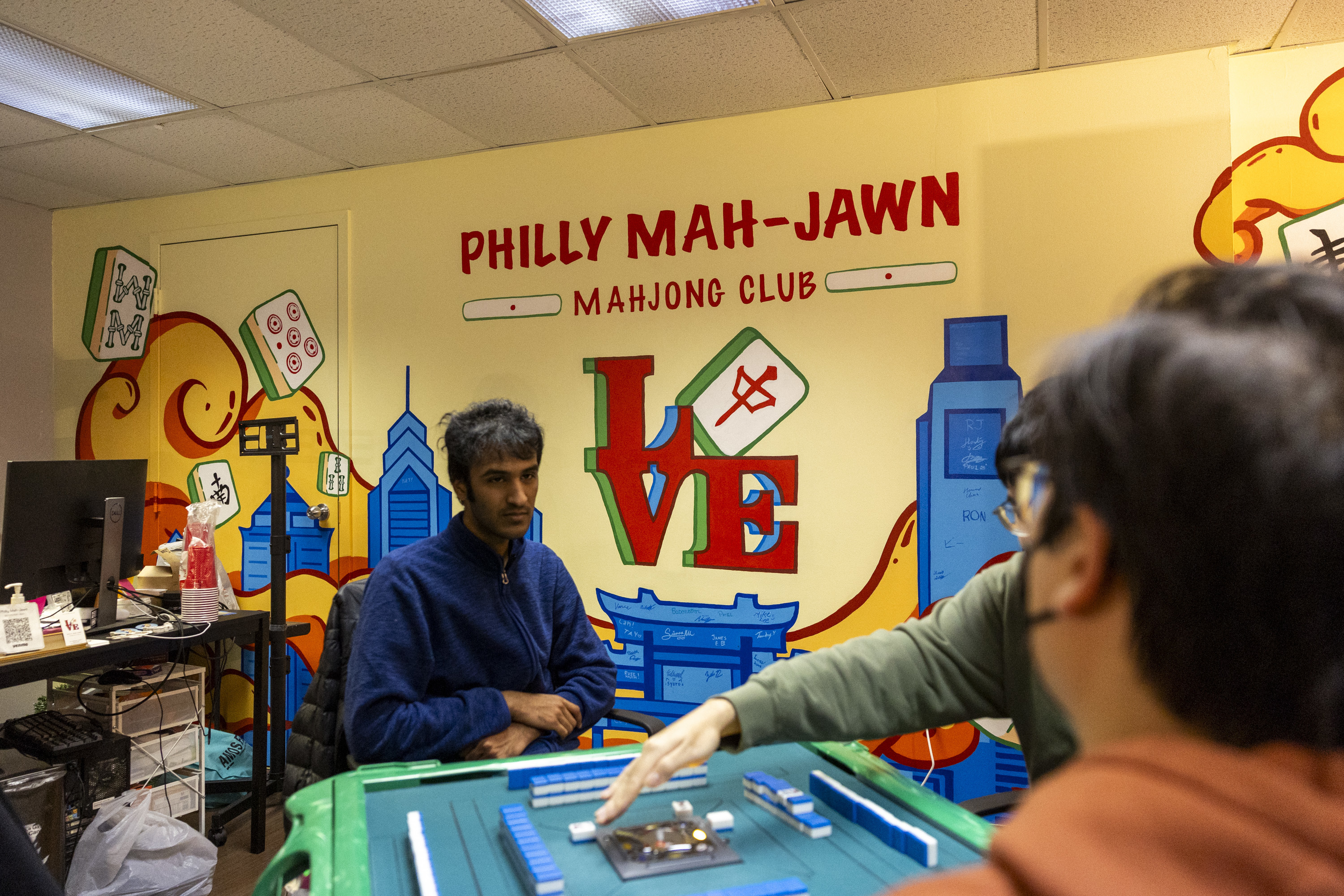
The Philly Mah-Jawn club in Philadelphia, Pa., on Saturday, Feb. 28, 2026.Tyger Williams / Staff Photographer
Of course, getting away with that much vagueness depends on who’s listening. You can only swap in da kine if the other person can figure out what it means. And that shared understanding, Seraku said, can strengthen the bond between speakers and reinforce their sense of belonging to Hawaii’s local community. Using da kine doesn’t just say “I’m from here.” It says, “I’m of this place and proud of it.”
Does jawn do all that too? According to Beltrama, absolutely. “By saying jawn, I’m not just referring to a backpack,” he explained. “I’m also signaling my and your position as Philadelphia people, Eagles fans, cheesesteak fans, and all the other things that can be associated with the city.”
Which makes da kine a pretty convincing contender for Hawaii’s own jawn. But what about yoke? According to Hickey, it doesn’t carry the same weight as a symbol of Irish identity. And while da kine can stand in for an entire sentence, yoke generally sticks to objects. Compared with jawn, Hickey said, “its core usage is much more restricted.”
A jawn all its own
So we’ve got a word in Hawaii that can do more than jawn, a word in Ireland that does less, and one in Italy that still means luggage. They all resemble jawn, but not quite in the same ways. Which raises the question: what do we actually mean when we say a word is just like jawn?
To Taylor Jones, a social scientist who has studied jawn extensively, being a placeholder is just the beginning. For a word to truly be like jawn, you also have to consider how it behaves, what it can mean, and where it fits into a sentence.
Despite its apparent versatility, jawn has a lot of rules. As Jones points out, it can stand in for practically any noun, but it can’t become a verb. “You wouldn’t say ‘I jawned him,’” he said. There goes da kine.
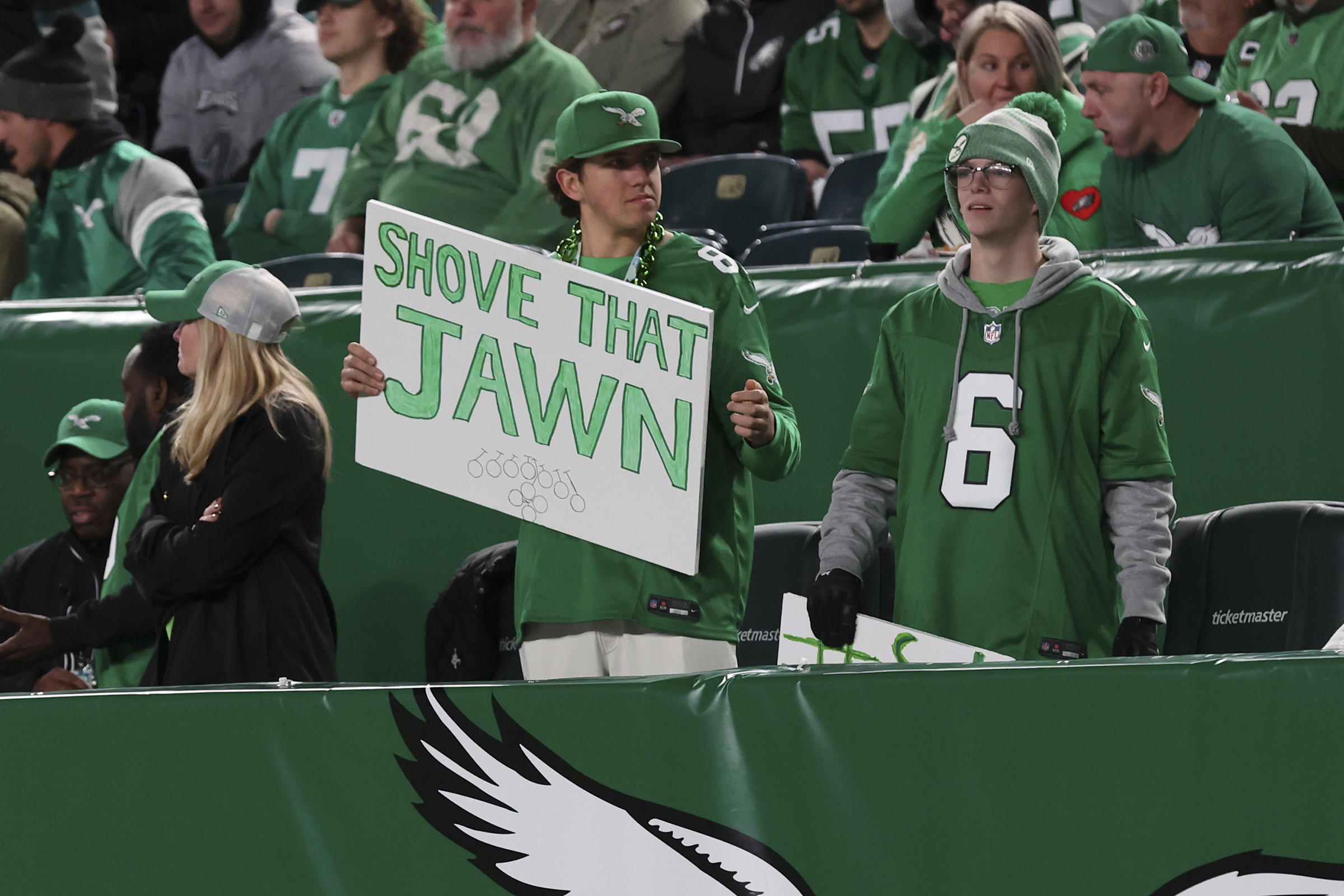
Fans hold a “Shove that Jawn” sign referring to the tush push or brotherly shove before a game against the Miami Dolphins at Lincoln Financial Field in Philadelphia on Sunday, Oct. 22, 2023.Heather Khalifa / Staff Photographer
Even as a noun, jawn has its peculiarities. It doesn’t like to be in a phrase, Jones said, and it has collocation restrictions, meaning it doesn’t naturally combine with certain words. That’s why a “pair of jawns” sounds normal, but “a jawn of shoes?” Not so much.
And those little quirks add up. The more specific you get about how a word is used, the harder it is to find another one that behaves exactly the same way. Sure, other places have placeholders. But finding one that walks and talks exactly like jawn?
“That’s a little rarer,” Jones said.
It’s entirely possible no other word behaves quite like jawn. Then again, the same could be said of yoke, da kine, or bagaglio. Each has its own meanings, grammatical habits, and history. That’s what Jones means when he says “every word in every language variety is basically definitionally unique.”
So yes, jawn is unique. Just not in a way that sets it apart from every other word in the world.
“It’s a special snowflake like all the other snowflakes,” Jones said.
I recently moved from a less dense area into the city. And I am truly inquiring, what is the etiquette around noise when living in an apartment in Philly — especially noise from the bedroom? My apartment is part of a semi-detached house and while it is pretty soundproof, you can still hear loud conversations, music, and thus, I assume, certain adult activities. I want to be a good neighbor and courteous and have my fun. What’s the range of acceptability?
Beatrice Forman, Food & Dining reporter
Philly law does not require that you to go to fourth base in silence just for the sake of your neighbors. But I do think there’s a limit to what your neighbors should be expected to hear.
Zoe Greenberg, Life & Culture reporter
As with many things, there is a continuum.
I would like to begin with my experience with a drummer in West Philadelphia. He was practicing the drums, for hours a day, from his uninsulated, un-soundproofed West Philadelphia rowhouse. I found that went beyond the normal bounds of acceptable noise in the city.
Beatrice Forman
Well, was he talented? I feel like that’s an important distinction. You should not be practicing your musical craft for hours on end if you are a beginner at best.
Zoe Greenberg
I think even the most talented drummer needs to be drumming from a basement with soundproofing.
But, living in a city, some noise is to be expected. And especially if you don’t have roommates, the amount of noise allowed is higher.
Beatrice Forman
It’s about the hours of noise. No big sounds before it’s reasonable to be awake in the morning or after primetime TV used to conclude, aka 10 p.m.
It’s also a courtesy thing. The metric I go by is solely based off what I would and wouldn’t mind hearing and when. A little Taylor Swift while spring cleaning on a Sunday afternoon? I don’t mind. Moans and groans at 7 a.m. when I’m trying to peacefully sip my coffee? Jailable offense.
Zoe Greenberg
Bea, I agree. In fact, it looks like Philly tries to limit “noise and excessive vibration” due to degrading the environment of the city.
We need to consider appropriate hours of operation.
Beatrice Forman
I know noise pollution is a thing, but a whole city ordinance dedicated to literally tone policing neighbors feels a little extreme.
Zoe Greenberg
Is it tone policing or noise policing in this case?
Beatrice Forman
Stop poking holes in my word play!
Zoe Greenberg
Ha ha OK, OK. So keep it to business hours, but don’t make a whole city regulation about it?
No calling the police on your neighbors having sex.
Beatrice Forman
Yes! Or loud conversations. As someone who grew up in a noisy family, it was very jarring to have neighbors call the cops on us just because the folks next door heard raised voices. There’s a line of mindfulness on both sides.
Zoe Greenberg
Definitely don’t do that. Talk to your neighbors if there’s a big issue. Although talking to neighbors about certain noises could become uncomfortable.
Beatrice Forman
Don’t tattle about noises unless you’ve exhausted the options of trying to work it out yourselves first.
People hate a nosy neighbor more than a noisy one, trust.
Zoe Greenberg
Your point about mindfulness is right. Living in a city requires acting with grace and extending grace to those around you.
Thankfully, that’s Hollywood fiction. Stallone himself says Philly was the setting from the very first draft. He grew up here, understood the city’s underdog mentality, and knew Rocky couldn’t come from anywhere else.
And really, can you imagine Rocky running through Times Square instead of the Italian Market? Training in Central Park? Celebrating his big moment on the steps of the Metropolitan Museum of Art?
Nope. The actual production apparently came close to filming in Beverly Hills, which is somehow an even more offensive possibility.
Look, we understand movies take creative liberties. But Rocky without Philadelphia is like a cheesesteak without the steak.
Some things are sacred, and Rocky being ours is one of them.
Meet Jaylen Brown’s harpist, Li Shan Tan
She is a Singaporean harpist based in Boston, Massachusetts. She started the harp at age 13 and has built a career that mixes serious classical/orchestral work with contemporary collaborations and viral internet content.
Some NBA players spend their millions on luxury cars, designer watches, and sprawling mansions. Jaylen Brown apparently prefers to have someone play a 24-karat gold harp while his personal chef makes dinner.
Yes, the Sixers star has a personal harpist.
Brown recently showed off his gilded harp during an Architectural Digest tour of his Boston penthouse. He even introduced Li Shan Tan, the professional harpist who reportedly comes over twice a week to play while the sun sets and dinner is prepared. And the best part might be that Brown refers to his harpist as his therapist.
Some people unwind with a glass of wine or a Netflix binge, Jaylen Brown apparently needs a private concert on an instrument made of gold.
He even says he occasionally tries playing it himself when she’s not around.
We have so many questions. Does she take requests? Can she play the Sixers theme song? And, most importantly, has the harp made the move to Philadelphia?
Because if Brown starts bringing his personal harpist to the Xfinity Mobile Arena, we’re going to need courtside seats.
Two armadillos eat cheek to cheek. Blue, the armadillo on the left, is now at the Cohanzick Zoo in Bridgeton, N.J.Karen Verderame
A bittersweet goodbye for the Academy’s animals: C
The Academy of Natural Sciences’ museum has been closed for more than a month, and now its longtime residents have officially moved out.
More than 30 animals, along with several colonies of insects, have found new homes at zoos, sanctuaries, and other facilities. That includes Morbo the Destroyer, an African bullfrog now at the Philadelphia Zoo, and Ollie and Kobe, two tortoises considered boyfriend and girlfriend, who thankfully got to stay together.
The good news is that the animals are being well cared for, thanks to a dedicated group of staffers who spent their final weeks at the museum making sure every creature had somewhere safe to go.
But there’s something especially heartbreaking about imagining the once-bustling animal exhibits sitting empty. For generations of Philly kids, meeting those animals was part of the magic of visiting the museum.
And while efforts to reopen the nearly 200-year-old institution continue, seeing its animals scattered across the region makes the closure feel that much more permanent.
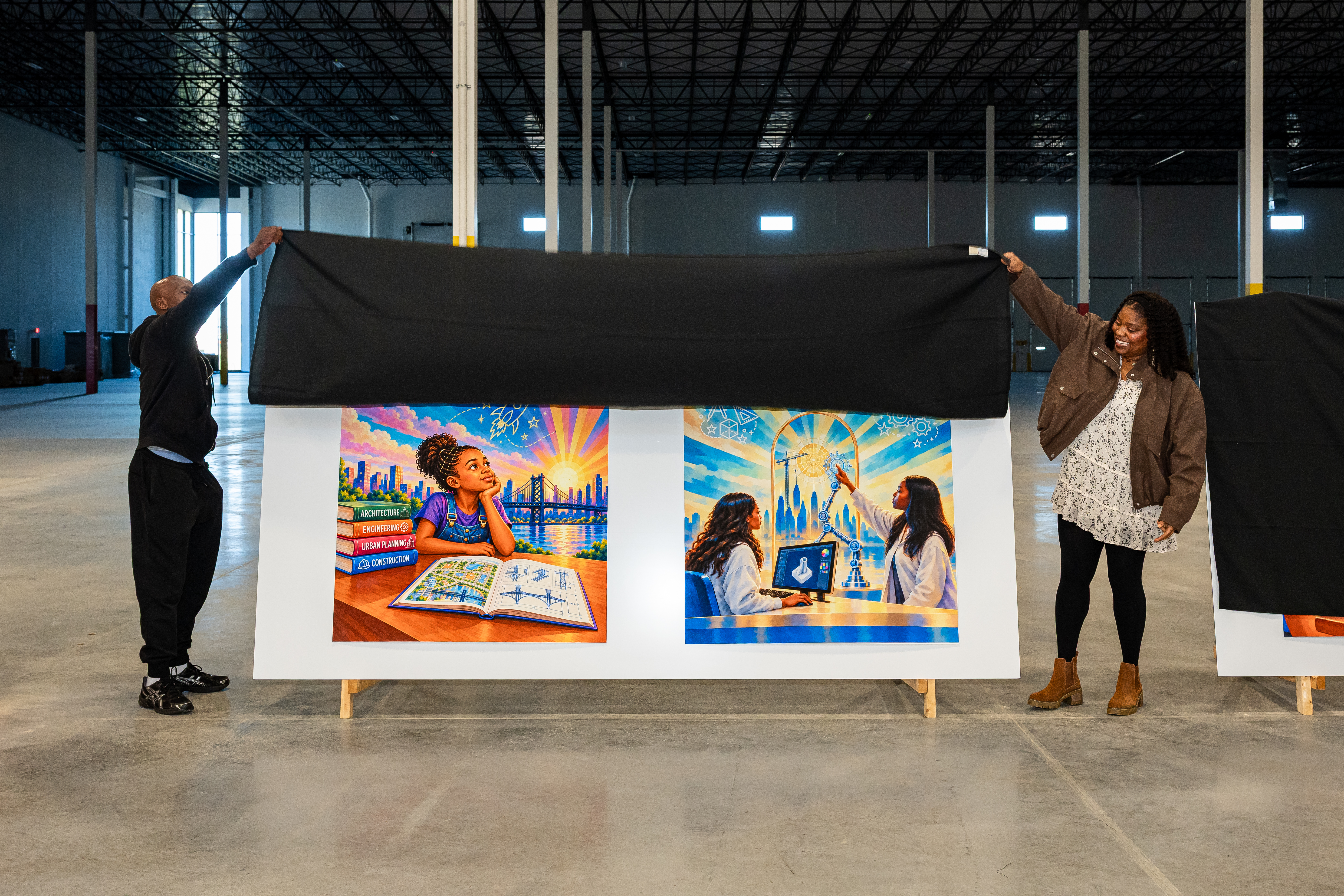
Artist Kelley Prevard (right) at a news conference on Oct. 7 unveiling designs for Mural Arts’ “Throughlines” project at the Bellwether District. Mesh banners are to be placed on a fence.Elijah M.Dreuitt III
Mural Arts is moving forward with banners for a fence at the Bellwether District in South Philly, even after critics raised concerns that some of the designs were created using artificial intelligence.
And the details aren’t exactly reassuring. Some of the artwork features a skyline that looks more like Chicago than Philadelphia. An AI expert said the images appeared to be AI-generated, and detection software flagged them, too. Neither the artist nor Mural Arts has confirmed whether AI was used.
The organization says it will correct the skyline and move forward with installation.
Mural Arts says it doesn’t have an AI policy yet, though it’s working on one and hosting public discussions this month. That’s a conversation worth having, but shouldn’t it have happened before the artwork was approved?
Only in South Philly can you cast your ballot at Chickie’s & Pete’s and then stick around for some crab fries.
One voter shared their delight on Reddit after discovering that their new polling place was the sports bar near the stadiums. Having recently moved from Northwest Philly to deep South Philly, they declared they’d reached “peak south Philadelphian.”
And the comments somehow made the whole thing even better.
“Did they at least give a discount on crab fries?” one person asked. Another suggested that putting an “I Voted” sticker on a crab fries container should earn you a free refill. Frankly, that’s a voter incentive we can get behind.
But then someone issued a challenge: “Talk to me when it’s at the Mummer Museum.”
Turns out, multiple Philadelphians have voted there, too. Others chimed in with polling places at a Vietnamese restaurant and a boxing gym.
And one commenter offered perhaps the most South Philly response of all: “I’ve gotten drunk at a fair number of Chickie’s around the city, but I’ve gotten drunk at this one the most.”
Democracy, Philly style.
Philadelphia Eagles running back Saquon Barkley pauses as he warms up prior to their game against the Washington Commanders in Landover, Md. on Sunday, Nov. 1, 2026.David Maialetti / Staff Photographer
The big, bad Eagles aren’t so scary anymore: F
Remember when the Eagles were the team nobody wanted to play? When we could confidently talk trash to Cowboys fans and expect our team to back it up?
Yeah, those were good times. The Birds are now 2-6, have lost six straight games, and apparently the rest of the NFL has decided it’s time for revenge.
Sunday’s 27-10 loss to Washington was embarrassing enough. But with less than two minutes left and the game already decided, Commanders coach Dan Quinn went for a two-point conversion. And got it.
It’s hard to argue with him. Jalen Hurts is sidelined, injuries have gutted the roster, and the team that won the Super Bowl less than two years ago looks almost unrecognizable.
And after years of Nick Sirianni yelling at opposing fans, celebrating on the sidelines, and generally making sure everyone knew the Eagles were better than them, it’s not exactly shocking that other teams are enjoying this.
The worst part? We can’t even tell them to check the scoreboard anymore. It’s going to be a very long football season in Philadelphia.
Caitlin Clark (left) and Kylie Kelce (right).Michael Conroy / AP and Monica Herndon / Staff Photographer
Caitlin Clark, you’re one of us now: B
Philadelphia has a long and proud tradition of claiming celebrities who have even the slightest connection to our city. And Caitlin Clark just made our job a whole lot easier.
One cheesesteak. That’s apparently all it takes to become an honorary Philadelphian.
Kelce explained that until Philly gets its own WNBA team in 2030, and as long as Clark hasn’t declared herself against us, we’re perfectly entitled to claim her. She called it the “psychopath mentality of Philadelphia.”
“You can claim me,” Clark responded. “I’ll take all of Philly.”
Say no more. We’re already mentally putting her in a Philadelphia jersey.
The two also tossed around potential names for the new team, including the Philadelphia Belles and Kelce’s suggestion of the Philadelphia Broads. And Clark said she’d love to experience a Sixers crowd in person.
But let’s get back to the important part. Caitlin Clark ate one cheesesteak, called us crazy, and gave us permission to claim her. We might as well give her a Philly birth certificate.
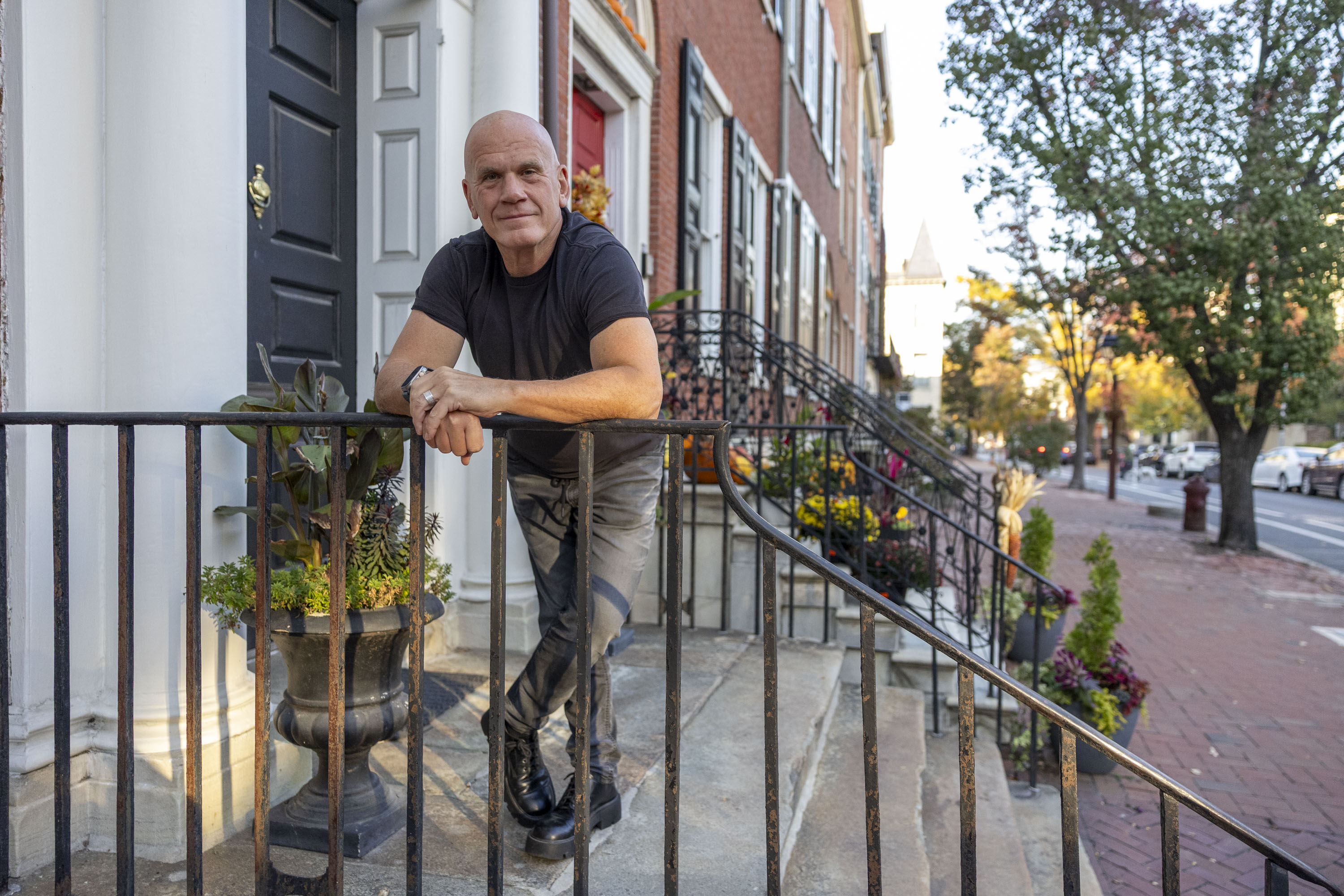
Steven Grasse, the eccentric advertising executive and multi-hyphenate responsible for brands like Sailor Jerry rum and Hendrick’s Gin, likes to wake up before the rooster crows. There are calls to make, and his clients are all over the world: New Zealand, India, Tasmania. So even though it’s 4 a.m. in Society Hill, where he lives in an 18th-century brick townhouse, it’s business hours in India, and Grasse is all about business.
He has to be. He runs several, including Quaker City Mercantile, the advertising agency he founded in 1989, and Tamworth Distilling, an award-winning craft distillery known for spinning up spirits with out-there ingredients like Spruce & Goose Whiskey, made with a whole roasted goose. He’s also found time to author nine books, open a bottle shop, and spend countless hours wandering the history-stuffed streets of Old City, where he makes a point of stopping by Benjamin Franklin’s grave site every day.
“It’s a source of creativity for me,” Grasse, 62, said.
Asked to describe his ideal day in Philadelphia, Grasse saw little reason to stray from his usual routine.
“A perfect day is every day, isn’t it?” he said.
Then again, this is a man who meditates with tuning forks, works out to Dostoevsky, and believes a 300-year-old treasure chest could be buried beneath his house, so his ordinary day isn’t like everybody else’s. Here’s how Steven Grasse would spend a perfect day in Philly.
Steven Grasse at A Man Full of Trouble Tavern in Philadelphia, Pa., on Thursday, Oct. 29, 2026.Tyger Williams / Staff Photographer
4 a.m.
I wake up at 4 every morning. I grind fresh coffee beans from Ox Coffee and listen to classical music. I have very particular tastes. I listen to a lot of 17th-century music, composers like Tobias Hume and Henry Purcell.
My office is on the fourth floor of my house, so that’s where I start answering emails and taking calls. We have clients all over the world, in Europe, India, and New Zealand. We just got a client from Tasmania. A lot of those calls happen very early in the morning.
6 a.m.
I have a whole weird tuning-fork and meditation regimen that I do for half an hour. Then I go downstairs to make a smoothie with organic blueberries, strawberries, passion fruit, and walnut protein. I get the ingredients from Mom’s Organic Market in Center City.
I also have three newspapers delivered to the house every morning: The Inquirer, the Wall Street Journal, and the New York Times. I read the print editions cover to cover.
7 a.m.
I have a full gym in my basement, and I work out for two hours while listening to audiobooks. I like the great books, particularly Russian literature — Tolstoy, Dostoevsky. My philosophy is to work out my mind while I work out my body. I’m not looking at social media or Twitter. I’m listening to books.
Steven Grasse, American advertising executive, author, and distillery owner, talking about the Powel House in Philadelphia, Pa., on Thursday, Oct. 29, 2026.Tyger Williams / Staff Photographer
9 a.m.
Breakfast is two soy-free, corn-free fried eggs on a bed of organic lettuce, with toast from Mighty Bread Company. My wife gets the eggs and other ingredients from the Bryn Mawr Farmers Market, where she goes every Saturday.
We get very specific. I’m a freak. I’m a total freak.
9:30 a.m.
I go for a four-mile walk, making more phone calls as I go. I like to get a cup of coffee at Menagerie in Old City, then head over to Christ Church Burial Ground.
I spend a lot of time in graveyards, and every day, I sit at Benjamin Franklin’s grave site. I talk to him. I find that walking, thinking, sitting, and contemplating are very important things for me.
11 a.m.
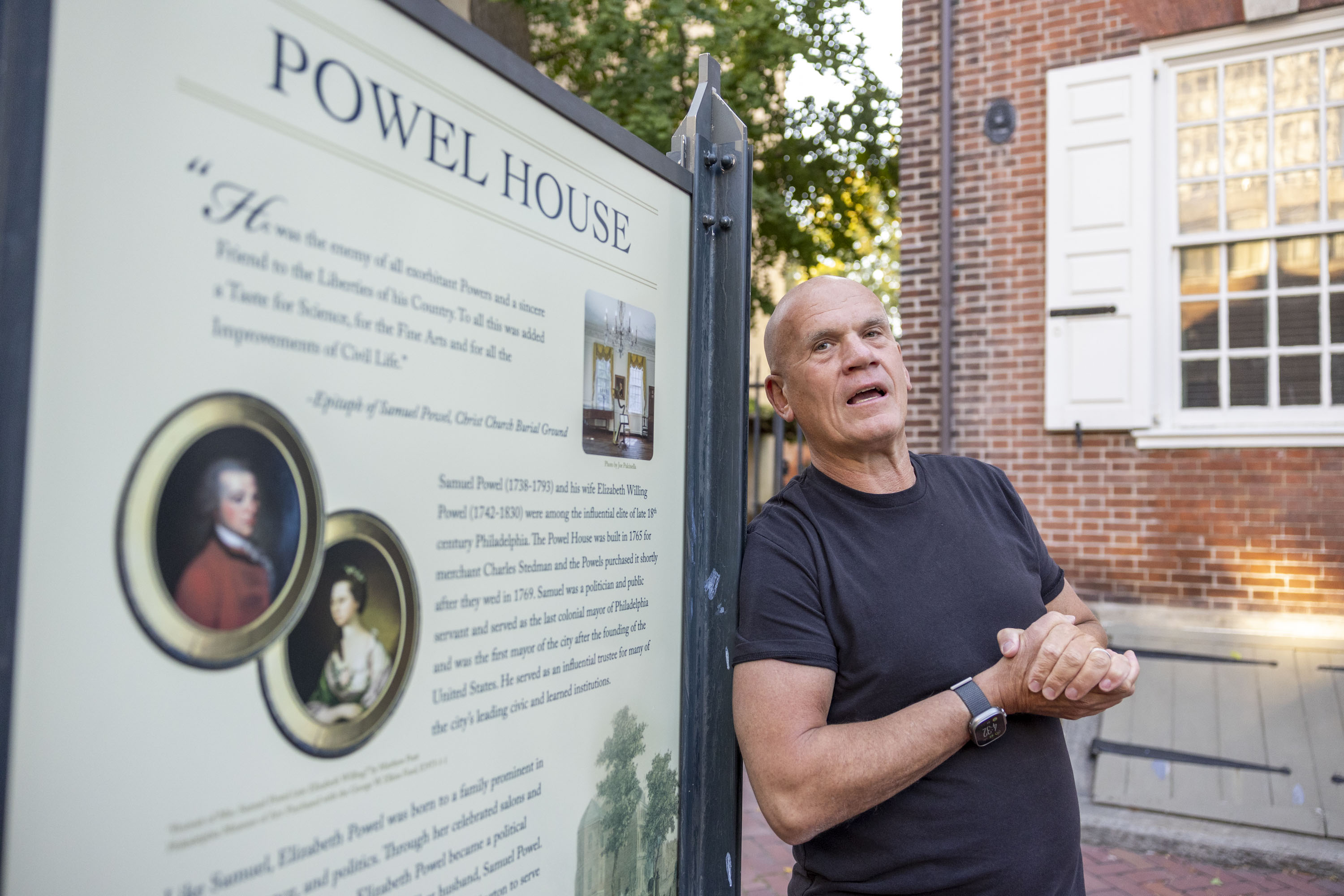
Lately, I’ve been stopping by the Powel House, which is right around the corner from my house. I’m giving a speech there on colonial brewing later this month. They let me come in and sit in the ballroom where George Washington used to dance and drink beer. I find that working on the speech in the actual space helps me.
Noon
On my way to the office, I usually stop at the Athenaeum of Philadelphia, a beautiful old private library overlooking Washington Square. They have Napoleon’s death mask there. It’s a plaster cast of his face made right after he died. I’m a big Napoleon guy. I’ve studied all his battles. I like to look at his death mask because it makes you think about how fleeting life is.
Steven Grasse, American advertising executive, author, and distillery owner, poses for a photo at A Man Full of Trouble Tavern in Philadelphia, Pa., on Thursday, Oct. 29, 2026.Tyger Williams / Staff Photographer
2 p.m.
I usually get to work around 1:30, eat my lunch, and start my meetings at 2, even though I’ve been working since 4 in the morning.
We have a lot of interesting projects going on. We’re working on upcoming events for Hendrick’s Gin, and I’m developing a new wine brand with Charlie Hall from the War on Drugs. We’re also working on a big celebrity liquor brand that I can’t tell you anything about. There’s a very ironclad nondisclosure agreement.
5 p.m.
After work, I’d walk over to Almanac, the cocktail bar in Old City. We just did a new spirit with Danny Childs, the James Beard Award-winning bartender and author who helped develop Almanac’s beverage program. I’d have some drinks with my publicists and talk about plans for launching it.
6 p.m.
I’d walk home to meet my wife, and then we’d head to Pho Skyline in the Italian Market for dinner. It’s right next door to Binding Agents, the cookbook bookstore, and I always like to stop in and check on my books. I love when they’re displayed in the window. On this perfect day, one of my latest books would be right there.
Then we’d go next door for dinner. I love the beef stew or the crispy lotus root salad.
8 p.m.
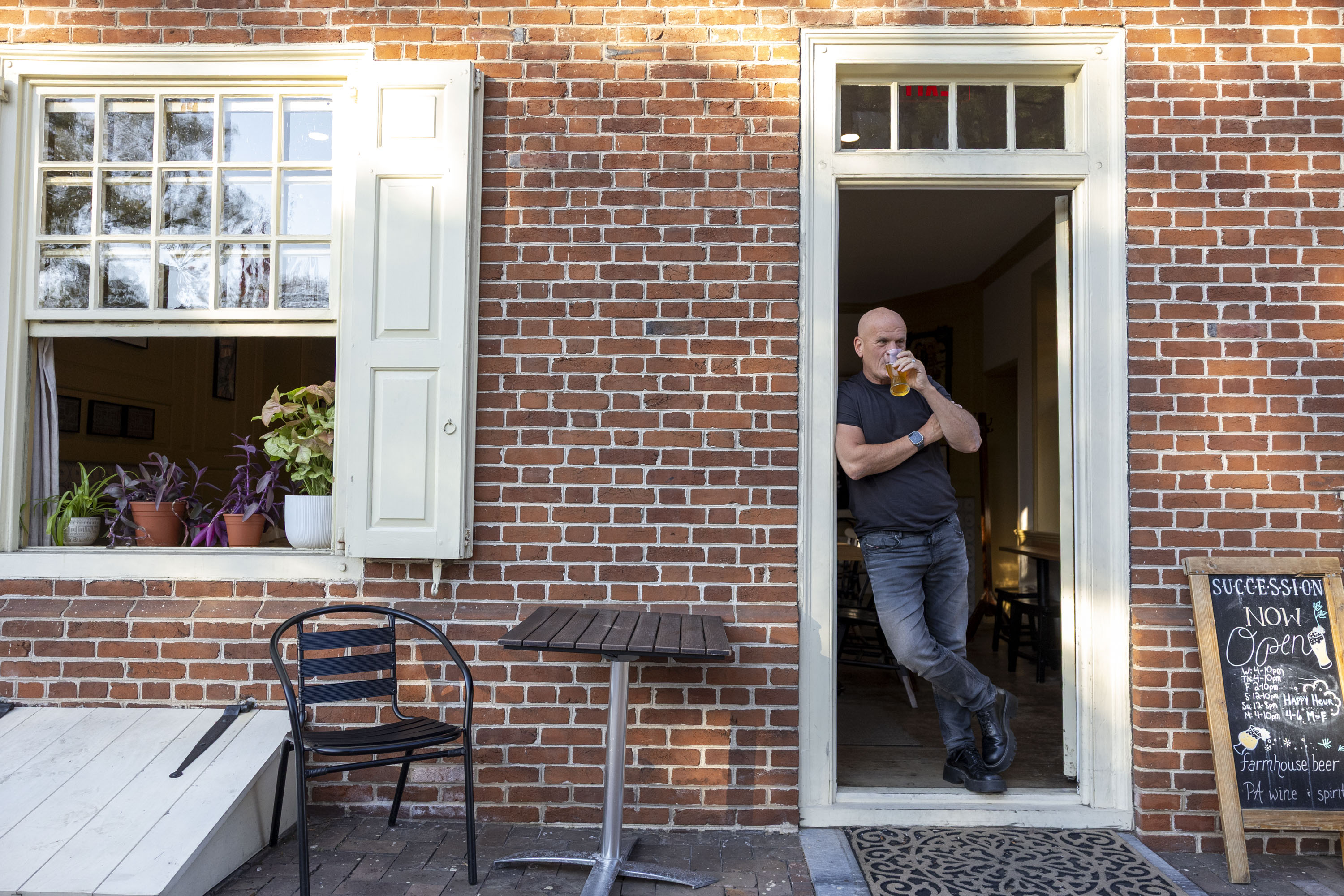
On our way home, we’d stop at A Man Full of Trouble Tavern, Philadelphia’s only surviving colonial tavern. It dates to 1759, right around the time my house was built.
I’d have a couple of beers with the owner, Dan Wheeler, and we’d discuss the 1716 letter, a mysterious document that supposedly reveals the location of buried treasure in Society Hill.
It was sent from Jamaica in 1716, and whomever received it was supposed to destroy it. But somehow it survived. The letter provides specific directions to the treasure. Like it says, “It’s in a brick house, just past a drawbridge, near an apple orchard.” This is for real. It’s like National Treasure.
Anyway, I live in one of the houses where it could be. I love my neighborhood. You’re just surrounded by a full mix of history, and it’s really beautiful.
On my drive down I-95 on Sunday afternoon, a text message pinged on my phone.
It asked, “Does Mailata do ‘Stoutland U?’”
I was confused at first, but realized the question was in relation to whether Eagles tackle Jordan Mailata would cite “Jeff Stoutland University” during player introductions ahead of the game with Washington, as he had done previously on NBC’s Sunday Night Football.
I then became curious myself and asked Mailata. He responded with a thumbs-up.
In one sense, it was a trivial matter. Mailata had been plucked by Stoutland out of the NFL’s International Pathway Program. Stoutland then nurtured and nourished Mailata from a football neophyte into one of the best left tackles in the NFL.
That he continued to refer to the former Eagles offensive line coach as his institution in the art of playing O-line underscored Stoutland’s impact.
But the fact that I did wonder whether he would invoke the name of Stoutland — or rather be allowed to — only reinforced to me how raw the subject remained.
A lot has gone down since the legendary coach decided in February to step away from the Eagles, after they had decided to alter the offense and strip him of his run coordinator responsibilities.
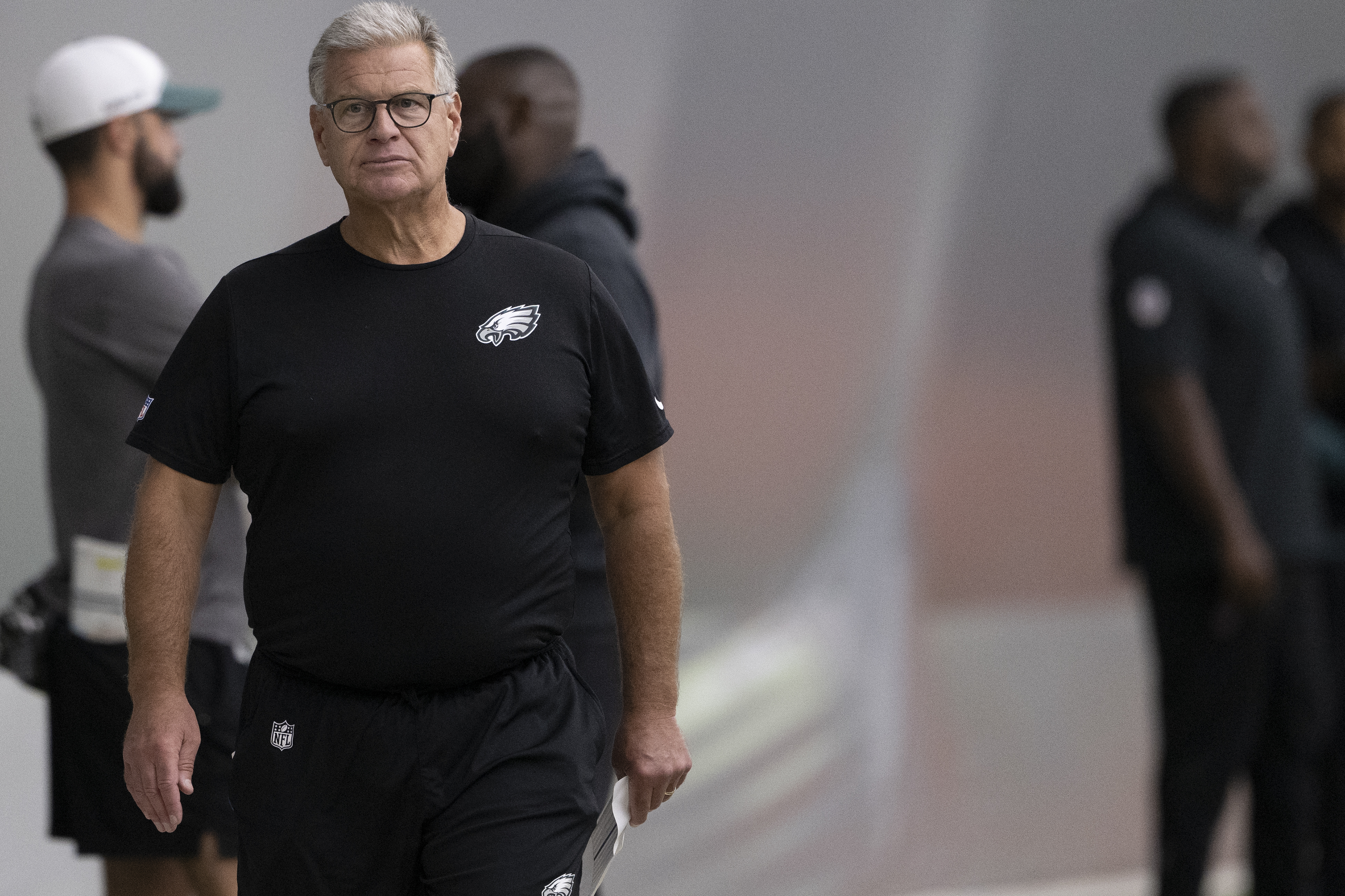
Stoutland hasn’t spoken in detail about his exit. He jumped on Jason Kelce’s podcast during the offseason and briefly addressed why he and the Eagles parted ways. But he has mostly gone underground after 13 decorated seasons with the Eagles. He remains under contract with the team until the end of the season, which could further explain his silence.
I don’t know if we’ll ever get the full story about his departure even if he does sit down for an interview. I have been able to cobble together information about what went down, and have reported some of it in dribs and drabs since before Stoutland announced that he was leaving on Feb. 4th. I’m going to share much of what I know — and have since discovered — and offer nuance on some of the information that has been out there.
In my mind, there are four key questions about the Stoutland-Eagles divorce.
No. 1: Why did the split happen?
No. 2: Did the Eagles’ offensive linemen want Stoutland’s role to change?
No. 3: How did the separation happen?
And No. 4: Would Stoutland staying have made any difference?
Jeff Stoutland (left) had a decreasing amount of say in the direction of the offense under Nick Sirianni.DAVID MAIALETTI / Staff Photographer
The split
The Eagles have offered little detail on Stoutland leaving since coach Nick Sirianni and general manager Howie Roseman were first asked about it in February, but Sirianni was asked on Monday in his press conference if he regretted not having Stoutland on his staff. A day later, he was questioned by Joe DeCamara during his weekly spot on WIP:
“Do you think you made a mistake,” DeCamera asked, “in any way last year related to Jeff Stoutland, his role, your relationship with him, anything between you and Stoutland that you think you made a mistake that led to him no longer being with the team?”
“I love Coach Stout and owe him an awful lot with everything that he brought to the table,” Sirianni said. “But I think it’s natural like when the season is not going the way you want it to go is to look for answers — look for the blame in different things. And I think to cast it on one person is crazy because it’s a team game. [New O-line coach] Chris Kuper is working his ass off. He is busting his ass to help these guys. Listen to what the players say about him. … I watch him on a daily basis be the same guy in every situation, bust his ass in every situation, look for solutions, coach hard, all the things, and I find to be a very good coach. But I understand the question with where we are. Obviously, we’re in the situation we are with a new offense because we weren’t great on offense last year for a long portion of the time.”
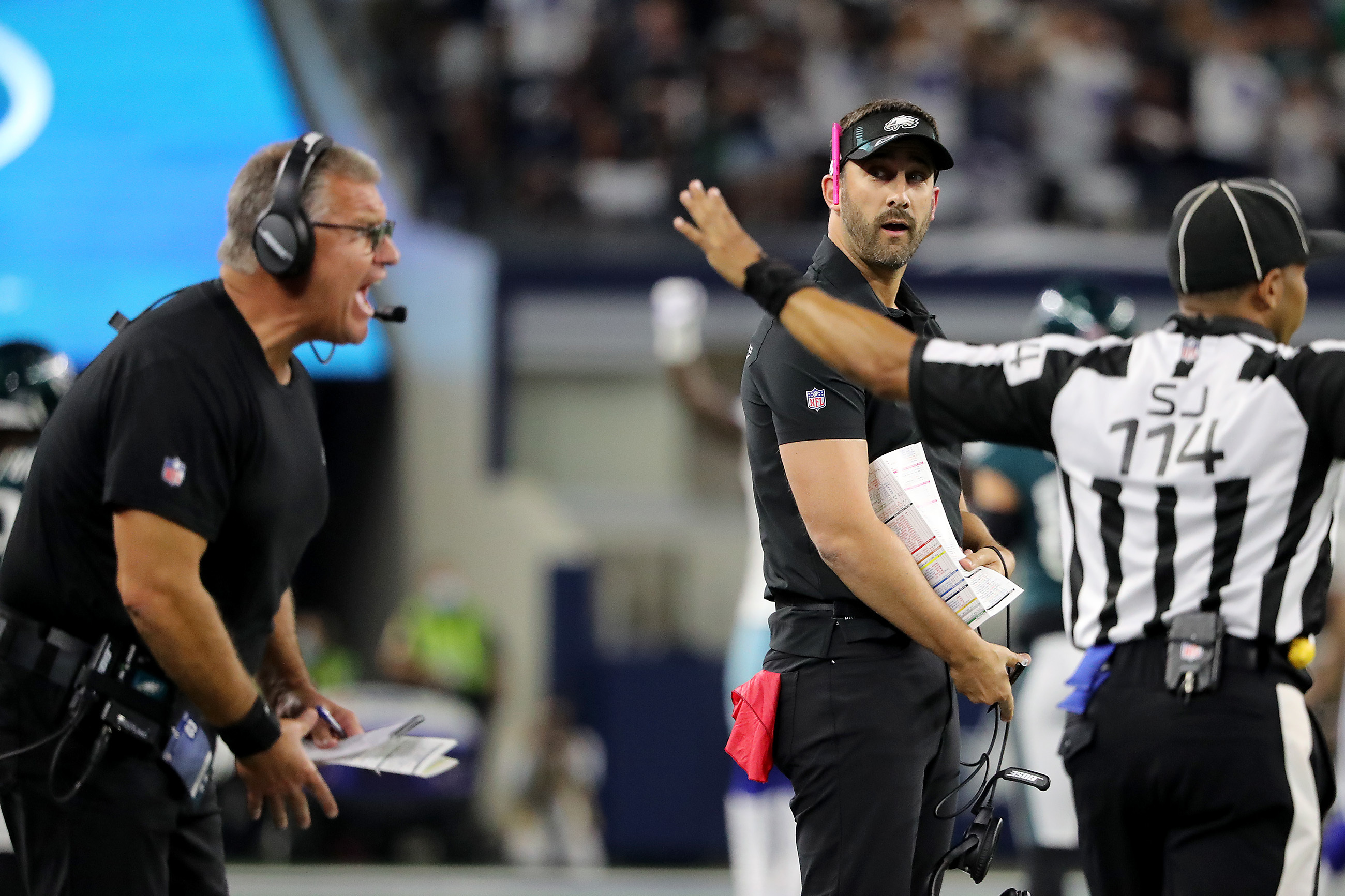
Sirianni’s last comment gets to the heart of it. The Eagles weren’t good on offense in 2025, felt they needed to make changes, and that’s why Stoutland isn’t here. There were other significant changes, of course, with Kevin Patullo’s firing as offensive coordinator being the most prominent.
But to shift the offense in the direction Sirianni — and presumably general manager Howie Roseman — wanted to go, Stoutland would have to be sacrificed as the run game coordinator, because the scheme would be vastly different than what he had employed for years.
There were indications already during the season that the Eagles were headed in this direction. Sirianni had combined run and pass game meetings, rather than keeping them separate. In essence, this took away some of Stoutland’s authority. But the change wasn’t necessarily abnormal for the NFL, and for Patullo to coordinate the entire offense it was felt that he needed to be more involved in the run scheme.
The Eagles, of course, had great running success with Stoutland at the controls. In 2024, Saquon Barkley rushed for over 2,000 yards and the Eagles gained more yards on the ground, including the postseason, than any NFL team ever — but it wasn’t just a one-year blip. The Eagles had some of the best rushing offenses since Stoutland was hired under Chip Kelly in 2013, through Doug Pederson’s tenure and into Sirianni’s.
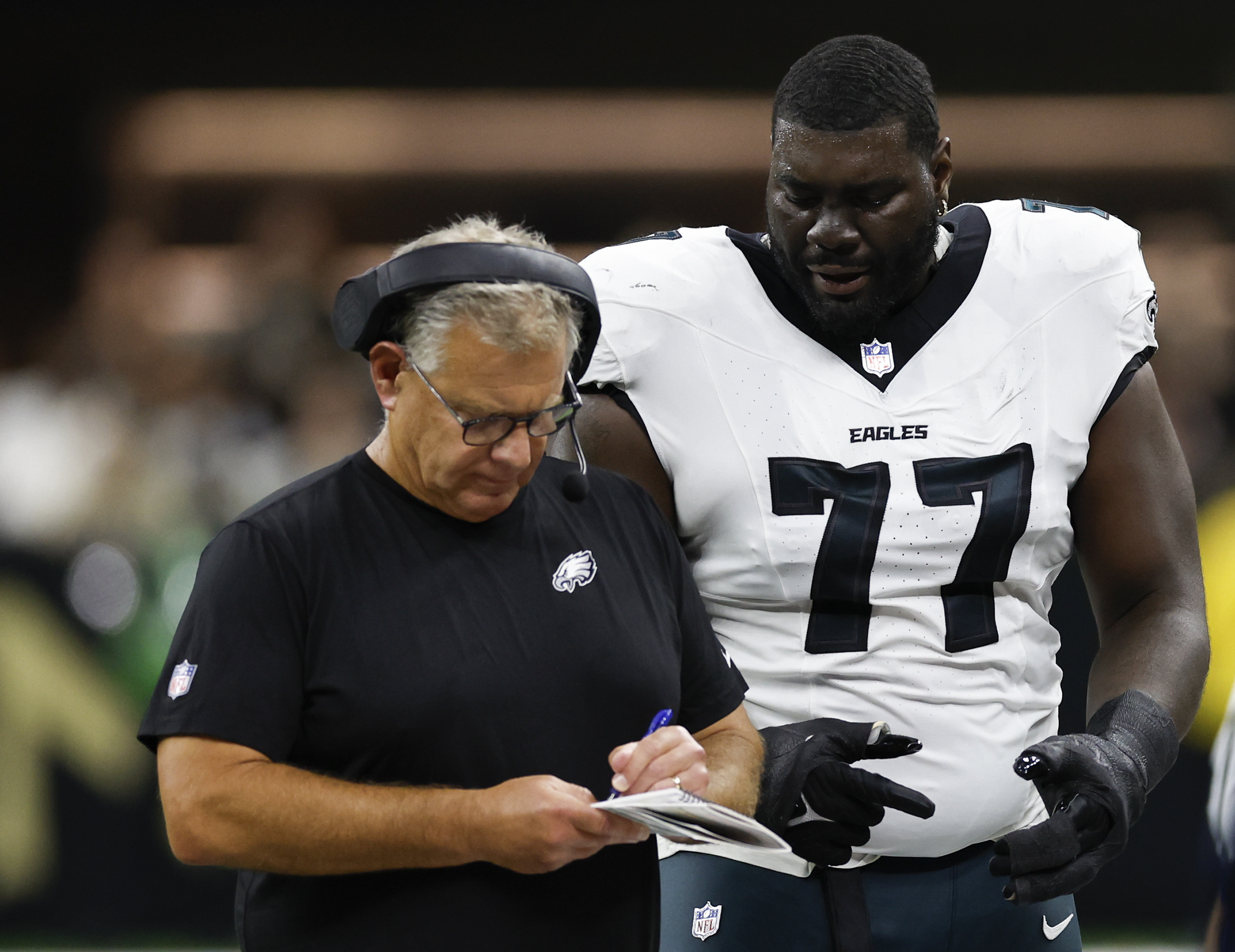
Jeff Stoutland was revered for his ability to get the most out of players like Mekhi Becton (77). Yong Kim / Staff Photographer
In Sirianni’s first four seasons, the Eagles’ rankings in the advanced analytic defense-adjusted value over average (DVOA) were third, first, fifth and sixth. The head coach, his coordinators and assistants, and all the players involved share credit for the success, but Stoutland had devised a run scheme that was among the best in the league.
It wasn’t always perfect, nor was he. The run game wasn’t productive enough in the lost seasons of 2015 and 2020, and it wasn’t good enough in 2025 when the Eagles finished 23d in DVOA.
Stoutland’s scheme, in a nutshell, had the inside zone as its core run play, and he had his O-line utilize the mid-zone as its central blocking technique. It was a heavy shotgun system and there wasn’t a lot of motion — some might have said it wasn’t sophisticated — or that in-game adjustments could be an issue as a result.
But it was tried and tested, and with Stoutland at the controls — and armed with one of the best O-lines in the NFL, and often a strong running back — it was explosive and at times almost unstoppable. And Stoutland was dogmatic in his belief that when paired with an even competent passing attack, it would provide the results needed.
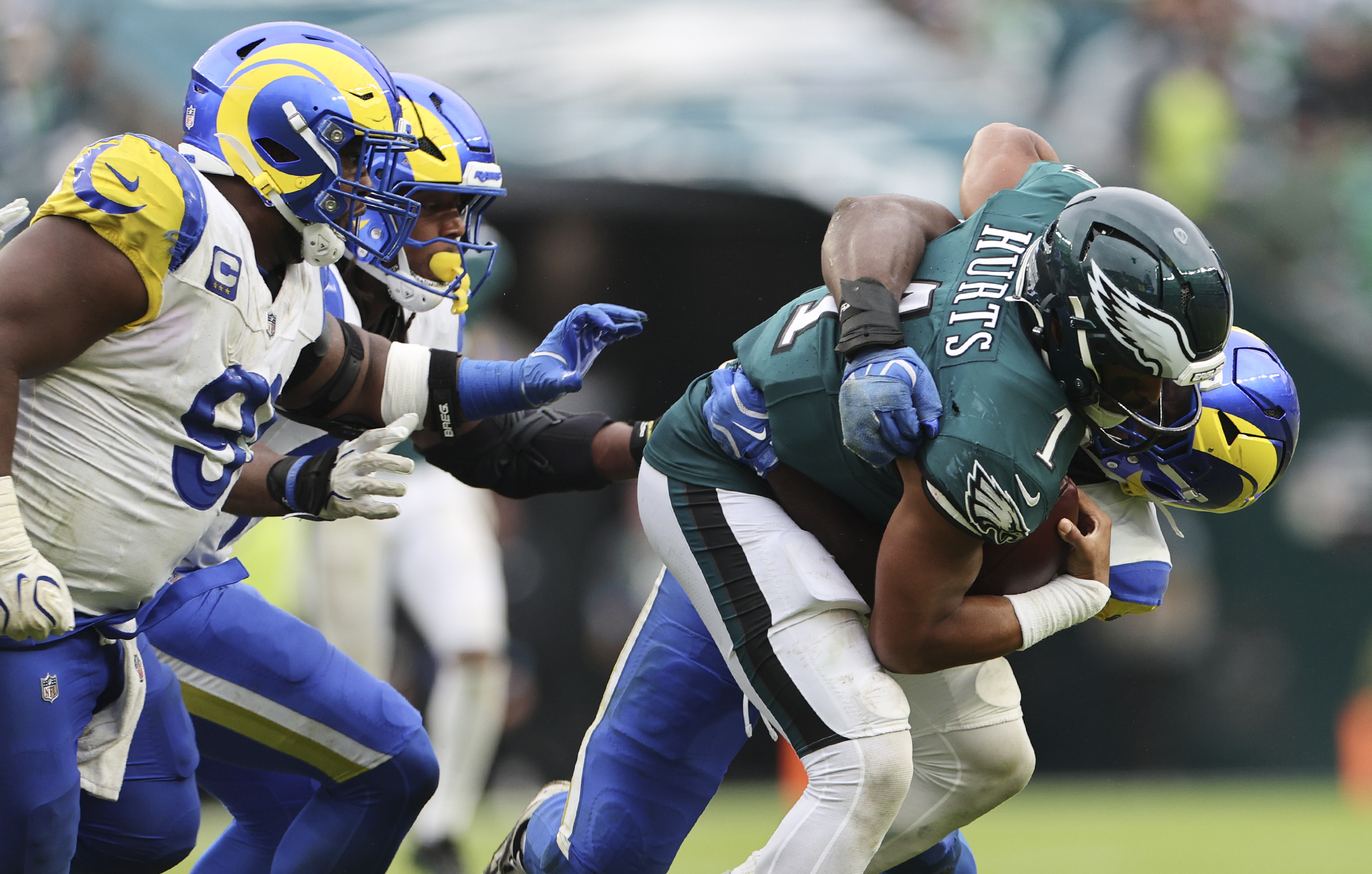
And this is where it came to a head. The Eagles’ pass offense had gotten progressively worse since 2022 when Shane Steichen was the offensive coordinator. Quarterback Jalen Hurts’ efficiency numbers had declined in each of the three seasons since 2022 — Hurts was part of it, but so was the pass scheme, and there was tension as to why.
Ultimately, Sirianni had come to the conclusion that in order for the offense to improve with Hurts at quarterback, the run scheme needed to be more innovative and there needed to be more marrying of the run with the pass to keep defenses from keying on Barkley and the run game. Sirianni and Roseman felt that the Kyle Shanahan-Sean McVay scheme would likely be the best offense to make that work, and that meant Stoutland was out as run game coordinator — partly because the scheme would be significantly different, but also because they didn’t want forcing him on candidates to prevent them from getting their preferred coordinator.
This had almost nothing to do with the players.
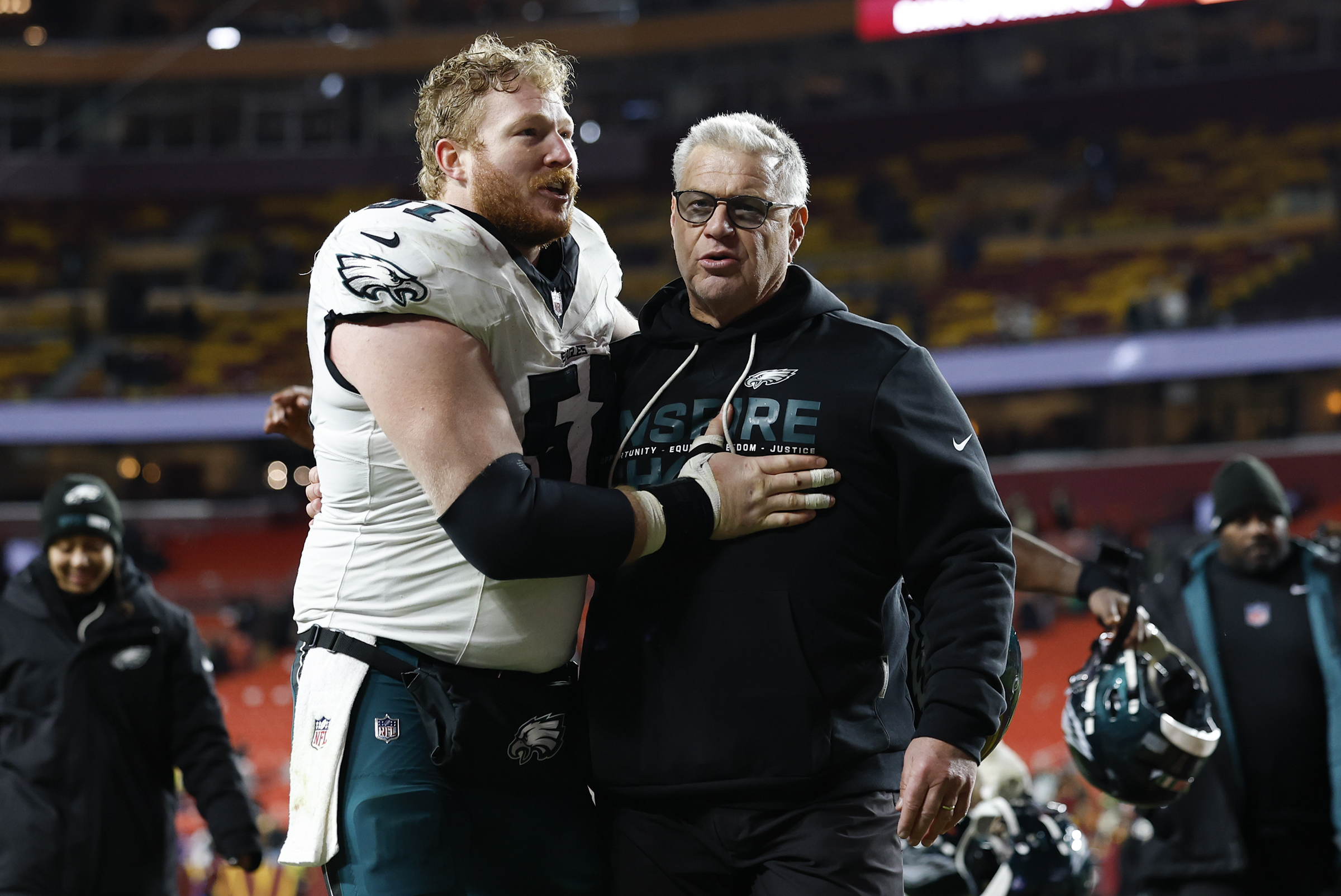
Jeff Stoutland’s close bond with players has remained even after his departure. David Maialetti / Staff Photographer
Did any Eagles O-linemen want Stoutland’s role to change?
I had reported as far back as February that certain offensive linemen had become frustrated at times with Stoutland. Some had wanted, for instance, more under-center run plays.
Center Cam Jurgens, in particular, was in the difficult spot of having to succeed Jason Kelce, and may have fallen short of expectations of what was required to play the position, but the suggestion that players influenced the Eagles’ decision to strip Stoutland of run game authority just isn’t accurate.
I asked Mailata and left guard Landon Dickerson to respond to a recent report from 97.5 The Fanatic that said that it was players, and not only Sirianni, who wanted Stoutland to no longer be the run game coordinator:
“When people say, ‘Oh, sources within the… ‘ I want to know these sources,“ Mailata said. ”Like I want to know. … Just come out and say it because if you want to talk about accountability, this is crazy. You can’t just be releasing s— that’s not true. Like you can’t just be saying s—, like, ‘Oh, sources close to the Philadelphia Eagles say that it wasn’t just the front front office — I saw the thing that you were talking about —’it wasn’t just front office, it was players.’ Now, if we ever had a problem, we went to Stout and we talked about it. But it wasn’t about this. It wasn’t … No.”
As Mailata alluded, it wasn’t always hunky dory, especially last season. But that didn’t mean the players wanted Stoutland diminished — and definitely not out, particularly the veterans who had considered him more than just a coach.
“I think that the [Chinese Communist Party] could take some notes on our propaganda regime,” Dickerson, who has recently been the subject of trade rumors, said. “I don’t know who makes this stuff up. Sometimes it’s hilarious, honestly. But yeah, I mean, everybody that I know that I’ve been around here, every offensive lineman loves Stout. So I have no idea what inside source is saying that, but I can almost guarantee that they were not closely related to any players or coaches in this building.”
Even players like Cam Jurgens (left) who were known to have life tough at times under Jeff Stoutland, have unending respect and reverence for the longtime coach. Yong Kim / Staff Photographer
Neither Mailata nor Dickerson denied the actual report, or my reporting, which was that some offensive linemen had become become frustrated with Stoutland. But they seemed — as Kelce did a day later during his weekly hit with 94 WIP — to be more upset by the implication that players had something to do with Stoutland’s demotion and eventual departure, rather than the Eagles’ actual decision makers .
“I stay out of a lot of this stuff a lot,” Kelce said. “But there was an unnamed source yesterday that said players wanted Jeff Stoutland gone. When Jeff Stoutland announced he wasn’t coming back, Jordan Mailata and his wife went to have dinner at his home and honor that man. When Lane Johnson retired, he only met with one coach, that was Jeff Stoutland. I take great offense to somebody alluding to players not fighting really hard for Jeff. And I don’t really know how last season went because I wasn’t really there. I know it wasn’t great. That one very much upset me because the reason to move on from Jeff Stoutland had nothing to do with the players. It had to do with the building wanting to go in another direction. That’s fine. But don’t give me this crap trying to defer direction on the decisions you guys wanted to make.”
Again: the reporting was never that players wanted Stoutland gone. But Kelce was clearly targeting the sources behind the 97.5 report, and his comments should echo through Eagles headquarters where he still spends considerable time since retiring over two years ago. But the idea that Roseman and Sirianni were making decisions based on player preference is far from the truth, and that’s always how the Eagles have been run.
The Stoutland-Jurgens relationship had little to do with what happened to either, but it does show just how much has to be in sync for everything to work. Jurgens was drafted in the second round to be Kelce’s heir — Kelce was even a part of the evaluation process. Jurgens sat for a year, spent one season at guard, and in his first full season at center was named to the Pro Bowl and won a Super Bowl.
So it worked about as well as it could for a year, but Jurgens might have felt unfairly compared to a future Hall of Famer in Kelce. Stoutland was tough on all his O-lineman — he cared about them reaching their potential maybe more than some of them even did — and that’s why he got on Jurgens when he didn’t think he was putting all the necessary work into game planning, particularly when it came to setting pre-snap protections.
Stoutland also understood that Kelce was a unicorn in some ways — he wasn’t exactly holding others to Kelce’s standard — but the reserve centers didn’t just sign a $17 million a year contract like Jurgens did during the 2025 offseason.
Jurgens was also coming off back surgery that offseason. He played during the Eagles’ Super Bowl run despite having a disk fragmentation, but the recovery, the pressure of the contract, and the demands of the job affected his performance last season. He had lost some of his confidence.
The new offensive scheme, which would have the outside zone as its bread-and-butter run, was expected to play to Jurgens’ mobility, and a change to how pre-snap calls were going to be made would conceivably take more off his plate. But when Dickerson was placed on injured reserve after a difficult first game — partly because of a knee bruise — the Eagles used the injury as an opportunity to promote Drew Kendall as the center and move Jurgens to left guard.
It was a near disaster, and by Week 4, after right tackle Lane Johnson had shockingly announced his retirement, Roseman pulled the trigger on a deal that sent Jurgens to the Ravens for essentially a second-round draft pick. Which, in retrospect, makes it all the more absurd to suggest that his opinion had anything to do with Stoutland’s demotion and exit.
Jeff Stoutland did not have a say in the Eagles’ latest offensive coordinator transition. Jose F. Moreno / Staff Photographer
The circumstances of Stoutland’s exit
This is still seemingly a sore subject for those involved. Ultimately, it was a miscalculation by the Eagles, because they didn’t want him to leave. They thought that he would be fine with returning as just the O-line coach because he was being paid handsomely, probably more than any position coach in the NFL.
They were wrong.
After Patullo was the fired, Stoutland was kept out of the search for his replacement, whereas in past years he had been consulted. We’re talking about an offensive line coach who had remained entrenched through three previous coordinator changes under Sirianni, not to mention having survived the firing of two head coaches in Chip Kelly and Doug Pederson.
The Sirianni-Stoutland marriage wasn’t a perfect one, because Roseman all but made their union a requirement when he hired Sirianni in 2021. But it was a sticking point when the Eagles sought a replacement for the recently fired Brian Johnson after the 2023 season. Kellen Moore almost didn’t take the job because Stoutland’s run scheme didn’t exactly match Moore’s vision for it. But he and Stoutland made it work, and the rest is history.
It’s unclear how exactly Stoutland was told he would no longer be the run game coordinator. It was first mentioned to him casually, from what I understand, and when Sirianni narrowed on candidates from the Shanahan-McVay tree it became clear which direction the Eagles were heading in scheme.
Sean Mannion was interviewed late into the process and eventually hired. The former NFL quarterback had just a few years of coaching experience with the Packers — some around the league considered him a bright mind with potential to someday be a head coach — but he had no coordinating or play-calling experience.
When Mannion was hired, the Eagles had Stoutland meet with him. It’s unclear exactly what transpired, but not long after that conversation, Stoutland decided it was time to leave. A few sources close to the situation had suggested that Stoutland objected to having to work with new schemes, most notably the wide zone run-blocking scheme that is elemental to the outside zone in the Shanahan system.
But Stoutland had worked with and implemented many schemes over his 40-year career. He was certainly principled about his ways — some may ever say stubborn about it — but it seems unlikely that that was the primary reason he walked away.
If he stayed, not only would his role have been diminished, he would have had to work under another first-time coordinator, with a new run game coordinator — a role that eventually went to former Packers receivers coach Ryan Mahaffey.
On top of that, Stoutland would have had to implement new schemes and been O-line coach in name only.
When it came time to announce his departure, the Eagles and Stoutland had planned to coordinate on social media. His post on X, however, went up about 20 minutes before the planned time, apparently making it clear that this was not a harmonious occasion.
Philadelphia,
I’ve decided my time coaching with the Eagles has come to an end.
When I arrived here in 2013, I did not know what I was signing up for. I quickly learned what this city demands. But more importantly, what it gives back.
The Eagles pivoted and hired Kuper to be their next offensive line coach. Kuper had just been let go by the Vikings, but he had a relationship with Mannion when he was a player and coach. And most important, Kuper had played in and taught the wide-zone blocking scheme that was central to the new run offense.
It’s hard to make any accurate evaluation of Kuper after just half a season. Never mind that he had to teach O-lineman a new scheme that many had never played before, but he lost his starting left guard by Week 2, had his Hall of Fame-caliber right tackle retire by Week 4, his center dealt away that same week, and had to deal like everyone else on offense with prominent injuries at quarterback, receiver and running back.
The Eagles’ constant missteps in protections have come as a result of inexperience from all the offensive principals in the scheme. David Maialetti / Staff Photographer
Would Stoutland have made any difference in this awful season?
Maybe he would have struggled as much — particularly in the run game — but Stoutland brought so much more to the table than just scheme. What’s lost in the narrative about the O-line last season was that the pass protection was good. In fact, it was better than good — the Eagles ranked among the best units in pressure rate according to various analytical services.
There were still some issues against the blitz and simulated pressures, but the O-line held up as often vs. four-man rushes as any team. This season, the unit hasn’t protected quarterbacks against almost any kind of look, and that issue preceded Lane Johnson’s retirement. Having a rookie in Markel Bell as his replacement hasn’t helped matters, but what has been most galling about the protection this season has been the amount of unblocked rushers that have been allowed vs. the blitz — no offense has allowed more.
That isn’t just on Kuper and the O-line. The coordinator and quarterback are part of the equation when it comes to setting protection pre-snap, and Mannion altered those rules as well.
“It’s a little bit play dependent. Some plays, the communication, the adjustments really run through the center,” Mannion said. “Other plays, it runs through more so the quarterback. So it’s a little bit play specific on that, but ultimately it all needs to get corrected.”
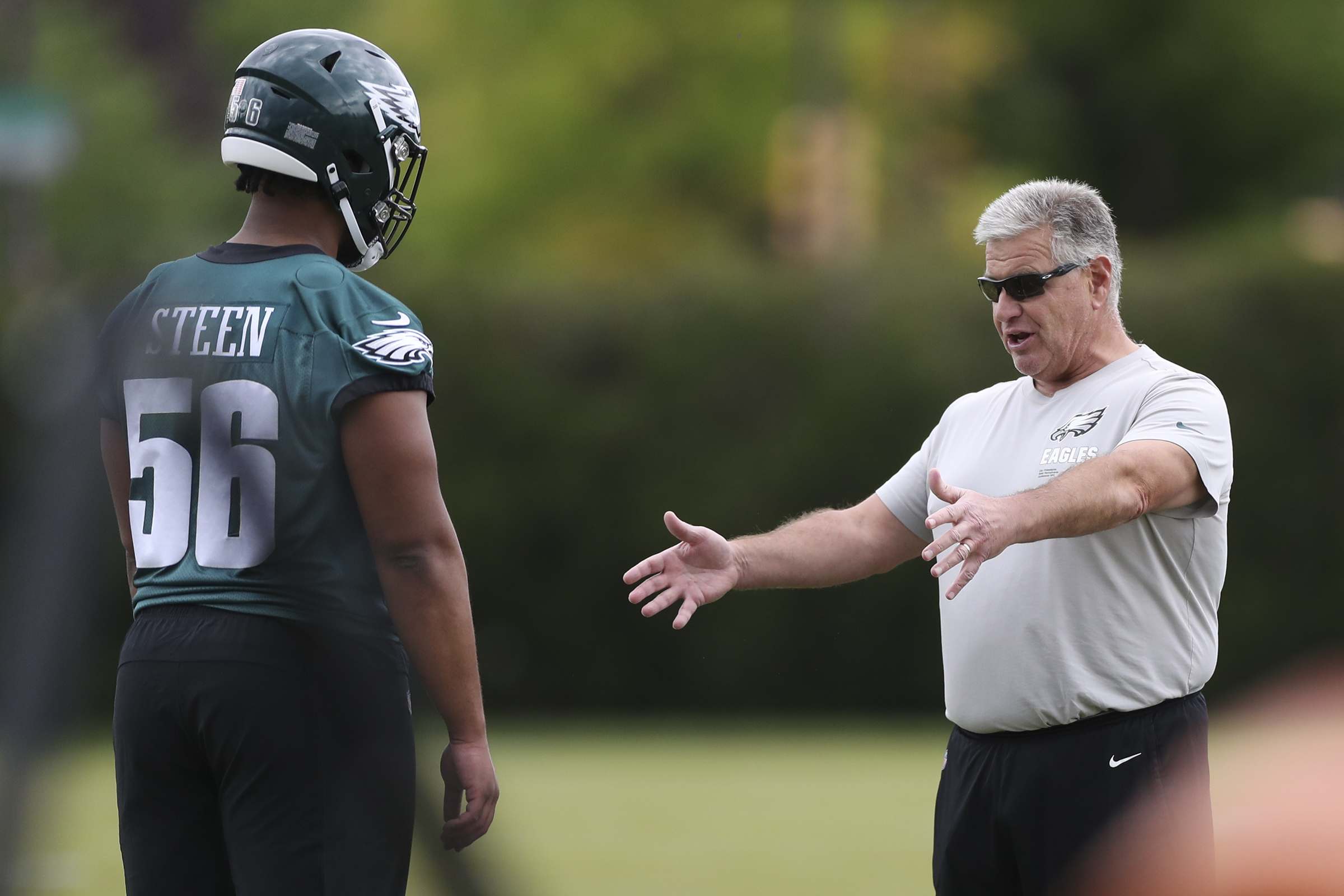
Eagles’ offensive line coach Jeff Stoutland speaks with Tyler Steen during rookie mini camp at the NovaCare Complex in Philadelphia on Friday, May 5, 2023.Heather Khalifa / Staff Photographer
Hurts struggled with it, his replacement Tanner McKee struggled with it, and now Joe Milton will have to navigate those waters, too. He’ll be at quarterback vs. the New York Giants on Sunday after McKee was benched.
He’ll have a starting five on the offensive line that will be playing its third straight game together — perhaps the continuity will finally produce some cohesion. Kuper deserves credit for coaching up Bell, Drew Kendall and reserve interior lineman Willie Lampkin and getting them ready for the season despite questions during the summer about depth.
But Stoutland’s record when it comes to reclamation projects like Mekhi Becton and Fred Johnson … or getting reserves like Halapoulivaati Vaitai or Jack Driscoll to step in without missing a beat, or taking an ex-rugby player in Mailata and transforming him into a shield at left tackle, may be unmatched.
Kuper may have played the position at the highest level, and can relate to the players and get more out of them in that bond, but Stoutland had his own way to pull the best out of his O-lineman, as Kendall described to me when I asked him to compare the two coaches.
“Kupe was a former player,” Kendall said. “He played in the league for a while at a high level. So I think from a day-to-day standpoint, he kind of understands the the daily grind and the grind of film to practice to taking care of your body like he kind of gets that and you can kind of bond with him over that because he’ll reminisce about his days and all that stuff so that’s been enjoyable, you know, to get that perspective from him.
“And then Stout — Stout’s great, you know. It’s just a different style of coaching. He likes hard-nosed, put your head down work, which was great for me coming in here. You know, like I haven’t done s— in this league. I have a lot to prove, and Stout kind of helped you know push that out of you at all times, and I really appreciated that as well.”
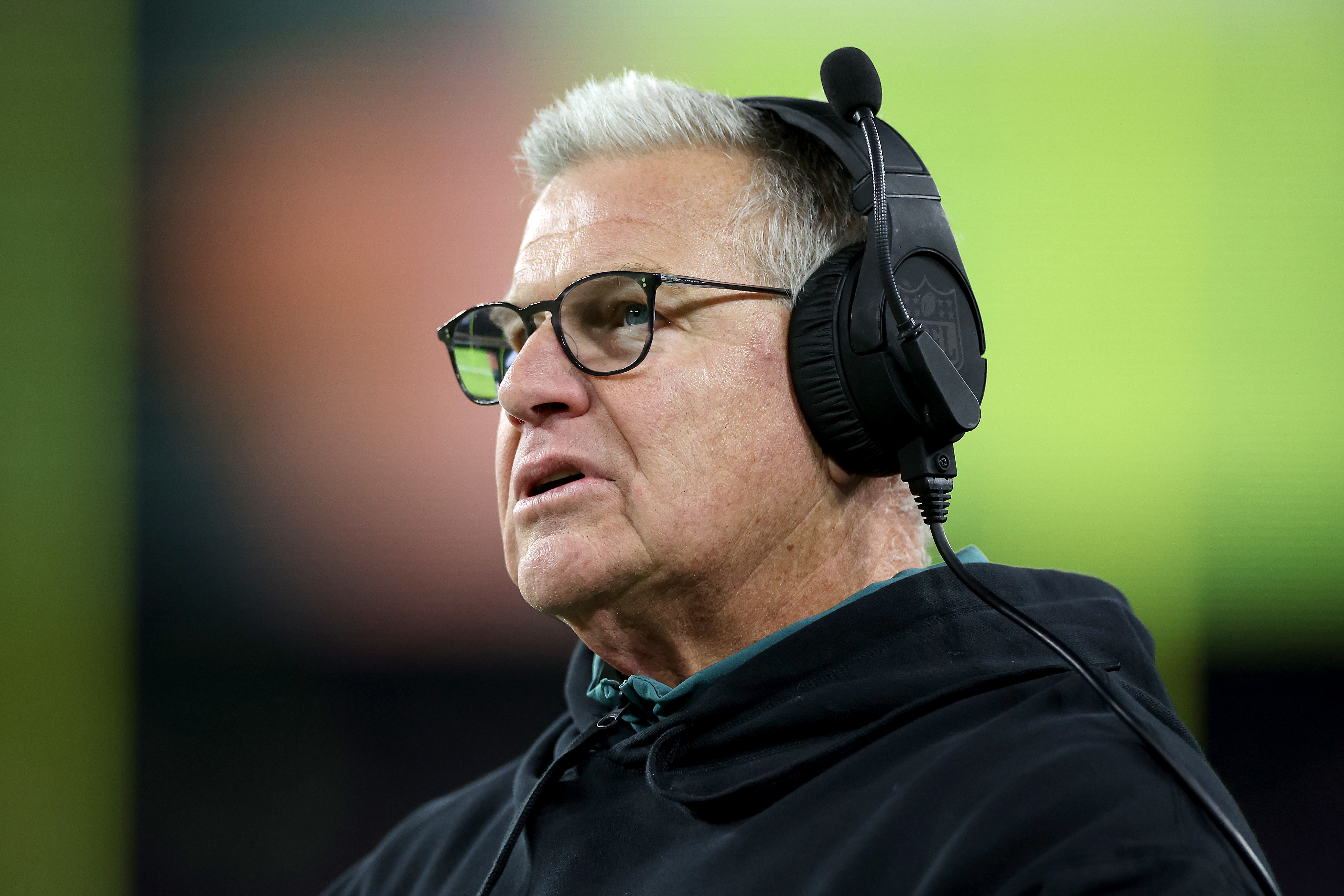
Mailata still does, naturally. He’s voiced support for Kuper, as have the other O-linemen, but it was always going to be difficult to replace a two-time Super Bowl-winning coach. That the 64-year-old Stoutland lasted as long as he did in one place with three different coaches is rare in the NFL.
So that it would end should come as no surprise, but the circumstances of Sirianni’s tenure, and his inability to have a core offensive scheme and philosophy that would endure despite changes to his staff and the roster, meant that there would be casualties. Stoutland might be the most costly because the Eagles allowed one of their few elite coaching minds to leave the building.
He might not be there in body anymore, but his absence still haunts the team. Mailata didn’t say “Jeff Stoutland U.” during Sunday Night Football to raise that specter — he just wanted to continue to honor his mentor. The Eagles, to their credit, didn’t stand in the way.
Mount Airy’s dining scene suffered a big loss in September 2025, when chef David Jansen closed his eponymous French-inspired restaurant, which tony Northwest Philadelphians and beyond had loved for a decade.
Luckily, the neighborhood didn’t have to wait too long for another date-night destination to step in. Doho, a chic 41-seater, opened in October 2025 with a dimly lit bar and dining room marked by marble tables, gold accents, and plush seats.
Bartender Huy Pham pours wine at the bar during a busy night at Doho restaurant, 18 W. Hortter St.Elizabeth Robertson / Staff Photographer
Doho’s modern aesthetics stand out in this part of town as much as its globally influenced menu, whose supporting ingredients are always on the move: Delicate masa gnocchi studded with Tajín-laced corn nuts and queso fresco in late summer turns to tomato masala and pickled tomatillos as temps fall; duck gets plated with charred peaches in one season and charred apples in the next; the sungold tomato sauce dressing the housemade “rad” noodles (stretched-out radiatori pasta) in early October shifts to a chorizo-laced red curry number by November.
“There’s a lot of care that goes into everything here,” says chef de cuisine Lee Richards, who was preparing handmade shrimp dumplings late last month for a midautumn menu debut.
Richards leads the kitchen at Doho, which is attached to owner Peter Loevy’s Catering by Design at Germantown Avenue and Hortter Street. Though executive chef Roth Perelman oversees both operations — and directs much of the cocktail menu at Doho — the two outfits don’t mix much otherwise. (Meaning catering clients can’t order Doho food for their events — yet, Loevy says.)
The lamb ribs and sweet potato tostones at Doho.Monica Herndon / Staff Photographer
“We kind of pull away and do our own thing,” Richards says, adding that Doho’s staff, which works in a separate kitchen area from Catering by Design’s team, does get to enjoy an abundance of cookware.
My favorite way to play this globe-hopping, tradition-mixing menu is to focus on the interesting lineup of small plates. There’s usually about 10 items to choose from, including oysters, fish crudo, tuna tartar, Badger Flame beets, and a Caesar salad (whose greens change regularly). You never know what might round out the rest — be it a shrimp quesadilla griddled in paratha bread, a blue crab-stuffed Vietnamese crepe, or a crescent-shaped pretzel roll served alongside mushroom pâté. (There are even more creative bites during the bar’s four-night-a-week social hour, from 5 to 6:30 p.m.)
At my most recent visit, we grazed on tender lamb ribs glazed in a savory-sweet fish sauce caramel as well as crispy sweet-potato tostones generously dusted with chipotle-suya spice mix. The lamb ribs and tostones are both fixtures in the small-plate set, but Richards tweaks the tostones preparations seasonally, swapping in caramelized onion aioli, say, for a miso ranch dipping sauce.
(Clockwise from left) The Electric Touch cocktail, pork banh mi, sweet potato tostones, and lamb ribs at Doho. Monica Herndon / Staff Photographer
Even tastier was the pretzel banh mi, served on shio pan, or Japanese salt bread, a cushiony, salt-speckled bun that tastes like it’s part pretzel, part croissant, and part Parker House roll. The bread, which gets spread with that same fish sauce caramel (in place of pâté), cradled a salty slab of pork belly, threads of pickled carrots and daikon radish, cilantro leaves, and thin slices of jalapeño. The only flaw I could find — other than the banh mi’s limited availability on the social hour menu — is that you will not want to share it, even with your partner.
Doho’s cocktails are well matched with these boldly spiced dishes. You can’t go wrong with their very gingery Penicillin riff (the Electric Touch), but I was especially taken with a Tajín-rimmed corn margarita (Don’t Leave Me Now) made with tortilla-infused tequila, corn liqueur, and sweet corn. Alas, it was off the menu just a few weeks later. Not to worry: There’s always something new and intriguing here to keep the locals coming back.
“One great thing our neighbors say is that it’s a Center City restaurant that [they] don’t have to go to Center City for,” Loevy says.
Democratic lawmakers will return to Capitol Hill on Monday after the massive “blue tsunami” with a short but complicated question: Now what?
The 2026 midterms have set the Democratic Party up to take back the gavels in January with its largest majorities since 2009, giving it a mandate to act on voters’ intense affordability concerns and frustrations with President Donald Trump.
Even after a year that showcased deep ideological divides in their ranks, both the incoming progressives and traditionally moderate Democrats have said in the days since the election that reducing the cost of living must drive their agenda.
How they go about doing that — and how much they can realistically lower the price of gas, groceries, electricity bills, housing, and more — are other questions entirely.
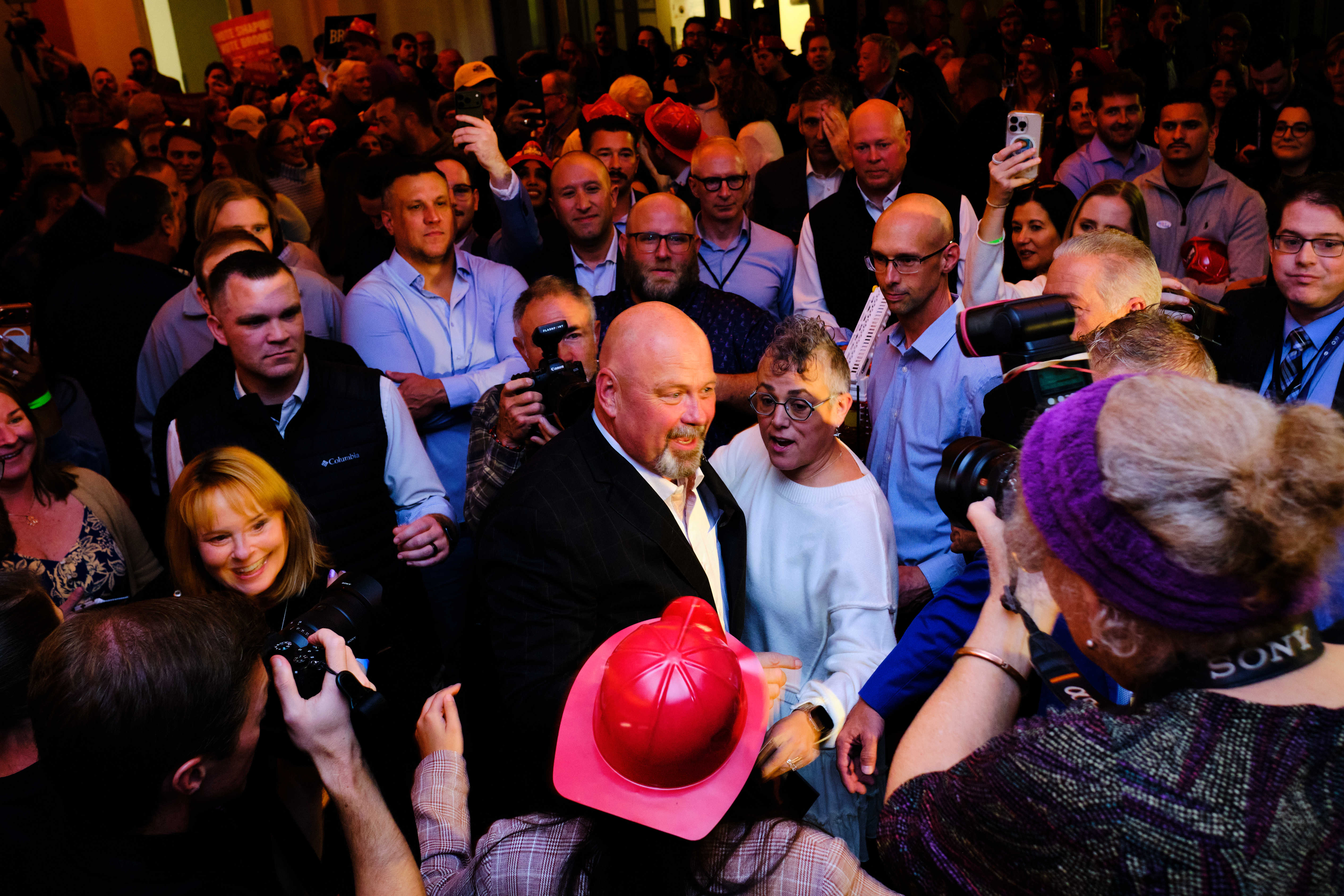
“We’re giving Democrats a chance. But they’re on probation,” Allentown Mayor Matt Tuerk, a Democrat and the first Latino mayor of Pennsylvania’s third-largest city, said in an interview at the election night party for Bob Brooks in the Lehigh Valley’s congressional district.
Tuerk said he believes Brooks and the other incoming Democrats in Pennsylvania’s congressional delegation recognize the stakes. He said Latino voters in particular who swung toward Trump in 2024 and back toward Democrats this year are watching for them to do everything they can to lower costs and fight the administration, including on immigration enforcement.
“That’s what we expect out of Bob. That’s what we expect out of Paige Cognetti,” who unseated a Republican in a Scranton-based district, Tuerk said. “That’s what we expect from our congressional leaders across the country.”
U.S. Rep. Brendan Boyle, the Philadelphia Democrat set to become chair of the powerful House Budget Committee, said his party’s lawmakers are already gearing up to prove themselves “from the very first day, from the very first week.”
He said he is optimistic that the large, ideologically diverse caucus “will all be able to be on the same page about the affordability agenda.” And the places to start, he said, are rolling back Trump’s tariffs, restoring previous and forthcoming healthcare cuts, and bringing an end to the war in Iran — three major drivers of inflation. It will take time to get results.
“I don’t think this economy is getting better anytime soon, unfortunately,” said Boyle, who closely tracks economic forecasts and will have a key role in crafting his party’s approach. “The consensus is even if we’re able to reverse these things, we won’t immediately see prices drop right away.”
U.S. Rep.-elect Chris Rabb stops by at Kingsessing Recreation Center on Election Day. Tyger Williams / Staff Photographer
Rabb, asked during a postelection CNN interview about his more transformational goals like universal basic income and expanding the U.S. Supreme Court, said the first step is affordability. Stelson, who hammered her opponent in a Harrisburg-based district over the Iran war’s impact on gas prices, said during her victory night speech that ending the war would be her foremost goal.
Brooks, in his own victory speech after unseating a Republican, mentioned the cost of diesel, tariffs, and healthcare cuts before rattling off a list of other priorities — ban congressional stock trading, stop corporate money in campaigns, implement term limits, release the Epstein files.
“If we’re going to fix D.C., we’ve got to put the fire out first,” the former Bethlehem firefighter said. “That means ripping out the corruption from its roots.”
It was the type of message that appeared to strike a chord on all sides of the Democratic spectrum. After Election Day, Brooks was one of just three Democrats mentioned in congratulatory statements from both the moderate Blue Dog PAC and U.S. Sen. Bernie Sanders (Ind., Vt.), the democratic socialist who has championed Medicare for All.
Sanders indicated Brooks’ win was among the “great progressive victories.” The Blue Dog PAC lumped him in with Zack Mullock, the Cape May mayor who said he beat Republican U.S. Rep. Jeff Van Drew as a pragmatist rather than replicating “the socialist kind of things” elsewhere.
But bridging that divide when Democrats take control and battle over the details of their agenda could be a challenge.
Dan Parker, cochair of the Philadelphia chapter of the Democratic Socialists of America, said Democrats have a clear mandate to provide immediate relief to people struggling to afford everyday costs.
“What happens next, beyond that, is still going to be a fight as to how far we can take things,” Parker said.
The chapter is “elated” by Rabb’s victory, Parker said. He was one of five nationally endorsed DSA candidates who will now join the “largest bloc of socialists in Congress in its history,” according to the national organization.
But that is a small factionin a large caucus, making them unable to challenge Hakeem Jeffries, the Democrat in line to become House speaker. Parker said DSA members believe Jeffries is “probably the very last person fit for this moment” because they see him as too closely aligned with corporate interests. They may not have the votes now to challenge Jeffries, Parker said, but they intend to keep pushing.
“Our star is ascendant — and as a socialist and progressive force are not going to be able to be swatted away in the coming congressional term,” Parker said. “So, many of our demands are going to need to be met, and we’re going to continue to build our movement to ensure that they are.”
Early indications of how Democrats plan to come together will begin in the coming weeks as they choose their leaders and preview their agenda. On Thursday, a long list of high-profile Democrats — including rumored 2028 presidential contenders — will gather in Denver for discussions about what just happened and, in the name of the conference itself, “What’s Next.” Among the planned attendees: New Jersey’s U.S. Sens. Cory Booker and Andy Kim, Gov. Mikie Sherrill, and U.S. Rep. Chris Deluzio, an Allegheny County Democrat considering running for U.S. Sen. John Fetterman’s seat.
In another similarly named “Now what?” conversation on Friday, U.S. Rep. Madeleine Dean (D., Montgomery) told the historian and author Timothy Snyder that she was looking forward to a diverse Democratic caucus that was motivated to make the most of its opportunity in Congress.
“We have to come in and be aggressive, but really competent. We can’t just flail,” Dean said. “We have to really be competent around affordability, what matters, what’s hurting Americans right now — what they responded to — and accountability. We’ve got to go down both rails.”