
John Cole spent 18 years as editorial cartoonist for The (Scranton) Times-Tribune, and now draws for various statesnewsroom.com sites.
John Cole spent 18 years as editorial cartoonist for The (Scranton) Times-Tribune, and now draws for various statesnewsroom.com sites.
Brent Hershey argues in a recent op-ed that a bipartisan farm bill provision that has passed the House of Representatives would undermine Pennsylvania farmers, threaten animal health protections, and destroy markets producers have spent years building. Those are serious claims. They deserve careful examination.
The provision under debate does not prevent Pennsylvania from regulating farms within Pennsylvania. It does not affect the state’s authority to manage livestock disease, conduct inspections, or respond to outbreaks. Claims that it somehow jeopardizes protections against avian influenza, bovine tuberculosis, or chronic wasting disease simply are not what Congress is considering.
Hershey also argues that Pennsylvania farmers invested to meet California’s standards and now earn premiums from those markets. Even if true, a business opportunity created by California’s policy does not answer the question now before Congress.
The actual issue is whether one state may impose farming production requirements on farms located in other states as a condition of market access.
Reasonable people can disagree about animal housing standards — and on this issue, the American Veterinary Medical Association does not support California’s arbitrary and unscientific approach that it says provides no demonstrable advantage for animals. What should not be in dispute is the question being debated.
That question is where state authority ends, and interstate commerce begins. It deserves to be characterized accurately and debated on those terms.
Andy Curliss, chairman, Carver Center for Agriculture and Nutrition, Des Moines, Iowa
California’s Proposition 12 is driving up food costs across the country by imposing mandates on pork and egg farmers. Prop 12 prohibits farmers from selling pork and eggs in California unless they make expensive and arbitrary changes to their operations, driving up costs for all consumers, not just Californians.
Prop 12 is opposed by major veterinary and farm organizations. If it’s allowed to stand, it will set the stage for more overreaching state laws that drive up the cost of meat and reduce consumer choice at the supermarket.
So why does pork farmer Brent Hershey approve of the law? Because he happens to already be California-compliant — meaning the law drives up the costs of other farmers who compete with him. It’s a cynical and selfish position.
Congress should pass a fix in the Farm Bill that keeps state laws within state borders. California should not be allowed to impose costly regulations on farmers in other states. A federal fix will help consumers and farmers by preventing these hidden food taxes from taking hold in more states.
Will Coggin, research director, Center for the Environment and Welfare
As a child of the ‘60s and a frequent protester, I disagree completely with Will Bunch’s critique of New Jersey Gov. Mikie Sherrill’s handling of the demonstrations at the Delaney Hall immigrant detention center. Any kind of protest by the left instantly becomes fodder for Rupert Murdoch’s conservative news agencies, which spin video images into “lawlessness and anti-Americanism.” I’m sure the governor was torn as to how to handle this situation, and — as much as I admire the protesters — I also see them becoming fodder for a future campaign commercial for the party that spouts “law and order” in every other sentence. You may accuse Sherrill of being too harsh, but she is keeping the Delaney Hall protesters from being the lead story on right-wing television.
Gerard Iannelli, Haddon Heights
Reading a recent article about stricter rules for Medicaid work requirements, my stomach curdled. The cruelty of Trump’s administration has reached a new high. The preamble to the Constitution states: “We the people of the United States, in order to form a more perfect union, establish justice, provide for the common defense, promote the general welfare …”
Healthcare is “general welfare.” Yet now, people working at minimum wage jobs 20 hours per week would have great difficulty obtaining and submitting proof of employment to keep their Medicaid. People with terminal kidney disease and cancer will have to prove their inability to work 20 hours a week to keep their Medicaid.
Where’s the outrage? Let heartless legislators and policymakers know this is unacceptable.
Mardys Leeper, Bryn Mawr
Many adults encourage teenagers to get jobs to build responsibility, gain experience, and prepare for the future. However, what is often overlooked is how difficult it can actually be for teenagers to find and maintain employment while balancing school, family responsibilities, and transportation limitations.
As a high school student, I have seen firsthand how challenging it is to manage academics, extracurricular activities, and responsibilities at home while also trying to enter the workforce. Many teenagers are eager to work, but employers often want experience that young people have not yet had the opportunity to gain. In some cases, limited transportation and restricted work hours for minors create even more barriers.
Teen employment is important because it teaches communication, time management, independence, and financial responsibility. Yet, many teenagers are caught in a cycle in which they are told they need experience to succeed, while struggling to find opportunities that allow them to gain that experience in the first place.
Communities and employers should recognize the value that motivated young workers bring. Offering more flexible scheduling, entry-level opportunities, and support for teen workers would benefit both businesses and young people preparing for adulthood.
Deanna Giorgio, Ardmore
As a college Hall of Fame athlete and U.S. national team coach, I was taught from an early age that competition carries responsibilities beyond simply winning. One of the most important lessons was that when you lose, you shake your opponent’s hand, accept the result with dignity, and work harder to “get them next time.”
That is one reason I could never again support Donald Trump after the events surrounding Jan. 6, 2021. Disputing election procedures through lawful courts is one thing. But continuing to encourage the belief that the election was illegitimate after repeated court losses, and then watching the U.S. Capitol being attacked during the certification process, crossed a line for me.
Now, discussions about compensating some individuals with taxpayer dollars who were convicted in connection with the Capitol riot only deepen that concern. As a Republican, I have always believed our party stood for law and order, personal responsibility, and respect for police officers and constitutional institutions. Rewarding people involved in that event feels inconsistent with those values.
Reasonable Republicans can disagree on taxes, immigration, spending, or foreign policy. But sports taught many of us that character is revealed most clearly in defeat. Leaders, like athletes, are ultimately judged not only by how they win, but by how they lose.
Thomas E. Feaster, Tampa, Fla.
Join the conversation: Send letters to letters@inquirer.com. Limit length to 150 words and include home address and day and evening phone number. Letters run in The Inquirer six days a week on the editorial pages and online.
DEAR ABBY: My husband and I have been married 12 years, and we were together five years before getting married. He’s an alcoholic who has been sober for several years, but he wants to argue about everything. He has anger issues, possibly because he was in the military. His health is bad, too.
I have reached a breaking point and am thinking about divorce because of the way he treats me, my kids and grandkids — except for my son, who he is scared of. He also badmouths my son’s wife. He gets mad because I watch my granddaughter three days a week while her mother works, and sometimes I have both girls.
My daughter-in-law is an awesome person who does anything for anyone. She’s in the Army Reserves and works full time. She put herself through school and is a social worker as well as a full-time mom! My son is a truck driver, so he’s gone all week. I try to help them out as much as I possibly can. I’m not giving up on my kids and grandkids. Am I wrong for putting them first? What can I do?
— DOING MY PART IN OKLAHOMA
DEAR DOING: Your husband appears to be what is known as a “dry drunk.” That’s an alcoholic who managed to quit drinking, but never dealt with the issues that drove him to drink in the first place. He is also an abuser.
You are not wrong for wanting a life free of hostility and verbal abuse. You are also not wrong for wanting to protect your family from the poison he spews. Because you can’t make this man change who he is, talk to a family law attorney and set yourself free.
** ** **
DEAR ABBY: A group of 10 couples have been friends since meeting in college. Seven of the couples have been married for more than 25 years, and three of the couples have, over the last decade, divorced. The issue is that one man has remarried (his ex is no longer in touch with any of the group). His new wife is demanding and self-centered, with clear narcissistic traits. We love the husband dearly but not his new wife.
We are planning a once-in-a-lifetime cruise, and nobody wants her on the ship. We know from past experience that she will ruin the trip. How do we tell the husband that they are not invited, and who should deliver the message? We don’t want to end the relationship, but frankly, she cannot go.
— TRAVEL TROUBLES
DEAR TRAVEL TROUBLES: No matter how you approach him, know that you run a real risk of alienating your friend if he is forced to choose between his wife and this friend group. If it’s not worth the risk, the group will have to grin and bear her presence with as much grace as can be mustered.
If you are sure you want to exclude them both, you owe him an explanation. The person closest to him should meet up with him privately and deliver the news. Remind him of the “past experience” where his wife ruined a previous trip. Be specific about what behaviors bothered the rest of the group, and tell him no one is willing to travel with her again.
You might, however, consider extending him a solo invitation. It’s possible he could use some time away from his charming wife!
ARIES (March 21-April 19). The fast way to get to know someone is to be in a totally new situation with them. It creates a shared sense of discovery. Away from routine, people reveal different sides of themselves, form vivid memories and develop trust through experience.
TAURUS (April 20-May 20). You’ve already analyzed the situation enough. Continued thinking will have diminishing returns. Success depends less on whether you act and more on how you enter the situation. What’s the thing people want here? Can you position yourself to be that?
GEMINI (May 21-June 21). Some are fluent with ideas but disconnected from emotional realities. Others understand feelings deeply yet struggle with structure. Today features rare and lovely interactions combining emotional awareness with accountability, honesty, boundaries, humor and practical problem-solving.
CANCER (June 22-July 22). You appreciate fairness and good business not despite life’s inequities but because of them. You have some very creative ideas about how to even the score, shore up inequities and make up for disproportionate sorrows.
LEO (July 23-Aug. 22). Ask any jury: passing judgment can be exhausting work. Spare yourself the drain by directing your attention toward people you genuinely enjoy, admire and understand. Delight tends to produce far better company than criticism does.
VIRGO (Aug. 23-Sept. 22). You’re always learning more about how to communicate with people because communication is always evolving. People’s needs, moods and goals change. Your capabilities change. Language itself changes. You adapt like a pro.
LIBRA (Sept. 23-Oct. 23). Politeness is a foundation of a decent society. Today there’s a shared decorum that keeps people cooperating. While good manners alone can’t solve every problem, they create conditions where people can solve them together.
SCORPIO (Oct. 24-Nov. 21). Shared human experiences are powerful all by themselves. There doesn’t have to be anything planned or structured or fancy about team building. Just doing something together will be enough to improve vibes and heal rifts.
SAGITTARIUS (Nov. 22-Dec. 21). As you respond predictably, you’ll earn someone’s trust. If you respond unpredictably, you’ll earn other things, which may include alertness, excitement, fear or wonder. You want them to be comfortable, but you should not let them get too comfortable.
CAPRICORN (Dec. 22-Jan. 19). In today’s relationship landscape, what’s broken can be fixed. Even so, avoid approaching the issue with a line like, “Can I talk to you?” which only puts others on the defensive. The fix starts in your heart and your imagination.
AQUARIUS (Jan. 20-Feb. 18). Your experiences have taught you patterns that no book could fully explain. After enough disappointment, tenderness, conflict and repair, you recognize emotional dynamics and respond to challenging exchanges with skill, diplomacy and self-respect.
PISCES (Feb. 19-March 20). Someone prosperous is looking for someone with whom to share their good fortune. You’ll stand out as a solid prospect, not because you are needy but because you appreciate with enthusiasm and do not take life’s gifts for granted.
TODAY’S BIRTHDAY (June 8). It’s your Turned Up Year in which the volume of your soul gets dialed to perfect amplification. No more toning yourself down to avoid challenging, upsetting or offending people. You’re around people who get you and want you to shine. More highlights: You’ll be entrusted with the keys to headquarters and hearts. You’ll enjoy the company of those who need you and who are there when you need them. Four fun trips. Leo and Sagittarius adore you. Your lucky numbers are: 9, 30, 44, 2 and 17.
Responding to a radio report of gunfire Sunday afternoon, Philadelphia Police found a man shot to death near the boat ramps of the Quaker City Yacht Club.
It was just before 5 p.m., when patrol officers raced to 5198 Princeton Ave., where the yacht club is located tucked away near the Delaware River waterfront.
Within minutes, paramedics pronounced the victim, whose name and age have yet to be released, dead on the scene.
Investigators are currently working to determine the circumstances surrounding the shooting. No motive has been established, police said.
The victim became the 59th homicide in Philadelphia in 2026, a nearly 40 percent decrease in killings from the same time last year.
Anyone with information involving the shooting is encouraged to contact the Philadelphia Police Department’s Homicide Unit at 215-686-3334 or submit an anonymous tip by calling or texting 215-686-Tips.

The mural covers the side of a restaurant on a city block in Fishtown. It’s impossible to miss. It also symbolizes promise during this half-decade of Phillies contention.
And it came to life Sunday.
It wasn’t only that Brandon Marsh continued a yearlong rise into an All-Star before our very eyes by homering in his third game in a row and leaping to make a catch against the left-field wall.
No, this time, Alec Bohm and Bryson Stott — the other members of the trio that teammates once dubbed “The Daycare” and inspired the artwork on Frankford Avenue — delivered big fifth-inning hits in a series-winning 9-5 victory over the White Sox in Citizens Bank Park.
“The best thing about this team,” said backup catcher Rafael Marchán after the Phillies won for the ninth time in 12 games to maintain their hold on a wild card, “is if the big guys can’t do it that day, there’s going to be someone that’s going to find a way to help us win.”
Marchán might as well have been speaking for himself after homering in the second inning of a seesaw game in which the Phillies led 3-2 and 4-3 but also trailed 2-1 and 5-4.
But it’s really more about Bohm and Stott. Like Marsh, they were supporting characters who brought youthful energy when this run began in 2022. Now, they bat behind the star trio of Kyle Schwarber, Trea Turner, and Bryce Harper.
You might say the Daycare is all grown up.
Into what, though? Marsh has matured as a core player, perhaps even the Phillies’ most consistent hitter in their season-reviving 26-11 run under interim manager Don Mattingly. He leads the majors with a .338 average and has an .889 OPS.
Remember when Marsh started only against right-handed pitching? Yeah, that’s a thing of the past. He has been one of the best outfielders in the majors.
“It seems like now we’re starting to talk about him every day,” Mattingly said. “He’s just swinging the bat, and he continues to swing it. And not only average but power, you know? It’s extra-base hits, he’s driving in runs.”
Said Marsh: “I don’t know about the power. That was first row, bro.”
OK, so Marsh’s leadoff homer in the third inning did eke over the fence. But it came on a curveball, and he drove it the other way to left field to restore the lead for the Phillies at 4-3.

And if Marsh had plans to go away for a few days in the second week of July, he should probably cancel.
The All-Star Game is beckoning.
“I’d be lying to you if I said it wasn’t on my mind, but I’m really not focused on that,” Marsh said. “I’m really just trying to enjoy right now. I’m just enjoying this moment. I’m really focused on just trying to be present here with these guys and still just be a sponge to my teammates and just keep learning from them and just trying to be the best I can be.
“But it would be really, really cool to be a part of that group this year, especially here in Philly.”
Yet while Marsh has ascended to the level the Phillies believed he could reach when they traded for him at the deadline in 2022, Bohm and Stott struggled through much of the first two months of the season.
Even now, these were the numbers they carried into the fifth and sixth spots in the batting order entering play Sunday:
But trailing 5-4 in the fifth inning, Bohm punched a game-tying double the other way to right field before Stott drove in Marsh as the go-ahead run with a single to center field.
Marsh, Bohm, and Stott combined to go 5-for-10 with three runs and five RBIs.
And there it was: hope, symbolized by the three players in a 2-year-old mural of the “Daycare.”
“That whole middle of our order, all really good today,” Mattingly said. “It felt like it was up and down the order today.”
The Phillies recorded 11 hits, five of which came with runners in scoring position. And they needed it. Aaron Nola lacked his usual control. He walked four batters, three of whom came around to score, and lasted only 4⅓ innings.
After weeks of being pushed back into contention by otherworldly starting pitching — “If we wouldn’t have won those games, you all would have been asking a lot more questions about the offense,” Mattingly said — the Phillies busted out for 20 runs in the three games against the White Sox. Before this week, they went 13 games without scoring more than four runs in a game.
It surely helps when it’s more than Schwarber, Harper, and Marsh driving in the runs.
“We’ve just got to keep this train going,” Marsh said. “It’s been driven by our pitchers. They’ve set the tone for us. And as hitters, we’ve picked it up as well. We’re just trying to give those guys a couple of runs because that’s pretty much all they need.
“Just trying to do our part so they can do theirs.”

With the sun shining and the grand vista of the Philadelphia Art Museum steps framing a new venue, crowds poured into Philadelphia’s 2026 Pride festivities on Sunday — the first time the LGBTQ+ event was ever hosted on Benjamin Franklin Parkway.
“This is beautiful,” said Drew Galella, 27, of King of Prussia, toasting his boyfriend, Rich Jann, 42, also from King of Prussia, and their friend, Kaitlin Kirwan, 41, of South Jersey, with their first vodka lemonades. Regular attendees of Philly Pride events — hosted in the Gayborhood since 2022, and Penn’s Landing before then — they cheered the spacious festival grounds, which ran along the Parkway, from Eakins Oval to 21st Street. The celebration had stepped off at 11 a.m., with a parade starting at 13th and Locust Streets.

By 12:30 p.m., the group had easily wound through fast-moving ticket lines — this year also marked the return of a festival admission fee — and strolled the celebration’s vastly expanded vendors’ row and wide-open performance areas, and grabbed their cocktails without a wait.
“The change of venue is perfect,” said Jann.
The new location is a means to accommodate larger crowds — an estimated 147,000 last year — and improve safety, the organizers have said. But the changes, including the $10 cost of an entrance band, were not well-received, and many took to social media with their frustrations and concerns over whether this move would hurt the Gayborhood.
Philadelphia is no stranger to the pay-for-Pride model; before 2022, the festival charged an entrance fee. But still, the ticketing policy sparked discourse about inclusivity and the corporatization of Pride parades, which were first held to commemorate the Stonewall riots in New York City.
In an email to The Inquirer ahead of Sunday’s festivities, Philly Pride 365 spokesperson Brandon Szeker said that “given the various factors that could potentially impact ANY event,” the organizers were “not concerned about ticket pricing.”
“There are many community organizations offering free tickets, so it’s really up to the consumer to make the best decision for themself,” Szeker said. “Pride is where you stand.”
Other cities, like St. Louis, have adopted an admission fee in response to major sponsors pulling or scaling back their support as President Donald Trump targets diversity, equity, and inclusion initiatives. In Pittsburgh, Pride organizers told NPR they anticipated securing 30-40% of the sponsorship money this year that they were able to fundraise a few years ago.
Szeker said Philly Pride 365 has not experienced this drop in support and has previously dumped “problematic businesses,” like Target, Wawa, AARP, and Burlington, from its list of backers.
When asked about a possible missed economic boom for the Gayborhood, Szeker pointed to Philly Pride 365’s “Out For Good,” a Saturday street festival “centered on the [Gayborhood], uplifting the businesses, venues, and spaces that help sustain LGBTQ nightlife in Philadelphia year-round.”
This year’s sprawling event did seem to attract many first-timers, including neighborhood residents and out-of-towners.
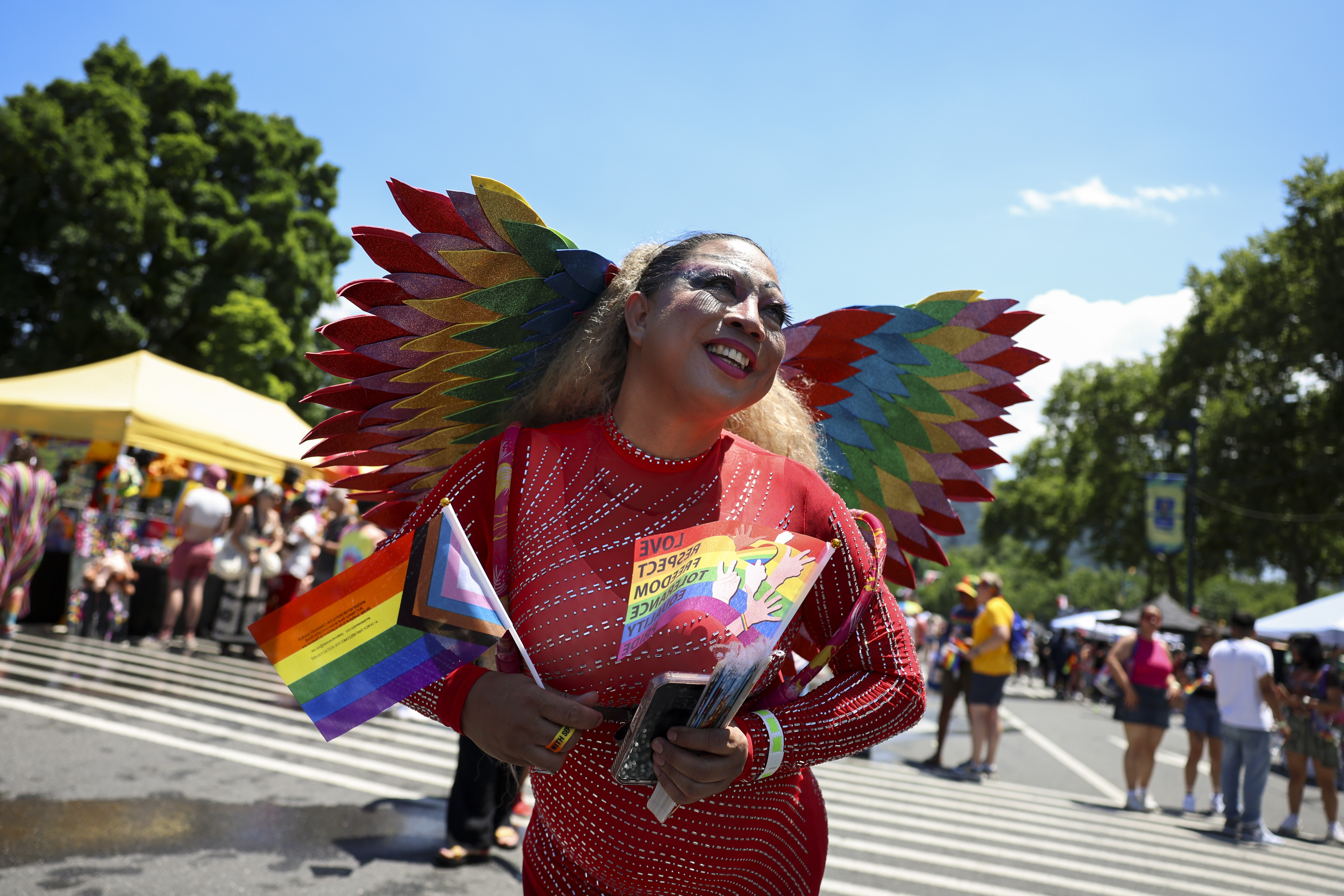
“It’s so great to see everyone come together for such a beautiful cause,” said Erin Bell, 24, of Delaware, who made the trip with friends.
Others said they were extra proud to see the event hosted at Philadelphia’s most prominent celebration grounds, especially now, when their community is under attack from lawmakers and others.
“It’s the City of Brotherly and Sisterly Love — it’s just so wonderful to see all this love here,” said Abby Craig, 23, of Bucks County.
Her friend, Phillip Rodriguez, 27, of North Philly, said that while he loves the Gayborhood, he felt the move to where Philly holds its biggest festivals makes a statement that Pride isn’t just for LGBTQ+ people.
“It says that something that everyone should enjoy,” he said.
Manning the Mazzoni Center booth, where volunteers connected crowds with LGBTQ+ health and wellness info, the center’s chief executive officer, Simon Trowell, said he understood upset feelings over the move but praised the added visibility.
“What a wonderful opportunity to celebrate the community and the city on America’s 250th anniversary,” he said. “We are delighted to be here.”

Meanwhile, the Gayborhood’s sidewalks and iconic shops and bars buzzed with crowds, who said they preferred to keep the party where they believed it belongs.
“Pride should remain a protest and support local businesses, not corporations,” said Nikki Schwartz, 28, of Spring Garden, who along with her wife toured the recently opened Philly Pride Visitor Center at 12th and Locust Streets, one of the few LGBTQ+-focused visitor centers in the nation. A lot of her friends felt the same, she added.
Nearby, Tonka Meares, 58, and her friend, Lorre Chavez, 60, both of Philly, said they had not yet made up their minds whether to visit the festival or stay in the neighborhood, where they have celebrated for 20 years.
“This is the Gayborhood,” said Meares. “It should be here.”

The lessons are coming quickly for Andrew Painter in his first major-league season.
Sometimes, though, it’s as basic as throwing a strike.
Take, for instance, the first batter Saturday. Painter fell behind in the count and tried to get White Sox leadoff man Sam Antonacci to swing at a fastball above the zone. Instead, Painter hit him, the beginning of a tone-setting three-run rally in an eventual 6-3 Phillies loss.
“He beat himself there by trying to command a pitch [in a] 2-1 [count] when I just need you to control the zone and collect a strike and move it to 2-2 on a foul ball,” pitching coach Caleb Cotham said Sunday. “Say that wasn’t commanded as well, but you’re 2-2 now vs. you commanded the heck out of trying to go up and in and you missed two inches left of where you’re trying to go.
“You need to command the count by throwing strikes, and that, for him, comes first. If you’re ahead in the count, you get to throw to more aggressive locations. He’s trying a little too hard to command perfect locations, which gets him behind, and it’s tough to work back from that on good hitters.”
Eleven starts into his major-league career, Painter has a 6.21 ERA, 108th among 111 pitchers who have worked at least 55 innings this season.
It’s not what the Phillies expected from the 23-year-old righty, their most hyped pitching prospect since Cole Hamels.

Most surprising, though, is the ineffectiveness of his fastball. Opponents are batting .390 and slugging 585 on a heater that ranks in the top 75th percentile in average velocity (96.6 mph), according to Statcast.
Some rival talent evaluators suggest that Painter may be able to amplify his fastball by getting more extension through his delivery. With less time to react, hitters perceive the pitch to be even faster than it is.
Despite his 6-foot-7 frame, Painter ranks in only the 51st percentile with 6.5 feet of extension. By comparison, 6-7 Brewers ace Jacob Misiorowski reaches upwards of 7.5 feet.
But Cotham is focused on less complicated things.
“I can sit here and say I don’t necessarily care about extension as a metric,” Cotham said. “I think extension is as important as it is for a person to throw good pitches.”
After the first inning Saturday, in which Painter walked two batters in addition to hitting Antonacci, Cotham said they talked about “trying to let it rip with full belief right down the middle.”
“If he’s in the zone a little bit more, I’ll take my shot there,” Cotham said. “When he’s at his best, he’s controlling down and up. It’s not just this constant up, kind of noncompetitive miss.
“Big-league hitters are very good at hitting fastballs, and obviously the fastball’s gotten hit. But there’s a different type of fastball where it’s like, if I have enough stuff behind it, belief behind it, the same pitch that a guy maybe hits out, now he fouls it off.
“So, I think the path through is not, try harder to be more pinpoint. It’s more belief that I’m good enough, and I need to throw strikes when I need to throw strikes and balls when I need to throw balls.”

Fan balloting for the All-Star Game got underway only a few days ago, but the Phillies already have one All-Star.
Interim manager Don Mattingly confirmed that Dodgers manager Dave Roberts asked him to join the National League coaching staff. He deferred comment until MLB announces the staffs, but USA Today reported that Roberts reached out to Mattingly and Cardinals manager Oli Marmol.
It would be the second time that Mattingly has coached in an All-Star Game. As manager of the Dodgers, he was on then-Giants manager Bruce Bochy’s NL All-Star staff in Cincinnati in 2015.
“Any time you can be involved with the All-Star team, obviously it’s an honor,” Mattingly said, “The All-Star Game is a big deal. It’s kind of like an award show almost for MLB, right?”
Mattingly, hired in January by the Phillies as bench coach, thought his managerial days were over until he was tapped to replace deposed manager Rob Thomson on April 28.
As a player, Mattingly was selected for six consecutive All-Star Games. His favorite memory: meeting Rod Carew at his first All-Star Game in 1984 at Candlestick Park in San Francisco.
“He was kind of the guy I watched as a kid and kind of patterned hitting after, and Rod signed a bat for me and brought it to me,” Mattingly said. “He obviously read something that I talked about it. That was probably my [biggest memory], just making the first one and then having Rod reach out.”
Top pitching prospect Gage Wood allowed one run in four walk-free innings Friday night for double-A Reading. He has allowed three runs in 11 innings with 14 strikeouts and one walk in three starts since the Phillies promoted him two levels from low-A to double A. … Cristopher Sánchez (7-2, 1.46 ERA) is scheduled to start at 7:07 p.m. Monday in Toronto against Blue Jays lefty Patrick Corbin (2-2, 3.98).
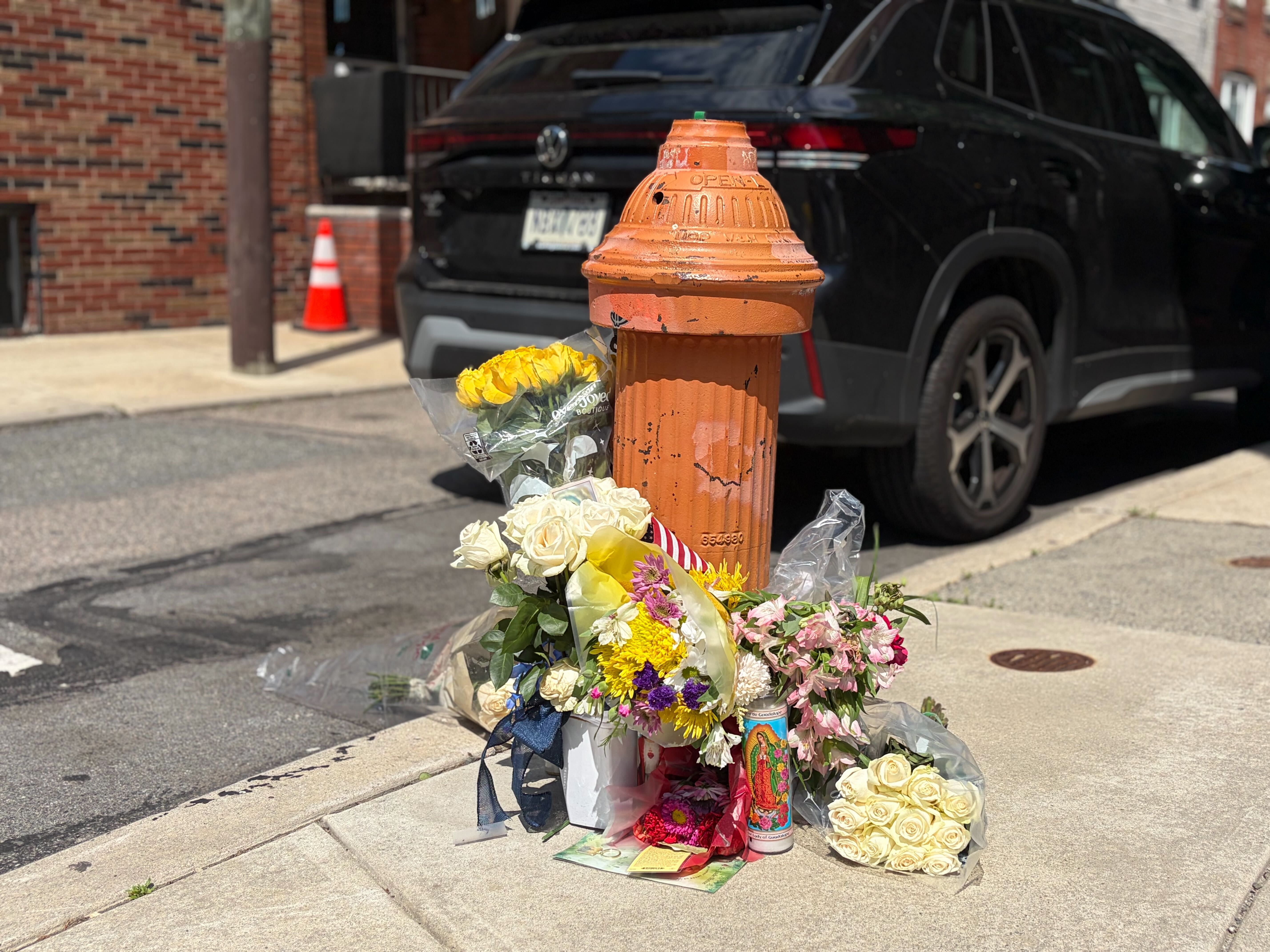
A 22-year-old Penn State student died after being shot a half block from his home in South Philadelphia early Saturday, police said.
Police said officers from the 1st District responded at 1:32 a.m. to a radio call for a person with a gun on the 1900 block of Durfor Street. They found William J. Schmidt lying in the street with a gunshot wound to the chest, police said.
Schmidt was returning home from a local bar where he had been watching the NBA Finals with friends, according to his father, 6abc reported.
Surveillance cameras captured video that appeared to show the moments before the shooting, 6abc reported. A man can be seen throwing a cell phone in one video, and seconds later, another man ran around a corner with Schmidt chasing him, before the gunman turned around and shot him, according to another video.
Police took Schmidt to Penn Presbyterian Medical Center, where he was pronounced dead at 1:47 a.m.
Schmidt lived on the 2300 block of South 20th Street.
Neighbors expressed sadness over Schmidt’s death.
Sitting on her porch, Tara Valdez, 32, said she felt a sense of loss.
Her siblings, she said, grew up playing with him along Durfor Street.
“He was a good person, a really good kid who was never in trouble,” Valdez said. “He always brought joy with him and made it a point to include everyone, even as a kid.”
When Valdez learned of the tragedy Saturday morning, she was in a state of disbelief.
She had seen Schmidt walking by Friday morning, she said, and they waved at each other.
“I’m sad I didn’t talk to him,” she said. “His whole family are very nice people, and they are hurting now.”
Jasmine Alleger, 39, said the sense of living in a safe neighborhood was shattered.
Alleger, who has lived a couple houses down from Schmidt’s house for the last six years, didn’t know him personally. But, people at her gym, she said, spoke kindly about his family on Sunday morning.
“Now all I can think about is his mom waking up without her son, for literally no reason,” Alleger said. “I’m so sorry that people are so evil; it’s so senseless.”
Schmidt was a fourth-semester student studying digital journalism and media at the Penn State World Campus, the university’s online campus.
“We are heartbroken over the tragic death of William Schmidt, and we share our deepest condolences with his family and friends,” the statement said.
The university said its staff is reaching out to Schmidt’s family to provide support and offering counseling to students in need.
Police urged anyone with information regarding the incident to contact the homicide unit at 215-686-3334 or submit an anonymous tip by calling or texting 215-686-TIPS (8477).
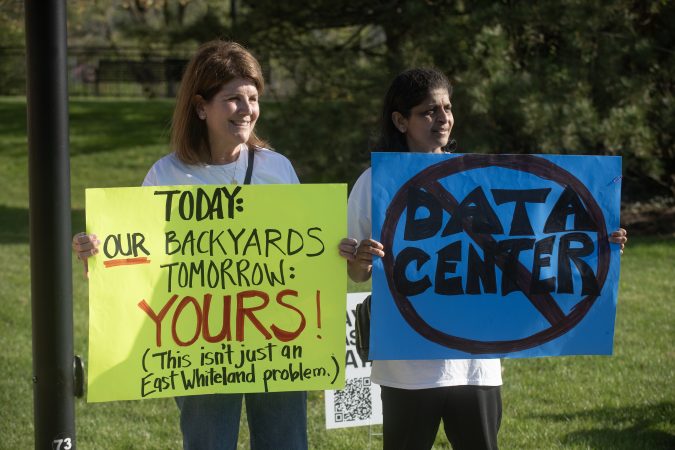
A year or so ago, many Americans had never heard of a data center. Today, these massive warehouse-type structures with an insatiable thirst for electricity and water are fast becoming the new “third rail” of U.S. politics. Sarah Longwell, the focus-group guru and TV pundit who writes for the “Never Trumper” site the Bulwark, said what she’s hearing from everyday voters is stunning.
“I’m in the middle of a huge countywide fight against data centers,” one small-town Georgia woman told a focus group, in a tape that Longwell played on a podcast. “People are showing up about their water already, and about 40 people are being pushed out of their homes. It’s just very personal.”
It’s the same here in Pennsylvania, where leaders in both parties, including Democratic Gov. Josh Shapiro, see data centers as an economic savior much as oil was in the 1860s. “We don’t want them!” exclaimed a Pittsburgh voter at the notion of these tech sites replacing shuttered steel mills. “It doesn’t matter who the governor is, who the mayor is. They’re all on board because it’s job creation.”
Not on board? The average American. As recently as last September, a poll conducted for the environmental site Heatmap found voters evenly divided on whether they’d support a data center built near their home. Just nine months later, its newest survey finds about seven in 10 people would now strongly oppose one — a steep and shockingly rapid decline in public support for the infrastructure of artificial intelligence, or AI.
Indeed, the trouble in the heartland for data centers has come so quickly it’s hard to say how much is driven by environmental complaints — such as noise and vibrations from data centers already up and running — or rising electric bills, and how much is simply white-hot rage at the tech billionaires getting even richer from AI, or the compliant politicians who’ve jumped on the bandwagon of their biggest donors.
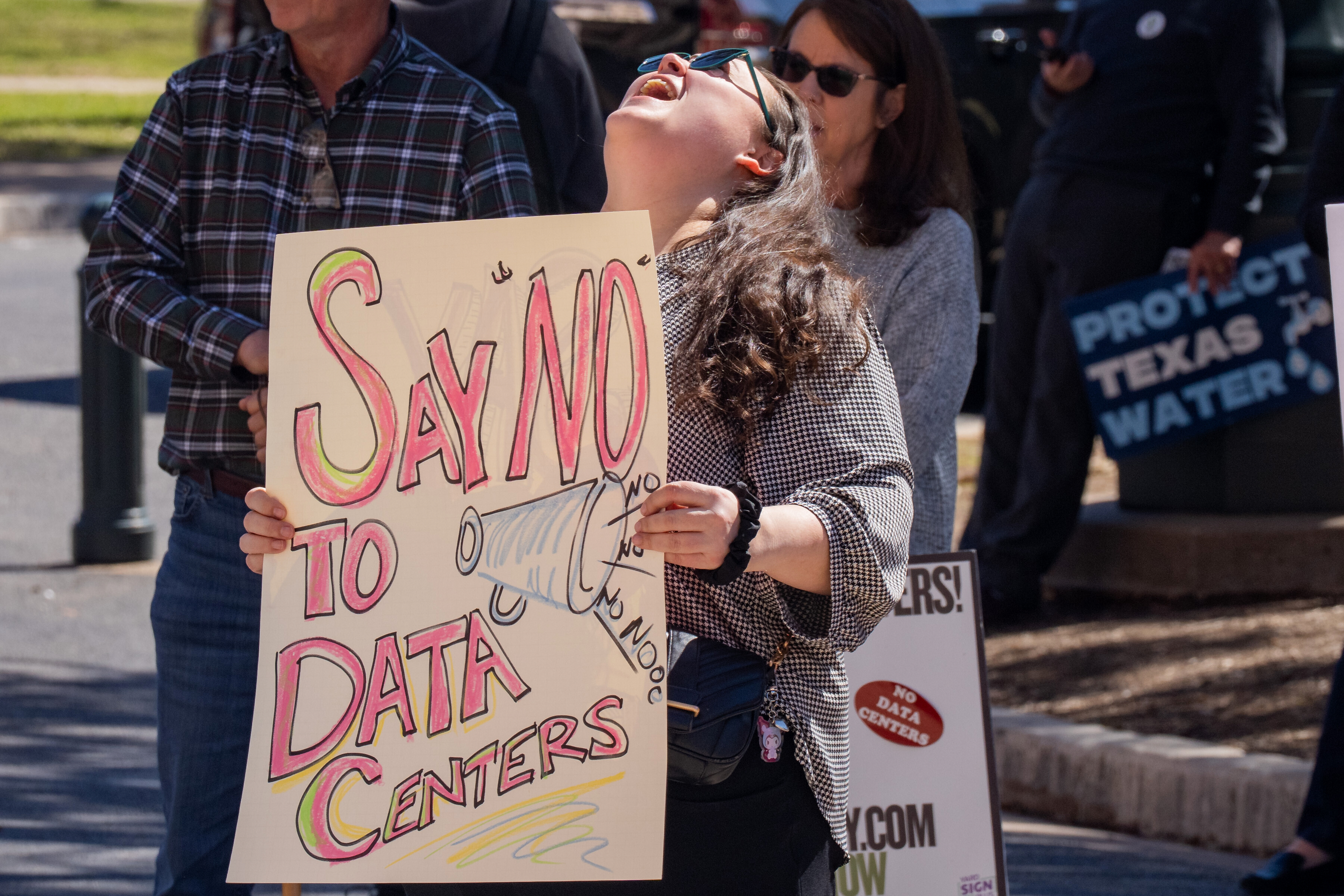
Fortunately, we live in a thriving, well-oiled democracy in which our elected officials have their fingers on the pulse of the people and have rapidly shifted gears — to grab a pitchfork and join their furious constituents on the front lines of the war against data centers. Right …?
OK, you probably saw right through my lame sarcasm there. Instead, America’s elites, and their beat cops who exist less to enforce laws than to uphold the social order that’s made their bosses so powerful, refuse to believe that regular folks have rationally decided that new data centers are unwanted scars upon the land.
If you oppose data centers, they’ve decided, you must have been brainwashed by Chinese communist spies.
Or worse. You may even be a terrorist.
Last Thursday, the Republicans on Capitol Hill who lead the House Energy and Commerce Committee sent a letter to Trump regime officials urging an investigation into whether China — as part of a 21st-century nuclear arms race to become the planet’s dominant AI force — is secretly funding all these farmers and suburban moms fighting data centers.
It’s an outlandish and unsubstantiated claim. Indeed, some of the GOP’s supporting evidence comes from a “think tank” called — and you cannot make this stuff up — the Bitcoin Policy Institute. Yet, anti-left conspiracy theories are sure to find a sympathetic ear in Donald Trump’s rabidly pro-AI government.
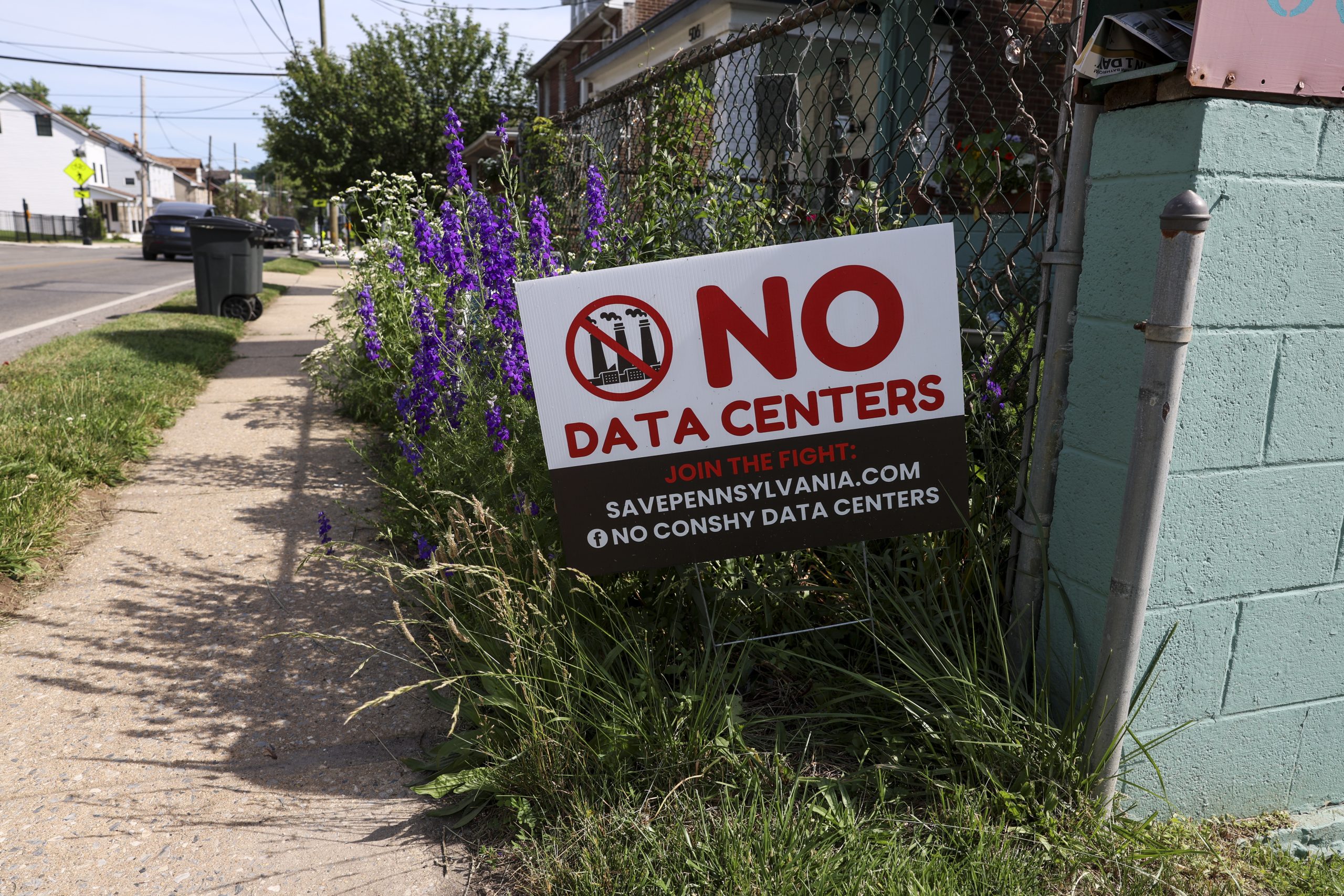
“It’s not organic and local, some of this is foreign-sourced dark money coming in,” Interior Secretary Doug Burgum — formerly the governor of oil-drenched North Dakota — said at a May event hosted by the right-wing site Breitbart News. “The people who used to fight on climate change have shifted.”
That shift would have to be the result of Manchurian Candidate-level brainwashing from Beijing, and not because studies have shown that at least 56% of the massive amounts of new energy needed to run these data centers comes from fossil fuels — oil, gas, and coal — right when the global climate crisis is accelerating. Last week, the World Meteorological Organization warned the planet should expect record heat through 2030.
Dang, those Chinese spies are good.
At least we can take comfort in the fact that the nation’s leading law enforcement organizations are working hard to respect the all-American First Amendment rights to free speech and dissent of these data center activists, much as they did for the civil rights marchers and anti-war protesters of the 1960s and ‘70s.
LOL.
Also last week, the Intercept reported on a document — later confirmed by The Inquirer — from the Delaware Valley Intelligence Center, which is hosted by the Philadelphia Police Department, that revealed that cops are sifting through social media posts by anti-data center activists, convinced they pose a newfangled terror threat.
“Domestic violent extremists (DVEs) are likely interested in targeting artificial intelligence (AI) data centers, posing a physical and cyber threat to infrastructure in the Philadelphia regional area,” stated a December alert from the intelligence fusion center, which coordinates local, state, and national law enforcement.
These fusion centers, you may recall, were established after the 9/11 attacks to prevent another World Trade Center-level incident. Today, “the terrorists” are apparently folks in places like East Whiteland Township or Vineland, N.J., who, in the immortal words of David Byrne, dress like students, or dress like housewives, or in a coat and a tie. Philly cops said in the report they are on the lookout for potential acts of vandalism and something they called “more disruptive First Amendment activity.”

I’m pretty sure your right to be nonviolently disruptive in America — without the government working to suppress those rights — is exactly why James Madison wrote up the First Amendment back in 1789.
To be clear, vandalism or arson or other destruction at data centers would be wrong — but I’m struggling to find many examples of this. There have been a couple of reports of shots being fired at the homes of a pro-data center politician and AI impresario Sam Altman, which is deplorable. But the anti-data center movement is, overall, remarkably nonviolent. The threat to the system isn’t the bullet but the ballot, and they know it.
“The more they try to silence us, the louder we’ll get,” Karen Feridun, the veteran environmental activist from Berks County, Pa., who founded the Pennsylvania Data Center Resistance group on Facebook, told me on Sunday. She noted that law enforcement also spied on her anti-fracking efforts in the 2010s, so she is not surprised.
Feridun — who, as far as I know, does not speak a word of Mandarin — said activists see the law enforcement monitoring as an effort to intimidate them, but it is only fueling fears that the AI powered by data centers will be used for broader domestic surveillance.
Indeed, we have never seen such a disconnect between our clueless elites, from Silicon Valley to Capitol Hill and the hallways of Harrisburg, and everyday folks who are filled with fury.
That communication breakdown peaked a few weeks ago when an obscure real estate executive was tapped to address the graduating seniors at the University of Central Florida, and didn’t think twice about hailing the glorious AI future that 22-year-olds see as obliterating their job prospects. The speaker recoiled in shock at the overwhelming boos.
Some observers argue that folks in the rural towns or sprawling exurbs fighting the data centers see them not just as ugly, noisy neighbors, but also as a proxy for the threat to the social order posed by AI as it disrupts the workplace or classroom learning.
But in reality, the rage runs even deeper. It’s anger not only at the machine, but the world that created it — a world where the gap has never been wider between the billionaires of AI (and, this week, the first trillionaire) and us regular schlubs, struggling to pay the electric bill or fill the gas tank before our boss replaces us with a robot.
Making matters worse is the realization that both political parties are in the back pocket of Big Tech and their crypto-bro allies, who are spending well over $300 million to buy the 2026 midterms. If anything, the hypocrisy of top Democrats like Shapiro or Virginia Gov. Abigail Spanberger, who claim to be fighting climate change while pushing for these energy hogs, is more infuriating than the predictable “Drill, baby, drill!” chants of Neanderthal Republicans.
They just don’t get it. They spend all day in their cloistered back offices, counting their future cash, and all night at swank political fundraisers, convinced that anyone who’s not on board with their gravy train must be a deranged radical from Antifa™, or a useful idiot for the International Communist Conspiracy.
They see the pitchforks and the flaming tiki torches and are squinting to see a “Made in China” label. They miss the righteous wrath, born in the USA.