Smith was caught traveling 135 mph in a 70 mph zone, an incident that came four years after Smith was arrested in Barrow County, Ga., for speeding in a construction zone while driving on a suspended license.
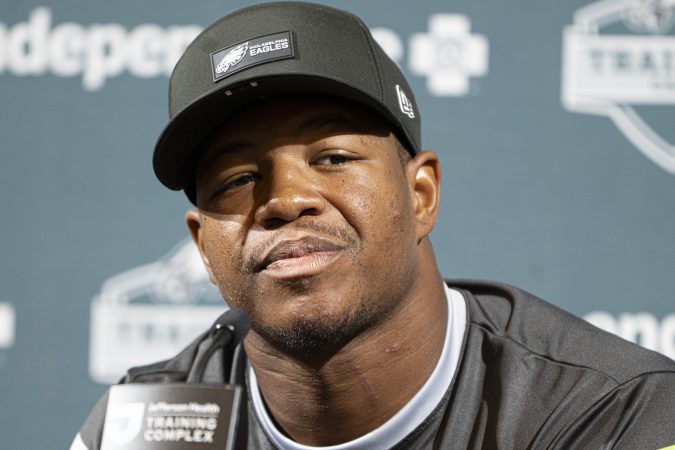
“I apologized to the organization, and I’ll make that apology now,” Smith said Monday after Eagles practice. “I represent the Eagles no matter where I go, Georgia, Florida, it doesn’t matter. That’s one of the ones that I own up and I apologize for. It’s just like that. We make mistakes and it can’t happen again and that’s unacceptable. I did apologize to Howie [Roseman], I did apologize to Mr. Lurie, and I can’t let my teammates down like that. They hold me to a different accountability on and off the field.”
Smith, 25, said “nothing came from” the May arrest. A court date was originally set for July 14, but Smith would not need to appear in court if he paid the associated fines. After his 2022 arrest, Smith was accepted into a pretrial diversion program as part of a plea negotiation.
Eagles linebacker Nolan Smith Jr. apologized for his offseason arrest on Monday. Monica Herndon / Staff Photographer
Smith is coming off an injury-plagued 2025 season with the Eagles. After undergoing surgery to repair a torn triceps following the Super Bowl, an aggravation in Week 3 forced him to miss five games. Smith called last season “frustrating” and said “all offseason I was just thinking about 18, just make it through the 18 [weeks].”
Smith said he is feeling stronger now and even put on a few pounds of muscle.
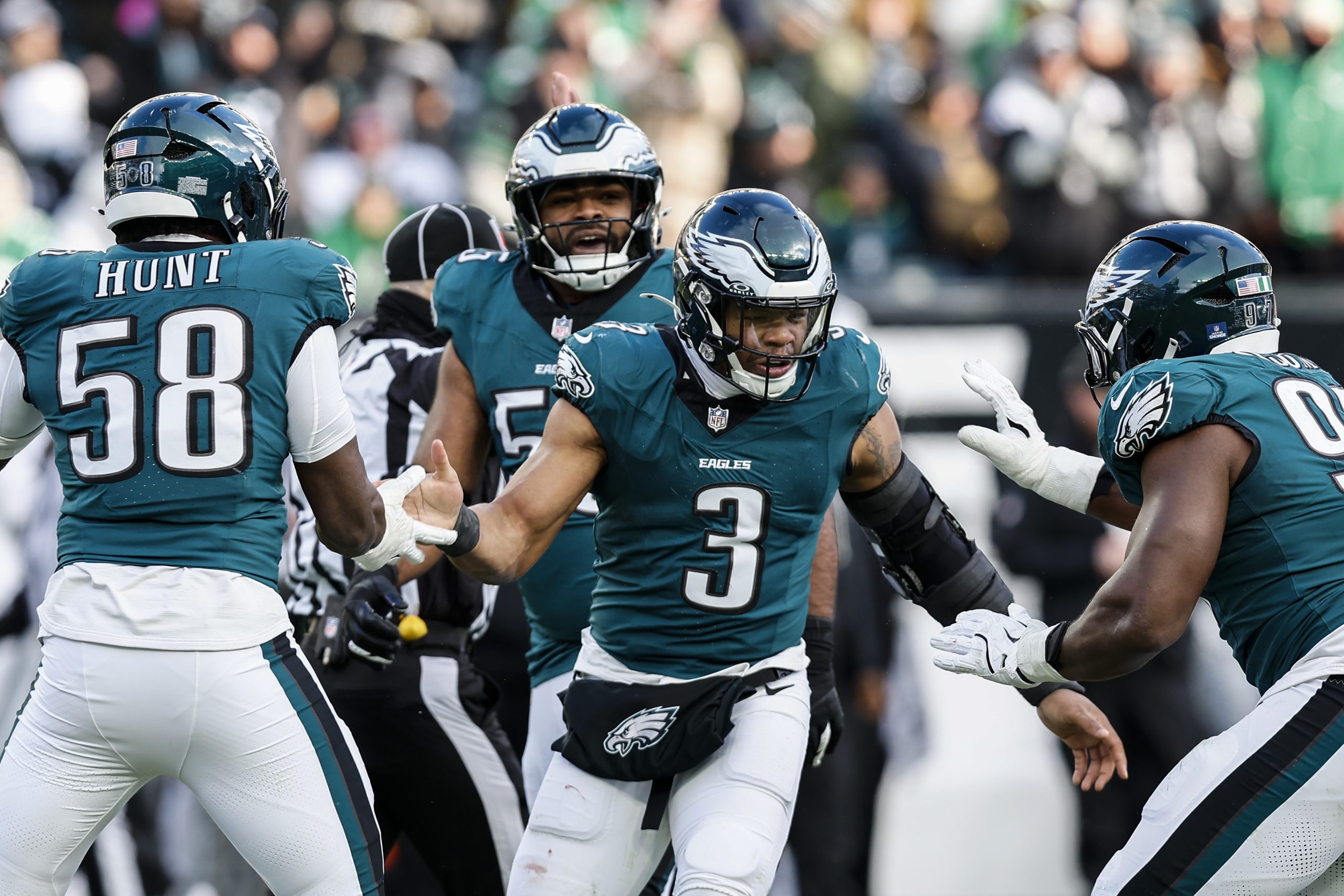
The Eagles remade their edge rushing corps in the offseason. Smith and Jalyx Hunt are the two returning players from last year’s roster. The depth chart has a new player at the top in Jonathan Greenard, who is expected to miss the majority of training camp with a pectoral injury. Greenard’s absence has meant a lot more first-team work for Smith, who may end up behind Hunt in the pecking order when the group is at full strength.
Greenard, Smith said, brings a little bit of the Brandon Graham “aspect” to the unit. “OGs bring a different mindset,” Smith said. He has picked Greenard’s brain about the new Eagle’s playing past and players he previously played with. Behind the top trio on the edge are Arnold Ebiketie and A.J. Epenesa, who complete what could be a pretty versatile group.
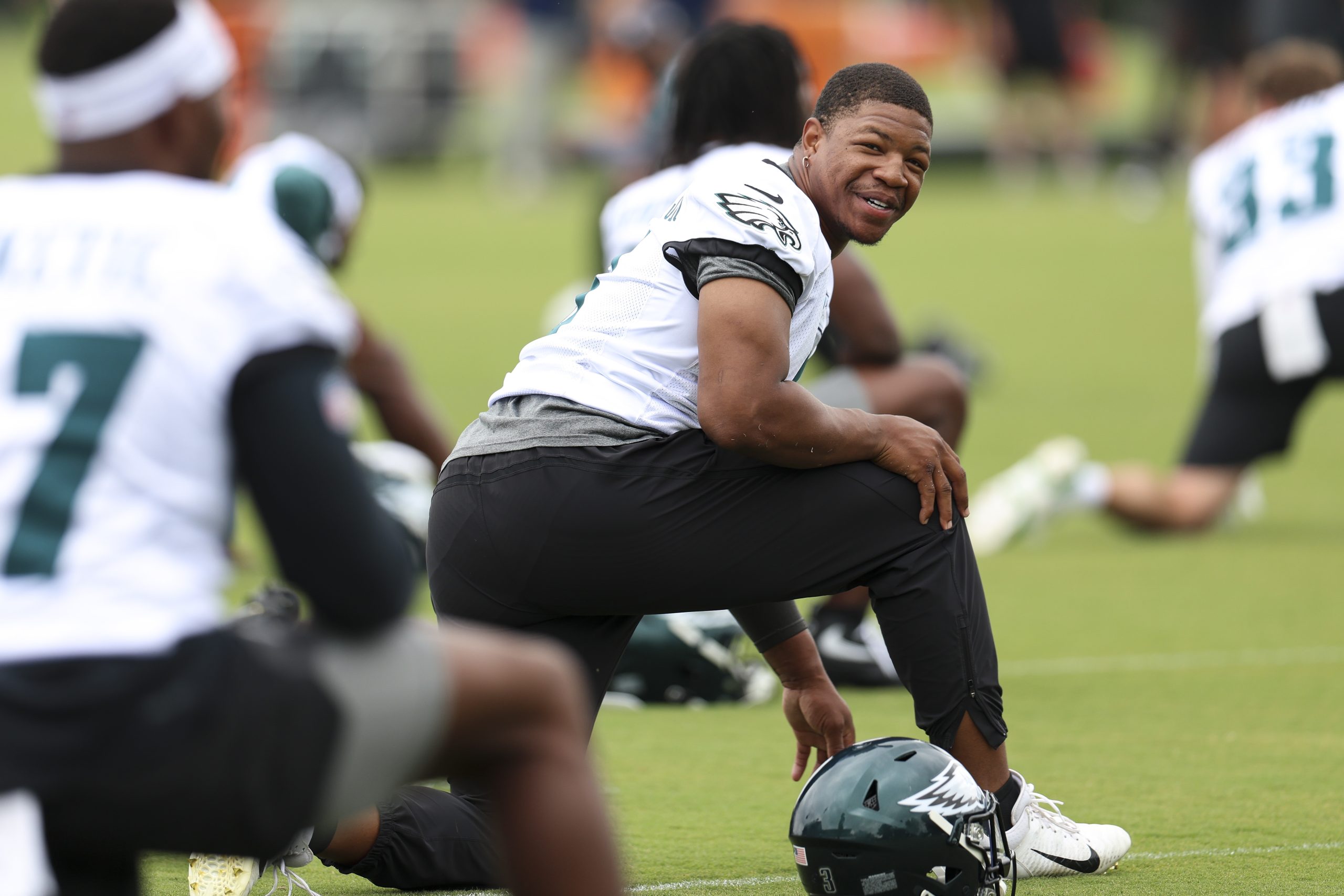
Nolan Smith had his season derailed at times by injury issues a season ago. Monica Herndon / Staff Photographer
Smith had just three sacks in 12 games last season after 6½ in 16 games in 2024. The Eagles elected to pick up Smith’s fifth-year option in late April, the same day they did the same for their other 2023 first-round pick, Jalen Carter. Smith’s salary on the fifth year in 2027 will be just over $13.7 million, but he is slated to be a free agent after next season and it’s unclear if he’ll be extended by the Eagles before then.
Smith called the option being picked up by the Eagles “just another year to play football and showcase my talents.”
“Down by down, play by play, just play football, play free,” Smith said. “It’s a game you loved as a kid, it was taken away from me for six weeks last year, and I’m just happy to be able to play. Kind of just think about what my mama used to tell me: ‘You don’t make no plays, you don’t eat.’”
But I wasn’t surprised. And you shouldn’t be, either.
Put simply, hazing is as American as apple pie. When an incident like this happens, everybody expresses shock and dismay. Legal charges are filed, coaches are fired, and games are canceled. And then we go back to hazing again.
Most Americans probably associate hazing with college and — especially — with fraternities. But in a 2009 survey of over 11,000 university students, 47% reported they had experienced hazing in high school. All told, an estimated 1.5 million high school students are hazed each year.
That means it’s people you know, in the communities where you live.
In 2004, a grand jury reported that three Long Island football players attending a summer camp in Wayne County, Pa., had inserted pine cones and golf balls into teammates’ anuses. The assaults were part of a long history of hazing at the camp, where coaches “displayed a lack of common sense and accountability,” the report said.
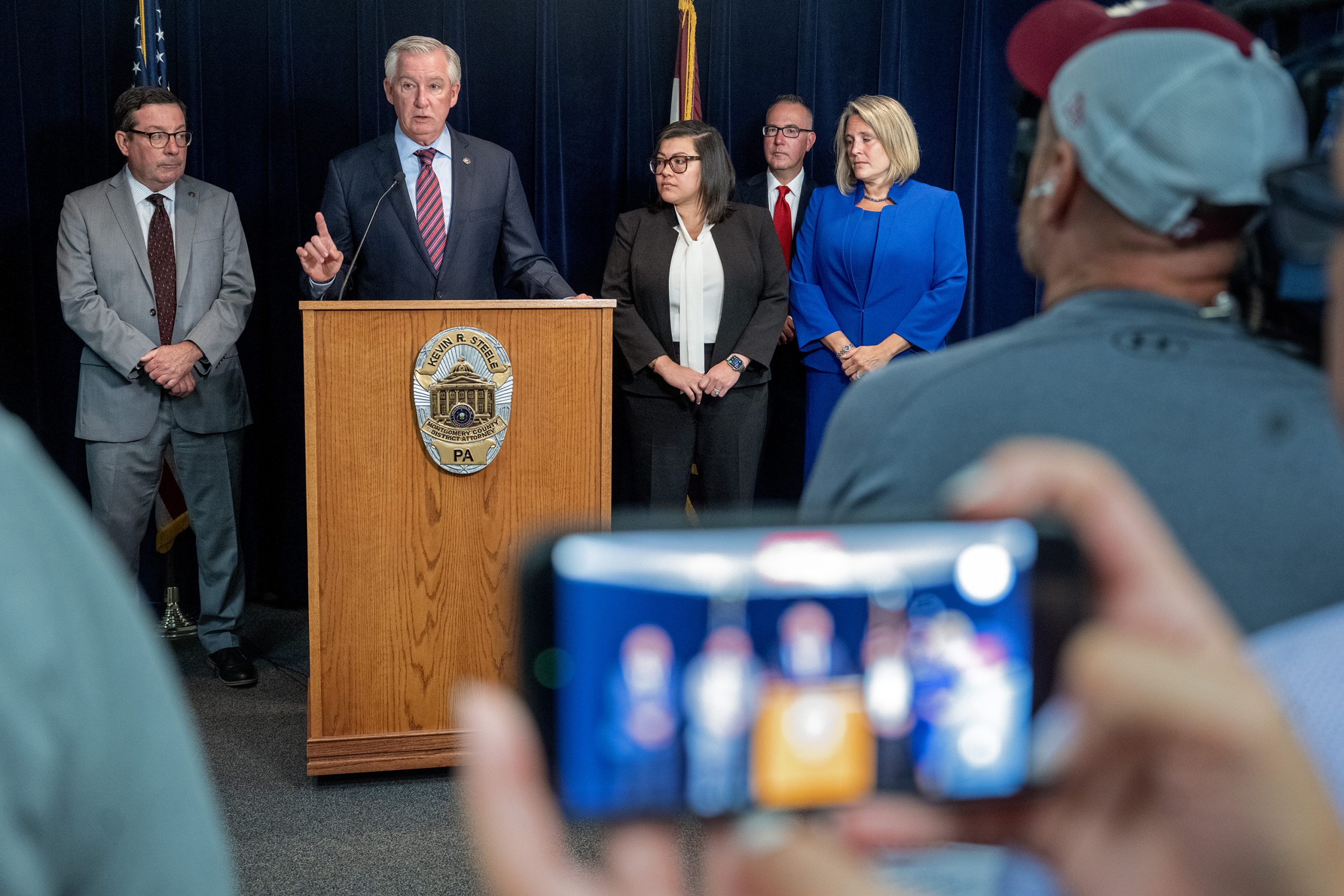
At a July 29 news conference, Montgomery County District Attorney Kevin Steele announces multiple charges in connection with two assaults in the Cheltenham High School locker room that injured a 15-year-old football player.Tom Gralish / Staff Photographer
In 2014, Central Bucks West High School in Doylestown acknowledged that rookie football players had been forced to grab other players’ genitals. They were also led into the shower with towels over their heads, which the players called “waterboarding.”
In 2015, seven football players at Sayreville High School in Middlesex County, N.J., were charged with grabbing teammates’ buttocks and digitally penetrating one of them.
In 2016, prosecutors said football players at Conestoga High School in Berwyn had penetrated a freshman player with a broomstick as part of a hazing ritual called “No Gay Thursdays.” And in 2022, football players at Wall Township High School in Monmouth County, N.J., were caught on video holding a student’s legs apart and, yes, assaulting him with a broomstick.
Are we seeing a pattern here? Most high school hazing involves verbal — not physical — abuse. But the most violent episodes happen on sports teams, which also have the highest rate of hazing.
And they’re also the most likely to generate criminal charges. In Cheltenham, six players have been charged in connection with the assaults on their teammate. And four coaches face charges of endangering the welfare of a child and conspiracy for allegedly trying to cover up the incident.
The football practice field and stadium at Cheltenham High School.Tom Gralish / Staff Photographer
Ditto for our educational efforts. When reports of hazing surface, school officials pledge to conduct anti-hazing training for coaches and students. And they release statements declaring that hazing will not be tolerated, in any form.
But their message is falling on deaf ears. So it’s time to change the messenger to someone whom kids will really hear: the hazers themselves. If you haze somebody, you should be required to speak to other students about it.
It’s happened before. After a Virginia Commonwealth University student died of alcohol poisoning in a fraternity initiation in 2021, six students who pleaded guilty to hazing him agreed to travel to universities around the country to discuss the tragedy and the role they had played in it.
We could — and should — demand the same thing from high school hazers. Plea agreements in hazing episodes often require guilty parties to perform community service. What could be a better service than speaking at student assemblies and other public events about the problem of hazing?
In the Cheltenham incident, two 18-year-old football players were charged as adults — one with assault and conspiracy, the other with false swearing for being untruthful to police. The four other players were under 18 and were charged as juveniles.
I don’t know what penalties they should receive. But here’s what I do know: The rest of the school would discover a lot more about hazing if the six students were required to speak about it. And maybe, just maybe, we could start to shift the culture around this destructive behavior.
When hazing is reported at a high school, local officials condemn the incident and inevitably declare that “this is not who we are.” In fact, it’s exactly who we are. We haze. So let’s hear from the people who do it, about why they haze and what they have learned. We can all learn something from them.
Jonathan Zimmerman teaches history and education at the University of Pennsylvania. He is the author of “Schooling Citizens: How Education Can Save Democracy,” which will be published next spring by the American Philosophical Society Press.
A school bus aide for the Bensalem Township School District groped a special-needs student and filmed the assault with his cell phone, police said Monday.
Ali Khan, 62, was charged late last week with corruption of minors, endangering the welfare of a child, indecent assault, and related crimes after the 14-year-old girl’s parents contacted police.
In a statement, interim Bensalem Township Superintendent Victoria Velazquez said Khan was removed from duty after the district was notified of the police investigation.
The district is cooperating with police and has initiated an internal investigation, she said.
Khan remained in custody, in lieu of 10% of $500,000 bail, court records show. There was no indication he had hired an attorney.
The girl told police that Khan on Thursday touched her inner thigh while she was sitting next to him on a bus heading to Bensalem Township High school, according to the affidavit of probable cause for his arrest.
Before the assault, she said, Khan blocked her path and forced her to take a seat on the bus next to him. He fastened her seat belt for her, the affidavit said, and while doing so put his face close enough to hers “to kiss her.”
During the ride to her home, Khan intentionally dropped a pen and, while bending down to retrieve it, pointed his cell phone’s camera between her legs, the affidavit said.
Surveillance footage from the bus showed that the girl closed her legs to prevent Khan from touching her, but that he pulled her legs apart to continue touching her. At one point during the assault, police said, Khan put his hands in his pants and appeared to touch himself.
Republican lawmakers say they’re hopeful the governor’s new comments expressing support for voter ID legislation could push long-stalled bills toward hearings when the Legislature returns to Trenton in the fall.
“I absolutely think this should be one of the top priorities when we come back into session,” said Sen. Michael Testa (R., Cumberland). “There absolutely needs to be a discussion, and the people of New Jersey deserve that discussion to be had.”
Gov. Mikie Sherrill, a Democrat, said last week during an appearance on News 12 that she would support a voter ID law in New Jersey if legislation reached her desk.
“Certainly if that was the law passed here, I would support that,” she said, responding to a viewer’s question. “I don’t have a problem with voter ID.”
Sherrill’s comments come on the heels of her revealing that thousands of noncitizens were registered to vote via the state Motor Vehicle Commission, and fewer than 400 of them cast ballots. The revelation led to a new round of voter fraud complaints from Republicans in New Jersey and nationwide, while the Trump administration demanded information about the voters in question. Sherrill declined to share that data and has said the state is conducting an independent investigation.
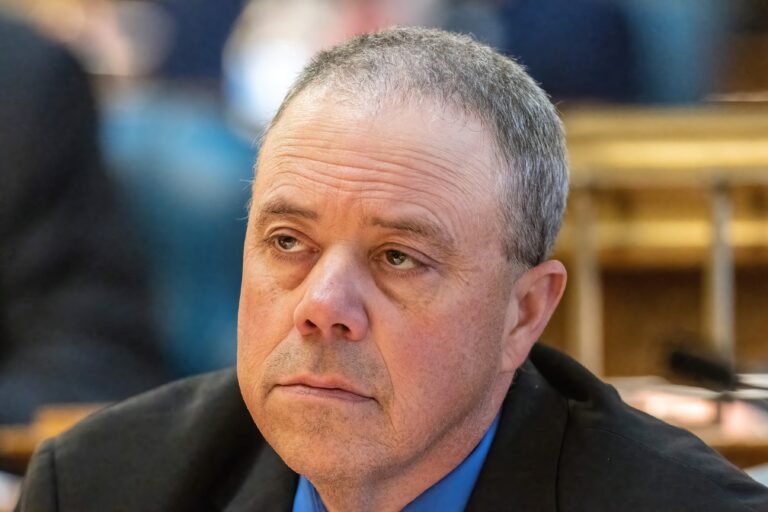
Sen. Parker Space.Hal Brown/ New Jersey Monitor
Sen. Parker Space (R., Sussex) is a sponsor of a bill that would require voters to show identification to cast ballots, including a driver’s license, a Real ID, or a passport, among others, and those without them would have to show utility bills in their name, a mortgage or rental statement, or two pieces of mail from a government agency or utility company. Any voter who does not show these would be subject to a challenge.
Space said he was encouraged by the governor’s remarks that his bill — which has been introduced three times since 2022 but has never advanced to a committee hearing — could finally be posted for a vote.
“Hopefully she stands by her word and we can get the Legislature on board,” he said.
He noted that the issue hasn’t historically been a priority for Democratic legislative leadership, which decides which bills advance.
Assemblyman Gerry Scharfenberger (R., Monmouth) has sponsored the bill in the lower chamber since 2022. He said he proposed legislation with more options for voters besides showing just photo identification because he thought it would get some support from Democratic lawmakers, though he concedes that has not worked so far.
The new voter registration issue, Scharfenberger said, shows the “walls are closing in, as far as the Democrats being able to avoid this issue.”
“There’s no way they can avoid addressing this. If I could be a little bit of a forecaster here, I think the more information they find out about the motor vehicle issue, the more those numbers are going to grow,” he said. “It’s become too much with the public psyche, and I think we’re going to have to address it with solid legislation, and not just token tweaks here or there.”
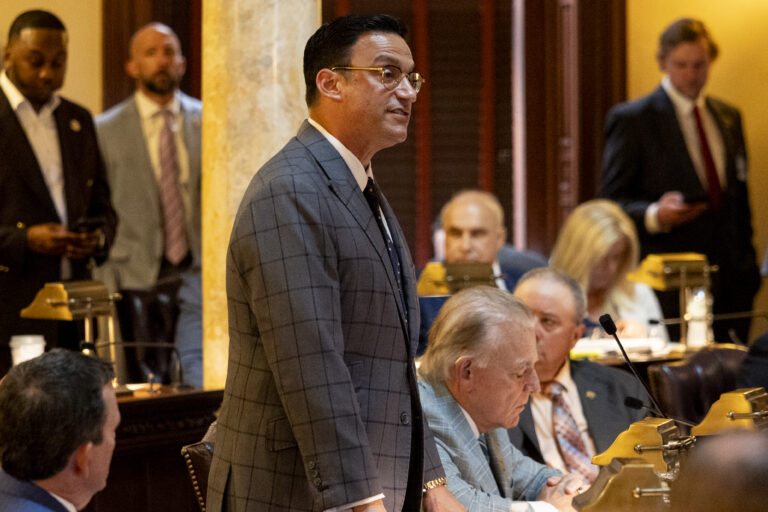
Testa said he was “pretty shocked” to hear Sherrill’s comments on supporting voter ID, but “pleasantly surprised.”
He’s the co-sponsor of a voter ID bill that would require a voter to show one of four forms of photo ID: a driver’s license, a Real ID, an identification-only card issued by the Motor Vehicle Commission, or a U.S. passport. He said it’s easier to train ballot workers on how to validate just these forms of ID.
Sen. Michael Testa Jr.Anne-Marie Caruso/New Jersey Monitor
“We’ve done everything in this state to be able to allow individuals to vote by mail, to expand the time period for vote by mail, to give people more locations to go vote — and I don’t necessarily have a major problem with any of these modalities for people to vote — but if you’re going to vote on Election Day, you should have a photo ID,” he said.
A spokesman for Senate President Nicholas Scutari (D., Union) did not respond to a request for comment. A spokesperson for Assembly Speaker Craig Coughlin (D., Middlesex) declined to comment.
Thirty-six states have laws requiring voters to show some form of ID at the polls, and eight of those strictly require photo ID.
But voting rights groups say there are decades of studies showing certain communities are less likely to have access to photo ID. Liza Weisberg, supervising attorney of the American Civil Liberties Union of New Jersey, said people who are homeless, young voters, and communities of color are the “most likely to face disenfranchisement.”
She called Sherrill’s comments on voter ID a “moment of concern.” Seven advocacy groups — including the ACLU, New Jersey Institute for Social Justice, and the League of Women Voters — sent Sherrill a letter Friday urging her to reject voter ID legislation outright.
They noted that state law already requires people to provide a driver’s license number or their Social Security number to register to vote.
Weisberg said the recent voter registration news doesn’t justify implementing voter ID, noting the newly registered voters in question represent a “small fraction” of the state’s voters, with an even smaller group actually casting a ballot. Sherrill initially said about 6,600 people who identified themselves as noncitizens at the Motor Vehicle Commission were added to the voter rolls, and later said about 2,000 of them may indeed be citizens. The state has 6.7 million registered voters.
“I really hope that there is not an effort to continue using this event to justify voter suppression efforts that really don’t have anything to do with it,” Weisberg said.
Republicans dismissed arguments that voter ID laws disproportionately burden low-income, elderly, minority, and young voters. They noted multiple reasons people need to show photo ID, like renting a car or applying for food stamps.
Testa called the disenfranchisement argument “very, very pompous,” saying it suggests that voters could be “ill-equipped or too stupid” to obtain a photo ID. Scharfenberger called it “the most racist position I’ve ever heard,” and Space said those arguments “pander to the far left and liberal media.”
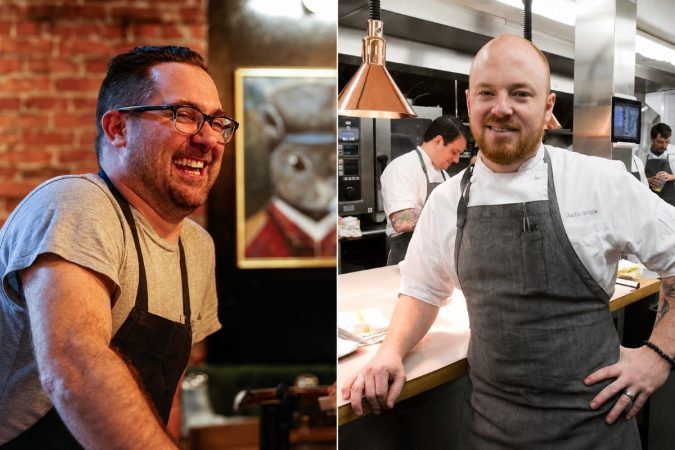
After nearly four decades of friendship and two careers that took them in different directions, chefs Arthur Cavaliere and Justin Bogle are working together.
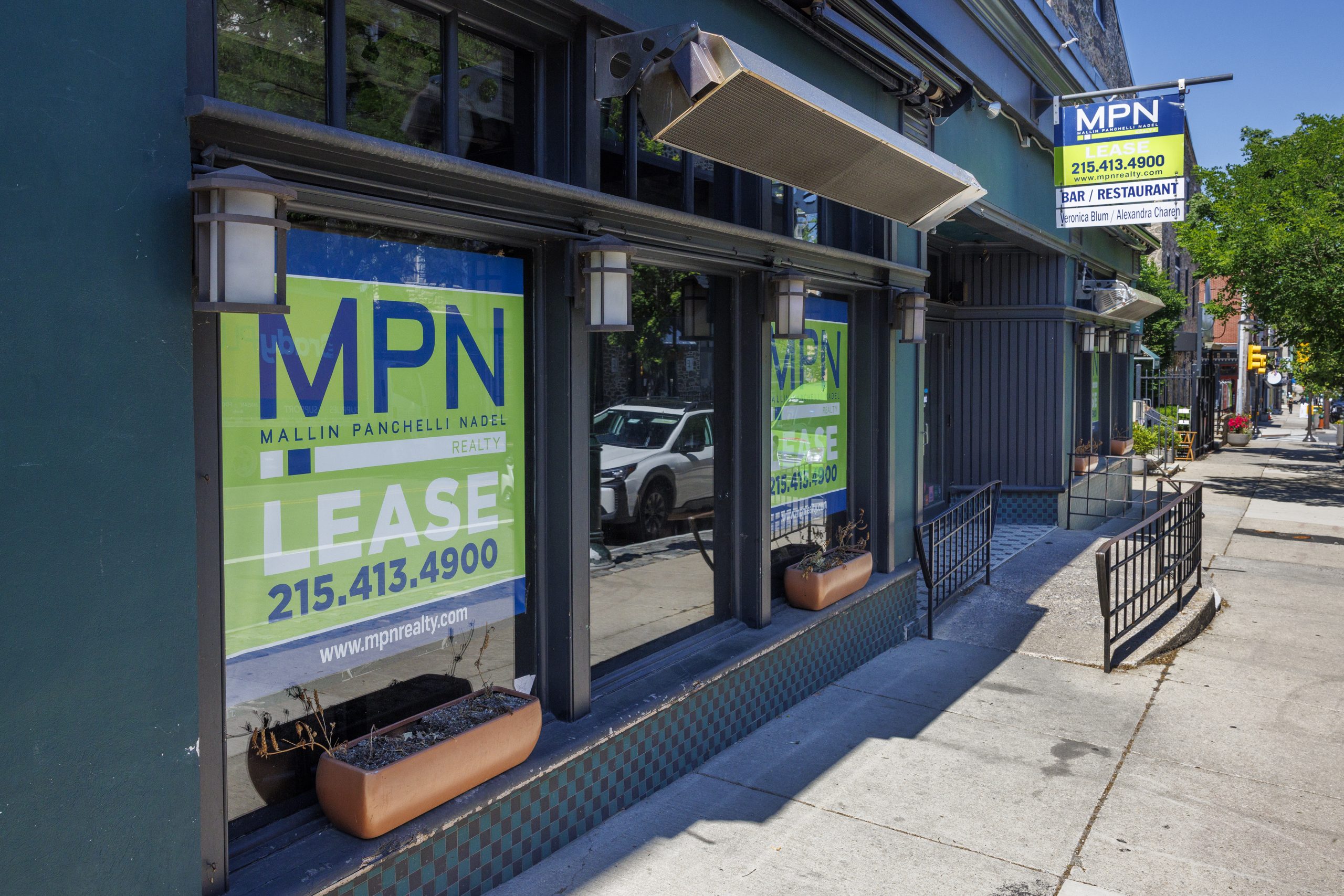
The Roxborough natives and best friends since third grade, both 45, have signed a lease for the former Winnie’s Manayunk space on Main Street near Roxborough Avenue, where they plan to open a new restaurant in late fall. Though they are keeping most details, including the name, under wraps, they describe the project cryptically as a “punk French” restaurant inspired by the neighborhood that helped shaped them.
The former Winnie’s at 4266 Main St. in Manayunk.Alejandro A. Alvarez / Staff Photographer
For both, the restaurant represents the fulfillment of a dream they have shared since they started cooking together as teenagers.
“Artie and I have been best friends since grade school,” Bogle said. “We always had this vision, this pipe dream, that someday we would join forces and do something together.”
The two met at Shawmont Elementary in Roxborough and got their start in the late 1990s working for chef Derek Davis at his string of restaurants then on Main Street. Their careers soon diverged.
Cavaliere is a longtime consulting chef. Among the gems he created was the shatteringly crispy chicken at the former Bar Poulet at 20th and Walnut Streets. He came up through Philadelphia kitchens including El Vez and Parc, where he was executive chef, and headed to chef Michel Richard’s orbit in Washington, before opening In Riva, Black Squirrel Pub & Haunt, and Foghorn in East Falls. He left that partnership last year.
Chef Arthur Cavaliere’s fried chicken was a signature at Bar Poulet, which was open in 2021-22 at 2005 Walnut St. Michael Klein
Bogle, who attended Walnut Hill College, cooked at Striped Bass and Alma de Cuba before heading to New York, where he became one of the youngest American chefs to lead a two-Michelin-starred restaurant at Gilt. In 2013, he returned to Philadelphia to open Avance — the successor to Le Bec-Fin — and after its 2014 closing joined Garces Group as corporate executive chef. He later returned to New York, where he spent years with Union Square Hospitality Group, most recently as executive chef of Manhatta.
Family drew him home after nearly two decades in New York.
“I knew I needed to give my kids a backyard,” Bogle said. “Raising three kids in a two-bedroom apartment wasn’t the goal for me.”
Avance, led by Justin Bogle, had a 10-month run after Le Bec-Fin’s closing at 1523 Walnut St.David M Warren / Staff Photographer
He left Manhatta last spring, relocated his family to the area last August, and immediately resumed planning with Cavaliere. They spent the past year evaluating Main Street locations before settling on the former Winnie’s, which closed last November.
“When the right space presented itself, it was a no-brainer,” Bogle said.
The partners are keeping quiet about the menu, name, and design while they refine the concept. Bogle will oversee the kitchen and said the long-term plan extends beyond a single restaurant. “We have goals and aspirations to do more than just this,” he said.
Chef-owner Arthur Cavaliere at In Riva in 2013. Working the pizza oven at rear is sous chef Biff Gottehrer, now at Ripplewood, the Refectory, and Izzy’s.David M Warren / Staff Photographer
If construction and permitting stay on schedule, they hope to open in November. If delays push the project into December, they are likely to wait until after the new year.
Cavaliere said the concept is rooted in “friendship, memory, and the neighborhood that raised” them.
“Their decision to invest in Manayunk is another testament to the strength of the neighborhood and the continued momentum of its dining scene,” said Veronica Blum of MPN Realty, who brokered the lease with Alex Charen. “It’s especially rewarding to help bring operators of this caliber to a community that values independent concepts.”
For Bogle, returning to Main Street with the friend he has known since childhood carries a significance beyond opening another restaurant.
“For us to come back to where it all started, plant our roots there, and have some fun — it has been a goal for a long time,” he said. “We’re just really excited about the opportunity.”
The vintage Gillian’s Wonderland Pier Canyon Falls Log Flume Bathing Guy is still up for grabs, with a $2,000 price tag.
So is the 12-by-6-foot fiberglass Haunted Dark Ride Skeleton head, including the top hat and the skeletal hands that once gripped the front of the ride, for $8,500.
Polito is hoping another Halloween season will tempt buyers for the skeleton and the other dark ride props for sale, including a pair of coffin speakers ($600), an animated man in a closet ($1,150), and a spider automaton ($750).
A pair of vintage Gillian’s Wonderland Pier Haunted Dark Ride Haunted House Mechanical Circus Clowns, priced at $1,750 for the pair at Obnoxious Antiques.Obnoxious Antiques
Polito said about half the sold objects were sold to out-of-state buyers, but the other half “went back to Ocean City,” including the Monkey Band, which is on display with other Wonderland artifacts in the Boardwalk food court as a “Wonderland Pier Museum.”
Some of the exterior figurines were bought by nearby Storybook Land in Egg Harbor Township.
Polito says the $8,500 price tag for the skeleton and hands “is a steal,” and notes that they would be perfect for a committed Halloween house decorator.
He estimates it cost $20,000 to create.
“It’s heavy,” he said. “They would have to commit to it and they would have to really want it.”
Ed Frischkorn, 30, holding the log flume miner from the now-defunct Gillian’s Wonderland Pier he purchased at Obnoxious Antiques in Burlington, N.J.Amy S. Rosenberg / staff
Over objections from some nearby residents, Ocean City Council recently voted to designate the former Wonderland site at 600 Boardwalk in need of rehabilitation and will now negotiate with developer and owner Eustace Mita, who has proposed a seven-story luxury hotel on the site.
Mita bought the site from Mayor Jay Gillian, who made the decision to close the beloved amusement park his family had owned for 65 years in October 2024.
Mita’s original proposal called for restoring the Ferris wheel and historic carousel, and preserving several iconic kiddie rides from Wonderland.
John Polito of Obnoxious Antiques with one of the men in the tub from the log flume ride at the now-defunct Wonderland Pier in Ocean City, N.J. Polito purchased three truckloads of relics that are now for sale at his warehouse on Route 130 in Burlington N.J.Amy S. Rosenberg / staff
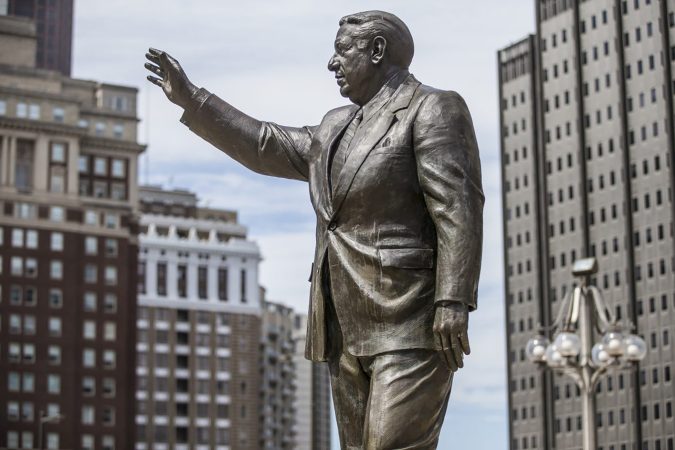
In the case of Frank Rizzo, out of sight does not always mean out of mind.
The former mayor and police commissioner died 35 years ago. A 10-foot bronze statue reminded Philadelphians of his presence for decades, until civil rights protests in 2020 culminated in the monument’s removal from public display.
It might have lost its prime spot outside the Municipal Services Building, across from City Hall. But, six years later, the statue remainsa subject of interest, leaving reader JJ Cutuli to ask Curious Philly, The Inquirer’s forum for questions about the city: “Where is the Frank Rizzo statue, right now?”
The short answer? Now that repairs have been made, the search for a new home is on. Here’s how we got here.
The last thing Cutuli heard on the Rizzo statue saga was that it was set to be returned to the Frank L. Rizzo Monument Committee, after a settlement was reached with the Philadelphia Art Commission last summer.
“I am very much against the statue, against the man, against what it all represents,” Cutuli said. “But sweeping it under the rug or sending it to a scrap yard might take away the opportunity to deal with the issues that it represents.”
Rizzo has long been a controversial figure. During the 1960s and 1970s, he was accused from different fronts in the city of having allowed police to function with little oversight, putting people of color in a vulnerable spot.
Between 1970 and 1978, police shot civilians at a rate of one per week, according to an Inquirer investigation. That led critics to condemn Rizzo as a racist, and protesterseven put a Ku Klux Klan hood on the statue’s head in 2016.
“The statue is a deplorable monument to racism, bigotry, and police brutality for members of the Black community, the LGBTQ community, and many others. The treatment of these communities under Mr. Rizzo’s leadership was among the worst periods in Philadelphia’s history,” then-Mayor Jim Kenney said in a statement in 2020, when the city removed the statue overnight.
For supporters, however, the South Philly native was a beacon of Italian American pride whose tough approach on crime could have been misunderstood.
“He was a brute in some respects. But it wasn’t racist,” George Bochetto, an attorney for the Frank L. Rizzo Monument Committee, told The Inquirer in 2016. “It was law and order, it was crime, and I think he got a bad rap, frankly.”
The agreement left the committee with an $80,000 payment from the city for damages caused to the statue during its removal.
“They put it on the back of a flatbed truck and a piece of the base broke off so they had to replace that base,” Bochetto said. “There were also a lot of scratches and gouges on the body of the statue, which had to be repaired too.”
The bronze Rizzo has been at a foundry undergoing “expensive five-figure repairs,” Bochetto said.
Restorations are now done, according to the lawyer. The next frontier is finding a new home for the Rizzo statue.
As part of the 2025 agreement, the statue should be displayed on private property, and in a way that makes it “not visible from the public right of way,” the agreement states.
An exception can happen if the committee gets approval from Mayor Cherelle L. Parker or the managing director. Bochetto said that’s something the committee is working on. Bochetto did not describe locations being considered for the statue.
The city did not reply to a request for information. So, the status of the monument’s home remains uncertain.
Controversy aside, Bochetto said, it’s important to recognize that the statue is part of Philadelphia’s history.
“People say that symbols like this from the past are a part of our history and that is true,” Cutuli said. “But as part of history perhaps these things do have a place in museums or perhaps they don’t, perhaps the story and the facts can exist without the statue.”
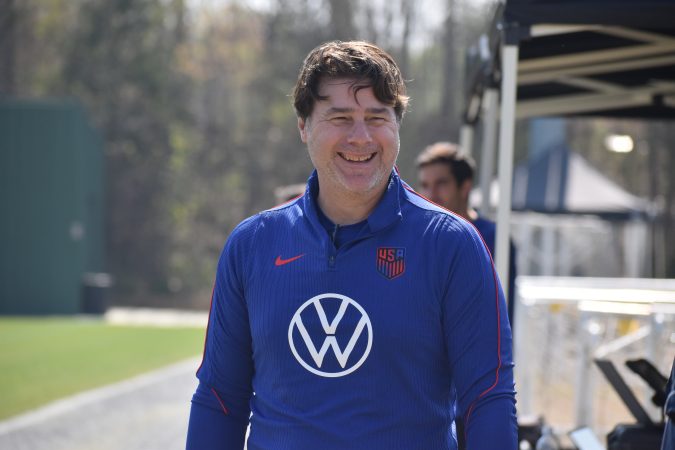
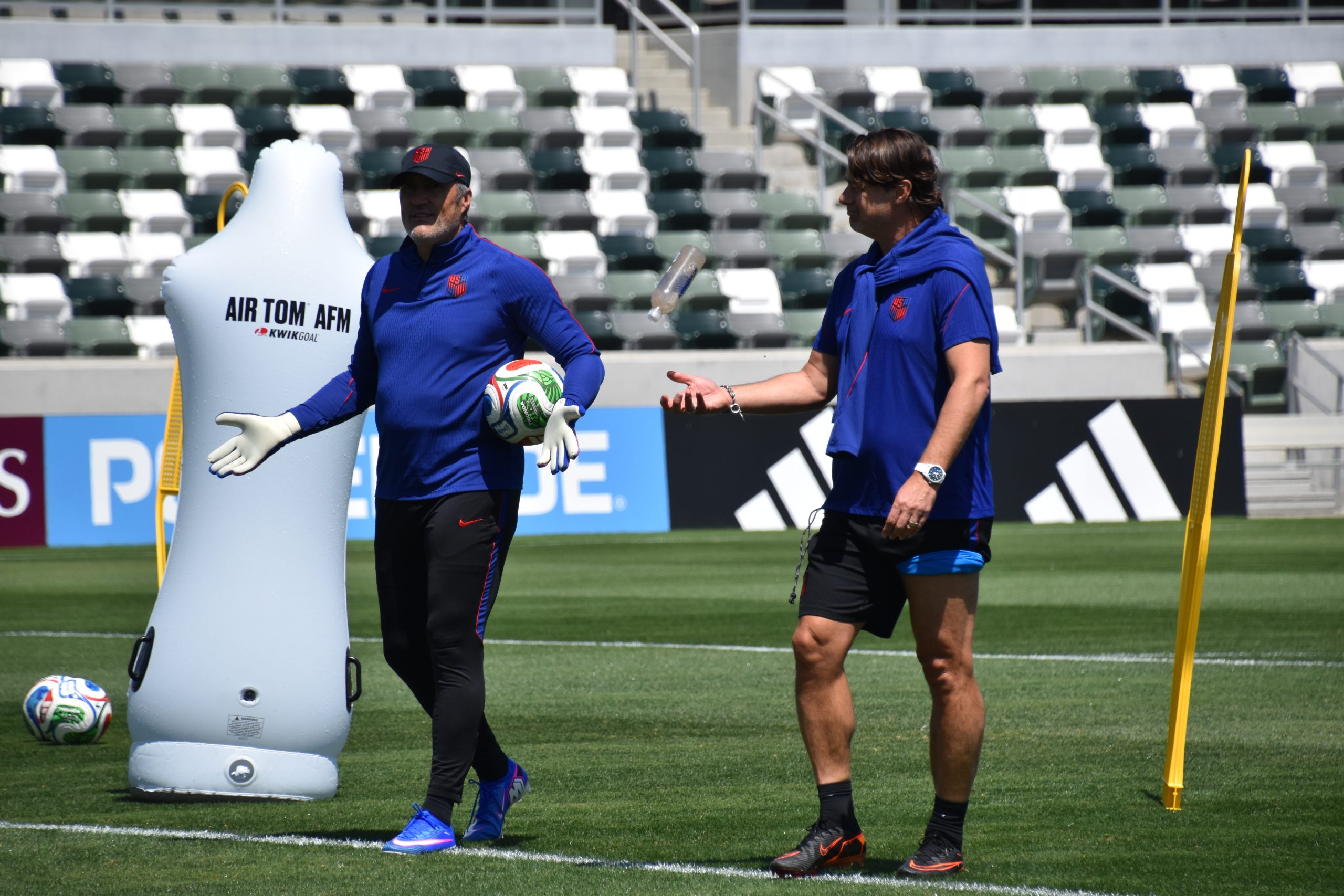
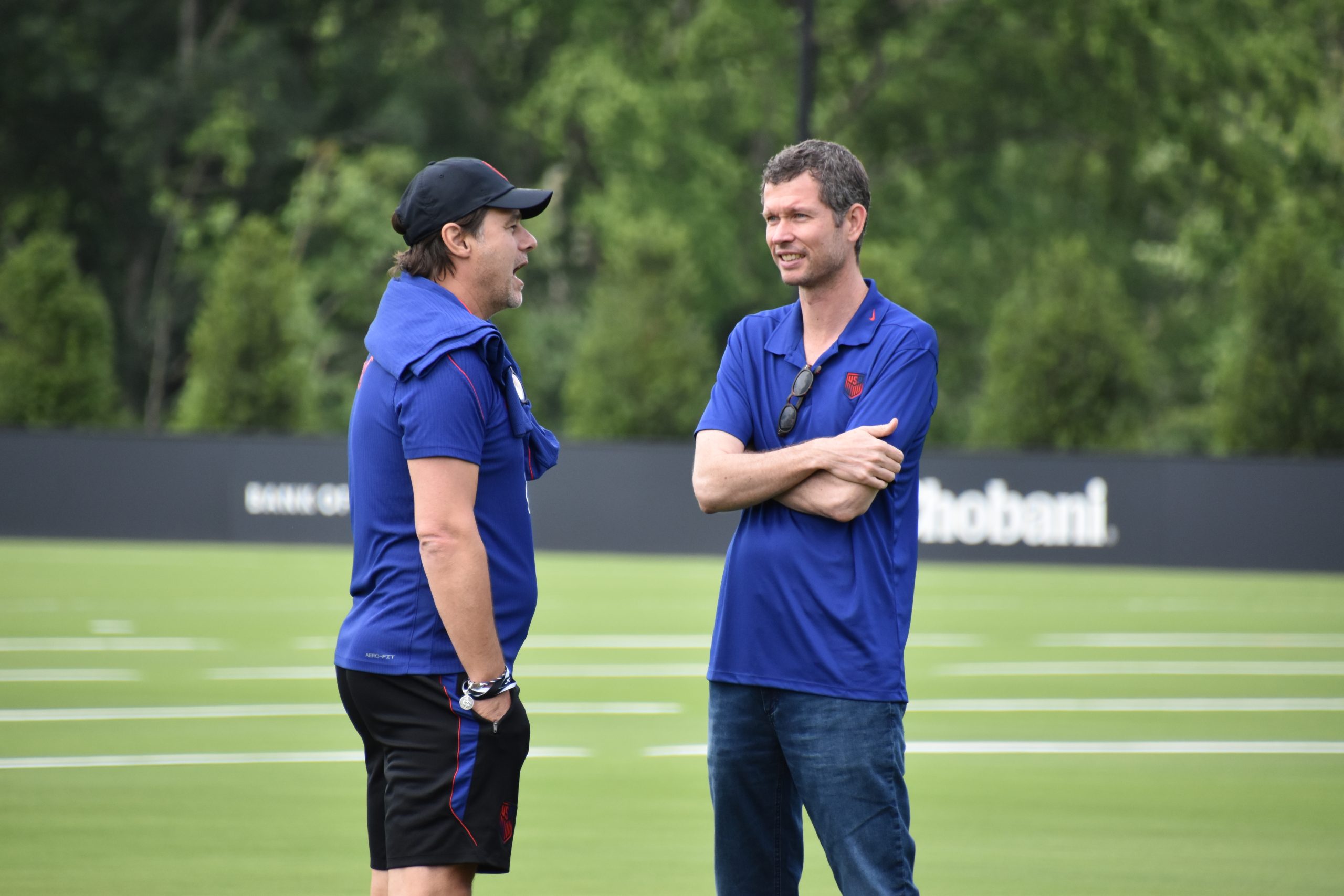
Mauricio Pochettino has signed a new contract to remain the U.S. men’s soccer team’s manager through the 2030 World Cup, U.S. Soccer announced Monday morning.
“I really believe that this is an exciting situation and moment for soccer in the USA,” Pochettino said in a roundtable talk with The Inquirer and other media outlets. ”After 18, 19 months working with the objective that was only the World Cup, now [the goal is] to start in a fresh way with a different approach, trying to create a different philosophy, different idea of what we need to do.”
U.S. Soccer initiated talks on a new deal in late spring, with the understanding on both sides that it would be contingent on success in the summer. After the tournament, both sides took a few weeks, then returned to the table and finished the deal.
“They really believed in us before the start of the World Cup,” Pochettino said, “and that, I think, is another positive point for us.”
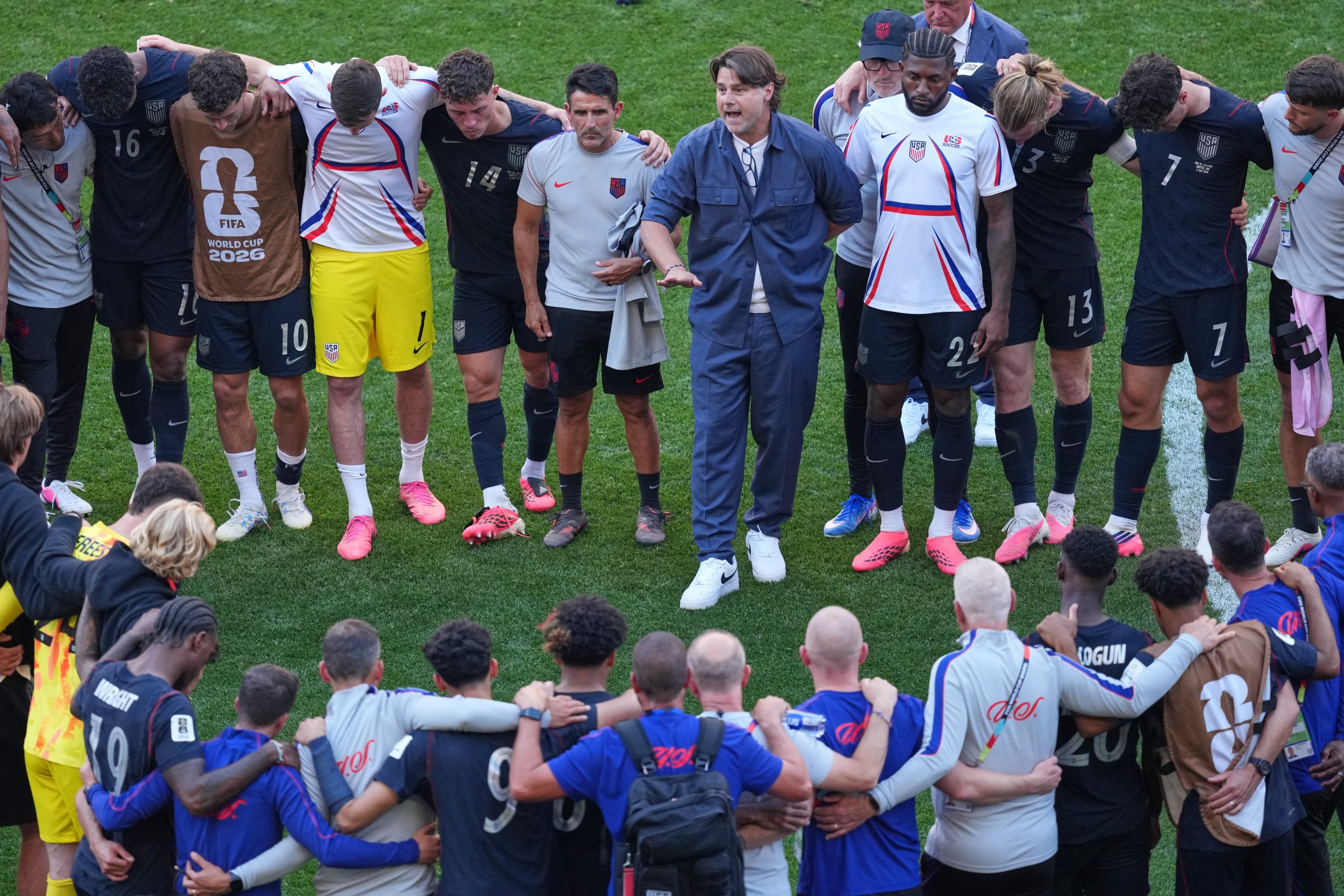
Mauricio Pochettino (center) talking with players and staff after the U.S.’ loss to Belgium that knocked them out of the World Cup.Nick Didlick
The 54-year-old Argentine arrived in late 2024, hired through this year’s World Cup. He accomplished most of what he had set out to achieve, raising standards for players by challenging the big stars to shake off their past complacency.
When the biggest moment came, Pochettino oversaw the first U.S. men’s team to win two group games at a World Cup since 1930, and the first knockout-round win since 2002. That led to an unprecedented wave of fan support across the country, and Pochettino seemed to be genuinely inspired by it.
“The magic thing that happened during the World Cup, in the connection with the people, of course with the whole organization and everything, was a key point to make that decision” to return, he said.
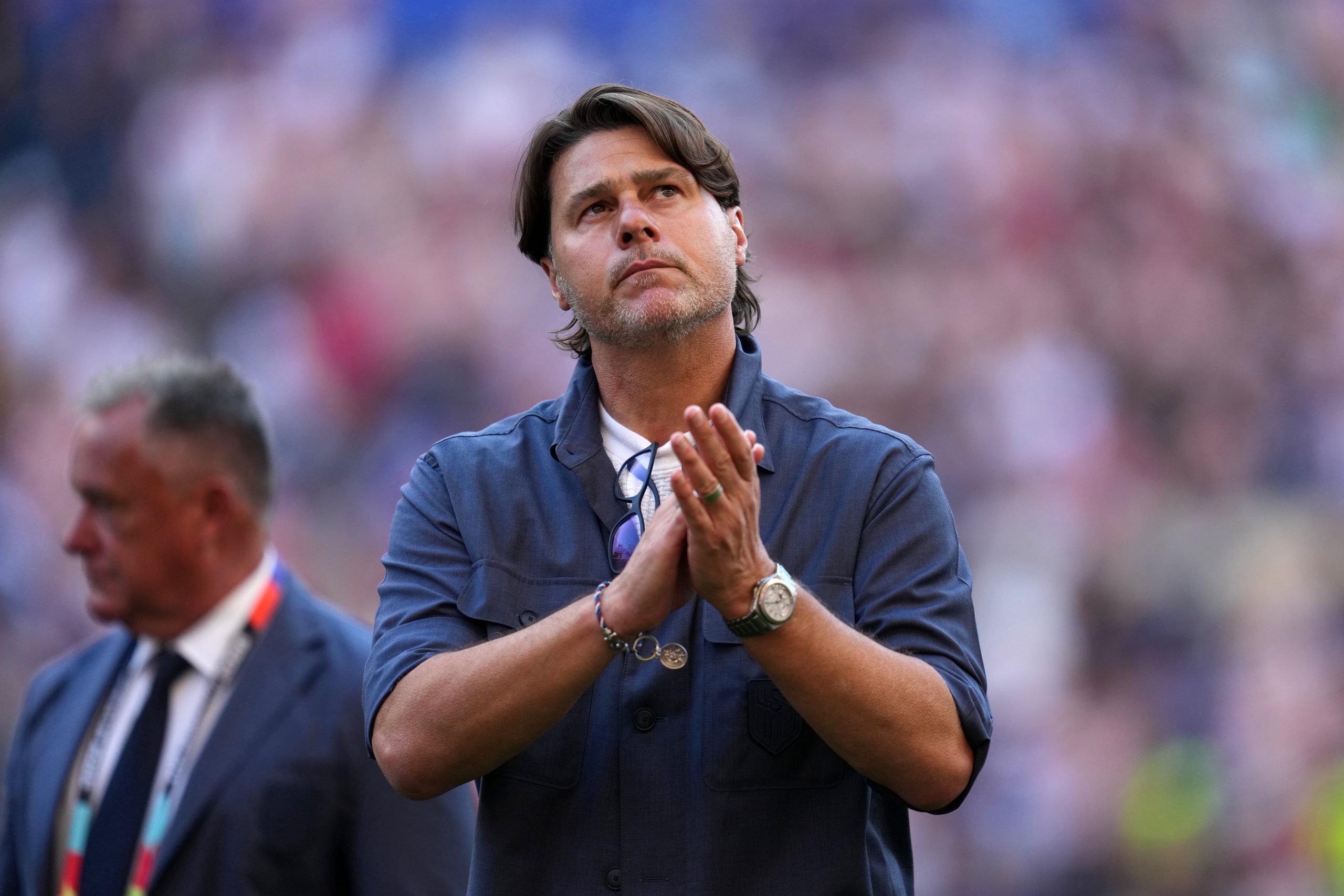
Mauricio Pochettino applauding the fans after the Belgium game.Abbie Parr
Pochettino said Monday that he believes “that gap with the best teams the world is not too big. I think if we will be capable to do things in a different way, to reduce that gap, I think it’s possible.”
The distance includes some of the hardest yards to cover in the sport. So there were serious questions to ask. And to his credit, he answered them pretty directly.
The first question was how much change Pochettino wants to enact, especially with a new generation of young players ready for a shot at the senior squad. He said he is ready for quite a bit.
“I don’t want to think, and that you believe, that it is a continuity of the last 18 months or 19 months that we were working there‚” he said. “The good thing is that we have the experience and the knowledge about the players that were working with us. And of course, now [we] open the pool to bring, players that were playing in the last year or now they are playing more in MLS, but also for players that maybe we didn’t have time to assess during that process that was a very compact and very short period.”
Quinn Sullivan (second from right) is one of many young players with Union ties whom Mauricio Pochettino has called up so far. Cavan Sullivan could easily be on the radar for the next four years.Jonathan Tannenwald
Pochettino added: “It’s going to be key, it’s going to be important, to provide the young kids that we really believe have the potential to arrive in 2030, in four years, to start to work. And to start to know [them], and set up the principle that we expect from them.”
Another big question, one that a lot of fans have in particular: Will Pochettino actually stay here for the duration of his deal? If he continues to do well here, European clubs will no doubt continue to call. It was no secret before and during the World Cup that there was interest, and he was looking.
“For us, every time that we sign a contract, it’s to go to the last day of the contract,” he said. “If now we sign a four-year contract, we need to think to arrive there. And we signed the contract because we really believe that we are going to be four years there.”
But he also acknowledged the obvious: “Nothing is sure — in life, but it’s less in fútbol.”
“Four years’ time is a really long period,” he said. “You never know what can happen in soccer. Today, people really love you, but in X time maybe that feeling changes.”
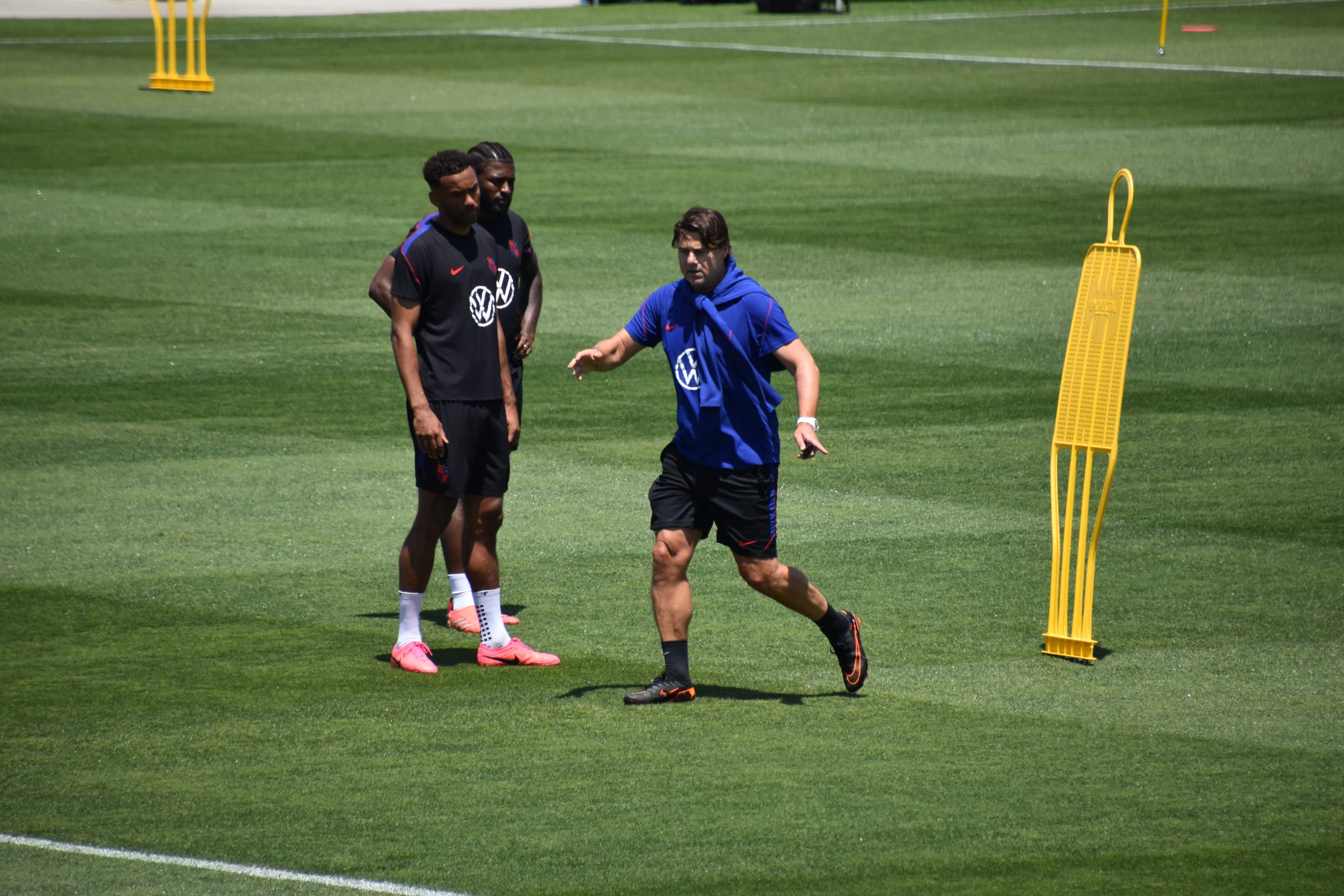
Maurio Pochettino (right) giving instructions to former Union defenders Auston Trusty (left) and Mark McKenzie at a practice during the World Cup.Jonathan Tannenwald
Will he make the U.S. his home?
Another big question is how much time Pochettino and his staff, all of which is also returning, will spend in the United States vs. Europe. They were all based in the latter for the first term, usually only crossing the Atlantic for national team game windows.
He isn’t alone on that count, to be sure. Argentina manager Lionel Scaloni has reached two straight World Cup finals with a home base in Spain, and Canada manager Jesse Marsch doesn’t live full-time in that country.
But there are some optics in the U.S. that aren’t the same in other countries.
This summer’s long-term impact on growing soccer’s fan base here is still to be seen. The NFL and NBA will no doubt take back their pieces of the spotlight in the coming months (we’ll see about baseball’s piece if there’s a work stoppage), so a U.S. coach might have to do more publicity work than was needed heading into a tournament on home turf.
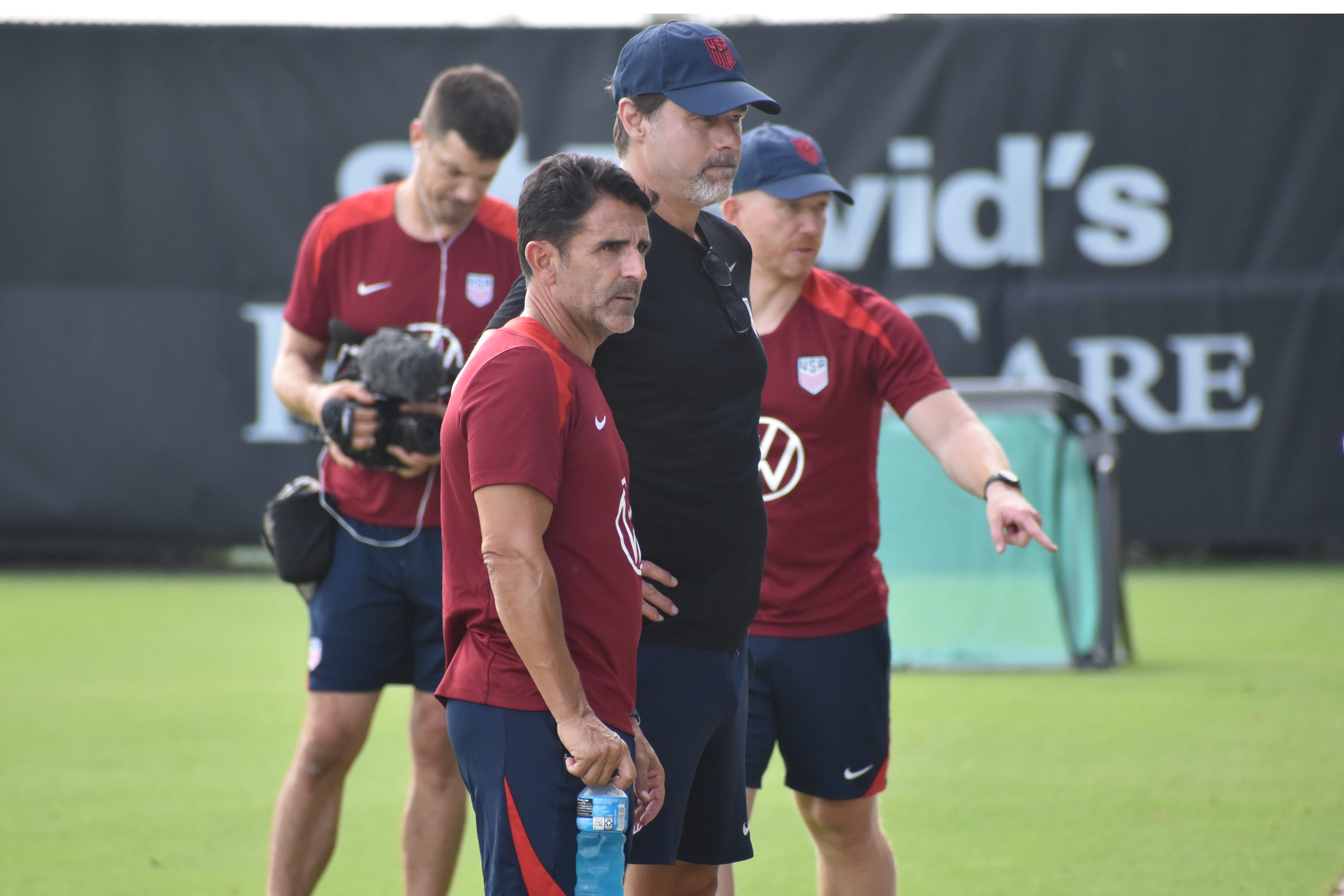
Mauricio Pochettino and his longtime top assistant Jesús Pérez (left).Jonathan Tannenwald
There are also the practical benefits of the senior national team manager spending more time at the national training center in suburban Atlanta, where many youth national team coaches and backroom staff are based.
Put it all together, and it would be nice to see Pochettino and his staff be public presences at more MLS games, and at some of the big youth clubs and events around the country.
“Now [that] we finish with the negotiation and the agreement, I will consider it to move to the USA, of course, because that process is four years,” Pochettino said. “I think I have no problem, and all the coaching staff, we don’t have any problem to move to the USA.”
That felt significant to hear.
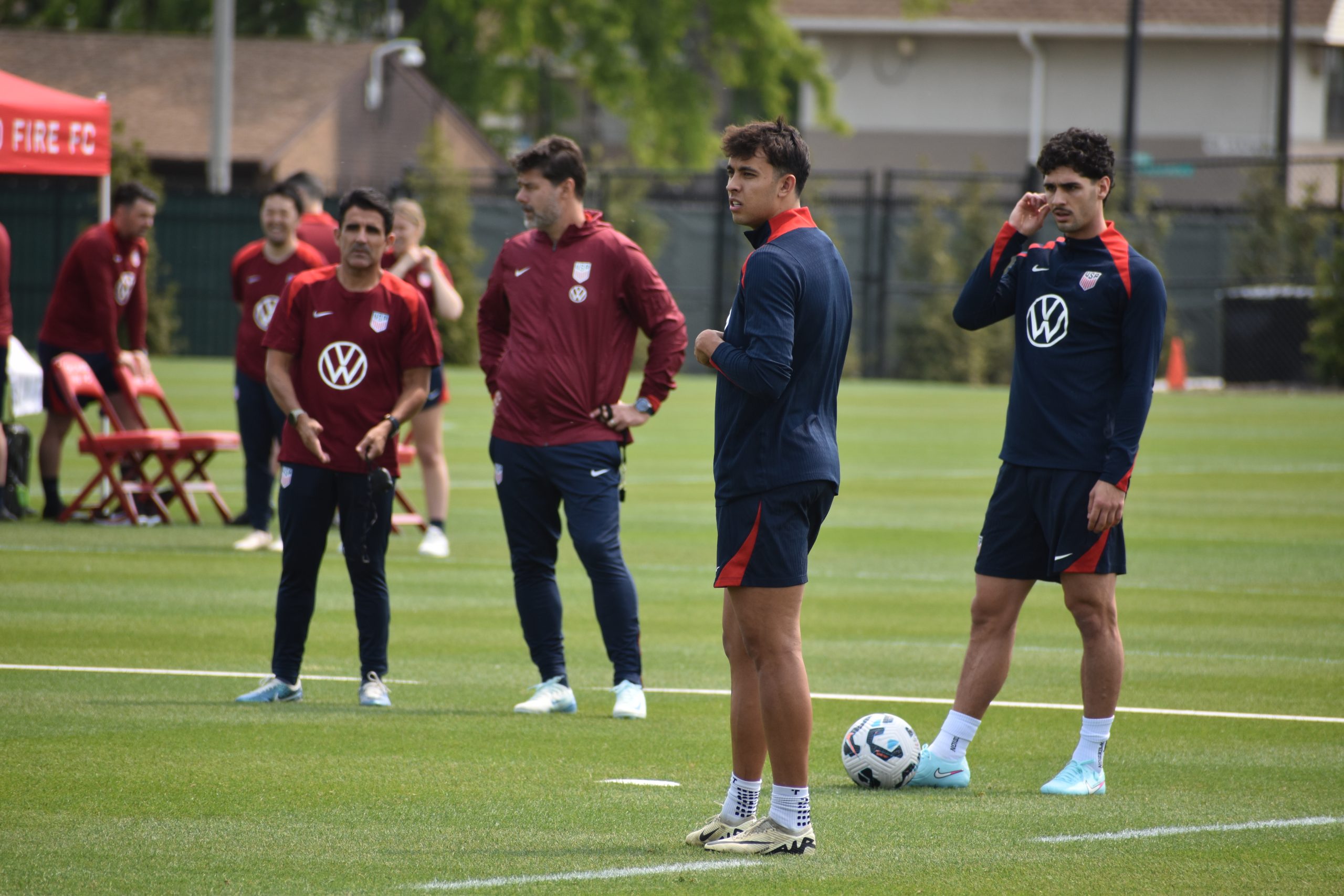
Toni Jiménez (right) is the goalkeeper coach in Mauricio Pochettino’s dedicated group of assistants.Jonathan Tannenwald
And one for the bosses
The last big question goes to U.S. Soccer’s leadership — including the big-money private equity donors who are once again paying Pochettino’s salary. By rehiring him, they are sending an implicit signal that he is better than any American candidate. Do they actually believe that?
None of the top brass were made available to take questions from the media before Monday’s announcement. There were only statements from president Cindy Cone and CEO JT Batson. (Nor have they said anything about the scandal around FIFA president Gianni Infantino, despite repeated requests for comment.)
“Mauricio has built a culture where players trust the group, trust the process and trust each other,” Cone said. “That culture, and the staff who helped build it, are exactly what we want to continue investing in for the men’s national team now and for the future. We are also excited about the experience and perspective Mauricio and his staff can bring across U.S. Soccer as we strengthen our pathways and seek to impact the broader soccer landscape in the United States.”
Batson said: “We know we have a lot of work to do to achieve our clear ambitions, including competing to win men’s World Cups and having soccer become the most played sport in every community.” And he was pretty clear that he believes Pochettino is the person for the job.
“I couldn’t be more excited that Mauricio and team are committed to partnering with all of us to do the hard work to bring those ambitions to life,” he said.
Mauricio Pochettino (left) speaks with JT Batson during the U.S. men’s team’s pre-World Cup training camp at the national training center in May.Jonathan Tannenwald
In a move to reinforce the bullpen, the Phillies turned to … the Mets?
On the heels of a larger trade for second baseman Luis Arraez and reliever Caleb Kilian from the Giants, the Phillies acquired lefty reliever Brooks Raley from the Mets for minor league right-hander Luke Gabrysh and outfielder John Spikerman.
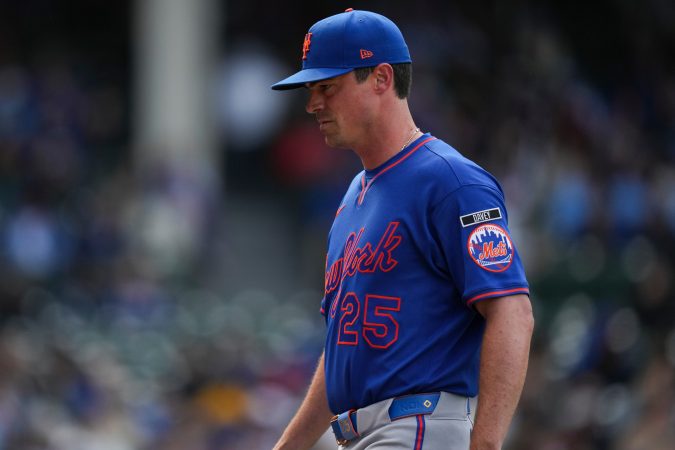
Raley, 38, has a 1.96 ERA in 41⅓ innings for the Mets. A pending free agent, he figures to slot into the bullpen alongside fellow lefties José Alvarado and Tim Mayza and righties Orion Kerkering and Jonathan Bowlan as the primary pieces in the bridge to closer Jhoan Duran.
All along, the Mets appeared to be a source for the Phillies to find relief help. The Mets are among the few aggressive sellers in the marketplace and already moved relievers A.J. Minter (to the Twins) and Huascar Brazobán (to the White Sox). They also have gotten offers for Luke Weaver, who is under contract for 2027, and closer-turned-starter Clay Holmes.
Right-handed pitcher Nolan Hoffman was designated for assignment to make room for Raley on the Phillies’ 40-man roster.
Luis Arraez is neither an outfielder nor a right-handed hitter. But he is the Phillies’ solution for scoring more runs.
Even though it puts Bryce Harper back in right field.
Welcome to the Phillies’ brave new world.
Amid an underwhelming market for righty-swinging outfielders, Dave Dombrowski made a trade-deadline splash Monday, acquiring Arraez — a lefty-hitting second baseman — and reliever Caleb Kilian from the Giants for two minor leaguers, including breakout pitching prospect Ramon Marquez — and in the process, uprooting three-quarters of the infield and transplanting Harper to the outfield for the first time since April 2022.
Then, in an almost concurrent trade, the Phillies picked up veteran lefty reliever Brooks Raley from the Mets for minor-league outfielder John Spikerman and right-hander Luke Gabrysh.
“Obviously,” Harper said, “it’s been a good deadline. I think [Dombrowski]’s done a great job.”
Harper said he didn’t know the Phillies were talking to the Giants about Arraez when he texted Dombrowski on Sunday night, after a conversation over the weekend in Baltimore with manager Don Mattingly. In both cases, he reiterated what he has said for years: For another productive hitter who played in the infield, he would make a short-term move back to right field.
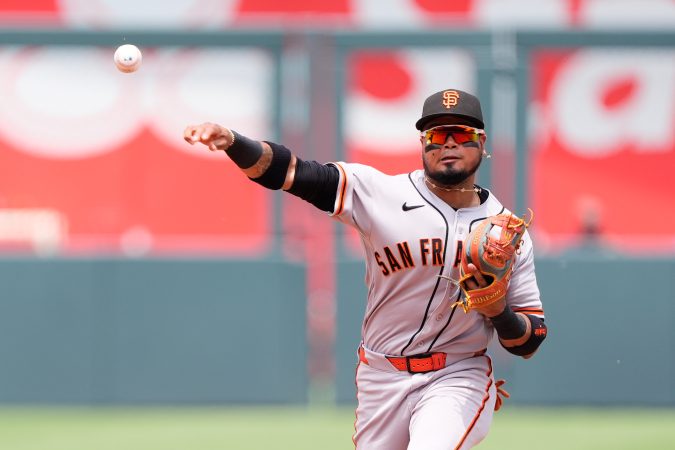
With Harper clearing the way, the Phillies pivoted to Arraez, a contact-hitting savant and three-time batting champion with a bead on a fourth. He’s leading the National League with a .324 average and has struck out only 21 times in 464 plate appearances.
In short, he’s like almost no other modern hitter.
Luis Arraez has more walks (25) than strikeouts (21). Gregory Bull
“He’s kind of like the modern day like Tony Gwynn, Wade Boggs,” said Mattingly, who played with both. “The guy just hits. He’s always hit, [won] batting titles, and just continues to do it. Obviously a huge addition to the lineup.”
But in pivoting to a hitter whom they believe will have a bigger impact than any of the righty-hitting outfielders they were scouting, the Phillies threw into flux an infield that already ranks among the worst defensive groups in the majors.
Arraez wants to stay at second base, where he improved defensively this season under Giants infield coach Ron Washington. Mattingly said the Phillies “wouldn’t have made the trade if we weren’t going to put him at second,” but really, they had little choice. The out-of-contention Giants assured Arraez they would only trade him to a team that would use him there.
Effective Tuesday night, then, when Arraez joins the Phillies, second baseman Bryson Stott will move to third base, third baseman Alec Bohm will go to first, and yes, Harper will shift back to the grass.
“The key for me is Harp,” Mattingly said. “Harp moving to the outfield is really the key to this.”
Said Harper: “I’ve said it in years past — I mean, I know everybody thinks it’s crap when I say it, but it’s not. Any chance that we have an opportunity to win, I’d do anything for this organization. And they know that.”
In the weeks leading up to the deadline, the Phillies focused on three areas: a right-handed bat, a late-inning reliever, and a starting pitcher. With so many needs and few assets in the farm system, it seemed like a challenge for Dombrowski to get everything.
As a team, the Phillies entered the week tied for 28th in the majors in on-base percentage (.304). In particular, they have gotten less production than any team from the right side of the plate, with a worst-in-the-majors .280 on-base percentage and .644 OPS.
But neither Mike Trout nor Byron Buxton has signaled a willingness to waive their no-trade rights. (In Buxton’s case, the Twins are a playoff contender in the American League.) The Reds’ Spencer Steer injured his wrist and may miss the rest of the season; the Royals traded Lane Thomas to the Braves; the Angels’ Jo Adell has a .279 career on-base percentage; and the Orioles were noncommittal on trading Taylor Ward.
(Adell and Ward were ultimately dealt to the Guardians and Mariners, respectively, Monday.)
Given the state of the market, the Phillies felt they needed to get creative. So, they widened their search over the weekend, according to major league sources, and landed on Arraez, who has a .360 on-base percentage and figures to help set the table for Kyle Schwarber and Harper.
“He’s a guy that won the batting title a couple of years and somebody that’s going to put the bat on the ball,” Harper said. “Exciting player, you know? I think he just brings a lot to our lineup. He’s got that hit tool, and it’s somebody that can be really good for us.”
The Phillies also acquired Kilian, a 29-year-old righty, to add depth to the middle of the bullpen. He has a 4.26 ERA in 46 games this season, but hasn’t allowed a run in eight of his last 11 appearances.
The move comes at a cost for a farm system that was already ranked among the worst in baseball.
Marquez, a hard-throwing 20-year-old right-hander, has emerged this season, prompting debate among scouts about whether he or 2025 first-round pick Gage Wood was the best pitching prospect in the system. Scouts are impressed by Marquez’s changeup and an uptick in his fastball velocity. He has a 1.50 ERA in six starts since moving up to high-A Jersey Shore.
Marty Gair, a 23-year-old, was recently promoted to Jersey Shore. He has a 4.50 ERA and six saves in 30 appearances overall this season.
Raley is shaping up as an important addition, especially given the powerhouse Dodgers’ lefty-heavy lineup. In 41⅓ innings with the Mets, the 38-year-old veteran had a 1.96 ERA. A pending free agent, he will join José Alvarado as the lefty weapons to combat Shohei Ohtani, Freddie Freeman, Max Muncy, and Kyle Tucker in the middle and late innings.
“I see him more towards the back end,” Mattingly said. “Obviously we’ve got Alvy, who’s throwing the ball really good. But we’ll take all the arms we can get out there.”