For decades, Donald Wittenberg spent much of his free time scrupulously documenting how the Holocaust affected people in the Philadelphia region and educating people to prevent anything like it from happening again.
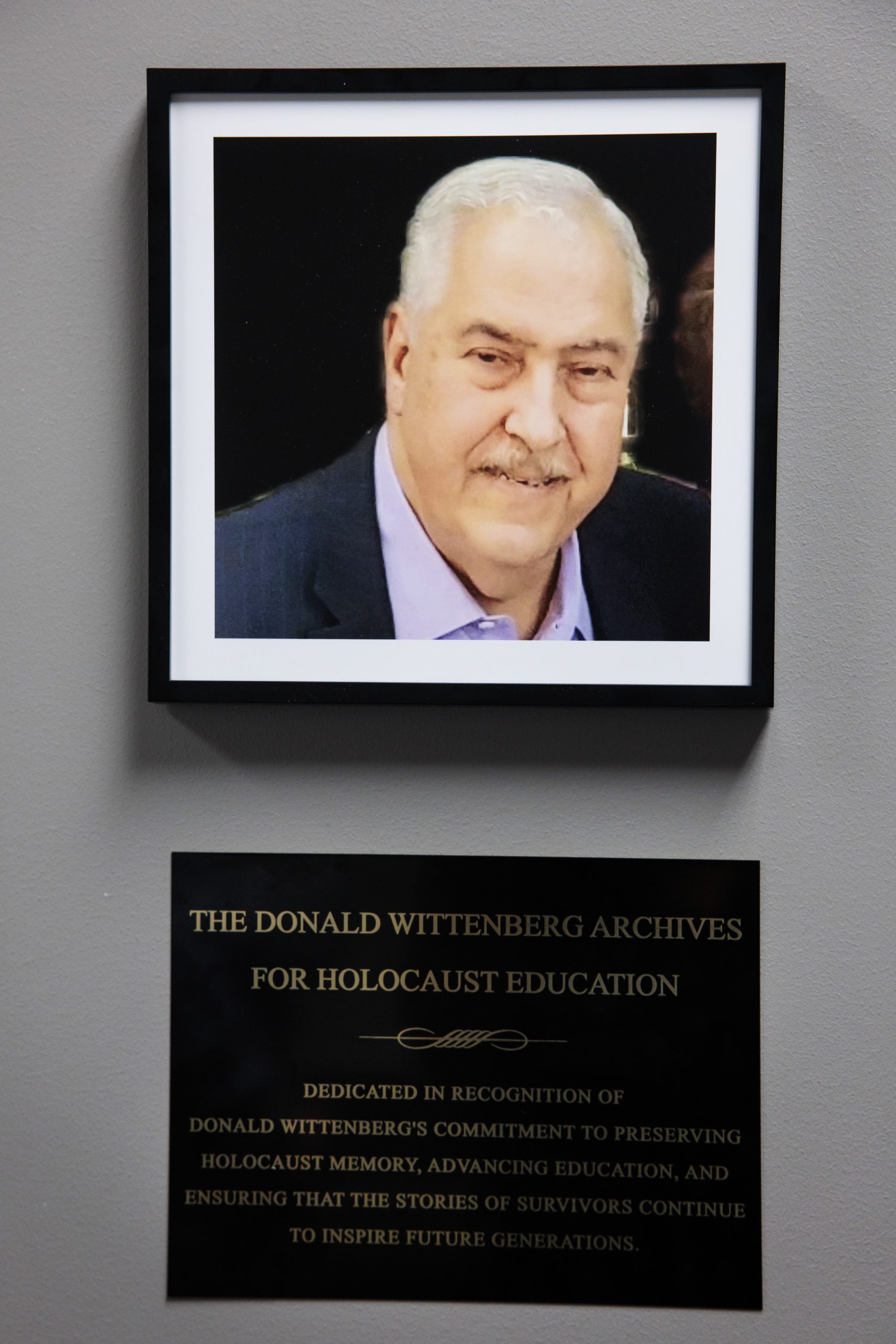
Now, the archives of the Holocaust Awareness Museum and Education Center (HAMEC) in Elkins Park are dedicated to Wittenberg, who died in March at age 79.
“In these more than difficult times, Don’s efforts will go on, and we will always appreciate those efforts,” HAMEC board president Chuck Feldman said to family and friends gathered at the museum Sunday.
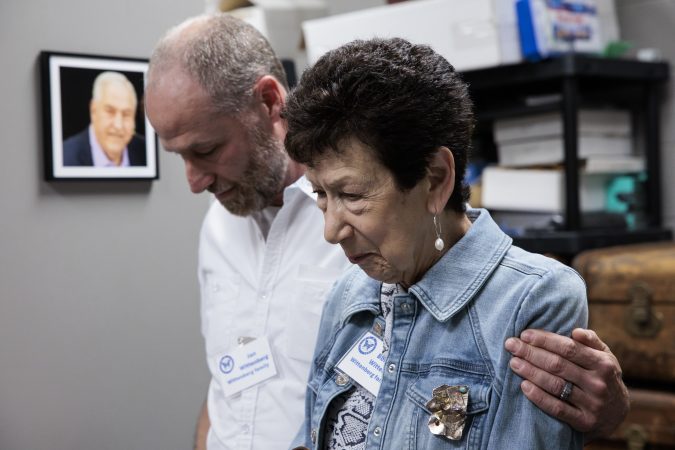
Attendees listen to the dedication ceremony at the Holocaust Awareness Museum and Education Center on Sunday, Aug. 2, 2026, in Elkins Park. The Archives for Holocaust Education were dedicated in honor of longtime curator Donald Wittenberg.Monica Herndon / Staff Photographer
Feldman estimated that with Wittenberg’s guidance, the museum and its educational programs have reached 400,000 young people in Pennsylvania and beyond.
Feldman said he had known Wittenberg since 1970, when they were young members of the Northeast Independent Democrats, helping to elect Milton Shapp for Pennsylvania governor.
Back then, the museum was in the basement of Yaakov Riz, who survived five years in a Soviet labor camp only to learn that 83 of his family members died in the Holocaust, Feldman said.
Though Riz was the museum’s founder, Wittenberg — a public school teacher and administrator — helped build it into what it is today, Feldman said.
“Don found artifacts through the local community, whose owners were looking for a respectful and impactful resting place,” Feldman said.
Wittenberg’s wife, Bonnie, said his motivation was partly personal. On his father’s side, most of Wittenberg’s family died in the Holocaust. Wittenberg wanted to know who they were, and who may have survived.
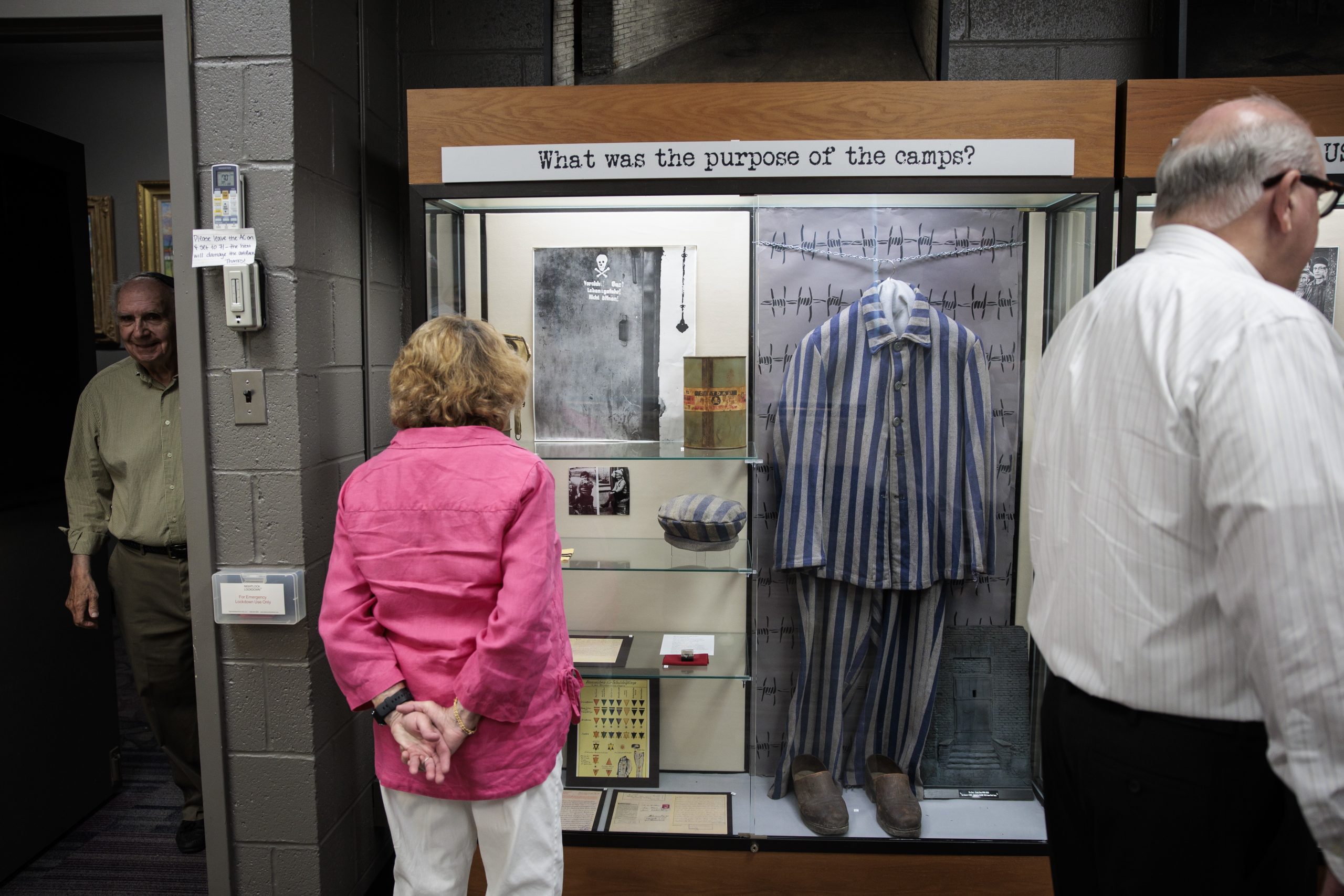
Visitors browse the exhibits during the archives dedication ceremony at the Holocaust Awareness Museum and Education Center.Monica Herndon / Staff Photographer
“He was like a detective. He was trying to solve mysteries,” Bonnie Wittenberg said.
One example: Her husband became obsessed with finding where a distant relative had been buried. She wasn’t sure if he ever found out, but unanswered questions like this one often drove his research.
This curiosity marked his conversations with the many Jewish families who over the years came to him with their own family stories. “He wanted to tell the story right,” she said.
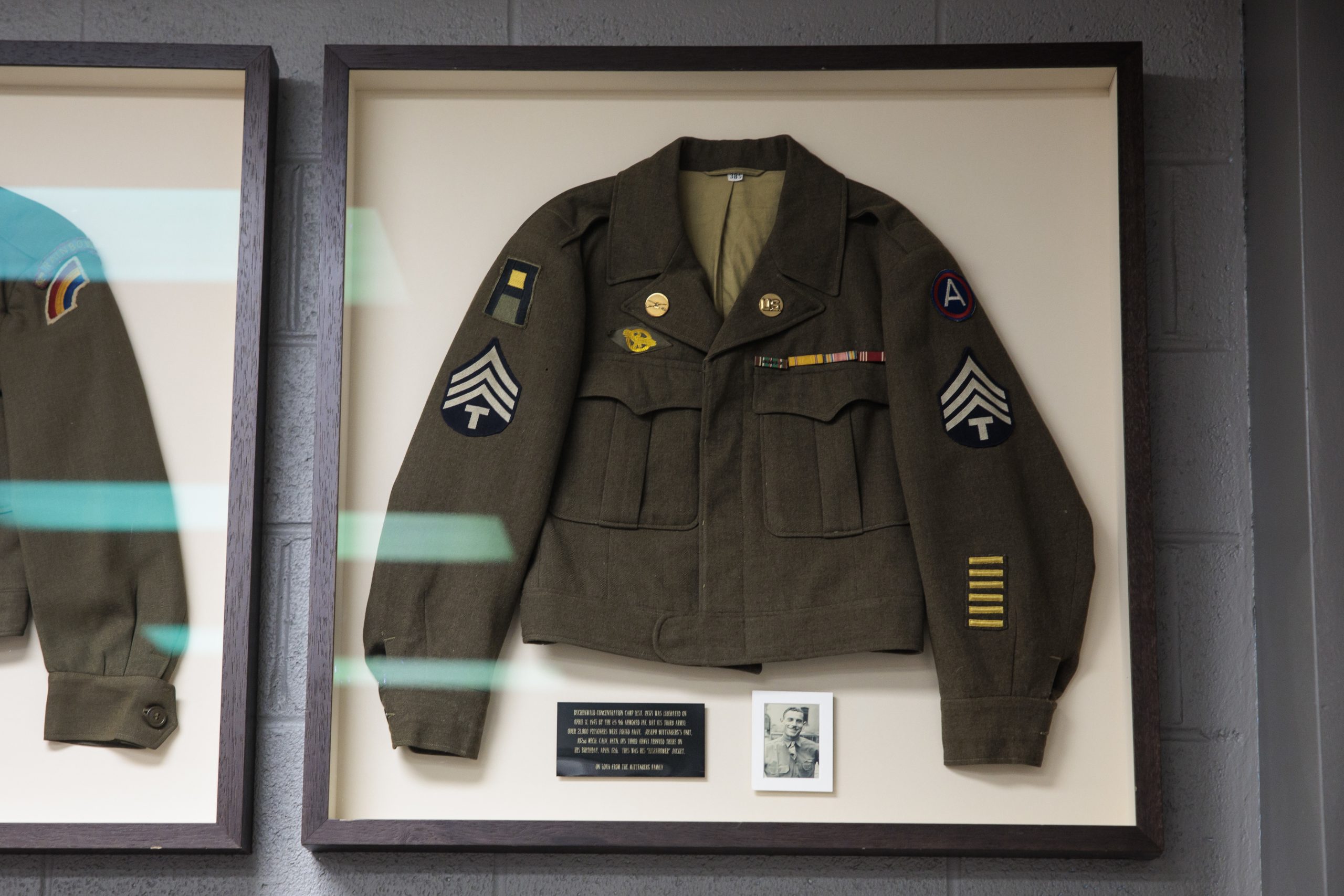
Joseph Wittenberg’s Army jacket worn during the liberation of the Buchenwald Concentration Camp, on display during the dedication ceremony at the Holocaust Awareness Museum and Education Center on Sunday, Aug. 2, 2026, in Elkins Park. The Archives for Holocaust Education were dedicated in honor of his son, longtime curator Donald Wittenberg.Monica Herndon / Staff Photographer
Wittenberg’s search for his ancestors continued a journey begun by his own Hungarian-born father, Joseph Wittenberg, said Donald’s son Steven Wittenberg.
Joseph Wittenberg served in the U.S. Army during World War II, “and when the war was over, he went back searching for his family, but he couldn’t find them,” Steven Wittenberg said.
After Joseph died, Donald Wittenberg found personal journals and war trophies that revealed more about his family and his father’s military service, he said. He learned his father had been in Normandy on D-Day plus one and had seen combat.
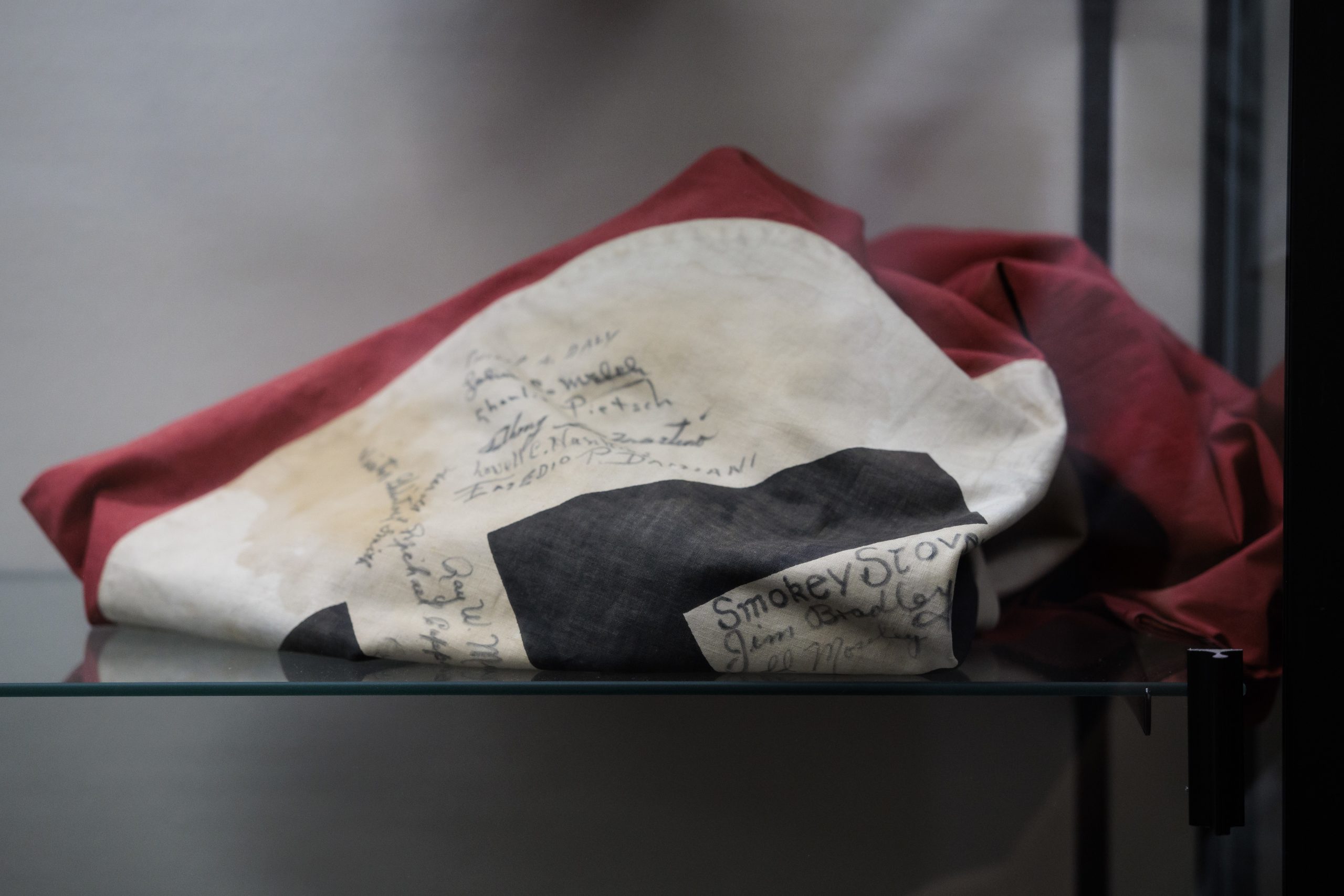
One item, a Nazi flag taken from Nuremberg’s city hall and signed by Joseph Wittenberg’s comrades in the U.S. Army 102nd Cavalry Regiment, is now on display in the museum. So is Joseph Wittenberg’s Army service coat, which Steven and his brother Jan remembered wearing when they were children.
A photograph of Donald Wittenberg and a commemorative plaque were placed during a dedication ceremony at the Holocaust Awareness Museum and Education Center on Sunday, Aug. 2, 2026, in Elkins Park. Monica Herndon / Staff Photographer
These objects, and the stories they tell, offer lessons for people today, Steven Wittenberg said: “The survivors are starting to pass away, and so you need to document that.”
Donald Wittenberg carefully chose every artifact in the museum, said Jacob Dupre, a Holocaust historian who worked as Wittenberg’s assistant and who will be taking over as curator. Dupre noted that there were no images of death on display — a choice Wittenberg made.
Wittenberg did include evidence of Nazi atrocities in the display, however. Tom Brennan of Oreland acquired a canister that once held Zyklon B, a gas used to kill people. Brennan noted that the shape of the puncture holes in the canister were the size of a standard-issue German soldier’s knife.
Other artifacts spoke to the resilience of those imprisoned in the camps, such as a tiny six-sided die made of bread dough.
A Nazi flag from Nurenberg during the dedication ceremony.Monica Herndon / Staff Photographer
One poignant item, a handmade birthday card passed between two concentration camp prisoners, was translated from German to read, “Whom the stork brought in May / the sun smiled on him.”
The poem-like text of the card, written more than 90 years ago, concluded with the lines, “Everything on Earth will change / when we’re all home again.”
Such messages of hope and endurance, found throughout the museum, still have something to teach people today, said HAMEC CEO Fabulous Flores. The museum tracked the yearslong process from the Nazi’s hate campaign against Jews to the end of World War II.
“We talk a lot about empathy,” Flores said. “When antisemitism is on the rise, when one group is targeted for hate, everyone is at risk.”
Subaru Park looked a tad different on Sunday morning. The navy blue, gold, and signal blue jerseys that would typically decorate the Union’s stadium were replaced by pools of red and white jerseys as it became a temporary home to Wrexham A.F.C.
The football club based in Wrexham, Wales, finished its three-game United States tour in Chester, with a preseason friendly against Sunderland.
Here’s everything you missed from the Wrexham takeover:
Wrexham goalkeeper Arthur Okonkwo grabs a corner kick by Sunderland on Sunday.David Maialetti / Staff Photographer
The gang takes on Pongadelphia
With one large pong cup remaining, the Always Sunny star Rob Mac, a Philly native and co-owner of Wrexham alongside Ryan Reynolds, grabbed a soccer ball, lined up his shot, let it go — and missed.
“Right on line,” Mac said. “ I mean that was right on line.”
Ahead of the game, Mac joined former Wrexham players Ben Tozer and Ben Foster on Team Wrexham Lager for Pongadelphia, a large beer pong game that was a nod to the Always Sunny Flipadelphia, competing against Team Garage Beer, which featured Eagles kicker Jake Elliott, Jim Cramer, and Fit Dad CEO.
Surrounded by dozens of Wrexham fans, Team Wrexham Lager took the lead early and never looked back — the same couldn’t be said about Wrexham A.F.C., who suffered a 1-0 loss to Sunderland.
But no matter the result, Sunday’s game was a full-circle moment for Mac, who took over the team in 2021. Before the game started, a prerecorded message was displayed on the jumbotron to all the fans in attendance.
“I got into football … it was when I first heard the opening song from the Sunderland ‘Til I Die docuseries,” Mac said. “When I heard it, I immediately thought of my grandfather who worked over at the shipyards, just over there.
“And just like the shipyard workers and Sunderland, were the coalminers of Wrexham, were the construction workers who built Liberty Place and the Ben Franklin Bridge. What I love so much about this game is that you can be Sunderland, Wrexham, or Philly, or any working-class town in the entire world and still discover that same connection to each other through a game that mirrors our biggest ups and downs.”
A passionate fanbase that travels
Passionate. Caring. Friendly. Amazing. Family.
These were the words used to describe Wrexham’s fanbase. And all of that was on display Sunday. Wrexham fans traveled from New York, Pittsburgh — and even as far as Okinawa, Japan — to watch the team in action.
Tessa Michael, 46, joined the team on their three-game tour, flying from Japan to Tampa to New York to Pennsylvania to watch the team.
“Like most American fans I got into it from watching Welcome to Wrexham,” Michael said. “Now, I’ve been out on every summer tour. I’ve been out to Wrexham. This is my second one now where I’ve done all three games.”
Tessa Michael, 46, (second from right), of Okinawa, Japan, watches “Pongadelphia,” an oversized beer pong game before the Wrexham and Sunderland match.David Maialetti / Staff Photographer
After watching Welcome to Wrexham, a documentary following the club, which was released in 2022, she instantly fell in love with the fanbase.
“Honestly it’s the people,” Michael said. “It’s the people of the town. They have great stories. They’re just like any town in America. You go to any sports town in Pennsylvania, in Florida, in Virginia or even out West, anywhere, they have the same struggles. They’ve dealt with the same things. They’re very relatable and the town is what keeps you a Wrexham fan.”
Michael has tried to bring the Wrexham fandom with her to Japan, her home for the last two years, but she’s found it to be more difficult with games airing between 11 p.m. and midnight — something she doesn’t seem to have an issue with.
“I’m staying up and watching them,” Michael said.
Wrexham to Philly crossover
The Welcome to Wrexham documentary led to many new eyes on the team — making them one of the most popular teams in the English Football League, famously owned by both Mac and Reynolds.
“It definitely helped this team,” said 31-year-old Chester native Evan Voicheck. “When you have two people that have an insane amount of money that are willing to put it into something they care about, then it helps.”
Voicheck, who wore a Wrexham scarf, two red-and-white chains, and the Wrexham mascot around his neck, also became a fan through the Welcome to Wrexham documentary.
The fanbase is so passionate, it reminds him of Philly sports fans.
A Union and Wrexham fan shows their support during the Wrexham vs. Sunderland match on Sunday.David Maialetti / Staff Photographer
“Just like us in Philly,” Voicheck said. “Wrexham, from what I’ve seen, it’s just Philly but across the world. It’s like a family. Everybody here knows each other. And if they don’t, then they will at the end of the day.”
Although Voicheck made the comparison to Philly sports fans, Buffalo native John Kania, 49, compared them to the Bills.
“Being from Buffalo, we’re very similar to what Wrexham is,” Kania said. “It’s a small — used to be a much bigger city, and just kind of went down in the drain. We have the Bills, like Wrexham has their football team. There’s a natural connection there.”
However, there is one glaring difference between Wrexham fans and American football fans.
“Everyone here is so friendly and nice,” said Chad Bemiller, of Derry, Pa. “It’s almost like a college football atmosphere here. Everyone is happy here and I don’t think we have that here with the NFL.”
Rob Mac and his wife, actress Kaitlin Olson (center), watch the match between Wrexham vs. Sunderland on Sunday.David Maialetti / Staff Photographer
Wrexham will start the season against Cardiff City on Aug. 17, as they prepare to make another push for the Premier League. And 14-year-old Logan Bemiller, who went to a Wrexham soccer camp in Long Island last year, has high hopes.
The United States government might wash its hands of any responsibility for the more than 700,000 human beings who’ve been deported since Donald Trump returned to the White House some 18 months ago, but it doesn’t take Sherlock Holmes to determine who’s to blame for the blood stains that have been left behind.
Last month, police outside the city of Retalhuleu in southwestern Guatemala found Nixon Giovanni Pérez Paz, 43, and his wife, Glendy Marisol González de la Cruz, dead in a sugar cane field. They’d been bound, gagged, and then executed by gunshots, with their 14-month-old daughter crying next to her mother’s lifeless body.
When Trump took office in January 2025, the couple was living in a suburb of St. Louis — working essential jobs and raising their three daughters while seeking to become legal residents of a country that had offered refuge from rampant crime and poverty back home in Guatemala.
The dream turned into a nightmare with one traffic stop in April 2025, as Pérez Paz was driving to work. Although a subsequent NPR investigation found just one permanent mark on his record — a paid $200 fine for driving without a license — Pérez Paz was swiftly deported by U.S. Immigration and Customs Enforcement (ICE). González de la Cruz had an active asylum application, but after struggling to support her kids while working two jobs, she decided to return home voluntarily.
The couple was murdered only weeks after they reunited in Guatemala.
“If immigration hadn’t picked up my brother, my sister-in-law would still be alive, and the children wouldn’t be going through this sorrow,” the dead man’s brother, Ronaldo Pérez Paz, told People magazine. “Unfortunately, immigration — the [U.S.] government — doesn’t see that. It makes no difference to them.”
No, it doesn’t. Nor did anyone with that government see the humanity of Daphy Michel, a 31-year-old Haitian asylum-seeker with a history of mental health struggles. Sheended up in immigration custody after an arrest and was dumped by ICE agents at a Pittsburgh bus stop wearing summer clothes during a brutal February cold snap. She was found dead three days later, and a medical examiner has ruled that Michel’s death was a homicide.
“I believe that we need to observe all our brothers and sisters as neighbors,” Jaime Martinez of the Pittsburgh immigrant rights group Frontline Dignity told the Guardian, invoking the golden rule that was shattered by Trump’s cruelty-is-the-point regime.
The smell of death permeates the so-called brain trust of American militarism that decided back in February — for reasons still unfathomable — to bomb Iran back into the Stone Ages, in an on-again, off-again campaign in which it seems the collateral damage is the point.
An undated photo of Daphy Michel, an asylum-seeker from Haiti who died March 2 in Pittsburgh, in the wake of her release from federal custody.
Last week, according to a deep analysis by the New York Times, U.S. forces dropped a massive, 2,000-pound bomb in the middle of a dense residential neighborhood on Iran’s Qeshm Island along the contested Strait of Hormuz, pulverizing a family’s home.
The 3:40 a.m. blast killed Zahra Jafari, her husband, Qeysar Jafari, a taxi driver, and their son Sina, according to Iranian news agencies, who said two other children were rescued alive from the rubble.
Less than halfway through Trump’s second presidency, his strongman rule is increasingly becoming a death cult. The stench of immoral indifference to the humanity of anyone not part of the MAGA movement is spreading as fast as the COVID-19 virus that helped bring an end to Trump’s disastrous first presidency.
I realize I’ve probably overused my lifetime quota for invoking one of the greatest four minutes of filmmaking I’ve ever seen, but yet again I am reminded of Martin Scorsese’s brilliant montage in Goodfellas as dead bodies pile up in parked Cadillacs or on freezer-truck meat hooks in the wake of a huge armored-car heist. It’s a testament to the greed, brutality, and senseless violence of the mob life.
Today, I can’t help but hear the mournful piano coda from “Layla” as I watch the corpses of Trump’s recklessly lethal rule wash up on Caribbean beaches near the driftwood of their obliterated fishing boats, or inside the bombed sanctuary of an Iranian girls’ school, or from medical neglect inside ICE’s growing gulag archipelago.
The nattering nabobs who scoff at the notion that the United States — whose president on Saturday posted an AI photo of himkissing Jesus on a golden cross wrapped in the American flag — has sunk into fascism because there are no Auschwitz-style death camps just don’t get it.
Whether it’s ICE agents firing bullets into an immigrant’s car, or deportation flights that dump their passengers back into the gang violence they thought they’d escaped, or ending the programs that saved millions of kids in Africa from malaria, the Trump body count is already into the thousands, and it grows every day of his warped presidency.
The statistics matter, but you can’t put a number on the rank immorality of an utter disregard for whether people who don’t look like you live or die. Whatever the Trump death toll turns out to be, this stain on the American soul is never coming out.
But there’s also an outer band of gross neglect or indifference to human life that has led to scores of additional deaths, including the more than 50 people — some who’d complained of medical conditions that were ignored — who’ve died in ICE custody since Trump returned to office, or the unknown number who’d faced murder or poor medical care after deportation to the trouble-laden nations they’d tried to escape.
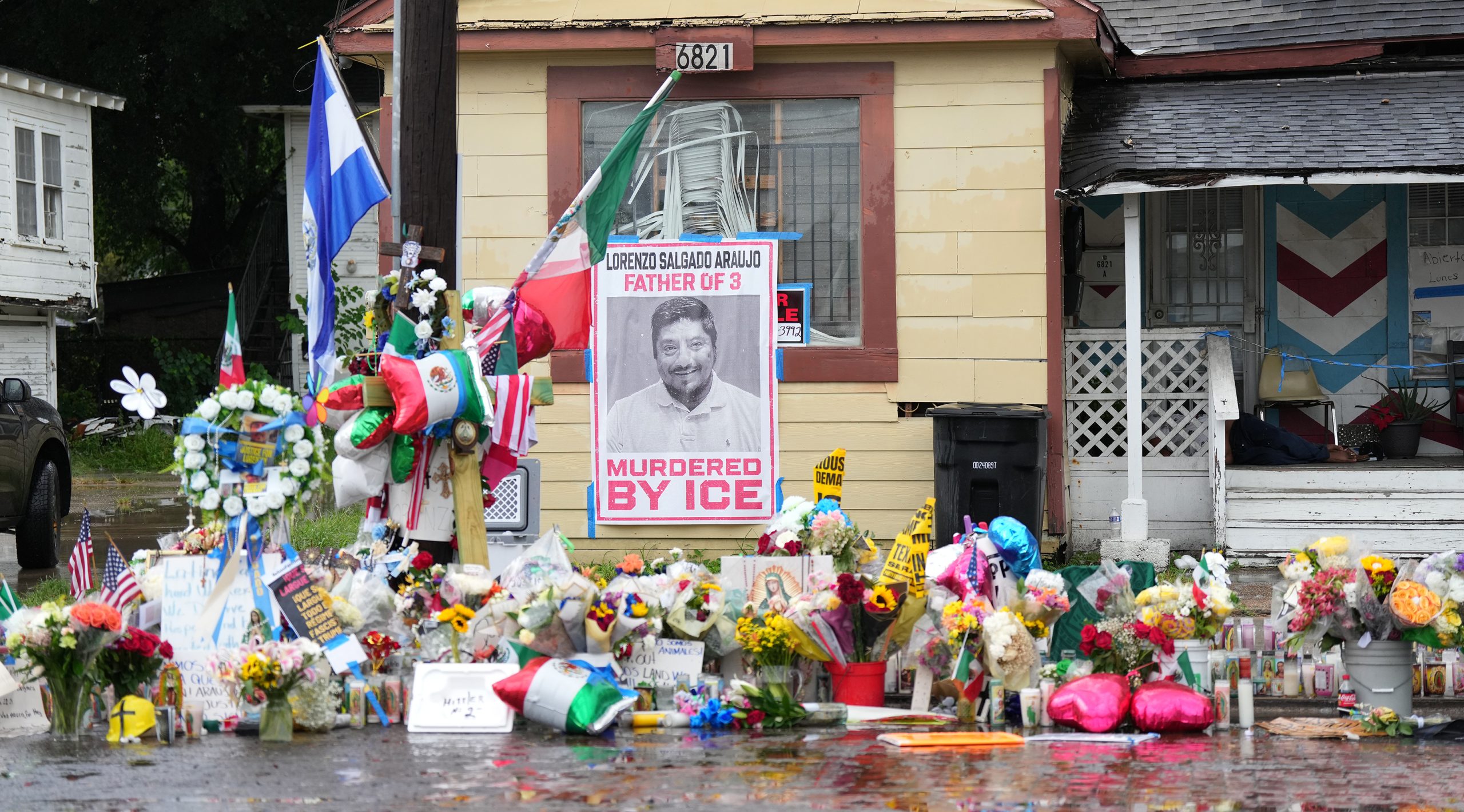
A memorial at the site where Lorenzo Salgado Araujo was fatally shot by ICE agents in Houston last month is seen July 13.Karen Warren
Then there’s the biggest — and most abstract — ring of all. It’s difficult to agree on an exact count, let alone bring accountability, for what researchers say is a wave of death — 600,000 people, mostly children, according to one Boston University study — that has resulted from the decimation of the U.S. Agency for International Development (USAID). And what will become of the domestic surge of preventable diseases such as measles under a government whose top health official is a notorious critic of vaccines? At what point does bad policy become depraved indifference?
Death is contagious. In Ecuador, prosecutor Alexandra Bravo was investigating the U.S. drone strikes that destroyed three of her homeland’s fishing boats when a gunman on a motorcycle assassinated her and her sister. There’s no evidence that the United States has any direct responsibility for her death, but there’s every reason to believe she’d still be alive if this Trumpian death cult had not destabilized the planet.
The MAGA movement thrives on a brand of white supremacy that pumps up its adherents by dehumanizing everyone around them. And when people are stripped of their humanity, the Ten Commandments seem to no longer apply to their tormentors. It’s hard to reach Trump’s promised goal of one million deportations every year unless the deportees are just a number — not a mom, or a dad, or a cherished neighbor.
A bad president can be replaced every four years. A killing spree screams out for immediate action. We need to take whatever steps are possible right now to stop this rogue government before tomorrow’s headline about the next Nixon Giovanni Pérez Paz or Daphy Michel.
The stench of death has already become unbearable.
BALTIMORE — Bryson Stott was back in his room at the Phillies’ hotel here late Saturday night when the news came across his phone.
Tarik Skubal was traded …
… to the Dodgers.
Gulp?
“No, I mean, you don’t say that,” Stott said Sunday — a.k.a., Trade Deadline Eve — before the Phillies wrapped up a series against the Orioles. “Everyone’s trying to get better. You’re not scared of anyone or anything like that. As a competitor, you’re not like, ‘Oh great, they got him.’”
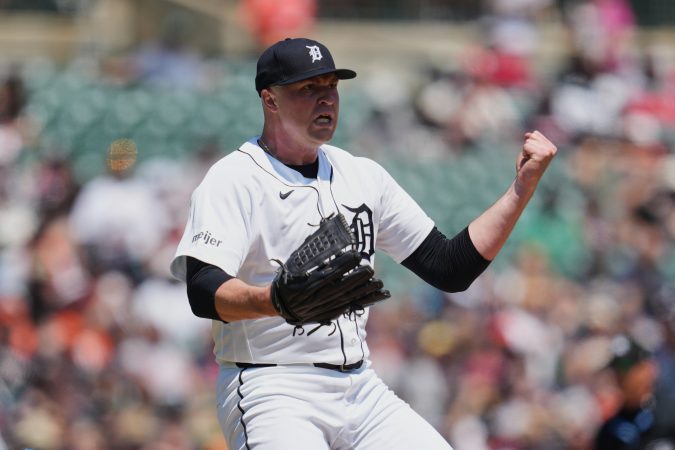
Sure, but the road to the World Series in the National League was always going to run through the Dodgers. And the two-time defending champs just landed the two-time reigning Cy Young winner in the other league.
“It’s a little shocking with [the Tigers] being still in it,” Kyle Schwarber said. “That was the weird thing to me. Maybe they just know something that none of us know and they just wanted to do something. I guess it was what they thought was the best quote-unquote deal.”
OK, to be clear: This isn’t simply a case of the rich getting richer. In addition to being a financial goliath, the Dodgers have the third-best farm system in the sport, according to Baseball America’s midseason rankings, with seven top-100 prospects.
The Phillies’ system ranks 29th and was labeled Sunday by one rival talent evaluator as “weak.” Zyhir Hope, a 21-year-old outfielder and the centerpiece of the three players headed to Detroit, is the No. 55 prospect in baseball and the sixth-best in the Dodgers’ system. He would likely be the Phillies’ top prospect.
Phillies president of baseball operations Dave Dombrowski is working the phones to try to add players before Monday’s trade deadline.
So, no, the Phillies couldn’t put together a package to compete with the Dodgers for Skubal. Besides, they need a late-inning reliever and a right-handed bat, in addition to a starting pitcher. It puts Dave Dombrowski in “a tough spot,” as one NL team official said, because he has multiple holes to fill and few high-level prospects to cash in.
Unlike the Dodgers, who led the NL West by 10 games entering play Sunday, the Phillies aren’t a shoo-in for the postseason. Although they were in possession of the final NL playoff spot, they led the Padres by only one game and the Marlins by 1½.
Asked for his reaction to Skubal-to-the-Dodgers, interim manager Don Mattingly joked, “What happened?”
“No, we’ve got enough issues just taking care of our own business,” Mattingly said. “If we get to them, we’ll deal with it then.”
If the Phillies do get to the postseason, they’re viewed across the sport — even within the Dodgers’ front office — as a tough matchup, especially in a seven-game series, because of their starting pitching. Cristopher Sánchez and Jesús Luzardo, in particular, are left-handed; the Dodgers are far more productive from the left side of the plate (.811 OPS) than the right (.721).
Last year, the Dodgers won two one-run games to edge the Phillies in the division series and expressed relief to have advanced. But that was before Skubal, who will join Yoshinobu Yamamoto, Blake Snell, Justin Wrobleski, Roki Sasaki, Tyler Glasnow, Emmet Sheehan, and maybe Shohei Ohtani in the Dodgers’ bottomless stable of starters.
It only makes the challenge more formidable.
“You know how good they are and how good we are,” Stott said. “I think our starters match up with anybody in the league. Obviously I think everyone would love a guy like [Skubal]. I’m sure there were other teams involved, too, and that’s who [the Tigers] went with. Can’t fault them.”
In three career starts against the Phillies, Tarik Skubal has a 2.37 ERA and 22 strikeouts in 19 innings.Paul Sancya
The Phillies faced Skubal three weeks ago in Detroit and scored two runs in five innings of a 5-0 victory behind Wheeler. In three career starts against the Phillies, the hard-throwing lefty has a 2.37 ERA and 22 strikeouts in 19 innings.
Schwarber, who played with Skubal on Team USA in the World Baseball Classic, recalled facing him for the first time in spring training in 2022.
“I was like, ‘Oh [crap], this kid’s throwing 100,’ you know, with a hard-breaking ball and then the good changeup,“ Schwarber said. ”I was like, ‘Well, the kid’s got some good stuff.’ And then to see where he developed to, the picture of where he is now.
“So, yeah, good trade for [the Dodgers], right? I don’t think anyone would look and say, if they traded for that caliber of a starting pitcher, that they would be upset.”
But Schwarber said the Phillies won’t like their chances against the Dodgers any less if they get to face them in the playoffs.
“Everyone always talks about their payroll. That hasn’t guaranteed them anything,” Schwarber said. “It’s worked out these last two years. But you kind of go back, I remember when I was with Chicago, [the Dodgers] won the West for how many years? I mean, 2020 was their first championship.
“I think one of our biggest things is that we’ve got to make it there, right? And if we match up with them again, anyone can beat anyone.”
The Dodgers made their big move. Dombrowski has two more days to come up with a counter.
Aidan Miller had a spinal procedure in early June to treat a back conditionJose F. Moreno / Staff Photographer
Extra bases
Backup catcher Rafael Marchan (knee) could play in minor-league games later in the week, according to Mattingly. … Top prospect Aidan Miller, who had a spinal procedure in early June to treat a back condition, is “back to playing catch,” according to a source. … The Phillies return home Monday night. Aaron Nola (3-9, 5.61 ERA) is scheduled to face the Nationals, who haven’t named a starting pitcher.
It felt almost strange to have a game with some stakes in it at Subaru Park for the first time in a while. But the Union’s two-game winning streak coming into Saturday night gave Atlanta United’s visit the shine of a must-win contest.
They’re all must-win in theory, of course, if the Union want to mount a charge toward the playoffs. Still, it mattered that Atlanta specifically was the visitor this time: the team the hosts climbed over last weekend to finally get out of the basement.
For 95 minutes, it seemed the Union were going to not just lose, but lose badly. They’d been a man up since the 26th minute, yet Atlanta scored far-too-easy goals in the 30th and 66th.
Even after Milan Iloski’s terrific backheeled flick in the 73rd cut the deficit, there were so many more heaves into the box that had no end product against the visitors’ massed defense. It was bad enough that Bruno Damiani only had one shot in his 71 minutes, but it was far worse that he didn’t even contest some of those crosses — the kind of play that’s supposed to be his bread and butter.
Bruno Damini laments one of the Union’s many missed opportunities before their late comeback.Elizabeth Robertson / Staff Photographer
There was, though, one reason to wonder if the Union might be capable of a comeback. Damiani’s departure came as part of not just a double-substitution, but a major tactical change by interim manager Ryan Richter. He gambled on switching from the usual 4-2-2-2 to a 3-4-1-2, withdrawing Nathan Harriel and leaving 18-year-old Neil Pierre as the only true centerback — flanked by outside backs Kai Wagner and Frankie Westfield.
Players win and lose games more than anyone else, especially in soccer with its limited substitutions. But this time, coaching had a genuine impact. The wave of attacks finally broke Atlanta down, as Pierre jumped for the equalizer in the 86th and Ezekiel Alladoh volleyed in the winner 80 seconds later.
For once, Subaru Park was stunned in a good way. And Richter had made a point to people wondering if he should have the job long-term.
“In these games — to me at least — home games in MLS, you have to go for the win,” he said. “It’s not satisfying to go for the tie. One point at home is not enough to make the push that you want throughout a season. So, in all these whenever we’re in this situation, it’s us trying to go for the win.”
One part Richter wouldn’t say, understandably: assume Bradley Carnell wouldn’t have done it. Maybe a lot of managers wouldn’t have. But the point about Carnell needs to be made, because the Union’s bad record wasn’t the only reason to fire him. His stubbornness mattered too.
When Richter was given the job, fans rightly wanted to know if he’d be as rigid. The initial hints were he might not go entirely as far, but was pretty committed, along with sporting director Jon Scheer.
Then Saturday happened. If the Union had lost, you’d be reading here about how the shine was off now. A little of it is anyway, because this game re-exposed this roster’s flaws despite the final score.
For now, though, a win is a win. The celebrations on the field and in the stands were the real thing.
“It’s a risk because you’re just basically saying you’re going to deal with one-v-one situations for the rest of the game,” the manager said. “You’re going to sometimes deal with a two-v-one situation where it’s a direct ball, and if you don’t win the header, it’s trouble. But also, just from a physical perspective, if you want to put someone there, it’s Neil when it’s a direct ball out, or it’s a situation where it’s a one-v-one that he has to win — you trust his physicality in all those moments.”
But Richter was willing to try, and he was rewarded.
“It’s also taking a chance, that part is clear,” he said. “It’s taking a chance to try to go for the goal, and maybe it goes the other way, but it’s a risk that we have to take, because we needed to make that push at the end.”
Wagner, who’s now playing for his third manager at Subaru Park, knew what it meant.
“If I would be honest, this guy has some balls,” he said. “It showed a lot of character from him.”
Union manager Ryan Richter watches the action in the second half at Subaru Park on Saturday. Elizabeth Robertson / Staff Photographer
“I mean, what a goal to score, what a moment to score it,” Richter said. “I think he can put himself in position to probably get easier goals than that. Happy for him, proud of him, and hopefully he takes a lot of confidence from this going forward, and shows a little bit of the talent that he has and what he can do to contribute to this team.”
But Wagner had a lot to say, and it was clear he was speaking on behalf of many players.
“It’s hard for a striker to come as the record [signing] — you come in, you have a lot of pressure on your mind already,” he said. “It’s hard to come to a new country. It’s always hard to adapt so fast … I hope that’s a door-opener for him.”
When Alladoh was told of those remarks, he gave thanks.
“That means so much for me, because I think everybody believes in me,” he said. “They know what I can do.”
The Union still have a long way to go in the standings. Saturday’s results put them 13th in the Eastern Conference (4-10-4, 16 points), seven points back of ninth-place D.C. United for the last playoff spot. It will be a while before that changes, because the scene now shifts to three straight games in the Leagues Cup group stage.
But a three-game winning streak is grounds for a moment of optimism. Especially after a night when, for so long, it seemed like there was only going to be frustration.
Nobody wants to admit it, but the Dodgers deserve Tarik Skubal. They landed him the old fashioned way. They drafted, developed, traded, and signed their way to a circumstance where they could trade a highly valued outfield prospect for three months of service that will only pad their odds of completing a three-peat that they were favored to accomplish anyway.
That’s what you should focus on. The dignity of the deal. Not the Dodgers’ myriad other competitive advantages. The endless payroll. The creative accounting. The market size, location, and glitz. None of them matter as much as the fundamentals. The Dodgers are simply better at identifying and nurturing talent than any other organization. To focus on anything else is to give your own organization a pass.
They had four outfielders ranked among the 40 best prospects in the game, for crying out loud. Three of them were at double A already. Their big league outfield already includes young breakout star Andy Pages in center field and Kyle Tucker in right. Not only do they have high-end prospects that other teams want, they can afford to trade some of them. In fact, they almost have to trade some of them.
From 2021 through 2026, the Dodgers had 22 players appear on at least one of the major national Top 100 lists. The Phillies had eight during the same time span. Only two teams in the majors had fewer than the Phillies. Only three teams in the majors had more than the Dodgers.
General managers and scouting directors tend to roll their eyes any time they end up on the wrong side of the Top 100 math. These lists don’t come close to providing an expert-level understanding of a team’s farm system. They are prone to politics and groupthink and statistics without context. All of which is true. But you can’t argue with the market.
The centerpiece of the Skubal trade is a good example of the Dodgers’ skill in this prospect thing. It’s also a good example of why it isn’t too early to expect more out of Dave Dombrowski’s farm system.
Let’s start at the beginning …
February 2020 — Dodgers acquire Mookie Betts for two top-50 prospects, neither of whom is Gavin Lux, who enters the season as a consensus top-five prospect.
January 2022 — Dodgers sign Dominican outfielder Josue De Paula for $400,000 in international bonus money.
March 2022 — Dodgers enter season with six Top 100 prospects, including Michael Busch. Dodgers initially drafted Busch at No. 31 in 2019, four picks after the Cubs took college pitcher Ryan Jensen.
January 2023 — Dodgers sign Venezuelan outfielder Eduardo Quintero for $297,500 in international bonus money.
January 2024 — Dodgers trade Busch to Cubs for Zyhir Hope in what was basically a prospect-for-prospect deal.
January 2025 — Dodgers trade Lux to Reds for outfielder Mike Sirota and a competitive balance pick, which they use on outfielder Charles Davalan.
January 2026 — Hope, Sirota, Quintero and De Paula all enter season as Top 100 prospects. Davalan is ranked as the No. 7 prospect in the Dodgers organization and a potential 2027 Top 100 prospect.
That’s a tidy snapshot of what makes the Dodgers the Dodgers. It isn’t just drafting and development. It’s knowing when to trade your own guys. It’s knowing who to trade for. It’s knowing how to spend international money. Look, a lot of those 22 Top 100 prospects have yet to turn into stars. Josiah Gray, Bobby Miller, Gavin Stone, and Keibert Ruiz are some of the names. But all it takes is one Pages or (potentially) Dalton Rushing to turn into a homegrown star.
The Dodgers landed Tarik Skubal the old fashioned way.Paul Sancya
With one day to go before the MLB trade deadline, Phillies fans again are looking to a highly variable and often prohibitively expensive market to remedy roster holes that will never truly be solved without an adequate farm system. Imagine plugging someone like Pages into the lineup. Imagine if Andrew Painter had Justin Wrobleski’s pitching line. More often than not, trade deadlines are won and lost long before they arrive. The losers are the desperate teams. The winners are the ones who can outbid anybody but do not need to unless a game-changing deal comes around.
The Dodgers just struck such a deal. In adding Skubal, the two-time defending AL Cy Young winner, they have blunted the one competitive advantage the Phillies might have in a series. Even if Shohei Ohtani is unable to return to the mound this season, L.A. will still be able to go toe-to-toe in the first two games of a series.
Skubal vs. Cristopher Sánchez in Game 1.
Yoshinobu Yamamoto vs. Zack Wheeler in Game 2.
Beyond that, the Dodgers could have some combination of Wrobleski, former AL Cy Young winner Blake Snell, and 2025 postseason standout Tyler Glasnow, the latter two of whom are expected to rejoin the rotation off the IL in the near future. Plus, whatever they can get out of Ohtani, another former Cy Young winner.
The Dodgers’ big league depth is overwhelming. Their payroll has a lot to do with that. But a big payroll is no match for elite-level decision-making. Right now, that’s the Dodgers’ greatest competitive advantage.
Tracy Chapman’s “Fast Car,” a ballad about a dead-end life, made the Billboard Hot 100 twice, nearly 40 years apart. As a doctor, I’m not surprised. “Fast Car” is about someone trying desperately to move up in life even as obstacles mount — bleak job, insufficient finances, family obligations, and increasing isolation. The song endures because it validates the experience of millions of Americans.
I hear versions of “Fast Car” every time I set foot in the hospital as a general internist. My patients tell me stories about how, no matter how hard they work, the path to a better future slips farther away. It inevitably comes up as the reason they feel sick. My patients even have a name for their condition: they feel stuck.
The more I listened, the more I realized this wasn’t just an individual problem. We’ve reached our 250th anniversary as a stuck country.
I’ve been documenting what our research group has come to call “stuckness” for a decade. It’s more than poverty, loneliness, or a lack of opportunity. Stuckness emerges when real barriers in our jobs, finances, relationships, health, neighborhoods, and politics coalesce to keep people from having a real shot at success and happiness. It is a feeling and a reality that reinforce each other, robbing us of hope, generating chronic stress, and making it harder to move forward.
As one young man, stuck with dwindling job prospects, mounting debt, and few close relationships, said: “I’m not hopeful. I may not make it past the age of 35 if things continue this way.”
My patients are right to identify stuckness as the biggest threat to their health. Yet, our country hasn’t found effective ways to fix it. Part of the issue is that when people tell us they are stuck, we believe it can be solved by self-help books, a positive attitude, or the latest wellness fad.
The bigger issue is that we haven’t really understood the problem.
My colleagues and I at the research nonprofit Opportunity for Health decided to change that. In a recent survey, we asked working-age adults across America whether they felt stuck. We found that more than one in five respondents — representing about 40 million adults — strongly felt stuck. Nearly half of the people taking our survey felt at least somewhat stuck. Stuckness was most common among lower-income Americans, but one out of 10 of the richest or most educated Americans felt stuck, too.
Respondents got stuck because of job or financial challenges, worsening conditions in their neighborhood, social isolation or fraying relationships, or because of a sudden illness or disability. Once any one of these challenges set in, others quickly piled on.
A health problem leads to lost work, creating financial strain that weakens relationships, and the resulting hopelessness and stress further damage health. That cycle helps explain why people who felt strongly stuck were five times more likely to report being in poor health than those who didn’t feel stuck at all.
While our survey covers only a single year — no one had bothered to ask about it before — other data show that stuckness has grown over time.
That tracks with what I hear from my patients. The likelihood that low-income Americans can move up the economic ladder has fallen since at least the 1980s. So has the share of Americans who are able to leave neighborhoods that aren’t working for them in search of new opportunities.
Using economic survey data, the fraction of working-age Americans facing multiple challenges — whether unemployment, a work-limiting disability, low household income, social isolation, or being moored in place — rose from 14% in the late 1980s to 24% today, writes Atheendar S. Venkataramani.Lynne Sladky
Based on my calculations using economic survey data, the fraction of working-age Americans facing multiple challenges — whether unemployment, a work-limiting disability, low household income, social isolation, or being moored in place — rose from 14% in the late 1980s to 24% today.
Stuckness also shows up more often in our culture. In the more than three decades bookending the appearances of “Fast Car” on the Billboard Hot 100, the share of songs mentioning feeling stuck rose from one out of every 100 to one out of every 20 — and that doesn’t include Chapman’s hit or other songs by Bruce Springsteen or Garth Brooks that describe stuckness without using the term.
It is not a coincidence that the rise in stuckness coincides with our flatlining life expectancy. We are getting sicker despite the trillions of dollars we throw at healthcare. My patients wouldn’t find that surprising: they aren’t asking for more medicines or tests. They just want to get unstuck.
Because stuckness arises from a cascade of factors, solutions must do two things: prevent people from falling into those slumps and help them escape when they do.
That means ensuring that work once again provides a pathway to security through fair wages, ample opportunities to develop new skills, and ensuring that new technologies like AI expand rather than replace human potential.
It means investing in communities that have been left behind, building up local economic capacity and infrastructure so that every corner of America has the basic tools for people to thrive.
Because stuckness arises from a cascade of factors, solutions must include investing in communities that have been left behind and building up local economic capacity and infrastructure, writes Atheendar S. Venkataramani.Jose F. Moreno / Staff Photographer
It means making healthcare, childcare, paid family leave, and other basic supports reliable foundations that keep temporary setbacks from becoming permanent ones.
Finally, we shouldn’t ignore growing concerns about affordability or the economy. We shouldn’t make it harder for people to access safety net programs like Medicaid and the Supplemental Nutrition Assistance Program (SNAP), as the administration is now doing, because they can help our neighbors escape stuckness.
And we shouldn’t make it harder for people to weigh in at the ballot box to seek the wider changes that will improve their lives on how to get their communities unstuck.
The solutions to stuckness will vary across regions. We will need to argue productively, try, fail, and try again to get it right. One of the most shocking findings from my team’s research is that stuckness touches us all: even richer Americans are less healthy when people in their communities get stuck. There’s a reason for that. When millions get stuck, we collectively become less productive, angrier, and more divided.
Now that our country has turned 250, we face a critical choice. We can keep pouring resources into treating the consequences of stuckness or we can confront its causes.
My patients already understand this distinction. They know that what makes them sick is not simply a disease. It is the growing feeling that no matter how hard they try, their future remains limited and bleak. If we want a healthier America, we need to build a country where effort once again leads somewhere.
Atheendar S. Venkataramani is a physician and professor of medical ethics and health policy at the University of Pennsylvania. He is the founding director of Opportunity for Health and is a senior fellow at the Penn Leonard Davis Institute of Health Economics.
Philadelphia restaurants Hiroki, La Calaca Feliz, and the Lodge by Two Robbers have announced their departures in the last week.
The latest announcement was Hiroki, sushi chef Hiroki Fujiyama’s serene omakase room behind Wm. Mulherin’s Sons in Fishtown, which posted Friday that Aug. 8 would be its last service.
In an interview with The Inquirer, David Grasso, a principal in owner Method Co., called the closing “a strategic repositioning rather than a retreat from fine dining” and added that the decision was driven by a desire to stay ahead of customer preferences and culinary trends, not by problems with the restaurant or a broader pullback from fine dining. Method is planning to open a new concept — so far undetermined — in the space on Lee Street next year.
Method also has several new fine-dining concepts planned for other markets. Fujiyama, former head sushi chef at Morimoto, remains involved with Method, including a Detroit project called Hiroki-San, Grasso said.
La Calaca Feliz’s last day at 2321 Fairmount Ave. in Fairmount was Saturday. Owner Brian Sirhal, who opened the Mexican cantina 15 years ago with fellow Garces alumnus Tim Spinner, said its lease expired. Sirhal owns Cantina Feliz in Ambler, while Spinner’s holdings are Taqueria Amor and Riptide Tavern, side by side in Manayunk.
The Lodge by Two Robbers Spirits Co. is the second tasting room/restaurant concept from the Philadelphia-based hard seltzer-turned-vodka soda maker.Jenn Ladd / Staff
The Lodge, the Bella Vista offshoot of Fishtown’s Two Robbers at 11th and Fitzwater Streets, announced on social media Thursday that its last call would be Aug. 9 after barely a year. The post said it would operate as a pop-up and private-event space “for a period of time.” Vivek Nayar, who founded Two Robbers as a hard-seltzer business with his twin brother, Vikram, said they decided to focus on scaling their wholesale beverage line and running their Fishtown location.
These closings do not necessarily point to an industry in retreat. More often, such changes reflect the constant reshuffling of a business in which closures and openings tend to move in tandem. Many of these addresses already have suitors or redevelopment plans, and there is never a shortage of projects in the pipeline.
Latin mainstay Mixto in Washington Square West closed July 12 after 24 years. Lori Penrose, owner of the former South Philadelphia sports bar Toll Man Joe’s, purchased the property at 1141 Pine St. She hopes it will open in late August.
Besides falafel, Goldie is known for tehina shakes.TIM TAI / Staff Photographer
Four Center City Federal Donuts & Chicken locations and three Goldie falafel eateries are bowing out, as founders Michael Solomonov and Steve Cook announced July 14. In the city, only the FedNuts shop at Seventh Street and Fairmount Avenue remains, as well as the Goldie at 1911 Sansom St.
Pita Pocket Eatery in Cheltenham Village wrapped a 15-year run on July 23.
The Langhorne Hotel, a landmark bar and restaurant in Langhorne Borough, closed July 18 after 54 years under the Asta family. New owners Joe and Megan Kontz told the Bucks County Courier Times that they plan to spruce it up, change the name to honor the town’s original name (Four Lanes End), and open late this year.
A series of chain restaurants have shut down recently, including the Perkins in Drexel Hill, the Cracker Barrel in Downingtown, the Miller’s Ale House in Springfield, Delaware County, and the Brio Italian Grille locations in Marlton and Cherry Hill.
Elected officials in Tredyffrin Township are moving ahead on turning an eyesore property into a park featuring tennis and pickleball, fulfilling a campaign promise of the chairperson’s. But some residents are worried the costs have soared too high.
What started as a project this year rehabbing the dilapidated Chase Road Park for roughly $725,000 in its first year, with more funding to come in later years, instead grew to $1.7 million this fiscal year. All said and done, it is likely to exceed $2 million, officials have said.
The jump in cost came with sticker shock for some residents, who have worried the township is sinking too much money into the park, and is doing so without sufficient public involvement.
“In my opinion, they should go back to the drawing board, because this whole thing is a way greater cost and scope than had ever been contemplated,” said Mike Heaberg, a resident who previously served as a board member.
Township officials argue it’s an investment for community amenities that flush reserves can cover.
“[The] $1.7 million to get a full five-acre park with all the courts and bathrooms and a big barn, … it’s not a bad deal if you think objectively about what we’re doing there,” said board chairperson David Miller.
The land
Located in Chesterbrook, Chase Road Park had a former life as a private swim club, with tennis courts and a popular parking lot basketball hoop that drew a crowd after hours. Almost a decade ago, its owner sold the park to a developer, who wanted to reimagine the five-acre parcel into housing. That wasn’t a popular plan, however, and the township rejected the request to change the zoning.
Miller said the community was “overwhelmingly supportive” of the decision; he recalls meetings about the prospect being standing room only, with a majority in favor of the board’s decision.
The township’s eminent domain is still in the courts, where it could play out for years. The final price tag could be higher than that initial down payment, depending on a judge’s ruling.
The plan
Early into acquiring the property, the township discussed turning it into a long-requested racquet sports center, for which it was already outfitted. The park’s future surfaced at a series of Parks and Recreation board meetings in 2025 and 2026, and some tweaks were made along the way.
Under the current project plan, the park will offer four tennis courts, six pickleball courts, a bathroom building, and a storage barn. There will be a pavilion and a grassy area for community use.
Further down the line — and currently tabled while the board mulls it over — will be a basketball court, most likely a half court. The board is also considering adding a path and bridge to connect this park with nearby Wilson Park. Those would come with additional costs.
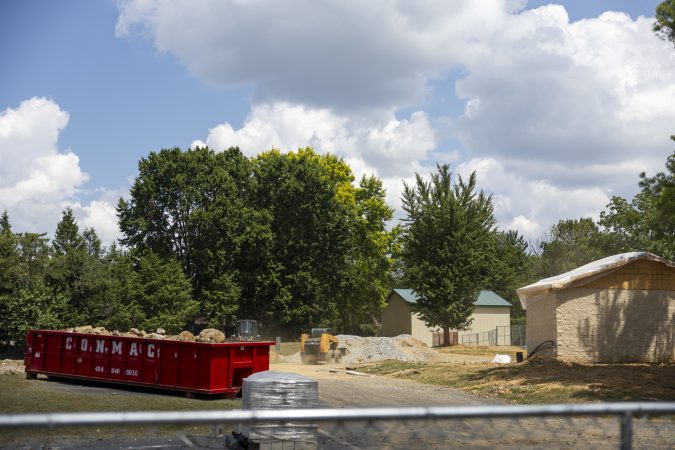
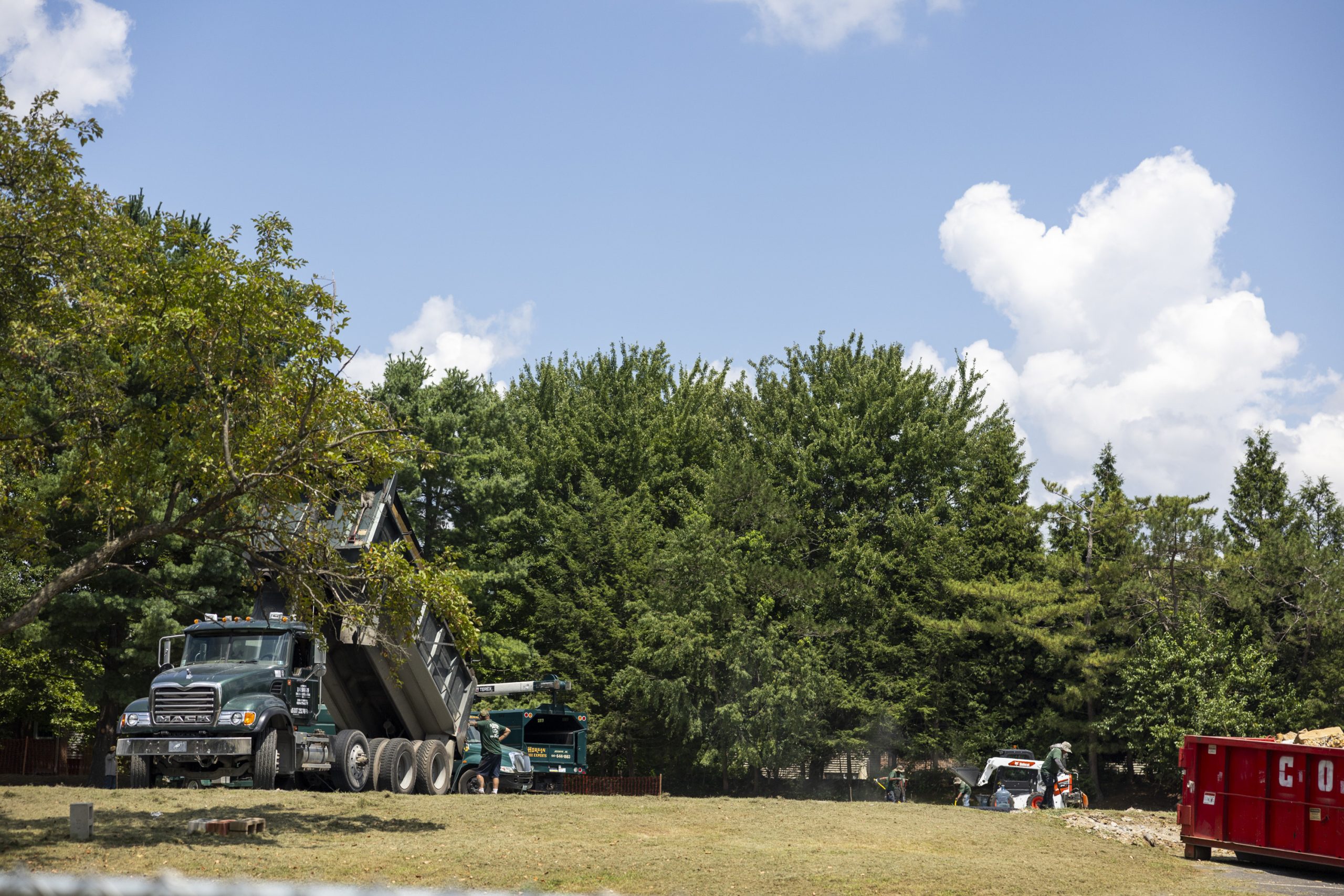
Construction site at Chase Road Park in Tredyffrin Township. The park has been sitting vacant and deteriorating for roughly a decade in Chesterbrook, Pa., on Friday, July 31, 2026.Tyger Williams / Staff Photographer
Township staff found that it was more cost effective to do a bulk of the work in one year, Miller said, so they decided to speed up the process, hence that initial jump.
Then, at their May meeting, the board added a late agenda item to green light spending about $1.7 million to fix up the park — including the courts, fencing, the parking lot, constructing the barn and restroom facilities, a pavilion, and other “miscellaneous” work.
In total, the township estimates it will spend at least $2.3 million on the park, including the initial $625,000 to take it by eminent domain, and the upgrades.
That increase boiled down to a variety of reasons, Miller said. The condition of the courts was “not what we expected,” and they needed to be completely redone. The township decided to install a better fence, with sound-dampening material to snuff out the bouncing of pickleballs, which needed to be installed deeper into the ground than the previous posts. The bathroom building was “vandalized pretty heavily,” so they decided to knock it down and start over. Plus, “prices are higher” for materials like asphalt, he said.
“There’s a bunch of things like that that get it to creep,” he said.
Miller said the park will be paid for out of the regular operating budget; whatever doesn’t come out of normal tax revenue will come out of the general fund, which sits at about $18 million, he said.
The concerns
Heaberg, the former supervisor, told the board his “jaw was hanging open” when saw them approve the budget change for more than $1.7 million with no discussion.
“It blows my mind, really,” he said.
Speaking to the board in July, resident Carol Clarke didn’t “know how you can, in a meeting, go past the budget by more than a million dollars.”
“I think you owe it to the taxpayers to acknowledge what you’re doing, and maybe the taxpayers might have said, ‘Whoa, is this an appropriate use of our funds? Could we be doing something else?’” she told them. “I support the park, but maybe it would have been an idea of, ‘Well, let’s get the funding in place, etc., and then we can add on to the park.’ … There’s good things that are being done, but is that a wise use of our funds?”
Plus, the township’s use of the COSTARS, a program that allows local governments to purchase supplies and services through state-managed contracts, seemed problematic to resident Ray Clarke, who argued the project should have been competitively bid, citing the township’s charter.
“All projects must be competitively bid, with exception of a few things into which this does not fall,” he told the board, noting that “all the sudden” a list was given by the same contractor who worked on nearby Wilson Farm Park, which was renovated in 2025 and 2026.
“Which may well be the lowest cost — who knows, we have no idea,” he said.
Miller disputed that reading, saying the township was within its rights to use the COSTARS program rather than request bids.
The pushback from residents has led to some charged moments in recent months.
Board member Carlotta Johnston-Pugh said she understood “the public is having a hissy fit because they don’t feel like they were involved. I understand that.”
“Because yes, if a million dollars or a $1.2 or $2 million is coming out of a general fund or a piggy bank, yes, everybody in this township should have a say in it. What do you want us to do? Do you want us to stop the project completely, go back to the drawing board?” she said. “… I’m getting a headache. I’m actually getting a headache.”
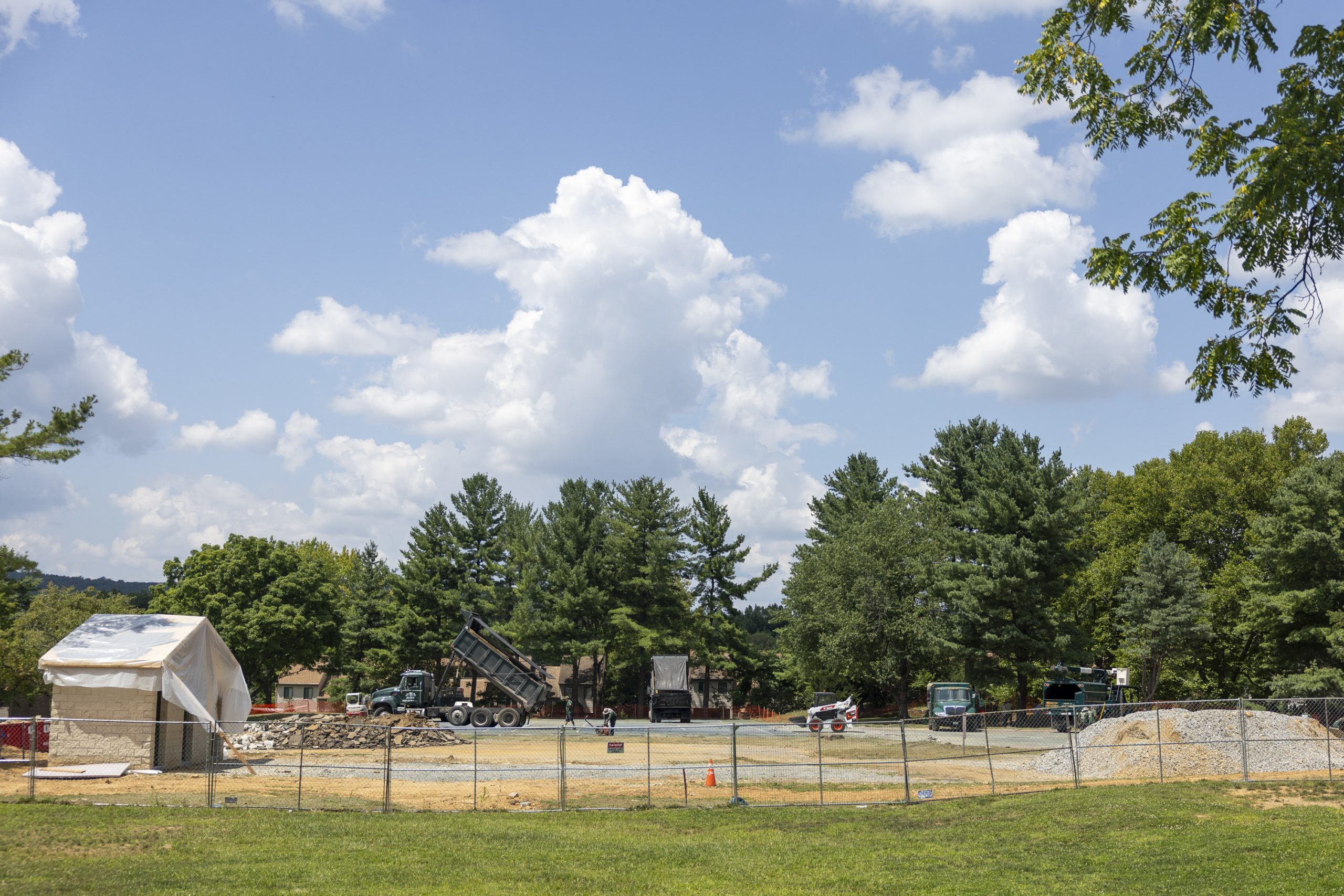
The park on Chase Road in Tredyffrin Township will offer tennis and pickleball courts, plus a bathroom building, pavilion and grassy recreation space. Construction is underway in Chesterbrook, Pa., on Friday, July 31, 2026.Tyger Williams / Staff Photographer
The flip side
The project isn’t without its supporters, however, arguing the board had been clear about the timeline and the scope.
“We went through 10 years of a derelict property in our neighborhood and we are grateful” the work isn’t being phased in, like previous plans discussed, said Joanna Fisher, of the Chesterbrook Civic Association.
Tim Connor, who lives near the park, said the alternative was dozens of townhouses, which would have been a negative for the community.
“Yes, it’s an investment right now, but long-term, those 50 townhouses would have had so many kids in the schools. It was a long-term loser. I think [this is a] better alternative,” he said.
And for Miller, the park has been a personal goal: He campaigned on it. The township is working with Miller, separately, for naming rights of the park which he’d purchase for $625,000 — the initial cost to purchase the land. (It would not be named for Miller himself, he said.)
Miller abstained from an initial vote in June OK’ing the township to draw up an agreement with the solicitor for naming rights. Miller said if someone else wanted to donate, he’d drop his bid, but he had the “capacity and willingness, and it’s important to me.”
“When I ran this time, I said I was going to get this park built. I got over 8,000 votes,” he said later. “It seemed like something I should do since I told people I’d get it done.”
This suburban content is produced with support from the Leslie Miller and Richard Worley Foundation and The Lenfest Institute for Journalism. Editorial content is created independently of the project donors. Gifts to support The Inquirer’s high-impact journalism can be made at inquirer.com/donate. A list of Lenfest Institute donors can be found at lenfestinstitute.org/supporters.
A casual observer might believe Donald Trump when he says he doesn’t care about the coming midterm elections. Based on the historical record, the president’s basement-dwelling approval rating alone should dismay Republicans on Capitol Hill, and yet he is taking none of the usual steps to shore up his party’s prospects.
But Trump’s midterm strategy, like his broader political philosophy, is one of subtraction, not addition. Rather than persuade Americans to vote for his fellow Republicans, he prefers to stop people from voting against them. In terms of the effort to suppress rather than win votes, his campaign looks downright frenetic.
A key chokepoint of this block-the-vote strategy is the mail, controlled as it is by the federal government. Despite taking advantage of the convenience himself as recently as last spring, Trump has been menacing mailed ballots since his botched COVID-19 response helped dramatically boost remote voting. He continued to do so Monday, when his administration petitioned the Supreme Court to let the U.S. Postal Service assume the novel duty of not delivering mail, namely ballots that tend to favor Democrats.
At issue is his executive order directing the U.S. Department of Homeland Security to compile lists of citizens eligible to vote in each state, to be used by postal officials to interfere with the election. The Justice Department has demanded voter data from all the states under the order, leading to continuing legal disputes with many of them. Ruling on a lawsuit by Pennsylvania, New Jersey, and 20 other states in June, a federal court in Massachusetts blocked the order; recently, an appellate court agreed. As U.S. District Judge Indira Talwani noted persuasively, “the Constitution does not grant the president any specific powers over elections.”
Administration lawyers nevertheless filed an emergency appeal with the Supreme Court, and who can blame them for trying? The high court’s conservative majority has rescued Trump from accountability for the plot against the 2020 election, taken a jackhammer to the political independence of agencies such as the Postal Service, and enabled states to eliminate districts that are mostly made up of people of color, which tend to lean Democratic.
Last month, however, the court surprised many observers by narrowly upholding laws in Mississippi and many other states allowing ballots postmarked by Election Day to be counted even if they are delivered subsequently. Should a majority of the justices make another relatively rare decision to side with the Constitution over the president in the latest mail-in ballot case, the administration has other antidemocratic endeavors in the works.
Even if the Postal Service is prevented from actively targeting ballots, underfunding and consolidation of services could slow their postmarking and delivery to the point of ineligibility. Officials in California believe the agency’s glacial processing may have contributed to the disenfranchisement of nearly 150,000 voters in last spring’s primary election.
Trump has also been browbeating Republican senators for months over legislation known as the SAVE America Act, which would require a passport or birth certificate to vote — documents that tens of millions of Americans don’t have at hand. Trump has held up reauthorization of intelligence authorities, refused to sign bipartisan housing legislation, and demanded that the Senate kill the filibuster and cancel its August recess to pass the bill. Majority Leader John Thune’s consistent answer has been that Senate Republicans don’t — ironically enough — have the votes.
The administration can likely be counted on to resort to more jackbooted tactics as the election approaches. Trump has suggested he would be willing to send federal troops and agents to the polls to intimidate voters in violation of federal law. His record of using federal forces against Democratic-leaning states and cities is already extensive.
Even the successful completion of a free and fair election won’t necessarily be the end of Trump’s efforts to undermine it, as we learned when he tried to reverse a result at the expense of millions of voters in Pennsylvania and other battleground states six years ago. In his recent primetime address, the president was still harping on his 2020 loss — which his new national intelligence director just refused to acknowledge — while laying the groundwork for future interference.
These tactics failed then, however, and robust public participation and vigilance can ensure that they do so again. The administration’s conspiracy against the election shows Trump still fears the will of the people. He should.