Tag: topic-link-auto

  • Mayor Parker responds to the police use of force during Philly’s Pride celebration

    Mayor Cherelle L. Parker says she is looking for answers after Philadelphia police arrested 15 people at a Pride celebration in the Gayborhood on Sunday that drew anger from community members over police use of force.

    “I know that members of our LGBTQ+ community are hurting, frustrated, and looking for answers. … I want everyone to know that I hear you, I see you, and my Administration is taking your concerns seriously,” Parker said on social media Tuesday evening.

    Images and videos spread across social media of police using crowd control tactics to disperse Pride-goers in the neighborhood, in what some considered to be an outsize and aggressive law enforcement presence.

    In one image shared on X, a police officer on a motorcycle appears to push against a woman’s chest, and, in a separate photo, another officer pushes the same woman against a storefront security door while arresting her.

    Other videos posted on social media showed police on horseback dispersing young people from a sidewalk, as well as officers physically struggling with a man outside the gay bar Woody’s. Another clip shows a row of police officers — two of them wearing face coverings — forming a line to clear a barricaded Gayborhood street while officers on motorbikes rode along the sidewalks.

    On Wednesday, Sgt. Eric Gripp, a spokesperson for the police department, said that officials had identified five officers who wore face coverings during the enforcement, and that those officers had violated department policy by doing so.

    The department is still working to determine what type of corrective action will be taken depending on the outcome of an internal investigation, he said.

    On Tuesday, Parker said she and some of her top staff, Director of LGBTQ+ Affairs Tito Valdes, and Philadelphia Police Commissioner Kevin Bethel had met to “review the information available to us and discuss next steps.”

    “In the days ahead, we will meet with community leaders as part of that effort. As we move forward, we must reject the notion that public safety and accountability are mutually exclusive,” Parker said in the statement posted to social media.

    Commanding officers at the scene gave orders to disperse crowds, according to Gripp, the police spokesperson.

    The crowd control tactics used on Sunday drew ire from local elected officials like City Councilmember Rue Landau, who said she has been in talks with city departments and police to understand why PPD used this strategy. “Police brutality has no place at Pride,” Landau said.

    People wait to enter the Philly Pride Festival at 21st Street on the Ben Franklin Parkway on Sunday.Monica Herndon / Staff Photographer

    A different Pride this year

    This year’s Pride looked different from that of earlier years. Usually, Philadelphia Pride celebrations and parades occur within the Gayborhood in Center City, east of Broad Street. But this year Philly Pride 365 and the city moved the parade and festival to the Benjamin Franklin Parkway because of security concerns over crowd sizes that had grown to more than 150,000 people, among other reasons, festival organizers said.

    The festival portion of Pride also asked attendees to pay $10 to enter an event that for years had been free to attend.

    Before and after the official celebrations ended, Pride-goers gathered in the Gayborhood, patronizing bars and spilling into the streets — a common practice during the celebration. But guests were surprised to find that several Gayborhood blocks around 13th and Walnut Streets were blocked with metal barricades, limiting crowds to sidewalks, said Joshua Stokem, a New Jersey resident who regularly attends the city’s Pride celebrations.

    Stokem said the layout caused large groups to pack into the corridors outside bars and restaurants and, in his view, created confusion and exacerbated some of the issues attendees had with police.

    On Sunday, police had 600 officers assigned to Pride celebrations with around 150 officers in the Gayborhood monitoring festivities, Bethel said.

    “By all accounts, [it was] a successful event attended and enjoyed by thousands of people. As crowd sizes increased in the Gayborhood, officers responded to a growing number of public safety concerns, including fights, disorderly behavior, blocked roadways, and the challenges associated with safely managing large crowds in a confined area,” he said in the statement.

    Bethel said the department had expected the Parkway celebration to gradually transition to the Gayborhood event, but that did not happen.

    Instead, he said, two separate gatherings were essentially happening at once, creating a situation that was “challenging to manage safely” and led to the decision to clear parts of the neighborhood.

    “That decision was not made in any way, shape, or form because people were celebrating Pride,” he said.

    Most of the arrests during Sunday’s event were for disorderly conduct, according to Bethel, while one person was charged with aggravated assault of a police officer.


  • To stop Hezbollah, Trump must prevent Israel from creating another Gaza in Lebanon

    Early Tuesday morning, President Donald Trump claimed, yet again, that a peace deal with Iran could be closed “in two or three days.” This was the 38th time since a U.S.-Iran ceasefire in April that he predicted a deal was around the corner.

    But never mind.

    By later Tuesday, Israel was heavily bombing the historic city of Tyre in southern Lebanon, despite Trump’s earlier, profanity-laden demand to Prime Minister Benjamin “Bibi” Netanyahu to stop such attacks.

    Yet, Bibi seems determined to occupy southern Lebanon, drive out its population, and raze its villages and towns in an effort to finally stop Iran’s Shiite proxy militia Hezbollah from firing into northern Israel. Meantime, Tehran insists there will be no deal on opening the Strait of Hormuz, and no nuclear talks before ending Israel’s attacks on Hezbollah.

    So Lebanon has become the new flashpoint of the conflict. Events there will be more critical to the outcome of the Iran war, I believe, than the limited U.S. military strike on Iran in retaliation for the shootdown of a U.S. helicopter near the Strait of Hormuz.

    Why so? For me, Lebanon provokes a painful case of déjà vu, because I spent two years as a foreign correspondent covering the 1982 Israeli invasion of Lebanon, and watched it give birth to Hezbollah, unnecessarily. I watched Israel — and the United States — make mistakes they are repeating today, which will trap both of them in a self-induced Iran quagmire.

    I reported that Israel (and the Reagan administration) learned the hard way that defeating an ideological movement cannot be done by military pressure alone, but must involve winning over the local population. And that includes offering hope that they can gain more from rejecting the ideologues, despite the risk that is involved, especially if those abusive ideologues have already alienated them deeply.

    Based in Beirut, at the legendary Commodore Hotel, I used to make regular trips to southern Lebanon, a poor Shiite region that was neglected by Sunni and Christian Lebanese leaders who deprived it of resources.

    And many Shiites resented the tens of thousands of Palestinian refugees who fled or were driven out of Palestine in 1947-49 during Israel’s war for independence. Although the refugees lived in shantytown camps, they received lots of international aid, including education, hospitals, and jobs.

    In Sidon and Tyre, I met with numerous middle-class Shiites who had emigrated to West Africa to earn money and returned to build homes and small businesses. Many were members of the strongest Shiite political movement in that region, known as Amal (or Hope), and led by Nabih Berri, which agitated for more government help for their region.

    They resented the growing power of the Palestine Liberation Organization, based in the camps and nearby cities, which, according to my sources, treated the Palestinians unfairly.

    When Israel invaded southern Lebanon in 1982, I was told by Amal leaders that they were not displeased at Israel’s effort to eject the PLO, but wanted the war to end as soon as possible.

    They were worried about a new group called Hezbollah, backed by Iran, that was emerging to fight the occupation. Berri wanted the Israeli military and government to negotiate directly with Amal leaders. He pledged they would protect the border with Israel and cooperate in preventing any Hezbollahis from attacking across the boundary.

    Instead, Israel chose to ally with a Christian leader, Bachir Gemayel, who was soon assassinated by a member of the Syrian Socialist Nationalist Party, an ally of Iran. No peace deal with Lebanon was signed.

    With Iran’s help, Hezbollah grew into the most powerful military and political force in Lebanon, far more powerful and better armed than the Lebanese army, with the more moderate Amal reduced to a secondary force. Israel remained in south Lebanon as an occupying power until 2000, immersed in a quagmire that took the lives of innumerable soldiers and embittered thousands more.

    Fast-forward to today. Most Lebanese are fed up with Hezbollah, which dragged Lebanon into the Gaza war by attacking Israel in sympathy with Hamas. Syria has a new government, which is hostile to Iran and Hezbollah. Moderate Sunni Arab leaders in the region feel the same. So do many Shiite leaders in southern Lebanon, where Hezbollah was based, and from which Israel has now driven out much of the population. (Longtime survivor Berri is currently the speaker of the Lebanese parliament.)

    And Lebanon, for the first time in decades, has a president, Joseph Aoun, who is willing to stand up to Hezbollah, negotiate directly with Israel, and try to replace Hezbollah with the Lebanese army, which is too weak to do so without external help.

    Instead, choosing to rely on force, Israel has been trying to make southern Lebanon into another Gaza, razing villages and towns to the ground, and making it impossible for the population to return. This can only lead to another occupation quagmire for Israel, just like 1982-2000. It will only restore Hezbollah’s credibility and assist Iran.

    This threat was summed up acutely by Ehud Barak, the former Israeli prime minister, who finally withdrew Israeli troops from Lebanon in 2000.

    “To eradicate Hezbollah,” he wrote in Haaretz, “we would need to occupy all of Lebanon, which is simply unrealistic. The only way to disarm the organization is through a diplomatic process in coordination with the governments of Lebanon, the U.S. and others of the region.”

    In addition, France, Gulf Arab countries, along with Jordan and Egypt, might contribute to policing the south and the border with Israel. (Forget about U.N. peacekeepers who failed miserably for decades.) “Anyone, without a plan like that,” Barak continued, “is destined to sink into the Lebanese quagmire and spill years of blood without results. We’ve already been there, done that, and believe me, it is not easy to get out of it.”

    The mistake Netanyahu made, and Trump endorsed when both attacked Iran in February, was to assume that force alone could resolve the Iran problem. This has left POTUS on the back foot, still dreaming he can get Iran to surrender without any concessions.

    After Trump’s mistaken handling of the Iran war, it will be tremendously difficult to devise any deal with Iran that doesn’t leave its leaders strategically stronger than they were before the war started, although the economic price Iran has paid may inspire a domestic revolution after the fighting ends. But if POTUS doesn’t want to join Israel in a Lebanon quagmire and end any prospects of opening the Strait of Hormuz, he had better find negotiators who know a bit of Lebanese history.

    Once more, there is a small chance to save Lebanon from Iran’s clutches and end the rule of its Hezbollah proxies. But that chance will die if Israel insists on dispossessing one million Lebanese Shiites and subjecting them to horrors such as those Netanyahu permitted in Gaza.

    Trump claims he can control Bibi. He failed wretchedly (and he never really tried) in Gaza. The test now is in Lebanon.

  • Boyertown’s Trey Yesavage reflects on ‘insane journey’ from single A to the World Series with Blue Jays

    TORONTO — Just over a year ago, Trey Yesavage threw his first pitch in double A.

    In the time since, the 22-year-old Boyertown native was called up by the Blue Jays, pitched in the American League Championship Series and the World Series, and has established himself as a key member of Toronto’s rotation.

    It’s still hard for him to wrap his head around how quickly it happened. Yesavage’s double-A debut for the Toronto affiliate New Hampshire Fisher Cats was on June 12, 2025. The game happened to be in Reading, less than 20 miles away from Yesavage’s hometown, and the stands were packed with his friends and family.

    It marked just one of four promotions for Yesavage last year as he ascended from single A to the majors in the span of six months.

    “It’s been an insane journey,” Yesavage said. “I’m just so blessed to be in this clubhouse every day with these guys.”

    Yesavage grew up a Phillies fan and maintains his Eagles fandom. He won’t pitch against his hometown team in this series, as Dylan Cease and Max Scherzer are both returning to Toronto’s rotation from the injured list this week.

    But Yesavage has the Blue Jays’ visit to Citizens Bank Park on Aug. 7-9 circled on his calendar, and he hopes that things will work out so that he can pitch there.

    “Being a Philly fan is different,” Yesavage said. “I’m still an Eagles fan, so I embrace the Philly energy and toxicity. So I kind of get it. But I’m just excited to play in front of those people.”

    Blue Jays’ pitcher Trey Yesavage, who pitched in the World Series last year, grew up attending minor league games in Reading as a kid, since it’s so close to Boyertown.David J. Phillip

    Yesavage said he grew up attending minor-league games in Reading, since it’s so close to Boyertown. Even though he’s never been a member of the Phillies organization, the Fightin’ Phils are honoring him on July 5 for Boyertown Day, distributing a bobblehead that depicts him as a Boyertown Bear.

    “It’s me in my high school jersey,” Yesavage said. “It’s weird that I’m with a different organization. I played there against those guys, and it’s cool, but it’s weird.”

    Yesavage graduated from Boyertown Area High School in 2021, and starred at East Carolina University before he was drafted in the first round by Toronto in 2024.

    His unusually high arm angle and signature splitter helped him fast track to the majors. After his whirlwind 2025, Yesavage started this season on the injured list with a right shoulder impingement. In his eight starts since being reinstated, he has a 3.16 ERA.

    Throughout it all, support back in his hometown has been constant.

    “Got a lot of energy, lot of support from those people, especially in the playoffs,” Yesavage said. “Some of the elementary schools were having Blue Jays Days, and wrote letters to me, and it’s really cool to see support from ages 5 and up who can actually understand baseball. So love those people, and they’re the reason why I’m here right now.”

    Extra bases

    Toronto moved the scuffling Vladimir Guerrero Jr. to the leadoff spot for Tuesday’s game for the second time in his career. He was 1-for-4 through eight innings on Tuesday. “I’m sure [Toronto manager John Schneider] is trying to get something going, give Schneids a different feel for Vlad. I’m hoping it doesn’t really work — for a few days,” interim manager Don Mattingly said. … Left-handed reliever Kyle Backhus (left elbow inflammation) began a rehab assignment Tuesday with triple-A Lehigh Valley. … Jesús Luzardo (4-4, 4.56 ERA) is scheduled to start Wednesday’s series finale against Blue Jays right-hander Scherzer (1-3, 9.64). Scherzer will be making his first start since April 24, after which he was placed on the injured list with right forearm tendinitis and left ankle inflammation.

  • The infectious diseases that experts worry could spread during the World Cup

    The infectious diseases that experts worry could spread during the World Cup

    When millions of soccer fans descend on North America this month for the 2026 FIFA World Cup, they will bring more than team jerseys and national pride.

    They will also bring the microbes that travel with people.

    Public health officials have spent years preparing for the tournament, which is expected to draw visitors from more than 100 countries to the United States, Canada, and Mexico. Although diseases such as Ebola and hantavirus have been in the headlines, public health experts say the diseases most likely to show up in clinics, emergency departments or urgent care centers are likely to be less exotic.

    Instead, their top concerns include measles, dengue, respiratory viruses, and sexually transmitted infections that are already circulating. These diseases are likely to spread more easily as fans crowd into airports, hotels, stadiums, and festivals.

    “Measles is what I’m most worried about,” said Krutika Kuppalli, an infectious diseases physician and associate professor at UT Southwestern Medical Center in Dallas.

    Texas will host 16 World Cup matches in 2026 — more than any other state — with nine matches in the Dallas-Arlington area and seven in Houston. Dallas will host more matches than any other World Cup venue, including a semifinal. The first U.S. match is Friday, in Los Angeles, when the U.S. faces off against Paraguay.

    Measles: A highly contagious virus meets a global mass gathering

    Measles is the most contagious vaccine-preventable viral infection in the world. It can linger in the air for up to two hours after an infected person leaves a room and can spread rapidly among people who lack immunity. A traveler infected with measles could expose hundreds of people in airports, hotels, public transportation systems, restaurants, and stadiums before realizing they are sick.

    The concern comes amid a resurgence of measles in parts of the Americas and elsewhere around the world. Health officials have attributed many recent outbreaks in the U.S. and elsewhere to declining vaccination rates and disruptions to routine immunization programs during and after the coronavirus pandemic.

    “Measles is in many parts of the world, not just the United States, and all it takes is a small pocket to spread like wildfire,” said Katelyn Jetelina, a California epidemiologist who writes a weekly newsletter about public health and infectious diseases.

    The U.S. has already recorded nearly 2,000 measles cases this year, continuing a resurgence that has alarmed public health officials.

    South Carolina’s massive outbreak of 997 cases, mostly among unvaccinated children, was the largest outbreak since measles was eliminated from the U.S. more than a quarter century ago.

    Dengue: A tropical disease that has become a hemispheric concern

    Puerto Rico has recently experienced major dengue activity, and local transmission has periodically been detected in several U.S. states.

    The mosquitoes capable of spreading dengue — Aedes aegypti and Aedes albopictus — are already established in many parts of the country.

    Public health experts worry that some visitors carrying the virus could arrive in communities where the right mosquitoes are already present, creating opportunities for local transmission. Matches will be played during peak mosquito season in many host cities, including Miami, Houston, Dallas, and Los Angeles.

    Kuppalli said vector-borne diseases are a particular concern in Texas, where clinicians may need to consider not only dengue, but chikungunya, oropouche (also known as sloth fever) and even malaria in travelers arriving from regions where those diseases are circulating.

    “I think all of those vector-borne diseases would be fair game,” Kuppalli said.

    COVID-19: Among the respiratory viruses that haven’t disappeared

    Although COVID-19 no longer dominates public life the way it once did, public health and infectious-disease experts say they will be closely monitoring respiratory illnesses during the tournament.

    Current levels of COVID-19 remain low in the U.S., but experts point out that there has been a summer wave every year since 2019.

    Experts say they will be on the lookout not only for COVID-19, but also influenza, RSV and other respiratory pathogens.

    Why experts are also watching sexually transmitted infections

    Sexually transmitted infections are a recurring concern during major sporting events and mass gatherings because large numbers of visitors, nightlife activity and temporary social networks can increase opportunities for sexual contact.

    Experts do not view STIs as an acute outbreak threat in the same way as measles or dengue, but they remain part of public health planning efforts.

    What about Ebola and other high-profile diseases?

    The public risk for Ebola remains low because the virus spreads through direct contact with bodily fluids. The 2014 World Cup in Brazil coincided with the West Africa Ebola outbreak in 2014-2016, the largest Ebola outbreak in history. And there was no outbreak during that World Cup.

    Kuppalli said one concern is that heightened attention to Ebola could lead clinicians to overfocus on a patient’s country or continent of origin rather than taking a careful travel and exposure history. Someone with fever who has traveled from Africa, she said, should not automatically be assumed to pose an Ebola risk. Clinicians need to ask where the person has been, when they were there, what symptoms they have and what exposures they may have had.

    How officials plan to spot problems before they spread

    The CDC has expanded disease surveillance efforts in host states and is working with local health departments, hospitals, and emergency medical services to improve preparedness and response capabilities, officials said. The agency has also provided technical assistance to some host cities and is supporting training and coordination related to infectious-disease threats.

    Federal officials say they are paying particular attention to diseases that could be imported through international travel, including measles and dengue.

    With more World Cup matches than any other state, Texas is taking an unusually proactive approach to infectious-disease preparedness.

    Kuppalli and other infectious-disease specialists have partnered with the state health department to establish a round-the-clock consultation hotline that will connect the state’s clinicians with experts in travel-related and emerging infections. The service will be available to healthcare providers across Texas and to medical staff working with World Cup teams seeking guidance on suspected infections tied to the tournament.

    Kuppalli, one of the hotline’s medical directors, said the hotline will be staffed by 15 to 20 adult and pediatric infectious-disease specialists within the University of Texas health system. The hotline is designed to give real-time guidance to clinicians who may not regularly evaluate rare or travel-associated infections.

    That kind of support may be especially important in Texas, where patients may show up not only at major academic medical centers but also at community hospitals, emergency departments and urgent care clinics spread across a large state.

    To help monitor for any concerns from afar, one of the more unusual preparedness efforts is not being run by a government agency at all.

    Georgetown University in Washington, D.C., and MedStar Health, one of the largest healthcare providers in the Washington metropolitan region, have established a Health Security Operations Center that will function as an independent hub for monitoring infectious-disease threats during the tournament.

    The center, which became operational June 1, is pulling together information about emerging health threats from wastewater surveillance, hospitalization data, international disease alerts and reports from host cities, according to Rebecca Katz, who heads the operation. She is director of Georgetown’s Center for Global Health Science and Security.

    Public health experts say wastewater surveillance can sometimes detect pathogens days before health officials see corresponding increases in diagnoses at clinics, emergency departments or hospitals.

    The center plans to issue daily public situation reports throughout the World Cup and provide alerts if significant health risks are detected. It also plans to monitor disease activity in host cities and in countries sending large numbers of travelers to the tournament.

    For June 9, the report notes growing measles outbreaks in the U.S., Canada and Mexico. The location of these surging outbreaks overlaps with the base camp and match locations of multiple teams, the report said. Pennsylvania is dealing with a large measles outbreak centered in Lancaster County, about 75 miles west of Philadelphia, one of the World Cup’s U.S. host cities. Côte d’Ivoire, or Ivory Coast, has its base camp in nearby Chester.

  • Rep. Donald Norcross’ union contract bill passes in House, bucking Republican leaders

    Rep. Donald Norcross’ union contract bill passes in House, bucking Republican leaders

    WASHINGTON — The House on Tuesday approved a Democratic bill aiming to fast-track contract negotiations between employers and newly created unions, after 20 Republicans defied their leaders to force it to the floor and push it to passage.

    The measure, which passed on a 230-193 vote, faces a slim chance in the Senate and would be all but certain to be vetoed by President Donald Trump even if it were to reach his desk. Still, the vote was the latest reflection of Speaker Mike Johnson’s weak hold on his narrow majority, whose members have steered around him time and again and teamed with Democrats to win passage of legislation that he has toiled to block.

    On Tuesday, a sizable bloc of Republicans, including several from competitive districts who are slogging through tough reelection fights, joined with Democrats to push through a pro-union bill. It would impose an initial 90-day deadline on contract negotiations for new unions and their employers, along with paths to mediation and arbitration if the parties reach an impasse.

    Rep. Donald Norcross (D., N.J.), the sponsor of the bill, said he had written it to speed up workplace contract negotiations so that employers could not drag them out in the hopes of undercutting workers’ leverage.

    “Union busting is illegal, and it’s wrong and it has been for generations,” Norcross said. “But with the dirty tactics of indefinite delays, many employers are working relentlessly to kill their employees’ unions.”

    While several Republicans supported the legislation from the outset, party leaders declined to act on it. So Norcross turned to a procedural maneuver known as a discharge petition, which allows lawmakers to circumvent House leaders and force a bill to the floor if a majority of members sign on in support.

    Seven GOP lawmakers did so and even more joined Democrats on Tuesday, in voting in favor of the legislation. Among the Republicans who banded together with Democrats to force action on the measure, several are seeking reelection in competitive districts, including Reps. Mike Lawler of New York, and Brian Fitzpatrick and Rob Bresnahan Jr. of Pennsylvania. Another, Rep. Don Bacon, who represents a center-leaning district in Nebraska, is retiring.

    Some other swing-district Republicans joined them Tuesday night in backing the bill, including Reps. Derrick Van Orden of Wisconsin and Maria Elvira Salazar of Florida.

    Historically, discharge petitions have rarely been successful, but this Congress has been an exception, as Johnson has been unable to stop Republicans from straying from the party line on a wide variety of issues. Democrats successfully employed the tactic to win passage of legislation directing the Justice Department to release files related to convicted sex offender Jeffrey Epstein, which became law, as well as another labor-related bill aimed at overturning Trump’s executive order stripping federal workers’ union protections, which has stalled in the Senate. Last week, they used it to win approval of a bill with new aid for Ukraine that also would impose new sanctions against Russia, defying both Johnson and Trump.

    The trend reflects growing frustration among Republicans toward Johnson and party leaders as the midterm elections loom. Before the vote, Fitzpatrick wrote on social media that the tactic had succeeded so many times only because Republican leaders were shirking their responsibilities by blocking popular policies.

    “A successful discharge petition is clear and direct evidence of a poorly managed House Floor — because it demonstrates that the will of the majority of the People is being thwarted by the privileged few,” he wrote.

    The vast majority of House Republicans on Tuesday opposed the bill. Rep. Tim Walberg (R., Mich.) described the legislation as “a massive expansion of Washington’s power over American workers and job creators.”

    “It is the latest attempt to put workers under the thumb of federal bureaucrats,” Walberg said.

    This article originally appeared in The New York Times.

  • Game on in Maine: 3 takeaways from Tuesday’s primary election results

    Game on in Maine: 3 takeaways from Tuesday’s primary election results

    Graham Platner, a military veteran and first-time candidate whose populist message resonated with voters in Maine, prevailed over the state’s governor to win the Democratic primary for Senate on Tuesday. Now, he will face Sen. Susan Collins, a vulnerable Republican incumbent, in one of the most consequential races in the country this fall.

    Platner’s campaign has survived a series of scandals about his personal life, which Republicans began highlighting within minutes of his victory. And he used his speech Tuesday night to cast Collins as a tool of a political establishment that has let Maine down.

    In other primaries on Tuesday, Democrats in Nevada picked Aaron Ford, the state attorney general, to oppose Gov. Joe Lombardo, solidifying the matchup in a competitive governor’s race in a key swing state. And Republicans in South Carolina showed their loyalty to President Donald Trump, supporting his preferred candidates in races for Senate and governor.

    Here are three takeaways from the night of primaries.

    Amid a barrage of scandals, Platner sought to shift to the fall

    Platner, a Marine veteran who owns a small oyster farm, has been hampered for most of his campaign by scandal, including old, unearthed social media posts in which he made offensive comments about women and rape, and a tattoo resembling a Nazi symbol that he has since covered with new ink. The latest controversy came last week, when three women who had dated him told The New York Times that he had engaged in unsettling behavior toward them.

    On Tuesday, Platner attempted to shift the focus to his general-election matchup with Collins, a battle-tested incumbent, while also acknowledging his stumbles. In a fiery speech, he said that members of the political establishment “keep looking for that one story, that one headline, that one moment in my life that they can define the campaign by.”

    He added: “In trying so hard to understand me, they failed to understand that this is not about me at all. This is a movement about us, about the far too many, working far too hard and struggling far too much.”

    Still, nearly 30% of primary voters cast ballots for other Democratic candidates, according to incomplete results early Wednesday, despite that fact that his main opponent, Gov. Janet Mills, had suspended her campaign. That suggested that some Mainers remained skeptical of him, and left him with the challenge of persuading voters in the general election that Collins’ shortcomings were greater than his.

    In his effort to pivot, Platner blasted the moderate image Collins has cultivated, describing her as “only bipartisan when it doesn’t matter” and saying she had failed to protect abortion rights.

    “If you are an independent voice, why do you vote with Donald Trump 95% of the time?” he said, addressing his opponent directly. “If you’re so bipartisan, why are you the deciding vote to put Brett Kavanaugh on the Supreme Court?”

    Trump’s candidates advanced or were leading

    Trump’s backing is usually the gold standard in a Republican primary, all but guaranteeing victory. His record suffered a rare blemish last week when the candidate he backed in the Iowa governor’s race lost the Republican primary.

    On Tuesday, Trump returned to form, with candidates he supported winning their races, advancing to runoffs or leading challengers in races yet to be called. In South Carolina’s crowded Republican primary for governor, Lt. Gov. Pamela Evette, backed by Trump, led the field and advanced to a runoff with Alan Wilson, the state attorney general, who was close behind.

    In Nevada, two of three House candidates the president backed — Carrie Buck and Marty O’Donnell — won their primaries. The third was too close to call early Wednesday.

    Finally, in North Dakota, Rep. Julie Fedorchak easily fended off a primary challenge with help from Trump’s nod.

    Lindsey Graham avoided the embarrassment of a runoff

    Graham, an outspoken Republican who once clashed fiercely with Trump before becoming a staunch ally, has never been beloved by the MAGA base. He faced a serious Republican challenger, Mark Lynch, and a real chance that he could have been forced into a runoff by failing to earn more than 50% of the vote.

    But Graham, too, had Trump’s backing, and he managed to avoid that embarrassing outcome. After his campaign and allied groups raised and spent millions on his reelection bid, Graham posted a strong enough showing among South Carolina primary voters to earn a spot on the November ballot. In a deep-red state, Graham will be overwhelmingly favored to win another six years in the Senate.

    This article originally appeared in The New York Times.

  • Social Security fund could run dry in six years | Expert Opinion

    Congress and the president are having a grand time spending taxpayers’ money.

    Whether it’s the One Big Beautiful spending and tax cuts bill, funding for wars in the Middle East, deporting immigrants, or bailing out farmers, there seems to be unlimited resources.

    Remember when tax-and-spending proposals were met with the question: How will that be paid for? Well, not anymore.

    Unfortunately, for some programs, such as Social Security, the well is going to be dry soon, and neither Congress nor the president seem to be interested in dealing with the looming financial crisis

    Social Security is facing insolvency

    Social Security, which in some form or another provides funds for over 75 million people, has always been a program that pays for itself. That no longer may be the case.

    Since 2010, the Social Security System has been running deficits, paying out more in benefits than it received in revenues. The so-called Trust Fund that built up for the first 75 years is starting to run dry.

    It is estimated that the previous surpluses will be depleted some time in 2032. And that forecast was created before the financial impacts of high inflation on expenditures are known.

    Social Security payments are inflation-adjusted every year. Given the elevated inflation rates created by the Iran war, the adjustment for 2027 could be 4% or higher. In comparison, this year’s increase was 2.8%.

    That could mean the day of reckoning gets pushed even closer.

    A government bailout is doubtful

    Though it would be nice to think the federal government can fund anything and everything, high and rising government debt and deficits make that unlikely.

    The latest estimate for the current fiscal year’s deficit is roughly $2 trillion. That is up from the nearly $1.8 trillion level posted in fiscal year 2025.

    It would also be the third largest deficit in history, exceeded only by the COVID-driven fiscal years in 2020 and 2021.

    And the current deficit estimates will probably be adjusted upward. Costs of the Iran war are uncertain, and refunds for tariff payments are also unclear.

    Heavier burden

    Meanwhile, the national debt keeps ballooning and now exceeds an astounding $39 trillion.

    To put it in perspective, the ratio of debt-to-GDP will likely hit 125% this year. It first broke the 100% mark in 2013. That is a 25% increase in just 14 years.

    While the ever-growing national debt is a clear problem in and of itself, the true burden is the interest on the debt.

    We will never pay off the national debt, but paying the interest on the debt is mandatory. A U.S. default would be catastrophic.

    In the current fiscal year, interest payments will likely break the $1 trillion level for the first time and will continue to rise.

    Consequently, the share of government revenues earmarked for interest payments, interest as a percent of total expenditures, and interest costs as a percent of GDP are all at or nearing historically high levels.

    The huge interest payment burdens, coupled with massive tax cuts and spending increases, make it clear that the federal government has limited capacity to pay for interest costs and budgeted programs while also funding Social Security shortfalls.

    Everyone hurt by a drop in Social Security payments

    According to the nonpartisan (and they really are nonpartisan) Committee for a Responsible Federal Budget, a failure to resolve the looming Social Security Trust Fund crisis will require a 24% — or about a $345 billion — reduction in benefits.

    Though most benefit reductions will be felt by the nearly 60 million retired Social Security recipients, the resulting economic impacts will hit the economies of all states, as well as well as households at all income levels.

    A high-income couple could experience as much as a $24,000 per year reduction in payments, a middle-income household could see their benefits fall by up to $18,000, and some low-income recipients might suffer $8,000 cuts.

    Since a significant proportion of Social Security recipients spend most if not all of their benefits, there is likely to be a substantial reduction in the demand for goods and services.

    Nationally, the reduction in benefits amounts to 1.1% of GDP. The resulting cutbacks in spending will multiply through the economy and yield an even greater decline in economic activity.

    For businesses in lower income areas, where recipients tend to spend most of their checks, the impact on consumption could be significant.

    Time is running out

    The insolvency threat has been known for decades, but Washington has done nothing but help accelerate the process.

    As a consequence, Social Security insolvency could be about six years away.

    It will not be easy to find a solution that pushes insolvency back significantly. It will require taxing some people more, maybe even a lot more, altering the revenue base to include nonwage and salary compensation, and modifying and/or reducing benefits.

    But there is a way out. The American public has not been heard from on this subject.

    Budgets are political documents with economic consequences. The spending structure is supposed to mirror the wants and desires of the public.

    The way those preferences are made clear is through the ballot box.

    At this point, Social Security is not on the ballot.

    For Social Security to be saved from insolvency, politicians must put it on the ballot. They will have to make it a campaign issue, and the voters will have to show that it is something they truly care about by electing those candidates.

  • Plenty of Philly hotel rooms and Airbnbs still available days before FIFA World Cup kickoff

    Plenty of Philly hotel rooms and Airbnbs still available days before FIFA World Cup kickoff

    To Ed Grose, the FIFA World Cup is not looking like a bust for Philly-area hotels.

    Yet the president of the Greater Philadelphia Hotel Association said the matches, which start Sunday and end July 4, have not brought booming business.

    “It hasn’t delivered what we thought it would in terms of hotel rooms,” Grose said Monday.

    Some of Center City’s 14,500 hotel rooms remain available on game days and game-day eves, he said, though he declined to provide an estimated occupancy rate.

    Grose’s assessment — based on conversations with local hoteliers, he said — exemplifies the tourism uncertainty that remains just days before kickoff.

    Philadelphia has raised about $140 million in public and private funding to host the World Cup, according to Front Office Sports, and officials are heavily marketing the six South Philly games and other fan events across the city.

    A FIFA World Cup banner hangs from an entrance of Philadelphia City Hall, as seen on June 3.Jose F. Moreno / Staff Photographer

    Yet some soccer fans have said they’re avoiding World Cup matches due to a bevy of factors, including high ticket prices, expensive airfare, frustrations over FIFA’s business practices, and concerns among international fans about entering the U.S. due to the Trump administration’s immigration policies. On average, international tourists stay longer and spend more money than domestic travelers.

    There are other signs that lofty World Cup projections — which included FIFA’s broad promise of tens of billions of dollars in total economic impact — may not come to fruition.

    The Wall Street Journal reported Monday that every U.S. host city except San Francisco was seeing hotel occupancy of 40% or less, citing a recent CoStar report. Host cities in Mexico and Canada saw slightly better hotel occupancy, though still under 50%, according to the Journal.

    In Philadelphia, Google Travel searches show abundant hotel vacancies at prices under $300 or even $200 a night on some match days.

    The region’s short-term rental market has seen some last-minute demand, with about 60% of local Airbnbs and Vrbos set to be occupied on game days and game-day eves, according to AirDNA, which analyzes the platforms’ booking data. In early May, fewer than half available rentals were booked on those days.

    The inside of a South Philadelphia Airbnb was shown in early May, as its owner waited for last-minute World Cup bookings.Joe Lamberti / For The Inquirer

    As of Monday, World Cup demand has helped drive a 15% year-over-year increase in the number of Philly-area bookings and an 8% increase in occupancy on game days and game-day eves, said Bram Gallagher, AirDNA’s director of economics and forecasting.

    Those figures place Philly “right in the middle” of the World Cup markets, he said.

    “Some places are doing very, very well and some places are seeing marginal benefits,” Gallagher said, noting that Mexican markets are doubling demand. “In Philly, Boston, Atlanta, we’re seeing respectable gains.”

    Airbnb, which has partnered with FIFA, is still predicting that the World Cup will be “the biggest hosting event in Airbnb’s history — surpassing the 2024 Olympic and Paralympic Games in Paris,” according to a company statement, which noted “meaningful excitement for the tournament,” including among first-time guests.

    Some Philly Airbnb hosts still wait for World Cup guests

    Jenica Jones outside her South Philly Airbnb in early May. As of Tuesday, she said she has only gotten two World Cup bookings for a total of three nights.Joe Lamberti / For The Inquirer

    Jenica Jones received her first World Cup booking last month, after being included in an Inquirer article about low short-term rental demand during the tournament.

    A guest from the Dominican Republican reserved Jones’ South Philly rowhouse for two nights in June, Jones said, and the host was hopeful that World Cup demand would finally pick up.

    It hasn’t.

    The 42-year-old said she got just one other booking for a single night.

    Her Airbnb has a perfect 5-star rating, sleeps seven people, and is less than three miles from Lincoln Financial Field, the site of Philly’s six World Cup matches.

    The app’s dynamic-pricing tool had initially suggested she list the property for about $900 a night during the World Cup. Since then, she has dropped prices and offered discounts on some nights to entice soccer fans, she said.

    “I was predicting being full the entire month of June,” Jones said Tuesday. “They’re just not coming in as I expected.”

    “My schedule was booked more last year,” she said. As of Tuesday, she even had availability July 4, when the city is hosting a World Cup match and an Independence Day concert for America’s 250th birthday.

    Can World Cup fans get last-minute deals in Philly?

    The Live! Casino Hotel Philadelphia (at left) is located in the stadium complex. As of Tuesday, it still had rooms available at high prices for some World Cup matches.Elizabeth Robertson / Staff Photographer

    Despite the sluggish demand, last-minute planners shouldn’t count on scoring World Cup deals in the Philly region, according to hotel and short-term-rental experts.

    Gallagher, of AirDNA, said the most affordable Airbnb and Vrbo properties were the first ones to book up during the tournament. But individual hosts like Jones may choose to lower prices if their homes remain unbooked.

    Grose, of the Greater Philadelphia Hotel Association, said guests will pay higher rates on average during the World Cup than they would on a normal summer day.

    Yet on Sunday and three of the other five match days, many Center City hotels appeared to have rooms available for about $300 or less per night, as of Tuesday, according to Google Travel. Prices skewed higher and availability seemed more limited on the holiday nights of Friday, June 19, and Saturday, July 4, though rooms were still available across the city, including at the few hotels near the stadiums in South Philly.

    Grose said he remains optimistic about the coming weeks, which includes not only the World Cup and America’s 250th birthday celebration, but also the MLB All-Star Game in July.

    “Overall, the summer is still going to be a good summer for us,” he said.

  • Philly Music this week with Bleachers, Nick Jonas, Ryan Bingham, Indigo Girls, Tyler Childers, and more

    Philly Music this week with Bleachers, Nick Jonas, Ryan Bingham, Indigo Girls, Tyler Childers, and more

    This week in Philly music features Bleachers at the Highmark Mann, the Wayne Music Festival on the Main Line, the Indigo Girls in King of Prussia, Ryan Bingham in Fishtown, Tyler Childers in Hershey, Audrey Hobert at the Met, and Nick Jonas, Devo, and A Boogie Wit da Hoodie in Atlantic City.

    Wednesday, June 10

    Ryan Bingham

    Ryan Bingham has been making rough-cut traditional-leaning country music going back to his 2008 Mescalito debut, but it took him years playing a singing ranch hand on Yellowstone for him to gain a wide audience. Now that the show has run its course, the New Mexico-born singer and actor is back out on the road with his band, the Texas Gentlemen, touring behind his seventh album, They Call Us the Lucky Ones. 8 p.m., The Fillmore, 29 E. Allen St., thefillmorephilly.com

    Jobi Riccio opens for Deer Tick at Underground Arts on Wednesday. Her new album is “Face the Feeling.”Rett Rogers

    Audrey Hobert

    Audrey Hobert co-wrote six songs on Gracie Abrams’ 2024 album The Secret of Us. And the former writer for Nickelodeon sitcom The Really Loud House — which was developed by her father, Tim Hobert — wrote or co-wrote all 12 songs on her 2025 Who’s the Clown? debut, which was produced by Ricky Gourmet. It features a song called “Phoebe” that is not about Phoebe Bridgers but Lisa Kudrow’s character in Friends. 8:30 p.m., Met Philly, 858 N. Broad St., themetphilly.com

    Deer Tick

    Providence, R.I., roots rock quartet Deer Tick digs into the history of its hometown on its stylistically varied new Coin-O-Matic. The album is named after the vending machine company that was the headquarters for notorious mobster Raymond Patriarca. Colorado-born opener Jobi Riccio’s sophomore album, Face the Feeling, is one of the best albums of the first half of 2026. Deer Tick also plays a WXPN Free at Noon on Friday. 8 p.m., Wednesday, Underground Arts, 1200 Callowhill, undergroundarts.org and noon, Friday, World Stage, 3025 Walnut St. xpn.org

    Tyler Childers sings Sept. 24, 2025, at Freedom Mortgage Pavilion in Camden. He plays Hersheypark Stadium on Thursday.David Hernandez / For The Inquirer

    Thursday, June 11

    Tyler Childers

    Country star Tyler Childers put on a thrilling show at the Freedom Mortgage Pavilion last September, and the “Snipe Hunt Tour” — for the Kentucky songwriter’s 2025 album, Snipe Hunter — is making one last pass through the area with a show in Hershey. “IDK S— About Cars” singer Evan Honer opens. 8 p.m., Hersheypark Stadium, 100 Hershey Park Drive, Hershey, hersheyentertainment.com

    Philly songwriter Alex Savoth’s new album is “Midnight Sun.”Courtesy of the Artist

    Alex Savoth

    Stereo League, the Philly band that Alex Savoth leads with Dan King, is still a thing. But Savoth’s songwriting takes a more personal approach on Midnight Sun, his first solo album, which finds him moving in a warm-hearted, ruminative country-tinged songs direction, is produced by bassist Brendan McGeehan. Savoth stretches himself impressively as a vocalist on “Wild Sweet Love,” steel guitarist Mike “Slo-Mo” Brenner is all over the album, and the accordion on “Bound to Be” is played by Rob Hyman of the Hooters. Max Davey, who impressed at last month’s Bob Dylan Birthday Bash, opens, along with James Clark. 8 p.m., Johnny Brenda’s, 1201 N. Frankford Ave., johnnybrendas.com

    Friday, June 12

    Indigo Girls

    In April, the Indigo Girls’ Emily Saliers announced that she’s been diagnosed with two movement disorders that have had a significant effect on her singing, making it impossible for her to hold the long clear notes that are a hallmark of her harmonizing with musical partner Amy Ray. The announcement made by Saliers, who made her entry into musical theater with Starstruck (which premiered at the Bucks County Playhouse this winter), has been met with support from fans, including Brandi Carlile. “To say that we have Emily’s back is the understatement of the century,” Carlile posted on social media. Brian Dunne of Fantastic Cat opens. 7 p.m., Concerts Under the Stars, 175 Valley Forge Road, King of Prussia, concertsunderthestarskop.com

    Robyn Hitchcock

    Surrealist British songwriter writes clever and catchy songs that put his vivid imagination into play, and he mixes psychedelia with garage rock and a fixation on fish. His most recent album is 2024’s 1967: Vacations in the Past, a collection of covers from that year. He’s touring with an electric band that includes Philadelphia drummer Patrick Berkery. Emma Swift, whose set will likely include some Bob Dylan songs from her 2020 album, Blonde on the Tracks, will open and sing with Hitchcock. 8 p.m., Ardmore Music Hall, 23 E. Lancaster Ave., Ardmore, ArdmoreMusicHall.com

    FILE – Gerald Casale, (from left), Josh Hager, Mark Mothersbaugh, and Bob Mothersbaugh of Devo perform Jan. 22, 2024, in Park City, Utah. (AP Photo/Chris Pizzello, File)Chris Pizzello

    Devo

    Devo is one of those bands that keep threatening to retire, and happily haven’t done so. Two years after the Mark Mothersbaugh-led Ohio band known for “Whip It” and “Wonderful World” kicked off their “50 Years of Devolution” farewell tour, the band known for wearing jumpsuits and flower pots on their heads is back in Atlantic City. 8 p.m., Event Center, Borgata, borgata.mgmresorts.com

    Saturday, June 13

    Wayne Music Festival

    This year’s headliner at the free fest in downtown Wayne is Cracker, David Lowery, and Johnny Hickman’s rock band, which scored hits with “Low” and “Euro-Trash Girl” in the 1990s. Music will happen on three outdoor stages, plus inside 118 North. Highlights are likely to include John Faye, viral a cappella sensations the Tonics, and Philly bands Nik Greeley & the Operators, Roberta Faceplant, and Lazy Villains. Plus, Oklahoma hotshot guitarist Johnny Mullenax. 1 p.m., North Wayne Avenue, Wayne, waynemusicfestival.com

    FILE – Jack Antonoff from the band Bleachers performs on NBC’s “Today” show on July 4, 2024. (Photo by Charles Sykes/Invision/AP, File)Charles Sykes

    Bleachers

    Jack Antonoff is producer to the stars — Taylor Swift, Lorde, Sabrina Carpenter, Lana Del Rey, St. Vincent, and Kendrick Lamar among them. The New Jersey singer-guitarist and former member of Fun also fronts Bleachers, whose fifth album Everyone for Ten Minutes, was released last month. Their song “The Van” contains a sample of Philly soul band Blue Magic’s “Just Don’t Want to Be Lonely.” In March, Antonoff charmed in a one-man Bleachers Free at Noon show. Hovvdy open. 8 p.m. TD Pavilion at Highmark Mann, 5201 Parkside Ave., highmarkmann.org

    Sun Ra Arkestra

    In the Orbit of Ra, a new Mural Arts Philadelphia artwork, will be unveiled Saturday between noon and 3 p.m. at 6353 Greene St. in East Germantown. That’s not far from the Morton Street house where Sun Ra moved the Arkestra in 1968 and where 102-year-old bandleader Marshall Allen still resides. Then on Saturday night, the band will celebrate with a show at City Winery. Noon, 6353 Greene St., muralarts.org and 8 p.m., City Winery Philadelphia, 990 Filbert St., citywinery.com/philadelphia

    Marshall Allen (second from right), performs with Sun Ra Arkestra at the Union Transfer on Friday, May 24, 2024.Yong Kim / Staff Photographer

    A Boogie Wit da Hoodie

    A Boogie Wit da Hoodie was born to be an artist. Quite literally: The Bronx rapper’s given name is Artist Julius Dubose. He’s the Father’s Day weekend main hip-hop attraction at the Shore, where he’ll headline Jim Whelan Boardwalk Hall in support of his new EP, Before Artistry. Openers are Hunxho and JI the Prince. 8 p.m., Jim Whelan Boardwalk Hall, 2301 Boardwalk, Atlantic City, boardwalkhall.com

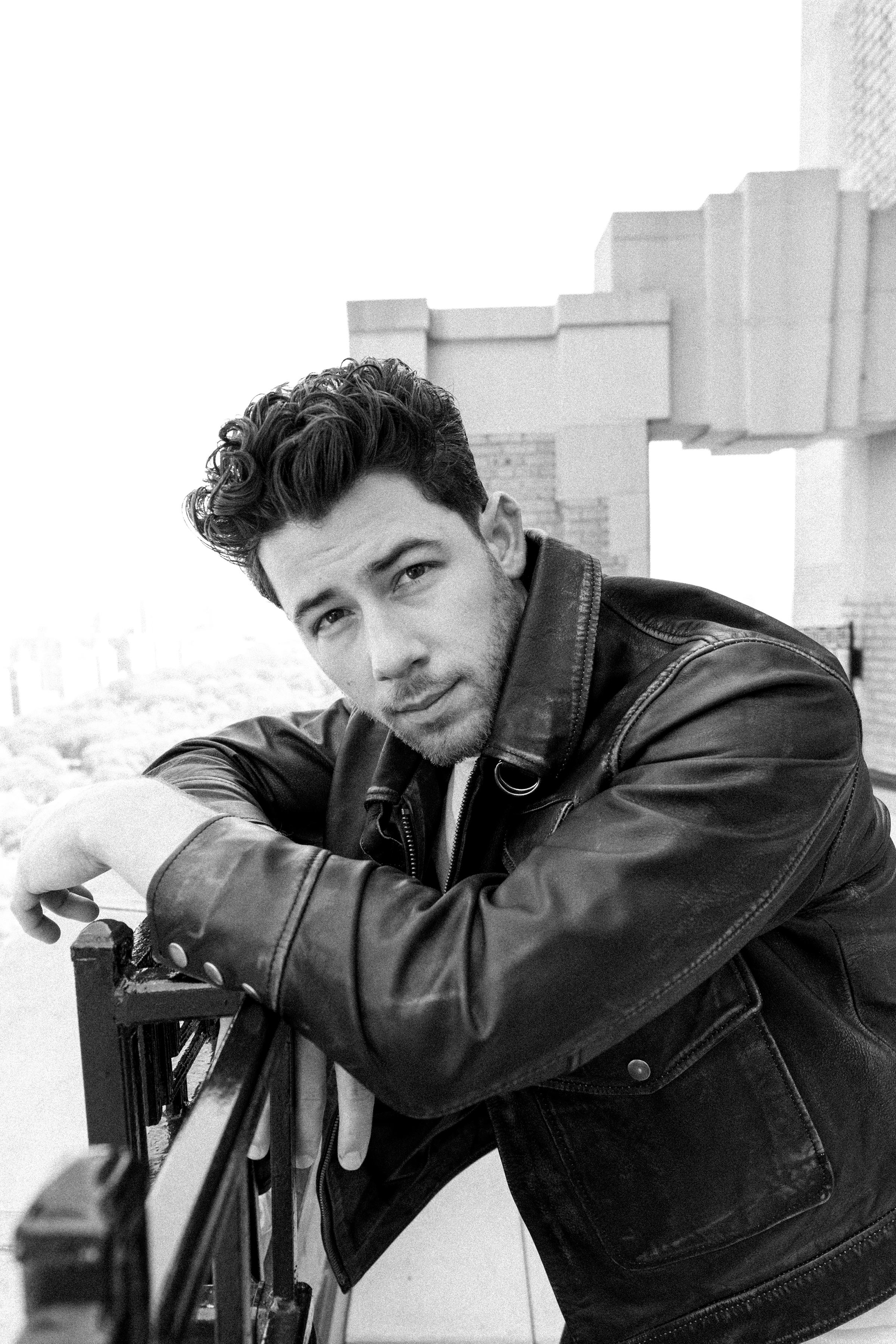
    Nick Jonas in New York, May 19, 2026. With a starring role in “Power Ballad” and ambitions across mediums, the 33-year-old is carving a singular path. (OK McCausland/The New York Times)OK MCCAUSLAND

    Nick Jonas

    Last weekend, due to an interruption in Amtrak service, Nick Jonas made an unexpected stopped at Bardea in Wilmington for a meal. On Saturday, he’ll make a planned visit to Atlantic City to finish off his “A Night With Nick” tour in support of his new album, Sunday Best. 8 p.m., Hard Rock Live at Etess Arena, 1000 Boardwalk, Atlantic City, casino.hardrock.com/atlantic-city

    Philly band Flight of Mavis play 118 North in Wayne on Saturday. Their new album is “Mavis Sings Mavis.”Courtesy of the Artist

    Flight of Mavis

    Frank Brown has been writing jangly, wistful, and immediately memorable power-pop songs for a variety of Philly bands for decades now. That list includes the likes of Buzz Zeemer and Travel Lanes. The first of those, Flight of Mavis, last released an album in 1989. But now there’s a terrific new one called Mavis Sings Mavis, with an album cover that nods to Harry Nilsson’s 1970 Nilsson Sings Newman. It reunites Brown with drummer Ken Buono, bass player Dave McElroy, plus guitarist John Cunningham. The quartet plays a show — it’s a matinee! — in Wayne ln Sunday. 2 p.m., 118 North, 118 N. Wayne Ave., Wayne, 118NorthWayne.com

  • Drawn to a historic Fairmount building, this couple waited for an opening

    Drawn to a historic Fairmount building, this couple waited for an opening

    A regular at Yoga Habit in Fairmount, Allison Langer was curious about the four-story apartment building next door, the AF Bornot Dye Works Lofts. Her husband, Mark Paulson, was also intrigued, but at the time, the building was fully occupied.

    “We are drawn to historical preservation,” recalled Langer, a developmental psychologist. “The windows caught our eye from the street, and I told Mark, if an apartment in that building opened up, I would love to move there.”

    Six months later, in April 2024, their wish came true. Their two-bedroom, two-bathroom apartment has 11-foot-high ceilings and an open floor plan.

    The exterior of the AF Bornot Dye Works Lofts building, which Langer and Paulson had admired before moving in.Erin Blewett / For The Inquirer

    “The combination of the windows, really high ceilings, and exposed ductwork makes it feel so airy, open, and spacious, even though it’s only 1,250 square feet,” said Paulson, a data analyst.

    The windows are the couple’s favorite feature. The western exposure means they can enjoy daily sunsets, and Frankie, the 6-year-old orange shorthair domestic cat they adopted from a local shelter, can sunbathe on one of the large windowsills all day.

    The open floor plan is perfect for the couple, who enjoy cooking and entertaining.

    The living area is bathed in sunlight on a May evening.Erin Blewett / For The Inquirer
    The apartment’s kitchen also features a large window.Erin Blewett / For The Inquirer

    “When we have friends over, everyone can be in one space,” Langer said. “The kitchen is the spot in the home with the most western-facing windows so we can watch the sunset as we’re cooking.”

    An avid baker, she has a dedicated corner for preparing her sweet confections. That’s where the KitchenAid mixer her mother-in-law gave her sits, alongside a photo of her grandmother baking with her when she was young.

    Fridays are typically pizza night when Paulson and Langer make homemade pies. They also enjoy board game nights with friends, including Magic: The Gathering — a game Paulson has played since he was 5 years old. They also play Settlers of Catan, Wingspan, and Nertz.

    The building is a historic landmark originally constructed in 1901 as the headquarters of the AF Bornot Dye Works Co. In July 2014, MM Partners acquired the property, and following an extensive renovation, completed construction in June 2016.

    “The exterior still beautifully harbors the old Parisian style of this historic, adaptive reuse property,” said William K. Ayassou, regional manager at MM Partners. The project earned the 2018 Preservation Alliance Achievement Award.

    Paulson and Langer’s cat, Frankie, a fan of the apartment’s ample sunlight, rests by the living room window.Erin Blewett / For The Inquirer

    Langer and Paulson are inspired by mid-century and Scandinavian design and Japanese minimalism, focusing on a decluttered, yet warm look. They celebrate the modern style that incorporates the building’s historic features with natural wood tones and mid-century furniture.

    Most of their furniture has come from secondhand stores.

    “Philly is such a great city for secondhand furniture and people do a great job of keeping everything in great condition,” Langer said.

    The dining room table was a Habitat for Humanity Restore find, and as the first piece they bought together in their previous apartment it carries a lot of sentimental value.

    They also collect lamps in various shapes and sizes. With so much natural light in the apartment, they appreciate the glow of the lamps scattered throughout, from the mushroom to the orb to the orange doughnut shaped Ikea Varmblixt LED model that went viral on TikTok and Instagram in 2023.

    The dining room features a table the couple found at Habitat for Humanity Restore.Erin Blewett / For The Inquirer
    An orange donut-shaped Ikea lamp is a model that went viral on social media several years ago.Erin Blewett / For The Inquirer
    A painting of Frankie the cat, made by Paulson, is on display in the apartment.Erin Blewett / For The Inquirer
    The front hallway features one of the couple’s distinctive lamps, and a round wall mirror.Erin Blewett / For The Inquirer

    “The overhead lighting is minimal, so we’re really able to indulge our lamp collection,” joked Langer.

    Bursts of color are found in textiles and artwork. Paulson, who makes art as a hobby, takes classes at Philly Art Center near their home. One of the couple’s favorite pictures — an acrylic painting he made in class from a photo of Frankie awash in a sunbeam — sits on the desk between the living room and dining room.

    “I enjoy dabbling, and the Art Center is another way in which we engage with the Fairmount community,” Paulson said.

    The desk also holds the clay Bok building replica their friend Keeley gave them for their 2024 wedding, which was held at the Bok. Other wedding mementos can be found in their primary bedroom, including the photo of the sky taken by Philadelphia-based wedding photographer Elizabeth Blanco, which hangs above their bed.

    “We got very lucky with a cloudless day and a beautiful sunset during our ceremony on Bok’s roof,” Langer said. “The photo captures and reminds us of that moment.”

    A clay replica of the Bok building, where the couple married, is on display in the apartment.Erin Blewett / For The Inquirer
    A photo taken by Elizabeth Blanco on the roof of the Bok building at Paulson and Langer’s wedding.Erin Blewett / For The Inquirer

    Langer loves her home’s proximity to Yoga Habit and the rest of the Fairmount community. Some of the couple’s favorite hangs include Musette, Aiyah (and its monthly art markets), and Sandwich Corner Market.

    “It’s such a central location, close to the Broad Street Line and great cafes, restaurants, and small businesses in Fairmount,” she said.

    Is your house a Haven? Nominate your home by email (and send some digital photographs) at properties@inquirer.com.