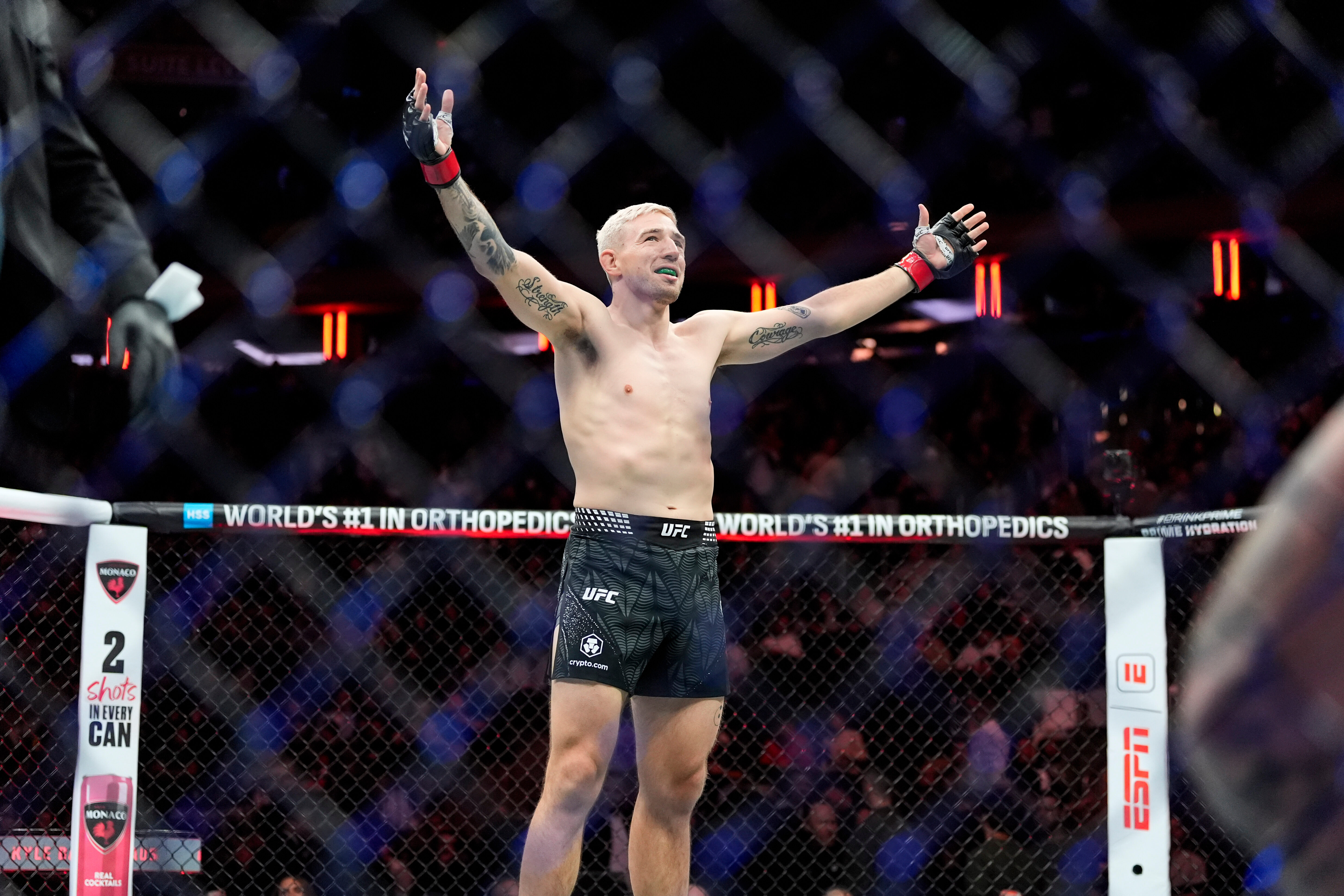
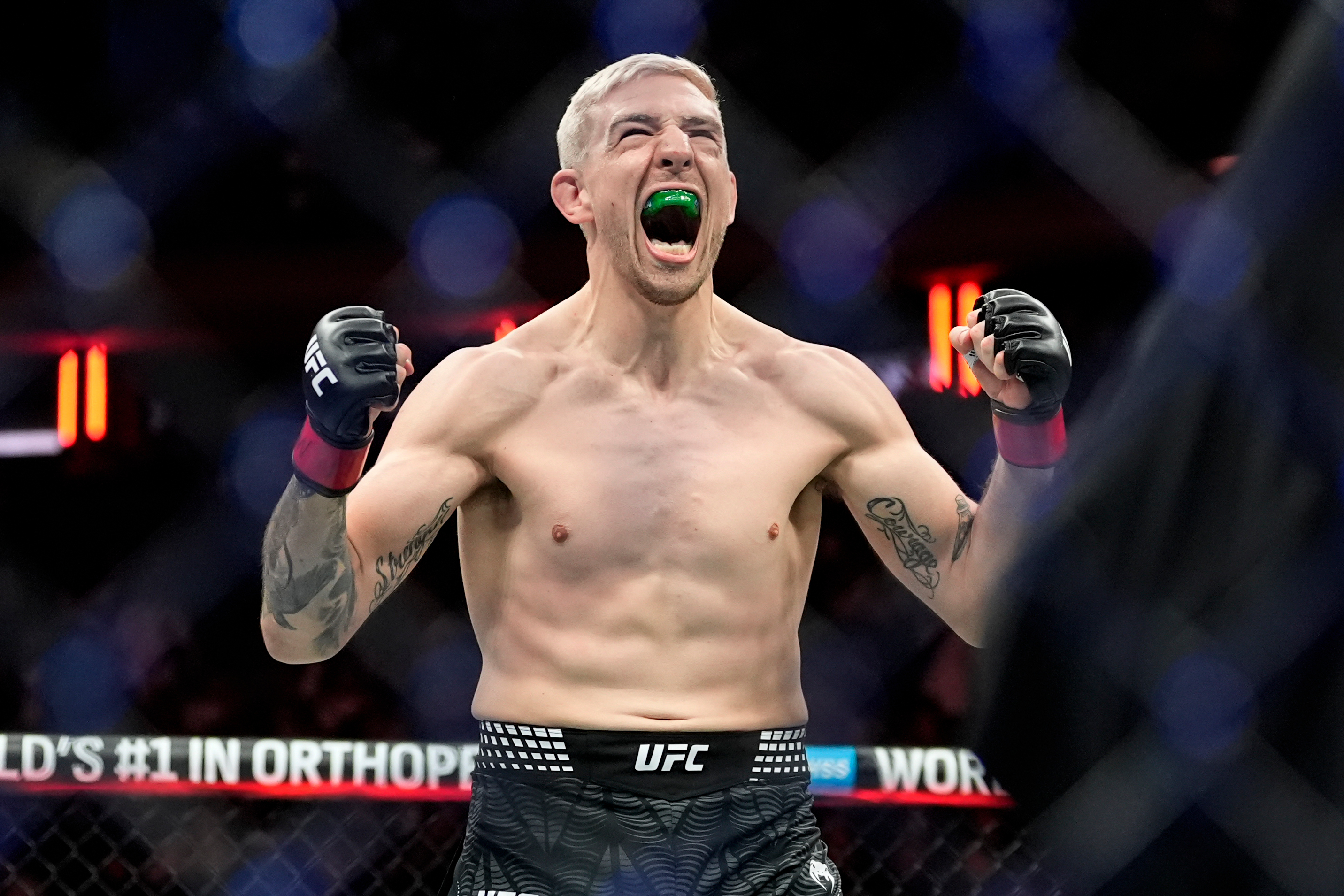
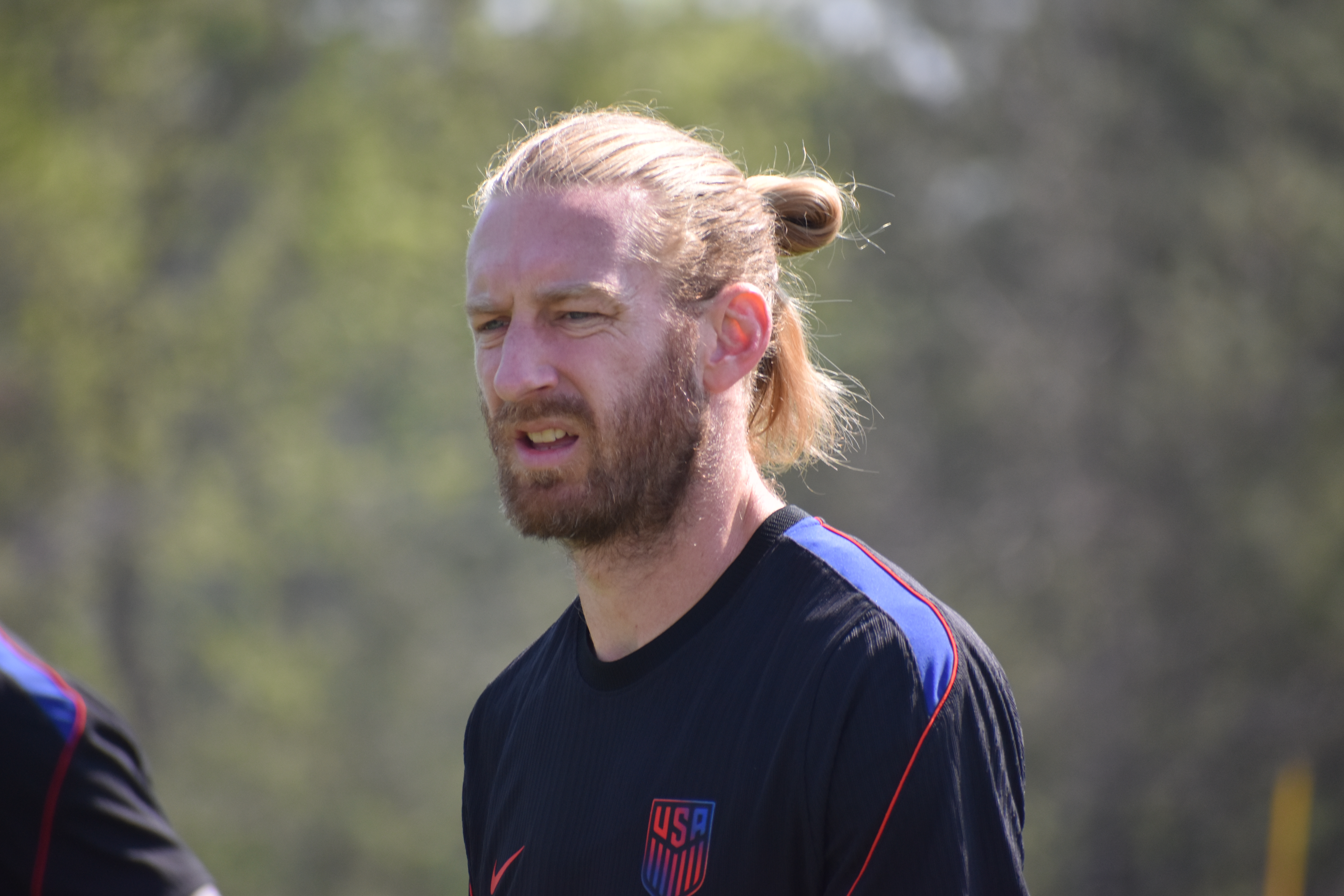
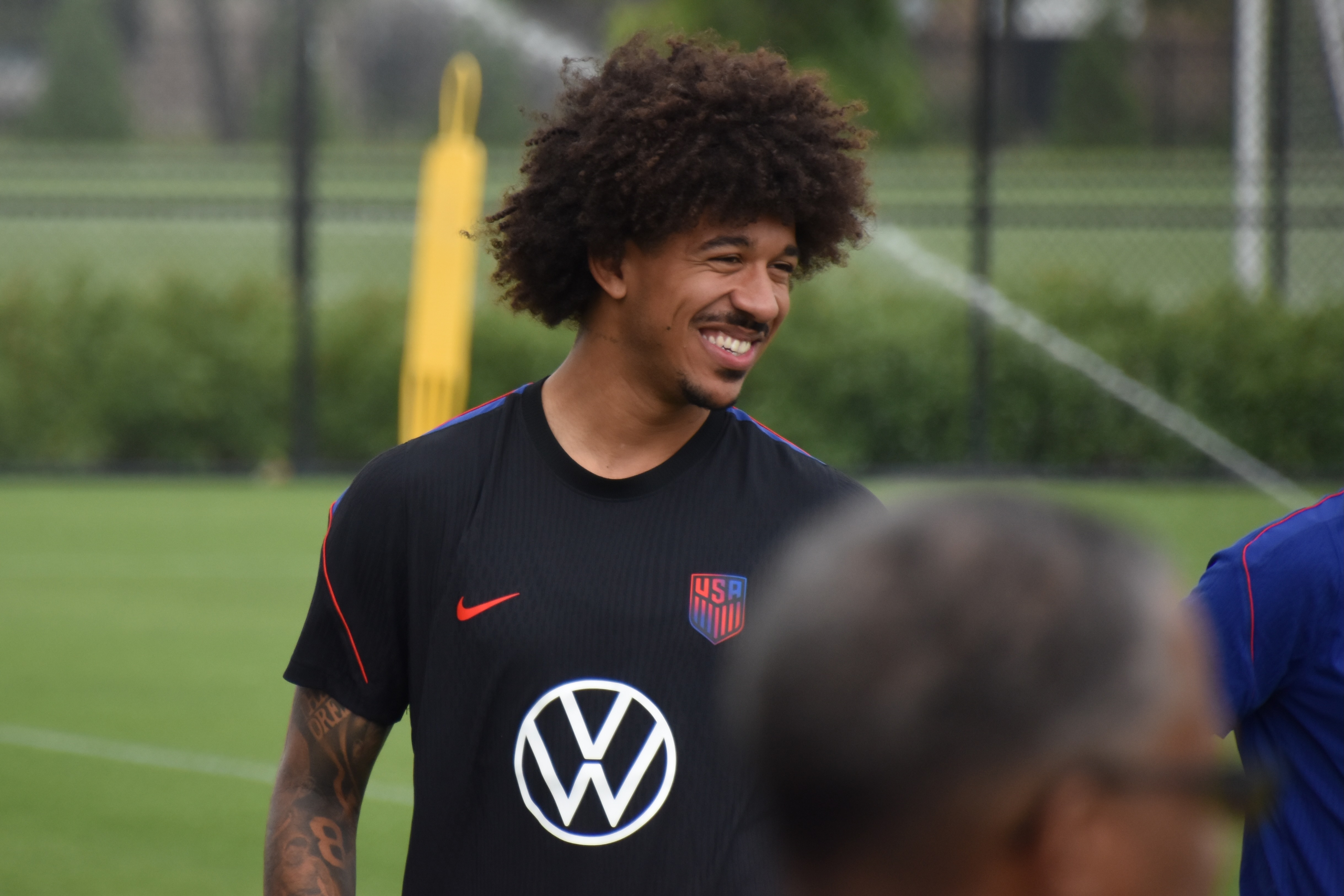
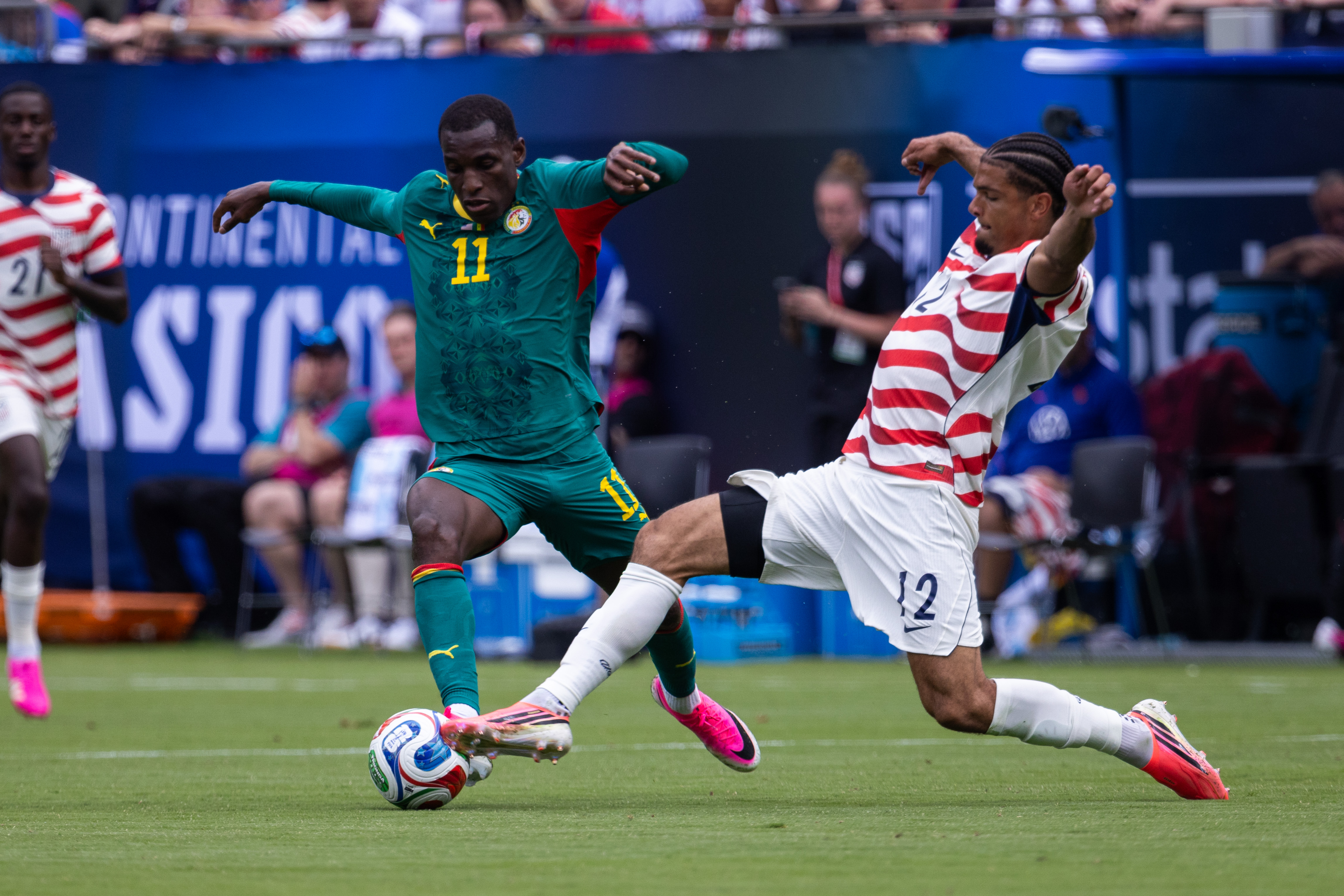
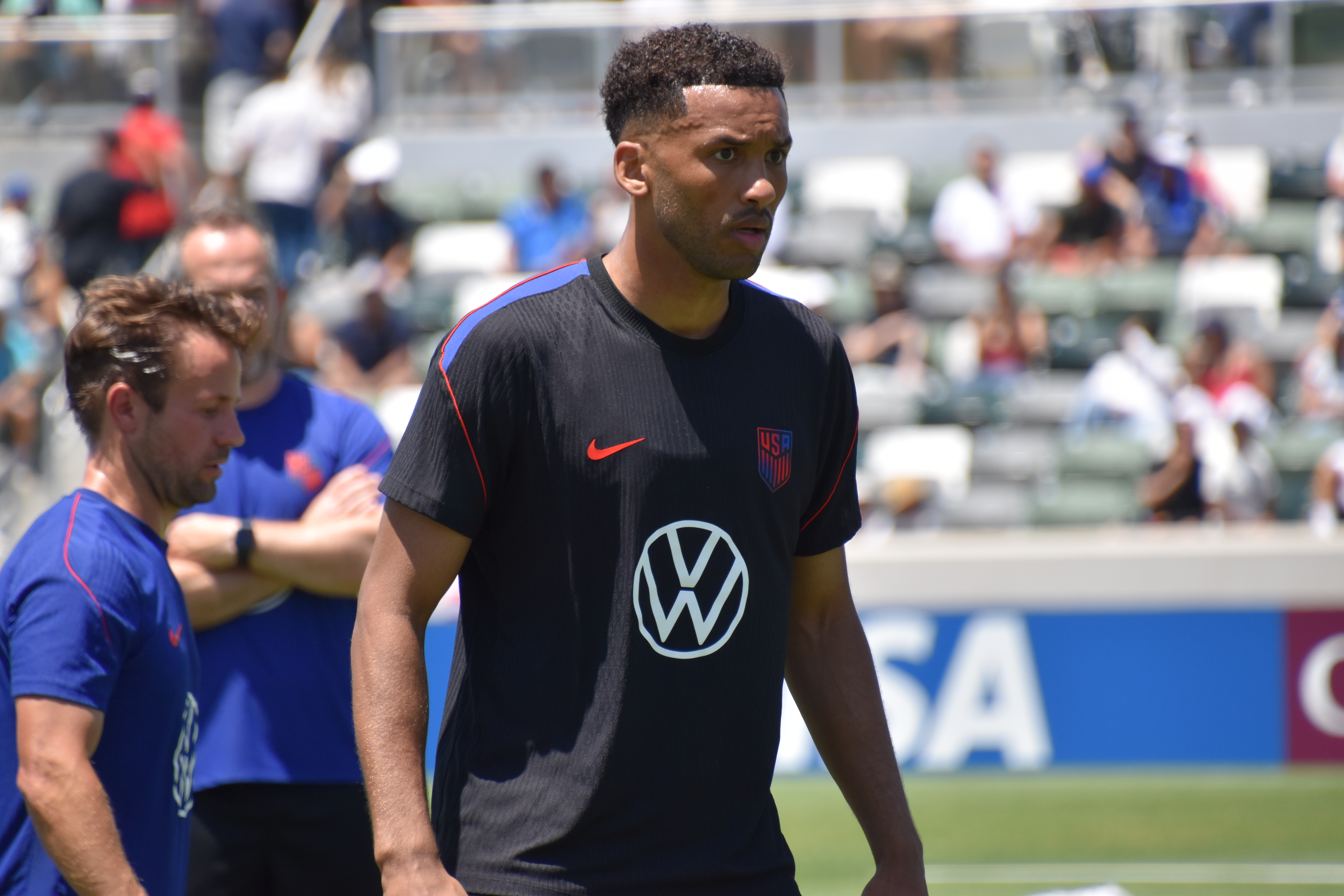
UFC 330, which is set for Aug. 15 at Xfinity Mobile Arena, will be the company’s first major championship event held in the city in 15 years. With its return, plenty of Philly fighters are already eyeing the card for the opportunity to fight in front of their hometown crowd, including 33-year-old Kyle Daukaus.
“It would be amazing to be on that card,” Daukaus, a Father Judge graduate, said. “Growing up 25 minutes from the stadiums, going to all of them when I was a kid — it was really amazing to kind of grow up here and be a fan of these sports. But to go out there and perform in front of fans at that stadium would be amazing.”
Before he can cross that off his bucket list, Daukaus has one obstacle in his way: former Penn State wrestler — and three-time NCAA champion — Bo Nickal. Daukaus will face Nickal Sunday in a middleweight bout at UFC Freedom 250, on the South Lawn of the White House on President Donald Trump’s 80th birthday.
Being included on the much smaller card — this weekend’s event will feature seven bouts, compared with about a dozen on a normal card — was an honor for Daukaus.
“Obviously fighters want to be on the card because of the spectacle that it is, and how amazing it is and how crazy it is,” Daukaus said. “I knew that they were only going to have like six to eight fights on the card, and I really didn’t think I would have been one of them. Finding out that I was one of them shows that they have belief in me to go out there and have the performance that can get more eyes on the sport.”
Daukaus (17-4) was originally scheduled to fight Vicente Luque at UFC 327 in April. But a day after signing the contract, he got the call to fight against Nickal (8-1) at the White House event. The card also includes a pair of title bouts and names like Ilia Topuria, Justin Gaethje, Alex Pereira, Sean O’Malley, Michael Chandler, and Derrick Lewis.
Daukaus, who co-owns The Forge MMA gym on Academy Road in the Northeast with his brother and former UFC fighter Chris, is currently riding a two-fight win streak. Daukaus was released by UFC in 2022. Since his return, he’s picked up a pair of first-round wins, knocking out Michel Pereira and beating Gerald Meerschaert by submission.
The Philly native was 4-4 in his first UFC stint. Following his release, he fought in Atlantic City-based Cage Fury Fighting Championships, where he won four consecutive matches before re-signing with UFC in April 2025.
So, what’s different this time around? “Dad strength” — and a new perspective.
“I have two kids now, so dad strength is something that has been brought to me,” Daukaus said. “But just my maturity levels. I feel like ever since I had my first son, I’ve been more mature with myself.
“I’ve realized there’s a lot more to this game than me. I’m doing this for them as opposed to just me. So I feel like that is a little bit extra motivation. These last two fights have been something. I’ve had good performances and it showed that I can kind of take on any challenge they put against me.”
His next challenge comes with an elite pedigree on the mats and is fresh off a head-kick knockout win over Rodolfo Vieira. Heading into the matchup, Daukaus is cautious of Nickal’s wrestling ability, but believes his own jujitsu skills can hold up on the ground.
“I’m not afraid,” Daukaus said. “Obviously, if it was a straight wrestling match, I would be screwed. He’s a good wrestler, but with jujitsu and everything like that, there’s a lot of things that I can [use to] counter. But I’m not solely focused on being defensive against him. I have to be offensive to make sure he worries about me.”
Kyle Daukaus will face Bo Nickal at UFC Freedom 250 on the South Lawn of the White House.Yuki Iwamura / AP
What can fans can expect from his White House performance? Daukaus thinks it’ll be his best yet.
“I feel like I need these opponents that kind of push me to get me up early to make sure that I’m training where I can train,” he said. “I’m going to go out there and put on the best performance that I possibly can to make sure the fans are excited.
“And obviously, being at the White House, we can’t have any of these lazy performances. We got to go out there and make sure we can showcase some skills and get the fans’ eyes on the event.”
If he does that — and doesn’t suffer any major cuts or bruises along the way — Daukaus will begin to turn his attention toward a possible UFC 330 fight.
“I would be a liar to say that it wasn’t in the back of my mind,” Daukaus said. “I know it’s about nine weeks after [Sunday’s fight]. So I can take that week off as long as there’s no injuries or anything like that and then get back right back into camp.
“Would it be a lot on myself? Yes, it would be a lot going back to camp like that. But it would be something super special.”
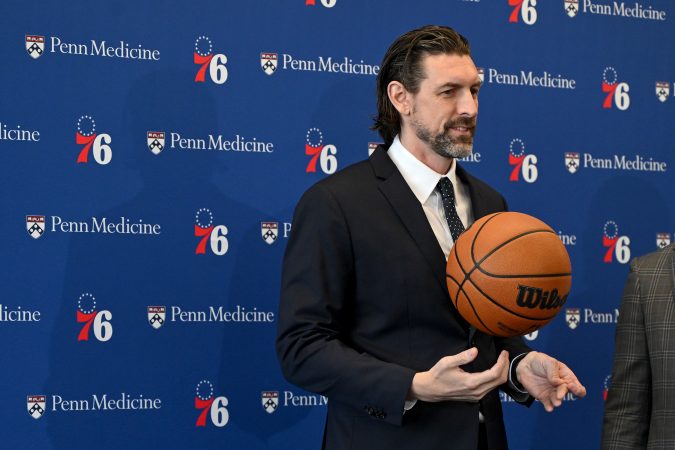
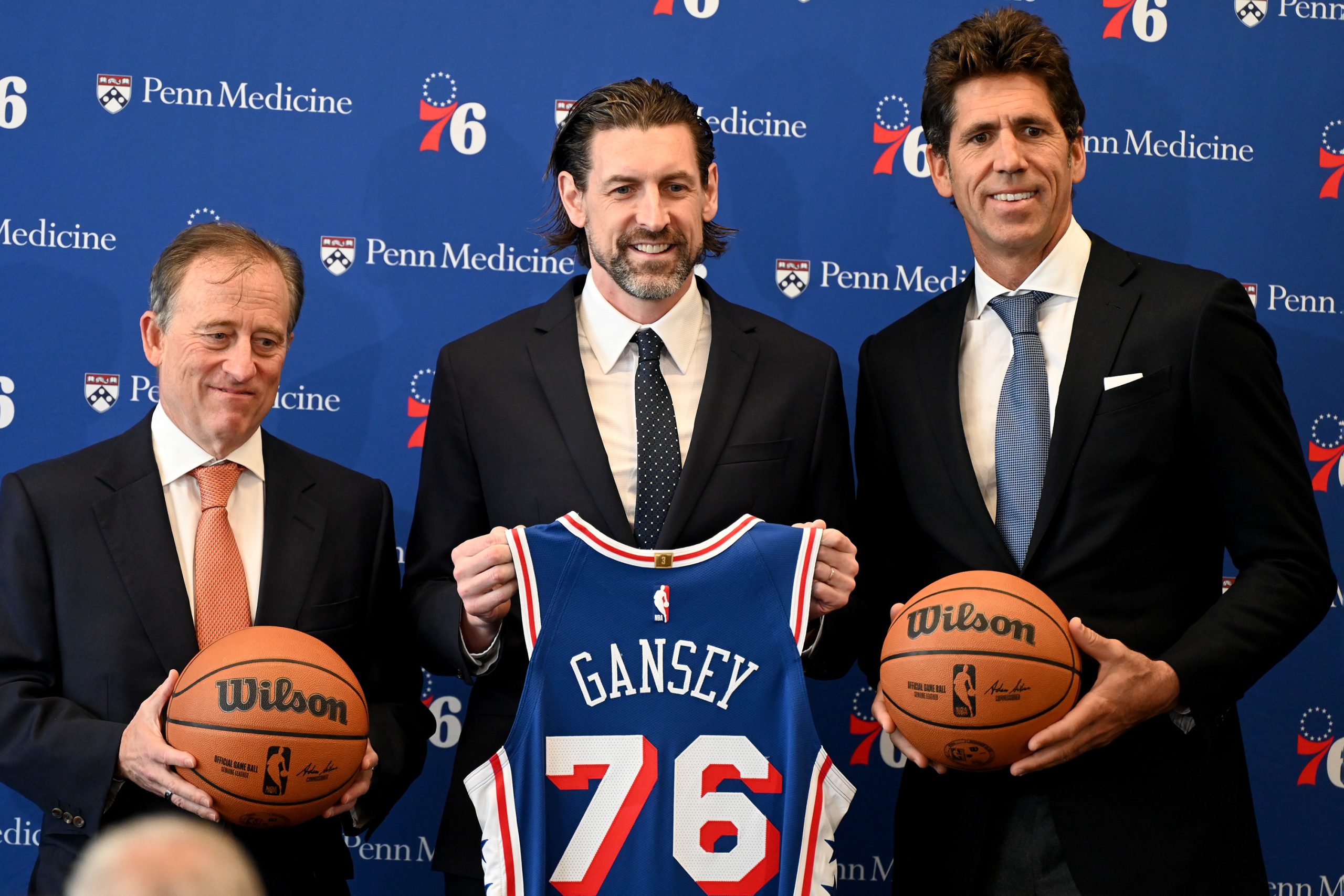
When asked about his strengths as a leader, new 76ers president of basketball operations Mike Gansey mostly provided generic examples during Monday’s introductory news conference.
He called himself a “connector” who can build relationships with players, agents, and staffers at all levels of the organization. He said he managed the Cleveland Cavaliers’ day-to-day front office operations as the general manager under that team’s president of basketball operations, Koby Altman. Gansey added that he believed in creating “alignment” throughout the whole Sixers’ facility, along with a positive work environment.
Perhaps the one tangible responsibility Gansey revealed about his time in Cleveland?
Consider it fortuitous timing that this is Gansey’s first roster-building checkpoint with the Sixers. They have the 22nd overall pick on June 23, which was acquired in the controversial Jared McCain trade executed by former lead executive Daryl Morey. Now, Gansey will aim to blend in with a group of front-office executives who have already done significant prospect evaluation — and “drafted really, really well” in past years, he said — while infusing his own expertise.
“I’m excited to learn from them,” Gansey said, “and, obviously, put my vision and put my imprint on the draft. … We’re going to dive into that the next two weeks, and try to get the best person and player for the Sixers.”
This year’s draft is not as high-profile as when the Sixers selected VJ Edgecombe, who instantly became a standout rookie, third overall last summer. Still, there is a sense of urgency less than two weeks before this selection.
Gansey’s first task, according to Harris Blitzer Sports & Entertainment president Bob Myers, is getting his bearings with a Sixers front office that still features continuity even with former general manager Elton Brand expected to transition into a new role and title. Jameer Nelson was elevated to executive vice president of basketball operations, while vice president of player personnel Prosper Karangwa agreed to a contract extension, The Inquirer confirmed. Gansey also mentioned assistant general managers Ned Cohen and Fan-Hal Kuong and Blue Coats general manager Ariana Andonian by name during his introductory news conference.
Mike Gansey made his first appearance as Sixers president of basketball operations during a news conference on Monday.Tom Gralish / Staff Photographer
Myers said Gansey must learn nuances such as how much the Sixers lean on analytics in prospect evaluation in comparison to his 15 years working his way up with the Cavaliers, or how much input scouts and coach Nick Nurse will have. And though Myers added that the Sixers will explore possible trades for the pick, “usually you end up drafting, [that’s] the truth,” he said.
“It’s really getting an understanding,” Myers said of Gansey’s approach, “of, ‘OK, we did it this way in Cleveland. How do you guys do it?’ And working together to this group.”
The Sixers’ draft picks in recent years include McCain at 16th overall and Adem Bona in the second round in 2024. Recently anointed All-NBA third-teamer Tyrese Maxey went 21st in a bizarre, COVID-impacted 2020 draft, a pick Nelson on Monday acknowledged that, “We got lucky with the person. We got lucky with the player.” When the Sixers had the 23rd pick in 2022, they traded it for DeAnthony Melton, a successful two-way role player when healthy for two seasons.
“At 22, you want to get a combination of best player available and fit with our roster,” Gansey said when asked about his overall draft philosophy.
Gansey’s Cleveland draft successes include using the No. 20 pick in 2024 on Jaylon Tyson, who started 42 games this past season and was a tenacious defender against Maxey. The Cavaliers used a second-round pick last year on Tyrese Proctor, a veteran guard on the Cooper Flagg-Kon Knueppel Duke team who then played in 50 games as a rookie for Cleveland. The Cavaliers also signed Dean Wade as an undrafted free agent in 2019, then developed him into a rotation player.
Since Gansey was preparing to select 29th with the Cavaliers prior to landing the Sixers job, Myers assured that, “It’s not like he’s sitting there going, ‘I don’t know who any of these guys are.’” The new-look front office’s decision that night will then lead into how it approaches free agency, which opens June 30.
So it was understandable why Gansey was ready to move past the hubbub of Monday’s formal introduction in Philly.
Because his roster-building specialty awaits.
“I’m ready to kind of get today over with and go for the draft,” Gansey said, “because we’re two weeks away.”
While some of the world’s best soccer players will be coming to Philadelphia for the World Cup this summer, some of Philadelphia’s young soccer standouts will be leaving the country for an international tournament of their own.
The Anderson Monarchs’ team of 10- and 11-year-old girls punched its ticket to the Gothia Cup, which is July 12-18 in Gothenburg, Sweden. The Gothia Cup is the largest youth soccer tournament in the world.
The Monarchs pulled off a 2-1 shootout win — their first-ever shootout — over North Philly United in a Montgomery County-based “Meet the World” tournament sponsored by manufacturing firm SKF on April 18. This secured the Monarchs’ position as one of the 16 teams SKF would be sponsoring for the Gothia Cup.
The Anderson Monarchs were created to provide experiences for children “that normally wouldn’t get those opportunities,” coach Steve Bandura said. He added that these opportunities allow the players to grow socially and academically, and he expects an opportunity like this to have a lasting effect on the athletes.
“This is going to be an amazing experience for our girls to get out of South Philly,” he said. “It’s just going to open their eyes and change their perspective on the world, really. And we’re meeting girls from all over on common ground, on the soccer pitch, and I think it’s going to be an incredible experience for them.”
With the sponsorship from SKF, the Monarchs’ entire trip is taken care of. SKF has headquarters in Gothenburg and has been the main sponsor of the Gothia Cup since 2007. Over the years, SKF has brought over 5,000 players to the Gothia Cup, and the qualifying Meet the World tournaments remain their largest corporate social responsibility project, said SKF communications manager Jackie Rahmer.
“It’s more than just a sponsorship for us. It’s an opportunity to celebrate soccer and have kids come together and build friendships across borders,” Rahmer said. “We just think that’s something that’s very special.”
One of the Sweden-bound players, Rosanna Olsen, said she and her teammates are taking advantage of their opportunity by preparing as best as they can. Olsen, Mya Davis-Taylor, and some of their other teammates are using YouTube to learn basic Swedish phrases for the occasion.
And while phrases like “hello” and “goodbye” are harder to learn than Davis-Taylor, a midfielder and goalkeeper, expected, all 30,000 athletes participating in the tournament share one common language, no matter whether they call it soccer or football.
Olsen, a forward, believes that interacting with some members of these 1,900 teams from 75 countries can help with her own knowledge of the game.
“I think I’ll learn new ways of playing, and how their mindset is when they’re playing, and their techniques on shooting the ball and passing the ball and other things like that,” Olsen said.
For players like Olsen, Davis-Taylor, and Aasiyah Ellison, who’s also a goalkeeper and midfielder, this will be their first time leaving the country. And while Davis-Taylor said she’s eager to be on a plane and see the view from the airport, meeting new people and playing soccer is most exciting.
“We get to stay in the same rooms [as our teammates], we get to meet new people, and then instead of just staying with our teammates, we can make new friends with the other people that are there, too,” Davis-Taylor said.
She’ll also get to connect on a deeper level with her own teammates.
Bandura said there’s a natural sense of camaraderie that comes from playing three sports together year-round, but this tournament will create “bonds that are going to be pretty tough to break.”
“You’re in a strange environment, but you’re there together,” Bandura said. “I might be 100 years old when we get back from a whole week with the 13 11-year-old girls, but it’s so worth it. There’s so many benefits to this for them, and I think it’s going to draw them even tighter together as a family long-term, like lifelong.”
The Anderson Monarchs will compete in the Gothia Cup, which runs from July 12-18 in Sweden.Braithwaite Communications
Cali Nichols, the Monarchs’ striker, is looking forward to seeing how her team will connect on the pitch in Sweden and has been preparing for the adrenaline rush of the tournament. But she’s also looking forward to the downtime and exploring a new place.
Femi Awodesu, a former member of the Monarchs’ program, now plays for Helsingborgs IF in Sweden, so Bandura hopes a visit with him is on the agenda.
And for Nichols, seeing all the history of the country is on her personal agenda.
“Just driving around and seeing all of the monuments that Sweden has, and all of its history, as well as the food,” Nichols said.
Bandura compared the Monarchs’ opportunity to a rabbit in its hole that looks beyond to see the rest of the world. He hopes that similarly, this opportunity will expand his team’s perception.
“I want to explore and see what the whole world looks like,” Ellison said.
It’s been 32 years since the men’s edition of the FIFA World Cup was played on U.S. soil. The long wait culminates this week with Thursday’s tournament kickoff in Mexico City.
On Sunday, Philadelphia will host its first of six scheduled matches between June 14 and a knockout round finale on July 4 at Lincoln Financial Field, which was renamed “Philadelphia Stadium” by FIFA for the duration of the matches here in Philly.
Here’s everything you need to know …
The big picture
According to Visit Philadelphia, the city’s tourism arm, expect an influx of 500,000 visitors flocking into city bars, restaurants, hotels, and businesses throughout the city and surrounding suburbs. However, we’re hearing there are plenty of good Airbnb options to choose from.
But not all of those people have tickets or can afford to attend, with this being the most expensive World Cup ever. FIFA enacted dynamic pricing for the first time, which sent initial ticket prices soaring. And yes, that’s even for games that don’t feature nations that are favorites to win.
Good news for those people: there are a ton of events happening over the course of Philly’s time in the tournament. From bars to beer gardens, watch parties to pickup games, here’s a cheat sheet of what to do around town, whether you’re a native or you just dropped in for a match.
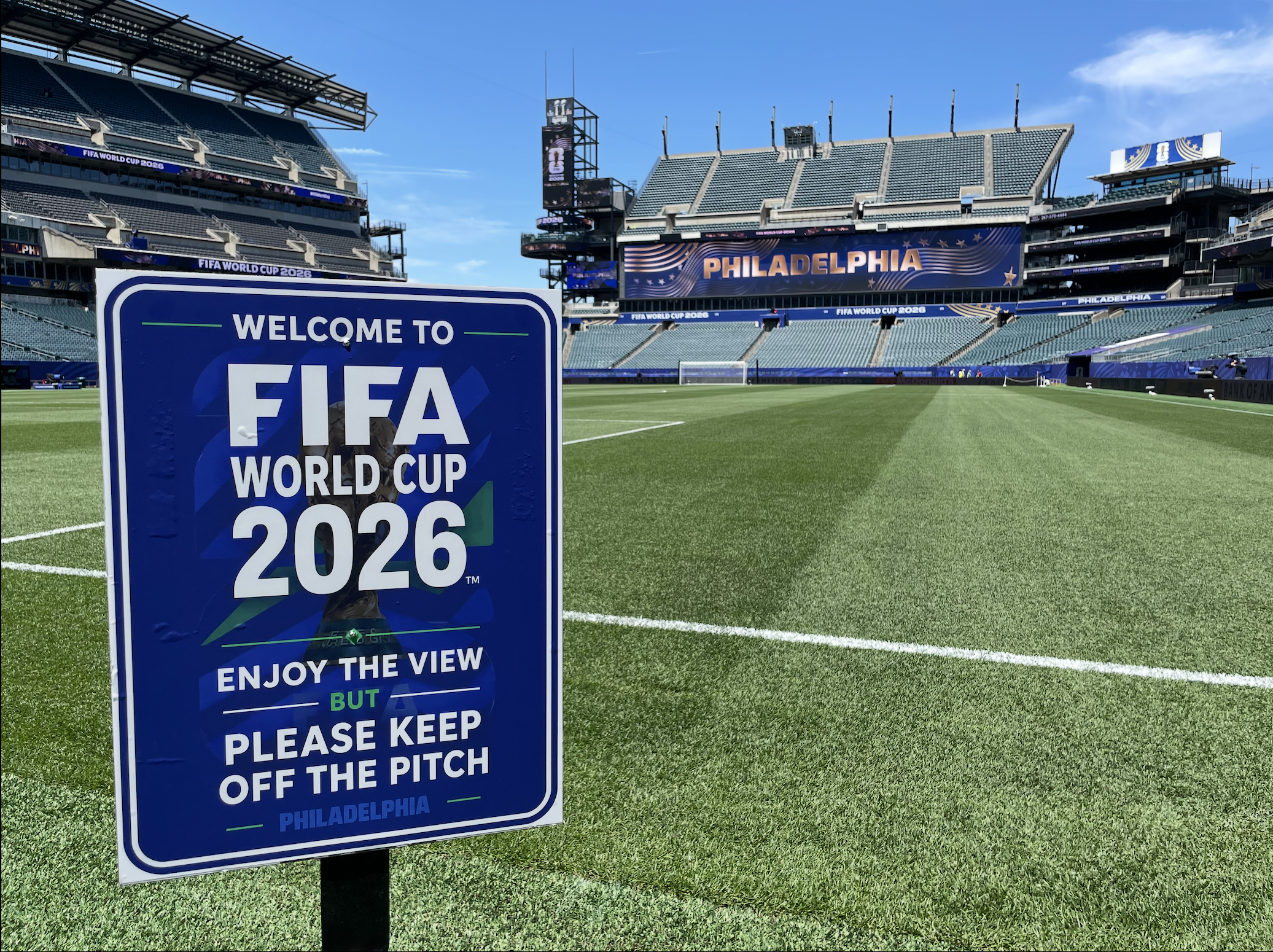
Lincoln Financial Field, known as “Philadelphia Stadium” is all set ahead of the start of Sunday’s World Cup opener in Philadelphia between the Ivory Coast and Ecuador.Kerith Gabriel
So you have a ticket. Congrats.
First thing you should know is that you’re going to find very few people calling Lincoln Financial Field (or the “Linc” as it’s known around here) by FIFA’s official name for the South Philly venue.
There are a host of different ways to get there, but the most efficient and direct path is jumping on SEPTA’s Broad Street Line (Orange Line) and taking it to the last stop, NRG Station. From there, FIFA has signs all over the South Philly sports complex and will have volunteers outside the turnstiles, directing you where to go. Subway trains should be running just fine — a miracle, considering SEPTA workers used World Cup traffic as leverage to potentially go on strike.
Once inside, you’ll see a colorful stadium retrofitted to support large crowds and a field designed with expert care.
Here’s hoping you got your tickets a bit cheaper than the initial asking price. Match prices in Philly and elsewhere have been astronomical.
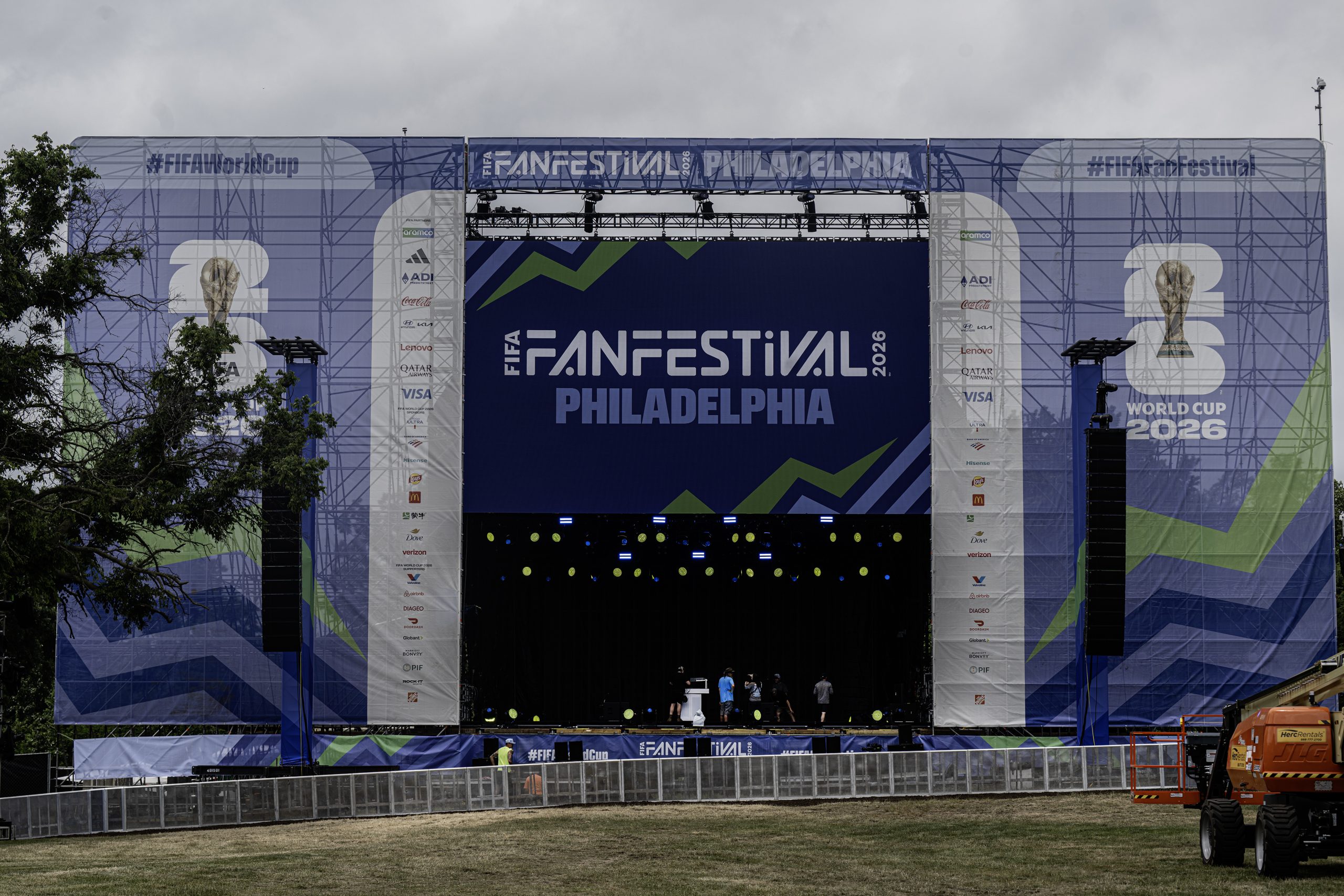
Crew members make final preparations, including work on a 60-foot-wide screen, for a FIFA Fan Fest at Lemon Hill in Philadelphia on Tuesday, June 10, 2026.Jose F. Moreno / Staff Photographer
Don’t have a ticket? All good.
This section is for those who love the sport but just can’t fathom paying those prices — and affording rent this month. Not to worry, the same passion will be on display in Philly’s Brewerytown neighborhood thanks to the FIFA Fan Festival, the sprawling party taking over Lemon Hill Park. The festival is free to enter and opens June 11, and will last all 39 days of the tournament.
How to register — entry is free but you need to sign up first
What you can bring and what you should leave at home.
When the event will be open each day.
How to get there, and get out.
And what locals are saying about the event.
The festival is a great way to get into the World Cup mood without spending hundreds on a ticket.
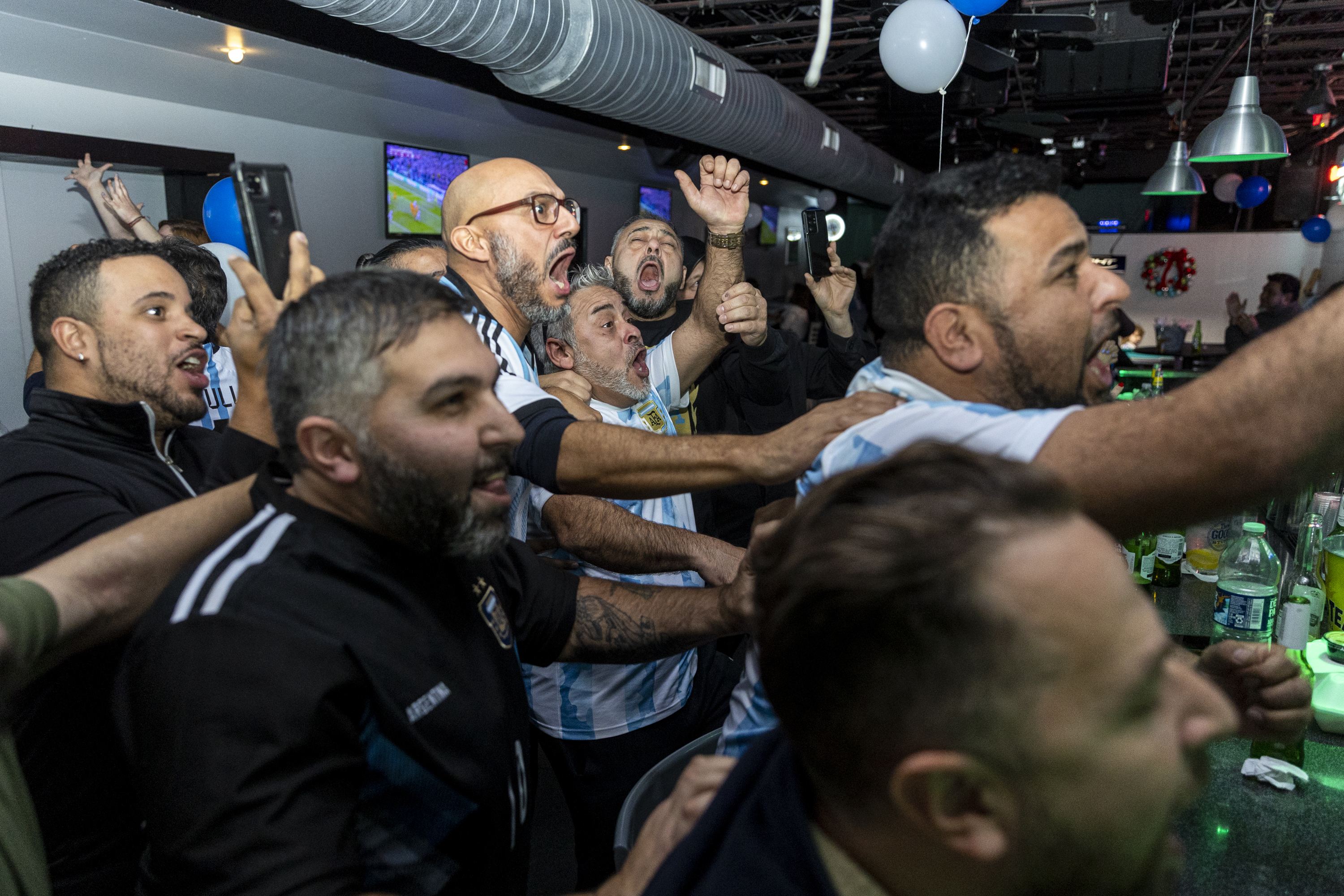
Fans are expected to pack the city’s bars and restaurants for the 39 days of the World Cup. Tyger Williams / Staff Photographer
But if you’re looking to get a feel for the city’s soccer pulse without all the crowds, then we have a selection of bars and restaurants that are hosting watch parties, with some electing to stay open as late as 4 a.m. to accommodate soccer fans — so long as the Pennsylvania Liquor Control Board permits.
And if you’re looking to get past the basics while celebrating America’s 250th birthday, foodies can consider trying Philly’s 76 most iconic dishes or most essential restaurants. We dare you to try to catch them all like Pokémon.
Going to be in Center City? Check out the mini-soccer pitch in front of City Hall’s Dilworth Park.Jose F. Moreno / Staff Photographer
Who is playing in Philly and when?
Nine teams are coming through Philly, and one, Ivory Coast, has set up its World Cup headquarters just outside the city in Wilmington. The Ivorians are training at the new WSFS Sportsplex, which opened late last year in Chester, and on Monday, their fans brought quite the party.
Here’s the full schedule of the group stage matches in Philly, with guides for all the nations playing here, including what to know about each, how they qualified, and for some, their unique footprint in the city:
On July 4 at 5 p.m., Philly will host one final match, a round of 16 knockout game that has a very slim chance of including the U.S. men’s national team.
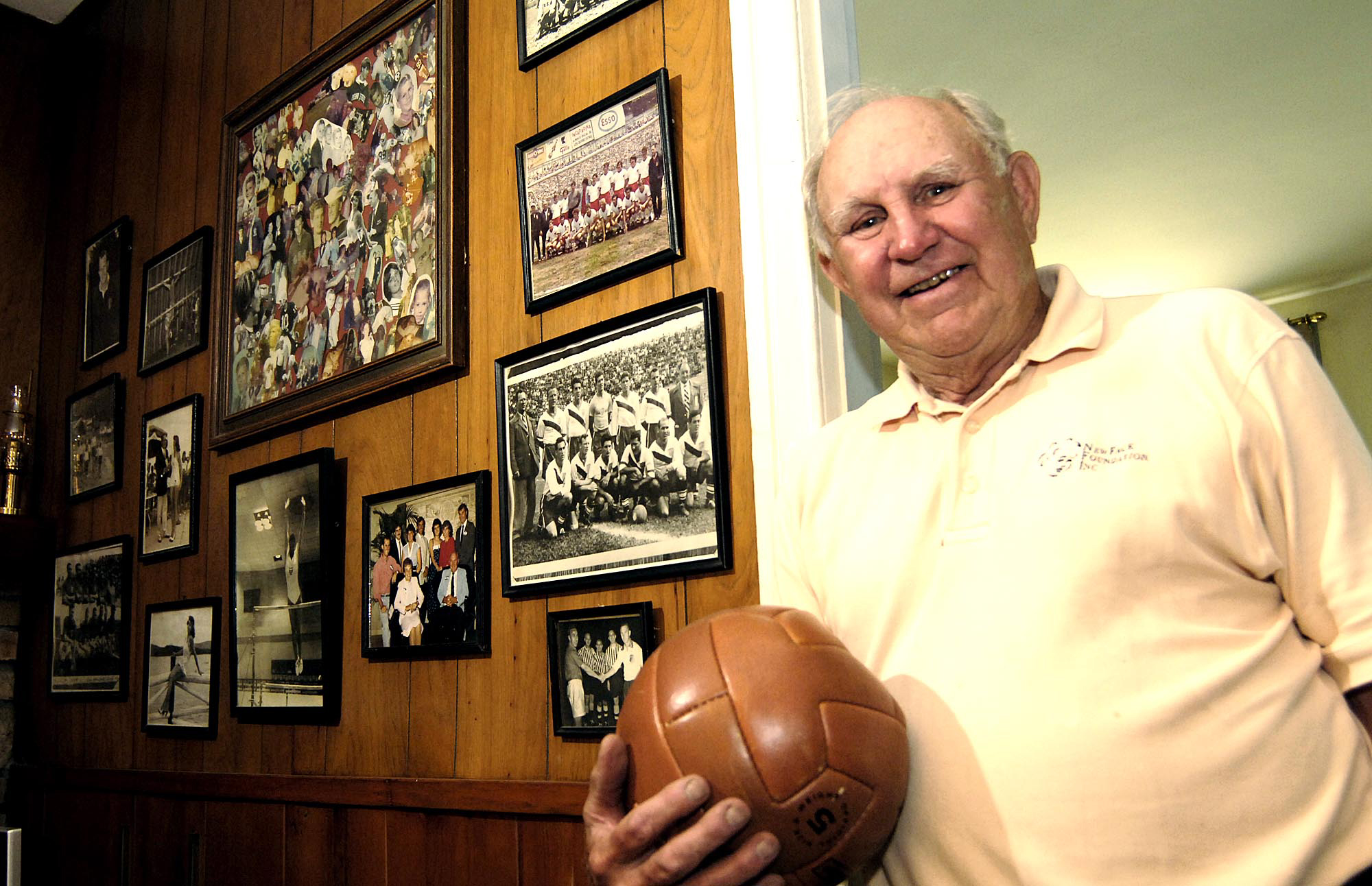
Walter Bahr, one of the most celebrated United States soccer players to emerge from Philly, competed on the cinder fields at Newt’s playground in Fishtown on his rise to Team USA fame.Pat Little / AP
Philly’s rich soccer scene and history
Chester is the city that hosts Philly’s professional soccer team, the Philadelphia Union. This club went from being one of the league’s best last season to the bottom of the standings heading into a seven-week break for the World Cup.
However, over the last several weeks, the team has cleaned house in preparation for the return of games on July 22, after:
In the meantime, the team is focused on the World Cup and plans to host a series of watch parties at Union Yards, its beer garden across from the stadium.
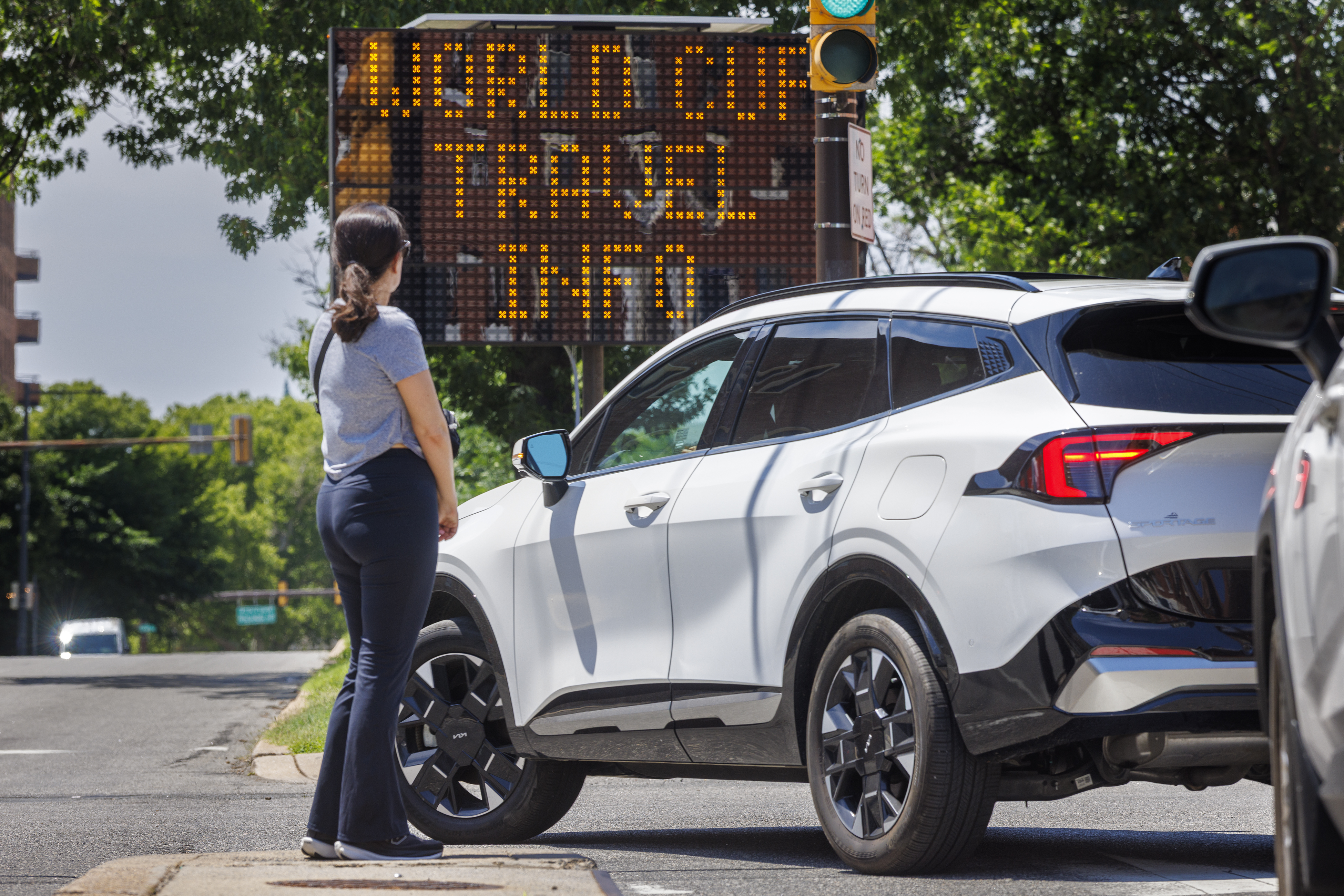
Electronic traffic information sign at Spring Garden and N. 21st Street informing people in town for World Cup on where to find information, Tuesday, June 9, 2026.Alejandro A. Alvarez / Staff Photographer
Players, referees, and fans have been subjected to massive checks, with either full or partial bans on over 70 nations, many with teams competing in the tournament.
Here’s what city officials are saying about the World Cup, and the lengths some city council members are going to educate visitors to know when it comes to concerns around Immigration & Customs Enforcement.
There has been no shortage of opinions about the massive levels of greed surrounding this larger edition of the tournament and the hypocrisy of FIFA by calling their approach to the game “Football for All.”
Experts this week warned World Cup fans traveling around North America to be aware of the these communicable diseases.
Also, know that you can follow the Inquirer’s coverage of all things “football,” “futbol,” “futebol,“ “voetbal,” or soccer right here.
Philadelphia is slated to have an abundance of block parties and street festivals this summer after the city encouraged neighborhoods to join celebrations of the nation’s 250th with their own events, even offering financial support for hosting through various grants.
But some organizers who responded to the calls are learning there is a limit on so-called festival street closure permits for events between June 11 and July 18: essentially, the duration of World Cup, July Fourth, and MLB All-Star Game events.
Katie Hanford, executive director of the East Passyunk Avenue Business Improvement District, learned of the change in May. The group submitted three festival street closure applications, two for World Cup watch parties and one for 250th festivities, and the Philadelphia Office of Special Events denied them “due to City resource constraints.”
“The city government, in this case the Commerce Department, is literally trying to give communities money to host events and yet the city is also, on the other hand, denying the ability to host events,” said Hanford, who applied for the 2026 Neighborhood Celebration Grants Fund, which had $1 million for such events.
Pride on Passyunk, an event put on by businesses last year, was also denied a “festival street closure” permit for June 14 because it fell during what the special events office called a several-week “blackout” period in an email regarding the application. June 14 is the first World Cup game in Philadelphia, among other high-profile events.
The city, however, did not publicly announce any limits on event permits, nor did the Philadelphia Office of Special Events address the blackout dates when The Inquirer asked.
Though these events plan to move forward as “sidewalk activations” that organizers say will be no less fun, frustration remains over an already complicated permitting process, made more difficult by what organizers argue has been confusing messaging from the city.
First, there is the city’s classification of neighborhood block parties, for which permit applications are submitted to the Philadelphia Streets Department and reviewed by the police department. These permits are filed by residents aiming to throw a birthday party or other small celebration.
But if the event is hosted by businesses or located in a commercial corridor, even if it spans only a block, organizers must file festival street closure applications, which the Philadelphia Office of Special Events reviews.
So even though the East Passyunk Avenue Business Improvement District planned to throw block parties, organizers say the city directed them to apply for a festival street closure, only to receive a denial.
Randi Kampen and Lex Fanelli, organizers of Pride on Passyunk, said their event permit was approved, but they never officially heard back about the separate street closure application. A Philadelphia Office of Special Events email obtained by The Inquirer told the business improvement district the Pride event would be denied because of issues with the date.
“Please understand, we have denied other events that fall within these blacked out dates too,” the email said, encouraging the group to apply for a date later in the summer or fall.
The message was of little comfort to Kampen and Fanelli.
“The blackout dates are because the city is not prepared for the FIFA stuff happening, and that’s not our fault,” Kampen said.
The 2026 summer festivities have only added another consideration to the process.
Even so, people like Hanford say if city resources were going to be strained for the several-week span, they wish they had been alerted sooner instead of encouraged to put on events.
Number of events affected remains unclear
The city special events office did not immediately say how many festival street closure applications were denied for June 11 through July 18.
Still, the city is slated to host plenty of block parties during that window.
The Philadelphia Police Department has received 241 applications for block parties between June 11 and July 20, and recommended approval for 219, according to Sgt. Eric Gripp. The denial recommendations were unrelated to major city events, he said.
But the police department flagged four dates to the special events office where World Cup games and 250th festivities would create staffing constraints for additional events requiring festival street closure permits — June 19, June 27, July 3, and July 4.
“As Philadelphia prepares to host several major events this summer, including FIFA World Cup-related activities and other large-scale celebrations, the police department will continue balancing those public safety responsibilities while supporting community events whenever operationally feasible,” Gripp said.
Separately, the special events office said June 14 was “a heavy commitment of resources” for public safety partners because of a slew of events, including the first World Cup match in Philly, the FIFA fan festival, Odunde Festival, Flag Day, events at Independence National Historical Park, and events at Franklin Square Park. The city said it also has to consider and prepare for any potential protests.
For now, Pride on Passyunk is moving forward, as are the three events planned by the East Passyunk Avenue Business Improvement District.
Hanford said the business improvement district has been working with Councilmember Mark Squilla to potentially appeal the permit decisions, but time is running out.
A June 19 event aimed to air the Brazil-Haiti match on the Juneteenth holidayand a June 27 block party was to show Croatia vs. Ghana. Those events call for screen setups and barricades that require coordination with third parties.
Squilla’s office brokered a meeting between the business improvement district and the special events office on Wednesday, and is optimistic a compromise would lead to at least some permits being approved, according to Squilla’s chief of staff, Anne Kelly King.
“Hopefully we’ll come to a resolution that’ll work for everybody. We don’t want to compromise safety, and that’s really center to it,” she said.
Hanford said regardless of the outcome, East Passyunk would still host World Cup block parties.
“The sidewalks will be lined with activations, food and drink specials, and places to watch the game,” she said. “We will be out here celebrating how South Philly always does — with joy in the streets, supporting small businesses, and going hard for sports.”
IRVINE, Calif. — The first men’s soccer World Cup on U.S. soil in 32 years kicks off this week, with great anticipation in Philadelphia and nationwide. That’s true for the 26 players of the U.S. team, too, as they seek to make a lasting mark on the tournament and the sport.
Here’s what to know about each of the players whom manager Mauricio Pochettino picked for his squad. They’re listed by position, then in alphabetical order.
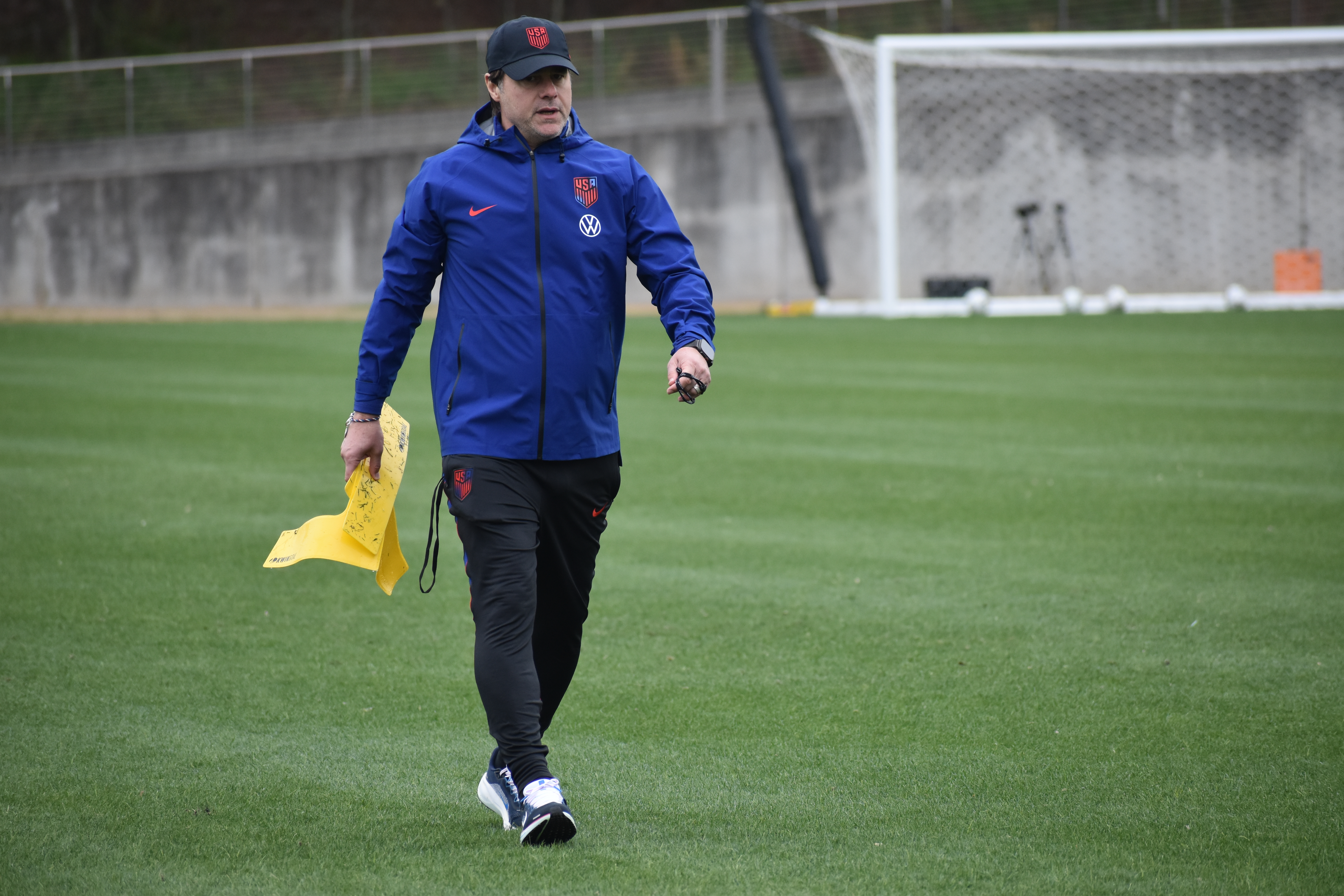
U.S. manager Mauricio Pochettino.Jonathan Tannenwald
Goalkeepers
Chris Brady
Jersey number: 26 Age: 22 Club: Chicago Fire Hometown: Naperville, Ill. Height and weight: 6-foot-3, 170 pounds Senior national team games (Caps): 1
A clear and understandable third on the depth chart, he was picked to gain experience for what should be more trips to World Cups in the future.
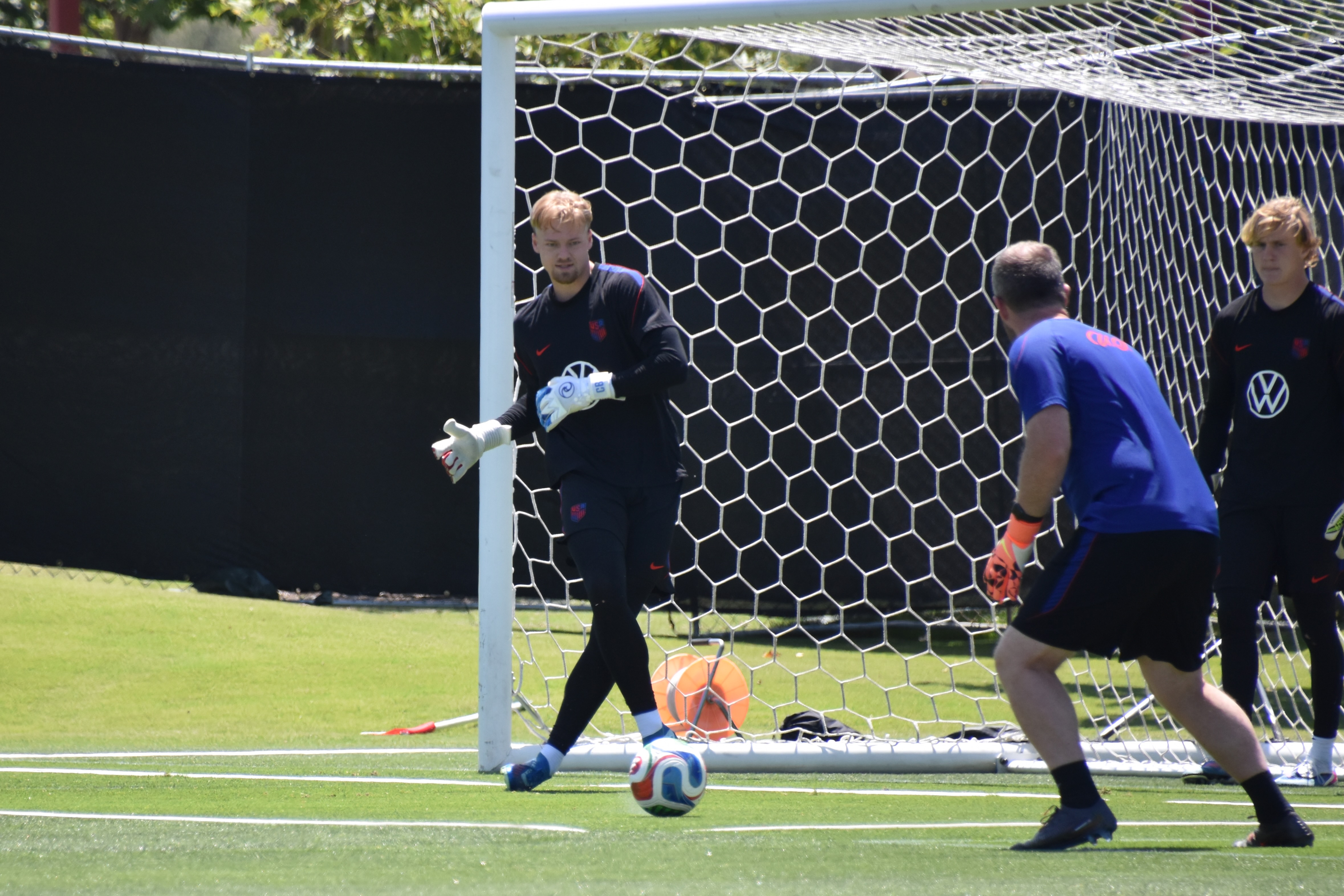
Chris Brady (left) is on the team to get experience for the future.Jonathan Tannenwald
Matt Freese
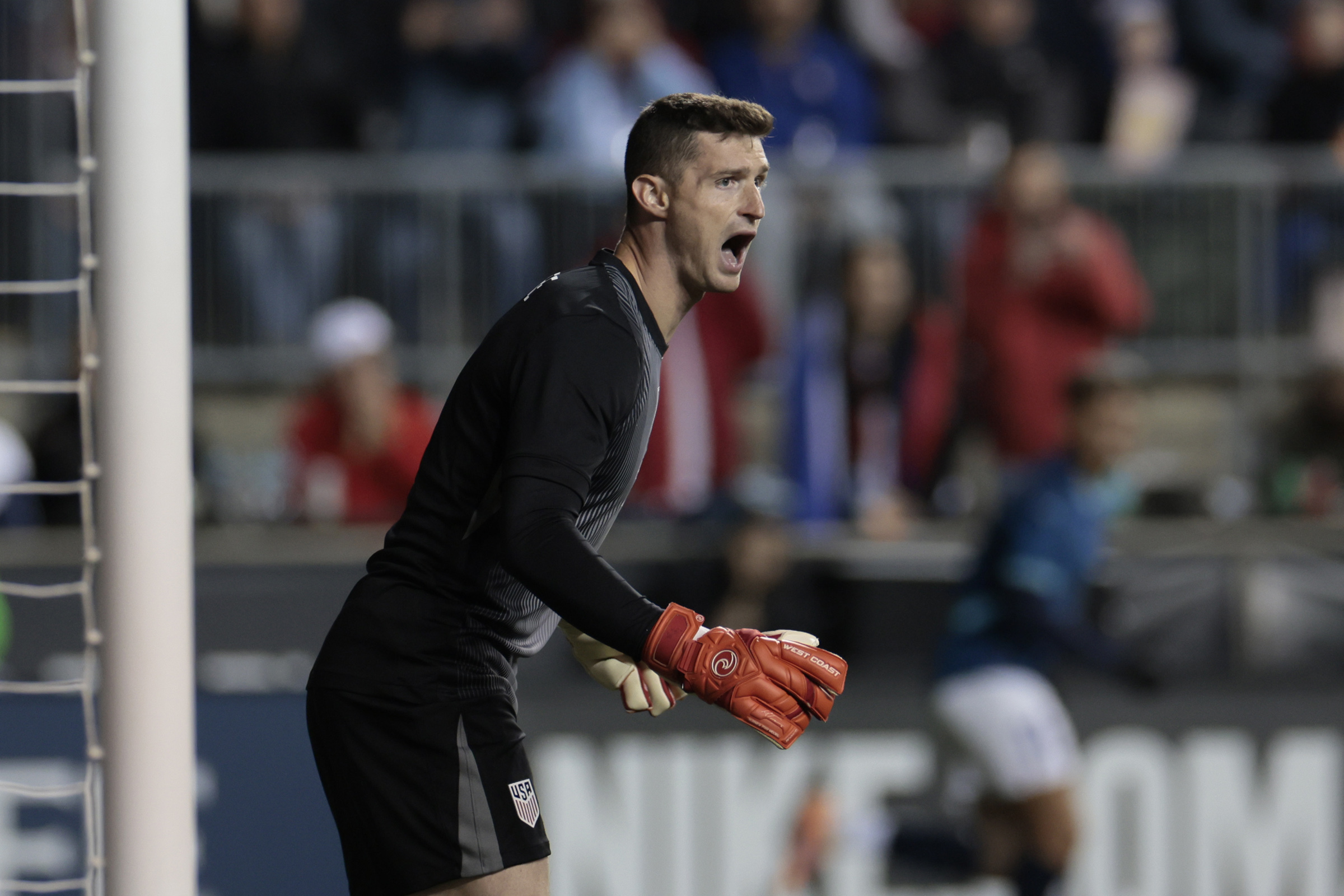
Number: 24 Age: 27 Club: New York City FC Hometown: Wayne, Pa. Height and weight: 6-3, 194 Caps: 15
His rise through Harvard, the Union, New York FC, and now the national team might be the most underappreciated story of this U.S. squad. Freese made his senior U.S. debut last summer and immediately became Pochettino’s No. 1 netminder. Now, he seems on the cusp of starting at the World Cup, though the manager has repeatedly not committed to naming the starter in advance.
Matt Freese in the U.S. net when the Americans played Paraguay at Subaru Park last November.Elizabeth Robertson / Staff Photographer
Matt Turner
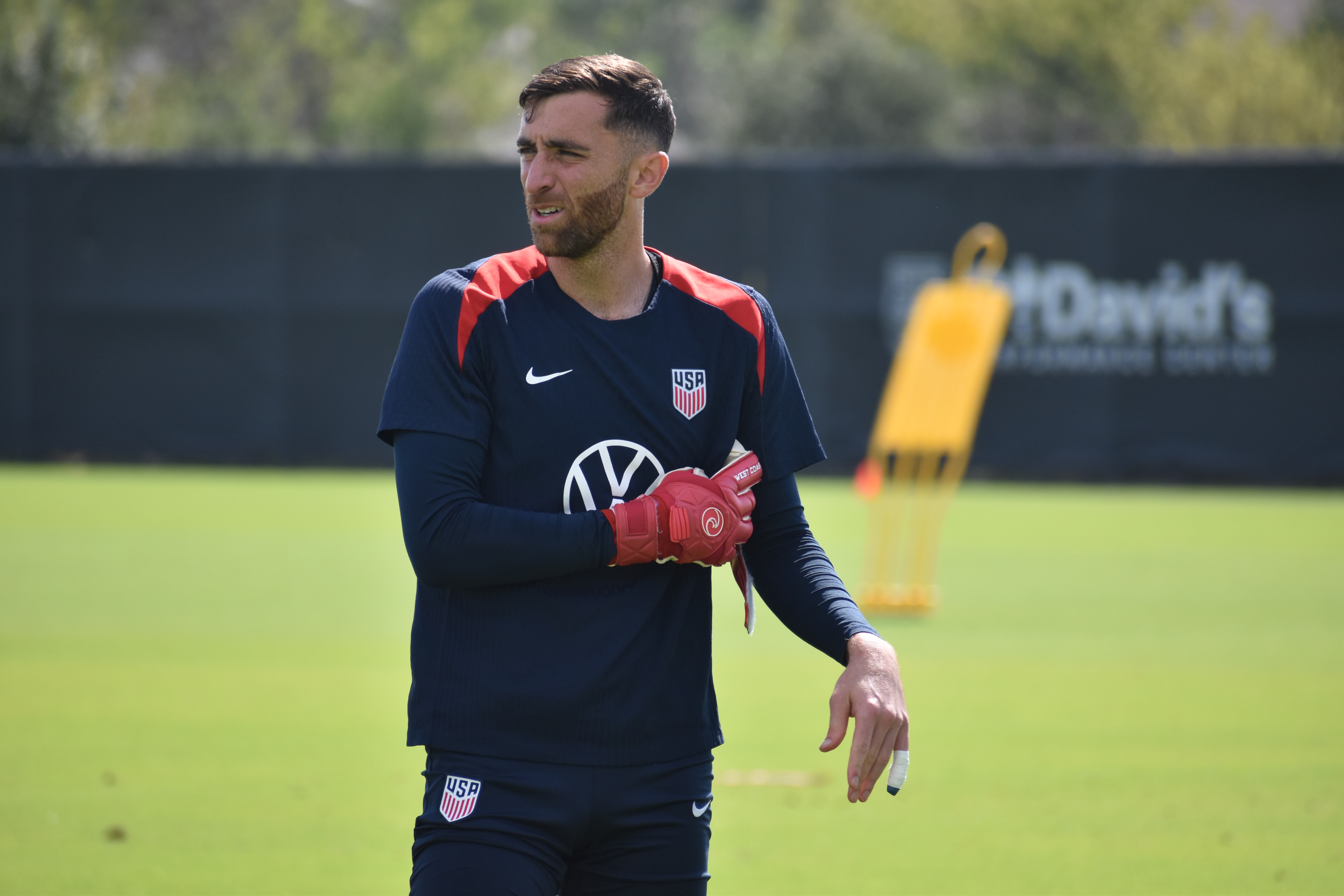
Number: 1 Age: 31 Club: New England Revolution Hometown: Park Ridge, N.J. Height/weight: 6-3, 185 Caps: 54
The starter from the last World Cup until the start of last summer, when the last of a few subpar performances cost him his spot. He’s been better than Freese statistically in MLS this year, but wasn’t as good with the national team in March.
Until a few days ago, we’d have listed him as an outside back who can also play centerback. But he did very well in a more central spot in the two pre-World Cup warmup games. Now, he might take the role again, especially early in the group stage as Chris Richards finishes rehabbing an injury.
Alex Freeman is the son of former Eagles and Packers wide receiver Antonio Freeman.Jonathan Tannenwald
Mark McKenzie
Number: 22 Age: 27 Club: Toulouse, France Hometown: Bear, Del. (though born in the Bronx, N.Y.) Height/weight: 6-0, 183 Caps: 29
Talented, charismatic, humble, and owner of one of the best resumes of any U.S. defender. His path from the Union to Belgium’s Genk to a stalwart of France’s Ligue 1 is the ideal path for a player to follow. Though he’s prone to occasional big mistakes, he also does a lot to make up for them.
Mark McKenzie (center) is one of the best-performing U.S. defenders in Europe.Jonathan Tannenwald
Tim Ream
Number: 13 Age: 38 Club: Charlotte FC Hometown: St. Louis Height/weight: 6-1, 176 Caps: 82
He’s been the captain almost since the start of Pochettino’s tenure in late 2024. Age is catching up to him, but his role in the locker room is unquestioned. If Pochettino sticks with a 3-4-2-1 tactical formation, that will give Ream some cover for having slowed down.
Tim Ream’s experience made him manager Mauricio Pochettino’s choice for captain.Jonathan Tannenwald
Chris Richards
Number: 3 Age: 26 Club: Crystal Palace, England Hometown: Birmingham, Ala. Height/weight: 6-2, 192 Caps: 36
The most irreplaceable player on the back line, his absence from the warmup games due to torn ankle ligaments was crystal clear. He seems close to returning to action, but until he’s officially on the field, U.S. fans will be understandably worried.
It may be impolite to say he’s last on the depth chart at this position, but it’s true — and his performances in the warmup games didn’t help his case to change that. Facing Kai Havertz and Nicolas Jackson is a different level from MLS. If Robinson was picked as insurance against Richards having to withdraw, that’s understandable, but he was Pochettino’s most-criticized choice.
Eleven years ago, he was a fast-rising prospect in the Union and U.S. youth ranks. Only now, though, all this time and five clubs later, has he finally made it to the biggest stage. He still cherishes his Philly area roots, serving on the Union academy’s board.
He’s better as a left wingback in a 3-4-2-1 than as a left back in a 4-2-3-1, especially on defense. Other than that, he was an easy choice to be Antonee Robinson’s backup on that side of the field.
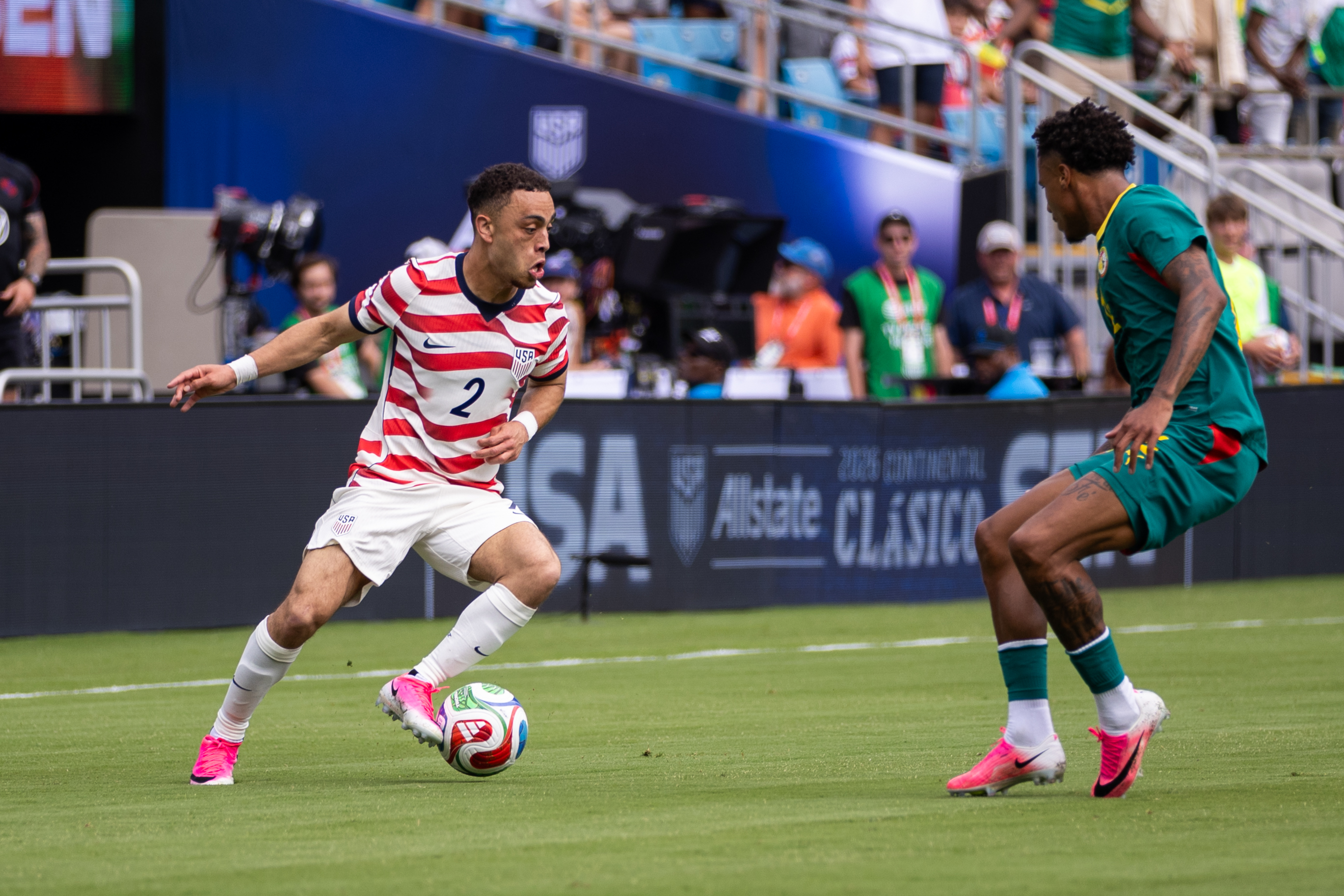
Simply put, a special talent. He’s a havoc-wreaking talent on the right flank, and can pitch in on the left if needed. Dest has also improved his defensive game lately. The 3-4-2-1 setup is perfect for unleashing him.
Sergiño Dest (left) is a dynamic force for the U.S. on the flank.Scott Kinser
Antonee Robinson
Number: 5 Age: 28 Club: Fulham, England Hometown: Liverpool, England Height/weight: 6-0, 152 Caps: 54
Not far from Richards on the irreplaceable ranking. Left back has long been the toughest position for the U.S. to find talent at, but Robinson has had it locked down for five years — at least when he’s healthy. He’s a big presence in the locker room, too.
Antonee Robinson is a key player on the field and in the locker room for the U.S.Jonathan Tannenwald
Joe Scally
Number: 23 Age: 23 Club: Borussia Mönchengladbach, Germany Hometown: Lake Grove, N.Y. Height/weight: 6-0, 174 Caps: 26
For a while, it seemed he wouldn’t make the cut, with Dest and Freeman ahead of him at right wingback. Then he did enough at club level down the stretch of the Bundesliga season to earn the call. It also helps that he can also step in at centerback or defensive midfielder if needed.
He’s officially listed on the roster as a forward, but could play attacking midfield or wingback — and he’s done all three over time. The last of them feels likely in a 3-4-2-1 setup, so that’s why he’s listed here for now. If Pochettino switches to a 4-2-3-1, Weah’s best fit is as a winger instead of an isolated right back. But while that’s for arguing over, his talent, creativity, and pedigree are unquestioned.
Tim Weah (left) is the son of Liberian soccer legend George Weah, but has now carved out his own career in the world’s game.Jonathan Tannenwald
Central/defensive midfielders
Tyler Adams
Number: 4 Age: 27 Club: Bournemouth, England Hometown: Wappingers Falls, N.Y. Height/weight: 5-9, 159 Caps: 54
No longer the official captain, but the unofficial one for years. On the field, on camera, and in the locker room, the U.S. doesn’t have a better leader. Unfortunately, as we’re about to get into, a lack of depth at this position puts him in a tricky spot. Can he avoid yellow cards in the first two games so he isn’t suspended for the big finale against Turkey’s stars?
Although Tyler Adams (left) isn’t officially the U.S. captain anymore, he remains one of the team’s biggest leaders.Jonathan Tannenwald
Sebastian Berhalter
Number: 14 Age: 25 Club: Vancouver Whitecaps Hometown: Columbus, Ohio (born in London, England) Height/weight: 5-9, 154 Caps: 13
He’s another unlikely success story, but the son of former U.S. manager Gregg Berhalter earned his spot. Sebastian helped the Vancouver Whitecaps reach last year’s MLS Cup and Concacaf Champions Cup finals, and with the national team combines hard work with great skill at set pieces. In fact, he might be the best at them on the roster. Could that earn him a starting spot next to Adams?
The veteran was so far out of Pochettino’s picture that he went on vacation at the start of the September FIFA window. Then the manager suddenly needed him, and Roldan answered the call. It immediately felt like he’d never left, and he hasn’t left since then.
It isn’t his fault that this is the end of the depth chart. Will Pochettino regret not bringing Tanner Tessmann or Aidan Morris, both of whose talents merited inclusion? World Cups have a habit of nailing managers on the biggest risk they take. Jürgen Klinsmann learned it the hard way by leaving Landon Donovan home in 2014, and Gregg Berhalter bet a lot on benching Gio Reyna in 2022.
Cristian Roldan (center) has been a familiar face to U.S. fans for years.Jonathan Tannenwald
Attacking midfielders
Brenden Aaronson
Number: 11 Age: 25 Club: Leeds United, England Hometown: Medford, N.J. Height/weight: 5-10, 150 Caps: 58
Making his second straight World Cup team makes him the standard-bearer for Philadelphia on soccer’s global stage. So does earning a stalwart role at one of England’s most historic clubs, even if the first priority has been just staying in the Premier League. He’s happy to embrace being a role model for everyone back home, and now has the added emotional boost of a new wedding ring.
He’s a near-lock as a starter, but where will he play? The obvious answer of on the field can’t be enough. Will he be an attacking midfielder, the role he probably fits best, but potentially exposing the lack of depth behind him? Or will Pochettino slot McKennie next to Adams to try to get another playmaker on the field, and hope it doesn’t unbalance things?
He isn’t officially Captain America, but he knows better than anyone that that’s his unofficial designation. It took much of his decade-long national team career to become comfortable in that spotlight, and it still doesn’t always fit him easily. But he also knows better than anyone that if he delivers when it counts at the World Cup, he can carry his country to greatness.
Christian Pulisic remains the biggest star on the U.S. men’s team.Jonathan Tannenwald
Gio Reyna
Number: 7 Age: 23 Club: Borussia Mönchengladbach, Germany Hometown: Bedford, N.Y. (born in Sunderland, England) Height/weight: 6-1, 174 Caps: 38
For all his talent — and it’s up there with Pulisic — he only just did enough for club and country to make this squad. If he comes off the bench as expected, he might not have much time in games to make an impact. There will be real pressure to deliver.
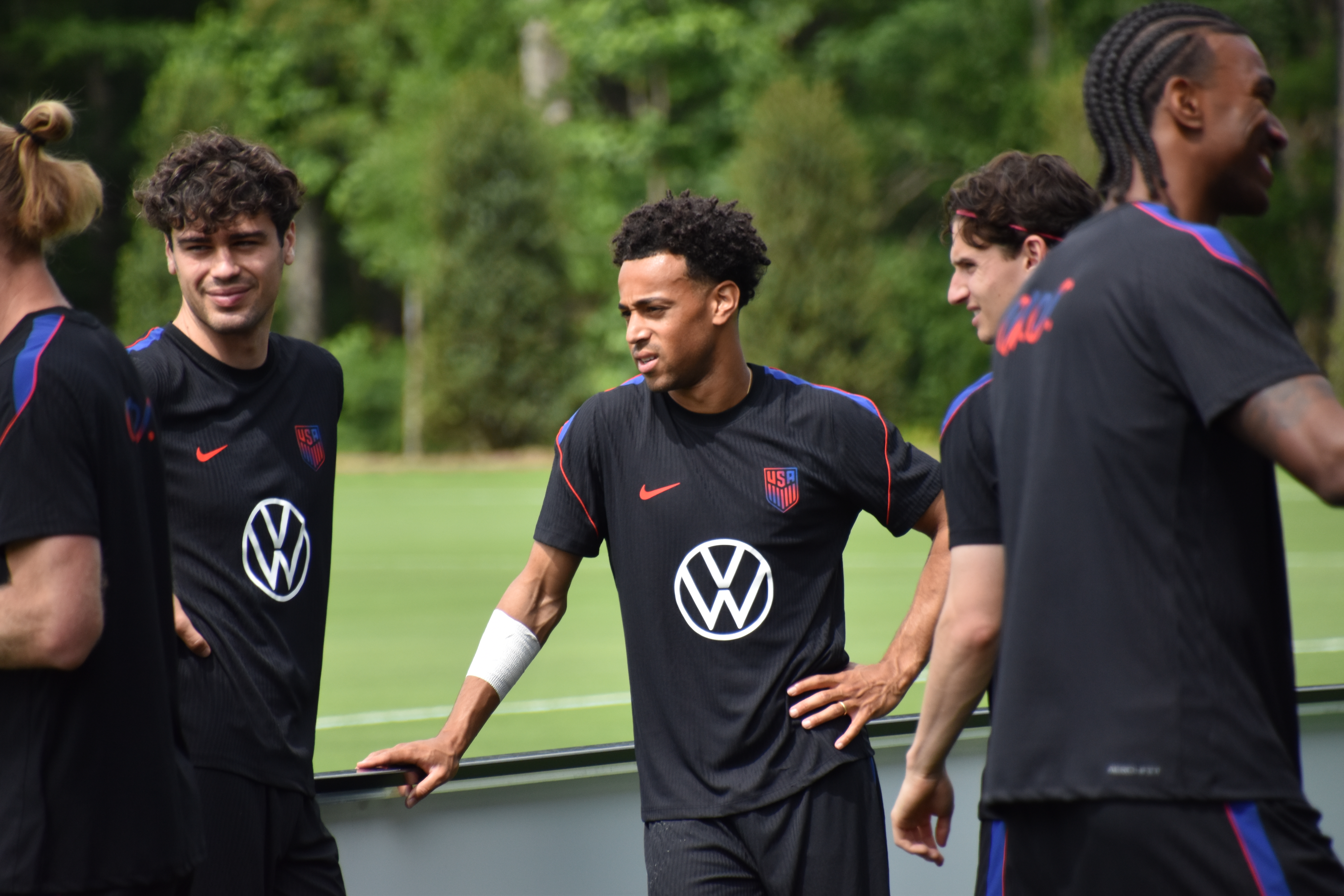
His raw talent isn’t in question. Whether he can show it at a World Cup might be. Pochettino clearly likes Tillman, giving him lots of playing time. But things don’t always work right when he and McKennie are on the field. If Berhalter goes next to Adams and McKennie starts, Tillman might be relegated to a supersub — and have to compete with all the other candidates for minutes.
Malik Tillman has a lot of skill, but we’ll see how he shows it in the World Cup.Jonathan Tannenwald
Alejandro Zendejas
Number: 26 Age: 28 Club: Club América, Mexico Hometown: Juárez, Mexico and El Paso, Texas Height/weight: 5-6, 146 Caps: 14
He gets two hometowns because he grew up on both sides of the border, carrying the dreams of being a child of immigrants. The world’s game opened doors, and he charged through them from FC Dallas’ youth academy to Mexico’s Club America. Add a mix of skill and graft on the field, and you get a popular pick for this team.
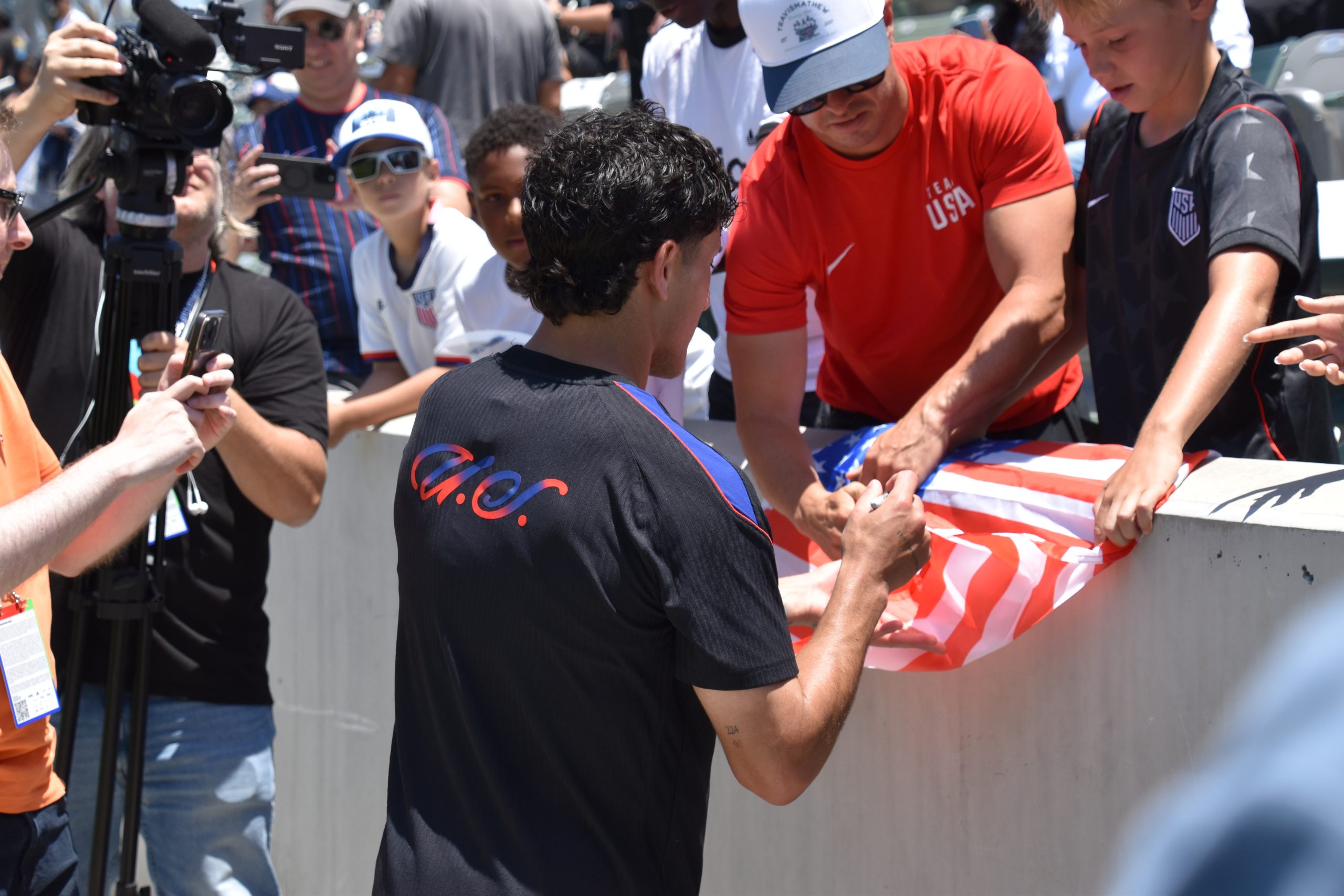
Alejandro Zendejas autographing a fan’s American flag during the U.S. team’s open practice a few days ago.Jonathan Tannenawld
Forwards
Folarin Balogun
Number: 20 Age: 24 Club: AS Monaco, France Hometown: London, England Height/weight: 5-10, 161 Caps: 27
He was recruited in 2023 with all the pomp of a college football team chasing a star quarterback. Though injuries since then limited his appearances, he has shown overall why U.S. Soccer was right to push for him. Now the biggest payoff moment of all has arrived.
The last and most controversial cut from the 2022 World Cup team, he has finally made it four years later. He put in a terrific amount of work in that time, including having to overcome a move from FC Dallas to Germany’s Augsburg that didn’t work out. But he was always strong with the national team, scoring big goals and hustling all over the field. Like Zendejas, a lot of U.S. fans will root for him in particular.
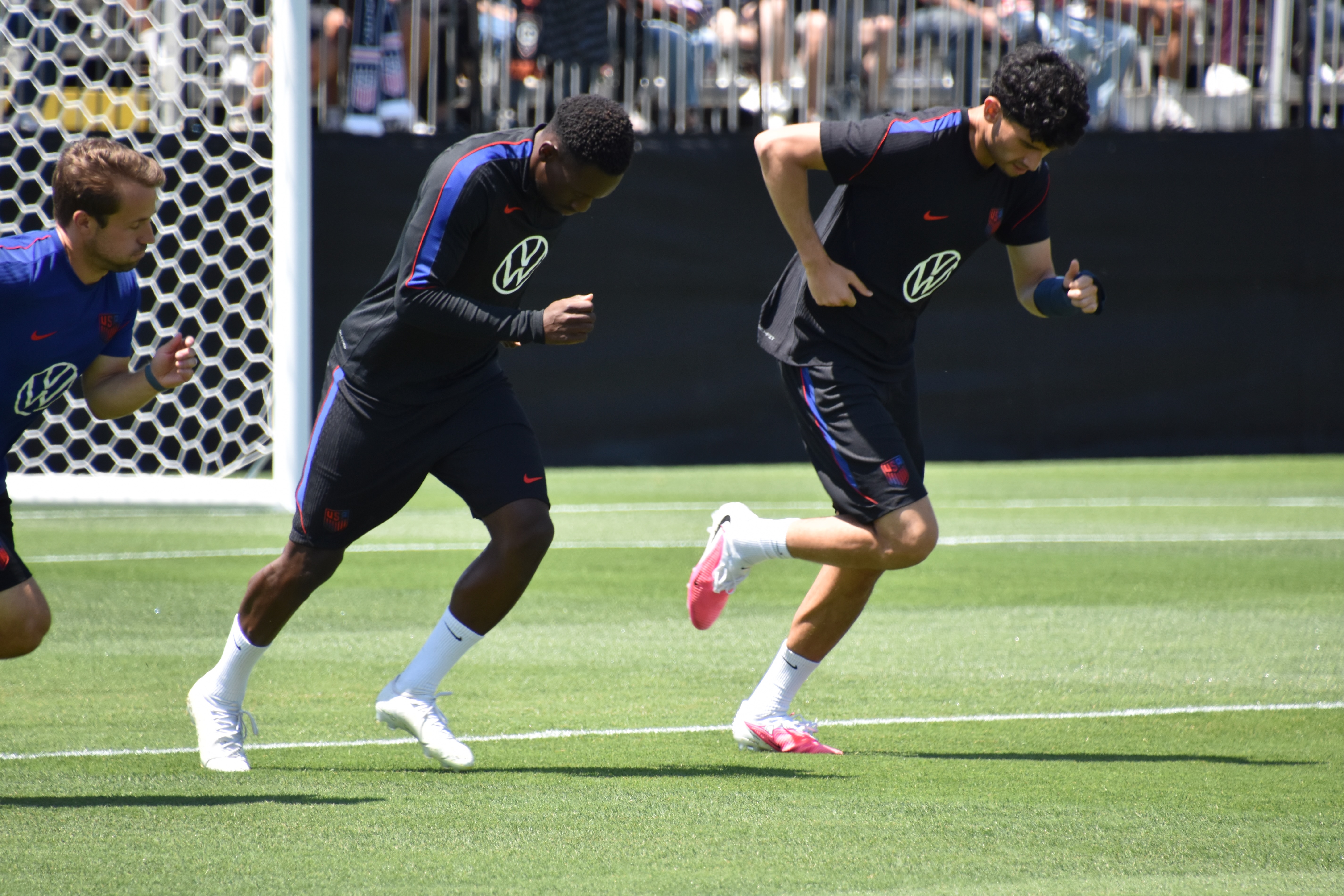
Ricardo Pepi (right) and Folarin Balogun (left) running together during a U.S. practice.Jonathan Tannenawld
Haji Wright
Number: 19 Age: 28 Club: Coventry City, England Hometown: Los Angeles Height/weight: 6-3, 174 Caps: 20
The last player to score a goal for the U.S. men at a World Cup, and the first formally listed as a striker to do so in 20 years. At club level, he was a key player for Coventry this season to help the Sky Blues earn promotion back to the Premier League after 25 years in lower leagues. Though he’s third on this U.S. depth chart, his size and speed should ensure he gets on the field.
The ‘Nova Knicks, all heart and grit and chilling composure, completed the greatest comeback in NBA Finals history, erasing a 29-point second-quarter deficit to take a one-point lead on a floater by — who else — indomitable point guard Brunson with 1 minute, 22 seconds left to play. With 1.2 seconds remaining, trailing by one, OG Anunoby tipped in Brunson’s missed three-pointer.
It was Brunson’s 36th point. It was Anunoby’s 33rd.
It was a 107-106 win over the Spurs, forever enshrined as the NBA’s biggest chokers. The Knicks know all about that.
However, they now stand 48 minutes away from ending a 53-year drought. Only one NBA team has blown a 3-1 lead in the Finals, and those 2016 Golden State Warriors faced prime Kyrie Irving and LeBron James in his prodigal return to Cleveland.
This was a momentum win. A historic win. A fairy tale win that carved the hearts out of a team with far better players but with far less backbone.
It was a last-second, never-say-die win in the Mecca of basketball, Madison Square Garden, accomplished in front of stars ranging from Jerry Seinfeld to Jay-Z to Taylor Swift to Timothée Chalamet.
A win delivered by divine intervention, perhaps; after all, a nun blessed the Garden with holy water after the Game 3 loss, and Villanova is a Catholic university, after all.
OK, it might not have been miraculous, or even sacral, but it’s probably the best win in the history of the franchise. The kind of win that 19,812 attended but 1.9 million will claim to have witnessed in the flesh.
It was that epic.
It was the sort of statement game that gets a number retired, hung from the rafters in the Garden alongside Walt Frazier and Bill Bradley and Patrick Ewing and Willis Reed. A number like the No. 11 that Brunson wears. He carried the Knicks all season, all playoffs, and all night.
He was drafted 33rd in 2018 having won two NCAA titles at Villanova, both with Knicks teammate Mikal Bridges, one with Knicks teammate Josh Hart. Asked recently what the NBA teams missed that draft, Brunson replied:
“Everything.” He looked down. “Humph.”
Bridges was largely absent Wednesday, and Hart actually missed a dunk and failed to box out on a play that gave the Spurs their last lead, but that’s hoop. They just hoop.
All three have overachieved, but no one has overachieved in the NBA like Brunson in decades.
Maybe ever.
He’s 6-foot-1-ish. He can’t jump. He’s not super fast.
But he is everything that New York loves about itself, and everything Villanova was in the Jay Wright era.
The Coach was there, by the way. Brunson, towel over his shoulders, found him on the court after the game. They hugged.
As they were in Finneran Pavilion and what’s now called Xfinity Mobile Arena and all those NCAA tourney sites, the ‘Nova Knicks were indefatigable. Relentless. Resilient.
The opposite of San Antonio.
The Spurs were probably the most talented team in the NBA this season, and for 24 minutes, the played like it. They also are the second-youngest team in NBA Finals history, and, for the final 24 minutes of Game 4, they played like it.
What was the game like? It was like the Patriots, nine years ago, in Super Bowl LI, when Tom Brady erased a 25-point deficit. That’s the only thing that comes close.
Jalen Brunson.
Tom Brady.
Seriously.
If Brady had done it in Foxborough, Mass., in front of a home crowd that hadn’t won a title since Richard Nixon was president.
Just before his game-winning putback, Anunoby blocked a layup that, with 11 seconds to play and a one-point lead, De’Aaron Fox inexplicably and inexcusably took, so he will get more shone today. Fine. Let him have his moment.
This is Brunson’s team. These are the ‘Nova Knicks.
The ‘Nova Knicks lead the best-of-seven series, 3-1.
It feels like 5-1.
“One word that captures that all is just ‘believe,’” Brunson told ESPN afterward. “Just believing in each other. Believing in the process.”
It felt impossible early, especially considering the officiating in the series, and the signature play so far, which, of course, involved Brunson.
The play happened in the first quarter of Game 3 on Monday, which the Knicks lost by four points, and it was seismic at the time and it is seismic today. It was a no-call on Victor Wembanyama that the NBA reviewed to determine if it was flagrant. It was not.
Had the foul been deemed a Flagrant 2, it would have been Wembanyama’s second of the playoffs. Flagrant 2 fouls carry two flagrant points. Four total flagrant points carry an automatic one-game suspension.
The NBA simply could not have that. Wemby’s just too important.
Why does that matter now, several days later?
Because in Game 4 on Wednesday, Wembanyama was assessed a Flagrant 1 when he cracked Karl-Anthony Towns in the jaw with an elbow.
That gave him three flagrant points. Which means had the foul Monday been deemed a Flagrant 1, Wembanyama would have been disqualified for Game 5 on Saturday.
Again: He’s too important.
Towns? Not so much.
Within the first 62 seconds on Wednesday, KAT, who carried the Knicks in Games 1 and 2, was on the bench with two questionable fouls. Less than two minutes later, the Knicks trailed, 12-2.
It changed the complexion of the game, the series … everything.
The series is pulling crazy ratings thanks in part to the Big Apple’s Big Three, but Brunson, Hart, and Bridges operate on a thin margin for error. To beat a team like the Spurs, who won nine more regular-season games than the Knicks, they need Towns on the court and on his game.
He picked up his third foul less than five minutes into the second quarter, another phantom infraction considering the physicality of these Finals.
The Wemby Show, the NBA’s most wholesome narrative since Steph Curry, continues, even though he missed two late throws.
Wembanyama finished third in MVP voting in his just his third season. An elegant Frenchman of Congolese descent with the comportment and habits of a Renaissance man — he plays competitive chess and sketches in the park — Wembanyama is the NBA’s best vehicle for basketball globalization since Joel Embiid. That one hasn’t really worked out.
At the time of Wemby-Gate, the Knicks led the series, 2-0. A bit later, at halftime of Game 3, the Knicks led the game by seven.
And then … the Spurs were awarded 16 more free throws than were the Knicks in the second half of Game 3. Afterward, when asked about the altercation, Brunson replied, “Whatever you saw is what you saw.”
The refs saw nothing in real time. The NBA saw a catastrophe if Wembanyama missed Game 4. He’d scored 32 in Game 3, and even with all that free-throw help, the Spurs still barely won.
He missed two free throws late Wednesday. Karma.
Then, that horrid first half for the home team. If it seemed like everything was going against the Knicks, well, it was.
After a tragic and unprecedented spike in officer deaths, Philadelphia’s police union made an emotional plea for help: Its charitable organization was running low on funds and struggling to give fallen officers the respectful burials they deserved.
City officials stepped up, agreeing in 2014 to significantly boost how much they would pay to cover funeral expenses. Since then, for each officer who died in the line of duty, the city has contributed up to $75,000 in tax dollars, up from $15,000.
But an Inquirer investigation found that the Fraternal Order of Police Lodge 5 has billed the city for an array of expenses that are far outside the scope of funeral home and cemetery costs. The union has asked to be reimbursed tens of thousands of dollars for bar and restaurant tabs, alcohol, catering costs, car repairs, carpet and upholstery cleaning, socks and underwear, garbage bags, and paper towels.
The FOP has submitted receipts from businesses such as Target, Home Depot, Walmart, Acme, 7-Eleven, and CVS that include no explanation for why they qualify as funeral expenses.
The union has also forwarded monthly statements of corporate credit cards held by various members of the FOP leadership team, circling bill totals mostly for restaurants, bars, and beer stores. Other reimbursement requests lack any receipt or itemized breakdown, or are simply requests for cash, making it practically impossible to judge their merits at face value.
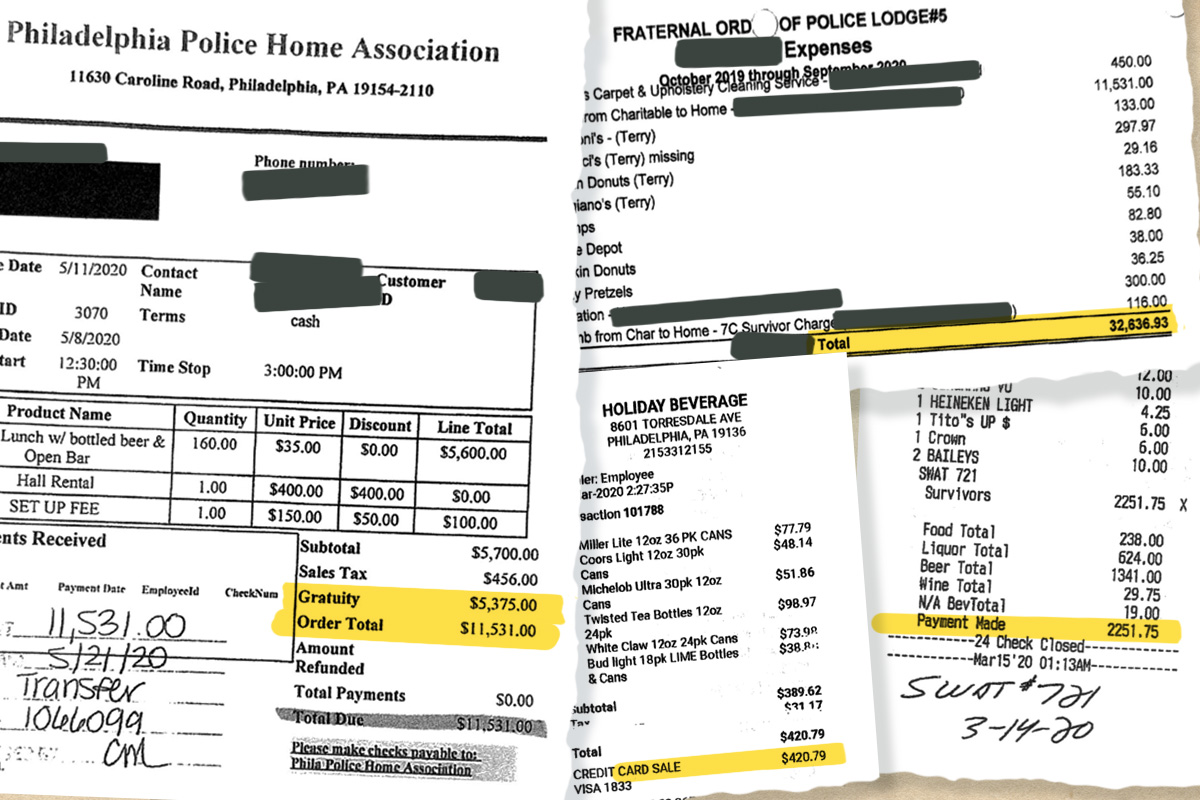
Records show the FOP has billed the city for food and alcohol for at least eight events at its own bar, 7C Lounge, located within the union’s 50,000-square-foot headquarters in Northeast Philadelphia.
One of the 7C events resulted in a $5,700 bill, plus an additional $5,375 for a “gratuity.”
And in one handwritten memo, an FOP official asked the city to reimburse the union $3,500 in cash for a survivor’s family, with no explanation except that it was “per John McNesby,” then the FOP’s president.
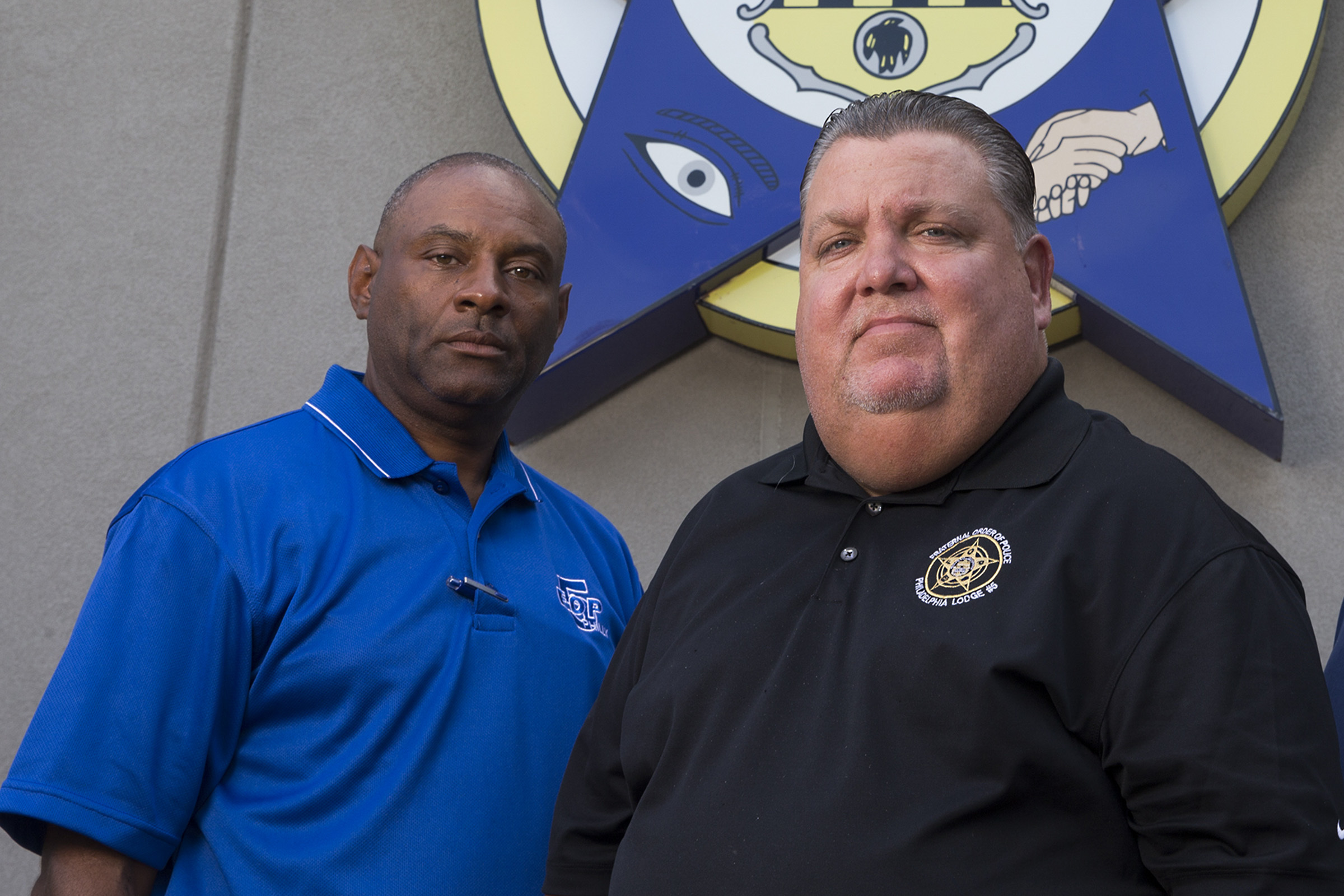
Current FOP president Roosevelt Poplar and McNesby, who served as the union’s president for 16 years before stepping down in 2023, did not respond to requests for comment.
FOP Lodge 5 President Roosevelt Poplar, left, in a portrait next to John McNesby, right, who at the time led the union on Sept. 4, 2019.Charles Fox / Staff Photographer
The city’s $75,000 contributions for officer funeral expenses, which have not been previously reported, prompt new questions about the FOP’s Survivors’ Fund, the union’s charitable organization that raises money to pay for funerals and support the families of officers who were killed or seriously injured in the line of duty.
A 2025 Inquirer investigation found that the FOP reported spending hundreds of thousands of dollars on “funerals and special events” in years when no officers died in the line of duty, and that its expenditures and cash donations had been loosely documented and were difficult to track.
The Inquirer sought further insight by examining more than 1,000 pages of invoices, bills, emails, and other documents obtained in Right-to-Know requests for public records concerning 17 police line-of-duty deaths since 2014. Eight of the deaths were attributed to COVID-19.
The FOP publicly criticized The Inquirer for requesting the records.
The city’s risk management team is primarily responsible for deciding which costs the city should reimburse. A third-party administrator, with expertise in workers’ compensation laws, offers guidance.
Emails, memos, and copies of checks show the city has covered the bulk of the FOP’s requests, although in almost every case, the city’s documents do not indicate which specific reimbursement requests were approved. An FOP request for $1,870 to cover two bar tabs and pipes and drums after a dinner is the only explicit denial in the records.
Mayor Cherelle L. Parker and Sharolyn Murphy, the city’s risk manager, declined to be interviewed.
The Inquirer sent Murphy and Parker’s office a list of the FOP’s expenses that did not appear to be directly related to funeral costs. In an email response, Murphy said that the city did not reimburse the FOP for the 7C event with the $5,375 gratuity and that the city does not reimburse for alcohol. She did not include explanations for the other expenses.
Barry Scott, who headed risk management for 21 years before retiring in 2024, said the city would deny beer runs and State Store bills, but would approve restaurant bills if they appeared to be tied to a funeral.
“Frequently the bills were not specific enough that it was difficult to discern whether or not there was alcohol involved,” he said. “We tried to make the best decision that we could with regard to how we approached the particular bill and the funeral-relatedness of the expense. Where we did not feel we had sufficient justification or documentation in order to make a determination, we would not pay the bill.”
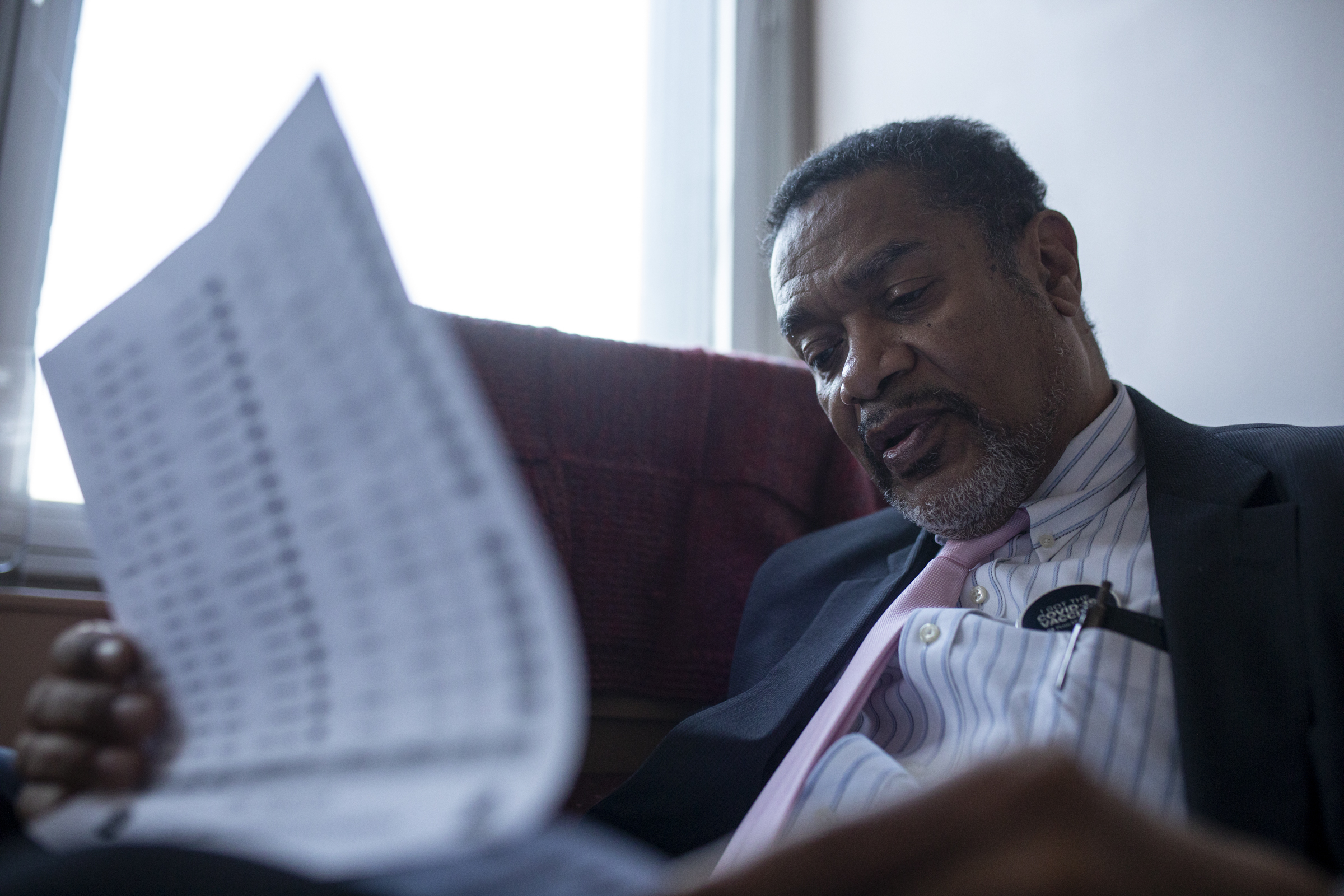
Barry Scott, the city’s risk manager for 21 years until retiring in 2024, in his office in November 2021.Tyger Williams / Staff Photographer
Scott acknowledged that once the city increased its maximum contribution, the FOP started asking for more and more expenses to be reimbursed.
“It’s hard to know exactly what happened and why we saw such a precipitous increase in invoices from the FOP,” he said. “But the sharp increase to $75,000 did leave an opportunity for it to be abused.”
Separate from the city’s contribution, the FOP’s Survivors’ Fund raises money by hosting benefits, often at the 7C Lounge, in which it charges around $45 a person in cash at the door for food, soda, and beer. Most attendees donate money, participate in raffles or auctions, or buy memorial T-shirts.
McNesby has previously described himself as the “Santa Claus” of the Survivors’ Fund, which exists not just to pay for funerals but also for when “families request help with their houses, or issues with their cars,” he told The Inquirer in 2023.
Meanwhile, the FOP’s arrangement with the city does not appear to be widely understood, and rank-and-file cops may assume that the Survivors’ Fund takes care of funerals and assorted costs for families of officers killed in the line of duty.
The Inquirer interviewed a dozen active and retired police officers about the city’s financial contribution in the wake of an officer’s death, and all said they did not know the city was paying as much as $75,000. Half said they believed the city covers some of the funeral costs, while the FOP pays for luncheons and bar tabs. The other six said they had no idea the city contributed anything.
“It was always my understanding that the FOP, through its Survivors’ Fund, paid for any and all funeral expenses for an officer killed in the line of duty,” said a retired veteran with more than 30 years on the job, who was granted anonymity in order to speak openly.
“The fact that the fund deals in cash and is untraceable is extremely disturbing,” the retired officer added. “There is no accounting of any kind as to how these funds are distributed.”
‘Public money requires public eyes’
The FOP’s contract with the city calls for the union to be reimbursed for “reasonable and necessary funeral expenses.”
There is no clarification on what would qualify under either standard, and it does not explain how reimbursement requests will be processed. The records the city provided seem to reflect a haphazard system in which the FOP submits incomplete expenses to the Philadelphia Office of Risk Management and then follows up by email several times to ask when payment could be expected.
Murphy wrote that although there is not a list of allowed expenses, the city typically will not cover luxury caskets, large floral arrangements, catering or reception costs, and travel expenses for family members.
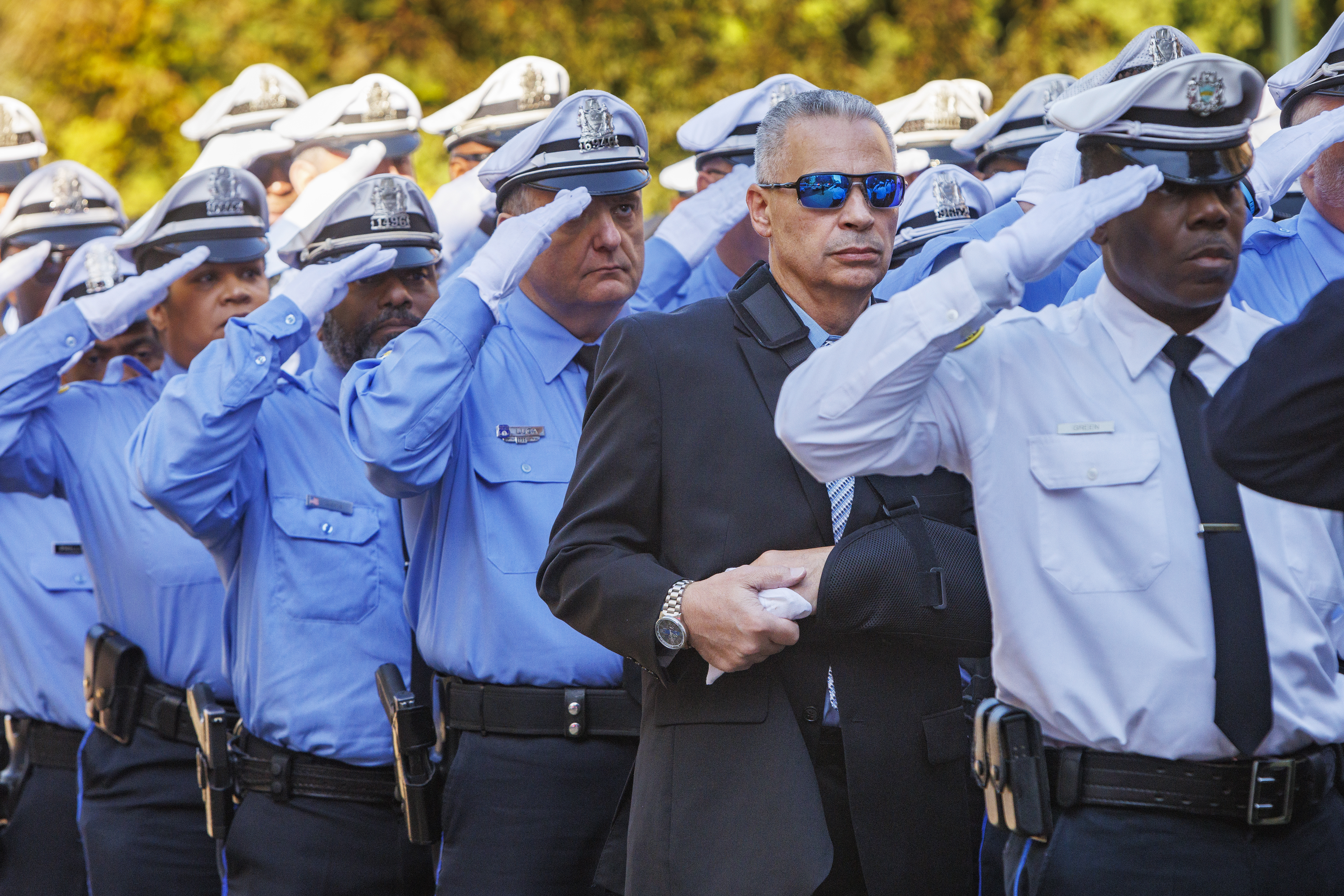
Officer Raul Ortiz, in suit, was with Officer Richard Mendez when Mendez was fatally shot at Philadelphia International Airport while attempting to stop a car theft. Ortiz was shot in the arm. The funeral for Mendez was held on October 24, 2023.Alejandro A. Alvarez / Staff Photographer
Experts say both the FOP and the city should have clear policies for which expenses are considered funeral-related, what documentation is required, and who should have authority to approve reimbursements.
“Public money requires public eyes,” said Andrew McGinley, vice president of policy for the Committee of Seventy, a civic leadership organization that works to promote effective and ethical government. “We want the union to be able to support families who are grieving and provide whatever support they can in this horrible, tragic circumstance. But that doesn’t mean we shouldn’t also make sure that the public money spent is accountable and appropriate.”
McGinley suggested the city’s controller’s office or City Council require proper recordkeeping. “As stewards of public dollars, we have to be able to ensure that the money is being spent for things that it’s allocated for, and right now it doesn’t sound like we’re able to track it.”
Joseph H. Thompson, a former federal prosecutor who served as acting U.S. attorney for the district of Minnesota until 2025, said tax dollars require transparency and extra scrutiny, particularly when public confidence is strained.
“Those entrusted with public resources, especially in law enforcement, must remain above not only impropriety, but even the appearance of it,” he said.
The money that the FOP receives from the city is not required to be itemized — or even mentioned — in federal tax filings, making it even more difficult to reconcile the money moving in and out of the Survivors’ Fund.
For example, Police Officers Richard Mendez and Jaime Roman were shot to death in 2023 and 2024, respectively. The city paid for both funerals, totaling nearly $76,000. The FOP submitted to the city additional expenses of more than $20,000, including a catering bill and two bar tabs, one of which was at 7C Lounge.
But in federal tax documents that cover that time frame, both FOP Lodge 5 and its Survivors’ Fund reported spending a total of $745,000 for funerals, memorials and events, or help for survivors.
In 2024, 10 years after the city bumped its funeral expense contribution for the police to $75,000, the union representing Philadelphia firefighters reached a similar agreement. (There are no reimbursement requests from firefighters because none have died in the line of duty since. But roughly the same number of police officers and firefighters have lost their lives in the line of duty over the last decade.)
Unlike the FOP, the International Association of Fire Fighters, Local 22, does not act as a go-between to handle the city’s money. The Philadelphia Fire Department, not the union, sends the funeral home and cemetery bills to the city’s risk management office, which then reimburses the vendors directly.
The union has previously contributed $5,000 of its own funds to the family of a deceased firefighter to help cover the costs of a memorial reception and meal, according to Tommy McKiernan, Local 22’s first vice president.
Going forward, he said, he would submit that bill to the city so the family did not have to pay out of pocket.
“Our intent is to keep the cost to the family as minimal as possible,” McKiernan said.
Unanswered questions
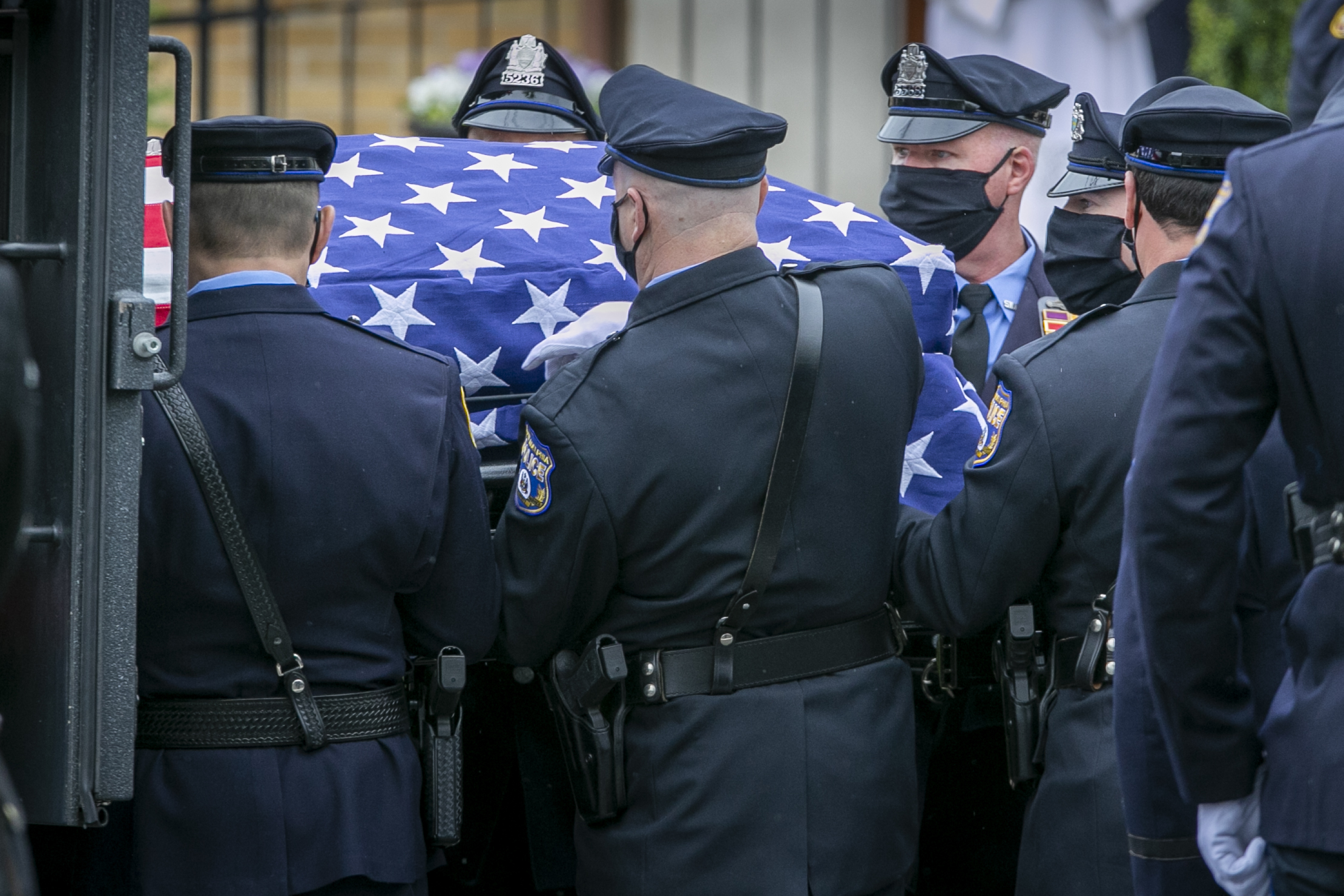
On March 13, 2020, members of the Philadelphia Police Department’s SWAT team climbed a flight of stairs to the second floor of a stash house crammed with guns and drugs on Bridge Street in Frankford to serve a murder warrant.
A gang member fired a semiautomatic assault rifle 16 times through a bedroom door, striking Cpl. James O’Connor IV in the neck and arm.
O’Connor, a 23-year veteran and married father of two, was declared dead at the hospital not long after at the age of 46. It was a tragedy that was amplified due to his family’s multigenerational roots in law enforcement: His father was a police officer, his son is a current officer, and his cousin was a homicide detective. O’Connor was posthumously promoted to sergeant and awarded the department’s Medal of Honor, a Purple Heart, and the Medal of Valor.
Because of the COVID pandemic, his funeral was delayed for eight weeks, and a limited number of people were permitted inside Our Lady of Calvary Church for the memorial. Most mourners had to sit on opposite ends of the pews, and all had to wear masks.
Pallbearers place the body of Cpl. James O’Connor IV in the back of an armored vehicle named after him. The funeral for O’Connor, who was killed in March 2020, was held at Our Lady of Calvary Church in Philadelphia on May 8, 2020. ALEJANDRO A. ALVAREZ / Staff PhotographerAlejandro A. Alvarez / Staff Photographer
“The city has not, and the city will not, forget Cpl. James O’Connor,” then-Mayor Jim Kenney said at the funeral ceremony. “We won’t forget the sacrifices he made, or the sacrifices your family has made.”
The city reimbursed the FOP $30,075 to cover O’Connor’s funeral home and cemetery costs.
But additional requests for money kept coming in, totaling 108 pages.
The city had imposed restrictions on restaurants and bars, limiting them to takeout and delivery service to prevent the spread of COVID. After the funeral, the FOP held a 2½-hour lunch for O’Connor at its own bar.
The FOP billed the city for $5,700 worth of bottled beer, an open bar, and food for 160 people at the 7C Lounge, then added a 94% gratuity, for a total bill of more than $11,500.
The one-page reimbursement document for the luncheon does not include an itemized receipt and describes the terms of the lunch as “cash.” At the bottom of the page is a typed request: “Please make checks payable to: Phila Police Home Association,” the charitable organization that manages the 7C Lounge.
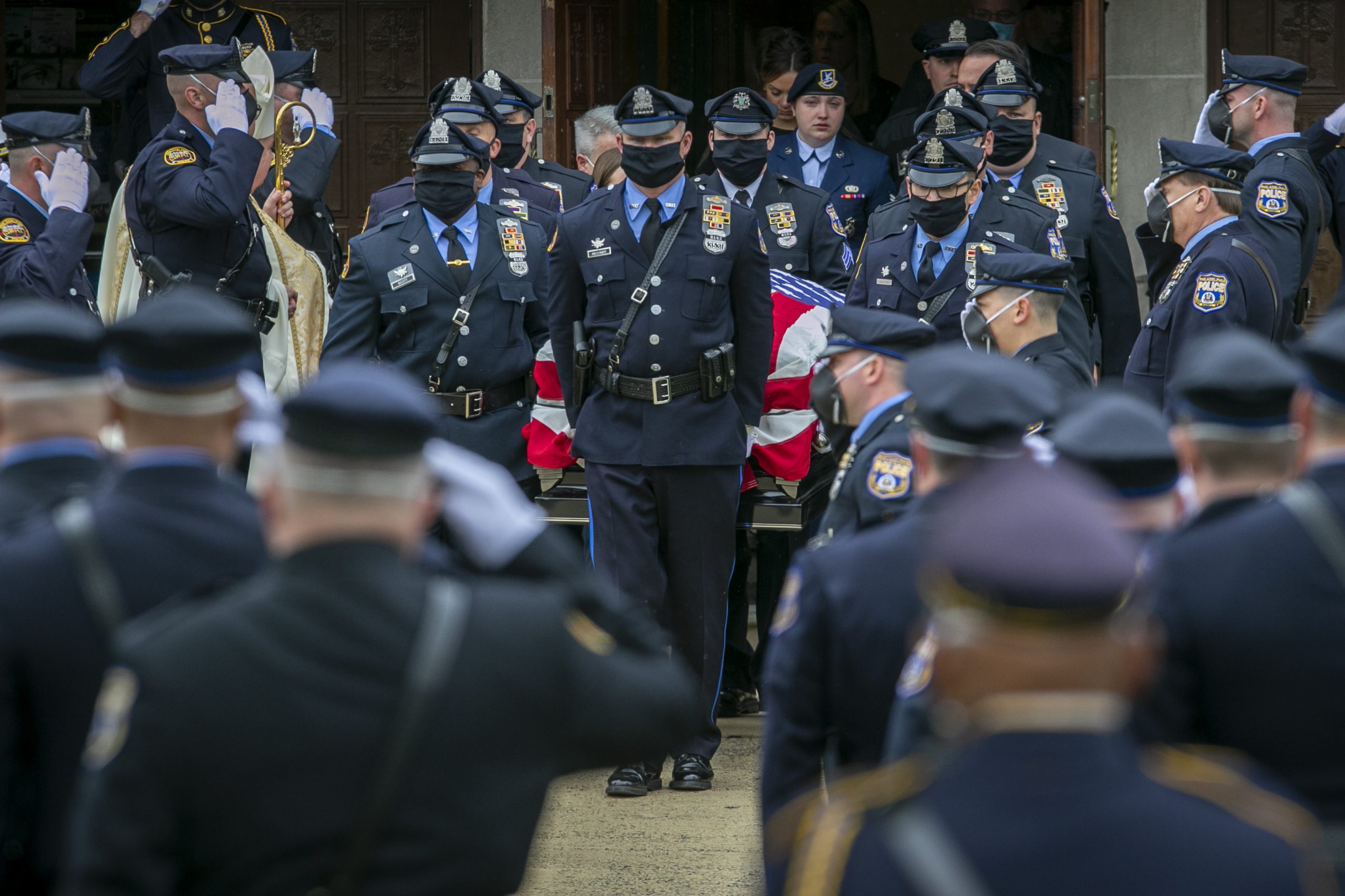
The body of slain Philly Police Cpl. James O’Connor IV leaves Our Lady of Calvary Church in Philadelphia on May 8, 2020. Cpl. O’Connor was killed in the line of duty. ALEJANDRO A. ALVAREZ / Staff PhotographerAlejandro A. Alvarez / Staff Photographer
Although the records do not indicate it, Murphy said the city did not reimburse the FOP for the O’Connor luncheon.
Additional reimbursement requests included more than $1,600 at beer distributors, $450 for carpet and upholstery cleaning, and a $2,375 invoice from Dunphy Ford to make repairs on a F150 truck.
The records also include a handwritten note on FOP pension chairman Michael Shellenberger’s stationary that requests “$3,500 in cash given to Mrs. O’Connor per [then FOP president] John McNesby.” The records include no further explanation.
In July 2020, an FOP treasurer sent then-Deputy Mayor Richard Lazer a $32,600 reimbursement request for “expenses associated with services provided and caring for the O’Connor family during their mourning.” The amount was separate from the previous bill for funeral costs.
The city approved $20,256 of that amount and sent a check to the FOP’s Survivors’ Fund. The documents do not indicate which specific expenses the city approved and denied.
One tragedy after another
Beginning in 2006, Philadelphia police suffered through a brutal three-year stretch.
Seven officers were killed in the line of duty, more than in any other law enforcement agency in the country during that 33-month span. Five were shot to death. The other two were struck and killed by other drivers while in their patrol cars.
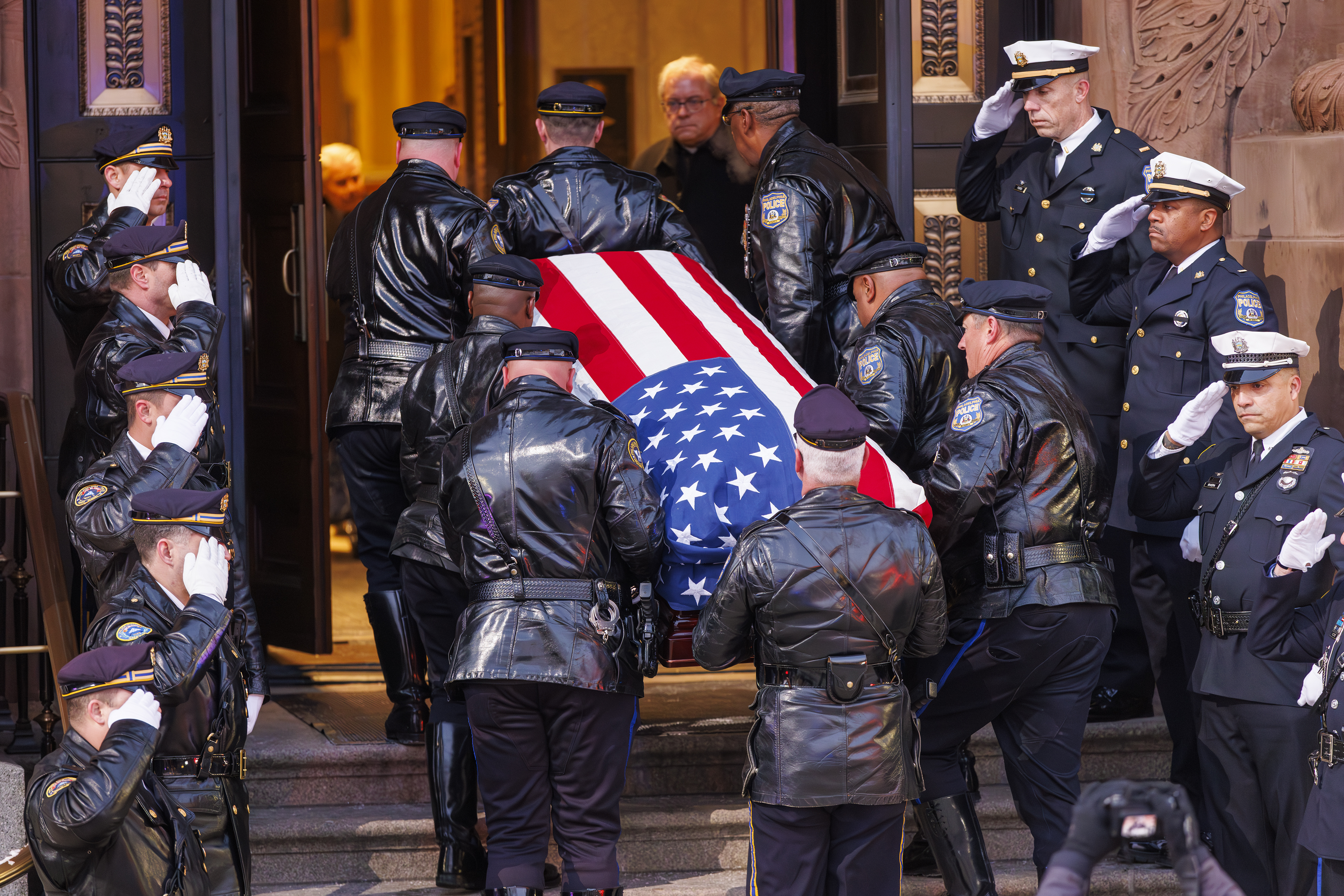
The tragic ritual of honoring fallen officers became too familiar. Hundreds of police officers in dress blues and glossy black shoes, their white-gloved hands raised in salute as the flag-draped coffin is hoisted into the church. Motorcades of blue- and red-flashing squad cars and motorcycles escorted the funeral procession to the cemetery.
At the grave site, Taps is played on a bugle and then “Amazing Grace” on bagpipes. The flag on the coffin is neatly folded and given to the widow. And a police radio calls out the officer’s name and badge number for the last time, acknowledging a job well done.
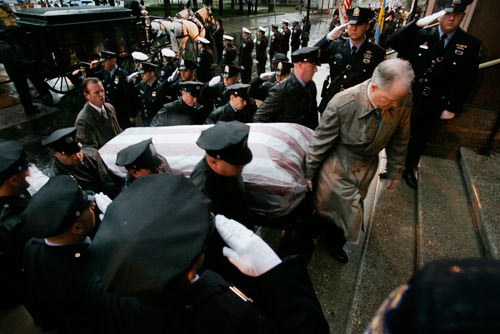
The body of Sgt. Stephen Liczbinski, who was killed in the line of duty, is carried into the Cathedral Basilica of Saints Peter and Paul in Philadelphia on May 9, 2008. Alejandro A. Alvarez / Staff Photographer
The city paid for all seven funerals, totaling almost $200,000, exceeding the $15,000 limit for each at the time, according to city records.
But by 2008, McNesby and other FOP leaders said the Survivors’ Fund was seriously depleted. FOP vice president John McGrody told The Inquirer that the fund may be called on to spend up to $50,000 for each burial, meals for the bereaved, and school expenses for the fallen officer’s children. These expenses can occur even in years when no officer has died.
The spate of fatalities paved the way for the city to honor the FOP’s request for help during contract negotiations. A three-member panel — one person appointed by the city, one by the union, and the other from the American Arbitration Association — agreed to contribute more taxpayer money toward the cost of burying fallen officers, beginning in 2014.
“At that point it was much easier to go into excess just because there was so much money potentially on the table,” Scott said. “But at some point when we reach the $75,000 number, I think we are beyond what is absolutely directly related to the funeral of the officers.”
If Scott and his staffers had questions, their point person at the FOP was Terry Reid, a member of the union’s executive board and its disability coordinator.
Records show she sent the majority of the emails and requests for reimbursement to the city, as well as American Express charges for food establishments ranging from Dunkin’ Donuts to Maggiano’s. A nearly $300 reimbursement request for the restaurant Santucci’s that Reid sent in 2020 includes the notation “missing,” presumably indicating there was no receipt.
In July 2023, McNesby fired Reid when the family of a late police officer alleged that she had borrowed at least $20,000 from the officer’s widow and then ignored the woman’s requests to be repaid.
Reid did not respond to requests for comment.
City officials balk
In most cases, the records are unclear as to which specific items the city denied. A few, however, spell them out.
The FOP sent the city a list of expenses after the death of Mendez, who was a 22-year veteran when he was killed in 2023 while interrupting a car theft at Philadelphia International Airport.
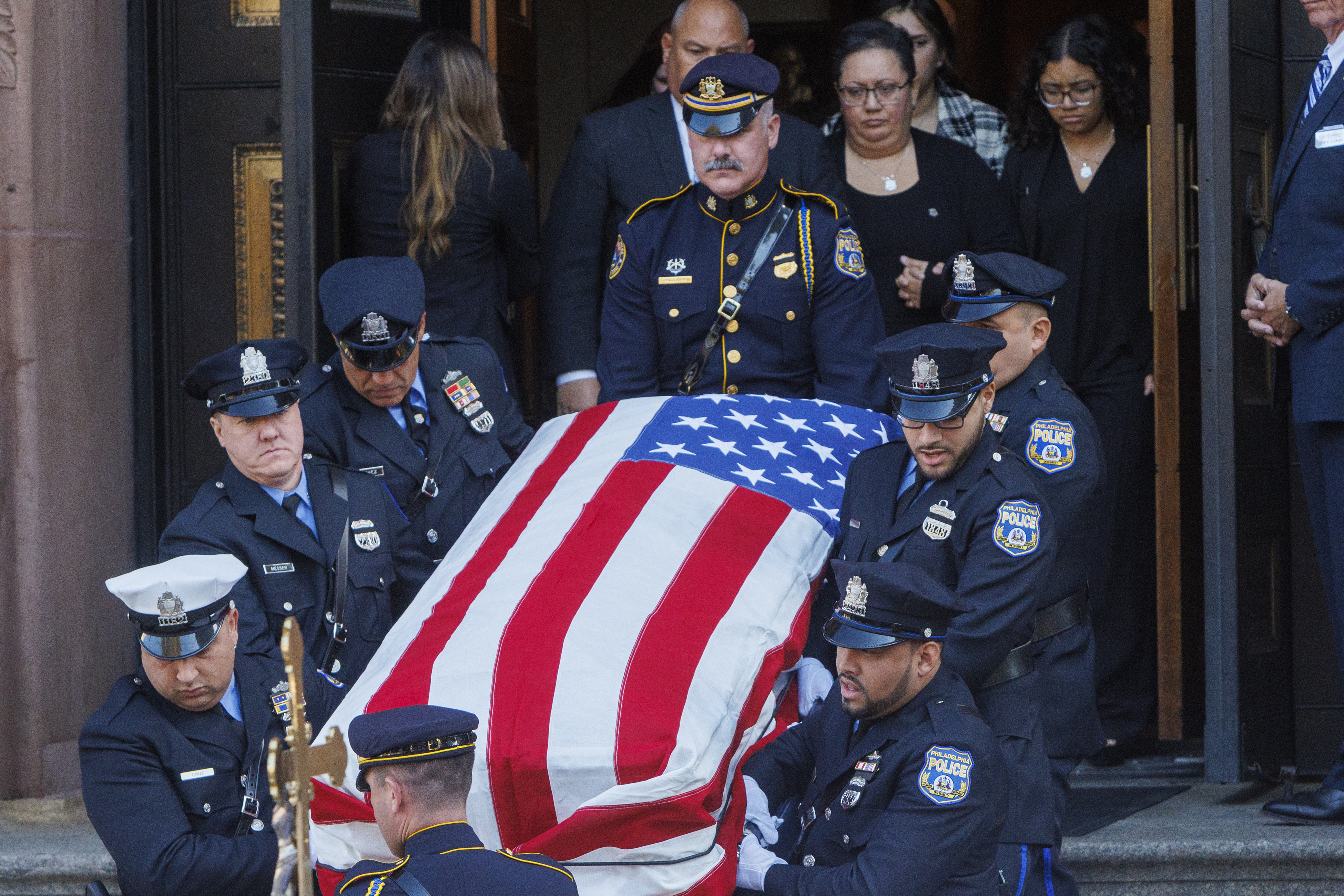
Pallbearers carry the body of Officer Richard Mendez out of the Cathedral Basilica of Saints Peter and Paul on Tuesday, October 24, 2023. Mendez was shot and killed at the Philadelphia Airport.Alejandro A. Alvarez / Staff Photographer
The reimbursement requests were not for the funeral home, which was covered in a separate invoice for $33,576.
The list included payment for two 60-passenger buses, food, catering, ceremonial pipes and drums, two bar tabs, and the cost to detail three cars. The total amount was nearly $21,000.
This time, city officials balked.
In an October 2024 email, Raashida Fleetwood, Philadelphia’s risk management counsel and employee disability manager, wrote to PMA Management Corp, a third-party company the city paid to help manage claims for workers injured or killed, explaining what the city declined.
“Here is the updated expense sheet,” she wrote. “We are not paying for Bar Tab- $667.00, Pipes and Drums after dinner- $839.44 or Bar Tab- $363.60.”
PMA issued a check on behalf of the city to the FOP’s Survivors’ Fund for $18,651, about $1,900 less than what the FOP had requested.
The COVID pandemic created an additional complication in that it required city officials to determine whether an officer who died of COVID had gotten sick while at work. That would make it a line-of-duty death and entitle the officer’s family to additional benefits.
Risk management officials determined that in a single year, six officers who succumbed to the virus had contracted it on the job, including Officer Vladimir Nikolaev Maleev, 39, who died Aug. 6, 2021.
A native of Karlovo, Bulgaria, Maleev had come to America at the age of 19, and his parents and extended family wanted his remains flown home. The FOP asked the city to pay the $7,115 bill for the international flight. The city agreed.
When Officer Tab T. Ali — a former Marine and a 25-year veteran of the department — died in November 2020 from COVID complications, his aunt paid $7,056 to the funeral home. The city reimbursed her.
The FOP subsequently forwarded an additional invoice totaling $6,708 for Ali’s headstone and foundation. Emails between city risk management officials and PMA questioned whether this should be covered.
“Have we paid up to $75k already,” the city’s employee disability manager wrote. “If not, you can process for payment.”
“Not even close. We only paid $7056.00. We get the additional payment processed. Grand total increases to $13,764.00,” a PMA regional claims supervisor replied.
The most recent Philadelphia police officer to die in the line of duty was Highway Patrol Officer Andy Chan, 55, a married father of three. He died in December, almost seven years after he was struck while riding his motorcycle in Northeast Philadelphia.
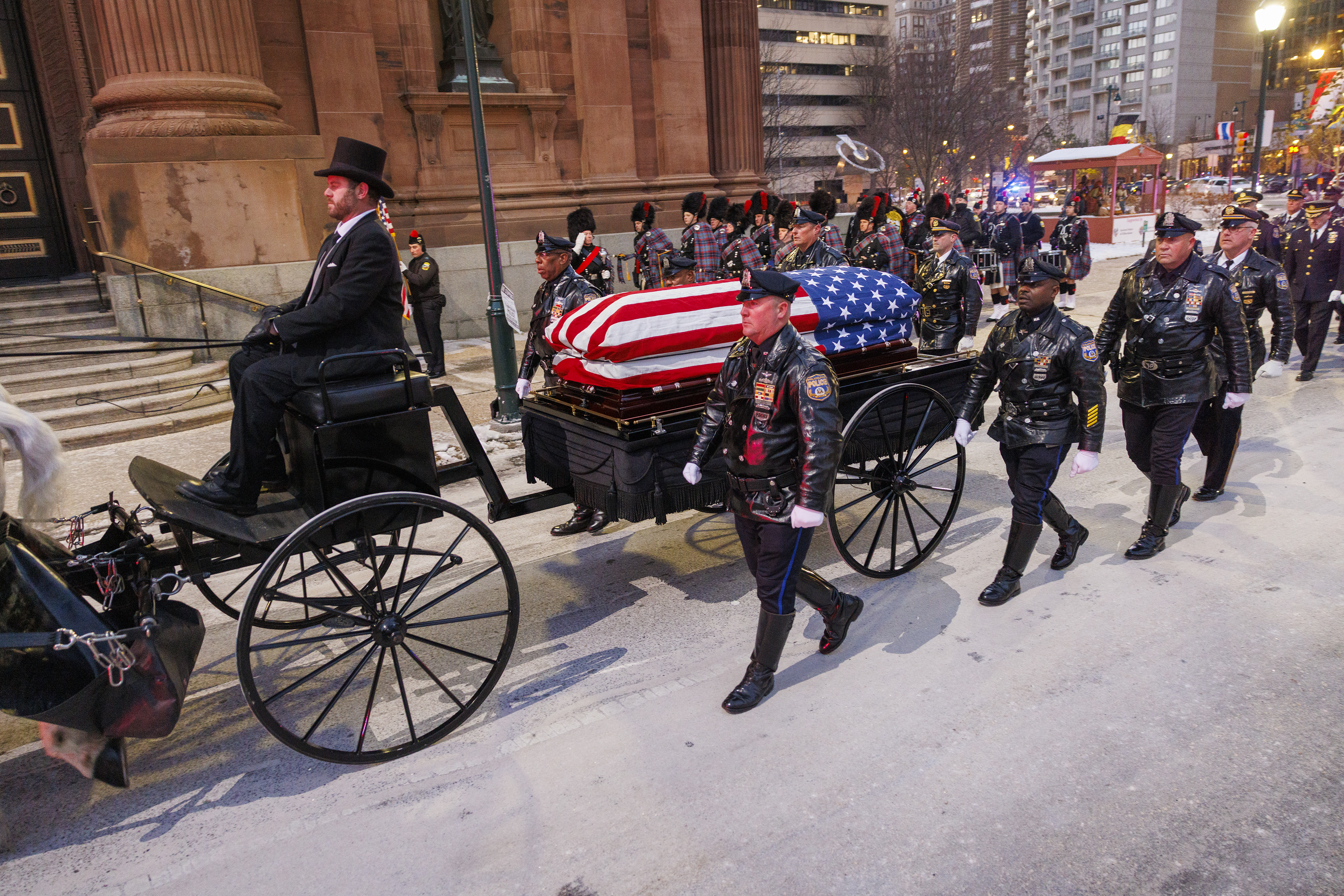
On Dec. 16, a horse-drawn carriage took Chan’s body in a cherrywood coffin draped in an American flag to the Cathedral Basilica of SS. Peter and Paul in Philadelphia. Officers towed Chan’s motorcycle, still bearing his name, in the procession.
The funeral caisson for Philadelphia Highway Patrol Officer Andy Chan arriving at the Cathedral Basilica Saints Peter and Paul on December 16, 2025. Chan died six years after a driver struck his patrol motorcycle. Alejandro A. Alvarez / Staff Photographer
On that frigid, windy Tuesday, hundreds of police officers joined city leaders to memorialize the man who had wanted to be a cop since childhood.
By the time of Chan’s death, The Inquirer had already filed Right-to-Know requests with the city asking for records of city payments or reimbursements to FOP Lodge 5 for all funeral-related expenses for officers killed in the line of duty. FOP leadership publicly criticized the records request on social media, contending that The Inquirer was seeking “private financial information” to “put a price tag on our heroes.”
The body of Philadelphia Highway Patrol Officer Andy Chan arriving at the Cathedral Basilica Saints Peter and Paul on December 16, 2025.Alejandro A. Alvarez / Staff Photographer
The reimbursement requests for Chan’s funeral show the FOP was unusually restrained.
The city received two documents, this time from the Philadelphia Police Department instead of the FOP: a bill for the funeral home and one for the carriage service. The total was $48,983.
The FOP did not submit any invoice, bill, or credit card statement for items unrelated to a funeral.
The first shots of the Revolutionary War were fired in April of 1775 during the Battles of Lexington and Concord. And the colonists were victorious.
The Second Continental Congress convened at Independence Hall the following month to ignite the pioneers’ fighting spirit and in June, they authorized the formation of the Continental Army, the first branch of the American military.
“The Continental Army was established to wage war against Great Britain and to fight for the rights and liberties of Americans who still considered themselves a part of the British Empire,” explained Matthew Skic, director of collections and exhibitions at the Museum of the American Revolution.
Artist Sean Bryant’s No. 1 design reflects discipline, service, and commitment, honoring the Army’s foundational role in the nation’s history and its enduring presence as a symbol of strength and perseverance.Sean Bryant and Colibrà Workshop
“George Washington was appointed commander-in-chief. Nobody knows at this point the war [was] going to last eight years,” Skic said.
The Philadelphia Historic District will honor the creation of the U.S. Army this Saturday at the Museum of the American Revolution. This weekend’s fete is the latest “Firstival,” a yearlong series of weekly day parties celebrating American events, places, and things with Philadelphia roots.
The Revolutionary War escalated quickly, Skic said, and by early 1776, the Founding Fathers were debating sovereignty. In July, the colonists declared their independence. Three months later, Congress issued an official order renaming our young country from the United Colonies to the United States.
“Now, the Continental Army isn’t fighting to restore the rights and liberties of British Americans,” Skic said. “It is now fighting to secure the independence of a new nation.”
The Continental Army was originally made up of troops from New York, New Hampshire, and Rhode Island. Pennsylvania, Maryland, and Delaware men quickly joined the fray, marching north and strengthening the Army’s force.
Some soldiers from Pennsylvania had previously served in the volunteer militia, the Philadelphia Associators, founded by Ben Franklin in 1747 to defend the city against foreign invasion. The seasoned vets would go on to become leaders in the Continental Army.
The Redcoats tried to capture Philadelphia in 1776, but Pennsylvania army men, led by Washington, held them off.
The next year, Pennsylvania troops fiercely defended Philadelphia during the Battle of Brandywine in Chadds Ford but lost. The British occupied Philadelphia for nine months, through June of 1778, when they evacuated and reassigned troops to New York. Earlier that year, France formed an alliance with the United States and the British military decided to use its resources to protect New York.
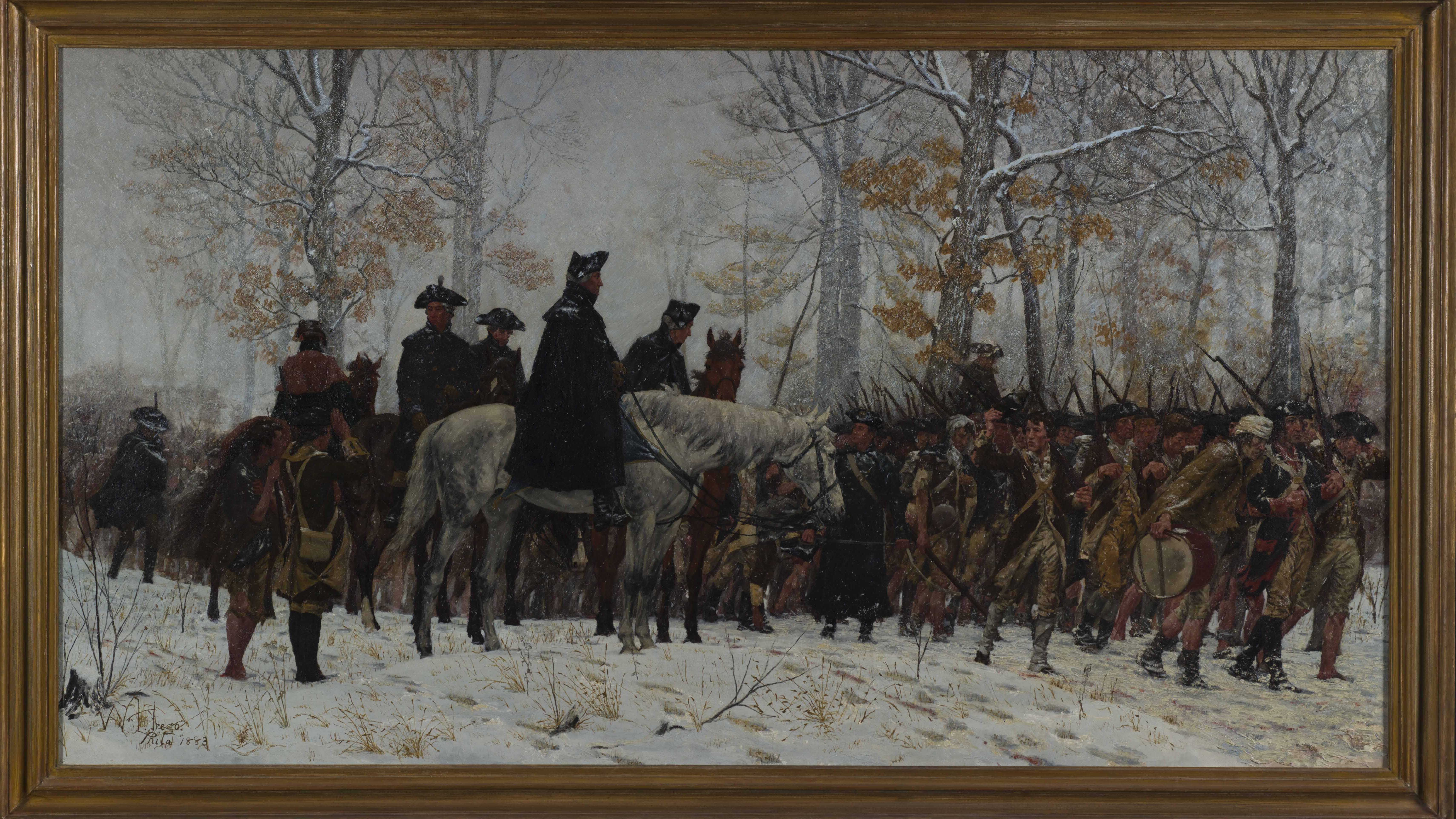
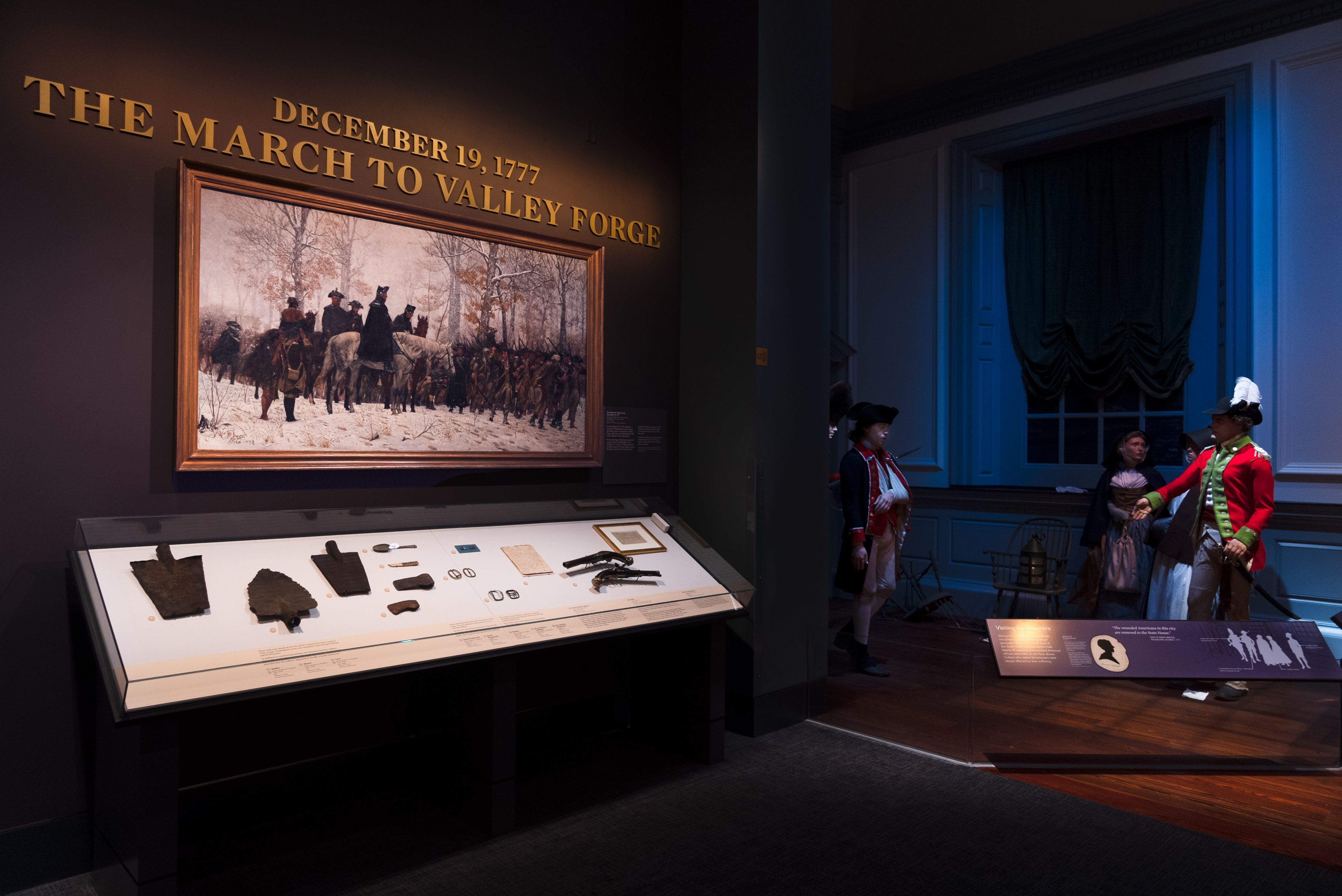
“The March to Valley Forge” December 19, 1777. The oil on canvas work was painted by William Brooke Thomas Trego in Philadelphia in 1883. It is conserved with funds provided by the Society of the Descendants of Washington’s Army at Valley Forge.Museum of the American Revolution
“The British leave Philadelphia and they don’t come back,” Skic explained. “The Continental Congress moves back in [to Independence Hall] and Philly becomes the capital of the revolution again.”
In the winter of 1778, the Continental Army retreated to Valley Forge and under the command of Prussian military officer Baron von Steuben, the Continental Army became a lean, mean fighting machine.
Realizing that the Union’s alliance with France, combined with its improved military prowess, would likely mean they would lose the war, Britain began to retreat. On Sept. 3, 1783, officials signed the Treaty of Paris, formally recognizing the United States as an independent sovereign nation.
The American Army fought valiantly during the Revolution, Skic said. Still, it’s important to note the conflict just didn’t impact America, a lesson our military would apply to subsequent wars.
The American Army was strong, Skic said. “But the global element of the war had an important impact on securing the independence of the United States,” he said.
This week’s Firstival is Saturday, June 13, 11 a.m.-1 p.m. at the Museum of the American Revolution, 101 S. Third St.
The Pennsylvania Senate is in the process of working through the commonwealth’s annual budget. This could be a shining moment for some Republican senators if they were to recognize the imperative to increase Pennsylvania’s minimum hourly wage based on the challenges of affordability and the shame of being one of the neglectful states in America that still expects its most vulnerable residents and families to somehow continue to survive on $7.25 an hour.
House Bill 2189 passed the state House of Representatives this past March and is now in the Senate Labor and Industry Committee. The bill would increase the minimum wage to $11 per hour, effective Jan. 1, 2027. The minimum wage would then increase to $13 per hour in 2028 and $15 per hour in 2029, followed by annual cost-of-living adjustments.
Additionally, the bill would give counties the option to implement a $15-per-hour wage sooner and set the minimum wage for tipped employees at 60% of the statewide minimum wage.
Pennsylvania raised its minimum wage in 2009, when the federal minimum wage increased to $7.25 per hour. In the 17 years since, neighboring states have raised their wages while inflation has increased by more than 50%. Pennsylvania has woefully remained at $7.25.
Passage of HB 2189 would allow defenseless families to eat, remain housed and clothed, and restore the faith of countless members of this commonwealth that those who can affect change will actually do so.
State Sen. Devlin Robinson, Senate Majority Leader Joe Pittman, and Senate President Pro Tempore Kim Ward need to be challenged and pressured to pass this measure so vital to Pennsylvania residents.
Currently, it would take more than one hour of work to afford a gallon of white milk and a dozen eggs — maybe these legislators need to go to a supermarket to see how far $7.25 an hour will take any mother of two.
Please call and/or email State Sens. Robinson, Pittman, and Ward and advocate for yourself, your neighbors, or maybe just be the voice of those who can’t even afford to make those calls.
Increasing Pennsylvania’s minimum wage is shamefully overdue.
Yes, students have made gains — and hardworking teachers, parents, and students deserve credit. But Philadelphia students remain 2.46 grade levels behind the pre-pandemic national average. Only 33% are proficient in reading, and just 25% in math.
That’s not a success story. It is a crisis.
If a hospital healed only a quarter of its patients, few would celebrate, because other hospitals healed even fewer. We would demand answers and better options immediately. Yet, in education, we too often accept failure as progress because the comparison group is somehow even worse.
The real question is not whether Philadelphia is improving faster than other urban districts. It’s why so many children still cannot read or do math at grade level — despite record-level funding, federal pandemic relief dollars, and decades of reform promises.
Wealthy families don’t wait for broken systems to fix themselves. They find schools that work. Why would we deny poor kids in Philadelphia that same power? They deserve resources that will help them find better schools, such as tax-credit scholarships, educational savings accounts, and local tuition programs.
Families need more options, not more excuses.
Rachel Langan,senior education policy analyst, Commonwealth Foundation
Join the conversation: Send letters to letters@inquirer.com. Limit length to 150 words and include home address and day and evening phone number. Letters run in The Inquirer six days a week on the editorial pages and online.