Tag: topic-link-auto

  • The U.S. welcomed this child of the Vietnam War. Why did he die in ICE custody?

    The U.S. welcomed this child of the Vietnam War. Why did he die in ICE custody?

    Tuan Van Bui’s bad luck arguably started the day he was born in 1970 in the city then known as Saigon — the child of a Vietnamese woman and one of the thousands of U.S. soldiers who fought in Southeast Asia for nearly two decades.

    Van Bui never knew his dad, but he quickly learned what it was like to grow up in a hostile homeland that called the estimated 25,000 to 50,000 Amerasian kids like him “children of the dust.” The communist government that won the war in 1975 denied him any education past grade school.

    In 1990, Van Bui caught a break — of sorts. In the late 1980s, a U.S. Congress struggling to come to grips with the mess America had left behind passed the Amerasian Homecoming Act. That allowed Van Bui to legally immigrate to America and settle in Philadelphia’s Kensington neighborhood, but with no real safety net.

    His first two decades on U.S. soil were rough, marked by occasional run-ins with the law. But in middle age, Van Bui had settled into a more comfortable American life. He married a fellow Amerasian immigrant in 2017, earned some money from construction and other odd jobs, and indulged his quirky hobbies like stamp collecting. He was paying back his fines from the bad years and — although threatened with a removal order — he religiously showed up for check-ins with U.S. immigration officials.

    His family says Van Bui was doing everything the right way.

    Still, it was with much trepidation that Van Bui showed up with his wife at the Philadelphia immigration office on Aug. 18, as the reelected Donald Trump and his team pushed for a massive increase in arrests and deportations. What happened next, as his wife related to family members, was even worse than they had feared.
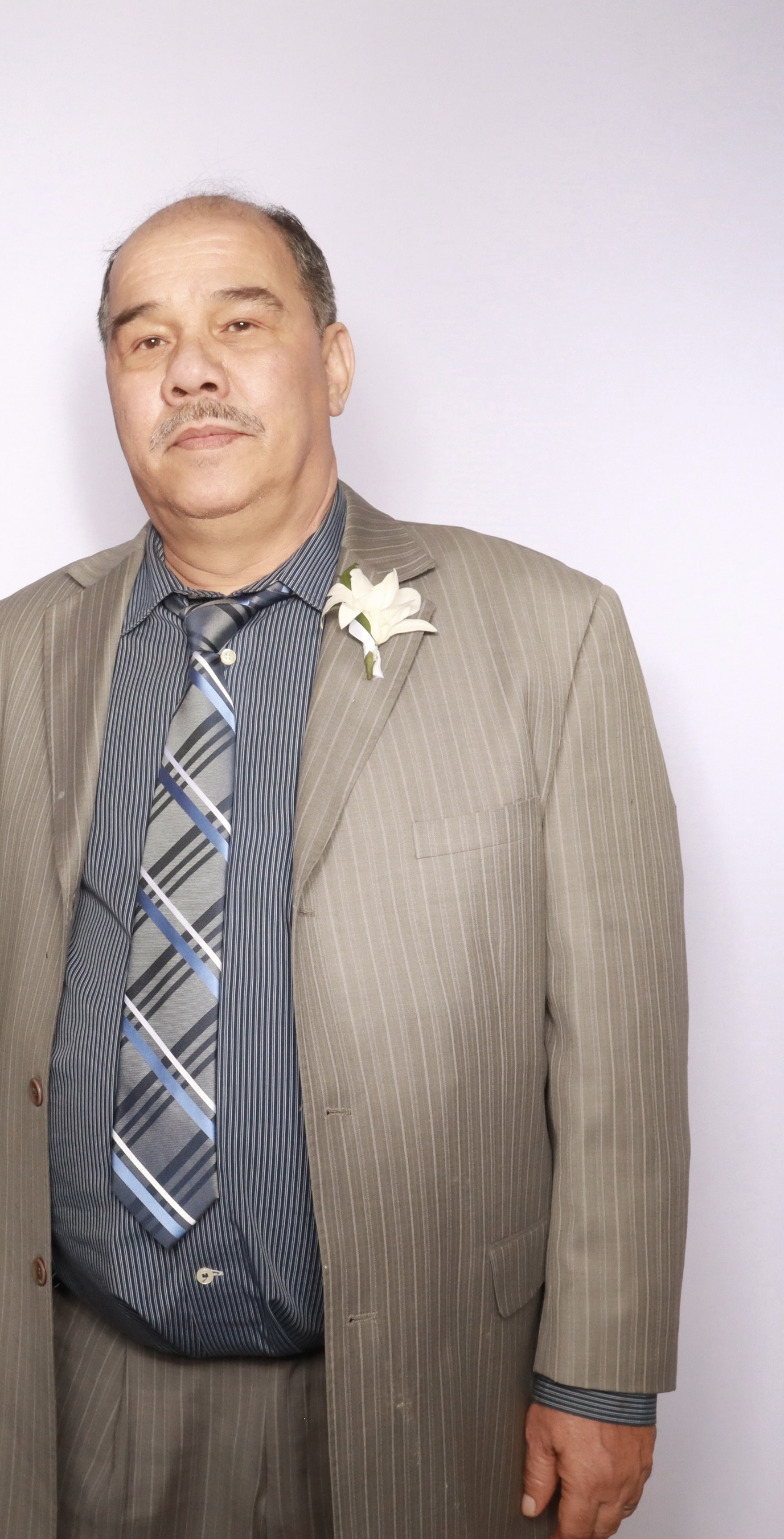
    Tuan Van Bui in an undated family photo. Van Bui, 55, died in immigration custody at the Miami Correctional Facility in Bunker Hill, Ind., on April 1.Handout art

    Van Bui’s stepdaughter, Ly Wang, told me this week that U.S. Immigration and Customs Enforcement officers were waiting. “Before he could even really check in, they saw him, they spotted him,” she said. “The ICE agents ambushed him, and they shoved my mom out of the way. They tackled my stepdad … shoving him into a wall because he’s a big dude.” Wang said the ICE agents threw Van Bui’s paperwork in the trash and warned her mom, “You need to leave before we make it a problem for you, too.”

    Van Bui’s arrest that August day was the start of a seven and a half month Kafkaesque journey through the rancid food and 4 a.m. wake-ups of ICE detention sites, first in upstate Pennsylvania, and then nearly 700 miles away in rural Indiana.

    It ended on April 1. That morning, Van Bui had made his usual phone call to his wife and, despite the routine complaints, sounded fine. The next call came that night, but from the chaplain at Indiana’s Miami Correctional Facility. Van Bui had suddenly collapsed and died. He was just 55.

    It took more than two months for Wang and her mom — who herself had suffered a debilitating stroke in the days right after watching Van Bui’s violent arrest — to deal with Indiana authorities, obtain some additional testing, bring his body back home, and secure a spot for him in the Fernwood Cemetery in suburban Lansdowne, where he was buried on June 5.

    But his family’s many questions have not been laid to rest.

    Why was Van Bui’s ICE detention dragged out for so many months when — given the wretchedness of life behind barbed wire — he and his family would have preferred deportation to Vietnam, even if he hadn’t been there for 36 years? Why wasn’t Van Bui given more medical attention, as doctors noted his swollen knees and other signs of worsening health? And why is ICE’s account of Van Bui’s death so different from what other detainees told the family — that staff did nothing at first while they, the detainees, attempted CPR until paramedics finally arrived a full hour after the collapse, too late to do anything but declare him dead?

    And a bigger question hangs over all of this: Why did a redemption-seeking United States government invite Van Bui to come here from the other side of the world, only to leave him to fend for himself before brutally arresting him, dumping him in a hellhole prison, and allegedly watching him die from chronic and then acute neglect?

    “I think he fully considered America to be his home, and he was very comfortable here despite even all the challenges against [Amerasians],” Wang said. What happened to Tuan Van Bui is in many ways mystifying, but he is also not unique.

    Even as the Trump regime’s deportation raids have sometimes dominated the headlines, much of the attention has focused on the targeting by masked ICE and Border Patrol agents of brown and Black neighborhoods, such as Latinos in Los Angeles and Chicago or the Somali community in Minneapolis. The government’s stepped-up arrests of Asian Americans have largely flown under the radar.

    “There’s just a severe sense of fear in the community,” Nancy Nguyen, the executive director of Philadelphia-based VietLead, told me, adding that the message “for the Asian communities is that they are not wanted here under Trump.”

    A painful irony is that the hardest hit have been refugees for whom the United States opened its doors in the latter years of the 20th century — a belated acknowledgment that their plight was often the result of America’s violent and unpopular war in Southeast Asia. This winter in Minnesota, masked immigration raiders frequently targeted the Hmong people from Laos who’d once been welcomed for their role in helping American troops and the CIA over there.

    Nguyen said that nationally, more than 1,000 Vietnamese immigrants and more than 500 Laotians were deported in 2025 — compared with fewer than 100 a year before the second coming of Trump. A few have been sent to remote African nations like Eswatini, where they don’t know any people or the language. Many more have been languishing, as Van Bui did, in the cruel limbo of ICE detention — sometimes with lethal consequences. Nguyen said that of the 50 or so ICE detainees who’ve died under the Trump regime, nearly a third were of Asian descent.

    Van Bui was actually the second Asian American to die at the Miami Correctional Facility — run by the state of Indiana, which contracts with ICE — since February. Lorth Sim, 59, who came to America in 1983 as a refugee from the brutal dictatorship of Cambodia’s Pol Pot, also collapsed at the facility, where officials also blamed heart disease.

    What’s more, Van Bui is the third member of Pennsylvania’s Asian community to die in immigration custody in less than a year. In January, 46-year-old Cambodian American Parady La was arrested outside his Upper Darby home and died three days later at Philadelphia’s federal detention center, reportedly while undergoing narcotics withdrawal. Last August, 32-year-old Chinese immigrant Chaofeng Ge died at the upstate Moshannon Valley Processing Center five days after his arrest near Harrisburg; family members and advocates have challenged ICE’s assertion that his death was a suicide by hanging.

    In Van Bui’s case, ICE issued a fairly detailed statement that insisted the Amerasian detainee — who’d suffered a serious stroke on Christmas Eve 2023 and used a cane for mobility, among other preexisting health problems — was properly monitored and treated amid clear signs his condition was deteriorating, with a decreased platelet count and then swollen knees indicating “obstructive pulmonary disease.” It also claimed — disputed in the accounts other detainees have offered Van Bui’s family — that staff at the Indiana facility responded quickly to his April 1 collapse with CPR and a defibrillator before he was pronounced dead at 6 p.m.

    Whether ICE and Indiana corrections officers offered Van Bui adequate medical care is still up for debate, but what the government definitely did not offer was empathy. As with other ICE custody deaths, grieving relatives were slammed with an official press release that denied Van Bui’s humanity.

    “Criminal illegal alien from Vietnam passes away at Miami Correctional Center” was the headline on ICE’s press release, which stressed Van Bui’s encounters with law enforcement when he was a younger man.

    His stepdaughter Wang told me the litany of criminal charges in the release includes some arrests for which he was not charged or convicted, and that he was diligently repaying fines for other past violations. But what hurts more is the regime’s cruel characterization of a human being whom Wang described as a soft-spoken, gentle giant who never turned down a request for help from his Kensington neighbors and — “a nerd in a way” — loved to scour flea markets for cuckoo clocks or rare coins or stamps.

    Chaofeng Ge, 32, died in August at the Moshannon Valley Processing Center while detained by ICE.Courtesy of David Rankin

    She said he’d told her little about the first 20 years of his life in Saigon (renamed Ho Chi Minh City after the war), but did admit that the abandonment of his American GI father weighed on him.

    “Something that he did tell me and just confided in me was that he never felt like he grew up feeling wanted, you know? Starting with his dad not being around, and his mother being very busy and being a single parent,” she said. “So he had kind of a rough start.”

    Amerasian kids were treated cruelly in Vietnam — as reminders of the hated Americans who’d invaded their country — and typically denied any education beyond grade school, which apparently was the case for Van Bui. The United States seemed to acknowledge that harsh reality when Congress and the Reagan administration enacted the special AM-1 visa that allowed Van Bui to come here in 1990. But the new arrivals didn’t always adapt easily to a home where they were reminders of a war that most Americans wanted to forget as much as the Vietnamese.

    “My impression that he got into kind of the wrong mix of crowds,” said Wang, who first met her future stepfather when she was a teenager. “I see him as someone who, because he didn’t have that much of an education … that you could manipulate, unfortunately.”

    Like many others, Van Bui faced an immigration judge’s removal order from the 2000s because of his legal problems, yet was allowed to remain as long as he continued his regular check-ins — which he did until his violent arrest last August.

    Van Bui was initially sent to the large Moshannon Valley site in Clearfield County, Pa., then transferred in December hundreds of miles west to the lockup in tiny Bunker Hill, Ind., where, since last year, ICE has promised the state of Indiana $291 a day — four times the normal rate — to house some of its rising numbers of detainees.

    In just a short period of time, complaints from detainees, advocates, and Indiana Democratic Rep. André Carson — who visited the site just days after Van Bui died — that conditions at Miami Correctional Facility are cruel and inhumane have mounted. Carson said two detainees he met described “heartbreaking” conditions, and that a lack of functioning intercoms may have played a role in Van Bui’s death. The American Civil Liberties Union of Indiana settled multiple suits from state inmates — predating the 2025 deal with ICE — alleging pitch-black conditions from windows covered with steel plates, and frequent episodes of cells flooded with wastewater.

    Wang said it took weeks to even learn Van Bui had been moved to Indiana, and when they did reconnect, he complained of freezing-cold winter conditions and horrible food, even as they were awakened by guards for breakfast at 4 a.m. Things were so bad that Van Bui actually wanted to be deported back to Vietnam, but despite finally seeing a judge in February, the government continued to hold him in these gulag-like conditions.

    Until he died.

    During the agonizing weeks Van Bui’s wife and stepdaughter worked to bring home his remains — an effort which included this still active GoFundMe page — they heard from other detainees, most of them also Asian Americans. One Vietnamese native from Philadelphia who successfully won his release in a habeas corpus case tracked down Van Bui’s wife for a surprise visit, to tell the family his version of what really happened on April 1.

    “What we’ve heard from the cellmates is that he collapsed, and they immediately called for help, and no one came,” Wang recounted. “So the cellmates themselves, they did the CPR. None of the staff did CPR. The cellmates did the CPR. They … did CPR and chest compressions relentlessly, with somebody else pressed up against the gate of the jail cell just yelling, ‘Help! Help!’”

    They allege there was no help, not right away.

    “From their view, what they saw was the correction officer sitting there staring at the video and not moving at all,” Wang continued. “It’s reported that [the corrections officers] waited at least around 15 to 20 minutes before they got up, locked down all the cells, and then finally went over to see what happened. Once they came over, they bought a defibrillator, except they did not know how to use it, so they had to call the paramedics. By the time the paramedics showed up, they declared him dead, which was about an hour later than he actually collapsed.”

    I asked a spokesperson for the Indiana Department of Correction about what really happened on April 1, but was referred to ICE. And ICE, as with past columns, has not responded to my request for more information. All we have is ICE’s official report, which insists that detention center staff were the ones who performed CPR, that the defibrillator was used — and which offers no timeline for how long it really took for the paramedics to arrive.

    Those explanations aren’t satisfactory to Van Bui’s family, or to immigration advocates here in Philadelphia or the ACLU back in Indiana, who continue to press for answers while they explore possible legal action.

    But there are questions that are bigger than any courtroom. Why are Asian communities that, in those post-Vietnam War years, drove the comeback of America’s cities and older suburbs now targeted by a terror campaign from the U.S. government? Why did the United States abuse innocent people from Southeast Asia — and especially the Amerasians — twice, first in a pointless war and now in a gulag archipelago on American soil?

    What did Tuan Van Bui do to deserve neglect and death in a dark, dank cell hundreds of miles from the people who loved him?

    When his family finally held his services at a Chinatown funeral home, it wasn’t known if his wife would be healthy enough to attend. She did show up briefly at his wake, just long enough to utter these anguished words that Ly Wang posted on their GoFundMe page.

    “You said you would come home! Why didn’t you come home?”

  • First up for the U.S. men’s national team? Paraguay. Here are our predictions for America’s World Cup opener.

    First up for the U.S. men’s national team? Paraguay. Here are our predictions for America’s World Cup opener.

    America getting out of its group on American soil.

    In this World Cup, that is the first goal — and the road begins Friday when the U.S. men’s national team kicks off against Paraguay (9 p.m., Fox29, Telemundo).

    Paraguay is the first of three matches for the United States in Group D, where they’ll also face Australia (June 19, 3 p.m.) and Turkey (June 25, 10 p.m.).

    It’s a group from which many feel the U.S. can emerge, and a recent pair of tuneup matches against Senegal and Germany provided additional validation.

    Gio Reyna was the goalscorer the last time the U.S. men played Paraguay in November at Subaru Park in Chester.Elizabeth Robertson / Staff Photographer

    Paraguay is also a team the U.S. defeated 2-1 at Subaru Park in Chester just eight months earlier, with a sizable contingent of players who qualified for head coach Mauricio Pochettino’s World Cup roster.

    We’ve been watching since the beginning of qualifying cycles, which, as the host nation, the U.S. didn’t need to qualify for. Along the way, we analyzed a wide pool that over two years competed in a Concacaf Nations League third-place game and a Gold Cup final in the lead-up.

    This roster, which features its strongest Philly accent in over 90 years, is complete with some of the most talented players America has to offer — and a few who noticeably were left off the list. But this is Pochettino’s team.

    The Inquirer’s soccer crew will offer up game-by-game prediction for each match, starting with Paraguay …

    Jonathan Tannenwald

    The hope and expectation around this team are mostly justified. Because of that, I’m going to be a contrarian for a moment. Dating back to the first World Cup in 1930, the U.S. men have played 37 games on soccer’s biggest stage. They’ve won just nine, lost 20, and tied eight; and they haven’t won more than one group game in a tournament since that inaugural edition.

    This team doesn’t face the pressure of world powers like Argentina and England, but it still faces plenty as a co-host desperate to give the sport a lasting legacy here. Paraguay, meanwhile, loves playing defense — and will likely play even more without injured star forward Julio Enciso.

    It’s good for the U.S. that they beat Paraguay last November in a friendly at Subaru Park. But this game will be a lot harder, and I’m not at all sure the home team will have a big home advantage from the L.A. crowd. I think the U.S. wins it close.

    Prediction: United States 1, Paraguay 0.

    Kerith Gabriel

    One of the great things about being so deeply entrenched in this sport is the freeing feeling that wins and losses in tuneup matches offer very little insight into how good a team is. Win over Senegal? Somewhat ecstatic. Loss to Germany? Somewhat expected.

    I think it comes down to a few things, but what I mainly look for in this first match against Paraguay is who Pochettino puts out there. He beat this nation with a group largely comprised of the same guys, and has an even stronger cast in this go-around. I think this is the perfect first match to get acclimated and one the U.S. takes three points in.

    Prediction: United States 2, Paraguay 0.

    Medford native Brenden Aaronson (right) signs an autograph for a fan during a U.S. men’s national soccer team practice on Monday.Jonathan Tannenawld

    Matt Breen

    Who will be the U.S. face of the U.S. World Cup? Easy. Christian Pulisic, Captain America, who gets America’s biggest soccer party started with a signature goal in the opener. Pulisic, whose goal in a friendly last month was his first goal for club or country in five months, brought the energy in the opening minutes of the 2022 opener before finally breaking through — and perhaps risking his future generations — for a goal against Iran.

    The U.S. should win their group, and the path starts with a win on Friday. The Americans will take care of business against Paraguay and the country’s biggest soccer star will shine bright in L.A.

    Prediction: United States 2, Paraguay 0.

    Owen Hewitt

    There’s no way that arguably the most talented team America has ever sent to a World Cup loses its first match on home soil … right? Doubts about the goalkeeper situation and the health of Chris Richards aside, this match is too big for the U.S. to lose.

    Fortunately for the Americans, the U.S. will get the lowest-ranking member of Group D to start their World Cup campaign. They have already beaten Paraguay in a friendly during Pochettino’s tenure with a less talented squad, and there’s nothing that suggests that the Americans won’t be able to replicate that result on Friday on the big stage in Inglewood.

    Prediction: United States 3, Paraguay 1.

  • An 80 year old rabbi from Chestnut Hill, a Senegalese immigrant, a former Vietnamese refugee walk onto a stage

    An 80 year old rabbi from Chestnut Hill, a Senegalese immigrant, a former Vietnamese refugee walk onto a stage

    At 80 years old, Rabbi Sheila Pelz Weinberg has made countless speeches and sermons while also publishing books on spirituality, meditation, and her own life experiences. But this weekend, she’s trying something totally new: She’s telling her story onstage.

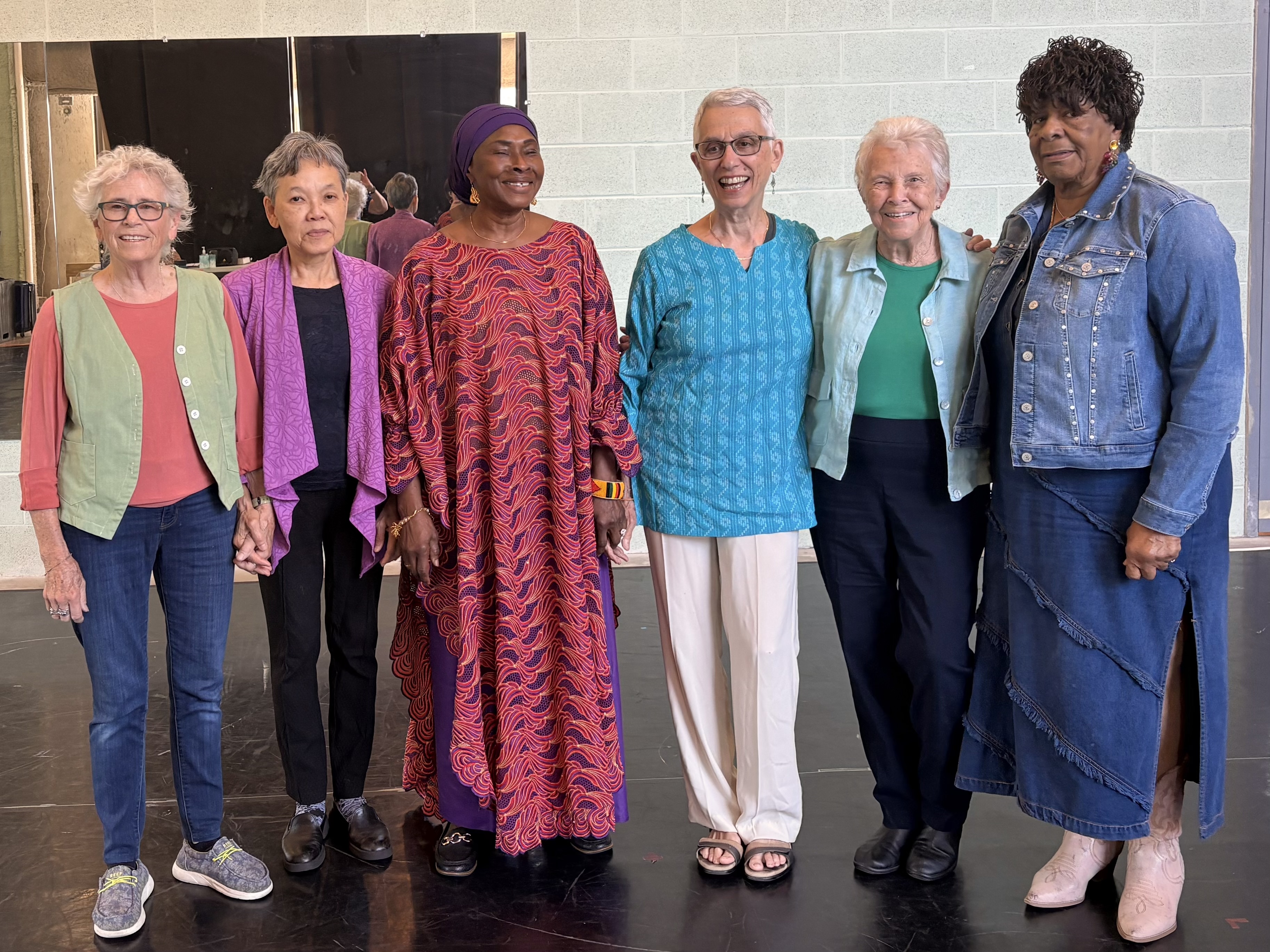
    Weinberg is one of six women between ages 69 and 86 who star in the theatrical performance GrandWomen presented by Theater of Witness, a theater company based in Center City that creates plays from performers’ real-life testimonies.

    Previous productions have spotlighted refugees, formerly incarcerated people, teens, survivors of abuse; GrandWomen focuses on the insights and wisdom of elderly Philadelphians with diverse backgrounds.

    “This show was kind of a surprise event in my life,” said Weinberg, who lives in Chestnut Hill with her husband. “It’s not like I’ve never told my story … although it’s very different writing a book and then getting up there on stage.”

    Onstage, Weinberg will deliver her story as if she’s speaking directly to her eldest granddaughter, who is 19 years old. Weinberg grew up in New York and later moved to Philadelphia in the 1970s and ‘80s, when she studied at Wyncote’s Reconstructionist Rabbinical College. After spending many years in Amherst, Mass., she returned to Philadelphia about 14 years ago to be closer to her children and grandchildren.

    Before saying yes to Theater of Witness artistic director Teya Sepinuck, Weinberg sought her family’s permission — and they all encouraged her.

    Joining Weinberg onstage this weekend are Tiguida Kaba, a Senegalese immigrant who founded the African Family Health Organization; Judith Palmer, a lesbian singer and composer with the Anna Crusis Feminist Choir; Kim Nguyen, a former refugee from Vietnam who served on the N.J. Council on the Arts; Hilda Campbell, a poet, carpenter, and minister who lost her grandson to gun violence; and Regina Coyne, a retired defense attorney.

    For GrandWomen, Sepinuck spent a few hours interviewing each participant and then developing a script based on their personal stories, which incorporates film, music, and choreography.

    For Weinberg, the challenge wasn’t stage fright, though she has occasionally felt nervous before speaking at the pulpit. The hardest part was memorizing the script, after so many years of delivering sermons and talks spontaneously, or with notes nearby.

    Rabbi Sheila Peltz Weinberg will perform in “GrandWomen,” running at the Suzanne Roberts Theatre from June 11-13.Courtesy of Theater of Witness

    “Getting up in front of people is not unusual, but in this context it really feels different,” she said. “With the other women … I have developed this connection that’s amazing. I never would have met any of them, likely. We just have a lot of warmth towards each other, and humor, and compassion.”

    Writer/director Sepinuck has said that she wants this production to serve as “an antidote to these times” and “a communal prayer for peace.”

    In recent years, Weinberg said she has leaned into her activism through working with American Friends of Combatants for Peace, supporting Palestinians and Israelis rooted in nonviolence resistance.

    “[They] are former Israeli soldiers and former Palestinian fighters that are working for ending the occupation, and they’re amazing people. They found each other, and they see each other in profound ways,” she says.

    Their example inspires her work. “There are amazing peacemakers, and we’ve met them, and that’s my [goal], whatever I can do to let people know about that possibility.”

    In the show, too, she calls for compassion and deep listening. One of her most memorable lines, she said, is a call for change: “They know that reacting to violence with violence is not the answer.”

    In “times of war and hatred and deception,” she said, GrandWomen seeks to amplify “truth and kindness” today, and in the days to come.

    “GrandWomen” runs June 11-13 at the Suzanne Roberts Theatre, 480 S. Broad St., Philadelphia, 215-985-0420
or theaterofwitness.org.

  • Trump bought tobacco stocks and raked in industry donations as FDA eased standards

    Trump bought tobacco stocks and raked in industry donations as FDA eased standards

    President Donald Trump, who once declared he had “saved” flavored vapes, grew his stock holdings this year to as much as $1.64 million in tobacco giant Philip Morris.

    He also had holdings in Altria and a third leading tobacco company, though an apparent discrepancy in his disclosures clouds the extent of his investments. In 2025, tobacco interests donated $6 million to MAGA Inc., a super PAC that supports the president, and Trump’s inauguration. And, on April 30, a week before FDA guidance that provided a critical boost to the industry, Reynolds American dropped an additional $5 million into the super PAC’s coffers.

    The stock trades and political contributions occurred as the Trump administration pursued a broadly pro-tobacco agenda: Its FDA piloted a fast-track program to approve nicotine pouches. It unveiled a program to allow vapes on the market more rapidly, despite resistance from career civil servants and leadership, culminating this year in guidance waving through flavored electronic cigarettes. It cut public health employees focusing on anti-tobacco policy. And it broadened enforcement against illicit e-cigarettes, competitors to the big industry players with a financial relationship to Trump.

    It amounts to the most pro-tobacco, pro-nicotine presidency in some time — a remarkable policy given the tens of millions of deaths cigarettes caused during the 20th century. Even in recent years, antismoking groups say a half-million Americans a year die from cigarettes. Industry advocates say the toll helps justify a shift to e-cigarettes and nicotine pouches, which they say are less harmful. However, public health advocates say these products carry their own risks, such as addiction.

    Lawmakers and public health leaders have criticized the recent FDA guidance and approvals as a “lucrative payday” that ignored scientific evidence to deliver what investment analysts have described as “very positive” steps for influential tobacco companies.

    The scale of the money is “unprecedented and problematic,” said Brian King, who was pushed out of the FDA’s tobacco office last April and now works as an executive at the Campaign for Tobacco-Free Kids. He fears that steering public policy toward tobacco — still addictive and harmful to health — puts Americans at risk.

    “It’s a gift on a platter with a side of public health malpractice,” he said.

    The White House did not comment on the president’s investments or industry donations to MAGA Inc. Spokesperson Kush Desai said, “The only guiding factor behind the Trump administration’s health policymaking is Gold Standard Science. FDA’s regulatory treatment of nicotine pouches and vapes is rooted in recent evidence that has found that these products can help adults quit smoking.”

    Philip Morris disputed any connection. Company representatives “regularly attend events and forums where we share our commitment to improving public health in the United States,” spokesperson Samuel Dashiell said, arguing that the company’s vapes offer a safer alternative to smoking cigarettes. “We do not comment on individual engagements or on the personal financial matters or disclosures of public officials.” Other tobacco companies whose stock Trump has bought and sold during his second term or that donated to groups aligned with Trump — Juul, Reynolds American, and Altria — did not respond to requests for comment.

    The financial stakes are huge. Investment analysts at Goldman Sachs say the newer products, touted as safer, make more money per sale than traditional cigarettes. Philip Morris expects Zyn pouches, for example, to make eight times the gross profits of its cigarettes, Goldman Sachs analysts said in March 2025.

    When he ran for his second term, Trump promoted himself as a pro-tobacco candidate, posting that he had “saved” flavored vaping and that President Joe Biden and Democratic nominee Kamala Harris “want everything banned.”

    Since late 2023, MAGA Inc. has received over $20 million in funding from the industry, federal campaign records show. Trump’s inauguration garnered nearly $4 million more. His ballroom project has disclosed donations of an unknown amount from Altria and Reynolds American.

    Recent Trump administration actions show he’s followed through with his campaign rhetoric. In May, the FDA released consequential guidance that allows manufacturers to market their vapes and nicotine pouches while awaiting agency approval. It also approved several vaping products. The month before, the Vapor Technology Association, which donated $1.25 million to Trump’s inauguration, told its vape-manufacturer members it had met with the White House to discuss its concerns.

    By that point, Trump had gone on a stock-purchasing spree. In March he made eight separate purchases of Philip Morris or Altria stock, worth as much as $275,000, according to a disclosure form that bears Trump’s signature.

    It is difficult to be precise about Trump’s tobacco investments, because the financial disclosures show only ranges of investment amounts. They also have an apparent discrepancy. In January, the president sold $500,000 to $1 million in Altria stock. But that’s confusing because previous disclosures didn’t show Trump held that much equity in Altria. The White House declined to comment on the matter.

    The FDA’s May guidance and approvals drew condemnation from public health leaders, who worry that the agency is allowing products with flavors especially appealing to young people. “After years of recognizing the dangers flavored e-cigarettes pose to youth, it is deeply troubling to see FDA ignore the scientific evidence and reverse course,” American Lung Association CEO Harold Wimmer said in a published statement.

    “I think it’s blatantly illegal, both on its merits and also procedurally, because it was issued as a final guidance without even giving the public an opportunity to comment on it,” said Mitch Zeller, a former head of the FDA’s tobacco center.

    A group of Democratic senators called the decision a “a free pass to addictive and harmful vapes” in letters to Reynolds American and Altria. It would lead to “a lucrative payday after years of unsuccessful legislative and regulatory efforts to weaken federal tobacco oversight,” they concluded.

    Members of Congress are barred from insider trading, and many legislators would like to see trading of individual company stocks banned for all members. In the wake of Trump’s most recent financial disclosures, with revelations that he often traded in companies manufacturing GLP-1 drugs before his administration steered policy in a favorable direction, some members are calling for the president, too, to be barred from stock trading.

    Trump’s tobacco policies have garnered favorable grades from investors. At Goldman Sachs, bankers described the May FDA guidance as “very positive” for Philip Morris and “a significant step in the FDA’s positioning toward enforcement and acceptance of nic pouch (as well as e-vapor) innovation generally.”

    And Barclays analysts said the FDA’s guidance was good news for Juul, a leading vape producer. (In November, the company contributed $1 million to MAGA Inc.)

    FDA resistance to speeding up approvals for these products reportedly contributed to the ouster of agency commissioner Marty Makary, who did not respond to requests for comment. According to The New York Times and The Wall Street Journal, the White House repeatedly intervened in the approval process.

    “I served during the entire first Trump administration as center director, and there was never any pressure from any political appointee at FDA, at HHS, or the White House when it came to application review,” Zeller said.

    But recent changes in FDA policy can be traced to the access tobacco firms have had to the White House, he said.

    By and large, the Trump administration has delivered on industry priorities. Soon after the inauguration — which tobacco companies had donated heavily to — the administration withdrew a Biden-era proposal to ban menthol cigarettes. The administration has eased the path for nicotine pouches such as Zyn. Investment analysts viewed government crackdowns on illicit e-cigarettes positively: Barclays wrote in January that “company commentary on enforcement has also been upbeat, suggesting that the tide could begin to turn in favor of the legal players in the market.”

    What’s more, the Trump administration’s government layoffs have decimated public health’s tobacco control offices. The work of the Centers for Disease Control and Prevention’s office of smoking has been sharply curtailed; its flagship “Tips From Former Smokers” campaign, which seeks to persuade viewers not to smoke, has been off the air for months, King said.

    “It’s not difficult to see that less dollars invested in prevention and control is going to lead to more tobacco product use and tobacco-related disease,” King said, especially given the government’s decades-long success in reducing cigarette usage.

    The shift is particularly ironic given the administration’s focus — through its Make America Healthy Again slogan — on chronic disease. “Attempting to combat chronic disease without tobacco control is like attempting a triathlon without a bicycle: You are destined for failure before leaving the starting line,” King concluded.

    KFF Health News is a national newsroom that produces in-depth journalism about health issues and is one of the core operating programs at KFF — the independent source for health policy research, polling, and journalism.

  • A Havertown native is giving historic $112.6 million to Drexel, months after his record gift to St. Joe’s Prep

    A Havertown native is giving historic $112.6 million to Drexel, months after his record gift to St. Joe’s Prep

    Drexel University has received a $112.6 million gift — the largest in its history by more than double — to establish its new college of engineering and computing, renovate space in two buildings to foster programs within it, and provide more scholarships.

    The gift comes from the Howley Foundation, a Cleveland-based philanthropic group whose mission, according to its website, is “to create social and economic mobility and improve lives” through “quality educational opportunities.”

    The foundation is headed by billionaire W. Nicholas “Nick” Howley, a 1975 Drexel graduate, his wife, Lorie, and their daughter Meg Howley, a 2010 Drexel graduate. Nick Howley, who got his degree in mechanical engineering, is the cofounder and board chairman of TransDigm Group Inc., a Cleveland-based aerospace parts manufacturer.

    The same foundation in April gave a $74 million gift to St. Joseph’s Preparatory School, also Howley’s alma mater, which school officials believe was the biggest donation ever given to a U.S. Catholic high school.

    W. Nicholas “Nick” Howley and his wife Lorie have given $112.6 million to Drexel University through their foundation.Courtesy of Drexel University

    The new school, which will be Drexel’s largest, will be named for the Howley family. It will be made up of the School of Engineering, School of Computer and Information Sciences, and School of Biomedical Engineering and Science, which merged earlier this year as part of a consolidation and academic overhaul.

    Drexel made the announcement Thursday morning, with commencement scheduled for later in the day at the West Philadelphia university. It was the first major gift to come to the university under president Antonio Merlo, who took over last July.

    Drexel’s previous largest gift, $50 million, came from Thomas R. Kline in 2014 to name its law school.

    “This investment is a powerful affirmation of Drexel’s strength and leadership in fields where innovation and impact are deeply intertwined,” Merlo said in a news release. “It will not only bring excitement and a new look to our campus, but it will also provide generations of students with access to state-of-the-art facilities, as well as set them on course for a transformational educational experience at Drexel.”

    The gift also comes as the university has been aiming to reduce a deficit, making some operational changes, and considering changing its relationship with the Academy of Natural Sciences. The school said in April it would end the year with a $20 million deficit. Drexel is projected to continue to run deficits through fiscal year 2028, according to a report from Moody’s, which downgraded the school’s rating earlier this year. And last fall, Drexel experienced a 19% drop in the size of its freshman class.

    But Merlo in a message to campus last week said the university has seen a 16% increase in students indicating they will attend next fall. And the university is preparing to launch its “renewed curriculum” and change to semester calendar.

    A rendering the exterior of the Howley Family Immersive Learning Center at Drexel UniversityCourtesy of Drexel University

    “I am filled with optimism about what lies ahead for our students and our institution,” Merlo wrote.

    About $76 million of the Howleys’ gift will fund programs and scholarships for talented students from certain schools, primarily in Philadelphia and Cleveland, who enroll at Drexel, regardless of their financial circumstances.

    Roughy $36 million will fund about 55,000 square feet of classroom, lab, and other learning spaces in Drexel buildings along Market Street and JFK Boulevard. That includes more than 45,000 square feet in Drexel’s 3101 Market St. facility that will become the Howley Family Immersive Learning Center and include a robotics facility, a flight simulator, a jet engine lab, a soil and concrete analysis lab, and wet labs for chemical engineering, materials science, and cell and gene therapy education.

    The remaining 10,000 square feet will become the Walter N. Howley Jr. Innovation garage, named after Nick Howley’s father, who got his bachelor’s degree in commerce and engineering from Drexel in 1951. The space at 32nd and Market Streets will feature work in bays by engineering and computing student organizations, the school said. Students, the university said, will be able to build race cars, electric vehicles, and scale airplanes, as well as rockets, steel bridges, and concrete canoes to enter in national competitions.

    Construction will begin on both spaces in spring 2027, the school said.

    “I am proud to support Drexel’s mission as a global leader in experiential education,” Howley said in a news release. “The university’s model provides a true return on investment for all students who earn a Drexel degree and I believe it is the best way to encourage upward social and economic mobility.

    “The combination of its academic rigor and co-op program make Drexel’s a unique educational experience that goes farther than any other university in propelling its graduates toward their career objectives.”

    In addition to his role at TransDigm Group Inc., Howley, who grew up in Havertown and now lives in Ohio, is a founder and cochair of Perimeter Solutions, which provides industrial products and services in areas including firefighting materials, lubricant additives, electronic components, and medical devices. Howley, who also has an MBA from Harvard Business School and is a member of Drexel’s board of trustees, previously donated $15 million to Drexel for scholarships.

    Lorie Howley, who got her degrees in ornamental horticulture and communication arts from Cornell University, worked as an educator at Longwood Gardens for 15 years. She is cofounder of the Howley Foundation and is on its board of directors.

    The Howleys’ daughter Meg, who got a master’s degree in psychology from Drexel, is executive director for the foundation’s Philadelphia operations. She got her undergraduate degree in psychology from Hobart and William Smith Colleges, and a master’s in school psychology and educational specialist certification from Rowan University.

    Part of the gift will be used to create an endowment for the new college to help it attract students and faculty. The college will enroll about 5,000 students in more than 60 undergraduate and graduate degree programs, including its new undergraduate degree in artificial intelligence and machine learning.

  • Bennett L. Aaron, longtime attorney and honorary trustee of the Jewish Federation of Greater Philadelphia, has died at 92

    Bennett L. Aaron, longtime attorney and honorary trustee of the Jewish Federation of Greater Philadelphia, has died at 92

    Bennett L. Aaron, 92, of Bryn Mawr, longtime Philadelphia attorney, honorary trustee of the Jewish Federation of Greater Philadelphia, former president of the Federation of Jewish Agencies of Greater Philadelphia, board member for the Jewish Agency for Israel, onetime chair of the United Israel Appeal, mentor, volunteer, and world traveler, died Monday, June 1, of age-associated decline at Beaumont at Bryn Mawr retirement community.

    Born in Brooklyn, Mr. Aaron earned his law degree at Columbia Law School in New York in 1957, moved to Philadelphia, and spent the next six decades, until his semi-retirement in 2019, focusing on estate planning, gift taxation, probate, and trust law at Cohen, Shapiro, Polisher, Shiekman & Cohen and, later, Pepper Hamilton law firms.

    His clients included principals at Pocono Raceway and the Rite Aid Corp., and colleagues praised his ability to engage through both professional and personal connections. “He understood that estate planning was not merely about documents and tax strategy,” his family said in a tribute, “but about values, legacy, and protecting treasured family succession plans.”

    His son Steve said: “He was a superior listener and problem solver. That was his superpower.”

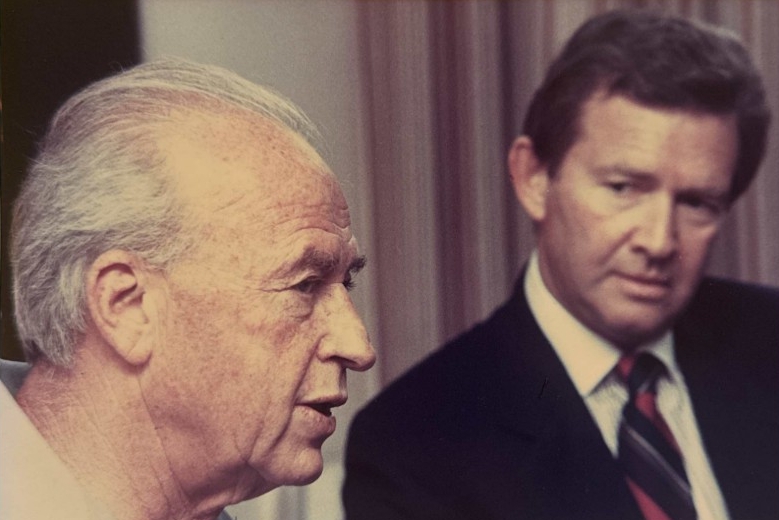
    Mr. Aaron (right) listens to Yitzhak Rabin, former primer minister of Israel.Courtesy of the family

    Mr. Aaron was friendly and energetic, his family said, and he excelled at collaborating through phone conversations and face-to-face encounters. He rarely micromanaged big contracts, colleagues said, but was available if something extra was needed.

    He mentored young lawyers and talked frequently with former Gov. Ed Rendell, former Sens. Arlen Specter and Bob Casey, and other government officials. Colleagues called him “a tremendous community leader and visionary” and “the smartest, warmest, most terrific guy” in online tributes.

    One colleague said: “It was easy to see the positive impact he had on those around him.”

    The son of a New York rabbi, Mr. Aaron was a prolific fundraiser and the local public face of Jewish philanthropy for decades. He served as president of the Federation of Jewish Agencies of Greater Philadelphia from 1983 to 1987, as chair of the United Israel Appeal for the United Jewish Appeal, as chief volunteer officer for the Jewish Federations of North America, and in other roles.

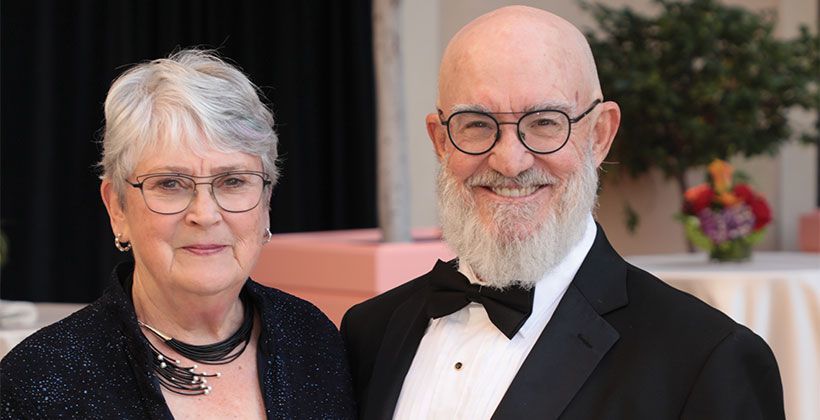
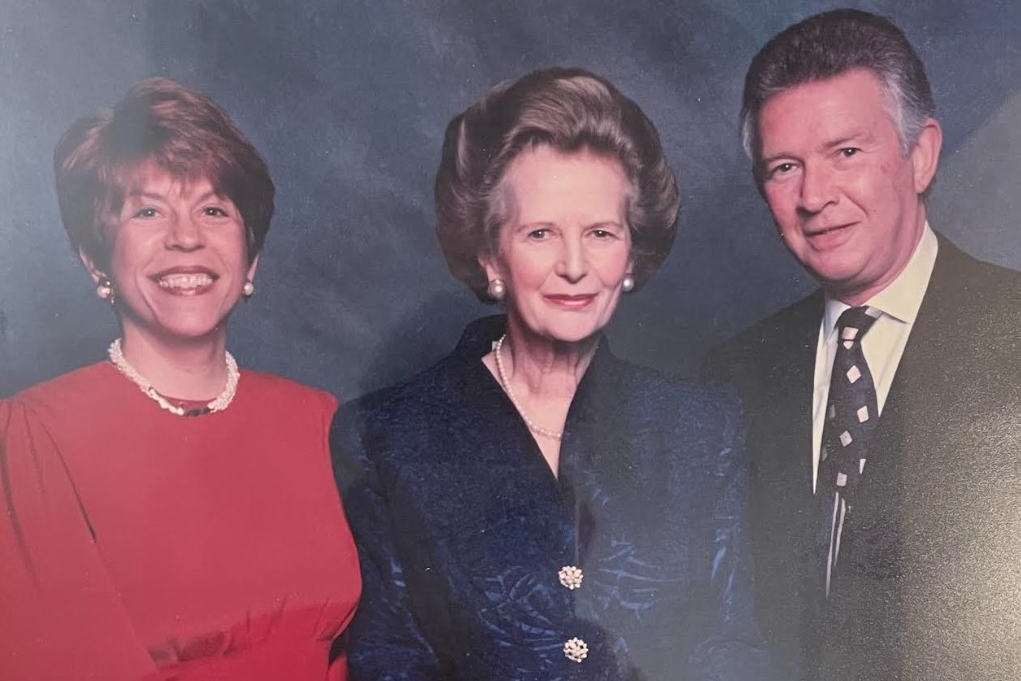
    Mr. Aaron and his wife, Carol (left), met Margaret Thatcher, former prime minister of the United Kingdom, on their travels.Courtesy of the family

    He was adept at balancing assets and liabilities for the nonprofit agencies. He oversaw record-breaking fundraising campaigns in Philadelphia and helped other leaders determine the direction of international Jewish philanthropy.

    His 10-hour fundraising phone-athon at the Civic Center in 1986 drew more than 2,400 volunteer callers and raised a then-record $2.4 million in pledges to the United Jewish Appeal. “We have no trouble getting more than enough volunteers for this,” Mr. Aaron told The Inquirer. “People look forward to coming here all year. There’s camaraderie and plenty of fun.”

    Colleagues at the Jewish Agency for Israel called him “an inspiration to many” and “a true mensch whose character, integrity, and warmth will be greatly missed.”

    Mr. Aaron traveled to Israel often and met with former Prime Minister Yitzhak Rabin, former U.K. Prime Minister Margaret Thatcher, and other leaders. “He worked tirelessly to foster understanding and solidarity between his Philadelphia community and Israel,” his family said. “He leaves behind a legacy of integrity, service, and enduring impact on the city he came to cherish and the causes that defined his life.”

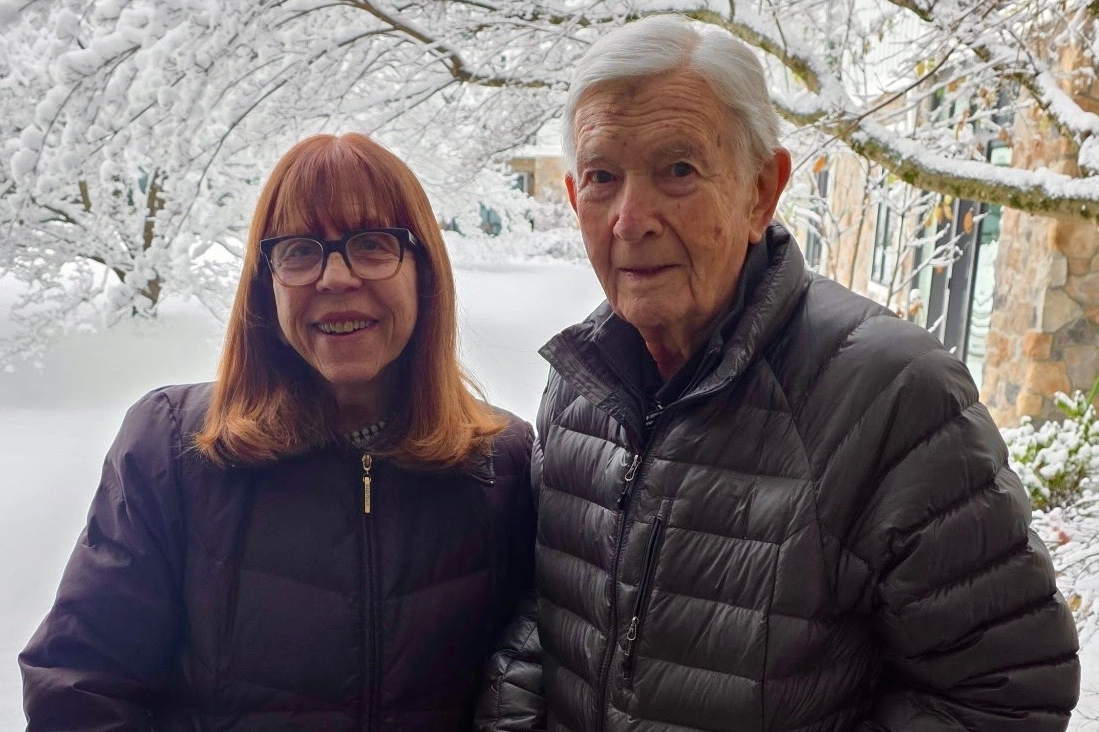
    Mr. Aaron and his wife, Carol, married in 1955.Courtesy of the family

    Bennett Louis Aaron was born Oct. 2, 1933. He and his older brother, Joseph, shared a tiny bedroom, played stickball after school, and cheered for the old Brooklyn Dodgers baseball team.

    He graduated from high school at 16 and earned a bachelor’s degree at Columbia University in 1954 and a master’s degree in taxation at New York University School of Law in 1966.

    He met Carol Perlmann in 1953 at the Pennsylvania summer camp his parents owned, and they married in 1955. They lived in Merion and Bala Cynwyd before moving to Beaumont, and reared daughters Marjorie and Roberta, and sons Morrie and Steve. His daughter Roberta died in 2003.

    Mr. Aaron was an avid tennis player. He had season tickets to Eagles games and traveled with his wife to four Olympic Games.

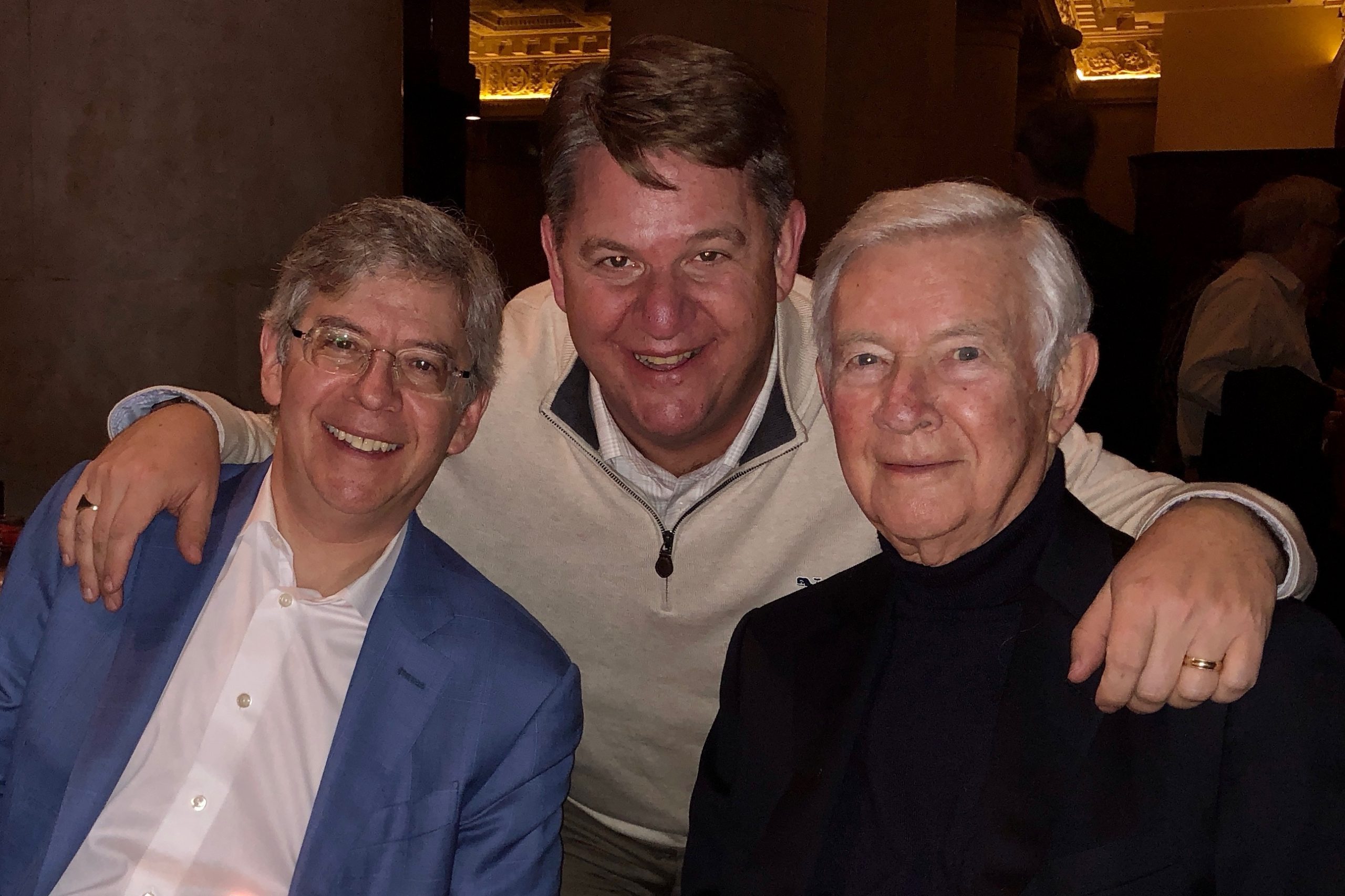
    Mr. Aaron (right) was close with his sons Morrie (left) and Steve.Courtesy of the family

    He cherished his family, everyone said, and he and his wife toured the world together. He was dapper and debonair. He liked to explore downtown city streets between meetings and answer the phone with “Hello there.”

    “He set the standard for hard work and integrity,” his son Morrie said, “always coupled with kindness, compassion, and generosity.”

    “He was the definition of a gentle man,” his son Steve said. His family said: “His was a life lived fully, purposefully, and with a really, really big heart.”

    In addition to his wife, children, and brother, Mr. Aaron is survived by eight grandchildren and other relatives.

    Mr. Aaron “was the definition of a gentle man,” his son Steve said.Courtesy of the family

    Services were held earlier.

    Donations in his name may be made to Penn State Hillel, 180 S. Garner St., State College, Pa. 16801; and the Jewish Federation of Greater Philadelphia, 2 Commerce Square, 2001 Market St., Suite 2300, Philadelphia, Pa. 19103.

  • Philly feds charge two with running a cryptocurrency money laundering scheme that tried to conceal nearly $400 million

    Two men living in the Republic of Georgia have been charged by federal authorities in Philadelphia with running an international money laundering scheme that tried to use cryptocurrency exchanges to mask the source of nearly $400 million, prosecutors said Thursday — including at least $20 million that came directly from accounts associated with illicit actors on the dark web.

    Igorevich Tkachuk, 37, of Ukraine, and Alexander Vladimirovich Ledenev, 25, of Russia, were arrested Wednesday in Georgia, where both live in the coastal city of Batumi, according to U.S. Attorney David Metcalf. Prosecutors will seek to extradite them to Philadelphia to face money laundering charges.

    Metcalf said the two men were part of an organization that dubbed itself “AudiA6.” The group had two primary functions, prosecutors said: managing a cybercrime forum known as Dark2Web, where users could strike deals to commit crimes against targets for money, and running a cryptocurrency-based money laundering service, through which users could have their virtual currency “mixed” into different streams that would make the origins harder for authorities to trace.

    Prosecutors said Dark2Web was an online forum that allowed users to discuss deals about committing crimes.Court filings, U.S. Attorney's Office

    Over the last five years, prosecutors said in a criminal complaint, AudiA6 received $389 million from customers to launder, which the group would “mix” in exchange for a commission fee.

    About $20 million of those deposits came from accounts prosecutors said were known for committing illicit activity, including groups that perpetuated ransomware attacks or people who were known to have received stolen funds online. Millions more appeared tied to similarly suspicious groups through indirect transactions, they said.

    Over the course of the scheme, prosecutors said, AudiA6 received at least $10 million in profit. The group would often charge higher commission fees for smaller transactions.

    According to the complaint, federal authorities conducted six undercover transactions with AudiA6 between December 2022 and May 2026. In each, the document said, agents said in messages — typically in Russian — that they wanted to exchange “dirty” digital currency, such as Bitcoin, and AudiA6 took the funds, “mixed” them, and returned the washed proceeds, minus a commission.

    In one case this April, an agent in Philadelphia sent a message to the AudiA6 exchange saying: “is [Bitcoin] from scam OK? Stolen bitcoin…”

    According to the complaint, the person running the exchange replied: “don’t care.”

    AudiA6 then mixed about $5,000, the complaint said, keeping a fee of about $300.

    A few weeks later, the document said, an agent in Philadelphia reached out to the exchange again and asked about laundering proceeds from selling cocaine online.

    “Is it ok or are the risks too high?” the agent asked, according to the complaint.

    “Everything like that needs to go through a mixer,” the operator wrote back, before laundering about $5,100 worth of bitcoin and keeping $400 as a fee.

    Despite AudiA6’s promises to customers that the mixed transactions would make funds untraceable, investigators said, the group “was not actually sending and receiving from distinct, unconnected sources.”

    “Instead,” they said, “transactions could be directly traced through exchange records.”

    Neither Tkachuk nor Ledenev had attorneys listed in court records Thursday.

    Each could face up to 20 years in prison if convicted, prosecutors said.

  • El Niño has formed officially, and it likely will be one of the strongest on record

    El Niño has formed officially, and it likely will be one of the strongest on record

    El Niño has formed officially and it is likely to become one of the strongest on record, with potentially profound impacts on the hurricane season and the U.S. winter, government meteorologists announced Thursday.

    As it matures during the summer and fall, it is likely to hold down the numbers of Atlantic tropical storms. And while it is impossible to predict what it might mean for winter around here, some of Philly’s strangest winters have coincided with El Niño.

    Scientists with the National Oceanic and Atmospheric Administration see a 63% likelihood that this El Niño will qualify as “very strong” and rank among the elite of the last 75 years.

    El Niños occur every two to seven years as part of a natural process as east-to-west trade winds that push water into the western Pacific slacken and massive amounts of warm water move eastward.

    In the key El Niño region of the central Pacific, sea-surface temperatures over a 2.4 million-square-mile area become anomalously warm. In this instance, NOAA says, the temperatures may end up being 3.5 degrees Fahrenheit higher than normal.

    All that warm water interacts with the overlying atmosphere to disrupt weather-bearing winds worldwide.

    The naming has been attributed to Peruvian fishers who lamented the effects of the warmth on the anchovy catch. They called it a Spanish term for the Christ child, since this tended to happen around Christmastime.

    El Niño and the hurricane season

    El Niño’s impacts can be enormously disruptive, but it’s possible that residents of the Caribbean, Atlantic, and Gulf coasts will catch a break.

    The phenomenon can have a dampening effect on hurricanes.

    One well-documented effect of the warming is that it generates powerful upper-air winds from the west that can have shearing effects on incipient tropical storms in the Atlantic, thousands of miles away.

    On Wednesday, Philip Klotzbach, a researcher at Colorado State University, which developed the prototype for those seasonal hurricane outlooks, reduced the storm numbers in his forecast and is now calling for only five hurricanes. The average is seven.

    Some of the quietest Atlantic hurricane seasons on record have occurred during strong El Niño years.

    El Niño and the Philadelphia winter

    Strangeness is no stranger to Philadelphia winters, but strong El Niños have coincided with extremes of snow — in both directions.

    In 1972-73, for example, no measurable snow fell in Philadelphia, and only 0.8 inches accumulated in the 1997-98 winter. Philly was hit with a 21.3-inch blizzard in February 1983 and a 2-footer in January 2016, both during high-end El Niño years.

    Unfortunately, in the short term, El Niño isn’t going to be doing anything about this heat and humidity.

  • Oceans are warming, but scientists are concerned about this cold blob

    As the planet warms, it’s becoming increasingly rare to see cooler than average conditions across vast stretches of the ocean, particularly as an expected super El Niño scorches parts of the Pacific.

    But right now, an expansive area of well below-average ocean temperatures exists in the North Atlantic, to the east of Newfoundland. There, unusually cool waters have lingered for the last year.

    This patch of cool water is occurring in one of the few areas where the ocean hasn’t warmed in recent decades — and where scientists are closely monitoring for changes in the Atlantic meridional overturning circulation (AMOC).

    The AMOC, which extends deep into the Atlantic Ocean, is a vital current that carries heat northward from the tropics toward the pole and plays a critical role in the climate around Greenland, Iceland and northern Europe. If the cold blob persists for years, it could eventually cool the climate in these places — and signal this key current is weakening. Should it collapse, a massive cooling could occur in the Northern Hemisphere, while it warms in the south; sea levels could rise in some areas and seasons could flip in others.

    As this conveyer belt of warm, salty water reaches the North Atlantic, it loses heat to the cold air above, becoming denser and sinking into the deep ocean. But as ice in the Arctic melts, introducing more freshwater into the sea, it becomes harder for the water to sink, potentially slowing down the current.

    Scientists have been monitoring the current’s behavior in the Irminger Sea, south of Greenland, where the U.S. National Science Foundation recently announced that it is dismantling its ocean monitoring equipment.

    In Iceland, a collapse of the AMOC is considered a national security risk, since it would send winter temperatures plunging to minus-50 degrees Fahrenheit.

    Recently published research from a team led by Stefan Rahmstorf of the Potsdam Institute concluded that “the strong evidence for a weakening AMOC is a serious concern for society and policy” and that it requires “urgent attention.” However, other research published last year found no evidence of long-term weakening, but that it was still expected to slow some in the future.

    There’s high confidence that the AMOC is weakening according to the U.N. Intergovernmental Panel on Climate Change. The IPCC has indicated, with medium confidence, that it will not abruptly collapse before 2100.

    But what about the recent cold blob? Does it offer a sign of AMOC’s eventual collapse or can it be explained by a combination of forces?

    Over the last week, the current cold blob has trended on social media, raising fresh concerns about the status of AMOC.

    While stormy and windy weather in the North Atlantic have enhanced the cold blob this year, those factors don’t immediately describe why it has remained there for a year straight.

    Other natural climate patterns, such as the Atlantic Multidecadal Oscillation (AMO), have affected the ocean’s conveyer belt. When the AMO is in its positive phase, waters warm in the North Atlantic. The opposite is generally true when it’s in its negative phase.

    From mid-2023 to mid-2025, when the AMO was predominantly in its positive phase, the cold blob disappeared for extended periods. But when it became negative in mid-2026, the cold blob returned.

    Based on this, a mix of climate forces — including human-driven warming as well as natural variability — appear to be contributing to the current conditions. And climate models predict that the cold blob could linger for the rest of the year — and possibly expand and become more frigid.

    What the current cold blob means for the future state of AMOC is uncertain, but models stop short of signaling widespread cooling across western Europe, Iceland or Greenland — the doomsday scenario that has so far been the stuff of movies.

  • Artist Miguel Horn’s sculptures will adorn new Avenue of the Arts median

    Artist Miguel Horn’s sculptures will adorn new Avenue of the Arts median

    The Broad Street Avenue of the Arts makeover project, which broke ground in January, is inching its way to completion.

    The remaking of the median on South Broad Street in front of the Kimmel Center, part of the larger AveArts 2.0 project, will now include the installation of a pair of sculptures by artist Miguel Horn.

    The South Philly-based artist, who is behind several public sculptures in the city, including Center City’s ContraFuerte, sought approval for the sculptures’ concept review in a Philadelphia Art Commission meeting on Wednesday.

    The sculptures are scheduled to be installed this fall and remain in place for five years.

    Artist Miguel Horn at Tacony Creek Park, 1101 E. Cayuga St., in the Juniata Park section of Philadelphia on Tuesday, September 13, 2022.Alejandro A. Alvarez / Staff Photographer

    The Broad Street renovation project involves reconstructing the median into a raised planter, adding landscaping, restoring pavement, and installing pedestals and lighting for the public art. The median construction is scheduled to be completed this month, while Horn’s sculptures will be installed in the fall.

    Made of bright yellow powder coated steel, Horn’s sculptures will display a blurred image of moving pedestrians. The concept for the design, Horn said, came from him making Light Detection and Ranging (lidar) scans of buildings around Philadelphia. He began to notice something interesting when people walked in front of the scanner.

    “This section of the Reading Terminal Market at Filbert Street was flooded with pedestrians walking by, and these movements of pedestrians across this space created this tapestry of figurative elements, abstraction, and I just fell in love,” Horn said at Wednesday’s meeting.

    A rendering shows the median on South Broad Street in front of the Kimmel Center, part of the larger AveArts 2.0 project, which will include sculptures by artist Miguel HornCourtesy of OJB & Miguel Horn

    He then proceeded to go through the scans and select different movements to create the final sculpture design of walking pedestrians.

    “This Muybridge-like study of movement for me was the most compelling thing sculpturally I’ve seen rendered on a computer screen in years,” he said, referring to the pioneering photographer best known for creating The Horse in Motion (1878).

    Horn’s design did raise some concerns among attendees on Wednesday, including potential sight line blockages for motorists.

    In the meeting, he assured that there was no concern for safety. His presentation to the Arts Commission claimed that the sculptures would still allow for a 215-foot sight line of incoming traffic on either side of the median.

    A rendering shows the median on South Broad Street in front of the Kimmel Center, part of the larger AveArts 2.0 project, which will include sculptures by artist Miguel HornCourtesy of OJB & Miguel Horn

    “There will not be an interruption to any visual sight lines,” he said.

    Design Advocacy Group (DAG) vice-chair David Brownlee, who did not attend Wednesday’s meeting, considers planting trees in the median impractical.

    “No one has ever said to me that the problem with Broad Street is there’s no shade in the middle of the street,” he said. “Or that’s the problem with Broad Street is you get out of the street and you look up and see that tower of City Hall.”

    Rather than placing trees and sculpture in the middle of the road, Brownlee suggested widening of sidewalks and installing art on each side so pedestrians can view them while walking.

    Horn’s concept review for the sculptures was approved by the Arts Commission, with a final review expected at a later date.

    A rendering shows the median on South Broad Street in front of the Kimmel Center, part of the larger AveArts 2.0 project, which will include sculptures by artist Miguel HornCourtesy of OJB & Miguel Horn

    The AveArts 2.0 project aims to beautify Avenue of the Arts into a cohesive streetscape. The plan is to renovate all 10 blocks between City Hall and Washington Avenue at a cost of $15 million per block.

    Funding for the project is expected to be a mix of public money, corporate and individual donations, and foundation support.

    “I find this to be a reclamation of our public space through this figurative artwork,” Horn said. “I’m constantly trying to find opportunities to bring the human experience to the forefront of these public spaces.”

    A previous version of the article misstated the median project’s timeline. It will be completed this month.