Tag: topic-link-auto

  • The Gordie Howe Bridge opening between the U.S. and Canada was postponed. Here’s what to know

    The Gordie Howe Bridge opening between the U.S. and Canada was postponed. Here’s what to know

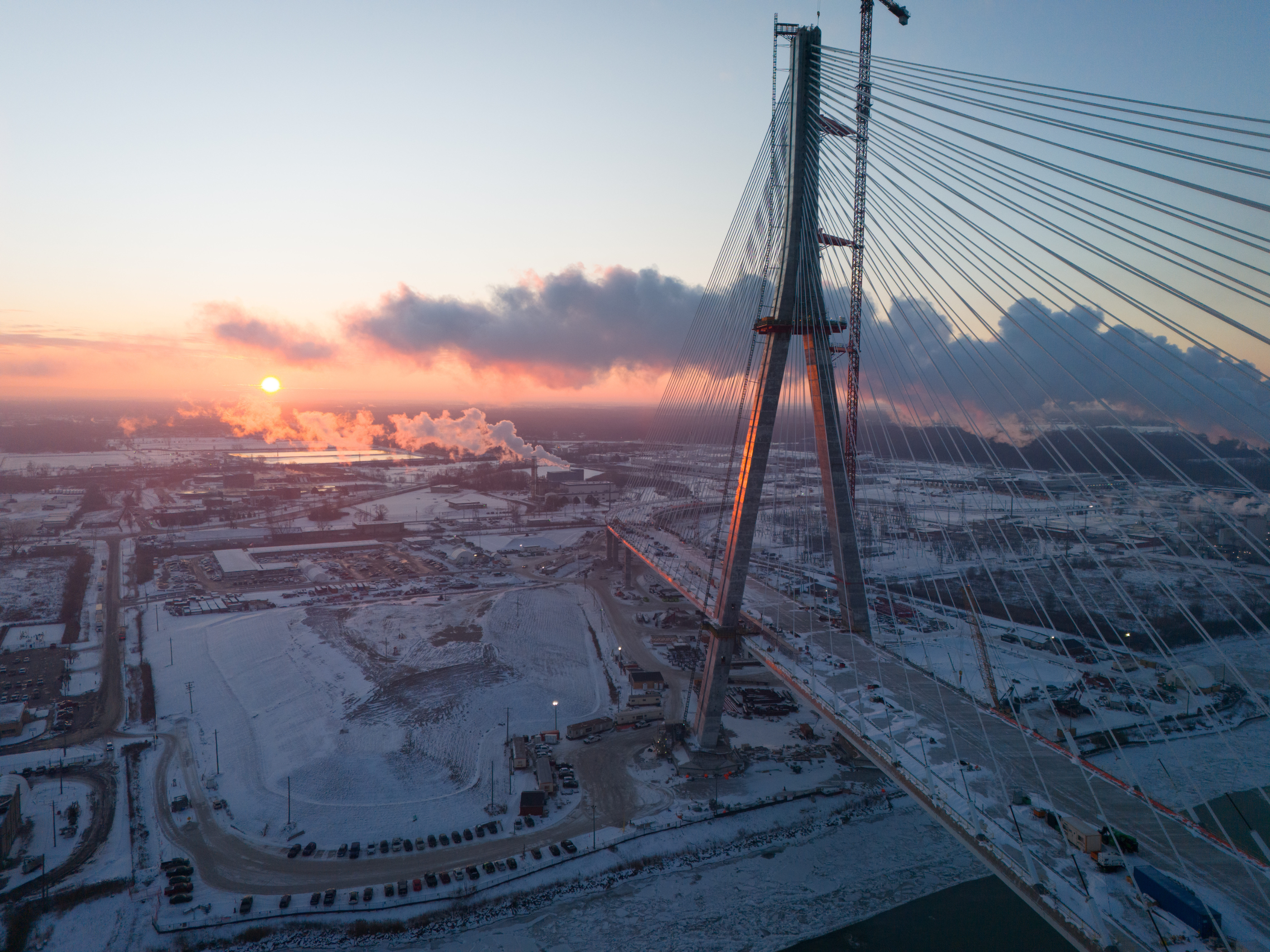
    A day before a ribbon-cutting ceremony, the opening of a new bridge meant to ease congestion at the busiest trade corridor between Canada and the United States hit another roadblock, four months after President Donald Trump vowed to block it.

    The authority that will operate the 6.4 billion-Canadian-dollar Gordie Howe International Bridge between Detroit and Windsor posted a notice online Thursday announcing that the opening, scheduled for late Friday morning, had been postponed.

    “Canada and the United States have agreed to delay the opening of the bridge, taking the necessary time to resolve any outstanding issues,” Chuck Andary, acting CEO of the bridge authority, said in a statement. “We appreciate the efforts of workers on both sides of the border to get the bridge to its current state of readiness.”

    The statement offered no details about those issues and gave no new opening date.

    Invitations to a Friday opening ceremony had been sent to participants Tuesday.

    In February, Trump threatened to stop or delay the project in a rambling social media post, saying he wished to punish Canada for what he described as its exploitation of the United States and its revival of trade ties with China, among other perceived transgressions.

    He also demanded compensation for a wealthy Detroit-area family that owns a nearly century-old bridge upstream, which currently carries around $300 million a day in trade.

    Matthew Moroun, a billionaire trucking industry scion in Detroit whose family has mounted legal challenges of the project for decades — one even reaching Canada’s Supreme Court — and aggressively lobbied governments on both sides of the border.

    Trump had issued his post hours after Moroun met in Washington with Commerce Secretary Howard Lutnick, The New York Times reported in February. Lutnick then called Trump.

    Less than one month before that meeting, Moroun donated $1 million to a super PAC devoted to Trump.

    What’s being negotiated?

    After Trump’s initial post, Canada’s prime minister, Mark Carney, said he called Trump and explained that although Canada paid for the bridge, it will share ownership with Michigan under a 2012 agreement between the two governments.

    Canada is Michigan’s largest export market.

    “This is a great example of cooperation between our countries,” Carney told reporters at the time. “I look forward to it opening.”

    Carney said that Trump asked Pete Hoekstra, who is the U.S. ambassador to Canada and is from Michigan, to “play a role in smoothing the conversation” about the bridge.

    In late May, Carney told reporters that there have been “discussions at the ambassadorial level around the bridge.” Neither Carney or officials in Canada or Michigan have offered any details about those talks.

    The bridge opening delay comes as a July 1 review deadline for the United States-Mexico-Canada Agreement on trade looms. The Trump administration has been offering varying signals about its continuation in the pact.

    On Wednesday, Trump said: “I don’t know that I’m going to renew it.”

    The following morning at a conference in Toronto on relations between Canada and the United States, Hoekstra appeared more optimistic about the pact’s continuation.

    He advised Canadians to “go into these negotiations very aggressively and say we know America has needs across the board and we’re here to partner with America.”

    He added: “We’re open to offers, make your case.”

    Why did Canada build a second bridge?

    The catalyst for the new bridge was the closing of the border after the Sept. 11, 2001, terrorist attacks.

    The enormous, miles-long traffic jams of trucks along roads in Ontario underscored the vulnerability created by relying on a single bridge for commercial traffic at North America’s busiest land crossing.

    There is a tunnel for vehicles linking Windsor and Detroit, but tractor-trailers are too tall to fit.

    The Ambassador Bridge, which opened in 1929, was also showing its age. Chunks of it regularly fell off, causing lane reductions on the bridge and street closings below in Windsor.

    An expressway that runs across southern Ontario ends on the outskirts of Windsor, forcing trucks to make a slow journey to the bridge on a congested local road.

    Investors and both governments floated several proposals, including a plan by the Moroun family to build a second crossing alongside the four-lane Ambassador Bridge.

    Who is the Moroun family?

    Manuel Moroun purchased the Ambassador Bridge in 1979 after building a fortune largely through the expansion of his father’s trucking company. Matthew Moroun, Manuel Moroun’s son, gradually took over as head of the family before the older Moroun’s death in 2020.

    Manuel Moroun was known for being exceptionally litigious even with other members of his family. He also had a reputation for disregarding government and court orders.

    The Moroun family bought properties on both sides of the border near its bridge and was known for leaving the buildings in those areas to decay, leading to disputes with both cities.

    A former railway station in Detroit that became a widely known symbol of the city’s decay was among the family’s holdings. It was sold to Ford Motor Co. in 2018 and was restored.

    Who paid for the new bridge?

    After finding no interest among U.S. lawmakers, the Canadian government has entirely financed the bridge’s construction and even paid for the highway interchange on the American side. The United States paid for the bridge’s border inspection facility.

    The project cost CA$6.4 billion, or $4.7 billion. The province of Ontario also completed a $1 billion highway expansion that opened a decade ago.

    By alleviating traffic on streets in Windsor, the bridge, which has been built roughly six years behind schedule, will benefit both countries, said Dennis Darby, CEO of the Canadian Manufacturers and Exporters, an industry group.

    “Fewer bottlenecks and fewer surprises mean more resilient, competitive supply chains,” Darby said in a statement.

    This article originally appeared in The New York Times.
  • A city music festival drew 80,000 with Louis Armstrong on this week in Philly history

    A city music festival drew 80,000 with Louis Armstrong on this week in Philly history

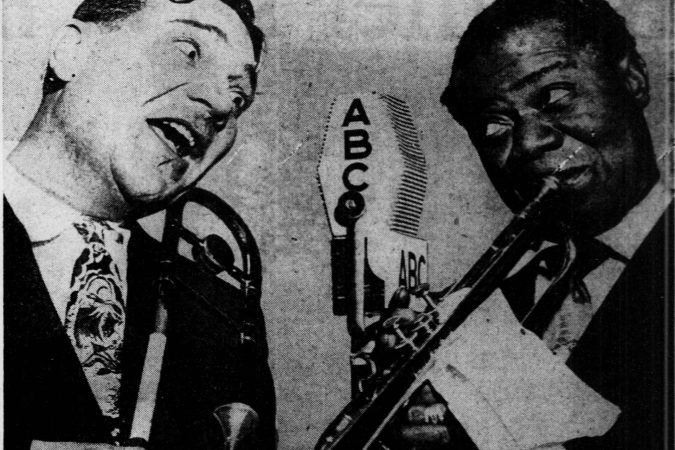
    Before Jay-Z at the Roots Picnic or Bad Bunny at Made in America, there was Louis Armstrong at the Philadelphia Music Festival.

    Before there was the American Idol competition, there was Philly’s “Voices of Tomorrow.”

    Shortly after Germany surrendered, but a few months before Japan followed suit, Philadelphia put on its first true citywide music festival.

    In 1945, the city held its inaugural festival, creating an event leaders claimed was for the kids and a distraction from war, and a celebration of Philly’s robust music scene. It also made use of a large stadium during the slower summer months post-World War II.

    By 1949, the city was on its fifth event, and the festival had proved to be an opportunity to raise money and spirits.

    ‘Symposium of the arts’

    On Friday night, June 10, 1949, the city’s festival held its fifth iteration.

    The Inquirer, which sponsored the event, called it a “symposium of the arts.”

    “On a magnificent June night with a great golden moon peeping over the rim of Municipal Stadium, an exited and delighted throng of 80,000 people, largest crowd ever to attend a cultural event in this city, roared their applause last night for the star-studded fifth annual Philadelphia Music Festival,” The Inquirer reported the following day.

    The paper said the total eclipsed the previous year’s attendance of 72,000, with acts like jazz legend Armstrong, violinist Jeanne Mitchell, and pianist and vocal improvisationalist Alec Templeton.

    These performances included local acts from area high schools, bugle corps, and marching bands.

    ‘Voices of Tomorrow’

    In its annual “Voices of Tomorrow” contest, four young singers rose above a field of more than 2,000 competitors, singing in opera and “other fields” hinting at what was coming in the following decade. Competitors would sing in front of the crowd, which would choose the four winners by applause.

    And the nearly four-hour event closed with the playing of “The Star-Spangled Banner.”

    Municipal Stadium, which was opened in 1926 for the Sesquicentennial, would be named after John F. Kennedy in the 1960s, and would close in 1992.

    The city’s 11th annual music festival in 1955 was its last until the 1960s brought the Philadelphia Folk Festival, Beatlemania, and a cultural revolution.

  • How Philadelphia is preparing for measles and other disease outbreaks during FIFA World Cup events

    How Philadelphia is preparing for measles and other disease outbreaks during FIFA World Cup events

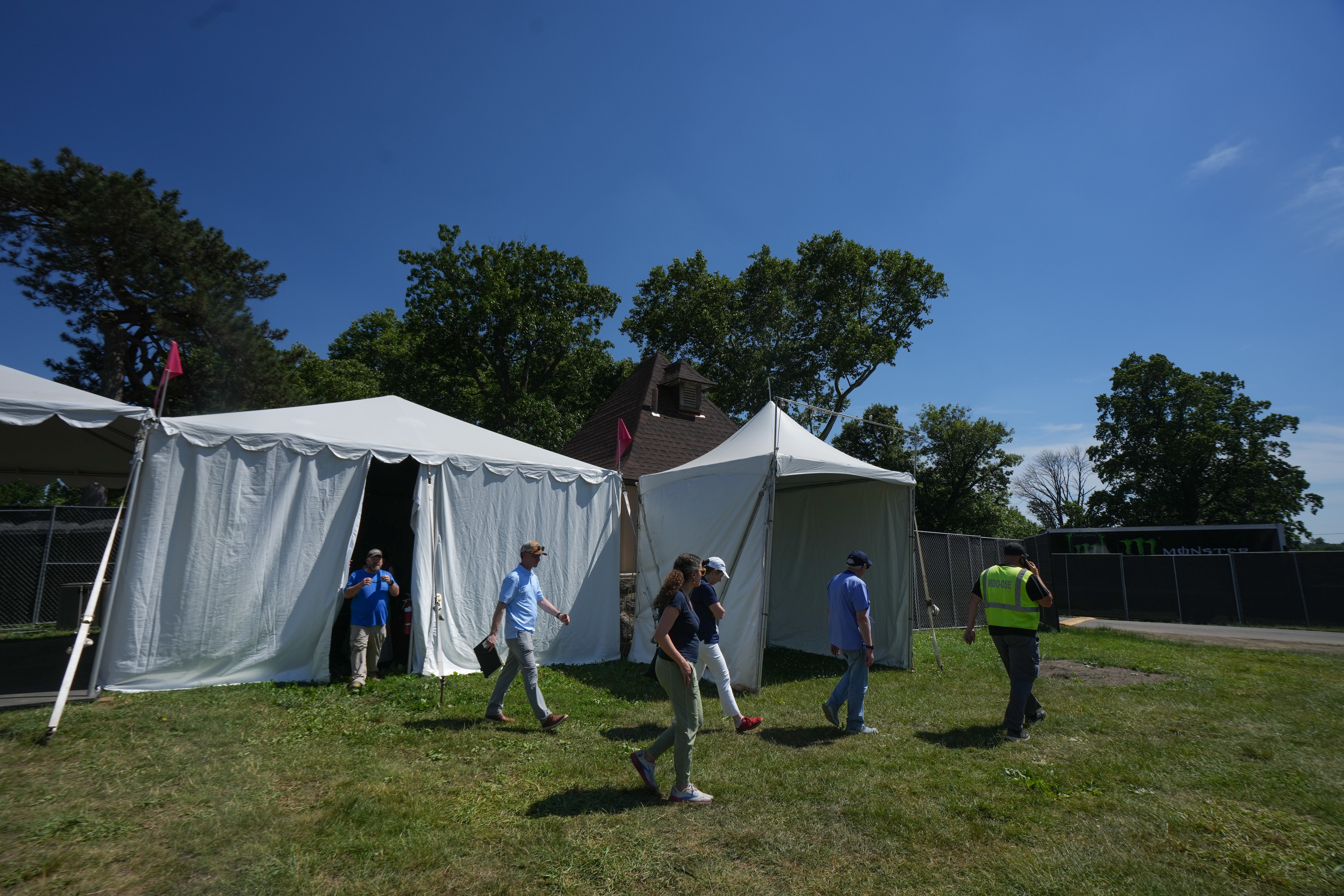
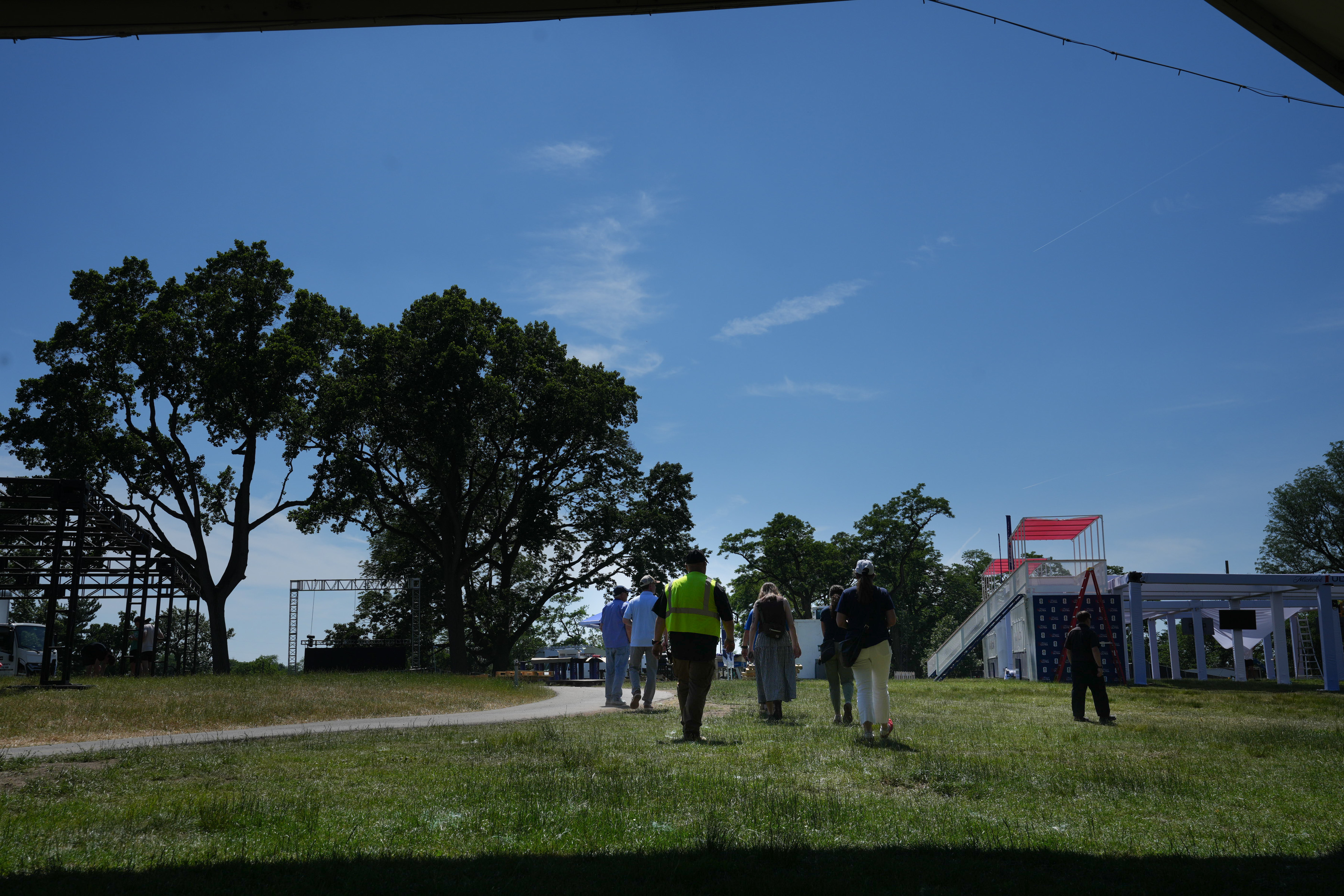
    On a muggy Friday days before the World Cup began, a small team of medical emergency planners inspected the cavernous, air-conditioned tent erected for patients at Lemon Hill in Fairmount Park, not far from the enormous screen where thousands can watch matches through July 19.

    Near a FIFA tent already full of merchandise, and branded “fan pavilions” in various stages of construction, Philadelphia’s host city medical lead, Patrick J. Brennan, paced what is now the medical home base for dozens of doctors, nurses, and EMTs over the next several weeks.

    Brennan, who is also the chief medical officer of University of Pennsylvania Health System, pointed out where the dunk tanks for heatstroke victims would go. He walked through tents with massive fans and misters and visited a smaller first-aid tent for minor medical issues.

    Philadelphia is no stranger to large events, from a papal visit to the NFL Draft to the annual Roots Picnic. But the World Cup fan festival at Lemon Hill will be open for more than a month — and is taking place in a summer of high-profile events expected to bring more than 1.5 million visitors to the city.

    Just as the international soccer clubs are packing up, visitors will arrive to mark the country’s 250th anniversary, followed closely by Major League Baseball’s All-Star Game and Home Run Derby in mid-July.

    “That’s the difference — the duration of the event,” Brennan said.

    Preparing for the full range of medical emergencies got underway nearly two years ago for Philadelphia’s public health leaders and largest health systems. They have prepared for heat-related illnesses, injuries, mass casualties, and terrorism.

    Infectious disease is a leading public health concern among host cities and national health agencies.

    Measles, a disease once considered eradicated through widespread vaccination and now on the rise across the country, is at the top of their list. An Inquirer analysis found that the Philadelphia region is pockmarked with vulnerable communities, where vaccination rates have fallen below the rate scientists say is necessary to prevent widespread illness.

    Not far from the World Cup action, an outbreak in Lancaster, Berks, Dauphin, and Lebanon Counties has sickened 52, as public health officials struggle to contain its spread.

    Now thousands of people from all over the world will turn Philadelphia into a petri dish prime for the spread of infectious diseases. Yet another concern is an Ebola outbreak in parts of Africa, including the Democratic Republic of Congo, which has a team participating in the World Cup games in Houston.

    Public health leaders say their best strategy for preventing widespread illness, especially should a case of highly infectious measles arise, is to respond as quickly and efficiently as possible.

    Hospitals have added questions about measles vaccination to their routine emergency department screening, with weekend and evening contacts on call at the city lab that would test potential measles samples. Newly posted flyers in local medical buildings explain how to recognize the early signs of measles — which many doctors have never encountered.

    “My main concern with measles are the pockets where people are under-vaccinated, too few people are vaccinated to really stymie an outbreak,” Brennan said. “It’s going to be hard to prevent it from coming into the country.”

    Preparing for public health risks

    Public health preparations for the World Cup began almost two years ago with meetings to identify health risks and develop a plan for protecting against them.

    The city’s health department, public safety units, and leaders from top health systems, including Temple Health, Penn Medicine, and Jefferson Health, all had seats at the table.

    They hashed out responses for potential public health emergencies ranging from bioterrorism, a mass casualty, and violence to routine heat-related health issues. Experts anticipate that the ongoing heat wave, paired with high levels of alcohol consumption, will lead many to experience heat exhaustion, dehydration, and potentially heatstroke.

    The prep work built on efforts for past major events, such as Pope Francis’ visit in 2015 or the 2016 Democratic National Convention. New this time around, Philadelphia and World Cup host cities across the country are paying much more attention to infectious-disease concerns.

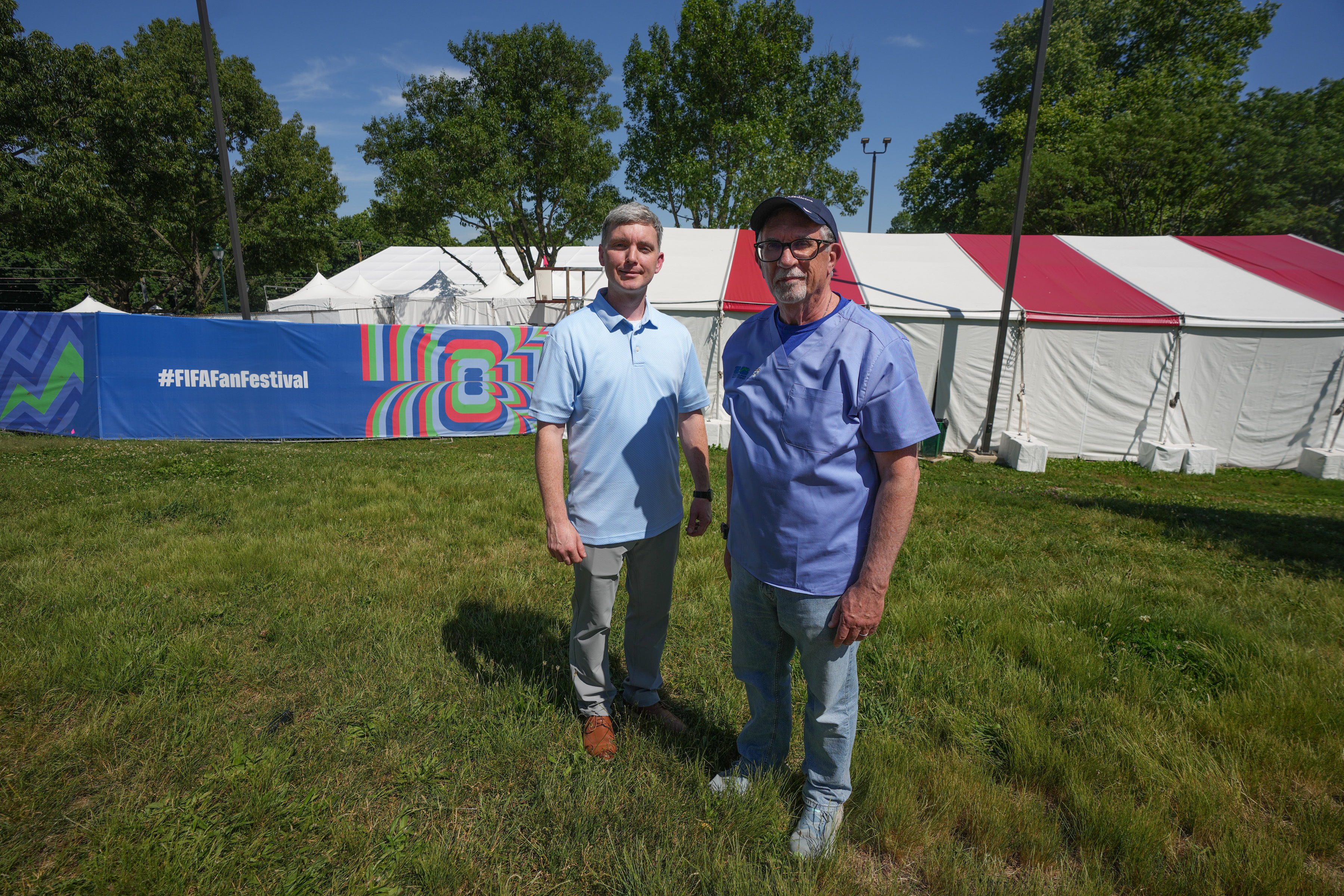
    P.J. Brennan (right), Penn Medicine’s chief medical officer and the medical team lead for FIFA’s Philadelphia events, stands with Jack Welsh, an emergency preparedness specialist and clinical nurse at Penn Medicine, outside the main medical tent at the FIFA Fan Fest in Lemon Hill Park.Jessica Griffin / Staff Photographer

    Until recent years, measles was not “immediately on the radar” for public health planning, said Jessica Caum, director of disease control for the Philadelphia Department of Public Health.

    “We’re in a different place now with measles,” she said. “More cases, increases in vaccine hesitancy, decreases in vaccination rates — all of these things are important to keep in mind.”

    The planners looked at staffing levels at medical tents and hospitals, including where surge staffing could come from. They developed a plan for where to quarantine a large number of people, in the event of an outbreak of measles or other infectious disease, but declined to provide details.

    “We want to be as prepared as possible,” Caum said.

    Game-day strategy for infectious disease

    All that preparation still may not provide a firewall against weeks of sustained sports chaos.

    The city’s game-day strategy, should a suspected measles case crop up, is to react as quickly as possible.

    Temple trained its emergency department staff to ask new screening questions about measles symptoms and vaccination status in an effort to quickly identify anyone who is at risk, said Daniel Feinberg, chief medical officer for Temple University Hospital Inc.

    Temple has been distributing measles information in Spanish and English to providers at its hospitals. Joe Lamberti / For The Inquirer

    People whose vaccination status is unclear, or who say they are unvaccinated, will immediately be whisked to an isolation room if they show symptoms associated with measles, such as fever, cough, runny nose, and red eyes.

    The telltale blotchy red rash does not typically appear for up to four days, though hospital administrators distributed photos of it to help medical staff recognize it.

    Once isolated, people with suspicious symptoms will be tested, with the sample rushed to a city lab on call for such emergencies.

    Administrators lined up contact information to reach the lab in the evenings or weekends, when it is typically closed, and discussed the fastest way to get a sample to the lab — potentially to have someone with good sneakers run.

    “We don’t want any time wasted,” said Carlene Muto, vice president of infection prevention and occupational health services at Temple Health.

    The MMR vaccine can protect against the virus if given to someone within 72 hours of being exposed. Measles immunoglobulin, which contains concentrated antibodies, can provide temporary protection against the virus if given within a few days of exposure. But it is often reserved for infants and other high-risk patients.

    The faster health providers identify a measles case, the faster they can work to trace who else may have been exposed.

    Medical tents are prepared to handle medical emergencies during the World Cup.Jessica Griffin / Staff Photographer

    The risk of exposure is high when someone with measles attends a busy outdoor event, and the challenge of locating all the people who could have come in contact with the disease is immense.

    Nine out of 10 unvaccinated people who come into contact with measles will get sick, making it among the most highly contagious diseases.

    Anyone who does not get treated in time and has not been vaccinated will need to quarantine for 21 days.

    At Jefferson, health system screening protocols are routinely updated to address the latest health threats, said Eric Sachinwalla, Jefferson’s medical director of infection prevention. Its hospitals recently added Ebola screening questions for patients who are being admitted and have traveled to at-risk countries.

    Jefferson and other health systems are more likely to see “low-impact” but predictable threats: COVID-19 and other respiratory illnesses, sexually transmitted infections, and gastrointestinal diseases. These illnesses “can spread between people pretty quickly,” he said, but health systems are generally equipped to handle them.

    A case of Ebola or measles, however, requires significant resources devoted to treatment and preventing further cases — so hospitals also have to carefully prepare for that possibility, he said.

    “It’s balancing those two things. We plan for the high-occurrence things but also [diseases with] high potential impact,” Sachinwalla said.

  • A St. Joe’s Prep grad is recovering from a traumatic brain injury after violent high school ‘tiki party’ in Wissahickon park

    A St. Joe’s Prep grad is recovering from a traumatic brain injury after violent high school ‘tiki party’ in Wissahickon park

    As graduating seniors at St. Joseph’s Preparatory School prepared for college, summer jobs, and other hallmarks of young adulthood this spring, 17-year-old Shawn Rinnier was focused on a simpler goal.

    He hoped to muster the physical strength to walk across the graduation stage to collect his diploma.

    That’s because the Bryn Mawr teenager is recovering from a traumatic brain injury that his parents say he suffered during an assault at a late-night party in Wissahickon Valley Park last month.

    The attack knocked him unconscious, they said, and he has since experienced poor memory, fatigue, delayed vision, balance issues, and numbness in the right side of his body.

    Now, in addition to caring for their son during what they expect to be a lengthy recovery, the Rinniers are seeking accountability for the people who assaulted their son.

    “Nobody will talk at this point, and it just seems like people are trying to protect themselves, protect their friends,” said his mother, Susan Rinnier. “There’s some young adults that have a lot on the line here.”

    Alongside investigators with the Philadelphia Police Department, Rinnier’s parents are working to piece together the events of the May 10 “tiki party” in the woods near Chestnut Hill, where they say about 250 teenagers had gathered before the evening turned physical.

    Rinnier’s brain injury has left him with little recollection of what happened, said his father, Shawn Rinnier Sr., leaving his parents to look for clues after being sent photos and videos of the assault that partygoers took on their cell phones.

    That night, students from a nearby Philadelphia private school as well as those from schools in the suburbs gathered for the party, which had been promoted on social media, Shawn Rinnier Sr. said.

    He did not name the schools, deferring comment on those details to investigators.

    The videos, Susan Rinnier said, show young people growing increasingly aggressive and eventually fighting.

    “A couple fights broke out where the video evidence is showing that the other students were the aggressors” in the assault of her son, Susan Rinnier said.

    “Some kids are on the sidelines yelling and chanting ‘punch on him’ and riling things up,” she said. “Our son, kind of scared, turns around and starts walking out of the event. The group follows him for about a second or so. That’s all we can see.”

    A woman driving home in Chestnut Hill that night discovered Rinnier lying in the street around midnight and called 911, his father said. Shawn Rinnier Sr. later spoke to the woman, who told him “hundreds” of people had been fleeing through the woods with flashlights.

    The parents did not recognize the young people involved in the assault, and they continue to communicate with detectives who told them they are interviewing people who may be involved.

    A spokesperson for the police department did not return requests for comment on the investigation.

    Rinnier was rushed to Jefferson Einstein Philadelphia Hospital and put on a ventilator, his parents said, and doctors later determined that his traumatic brain injury was moderate to severe.

    “When he finally awoke, he was suffering from poor memory, couldn’t follow instructions, was confused, acting impulsive,” his mother said. The teen then moved to a rehabilitation unit at Bryn Mawr Hospital, where he continues to recover, she said.

    The violent events of that spring night were life-altering, Rinnier’s parents said.

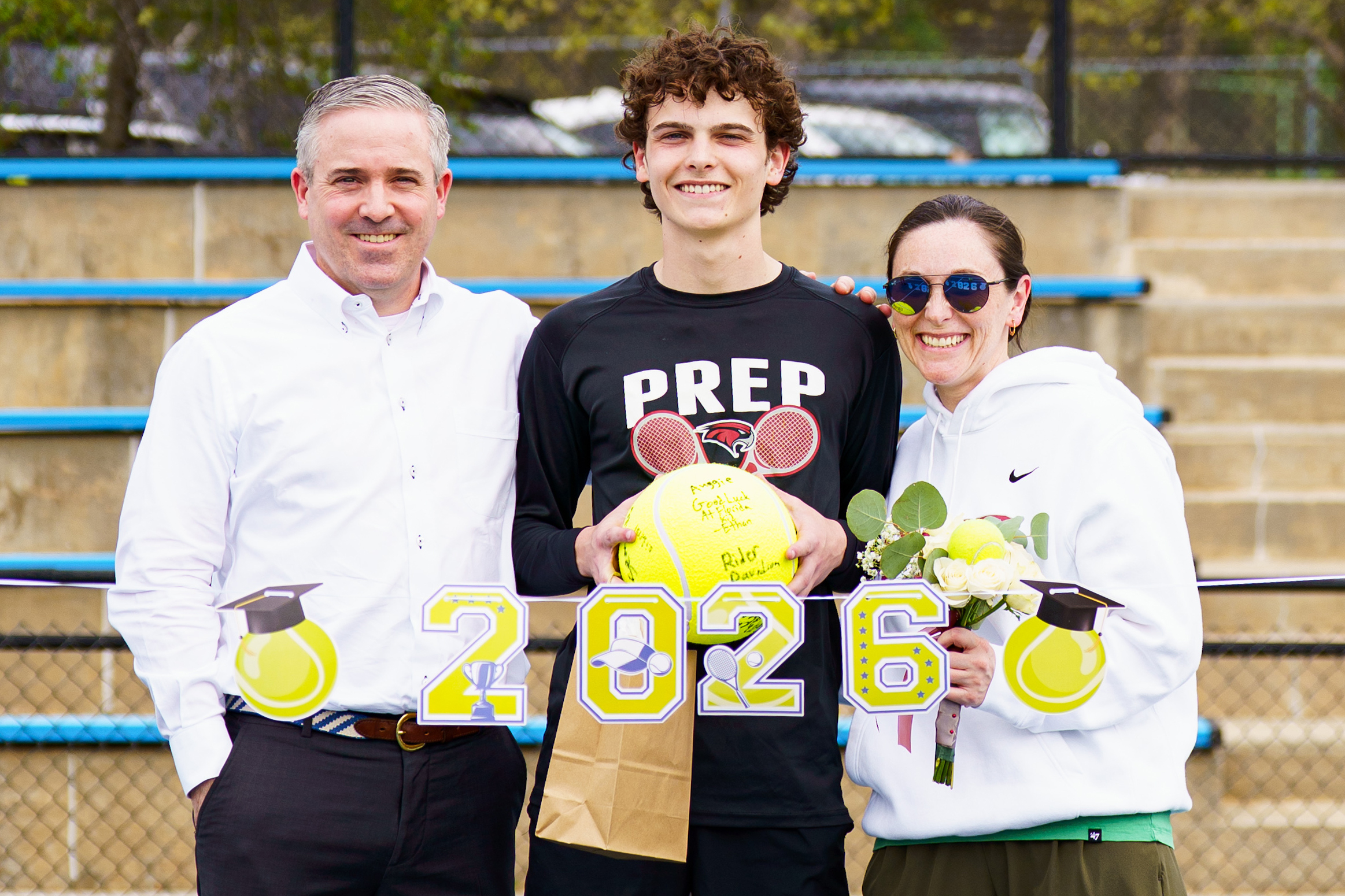
    Their son, a tennis player, was preparing to attend the University of Florida on a scholarship this fall, they said. Those plans are now on hold.

    Instead, the teen is taking part in an extensive outpatient rehab program, and his parents are working to have his enrollment deferred to 2027, when they hope he will be well enough to attend school.

    Making sure that Rinnier took part in graduation at St. Joe’s last month was a more readily attainable goal, his parents said, and they were determined that he would achieve it.

    Susan Rinnier was pleased to see that he was able to walk across the stage on May 31, even if he soon grew fatigued and experienced numbness in his legs after the ceremony, she said.

    The Rinniers’ next hope is that police will find and charge their son’s attackers. Meanwhile, they continue to scan social media for additional photos and videos that may offer a better view of the incident.

    “We owe it to Shawn to continue to move this forward any possible way we can, to get to the bottom of this,” his father said. “That’s our job as parents, and we’re not gonna stop.”

  • Pa.’s ‘explosive’ data center growth is driving this Philly company’s investments in Appalachian natural gas

    Pa.’s ‘explosive’ data center growth is driving this Philly company’s investments in Appalachian natural gas

    The U.S. runs on natural gas. As power demand surges, gas supplies more than 40% of the nation’s electricity, more than any other source.

    Gas is piped from U.S. wells and storage by big drillers such as Pittsburgh-based EQT and energy giants like ExxonMobil to power plants in Eddystone, Fairless Hills, Grays Ferry, Marcus Hook, West Deptford and more than 1,000 other U.S. communities. More are planned to supply AI data centers and other big industries.

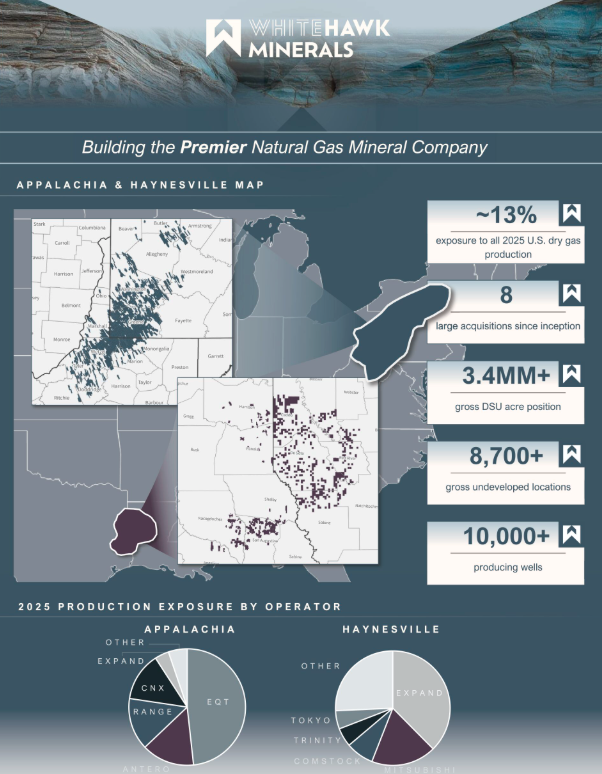
    Mineral rights to the gas they drill are owned by investors. Among the biggest gas field investors is Philadelphia-based WhiteHawk Minerals, which raised $200 million Tuesday in its initial public stock offering (IPO), valuing the company at around $700 million and making it the most valuable stock of its kind.

    CEO Daniel Herz, a former investment banker who has built WhiteHawk with a string of acquisitions, says WhiteHawk will use proceeds to buy more gas mineral rights on properties in Western Pennsylvania, West Virginia, Texas, and other states.

    WhiteHawk is based at 2000 Market St. in Philadelphia. That’s two blocks from a former headquarters of the Pew brothers’ Sunoco Inc., which drilled in Canada, North Africa, and Latin America and refined fuels in Marcus Hook, West Deptford, South Philly, and the Midwest before exiting key businesses and selling the remains to Texas-based Energy Transfer in 2012.

    WhiteHawk, by contrast, is a virtual company, with just a dozen employees scouting and closing deals and working through contractors. Herz worked for Philadelphia-based fracking investment pioneer Edward D. Cohen’s Atlas gas drilling and transport companies and helped set up, run, and sell the Cohen family-backed Falcon Energy oil-and-gas business, before setting up WhiteHawk just three years ago.

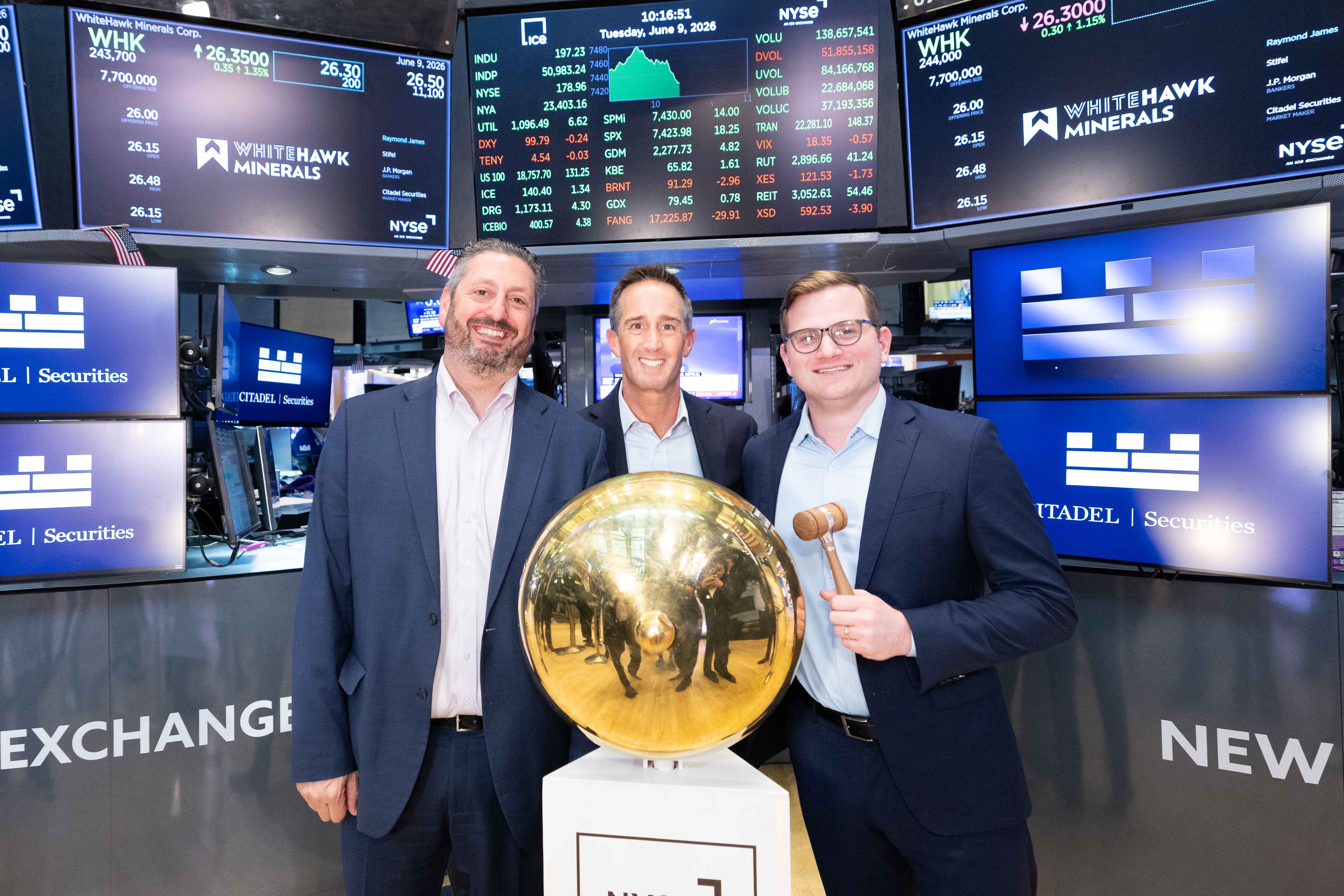
    Hours after a ceremonial bell-ringing to mark the first day’s trading in WhiteHawk shares (trading symbol: WHK), Herz took questions from The Inquirer.

    Questions and answers have been edited for length and clarity.

    With gas demand spiking, will companies try to ship more liquefied natural gas (LNG) from the Philadelphia area, despite local opposition that stalled past attempts?

    Our properties in Texas and Louisiana serve LNG ports in that area.

    But it’s not my expectation that will happen here because of a huge development: the tremendous construction of AI and high-speed data centers. EQT last week said they are seeing 20% growth in demand in the Marcellus basin just for data centers.

    Data centers are another phenomenal opportunity for the state of Pennsylvania, if handled properly.

    So I don’t expect our gas will be exported. The AI boom has come to Pennsylvania, Ohio, and Virginia because gas from the Marcellus Shale is the most economic [energy] source in the U.S.

    What did you learn working for pioneer investor Ed Cohen as fracking took off in Pennsylvania?

    Ed Cohen’s been a mentor, boss, and partner for me. Those experiences taught me to appreciate that [investing in] minerals and royalties is the best way to be involved in the gas business.

    The operators, companies like EQT and Range Resources, spend all the capital and send us payments [averaging 17 cents for every dollar’s worth of gas]. We have 11,000 producing wells and 9,500 identified sites for future wells. Our operators are drilling every day. We track them. And we hedge [with futures contracts that limit the impact of sudden price moves].

    Then all we have to do is sit back and collect the royalty checks.

    It’s a business where, heads you win, tails you win. We like higher gas prices. But we also root for prices to go down, then we have the opportunity to buy more.

    WhiteHawk Minerals chief Dan Herz and his Philadelphia-based team team have acquired natural gas fields in Pennsylvania, West Virginia, Louisiana, and Texas.Securities and Exchange Commission
    If it’s that simple, why aren’t bigger investors buying these gas assets?

    Four or five years ago, when we started WhiteHawk, a lot of private-equity firms had the good instinct to be buying up mineral rights. But they have found it harder to sell; private equity has been slowing down. The sellers have been offering generous terms. It shows how little competition there is.

    Our first acquisition was in February 2022. The seller gave us an eight-month option to buy an interest in their gas properties. Two weeks after, Russia invaded Ukraine. We immediately exercised the option at a locked-in price [and profited as gas prices rose]. Then another large private equity firm came to us with a six-month option.

    More of these private equity funds are nearing the end of their lives, they have to repay investors, but there aren’t a lot of new funds for them to sell to. This business takes specialized knowledge. It seemed to me we could be a natural buyer and build the premier gas royalty business.

    In all, 13% of U.S. natural gas production now pays us substantial royalties; 49% of EQT’s production pays us royalties. Antero Resources, one-third. Range Resources, 49%.

    We are primarily focused in the Marcellus [Western Pennsylvania, West Virginia] and Haynesville [east Texas, north Louisiana] Shales, which together produce half of U.S. natural gas. And there are many, many more rights owners adjacent to our properties [who can be bought out].

    Why are you based in Philadelphia?

    There is a longstanding tradition [of energy companies] in Philadelphia, and we have a great finance and accounting team and partners here. Myself, I am based in New York.

    Wasn’t it your mentor Cohen who convinced his classmate Pennsylvania Gov. Ed Rendell not to tax natural gas extracted from the Marcellus Shale?

    Yes. Ed Rendell should get the credit for manufacturing coming back to Appalachia because now we have natural gas, ethane, propane, butane, while in some other states [such as New York] you can’t do this.

    How much time do you spend lobbying for more fossil fuel extraction?

    I’ve spent 5% to 7% of my time in the political sphere for 15 years.

    There’s moments when politicians will posture. But we need energy. People should recognize that natural gas has driven the U.S. to lower carbon emissions. We can do all that and put money in Pennsylvanians’ pockets.

    Does your company have debt?

    We’ve been working with EIG [a Washington-based energy lender] for years, and we have a credit facility we haven’t drawn on with a number of banks. But we’re not looking to borrow. We keep leverage low.

    You had to restate 2024 earnings and changed accountants. What happened?

    We hired Baker Tilly, a national firm, to be public company ready. They said we had to restate [the 2024 earnings report certified by a Texas accountant]. I would call it growing pains. We had a great acquisition last year, the effective date was to be Jan. 1, 2025, but we didn’t close the deal until March 31. We counted that income from the effective date, and it should not have been counted until later.

    Why go public?

    This is what we did with Atlas Energy, Atlas Pipeline, Falcon Minerals. We’re back with our institutional and individual investors who want to participate in our growth, our cash flow, and our dividends per share.

    We are growing through acquisitions. Our playbook is to go out and buy another $150 million or $200 million this year building the premier natural gas mineral and royalty business. There is so much more to buy.

  • Walmart plans to bring delivery drones to Philly. What that means for Amazon and the same-day delivery wars.

    Walmart is raising the stakes in the high-speed delivery war with Amazon, with part of this latest battle playing out in Philadelphia.

    Wing, the first company to offer commercial drone delivery to homes in the United States, announced this week that it will expand its partnership with Walmart to bring drone service to seven new cities, including the City of Brotherly Love, sometime in 2027.

    A Walmart spokesperson said there was no timeline for when the drones would come online in Philadelphia, nor did the company say which of the city’s five stores would get the service. Even so, Philadelphia’s inclusion in Walmart’s drone program would be the first for the Northeast, part of a plan to bring drone delivery to 270 stores.

    “Expanding into new markets with Wing allows us to provide an innovative delivery option for customers, utilizing our vast store network to make everyday shopping and fulfilling last-minute needs just a little bit easier,” said Greg Cathey, Walmart’s senior vice president of eCommerce fulfillment transformation in the U.S, in a statement.

    The move, according to industry observers, would intensify the competition with Amazon, which has been feverishly working to offer increasingly faster deliveries to consumers through a mix of human couriers and drones. While Amazon has been testing out drone delivery since 2016, the competition lies not in who has the better machines, but in who can deliver goods faster.

    Walmart, which launched its pilot that began in 2021, has used Atlanta and Dallas-Fort Worth as a testing grounds for its drones.

    Just last month, the e-commerce giant launched “Amazon Now,” a 30-minute-or-less (human) delivery service in Philadelphia, also available in Atlanta, Dallas-Fort Worth, and Seattle.

    Early Walmart reports tout an average delivery time of 23 minutes with their drones.

    “I think [the drone expansion] is signaling that Walmart feels that they are ready to reduce the delivery time,” said Subodha Kumar, founding director of the Center for Business Analytics and Disruptive Technologies at Temple University’s Fox School of Business.

    “They are going to put a lot of pressure on Amazon.”

    While Amazon is seen as the gold standard for e-commerce logistics and had a head start experimenting with drones, its under-60-minute delivery through “Prime Air” has been primarily deployed in suburban areas. Part of the challenge for Amazon is that its fulfillment centers are far from customers.

    Walmart has the advantage of being much closer to its customers, said Kumar, calling plans to introduce drones a significant development in the wars for faster deliveries.

    “For Walmart, the drone makes even more sense because drones are limited in their distance and what they can carry,” said Kumar, adding the retailer has the advantage of having its stores much closer to their customers.

    For its part, Walmart has billed the machines as a fast way to get last-minute items. The Wing drones will deliver up to eight miles from a location that offers the service and carry up to 2.1 pounds, according to the company’s website.

    The company has said some of the most popular items for this kind of delivery include medicine, fruit, eggs, ice cream, baby formula, and pet food.

    People can place orders on the Walmart app and their delivery will be lowered on a tether in front of their home, driveway, or backyard. Deliveries will be free for a limited time to Walmart+ members, according to the company website, or $19.99 for nonmembers.

    “Our work with Walmart has shown that drone delivery isn’t just a novelty, it’s a service many customers count on multiple times per week,” said Heather Rivera, Wing’s chief business officer, in a statement.

    The pilot, which Walmart says works with “drone providers” that are experts in their field, made its millionth delivery last month with an average delivery time of 23 minutes going at speeds up to 60 miles an hour.

    Drones are currently carrying out deliveries in select cities in Texas, North Carolina, and Georgia. In addition to Philadelphia, Memphis, New Orleans, Phoenix, Salt Lake City, San Diego, and the San Francisco Bay Area are part of the expansion.

    Kumar said the new technology demonstrates there’s an appetite for faster deliveries on the consumer side and a service with no human interaction.

    In that way, the drones are similar to Uber Eats’ autonomous delivery bots, which were introduced in March to a mixed response. While many appreciate the convenience, others have lamented the sight of cuboids blocking the sidewalks. Lawmakers have already expressed concerns over the technology moving too fast and suggested restrictions. Waymo, the autonomous vehicles, have spurred similar conversations in Philadelphia.

    In its expansion announcement, Wing said both companies plan to work closely with local leaders and community members, sharing information about the machines.

    Kumar said the drones will likely bring a whole new set of public concerns over airspace traffic and safety.

    “It will bring new issues that we don’t know the answers to yet,” he said.

  • Parlez-vous ‘L’? Hablas Filadelfia? SEPTA transit ambassadors have your back.

    Parlez-vous ‘L’? Hablas Filadelfia? SEPTA transit ambassadors have your back.

    OK, this scenario looked easy. Maybe I have what it takes.

    A passenger approaches you during your shift asking for directions to get to Northern Liberties from NRG station.

    I took the training class last week for SEPTA ambassadors alongside about 35 transit agency employees who had volunteered to help travelers find their way in a strange city during the World Cup.

    My tablemates asked what I would tell the person.

    Take the B (Broad Street) Line to 15th Street/City Hall, transfer to the eastbound L, and disembark at Spring Garden Station, on the southern edge of the neighborhood.

    Correct, to a point.

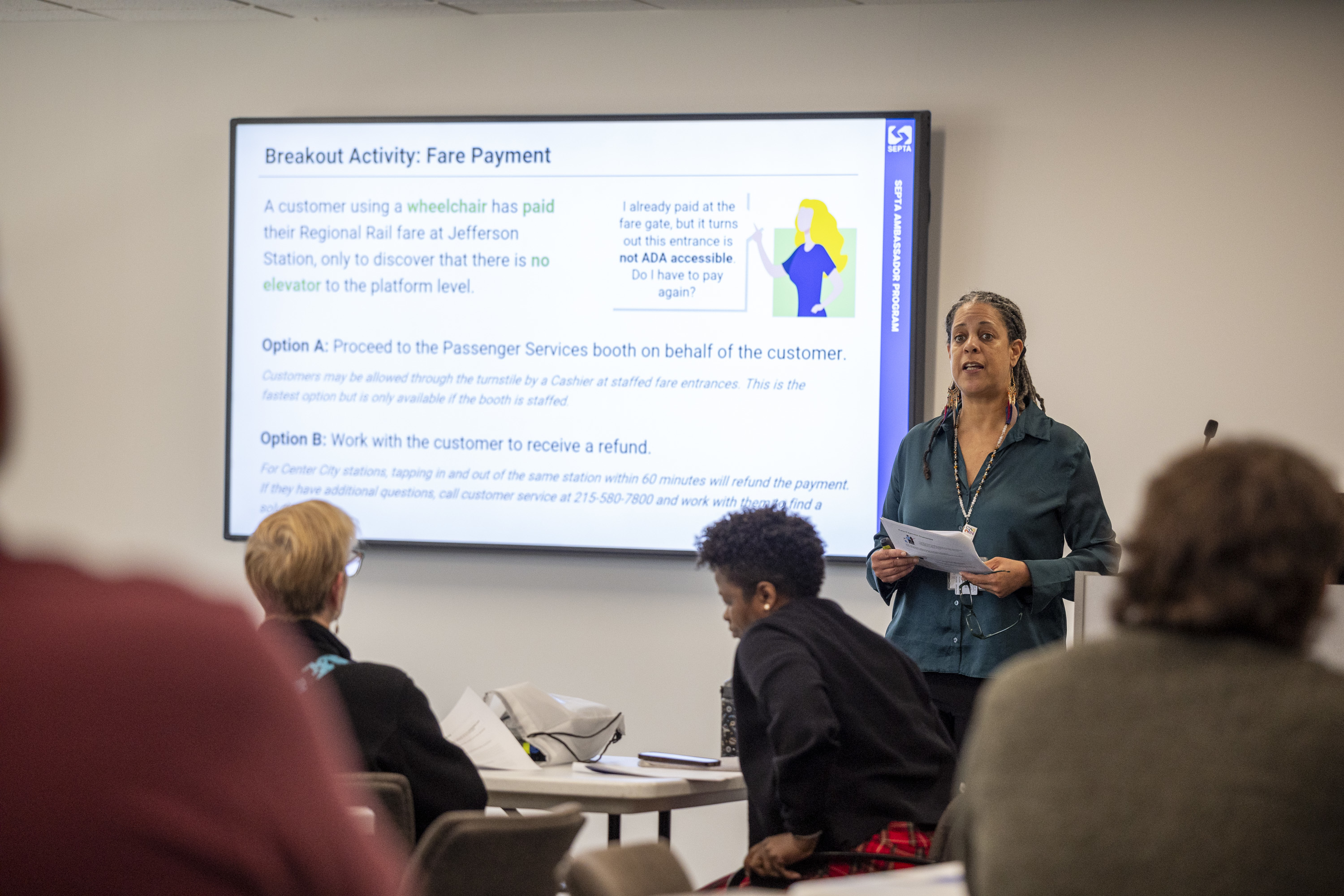
    “I didn’t say where I need to get to in Northern Liberties, right?” said Jena Burley, the SEPTA training facilitator teaching the class.

    Ack! Maybe the passenger would be better off taking the L for one more stop to Front-Girard, depending on the precise destination.

    “Ask for as much specific information as possible,” Burley said.

    SEPTA supervisors, administrators, and managers have been assigned 1,300 shifts as ambassadors in critical transit and Regional Rail stations from June 13 through July 19.

    Jena Burley leads the SEPTA ambassador class.Tyger Williams / Staff Photographer

    During that stretch Philadelphia will host six World Cup matches, the FIFA Fan Festival, the height of the nation’s 250th birthday bash, and Major League Baseball’s All-Star Week.

    Four to 12 ambassadors will provide information, directions, and, ideally, a friendly welcome in each designated station — along with crowd control, and de-escalation techniques for conflict.

    It’s a lot, which is why up to 1,000 employees have spent half a day in training with a detailed curriculum that feels like cramming for finals.

    I worked with them through scenarios of escalating severity to simulate situations they will encounter: sweaty, frustrated crowds on platforms; medical emergencies; confusion over SEPTA’s fares and methods of payment; and how to troubleshoot travel glitches. And scarier stuff.

    “This summer is an opportunity for SEPTA to shine, and you are such a big part of that,” said Lex Powers, chief officer for customer experience.

    The Disney approach

    This summer SEPTA is also debuting a new customer-service philosophy that subordinates other priorities to creating a safe and positive experience for people using the system.

    The approach is inspired by Disney’s iconic “four keys” of customer service, admired by general manager Scott A. Sauer, a Disney fan.

    The transit agency has used ambassadors since 2000 to help customers during special events like the Eagles Super Bowl parade last year, service changes, and the like. Officials rebooted the training program.

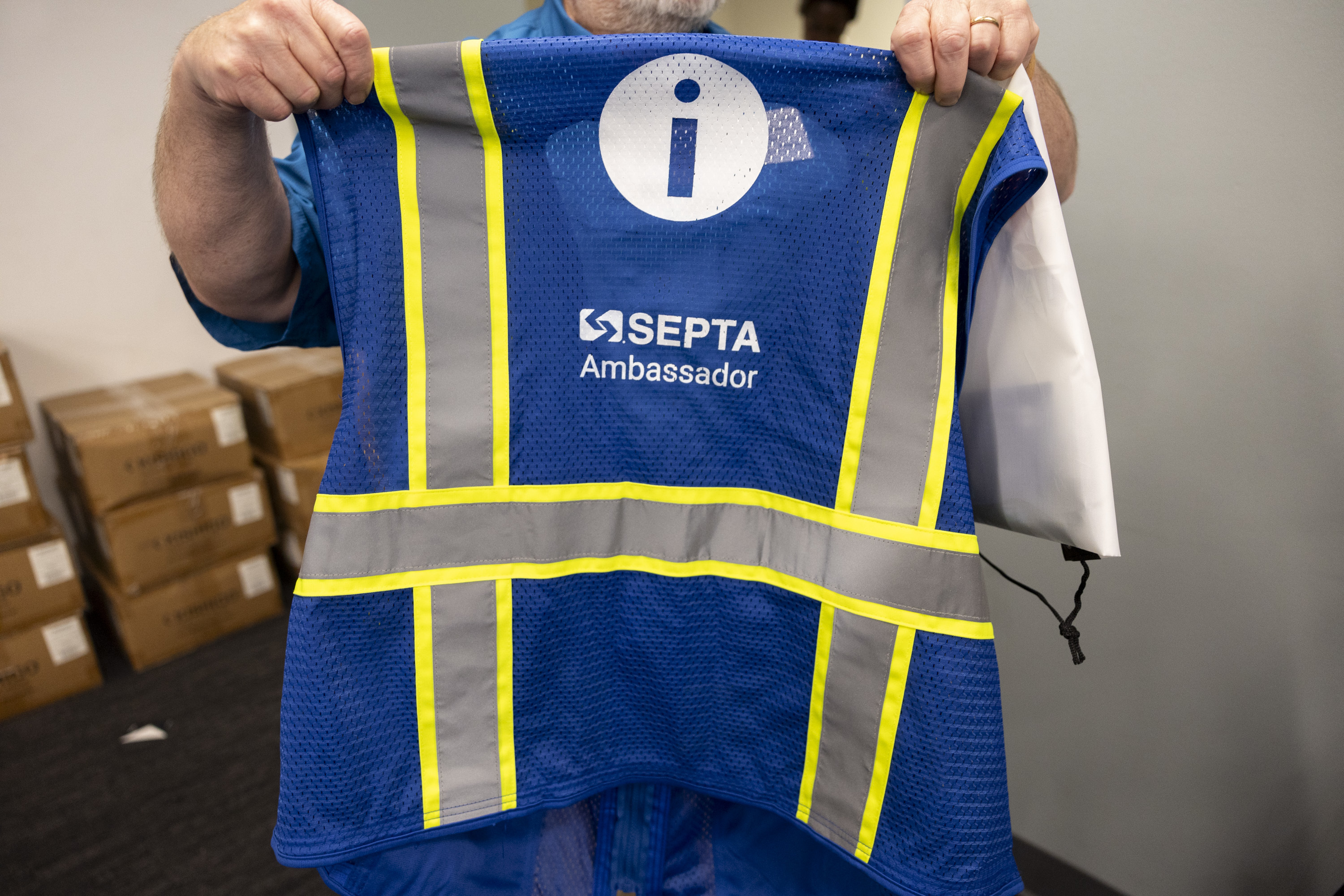
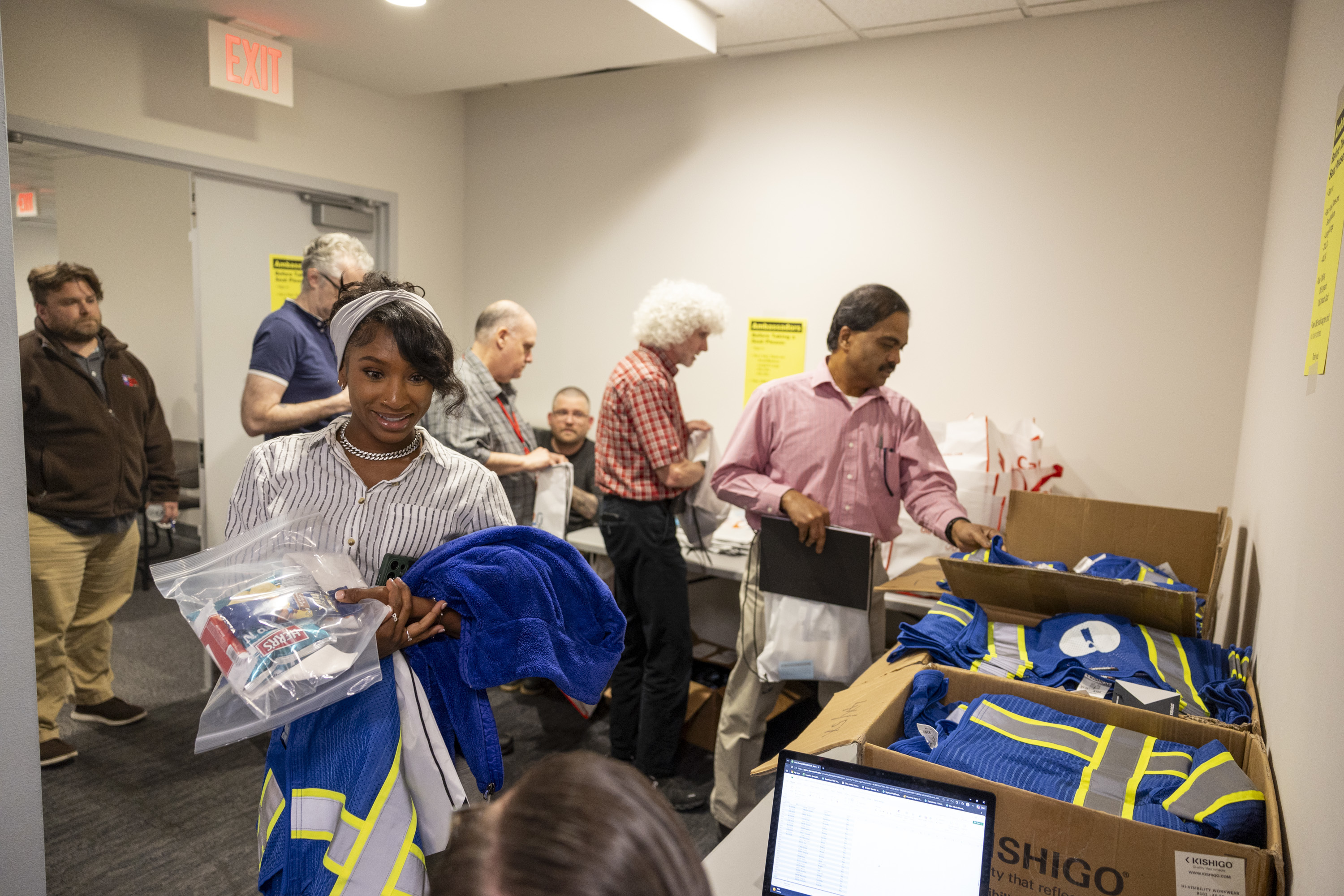
    This summer, ambassadors will carry “cheat sheet” cards and wear blue vests to differentiate them from other workers in typical yellow safety vests.

    I got my own blue vest at the start of the class — pretty snazzy — and tried to earn it.

    Brittany Davis, of Northeast Philadelphia, a service planner at SEPTA, gets her vest.Tyger Williams / Staff Photographer

    Cultural correctness

    The recent training included “cultural diplomacy” briefing sheets with guidance on customs and backgrounds of the countries with national teams playing here, prepared by the World Affairs Council of Philadelphia and protocol experts.

    For instance, I learned:

    • Never flash the “OK” hand gesture to a Brazilian. It’s offensive, like flipping the bird.
    • When greeting or handing things to a person from Ivory Coast, use your right hand. It is a social slight to use the left, which is reserved for personal hygiene.
    • In some cultures, such as Ghana, it is customary to exchange pleasantries before getting down to business. People from Curaçao, influenced by Dutch culture, can be more direct and, while friendly, value personal space.

    ‘Bring the temperature down’

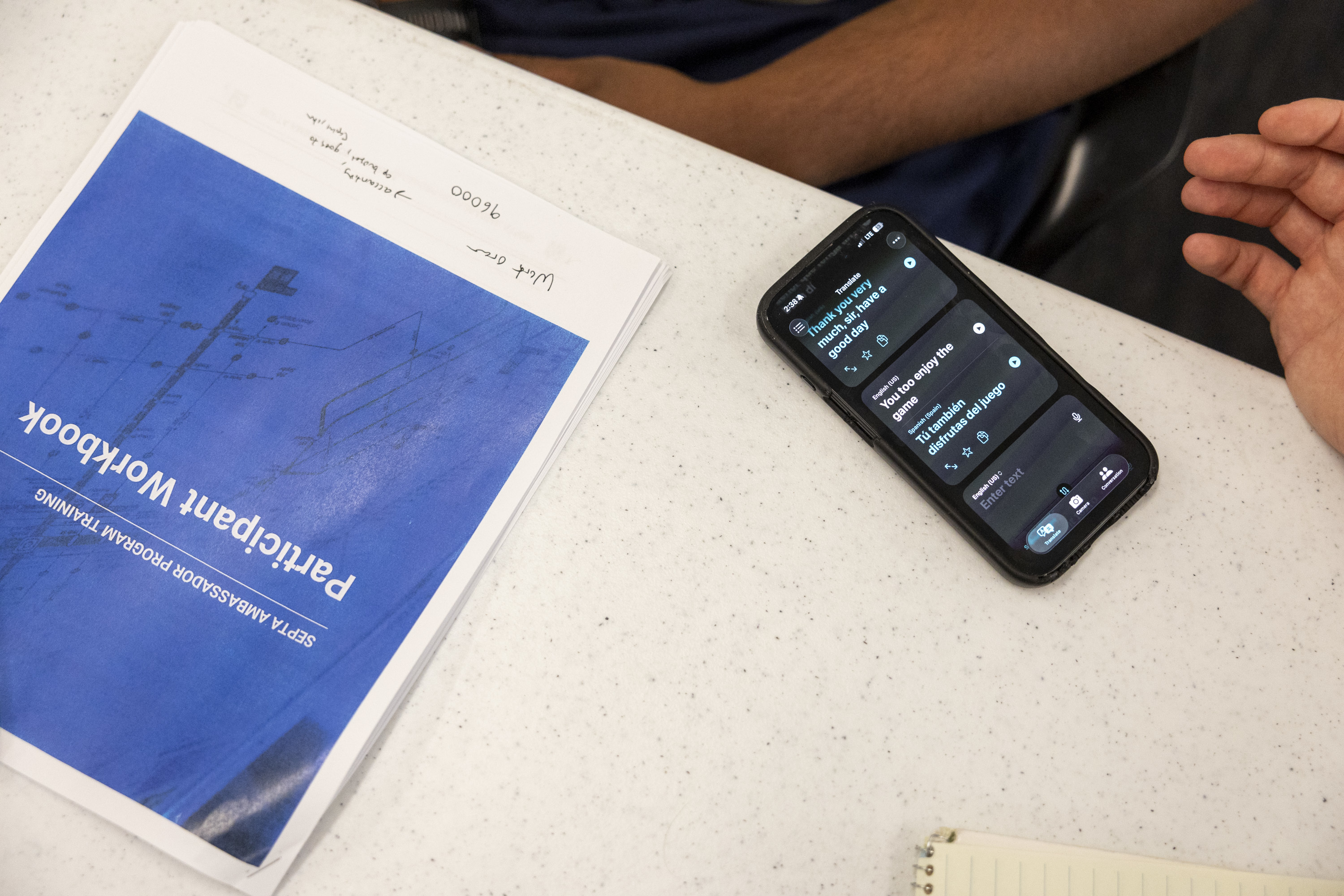
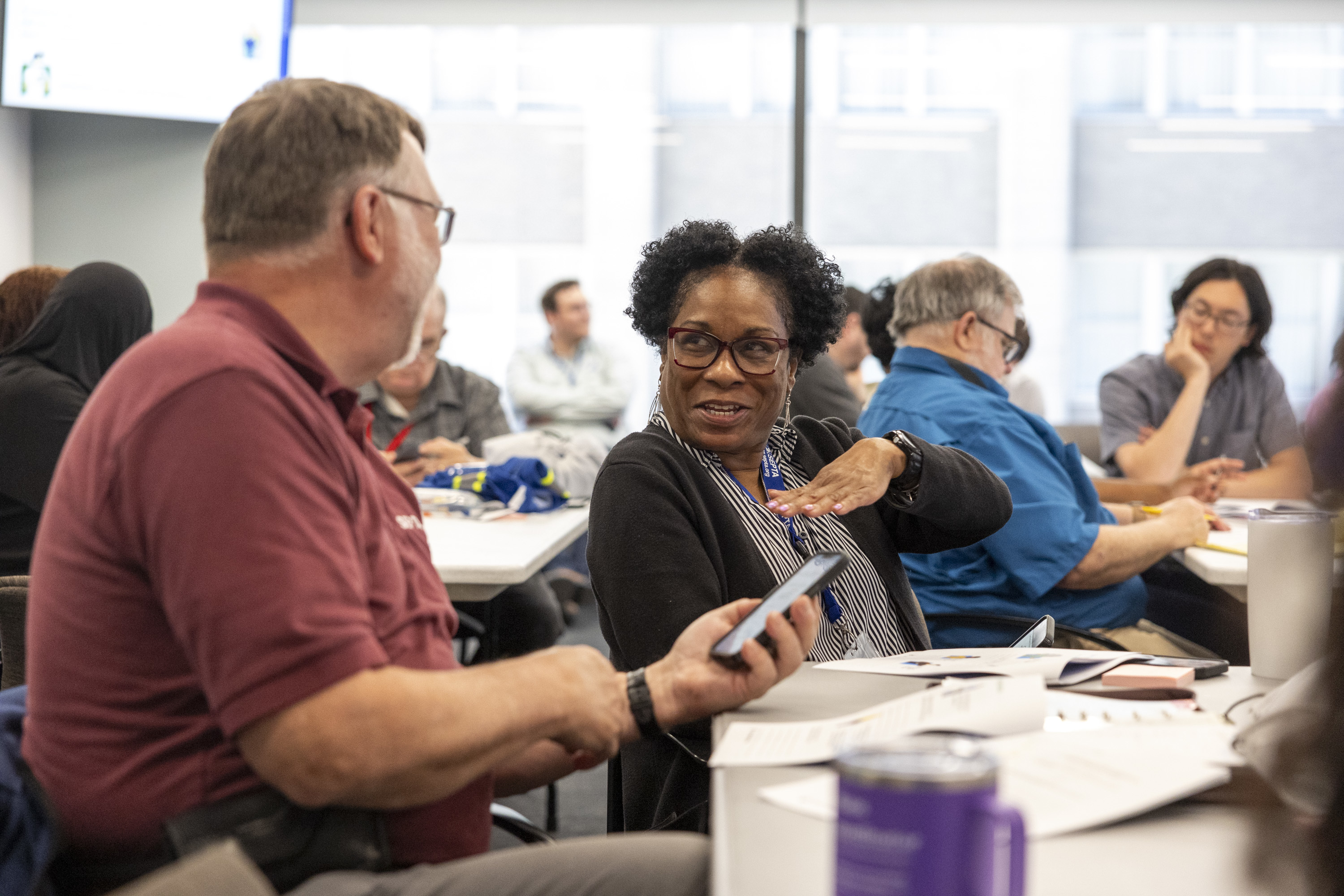
    My fellow trainees and I shared tables in a conference room and huddled to work through often complex scenarios in a 24-page workbook.

    You notice a particularly long line forming at one fare gate and go to investigate. …

    A customer is tapping a credit card over and over, but it doesn’t work. Another customer tries to squeeze past them, increasing tension, and voices in the line start to rise.

    “You want to bring the temperature down,“ said Noah Lee, manager of service-information development, with whom I shared a table. ”Take the person whose card doesn’t work off to the side to figure it out, and let other people go through.“

    Nithin Vejendla, an operation planner, speaks Spanish in the Google Translator app.Tyger Williams / Staff Photographer

    Nithin Vejendla said the bottleneck could be a two-person job and suggested bringing in another ambassador to wave people through the gate.

    “Try empathizing with them,” said Vejendla, a SEPTA operations planner who was at my table. “Like, ‘I know it’s frustrating. I’ve had times where [tapping] doesn’t work. … We’ll get you on the next train.’”

    Meanwhile, fix it. Is the person tapping incorrectly? Maybe the card reader’s bad, so try another turnstile. Consult a cashier.

    The situation worsens.

    A customer that has been held up in the line starts pushing and shoving the people in front of them. They are clearly agitated … [and] verbally threatening people.

    “If they keep escalating, at that point your responsibility shifts to keeping the other passengers safe,” Vejendla said. “Maybe you stay between them and the fare gates, a physical barrier.“

    Lee worked an ambassador shift during the 2025 Super Bowl parade and said he didn’t see anything like that.

    “The atmosphere was joyful, and it was in the morning,” Lee said.

    Vejendla, an operations planner who has worked at SEPTA for almost three years, was an ambassador for the Eagles parade and the Flower Show, and when SEPTA briefly cut and changed bus routes last year.

    Later, trainees downloaded Google Translate to practice.

    Vejendla speaks fluent Spanish and rough French. Powers, his boss, was teasing him about it.

    “Lex was like, and I quote, ‘I can’t believe the system understood you. That French accent was terrible.’”

    When emergencies arise

    Sometimes, the scenarios are more serious. People wind up in the track area, trying to retrieve an item or having fallen off a platform. What do you do?

    “Stop the train. Think about everything else later,” Burley said.

    Heather Jordan, employee relations manager, (right), and Kim Smith, senior project engineer and track engineering with SEPTA, (left), are looking at the SEPTA app to answer questions for an exercise during the SEPTA’s Ambassador class.Tyger Williams / Staff Photographer

    Go to the cashier and get them to push the Emergency Train Stop button, which activates a “stop” signal light. There are red flags in the booth to wave at incoming trains.

    Moving your arm back and forth at chest level is a traditional railroad stop signal. “Or go berserk,” Burley said, waving your arms over your head or flashing a phone flashlight.

    Do not enter the track area, and don’t try to pull a person up. The third rail carries 600 to 750 volts of electricity.

    “You’re there to keep customers safe, but if you’re not safe, you can’t help,” Burley said.

    As class ended and everyone left, I carried a deeper respect for the job of ambassador. I wished my fellow students good luck.

  • It looks — and sounds — like the Eagles knew what they were doing with Sean Mannion, Jeff Stoutland, and A.J. Brown

    It looks — and sounds — like the Eagles knew what they were doing with Sean Mannion, Jeff Stoutland, and A.J. Brown

    One of the Eagles’ great strengths as an organization is they understand the implications of the NFL’s competitive Darwinism. You evolve, or you die. It is a league full of maniacs who will not sleep until they figure out what your team is doing and how to stop it. The margins are slim, so fortune can flip fast. The Eagles saw it with Chip Kelly in Year 1 vs. Years 2 and 3. Anybody who can’t adapt to what comes next will quickly be out of the league.

    The Eagles were on the field for only a few days this week, but their mandatory minicamp was long enough to give you a real sense of why the offseason went the way it did. It was a startling thing to behold, both on the practice field and inside the building. Over five seasons, almost nothing had changed with regard to the fundamentals of the Eagles offense. Sure, coordinators came and went, but the identity remained the same. It served them well, with two Super Bowl appearances in three years, one of them a title from which they were less than a year removed when the offseason began. Yet they clearly sensed that an inflection point was coming, if it hadn’t already arrived.

    That sense was most evident in the words and tone of one Lane Johnson, the eldest statesman of the offense and the keystone around which the Eagles have built everything over the last decade and a half. Earlier this week, the veteran tackle spoke publicly for the first time since before a foot injury sidelined him for the last eight games of the season. A lot had changed in the interim. Gone was Jeff Stoutland, the legendary offensive line coach who inspired a fierce loyalty in his former players. In his place was a new blocking scheme, with new terminology, and a new philosophy, all under the command of a 34-year-old first-time playcaller whose playing career ended less than three years ago.

    Yet here was Johnson, barely a year removed from anchoring one of the greatest single-season offensive line performances of all time, and having done so under the tutelage of one of the greatest offensive line coaches of all time, en route to one of the most dominant Super Bowl victories of all time, and dadgummit if he didn’t sound positively refreshed.

    “I think with this offense, we’ll be able to stretch the field and really work our zone game and get the defense running and work things off of that,” Johnson said. “I’m really excited for what it can do, not just for tackles. I think it will open up a lot in our game.”

    The two keywords there are “this offense.” As opposed to that offense. You know, the one the Eagles used to run. It may sound like a small thing, but only if you didn’t listen closely during the four previous changes at playcaller. I don’t think that phrase was ever used. At least, not like Johnson and the rest of the Eagles who spoke publicly have been using it. As a signifier of real, legitimate change. It didn’t sound like this when Nick Sirianni gave way to Shane Steichen, nor when Steichen gave way to Brian Johnson, nor Johnson to Kellen Moore or Moore to Kevin Patullo. The operative question always centered on who would have final say over the plays rather than what those plays would look like from a broad schematic standpoint.

    Not so this time around.

    The change is real. That was the biggest takeaway from this week’s preamble to training camp. The hiring of Mannion, the jettisoning of Stoutland, the trading of A.J. Brown, the subtle challenges to Jalen Hurts … this was not the same window-dressing offseason of years past. These were purpose-driven moves rooted in the realization that 2025 would not be a one-year blip if the Eagles fooled themselves into thinking that the things that worked in previous seasons would one day work again.

    It remains to be seen what the scheme will actually look like. You’d have to work just to get an NFL coach to admit he will have precisely 11 players on the field. But Johnson referred to Mannion’s scheme as a Kubiak/Shanahan system, the archetype being the 1990s Broncos teams that utilized heavy amounts of outside zone/stretch runs from under center and the resulting play action looks that offered quarterbacks ample passing lanes and plenty of distance between them and the line.

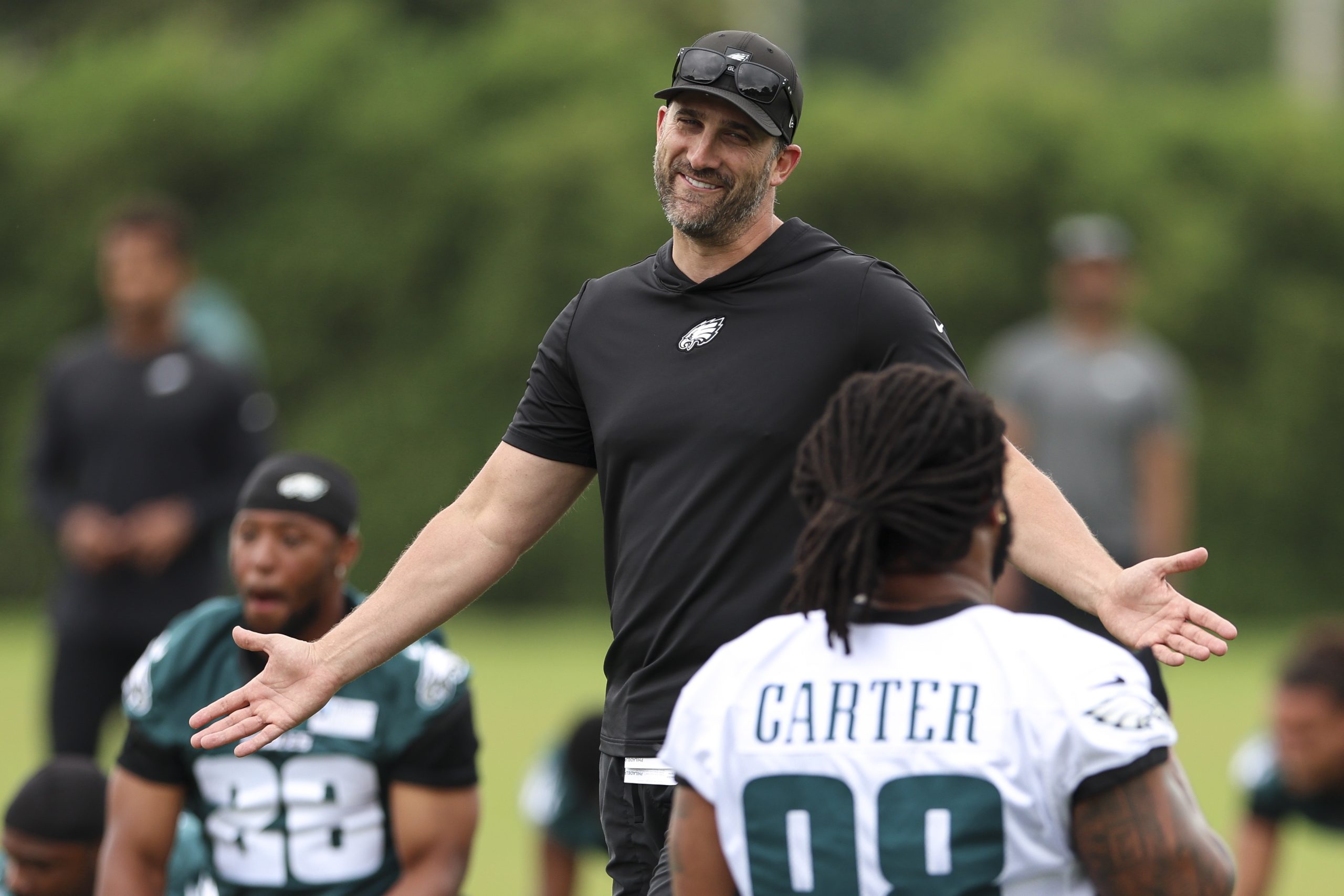
    Head coach Nick Sirianni and the Eagles have seemingly embraced an offensive scheme change this offseason.Monica Herndon / Staff Photographer

    “I’ve always envied wanting to be a part of it,” Johnson said. “So here I am, after all these years, getting that chance. Not to say we’re going to be better because there’s a lot to learn. I think we have the ability to be a lot more than what we were last year.”

    The Eagles did the right thing in treating last year as a sign of the times rather than awarding themselves a mulligan. Their strength as an organization has long been their willingness and ability to execute a hard pivot. Dating back to Joe Banner’s reign as club president, the Eagles front office has built its decision-making processes on a cold philosophical calculus. A team is better off being a year early than a year late on its consequential decisions.

    It is true at all levels of football management, from awarding contract extensions to the evaluation of veteran players to the identification of leaguewide trends. There is considerable risk in being early, which is why a lot of teams end up being late. It isn’t easy to let a franchise icon leave town, or to spend a second-round pick on a quarterback when one already has a starter. Vindication occurs in a separate time horizon from a fan base’s patience. It is good to be proved right. It is better to be employed.

    What Jeffrey Lurie and Howie Roseman both realize is that the last teams to arrive for dinner often become the dinner. Barely a year after winning their second ever Super Bowl title, the Eagles decided that they’d arrived at one of those inflection points that plenty of teams would ignore in the interest of convenience or ego protection.

    Will the offense actually look different? Like, materially? The players sure seem to think it will. In which case, the big question is this:

    Will it work?

  • Is there a better duo in baseball than Zack Wheeler and Cristopher Sánchez? We asked the experts.

    Is there a better duo in baseball than Zack Wheeler and Cristopher Sánchez? We asked the experts.

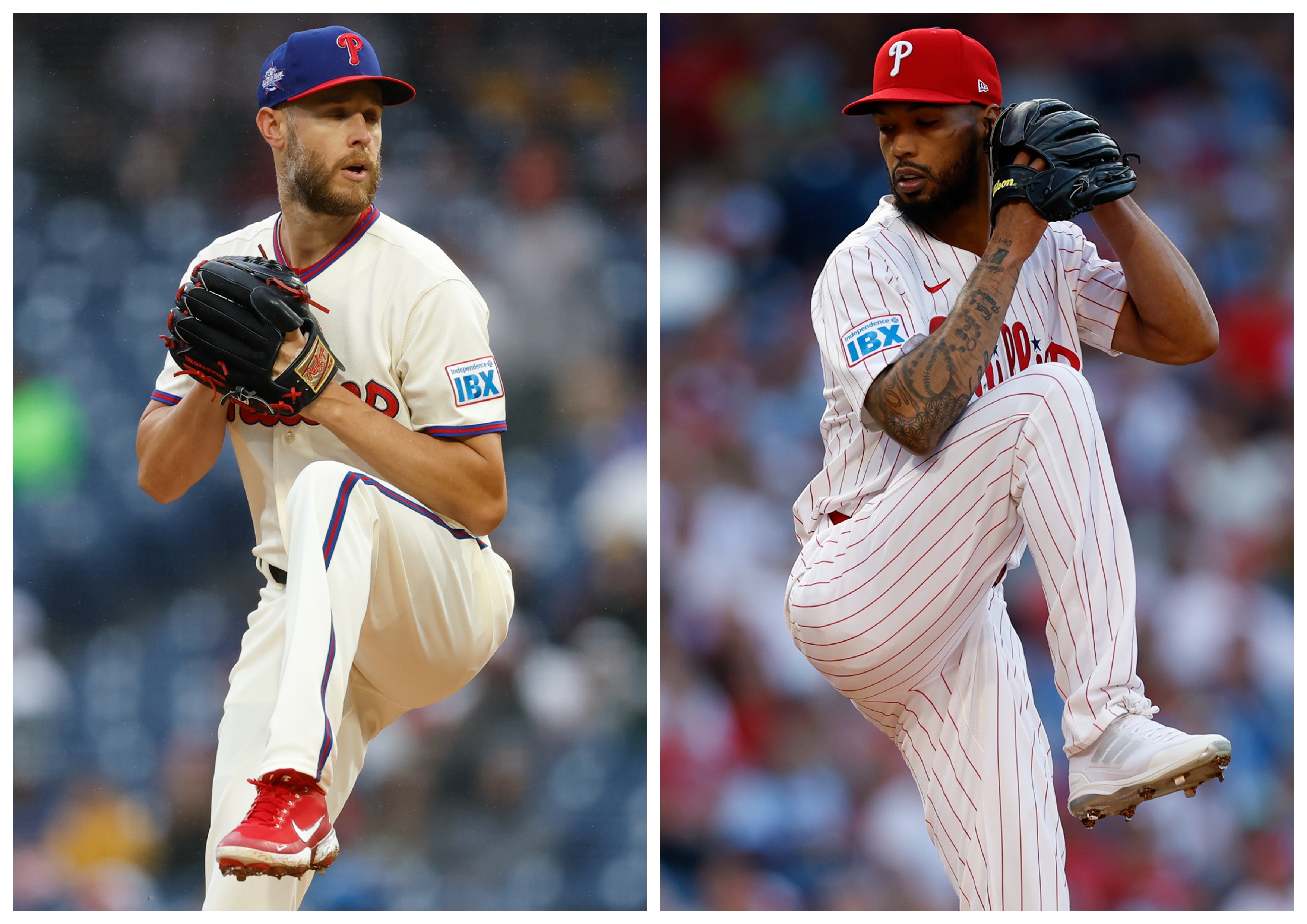
    The subject came up in the Phillies’ clubhouse recently, after Zack Wheeler followed a Cristopher Sánchez gem with one of his own.

    Is there a better one-two pitching punch in baseball?

    Bryce Harper answered the question with a question.

    “Yeah, I mean, I’m going to ask you,” the Face of the Franchise said. “What do you think? Is it the best one-two? I mean, it’s got to be up there.”

    Up there? No doubt.

    The best?

    Anecdotally, it’s hard to believe there’s a better tandem. Sánchez and Wheeler have started back-to-back for seven turns through the rotation, five times against the same team. Here’s how it’s gone:

    • Sánchez, May 5 vs. A’s: 8 innings, 0 runs
    • Wheeler, May 6 vs. A’s: 6⅓ innings, 3 runs
    • Sánchez, May 10 vs. Rockies: 7 innings, 0 runs
    • Wheeler, May 12 at Red Sox: 7⅓ innings, 1 run
    • Sánchez, May 16 at Pirates: 9 innings, 0 runs
    • Wheeler, May 17 at Pirates: 7 innings, 0 runs
    • Sánchez, May 22 vs. Guardians: 8 innings, 0 runs
    • Wheeler, May 23 vs. Guardians: 6 innings, 0 runs
    • Sánchez, May 27 at Padres: 7 innings, 0 runs
    • Wheeler, May 29 at Dodgers: 6 innings, 4 runs
    • Sánchez, June 3 vs. Padres: 7 innings, 1 run
    • Wheeler, June 4 vs. Padres: 7 innings, 2 runs
    • Sánchez, June 8 at Blue Jays: 7 innings, 2 runs
    • Wheeler, June 9 at Blue Jays: 6 innings, 1 run

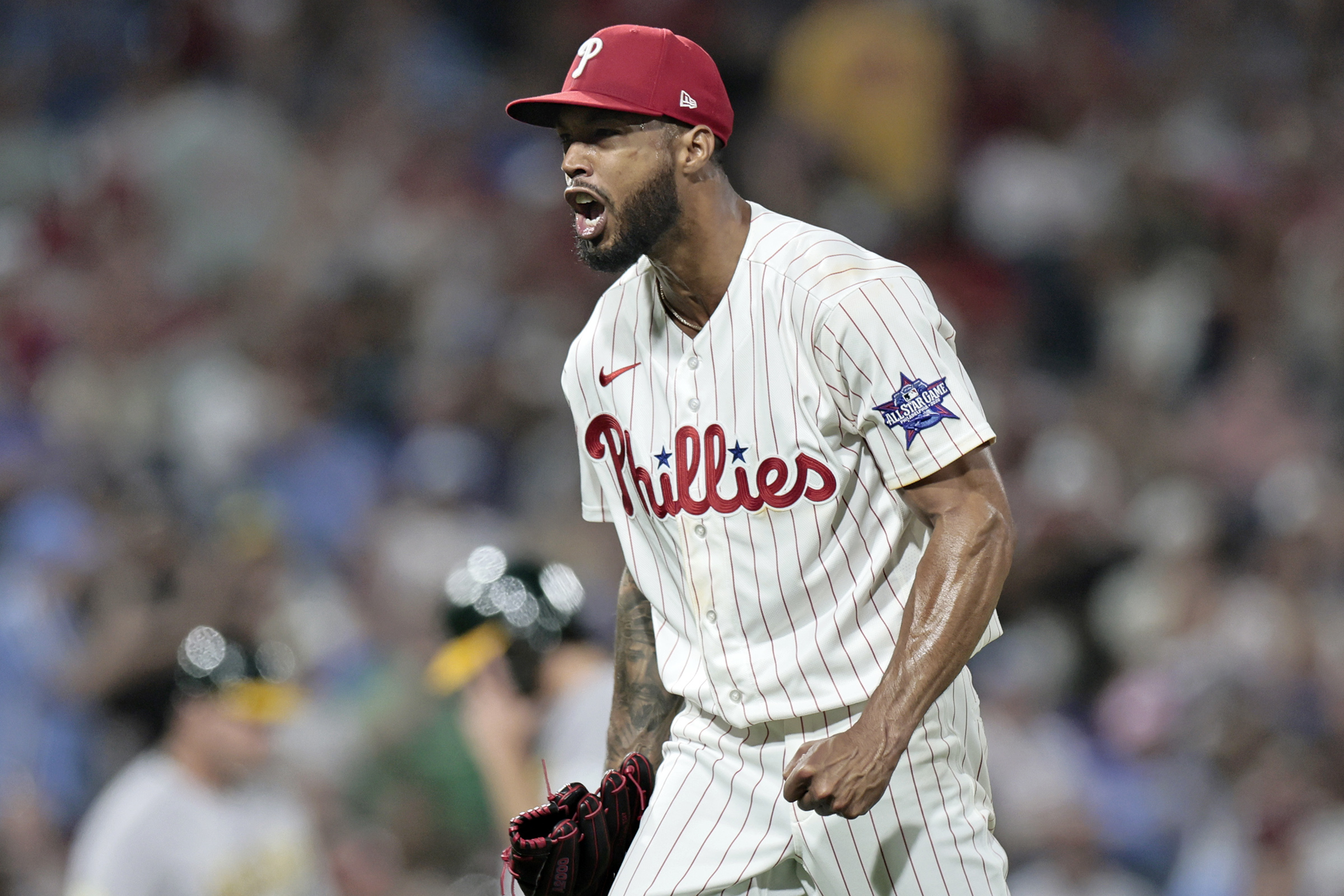
    That’s a 0.51 ERA in 53 innings for Sánchez, last year’s Cy Young Award runner-up in the National League. The 29-year-old recently went 50⅔ innings without giving up a run, the longest streak by a lefty and fifth-longest overall since at least 1893.

    Cristopher Sánchez recently went 50⅔ innings without allowing a run, the longest streak by any left-handed pitcher since at least 1893.Elizabeth Robertson / Staff Photographer

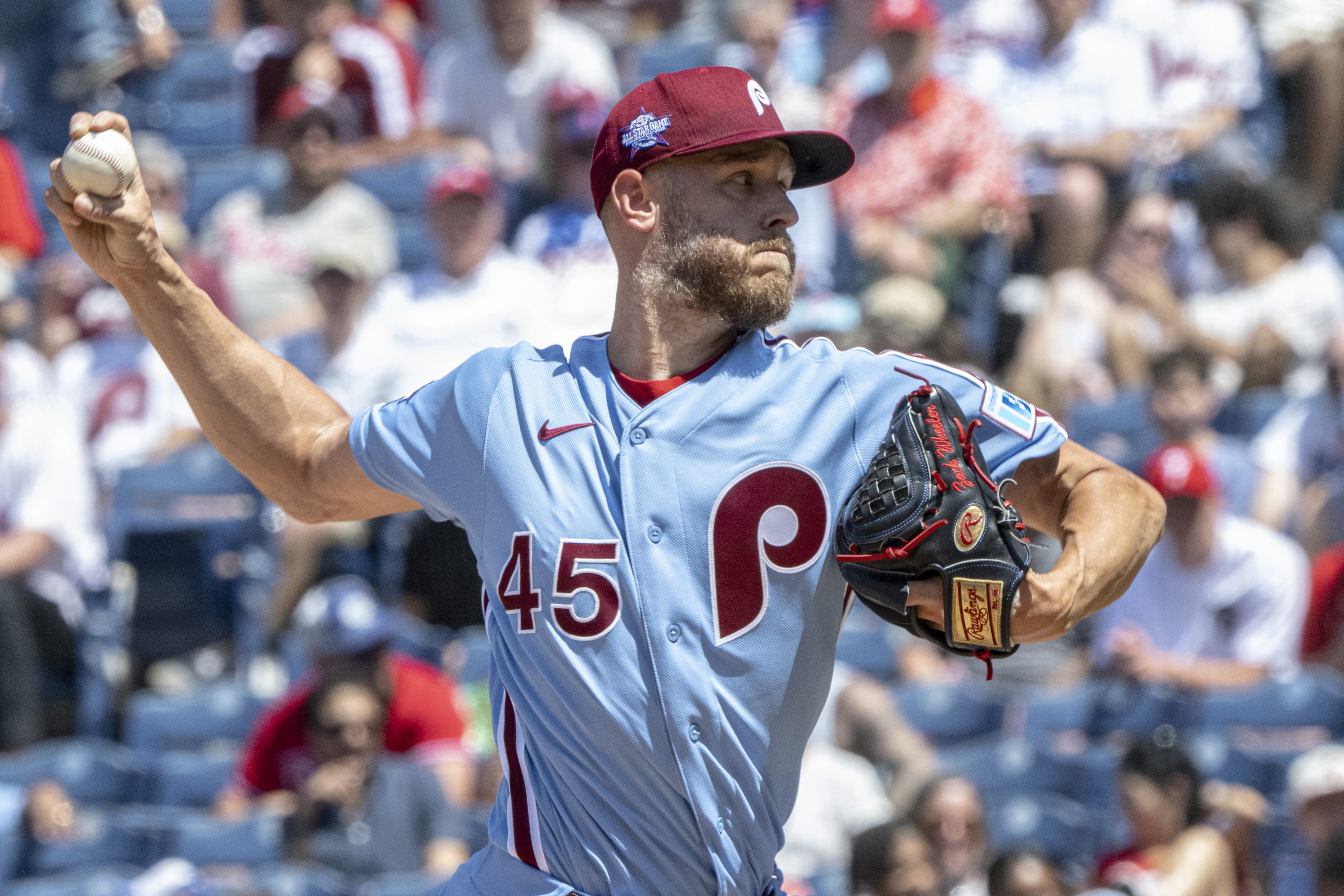
    And it’s a 2.17 mark in 45⅔ innings for Wheeler, a two-time Cy Young runner-up. You wouldn’t know that he turned 36 two weeks ago — or had a rib removed nine months ago to relieve a compressed vein.

    Philly hasn’t seen a better one-two punch since the trio of Roy Halladay, Cliff Lee, and Cole Hamels in 2011, maybe since Rocky’s left jab and right cross.

    Sánchez leads all pitchers in wins above replacement (5.1, as calculated by Baseball-Reference) and innings (93⅓), and ranks second in strikeouts (113), and third in ERA (1.54). Wheeler is tied for sixth in WAR (2.7) and has a 2.22 ERA in nine starts.

    “I love Wheeler, and I think Sánchez is above Wheeler now,” said a talent evaluator from a National League team. “That’s how good I think Sánchez is.”

    Sure, but are they the best?

    “It’s relentless,” Pirates manager Don Kelly said last month after Sánchez’s six-hit shutout preceded seven scoreless innings from Wheeler. “Whenever you get to that level and you’re facing those types of guys, those are the types of arms you’re going to see in October.”

    After Sánchez blanked the Guardians for eight innings on May 22, Cleveland manager Stephen Vogt called him “special.” A day later, the Guardians were muted for six innings by Wheeler, whom Vogt called “one of the best righties in the game.”

    Put them together, and well, it’s a two-headed monster that gives the Phillies an edge over almost any team in a short series.

    But there are others. An informal survey of scouts this week produced other dynamic-duo nominees. Among them:

    Zack Wheeler has a 2.22 ERA in nine starts after returning from thoracic outlet syndrome.Jose F. Moreno / Staff Photographer

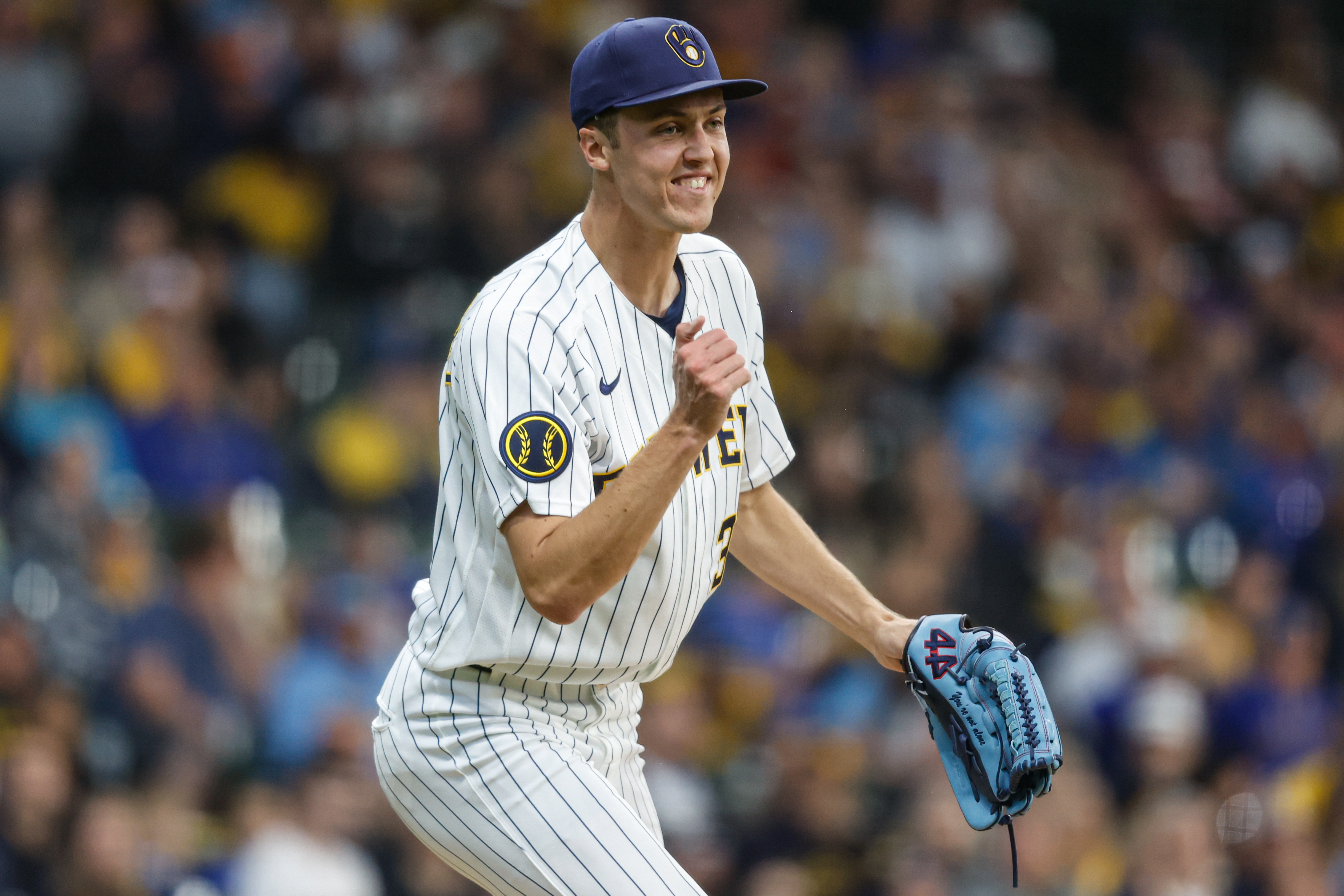
    Jacob Misiorowski and Kyle Harrison, Brewers: When it comes to velocity, nobody beats The Miz. The 24-year-old righty’s fastball averages — repeat: averages — 100 mph. Harrison is a revelation, though one NL evaluator was skeptical of the 24-year-old lefty, who has been traded twice (Giants to Red Sox to Brewers) since last June 15. Misiorowski and Harrison will take 1.50 and 2.72 ERAs into starts Friday and Sunday, respectively, against the Phillies in Milwaukee.

    Shohei Ohtani and Yoshinobu Yamamoto, Dodgers: Imagine if the Phillies convinced Yamamoto to take their $300 million-plus offer in December 2023? After his iconic postseason last year, he has a 2.68 ERA through 12 starts. Ohtani seems determined to add a Cy Young Award to his MVP collection (four, and almost certainly counting). He allowed five runs through his first 10 starts and has a 1.06 ERA overall. One rival NL scout dinged the Dodgers’ duo, dominant as it is, due to the unique usage of Ohtani, who rarely starts on less than six days’ rest.

    Cam Schlittler and Gerrit Cole, Yankees: Every team wishes it could clone its Cy Young-winning ace. The Yankees seem to have done it. Schlittler (1.87 ERA through 14 starts) resembles Cole not only in terms of physical appearance but also stuff, notably a big fastball and hard cutter. Two scouts — one in each league — put the Yankees’ 25- and 35-year-old righties slightly ahead of Sánchez and Wheeler. But one NL scout cautioned that, like Wheeler, Cole is coming back from surgery. So far, though, four starts into his return from Tommy John elbow surgery, he has a 2.45 ERA that has him looking like vintage Cole.

    Another NL scout cited the emergence of righty Braxton Ashcraft (3.28 ERA through 13 starts) as a sidekick to Paul Skenes (2.84 in 14 starts) to give the Pirates a formidable tandem. The AL scout pointed to Blue Jays right-handers Dylan Cease (2.91 ERA in 12 starts) and Kevin Gausman (3.60 in 14 starts).

    Off the top of his head, Harper submitted Braves lefty Chris Sale and, when healthy, hard-throwing Spencer Schwellenbach. But the latter had surgery in February to remove bone spurs from his right elbow and isn’t expected to pitch until late in the season.

    In any case, the Phillies believe Sánchez and Wheeler don’t take a back seat to anyone. They’re 10-4 in Sánchez’s starts (including a 1-0 loss to the Guardians on May 22), 7-2 in Wheeler’s, and 20-25 in all other games.

    Unlike the Dodgers’ and Yankees’ co-aces, Sánchez and Wheeler give the Phillies a lefty-righty balance. They present stylistic contrasts, too, and come from vastly different backgrounds.

    Brewers ace Jacob Misiorowski, who will face the Phillies on Friday night, is half of Milwaukee’s formidable top-of-the-rotation tandem.Jeffrey Phelps

    Sánchez, acquired from the Rays in a minor trade after the 2019 season, represents a victory for the Phillies’ scouting, analytics, and mostly player-development departments. Specifically, pitching coach Caleb Cotham credits César Ramos, who worked with Sánchez in triple A before becoming the major league bullpen coach.

    In three years, Sánchez harnessed his command, honed his changeup, and went from a last-resort fifth starter in 2023 to the best lefty in the NL — and maybe in the entire sport.

    Since the beginning of the 2024 season, Sánchez has a 2.62 ERA and leads all pitchers with 16.9 WAR, as calculated by Baseball-Reference.

    “It’s the coolest thing I’ve ever been a part of, from where he started to where he is now,” Cotham said this week on The Inquirer’s Phillies Extra podcast. “The attention to detail and the small things, tightening the delivery, we can go on and on. They turned into huge things for him.

    “You watch a ’23 video, ’22, even some ’24 video, it still kind of smacks me in the face, where it’s like, wow. I know the delivery is tighter, it’s cleaner. But he’s a big dude. There was arms and hands and feet going everywhere. It’s still kind of jarring watching even ’24 video with how much better and consistent and compact his delivery is compared to then. It’s just gotten better and better each year.

    “That’s probably the biggest piece for me with Cris. The physicality got to a point to allow the delivery to get to where you’re no longer wondering where this ball’s going to go.”

    Cristopher Sánchez has a 2.62 ERA since the start of the 2024 season.Yong Kim / Staff Photographer

    Wheeler has evolved, too. He still leans on his fastball, although it’s a few ticks slower after his surgery. But he added a sweeper and splitter over the last few years, and in any given start, one or the other, or maybe his curveball, might be his best off-speed pitch.

    “The splitter’s arguably as good as it’s ever been, movement-wise,” Cotham said. “The sweeper’s been very good. He’s thrown the last couple of starts some of the better curveballs he’s thrown. The cutter was a pitch he didn’t quite have early in the year. It’s gotten better lately.”

    Oh, and for hitters, here’s the scary part.

    “I still think,” Cotham said, “there’s another level for him.”

    Said interim manager Don Mattingly: “It’s always good to have Wheels out there. We talk about Sánchy being an ace. But it’s hard to have a true ace if you’re not saying Wheeler is the guy. It’s good to have these guys back-to-back.”

    Regardless of where Sánchez and Wheeler stack up, few teams have anything like them.

    “It’s tough coming into a ballpark and knowing that you’re going to face those two guys in a series,” Harper said. “So, yeah, I really don’t know if there’s a better one-two punch in the game right now.”

  • With or without World Cup tickets, these Philly fans are ready for Sunday — and beyond

    With or without World Cup tickets, these Philly fans are ready for Sunday — and beyond

    The World Cup is finally here, and for the next 39 days, billions of soccer fans worldwide will hang on the fate of the 48 national teams vying to be named the global best for the next four years.

    There is nothing else quite like it.

    If you haven’t followed it closely, try to imagine it as a kind of March Madness wherein the bracket’s unexpected turns and Cinderella runs can upend every expectation: add into it the international scope and quadrennial timing of the Summer Olympics; then top it off with the fervor of beloved religious observance — and you’ll be getting close.

    My familial WhatsApp group started really buzzing two days ago, after New York City Mayor Zohran Mamdani posited the possibility of Morocco winning it all, and won’t stop buzzing until the confetti rains down on the overjoyed winners. In between will be everything from play-by-play game commentary, to status reports on Panini collections or taste tests of World Cup branded snacks, to shared photos of candles lit for the success of a favored team.

    Because, when you are all in you are all in, am I right?

    Thursday the opening match took place between Mexico (which, along with the United States and Canada, is co-hosting this World Cup) and South Africa.

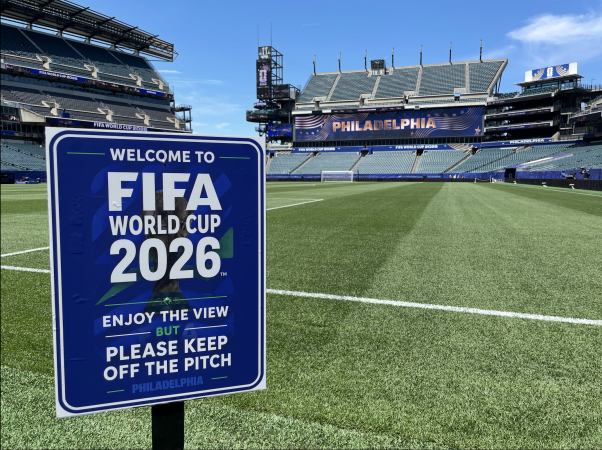
    On Sunday, our own Linc-turned-Philadelphia-Stadium will host Cote d’Ivoire vs. Ecuador. Philadelphia Inquirer columnist Will Bunch has written about the Cote d’Ivoire team — which he will see in person — and whose fans came to watch them in Chester even before the World Cup started.

    The Vourvouliad (the collective we’ve coined for my extended family) long toyed with the idea of attending one of the Philadelphia matches as a group — but FIFA’s dynamic pricing put the kibosh on that by making every seat cost a small fortune.

    But we’ll make do — as we have every mundial before this one — watching from afar.

    Truth is, many of us are also approaching this World Cup with more than a little bit of trepidation. We will watch the World Cup matches taking place on U.S. soil with bated breath, given President Donald Trump’s xenophobia and his administration’s targeted deployment of Immigration and Customs Enforcement and other Department of Homeland Security agents to Black and brown cities, communities and gathering spaces.

    But we longtime fans have too many great memories born of our experiences of soccer to boycott the World Cup altogether — even though some have called for that.

    In fact, most of the fans that I’ve spoken with lately are consumed by the exact opposite: trying to find a way to get into a World Cup stadium.

    Ecuador’s Moisés Caicedo carries the ball during a World Cup 2026 qualifying soccer match against Argentina at Banco Pichincha Stadium in Guayaquil, Ecuador in September.A

    Felipe, who — perhaps channeling Pelé, Neymar and countless other soccer icons — only wanted to go by one name, will be at the Philadelphia opener Sunday, rooting for his home country of Ecuador.

    “I will be going to the stadium with my family. We will also be tailgating with some other friends from Ecuador before the game outside the stadium,” he told me. “I think it will be a great opportunity to meet other soccer fans there.”

    “I am really excited for the World Cup, not only because Ecuador’s national team is in great shape but also because it is a once in a lifetime [opportunity] to have your home country’s national team playing a World Cup in the city you are living in,” Felipe added. “I wish the organization would take into account the fans’ enjoyment before the profit, but I guess this is the business model we sadly see in many other sports as well.”

    France’s Kylian Mbappé, left, scores his side’s third goal during a World Cup 2026 group D qualifying soccer match between France and Ukraine in Paris in November.Christophe Ena

    Ben Rush-Goebel, who moved to Philadelphia from France more than a decade ago, probably won’t be at France’s match on June 22.

    “The tickets are really too expensive,” he told me, “so unless I find a magical way to get to the Philly game, I will be watching it with my friends. I can’t wait to go to the FanFest to watch this game and others. Might also go to a bar. Fado has always been our spot. In 2018, when France went to the finals to beat Croatia, we were in the rain on South Street watching from the screen set up by Brauhaus Schmitz. This was the most amazing time as we rushed after the victory to buy cheap champagne to celebrate.”

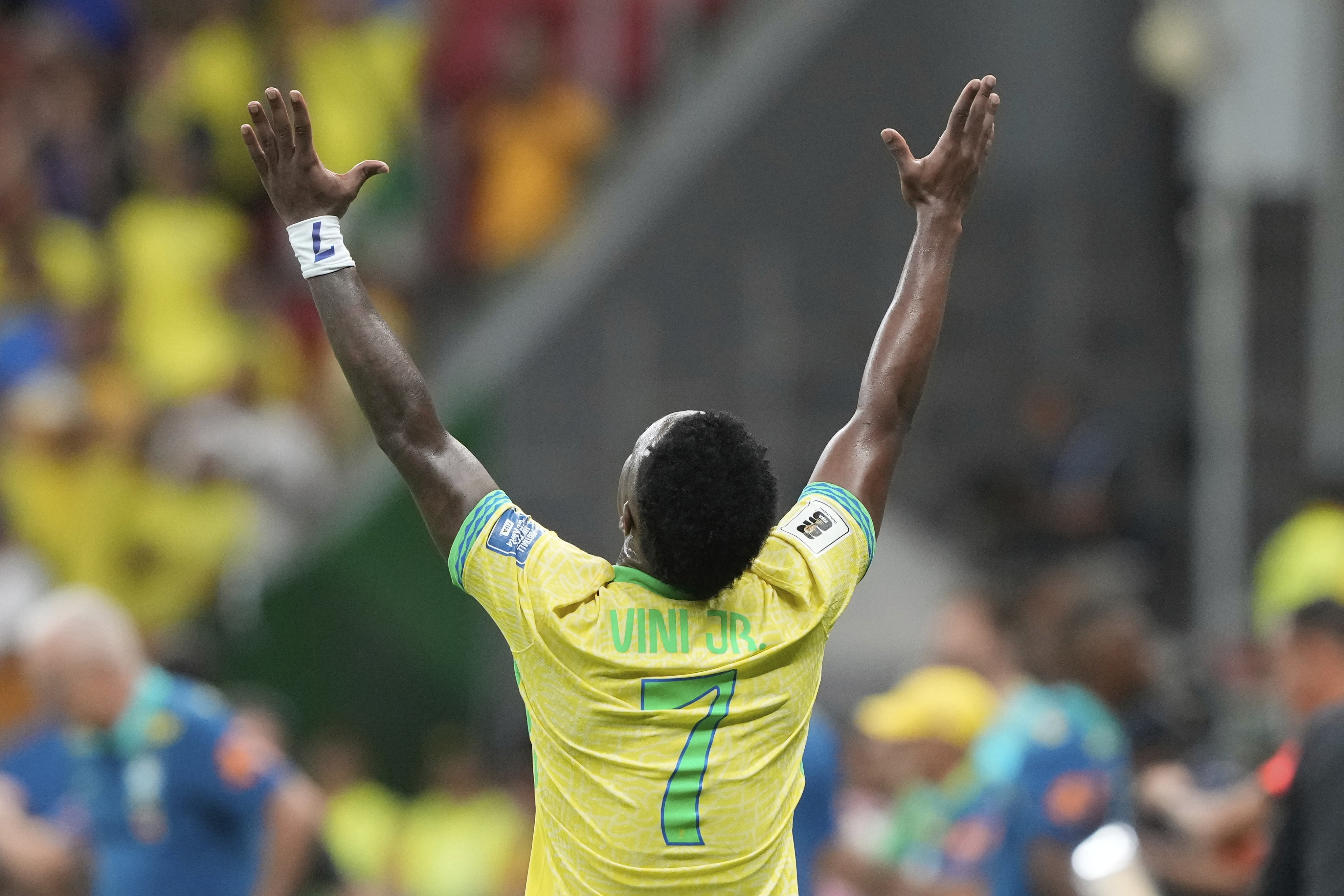
    Brazil’s Vinícius Júnior celebrates after scoring his side’s second goal against Colombia during a FIFA World Cup 2026 qualifying soccer match at Mané Garrincha stadium in Brasilia, Brazil, in March 2025.Eraldo Peres

    Rob Levin, raised in Brazil and rooting both for their Seleção and Argentina’s Albicelestes, will be watching Brazil play in Philadelphia June 19 from home, or with others at a watch party.

    “Chevere to have the World Cup here,” he said. “It’s a shame that the ticket costs are so high and travel to and fro is so fraught — I hope all the fans behave and all players are treated well and with respect — no place for politics in these games. May everything go as smoothly as possible, as it should.”

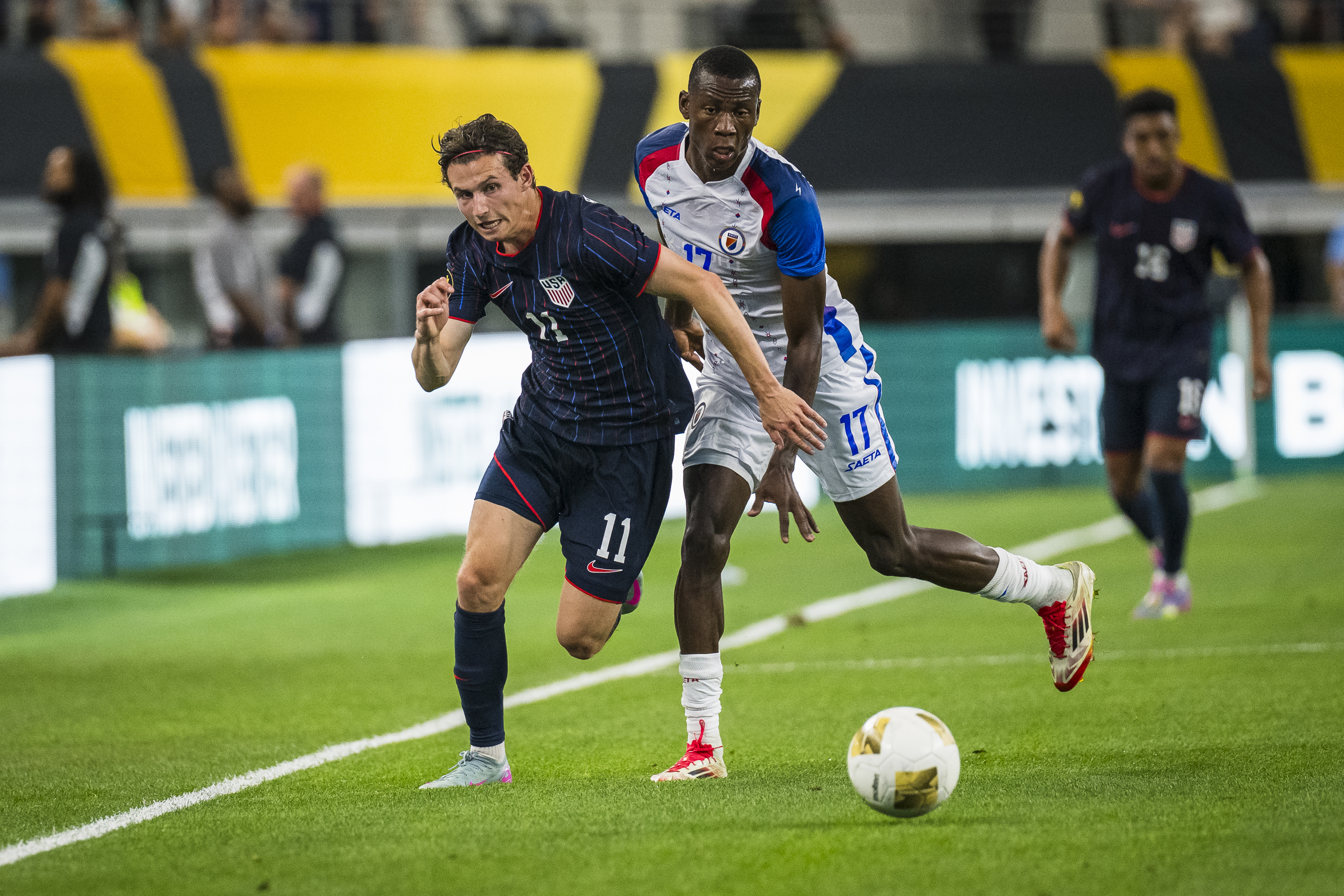
    The Union’s Danley Jean Jacques, right, is the first active player from the Philadelpha club to play in a World Cup, on the Haitian national team.Jessica Tobias

    Numa St. Louis, whose team, Haiti, is participating in the World Cup for the first time in more than 50 years, hasn’t given up on seeing the team play against Brazil on June 19.

    “I’m still hoping to score a ticket for the Haiti-Brazil game,” he told me, “but if not, I’ll be enjoying the tournament the Haitian way — at community watch parties, breaking bread with friends and family, dancing, and vibing to Haitian music and rhythms while cheering on our team.”

    “The entire Haitian community is energized by the opportunity to support our national team and celebrate this historic moment together …Win, lose, or draw, this team has already made us proud,” he added.

    Like Levin, St. Louis worries about the welcome players and international fans might feel in the U.S. venues. “I have some concerns about how the United States is being perceived by many international fans,” he said. “Reports regarding the treatment of an African referee, Senegalese players, and issues involving Iranian supporters have raised questions about whether the spirit of the tournament is being fully embraced. The World Cup should be a celebration of cultures, people, and the beautiful game. It should feel welcoming, joyful, and inclusive for everyone.”

    And it should resonate, even years later.

    “My best soccer memory goes back to 1996, the first time Ecuador beat Argentina in Quito,” Felipe told me. “I was 12 years old and went to watch the game at the stadium with my grandfather who was a huge fan of soccer.”

    Rush-Goebel points to that 2018 moment on South Street after France’s win as his favorite soccer memory: “A whole lot of French people, many of whom were my friends, my wife, [all of us] stressing together, in the rain, to an amazing victory!”

    For myself, I have fond memories of seeing Mexican immigrants in Philly dressing their Jesus figures in El Tri’s national jerseys before Mexico played in the 2014 mundial — but you have to go all the way back to the 1970 World Cup in Mexico for my best memory.

    Sure, I recall snippets of the televised semi-final “game of the century” between Italy and West Germany, and maybe even Pelé’s magnificent header that opened the final between Brazil and Italy…

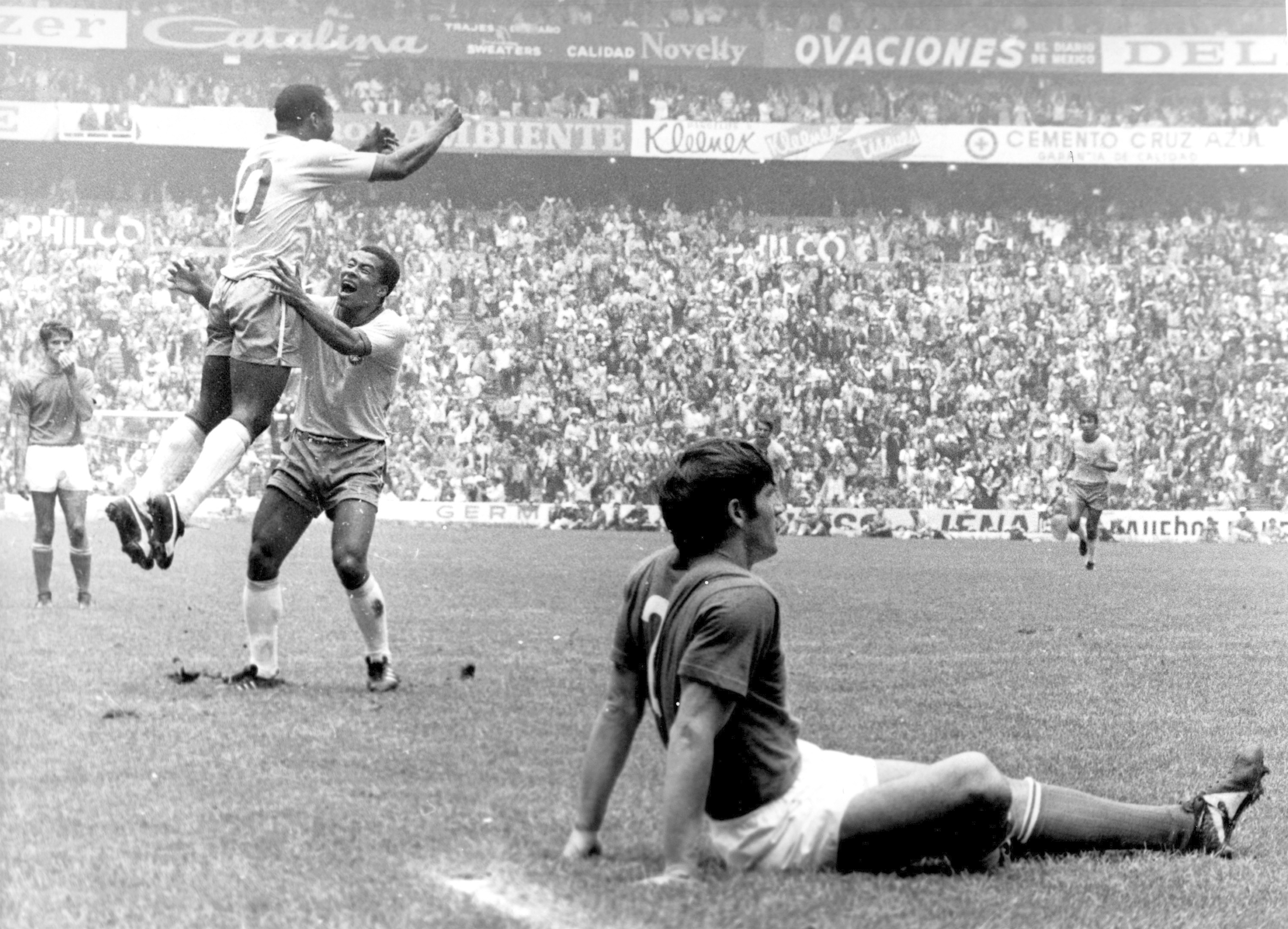
    In this June 21, 1970 file photo, Brazil’s Pelé jumps for joy after scoring his team’s first goal against Italy in the first half of a World Cup final at Azteca Stadium in Mexico City, before winning 4 – 1. Kurt Strumpf

    But what lives most vividly in my memory played out during the long lent leading up to those games.

    I’m a kid, standing under the eucalyptus tree in my grandmother’s house in Guatemala with my brothers, trading Panini we purchased for centavos at the corner store in Zone 7 so that we could fill every team roster with stamps in our albums. We talked fútbol nonstop — me, who can’t stand sports, and my brothers, who love soccer and baseball with equal passion — and cheerfully bickered about who would go the distance.

    For me soccer will always be about those two people I love, who I want to keep talking fútbol with until the day I die. The beautiful game is beautiful precisely because of the profound connections it invites and honors — be it with family members, friends or strangers across continents and time zones.

    Or with a city, hosting its first ever World Cup matches with characteristic style and grit. May you hold our deep and indelible memories forever, Philadelphia.