MILAN — Haiti has been forced to change the design of its World Cup jersey after it was deemed too political by FIFA just months after the Caribbean nation had to amend its Winter Olympic uniforms.
The jersey, by Colombian sportswear manufacturer Saeta, originally included a depiction of the final battle of the Haitian War of Independence in 1803 on its front. The image was rejected during FIFA’s approval process.
Saeta said in a statement Wednesday that it would comply with the ban even though the design “was not intended as a political statement,” but rather as a “tribute to the men and women who contribute every day to Haiti’s future.”
The jersey featured blue to mirror the sea and red for the nation’s “strength and passion,” the sportswear maker said. Players wore the now-banned jersey in a warmup match against Peru last week. The original design was marked as sold out on the SaetaUSA online shop.
Similarly, the International Olympic Committee required the removal of an image of Haitian founding father Toussaint Louverture from Haiti’s opening ceremony uniforms for the Milan Cortina Winter Games, ruling that it violated Olympic rules barring political symbolism.
Haiti has been forced to change the design of its World Cup jersey after it was deemed too political by FIFA.
The jersey originally included a depiction of the final battle of the Haitian War of Independence in 1803.
Haiti gained independence in 1804 and is widely regarded as the world’s first independent nation founded by formerly enslaved people after a successful slave revolt.
Italian-Haitian designer Stella Jean, who designed the Olympic uniforms, came up with a creative solution: Painting over the figure, leaving just a horse against the background of tropical foliage. The designs were so much in demand that Jean later created a production version featuring the original Louverture image.
“Either way, Haiti has to be setting a record: Two rebukes from the highest international sports authorities in just a few months,” Jean told The Associated Press on Thursday.
Haiti opens World Cup play on Saturday against Scotland in Foxborough, Mass., then plays five-time champion Brazil on June 19 in Philadelphia and Morocco on June 24 in Atlanta.
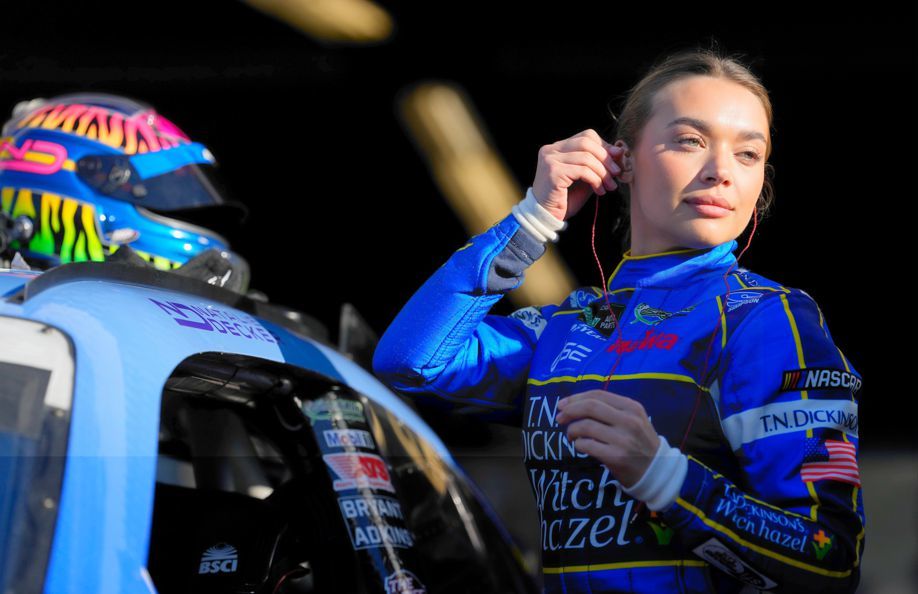
As a 9-year-old girl growing up in Eagle River, Wis., Natalie Decker would hop out of her purple go-kart, make her way over to a tiny toy stroller, and push her baby doll around the go-kart tracks.
Nearly two decades later, in August 2025, a 27-year-old Decker was still pushing around a stroller in between races. But this time the purple go-kart was replaced with a NASCAR stock car, and the stroller she was pushing belonged to her first newborn child, Levi.
“I always saw myself as being a mom one day,” Decker said. “Now, it’s real. It’s so crazy. In my racing suit, walking around in the garage area, carrying my baby, pushing him in the stroller. And I feel so grateful that I have the opportunity to be Levi’s mom. Once Levi was here with me, I was like, it’s life-changing. But in the most positive, best way ever.”
Levi attended Decker’s first race back from maternity leave, just six months after Decker gave birth, as she competed in the NASCAR Xfinity Series at Daytona International Speedway. Since then, Decker has continued to compete, including Saturday at Pocono Raceway in the NASCAR O’Reilly Auto Parts Series MillerTech Battery 250 race.
“Pocono is called the tricky triangle,” Decker said. “And it is tricky. I’m so excited to be racing there with T.N. Dickinson’s. But I haven’t been to the Poconos in years. I think it’s been five years since I’ve raced that. So, I’m really excited to get back.”
Ahead of her race, Decker reflected on her journey, discussed dealing with outside noise, balancing both motherhood and racing, and overcoming an autoimmune disease that should have limited her time on the track.
Start your engines
Decker grew up surrounded by racing. Her father, Chuck, was a former professional snowmobile racing world champion who owned the Eagle River Derby Track in Wisconsin. Chuck, along with his brothers Steve, Mike, and Allen formed Team Decker, one of the most decorated snowmobile racing dynasties.
“I grew up with a family that loved motorsports on my dad’s side,” Decker said. “I grew up around snowmobile racing and my dad always watched NASCAR on TV. So, I fell in love with it at a very young age. I didn’t necessarily like racing snowmobiles. I tried it. It didn’t go well. And it was cold.”
With no passion to follow in her father’s footsteps of racing snowmobiles, Decker asked him to buy her a go-kart. And after years of asking, he finally gave in on her ninth birthday, thinking they would just resell it after a few weeks.
But four years later, Decker was in a full-size stock car racing all across the United States. A few years after that, at 14 years old, she was racing the Super Late Model, the highest, fastest class you can get into on the asphalts.
“The motorsport industry is a small circle and everybody knows everybody,” Decker said. “I love [being part of a racing family]. My cousins [Paige and Claire] raced with me growing up. They both married into racing families. Once you’re in it, you don’t ever want to leave it.”
Balancing motherhood
Decker is starting her own racing family with her husband Derek Lemke, a fellow NASCAR driver. In February 2025, they became parents to their first child, Levi, who already has a love for race cars.
“He just turned 16 months,” Decker said. “And he is obsessed with race cars. Every time he sees a race car or anything with wheels, he goes ‘vroom, vroom.’ He just loves racing and it makes me really happy.”
After giving birth, the Deckers had a bit of an early scare. As soon as Levi was born, he was rushed to the NICU with holes in his lungs. Fortunately, he was able to heal on his own.
Natalie Decker pictured with her husband Derek Lemke and their son, Levi.Overbey Photography
“He didn’t have to do any surgery,” Decker said. “He was a strong little man and was in the NICU for four days but it felt like four years. Now he’s a healthy, strong little baby. They’re so resilient but it was very terrifying at the moment.”
Six months later, Levi attended his mom’s first race back postpartum. And since then Decker has been balancing motherhood and racing, even if that means squeezing in a light workout while Levi sits and watches Mickey Mouse in the living room.
“It’s a lot to balance it all,” Decker said. “I would not be able to do it all without my family. Everyone’s so involved and I feel so lucky to have this much support around motherhood for me with Levi. When they say it takes a village to raise a child, it truly takes a village. And I have a village.”
Being a mother has also impacted how she handles herself on the racetrack.
“Racing is definitely a really physical sport,” Decker said. “And when it does get physical, it can start getting in your head a little bit. But, I’m like ‘Oh, this is nothing compared to carrying a baby for nine months and pushing this baby out. Like, I can literally do anything. I can conquer anything physically.”
The physical demands of NASCAR
The physical side of racing can be very taxing on the body, and for Decker this is especially so as she battles a number of autoimmune diseases. At 2 years old, she was diagnosed with juvenile rheumatoid arthritis. Since then, she’s developed Hashimoto’s disease, psoriatic arthritis, and psoriasis.
“It definitely changed my mindset at a very young age,” Decker said. “All my friends are going out to the birthday parties and the sleepovers and I have to go to my doctor’s appointment or stay home and take my methotrexate shot, it was the chemo drug. I realized life is not fair but it doesn’t mean you stop showing up.”
While taking methotrexate, Decker kept herself active with racing, hockey, and dance.
“I had to take it every week and it made me feel sick, more sick than the actual autoimmune disease,” Decker said. “So we would plan the shots around racing events or hockey games or whatever I was doing.”
To manage racing, Decker knows her own physical limitations and keeps that in mind when it comes to her training regimen.
“With my autoimmune diseases, my training does look different,” Decker said. “I do very low impact workouts and I don’t necessarily even lift weights. A lot of walking, walking on an incline on the treadmill and Pilates-type workouts. But I do everything at home.”
“The biggest thing [my autoimmune diseases] have taught me is to advocate for myself wherever that is, in the doctor’s office, or at the race shop with my team.”
Eliminating outside noise
Being an athlete in the sport is already challenging enough. But being a woman in the sport has added to the outside noise.
“The toughest thing about being a female in the sport is not necessarily with my competitors or my team,” Decker said. “It’s with the outsiders and the fans. They’re not as accepting. And this year, I’ve gotten into viewing a lot of hate that comes from social media and some of the NASCAR fans.
“It’s a privilege that our fans in the motorsports industry are just that dedicated and love the sport that much that they speak their opinions so strongly. So, that’s how I started trying to view it so I don’t get down on myself when there’s a bunch of hate going on online.”
Decker has tried her best to eliminate the outside noise.
“I have such a great support system around me,” Decker said. “That’s how I always raced and that’s how I will always do it. And that’s why I enjoy it so much. So, at the end of the day, if I have a bad weekend or a good weekend, I get to come home with my family and then go back to the race track again with my family.”
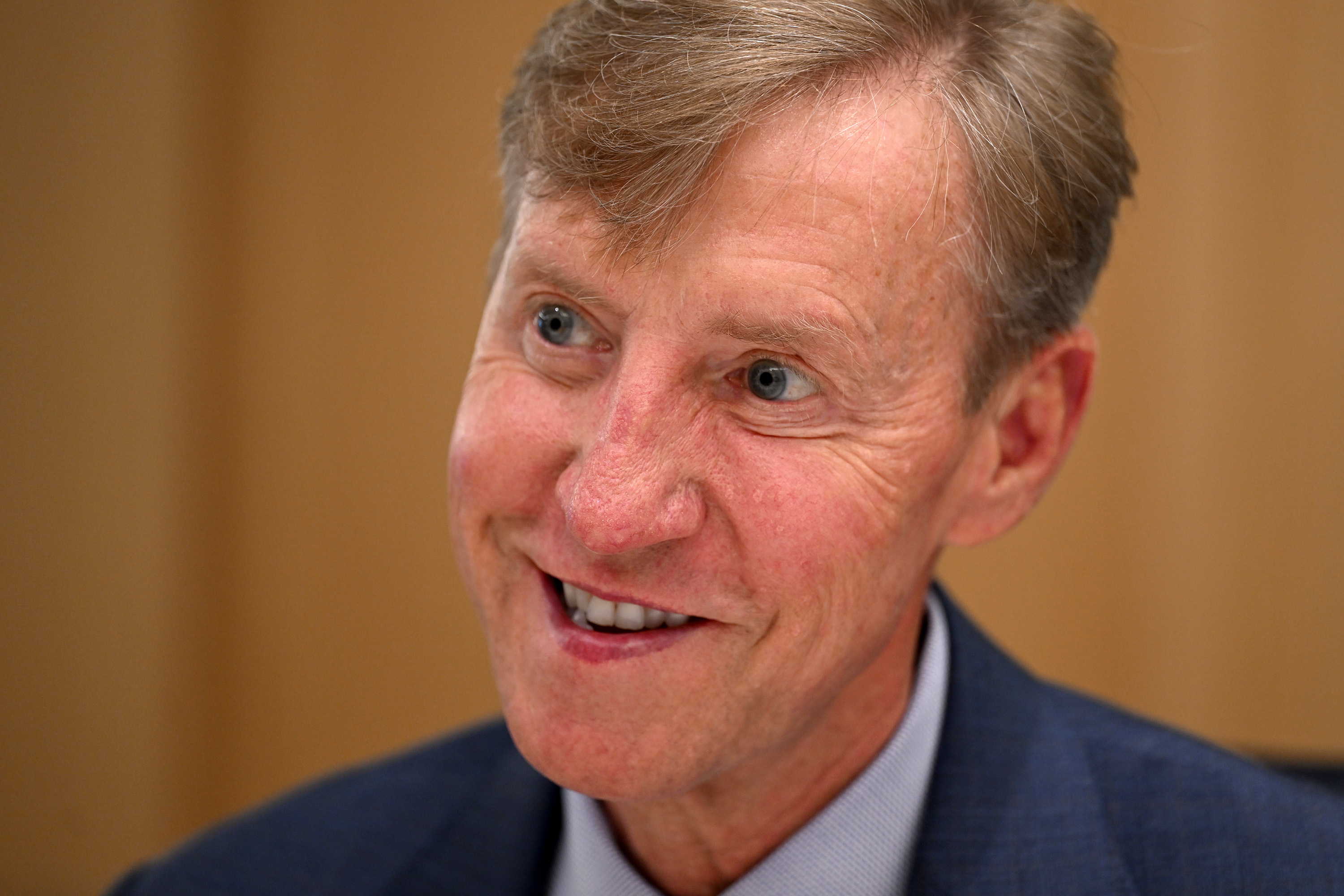
University of Pennsylvania President J. Larry Jameson will conclude his presidency next June, he announced in an email to the Penn community Friday.
“Although I greatly enjoyed serving as president, now is the right time for Penn to begin its next chapter under new leadership,” Jameson said in the email. “My goal was to help restore stability during unanticipated leadership transitions, refocus our community on Penn’s mission, and strengthen Penn for the future during a challenging time for higher education.”
There was much speculation about whether Jameson — an endocrinologist who previously led Penn’s health system and medical school for more than 12 years — wanted or would be asked to remain in the seat beyond next year’s expiration of his current contract. Many have credited Jameson with steadying the school during a turbulent time, including as the school faced funding threats and increased scrutiny by President Donald Trump’s administration.
His departure will leave the Ivy League school searching for a new leader during a time of uncertainty under Trump, who has targeted elite universities.
Board chair Ramanan Raghavendran said he respected Jameson’s decision and the board will begin searching for the school’s next president in the fall.
Jameson, 71, will have served in the top job at Penn just three-and-a-half years, one of its shorter presidential tenures. But he came into the job by circumstance rather than desire.
Jameson took over in December 2023 during perhaps one of Penn’s greatest leadership upheavals. Former President Liz Magill had just resigned amid a bipartisan backlash over her testimony involving the school’s response to antisemitism complaints. He first was named interim president and then was elevated to the permanent post in March 2025.
Jameson earned total compensation of more than $8 million in 2024, the most recent tax year available. That included $5.4 million in “reportable compensation” and more than $2.5 million in other compensation.
“Dr. Jameson stepped in at a pivotal moment, and what he has accomplished in two-and-a-half years has been simply extraordinary,” Raghavendran said in a statement.
Neither Raghavedran nor Jameson were available for interviews Friday, the university said.
In his message, Jameson said “the momentum we have built will continue,” noting his intention to work over the next year on implementing the Penn Forward plan. The plan calls for everything from more transparent and predictable tuition and cost policies and improved student experience to more efficient operations, a focus on keeping Penn at the forefront of best uses of artificial intelligence, and a growing presence in the San Francisco Bay Area — where Wharton already has a campus.
Penn also has some tough decisions ahead in his final year. During the spring semester, the school proposed new open expression guidelines that some on campus say are too restrictive and would chill free speech. The university is considering the feedback and plans to issue final guidelines next academic year.
The university also is undergoing belt-tightening in anticipation of potential federal cuts and increased legal and insurance costs. Penn in January asked schools and centers to pare 4% from their budgets for the next fiscal year, on top of a 5% cut last year.
Penn’s Graduate School of Education laid off several staff members last week as part of those cuts, according to The Daily Pennsylvanian, the student newspaper.
Many at Penn speak highly of Jameson’s leadership, though some wish he had made a stronger defense against some Trump demands.
“Even if this were a good time to search for a new president — and it decidedly is not — I cannot imagine Penn finding a more effective leader,“ Eric Feldman, faculty senate tri-chair and a law school professor, said last month. ”His deep knowledge of the medical school is a significant asset amid continuing pressures on federally funded research, and his extensive leadership experience, spanning decades, makes him uniquely well suited to guide the university through what are likely to be several more complex years.”
During an interview with The Inquirer last month, Jameson explained his decision to resist the Trump administration on some things and negotiate on others.
“My approach has been not just to complain,” Jameson said during his first interview as Penn’s president with a major media outlet, “but to say, ‘Well, here’s where we’re working together very effectively. Here’s where we’re not necessarily aligned, but let’s discuss how to move forward.’”
Jameson was at the helm when Penn last summer struck an agreement with the White House over the prior participation of transgender swimmer Lia Thomas on the school’s swim team. The school agreed to adhere to the Trump administration’s definitions of sex, female, male, women, and men in regard to athletics, and send letters of apology to female athletes who felt aggrieved by Thomas’ participation on their team during the 2021-22 season.
But he also was at the helm when Penn rejected a compact that would have given it preferential treatment for federal funding if it agreed to the Trump administration’s operational demands. The school also is actively fighting a demand by the Equal Employment Opportunity Commission to turn over lists of Jewish people on its campus for its investigation into alleged antisemitism at Penn. The agency sued Penn for not complying with its subpoena and a federal judge sided with the EEOC, but Penn is appealing the decision.
Jameson said he gained new perspective in the presidential role, which “allowed me to learn each day from the people, ideas and achievements that define this university and its extraordinary breadth. …While my career has been in academic medicine, it has been illuminating to reacquaint myself with other fields, from poetry to political science, from finance to fine arts.”
He said the university is on a positive trajectory.
“Penn has tremendous momentum and is exceptionally well positioned for the future,” Jameson wrote.
Montgomery County sued to get back $7.5 million it paid two disaster debris companies that engaged in “overzealous clearing” that harmed the environment in the aftermath of Hurricane Ida in 2021.
Mississippi-based DebrisTech and Texas-based DRC Emergency Services billed Montco for $14 million worth of cleanups, the suit said, but the federal government deemed more than half the removals “unnecessary” and declined to reimburse the county for it.
“Their overzealous clearing of County lands not only resulted in over half of the County’s reimbursement request getting denied, but it also caused environmental harm that requires extensive remediation,” the complaint said.
The lawsuit, which was initially filed in the Montgomery County Court of Common Pleas last month but moved to Philadelphia’s federal court this week, is a step to hold two vendors accountable for harm they caused, county spokesperson Megan Alt said in a statement.
“The Montgomery County Commissioners take their responsibility as stewards of the taxpayers’ money and natural resources very seriously,” Alt said.
DRC is committed to providing disaster recovery services that meet the instructions of its clients, Kristy Fuentes, the company’s vice president of administration and compliance, said in a statement.
“DRC looks forward to presenting all relevant evidence during the court proceedings regarding its disaster recovery work in Montgomery County,” Fuentes said.
DebrisTech did not respond to a request for comment.
DRC and DebrisTech came into Montgomery County days after Ida to assist in the recovery, the suit says. The vendors were required to engage only in clearings that are eligible for reimbursement by the Federal Emergency Management Agency, according to the complaint.
Montco relied on the companies’ expertise to determine FEMA eligibility but “instead of protecting the County’s interests,” the suit said, the vendors “overcut trees,” “mismanaged” oversight responsibilities, and “failed” to comply with FEMA regulations.
DRC and DebrisTech also cut down at least two Montgomery County-owned nature preserves, according to to the complaint. An 11-acre wooded preserve in Whitemarsh Township is “no longer,” the suit says, and Audubon Park turned into a “mud pit.”
All told, the companies billed Montgomery County $14,028,597.81 for the cleanup, the suit says. FEMA reimbursed just less than half, finding that the vendors removed debris that didn’t pose an “immediate threat.”
The federal agency denied multiple appeals by the county, leaving taxpayers on the hook for the remaining $7.5 million.
The suit asks a judge to require the vendors to reimburse the county for the $7.5 million FEMA found ineligible, restore the Whitemarsh site and Audubon Park, and pay damages and attorneys fees.
“Service providers hired for their claimed expertise are not free to accept public funds and then fail to perform, divert resources, or withhold services while retaining payment,” the lawsuit says. “To permit such conduct undermines fiscal accountability, erodes public confidence, and converts taxpayers’ dollars into a risk-free subsidy for contractual non-performance — an outcome the law cannot tolerate.”
Philadelphia police said they are investigating after a 1-year-old girl drowned in Kensington Thursday night.
Just after 7 p.m., police responded to a 911 call at a house on the 1800 block of East Somerset Street, police said. Emergency medical personnel were already on scene, police said, and were treating an unresponsive child in the back of an ambulance. Paramedics took her to St. Christopher’s Hospital for Children, where she was pronounced dead.
At the home, police found a water-filled basin in the second-floor bathroom, police Chief Inspector Scott Small told CBS Philadelphia Thursday. The house’s dining room on the first floor was also soaked with water.
“At this point in the investigation, there are inconsistencies in witness statements as to where the child was when the incident occurred,” police said Friday.
The department’s Special Victims Unit, which investigates sensitive crimes often involving children, is leading the investigation, police said.
A South Jersey man fatally shot an acquaintance Wednesday afternoon and then took his own life in his vehicle after driving a short distance, Burlington County authorities said.
Lumberton Township police were called to a home on Curry Court about 4:15 p.m. for the report of a shooting. They arrived to discover the body of Damon Nesmith, 53, who was pronounced dead at the scene. Authorities said Tyrone McLean, 56, had gone to the residence and fired multiple shots at Nesmith with a .40-caliber handgun.
McLean then drove about half a mile before fatally shooting himself while parked on the 600 block of Holland Place, authorities said. Police found McLean inside his Volvo SUV with the engine still running.
Investigators said that McLean was a former tenant at the Curry Court home and was recently evicted. Two other people inside the home at the time of the shooting were not injured.
The shootings followed an earlier incident involving McLean in Southampton Township, authorities said. Just before 4 p.m., New Jersey State Police were called to a residence on the 200 block of New Road for a report of gunshots. Police were told that McLean had stopped to talk with an acquaintance there before suddenly pulling a handgun and firing multiple shots. No one was injured.
The investigation is being conducted by the Burlington County Prosecutor’s Office, Lumberton police, and New Jersey State Police.
These 4 Philly properties just got historic protection
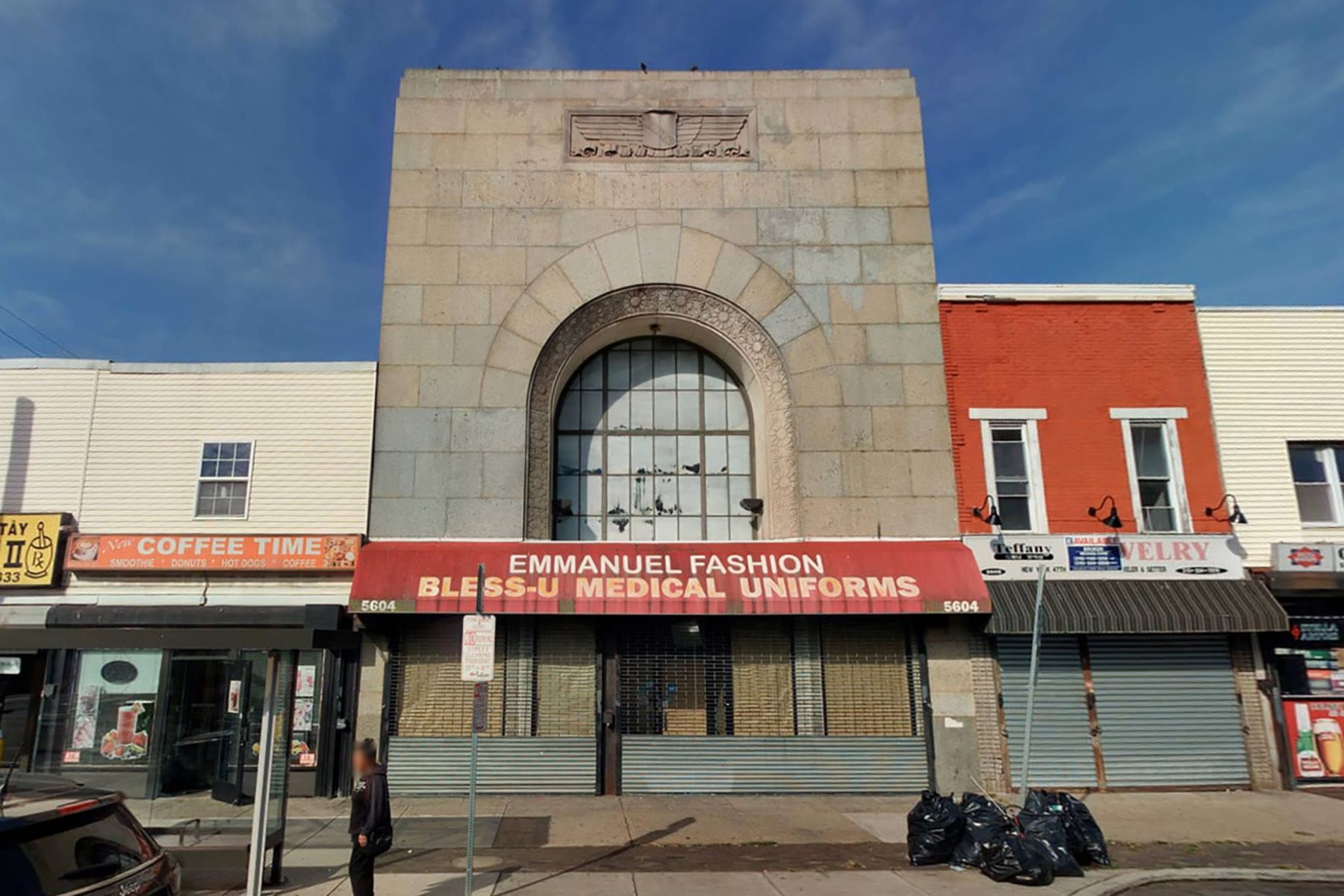
National Bank of Olney
The former National Bank of Olney building is an example of the shift in the design of neighborhood banks toward the Art Deco style in the late 1920s.Kevin McMahon
5604 N. 5th St. | Built: 1927-28
The building is an example of the shift in the design of neighborhood banks toward the Art Deco style in the late 1920s. Its architects — Simons, Brittain & English — were nationally prominent.
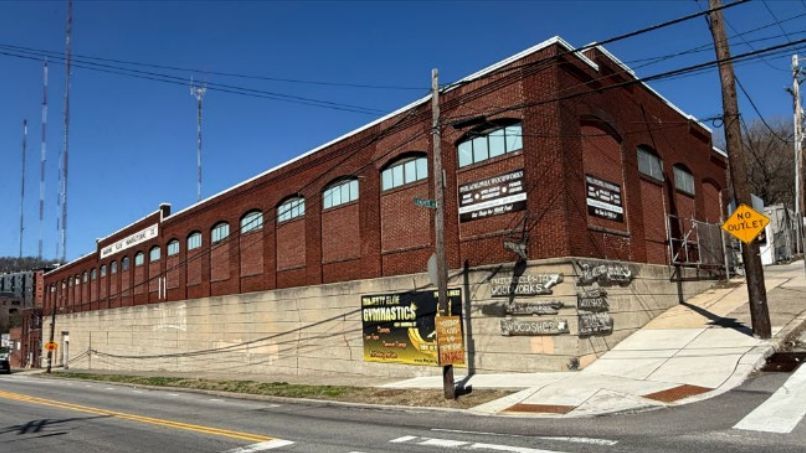
Manayunk Plush Manufacturing Co.
A manufacturing building and a power plant of the former Manayunk Plush Manufacturing Co. are representative of Manayunk’s industrial-era textile economy.Oscar Beisert
4889 Umbria St. | Built: 1926-27
The former company’s manufacturing building and a power plant are representative of Manayunk’s industrial-era textile economy. A developer plans to build a large apartment project next to these buildings.
Galilee Baptist Church
Galilee Baptist Church has been an institution for Black residents in the Roxborough/Manayunk area for 125 years.Philadelphia Historical Commission
459 Roxborough Ave. | Built: 1900-01
The church has been an institution for Black residents in the Roxborough/Manayunk area for 125 years. It “has endured, far removed from the historical epicenter of Philadelphia’s Black community life.”
Tetlow Manufacturing Co.
This building in Chinatown was once a factory for the cosmetics maker Henry Tetlow. The Tetlow Manufacturing Company also is a “remarkably intact” example of a late-19th century industrial building.Annie Liang-Zhou, Liangs Culture
132 N. 10th St. | Built: 1885
This building was once a factory for the cosmetics maker Henry Tetlow, who discovered a non-toxic base for face powders. It also is a “remarkably intact” example of a late-19th century industrial building.
But a jury acquitted him of those crimes, and he walked free in May 2023.
Three years later, Bowie, now 22, is back in jail — again accused of killing two people.
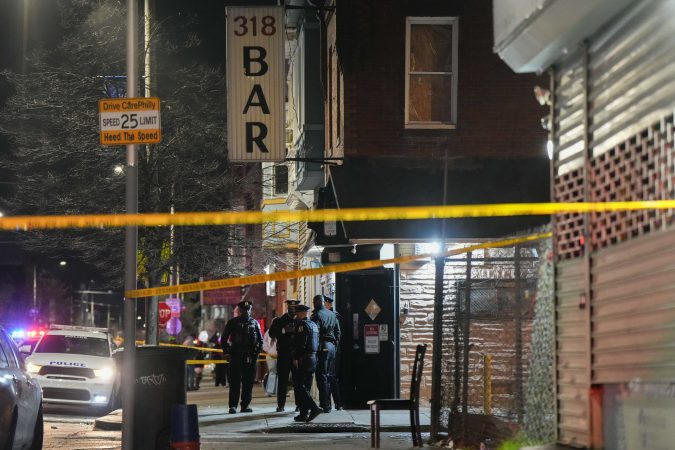
Police said Bowie and several others drove to 60th and Delancey Streets on the night of March 30, and opened fire on a group of people standing outside a corner bar, wounding three and killing Paul “PJ” Cobb and Naasir Boyd, both 24.
More than a dozen shots were fired from three different 9mm handguns, police said. In the hours after the shooting, police found the Mercedes on fire on the 1200 block of Cumberland Street.
Another man, Marquis Andrews, is also expected to be charged, police said. Andrews, 22, has been in custody since April after he was charged with illegally carrying a loaded gun, court records show.
Paul “PJ” Cobb, 24, was shot and killed near 60th and Delancey Streets on March 30. Cobb was the eldest son in his large, blended family, and was born and raised in West Philly.Courtesy of the Cobb family
The deaths of Cobb and Boyd, childhood friends born and raised in the neighborhood, came amid what law enforcement officials described as an escalating feud between the crews “Northside” and “Southside” in West Philadelphia — groups that have warred across the Market Street corridor for more than a decade.
Cobb’s and Boyd’s killings not only devastated their families, but police said the shooting likely led to another. The week after they were killed, police said, four Southside affiliates seeking revenge opened fire on a Northside rival standing outside a corner store at 60th and Market Streets.
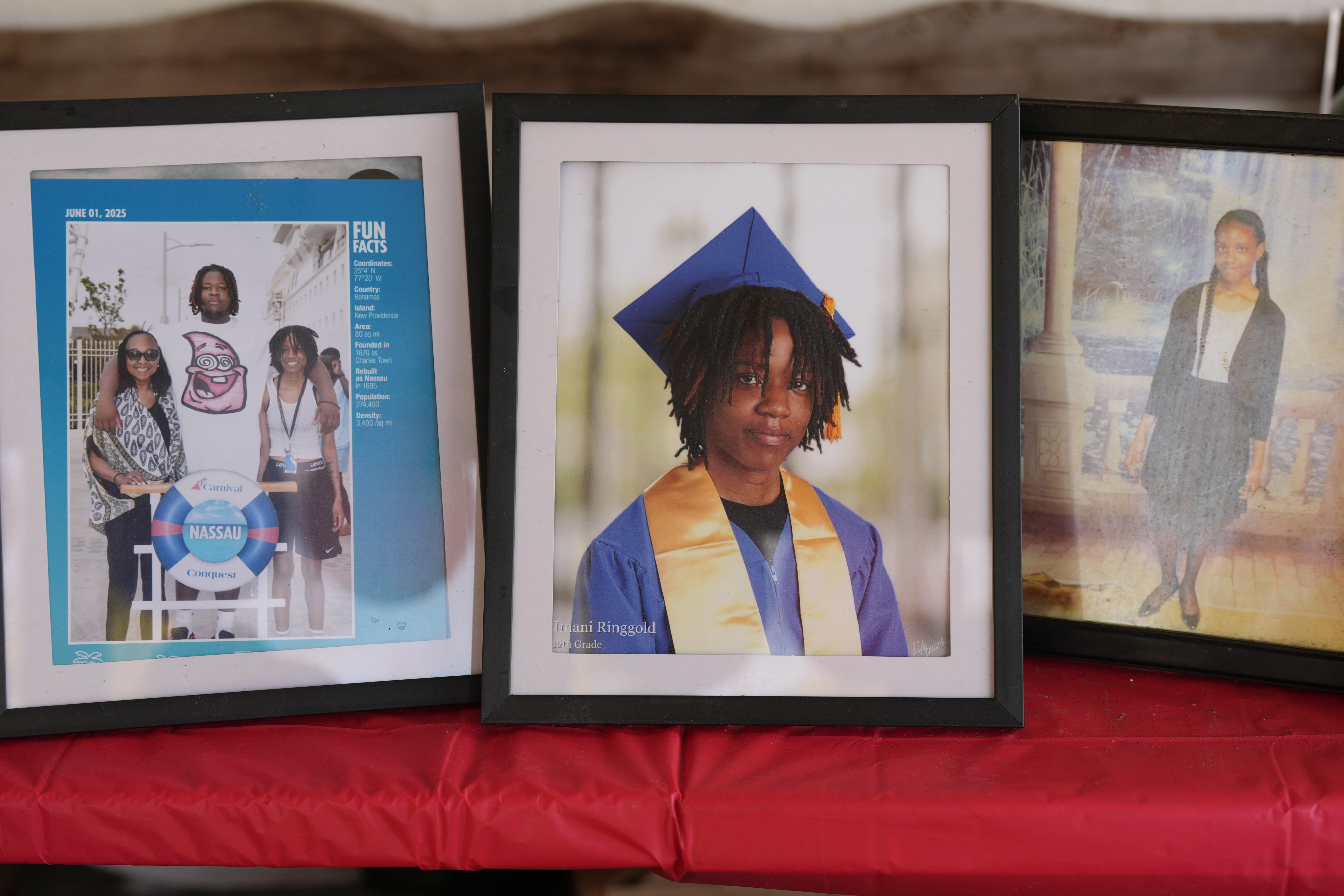
Instead, the bullets struck and killed 20-year-old Imani Ringgold, who was walking with a slice of pizza and talking to her grandmother on the phone — and who had nothing to do with the feud.
Photos of Imani Ringgold are laid out on the table at her grandmother’s home. Jessica Griffin / Staff Photographer
One detective, at a recent court hearing, testified that at least 30 people have been killed in connection with the groups’ conflicts since 2015 — a beef that has festered for so long that many people at the center don’t even know how it started.
Bowie’s cases
Prosecutors previously said the first two killings Bowie was charged with — and later acquitted of — were also tied to the Northside-Southside feud.
In that case, lifelong friends Jarell Jackson and Shahjahan McCaskill, both 26, were driving near 57th Street and Locust Avenue when three gunmen jumped out of a black SUV and fired more than two dozen bullets into their car, killing them, in October 2020.
Jarrell Jackson, left, and Shahjahan McCaskill were killed in a case of mistaken identity in West Philadelphia in October 2020.Family photos
Investigators at the time said they believed the gunmen were Northside members who shot up the car in a botched retaliation for an earlier homicide.
Chesley Lightsey, then-homicide chief at the district attorney’s office, said Jackson, a Jefferson Health technician who mentored troubled teens, and McCaskill, who was a cancer survivor and small-business owner, had nothing to do with that conflict. The men, she said, “were targeted because of the neighborhood they live in.”
Bowie was among three teens charged. But at the May 2023 trial, jurors acquitted him and his co-defendants. (Bowie was convicted of illegal gun possession in the case, and sentenced to 11½ to 23 months in jail, allowing his immediate parole, court records show.)
Marisa Palmer, a spokesperson for the district attorney’s office, said in an emailed statement that at Bowie’s trial, prosecutors presented witness testimony, and social media, video, and firearm-related evidence that prosecutors “believed established the defendants’ guilt beyond a reasonable doubt.”
The office respects the jury’s decision, she said. She called the new allegations against Bowie “deeply concerning,” and declined to comment further.
Bowie was taken into custody last week and charged with two counts of murder, as well as three counts of attempted murder, arson, and related crimes.
Police and homicide detectives investigate a double homicide at 60th and Delancey Streets on March 30. Jessica Griffin / Staff Photographer
Investigators tied Bowie to the crime after his cell phone location data placed him near the scene of the shooting, according to the affidavit of probable cause for his arrest. Andrews’ cell data also links him to the crime, the affidavit says, and call detail records and text messages show the two men were in communication in the hours after the killings.
The records say that police also recovered the murder weapon linked to Bowie. During an April 30 car stop in Kensington, the records say, police encountered Bowie and another man, and officers recovered a 9mm handgun that a ballistics test showed was used in the killings of Boyd and Cobb.
Court records did not list an attorney for Bowie.
Families in mourning
Boyd and Cobb have deep ties to the neighborhood, and were killed just blocks from where they lived.
Cobb’s mother said in an interview that her son was raised in a house at 60th and Delancey, and that she had countless memories of him playing and riding bikes on the block where he was killed. He was the eldest son of a large, blended family.
Cobb’s mother and sisters, who asked not to be identified for fear of retaliation, said he was goofy and protective, loyal and independent. He attended Sayre High School, before earning his GED, they said, and worked in construction with his father.
Paul “PJ” Cobb, 24, loved helping take care of a collection of nieces and nephews. Courtesy of the Cobb family
But his favorite role, they said, was being an uncle to his many nieces and nephews. He picked several of them up from school and daycare each day, and cared for them as if they were his own until his sisters finished work.
The sisters said they now tell their kids their favorite “Uncle P” is “in the sky.”
One older sister said that on a recent flight, her 3-year-old kept staring out the airplane window, looking for him in the clouds.
“She asked ‘Mom, where’s Uncle P at?’” she said. “And I had to tell her, ‘He’s further in the sky than we are on the plane.’”
His death, they said, has fractured their lives and ability to feel safe in their neighborhood.
Cobb’s mother said the conflicts of Northside and Southside have always loomed. Her son was not affiliated with Southside, she said, but having grown up on blocks at the center of the group’s feuds, he was cautious about his whereabouts, and she often worried about him.
When she first heard police made an arrest, she said, she was relieved. But learning that Bowie had been charged and acquitted before left her uneasy.
“There are things that happened,” she said, “that could have prevented this.”
ALEXANDRIA, Va. — A federal judge agreed on Friday to extend a court-ordered block on the Trump administration’s creation and operation of a $1.8 billion settlement fund for compensating people who claim to be victims of a weaponized government.
Earlier this month, acting Attorney General Todd Blanche told Congress that the government is scrapping its plans for the fund in the face of a fierce bipartisan backlash. Government attorneys have argued that lawsuits challenging the fund are now moot, but plaintiffs’ attorneys aren’t satisfied by Blanche’s assurances that the fund won’t move forward.
Neither was U.S. District Judge Leonie Brinkema, who ruled that the “Anti-Weaponization Fund” will remain blocked until further notice from the court.
“The (government’s) mootness argument, in my view, doesn’t go anywhere,” the judge said.
President Donald Trump, meanwhile, has not publicly and unequivocally endorsed its cancellation. He has continued to express support for the fund in remarks to reporters.
Brinkema gave the parties a week to negotiate an agreement for Blanche to submit a sworn declaration that the administration won’t revive the fund.
Brinkema previously agreed to temporarily block the administration from proceeding with the fund for at least two weeks. Her May 29 order was due to expire on Friday.
Trump’s Republican administration created the fund to resolve his lawsuit against the Internal Revenue Service over the leak of his tax returns.
Plaintiffs who sued to block fund payouts argue that the government can’t legally divert taxpayer money into what they argue is a slush fund for compensating Trump’s allies.
In a separate case on Wednesday, a different judge in Washington, D.C., rejected a government watchdog’s parallel request for a court order temporarily blocking the Trump administration from forging ahead with the fund. U.S. District Judge Richard Leon said he accepts Blanche’s representation that the fund is now moot.
Leon had asked Justice Department attorney Andrew Block why Blanche doesn’t formally rescind his May 18 order establishing the fund. Block said he didn’t know. He still didn’t have an answer to that question when Brinkema posed it two days later.
“It’s a huge gap in the record that we don’t have an answer to that question,” the judge said.
In the Virginia case, attorneys from the legal advocacy group Democracy Forward asked for an order to temporarily suspend the fund’s implementation and stop the Trump administration from disbursing any payouts from it.
The plaintiffs include a fired prosecutor and a college professor acquitted of assaulting federal agents at a protest.
Even before the administration said it was dropping the fund, the Justice Department did not form the five-member commission that would decide on payout criteria, so no money was paid out nor claims accepted.
Many of the Republican president’s allies are opposed to compensating rioters who stormed the U.S. Capitol on Jan. 6, 2021. In May, however, Blanche wouldn’t rule out the possibility that Capitol rioters who engaged could be eligible to apply for payments from the fund.
Trump issued mass pardons to Capitol rioters on his first day back in the White House last year. More than 1,500 people were charged in the Jan. 6 attack before Trump erased every case with his sweeping act of clemency.
Brinkema was nominated to the bench by President Bill Clinton, a Democrat.
ISLAMABAD — Pakistan’s prime minister said Friday the United States and Iran have agreed to wording of an agreement aimed at ending their war in the Middle East and that mediators were working with both sides to finalize a deal.
Prime Minister Shehbaz Sharif said the U.S. and Iran have reached a “final, agreed upon text.” He said Pakistan, which has taken the lead in mediation efforts, was working with the warring countries on next steps.
“Peace has never been this close as it is now,” Sharif said in a post on X.
The apparent breakthrough in negotiations comes after Iran exchanged fire with the U.S. and Israel over three days this week, threatening to return the Middle East to full-scale war.
There was no immediate comment from U.S. or Iranian leaders on Sharif’s statement.
Iranian Foreign Minister Abbas Araghchi said Friday an agreement “has never been closer” in a post on X. U.S. President Donald Trump, who has said multiple times in recent weeks that the countries were on the cusp of a deal, shared Araghchi’s post on his own social media.
None of the leaders gave details about the emerging agreement.
The war launched by the U.S. and Israel on Feb. 28 has rattled the Middle East and virtually shut down oil and natural gas shipments from the Persian Gulf. A fragile ceasefire has been in place since April 7.
Official says emerging deal would reopen strait
The U.S. and Iran were making progress Friday toward completing a deal that could effectively end the war, reopen the Strait of Hormuz, and begin the process of destroying or removing Tehran’s highly enriched uranium, according to a senior U.S. administration official.
The official, who briefed reporters on condition of anonymity under ground rules set by the White House, said a deal was 80% to 85% done and that the U.S. side believes “most of the people who have authority” in the Iranian government want to sign onto the deal “but not everybody.”
The official said technical details on how to remove Iran’s enriched uranium, according to the emerging agreement, would be worked out over 60 days after both sides sign it. The official did not detail who the U.S. envisions taking charge of removing the uranium, which is believed to be entombed under three nuclear sites that were battered by U.S. strikes last year.
Three regional officials said the emerging deal is also expected to include the phased lifting of sanctions on Iran and the release of frozen Iranian assets. The officials spoke on condition of anonymity because of the sensitivity of the negotiations.
Underscoring the fragility of the negotiations, Trump on Friday lashed out at Iranian officials on social media and said: “They better get their act together, and FAST!” That was before he shared Araghchi’s post.
Officials say deal could be signed in coming days
Iran’s nuclear program has been a key point of division. The U.S. and Israel fear it could lead to an atomic weapon — a main reason their leaders cited for going to war. Tehran has insisted its nuclear efforts are for peaceful purposes.
Also critical is Iran’s effective closure of the Strait of Hormuz, a vital shipping lane for oil and natural gas. Disruption of transit through the strait has crimped global energy supplies, driven up fuel prices, and made food and other basics more expensive well beyond the region.
The U.S. has responded since mid-April with a naval blockade of Iranian ports to choke off Iran’s own oil exports.
The regional officials said they expect a signing ceremony for the agreement in the coming days after officials in Washington and Tehran approve it.
Trump on Thursday claimed significant progress in the negotiations, just hours after he threatened to escalate attacks and seize Iran’s oil industry. Esmail Baghaei, a spokesperson for Iran’s Foreign Ministry, said on state television that mediators were active and the text of a deal was “mostly finalized.”
There was no immediate comment Friday from Pakistan’s Foreign Ministry, which has been leading efforts to mediate a deal between the U.S. and Iran. Foreign Ministry spokesperson Tahir Andrabi had said Thursday that Pakistan remained involved in negotiations.
Israel expects Trump to advocate for its interests
Israeli Prime Minister Benjamin Netanyahu has said Israel is not a party to the deal being negotiated. He said in a statement Friday that he and Trump were in “full agreement” that Iran must not have nuclear weapons.
Israeli Defense Minister Israel Katz said in a separate statement that Israel also expects Trump to uphold key Israeli interests, including weakening Iran’s missile program and proxy network.
Katz warned that Israel could still act independently toward Iran and that the country would not pull out of the zones it is occupying in Lebanon, Syria, and Gaza, nor would it withdraw from the northern refugee camps of the Israeli-occupied West Bank.
Iran has insisted that any deal to end the war must also end fighting in Lebanon between its ally militia Hezbollah and Israel. Netanyahu appears intent on pursuing his goal of destroying the militant group, complicating negotiations between Iran and the U.S.
The deal was largely being brokered by Pakistan, led by its army chief Field Marshal Asim Munir, the regional officials said, with backing from Saudi Arabia, Turkey, Egypt, and Qatar.