Tag: topic-link-auto

  • ‘The dinosaur’ stumbles as Philly’s Dem machine loses ground in ward elections | Shackamaxon

    ‘The dinosaur’ stumbles as Philly’s Dem machine loses ground in ward elections | Shackamaxon

    Welcome to Shackamaxon, a weekly politics column focused on what’s happening at City Hall and in Harrisburg. It is named for the place where the Lenape chiefs would meet to conduct the people’s business, which is now known as Penn Treaty Park. This week’s column covers ward leader elections, efforts to make community events affordable, and a U-turn on some painful cuts at the Philadelphia School District.
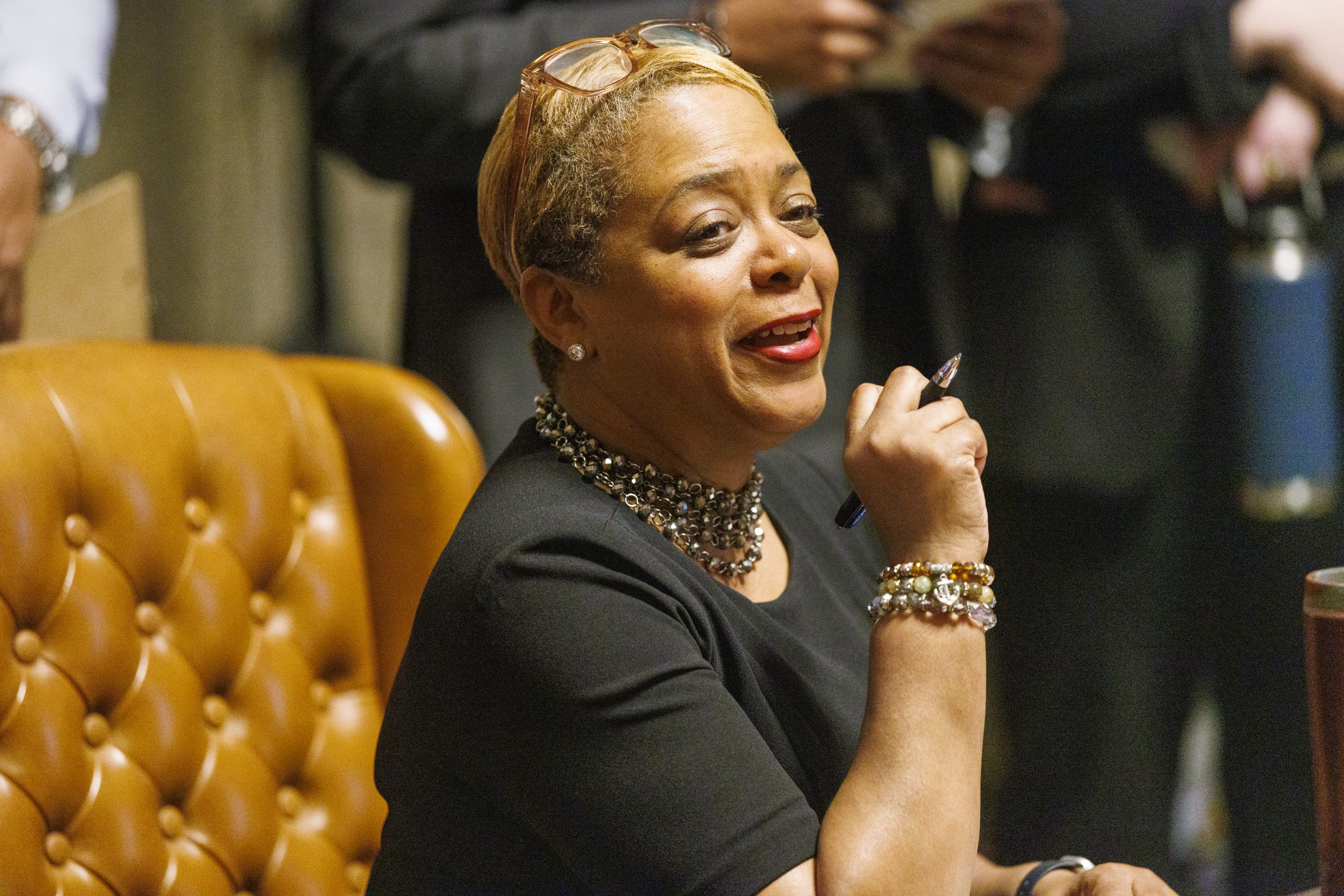
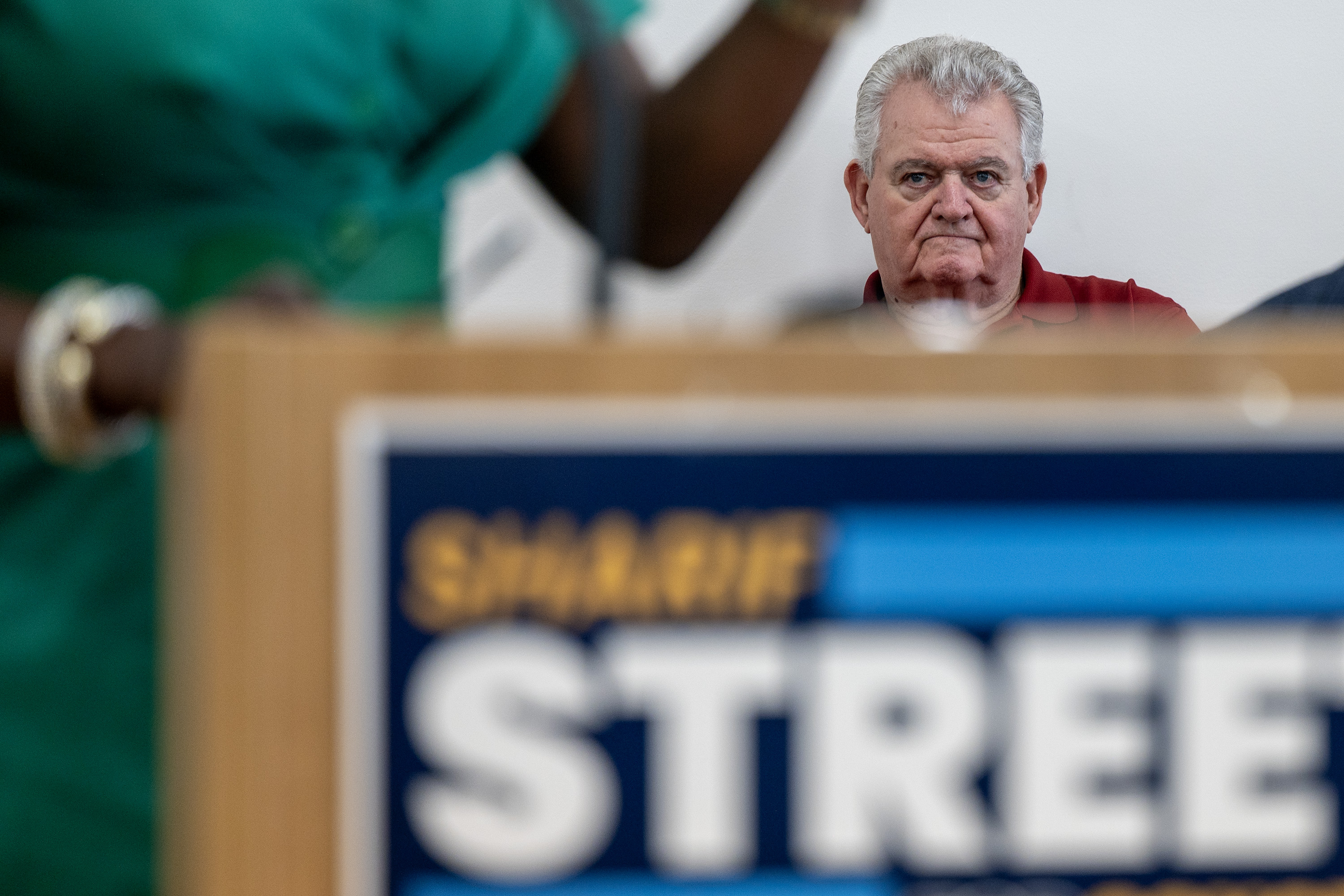
    Council member Cindy Bass has been widely condemned for declaring herself the winner of a controversial election for the leadership of the 22nd Ward.Alejandro A. Alvarez / Staff Photographer

    The dinosaur groans

    After the primary elections three years ago, Philadelphia Democratic Party Chairman Bob Brady was in a celebratory mood. In an open letter posted on social media, Brady boasted that the “dinosaur roared,” a playful, self-deprecating reference to the party establishment’s wins over progressive and reformist alternatives. During this week’s ward elections, however, establishment candidates had little to brag about. Wards That Work, a coalition of left-leaning groups, announced that candidates they supported had won six of the city’s 69 ward leadership positions. While the party’s old guard still holds a significant lead in the total number of ward leader positions, it is clear where the energy and enthusiasm of the party are headed. The insurgent wards, and the wards they’ve contested but haven’t yet prevailed in, are filled with committeepeople. The machine-dominated wards are filled with vacancies.

    In the 22nd Ward, one of the most hotly contested races of the cycle, the incumbents are facing questions about whether they skirted the party’s rules to retain their hold on power.

    Fred Dedrick, an elected committeeperson, told me that current ward leader and 8th District Councilmember Cindy Bass had initially told folks to show up by 7:15 p.m. if they wanted to participate in the reorganization vote. After the meeting finally began at 8 p.m., she quickly called for a voice vote, declared herself the winner, ignored requests for a roll-call vote, and sent everyone home.

    Under the party’s own rules, Brady told The Inquirer’s Sean Collins Walsh, a roll-call vote must be taken if it is requested.

    Bass’ tactics drew widespread condemnation. Even U.S. Rep. Brendan Boyle, who usually stays out of local governmental issues, said he was “absolutely disgusted” by what he saw in a video of the vote, and made a direct comparison to President Donald Trump’s repeated efforts to “obstruct our democracy.”

    The Philadelphia Democratic City Committee, for its part, is planning to host a revote between Bass and her challenger, Octavius Price.

    This is far from Bass’ first controversy. Her tenure on City Council has been characterized by high-profile disputes with some community organizers. Bass’ critics cite what they describe as a lack of consistency, particularly on issues of development: When Bass opposes a project, like the proposed reuse of the Ada Lewis Middle School property, she cites a lack of popular support. When she’s behind an effort — like the decision to grant development rights at the former Germantown YWCA — the community’s viewpoint isn’t taken into account.

    That kind of vacillation could be part of why Bass won her most recent primary election in 2023 by just over 400 votes, despite her opponent having little in the way of name recognition.
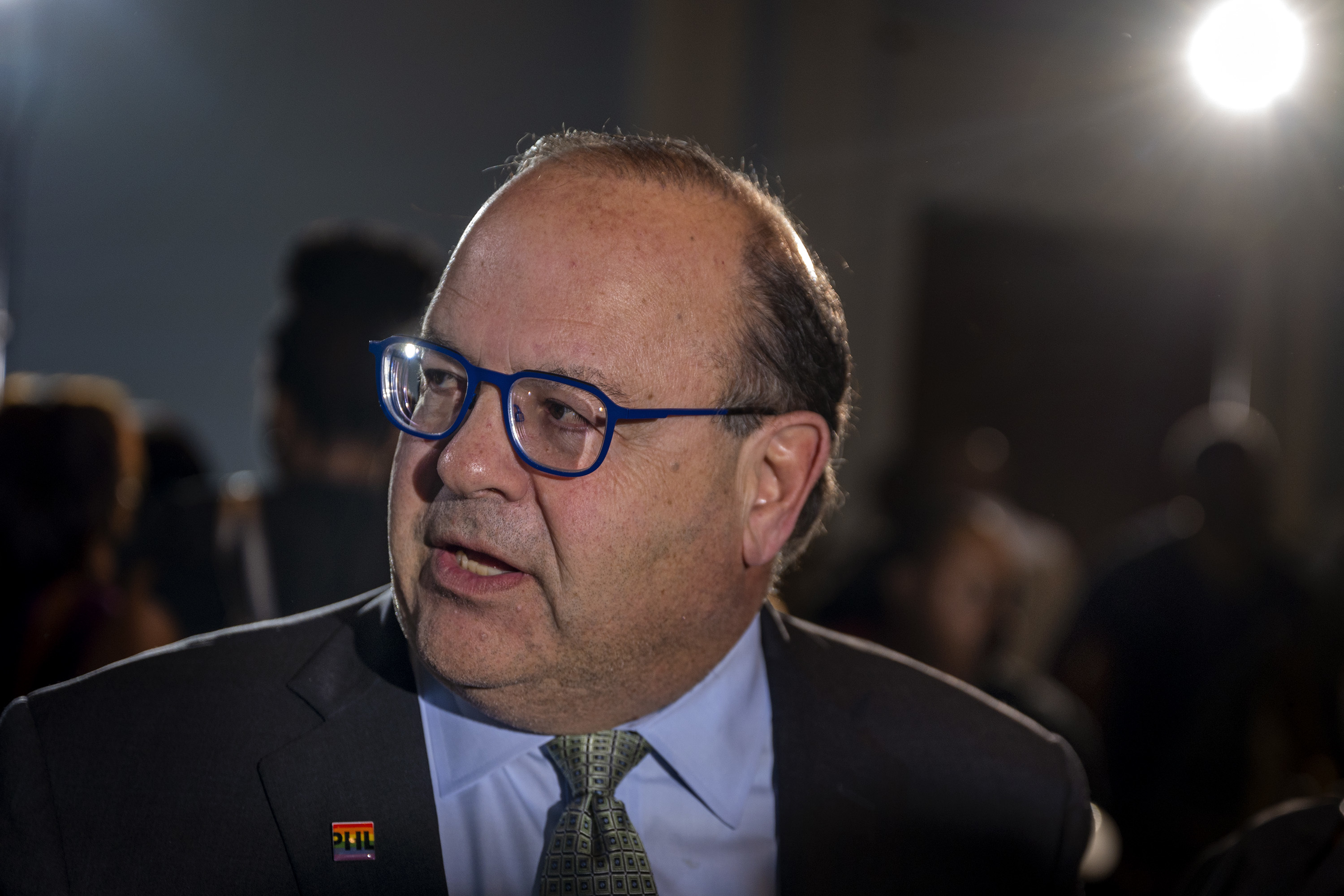
    Former City Council member (and prominent real estate developer) Allan Domb cautioned his colleagues in city government to move slowly before they acquired the former Inquirer building. They probably should have listened to his advice.Tom Gralish / Staff Photographer

    Avoidable boondoggle

    In 2016, then-Councilmember Allan Domb raised concerns about then-Mayor Jim Kenney’s plan to turn the former Inquirer building on North Broad Street into the new police department headquarters. Domb’s objection was basic common sense. If the city is going to spend a quarter of a billion dollars, shouldn’t we at least get an appraisal first? Especially given that a developer had spent just $22.7 million — a fraction of its expected price tag — to acquire it in the first place.

    An Inquirer analysis suggested that the city had, in fact, overbid. The city ended up paying around $90 per square foot, which is higher than the $71 per square foot paid for a comparable property, the former GlaxoSmithKline headquarters that sold three years before. Since 2018, the value of commercial real estate in Center City has declined. The sprawling Centre Square complex near City Hall sold for under $60 per square foot.

    In fact, in addition to buying the building without an appraisal, the city also agreed to a yearslong leasing agreement, which allowed the owner, developer Bart Blatstein, to utilize historic tax credits.

    Now the bill has come due, with city officials forced to either buy the building outright at its inflated price or pay double in rent payments while searching for a new location, which would also likely cost hundreds of millions of dollars to get up to standards.

    While buying the building may be the least bad option at this point, the entire situation is a frustrating reminder of how defensive and parochial city government can be. Despite having a bona fide real estate expert in Domb available to assist their decision-making, city officials embarked on the plan without asking for his input ahead of time.
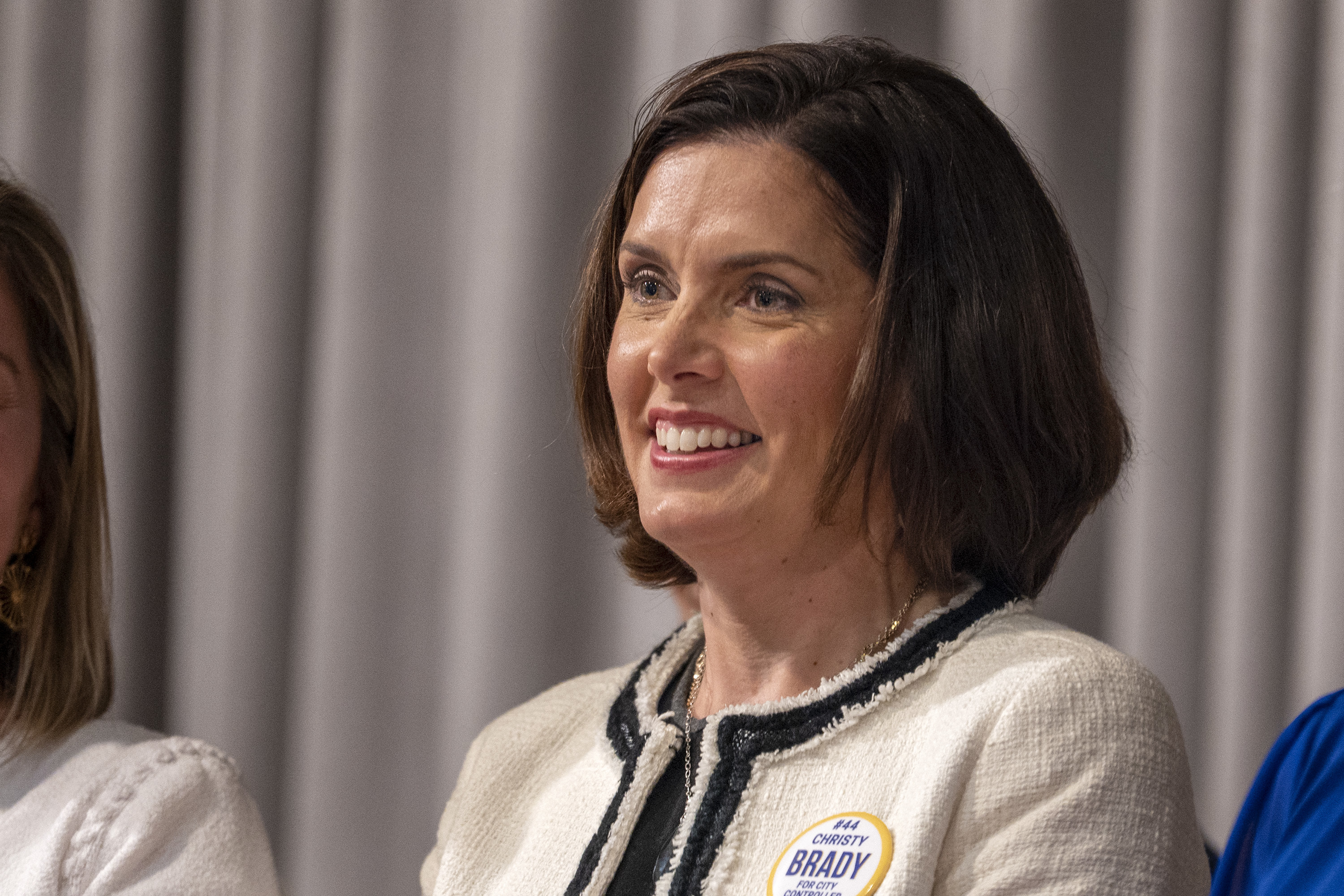
    A report by City Controller Christy Brady found that Philadelphia’s cumbersome rules for event planning are getting in the way of some long-standing civic traditions.Tom Gralish / Staff Photographer

    Haphazard hosting

    With the World Cup having kicked off and America preparing to celebrate its 250th birthday, you might think the city would be filled with local events, festivals, block parties, and other revelry spreading to all corners of the cradle of liberty. Thanks to the city’s stringent regulations and a stated lack of resources, there will be fewer events than many Philadelphians might have hoped for.

    Hosting events in Philadelphia is a slog during the best of times. City Controller Christy Brady issued a report earlier this year that reiterates findings reported in The Inquirer: The high cost of security and convoluted permitting process is shrinking, pushing out, and eliminating many long-standing civic traditions.

    This year was supposed to be different, thanks to the Neighborhood Celebrations Grant Fund. But organizers told Inquirer reporters that they are running into unforeseen obstacles, including blackout dates that extend from June 11 to July 18. This means neighborhoods are being restricted at the same time when demand is highest. While security concerns are a legitimate issue, giving people an option to celebrate closer to home could be the key to avoiding the traffic, parking, and crowding concerns that inspire caution in the first place.

    Schools switch

    After weeks of debate over the proposed rideshare tax and the insistence that a failure to pass it would result in the elimination of 340 positions in the Philadelphia School District, officials have backpedaled. Apparently, there will be no cuts after all.

    The district’s revenue needs are what they are, but the way city officials handled the situation fostered confusion and cynicism. Threatening to make cuts without additional revenue, only to cancel the cuts despite failing to secure new money, makes everyone look opportunistic. What was the fight all about in the first place?

    The compromise, however, required sacrifices elsewhere. The city had to raid its capital budget and cut some of the Commerce Department’s budget for contracted services, per a statement from City Council President Kenyatta Johnson’s office. More painful cuts could be on the horizon for next year’s budget if a new revenue source isn’t found.
  • For local coaches, watching their former players in the College World Series is a ‘special moment’

    For local coaches, watching their former players in the College World Series is a ‘special moment’

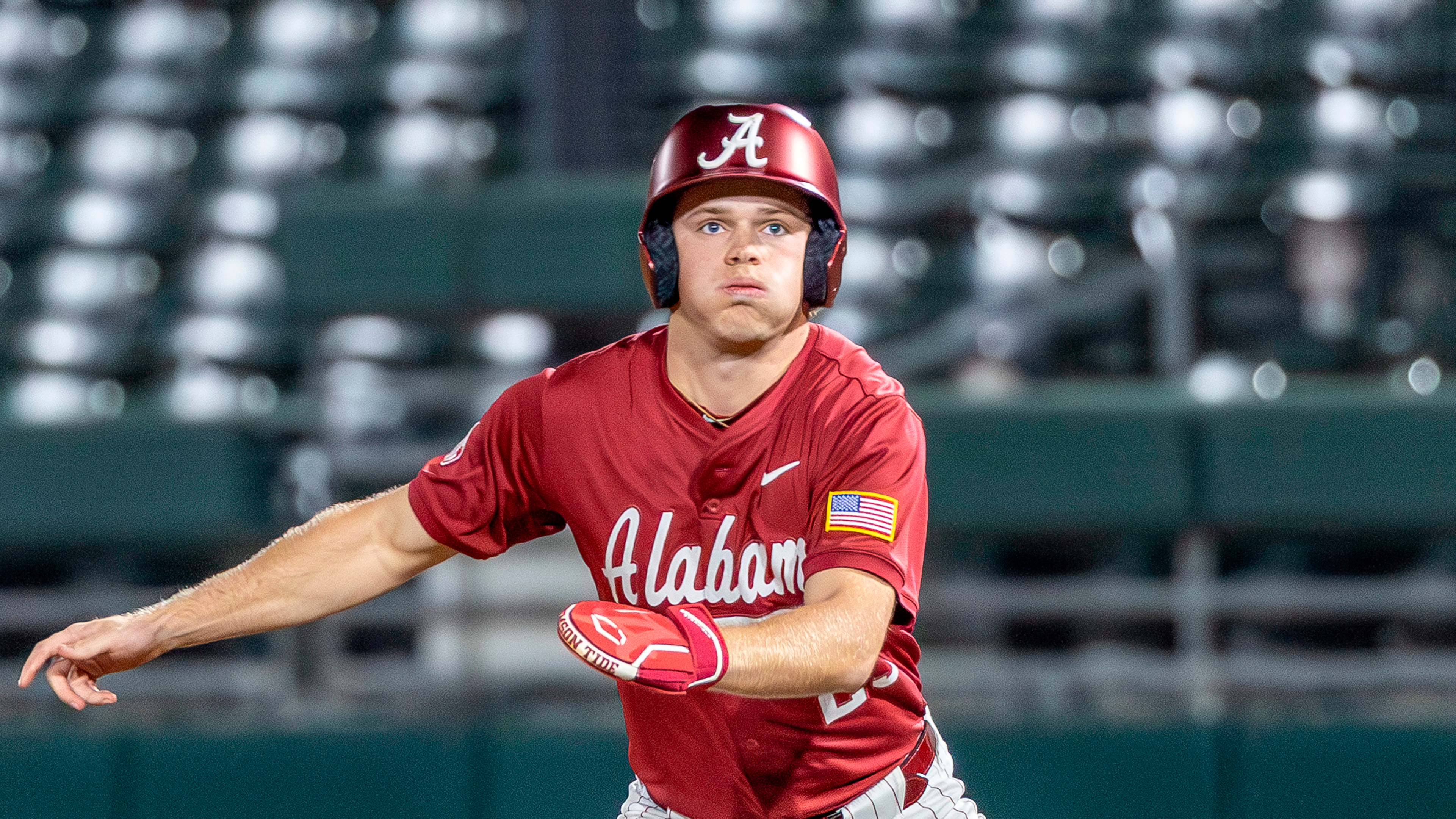
    While watching Alabama vs. St. John’s in the Tuscaloosa Super Regional, Moorestown High School baseball coach Mike Appalucci spotted a familiar face as the Crimson Tide punched their ticket to Omaha, Neb., for the men’s College World Series.

    It was his former player, Chase Kroberger, a freshman at Alabama.

    Kroberger is one of six locals competing in the College World Series, which starts on Friday with West Virginia vs. Troy (2 p.m.) and North Carolina vs. Ole Miss (7 p.m.). On the other side of the bracket, Alabama will face Ole Miss (3 p.m.) and Georgia takes on Texas (8 p.m.) on Saturday.

    While each of the eight teams hail from the Southern U.S., these players were raised by South Jersey and Philadelphia baseball.

    Kroberger plays with Evan Taylor, a freshman two-way player from Ocean City, and Jon Young Jr., a sophomore infielder who graduated from Cherry Hill West. He’s also former high school teammates with Ryan Lynch, a sophomore righty at North Carolina.

    Texas junior outfielder Aiden Robbins and West Virginia freshman right-handed pitcher David Perez round out the Philly-area players. Robbins starred at Holy Ghost Prep, while Perez graduated from Archbishop Ryan. Perez led the Mountaineers in saves this season with six but hasn’t played since April 25 because of a knee injury.

    For the high school coaches, it’s been special to watch their former players compete on college baseball’s biggest stage. Even being a “small part of their success” has added to the excitement of the tournament, Appalucci said.

    “You got two really awesome kids that are great ambassadors for Moorestown baseball,” Appalucci said. “Both love Moorestown baseball. Both are at their dream school to go play college baseball. I just hope they enjoy every moment of it because it’s really unique to have two guys going out there at the same time.”

    Kroberger, an outfielder, was ranked the No. 2 outfielder and No. 7 recruit in New Jersey last year, according to Prep Baseball Report.

    During his first season with the Crimson Tide, he put up a .148 average in 27 at bats. Still, each opportunity has allowed Kroberger to grow, Appaluci said. He’s also been a defensive replacement in some of Bama’s recent games.

    “He’s getting valuable experience, but he’s also getting some time in, and it looks like they trust him enough to play him defensively, and I’m sure he’ll get some ABs at some point,” Appaluci said. “Chase is such a competitor, such a gamer, but he looks so happy to be there.”

    Taylor was Perfect Game USA’s top-ranked right-handed pitcher and the No. 3 prospect in New Jersey. He did not pitch for Alabama this season.

    Young, the third-ranked shortstop in the state by PBR, appeared in 14 contests for the Crimson Tide last season but did not play this season.

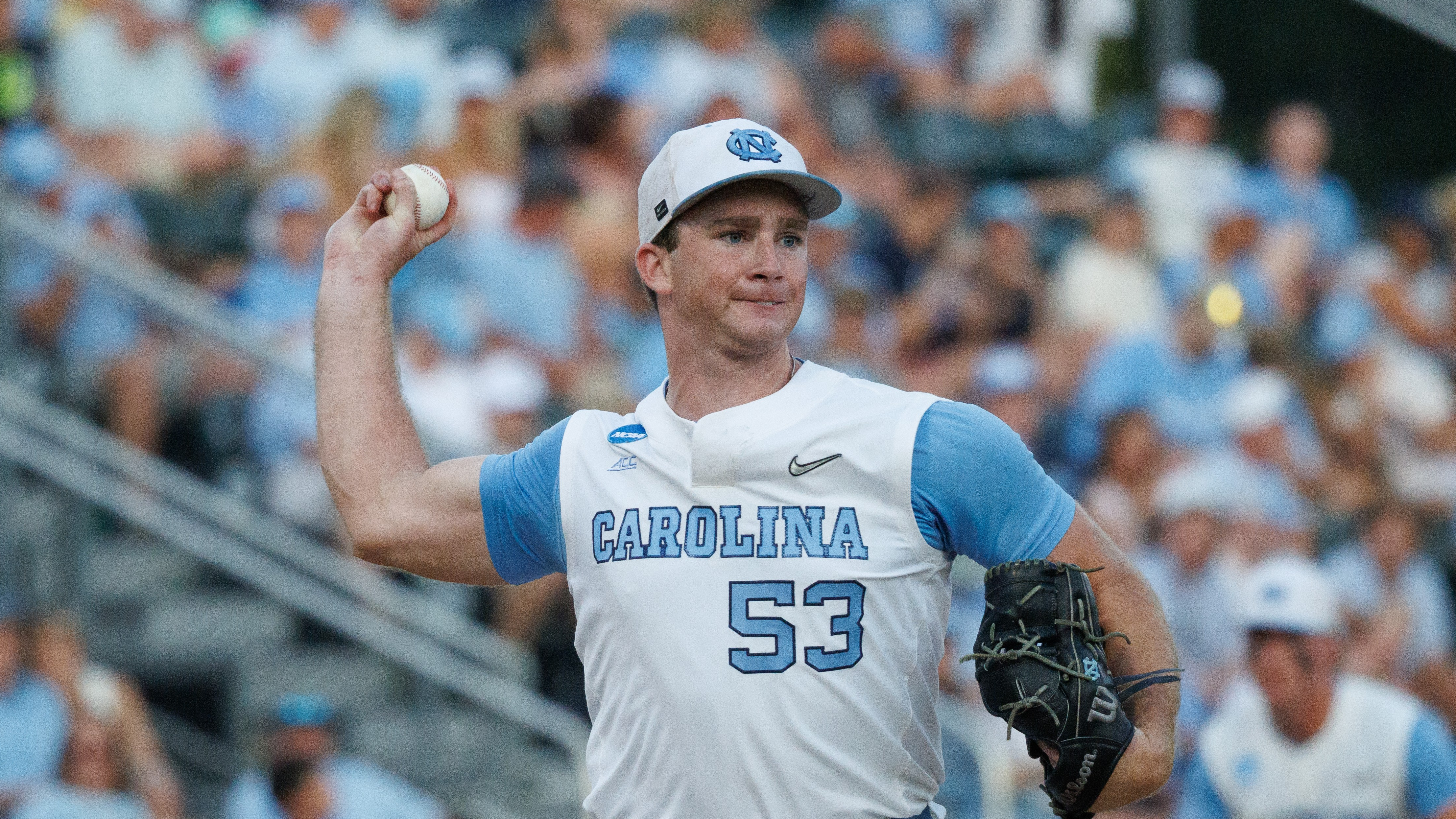
    As for Kroberger’s former teammate, Lynch, he has had plenty of success with the Tar Heels this season.

    North Carolina’s Ryan Lynch transitioned to a starting role during the postseason last year.Ben McKeown

    Lynch has a 4.22 ERA in 89⅔ innings (17 games, 16 starts) this season after primarily coming out of the bullpen as freshman.

    Named a freshman second-team All-American by D1Baseball and Baseball America, Lynch transitioned to a starting role during the postseason last year. And his high school coach said he was “built for those moments.”

    “They knew that they were getting a great pitcher in Ryan,” Appaluci said. “He’s going to do great in Omaha.”

    Appaluci added that he’s received several messages about the two and has been asked about them “nonstop” by his eighth graders.

    “It’s just an inspiration for everybody. All the little kids know both Ryan and Chase,” Appaluci said. “They’ve been following these guys for years. “Everyone’s following these kids, and I’m sure they’re going to get a lot more attention now being out there in Omaha.”

    Robbins joined Texas this season after spending two years at Seton Hall, where he led the team in batting average, runs, hits, on-base percentage, and slugging percentage, among other stats.

    Robbins is one of the Longhorns’ leading hitters in average (.342) and runs (65). He also leads in hits (77), total bases (162), and slugging percentage (.720).

    His former high school coach, Greg Olenski, said Robbins has “exploded” this year, notably in his ability to hit with power to all parts of the field, as he enters his draft-eligible year. He also said that Robbins performs his best when more eyes are on him.

    “To see what he’s done this year and accomplished, I’m really not surprised,” Olenski said. “His work ethic is unmatched, and he’s only gotten better. I’ve told a few different people that I don’t even think he’s reached his peak yet. But it’s pretty incredible to see a former player of mine, just only a few short years ago, is now in Omaha. So a pretty special moment.”

    Texas outfielder Aiden Robbins during a game against Coastal Carolina on Feb. 27.Michael Wyke

    When he was with Seton Hall, Olenski said Robbins became a fixture in his high school team’s dugout and on the bus to away games. While he couldn’t do the same this year at Texas, Robbins’ presence is still a fixture at Holy Ghost Prep, especially with how his career unfolded.

    “I think the relatableness [in] interviews and then how close he was to our players, our guys feel like that’s in their reach right now,” Olenski said. “I think it’s really cool to see, especially him coming from Yardley, Pa., a local guy.”

  • The Big Picture: Skateboarding at FDR Park, the World Cup arrives, and the best Philly sports photos of the week

    The Big Picture: Skateboarding at FDR Park, the World Cup arrives, and the best Philly sports photos of the week

    Each Friday, Inquirer photo editors pick the best sports images from the last seven days. This week featured action from South Philly to Center City and from Fairmount to Camden. There was Eagles minicamp and, of course, some Phillies action. There was a skate contest in FDR Park and FIFA Fan Fest kicked off in Lemon Hill Park. And across the river, the Sixers introduced their new top executive.

    Here’s a look back at some of our favorite photos from the week:

    Spectators watch skateboarders during an early heat of the sixth annual “Queen Of The Park” women’s skateboarding event at FDR Park.Elizabeth Robertson / Staff Photographer
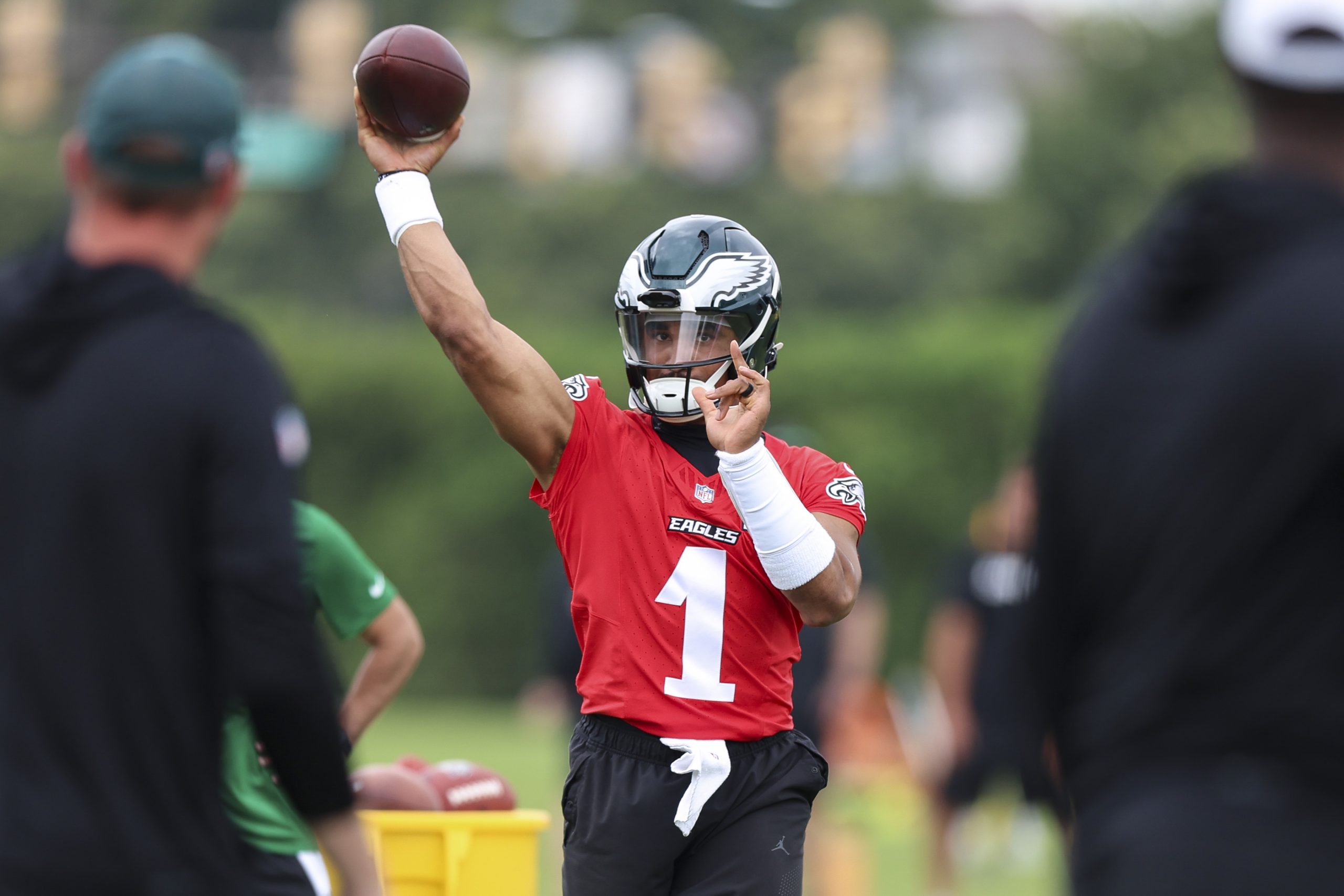
    Eagles quarterback Jalen Hurts works out during the team’s mandatory minicamp on Wednesday at the Jefferson Health Training Complex. They won’t officially be back on the field until training camp next month.Monica Herndon / Staff Photographer
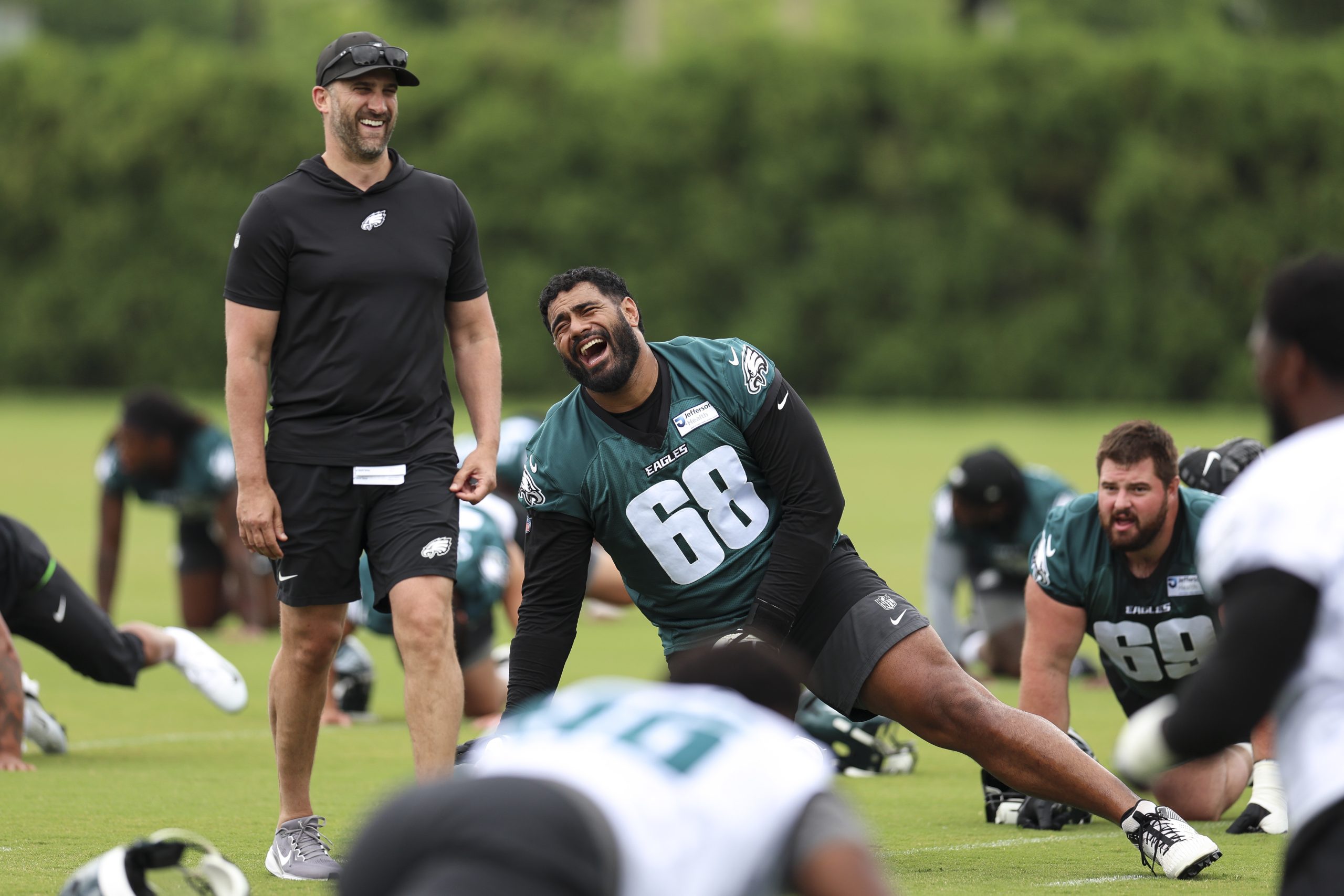
    Eagles coach Nick Sirianni and left tackle Jordan Mailata share a laugh during Wednesday’s minicamp practice.Monica Herndon / Staff Photographer
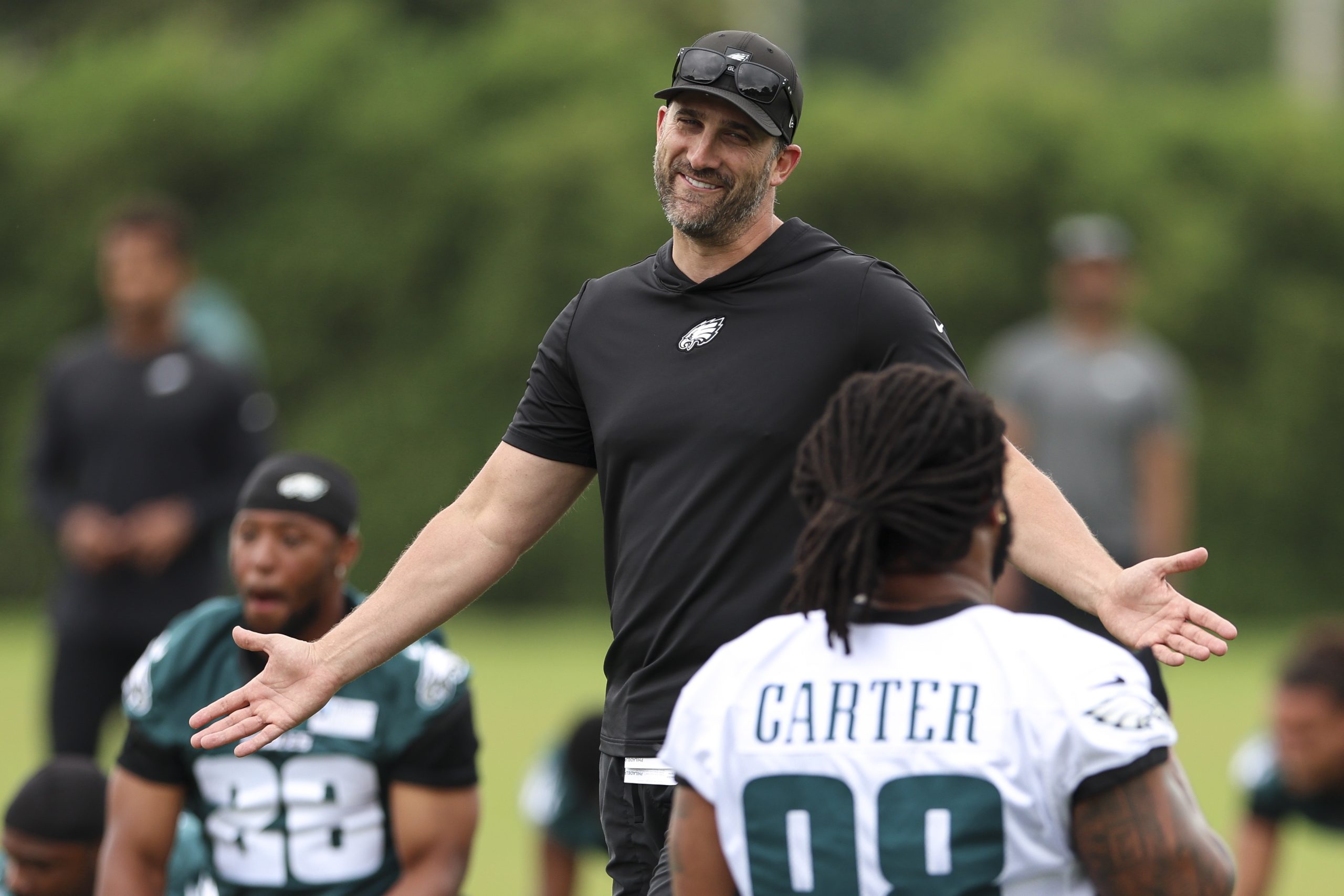
    Eagles coach Nick Sirianni holds court as players, including defensive tackle Jalen Carter, stretch before Wednesday’s practice.Monica Herndon / Staff Photographer
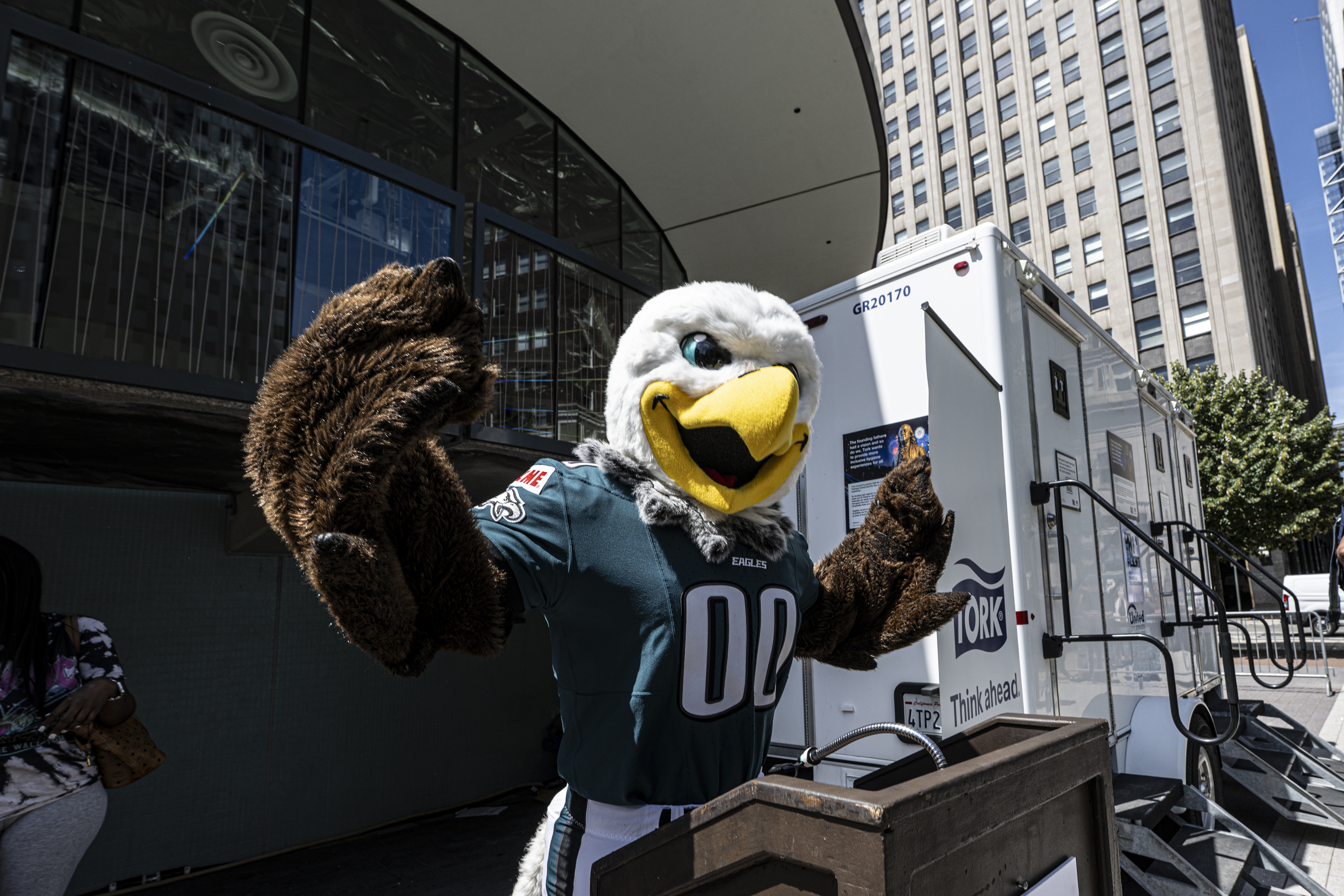
    Eagles mascot Swoop raises his wings during a news conference unveiling one of the city’s new Hospitality Hub restrooms at LOVE Park on Tuesday. The hubs are part of the city’s preparations to welcome visitors during the summer’s Philadelphia250 celebrations.Jose F. Moreno / Staff Photographer
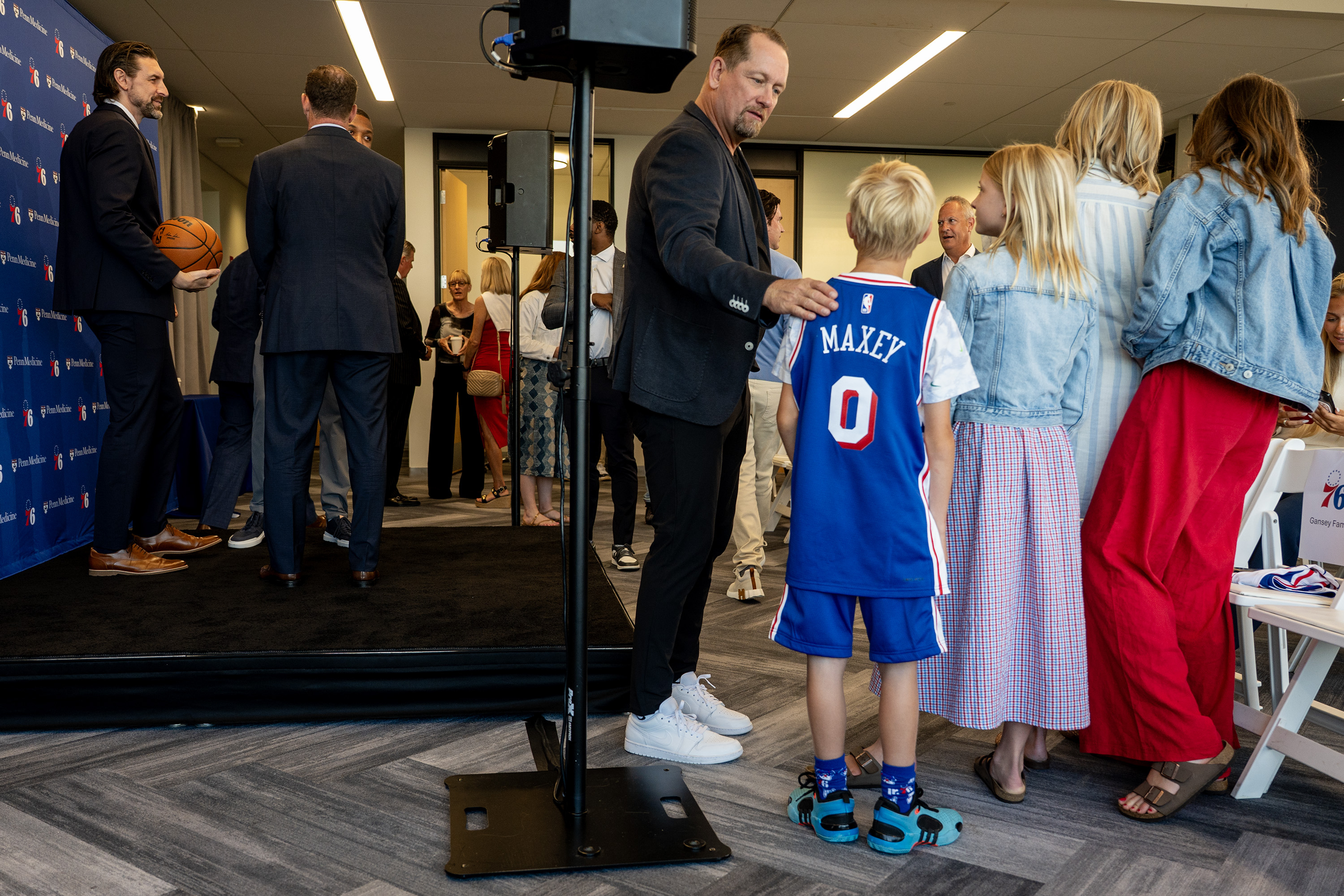
    Sixers coach Nick Nurse talks to Griffin Gansey, 8, who’s wearing a Tyrese Maxey jersey. Griffin’s father, Mike Gansey (rear, far left) had just finished his first appearance as the Sixers’ president of basketball operations on Monday in Camden.Tom Gralish / Staff Photographer
    Dylan Foglesong uses a rope wall to work out in the studio on Thursday in Philadelphia.Elizabeth Robertson / Staff Photographer
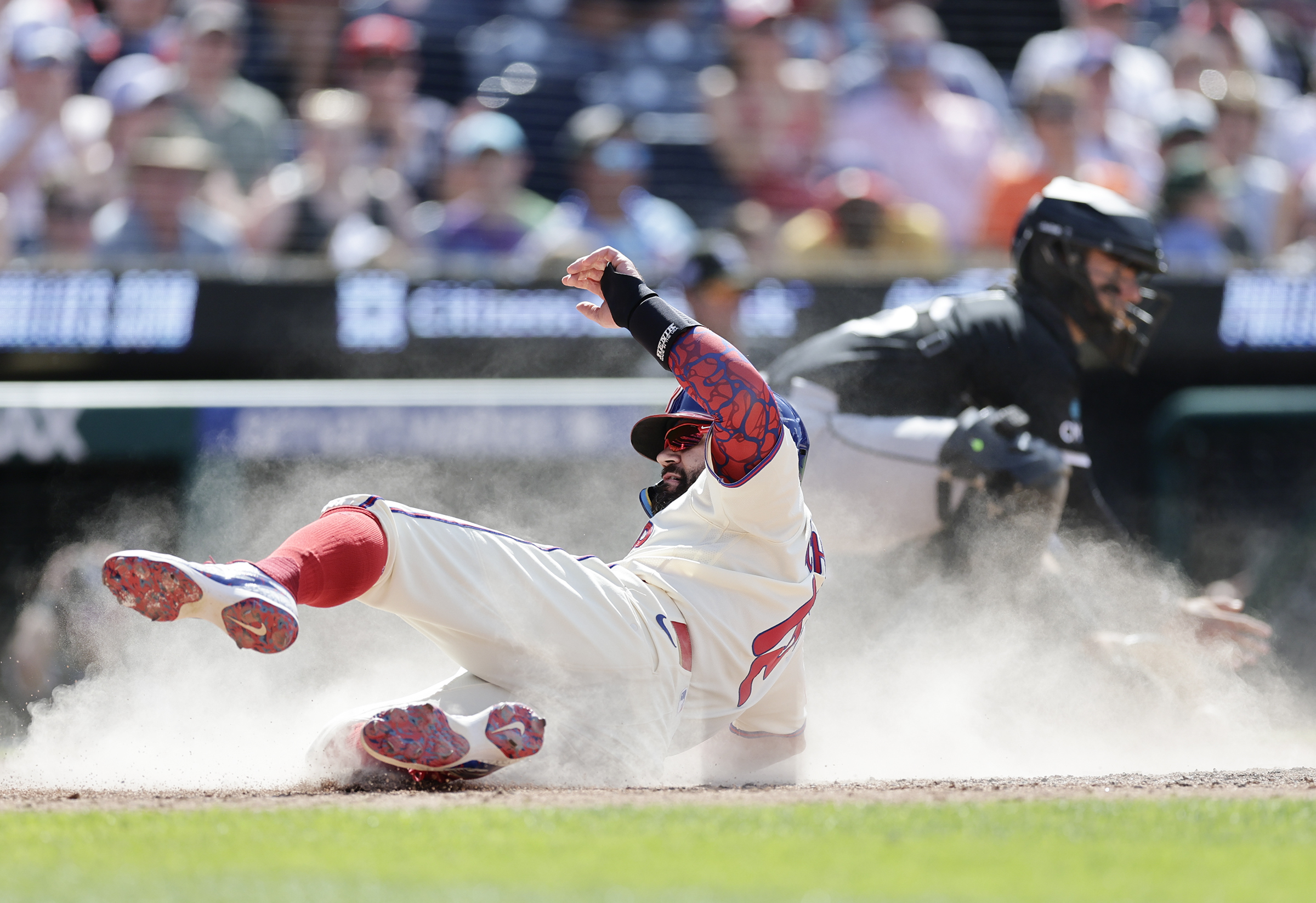
    Phillies designated hitter Kyle Schwarber scores in the sixth inning of Sunday’s 9-5 win over the Chicago White Sox.Yong Kim / Staff Photographer
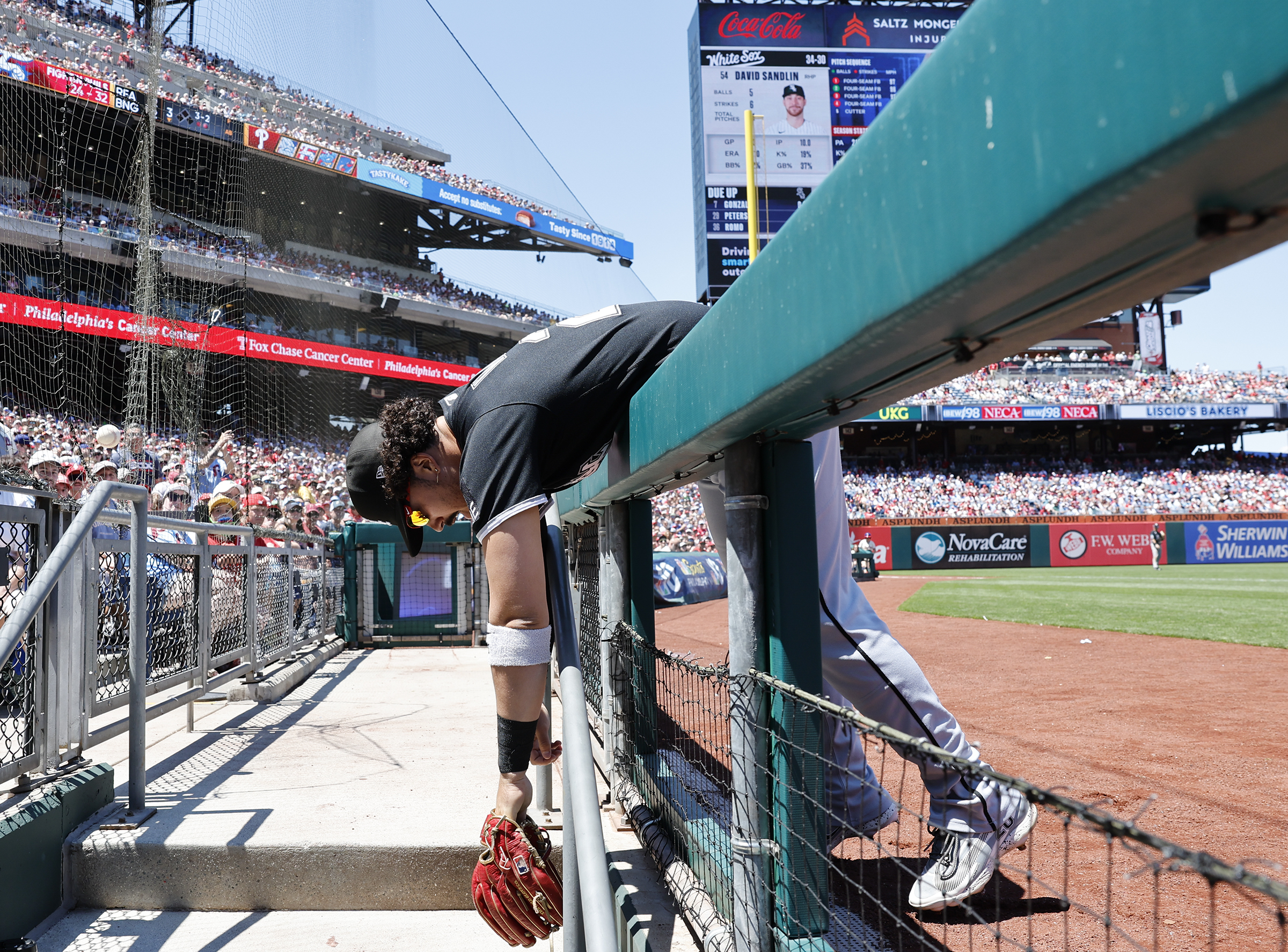
    Chicago White Sox third baseman Miguel Vargas leans over the railing but can’t catch Bryson Stott’s second-inning foul ball on Sunday.Yong Kim / Staff Photographer
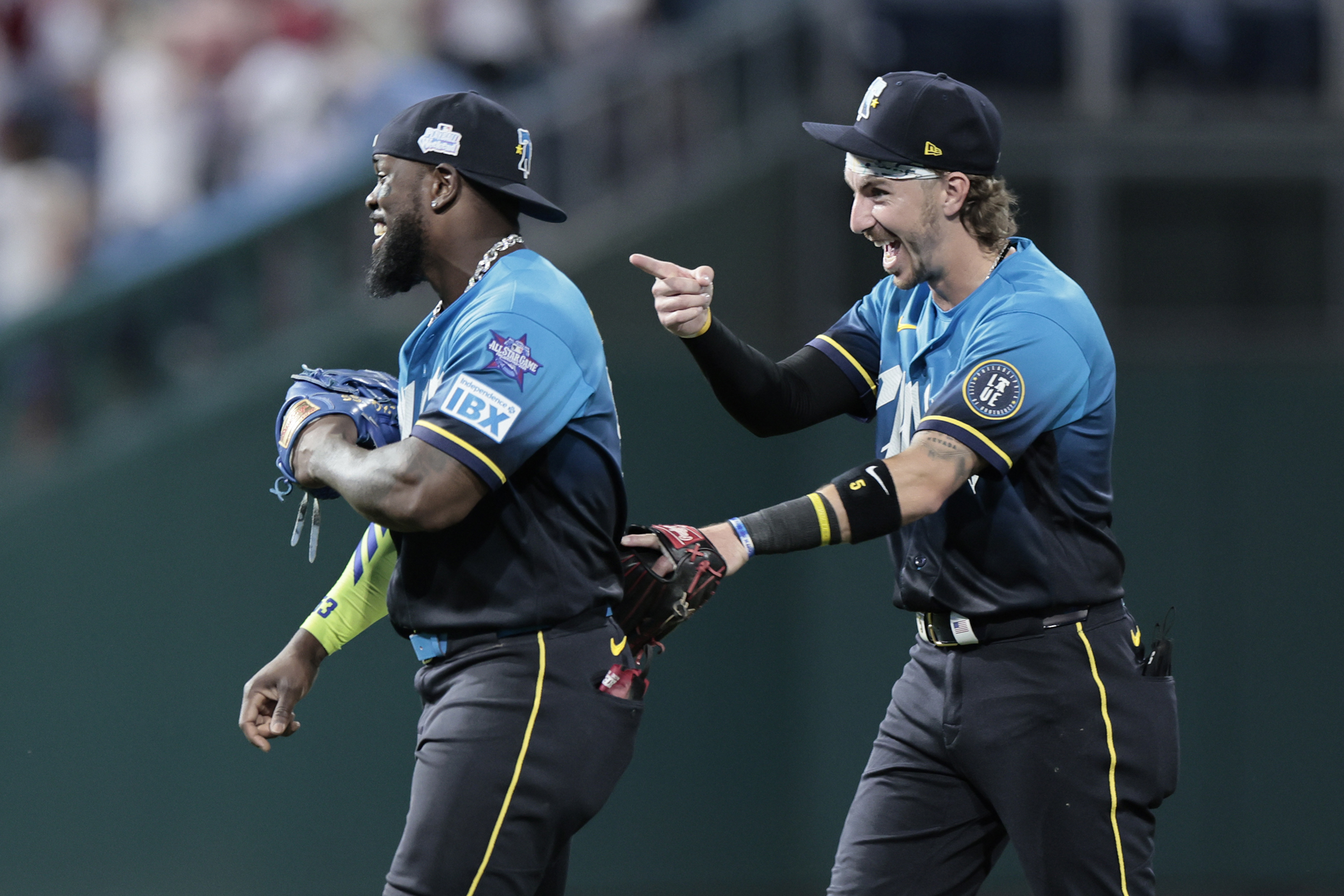
    Phillies outfielder Adolis García (left) and Bryson Stott share a laugh after the Phillies beat the Chicago White Sox on June 5.Elizabeth Robertson / Staff Photographer
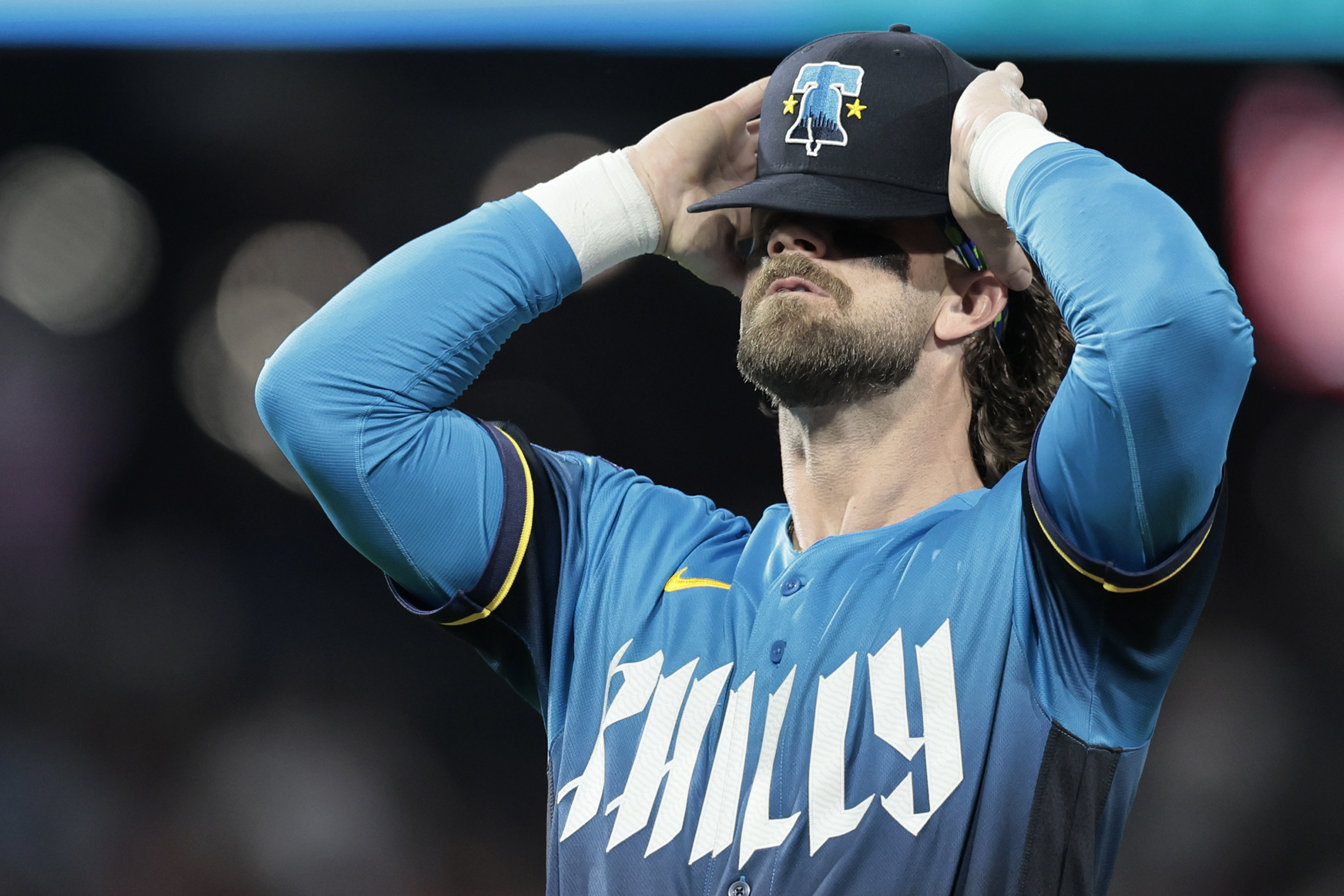
    Phillies first baseman Bryce Harper puts on his cap during last Friday’s win over the Chicago White Sox.Elizabeth Robertson / Staff Photographer
    The FIFA Fan Festival at Lemon Hill opened to the public on Thursday.Alejandro A. Alvarez / Staff Photographer
  • 👑 A soccer legend | Sports Daily Newsletter

    👑 A soccer legend | Sports Daily Newsletter

    The World Cup is here, and as you get ready for tonight’s United States vs. Paraguay game (9 p.m., Fox29, Telemundo 62), let’s go back in time to the 1950 World Cup hosted in Brazil.

    The U.S. team stunned England in a 1-0 win that still stands as one of the most significant moments in American soccer history. But the U.S. may have not qualified for the World Cup if it wasn’t for the late Benny McLaughlin, one of Philadelphia’s true soccer pioneers.

    He played professionally as a teenager, was a star at North Catholic, and all-American at Temple before dropping out after one year to work at a factory in Hatboro that made parts for Navy ships and submarines.

    However, McLaughlin, then 22 years old, didn’t get to play in the epic upset in the World Cup. Instead, he chose family and a paycheck.

    McLaughlin’s name still means something in Philadelphia, but his legacy has dimmed outside the city. Perhaps that would be different if he played in that World Cup and scored that iconic goal. Though, none of that mattered to McLaughlin.

    🚨 Curious what our writers predict for America’s World Cup opener? We got you covered — a win over Paraguay would go a long way for the U.S.

    — Isabella DiAmore, @phillysport, sports.daily@inquirer.com.

    If someone forwarded you this email, sign up for free here.

    Pitching every game

    Phillies closer Jhoan Duran has converted 17 of 18 save opportunities this season.Elizabeth Robertson / Staff Photographer

    The Phillies have leaned on Jhoan Duran a lot this season, and this week against the Blue Jays, they asked their closer for more than usual. He was used three nights in a row. The last time Duran made three appearances on three consecutive nights was in 2023. But if he feels good, then “I want to be in the game.”

    On Thursday, the Phillies acquired outfielder Derek Hill in trade with the White Sox as they wait for an update of Adolis García, who is sidelined with a right shoulder injury.

    What we’re…

    🏀 Wondering: Taylor Swift repped the Knicks during Game 4 at Madison Square Garden. Some Philly fans feel betrayed. But should they?

    🏎️ Reading: NASCAR driver Kyle Larson and the Urban Youth Racing School want Philly students to get involved with motorsports, especially through STEM.

    🎤 Learning: Devan Kaney, a former WIP host and Eagles sideline reporter, is back talking Philly sports on a new podcast.

    ⚾ Watching: The College World Series starts today. Here’s the local players to know and what their former coaches are saying.

    Larkin’s trade market

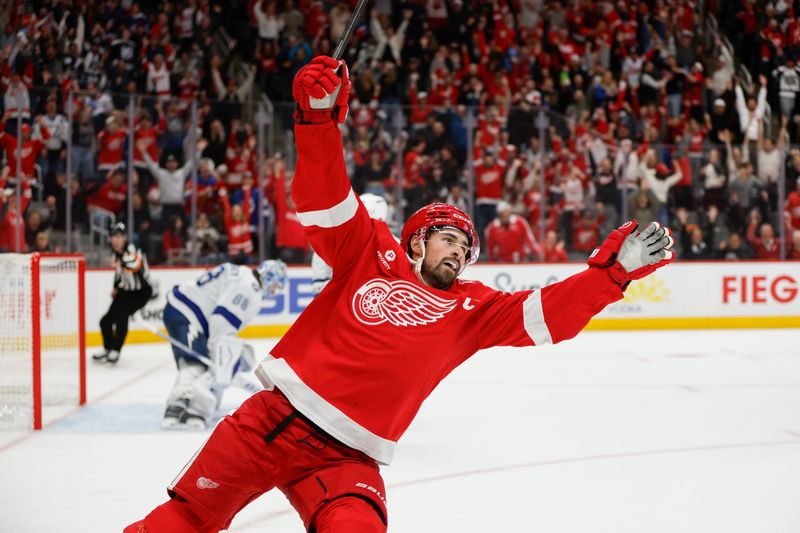
    Dylan Larkin (71) could check a huge box for the center-needy Flyers.Brian Bradshaw Sevald, Brian Bra

    Detroit Red Wings captain Dylan Larkin wants a trade. Larkin is set to begin Year 4 of an eight-year contract he signed in March 2023, with a cap hit of $8.7 million. The contract makes his trade request sticky.

    Multiple sources have confirmed to The Inquirer that the Flyers are interested in the center. And why wouldn’t they be? But the Flyers would have to come with the right package, one that includes a combination of prospect, an NHL player, and draft picks.

    Prove themselves

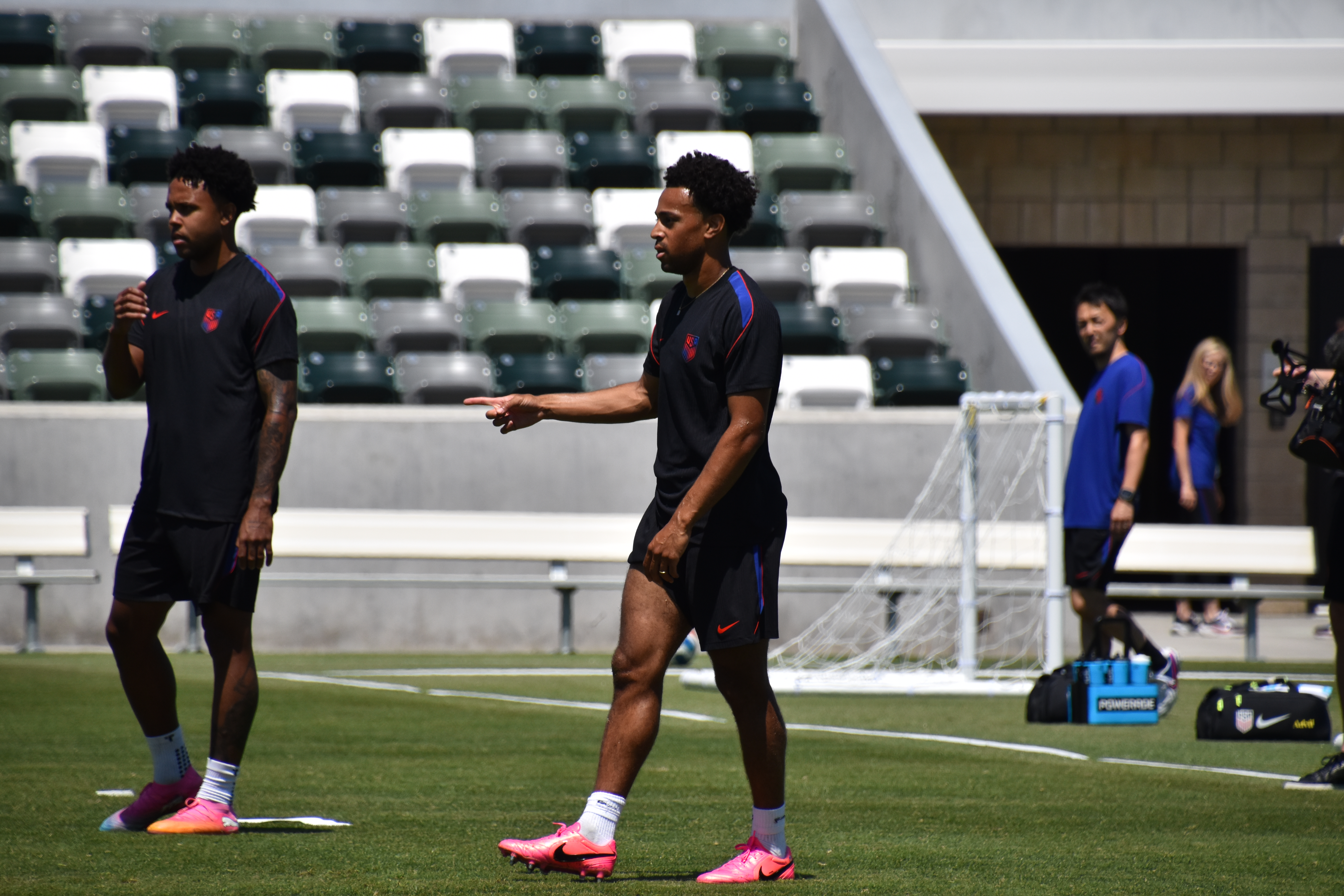
    Tyler Adams (right) getting to work at Friday’s U.S. practice, on the eve of the team’s World Cup opener.Jonathan Tannenwald

    This U.S. men’s soccer team has players with talent and pedigree like never before. Now, the time has come to prove it.

    The U.S. men have won just nine of the 37 games they’ve ever played at World Cups and haven’t won two group games in one tournament since 1930. Those are the stakes heading into Friday’s opener.

    And in Philadelphia, the first day of the World Cup fan fest at Lemon Hill drew thousands, despite a heat advisory that saw temperatures jump into the mid-90s with heat indexes surpassing 100 degrees, thanks to high humidity levels.

    For the rest of the weekend, folks should prepare for more hot weather with possible showers on Sunday.

    Strong impression

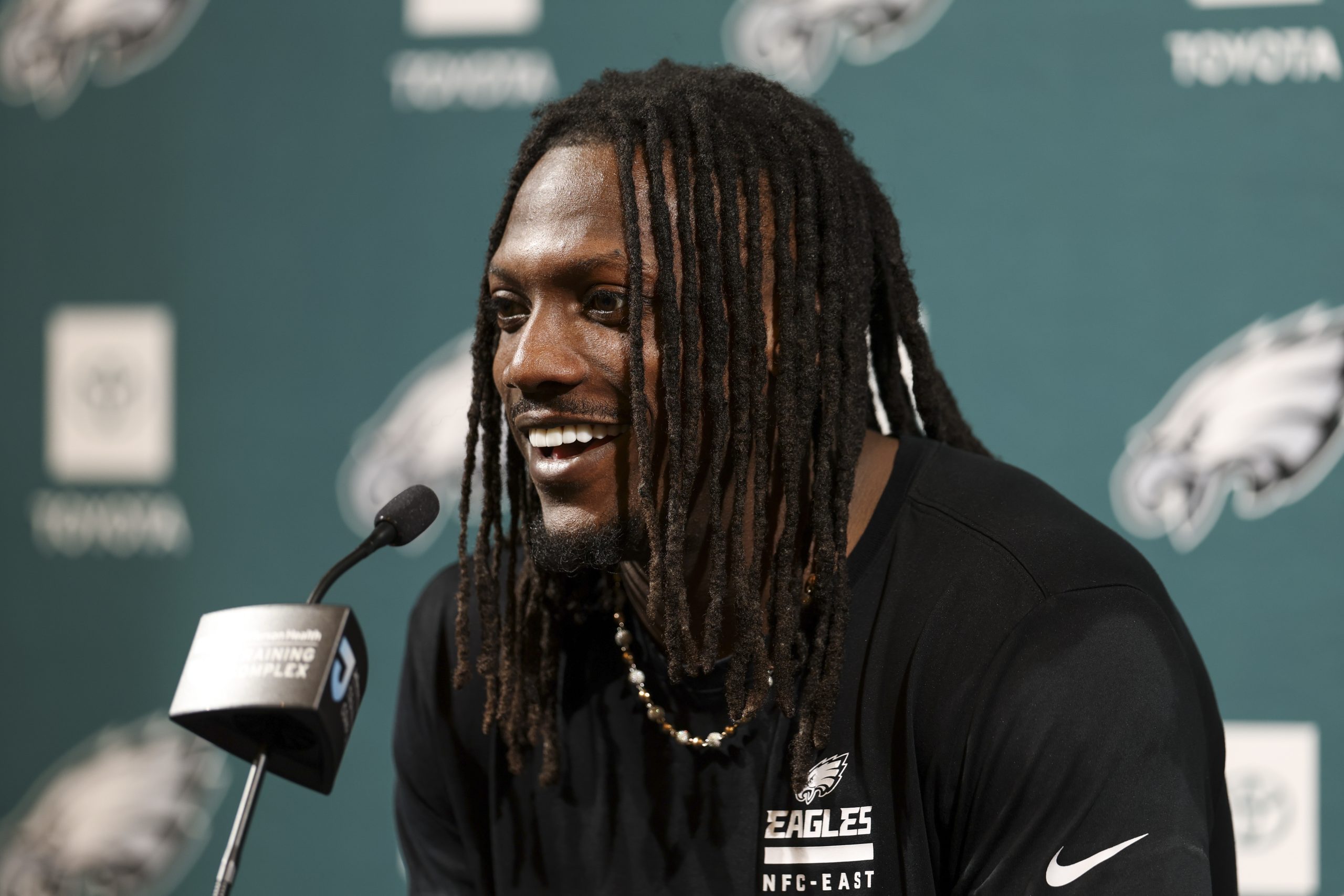
    Cornerback Riq Woolen said he feels confident after his early work yielded some big plays on the Eagles practice field. Monica Herndon / Staff Photographer

    Riq Woolen, the Eagles’ new outside corner opposite Quinyon Mitchell, made a highlight play during the final day of mandatory minicamp to cap off a strong few weeks.

    Woolen’s size and cover skills were on display earlier during OTAs, and given the makeup of the Eagles’ defensive backfield, there could be plenty of celebrating to do for a group that was looking to improve at the cornerback spot.

    Marcus Hayes’ take

    The Knicks completed the greatest comeback in NBA Finals history on Wednesday night. They now stand 48 minutes away from ending a 53-year drought. Only one NBA team has blown a 3-1 lead in the Finals, and those 2016 Golden State Warriors faced prime Kyrie Irving and LeBron James in his prodigal return to Cleveland.

    But this is Jalen Brunson’s team. These are the ‘Nova Knicks, writes columnist Marcus Hayes.

    We compiled today’s newsletter using reporting from Matt Breen, Jeff Neiburg, Marcus Hayes, Jonathan Tannenwald, Lochlahn March, Jackie Spiegel, Scott Lauber, Ariel Simpson, Becca O’Reilly, Conor Smith, Mia Messina, Owen Hewitt, Anthony Wood, Isabel Maney, and Nick Vadala.

    By submitting your written, visual, and/or audio contributions, you agree to The Inquirer’s Terms of Use, including the grant of rights in Section 10.

    As always, thanks for getting your morning started with me. Happy Friday, and have a wonderful weekend. — Bella

  • Benny McLaughlin was a Philly soccer pioneer. He couldn’t get off work to play in the World Cup.

    Benny McLaughlin was a Philly soccer pioneer. He couldn’t get off work to play in the World Cup.

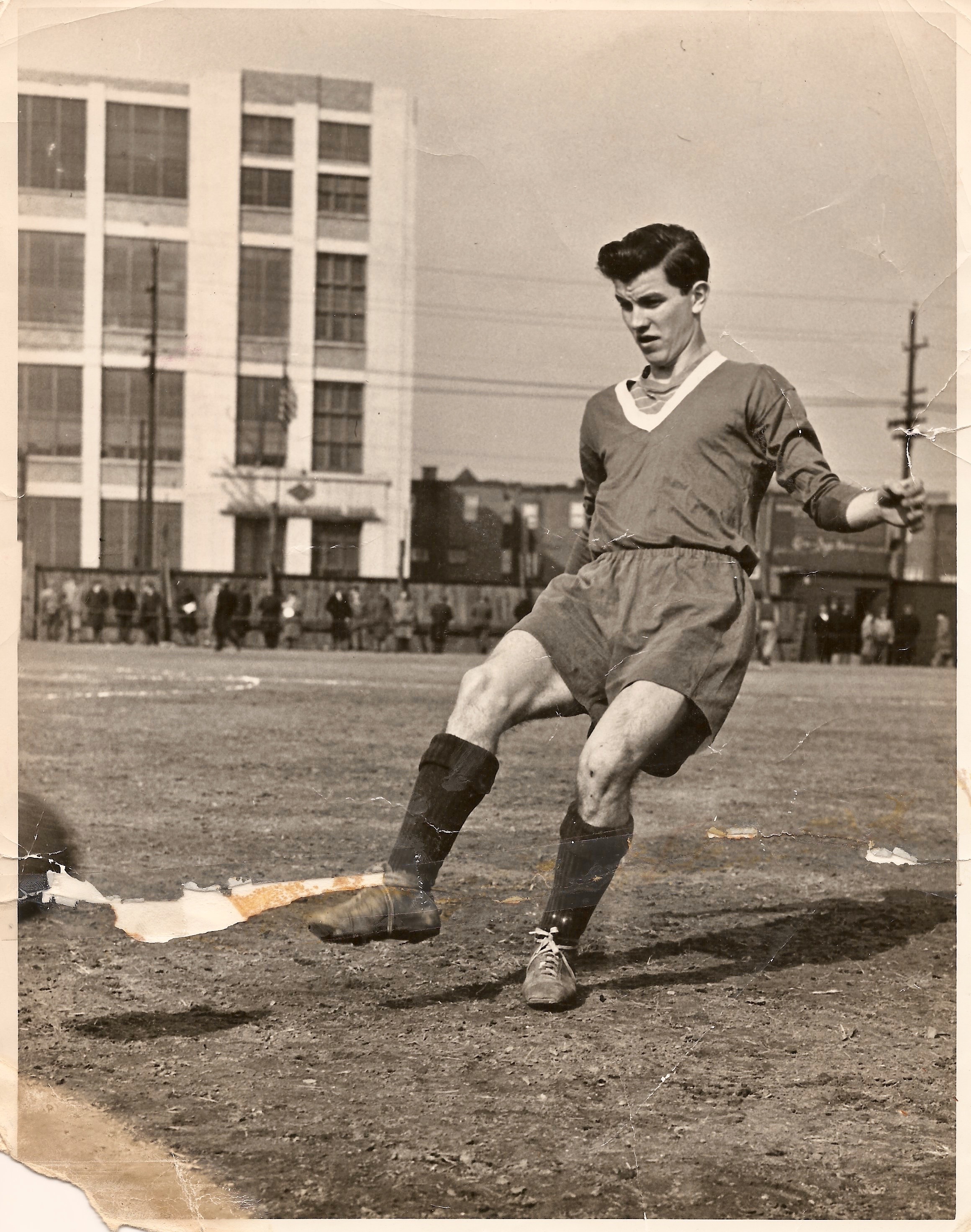
    The parking lot was crammed, and the game was already underway when Benny McLaughlin pulled his Impala toward McVeigh Playground, the spot in Kensington where he played as a kid before traveling the world as one of Philadelphia’s true soccer pioneers.

    He grew up on Hurley Street in a rowhouse across from the playground where neighbors hung out their windows in the summer of 1948 to fete McLaughlin with a ticker-tape parade after he made the Olympic team.

    McLaughlin played professionally as a teenager, was a star at North Catholic, kicked leather balls that felt like cinder blocks in the rain, and helped the U.S. qualify for the 1950 World Cup.

    But he had to miss the tournament in Brazil. Why? Because his job refused to give him time off.

    McLaughlin, who once played in front of more than 100,000 people in Scotland, was told by a British journalist that he was good enough to play in England’s first division. Considered by one admirer to be the “Babe Ruth” of his neighborhood, in Philadelphia soccer circles, McLaughlin was an icon.

    But he still needed a parking spot that Sunday afternoon in the early 1970s at his old playground. Finally, he was spotted behind the wheel.
    “Someone goes, ‘Benny’s here,’” said his son, Andy, who sat in the passenger seat. “They waved him in and just said, ‘Park the car anywhere. Leave the keys. Drop it here.’”

    Benny McLaughlin already had his cleats and shorts on. He was in his early 40s, there to play in a reunion game of old teams.

    Benny McLaughlin playing for the Philadelphia Nationals at Holmes Stadium on Erie Avenue.Mark McLaughlin

    Andy, then 12 years old, watched as his dad subbed in. A defender from the Five And One Club — another Kensington watering hole — pointed to McLaughlin and said he had him covered. Good luck.

    “He made a move or two around the guy and the guy just fell down,” said Andy, 65. “He took a quick pop shot, and it was in. It was just smooth. I was going crazy. I get goose bumps thinking about it now. And it’s true. I witnessed it. He still had it.”

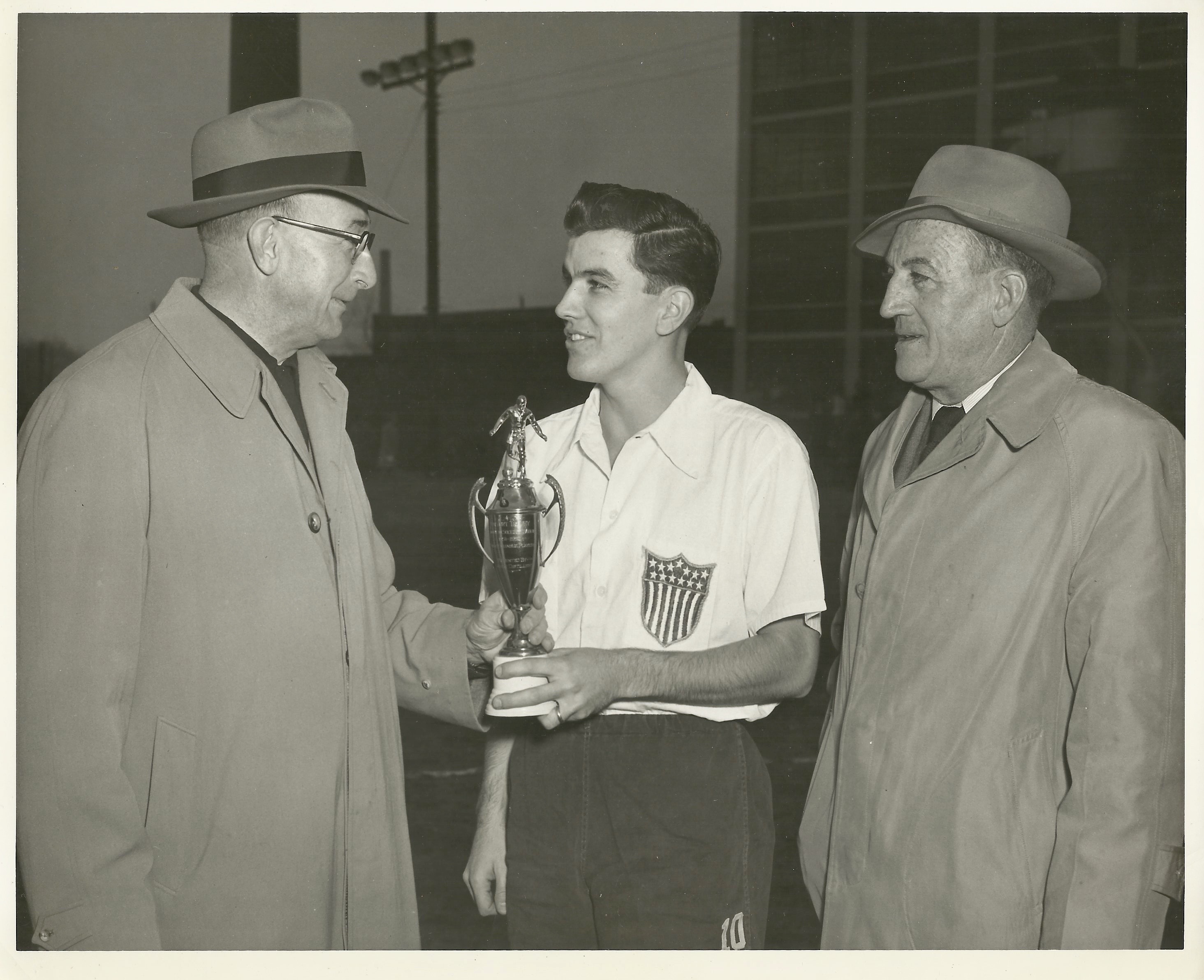
    McLaughlin’s six children would often ask their dad how good he was back in the day. The dad guarded his heroics like state secrets. He was humble. McLaughlin was inducted into the National Soccer Hall of Fame in 1977 and told his kids that it was because he had good teammates.

    Just once, Andy said, he wished his dad would brag. That wasn’t McLaughlin, who always had a second — or third — job while raising his family on Convent Avenue in the Northeast.

    He finally gave his son a glimpse of the life he lived when he blasted that shot into the net at his old playground.
    “That was the proof,” Andy said. “I was like, ‘Yeah!’ I was roaring. What would you do? My friends needle me like, ‘What happened to you?’ It’s like being Mickey Mantle’s son. What do you want from me?”

    Benny McLaughlin was the 1951-52 American Soccer League MVP.Mark McLaughlin

    Missing the World Cup

    The World Cup will be broadcast worldwide over the next six weeks as players from 48 nations play in sold-out stadiums across three countries. Six games will be in Philadelphia, and the event is now a spectacle after years of planning.

    But in 1950, it was anonymous to most Americans. McLaughlin, then 22 years old, was in Mexico the previous September to help the U.S. qualify for the 1950 World Cup. He graduated from North Catholic three years earlier and was an all-American at Temple before dropping out after one year to work.

    He was hired in 1949 by Fischer & Porter, a factory in Hatboro that made parts for Navy ships and submarines, where his brother-in-law was an executive. McLaughlin asked the company if he could have a few weeks off to go to Brazil and play in the World Cup.

    “They told him, ‘If you go, you no longer have a job,’” Andy said.

    Len Oliver, a Hall of Fame soccer writer and Philadelphia native, once wrote that McLaughlin was one of the best American-born players of his era. He was a star. But he couldn’t play in the World Cup.

    “Imagine that happening today,” Andy said. “Let’s say you’re a youth player, you make the national team, and you’re going to go represent the U.S. in a foreign country. They would wrap the company’s logo around you. It had to be a real kick in the teeth not to go. But he had to decide. He had a life decision to make. He needed to work. He wanted to get married. If the company said you can’t go, then what do you do?”

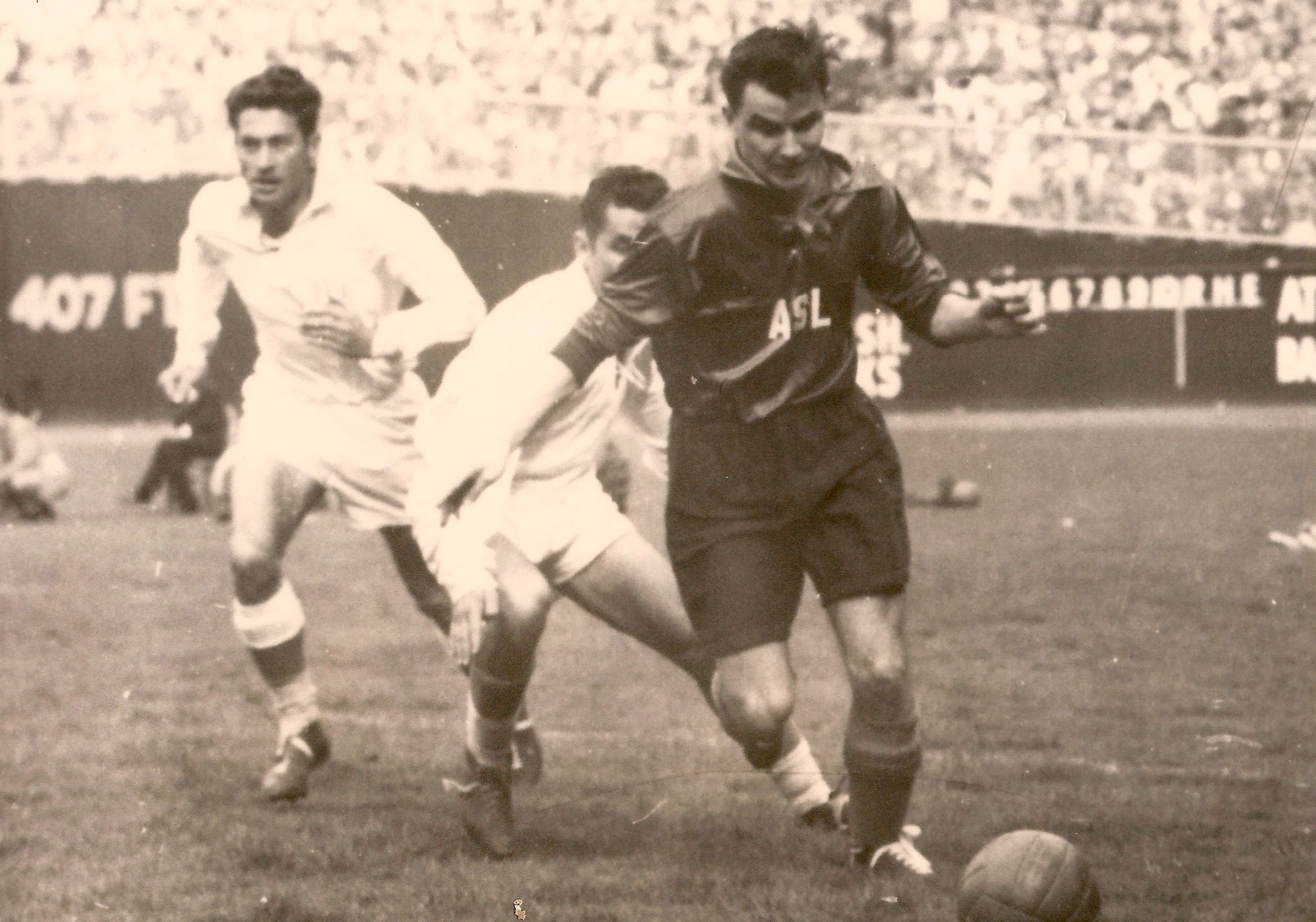
    McLaughlin playing for the American Soccer League All-Stars in 1947 at Ebbets Field.Mark McLaughlin

    That’s Bernie Flanagan

    McLaughlin’s father, Bernard, immigrated from Scotland after being recruited by Bethlehem Steel to work at its plant and play on its soccer team. The McLaughlins eventually moved to Kensington, where Benny learned to play soccer in the streets as the boys used the neighborhood’s narrow passages as soccer fields.

    His skills blossomed at Lighthouse Boys Club where he played with Walter Bahr, another Kensington kid who became a giant in Philadelphia soccer. They were best friends and played together as teenagers on the Philadelphia Nationals, a professional squad that traveled to New York on the weekends.

    McLaughlin was just 15, so he used a false name — Bernie Flanagan — to protect his amateur status while making $15 a game. A tipster wrote to the U.S. Olympic Committee in June 1948, informing them that Bahr and McLaughlin were pros. The USOC passed the information to the U.S. Soccer Federation, which said it would investigate the high schoolers. Nothing to see here, they said.

    “Ben, a young fellow doing a graduate thesis came across these letters,” Bahr wrote to McLaughlin years later after being sent a series of correspondences about their amateur case. “Thought you’d get a kick out of them.”

    McLaughlin and Bahr remained amateurs and played together on the U.S. team at the 1948 Olympics in London.

    “He looked up and saw 90,000 fans,” said McLaughlin’s son, Bernie, 73. “His cousins from Scotland came over to see him play. He said he was never more proud to be an American.”

    Two years later, he was ready for the World Cup. But the company did not budge. McLaughlin, engaged to be married later that year, couldn’t risk losing his job.

    “He needed a job, right?” said his son Mark, 59. “All he ever said to us was that it was for personal reasons. What do you do? You choose family. That’s him.”

    The U.S. team stunned England that summer in a 1-0 win that still stands as one of the most significant moments in American soccer history. It was so hard to fathom that the Brits back home thought the score was a mistake. They even made a movie about the upset.

    Bahr assisted the winning goal, which was scored by the player Andy said replaced his dad on the roster. McLaughlin and Eugene Olaff — who was slated to be the backup goalie but couldn’t get off work as a New Jersey state trooper — read about the win in the newspaper.

    “Imagine getting that news,” Andy said. “It had to be bittersweet. You’re thrilled for them but sorry for yourself. When you have time to evaluate it, what’s a few weeks when you’re making history?”

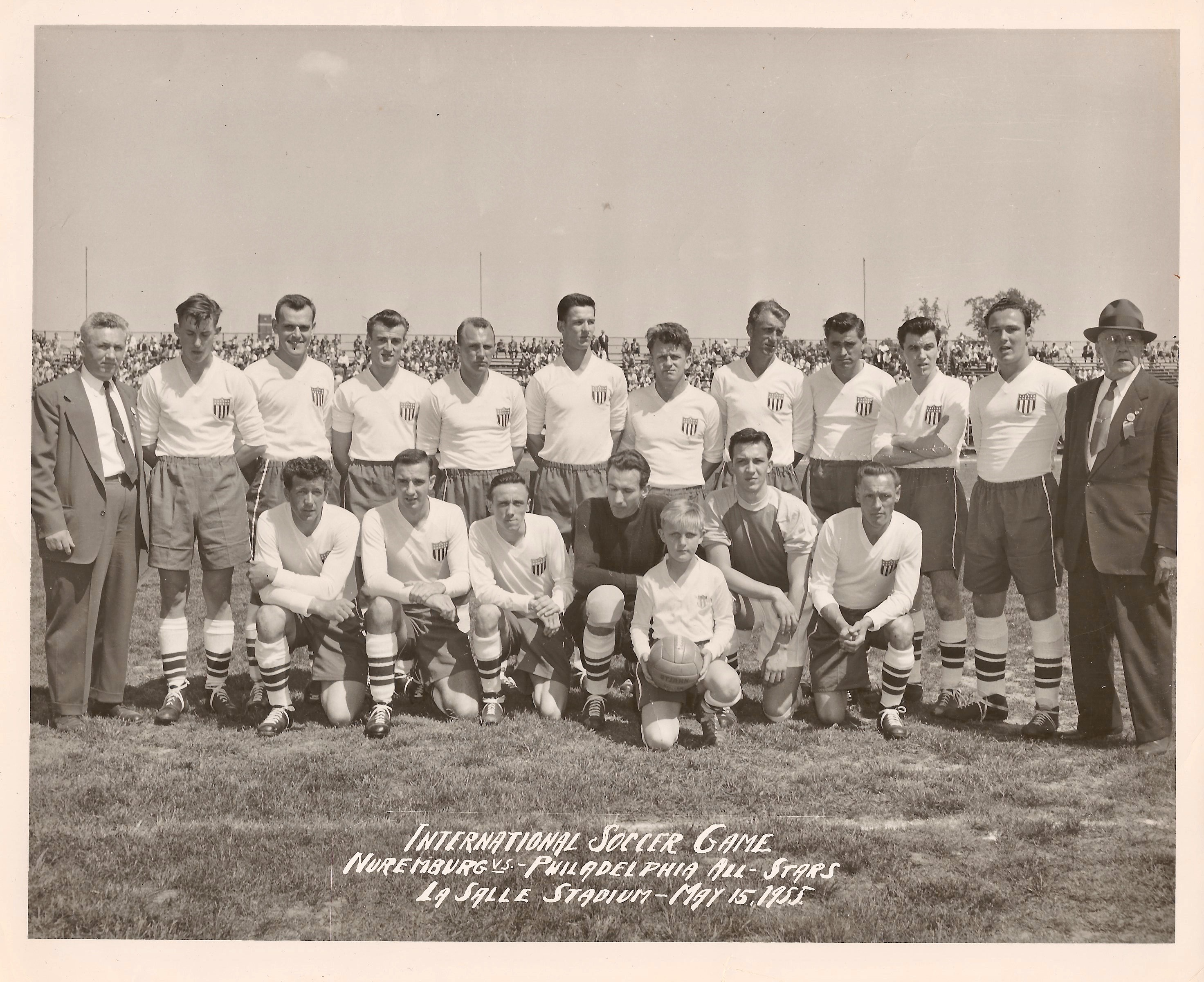
    Benny McLaughlin (second from right in second row) at a Philadelphia All-Stars game in 1955.Mark McLaughlin

    Benny’s legacy

    Bernie was a freshman at St. Joseph’s when some teammates who grew up in his dad’s old neighborhood recognized his last name.

    “My dad’s picture was hanging up in bars in Kensington,” he said as the taverns all sponsored teams. “They said, ‘Is your dad Benny McLaughlin?’ I said, ‘Yeah.’ They said, ‘Well, if you grew up in our neighborhood, you would’ve never had to buy yourself a beer.’”

    About 10 years ago, Andy was sitting at a quiet bar on Torresdale Avenue when he heard a few guys talking about soccer. He joined the conversation.

    “I said, ‘Yeah, my dad played one time,’” Andy said. “The guy said, ‘Oh yeah? Who’s your dad?’ I said, ‘Benny McLaughlin.’ He looked stunned. He said, ‘Your dad is Benny McLaughlin? Benny McLaughlin is your dad?’ He was fumbling for words. Finally, he says to the bartender, ‘This guy is on scholarship for the rest of the afternoon.’”

    McLaughlin’s name still means something in Philadelphia, but his legacy has dimmed outside the city. Perhaps that would be different if he played in that World Cup and scored that iconic goal. But he never thought about it, his sons said. It didn’t make him bitter or dim his love of the game he learned to play as a kid in Kensington.

    He kept a pair of old soccer cleats — “You would’ve thought they were Frankenstein’s boots,” Mark said — under the basement stairs and watched VHS tapes of European highlights, marveling at how they blasted the ball. He cheered the next generation of American players, some of whom grew up near Kensington. The game never left him.

    “He always said that soccer is for the new generation,” Mark said. “He had no regrets for what he did. He was grateful for what he was able to accomplish. He never looked back.”

    Ed Blaney, who played at St. Joe’s, told the McLaughlins that he credited their dad for his college scholarship. McLaughlin, he told them, helped make soccer relevant in the U.S., which caused more colleges to field teams.

    Blaney played at North Catholic and grew up in Kensington, just like McLaughlin. He would not have been able to afford college without the pathway the neighborhood celebrity created. Forget the World Cup. That is McLaughlin’s legacy, Bernie said.

    Walter Bahr and Benny McLaughin with McLaughin’s four sons: Mark, Andy, Brian, and Bernie.Mark McLaughlin

    One last reunion

    McLaughlin kept his job at Fischer & Porter for more than 20 years before working for the city in the redevelopment authority. He sold carpet at night and delivered kegs on the weekend, doing whatever it took to raise six children with his wife, Joan. McLaughlin made breakfast every Sunday — fried eggs and bacon — and often topped a summer barbecue with a drive to Goodnoe’s Ice Cream in Bucks County.

    “I want to stop myself from bragging about him,” Andy said. “But I don’t. As great as a soccer player as he was, he was a great dad, too. He was always looking out for us. He always had a nice word for you. He was just a great, loving dad.”

    McLaughlin was starting to fade in 2010 when his family moved him to a senior facility in West Chester. A few weeks later, a new resident named Harry Naughton was complaining about his hips. He told the staff he used to play soccer. They told him they had someone else living there who once was a big soccer player in Philly.

    “Don’t tell me it’s Benny McLaughlin,” Naughton said.

    The staff asked Naughton how he knew it would be McLaughlin.

    “Who doesn’t know Benny McLaughlin?” he said.

    Mark soon took his dad to Naughton’s apartment. Benny couldn’t say much, but his son knew he recognized his old teammate. Naughton was a goalie on the Philadelphia Nationals, the team McLaughlin played for under that fake name.

    Mark took out his phone, called Bahr, and put him on speakerphone. The three teammates were together again.

    Bahr asked Naughton how his back was feeling. He said it was giving him trouble, but how did Bahr know?

    Benny McLaughlin (left) and Walt Bahr at Lincoln Financial Field for the Union’s first game in April 2010.Mark McLaughlin

    “‘Oh, I just figured it would be bad from all the times you had to bend over to pick the damn ball up from the back of the net,’” Bahr said.

    Benny McLaughlin, who died two years later in 2012 at age 84, laughed. So did the others as they chatted that afternoon about the old days.

    McLaughlin played the game as a kid with wizardry, a skinny kid from Kensington who moved the ball with ease and always seemed to find an open teammate. Eric Charleson, one of America’s earliest soccer experts, once wrote that McLaughlin had “a fire, spirit, and determination that defied the rigors of the sport.” But he was more than that, Charleson wrote, as McLaughlin had “integrity, sportsmanship, and character.” That’s why he didn’t talk much about his career. His game said it all.

    And there he was in his old buddy’s apartment, talking about the game they once mastered. The game they played on the streets in Kensington and the game they toasted in those little neighborhood taprooms. The game that took them around the world and the game that wasn’t yet popular enough to get you off from work. But McLaughlin didn’t mind. The game gave him enough memories. He didn’t need a World Cup.
    “You almost saw a youth come into all of them,” Mark said. “They were young again for a minute. The joy and the smile. The eyes were shining. It was just so awesome. It was the best day ever.”

  • Two Philadelphia police officers stopped hundreds of Black men on the street. Lawyers say the stops were illegal and racially biased.

    Two Philadelphia police officers stopped hundreds of Black men on the street. Lawyers say the stops were illegal and racially biased.

    Prosecutors have dismissed at least 24 firearms cases after defense lawyers challenged the legality of stops conducted by two Philadelphia police officers who they say systematically targeted Black men for unlawful searches.

    Lawyers with the Defender Association of Philadelphia say former partners August Gershwin and John Lee initiated hundreds of pedestrian investigations in Northwest Philadelphia without sufficient legal justification — ordering Black men to submit to searches during interactions that were supposed to be voluntary, delaying activation of body-worn cameras until after stops were underway, and rarely documenting investigations unless they yielded illegal guns or contraband.

    The allegations come more than a decade after Philadelphia entered into a federal consent decree aimed at curbing unconstitutional stop-and-frisk practices. The agreement requires officers to document investigative stops for review by independent monitors and encourages police to handle low-level violations through so-called mere encounters — voluntary interactions with officers in which people are free to ignore questions and walk away.

    The lawyers contend that Gershwin and Lee exploited that distinction, routinely detaining people without the legal justification required for a stop while avoiding the scrutiny those interactions would otherwise receive.

    Their review, detailed in recent court filings, has prompted prosecutors to abandon dozens of cases tied to the officers, while the fate of dozens more remains uncertain.

    The dismissals began with the case of Namir Mack, charged with firearms offenses and evading arrest after a March 2025 stop by Gershwin and Lee led to the recovery of an illegal handgun.

    According to court filings, the officers stopped Mack as he walked along West Erie Avenue. Body-worn camera footage showed Mack lifting the back of his sweatshirt after the officers ordered him to expose his waist.

    Mack then ran. During a brief chase, he was struck by an SUV on Hunting Park Avenue, and officers recovered a handgun. A supervisor’s body-worn camera footage captured the aftermath.

    “What is this?” Sgt. Christopher Bloom asked. “A mere encounter turned into a foot pursuit?”

    Defender Association lawyers characterized the pattern of conduct discovered in their review as deeply concerning.

    The officers’ actions were “flying in the face of everything that’s supposed to be happening with this march toward more equitable policing in Philadelphia,” said Michael Mellon, who, along with Paula Sen, leads the association’s police accountability unit and conducted the review.

    Efforts to reach Lee, who left the department last November, were unsuccessful. Gershwin directed inquiries to his supervisor, who declined to comment.

    The police department declined to comment on the dismissed cases and the Defender Association’s findings.

    Police Commissioner Kevin J. Bethel declined an interview request, and police union leaders did not respond to requests for comment.

    The district attorney’s office, too, declined to comment.

    Police spokesperson Sgt. Eric Gripp said that pedestrian stops must be based on something more than a “hunch,” and that “the mere presence of a firearm” or “a person being in a particular area does not, standing alone, automatically justify a detention or frisk.”

    Department policy also requires officers to activate body-worn cameras at the outset of investigative stops. But the lawyers found that in every reviewed stop for which footage was available, the officers activated their cameras only after the interaction had begun, obscuring the moments most critical to determining whether the stop was lawful and whether citizens had voluntarily complied with police requests.

    Paula Sen and Mike Mellon, who lead the police accountability unit of the Defender Association of Philadelphia, at their offices.Alejandro A. Alvarez / Staff Photographer

    According to the lawyers’ legal filings, the department sustained at least three investigations for body-worn camera violations against both Gershwin and Lee during the two-year period reviewed by attorneys.

    Of the nearly 500 pedestrian interactions reviewed by Mellon and Sen, only 130 were documented as investigative stops. The officers recorded an additional 320 as mere encounters.

    After reviewing body-worn camera footage, police paperwork, and other materials, the lawyers concluded that 277 of the interactions described as mere encounters should have been classified as investigative stops and subjected to consent-decree review. Of those, 218 involved weapons license investigations. None resulted in the recovery of an illegal firearm.

    The lawyers also found that all but one of the nearly 500 people the officers stopped during the review period were Black. All but two were men.

    <div data-analytics-viewport="autotune" data-analytics-label="stops-06-11-26" id="stops-06-11-26__graphic" data-iframe-fallback="https://media.inquirer.com/storage/inquirer/ai2html/stops-06-11-26/fallback-mobile.jpg" data-iframe-fallback-width="350" data-iframe-fallback-height="1062" data-iframe="https://media.inquirer.com/storage/inquirer/ai2html/stops-06-11-26/index.html" data-iframe-height="1038" data-iframe-resizable></div> <script type="text/javascript">(function() { var l = function() { new pym.Parent( 'stops-06-11-26__graphic', 'https://media.inquirer.com/storage/inquirer/ai2html/stops-06-11-26/index.html'); }; if(typeof(pym) === 'undefined') { var h = document.getElementsByTagName('head')[0], s = document.createElement('script'); s.type = 'text/javascript'; s.src = 'https://pym.nprapps.org/pym.v1.min.js'; s.onload = l; h.appendChild(s); } else { l(); } })(); </script>

    In one encounter classified as voluntary, body-worn camera footage showed Gershwin asking to search a man’s bag outside a beer deli. When a woman in the group objected, Gershwin searched the bag anyway before walking away, having found nothing.

    In another supposedly voluntary encounter, Gershwin warned two teenage boys that if they did not lift their shirts, “we’re gonna cuff you.” Neither teen was found to have a weapon.

    “They know they don’t have reasonable suspicion,” Sen said, “so they’re simply not documenting them.”

    Gripp said the department’s internal affairs bureau conducted six investigations involving Gershwin and four involving Lee related to pedestrian stops and searches. Two allegations against Gershwin were sustained, he said, and none of the cases against Lee was sustained.

    David Rudovsky, a civil rights lawyer who helped secure the consent decree, said he is “concerned that at least some officers in the department are doing an end run around the consent decree.”

    Rudovsky said he plans to press the department to investigate Gershwin, Lee, and other officers who appear in body-worn camera footage reviewed by defense attorneys.

    “If we’re not satisfied,” he said, “ultimately we can seek relief from the court.”

    The Citizens Police Oversight Commission also said it plans to analyze department data on mere encounters and conduct audits as a result of the Defender Association’s findings and complaints from residents.

    While most active cases handled by the Defender Association have been dismissed, Mellon and Sen estimate that an additional 30 to 40 cases involve private defense attorneys. They said they next plan to press the district attorney’s office to review closed cases tied to the officers’ arrests and broaden their analysis to other officers.

  • Letters to the Editor | June 12, 2026

    Letters to the Editor | June 12, 2026

    Grade inflation fails

    Thanks for your candid article on grade inflation in Philly schools. Perhaps the reason the children live in poverty and are incapable of holding a job is that the public education system is an abject failure. Some misguided souls think these students should be given “equality of outcomes” — that they should be treated the same as the student who works hard, gets a legitimate “A,” and can read and do math at grade level on proficiency tests. As the old proverb says: “If you give a man a fish, he eats for a day. If you teach him to fish, he eats for a lifetime.” Philadelphia has been giving students a fish for decades — and the remainder of their lives is hunger.

    Alexander W. Ross Jr., Mount Laurel

    . . .

    The practice of giving wholesale passing grades in the Philadelphia School District — even for students who rarely show up to class or do not master most of the required content — is a very old story for which inadequate funding often takes the blame. But like many persistent problems in the district, this situation could be remedied if administrators took the time to identify and replicate the best practices in schools that are serving high percentages of low-income students, where grades actually are an accurate reflection of academic performance. A common thread in those schools is that struggling students receive the extra supports they need. The district should know what those schools are based on the reams of data it collects every year, but it seems to have done little or nothing to duplicate their efforts.

    When large numbers of Philadelphia high school graduates cannot pass the basic skills test for a job requiring only a high school diploma, or the placement test for college-level classes at community college, the message is clear: Grade inflation may be acceptable in the school district, but it doesn’t work in the real world.

    Debra Weiner, Quakertown

    . . .

    I sincerely hope people are reading the wonderful reporting of Kristen A. Graham regarding education issues. As a result of her work, we readers have learned that Philadelphia’s teachers essentially can’t fail anyone.

    What’s the point of education if a teacher giving a student an “F” is overruled by a principal?

    And whom do we thank?

    For starters, I would look at people like Jeff Yass, whose hostility toward public schools, tens of billions of dollars, and campaigns for “educational freedom” have increased the pressure on administrators to the point where some of them might foolishly think that this kind of grade inflation is actually helpful.

    In my humble opinion, every single teacher I had at Olney High did more for America than ByteDance, the politically divisive, Chinese-owned parent company of TikTok, which is responsible for much of the riches of the wealthiest Pennsylvanian.

    Should a school’s first priority be to educate children? Or to make money?

    The debate is elevated by Ms. Graham’s wonderful reporting, and I, for one, thank her.

    Al Gardner, Olney High School, Class of 1964, Bolivia, N.C.

    Join the conversation: Send letters to letters@inquirer.com. Limit length to 150 words and include home address and day and evening phone number. Letters run in The Inquirer six days a week on the editorial pages and online.

  • Horoscopes: Friday, June 12, 2026

    ARIES (March 21-April 19). Muscle builders don’t grow new muscles from nothing. They work repeatedly with the ones they already have, strengthening them through strain and recovery. Confidence, patience, discipline, courage, creativity, charm… all developed similarly, through repetition.

    TAURUS (April 20-May 20). Politeness will keep the wheels turning today. Your respectful interactions will reduce friction, create predictability, soften conflict and make cooperation easier. Tiny rituals of respect keep the machinery from grinding sparks.

    GEMINI (May 21-June 21). It’s easy to overlook your natural talents that are so much a part of who you are. But what feels routine to you will be perceived as deeply impressive, valuable and distinctive to others.

    CANCER (June 22-July 22). You’re playing with the wide-focus lenses and pondering your place in the grander scheme. Your actions gain new meaning when you consider even the smallest one has the potential to ripple outwards and impact others positively.

    LEO (July 23-Aug. 22). Planning has taken you far enough. Now you must choose the right point of entry. Where are your abilities genuinely useful? Who could most use what you do? This could apply to work, relationships, creative projects, networking and even social dynamics.

    VIRGO (Aug. 23-Sept. 22). Just as a gemstone becomes brilliant through grinding and abrasion, human character develops through challenge. It’s the moments that resist you, force you to adapt or bring you face to face with your edges… those are the moments that make you shine.

    LIBRA (Sept. 23-Oct. 23). Something that’s been lingering in the background becomes important. It was a vague idea or a faint desire that is now growing into a need that’s hard to ignore. So what would it really take to fulfill it?

    SCORPIO (Oct. 24-Nov. 21). You’re careful about who you get close to. You pay attention to indications of character, worldview and thought process. Generous spirits will be all around you. You’ll enjoy interactions of openness, trust and fun.

    SAGITTARIUS (Nov. 22-Dec. 21). Emotional intelligence helps you interpret behavior with nuance. Someone’s harshness may reflect exhaustion, insecurity, fear, embarrassment or grief. It doesn’t mean you should accept poor treatment, though it may allow you to reduce unnecessary escalation and find a productive path.

    CAPRICORN (Dec. 22-Jan. 19). The fair and wise choice isn’t always the immediately logical or dutiful one. As you carefully consider the available options, let your whimsy have its say. Don’t choose something that leaves you with a lingering “what if.”

    AQUARIUS (Jan. 20-Feb. 18). Some people conveniently forget who they owe and why. You’re aware of the ledger. You know who you owe and who owes you. This keeps you from feeling indebted when, in fact, you are not.

    PISCES (Feb. 19-March 20). One good thing about life’s little snags: They can cause people to work together for freedom, ease and beneficial results. Bonds are made in moments of vulnerability and resilience. You’ll help someone in a jam, and it will be lucky for both of you.

    TODAY’S BIRTHDAY (June 12). It’s your Year of Powerful Wielding when you channel your personal influence and electricity in life-changing directions. Energies like fame, competition, and desire will be managed to brilliant effect. More highlights: The things you’re doing that you’ve done for years will start to pay you much more and new work ignites earl on. Also, a sweet reunion and a domestic transformation. Cancer and Aquarius adore you. Your lucky numbers are: 49, 33, 12, 5 and 8.

  • As the World Cup begins, Mauricio Pochettino sets out his true expectations for the USMNT

    As the World Cup begins, Mauricio Pochettino sets out his true expectations for the USMNT

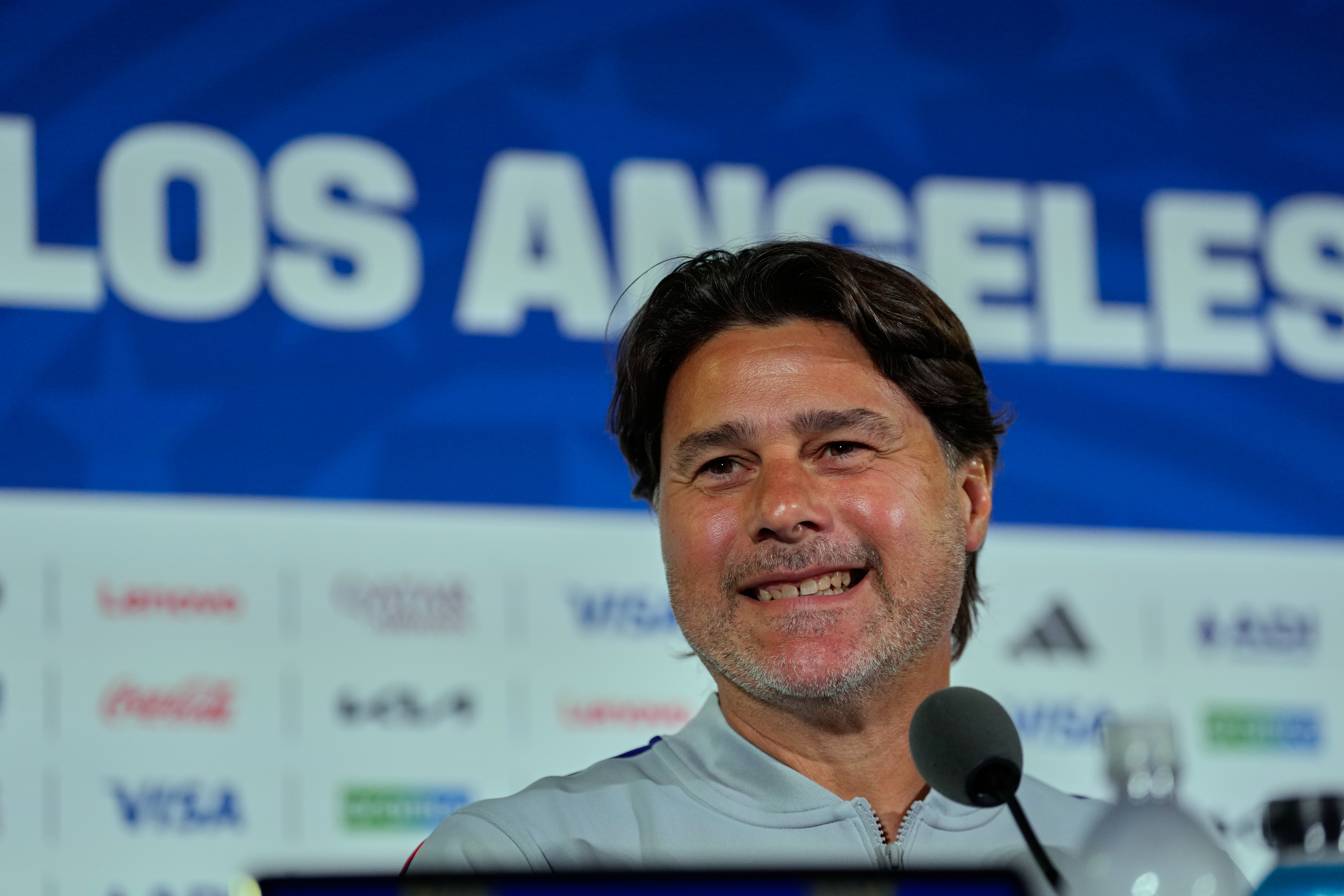
    INGLEWOOD, Calif. — U.S. men’s soccer team manager Mauricio Pochettino has said many times during his tenure that he wants his players to believe they can win this World Cup.

    If it’s unrealistic, or derided by fans and media, he does not care. His job has been to make his players think they can do it, and use that belief to put extra fuel in the tank.

    (For the record, reaching the quarterfinals is the bar most outsiders have set; and if you ask this reporter’s opinion, that’s correct.)

    On Thursday, in his final remarks before Friday’s opening game against Paraguay (9 p.m., Fox29, Telemundo 62), Pochettino finally turned to a more realistic tone.

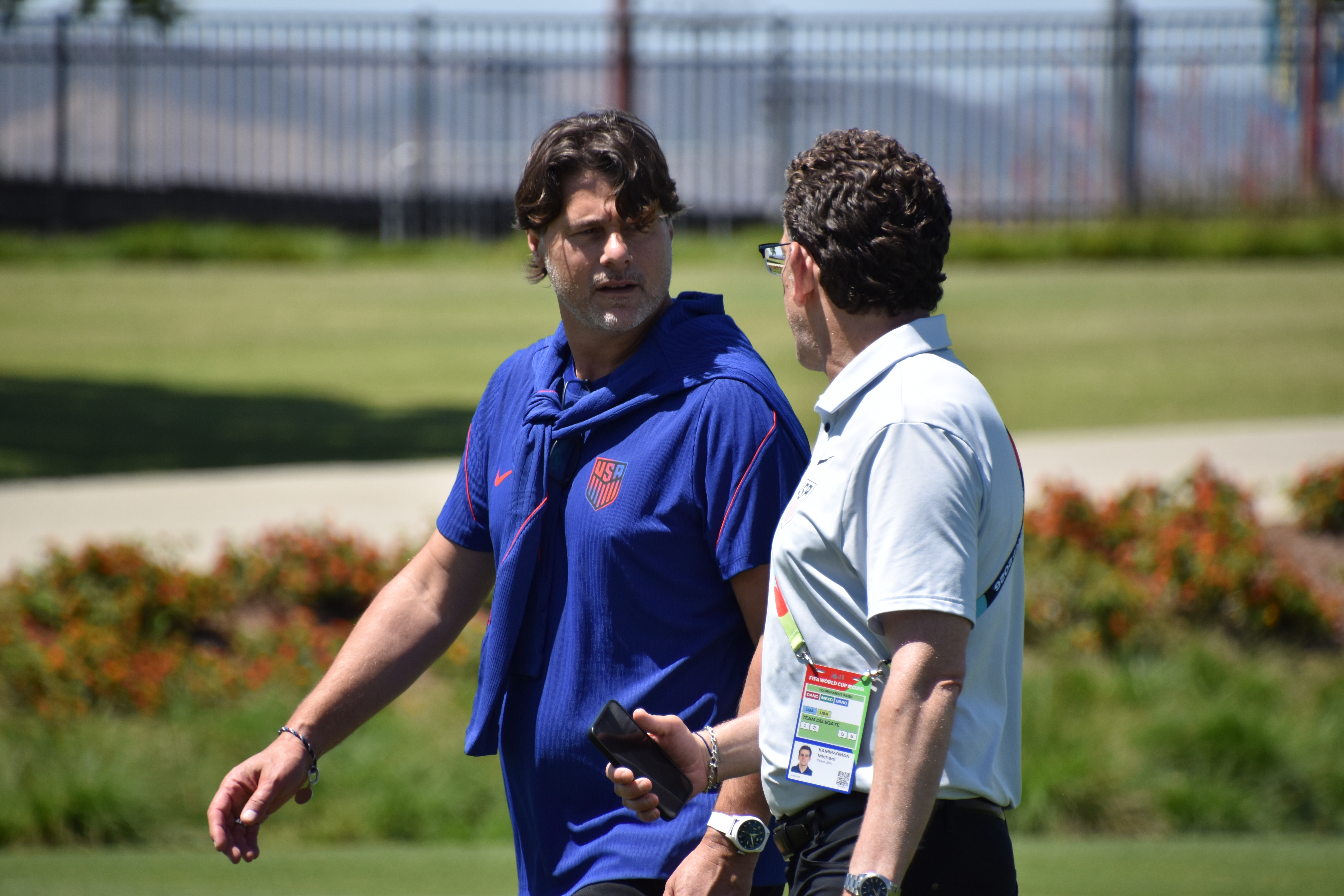
    Mauricio Pochettino (left) walking with a U.S. team staffer at Thursday’s practice.Jonathan Tannenwald

    Asked how he defines success now, he started by saying “it’s difficult.” Then, acknowledging those who hadn’t heard his passionate stances in the past, he set out his explanation.

    “I think for me, ‘successful’ is winning,” he said. “It’s win tomorrow, and win after tomorrow, and win. If we don’t arrive to the final and we don’t win the World Cup, to talk about ‘successful’ is, I don’t know — for me and my mindset.”

    Pochettino has heard from plenty of people in his 22-month tenure to date about the mountains American men’s soccer must climb, and the obstacles along the way. And now he knows firsthand how his players truly stack up against the world’s best, especially after games against powers Belgium, Portugal, Senegal, and Germany.

    “If you say to me, oh, the conditions, or this [other thing], or we play against good national teams, I say, OK, OK,” he said. “But when we signed here, it’s because we wanted to come here, and to be involved in that unique event, but with the possibility to compete well, and believing in winning.”

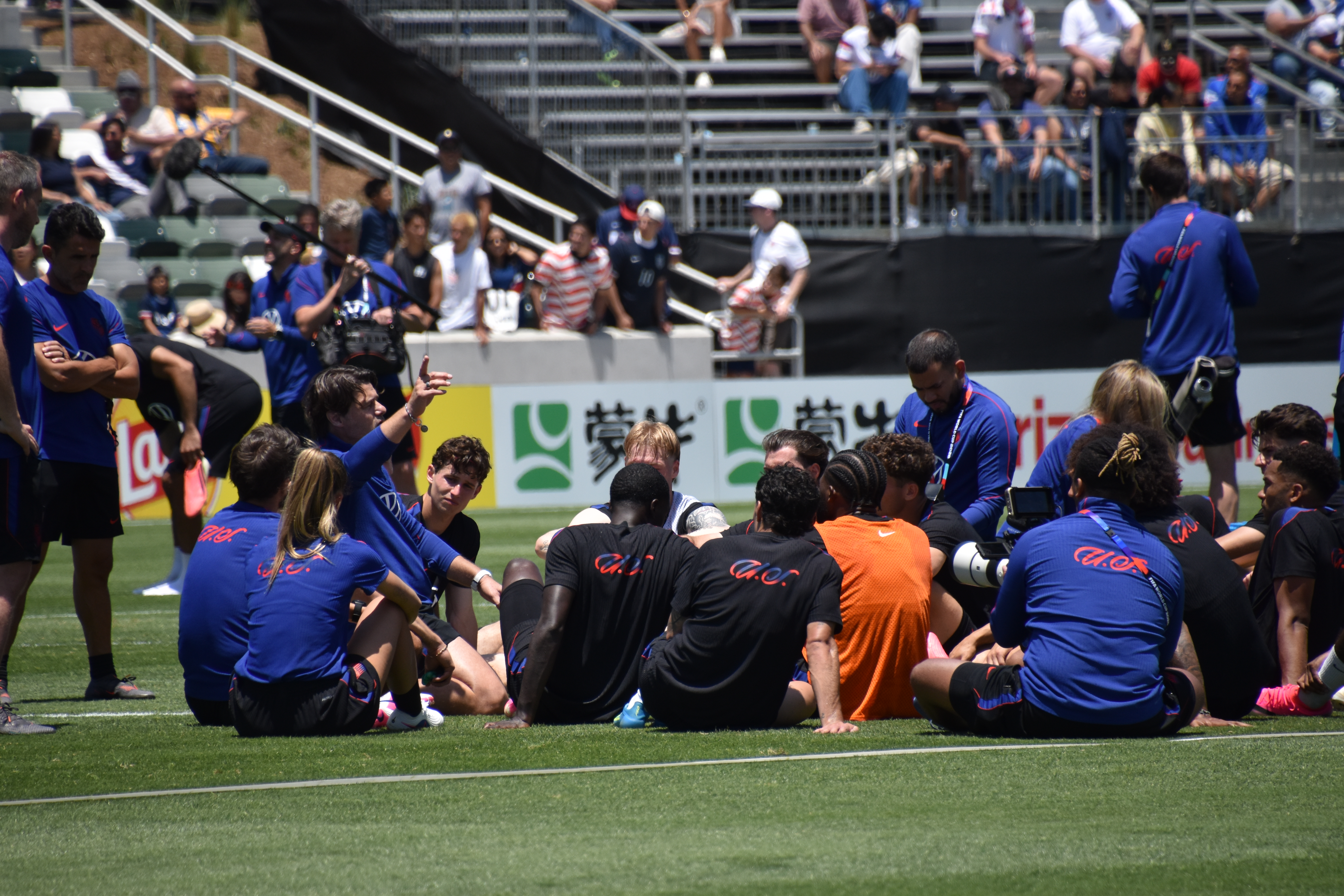
    Mauricio Pochettino making a point to a group of players during the U.S. team’s open practice on Monday.Jonathan Tannenawld

    Asked what he’ll say to his players before Friday’s kickoff, Pochettino joked that “I already spoke, I already talked — too much. I said [to them], don’t expect an unbelievable speech Friday.”

    That’s mainly because in his opinion, they “don’t need an external motivation” at this point.

    “They need the motivational speech and inspiration when they need to go to train and improve in every single area,” he said. “And then tomorrow, it’s late. … If you are not ready, sorry guys, it’s impossible to perform. What were [we] doing all this year and a half [we’ve been preparing]?”

    ‘Their emotional intelligence is very high’

    But in a way, the manager gave that speech to the media from the podium on Thursday, in a news conference where he alternated freely between English and Spanish.

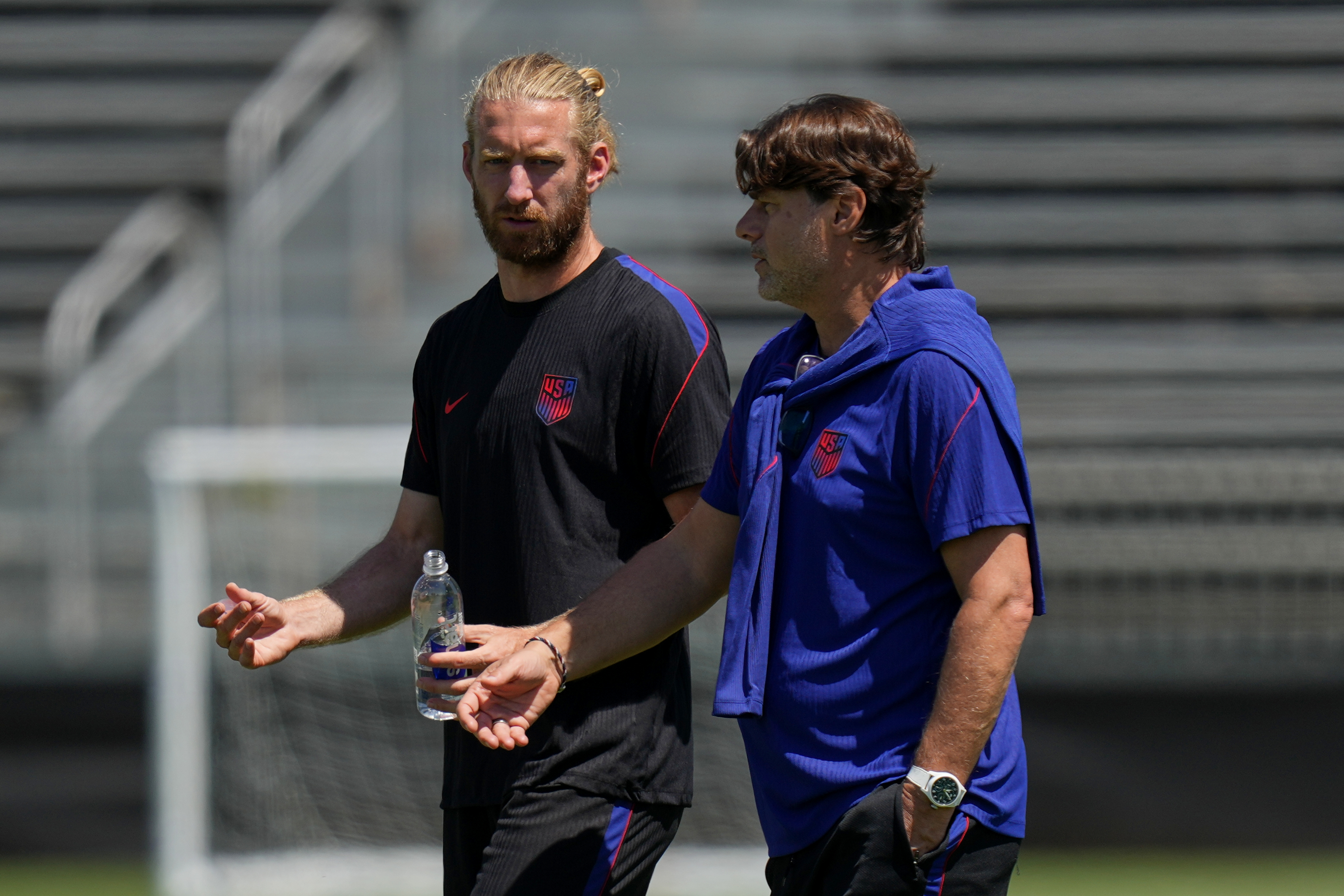
    Mauricio Pochettino (right) talking with U.S. captain Tim Ream at Thursday’s practice.Andre Penner

    “The players, tomorrow, need to go on the field and feel in a bad way that they need to perform,” he said. “And to perform is to respect some rules, but also the most important is not to be disconnected with your emotional relationship with the game. And we were talking about that: they need to think tomorrow and play like they are a child, with no pressure, with no responsibility.”

    He also said he wants his players to “take it step by step,” and that “the key is not to look at the finish line before you actually get there.”

    Pochettino particularly applied that to the players he’ll summon from the bench, a key part of any manager’s strategy with five substitutes allowed per game.

    “How many players aren’t starters early in the World Cup, but end up big figures in the tournament?” he said. “It’s not just about how you start, but how you continue and how you finish.”

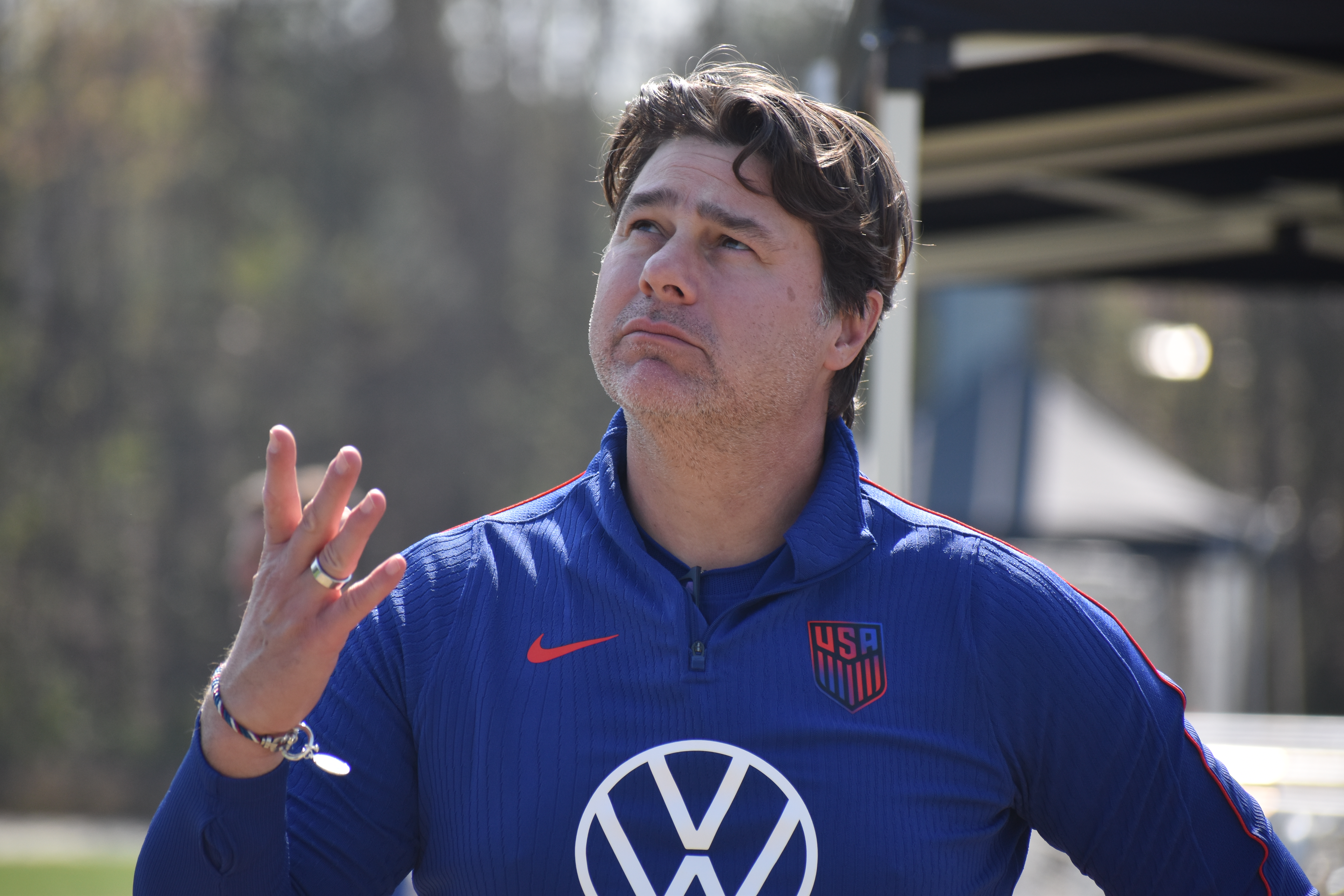
    Mauricio Pochettino looks to the heavens during a philosophical moment at a U.S. practice in March.Jonathan Tannenwald

    Perhaps his most revealing words came when he opened up about what he has learned from the players, for as much as they have learned from him.

    “I really admire the players’ mindset,” Pochettino said. “I don’t think they should be underestimated, because their emotional intelligence is very high — well above the global average. They become great athletes because they possess that capacity and talent, and they develop that mental strength. I tell you, they are all intelligent.”

    He has also learned the different ways required to connect with the 26 players on this squad, and the over 70 he has had in U.S. camps over his tenure.

    “The trick is getting to know each individual so you can communicate effectively, finding the right frequency,” he said. “You realize that, ultimately, they all feel the same things, face the same struggles, and have the same needs. It’s about finding the right frequency to connect with each personality. They are giving us so much, and honestly, we are really enjoying the whole group.”

    Keeping the lineup secret

    As nice as it was to hear Chris Richards declare himself “ready” on Wednesday, that only counted for so much without his boss’s blessing. Pochettino gave it on Thursday, calling the key centerback “available.” He also said all 26 players on the roster are fit to play.

    But he backed off saying whether Richards has the green light to start.

    “Chris is available to be selected, and then we will decide if he’ll start from the beginning of the game or is on the bench,” Pochettino said. “But I think we celebrate the job that our medical staff and performance [staff] did — worked really hard to recover Chris, and recover some other players that arrived with minor things. No big issues. … It’s a really good feeling to have 26 players available to be selected.”

    Pochettino said he knows what his starting lineup will be, but signaled that he hasn’t told the players. That includes the goalkeepers, the subject that has been second to Richards’ health in the most-discussed rankings.

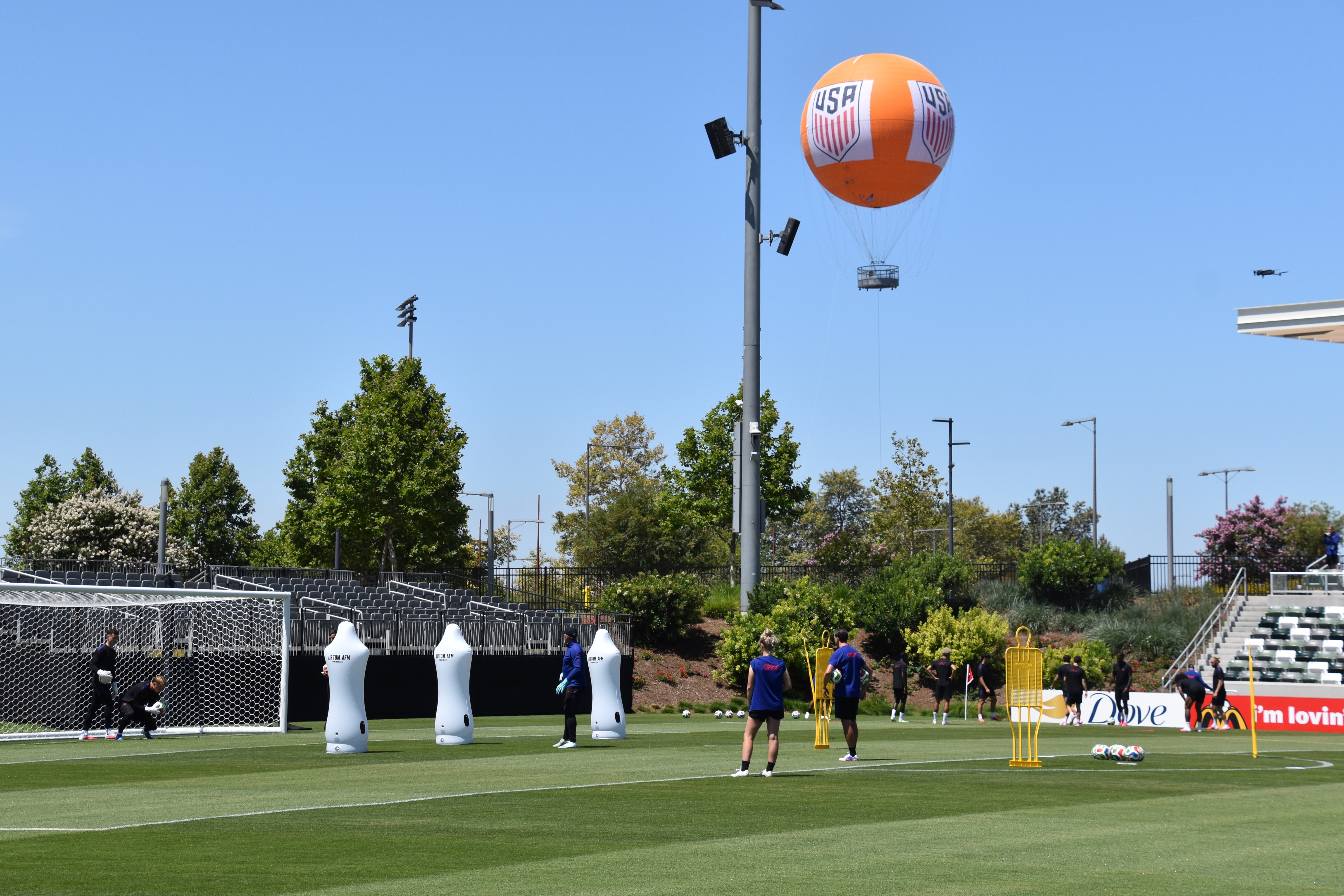
    The goalkeepers at work during Friday’s practice in Irvine, Calif., amid a backdrop including a balloon decorated with U.S. Soccer’s logo.Jonathan Tannenwald

    “No, I’m not going to tell you,” he said when invited to. “But I already decided. Only if something happens before the game [would it change].”

    Asked if the players know, he said: “I don’t know if they know. Because if they know, you are going to start to call them.”

    The room laughed with him at that. Such leaks are a tradition in other countries, including Pochettino’s native Argentina, and England where he worked for many years. It isn’t in the United States, though, at least not yet.

  • Philly hotel workers push back potential strike as FIFA World Cup is set to begin

    Philly hotel workers push back potential strike as FIFA World Cup is set to begin

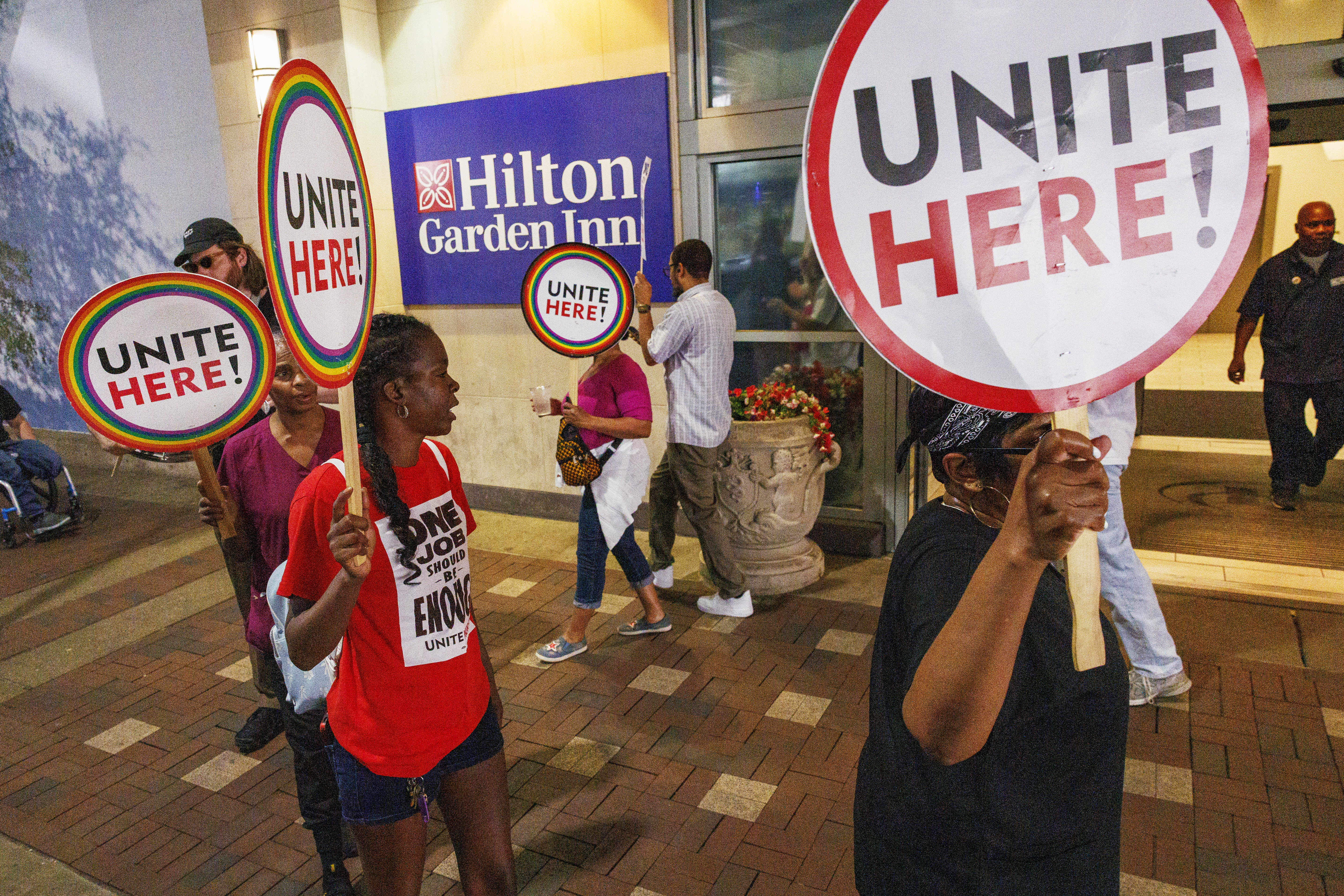
    Unionized hotel workers in Philadelphia had planned to strike if they hadn’t agreed on a new contract by Friday, but they’ve decided to continue working for now, citing progress made in negotiations.

    Their union, Unite Here Local 274 had announced a strike deadline of June 12 last month. Hours away from the deadline on Thursday evening, the union announced in a statement that the deadline had been extended but did not provide a new date. The statement noted, “a strike may now be called at any time.”

    “Substantial progress is being made in some hotels,” union president Rosslyn Wuchinich said in a statement Thursday. “We have set a citywide standard, and we expect our hotel employers to meet it or face disruption during the World Cup.”

    The union said last month that some 600 workers across five hotels where contracts had still not been reached could walk off the job.

    They are: Sheraton Philadelphia Downtown, Wyndham Philadelphia Historic District, Hilton Philadelphia at Penn’s Landing, the Warwick Hotel Rittenhouse Square Philadelphia, and Hilton Garden Inn Philadelphia Center City.

    Workers at two of the five hotels had voted to authorize a strike, Wuchinich said in May. Strike authorization votes still have not been held at all five hotels, union spokesperson Dermot Delude-Dix confirmed Thursday.

    The union last spring began negotiating new contracts at several Philadelphia hotels.

    New contracts have since been adopted at: Hampton Inn Philadelphia Center City — Convention Center, Sonesta Philadelphia Rittenhouse Square, and the Sheraton Philadelphia University City Hotel.

    At these hotels, contracts include raises to $30 an hour by 2028 for non-tipped employees, and an increase in employers’ contributions to their pensions. The contract also includes a provision capping the number of rooms a worker can be tasked with cleaning at 15 per day, down from 16 previously.