Tag: topic-link-auto

  • A Chesco couple cared more for drugs than their young son, judge says before sending them to prison for decades

    A Chesco couple cared more for drugs than their young son, judge says before sending them to prison for decades

    Hunter Hawa would have turned 11 in April, his aunt, Jennifer Back, told a Chester County judge Wednesday.

    But the boy known for his smile and laugh died three years ago on the filthy carpet in his parents’ Coatesville apartment. Prosecutors say he had fentanyl and cocaine in his system, powerful narcotics that his parents used and sold that ended his life before it had been given a chance to begin.

    Mousa Hawa and Holly Back failed in their ultimate duty as parents to protect Hunter, according to Judge Analisa Sondergaard, who sentenced them both to decades in prison for their son’s murder.

    “This was the culmination of many bad days and bad choices,” a visibly angry Sondergaard said. “You chose drugs over Hunter every single day. You put your wants and desires before your son every single day.

    “You loved drugs more than your son.”

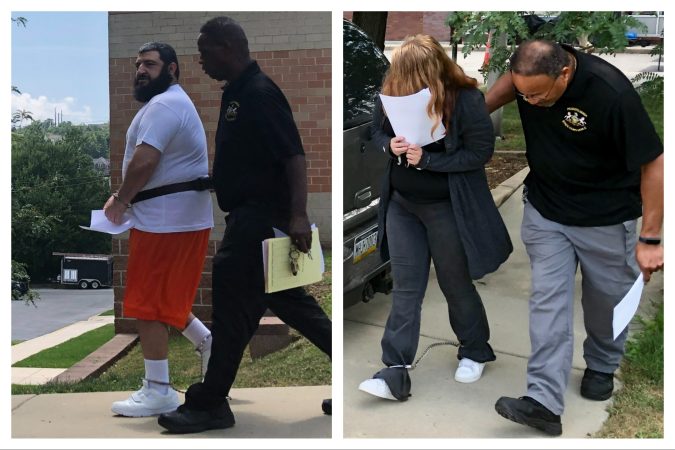
    The couple was convicted of third-degree murder, aggravated assault, and endangering the welfare of a child after a trial in February.

    Back was sentenced Wednesday to 20 to 40 years in prison, while Hawa was sentenced to 22½ to 45 years. Their sentences included a mandatory minimum of 15 years for third-degree murder of a victim under 13.

    District Attorney Chris de Barrena-Sarobe said Wednesday that Sondergaard’s sentences were “justice for a child that deserved so much more.”

    “This was a case about parents who continually disregarded every basic parental responsibility and allowed their child to ingest fentanyl and cocaine,” he said. “Because they chose to put themselves above their child, we prosecuted them to the fullest extent of the law.”

    Their attorneys said both had been in the throes of drug addiction since their teenage years, and suffered from previously undiagnosed mental health conditions. Hunter’s death, they said, was a horrible accident.

    In a tearful statement, Back said the images of her son, lying dead in her living room, are forever burned into her mind.

    “I never meant to fail him,” the 42-year-old woman said. “I did not murder my son. The last thing I wanted to do was harm him.”

    First Assistant District Attorney Erin O’Brien, who prosecuted the case, rebuked Back’s statement, saying the couple showed extreme indifference to their son and his health.

    The two had kept their son in squalor in a home where drugs were “ubiquitous” — Hunter, she said, was surrounded by narcotics and the materials Hawa used to package them. Their attempts to prevent him from touching the toxic substances, she said, were half-hearted at best.

    “Hunter didn’t get to make plans for his future; he didn’t even make it to the third grade,” she said. “I could attempt to go through everything he missed out in life, but that list is endless. His life mattered.”

    Hawa had called police to his home on July 26, 2023, just before 2:30 a.m., after Back awakened him in a panic, prosecutors said. She had found Hunter “folded like a sandwich,” pinned between the recliner he had fallen asleep on hours earlier and the wall behind it.

    When Coatesville Police Officer Jennifer Schreiber arrived at the home, Hawa was performing CPR on his son, who had ashen skin and blue lips. He showed no signs of life, Schreiber said.

    Clear signs of drug abuse were found feet from the boy’s body: small glassine bags filled with heroin, cocaine, and methamphetamine, as well as a scale and a syringe.

    Doses of Narcan sat unopened on a coffee table, and, O’Brien noted, might have saved the boy if used.

    An autopsy later concluded that Hunter died of an overdose of fentanyl, morphine, and cocaine. Exactly how the boy ingested the drugs remains unclear. But samples of his hair showed that he had previously been exposed to those narcotics, according to O’Brien.

    Hawa and Back initially lied about their drug use when interviewed by police, but confessed to being regular users weeks later when confronted with their son’s autopsy report, investigators said.

    Hawa, 43, told detectives he did not believe his son had overdosed, saying the amount of the drugs found in his blood was too small to be fatal. He said he and Back had repeatedly warned the child not to touch the drugs in their home, telling him that it was their “medicine” and that he could get sick from it.

    The fentanyl that killed Hunter was stamped with the same distinctive logo, “Bad Bunny,” as the kind that killed Tyler Stout in Phoenixville in March 2023.

    Prosecutors also deemed Hawa responsible for Stout’s death, charging him with drug delivery resulting in death and related crimes. His trial in that case is pending.

  • A judge told the Philly school board it can’t vote to close a charter school Thursday

    A judge told the Philly school board it can’t vote to close a charter school Thursday

    A judge has blocked the Philadelphia school board from voting to close a charter school Thursday amid a legal fight over the school district’s treatment of charter schools.

    Common Pleas Court Judge Damaris Garcia had previously barred the district from moving forward with nonrenewal proceedings against Philadelphia Montessori Charter School, which in a lawsuit last month claimed the school system violates state charter law. But on Tuesday, the board appealed that decision and added votes on Philadelphia Montessori and Global Leadership Academy Southwest Charter School to its Thursday meeting agenda.

    Philadelphia Montessori filed an emergency motion Wednesday to stop the vote, and Garcia granted its request — ordering the board to delay its vote on the charter’s future.

    “It is further ordered and decreed that all actions related to the subject matter of the motion, including but not limited to the vote currently scheduled before the Board of Education of the School District of Philadelphia on June 18, 2026, are temporarily stayed pending further order of this court,” Garcia said in the order.

    It was not immediately clear what would happen Thursday. Wanda Odom, a spokesperson for the board, said it does not comment on litigation. Two charter votes, including on Philadelphia Montessori, remained on Thursday’s publicly posted agenda after the ruling was released.

    Philadelphia Montessori, a K-4 school in Southwest Philadelphia, sued the district in May, arguing that it should be barred from closing any charters due to “shifting standards, inconsistent methodologies, and procedures that do not provide fair notice or a neutral adjudicative structure.”

    The city’s charters, which are publicly funded but independently run and educate about one-third of Philadelphia public school students, have long argued they are subject to an unfair evaluation process.

    Following those complaints, the district is revising its evaluation framework; charter advocates have called on the board to pause renewal decisions until new standards are complete.

    District officials recommended nonrenewal for both Philadelphia Montessori and Global Leadership Southwest last month, citing significant academic concerns.

    Philadelphia Montessori, which enrolls about 250 students, lags similar schools and the district as a whole in academics, according to district officials. The charter has called the district’s assessment methodologies “flawed” and “unreliable.”

    In its emergency motion Wednesday, the charter accused district officials of a “transparent and deliberate tactic” in adding the nonrenewal vote 48 hours before Thursday’s meeting, despite Garcia’s earlier order on June 9.

    The district “waited until the last possible moment” to file its notice of appeal while also scheduling a vote on Philadelphia Montessori “that directly violates the court’s order,” the charter said in the filing. Garcia had previously scheduled a court hearing for July 27.

    If the board votes to start nonrenewal proceedings for Philadelphia Montessori on Thursday, it will cause “immediate and irreparable” harm, likely prompting families and teachers to leave the school even if a court later reverses the decision, the charter said in its filing.

  • Youth summit turns teens into Philly lawmakers: ‘You are the change, ultimately’

    Youth summit turns teens into Philly lawmakers: ‘You are the change, ultimately’

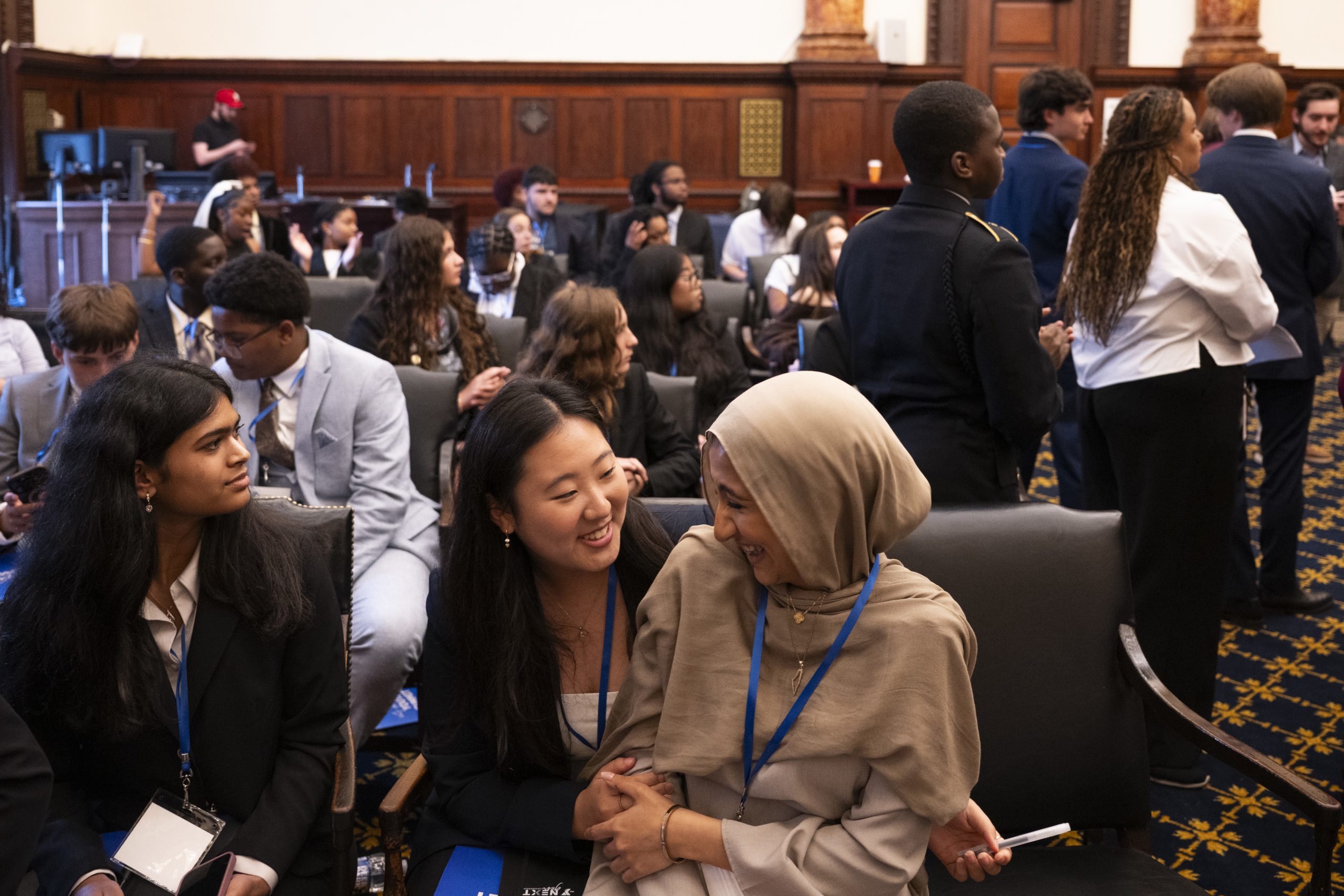
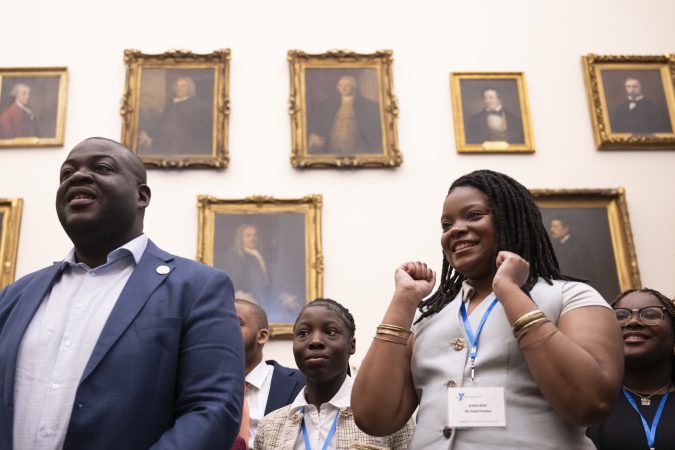
    The City Council chambers looked as they always do: a sea of slacks and blazers, votes and debates, bills and budgets. The only difference? Every Council member was a teenager.

    Around 100 youths entered Philadelphia City Hall on Wednesday to take part in the Greater Philadelphia YMCA’s Government Youth Summit. The event, hosted by the YMCA for the first time, gave teens from Philadelphia and the surrounding area a hands-on way to learn about their city government.

    “This is our first shot at it. I think it’s been real successful,” said Shaun Elliott, president of the Greater Philadelphia YMCA. “And there’s two things we want to do: teach kids about civic government and how it works, but also help them develop the competencies of leadership.”

    At the beginning of the day, the participants were presented with a bill on spending and initiatives during the FIFA World Cup, which they then discussed, debated, and reshaped in line with their roles.

    Sitting alongside teens representing other districts, Justina Ndebhleh, 17, who was representing the Sixth District in Lower Northeast Philadelphia, led a discussion on SEPTA funding.

    “We’re talking about whether increasing SEPTA prices will be beneficial or not,” Ndebhleh said. “Because we know increasing the fare would be a regressive tax since lower-income communities do take SEPTA on a daily basis.”

    Students hold discussions after meeting with City Council President Kenyatta Johnson.Joe Lamberti / For The Inquirer

    Between debates and meetings, teens were given the chance to speak with Mayor Cherelle L. Parker and City Council President Kenyatta Johnson.

    Lindsay Doyle, director of youth civic engagement for the YMCA, said she hoped the participants left understanding that their opinions matter and that they can help make change.

    “It’s really incredible to see them in these spaces,” Doyle said, “and have them interact with City Council members, and have those elected officials reinforce the idea that their thoughts … and their beliefs really matter, and they can utilize those to change the entire city, state, and nation.”

    Kailey Reinboth, 18, from Boyertown Area Senior High School, said the experience gave her a better understanding of what it means to be an engaged citizen, especially at a young age.

    “I believe that it is really [giving] me insight into my roles and responsibilities as a citizen and being someone that needs to be civically engaged,” she said. “You are the change, ultimately. And being … the change that you want to see, not just in the future, because, you know, they talk about the youth being the future — the youth aren’t the future. They are the present, and we really need to enforce that in making sure that we’re not making change in the future. We are making change now.”

    Elliott said he hopes to see the program grow in future years, providing more teens with the experience to learn about local government.

    “We have 100 young people here. So how about 200 or 250 next year?” he said.

  • Phillies send Andrew Painter down to triple A after another ugly start

    Phillies send Andrew Painter down to triple A after another ugly start

    The bullpen door swung open as the third inning began, and the question couldn’t be held back any longer.

    Can Andrew Painter keep pitching for the Phillies?

    The answer: Not right now.

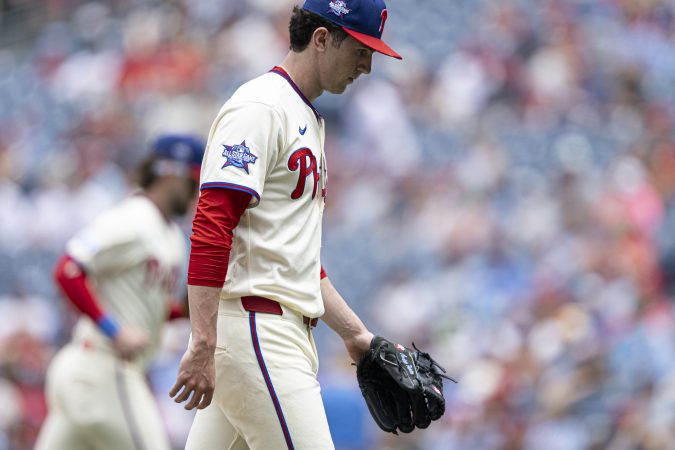
    Painter was sent to triple A Wednesday evening, a few hours after his hard-to-watch rookie season got even uglier. The Marlins pounded him for six runs on six hits, including two homers, and knocked him out after two innings of a 12-4 matinee rout in Citizens Bank Park.

    And so, Painter heads back to the minor leagues with a 1-8 record and a 7.06 ERA, the second-worst mark among 115 pitchers with at least 60 innings.

    The Phillies announced Painter’s demotion at 6:15 p.m., a little more than two hours after the final out. They will make a corresponding roster move Thursday before opening a three-game series against the Mets.

    After the game, interim manager Don Mattingly wouldn’t commit to having Painter make his next start, saying “it’s something we’ll probably talk about.”

    The conversation happened quickly. After Mattingly spoke with reporters, president of baseball operations Dave Dombrowski and general manager Preston Mattingly poked their heads into his office, just as they do after most games.

    It seems Painter was Topic A.

    Phillies rookie Andrew Painter gave up six earned runs on six hits, including two home runs, in two innings against the Marlins on Wednesday.
    Jose F. Moreno / Staff Photographer

    The situation is nuanced. The Phillies remain bullish on Painter as a high-end starter. For now, they’ve asked only that the 23-year-old righty keeps them in games. He hasn’t done that lately, allowing six, five, six, and four runs in his last four starts and pitching a total of 15 innings for a 12.60 ERA.

    So, although the Phillies continue to believe in Painter, and while they don’t have appealing alternatives in triple A, they couldn’t allow him to continue to pitch every fifth game.

    “The fastball’s just getting hit right now,” Painter said after the game, before the demotion. “So, you know, I think we’ve just got to evaluate. Just trying to find out who I am as a pitcher right now.”

    And who is he?

    “I’ve had to lean heavily on spin,” Painter said. “Sweepers and sliders have been great for me. Earlier in the year, the changeup was great, and right now, I’m kind of searching for it.”

    More than anything, though, Painter can’t locate his fastball. At least not the one that overpowered hitters in the low minors.

    It hasn’t been the same since he returned from a two-season absence after Tommy John elbow surgery in July 2023. It came and went last year in triple A, where he had a 5.40 ERA in 22 starts. Major leaguers were hitting .382 and slugging .573 against it entering the week.

    And that was before the Marlins’ Kyle Stowers and Owen Caissie teed off on center-cut heaters for two-run and solo homers, respectively, as Painter left the Phillies in 2-0 and 6-2 holes.

    “I don’t know if he feels like he can really get down the mound and really get after guys because he’s searching for that feeling that he had before,” catcher Garrett Stubbs said. “And it’s really hard.”

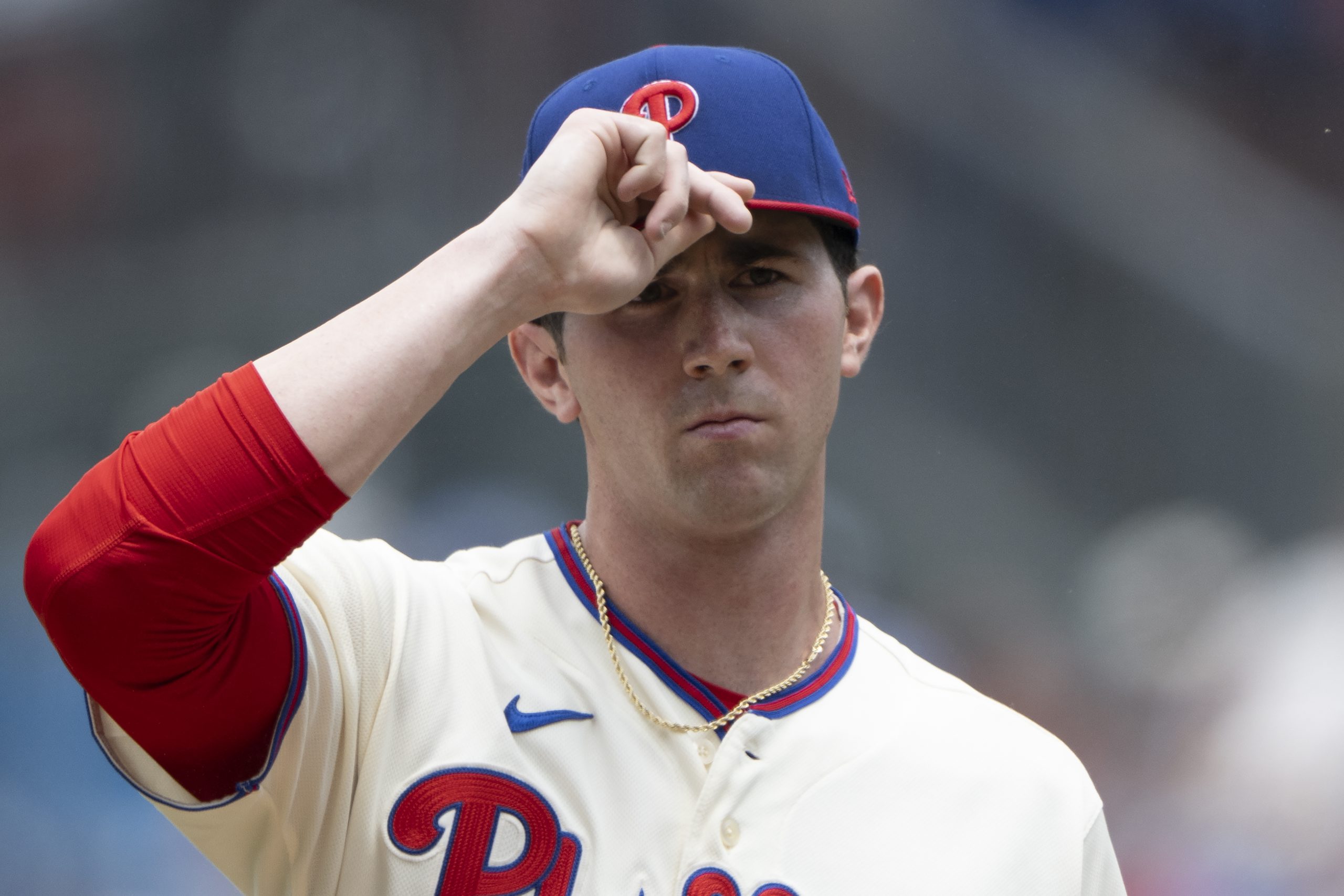
    Andrew Painter fell to 1-8 with a 7.06 ERA, second-worst among 115 pitchers with at least 60 innings.Jose F. Moreno / Staff Photographer

    Painter’s fastball velocity hasn’t dipped. His trust in the pitch, however, clearly has. Mattingly wants Painter to pitch with more “aggression.” Painter has talked about having greater conviction.

    Neither is apparent.

    “It’s just trying to get him to get out there and have that dog mentality that Philadelphia represents,” Stubbs said. “Go out and just kind of say [bleep] it and get after ‘em.

    “He knows that it’s in there. He just needs to go find it.”

    Painter has appeared downcast after recent starts. He sat facing his locker, dressed in full uniform, last Friday in Milwaukee. Even as Mattingly and pitching coach Caleb Cotham highlighted the positives, the results have been wholly negative.

    Painter said his confidence is “about as good as it can be right now under the circumstances.” But he’s also human. Mattingly guessed Painter’s belief in himself “almost has to waver some.”

    “He’s been pretty resilient to this point,” Mattingly said. “But I’m sure it’s wavering.”

    Painter will search for his fastball in Lehigh Valley. His replacement isn’t apparent. The triple-A rotation consists of Tucker Davidson (6.50 ERA), Alan Rangel (3.74), Bryse Wilson (6.29), Brian Keller (4.35), and Chuck King (4.02). Rangel, the best of the bunch, started Wednesday night for the IronPigs and could slide into Painter’s spot.

    Mattingly said the Phillies were encouraged by Painter’s between-starts bullpen session. But Painter’s fastball failed him again. And after a 33-pitch second inning, which included an 11-pitch at-bat that ended with Xavier Edwards’ two-out infield single, Mattingly went to the bullpen.

    Painter said he can feel it in his hand when he throws a fastball that has “a little more life.” He’s trying to recapture that feeling more consistently. It’s elusive.

    “It’s tough,” he said after the shortest start by a non-opener Phillies starter since Jesús Luzardo lasted two innings last July 4. “You can have the best secondary stuff in the world, but everything kind of plays off the fastball.

    “We’ve been searching for some things, and it’s gotten a little better than what it was. But it’s still obviously not to the extent of what it was pre-[surgery]. So, just trying to make adjustments and figure out what’s going to have the most success.”

    Maybe the answers are in triple A.

    “It’s going out there and having a few good outings in a row where you can keep getting after it and know that my stuff’s going to be in the zone and get guys out like he wants to,” Stubbs said. “And a lot of it probably is that confidence piece, right?

    “The expectations are high, and everyone wants to win, and the city wants to win. He’ll get there. I have full confidence that he’ll get there.”

    Not before taking a detour.

  • Why did a firearms instructor who promoted gun safety shoot three Philly cops? Those who knew him struggle for answers.

    Why did a firearms instructor who promoted gun safety shoot three Philly cops? Those who knew him struggle for answers.

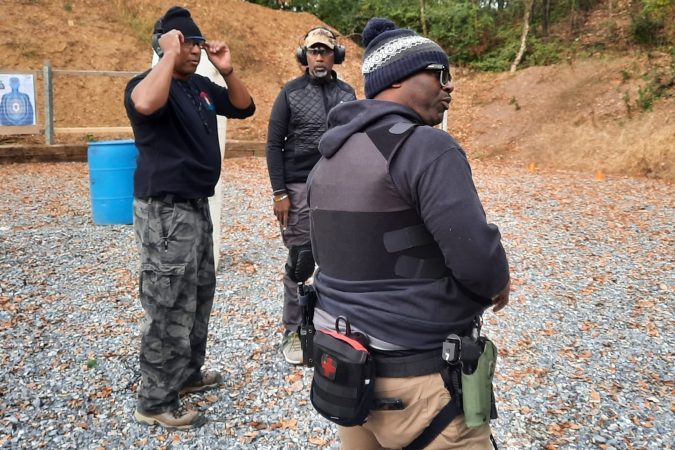
    In videos posted online, firearms instructor Eric Franks taught others how to handle guns safely.

    “If you don’t have a leg strap on … your firearm’s going to be flapping out,” the 57-year-old Wynnefield man said in an Instagram video demonstrating how to properly secure a “battle belt,” a tool for holstering guns and equipment.

    So some people who knew him found it hard to fathom that Franks, a retired Philadelphia firefighter, father, and business owner, walked up to a group of police officers on a West Philadelphia street and got into a confrontation that ended in gunfire.

    On Saturday night, police said, Franks shot and wounded three officers, and they returned fire, killing him.

    “The biggest thing he taught was restraint, situational awareness,” said Randy Robinson, a friend and fellow member of That Gun Talk, a firearms training organization Franks helped found during the pandemic.

    Robinson said Franks taught students: “The last thing you want to have to do is pull your firearm.”

    Like others grappling with conflicting emotions about Franks’ role in the shooting, Robinson is struggling to understand why his friend of seven years fired the shots that cost him his life.

    Police were called to the block around 10:30 p.m. that night for a report of a shooting on 54th Street, not far from Mingle, a popular event space Franks owned that had hosted a teenager’s birthday party that evening.

    Alerted by his son to the nearby gunfire, Franks made his way to Mingle, near where he began to argue outside with several police officers who told him they were trying to establish a crime scene, according to surveillance footage and police accounts.

    As officers investigated a vehicle that had been struck by bullets, Franks approached and began complaining about crime and policing in the area, said a source familiar with the case who spoke on the condition of anonymity to discuss an ongoing investigation.

    He appeared frustrated, the source said, that officers had not yet cordoned off the area around the vehicle with crime scene tape, and became increasingly agitated as officers repeatedly asked him to step back so they could do their jobs.

    Video obtained by The Inquirer appears to show Franks yelling at officers, then pushing one, before stepping back and pulling a gun from his waistband.

    Franks then fired multiple shots at the officers, who took cover behind nearby vehicles, according to the video and police accounts, and four officers returned fire. Three officers — including a sergeant — were struck by gunfire. Franks was shot in the chest and the leg and later died at Thomas Jefferson University Hospital.

    Police have not released the names of the injured officers or identified those who discharged their weapons that night. One officer was shot in the face, one in the hip, and another in the leg, officials said. A 43-year-old officer was released from the hospital on Tuesday, police said, following the release of a 39-year-old sergeant on Monday.

    The shooting remains under investigation by the police department’s officer-involved shooting unit and the Philadelphia District Attorney’s Office.

    DA Larry Krasner said investigators from his office had visited the scene, spoken to witnesses and Franks’ family, and reviewed video footage and other evidence. He said his office — like Franks’ family and members of the community — has questions about what happened that night.

    James Funt, an attorney for Franks’ wife, Michelle, and his two children, said he, too, is looking for more information on what transpired in the moments before the gunfire.

    “That’s all the family is looking for — a full, fair, and thorough investigation,” Funt said.

    Meanwhile, those who knew Franks say the shooting ran counter to the behavior of the man they knew — an advocate for responsible gun ownership and reducing crime in the neighborhood.

    Franks was a founding member of That Gun Talk, a local chapter of the National African American Gun Association formed in 2020 to promote self-defense training among Black gun owners, according to Robinson.

    He said he was puzzled that Franks would resort to violence in a neighborhood he had urged local leaders to make safer.

    In recent years, Franks had brought his concerns to City Councilmember Curtis Jones Jr., who grew up near the Franks family in West Philadelphia and was familiar with his older brothers.

    Jones said in a recent interview that Franks had spoken with him multiple times about his frustrations with crime and policing on the business corridor near Mingle.

    “What he wanted was better enforcement of laws, and felt frustrated with the reality of our ability to patrol in a way he thought [the corridor] deserved,” Jones said.

    And Franks once visited Jones’ office to discuss firearms education for city residents, as well as the possibility of opening a Black-owned shooting range in the neighborhood, an idea Jones said he did not agree with.

    The Council member recalled that Franks’ relatives were among the first to open a business on the 54th Street corridor in Wynnefield in the 1970s, a variety store not far from where Franks was killed.

    “This whole tragedy, it’s bizarre, ironic, and I grieve for everybody,” Jones said. “The officers that were shot, the family — Franks was a patriarch, the community respected him.”

    Funt, the family lawyer, agreed.

    Franks cared about “getting more police on the beats, trying to get drugs out of the neighborhood,” Funt said. “I think it was in that spirit that he went there,” to the block in West Philadelphia, on the night he was killed.

    How that instinct led to the gunfire that wounded three police officers and ended Franks’ life is a question police and prosecutors will seek to answer as their investigation continues.

    Staff writer Ellie Rushing contributed to this article.

  • Flyers draft: Jaxon Cover and Ryder Cali grew up playing roller hockey in the Cayman Islands. Now they will be drafted into the NHL.

    Flyers draft: Jaxon Cover and Ryder Cali grew up playing roller hockey in the Cayman Islands. Now they will be drafted into the NHL.

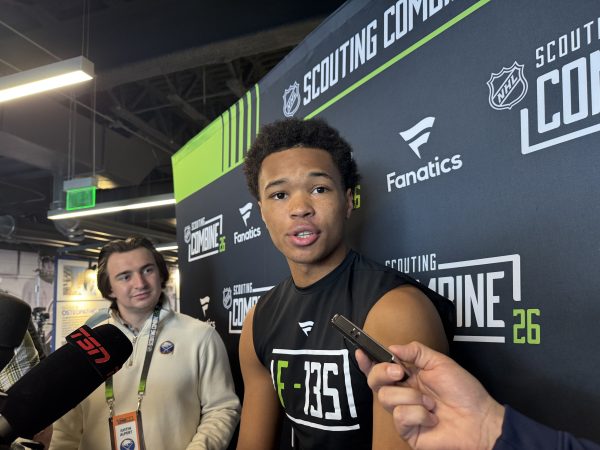
    BUFFALO, N.Y. — Ryder Cali and Jaxon Cover were two of 90 players invited to the NHL’s scouting combine in western New York during the first week in June.

    They interviewed with NHL teams, including the Flyers, and members of the media. Together in the same group, they went through fitness testing on Saturday, with Cover finishing in the top 25 in two tests, including fifth in the dreaded Wingate test, and Cali getting on the board for seven tests, tying for first in the right-hand grip test.

    Cali and Cover’s hockey careers were intersecting once again. The two had first crossed paths in a locale not often associated with ice hockey greatness — the Cayman Islands.

    Island in the sun

    Like most teenagers who will be selected at the NHL draft in either the first round on June 26 or Rounds 2-7 the next day, Cali got on skates for the first time at 2 years old. He confesses that he hated it and cried the whole time, but skating has been in his blood — from his mom’s side.

    A Toronto native, Fiona McLeod played college hockey at St. Cloud State and then professionally for seven seasons in Switzerland for the Ladies Team Lugano, in what is now the PostFinance Women’s League. It is Switzerland, where she met Cali’s father and where the now 17-year-old Ryder was born.

    Around the same time Cali was tying his laces for the first time, more than 5,000 miles away, a 3-year-old Cover was putting on his first pair of skates, too. But instead of steel blades, his boots had wheels, and there was no ice to be found for miles. He fell in love with the game at a learn-to-skate program on the only roller hockey rink in the Cayman Islands.

    Cali and his family moved not long after his twirl on skates when his banker dad got a new job. So it was on an island in the Caribbean Sea filled with sandy beaches and wafted by ocean breezes that Jaxon Cover and Ryder Cali met and where their hockey dreams took hold.

    “It was kind of a new thing growing up, because as I was growing up it started getting bigger too, and a lot more people were joining and joining,” Cover recalled in an interview with The Inquirer. “I feel like, especially with how far I’ve come in ice hockey, hopefully I can inspire some kids in Cayman to enjoy the game, and just anyone from an unconventional place of ice hockey to hopefully just enjoy the game and just try getting into the game.”

    Jaxon Cover (middle) and Ryder Cali (to his right with his back to camera) had easy access to beaches but also grew up playing roller hockey in the Cayman Islands.Courtesy of

    The two families became close, and the boys played roller hockey with Cover, who is seven months older, developing into a burgeoning roller hockey star at the ripe old age of 6. He played in tournaments across North America while skating against kids older than him, crediting the sport with amplifying his competitiveness.

    Cali and his family, meanwhile, moved to Ontario when he was 7, and he swapped his wheels for steel. Needless to say, it was an adjustment.

    “I do remember when I moved to Canada, I couldn’t stop. I couldn’t do anything,” he told The Inquirer with a grin. “I was the island boy who just saw ice for the first time.

    “I think roller hockey is much more of a skill game; I think that’s kind of where guys like Cover get all their skill from, is playing games like that, where I don’t think there’s as much contact.”

    Northern attitude

    At around 8 years old, Cover and his family would start visiting his grandfather — dad Patrick is from Etobicoke, Ontario — in the same province during the summer. While there, Cover would go to SK8ON Hockey School and, like Cali, he had trouble stopping.

    “It was a pretty weird switch, going from ice to roller,” he said. “I had to get the stopping down. It was a little weird to me not having wheels to just glide on, and it was just like these sharp blades on the bottom of my feet. But it was a lot of fun.”

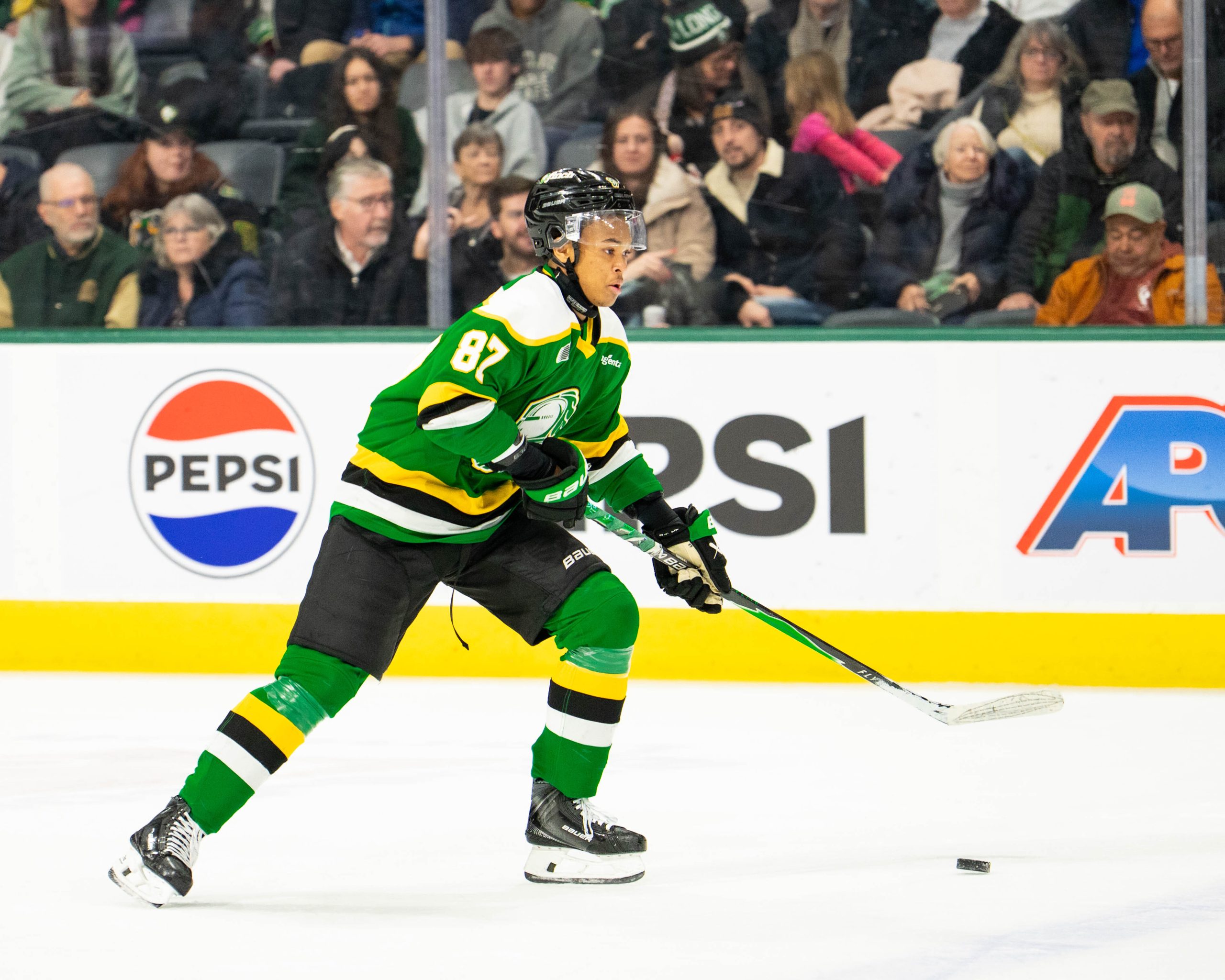
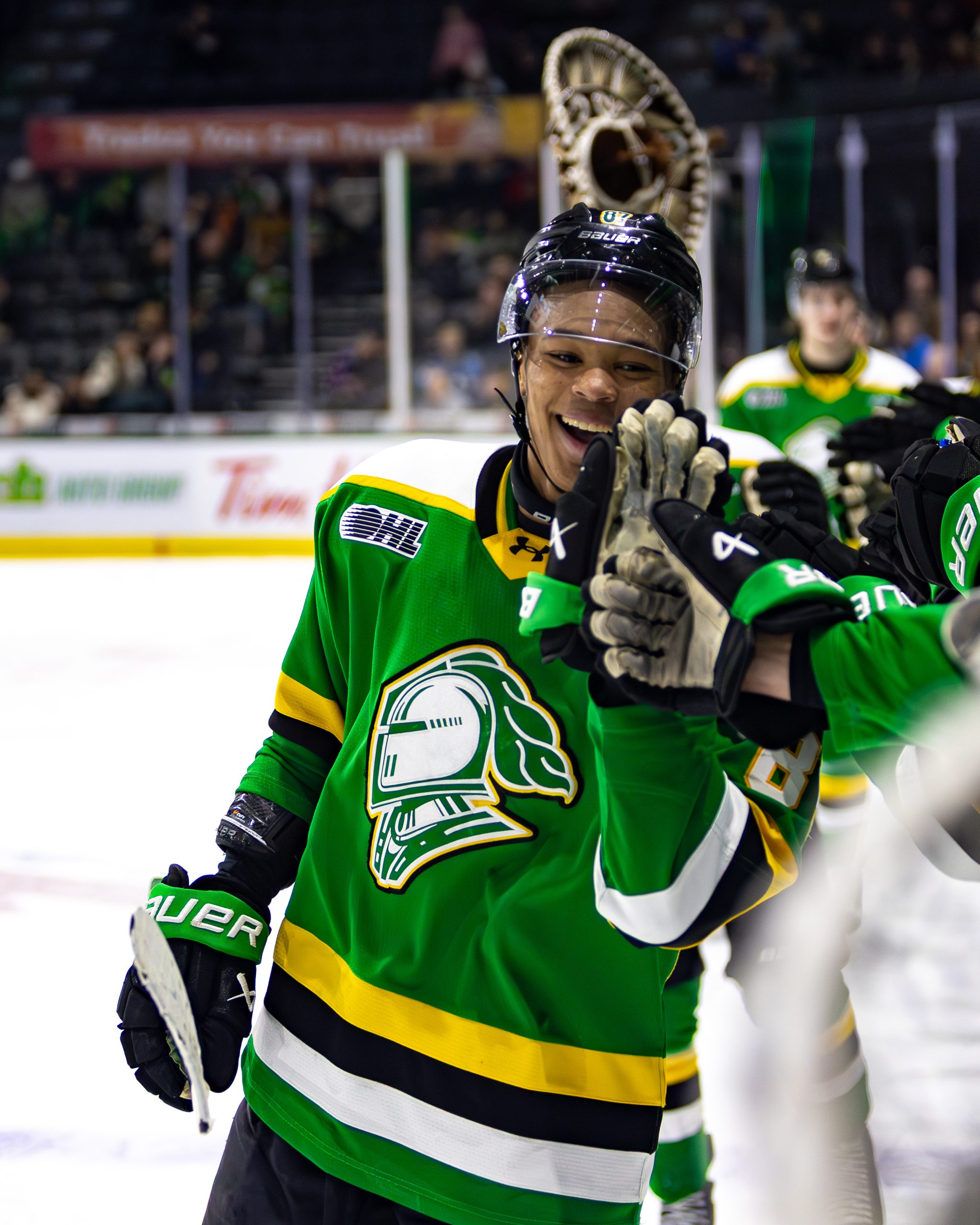
    Jaxon Cover honed his skills as a member of the London Knights.Courtesy of London Knights

    However, Cover didn’t really start playing ice hockey until he went to boarding school. In September 2020, he began studying at St. Andrew’s College in Aurora, Ontario, with his brother Jaedon; however, due to the COVID-19 pandemic, he was unable to play organized hockey that first year.

    David Manning, Cover’s coach for the U18 AAA team his final two seasons at St. Andrew’s, said it was actually beneficial for the winger to get comfortable on ice without coaches and the pressure that comes with competing. It helped him work on some of his bad habits and switch from a sport that doesn’t have much stopping to one that thrives on quickness and consistent stopping and starting.

    “He had some ups and downs [but] there’s a higher level of accountability in terms of managing the puck,” Manning said. “He very much sees himself as an artist out there, and wants to create and make nice plays. I think there’s a balancing act with that mindset, and also playing the game in a strategic, smart way, and so he worked through that the entire year and had a solid season.”

    Cover spent the past season with London of the Ontario Hockey League, the same league where Denver Barkey and Oliver Bonk won a Memorial Cup. Cover played three games that season with the two prospects at the end of the 2024-25 season.

    From afar, Manning acknowledged the work Cover has put in — “He had more points in the OHL than he did with my team … he just keeps getting better” — as the winger dropped 20 goals and 52 points in 67 games with the Knights.

    The two kids from the Cayman Islands went head-to-head in an OHL game this season, with Cali getting the upper hand as North Bay won 3-2 in a shootout. But Cali finished behind Cover in scoring with 16 goals and 36 points in 47 regular season games, missing time with a separated shoulder.

    Just a place to call your own

    Cover will return to London in the fall before heading off to Penn State in 2027 — he wants to study law and go into corporate law after his NHL career is done, of course — but there is plenty of work still to do.

    “I feel like I did have to change some aspects of my skating style, and I still do have to change some aspects, because I still do have that roller hockey stride in my game,” he said, adding he wished his roller hockey speed translated better to the ice. “But I feel like it helps my lateral skating a lot, just playing roller, my shiftiness too, and my hands, I feel like I credit my hands a lot to roller.”

    Cali, who Canada’s U18 men’s ice hockey coach Drew Bannister called a power forward who is heavy on his stick, will be heading to Providence in the fall and plans to study psychology — he wants to understand the brain and how people work. Maybe it helps on the ice too?

    “He’s a bull in a china shop,” said Friars coach Nate Leaman. “I think he’s got that potential. He’s got this big frame … but I think he’s got a lot of potential that’s untapped. I think he’s got a really good release, he’s got a good IQ, he gets to the net. … And I think Ryder does a good job of always being around the net in the offensive zone for a big strong moose of a kid.”

    And the 200-foot center does not lack confidence, stating that “I think that’s a big part of my game is forechecking and stealing pucks and turning it into offense. I think I’m the guy you need to win, and I love winning.”

    The plan is to do a lot of that moving forward, while donning an NHL jersey.

    Jaxon Cover is a top NHL draft prospect after playing for the London Knights.Courtesy of London Knights

    Cover, a 6-foot-1, 183-pound creative winger, and Cali, a 6-1, 214-pound 200-foot center, are projected to go anywhere from late first round to the second round. As they await hearing their names called to become the NHL’s next generation, the two kids from the Cayman Islands are ready to inspire the generations coming behind them.

    “I’m just really honored, and just really humble about it,” Cover said. “Just trying to get better every day, and just make sure my game progresses. And it’s really cool; if you told me I’d be in this spot, maybe even two years ago I wouldn’t believe you.

    “I just dedicate a lot of my hard work to it, and just how much I love the game, and hopefully I can inspire some kids in unconventional places to play the game, and hopefully my story encourages kids like that.”

  • Trump delays his own national intelligence nominee, fueling tension with fellow Republicans

    WASHINGTON — President Donald Trump on Wednesday derailed the confirmation process of his own nominee to head the nation’s intelligence agencies, an extraordinary move that upended Senate efforts to renew a crucial surveillance program and fueled fresh tensions with fellow Republicans on Capitol Hill.

    In an overnight social media post from the Group of Seven summit in France, Trump declared he was delaying the nomination of federal prosecutor Jay Clayton as director of national intelligence just hours ahead of his scheduled hearing, despite bipartisan praise for the nominee and Republican efforts to speed him through the confirmation process.

    Senate Intelligence Committee Chairman Tom Cotton (R., Ark.) said Republicans would go ahead with the Clayton hearing anyway, “unless the president directs him not to appear or withdraws his nomination.” But later he postponed the hearing, saying it was “regrettable” that Trump had directed Clayton not to appear.

    “Mr. Clayton is a patriot and a highly qualified nominee, as the president has said repeatedly,” Cotton said. “While today’s hearing is now unfortunately postponed, I look forward to proceeding with his confirmation in the near future.”

    Trump’s attempt to delay Clayton makes it more likely that his temporary pick for the intelligence job, top housing official Bill Pulte, will take over when outgoing director Tulsi Gabbard leaves office on Friday. Republicans and Democrats in Congress have sharply criticized Pulte, a Trump loyalist who has no known national security experience and has used his current administration perch to target perceived adversaries of the president.

    Trump has defended Pulte, calling him “fair” and “talented” in his social media post. Speaking to reporters in France, Trump called the speedy process to get Clayton formally installed a “rush act by the Democrats.”

    “Why are they afraid of this guy? They’re so afraid of him,” Trump said, referring to Pulte. “They’ll do anything not to have Pulte go in there.”

    Caught in the middle is the renewal of Section 702 of the Foreign Intelligence Surveillance Act, or FISA, bipartisan legislation that aims to prevent terrorist attacks by monitoring the communications of targeted foreigners located outside the United States. Democrats had said they would not provide the necessary votes to pass the bill unless Pulte’s temporary appointment was withdrawn. The current surveillance authority expired last week.

    Further complicating matters, Trump said in his social media post that he would not sign the FISA renewal without his legislation to require proof of citizenship for all voters — which does not have enough votes to pass the Senate — and that he does not want to remove Clayton from his current position as U.S. attorney for the Southern District of New York until his replacement, James McDonald, is approved.

    Trump’s post sent Senate Republicans scrambling, and it was unclear if and when Clayton’s nomination would move forward.

    “We’ll just have to take it a day at a time until we get more clarity on what the White House position is on this,” Senate Majority Leader John Thune (R., S.D.) told reporters Wednesday morning. He said he didn’t know why Trump was holding up the effort.

    “Good question,” he said.

    Escalating tensions between White House and Capitol Hill

    Virginia Sen. Mark Warner, the top Democrat on the Senate Intelligence Committee, called Trump’s move an “extraordinary display of dysfunction from a president who seems determined to turn America’s national security into a political bargaining chip.”

    “The biggest obstacle to resolving these issues has not been Senate Democrats or Senate Republicans,” Warner said. “It has been the chaos and confusion coming from the White House itself.”

    It was just the latest in a series of standoffs between Trump and Senate Republicans this year.

    A funding bill for Trump’s immigration agencies was delayed several weeks when Republicans revolted over a $1.776 billion “anti-weaponization” fund and a $1 billion security request for the White House, including his new ballroom. The bill passed after acting Attorney General Todd Blanche said the settlement would not move forward, and GOP leaders decided to drop the security money from the bill.

    Trump then appointed Pulte as interim intelligence director just as the FISA renewal was moving toward passage, upsetting bipartisan talks. Republicans urged the White House to pull the appointment, to no avail.

    Republican Sen. Thom Tillis of North Carolina said that Trump’s recent moves are “undermining the results he wants.”

    “Jay Clayton was on the brink of having a very good hearing and probably getting some Democrat support, and now we’re in a posture to where it may be the reason that 702 doesn’t get reauthorized,” Tillis said. “That’s a mistake.”

    Tillis called Pulte a “sycophant” to Trump.

    “How could anybody think he was going to be a credible choice?” he asked.

    Democrats say Trump is distracting from other issues

    Democrats say that Trump is undermining Americans’ safety as he makes demands of the Senate and tries to put loyal allies in national security positions.

    Pulte’s appointment “should send a shiver down the spine of every American,” said Democratic Sen. Elissa Slotkin of Michigan, a former CIA analyst and national security official. “The only thing more dangerous than letting FISA lapse is putting Bill Pulte at the head of 17 intelligence agencies.”

    Sen. Angus King, an independent from Maine, said he may have supported Clayton, with whom he met on Tuesday. “It’s unfortunate because he nominated this guy,” King said of Trump.

    Sen. Patty Murray (D., Wash.) said she thinks Trump is also trying to divert attention from the war in Iran.

    Murray said Clayton was on track to be confirmed because “most Democrats felt that allowing Pulte to go in office was a really bad idea, and most Republicans agreed.”

    Consequences for FISA’s lapse

    National security officials across both major political parties have for years described Section 702 as vital for gathering intelligence that can disrupt terrorist attacks and espionage operations, though some lawmakers and civil liberties advocates have raised concerns over the government’s use of information about Americans that is incidentally collected through the program.

    A court order from March certified that the program could continue for an additional 12 months, though it is possible that communications companies could challenge the government’s authority to force them to cooperate and share data.

    Trump’s delay of Clayton “shows he has no interest in getting FISA done,” Senate Democratic leader Chuck Schumer (D., N.Y.) said.

  • FMC boss says the company could be sold by July

    FMC boss says the company could be sold by July

    Workers, shareholders, and farm customers of pesticide giant FMC, whose red-lettered logo glows atop its University City headquarters, should know in a month if they’re likely to get a new owner.

    The process for talking to potential buyers of FMC, the world’s fifth-largest pesticide maker, “is still going on. The number of parties we are discussing with is getting smaller,” CEO Pierre Brondeau told investors Wednesday at Wolfe Research’s yearly chemical-industry conference in New York.

    “It’s always very distracting for an organization” when a sale is under consideration, Brondeau said, adding he expects that “by the time we get to the end of July, to the earnings call for the second quarter, that we can close this process.” Shares briefly rose 10% after his remarks.

    It has been Brondeau’s goal to keep FMC independent since he returned as CEO in 2024 after a four-year retirement from daily management. The company’s share value plunged from above $120 in early 2023 to under $10 last winter, as farm sale growth remained in a post-COVID slump.

    But in February, with FMC’s credit rating fallen to junk-bond status, the company cut its dividend and said it planned to raise $1 billion from asset sales and licensing deals to pay down debt. Executives also hired bankers to talk to potential buyers in case the company could draw an offer shareholders might find more attractive than years of rebuilding.

    Brondeau said Wednesday that FMC was more than halfway to its billion-dollar target, following the sales of operations in India and a smaller business line in Europe, and a licensing deal with Wilmington-based Corteva, the largest U.S.-based pesticide company. Other deals are in the works, he added.

    Brondeau has chaired FMC’s board since 2010. He is the architect of the company’s reorganization into a multinational pesticide business, from a diverse industrial holding company.

    FMC employs around 5,500 workers, including around 300 at its headquarters, and 330 at its Stine research center near Newark, Del., which the company acquired from DuPont in 2021.

    At the conference Wednesday, Brondeau affirmed FMC has products “in the pipeline” that should boost sales and profits in the coming years, balancing its pesticide focus with new herbicides and insecticides to move year-round sales to farmers of many different crops.

    Mergers in the 2010s produced a handful of pesticide multinationals — such as BASF, Bayer, Corteva, Syngenta — as well as FMC. But Brondeau noted the global farm chemical industry remains competitive and fragmented.

    Brondeau said the expense of getting some of its pesticides distributed to more farmers had spurred a deal announced Tuesday to license its rimisoxafen herbicides for Corteva to sell to corn and soybean farmers in the U.S., Brazil, and other Western Hemisphere countries plagued by certain pesticide-resistant weeds.

    Under terms of the deal, Corteva agreed to pay FMC $200 million up front, as well as a cut of the sales.

    FMC was the only one of the five largest global pesticides companies that did not design its chemicals to work with particular genetically modified seeds.

    Corteva, based in Wilmington, was spun off from DuPont and last year announced it was turning its seed business into another separate company.

    Last month Corteva said it would name the new seed company Vylor and move the headquarters of both its pesticide and seed company successors to Indiana. The company will keep an office in Delaware.

  • Chester County hires new voter services director after a series of controversies at the department

    Chester County hires new voter services director after a series of controversies at the department

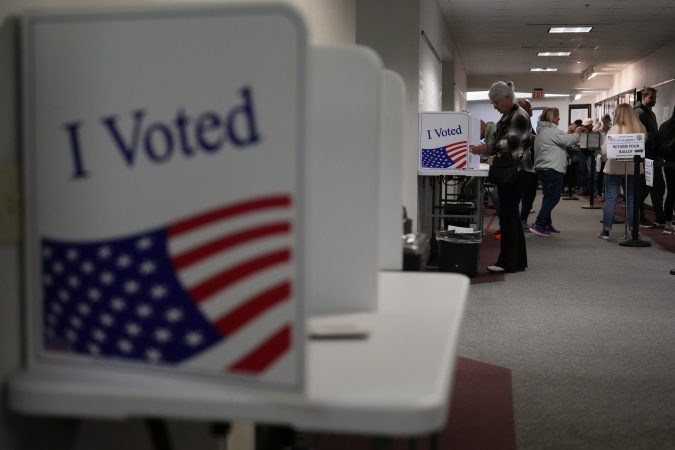
    Chester County has tapped a new director of voter services after the department’s previous leader resigned following election errors and a series of complaints from former employees.

    Michele DiCaprio, a consultant for a telecommunications company and a former foreign service officer with the U.S. Agency for International Development, will begin her tenure on July 20, the county announced Wednesday.

    “I am honored to join Chester County,” said DiCaprio, a West Chester resident, in a county news release. “I look forward to working with the Voter Services team to ensure secure, accurate, and efficient elections for every voter in Chester County. Elections are the foundation of our democracy, and I am committed to serving voters with integrity and transparency.”

    DiCaprio will be inheriting an office that has recently been enmeshed in controversy, including high staff turnover, allegations of a hostile work environment, and a series of election administration-related problems — most notably leaving approximately 75,000 independent and unaffiliated voters off the poll books during the November 2025 local election.

    Everyone who wanted to vote was able to do so, the county said, with 12,000 voters casting provisional ballots. But the episode bruised residents’ trust in the county’s voting security, exemplified at a public meeting in February.

    An independent law firm investigation ultimately found that human error and poor oversight led to the incident, but it did not call for the resignation of personnel, including Karen Barsoum, then the voter services director.

    Barsoum announced her resignation in March and her last day was June 12.

    Chester County Administrator Erik Walschburger and Deputy Administrator Megan Moser said in the news release that DiCaprio’s experience as a foreign service officer makes her a strong fit for the role.

    DiCaprio spent five years with USAID in Mozambique leading the Democracy, Human Rights, and Governance team working on elections, counterterrorism, and other issues, according to her LinkedIn page.

    “As a foreign service officer, Michele has spent her career leading complex international operations in fast-paced environments while ensuring federal compliance,” Walschburger said.

    “Through her years of work on election operations and counterterrorism program evaluation, she has established a strong track record of developing high-performing teams, strengthening organizational effectiveness, and managing critical public-facing services,” he said.

  • Strong storms are possible in Philly Thursday, but they won’t have anything to do with Arthur

    Strong storms are possible in Philly Thursday, but they won’t have anything to do with Arthur

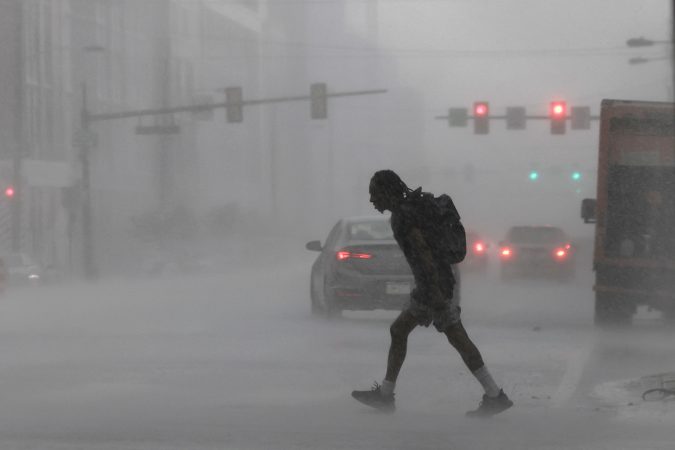
    It would have nothing to do with Arthur, which on Wednesday became the first named storm of the Atlantic hurricane season, but the Philly region may be in for tropical-storm force gusts and strong thunderstorms Thursday.

    Even if the rains don’t come — and on Wednesday, the storm odds were close to 50-50 — wind gusts to 45 mph are possible during the afternoon, said Alex Staarmann, meteorologist at the National Weather Service in Mount Holly, “quite unusual for June.”

    Not so unusual these days would be the forecast high, which would mark the 14th time this year that official readings in Philly had reached 90 degrees or higher. That is about half the average total for an entire year.

    But this heat will be more of a ripple than a wave, and the outlook for the holiday weekend is looking spectacular.

    When the winds and storms may arrive in Philly on Thursday

    As a front approaches, winds from the southwest are expected to gust to 20 mph during the morning and 30 to 40 mph in the afternoon.

    While the winds are all but a certainty, it was unclear if any strong storms would pop Thursday. If they did, the best estimate would be between 1 an 8 p.m., the weather service said.

    “The environment is favorable for damaging winds if anything does develop,” Staarmann said.

    “The biggest question is how widespread the storms are going to be,” he said.

    Uncertainty is a near 100% certainty with June storms

    Such uncertainty is standard fare with thunderstorm threats this time of year, said Rich Thompson, forecast operations branch chief at the government’s Storm Prediction Center, which would have to make a call on posting severe storm watches.

    With so many moving parts and micro-features such as terrain involved, predicting the behavior of small-scale storms is “incredibly complicated,” he said, and on some days clues are frighteningly lacking.

    And while observations have improved immeasurably in recent decades, “we still aren’t observing most of what’s there,” he said. Land-based surface observations are far more plentiful than those over the oceans, which cover 70% of the atmosphere, and in the upper atmosphere, where the weather is manufactured.

    Even if the atmosphere were perfectly measured, he added, meteorologists would still have to contend with the fact that the physics involved in forecasting are not completely understood.

    Arthur and the weekend outlook for Philly

    As for Arthur, knighted with a name by the National Hurricane Center at 11 a.m. Philadelphia time Wednesday as it matured off the southeast Texas coast, it is forecast to deluge portions of the Gulf states.

    Then it is due to head out to sea before it could have anything to do with Philadelphia or the Jersey Shore, which is likely to be a popular destination this weekend.

    For Friday, Juneteenth; Saturday; and Sunday, the beginning of the astronomical summer, highs are expected in the mid-80s with sunny days and no threat of showers until early Monday.