Tag: topic-link-auto

  • U.S. Open: PGA Tour players have scuttled the rollback of the golf ball, for now and forever

    U.S. Open: PGA Tour players have scuttled the rollback of the golf ball, for now and forever

    Golf’s governing bodies, after consulting two weeks ago with the PGA Tour, declared Wednesday at the U.S. Open that the rollback of hyper-engineered golf balls would be rolled back itself. Any adjustment now will go into effect in 2030 instead of 2028.

    That was the official announcement, anyway.

    Unofficially?

    The rollback is dead. Pity golf superintendents the world over, who, within a generation, will be tasked with nurturing 8,000-yard courses, 25% longer than God and Old Tom Morris intended.

    Two weeks ago USGA CEO Mike Whan, who represents an organization entrusted with protecting the game, met with the PGA Tour’s Player Advisory Committee, which represents a group of independent millionaire contractors whose only concern is winning as much money as possible while shilling for equipment manufacturers. To do so, the aforementioned millionaires must retain their eligibility on tour, which means most of them can’t afford a slump.

    And slump they would. It would take players months to adjust to a new ball, which is the most important piece of the myriad pieces of equipment they use. No matter how much they practiced, they could not replicate tournament conditions, and so they would have to recalibrate their game in real time during tournaments that could make or break their careers.

    They will never agree to that.

    They never should have been asked.

    However, they’ve entered the chat, and they’ll never shut up. Now that the pros have a say, the rollback has gone the way of the feathery and the gutty.

    The players and the executives said Wednesday they still will consider mitigating distance, perhaps by deflating the balls, manipulating clubs, and re-engineering shafts. Whatever. Don’t expect anything that tangibly affects the game. Ever. The players will stymie whatever initiatives the suits suggest. It’s called self-preservation.
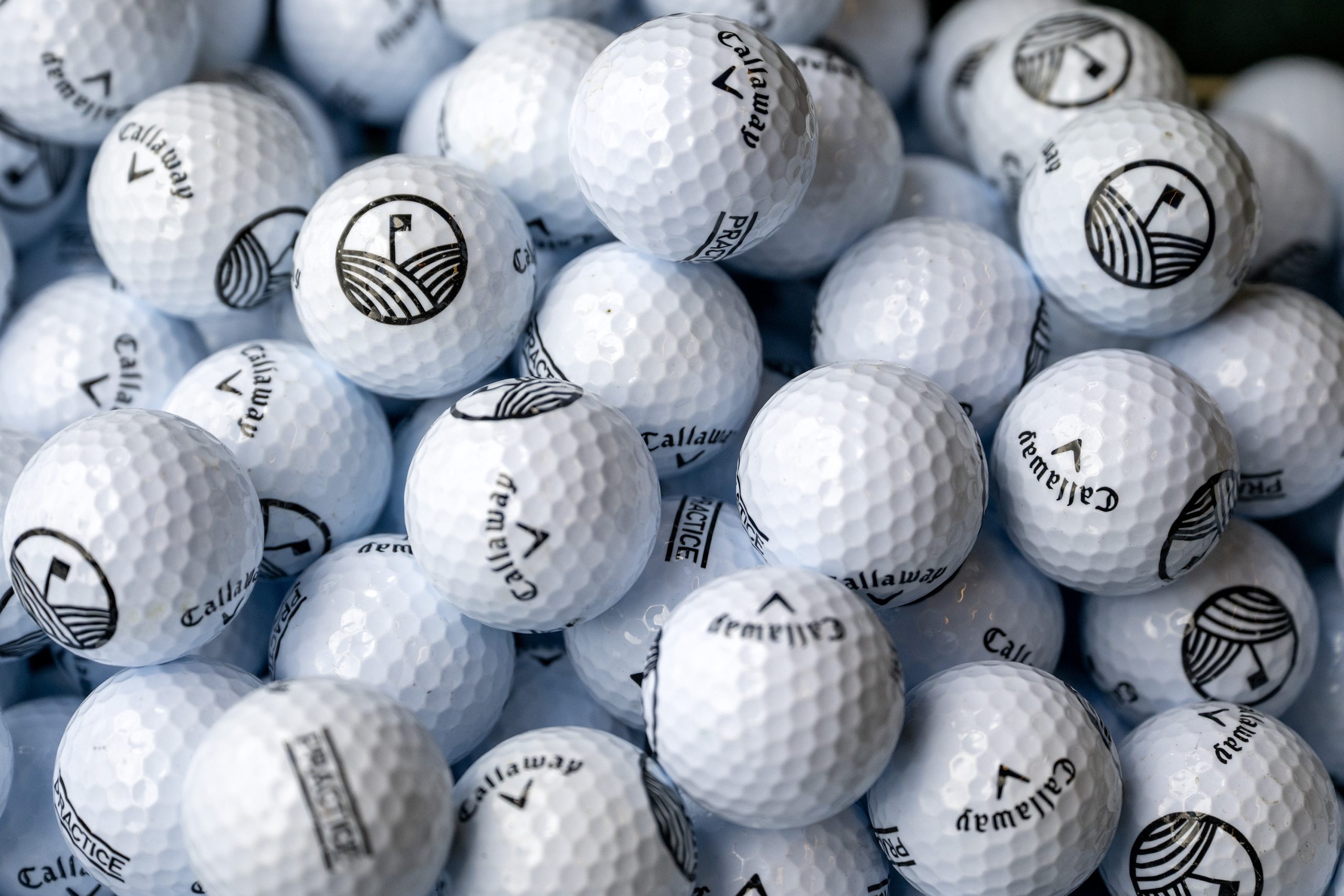
    Golf balls at the driving range are shown following a ribbon-cutting in April for the Lincoln Financial Center at Cobbs Creek Golf Course.Tom Gralish / Staff Photographer

    Death of the rollback was always a possibility, and a delay seemed inevitable.

    Word spread during the Florida swing in March that there would be a two-year delay of the rollback project begun in 2018 that was supposed to be completed after a 10-year process.

    Why does it matter? Golf courses the world over — even places like Shinnecock Hills, the site of the U.S. Open; Merion Golf Club, the site of the 2030 U.S. Open; and Augusta National, the only static site of a major tournament — are running out of real estate and spending exorbitantly to feed, water, and mow so much grass. Shinny played 6,996 yards in 2004. It will play to 7,434 yards this week.

    Acushnet ruined everything.

    That’s the name of the parent company of Titleist, which introduced the Pro V1 in 2000, a golf ball that combined superior distance and durability with soft feel. Balls across brands have only gotten better since.

    Granted, the ball isn’t everything. Clubs have gotten bigger and easier to hit. Golfers have gotten fitter, more dedicated, and more numerous. But nothing affected the game like the souped-up ball that went higher and farther and straighter than Bobby Jones and Ben Hogan ever could have imagined.

    That’s why the folks at the USGA, the R&A in Scotland, and the mysterious, powerful cabal that operates out of Augusta, Ga., under advisement of such experts as Jack Nicklaus, Arnold Palmer, and Gary Player, have spent the last decade trying to figure out how to put this genie back in its bottle.

    The explanations and arguments following the announcement before the 126th edition of the competition were as wild and as entertaining as the golf to be played on the wind-swept Southampton, N.Y., grasslands over the following four days.

    Pros said that if the golf ball changed, they would find a way to still hit it just as far … physics be damned, I guess.

    As proof, some pointed at the 375-yard drive hit by Cam Young on the 72nd hole of The Players Championship, the longest drive ever recorded on that hole. Last year, Young began playing a Titleist Pro V1x Double Dot, which would conform to the proposed parameters of a rolled-back ball. Wait: All of a sudden, the data-driven analytics crowd is all about the anecdotal?

    One argument seemed particularly fatuous.

    Golf Channel fixture Brandel Chamblee, the smartest and hardest-working analyst in sports history, is a staunch opponent of a rollback. He is a wonderful writer and a gifted orator with a head of hair that makes shampoo manufacturers drool, but his truest genius lies in his ability to unearth, synthesize, and manipulate numbers. On Wednesday, in asserting that the world’s best players rely on more than distance to succeed — which is true — he also said this:

    “If you look at the top 15 players on the PGA Tour right now in driving distance, there is not a single one of them in the top 10 in the world rankings. They average 83rd in the world rankings.”

    Which also is true … and wildly misleading, considering it excludes three of the top four golfers on the planet, at least.

    World No. 2 Rory McIlroy, the two-time reigning Masters champion, has not yet hit enough drives on the PGA Tour to qualify in the driving distance category. He’s averaging 326.8 yards.

    Jon Rahm is ranked No. 8, but he plays on the LIV Tour, so he doesn’t qualify, either. Neither does LIV golfer Bryson DeChambeau, ranked No. 32.

    If this trio qualified, Rahm and DeChambeau would be tied for No. 1, at 330.4 yards. McIlroy would be fourth.

    Chamblee’s “top 10″ qualification also excludes Chris Gotterup, who is ranked 11th in the world and fourth in driving distance.

    Finally, only five of the world’s top 17 golfers would rank below the Tour average of 304.1 yards per drive. Clearly, power matters.

    Another thing about driving distance: Some of the biggest hitters rank lower in distance off the tee because they don’t have to hit their driver to eat as much ground as less powerful hitters. Also, they hit their irons farther.

    So, for instance, World No. 1 Scottie Scheffler (tied for 30th in driving distance) could choose to opt for accuracy and hit a 3-wood maybe five yards short of another player’s best driver and still might have to 9-iron into the green, while the player who hit driver has to hit an 8-iron.

    Other arguments against a rollback are just as disingenuous. Would it disproportionately penalize shorter hitters? Not really. They’d have the same issues they have now.

    At any rate, in this discussion, the golfers themselves are irrelevant.

    This is about saving money and saving golf courses.

    It’s not about keeping Matt Kuchar on tour for a 29th season.
  • How primary care offices are looking into eyes to screen for preventable disease

    How primary care offices are looking into eyes to screen for preventable disease

    I called to check on one of my patients recently after a preventive screening test showed that he had the beginnings of diabetic eye disease.

    If untreated, this can cause severe visual impairment or blindness. Our office staff arranged an expedited appointment with an ophthalmologist for evaluation and treatment to slow the progression and preserve his eyesight.

    Such screening for preventable disease has long been crucial to my work in primary care. In the clinic, we typically offer counseling and discussion, and then send patients elsewhere for a screening test. For example, we tell patients to visit a lab for blood work, a radiology office for mammography, to see specialists for gynecologic, colon screening and eye exams, and to get many vaccines at the pharmacy.

    The most important screenings that we have traditionally performed in the office are measuring blood pressure, listening to patients, and physical examinations.

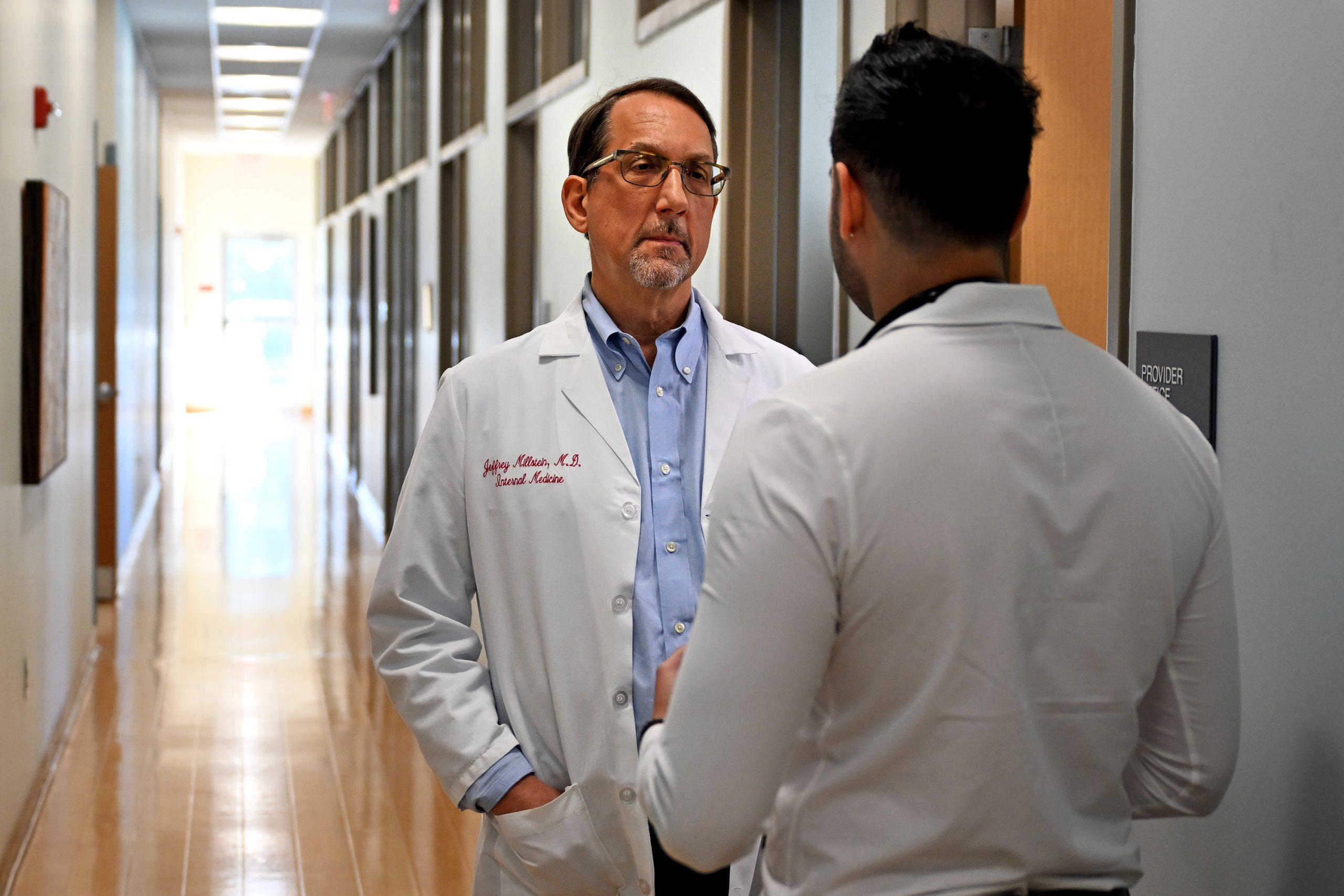
    Jeffrey Millstein at his practice at Penn Medicine Woodbury Heights.Tom Gralish / Staff Photographer

    Until now. My patient was diagnosed with diabetic retinopathy based on a retinal screening completed before he left my medical office.

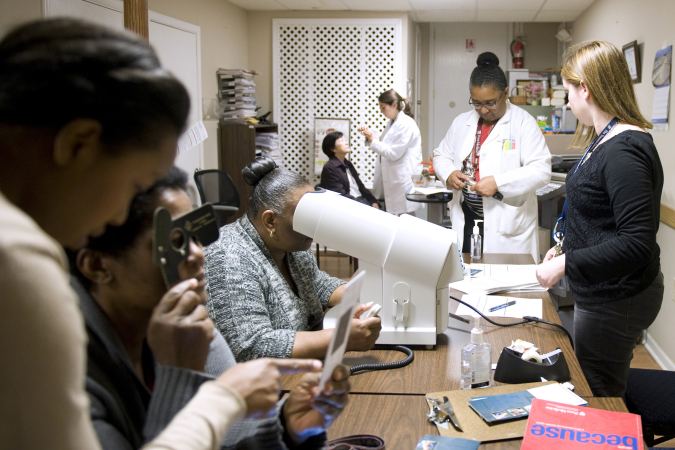
    One of our nurses performed the noninvasive exam using a machine that takes a photo of the retina, the part of the eye that processes or “develops” images we see to send through nerve pathways into the brain where we can make sense of them.

    The patient sat in a chair and looked into the machine’s eye pieces, which resemble a pair of binoculars. The retinal photos are then analyzed by an artificial intelligence assisted program that can accurately detect diabetic retinal disease. The screening is safe, takes only about 10 minutes, with results immediately available.

    Like high blood pressure, diabetic retinal disease is best treated early on, usually before a patient experiences warning symptoms.

    The primary care-based screening is not meant to take the place of regular yearly visits to the eye doctor. Rather, it helps to prioritize eye care for high-risk patients with diabetes, who are often juggling many medical appointments. The ophthalmology visit can easily drop down, on or fall off, their to-do list, especially when they have not noticed new vision issues.

    This type of retinal screening is becoming more common in primary care offices, with most insurances offering coverage for patients with diabetes.

    That’s not to say that more screening is always better. In healthcare, over screening can become an issue in its own right — when unnecessary, screening can add to the cost of care and may distract from the reason for your office visit. Your concerns should always be first priority, and it’s reasonable to ask your provider to explain the clear health benefit for any screening.

    Retinal screening is quick, accurate, and may help save your vision. If you are offered the opportunity to have one next time you see your primary care clinician and it fits into your visit agenda, I recommend you go for it. I think the patient whom I called this week would agree.

    Jeffrey Millstein is an internist and regional medical director for Penn Primary and Specialty Care.

  • U.S. gas prices fall below $4 for 1st time since March

    NEW YORK — U.S. gas prices fell below $4 a gallon on average Thursday, but just barely.

    It is the first time since March that the average cost for a regular gallon has been that low. Prices fell overnight after President Donald Trump signed an agreement with Iran that calls for Tehran to dilute its stockpile of highly enriched uranium and waives U.S.-backed sanctions on the country.

    Gas prices are at $3.999 on average in the U.S., according to motor club AAA. The drop below $4 follows a 15% decline in the price of U.S. crude this month.

    But fluctuations in gas prices remain across the country. In California, gas prices are averaging $5.64 per gallon, while in South Carolina it’s $3.58 per gallon.

    The agreement between the U.S. and Iran calls for a permanent end to hostilities and starts a 60-day negotiating clock to reach a final deal on the future of Iran’s nuclear program, though Trump left the door open to resume attacks. It appears to offer Iran several benefits up front while extracting little in return.

    Oil prices fell Monday to about $80 for a barrel of U.S. benchmark crude. That compares to $67 per barrel before the war and the price of over $120 a barrel reached earlier in the conflict.

    Even as gas prices start to decline, it is anticipated to take weeks or months for oil to start flowing through the Strait of Hormuz again.

    Before the war, the strait carried a fifth of the world’s crude oil. Now, it will take time for hundreds of ships trapped in the Persian Gulf to exit through the narrow strait. And Gulf oil producers that throttled back production will need time to get the oil moving again. Analysts also say ship captains may take their time to decide if passage is safe and that the threat of attack from Iran has truly receded.

    In addition, refineries typically pay for crude oil a month or more in advance, so even after oil prices drop, they won’t immediately be processing cheaper products.

    Fighting over the Strait of Hormuz disrupted not only supplies of crude and refined fuel but also the supply chains for fertilizer, food and even footwear. Businesses expect higher costs to linger, which means their customers might need to prepare for that too.

  • Juneteenth wasn’t the end of slavery in America. Here’s what history left out.

    Juneteenth wasn’t the end of slavery in America. Here’s what history left out.

    Juneteenth has been called America’s second Independence Day, and surely it is a glorious occasion worth commemorating, but it is important to remember that Juneteenth was not the end of slavery.

    The Emancipation Proclamation did not apply to the border states, nor to Northern states where slavery was technically still legal (like Pennsylvania). The 13th Amendment ended slavery in those states and all states in December of 1865.

    The signature of president Abraham Lincoln on a rare, restored copy of the 13th Amendment that officially ended slavery.Charles Rex Arbogast

    But the 13th Amendment did not end slavery in all of America either. Thousands of Black people remained enslaved after its ratification, held in chains by the so-called Five Civilized Tribes.

    The Cherokee, Choctaw, Chickasaw, Creek (or Muscogee), and Seminole nations were considered “civilized” because they adopted, in order to better assimilate with white people, an American way of life in governance, economy, religion, and attire. Part of being “civilized” included being an enslaver, so the Five Civilized Tribes began enslaving Black people.

    By 1861, more than 8,000 Black people were enslaved throughout the Indian Territory.

    The Cherokee Nation was the largest enslaver, holding 4,600 Black people in bondage in 1860. Enslaved Black people made the grueling march with their captors on the Trail of Tears, and then helped them rebuild their new life in Indian Territory. The Cherokee forced their enslaved laborers to work as translators, interpreters, maids, butlers, and farmhands.

    The Choctaw Nation counted 2,298 enslaved Black people in 1860. Choctaw leaders saw enslaved workers as economic commodities that could be used for international trade, and also as a tool to increase their social status among white people.

    Choctaw military and political leader Peter P. Pitchlynn, principal chief from 1864-1866, enslaved 81 Black people. Choctaw business mogul Robert M. Jones enslaved more than 500.

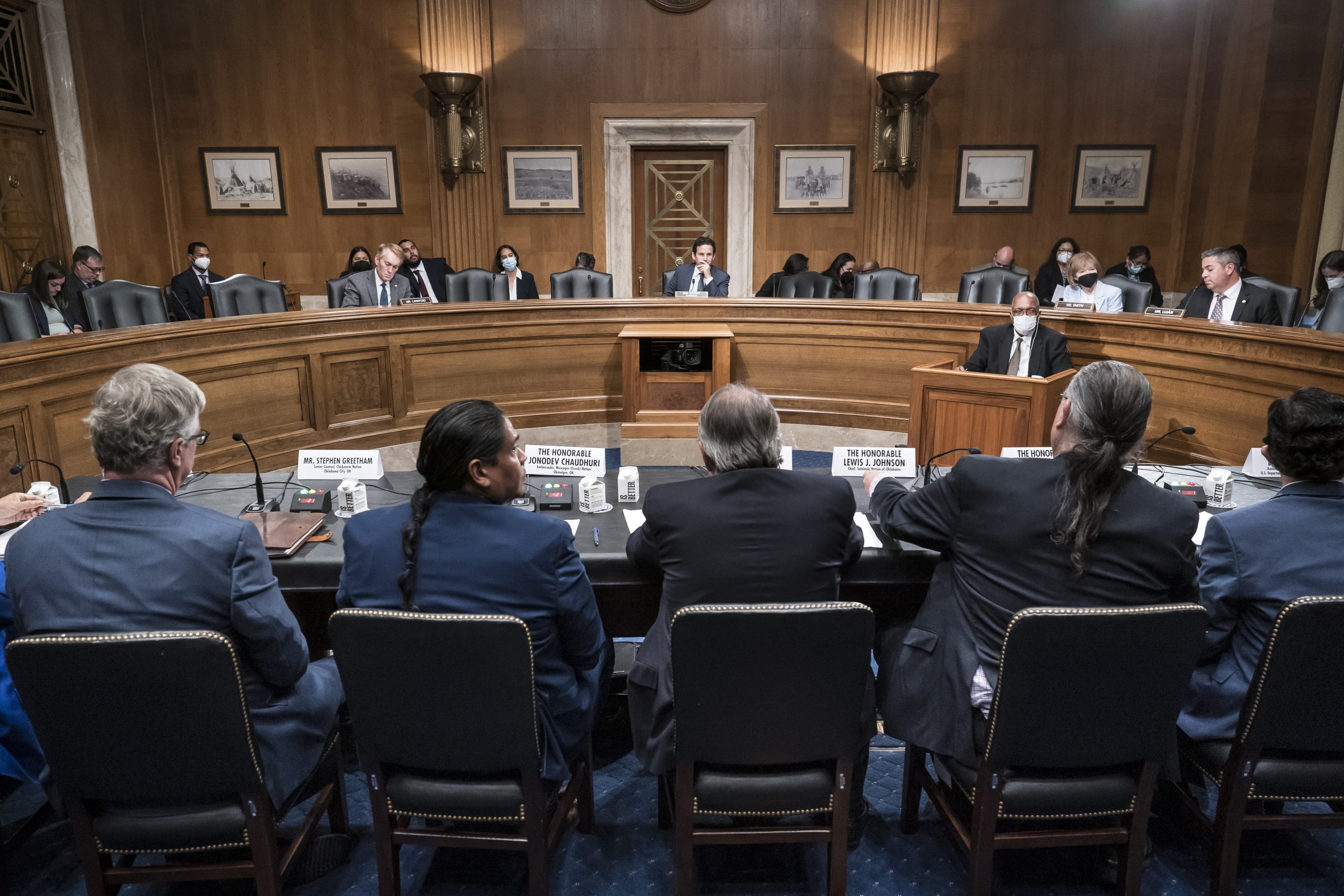
    The Senate Committee on Indian Affairs holds a hearing on “Freedmen” provisions in tribal treaties, at the Capitol in Washington, in July 2022. Freedmen were the freed Black people enslaved by the Five Tribes — Cherokee, Seminole, Choctaw, Muscogee (Creek) and Chickasaw nations — who were guaranteed the rights of citizens of the tribes under separate 1866 treaties with the United States. J. Scott Applewhite

    The Chickasaw Nation held 917 Black people in slavery in 1860. They were forced to work as interpreters, servants, wagoners, blacksmiths, and carpenters. Black people cut and shaped stone masonry on Chickasaw buildings and built public and private Chickasaw dwellings with their bare hands.

    As an expression of love, Chickasaw parents would often present an enslaved Black person as a gift to their daughters on their wedding day.

    The Muscogee (Creek) forced Black people to work in the deerskin trade, and as farmers, blacksmiths, cowboys, horse trainers, interpreters, and boatmen. They traded enslaved Black people for English-made guns, which made them the best-armed and most feared Native Americans in the Southeast.

    The Seminole Nation is well-known for providing a safe haven for Black people who fled bondage, but they enslaved Black people, too. British officials would present Seminole chiefs with gifts of enslaved Black people to strengthen alliances, and the Seminoles themselves enslaved Black people that they captured from other tribes.

    Because Native nations are not states, the Emancipation Proclamation and the 13th Amendment did not apply to the Five Civilized Tribes, which supported the Confederacy during the Civil War.

    After the South’s defeat, the tribes had to sign new treaties with the U.S. government. The tribes had to agree, as punishment for siding with the Confederacy, to give up a large portion of their territory, and among other tenets, outlaw slavery in their lands.

    The new treaty terms came into effect in the spring and summer of 1866, and then and only then did slavery come to an end in America (unless you have been convicted of a crime).

    The end of slavery in the Five Civilized Tribes doesn’t necessarily call for a holiday, but we could do our ancestors justice by putting a spotlight on Black people enslaved by Native Americans — an often-overlooked group — and including them in discussions and celebrations about the end of slavery.

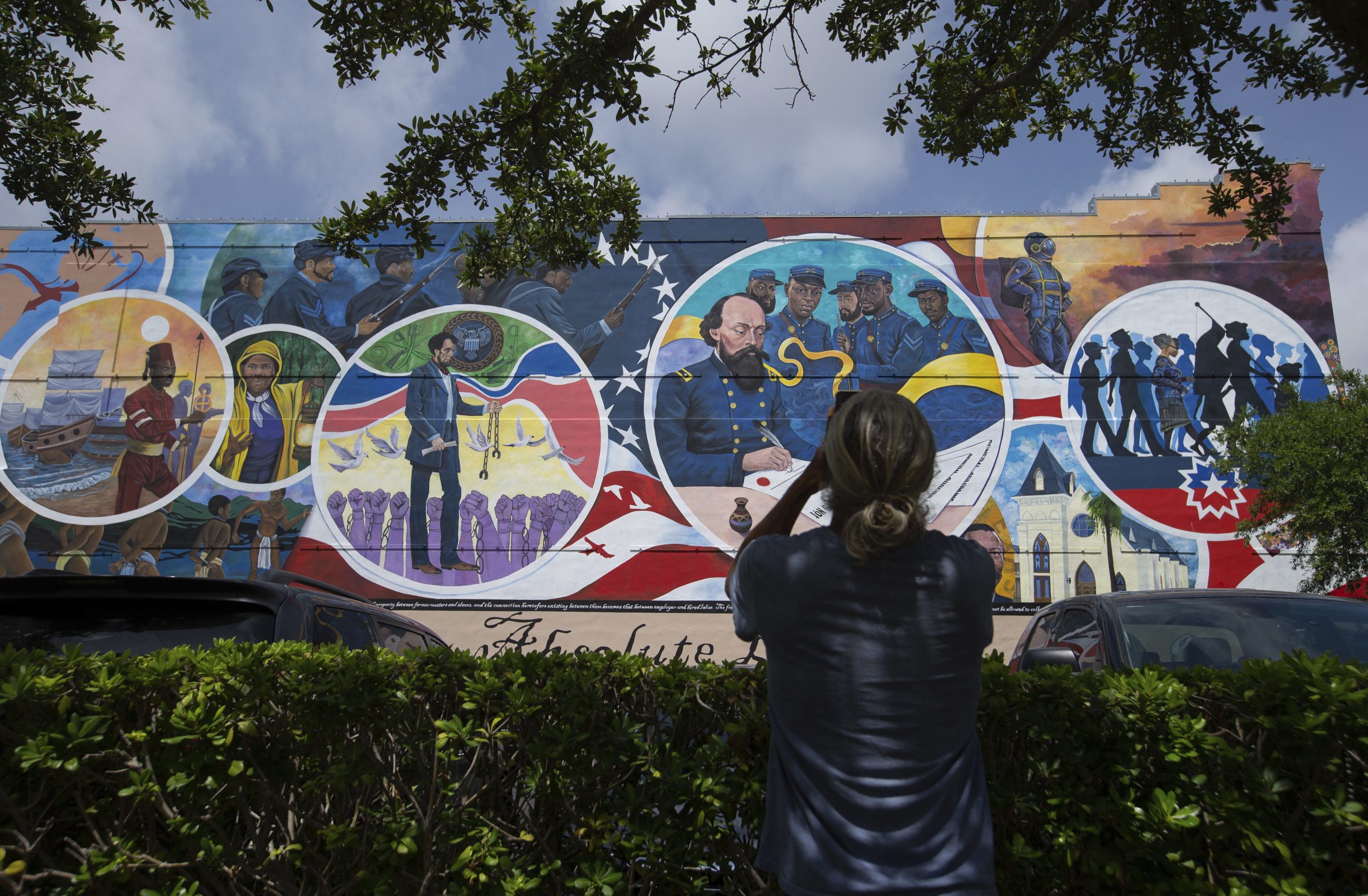
    A visitor takes a photograph of the Absolute Equality Mural, which was unveiled on Juneteenth 2021 in Galveston, Texas. Galveston is the birthplace of the Juneteenth celebration.Yi-Chin Lee / AP

    So this Juneteenth, rejoice, to the high heavens, for Black people in Texas who escaped from hell on Earth and found freedom, but save a few moments of silence for their brothers and sisters in Indian Territory and elsewhere who were still in chains, still yearning to be free.

    Greg Johnson is a writer and editor in Philadelphia, and the creator of “The History of Black Philadelphia” Facebook page. He is working on a book about the history of Black people in Philadelphia. gregjohnson1804@gmail.com

  • The World Cup is in Philadelphia. So far, the city is delivering. | Editorial

    The World Cup is in Philadelphia. So far, the city is delivering. | Editorial

    After years of anticipation, the World Cup has finally come to Philadelphia, and the city is rising to the occasion.

    The FIFA Fan Festival, located at Lemon Hill in Fairmount Park, has free admission and is open daily. During Mexico’s 2-0 win over South Africa in the tournament’s opening match, Mayor Cherelle L. Parker watched and celebrated there alongside fans of El Tri.

    The city’s sizable contingent of Mexican Americans made the stretch of grass their own, but they weren’t the only ones. According to the Philadelphia Visitor Center, more than 100,000 people visited the fan festival over the four-day opening weekend. Attendees have given the experience positive reviews, with one notable exception: bike parking, which has been scarce despite officials urging visitors to leave their cars at home.

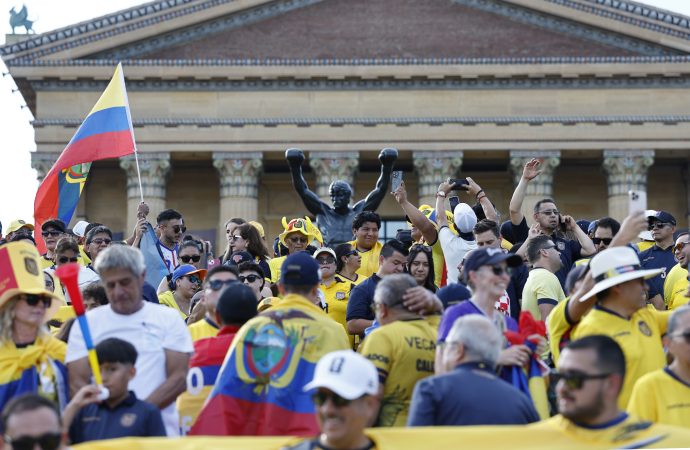
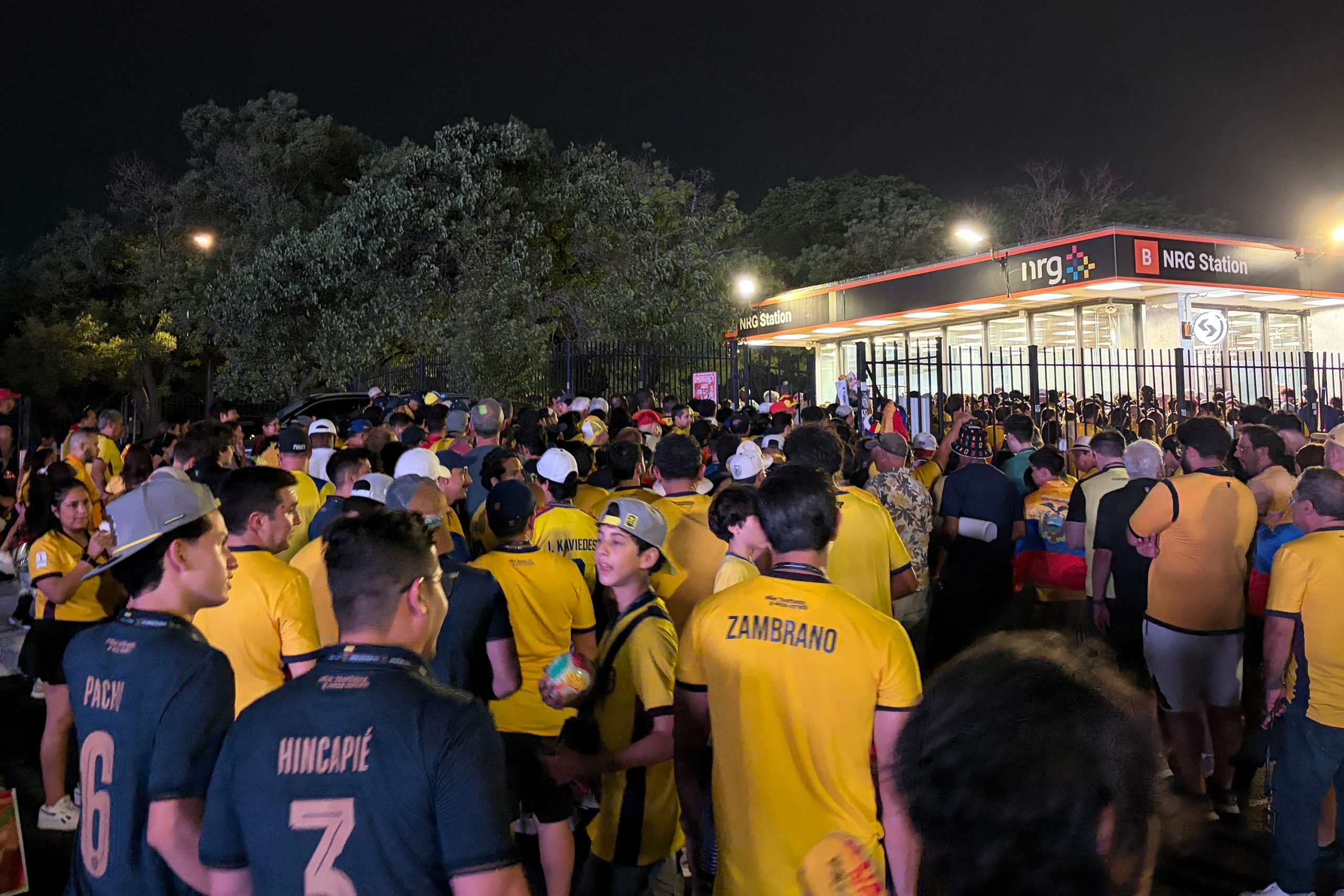
    Also, a success was opening night at Lincoln Financial Field, which has been renamed Philadelphia Stadium for the tournament. While fans of Ecuador left disappointed after their team’s 1-0 loss against Côte d’Ivoire, they could quickly make their way to one of the city’s bars — some of which won state approval to stay open until 4 a.m. during the World Cup — to drown their sorrows.

    Not so in places like Boston or New York City — two of the other 11 American cities selected to host tournament matches — where officials have resorted to closing major streets near transportation hubs to accommodate the crowds. Those cities have also dealt with extensive gridlock.

    Fans wait outside SEPTA’s NRG Station near the sports complex following Côte d’Ivoire’s victory over Ecuador Sunday.Michelle Myers

    The various efforts to fight North Jersey congestion still left some fans waiting for a ride home well after midnight. Spectators at other World Cup sites also faced steep costs for using mass transit, with New Jersey charging $98, and Massachusetts charging $80 for the train and $95 for the bus.

    In Philadelphia, however, costs are far lower for fans. Getting to a match via the Broad Street Line doesn’t require any charges beyond the system’s usual one-way fare — $2.90. And, thanks to a sponsorship agreement with Airbnb, rides back to Center City are free beginning at halftime and continuing until two hours after the match concludes.

    While SEPTA is operating additional service to support games at the sports complex and the fan festival, that has not come at the expense of trips for anyone else. Per SEPTA, roughly 19,000 people used NRG Station to get home from the game.

    National media outlets have taken note of Philadelphia’s moment — no small thing for a city accustomed to skepticism. The Washington Post praised the city as a model of affordability and access. Inquirer soccer writer Jonathan Tannenwald has detailed how Philadelphia became the envy of fans from across the country, thanks to a yearslong fundraising and organizing campaign.

    Given this effort and the city’s comparatively straightforward mass-transit situation, it is worth wondering why FIFA did not award more games to the Delaware Valley. There are just six matches scheduled in the city, as compared with nine in Dallas, and eight in Atlanta and New Jersey. All have experienced the kind of regional congestion woes we have so far avoided here in Philadelphia.

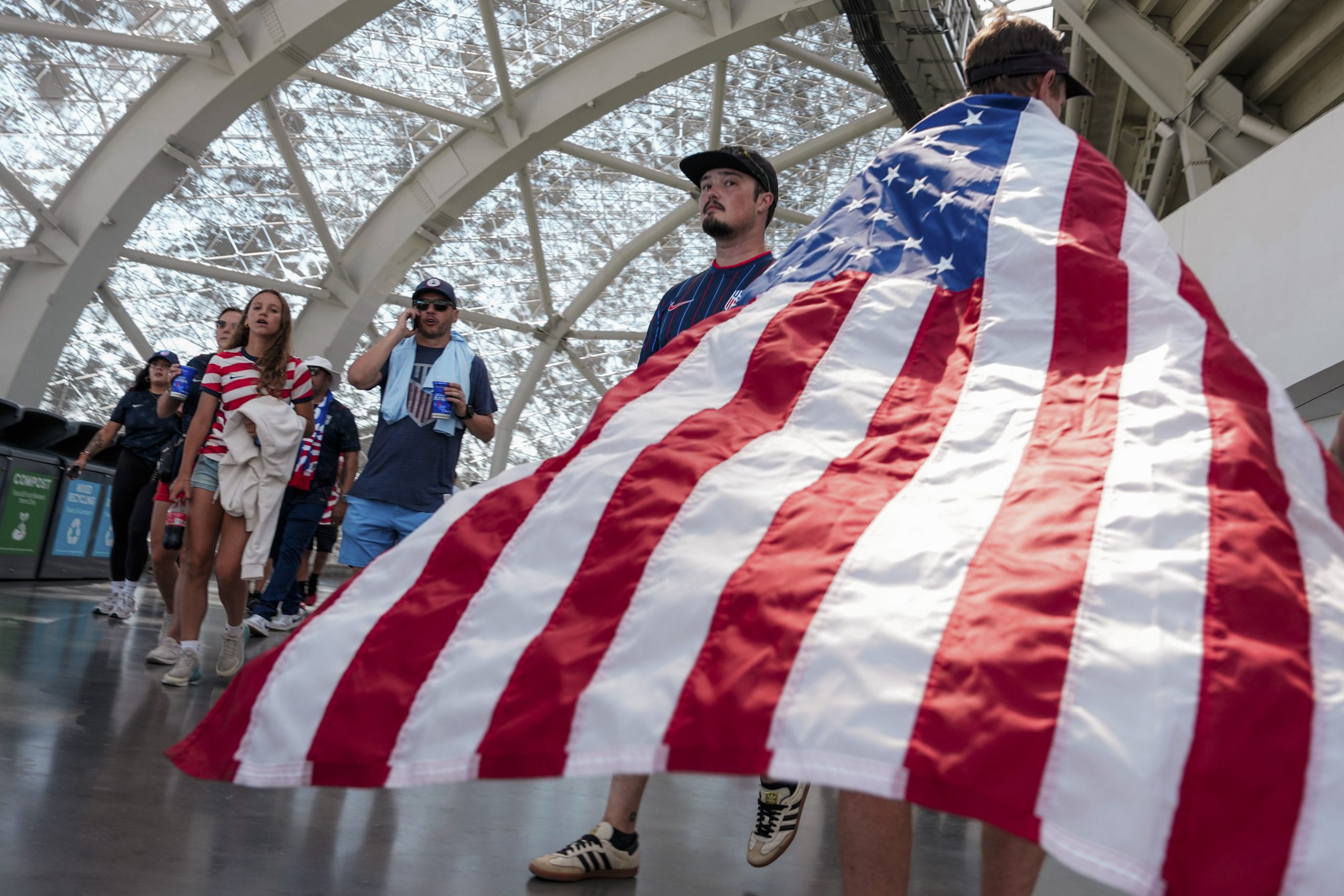
    A fan wrapped in an American flag ahead of the World Cup soccer match between the U.S. and Paraguay at Los Angeles Stadium in Los Angeles on Friday.GABRIELA BHASKAR

    That said, it hasn’t all been kudos. Those who live closest to the Fan Festival in Fairmount Park have borne the brunt of the match-day fallout during the festivities so far. Residents have complained about noise, traffic from road closures, dangerous motorists, and hiccups with the temporary parking permit system, with four vehicles mistakenly towed.

    With the festival running through July 19, city officials should work to mitigate these issues, perhaps by putting up sound barriers, installing no parking signs in the surrounding neighborhoods, and stationing police near streets that have seen an uptick in reckless driving.

    It is likely impossible to host a major event like the World Cup without any negative impacts, but Philadelphians can be proud that, so far, we’ve shown the world our best face.

  • What can the Sixers expect with the No. 22 draft pick? Past drafts illustrate the unpredictability.

    What can the Sixers expect with the No. 22 draft pick? Past drafts illustrate the unpredictability.

    Tyrese Maxey is a prime example of the caliber of player a team could snag in the early 20s of the NBA draft.

    But Jameer Nelson, the 76ers’ newly promoted executive vice president of basketball operations, also was quick to note that Maxey is the exception, not the rule.

    “We got lucky with the person,” Nelson recently said of Maxey, the All-NBA point guard whom the Sixers drafted 21st in 2020. “We got lucky with the player.”

    The Sixers are in a similar spot this year, holding the No. 22 overall pick entering Tuesday’s first round. It has been a sped-up process for new president of basketball operations Mike Gansey, who was formally introduced last week after spearheading the draft in his previous job as the Cleveland Cavaliers’ general manager.

    To further illustrate the uncertainty that comes with selecting at this point in the draft, here’s a look back at pick Nos. 21 through 23 the last five years. It offers a collection of success stories, and players who have since fallen out of the league.

    2025

    21st pick: Will Riley, forward, Illinois

    22nd pick: Drake Powell, wing, North Carolina

    23rd pick: Asa Newell, forward, Georgia

    Riley (10.3 points in 74 games) earned NBA All-Rookie votes this past season, as a surprise on a Washington Wizards team with a barrage of recent high draft picks. Powell (6.5 points in 63 games) was in the Nets’ rotation, which comes with the caveat that Brooklyn was not exactly interested in winning last season. Newell averaged 5.2 points in 44 games for the Hawks but also spent time in the G League during Atlanta’s surge in the second half of the regular season.

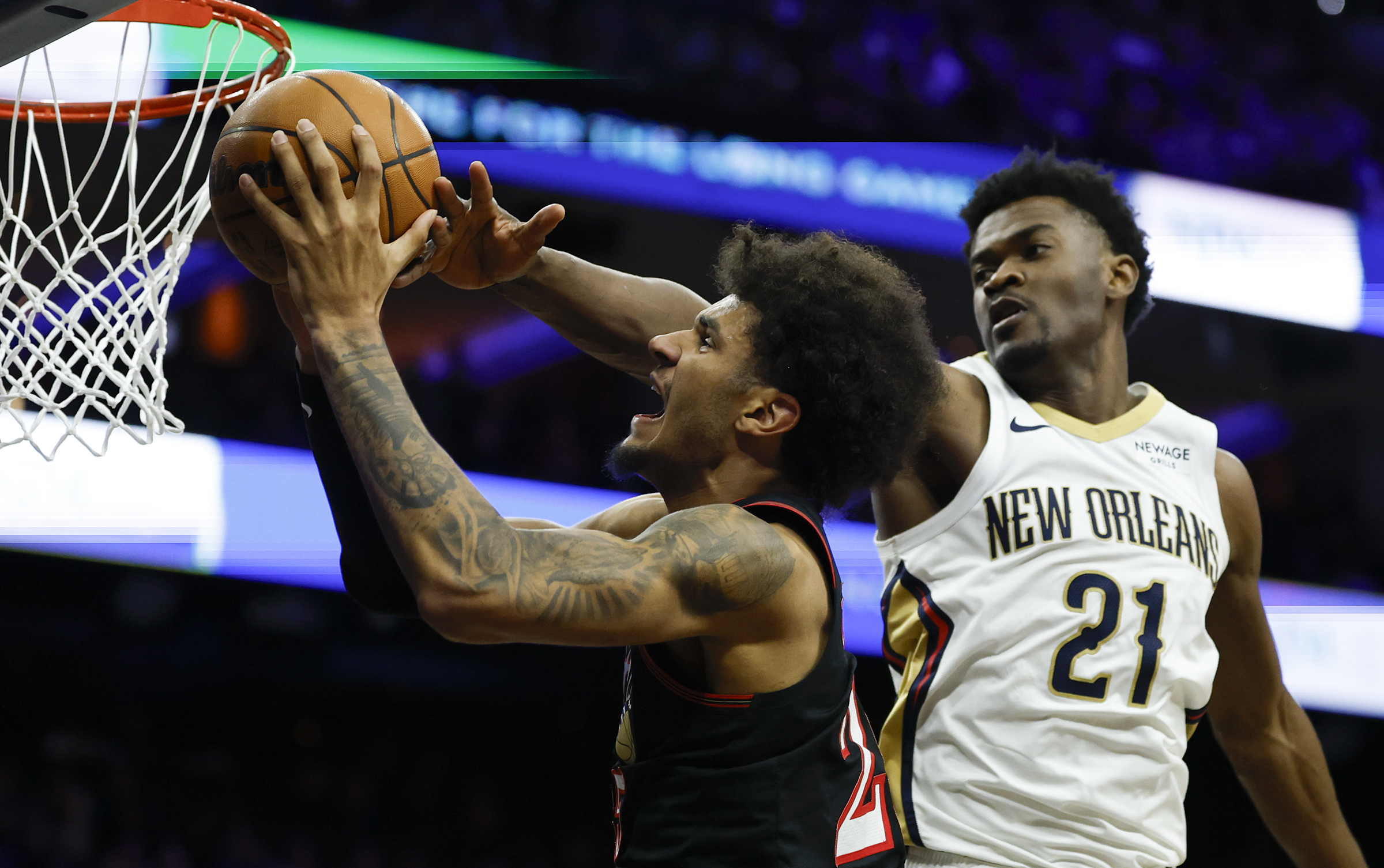
    Yves Missi (right) has started 81 of 139 games in two seasons with the New Orleans Pelicans, averaging 7.5 points and 7.1 rebounds.Yong Kim / Staff Photographer

    2024

    21st pick: Yves Missi, center, Baylor

    22nd pick: DaRon Holmes, forward, Dayton

    23rd pick: AJ Johnson, guard, Australia

    Missi has started 81 of 139 games in two seasons with the New Orleans Pelicans, averaging 7.5 points and 7.1 rebounds. Holmes tore his Achilles tendon in his first summer league game as a Denver Nuggets rookie, then played in 25 games this past season following his recovery. Johnson has already become an NBA journeyman, playing for three teams (Milwaukee Bucks, Wizards, Dallas Mavericks) in two seasons.

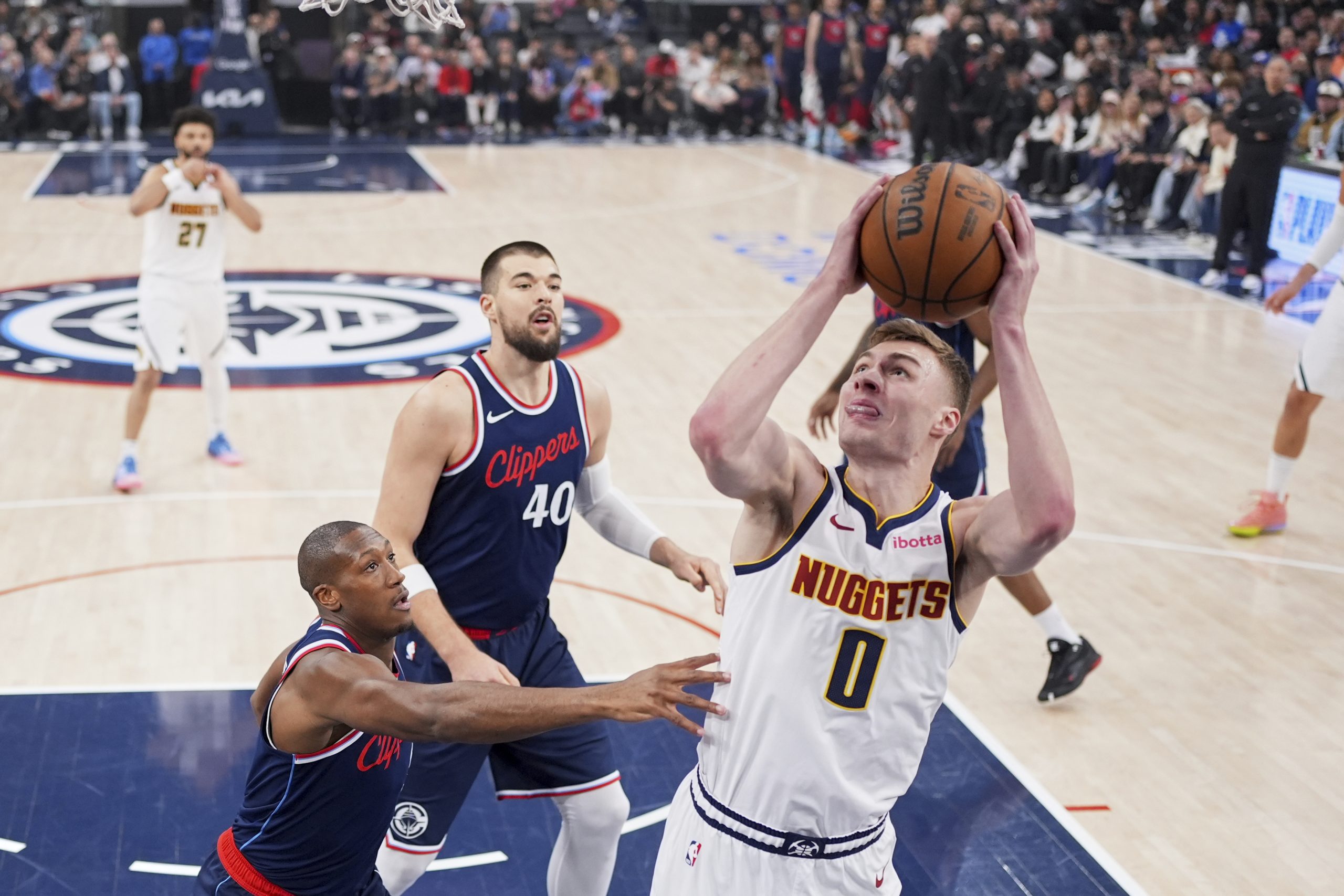
    The notable picks in this range from this year: Jaylon Tyson at 20th overall by the Cavaliers during Gansey’s tenure. And Kyshawn George, who is an intriguing, yet inconsistent wing for the Wizards.

    2023

    21st pick: Noah Clowney, forward, Alabama

    22nd pick: Dariq Whitehead, wing, Duke

    23rd pick: Kris Murray, forward, Iowa

    Clowney started 60 games for the Nets this past season, averaging 12.3 points on poor shooting efficiency. Whitehead, a former national high school player of the year, was waived by the Nets before the 2025-26 season and spent time in the G League before joining the Memphis Grizzlies on a 10-day contract. Murray (5.8 points, 3.6 rebounds) was in the rotation for the upstart Trail Blazers, who made the playoffs in the Western Conference.

    Christian Braun (right) won an NBA title with the Nuggets as a rookie.Mark J. Terrill

    2022

    21st pick: Christian Braun, guard, Kansas

    22nd pick: Walker Kessler, center, Auburn

    23rd pick: David Roddy, forward, Colorado State

    That 23rd pick belonged to the Sixers and was used in the trade to acquire key two-way guard De’Anthony Melton. Braun (12 points, 4.8 rebounds, 2.7 assists in 44 games in 2025-26) is a rotation player with the Nuggets, including as a rookie on their 2023 title team. Kessler, who joined the Utah Jazz in the Rudy Gobert blockbuster trade, had season-ending shoulder surgery in 2025-26 but is still regarded as a promising young big man (9.5 points, 9.3 rebounds in 201 career games).

    2021

    21st pick: Keon Johnson, guard, Tennessee

    22nd pick: Isaiah Jackson, big man, Kentucky

    23rd pick: Usman Garuba, big man, Spain

    Johnson was in the G League this past season following three stints with NBA teams, most recently when he averaged 10.6 points for the Nets in 2024-25. Jackson (6.7 points, 5.3 rebounds in 2025-26) was an Indiana Pacers reserve big man for parts of five seasons, before being sent to the Los Angeles Clippers in the Ivica Zubac trade. Garuba was last in the NBA in 2023-24, and is back in his hometown playing for EuroLeague power Real Madrid. He tore his Achilles tendon last month.

    Two notable picks in this range in this draft: Jalen Johnson at No. 20, who is now a versatile All-Star and franchise cornerstone for the Hawks. And Quentin Grimes at No. 25, the Sixers’ guard who now enters unrestricted free agency following last summer’s messy restricted free agency.

  • Tessa Janecke is selected third overall by Las Vegas; Penn State well-represented in the PWHL draft

    Tessa Janecke is selected third overall by Las Vegas; Penn State well-represented in the PWHL draft

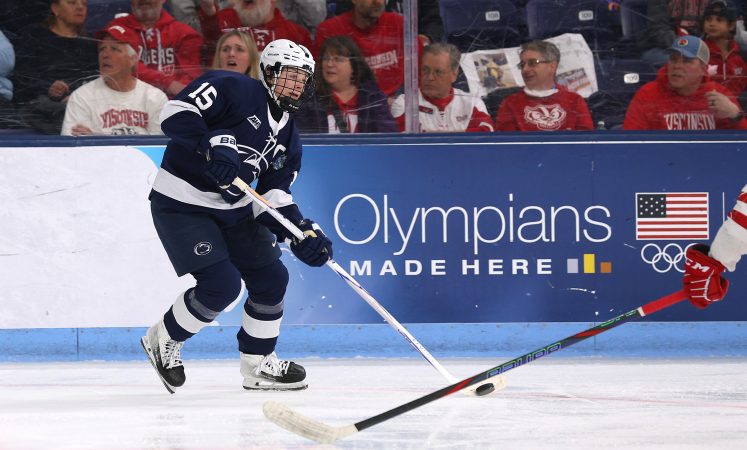
    Tessa Janecke has had no shortage of big moments this year, from winning gold with the United States women’s hockey team at the Winter Olympics in Milan to playing in the Frozen Four on home ice in State College.

    On Tuesday night she added another, as Las Vegas of the Professional Women’s Hockey League selected Janecke with the third overall pick of the PWHL draft.

    The new team in Las Vegas was the fourth team to be announced as part of the league’s second round of expansion for the 2026-27 season, its fourth. which takes the league from eight teams to 12. Detroit; Hamilton, Ontario; and San Jose, Calif., are the other three.

    The Vancouver Goldeneyes picked Wisconsin star Caroline Harvey first overall. Minnesota’s Abbey Murphy went second to the Seattle Torrent, and Wisconsin’s Laila Edwards (San Jose) and Lacey Eden (Las Vegas) rounded out the top five.

    After helping lead Penn State to its first women’s Frozen Four appearance, Janecke says she knows what it’s like to help build a program and is prepared to do the same in Vegas.

    “Me and my class have kind of built that place into what it is today, and hopefully into what it continues to be, and I’m really excited to be able to do that with Las Vegas as well,” Janecke said.

    Janecke added: “It takes so much hard work and adversity, even if you’re not winning games, to still make those around you feel like they belong and feel that sense of community in the team.”

    As Penn State’s leading goal scorer last season with 26 goals, the 5-foot-8 forward also led the team in points (48) and finished with 201 career points, the most ever for a Penn State hockey player.

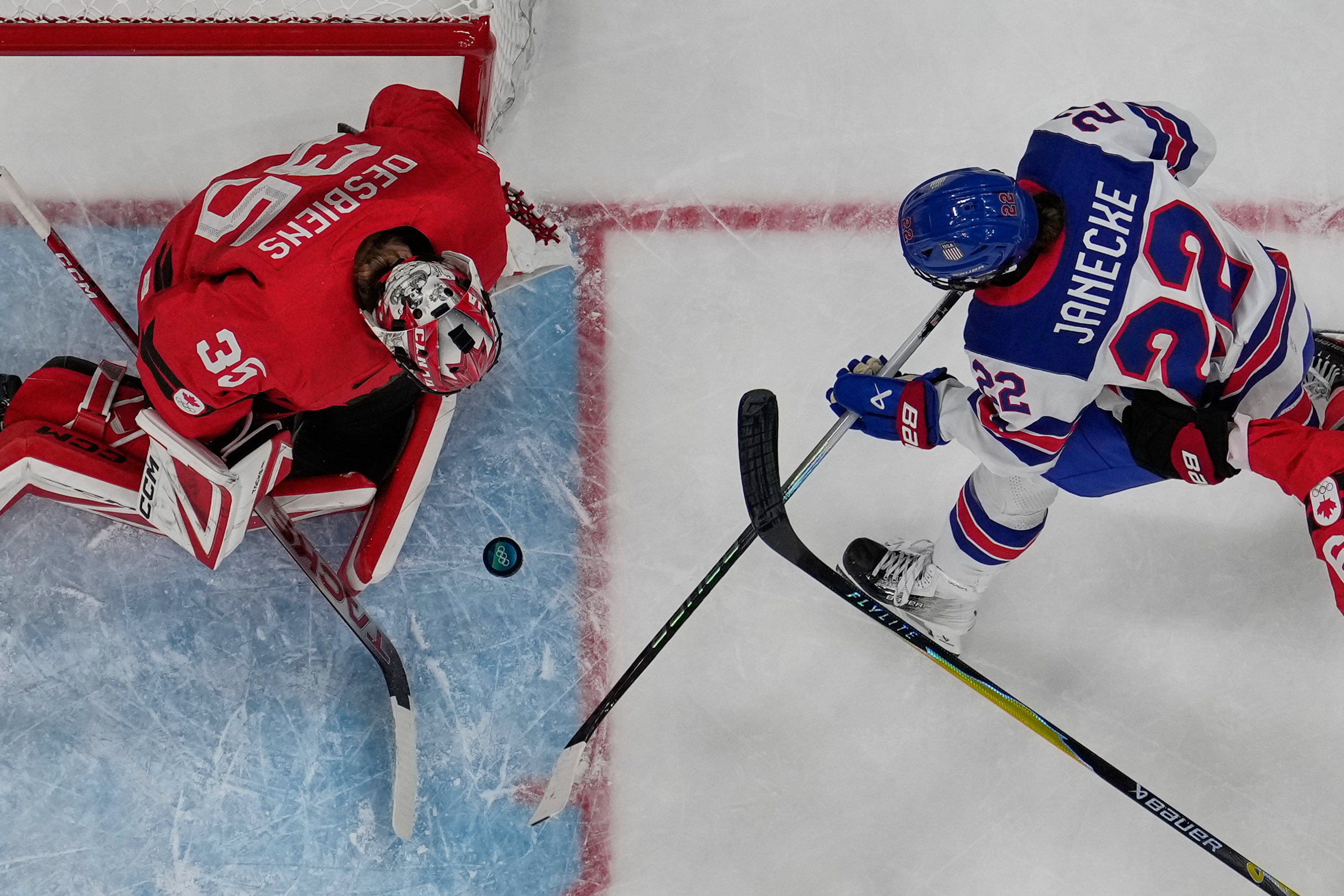
    Tessa Janecke (right) finished with five assists in seven games for the U.S. women’s hockey team in the Winter Olympics earlier this year.Hassan Ammar

    She also became the first Penn State athlete to win a gold medal in the Winter Olympics and had five assists in the United States’ seven games in Milan.

    Janecke also played for Team USA in the 2025 IIHF World Championships, where she scored the golden goal.

    The Orangeville, Ill., native was named to the Atlantic Hockey America conference first team four times and won three straight AHA player and forward of the year awards, making her the second woman in the conference to achieve that feat. She also became the first Penn State women’s player to be a top-three finalist for the Patty Kazmaier Memorial Award, given to the top women’s college player. She was a top-10 finalist the previous two seasons.

    Janecke said she plans to carry her experience from Penn State to the next level.

    “I think there’s an edge to Penn State that people don’t always realize,” Janecke said. “They kind of fly under the radar. Maybe that’s a good thing and a bad thing, but I think I’m going to take that 200-foot play that I’ve developed at Penn State and bring that to Las Vegas.”

    Penn State representation and a local connection

    Wynnewood’s Grace Dwyer, a Harriton High School graduate, also was drafted in the first round, 10th overall to the Boston Fleet.

    The blueliner had 76 points (18 goals, 58 assists) during her four-year career at Cornell and was first-team All-Ivy last season. She also previously played for the Philadelphia Junior Flyers, along with Penn State’s Leah Stecker, who went 27th overall to Boston in the third round.

    Stecker, one of seven Nittany Lions to be drafted — the most from any one college — was a four-year contributor and played in all of Penn State’s games over the last three seasons.

    Penn State’s Katie DeSa (35) and Leah Stecker were selected Wednesday in the PWHL draft.Craig Houtz / For The Inquirer

    The Randolph, N.J., native finished her career with 57 points (12 goals, 45 assists), but was most productive in the defensive zone, with 83 career blocks.

    Maddy Christian, an Elk River, Minn., native, also was drafted in the third round to her hometown team, the Minnesota Frost. She had 84 points (46 goals, 38 assists) and 86 blocks in four seasons at Penn State.

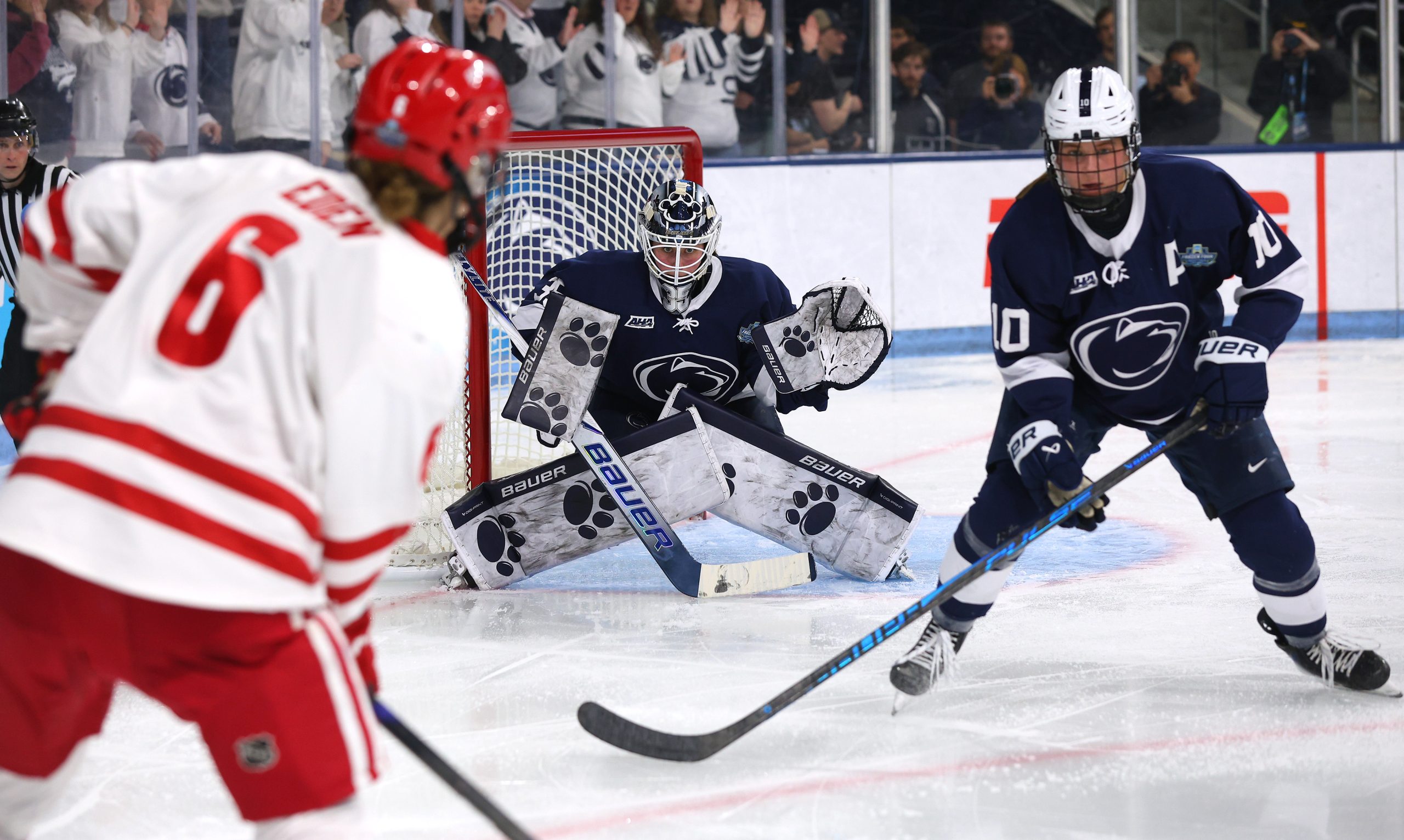
    Goalie Katie DeSa was drafted with the first pick of the fourth round by the Goldeneyes after finishing her career with the most shutouts in program history (25). She also was AHA Goaltender of the Year in back-to-back seasons and had a career .932 save percentage.

    Forward Katelyn Roberts was taken 43rd overall in the fourth round by the New York Sirens. She scored a career-best 16 goals as a senior and set a program record for most single-season game-winning goals (seven), which was tied for the second-most nationally. She is one of six players in program history to record at least 100 career points.

    In the fifth round, Kendall Butze joined Janecke with Las Vegas. Butze was named the AHA’s best defensemen in back-to-back seasons and is Penn State’s all-time leader in points by a defenseman (94).

    Hamilton, one of the other expansion teams, nabbed Mya Vaslet in the sixth round (66th overall). Vaslet, who’s from Sittsville, Ontario, finished with 60 points (30 goals, 30 assists) in 149 games with the Nittany Lions.

  • Is New Zealand becoming the next pinot noir capital?

    Is New Zealand becoming the next pinot noir capital?

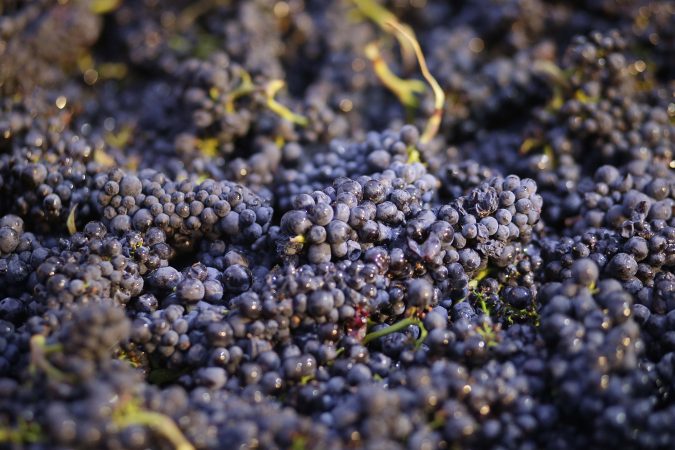
    Pinot noir is known as the “heartbreak grape,” and not just because its wines can be achingly beautiful. It’s probably the hardest of all fine wine grapes to grow, thriving only in very narrow climate conditions that are neither too hot, nor too cool. Not much pinot noir is made in the southern hemisphere, but the most popular examples hail from the tiny South Pacific island nation of New Zealand.

    Pinot noir is such an ancient grape variety (its roots trace back well over a thousand years to Burgundy) that it struggles under the demands of modern farming. Where most of the red grapes grown today yield bumper crops of thick-skinned berries that make dark and flavorful wines, pinot noir gives paltry crops of thin-skinned grapes with little natural resistance to rot or pests. They can break easily during harvest.

    The wine industry’s recent global expansion has yielded new options for pinot noir devotees, as cool climate regions from around the world rise to meet the pinot noir challenge. Among these, New Zealand has proven itself to be a real contender. Surrounded by frigid ocean currents, drenched in sunshine, and sheltered from rain, regions such as Marlborough and Central Otago on the South Island are able to make charming pinot noirs at very fair prices.

    This wine from Marlborough makes a perfect example. A midweight,it’s bracingly fresh in its strawberry and red cherry flavorsand designed to be enjoyed young. Most importantly, it has the subtle thread of earthy aromatics that gives pinot noir its je ne sais quoi think a savory whiff of wild mushrooms or root vegetables. It’s a perfect partner for poultry, cheeses, and charcuterie.

    Oyster Bay Pinot NoirCourtesy of Oyster Bay Wines

    Oyster Bay Pinot Noir

    Marlborough, New Zealand; 13.5% ABV

    PLCB Item #100048815 — $17.99 through July 5 ( regularly $19.99)

    Also available at: Canal’s in Mount Ephraim ($15.99; mycanals.com), WineWorks in Marlton ($16.98; wineworksonline.com), and Total Wines in Wilmington and Claymont, Del. ($14.99; totalwine.com).

  • Australia is up next in the USMNT’s World Cup run. Here’s how we think this one will shake out.

    With the United States exhibiting one of its best opening performances in the history of the men’s World Cup, expectations are high for the team’s second Group D match against Australia on Friday (3 p.m., Fox29).

    Reports indicate that the U.S. men’s soccer team, which thumped Paraguay, 4-1, in its opener last Saturday, expects a physical affair against the Australians, who surprised many in their 2-0 upset of Group D favorites Turkey in its opener in Vancouver.

    This game is a rematch of an uber-physical game last October that broke out into a few skirmishes and in which the Aussies attempted to bully the U.S.

    The final score: United States 2, Australia 1.

    Now, the pair are running it back. A win is another step closer to the U.S. winning the group or at least assuring a place in the knockout rounds. However, the Australians know that they could leapfrog the U.S. with a win and put themselves in the driver’s seat to win the group with a game remaining against Paraguay.

    U.S. midfielder Sebastian Berhalter said earlier this week that head coach Mauricio Pochettino has the group in a “We’re American, we don’t take s—” mentality, which served the team pretty well against Paraguay.

    How will it look against the Aussies?

    Our group covering the World Cup and embedded with the U.S. camp in Irvine, Calif., weighed in and offered predictions.

    Jonathan Tannenwald

    I said this in my report from the U.S. camp on Tuesday, and I meant it: As great as the opening win over Paraguay was, it was just one game. I expect Australia to be a very different opponent, tighter defensively and more physical. Though the Socceroos’ win over Turkey was an upset, it was no fluke. It took just one game for Nestory Irankunda to justify the hype as a breakout star this summer.

    It also was a physical contest when these teams met last October in a friendly in suburban Denver, one the U.S. came from behind to win 2-1.

    No doubt both teams will be even more up for it this time, with first place in Group D at stake. So what will make the difference?

    Christian Pulisic has been dealing with an injury but is expected to be available for the game against Australia. Jonathan Tannenwald

    I’ll be romantic for a moment and say the atmosphere in Seattle is worth at least one goal for the U.S. If you’re new to soccer or only watch European games, you’re in for something you might not have seen from the sport in this country.

    For over half a century, Seattle has been one of the best soccer cities in this country. It will be electric for this game, which has been a bucket-list item for fans ever since it was first announced in February 2024 that the U.S. would play its second group game there.

    World Cups are about players and tactics, but they’re also about emotions. This will be a moment for that.

    Prediction: United States 2, Australia 1.

    Kerith Gabriel

    The beauty of this one is that, like Paraguay, the core group of this U.S. men’s national team was on the field when they beat the Australians in that October friendly. Haji Wright scored twice. Chris Richards was there. So was Weston McKennie. Even Christian Pulisic, before he suffered a minor hamstring injury and left midway through the first half.

    The point is, having that match so close to the World Cup feels serendipitous. Australia is big, strong, and has goal scorers, but I’d give the edge to the U.S. for more creativity and skill, specifically up top.

    They’ll need to keep an eye on Connor Metcalfe, the Socceroos’ crafty center midfielder who plays for St. Pauli FC in Germany’s Bundesliga. Metcalfe’s vision was a catalyst behind many of Australia’s chances and he scored his nation’s crucial second goal against Turkey.

    Come out flat, and the Aussies will make it a game. Come out as the U.S. did in the opener, creating one opportunity after another in the final third, and I don’t see a world in which the U.S. isn’t celebrating a win in front of a sold-out Seattle crowd.

    Prediction: United States 3, Australia 1.

    Matt Breen

    I was talking to someone last Thursday when I told them I thought the U.S. was still a World Cup away from making noise. And then I watched them play like that on Friday night. I was in awe as the U.S. dominated Paraguay, playing like no American team I’d ever seen. It was beautiful. To me, it was the best performance in the history of American soccer. It felt like a hot take, but then people who have seen more than me all seemed to agree.

    What we watched in the opener wasn’t a mirage. It was a byproduct of a U.S. system that is investing in youth development, a legitimate domestic league, and a team full of players who play for top-flight clubs led by a wizard-like manager. You’ll hear a lot about 2002 before Friday but remember that the 2002 team started just five players in the upset of Portugal who didn’t play in MLS. On Friday, the U.S. lineup included just two MLS players. The talent is just so much deeper, and it showed against Paraguay. This was different.

    Friday felt like the start of a magical summer. The ride will continue against Australia, who won’t be able to beat the U.S. playing the way it did against Turkey. The Socceroos upset Turkey despite being outshot, 30-9. They parked the bus, and it worked. It won’t against the U.S., which are far more creative up front than Turkey. The U.S. will not be shut out if it takes 30 shots on Friday afternoon.

    Christian Pulisic looked like a man on a mission in his 45 minutes, and he seems on track to play Friday, Tyler Adams was excellent in the midfield, Malik Tillman made some fantastic passes, and the flight attendant who refused to let Folarin Balogun’s pregnant mother leave New York years ago might be responsible for a summer to remember. The U.S. no longer feels like they’re a “World Cup away.” Enjoy the ride.

    Prediction: United States 3, Australia 1

    Owen Hewitt

    The U.S. outperformed my optimistic prediction for its opener with a 4-1 thrashing of Paraguay on Friday. It was a dream start for the American side, but as Jonathan Tannenwald wrote on Tuesday, the win only matters if the U.S. can follow it up with two more quality performances in group play.

    Can the U.S. contend with a fierce Australian side that surprised the rest of Group D with a 2-0 win over Turkey? It should be able to, though that task will get more complicated if Pulisic, nursing his hamstring, isn’t fully healthy.

    The USMNT will need to be vigilant when defending counter attacks, as Australia was brilliant on breaks in its opening match.

    Pulisic or not, one of the States’ plethora of talented attackers will break through the fierce Australian low block that stymied Turkey, and the defense will hold up in transition to put the Americans atop Group D.

    Prediction: United States 1, Australia 0

    Rob Tornoe

    OK, I’ll be the party pooper.

    The U.S. is bound for a bit of a letdown after their high-flying victory against Paraguay. One question I have is the health of Pulisic, who was pulled at halftime after being kicked in the calf. As Tannenwald reported, Pulisic is expected to be healthy for their matchup with Australia but trained mostly on his own Wednesday.

    There’s also history to contend with. In 2002, the U.S. pulled off a major upset by defeating Portugal, but followed it up with a tie against South Korea in a hard-fought game they were lucky not to lose.

    Australia is coming off a 2-0 upset victory of Turkey, and Irankunda could present some real challenges for America’s defense. The Socceroos also played the U.S. tough in a physical friendly back in October, which the Americans ultimately won, 2-1.

    Thankfully, the atmosphere in Seattle will be terrific, and that will count for something. The U.S. will remain in first place in Group D following the game, but it won’t be because of a victory.

    Prediction: United States 1, Australia 1.

  • These athletes all received heart transplants. Now they’re representing Philadelphia at the Transplant Games of America.

    These athletes all received heart transplants. Now they’re representing Philadelphia at the Transplant Games of America.

    One Team Philly athlete underwent a heart transplant while experiencing homelessness at 14.

    Another is on his third organ transplant after a severe case of COVID-19.

    And a third received his new heart three weeks after his daughter was born.

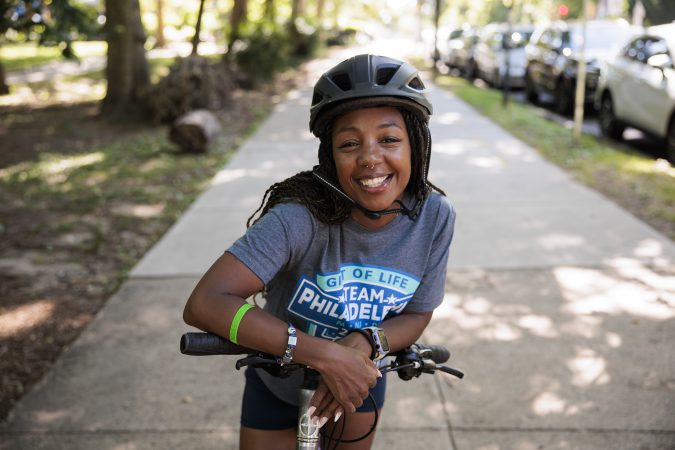
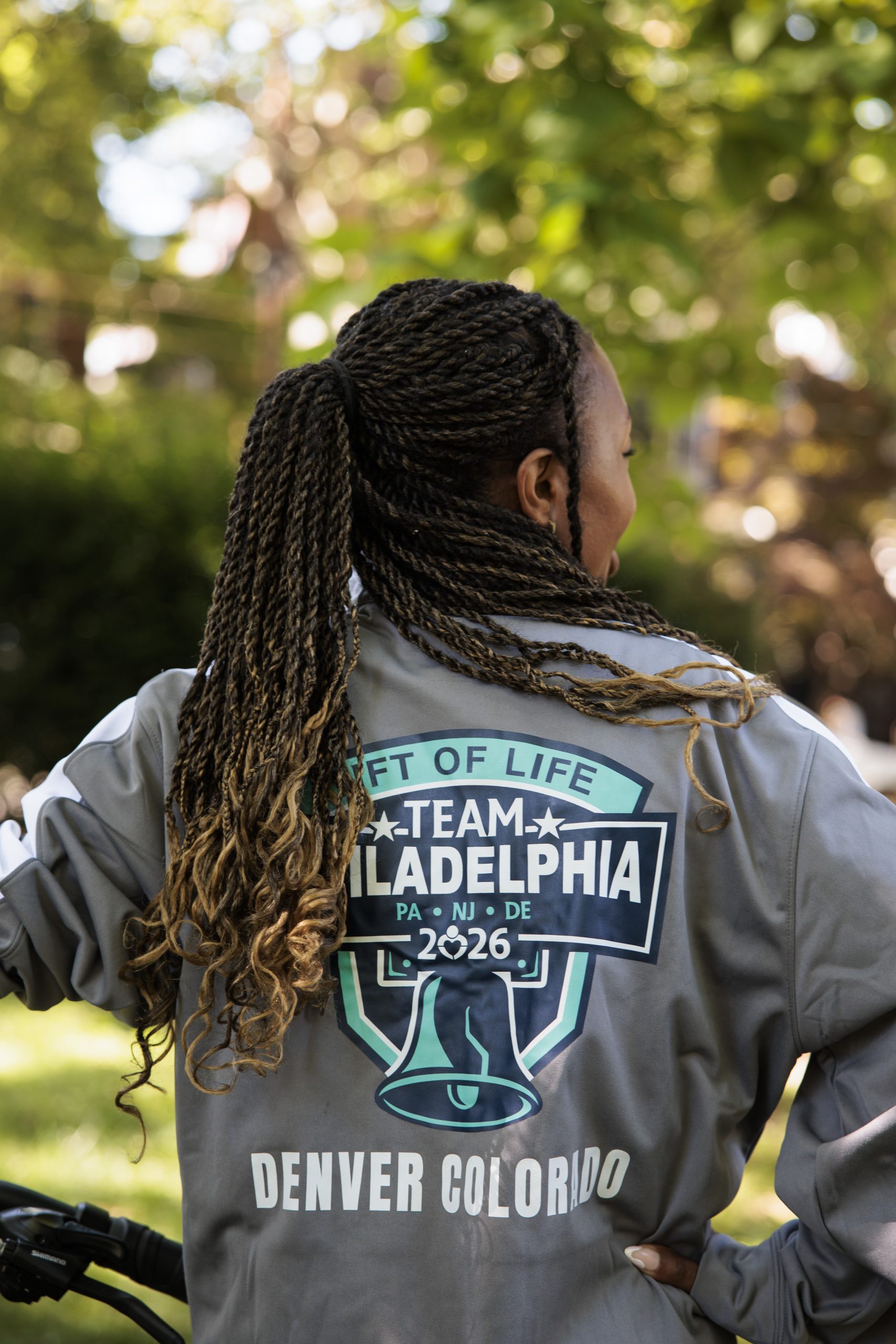
    All are competing, from Thursday through this weekend, at the Transplant Games of America, an Olympic-style event for transplant recipients, living donors, and donor families. Held in Denver this year, the competition celebrates organ donation and showcases life after a transplant.

    The local nonprofit Gift of Life Donor Program organized Team Philly, whose 86 athletes hail from eastern Pennsylvania, South Jersey, and Delaware. They are competing thanks to transplants ranging from hearts and lungs to kidneys, livers, and other organs.

    The Inquirer spoke to three athletes about their journeys with heart transplantation and motivation to compete.

    Evett Hawks is competing in Denver this week as part of Team Philly.Monica Herndon / Staff Photographer

    Childhood as a two-time transplant recipient

    Evett Hawks stared at the mirror in awe.

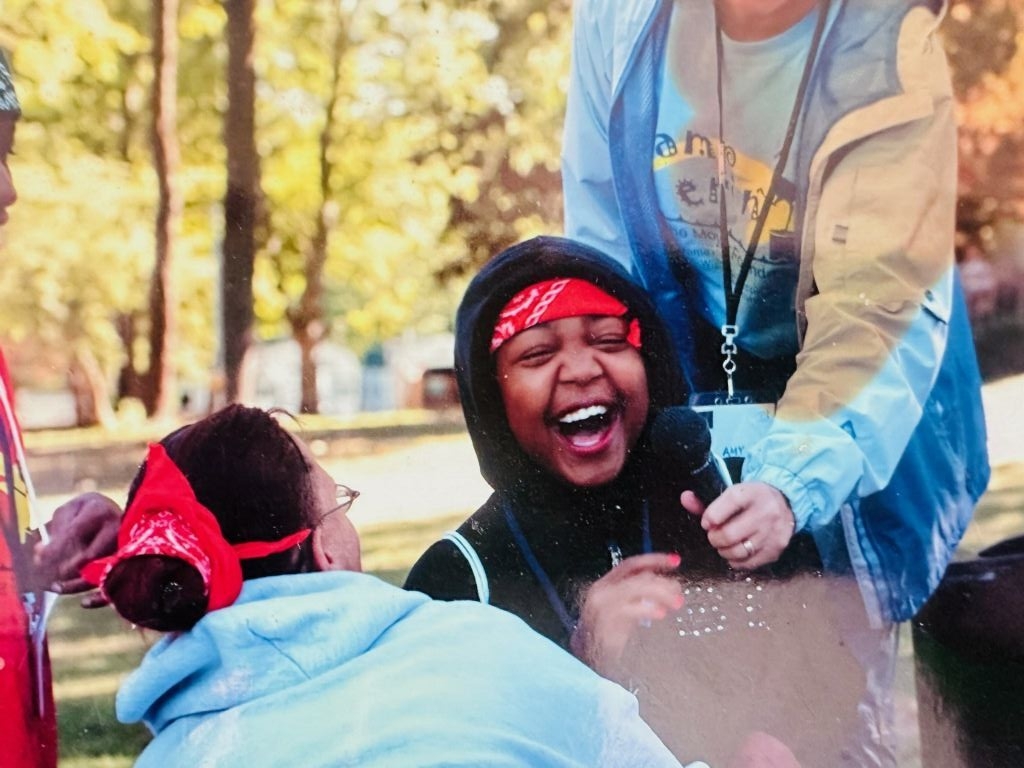
    After months looking “white as a sheet,” the West Philadelphia native saw in the bathroom mirror a 14-year-old girl whose cheeks were rosy. Her skin was warm and she could feel her fingers.

    “I want to look like this forever,” she recalls thinking.

    A photo of Evett Hawks smiling after her second transplant at age 14.Courtesy of Gift of Life Donor Program

    Hawks, who was born with a hole in her heart, underwent her first transplant at age 3 after a cardiac arrest episode landed her on life support. The donor heart kept her healthy for a decade, until her body started shutting down again in 2006.

    Doctors diagnosed her with end-stage heart failure. At the time, she and her mother were living in a shelter without a permanent home.

    “Why me?” and “This isn’t fair” thoughts overwhelmed her, as she moved to Children’s Hospital of Philadelphia to wait for a new heart.

    She started to doubt her odds of finding a match as months passed. She watched other pediatric patients die before they could get their own transplants.

    “Oh, I’m going to die, too,” Hawks recalled thinking.

    After nearly a year at CHOP, doctors found her a heart.

    While recovering from her surgery, Hawks saw a little boy who was still on the transplant waiting list walking laps around the hospital floor.

    He abruptly stopped in front of her room and said, “I can’t do this anymore. It just is too hard.”

    His nurse took him back to his room.

    Hawks said to herself, if “he can’t do it, I’m going to do it.”

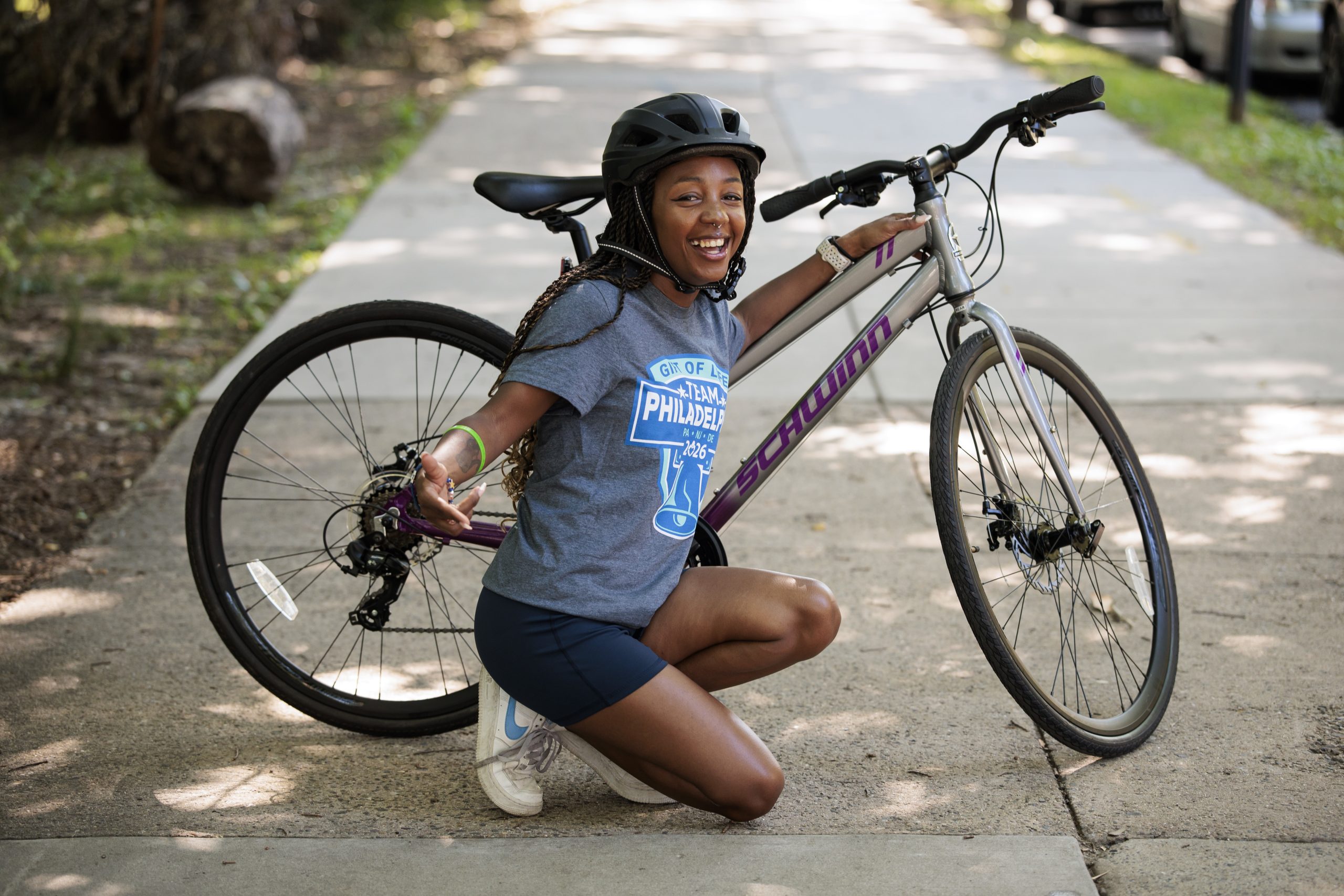
    Now, nearly two decades later, at 33, she is competing in her first Transplant Games in the cycling and singing events. She has trained by biking seven miles to and from her job as a registration specialist at Carvana.

    “The goal is just to do my best, and maybe come back with a medal,” she said.

    Evett Hawks will compete in the cycling and singing events at the Transplant Games of America.Monica Herndon / Staff Photographer

    Rebuilding his life after three transplants

    Leston Hall Sr.’s heart stopped in December 2022.

    Airlifted to Thomas Jefferson University Hospital in Center City, he learned from doctors that he could not leave the hospital without heart and kidney transplants. His organs had suffered major damage from an earlier COVID-19 infection.

    Hall, who lives in Bridgeton, N.J., had received his first kidney transplant in 2013 due to familial hypertension. At the time, he had an identified donor: his wife, Tonia.

    This time, he didn’t know how long he would have to wait for a match.

    Then in his 50s, he was so sick he required a scooter to get around. Mostly, he lay in bed.

    “I was barely holding on,” he said.

    Other patients would invite him out on walks, but he always declined. He finally agreed to go with them one day, thinking, “Maybe they’ll leave me alone.”

    They became an inseparable group of four that he now considers “family for life.” Their friendship helped him endure the difficult waiting period that lasted until June 2023, when doctors found him a new heart and kidney.

    After the surgeries, Hall struggled to adjust back to living at home. He hesitated to go down stairs for fear of not being able to get back up, and kept a chair by the stove whenever he cooked.

    Over time, he built his leg strength back up by using an elliptical machine.

    By early August, he was able to cook without the chair. He surprised his wife with a dinner of chicken breast, rice, broccoli, and green beans — the first full meal he had cooked since coming home.

    Leston Hall Sr. pictured with his wife, Tonia, and daughter, Shales.Courtesy of Leston Hall Sr.

    Hall celebrated the three-year anniversary of getting his new heart and kidney last week.

    At his first Transplant Games this week, he is competing in pickleball, cornhole, basketball, and poker.

    Hall said he is grateful “just to be able to accept that challenge.”

    Leston Hall Sr. celebrated his 60th birthday last October. He is pictured with his sons Lavon and Leston Hall Jr.Courtesy of Leston Hall Sr.

    Wanting to see his children grow up

    Todd French watched his daughter’s birth over FaceTime in October 2021 from his bed at the Hospital of the University of Pennsylvania.

    He had learned he needed a heart transplant earlier that month.

    “All I could think about was, ‘I would do whatever to get to watch them grow up,’” he said, referring to his son and newborn daughter.

    In October 2021, Todd French used FaceTime from his hospital bed at HUP to watch his wife give birth. His wife, Lauren, brought their newborn daughter to meet him before his transplant.Courtesy of Todd French

    The teacher from Milford, Del., had exhausted other treatment options for his cardiac sarcoidosis, an autoimmune disease where cells clump up in heart tissue and interfere with its functioning. For eight years, his heart would randomly beat out of control in episodes called “V-tach.”

    “It caused the electrical system in my heart to kind of go haywire,” French said.

    Doctors placed a defibrillator — a device that shocks the heart back into a normal rhythm — in his chest and conducted ablation procedures. However, the episodes recurred. Each time, the defibrillator would deliver a painful shock that felt like “a mule kick to the chest,” he said.

    After suffering 22 shocks in two hours in 2021, he was admitted to the hospital to wait for a transplant.

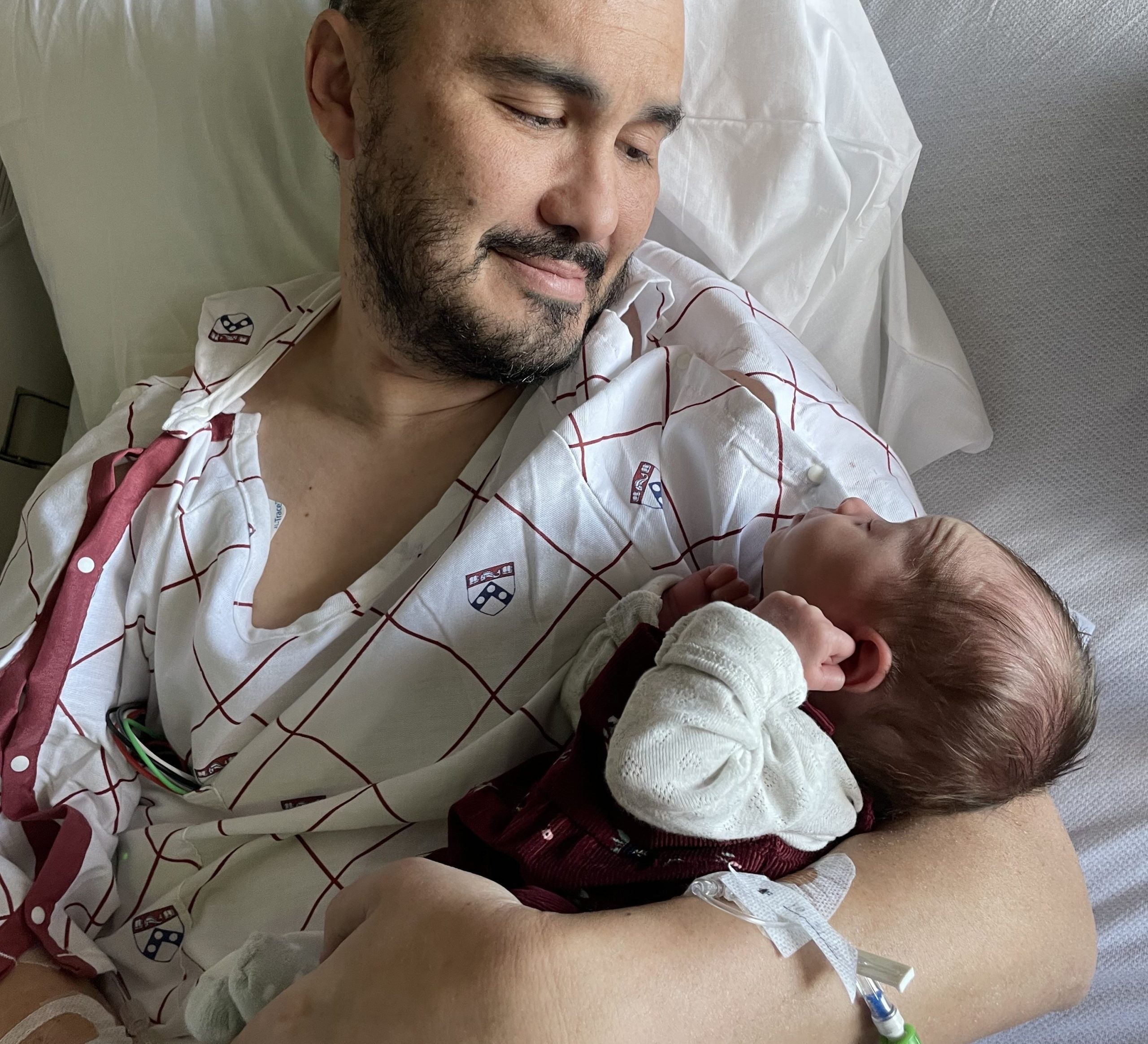
    On Nov. 11, 2021, three weeks after his daughter’s birth, French received a donor heart.

    With the help of a personal trainer and cardiac rehab, he rebuilt his lung capacity. Today, he teaches physical education at Milford High School.

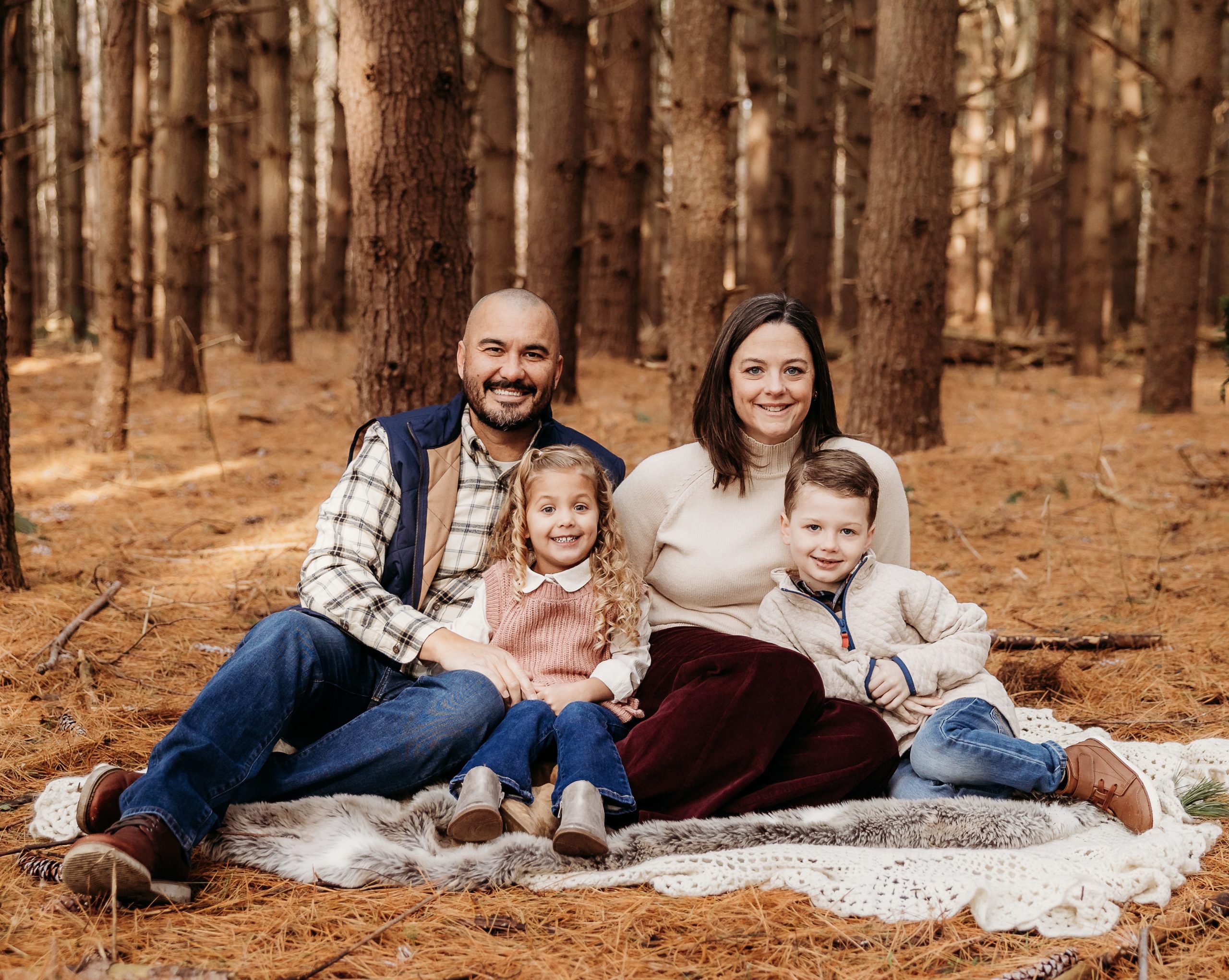
    A family photo taken in November 2025.Courtesy of Todd French

    Staying active and healthy is “a respect thing,” he said. “You want to honor the person that helped you and your family.”

    At his first Transplant Games in 2024, he won two gold medals in golfing events and a silver medal in Texas Hold ’em.

    He is hoping to win the golfing events again this year.

    “It gives an opportunity to shine a light on everything that a transplant does for people,” he said.