Officials of the Pennsylvania and New Jersey Turnpikes have chosen a design to replace the 70-year-old bridge over the Delaware River linking the toll roads: a six-lane span that would be built about 195 feet north of the existing one.
Called a ”tied-arch” bridge, the $1.6 billion replacement would be cheaper than other styles considered and can be built fastest, said John Boyer, senior engineer for the Pennsylvania Turnpike Commission.
“Shorter time frames mean less disruption to local businesses and daily life for the communities in this area,” said Boyer, the manager of the joint project.
Because the new bridge would be farther from the existing Delaware River Bridge than alternatives, traffic can keep flowing as it’s built, he said.
Planners for years have known that the region would need a new turnpike bridge because of exponential growth in traffic volume, especially trucks.
Freight volumes nationally are projected to grow by 73% by 2050, with warehouses on both sides of the river relying on crossing.
Before the nearby I-95/Pennsylvania Turnpike interchange opened in 2018, an average of 42,000 vehicles a day crossed the four-lane Delaware River Bridge. Now, that’s up to around 70,000. By 2050, projections say an average 93,000 vehicles will need to traverse the replacement.
The surfaceof a tied-arch bridge provides tension to resist the horizontal forces pressing on either end of the arch, like the taut string that connects a bow. It requires less sturdy foundations than a bridge supported by cables.
“You can be build those river piers while you’re building the arch structure off-site,” Boyer said. When the piers are ready, the arch can be brought in by barge and “you can essentially jack it and elevate it up into place,” he said.
Federal authorities approved a new span in 2003, but the project was put on hold because of problems paying for it.
As congestion increased on the repaired bridge, more traffic capacity became imperative, officials said.
Because the earlier federal approval was so old, officials had to start again with a new environmental impact statement and design studies. Last year, turnpike officials settled on two options.
Now, they’re finishing up the environmental impact statement, with formal public hearings scheduled for the winter.
Turnpike officials expect the Federal Highway Administrationto make a decision on the project around April 2028.
The two states’ turnpike agencies will finance the balance. Borrowing would be backed by toll revenue, but both say the bridge project won’t increase tolls for drivers.
A man was shot in the stomach while riding the L train in Center City on Thursday afternoon.
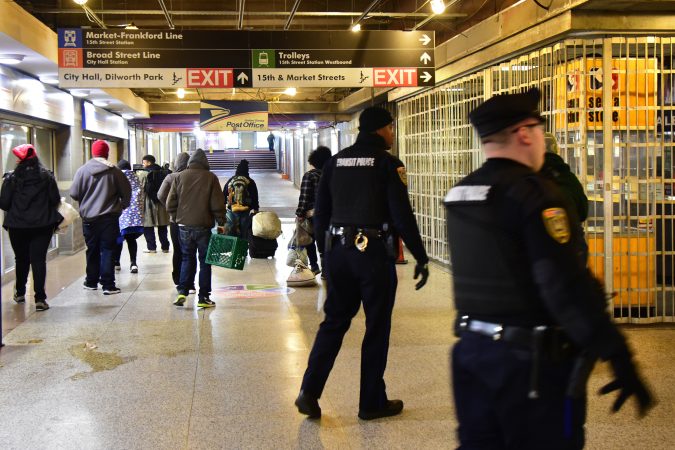
SEPTA Transit Police were investigating the shooting, which occurred around 1:30 p.m. on a westbound L train, also known as the Market-Frankford Line, at 15th Street Station located under City Hall and Dilworth Plaza.
Police transported the injured man, who was not identified, to a nearby hospital, where he was in stable condition, according to SEPTA. A search was underway for a suspect, whom police did not identify.
L train and trolley service resumed after having been stopped for around 30 minutes, a SEPTA spokesperson said.
Amid the current 250th birthday of America, the country hasn’t been so divided since the 1976 Bicentennial when Vietnam and Watergate were open wounds.
But in a backward gaze at Philadelphia’s 1876 Centennial Exposition, A Hundred Years On, composed by Peter Boyer, had the message that America somehow prevails. Commissioned by and premiered at the renovated Highmark Mann Center on Wednesday, the oratorio revisited how, amid the residual traumatizing of the Civil War, Philadelphia emerged in one of its peak years with innovations that supported its “city of firsts” reputation.
Since America in general, and Philadelphia in particular, needs to feel good about itself, the total effect of this vocal/video/orchestral package featuring the Philadelphia Orchestra and the Crossing choir prompted roaring approval from an audience that one hoped would be larger (the inside seats were half full).
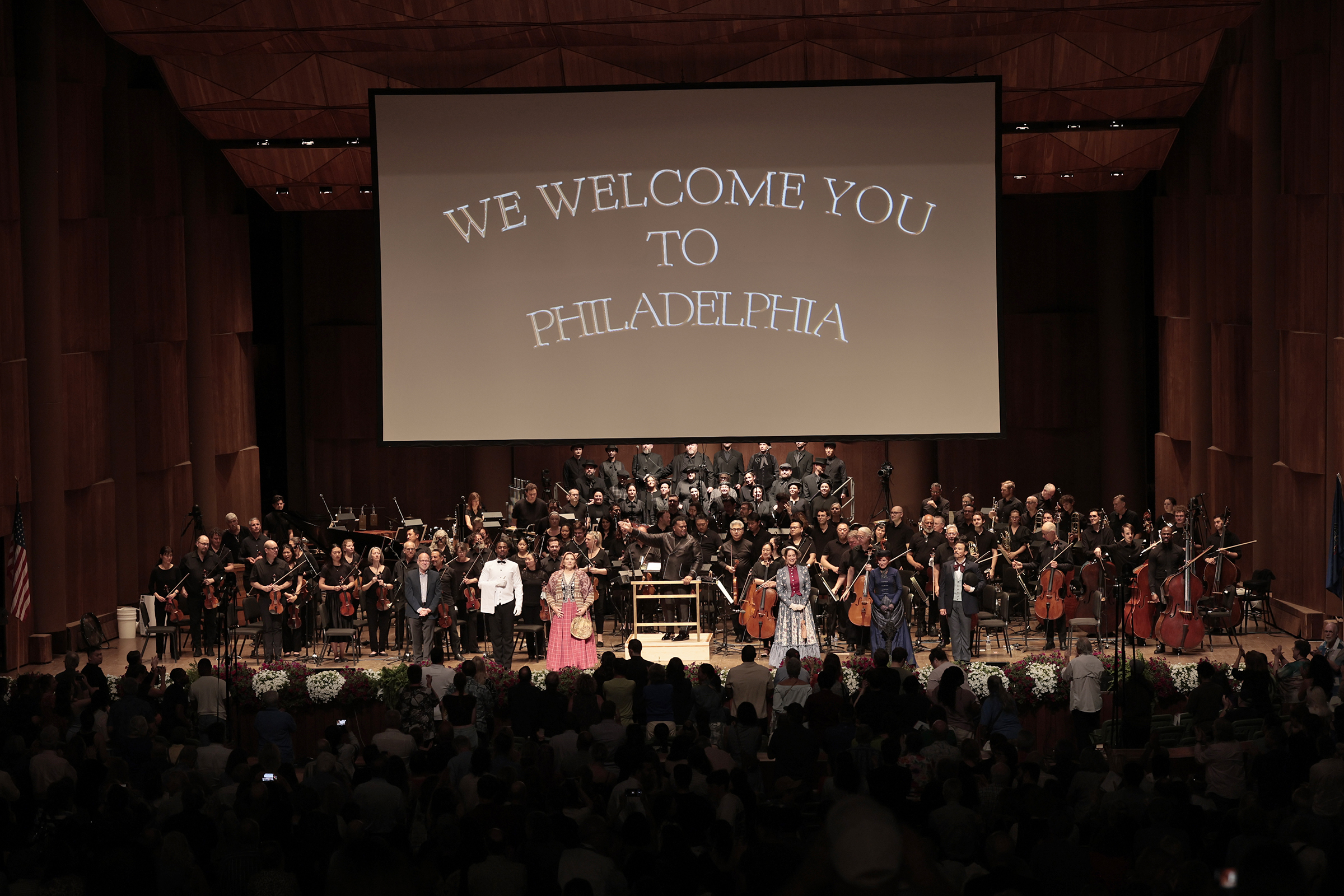
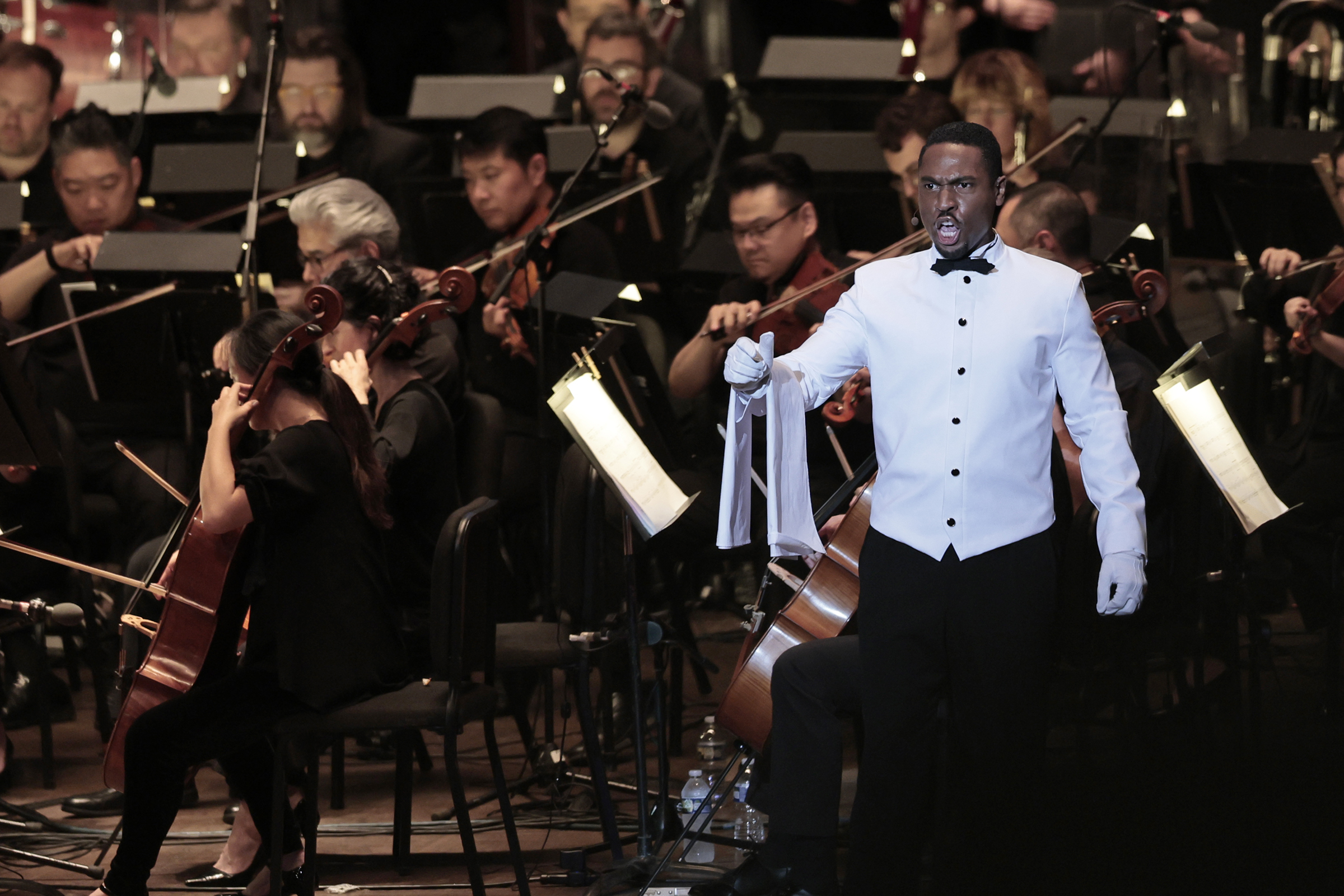
The audience stands for the cast following the world premiere of ‘A Hundred Years On’ at the Highmark Mann Center.Elizabeth Robertson / Staff Photographer
With any luck, this ambitious, communicative piece will have a further life.
Even if you didn’t leave the concert with renewed faith in the future, you could at least aspire to that kind of belief — and be impressed with the program’s range of American expression from John Williams to Julia Wolfe.
Special event pieces such as A Hundred Years On are, by definition, written in broad, sometimes heavy-handed strokes. But librettist Mark Campbell looked back to 1876 in a series of arias and chorus with touchstones that had dimensions — ones that avoided whitewashing history.
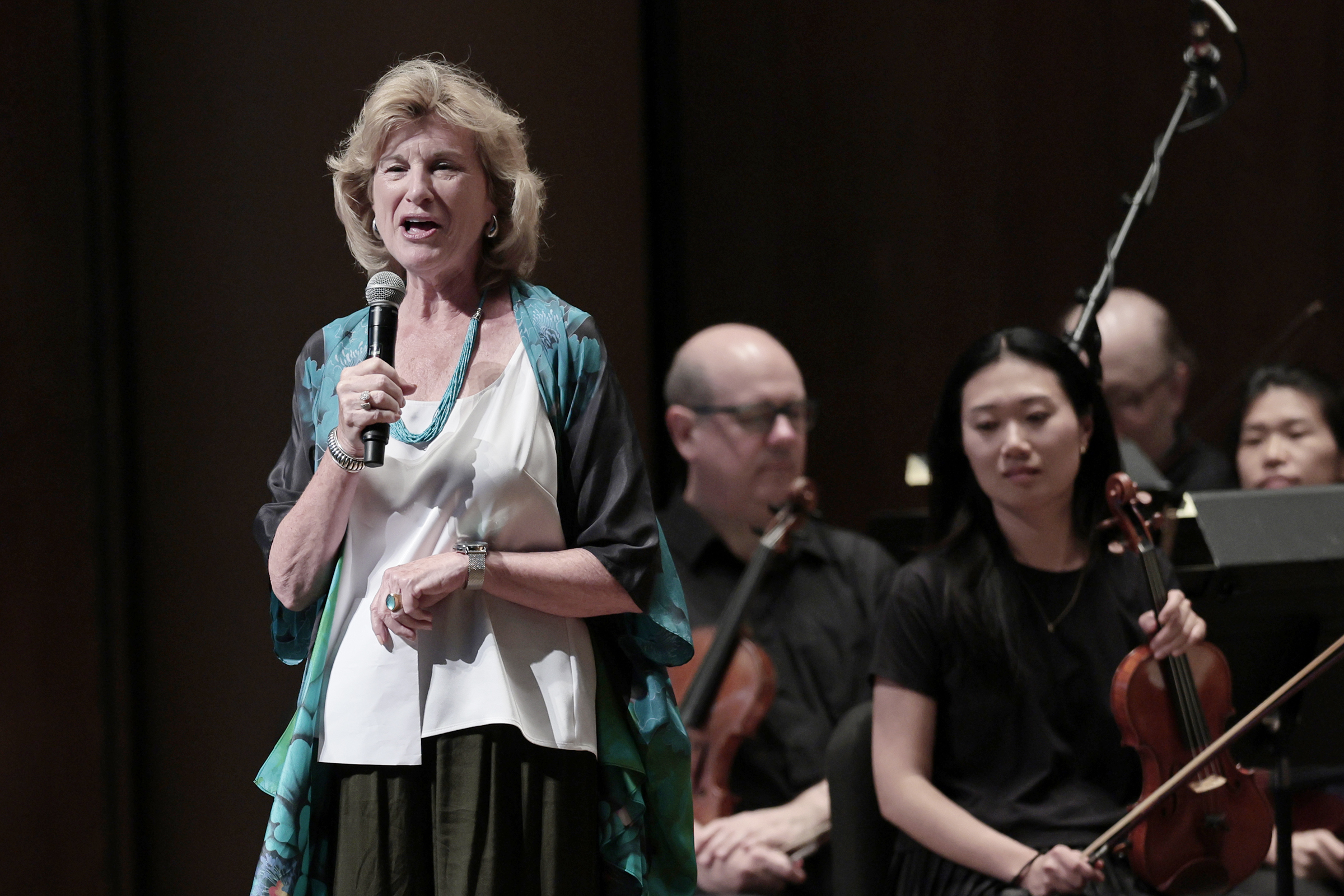
Highmark Mann Center for the Performing Arts president and CEO Catherine M. Cahill welcomes guests to the world premiere performance of “A Hundred Years On” on Wednesday night.Elizabeth Robertson / Staff Photographer
An entertaining upbeat stand-in for Alexander Graham Bell extolled the magic of global communication through a single wire (while also predicting our wireless era). But there was also an aria for a mother still grieving for her son’s Civil War death. The invention of the dishwasher promised to save female hands for other things — though such hands still didn’t have the right to vote. A Black restaurant waiter reminded the world that this post-Civil War era had a limited effect on civil rights.
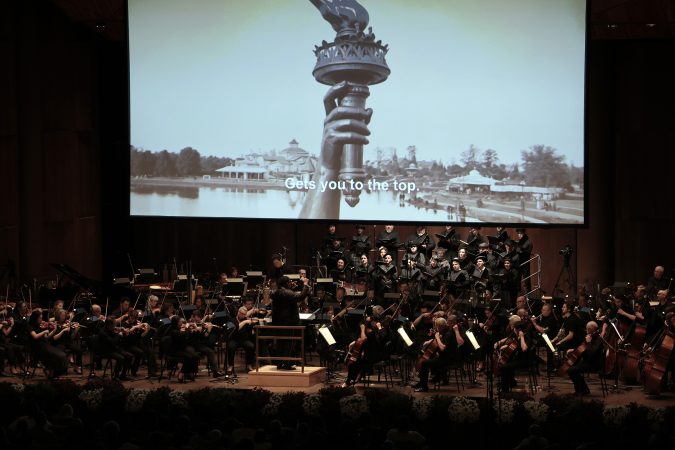
One visually surreal moment translated into a section rich in implications: The disembodied arm of the still-unfinished Statue of Liberty invited visitors to explore the insides of her torch. Video projections designed by Rasean Davonté Johnson lifted and animated images usually seen in vintage photographs in ways that took you deep into that era. Virtually, you were there. Live singers were in period costumes with supportive stage direction by Tazewell Thompson.
Malcolm J. Merriweather in “A Hundred Years On” at the Highmark Mann.Elizabeth Robertson / Staff Photographer
Overall, the piece didn’t quite have the searing authenticity of Boyer’s Ellis Island: The Dream of America, which included spoken firsthand immigrant accounts of their harrowing experiences. But Campbell’s poetic extrapolations of the 1876 experience clearly inspired Boyer to write essentially lyrical arias with all sorts of details heard in these individual journeys, such as the blues inflections of Ignatius Thomas, the Black restaurant waiter.
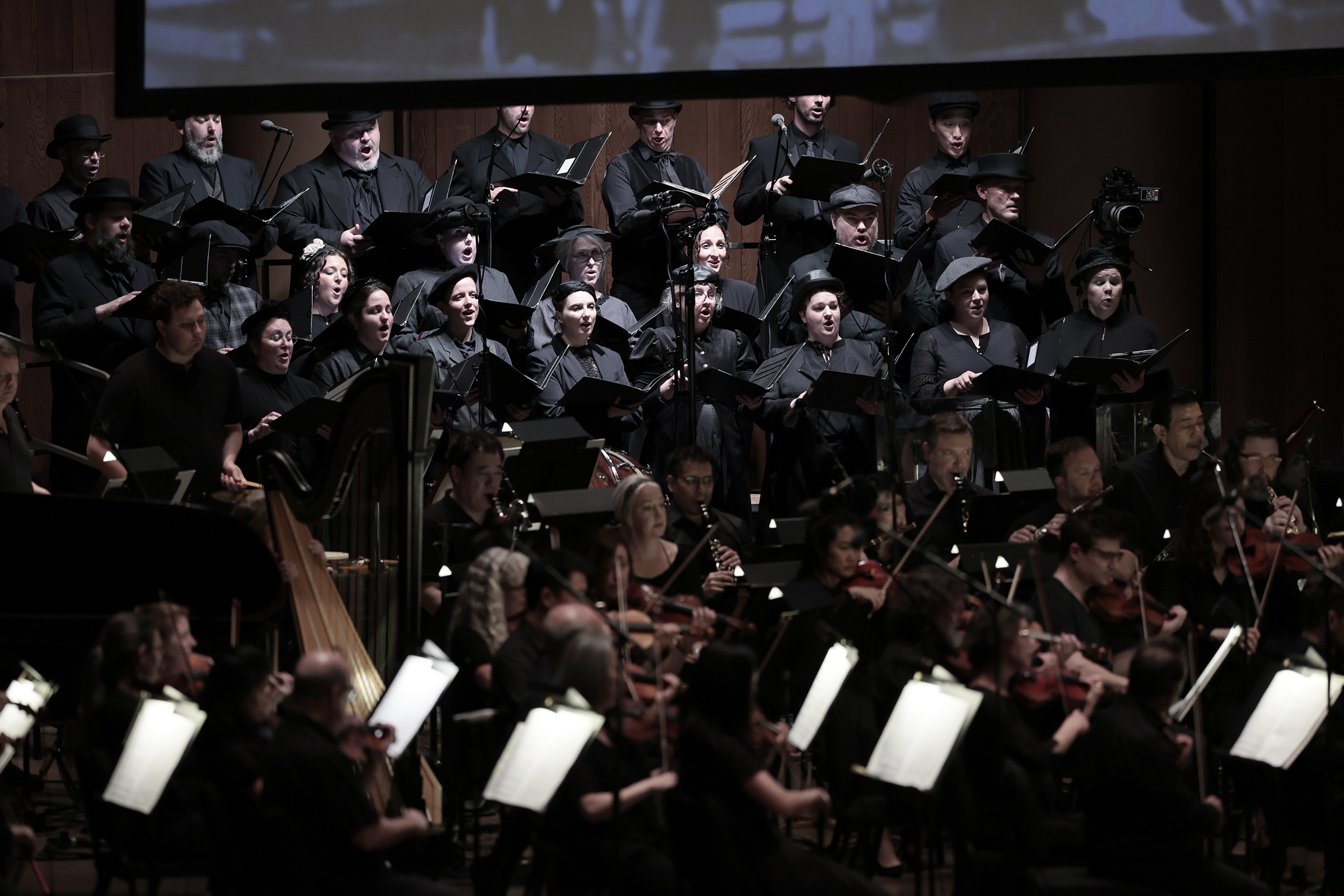
Boyer steered clear of songlike tunes that would’ve distracted from the message at hand, and given less depth to performances by the excellent vocal soloists, Mary Dunleavy, Meredith Lustig, Eve Gigliotti, Malcolm J. Merriweather, and especially David Portillo. Boyer didn’t resist writing difficult but atmospheric harmonies for the supercapable Crossing choir, as well as descriptive vocal gestures suggesting the budding mechanization of the 19th century.
The Crossing (in rear) choir performing with the Philadelphia Orchestra on Wednesday.Elizabeth Robertson / Staff Photographer
In general, he used the orchestra as a frame to give focus and scope to the bigger idea of what 1876 meant then and now. The guy definitely knows the art of orchestration.
In the concert’s first half, the “Star-Spangled Banner,” “conducted” by Mayor Cherelle L. Parker was the necessary starting point. Then, John Williams’ “Liberty Fanfare” had conductor Anthony Parnther luxuriating in the rich harmonies, memorably played by the Philadelphia Orchestra brass section. “Liberty Bell” by Julia Wolfe (who grew up in the area, near all of the bell’s cracks and crevices) was a miniature symphony of sorts, falling into four distinct sections.
From left: Mezzo-soprano Eve Gigliotti, conductor Anthony Parnther, composer Peter Boyer, librettist Mark Campbell, and soprano Meredith Lustig in front of the Philadelphia Orchestra and the Crossing choir after the premiere of “A Hundred Years On” on Wednesday.Elizabeth Robertson / Staff Photographer
First came the difficult birth of democracy with a series of whiplash rhythms, almost suggesting the passing of kidney stones. What followed was repose, but the apocalyptic ending was reminder that storms are always ahead.
Sousa’s “Stars and Stripes Forever” was strangely perfunctory. Sorry, but I was spoiled by the late Arthur Fiedler, who had a way of suspending time during the thrilling piccolo solo. No big deal, really, especially since all other performances were shipshape.
And that’s not often the case with a program featuring something as complex as “Liberty Bell” and a piece with as many moving parts as A Hundred Years On. No hints of strain. Remarkable!
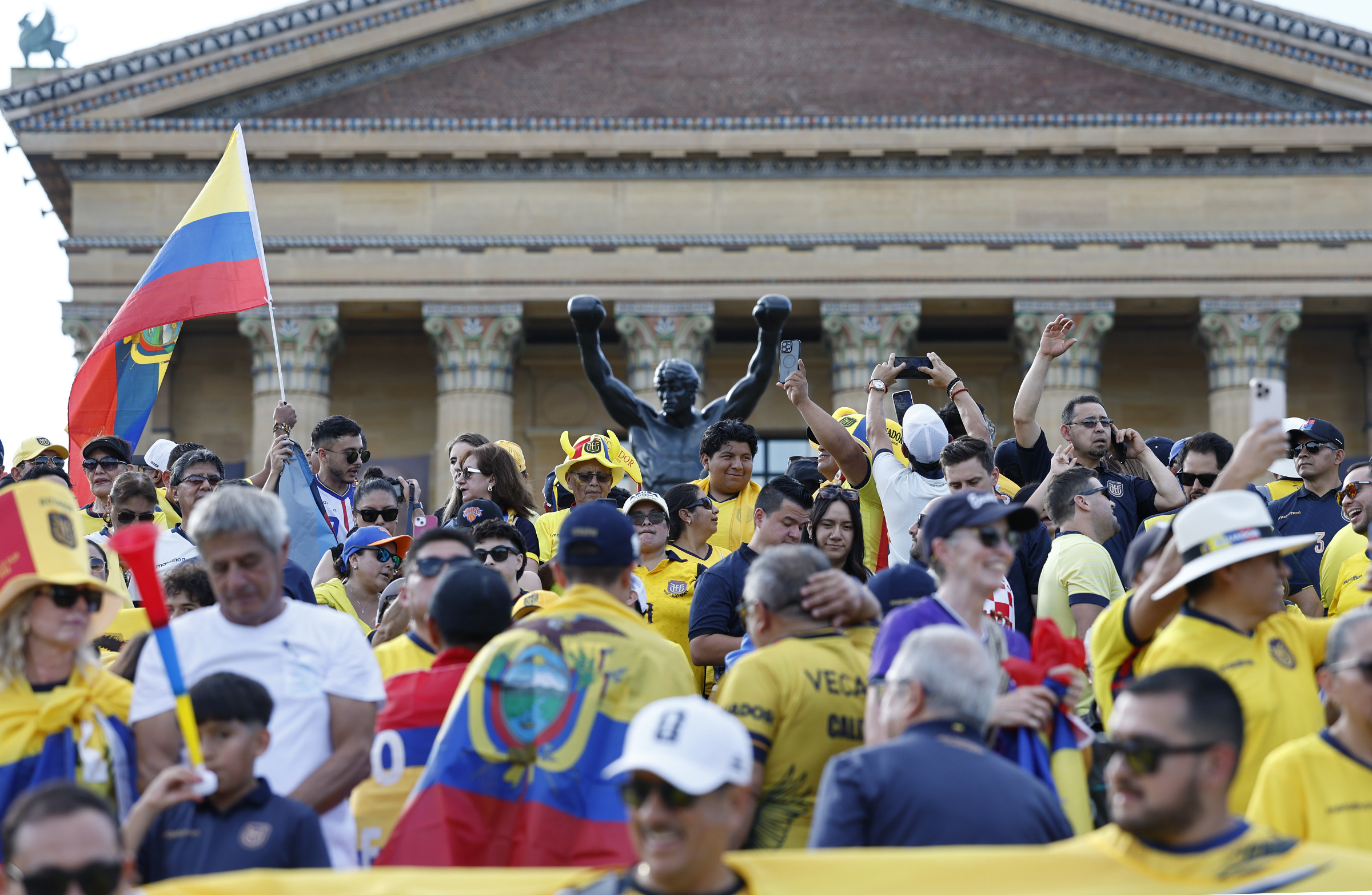
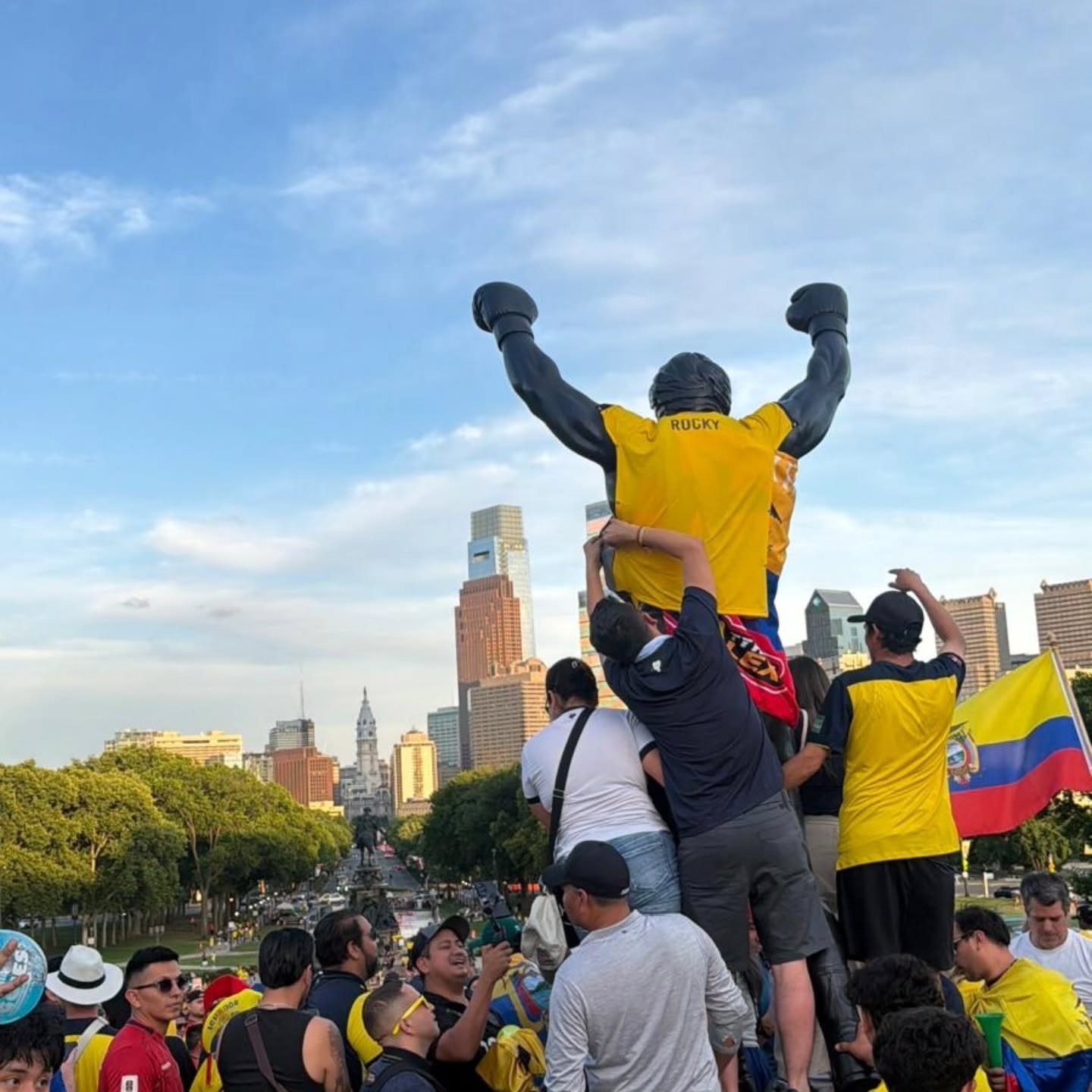
Thousands of Ecuadorian fans came face-to-face with the Rocky statue curse over the weekend. As the Ecuadorian team fell to the Ivory Coast, 1-0, many blamed fans who draped the iconic statue of the Italian Stallion in their signature yellow jersey.
Their actions even triggered the Pennsylvania Tourism Office to officially alert teams worldwide:
“Philadelphia can’t wait to host you! (but Rocky does not need your kit),” the statement read.
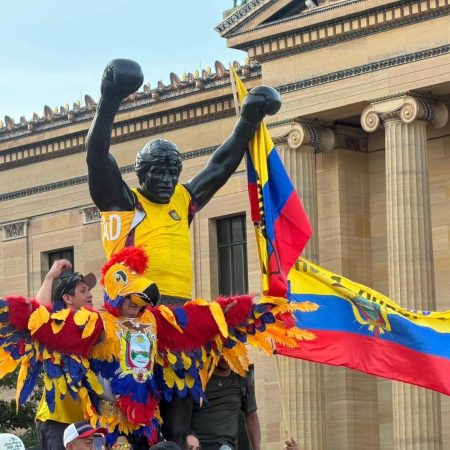
The warning came too late for Ecuadorian native Gigio Benavides, who had spent a week hand-making a version of his team’s jersey with loved ones just to place it on Rocky on June 13, the day before the Ecuadorian loss.
But the 38-year-old didn’t know about the other teams that have suffered the same fate after gussying up Rocky in their own team’s unis.
“Rocky is an example of discipline and consistency. He was always facing people who had so much more, but he never gave up. We needed that spirit,” Benavides said in Spanish.
Ecuadorian soccer fans attend a flag-waving event at the Philadelphia Museum of Art steps along the Benjamin Franklin Parkway, ahead of their first round World Cup match against the Ivory Coast last weekend.Yong Kim / Staff Photographer
A week before the World Cup began, he measured the statue through online pictures to ensure the shirt would fit.
Five friends, who make school uniforms for a living, helped him bring the yellow shirt to life using a 2XL shirt template.
They left the sides open to ensure the statue’s lifted arms would fit, and his aunt sewed clips on the sides in case more room was needed.
“That was good because Rocky was really, really muscular,” Benavides said.
To top it off, they added Rocky’s name on the back with the inscription: “Dream, transcend, and make history.”
Benavides traveled 26 hours and 3,000 miles from his small town in Loja, Ecuador, to Philadelphia’s 30th Street Station. But, not before telling his friends that if they saw the shirt, to know that he made it.
He arrived before sunset on Saturday, hours before Ecuadorians flooded the Philadelphia Museum of Art’s steps.
“My only concerns at the time were not offending the people of Philadelphia or getting in legal trouble for putting the shirt on him,” Benavides said.
Gigio Benavides puts a custom Ecuador shirt on Rocky during last Saturday’s gathering at the Philadelphia Museum of Art steps.Gigio Benavides
When Benavides made it to the steps, the statue already had flags on, so he figured his shirt would only add to Rocky’s glory.
It wasn’t until hours later, when hate messages began pouring in, that he realized his mistake.
“Now everyone is saying I am bad luck,” Benavides said.
Amid the death threats and cruel messages, falling asleep proved a challenge. But he chose to look at the bright side: “Maybe Ecuador could break Rocky’s curse and set the city free,” he recalled thinking.
By Sunday morning, that hopefulness had turned into a need for survival. Yet, the full weight of the curse didn’t fall on his shoulders until he arrived inside the stadium.
Lincoln Financial Field, renamed Philadelphia Stadium for the World Cup, was an ocean of yellow, and many Ecuadorian influencers had already put a target on him by posting his name online.
By grace, his seat happened to be in a section where most of the spectators were not Ecuadorian. He sat between two men, one from Boston, the other from Brazil.
As Ivory Coast faced Ecuador, Benavides felt himself sweating, seeing the score fixed at zero. The continuous tie by halftime made him feel a dose of relief.
“I thought, if the curse is true, but we tied 0-0, then maybe we avoid it,” he said. “Either way, we must break it, because my life is on the line.”
One minute before the 90th-minute mark, Ivory Coast scored, leaving Benavides sobbing on his seat.
Ecuador forward Enner Valencia (center) and Ivory Coast defender Emmanuel Agbadou (right) collide when the head the ball in the first half of the World Cup Group E soccer match in Philadelphia on Sunday.David Maialetti / Staff Photographer
The hate worried Benavides, but nothing hurt more than feeling his good intentions had cursed his beloved team.
“I was crying so much that the guys from Brazil and Boston hugged me,” Benavides said. “They keep saying, ‘It’s OK man, it’s OK.’”
Feeling like a truck hit him, Benavides stayed seated as fans left the stadium wondering what would happen next. But the storm and the drops falling on his face didn’t allow for too much time for reflection.
By Monday morning, videos of Ecuadorians offering beer and Encebollado — a traditional Ecuadorian fish soup said to cure hangovers — to Rocky for him to lift the curse went viral.
Other Ecuadorian fans tried turning the curse to their favor and putting Germany’s shirt on Rocky, ahead of their match in New York on June 25. It’s a move the Pennsylvania Tourism Office said on their Instagram post that won’t work, because “the statue will know.”
Benavides himself did not attend, returning to plead with Rocky, but he did walk around the city before traveling to New Jersey, witnessing some of the fans himself.
“Seeing everyone so caught up in the game made me realize how much soccer helps us free ourselves from the heavy thing happening,” Benavides said. “So it’s OK if I have to take the fall, but let’s not forget to still have hope, and send good vibes to our team.”
Ecuadorian fans wait for their team to play Ivory Coast during the World Cup Group E soccer match in Philadelphia on Sunday.David Maialetti / Staff Photographer
In the tumultuous five-plus months since masked federal immigration agents descended on her hometown, the Rev. Jen Crow of the First Universalist Church of Minneapolis has already been arrested at an airport sit-in, organized a vigil after the murder of her neighbor Alex Pretti, and held trainings at her church for volunteer observers.
So when Crow learned on Tuesday that 15 local activists had been indicted by federal prosecutors on felony conspiracy charges for monitoring and allegedly at times impeding U.S. Immigration and Customs Enforcement and Border Patrol officers, she did the one thing the Donald Trump regime does not want anyone to do.
She went down to the St. Paul federal courthouse to protest, again. Crow told me by phone Wednesday that everyday Americans who oppose immigration raids can’t surrender to the fear that the Justice Department wants to create by threatening long prison terms.
“When you see the federal government turning on its own people, the thing is we have to act anyway and just trust in the purpose and trust in what we’re doing and our care for each other, and just really lean into that,” Crow said. “To let the fear wash through, but not get stuck in it.”
Crow and as many as 200 other Minnesotans chanting “Free them all!” outside the 15 activists’ arraignment on Tuesday were rewarded for their ongoing courage with a blast of chemical irritants from U.S. Marshals, which, according to videos, started with little or no provocation by the outside protesters.
“Witnesses tell me that what was going on at the time is that they were holding the doors open, so that you could hear the chants inside the building, when suddenly somebody saw folks putting on gas masks inside the courthouse,” local journalist Pilar Pedraza of KSTP-TV reported. “And all of a sudden they came out and started spraying a chemical irritant at them.” Videos showed other protesters hit with pepper spray, with one violently thrown to the ground.
The indictment of the Minneapolis 15 — a so-called “conspiracy” that included innocuous acts of dissent like discussing ICE activities on the Signal app or publishing an article on a pro-anarchist website — and the chemical assault against citizens exercising their free-speech rights are all the same instinct from a violently repressive government.
The good news is that the government’s intimidation campaign is being met with renewed resistance in the Twin Cities — the place where regular folks with whistles and cell phones eventually drove away most of the immigration raiders, albeit at the horrible cost of more than 4,000 immigrant arrests and two citizens gunned down in the street.
“The only thing I did was care about this, my community and my neighbors,” Natasha Rakotz — one of the Minneapolis 15, a caretaker whom prosecutors accused of sideswiping an immigration agent’s vehicle — told reporters after her arraignment.
The charges against the Minneapolis 15 — tied to a protest group known as Direct Action Minnesota, or DAMN — is arguably the most aggressive in a flurry of actions by Trump’s Justice Department aimed at convincing the public that the ideology of aggressively fighting fascism, known as “antifa,” is some kind of highly organized terrorist cell along the lines of ISIS or al-Qaeda.
Federal prosecutors have been racing to crayon in the blanks since Trump’s September 2025 executive order that declared “antifa” — again, not an actual group — as a “domestic terrorist organization.” The Minnesota indictments are the most dramatic of a myriad of federal cases from New Jersey to Oregon.
These prosecutions have run the gamut. In Texas, an actual criminal act that warranted charges — when a protester at an ICE detention site fired a gun — became the impetus for a sweeping dragnet that led to convictions against nine activists. In Spokane, Wash., prosecutors recently gained convictions against three protesters who tried to stop ICE agents from transporting two Venezuelan immigrants, even after an acting U.S. attorney resigned because he believed the charges were unwarranted.
But other Trump efforts to criminalize dissent have collapsed, almost farcically so — from a jury’s speedy acquittal of the Washington, D.C. man who threw a salami sandwich at an agent, to the implosion of a case against Chicago ICE-detention-center protesters, including congressional candidate Kat Abughazaleh, known as “the Broadview Six.” The former defendants and some members of Congress are calling for an investigation of alleged grand jury misconduct by Chicago U.S. Attorney Andrew Boutros and his underlings to obtain their indictment.
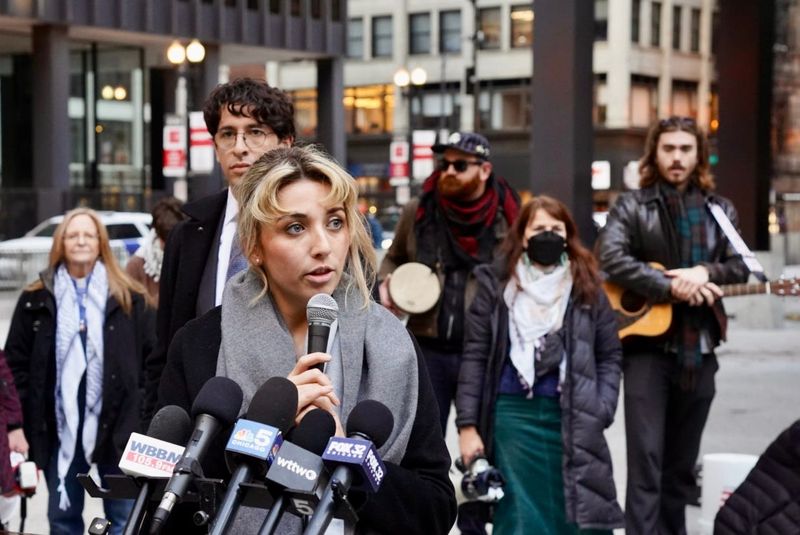
Democratic Congressional candidate Kat Abughazaleh addresses supporters in downtown Chicago outside the federal courthouse where she pleaded not guilty to charges filed in connection with a protest against the Trump administration’s mass deportation campaign.Michael Loria, USA TODAY
In Minnesota, U.S. Attorney Daniel Rosen strived on Tuesday to defend the new prosecution as skeptical reporters asked him why felony charges were lodged when not a single agent was hurt, why the urgency of this case when there’s been no prosecution of the agents who shot and killed Pretti or the unarmed motorist Renee Good, and whether the case amounted to what writer George Orwell famously called “thoughtcrime.”
Rosen insisted that “whether or not they actually, at the end of the day, caused bodily harm is not the measure of whether or not they committed a serious federal crime.”
Still, the federal case against the Minneapolis 15 contained just a couple of instances of alleged property violence ― the sideswipe andthe kicking out of a vehicle’s tail light. Mostly, the indictment describes a lot of activities —like Signal chats, monitoring the movement of immigration agents on public streets, discussing the use of protective gear like shields, or an anarchist’s speaking tour about the protests — that would seem to be constitutionally protected free speech.
With the enactment of the First Amendment in 1791, America’s founders vowed to protect “the right of the people peaceably to assemble, and to petition the Government for a redress of grievances.” Just days before the nation’s 250th birthday, an authoritarian regime in Washington wants to make this a crime for which you could spend a large chunk of your life in prison.
“It does look like the government is throwing the book, maybe even over-charging some of the protesters,” Roy Gutterman, director of the Tully Center for Free Speech at Syracuse University, told me yesterday, noting that any act of actual violence wouldn’t be protected by the First Amendment. But he added that “even if some of the charges end up being thrown out, the breadth of the government’s arguments and the weight of the charges certainly send a message to protestors.”
Exactly. Although the indictments are a living hell for the Minneapolis 15, the real target here is regular American folks like you — citizens who aren’t normally inclined to protest the government, but are starting to wonder what to do as the regime and its 80-year-old and increasingly out-of-touch leader spiral out of control.
Before you even dare venture out to a church meeting where they pass out whistles and teach you how to warn your neighbors that masked ICE agents are snatching people off the streets, they want to plant seeds of doubt. Am I risking my freedom, and my family, just for posting something in a Signal or WhatsApp chat?
They want you to be terrified, and on some level you should be afraid, not just of what the government is doing but why they are doing this now. Trump was already nearing record-low approval numbers before this week’s humiliating surrender deal aimed at ending the president’s foolhardy war of choice with Iran. The near inevitability of a Democratic House in 2027 all but guarantees Trump’s next impeachment and two years of political hell to end his 47th presidency.
Thus, Trump’s desperate determination to interfere in the November election is becoming increasingly clear, with everything from unwarranted meddling by the U.S. Post Office to his insistence that grossly unqualified loyalist Bill Pulte serve as his director of national intelligence, in order to invent foreign election plots.
Criminalizing dissent isn’t a sideshow. It’s central to the plan. They want to stop you from taking to the streets in massive numbers if and when they take illegal actions to keep the Republican Party in power. They are using these bogus indictments to lay the foundation for the solution that Vice President JD Vance proposed for Minneapolis back in January — to invoke the Insurrection Act and send in tanks.
The case against the Minneapolis 15 reminds me of the remarkable novelEvery Man Dies Alone by the German novelist Hans Fallada, based on the true World War II era heroism of Otto and Elise Hampel, who placed postcards around Berlin criticizing Adolf Hitler and the Nazis for two years before they were arrested and executed by guillotine. Are we now becoming such a totalitarian society?
Hopefully not, if American citizens like the Rev. Jen Crow continue to speak out.
“We’re not going anywhere,” she said after the feds’ courthouse chemical attack. “Those of us who care about each other and care about the rule of law and care about following the rules we’ve set out as a society that protect basic human rights, we’re not going anywhere.”
The period following mandatory minicamps generally is a quiet time in the NFL. But the Eagles have not been closed for business on the personnel front.
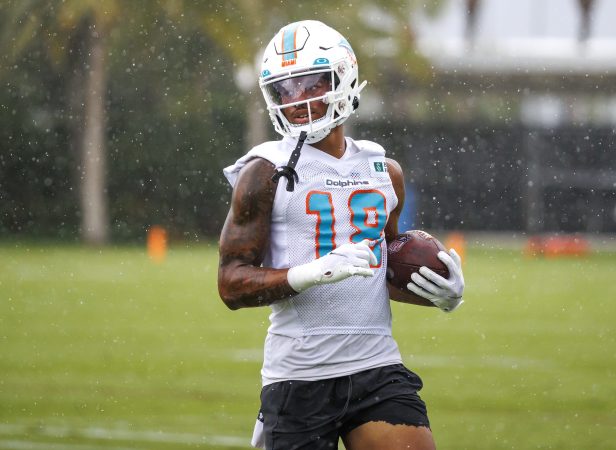
Ezukanma, 26, is a former Texas Tech standout who was the Dolphins’ fourth-round pick in 2022. He spent time on the Jaguars practice squad in 2025, but spent this past season with the DC Defenders of the UFL. DC lost to the Louisville Kings in the league championship — the United Bowl — last Saturday.
Ezukanma was one of the top kickoff returners in the UFL, returning 18 kicks for 443 yards (24.6 yards per return) while catching 15 passes for 227 yards and one touchdown. He already has chemistry with Eagles passing game coordinator Josh Grizzard, who was a quality control coach in Miami during his stint there.
Wade, 27, was a fifth-round pick by the Ravens in 2021. He played college ball at Ohio State and played in 20 games in three seasons with the Patriots. Wade was drafted by the UFL’s Dallas Renegades, where he logged three interceptions in eight games this season.
In other team moves this week, the Eagles waived defensive back Brandon Johnson and placed linebacker Joe Tryon-Shoyinka on the reserve/retired list.
The city is rolling back its geofence border around the FIFA Fan Festival to reduce the number of residential areas blocked from using rideshare.
The Philadelphia Office of Transportation and Infrastructure Systems (OTIS) announced Thursday that it would shrink the geofence to exclude large residential buildings on Pennsylvania Avenue.
The geofence, which blocks people within its borders from using rideshare services like Uber and Lyft, will now shrink to the south of Aspen Street, about half a block from its original border at 25th and Meredith Streets.
“We’re continuing to work with the community, elected officials, and operational partners to improve the experience for everyone, including residents impacted by Lemon Hill festivities,” an OTIS spokesperson said.
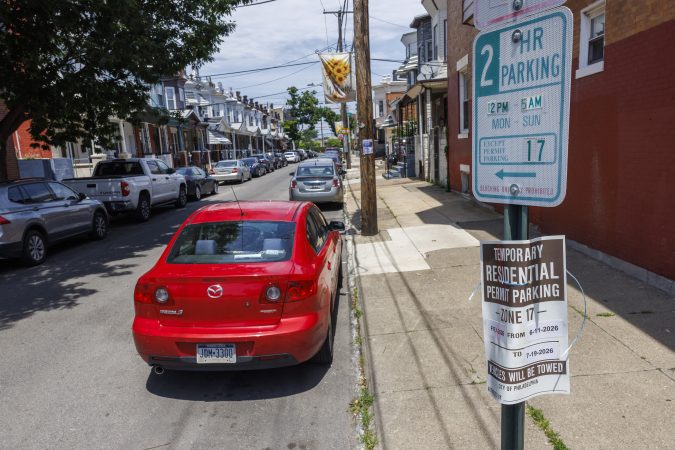
Additionally, four blocks in Fairmount had been designated for rideshare pickups and drop-offs, but OTIS is reducing rideshare zones to two, allowing for more parking for permitted residents.
The rideshare pickup/drop-off zones are now located only near Eastern State Penitentiary, at 23rd Street and Fairmount Avenue, and the 2200 block of Fairmount Avenue.
This was well-received news for residents who live in the area and have been concerned about the geofence’s restriction on residents with mobility issues.
Paul Stewart, an 86-year-old resident who lives in one of the large apartment buildings that initially had been geofenced, relies on Uber to visit his doctor at Thomas Jefferson University Hospital. But last week, when he planned to head to an appointment, he found he could not call a rideshare.
“The geofence that includes my building and all the businesses in the immediate area will continue for 39 days,” Stewart said before the geofence rollback. “Many people take Uber to and from the restaurants and bars in this neighborhood so that they can have a few drinks and not worry about driving drunk.”
Geofencing these large residential buildings and blocks was hindering everyday life, Stewart said. Now, he said, residents will be able to go about their business as they normally would.
The geofence reduction is just one of the adjustments the city has been making as it manages the traffic and fans around the FIFA Fan Festival in Lemon Hill. Since at least May, residents have been requesting traffic-calming measures on residential blocks. The Philadelphia Parking Authority and OTIS installed additional barricades and signage last week.
Angelo’s Pizzeria owner Danny DiGiampietro has been pursuing two ambitious goals: reviving a landmark Montgomery County bakery and opening a branch of his Michelin-recommended pizza-and-sandwich operation in South Jersey, where it all began.
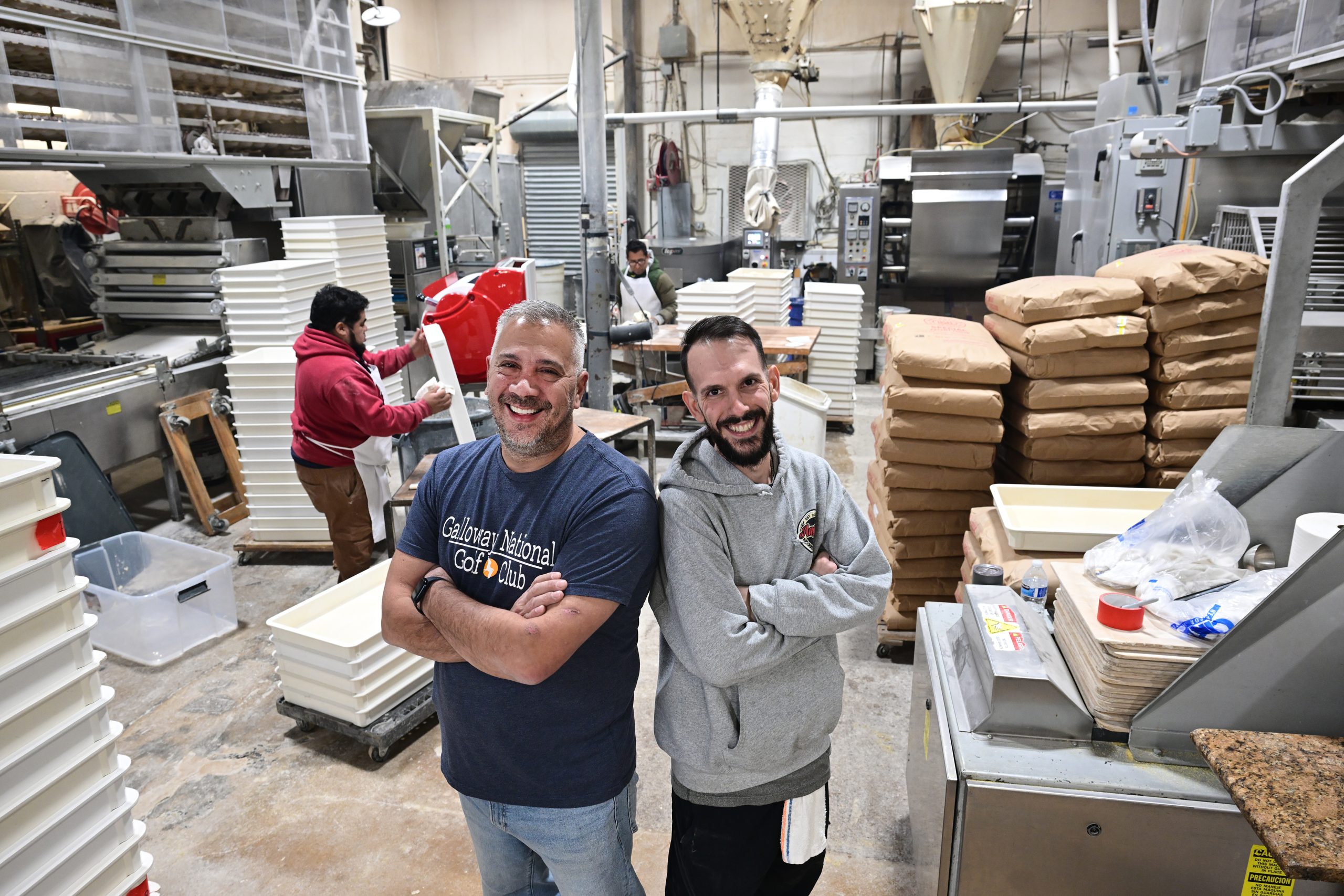
Both projects now appear to be gaining momentum. While Angelo’s vaunted rolls are being baked at the former Conshohocken Italian Bakery property, which DiGiampietro purchased last year, the long-held plans to reopen the bakery’s counter to retail customers remain on hold. DiGiampietro said the building requires additional work, which he declined to specify. “Every time we fix one thing, something else comes up,” he said.
Danny DiGiampietro (left), owner of Angelo’s Pizzeria, with partner Jared Braunstein at the bakery in Conshohocken in December 2024.Jose F. Moreno / Staff Photographer
But Angelo’s is moving into wholesale bread production, the backbone of Conshohocken Italian Bakery’s business under the Gambone family for more than a half-century before its 2024 closing.
A key piece of the puzzle is on the way: a massive Polin oven imported from Italy to give his bakers more flexibility, DiGiampietro said.
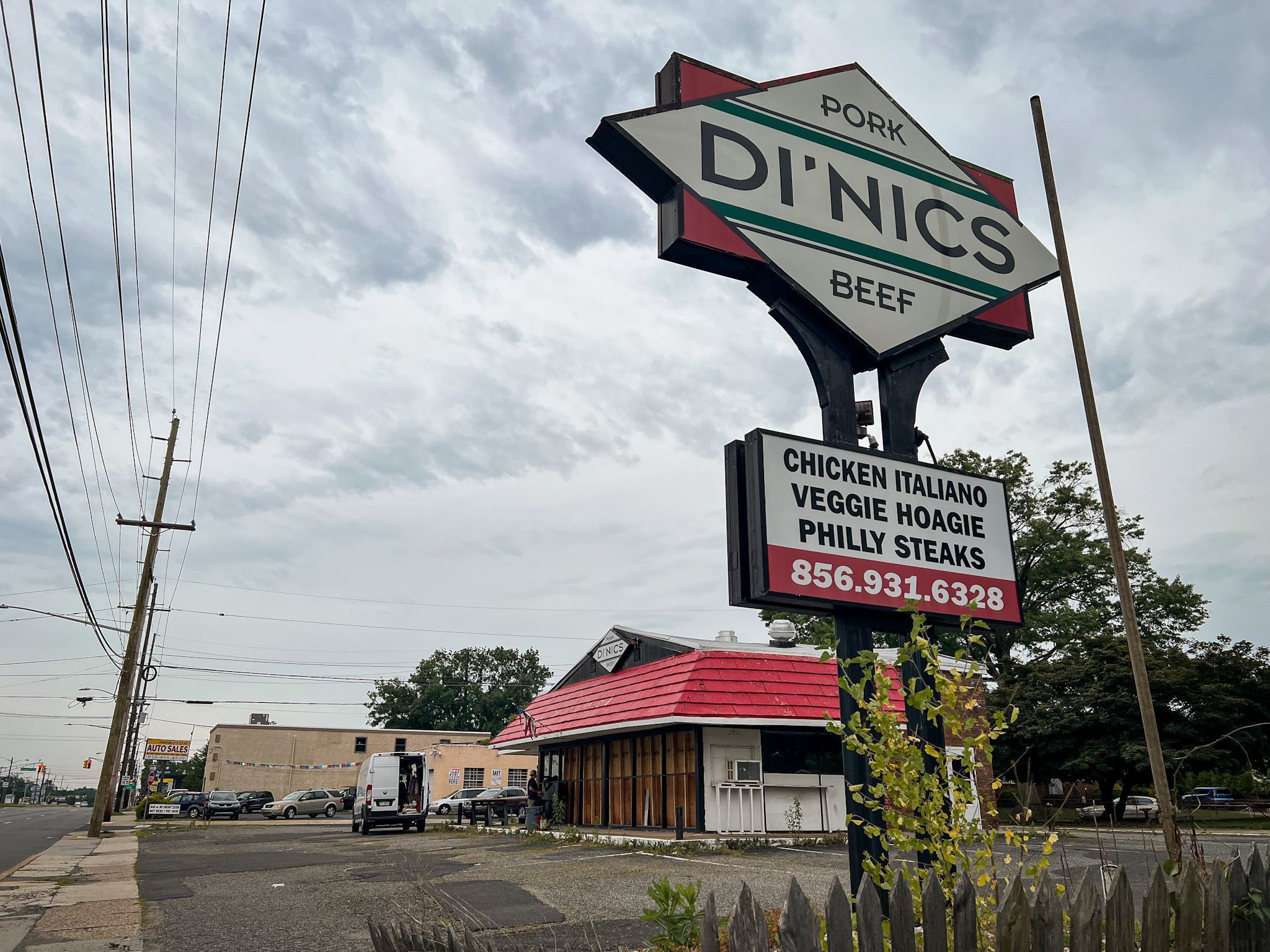
The future location of Angelo’s Pizzeria in West Collingswood Heights, previously Di’Nics, on June 18, 2026.Michael Klein / Staff
At “Conshy,” as the Jones Street bakery was known, the Gambone family supplied rolls and bread to hundreds of restaurants and sandwich shops throughout the region. Its closing created a frenzy among customers and competitors.
DiGiampietro said the new oven will allow bakers to create a line of kaiser rolls, potato rolls, steak rolls, and hoagie rolls. Although he will in effect be selling to his sandwich shop competitors, he likens it to giving shops “the canvas to make their art,” DiGiampietro said. “Everyone’s different.”
A return to wholesaling was not in the initial plans for DiGiampietro, who owned a bread bakery in South Philadelphia about 20 years ago. “I went bankrupt the first time. So hopefully I don’t go bankrupt again.”
Meanwhile, demolition and rebuilding are underway at the future Angelo’s Pizzeria location at 310 Black Horse Pike in the West Collingswood Heights neighborhood of Haddon Township, Camden County. The stand-alone building was formerly Di’Nics.
Crews recently gutted the building, which DiGiampietro hopes to transform into a full-service Angelo’s within the next several months.
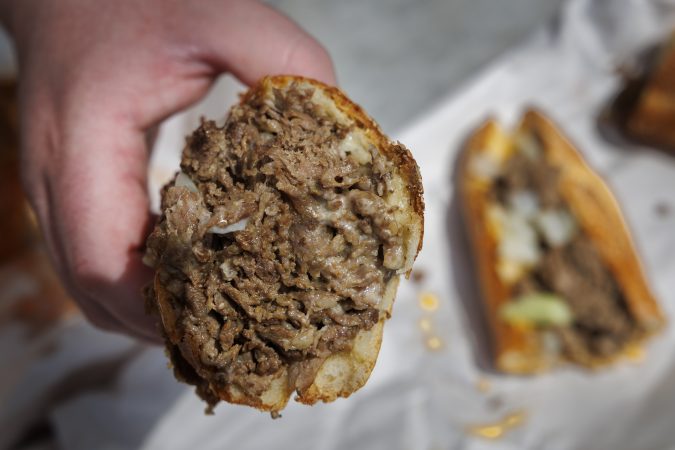
The project will mark his return to New Jersey. DiGiampietro opened his first Angelo’s in Haddonfield in 2013 before closing it in 2018 to focus on the Ninth Street location in South Philadelphia, which opened in 2019 and helped turn Angelo’s into one of the region’s most sought-after pizzeria and cheesesteak shops.
The Angelo’s in West Collingswood Heights, about 10 minutes from the Walt Whitman Bridge, will include table seating as well as a counter overlooking the kitchen. Initially, DiGiampietro wanted more seating. Then he began talking about a takeout-only operation.
“But people love the show,” he said. “They like to see everything happening.”
The build-out still requires installation of a pizza oven, walk-in refrigeration, and other equipment. Even so, DiGiampietro believes the compact space can work.
“We think we can keep a dining room and still fit everything we need in there,” he said. “It’ll be tight, but we work on Ninth Street in basically a submarine, so how much tighter can it get?”
At least two titles will be on the line as UFC returns to Philly for UFC 330 on Aug. 15 at Xfinity Mobile Arena.
UFC president Dana White joined The Pat McAfee Show on Wednesday and announced that Islam Makhachev (28-1) will defend his welterweight title against Ian Machado Garry (17-1). This will be Makhachev’s first welterweight title defense since he vacated his lightweight title and defeated Jack Della Maddalena by decision at UFC 322 in November for the welterweight title.
Additionally, Mackenzie Dern (16-5) will defend her women’s strawweight title for the first time against Gillian Robertson (17-8). After the belt was vacated by Zhang Weili, Dern earned the vacant title in October after a five-round decision win over Virna Jandiroba.
“This is the first time we’re back in Philly since 2019 … I love Philly, I love Philly cheesesteaks … and I can’t wait to get back there. The fans are the best,” White said, adding that he loves going to Celtics games and getting trash talked by Sixers fans.
In 2019, the UFC held a Fight Night in Philly, featuring a main event between Justin Gaethje and Edson Barboza. But UFC 330 will be the first numbered event and first title fight held in Philadelphia in a decade and a half — dating back to UFC 133 in 2011, in which Rashad Evans defeated Tito Ortiz in the main event.
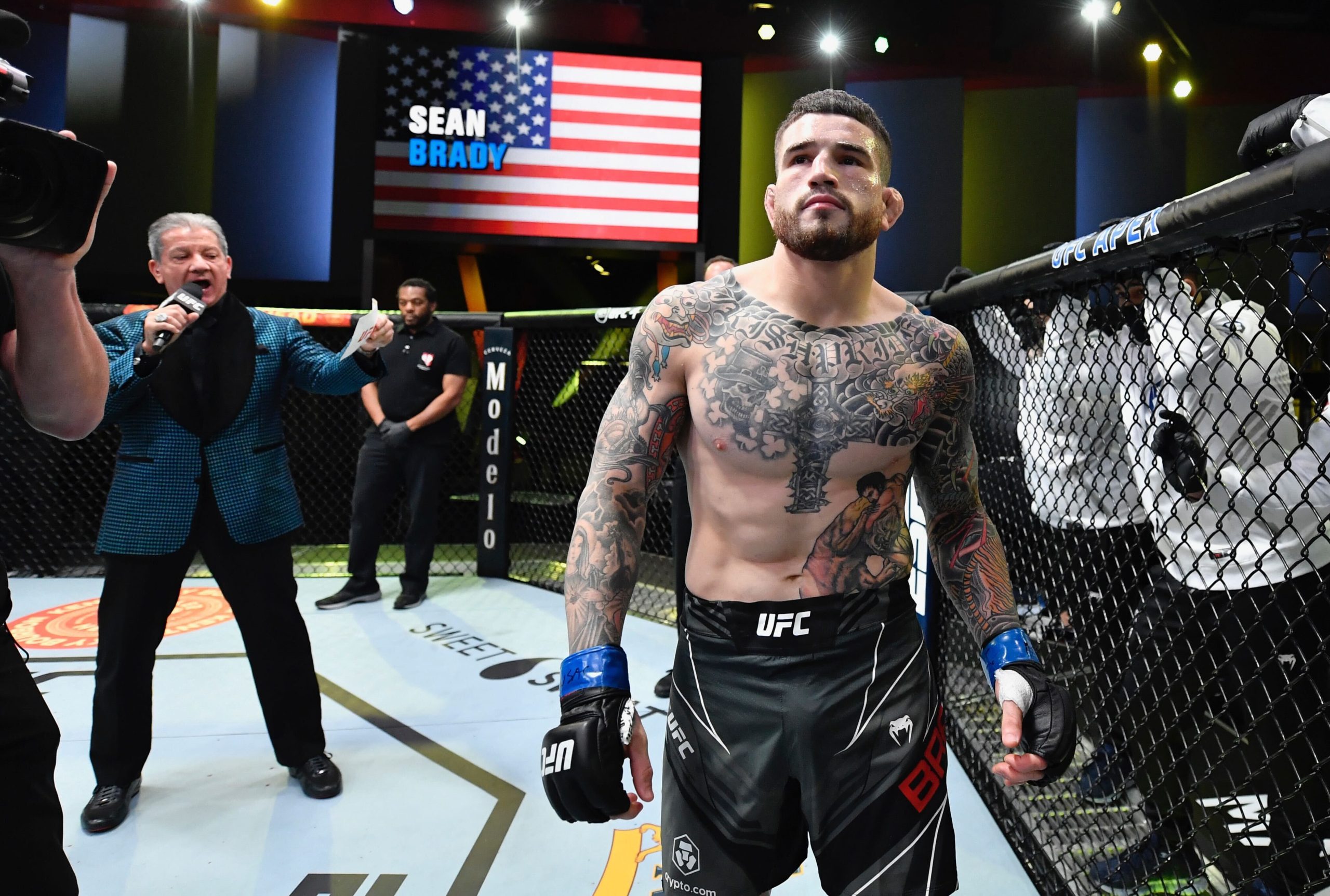
Will Philly native Sean Brady get a chance to fight in his hometown?courtesy of UFC
Will there be a Philly fighter?
The last time the UFC was in town, there wasn’t a local fighter on the card, despite the city’s deep roster of talent, although Philly fighter-turned-broadcaster Paul Felder was in the booth.
So as the UFC 330 card continues to develop, here are some Philly fighters who could be featured …
Sean Brady: Brady (19-2) wears his Philly roots as a “badge of honor.” After suffering a tough loss to Michael Morales in November, he bounced back with a unanimous decision win over Joaquin Buckley in May at UFC 328.
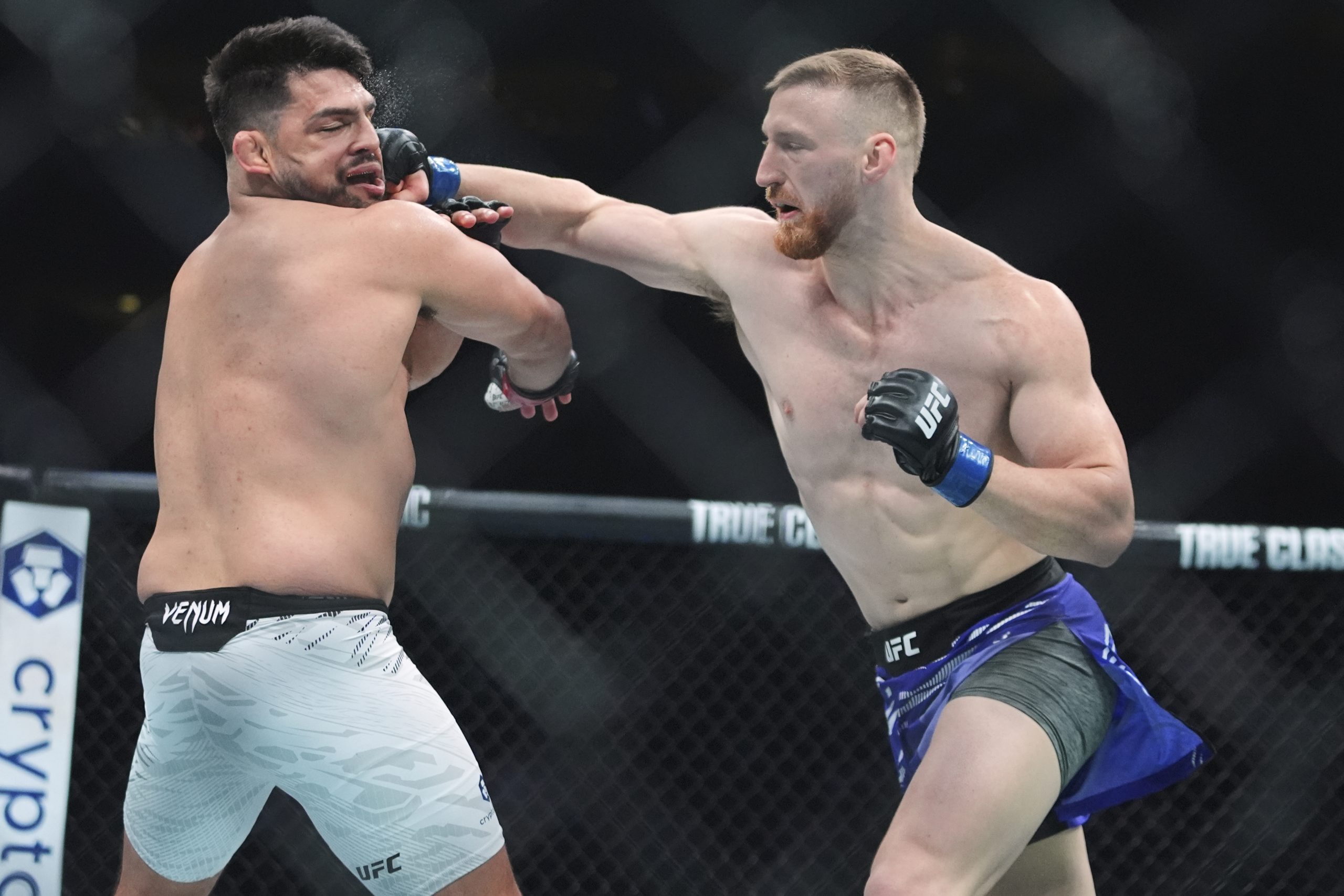
Joe Pyfer (right) punches Kelvin Gastelum during the first round of a middleweight bout at UFC 316 last June.Frank Franklin II
Pat Sabatini: Sabatini (22-5) is on a four-fight winning streak; his latest victory was via decision over William Gomis at May’s UFC 328. Sabatini has been training in Northeast Philly since he was 5 years old, and hung up his hockey pads for a gi.
Andre Petroski: Petroski (13-7) is on a three-fight losing skid. And when he’s not focused on his own training, he’s working as the Flyers’ fight coach alongside bare knuckle fighter Johnny Garbarino.
Jeremiah Wells: Wells (13-4-1) bounced back from consecutive losses with a decision win over Themba Gorimbo in November. The West Philly native attended Overbrook and was a standout wrestler before moving to the Poconos to train and work.
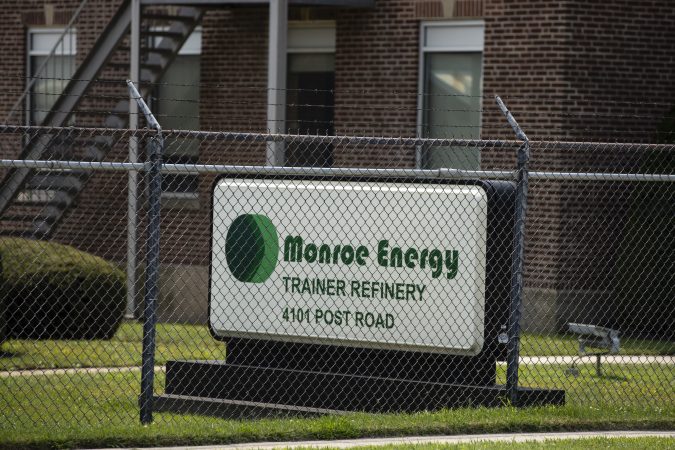
The Monroe Energy refinery on the Delaware River in Trainer, Delaware County, stopped its two 100,000-barrels-per-day crude-oil distilleries Tuesday due to a leak inside the facility, Industrial Info Resources (IIR), a Texas-based energy research service, told clients Wednesday.
Delta Air Lines owns the refinery and uses much of its capacity to make jet fuel. A Delta spokesperson said he could not comment on daily operations at Monroe Energy, adding there is no danger to the public.
The stoppage was reported in other energy media and noted on Delaware River Shipping, a 7,000-member Facebook group frequented by people who work for shipping-related businesses and others with an interest in river traffic.
But the reduced supply makes prices more vulnerable to plant shutdowns and other supply disruptions, according to the agency.
Delta bought the former ConocoPhillips refinery in Trainer in 2012 to insulate itself against swings in oil prices by producing its own jet fuel and other refined products for trade to jet fuel suppliers in other cities. Fuel is airlines’ largest single expense, according to the International Air Transport Association, which represents airlines that carry most of the world’s passenger traffic.
Monroe Energy, which employs around 500 union workers, managers, and other professionals and contractors, is one of three similarly sized oil refineries remaining on the Delaware River since the closing of the former Sunoco refineries in Westville, N.J. (2010), Marcus Hook (2011), and South Philadelphia (2019).
The other remaining refineries in Delaware City, Del., and Paulsboro, Gloucester County, are owned are operated by publicly traded PBF Energy, based in Parsippany, N.J.
In a separate incident, neighbors of Monroe’s tank farm in Aston, Delaware County, which relies on well water, were issued bottled water last year after 378,000 gallons of gasoline leaked through a quarter-inch hole in one of the 12 tanks on the site over a period of several months before the leak was found last December.