Tag: topic-link-auto

  • A controversial development plan calls for 743 homes to be built on the historic Freeway Golf Course in Gloucester Township

    A controversial development plan calls for 743 homes to be built on the historic Freeway Golf Course in Gloucester Township

    A controversial Gloucester Township development plan for 743 residential units on the site of the nation’s first African American-owned, 18-hole golf course is scheduled before the zoning board on Wednesday.

    Freeway Golf Course was purchased by four Black businessmen in 1967 and saw the last round of golf played in November 2015. The 154-acre property at 1858 Sicklerville Rd. was offered for sale in 2016.

    Hamilton-based US Home LLC, doing business as Lennar, filed with the township as the developer of the $292 million project. Lennar Corp. is a national homebuilder founded in 1954 with national headquarters in Miami. Lennar is traded on the New York Stock Exchange. The property owner is Black Horse Properties LLC of Blackwood, according to the application.

    Some neighbors have banded together to oppose the development, posting their objections on the Friends of Freeway Facebook page. A post on Saturday with the agenda of the 7 p.m. meeting says “Don’t let this builder determine the fate of OUR community! He’ll make millions and leave us to deal with the mess.”

    “We have our research, we have our facts, we have our attorney and planner! The last thing we need is your attendance,” according to the page, which also featured photos of wildlife asking: “We are taking their homes. Where will they go?”

    The proposed development would be “a mixture of 177 single-family detached homes with an average sales price of $497,000, 67 (now 63) age-restricted single family detached homes with a sales price of $469,000, along with 222 traditional townhouse units and 168 stacked townhouse units with estimated sales prices of $430,000 and $365,000, respectively,” according to Lennar’s plans.

    Estimated monthly rent for the 113 affordable housing rental apartments would be $1,240.

    A fiscal-impact analysis by Richard B. Reading Associates submitted with the application states that the Freeway Pointe development would add 2,086 residents and require $1,698,000 in municipal services, which would be offset by the estimated $2,542,230 in municipal tax revenue from the homeowners.

    The financial study also expects that 214 students would live in Freeway Pointe and attend the Gloucester Township School District and 101 students would attend the Black Horse Pike Regional School District. The higher costs from the new students would be more than offset by property taxes, according to the analysis.

    70and73.com is a hyperlocal news site focused on South Jersey, including the communities of Cherry Hill, Evesham, Mount Laurel, Voorhees, Medford, Medford Lakes, and Moorestown.

  • Sixers and Flyers release first looks of new arena in South Philly

    Sixers and Flyers release first looks of new arena in South Philly

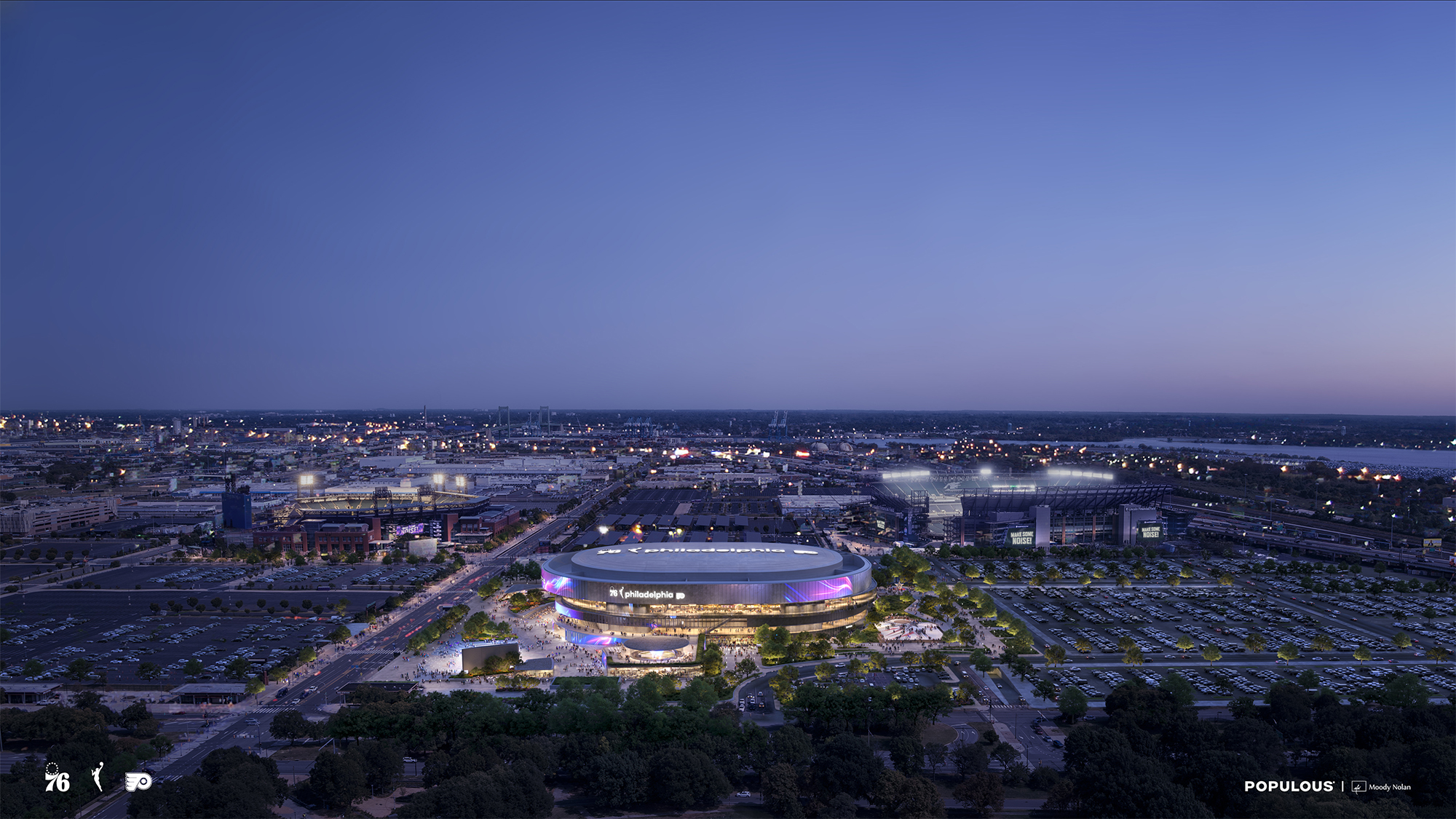
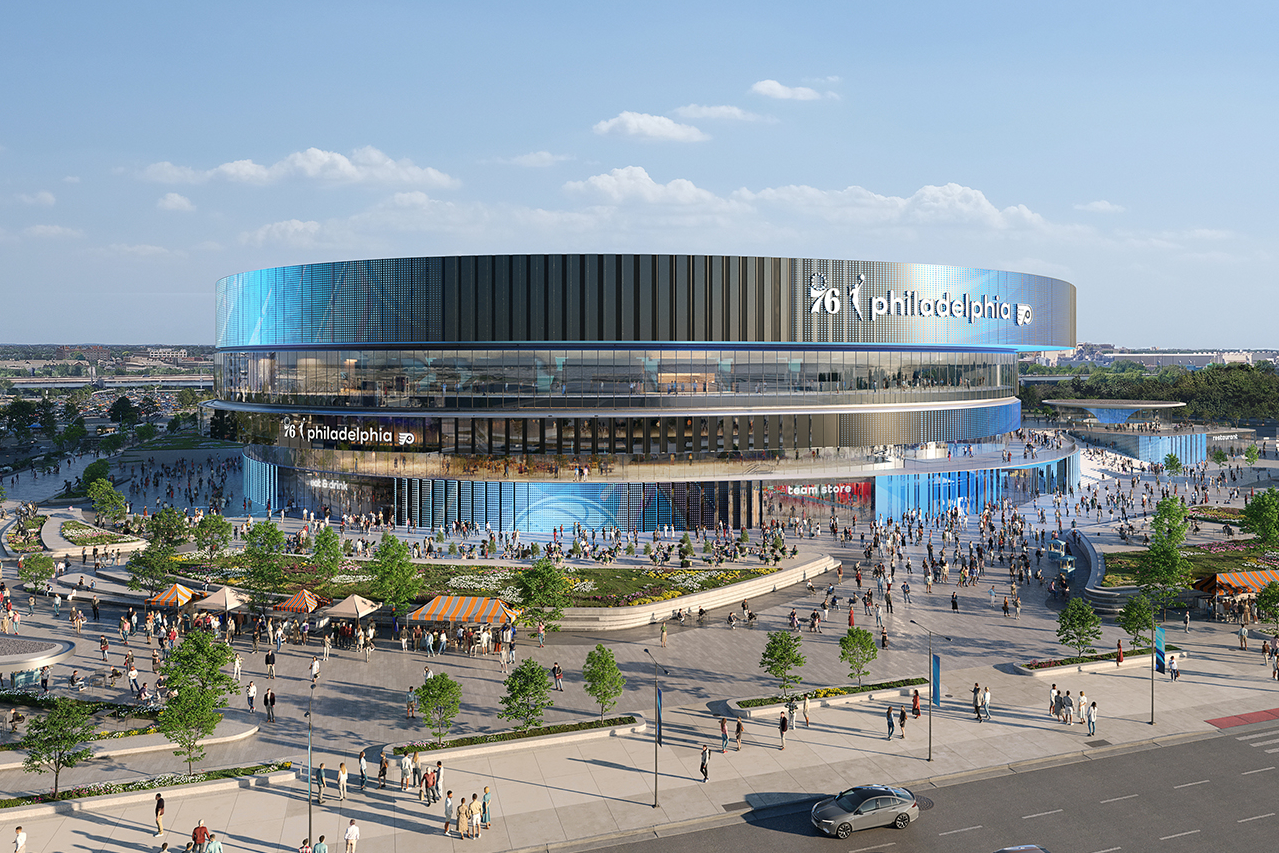
    A new home for the 76ers and Flyers is scheduled to open in 2030, and now we have our first glimpse of what the new arena might look like.

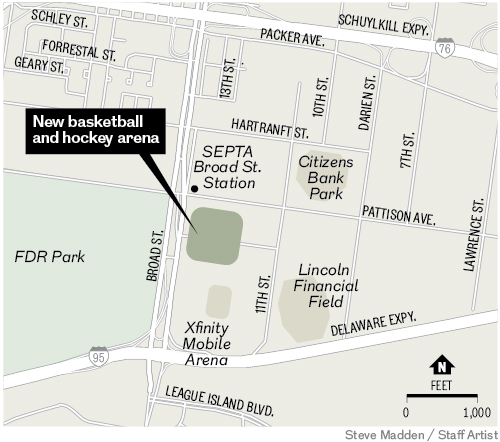
    The teams released the first renderings of the privately funded arena Tuesday that will be built at the former site of the Spectrum, next to where Xfinity Mobile Arena sits.

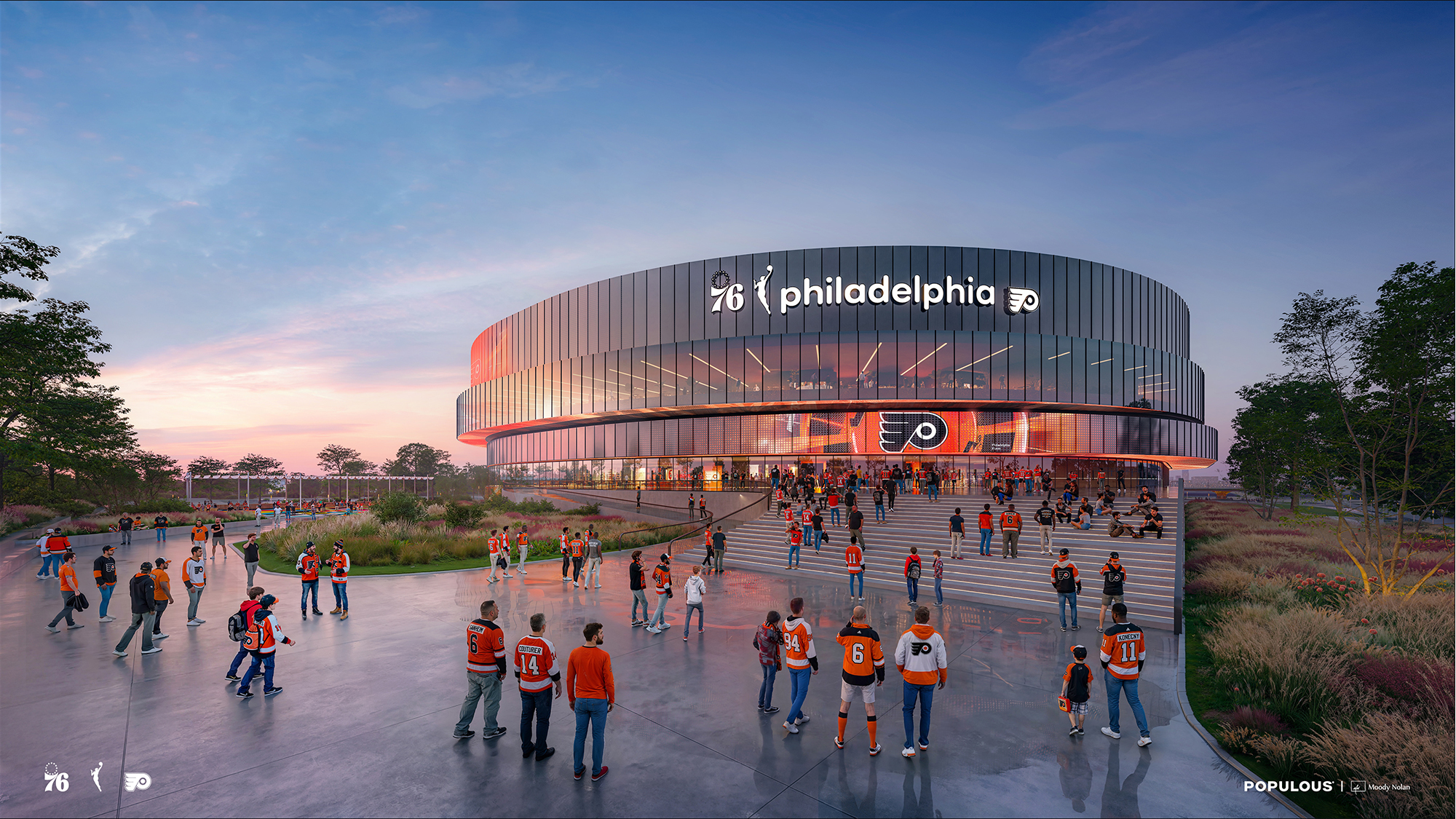
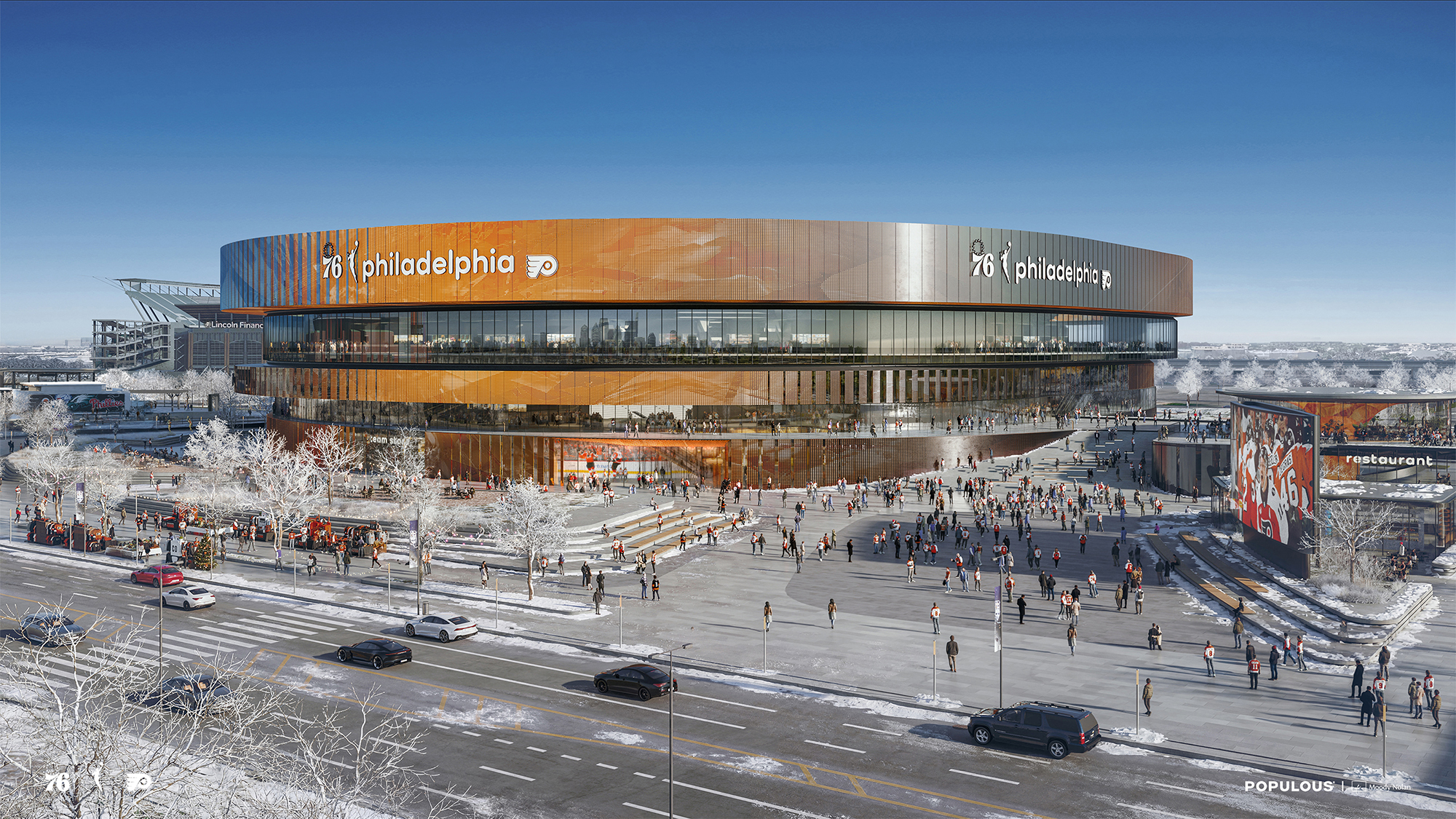
    The new design features inspiration from the Spectrum, the former home of both teams from 1967 to 1996. The renderings show the facade will be composed of three stacked and cantilevered “bands,” a nod to the Spectrum’s exterior.

    The Spectrum was home of the Sixers and Flyers until 1996. It was demolished in 2010.

    “To build our future where Ed Snider and the Spectrum made history makes this project truly special,” Comcast chairman Brian Roberts said in a statement.

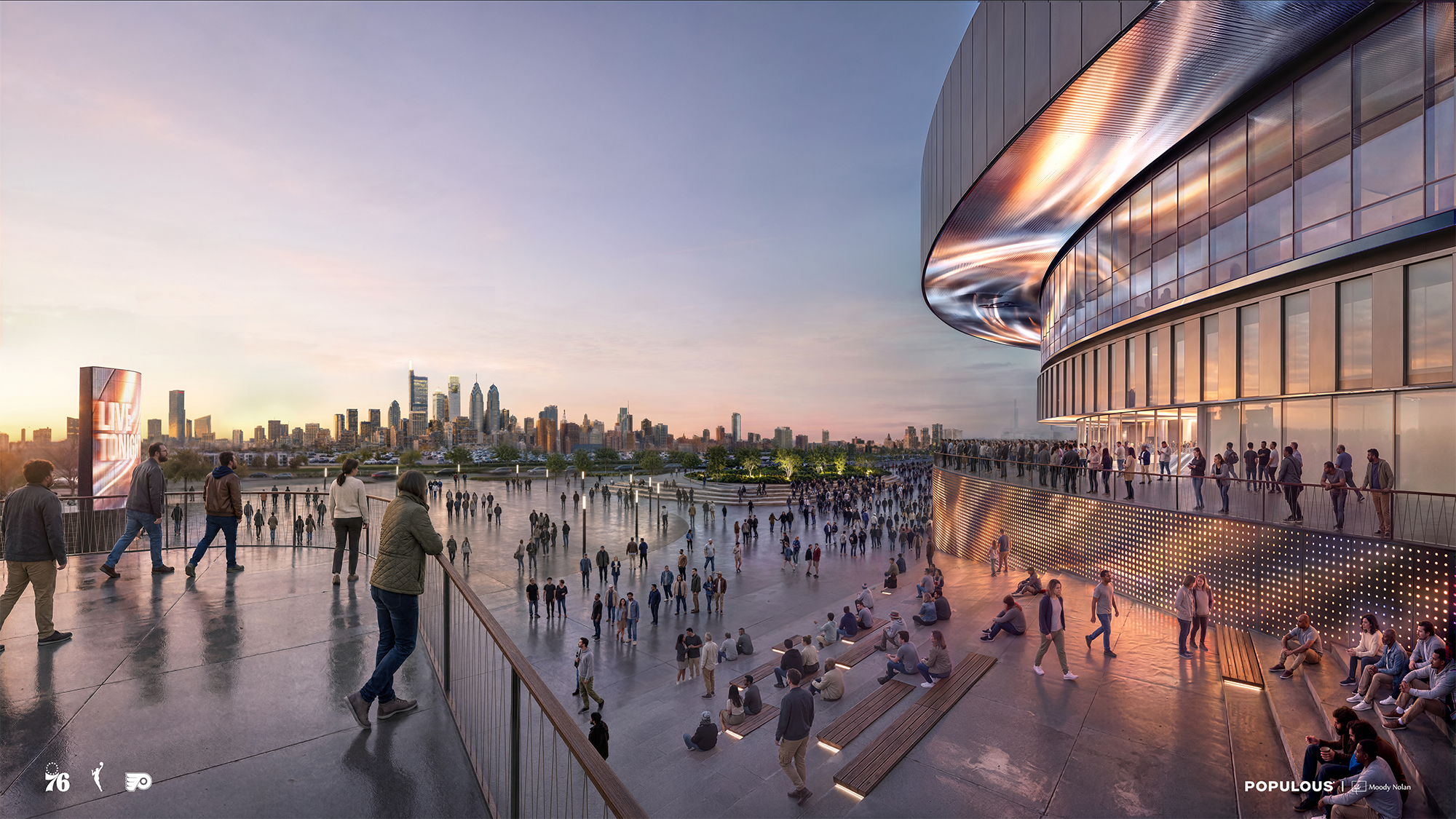
    A plaza outside the arena will feature over a half-acre of outdoor space. The renderings show an expansive footprint that includes food and beverage pavilions, along with a giant screen outside the stadium.

    “The first-look renderings reflect fan feedback and stakeholder input on the arena experience, public spaces and amenities,” the teams said in a statement. “Fan surveys, focus groups, community engagement, and public review will continue throughout the design and approval process.”

    Stateside Live!, previously known as Xfinity! Live, sits near the new stadium site on 11th Street and just underwent a $15 million expansion. It is expected to remain open.

    The location of the yet-to-be-named new arena. Steve Madden

    In addition to the Sixers and Flyers, the arena will also be home to the yet-to-be named WNBA team slated to begin playing in Philly in 2030.

    The stadium will be co-owned by Comcast and Harris Blitzer Sports & Entertainment, which owns the Sixers. Comcast owns the naming rights of the new arena but hasn’t announced a name. It’s unclear how much the new arena will cost, but it will be the largest fully privately funded project in the city’s history, according to a Comcast spokesperson.

    “Philly fans deserve the best arena in the world, and we are excited to partner with Comcast to deliver just that,” 76ers managing partner Josh Harris said in a statement.

    The new arena is scheduled to open in 2030. Courtesy of the Philadelphia 76ers and Flyers
    How the new arena might look for Flyers fans arriving for a game. Courtesy of the Philadelphia 76ers and Flyers

    The Sixers’ original plan was to build a new $1.3 billion stadium on Market Street in Center City, a contentious idea backed by Mayor Cherelle L. Parker that secured legislative approval in 2024.

    Weeks later, the project was canceled after the Sixers struck a deal with Comcast to build a new arena in South Philly.

    The new arena still needs regulatory and legislative approval before the start of construction, which is scheduled to begin in the first half of 2027.

    Parker’s office did not respond to a request for comment, but the city shared the renderings on social media along with the comment, “Get excited Philly fans!”

    Ryan Boyer, the head of the Philadelphia Building and Construction Trades Council praised the project’s job creations. “Beyond the construction jobs themselves, this is the kind of investment that opens doors for new contractors, suppliers, and small businesses throughout the city of Philadelphia.”

    What remains unclear is the future of Comcast’s plan to transform parking lots at the South Philadelphia stadium district into a sports-and-entertainment complex featuring hotels, residences, restaurants, and shops.

    That announcement came before the Sixers abandoned their Center City stadium idea and decided to remain in South Philly. For now, the focus is on the new arena.

    “We see [this location] as a unique opportunity to connect the retail affiliated with the arena, to the retail that we have in Stateside Live! and the expansion of that effort,” Comcast Spectacor chairman and CEO Dan Hilferty told The Inquirer in April.

    Beyond the new retail, restaurant, and outdoor activation space included in the new arena’s plan, there is an opportunity for the four teams (five once the WNBA comes to town) to work together to further develop the sports complex, according to Phillies CEO and managing partner John Middleton.

    “Having four major professional sports teams together in one destination creates an energy and sense of community that is unmatched anywhere in the country,” Middleton said, adding the new arena “represents an exciting next chapter for South Philadelphia and creates important opportunities” to realize the potential of the sports comlex space.

    The arena is expected to feature an outdoor plaza with food pavillions. Courtesy of the Philadelphia 76ers and Flyers
    The new arena will sit in the South Philly sports complex at the former site of The Spectrum. Courtesy of the Philadelphia 76ers and Flyers
    A renderings also show a giant screen outside the arena. Courtesy of the Philadelphia 76ers and Flyers

    As for Center City, demolition planned for some of the properties purchased by Comcast and Harris Blitzer Sports & Entertainment on Market Street across from Fashion District Philadelphia was pushed back until after the city’s 2026 celebrations.

    Revitalizing the beleaguered Market East corridor has been a focus of Parker’s, which includes a reimagining of the Wanamaker Building following Macy’s closure last year.

    Over the summer, Comcast and Harris Blitzer Sports & Entertainment upgraded and donated storefronts for use as pop-up retail stores and other temporary activations to take advantage of the city’s busy calendar.

    Last month, the companies extended the leases of four pop-up retail stores along Market Street, and both continue to work with the mayor’s Market East Advisory Committee on a master plan for the corridor, according to a Comcast spokesperson.

  • While our country mourned the thousands dead in New York, we Arab Americans also had to mourn our place in American society

    While our country mourned the thousands dead in New York, we Arab Americans also had to mourn our place in American society

    Like every American who lived that fateful day, I can vividly remember where I was on Sept. 11, 2001.

    I was in the middle of chairing a hearing as a city civil service commissioner when my administrative assistant burst into the room. She told me a plane had hit the World Trade Center in New York. I postponed the hearing immediately.

    But unlike millions of Americans who were frozen in place watching the heartbreaking visuals of the second plane hitting the second tower, I was already on the phone with the Philadelphia Police Department, the Philadelphia School District, and the Human Relations Commission.

    I knew there would be an immediate backlash against the Arab and Muslim American community.

    Like every other minority community in this country’s history, our community knew too well the playbook that is deployed following a tragedy. The provocations from talking heads on television, the incendiary questions expedited by the broader 24/7 media landscape, even the inflammatory comments made by elected officials — the very people who were supposed to protect us.

    I could see it coming. In America, we always search for an enemy to blame, and sadly, on Sept. 11, 2001, Arab and Muslim Americans were the ones unfairly blamed.

    In those first few days, thanks in part to our partners in law enforcement and our wider community outreach, we managed to head off the worst of it for the Arab and Muslim American community in Philadelphia. We had some threats and attacks on stores, and some people were targeted with violence. But even though that was horrific and traumatizing, in comparison to others, in Philadelphia our community was surprisingly fortunate.

    Across the country, Arab American businesses and mosques were literally burned to the ground. Arab Americans were arrested, and some were held for a long period of time without charge. Other Arab Americans — and those perceived to be Arab — faced targeted violence and, horrifically, a few people were murdered.

    These serious hate crimes and attacks by both lone actors and, sadly, also the government, were widely underreported by the media, then and now. Our community still feels that pain every day.

    We weren’t even given the time to mourn the tragedy ourselves, including the many victims on 9/11 who themselves were Arab and Muslim Americans.

    While our country mourned the thousands dead in New York, we as Arab Americans also had to mourn our place in American society, which has never recovered. It was the way the country changed after 9/11 that has been so difficult for our community. It was a transformation that hit every American, but it felt targeted at us.

    The response to 9/11 fundamentally shifted what the U.S. stood for. We were dragged into two devastating wars, first in Afghanistan, and then in Iraq. Those conflicts took hundreds of thousands of innocent Afghan and Iraqi lives and thousands of our own soldiers.

    Then came the Transportation Security Administration, a government organization that utilized racial profiling in what never once felt like “random” checks.

    The Patriot Act expanded government spying into the private lives of all Americans, but particularly Arab and Muslim Americans, who faced extraordinary government surveillance.

    Other law enforcement agencies followed, with their own prejudiced practices, especially the New York Police Department, which started sending undercover agents into mosques to record worship services. Their “Demographic Unit” went to gatherings, restaurants, and clubs to survey the community. They made lists of our businesses and started infiltrating student groups.

    On top of that, the federal government started the NSEERS program, forcing thousands of men visiting the U.S. from Muslim-majority countries to be fingerprinted and registered like criminals. No terrorists were found among those profiled.

    We also now know the extent to which the government used torture against mainly Arab and Muslim prisoners at black sites, and most notoriously at Guantánamo Bay. We now know that many of those prisoners were innocent and had nothing to do with 9/11, let alone al-Qaeda. That didn’t stop the CIA and its contractors, all of whom escaped justice for their role in the torture program, from using waterboarding and extraordinary rendition on these prisoners, all while denying their basic rights.

    After 9/11, if you were Arab or Muslim, there was no such thing as being innocent until proven guilty anymore.

    Even now, more than a dozen men are still sitting in Guantánamo Bay without ever facing a trial, due in part to the very torture program the government once tried to say was necessary.

    And in the decades since, some things have gotten worse.

    There continue to be travel bans targeting people from predominantly Arab and Muslim nations.

    Groups in places like Texas are trying to ban Sharia law — a grotesque, Islamophobic distortion that pretends Sharia is a legal system challenging the Constitution rather than a set of guidelines for moral and ethical conduct in a religious context.

    And attempts to silence and censure Arab American voices, particularly on issues like Palestine, continue at universities, corporations, and state capitals across the country.

    It hasn’t all been dark, though.

    The pressure our community has faced since 2001 has made us stronger in a lot of ways. It forced us to build real, lasting ties with our religious allies, especially our Jewish and Christian neighbors. That’s how the Interfaith Center of Philadelphia got its start.

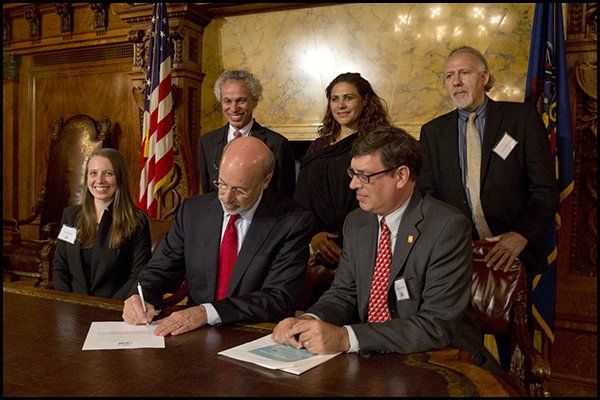
    The author (seated at right) watches Gov. Tom Wolf sign “The Pledge to Combat Bigotry,” a public commitment to speak out against bigotry toward Muslims and Arabs, in Harrisburg on Sept. 30, 2015.Courtesy of Marwan Kreidie

    It solidified our political presence, too.

    Now, we have more leaders than ever standing up for our inclusion in the city and the state. Many elected leaders have rallied to support us, and our community has the greatest number of people elected to local, state, and federal offices we’ve ever seen.

    By working together with allies to make the U.S. freer, and to protect the importance of what it means to be an American citizen, Sept. 11 showed the resilience of our community.

    I could not be prouder of that.

    Twenty-five years ago, even as those terrorists tried to break us, and others inside our own country tried to divide us, America prevailed.

    We nearly lost our democracy on that fateful day, as our democratic system was hijacked in the name of “security.” But we, as Americans, came together.

    And today we must continue to live the words of the great Benjamin Franklin: “Those who would give up essential liberty, to purchase a little temporary safety, deserve neither liberty nor safety.”

    Marwan Kreidie teaches political science at West Chester University and is the executive director of the Philadelphia Arab-American Development Corps.

  • Trump threatens to ban Bombardier jet sales as Canada’s tariffs take effect

    Trump threatens to ban Bombardier jet sales as Canada’s tariffs take effect

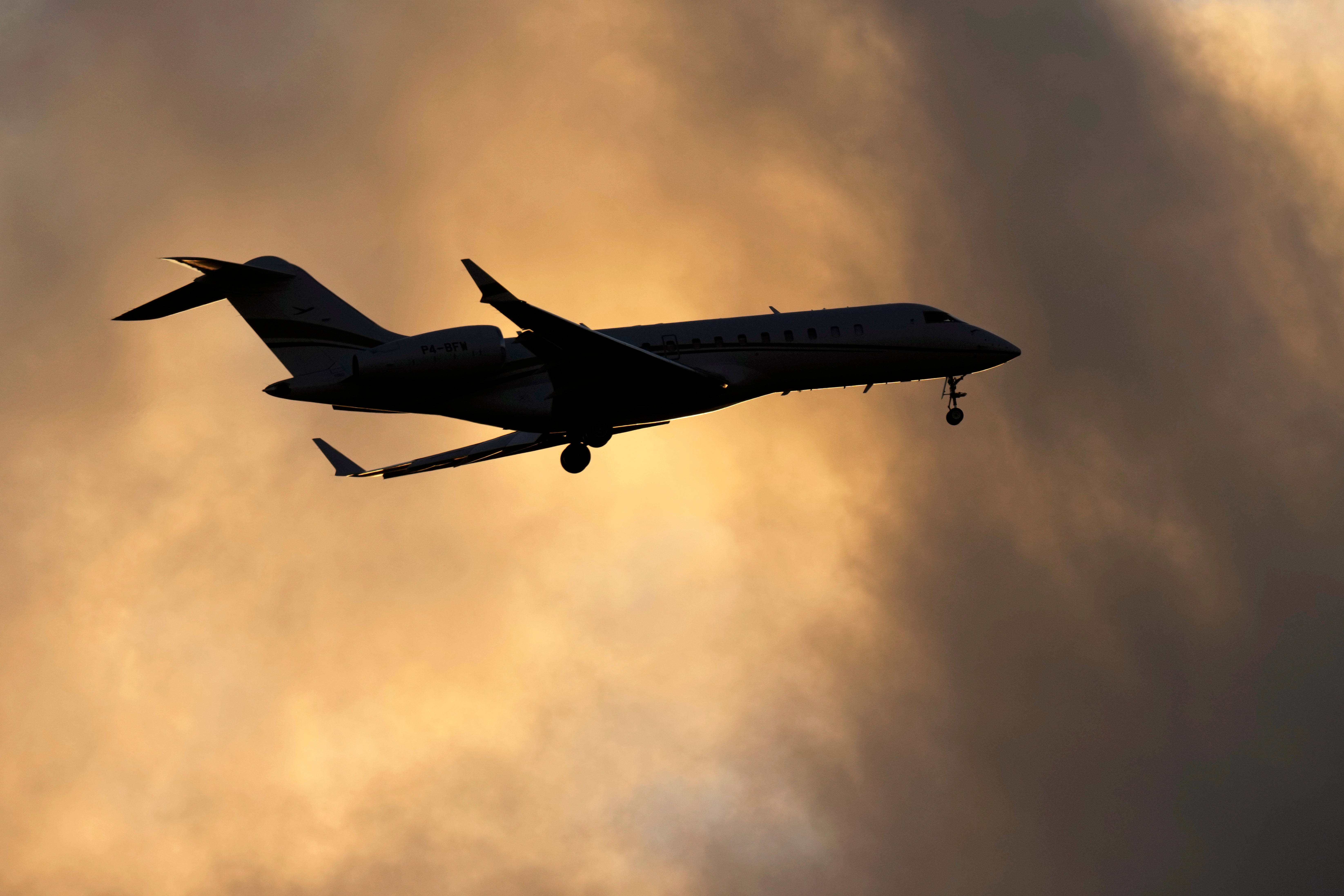
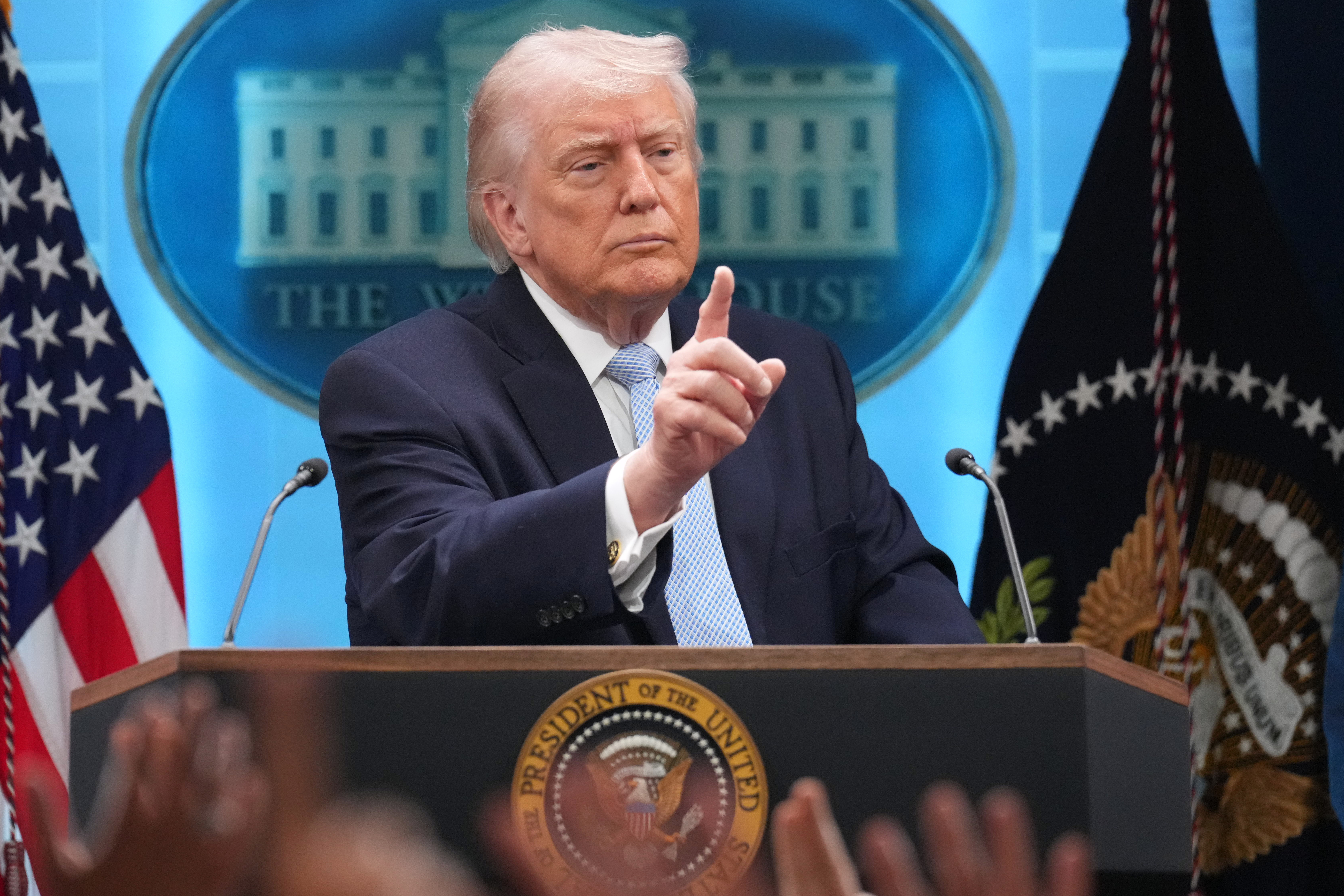
    President Donald Trump threatened to ban the sale of Canadian Bombardier jets unless they are built in the United States, as Canadian retaliatory tariffs on U.S. goods came into effect amid an escalating trade war between the countries.

    “NO MORE SELLING BOMBARDIER IN THE UNITED STATES!” Trump said in a Truth Social post Monday that also urged people to “BUY AMERICAN.”

    It was not immediately clear how Trump would restrict the sale of the jets. The White House did not immediately respond to an overnight request for comment.

    The president’s comments mark the latest escalation in the ongoing tit-for-tat trade feud between the U.S. and Canada. Just after midnight on Tuesday, Canada’s countertariffs of up to 50 percent on $20 billion worth of U.S. imports came into effect. The levies apply to a vast range of products, including steel and aluminum, dairy, appliances, agricultural equipment, plastics and electronics.

    The move came in response to the U.S. imposing 50 percent tariffs on about $20 billion in Canadian goods last month. After trade talks between the two sides faltered, Prime Minister Mark Carney vowed that Canada would retaliate “dollar for dollar.”

    In his Monday post, Trump said that if Bombardier wanted access to the U.S. market, “they must build here, and stop treating America like a ‘piggybank.’”

    In a statement that did not directly address Trump’s comments, Bombardier said it had sites in nine U.S. states and Washington D.C., and noted that it manufactured its wings in its Texas facility, and flight-control components in California.

    It added it worked with about 2,800 American companies across 47 states and that it “values its great partnership with American companies and its U.S. employees.”

    The Quebec-based firm has previously said it employs more than 3,000 people in the U.S.

    Quebec Premier Christine Fréchette said she had contacted Bombardier’s chief executive to offer “our full support.”

    “Quebec will not allow anyone to dictate where our companies must produce in order to access a market. We will defend our companies, our workers, and our expertise with resolve,” she said in a post on X.

    U.S.-Canada relations have deteriorated drastically during Trump’s second term. In addition to the trade war, Trump has threatened to make Canada the 51st state and signed an executive order renaming Lake Ontario as Lake America.

  • The GOP was confident about keeping its Senate majority. Now the fight for control is wide open

    The GOP was confident about keeping its Senate majority. Now the fight for control is wide open

    WASHINGTON — Republicans appeared to have a firm grip on the Senate heading into the final two years of President Donald Trump’s term. But with less than two months until Election Day, control of the chamber is now up for grabs.

    Democrats have found themselves competing in states that once seemed beyond their reach as President Donald Trump’s slipping approval ratings and voters’ dissatisfaction with the economy create a difficult political environment for Republicans. But races Democrats once counted on winning have also become more complicated.

    It’s a battle that’s expected to exceed $3.4 billion in spending across all races during the midterm campaign. The implications are huge for Trump’s agenda and his ability to fill administration jobs and open court seats for the remainder of his term, as the Senate is empowered to confirm or block presidential nominees.

    Republicans say it’s unlikely for everything to break in Democrats’ favor, but they acknowledge they’re facing a difficult landscape. Senate Majority Leader John Thune told South Dakota’s KELOLAND News last week that he does “worry” about losing the chamber.

    “I’m a realist,” Thune said. ”I don’t ever try and sugarcoat things. I think it’s a competitive environment right now.”

    Democrats face a scrambled path to the majority

    Democrats need to net four seats to win the majority. The original path had been to hold Michigan, Georgia and New Hampshire while winning back Republican-held seats in Alaska, Maine, North Carolina and Ohio. But things have changed.

    “We now have multiple paths for the majority,” Senate Democratic Leader Chuck Schumer said last month. “We found new states — Iowa, Texas — which people a year ago weren’t even paying attention to.”

    Some of the states where Democrats were feeling most optimistic at the start of the election cycle, such as Michigan and Maine, have grown murkier.

    In Michigan, where there’s an open seat this fall, no GOP candidate has won a Senate race since 1994. But Democrats are struggling to unite behind nominee Abdul El-Sayed. The favorite of progressives narrowly defeated moderate U.S. Rep. Haley Stevens in the August primary, and feelings remain raw from a bruising contest that saw nearly $70 million spent against El-Sayed.

    Republicans believe Mike Rogers, who lost the 2024 Senate race by fewer than 20,000 votes, has an improved shot against El-Sayed. The Senate Leadership Fund — Senate Republicans’ spending PAC — added $6 million to its Michigan advertising investment after El-Sayed won, bringing their total spending to $51 million, the third-highest total.

    Democrats also saw a prime opportunity to finally defeat five-term Republican Sen. Susan Collins in Maine, where Democratic Vice President Kamala Harris won more votes than Trump in 2024.

    Progressive Graham Platner easily won the nomination in June, but he left the race the next month over a sexual assault allegation that he denies. Democratic delegates in late July chose Troy Jackson, a lesser-known former state legislative leader, to replace him.

    Jackson has been forced to play catch-up. Collins and aligned super PACs have spent almost $80 million so far, according to the ad-tracking firm AdImpact, while Jackson and Democratic-aligned groups have spent and reserved close to $45 million since he became the nominee.

    As one path narrowed for Democrats, others widened

    Democrats increasingly see a real possibility in Texas, a state that has been an elusive goal for decades, and other GOP-led states including Iowa, Alaska and Ohio.

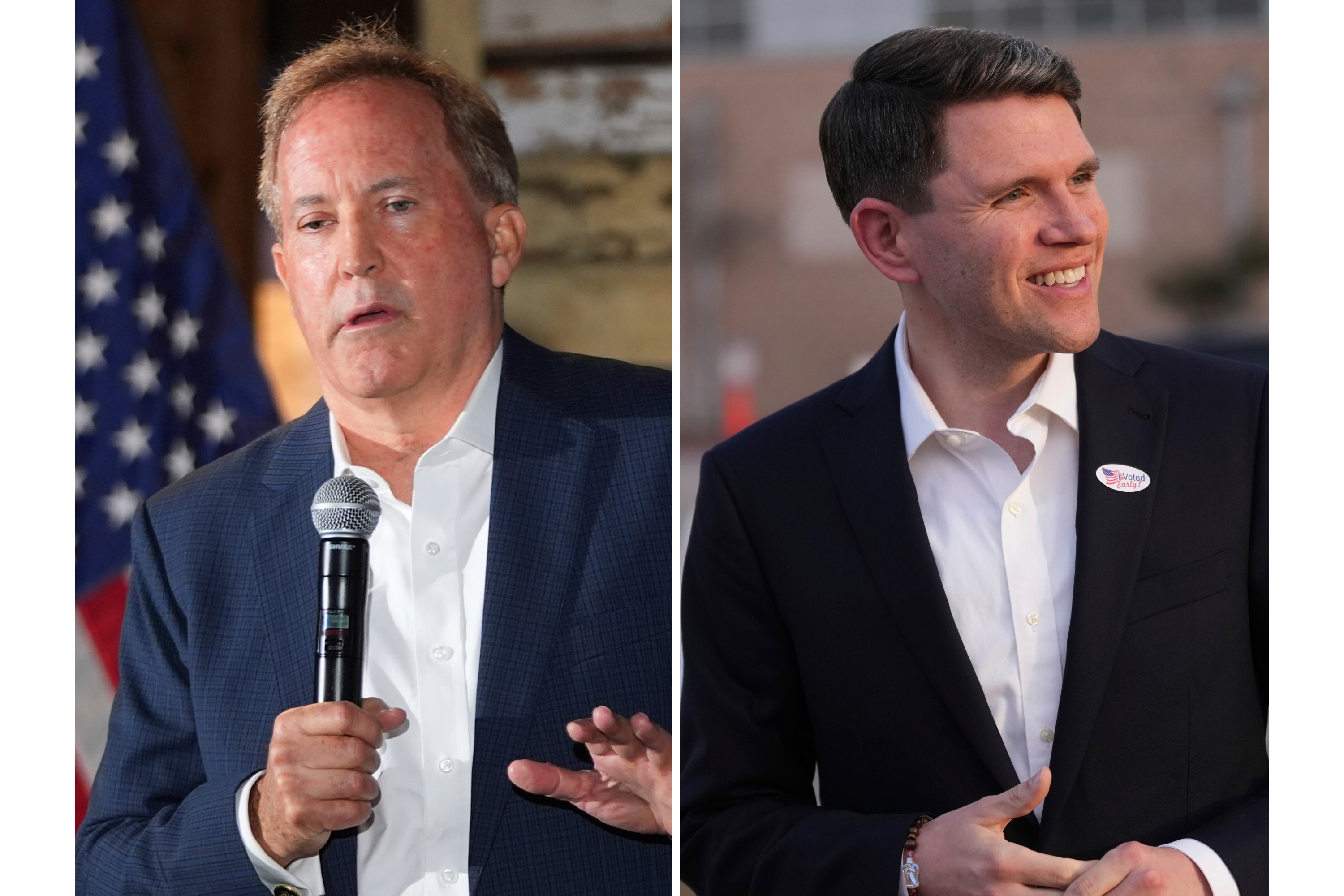
    In Texas, Democrat James Talarico faces state Attorney General Ken Paxton, who ousted four-term incumbent Republican Sen. John Cornyn to win the GOP nomination. Senate GOP leadership backed Cornyn, seeing him as the stronger general election candidate.

    Paxton has been shadowed for decades by legal and ethical questions, including indictments for securities fraud, though he was not convicted.

    Talarico and allied groups have spent nearly $30 million on advertising since the May runoff, compared to less than $3 million by pro-Paxton groups. The political fund associated with Trump last week spent $10 million on TV and digital ads to help Paxton — the first major general election investment by MAGA Inc. for the midterms. Senate GOP leaders had petitioned Trump’s political team to spend some of the more than $400 million it had last month to help Paxton.

    Democrats have also upped their spending in Alaska, Iowa, Ohio and North Carolina, all states currently held by Republicans. The GOP, meanwhile, is feeling more optimistic about New Hampshire as well as Michigan, while spending more to defend seats in Iowa and Alaska.

    The expanded map has upped the anticipated total spending this cycle. AdImpact in June projected $3.4 billion in advertising spending on Senate races, a significant increase from the $2.8 billion the ad spending firm projected in the fall of 2025.

    Why more states are in play than expected

    Democrats’ path has widened in part because of Trump’s slumping job approval, notably on handling the economy, which was at 32% according to an AP-NORC poll in July — down from 40% in March 2025, shortly after he took office.

    Trump’s trade policies and the war in Iran, with its corresponding inflated fuel costs, have added to the economic uncertainty for voters less than two months before Election Day.

    “Things still cost too much. And so we’ve got to work on that issue,” Republican Rep. Jim Jordan of Ohio told The Associated Press. “We understand that and we know that’s real.”

    Ohio Sen. Jon Husted heard the concern firsthand at a roundtable last month. Husted is looking to fend off a comeback from former Sen. Sherrod Brown in another key matchup for both parties.

    During the discussion on housing, one attendee told Husted that costs were “skyrocketing” in part because of uncertainty around tariffs.

    “Uncertainty is the killer to this economy,” said Dean Windham, a real estate developer who previously ran for office as a Republican.

    Some Republican Senate candidates have defended Trump’s policies while confronting concerns about their economic impact.

    In Michigan, where Trump’s tariffs on Canada have become a central issue, Rogers has backed the president’s approach while leaving room for disagreement.

    “President Trump is right to put America First — and tariffs are necessary, but are not a one-size-fits-all solution,” Rogers said in a recent statement.

    Republicans believe the math still favors them

    Even if Democrats hold every seat they currently control, they would need to flip at least two seats in states Trump carried by double digits in 2024 to win the majority.

    Republicans are betting that those underlying advantages will matter more as Election Day approaches — particularly as Trump and the party turn their attention toward mobilizing voters who helped return him to the White House.

    Trump told reporters last week that he will “be making a lot of stops” in the last 30 days before the election.

    This week, Republicans will hold a midterm convention in Texas, where Trump is set to speak and top Senate candidates including Rogers and Husted are expected to attend.

    But Republicans acknowledge they have work to do.

    “Politics is local,” Republican Sen. Mike Rounds of South Dakota said. He pointed to Trump’s decision to import beef, which he said made farmers and ranchers “feel just like the administration pulled the rug right off from underneath” them.

    “They’re hurt,” Rounds said. “They feel like they’ve been let down.”

  • See what $1 million can buy you in Medford, the New Hope area, and Queen Village | The Price Point

    See what $1 million can buy you in Medford, the New Hope area, and Queen Village | The Price Point

    The Price Point compares homes listed for similar sale prices across the region to help readers set expectations about house hunting.

    In the Philadelphia area, a home on the market for $1 million or more is uncommon.

    As of Sept. 2, roughly 1,070 homes across the Philadelphia metropolitan area were for sale at this price point, according to the multiple listing service Bright MLS. That was about 8% of all active home listings.

    Many of these listings highlight elements that have become standard in luxury homes, such as double vanities and soaking tubs in the primary bathrooms and quartz or granite countertops in the kitchen.

    Location, outdoor spaces, and special features make million-dollar homes stand apart.

    Here’s what a buyer can get for $1 million in Solebury, Bucks County; Medford, Burlington County; and Philadelphia’s Queen Village neighborhood.

    A large lot near New Hope with a pool

    When it comes to this house in Solebury, “the neighborhood and the area and the school district are amazing,” said listing agent Lisa DePamphilis, broker associate with Berkshire Hathaway HomeServices Fox & Roach, Realtors.

    The property, located between New Hope and Doylestown, is within walking distance of Peddler’s Village and nearby cafés and restaurants. And it’s just off Route 202.

    The home is on one of the biggest lots in its development and has an in-ground pool and a large yard that includes a storage shed and a play set. There’s also an attached two-car garage.

    The house includes hardwood floors, two fireplaces, two laundry rooms, a finished basement, a generator for the entire house, and a newly renovated kitchen with granite countertops. The primary suite’s bathroom has a soaking tub.

    “It’s perfect for a family,” DePamphilis said. “It’s just a great house.”

    One of the biggest draws to the area is the school district.

    New Hope-Solebury School District’s high school was ranked No. 4 in Pennsylvania and No. 1 in Bucks County by U.S. News & World Report for the current school year.

    The district’s middle school was one of three in Pennsylvania and 39 nationwide to be named a 2026 “school of distinction” by the Association for Middle Level Education.

    The home was listed for sale for $1 million on Aug. 20.

    Newly renovated house in Medford

    Robert Playford, a salesperson for RealtyMark Properties and owner of this Medford home, fully renovated the property through his flipping business, Skyliner Homes LLC.

    The home has a new roof and heating and cooling system and also new laminate flooring and carpeting. It has newly installed gas service and a finished basement.

    The renovated kitchen includes quartz countertops, an island, and double ovens. The family room has vaulted ceilings with exposed, painted beams and a fireplace. The primary suite’s bathroom includes a soaking tub and separate makeup vanity.

    A back patio with a fire pit looks out onto a large yard that includes a pond.

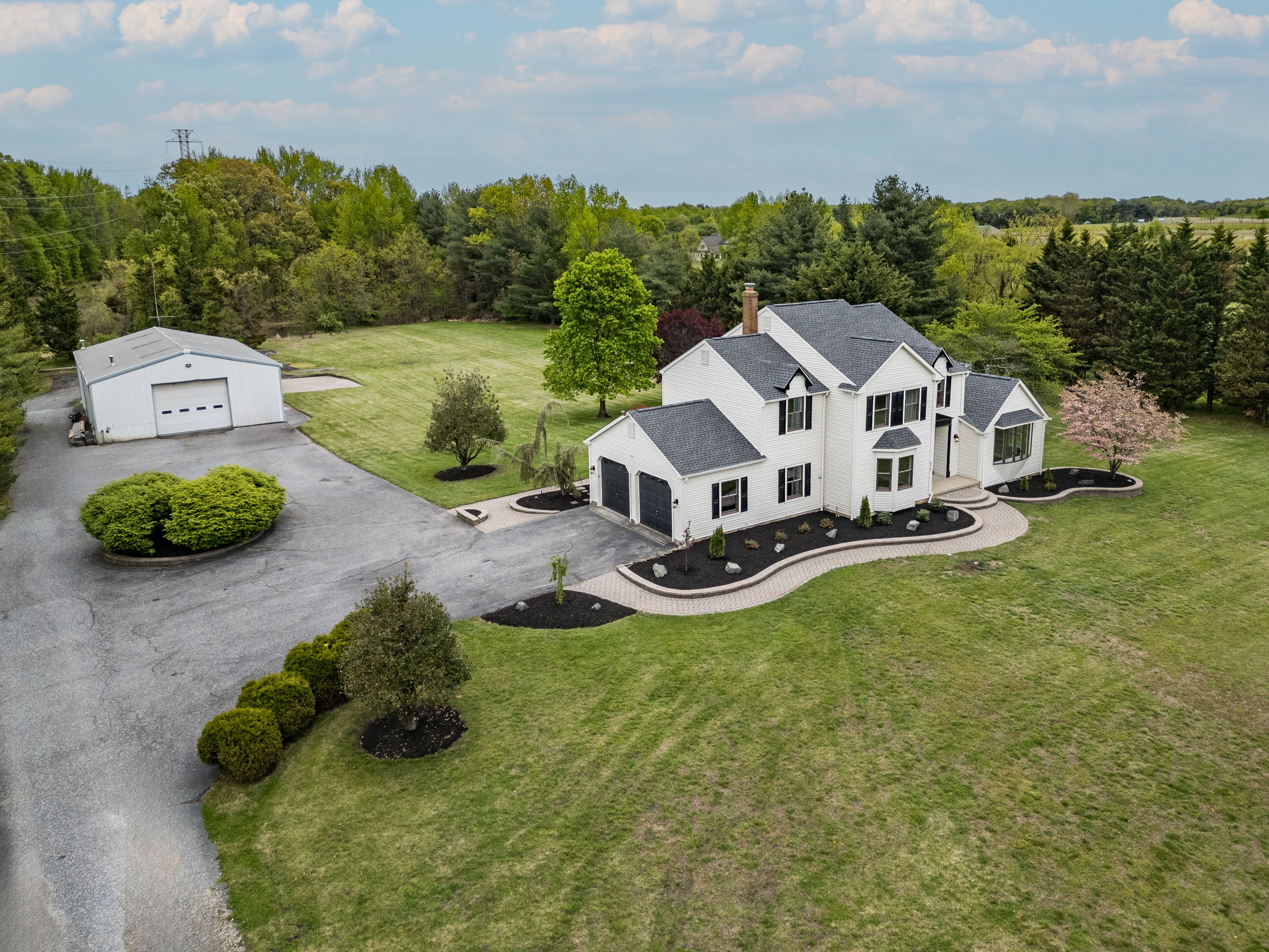
    The property has an attached two-car garage, which isn’t unusual. But it also has a 2,400-square-foot heated detached garage. A buyer could use it as a garage or workshop or turn it into an indoor soccer field or pickleball court, Playford said.

    “It’s a really nice home,” he said. “It’s a really nice location.”

    The home is up the street from Johnson’s Corner Farm. It’s on Hartford Road, a main thoroughfare, but has a long driveway and is far enough from the road that the owner would have privacy.

    The property is close to Routes 70 and 38 and a roughly 15-minute drive to the Centerton Square shopping center.

    The home was listed for sale for $1.15 million at the end of April. In the months since, a sale fell through, and the price has dropped. As of Sept. 4, the property was listed for sale for $999,900.

    Newly built townhouse in Queen Village

    There aren’t a lot of newly built homes in the Queen Village neighborhood, so this townhouse presents buyers with a rare opportunity, said co-listing agent Arvind Balaji, associate broker with the Mike McCann Team.

    The house is one of three that make up the Estates at Queen Village community, and it comes with a full 10-year tax abatement.

    “It’s a good quality home,” Balaji said. “In years to come, it will just increase in value.”

    Neighborhood residents can walk to restaurants, cafés, parks, the farmers market at Head House Square, and the Italian Market. The tree-lined blocks around the home have a residential feel, which “is very important to the person spending a million dollars on their home,” Balaji said.

    In addition to the location, potential buyers have liked the size of the bedrooms and the amount of natural light.

    The roof deck is also a draw. It offers “unbelievable unobstructed views,” he said.

    The home also has a kitchen with an island and quartz countertops, two laundry areas, and a backyard patio. It was built with materials that muffle sound between floors and from the outside.

    The primary suite spans the third floor and includes a bathroom with a soaking tub and heated floors.

    The home was listed for sale in May for $1,039,900. The price dropped to $1 million last month.

  • Bob Brooks releases first TV ad of the general campaign

    Bob Brooks releases first TV ad of the general campaign

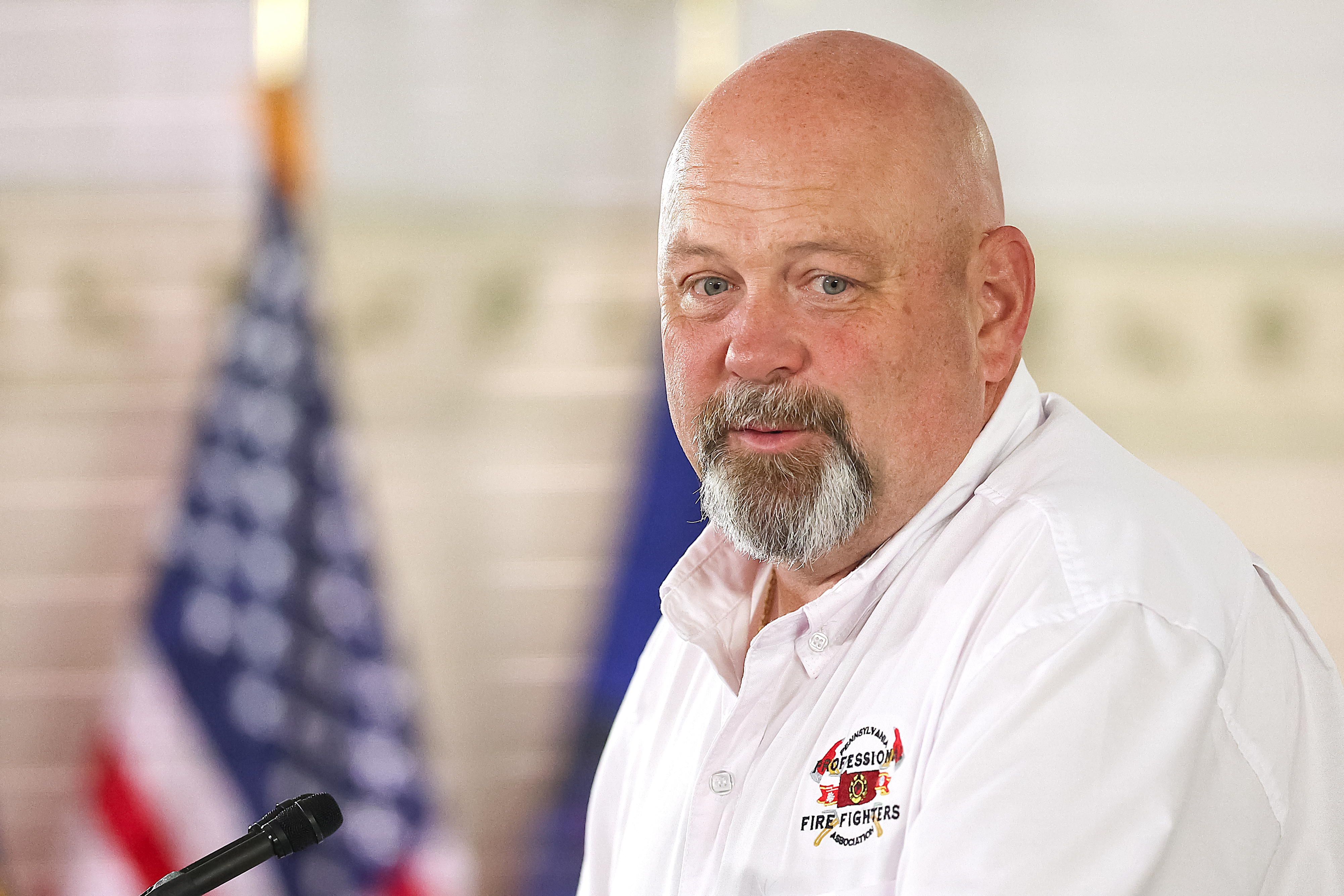
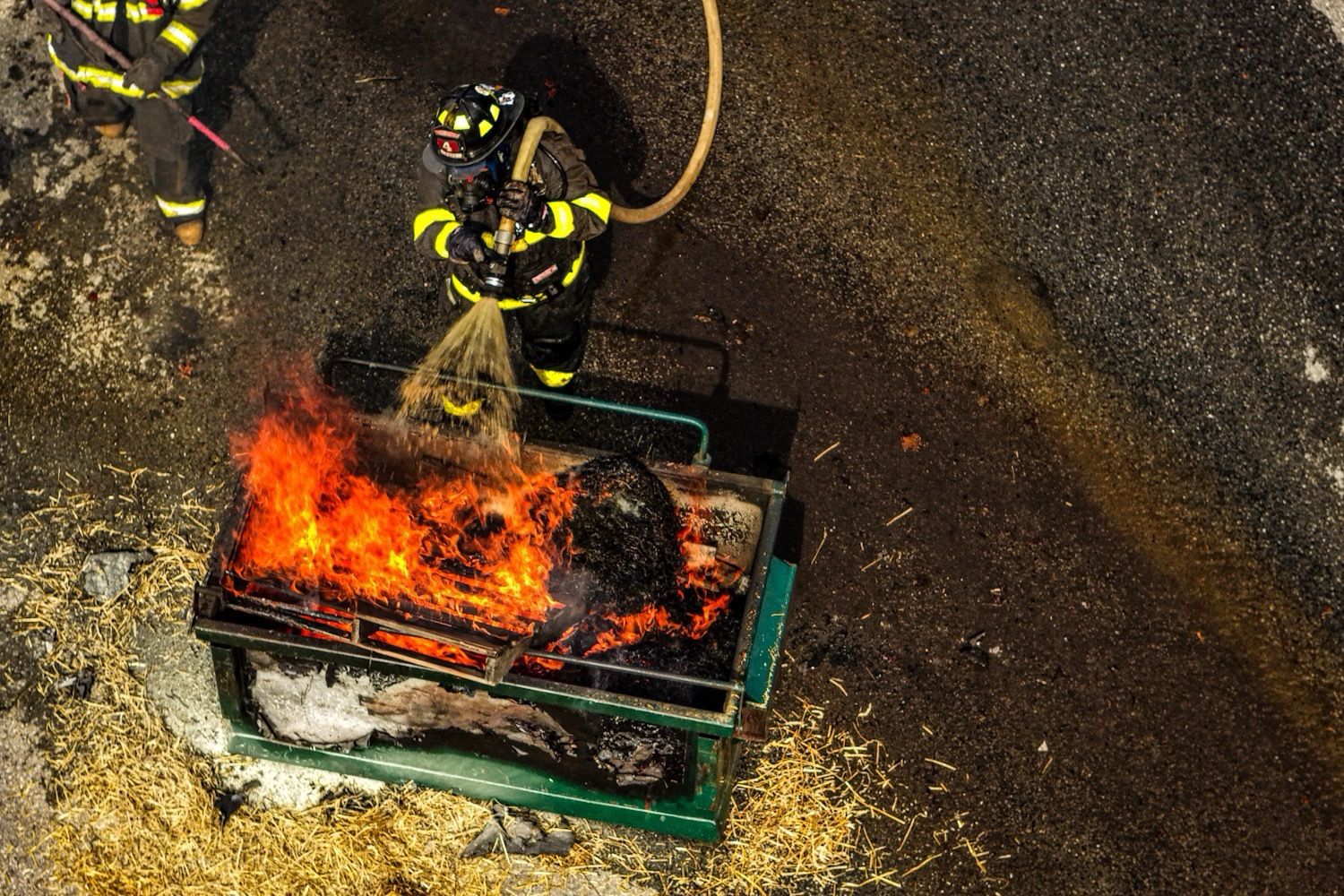
    Clad in fire safety gear, Lehigh Valley Democrat and retired firefighter Bob Brooks promised to “smoke out the billionaires and their lobbyists” in his first ad of the general election, released Tuesday.

    Brooks, a union leader who spent 20 years as a Bethlehem firefighter, blasted the “dumpster fire” in Washington that has led “working people get burned.”

    Brooks, a retired firefighter and union leader, is challenging Republican U.S. Rep. Ryan Mackenzie in the 7th Congressional District, one of the most competitive House seats in the nation. The race’s victor will help determine control of the narrowly-divided chamber.

    With a focus on economically populist ideas, such as raising the federal minimum wage, while avoiding culture war issues, Brooks has managed to attract support from across the party’s ideological spectrum including Gov. Josh Shapiro and U.S. Sen. Bernie Sanders.

    A screenshot from a new campaign ad for Bob Brooks, a Democrat running for a House seat in the 7th Congressional District, in which he is depicted extinguishing a dumpster fire.Courtesy of Bob Brooks campaign

    In July, Brooks also welcomed U.S. House Minority Leader Hakeem Jeffries to the district to support his campaign. Meanwhile, Brooks has campaigned on progressive ideas, promising to ban corporations from giving to political action committees that help finance candidates, as well as supporting Congressional term limits and bans on lawmakers trading stocks while in office.

    Mackenzie, the vulnerable freshman who won his seat by just one percentage point in 2024, has also received support from his party including U.S. House Speaker Mike Johnson in August and President Donald Trump in June. But during Trump’s visit to the district, he took nearly an hour during a rambling speech to even mention Mackenzie by name.

    Brooks’ ad borrowed a phrase from his GOP opponent, whose campaign in July referred to Brooks’ “dumpster fire candidacy.”

    “At every step of his career, Bob Brooks has put himself first, his politician buddies next, and his own workers last,” Mackenzie’s campaign manager Andres Weller said in a statement.

    Brooks’ campaign said it is planning to spend at least $1 million in September on the ad, running on broadcast television in the Philadelphia media market and on streaming platforms.

    That’s a significant expenditure for Brooks’ campaign, which raised a total of $2.3 million, according to financial disclosure reports from July.

    He’s behind Mackenzie, who has $4.5 million, in overall fundraising. But Brooks added roughly $1.2 million to his stockpile between April 30 and June 30 — after his first-place finish in the competitive Democratic primary, while Mackenzie only took in about $631,000.

    The next campaign finance deadline is in October.

  • Blood, flags, and fear: 25 years later, looking back on how Philadelphians reacted to 9/11

    Blood, flags, and fear: 25 years later, looking back on how Philadelphians reacted to 9/11

    As the sun set on Philadelphia on Sept. 11, 2001, the city, like the nation, was in shock. Its citizens raged and wept, confronted with unprecedented acts of violence in New York City; Washington, D.C.; and Shanksville, Pa.

    It wouldn’t be known for quite some time, but the attacks that rocked the East Coast that day took about 3,000 lives. Among them were dozens of people with local connections, including several crew members on the doomed flights.

    But in the immediate aftermath of the 9/11 attacks, Philadelphia was focused on survival, and worried that the birthplace of the nation could be the next target. We evacuated, took refuge in religion, worried for the future, gave our blood and time to help, and focused our anger and confusion on our neighbors.

    Now, 25 years later, the impacts of 9/11 continue to reverberate. And though society continued on, in the first few days after the tragedy, it seemed as if it could not.

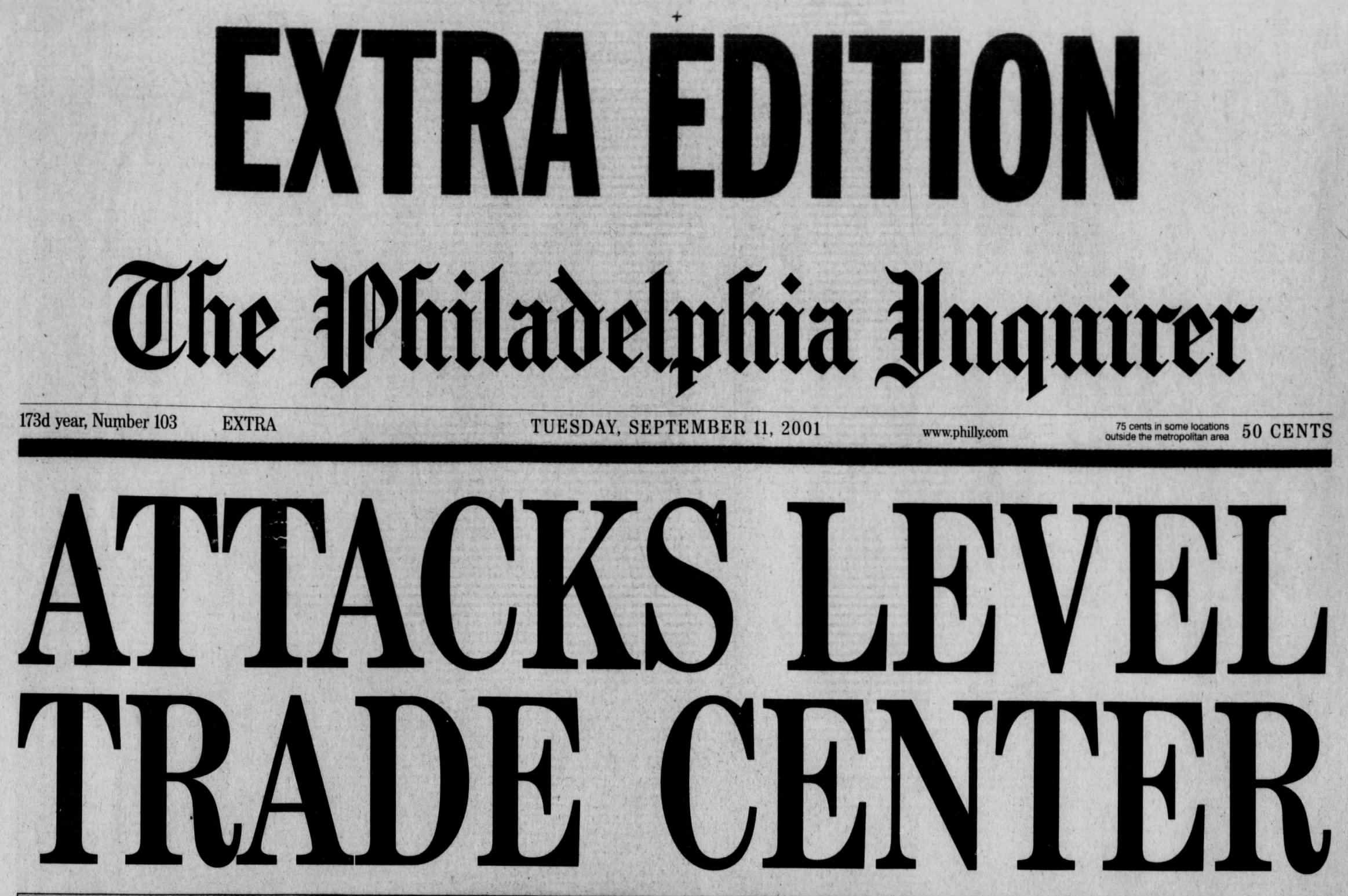
    Here is how The Inquirer and Daily News covered it:

    https://www.newspapers.com/article/the-philadelphia-inquirer/205152877/

    Article from Sep 12, 2001 The Philadelphia Inquirer (Philadelphia, Pennsylvania) <!— –>

    Panic in Center City

    In the wake of the attacks, panic set in on Philadelphia. Fears the city could be the next target spread quickly, prompting the closure of city government offices, federal buildings, businesses, schools, and historic landmarks by noon.

    “We are taking every reasonable precaution to ensure the safety of our citizens,” Mayor John F. Street said at a late morning news conference.

    Thousands of people began a frantic commute home, gridlocking Center City’s streets and sidewalks. An estimated 50,000 SEPTA Regional Rail passengers were likewise stuck, with several lines suspended. Like all airports nationwide, Philadelphia International Airport was shut down.

    By midafternoon, Center City was essentially a ghost town. Subway lines were all but deserted. Streets were eerily still and empty of cars. Philadelphia’s high-rises largely sat devoid of workers. And as the day wore on, the trauma continued to set in.

    “I feel more shocked today,” said Southampton resident Paul Brown, 81, who survived the attacks on Pearl Harbor 60 years before. “I’m despondent, bewildered, and confused.”

    https://www.newspapers.com/article/philadelphia-daily-news/205152937/

    Article from Sep 12, 2001 Philadelphia Daily News (Philadelphia, Pennsylvania) <!— –>

    Blood and flags

    Almost immediately, horror and sadness turned to anger. Though the enemy was not yet clear or confirmed, there were loud calls for retribution — including from the Daily News.

    In its Sept. 12 issue, under a cover that read “Blood for Blood,” in an editorial headlined “Now, It’s Our Turn,” the People Paper wrote: “Revenge. Hold on to that thought. Go to bed thinking it. Wake up chanting it. Because nothing less than revenge is called for today.”

    Others were more charitable, donating blood to help victims who may have survived. Thousands of people, in fact, streamed into blood donation centers to such a degree that the facilities were overwhelmed. Officials asked that anyone thinking of donating to wait to ease the crush.

    “I feel pretty helpless, and I just wanted to do something,” said Andy Hartlove, 45, of Exton. “Giving blood seemed to be the only thing I could do.”

    Then, there were the flags. So many people bought them to show their support that stores — specialty shops to big box stores alike — sold out completely, and manufacturers began running overtime shifts to make more.

    “Nothing’s going to make anybody feel all that better, but it makes everyone united,” said Jim Whitehead, 22, who worked at National Flag & Banner.

    https://www.newspapers.com/article/philadelphia-daily-news/205153079/

    Article from Sep 17, 2001 Philadelphia Daily News (Philadelphia, Pennsylvania) <!— –>

    A turn to God

    Faced with such monumental violence, many Philadelphians turned to the only being who they felt could provide answers: God.

    Though schools, businesses, and government buildings shut down, many sanctuaries and religious institutions remained open. The city even organized an interfaith prayer service held at Dilworth Plaza on Sept. 13, which thousands attended.

    Many religious leaders reported swellings of their congregations not seen since the bombing of Pearl Harbor. Religion, it seemed, was poised to regain a more prominent place in American lives.

    “People realize when all is said and done that faith in God is the only thing that somebody else cannot take away from them,” said Msgr. John T. Conway, Archdiocese of Philadelphia vicar.

    Many religious leaders took the opportunity to encourage reconciliation instead of revenge. Imam Shamsud-Din Ali, formerly of the Philadelphia Masjid, even encouraged worshipers to pray for the attacks’ perpetrators, noting that in order to perpetrate such a violent act, they must have been badly injured and were in need of God’s mercy.

    The Jewish holiday of Rosh Hashanah arrived as the first religious holiday after the attacks. Paul Bender, the leader of Congregation Ner Tamid in Cherry Hill, sounded a shofar — a ram’s horn blown to sound the start of the Jewish New Year — at a ceremony, likening it to the sounds of wailing of those who lost loved ones. The “sudden, nightmarish anarchy” of the tragedy, he prayed, would soon give way to peace among all people.

    “May that day come soon,” Bender said.

    https://www.newspapers.com/article/the-philadelphia-inquirer/205153160/

    Article from Sep 14, 2001 The Philadelphia Inquirer (Philadelphia, Pennsylvania) <!— –>

    Faith and race targeted

    Philadelphia’s Muslim and Arab American communities were on high alert, and immediately condemned the violence. Federal, state, and local leaders urged the public to not blame those groups, but violence and threats against them were prominent.

    A week after 9/11, officials said, at least 20 bias crimes were reported against Jews and Arabs in New Jersey, and an “untold” number in Pennsylvania. Many people who weren’t Arab or Muslim were also targeted, their attackers believing them to be somehow associated with the tragedy.

    “Apparently, all you need to be right now is brown,” said Emily Hornaday, spokesperson for the New Jersey Division of Criminal Justice.

    Among the most prominent crimes in the area was an incident in which two off-duty Philadelphia police officers pulled a gun on a Lower Merion Township 7-Eleven store clerk at about 3 a.m. the night after the attacks. The clerk, who was from Pakistan, was unharmed, and one of the officers was charged with reckless endangerment and other offenses.

    Taxicab drivers were pulled from their cars and threatened. Islamic religious centers boarded up their windows. A Palestinian flag was pulled down from the wall of Lincoln High School in Northeast Philadelphia, resulting in two arrests. A SEPTA bus passenger threatened a Moroccan man, and begged police to let him “kill the Pakistani.”

    “Are we going after the perpetrators,” asked Amin Elarbi, president of the Al-Aqsa Islamic Society, “or are we targeting an entire faith and race?”

    https://www.newspapers.com/article/philadelphia-daily-news/205153372/

    Article from Sep 17, 2001 Philadelphia Daily News (Philadelphia, Pennsylvania) <!— –>

    Vanishing normalcy

    Even in the early days of the aftermath, it was clear life was about to change. By midweek, city schools reopened, the local government began operating again, and, though curtailed and under new rules, flights began coming and going from PHL. Normalcy, however, was nowhere to be found.

    Large public activities for the weekend after the attacks, such as a Mexican Independence Day festival at Penn’s Landing and a festival celebrating Philly’s connections with Italy known as the Splendor of Florence, were canceled.

    Experts, meanwhile, predicted a swift, lasting change to daily life in the U.S. As Philadelphia Police Commissioner John Timoney put it, we needed to “reexamine how we go about our business.”

    Among those changes, said Geoffrey Herrara, a Temple professor of political science who specialized in post-Cold War security, were an ever-greater electronic surveillance apparatus that would surely be stepped up. Cameras, he said, would be linked with biometrics, and tracking of our movements was to be expected in the future. Some of our privacy, he said, “may disappear.”

    City leaders, however, focused on strategies to get tourists and workers back in town, and back in the high-rises they had quickly come to fear. Occupancy rates at area hotels fell to an abysmal 60%, and the sense that big-city life would be on the decline was palpable. Ultimately, though, we had to keep going, they said.

    “I think we need to communicate to the hearts and minds of Philadelphians that we need to get on with life,” said George Burrell, the mayor’s secretary of external affairs. “The things that attracted you here are still here.”

  • Philly’s fall foliage season is looking special, September weather permitting

    Philly’s fall foliage season is looking special, September weather permitting

    The sequences of steamy days and downpours in the Philly region and elsewhere won’t rank among the cherished memories of summer, but they may well end up having been a boon to the imminent fall foliage season.

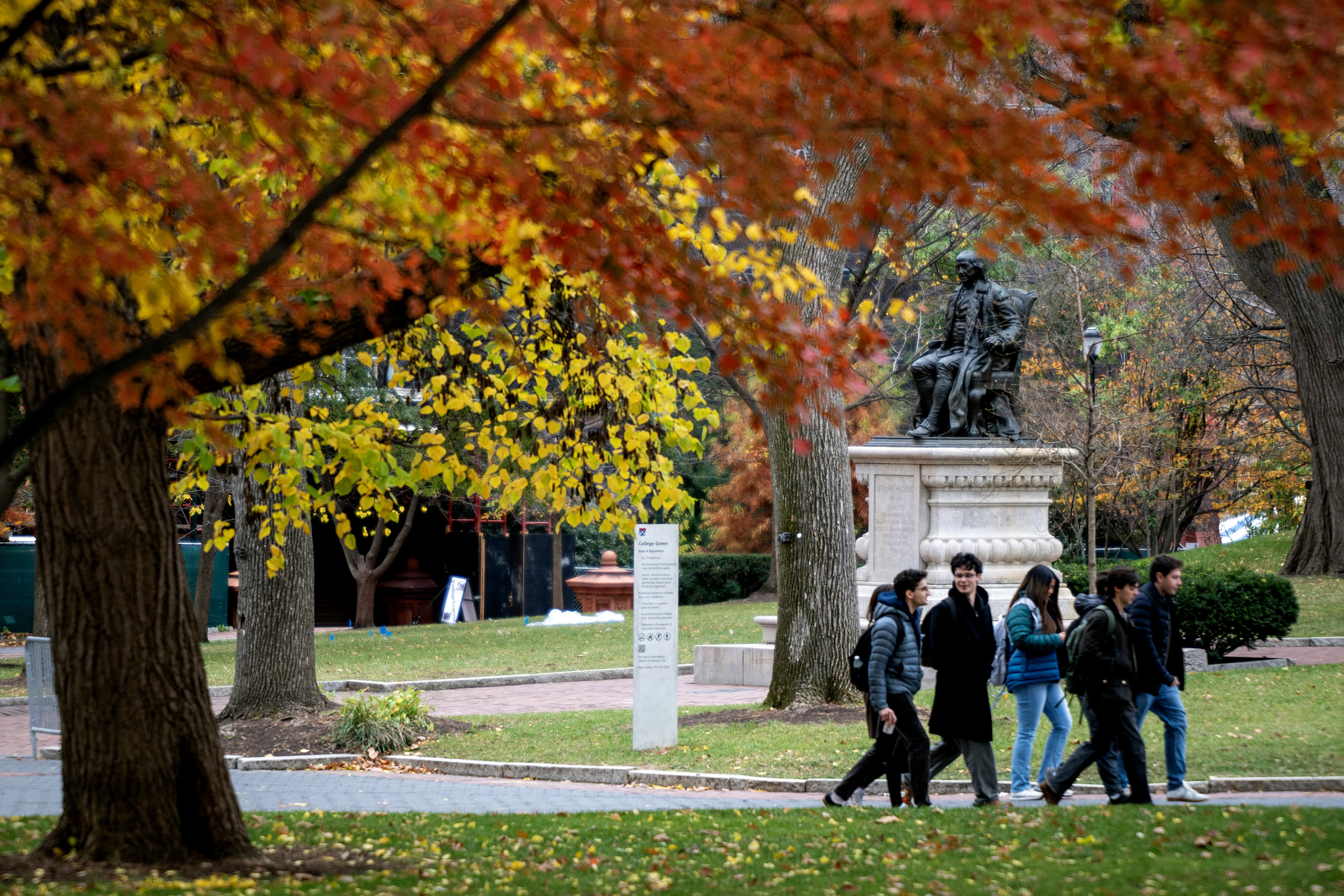
    The consensus among the veteran experts who pay close attention to the behavior of the trees is that this is shaping up to be an excellent season for spectacular waves of fall colors that ripple from northern New England to North Carolina, cresting from early October into early November, with Pennsylvania and New Jersey in the middle of it all.

    As much as some folks may have been fed up with the humidity banquet, the trees — at least those that survived the storms — have been partying. Unlike last year, characterized by an early leaf fall, the players are remaining on the stage.

    “Despite a droughty start to the growing season and some frost damage, our trees are looking green and healthy now, overall,” said Ryan Reed, a forestry specialist with the Pennsylvania Department of Conservation and Natural Resources, who is “looking forward to a beautiful season.”

    What’s more, the snows and Arctic freezes of winter also may have made a significant contribution: The long-lasting snowpack patiently watered the foliage as it melted, neutralizing drought conditions. That was especially true in New England, meteorologist Jim Salge said in his Yankee Magazine foliage forecast.

    But the key to the foliage season would be what happens this month, said Howard Neufeld, a biologist with Appalachian State University, who analyzed weather-foliage patterns for the last several years around the campus area in the heart of the Blue Ridge Mountains and all but interrogated the trees to get at their myriad secrets, most of which they kept to themselves.

    He holds that the main driver in the drama of the season is the production of anthocyanins, the reddish tints that are the show-stealer, and provide the tasteful contrasts to the yellows and russets.

    Sunny days and cool nights are best, say the experts, but like everything else involving the atmosphere, this all gets very complicated.

    As for whether the weather will cooperate, the burgeoning El Niño aside, the scientists who assembled the federal Climate Prediction Center’s fall outlook saw odds slightly tilted toward above-normal temperatures in the fall.

    When to expect the onset and peak foliage

    The day-to-day weather is going to influence when the leaves begin to turn and when they will peak. Just what effect long-term warming is having on the seasons, which are primarily light-driven, is unclear, and “each year brings subtle differences,” says William Keeton, forestry professor at the University of Vermont. Typically, the leaves up his way take on serious color by the end of September and peak the first or second week in October. Where Neufeld, an emeritus professor of ecophysiology, works in the Blue Ridges, whose ultra-popular foliage season was wiped out two years ago by Hurricane Helene, the peak can extend into early November.

    On average, in the immediate Philly region, expect onset in mid-October, with peak around Halloween.

    The higher the September temperature, averaged for the month, the later the onset of color, Neufeld said. A single degree could mean a difference of two days, he added.

    Conversely, he found that higher daily maximum temperatures in September actually sped up the onset. (He didn’t know why, either.)

    The key period for the weather conditions begins right about now, he said. A run of sunny days into October would be ideal for color, but a warm and rainy period would take the blush out of the reds and make for a duller show.

    But that’s very much subject to variability: The trees have complex inner lives.

    What’s behind the fall foliage show

    Without getting too deeply into the weeds (or the leaf piles), here are the basics of the process.

    Along with the shorter days — Philly loses an hour and 15 minutes of sunrise-to-sunset time this month — the sun is losing some mojo. With the dimming of the light, green chlorophyll recedes from leaves, yielding to those carrot-colored carotenoids and flamboyantly reddish anthocyanins. And Neufeld holds the reds are the stars.

    “The oranges and yellows tend to be the same from year to year,” he said, “but the reds vary.” When it’s sunny and cool, sugars accumulate on the leaves and the reds can go to town. But if it’s cloudy and warm, the sugar factories shut down.

    Just why some leaves turn red, such as the maples, “is not completely understood,” Keeton said.

    Neufeld, a biologist, noted that it doesn’t happen in Europe, and holds the redness is related to a form of malnourishment — a function of a lack of nutrients in Eastern North American soils.

    Whatever the cause, the process has contributed to the health and well-being of spectacular falls in one of the world’s prime foliage viewing corridors.

    This year is shaping up to be another one, said Marc Abrams, a Penn State forestry professor emeritus, who has been tracking the woods for over 30 years. “At this point,” he said, “all systems go.”

    Where and when to go leaf-peeping

    For an overview of the likely onset and peak times across the country check out explorefall.com/fall-foliage-map. Its custodians say it’s the product of climatology and computer modeling.

    The show opens in northern New England, and the NewEngland.com site posts graphics that show average conditions for each day.

    Starting Oct. 1, the weekly Pennsylvania Department of Conservation and Natural Resources updates and forecasts, assembled by Reed from on-site reports from forestry officials, will be up and running.

    And check out The Inquirer’s guide on where to peep in the Philly region.

  • In Pennsylvania and across the nation, election deniers must be voted out | Editorial

    In Pennsylvania and across the nation, election deniers must be voted out | Editorial

    With Labor Day passed, the sprint is on to Election Day.

    But unlike in prior years, when voters looked to candidates for answers on the economy, taxes, healthcare, and foreign policy, the biggest question is whether the United States will hold a free and fair election and certify the winners.

    That’s because President Donald Trump is doing everything he can to cast doubt on the electoral outcome or possibly reject the results — if the Democrats win control of either or both chambers of Congress.

    Of course, if the Republicans retain control of the House and Senate, well, then never mind. Under that scenario, the Trump-led effort to gerrymander congressional districts, seize ballots, suppress mail voting, curtail voter access through executive orders, gut election security agencies, send federal agents to the polls, and other efforts will have resulted in a “perfect” election.

    But if the Republicans lose either the House or Senate, brace yourself for chaos.

    This should not surprise anyone who endured Trump’s relentless efforts to overturn the 2020 presidential election that culminated in the Jan. 6, 2021, insurrection. Recall that he was criminally indicted for that ugly plot against the will of the people.

    Hundreds of insurrectionists — inspired by Trump’s repeated election lies — were charged with or convicted of crimes related to that violent day that will forever be a stain on American history.

    Trump freed them all on his first day back in office, including those who attacked police officers. He also pardoned several key election deniers who worked on his behalf, including disgraced former New York Mayor Rudy Giuliani, election dirty trickster Roger Stone, and many others.

    Sadly, 2020 may just be a warm-up compared with 2026.

    This time around, dozens of county officials in charge of elections in key states like Virginia, Ohio, and Nevada are election deniers.

    Pennsylvania is home to more election deniers in office than any other state in the country, according to a recent report by the States United Democracy Center, a nonpartisan organization dedicated to free, fair, and secure elections.

    The report found 86 election deniers in the Pennsylvania General Assembly, including nearly half of the state Senate and a third of the House. Many played a role in efforts to subvert the 2020 contest.

    Voters have an opportunity to remove the election-denying tumor from the body politic on Nov. 3, when all the state House members and half the state Senate in Harrisburg are on the ballot.

    The same goes for Congress. Several Pennsylvania representatives who are election deniers are also on the ballot, including Dan Meuser, Scott Perry, Lloyd Smucker, John Joyce, Guy Reschenthaler, Glenn “GT” Thompson, and Mike Kelly.

    The entire Republican congressional delegation — including U.S. Rep. Brian Fitzpatrick — voted for the so-called Safeguard American Voter Eligibility (SAVE) Act.

    The SAVE Act is billed as an election integrity measure, but it is nothing more than an attempt to suppress votes, and would especially impact married women and Black and brown voters.

    U.S. Sen. Dave McCormick (R., Pa.) has been one of the biggest champions of the legislation, along with Trump. Yet, despite Trump’s relentless pressure campaign, there was not enough support in the Republican-controlled Senate to pass it.

    The measure is dead for now. But the best way to secure future elections is to vote out the election deniers.

    Until then, the next few months before and after the election will be a major stress test for election integrity across the country.

    With no real accountability for his past un-American actions, Trump is more emboldened to do whatever it takes to keep Republicans in control. (He has a strong partner in the conservative majority on the U.S. Supreme Court that has actively dismantled voting rights and handed Trump broad immunity from his crimes.)

    Trump is not acting out of allegiance to GOP members running for office. He cares only about retaining his own power. Like Humphrey Bogart in Casablanca, Trump sticks his neck out for nobody — least of all his loyal MAGA voters.

    The president fears that if Democrats take control of the House or Senate, there will be investigations into his rampant corruption, which includes self-dealing schemes that enabled him to make more than $2 billion during his first year back in office.

    GOP lawmakers have also done little to nothing about affordability issues, the failed war in Iran, deportation abuses, and the U.S. Department of Justice’s upending of the rule of law.

    For those fed up with the direction of the country under Trump, there is only one answer: Vote the bums out.