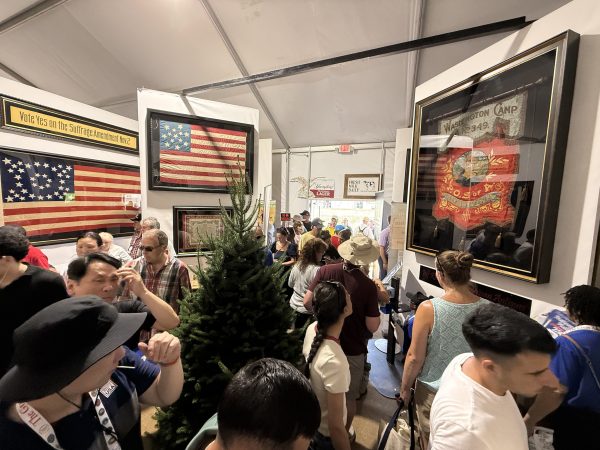
Pennsylvania’s booth at the Great American State Fair, which ended Friday in Washington, was awarded one of 10 “Best in Show” awards, officials said Saturday.
In a joint statement, U.S. Sens. John Fetterman (D., Pa.) and Dave McCormick (R., Pa.) said the booth highlighted “the Commonwealth’s central role in America’s story — from the signing of the Declaration of Independence and the sacrifices at Valley Forge to Gettysburg, the Arsenal of Democracy, and the Commonwealth’s continued leadership in agriculture, manufacturing, energy, innovation, and small business.”
The Great American State Fair, brainchild of President Donald Trump, was held on the National Mall for 16 days, starting on June 25. During the closing ceremony, Freedom250, the organization behind the fair, recognized several outstanding state pavilions from across the country.
The two senators said they were able to secure private funding for the display from a coalition of 55 organizations, including the Pennsylvania Chamber of Business and Industry, PennAg Industries Association, Pennsylvania Manufacturers’ Association, and Pennsylvania Farm Bureau. No taxpayer funding was used, according to officials.
The Pennsylvania pavilion featured an assortment of potato chips donated from various snack-food companies around the state, a replica Liberty Bell, and even a Pennsylvania-grown Christmas tree.
“What makes Pennsylvania truly awesome are the men, women, and children who call it home. Our farmers, steelworkers, small business owners, and so many more,” Fetterman said in the statement. “Those who visited the pavilion got to see a glimpse of some of the very best of us and our history, and I’m grateful to Senator McCormick, Secretary Rollins [Agriculture Secretary Brooke Rollins], and all who made this a massive success.”
McCormick said the booth was a tribute to Pennsylvania’s history.
“From Independence Hall and Valley Forge to our farms, factories, and innovators, the Commonwealth has shaped our nation for 250 years,” he said in the statement. “I’m grateful to Senator Fetterman, Secretary Rollins, and our outstanding Pennsylvania partners for ensuring Pennsylvania had a presence worthy of our history.”
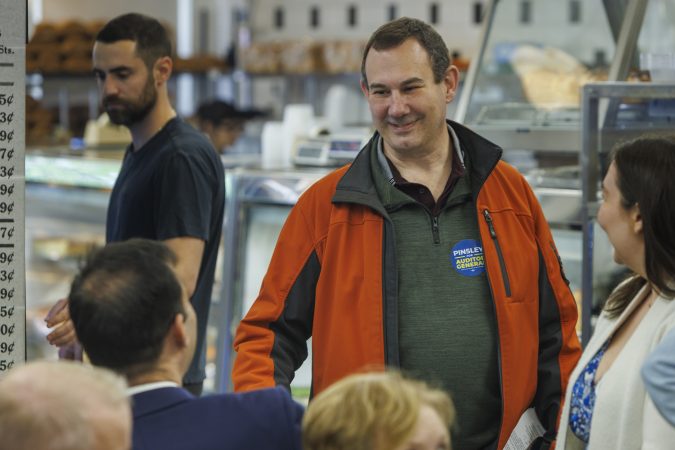
A Democratic campaign manager for Mark Pinsley’s 2024 campaign for auditor general agreed to a guilty-plea deal in Chester County over fraudulent petitions in that race last week.
Mariel Kornblith-Martin, 41, of Philadelphia, was charged earlier this year by the Chester County District Attorney’s Office with filing fraudulent nomination petitions while working for Pinsley, the Lehigh County controller, during his unsuccessful 2024 primary campaign against State Rep. Malcolm Kenyatta (D., Philadelphia). Kenyatta went on to lose in the general election to the Republican incumbent, Timothy DeFoor.
Kornblith-Martin was accused of paying college students to sign off on campaign petitions with forged signatures on them. Those signatures included the names of multiple elected officials, including a Chester County judge.
She pleaded guilty to one charge of criminal solicitation, specifically unsworn falsification to authorities. She had been charged with 50 crimes: 40 counts of criminal solicitation and 10 counts of breaking election law.
The political operativewas sentenced Tuesday to two years’ probation and ordered to pay a $1,000 fine plus costs associated with the case.
Pinsley is now the Democratic nominee for akeystate Senate seat that includes parts of Bucks and Lehigh Counties.
The Inquirer reported in 2024 that his petitions for the auditor general race contained the names of multiple elected officials who said they had never signed them, including Coatesville City Council members Carmen Green and Khadija Al-Amin, and West Goshen Township Supervisor Nate Wolman.
Perhaps most striking was a fraudulent signature for Chester County Court Judge Alita Rovito. Rovito, a Democrat, told The Inquirer in 2024 that she had reported the forgeryto the district attorney’s office. She said at the time that “the use of my name and signature is concerning to me due [to] the potential implications on my role as a member of the independent judiciary.”
Ironically, Rovito initially had been assigned to Kornblith-Martin’s case in May. She recused herself and Judge Sarah Black took over the case.
Kornblith-Martin had given three college students “stacks of pages containing signatures of supporters” and asked them to sign the required sworn declaration at the bottom of each page in exchange for money, according to the district attorney’s complaint. The Inquirer previously identified these young people as Temple University students.
Al-Amin, one of the local elected officials and a member of the county’s Democratic committee, said in an interview Friday she was satisfied that the campaign manager was “held accountable for her actions.”
“I’ve sat on many campaigns in different positions: consultant, chair, manager,” she said. “I would never even think about doing something like that. If you can’t win an election honestly, then the position is not for you.”
But she questioned what she sees as a failure in oversight on Pinsley’s part. In his current role, he is responsible for overseeing audits in Lehigh County.
“As her boss, I think he should have known what she was doing. … She ran his campaign,” she said. “He should have had regular contact with her.”
Gary Masino, Pinsley’s current campaign manager, said in a statement Friday that “Mark believes the justice system worked effectively and fairly in this case.”
“He was disheartened to learn about Mariel’s crime, but respects that she took responsibility by pleading guilty and that the matter is resolved,” he said.
Pinsley previously told The Inquirer that his campaign had reviewed the signature issue after concerns were raised but lacked “enough verified information” to reach a conclusion.
The petitions had glaring red flags, Al-Amin noted, such as the town of Downingtown being written as “Downtown.” She pointed out at the time that the geographic routes on the petitions did not make sense. And petitions had dates on them prior to the petitioning period, names written oddly, and signatures in strikingly similar handwriting.
“You could look at the pages and you could tell that there was really something wrong,” she said Friday.
Back in 2024, Martin had told The Inquirer that the campaign was doing an internal investigation and declined to comment further. She has not responded to requests for comment since a text message in February of that year in which she said: “We are still doing an investigation internally. I have no further statement until our investigation is over.”
Philadelphia-area Democrats criticized President Donald Trump’s recent promotion of Freedom Fuel gas stations in Pennsylvania and New Jersey as an effort to fool people about the high price of fuel rather than a long-term solution to the problem.
“This appears to be a PR stunt of some sort, which is designed to distract people from the fact that gas prices have gone up because the president started a war against Iran,” said Democratic U.S. Rep. Mary Gay Scanlon, who represents Delaware County and parts of South Philadelphia.
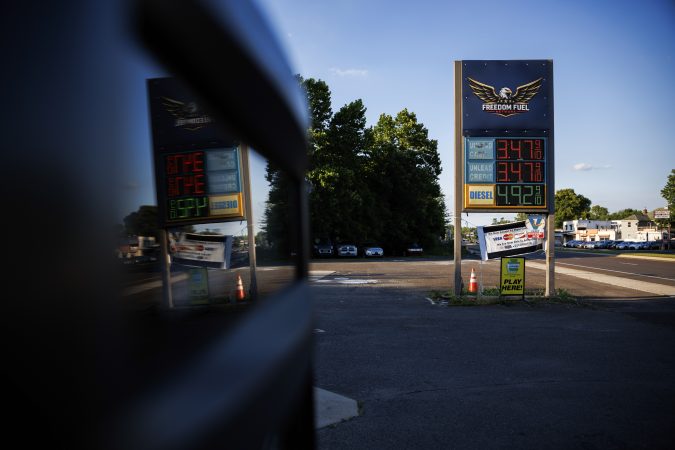
Questions still abound about who is behind the Freedom Fuel Network, which popped up around the region earlier this month with 25 gas stations sporting the branding.
No entity is registered in Pennsylvania or New Jersey with the name, but an application for a trademark was filed in Delaware on July 1, two days before the July 3 launch that was heavily promoted by the White House.
Trump was posting about it on Truth Social ahead of the launch, praising the retailer’s patriotism and promising that gas prices nationally would soon fall after they surged following his decision to attack Iran earlier this year.
“This Retailer is taking the lead, and others should follow. They are doing this because they love the U.S.A. We are proud to celebrate America’s 250th Birthday in the Great Commonwealth of Pennsylvania, the Birthplace of our very special, one-of-a-kind Declaration of Independence, and where I won BIG in the Presidential Election!” Trump said on Truth Social on July 1.
The stations started selling gas at $3.47 a gallon on July 3, with the price a nod to the 47th president, according to the White House. Scanlon said that when she stopped by Friday morning, prices were already going up just seven days later.
“I actually went to one this morning just to get a sense of what was going on,” Scanlon said. ”They may have started with a price of $3.47, but it’s already going up; this one was at $3.57,″ she added, without identifying the location.
U.S. Rep. Brendan Boyle, a Democrat who represents Philadelphia, said these stations are too little, too late for constituents who have been feeling squeezed by gas prices.
“Gas was $2.98 a gallon before Trump’s disastrous Iran War. Prices then jumped 50% — the biggest jump in gas prices in American history. These few discounted gas stations are a band-aid on a gunshot wound,” Boyle said in a statement to The Inquirer.
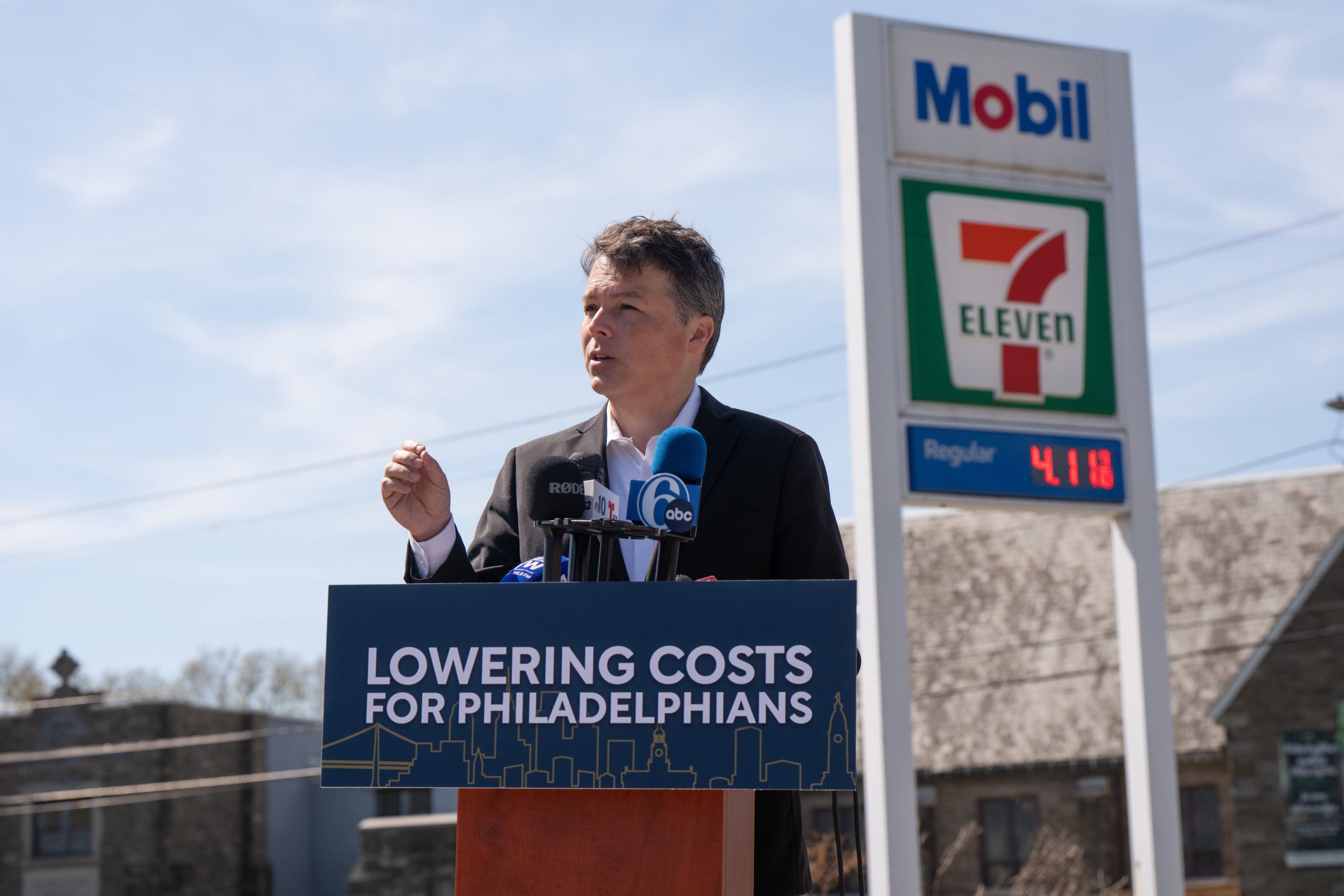
U.S. Rep. Brendan F. Boyle holds a news conference at a Philadelphia gas station to announce legislation to suspend the federal gas tax whenever the national average price of gasoline exceeds $4.00 per gallon.Jessica Griffin / Staff Photographer
Boyle has been outspoken about gas prices while in office. In April, he announced a bill to suspend the federal gas tax when gas prices exceed $4 per gallon.
The average gas price in Philadelphia as of Saturday was $3.99 per gallon, about 11 cents above the national average, according to AAA’s fuel price tracker.
Gas prices peaked in May but have remained volatile because of the ongoing conflict with Iran. Following U.S. attacks, Iran closed the Strait of Hormuz — an essential trading route — causing gas prices to spike. Recently, the U.S. and Iran resumed attacks, marking the end of a three-week ceasefire.
“In no uncertain terms, the Cease Fire is OVER!” Trump posted on Truth Social on Friday.
U.S. Rep. Dwight Evans, a retiring Philadelphia Democrat, said that ending the war in Iran would be the long-term solution for lowering gas prices.
“As of now, it [the Freedom Fuel Network] doesn’t sound like a long-term solution,” Evans said. “Gas prices are high because Trump has been more focused on vanity projects like a ballroom than on ending his over-four-month illegal war of choice — a war which both houses of Congress have now voted to stop.”
According to the White House, Freedom Fuel is an independent company that the Trump administration does not fund, and it says the company was not buying gas at a discounted price.
But the White House has been heavily promoting the effort. It posted a video to social media Tuesday featuring patrons at Freedom Fuel gas stations crediting Trump.
“I thought gas was more expensive, but it’s not. So thanks Trump for saving me some money!” a man says in the opening of the video, which touts the prices as being 50 cents lower than the Pennsylvania average.
Scanlon said that identifying the people funding the initiative would make clear the motive for the low prices and whether they would be there to stay.
“Someone is making it worthwhile for these independent stations to rebrand themselves and sell at under market rates,” she said. “I mean, they’ve got to be making up that money somehow. So the question just is, who is doing it and why? Although it seems there can be no other reason than to prop up the president’s faltering poll numbers.”
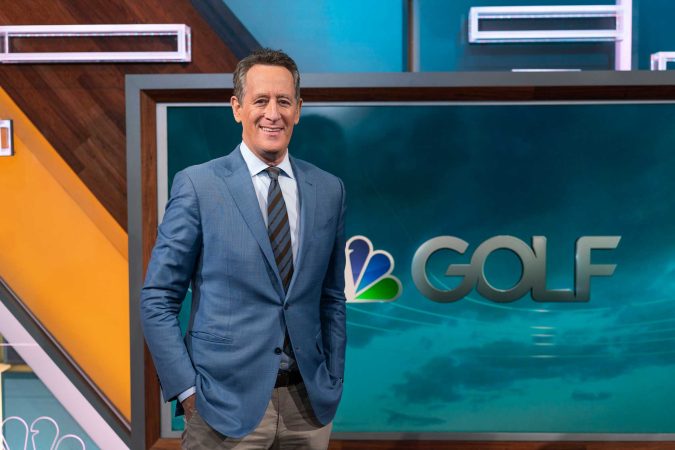
The most pleasant surprise of the recent memoir from the most elegant studio host in sports is, deliciously, all of the boobs and balls and cussing.
“Did you find it too racy?” Rich Lerner asks, bemused but earnest, as if the aristocracy at the exclusive, tennis-whites Philadelphia Cricket Club might look sideways at him during the party that is to follow. He uncrosses his legs, adjusts the perfect collar of his white shirt tucked just inside his slim, tailored blue blazer, and grins like a little boy proud of his mischief.
No. I found it authentic. Him naked in a Scottish bathtub, him learning the ways of the world from the profane teaching pro at his dad’s pitch-and-putt in Dorneyville, Pa., him wisecracking with Tiger Woods in much, much happier times.
Still, why push the envelope with “Aren’t you that Golf Guy?”? Why risk the 30-year reputation of the man who, as the voice of diplomacy and reason on The Golf Channel, has steered the game through the perilous waters of Tiger and LIV and Phil?
“Because that was my experience, and I wanted to be authentic,” Lerner said. “This was not going to be ‘polished Rich’ at the desk. This was going to be Richie in the newsroom, Richie in the compound, Richie with his friends, Richie growing up — schticky, schticky Dicky.”
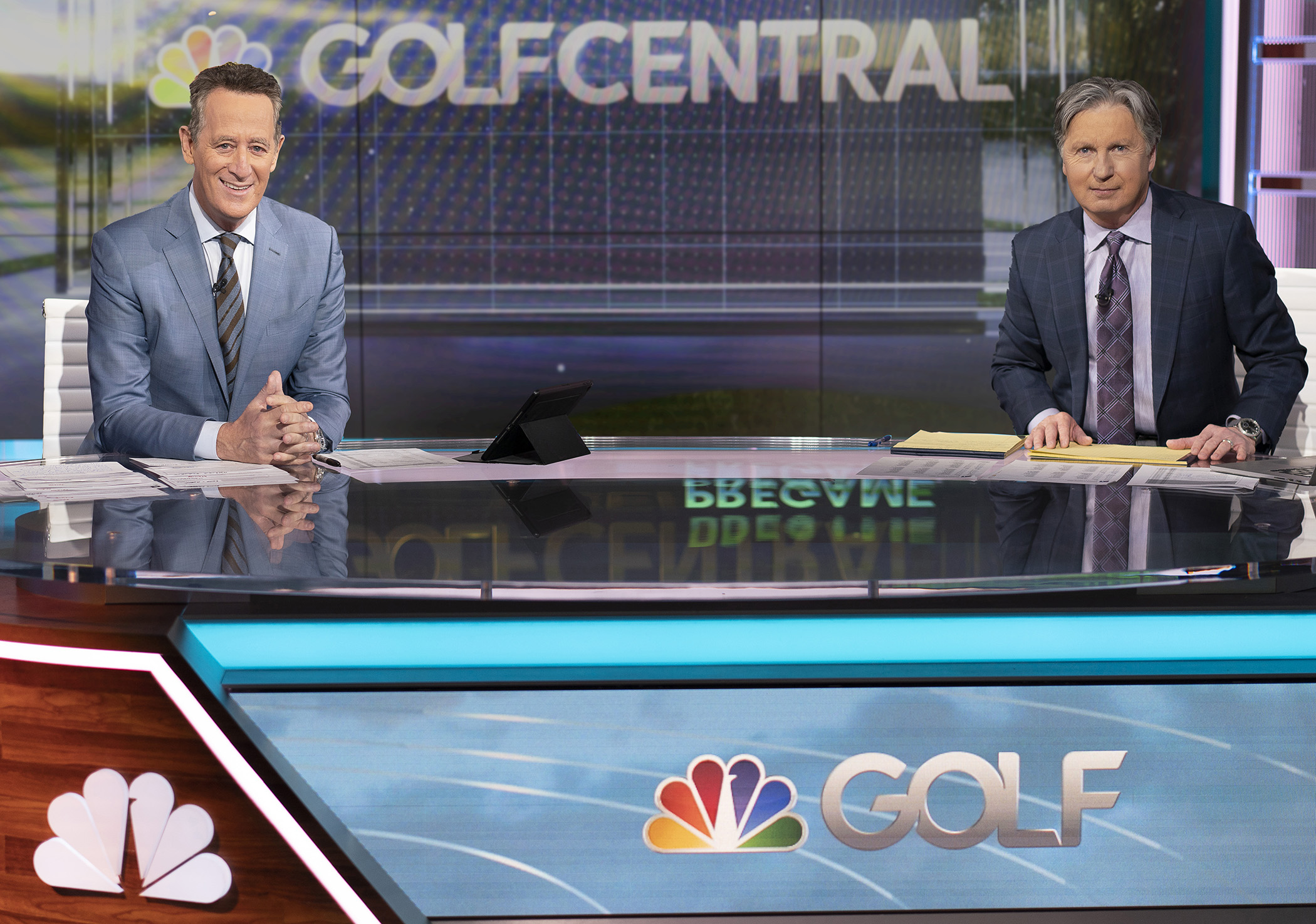
Lerner has served in various roles at the Golf Channel, most recognizably in marathon sessions of Golf Central: Live From at golf’s biggest tournaments. On that set, analysts dissect each day’s topics with the finesse of a chainsaw, while Lerner more steadily guides them through the wilderness with nudges of stiletto wit.
Lerner generously addresses Phil and LIV and, of course, Tiger, Tiger, Tiger. At 65 and still brimming with energy, he’d set out to write a Tiger book but there was so much more to his three decades on the set and his six decades in the game.
Besides, who needs another Tiger book when you can write a book about the greatest broadcaster to come out of the Lehigh Valley? Perhaps — with apologies to Ernie Johnson, who babysits Shaq and Charles — the best sports studio host on television?
That’s what Lerner ignores in the book, subtitled “Doglegs and Detours from a Life in the Game.” He affects complete avoidance of his colossal presence in the bigger picture of the game. His typical and innate humility serves only to amplify his significance. Jim Nantz and Mike Tirico deliver the live action with trademarked flair that may or may not be contrived, but neither has to act as referee to the two most brilliant and relevant analysts in sports, former pro golfers Brandel Chamblee and Paul McGinley.
It’s hard to put down but easy to set aside and pick up again. It’s great for the beach, the bathroom, or the briefcase, if you travel for work. When it’s light, it’s as light as cotton candy, and he radiates the joy of the game both in the book and in the flesh.
It isn’t all light; ever less so these days, it seems. The stickier subjects affect Lerner far differently. In speaking with The Inquirer at Cricket in the moments before the event, Lerner delighted in culinary discussions concerning Yocco’s hot dogs (IYKYK) or Dalessandro’s cheesesteaks, one of which he was gnawing, standing up, when I walked into the ballroom.
Temple grad and Allentown native Rich Lerner (left) with The Golf Channel analyst Brandel Chamblee. NBC Sports
But when the talk turned to Tiger, who just went through rehab again, and Phil, whose spiraling disgraces have attained a level of surreality, Lerner became subdued, like a man whose gifted children have lost their way.
“I think it’s sad,” he said.
He looked sad.
He seems especially troubled about Mickelson’s issues and choices, clearly because Lerner, who adored Arnold Palmer (Golf Channel’s co-creator), knows the game needed its next Arnie, and, just as clearly, the next Arnie was Phil. But then came LIV, and now there are allegations of sexual misconduct, and it appears that Mickelson’s window is closed.
“When he should have been embraced — he should have been the Ryder Cup captain, probably twice. You can just keep going,” Lerner said. “He would have had that Arnold Palmer ambassadorship — show up at a major when you’re 65 and hold court, reminisce about the shot you hit off the pine straw in 2010 — that was his.
“America’s a forgiving country. You never say never, but at this point, he seems adrift.”
Lerner offered that piece of poignancy off the cuff Monday night. He writes it even better in the book, especially in the chapter, “Impossible to F— Up.” Spoiler: Phil F—’s it up.
Lerner is golf’s chief negotiator. He is a conciliator at his core. He loves the game as much for its inherent morality as for its incredible, rewarding difficulty. The difficulty remains even as the morality leeches away.
This turmoil, for him, is torture.
He grew up in the game, twice a champion at old Berkleigh Country Club out in Kutztown, a real-life Danny Noonan, 6-foot-4 and lean and complete with the thick, unruly hair. He began college at Lehigh, recalibrated to Temple, became a local TV legend young — well, I’ll let him tell that story. He’s so good at it; his video essays on The Golf Channel are masterpieces of depth and nuance, and his autobiographical descriptions of the people who made and make him are just as good.
You’ll meet grateful firefighters and graceless pro-am hacks and a couple who fostered at least 80 children, which was my favorite part of the book.
You’ll learn he loves basketball — Big 5 legend Fran Dunphy attended, as did celebrated Sports Illustrated hoops writer Jack McCallum — and, though he was on Broad Street in 1983 when Doc and Moses brought it home, Shaquille O’Neal and Penny Hardaway stole his heart when he moved to Orlando, where The Golf Channel began. Now he and it are both in Connecticut, where he never misses an Eagles game and catches the Phillies whenever he can.
The book also talks about the lure of alcohol on the course and in the booth, and, between that and the boobs and balls and the cussing, you might think it’s not a worthy review for a man so austere.
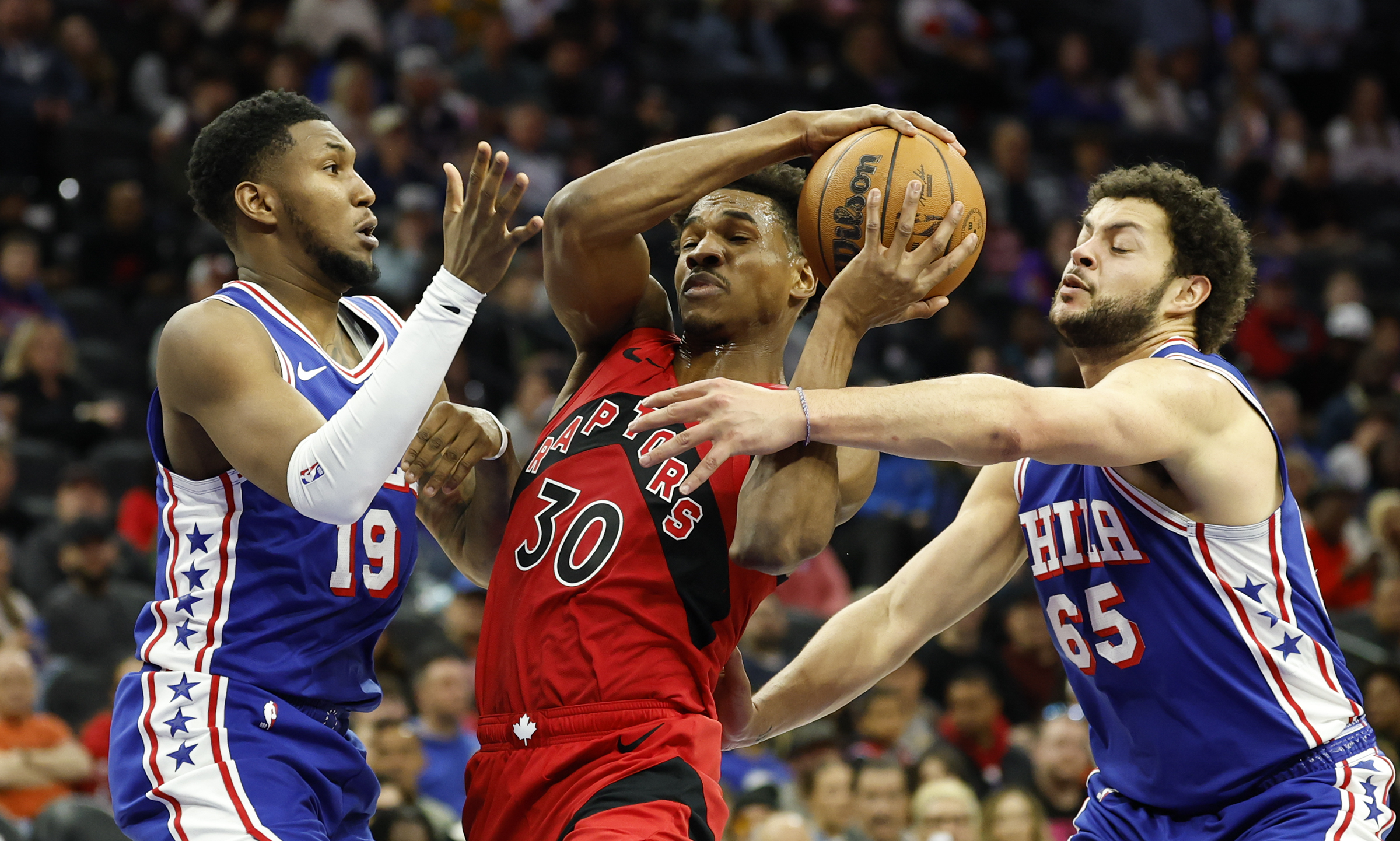
LAS VEGAS — When the 76ers face the Indiana Pacers in Saturday’s Summer League matchup, they will see a familiar face in Alex Reese.
With his unconventional — and meaningful — jersey number.
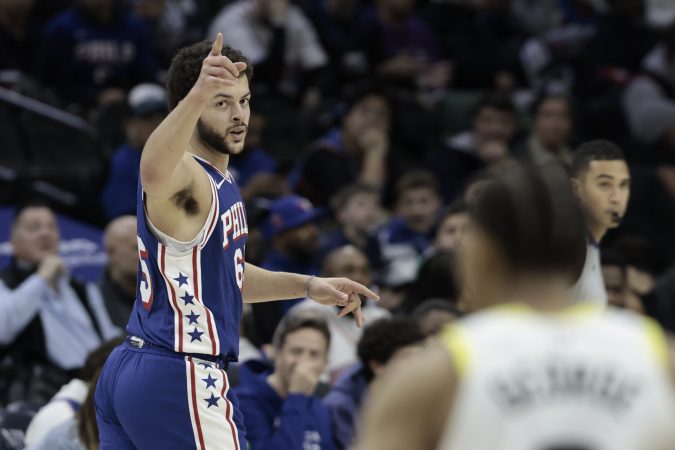
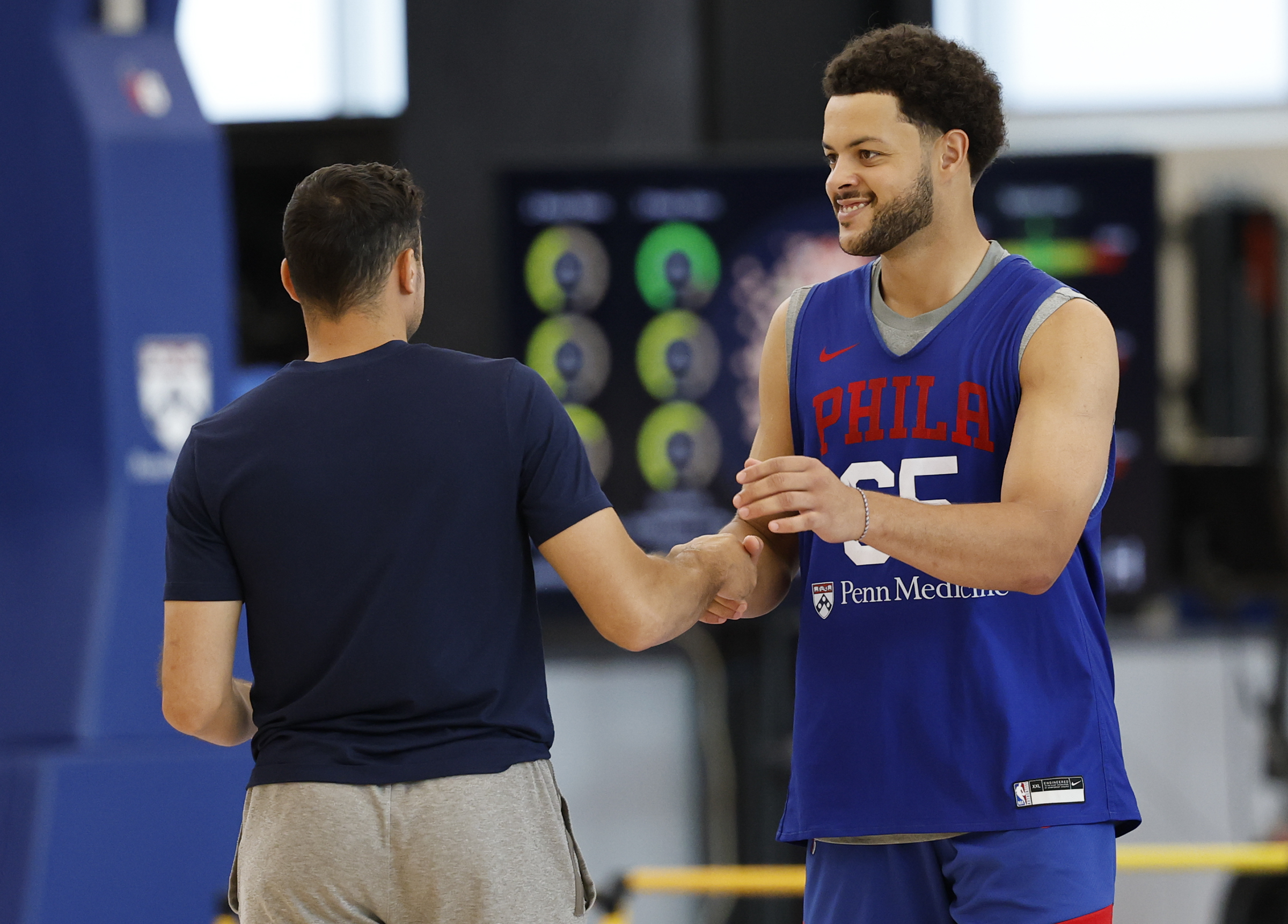
Reese, a power forward who played in 14 games for the Sixers on a two-way contract during the 2024-25 season, is again wearing No. 65 with the Pacers’ Summer League team. Those digits are more often associated with football offensive linemen than NBA players. But last July, Reese shared with The Inquirer and Philly Voice that he chose the number because it aligns with the birth year of his mother, Rebakah, and continues to honor her after she died in 2024 from early-onset Alzheimer’s disease.
“It just helps me think of her when I’m playing,” Reese said then from the Sixers’ practice facility, days before the team waived him before this story could run during Las Vegas Summer League. “It makes it easy for me to look down and see why I’m doing what I’m doing.”
Reese did not always have a specific jersey number that he coveted. But while scanning the limited options upon joining the Rip City Remix, the G League affiliate of the Portland Trail Blazers, 65 instantly caught his eye. He felt the connection between it and his mother while she fought the debilitating cognitive disease. Rebakah died with two games remaining in that first season he wore it.
“Now I have a reason to keep it,” he said.
Alex Reese (right) was briefly with the Sixers’ Summer League team before being waived before game’s started last year.Yong Kim / Staff Photographer
Reese described his mom as “super sweet” and said she “loved everybody.” She drove him to baseball practices and games across the Southeast from their home near Birmingham, Ala., then to the gym or playground courts for workouts once basketball became his sport of choice.
Reese became a star at Pelham High School in Pelham, Ala. and signed with the University of Alabama in 2017. Rebakah was diagnosed just before the start of the COVID-19 pandemic, while Alex was rehabbing after hip surgery during a “really tough” summer. She still made the short trip to Tuscaloosa for college games — and, more importantly, his 2021 graduation.
After he went undrafted, Reese took a year off from basketball to return home to spend time with Mom and his support system, including brothers Nate and Zach, Brian, his father, and extended family and friends. He worked jobs such as laying sod, moving furniture, and bartending.
“I needed it,” Reese said. “I didn’t know if I was going to make the push to try to play professionally. Once I took the year off, got my mindset a little bit better, and got back into it after I worked a couple jobs that I don’t want to work anymore.”
He went overseas to play in Luxembourg, then found opportunity in the G League. He wore No. 15 in his NBA debut with the Oklahoma City Thunder, scoring two points in less than two minutes in October 2024. After returning to the Remix, he signed a two-way contract with the Sixers in February 2025 and remained with the team for the rest of the season.
Alex Reese (right) averaged 5.3 points in 14 games with the Sixers in 2024-25.Yong Kim / Staff Photographer
By the time Reese chose No. 65, Rebakah was past the point that she could understand what the gesture meant. He has seen the perplexed comments from fans over the years about his choice, assuring that they “[don’t] bother me at all.” He has shared his reason for the number with a handful of Portland teammates, and with Sixers teammates such as Justin Edwards.
He honored her in 14 NBA games with the Sixers. And 65 remains his number of choice, including in Saturday’s Summer League matchup.
Because it is not unconventional to him. It means everything.
“I obviously wish she was here to see it,” Reese said, “and see where I’ve made it now.”
Artist Charles Fazzino’s work jumps out at you. And it sparkles.
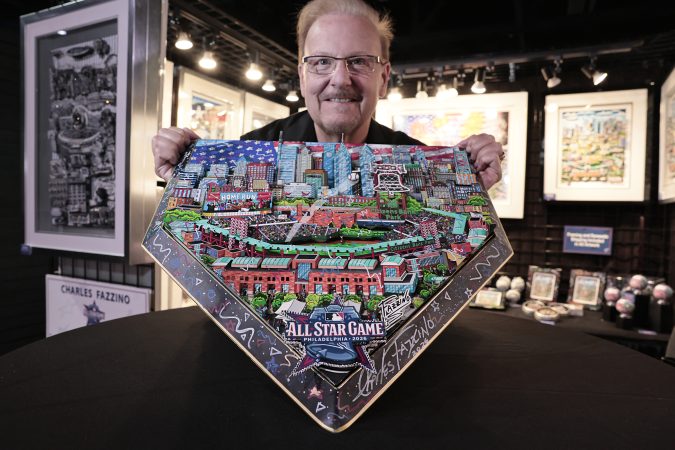
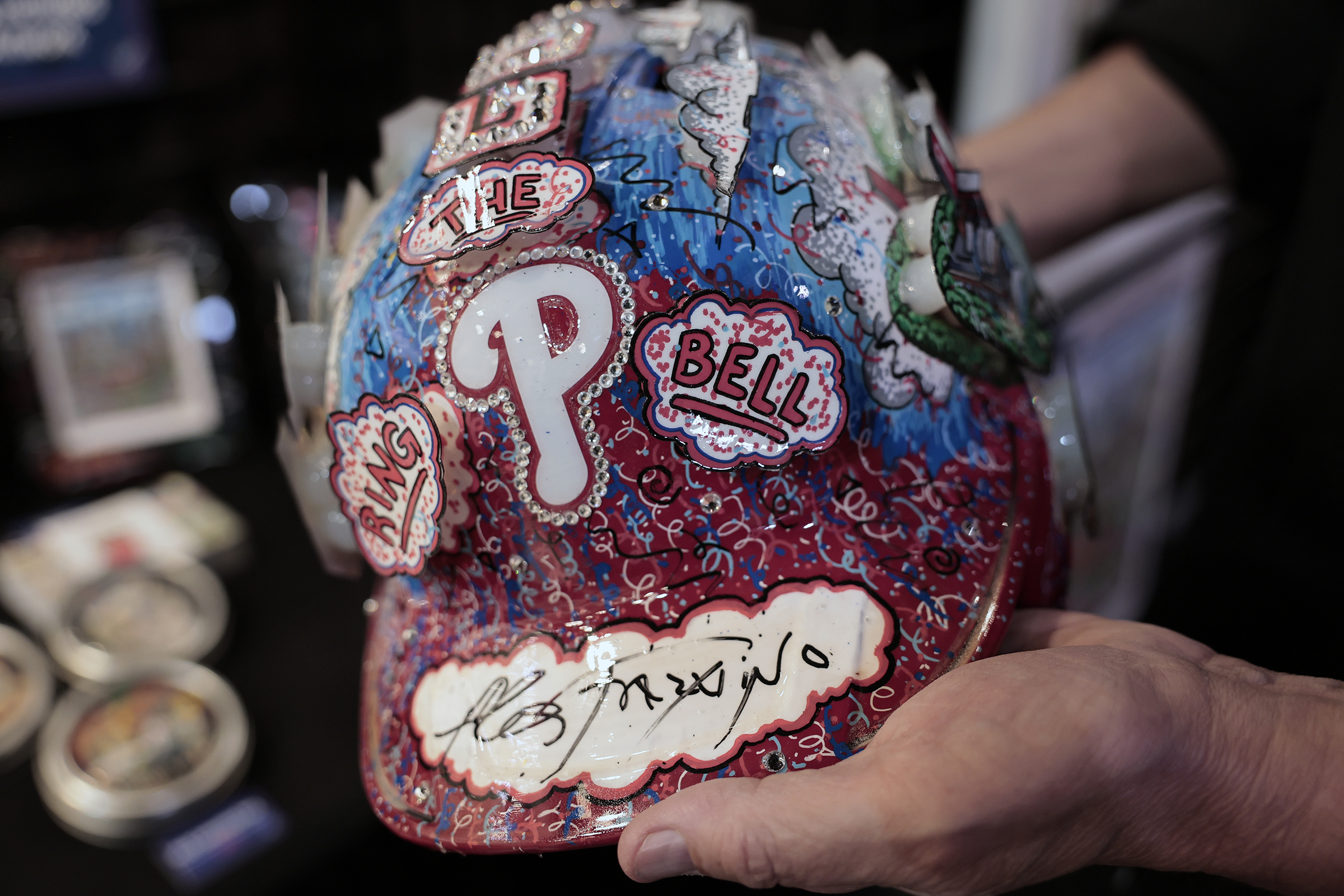
Renowned for capturing colorful cityscapes and big sporting events, Fazzino has for decades handcrafted three-dimensional pop-out art to mark major occasions from the Grammys to the Olympics — and, in recent years, the annual MLB All-Star Game.
With the game in Philadelphia this year, Fazzino is in town as the official commemorative artist and he is bringing along the MLB All-Star Game portrait and some of his bedazzled baseballs, bats, and helmets to the MLB All-Star Village at the Pennsylvania Convention Center.
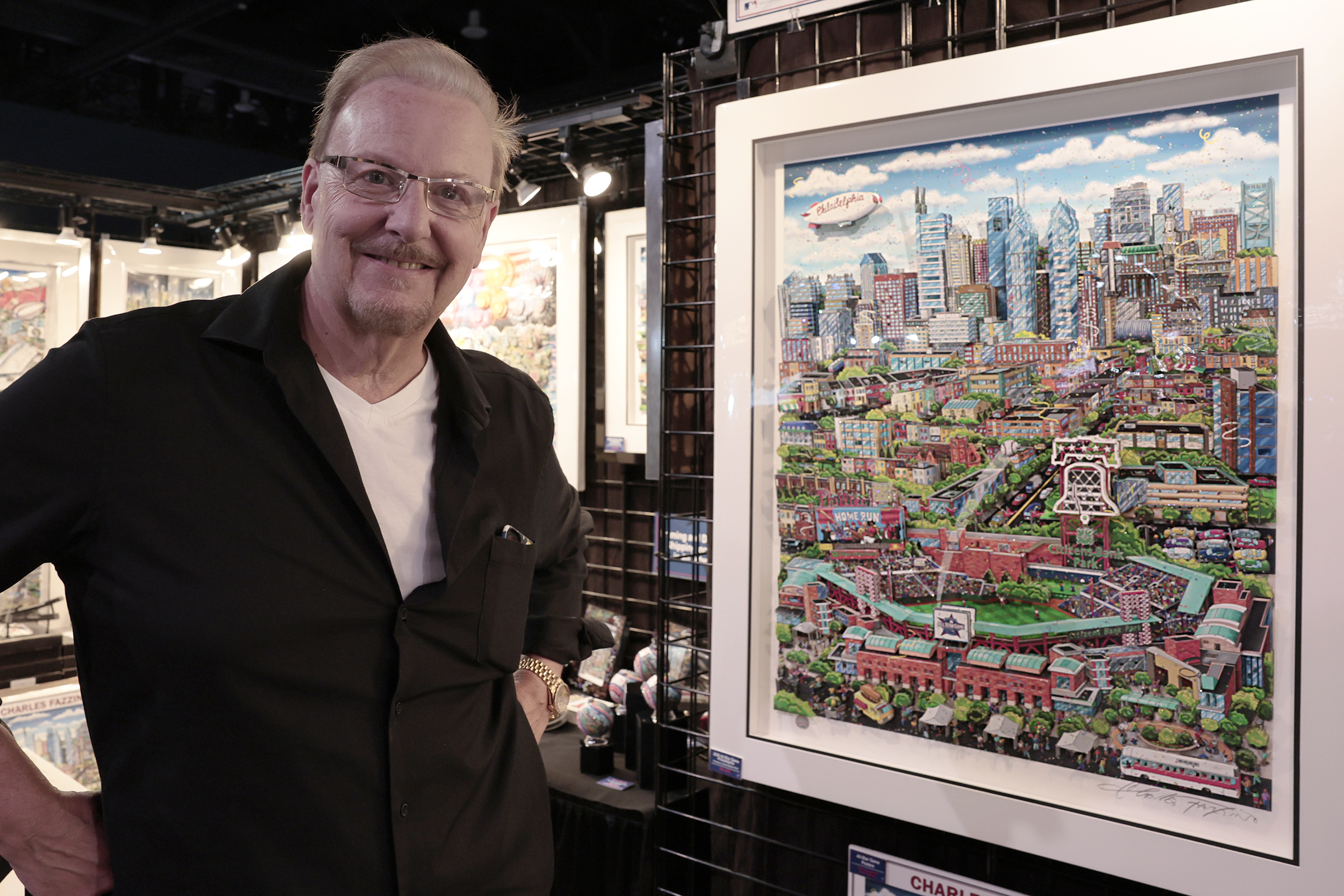
The MLB All-Star Game portrait spotlights the city of Philadelphia, featuring the skyline, Benjamin Franklin Bridge, SEPTA buses, and, of course, Citizens Bank Park.
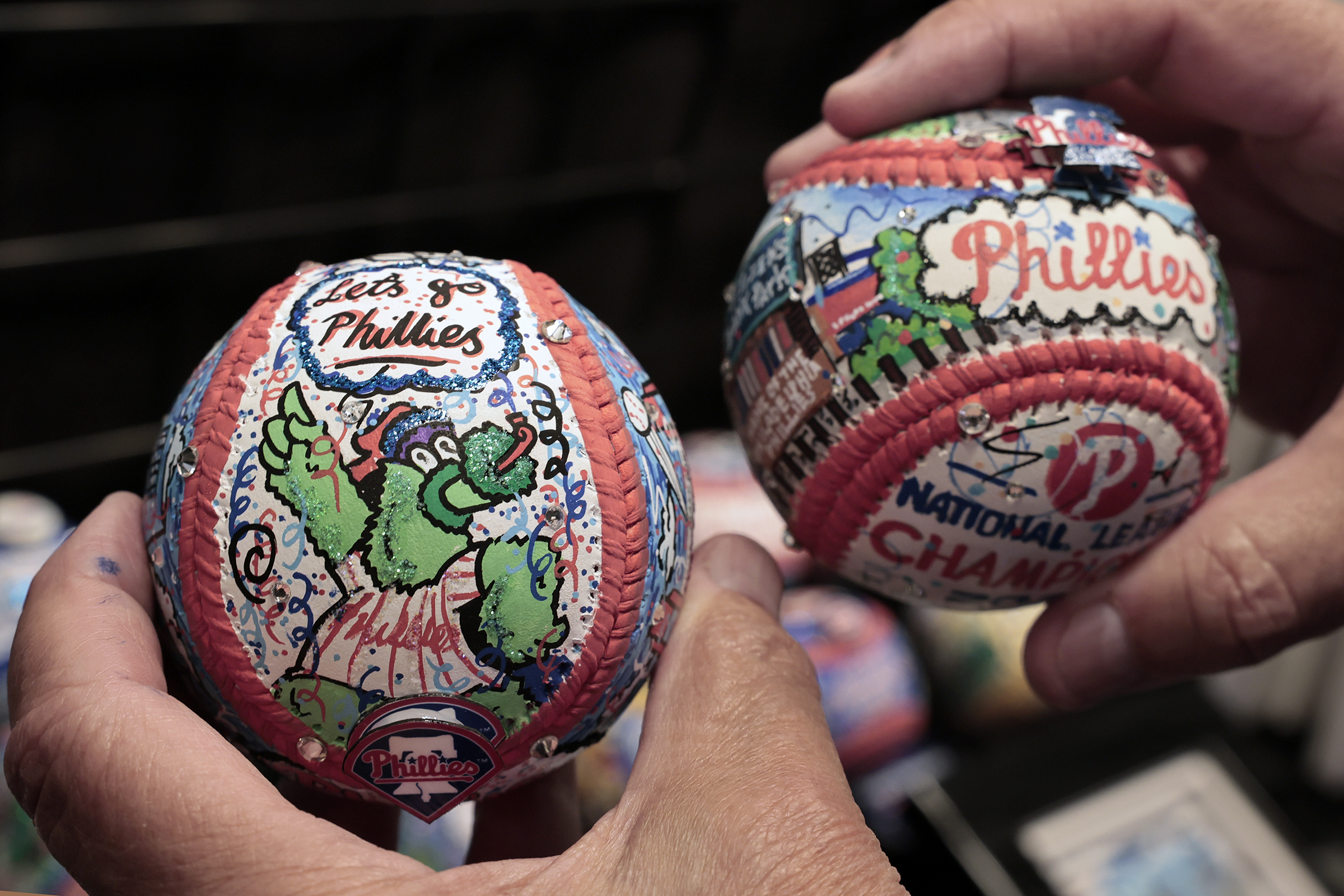
Artist Charles Fazzino displays his hand painted baseballs available at his booth at the Capital One All-Star Village, Philadelphia Convention Center, on Thursday, July 9, 2026.Elizabeth Robertson / Staff Photographer
The portrait is one of his signature 3D pop-out pieces. Fazzino started making these pieces in the 1990s inspired by pop-up books. First, he prints drawings on a special cardboard-like material called museum board, made of cotton rags, and proceeds to cut out each person, landmark, and building with an X-ACTO knife. Then he meticulously arranges the figures using gobs of glue to create the three-dimensional artwork; the glue is not just an adhesive but a layering tool as well.
Finally, he applies Swarovski crystals and acrylic paint to make the canvas glitter.
His work has been collected by a wide range of fans from Presidents George Bush and Bill Clinton, to celebrities including Julia Roberts, Michael Jordan, and Reggie Jackson. To keep up with the demand, Fazzino runs a studio in New Rochelle, N.Y., with a staff of 60 who help with the painstaking process of cutting and gluing.
Artist Charles Fazzino created the official 2026 All-Star Game poster. His original 3D art that the poster is based on hangs at right. Fazzino was readying his booth at the Capital One All-Star Village at the Philadelphia Convention Center on Thursday, July 9, 2026.Elizabeth Robertson / Staff Photographer
“The artwork is different because everything still is printed by hand, made by hand, cut out by hand, glued, assembled, and constructed all by hand,” said Fazzino, who found a passion for art thanks to his artist parents. “That’s what I think differentiates me from other artists, and why the pieces are so unique.”
Fazzino has been making artwork depicting Philadelphia for years, earning a substantial following in the region as local galleries have sold his work over the past 30 years.
Artist Charles Fazzino displays a custom-made batting helmet that will be available at his booth at the Capital One All-Star Village at the Philadelphia Convention Center on Thursday, July 9, 2026.Elizabeth Robertson / Staff Photographer
“I’ve been going [to Philly] so many years, so I include the Mummers Parade or the Art Museum, Rocky sculpture, all the cool hotels, and the food culture,” he said.
In addition to the All-Star art, he made a piece commemorating the Semiquincentennial, featuring major landmarks from all 50 states.
Fazzino’s original 3D art costs between $3,000-$7,000 with framing, depending on the size, but he also sells posters at lower price points, in addition to a variety of baseball-related art.
At his booth at the Convention Center, visitors can see his Phillies-themed decorative baseballs as well as the ceremonial home plate that will be used in the first pitch at the All-Star Game on Tuesday.
After giving birth to her first child, Jennifer O’Mara sought therapy forpostpartum depression.
But when O’Mara left her Delaware County home to visit her in-laws in North Carolina, her counselor had to cancel a virtual session because she wasn’t licensed to practice outside of Pennsylvania.
“My therapist had always asked me if I was in Pennsylvania before a session started, and there was actually a time where I was not, and we couldn’t meet, and I didn’t understand why,” O’Mara said. “I was confused.”
Unbeknownst to the new mother, Pennsylvania counselors need a separate license for each state they practice in.
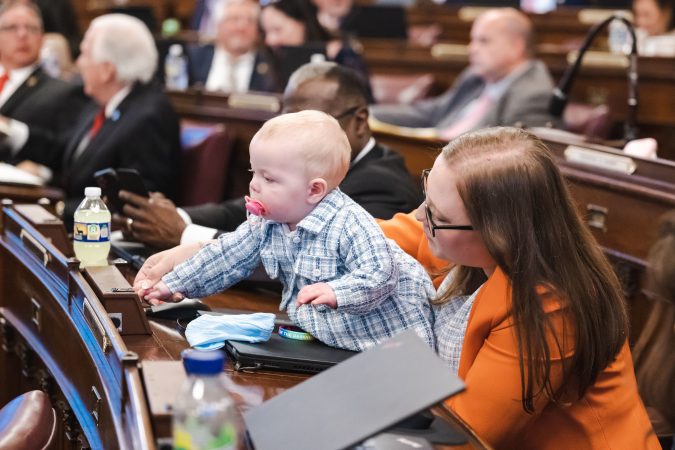
O’Mara, a Democrat elected as a state representative in 2018 and a co-chair of the legislature’s Mental Health Caucus, said she’s been working to change that regulation since that canceled therapy session.
Four years later, O’Mara’s efforts are about to pay off under a bill expected to soon go to Gov. Josh Shapiro for his signature.
The legislation would make Pennsylvania the 40th state to join the Interstate Counseling Compact. It enables counselors who are licensed in Pennsylvania to practice in any state that is part of compact.
Pennsylvania will join already participatingstates, including Delaware, New Jersey, Maryland, Ohio, and yes, North Carolina.
The bill only applies to licensed professional counselors, or LPCs. Pennsylvania separately participates in multistate healthcare compacts for psychologists, doctors, nurses, and physical therapists to provide inpatient care or telemedicine across state lines.
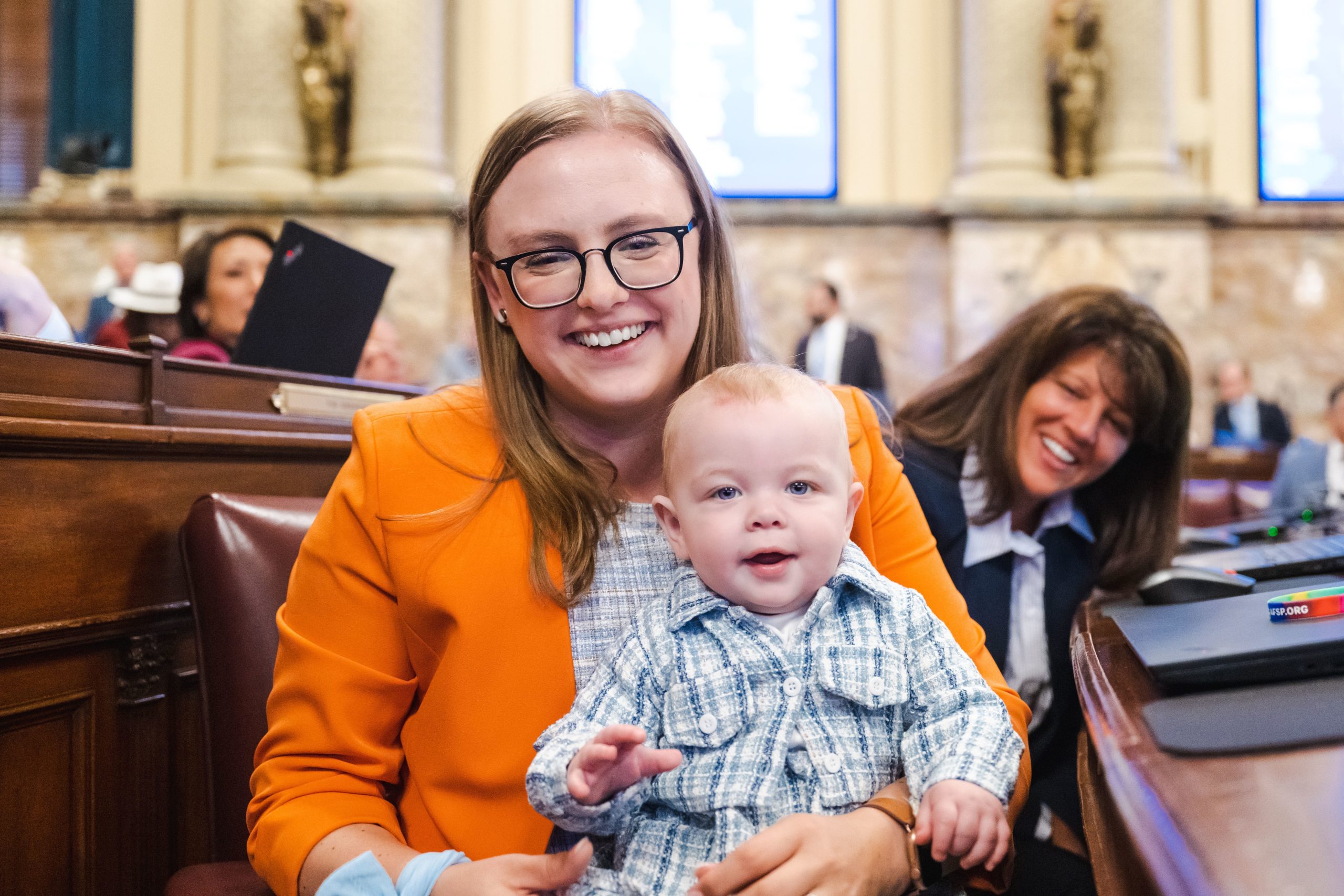
State Rep. Jennifer O’Mara (D., Delaware County) with her daughter, Katherine, now 4, in 2023. O’Mara helped usher the Interstate Counseling Compact bill through the Pennsylvania House in late June. The bill would allow licensed professional counselors (LPCs) to practice across state lines. Courtesy of Jennifer O'Mara
Shapiro plans to sign it
O’Mara helped advance the bill in the House. The Senate had passed it in July 2025 by a 45-5 vote. The House approved it last week by an 188-to-14 vote.
It now goes back to the Senate for a perfunctory, final signature by that chamber’s president before heading to Shapiro’s desk, according to a spokesperson for Sen. Lisa Boscola (D., Lehigh and Northampton), the bill’s prime Senate sponsor.
O’Mara and leaders of the Pennsylvania Counseling Association (PCA), which has about 700 members statewide, said they expect Shapiro to sign the bill into law once it gets to his desk. A spokesperson for Shapiro confirmed on Tuesday that he plans to sign it.
The bill aims to benefit recent high school graduates who want to keep the same therapist but plan to attend college out of state; active duty military members who are deployed outside Pennsylvania; and residents who physically work in New Jersey or Delaware and opt to do sessions during their lunch break, according to O’Mara.
“This feels like a small bill that will make a big difference,” O’Mara said.
Addressing a shortage of counselors
Post-pandemic, the demand for mental health services has increased, and providers have struggled to keep up. The nation is expected to have a shortage of more than 40,000 counselors by 2030, and roughly 62% of Pennsylvania communities lack adequate mental health services, according to the PCA.
The legislation is designed to ease that burden, said Nicole Palman, a counselor at the Main Line Counseling and Wellness Center in Haverford.
“We’ll be able to continue to see clients when they move to New Jersey or when they move to Delaware without having to end care that may have been going on for years,” saidPalman, a PCA member who advocated for the bill.
It’s not always easy to find a new counselor, she noted.
“A lot of people get discouraged,” Palman said. “The process is worse than dating to find a therapist you align with.”
Editor’s note: This story has been updated to clarify that psychologists are included in Pennsylvania’s multistate compacts for health professionals.
Inquirer staff writer Gillian McGoldrick contributed to this article.
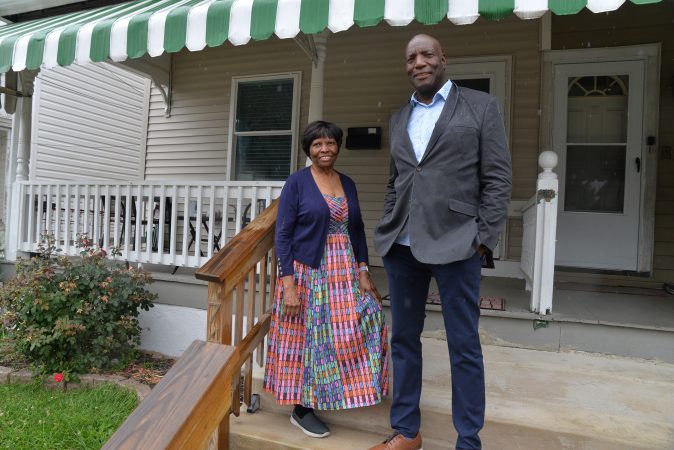
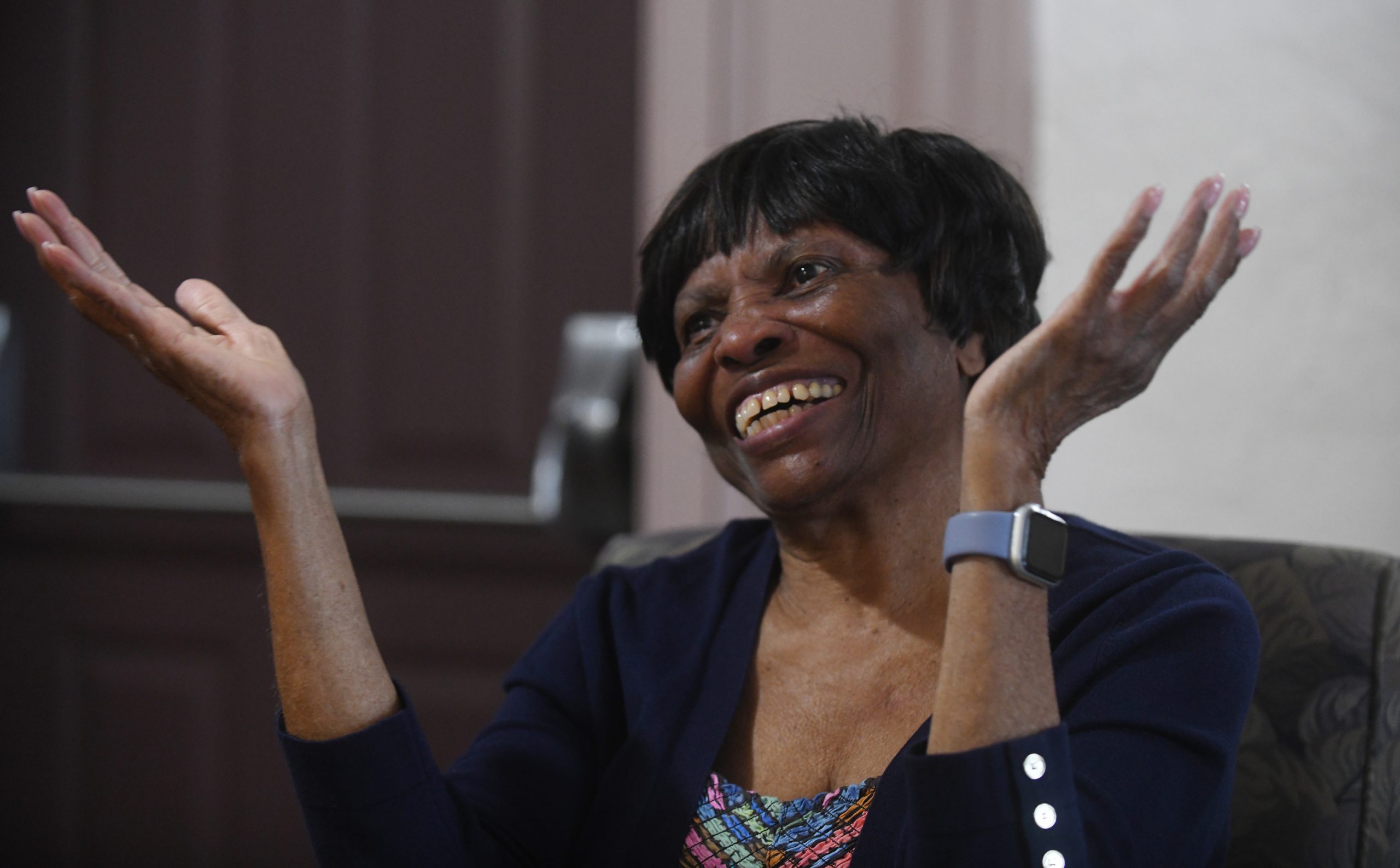
Minnie McNeil and her family still think about a challenge issued by her pastor more than 40 years ago: What could their city benefit from, and how could they address it?
The answer then, and now, was homelessness.
In the decades since, McNeil, 85, and three generations of her family have devotedly worked to support unhoused men in Coatesville. Their work, alongside countywide cross-sector collaboration, culminated in Chester County in June announcing it had reached “functional zero” for chronic homelessness.
Though it’s a milestone for the county, it doesn’t mean their work has stopped. They’ve evolved.
Using federal grant dollars, the W.C. Atkinson Memorial Community Service Center, founded by McNeil and her late husband more than 30 years ago, recently acquired its eighth transitional home in Coatesville, which it will remodel to offer affordable and supportive housing to shelter residents. And the shelter plans to expand its scope — helping catch young adults aging out of foster care before they become unhoused, a story they’ve heard over decades of helping thousands of men.
And separately, Minnie’s son Andrew McNeil, 58, and grandson, Derrick McNeil, 27, have begun an effort to remodel homes in the city, selling them below market to help revitalize Coatesville and support first-time home buyers at a time when housing prices in the county are soaring.
“The dollars of the ’70s and ’80s, the jobs that were available, [and] the housing stock available during that time is not, in our view, as easily accessible, and so the needs, in our view, are greater as a result,” McNeil said.
Minnie McNeil and the McNeil family have helped the homeless in Coatesville since the early 1980s.Bob Williams / For The Inquirer
It started with the shelter
In Minnie’s estimate, the need for support services still exists. The county in June announced it had reached “functional zero” for chronic homelessness, meaning that long-lasting or recurring homelessness had been reduced to “a rare, manageable level,” the county said in a news release last month.
It was an example of cross-sector collaboration, officials said.
Minnie and her late husband, Andrew McNeil Sr., have been a part of that diverse ecosystem since they founded and opened the W.C. Atkinson Memorial Community Service Center at the former Atkinson hospital in 1992. It has always been intrinsically linked to their eldest son, Andrew; it opened on his birthday that year — Jan. 7.
There are few people willing to do what McNeil and her family have done, and fewer who do it so exceptionally, County Commissioner Chairman Josh Maxwell said. He has watched her shelter take on just about every possible man — those whom others would have turned away, he said.
Maxwell knows her magnetism personally: On the biggest day of his political career, his election as chairman, McNeil asked him to stop by a house they were renovating to help. Maxwell was in the attic alongside contractors, ripping out insulation and tearing down walls.
“I don’t think anyone else can do what she does,” he said. “I think those people wouldn’t be helped. I think we’d have dozens, if not hundreds, of more homeless people in the county if she wasn’t the one taking them in.”
For Minnie, her children were a guiding light: Could they sleep here? Eat the food? It has kept humanity at the heart, she said.
“Housing is not just a roof over your head, but we’d like to create homes where people live healthy and happy and their very best lives, they reach their full potential,” she said. “A place that, yes, has some outside influence and support, but builds within that home a nucleus where [there’s] love and compassion.”
Michael Weber, 55, called the McNeils a “blessing.” He came to the Atkinson after living in a hotel room, unable to find permanent housing. He happily took up odd jobs at the shelter to support it. He thinks that’s why the McNeils asked if he would want to move into one of the support housing sites, where he could pay below-market rent.
“I didn’t even know it could be this good,” he said.
Andrew and his two brothers were helping hands as children, working shifts at the shelter overnight and preparing meals. Though he never anticipated he’d return to it, Andrew began to learn the ropes from his father when he came back to the county after 12 years in Maryland. (“I never saw that coming,” his mother noted.)
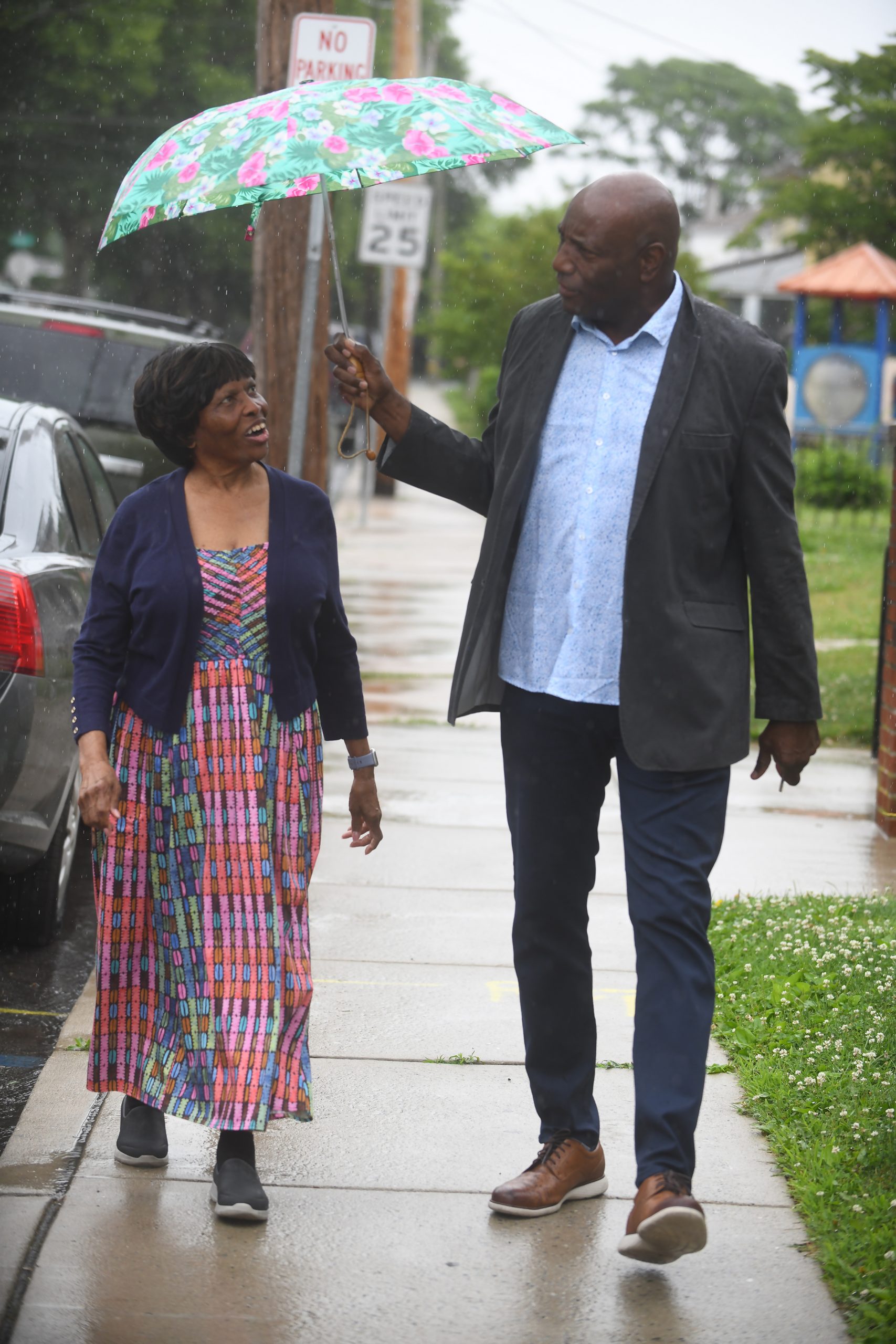
Minnie McNeil and her son Andrew McNeil walk down East Chestnut Street in Coatesville.Bob Williams / For The Inquirer
And those lessons didn’t stop at the shelter doors. Derrick, his son, has volunteered at the shelter and found it inspiring. Then Derrick caught the real estate bug, something Andrew knew plenty about.
Their shared interest is a new chapter that felt like an extension of what Atkinson had been doing, Andrew said.
“When they move out of the shelter, into the housing, what happens is they have a sense of pride because we’re not putting them into just anything,” he said. “I think that that matters [for] what we’re doing for families as well what we’re also doing with the men.”
He had watched men move from the shelter into the supportive housing, and saw the sense of pride at the homes they were living in. They wanted to bring that feeling more broadly.
Affordability in Chester County
Andrew and Derrick purchased their first project house together in May 2025 for $190,000 as Chester County has seen a diminishing housing stock and rising costs. The county saw some of the highest population growth in Pennsylvania between 2020 and 2024, but the housing market wasn’t keeping pace. Fewer single-family detached homes were built in 2024 than in the last several years, according to the county’s planning commission, and fewer new units were being constructed this decade compared with last.
In 2024, the median sales price hit $525,000 — the highest in the county’s history. That year, only 331 homes sold for under $250,000, a decrease of 5.9% from 462 units in 2023.
In Coatesville, like the Atkinson shelter had done with seven transitional houses, Andrew and Derrick took their first project house down to the studs. For 10 months, they remodeled it to a high standard, Andrew said. It went from a three-bedroom, one-bath to a four-bedroom, three-full-bath home. The house sold to a family about a year after they first purchased it, for $290,000 — under an appraiser’s valuation of $330,000, Andrew said.
“It was a nice experience, just knowing that the end goal was to provide housing and provide opportunities for someone that was maybe purchasing their first property, just trying to provide the best product and the best opportunity for someone at a pretty decent price for what they’re getting,” Derrick said.
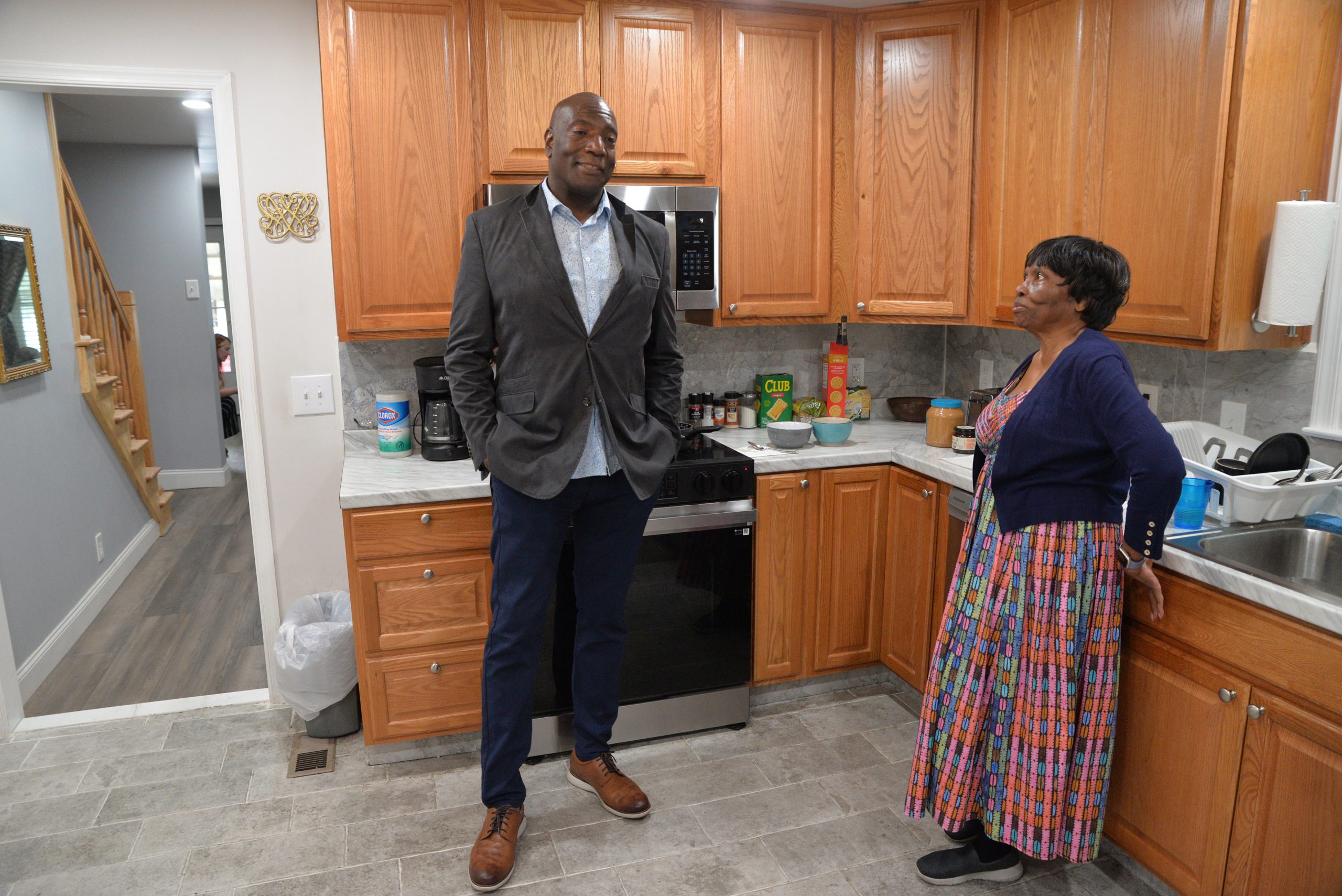
Andrew McNeil and his mom, Minnie McNeil, in the kitchen area of the house they rehabilitated on Merchant Street in Coatesville. Bob Williams / For The Inquirer
That care and thoroughness was a lesson both Andrew and Derrick learned from Andrew Sr., as the shelter had taken homes with “no lipstick” and modernized them.
“One of my father’s sayings was always ‘We get brick and mortar money once,’ so we have to put the quality into the house, because it’s up to us to maintain it after that,” Andrew said. “So we don’t cut any corners when it comes to rehabbing these houses, and so my son and I adopt that same principle when we remodel houses for the community.”
After the success of their inaugural endeavor, Derrick said they’re looking toward future opportunities like this one, or other options — like lease-to-purchase.
When Andrew reflects on the legacy of the shelter — opened in a historic property that was owned by Whittier C. Atkinson, the first Black physician to open a practice in Coatesville — he thinks of them continuing Atkinson’s holistic approach to medicine in the 1920s, how he would take gifts from the garden as payment for his work. It’s that essence they’re trying to continue, he said.
“I’m still taking lessons from my parents,” he said. “It’s always mission first; I observed that at a young age, and their mission, we’re continuing that … by trying to stay ahead of the curve. What’s the latest need in our community, and how can we address it in our focus?”
This suburban content is produced with support from the Leslie Miller and Richard Worley Foundation and The Lenfest Institute for Journalism. Editorial content is created independently of the project donors. Gifts to support The Inquirer’s high-impact journalism can be made at inquirer.com/donate. A list of Lenfest Institute donors can be found at lenfestinstitute.org/supporters.
The All-Star Game returns to Philadelphia in coming days with more than baseball.
It arrives with two sprawling shopping destinations, hundreds of exclusive products, and a merchandising operation at both the Convention Center and Citizens Bank Park. Fanatics, the sports-commerce giant, will anchor All-Star Village with a flagship store, while Aramark has transformed the two-level Phillies New Era Team Store at the ballpark into a showcase of All-Star-exclusive merchandise.
Like the FIFA World Cup, Super Bowl, Formula One races, and the recent PGA Classic at Aronimink Golf Club in Newtown Square, Major League Baseball treats its marquee events as multiday fan festivals. The result: The Midsummer Classic has become as much a retail event as a baseball event.
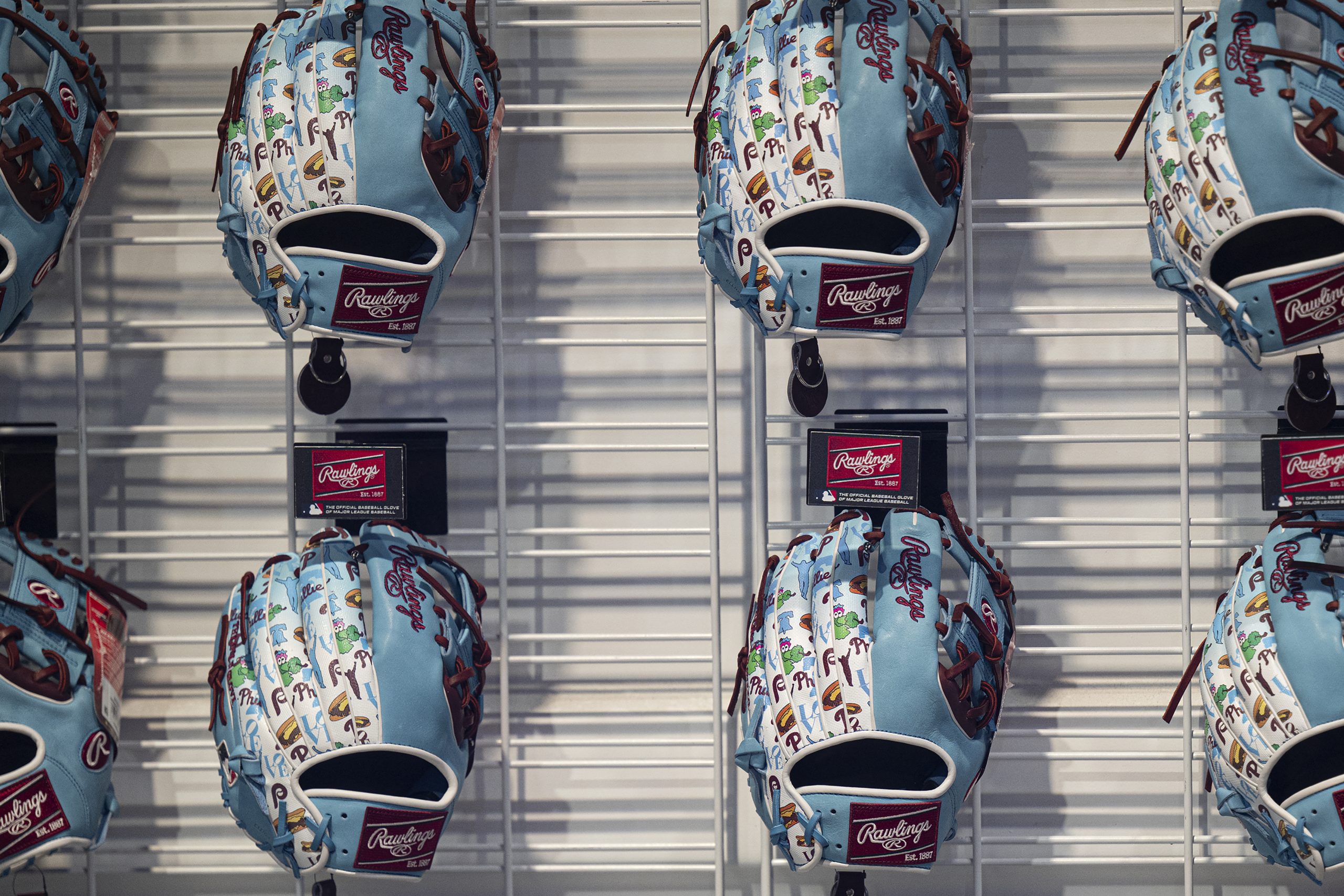
All-Star-theme baseball gloves on display at All-Star Village inside the Convention Center.Jose F. Moreno / Staff Photographer
“Commercially, it ranks in our top three events,” said Jamie Leece, a senior vice president with MLB. “From a business perspective, I’d say it’s our most important because we’re bringing every team together in one place.”
Unlike the postseason, where only a handful of teams remain, the All-Star Game draws fans from all 30 teams. MLB expects more than 80,000 people to visit All-Star Village over the four days.
“We have passionate fans who travel to multiple All-Star Games, and we also have people attending for the first time,” Leece said. “We want to make sure they have an incredible experience and can find merchandise that reflects their fandom.”
A temporary retail city
The biggest attraction inside All-Star Village may also be its biggest business.
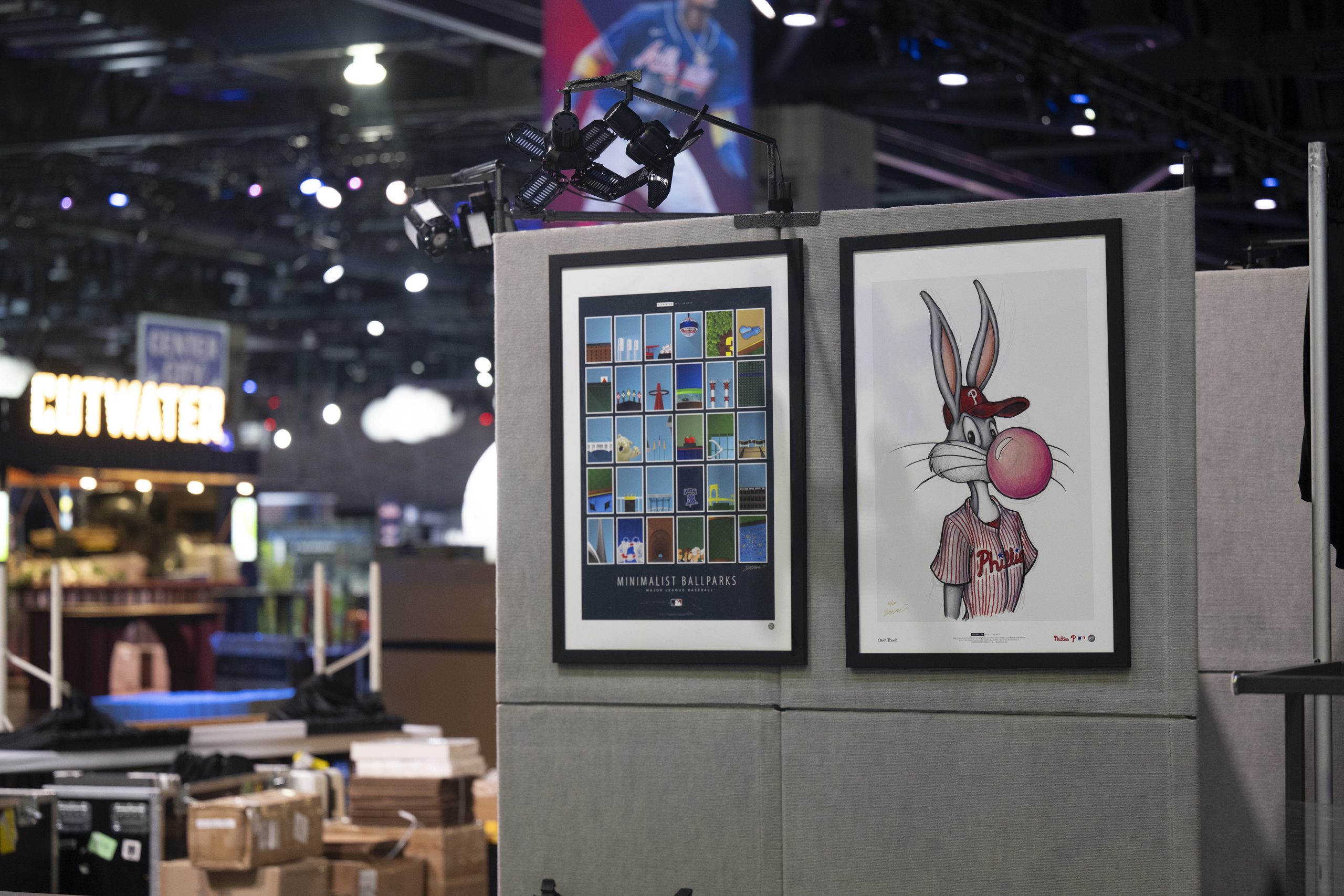
The merchandise at All-Star Village inside the Convention Center includes posters and original art.Jose F. Moreno / Staff Photographer
Fanatics, led by Philadelphia-area entrepreneur Michael Rubin, will operate a 16,000-square-foot flagship store at the Convention Center — its largest All-Star retail footprint since Los Angeles hosted the game in 2022. The company says the store, open to ticket holders, will carry more than 400 product styles from Nike, New Era, Mitchell & Ness, Homage, WinCraft, ’47 Brand, and Fanatics.
The assignment is fitting for a company with deep local roots. Fanatics traces its modern growth to Rubin’s King of Prussia-based GSI Commerce, which acquired the business in 2011. After eBay purchased GSI, Rubin bought Fanatics back and transformed it into one of the world’s largest sports-commerce companies.
Today, analysts say the privately held company expects about $13 billion in revenue this year and employs more than 22,000 people worldwide. In addition to operating licensed merchandise for the major professional leagues, it owns Topps, the baseball-card maker, and has expanded into collectibles, sports betting, live events, and media.
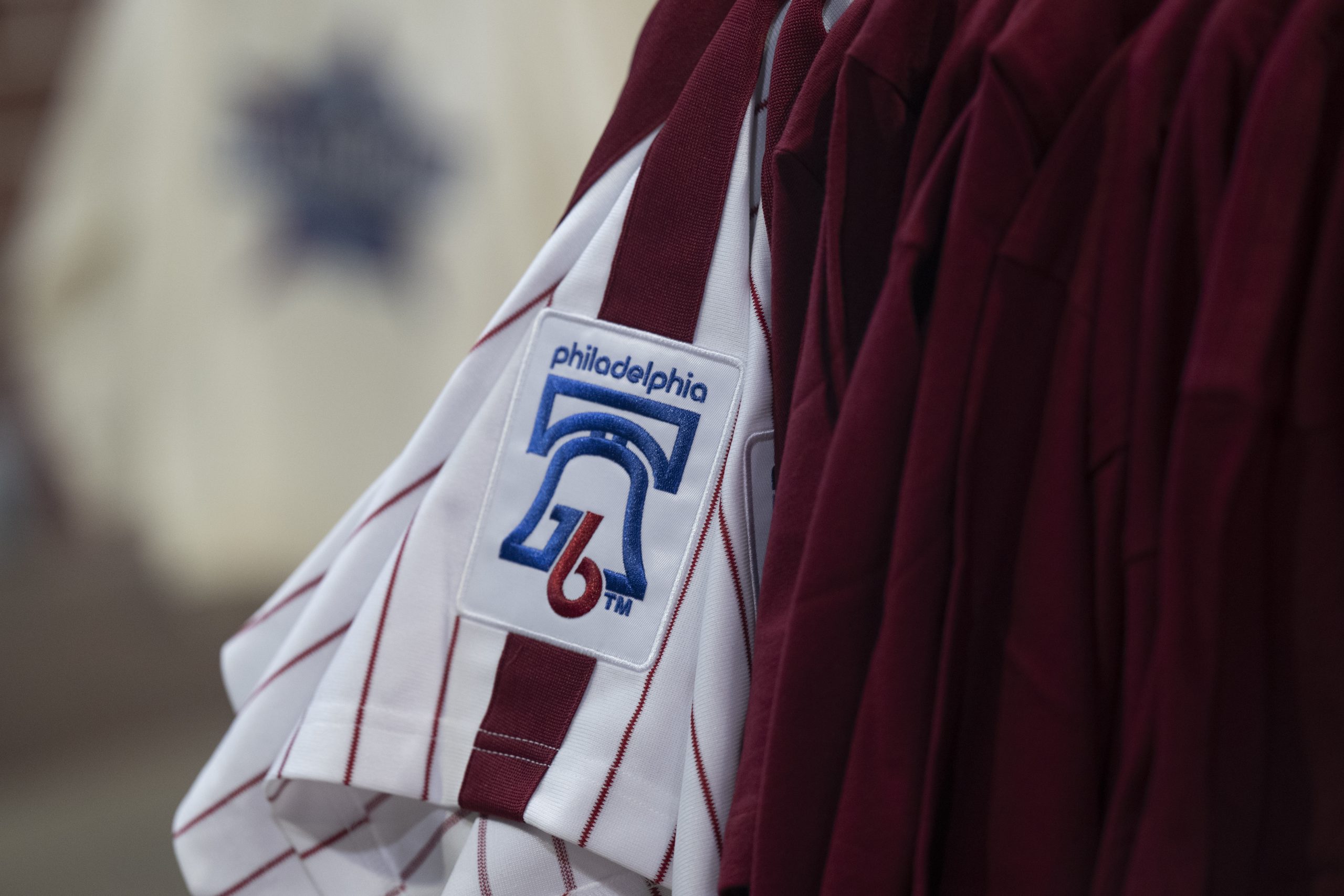
A Phillies throwback jersey on sale at All-Star Village inside the Convention Center.Jose F. Moreno / Staff Photographer
Under a long-term partnership with MLB and Nike, Fanatics manufactures and distributes much of Major League Baseball’s licensed fan apparel, making the All-Star Village store the public face of a merchandising operation that extends far beyond All-Star Week in Philadelphia. Most of the merchandise in the store was conceived, approved, manufactured, and shipped months before fans ever walked through the Convention Center doors.
This year’s assortment leans heavily into Philadelphia.
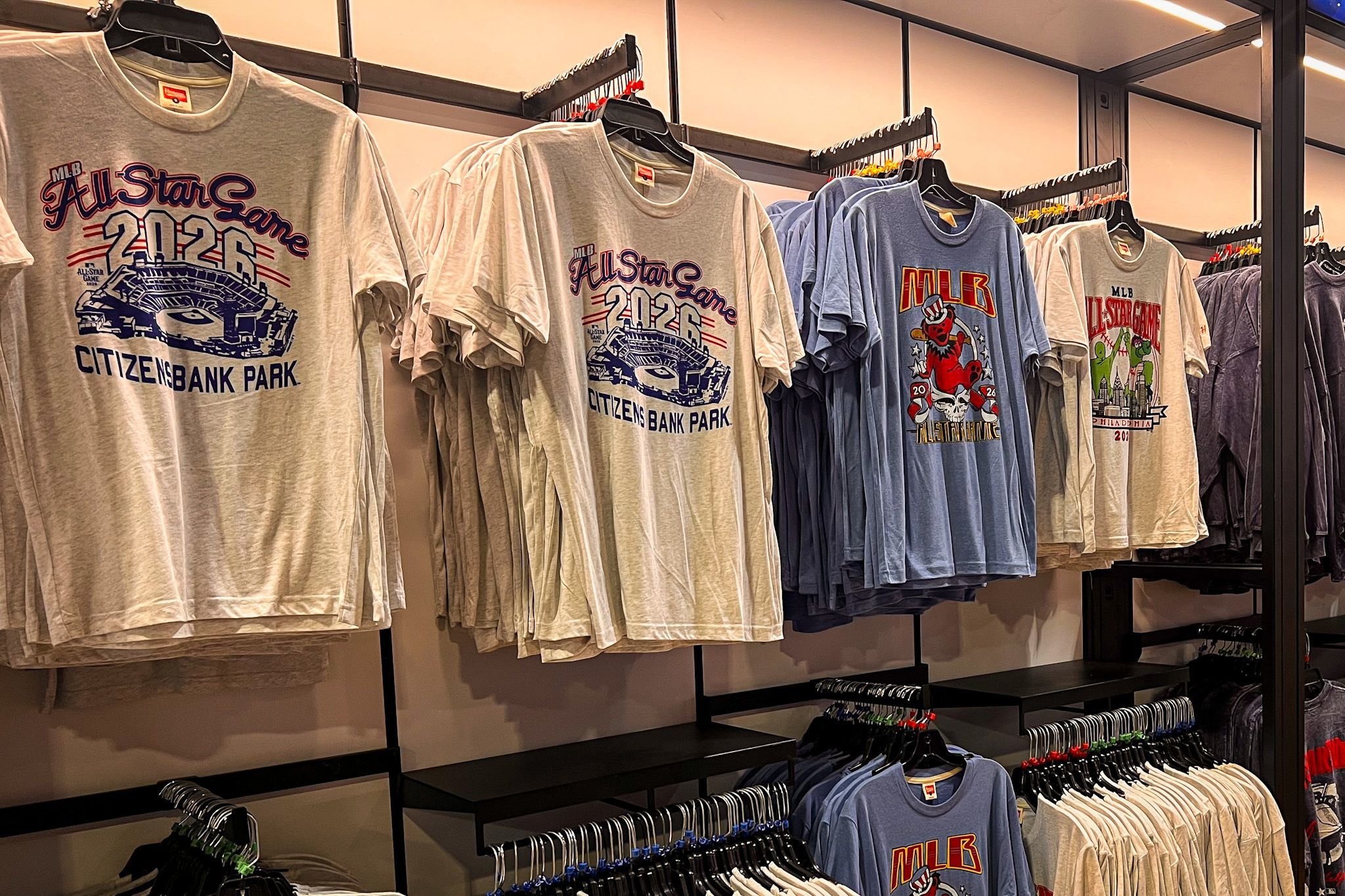
Shirts available at the All-Star Village at the Convention Center.Michael Klein / Staff
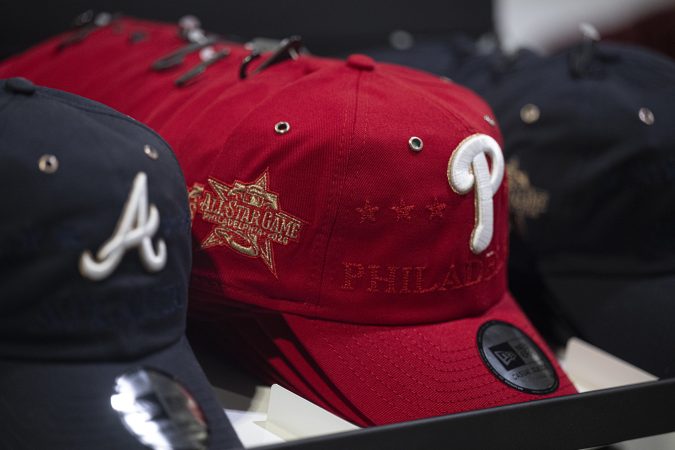
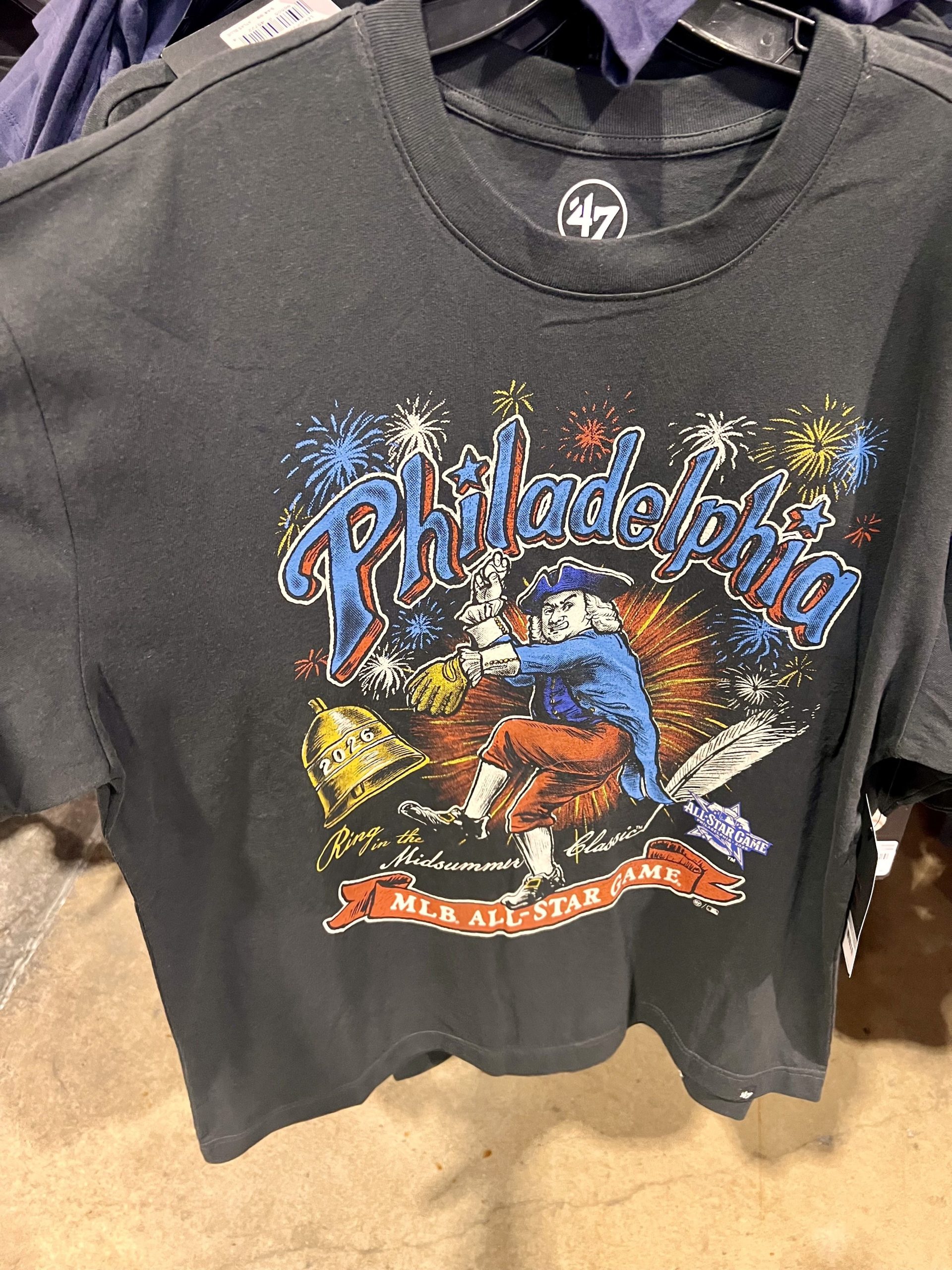
The company said host-city merchandise, particularly jerseys and hats, has become an increasingly important part of every All-Star collection. Philadelphia-themed offerings include Homage’s Grateful Dead-inspired Patriot T-shirt and “Always Sunny in Philly” shirt, ’47 Brand’s “Hit That Jawn” and cheesesteak-themed designs, and Sportiqe’s Elton John-inspired “Philadelphia Freedom” T-shirt.
Home-field advantage
If Fanatics anchors the Convention Center, Aramark — the Phillies’ concessionaire — is treating Citizens Bank Park as a shopping destination in its own right. Its two-story shop is open daily to the public except for Sunday.
After the July 2 home game against the Pirates, Aramark workers cleared the store of all regular Phillies merchandise and began loading in All-Star items. The store was expanded in the offseason to about 7,500 square feet.
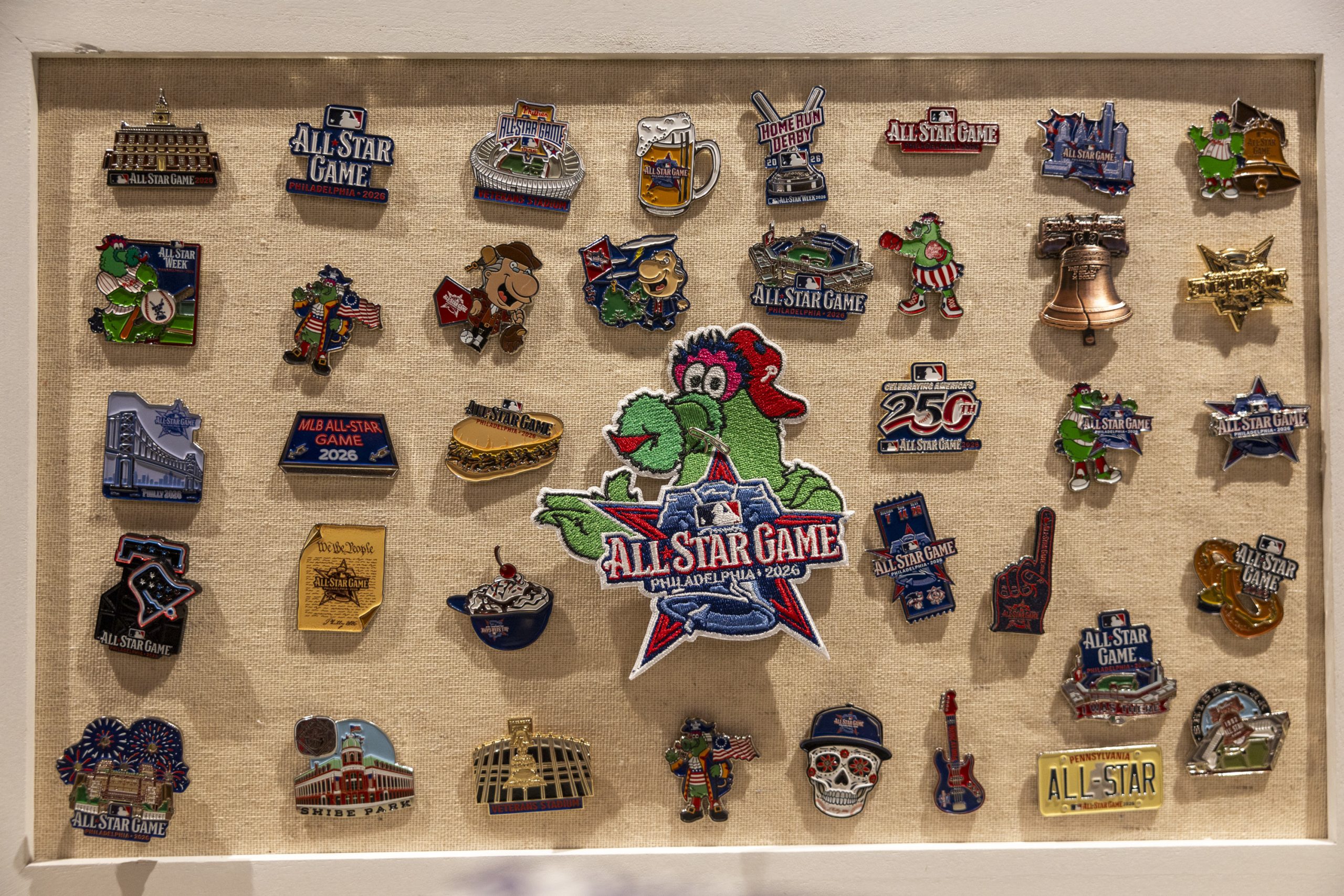
Some of the 84 All-Star pins designed by Aramark that are for sale at Citizens Bank Park. Tyger Williams / Staff Photographer
Francis Winkey, Aramark’s senior merchandise manager at the ballpark, said the store has about 400 All-Star items, about 75% of them exclusive. Winkey, a pin collector himself, commissioned 84 pins, including one representing each major-league team.
Behind the displays is a manufacturing process that begins more than a year before the first pitch. MLB develops the event’s logos and branding, then works with dozens of licensed manufacturers specializing in a wide range of products — caps, jerseys, drinkware, collectibles, and other souvenirs. Companies submit designs for league approval before production begins, often months in advance, at factories overseas.
The biggest complication is that no one knows who will make the All-Star teams until shortly before the game. Most merchandise, therefore, celebrates the event or the host city rather than individual players. When player-specific products are planned, manufacturers often build in flexibility so they can be finished after the rosters are announced.
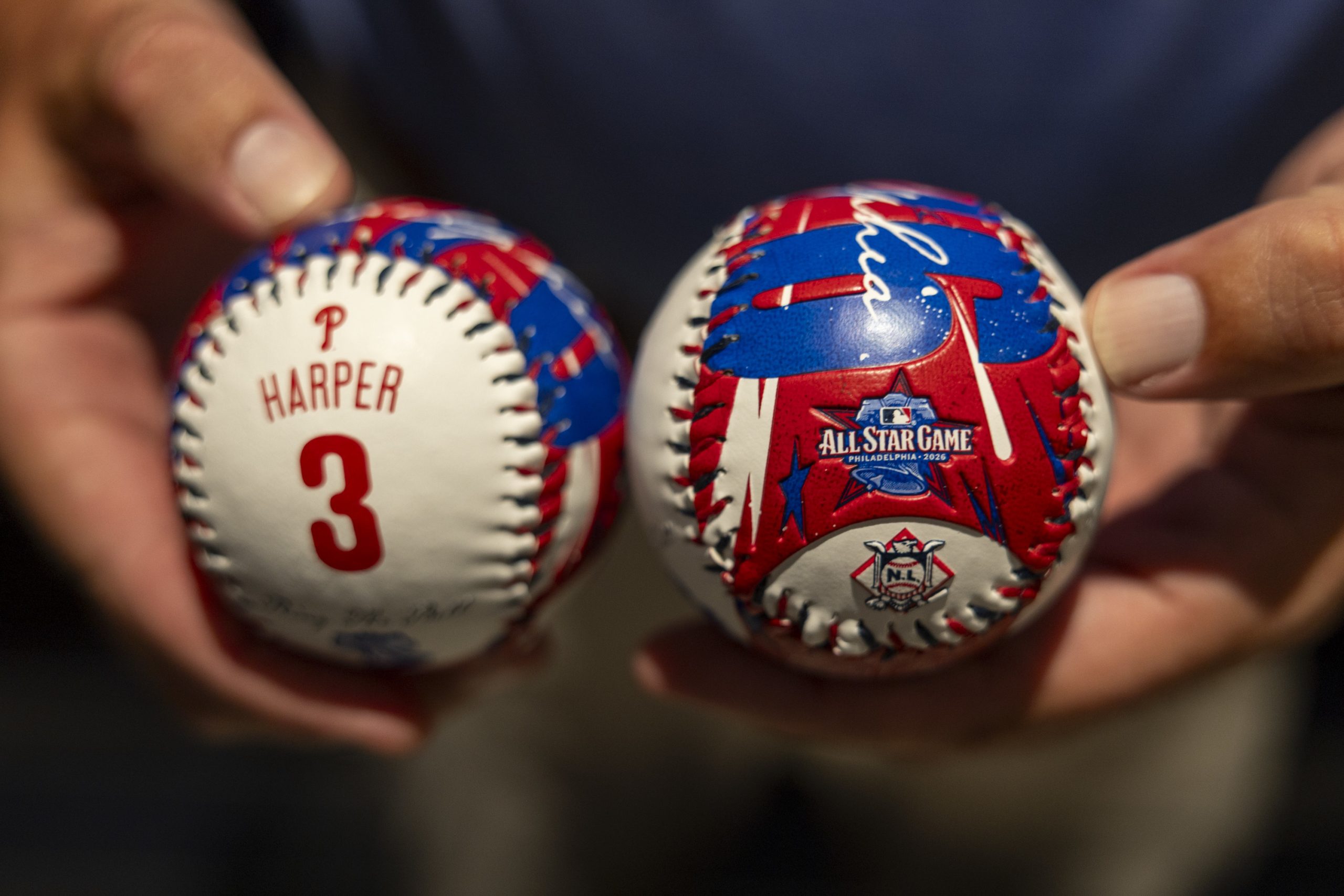
At Citizens Bank Park, Aramark’s Francis Winkey holds souvenir baseballs that were stamped with Bryce Harper’s name after he was named to the All-Star Game roster.Tyger Williams / Staff Photographer
Take the commemorative baseballs that Winkey dreamed up. Last fall, he ordered Rawlings baseballs featuring bold All-Star graphics that intentionally had one blank panel.
Once the rosters were announced, Winkey had a domestic factory finish the baseballs. “When I knew Shohei Ohtani made the team, I could put Ohtani’s name on it,” Winkey said. “It’s a combination of long-term planning and a short-term reaction.”
The store carries six player editions, including Ohtani and Phillies sluggers Bryce Harper and Kyle Schwarber, for $17 a throw.
Bigger every year
MLB executives say the retail operation has grown alongside the event itself.
“Whenever we’ve expanded the retail space, we’ve seen the business grow,” said Leece, of MLB. “It’s always a balancing act because All-Star Village is a celebration of baseball, not just a shopping destination. We want activations, interactive experiences, and things for fans to do beyond buying merchandise.”
The assortment has expanded, too. “We have more licensees creating more unique items,” Leece said. “International fandom has grown significantly, so we now have fans traveling from all over the world. As the audience has expanded, so has the variety of merchandise. One category that’s really emerged over the last several years is oversized chains and necklaces. They’re a good example of a product category that really came out of nowhere.”
A commemorative shirt from Fanatics affiliate ’47 available at the All-Star Village at the Convention Center.Michael Klein / Staff
Philadelphia’s role as host city during the nation’s 250th anniversary celebration also shaped the collection. “It always starts with the identity of the host city,” Leece said. “Philadelphia’s history aligns naturally with the Phillies’ identity.”
Across the ballpark, All-Star Village, and MLB’s online stores, about 600 products will be available during the week.
One operational change won’t be visible on the sales floor.
“We’ll have the largest on-site retail staff we’ve ever had, both at All-Star Village and the ballpark,” Leece said. “We want fans to spend less time waiting in line and more time enjoying everything else the event has to offer.”
Retail analysts say the All-Star Game occupies a unique niche in the licensed sports business.
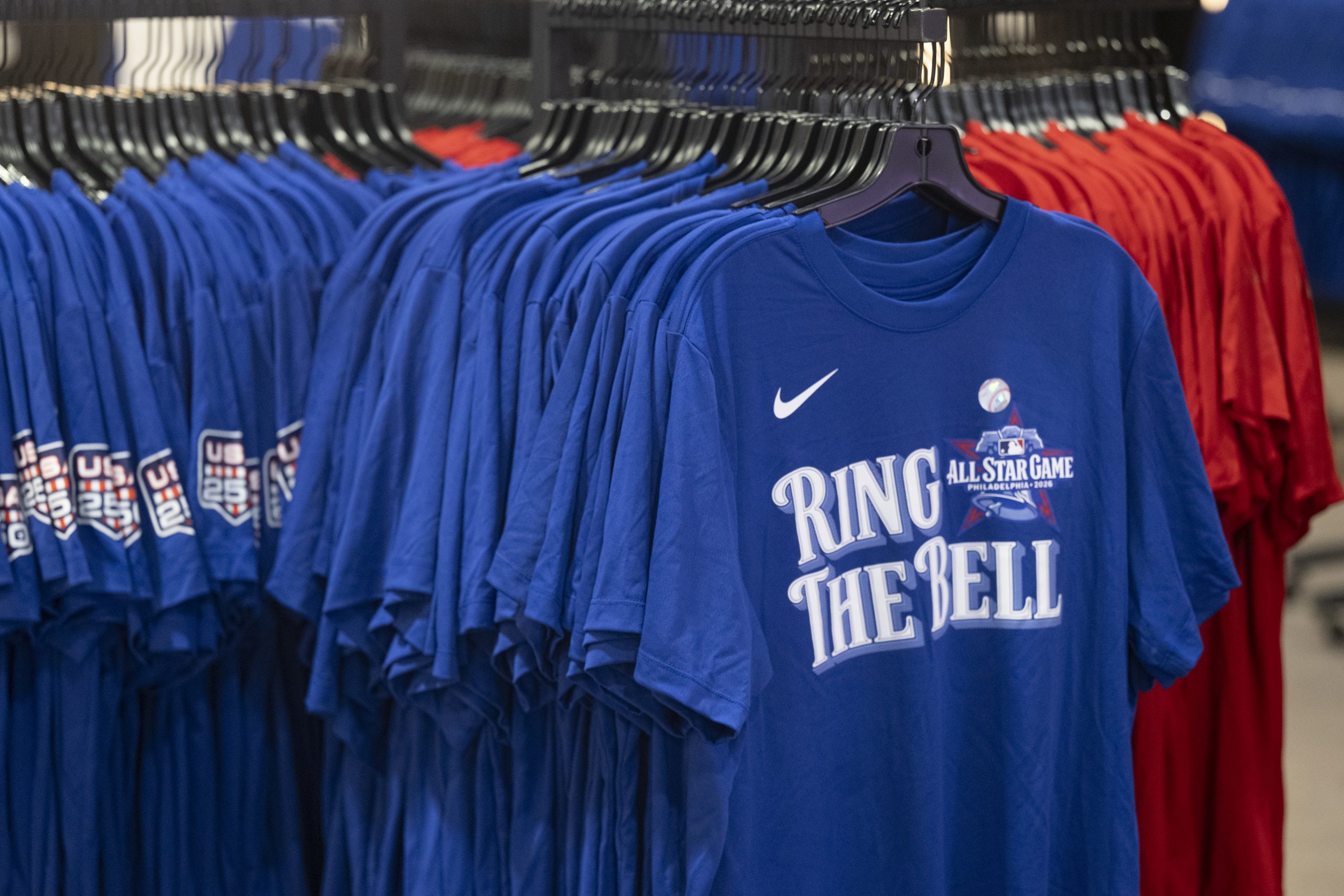
Commemorative T-shirts on display at All-Star Village.Jose F. Moreno / Staff Photographer
“The All-Star Game is really about on-site souvenirs,” said Matt Powell, founder of the sports retail consultancy Spurwink River. “People are there and want something to commemorate the experience because it’s essentially a one-off event.”
Neil Saunders, managing director of GlobalData, said demand tends to split between wearable keepsakes and collectibles.
“One is simple products like T-shirts or caps linked to the Phillies or the All-Star Game,” Saunders said. “The other is collectible items that can be more expensive. The real fans or those who love collecting are enthusiastic about these.”
The All-Star retail boom reflects the growth of licensed sports merchandise into a multibillion-dollar global business. One industry estimate valued the market at $38 billion in 2025, with North America accounting for more than half of sales. Apparel remains the largest category, helping explain why jerseys, caps, and other wearable souvenirs dominate event retail.
Unlike merchandise driven by blockbuster trades or new uniforms, Powell said, All-Star merchandise derives much of its value from the event itself.
Fans aren’t simply buying apparel. They’re buying proof they were there.
Yet for all the focus on merchandise, Leece said the larger goal is creating memories.
“I hope they slow down,” he said. “I hope they walk in, look around, and appreciate that they’re somewhere special. This is baseball’s World’s Fair. It only happens once a year, and for Philadelphia it only comes around every couple of decades.”
Happy 250th birthday, America! As we celebrate our republic, we are reminded that one of our nation’s greatest strengths has been embracing change and innovation while building safeguards that protect the people and communities that fuel our economy.
This goes for banking, too. It’s easy to forget, but this nation didn’t always have a stable monetary system. President Andrew Jackson fought the powerful elite to decentralize savings and lending. Even the almighty dollar was once up for debate; it wasn’t until the 1870s that Congress would issue “greenbacks” everyone could count on.
Financial innovation has succeeded because policymakers took the time to ensure new ideas strengthened, not weakened, the foundation of our economy. But innovation should never come at the expense of the families and farmers that depend on community banks, the backbone of America’s financial system.
These institutions put local deposits to work in the communities they serve, providing loans that help them thrive. More than 99% of businesses in Pennsylvania are small businesses, and small farms — those generating under $250,000 in revenue — make up 85% of the 49,000 farms in our state. Agriculture contributes $27.5 billion to Pennsylvania’s gross state product, and farms, like small businesses across the state, depend most on the kind of relationship-driven lending community banks provide.
Unfortunately, state legislation currently being considered in Harrisburg poses a serious threat to local lending and the communities that depend on it.
House Bill 2647 would allow faceless crypto platforms and payment stablecoins (price-stabilized cryptocurrencies) to operate alongside community banks, but without the same Federal Deposit Insurance Corp. (FDIC) insurance requirements, antidiscrimination rules, capital requirements, and other public protections community banks are obligated to maintain.
Beyond weakening consumer protections, the Independent Community Bankers of America estimates yield-bearing stablecoins could pull $1.3 trillion in deposits from community banks nationwide, cutting local lending capacity in Pennsylvania by approximately $35 billion. Every dollar that leaves a community bank is one less dollar available to help a family buy a home, an entrepreneur start a business, or a farmer plant next season’s crops.
If legislation allowing state licensing of payment stablecoin issuers advances without adequate safeguards, it will weaken local lending and undermine Pennsylvania’s economy.
That is why the current stablecoin debate deserves careful attention.
Community banks support responsible innovation. As the president of the Pennsylvania Association of Community Bankers, I see the cohort of community banks actively exploring new technologies and recognizing that digital assets will play a vital role in the future of finance. But stablecoins should function as a payment mechanism — not as interest-bearing investment products competing directly with federally insured bank deposits.
Small farms — those generating under $250,000 in revenue — make up 85% of the 49,000 farms in Pennsylvania. Those farms rely on the personalized lending community banks provide, writes Kevin Shivers. William Thomas Cain / For The Inquirer
Unfortunately, as currently drafted, significant loopholes remain that encourage unfair competition and ignore important protections consumers deserve and have come to expect.
Community banks have never feared competition. We have welcomed it for more than 160 years. What we are asking for is a level playing field — one that encourages innovation without sacrificing the proven financial model that has financed America’s hometowns for generations.
Lawmakers should slow the march toward stablecoins long enough to ensure innovation strengthens, not weakens, the community banking system that finances Main Street and homeownership in America.
As we celebrate our nation’s 250th birthday, we should remember that America’s greatest achievements haven’t resulted from choosing between innovation and stability, but from insisting on both.